A Shrine Visit That Gradually Pulls Away From the Town
Near the lower side of Lake Suwa in Nagano Prefecture, Suwa Taisha Shimosha Harumiya sits within the quieter residential sections of Shimosuwa, not far from Suwa Taisha Shimosha Akimiya and within the wider four-shrine Suwa Taisha system surrounding the lake basin. Travelers deciding which of the four shrines to include can also compare them in the Suwa Taisha Shrine Guide. Across the lake, the reconstructed keep of Takashima Castle rises above the shoreline near Kamisuwa Onsen, while lakeside areas like Sekicho Park help connect the broader geography surrounding the basin. The shrine is known less for monumental scale and more for how the grounds connect with the nearby river, cedar trees, and older roads running through this side of town.
People usually come here for a lower-effort shrine visit that feels connected to the surrounding landscape rather than separated from it. Most visits remain relatively compact, with many travelers spending around 30 to 60 minutes within the shrine grounds themselves before continuing farther through Shimosuwa or along the riverside paths nearby. The terrain stays mostly flat throughout, and the shrine works especially well for travelers exploring the Lake Suwa region by train because the walk from Shimosuwa Station remains manageable without additional transportation.
The experience also unfolds differently from larger shrine destinations in Kyoto, Kamakura, or central Tokyo. Instead of moving through massive gates and crowded approach roads, Harumiya gradually emerges from ordinary streets, smaller buildings, tree cover, and quieter sections of town already shaped by the rivers and roads surrounding Lake Suwa.
Why the Suwa Taisha Shrines Were Built Around the Lake
The origins of the Suwa Taisha shrine system stretch back well over a thousand years, long before modern highways or railway lines crossed central Nagano. At the time, the Lake Suwa basin formed a natural corridor between mountain passes, rivers, forests, and seasonal movement routes connecting eastern and central Japan.
The shrine locations reflected those conditions directly. Harumiya and nearby Akimiya developed along the lower side of the lake in present-day Shimosuwa, while Kamisha Honmiya and Kamisha Maemiya were established closer to the foothills and upper basin near modern Suwa City. Long before travelers arrived here by train, movement through the region already depended on rivers, narrower valley routes, and the limited passes cutting through the surrounding mountains.
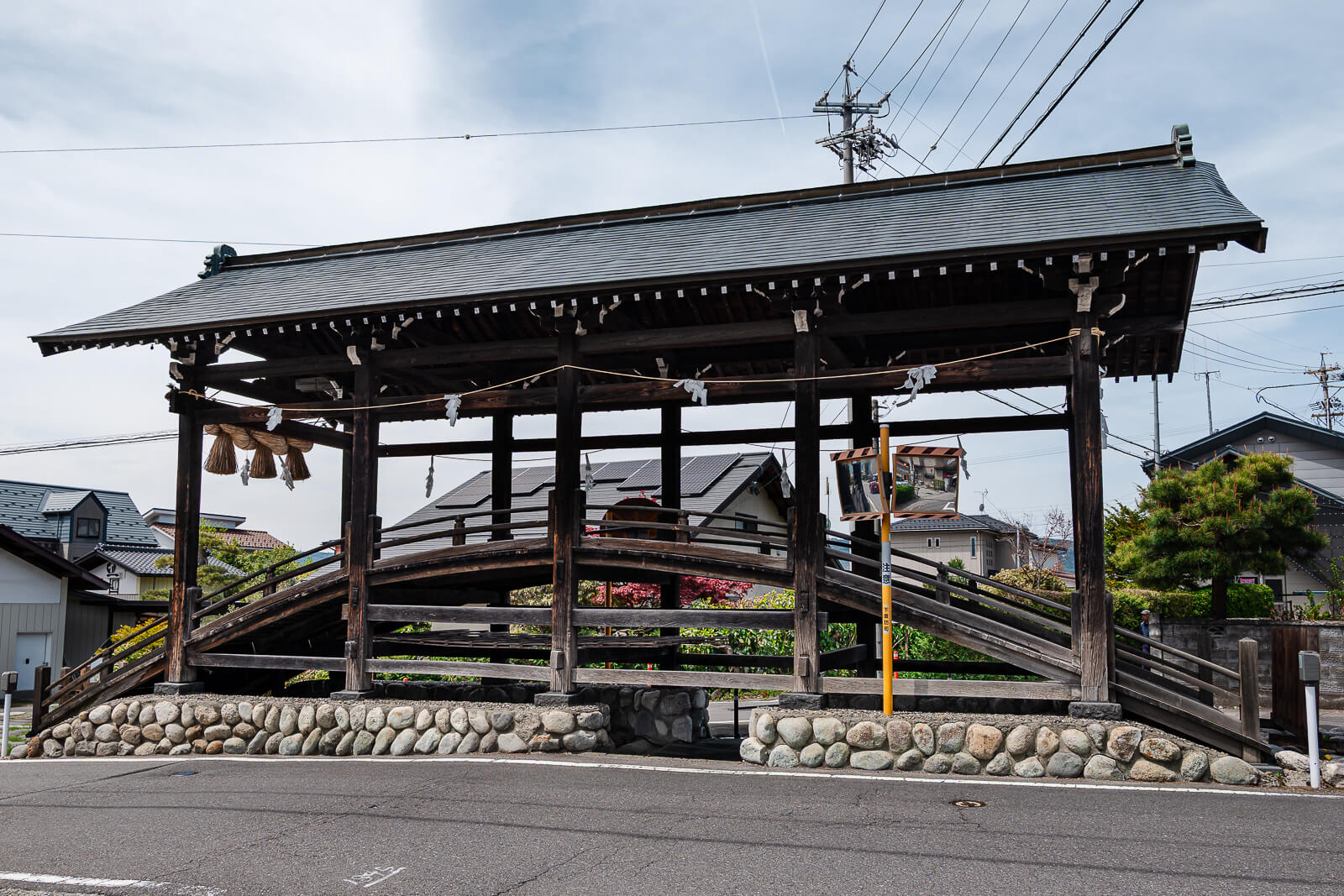
Much of that geography still shapes the visit today. Rivers continue flowing beside portions of the shrine grounds, older roads still connect the settlements around the lake, and the mountains remain close enough to define how the basin feels once inside it. Standing within Harumiya now, the relationship between water, forest, movement, and shrine placement remains easy to understand without needing extensive historical explanation.
Leaving the Streets Behind
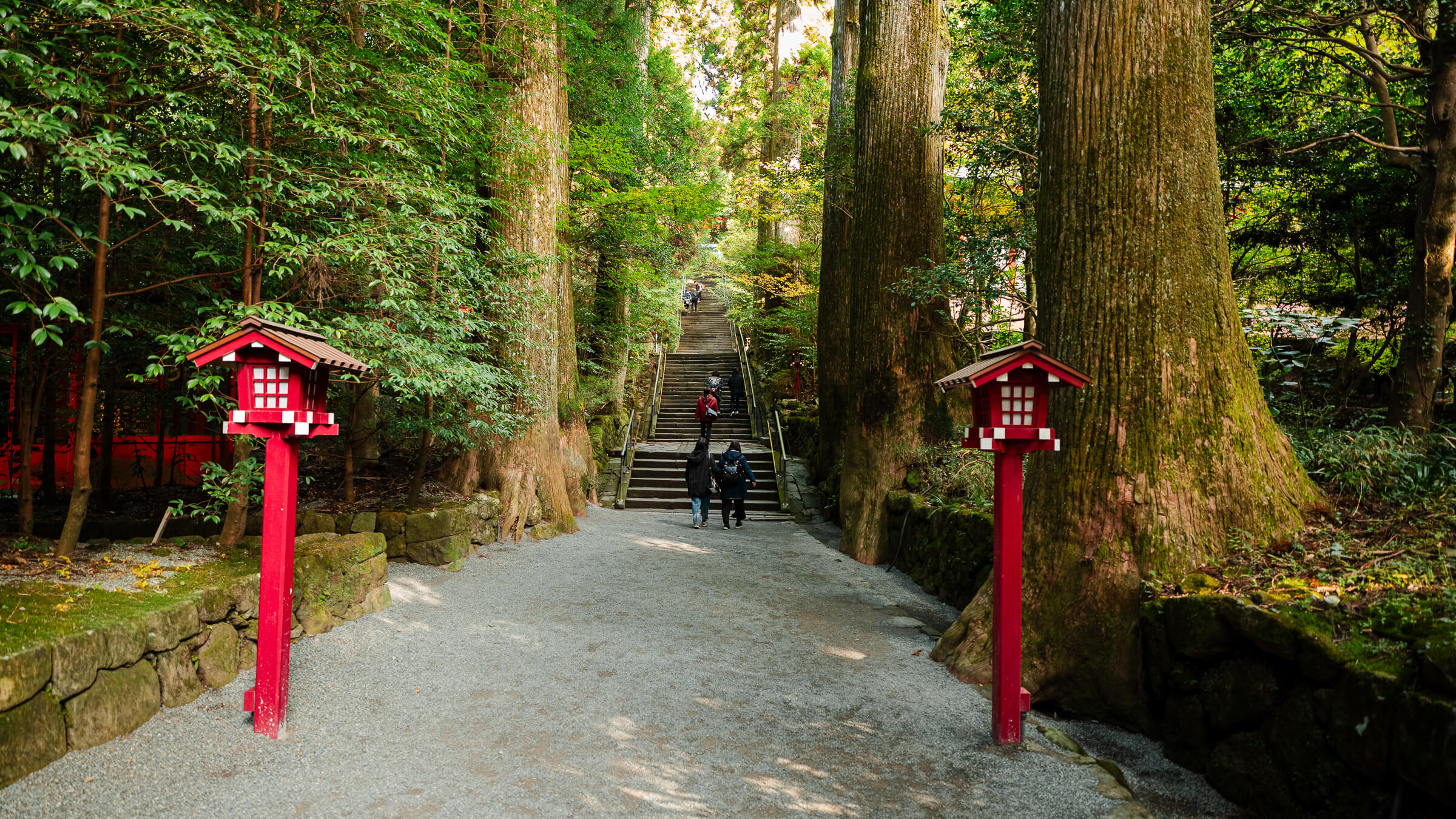
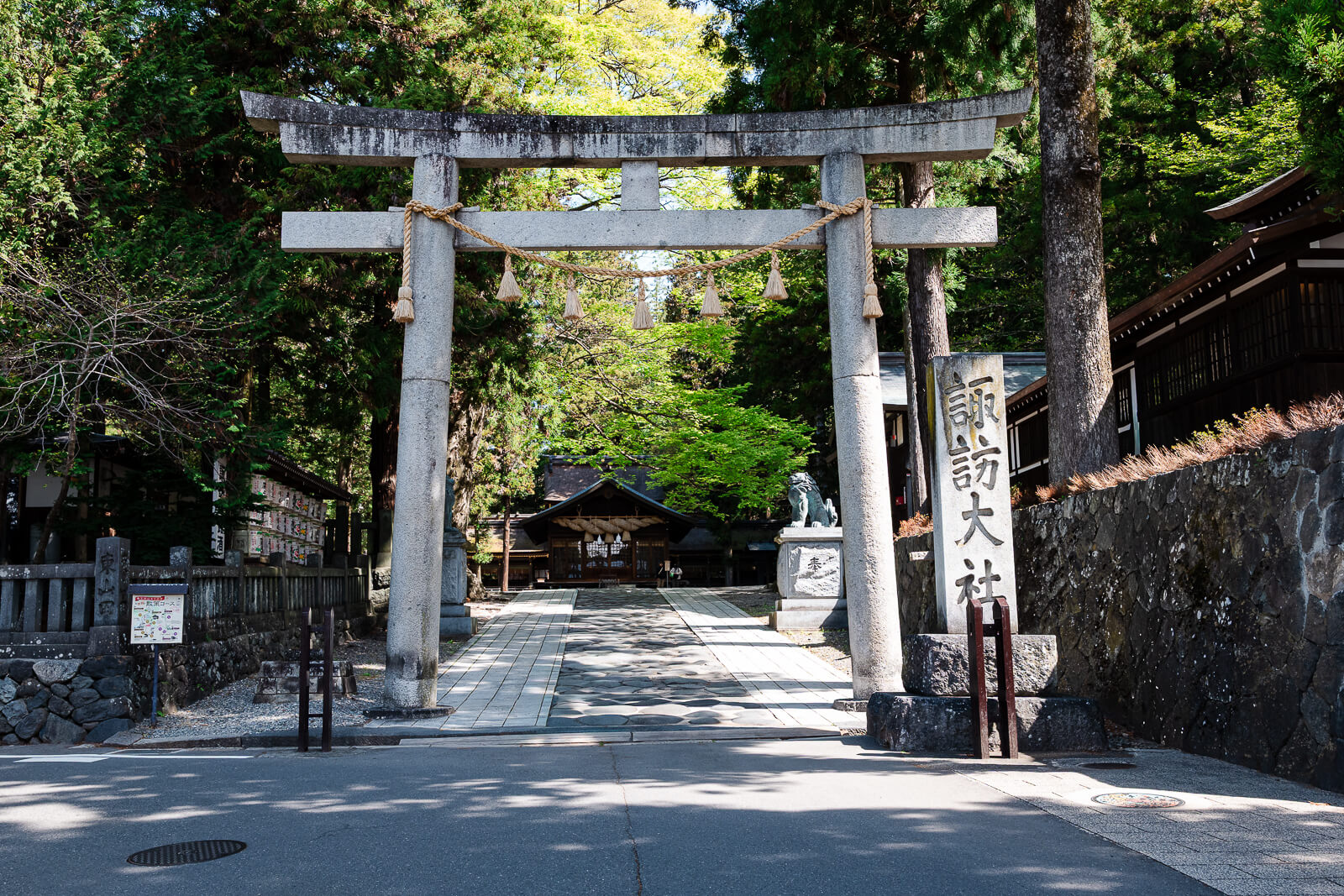
The transition into Harumiya begins quietly within the residential streets of Shimosuwa. Smaller roads, houses, and local buildings gradually give way to heavier tree cover and narrower shrine approaches without a sudden shift separating the shrine from the town around it.
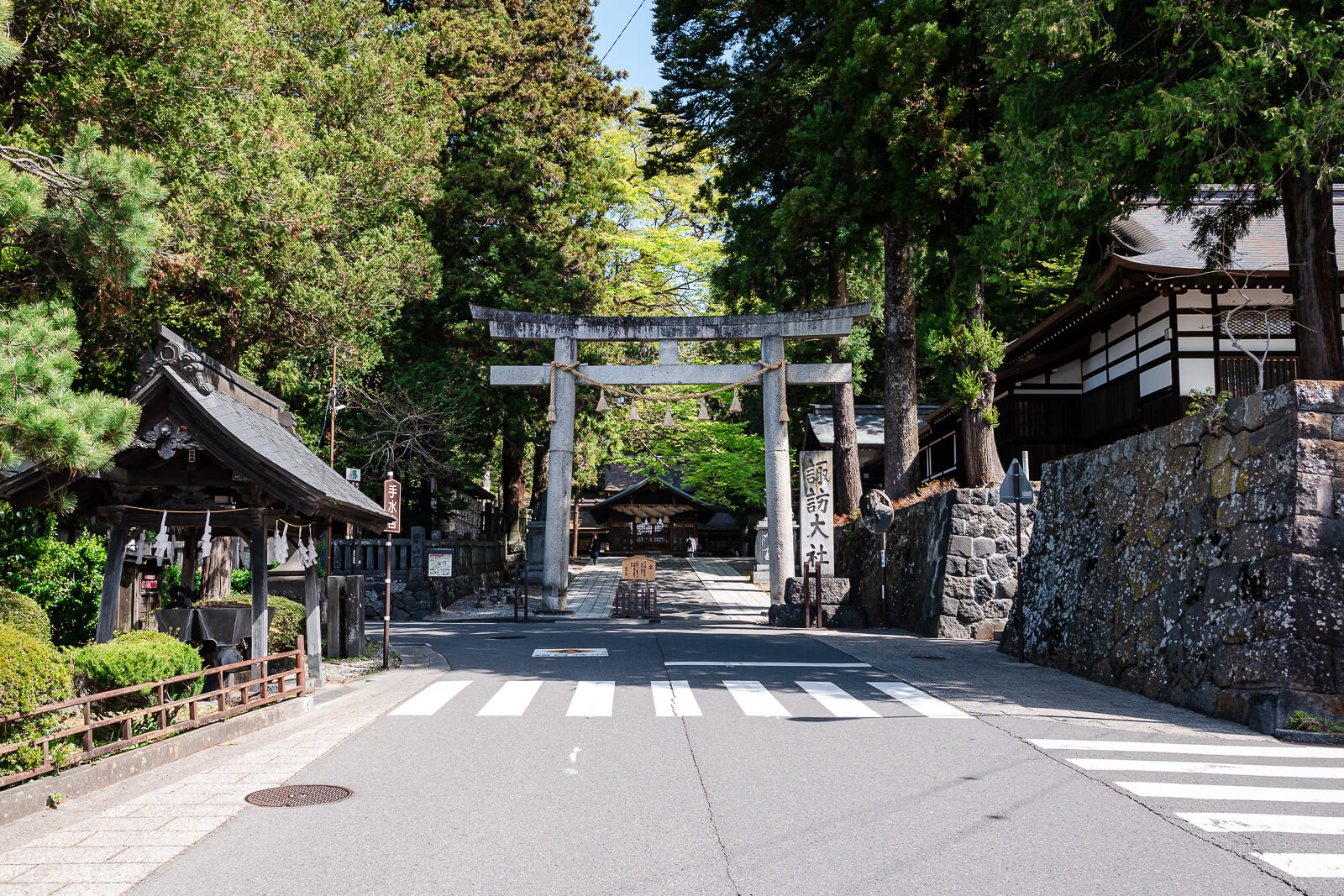
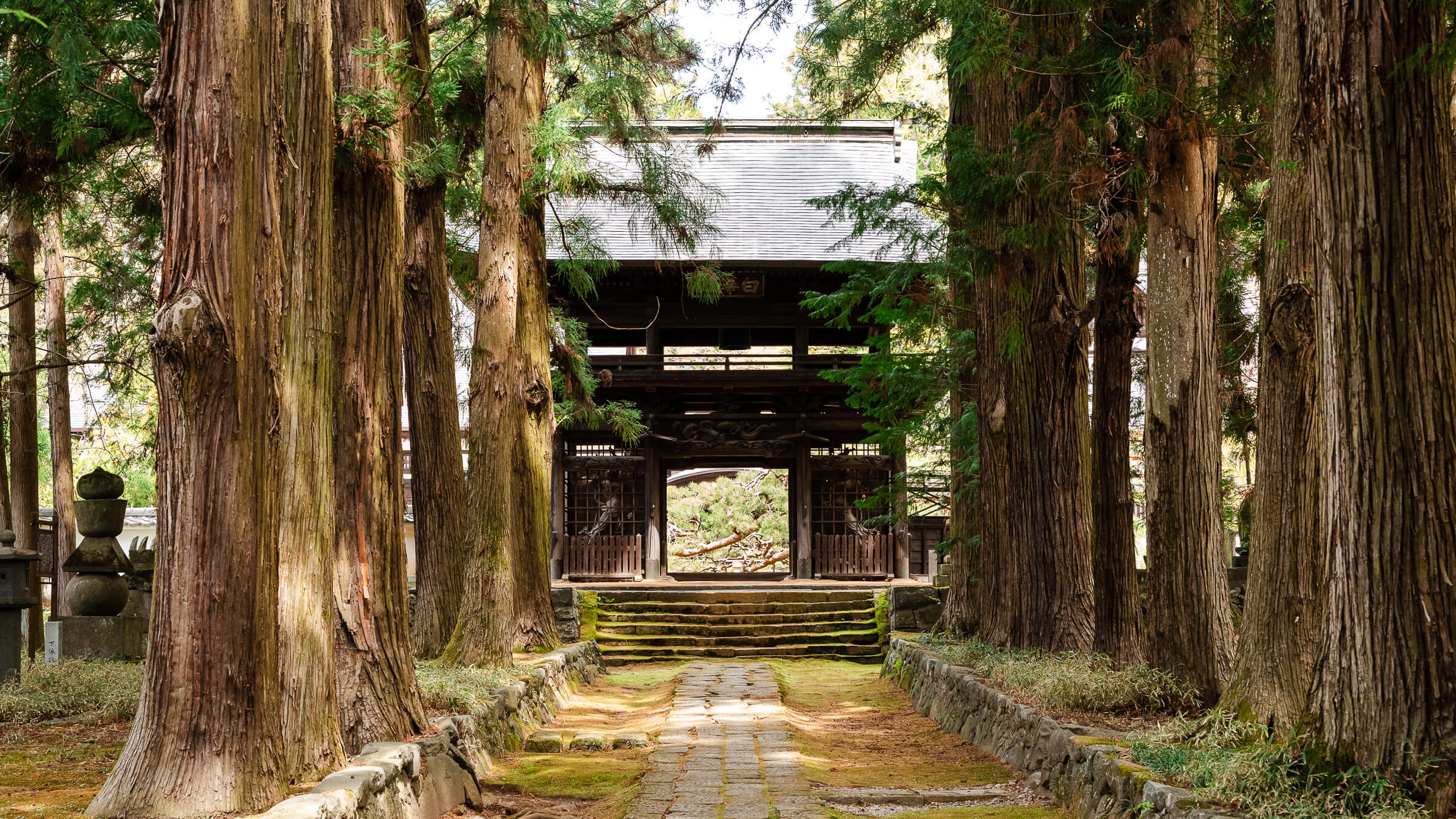
Farther along the approach, stone lanterns and darker wooden structures begin appearing between the cedar trees before the main grounds fully open ahead. In wet weather, the darker wood and moss-covered stone absorb much of the light beneath the trees, while the thick cedar canopy limits how much of the surrounding town remains visible once deeper inside the grounds.
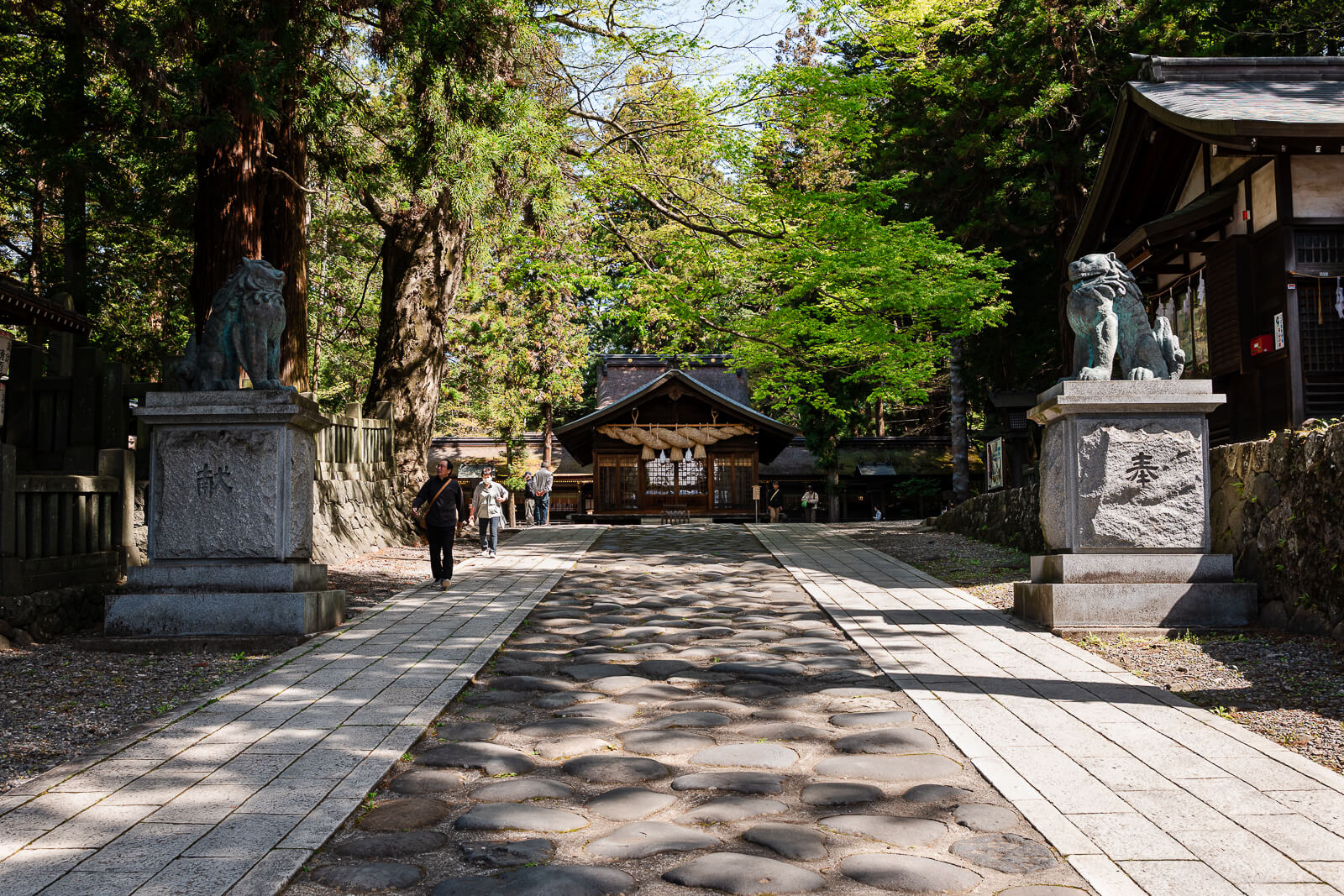
Crowd levels here usually remain lighter than at many larger shrine destinations outside major festival periods. Early mornings especially reveal the spacing between the buildings, pathways, and trees more clearly before movement through the grounds gradually increases later in the day.
What Changes Once the Main Grounds Appear
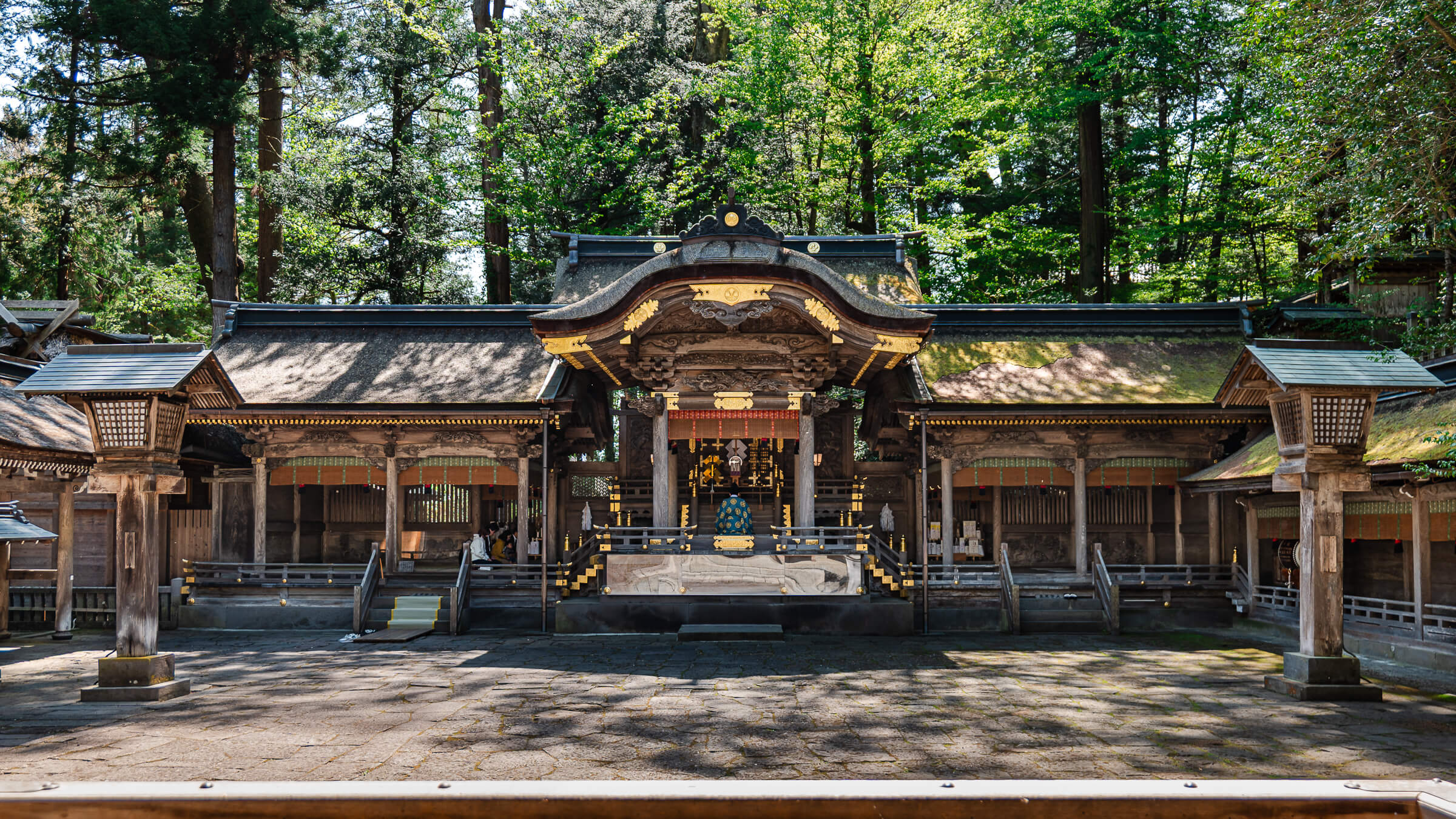
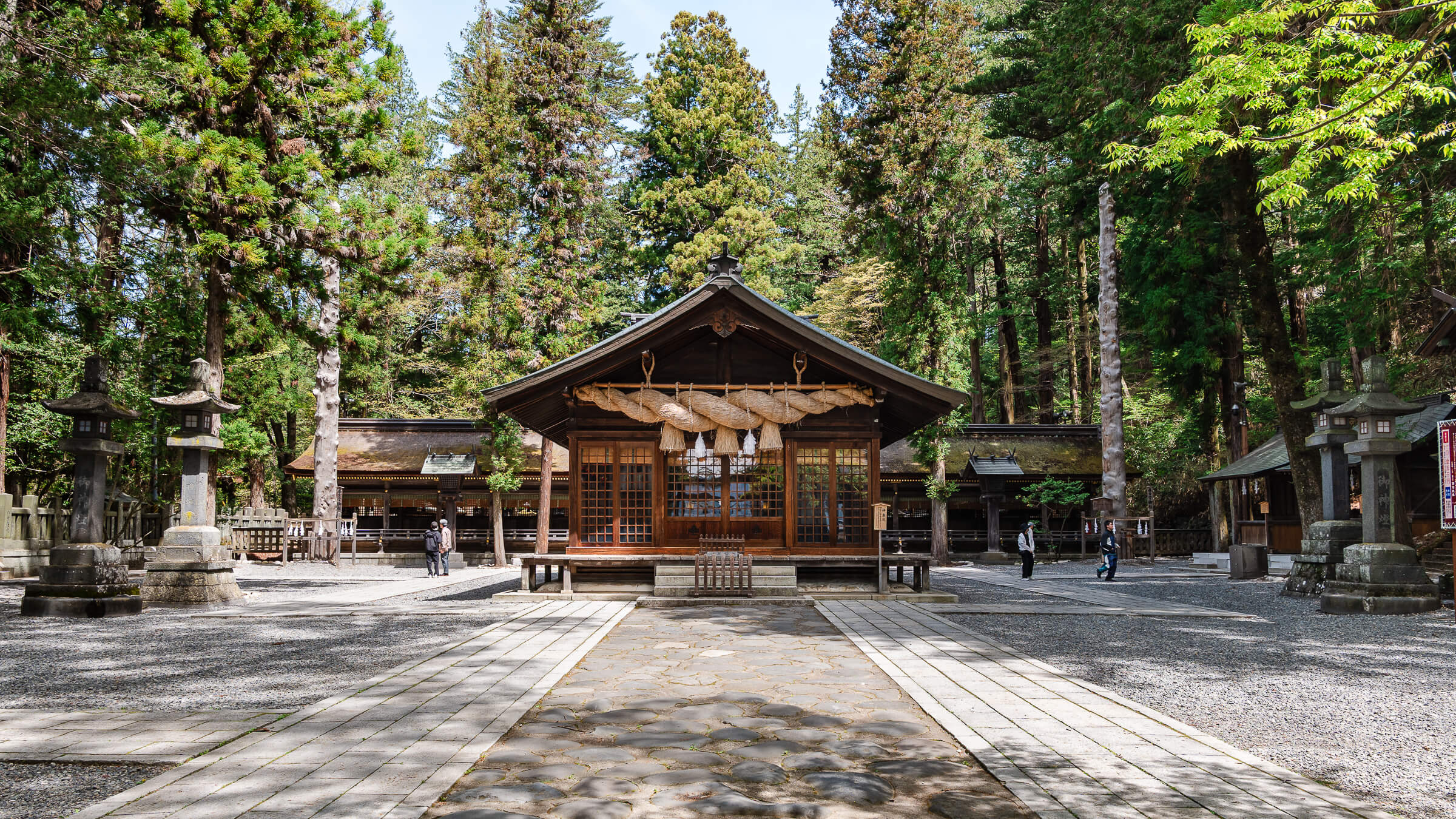
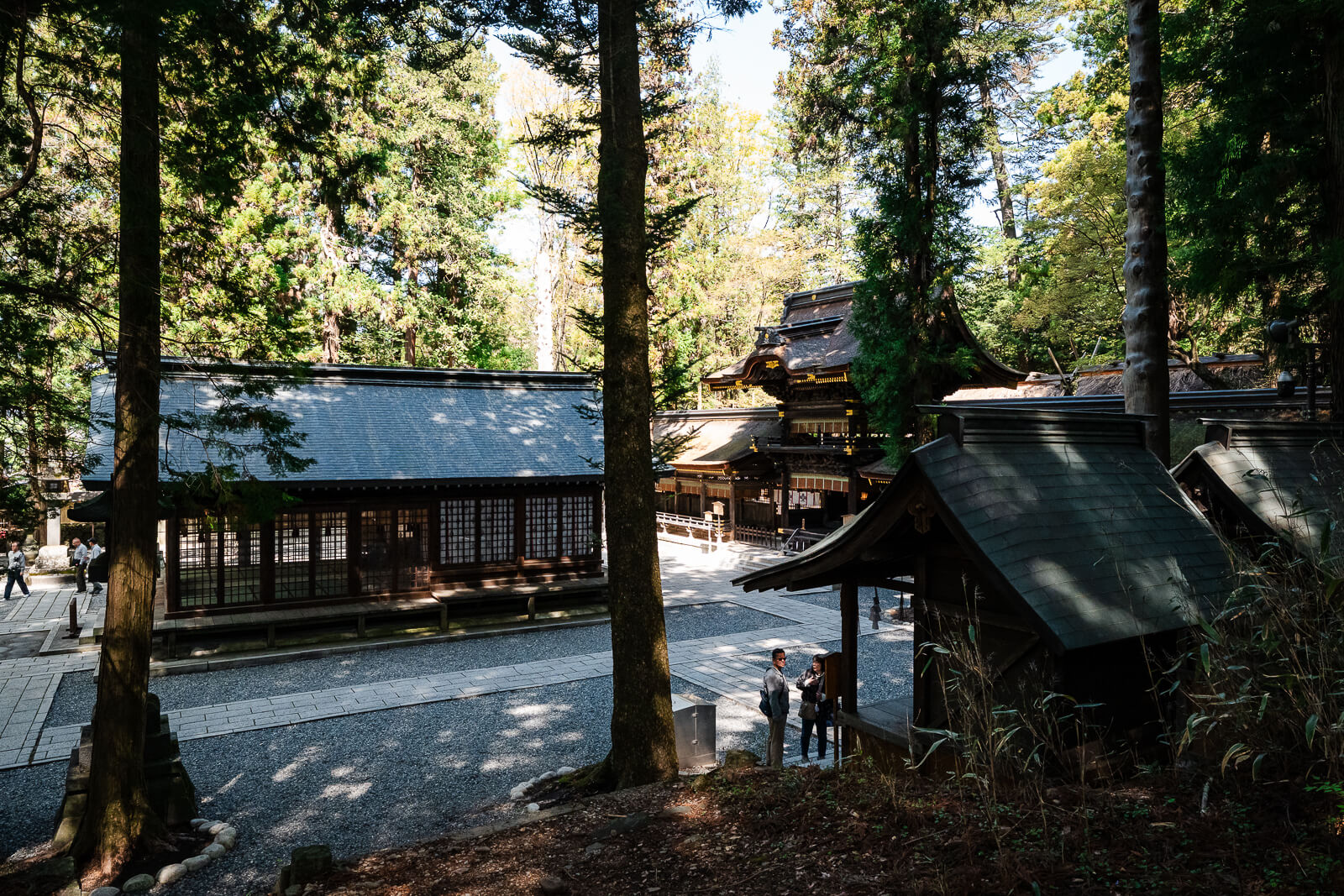
The main shrine buildings at Harumiya are not especially large, but the smaller scale changes how the grounds are experienced. Instead of drawing attention toward a single dominant structure, the layout spreads attention outward across the surrounding pathways, sacred ropes, trees, and smaller architectural details.
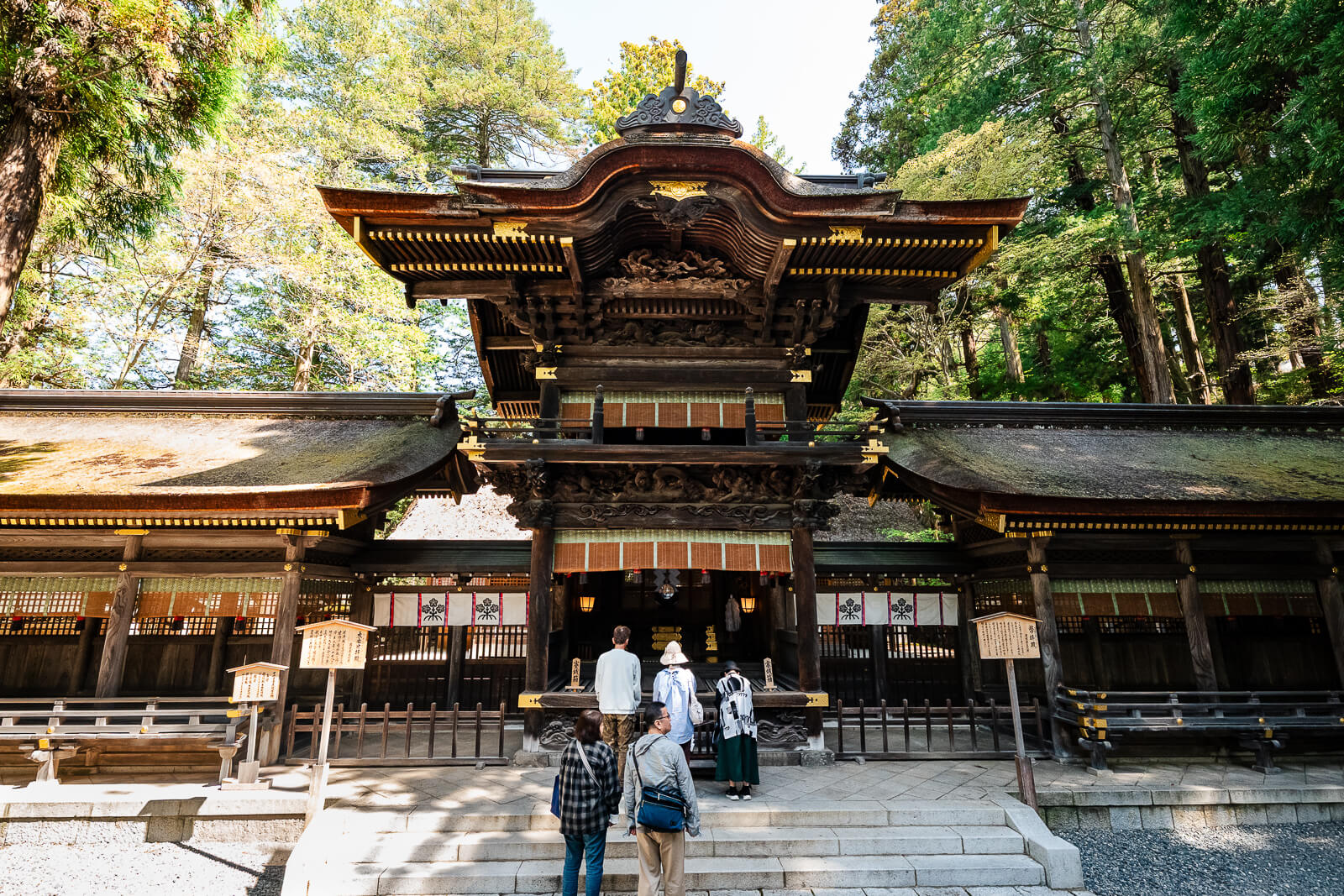
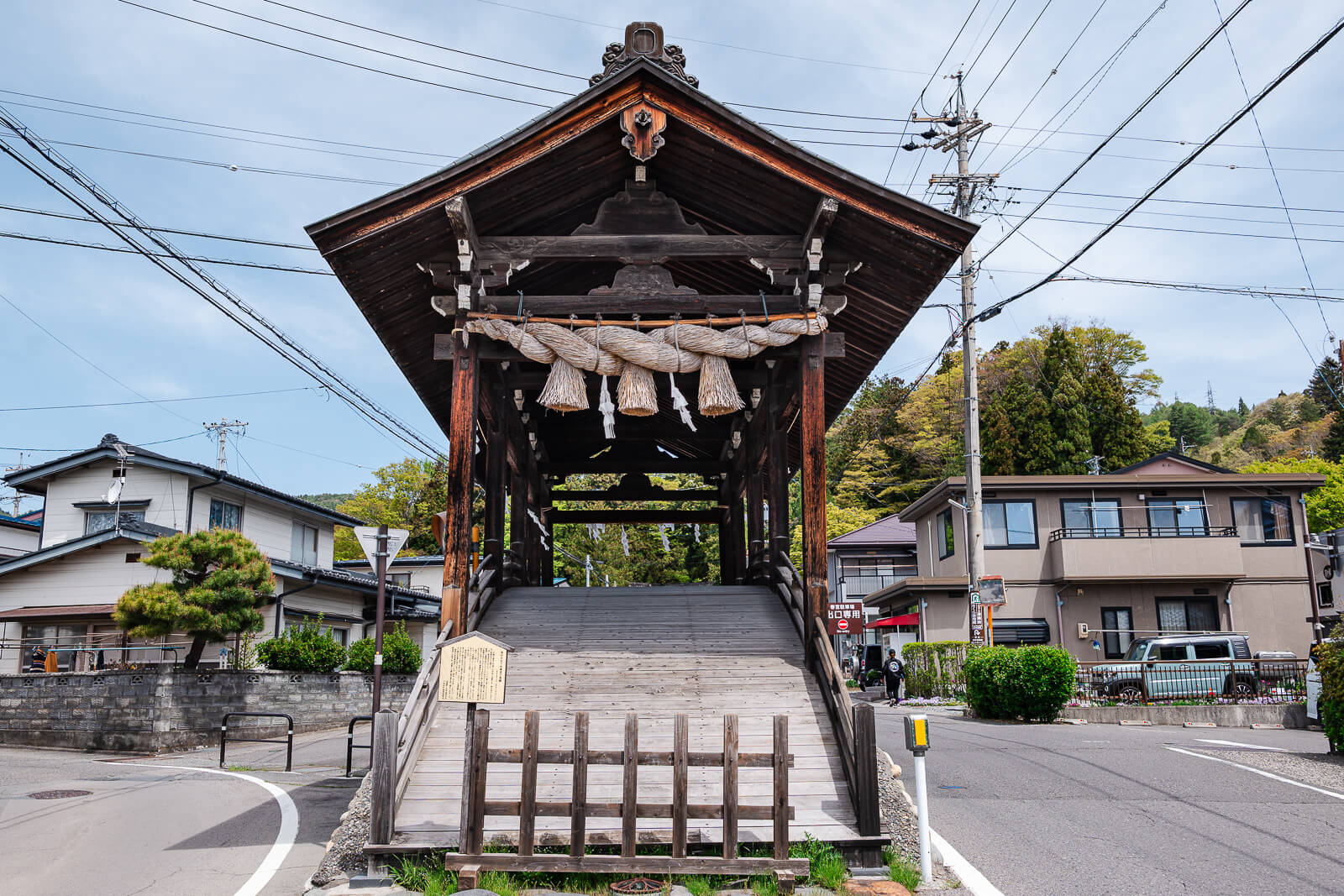
Heavy timber construction and deep rooflines define much of the visual character within the grounds. Thick shimenawa ropes hang heavily across several structures, some stretching almost the full width of the shrine entrances beneath the darkened cedar canopy overhead. Moss-covered stone, weathered wood, and filtered light through the trees become easier to notice once movement through the grounds naturally slows.
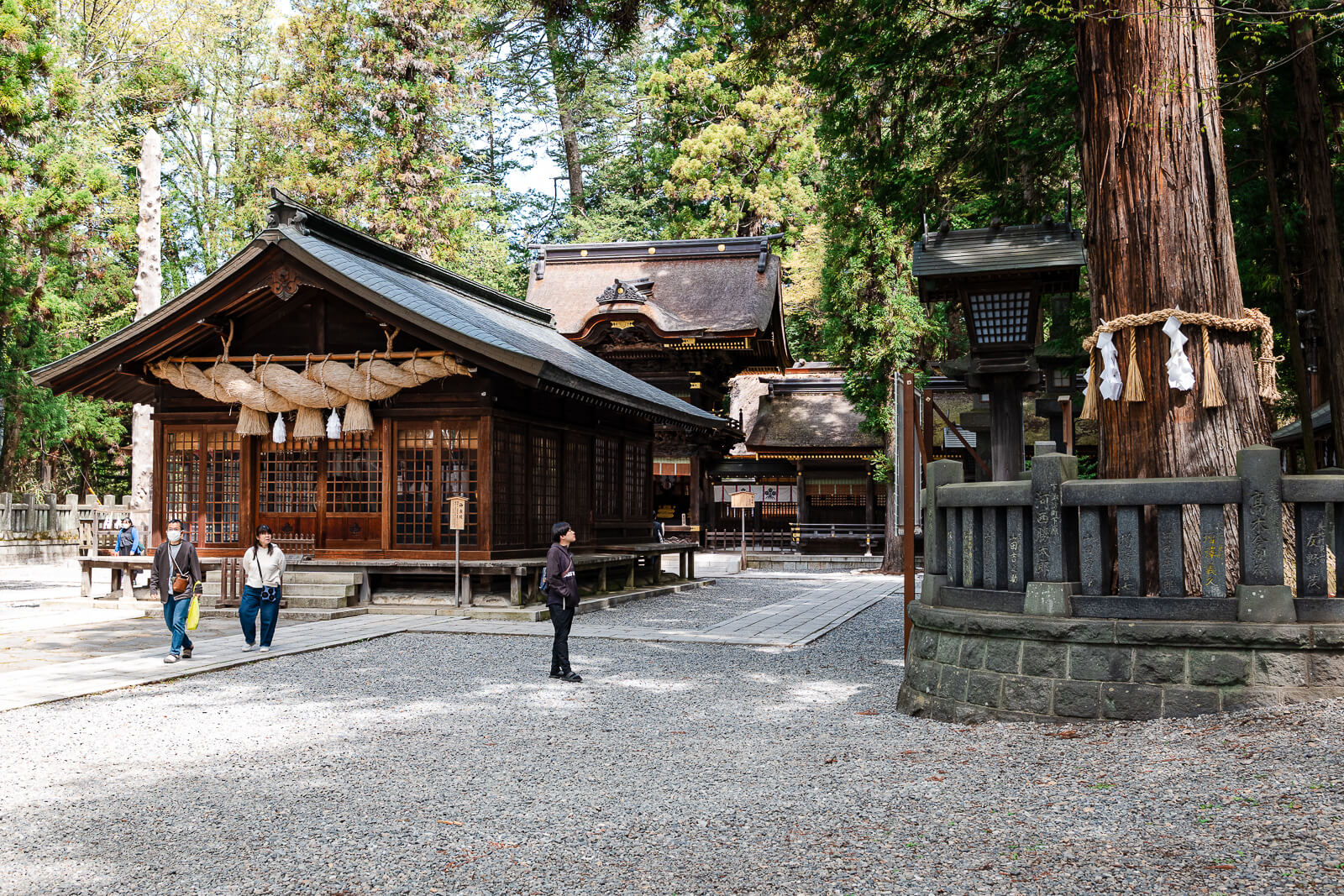
The surrounding landscape also remains visible throughout the visit. The river and forest never feel detached from the shrine itself, which changes the experience compared to shrine complexes where the architecture becomes the overwhelming focus from beginning to end.
Following the River Beyond the Shrine
Along the edge of the shrine grounds, the nearby river continues beyond the main complex through quieter sections of Shimosuwa. The Manji-no-Sekibutsu, a large stone Buddha positioned beside the riverside area, appears along this extension of the walk together with smaller spiritual sites and roadside stone figures scattered through the surrounding paths. Rather than feeling separated from the shrine itself, these riverside elements continue the slower pacing already established within Harumiya’s cedar-covered grounds.
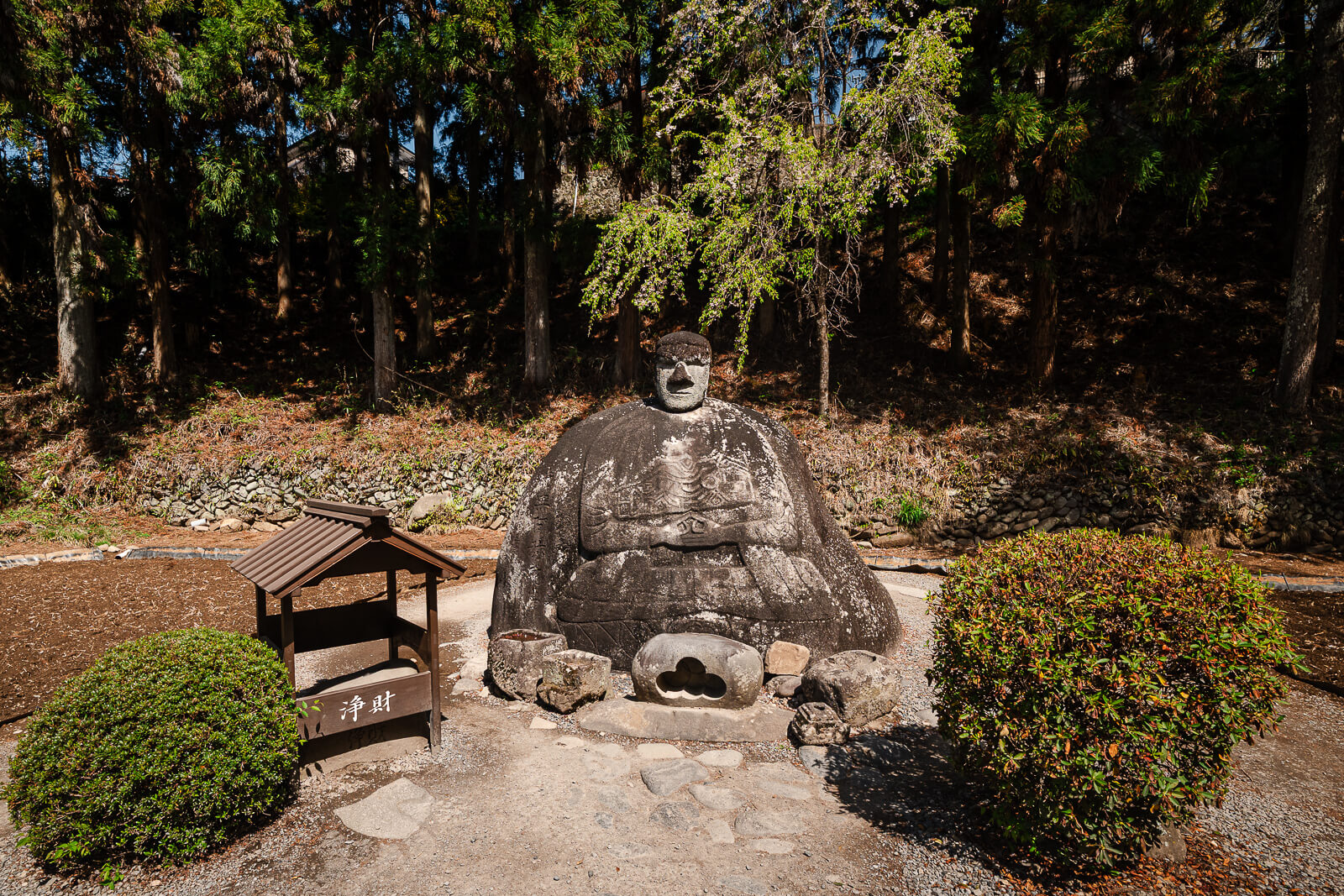
The area remains compact and relatively easy to follow on foot, helping reduce the sense of needing to move quickly between designated sightseeing points. River paths, smaller roads, and side areas connected to the shrine gradually become part of the overall experience rather than functioning as separate attractions entirely.
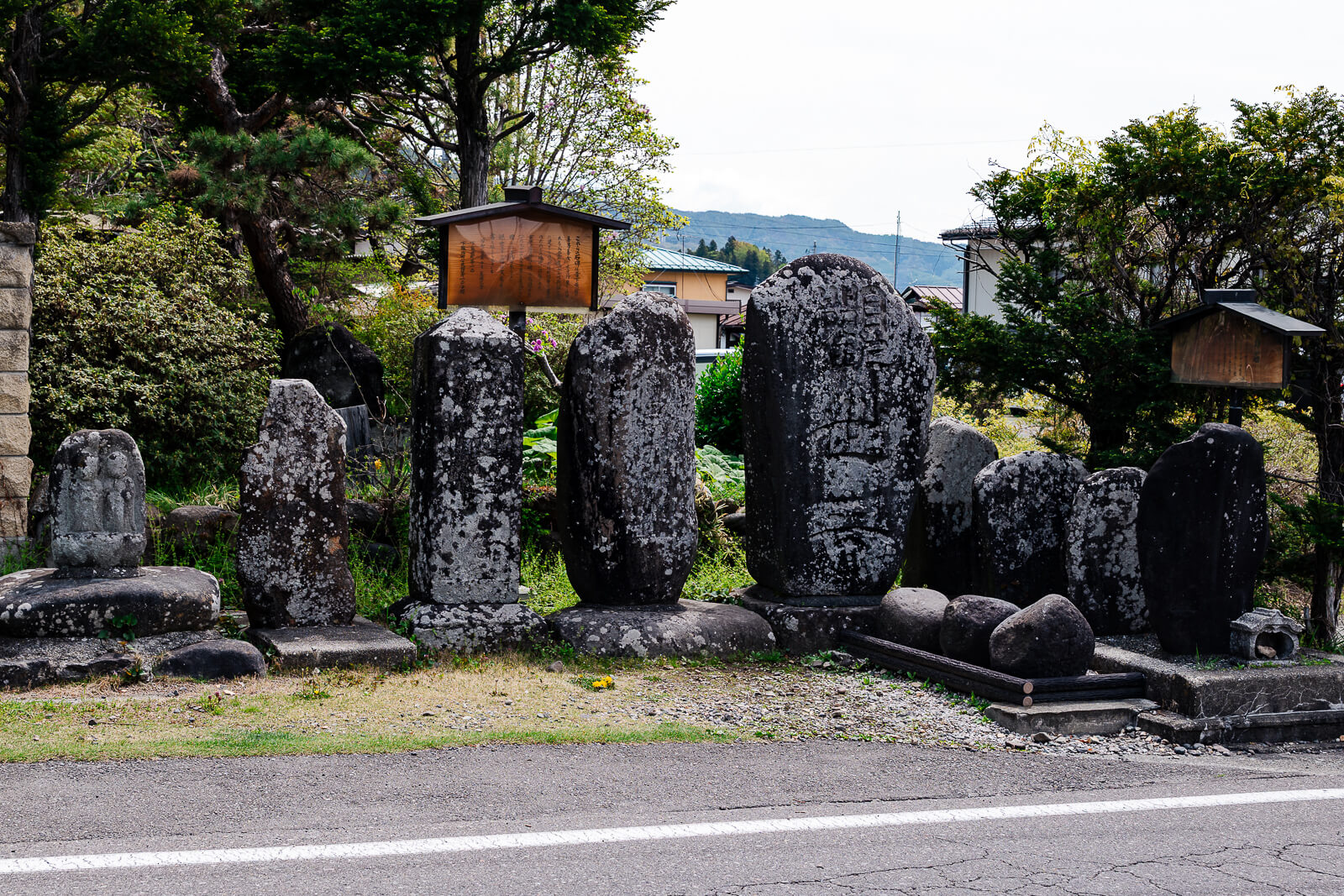
For travelers already moving through the Lake Suwa region, this section of Shimosuwa often changes the rhythm of the day. The spacing between sites, the presence of the river, and the quieter residential surroundings create a different kind of movement from the compressed pacing common around larger urban sightseeing districts elsewhere in Japan.
How Harumiya Fits Within the Suwa Taisha Shrines
The four shrines of Suwa Taisha are spread around the Lake Suwa basin rather than concentrated in a single complex. Visiting more than one gradually reveals how rivers, foothills, roads, and settlements still shape movement through the region today.
Suwa Taisha Shimosha Harumiya
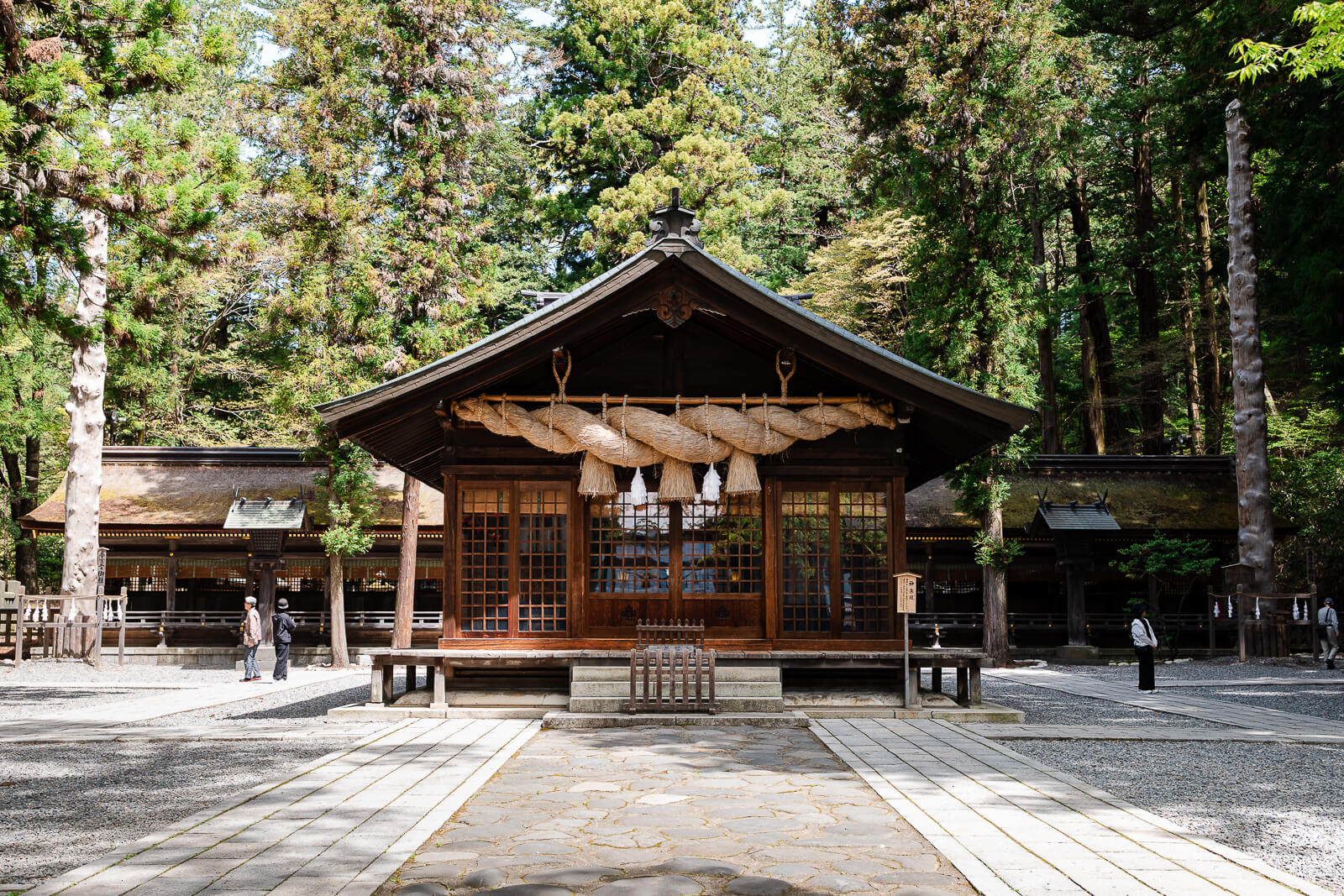
Harumiya remains one of the quieter shrine environments within the Suwa Taisha system. The grounds stay closely tied to the nearby river and surrounding cedar forest, and the smaller scale encourages slower movement between pathways, trees, and shrine buildings rather than concentrating attention toward a single structure.
Suwa Taisha Shimosha Akimiya
Located elsewhere in Shimosuwa, nearby Akimiya carries a stronger visual presence within the center of town. Larger approach roads, taller shrine structures, and heavier visitor movement create a noticeably different atmosphere from Harumiya even though both shrines form the lower half of the Suwa Taisha system.
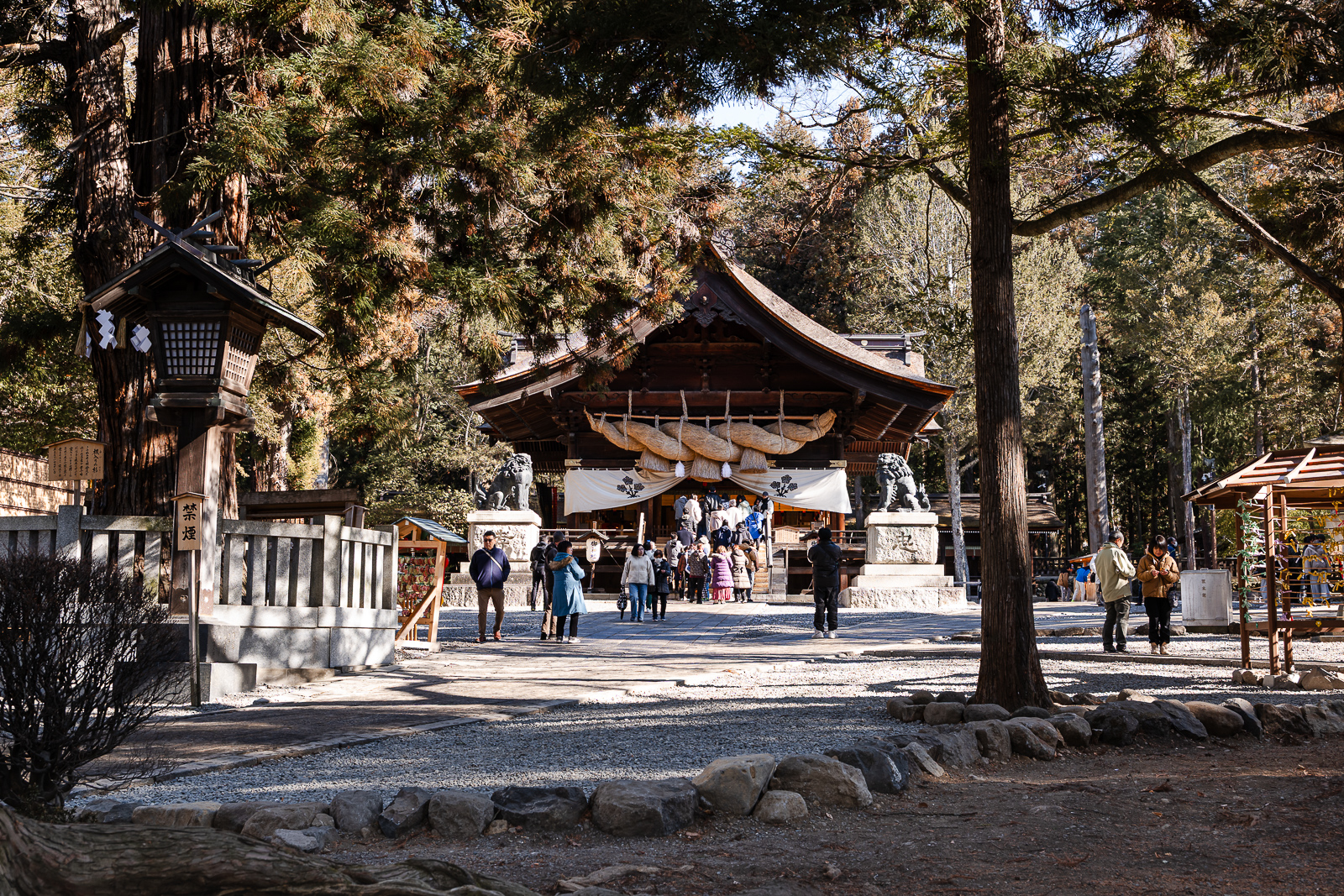
Suwa Taisha Kamisha Honmiya
Across the lake near Suwa City, Kamisha Honmiya occupies broader grounds closer to the foothills surrounding the upper basin. The scale feels larger and more open, with the surrounding geography becoming more visible across the wider shrine complex.
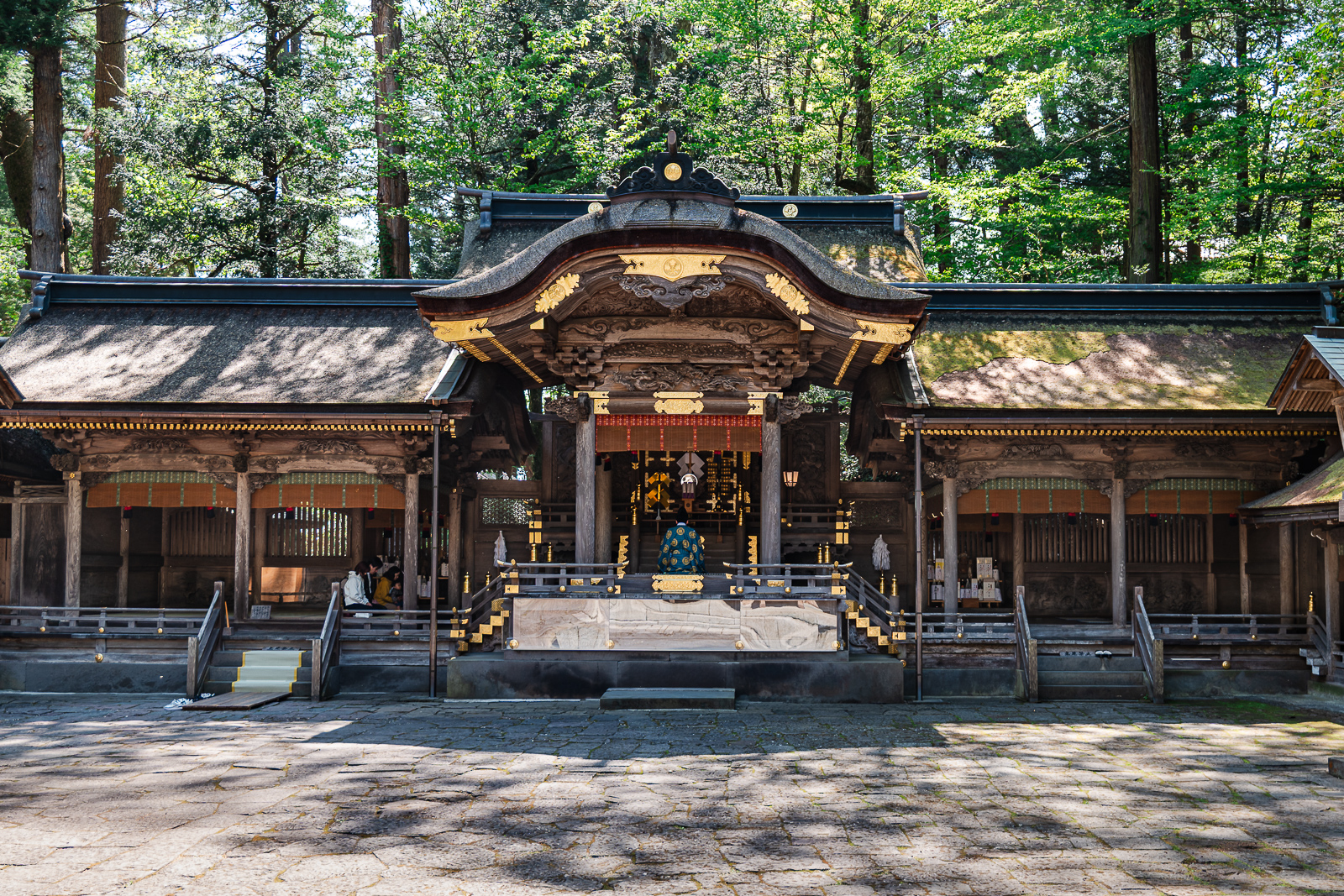
Suwa Taisha Kamisha Maemiya
Near Honmiya, Kamisha Maemiya feels more directly connected to the surrounding earth and wooded terrain. Compared to some of the other shrines around Lake Suwa, the layout remains more open and less visually dominated by large shrine structures.
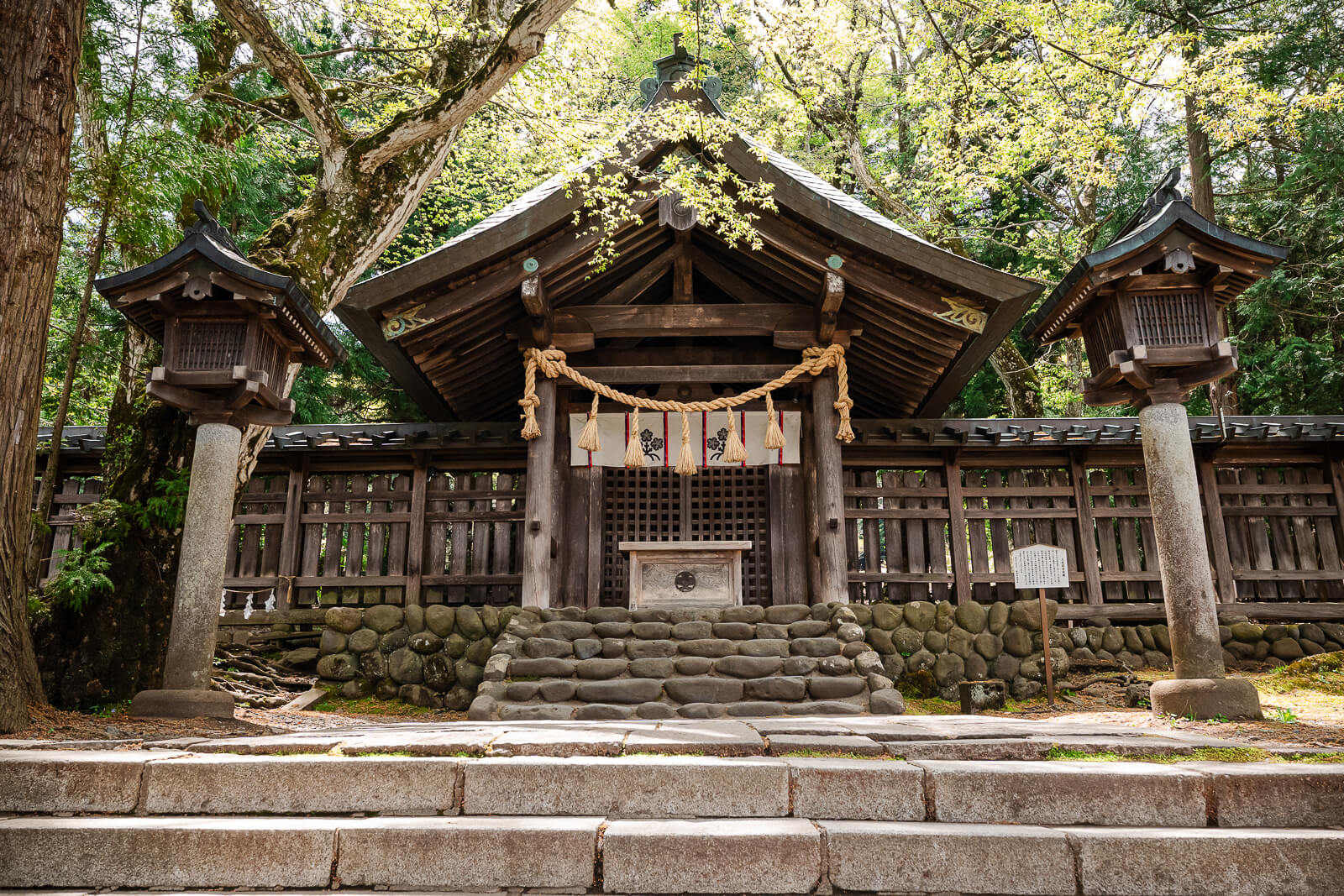
How This Fits Around Lake Suwa
Harumiya naturally connects with several nearby areas around Shimosuwa and the wider Lake Suwa basin without requiring complicated transportation or major detours. The walk toward Akimiya remains the most direct continuation from the shrine grounds, with residential streets gradually reconnecting to the more active sections of town surrounding the larger shrine complex. Along that same route, Jiunji Temple adds a nearby Zen temple stop between the Harumiya side of Shimosuwa and the broader walk toward Akimiya. Nearby, the Onbashirakan Yoisa Museum introduces the massive log-riding traditions tied to the Suwa Taisha shrine system, adding historical context to many of the symbols and structures already visible throughout Harumiya itself.
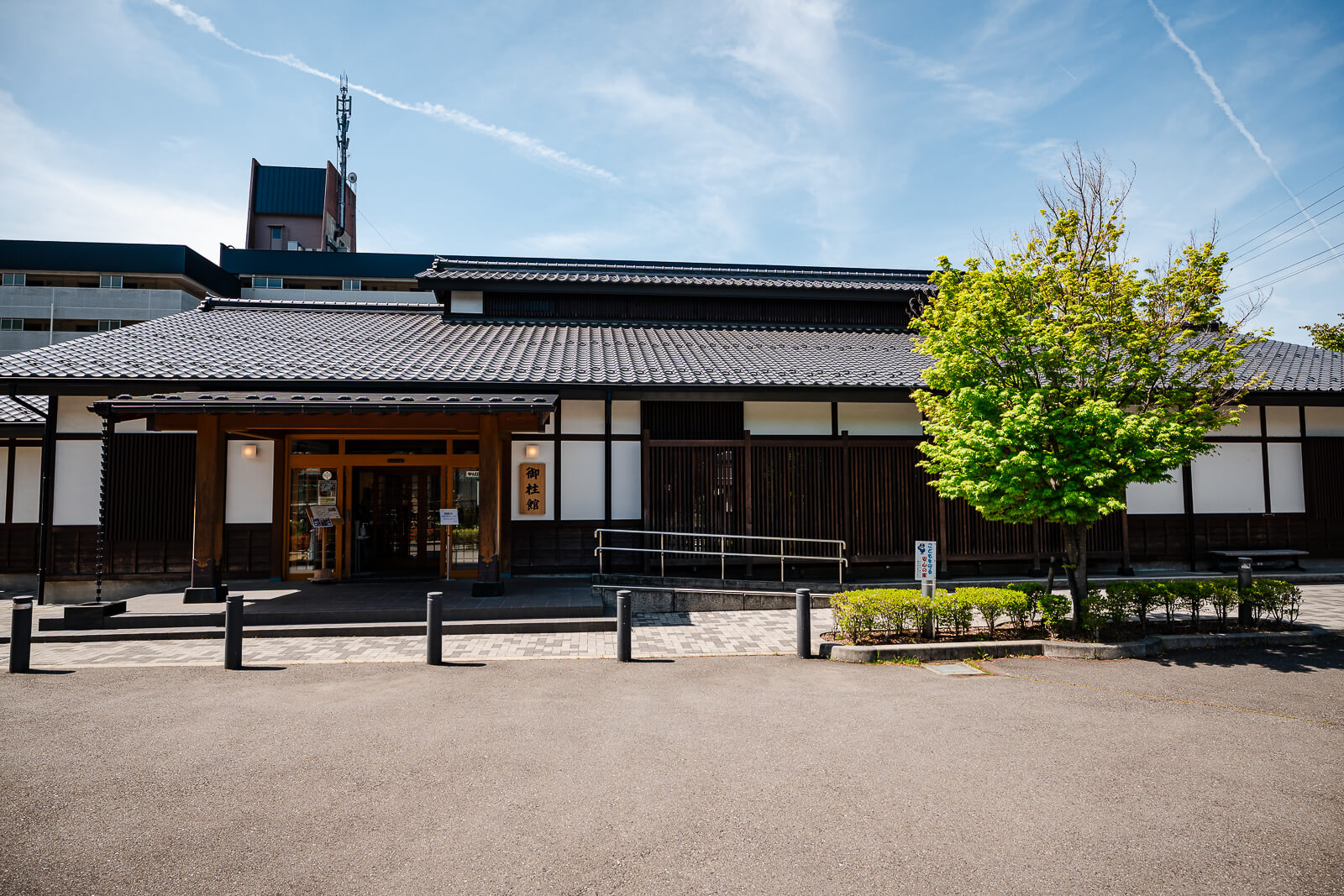
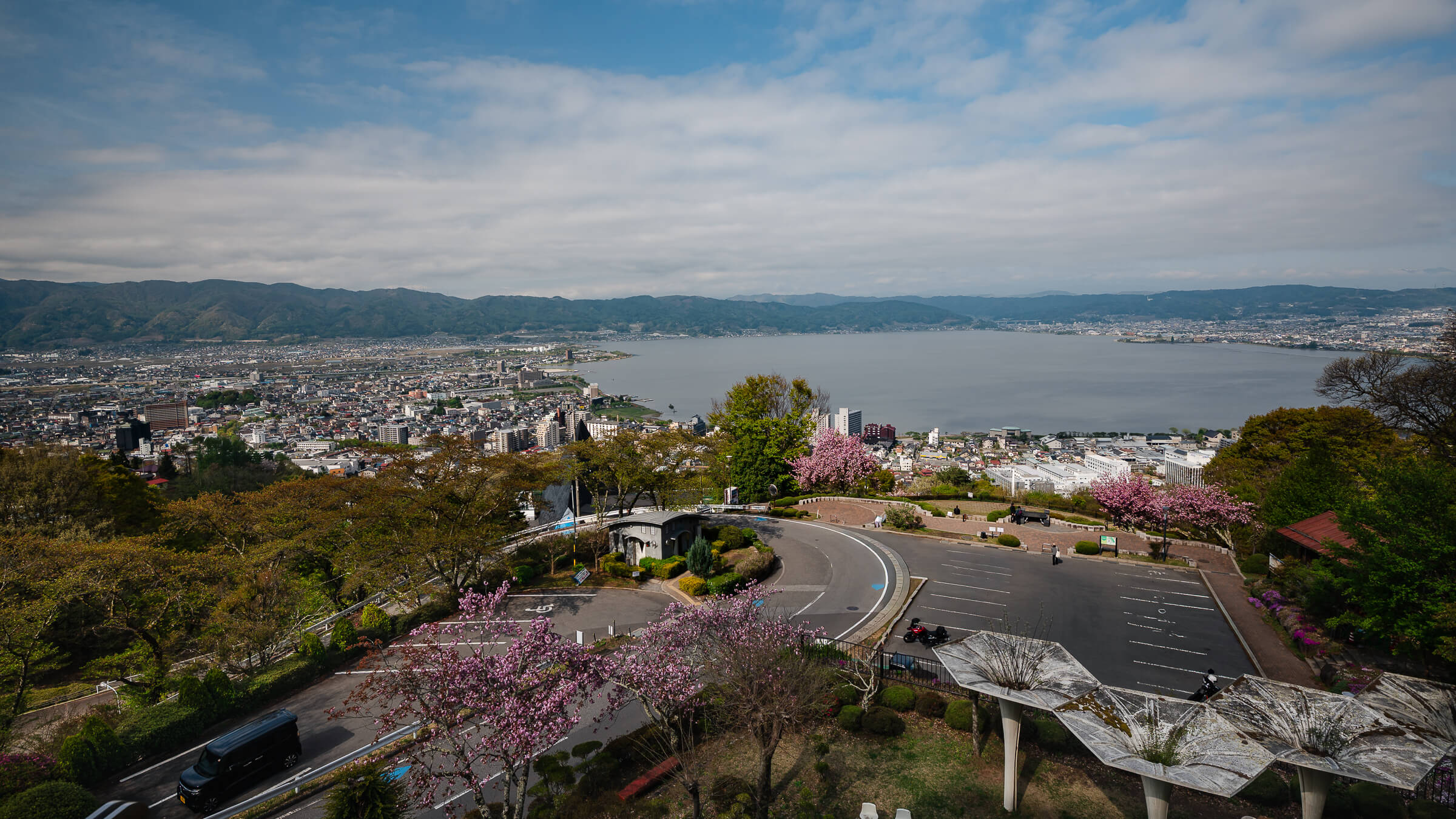
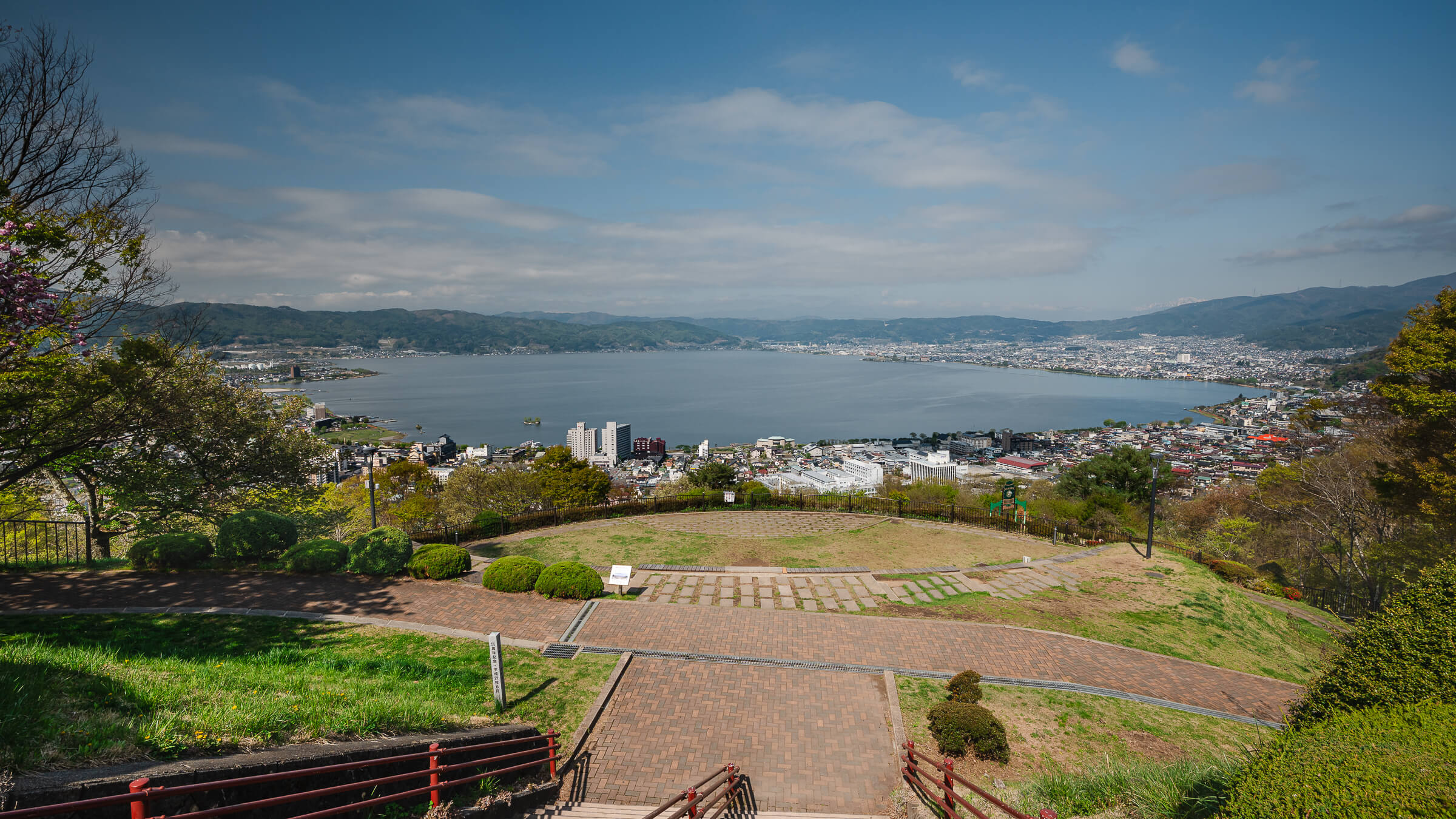
Along the southern side of Lake Suwa, smaller museums, riverside walking areas, and local soba restaurants continue extending the experience through Shimosuwa at a slower pace than many larger sightseeing districts. Across the basin, the reconstructed keep of Takashima Castle rises above the western shoreline near Kamisuwa Onsen, while Tateishi Park overlooks the lake from the hills above Suwa City, revealing how the shoreline communities fit together around the basin. Beyond the lake, the upper shrines of Suwa Taisha spread outward toward the foothills surrounding Suwa City and Chino.
Because the area remains relatively compact, Harumiya works well either as a shorter standalone stop or as part of a broader half-day route through Shimosuwa and the southern side of Lake Suwa. For the broader lakeside planning context, the Lake Suwa Guide explains how Shimosuwa, Kamisuwa, shoreline stops, viewpoints, and overnight stays fit together around the basin. Depending on direction, that route can continue toward lakeside attractions around Kamisuwa, viewpoints such as Tateishi Park, or the upper shrine districts connected to Suwa Taisha Kamisha Honmiya and Suwa Taisha Kamisha Maemiya. For the wider regional view, the Suwa Area Guide connects Harumiya and the lower shrine route with Lake Suwa, Kamisuwa, Chino, Tateishi Park, and the highland routes beyond the basin.
Getting There
Suwa Taisha Shimosha Harumiya is located in Shimosuwa in Nagano Prefecture and can be reached on foot from Shimosuwa Station. The walk follows local streets before gradually transitioning into the tree-covered shrine approaches surrounding the grounds.
Travelers arriving from Tokyo commonly reach the Lake Suwa region via limited express trains running from Shinjuku toward Shimosuwa or nearby Kamisuwa. Drivers approaching from Tokyo or central Nagano typically enter the basin using the Chuo Expressway before descending toward the lake itself.
Because the shrine sits within one of the more walkable sections of Shimosuwa, combining Harumiya with Akimiya and nearby riverside areas generally remains straightforward without needing additional local transportation.
Hours & Fees
Suwa Taisha Shimosha Harumiya grounds are generally open daily, and admission to the shrine grounds is free.
Shrine office hours and goshuin reception times may vary depending on the season and festival schedules connected to the wider Suwa Taisha shrine system. Visitors planning a dedicated trip should confirm current information through official Suwa tourism resources before visiting.