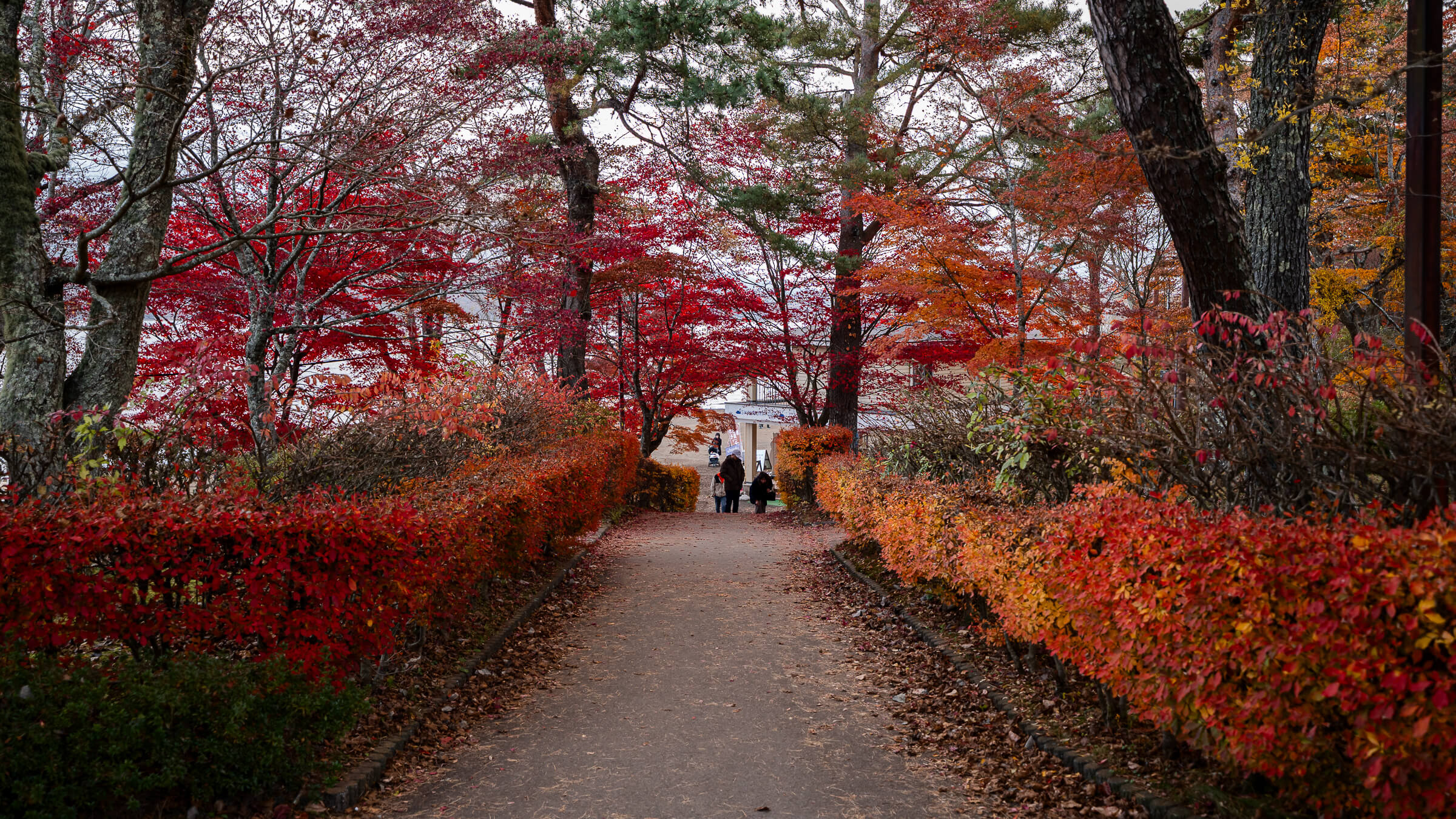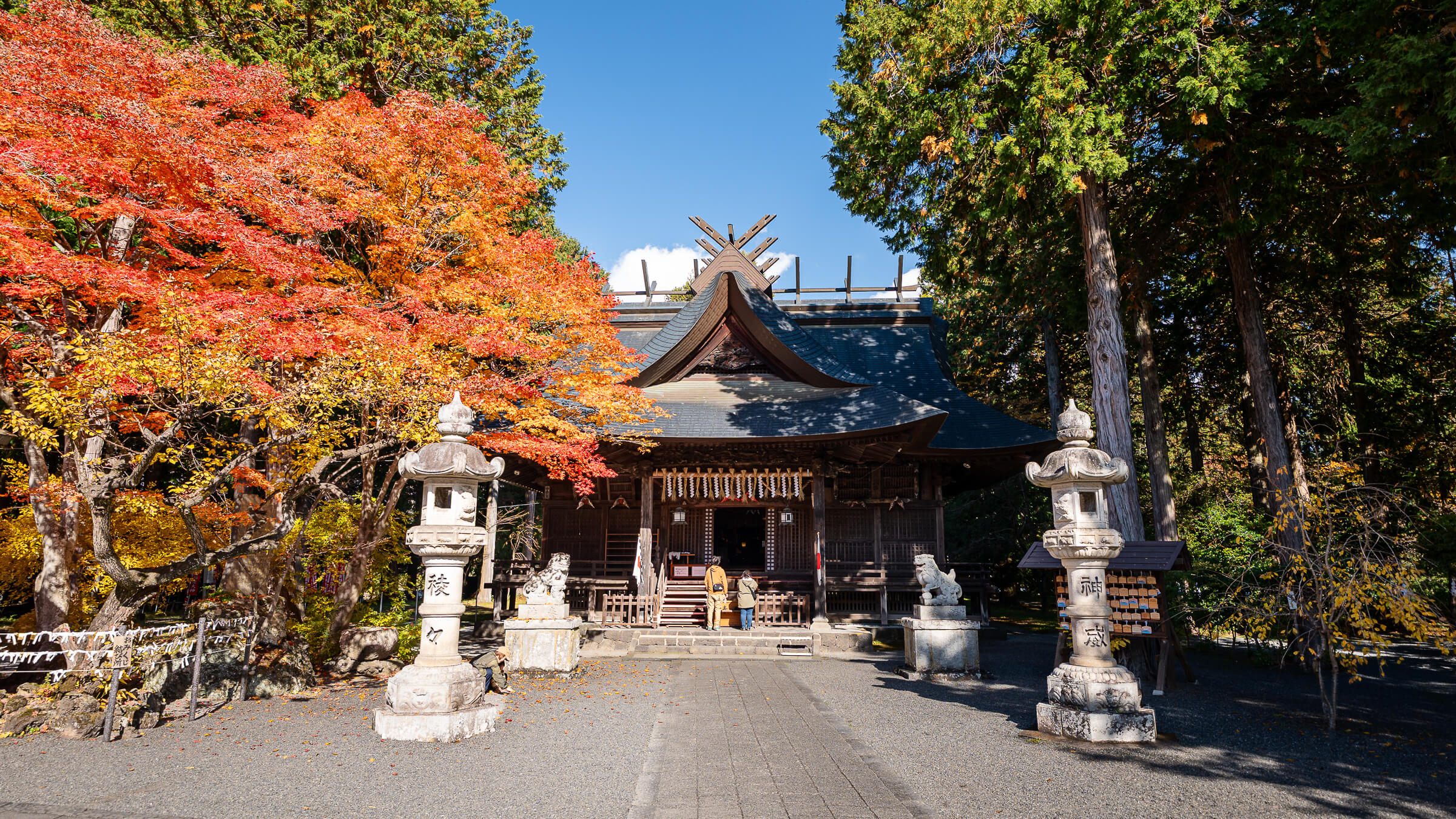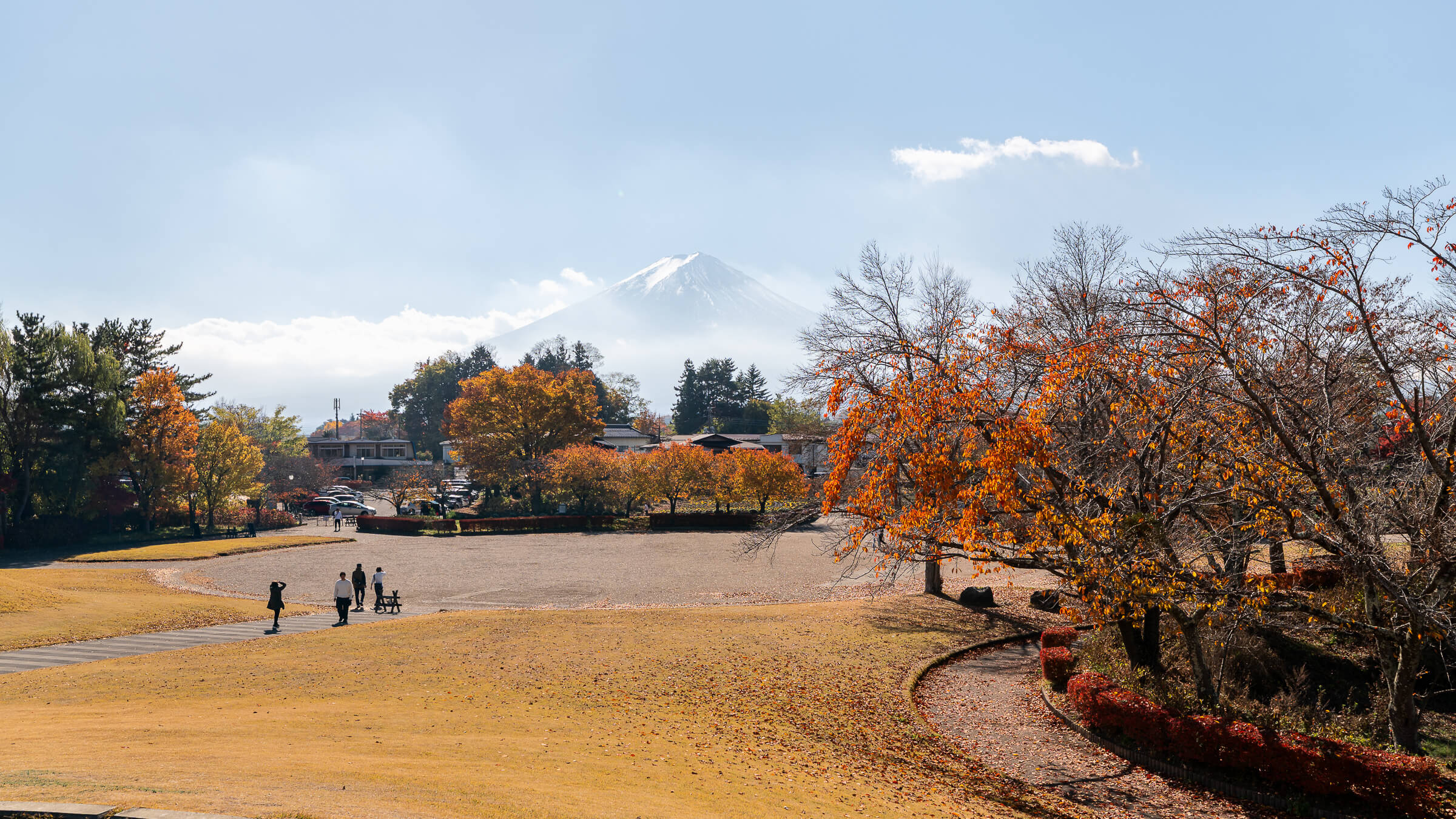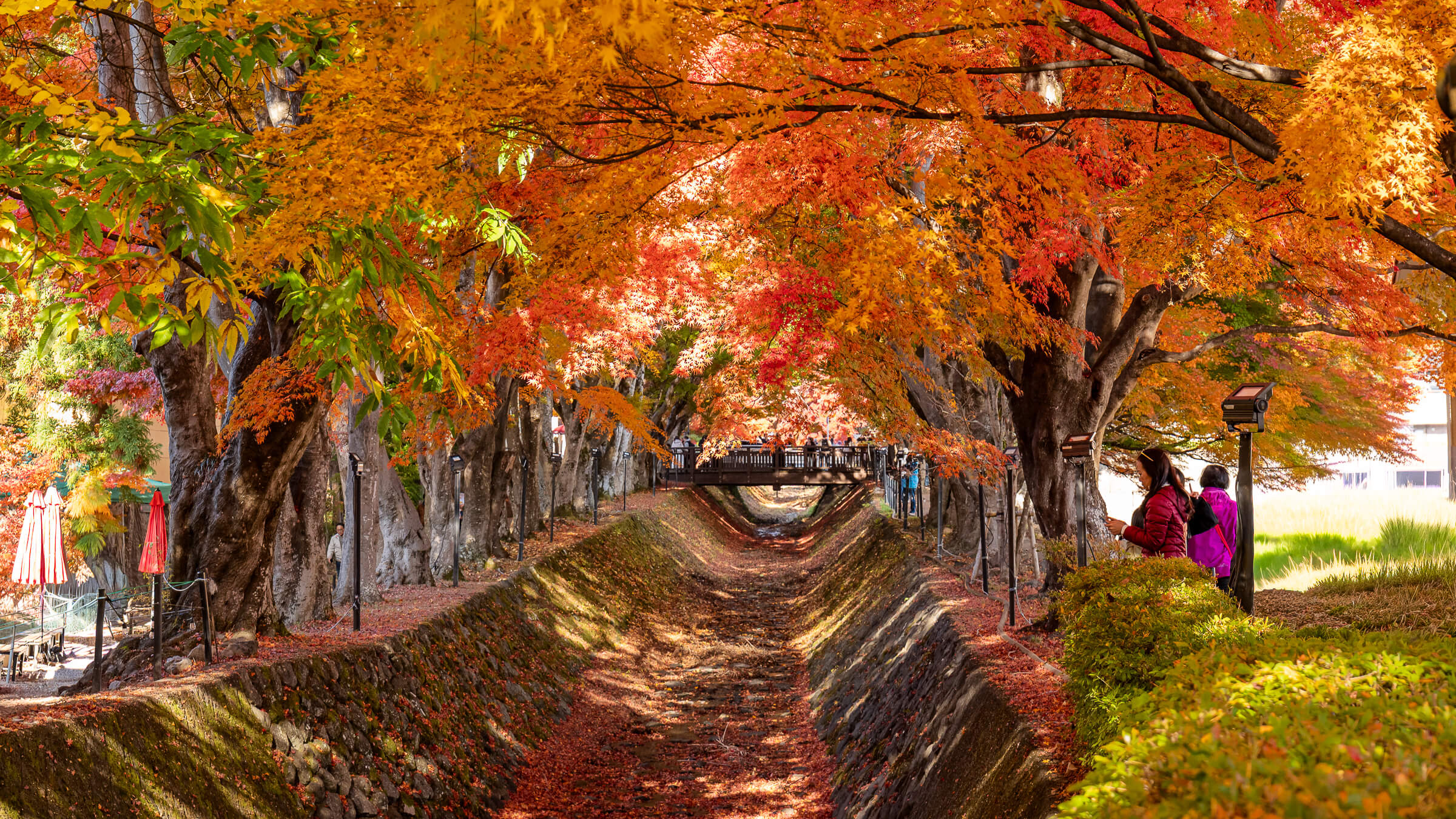
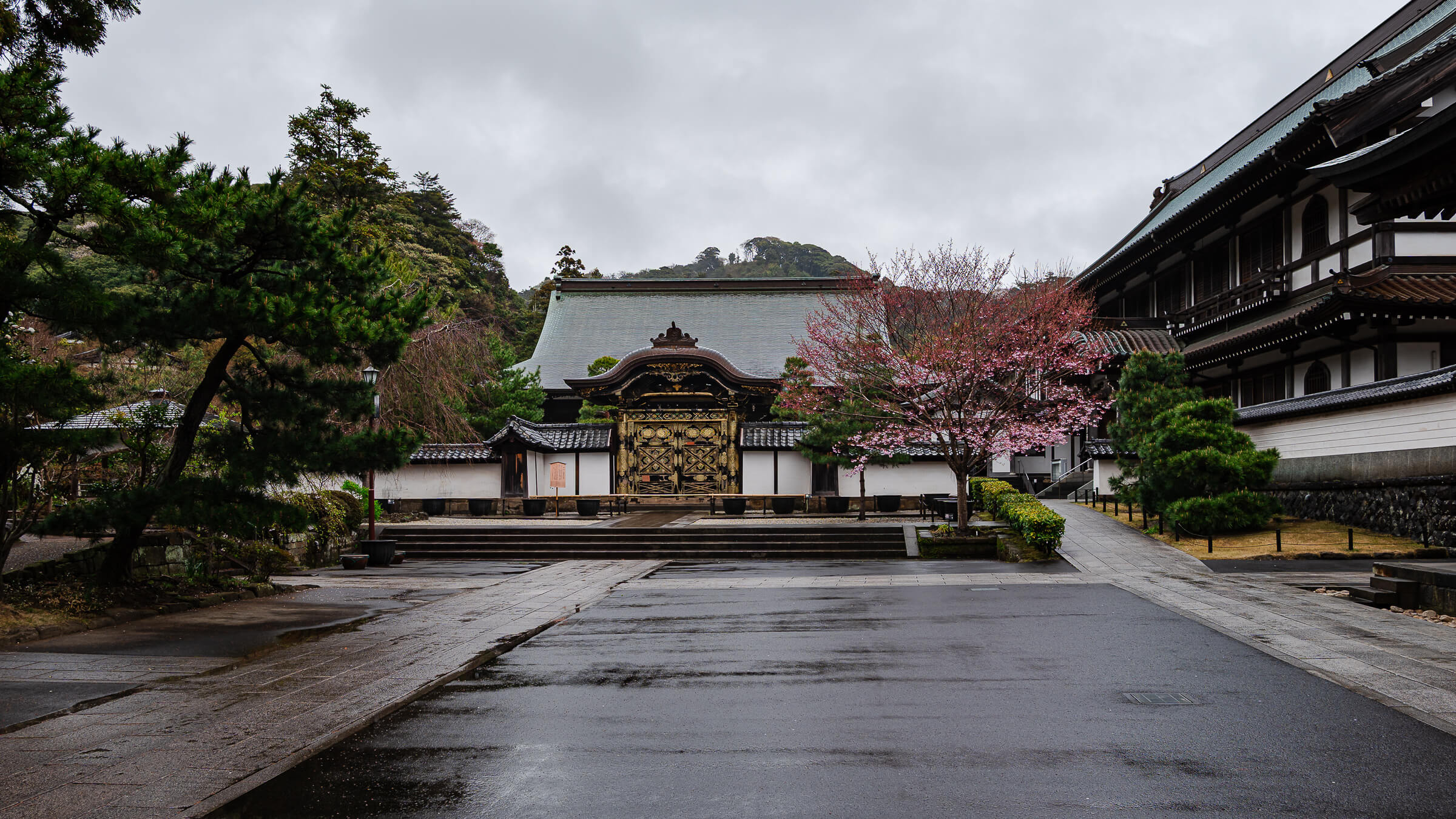
Japan’s Oldest Zen Training Monastery
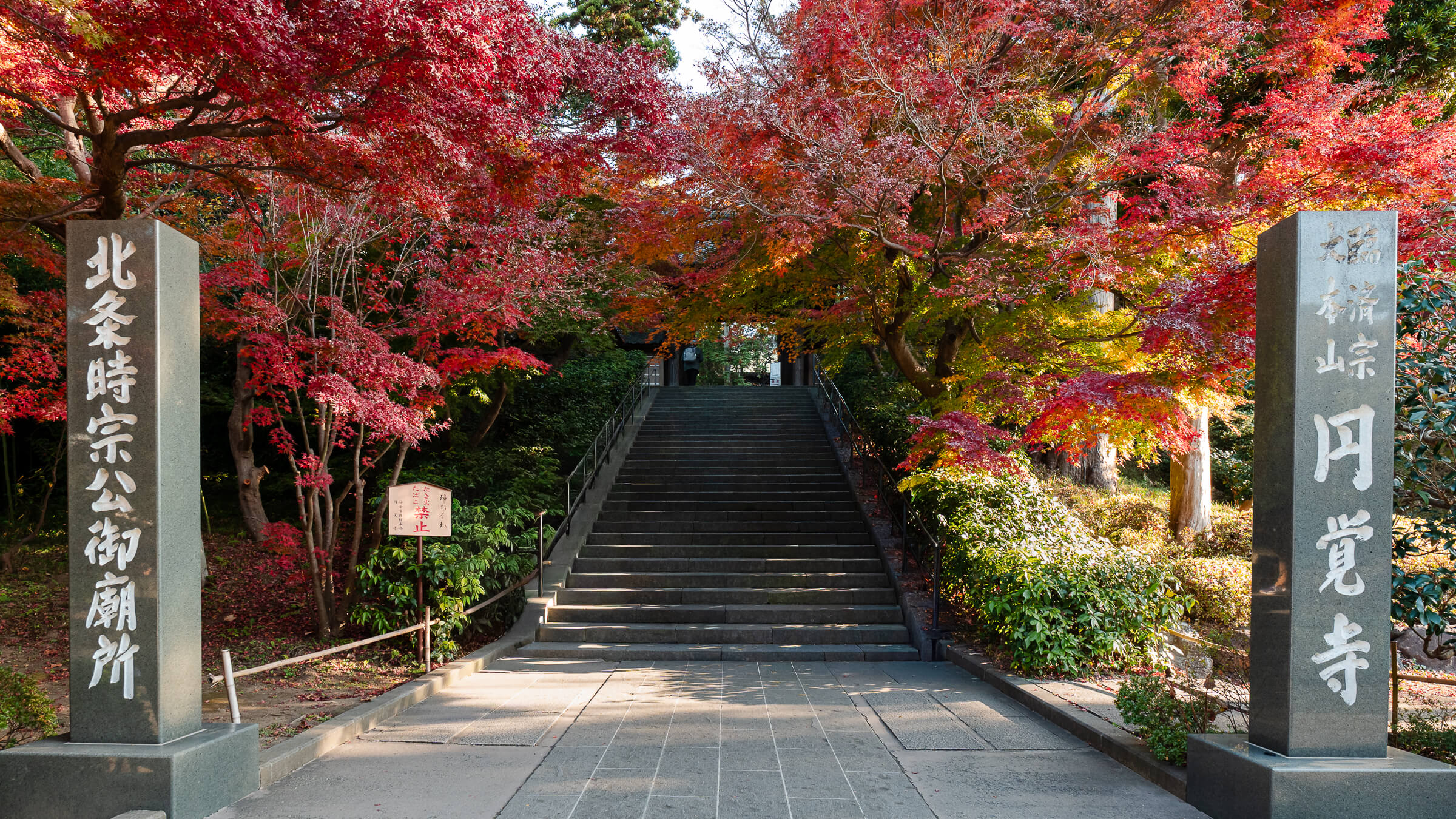
Kenchō-ji Temple stands at the southern end of Kita-Kamakura, where wooded hills rise above one of Kamakura’s most historic districts. Founded in 1253 under the patronage of Hōjō Tokiyori, the temple became Japan’s first major Zen training monastery and remains one of the country’s most important Zen institutions today. Its influence extended far beyond Kamakura and helped establish Zen Buddhism as a major force within Japanese religious life during the Kamakura period.
Many visitors reach Kenchō-ji after beginning near Engaku-ji, expecting another traditional temple visit focused on a handful of historic buildings. Instead, the grounds unfold into a much larger landscape of pilgrimage temples, gardens, hillside shrines, observatories, and walking routes. This scale distinguishes Kenchō-ji from more concentrated nearby stops such as Meigetsu-in and often surprises first-time visitors.
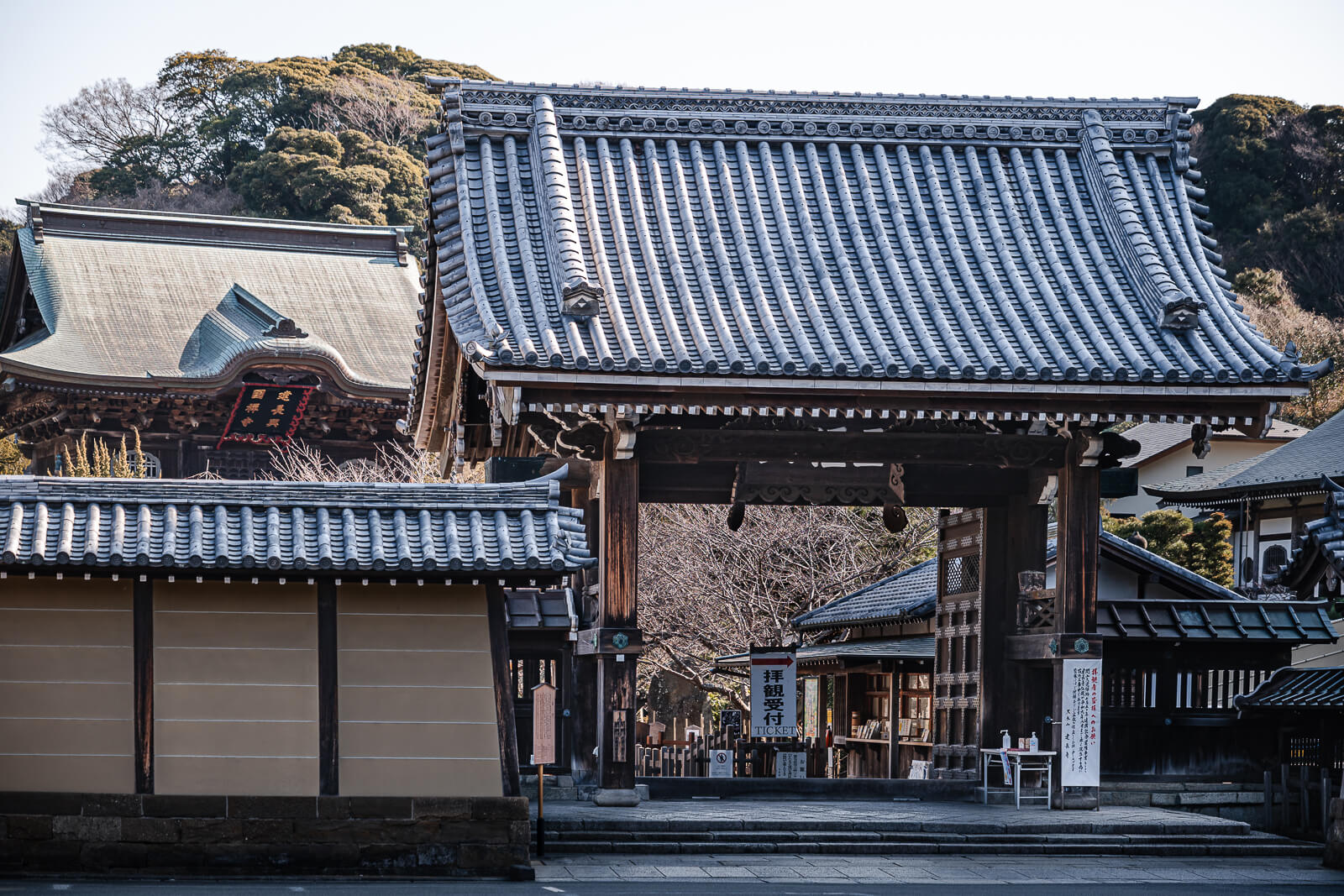
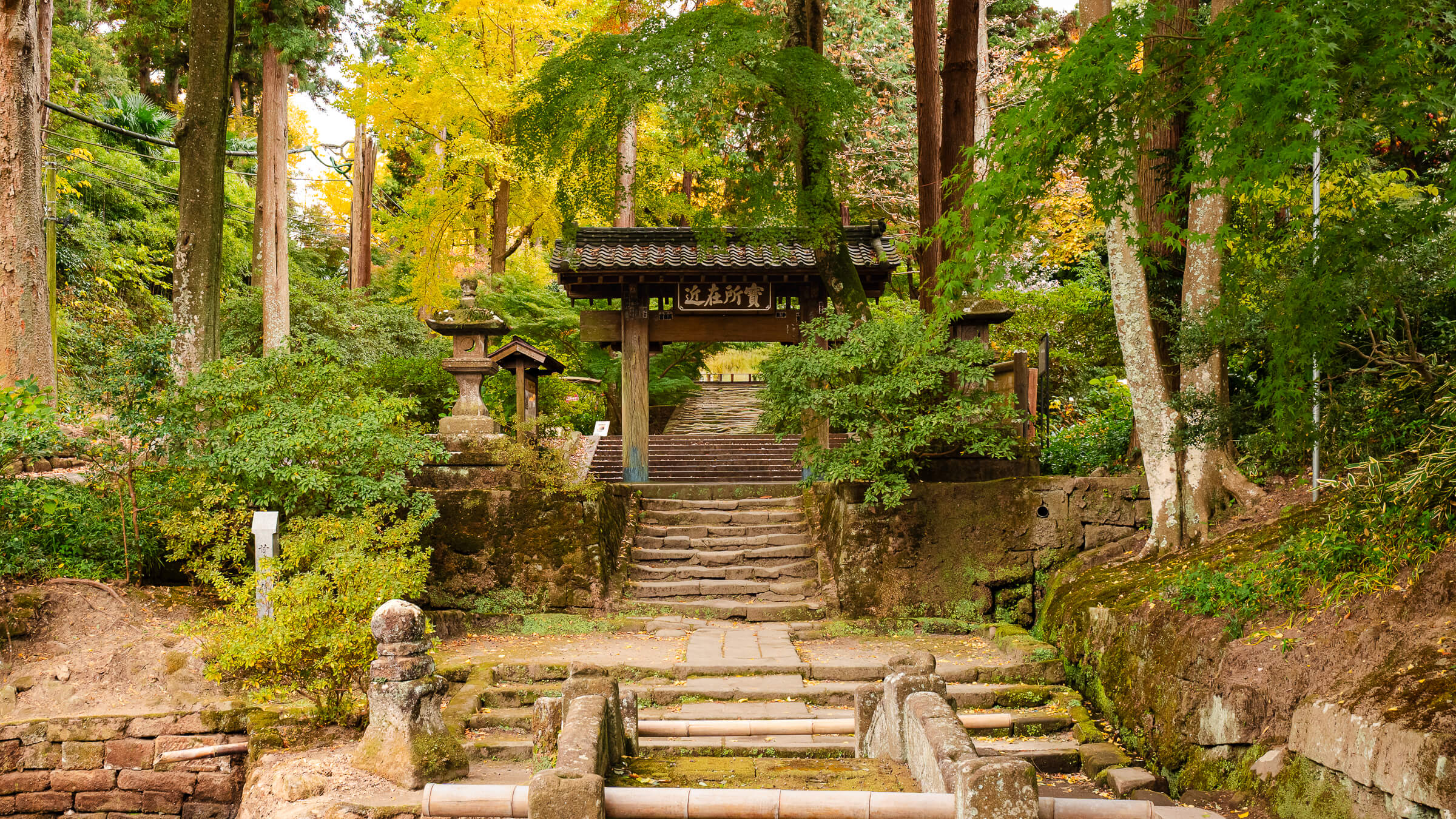
Other temples extend the district between Kita-Kamakura Station and Kenchō-ji. Tōkei-ji occupies a wooded site closer to the station and adds a smaller temple visit along the same corridor. Jōchi-ji marks the nearby entrance to the Daibutsu Hiking Course and provides another route into Kamakura’s surrounding hills.
Kenchō-ji also provides direct access to the upper ridges through the Ten-en Hiking Course. Depending on how much of the complex visitors choose to explore, a visit can range from less than an hour to nearly half a day. Travelers planning the wider district can use the Kita-Kamakura itinerary to connect these temples and surrounding routes in a workable sequence.
Why Visit Kencho-ji
Kencho-ji combines several different experiences within a single property. The lower grounds showcase some of Kamakura’s most important Zen architecture, while the upper sections connect visitors with pilgrimage temples, hillside viewpoints, and one of the city’s best-known hiking routes. Few attractions in Kamakura offer such a broad range of experiences while remaining connected through a single walking route.
The temple also occupies a unique position within the Kamakura 33 Kannon Pilgrimage. Three consecutive pilgrimage temples are located within the wider complex, allowing visitors to make substantial progress on the route without leaving the grounds. For travelers collecting goshuin or working toward completing the pilgrimage, this alone makes Kencho-ji one of the most significant stops in Kamakura.
As the visit continues deeper into the property, the experience gradually shifts from monumental Zen architecture to gardens, memorial sites, forested hillsides, and elevated viewpoints overlooking Kamakura and Sagami Bay. Rather than feeling like separate attractions, these elements connect naturally as visitors move through the grounds. The result is a visit that reveals more layers as the route progresses.
Understanding the Temple Grounds
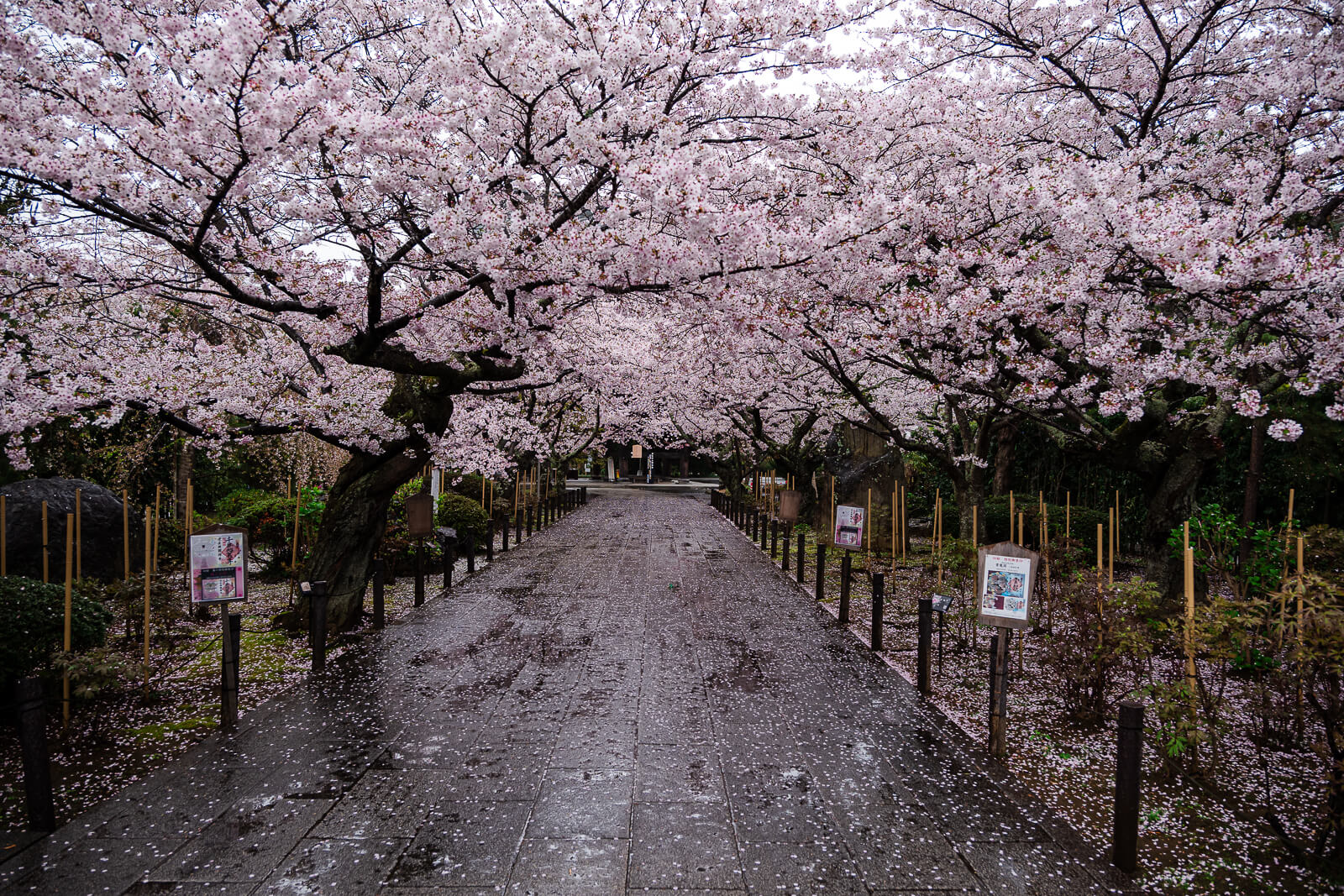
The easiest way to understand Kencho-ji is to think of it as a series of connected zones that gradually unfold as visitors move deeper into the property. While many visitors focus primarily on the main temple buildings, the wider complex extends far beyond the central precinct and rewards those willing to continue exploring. Understanding this layout before entering helps visitors use their time more effectively.
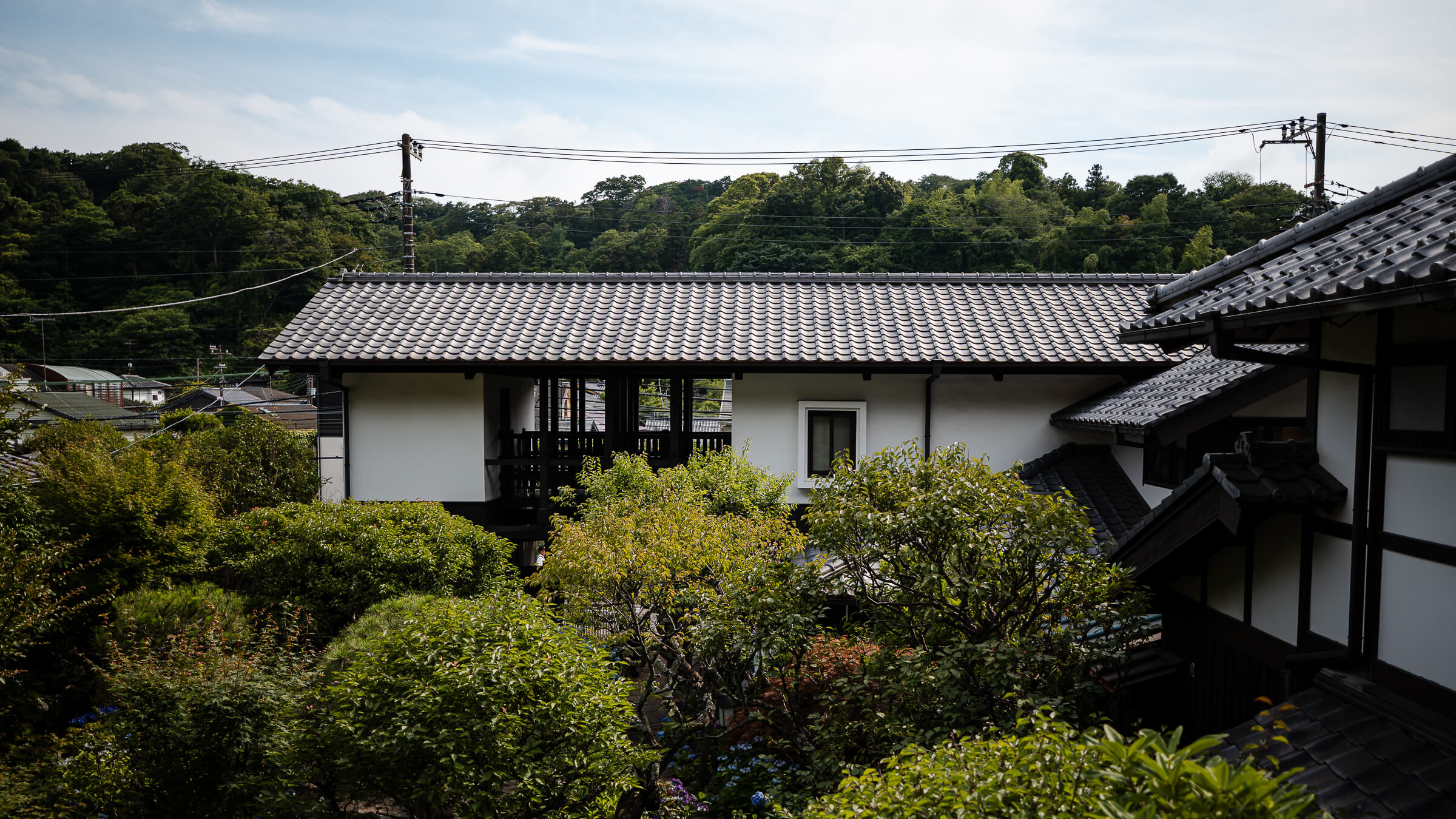
The entrance precinct contains the admission office, administration building, goshuin counter, and Myoko-in. Beyond this sits the main Zen precinct centered on the Sanmon Gate, Buddha Hall, Hatto, and surrounding temple structures. This area contains most of the buildings visitors associate with Kencho-ji and serves as the architectural heart of the monastery.
Further into the grounds, the route passes through the Temple Gardens area and continues toward Ryuho-in before gradually climbing into the upper hillside section. Hansobo, the insect mound, Jizodo, several observatory viewpoints, and the beginning of the Ten-en Hiking Course are all located within this upper zone. Understanding this progression helps explain why experiences at Kencho-ji can vary significantly from one visitor to another.
Exploring the Main Zen Precinct
The main temple grounds follow a traditional Zen layout centered on a broad north-south axis. Large halls, open courtyards, and carefully aligned buildings reveal the scale and importance of the monastery. Even visitors with little knowledge of Zen Buddhism can quickly appreciate the size and organization of the complex.
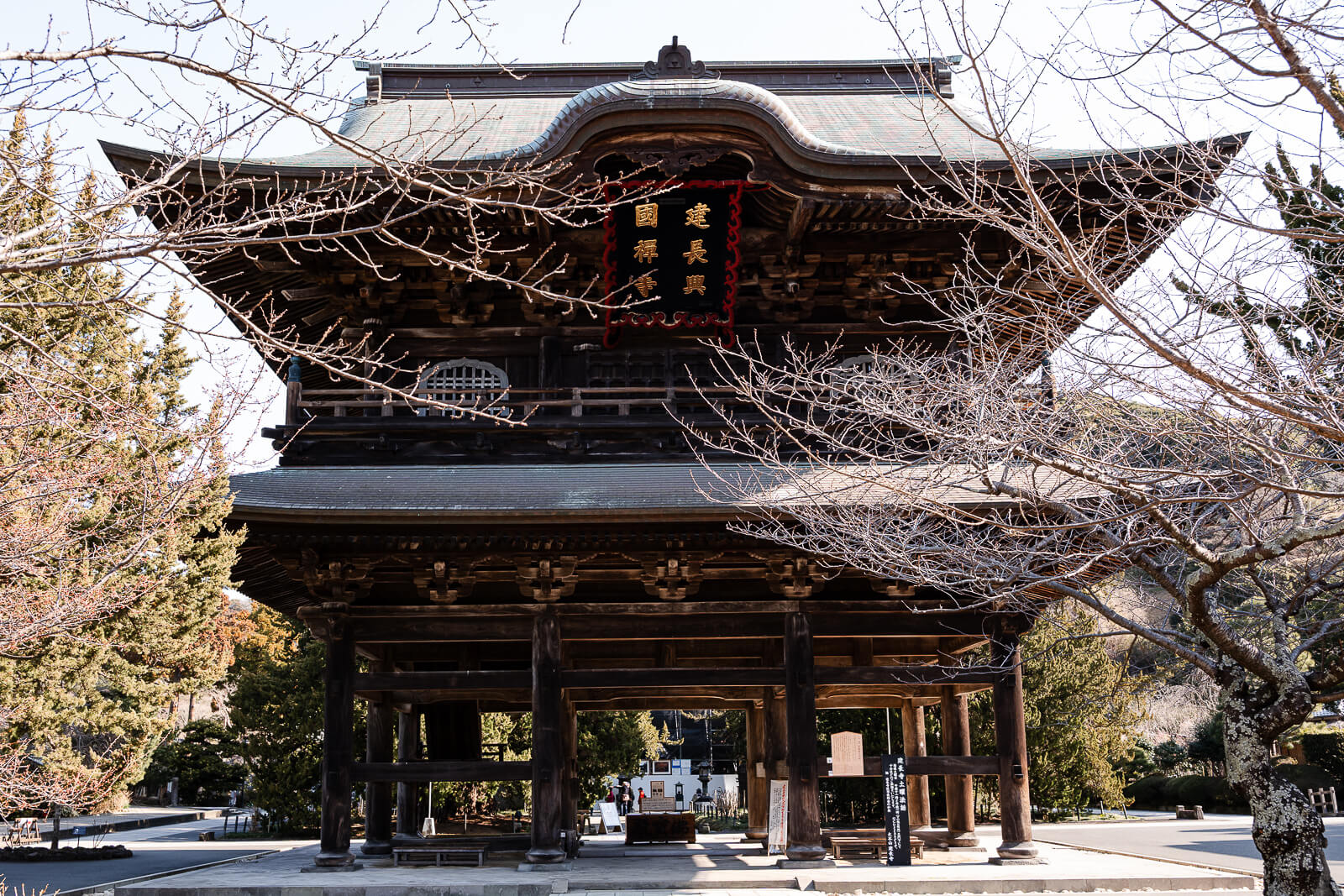
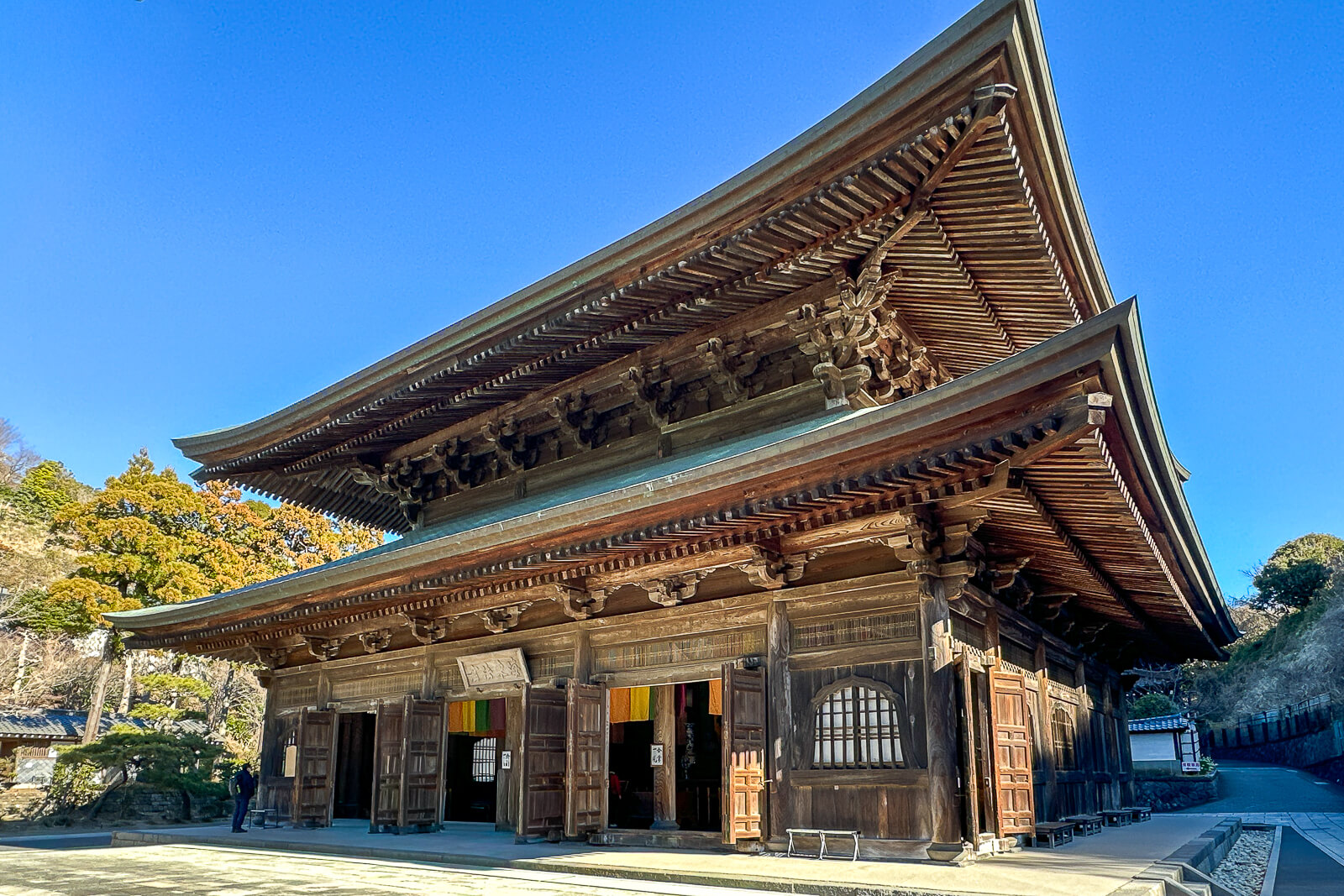
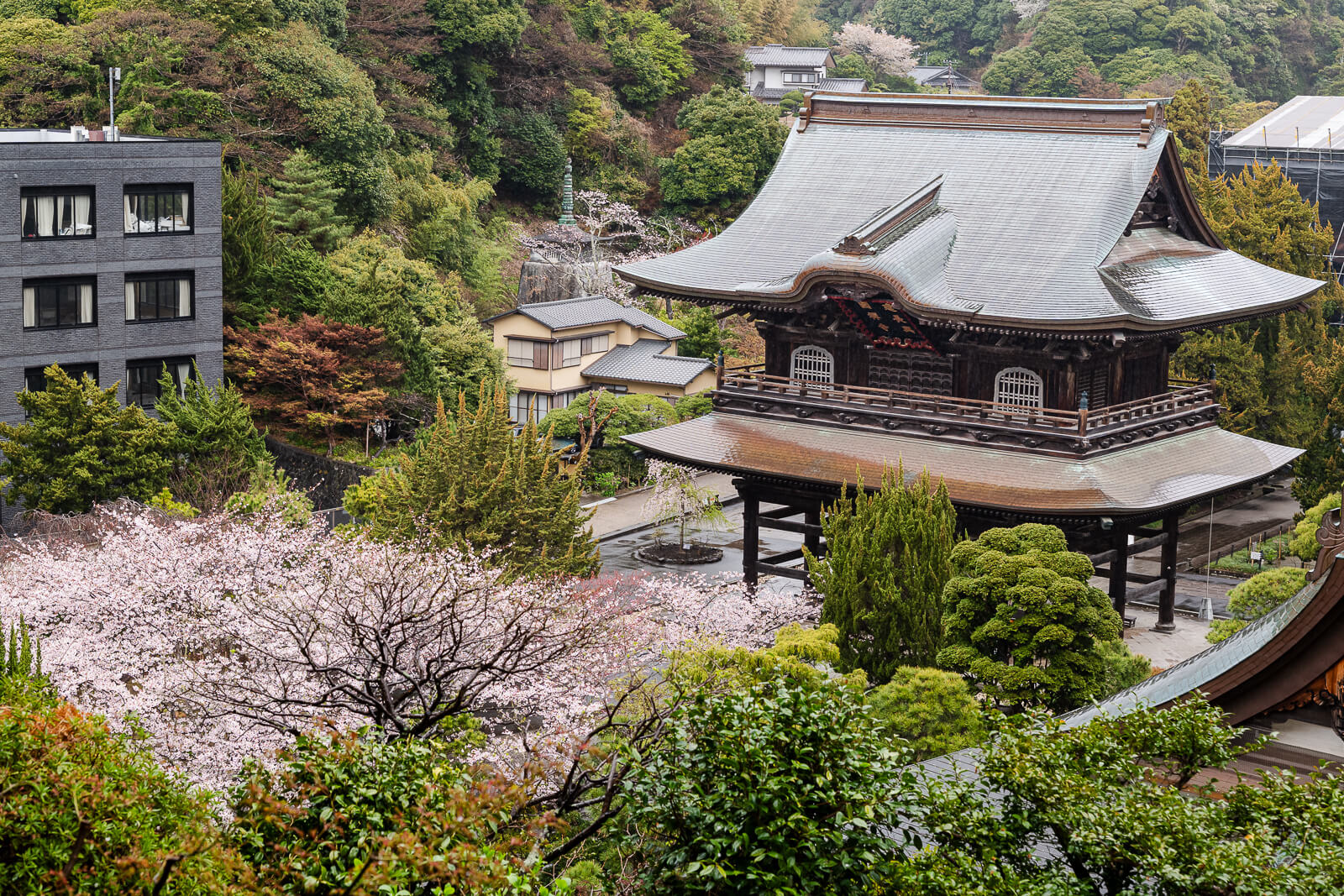
The Sanmon Gate serves as the visual gateway to the temple and remains one of the most recognizable structures within the grounds. Beyond it, visitors encounter the Buddha Hall and Hatto, whose size and placement establish the character of the monastery. The broad open spaces between the buildings allow visitors to appreciate the architecture from multiple perspectives.
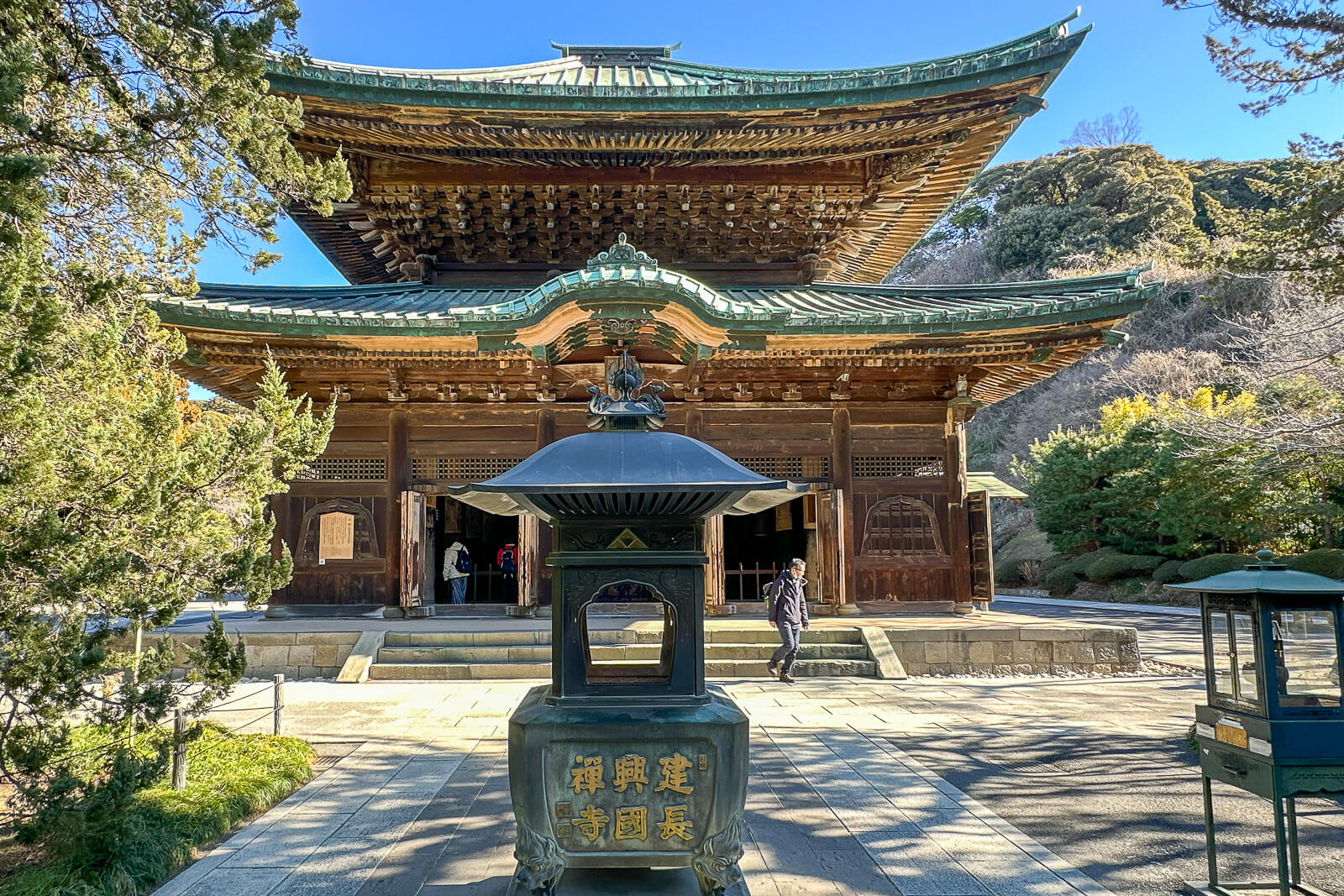
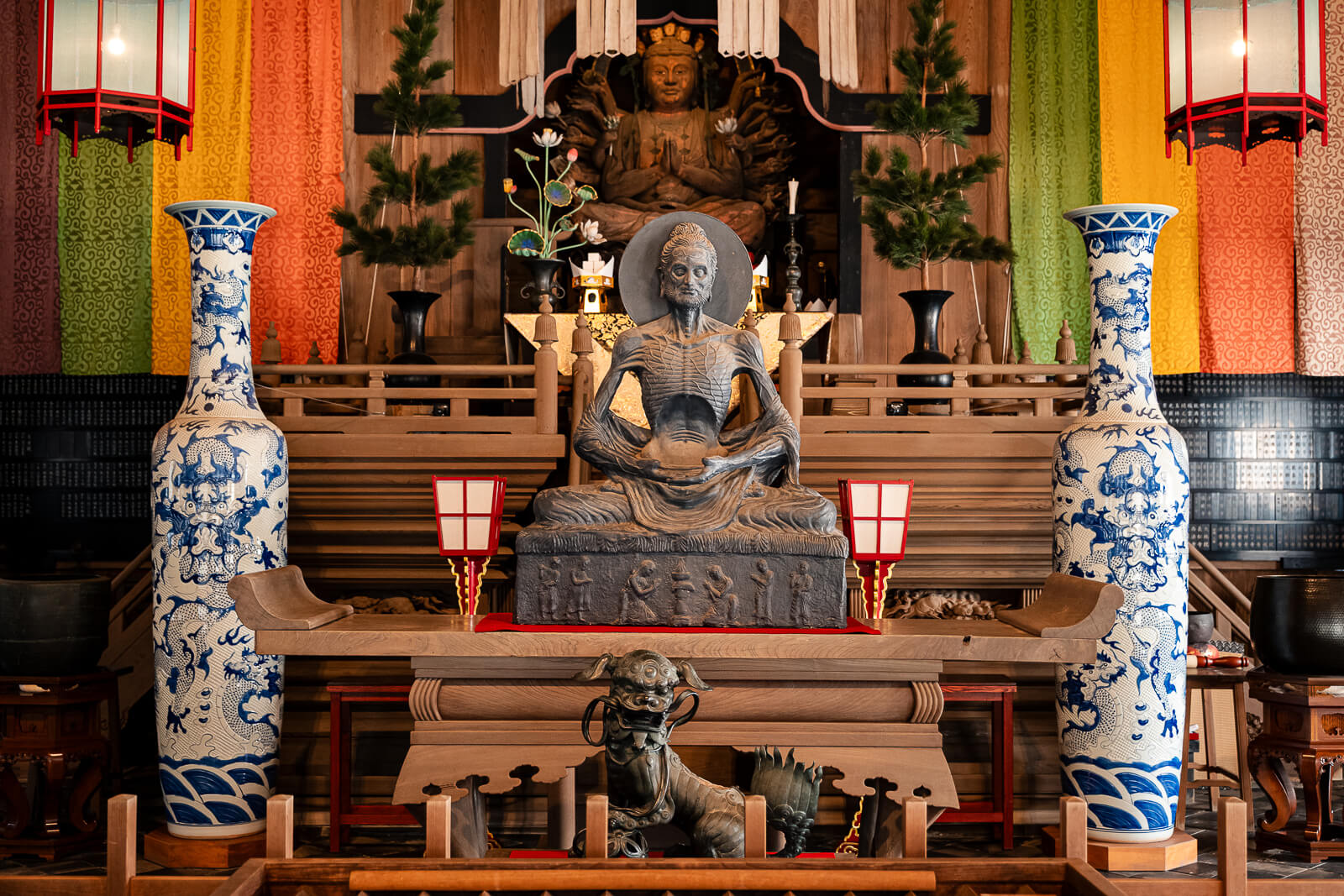
Unlike many smaller temples in Kamakura, Kencho-ji feels expansive. The distance between major buildings creates a sense of scale that is difficult to appreciate from photographs alone. Even on busy days, the grounds often feel less crowded than visitors expect because the complex disperses people across a large area.
The Dragon Ceiling of the Hatto
One of the most memorable features within the temple is the dragon painted on the ceiling of the Hatto lecture hall. Viewed from below, the dragon appears to fill the entire space above visitors and immediately draws attention upward. The scale of the artwork contrasts strongly with the restrained architectural style found throughout much of the rest of the complex.
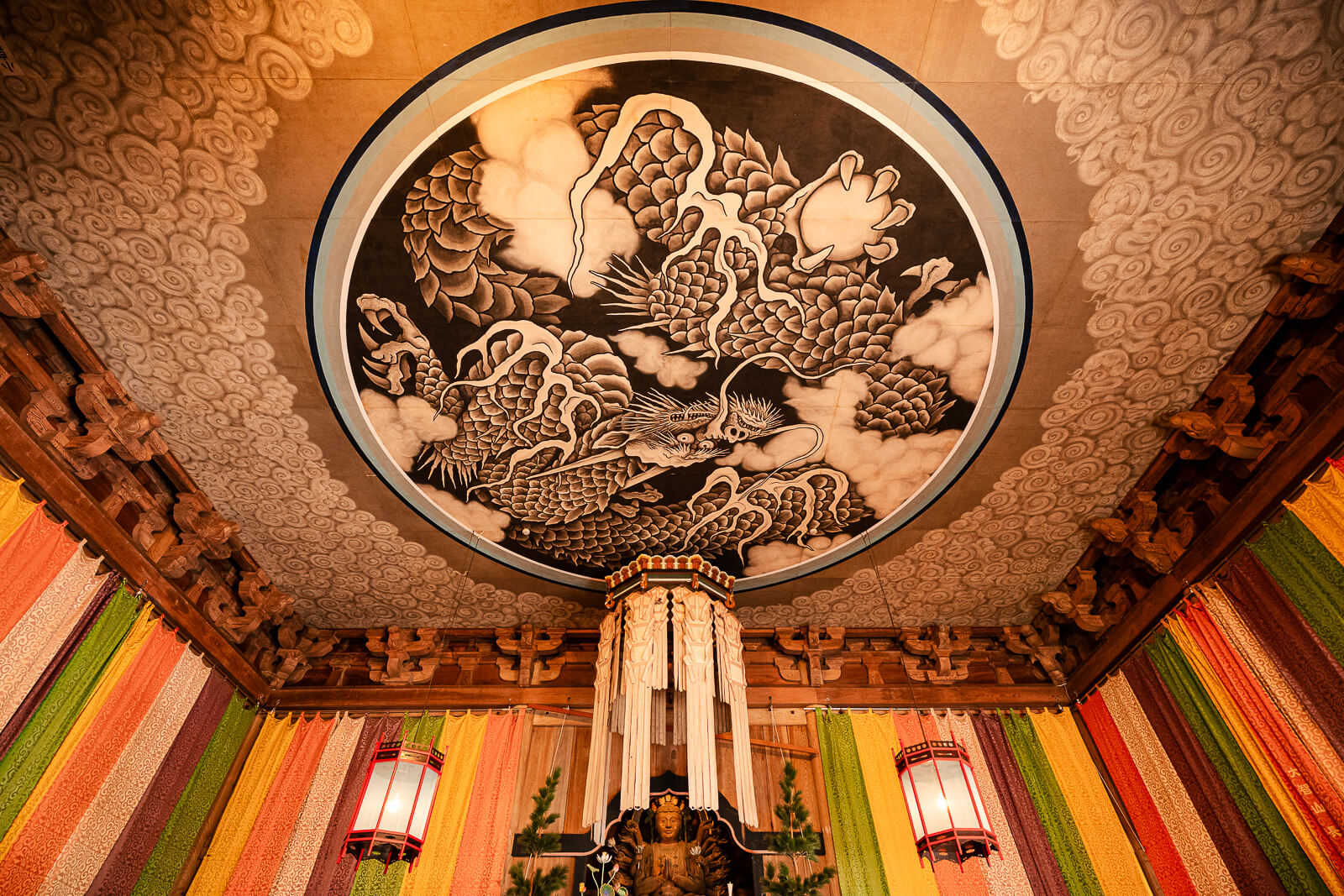
The dragon has become one of Kencho-ji’s most photographed features and remains a highlight for many visitors. While the temple grounds contain numerous historic structures, the ceiling painting provides one of the most visually dramatic moments of the visit. It is often one of the last details visitors remember long after leaving the temple.
Three Consecutive Kamakura 33 Pilgrimage Temples
Kencho-ji occupies a special place within the Kamakura 33 Kannon Pilgrimage because three consecutive temples on the route are located within the wider complex. Temple #27 Myoko-in, Temple #28 Kencho-ji, and Temple #29 Ryuho-in all form part of the pilgrimage. This arrangement allows visitors to complete three stops without leaving the property.
The first pilgrimage temple, Myoko-in, sits near the entrance section of the complex. After passing the admission area and administration building where visitors receive the Kencho-ji goshuin, a side route leads toward the temple. Because many visitors continue directly toward the Sanmon Gate, Myoko-in is often overlooked despite being relatively easy to reach.
Visitors interested in completing all three pilgrimage temples should consider asking at the administration office near the entrance. Staff are familiar with pilgrimage visitors and can provide directions to the additional locations within the grounds. This can be particularly useful for first-time visitors unfamiliar with the layout of the complex.
Myoko-in and Early Spring Plum Blossoms
Myoko-in maintains a noticeably different atmosphere from the larger ceremonial spaces found elsewhere within Kencho-ji. The temple functions as an active religious site and can initially appear closed to casual visitors. Those seeking a goshuin or following the pilgrimage route, however, are generally welcomed when approaching respectfully.
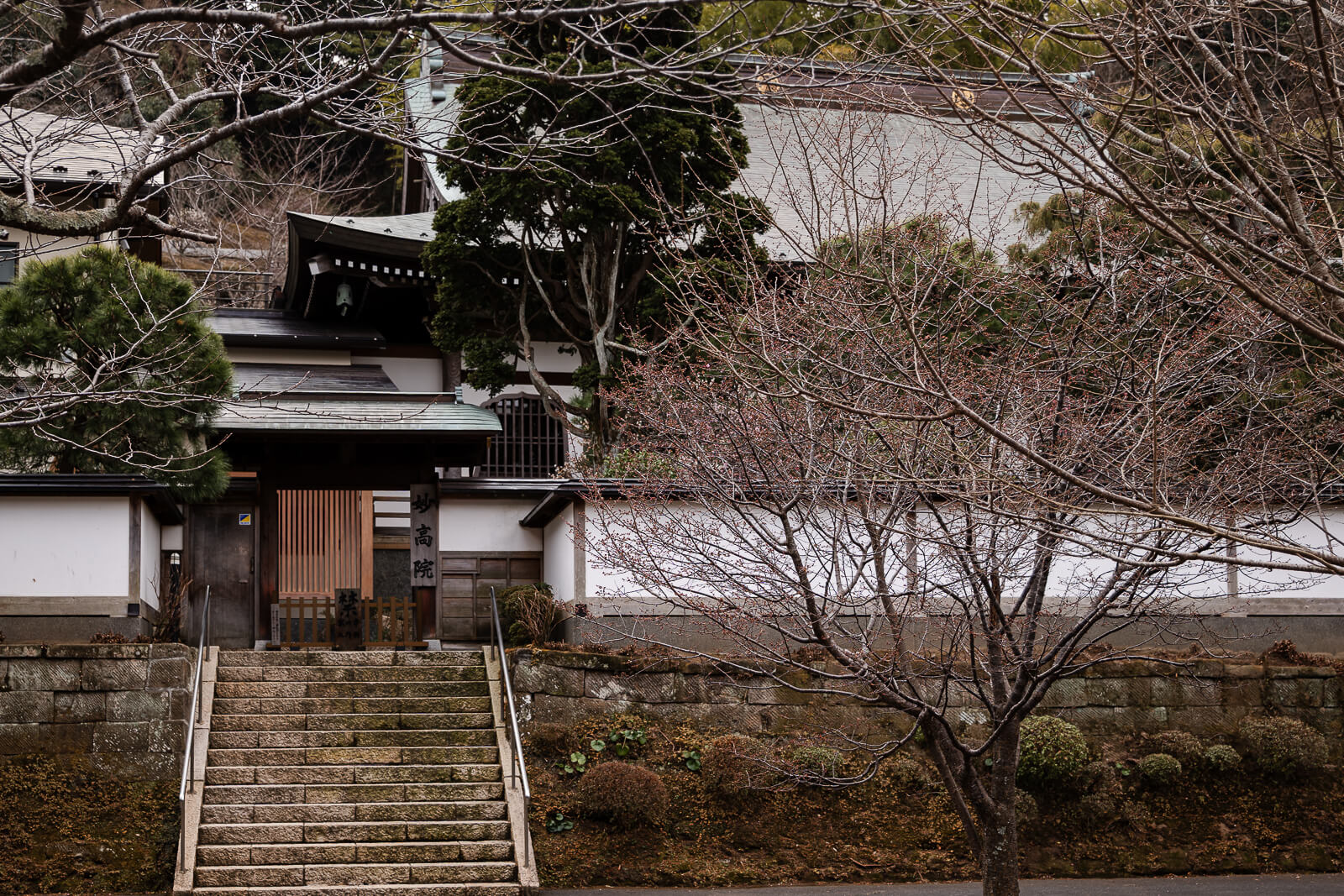
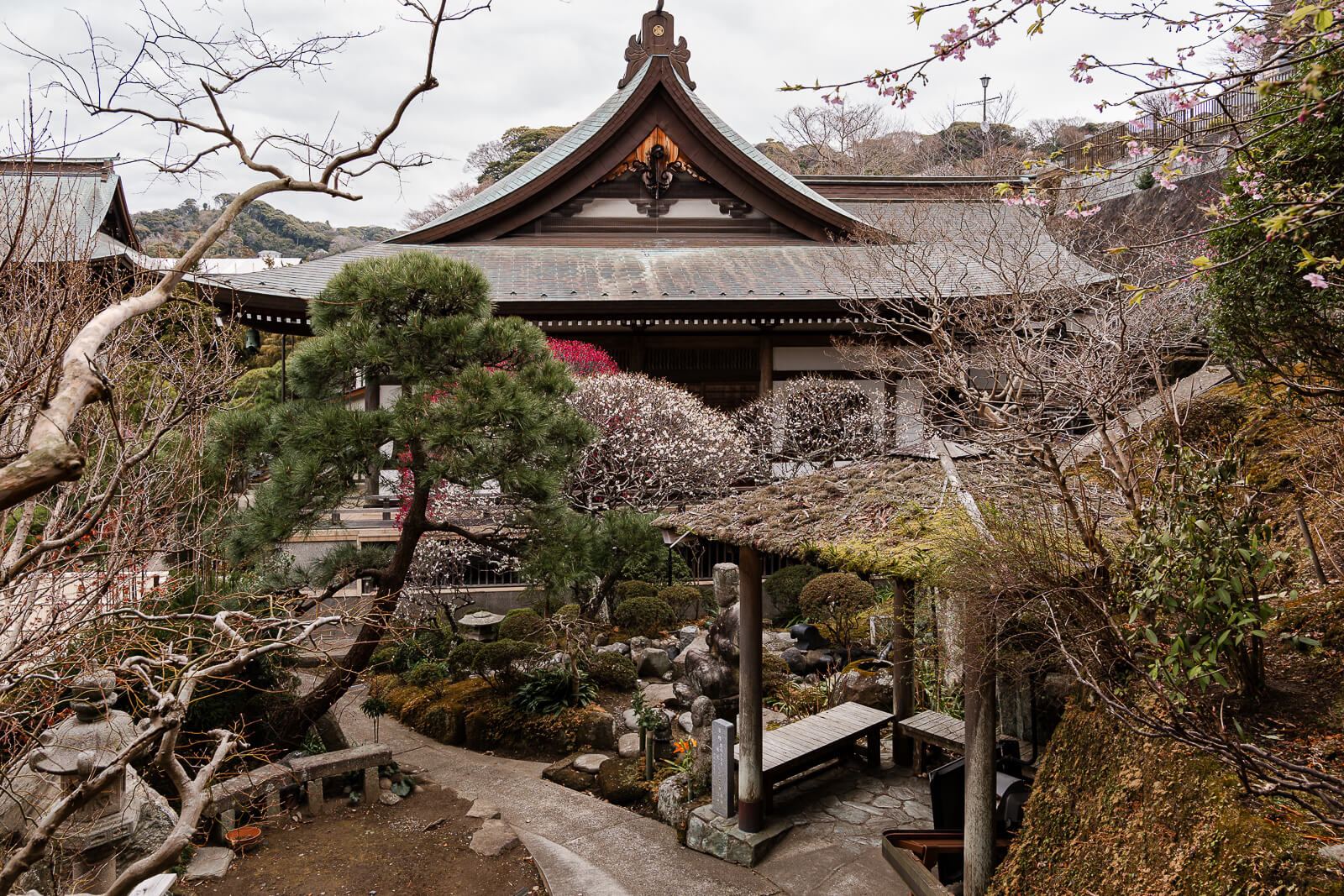
During February, plum blossoms begin appearing around the temple weeks before Kamakura’s cherry blossom season arrives. Small water features and landscaped areas create additional interest and make this one of the more rewarding corners of the complex for photographers. The quieter setting also provides a contrast to the larger crowds often found near the main halls.
Visitors who continue up the stairway beside Myoko-in gain a different perspective on the wider property. From the upper area, it becomes possible to look back across the main approach, view the Sanmon Gate from an unusual angle, and better understand how the temple extends toward Hansobo and the observatories above. The elevated position helps reveal the scale of the complex in a way that is difficult to appreciate from ground level.
The Temple Gardens and Kara-mon Gate
The Temple Gardens provide one of the most attractive sections of the wider complex and form a natural transition between the lower monastery buildings and the upper hillside route. Paths around the gardens reveal different perspectives of the surrounding architecture while creating opportunities to explore areas many visitors overlook. The area encourages a slower pace than the main temple precinct.
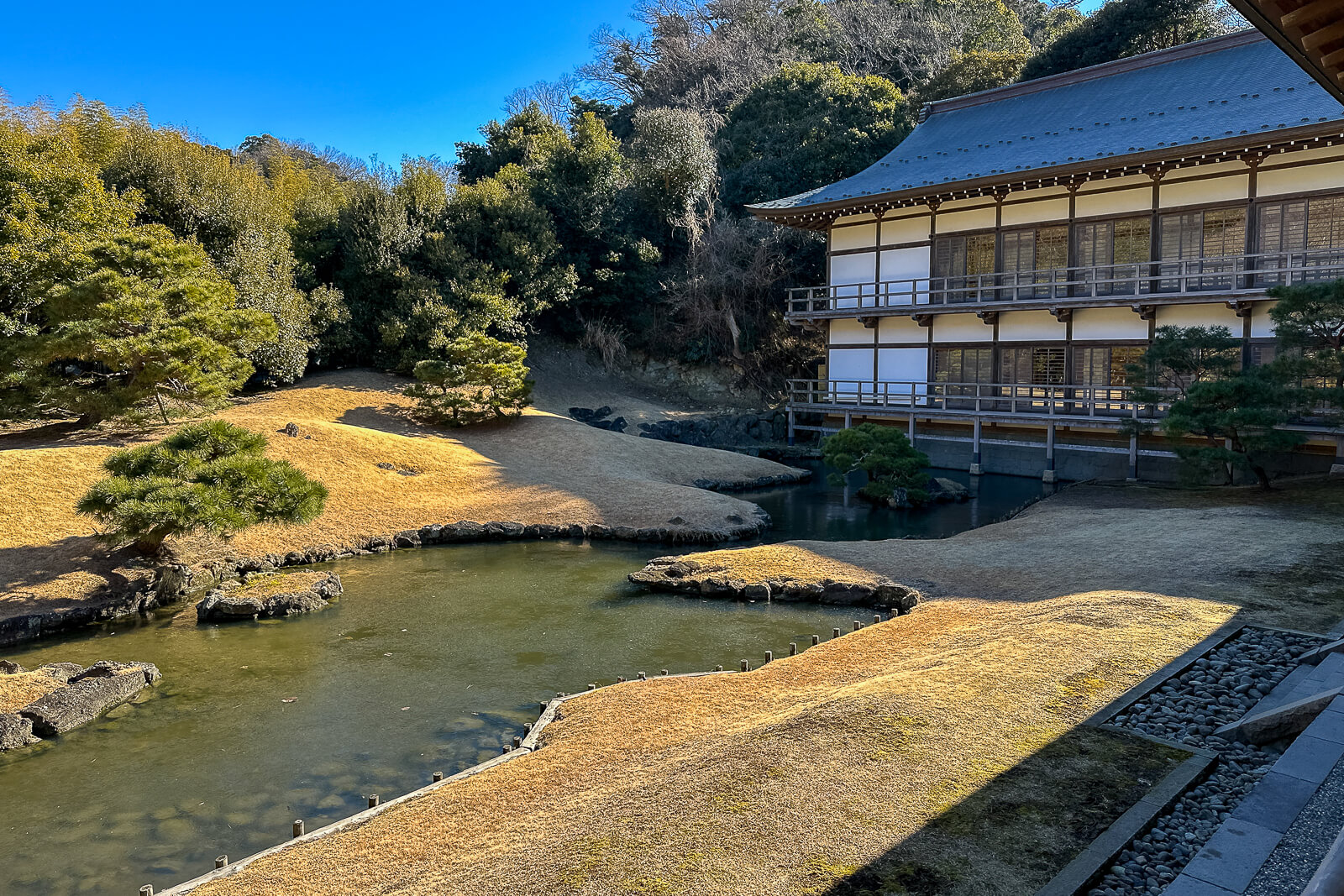
The route also provides views of the Kara-mon Gate from angles unavailable along the primary approach. Visitors walking through the surrounding living quarters area can appreciate a different side of the complex while moving deeper into the grounds. These sections help demonstrate that Kencho-ji functions as more than a collection of temple halls.
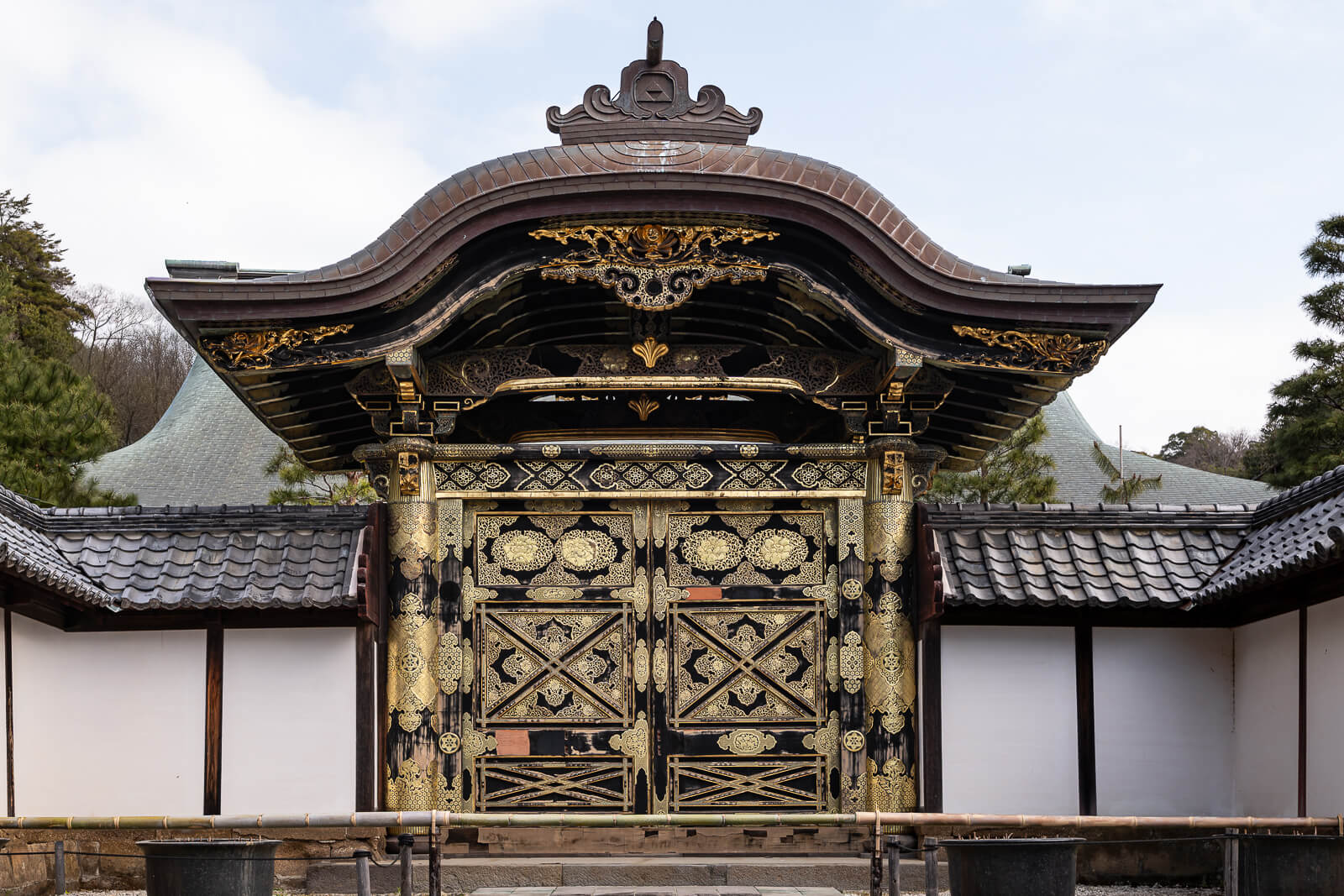
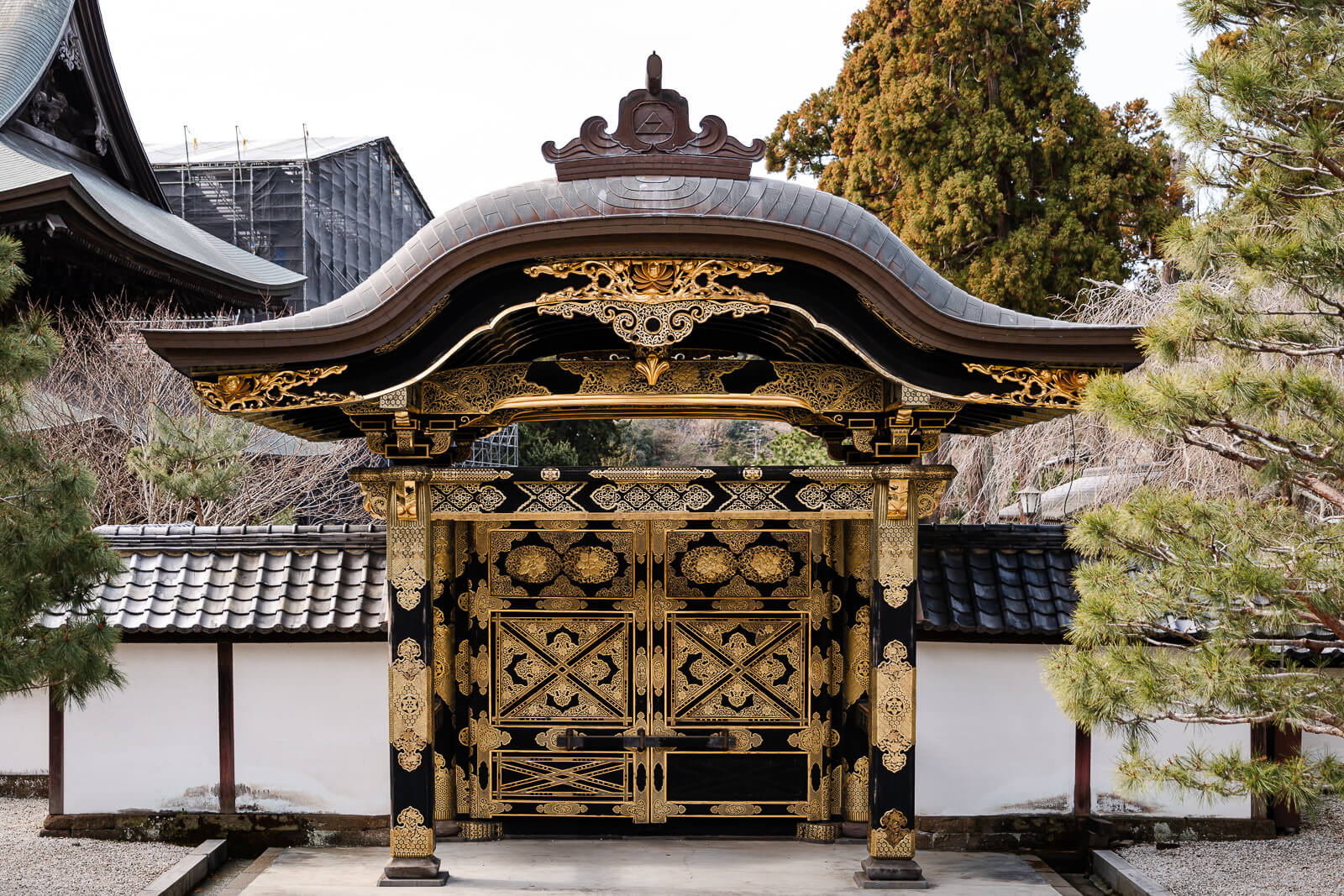
Following the garden route naturally leads visitors toward Ryuho-in and the upper hillside section of the property. The transition feels gradual and helps connect the various parts of the complex into a coherent walking experience. Many visitors find this section becomes one of the most enjoyable parts of the visit.
Ryuho-in and the Inner Grounds
Located beyond the Temple Gardens area, Ryuho-in receives far fewer visitors than the central temple precinct. Reaching the temple requires a more deliberate effort than simply following the main sightseeing route. As a result, the atmosphere feels noticeably different from the busier areas closer to the entrance.
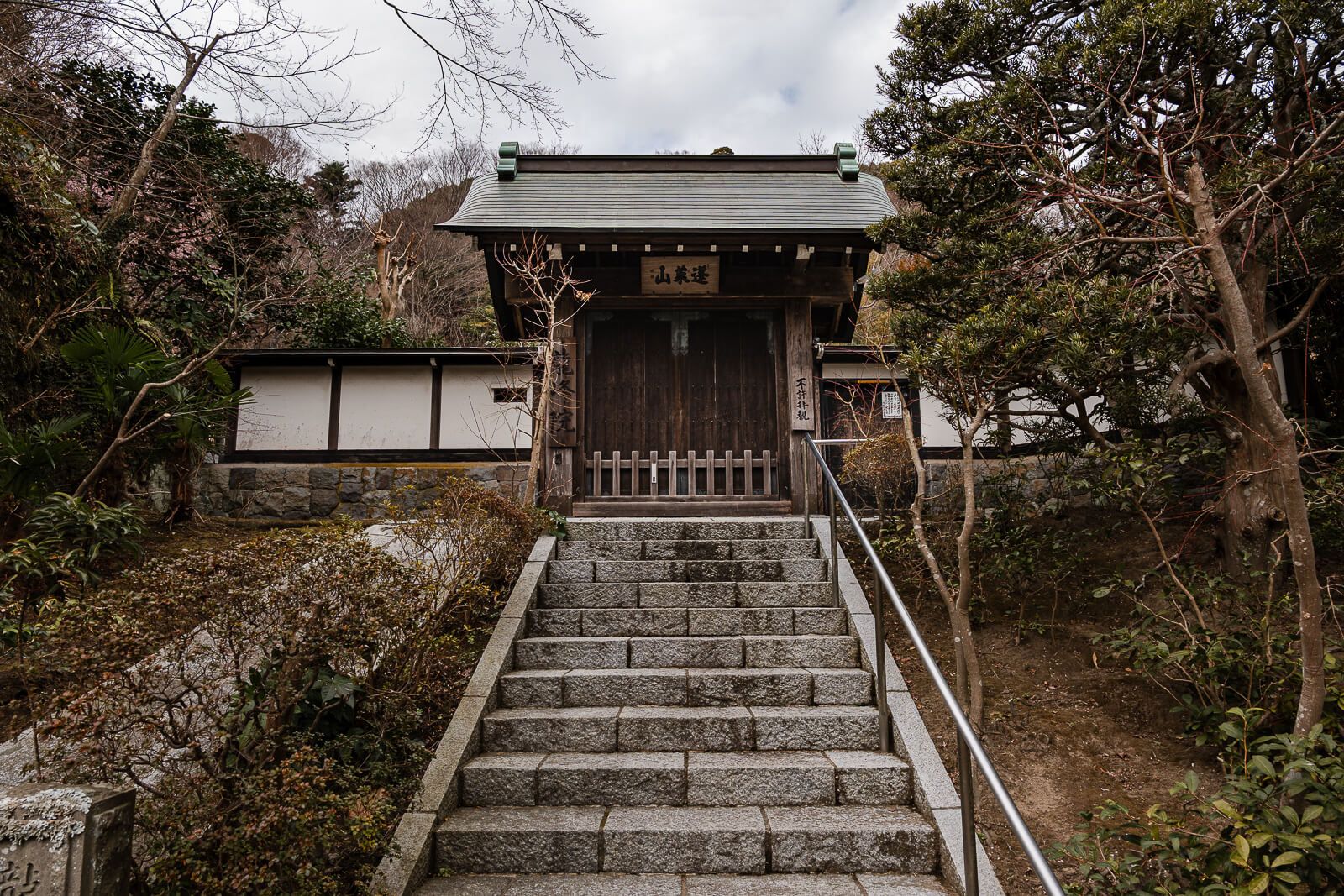
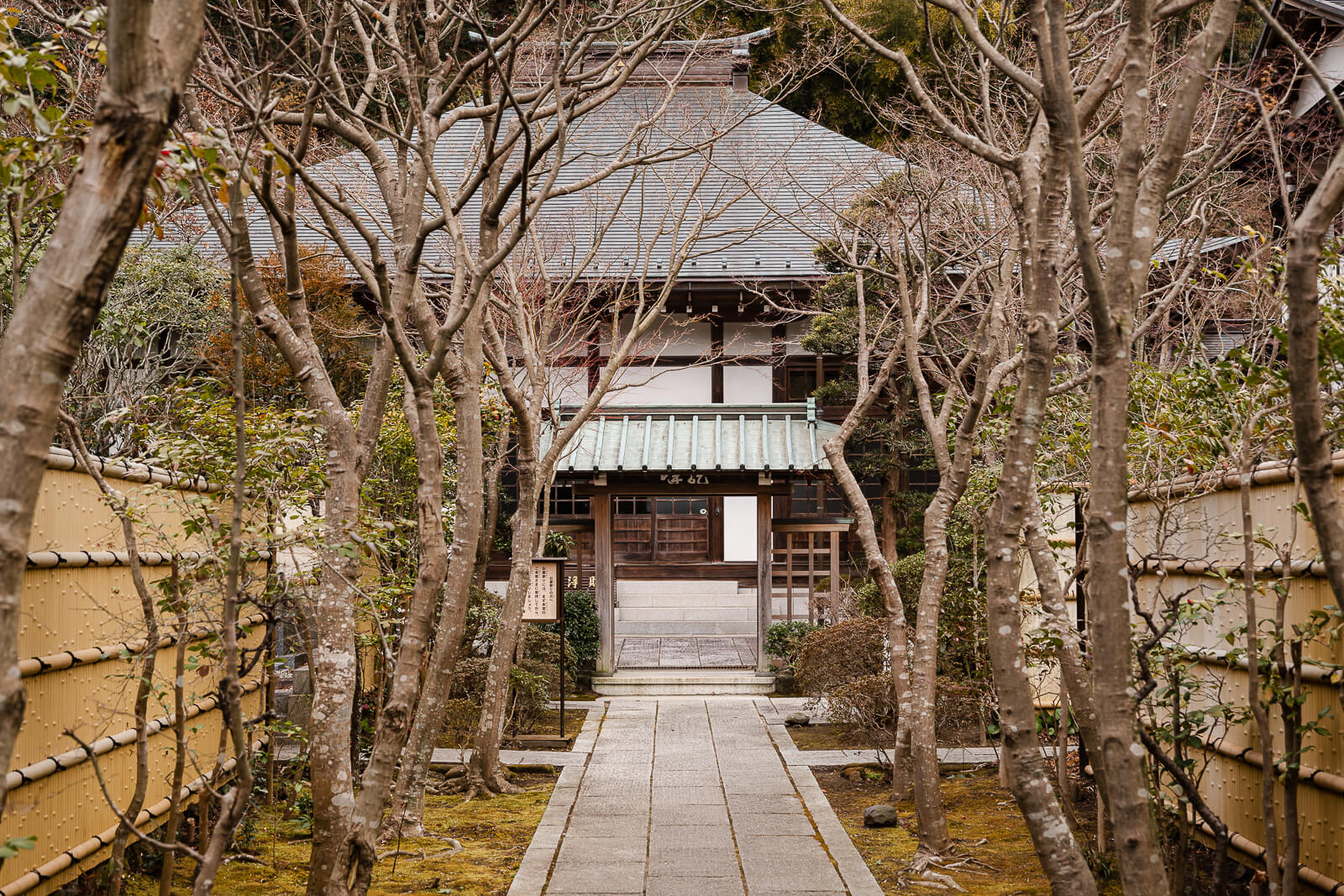
The surrounding environment reflects the continuing religious function of the complex and provides a quieter experience than the larger ceremonial spaces below. Visitors who continue this far often discover one of the least crowded areas within the property. The temple rewards those willing to explore beyond the most obvious highlights.
For pilgrimage walkers, Ryuho-in completes the sequence of three consecutive Kamakura 33 temples found within Kencho-ji. For other visitors, it offers an opportunity to experience a section of the grounds that many people never reach. Both perspectives add value to the broader visit.
From Hansobo to the Observatory
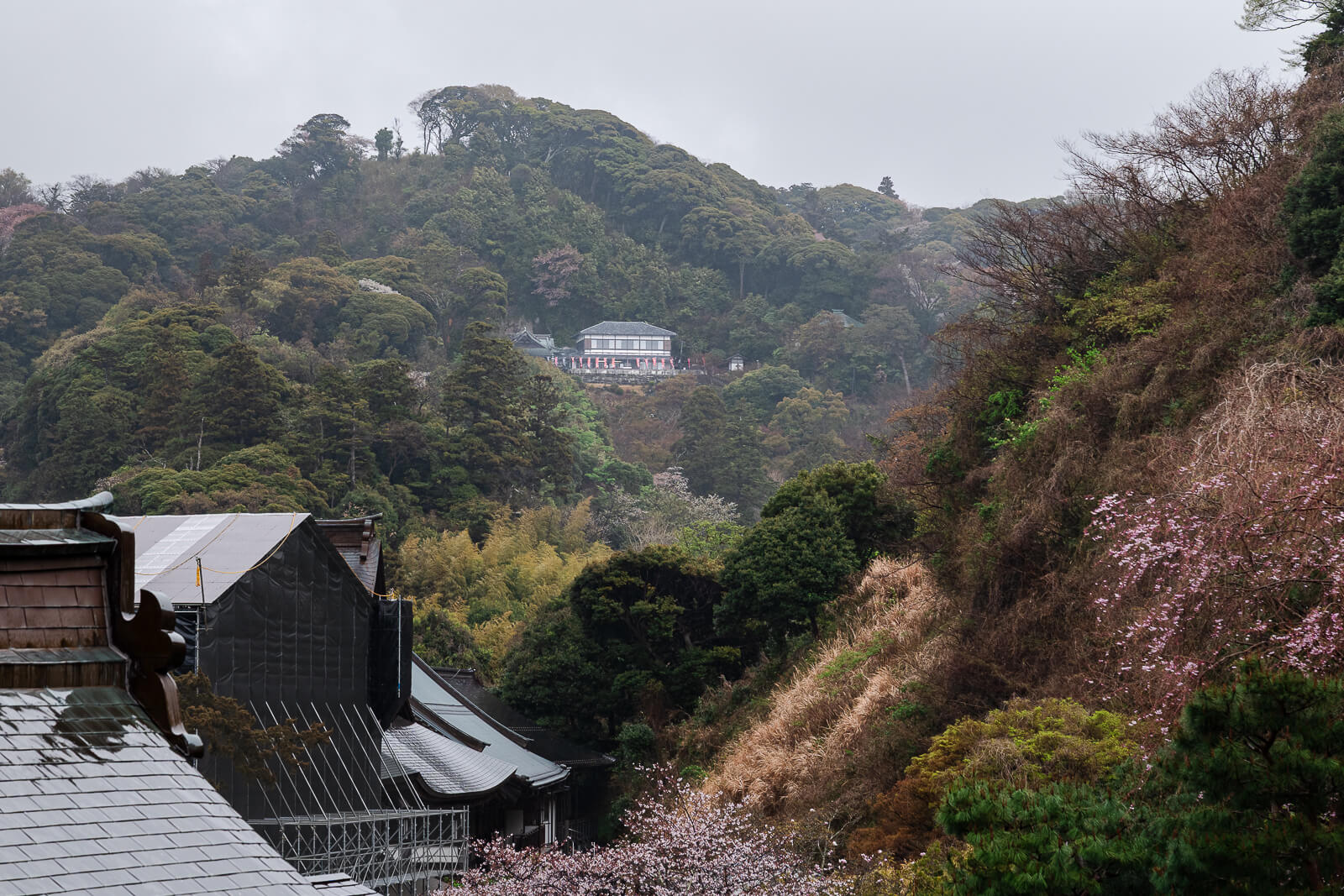
Beyond the inner grounds, the route gradually climbs into the hills above Kamakura. The ascent rarely feels continuous because there are numerous places to stop along the way, including memorial sites, smaller structures, viewpoints, and the insect mound. The variety of features helps break up the climb and makes the route feel less demanding than visitors often expect.
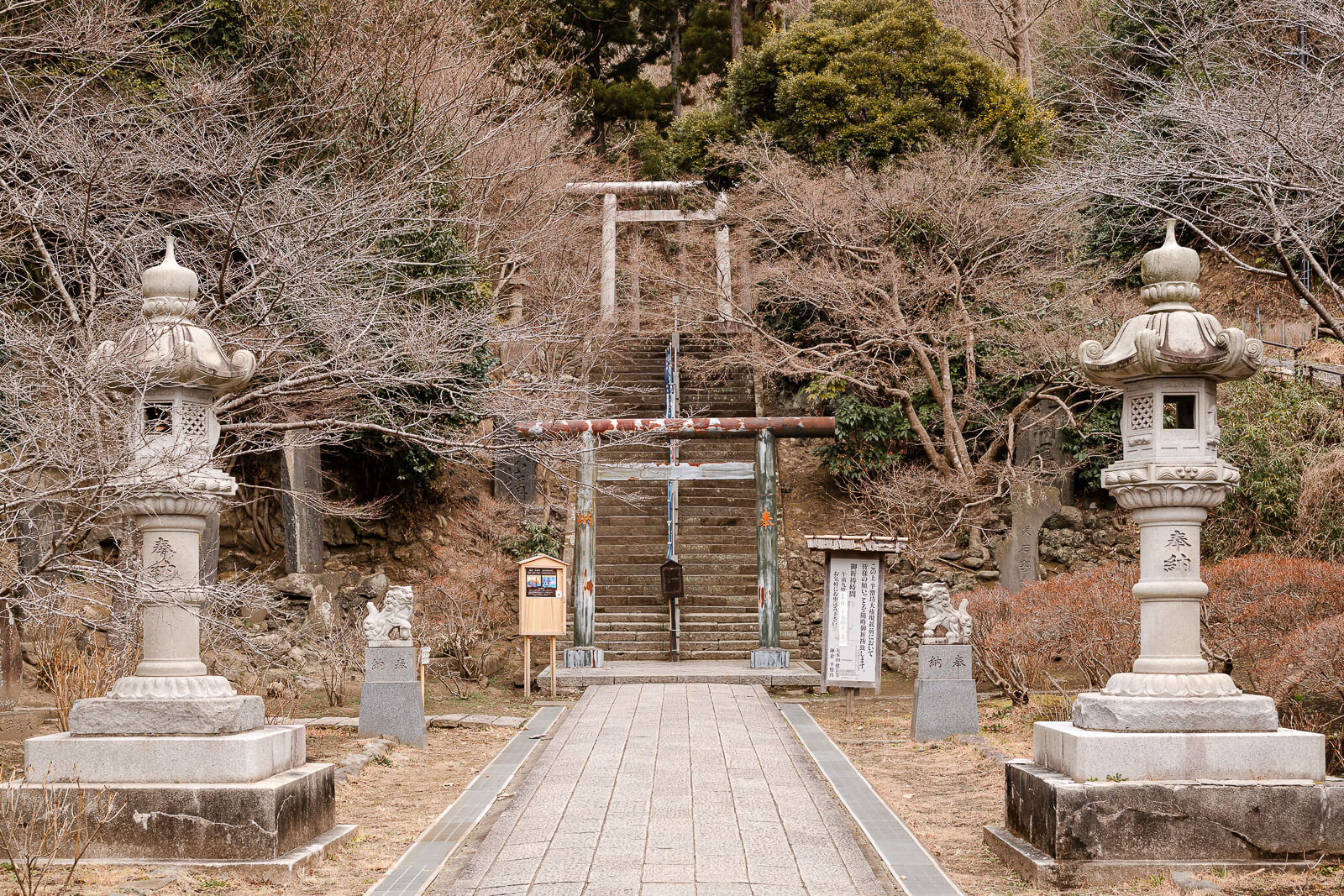
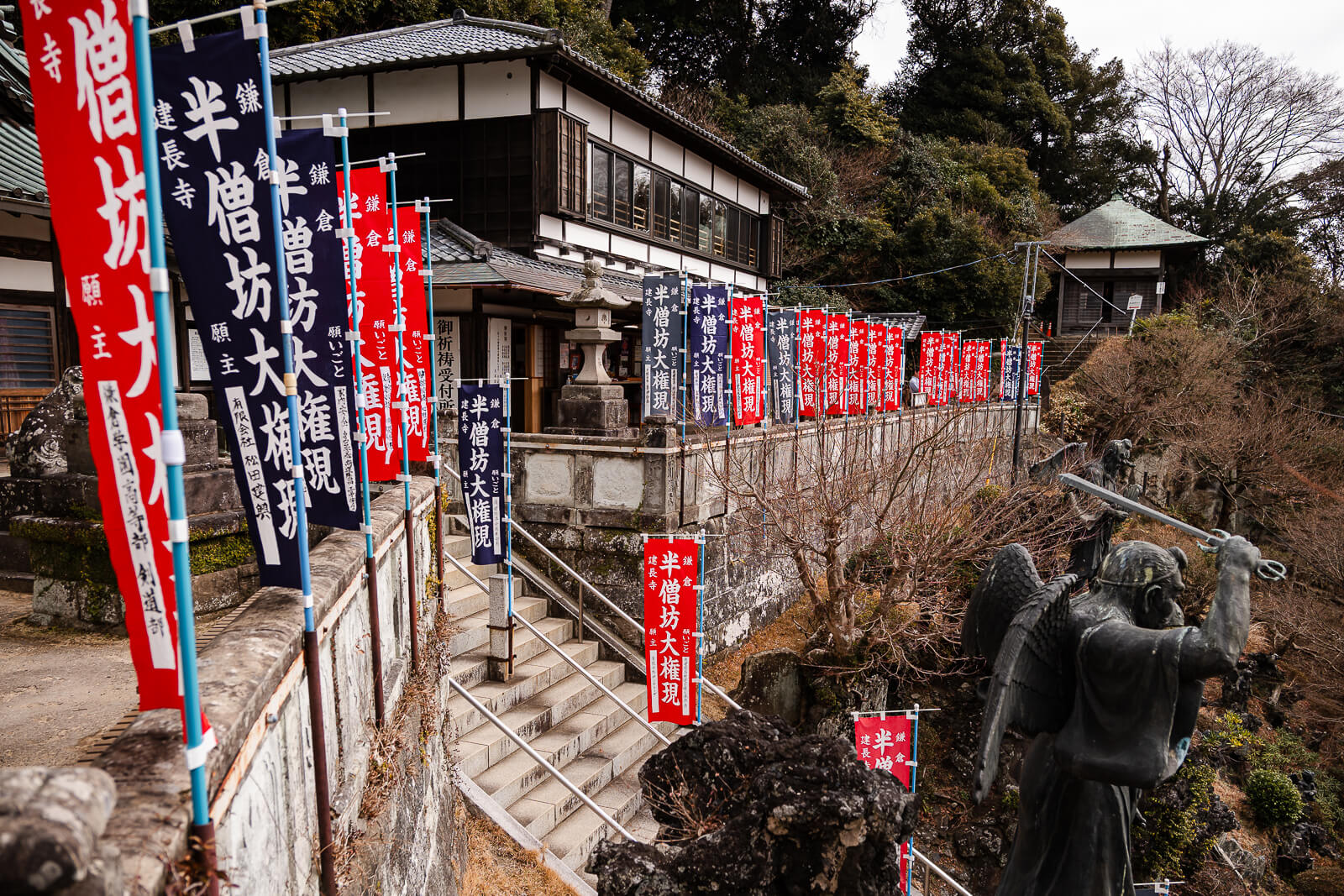
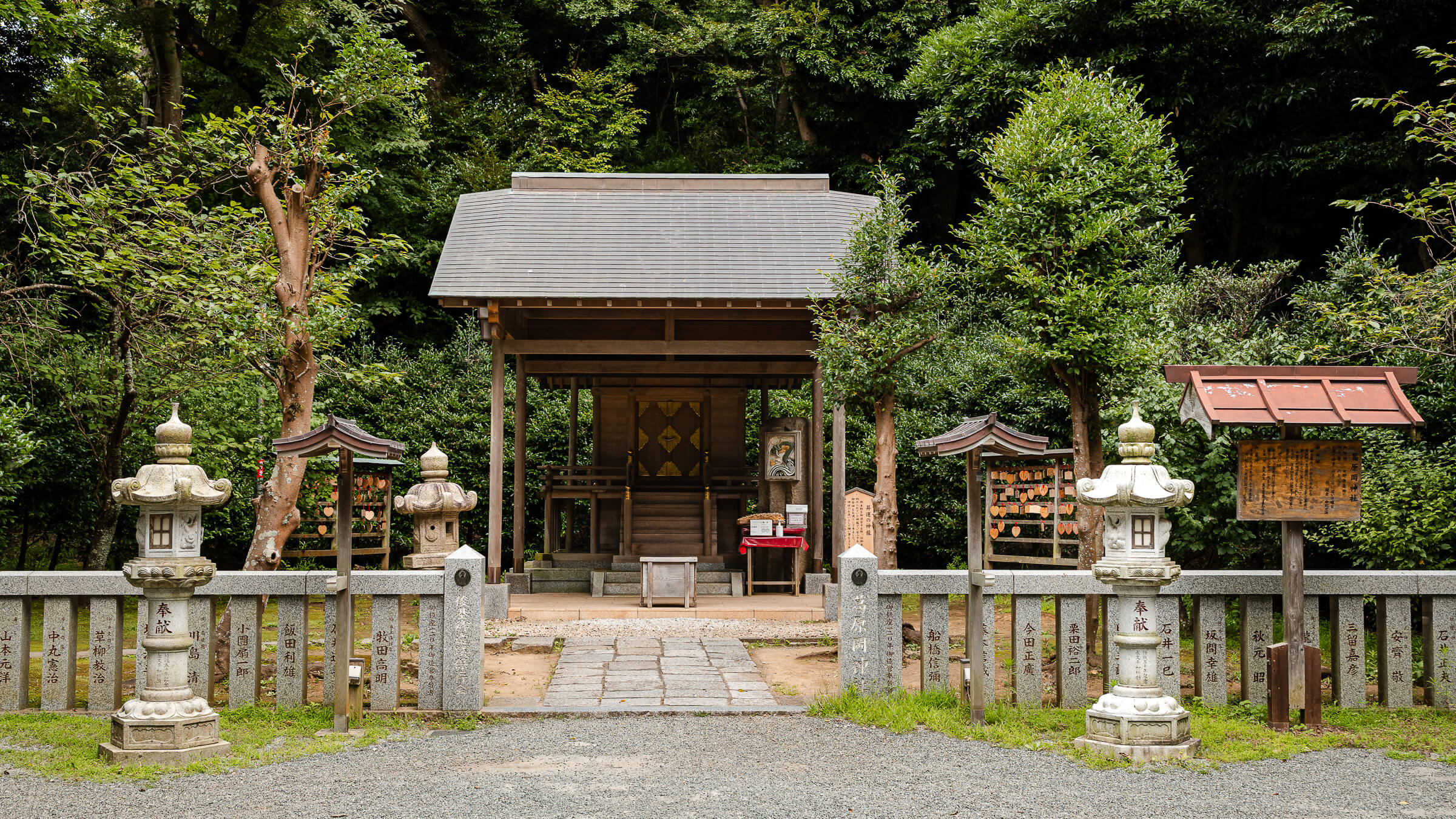
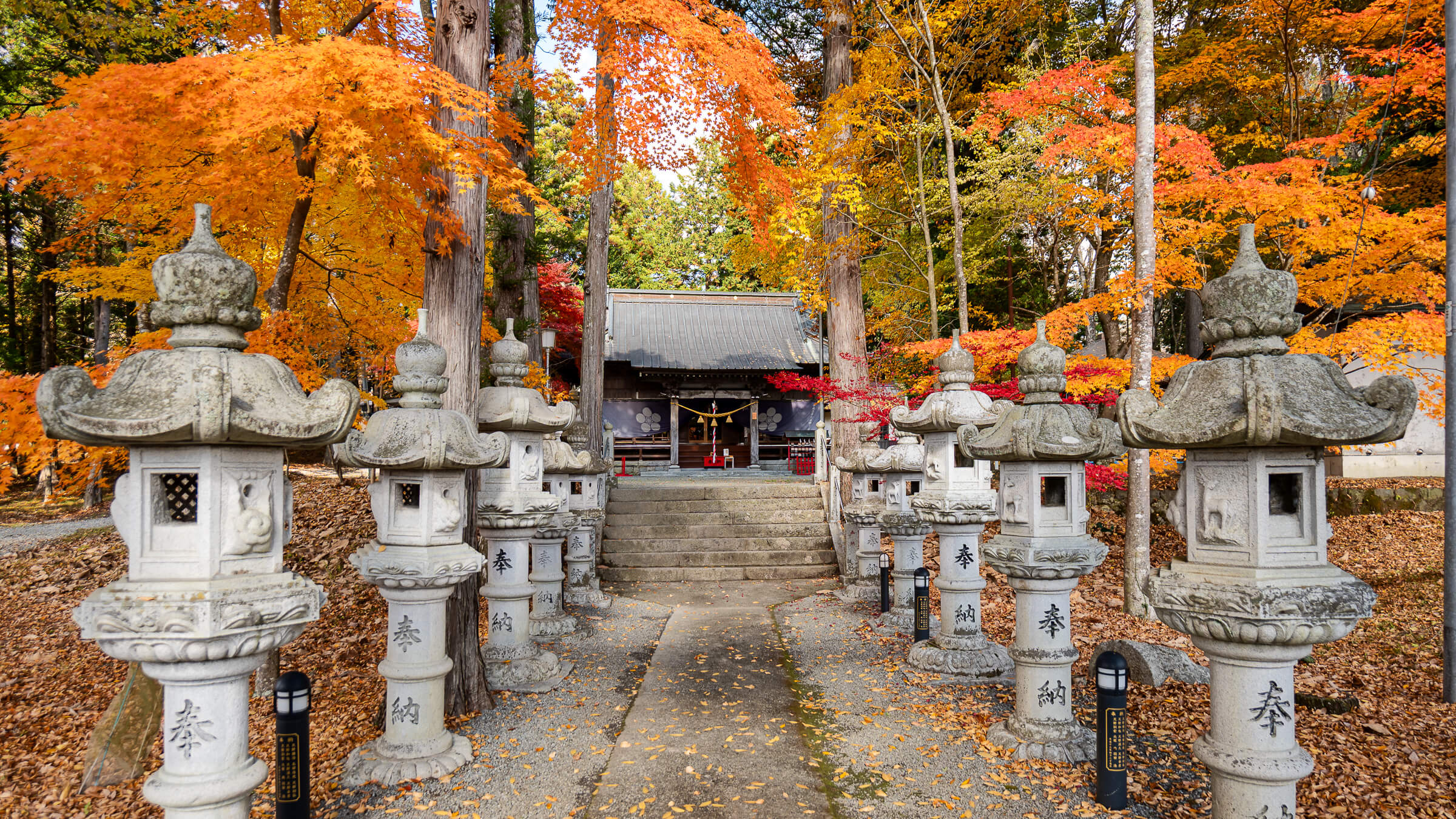
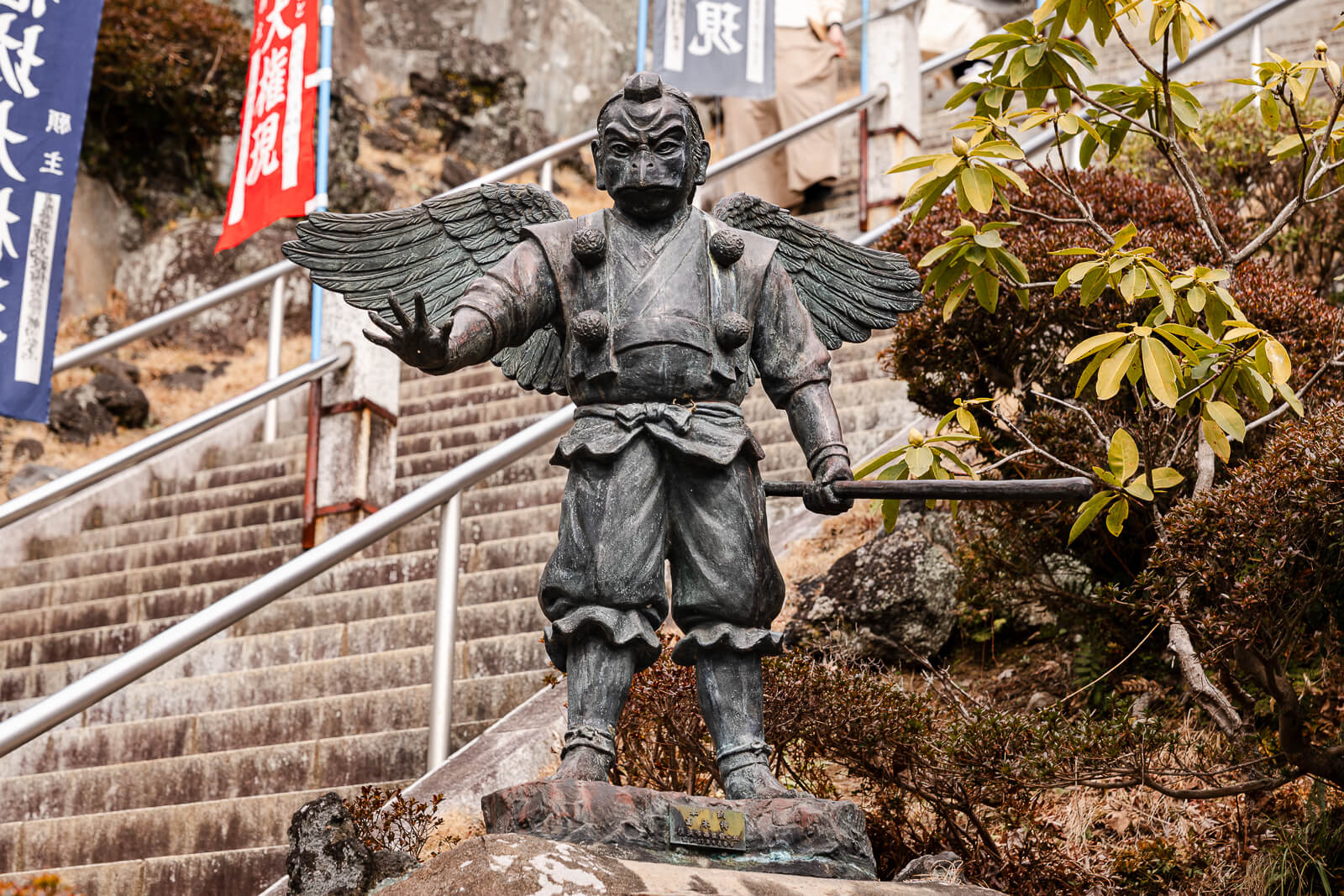
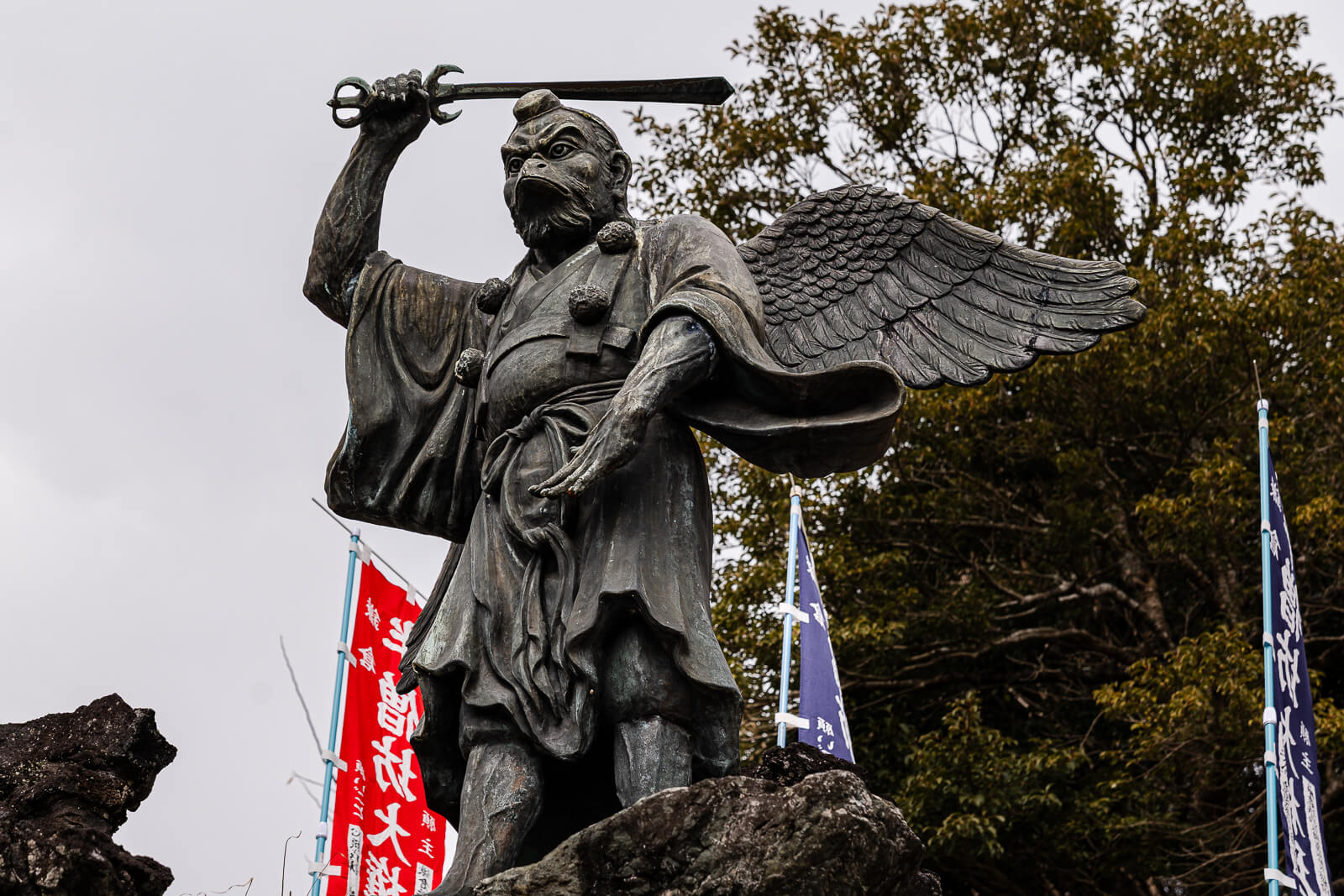
Hansobo Shrine marks the beginning of this upper hillside section and is famous for the tengu statues positioned along portions of the route. The atmosphere shifts noticeably from monastery grounds to forested hillside paths as visitors continue upward. This transition creates one of the most distinctive parts of the Kencho-ji experience.
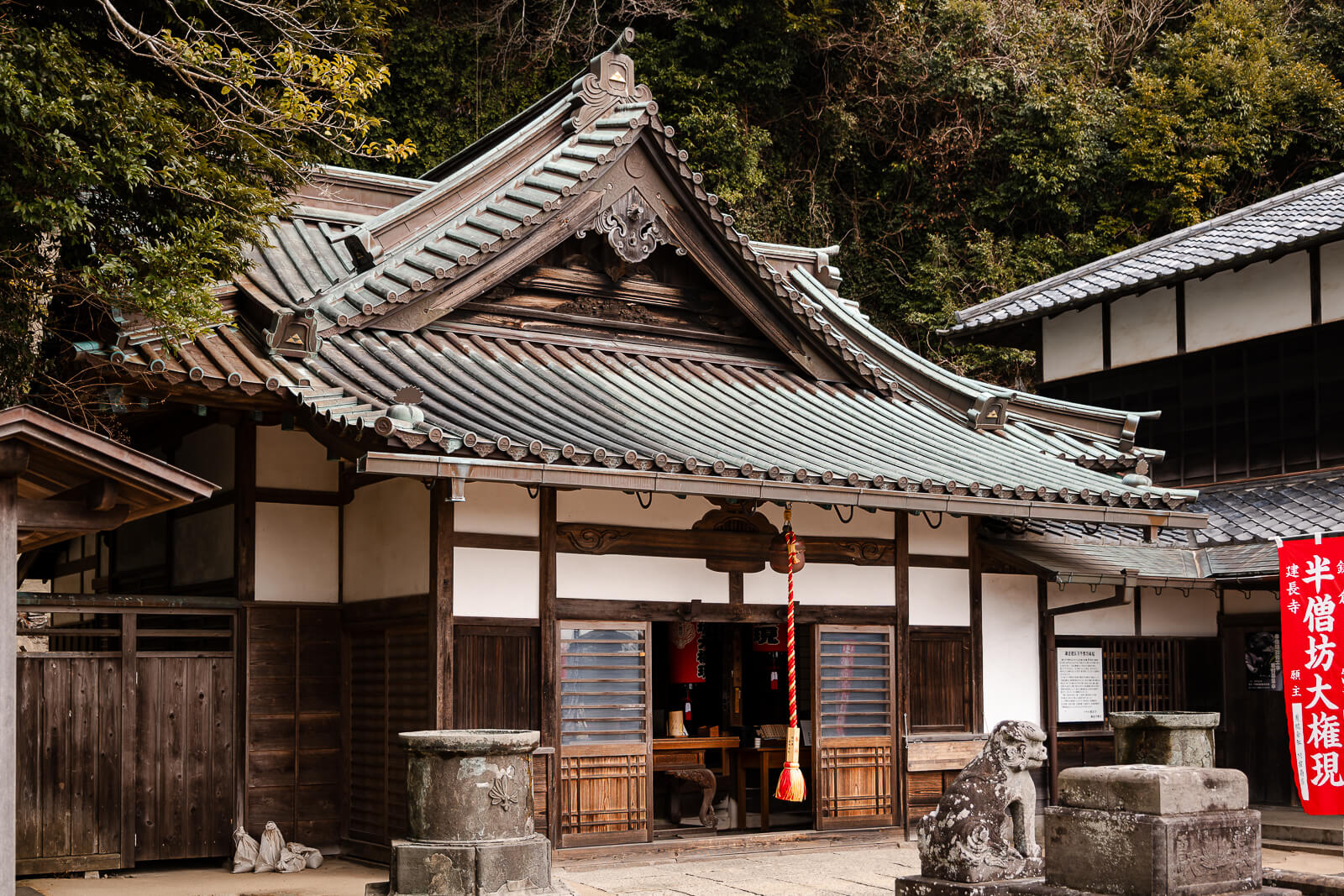
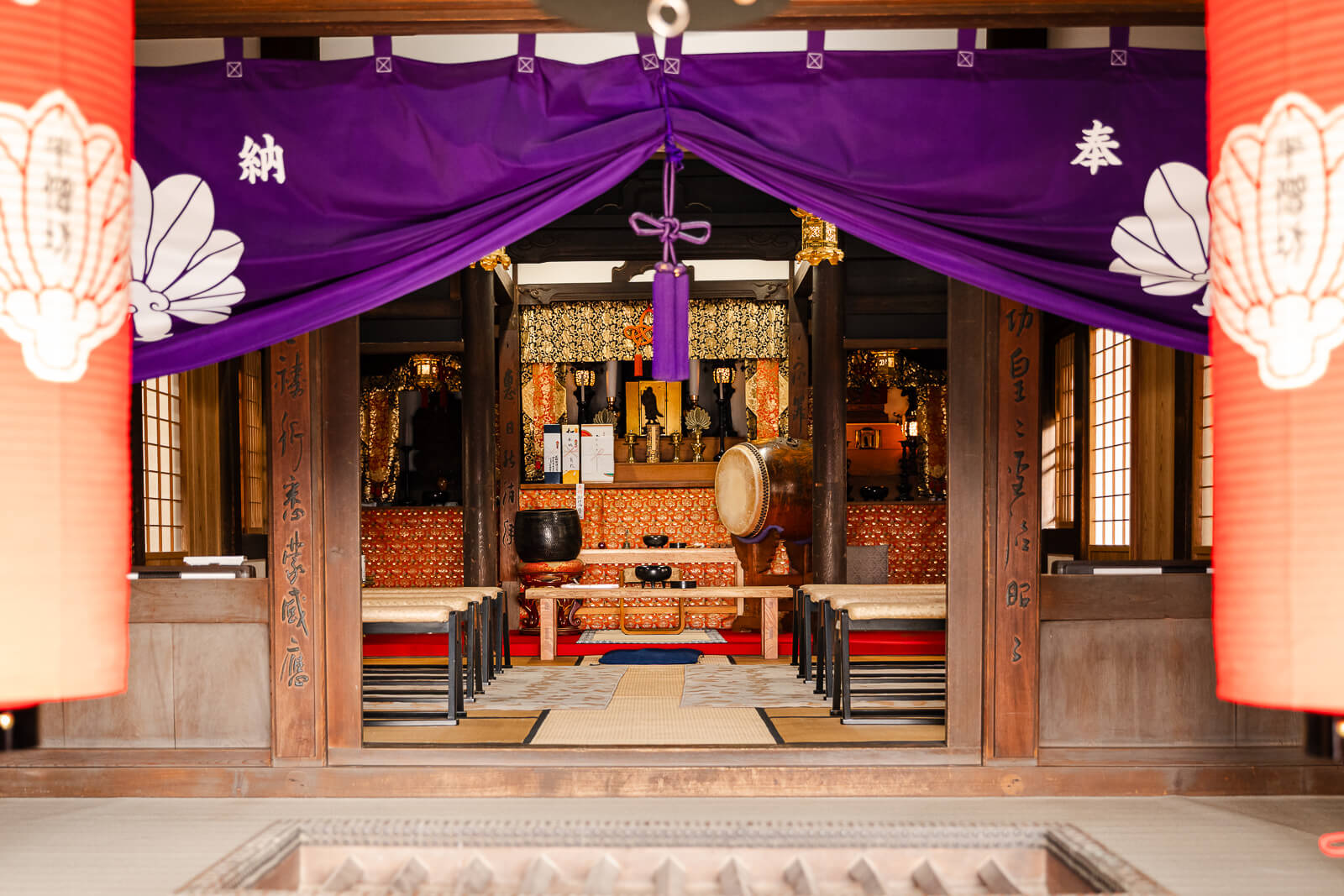
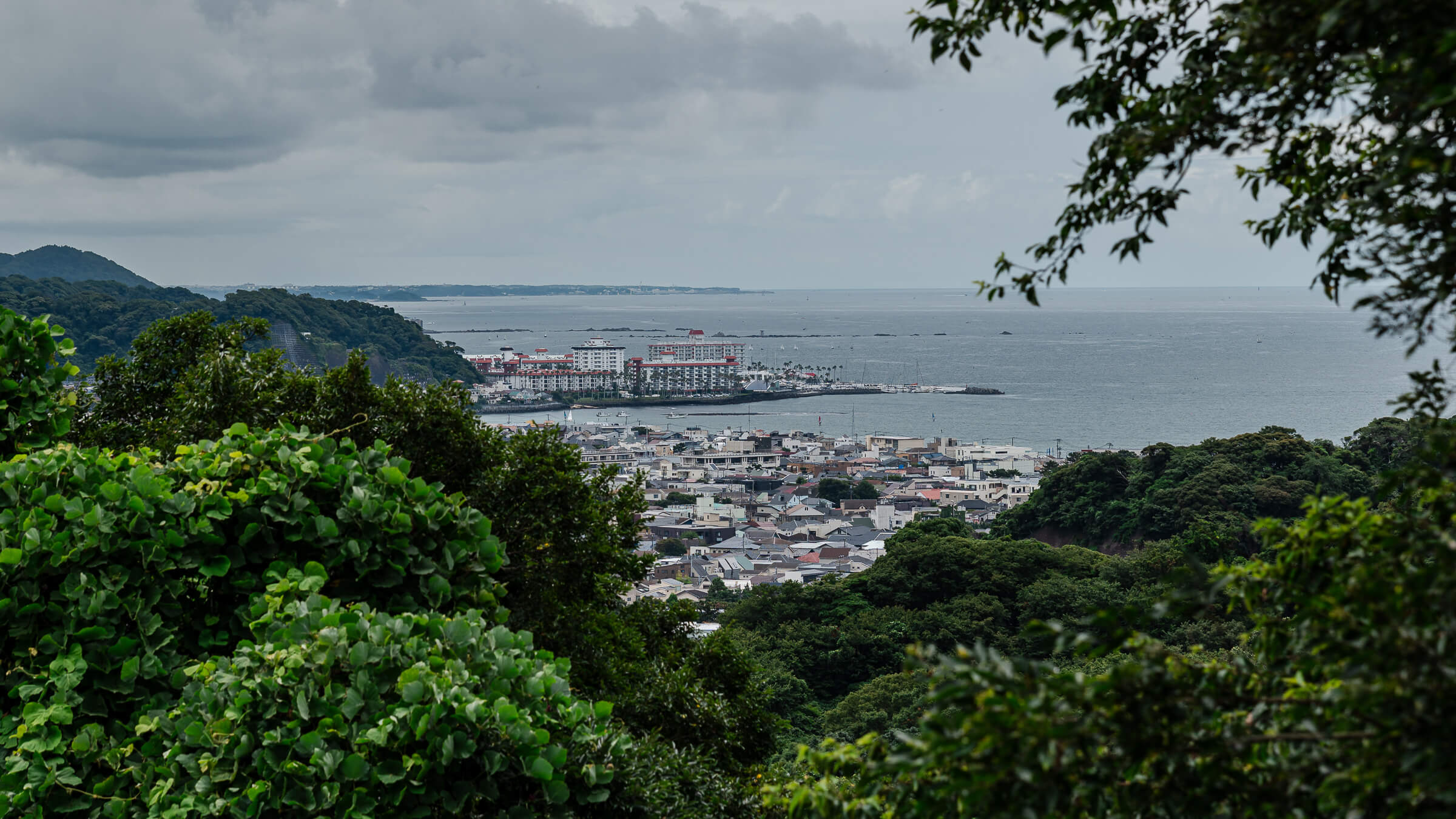
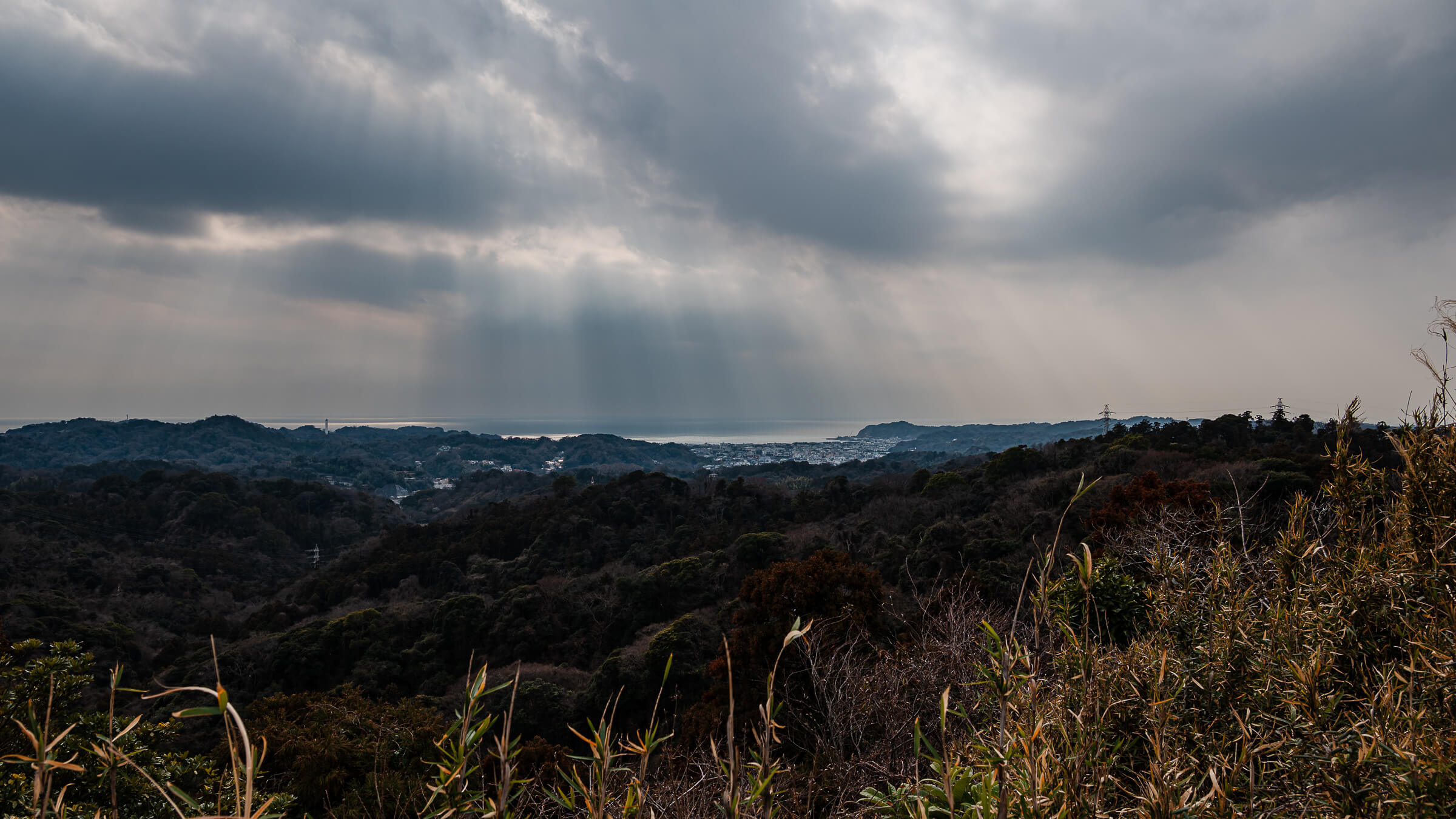
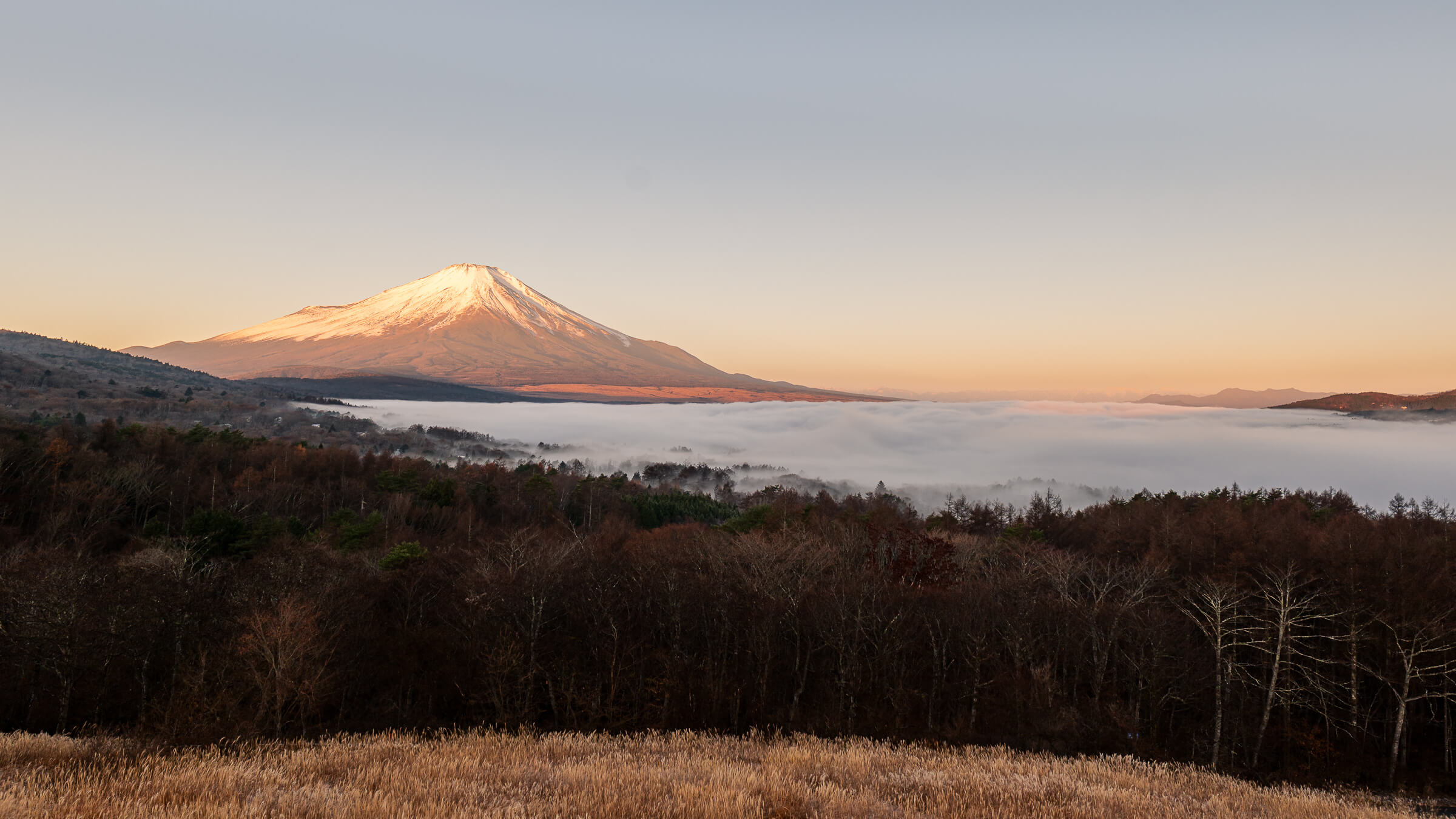
Beyond Hansobo, the route passes the insect mound, Jizodo, and several observatory areas overlooking Kamakura and Sagami Bay. On particularly clear days, Mount Fuji may also be visible from the upper viewpoints. The views help visitors understand the relationship between Kamakura’s urban areas, surrounding hills, and the wider landscape beyond.
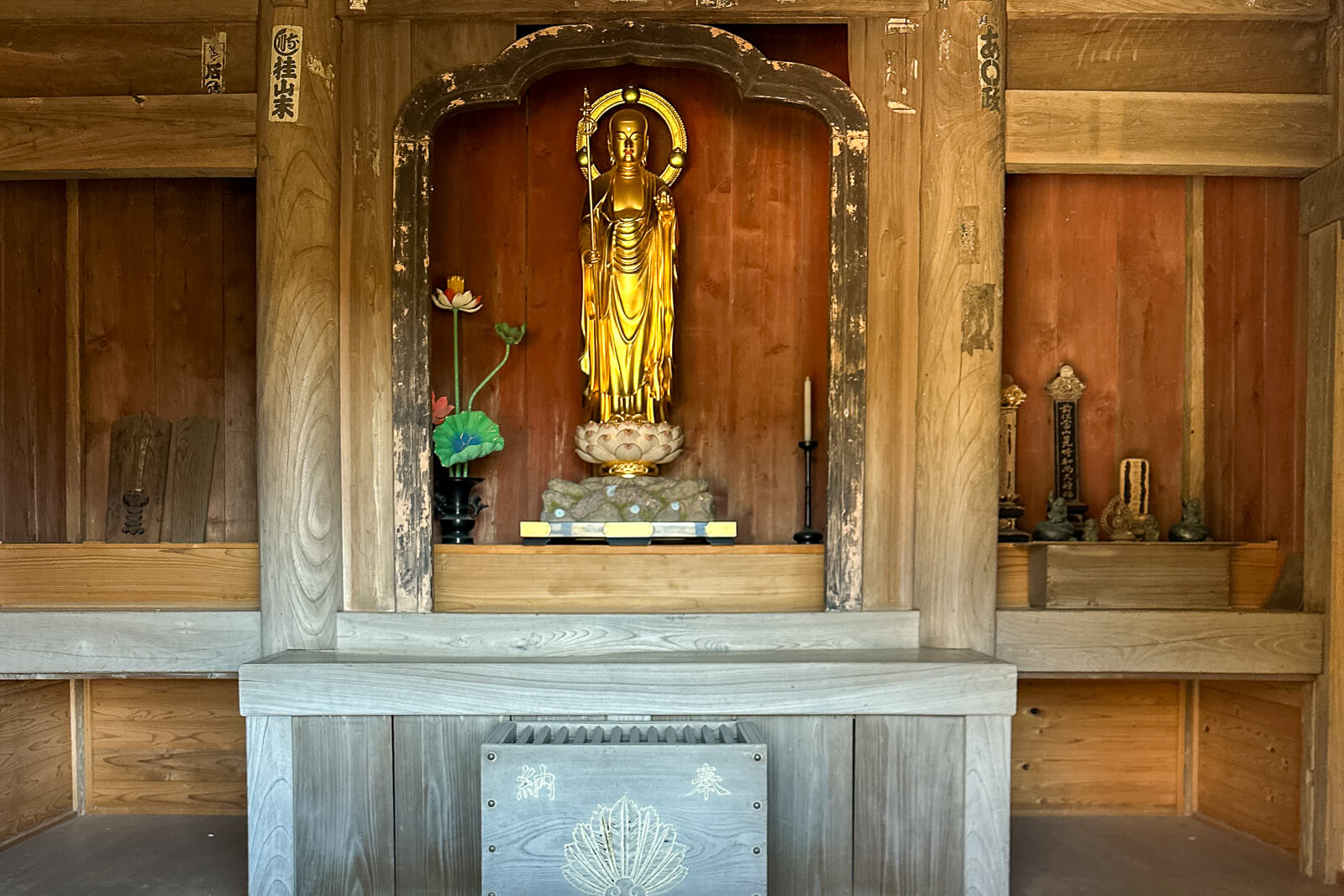
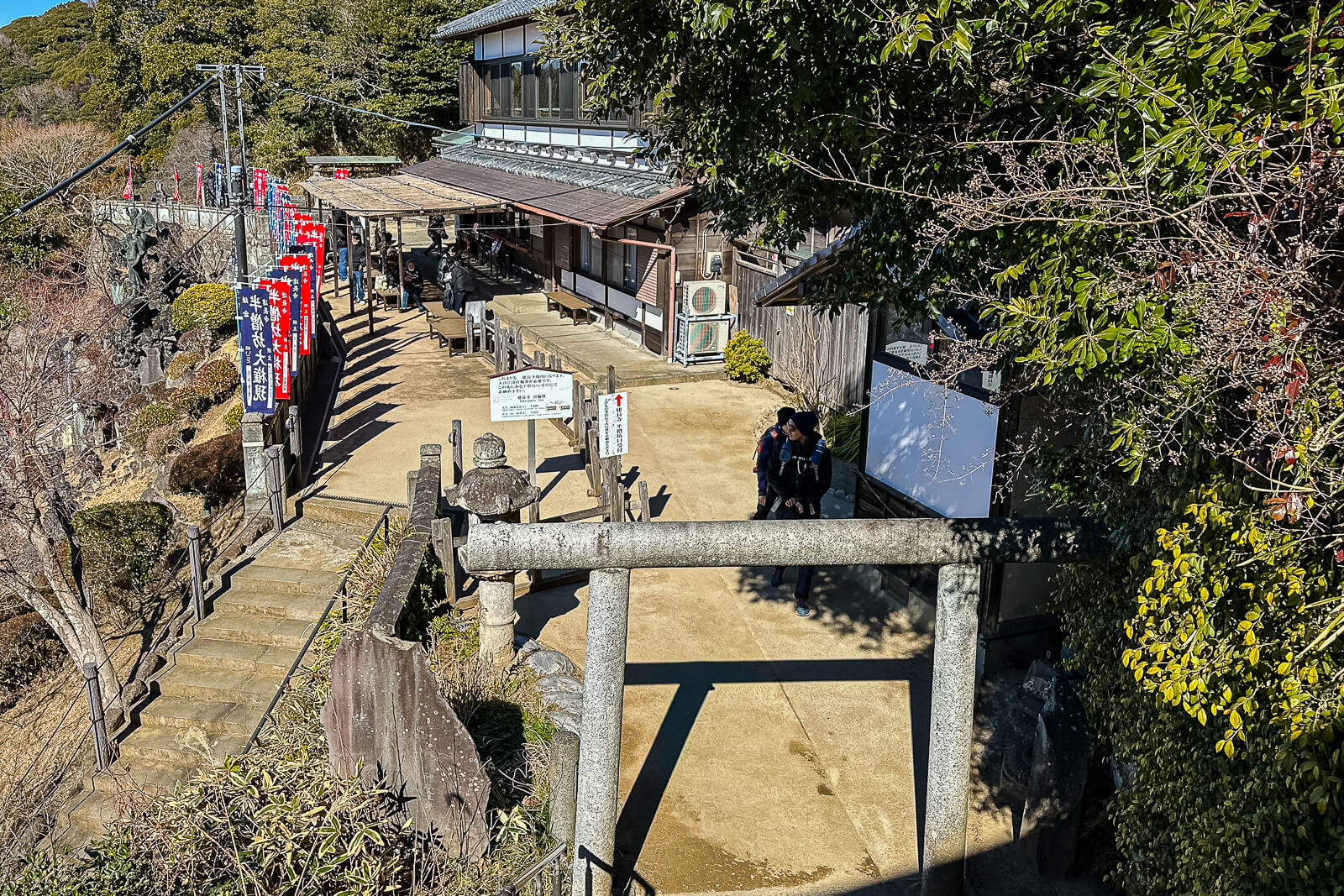
Gateway to the Ten-en Hiking Course
The observatory area marks the final stage of the temple visit before the Ten-en Hiking Course begins. Many visitors choose to return through the temple grounds after reaching the viewpoints, while others continue onto the hiking route. Both options work well depending on available time and interests.
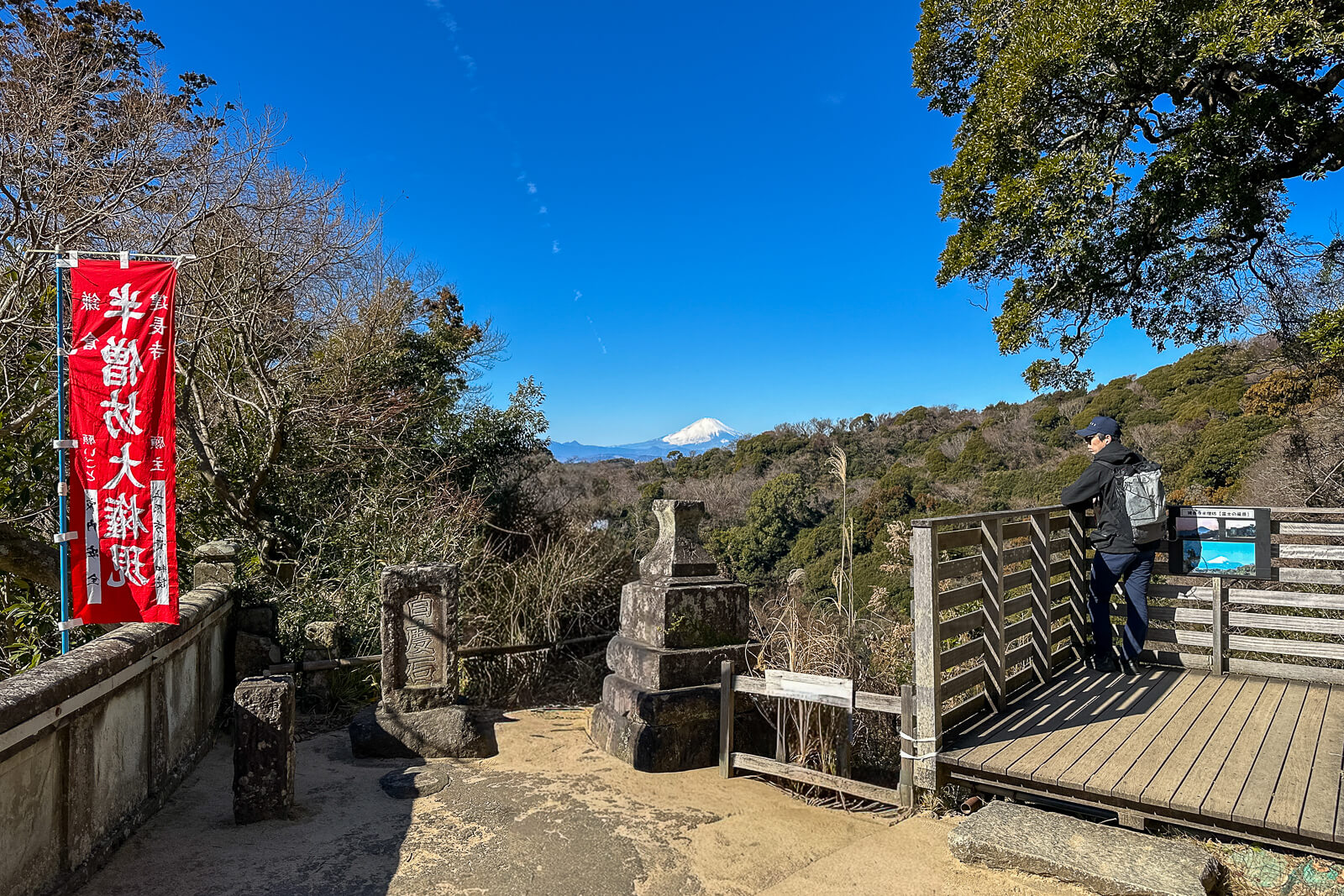
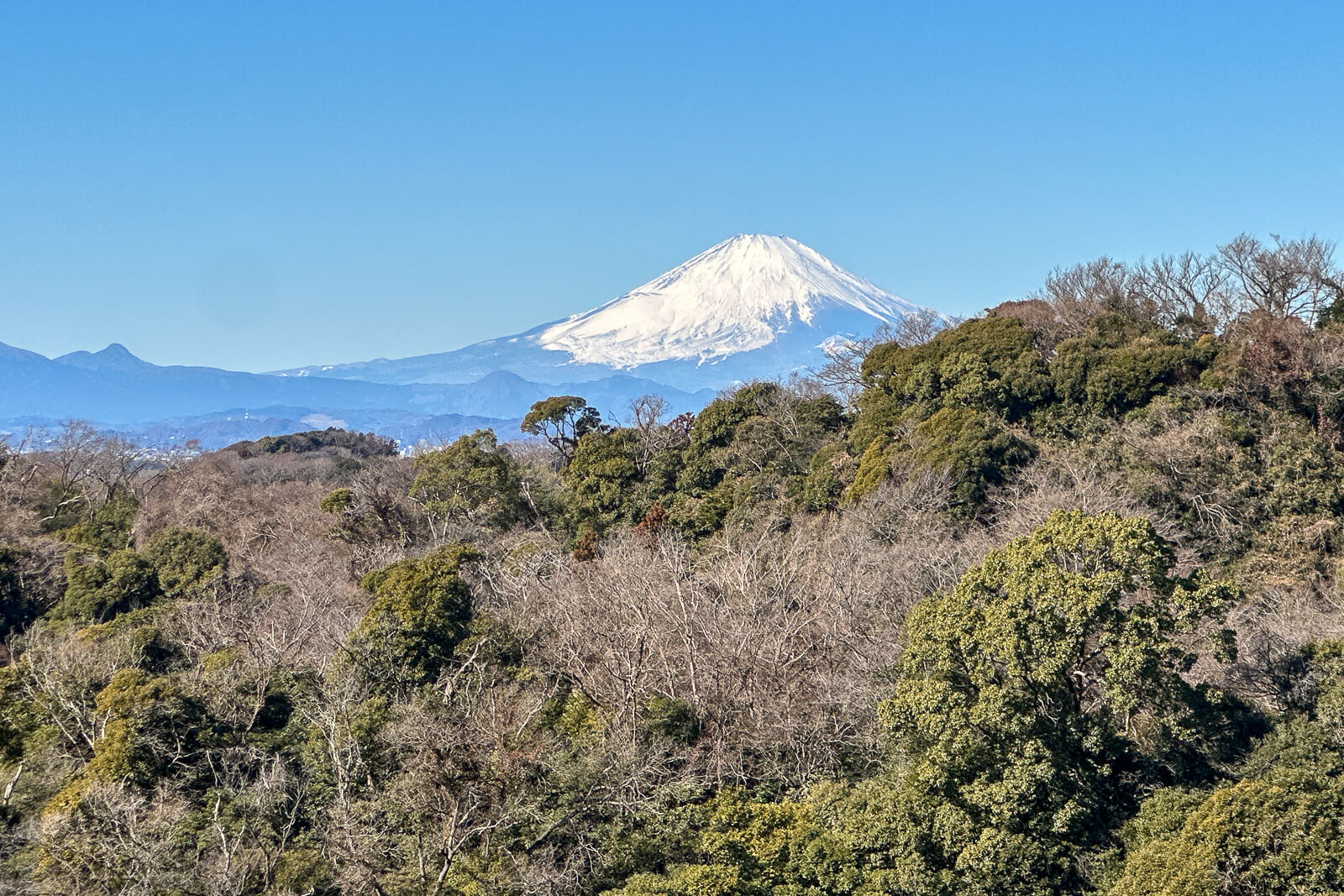
Because visitors have already climbed to the upper sections of the ridge while exploring Hansobo and the observatories, much of the significant elevation gain has already been completed. As a result, the hiking course can feel more approachable than many first-time visitors expect. The trail continues through Kamakura’s wooded hills and connects with other parts of the city beyond the temple grounds.
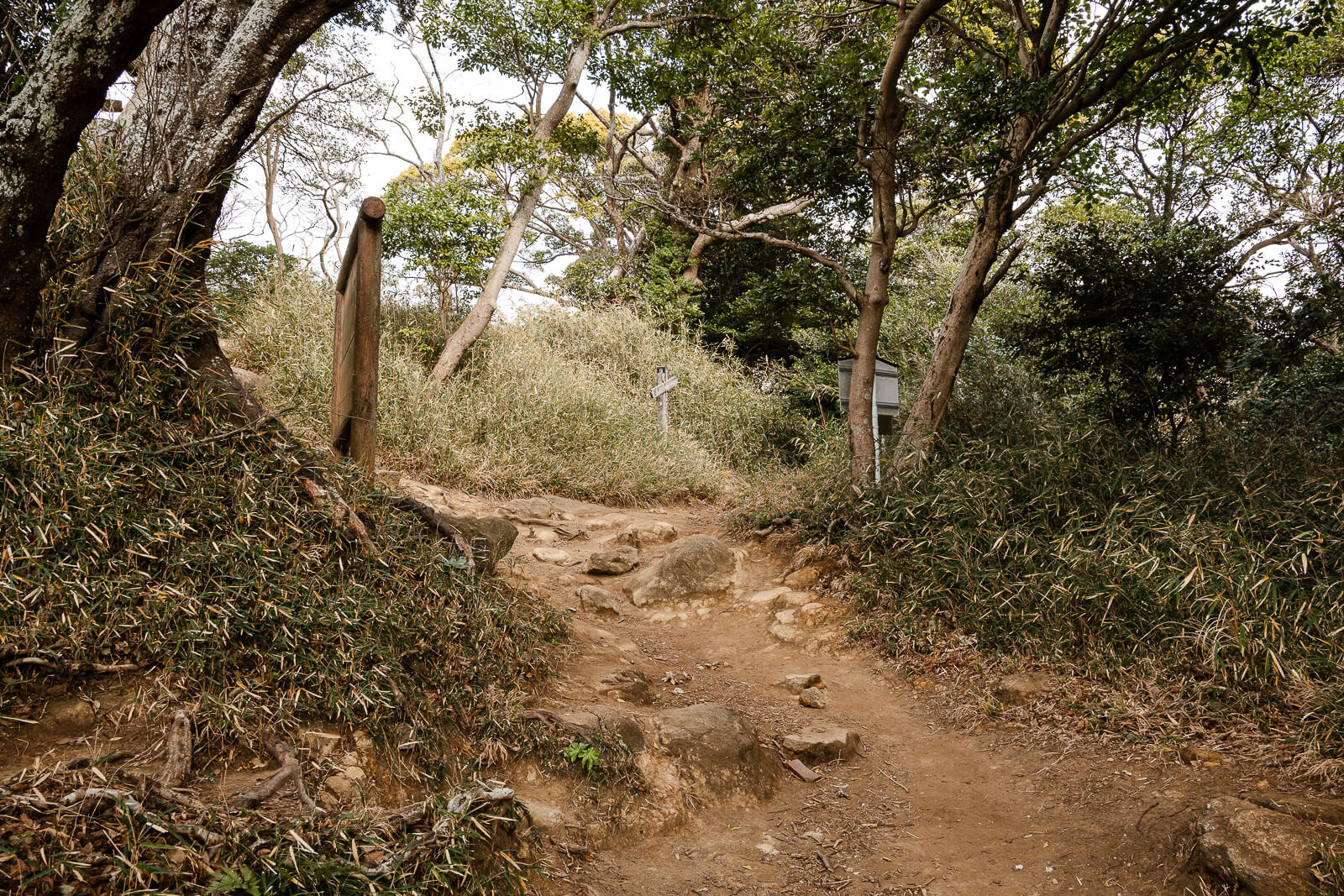
Even visitors who do not plan to continue hiking often find value in reaching the trail entrance. The location helps illustrate how closely Kamakura’s religious sites are connected to the surrounding landscape. It also provides a fitting conclusion to the gradual progression from monastery to mountainside.
How Much Time You Need
Most visitors should allow at least 60 minutes for Kencho-ji, especially if they plan to continue beyond the main halls to Hansobo and the observatory area. A shorter visit can cover the main temple precinct, but it will likely miss some of the features that make the complex stand apart from other Kamakura temples. This timing works well for travelers combining Kencho-ji with several other stops in Kita-Kamakura.
A fuller visit adds Myoko-in, the Temple Gardens, Ryuho-in, Hansobo, and the upper viewpoints into the route. Visitors following the Kamakura 33 Kannon Pilgrimage or taking photographs will usually appreciate the additional flexibility. The wider grounds contain enough detail that moving too quickly can make the temple feel much smaller than it actually is.
Photographers, pilgrimage walkers, and visitors exploring every section of the complex can easily spend up to two hours within the grounds before considering the Ten-en Hiking Course. The variety of locations encourages exploration and naturally extends the visit. Most people who spend longer are doing so by choice rather than because the route is difficult.
How Kencho-ji Fits Around Kamakura
Kencho-ji works naturally as part of a broader exploration of Kita-Kamakura. Many visitors combine the temple with Engaku-ji, Meigetsu-in, Tokei-ji, and Jochi-ji while moving through the northern section of the city. The close proximity of these locations makes them easy to combine within a single day. The Kita-Kamakura itinerary places Kenchō-ji within a practical route connecting the station-area temples, surrounding hiking courses, and the continuation toward central Kamakura.
For travelers following the Kamakura 33 Kannon Pilgrimage, Kencho-ji forms one of the most significant stops on the route thanks to the presence of temples #27, #28, and #29 within the same complex. The ability to visit three consecutive pilgrimage temples during a single stop makes the area particularly rewarding for those collecting goshuin or working through the full pilgrimage. Few locations on the route offer the same concentration of pilgrimage sites.
Visitors continuing south can eventually reach Tsurugaoka Hachimangu and central Kamakura, while hikers can continue into the hills through the Ten-en Hiking Course. The temple therefore functions as both a destination in its own right and a gateway connecting Kamakura’s religious, historical, and natural landscapes. Understanding those connections helps explain why Kencho-ji remains one of the most important places to visit in Kamakura.
Getting There
Kencho-ji Temple is located in Kita-Kamakura on the northern side of Kamakura. The temple sits approximately 15–20 minutes on foot from Kita-Kamakura Station on the JR Yokosuka Line, making it one of the easiest major temples in the area to reach by train. The walk follows local roads through the temple district and can be combined with nearby attractions such as Engaku-ji, Meigetsu-in, Tokei-ji, and Jochi-ji.
Visitors arriving from central Kamakura can also reach the temple by local bus. Several routes operating between Kamakura Station and northern Kamakura stop near the entrance, reducing the amount of walking required. This can be particularly useful for travelers planning to visit multiple temples in a single day.
Parking is available near the temple grounds for those arriving by car. Spaces can become busier during cherry blossom season, autumn foliage periods, and weekends, so public transportation remains the easiest option for most visitors exploring Kamakura.
Hours and Fees
8:30–16:30
Adults/high school students and older: ¥500
Children/elementary and junior high school students: ¥200
Cash only
Preservation and renovation work is underway at the Butsuden and the Hansobo Shrine area. The Butsuden is closed to visitors during repairs scheduled through August 2027, while parts of the Hansobo complex may also be affected by ongoing work.
Confirm current visitor information with the official source above before your trip.
Plan Your Kenchō-ji and Kamakura Visit
Kenchō-ji can be a focused temple visit, part of a wider Kita-Kamakura day, or the starting point for the Ten-en Hiking Course.
Compare Kamakura Hotels
A Kamakura base leaves more time for Kenchō-ji, nearby temples, and the Ten-en trail.
Compare Kamakura Hotels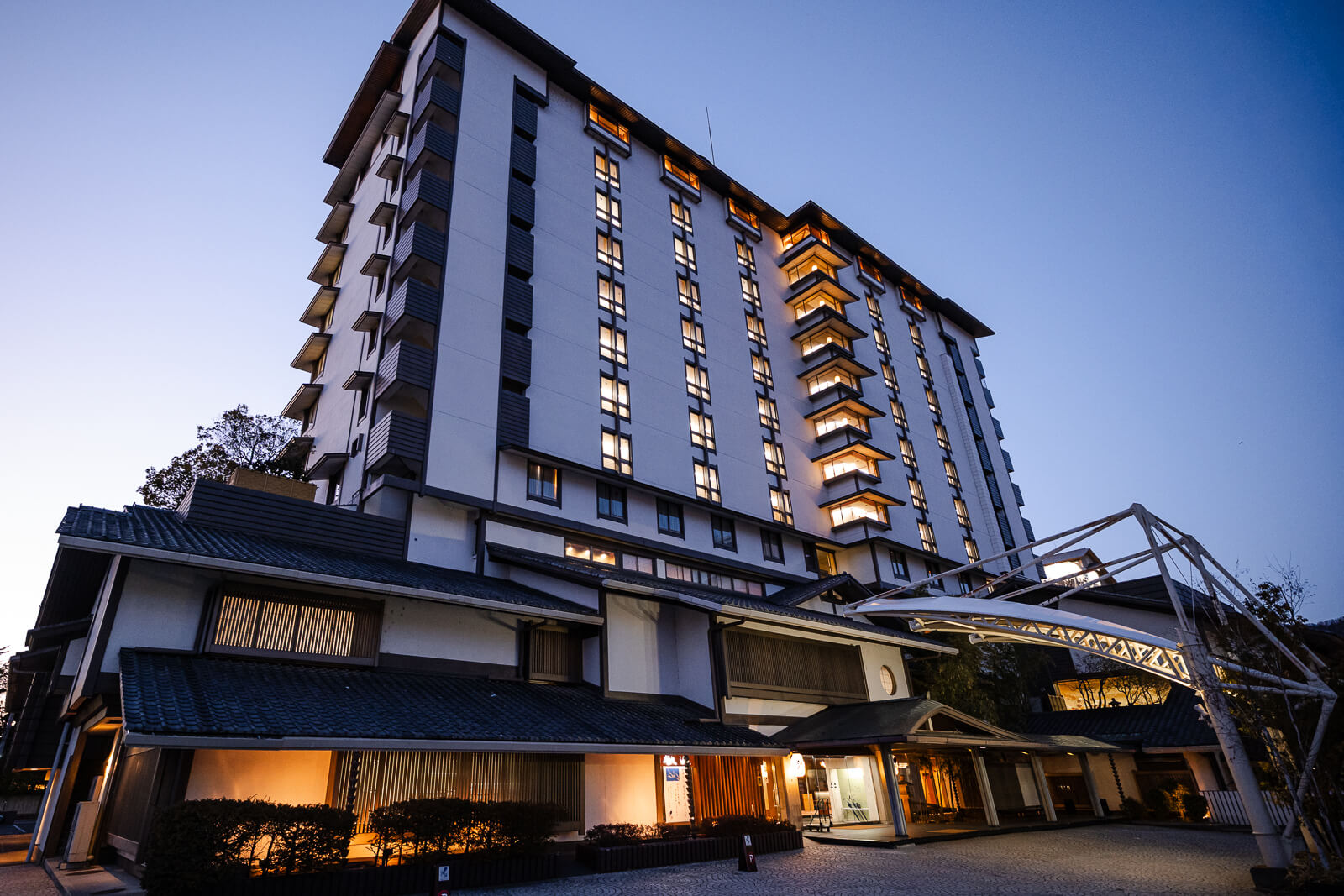
Check Japan Rail Options
JR access makes Kenchō-ji easy to combine with the surrounding Kita-Kamakura temple district.
Check Rail Options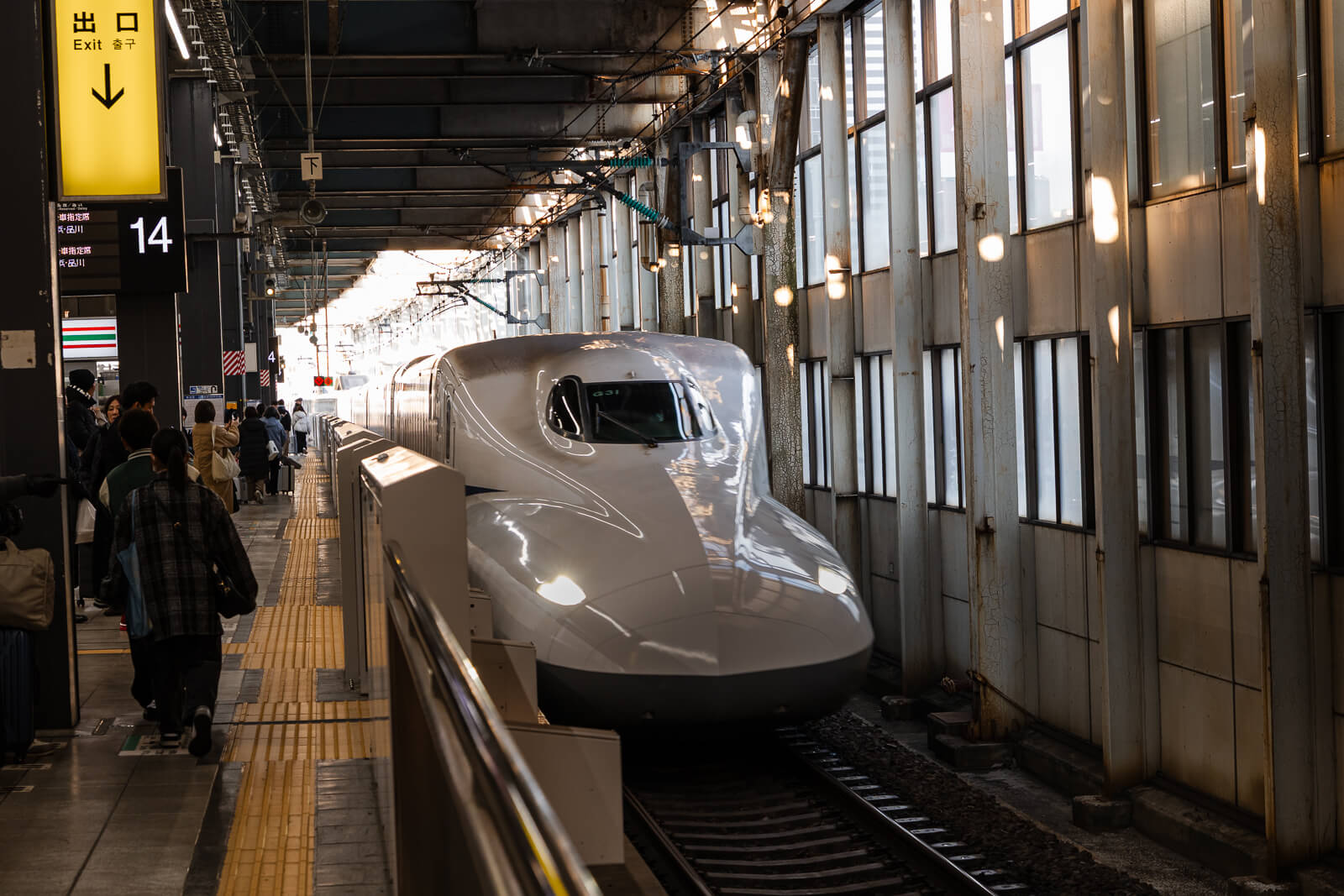
Explore Kamakura Tours
Guided routes connect Kamakura’s temples, landmarks, and history without coordinating every stop independently.
Explore Kamakura Tours Compare Japan eSIMs
Mobile data supports walking directions, bus checks, and trail decisions across Kamakura.
Compare Japan eSIMs
Reader note: Japan Unfolded may earn a commission from some links at no extra cost to you.