A Short Walk From Harumiya to Something Stranger
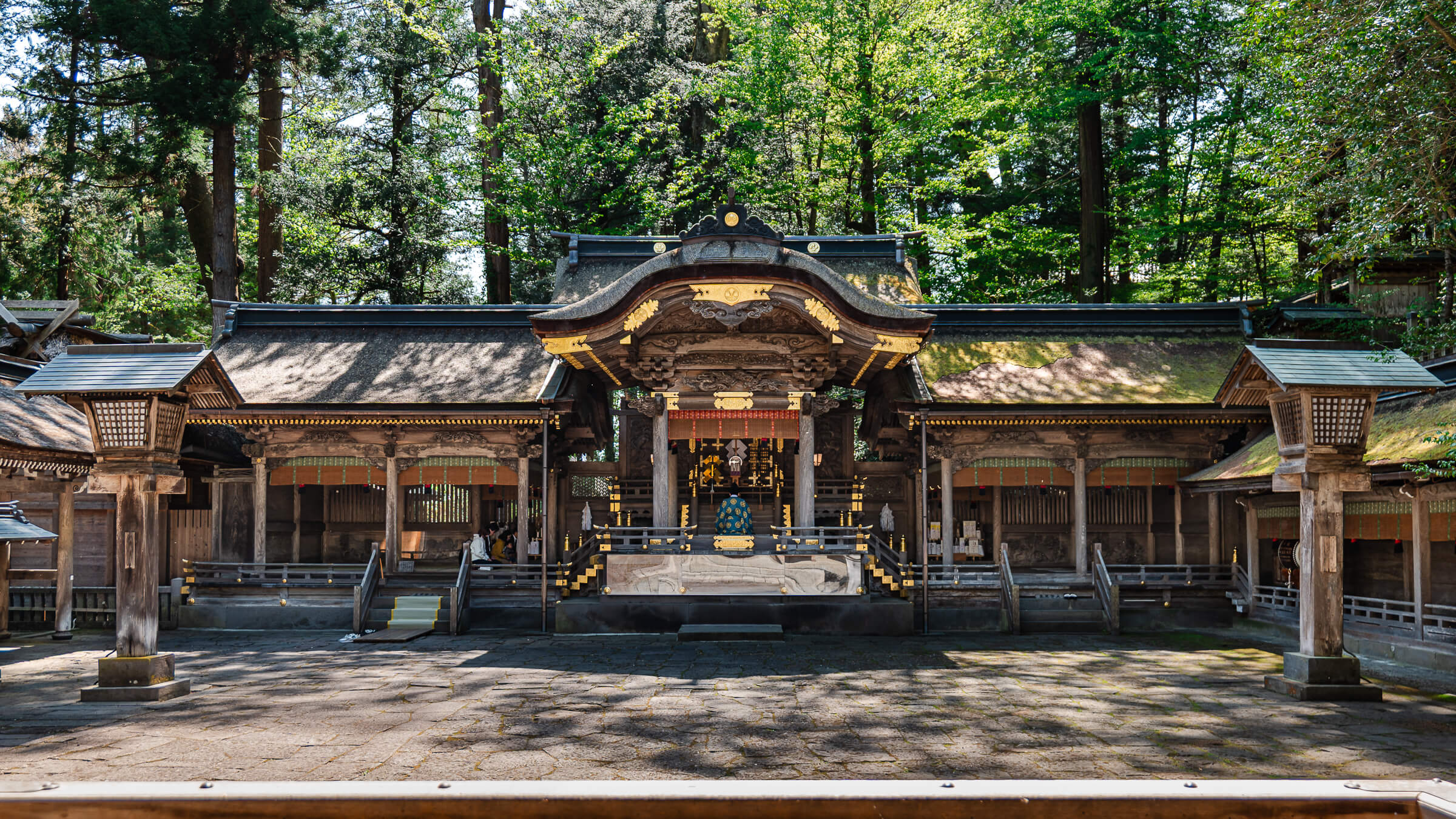
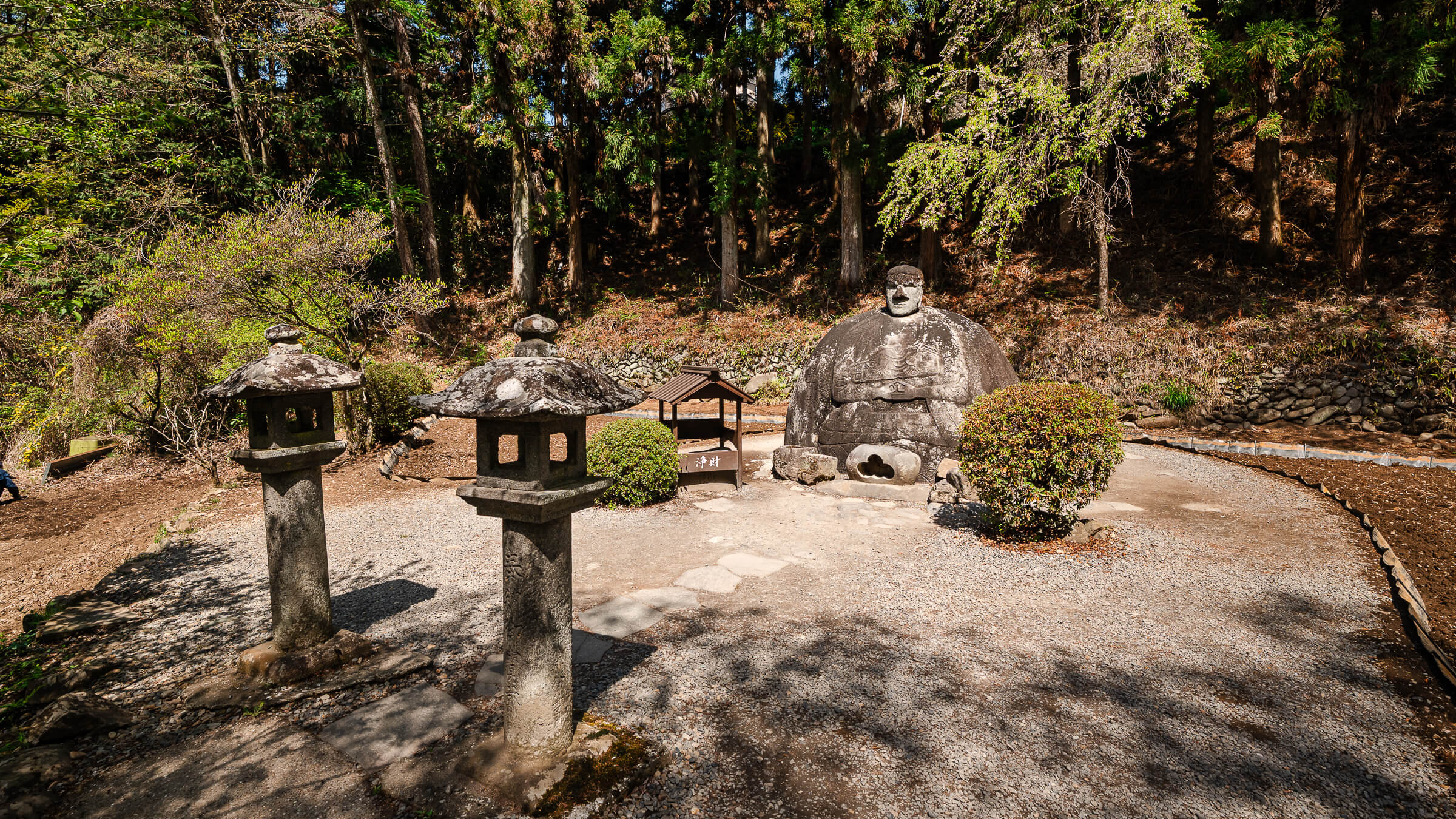
Manji Stone Buddha sits in Shimosuwa, Nagano Prefecture, just off the side of Suwa Taisha Shimosha Harumiya, close to the To River on the southern side of the Lake Suwa basin. It is a small outdoor religious landmark rather than a temple complex, but its location beside one of the lower shrines of the four-shrine Suwa Taisha system makes it an easy continuation from Harumiya. The route leaves the main shrine complex and shifts into a wooded riverside area where a torii gate, small shrine, stone lantern, and bridge create a short transition before the stone Buddha appears.
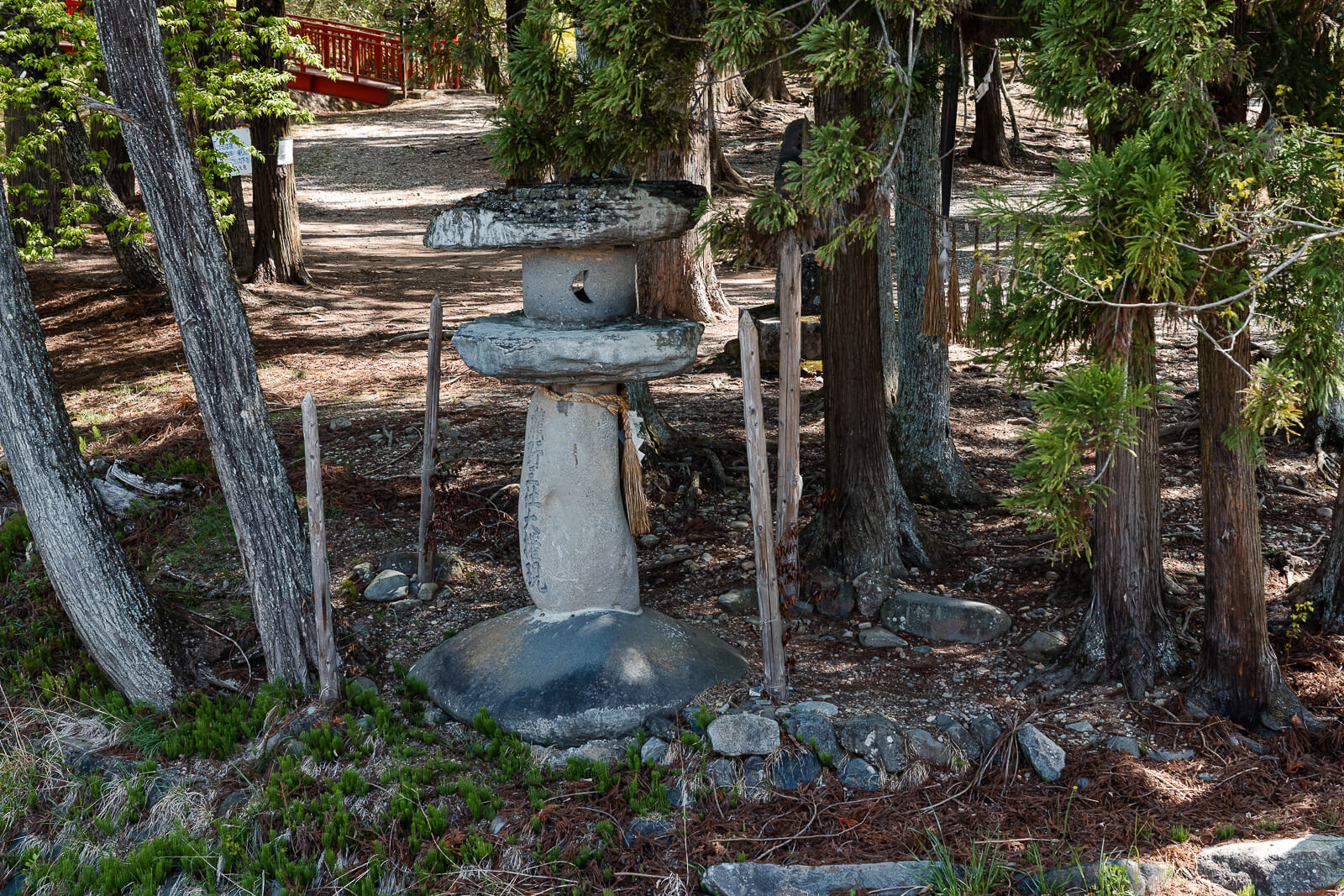
Known in Japanese as Manji no Sekibutsu, the stone Buddha is one of Shimosuwa’s most recognizable small landmarks. Its large, rounded stone body and smaller head create a form that looks very different from the more refined Buddhist statues travelers may picture before arriving. The visit is short, easy, and low friction, which makes it a natural continuation after Harumiya rather than a separate destination that requires much planning.
Most people spend about 15 to 30 minutes here, including the short movement from Harumiya, time near the river, and a few photos around the statue. Access is simple once Harumiya is already part of the day, and the effort level is easy, with only a brief walking route involved. Crowds are usually less of a concern than at larger shrine or temple sites, though the space around the Buddha is compact enough that another group can briefly slow the flow.
Why This Stone Became a Buddha
The story of Manji Stone Buddha is closely tied to Suwa Taisha Shimosha Harumiya. According to local tradition, a mason was preparing to use a large stone for a torii gate connected to Harumiya when blood was said to flow from the rock after it was struck. The work was abandoned, and the stone was instead carved as Amida Buddha.
That story changes how the site reads once the stone is in front of you. It does not come across as a decorative figure placed beside a path after the fact. It is understood as a stone that already carried meaning before it became the figure seen today.
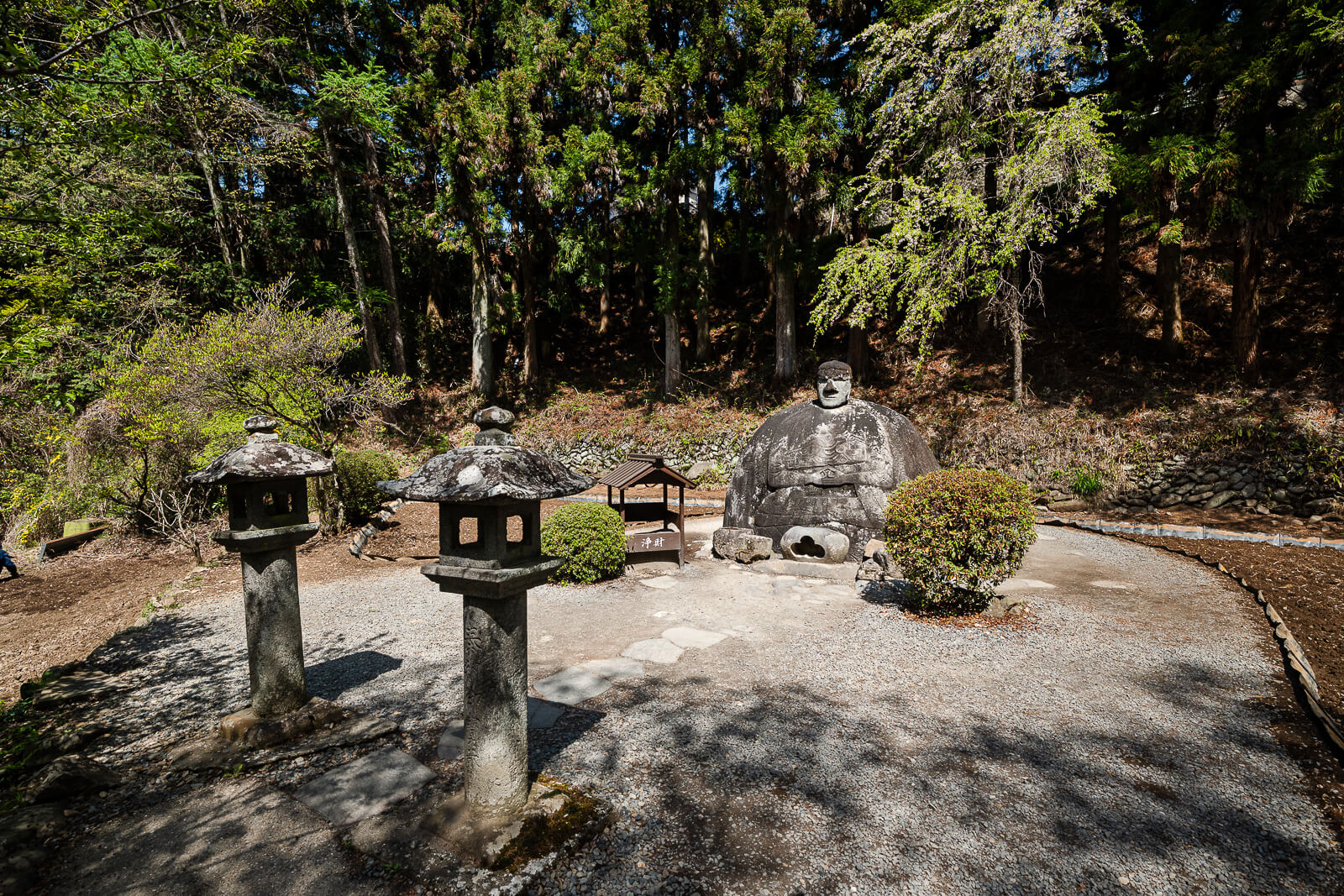
The name Manji comes from the Manji era inscription associated with the statue, dating it to 1660. That date gives the site more weight than its small scale suggests, placing it within the older religious landscape around Shimosuwa and the lower shrines of Suwa Taisha. The carved symbols on the stone body, including a reverse manji, sun, moon, and thunder markings, add another layer for anyone who pauses long enough to look closely.
Where Harumiya Opens Toward the River
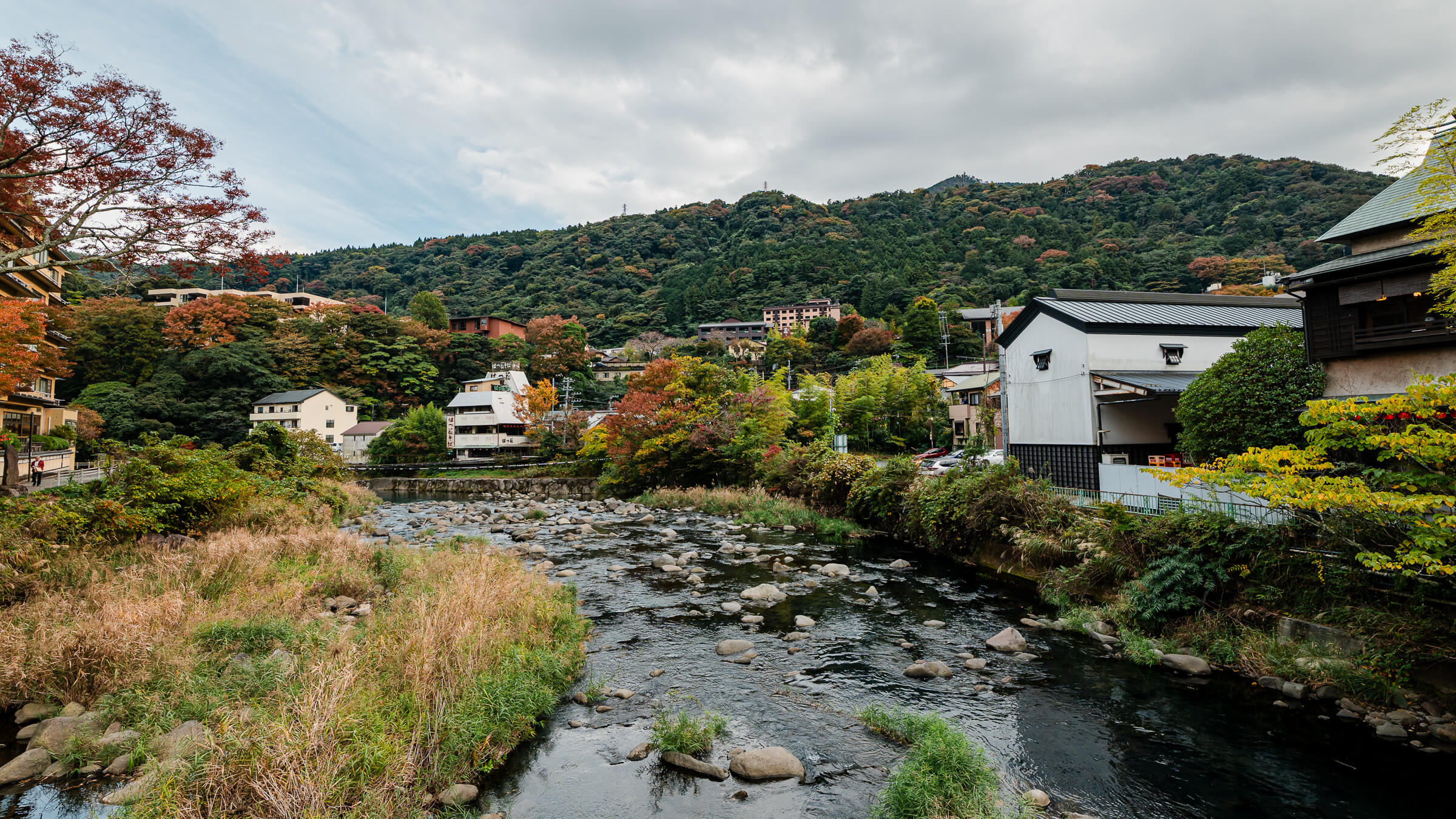
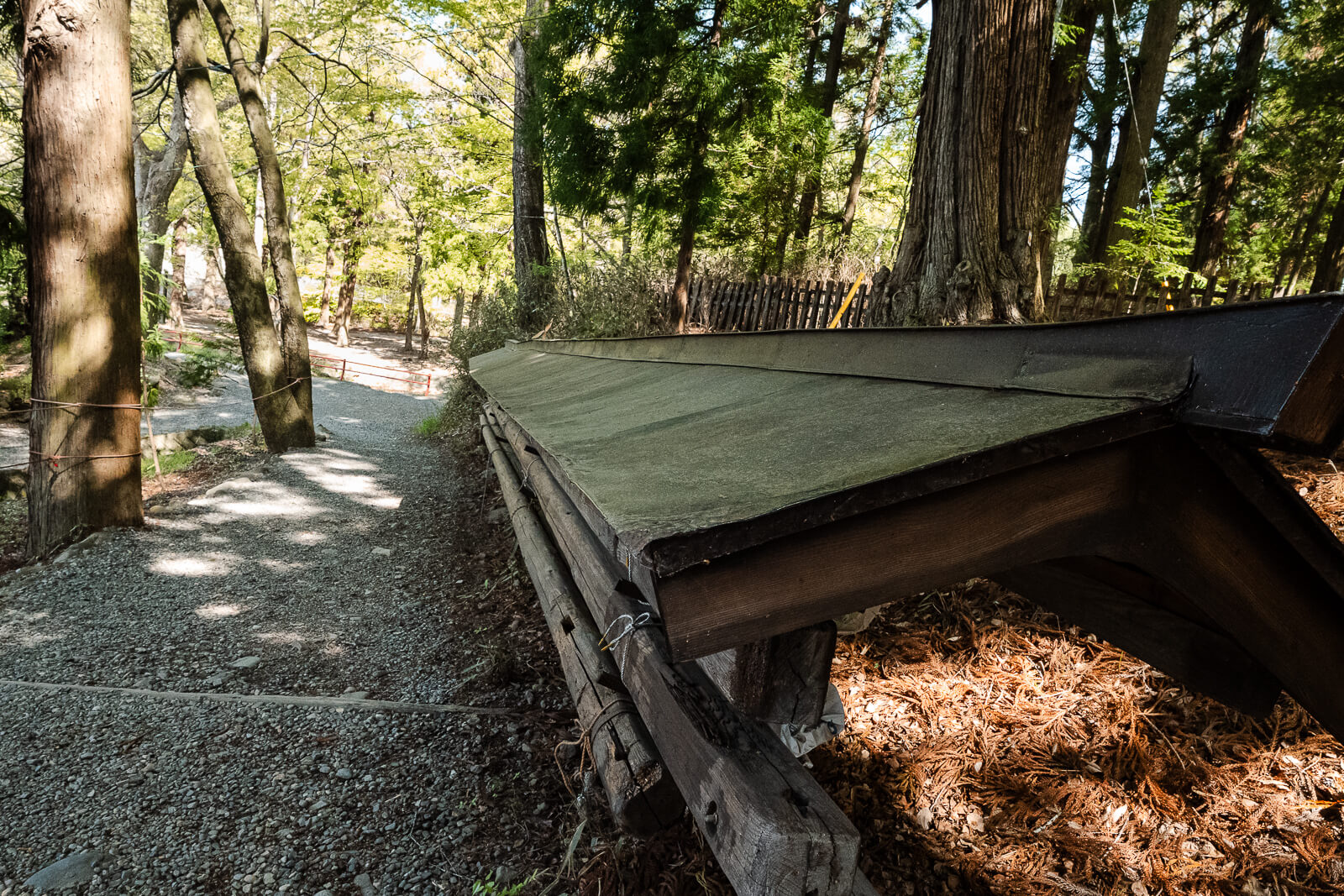
The walk begins very close to the main Harumiya complex. Along the side of the shrine grounds, the formal buildings give way to a path leading toward the To River instead of back toward the main road. That shift matters because the visit moves quickly from shrine architecture into a smaller riverside setting.
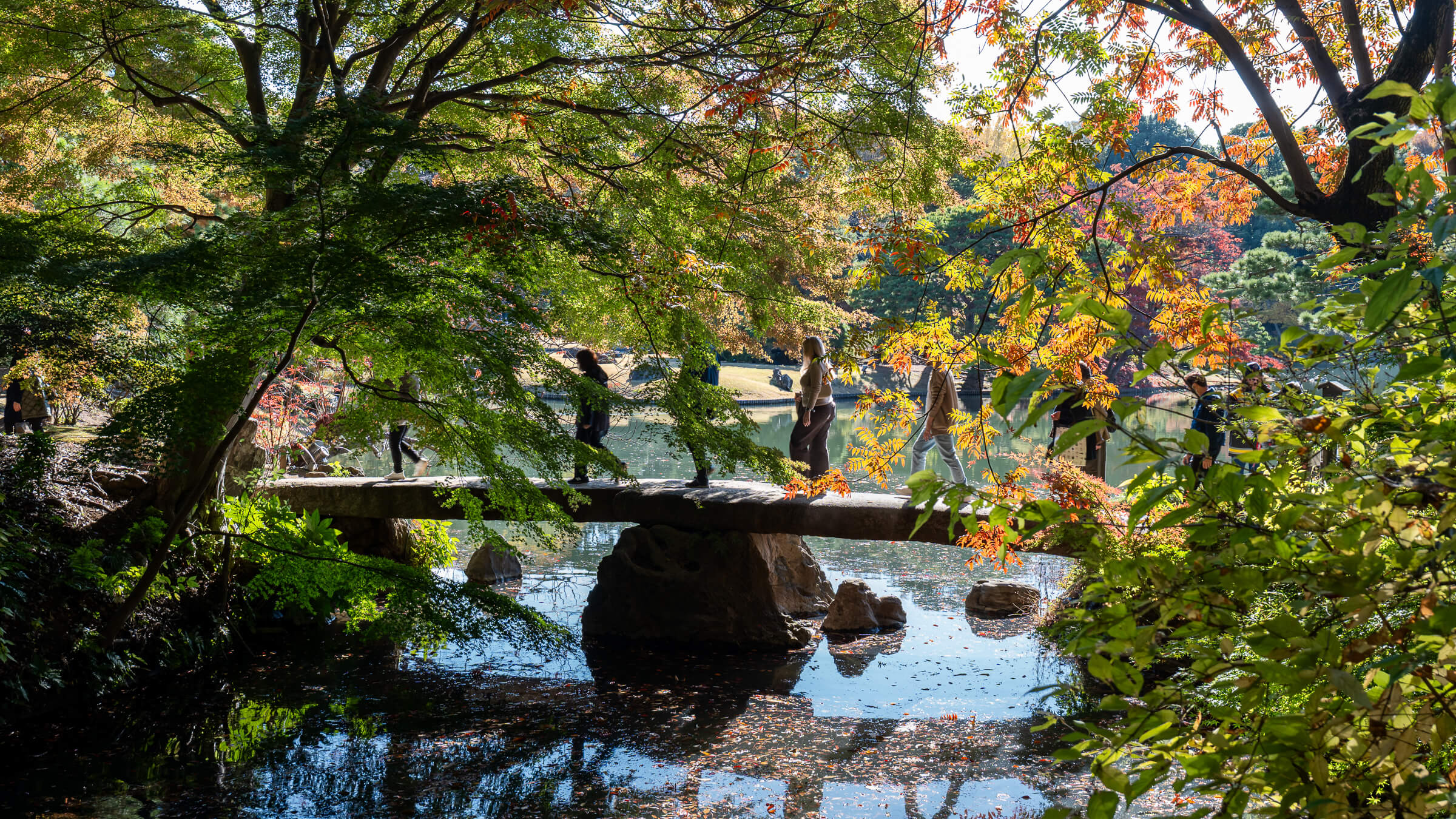
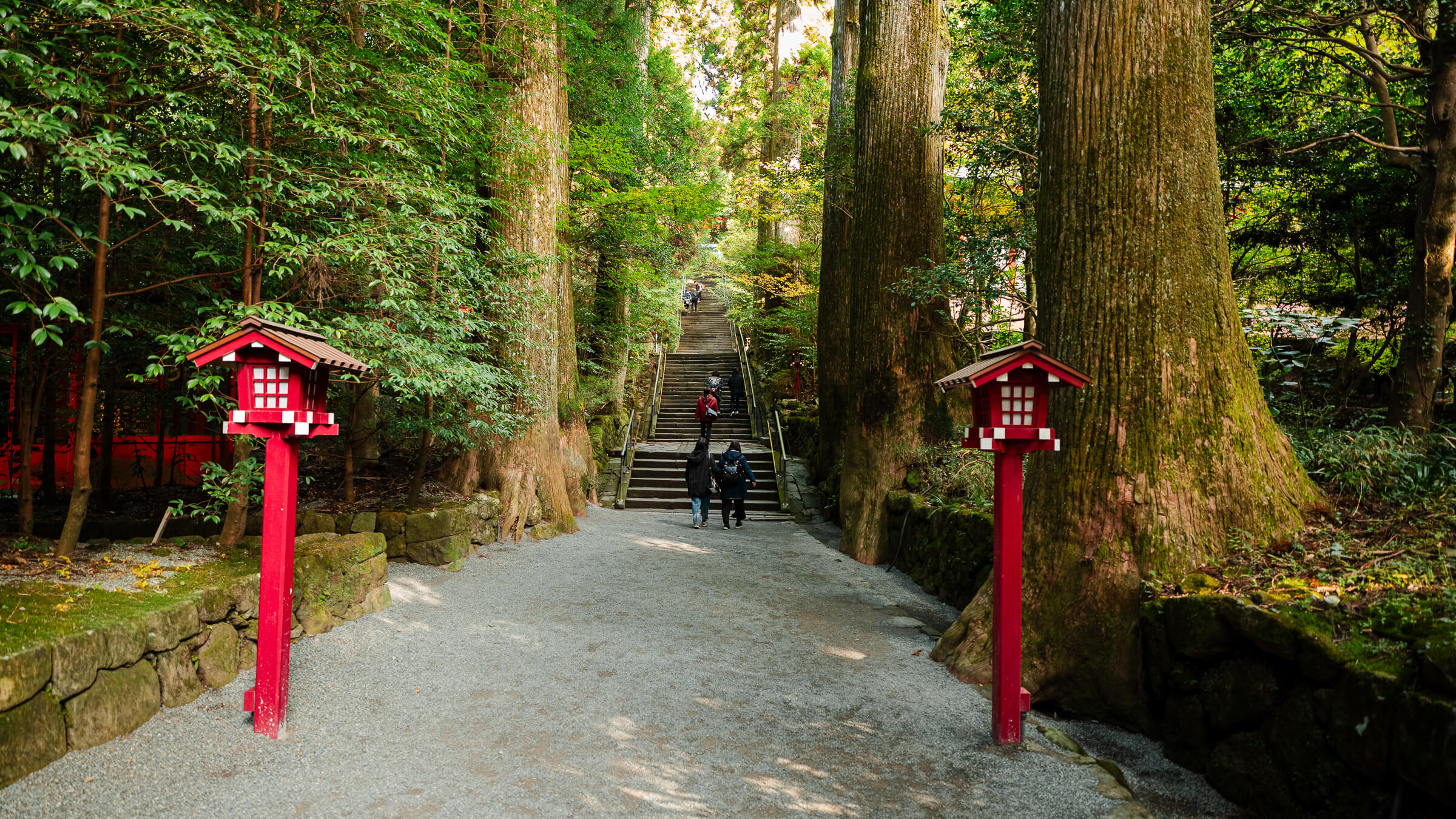
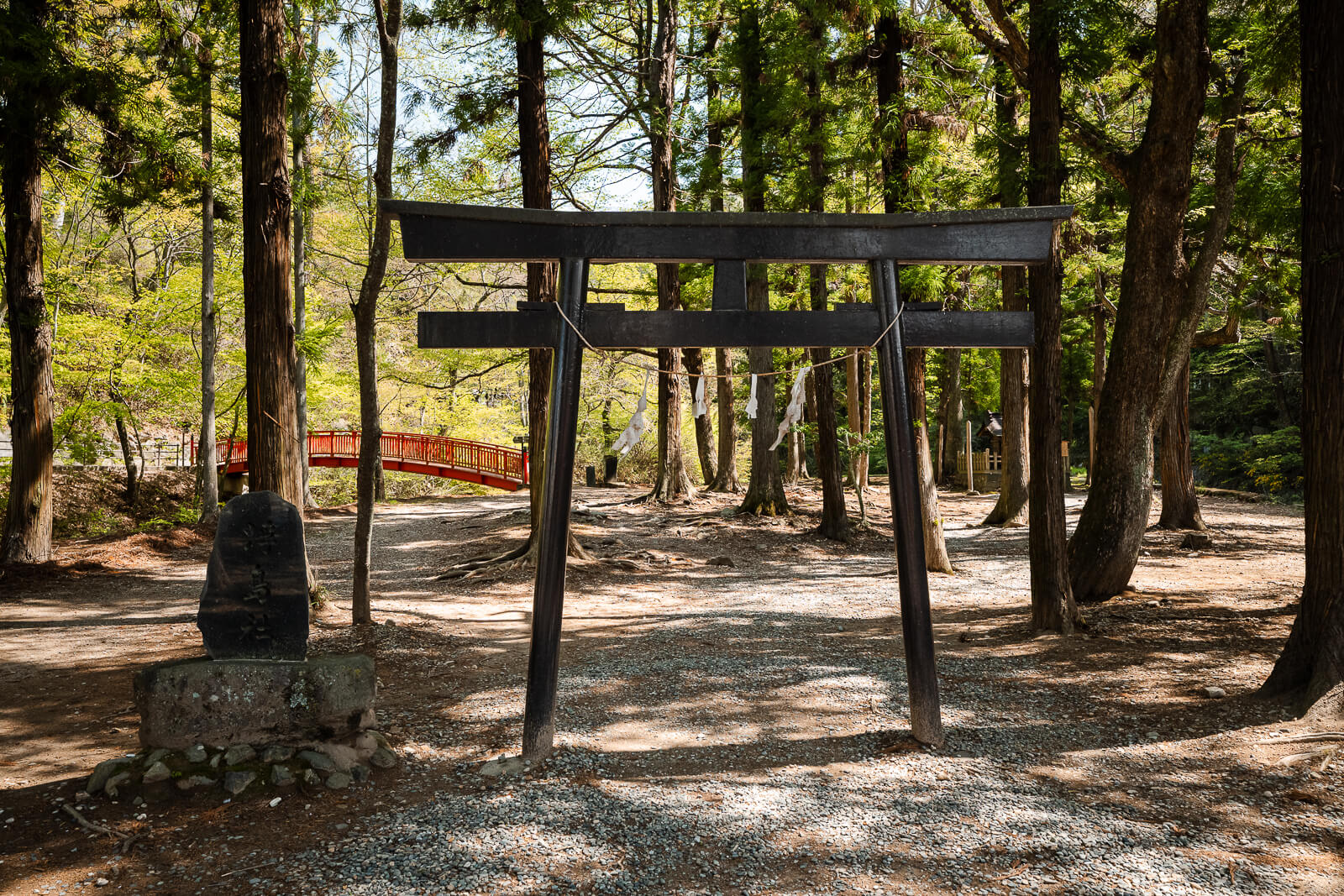
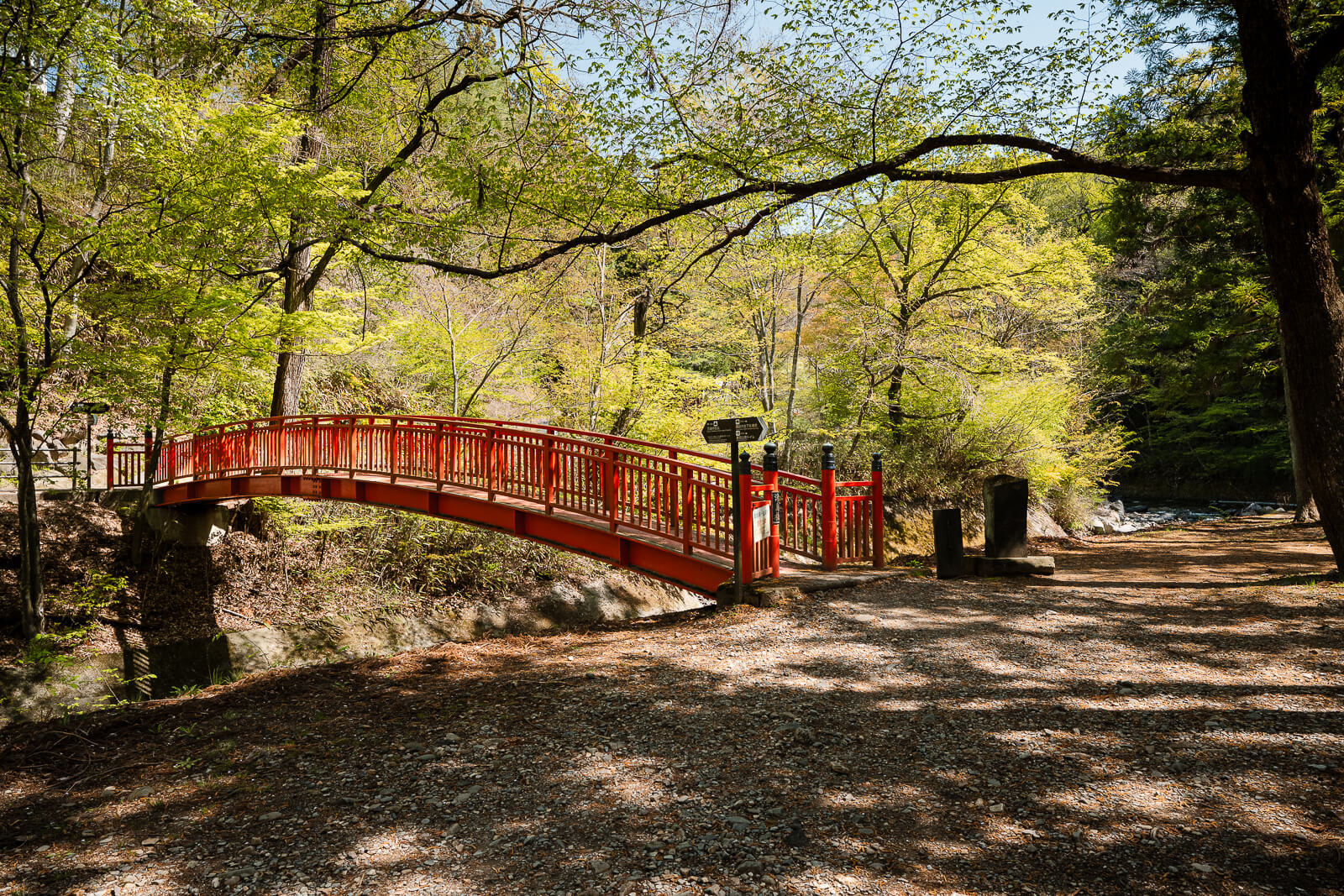
The wooded area appears almost immediately, with several details arranged in a tight sequence. A torii gate marks the transition, followed by a small shrine and the bridge crossing the water toward the walkway beyond. Near the water’s edge, off to the left as the wooded area begins, a stone lantern adds another visual marker to the approach.
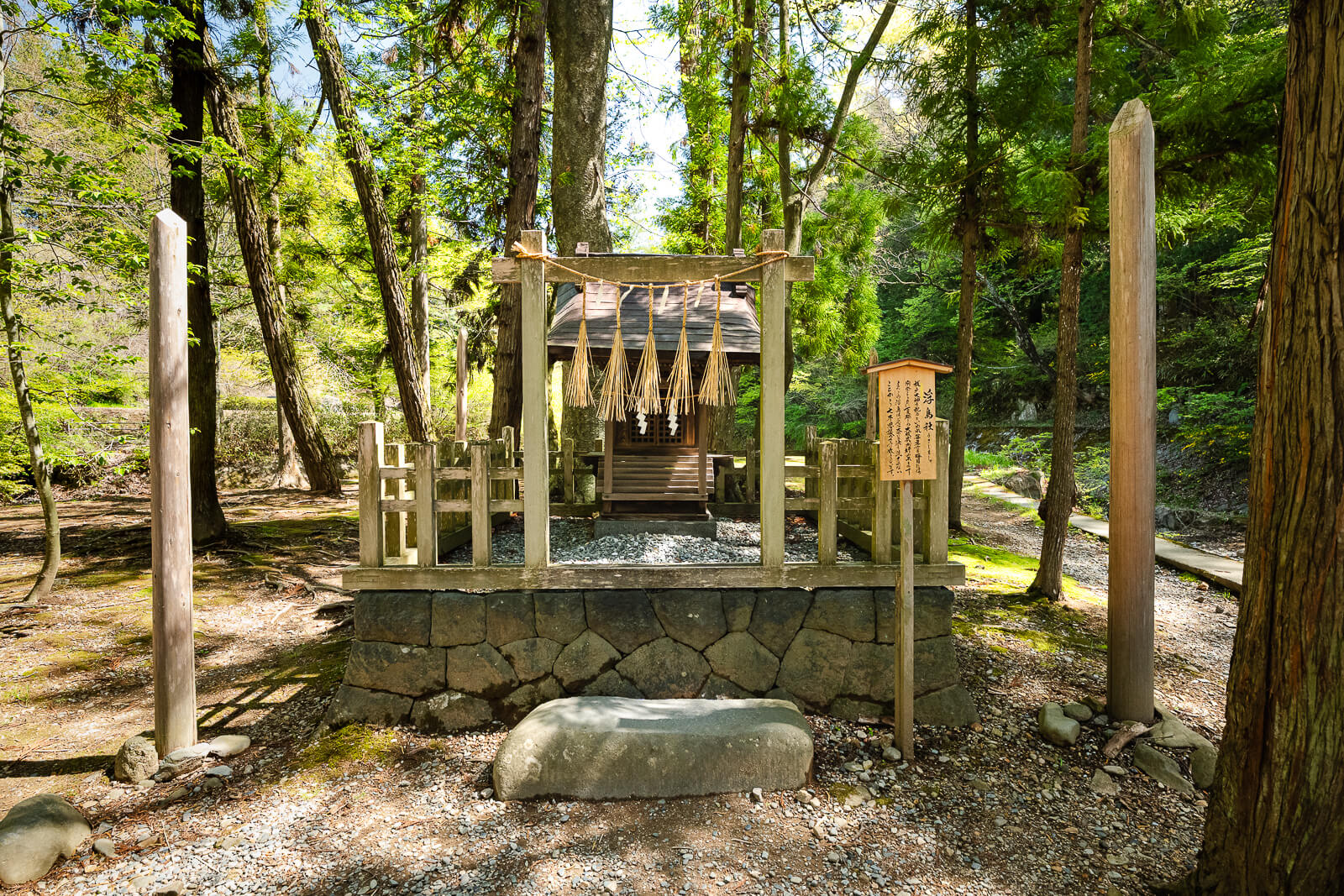
Beyond the bridge, the stone Buddha area sits only a short distance away. The walkway from the bridge to the Buddha is roughly 50 meters, so the route never becomes a major detour. The experience stays compact: Harumiya, side path, river edge, torii, small shrine, bridge, short walkway, and then the stone Buddha.
The Shape That Makes People Stop
Manji Stone Buddha is memorable because its form does not follow the polished symmetry many travelers may associate with religious sculpture. The body is a large natural stone, broad and rounded, while the head sits above it in a way that feels direct rather than refined. That unusual proportion is usually the first thing that catches attention.
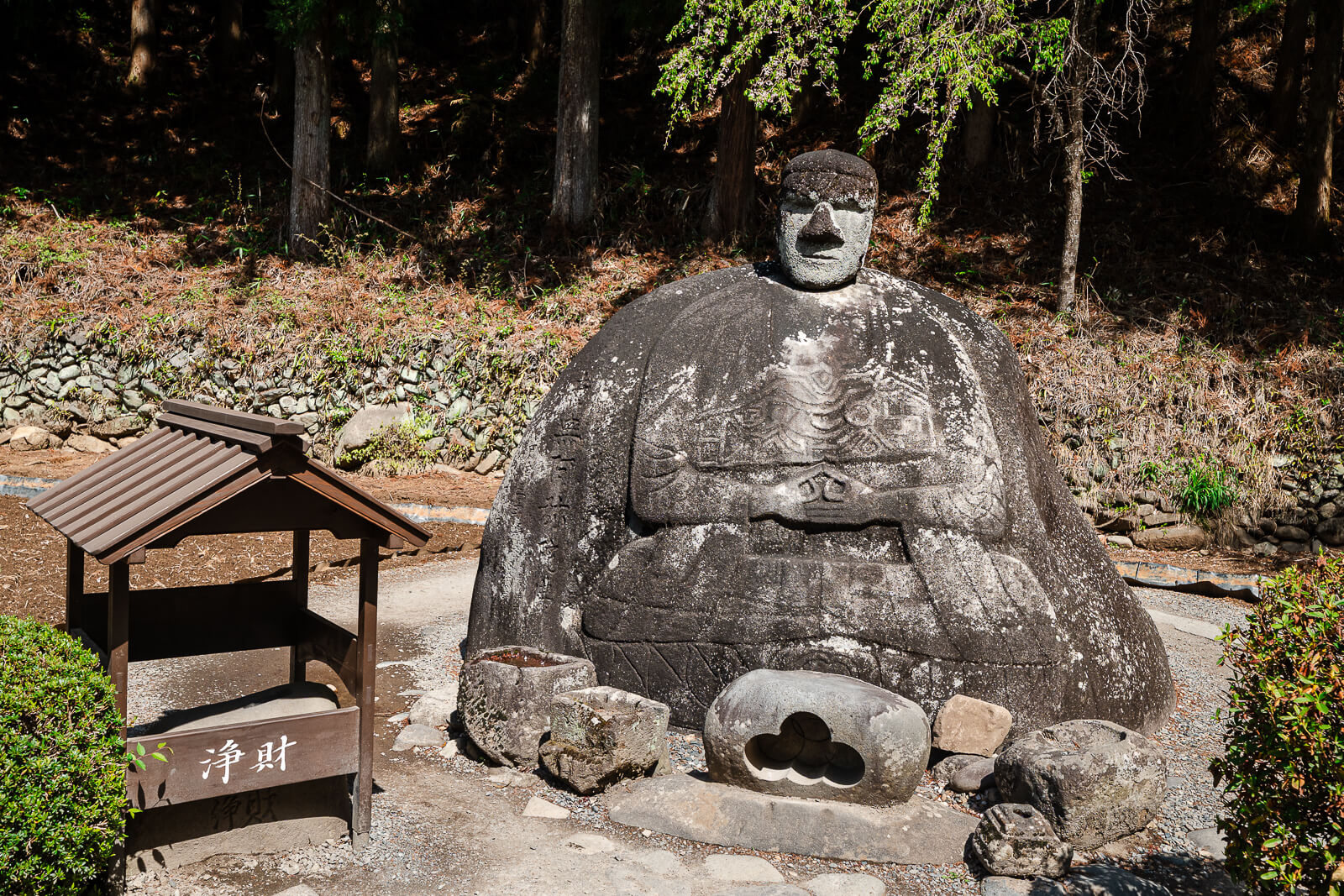
The figure is not monumental in the way a giant temple statue is monumental, but it has enough physical weight to hold the small space around it. The stone body makes the Buddha feel rooted in the ground rather than placed on top of it. That physical quality is one reason the site works better in person than it might appear on a map.
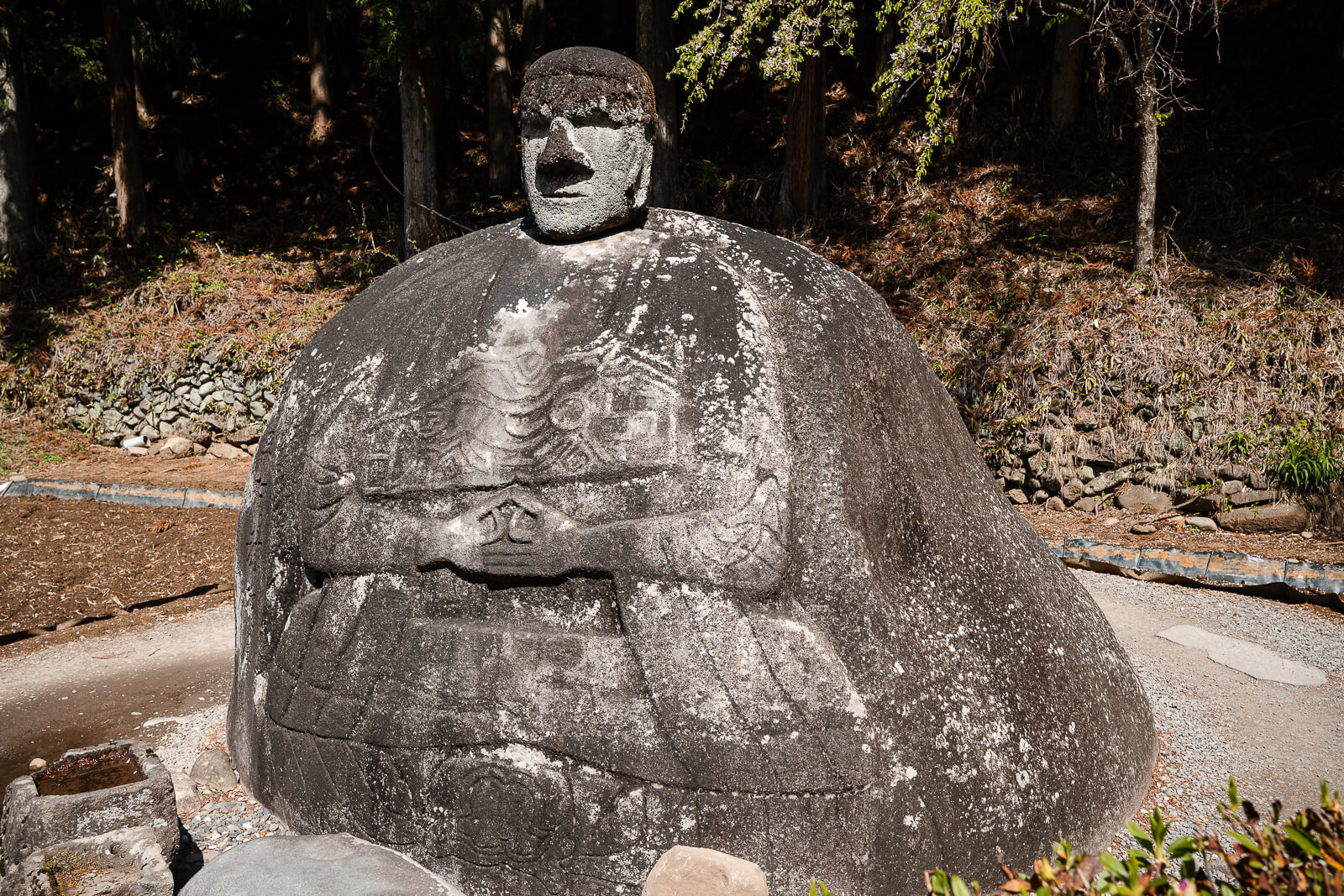
The statue became more widely known after artist Taro Okamoto visited Shimosuwa in 1974 and praised its unusual power. That later recognition helped bring attention to the site, but the experience remains local and compact. It is a short encounter with a distinctive object, not a long attraction built around facilities or extended sightseeing.
Why the Walk Matters as Much as the Statue
Manji Stone Buddha would still be worth seeing if it stood directly beside a road, but the route from Harumiya gives the visit more structure. The short movement from shrine grounds into the riverside area changes the scale before the figure appears. By the time the Buddha comes into view, the visit has already shifted from formal shrine space into something smaller and more local.
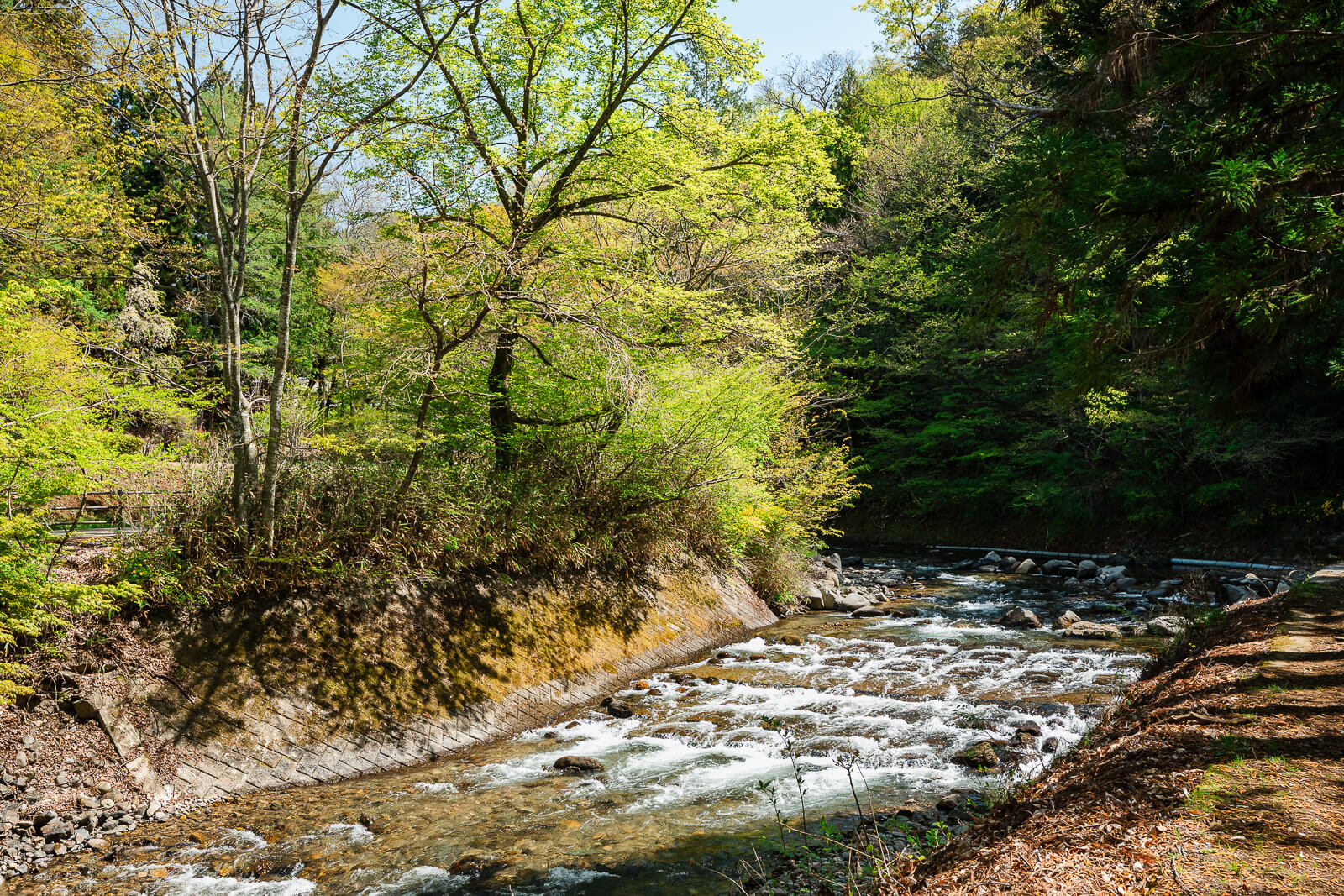
That distinction matters when deciding whether to include it after Harumiya. The stop is not only about seeing the Buddha and leaving. It is about how the shrine complex, river, small shrine elements, bridge, and stone figure connect in one compact sequence.
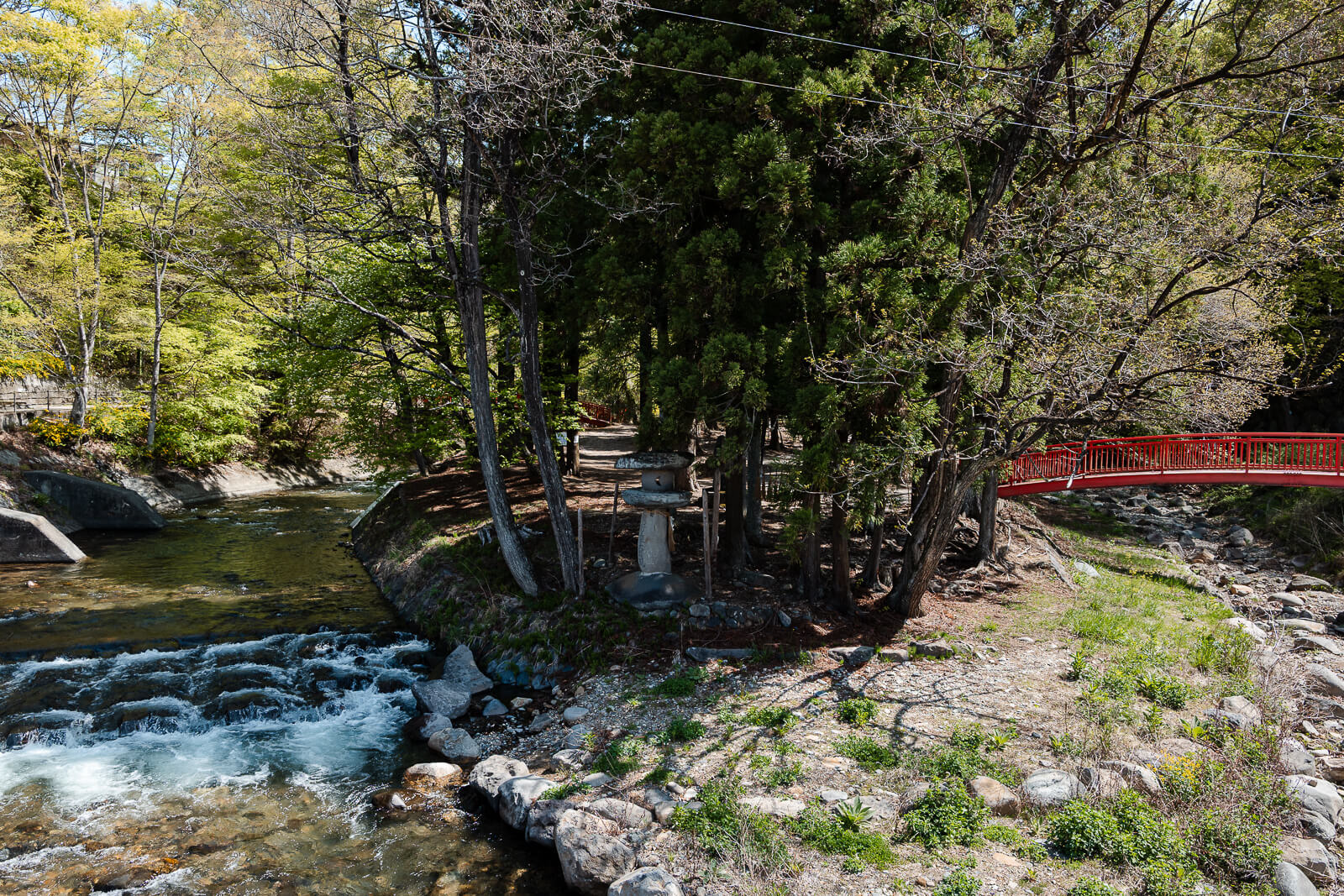
For photography, this route gives the article a clean visual order. Images can move from the Harumiya-side path to the torii, the stone lantern, the small shrine, the bridge, and finally the Buddha itself. That order helps readers understand the site as a short progression rather than a single isolated object.
How Long the Visit Takes
Most visitors spend about 15 to 30 minutes at Manji Stone Buddha when combining it with Suwa Taisha Shimosha Harumiya. That includes the short riverside approach, the bridge crossing, and time around the statue. The effort level is easy, and the site does not require a major time commitment.
The visit can stretch slightly longer when the smaller route details become part of the experience. The torii, stone lantern, small shrine, bridge, and stone Buddha all work as separate visual points, especially for photography. Even with those pauses, this remains a short stop rather than a half-day attraction.
Crowding is usually less of a concern here than at major shrine or temple complexes, but the space around the Buddha is limited. When another group is taking photos, the visit may briefly slow because there is not much room to spread out. That does not make the site difficult, but it does make the compact scale worth understanding before arrival.
How This Fits Around Shimosuwa and Lake Suwa
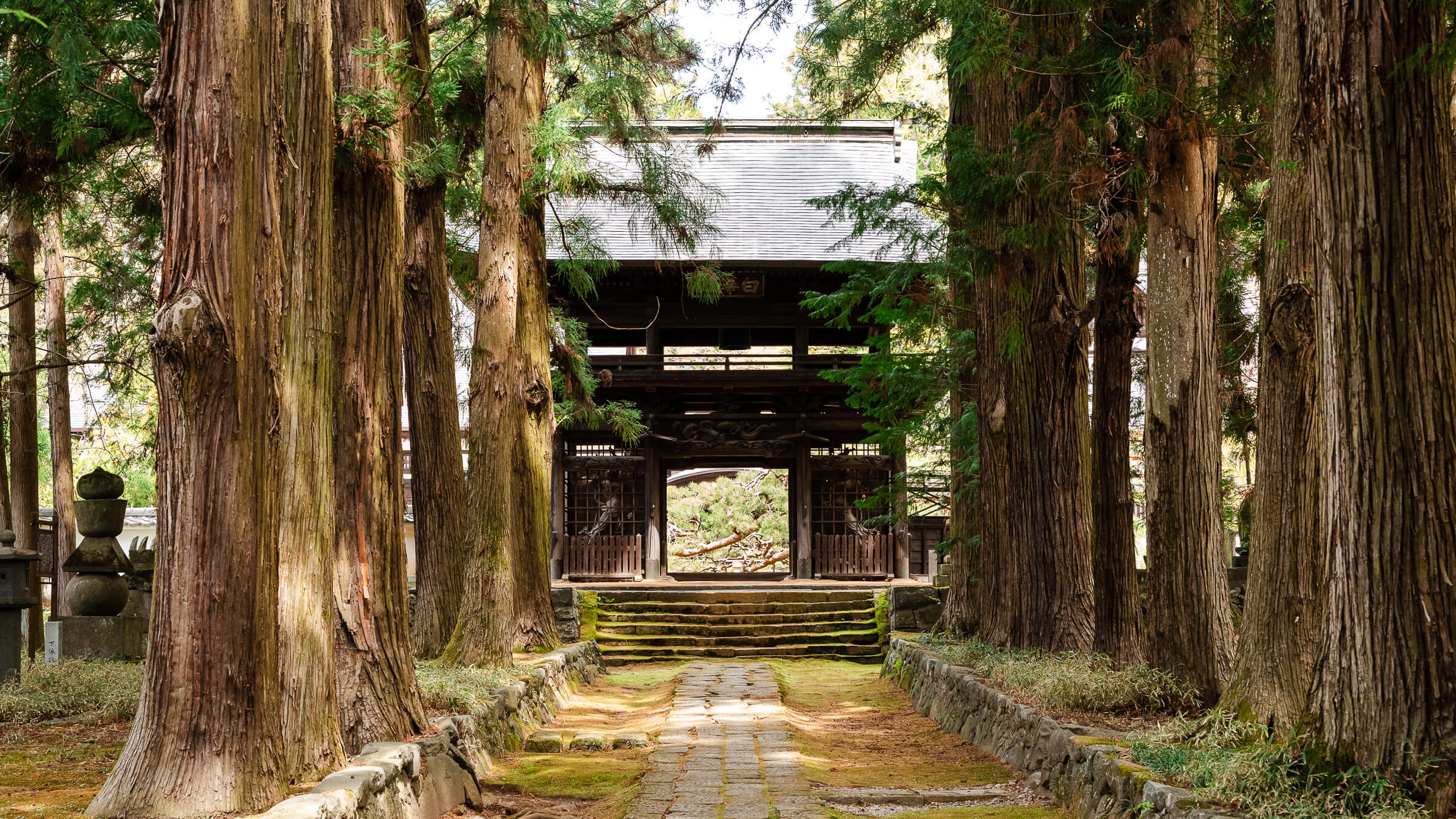
Manji Stone Buddha fits most naturally into a Shimosuwa visit centered around Suwa Taisha Shimosha Harumiya. Nearby, Onbashira-kan Yoisa helps explain the festival traditions behind the massive sacred pillars associated with the wider Suwa Taisha shrine system, while the local route can continue toward Jiunji Temple, a nearby Zen temple stop, before reaching Suwa Taisha Shimosha Akimiya on the lower shrine side of town. Across the Lake Suwa basin, the upper shrines, Suwa Taisha Kamisha Honmiya and Suwa Taisha Kamisha Maemiya, extend the shrine geography toward Suwa City and Chino, showing how the shrine system spreads across the region rather than gathering into one large complex.
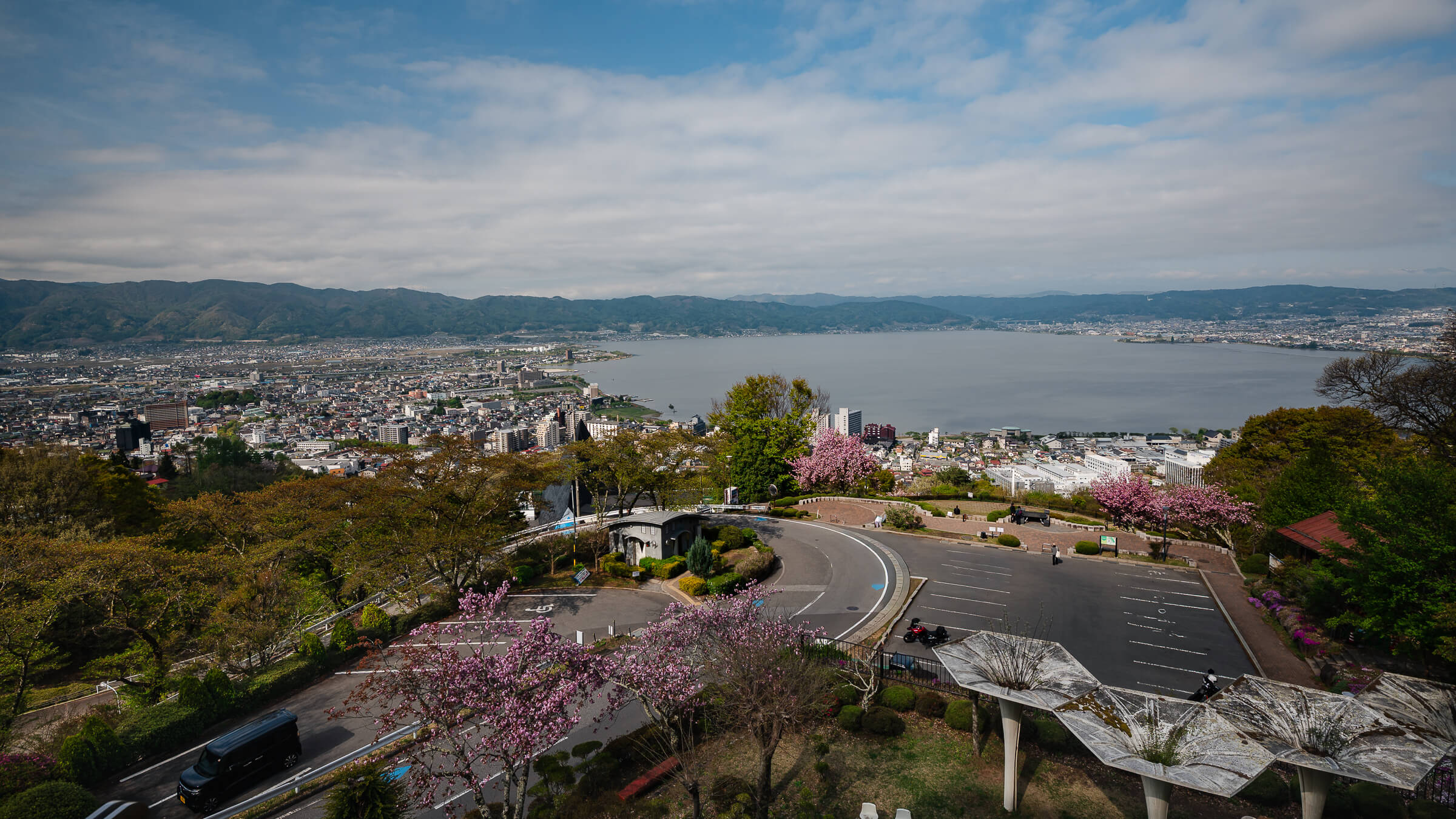
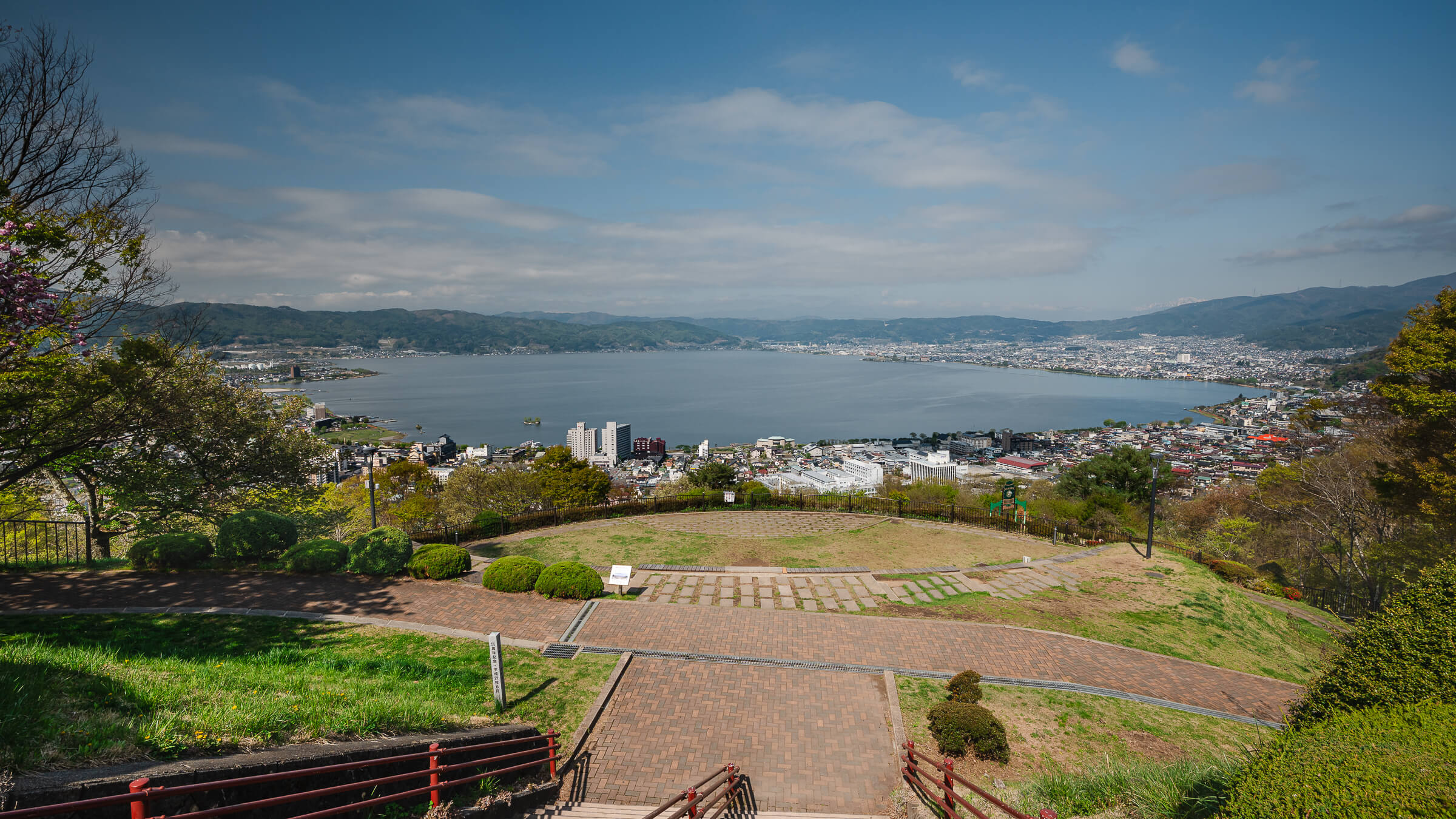
Farther around the lakeside, Sekicho Park, Takashima Castle, and Tateishi Park provide additional points of interest beyond Shimosuwa’s shrine town, while the Lake Suwa Guide helps connect those stops into a broader route around the basin.The stone Buddha is too small to plan a day around by itself, but it works well as a short riverside layer within a connected Shimosuwa and Lake Suwa itinerary. Its value comes from proximity, ease, and the way it adds more character to a Harumiya visit than the short distance suggests. For the wider regional view, the Suwa Area Guide connects Shimosuwa, Suwa Taisha, Lake Suwa, Chino, and the highland routes into one planning page.
Getting There
Manji Stone Buddha is easiest to reach from Suwa Taisha Shimosha Harumiya. The site sits just beyond the side of the main shrine complex, along the path leading toward the To River. The final approach passes through a wooded riverside area with a torii, small shrine, stone lantern, and bridge before the walkway reaches the Buddha area.
Access is simple once Harumiya is already part of the visit. This is not a multi-step transfer or a place that requires a separate route plan. The main point is proximity: the Buddha belongs to the same local walking area as Harumiya, but the river setting makes it feel distinct.
Shimosuwa Station works as the broader train access point for Harumiya and the nearby riverside landmarks. For drivers, Harumiya is the practical anchor, with Manji Stone Buddha functioning as a short walk from the shrine area rather than a drive-up stop. The site is close enough that it works best as part of the same local visit.
Hours and Fees
Manji Stone Buddha is an outdoor landmark and does not have a standard ticketed entry system. There is no admission fee to view the stone Buddha. Because access conditions and local guidance can change, visitors should confirm current details through official Shimosuwa tourism information before visiting.
There is no formal last admission time for the stone Buddha itself. Since the site is outdoors and reached by a short riverside path, daylight hours are the most practical time to visit. For facilities, parking, and restrooms, Suwa Taisha Shimosha Harumiya and the surrounding Shimosuwa visitor area are the better reference points.