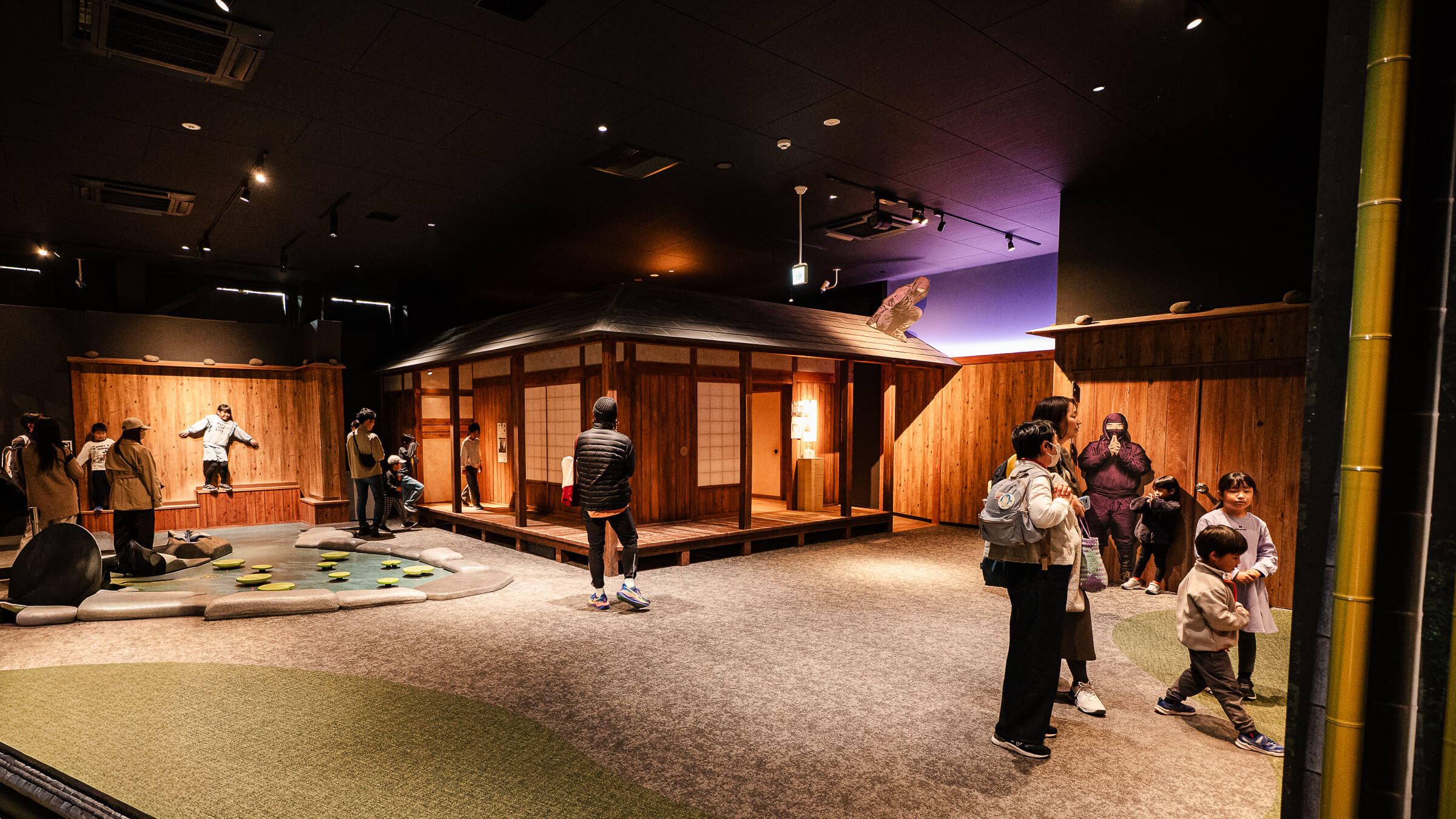
Set in the Lower Courtyard Before the Main Grounds
The Odawara Castle Ninja Museum sits within the lower courtyard of Odawara Castle in Odawara, a coastal city in Kanagawa Prefecture within the Kanto region, positioned along the corridor connecting Tokyo, Hakone, and Atami. It appears along the approach before reaching the main courtyard, placing it naturally early in the visit rather than within the central cluster.
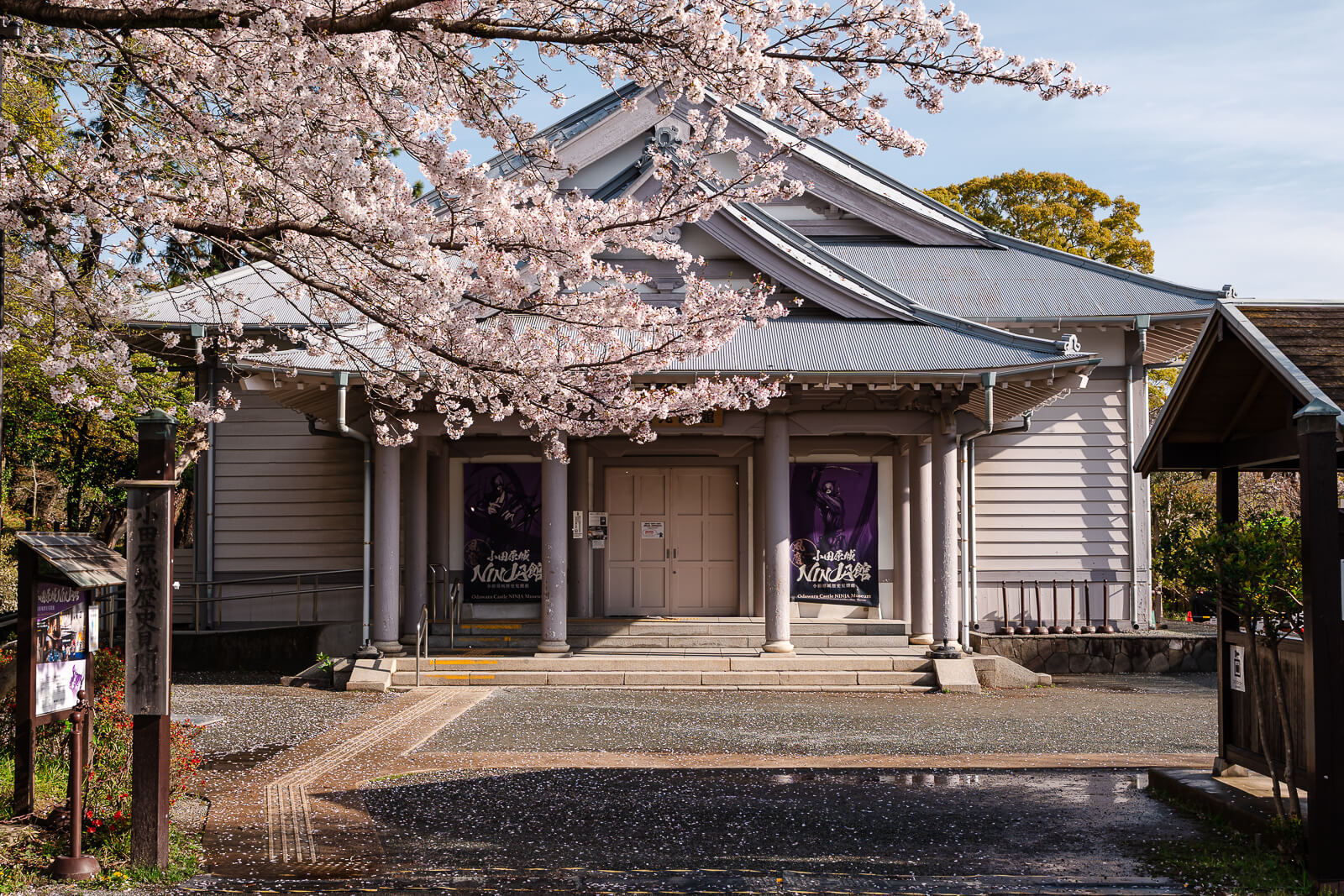
Because of this position, most visitors encounter it on the way toward the main keep without needing to adjust their route. The visit is short, typically taking 10 to 20 minutes, and is built around quick interaction rather than extended viewing.
A Different Tone Early in the Visit
The shift is immediate. While the main courtyard emphasizes scale, structure, and historical presence, the Ninja Museum introduces a simplified, activity-based interpretation centered on movement.
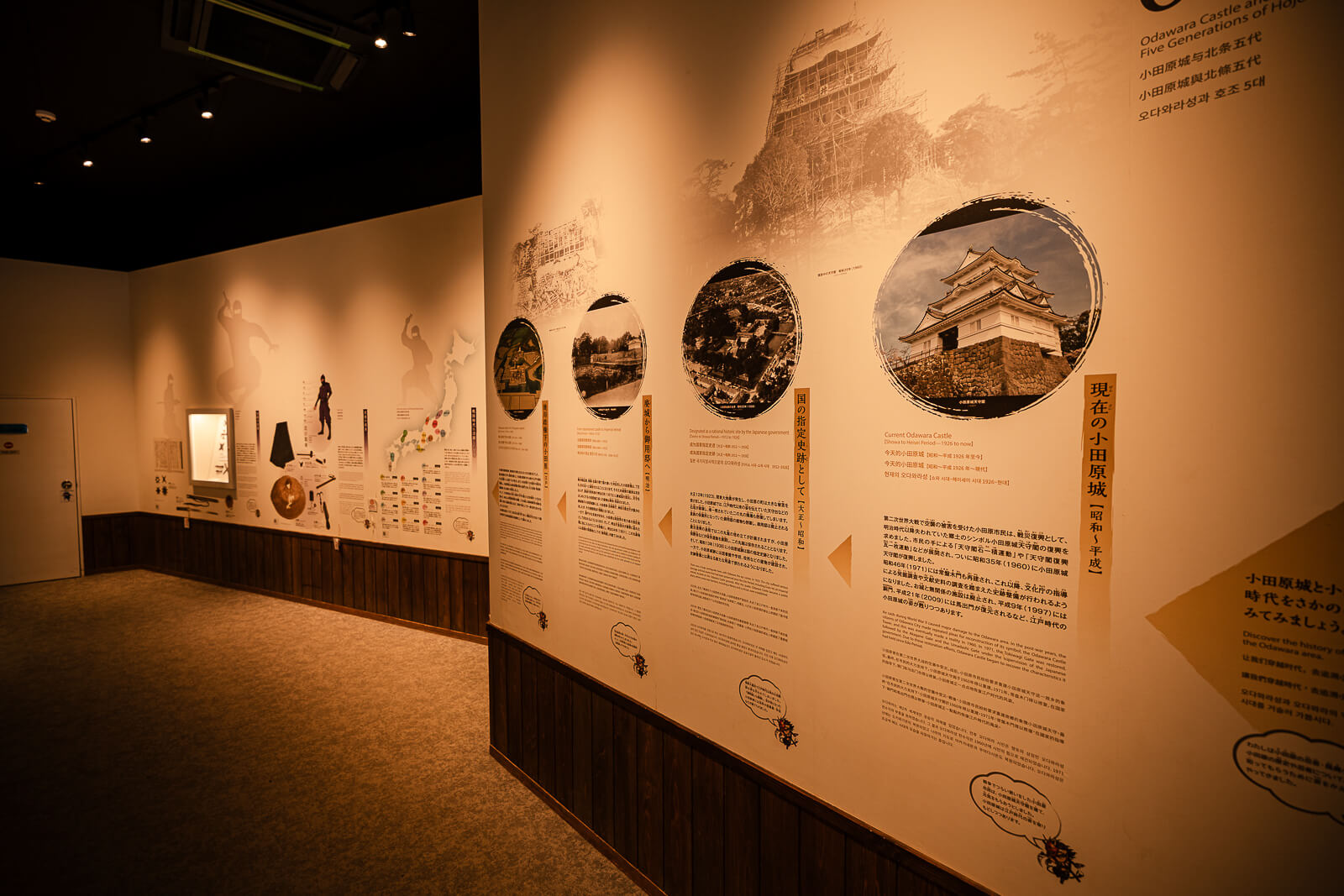
This reflects how ninja are generally understood today. Rather than focusing on detailed historical context, the exhibits highlight stealth, agility, and unconventional tactics in a way that is easy to engage with.
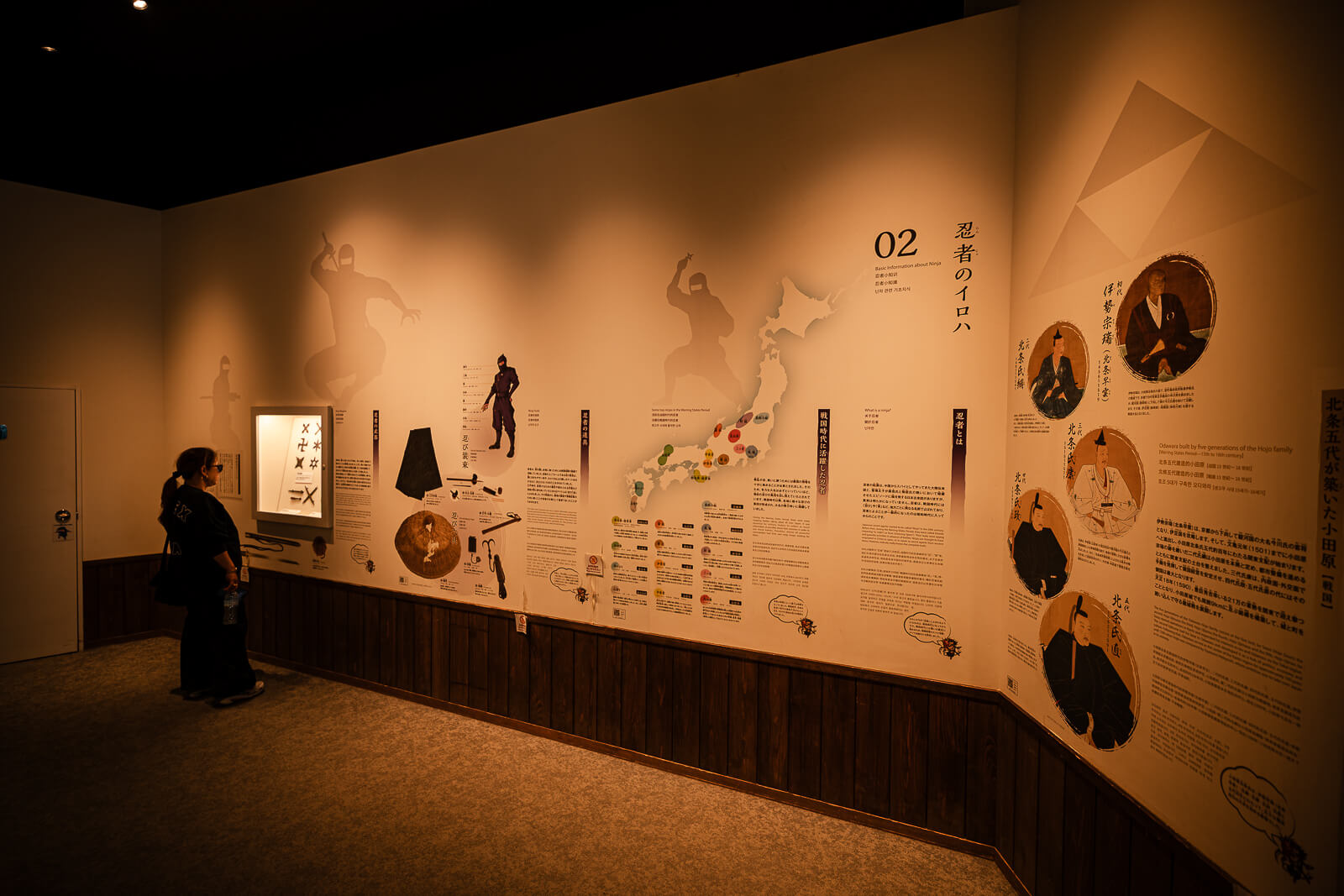
In a castle environment built around visibility and control, that contrast stands out. The difference is not in location, but in how the space is used.
A Light Historical Layer Behind the Experience
During the Sengoku period, strongholds like Odawara depended not only on visible defenses but also on information—monitoring movement, anticipating threats, and controlling access to the region. Groups associated with ninja activity operated in support of these systems, often working in roles tied to reconnaissance and communication rather than direct combat.
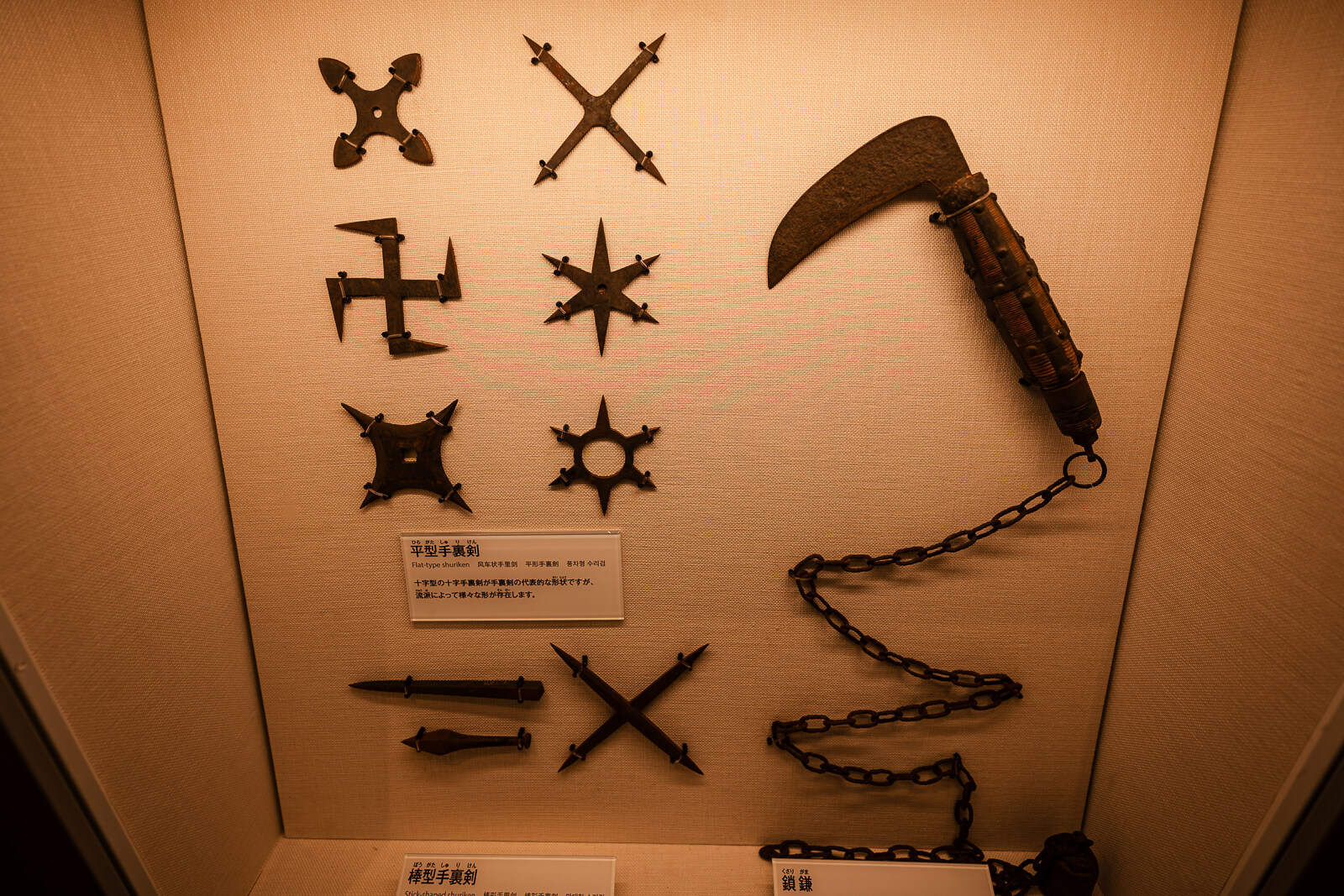
The museum touches on these ideas only briefly. The emphasis remains on accessibility, using familiar imagery and simplified explanations rather than detailed historical interpretation.
Moving Through Short, Self-Contained Spaces
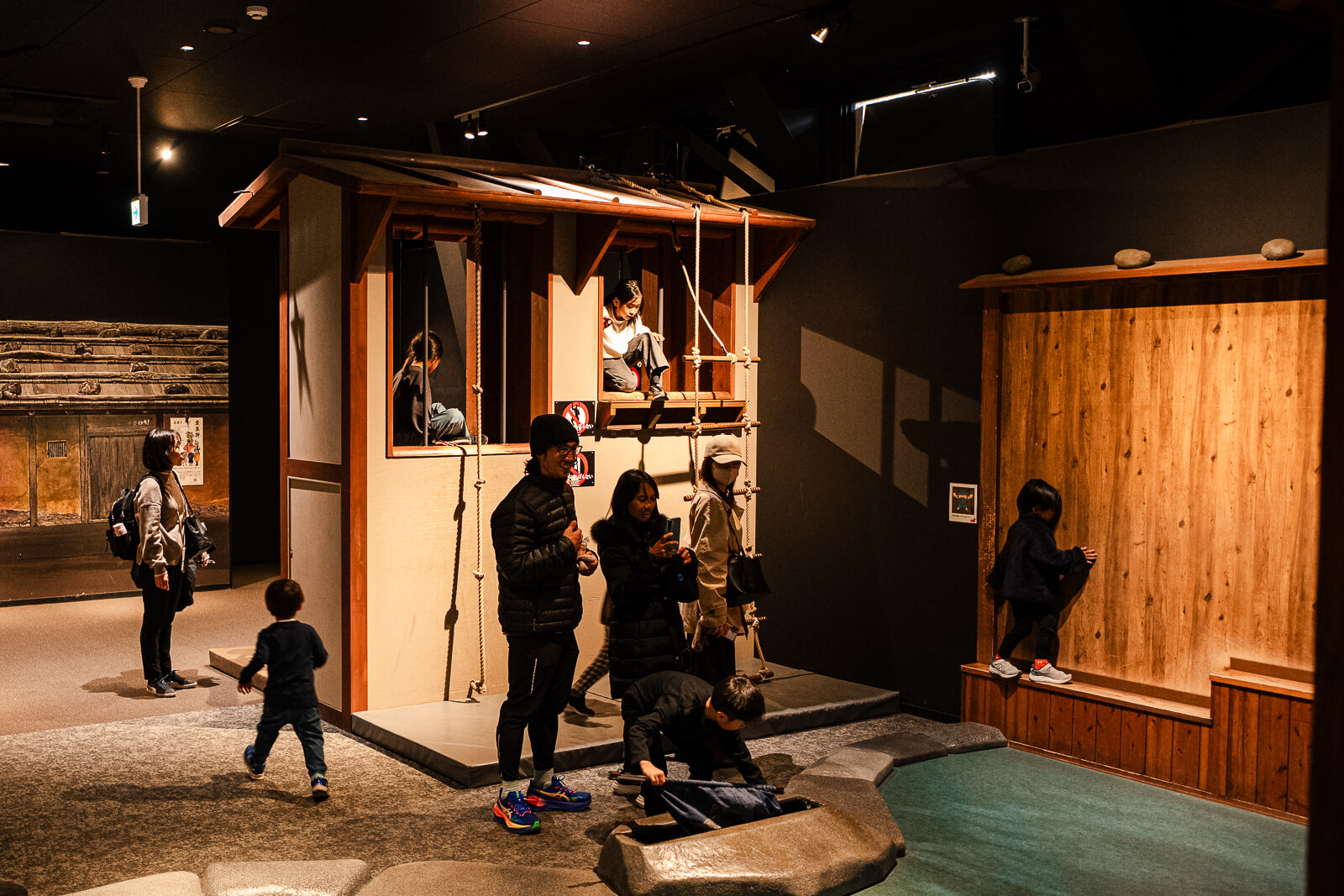
The interior is organized into compact sections that can be experienced quickly. Each space introduces a different element, but the layout does not require a fixed sequence.
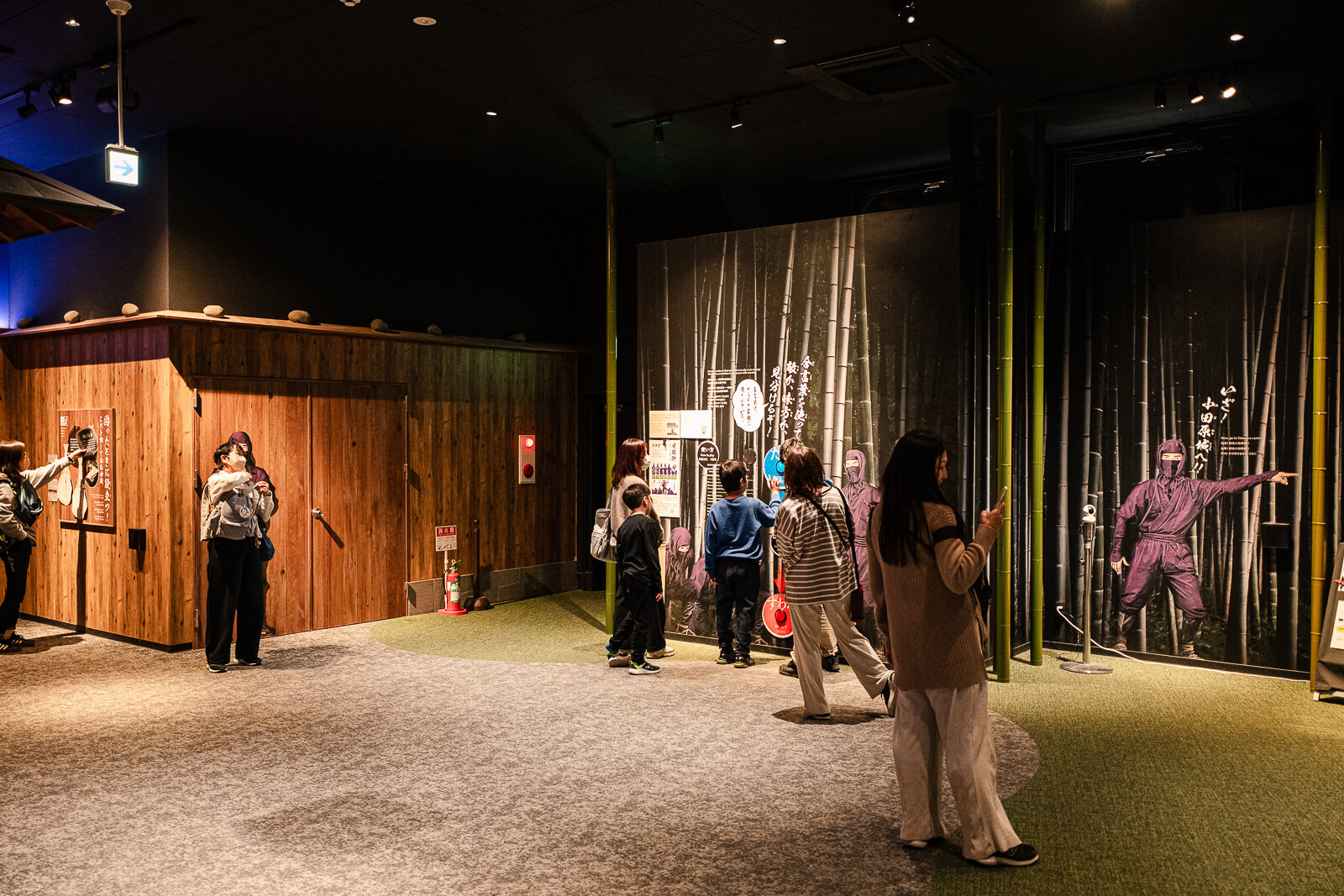
Visitors move between small displays rather than following a continuous path. Some sections are passed through quickly, while others invite brief interaction depending on interest.
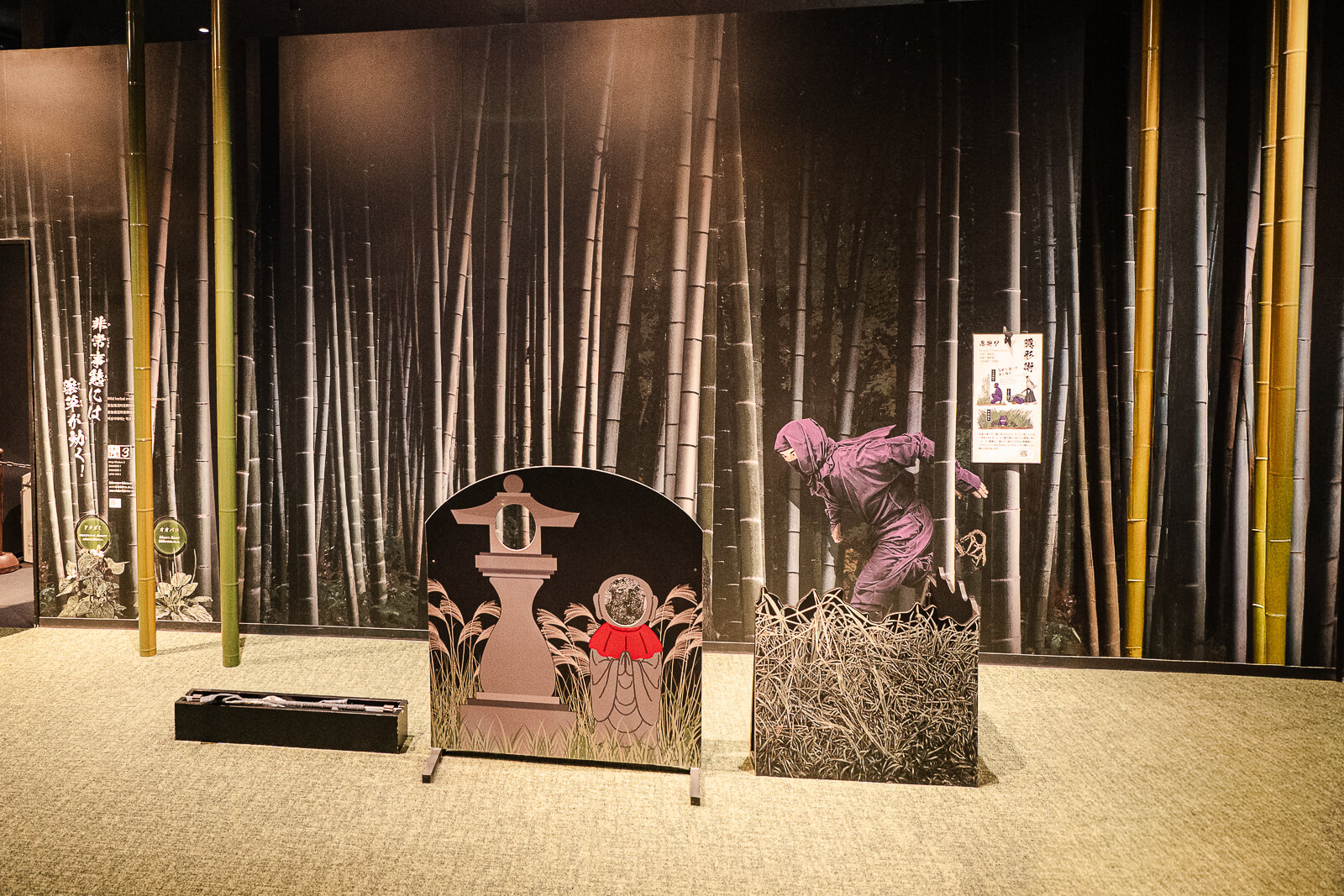
The structure keeps the experience contained and does not build toward a single focal point.
Interaction Shapes the Experience
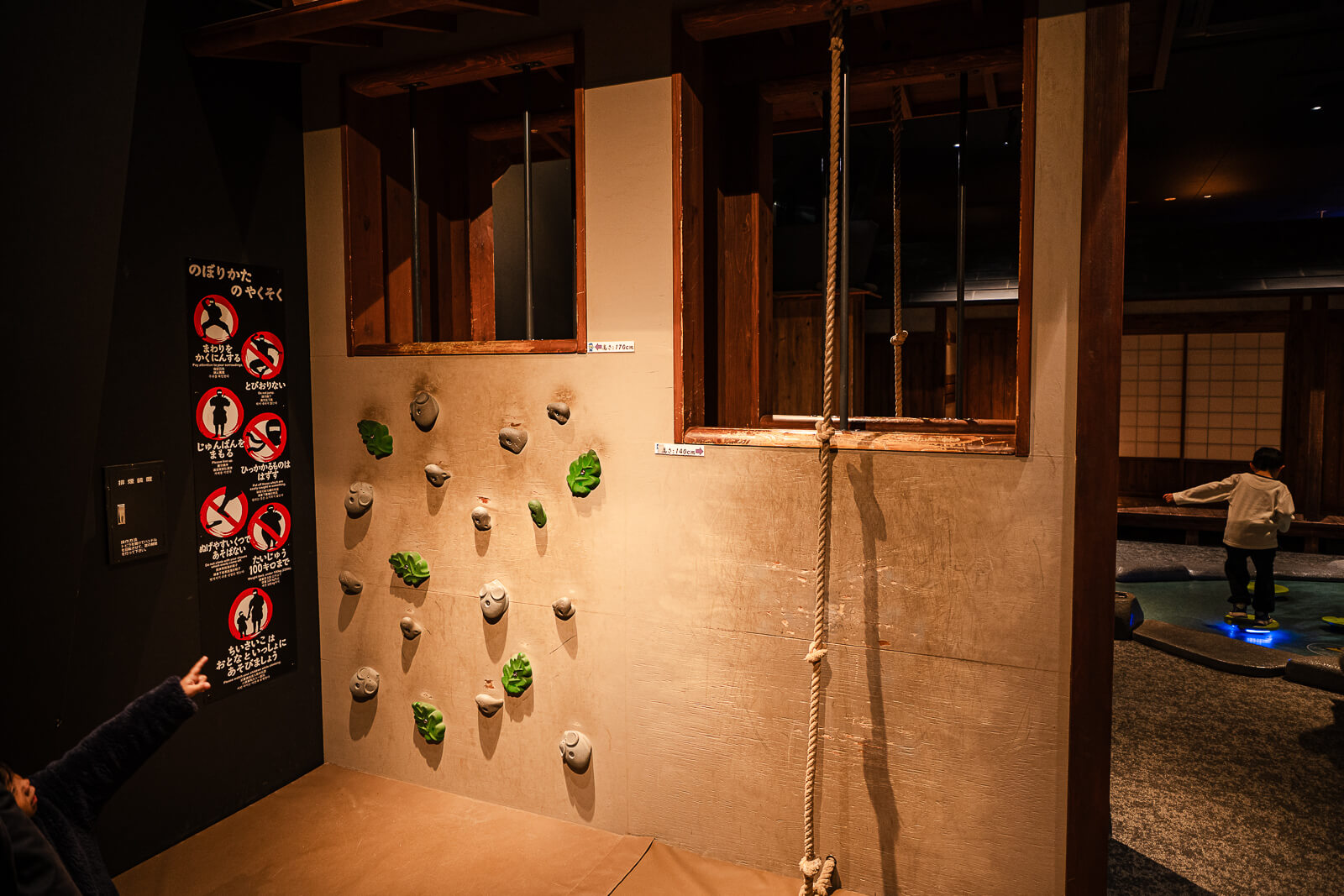
Hands-on elements define how time is spent inside. Activities are simple and immediate, often involving movement, coordination, or short demonstrations tied to ninja techniques.
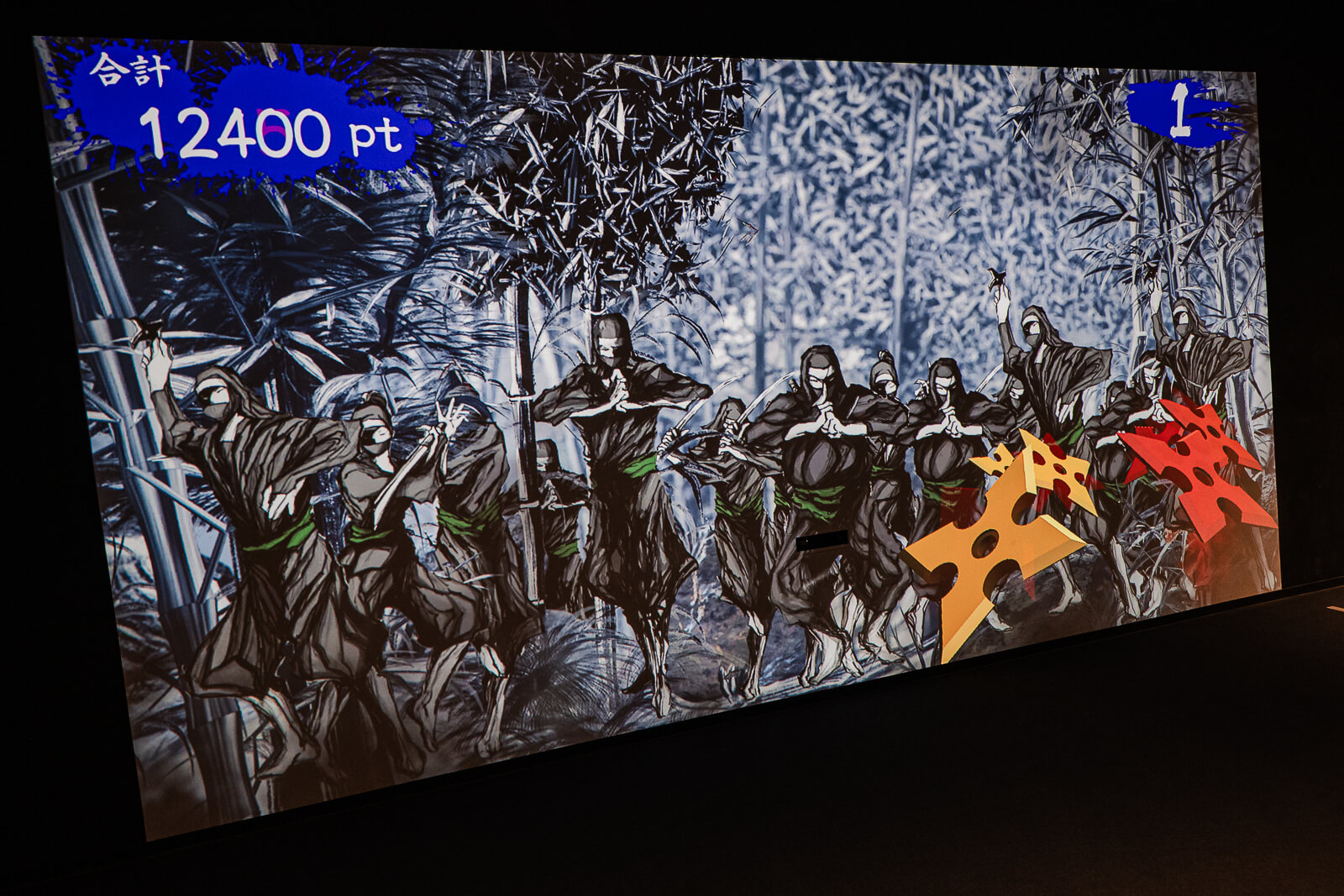
The visit builds toward a final interactive game, where visitors use motion-based controls to throw virtual shuriken at moving targets. This section tends to hold attention longer than the earlier displays and provides a clear endpoint to the experience.
While the overall design leans toward younger visitors, this final segment is often where adults engage more directly, even if the rest of the visit is brief.
Where This Fits in the Visit
The Ninja Museum works best as an optional stop rather than a primary destination. Its placement in the lower courtyard makes that decision easy, since visitors naturally pass it on the way toward the main grounds.
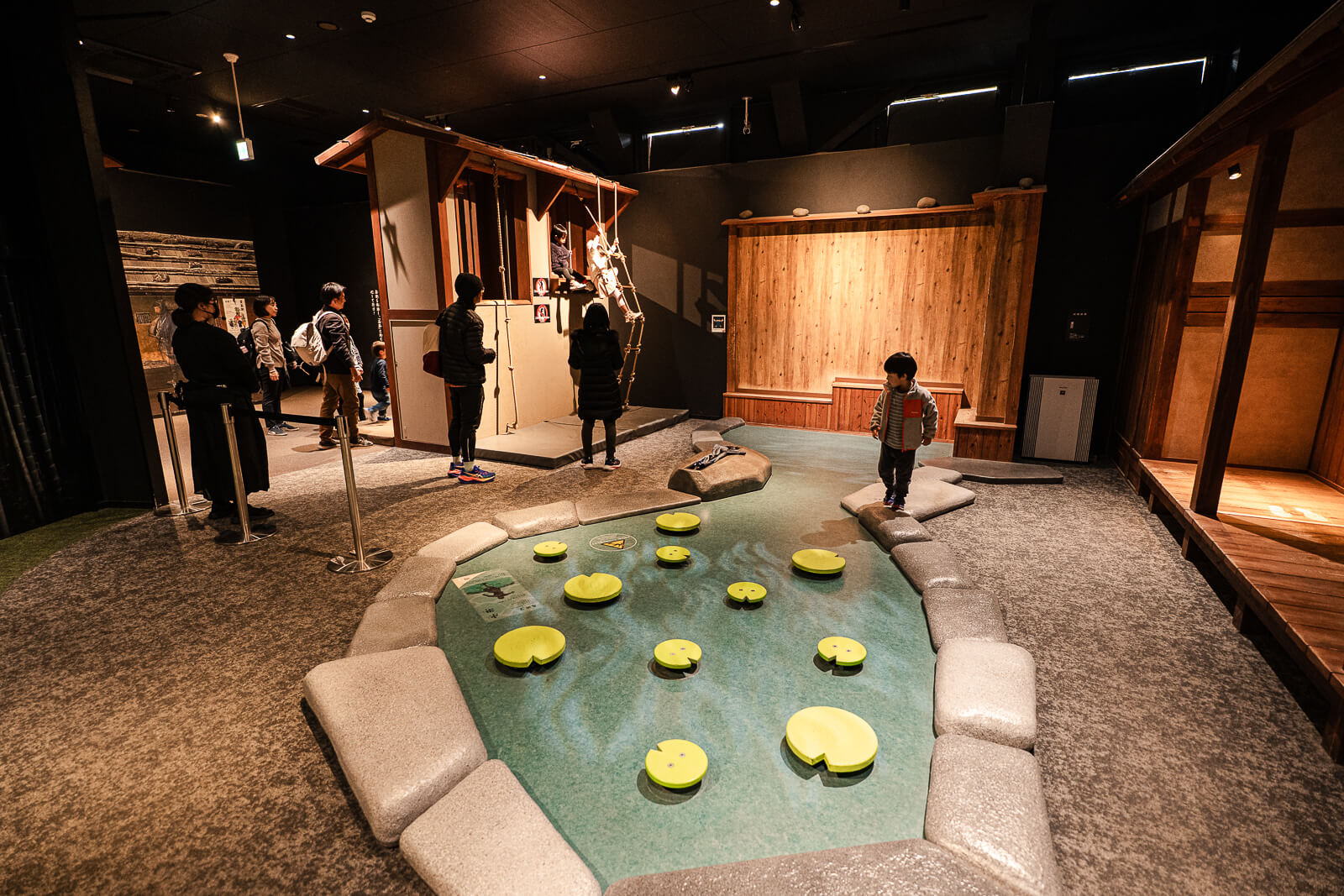
For families, it adds a short, active break early in the visit. For others, it may be a quick pass-through or something to skip without missing the broader experience.
Further inside the grounds, the Samurai Museum at Odawara Castle offers a more observational contrast, focusing on armor and historical detail.
How the Castle Grounds Expand Beyond This Point
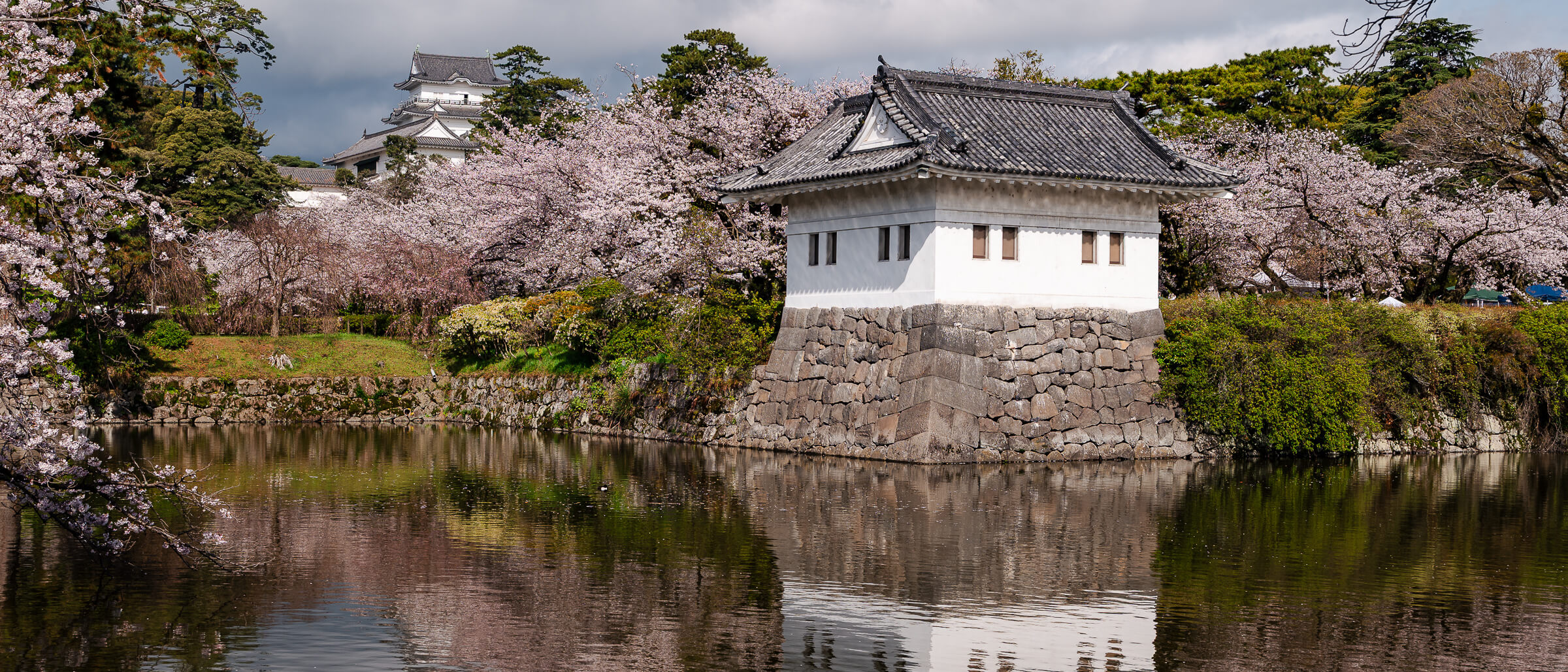
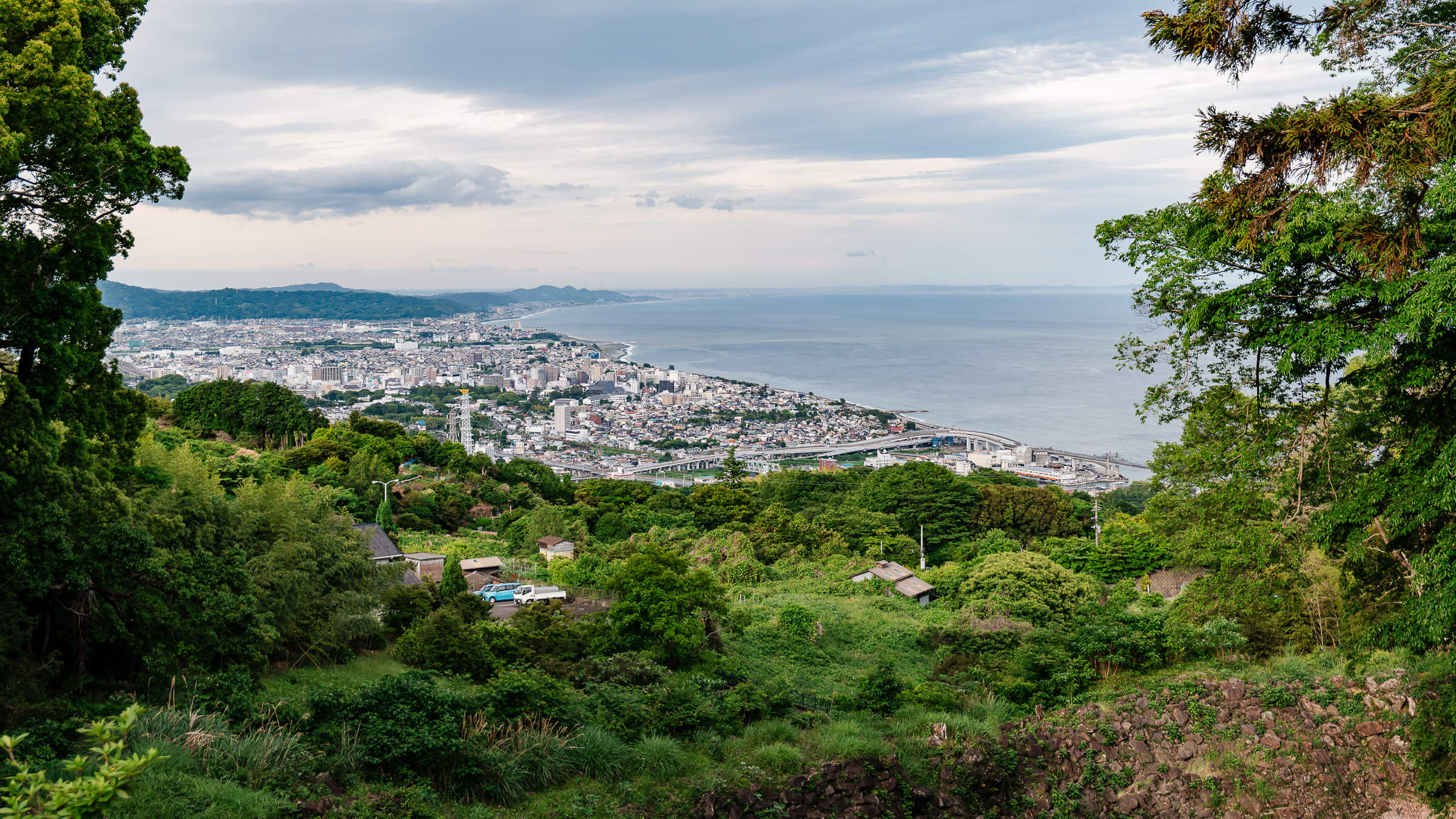
From the lower courtyard, the route continues upward into the main areas of Odawara, where the scale of the castle becomes more apparent. Paths lead toward the central grounds and the Odawara Castle Tenshukaku (Main Keep), which becomes the primary focus for most visitors.
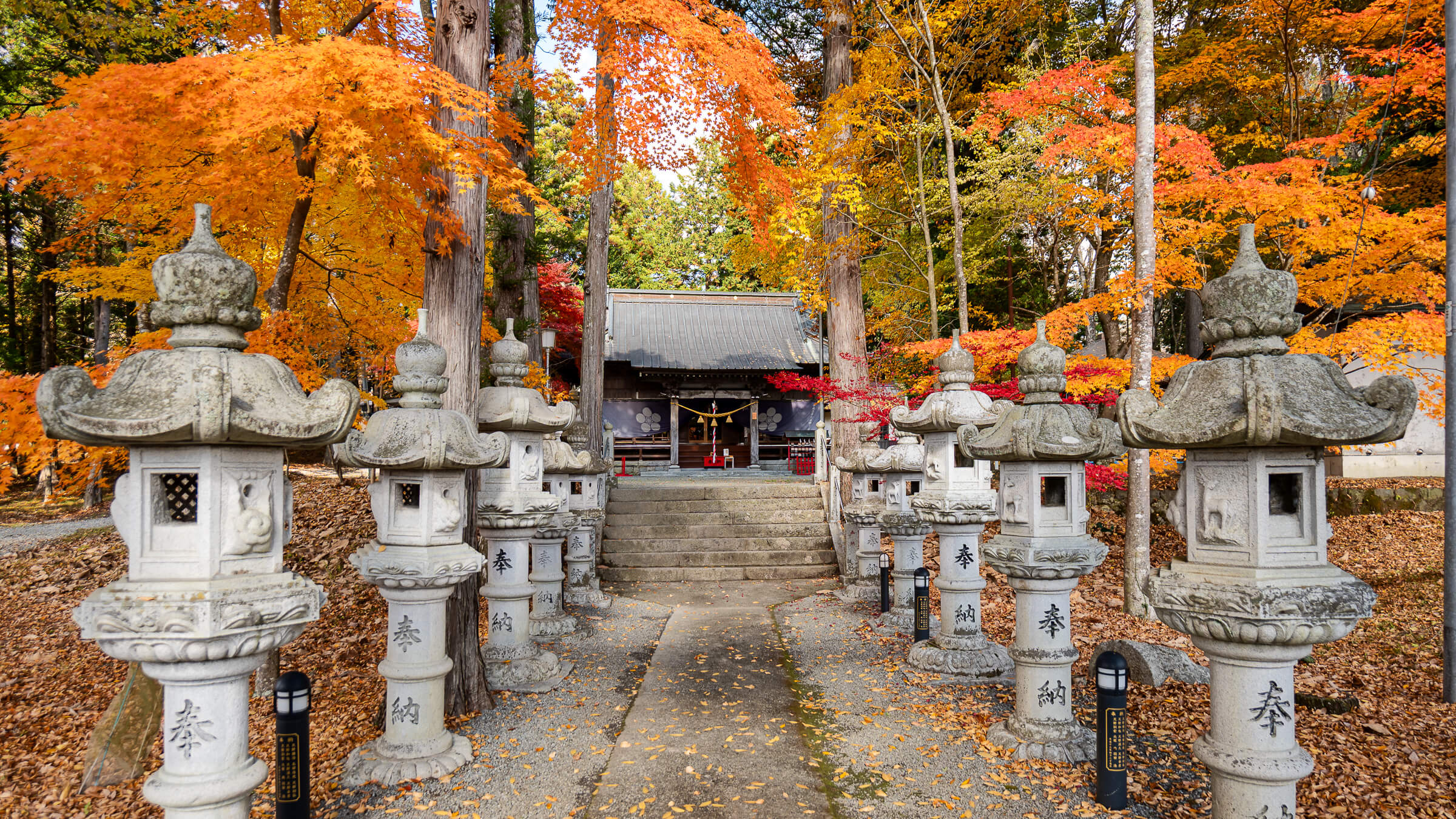
Beyond the central area, movement continues through Odawara Castle Park, where the environment opens into wider, seasonal spaces. Just outside the grounds, Hotoku Ninomiya Shrine introduces a quieter setting beneath tall trees.
Getting There
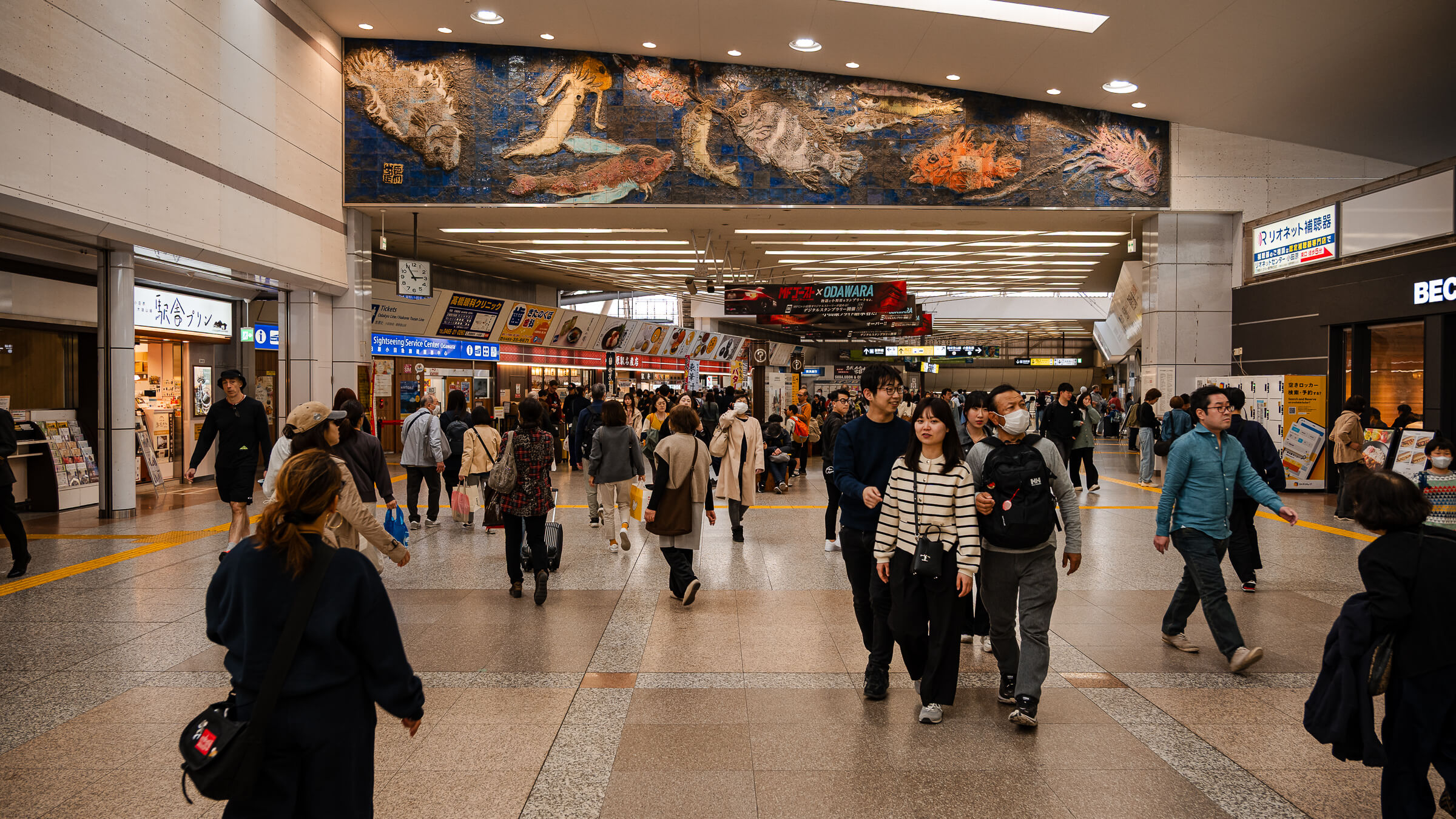
The castle grounds are about a 10-minute walk from Odawara Station, a major stop along the Tokaido Line and Shinkansen routes connecting Tokyo with destinations further west.
From the station’s east exit, the route leads toward the castle park entrance and into the lower courtyard. The Ninja Museum is positioned along this approach before reaching the main courtyard.
Hours and Fees
Hours
9:00 AM – 5:00 PM
(last entry around 4:30 PM)
Admission
Approximately ¥500
Tickets are available at the entrance within the castle grounds.