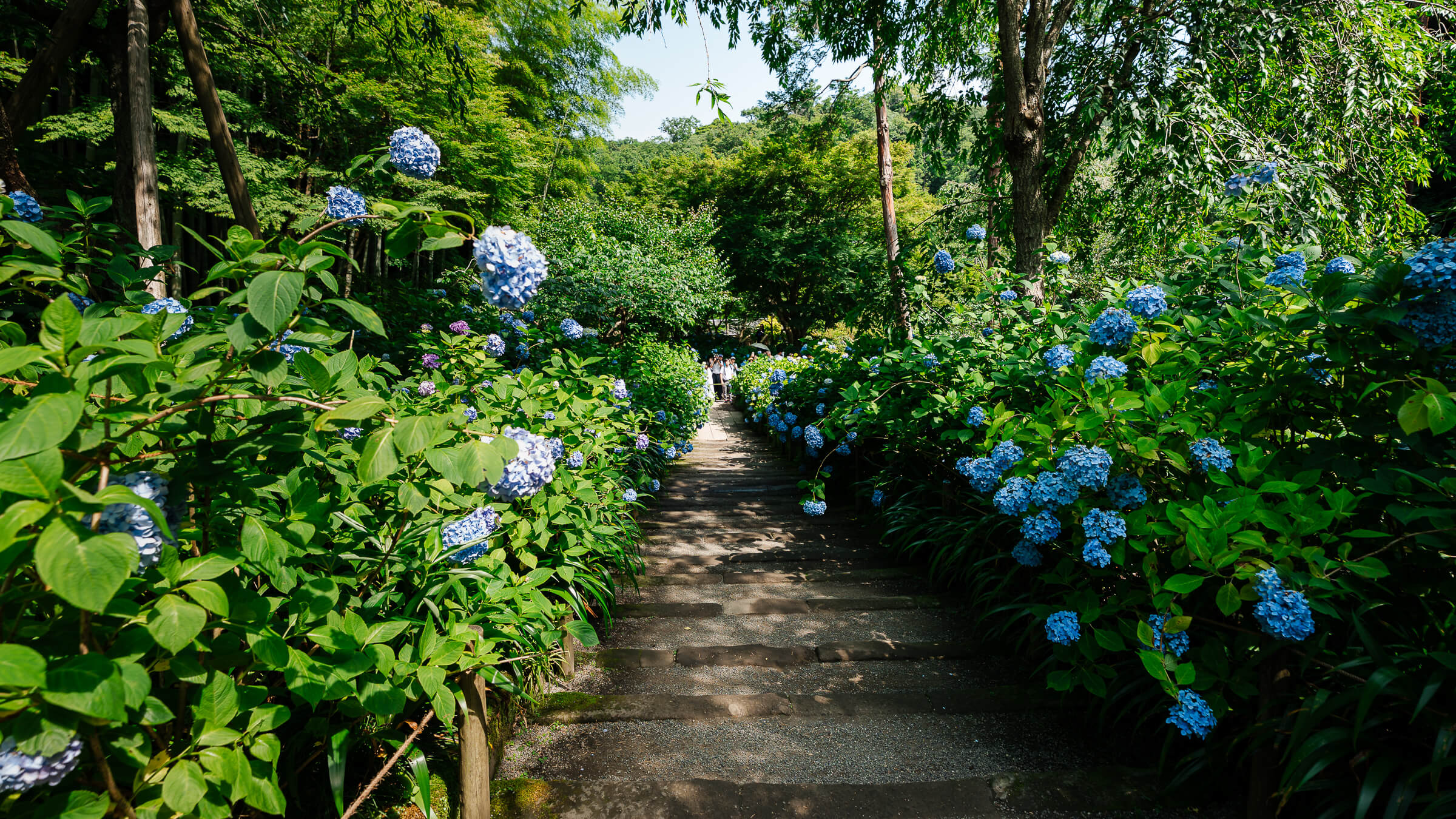
A Temple Walk Shaped by Blue Hydrangeas
Meigetsu-in Temple sits in Kita-Kamakura, in Kamakura, Kanagawa Prefecture, about a short walk from Kita-Kamakura Station and within the same temple corridor as Engaku-ji, Tokei-ji, Jochi-ji, and the route toward Kencho-ji. It is a compact Zen temple best known for June hydrangeas, especially the blue flowers that line its approach paths and stairway edges. For most visitors, the experience is an easy 45- to 75-minute temple visit shaped by seasonal flowers, garden views, the circular Window of Enlightenment, and a pilgrimage role that adds more depth than the temple’s size first suggests.
Meigetsu-in is not a large complex in the same way as Engaku-ji or Kencho-ji, and that difference matters when planning a visit. Its strength is concentration rather than scale. The hydrangea approach, upper and lower grounds, circular window, rear garden access, and pilgrimage role all sit within a contained visit that changes noticeably by season.
For most people, Meigetsu-in is an easy temple visit with simple train access and a typical visit time of about 45 to 75 minutes during hydrangea season. The main friction is not distance or physical difficulty, but timing. June brings heavier visitor flow, especially around the hydrangea stairway and circular window, while other seasons make the grounds easier to move through at a slower pace.
Why This Temple Belongs in Kita-Kamakura
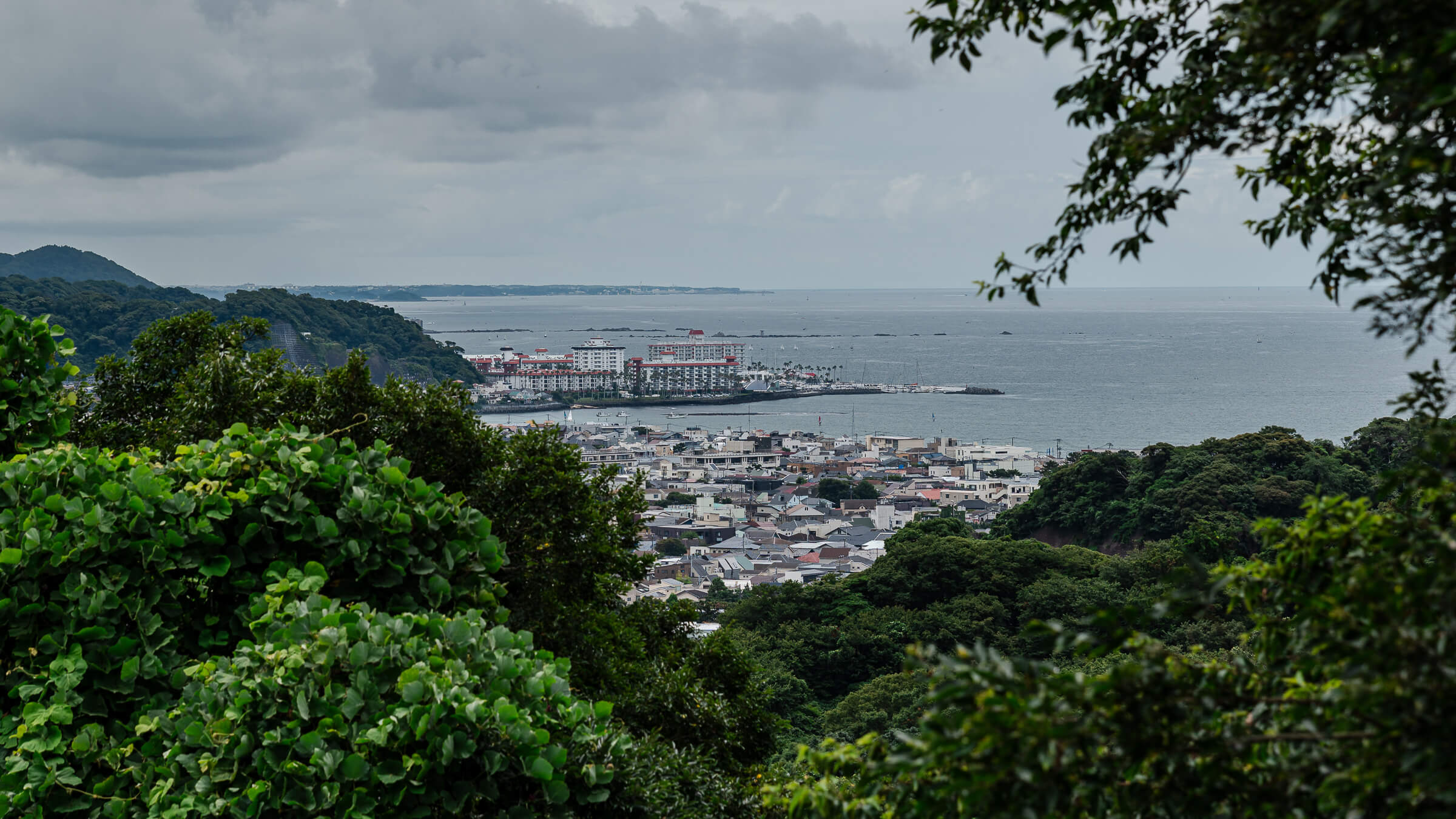
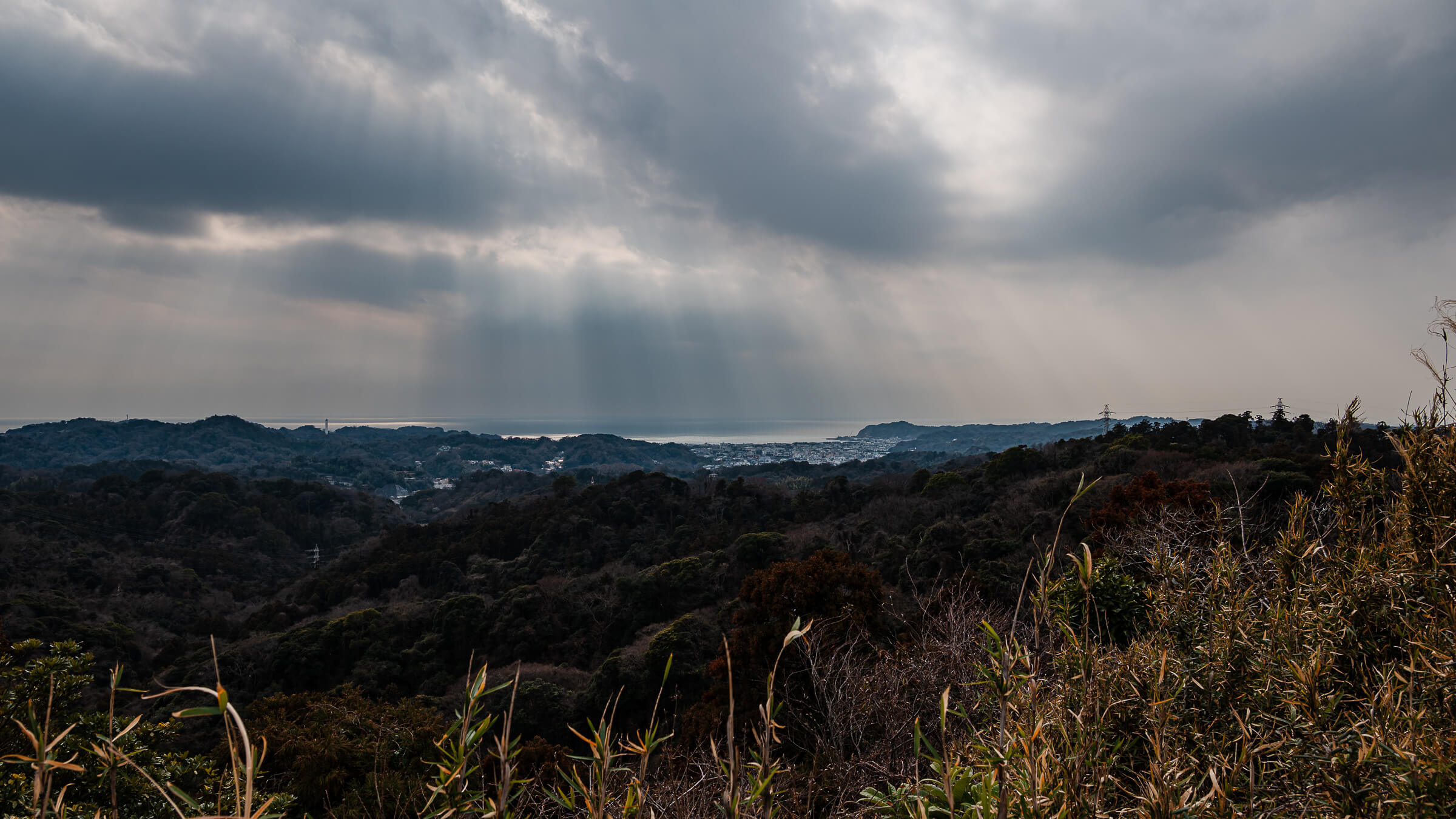
Meigetsu-in sits within the temple corridor of Kita-Kamakura, where wooded hills, old temple grounds, and narrow residential streets remain closely connected. This part of Kamakura feels different from the busier areas around Kamakura Station or the approach to Tsurugaoka Hachimangu. The visit begins within that Kita-Kamakura pattern before narrowing into Meigetsu-in’s more focused hydrangea setting.
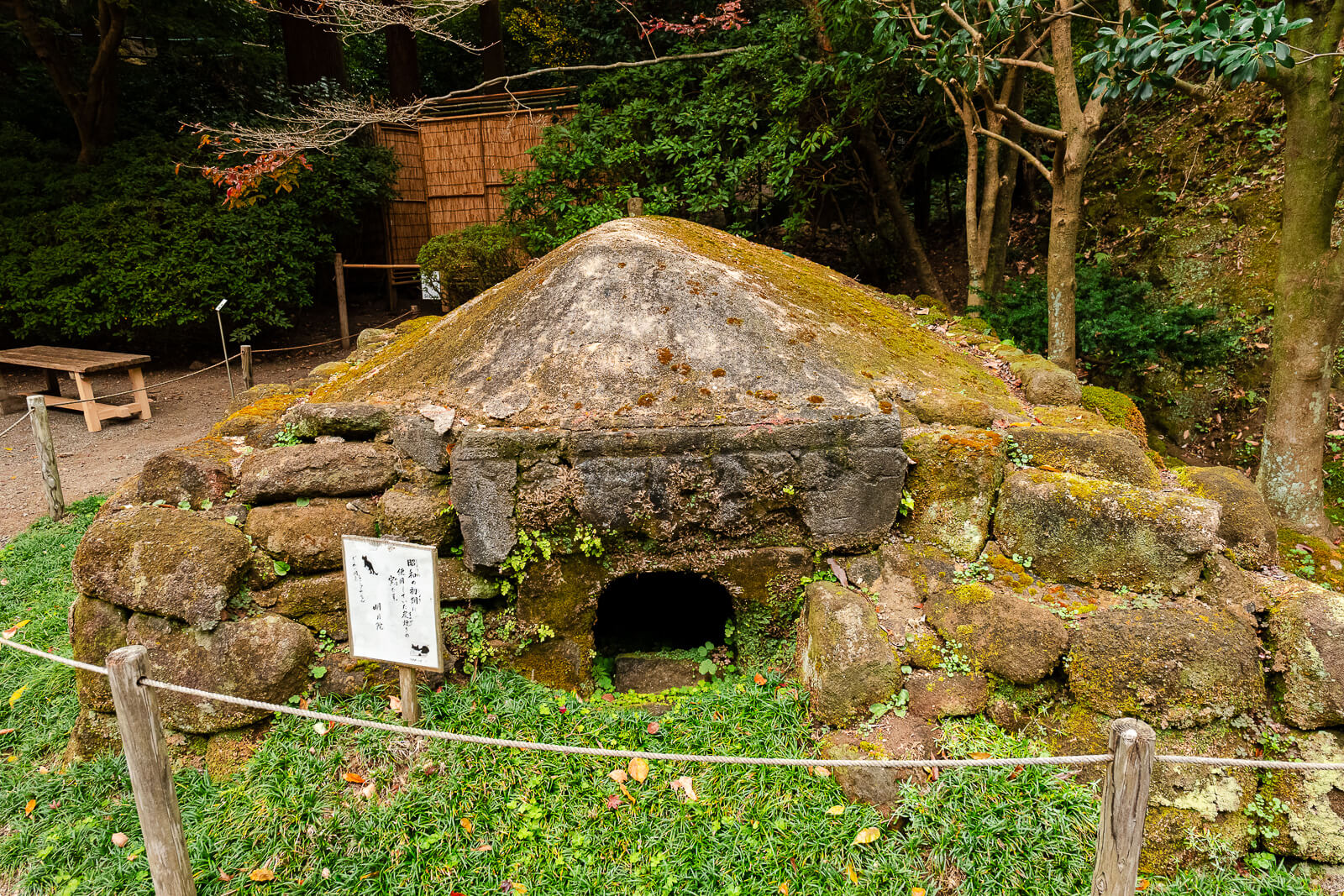
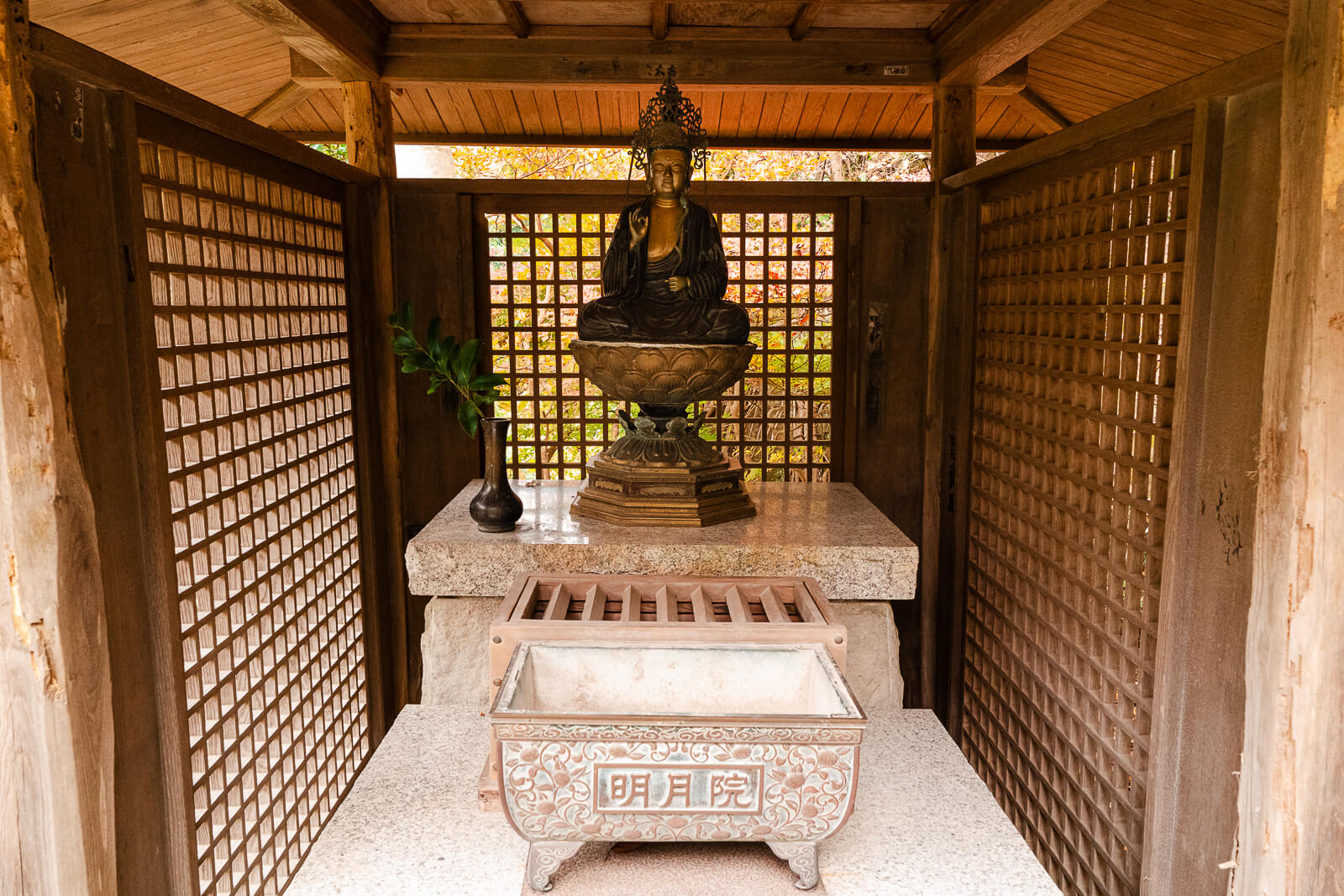
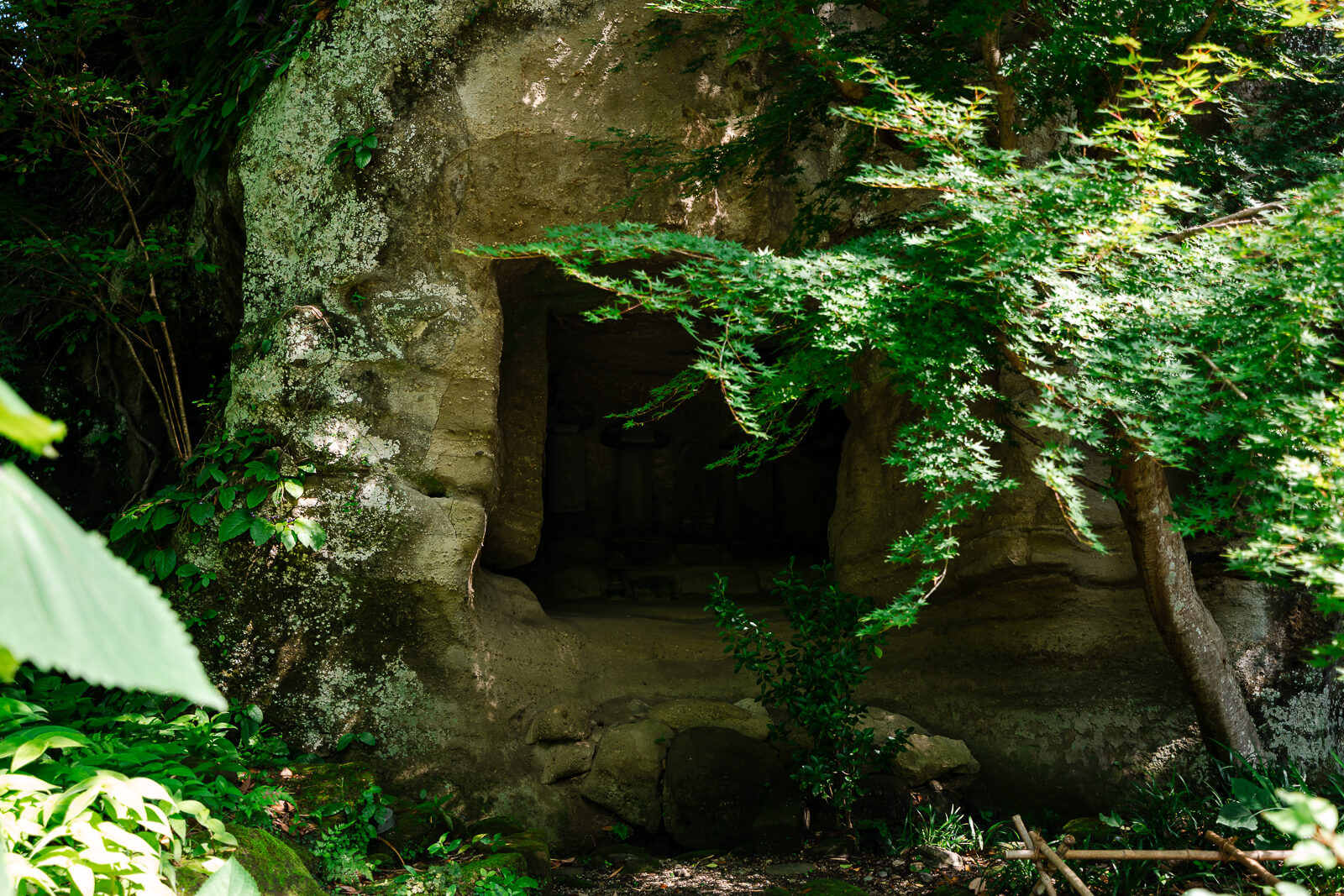
The temple was originally connected to Zenkoji Temple, which no longer survives, and its grounds still reflect how temples in this area were shaped by hillsides, garden spaces, and enclosed approaches. Kamakura City tourism notes that Meigetsu-in was originally a sub-temple of Zenkoji Temple and later became especially known for its gardens and hydrangeas. The same official page identifies the Meigetsu-in yagura tomb as the largest tomb in Kamakura, with Buddhist images carved into the rock.
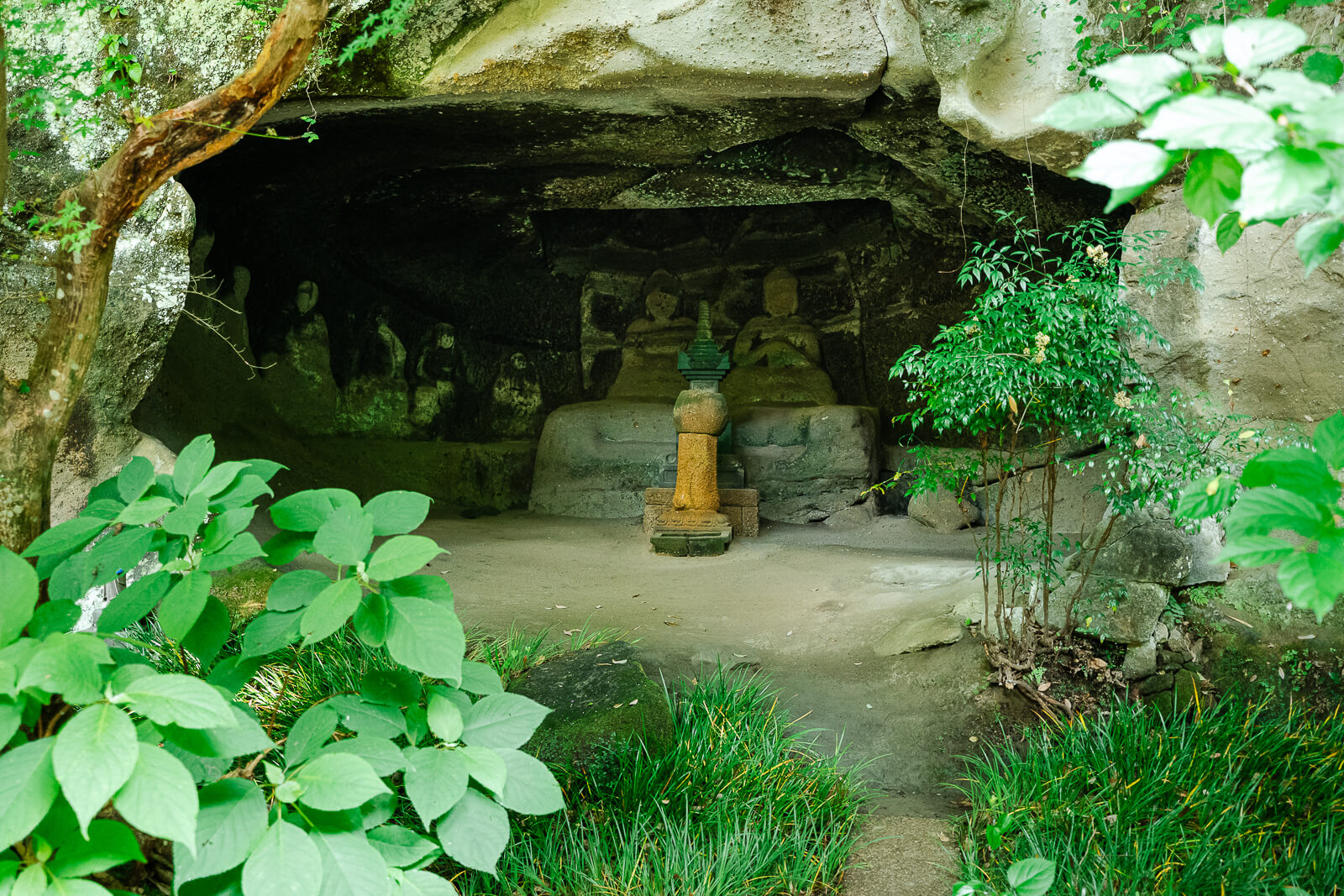
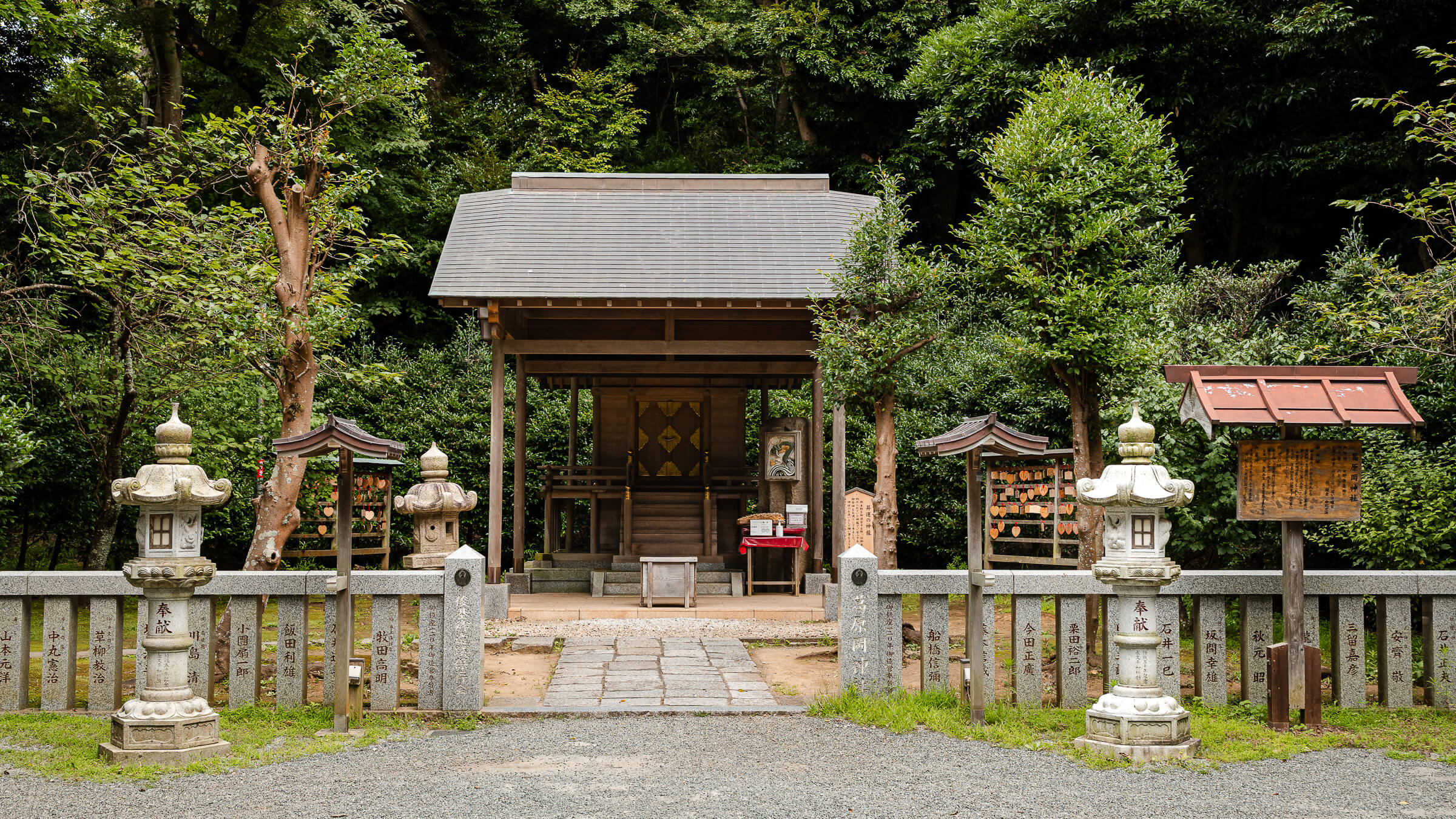
That background matters because Meigetsu-in is not only a flower-viewing stop. Its main hall, garden views, stone features, bamboo, rock-cut tombs, and seasonal details give the grounds more depth than their compact size first suggests. The temple is built around transitions: entrance to approach, lower grounds to upper grounds, outdoor paths to interior view, and standard temple grounds to the separately opened rear garden.
Where the Blue Hydrangeas Begin to Define the Visit
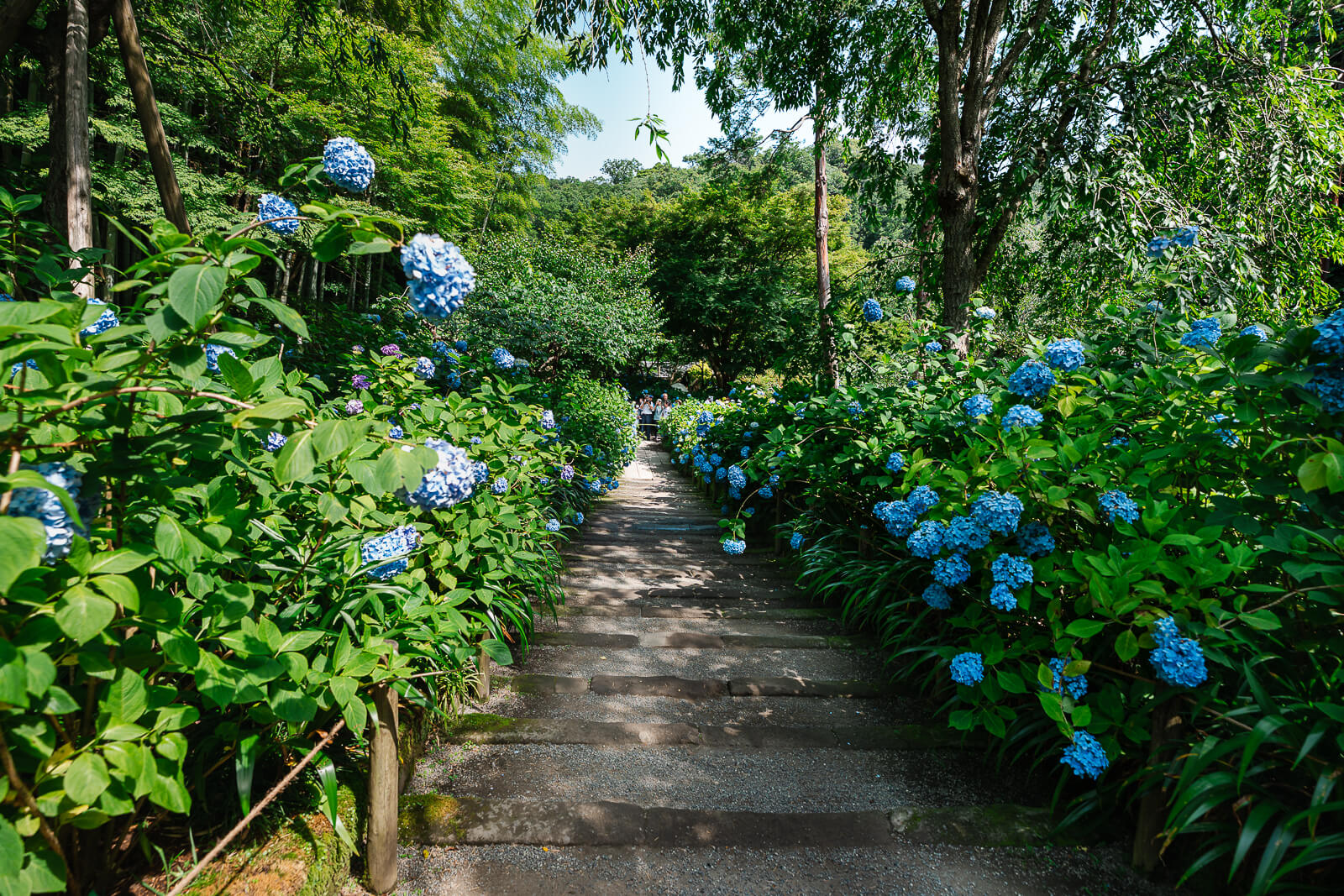
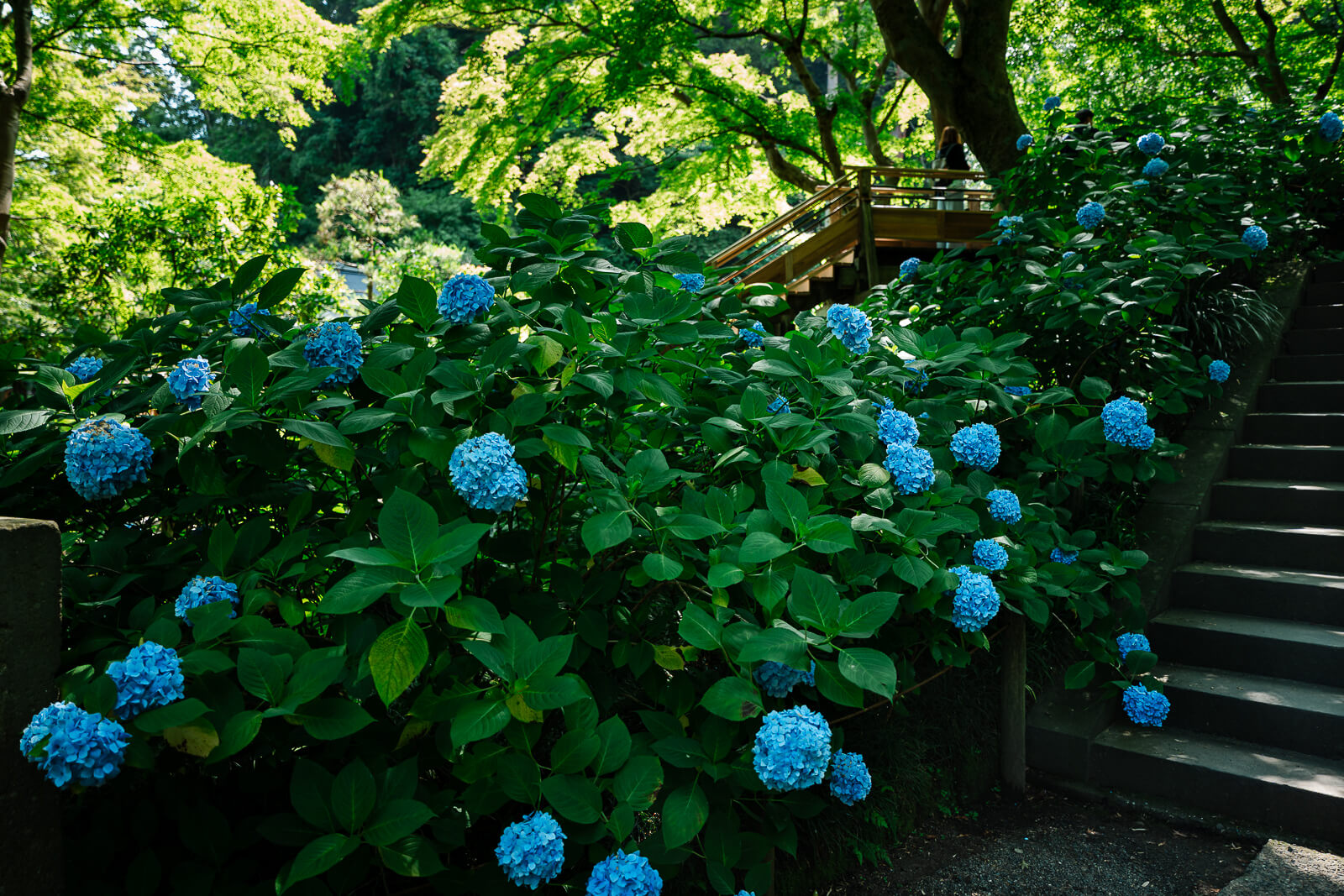
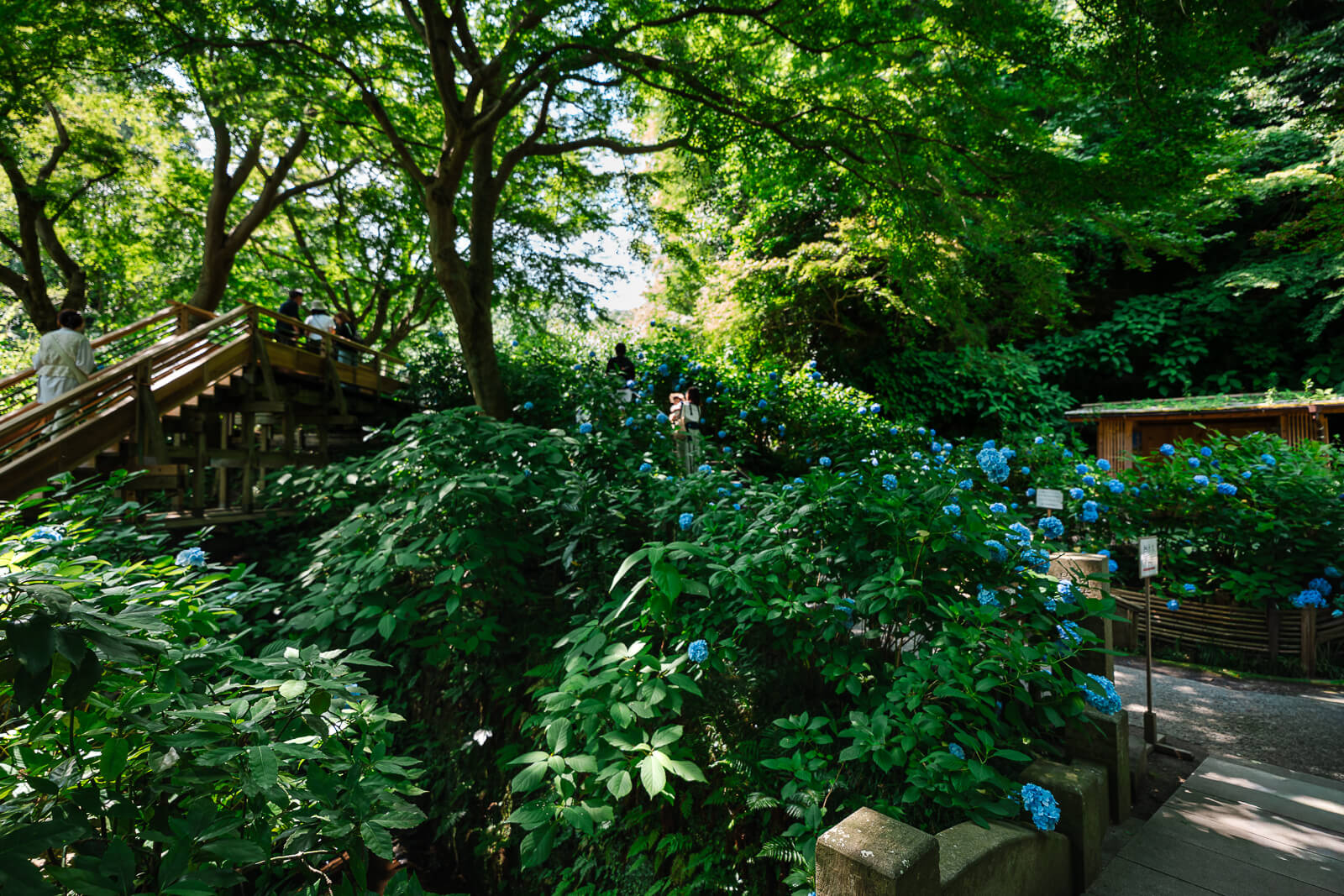
Meigetsu-in is best known for its blue hydrangeas, which bloom across the temple grounds in June. The flowers are especially concentrated along the approach and stairway area, where the path, steps, stonework, and surrounding greenery create one of Kamakura’s most recognizable seasonal scenes. The result is not a wide-open flower field, but a temple approach where the hydrangeas shape the feeling of arrival.
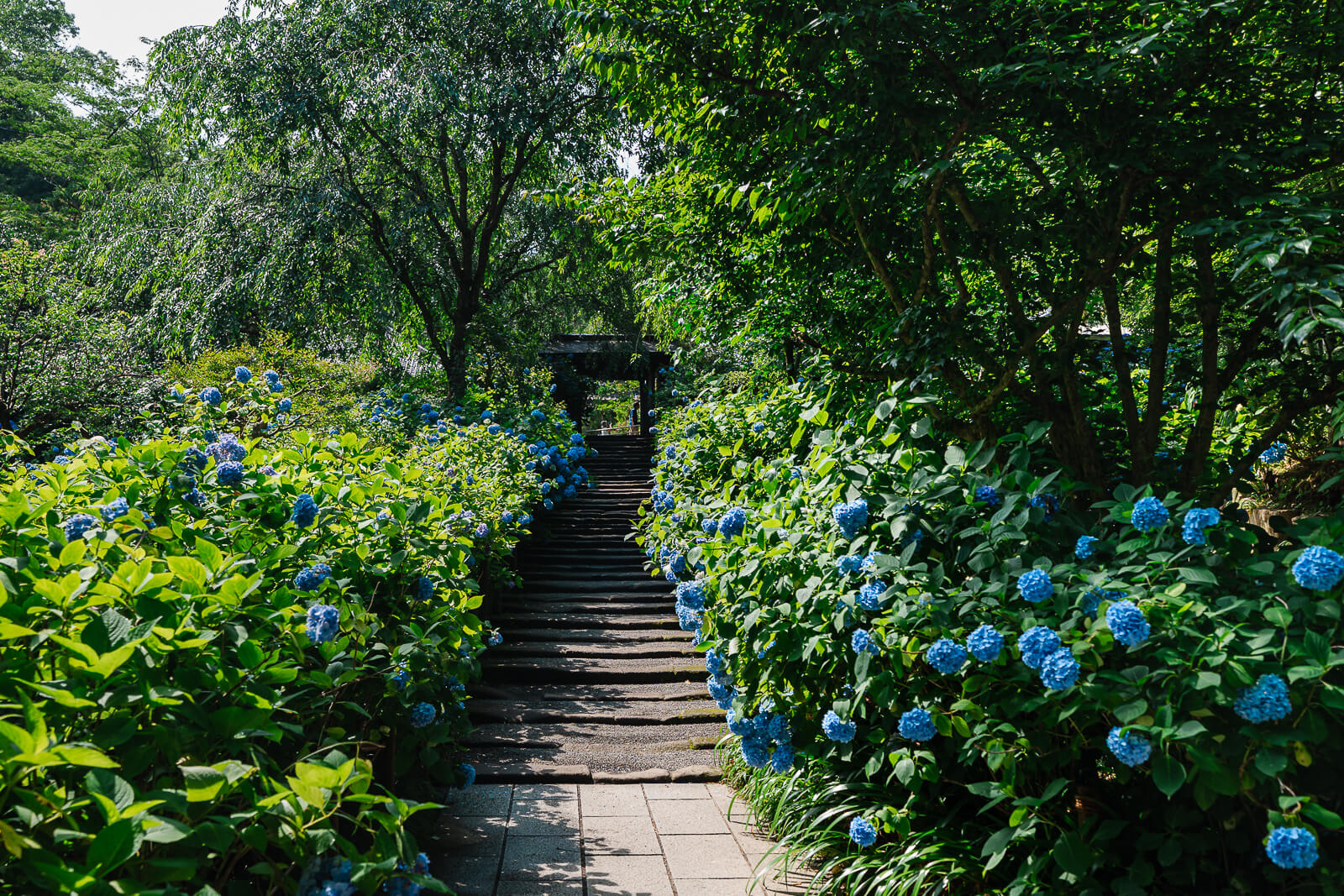
That compact layout is part of the appeal. The flowers sit close to the paths, buildings, and stone features, so the hydrangeas feel woven into the temple rather than separated into a garden display. This makes Meigetsu-in especially strong for travelers looking for a seasonal temple experience rather than only a flower-viewing area.
The blue hydrangeas give the temple its strongest identity, especially for first-time visitors coming to Kamakura in June. This is when Meigetsu-in feels most visually distinct from other temples in the area. It is also when the temple’s small scale becomes most noticeable, because the visit naturally focuses on a few memorable paths, views, and garden transitions.
Walking Through Meigetsu-in in Hydrangea Season
During hydrangea season, Meigetsu-in feels focused from the moment the approach begins. The walk from Kita-Kamakura Station is short, but the surroundings begin to change near the entrance as the temple separates from the nearby streets. A bamboo grove near the approach creates the first visual transition before the grounds open into the hydrangea-lined areas.
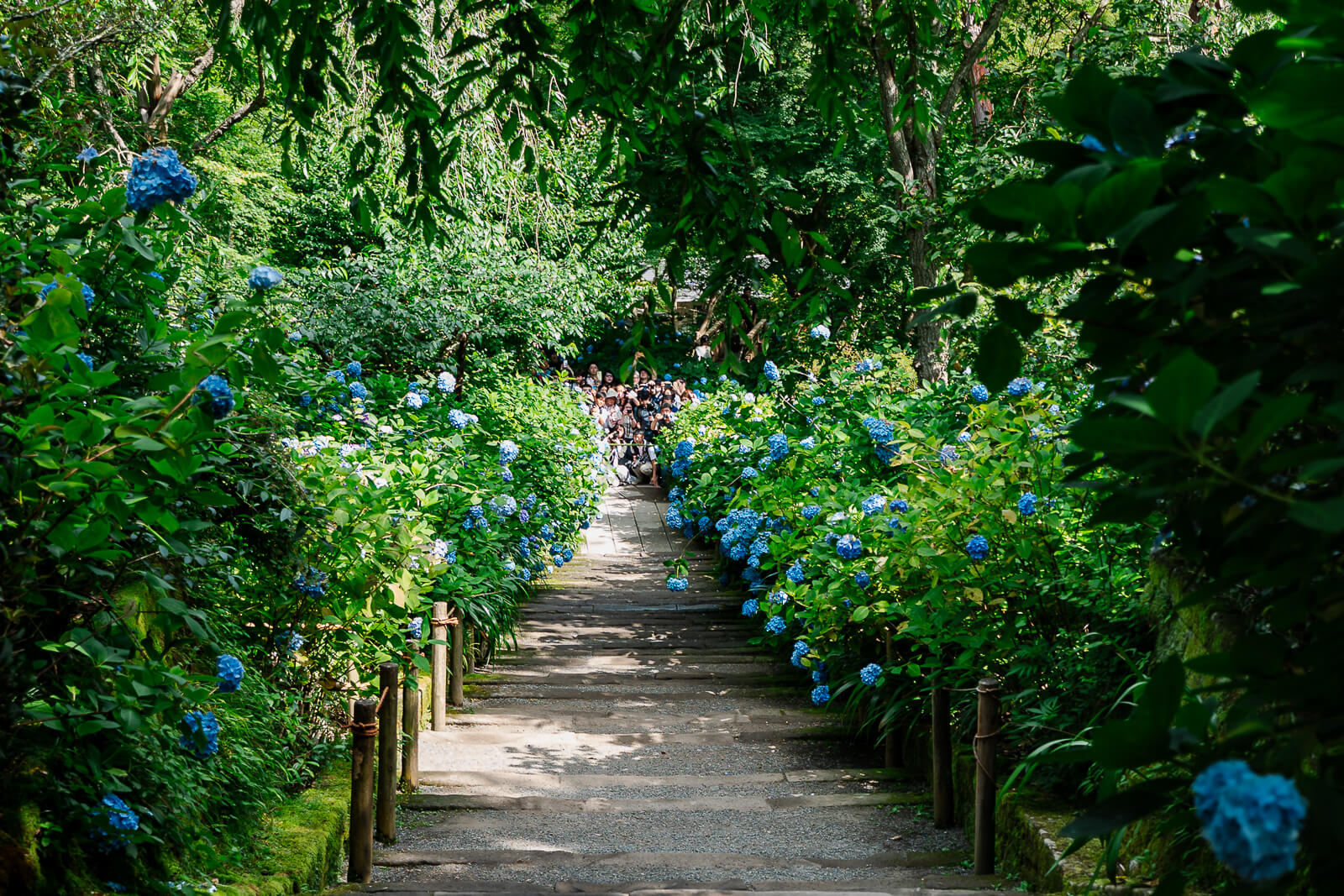
The most recognizable view is the stairway framed by blue hydrangeas. This is the classic Meigetsu-in scene many people come to see, and the lower stairway area is often the most popular viewpoint. From there, the visit continues naturally along the side paths and upper grounds, where hydrangeas appear beside stonework, temple details, and shaded corners.
This is where Meigetsu-in becomes more rewarding than a single famous photo. The grounds are compact, but they unfold in layers: lower paths, hydrangea-lined steps, small decorative details, upper temple buildings, and the area near the Window of Enlightenment. The visit has a better rhythm when these sections are understood as a sequence rather than a single viewpoint.
Near the upper part of the temple, the famous circular Window of Enlightenment frames a view into the garden behind the main hall. During hydrangea season, a brief wait for photos may form inside, but the window also gives the temple a separate interior focal point after the flower-lined approach. From this area, the rear garden becomes the next optional layer when it is open.
Beyond the Stairway, the Grounds Start to Open Up
The lower part of Meigetsu-in shapes the first impression of the visit. Beyond the entrance, the temple begins to separate from the surrounding streets of Kita-Kamakura. The bamboo grove near the approach gives the opening of the visit a more enclosed visual frame before the grounds become more strongly defined by hydrangeas.
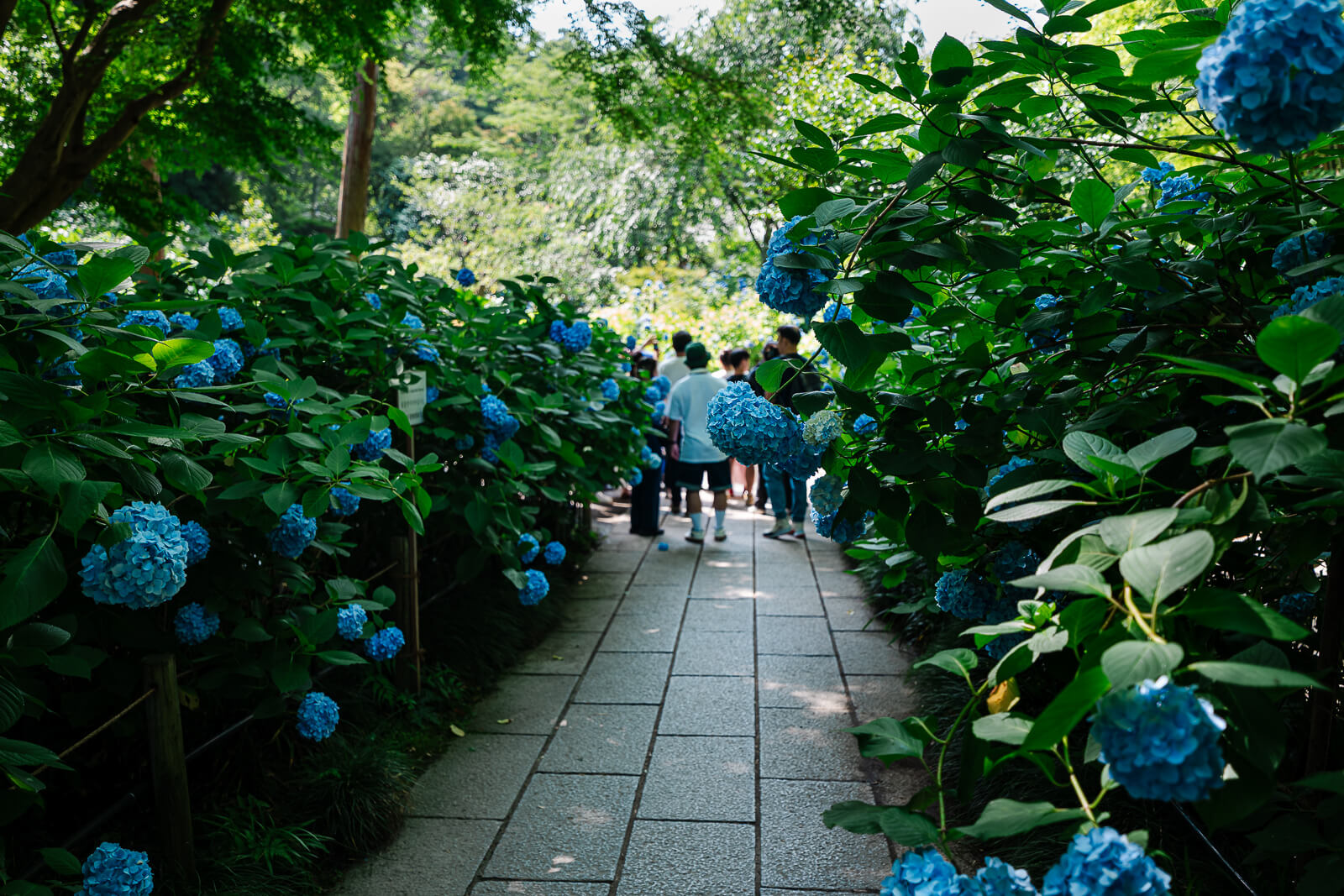
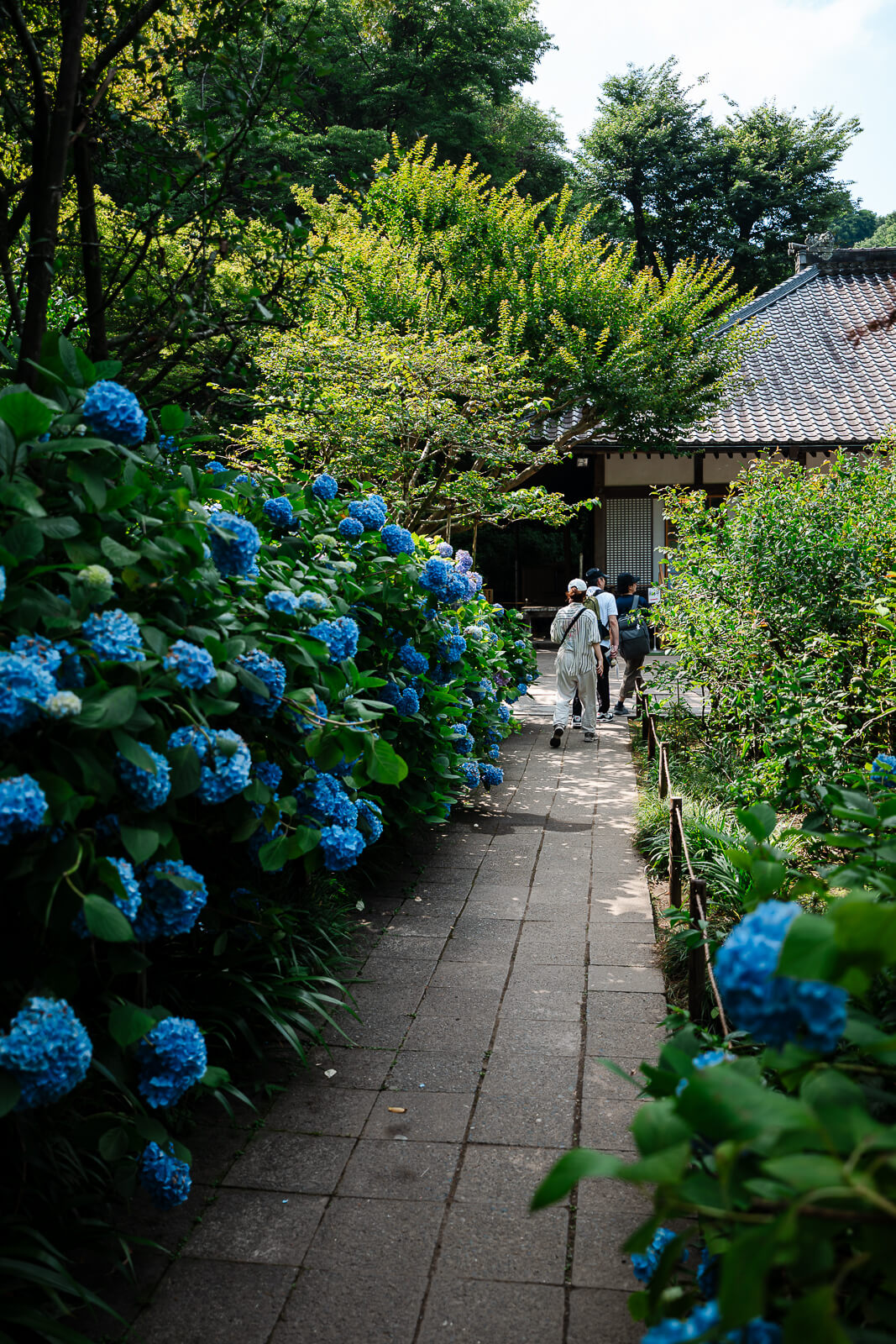
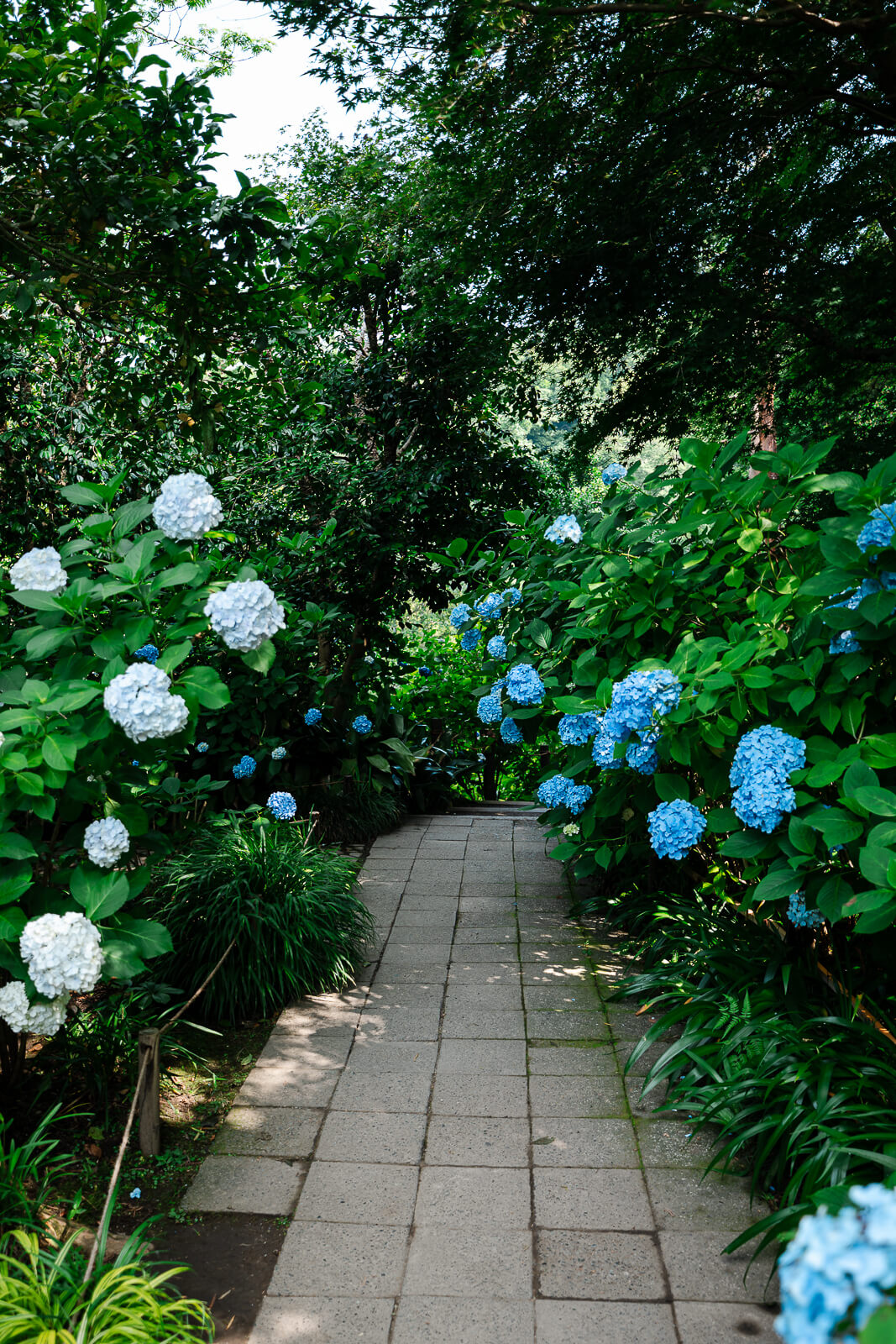
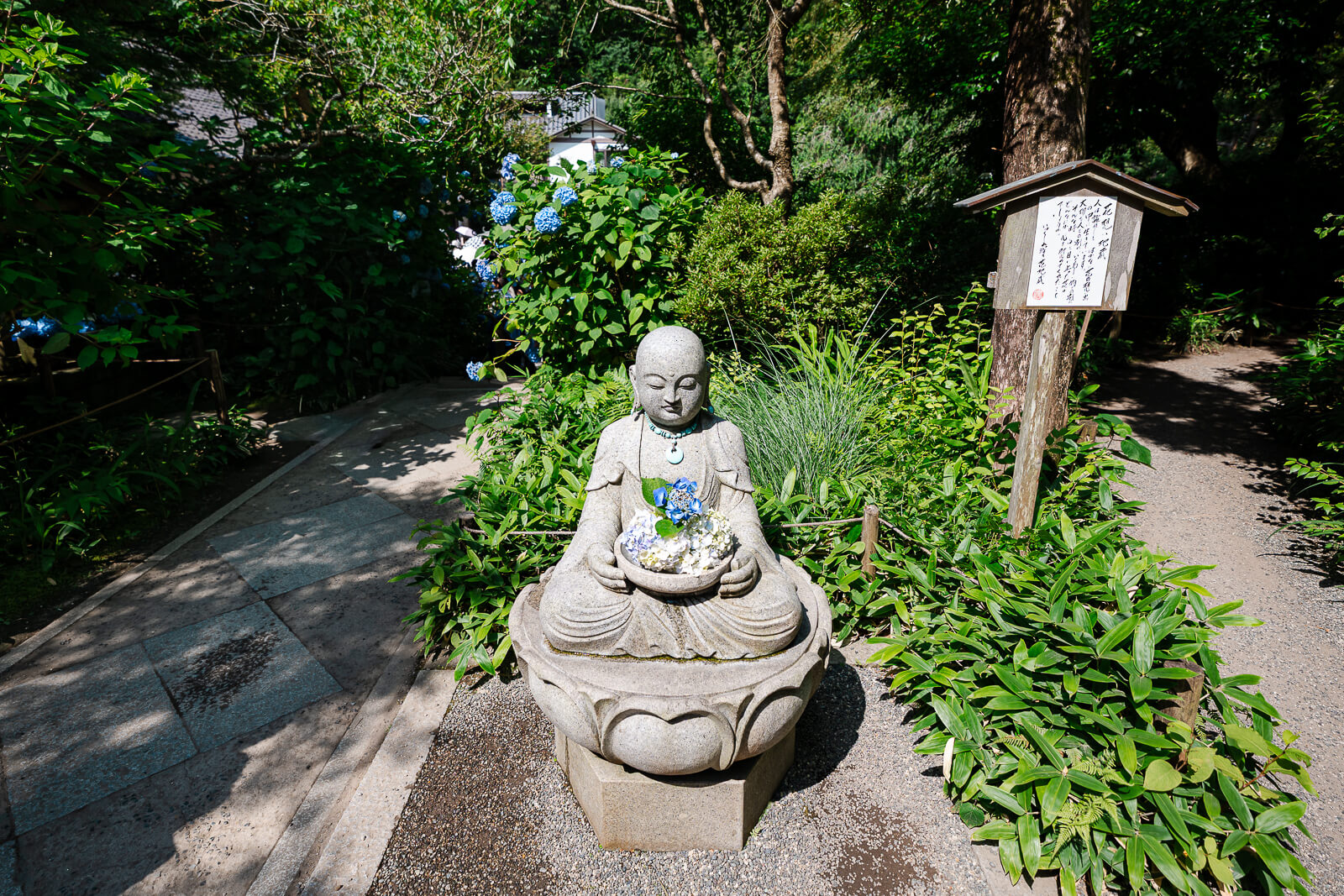
As the route rises, the temple becomes more than one staircase view. Hydrangeas appear along paths, beside stonework, near small features, and around seasonal decorations. These smaller scenes help balance the famous stairway and make the visit feel more layered than its compact footprint might suggest.
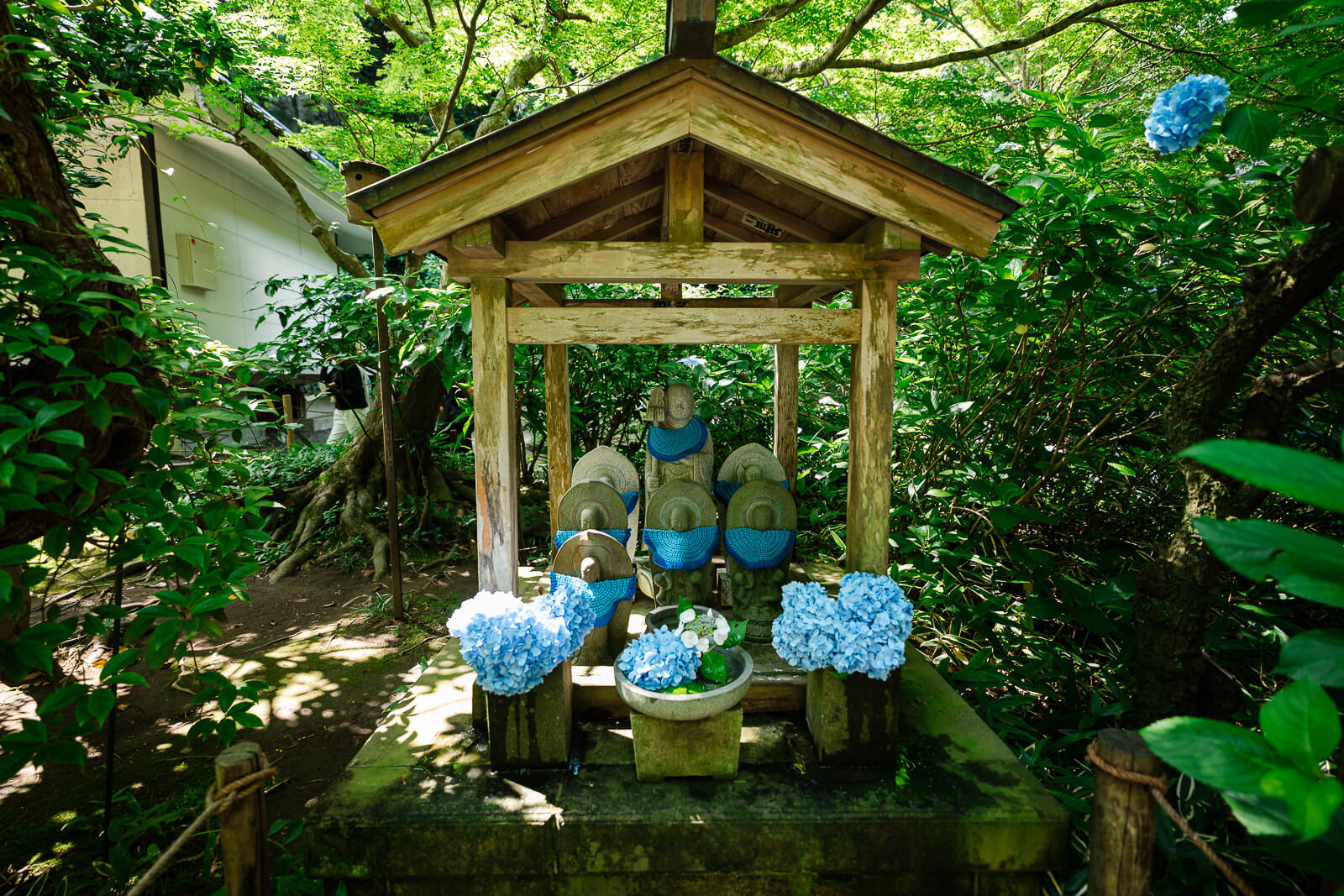
The side paths reveal the temple from slightly different angles. They keep the visit moving while staying close to the hydrangea scenery. This gives Meigetsu-in a gradual sense of discovery without turning the visit into a long or physically demanding stop.
The Circular Window and the Garden Behind It
One of Meigetsu-in’s most recognizable features is the circular Window of Enlightenment near the upper part of the temple grounds. The window frames the garden beyond the main hall, creating a composed view that contrasts with the more open movement through the hydrangea paths. It is one of the temple’s defining scenes and gives the visit another focal point beyond the famous blue flowers.
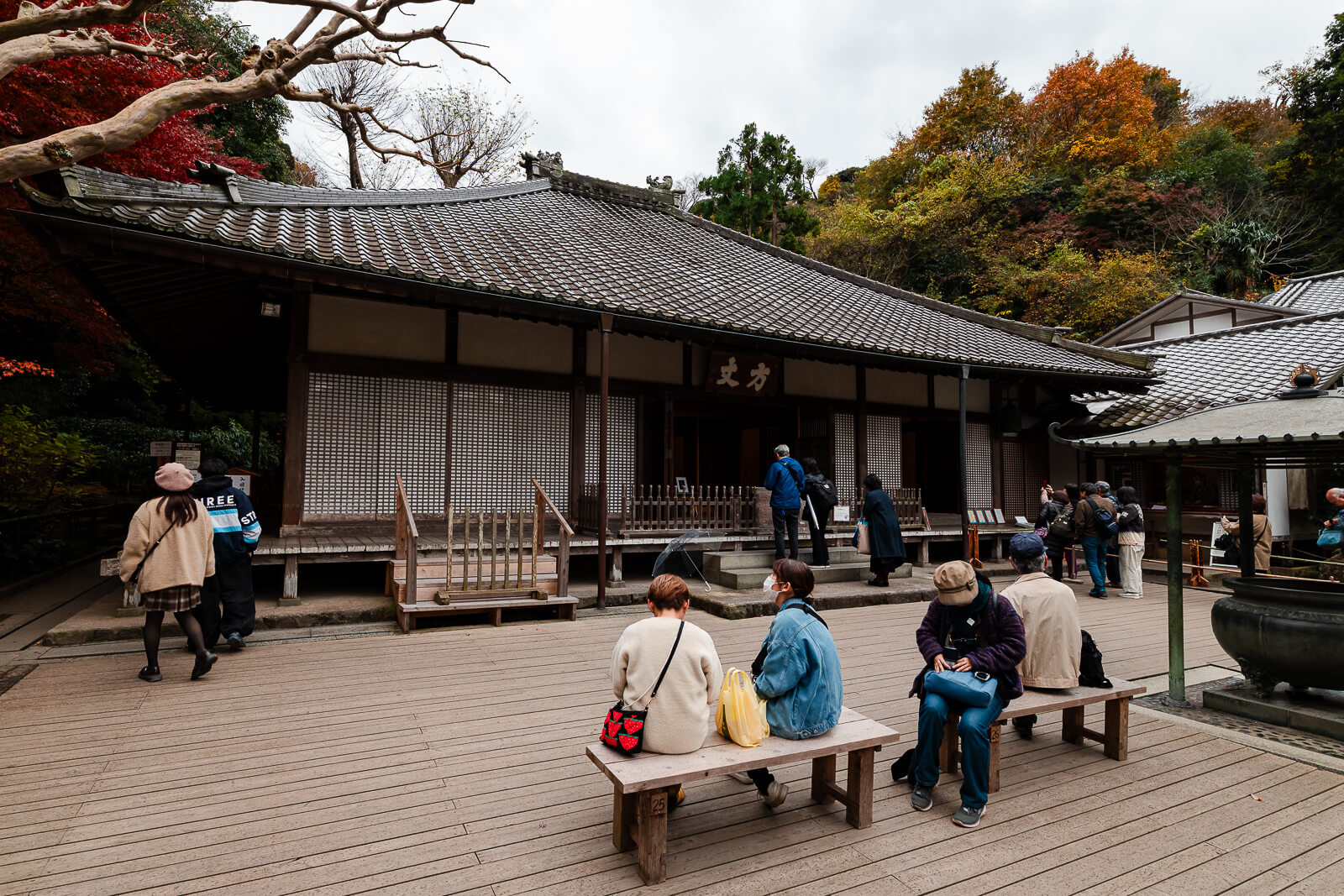
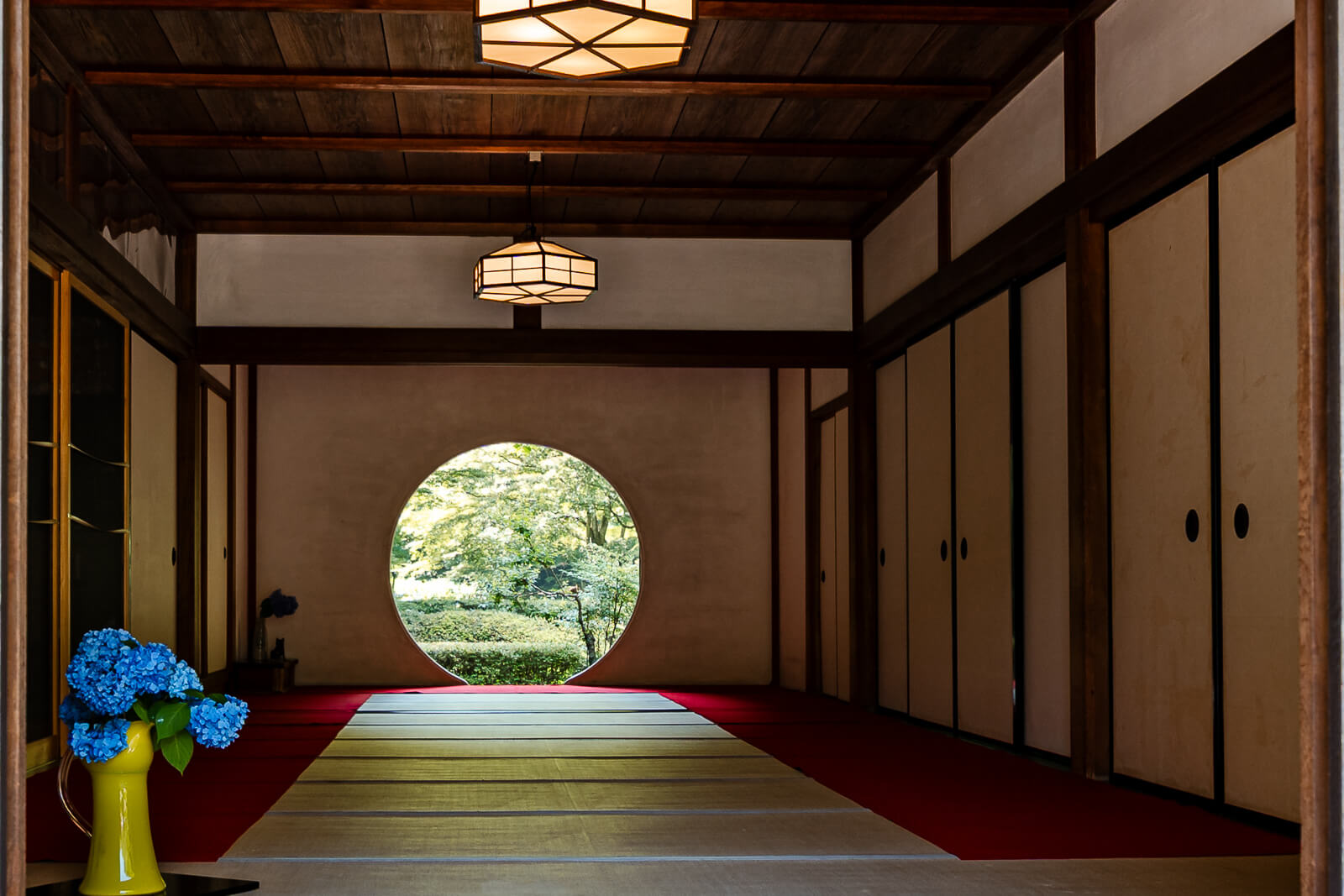
The garden seen through the circular window connects visually with the rear garden behind the main hall. Access to this garden is separate from the standard temple grounds and is available only during certain seasonal openings. Kamakura City tourism notes that the garden behind the main hall opens to the public in June for irises and in November for autumn colors, with an additional fee when open.
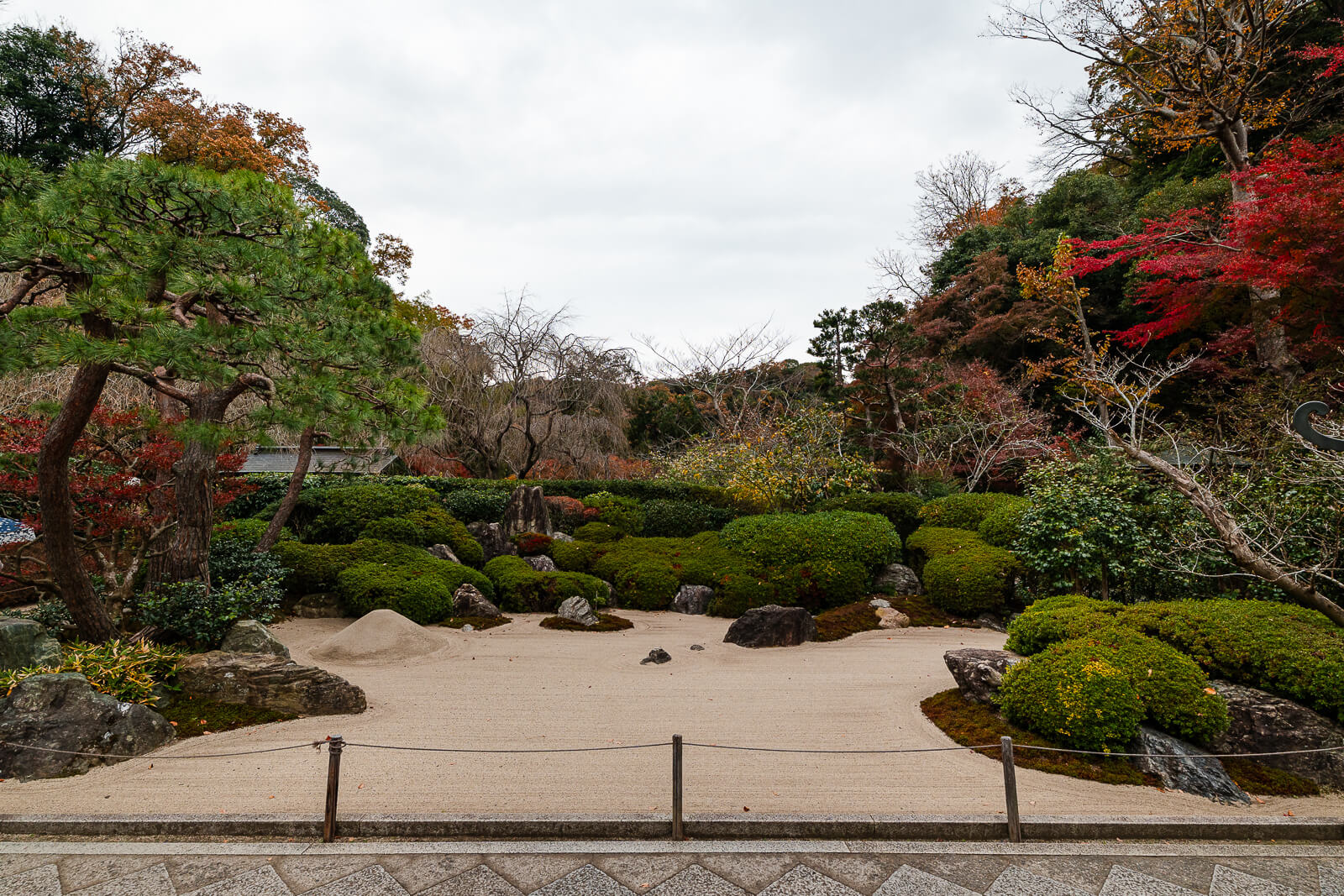
This distinction matters because Meigetsu-in continues beyond the hydrangea approach and circular window. The rear garden adds another layer behind the main hall, especially when irises, autumn color, or garden views are part of the seasonal opening. It can make the visit feel more complete without changing the temple’s compact scale.
Temple #30 and the Goshuin Process
Meigetsu-in is also Temple #30 on the Kamakura 33 Kannon Pilgrimage, which gives the temple a more devotional role within Kamakura. The pilgrimage layer does not replace the hydrangea experience, but it changes how some people approach the visit. For goshuin collectors, Meigetsu-in can require more time than a standard temple stop.
The Kamakura 33 Kannon Pilgrimage does not need to be completed strictly in numerical order. In practice, returning to certain temples may be necessary, especially when communication is difficult, handwritten entries are temporarily unavailable, or busy seasonal periods affect how temples handle requests. Some temples may provide a paper version instead of writing directly into a goshuincho, with handwritten entries requiring a later visit or a different process.
At Meigetsu-in, the handwritten pilgrimage entry may involve a shakyo, or Buddhist sutra-copying sheet, before it is written directly into a goshuincho. The sheet used for this process is a Heart Sutra copying sheet, with space for a name, address, and date above the sutra text. It may be completed at the temple or taken away and returned later.
This makes the handwritten version more involved than a standard request at the temple office. Paper goshuin may still be available when a handwritten entry is not provided, but the handwritten pilgrimage version can be less obvious, especially for non-Japanese speakers. Because of that, the process at Meigetsu-in works best as a flexible part of the visit. A paper version may be available on the day, while a handwritten entry may require more time, clearer communication, or a return visit.
How Long to Spend at Meigetsu-in
Most visitors spend about 45 to 75 minutes at Meigetsu-in during hydrangea season. The temple grounds are not large, but the visit can slow naturally around the stairway, upper grounds, circular window, and rear garden access if it is open. Photography, seasonal crowds, and the separate garden opening can all extend the visit.
Outside hydrangea season, the visit can be shorter. Without the June flower focus, Meigetsu-in becomes easier to experience as part of a broader Kita-Kamakura temple walk. A shorter visit can still make sense for travelers interested in the circular window, pilgrimage connection, or seasonal changes in the temple grounds.
The handwritten pilgrimage goshuin can add time to the visit, especially when the shakyo process is involved or communication takes longer than expected. For this reason, the pilgrimage goshuin is better treated as part of the visit rather than a quick administrative stop.
When Meigetsu-in Fits Your Kamakura Plans
Meigetsu-in is a strong choice for travelers who want one of Kamakura’s classic June hydrangea experiences. It is especially relevant for photographers, seasonal travelers, and people building a Kita-Kamakura temple route around Engaku-ji, Tokei-ji, Jochi-ji, and nearby walking paths. The temple works well when the goal is seasonal color, compact movement, and a visit that can still connect naturally to other nearby stops.
It may be less satisfying for travelers expecting a large temple complex with extensive grounds. Meigetsu-in’s strength is not scale, but concentration. The hydrangea approach, circular window, rear garden when open, and pilgrimage role all sit within a relatively contained visit.
In June, Meigetsu-in is strong enough to anchor a Kita-Kamakura visit. Outside hydrangea season, it becomes more situational: worthwhile for the circular window, pilgrimage connection, rear garden openings, or a broader temple walk, but less likely to carry the day by itself. That makes the temple especially useful for travelers who want a compact stop that can expand or contract depending on season, crowds, and nearby plans.
Meigetsu-in Beyond Hydrangea Season
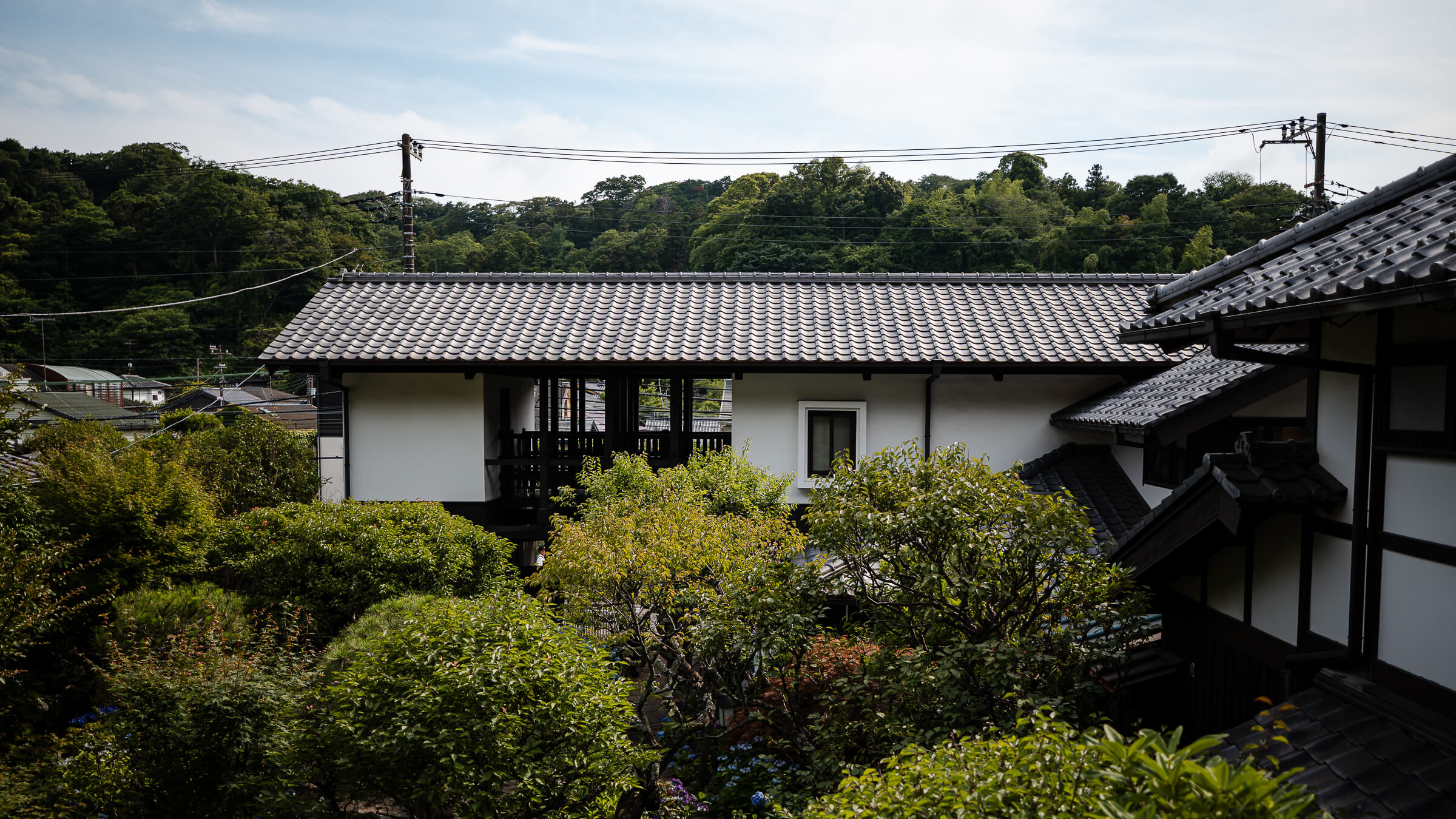
Hydrangea season defines Meigetsu-in for many visitors, but the temple does not disappear after June. Without the blue flowers controlling the route, the grounds become easier to read as a compact temple complex. Stone features, garden paths, bamboo, small structures, and hillside edges stand out more clearly when the approach is no longer the main focus.
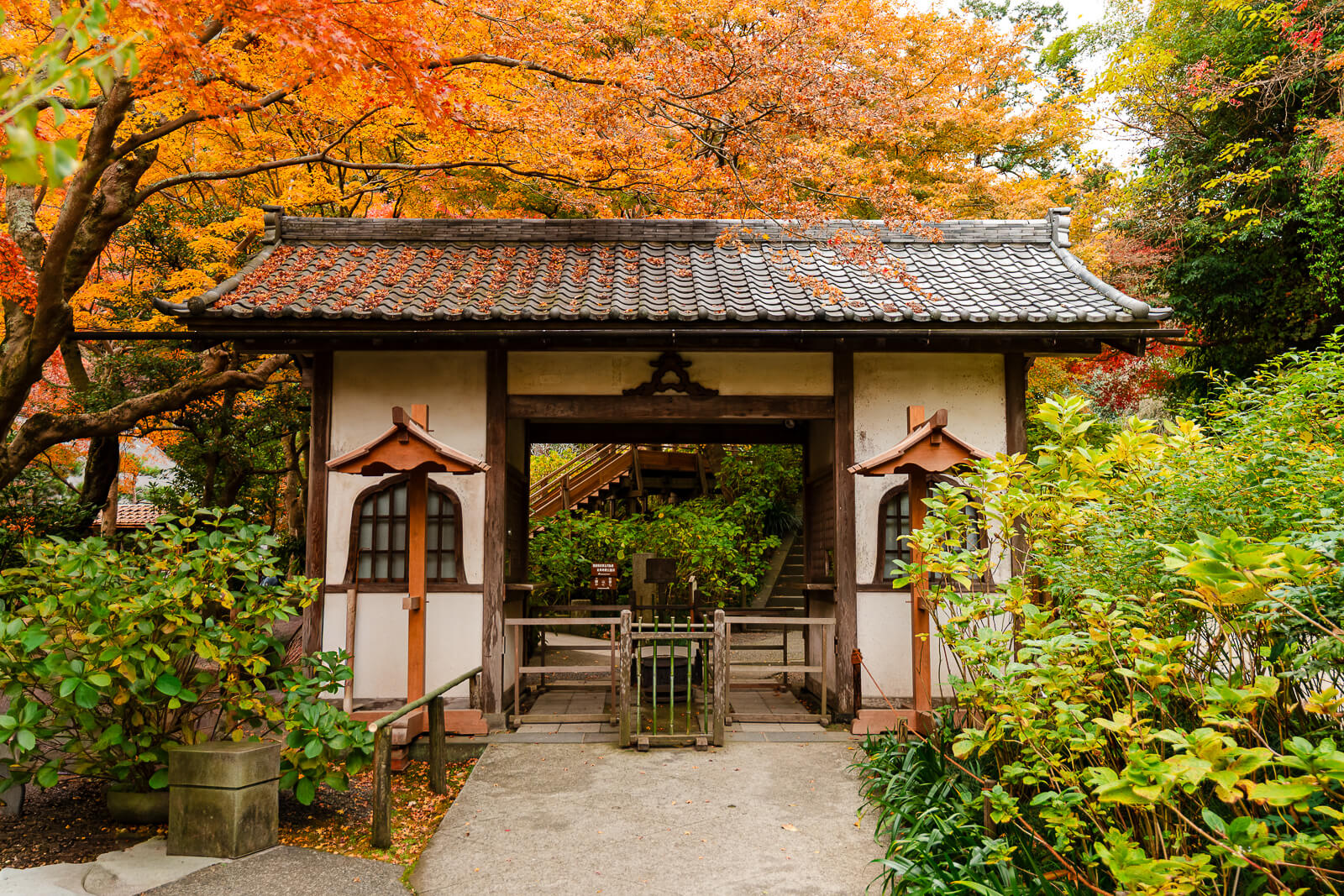
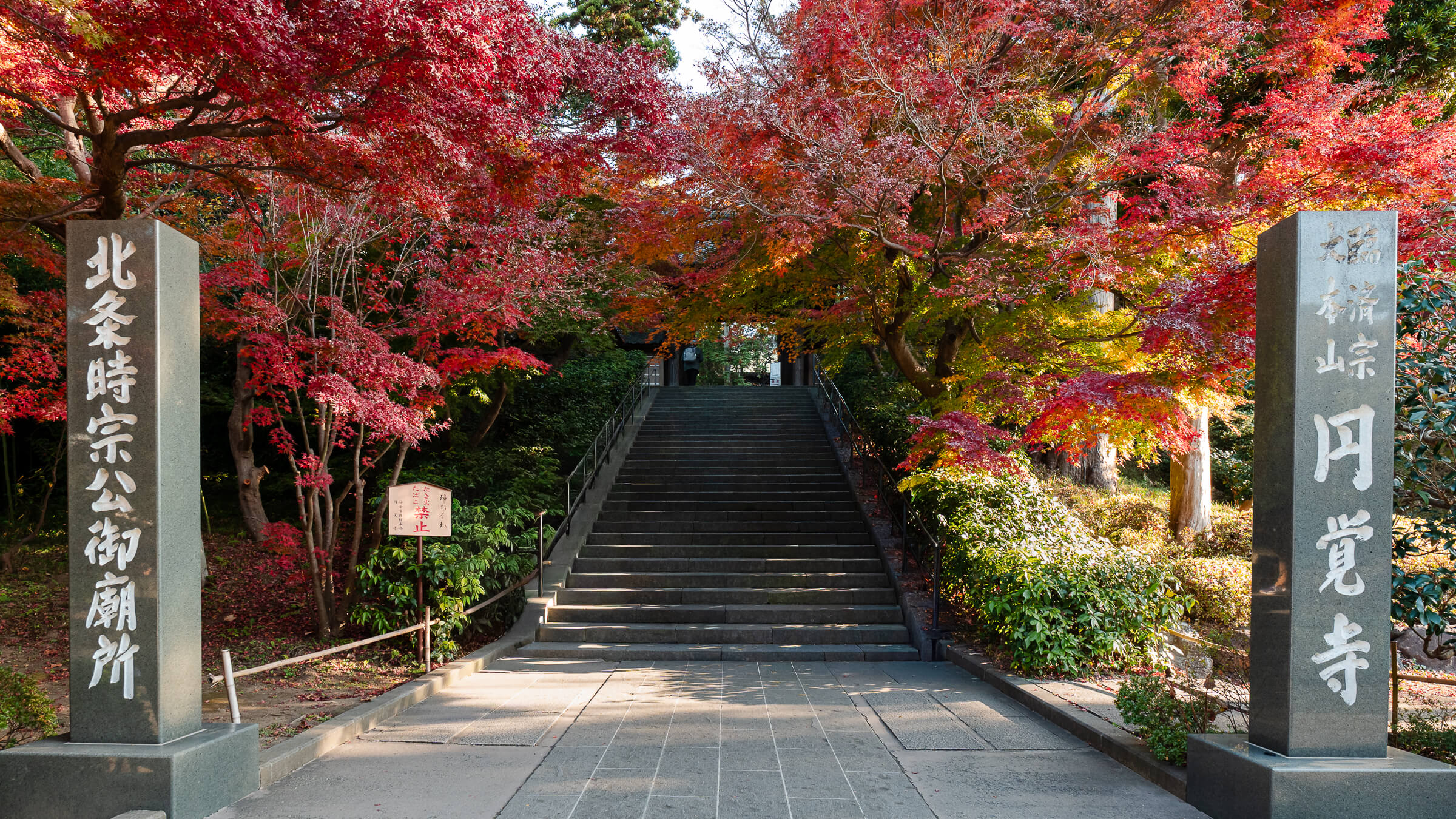
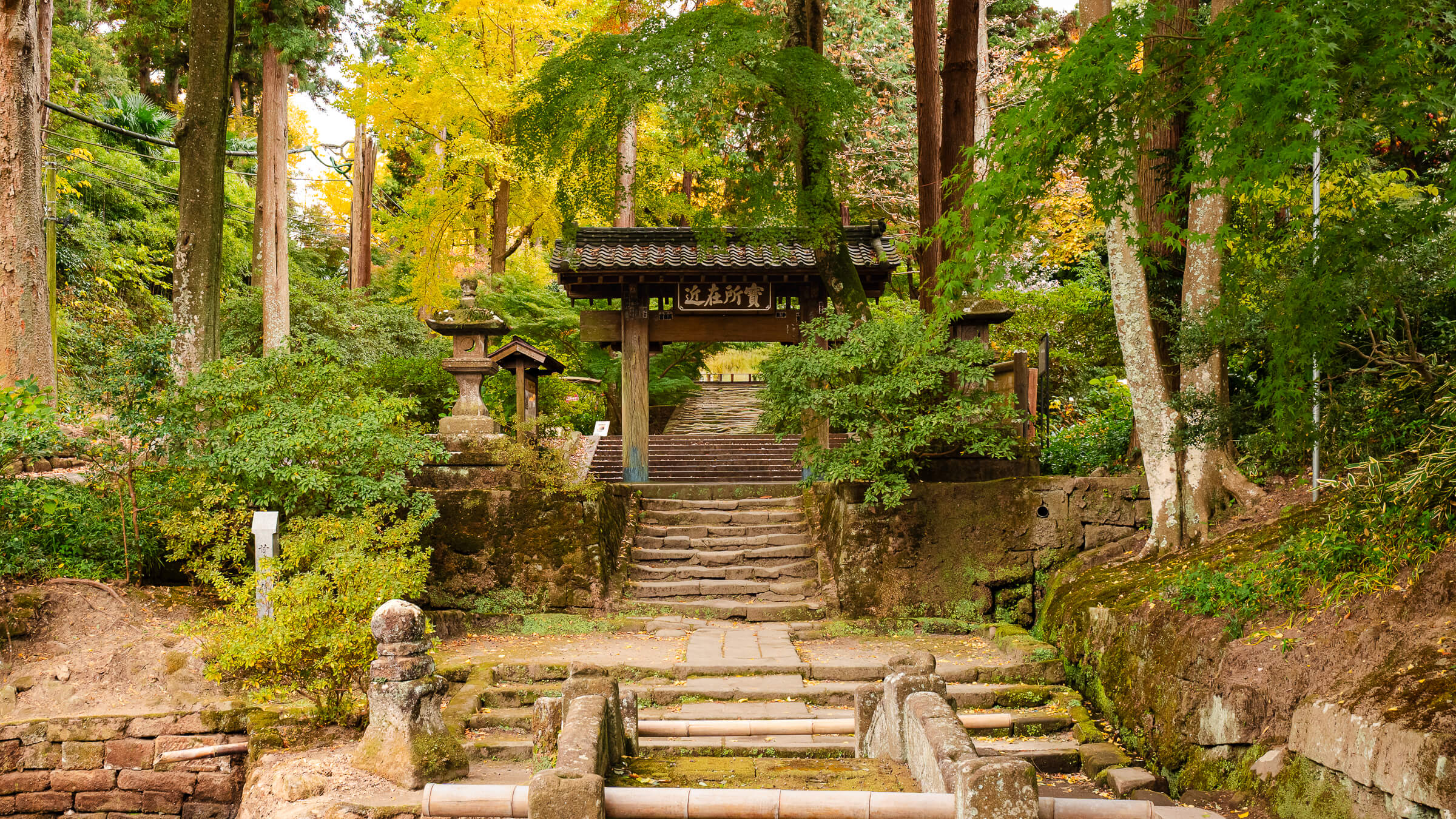
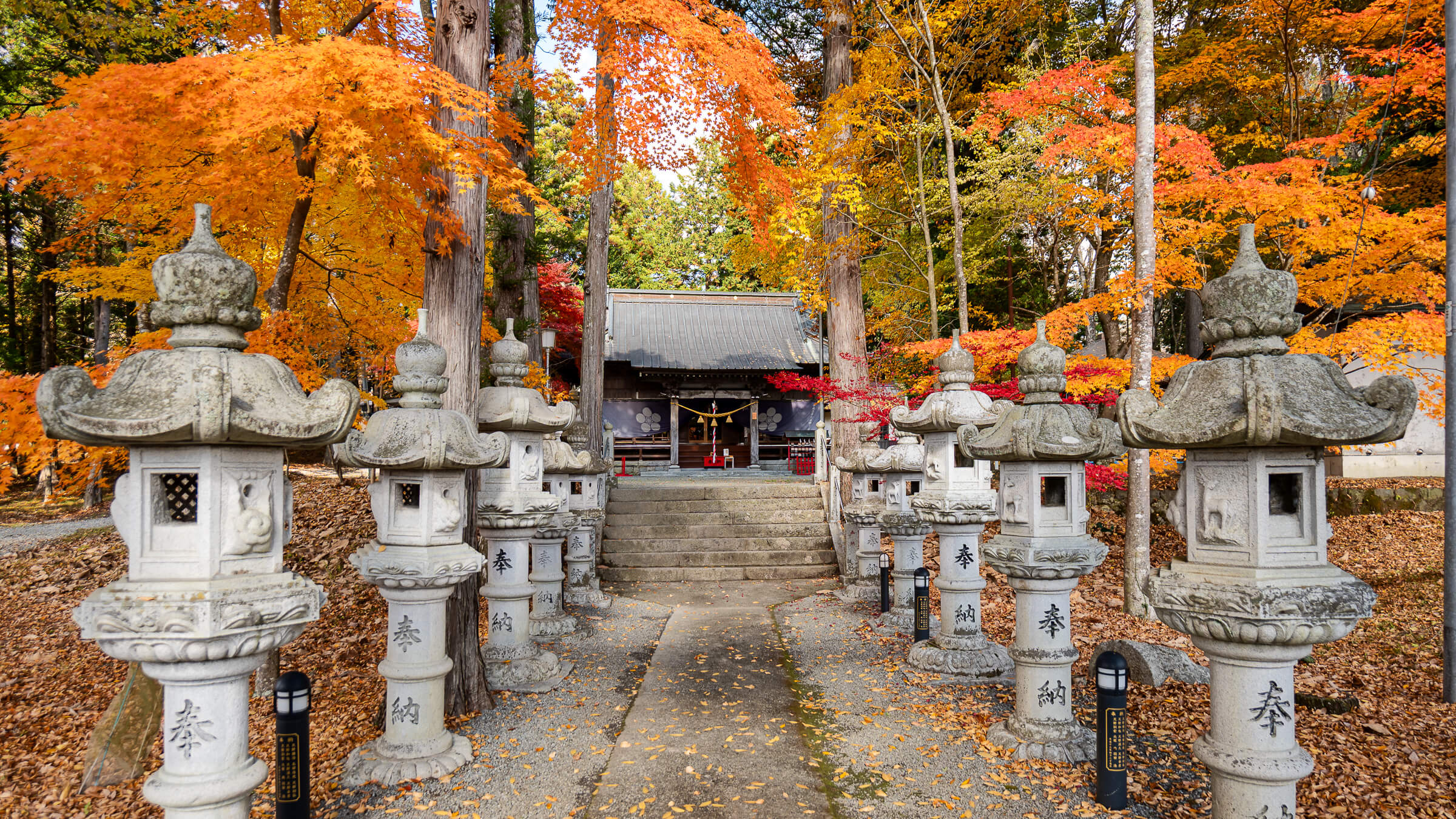
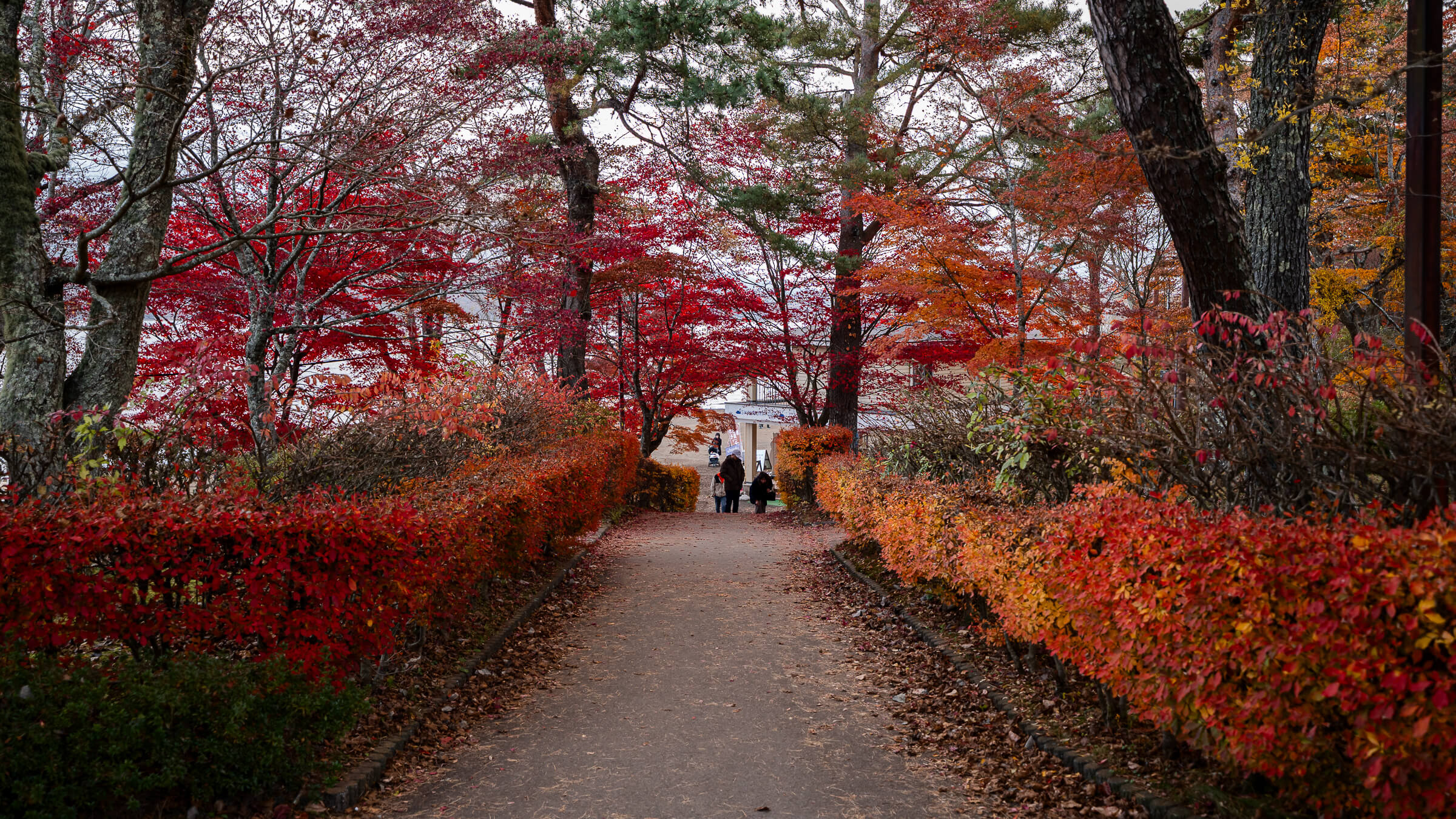
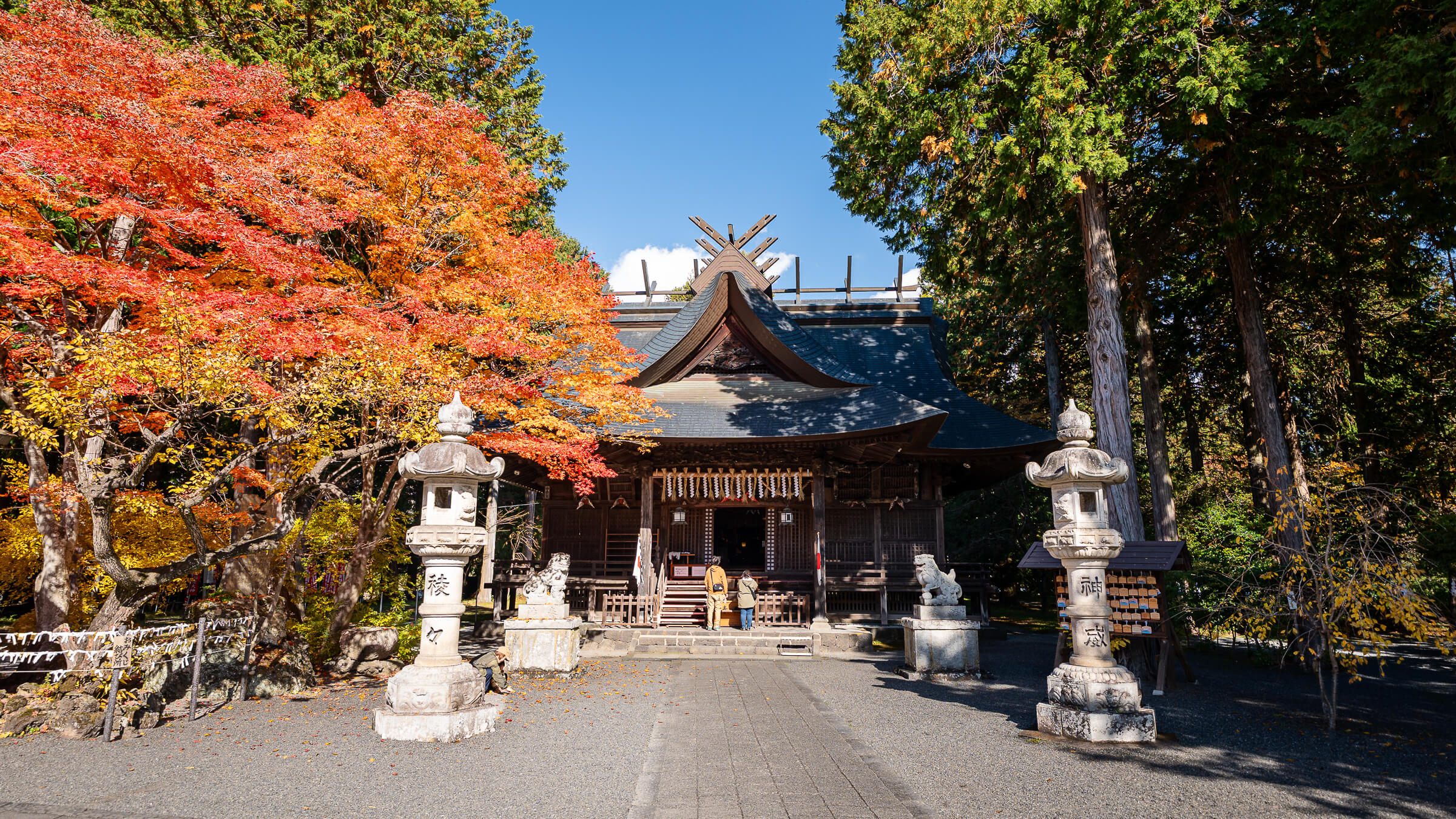
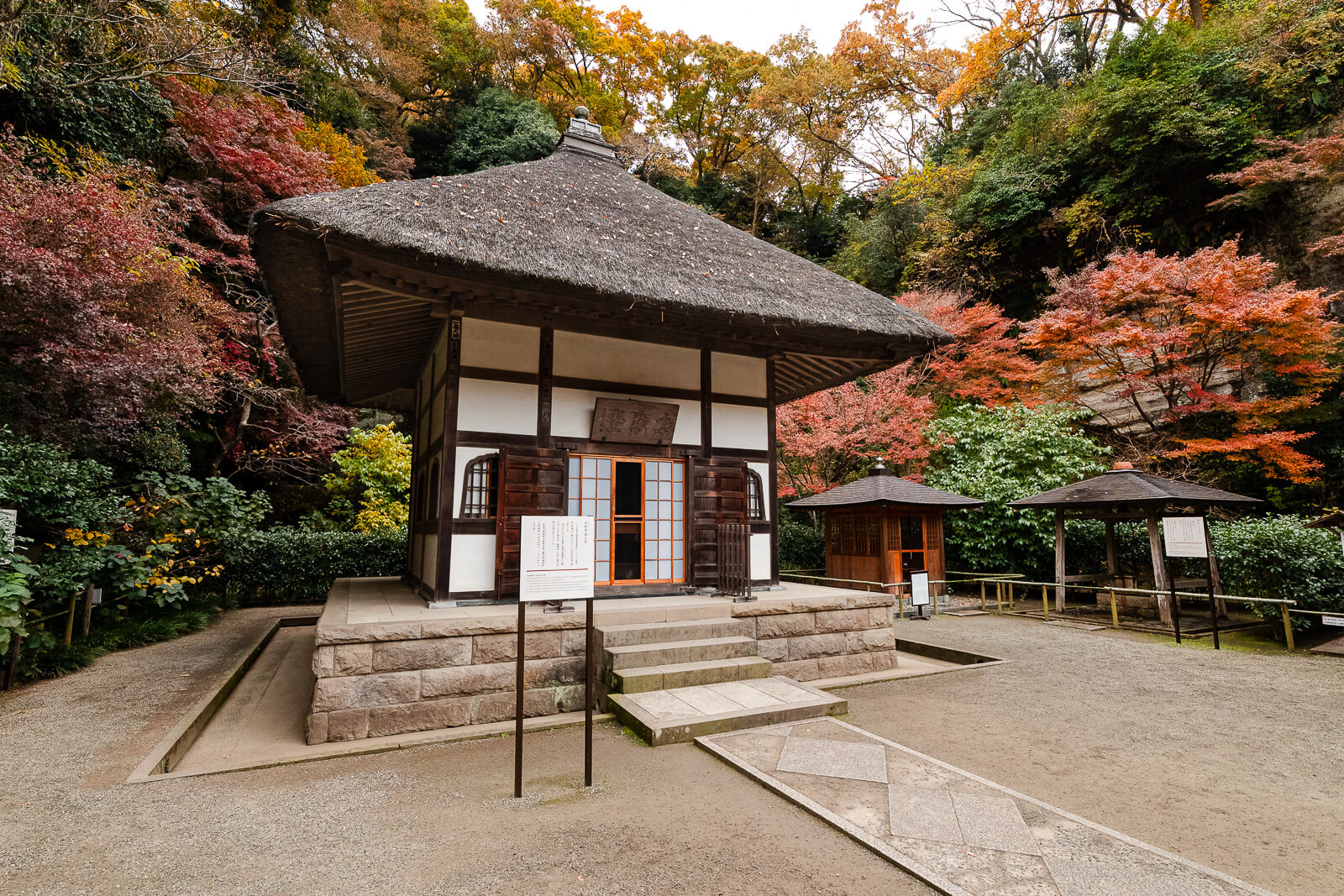
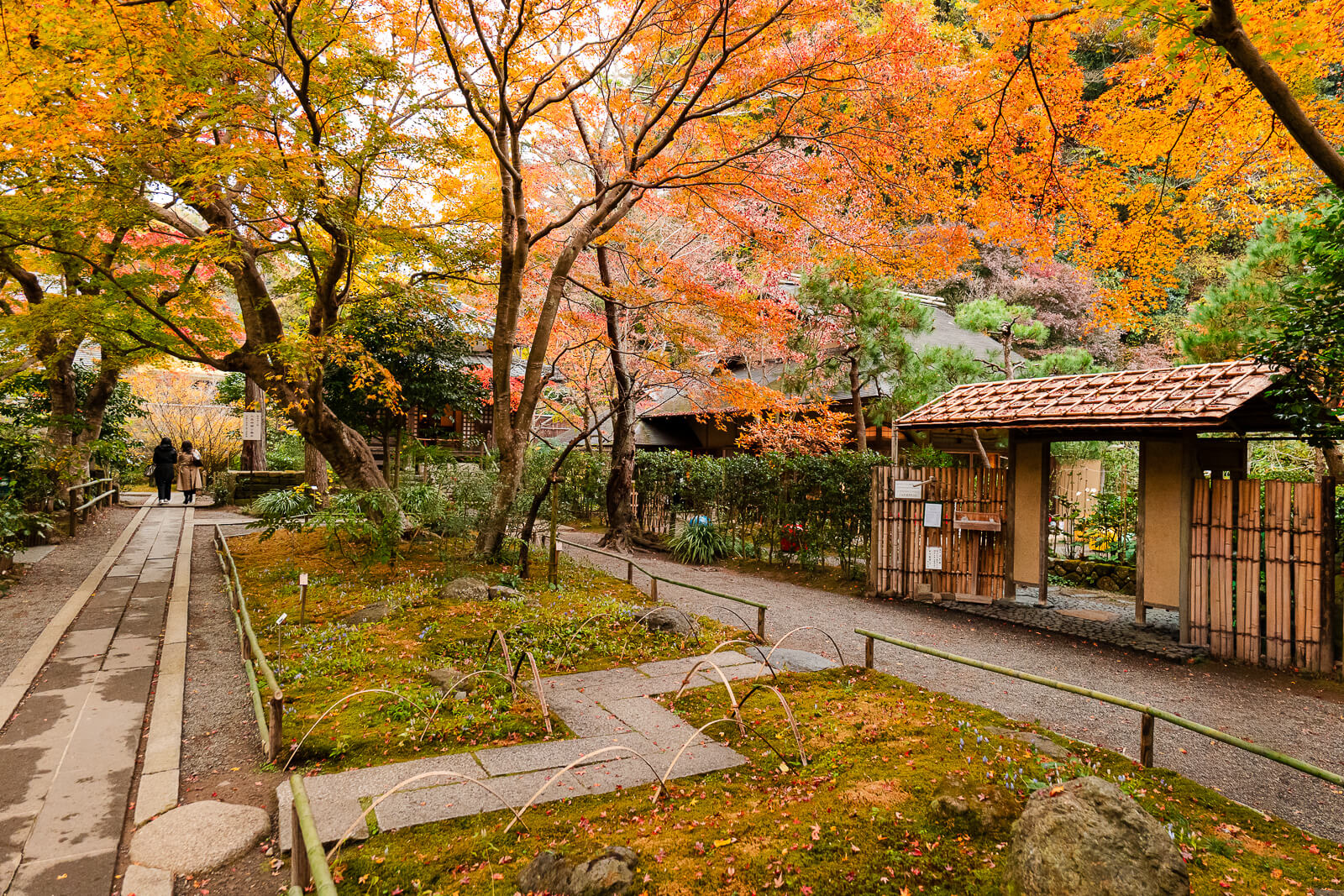
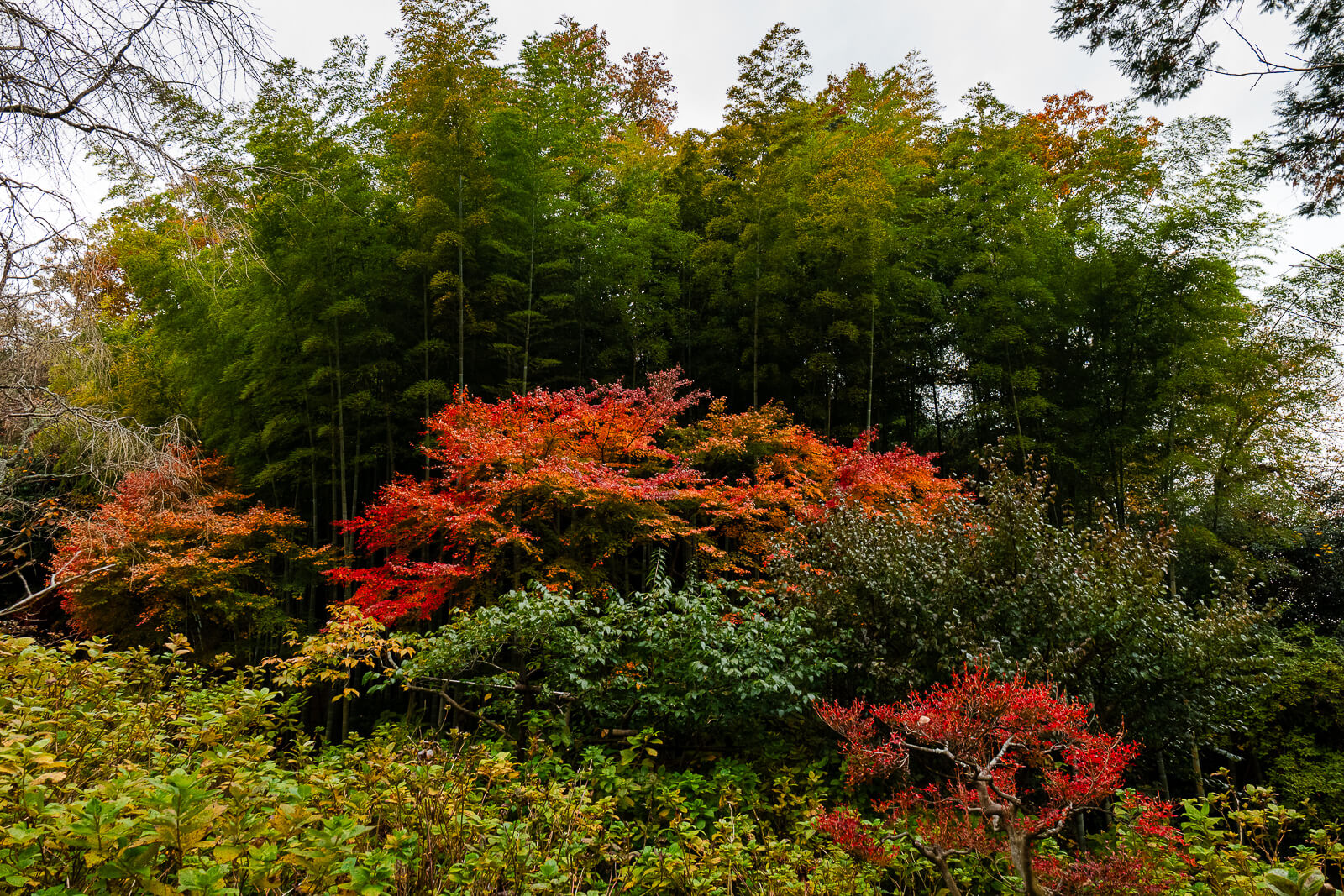
In autumn, the visual weight shifts toward maple color, bamboo, garden views, and the temple buildings set into the hillside. The gates and smaller structures become easier to notice, especially where fall color gathers around rooflines, paths, and garden edges. The visit feels less concentrated around one famous scene and more connected to the temple’s layout.
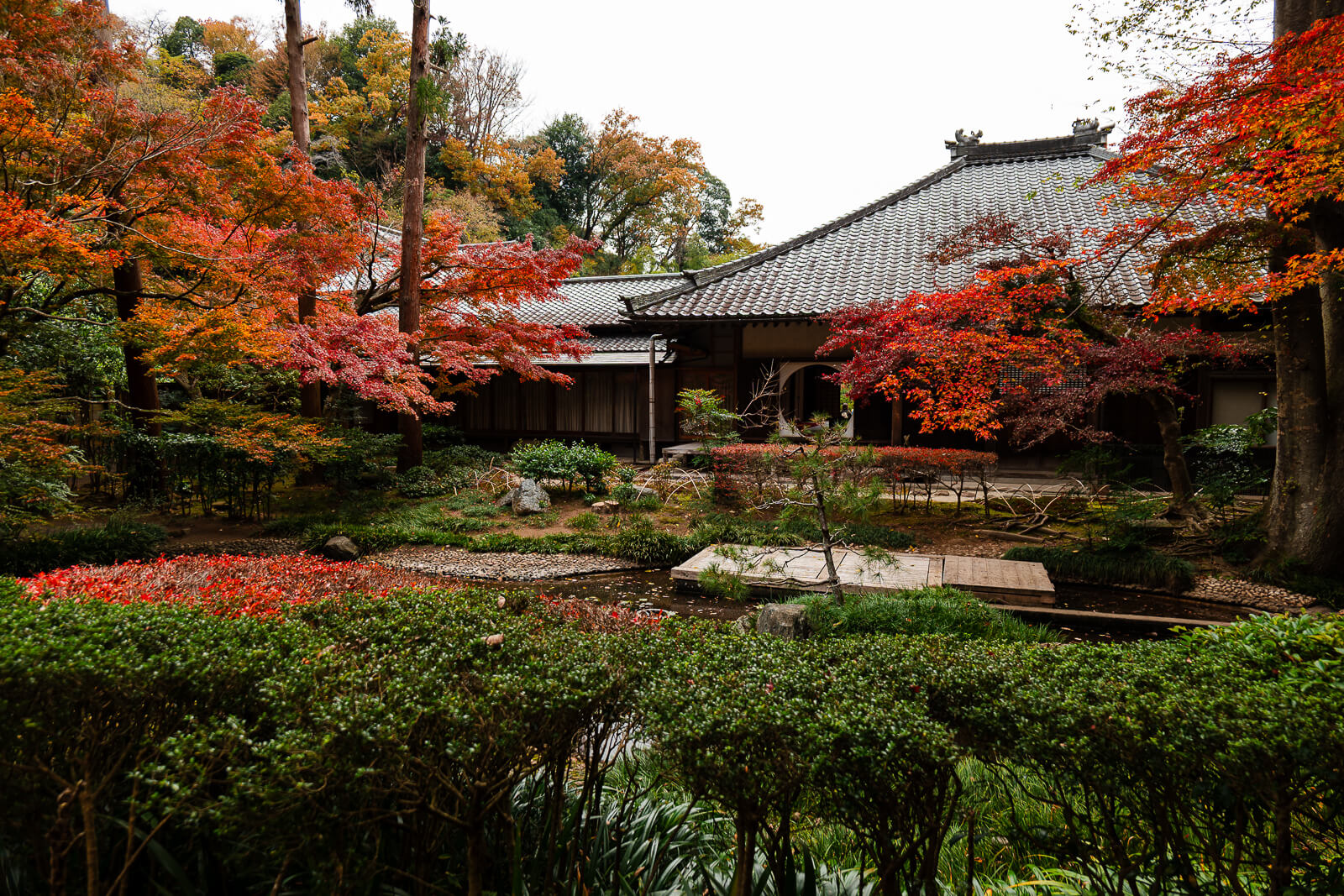
This makes Meigetsu-in a useful stop beyond peak bloom, especially as part of a wider Kita-Kamakura temple walk. June remains the strongest season for first-time visitors, but autumn shows more of the grounds themselves: the way paths bend around garden spaces, how buildings sit against the trees, and how the temple’s smaller historical details emerge once the hydrangea crowds have passed.
Where Meigetsu-in Fits in a Kita-Kamakura Day
Meigetsu-in belongs naturally within the walking corridor that begins around Kita-Kamakura Station. Engaku-ji sits closest to the station as the first large temple complex, while Tokei-ji and Jochi-ji add smaller stops before the route bends toward Meigetsu-in. In June, the hydrangeas often make Meigetsu-in the seasonal anchor of this corridor, giving the temple a stronger role within a Kita-Kamakura itinerary than it might have during a quieter season.
The same area also connects to two major hiking routes. Near Jochi-ji, the Daibutsu Hiking Course begins and continues toward the Great Buddha of Kamakura and the Hase area, while Kencho-ji connects to the Ten-en Hiking Course, which eventually reaches the area around Kakuon-ji. For this guide, those routes remain handoffs rather than the main subject, but they help place Meigetsu-in within the larger Kita-Kamakura landscape.
Getting There
Meigetsu-in is located in Kita-Kamakura, about a 10-minute walk from Kita-Kamakura Station. Train access is straightforward, and the last stretch works naturally on foot because the temple sits within a narrow district of temples, side streets, and residential lanes. Kamakura City tourism lists the temple address as 189 Yamanouchi, Kamakura City, and gives access as about a 10-minute walk from JR Kita-Kamakura Station.
Parking exists around Kita-Kamakura, but the supply is limited and varies by season, day, and location. Some lots operate with flat fees, while others use maximum-charge rules that may differ between weekdays, weekends, and holidays. In some cases, weekend max limits are clearer or more favorable than weekday pricing, so posted signs matter more than general assumptions.
During hydrangea season, the train usually creates the simplest access pattern. Driving can still work with an early arrival and flexibility, but the district itself is easier to experience on foot once the visit begins. This matters more in Kita-Kamakura than in some other areas because the nearby temples are close enough to connect as a walking route.
Hours and Fees
Meigetsu-in is generally open from 9:00 to 16:00. During June, hours are commonly listed as 8:30 to 17:00.
Admission is 500 yen for high school students and above, and 300 yen for elementary and junior high school students. When the rear garden behind the main hall is open, it requires an additional 500 yen.