Engaku-ji Temple brings together some of Kita-Kamakura’s most rewarding sights: a towering wooden gate, Buddhist halls, gardens and wooded hills rising behind the roofs. In autumn, red maples arch above the entrance steps and spread around the ponds farther into the grounds. Spring brings another reason to visit, with cherry blossoms beside the water and pale branches framing the temple buildings.
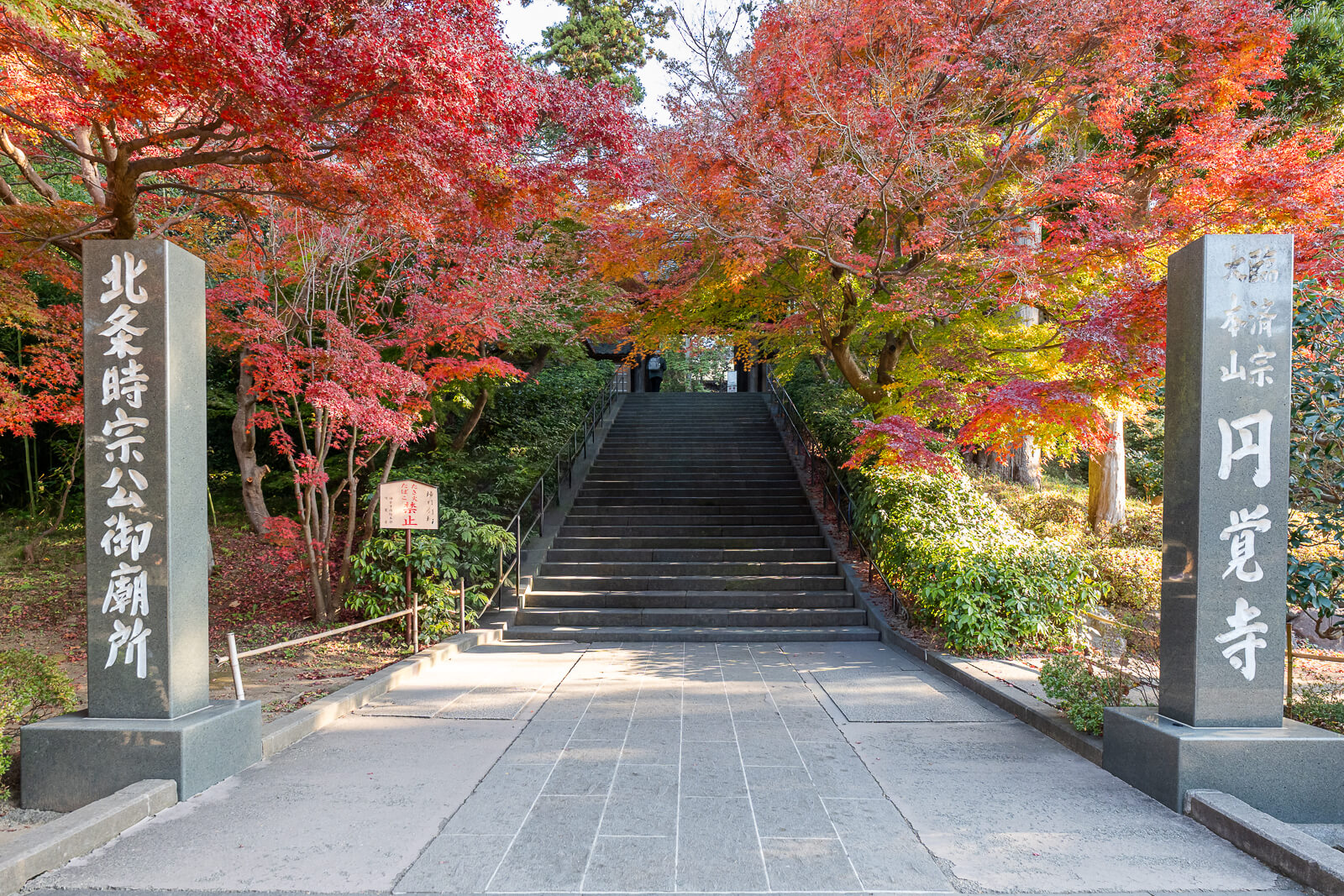
The temple is an easy first stop on a Kamakura day trip, with its entrance about a minute from JR Kita-Kamakura Station. Inside, the grounds extend uphill through a valley, giving the visit room to grow from the main halls into smaller gardens and side paths. Engaku-ji suits travelers who want substantial temple architecture and seasonal scenery in the same visit, with onward walking connections to the rest of Kita-Kamakura.
How Much Time to Allow at Engaku-ji
Allow around an hour for the main temple grounds. For a visit that includes photography, Butsunichi-an and a hillside detour, plan on about 90 minutes to two hours. These are planning allowances, with the longer visit especially useful when the maples or cherry blossoms invite more stops. The entrance steps and rising paths mean the full visit involves some climbing, while the bell and cemetery paths add more height beyond the central route.
Engaku-ji and Meigetsu-in make a rewarding pair for a morning in Kita-Kamakura. Engaku-ji provides the larger temple landscape, while Meigetsu-in brings a more concentrated garden visit nearby. For a full day, continue toward Kenchō-ji and central Kamakura, leaving the Hase temples and coast for another part of the trip.
A Zen Temple Rooted in Kamakura’s History
Engaku-ji was founded in 1282 under the patronage of Hōjō Tokimune, the regent who led Japan during the Mongol invasions. Its founding Zen master, Mugaku Sōgen, came from China. The temple’s purpose included mourning the war dead on both sides of those conflicts. These grounds belong to a major Zen monastery shaped by Kamakura’s years as a seat of warrior government.
The temple ranks second among Kamakura’s Five Great Zen Temples and remains an active center of religious life. Its buildings also reflect centuries of rebuilding after fires and other disasters. The landscape seen today holds that long history in different forms, from the old gate and surviving treasures to halls reconstructed in more recent times.
From the Station to the Sanmon Gate
The approach begins almost as soon as the train journey ends. Beside the station, the entrance steps climb between trees toward the Sōmon, the first roofed gate into the grounds. Autumn makes this short approach especially memorable, with red and orange branches reaching across the stairway and framing the dark timber above it.
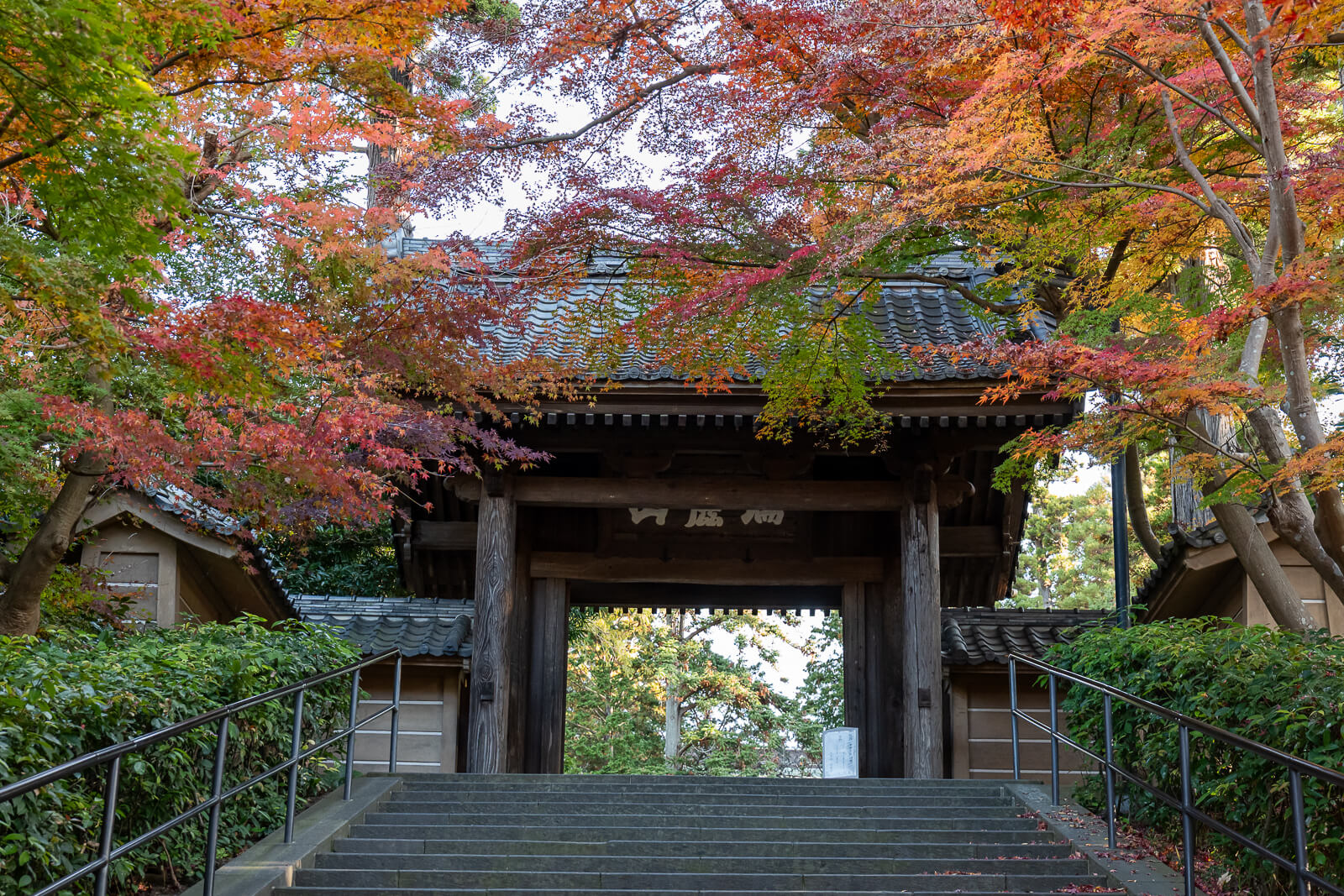
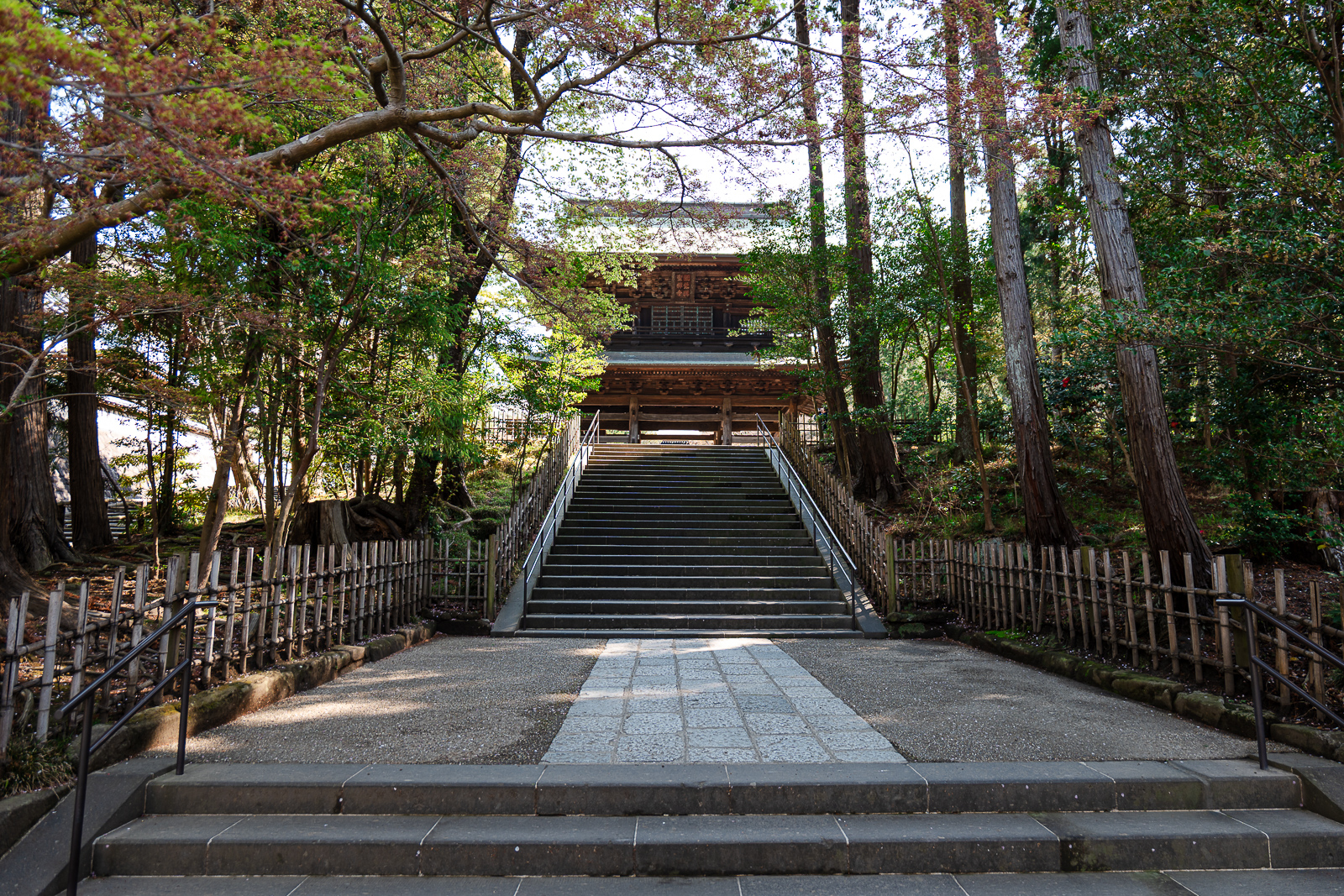
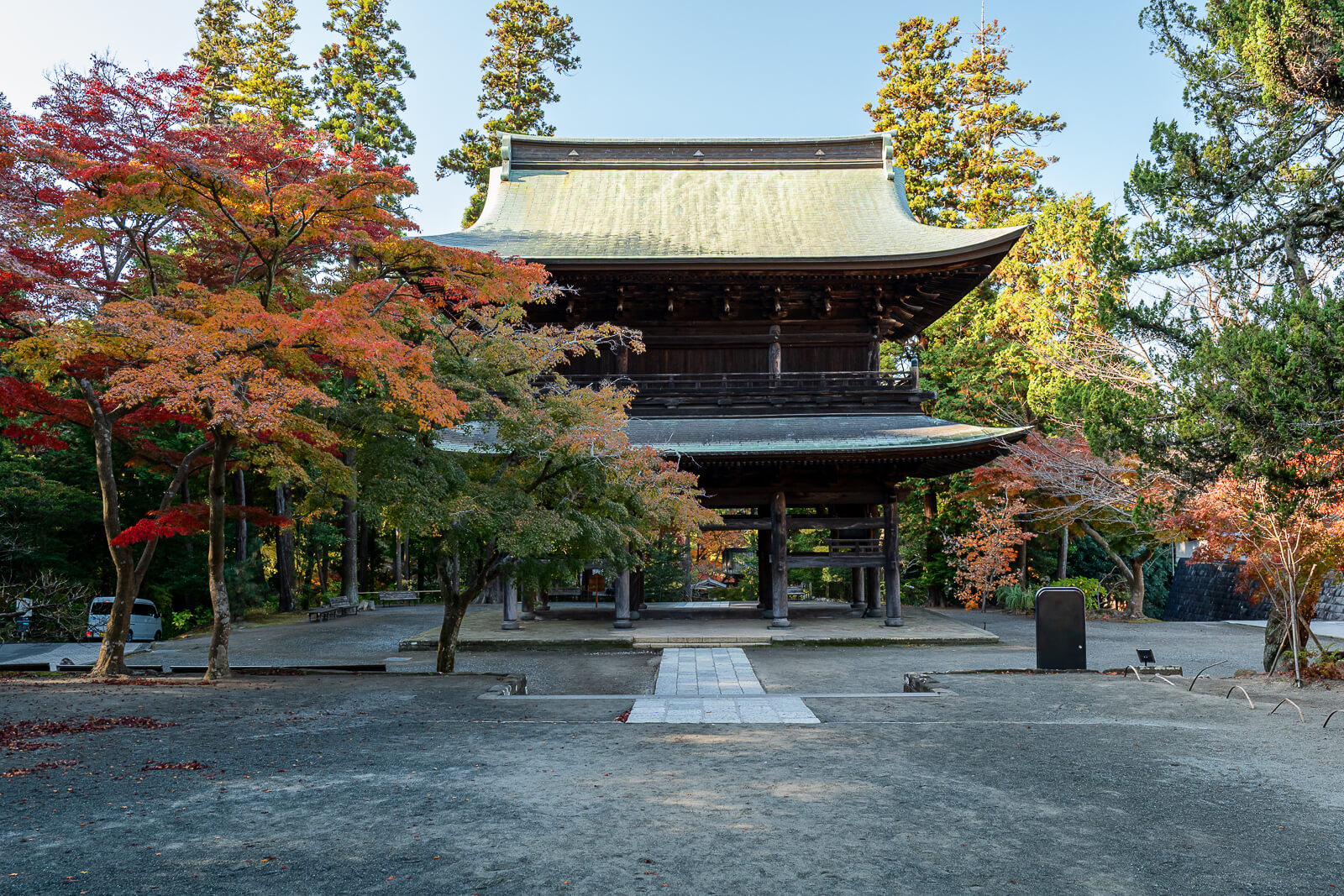
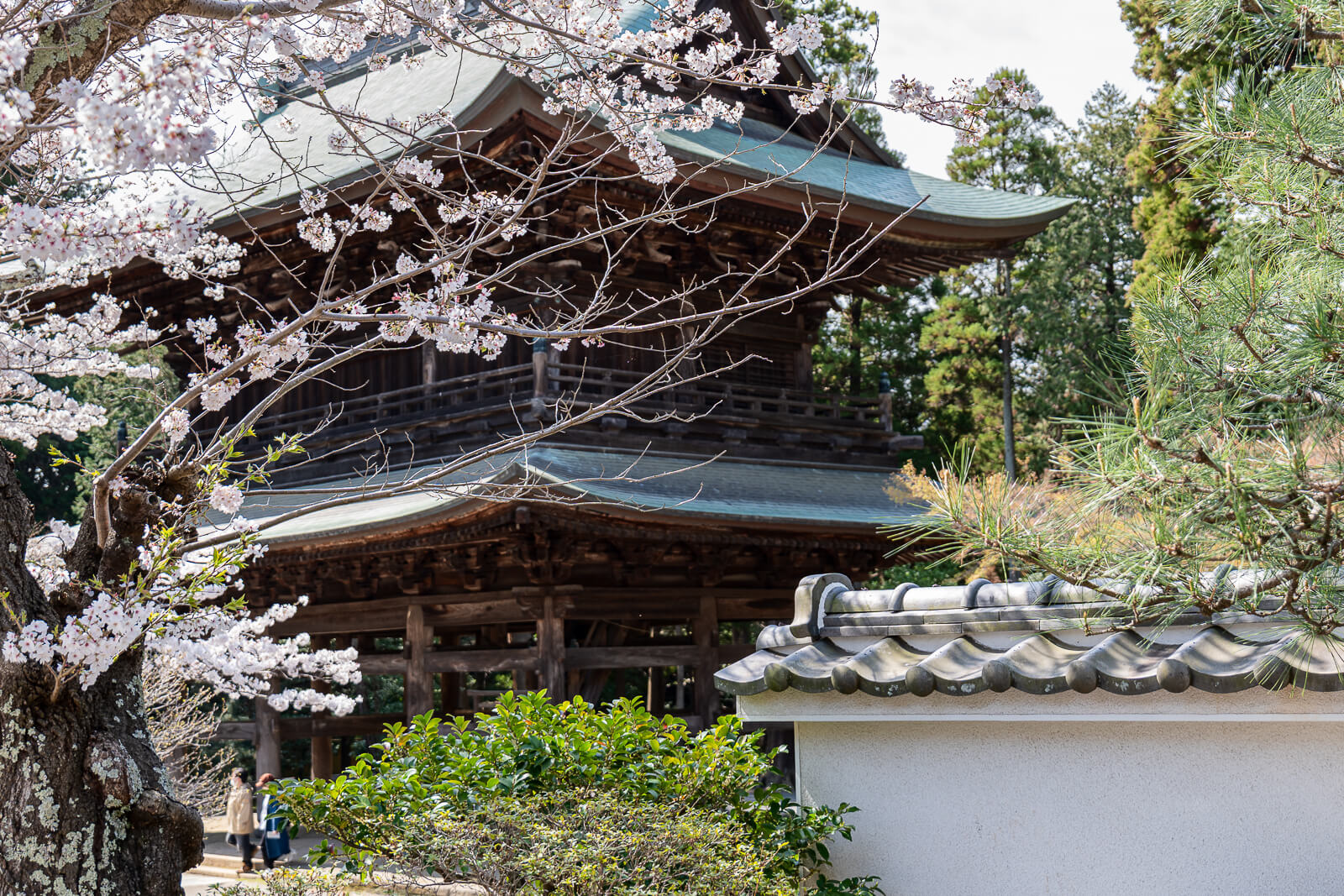
Beyond the entrance, the Sanmon gives the temple its first great architectural statement. A further flight of steps leads to the two-story gate, where deep eaves and heavy wooden pillars fill the view. Walk around it as well as through it: the open space beside the gate reveals its scale, and the surrounding trees provide very different frames in spring and autumn.
The Butsuden: Buddha and the Ceiling Dragon
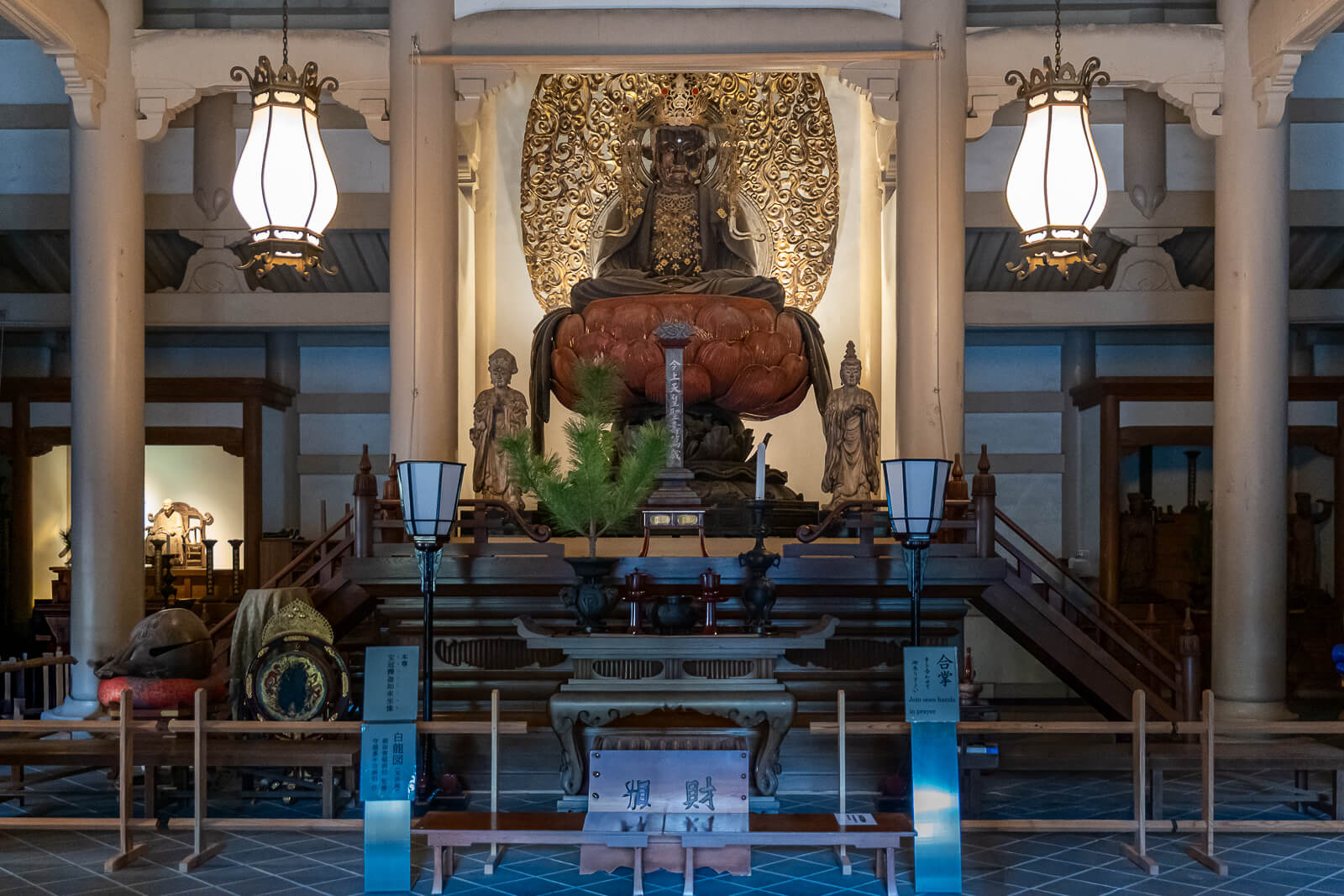
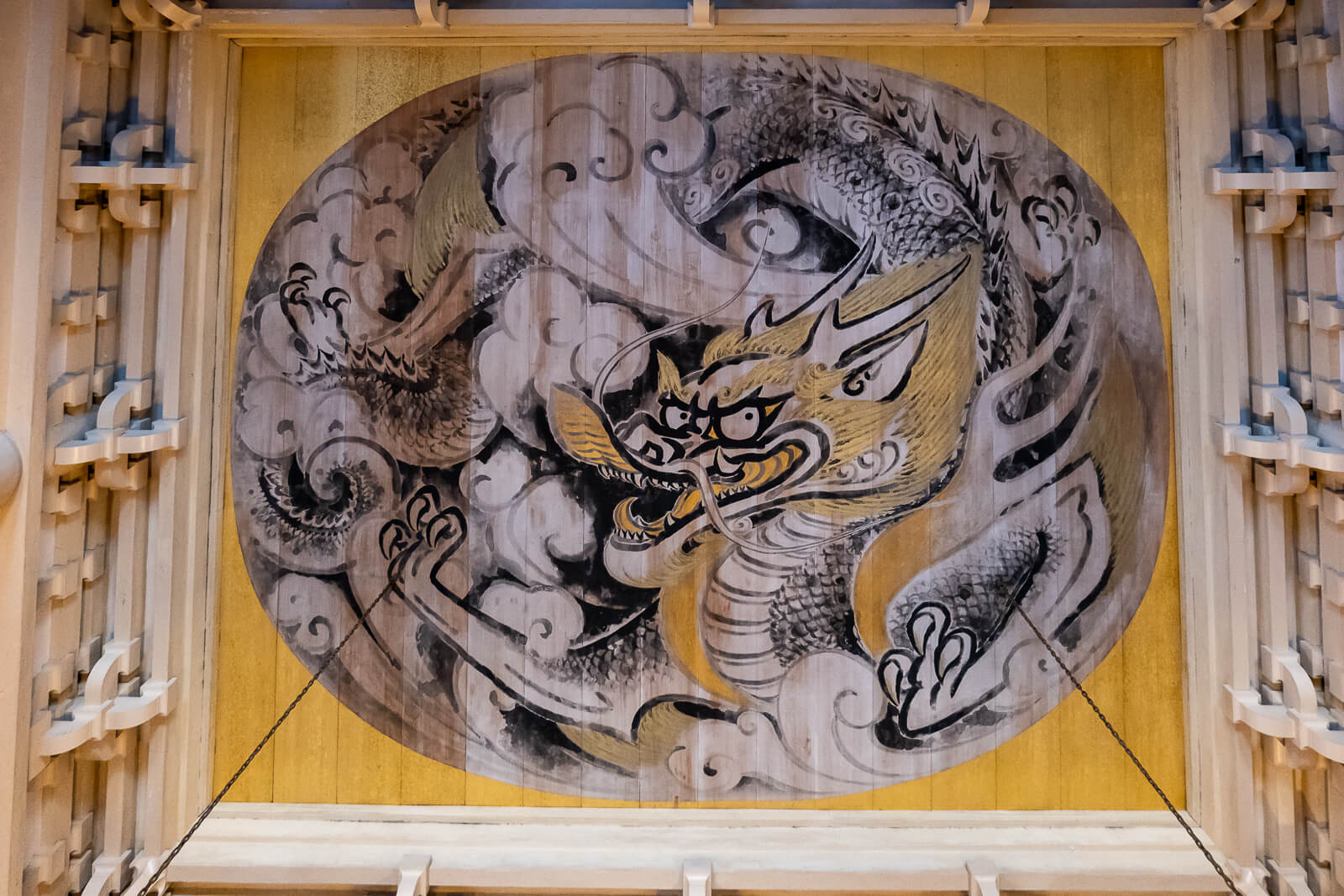
Continue toward the Butsuden, the Buddha hall, where Engaku-ji’s crowned Shaka Buddha is enshrined. The present hall was rebuilt in 1964 after the earlier building was destroyed in the 1923 Great Kantō Earthquake. The richly detailed Buddhist image and the painted dragon overhead give this stop two distinct points of attention, bringing the visit from the scale of the gate to the detail within a hall.
Gardens and Ponds Farther Into the Valley
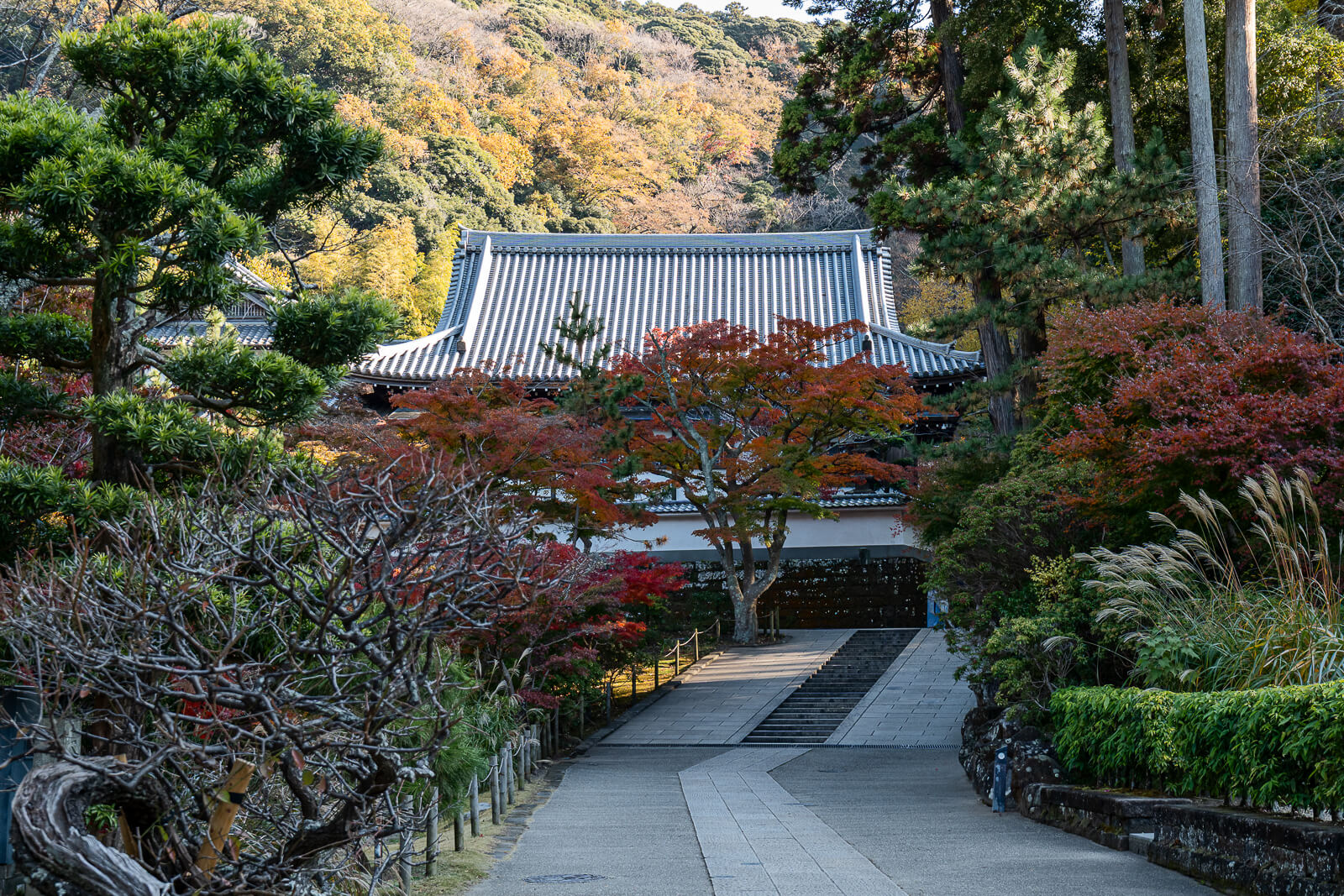
Farther along, the grounds open into a sequence of garden edges, ponds and smaller temple entrances. The Hōjō, once the abbot’s residence, has gardens including the Shinji-ike pond, while Myōkō-chi lies along the route farther into the complex. These garden stops give the walk beyond the Sanmon a series of distinct places to explore.
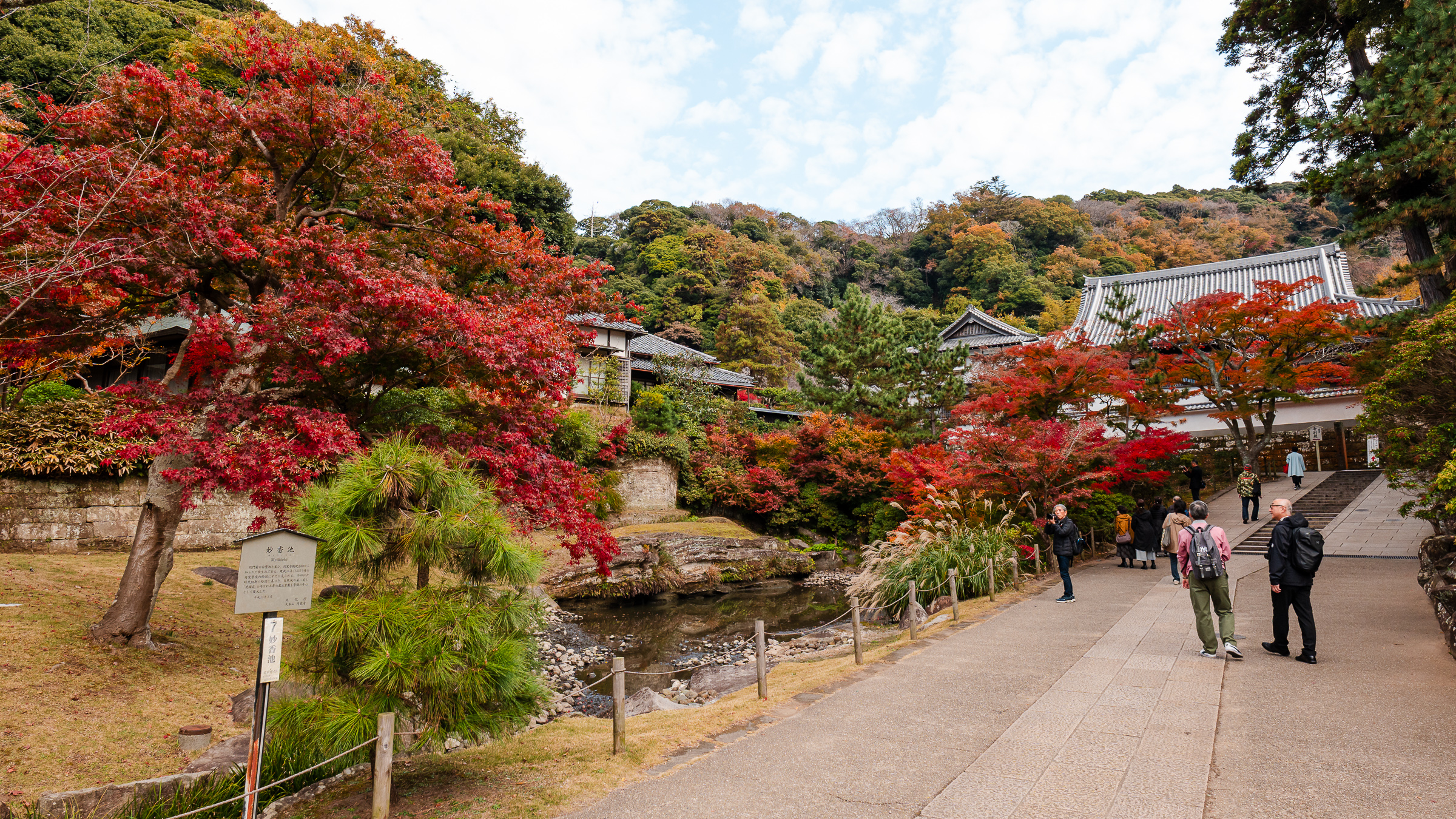
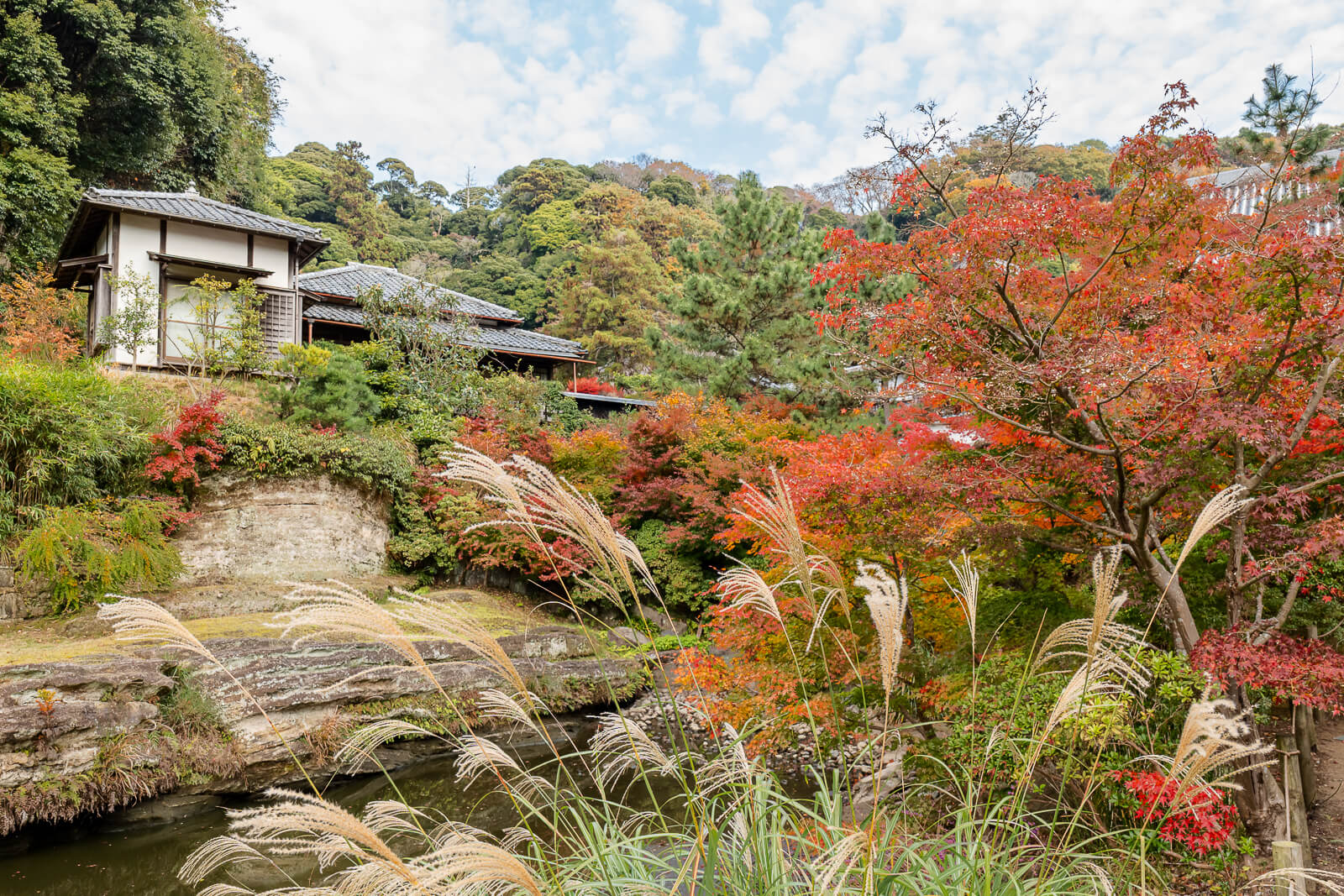
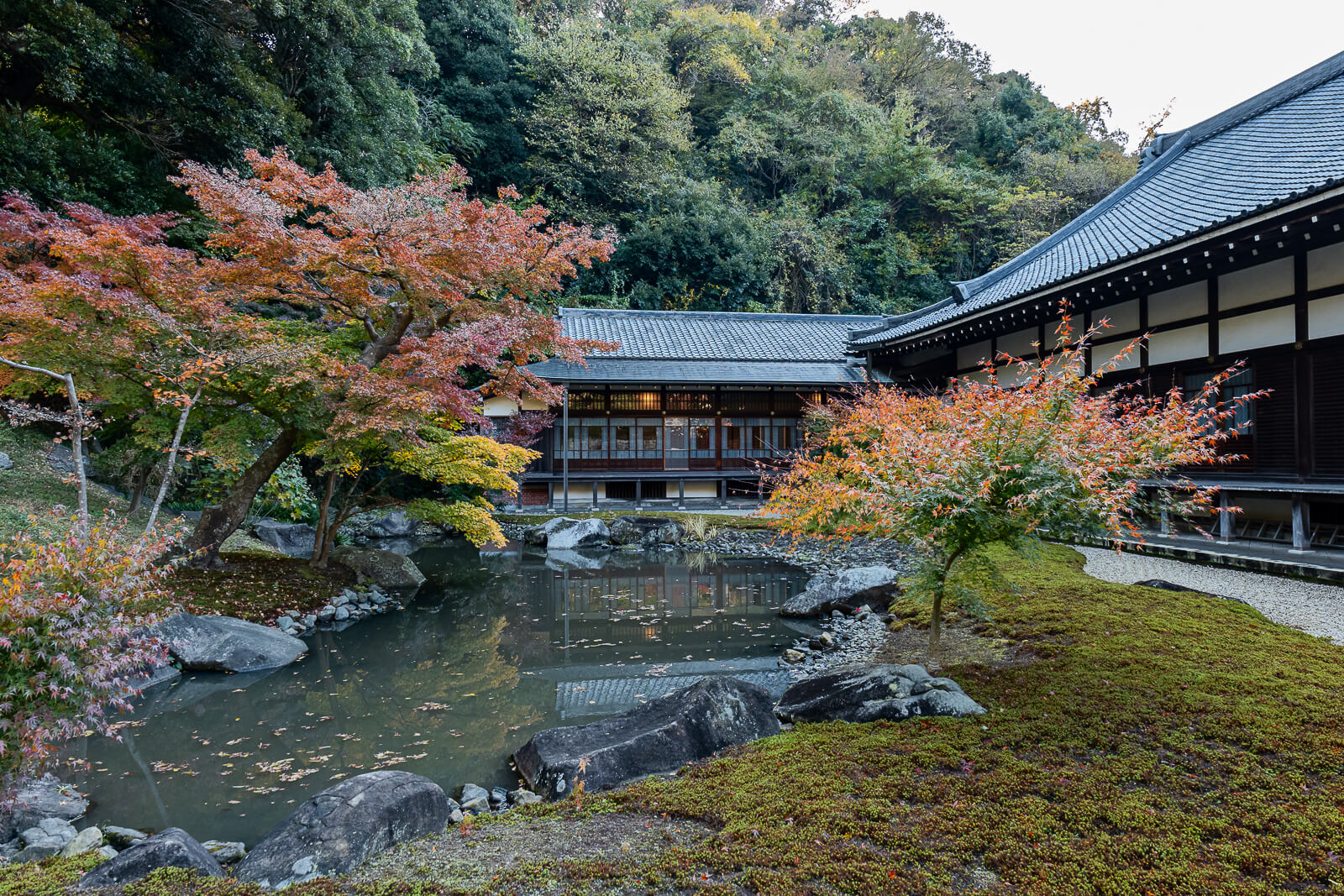
Around Myōkō-chi in autumn, red maples reach over the water, with pale grass plumes and exposed rock beneath the garden buildings. The paved approach follows the pond’s edge, with the hillside rising behind the roofs. This is a particularly rewarding part of the visit for taking in how the planting, water and buildings fit together, with details close to the path and a larger landscape above them.
Engaku-ji’s Shariden, a National Treasure housing a relic revered as a tooth of the Buddha, belongs to the monastery’s training area. It is normally closed to general entry, with access offered on special opening days. For an ordinary visit, the main halls, gardens and pond-side views provide the core route; the Shariden is a separate opportunity when an announced opening coincides with the trip.
Shōrei-in and the Hillside Garden View
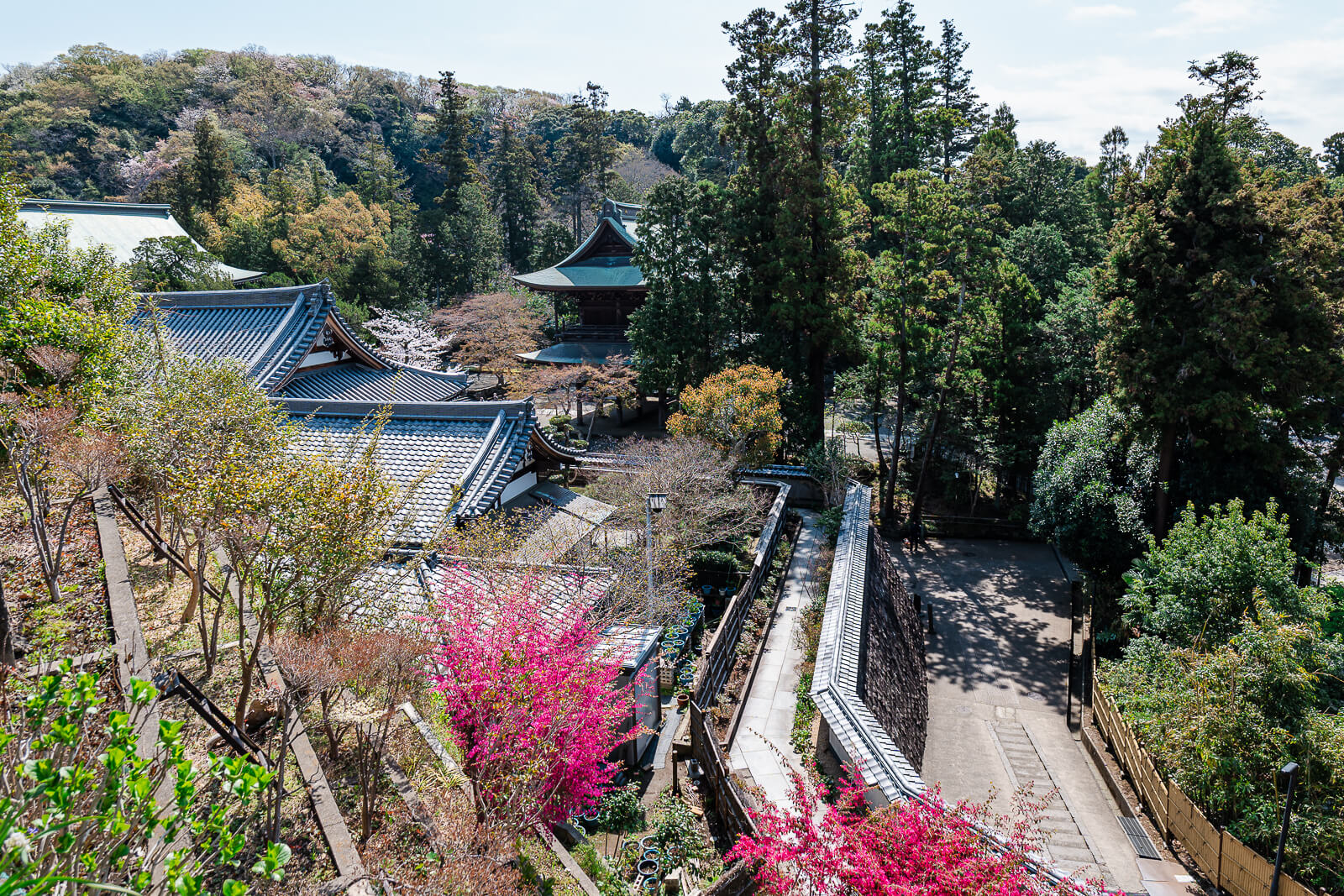
During its seasonal openings, Shōrei-in adds a rewarding side visit near the lower part of the complex. The garden path continues around the hillside toward the upper cemetery, giving a broader view over the gardens and temple roofs below. This is the detour to take for a fuller sense of how Engaku-ji sits within its valley, with the buildings gathered beneath the wooded slopes.
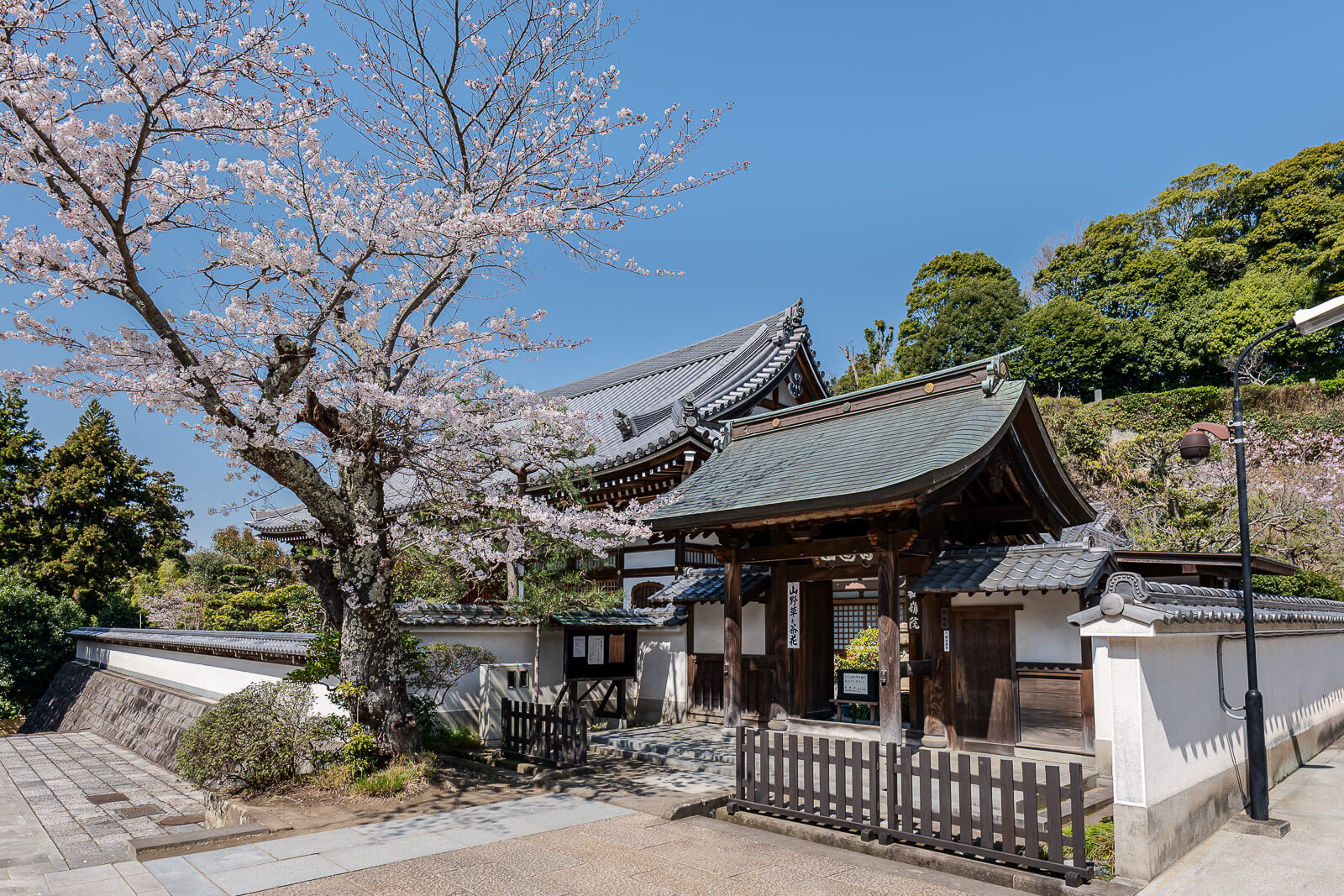
From the higher path, the roofs become part of the garden view, with the thatched and tiled buildings set against the hills. Autumn brings patches of red and gold between the darker trees, showing the scale of the grounds beyond the planting beside the main path. The climb earns a different view of the temple, so include it in the longer visit allowance and follow the visitor path through this cemetery setting.
Butsunichi-an and the Kannon Pilgrimage
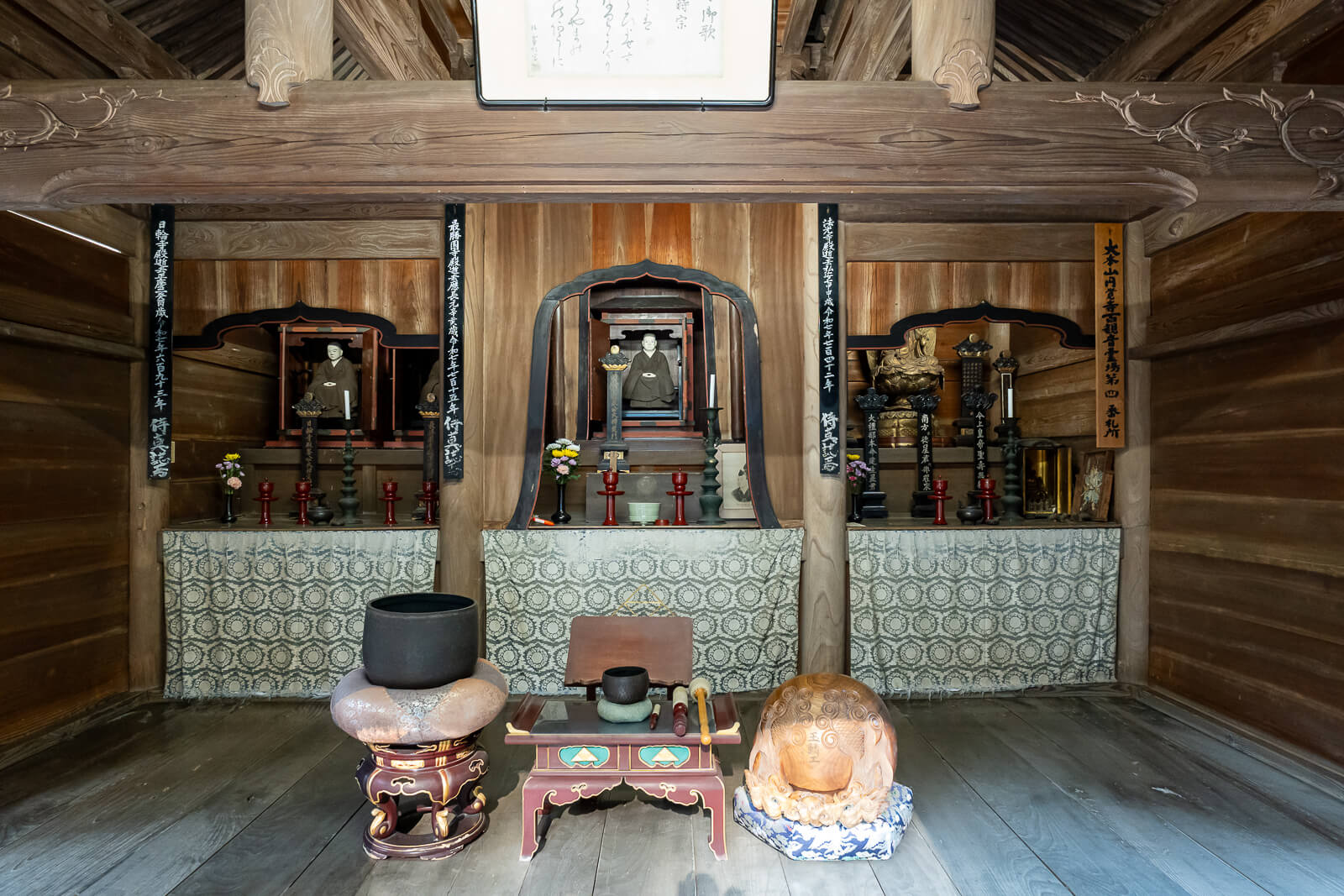
Butsunichi-an gives another reason to continue beyond the first great halls. This sub-temple commemorates Hōjō Tokimune and later members of the Hōjō family, connecting the visit directly to Engaku-ji’s founding patrons. Its memorial hall and compact grounds make it a distinct stop within the larger monastery.
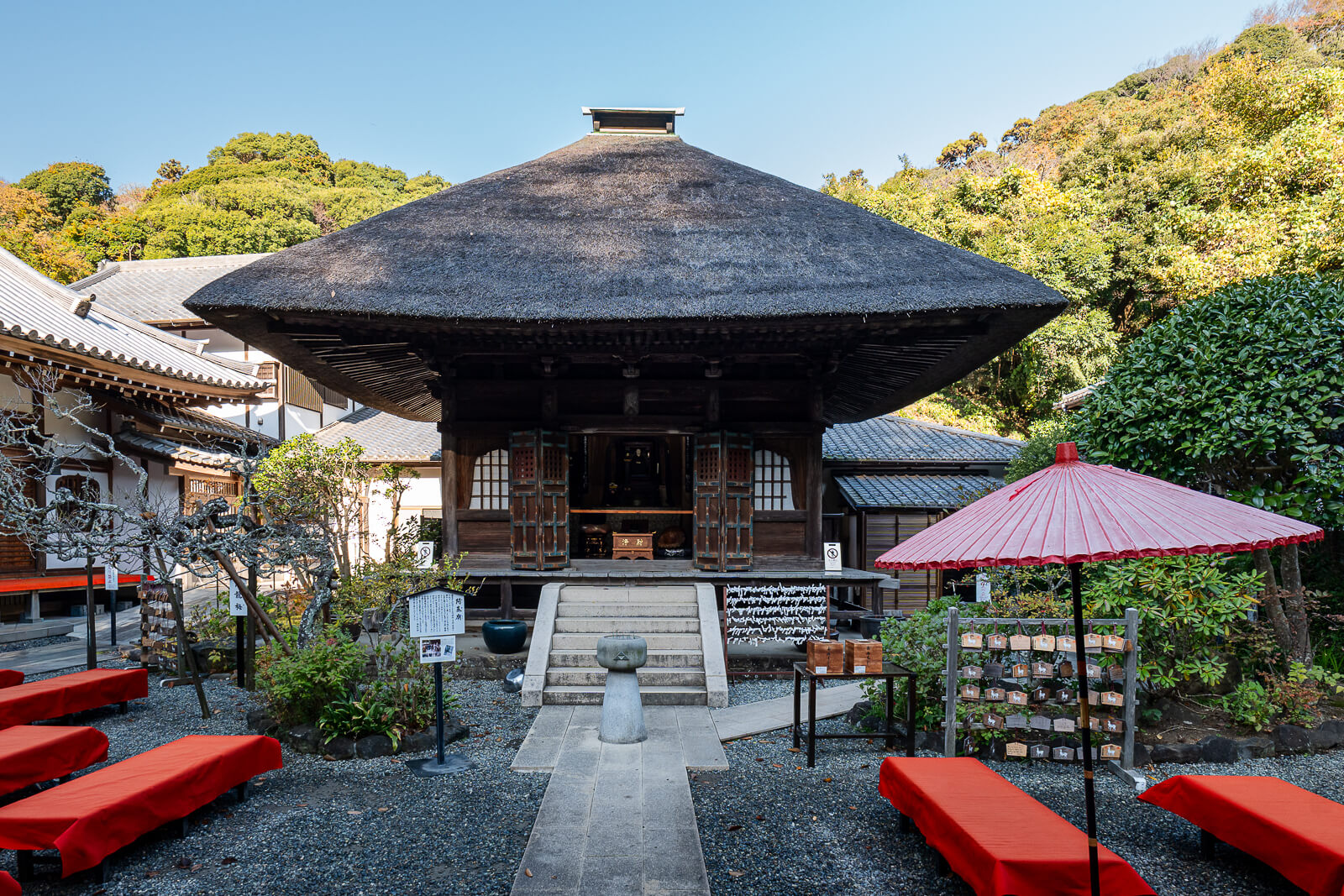
Butsunichi-an is also temple number 33 on the Kamakura Kannon Pilgrimage, where the Eleven-faced Kannon is enshrined. For travelers following the pilgrimage, this gives the sub-temple a particular place in a journey across Kamakura’s temples. The numbering identifies its position in that tradition; the pilgrimage association allows visits in any order after the chosen starting temple.
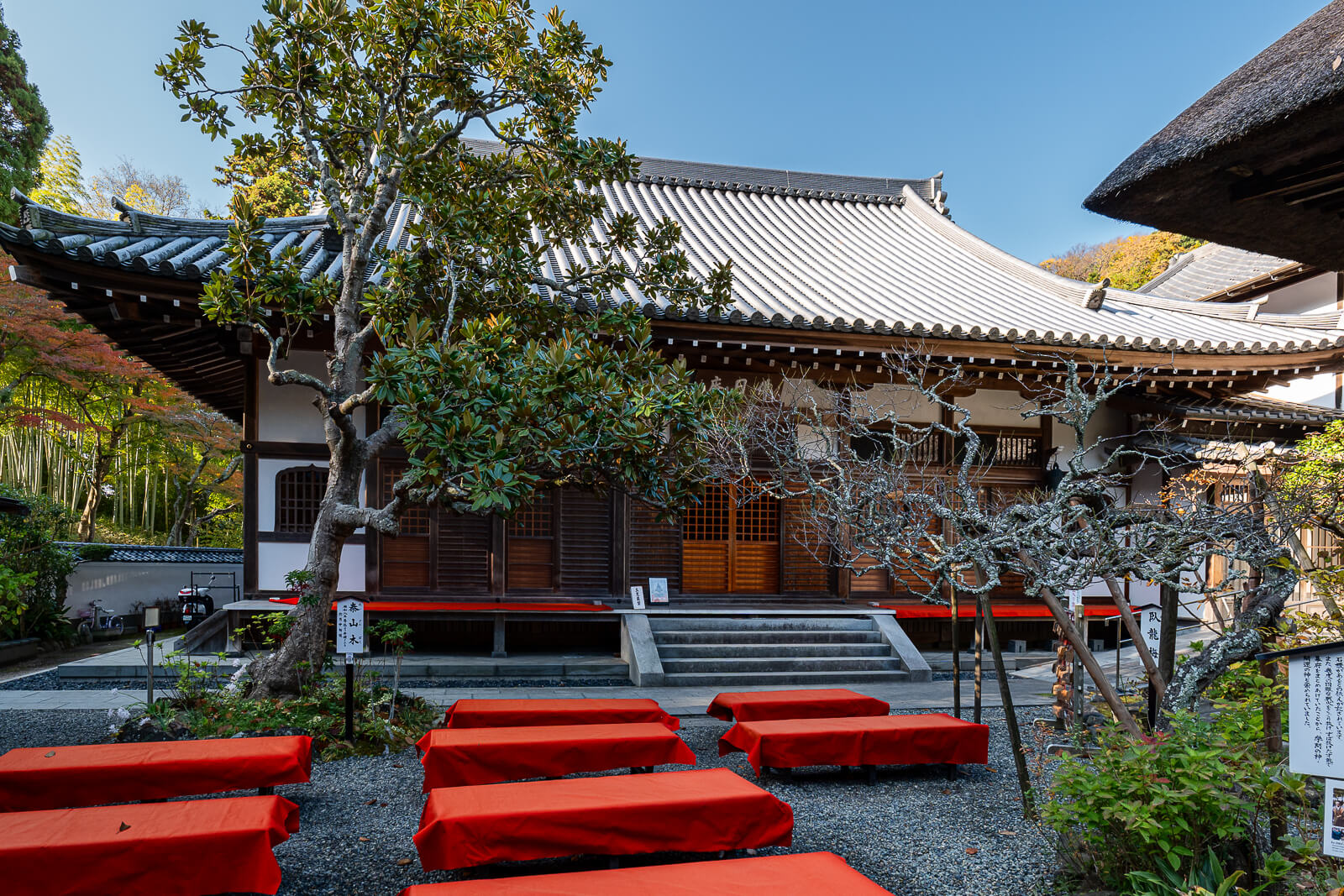
The courtyard offers a change of scale after the broad spaces around the Sanmon and Butsuden. Red-covered benches face the buildings, with trees and smaller garden details close by. Tea is another reason to linger at Butsunichi-an, and its own admission and tea charges are separate from the main Engaku-ji entrance fee.
Continue to Ōbai-in and Its Kannon Hall
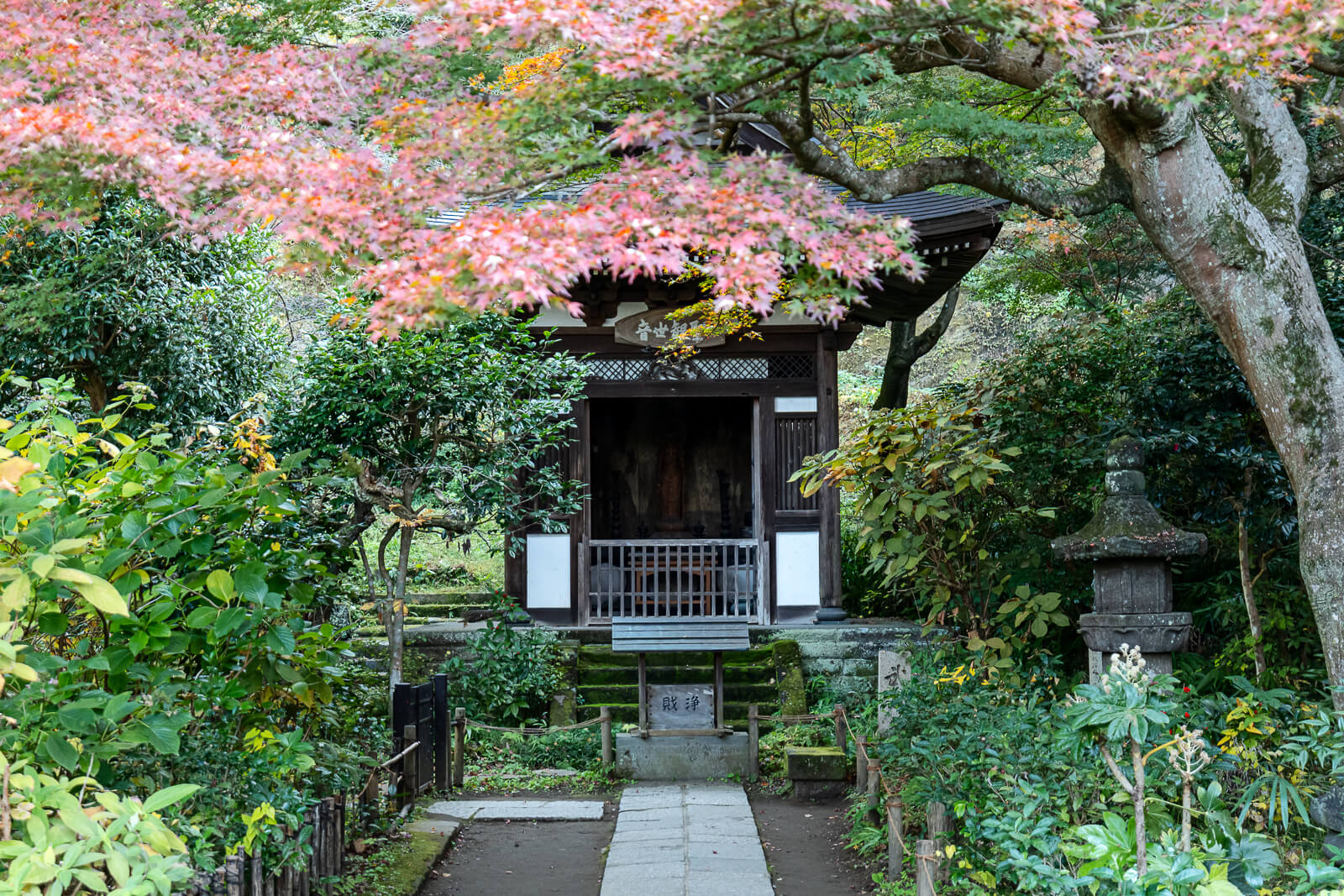
Continue uphill beyond Butsunichi-an to Ōbai-in, a sub-temple in the upper reaches of Engaku-ji’s grounds. A narrow stone path leads through the garden to a small Kannon hall, with moss along the steps and a stone lantern beside the approach. The wooden hall shelters an image of Kannon, and its broad eaves sit beneath the spreading branches of a maple. In autumn, pink and red leaves frame the roof against the surrounding greenery, giving this garden a memorable place at the far end of the temple walk.
An Optional Climb to the Great Bell
The Ōgane, Engaku-ji’s great bell, is a National Treasure cast in 1301. A stairway climbs to the bell and nearby Bentendō, adding another hillside branch to the visit. Choose this detour for the bell’s historical importance and the higher setting, allowing additional time and energy beyond the central temple walk.
Engaku-ji in Autumn: Maples, Ginkgo and Garden Views
Autumn gives Engaku-ji a particularly rich range of views, starting with the entrance canopy and continuing through the temple valley. Around the Sanmon, maple branches set their fine leaves against the large timber gate; farther in, red and orange foliage gathers around paths and water. Dark evergreens remain behind the brighter trees, giving the colors depth and keeping the temple architecture visible within the scene.
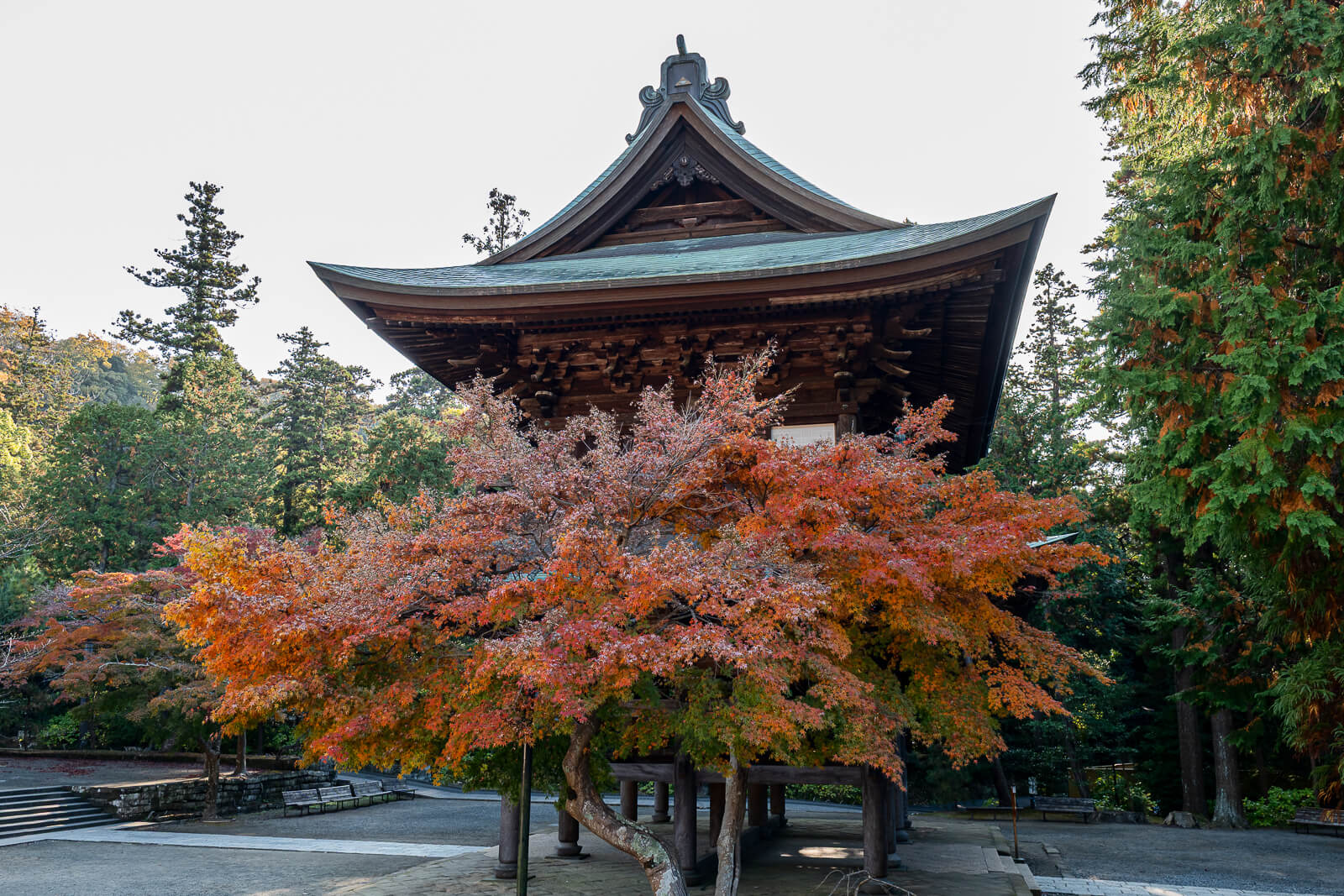
Late November to early December is a useful general window for planning an autumn visit, with early December often especially rewarding. Within the grounds, the color takes several forms: a red maple above a narrow path, a planted slope in mixed colors and a yellow ginkgo beside a small hall. Those changes make Engaku-ji worth exploring beyond the entrance, with new compositions around each part of the walk. For the wider seasonal choice, the Kamakura autumn guide compares Engaku-ji with Meigetsu-in, Jōchi-ji and the Hase area.
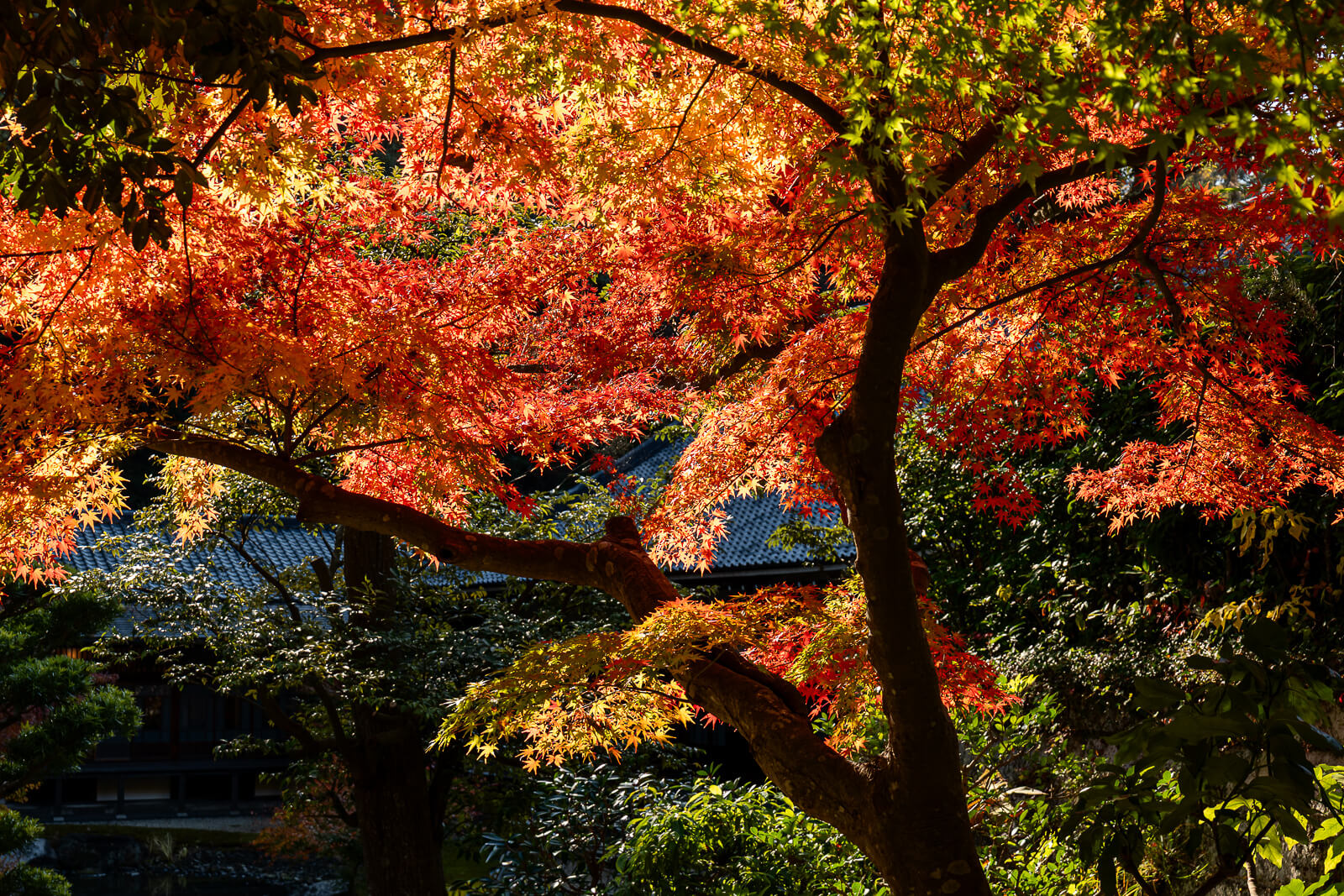
For a foliage-focused morning, give Engaku-ji enough time to include the pond-side gardens and an open hillside detour before continuing to another temple. A second northern stop can then add a different garden experience without turning the day into a rush between distant districts. Closer to the trip, Kamakura’s official seasonal reports and regional forecasts can help refine the general date window.
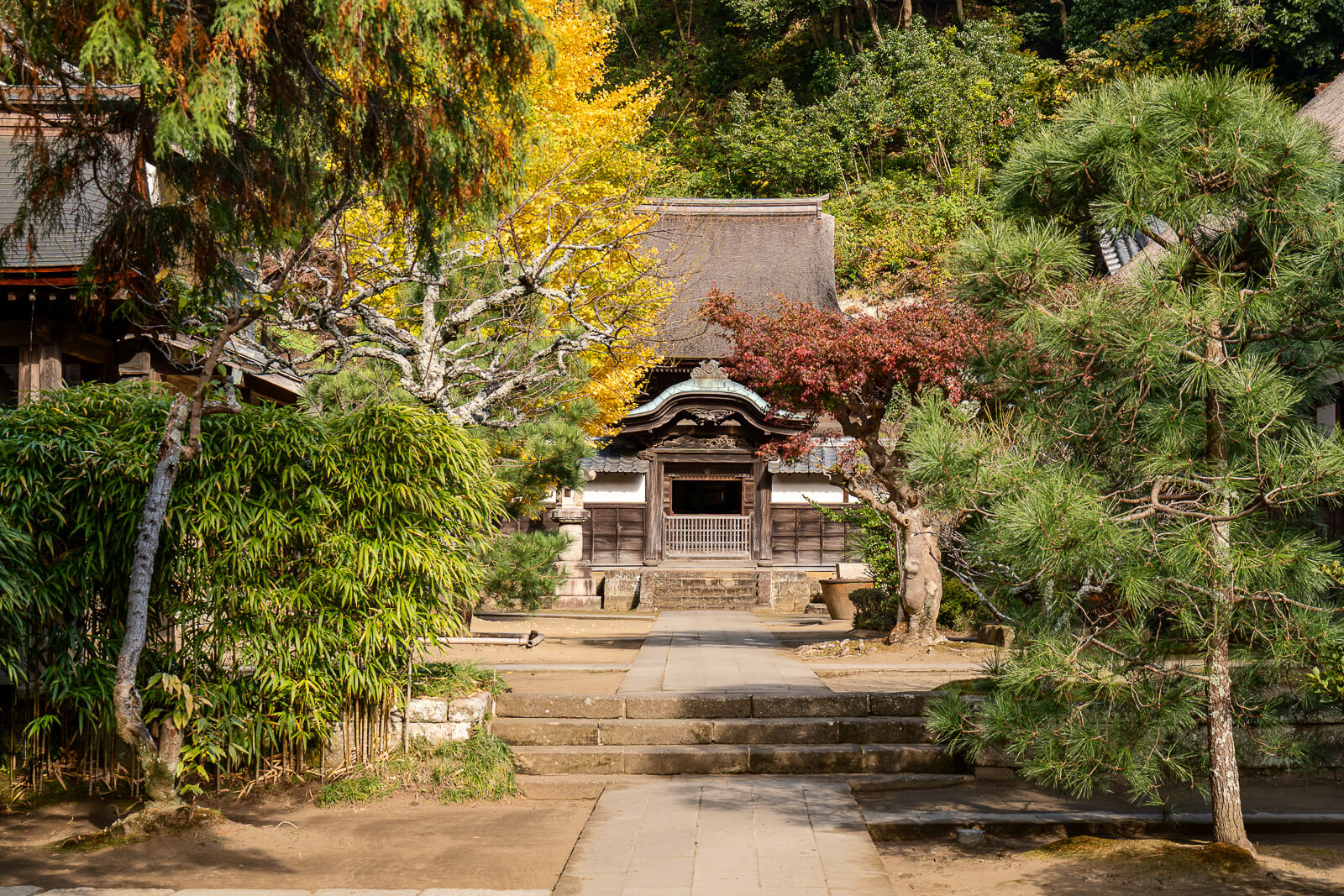
Cherry Blossoms and Spring at Engaku-ji
Spring begins beside the station, where cherry branches reach over the pond near the entrance. Pale blossoms reflect in the water, with the railway still visible just beyond the trees. This makes the approach a worthwhile part of the spring visit before the steps and wooden gates draw attention uphill.
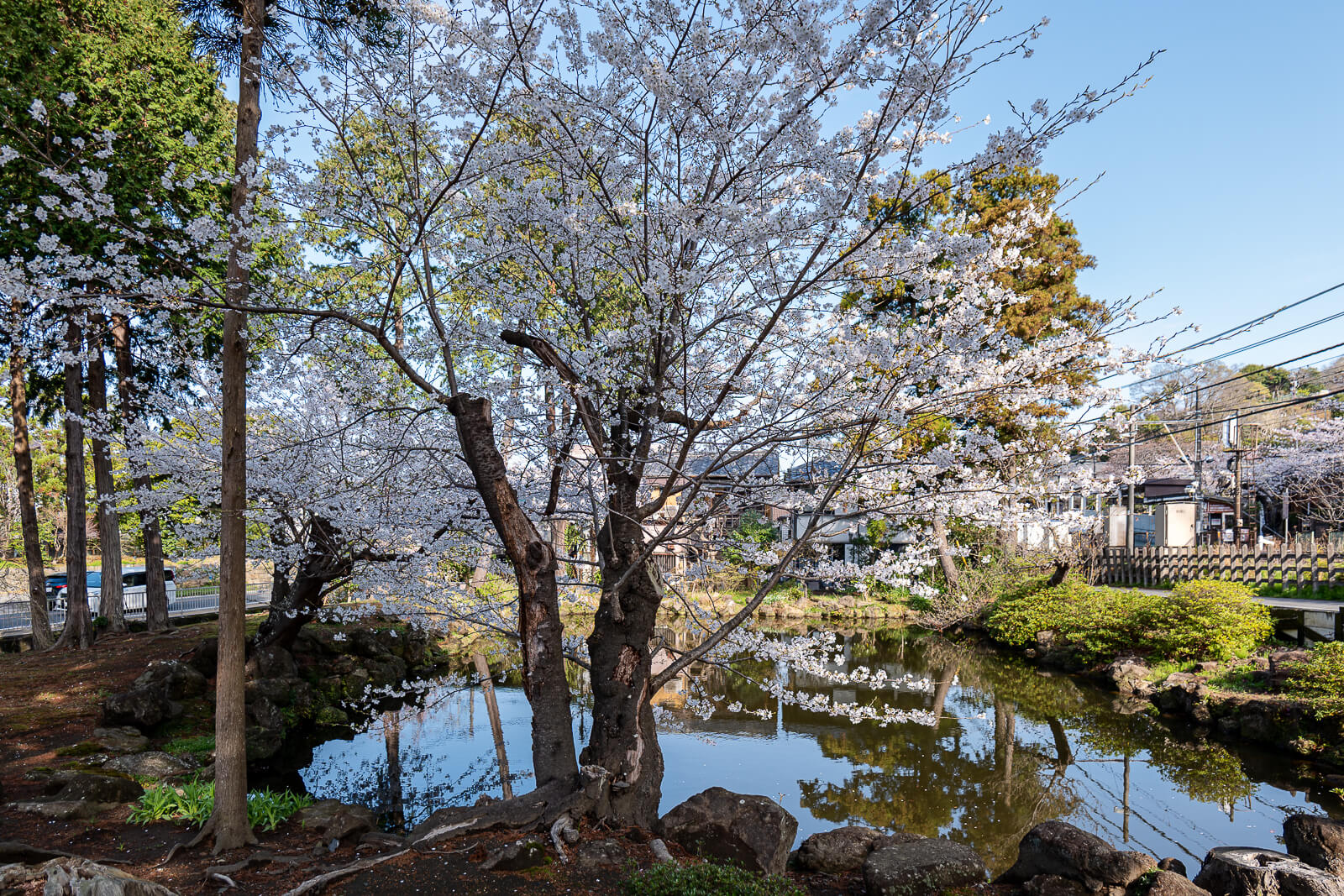
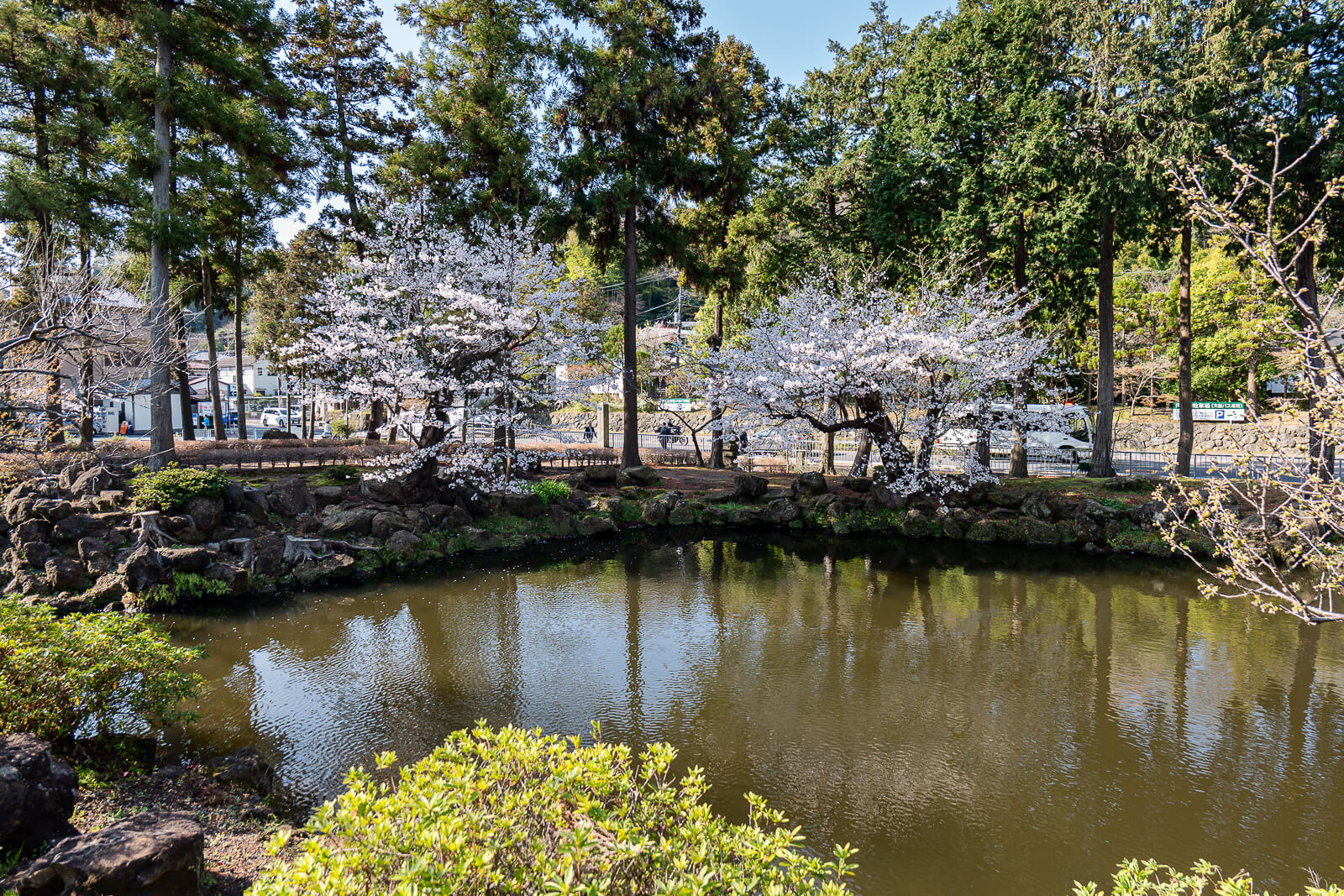
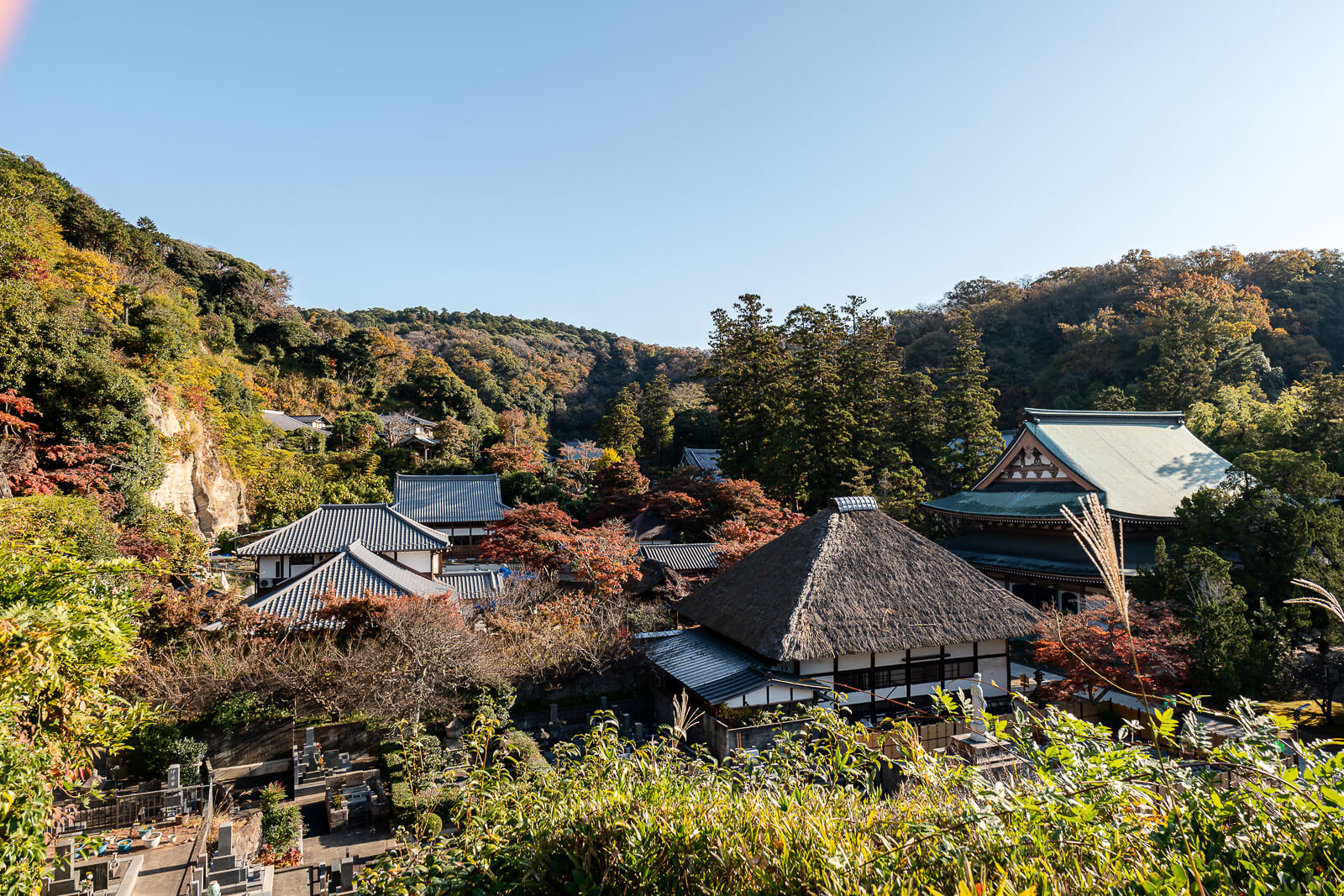
Inside the grounds, cherry trees appear beside paths, around the gate and near smaller temple buildings. Their spacing gives each tree a setting of its own, with blossoms against timber, tile, plaster walls or the darker trees behind them. Engaku-ji is especially appealing for visitors who want sakura as part of a substantial temple visit, with the architecture and gardens carrying the walk between flowering trees.
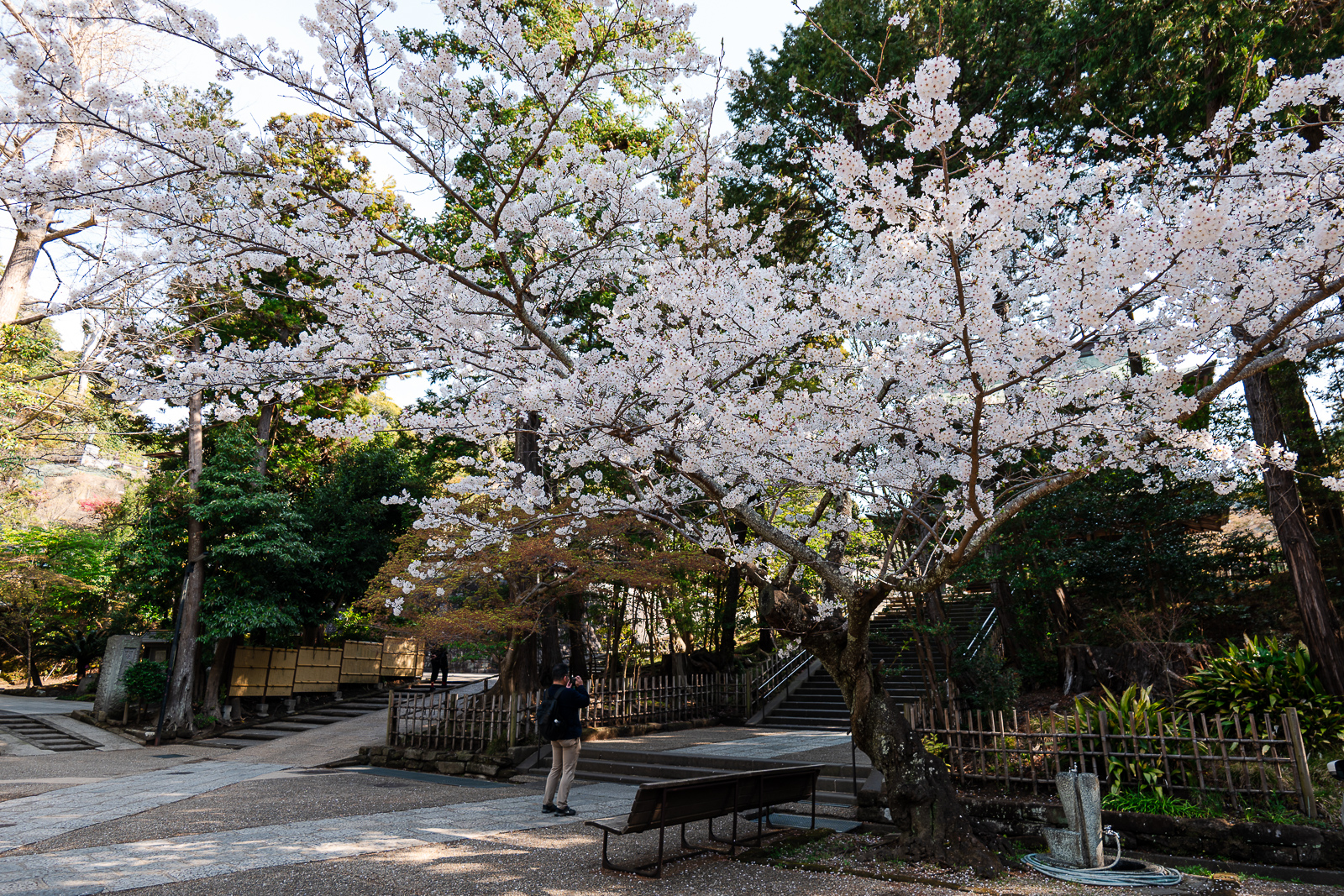
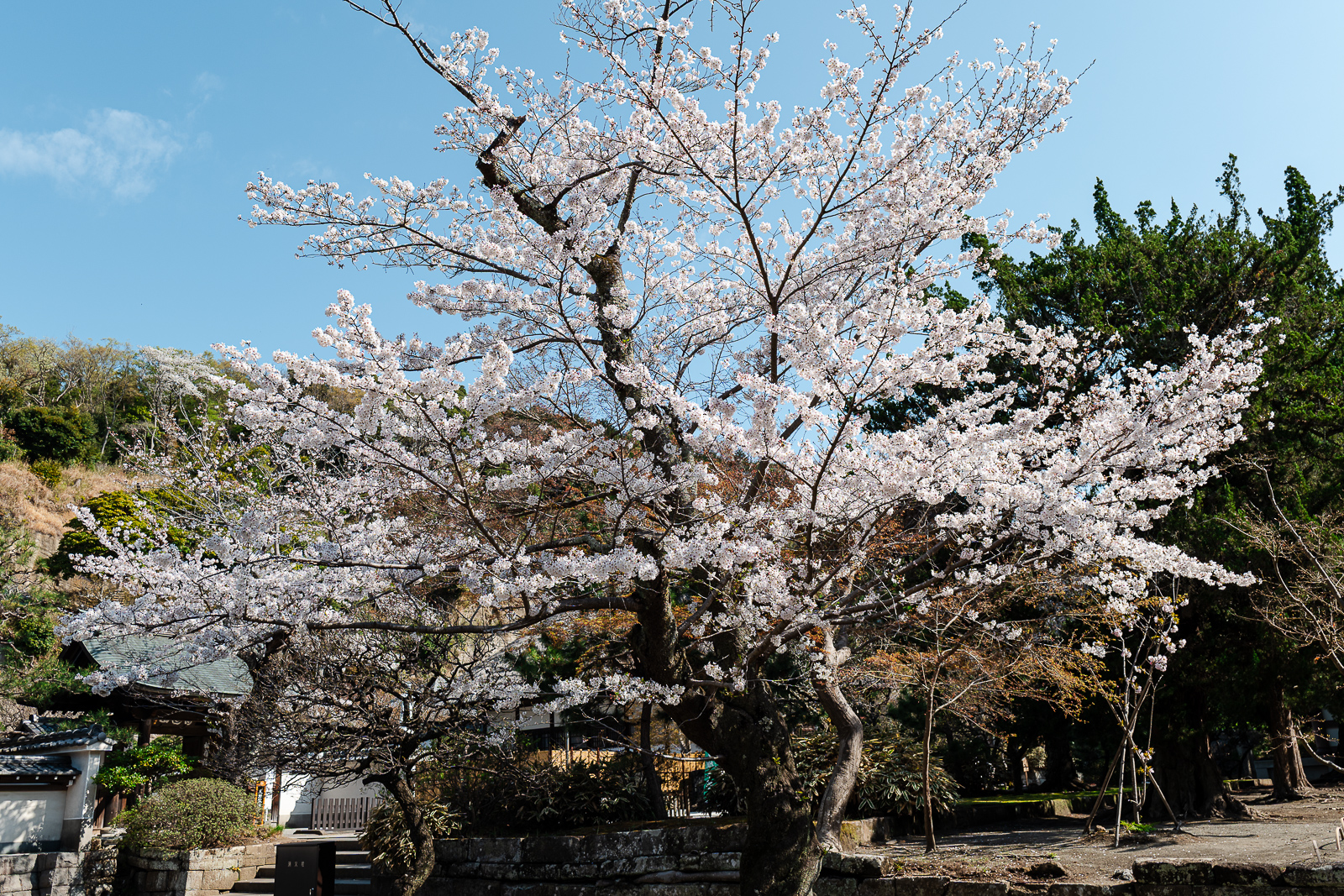
Late March to early April is the usual planning window for Kamakura’s main cherry blossom season. Spring changes the scale of the view, drawing attention to individual branches and the spaces beside temple gates. Use the regional blossom forecast as the trip approaches, then allow time to enjoy the rest of Engaku-ji alongside the flowering trees.
Where to Go After Engaku-ji
For a day of temples and gardens, continue through Kita-Kamakura toward Tōkei-ji, Jōchi-ji and Meigetsu-in, choosing the stops that fit the time available. Kenchō-ji comes farther along the route toward central Kamakura. The Kita-Kamakura one-day itinerary follows that north-to-south progression to Tsurugaoka Hachimangū, Komachi Street and a finish at Kamakura Station.
The hiking options lead to different parts of the city and deserve their own time in the plan. The Daibutsu Hiking Course is reached near Jōchi-ji and continues toward Kuzuharaoka Shrine and the Hase side of Kamakura, where Kōtoku-in’s Great Buddha and Hase-dera make useful onward visits. The Ten-en Hiking Course is reached through Kenchō-ji’s hillside ascent and heads toward the eastern hills and Zuisen-ji, so choose it as a hiking extension with fewer temple stops elsewhere in the day.
An overnight stay makes it easier to give the northern temple district one morning and Hase or the coast another. Central Kamakura provides a convenient base around the main station and its transport connections, while Hase suits a stay centered on Hase-dera, the Great Buddha and the coast. That extra time leaves room for the gardens and hillside views as well as Engaku-ji’s main halls, giving this first stop in Kita-Kamakura a substantial place in the trip.
Getting There
ARRIVE IN KITA-KAMAKURA
Engaku-ji is a one-minute walk from JR Kita-Kamakura Station, making rail the simplest arrival for the northern temple corridor. The entrance leads into the temple valley; continuing south connects naturally with the other Kita-Kamakura temples.
- JR Kita-Kamakura Station
JR Yokosuka Line → Kita-Kamakura Station → Engaku-ji entrance
About 1 minute on foot from the station · The temple entrance is beside the station; steps lead into the valley. · Continue south afterward for Tōkei-ji, Jōchi-ji, Meigetsu-in and Kenchō-ji.
Hours & Fees
Visitor information
Engaku-ji opens daily at 8:30. Admission is ¥500 for high school students and adults, and ¥200 for elementary and junior high school students. Admission reception ends earlier in winter.
- Hours
- March–November: admission reception 8:30–16:30; leave the grounds by 17:00. December–February: admission reception 8:30–16:00; leave the grounds by 16:30. Open daily; severe weather can affect opening.
- Admission
-
High school students and adults: ¥500. Elementary and junior high school students: ¥200. Disability certificate holders and one accompanying caregiver: free.
Plan Your Kamakura Visit
Build a wider Kamakura stay around the temple corridor, coastal outings and the transport that fits the rest of the trip. These booking options are separate from Engaku-ji admission.
Stay for Another Temple Morning
A Kamakura base leaves time for Engaku-ji, the northern temple corridor and a separate day around Hase or the coast.
Compare Kamakura Hotels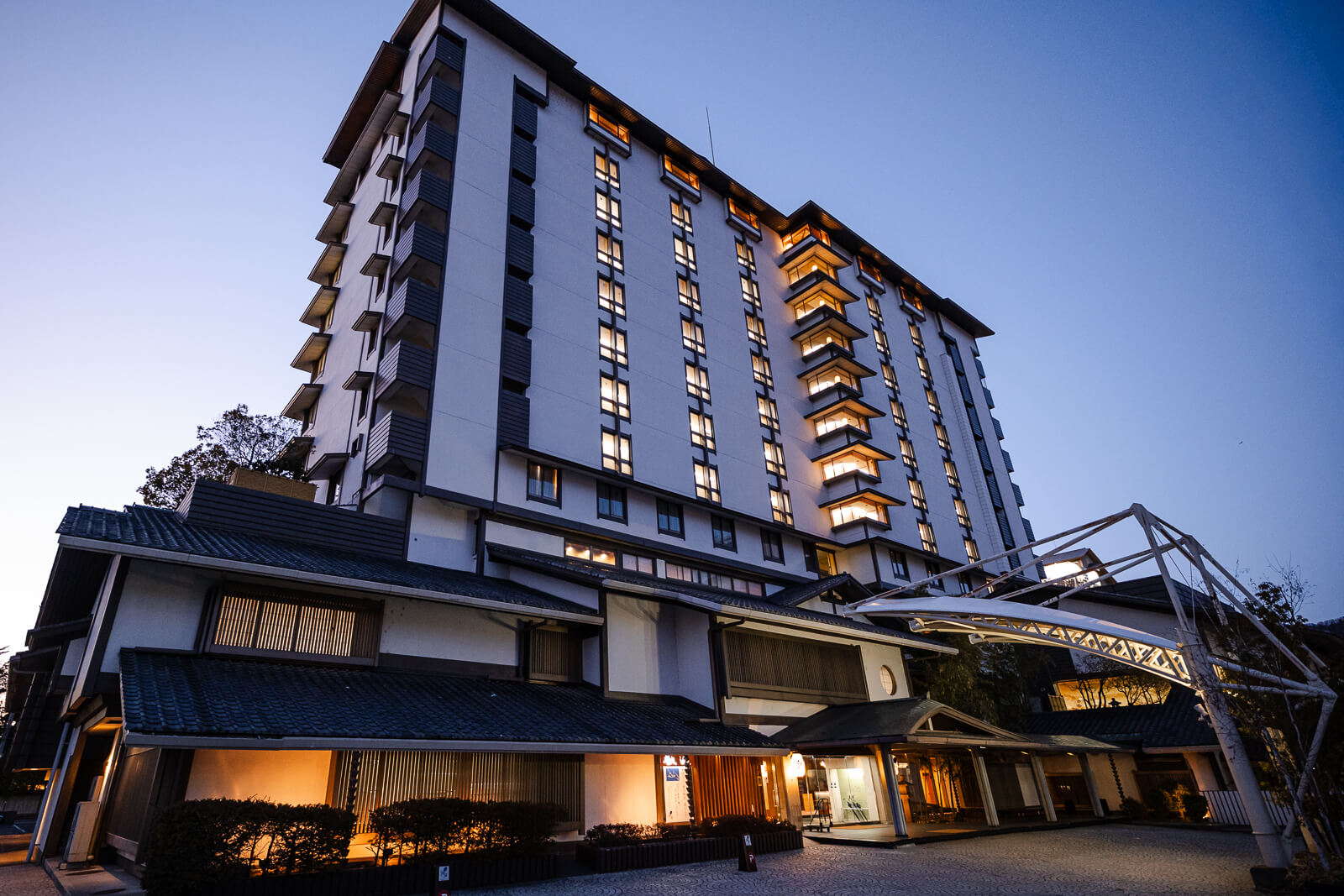
Compare Rental Cars in Tokyo
Explore Tokyo pickup options for a longer regional journey; trains and walking remain the simplest choice for Engaku-ji itself.
Compare Tokyo Car Rentals
Find a Guided Kamakura Day
Browse guided Kamakura outings and compare their stops, meeting points and language before choosing a route that suits the day.
Explore Kamakura Tours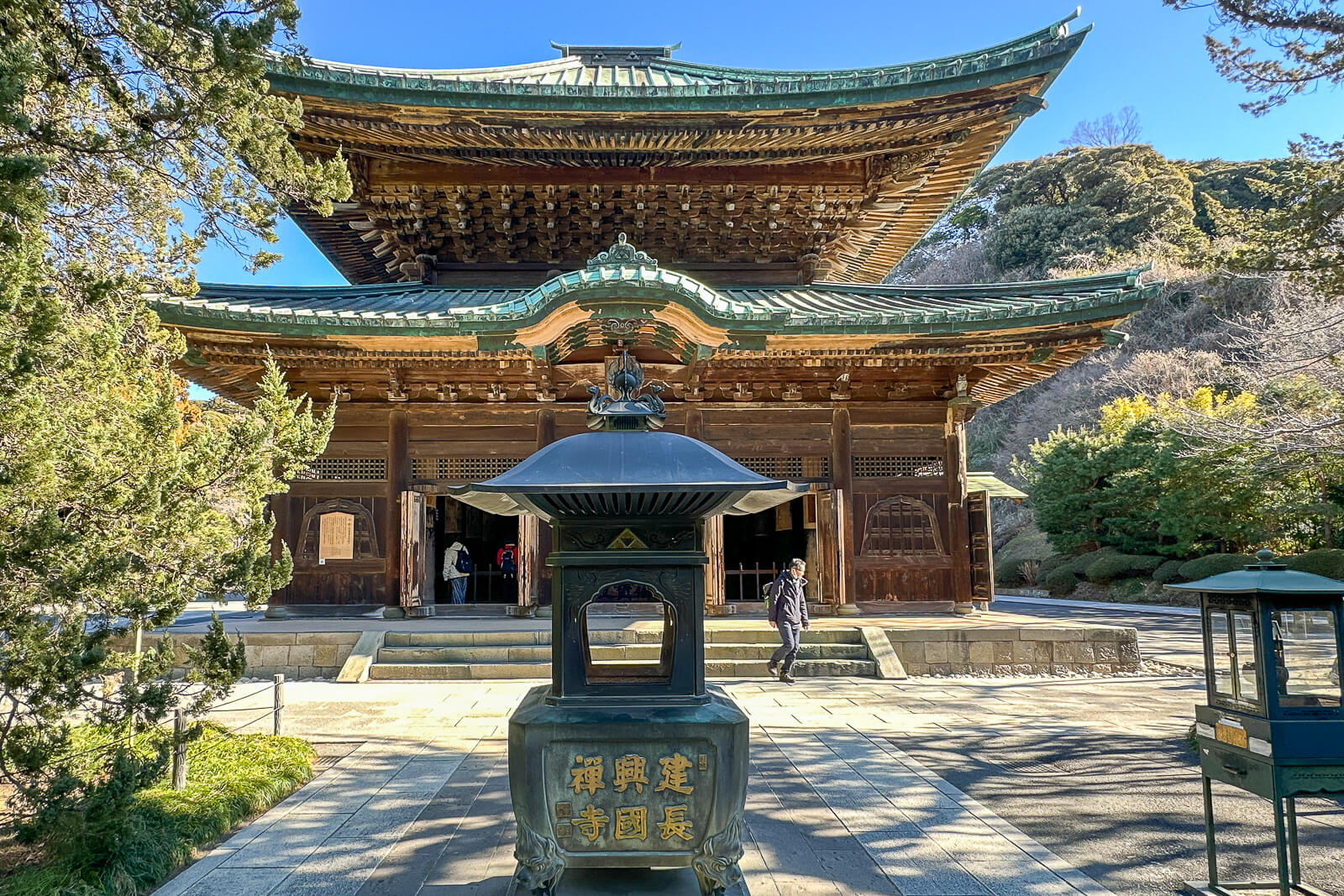
Explore Enoshima Aquarium Tickets
Add Enoshima Aquarium to a longer Shonan-coast stay, with its own admission ticket and time set aside beyond the temple walk.
View Aquarium Tickets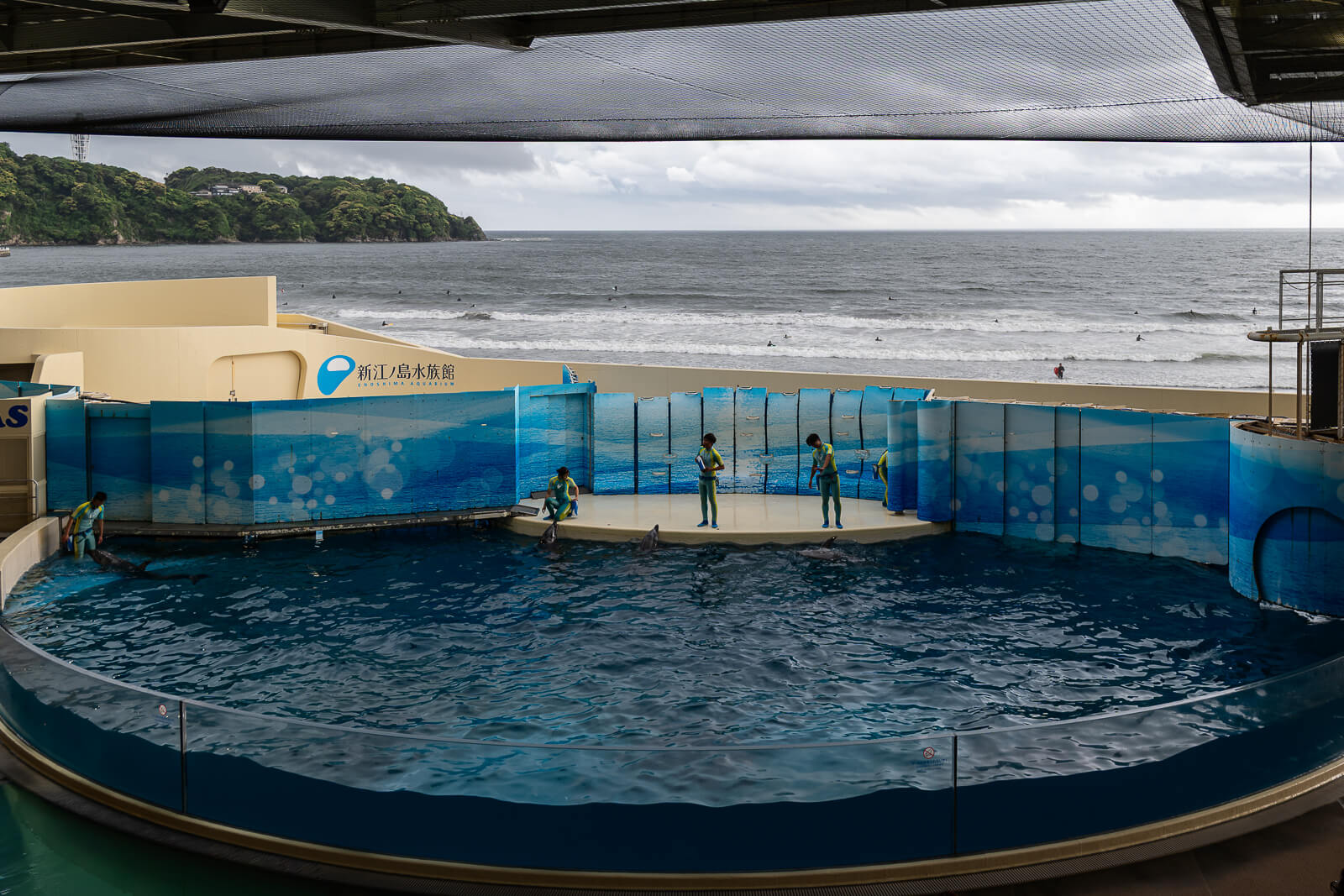
Keep Kamakura Within Easy Reach
Compare Japan eSIM plans for maps, train information and translation while moving between temple districts; check the phone’s compatibility before purchasing.
Compare Japan eSIMs
Add the Shonan Monorail
Explore the Ōfuna–Enoshima monorail for a coastal extension; this separate ticket does not cover JR travel to Kita-Kamakura or Enoden trains.
View Monorail Tickets
Japan Unfolded may earn a commission through links in this guide, at no additional cost to you.