A Half-Day Taste of Enoshima or a Full Day to Explore
Spend a half-day on Enoshima for a shorter taste of its shrine paths, summit and far-side coast. Stay for a full day to give the Sea Candle, greenhouse remains, caves, seafood and photography more time, or add a mainland attraction. The same Enoshima island walk supports both experiences, with different opportunities to pause, explore interiors and enjoy the views along the way.
With roughly four hours on the island, a rewarding first visit combines the shrine ascent and summit with Chigogafuchi and the approach to Iwaya. Use the Escar for the uphill shrine levels, pause at the viewpoints and choose the tower or cave visit that interests you most. For a shorter walking route, the shrines, garden and summit views also make an enjoyable half-day together.
This guide explains what each length of visit offers and how to arrange the experiences around your interests. A short visit can introduce Enoshima’s cultural sites and coast, while a longer day gives individual places and meals more room. Start with the hours available locally, then choose the stops that make you want to linger.
Half-Day and Full-Day Enoshima Visits Compared
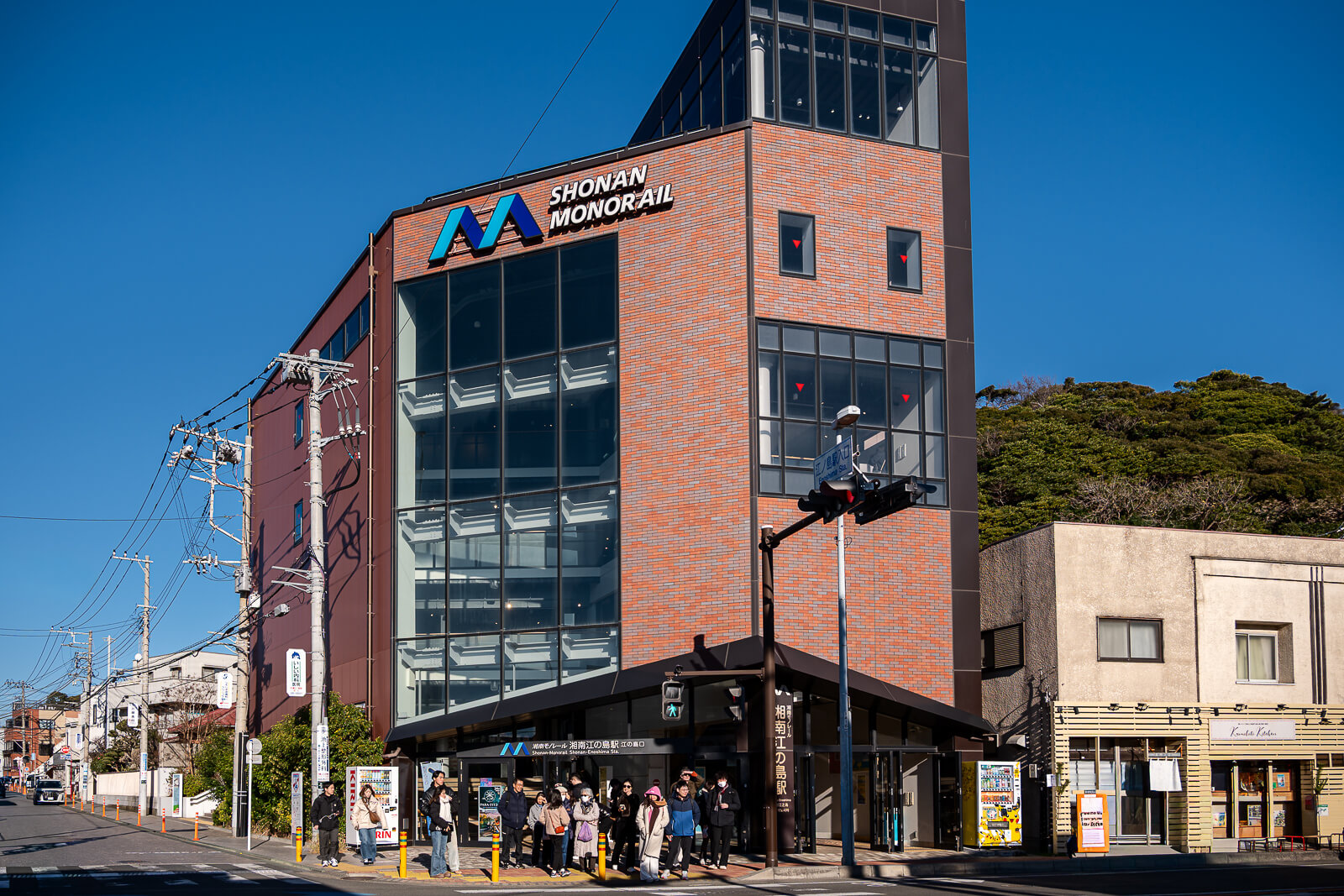
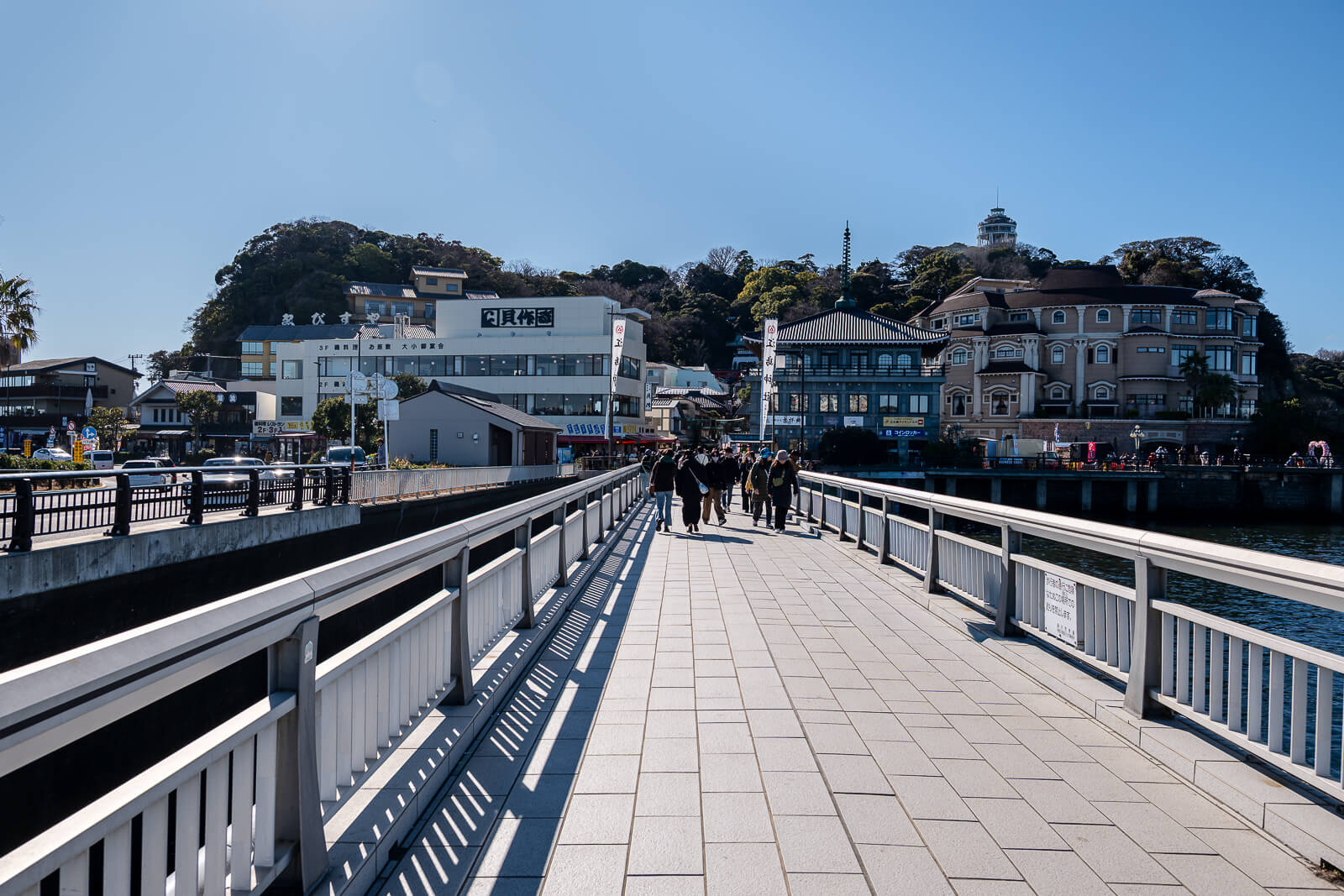
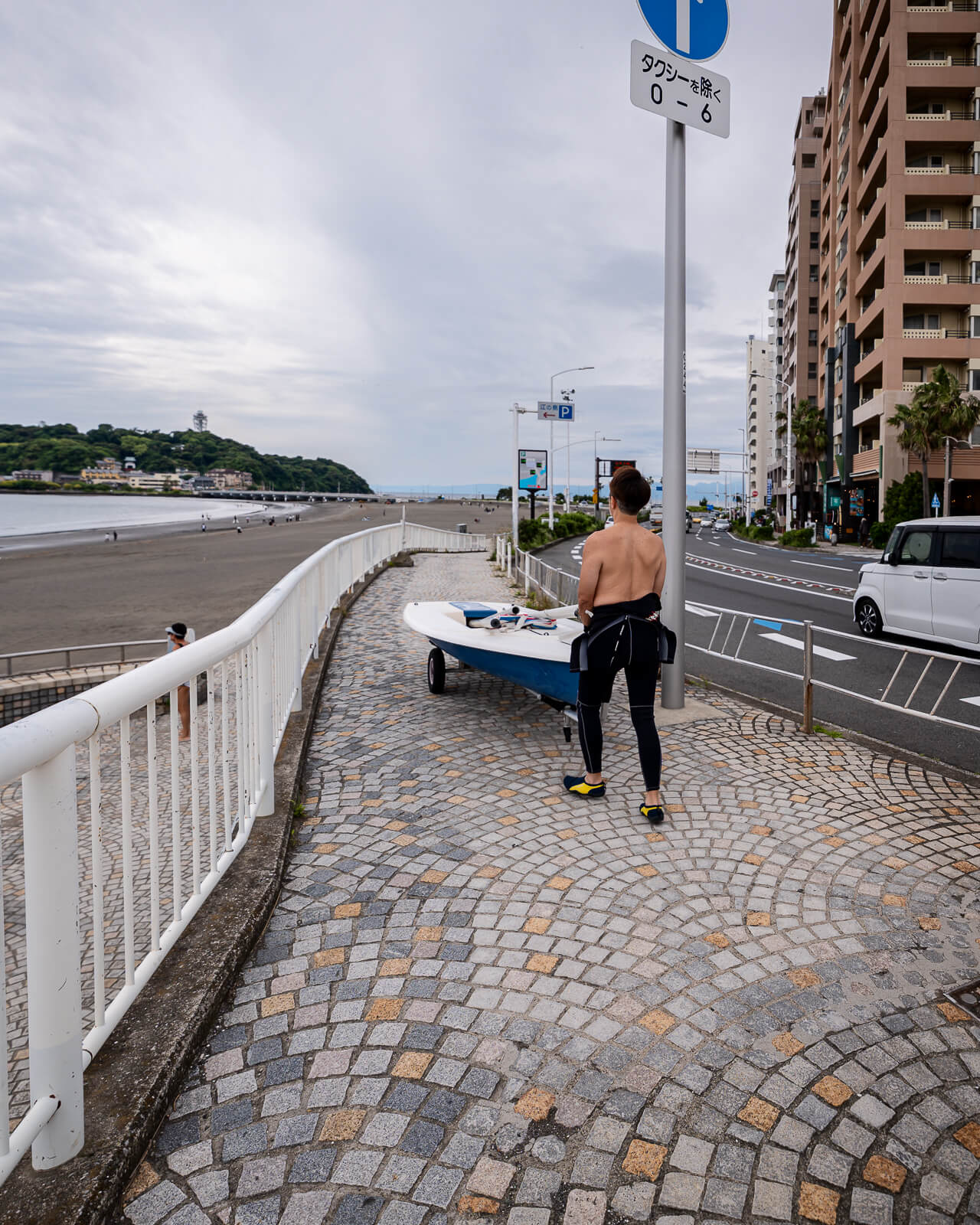
Allow time for the mainland arrival as well as the island itself. Katase-Enoshima Station provides the Odakyu arrival, Enoshima Station serves the Enoden connection with Kamakura and Fujisawa, and Shonan-Enoshima brings in the monorail from Ofuna. The streets leading toward the bridge, the crossing and the waterfront are part of the outing, with shops and food stops along the way.
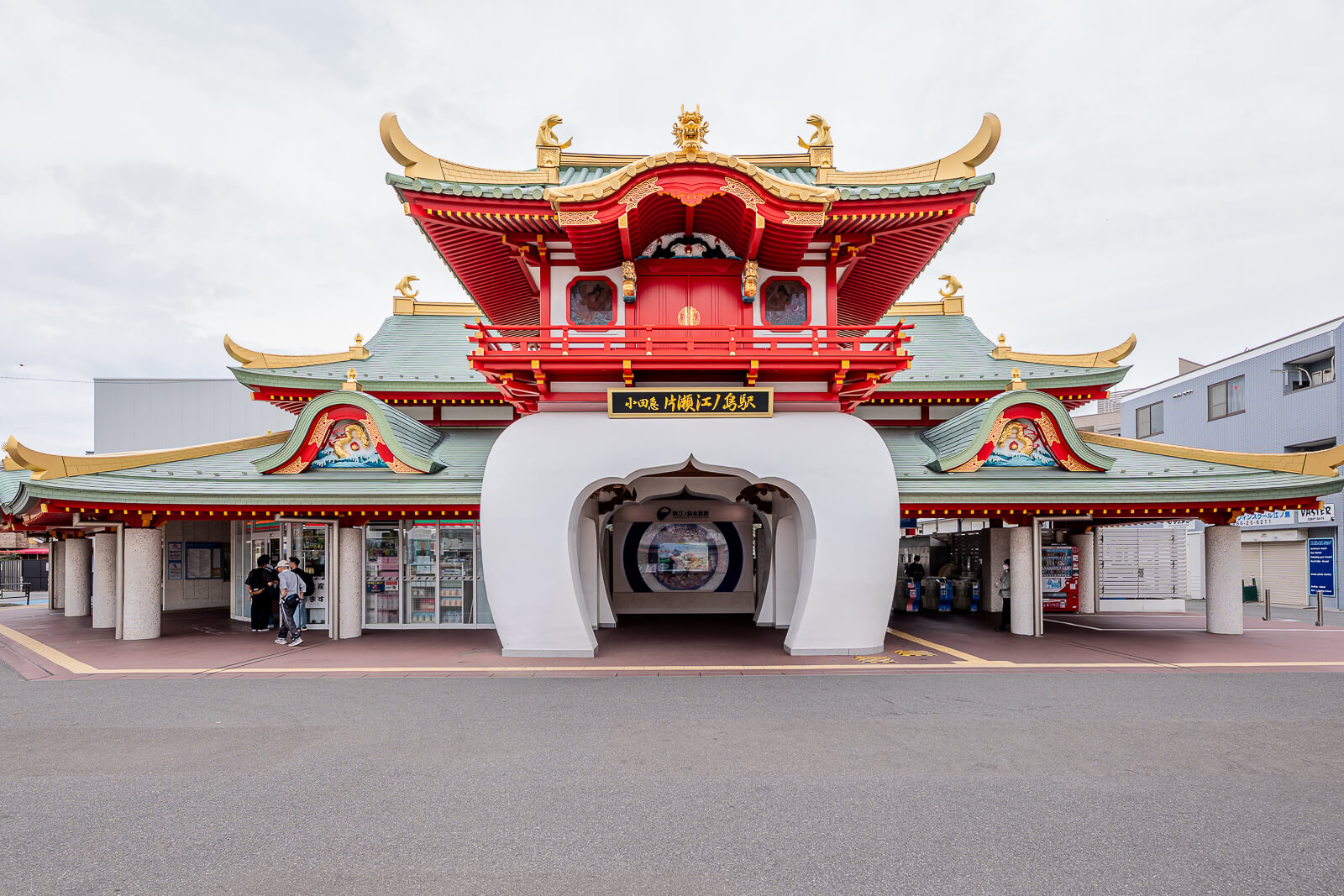
Around four hours suits a selective island walk with brief shrine stops, some summit time and a coastal visit. Six hours or more creates space for the garden, tower and caves to become separate experiences, alongside lunch, photography or a mainland addition. These allowances describe time at Enoshima; add the journey from your starting point and the walk between the station and island when planning the wider day.
Your half-day and full-day options
At a glance
Both visits follow the same landscape of shrine paths, slopes and steps. The Escar runs uphill toward the summit, while the walking route leads back across the island and Bentenmaru offers a boat return during its operating window when sea conditions allow. A summit-focused visit provides a shorter route; continuing to Chigogafuchi adds the rocky shore and caves to the day.
A Half-Day Route Through the Shrine Levels, Summit and Coast
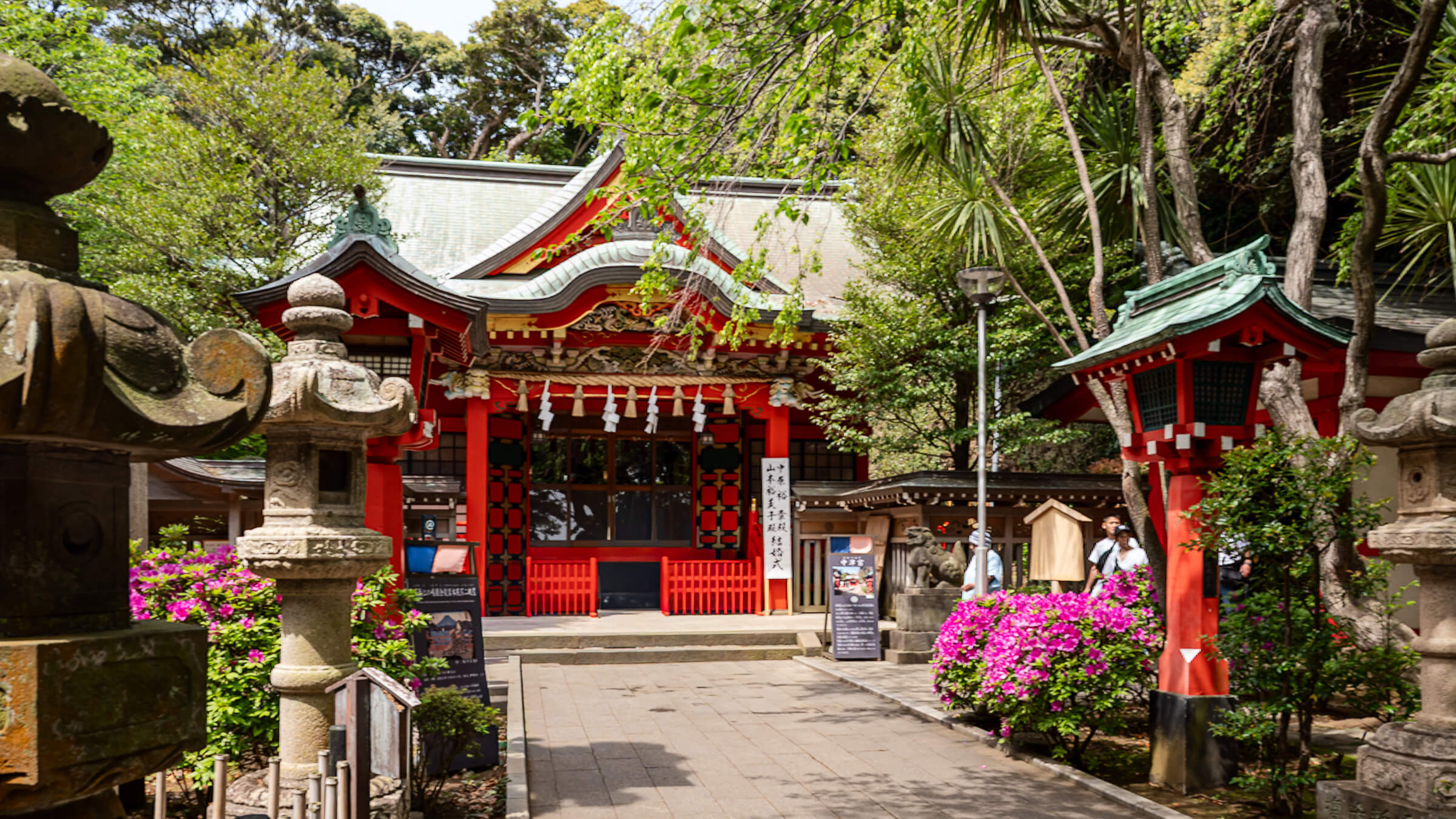
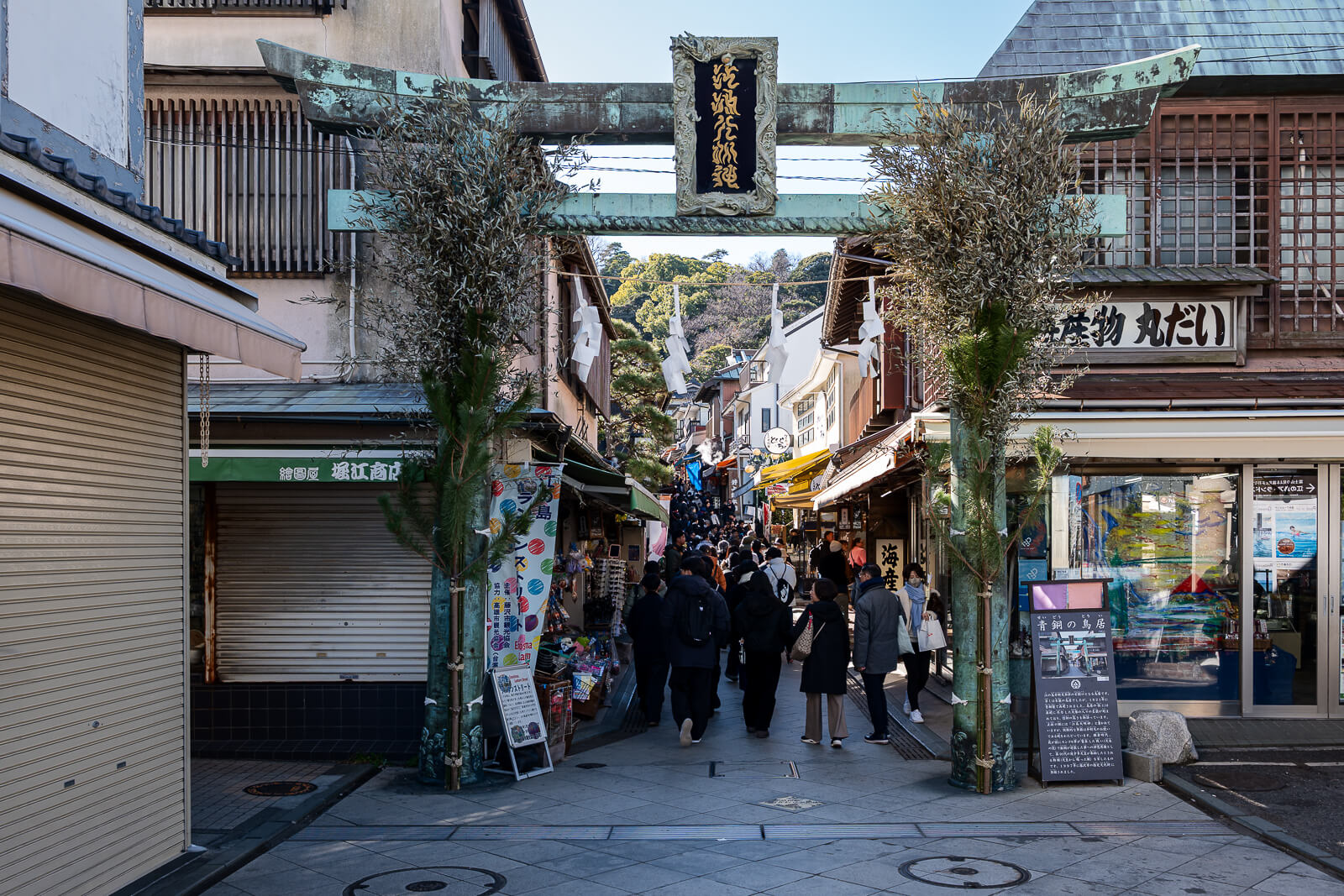
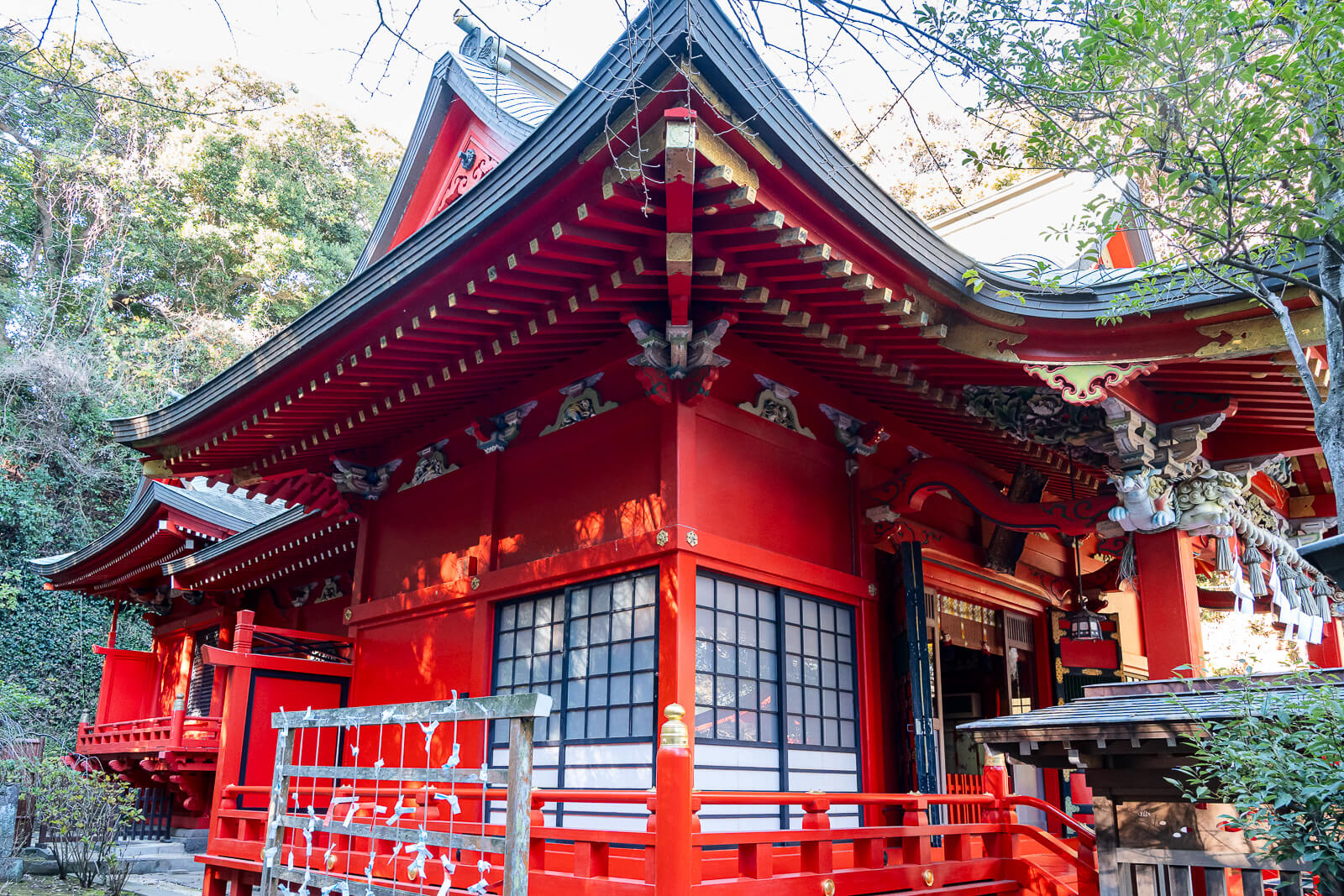
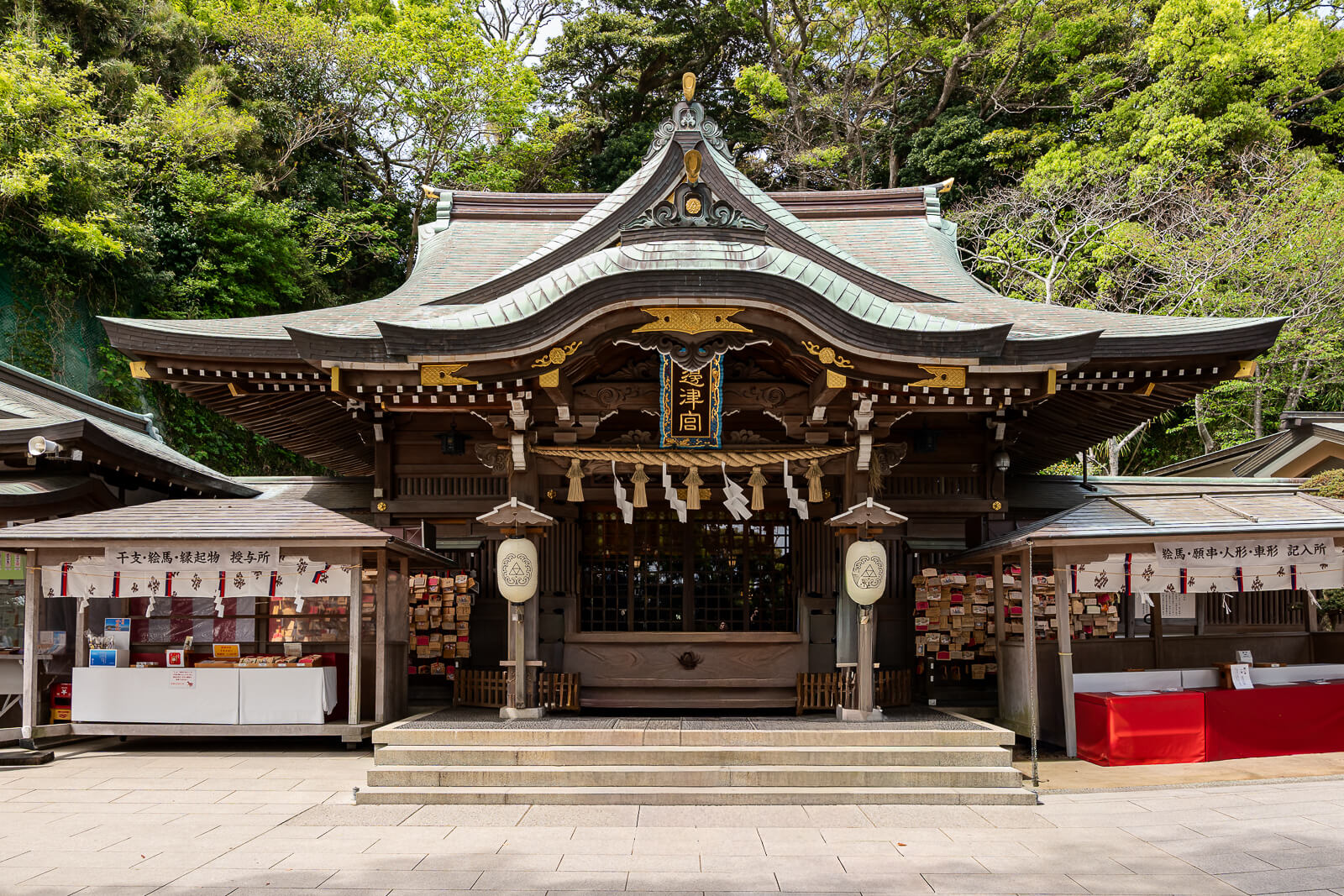
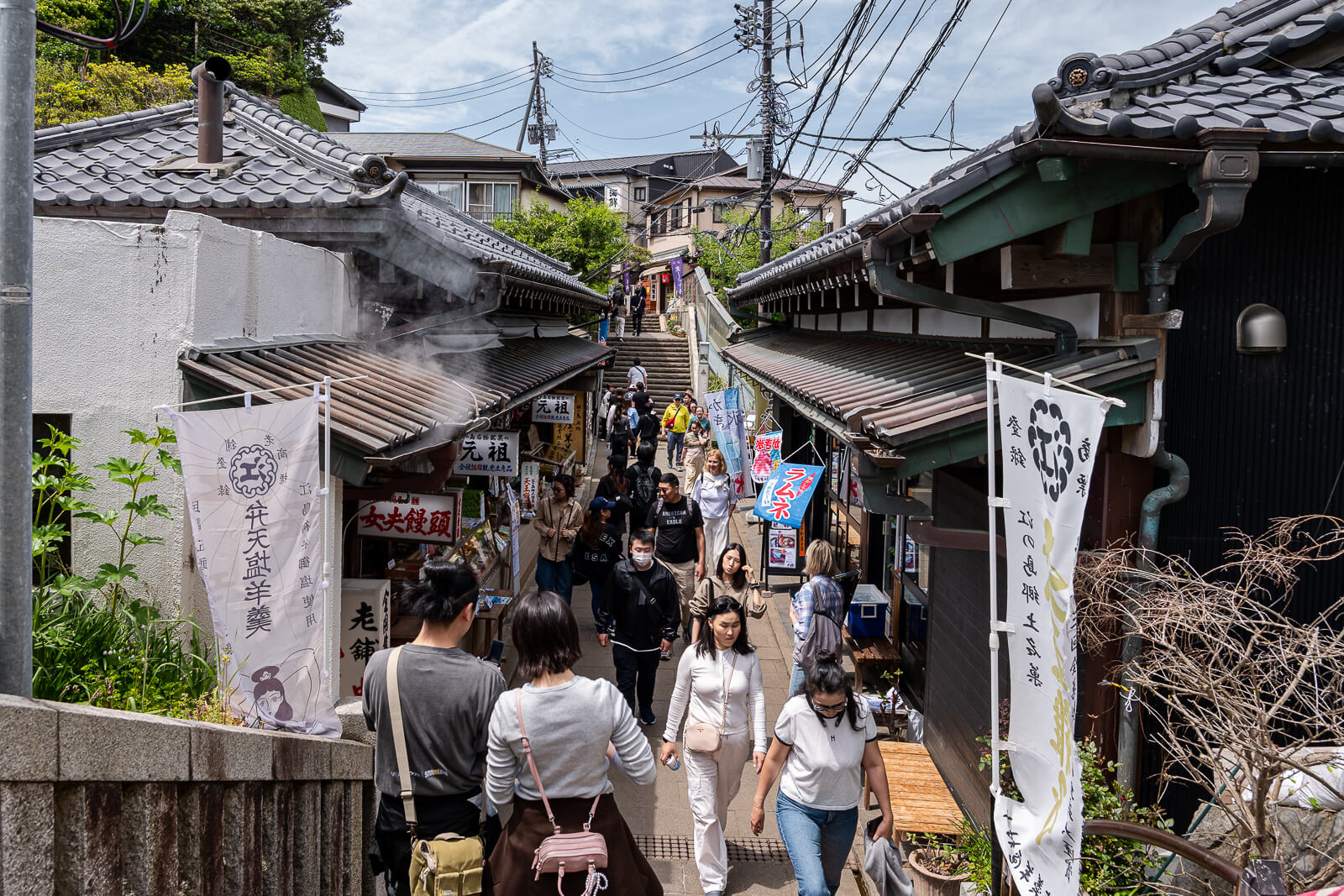
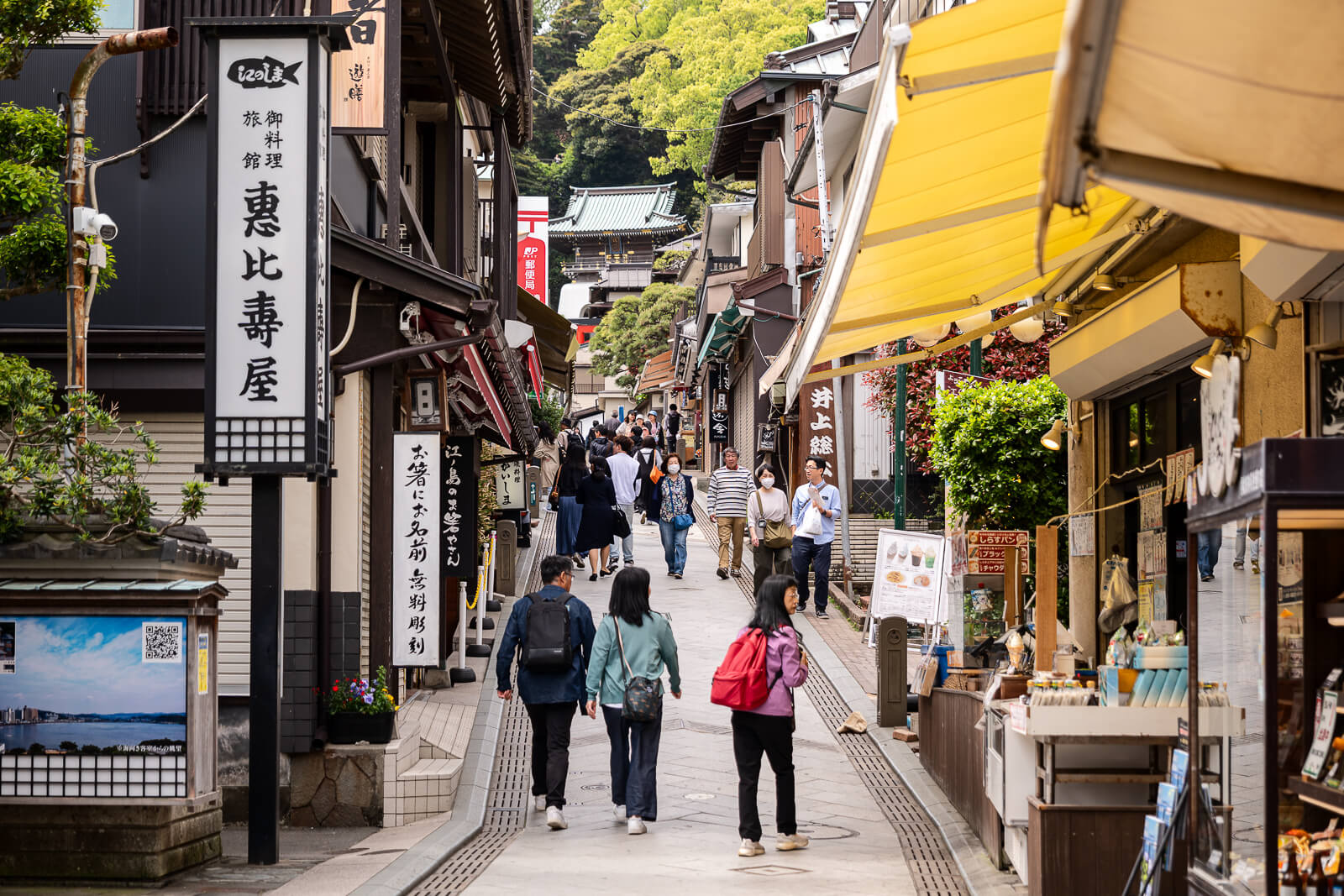
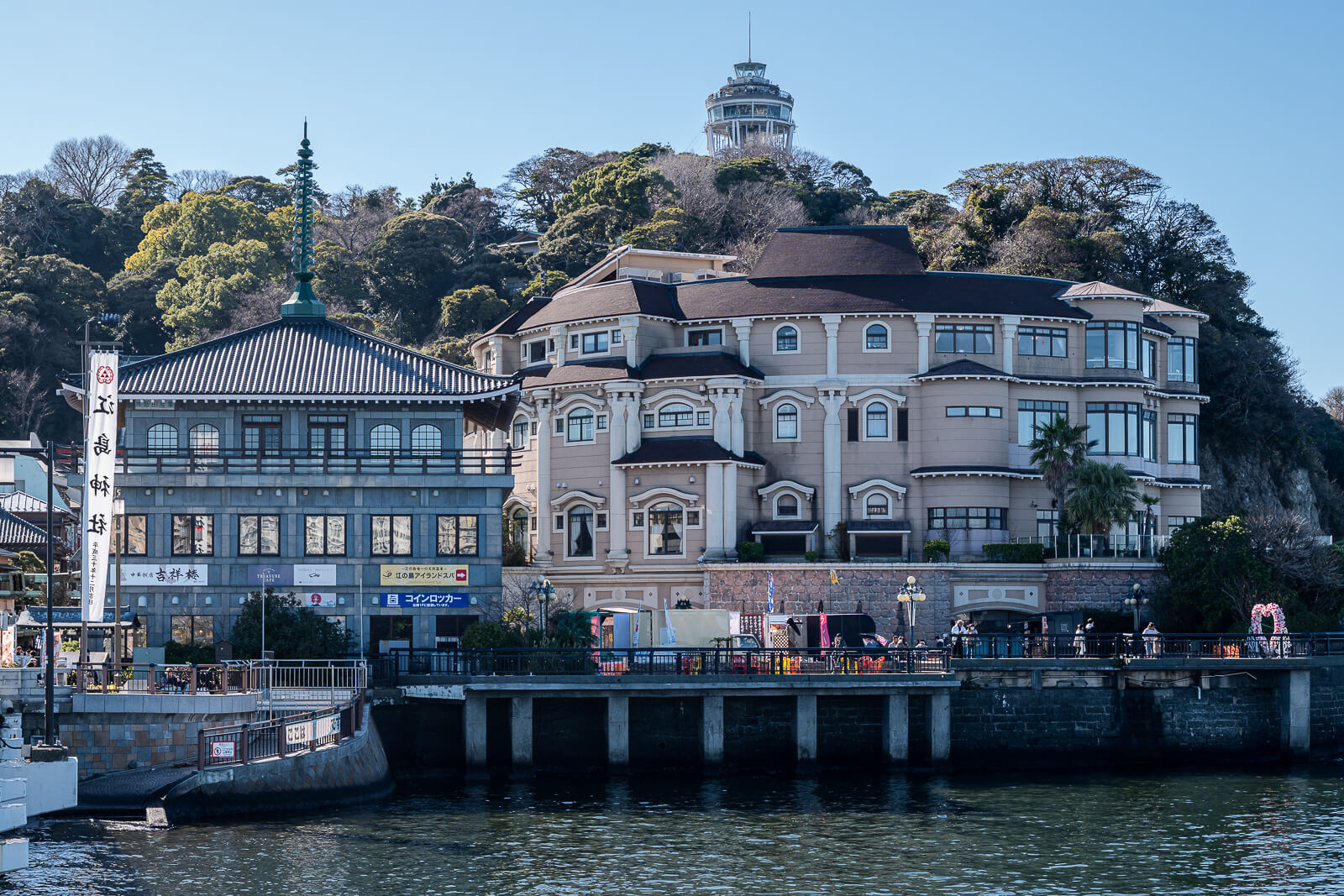
Begin along the shopping approach to Hetsumiya, where the torii and rising steps introduce the island’s shrine route. The Escar provides an uphill alternative between the shrine levels, with walking paths connecting the stops. Pause at Nakatsumiya for its vermilion architecture and bay views, then continue to the summit for the garden, greenhouse remains and Sea Candle.
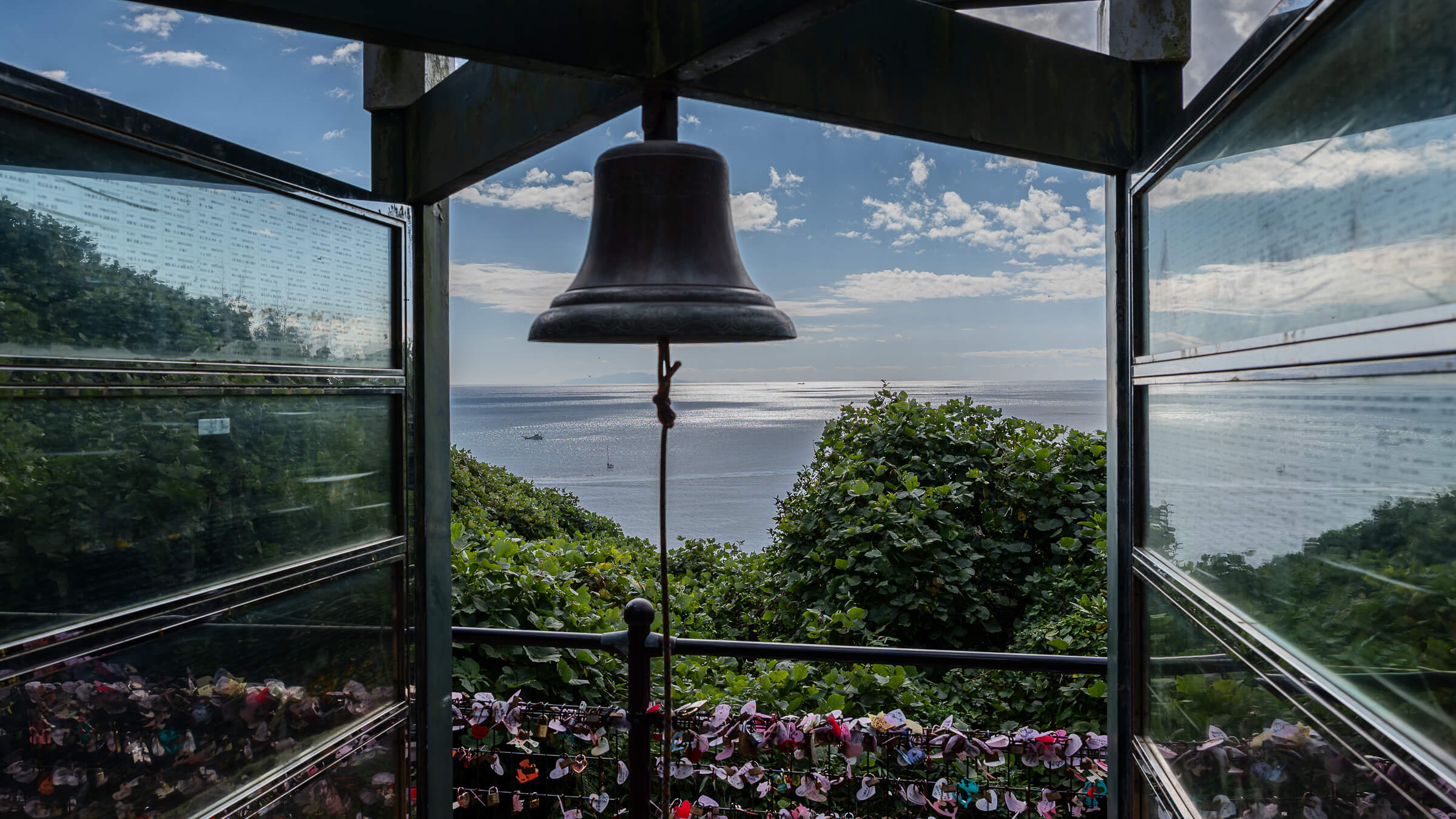
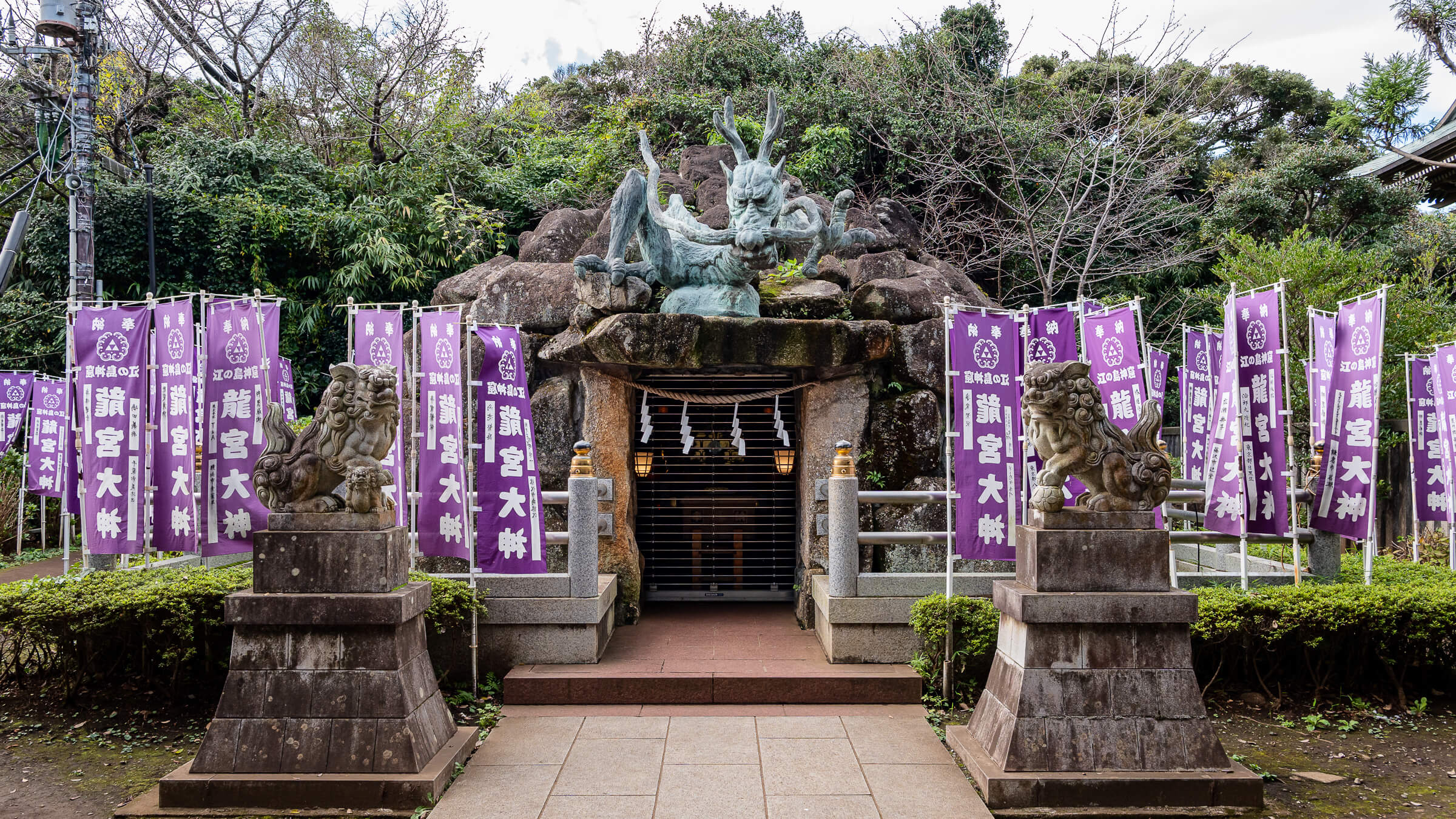
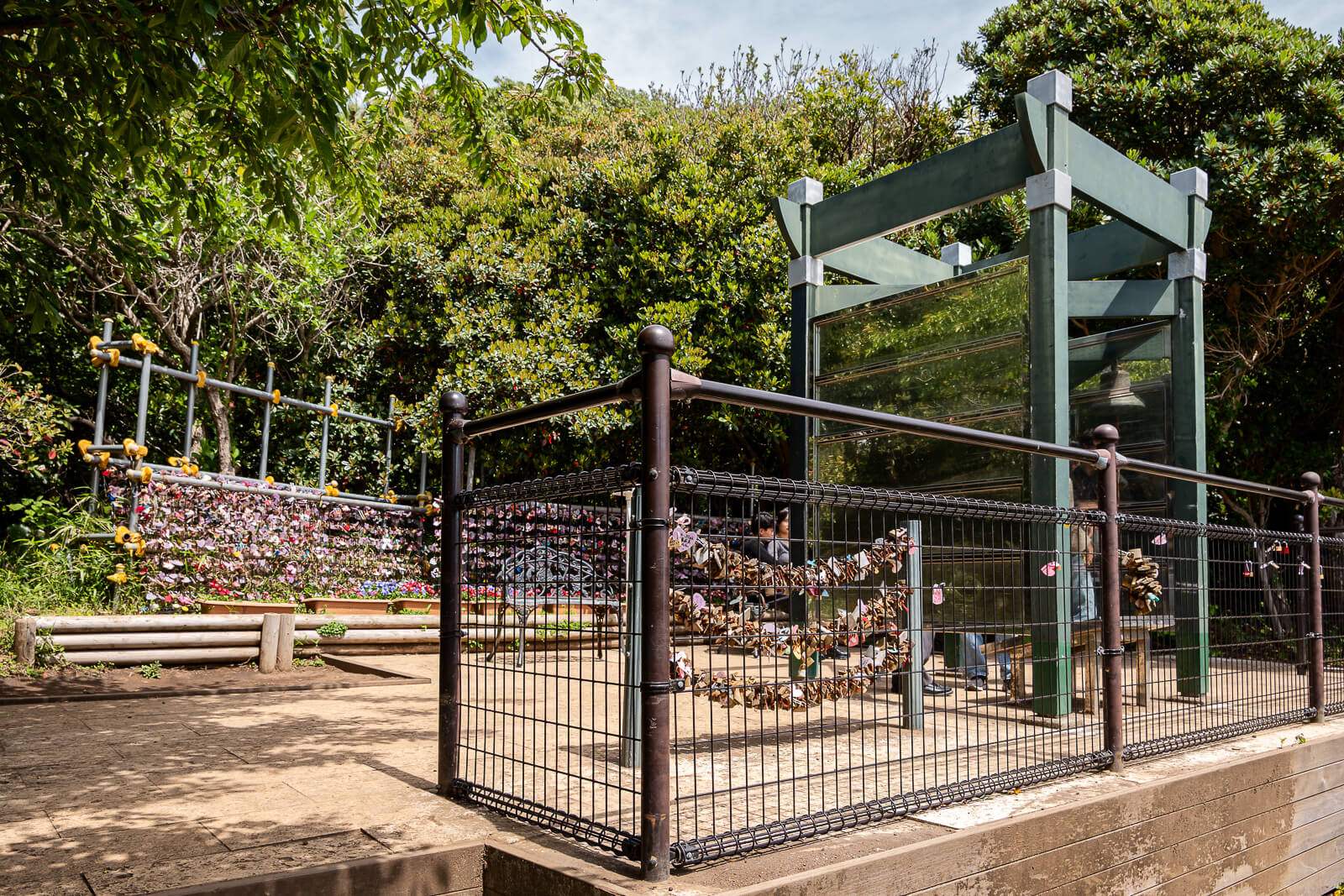
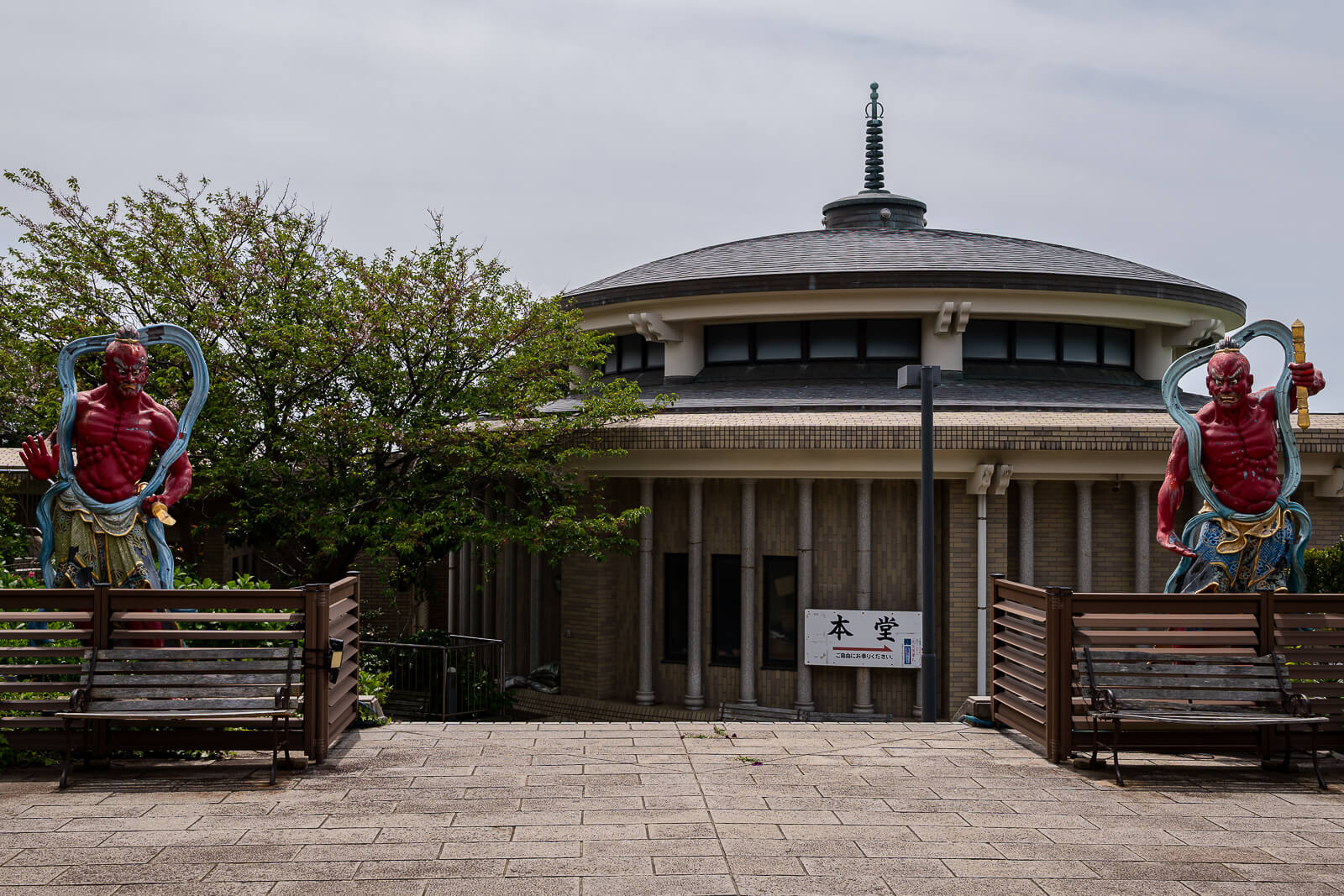
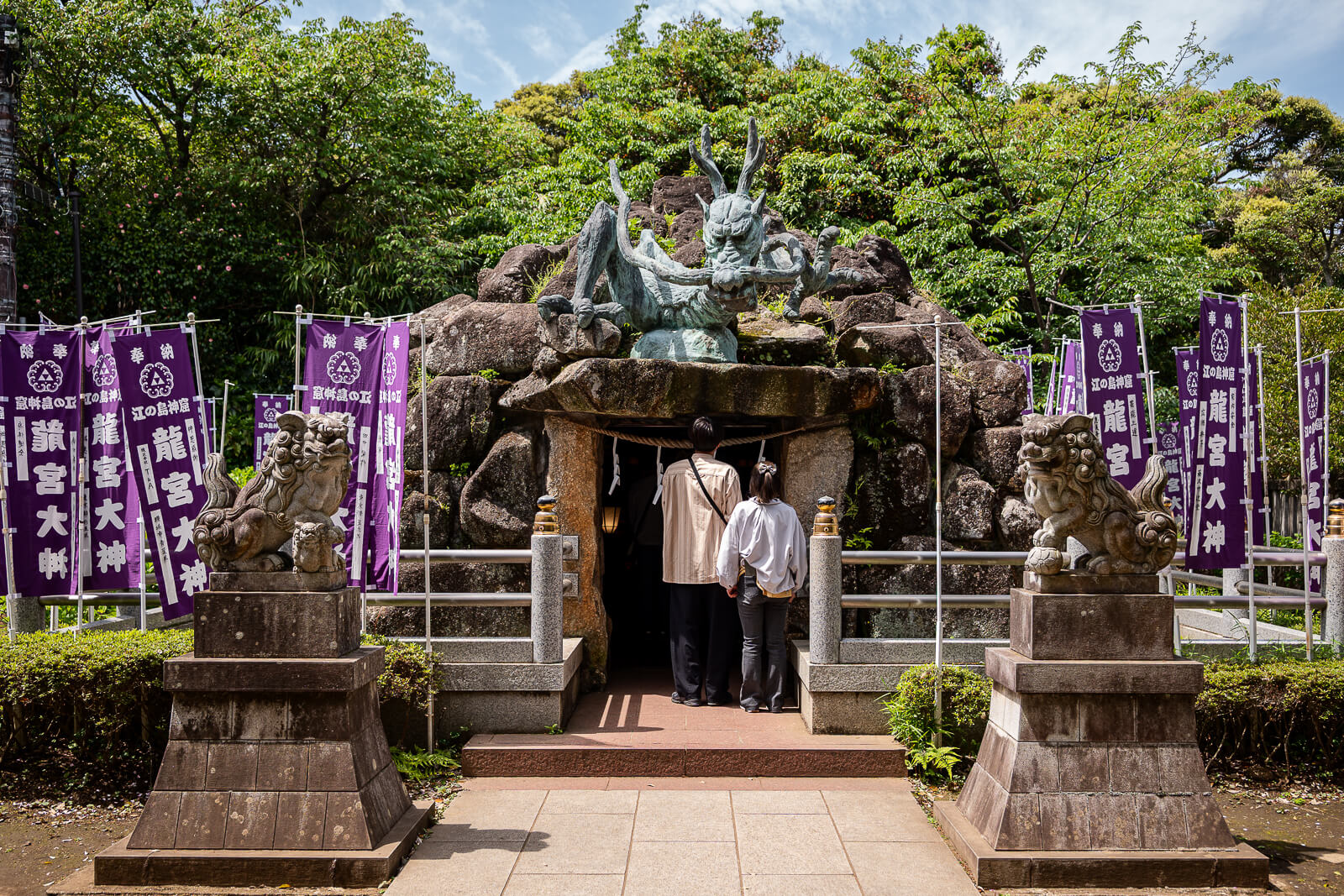
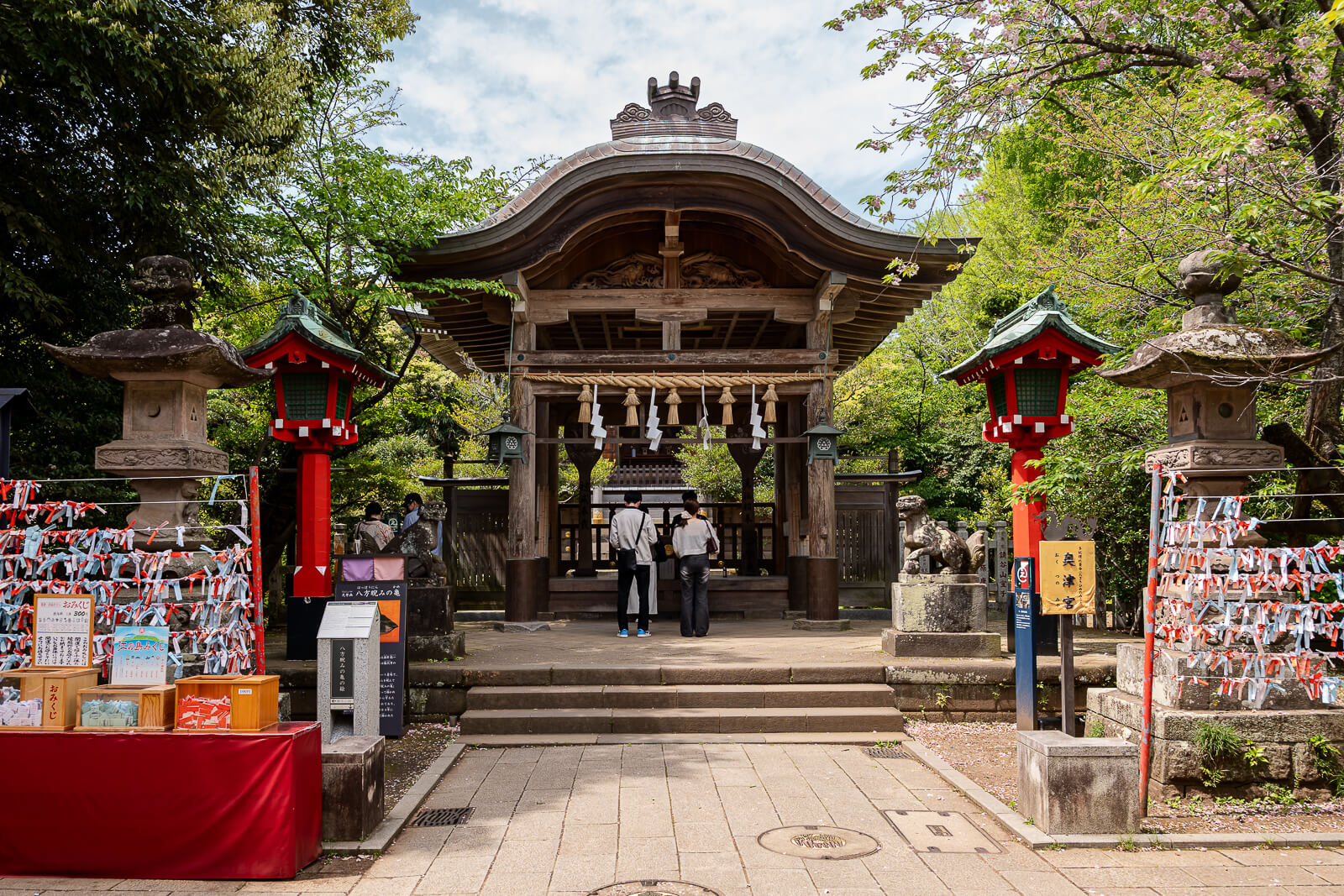
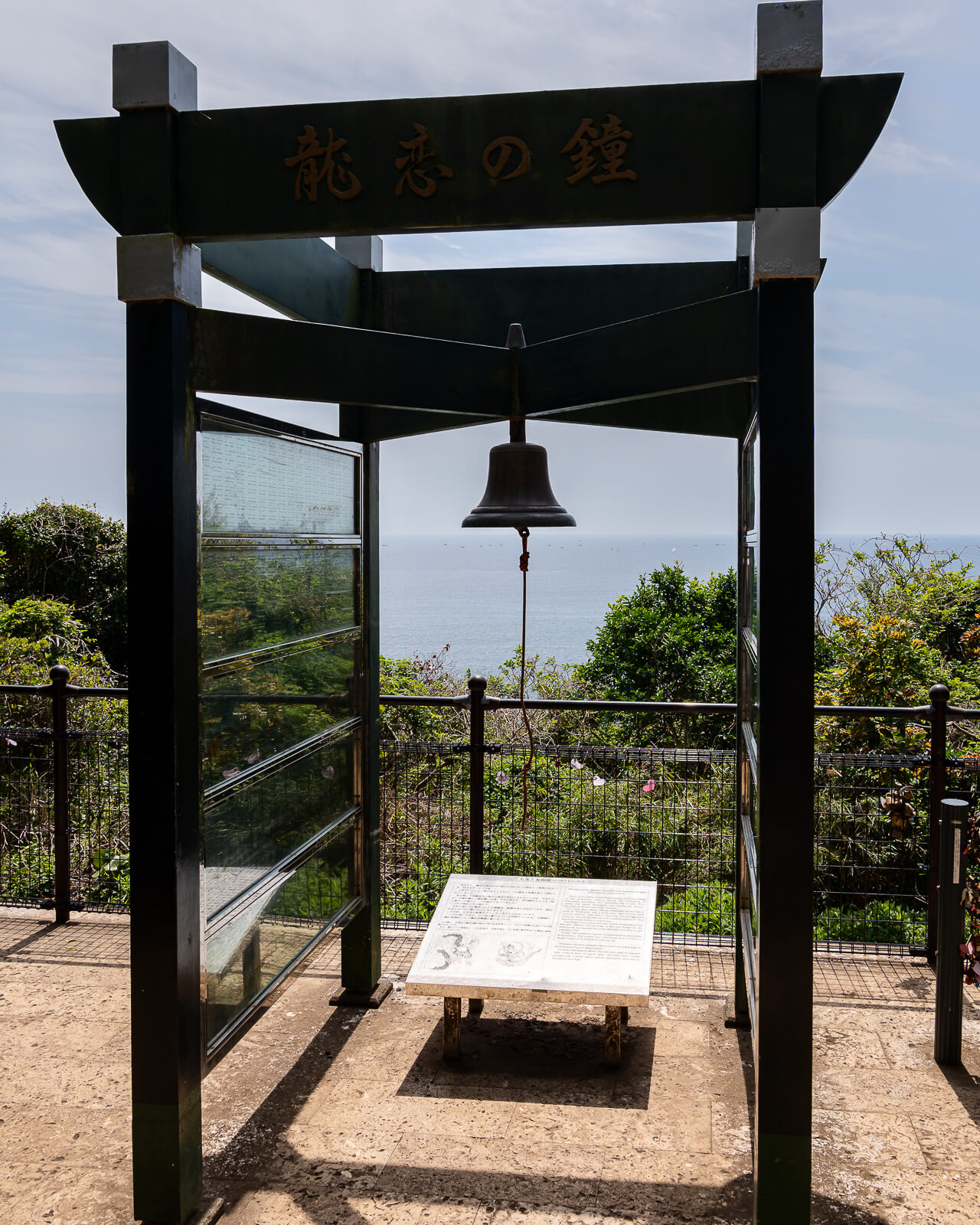
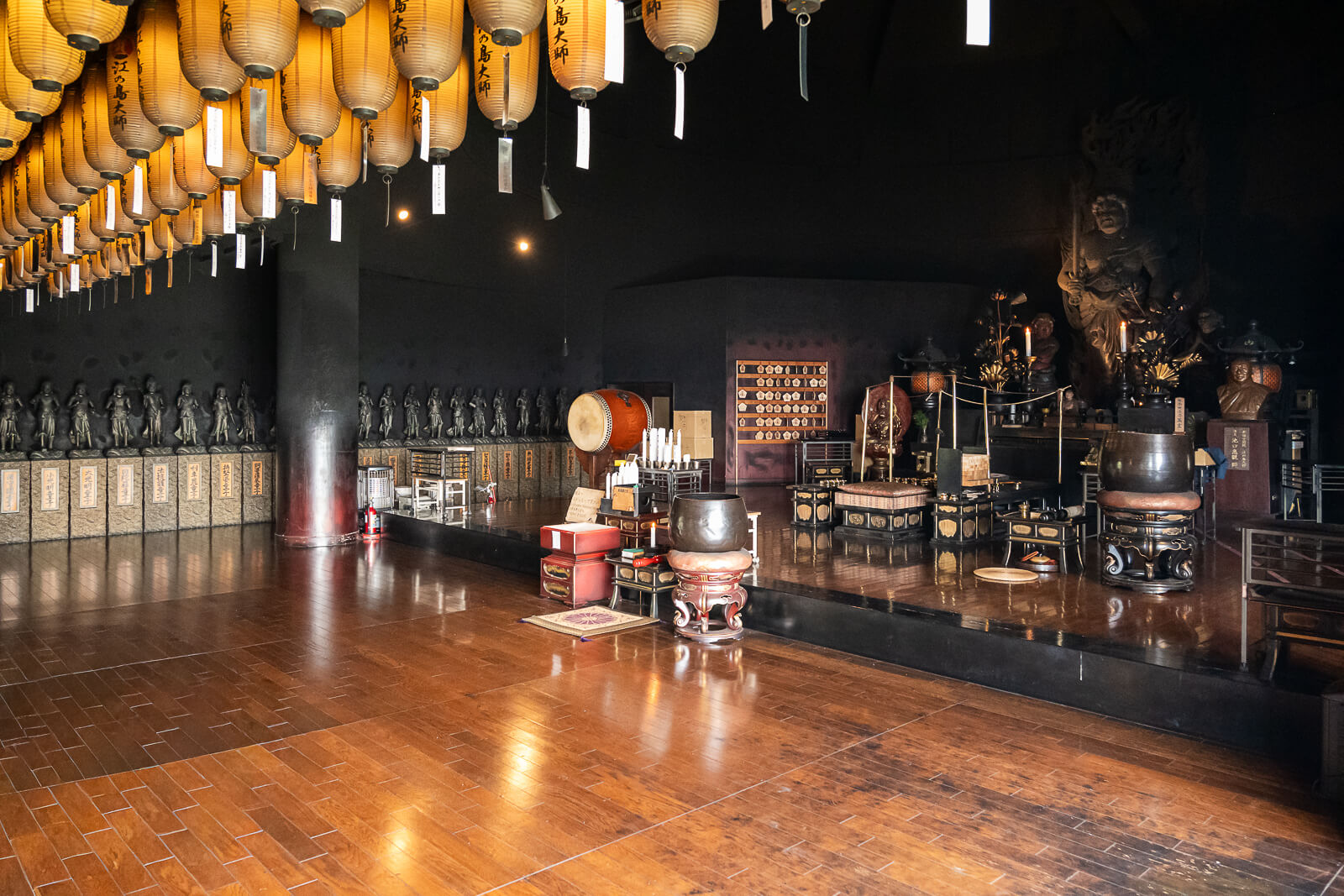
Beyond the summit, Enoshima Daishi offers a change from the shrine precincts: red guardian figures stand outside a Buddhist temple with an incense-darkened main hall. Continue along the island path to Okutsumiya and the nearby dragon-topped shrine. The wooded detour to the Love Bell adds another small outlook before the descent, with the bell and padlocks giving the stop its own character.
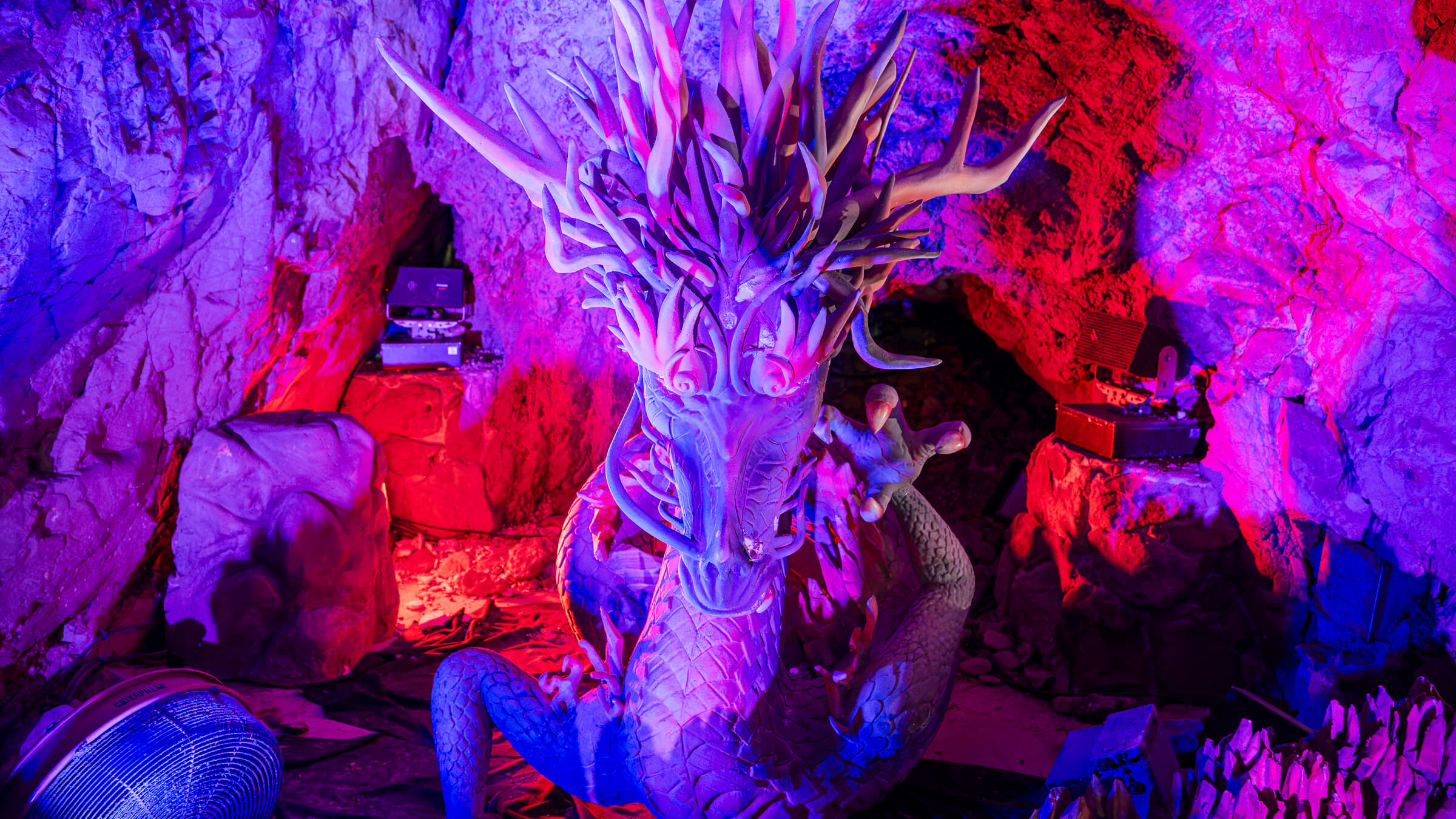
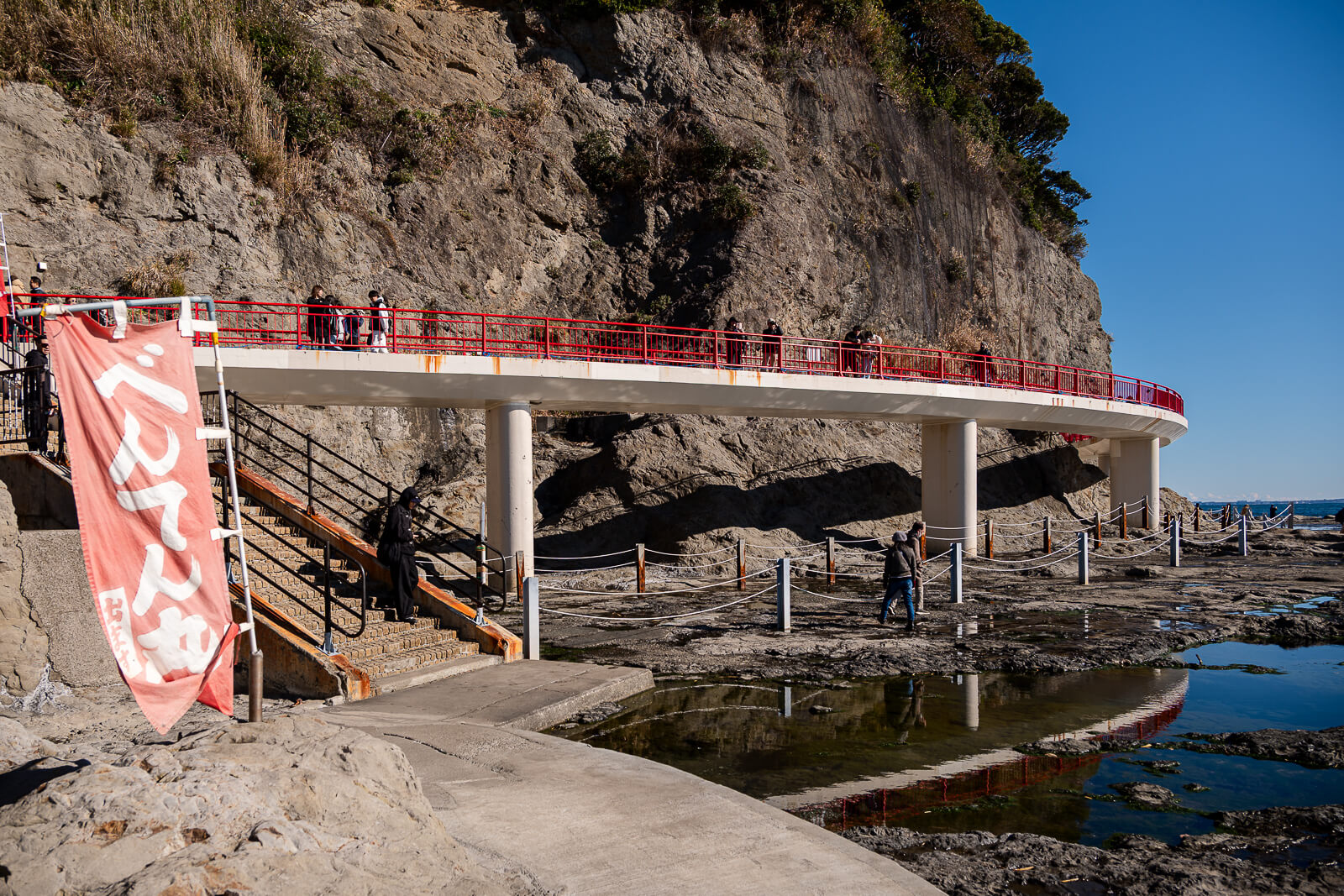
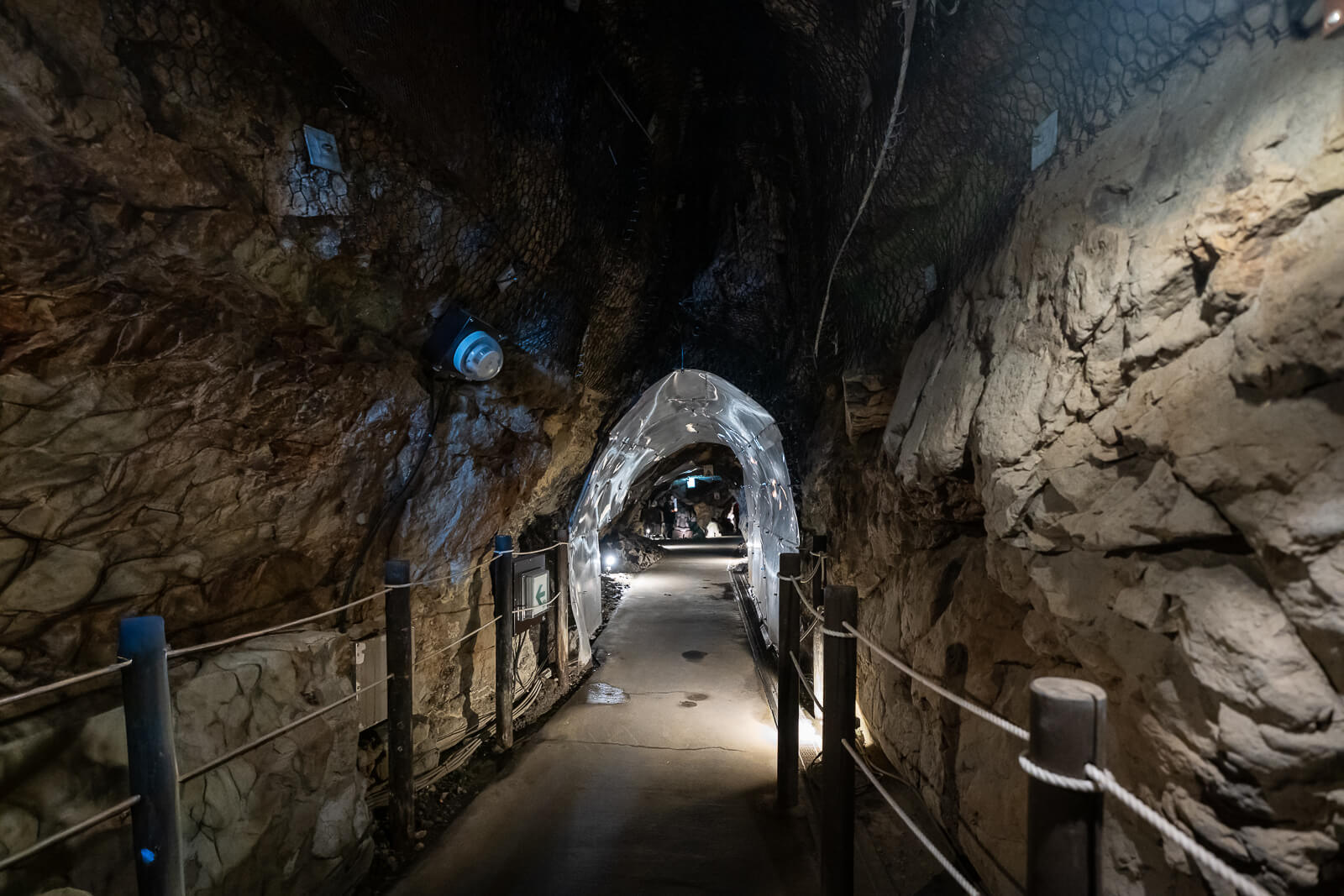
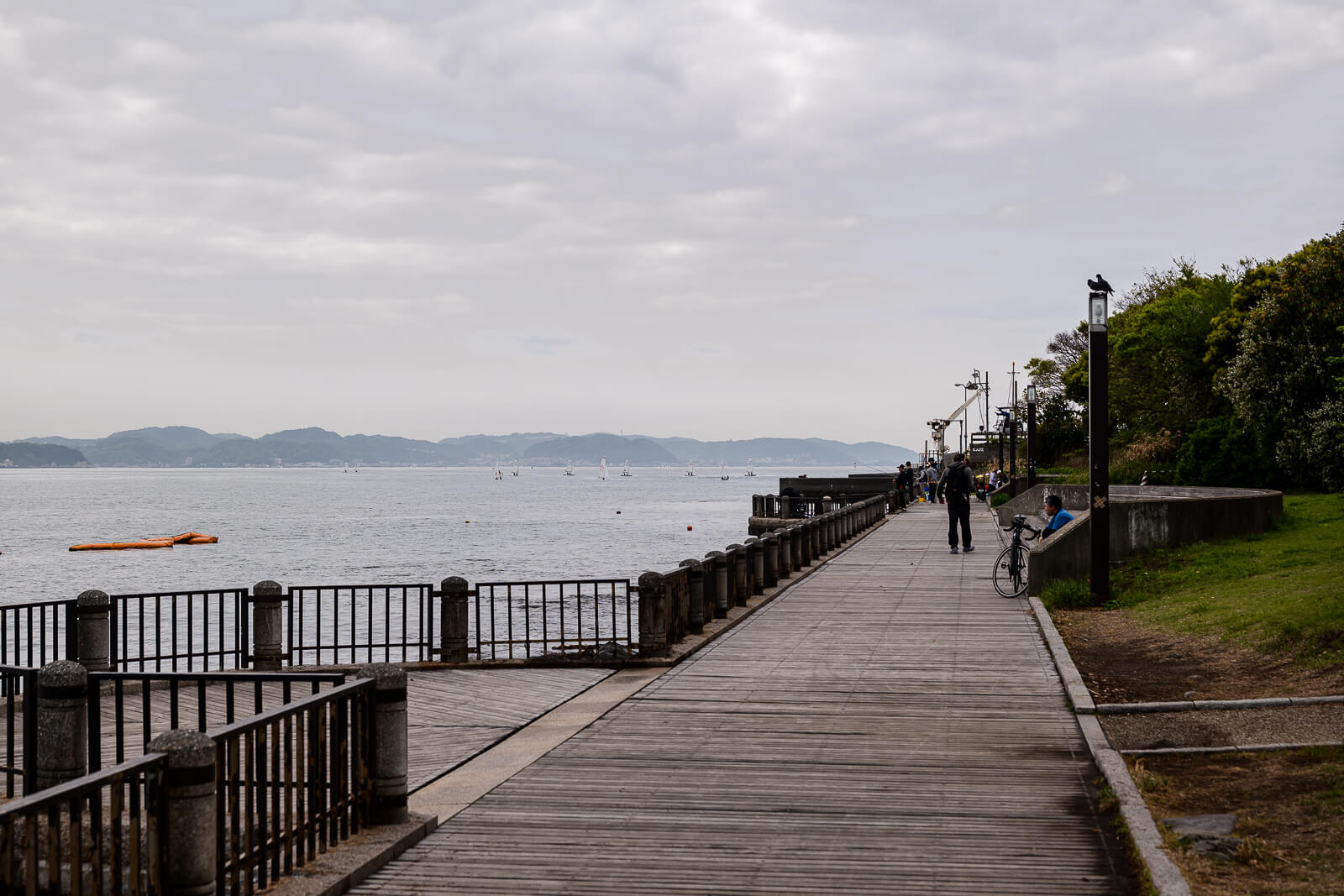
Continue down to Chigogafuchi for the open shore, then follow the raised coastal walkway toward Iwaya. A cave visit adds cool passages, devotional figures and the candle-lantern experience inside Iwaya. After the coast, the return can become another island walk or a Bentenmaru boat ride back toward the bridge, according to the day’s sailing operation.
A half-day can take several satisfying forms within this route. Tower enthusiasts can give the summit panorama more time and make a shorter shore stop, while visitors drawn to the caves can spend more of the outing at Iwaya and the coast. Choose that emphasis before starting the ascent, then use the rest of the walk for the shrine precincts, views and discoveries between the main stops.
What a Full Day Adds: History, Photography, Food and Time Beside the Sea
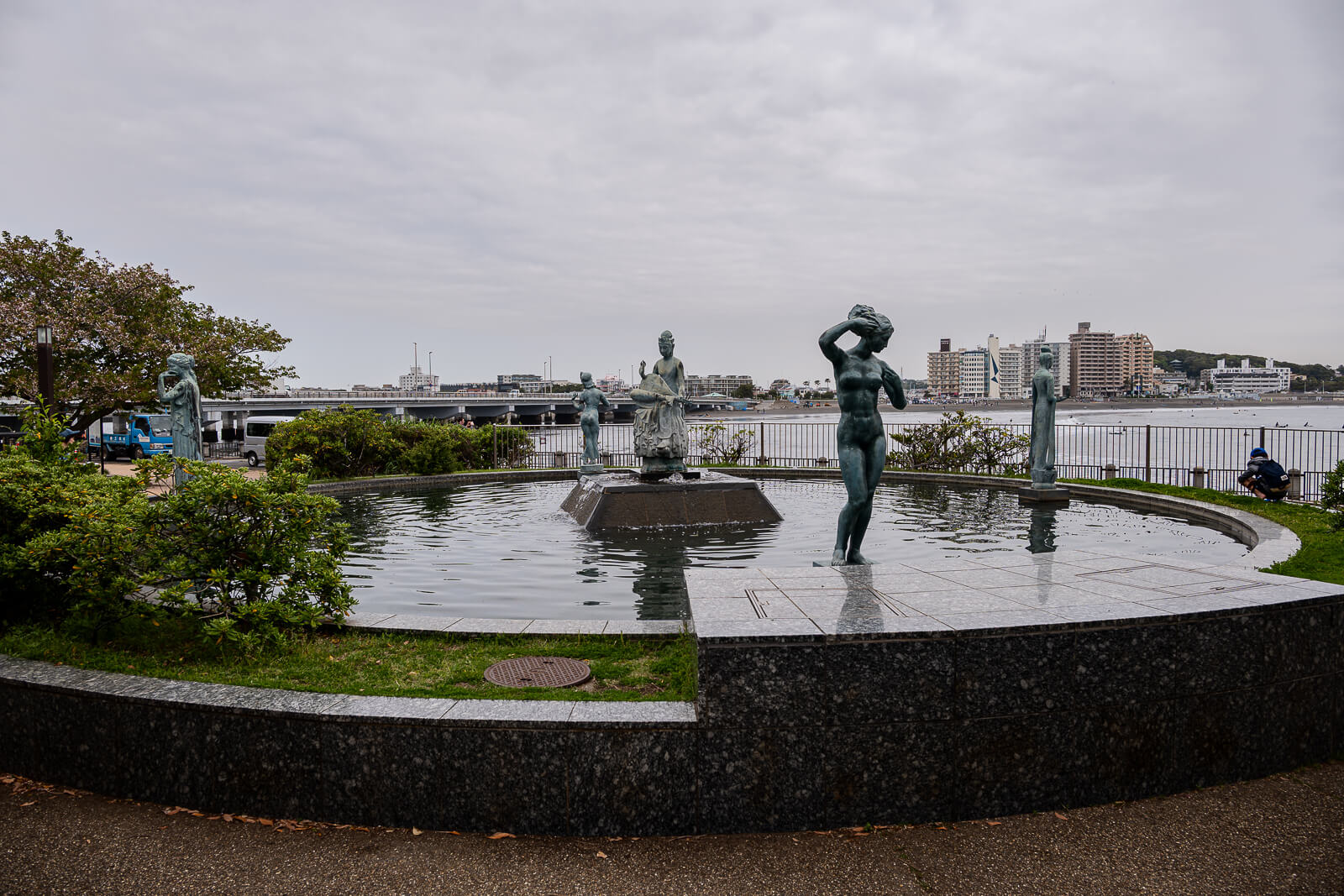
A full day creates opportunities to look more closely at places already along the island walk. At Hetsumiya, Hoanden adds Benzaiten statues to the main shrine visit, while Nakatsumiya rewards attention to its painted carvings and vermilion hall. Farther along, the turtle painting at Okutsumiya, the dragon shrine and Daishi’s interior give cultural stops their own focus. The extra time turns these encounters into a substantial part of the day.
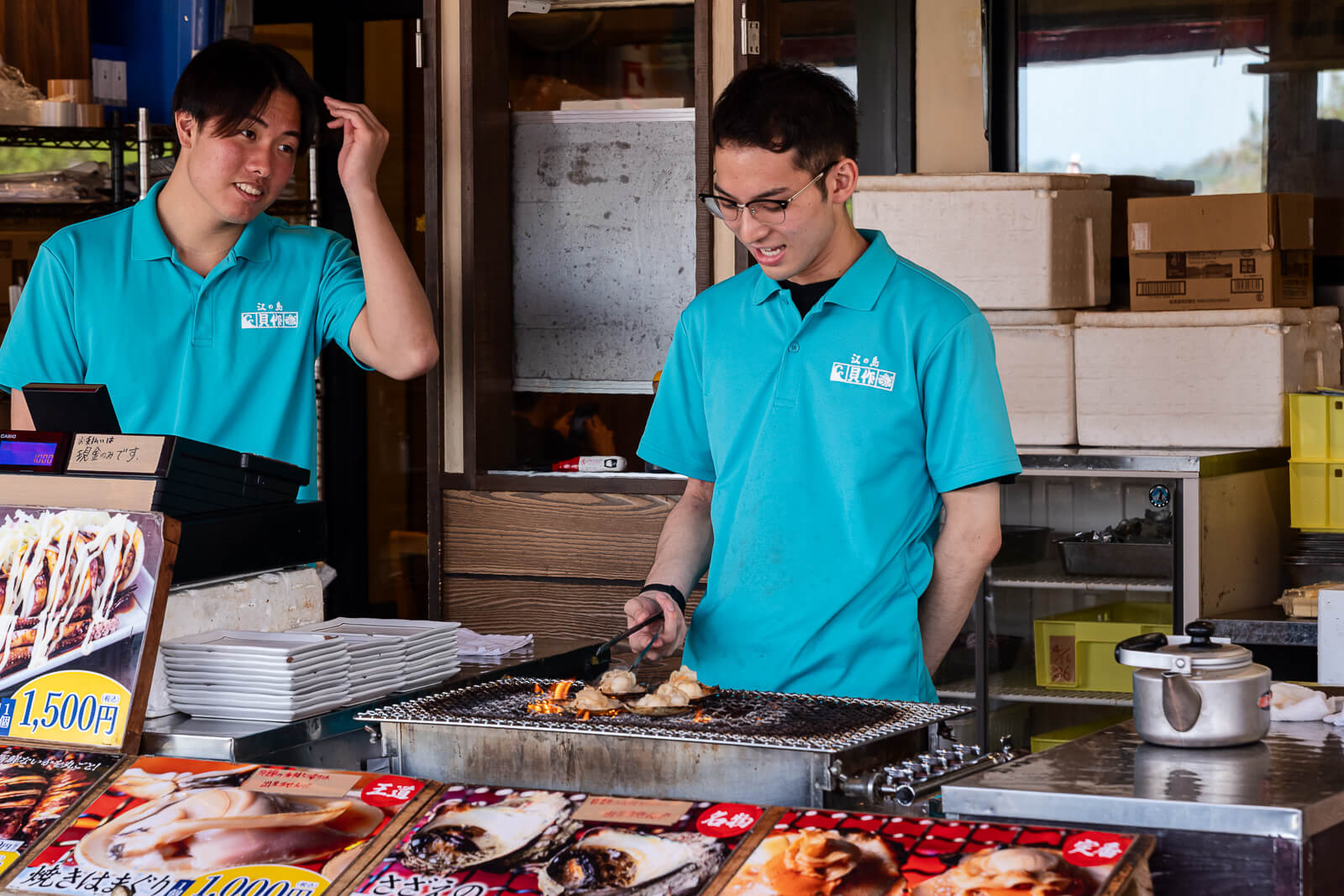
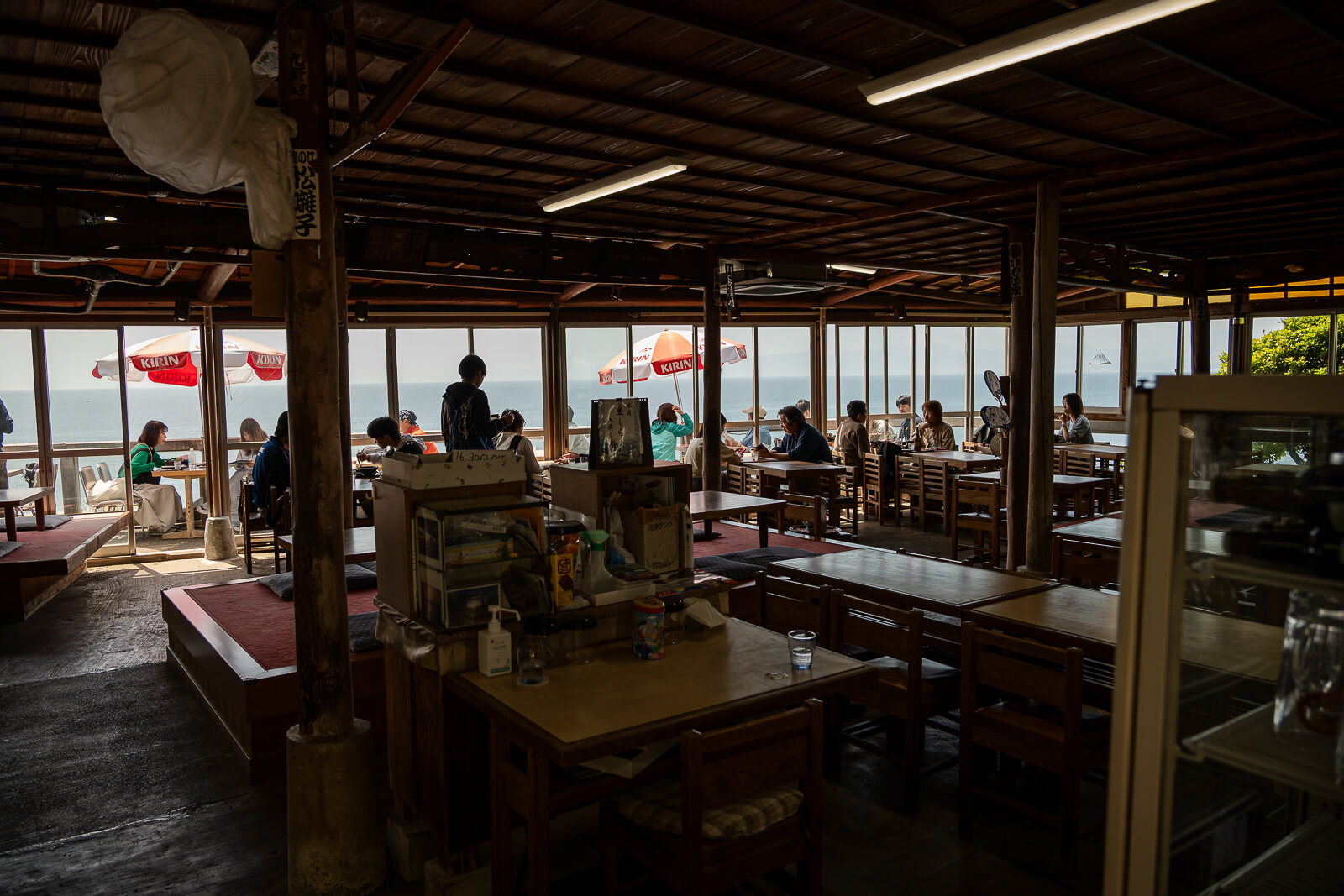
Food can become an experience in its own right during a longer visit. The approach has quick seafood and snack stops, while restaurants and cafés farther along the island offer places to sit down between the shrine and coastal portions. Choose a seafood lunch or café break where the setting appeals, and arrange the cave visit around its opening hours so both fit comfortably into the outing.
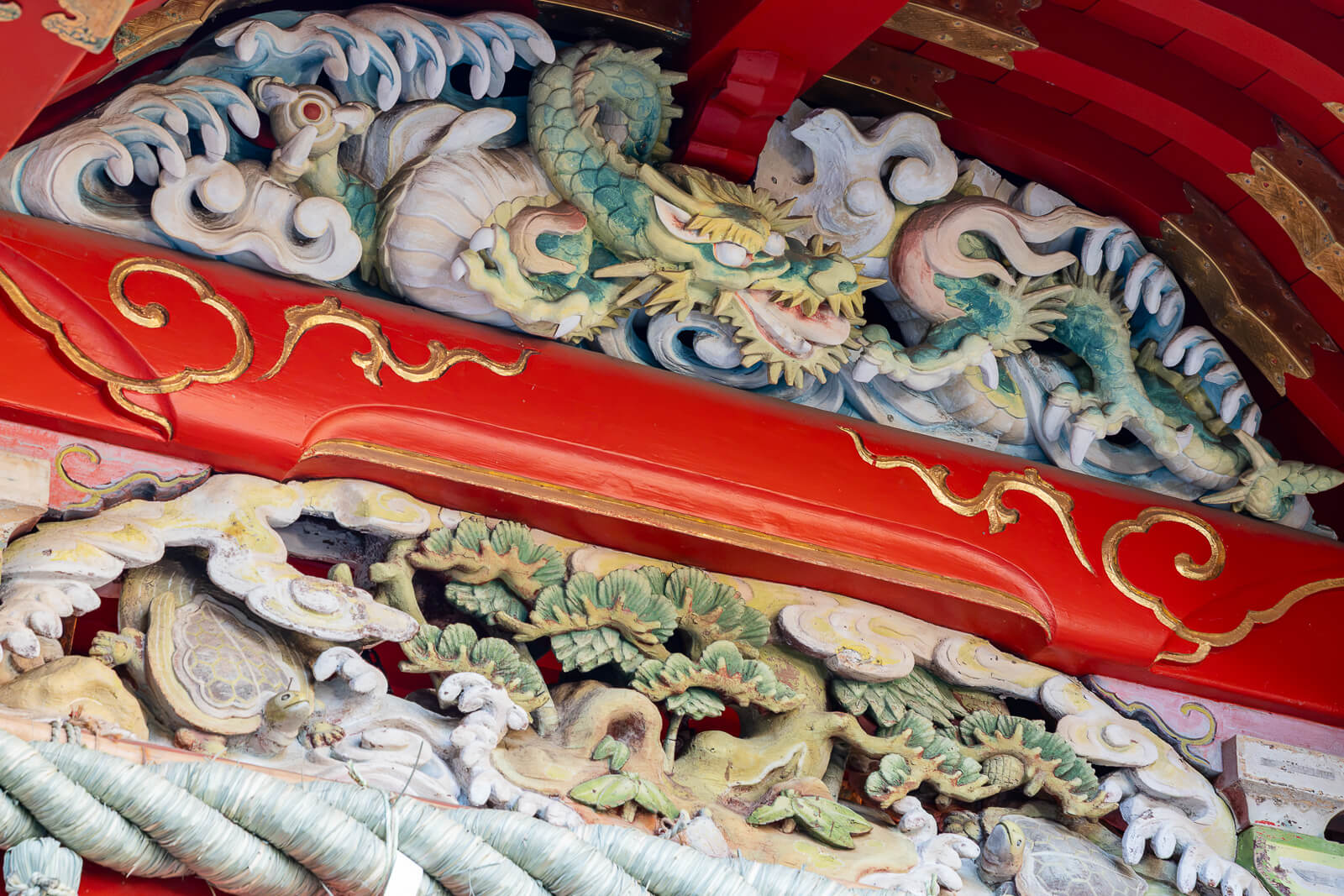
Photography benefits from time to look in several directions and return to details that catch the eye. An architectural view, a close look at shrine carvings and the changing angles on the coast each offer different subjects. A full day gives these pauses room alongside the main attractions, whether the aim is a broad Sea Candle panorama, garden detail or a clear-day photograph of Mount Fuji across the water.
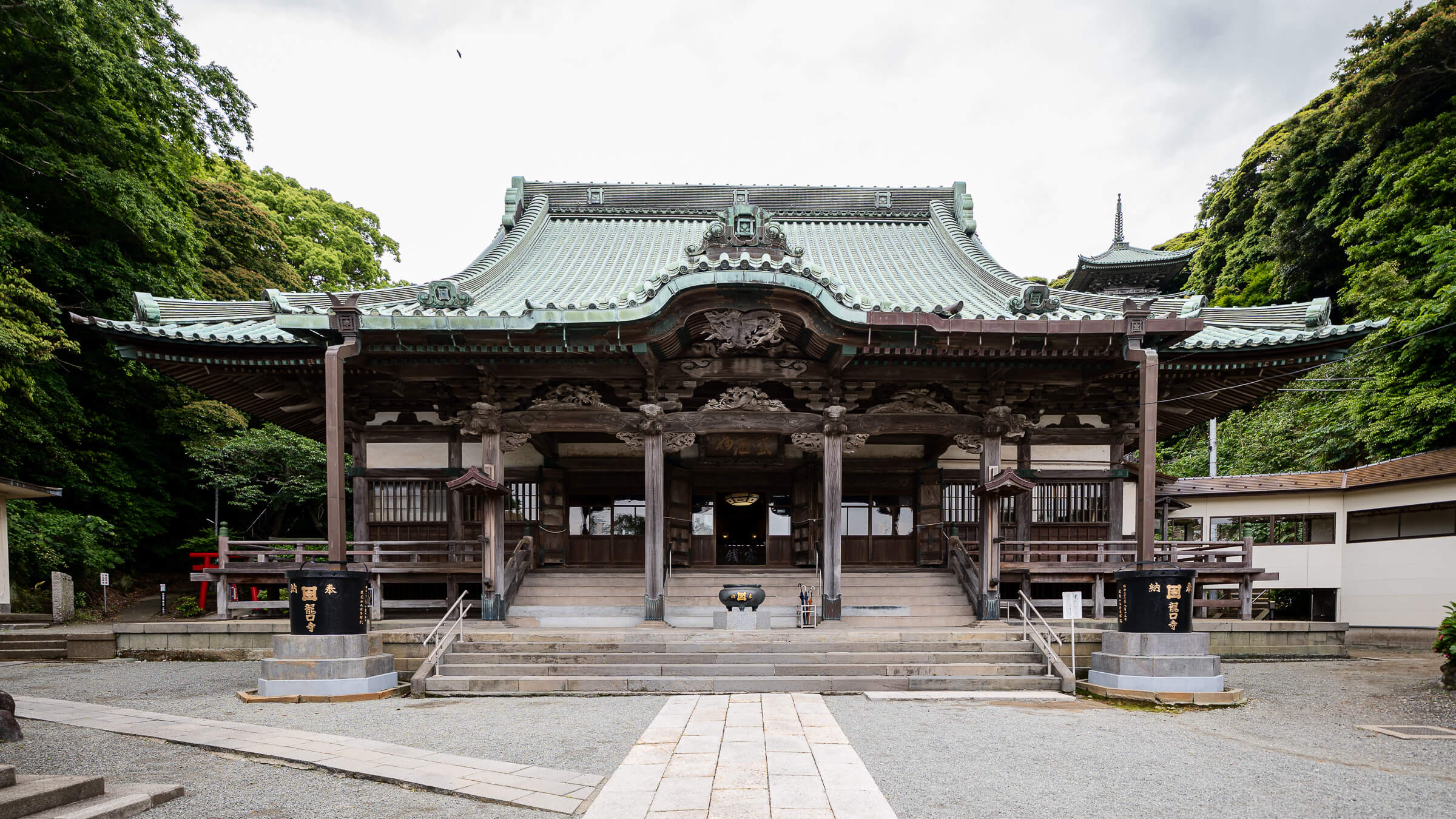
The longer visit also opens the possibility of a mainland stop before or after the island. Enoshima Aquarium adds marine life and jellyfish beside Sagami Bay, while Ryukoji offers a temple hall and a hillside pagoda near the Enoden and monorail stations. An island-focused day with lunch, the garden and time beside the sea is another appealing use of the same hours.
Using the Escar for the Shrine Ascent and Summit
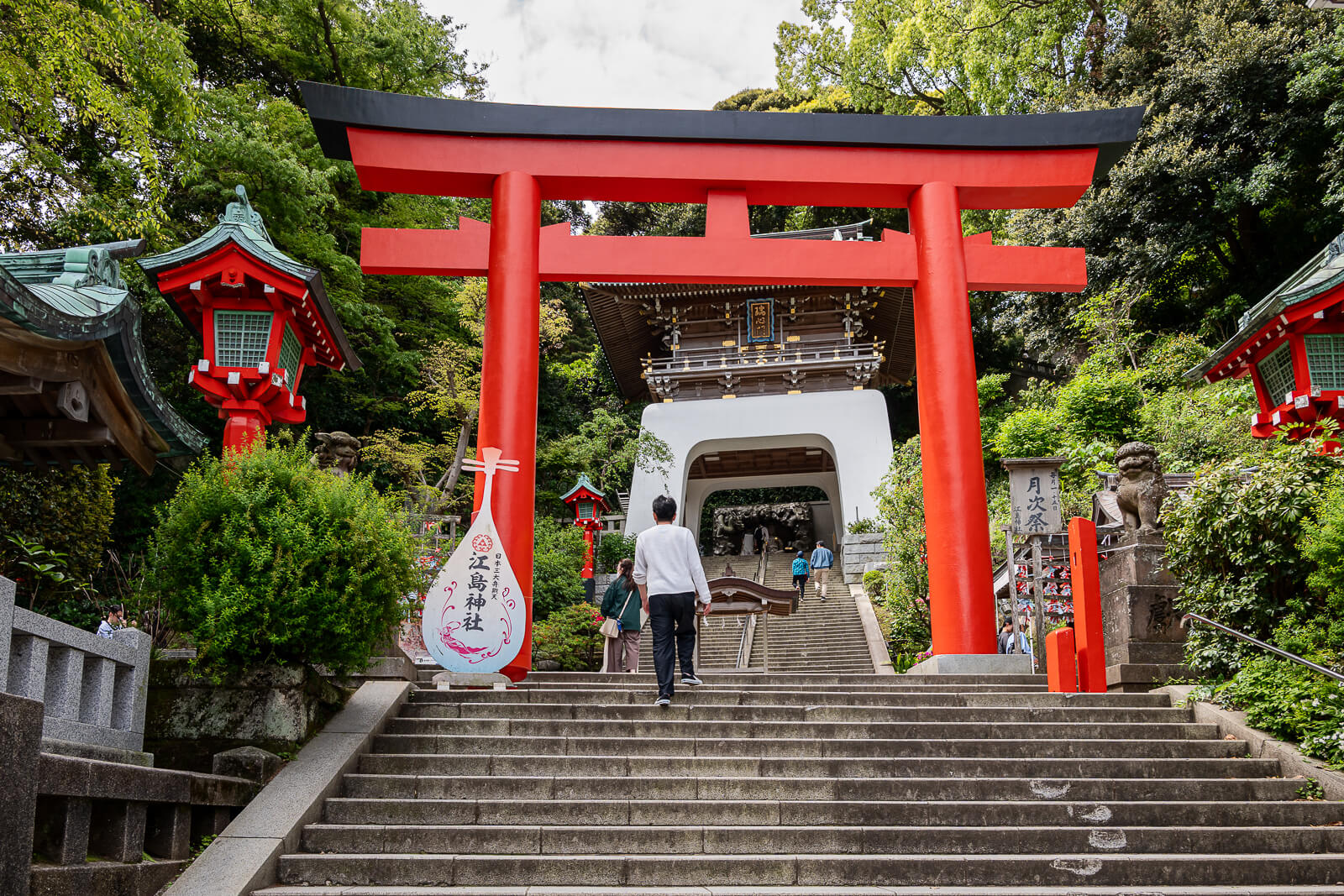
The Escar has three uphill sections leading through the Hetsumiya and Nakatsumiya levels toward the summit. Paths between the sections let visitors explore the shrine precincts and stop at viewpoints along the ascent. It is useful for both visit lengths, leaving more energy and attention for the garden, tower and places beyond the summit.
The return follows the island’s walking paths and steps, since the Escar operates uphill only. Continuing to Chigogafuchi adds a descent from the higher shrine route, followed by an uphill section on the walking return. This gives the two route choices a clear shape: a shorter shrine-and-summit outing, or a longer walk that includes the far-side coast and caves.
A summit-focused visit brings together the three-stage ascent, shrine stops, garden and coastal viewpoints. From there, visitors can return toward the bridge, pausing along the shops and paths on the way down. For those who enjoy a longer walk, continuing past Daishi and Okutsumiya brings a different landscape into view, with the open shore and Iwaya below the cliffs.
Samuel Cocking Garden and Sea Candle: Two Summit Experiences
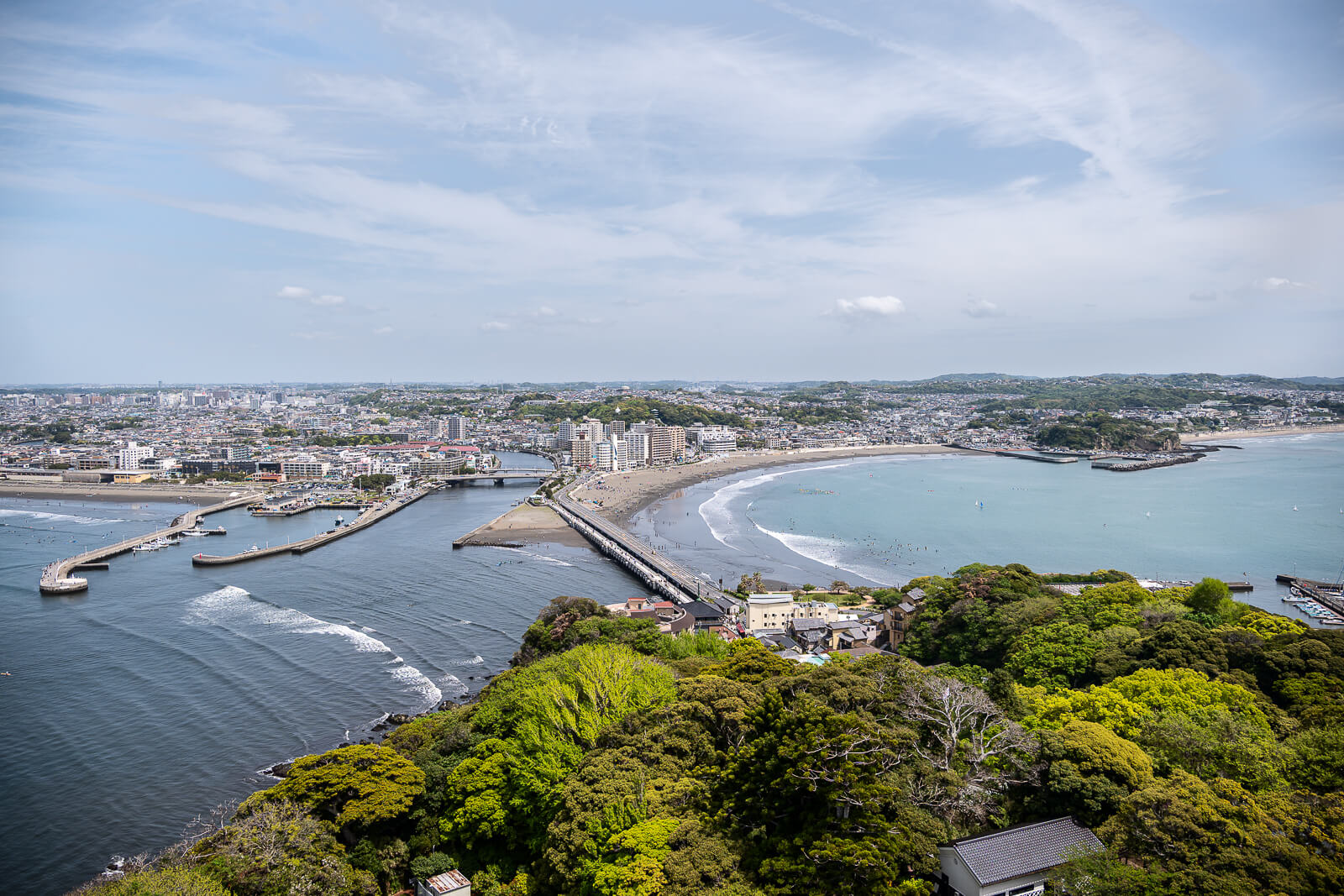
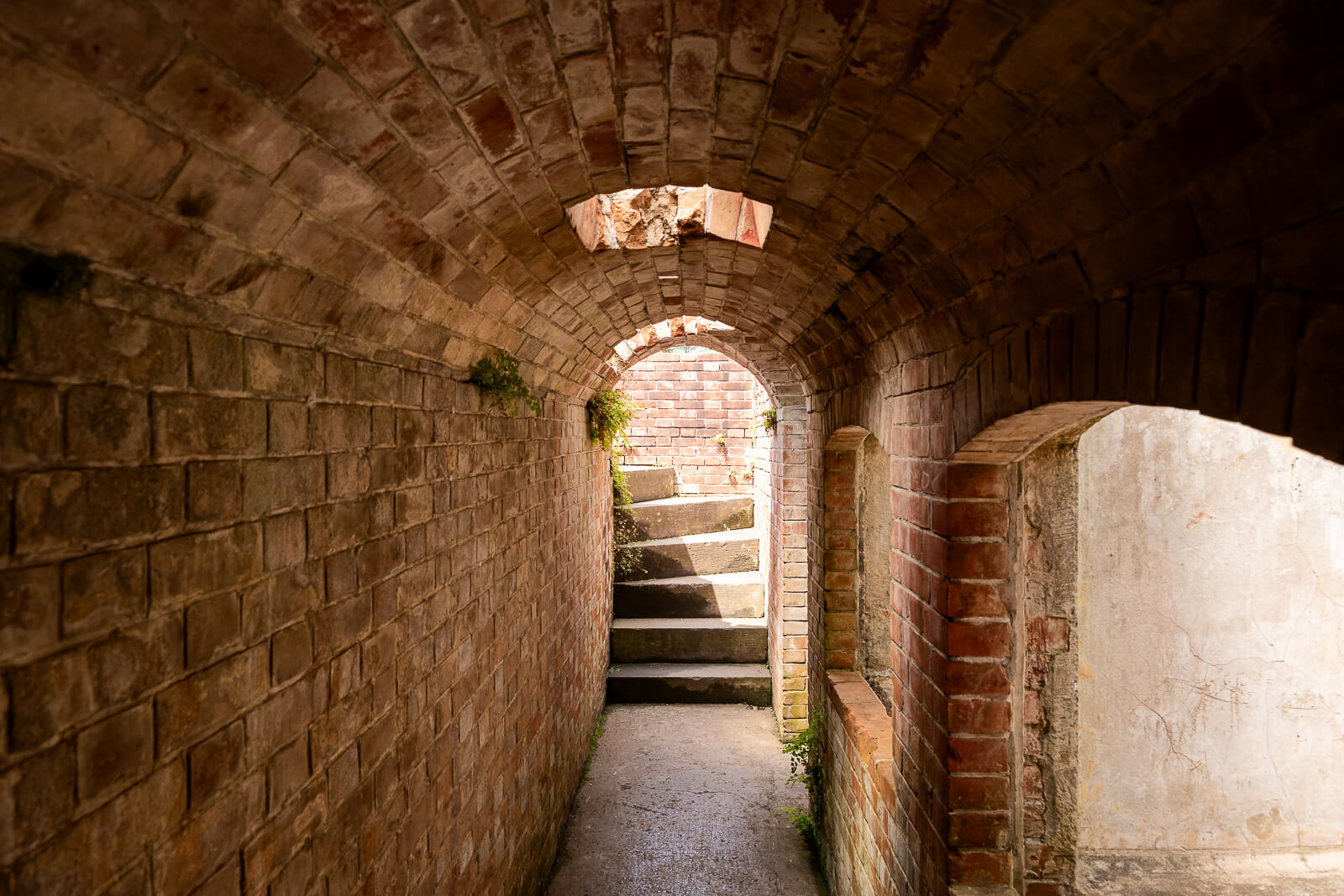
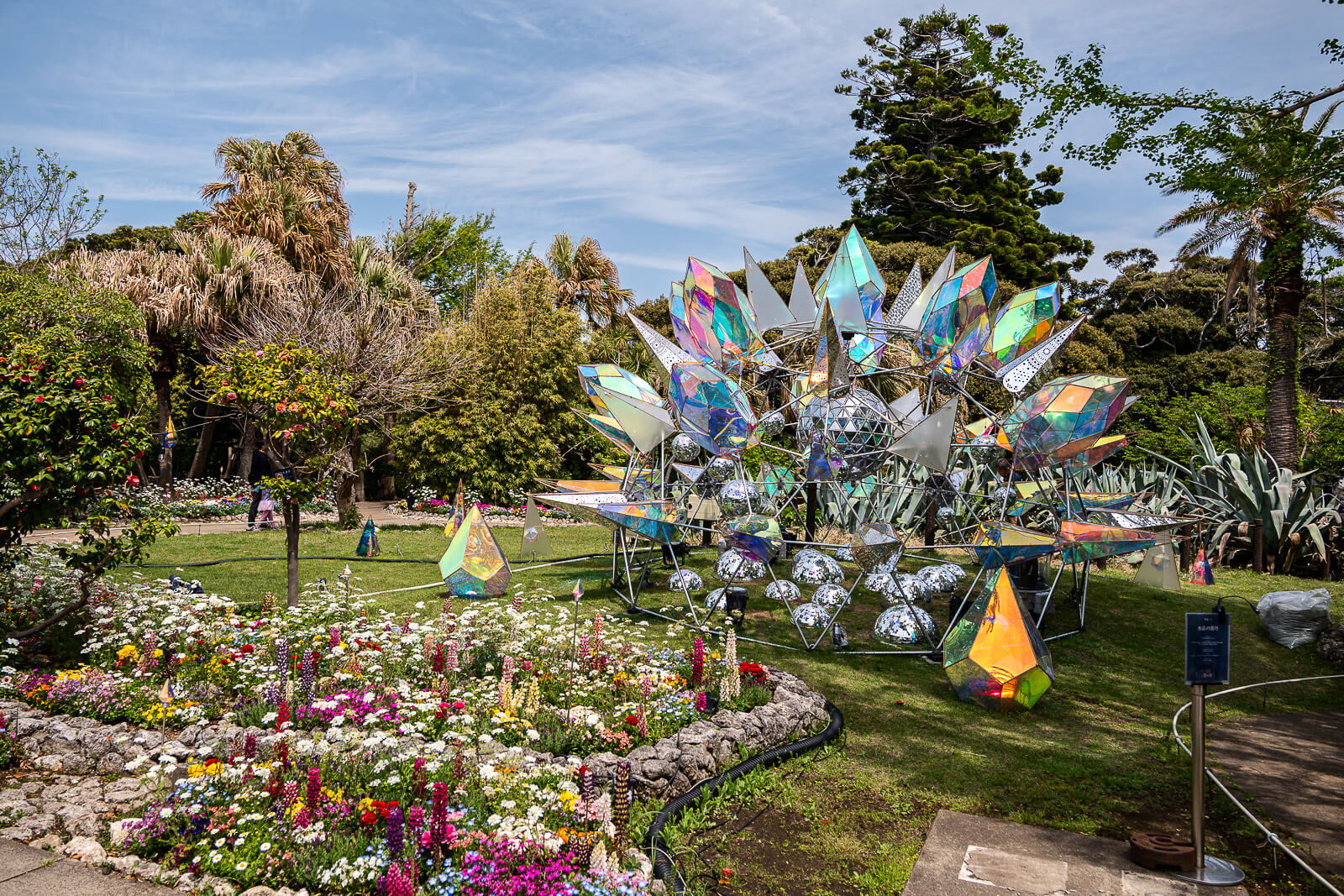
Samuel Cocking Garden offers planted walks, coastal outlooks and the brick remains of its historic greenhouse. The Sea Candle rises within the garden and adds an elevated panorama from its enclosed observation floor and upper outdoor deck. A garden visit is about the detail and setting at ground level; the tower brings the bridge, marina and mainland coastline into a much wider view.
The garden is free to visit during the day, and tower admission is purchased separately or through a package that includes it. During nighttime events, leaving the garden at or after 5 p.m. brings an evening admission charge; on non-event days, garden access is free throughout opening hours. This gives a daytime visitor the choice of exploring the garden on its own or adding the observation tower.
Choose the Sea Candle tower for the broad coastal panorama and the opportunity to photograph from the open-air deck. Choose a longer Samuel Cocking Garden visit for the greenhouse remains, planted paths and viewpoints closer to the island’s greenery. With a full day, both fit naturally into the summit portion, leaving time to follow the garden route and then enjoy the coast from above.
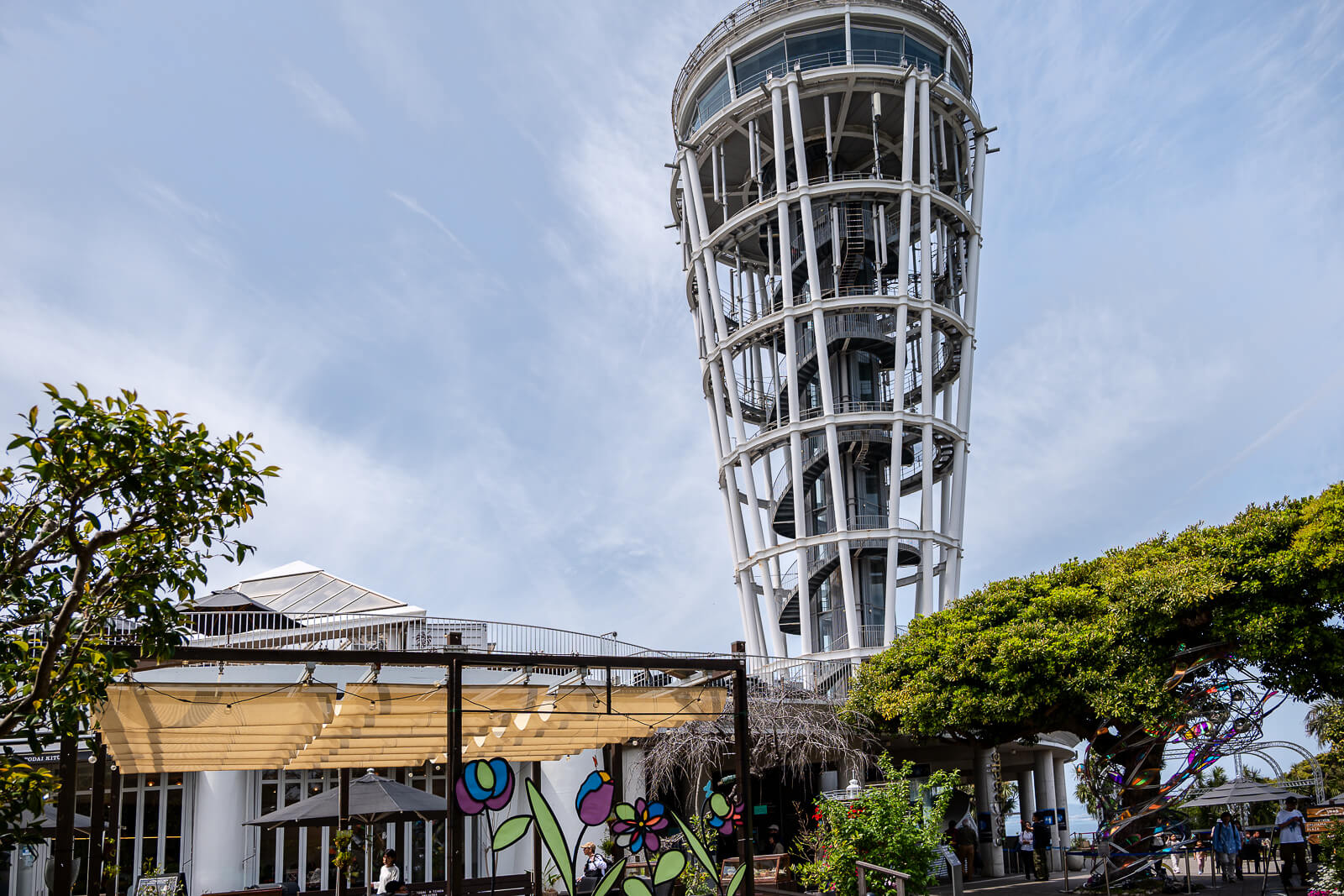
Reader note — checked 4 November 2026: Sunset Terrace and its shop remain closed for renovation, with the elevator’s terrace-floor stop suspended. The garden and Sea Candle are open. The official notice gives late November as a planned completion, not a confirmed reopening.
Chigogafuchi and Iwaya: Enoshima’s Coast and Caves
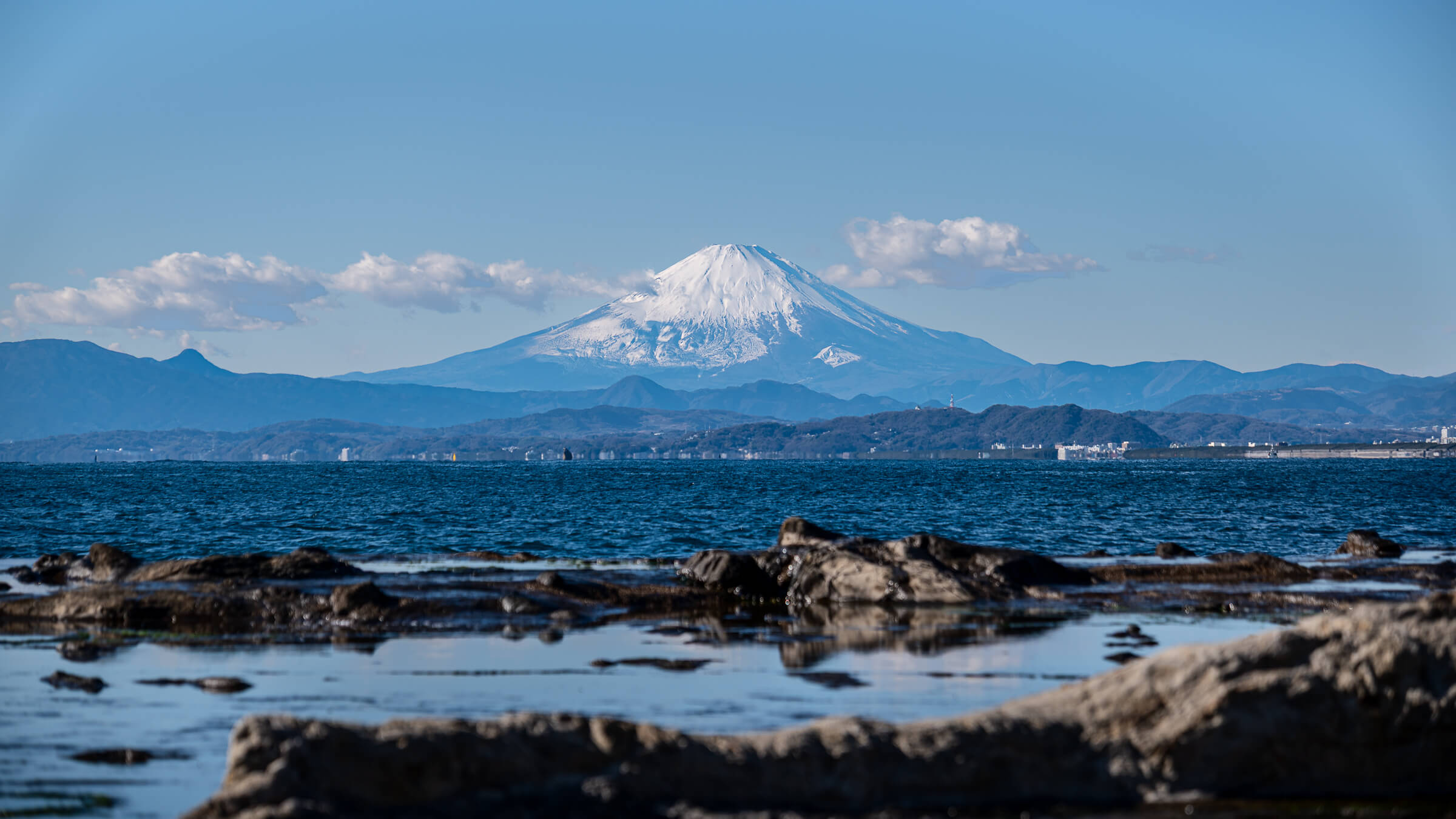
Chigogafuchi provides a striking change of setting after the shrine paths and summit. The view opens across the sea from a broad rocky platform, and on clear days Mount Fuji appears beyond the water. Iwaya extends the coastal experience through the raised walkway beneath the cliffs, followed by enclosed cave passages and small devotional spaces.
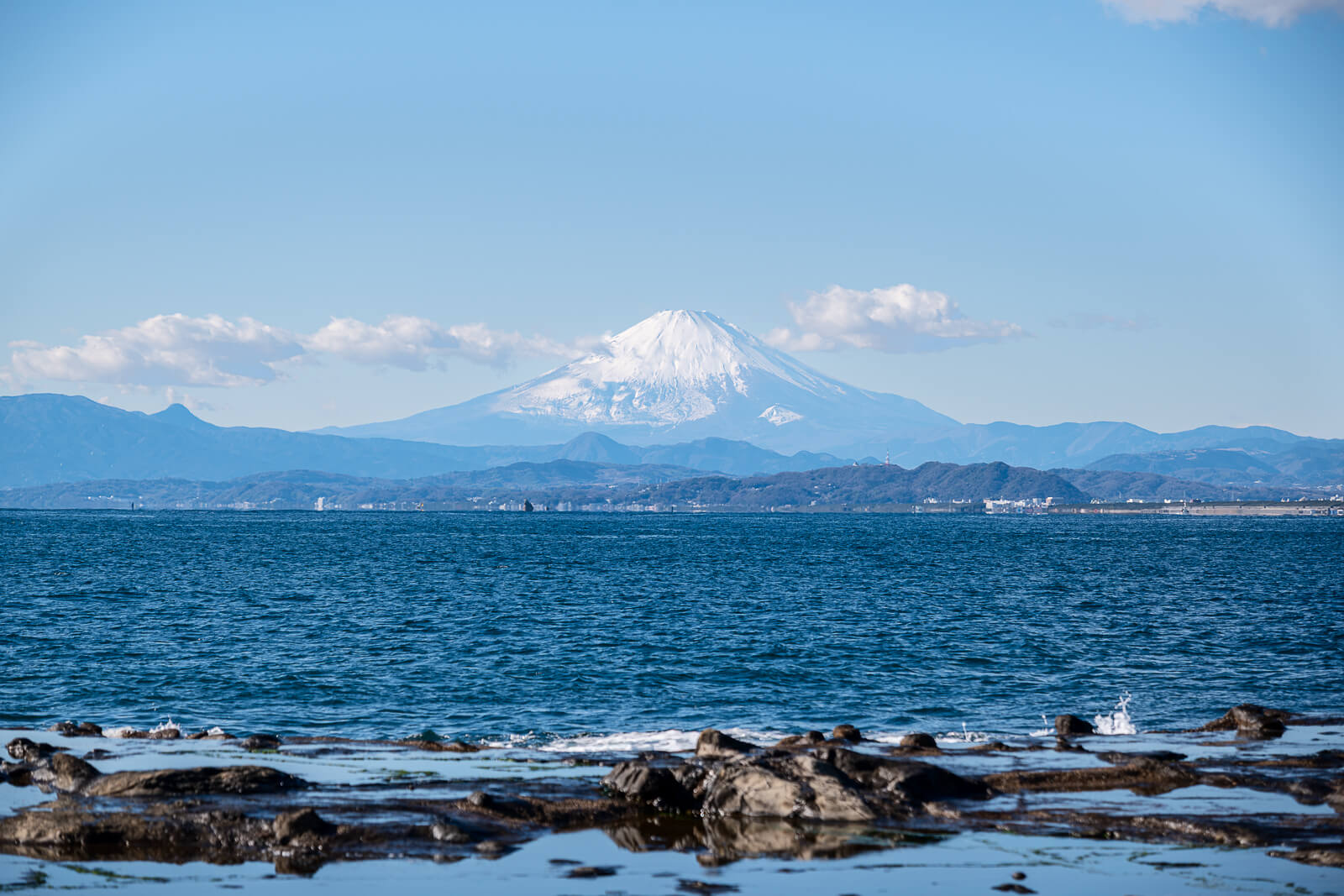
For a first visit, a taste of both summit and shore shows the variety of this small island. A brief garden stop and the walk through the shrine levels can lead into time at Chigogafuchi and Iwaya, with the scenery changing noticeably along the route. Visitors especially drawn to the garden, tower or shrine details can also make those places the centre of a shorter outing.
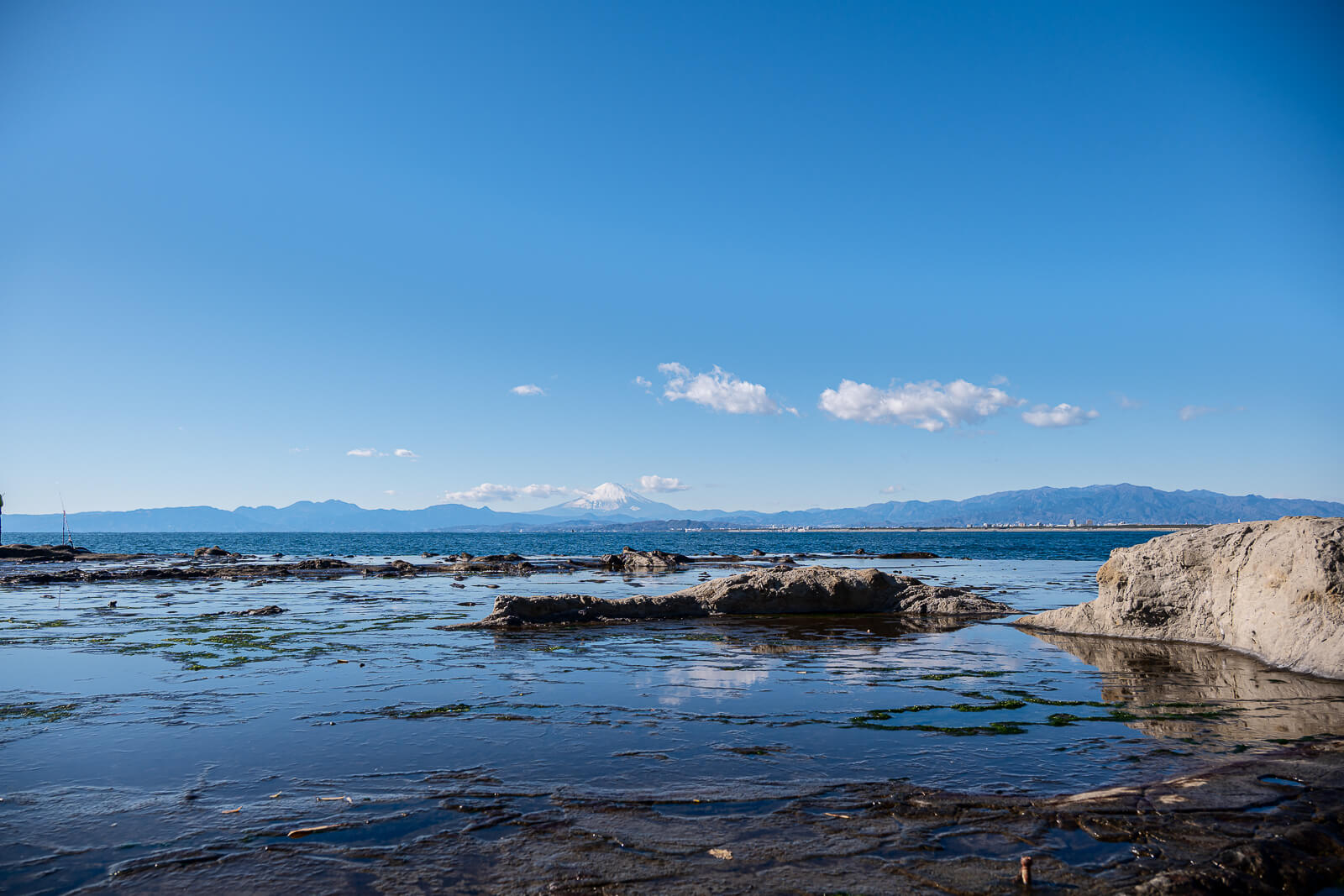
Allow time to enjoy the approach as well as the caves themselves. The descent, rocky coast and raised walkway offer views and photo stops before the cave entrance, and the return brings the island paths into view from the other direction. Arrange this part of the visit around Iwaya’s admission hours, leaving the summit stops before or after it to suit the rest of the day.
Bentenmaru Boat Ride or the Walk Back Across Enoshima
Bentenmaru offers a short sea journey between the Iwaya side of the island and the bridge area. It provides views of Enoshima’s cliffs and waterfront from the water, along with a return that replaces the climb back across the island. Sailings operate within a daytime window and depend on weather and sea conditions, so the day’s operation determines which boat options are available.
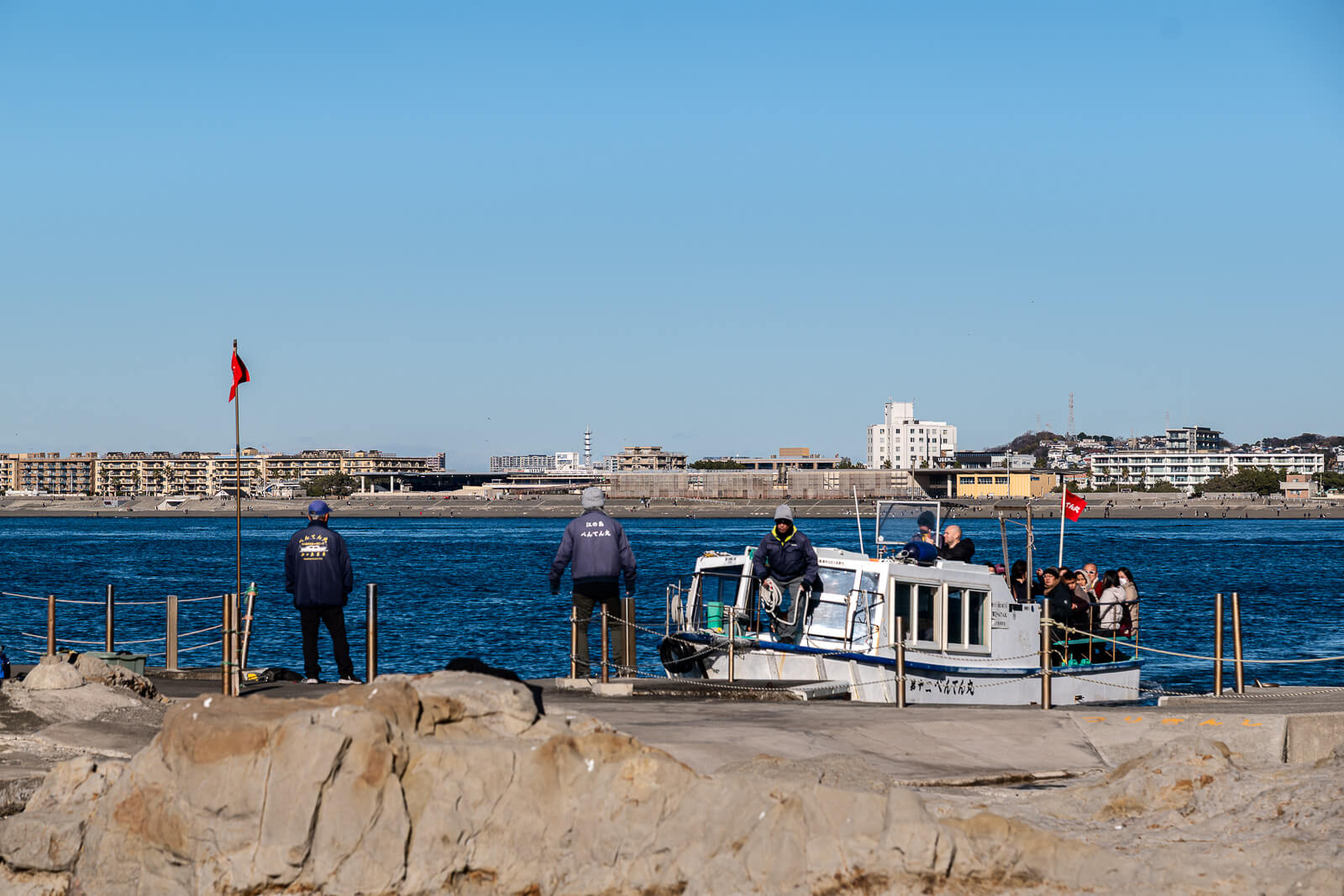
For an outing that includes Bentenmaru, place the coastal portion within that sailing window and check the departure arrangements at the pier. The boat can become a pleasant final island experience after the caves and shore. The walking return offers a different continuation, passing the higher paths and shops before reaching the bridge.
A full day also makes room for a later coastal walk or an evening summit visit. The garden and Sea Candle’s evening opening is a separate opportunity from the daytime boat service, so choose the order around the experiences that interest you. An evening-focused outing pairs naturally with the walking return and time around the summit, while a daytime coast visit offers the boat option when sailing.
Planning an Afternoon Visit, a Summer Day or a Rainy Outing
An afternoon arrival works well with a clear choice of main experience. The shrine route and summit provide one combination, with the garden and Sea Candle giving it a strong viewpoint focus. Visitors arriving in time for Iwaya can instead give the coast and caves the larger share of the afternoon, using the remaining time for shrine and garden stops along the route.
Summer days invite a slower walk with drinks, shaded pauses and time indoors between outdoor sections. Rain can make an aquarium visit especially appealing, with the marine-life galleries providing another way to spend the day beside Sagami Bay. At the coast, tide, swell and local access instructions determine where visitors can walk on the rocks; the shore and raised walkway offer distinct ways to enjoy the setting.
For a shorter walking day, combine the lower shrine route, the uphill Escar and a summit visit, then follow the return toward the bridge. The paths connecting these facilities still involve walking and some steps, so choose the extent of the route to suit your own comfort. Visitors needing step-free access can confirm the facilities and approaches for their chosen stops with staff before setting out.
Enoshima Aquarium and Ryukoji: Two Mainland Additions
The aquarium is an appealing mainland addition for marine life, its jellyfish exhibits and a break from the summer heat or rain. An hour or more allows time to follow the galleries, and scheduled presentations can give the visit another focus. Its mainland position makes it easy to treat as the first or last part of a wider Enoshima outing, with time set aside for the walk between the aquarium, island and station.
Ryukoji offers a different mainland experience near Enoden’s Enoshima Station and Shonan-Enoshima Monorail Station. The main hall and Nichiren history give the lower grounds their interest, while the hillside route leads to the five-storey pagoda among the trees. Allow around 20–30 minutes as a starting point for a visit, with extra time for photographs and a closer look at the upper grounds.
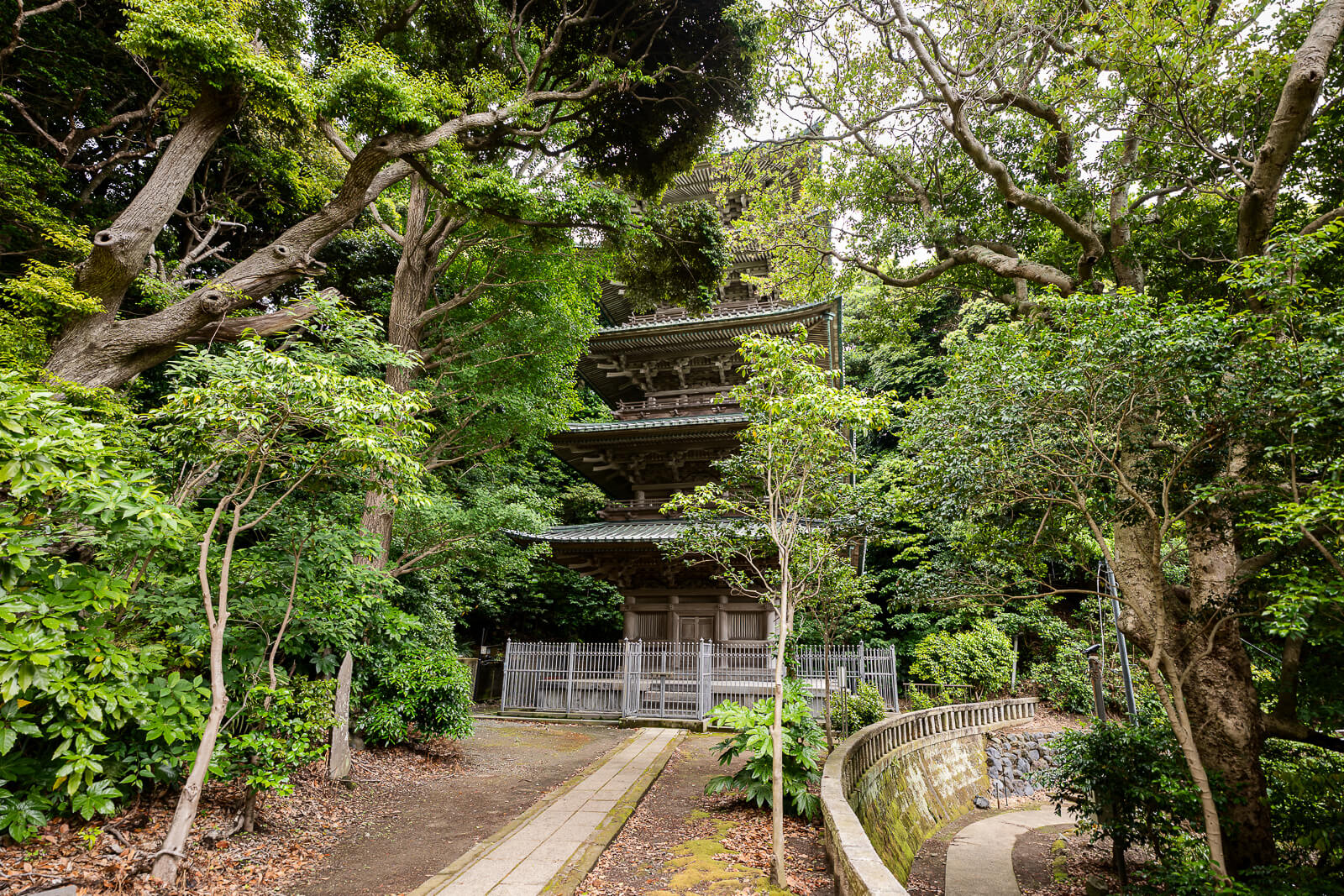
Choose the aquarium for marine life and indoor galleries, or Ryukoji for temple architecture and the hillside pagoda. Either can also form the main focus of a shorter mainland outing with food and a waterfront walk nearby. With a full day, one of these stops can sit alongside the island route, giving the visit another setting before the journey home.
The attraction pass in Hours and Fees is worth comparing for a day that combines included paid attractions, such as the tower, Iwaya and aquarium. A daytime garden visit and open shrine precincts can also be enjoyed with separate admission purchases for the places chosen. Match the pass’s current inclusions and validity to the actual route, giving each included experience time in the day.
Choosing Your Enoshima Visit Length
Choose a half-day for a concentrated introduction to Enoshima’s shrine paths, summit and coast. Keep the shrine visits brief and give one or two experiences, such as the tower panorama or Iwaya, a larger part of the outing. A shrine-and-garden half-day is another rewarding arrangement for visitors who prefer the shorter summit route.
Choose a full day for closer shrine detail, the greenhouse remains, the Sea Candle, caves, food and photography. The extra hours let these experiences unfold as individual stops, with room for a meal and pauses beside the sea. Add the aquarium or Ryukoji if that mainland experience appeals, or devote the whole day to exploring the island.
Begin with the experience you most want to enjoy, its opening hours and your preferred route back. Build the shrine, summit and coastal portions around that choice, then leave room for the shops, views and food along the way. Both a half-day and a full day offer a worthwhile Enoshima visit, with the longer outing giving more time to the places that hold your attention.
Getting There
Choose an arrival that fits your half-day or full-day outing with the guide to getting to Enoshima.
Access and Arrival
Use Katase-Enoshima, Enoshima or Shonan-Enoshima according to the wider journey. Start the local time allowance after arrival and include the bridge walk and return.
- Odakyu arrival
Odakyu → Katase-Enoshima → mainland bridge → Enoshima
Leave the station and follow the pedestrian approach to the island bridge. · Check whether the selected train requires a transfer at Fujisawa.
- Enoden arrival
Enoden → Enoshima Station → shopping street → island bridge
Walk through the mainland shopping area toward the bridge. · Enoden links Kamakura and Fujisawa; allow time to walk from the station.
- Monorail via Ofuna
Shonan Monorail → Shonan-Enoshima → mainland approach → island bridge
Shonan-Enoshima is close to Enoden Enoshima Station. · The monorail reaches Ofuna, rather than Kamakura Station directly.
More time does not remove the climb: Escar sections run uphill only. A late coastal visit may miss Bentenmaru, so the walking return must remain feasible.
Hours and Fees
Visitor information
A half-day or full-day choice uses independently operated attractions; there is no single combined closing time.
- Hours
- Garden / Sea Candle: normally 09:00–20:00, last entry 19:30. Greenhouse exhibition: closes 17:00. Iwaya: normally 09:00–17:00, seasonally variable. Bentenmaru ends earlier than an evening summit visit and can stop for conditions.
- Admission
-
Allow separately for selected interiors and transport. Standard adult examples: Sea Candle ¥800; Escar ¥500; Iwaya ¥500. Garden daytime access is free, with an event-night departure charge where applicable. A package is useful only if its actual coverage fits the chosen visit.
Optional combined admission
Enoshima Island All-Access Pass
Optional for a wider island-and-aquarium day. Includes Escar, Sea Candle, Iwaya and the aquarium. Choose + Night for event-evening garden entry. Rail, Bentenmaru and Hoanden are separate; check date and package conditions.
Compare Enoshima All-Access Passes
Plan Your Visit
Choose the stay, transport and experiences that fit the wider coastal trip.
Compare Fujisawa and Enoshima Stays
Stay near Enoshima or a convenient Fujisawa station for more time on the Shonan coast. Compare locations, room rates and cancellation options.
Compare Fujisawa Stays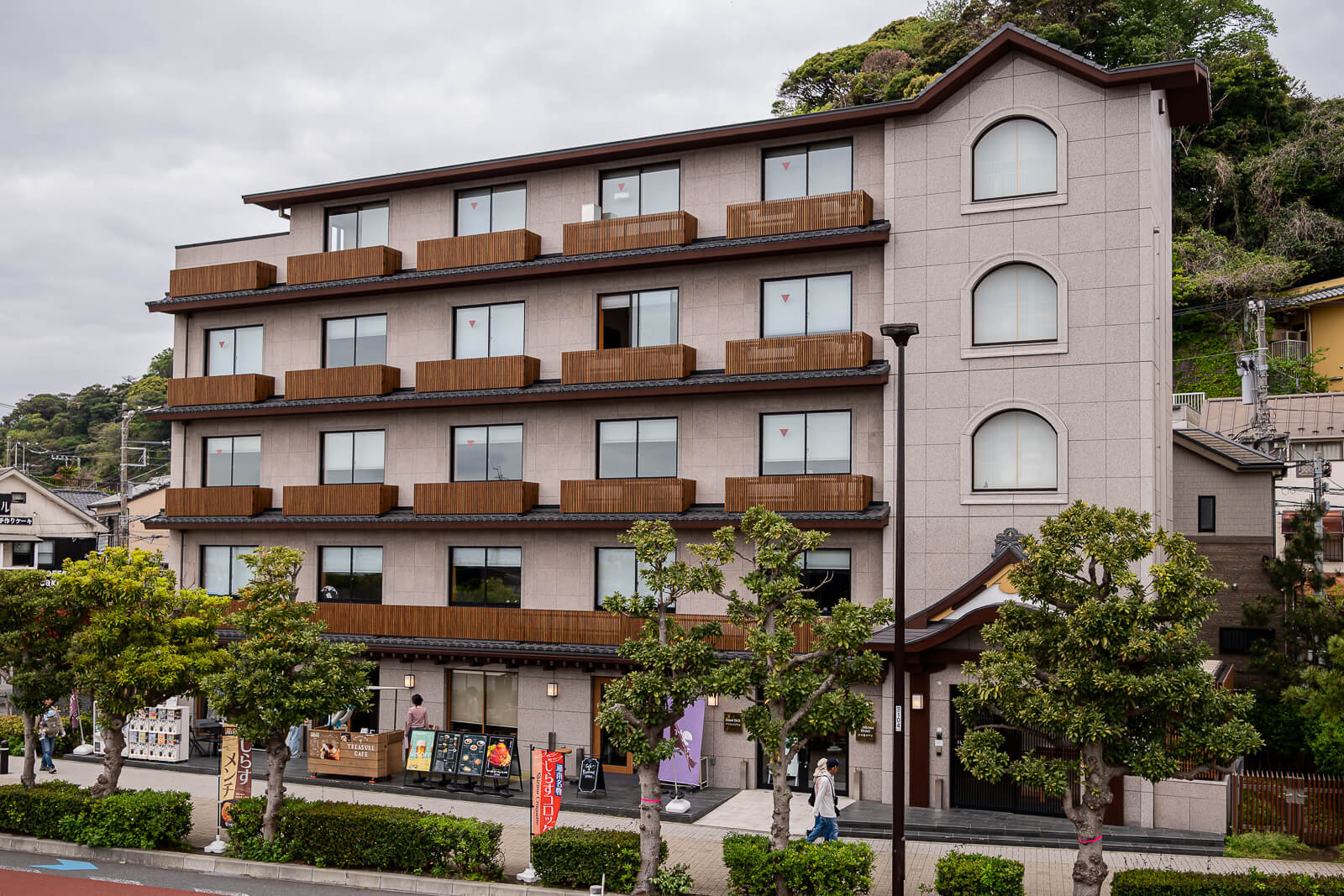
Compare Tokyo Car Rental Options
Rail and walking suit Enoshima itself. Consider a rental car when the wider trip includes places beyond the local railway corridor.
Compare Tokyo Car Rentals
Browse Guided Kamakura Day Trips
Explore Kamakura with a guide and compare routes, included stops and free time. Choose an itinerary including Enoshima if you want both in one day.
Browse Kamakura Tours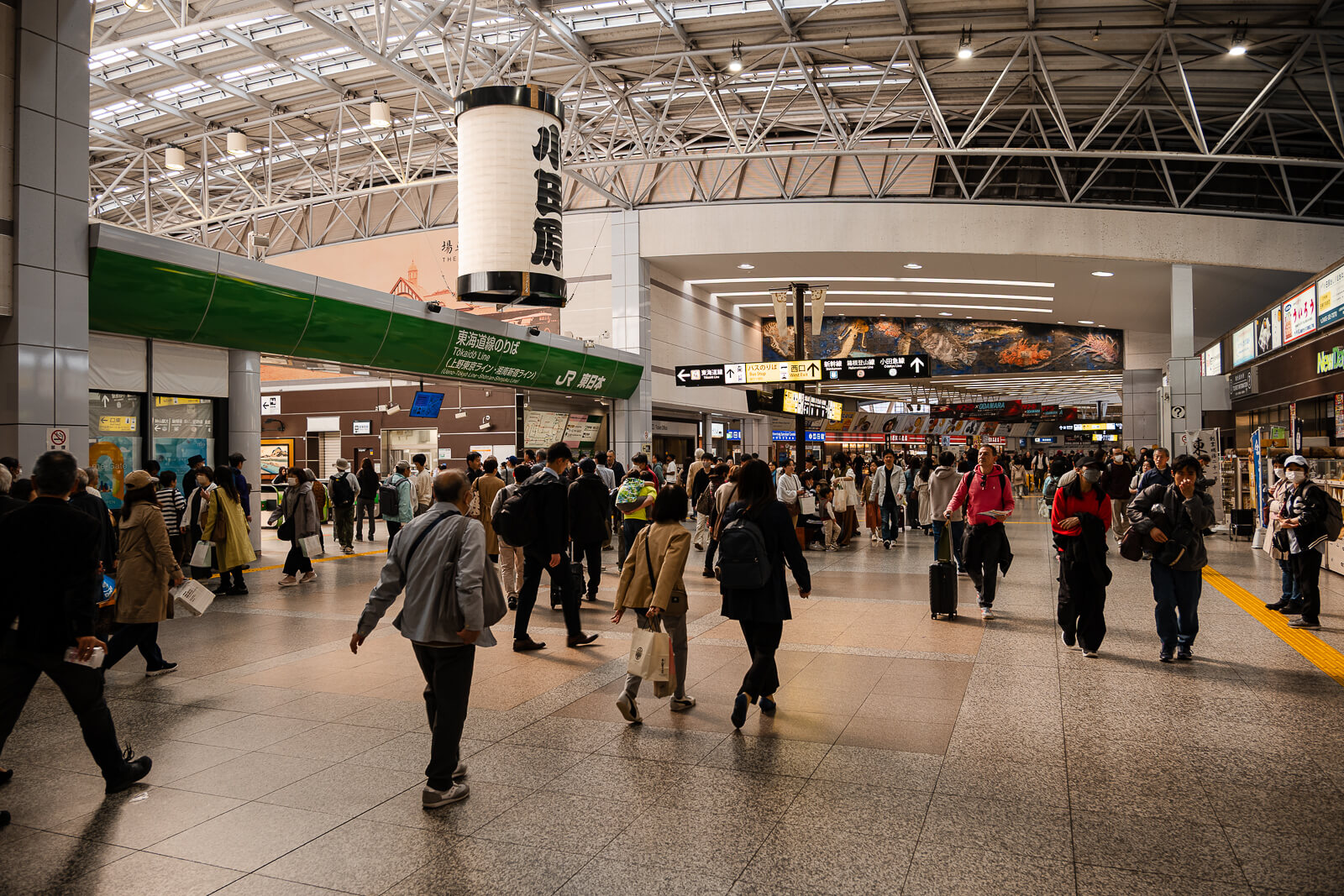
Explore Enoshima Aquarium Tickets
Add jellyfish galleries and Sagami Bay marine life to your coastal day. View aquarium admission options for your travel date.
View Aquarium Tickets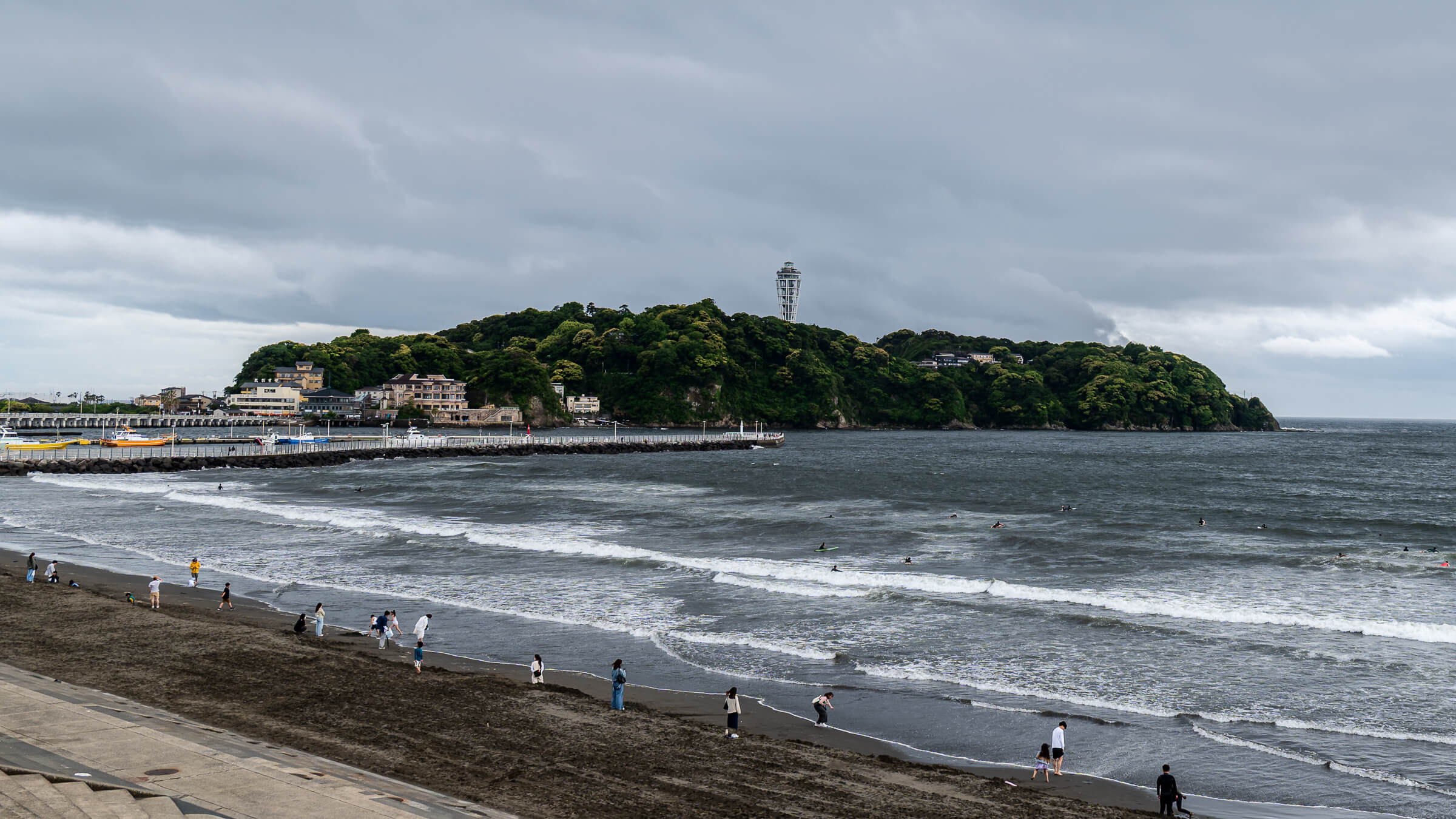
Compare Japan Data Plans
Keep maps, translation and train updates handy around Japan. Compare data allowances and coverage for your eSIM-compatible phone.
Compare Japan eSIMs
Ride the Shonan Monorail
Approach Enoshima on the suspended monorail from Ofuna. Compare ticket options and validity for the journey you plan.
View Monorail Tickets