
From the Bridge to the Far-Side Coast
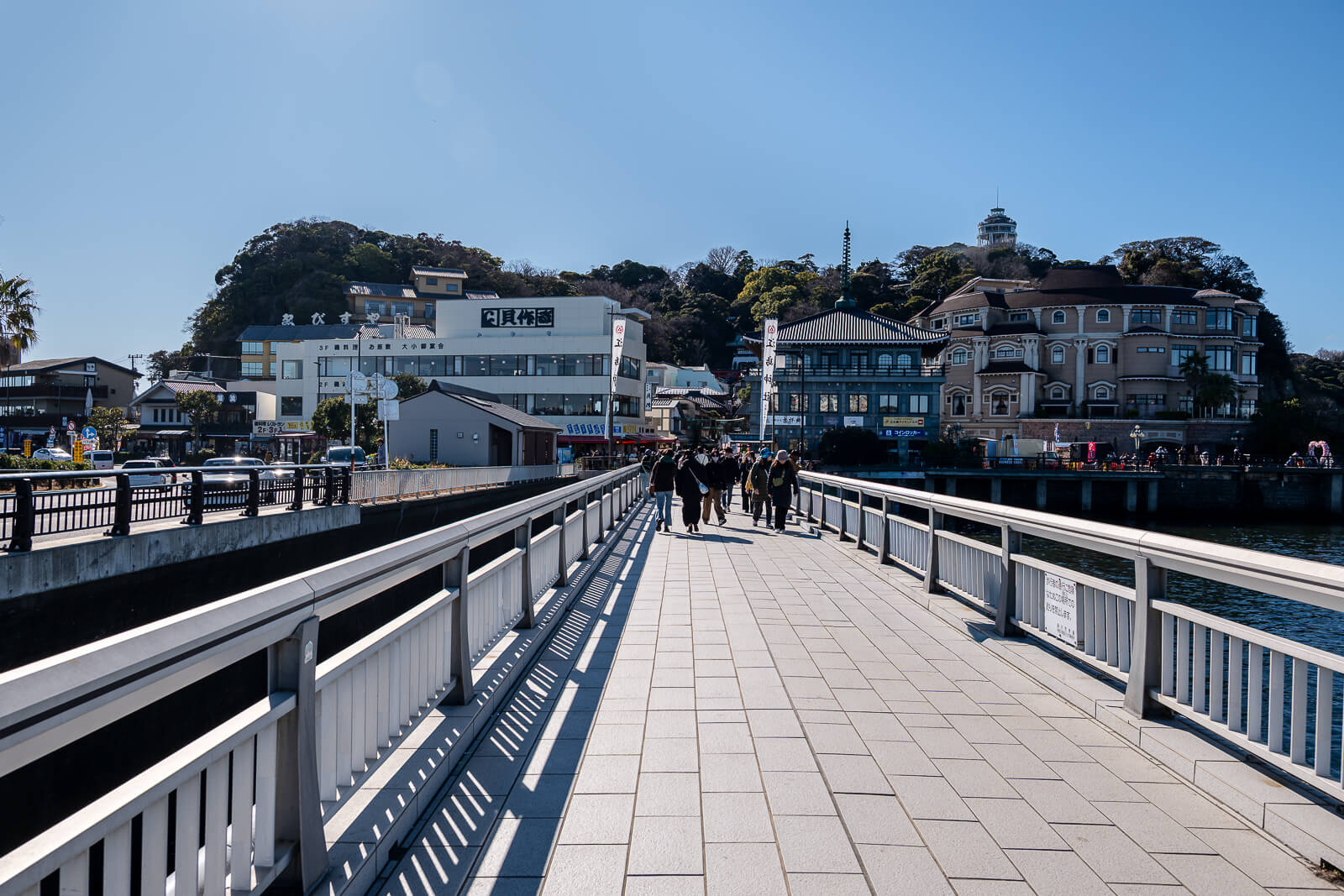
The walk across the bridge introduces Enoshima as a small island off the Shonan coast, but the climb beyond the shopping street reveals how much the visit changes from one area to another. Shrine precincts occupy different levels, a garden and observation tower sit around the summit, and the far side drops toward a broad rocky shore and sea caves. A satisfying visit needs room for those changes in setting, along with the walking between them.
Enoshima belongs to Fujisawa in Kanagawa Prefecture and works well as a day trip, either on its own or alongside a carefully chosen part of nearby Kamakura. Allow several hours for the island, with more time for lunch, photography, the tower and cave visits. The most consequential planning detail is the return: reaching the far-side coast means either climbing back across the island or using a boat whose operation depends on conditions.
How Enoshima Island Is Laid Out
The island is easiest to understand as a progression from the bridge to the summit and onward to the coast. The entrance has food stalls, restaurants and the uphill shopping approach. Above it, Hetsumiya and Nakatsumiya lead toward Samuel Cocking Garden and the Sea Candle, while the farther route passes Enoshima Daishi and Okutsumiya before descending toward Chigogafuchi and Iwaya.
Those areas reward different kinds of attention. The shrine precincts invite a closer look at architecture and devotional objects; the summit offers gardens, refreshments and elevated views; the far-side coast gives the walk a more exposed, open setting. Visiting both the summit and the coast provides a better sense of the island’s variety than spending the whole visit around its first ascent.
The Enoshima Escar consists of three uphill sections, with Hetsumiya reached first, Nakatsumiya on the next level and the summit around Samuel Cocking Garden at the top. Walking between those sections is part of the visit: getting off an escalator brings you into the shrine area rather than bypassing it altogether. It is therefore a useful way to reduce the initial climb while retaining the principal stops on the ascending route.
That help ends at the summit. There is no downward Escar, and the route onward to Okutsumiya, Chigogafuchi and Iwaya still involves slopes and stairs. Anyone assessing the walk for tired legs, a pushchair or restricted mobility should consider the complete return journey rather than treating the escalators as transport around the entire island.
The Three Mainland Stations and the Walk to Enoshima
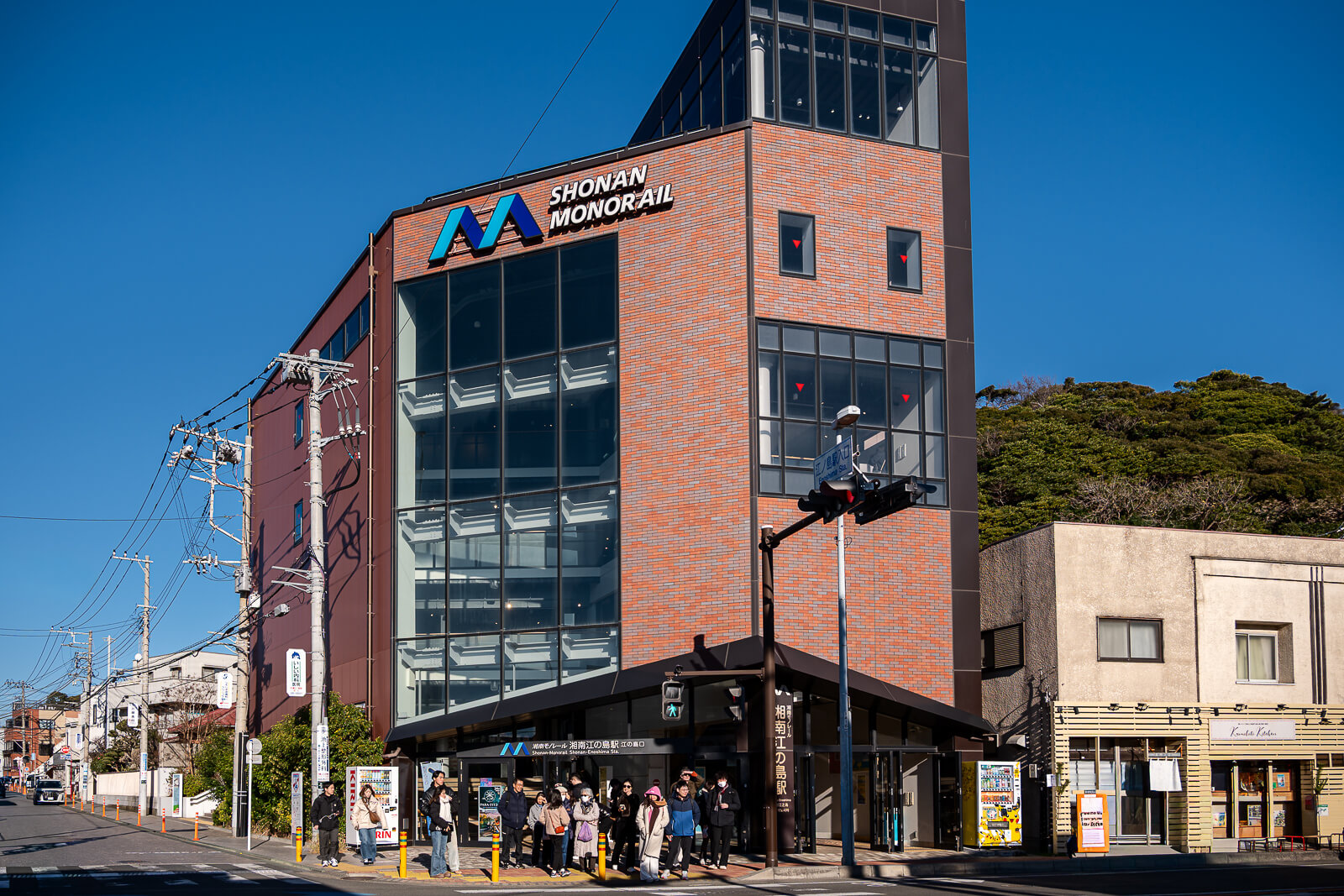
Katase-Enoshima on Odakyu, Enoshima on Enoden, and Shonan-Enoshima on the Shonan Monorail are separate stations on the mainland. Enoden connects with Kamakura and Fujisawa, while the monorail provides the approach from Ofuna. Choose the arrival that fits the rest of the journey, then allow for the walk to the island itself.
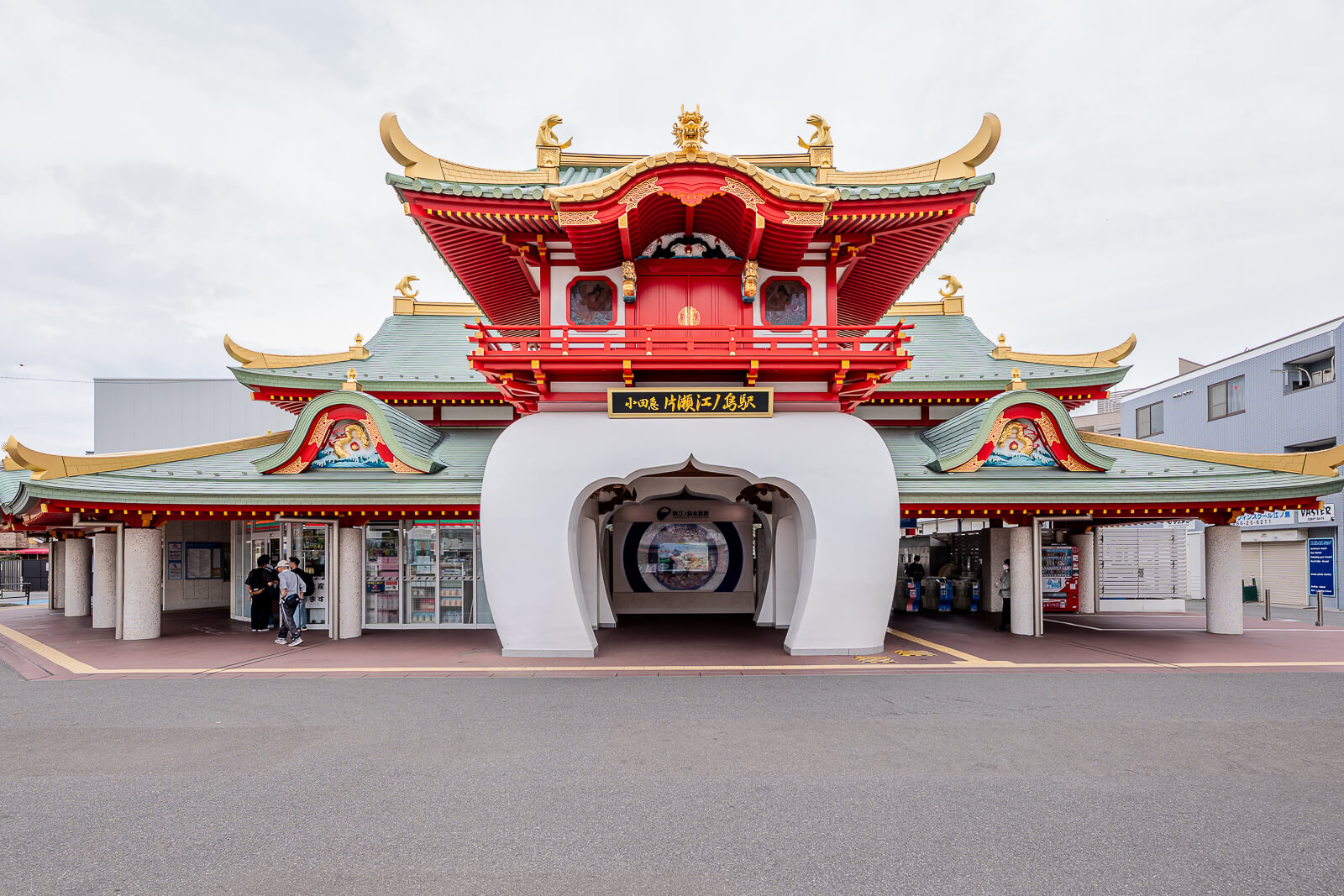
The approach already feels like part of the outing. Shops and restaurants provide opportunities to buy a drink, browse or stop for something to eat before the bridge. The Enoden-side approach passes through a shopping area, while the Odakyu arrival has its own station forecourt and connecting walk toward the waterfront.
Driving brings visitors across to the island’s parking areas, but parking availability changes with demand. A car does not remove the walking and climbing involved in exploring the main sights. For an ordinary island visit, compare the convenience of the rail approach with the prospect of waiting for parking.
Benzaiten Nakamise Street and the Island Entrance
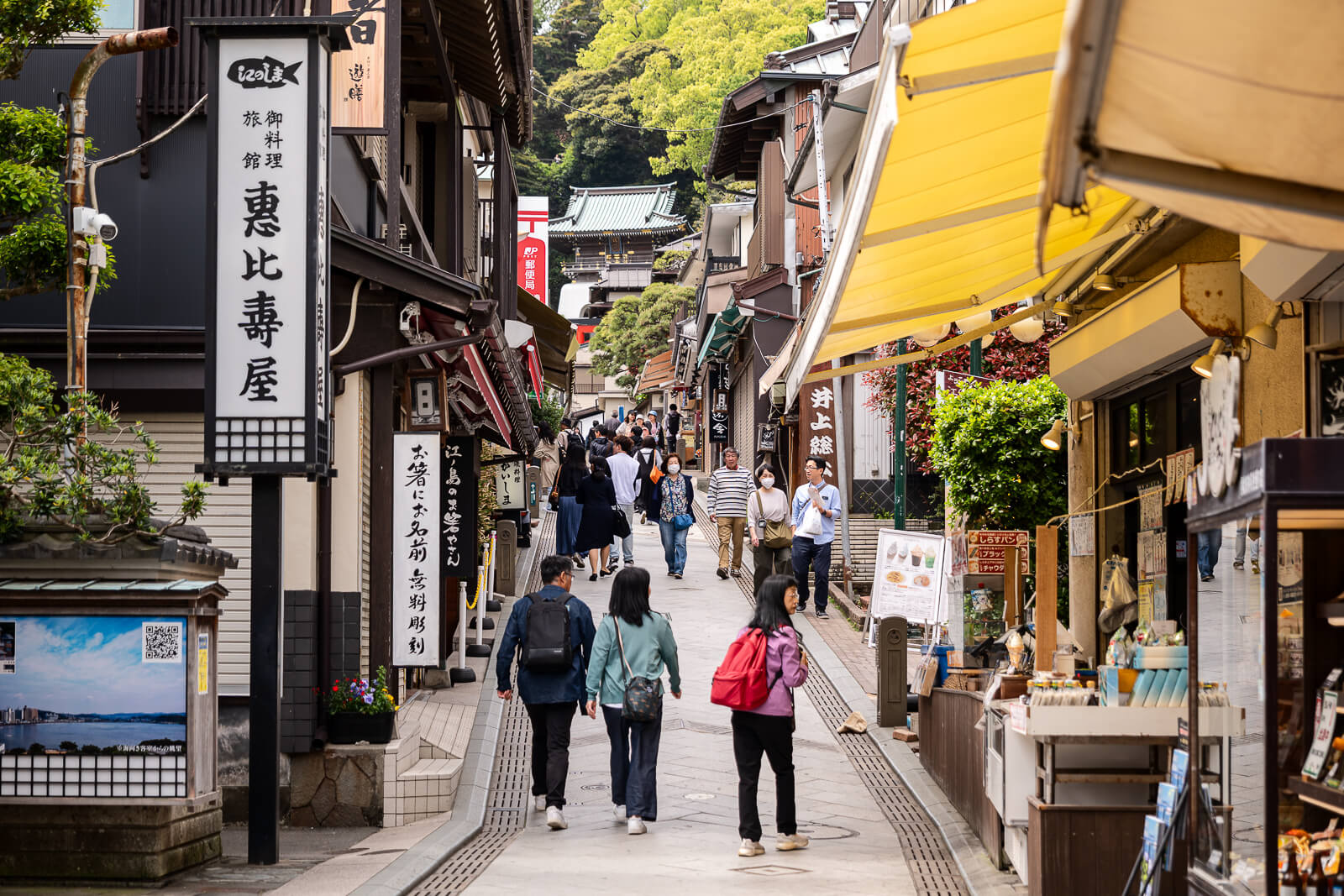
Benzaiten Nakamise Street is the historic shopping approach running from the island entrance toward Enoshima Shrine. Shops and places to eat line the ascent, so the first part of the walk is lively and built up rather than a gradual introduction through parkland. Food, souvenirs and the view up toward the shrine are all part of its appeal, but stopping repeatedly here can also use a surprising share of a short visit.
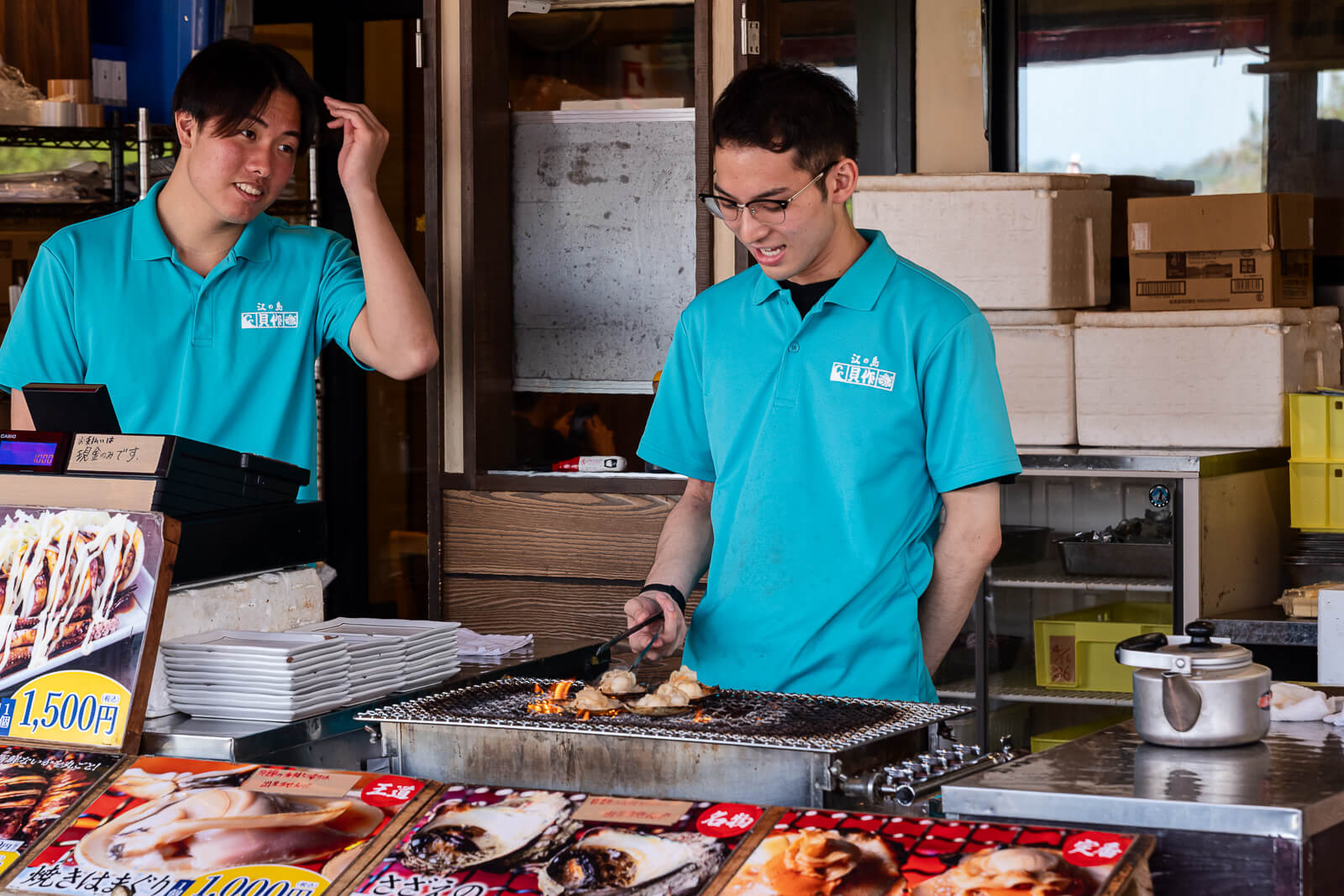
The entrance-side seafood stalls are a practical place to eat before starting the climb. Menus can include grilled squid, shellfish and oysters alongside ice cream and drinks; the selection and available seating vary between businesses. A quick snack here suits an arrival when lunch is still some way off, while a sit-down meal farther across the island needs more room in the schedule.
There is also an easily overlooked waterfront pause near the entrance-side hotel and spa area, before committing to the uphill shopping street. A small courtyard and heart-shaped photo spot place the bridge and mainland in the background, with steps leading down toward the water. This is a different perspective from the main ascent, but any access onto lower rocks depends on tide, waves and restrictions; a clear-day Fuji view should be treated as a possibility rather than a reason to descend regardless of conditions.
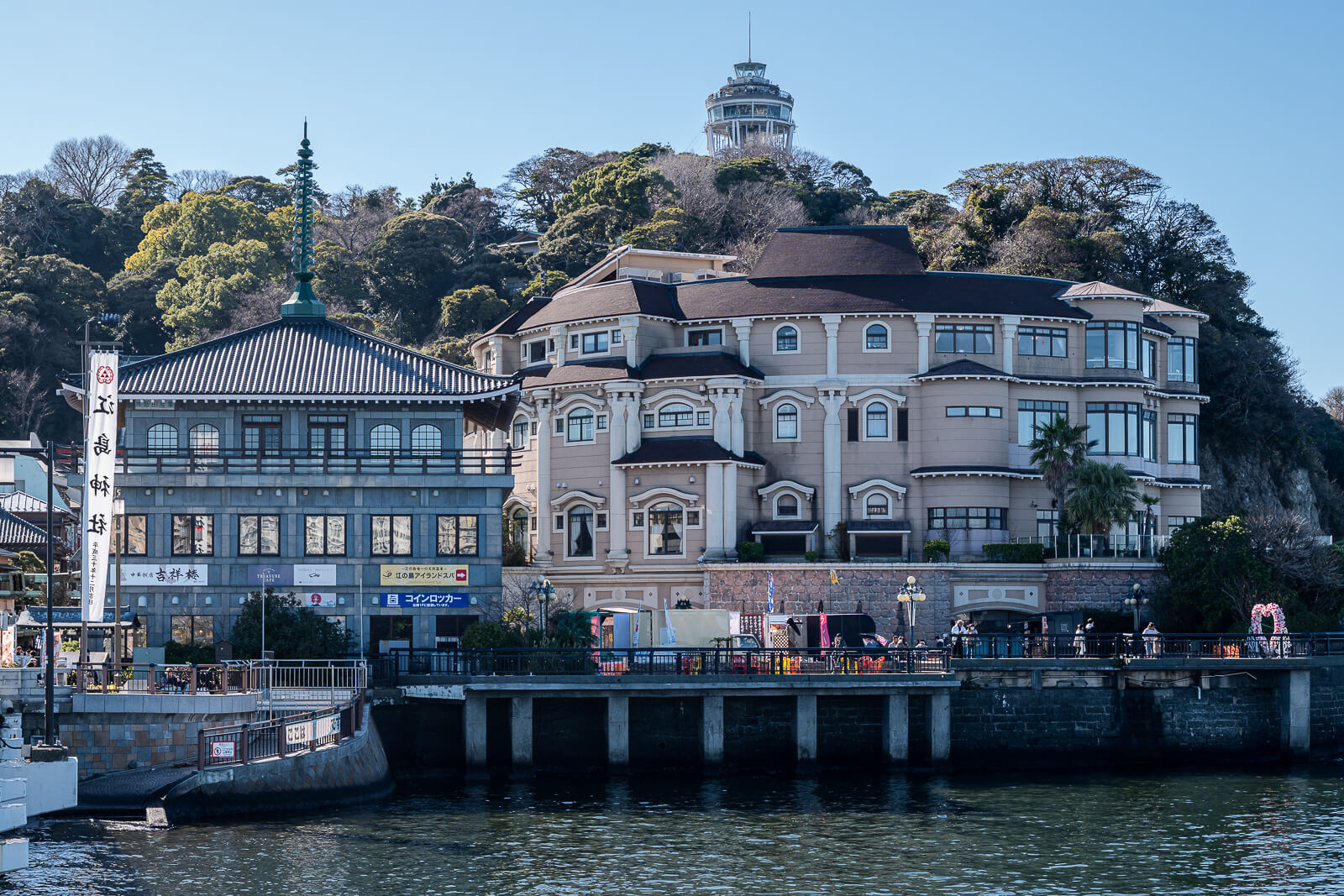
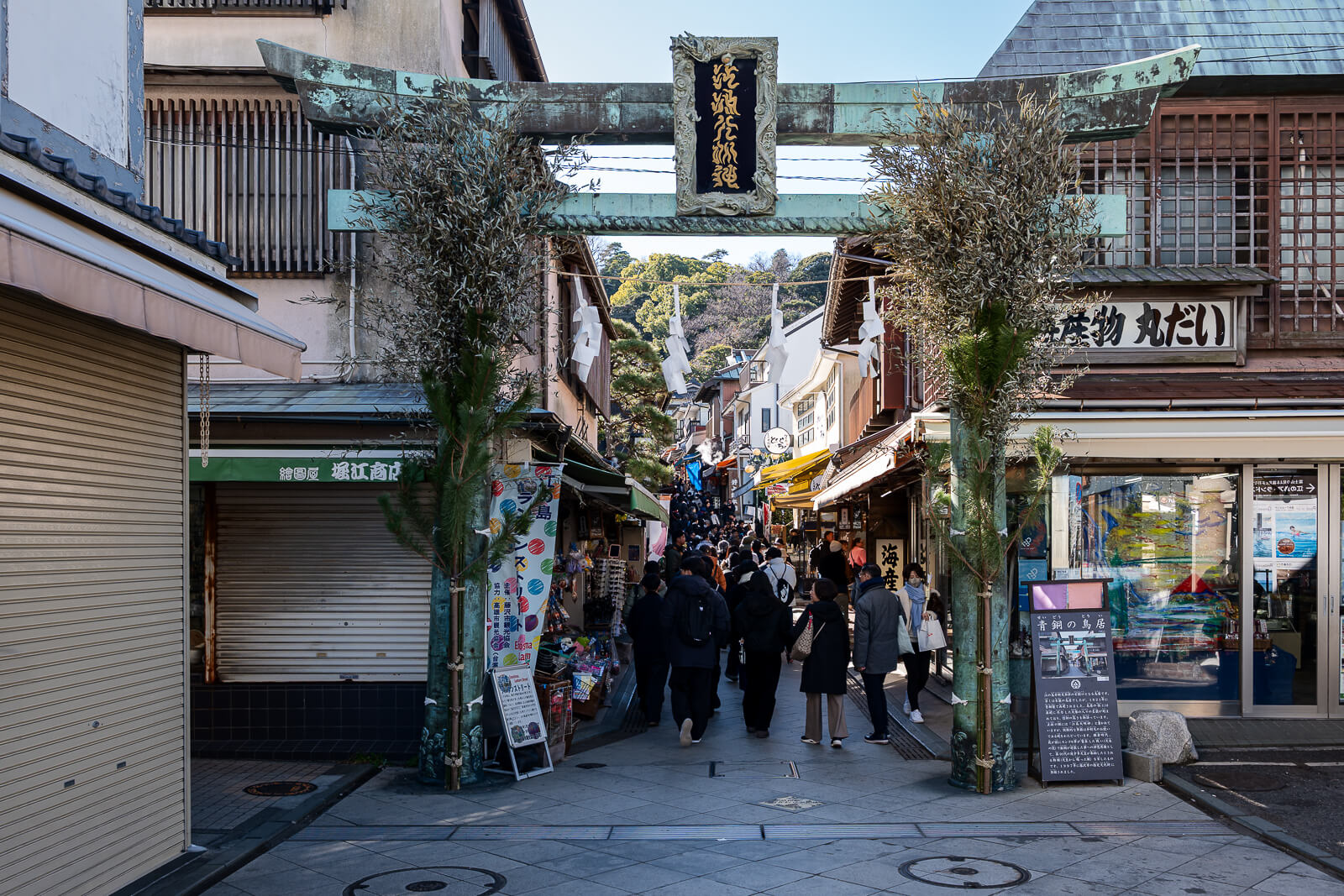
Beyond the entrance, shops line the uphill approach toward the shrine area. The view back down this street is worth remembering as the route climbs: it connects the buildings, torii and approach in a way that is easy to miss while looking only uphill. Make room for the photograph without turning the steps into a stopping point for everyone behind you.
Hetsumiya, Nakatsumiya and Okutsumiya: Enoshima’s Three Shrine Precincts
Enoshima Shrine comprises Hetsumiya, Nakatsumiya and Okutsumiya, spread across the island. They are related parts of one shrine, each with its own setting and features. Understanding that relationship makes the walk more rewarding than treating every torii as the entrance to an unrelated attraction.
Hetsumiya is the first main precinct and a useful introduction to the religious landscape of Enoshima. Beside the principal worship hall, the octagonal Hoanden houses two contrasting Benzaiten figures: the musical Myoon Benzaiten and the eight-armed Happi Benzaiten. Hoanden has its own admission, so visitors can explore the open precinct before deciding whether to add the short interior visit.
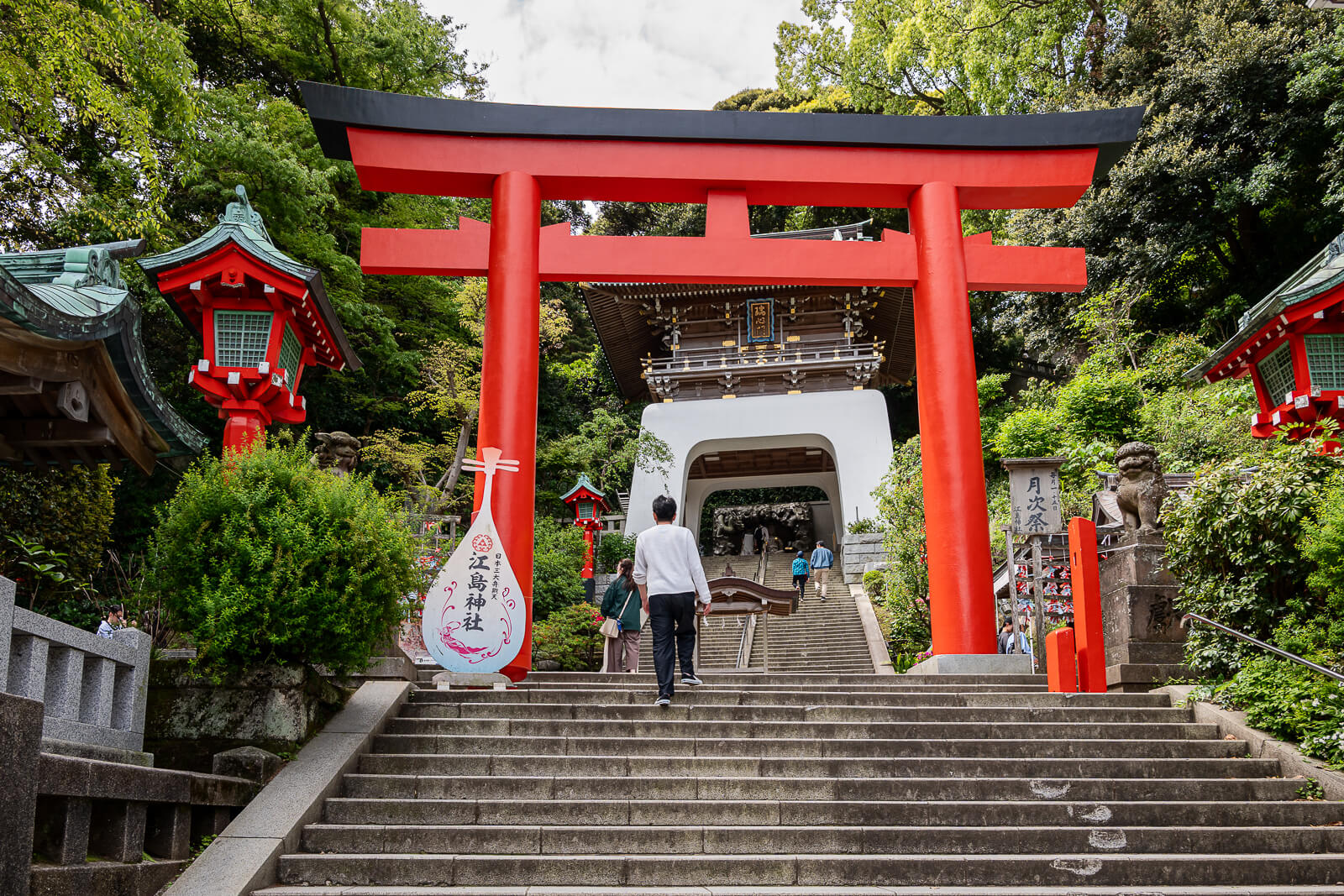
The white-dragon coin-washing feature and Uchide no Kozuchi, the wish-granting mallet, give this area further points of interest beyond the main hall. Each has its own devotional practice, which should be followed from the explanation at the object rather than improvised for a photograph. The Hetsumiya and Hoanden guide explains these features in more detail.
Before continuing uphill, look back along the approach from a suitable place near the first stair landing. The shopping street becomes a subject in its own right when seen from above, with the buildings framing the downhill view. Keep the moving stair route clear while taking in the view.
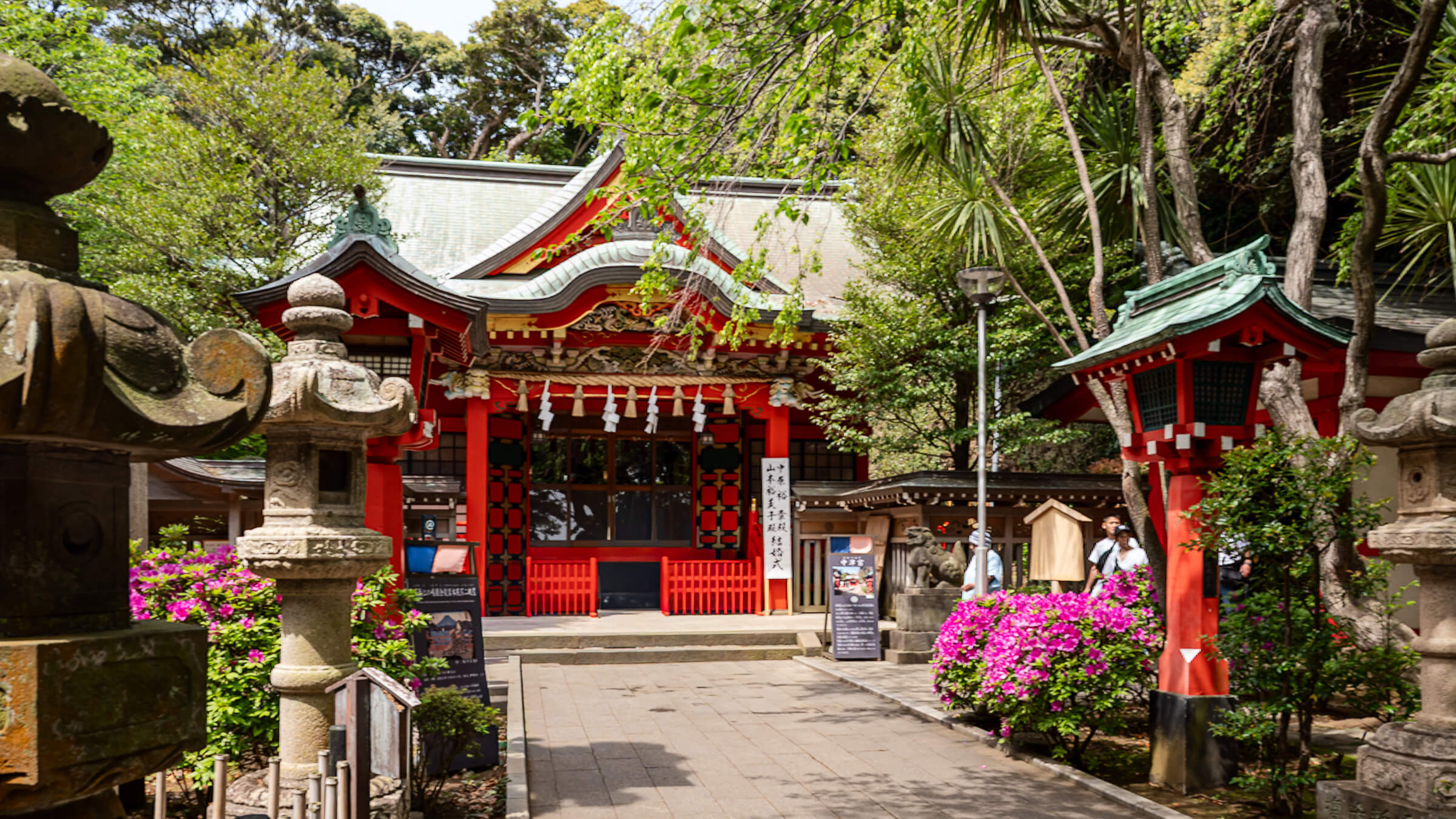
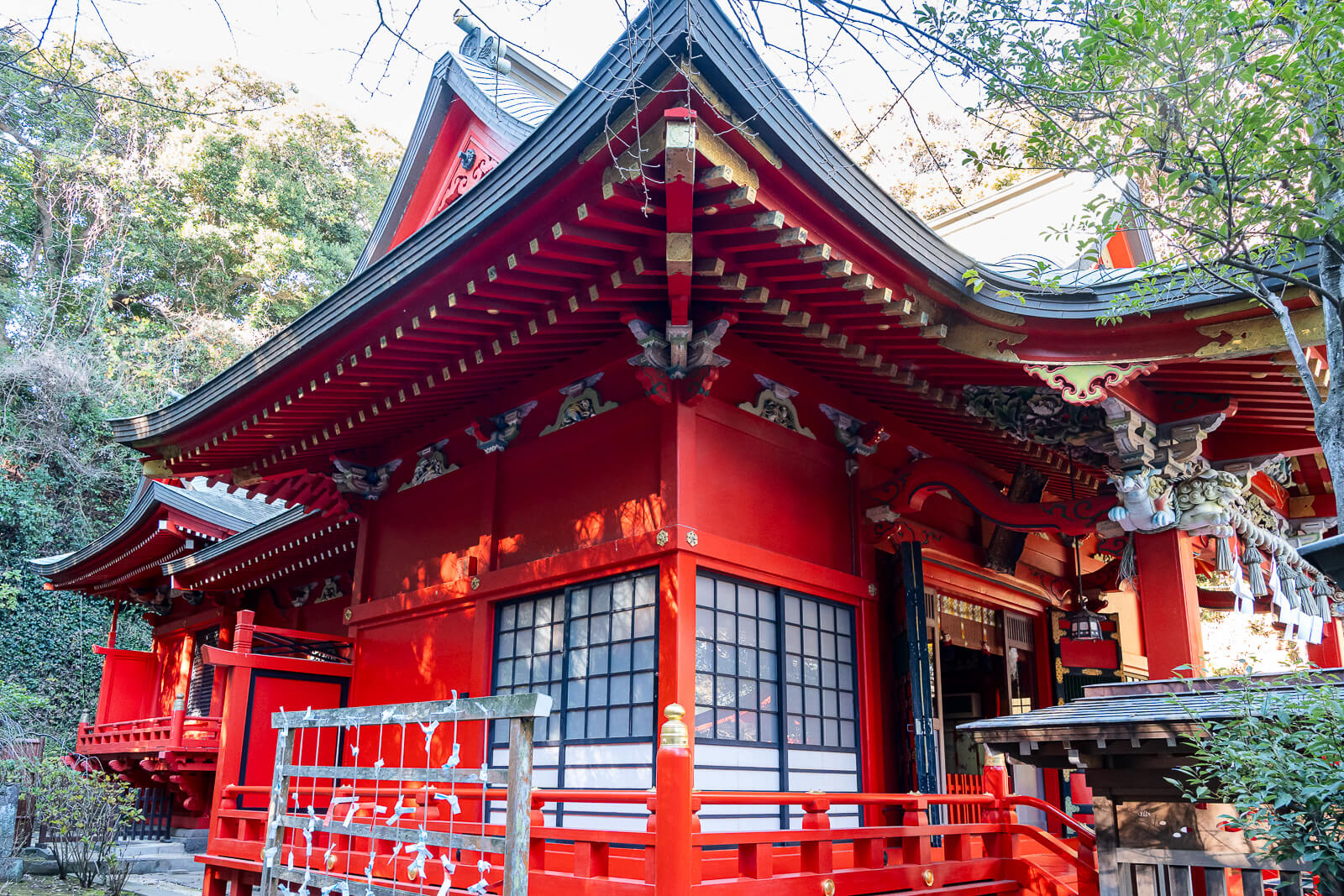
Nakatsumiya occupies the middle stage of the ascent and stands out for its vermilion architecture. Its compact size makes it easy to pass quickly, but the painted hall and the changing views toward the bay and mainland are reasons to pause between Escar sections. The middle levels also provide a different view of the bridge and coast from the panorama at the tower above.
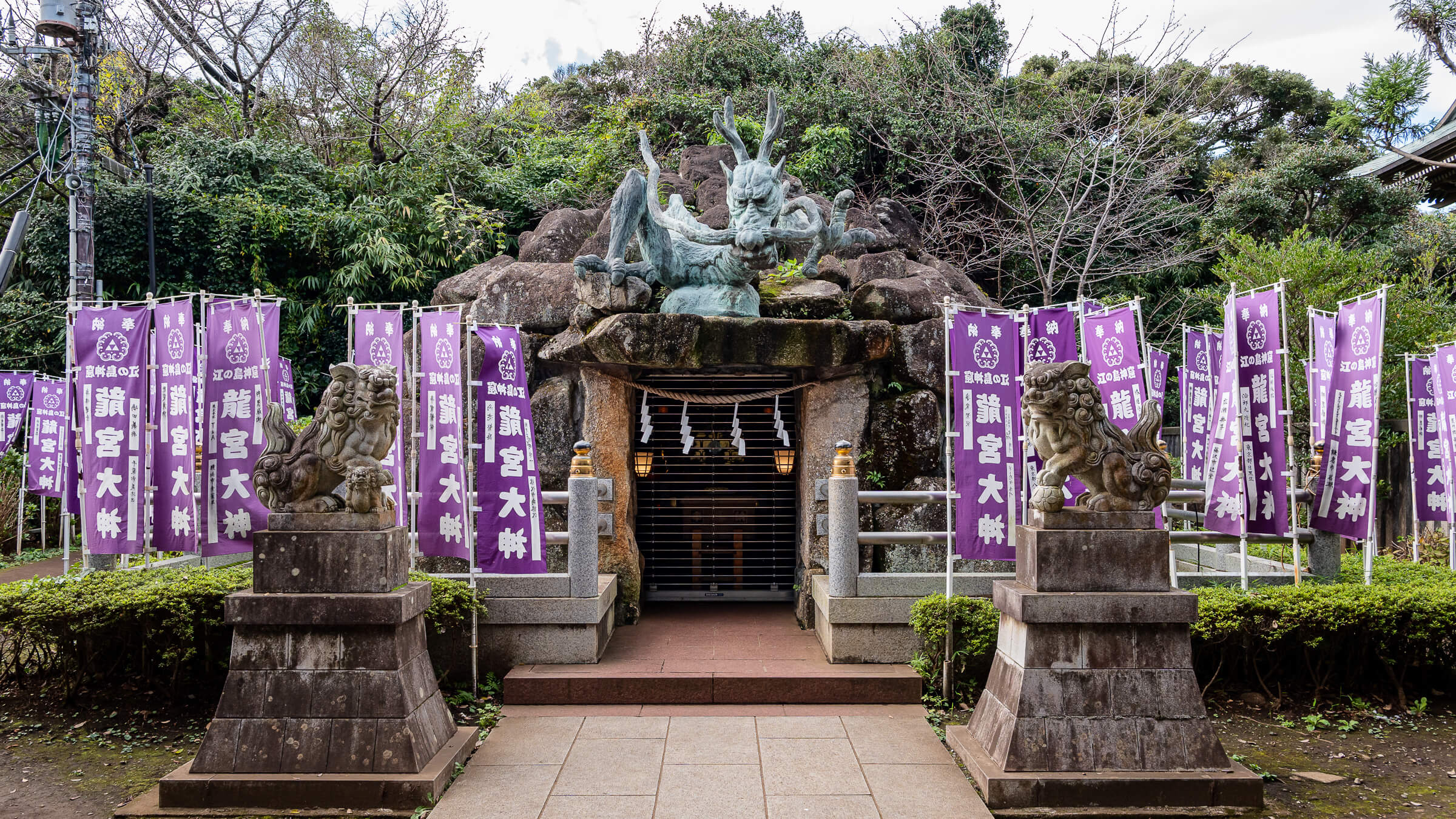
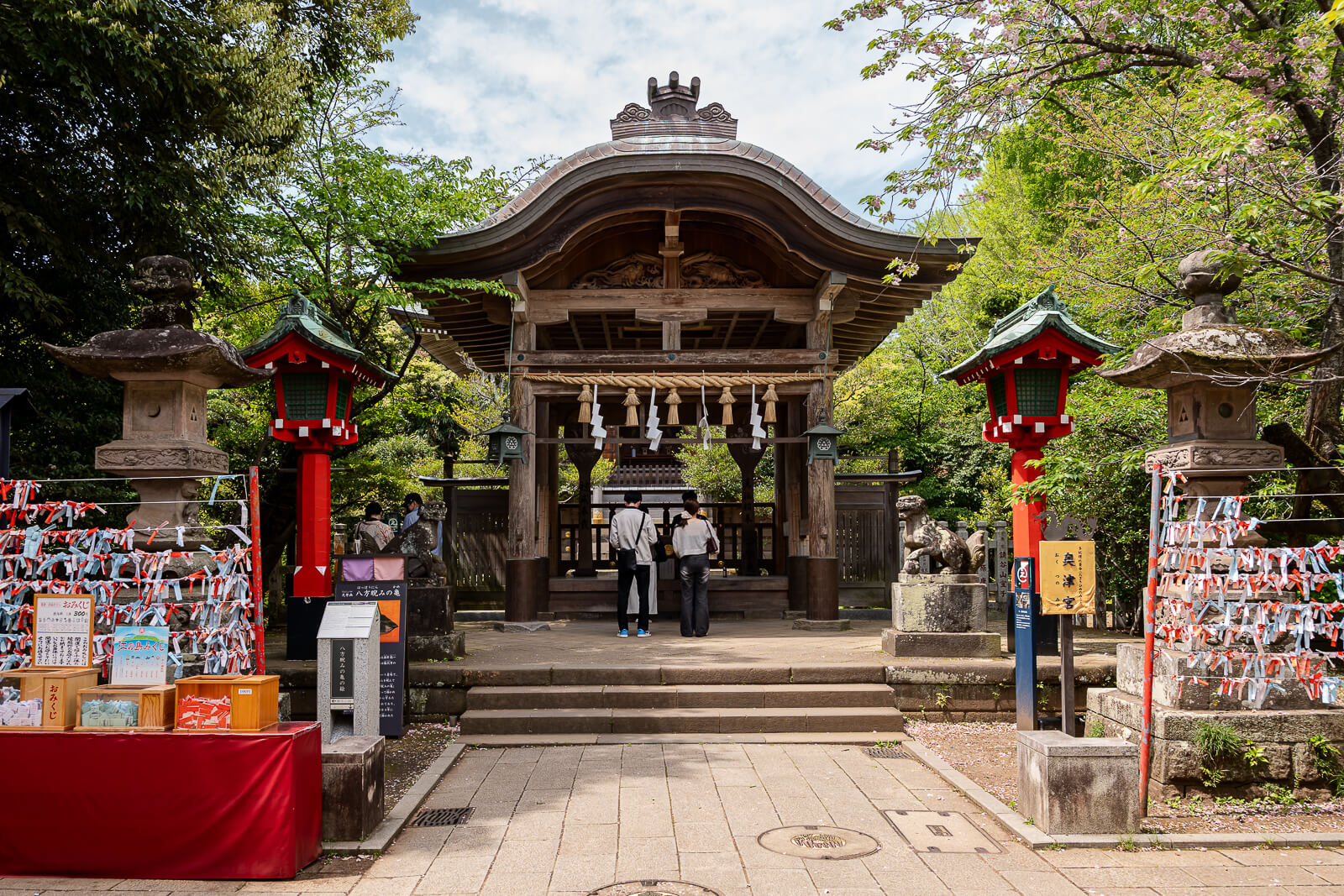
Okutsumiya belongs to the later part of the island walk, beyond the summit attractions and Enoshima Daishi. Look for the turtle image associated with its hall and the adjacent dragon shrine, Wadatsuminomiya, rather than assuming this precinct repeats the first two. The Love Bell is a separate side detour nearby, followed by the eventual descent toward the sea.
Samuel Cocking Garden and Its Greenhouse Remains
Samuel Cocking Garden has an entrance gate that can make it look like every visit requires a paid ticket. The garden is free during the day, and it is also free throughout non-event days. During nighttime events, a fee applies when leaving at or after 5 p.m.; admission to the Sea Candle tower is separate.
Samuel Cocking Garden preserves the story of an earlier horticultural experiment as well as offering planted paths and views. Cocking, a British merchant, developed a garden on Enoshima, and the surviving brick greenhouse remains explain a more specific history beneath the modern hilltop attraction. The exhibition building and lower passage are worth seeking out rather than walking directly from the gate to the tower.
A lower passage brings visitors beside the old greenhouse structure, with the space open to the air above. Seeing the masonry from that lower level gives a clearer sense of the earlier greenhouse than viewing it only from the surrounding paths. Follow the exhibition route available on the day, then return to the planted garden and continue toward the Sea Candle.
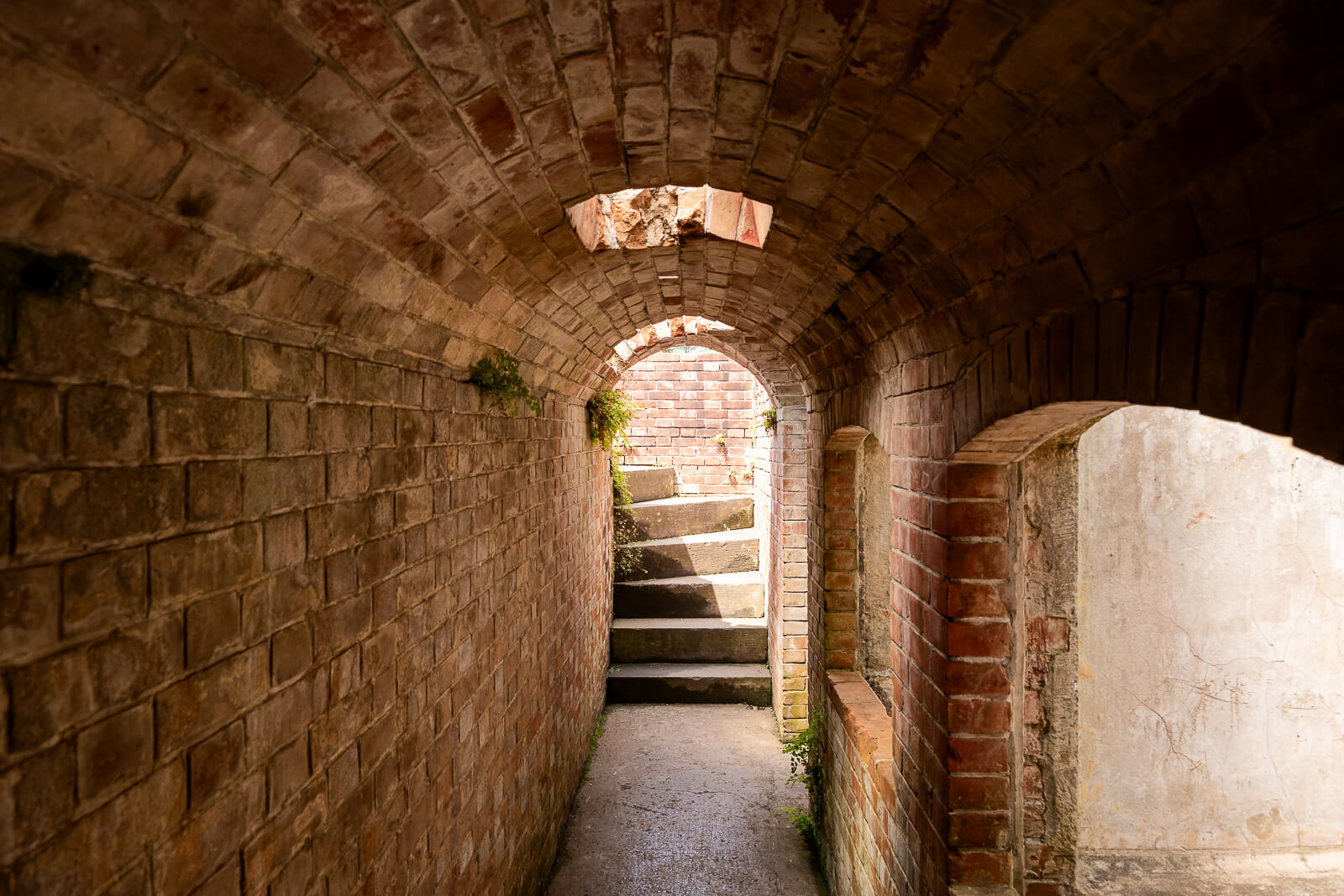
The garden also offers a chance to pause at a cafe or viewpoint before the more demanding far-side walk. Allow extra time for a cafe stop, particularly on busy afternoons. The Samuel Cocking Garden guide separates the remains, garden visit and evening admission arrangements from the tower experience.
Enoshima Sea Candle: Enclosed and Outdoor Observation Decks
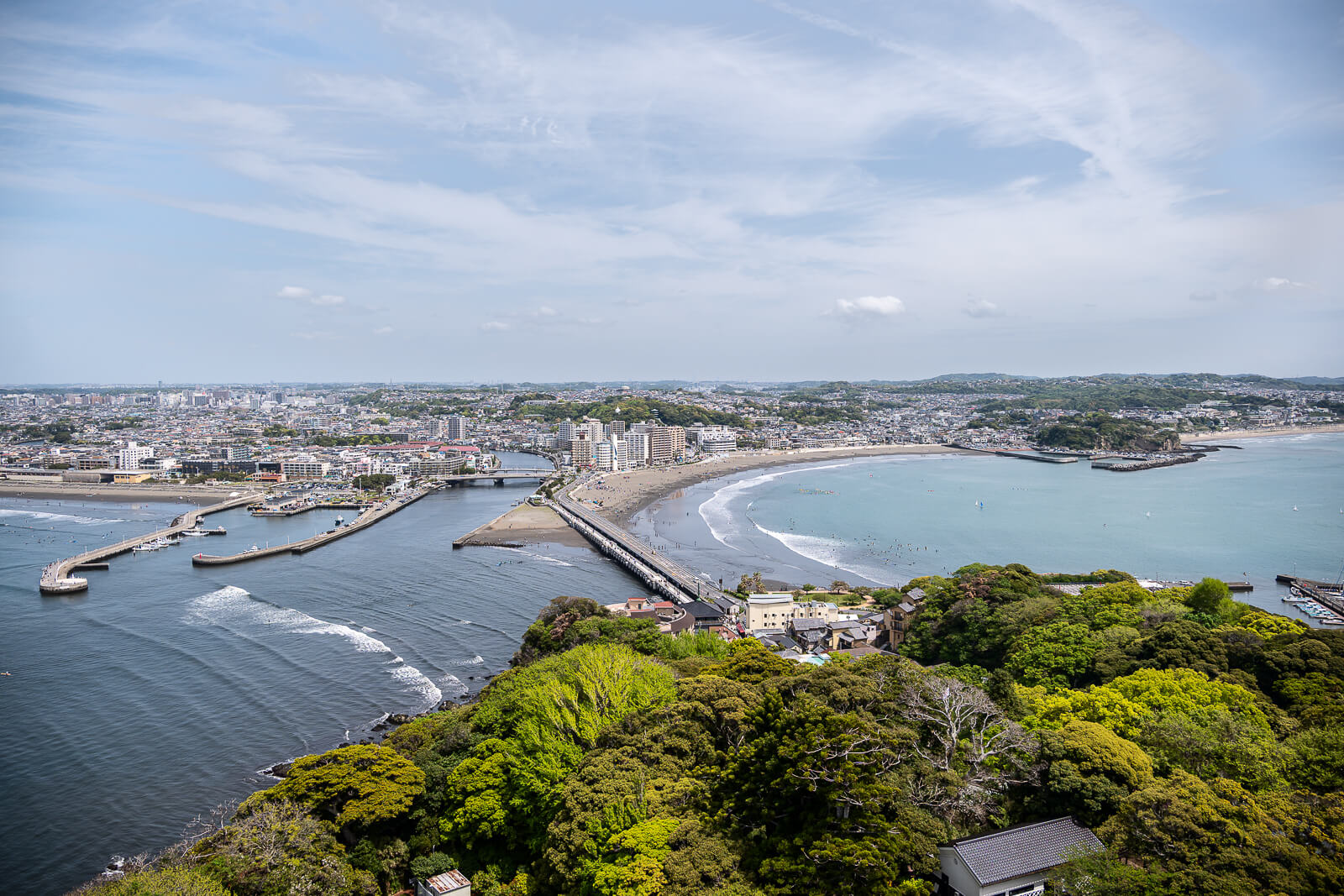
The enclosed observation floor gives a complete circuit of coastal views, making it possible to relate the bridge, mainland and open sea to the route already walked. The outdoor deck above provides the same broad sense of position with open air and no window between the camera and the view. Its availability depends on operating conditions, so visitors coming specifically for that deck should check before paying for the tower.
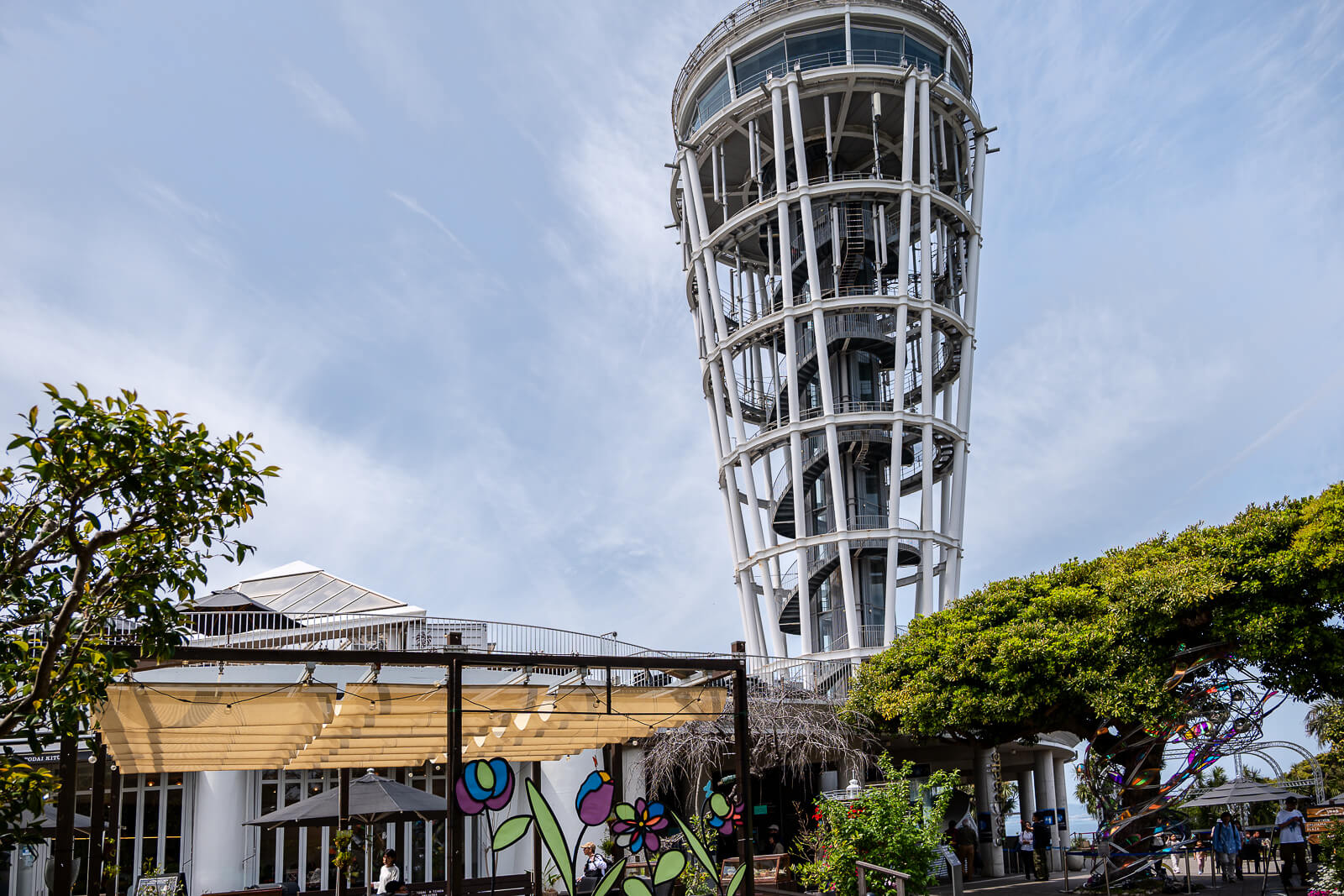
When the exterior stairs are open for descent, they add another perspective rather than simply another way to reach the bottom. The stairs wind down the structure, opening changing angles toward the cliffs and pathways below. This option suits someone interested in those intermediate views and comfortable with stairs; the elevator remains the straightforward return when operating normally.
Visibility changes what the Sea Candle offers. Clear air rewards distant coastal views, while haze makes the nearer shape of Enoshima and its relationship with the mainland more prominent. The Sea Candle guide covers the observation floors, photography considerations and the experience around the tower base.
Reader note — checked 4 November 2026: Sunset Terrace and its shop are closed for renovation, and the elevator does not stop at the terrace floor. The garden and Sea Candle remain open. The operator’s notice gives the end of November as the planned completion, not a confirmed reopening date.
Enoshima Daishi and the Walk Beyond the Summit
The route beyond the summit passes smaller shops, restaurants and residential buildings before continuing toward Okutsumiya. Enoshima Daishi is the Buddhist temple along this part of the walk, marked by red Nio guardians at the entrance and a large red Fudo Myoo image inside. Founded in 1993, it adds a more recent Buddhist setting to the island’s older shrine traditions.
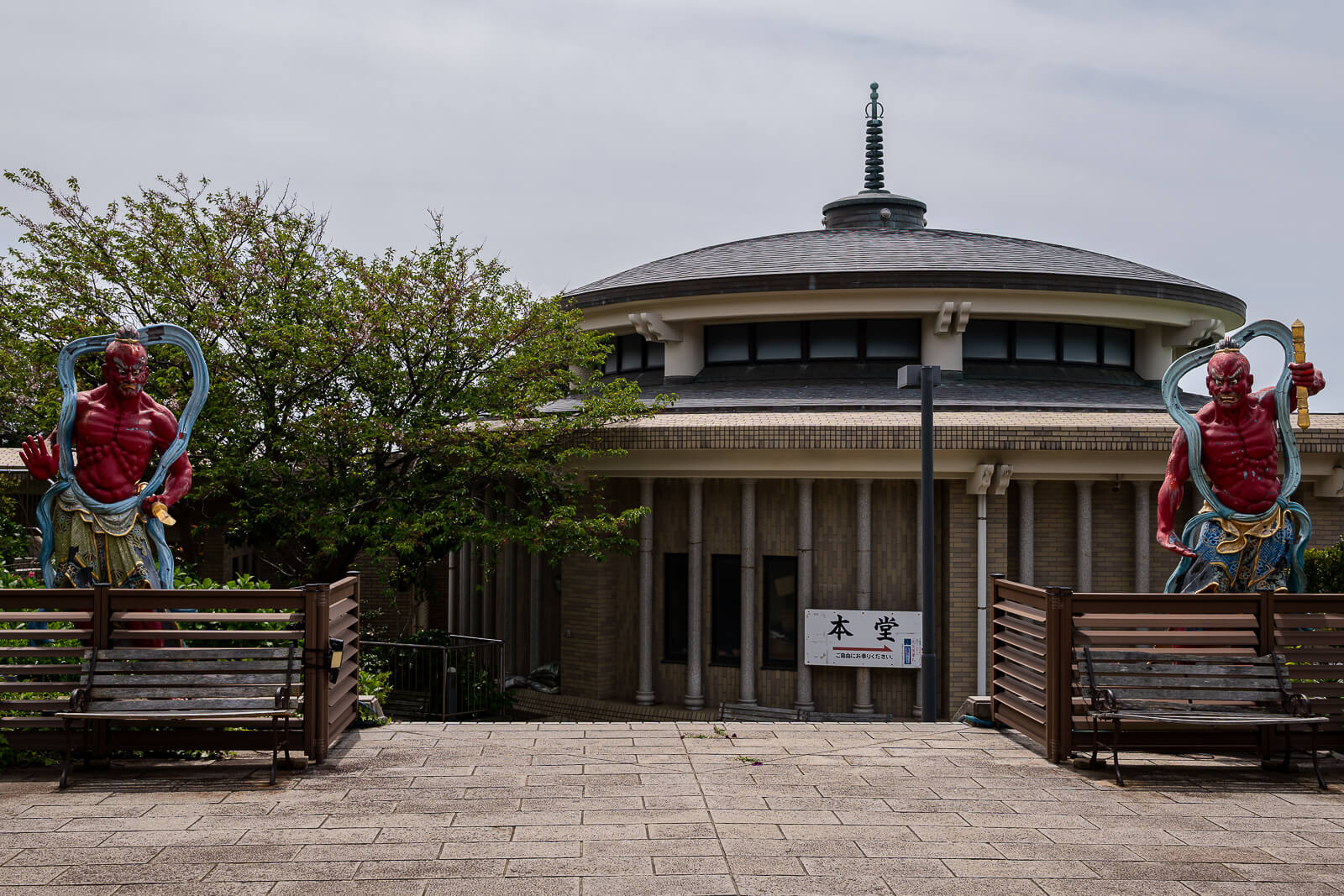
Inside the hall, incense, a darker interior and devotional figures around the principal image give the stop a more enclosed character than the open paths outside. Follow the entrance instructions and remove shoes where required before going inside. The temple can be a brief stop, but it rewards enough attention to distinguish the guardians at the entrance from the main image in the hall.
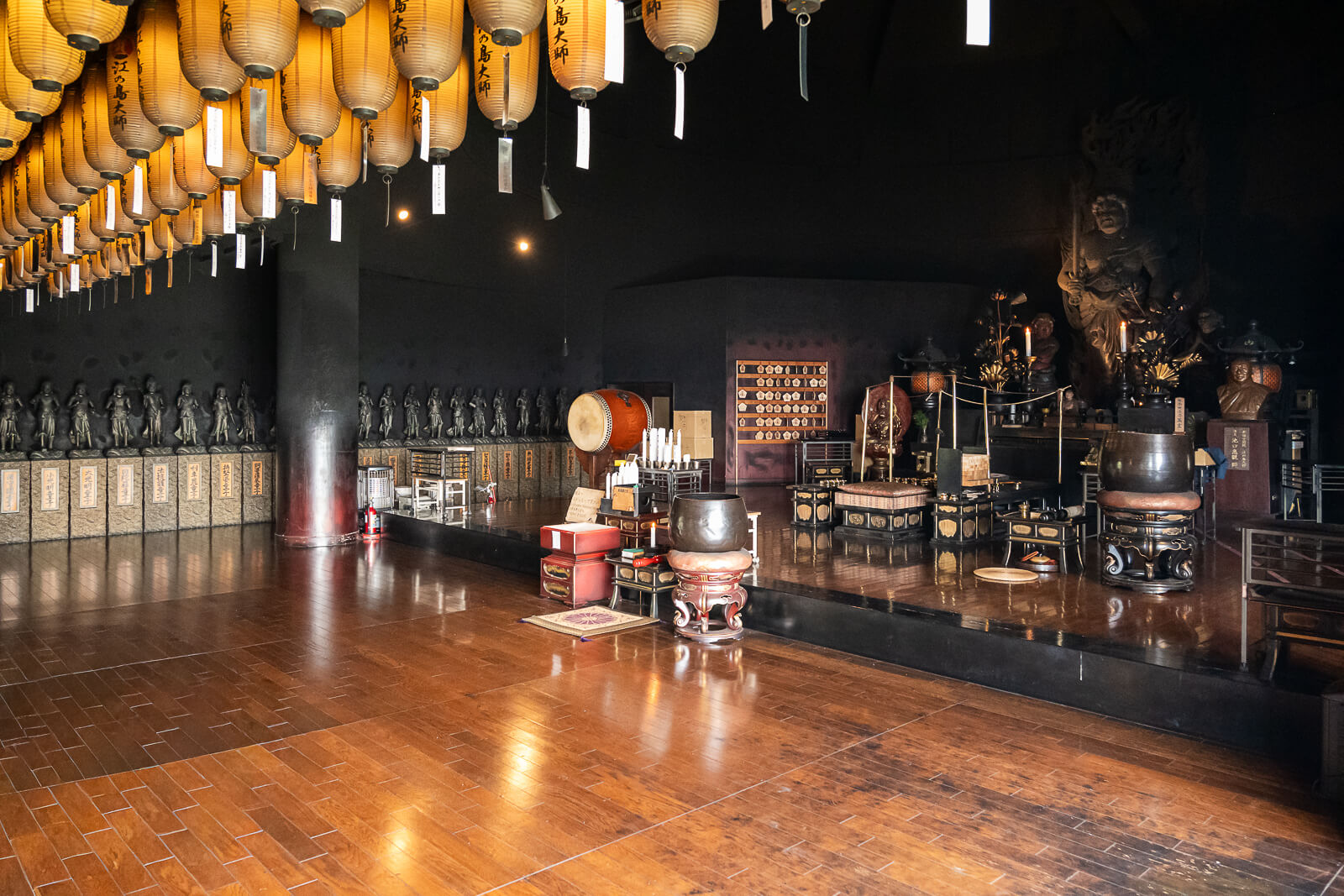
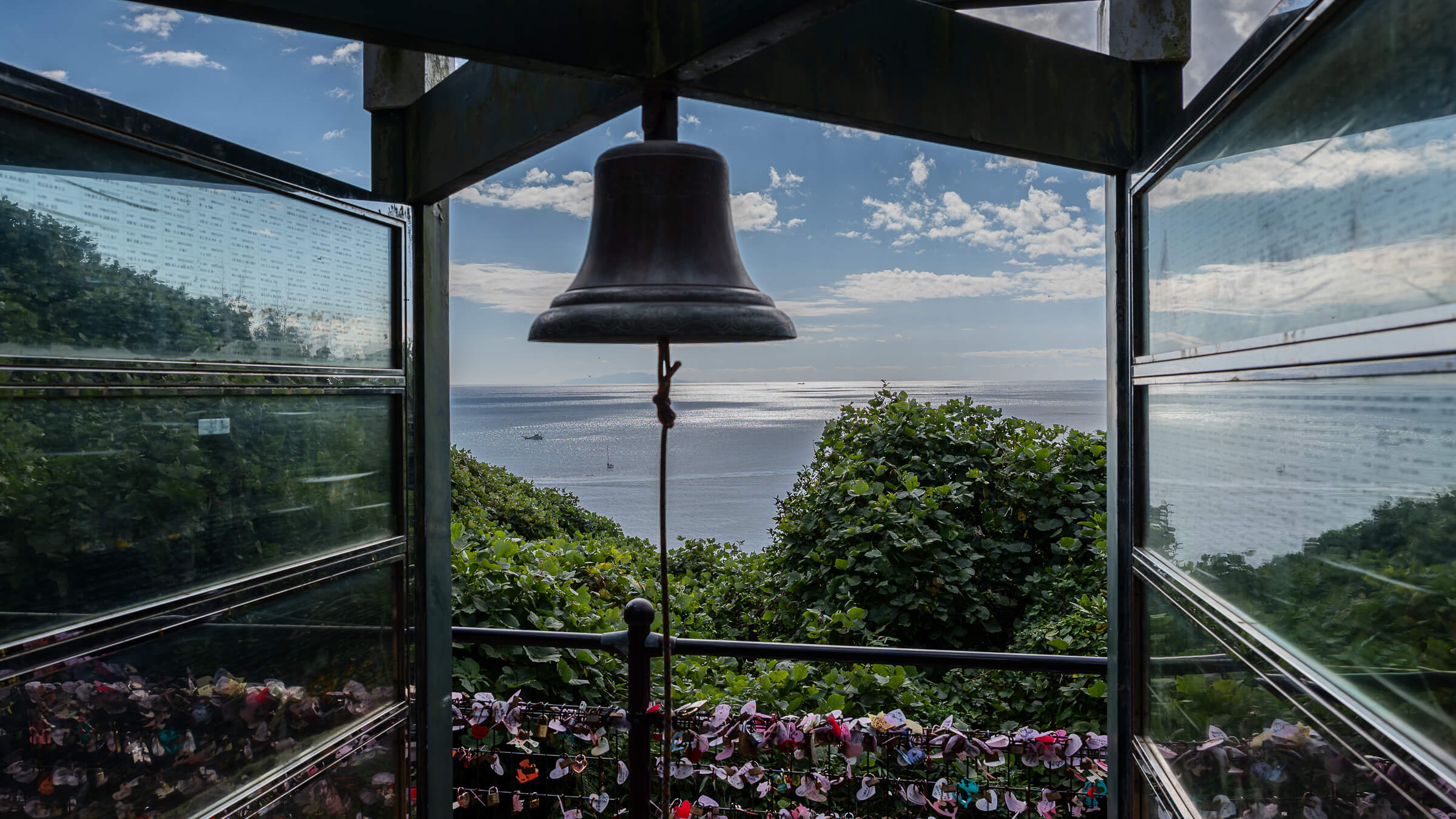
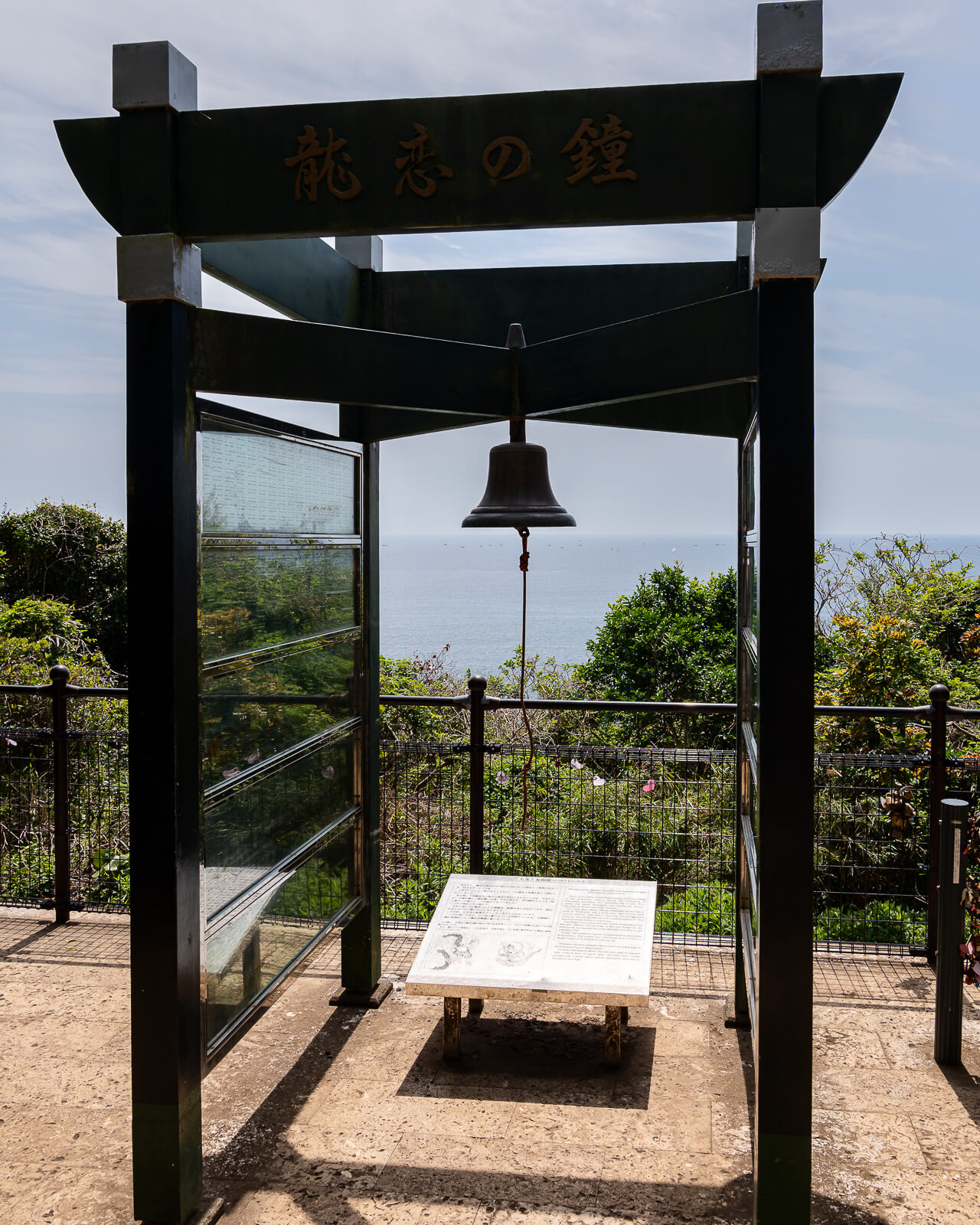
Farther along, Okutsumiya and the nearby dragon shrine provide another reason to pause. The Love Bell is a separate uphill detour in this area, so it can be included according to interest and remaining energy. The bell’s current condition should be checked before a visit made specifically to ring it.
Chigogafuchi: Rocky Shore and Mount Fuji Views
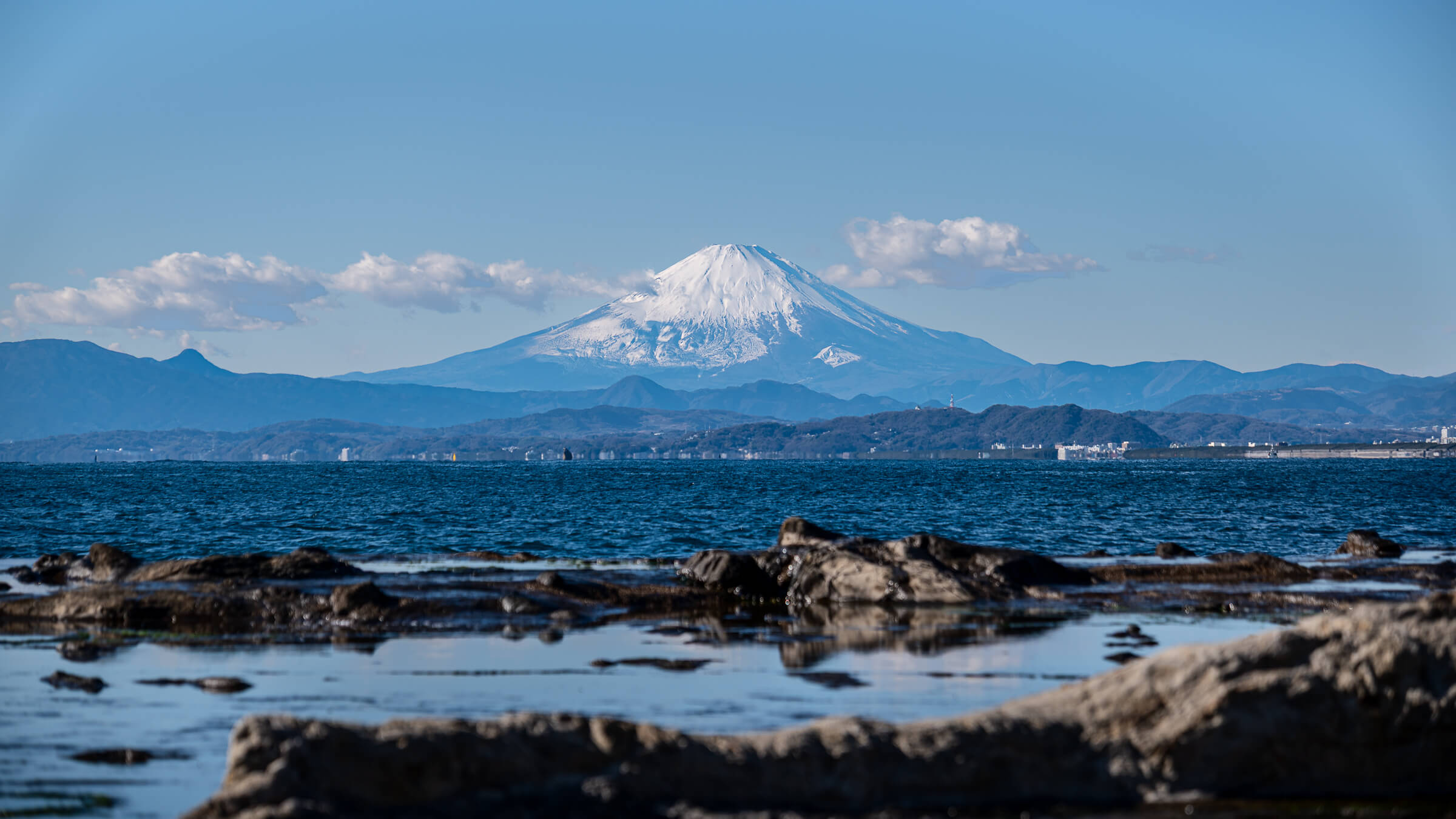
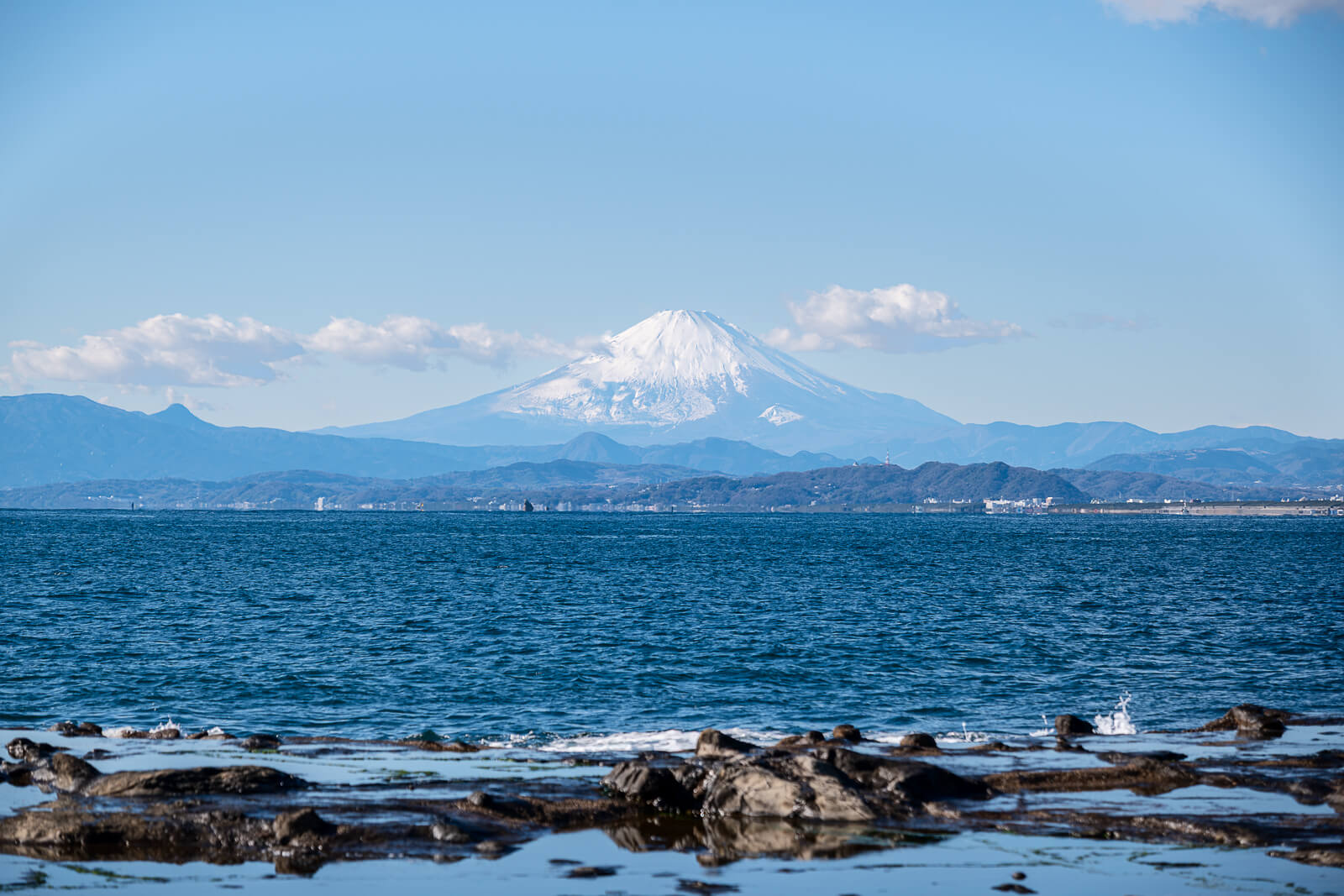
The final descent leads toward Chigogafuchi, where the island opens into a broad rocky coastal setting. After the narrower paths and built-up areas, this feels like a place to look around and spend time beside the water. Mount Fuji is a particular highlight when visibility allows it to appear across the sea.
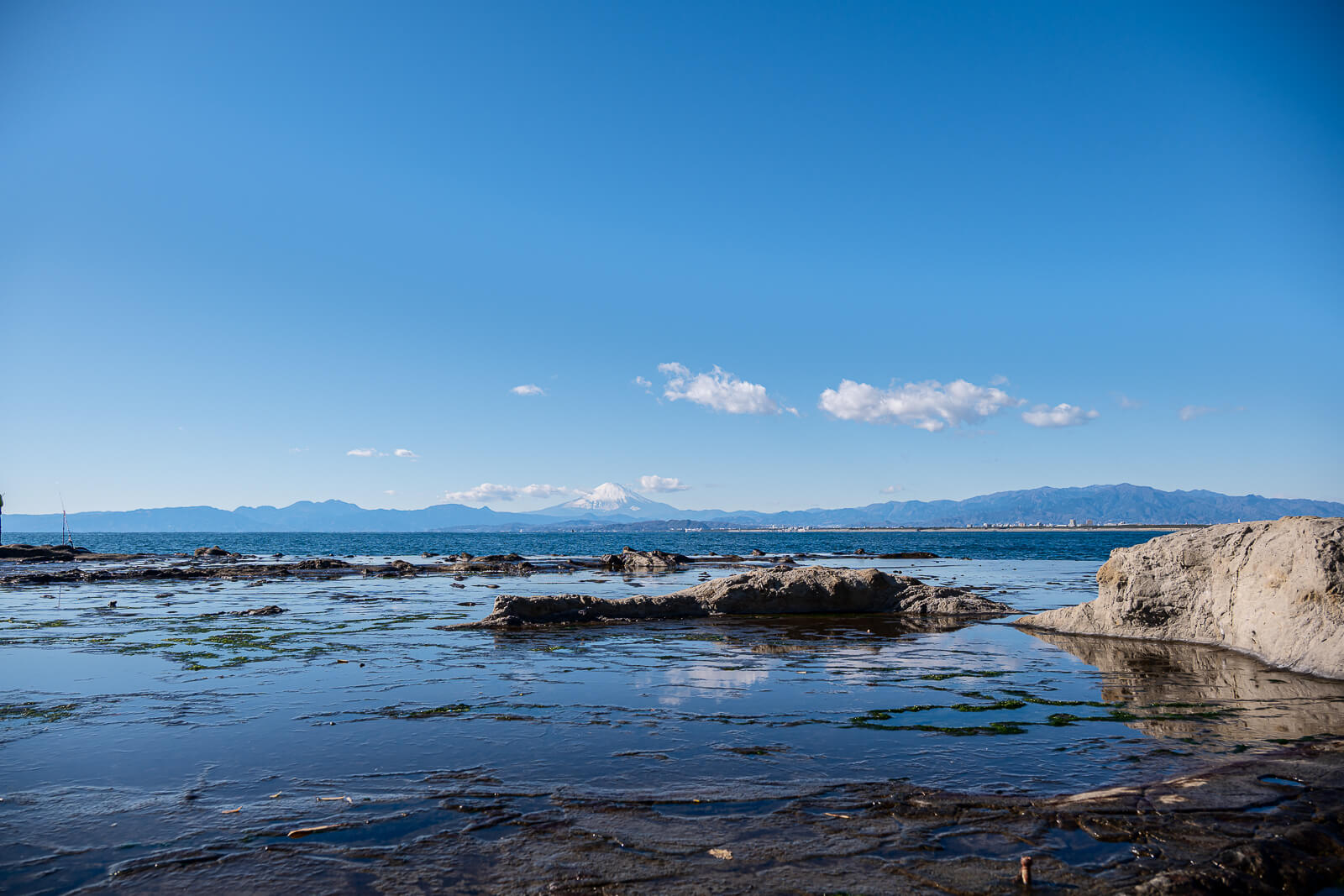
How far visitors can explore the rocks depends on tides, waves and weather. Fishermen sometimes occupy more exposed positions, but their presence does not establish a suitable route for casual visitors. Keep to the areas appropriate to the conditions and any instructions in place on the day.
The coast is worth seeing even when Fuji is hidden. The relationship between the rock platform, cliffs and open water gives this side of Enoshima a different scale from the summit. Allow some time here instead of treating it only as the last approach to the caves.
Enoshima Iwaya Caves and the Coastal Walkway
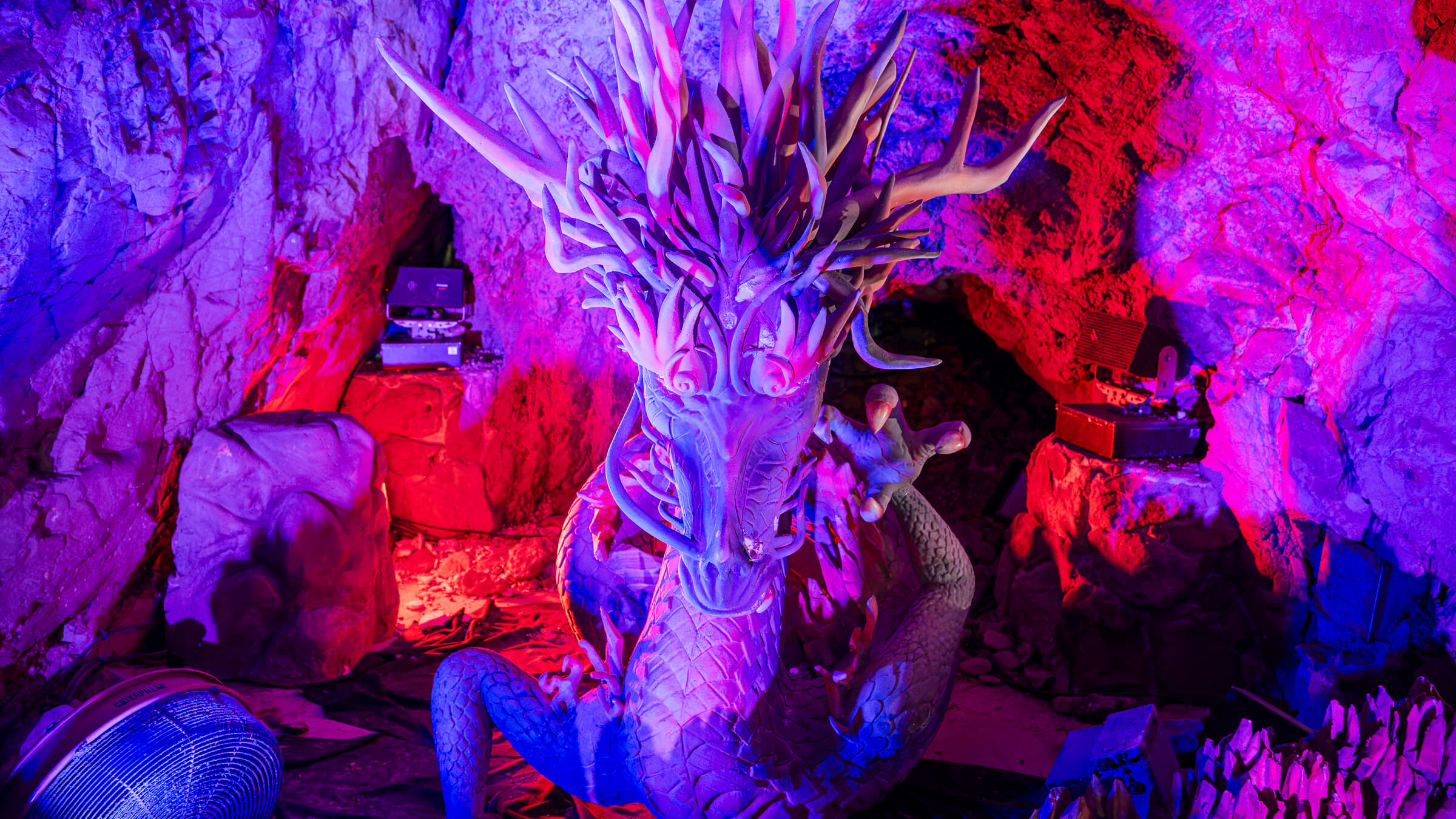
The bridge-like walkway toward the Iwaya entrance is an enjoyable part of the approach. It carries the visit from the open coastal setting into a much more enclosed space. Inside, cool damp air, low passages and devotional figures create a clear contrast with the shore outside.
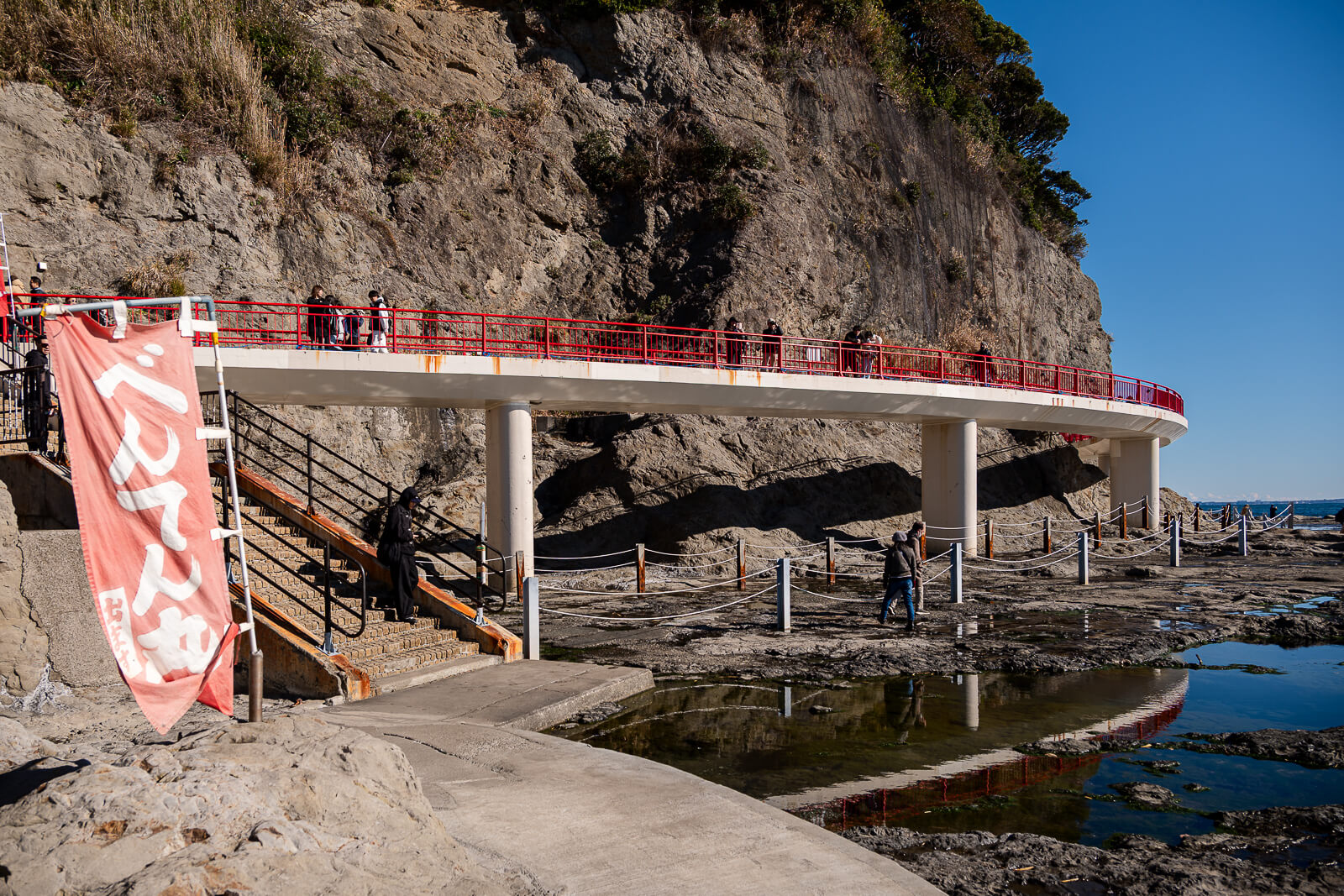
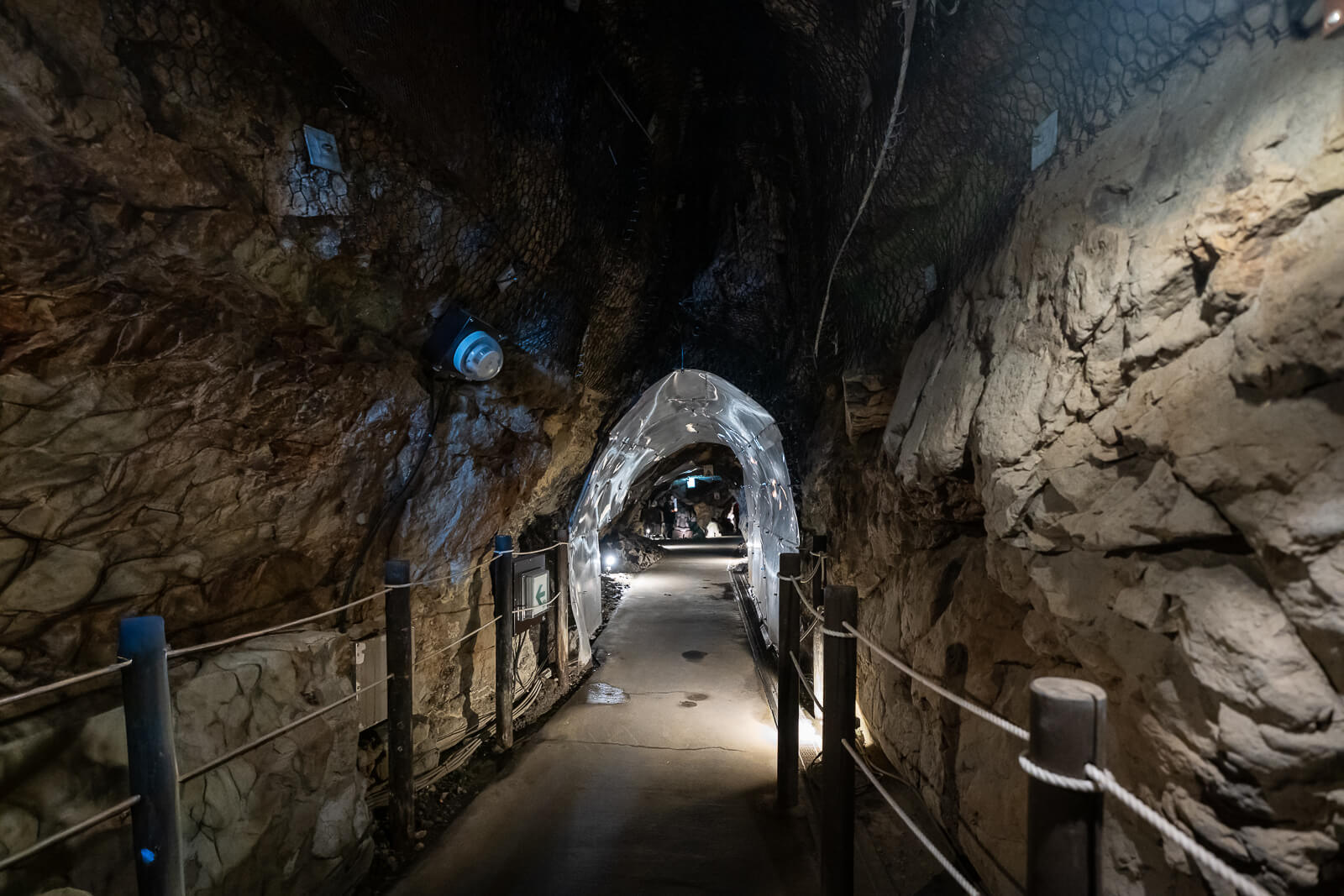
Iwaya consists of two cave sections and has a separate admission charge. Candle lanterns form part of the visit, subject to the arrangements operating on the day. Some passages have low ceilings, so visitors may need to bend or crouch as they move through them.
The caves also matter to the island’s religious history. Traditions connect them with Buddhist practitioners and the beginnings of worship on Enoshima. That context gives the stone figures and devotional spaces a meaning beyond the novelty of entering a sea cave.
Walking Back or Taking the Bentenmaru Boat
The return climb begins after the descent to the far-side coast, when much of the day’s walking may already be behind you. Walking back retraces the island toward the summit area and then descends to the shopping approach and bridge; none of that return is carried by a downward escalator. It offers another look at the lanes and views, but needs an allowance of both daylight and energy.
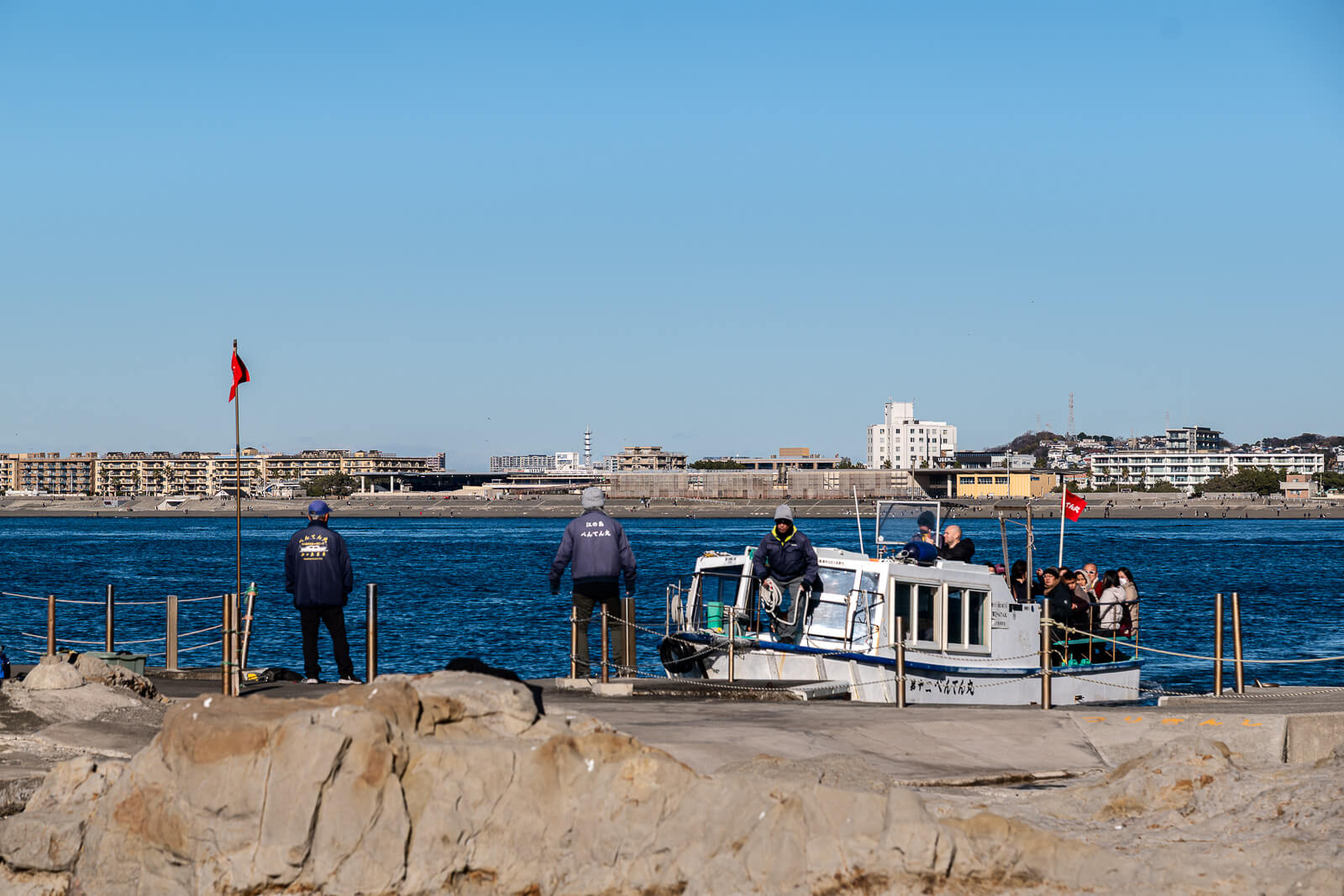
Bentenmaru can avoid that climb when it is running, carrying visitors by sea between the far-side shore and the bridge area. The boat changes the perspective on the island, replacing the ridge paths with a view from the water, but its service window is limited and conditions can stop sailings. Check the day’s actual operation and return availability before relying on it: a boat seen earlier from the bridge does not guarantee a sailing after the caves.
Enoshima Aquarium and Ryukoji Temple on the Mainland
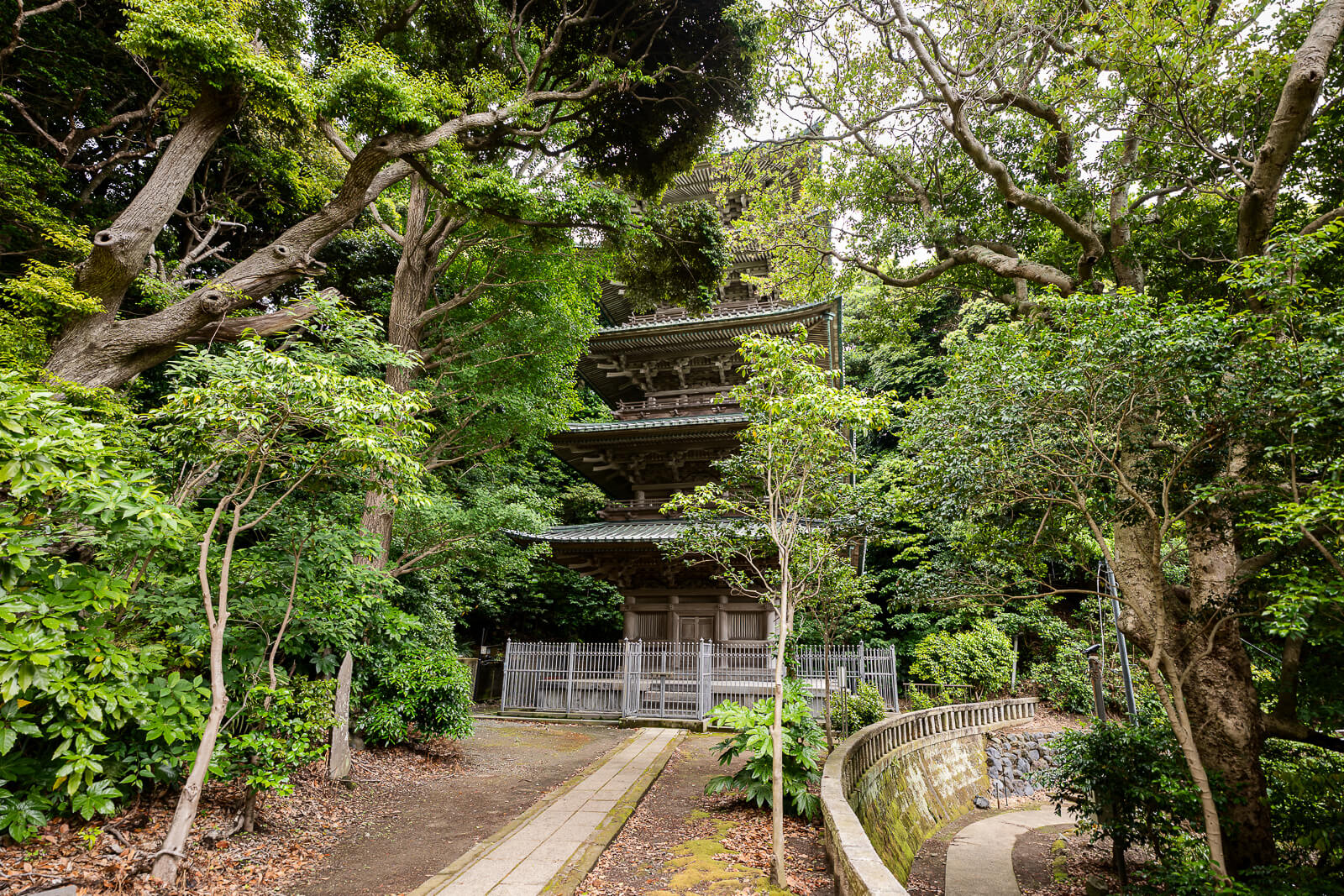
Enoshima Aquarium and Ryukoji Temple are mainland extensions, each with a different purpose. The aquarium offers a change of pace and a welcome break from heat or rain, with jellyfish among its highlights. Ryukoji provides a cultural stop near the Enoden and monorail stations, particularly rewarding when the hillside pagoda is included.
A fuller day can accommodate an extension more comfortably than a tightly packed island visit. Choose it for a clear interest instead of assuming every nearby sight belongs in the same outing. Enoshima itself rewards time for food, photographs and the transitions between summit and shore.
How Much Time to Allow on Enoshima
About four to six hours is a useful starting allowance for the kind of island visit described here, including a selection of shrine stops, the summit and a taste of the far-side coast. It is an estimate for shaping a day, not a timed promise: restaurant waits, photographs, the tower queue and the walk back all change the result. A full day gives more freedom to linger, while a shorter visit needs deliberate limits on paid interiors and cafe stops.
For a first visit with around four hours, the preferred approach is a shorter taste of both the summit and coast, provided the walking and return are manageable. That preserves the contrast that makes Enoshima distinctive instead of spending the entire allowance in one area. The half-day or full-day decision guide compares those choices and the circumstances in which turning back earlier is the better plan.
Getting There
Compare the railway approaches and the walk to the island bridge in the guide to getting to Enoshima.
Access and Arrival
Arrive at Katase-Enoshima (Odakyu), Enoshima (Enoden) or Shonan-Enoshima (Shonan Monorail), then walk toward the mainland bridge. Island exploration continues on foot.
- Odakyu arrival
Odakyu → Katase-Enoshima → mainland bridge → Enoshima
Leave the station and follow the pedestrian approach to the island bridge. · Check whether the selected train requires a transfer at Fujisawa.
- Enoden arrival
Enoden → Enoshima Station → shopping street → island bridge
Walk through the mainland shopping area toward the bridge. · Enoden links Kamakura and Fujisawa; allow time to walk from the station.
- Monorail via Ofuna
Shonan Monorail → Shonan-Enoshima → mainland approach → island bridge
Shonan-Enoshima is close to Enoden Enoshima Station. · The monorail reaches Ofuna, rather than Kamakura Station directly.
Plan the walking return: The three Escar sections travel uphill only. The far-side coast still involves stairs and a climb back unless the boat is operating.
Hours and Fees
Visitor information
There is no single island-wide opening time. Plan paid attractions and the boat separately.
- Hours
- Garden / Sea Candle: normally 09:00–20:00; last entry 19:30. Greenhouse exhibition: 09:00–17:00. Iwaya: normally 09:00–17:00, varying seasonally. Bentenmaru has a limited daytime window and may stop in unsuitable conditions.
- Admission
-
Island walking route: no general admission ticket. Sea Candle: ¥800 adult / ¥400 elementary-school child. Escar, all three sections: ¥500 / ¥250. Iwaya: ¥500 from junior-high age / ¥200 elementary-school child. Garden: free daytime; event departures at or after 17:00 cost ¥500 / ¥250. Non-event days are free during opening hours.
Optional combined admission
Enoshima Island All-Access Pass
Optional for a wider island-and-aquarium day. Includes Escar, Sea Candle, Iwaya and the aquarium. Choose + Night for event-evening garden entry. Rail, Bentenmaru and Hoanden are separate; check date and package conditions.
Compare Enoshima All-Access Passes
Plan Your Visit
Choose the stay, transport and experiences that fit the wider coastal trip.
Compare Fujisawa and Enoshima Stays
Stay near Enoshima or a convenient Fujisawa station for more time on the Shonan coast. Compare locations, room rates and cancellation options.
Compare Fujisawa Stays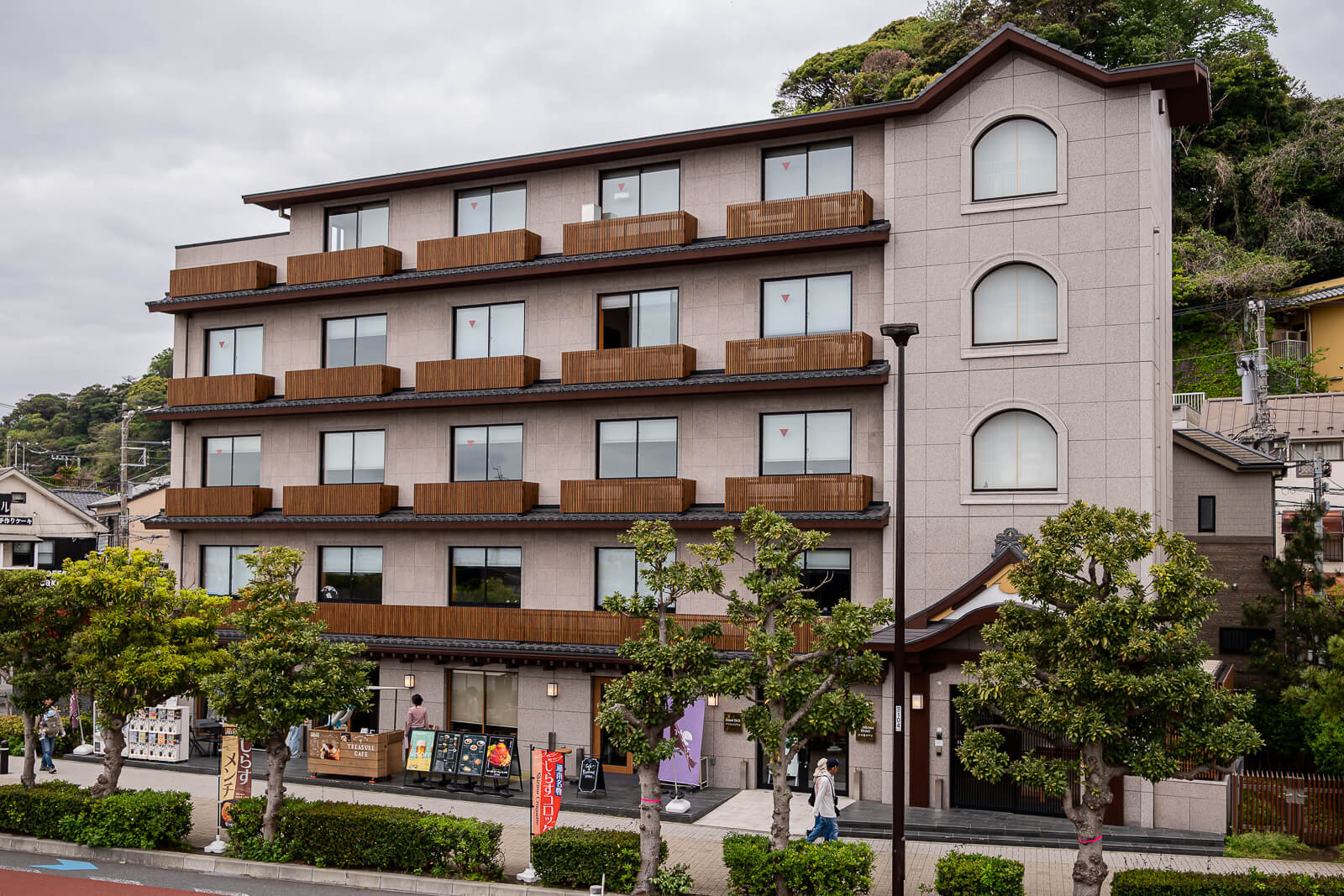
Compare Tokyo Car Rental Options
Rail and walking suit Enoshima itself. Consider a rental car when the wider trip includes places beyond the local railway corridor.
Compare Tokyo Car Rentals
Browse Guided Kamakura Day Trips
Explore Kamakura with a guide and compare routes, included stops and free time. Choose an itinerary including Enoshima if you want both in one day.
Browse Kamakura Tours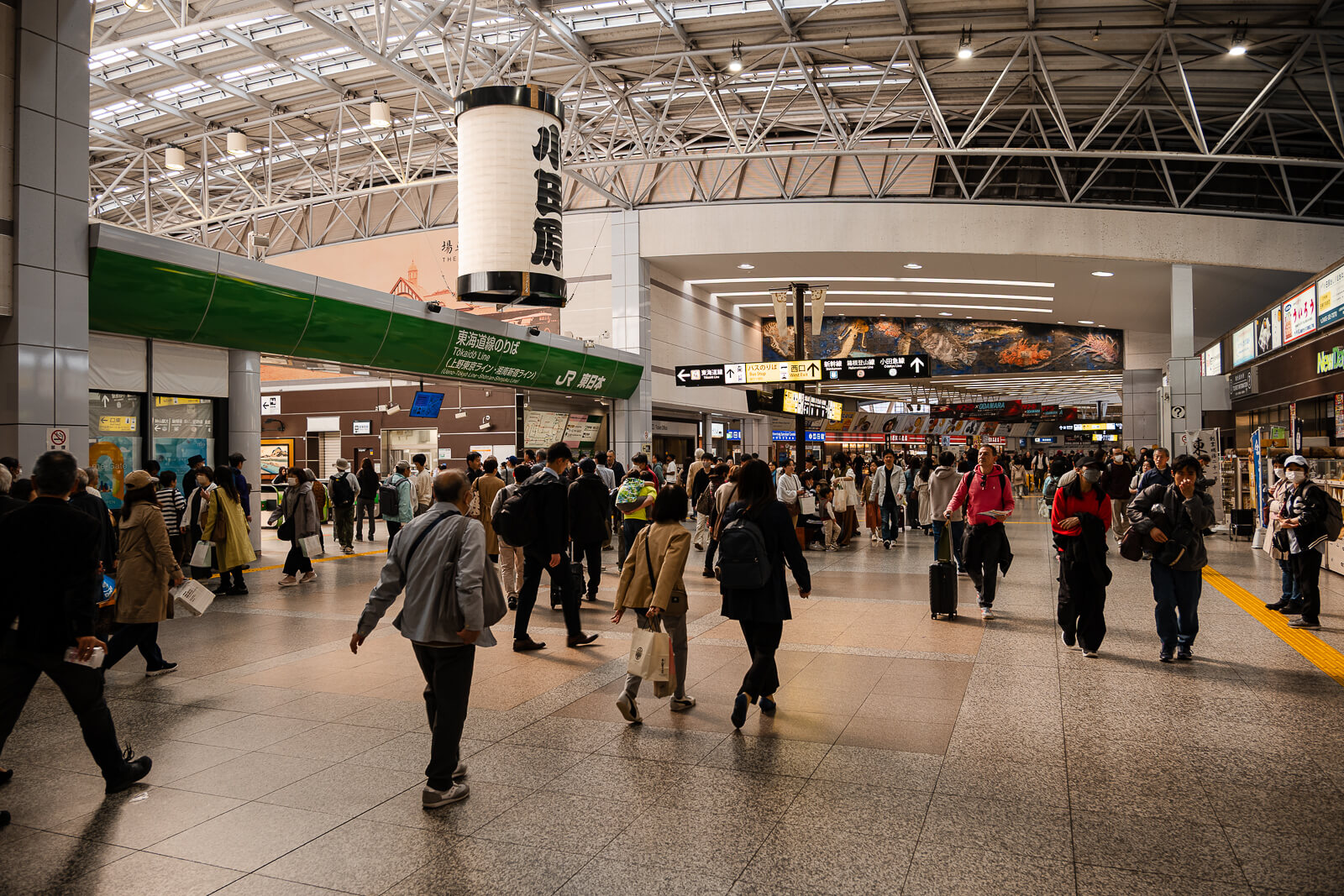
Explore Enoshima Aquarium Tickets
Add jellyfish galleries and Sagami Bay marine life to your coastal day. View aquarium admission options for your travel date.
View Aquarium Tickets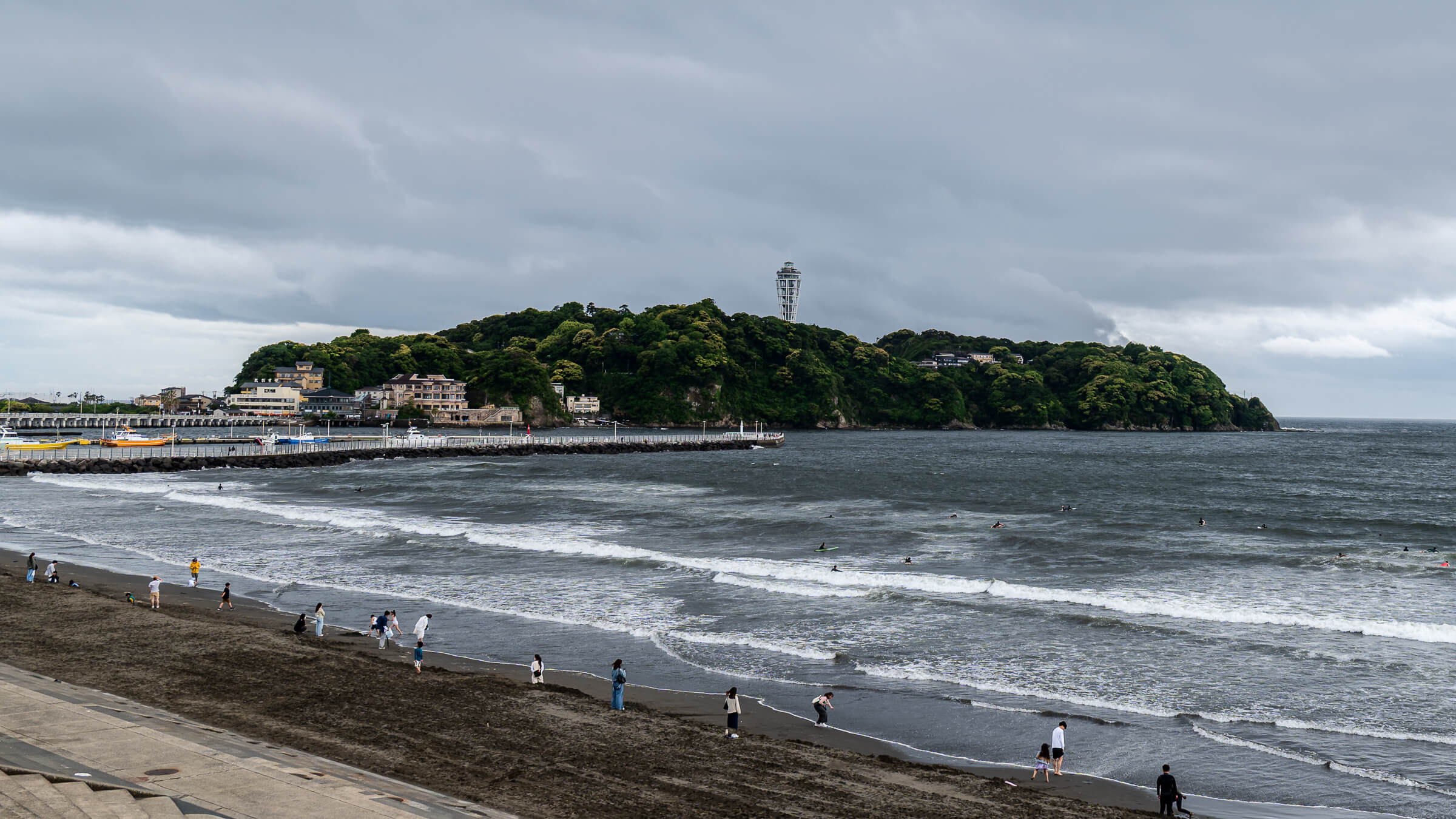
Compare Japan Data Plans
Keep maps, translation and train updates handy around Japan. Compare data allowances and coverage for your eSIM-compatible phone.
Compare Japan eSIMs
Ride the Shonan Monorail
Approach Enoshima on the suspended monorail from Ofuna. Compare ticket options and validity for the journey you plan.
View Monorail Tickets