Red Guardians and Incense Along the Island Walk
Enoshima Daishi is a Buddhist temple on Enoshima Island in Fujisawa, Kanagawa, beside the path from Samuel Cocking Garden and the Sea Candle toward Okutsumiya. Two large red Nio guardians mark the entrance, where steps lead down from the island route to the main hall. A brief look inside can take around five minutes, with more time needed for goshuin or a religious rite.
Enoshima Daishi is separate from Hetsumiya, Nakatsumiya and Okutsumiya, the three precincts of Enoshima Shrine. Its main image is Fudo Myoo, while the large figures outside are Nio guardians. Inside, candlelight, incense and closely arranged statues give a brief stop more to examine than the entrance alone suggests.
This is a compact visit with a specific appeal: red guardians, the scale of the principal image, incense and the close arrangement of devotional figures inside. A short look can fit naturally between the summit and Okutsumiya without adding a separate journey. Visitors who want goshuin or to attend a religious rite should allow more time than the brief hall visit alone.
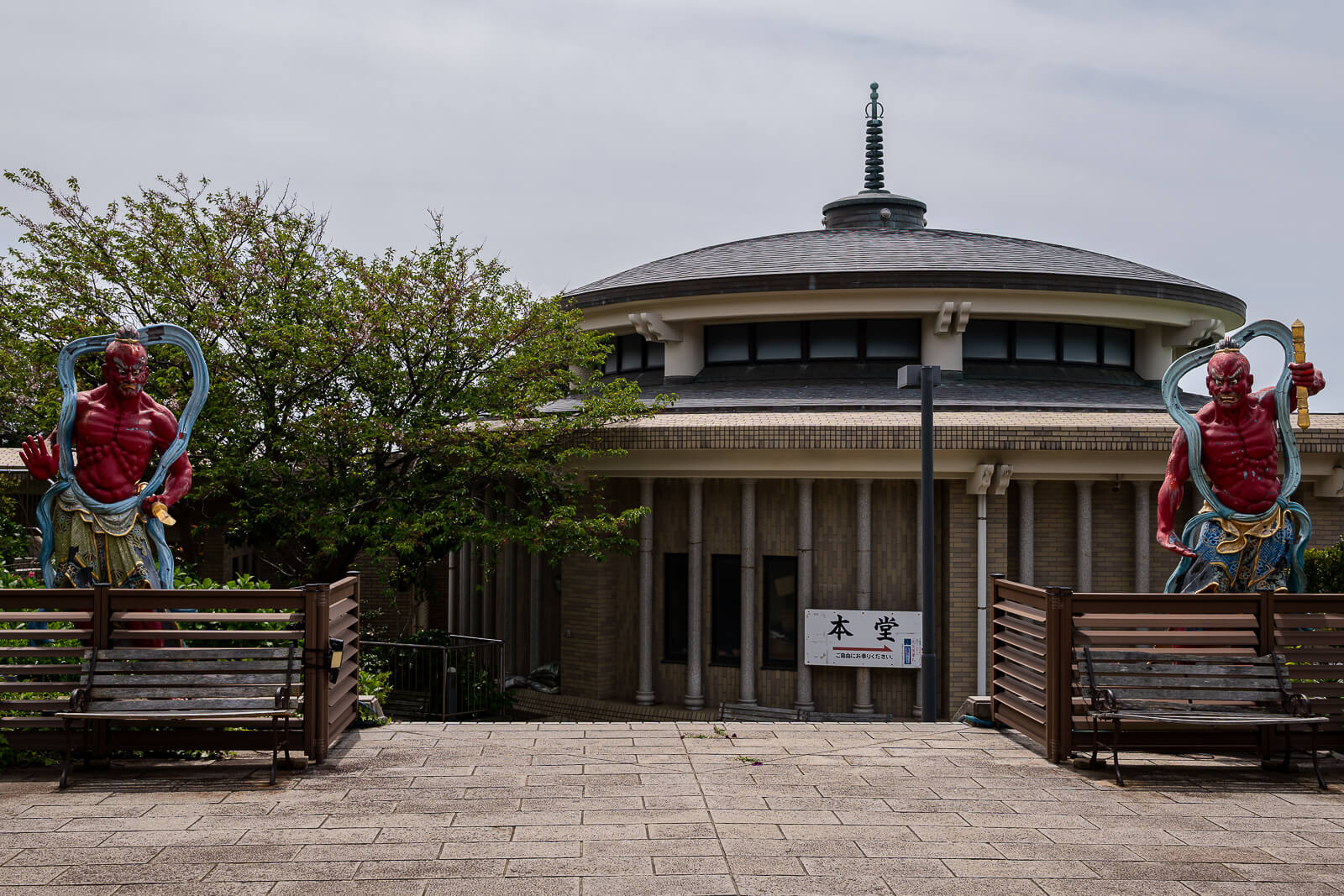
The Red Nio Guardians at Enoshima Daishi’s Entrance
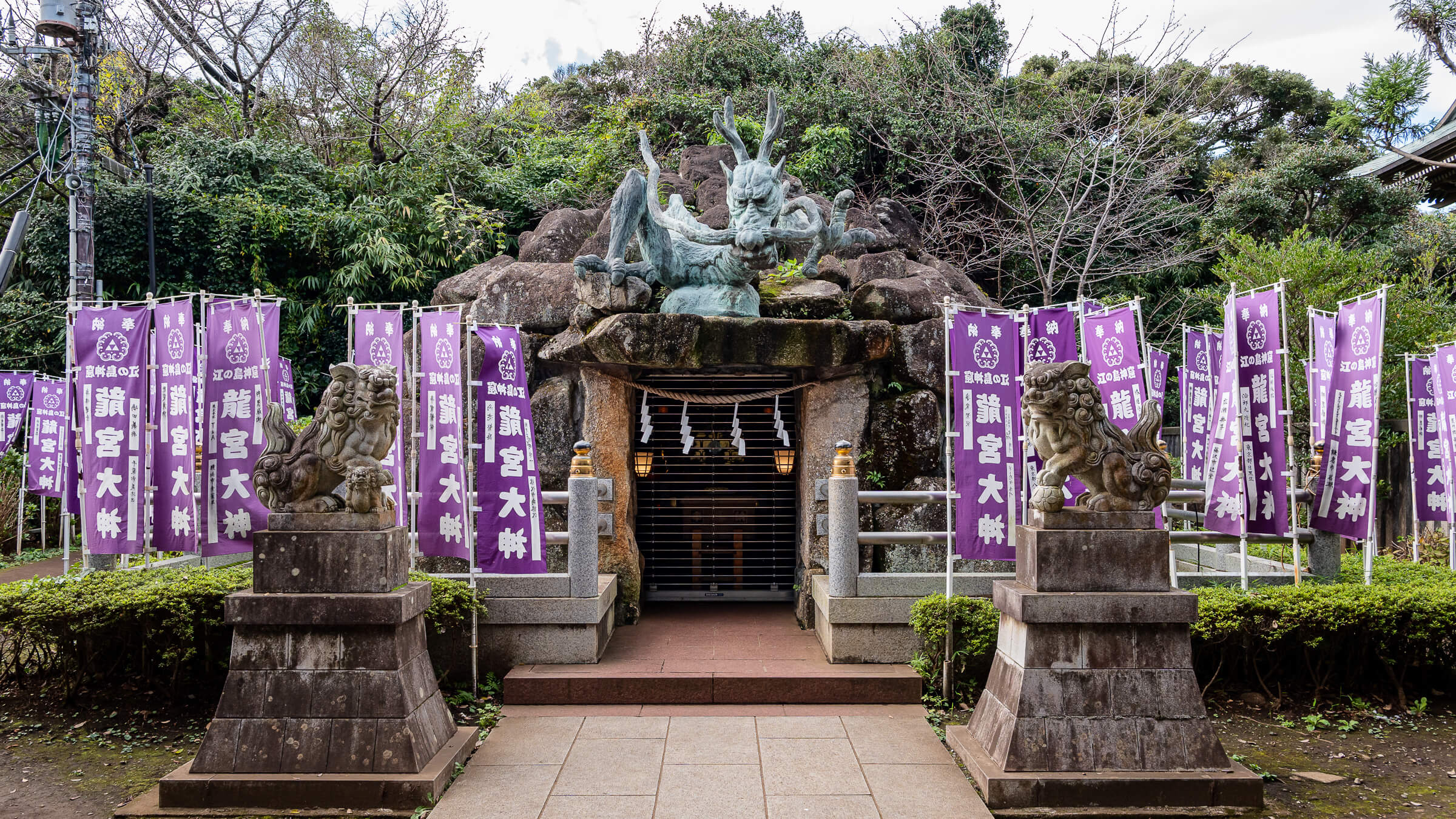
The two red Nio figures are the clearest landmark along the approach. Their position at the entrance marks the change from the public island path to the temple grounds, with the hall beyond them becoming the focus. Pause here to see the guardians together before moving into the smaller space below the route.
The figures should be distinguished from the main image inside. They guard the entrance; Fudo Myoo occupies the central devotional place in the hall. Seeing that relationship gives the visit a simple structure, from the entrance figures to the principal image and the smaller figures arranged around it.
The approach is also part of what makes this an easy cultural stop during a wider island visit. It lies along the continuation beyond the garden, so the large red figures announce the temple without a long search through side streets. The steps and entrance make the boundary clear, and visitors can decide here whether to enter the hall or concentrate on its exterior.
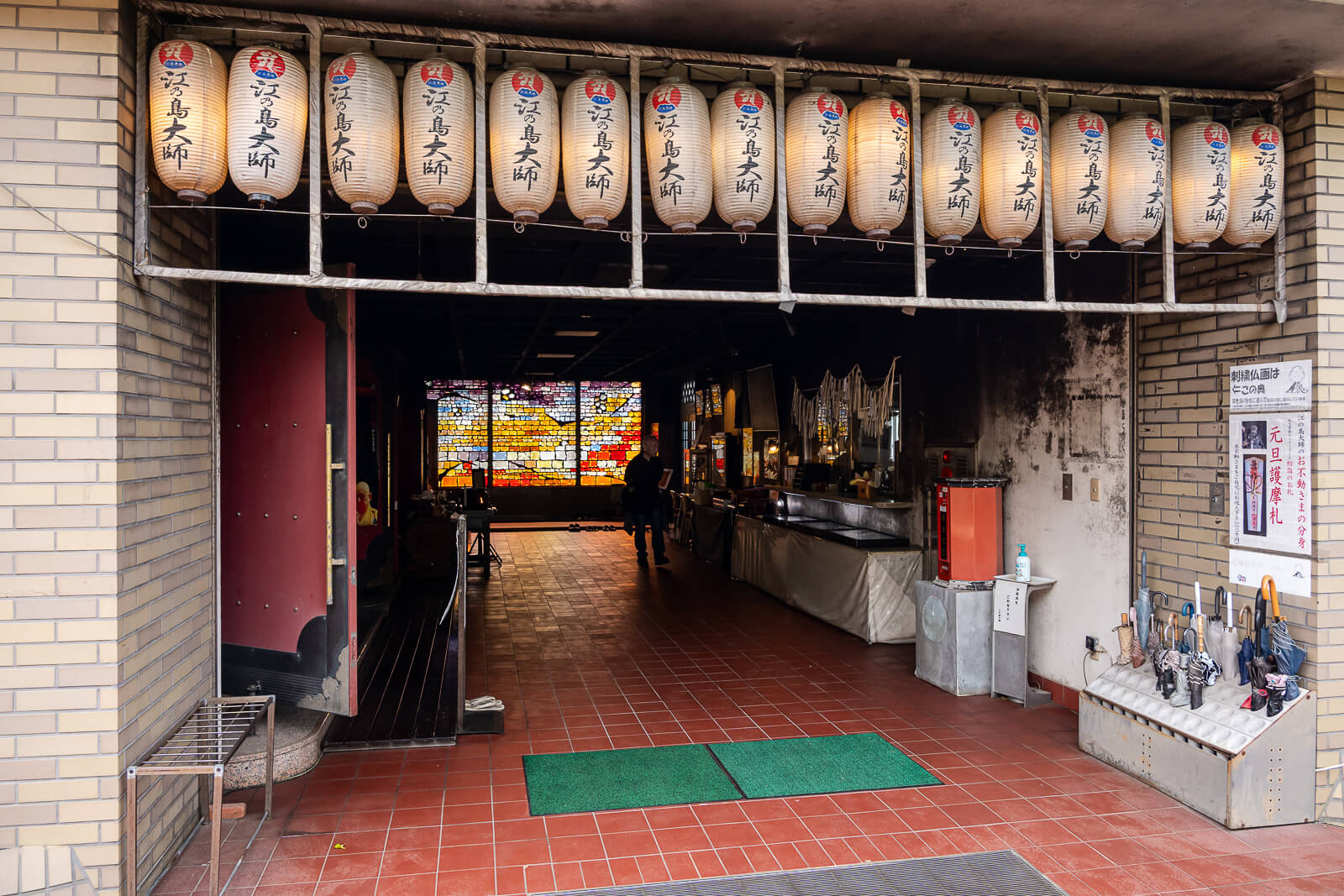
The Temple’s Shingon History and Six-Metre Fudo Myoo
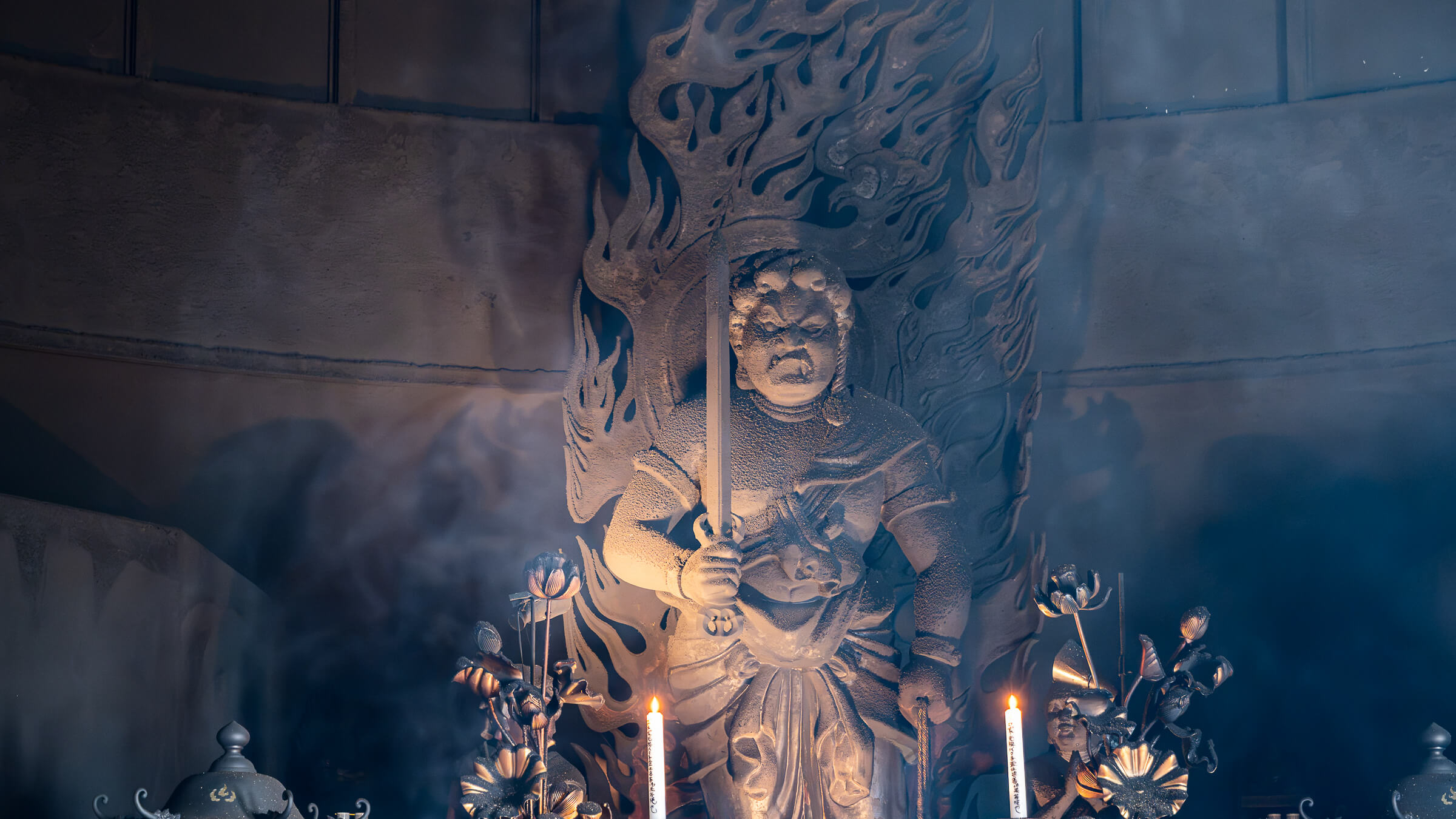
Enoshima Daishi was founded in 1993 as a branch of Saifukuji in Kagoshima, within the Koyasan Shingon tradition. Its stone-built main hall contains a red Fudo Myoo image identified by Fujisawa’s tourism association as six metres high. The building and image belong to a comparatively recent temple, even though the island’s religious traditions reach much farther back.
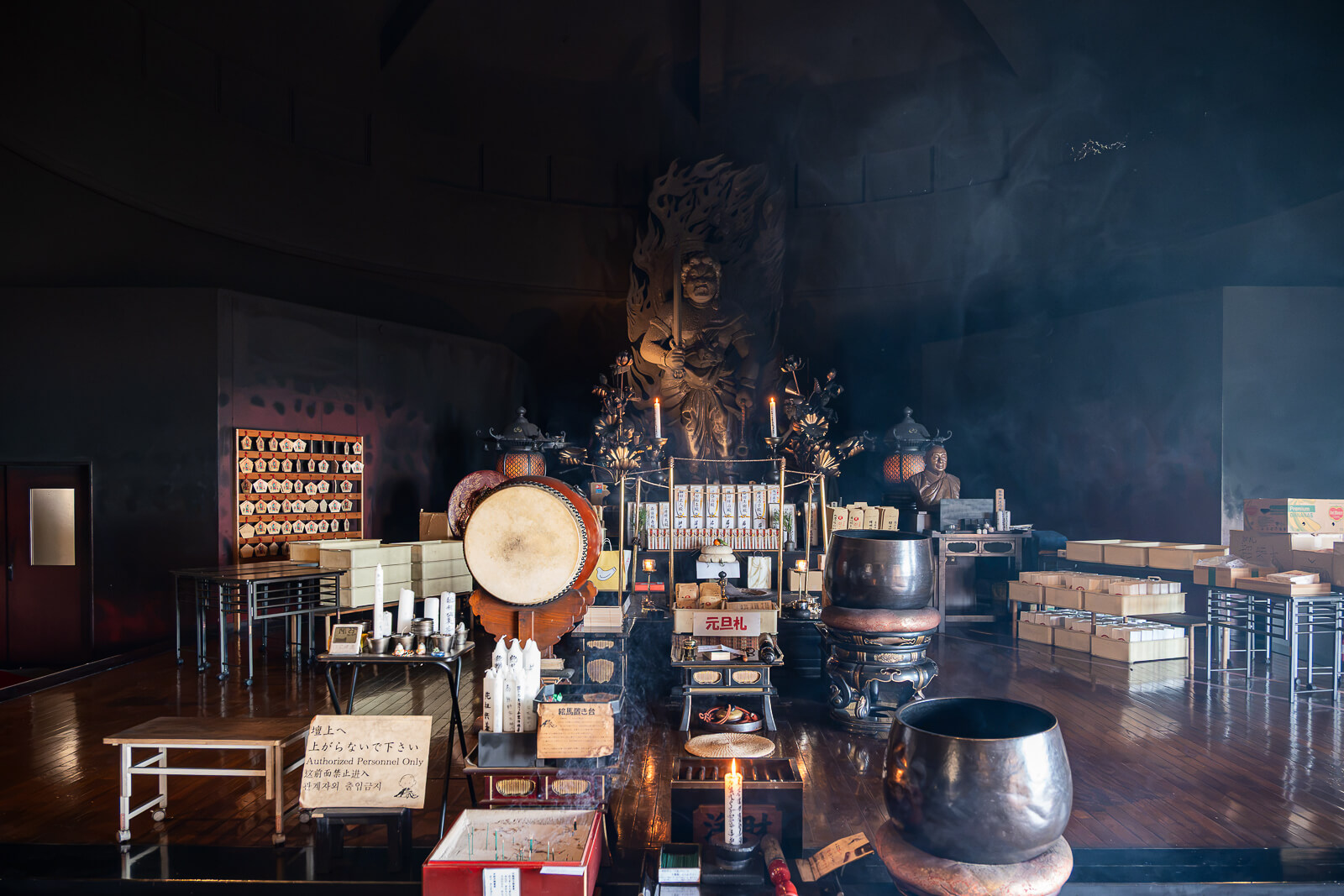
The 1993 foundation is a useful distinction on an island with a much older religious history. Daishi’s hall belongs to a modern Buddhist temple, while Hetsumiya, Nakatsumiya and Okutsumiya form the separate Enoshima Shrine complex. The close arrangement of the altar and smaller figures gives this newer temple its own character within the island walk.
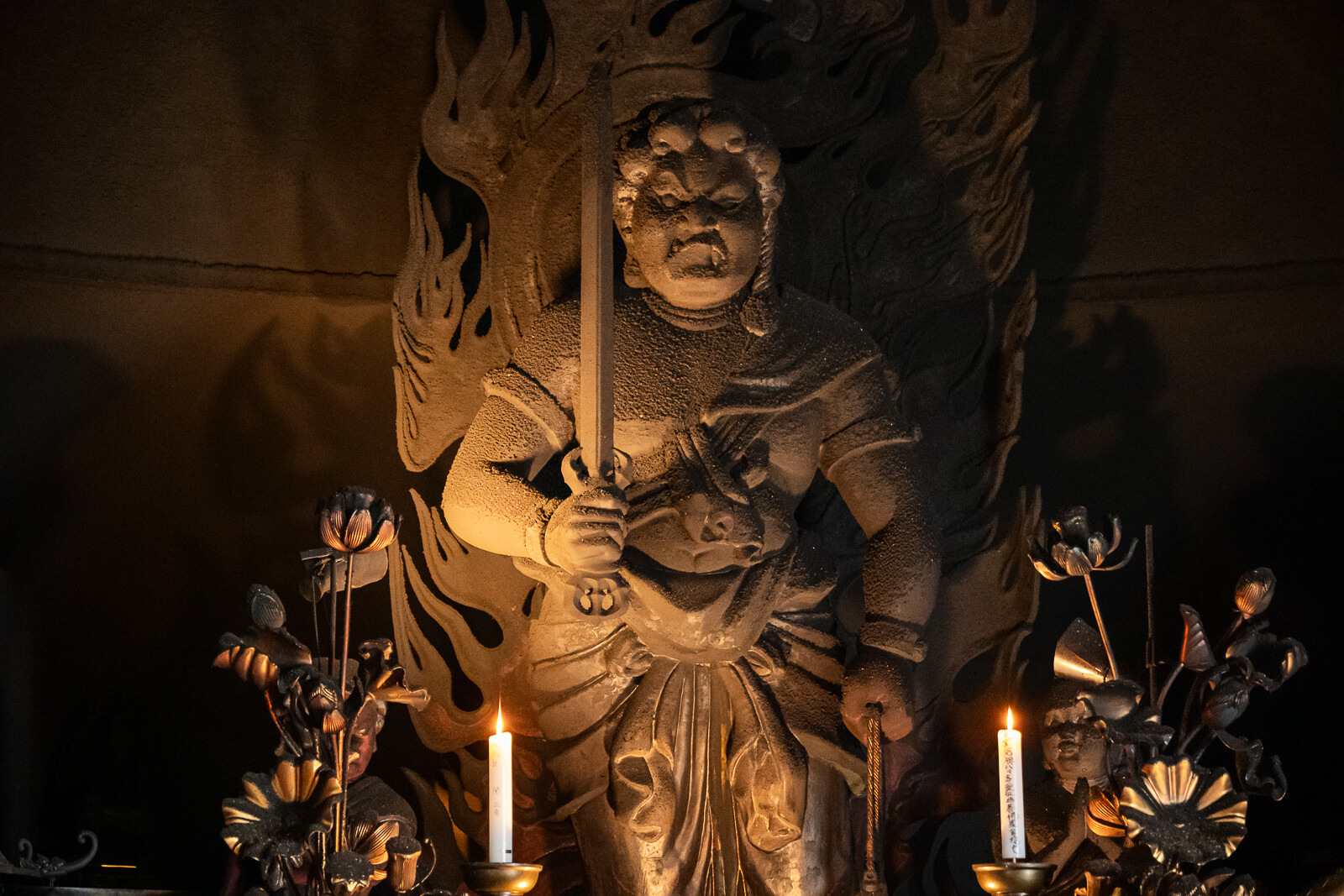
The tourism association also identifies daily goma rites at the temple. A ceremony is a different commitment from briefly looking around the hall, so visitors who want to take part should confirm the current arrangements and timing. A short independent stop can focus on the principal image and surrounding figures without building the rest of the day around a rite.
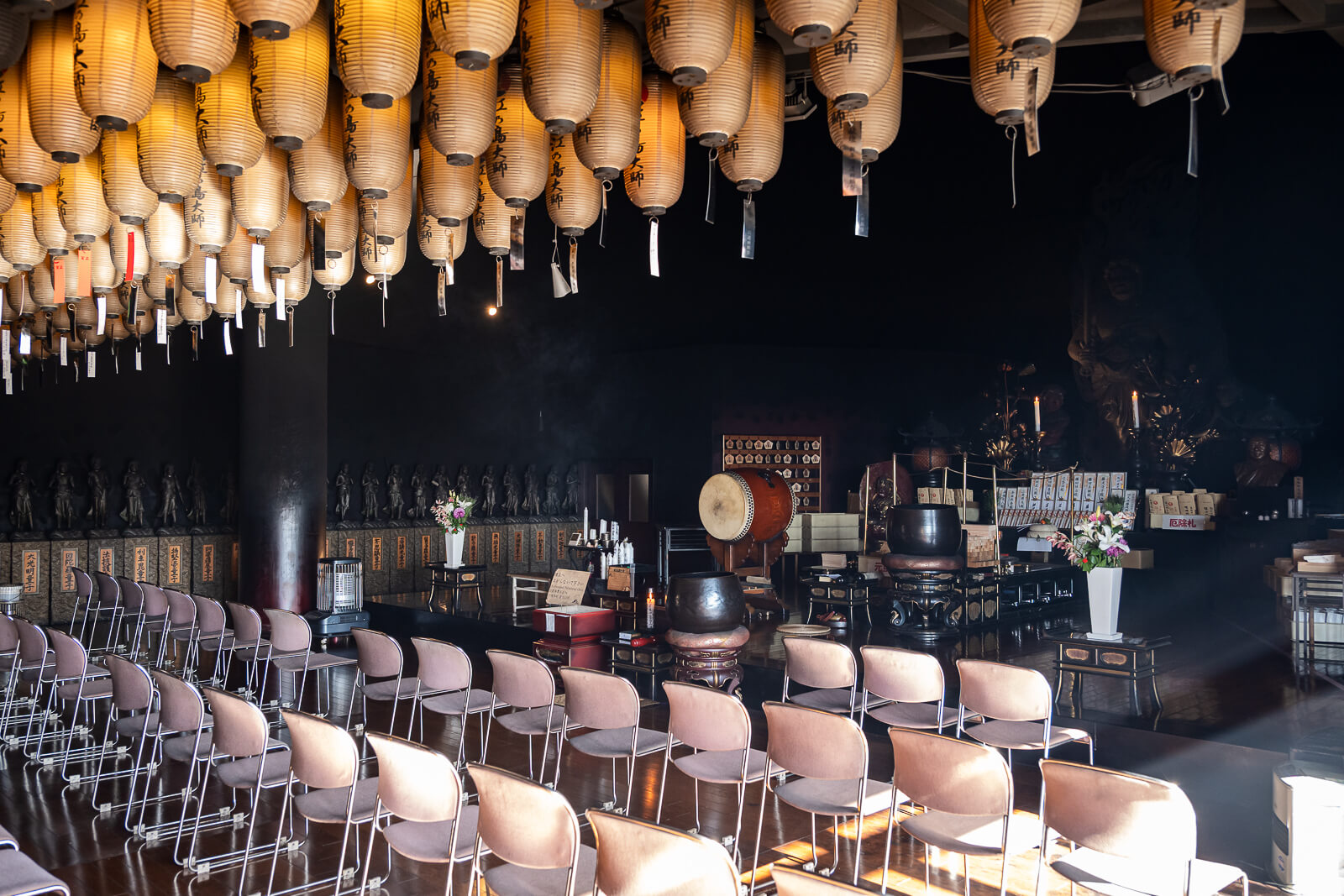
Inside the Main Hall: Incense and Devotional Figures
The main hall can be visited under the temple’s arrangements. Follow the entrance instructions, including the requirement to remove shoes where indicated, before going inside. Entering changes the experience from looking at a building along the island path to standing in a concentrated devotional space.
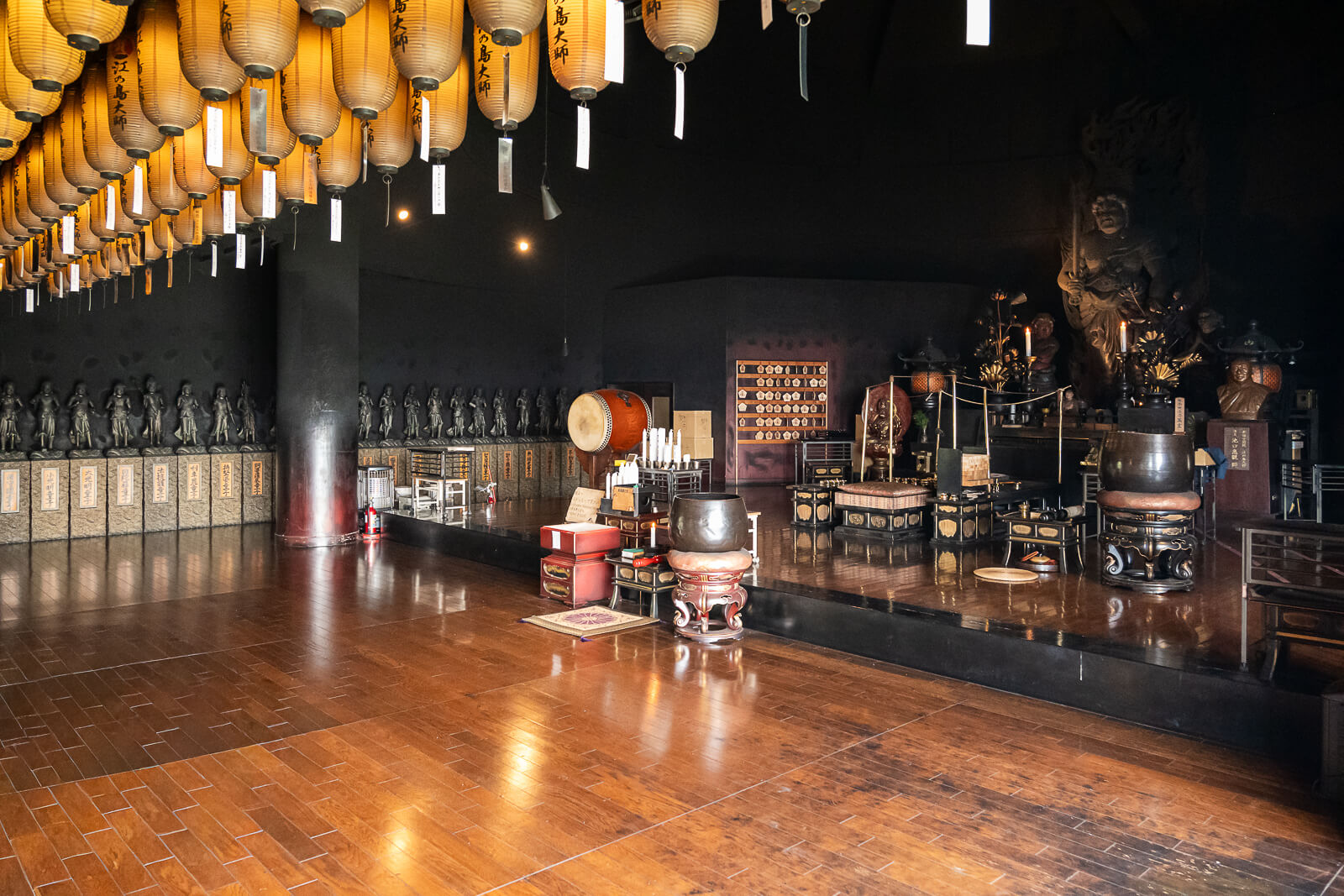
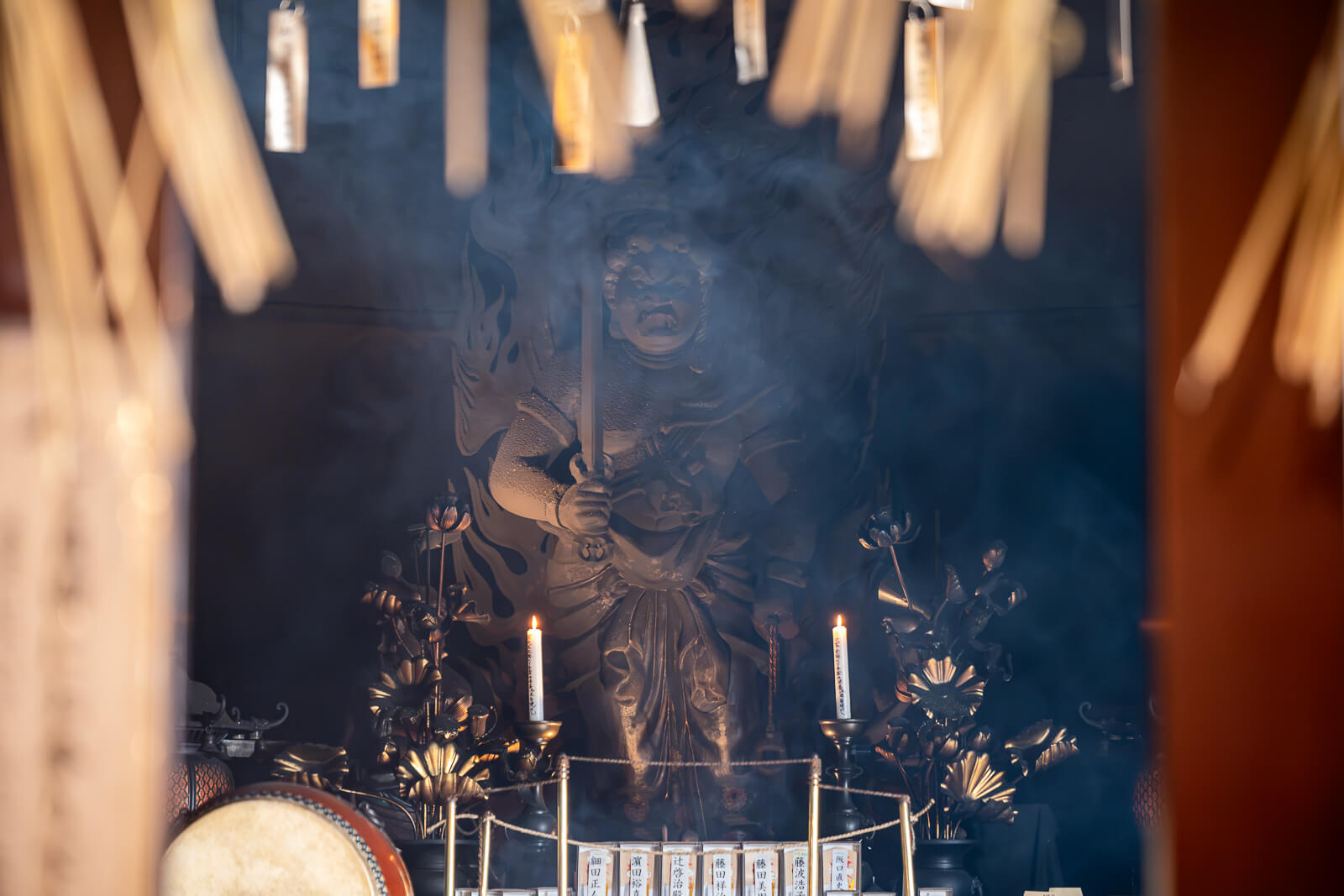
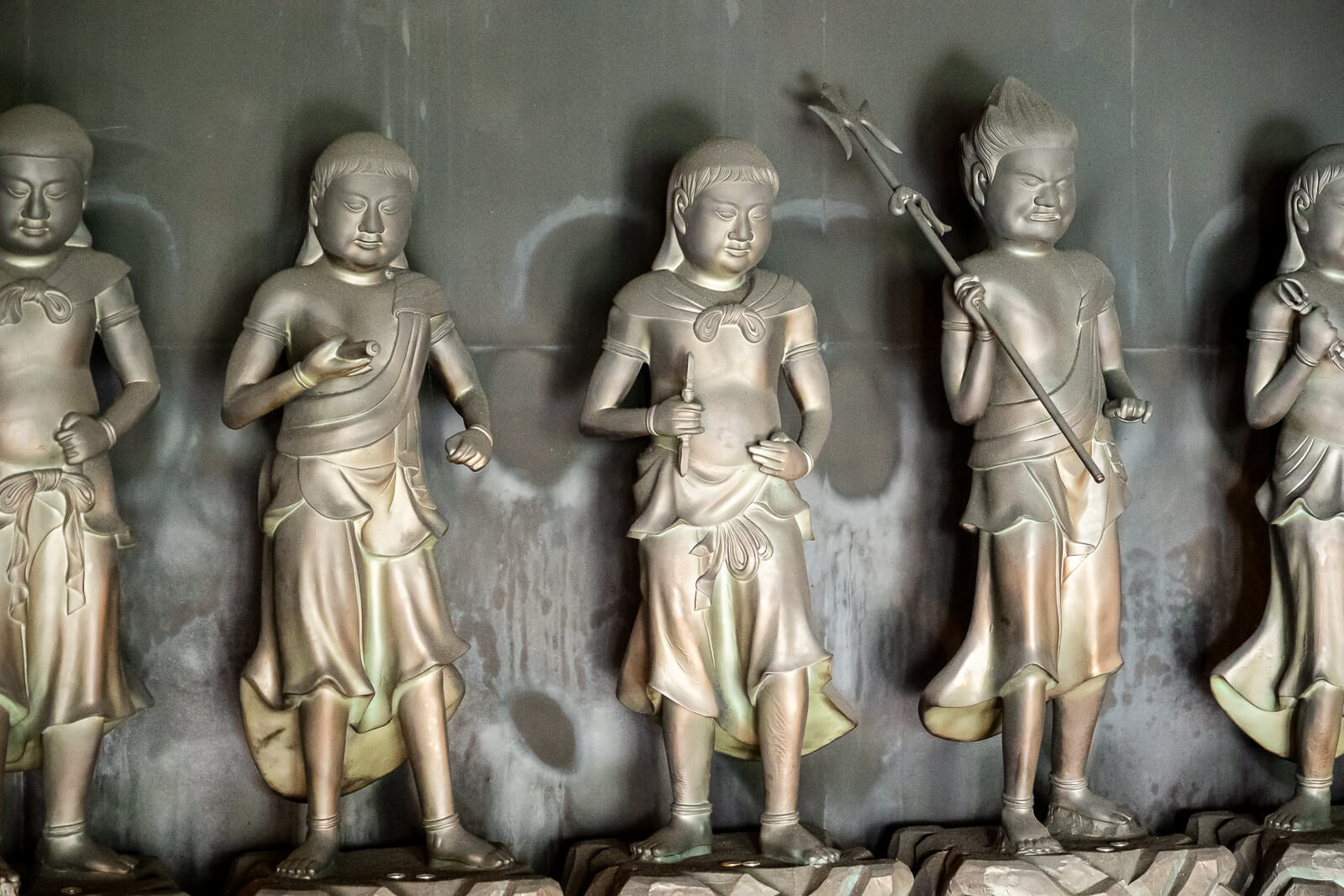
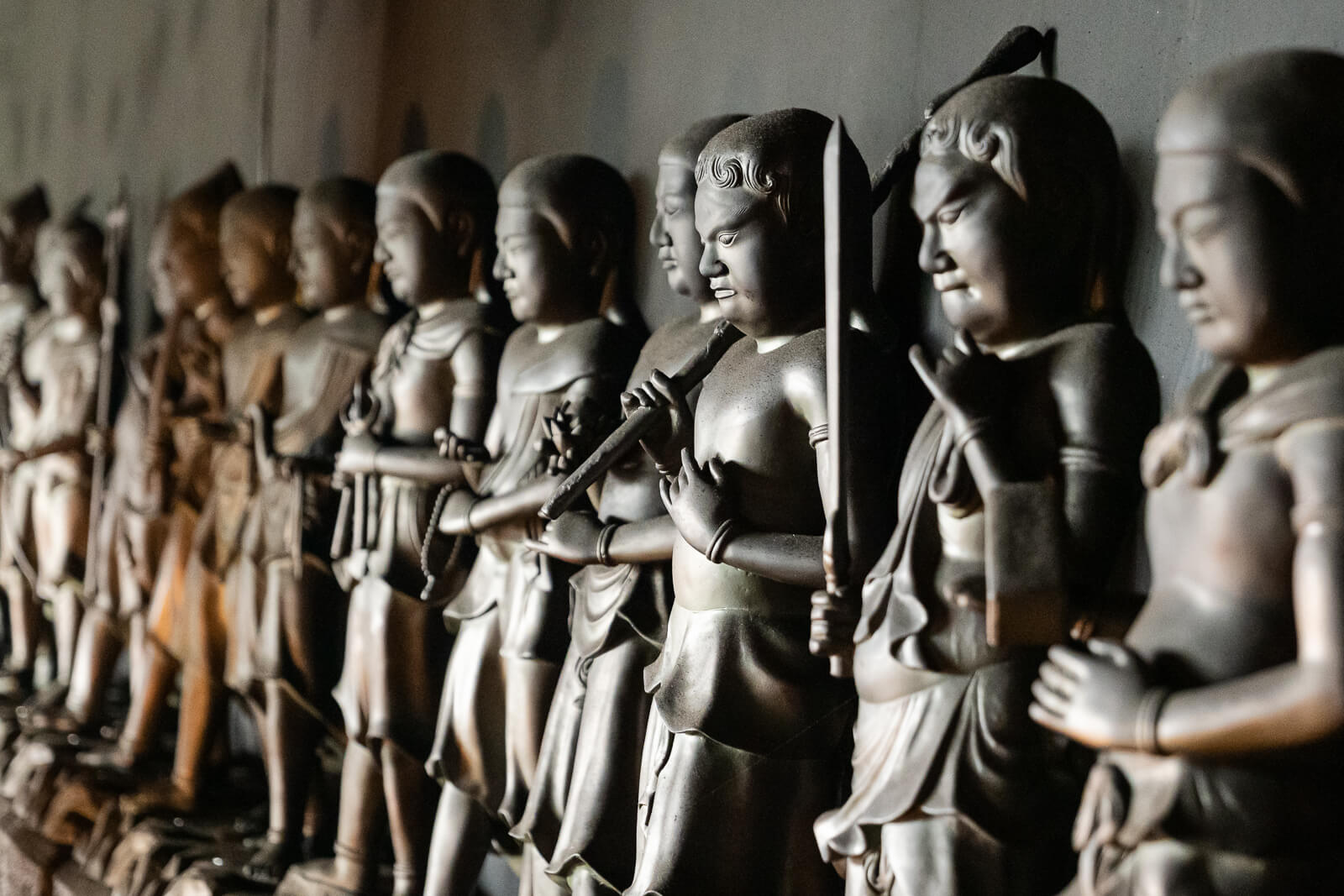
Incense and the darkened appearance of the interior are part of the hall’s character. The main figure draws the attention first, while smaller figures along the sides give more to examine once the scale of Fudo Myoo is clear. Looking along the side walls reveals more of the figures that surround the main devotional area.
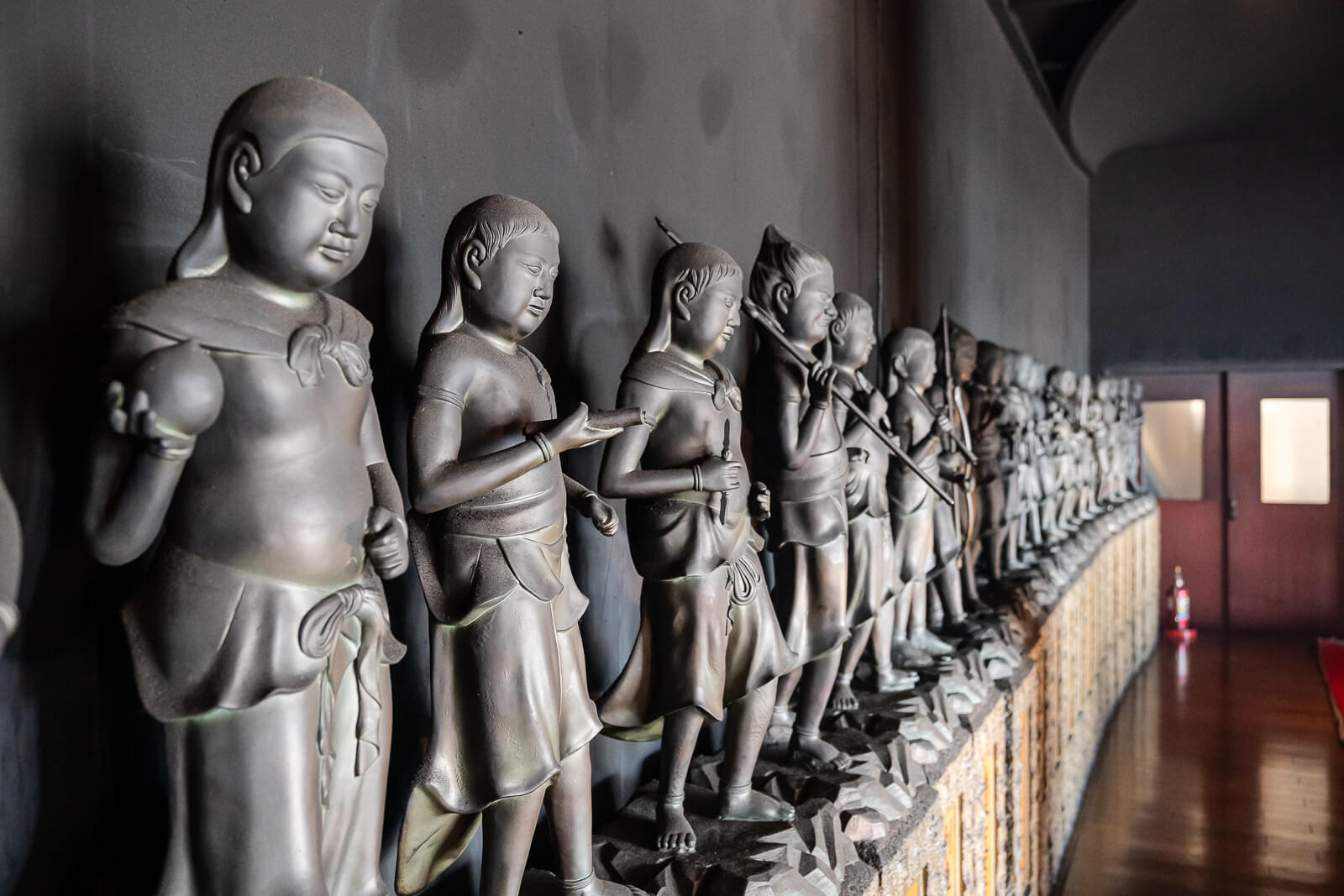
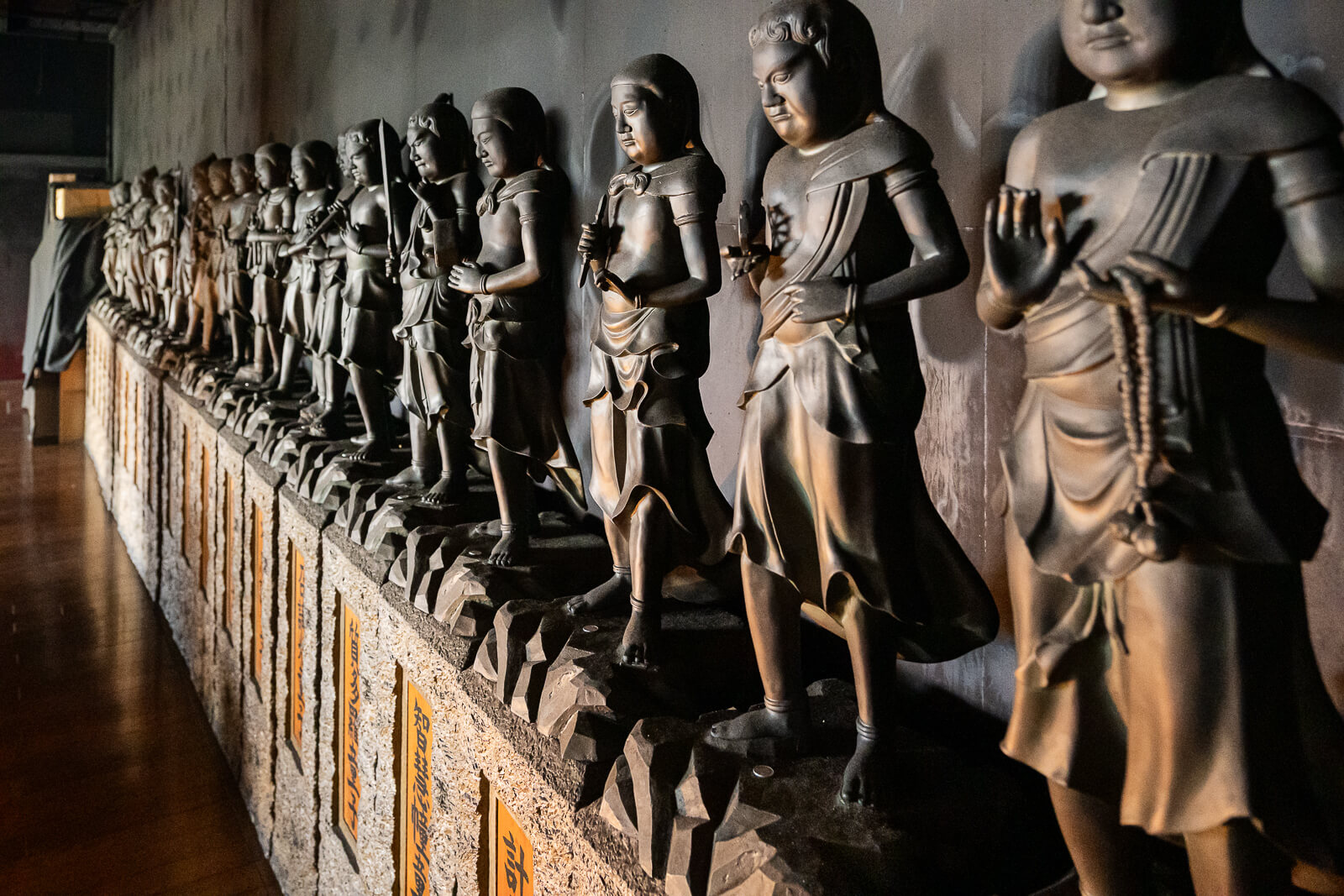
The hall is small enough for a short stop, but the arrangement gives that stop a clear focus. Look from the main image to the side figures and back toward the entrance, taking in how much devotional detail occupies the room. Photography rules should be checked separately from entry permission, since an open hall does not by itself establish permission to photograph everything inside.
Goshuin, Stamp Books and Temple Souvenirs
The administrative counter offers another reason to pause for visitors interested in goshuin. Stamp books and photographic items relating to the temple and island have also formed part of the selection here. Look at what is currently available instead of assuming that a particular book, print or framed image will always be stocked.
A goshuin request can make the stop longer than a quick look through the hall. Check the service available at the time, including how requests are being handled and whether there is a wait. For someone collecting records of temple visits, this can be a useful addition to the island walk, separate from the reason for entering the hall itself.
Enoshima Daishi’s Exterior and the Walk to Okutsumiya
The temple’s exterior can provide a composition with the Sea Candle visible beyond it. That relationship connects two very different parts of Enoshima: the modern observation tower at the summit and the Buddhist hall along the onward path. Look for the angle from the permitted exterior route, with the actual view depending on the position and conditions available.
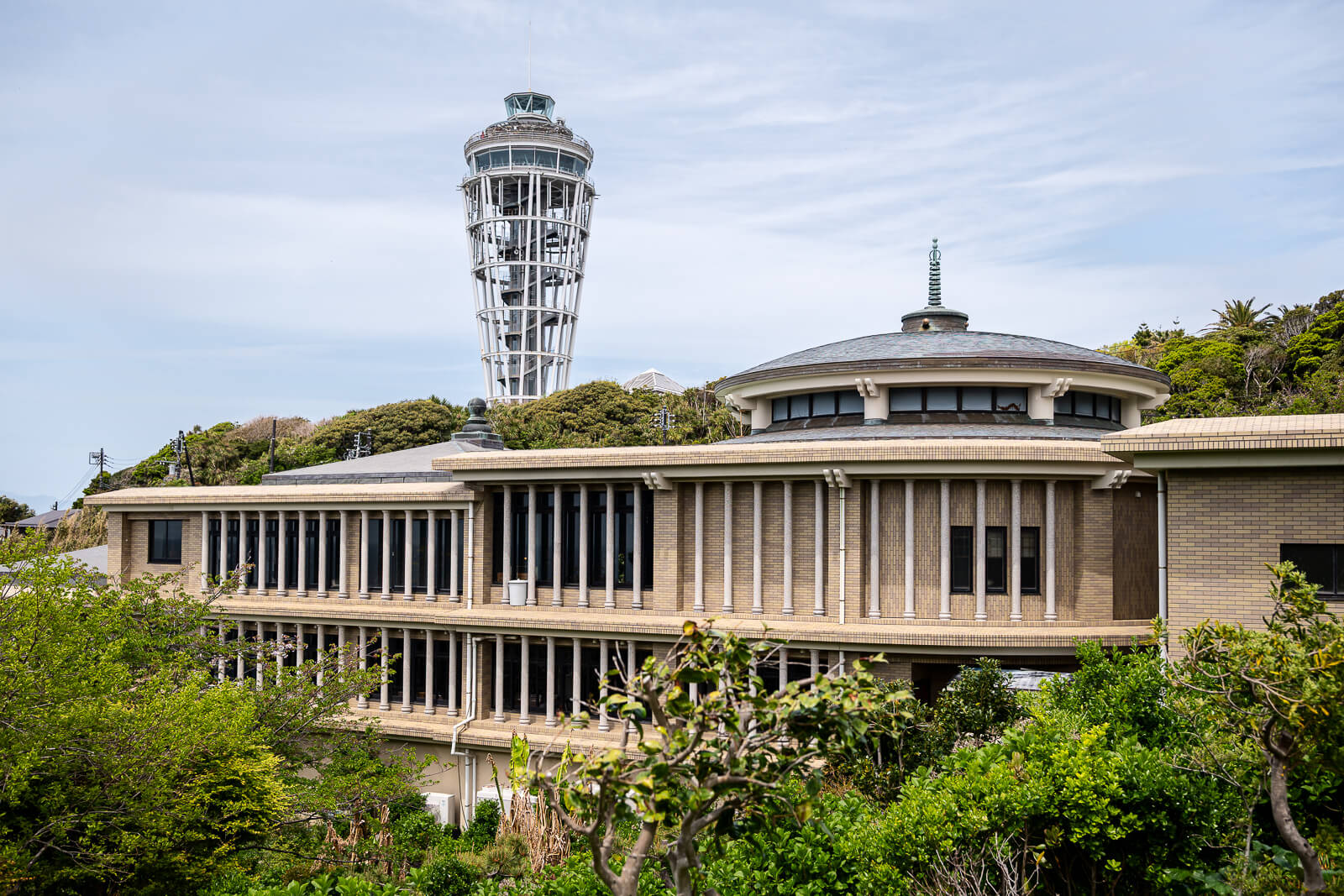
After the temple, smaller shops, restaurants and residences continue along the route toward Okutsumiya. The far-side coast is still ahead, followed by a return climb unless an available boat provides the alternative. Enoshima Daishi works well as a brief stop within that larger walk because its hall offers a distinct experience without taking the visitor away from the island route. For another Buddhist temple with a different setting, Ryukoji Temple stands on the mainland near Enoshima Station, with older halls and a hillside pagoda.
For a short visit, give the guardians and principal image the attention they deserve, then continue toward the farther shrine precinct. With more time, the counter or a confirmed rite can extend the stop for a particular interest. If you are extending the day into Kamakura, Hase-dera adds hillside gardens, Buddhist art and views over Sagami Bay. Allow time for the Enoden journey and a longer temple visit.
Getting There
For the rail journey and mainland walk before following the island route to Daishi, use the guide to getting to Enoshima.
Access and Arrival
Follow the island path toward Okutsumiya and the far-side coast. The red guardians mark the temple entrance, with steps leading down into its grounds.
- Across Enoshima Island
Summit / garden area → island path toward Okutsumiya → red temple guardians
Follow the signed island route and local access instructions. · Allow for slopes, stairs and the walking return.
Hours and Fees
Visitor information
Daishi is a Buddhist temple visit beyond the summit rather than one of Enoshima Shrine's precincts.
- Hours
- Visit during daytime and follow the temple's hall-entry and service arrangements. Check hall and goshuin-counter availability before a visit made specifically for either.
- Admission
-
Hall viewing is described as freely available under temple arrangements. Goshuin, books, offerings and other items are separate. Remove shoes where instructed.
Optional combined admission
Enoshima Island All-Access Pass
Optional for a wider island-and-aquarium day. Includes Escar, Sea Candle, Iwaya and the aquarium. Choose + Night for event-evening garden entry. Rail, Bentenmaru and Hoanden are separate; check date and package conditions.
Compare Enoshima All-Access Passes
Plan Your Visit
Choose the stay, transport and experiences that fit the wider coastal trip.
Compare Fujisawa and Enoshima Stays
Stay near the coast for an unhurried island visit. Compare Fujisawa and Enoshima accommodation by location, price and cancellation terms.
Compare Fujisawa Stays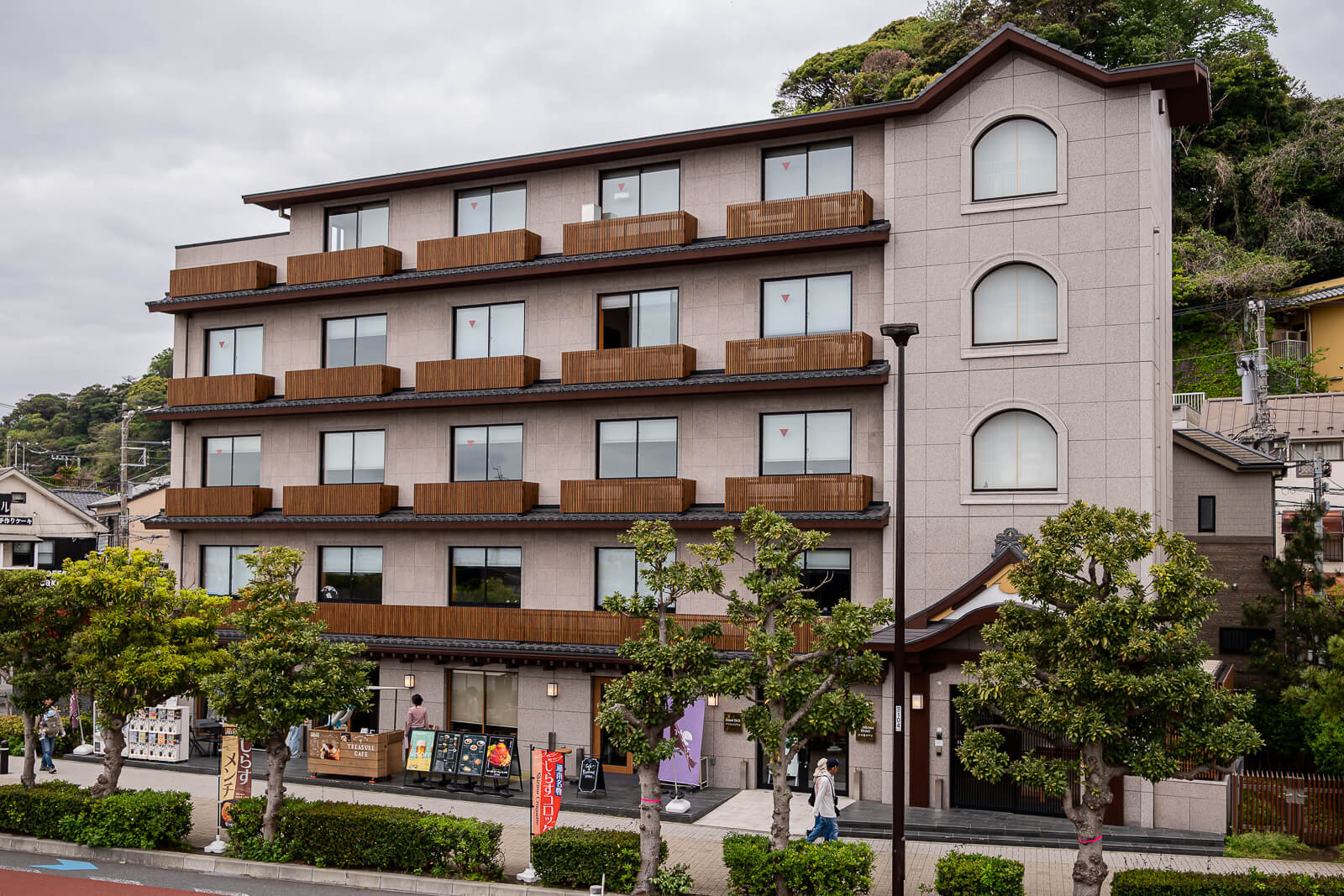
Compare Tokyo Car Rental Options
Extend your trip beyond the railway corridor with a rental car from Tokyo. Compare pickup locations and rates for the wider journey.
Compare Tokyo Car Rentals
Browse Guided Kamakura Day Trips
Explore Kamakura with a guided day trip. Compare routes and included stops to find one that also visits Enoshima if that is part of your plan.
Browse Kamakura Tours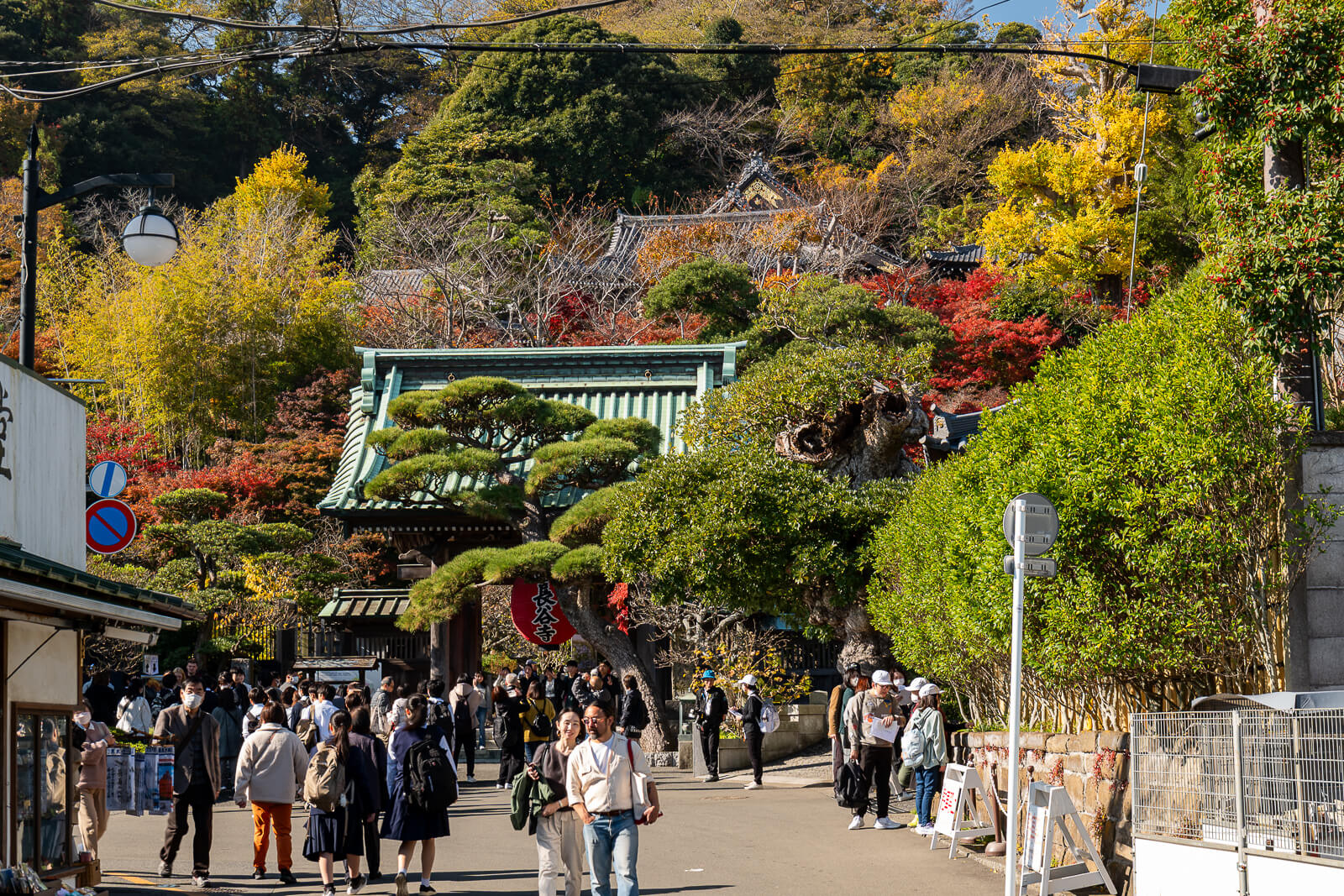
Explore Enoshima Aquarium Tickets
Add jellyfish galleries and Sagami Bay marine life to your coastal day. View aquarium admission options for your travel date.
View Aquarium Tickets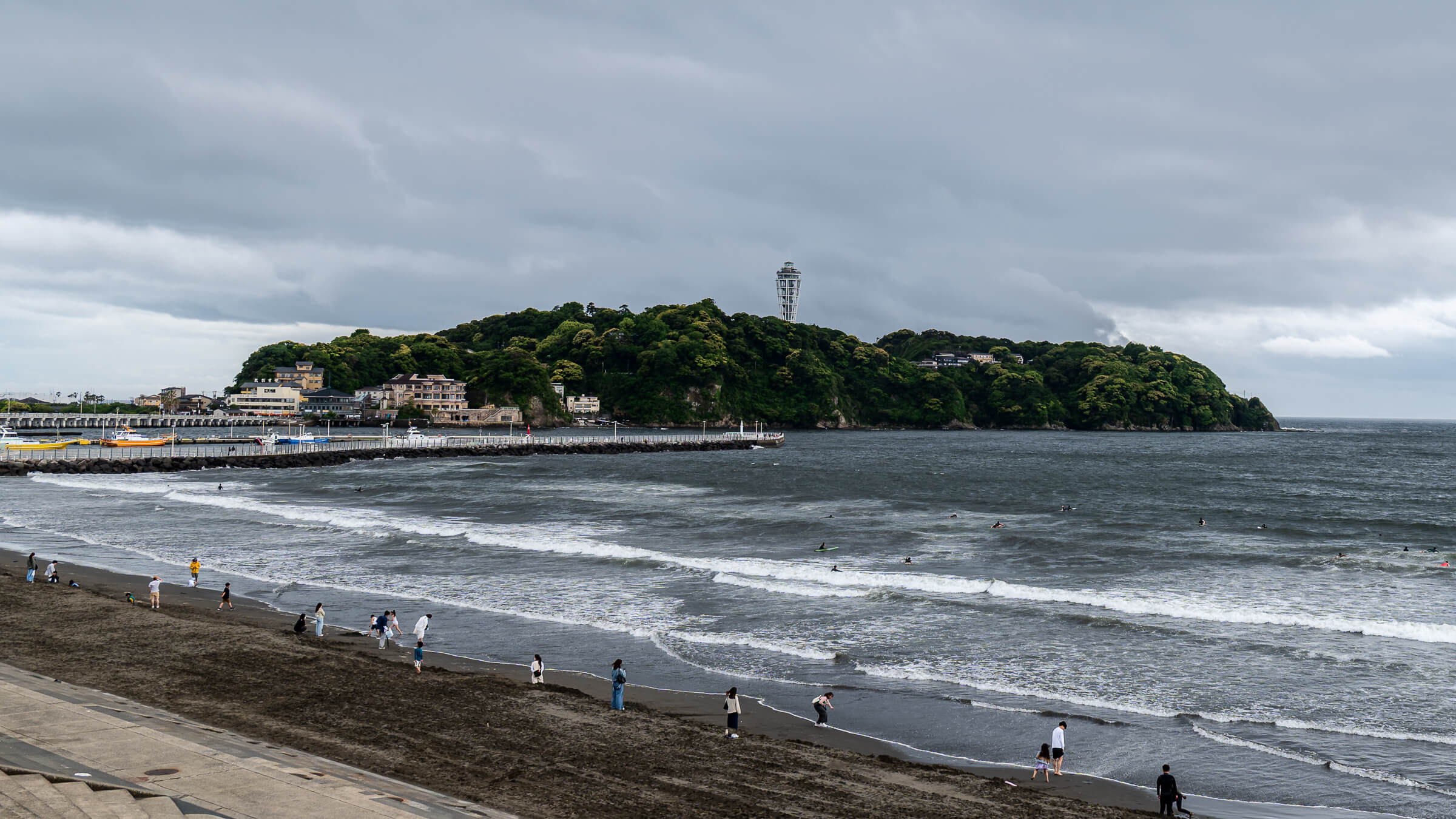
Compare Japan Data Plans
Keep maps, translation and train information handy with a Japan data plan. Compare allowances for your trip and check device compatibility.
Compare Japan eSIMs
Consider the Shonan Monorail
Ride the suspended monorail from Ofuna to Shonan-Enoshima. View ticket options for this scenic arrival and any repeat rides.
View Monorail Tickets