Autumn color above Oji Station
Asukayama Park brings golden ginkgo, red maples and historic garden buildings together above Oji Station in northern Tokyo. Near APRON MARK café, a huge ginkgo rises from a small mound, while paths behind the café lead into deeper reds and oranges. The walk continues past monuments and rail views before returning to the former Shibusawa garden.
The late-November 2025 photography visit lasted one hour and 50 minutes, from 13:25 to 15:15, entirely outdoors. Arrival was by car, with a space found easily in the park’s dedicated parking lot that afternoon. The walk still filled nearly two hours without entering any buildings, so allow extra time if the museums are part of the plan.
Play spaces and a café suit a mixed-interest outing
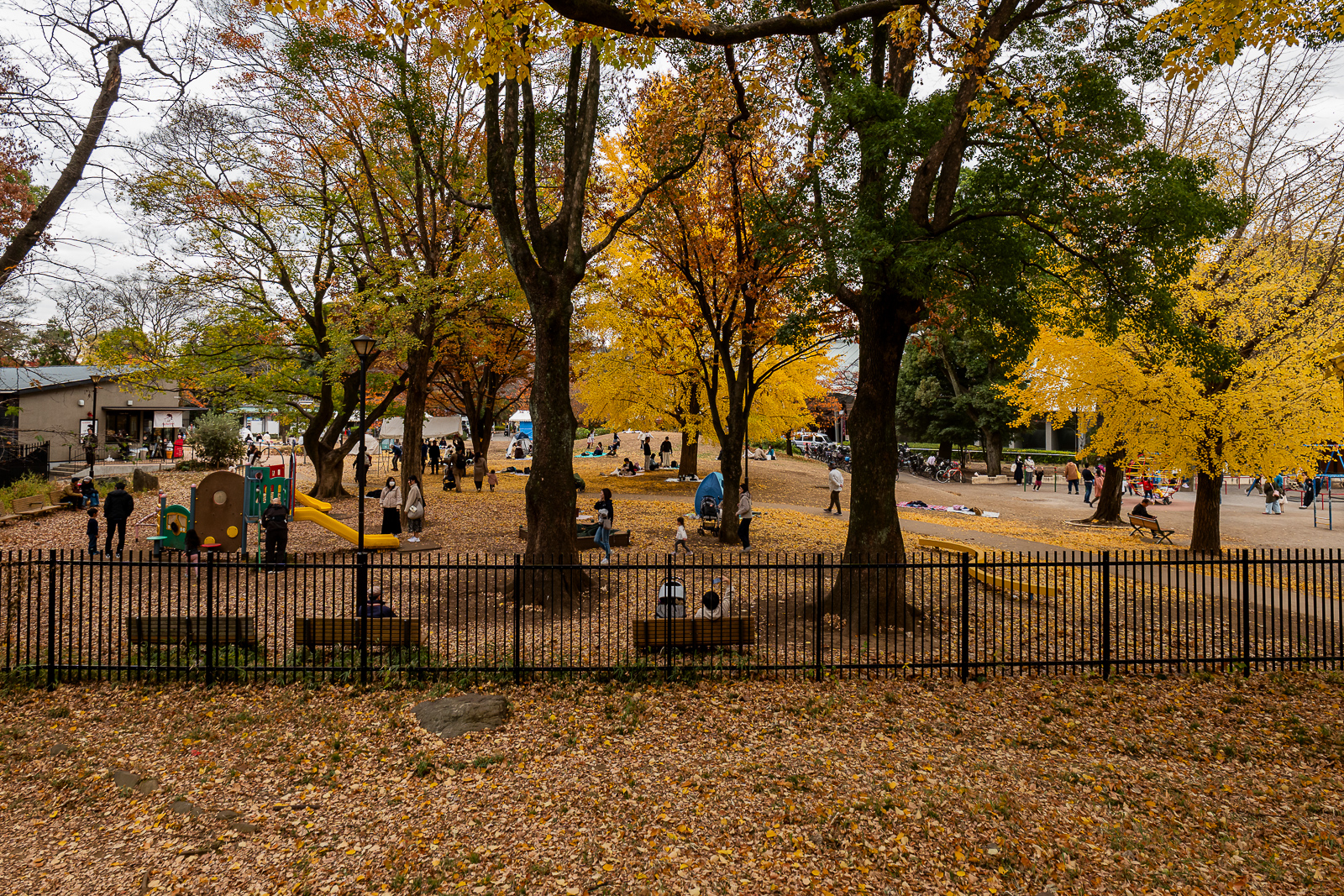
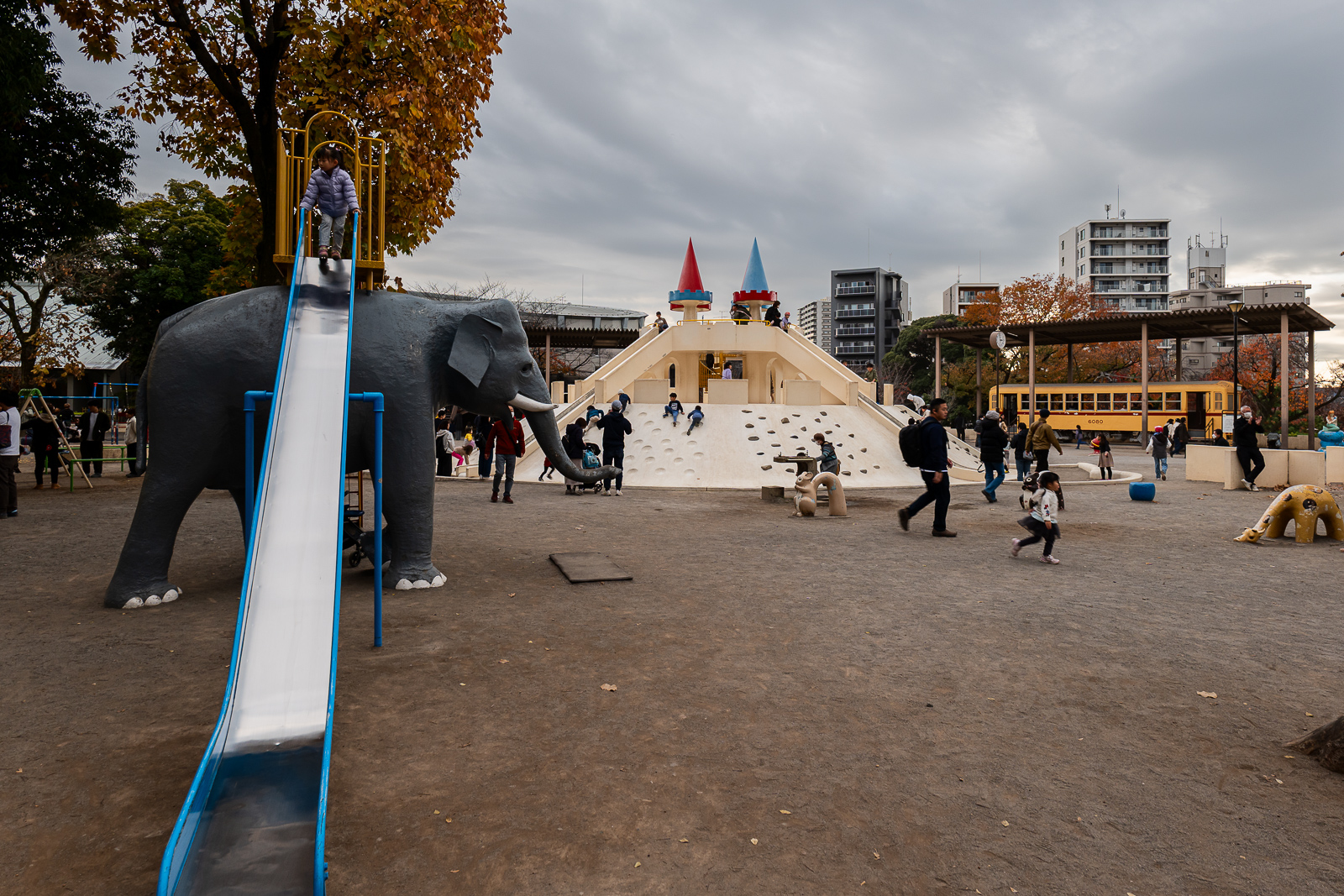
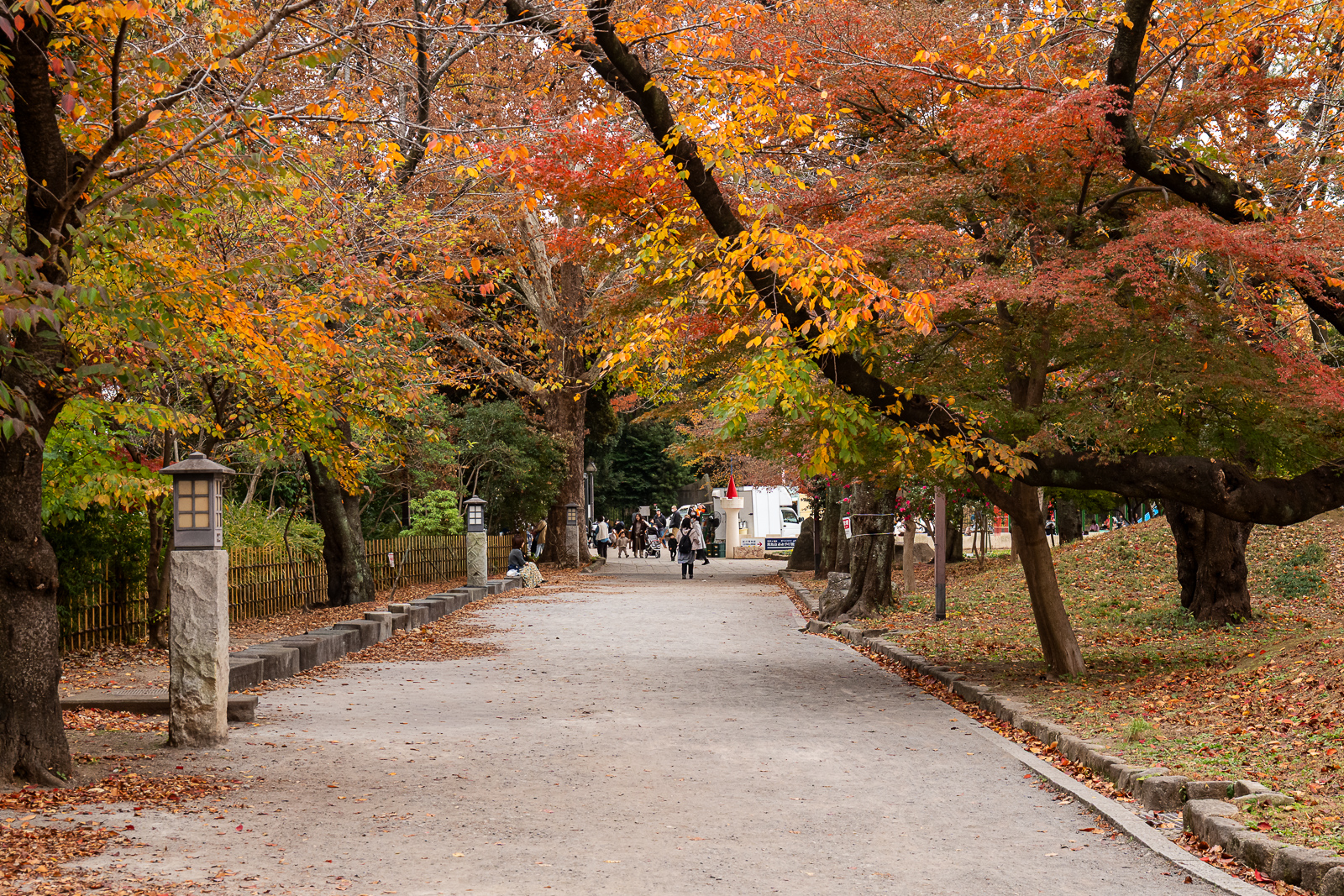
On that weekend afternoon, Asukayama felt like a family park, with children playing and other visitors enjoying the trees. There were people around, but enough room to stop and take photographs comfortably along the paths. The elephant-shaped slide and broader playground give families another reason to linger between the autumn trees.
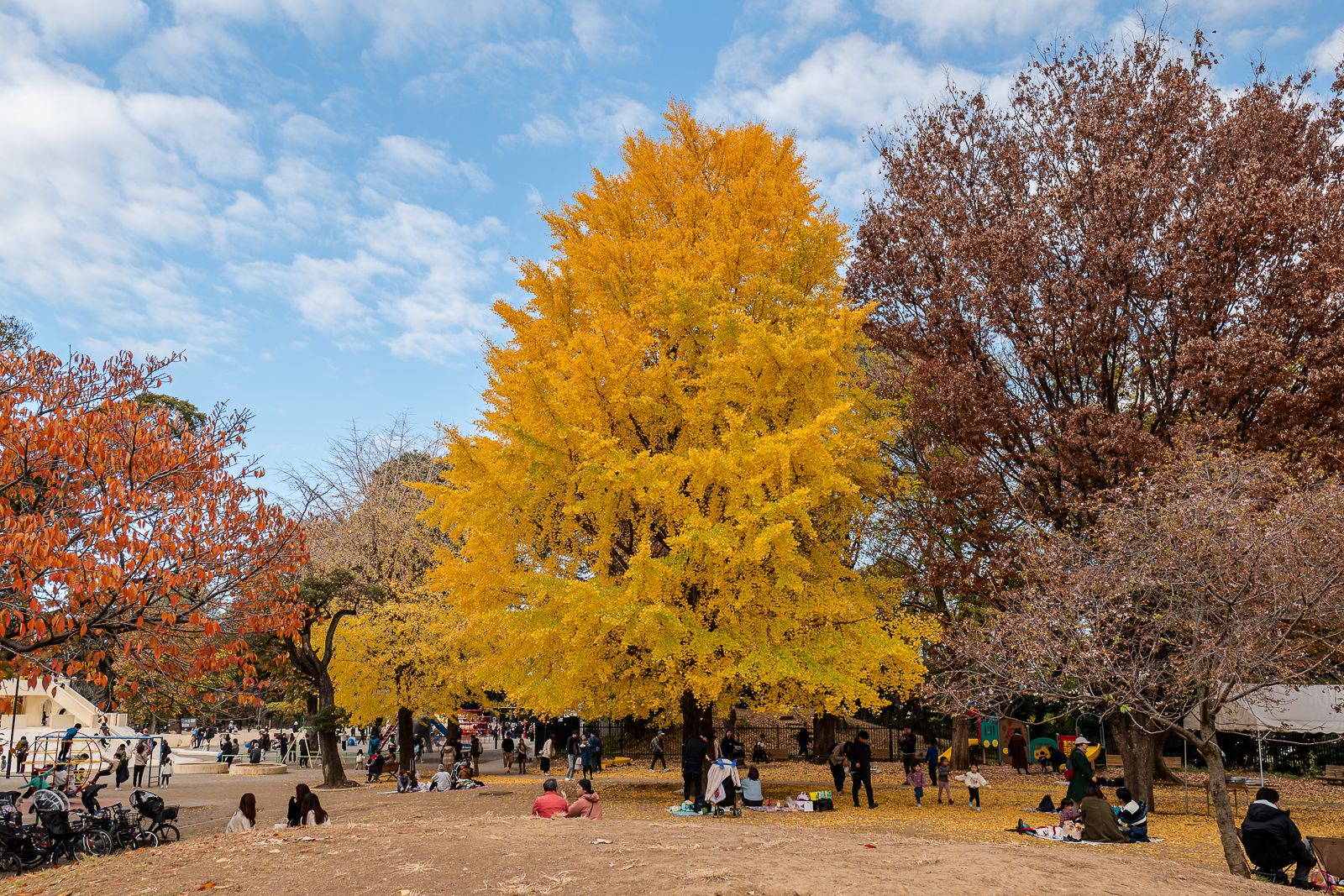
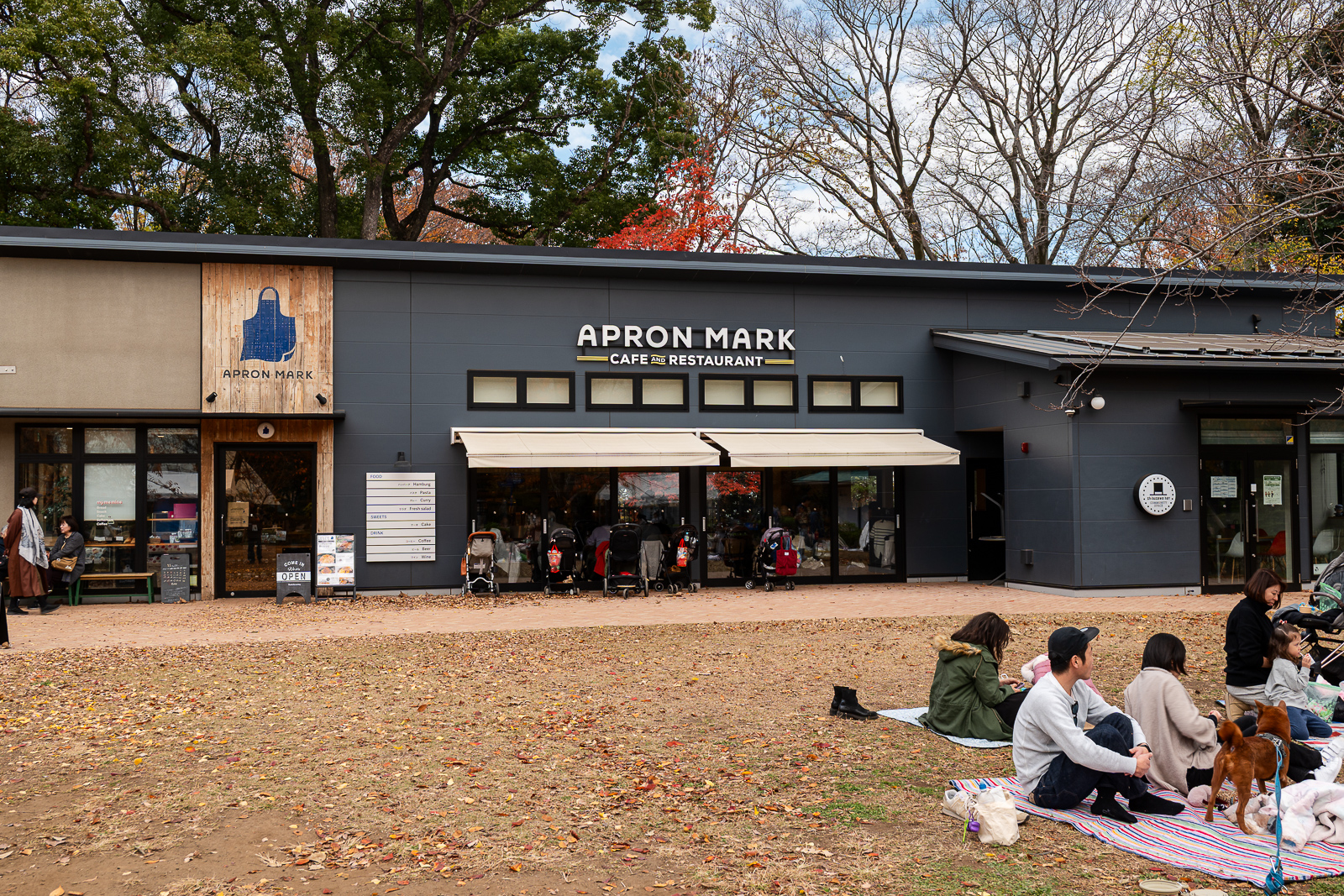
The outdoor walk began near the Shibusawa Memorial Museum and APRON MARK café, making this part of the park a useful starting point for the route. APRON MARK faces an open space close to the large ginkgo. Its service hours and closed days are separate from park access, so check them if a meal is part of the plan.
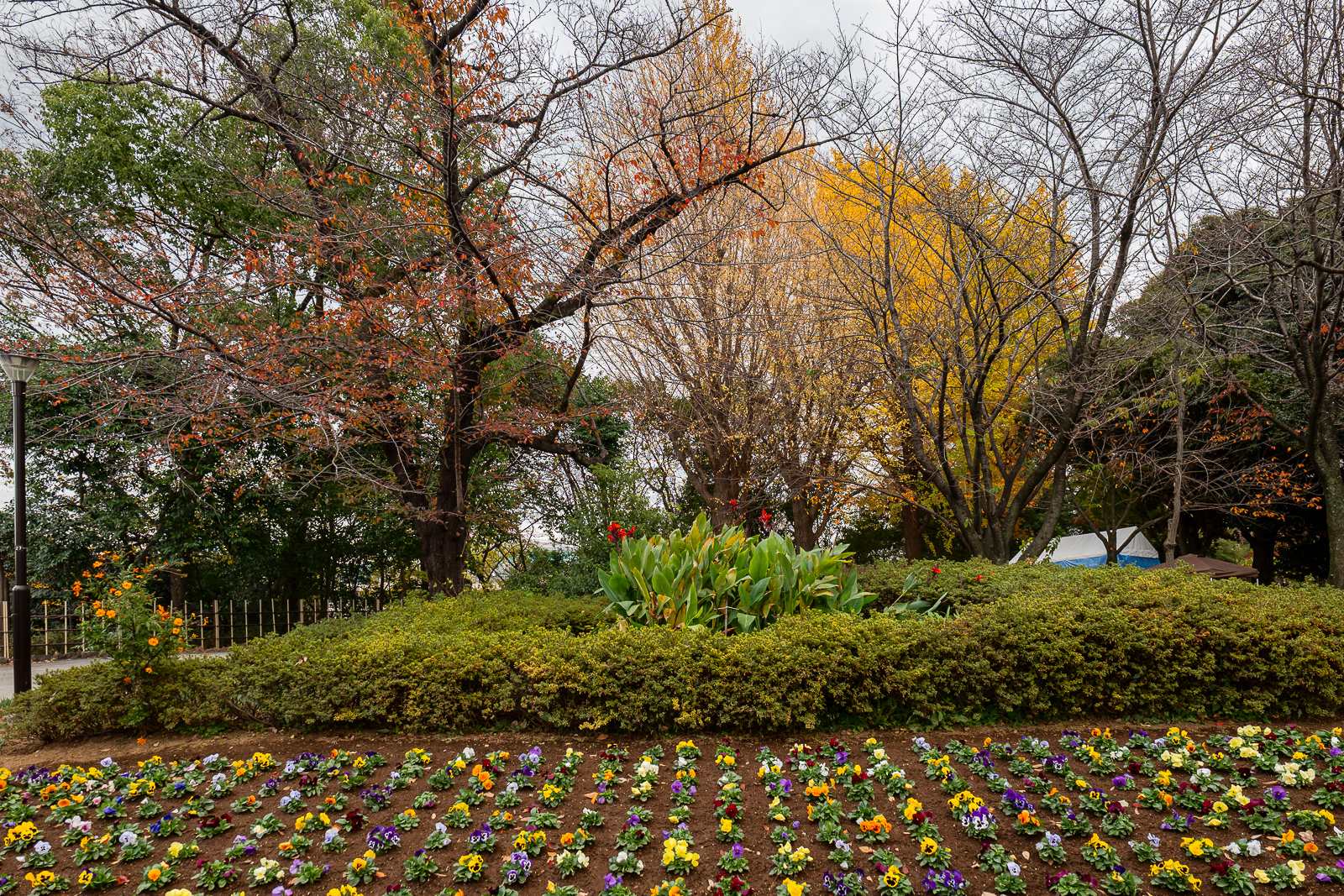
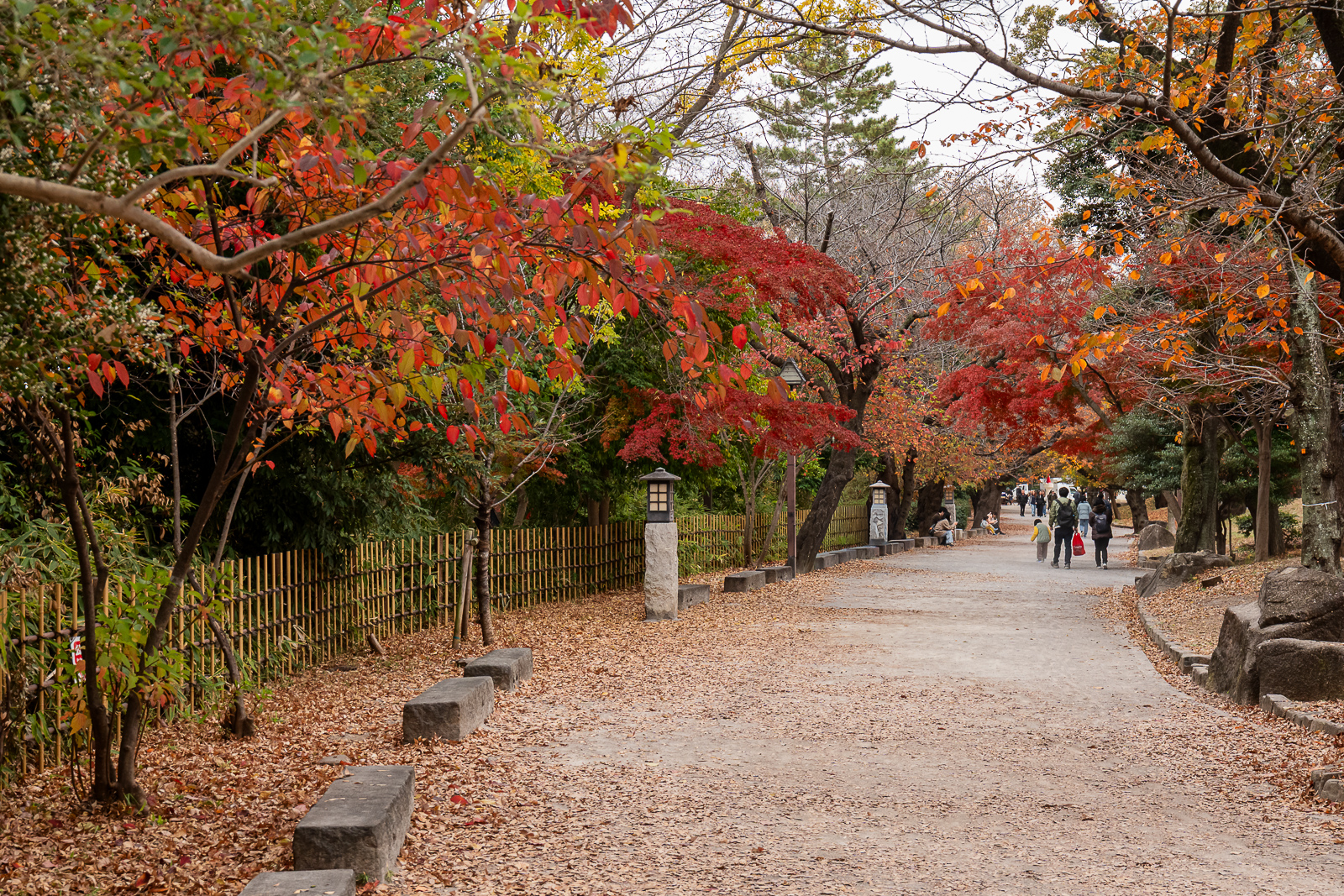
The large ginkgo near the café is one of the park’s most striking autumn trees. Its position on a small mound lifts the yellow canopy above the surrounding open ground. Beyond it, the paths, planted beds and play spaces give the park the easy atmosphere of a place used for everyday outings.
Follow the color from the open park to the smaller paths
Behind APRON MARK, around the site of Mushin-an, the autumn color became especially vivid on this visit. Dark reds and oranges filled the area, with yellow leaves mixed between them. It was a rewarding contrast to the huge golden ginkgo near the café, and a reason to explore beyond the main path.
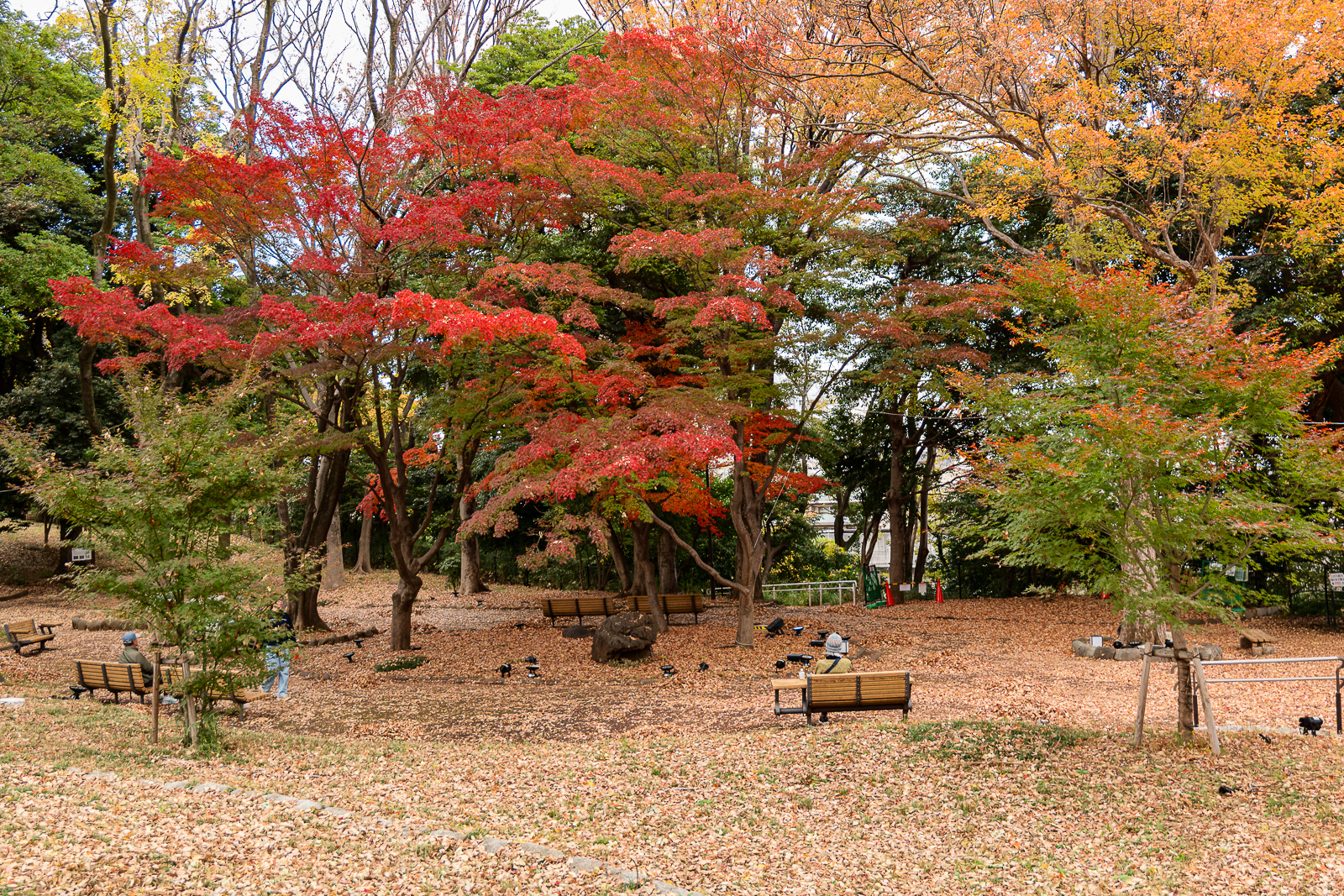
The main path felt mostly level and easy to walk, with a descent into the area behind the café. Smaller paths branch between the trees, bringing red and orange foliage closer overhead. The change in level here is separate from the climb up from Oji Station, so the ease of this particular walk should not be read as a description of every approach to the park.
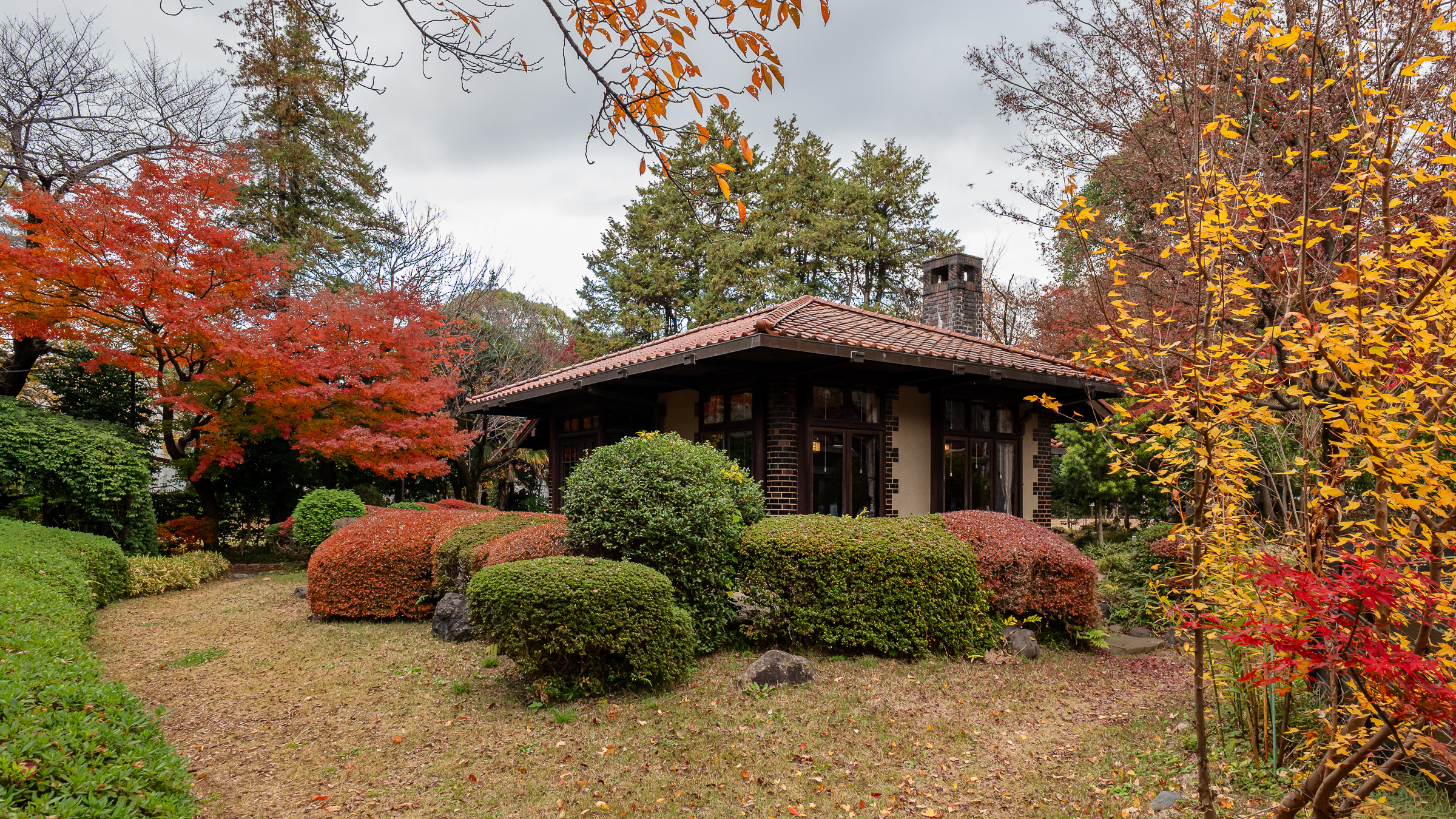
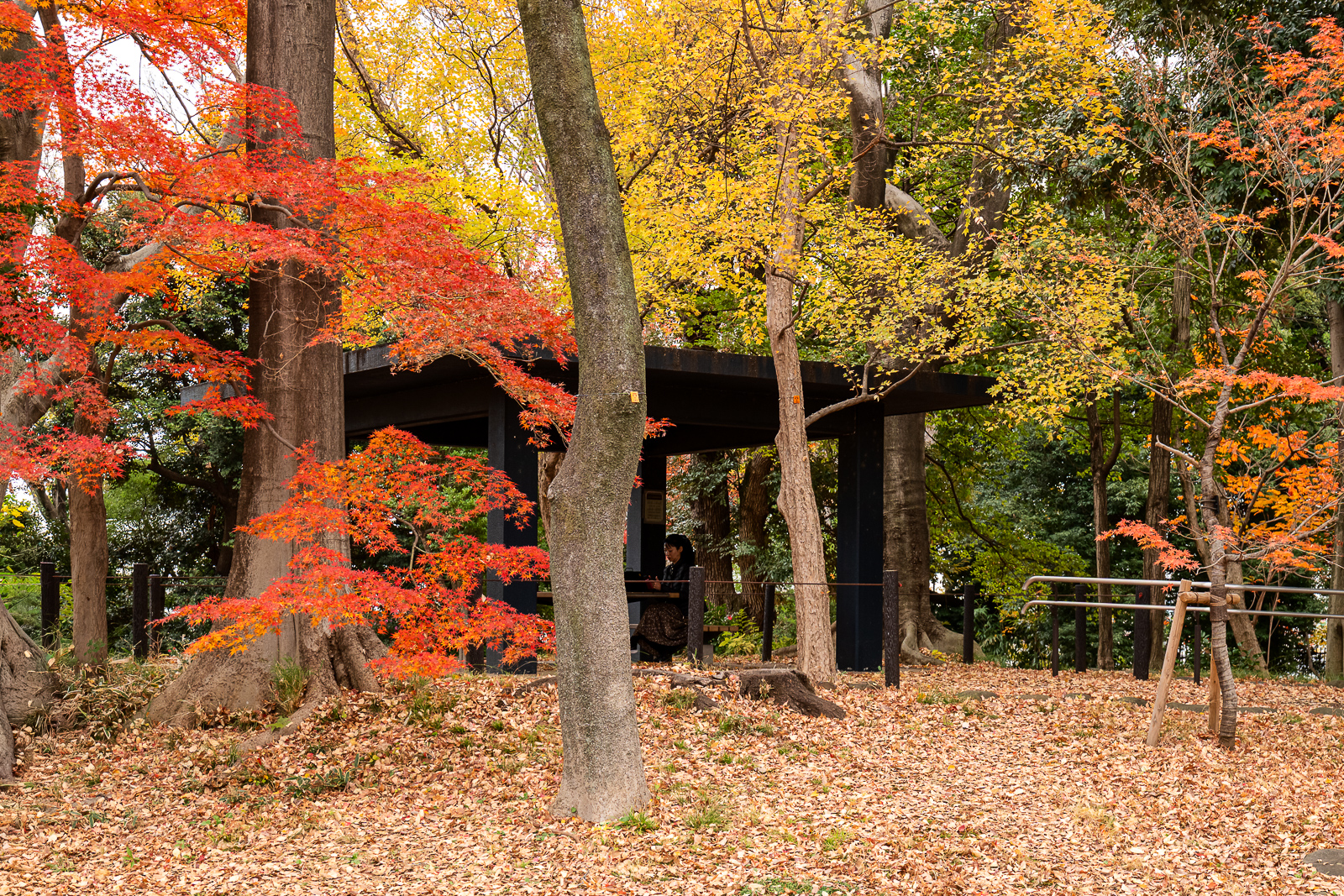
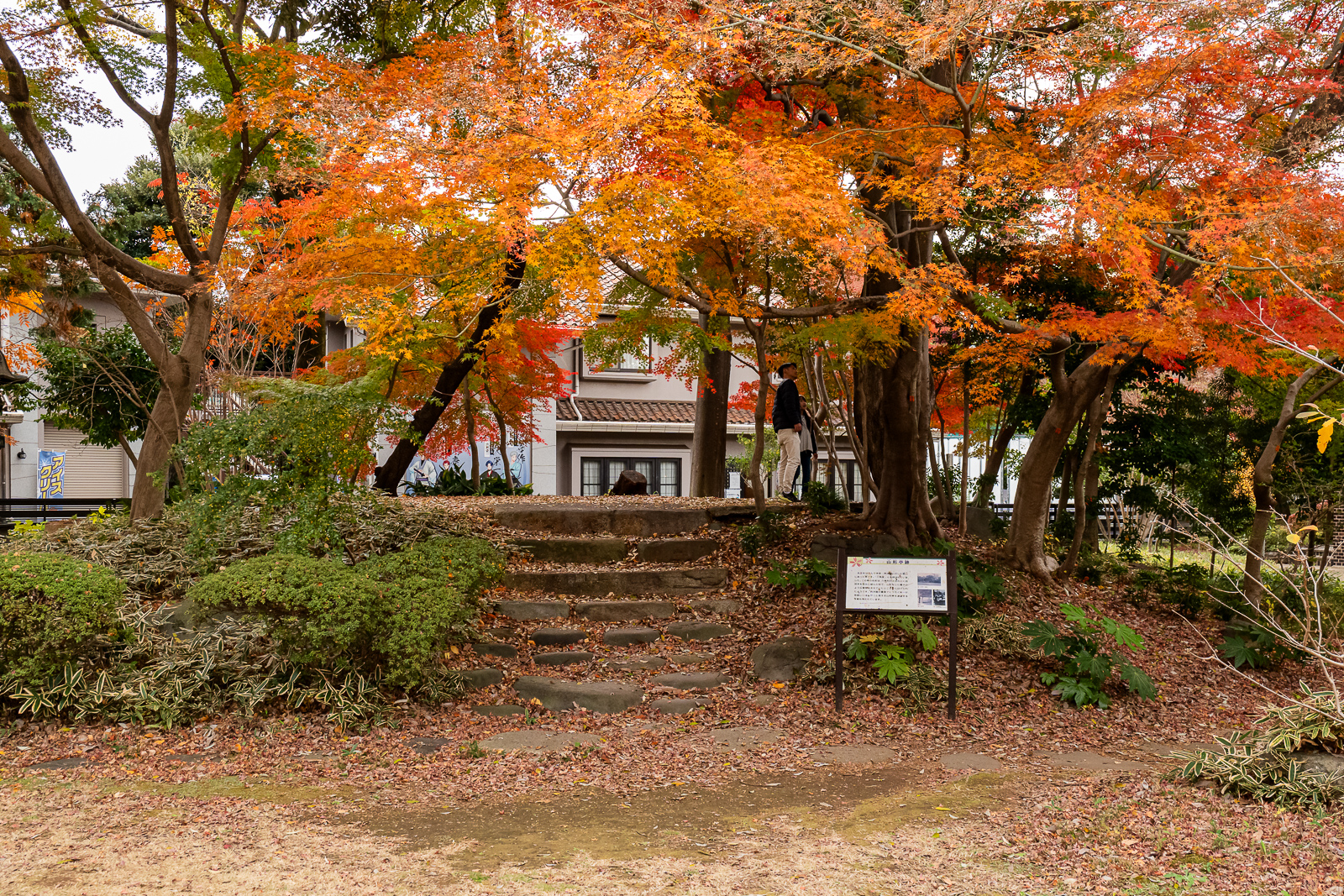
Paths and small shelters offer several places to pause among the trees. Around the open-sided garden shelter, the dark roof sets off the red and yellow leaves, while fallen foliage covers the ground below. These smaller corners made it easy to spend time looking around rather than simply walking from one end of the park to the other.
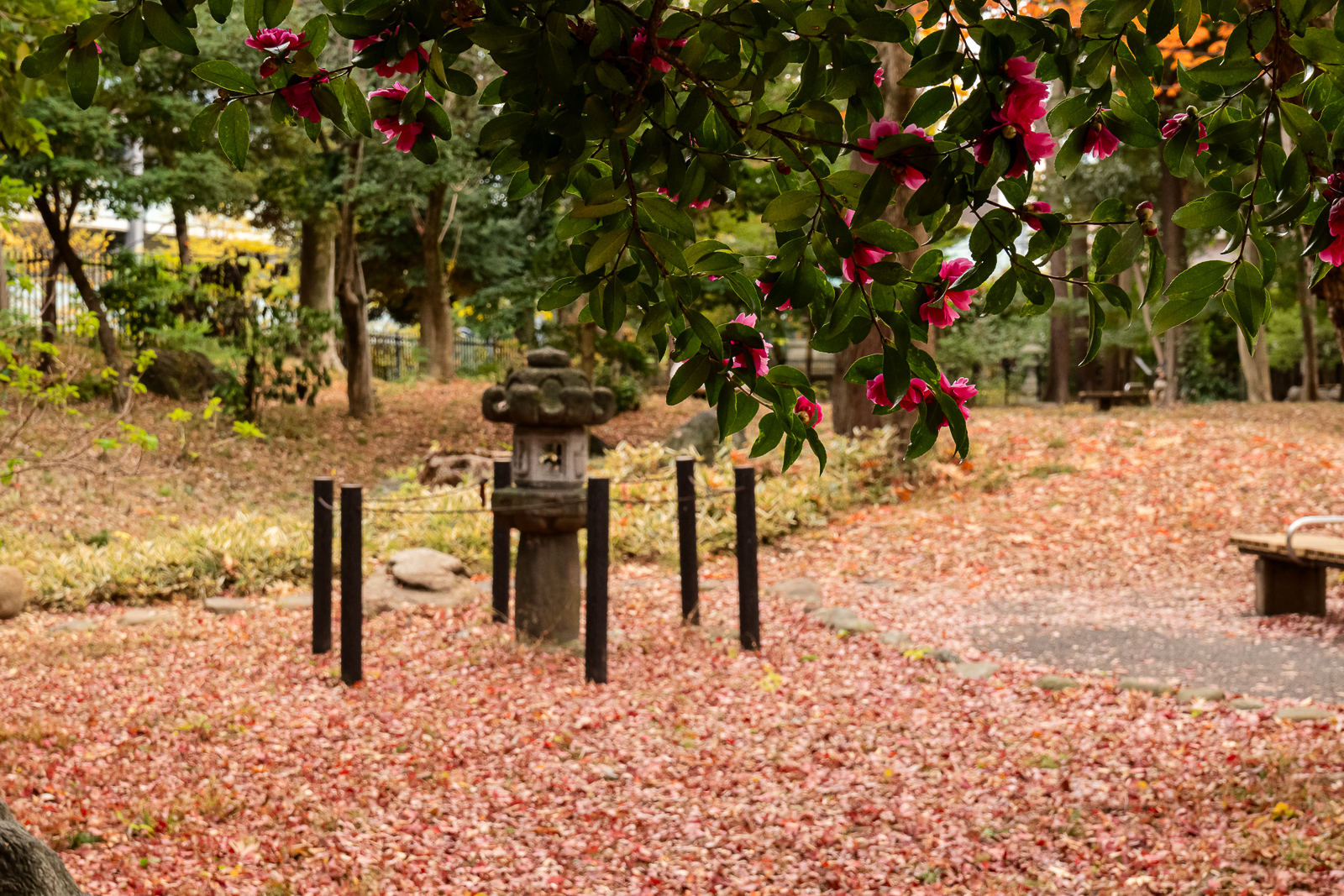
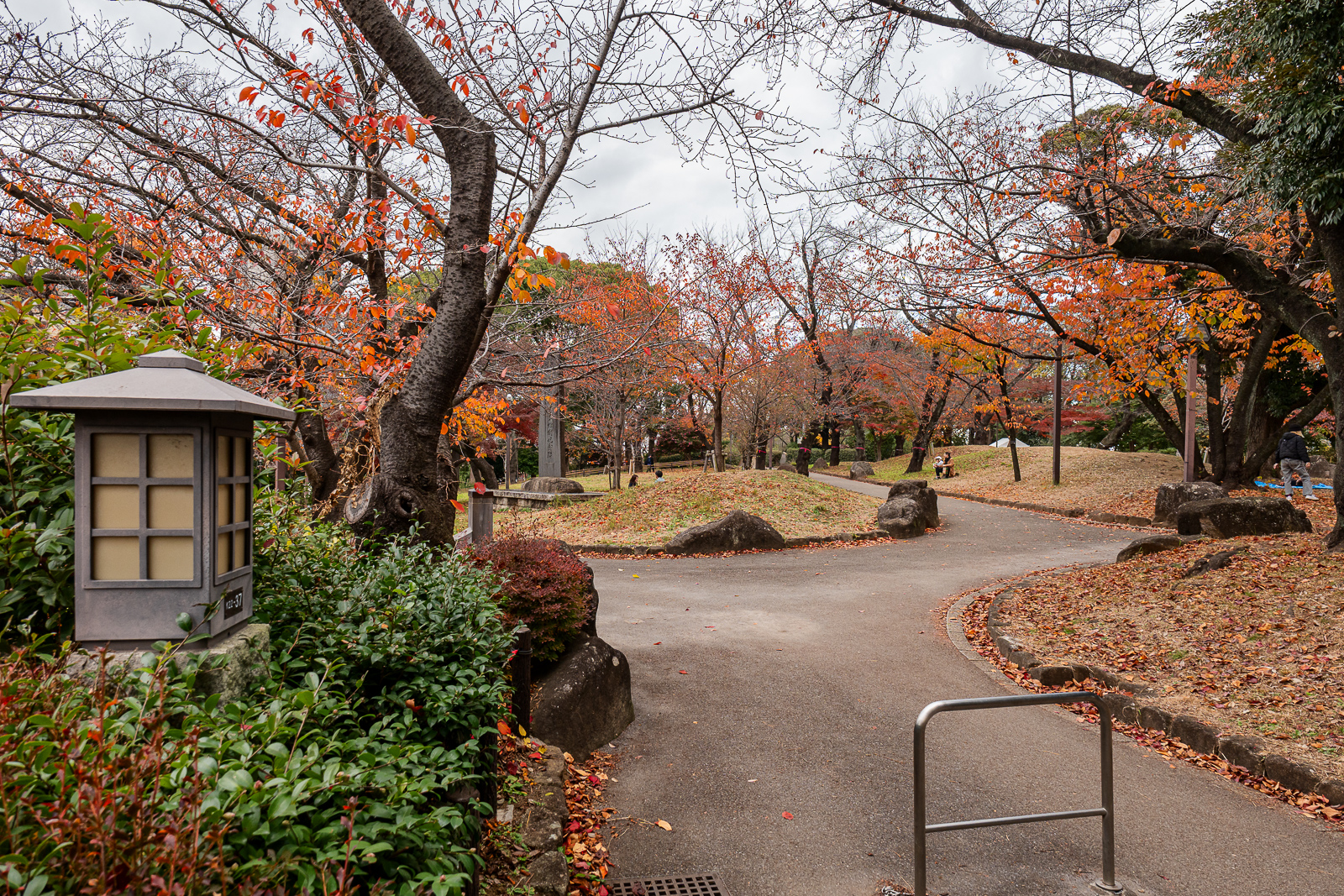
Stone lanterns add a different shape beneath the branches. In the smaller garden corners, fallen leaves gather around them and cover the ground between the trees. These details give the walk interest at eye level as well as overhead.
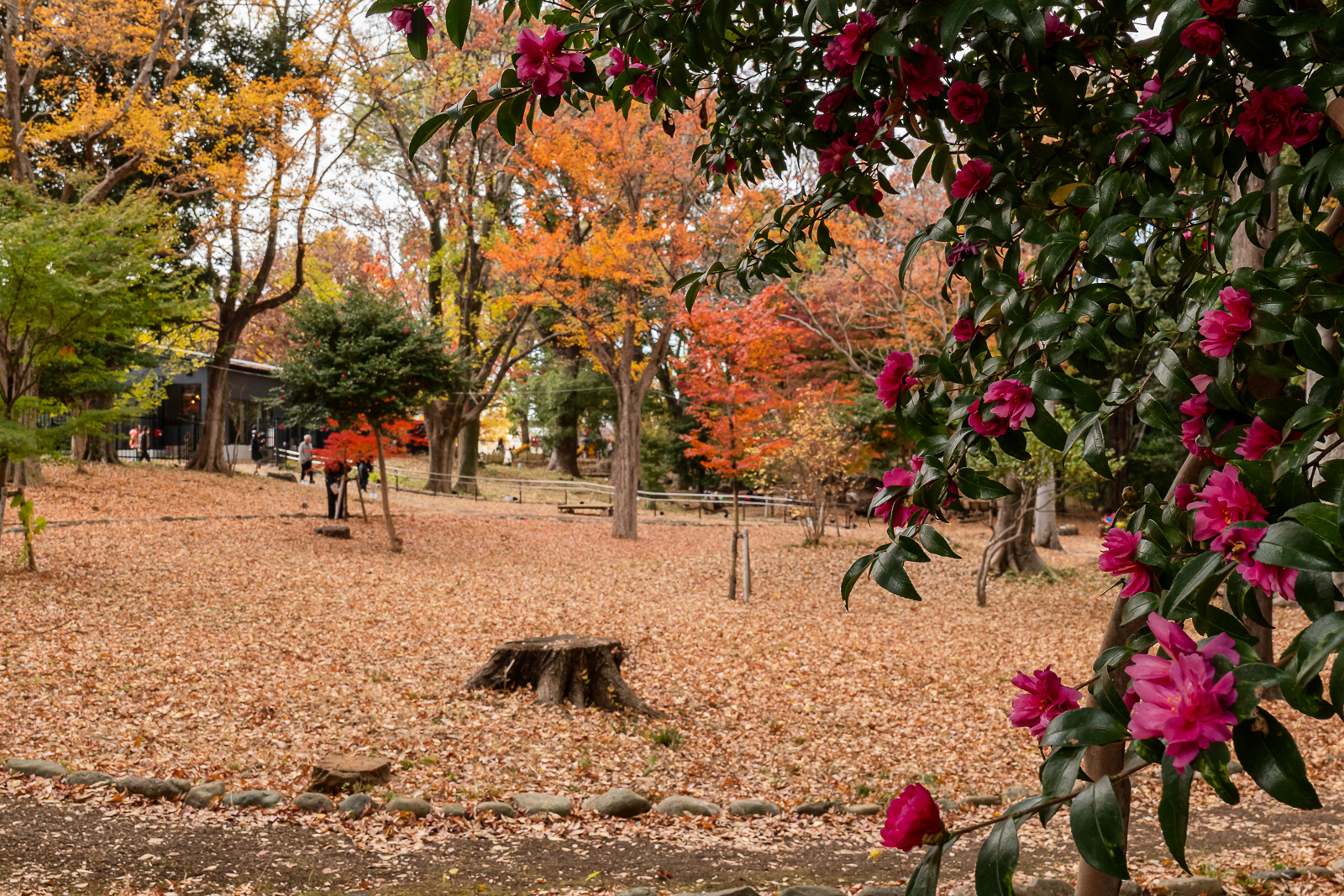
Pink flowers add another color among the autumn trees. Flowering shrubs, orange branches and the leaf-covered ground share the same garden spaces. The mix will change with the season and weather, so leave room to follow whichever parts of the park have the strongest color on the day.
Monuments and shelters add detail between the trees
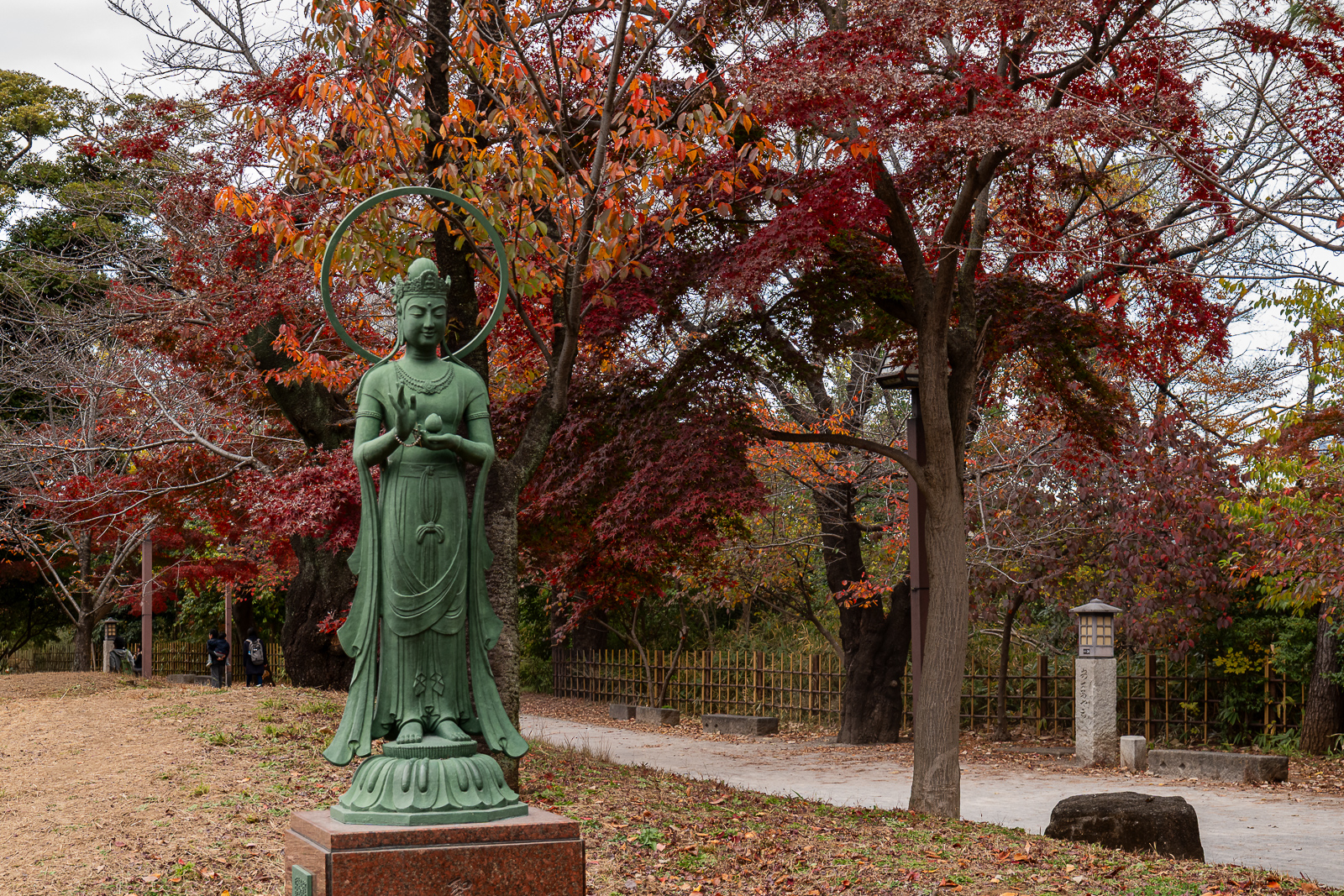
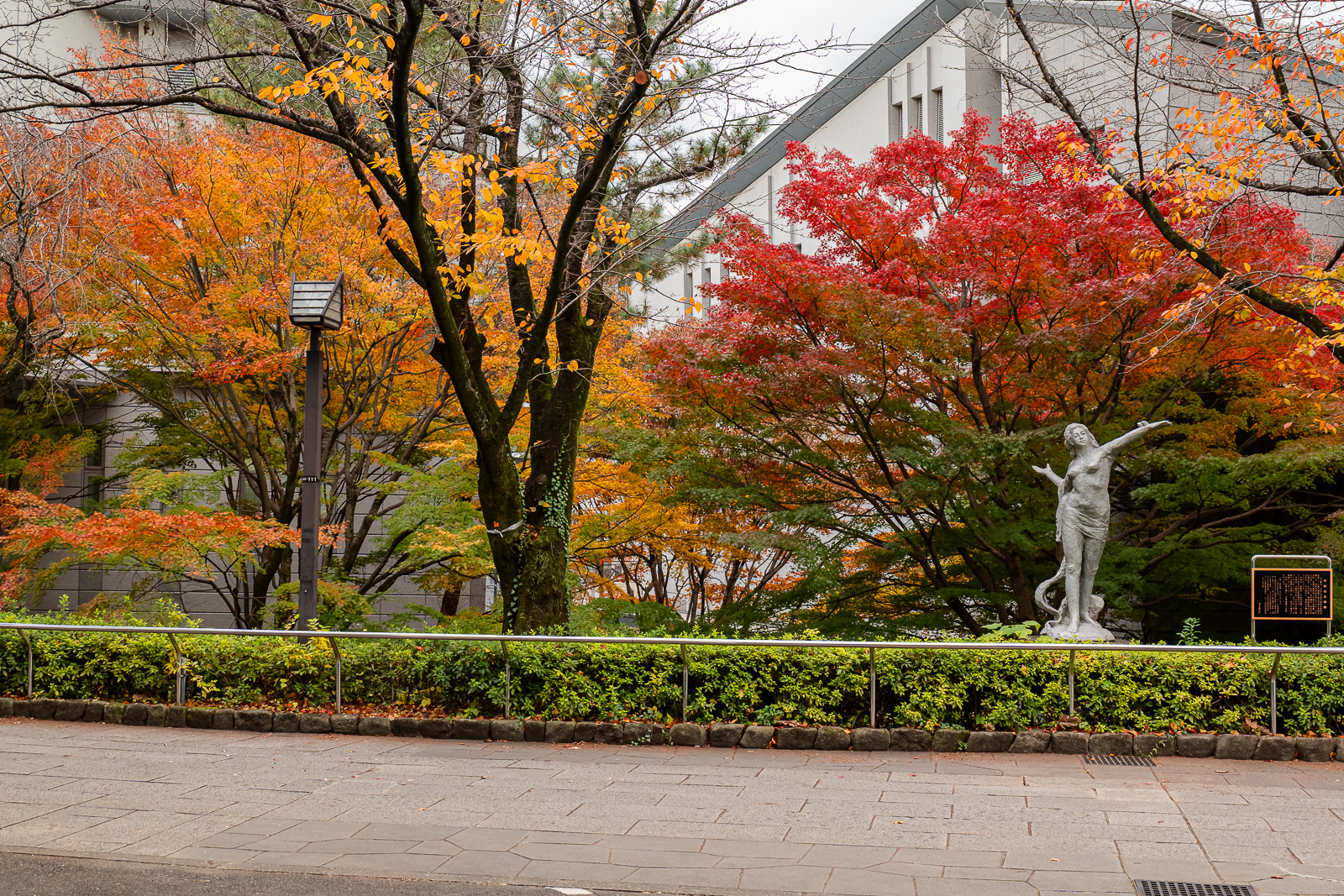
Continuing from the café area toward the northern end of the park brings monuments and statues into the walk. A green standing figure appears beneath red branches beside a path, with planting extending behind it. These features, along with the trees, made the path toward the rail lift one of the most enjoyable stretches of the visit.
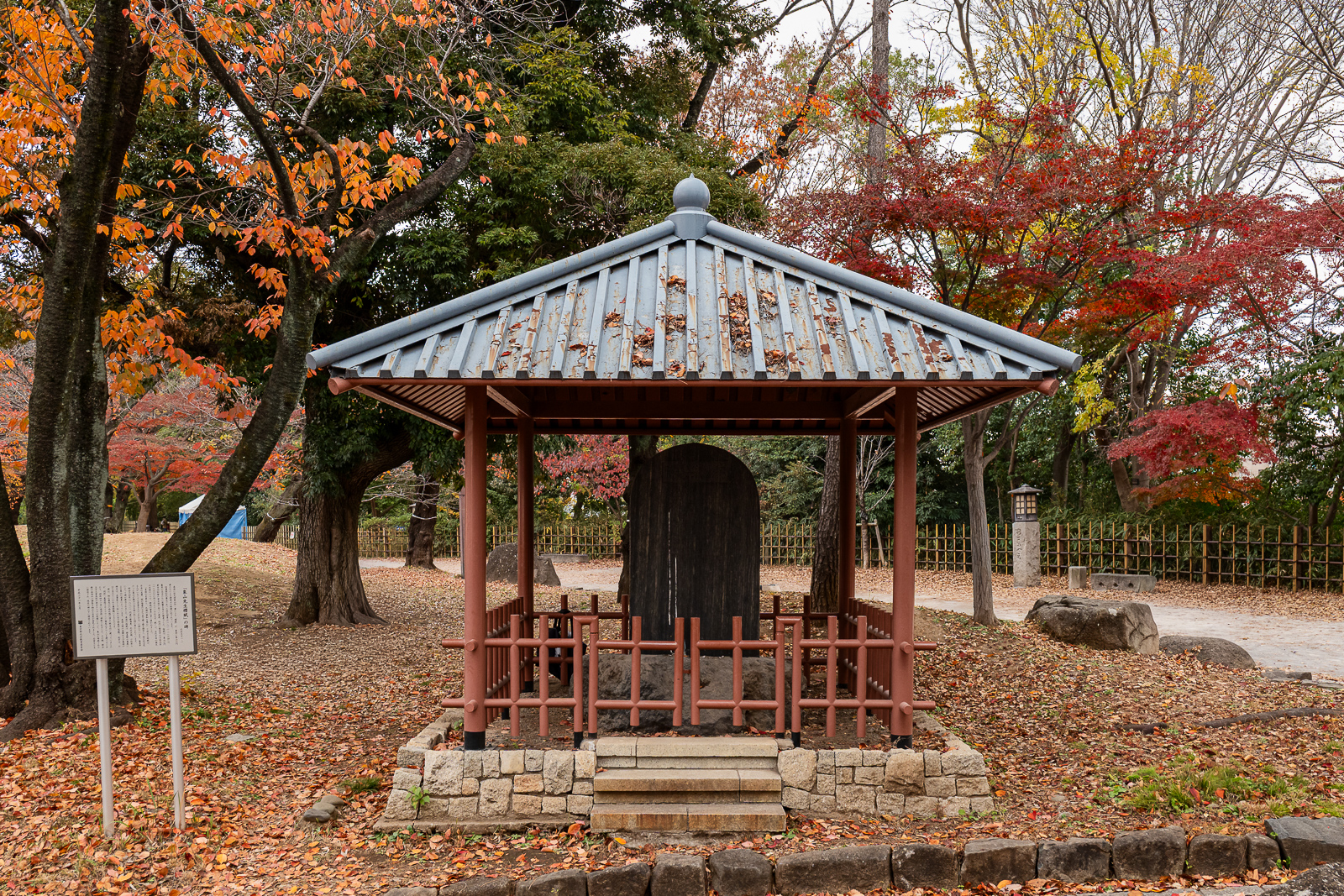
A small tiled shelter covers a stone monument elsewhere among the trees. The open frame keeps the monument visible from the path, with autumn foliage behind it. It is one of the details easily missed when attention stays entirely on the canopy.
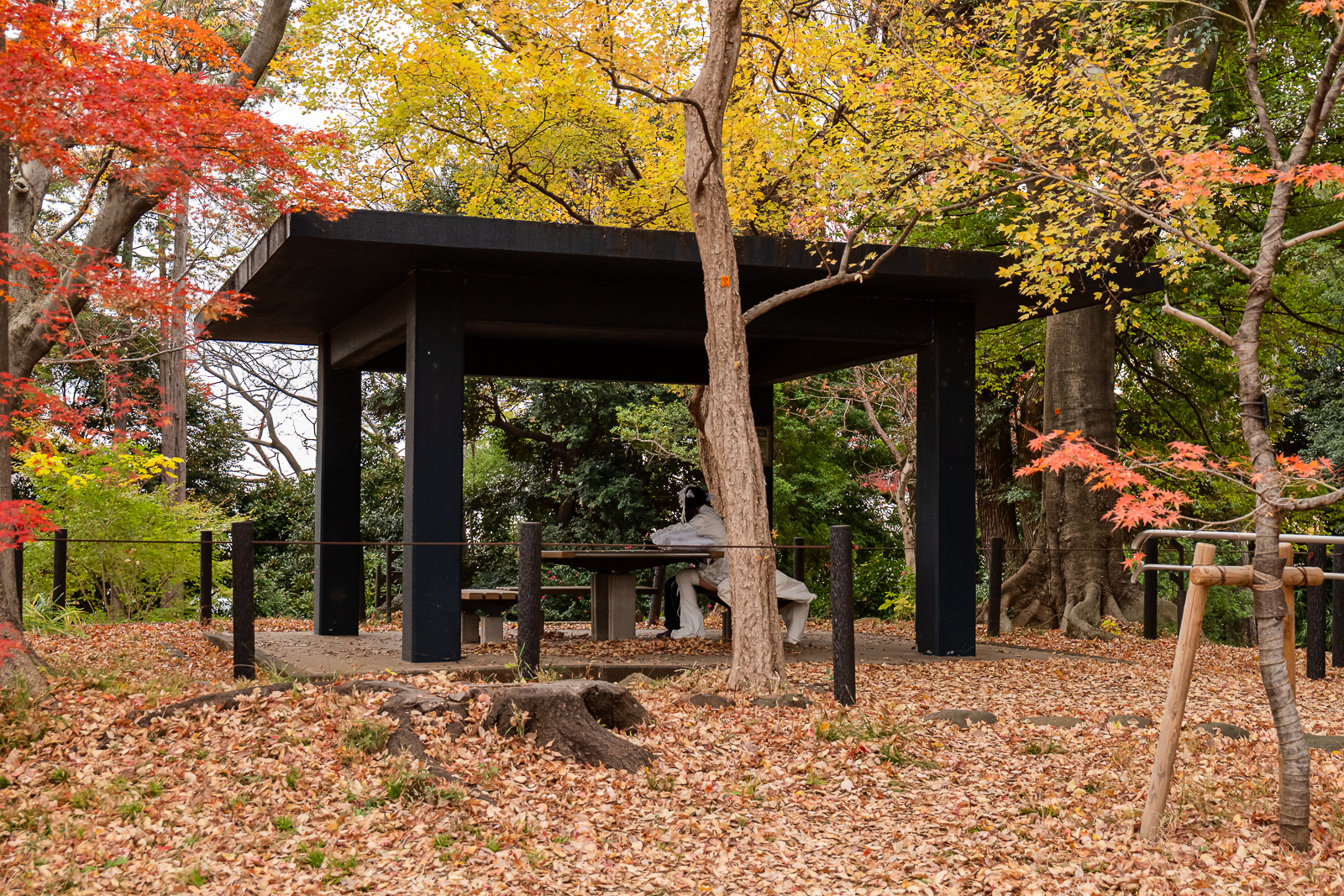
The larger open-sided shelter has a different purpose and form. Its broad dark roof covers a seating area, with autumn trees and leaf-covered ground around its edges. The surrounding planting makes it a natural place to pause during a walk through this part of the park.
The incline car and passing trains add an Oji perspective
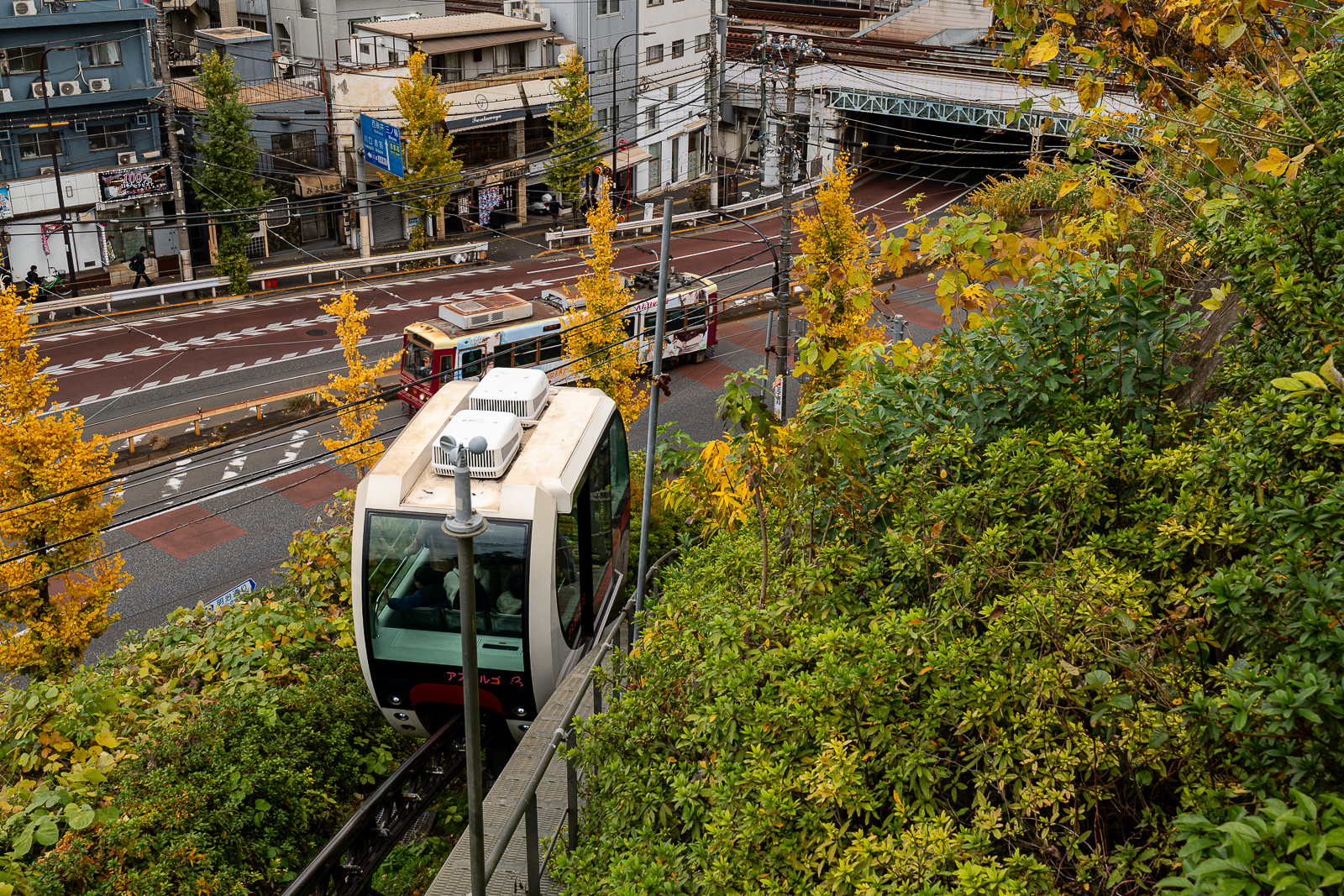
The route reached the summit station of Asuka Park Rail after passing through the northern part of the park. Nicknamed Asukarugo, the small incline car provides a free connection between the Oji Station side and the top of the hill. It was an unexpected discovery on this visit, offering an answer to how visitors reach the park from the station below.
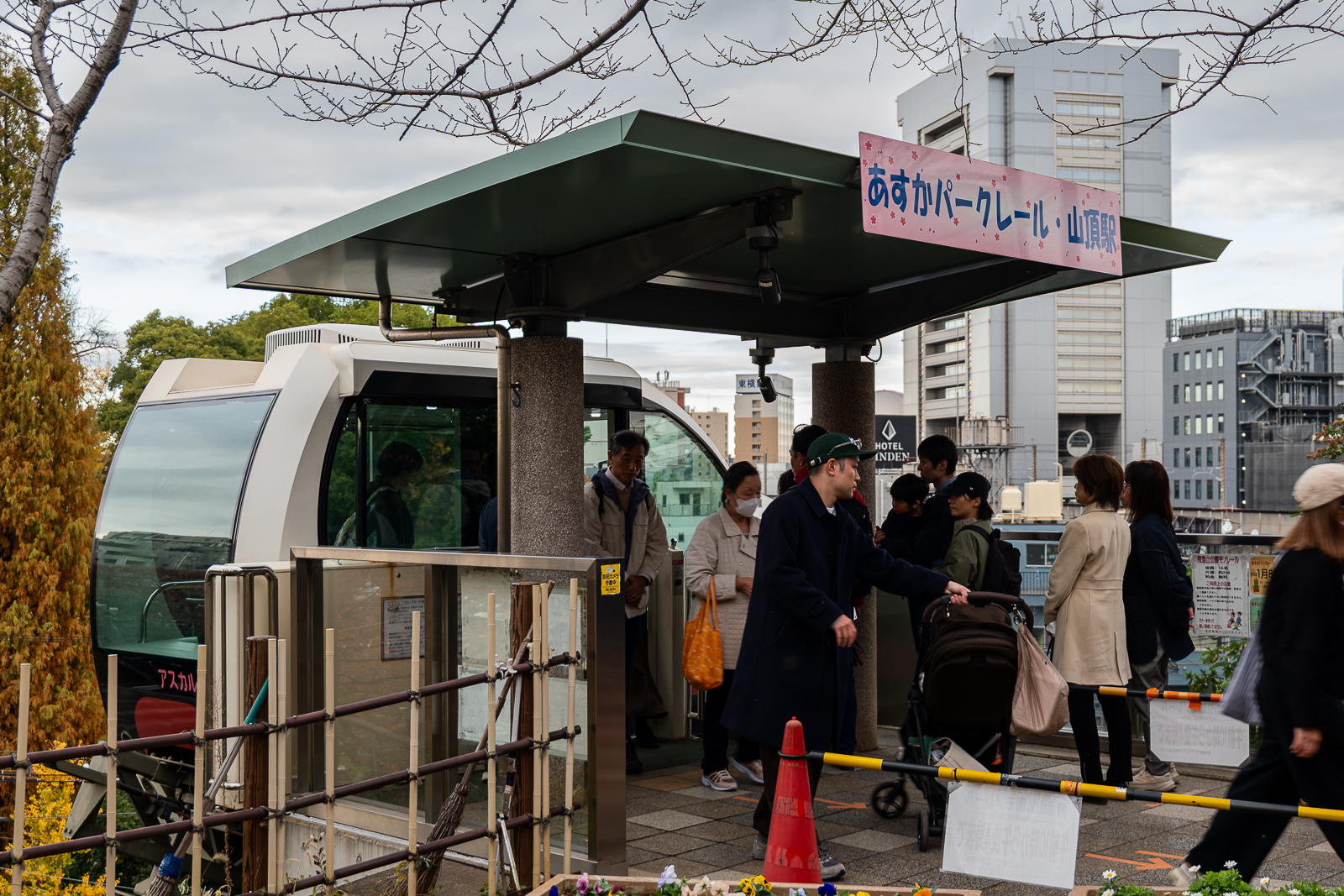
This visit included a look at the rail lift and the views around it, rather than a ride. From above, its sloping track places the park beside the street and tram line below. Its normal operating window is 10:00–16:00, with maintenance, weather and year-end exceptions; Getting There below also covers access for wheelchair and stroller users.
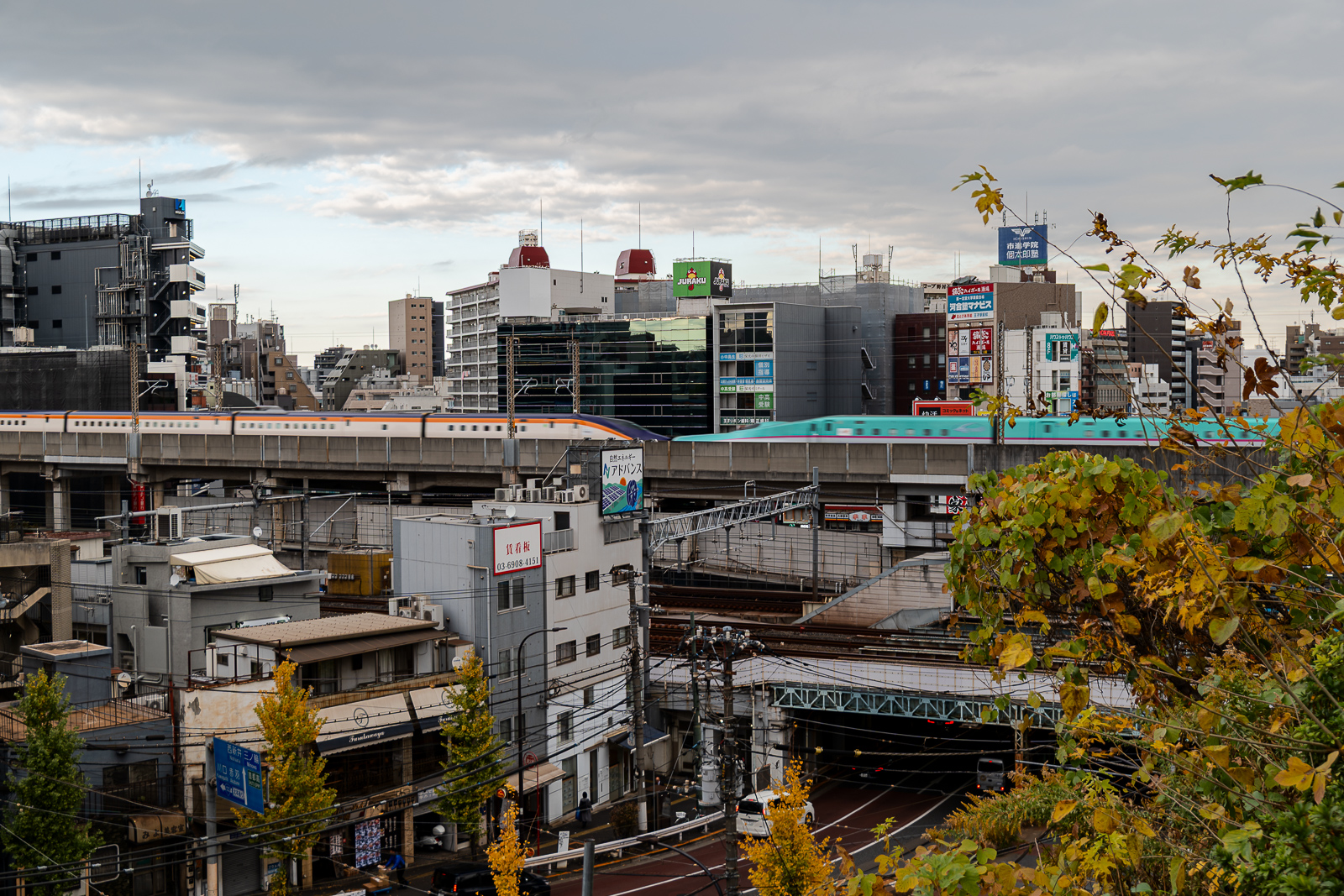
The wider rail view has a different appeal. Shinkansen trains pass beyond the autumn foliage, with city buildings and layers of tracks filling the background. The park’s facilities include a train-viewing deck, giving railway enthusiasts another reason to look beyond the garden paths.
Garden buildings give the autumn walk a different scale
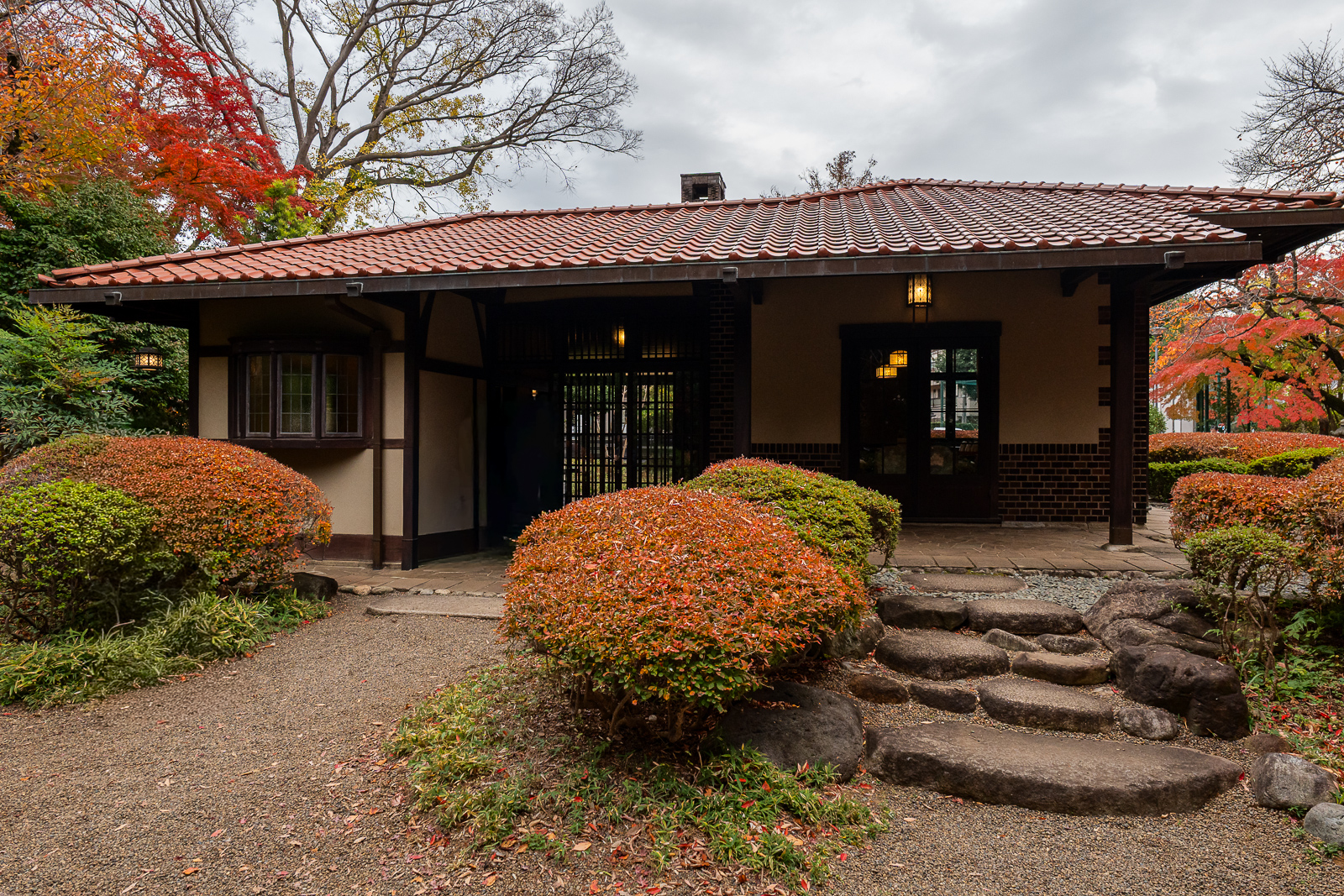
After reaching the rail lift, the walk returned across the park to Shibusawa Garden. The final part of the outing focused on the exterior of Seien Bunko, the former library building, followed by Bankoro Cottage. Low roofs, clipped shrubs and autumn branches give this part of the park a more enclosed setting than the open spaces near the ginkgo.
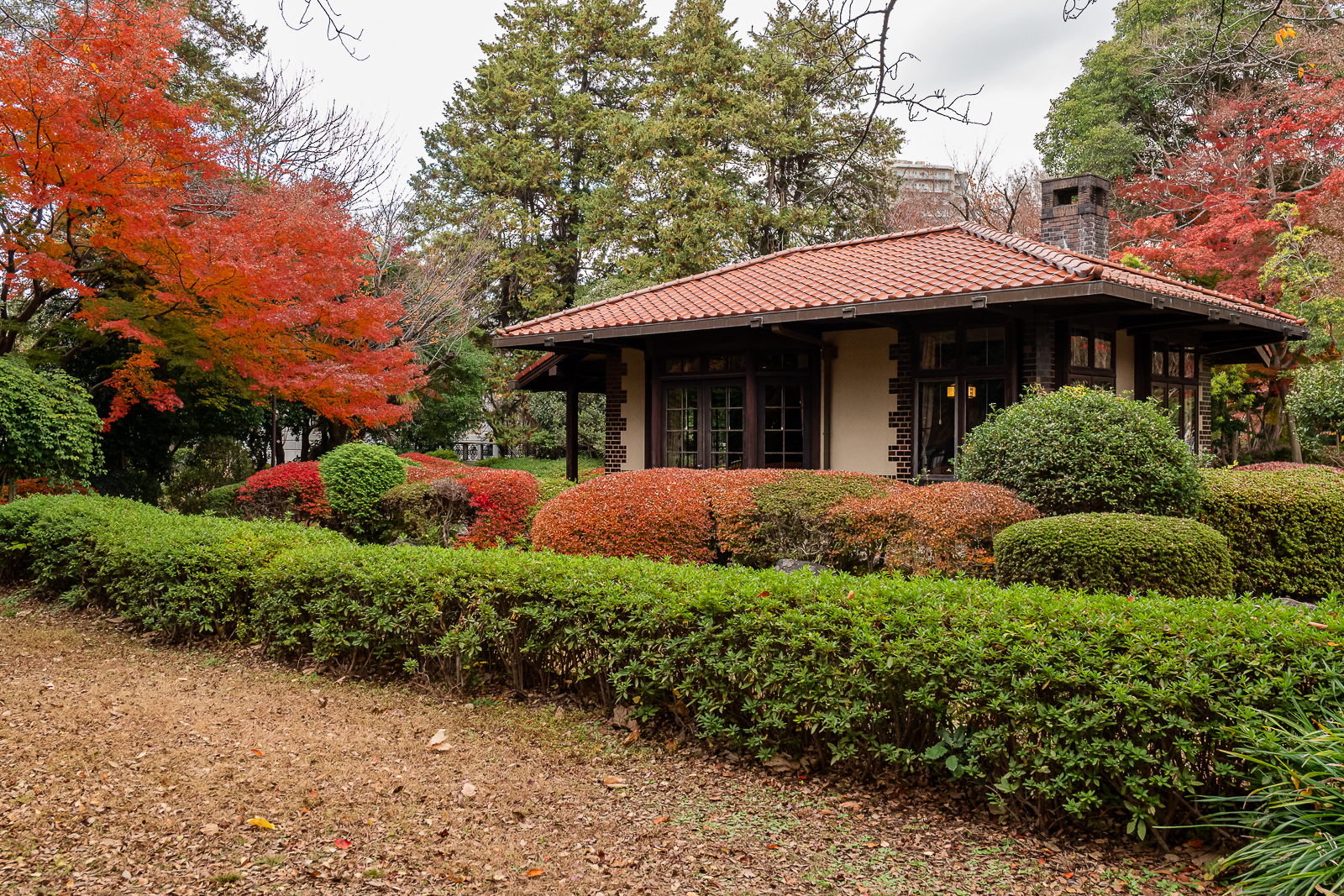
Bankoro Cottage was completed in 1917 and used by Shibusawa Eiichi to receive Japanese and international guests. Its low tiled roof and domestic scale distinguish it from the more formal Seien Bunko, completed in 1925. Both are Important Cultural Properties, preserving part of the former residential estate within today’s public park.
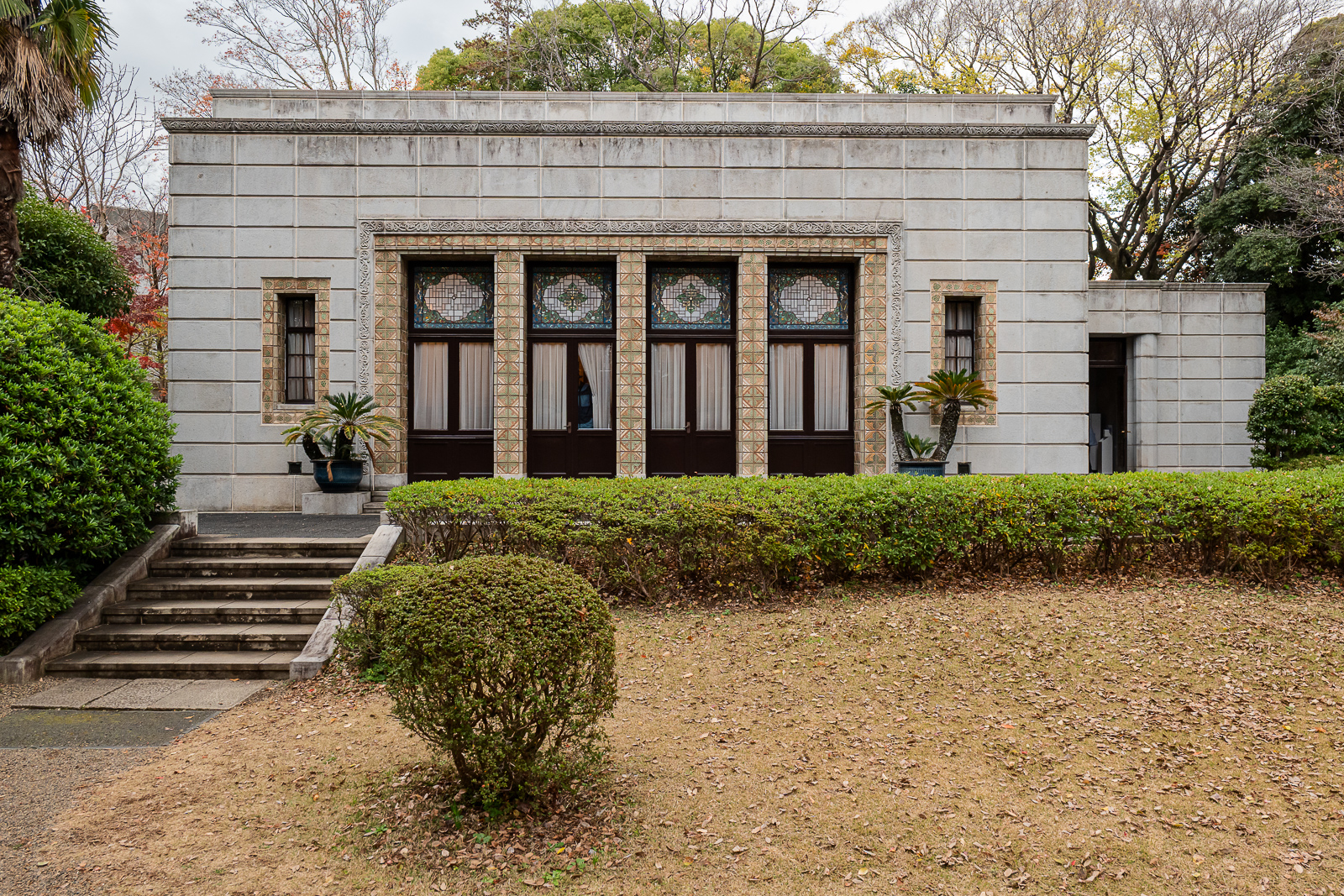
Seien Bunko was planned as a private library and later used extensively to receive guests. Its stained-glass windows and decorative tiles use oak-leaf motifs associated with the Shibusawa family crest. Around the buildings, stone steps, shrubs and autumn branches connect those architectural details to the garden itself.
Access needs attention if these buildings are the reason for the visit. The former garden has shorter hours than the general park and follows the Shibusawa museum’s closed days. The museum’s main building, Bankoro and Seien Bunko are scheduled to close from November 30, 2026 through February 19, 2027; check Hours and Fees below before planning around them.
Three museums offer three different reasons to stay
Asukayama’s three museums can turn an outdoor park walk into a cultural visit. Kita City Asukayama Museum covers local nature, history and culture, the Paper Museum explores paper, and the Shibusawa Memorial Museum examines Shibusawa Eiichi’s life and work. Their different subjects give the group a choice of what to explore beyond the autumn scenery.
The museums were not entered on this visit, so their exhibitions would be an addition to the outdoor route described here. Kita City history, paper and Shibusawa Eiichi’s life offer three distinct subjects to choose from. General park access, entry to the former garden and admission to a museum have separate arrangements, so check the facilities that matter to the plan.
Choose Asukayama for variety within an autumn park walk
Allow around two hours for an outdoor photography walk like this one, with longer needed for museum visits or a café stop. The route ran from the museum and café area through the autumn trees to the rail lift, then back to Shibusawa Garden and its historic buildings. Mostly level main paths, places to pause and comfortable space for photographs made it an easy outing on this particular weekend afternoon.
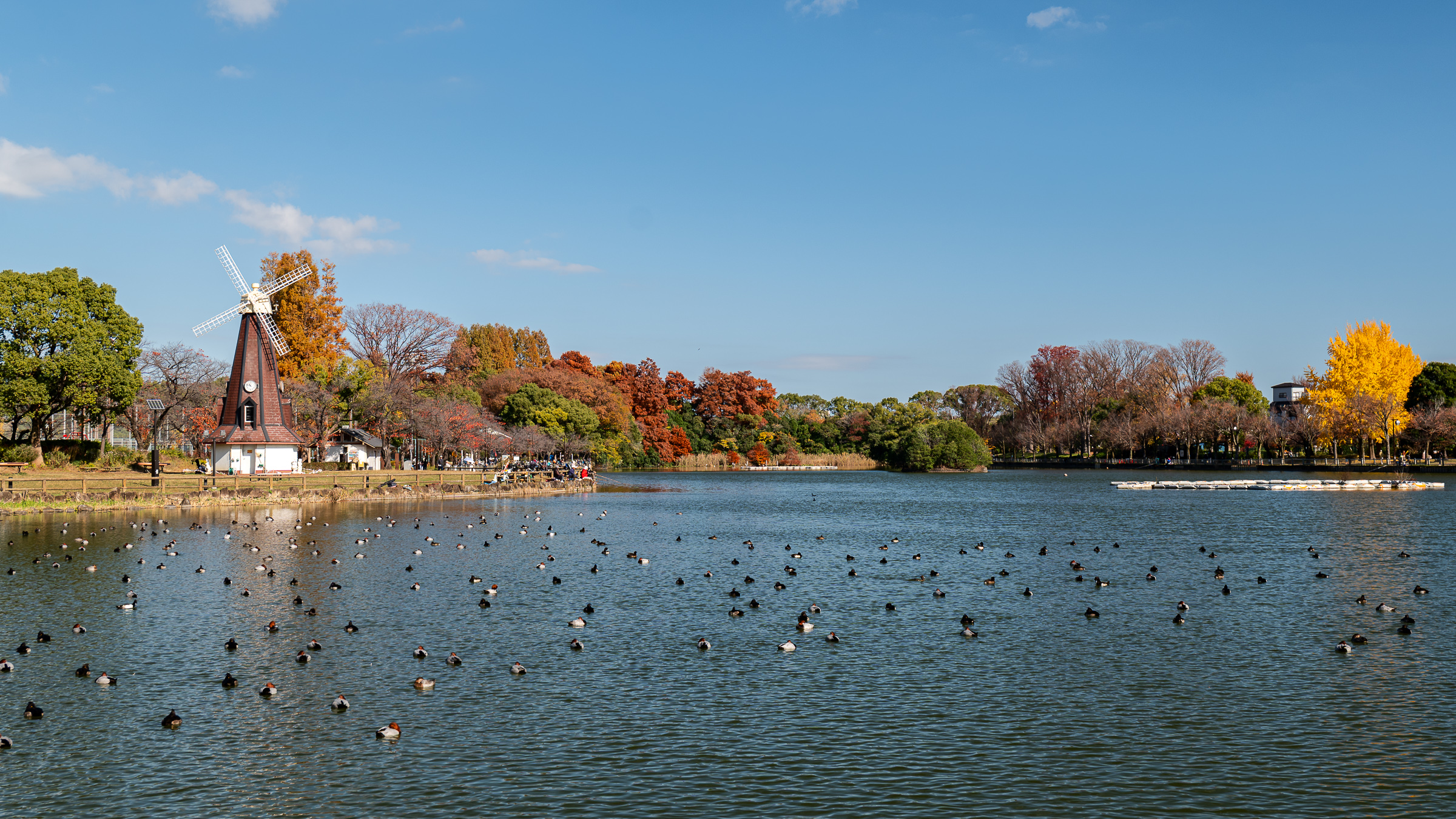
For a two-park autumn day, start with Ukima Park’s windmill, ginkgo and pond reflections, then continue to Asukayama. The outing described in these guides paired about an hour at Ukima in the morning with Asukayama in the afternoon, traveling between them by car. Allow separate travel time between the parks.
For another autumn stop nearby, consider pairing Asukayama with Kyu-Furukawa Gardens. Oji and Kami-Nakazato are one stop apart on the JR Keihin-Tohoku Line, and the garden is about a seven-minute walk from Kami-Nakazato Station. Allow for the walks at both ends and the garden’s opening hours when planning this suggested pairing.
For a different style of foliage outing, compare three Tokyo autumn gardens built around more focused garden landscapes. For an evening on another day, Showa Kinen Park’s autumn night walk adds illuminated bamboo and pond reflections farther west in Tachikawa. Asukayama’s particular strength is the variety within one daytime park visit, especially when the group wants autumn trees alongside other interests.
Getting There
Access and Arrival
Use Oji for Asukayama Park: the grounds are immediately beside the JR station, or about three minutes from Namboku Line Exit 1. Allow additional time to reach the museums and garden within the park.
- JR Oji approach
JR Keihin-Tohoku Line → Oji Central or South Exit → Asukayama Park
Immediately beside the station · The park rises above the station area; choose the route to your intended facility.
- Namboku Line or Sakura Tram
Namboku Line → Oji Exit 1, or Tokyo Sakura Tram → Asukayama / Oji-ekimae
About 3 minutes from Oji Exit 1; tram stops beside the park
Asukarugo incline car: The free incline car near JR Oji Central Exit normally runs 10:00–16:00 and carries wheelchairs and strollers. Maintenance, year-end closures and bad weather can interrupt service; check the city guidance.
Hours and Fees
Visitor Information
Asukayama Park and the former Shibusawa garden are free to enter, while the three museums charge separately. The garden has daytime opening hours and closes on Shibusawa Museum closed days. Shibusawa facilities close November 30, 2026–February 19, 2027.
- Hours
- Park: open throughout the day, except restricted areas. Former Shibusawa garden: 9:00–16:30 March–November; 9:00–16:00 December–February; closed on Shibusawa Museum closed days. Kita City Asukayama Museum, Paper Museum and Shibusawa Museum: generally 10:00–17:00, with last admission or ticket issue at 16:30. Each has its own calendar, including Monday and holiday closures.
- Admission
-
Park and former Shibusawa garden: free. Kita City Asukayama Museum permanent exhibition: adults ¥300; elementary through high school pupils ¥100. Paper Museum: adults ¥400; ages 6–18 ¥200. Shibusawa Museum: adults ¥500; elementary through high school pupils ¥100; same-day tickets only. Check each museum for concessions and special-exhibition arrangements. The old three-museum joint ticket is no longer sold.
- Museum calendar
-
Shibusawa facilities
Check the winter maintenance closure
The main museum building, Bankoro and Seien Bunko are closed November 30, 2026–February 19, 2027. Read the official notice before planning a visit around these facilities.
Read Official Closure Notice
Plan Your Visit
Combine autumn paths with the museum or garden visit that interests you, then choose wider Tokyo travel options around that plan.
Compare Hotels across Tokyo
Choose a Tokyo base for the rest of your itinerary, comparing station connections, room details and your travel dates.
Search Tokyo Hotels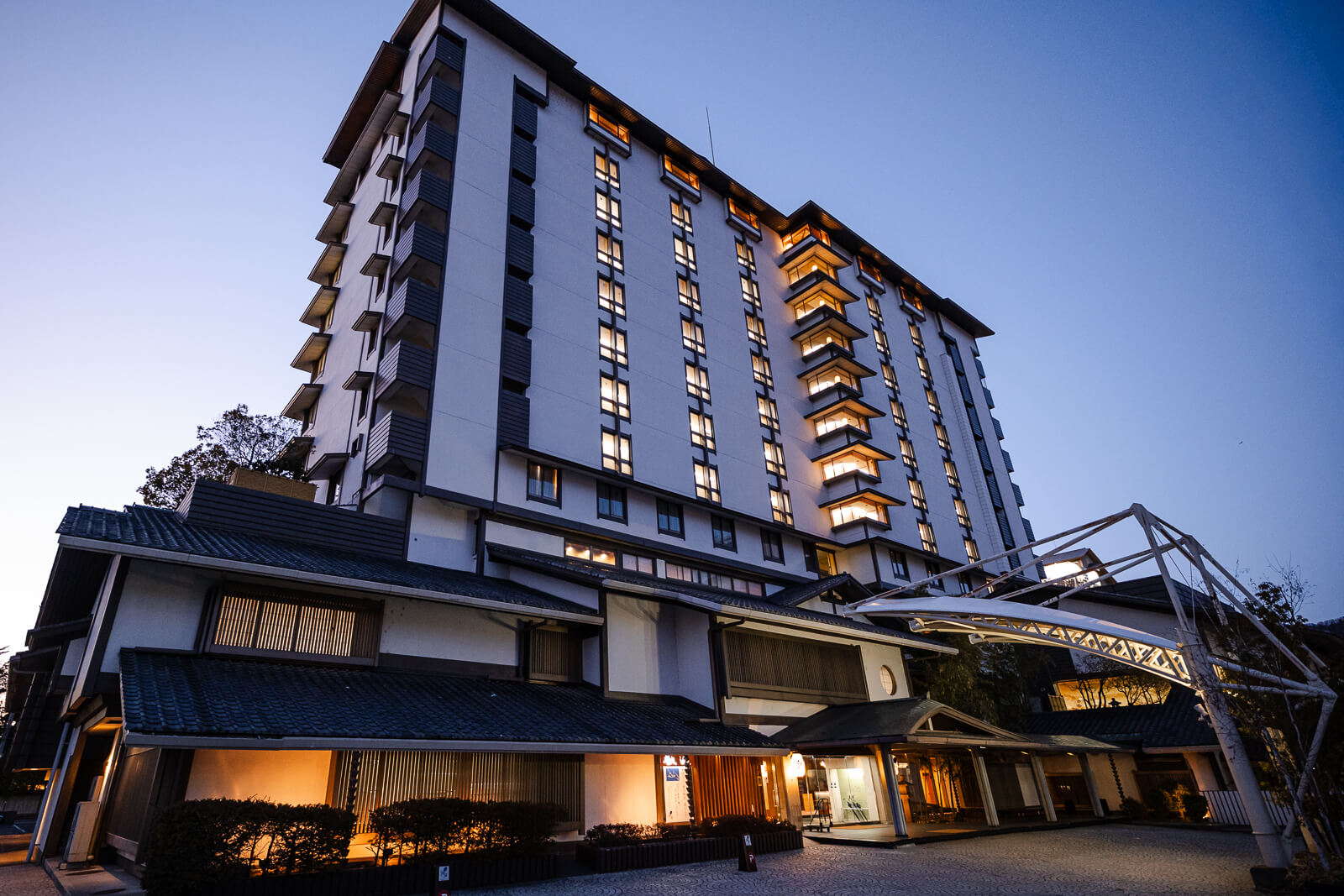
Explore Tokyo Car Hire
Compare Tokyo pickup options for driving days elsewhere in your Japan itinerary. Check collection locations, rental conditions and driving-document requirements.
Browse Tokyo Car Hire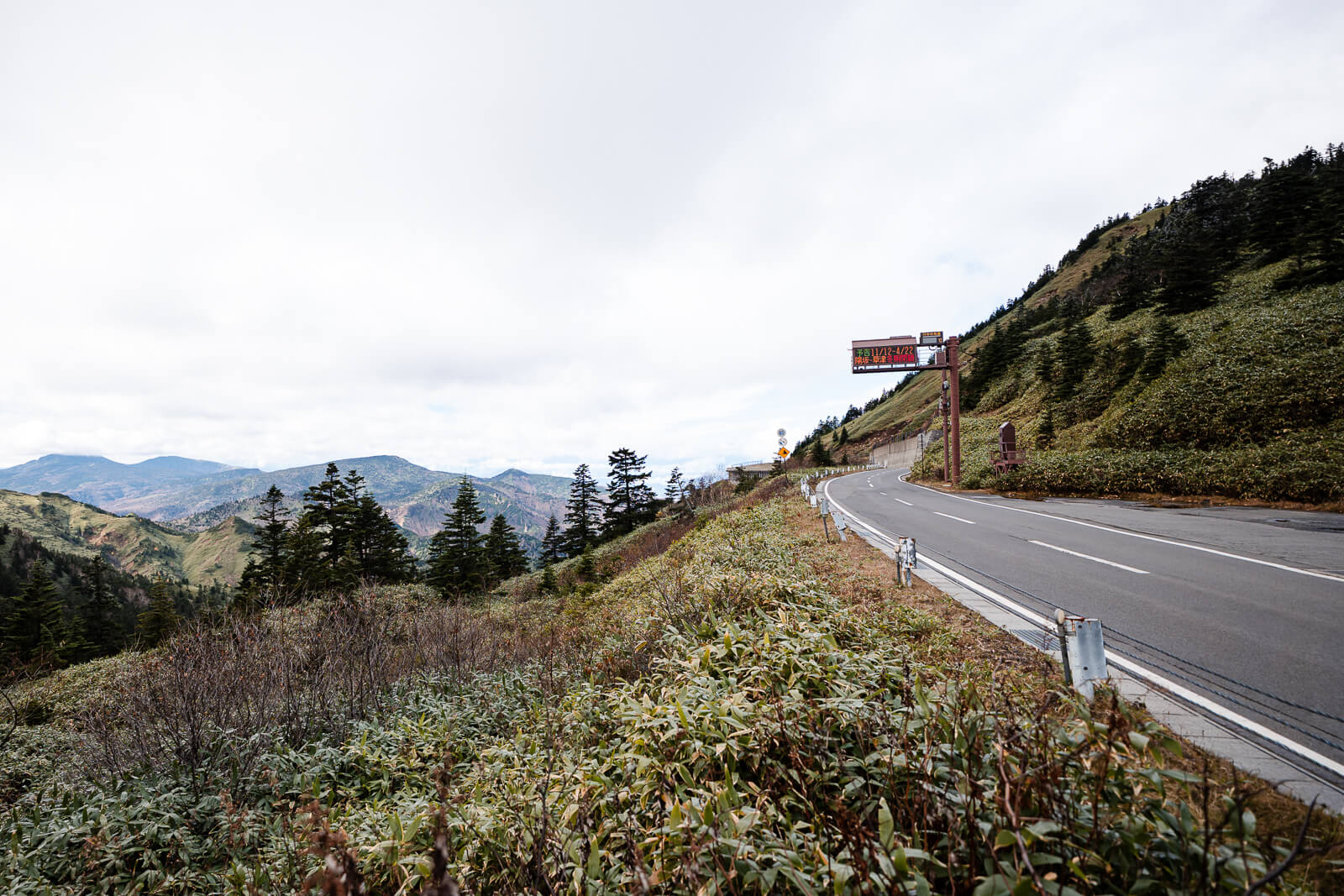
Browse Tokyo Garden Experiences
Explore garden-related tours and activities for another part of your Tokyo trip. Check each listing’s route, dates and inclusions.
Browse Garden Experiences
Explore Tokyo Attraction Tickets
Find observation decks, museums and other Tokyo attractions for the rest of your trip. Asukayama’s museum admission details are in Hours and Fees above.
Browse Tokyo Attraction Tickets
Compare Japan eSIM Plans
Compare data allowances, plan duration and phone compatibility for maps and travel information during your Japan trip.
Compare Japan eSIMs
Book Train Tickets with Japan Experience
Compare routes and reserve tickets for longer journeys elsewhere in Japan, alongside your local Tokyo travel plans.
Find Japan Train Tickets