The Statues Behind Hase-dera’s Kannon Story
The Kannon Museum adds a different kind of beauty to a visit to Hase-dera in Kamakura, Kanagawa Prefecture. Downstairs, illuminated Buddhist statues stand against dark backgrounds, bringing faces, robes and gestures into close view. The collection gives the temple’s devotion to Kannon a more intimate scale after the great image in the main hall.
This is a compact, separately ticketed museum within the temple grounds, with an upstairs exhibition area as well as the principal displays below. It is especially rewarding for visitors interested in Buddhist sculpture, temple history or the Kannon pilgrimage tradition. Allow around 20–30 minutes for an introductory look, with longer for the upstairs exhibition or a closer study of the objects.
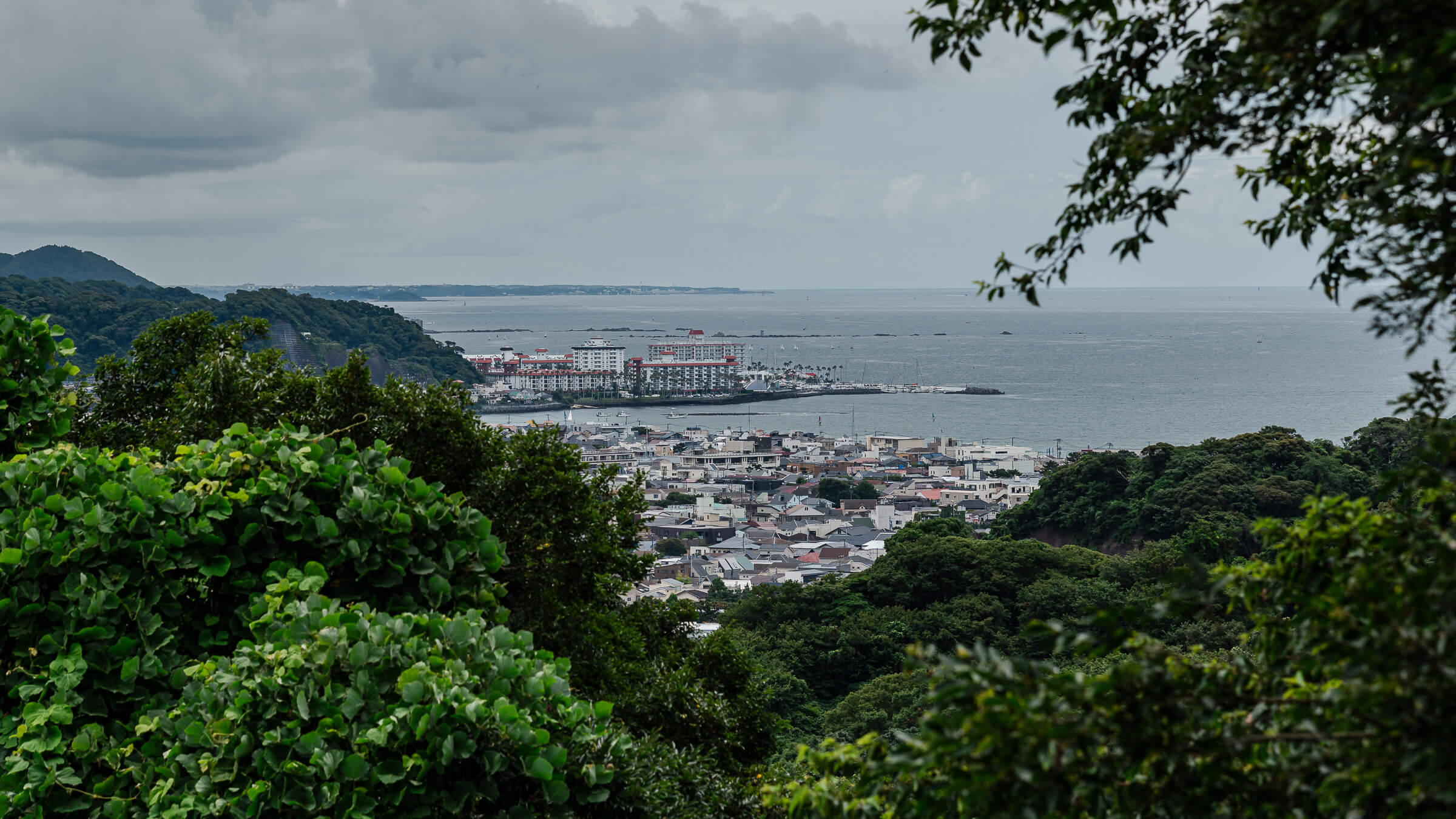
The contrast with the rest of Hase-dera is part of the appeal. Outside, attention moves between garden paths, flowering plants and the broad coastal outlook; here, the lighting draws it toward individual figures. Even without a background in Buddhist art, differences in posture, expression and dress offer a way into the collection, starting with what can be seen before turning to the labels.
Kannon in Many Forms
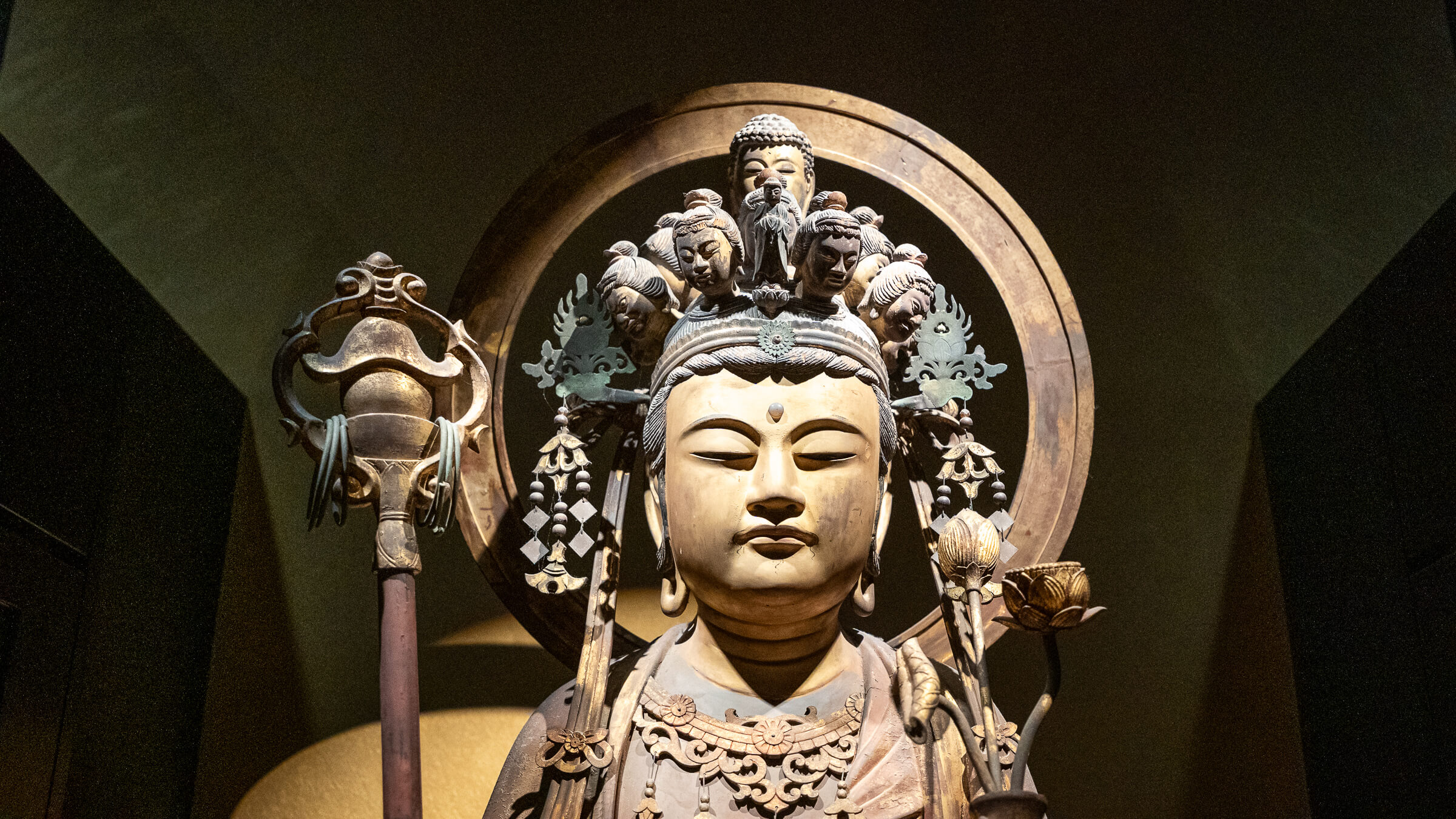
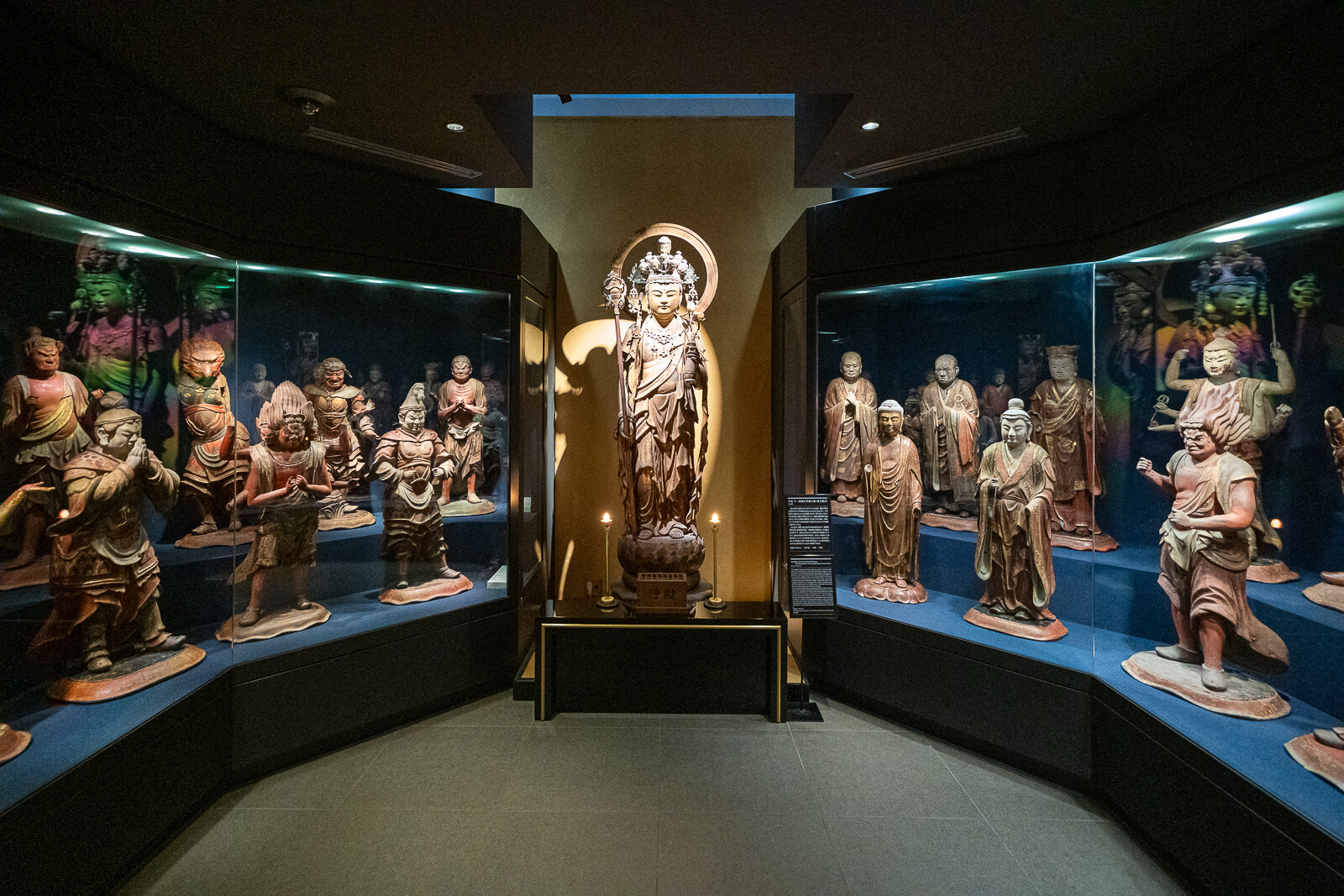
The first-floor statues deserve the greatest share of attention. A standing eleven-headed Kannon occupies the center of a curved display, while smaller figures extend around it in different costumes and poses. Looking from one face to another reveals how much variety fits within this relatively small gallery.
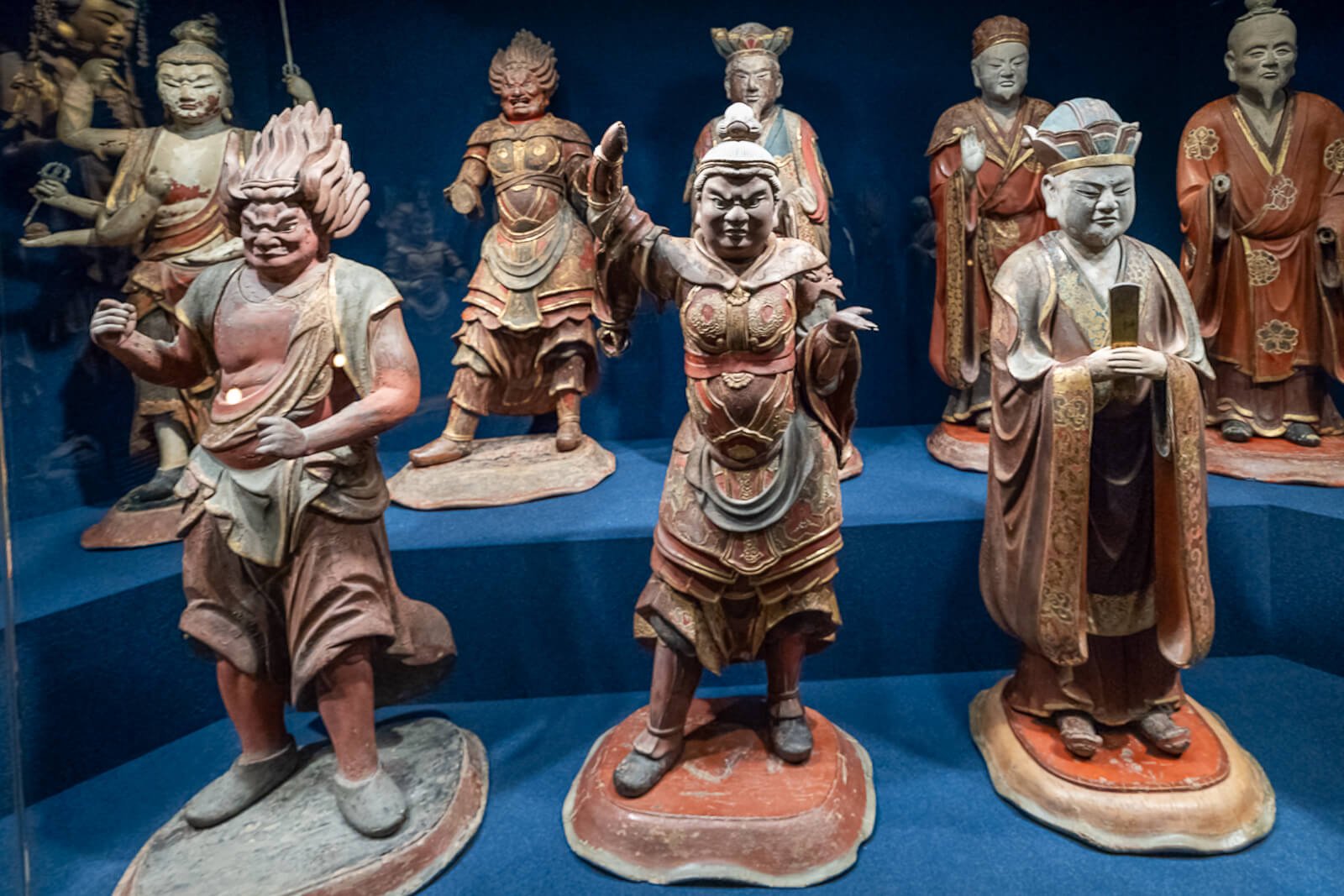
The surrounding sculptures represent the thirty-three manifestations of Kannon, expressing the Buddhist teaching that compassion can appear in forms suited to those seeking help. The museum identifies the group as work from the Muromachi period. Their different clothing, headdresses and gestures give that teaching a visible form, making the display more engaging than a row of similar religious images.
The survival of all thirty-three figures together gives the group particular importance. It also makes comparison rewarding: one figure’s elaborate headdress can lead the eye toward a neighbor’s simpler robes, or an upright pose toward a more animated gesture. Taking in the curved arrangement first, then returning to a few individual figures, reveals both the unity of the group and the differences within it.
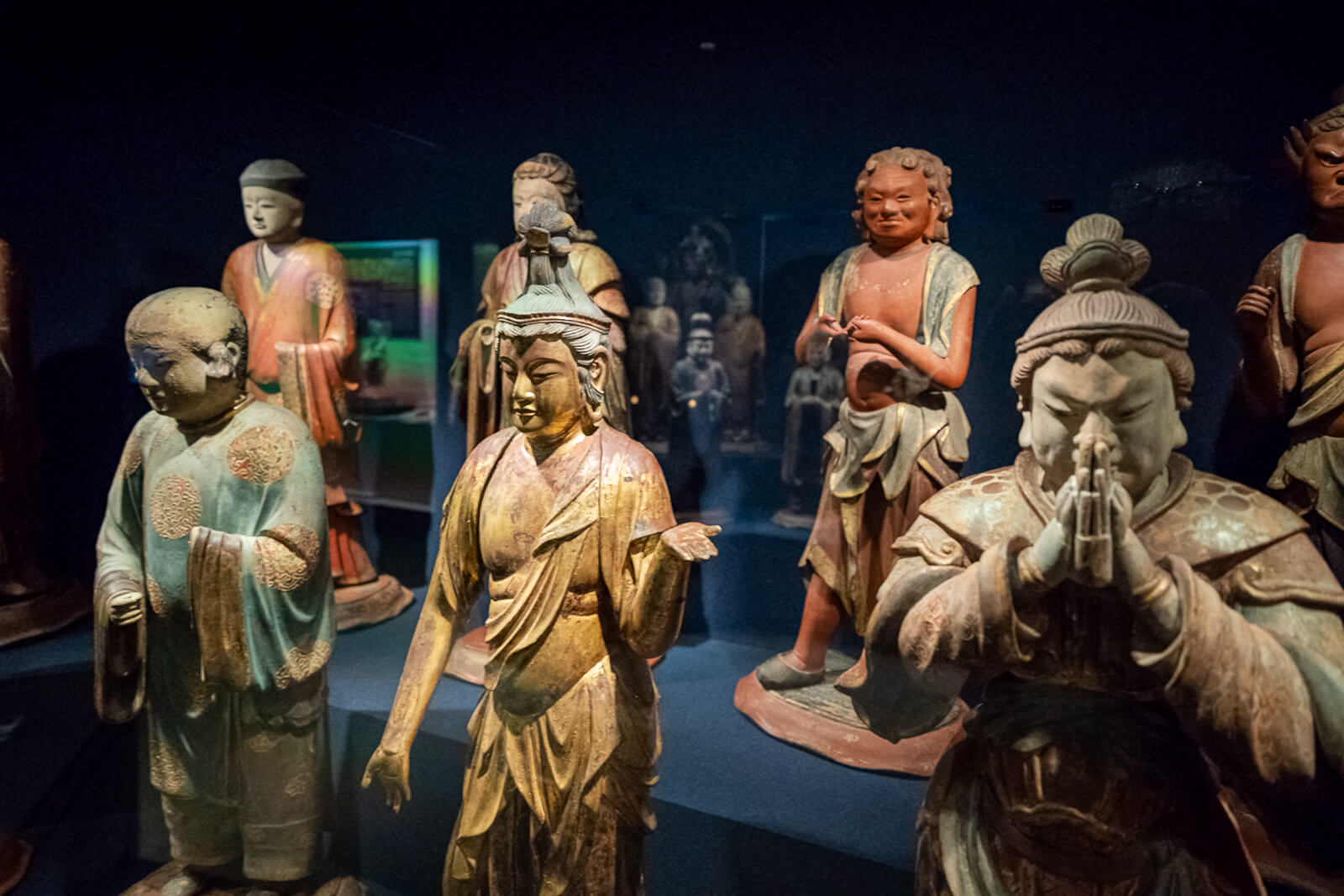
The museum’s standing Kannon is a different statue from Hase-dera’s principal image in the Kannon Hall. The museum identifies it as a figure formerly placed before the main image, with the staff associated with the temple’s particular form of eleven-headed Kannon. That relationship makes the museum a natural companion to the hall: the two stops approach the same devotional subject at very different scales.
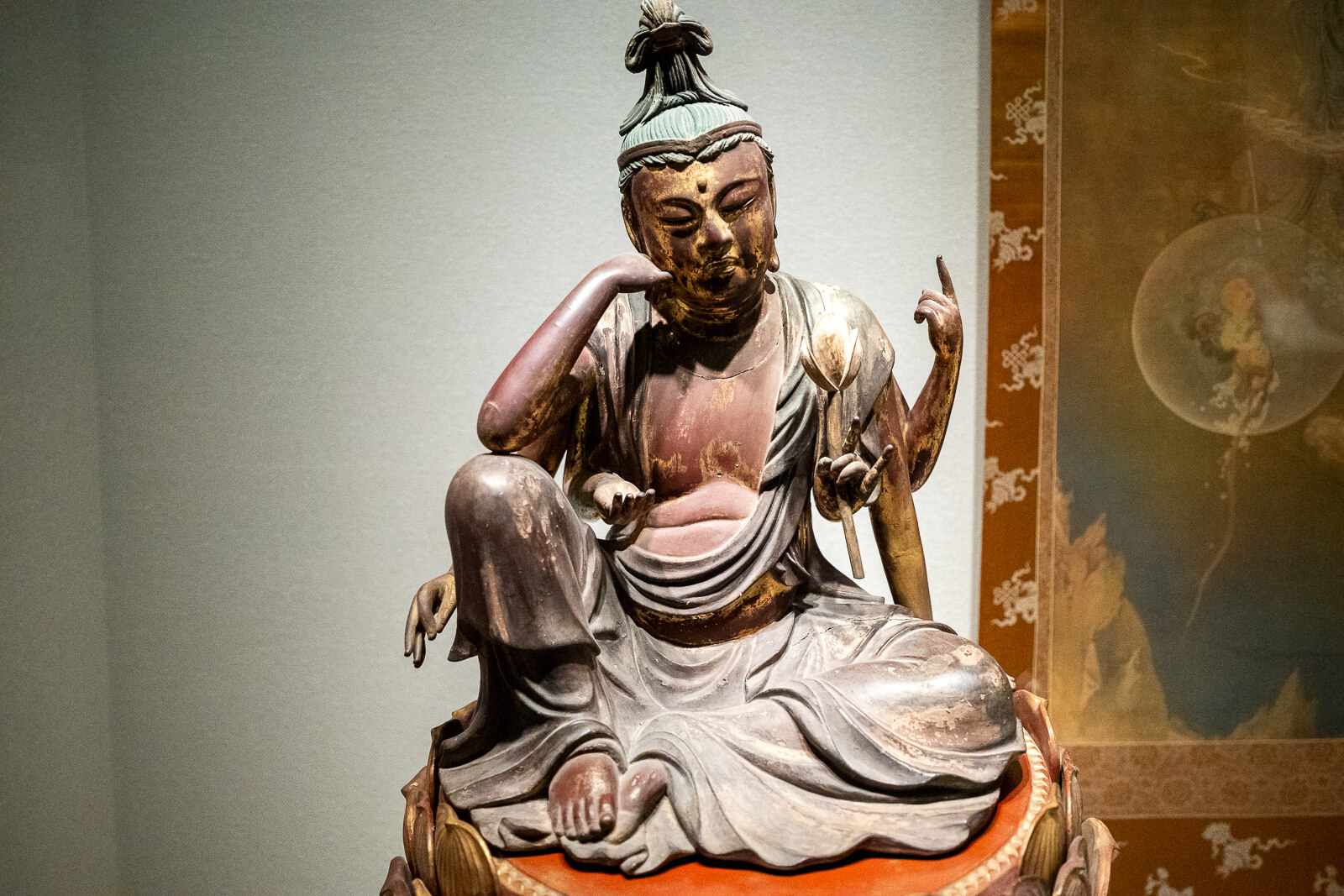
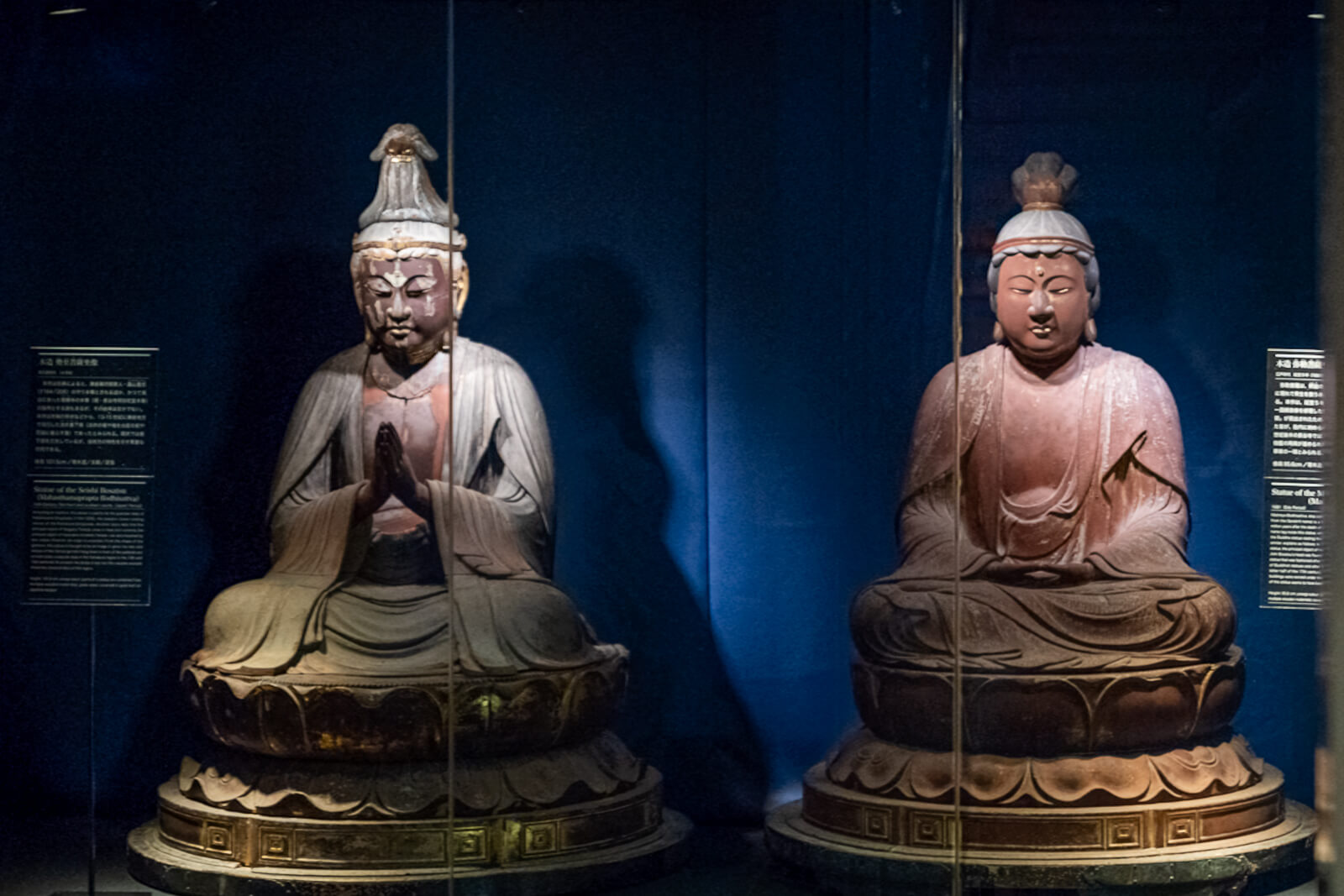
Other sculptures widen that encounter beyond the central standing figure. The seated images bring attention lower, toward folded legs, the fall of robes and the relationship between hands and body. In the paired display, each figure has its own presence, making it worth giving these smaller groupings time rather than moving directly from the main Kannon to the next room.
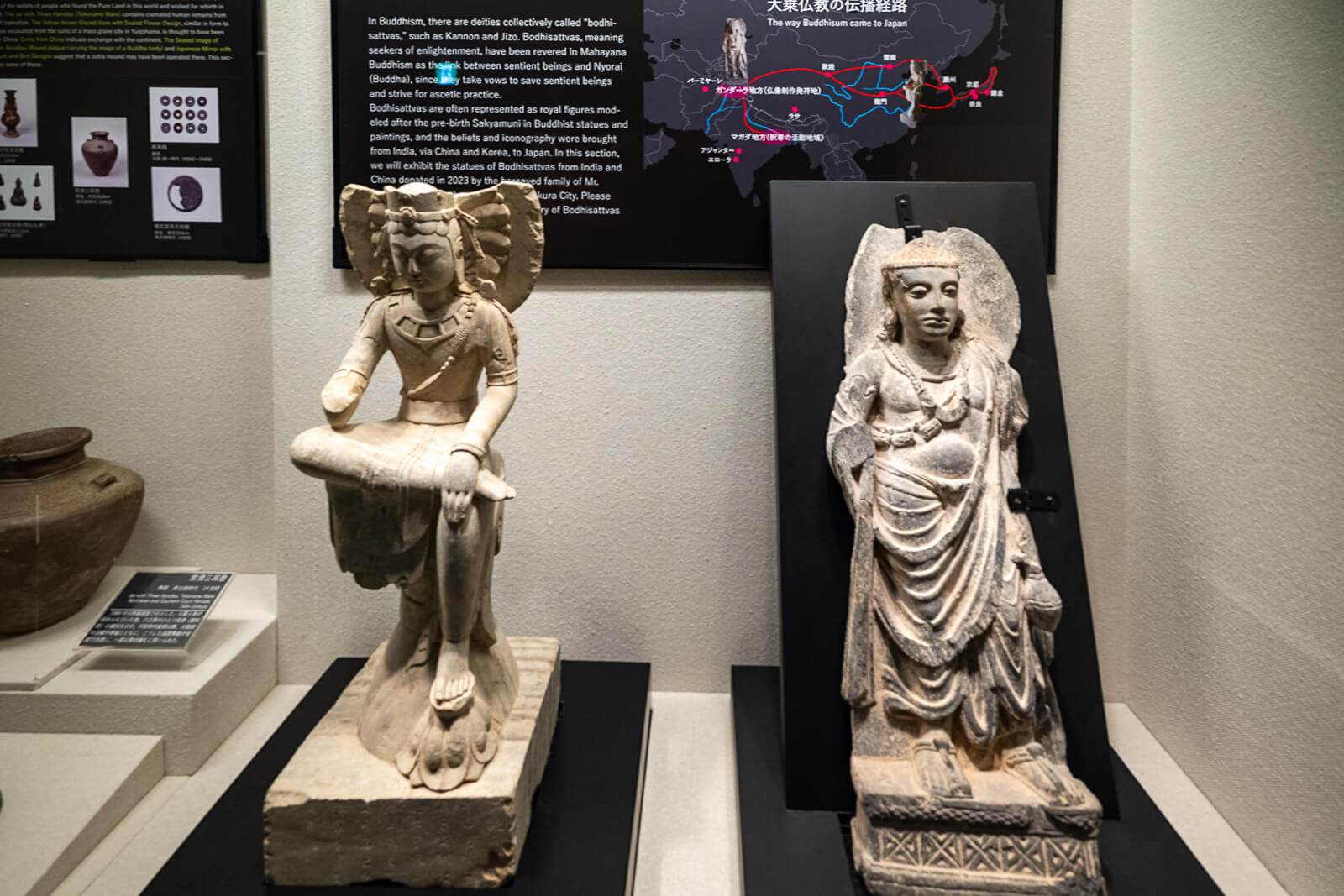
Two Buddhist figures are displayed beside a map tracing Buddhism’s spread across Asia. Their pale surfaces and different styles contrast with the painted wooden figures. The interpretation places the sculptures within the wider journey of Buddhist imagery.
The Bell and the Great Hanging Plaques
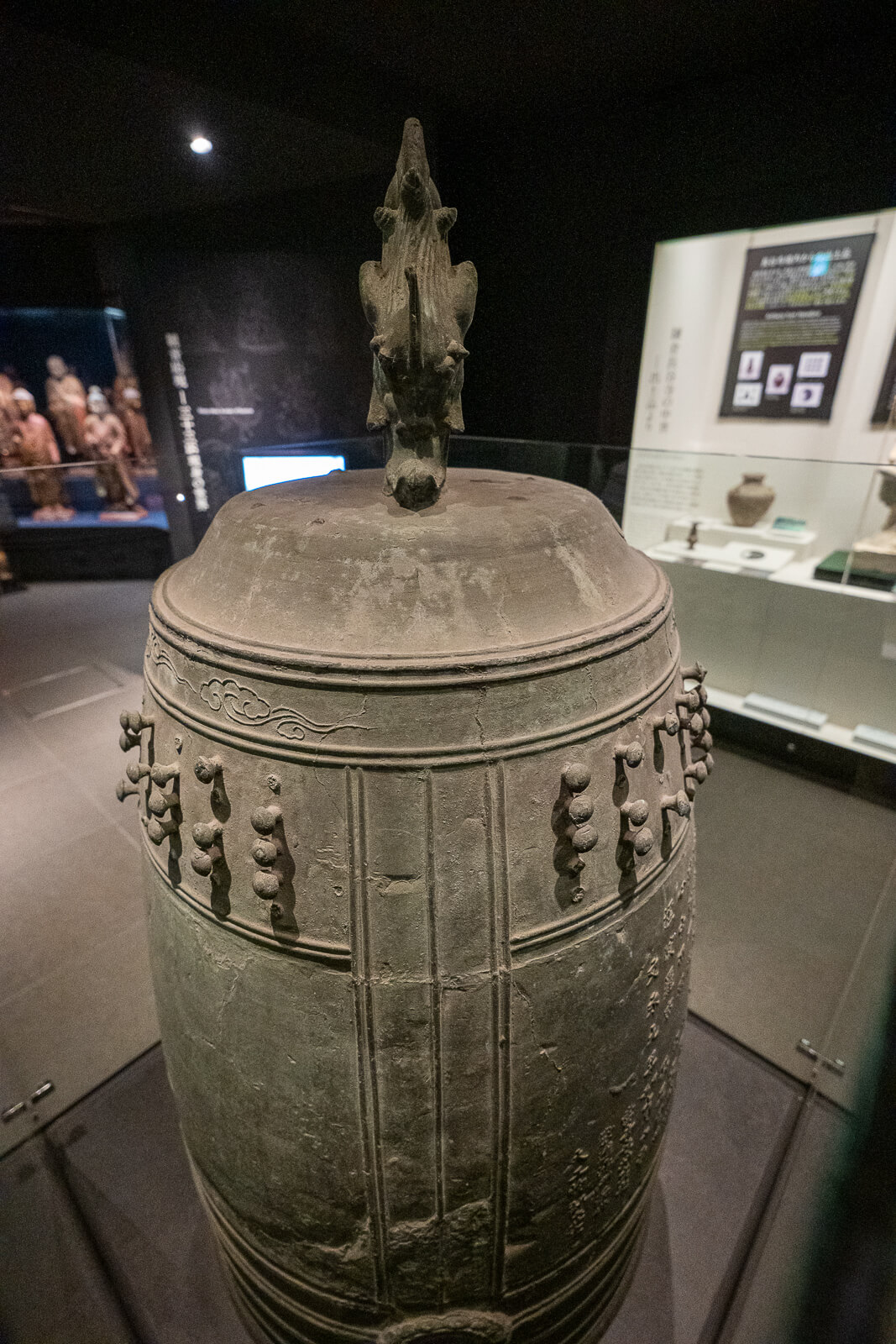
The temple’s history also survives in objects made for worship. Its old bronze bell bears the date 1264 and is the earliest surviving item in the collection to carry the name Hase-dera. Seeing it in the museum gives a tangible connection to the temple’s medieval past, separate from the bell now hanging in the grounds.
The large circular kakebotoke plaques offer another striking encounter with that history. Six survive in Hase-dera’s collection, each bearing a Kannon image on a broad bronze face. Dating from the late Kamakura to the Muromachi period, they show the importance of Kannon worship here long before the modern museum was created.
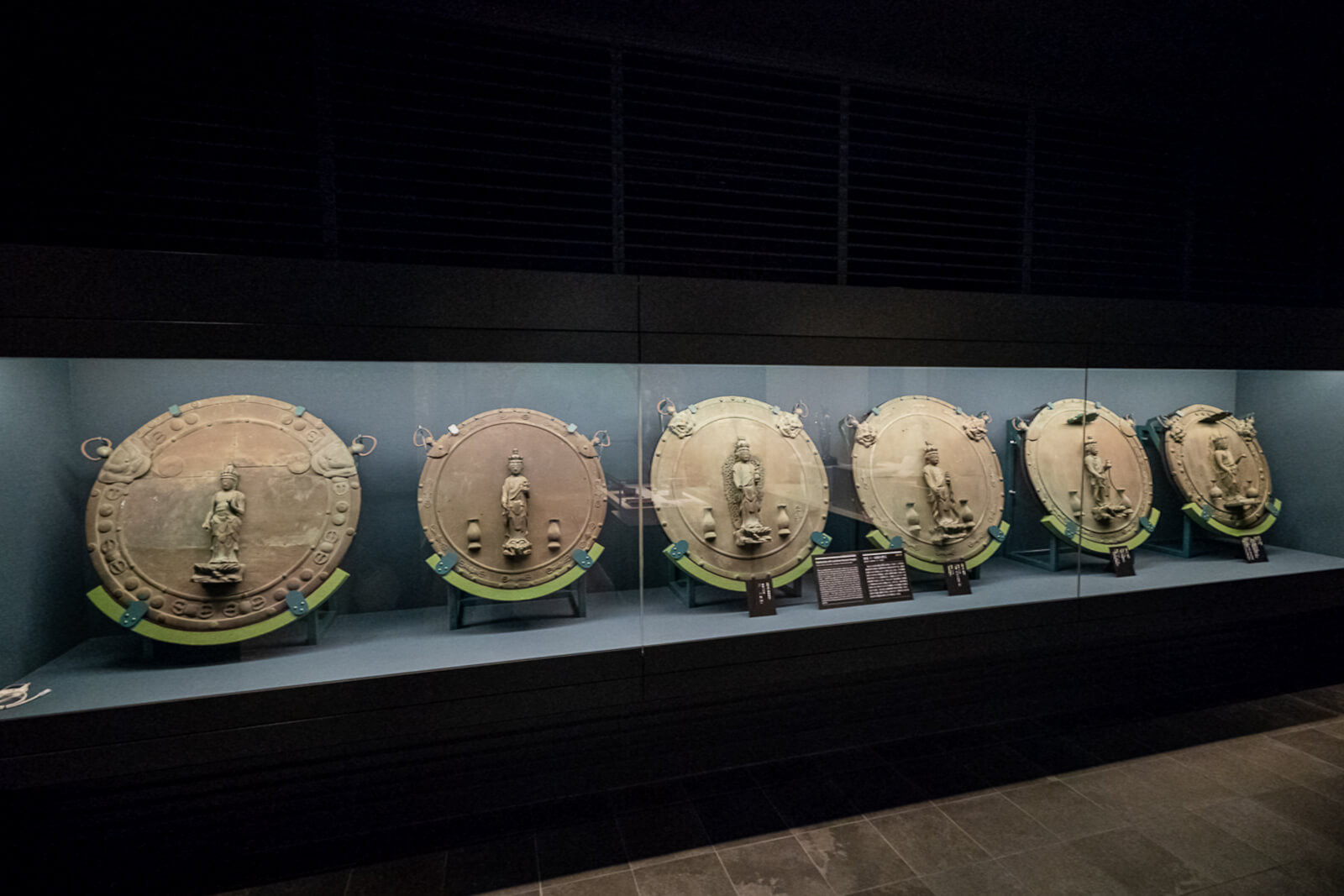
Each plaque measures more than seventy centimeters across, a scale that becomes clearer when the six are seen together. The circular backgrounds and raised figures give the display a different character from the freestanding statues. Looking across the group brings out variations in the figures and surrounding detail, while their substantial size helps convey the resources once devoted to worship at the temple.
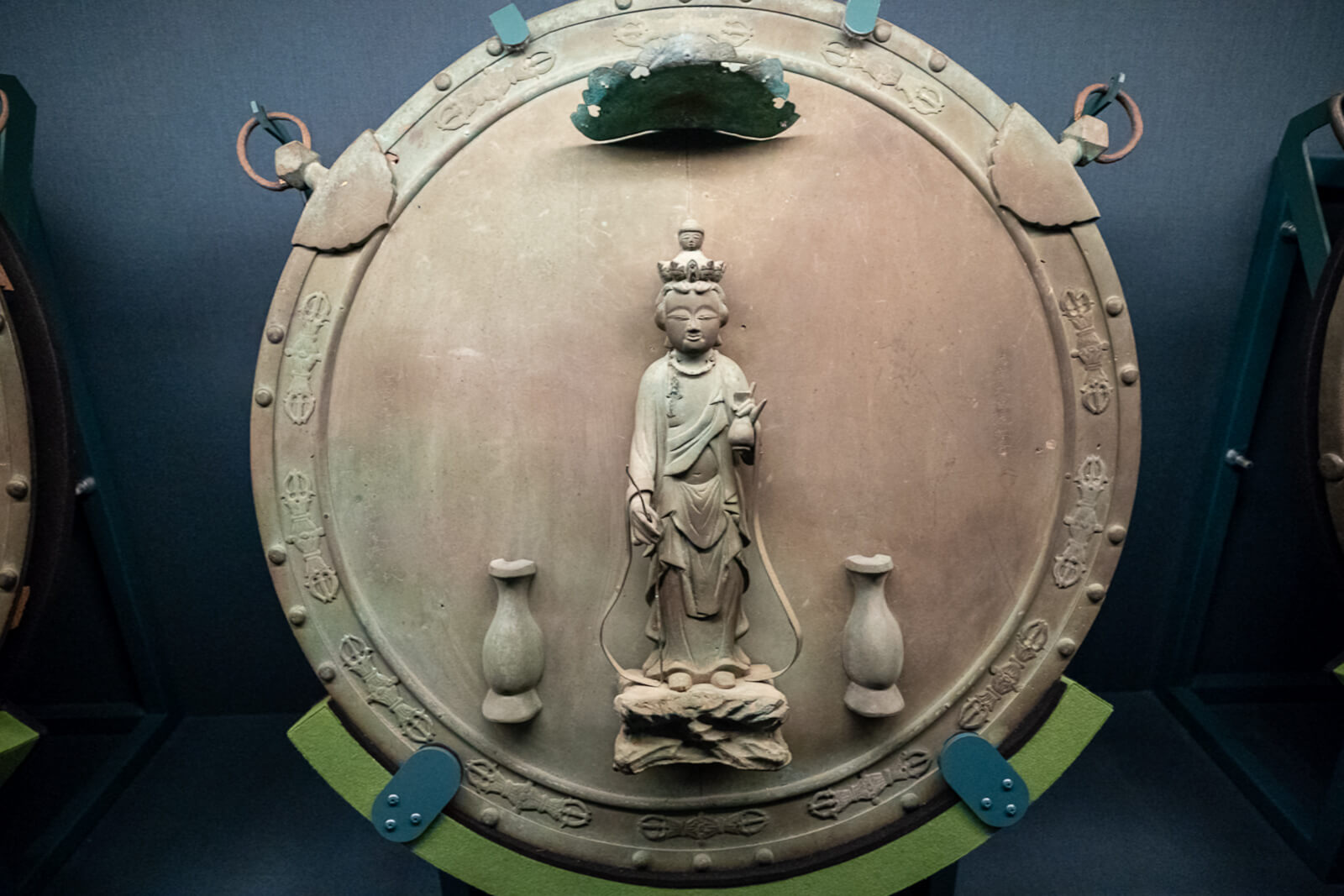
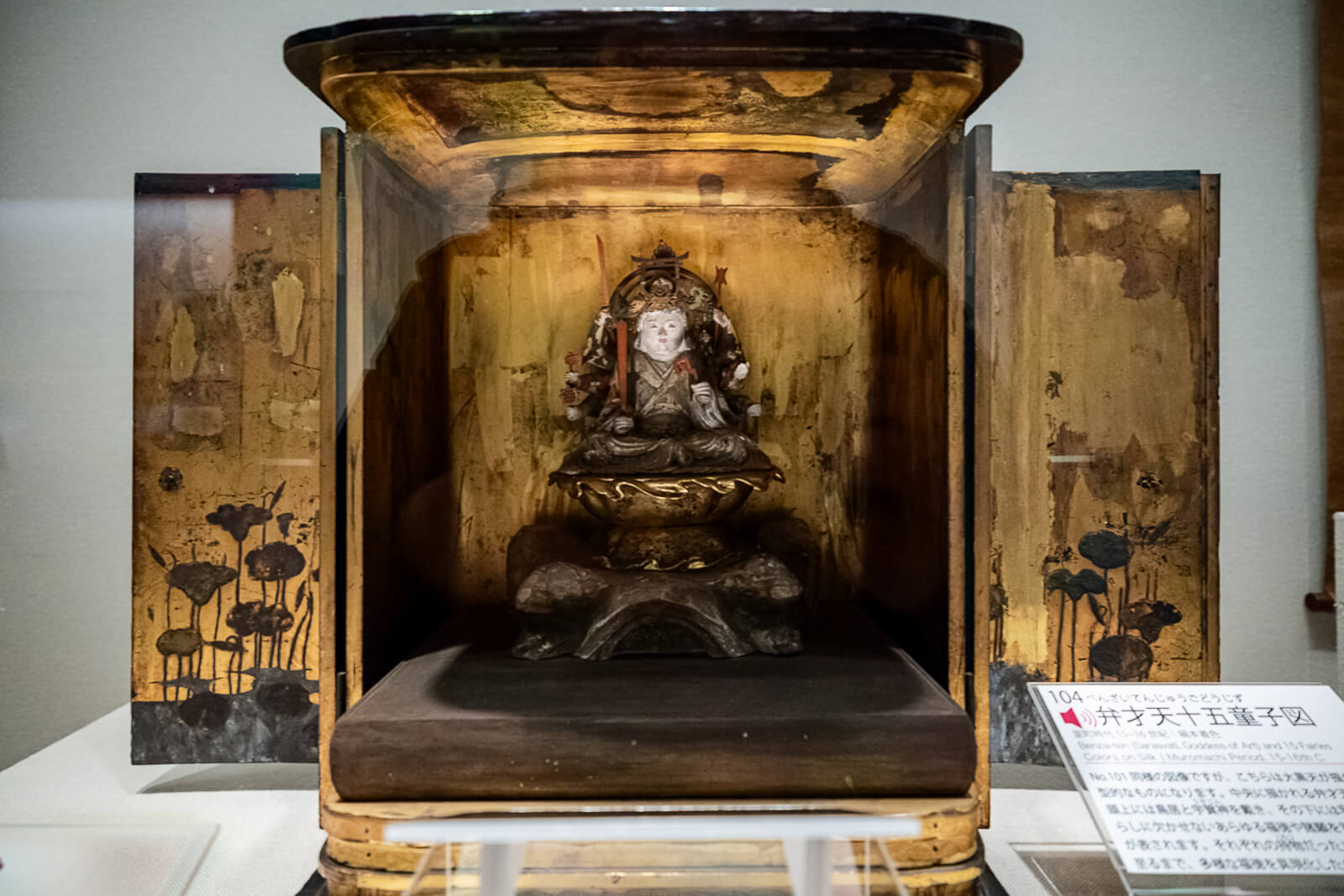
Together, the sculpture, bell and plaques turn the museum into more than an assortment of old objects. They show how the same religious focus has been expressed through different materials and forms. The pleasure is in looking closely: a raised figure against a circular surface, a carved fold of cloth, or the details of a face caught by the gallery lighting.
The Upstairs Galleries and Changing Exhibitions
The museum continues upstairs, so the first-floor sculpture is only part of the visit. The upper exhibition area adds a changing subject to the temple’s permanent collection. It gives repeat visitors another reason to return, while allowing a first visit to remain focused on the statues and principal treasures.
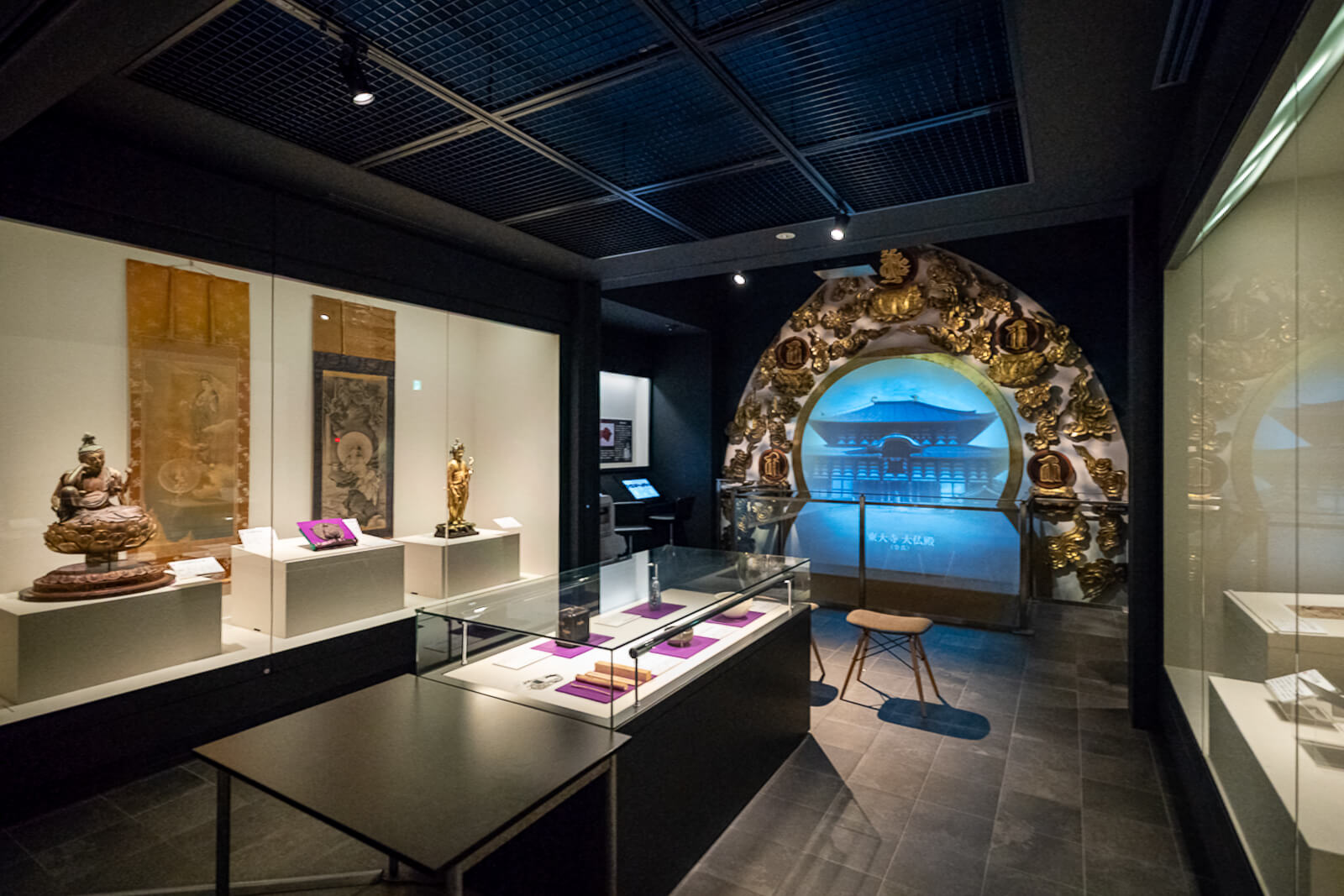
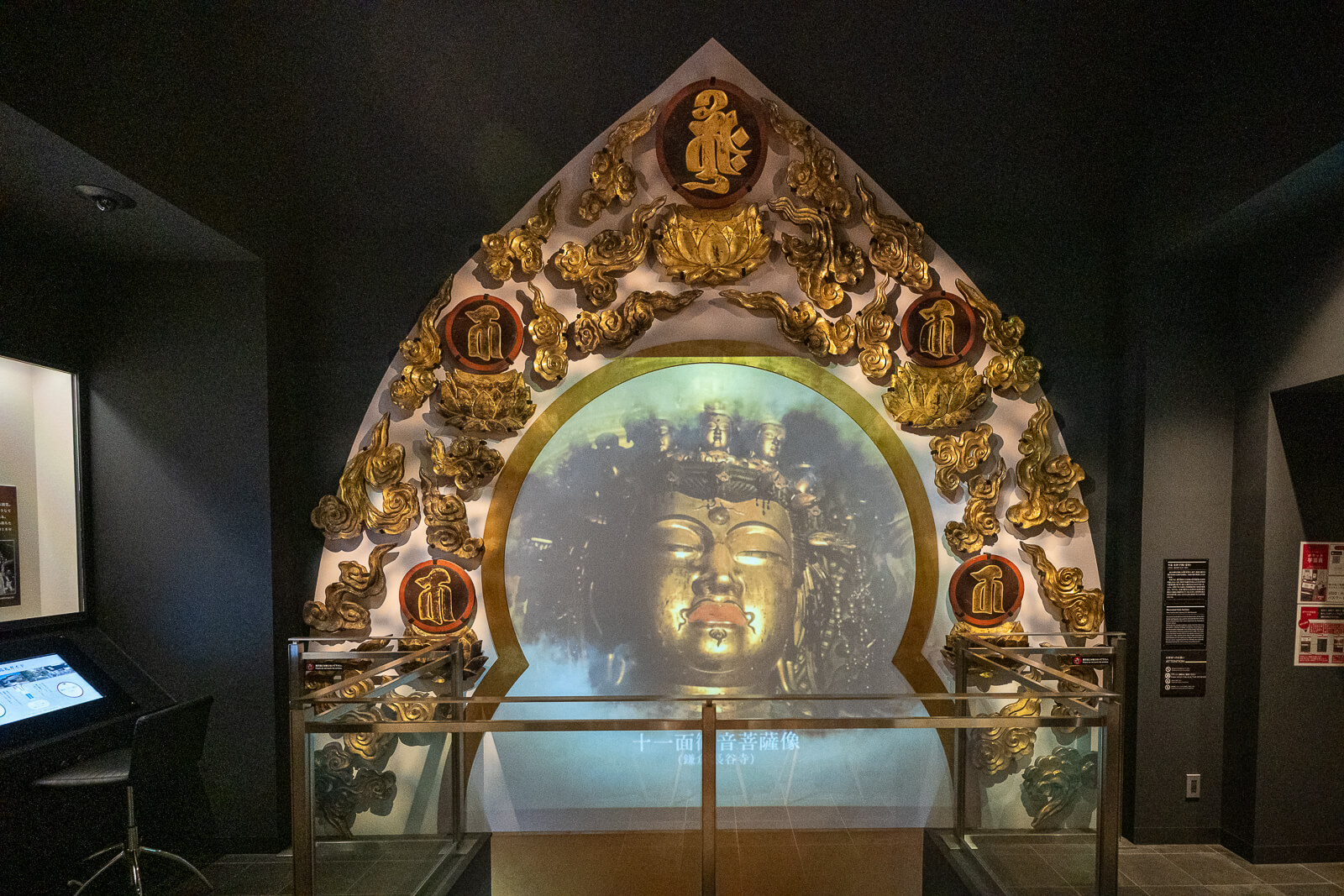
The present museum took shape in 2015, following the renewal of Hase-dera’s older treasure museum. Its purpose extends beyond displaying temple possessions to explaining Kannon devotion and pilgrimage. Digital interpretation complements the physical objects, connecting the smaller gallery images with the much larger devotional world around them.
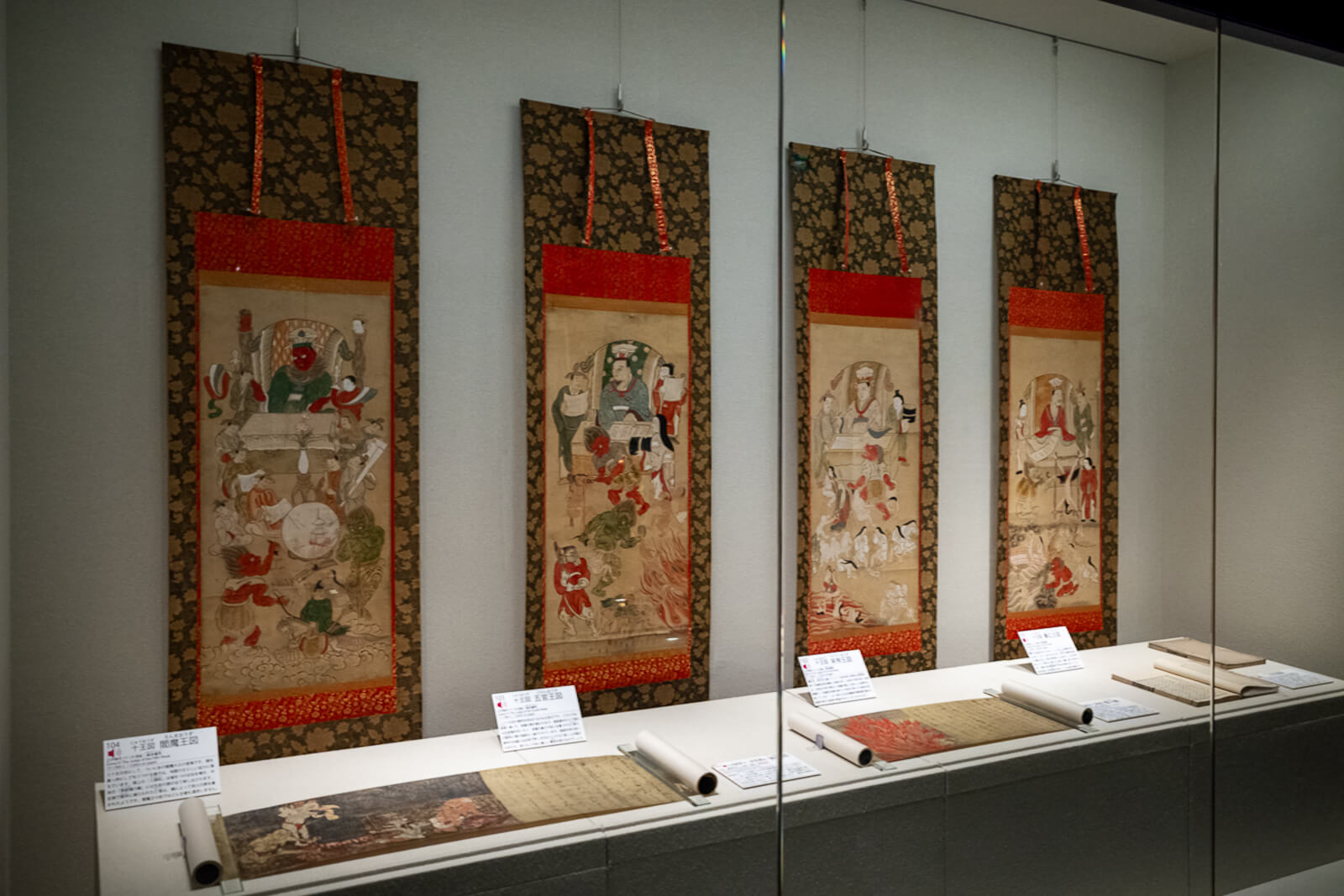
Pilgrimage provides another connection between this collection and the world outside Hase-dera. The museum places Kannon devotion within a wider tradition of visiting temples, including Kamakura’s thirty-three Kannon pilgrimage sites. Those sites are distinct from the thirty-three sculpted manifestations downstairs: one is a route of worship across places, while the other gives visible form to Kannon’s ability to appear in different guises.
When the Museum Fits Best
The museum makes particular sense after visiting the Kannon Hall, when the sculpture and interpretation can build on what has just been seen. It is also a useful indoor part of the temple visit in summer or rain. During hydrangea season, it can fill part of the interval before a timed entry to the flower path, provided the assigned entry time leaves enough room for both.
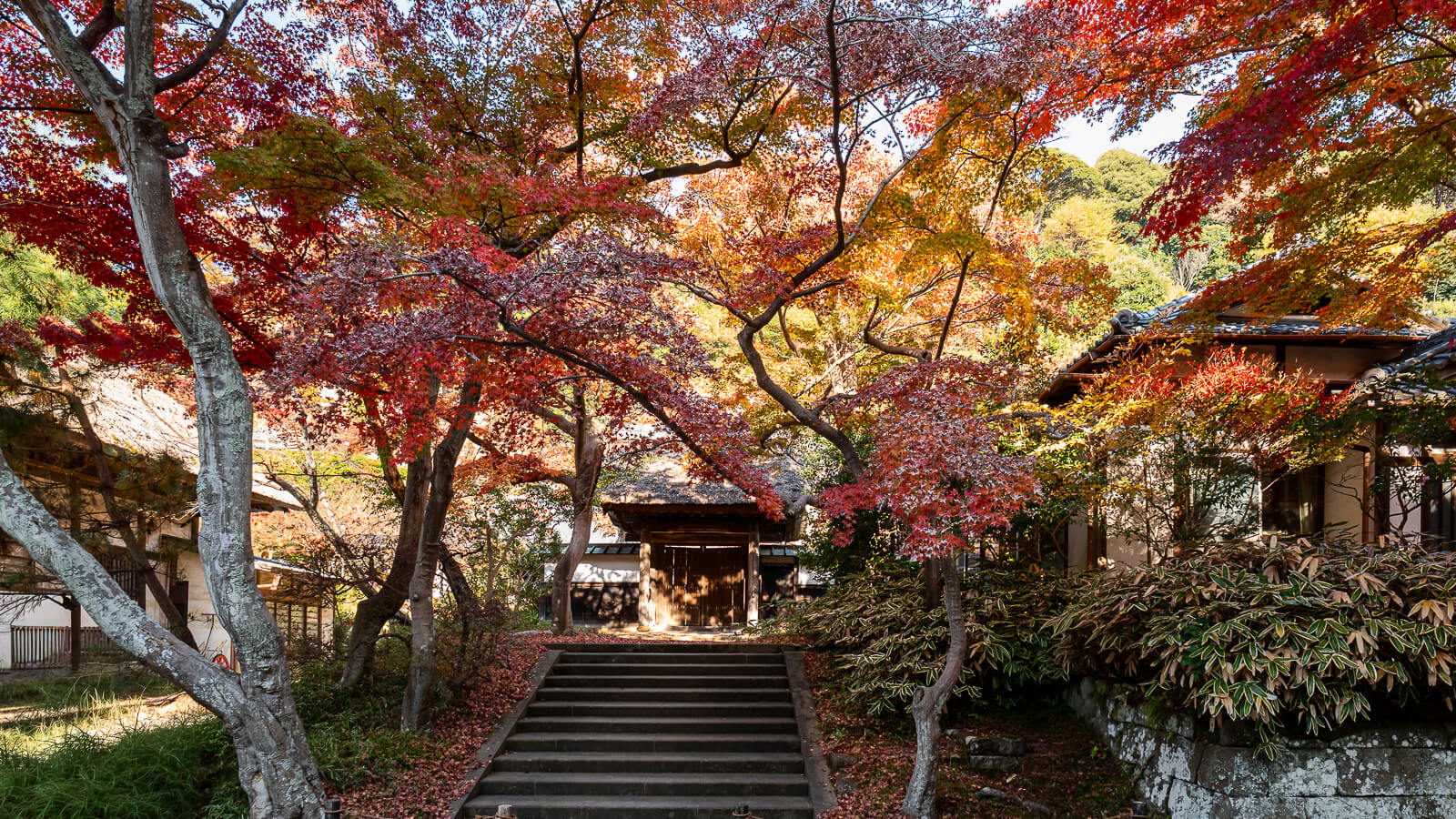
An indoor stop also changes the rhythm of a Hase-dera outing. After climbing through the gardens and looking out from the upper terrace, the galleries offer a smaller field of attention, where a single face or a group of figures can hold the visit for a while. That variety is useful in an all-season temple visit, whether the surrounding gardens are filled with hydrangeas, fresh foliage or autumn color. The Kamakura autumn guide places the museum within a foliage-focused Hase day, alongside the temple’s gardens, coastal terrace and the Great Buddha.
Visitors coming mainly for the gardens and sea view can keep the museum as an optional addition. For anyone drawn to Buddhist images, the first-floor statues give a strong reason to include it. The Hase-dera temple guide covers the wider circuit through the gardens, halls, cave and coastal terrace.
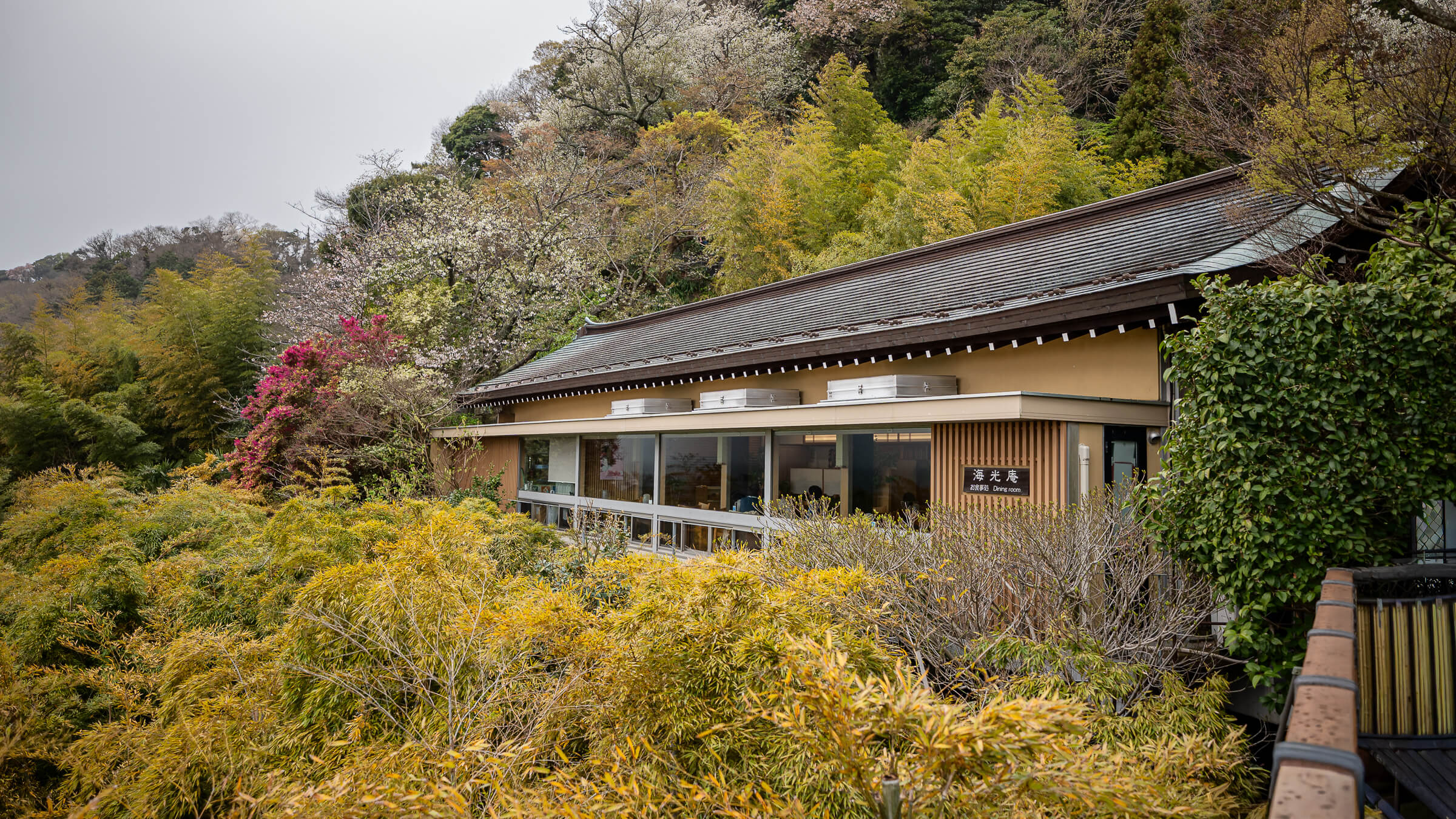
After the museum, Kaikōan hillside café provides a meal or drink stop in the upper grounds, while the terrace opens the visit back out toward the sea. Beyond the temple, Kōtoku-in and the Great Buddha make a natural Hase pairing. Keeping the museum within the temple visit avoids an unnecessary separate journey through the neighborhood.
Getting There
ARRIVE IN HASE
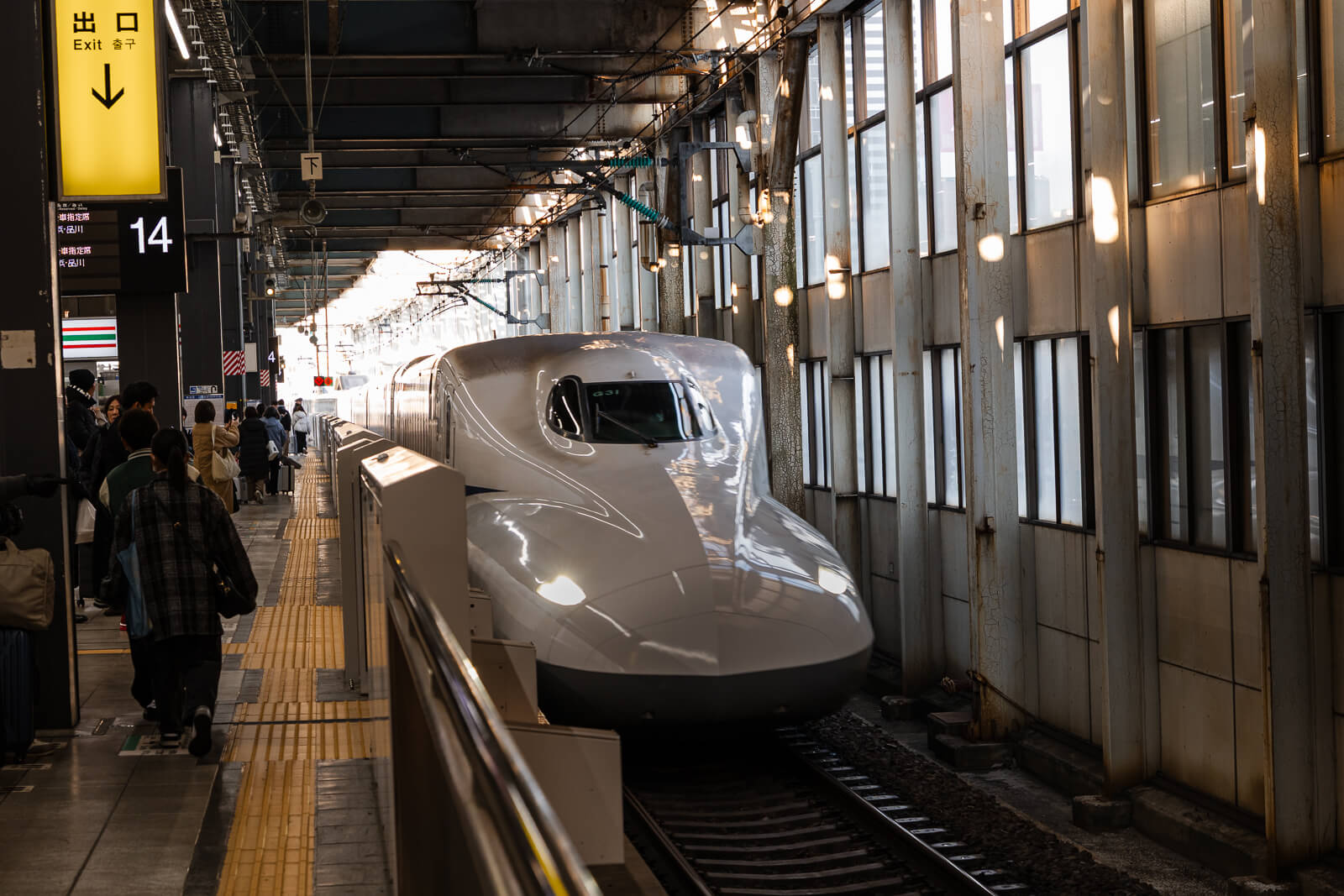
Take the Enoden from Kamakura or Fujisawa to Hase Station, then walk about five minutes to Hase-dera’s entrance. Enter the temple grounds and continue uphill to the museum near the main hall.
- Enoden Hase Station
Kamakura Station → Enoden → Hase Station → Hase-dera entrance
About 5 minutes to the temple gate; additional uphill walk inside · Walk uphill through the paid grounds to the museum beside the Kannon Hall. · Continue within Hase-dera; the station walk ends at the gate, rather than at the museum.
Hours & Fees
Visitor information
Museum admission is separate from Hase-dera entry. The museum and temple have different reception and closing times.
- Hours
- 9:00–16:30; last admission 16:00.
- Admission
-
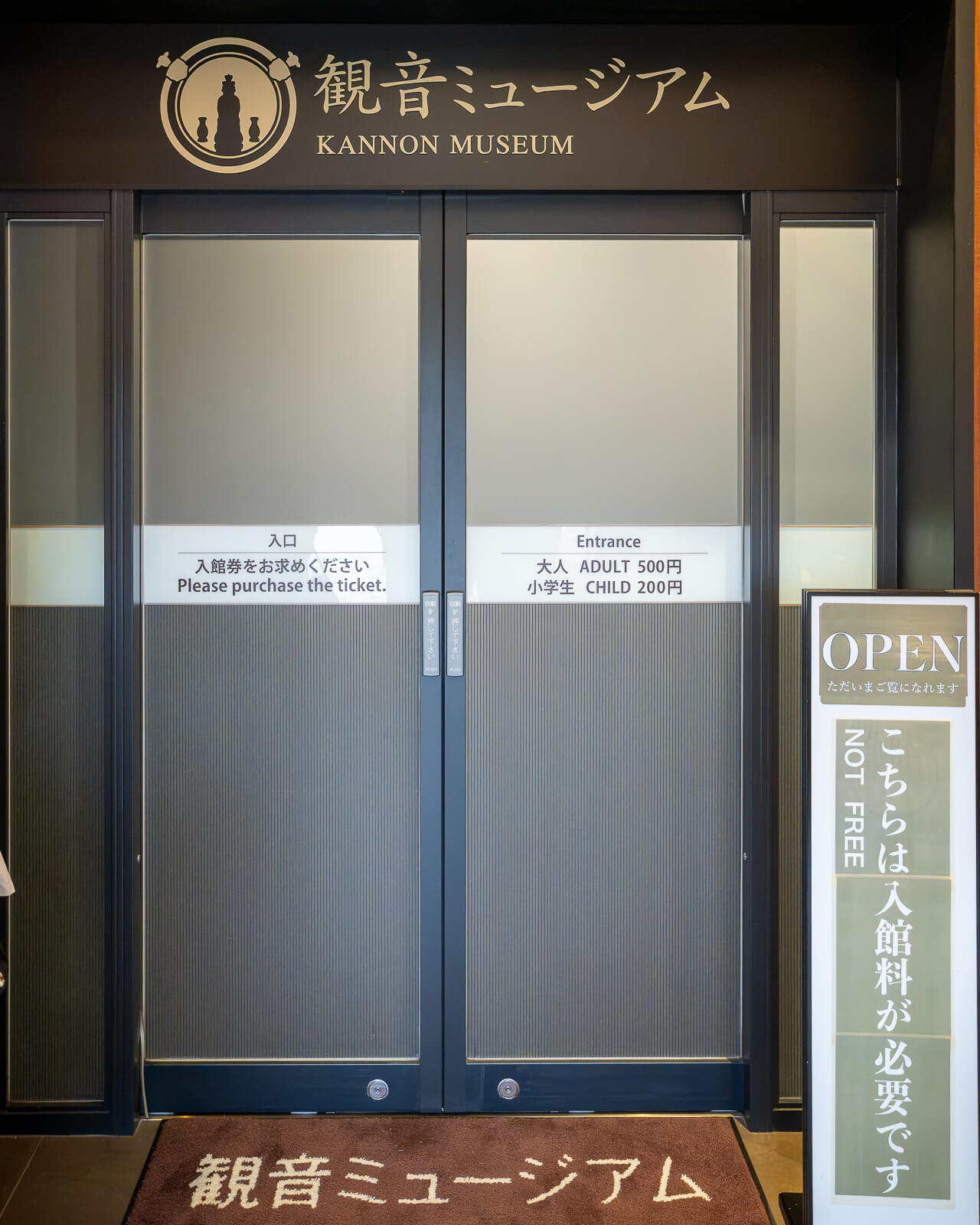
Museum admission: Adults, including junior high school students: ¥500. Elementary school students: ¥200. Temple admission: Adults: ¥400. Elementary school students: ¥200; payable separately.
Plan Your Visit
For a Hase-focused stay, the temple, Great Buddha and coast are close at hand. Central Kamakura offers direct JR arrivals, more dining choices and an easier base for trips toward Kita-Kamakura. Choose the area around the places that matter most to the wider visit.
Choose Hase or Central Kamakura
Stay in Hase for the temple and coast, or choose central Kamakura for JR connections and a wider choice of evening dining. Compare locations across the city for the rest of the visit.
Compare Kamakura Stays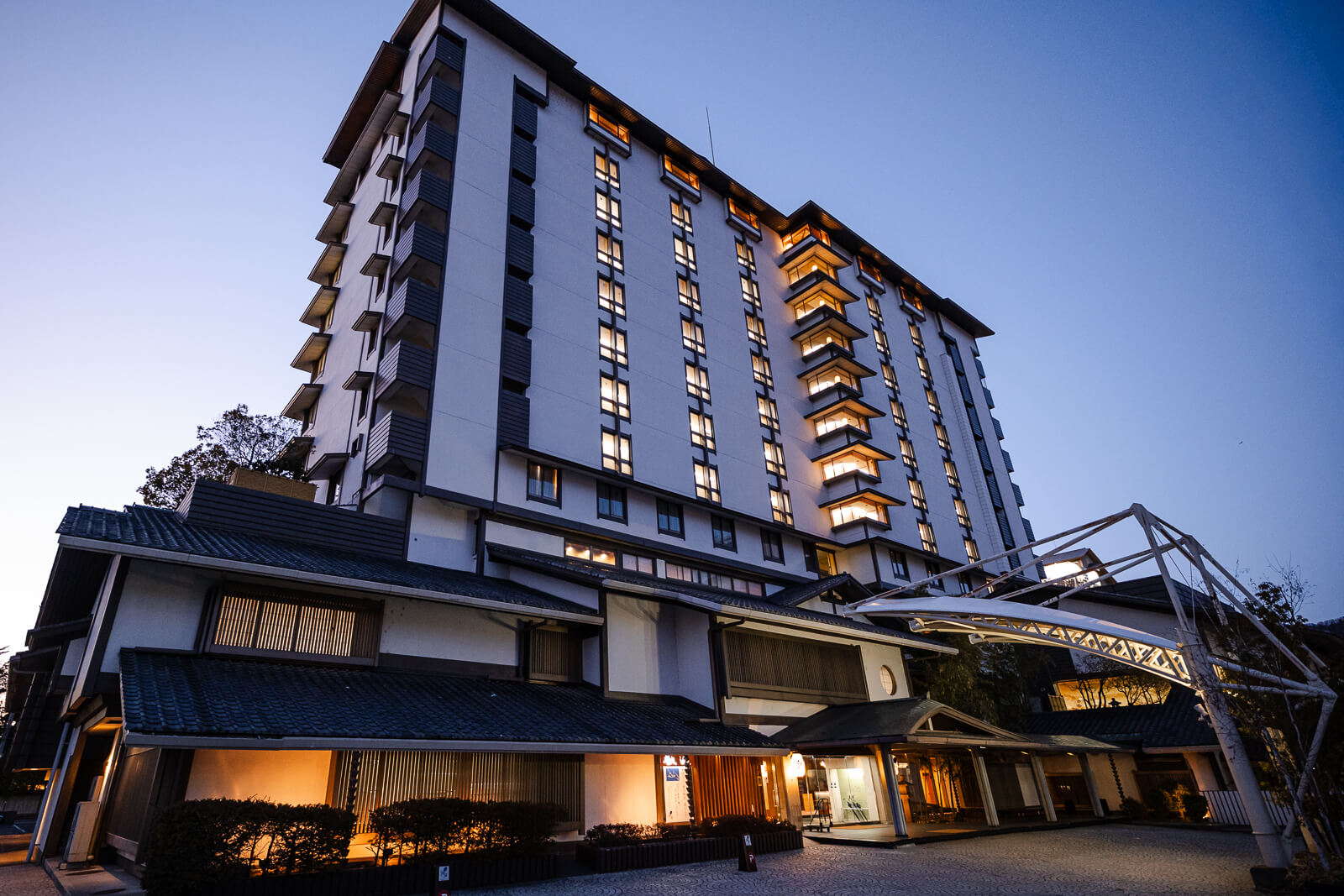
Compare Rental Cars in Tokyo
Explore Tokyo pickup options for a longer regional journey; trains and walking work well for a Kamakura temple or shrine day.
Compare Tokyo Car Rentals
Find a Guided Kamakura Day
Browse Kamakura tours for the wider outing. Compare included stops and time in Hase; the museum and restaurant are separate choices within the temple visit.
Explore Kamakura Tours
Explore Enoshima Aquarium Tickets
Add Enoshima Aquarium to a longer Shonan-coast stay. This is a separate attraction, with its own ticket; it does not provide Hase-dera or Kannon Museum admission.
View Aquarium Tickets
Keep Kamakura Within Easy Reach
Compare Japan eSIM plans for maps, train information and translation while moving between Kamakura’s temple districts.
Compare Japan eSIMs
Add the Shonan Monorail
Explore the Ōfuna–Enoshima monorail for a coastal extension; this separate ticket does not cover JR travel to Kita-Kamakura or Enoden trains.
View Monorail Tickets