The Turtle Painting and Dragon Shrine Beyond the Summit
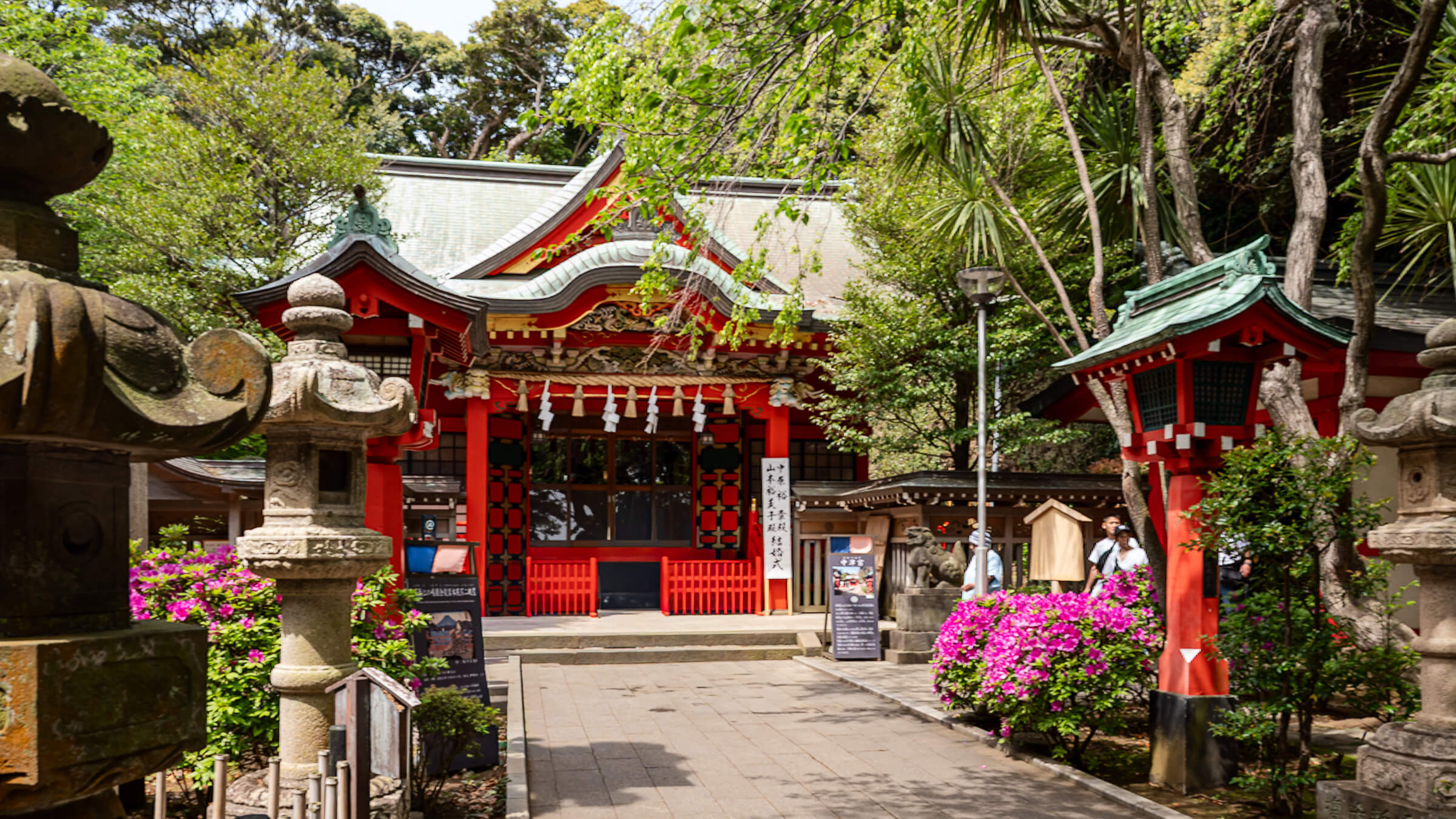
Okutsumiya is the farther precinct of Enoshima Shrine, beyond Samuel Cocking Garden, the Sea Candle and Enoshima Daishi on the walk toward the coast. The hall’s turtle ceiling painting and the nearby dragon-topped shrine, Wadatsuminomiya, give this part of the island a distinct focus. It deserves a deliberate stop before the descent to Chigogafuchi and Iwaya begins.
Several names come together here, so the distinctions are useful from the start. Okutsumiya is the main shrine precinct; Wadatsuminomiya is the smaller cave-like dragon shrine nearby; the Love Bell stands along a separate side path. The Iwaya sea caves are another attraction altogether, down by the water, with a different approach and admission. The Enoshima island guide helps connect these stops without underestimating the return walk.
For a visitor following the whole island route, this is a good place to pause before committing to the final coastal steps. There is more to see than the main hall alone, but the precinct is not an extensive new complex requiring a separate expedition. Look at the torii, hall and painting, then choose whether the dragon shrine and Love Bell fit the time and energy available.
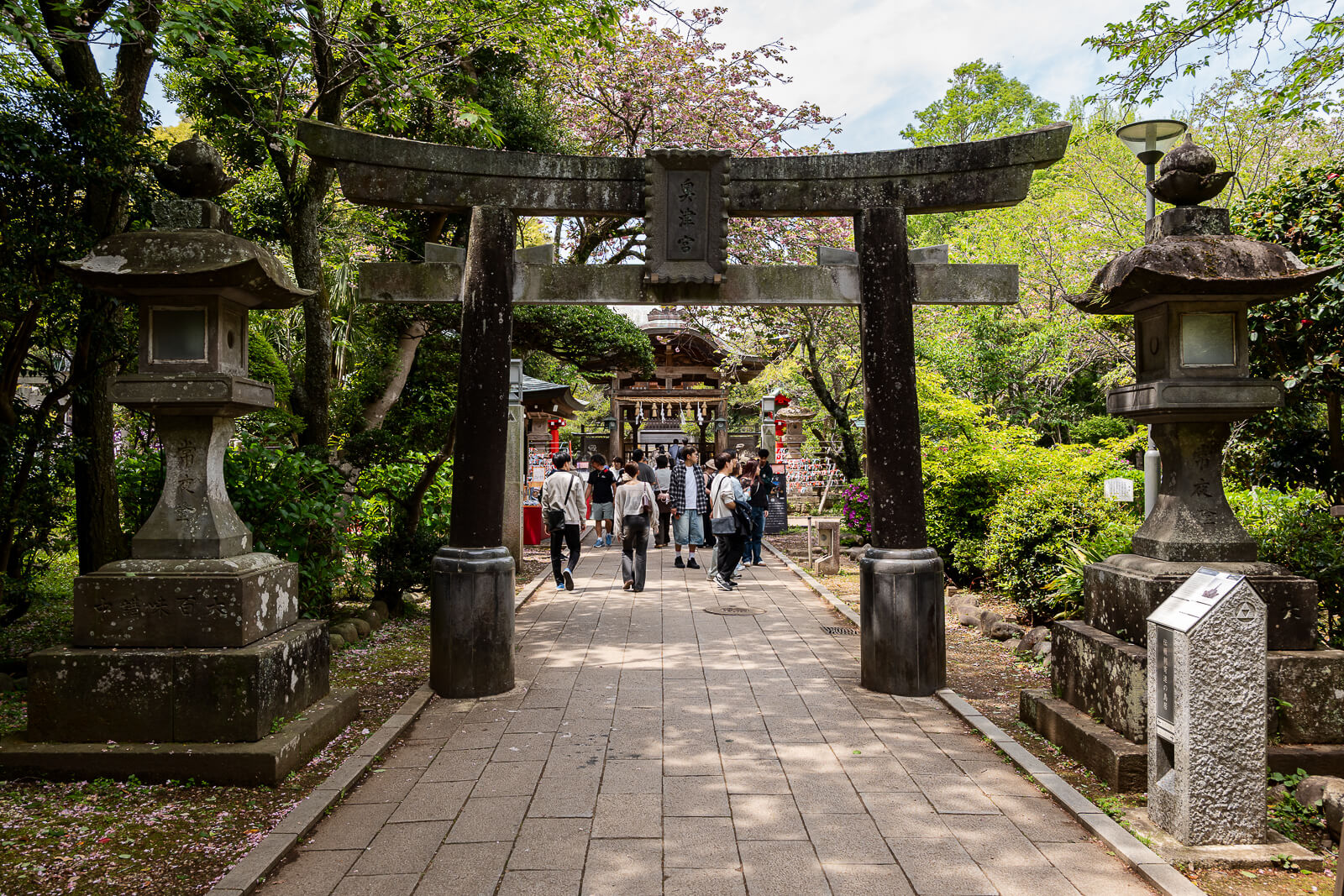
The Approach to Okutsumiya and Its Stone Torii
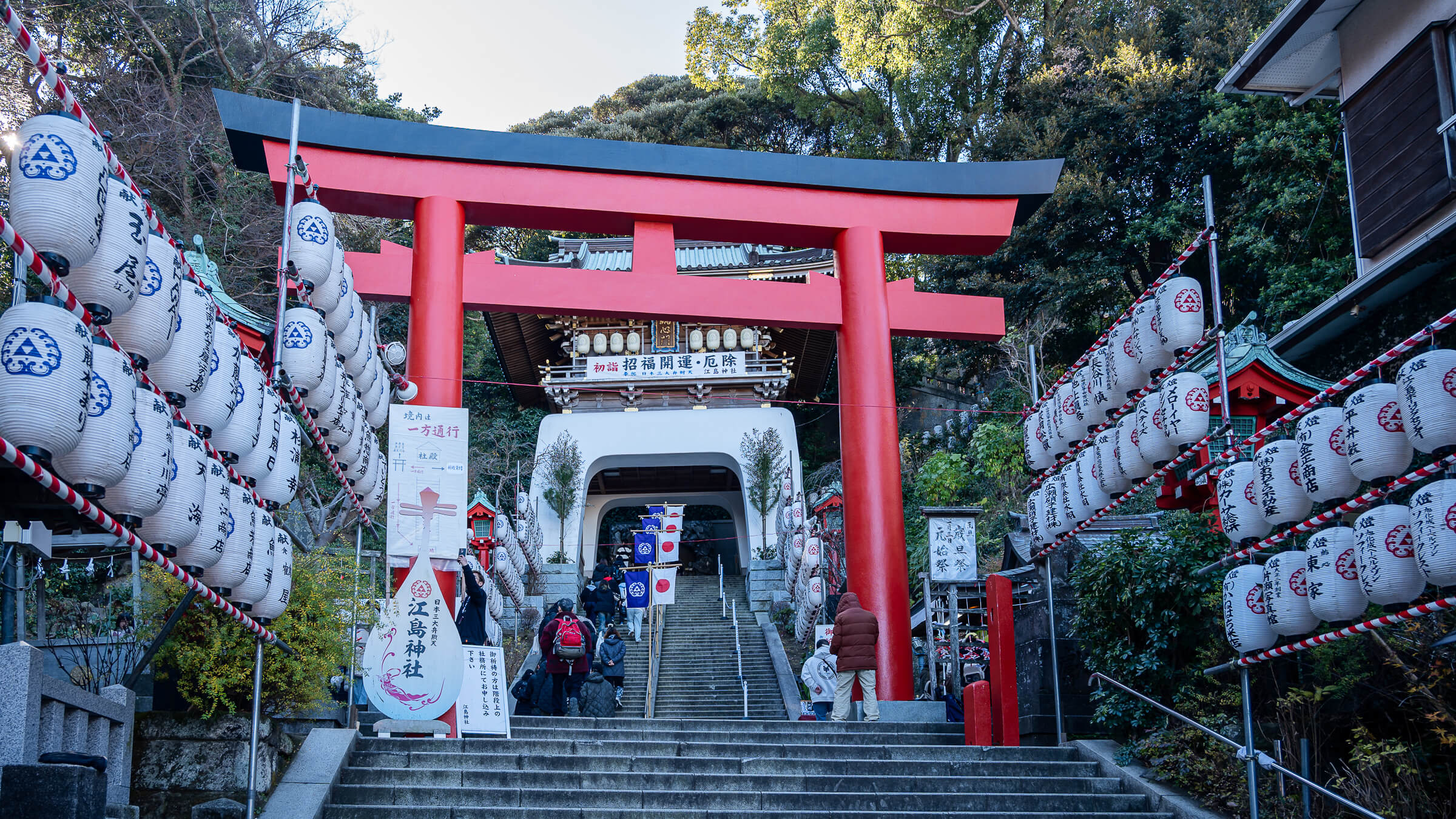
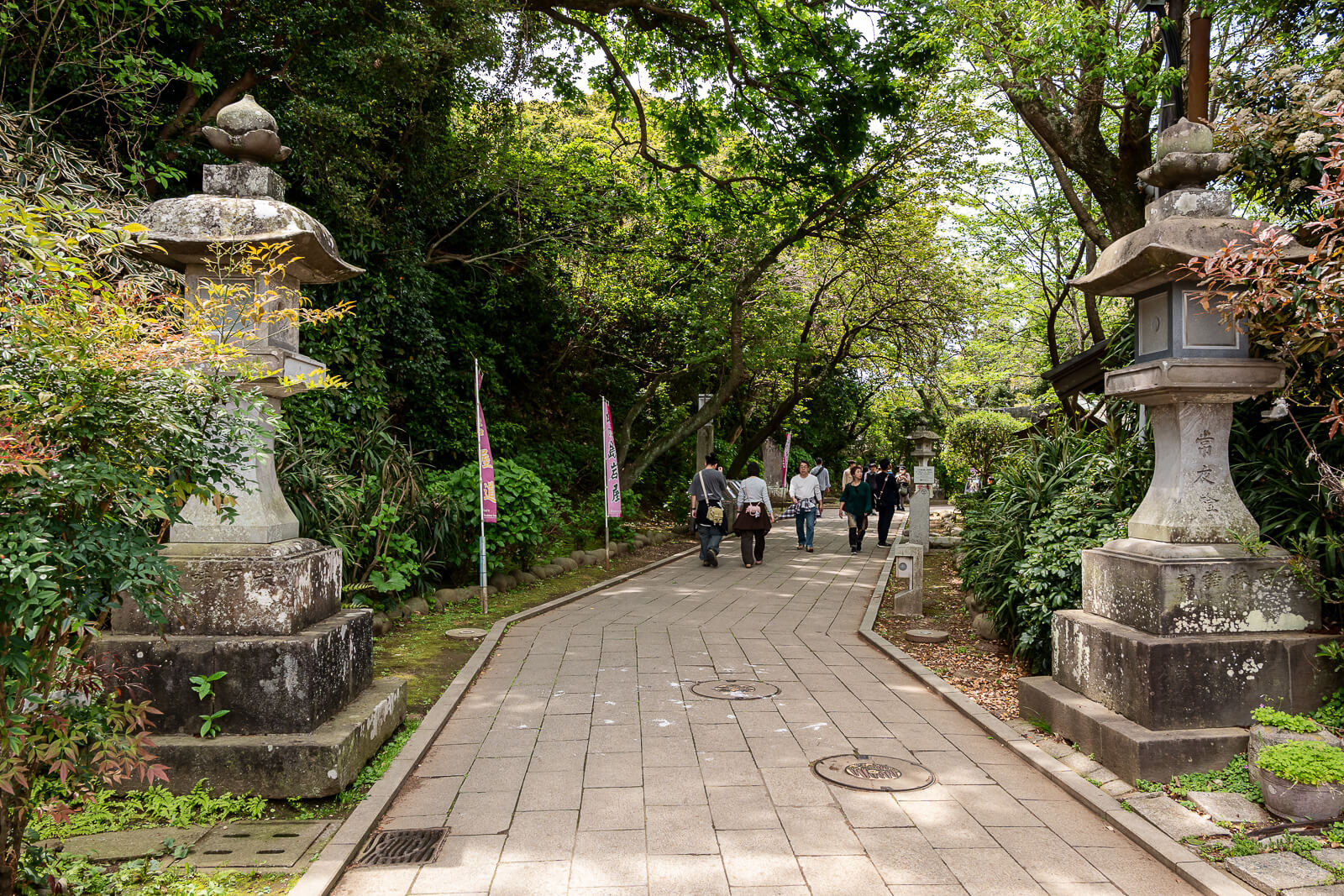
The approach from the summit passes smaller shops, places to eat and residential buildings. It keeps the visit within the lived-in island while leading toward the farther shrine precinct. After the garden and tower, the torii and monuments establish another religious setting before the landscape opens onto the coast.
A tradition recorded by Fujisawa’s tourism association links the stone torii with Minamoto no Yoritomo’s donation in 1182. Treat that as the site’s historical tradition, not proof that every visible part of the gate has remained unchanged since the medieval period. The association adds meaning to a landmark that can otherwise pass as simply another torii along the route.
On a longer coastal trip, the Kamakura destination guide helps plan the neighboring temple districts separately. Within Enoshima, the precinct is also a useful turning point in the day. A visitor who stops here has reached beyond the summit attractions, while the route to the rocky shore still involves a further descent. Decide about that continuation with the return climb in mind, instead of assuming that the coast is only a small extension of the garden visit.
Okutsumiya’s Hall and the Eight-Direction Turtle Painting
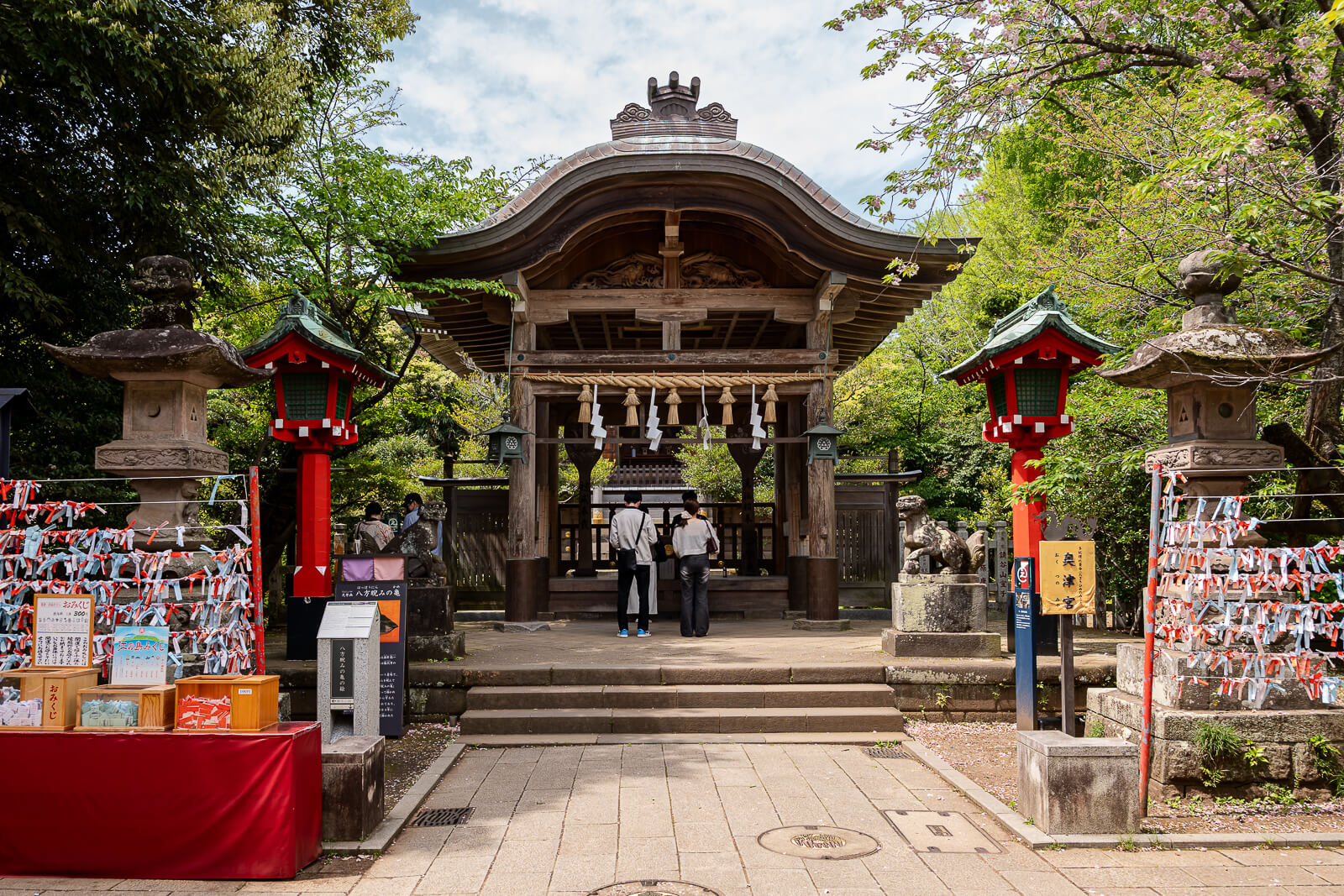
Look upward at the worship hall ceiling for the turtle known for its gaze seeming to follow the viewer from different directions. It is Okutsumiya’s most distinctive small detail, giving a reason to pause beneath the roof instead of looking only at the hall from the approach. View it from the permitted public area while leaving room for worshippers.
The image currently displayed is a copy by Kataoka Kayo of Sakai Hoitsu’s older painting. The original was removed for preservation after deterioration, so the ceiling continues the design through a later version. Knowing that distinction makes the encounter a small story of conservation as well as an unusual animal painting.
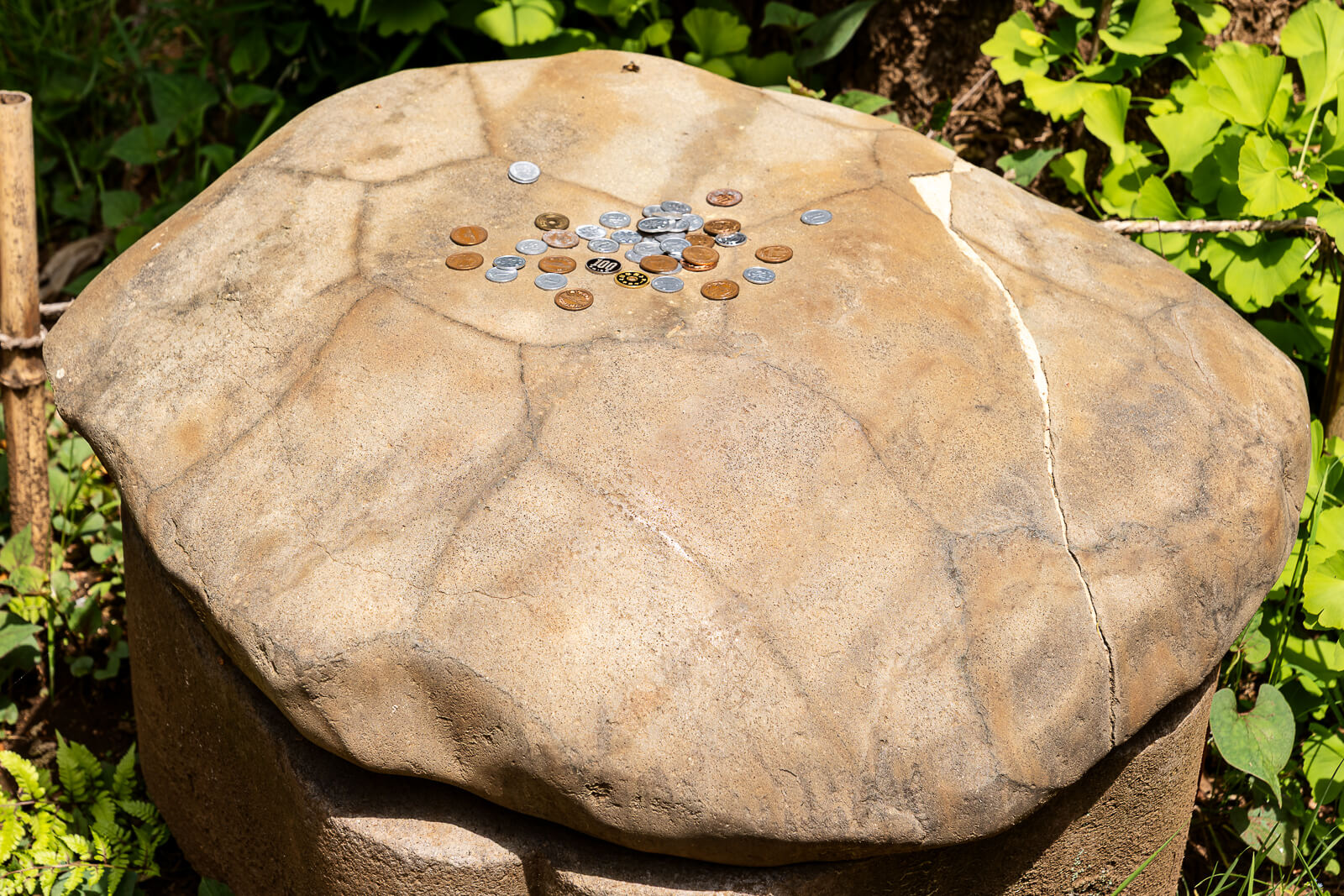
The buildings also have different dates. The main shrine building was rebuilt in 1842, while the worship hall was newly built in 1976. These are separate parts of the precinct’s history, and neither date should be used as a blanket age for every structure or painted surface.
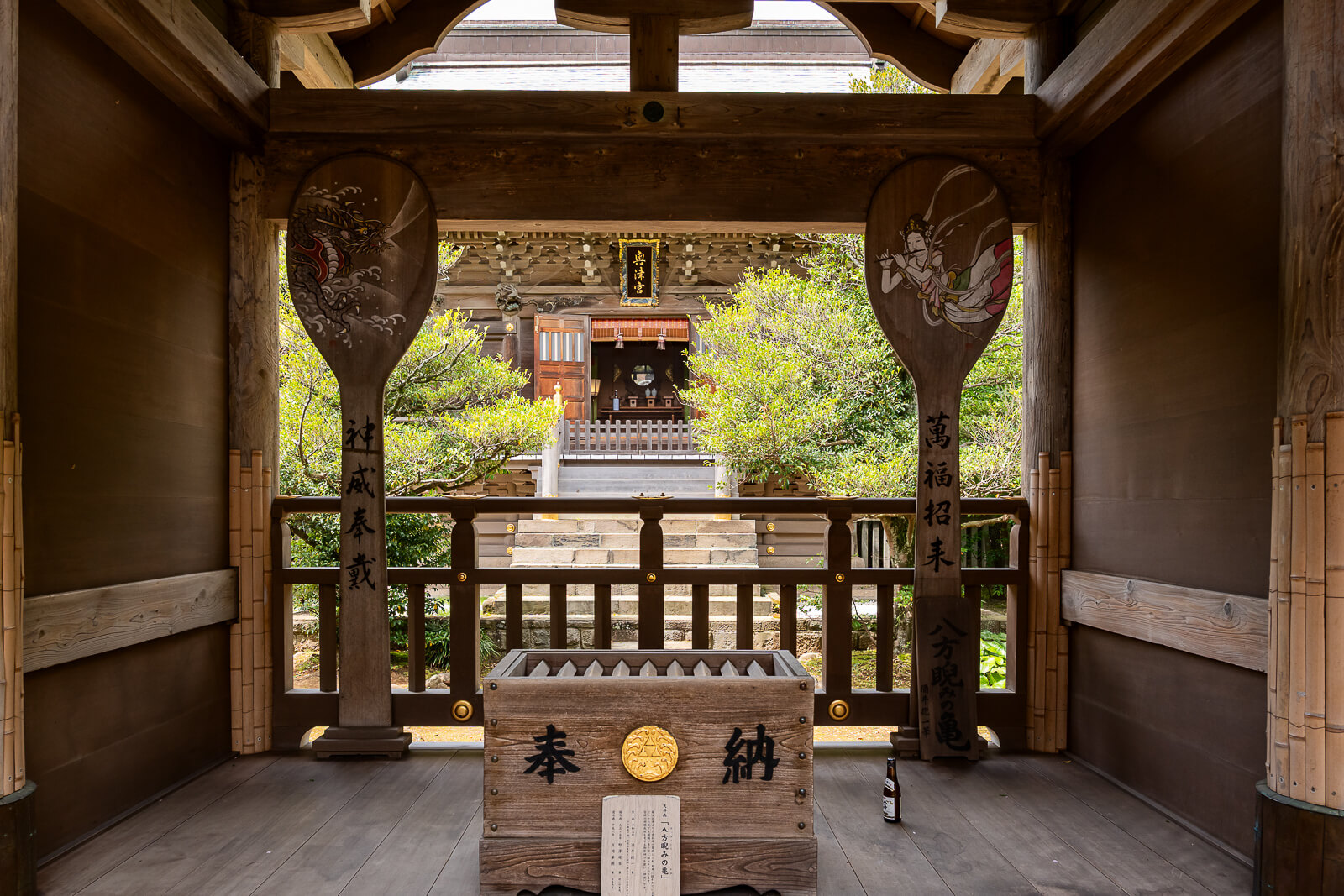
After noticing the turtle, take another look at the hall as a whole. The roof, worship space and ceiling detail are encountered together during the stop, even though their histories do not all begin at the same moment. This gives Okutsumiya something specific to look for after the vermilion architecture of Nakatsumiya and the devotional features around Hetsumiya.
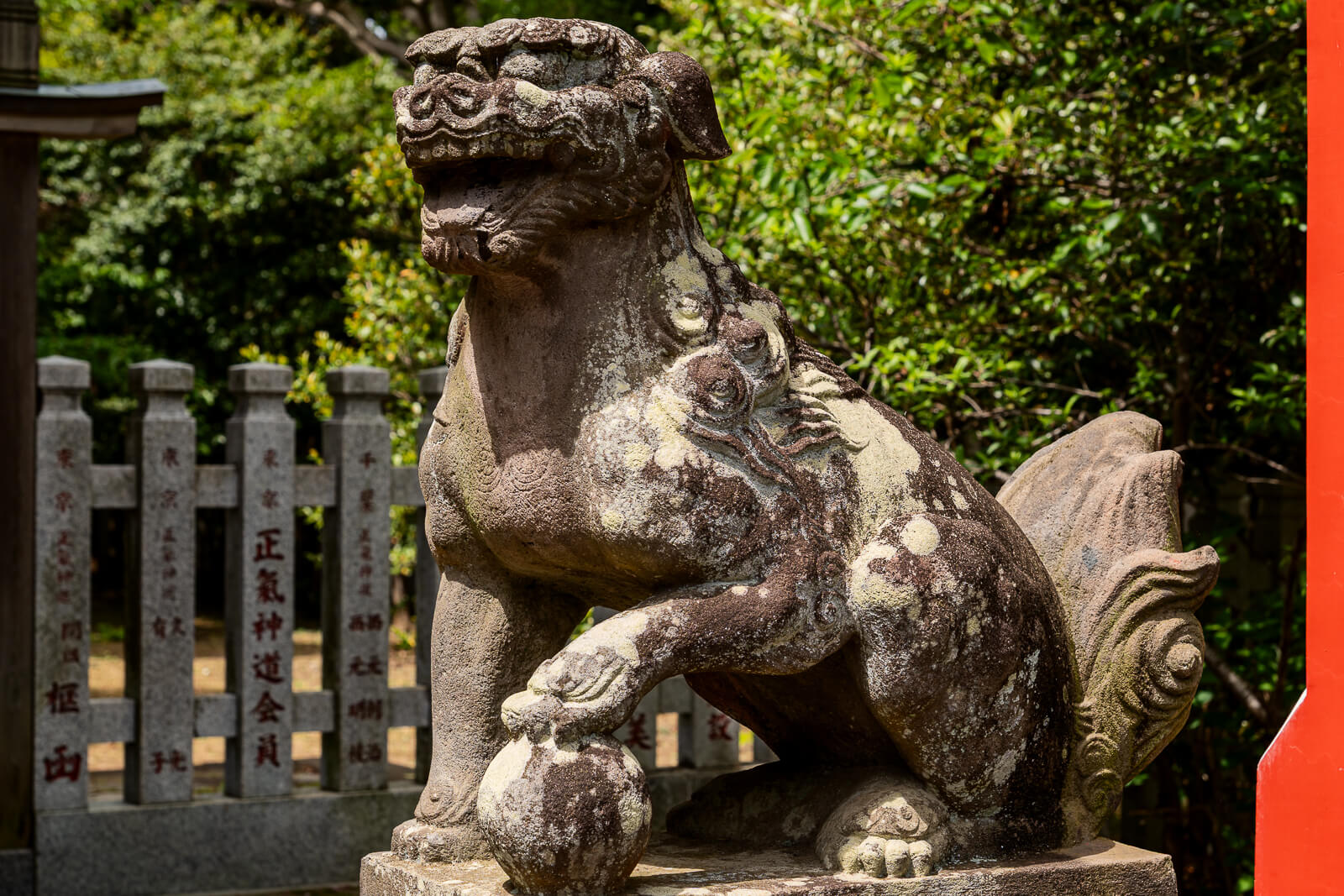
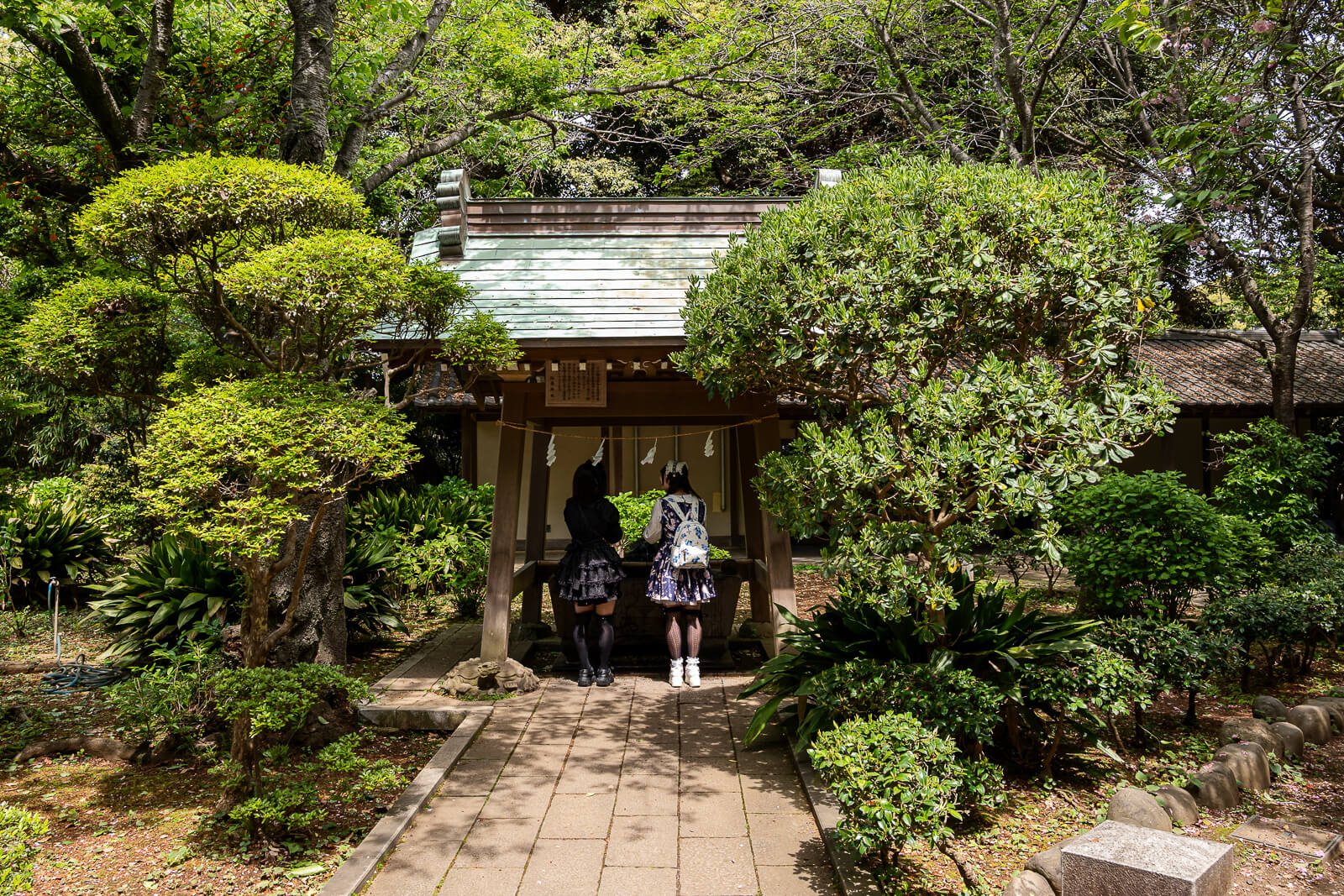
Wadatsuminomiya: The Dragon-Topped Shrine near Okutsumiya
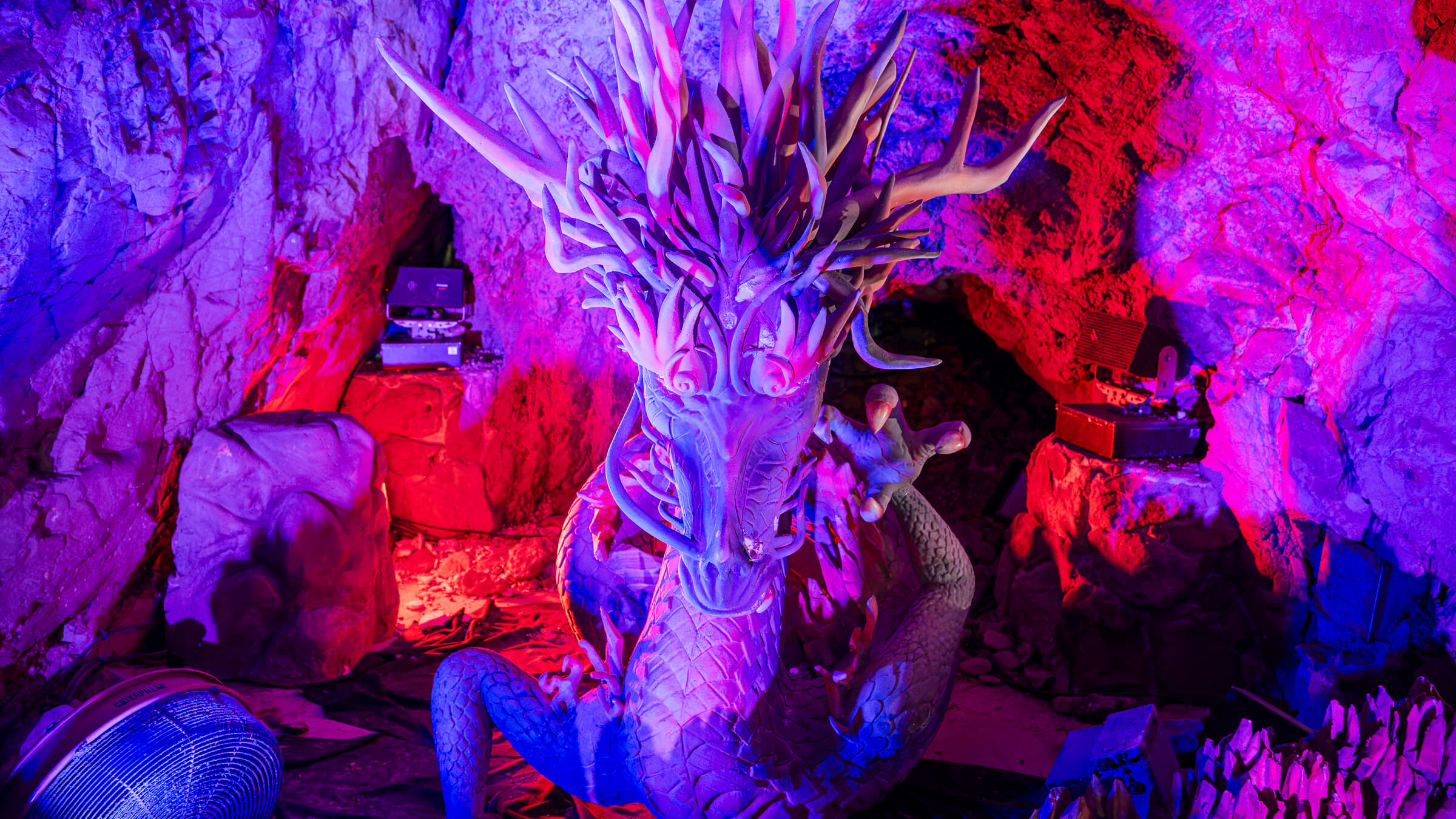
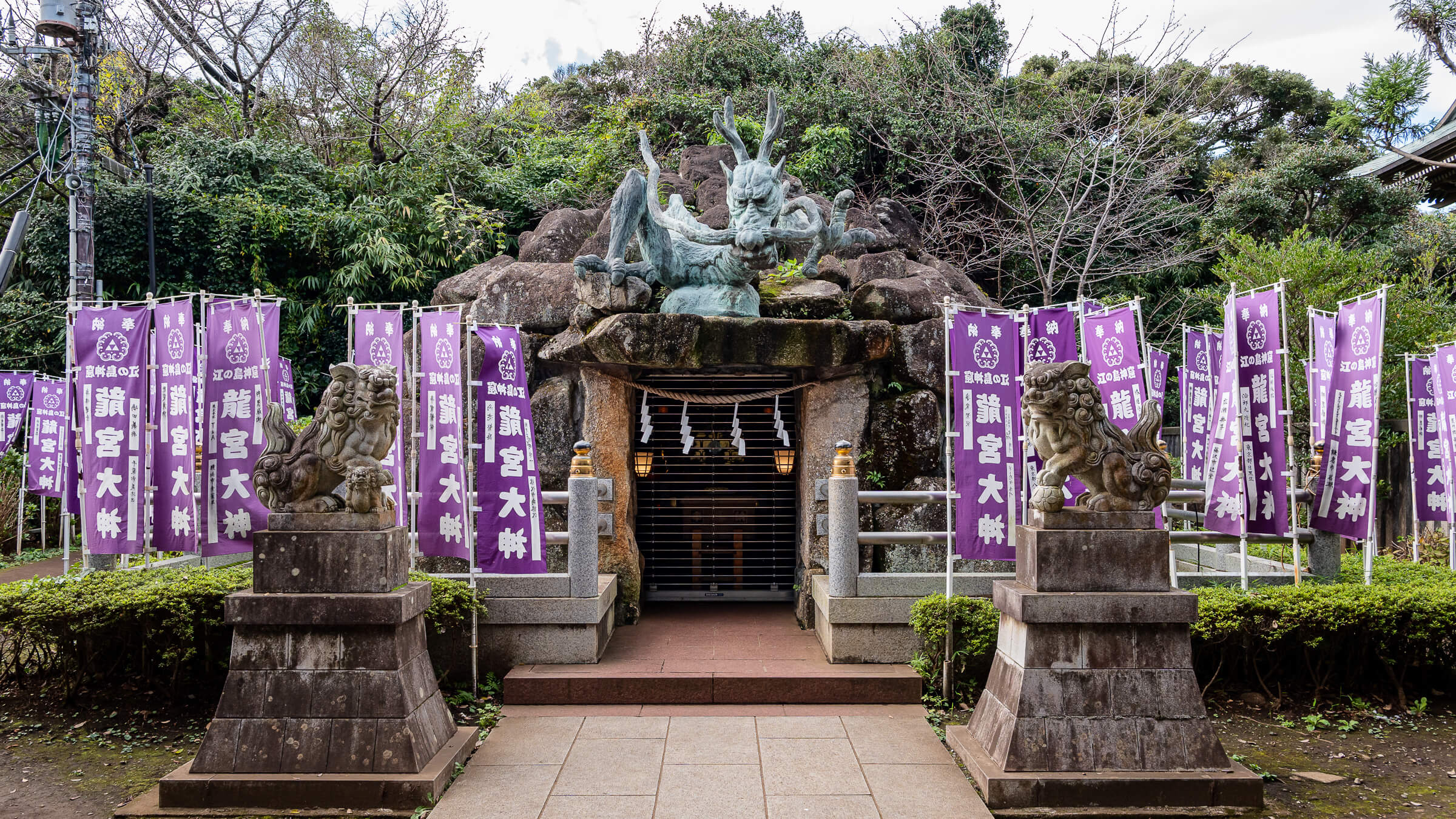
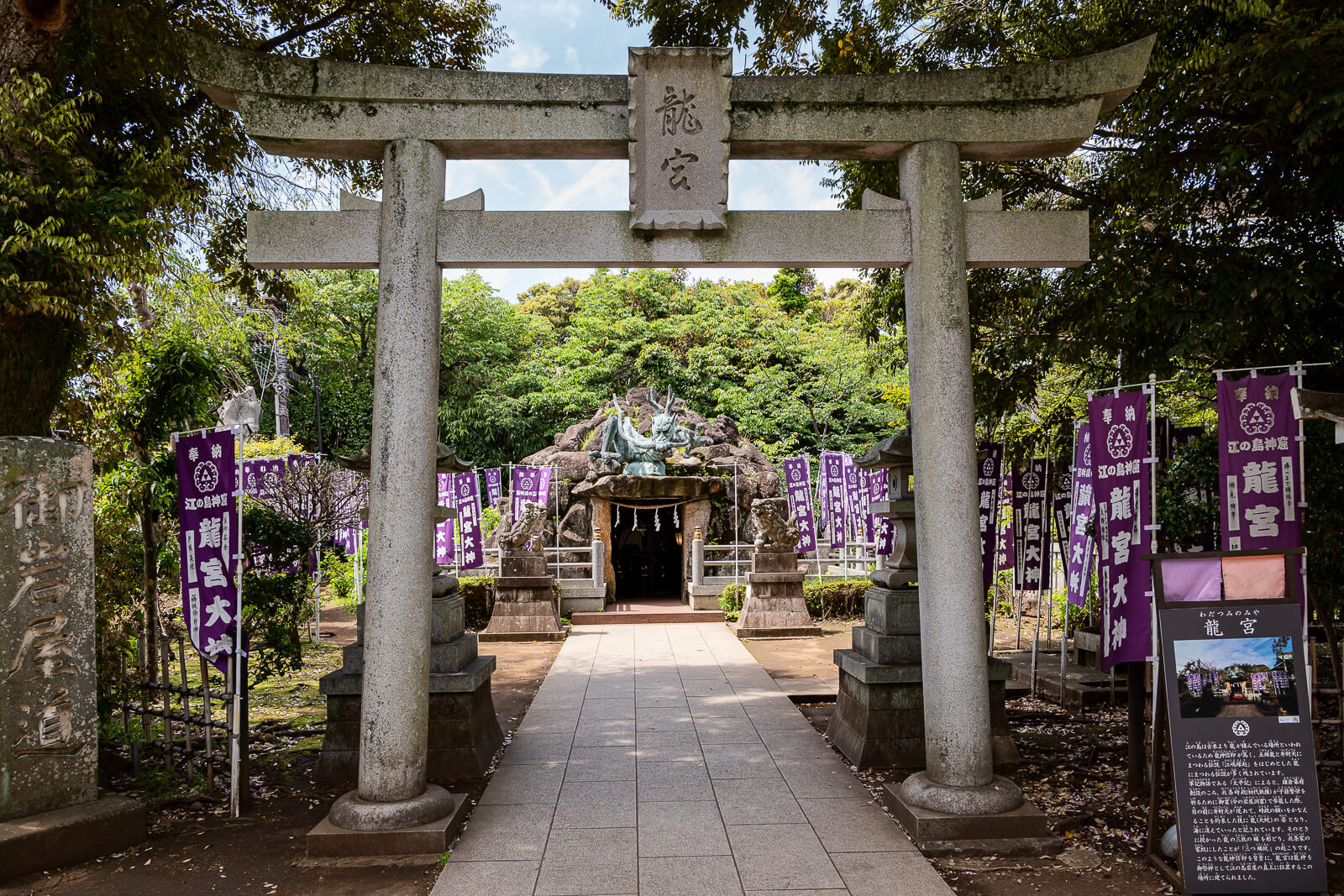
The small cave-like structure topped by a dragon is Wadatsuminomiya, written 龍宮. It enshrines the dragon deity associated with Enoshima’s legends and stands above the Iwaya area. The sculpted dragon and the opening below give it a very different form from Okutsumiya’s main hall.
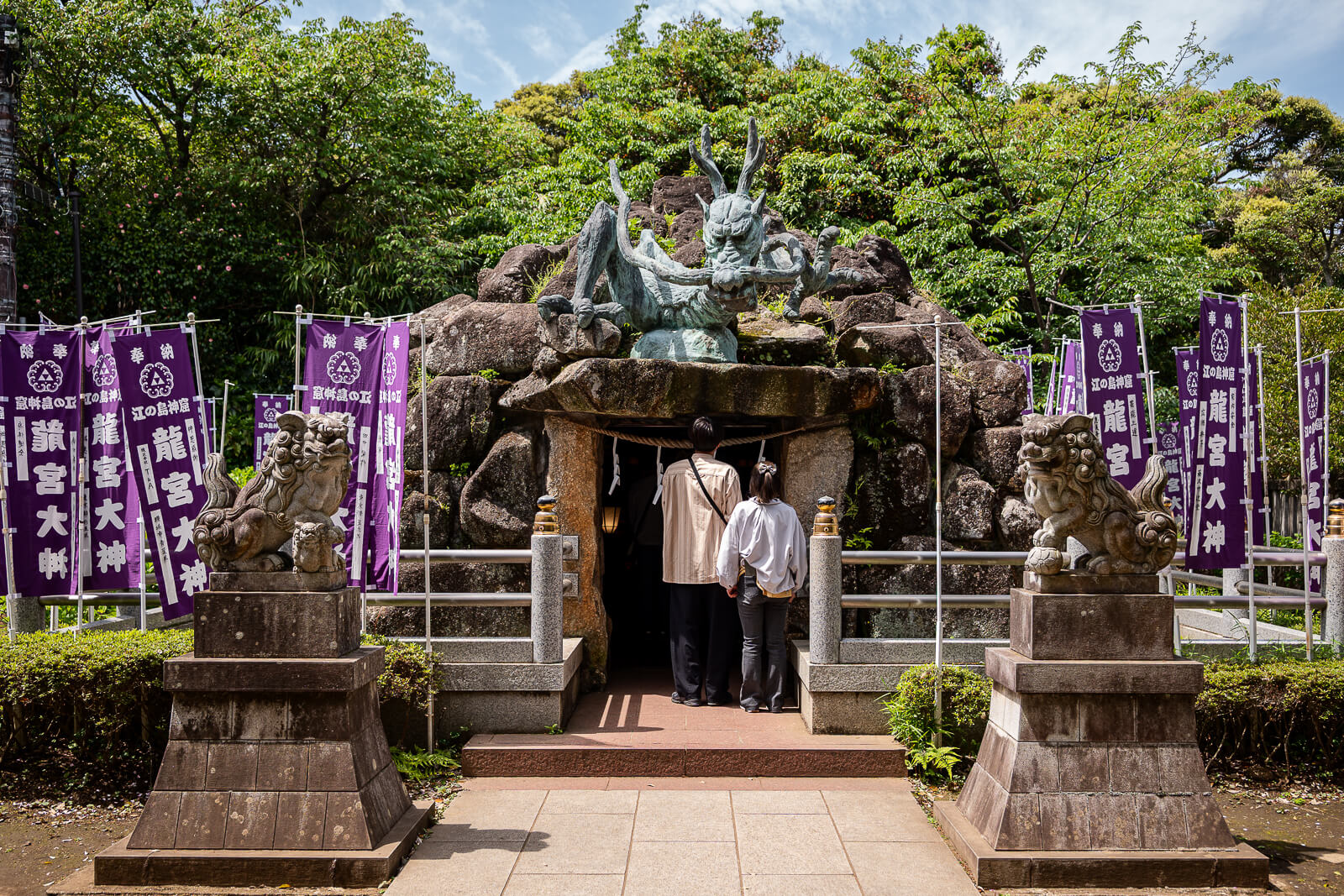
This is the feature that can be mistaken for the island’s caves when seen in photographs. Wadatsuminomiya is a small shrine in the upper sacred area; Iwaya is the coastal cave attraction farther down the island. Looking at the dragon shrine here does not replace the shore walk or the separately ticketed cave visit.
The entrance is worth examining from the area available to visitors. Access farther inside should follow the arrangements in place at the time, since an open doorway on one occasion does not establish routine interior entry. The dragon above and the cave-like form are enough to make the shrine recognizable even when the visit is limited to its exterior.
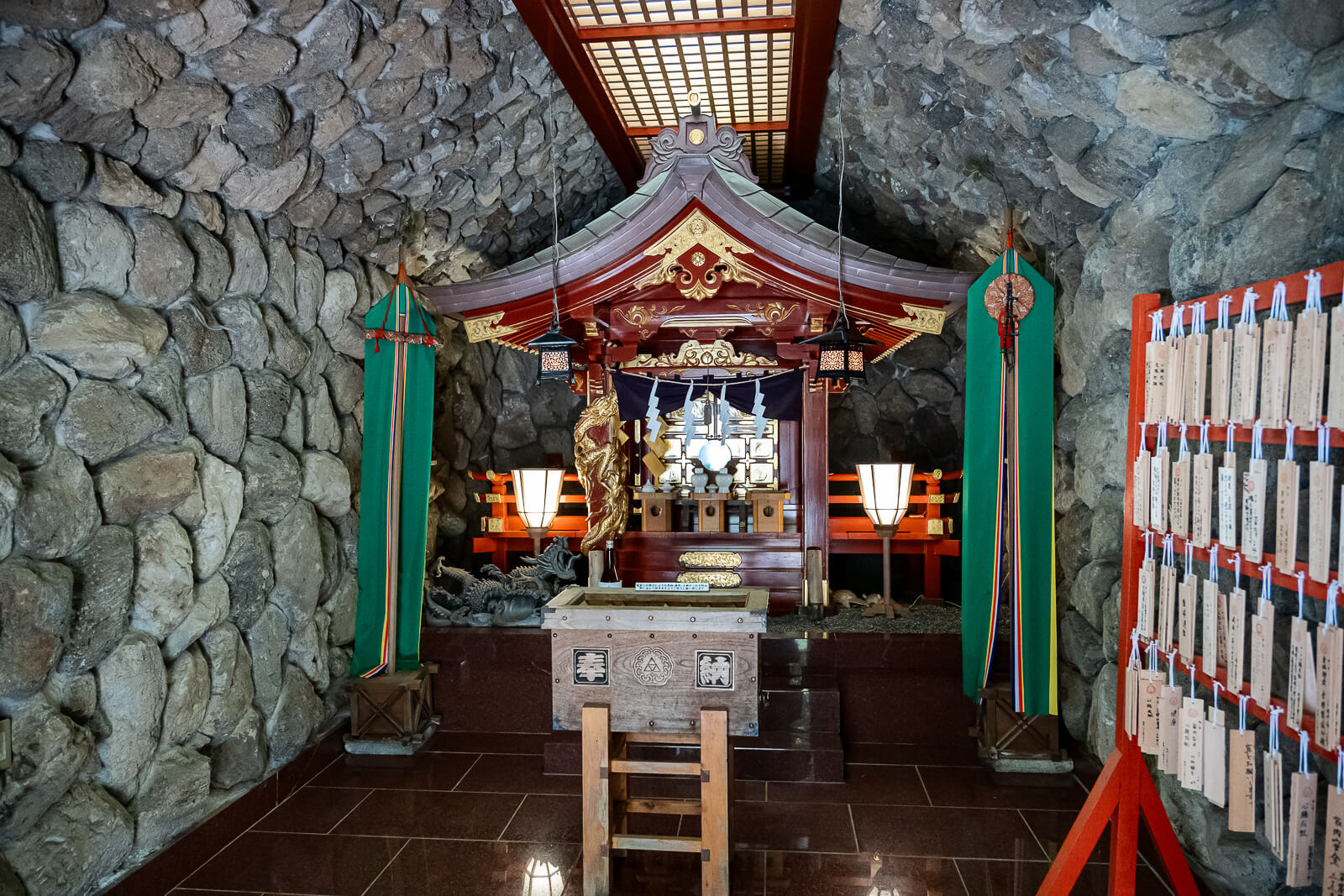
Seen together, the turtle painting and dragon shrine make this precinct different from the first two shrine levels. One draws attention upward within the worship hall, while the other gives the island’s dragon imagery a conspicuous architectural form. They provide a focused reason to pause before the route changes again at the coastal descent.
The Love Bell Detour near Okutsumiya
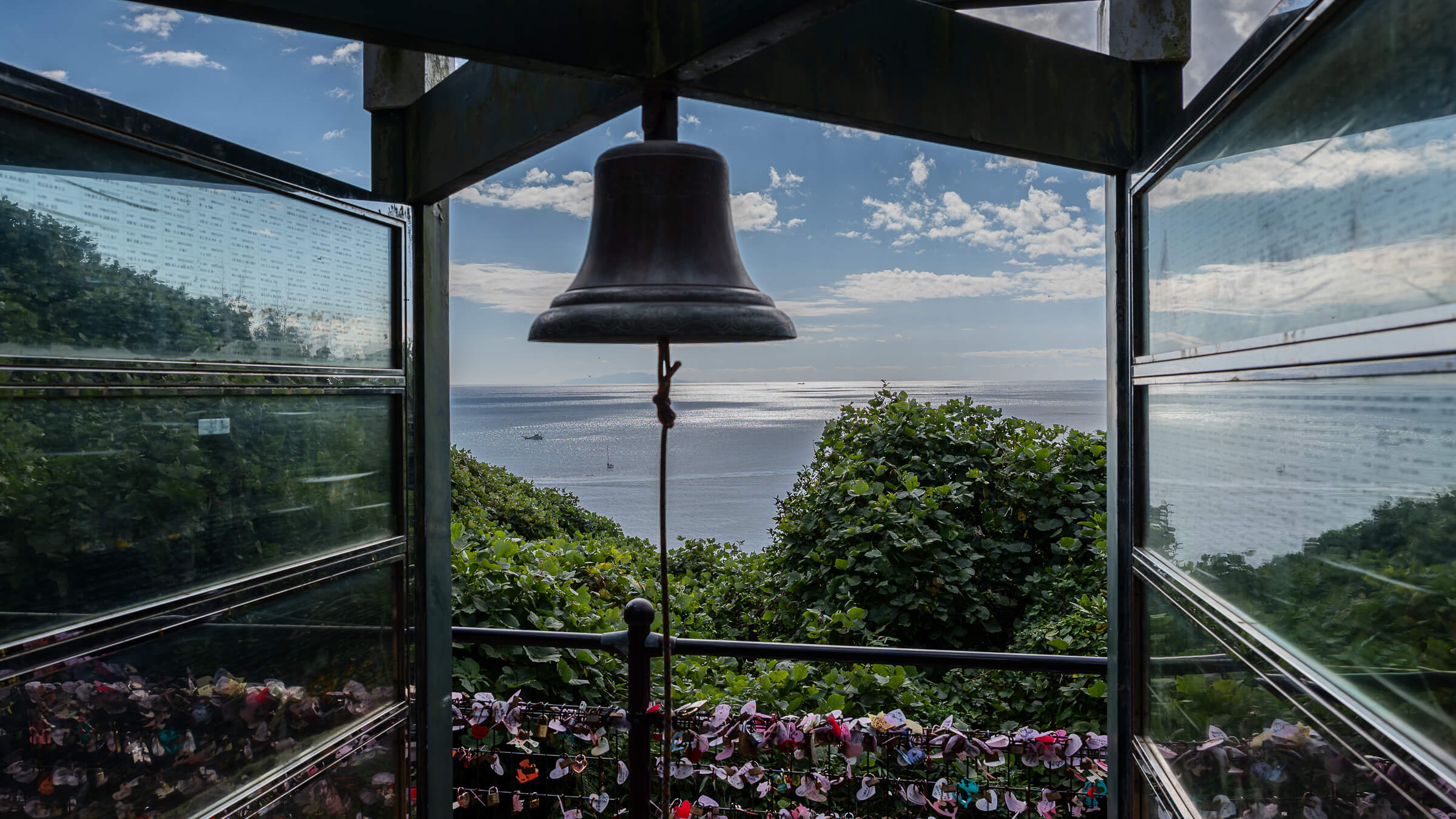
The Love Bell, Ryuren no Kane, is reached by a separate path rising from this part of the island. Its bell frame and padlocks are associated with the heavenly maiden and dragon legend, making it a short optional addition for visitors interested in that story or a photograph at the bell. It is a detour from the shrine area, not an unavoidable part of reaching the coast.
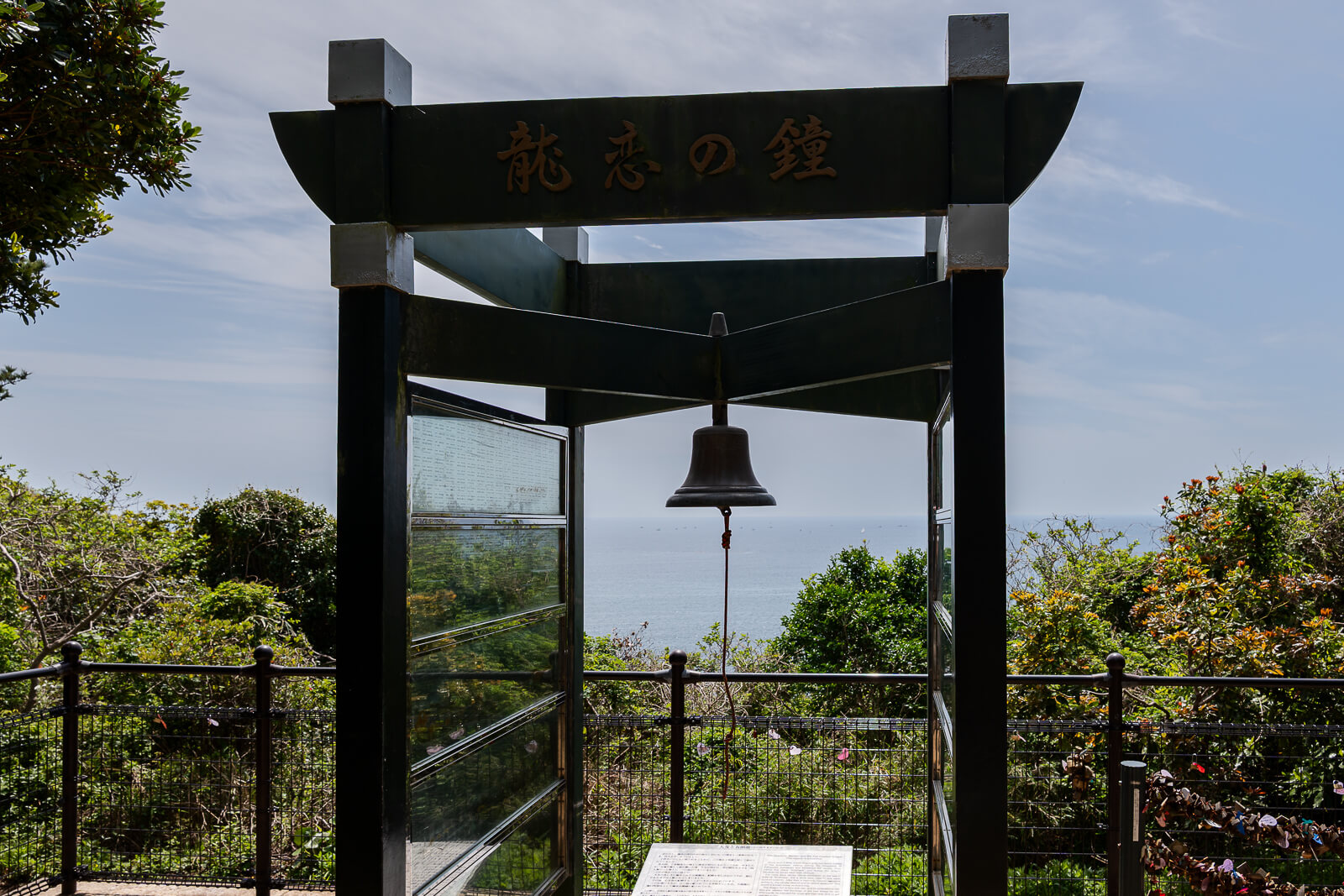
Reader note: An official notice dated 19 October 2026 reported that the Love Bell was broken and could not be rung. Repair status has not been confirmed as of 4 November 2026. Check with Fujisawa Tourist Information before making a special trip to ring the bell; the wooded approach and coastal outlook are separate reasons for the detour.
The side path adds some uphill walking before the descent toward Chigogafuchi. Include it for a clear interest and return to the main route afterward, leaving enough energy for the steps still ahead. Visitors whose priority is the hall and dragon shrine can finish that visit without treating the bell as a required extra.
Continuing from Okutsumiya to Chigogafuchi and Iwaya
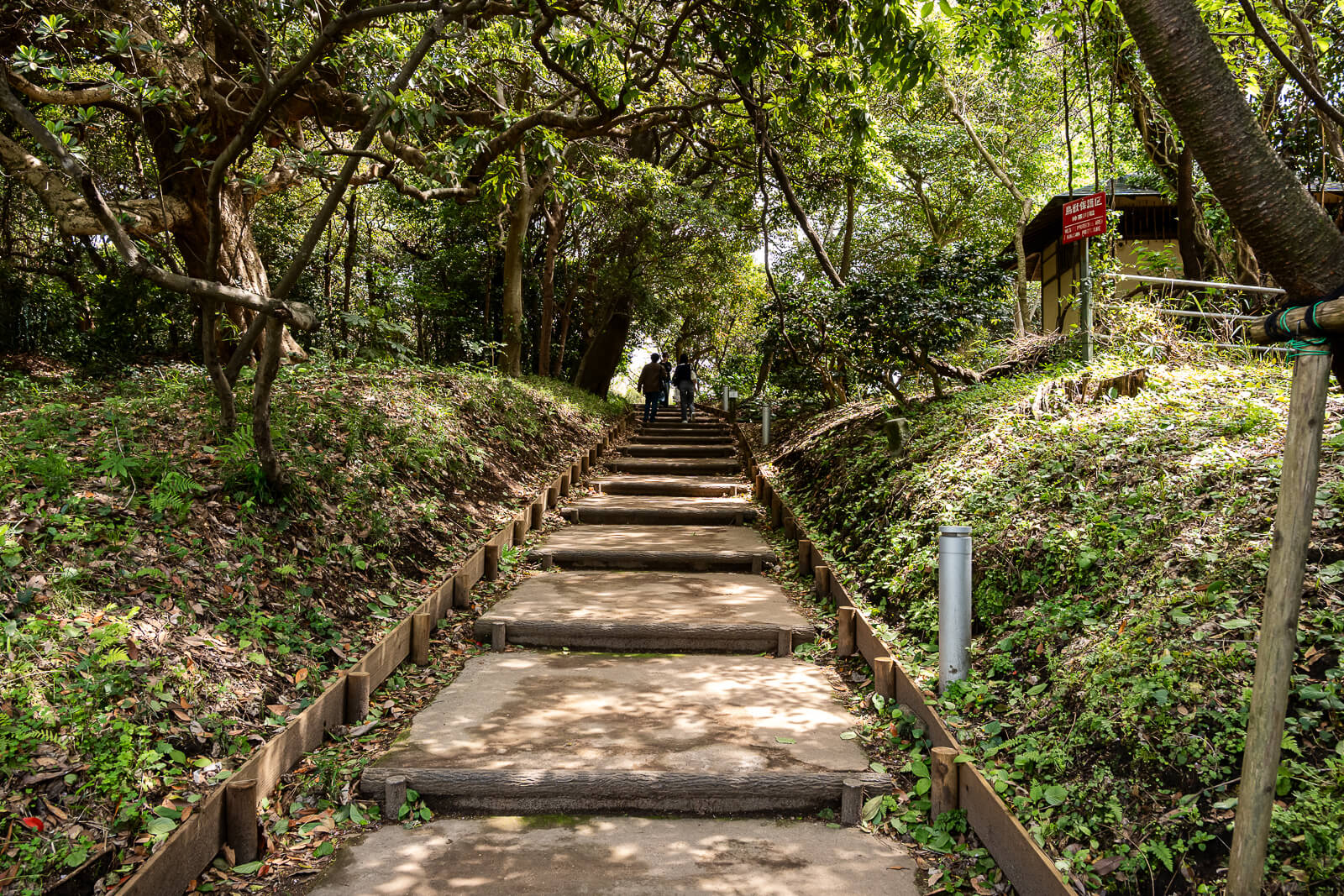
Beyond the precinct, the route turns toward the final descent to Chigogafuchi and the Iwaya caves. The open rocky coast gives the walk a different scale from the shrine and garden paths, while the caves add a more enclosed experience at the water’s edge. Reaching both is a meaningful continuation, not simply a quick look behind the hall.
The return needs to be considered before taking those steps. Walking back means climbing again toward the summit route; the uphill Escar used earlier does not provide a downhill or coast-to-summit service. Bentenmaru can offer a boat return when operating within its service window, but conditions can stop sailings, so retain a workable walking alternative.
For a shrine-focused day, Okutsumiya can be the final main cultural stop before deciding how much coast to add. The turtle painting, the torii tradition and Wadatsuminomiya give the precinct an identity of its own. Complete those features first, then make the descent as a deliberate choice with the return still possible within the day.
Getting There
Plan the mainland arrival before continuing across the island to Okutsumiya with the guide to getting to Enoshima.
Access and Arrival
Continue along the island path past Enoshima Daishi toward the coastal side. The Love Bell is a separate side-path choice nearby.
- Across Enoshima Island
Summit → Enoshima Daishi → farther island path → Okutsumiya
Follow the signed island route and local access instructions. · Allow for slopes, stairs and the walking return.
Before the coastal descent: Walking back from the coast means climbing again. Check boat availability and remaining energy before descending.
Hours and Fees
Visitor information
Okutsumiya, its turtle painting and nearby Wadatsuminomiya form a distinct farther-island stop.
- Hours
- Plan the precinct visit for daylight. Reception and access into individual structures follow shrine arrangements; an open doorway is not guaranteed.
- Admission
-
No separate precinct admission ticket. Optional goshuin, amulets and offerings are separate; the Love Bell and Iwaya are distinct visits.
Optional combined admission
Enoshima Island All-Access Pass
Optional for a wider island-and-aquarium day. Includes Escar, Sea Candle, Iwaya and the aquarium. Choose + Night for event-evening garden entry. Rail, Bentenmaru and Hoanden are separate; check date and package conditions.
Compare Enoshima All-Access Passes
Plan Your Visit
Choose the stay, transport and experiences that fit the wider coastal trip.
Compare Fujisawa and Enoshima Stays
Compare the actual location, station connection and cancellation terms before choosing a mainland or island base for a longer coastal visit.
Compare Fujisawa Stays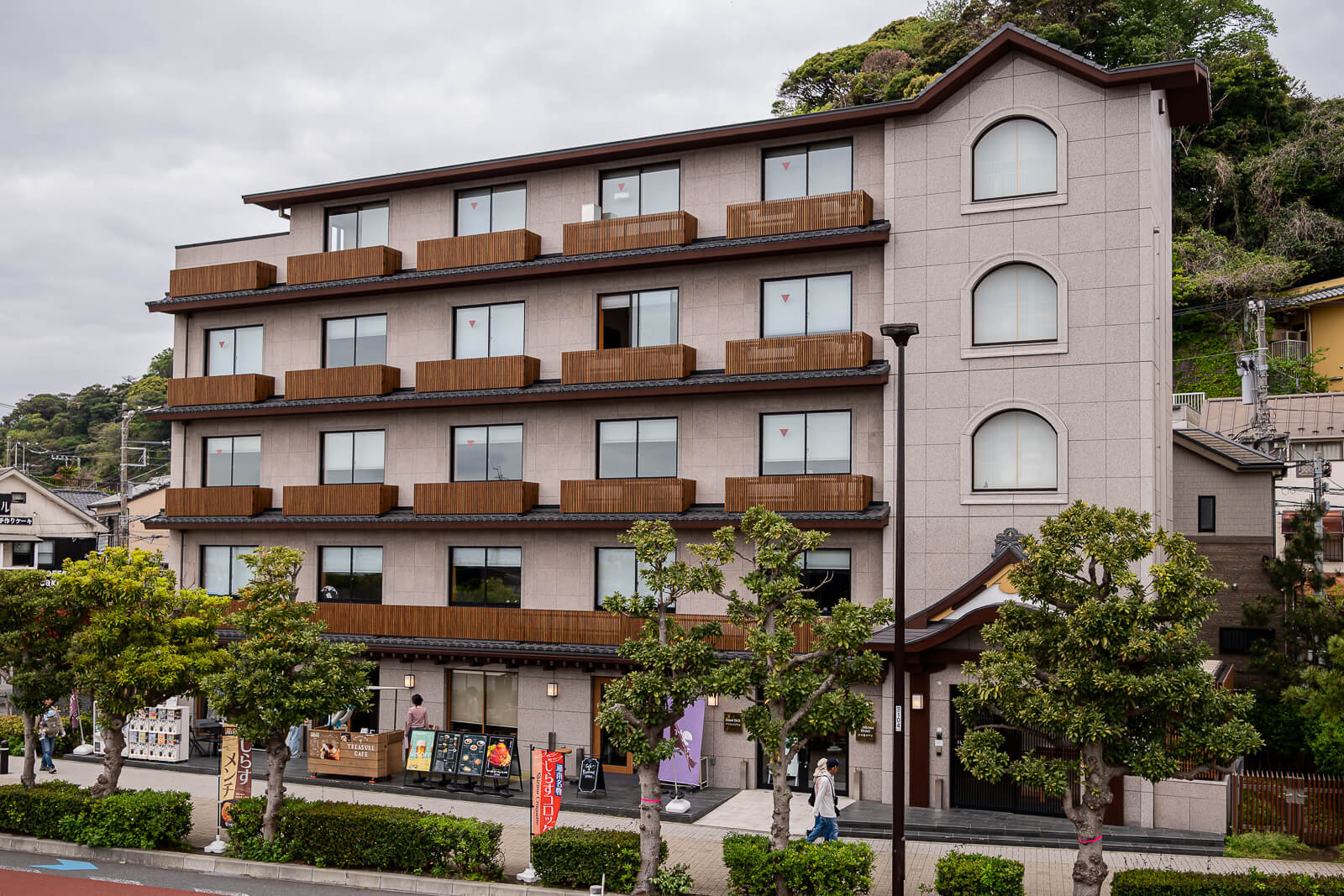
Compare Tokyo Car Rental Options
Rail and walking suit Enoshima itself. Consider a rental car when the wider trip includes places beyond the local railway corridor.
Compare Tokyo Car Rentals
Browse Guided Kamakura Day Trips
Compare itineraries, included stops and free time. Check explicitly whether the selected tour includes Enoshima before booking.
Browse Kamakura Tours
Explore Enoshima Aquarium Tickets
Add jellyfish galleries and Sagami Bay marine life to your coastal day. View aquarium admission options for your travel date.
View Aquarium Tickets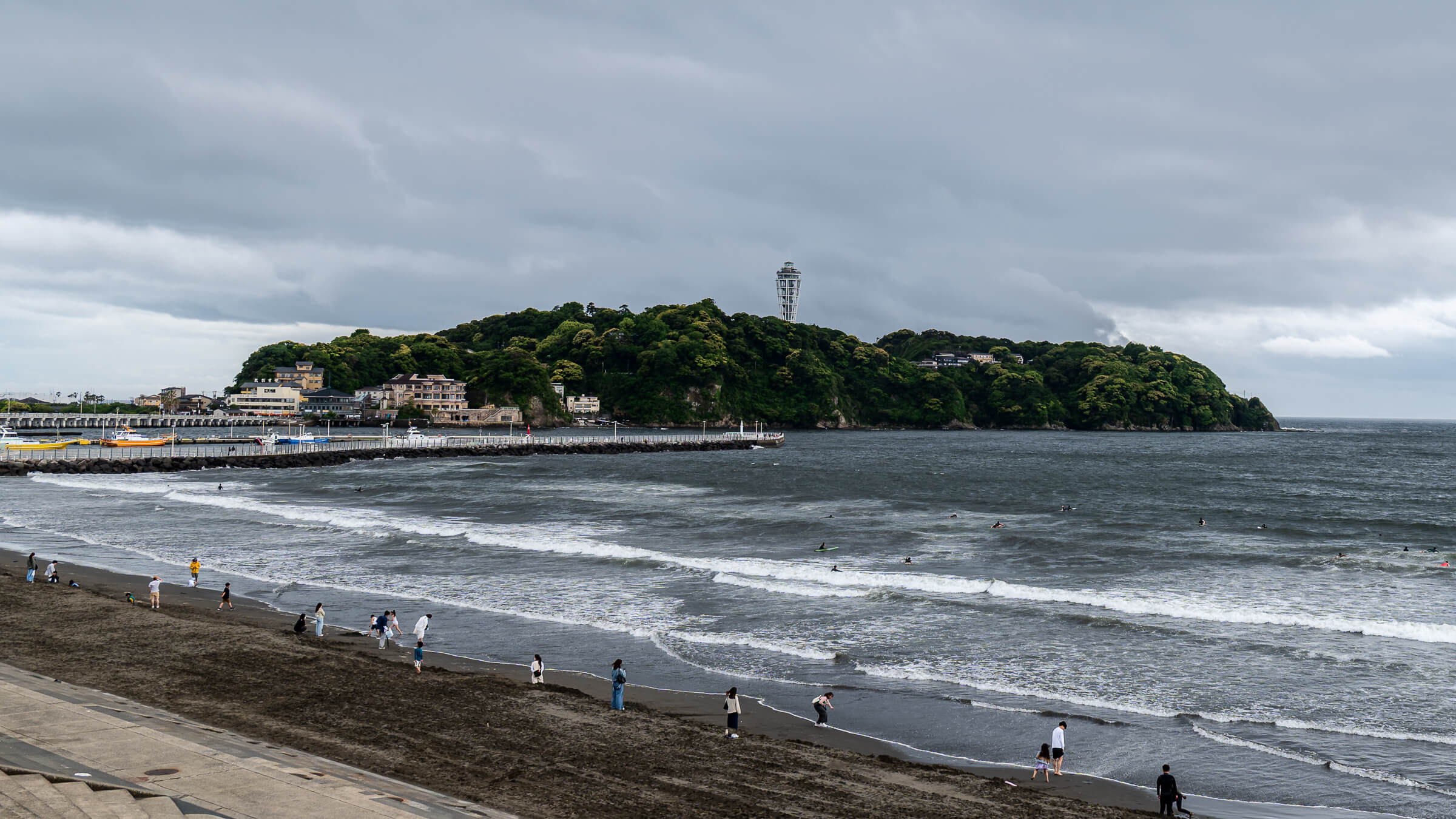
Compare Japan Data Plans
Check phone compatibility, coverage and data allowance for navigation, translation and railway updates while travelling along the coast.
Compare Japan eSIMs
Consider the Shonan Monorail
Check ticket validity and the Ofuna connection before choosing the monorail approach. It does not cover every railway serving Enoshima.
View Monorail Tickets