Visiting Hakone Shrine Beside Lake Ashi
Hakone Shrine is a Shinto shrine in Motohakone, known for Heiwa no Torii, the red gate beside Lake Ashi. Its free grounds extend from the lakeshore up a cedar-lined approach to the main worship area. Allow about an hour to explore both, with extra time for a portrait beneath the torii; the lake view and upper shrine grounds remain worthwhile even if you skip the queue.
There is more to the visit than the familiar waterfront scene. Beyond the main worship area, a short circuit leads past smaller shrines to Kuzuryu Shrine Shingu and the dragon water basin. The Treasure Hall adds roughly 20 minutes for a quick look; combine it with food and shopping, and allow 90 minutes or longer. Two approaches from Motohakone let you begin beside the lake or enter through the shrine grounds.
Two Approaches From Motohakone
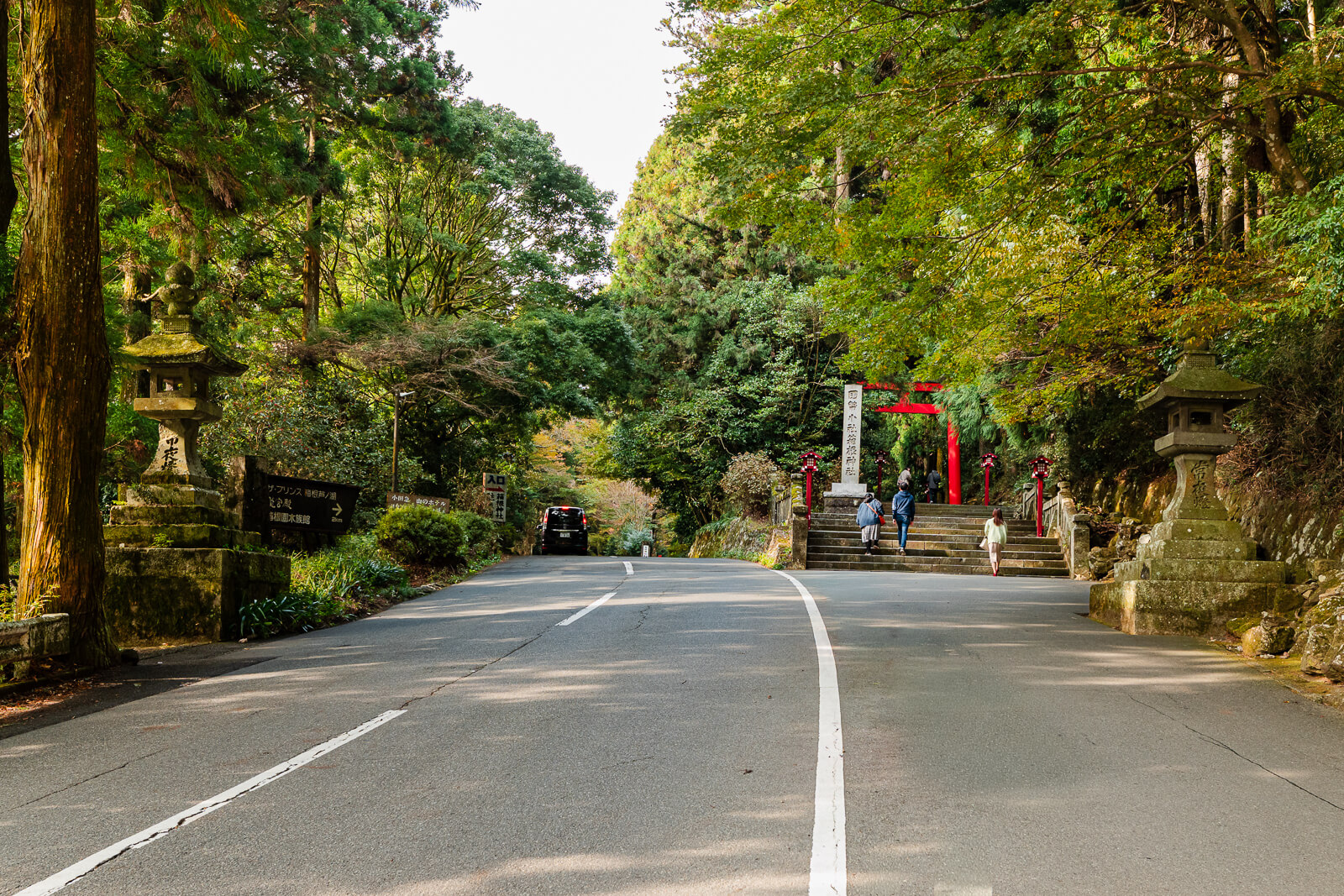
From the harbor area, Jinja-dori follows the shore toward the shrine. Entering through the third torii brings you onto the approach toward the administrative buildings, goshuin reception and small food stop. This is a useful arrival if you want to get your bearings before deciding whether to visit the main shrine or the waterfront first. The services area sits between the higher shrine precinct and the lower lakeside torii.
The other approach stays close to the lake, passing through trees toward Heiwa no Torii, the red gate standing at the water’s edge. Choose this path if the lake view is your first priority. Along the way, the trees repeatedly interrupt and reveal the shoreline, and a red railing marks one of the waterside stretches. Reaching the torii this way also lets you see the portrait queue before committing time to it.
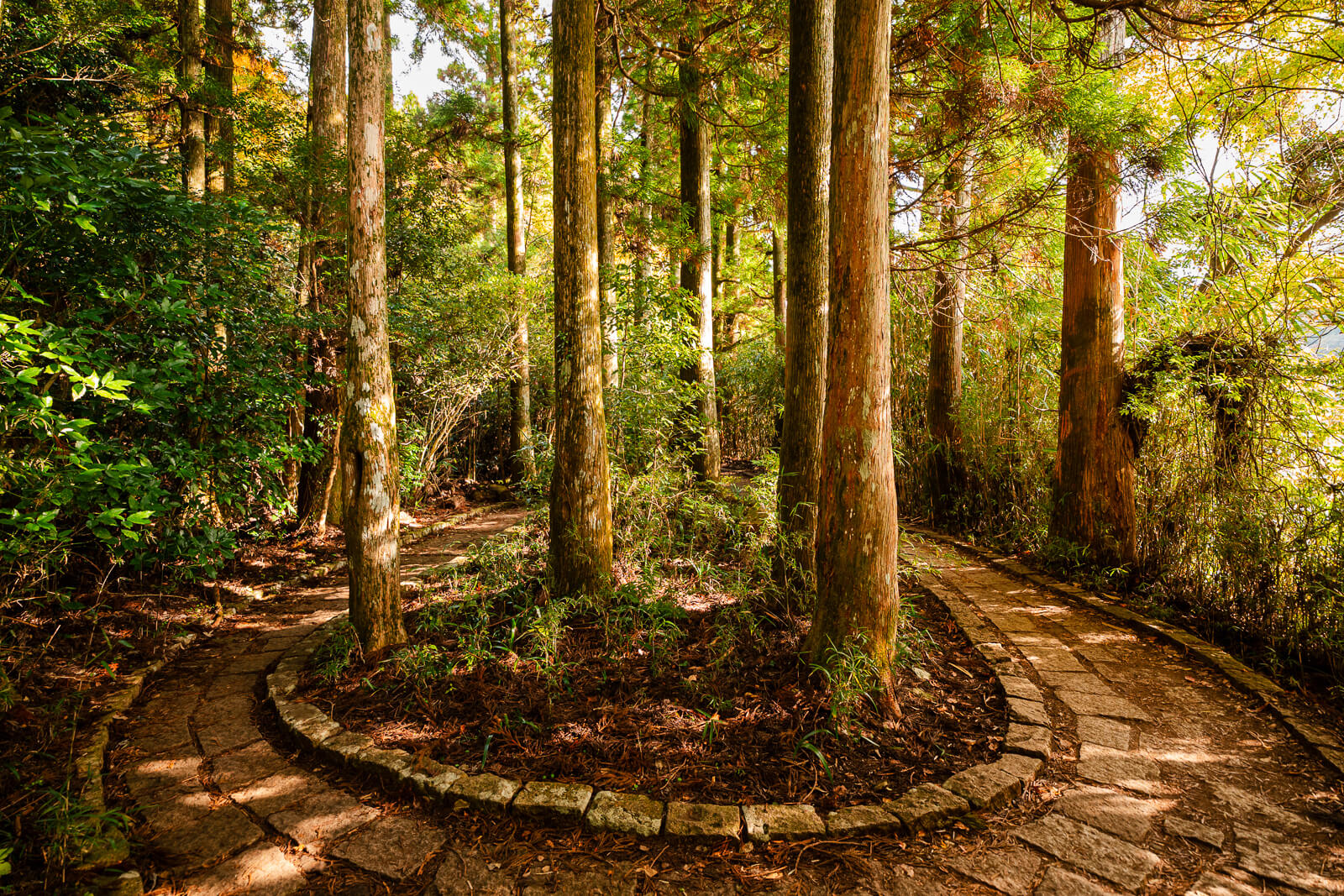
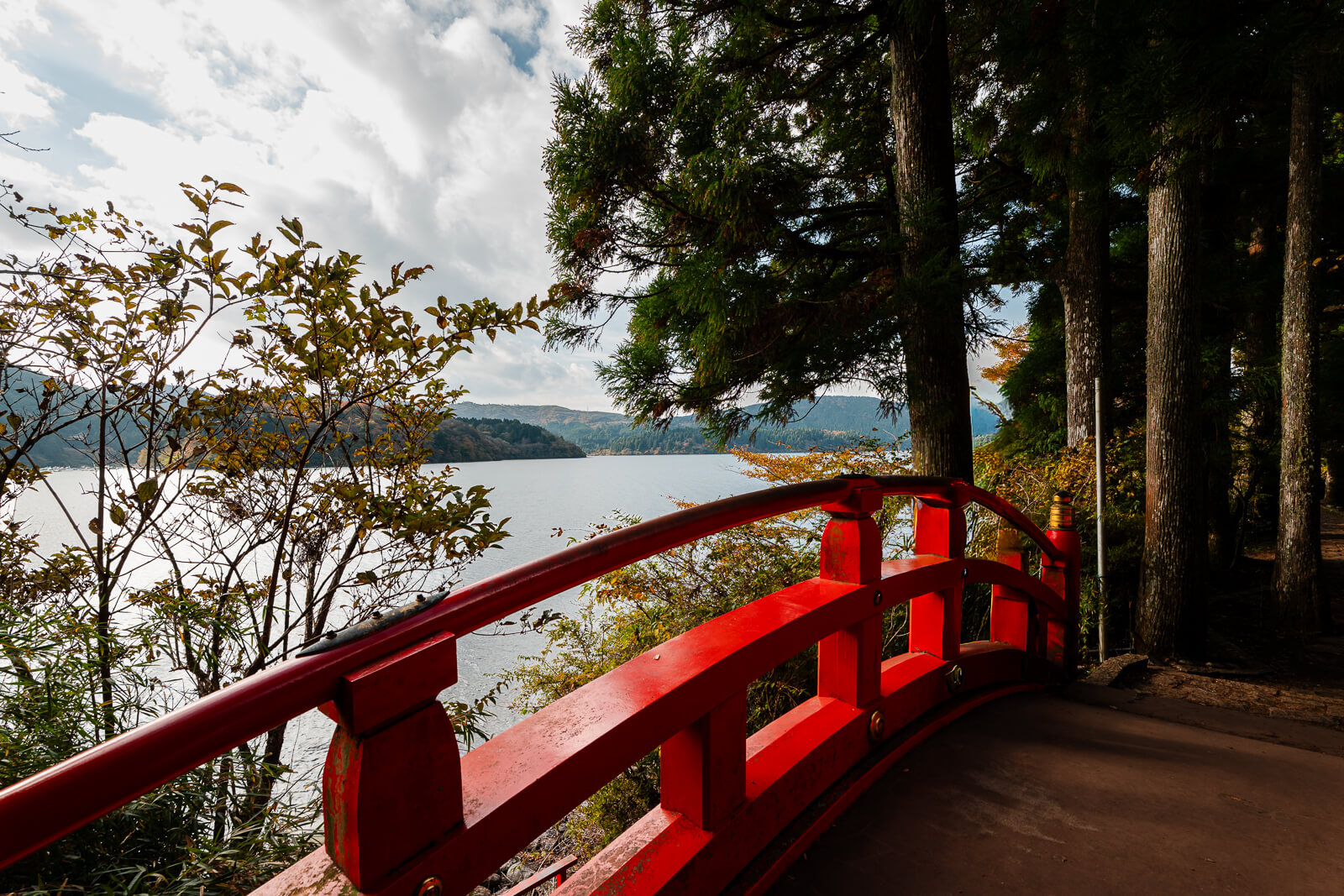
Both approaches connect with the same shrine grounds. From the lower facilities area, the main approach climbs through cedars, while steps in the opposite direction descend toward the lake. You can therefore visit the hall first and finish at the water, or begin with the torii and continue uphill afterward. There is no need to retrace the entire harbor walk simply because you chose a different entrance.
The Main Shrine and Kuzuryu Shrine Shingu
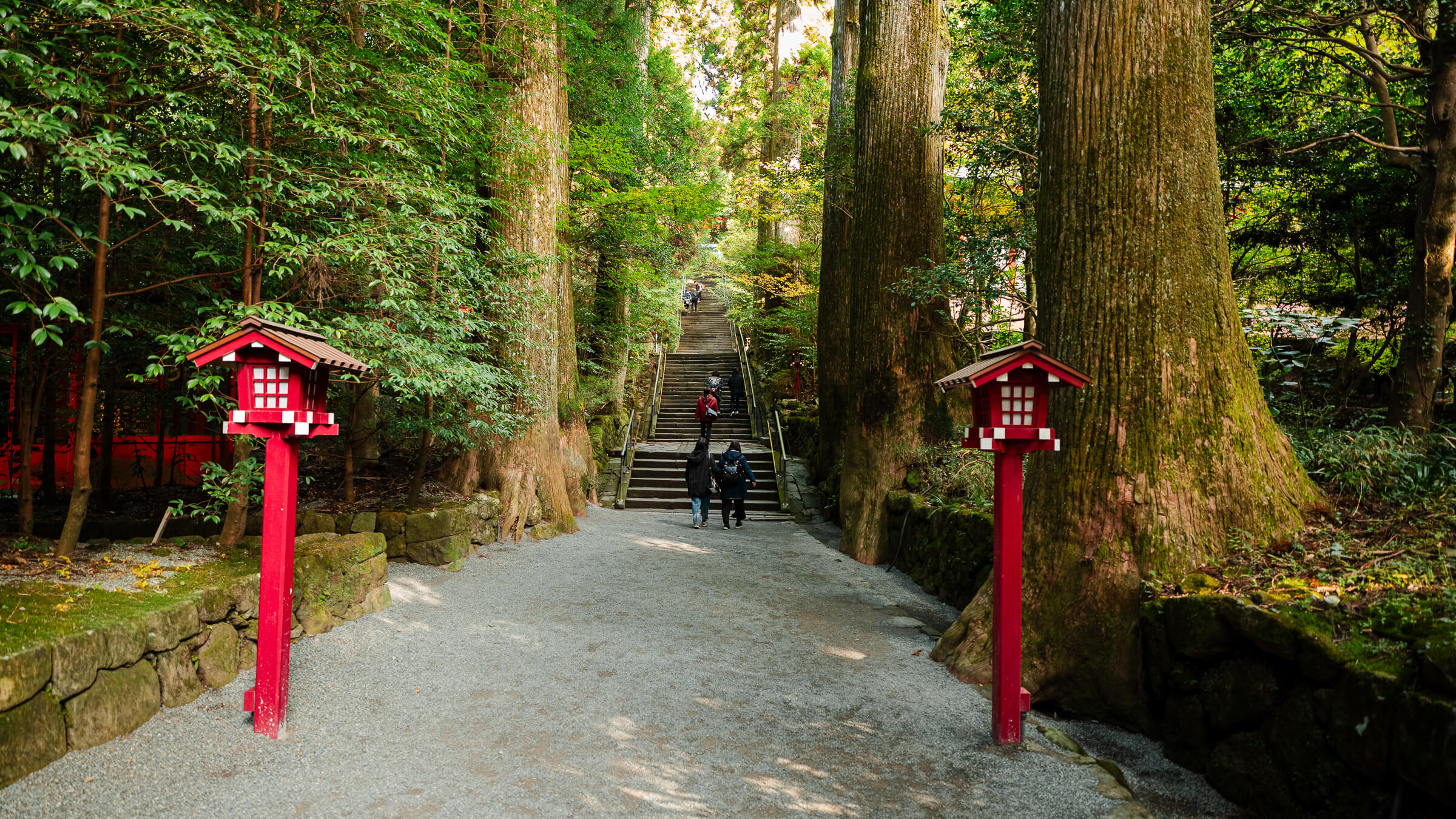
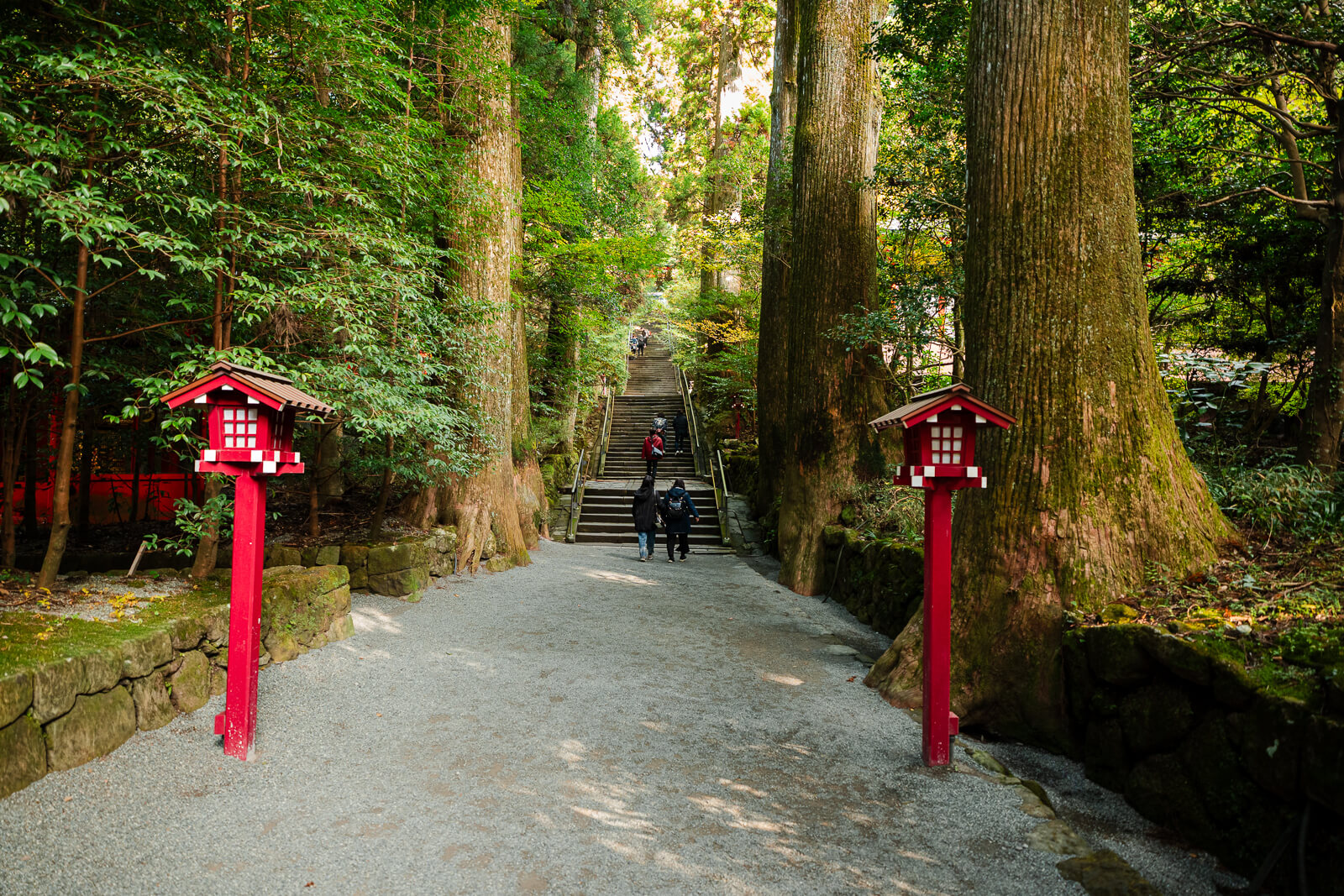
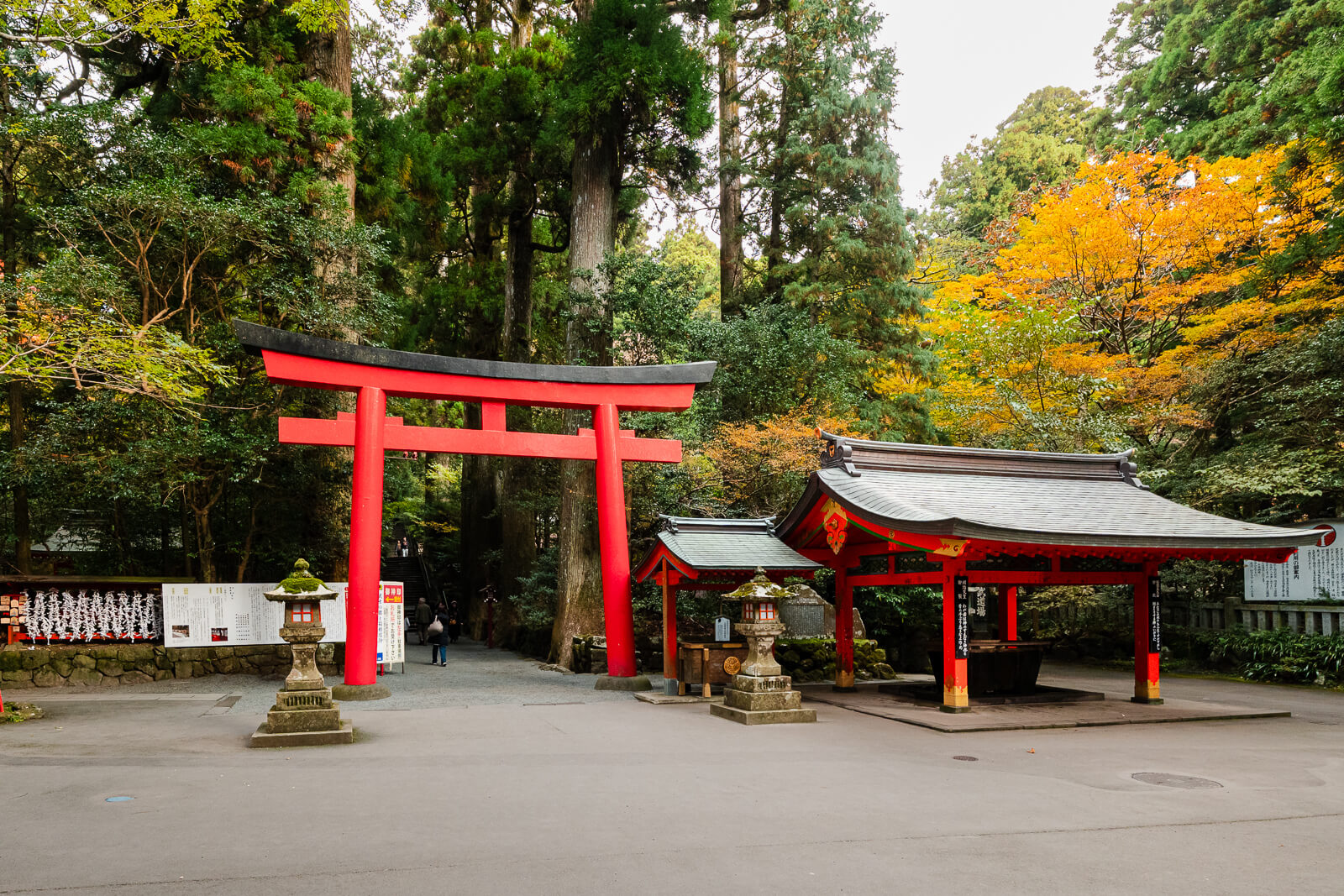
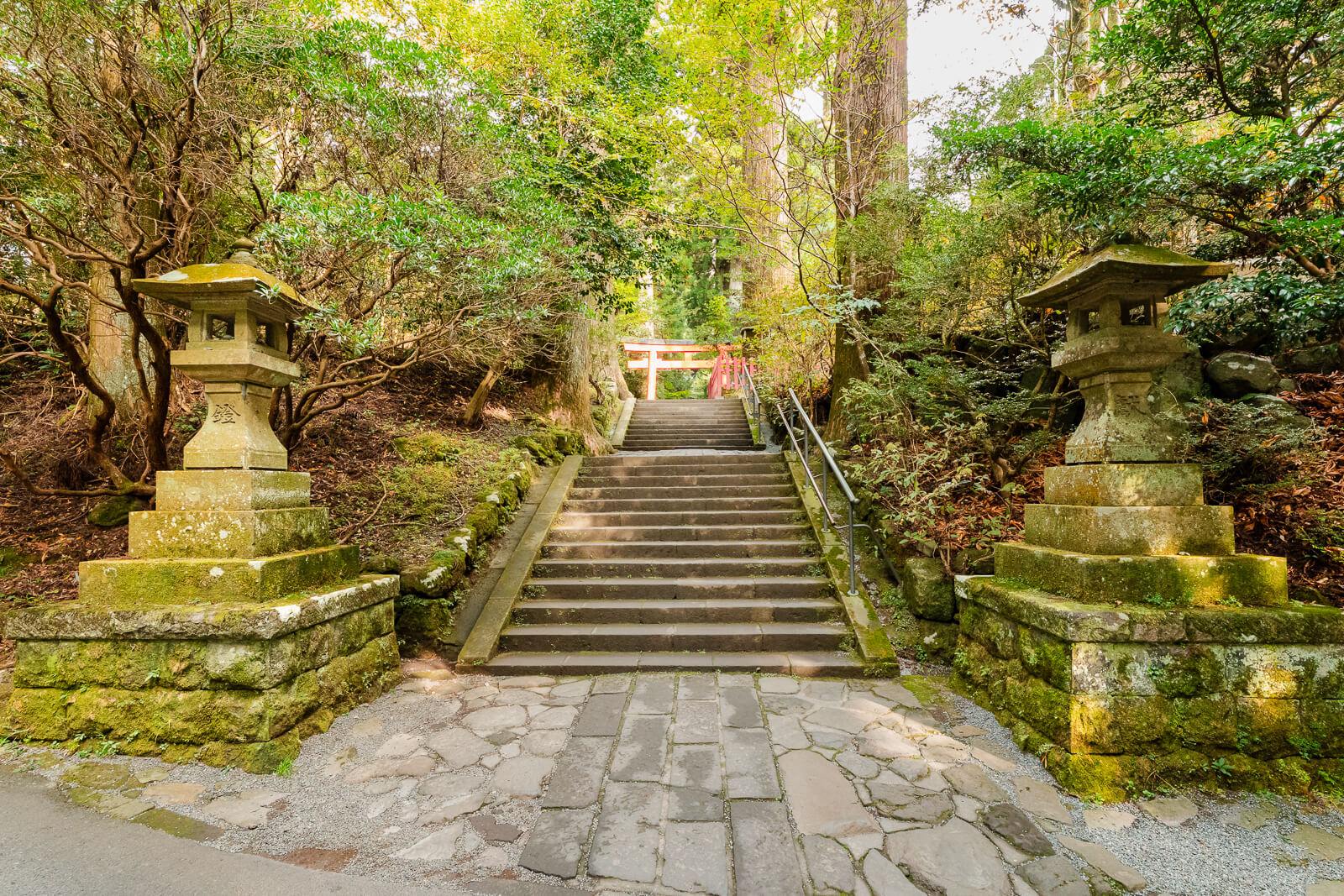
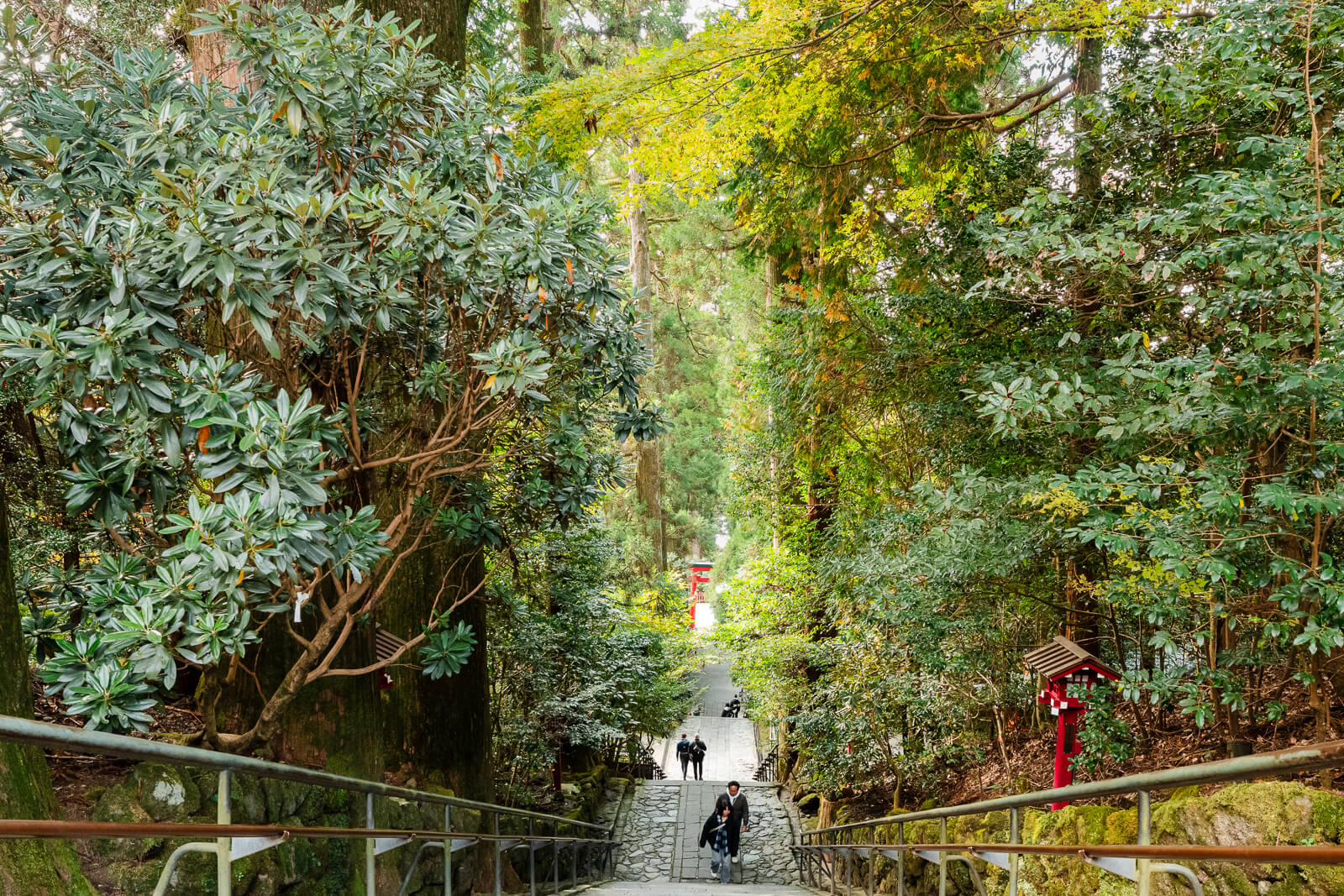
The fourth torii and adjacent purification pavilion mark the foot of the main cedar approach. Stone steps climb between tall trunks, with lanterns and moss-covered stonework along the way. This is one of the most distinctive parts of the visit: the enclosed forest gives the red buildings above a very different setting from the open lake below. Take the climb at a comfortable pace and leave room for people coming down.
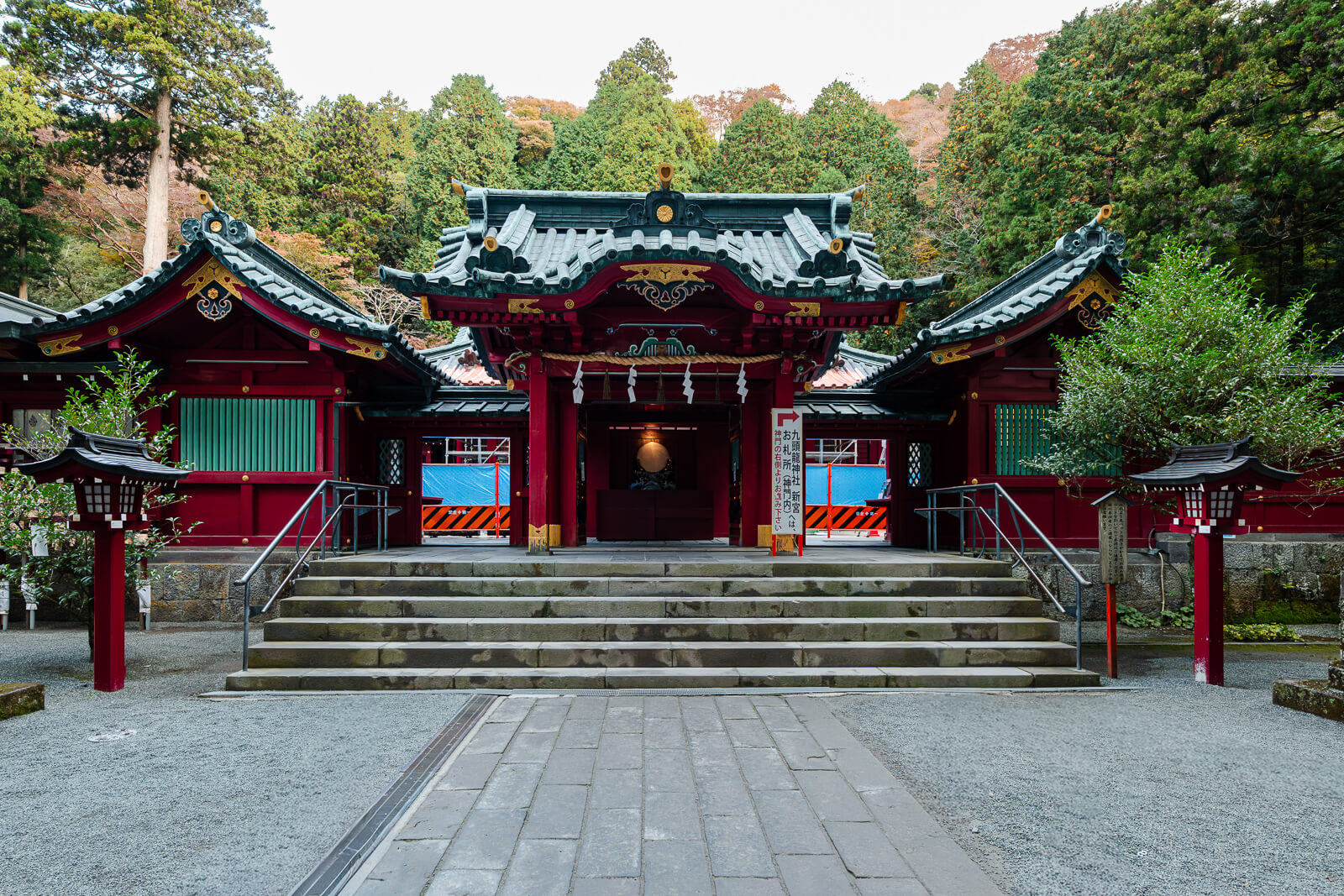
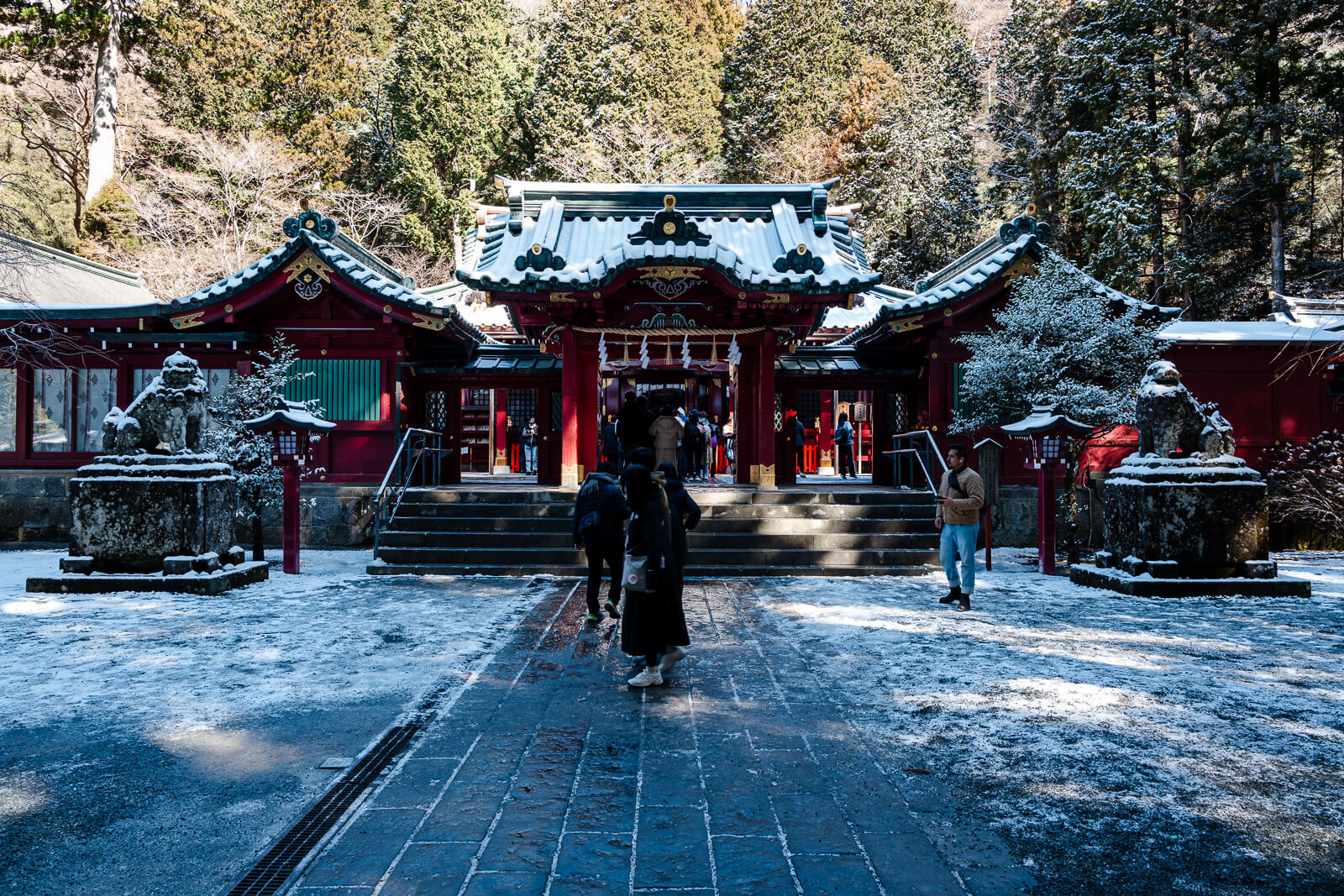
At the top, the main gate opens into the public worship precinct. Look toward the main worship area and its red structural details, then allow a little time for the courtyard rather than immediately turning back. The view changes once you are through the entrance, where worshippers and visitors gather much closer to the buildings. This is an active shrine, so access and photography should follow the signs and any ceremonies taking place.
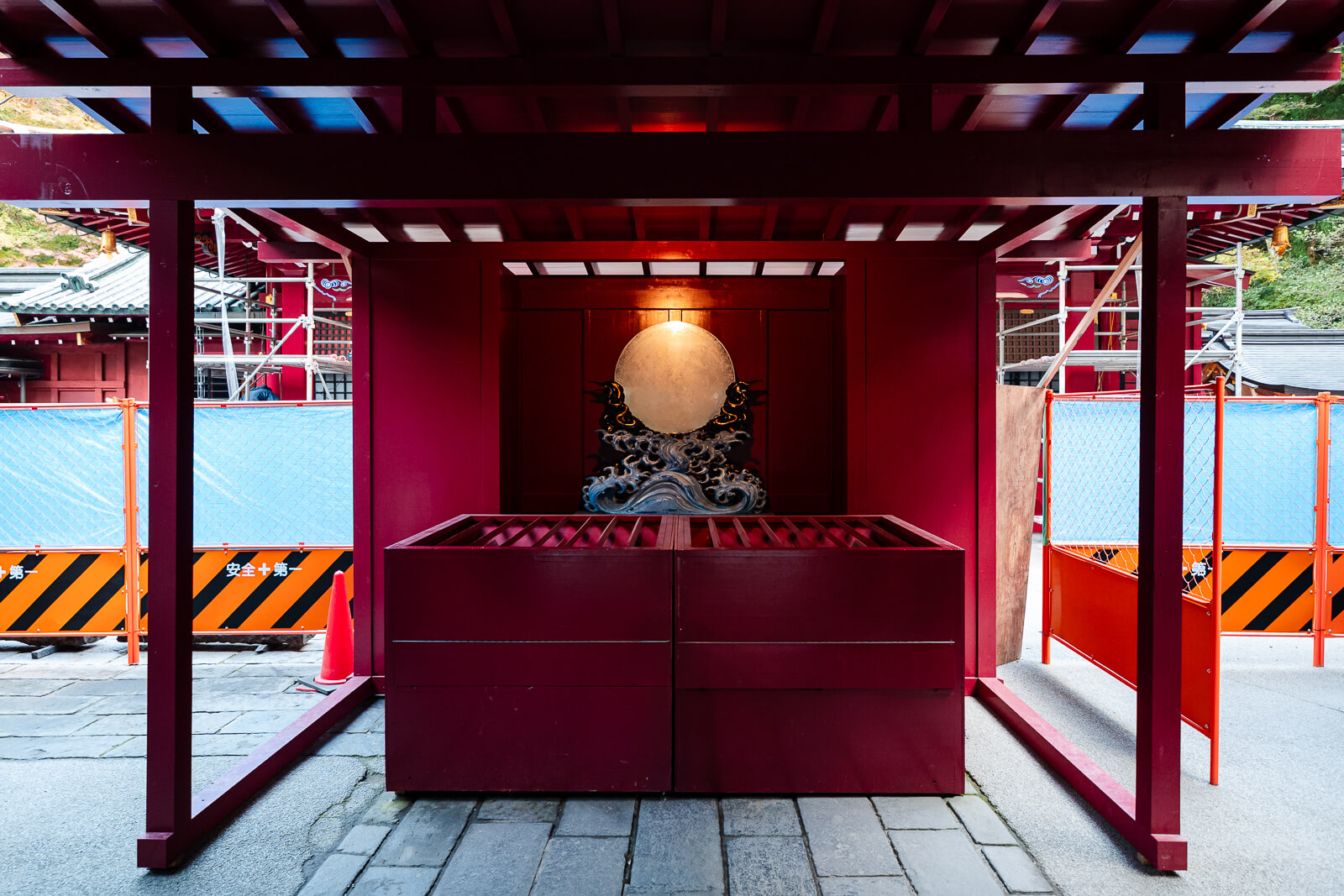
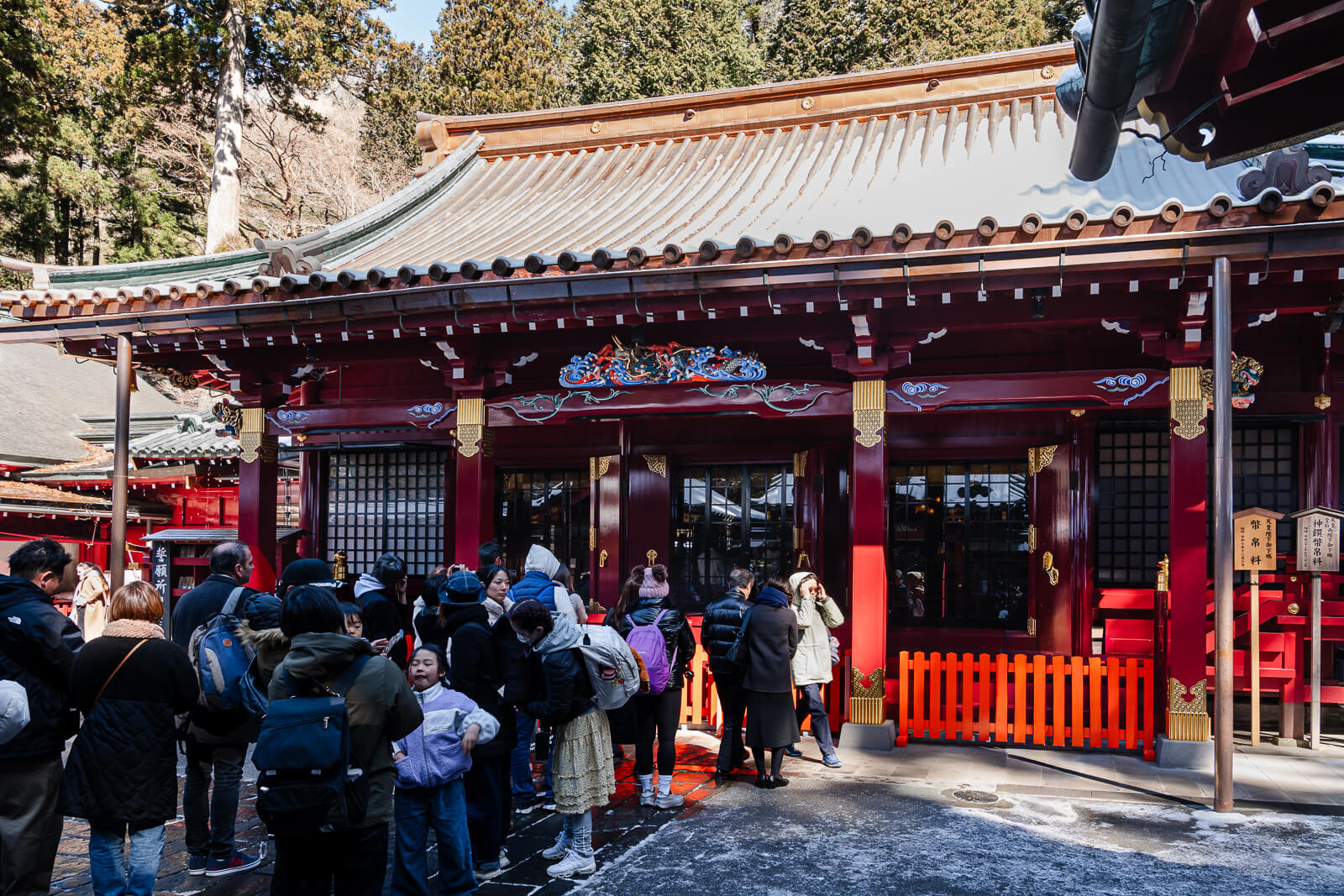
A gathering inside the precinct is separate from the portrait queue at the lake. On the visits informing this guide, people sometimes collected around the worship area, but the main grounds remained possible to explore. That distinction matters when judging the visit from photographs of a crowded torii platform. A busy waterfront does not describe every part of the shrine, and allowing time for the upper grounds gives you another substantial reason to come.
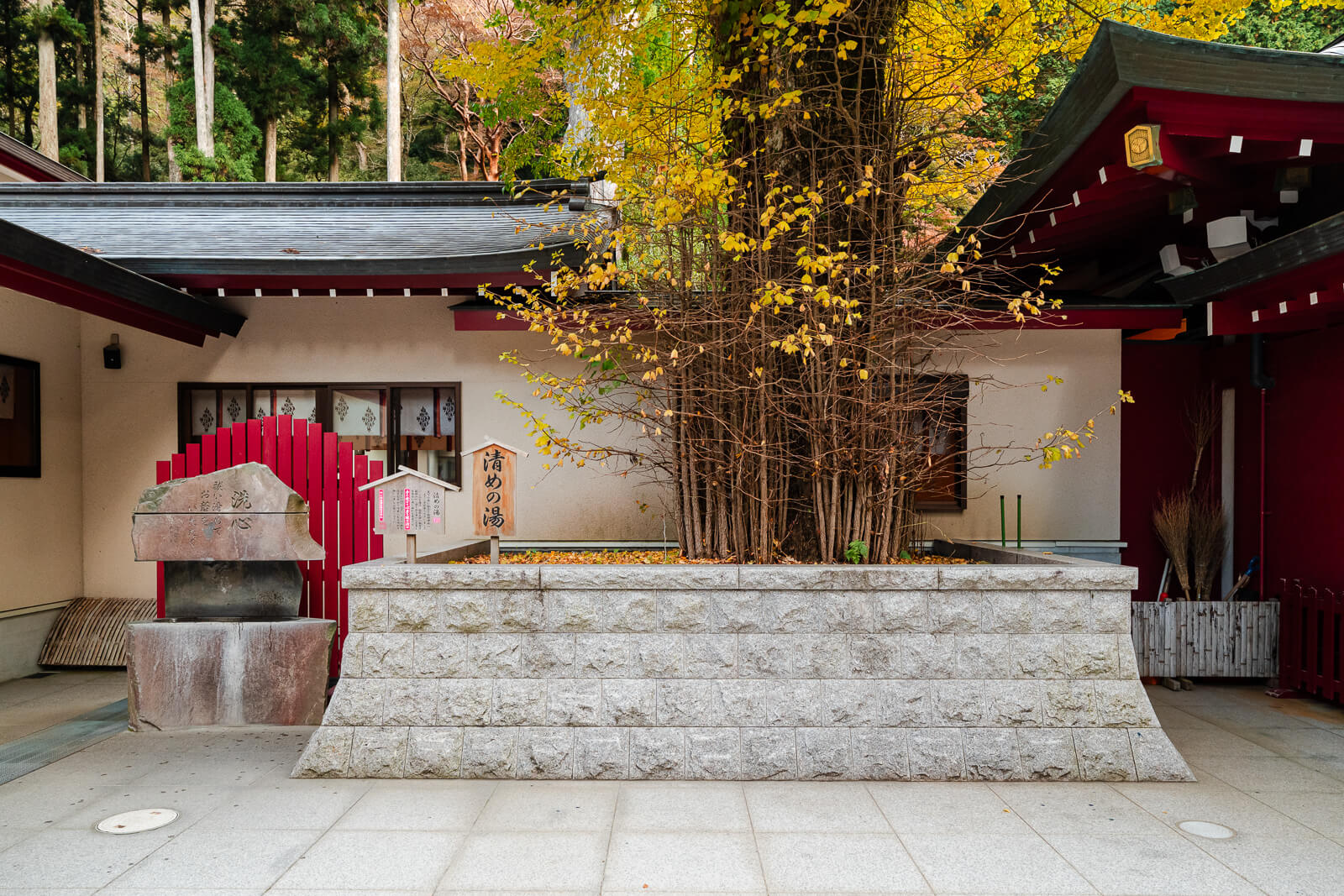
After visiting the main worship area, continue to the right past the smaller Komagata and Takane shrines toward Kuzuryu Shrine Shingu. The red torii and short approach make Shingu easy to recognize within the adjoining precinct. This is the branch shrine beside Hakone Shrine; Kuzuryu Shrine Hongu is a separate destination elsewhere along Lake Ashi. Checking that distinction on a map prevents a much longer excursion being mistaken for this short continuation.
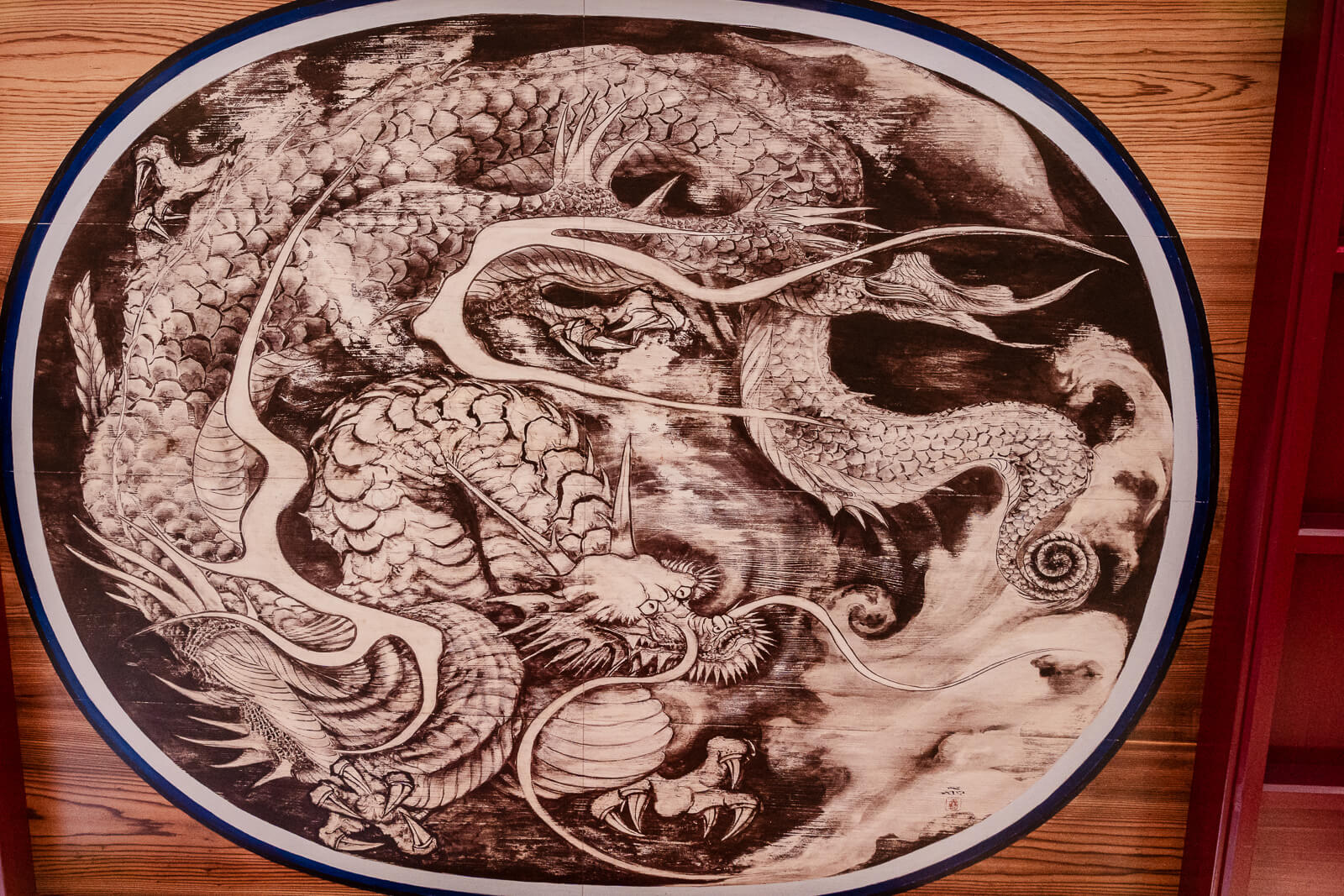
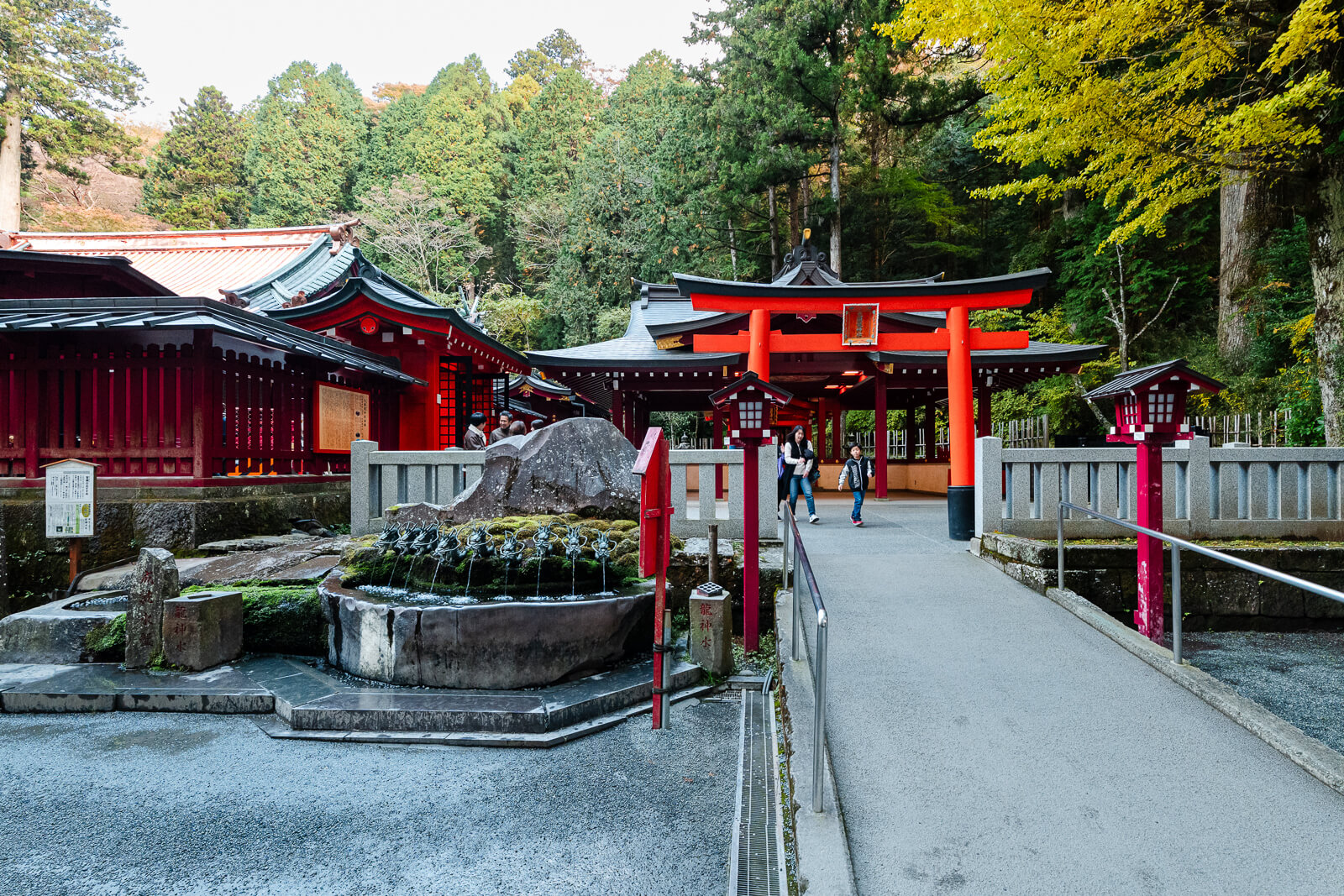
The path then leads past Ryujin Suisha, the dragon water basin, and returns to the open courtyard. A wider view shows how the basin, walkway and Shingu fit together, while a closer look reveals the individual dragon heads. In autumn, yellow foliage adds color above the red structures and stone basin. The circuit is worth following for these details even when your original reason for stopping was the torii photograph.
The stairs are not the only access to the upper grounds. The shrine also describes a stair-free side approach and an elevator route through the Treasure Hall, with special vehicle access requiring permission. If avoiding stairs is essential, confirm the appropriate entrance with the shrine before arrival. These alternatives concern access to the precinct; they should not be read as a promise that every lakeside path and photo position is step-free.
The Red Torii on Lake Ashi
Heiwa no Torii stands at the end of a stone platform beside Lake Ashi. From the landward side, the red uprights frame the water and give the familiar portrait its sense of depth. The platform is a concentrated photo spot, so the line can represent people waiting for that particular composition rather than a queue to experience the whole shoreline. Decide whether having yourself beneath the gate is worth the wait before joining it.
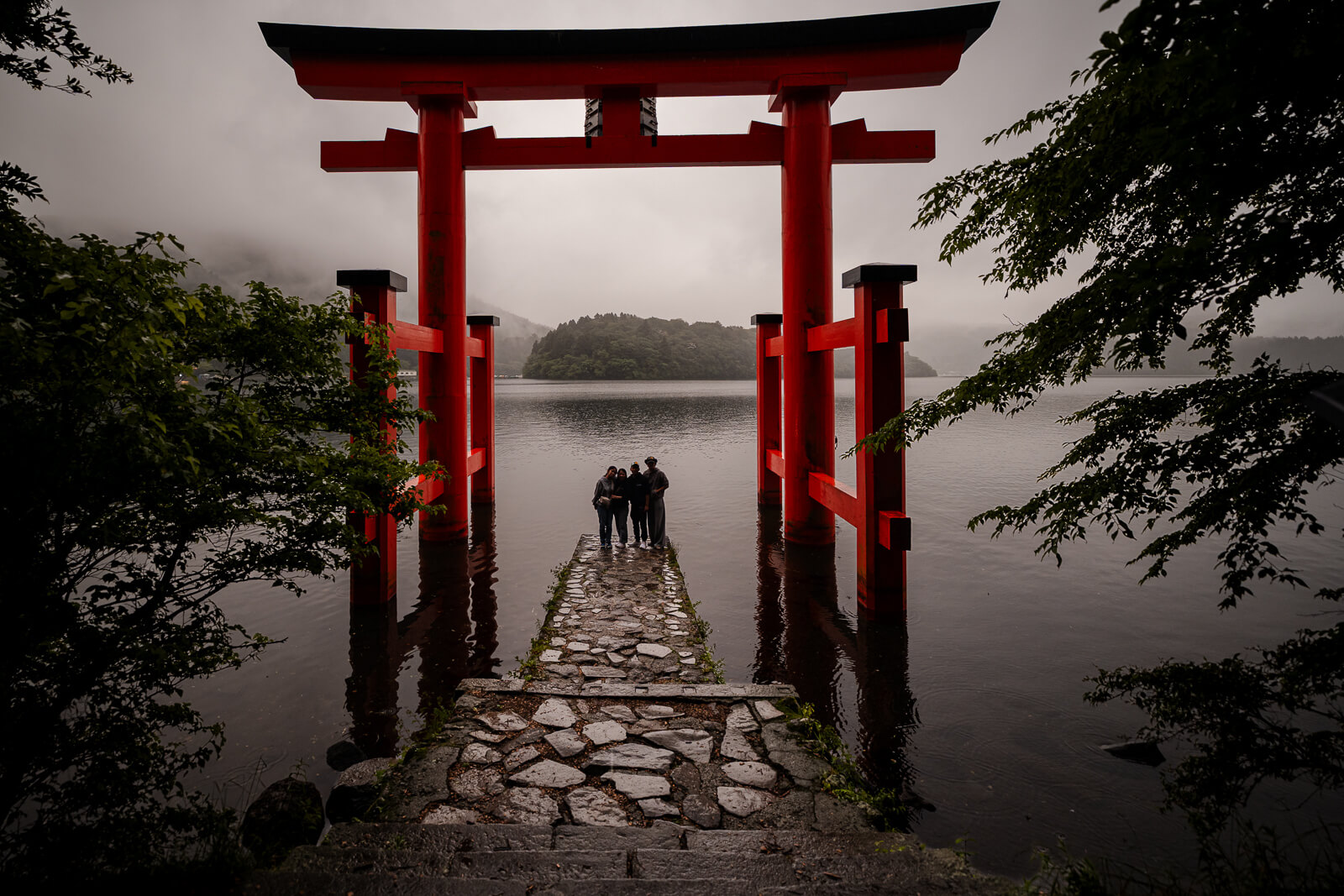
If the line is too long, the view is still worth stopping for. Brief gaps between turns can sometimes give you a clean photograph of the torii and lake without anyone posing beneath it, provided you can take it from a permitted position without blocking the queue or the person whose turn it is. People have also been observed helping the next visitor with photographs, so changes between groups can take a moment. Treat an empty frame as a possibility, not something to interrupt another visitor’s turn to obtain.
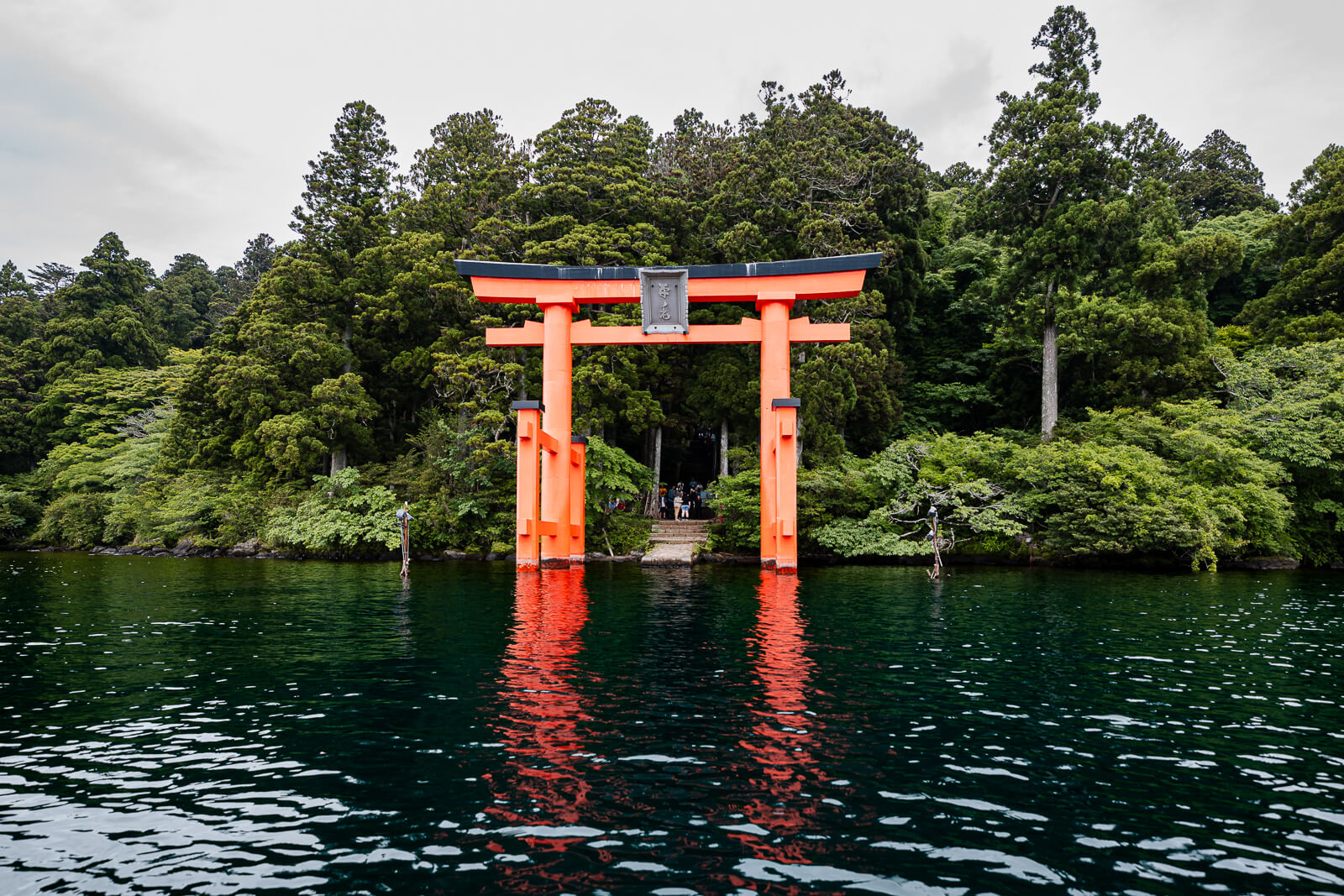
The gate also looks different from the water, where the forest becomes its backdrop. A boat view shows the torii’s relationship to the wooded shore, while the approach on foot emphasizes the lake beyond it. These are different photographs, and a lake cruise should fit the rest of your day rather than become a required purchase for this stop. After looking around the waterfront, the steps back into the grounds provide a straightforward continuation toward the main shrine or visitor facilities.
Treasure Hall and Visitor Facilities
The Treasure Hall is a worthwhile short addition if you want more context for what you have just seen. Reception is on the first floor, with exhibition space on the two floors above; a brisk visit can take around 20 minutes, while closer inspection takes longer. The displays encountered during the visits behind this guide used Japanese interpretation, but photographs, objects and visual exhibits still made the broad story accessible. Material on the lakeside torii and the shrine’s connections with Odawara provides a natural reason to continue into the Odawara Castle guide if that history interests you.
Around the lower approach, reception counters, goshuin services and shops provide practical stopping points before you leave. A goshuin is a shrine seal marking a visit, so allow time for reception and follow the current instructions at the counter. The shrine’s published guidance allows requests at the lower reception before worship, with collection afterward, which can help organize the visit. Look across the open courtyard as well: its pavilion and surrounding buildings give this part of the grounds a different character from the narrower forest paths.
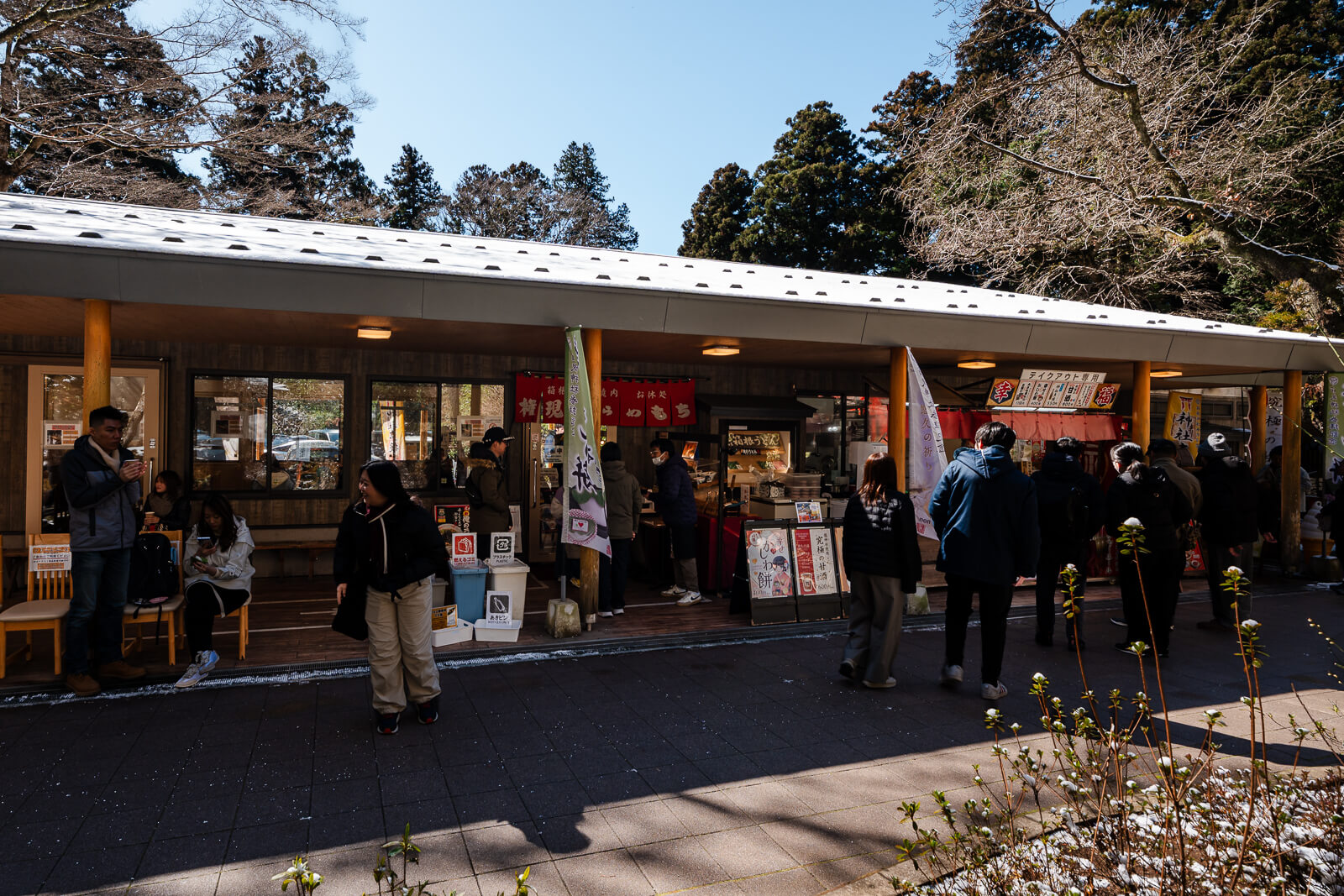
Gongen Karamemochi is a small food stop within the shrine grounds, with udon and refreshments on the menu. It is a convenient place to check if you are hungry and want to continue exploring without returning to the harbor for a meal. Look at the menu and available seating when you pass. The hour suggested for the core visit does not include a sit-down meal, and food, shopping or a museum stop can readily push the total beyond 90 minutes.
Autumn Color and Winter Snow
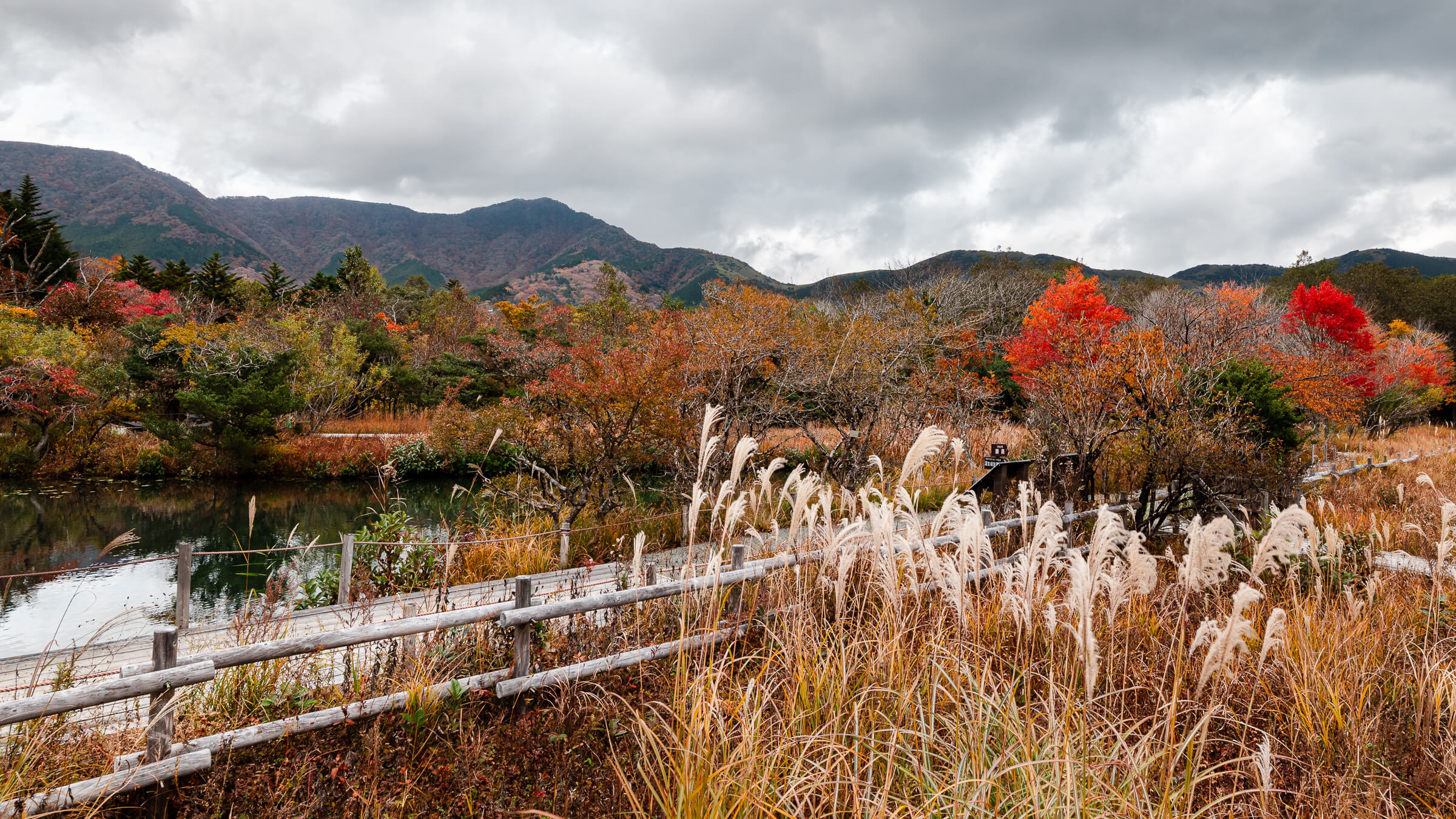
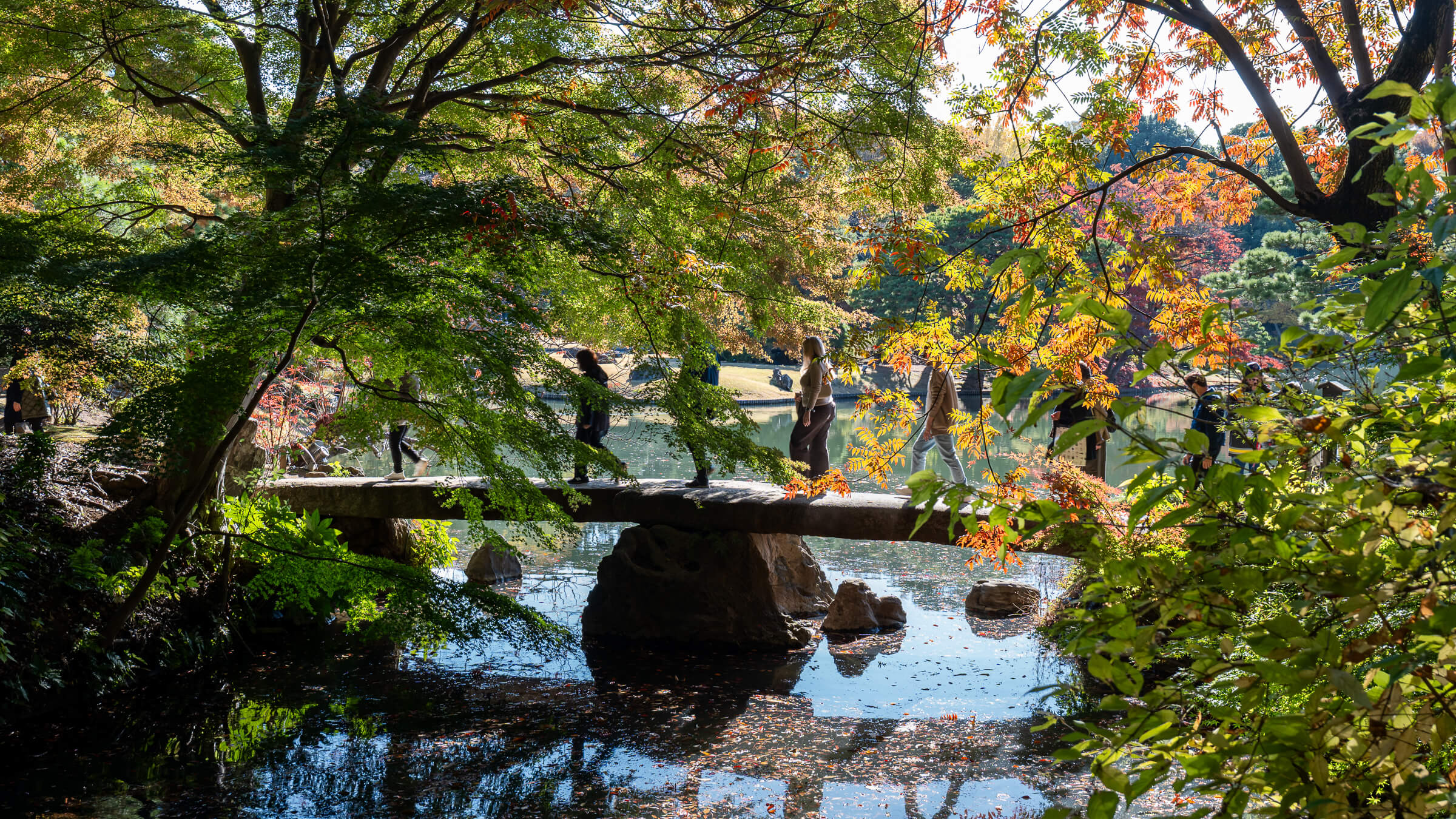
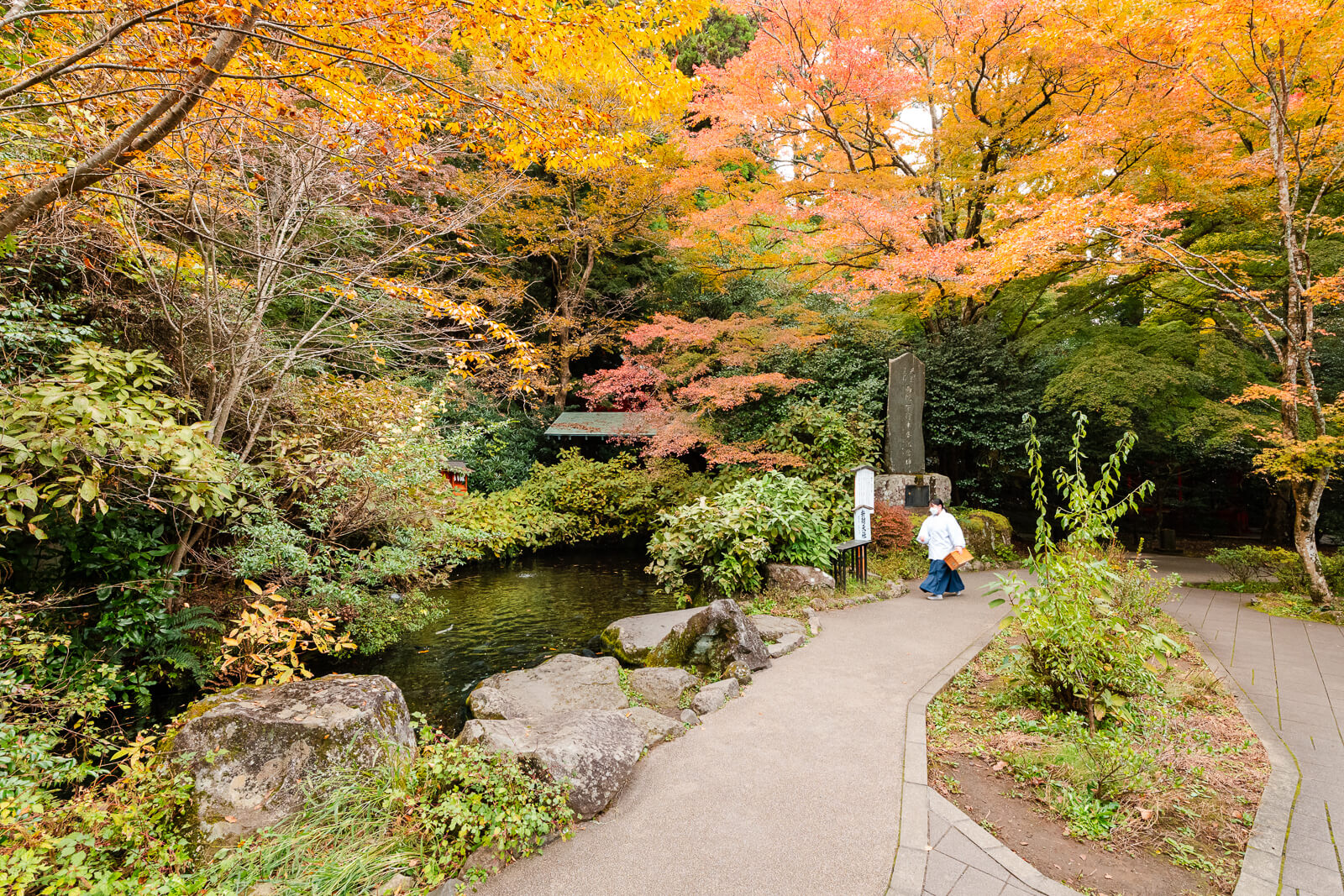
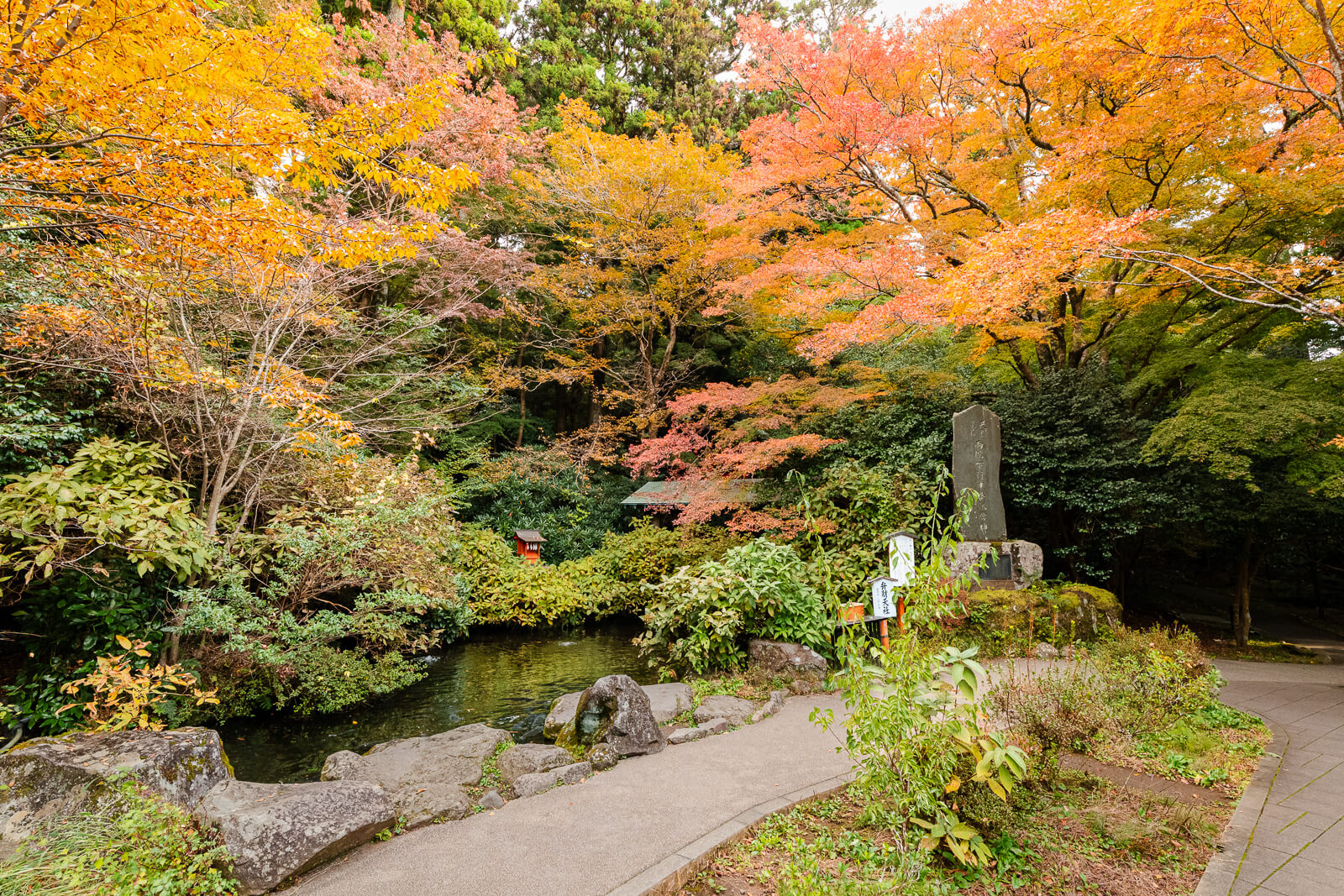
Autumn deserves time away from the main photo spots. The pond and paths behind the lower facilities are especially rewarding when the surrounding trees turn orange and yellow. You can head there directly from the lower grounds or include the area while coming down from the main shrine. The combination of foliage, rocks and water makes a distinct scene within the visit, and the winding path gives you more than one angle from which to enjoy it.
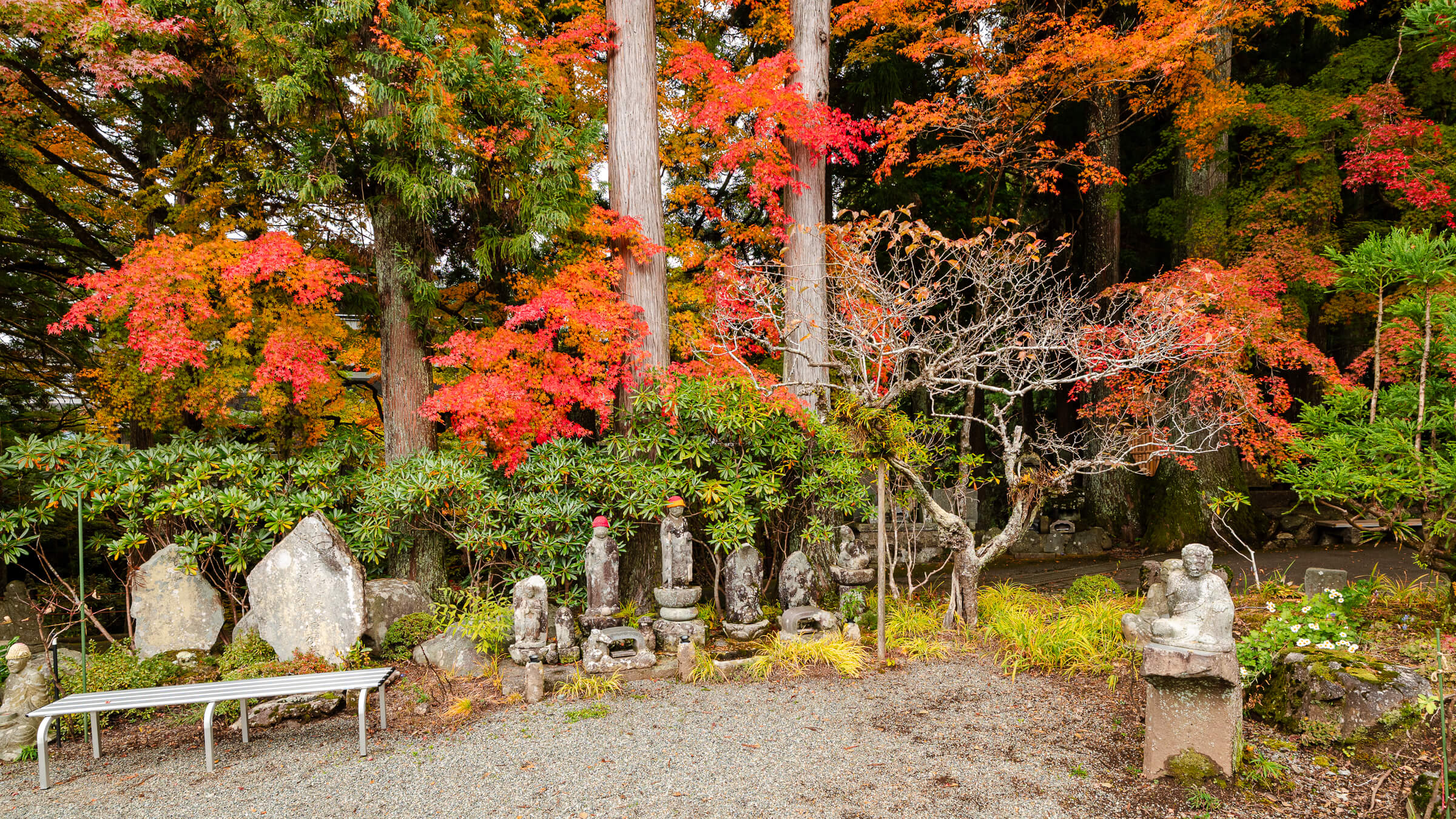
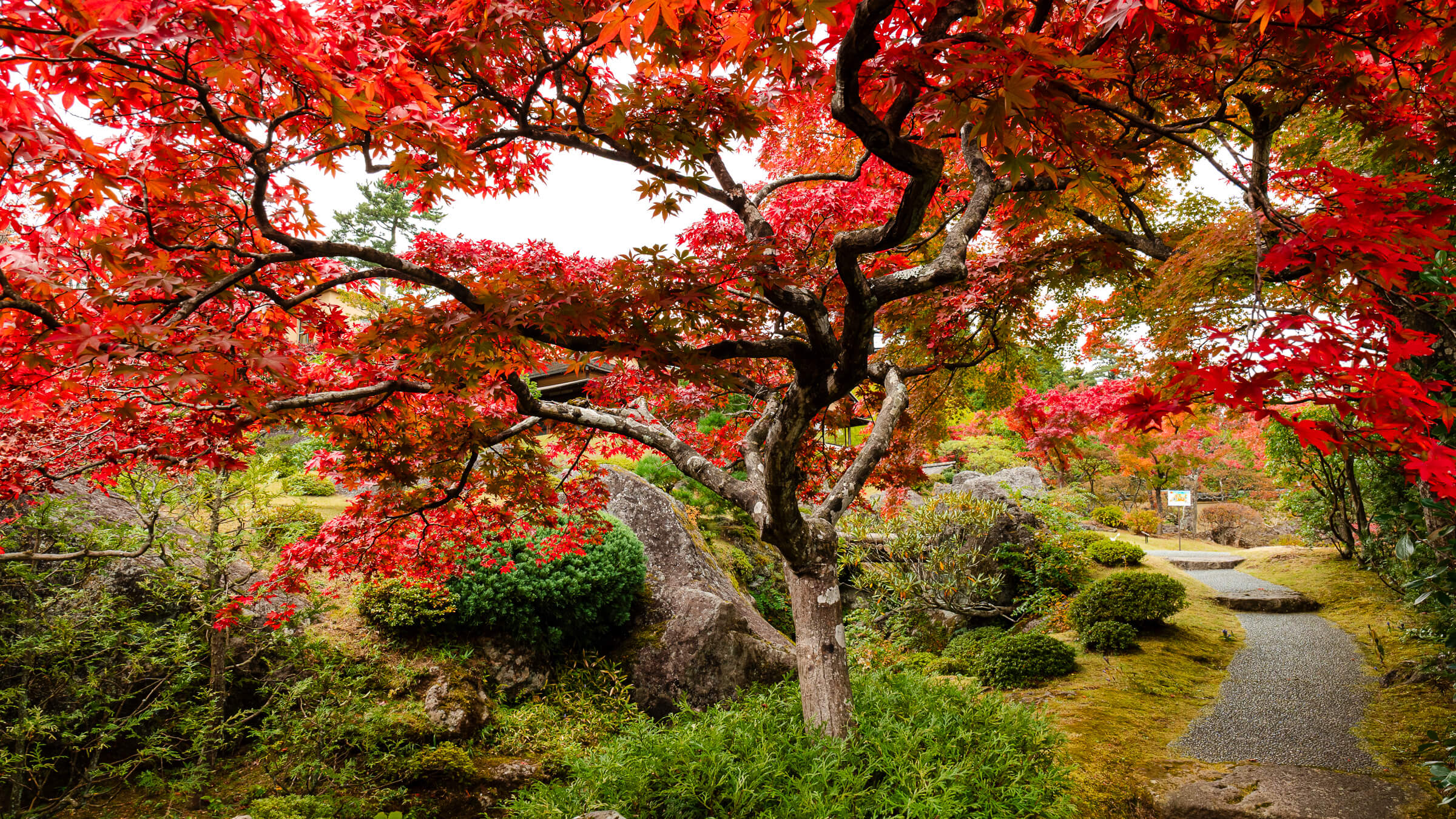
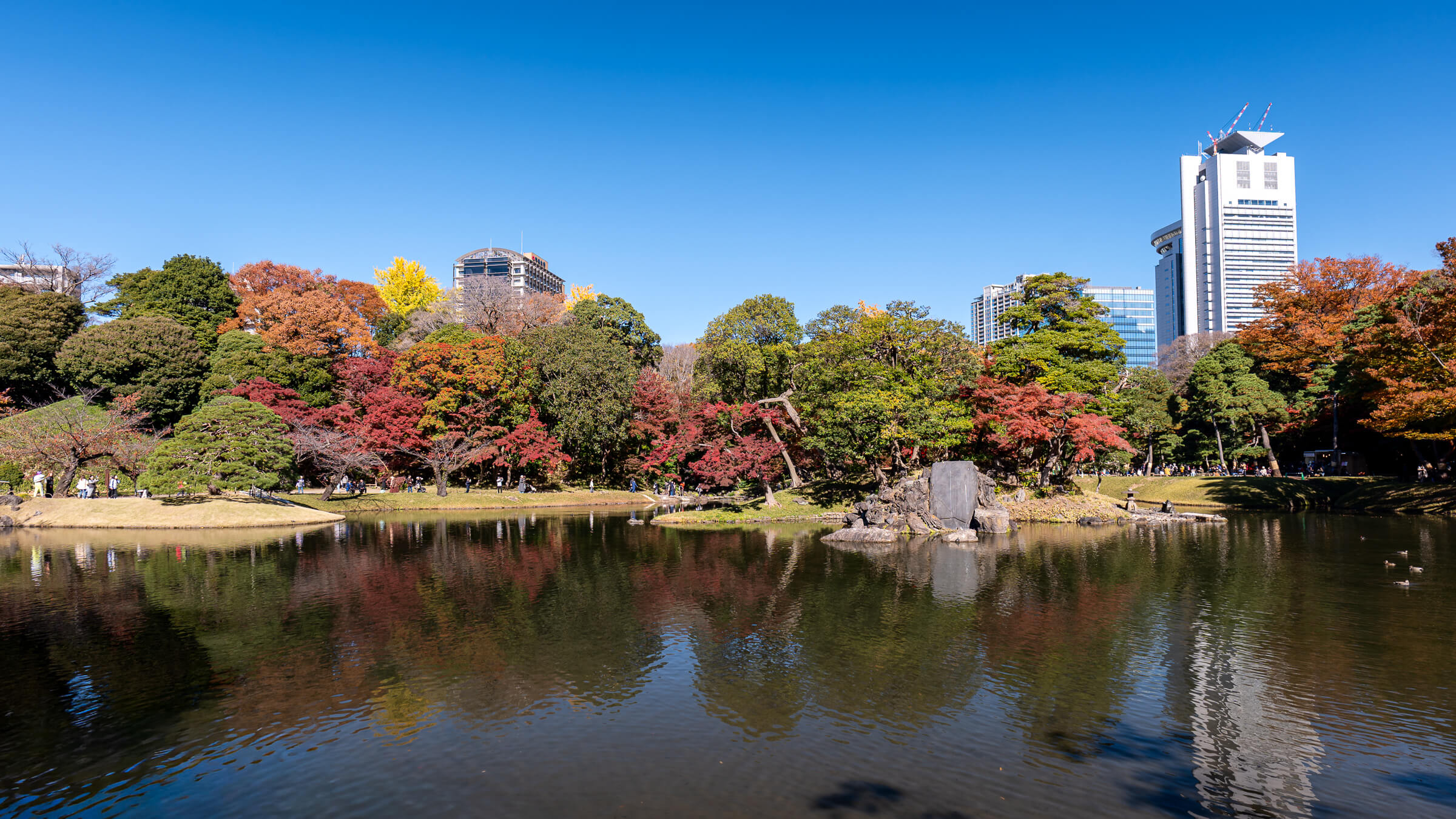
For a trip centered on foliage, use the Hakone autumn foliage guide to choose areas according to the season’s progress. Shinsenkyo Garden in Gora offers a more concentrated garden visit, while Choanji Temple in Sengokuhara combines woodland color with stone rakan statues. Both require travel beyond Motohakone, so they are choices for the wider trip rather than neighboring stops on this shrine walk. Exact color varies with the year and location.
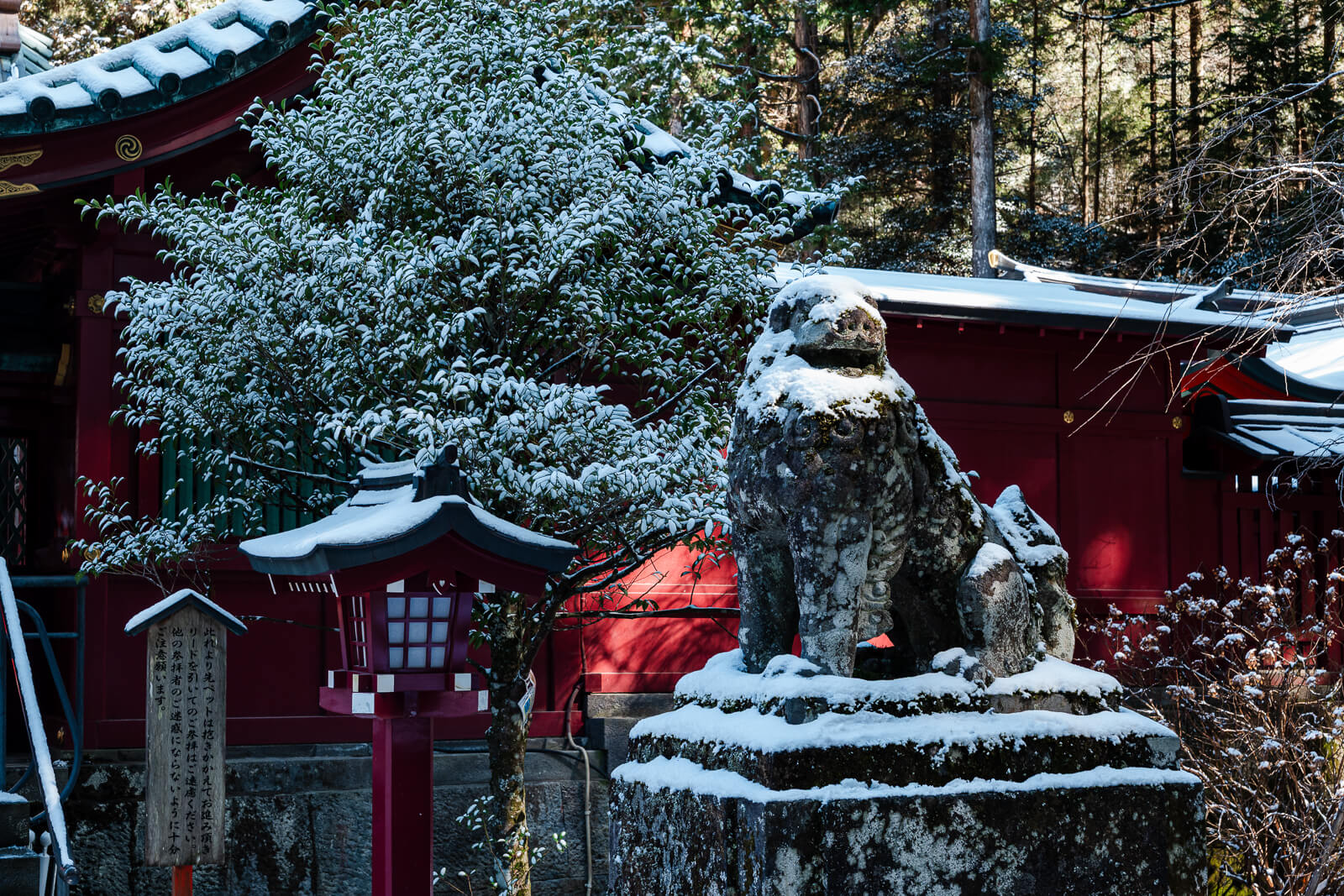
Winter changes the same scenes with much less color. During the lightly snowy visit shown here, a dusting settled on the shrine roofs, trees and guardian statues, while the steps and paths remained manageable. That describes those conditions, rather than a guarantee for another winter day. Check the weather and access information before traveling, particularly if snow or freezing conditions are forecast, and keep the difference between a light dusting and a heavier snowfall in mind.
Planning the Rest of the Lake Ashi Area
If you are driving, the shrine makes a useful first stop before exploring Motohakone. Narukawa Art Museum is a particularly worthwhile pairing when the sky is clear, combining its art collection with an elevated view across Lake Ashi. Back near the harbor, shopping streets, the shoreline and swan-shaped pedal boats offer shorter ways to continue. This keeps the next part of the day close to the lake without committing to a long chain of transfers.
A longer walking day can continue toward Onshi-Hakone Park and Hakone Checkpoint. The walk gives the shrine, harbor and southern shore enough time to feel like connected places, with space for a meal and pauses along the way. If you would prefer a summit view, Hakone Komagatake Ropeway departs from Hakone-en and reaches the separate Hakone Mototsumiya shrine above the lake. Reaching that ropeway requires another journey from Motohakone, so choose it deliberately rather than treating it as part of the shrine grounds.
For a trip continuing through Hakone by public transport, the Hakone Sightseeing Cruise connects the southern lake ports with Togendai. From there, the Hakone Ropeway reaches Owakudani and Sounzan, followed by the cable car to Gora and the train toward Hakone-Yumoto. Hakone Gora Park is an optional stop if you reach Gora with enough time before it closes. This is a fuller day, dependent on operating services and connection time; if your car is parked at the shrine, you must also plan how to return to it.
Staying nearby can make a slower lake day easier, especially if you want the shrine, a museum and time at the harbor without rushing for a return train. A Lake Ashi base keeps the shore close, while Odawara as an overnight base offers a different balance of rail access and travel into Hakone. Choose the base around the following morning as well as the current day’s sightseeing. The useful next step is deciding where the day should end before adding another attraction.
Getting There
Route at a Glance
Hakone Shrine is about a 10-minute walk from Moto-Hakone-ko. From Hakone-Yumoto, take a Hakone Tozan Bus toward Motohakone; boats also arrive from Togendai. Driving suits a day spread across Hakone, with shrine parking reached from Jinja-dori.
- From Togendai
Togendai → Hakone Sightseeing Cruise → Moto-Hakone-ko
Sailing time depends on the service and intermediate stops · About 10 minutes on foot from the port toward the shrine · Check the destination and operating status before boarding; wind can change lake services.
- From Hakone-Yumoto
Hakone-Yumoto → Hakone Tozan Bus H route → Moto-Hakone-ko
About 40 minutes by bus; traffic-dependent · About 10 minutes on foot toward the shrine; choose the lake path or third-torii approach · Use Moto-Hakone-ko; Hakone-jinja-iriguchi is bypassed between 10:00 and 16:00.
- By Car
Odawara → Hakone Shindo / Route 1 → Motohakone → shrine parking
Traffic-dependent · Parking joins the lower facilities area, below the main shrine · Driving suits dispersed stops; a route ending in Gora or Yumoto also needs a return plan for your car.
Access Without Stairs: The main approach has stairs. The shrine lists a stair-free side approach and an elevator route through the Treasure Hall; confirm the entrance and any vehicle permission before arrival.
Hours and Fees
Visitor information
Hakone Shrine in Motohakone is free to visit, while the Treasure Hall charges separate admission and closes at 4:30 PM. Last museum entry is at 4:00 PM, so visit it before joining a long torii photo queue if you arrive late. Goshuin and amulet reception runs from 8:15 AM to 5:00 PM.
- Hours
- Amulets and goshuin reception: 8:15 AM–5:00 PM Prayer reception: 8:30 AM–4:00 PM Treasure Hall: 9:00 AM–4:30 PM; last entry 4:00 PM Open daily; the Treasure Hall may close for exhibition changes.
- Admission
-
Shrine grounds and lakeside torii: free Treasure Hall: ¥500 for adults and junior high school students; ¥300 for elementary school children Goshuin, amulets, food and other purchases are separate.
- Hakone Freepass
-
From Lake to Mountains
Match the Pass to Your Route
For a Lake Ashi cruise and ropeway ride to Owakudani after the shrine, compare Hakone Freepass options before buying separate tickets.
Compare Hakone Freepass Options
Plan Your Hakone Visit
Choose the stay, transport or guided option that fits your route and the time you want beside Lake Ashi.
Start the Morning Beside Lake Ashi
Compare lakeside stays by their actual location, meal plans and cancellation terms to avoid an unnecessary morning transfer across Hakone.
Compare Lake Ashi Stays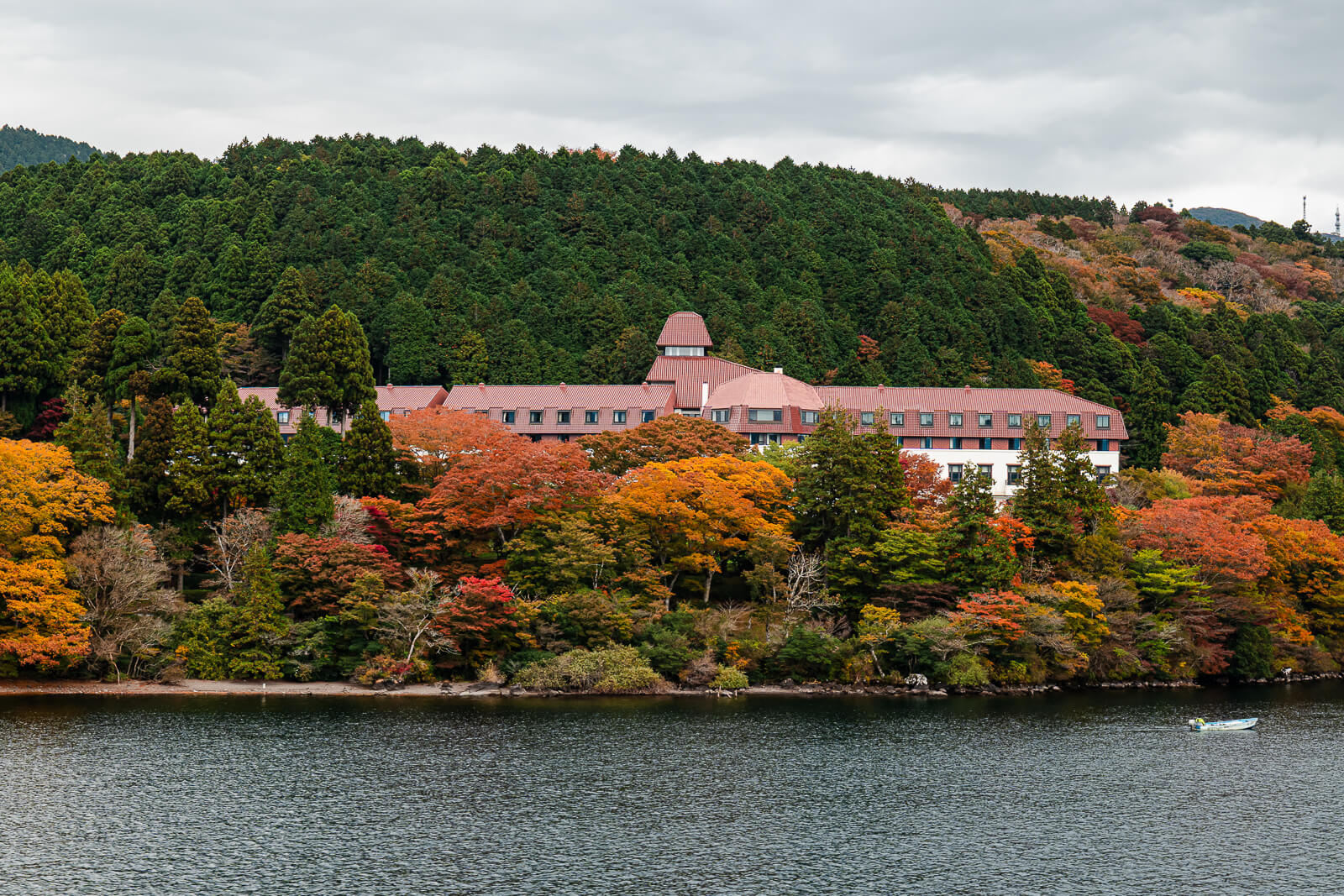
Check the Pass Against Your Route
Compare Hakone Freepass coverage, departure options and validity before combining the lake cruise, ropeway and mountain railway in one trip.
Check Hakone Freepass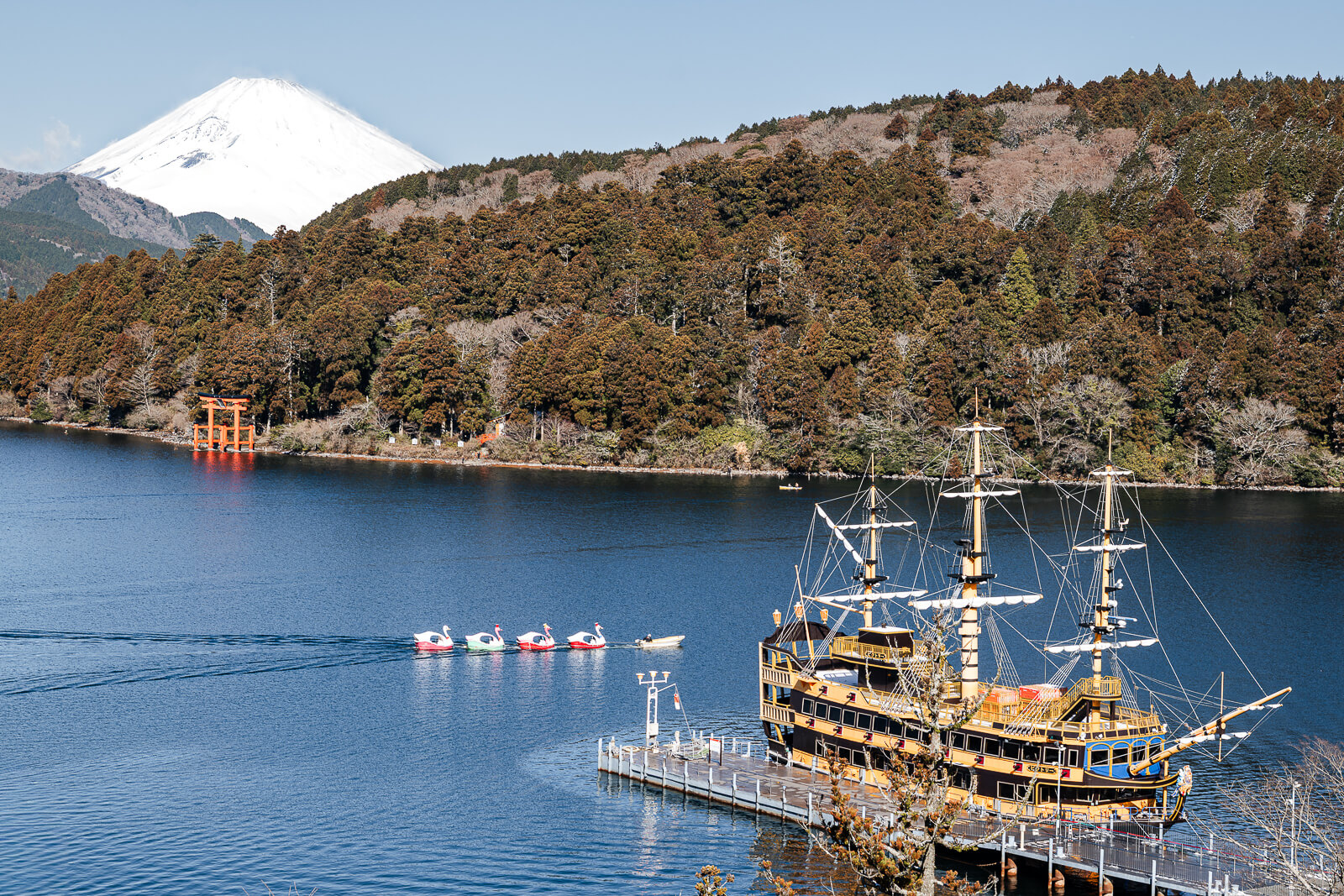
Choose the Train That Reaches Odawara
Check rail tickets to Odawara for your starting city, then plan the onward bus or train connection into Hakone.
Check Trains to Odawara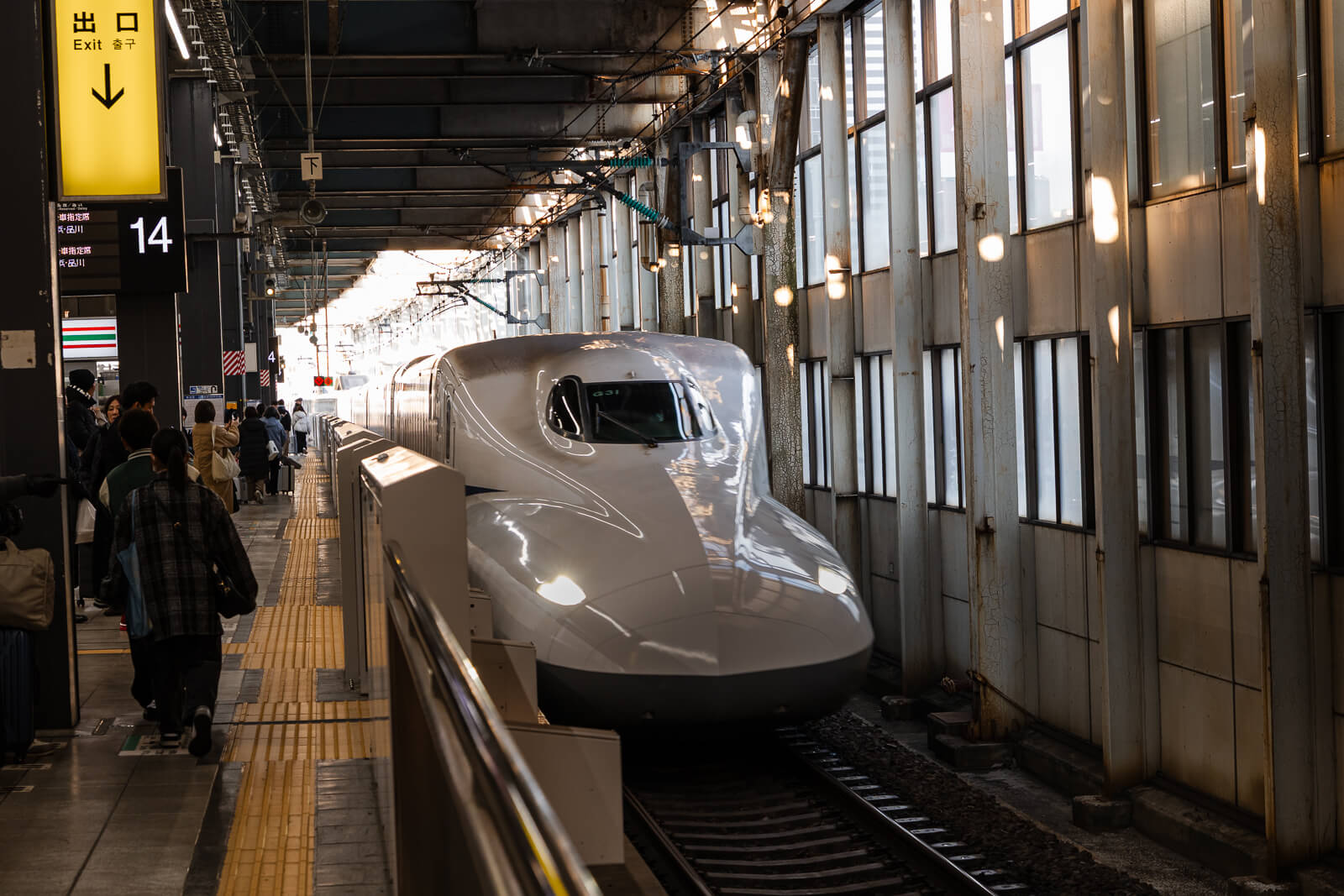
Compare Cars for a Wider Hakone Day
Compare Odawara pickup options, return times and included cover when your plans extend beyond the lake to several separate Hakone stops.
Compare Odawara Car Rentals
Check Tours That Include Hakone Shrine
Check the selected itinerary, shrine stop and free time before choosing a guided day that handles the longer transport connections.
View Shrine Tour Details
Keep Maps and Connections Within Reach
Check Japan data plans and phone compatibility so you can use maps, check departures and adjust connections while traveling around Hakone.
Check Japan eSIM Plans
Reader note: Japan Unfolded may earn a commission from some links at no extra cost to you.