A One-Hour Temple Stop in Sengokuhara
Choanji Temple, also written Chōan-ji and known in Japanese as 長安寺, is a Sōtō Zen temple in Sengokuhara, northern Hakone in Kanagawa Prefecture. The temple is best known for the hundreds of expressive stone rakan statues scattered across its wooded hillside, while the lower grounds include a pond, purification basin, sanmon, bell tower and main hall. The grounds are free to enter, parking is free, and about an hour gives enough time to explore the temple, follow the forest paths, photograph the rakan and receive a goshuin without rushing.
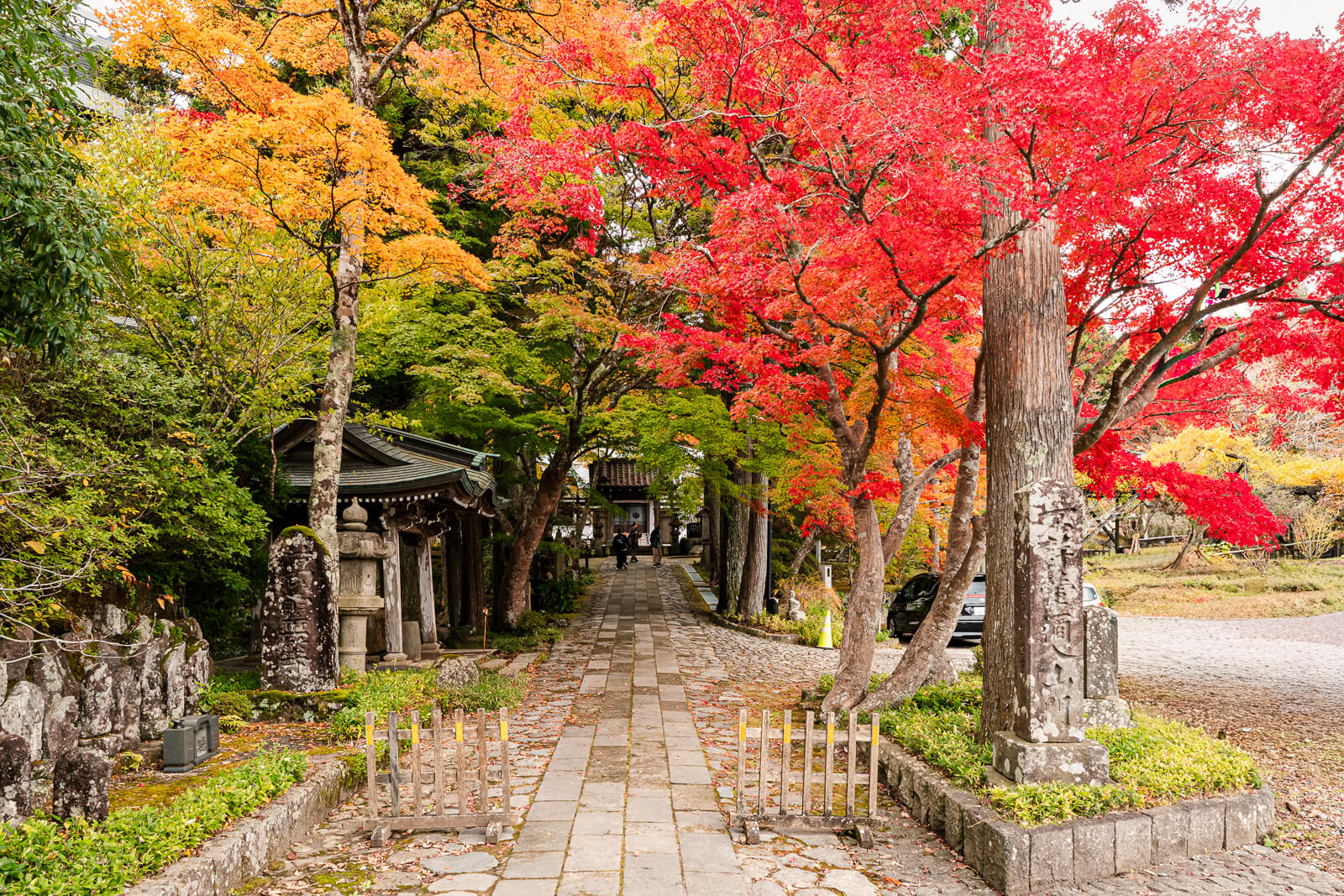
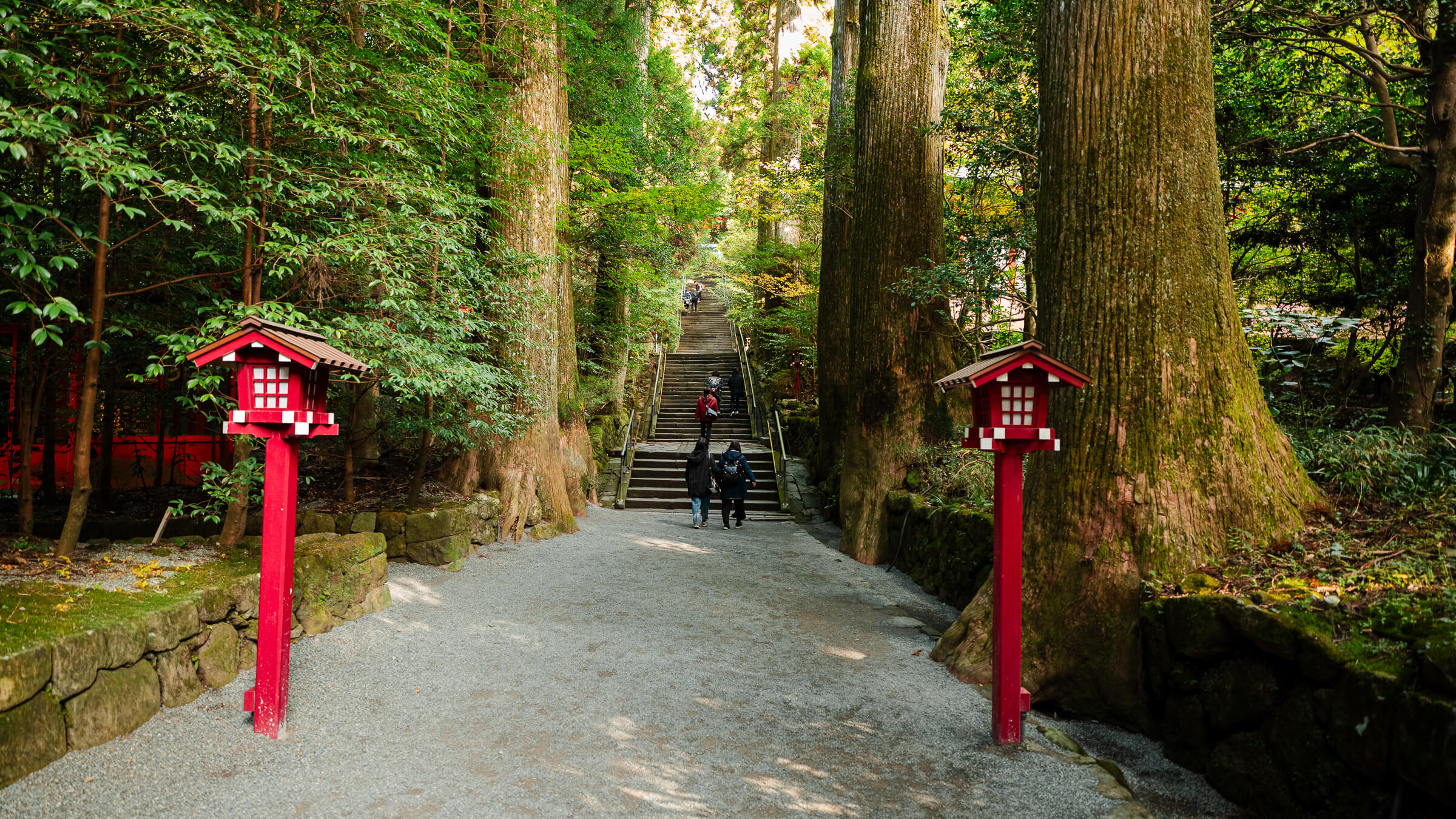
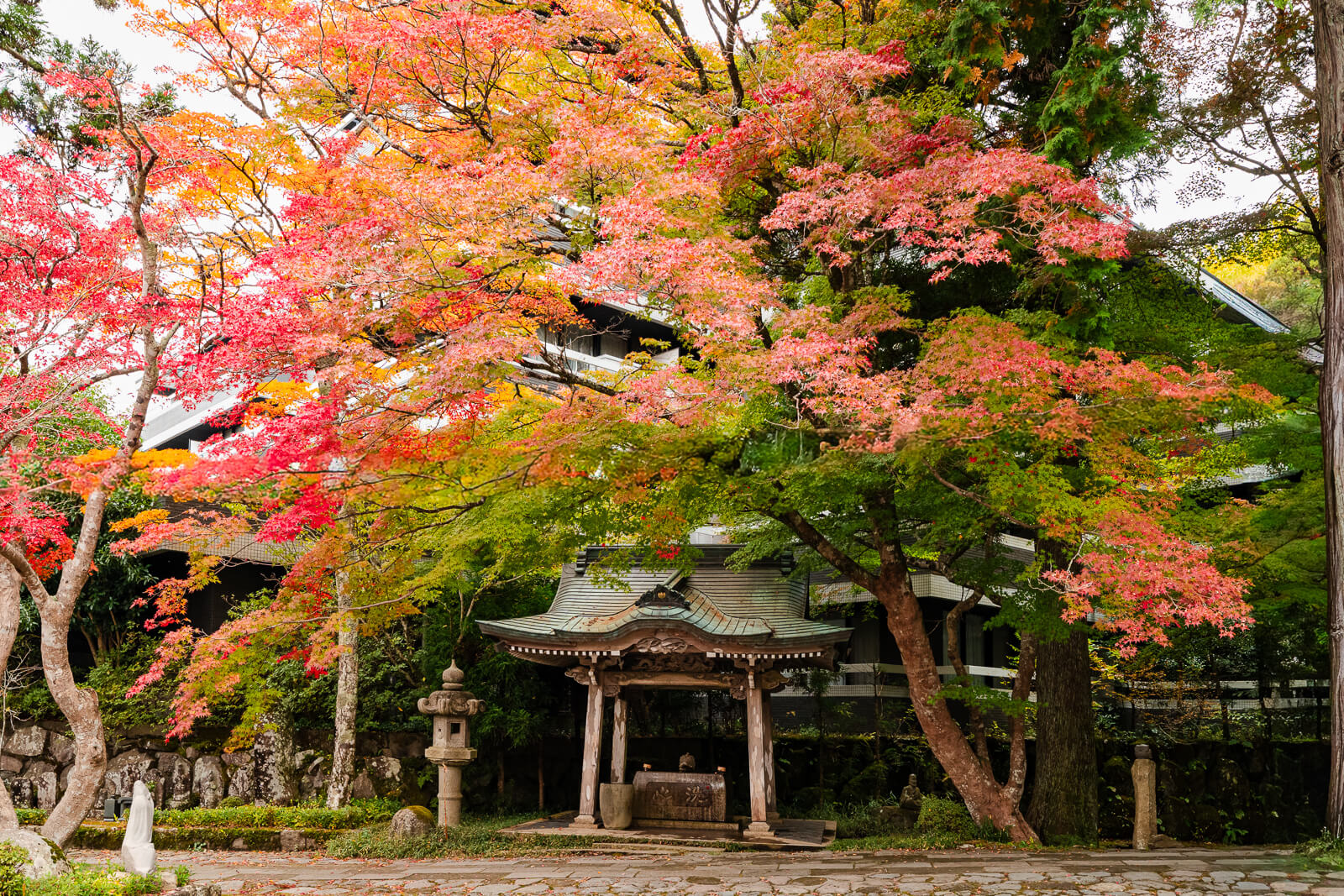
Autumn adds another reason to visit. Red and orange maples begin along the main approach and continue around the pond, temple buildings and forest hillside, creating some of the strongest close-up autumn color in Sengokuhara. The combination of vivid foliage, weathered stone figures and quiet woodland paths gives Chōan-ji a distinctly different atmosphere from Hakone’s larger sightseeing attractions while remaining compact and easy to explore.
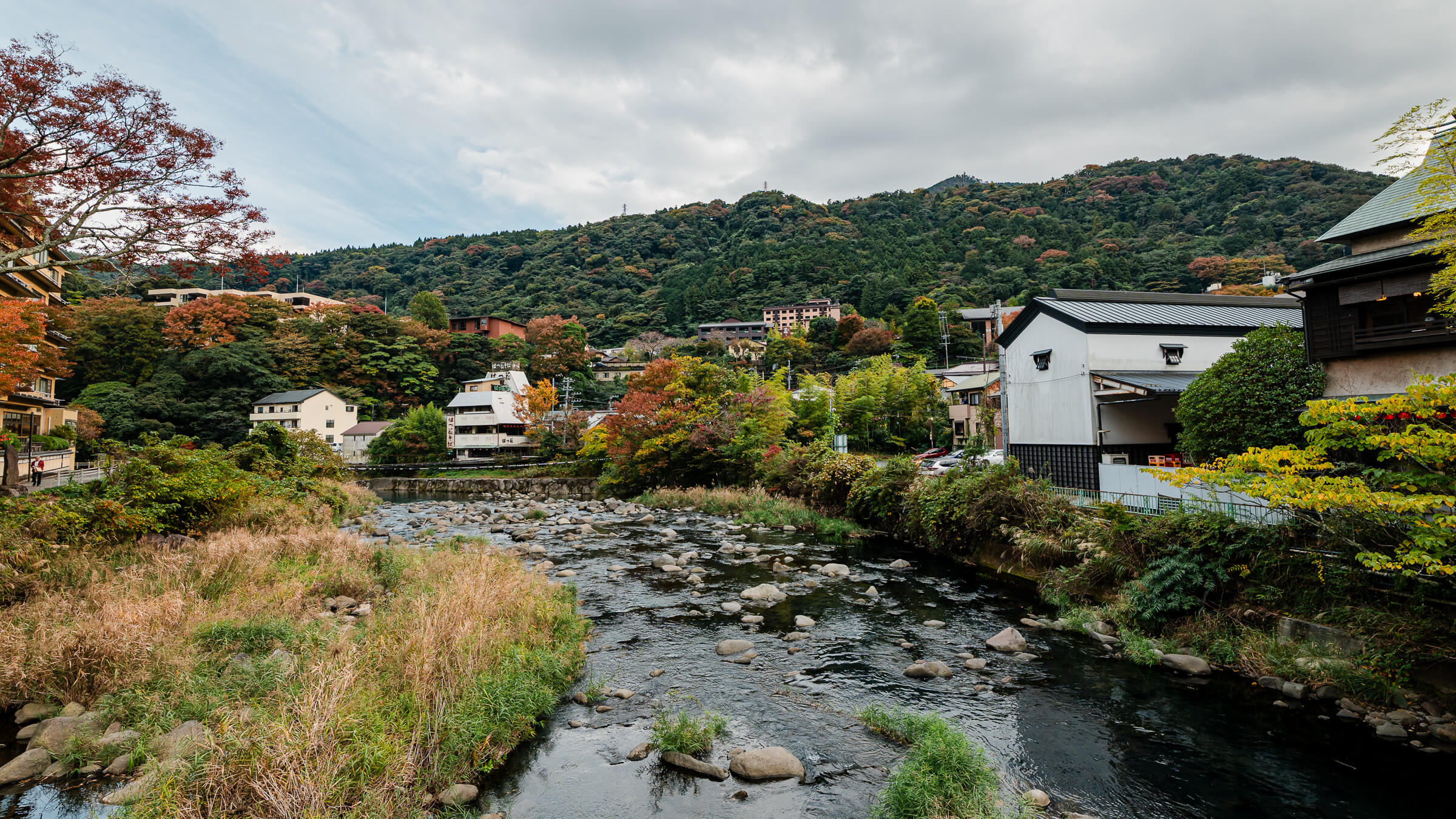
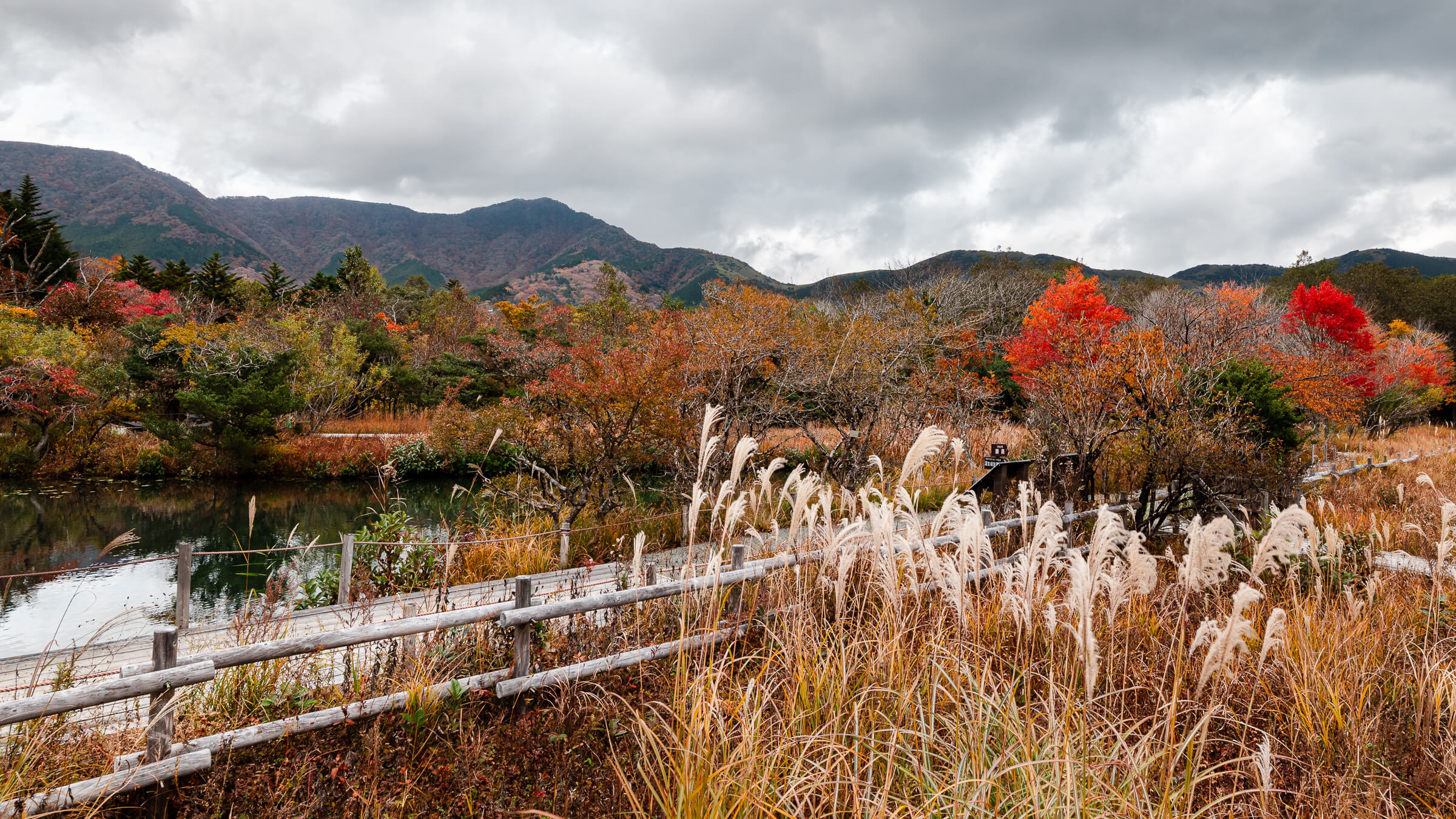
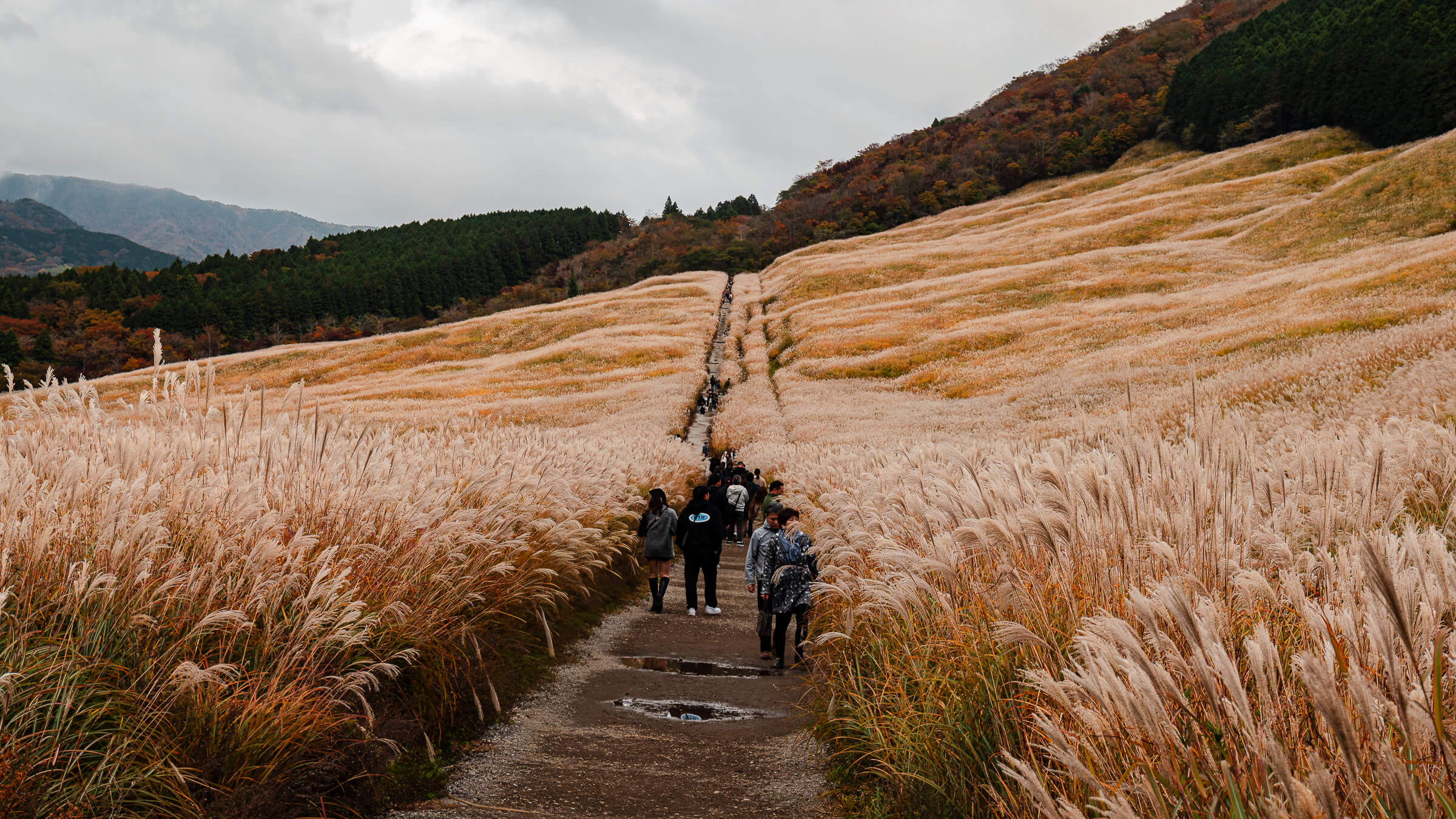
Chōan-ji also fits naturally into a Sengokuhara half-day. The Hakone Botanical Garden of Wetlands and Sengokuhara Pampas Grass Fields are nearby, allowing travelers to move from a wooded Zen temple and rakan-covered hillside to wetlands and boardwalks before finishing among the area’s open susuki grassland. The three stops create a varied northern Hakone route without requiring long transfers between attractions.
Medieval Roots and a Living Rakan Project
Choanji’s published history contains two dates that describe different stages of the temple’s development. The temple traces its roots to a Buddhist hall established in the Ubako area in 1356, while the present temple in Sengokuhara dates to 1658. This distinction explains why official descriptions sometimes appear to disagree about when Choanji was founded.
Its formal name is Sōtō-shū Ryūkozan Choanji—曹洞宗 龍虎山 長安寺. Sōtō-shū identifies its school of Zen Buddhism, Ryūkozan is the temple’s honorary mountain name, and Choanji is the temple name. The wooded slope behind the main buildings gives the mountain designation a physical presence: the visit gradually leaves the formal courtyard and enters a forest of stone figures, stairs and small devotional spaces.
Choanji is known for its Gohyaku Rakan, the traditional grouping of five hundred enlightened disciples of the Buddha. The name describes the religious subject, not a verified count of completed statues on the hillside. Work on the present collection began in 1985 and has continued through contributions by different sculptors, producing hundreds of figures with individual faces, postures and proportions.
The Approach Leads Past Water, a Sanmon and Bell Tower
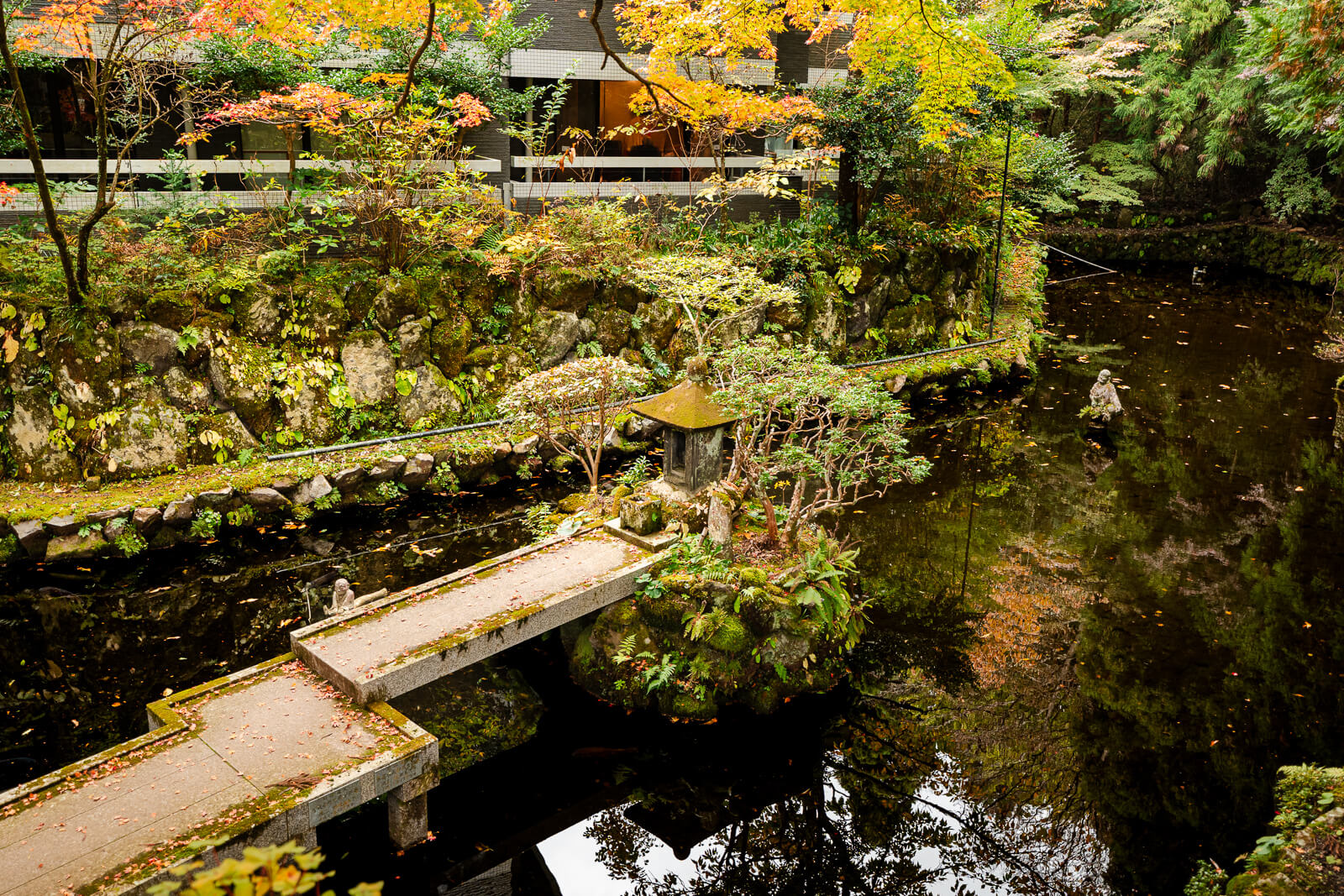
The visit begins only a few steps from the gravel worshiper parking area. A straight stone approach runs beneath maples and other mature trees, with a purification basin near the path and a pond extending into the lower grounds. In autumn, red, orange and yellow foliage appears immediately around the entrance instead of waiting until the rakan hillside.
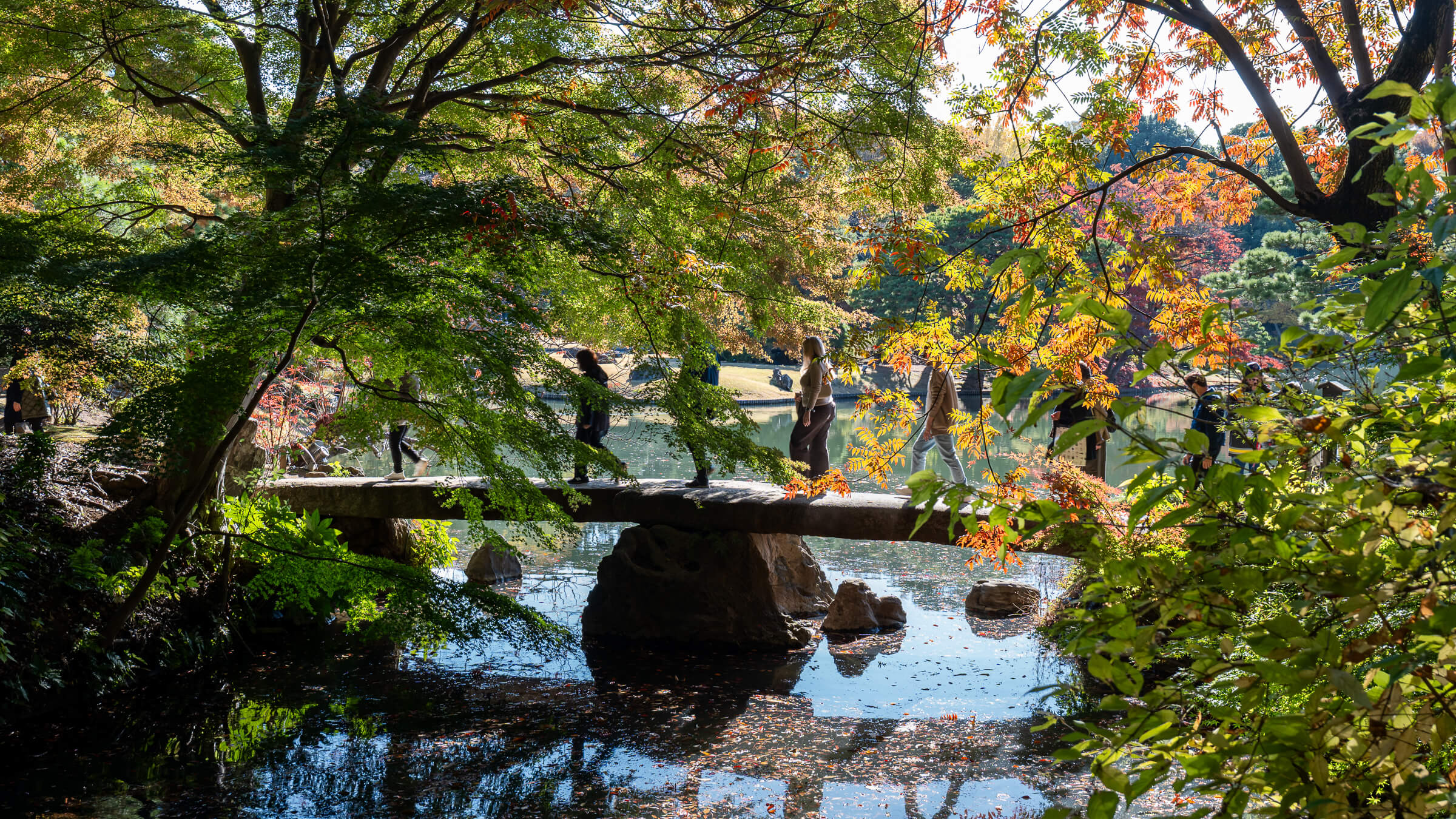
Water from the purification feature flows through a carved stone channel, giving the approach one of its strongest small details. The pond provides a second water scene off the main axis, where reflections, overhanging branches and a narrow crossing create a visual pause before the central temple buildings.
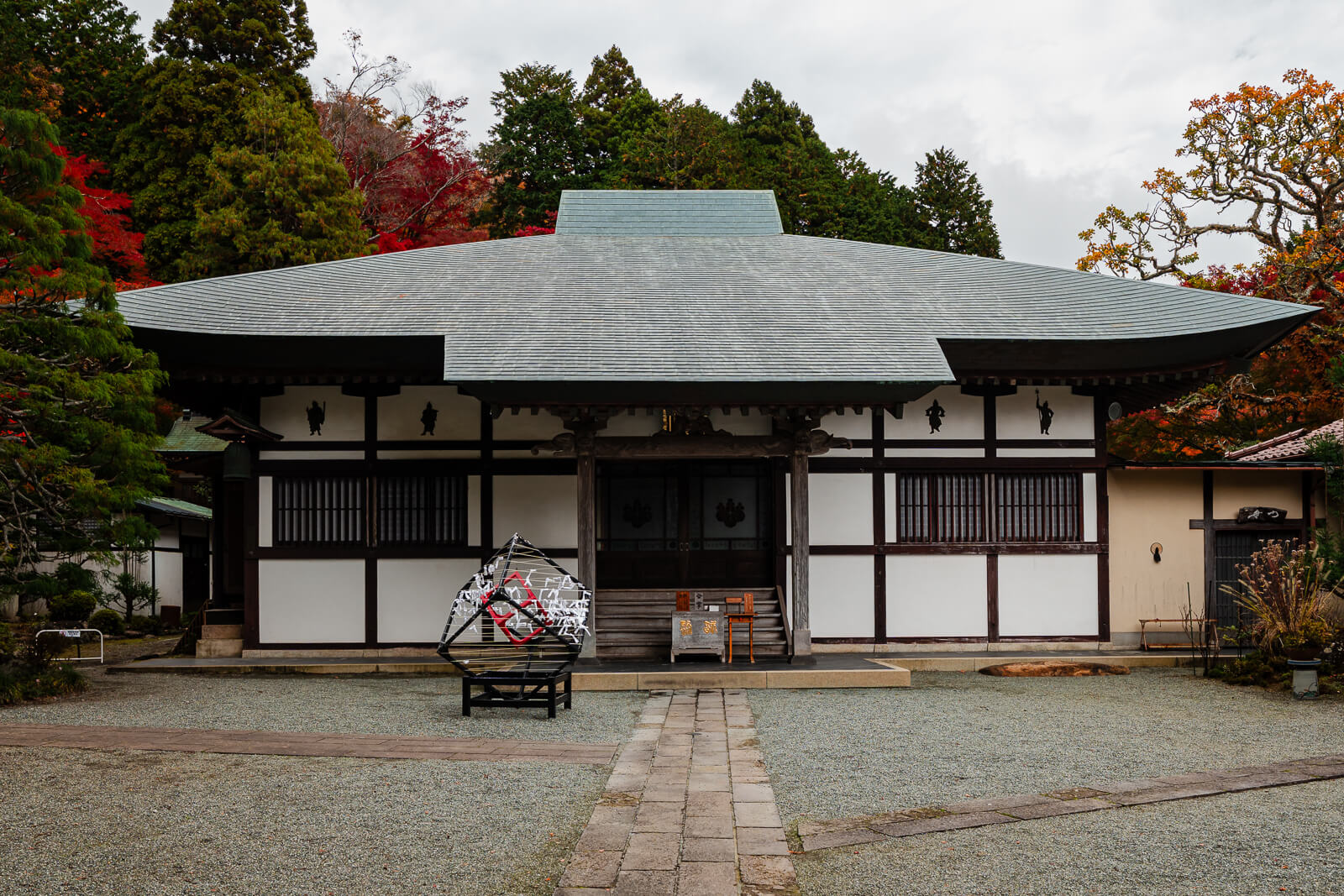
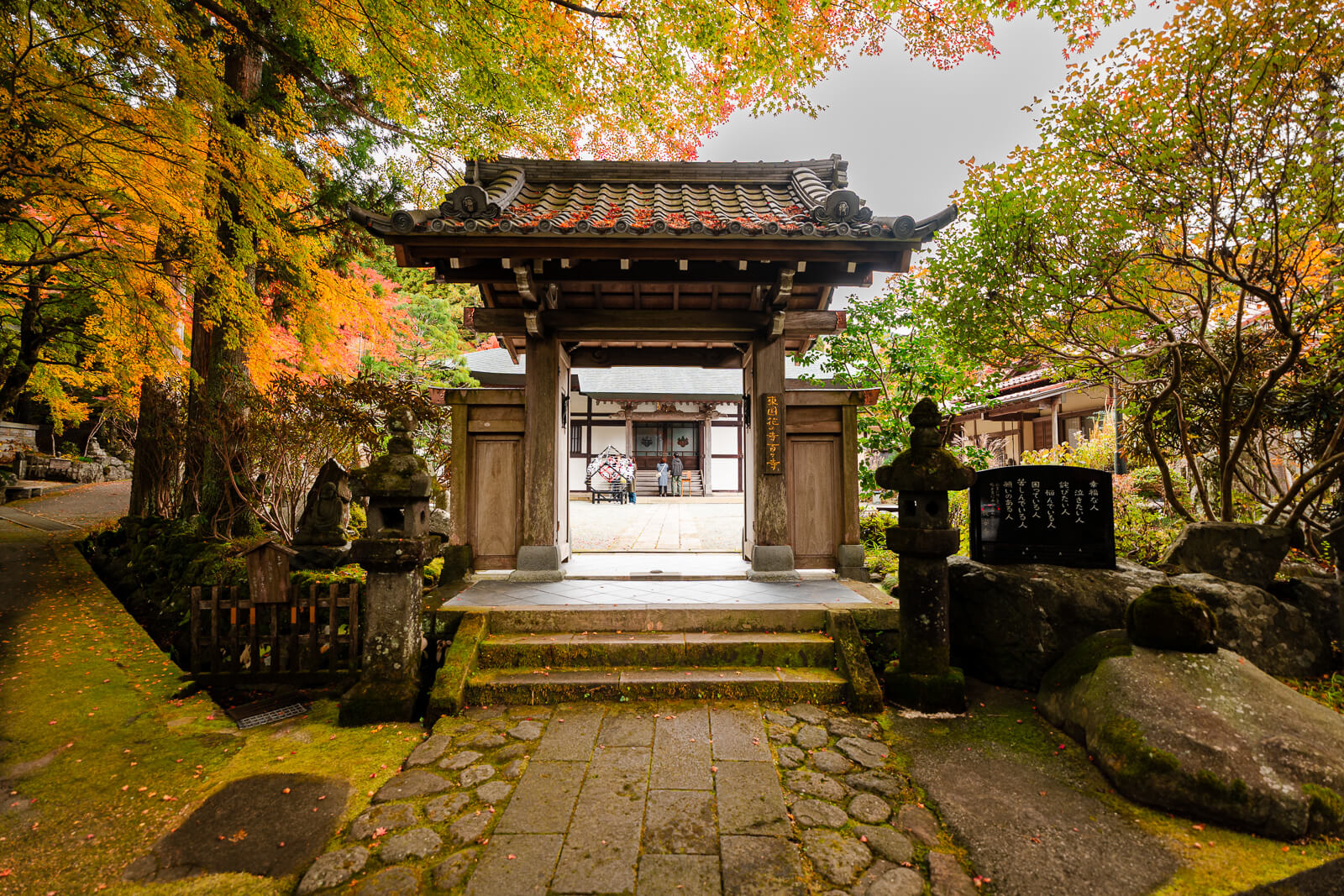
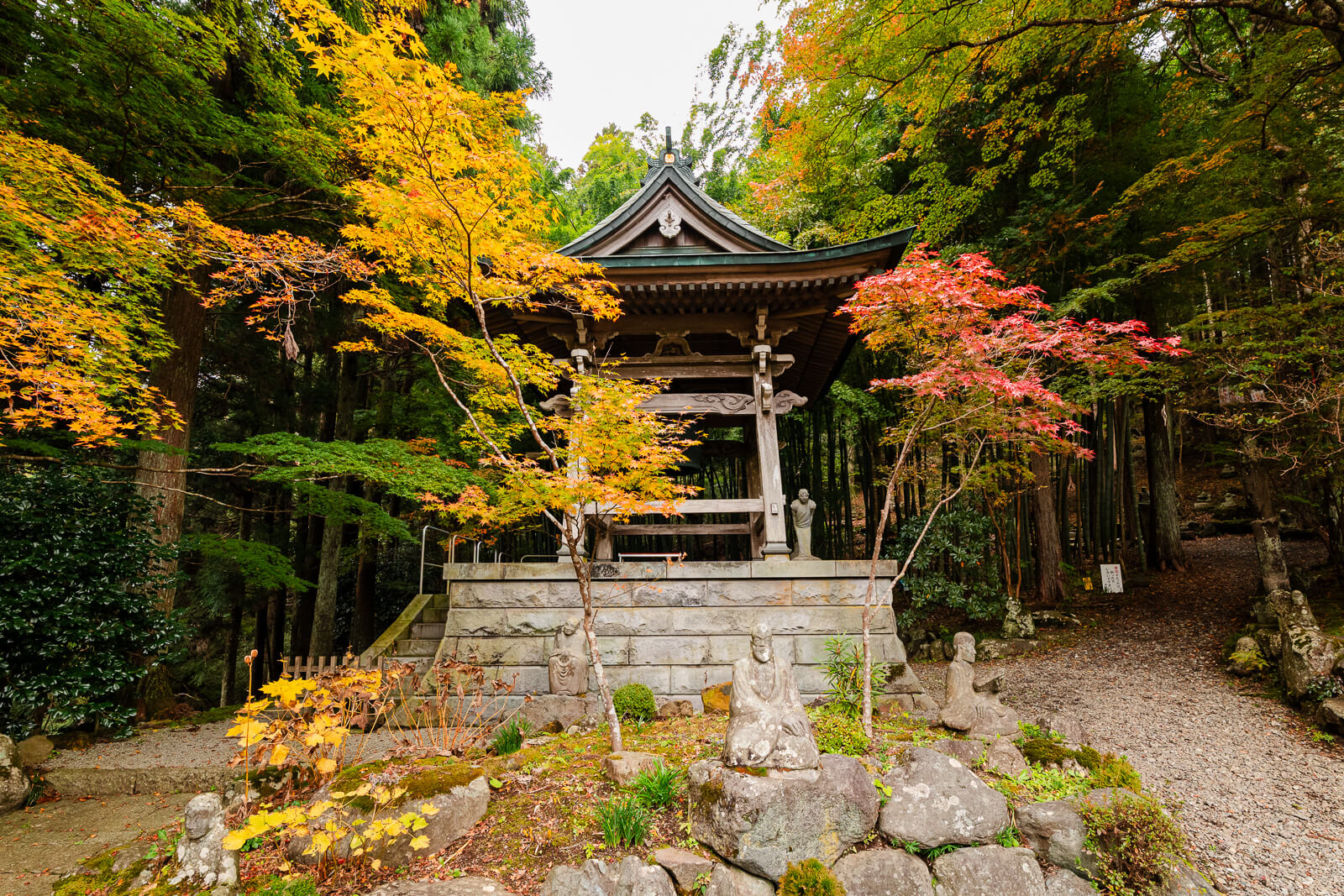
Farther along, the sanmon marks the entrance into the main courtyard. The main hall faces the open gravel space, while the bell tower stands along the left-hand route toward the wooded grounds. Benches in the courtyard provide a place to pause before the path begins climbing through the trees.
Getting a Goshuin at the Temple Office
Choanji does not present the kind of prominent staffed goshuin window found at larger temples and shrines. A building beside the courtyard resembles a private residence, but it serves as the temple office and reception area. During this visit, a sign directed goshuin visitors to ring the bell for assistance.
Showing a goshuincho and saying “Goshuin onegaishimasu” (御朱印お願いします) was enough to make the request clear. The book was accepted and the goshuin was handwritten while visitors waited inside the reception area before the inner threshold, so shoes remained on. Payment was made when the completed book was returned.
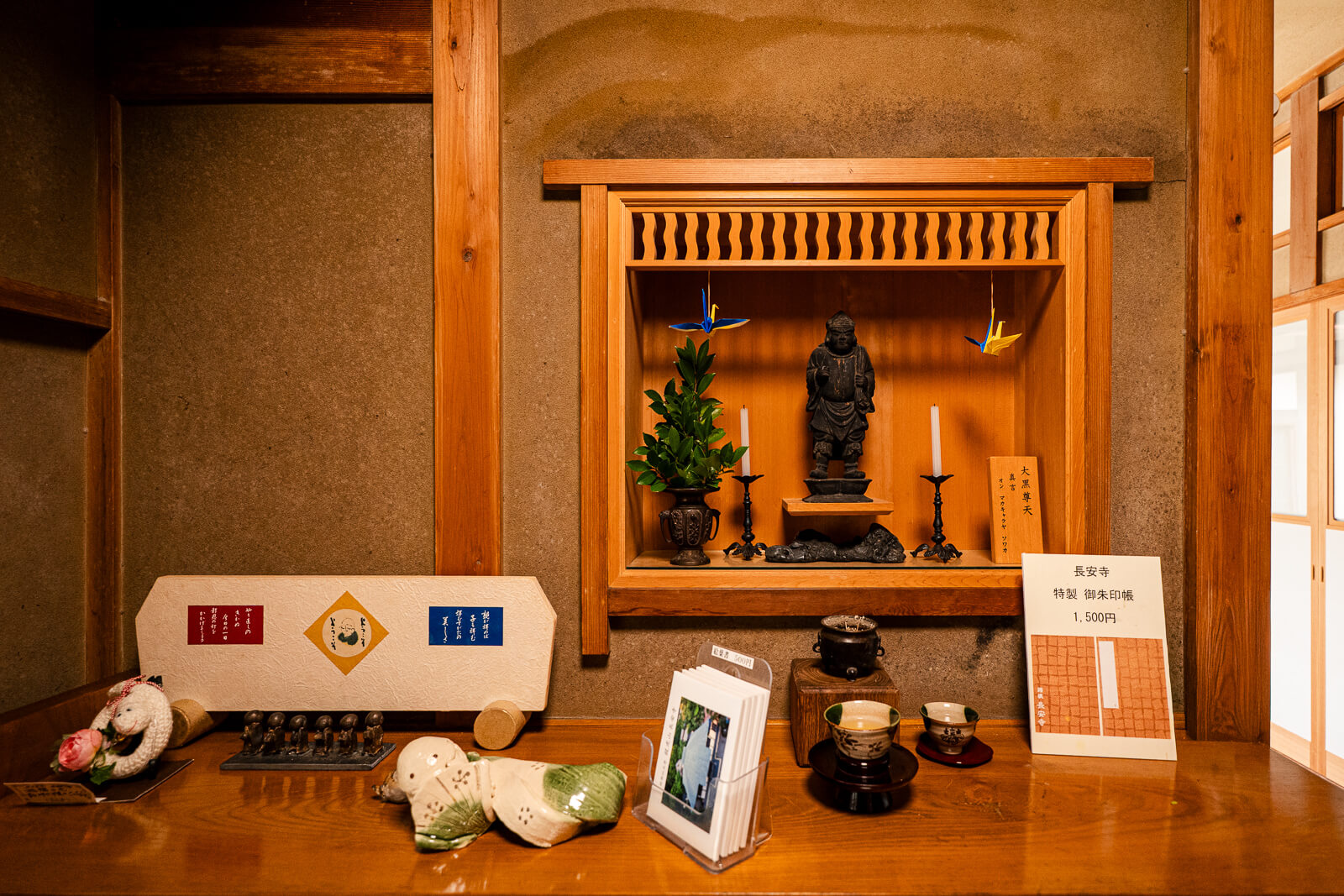
The observed price was ¥500, but goshuin availability, format and price can change independently of temple admission. The useful point is procedural: the absence of a conventional counter does not necessarily mean a goshuin is unavailable. Approaching the office and following the posted instruction removes the uncertainty.
Inside the waiting area, a small display combines Buddhist figures with handwritten reflections. One panel describes the beauty of children learning reverence from their parents; another refers to raising a light of gratitude. These are devotional sayings, not the instruction to ring for the goshuin.
Rakan Statues Spread Across the Wooded Hillside
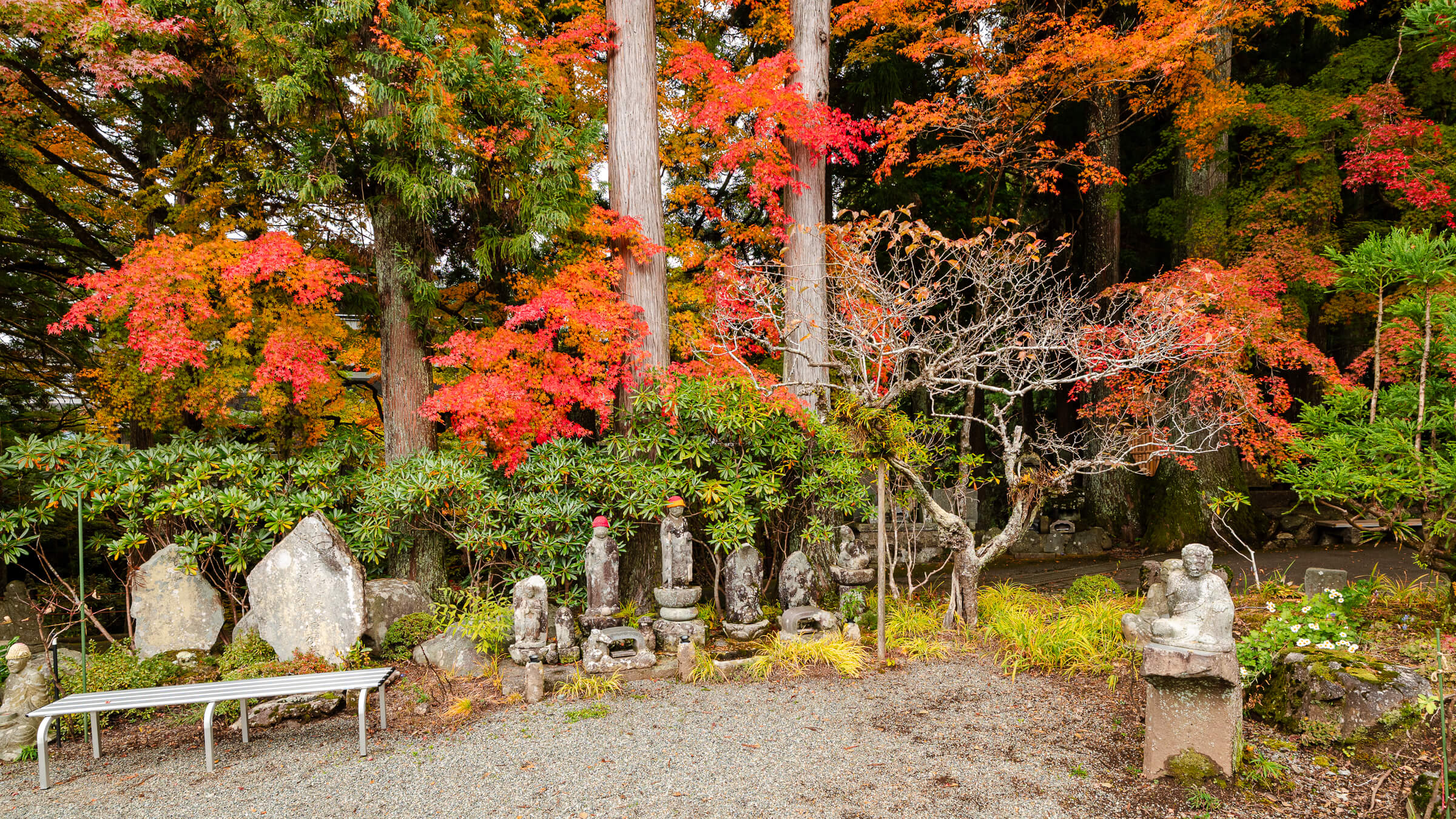
Beyond the courtyard, Choanji changes from a compact temple compound into a layered hillside. Rakan appear beside the main route, between tree trunks, among moss-covered rocks and across terraces covered with fallen leaves. Some stand in open groups, while others remain partly absorbed into the forest until the path draws close.
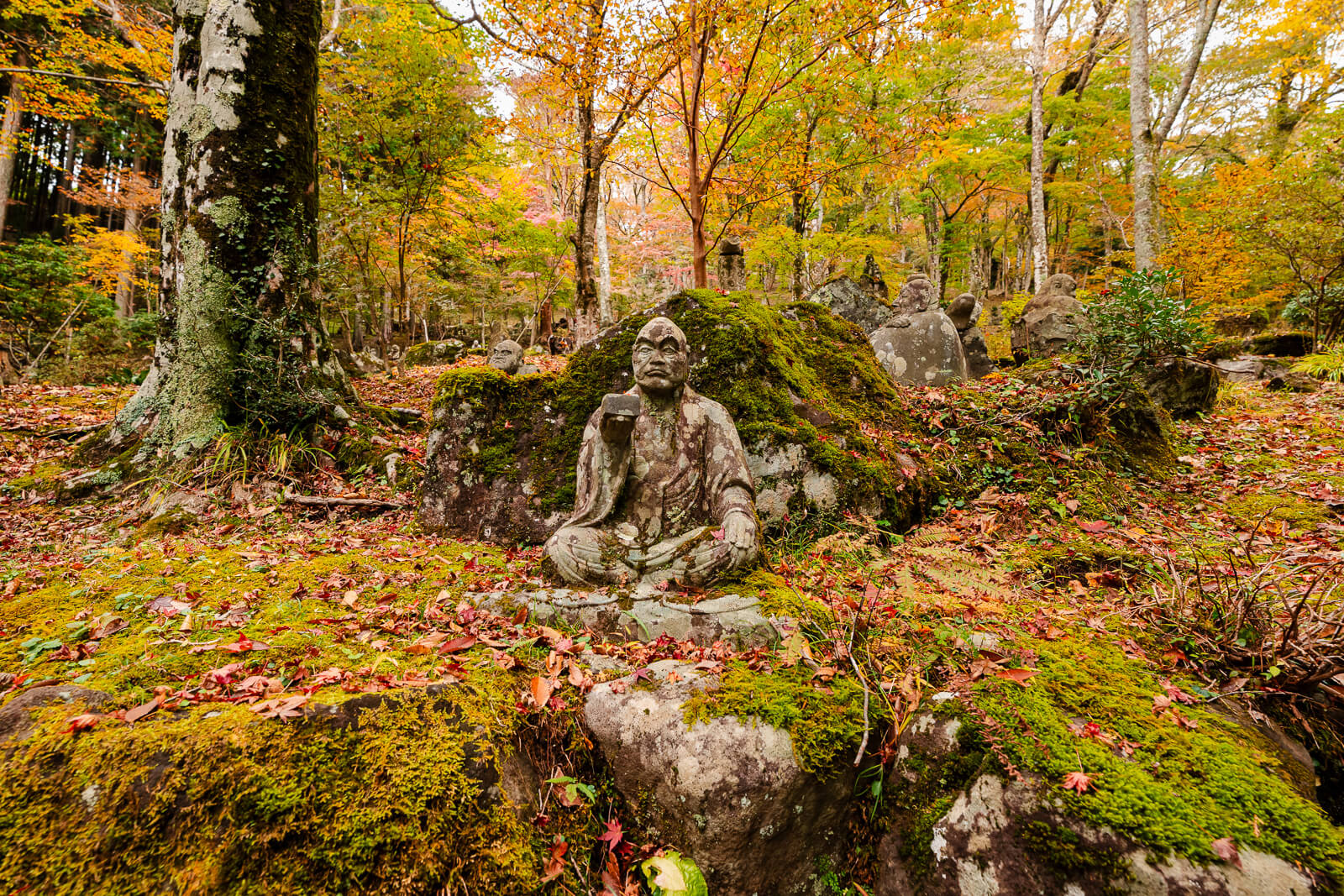
The sculptors did not repeat a single expression or body type. Individual figures appear solemn, amused, attentive, tired or playful, and their gestures change from one terrace to the next. That variation makes the hillside work at two scales: groups establish the breadth of the collection, while individual faces reward a slower look.
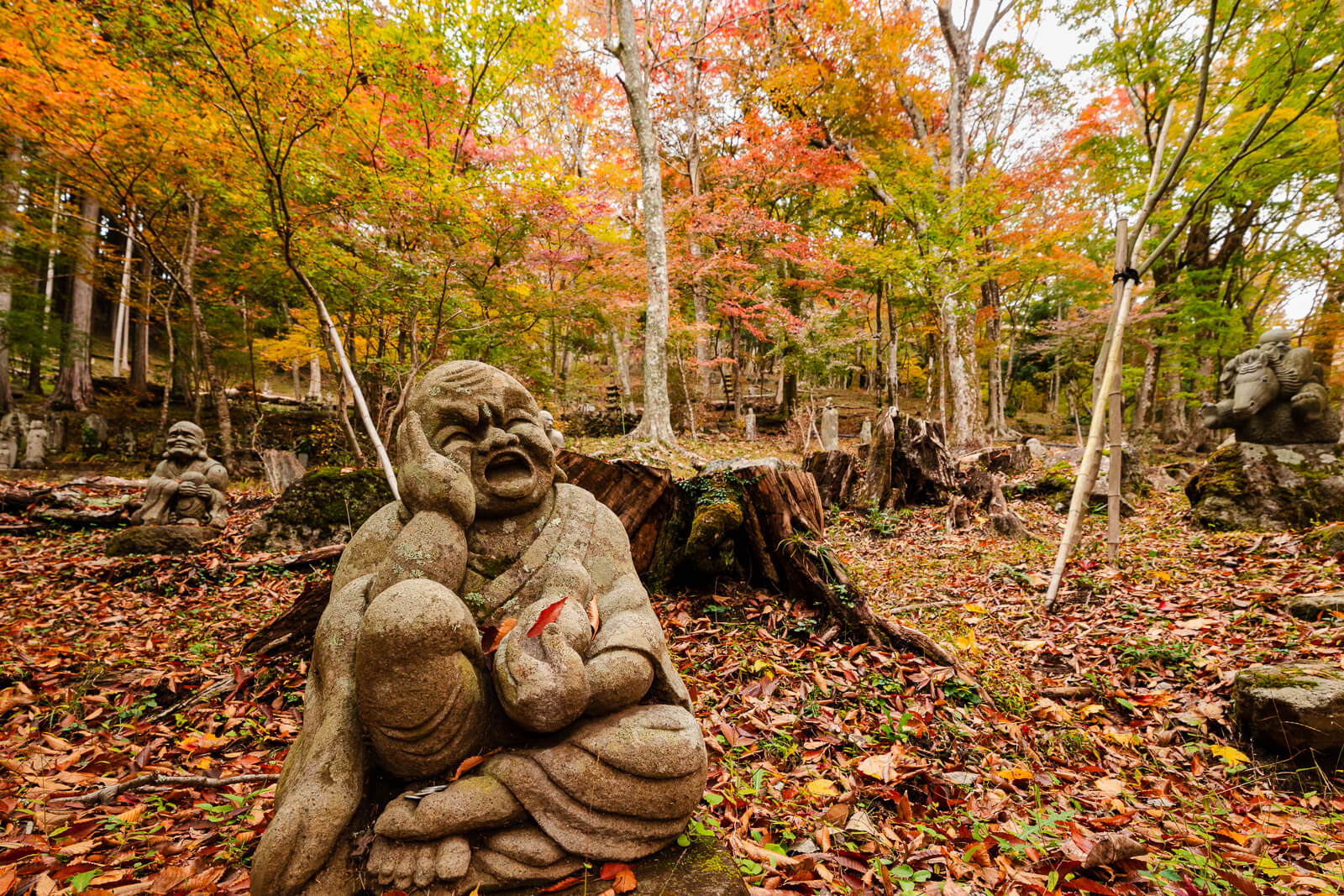
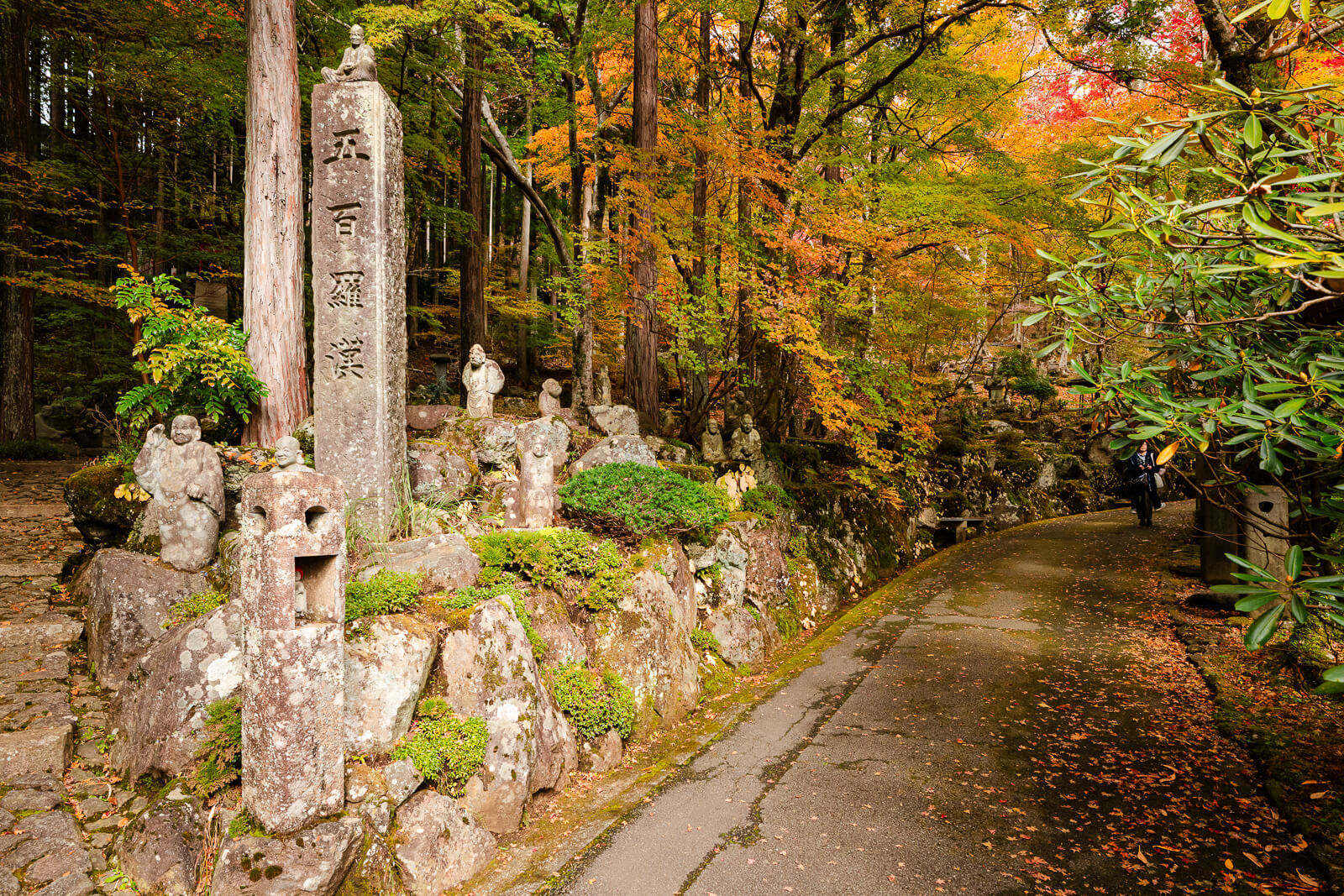
The main route continues toward the active cemetery, but smaller stone paths and stairways divide across the slope. These branches do not form one formal sightseeing loop. The practical pattern is an out-and-back walk with optional detours, allowing the visit to expand without forcing every visitor onto the steepest steps.
A Toyokawa Inari Shrine Sits Above the Rakan Paths
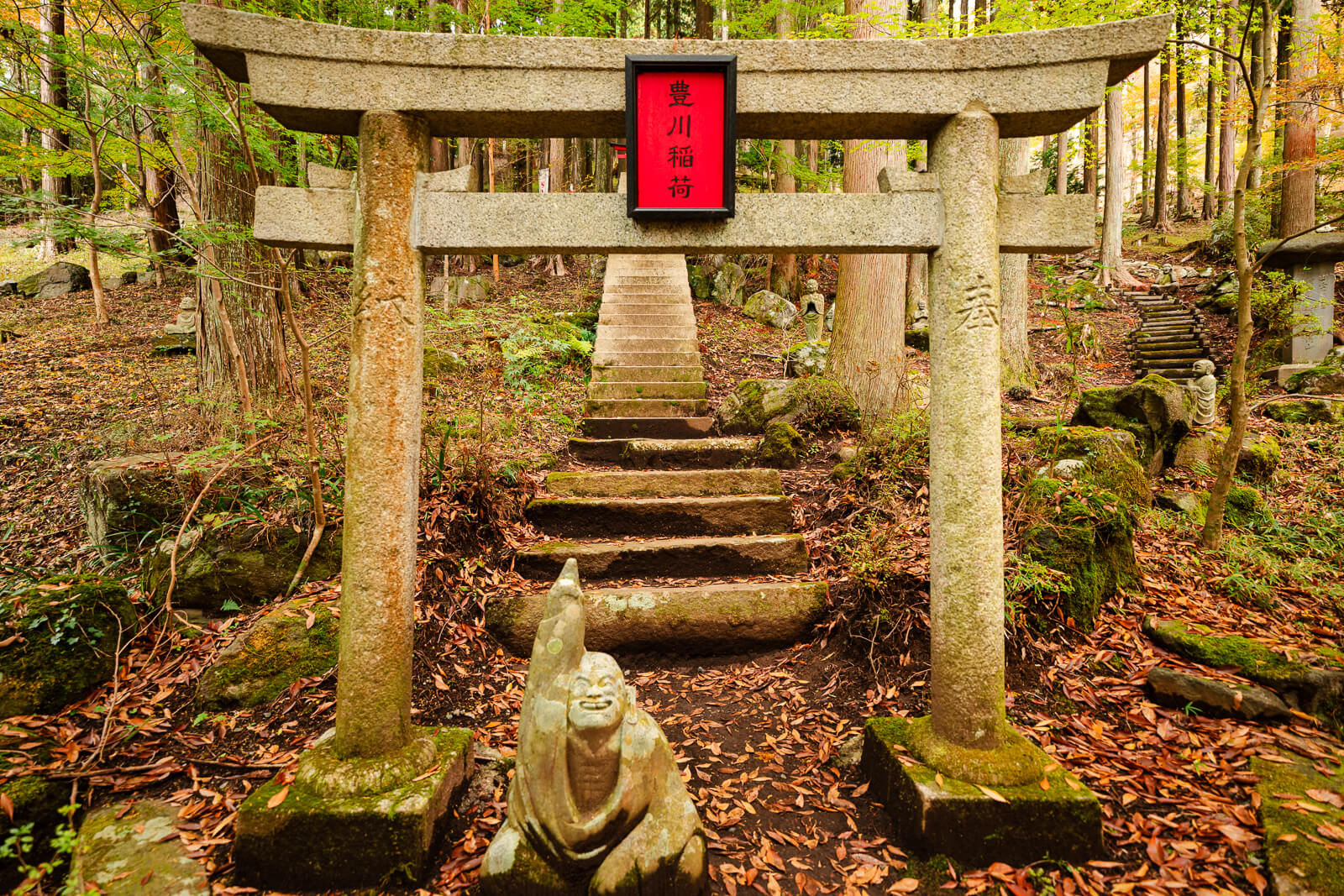
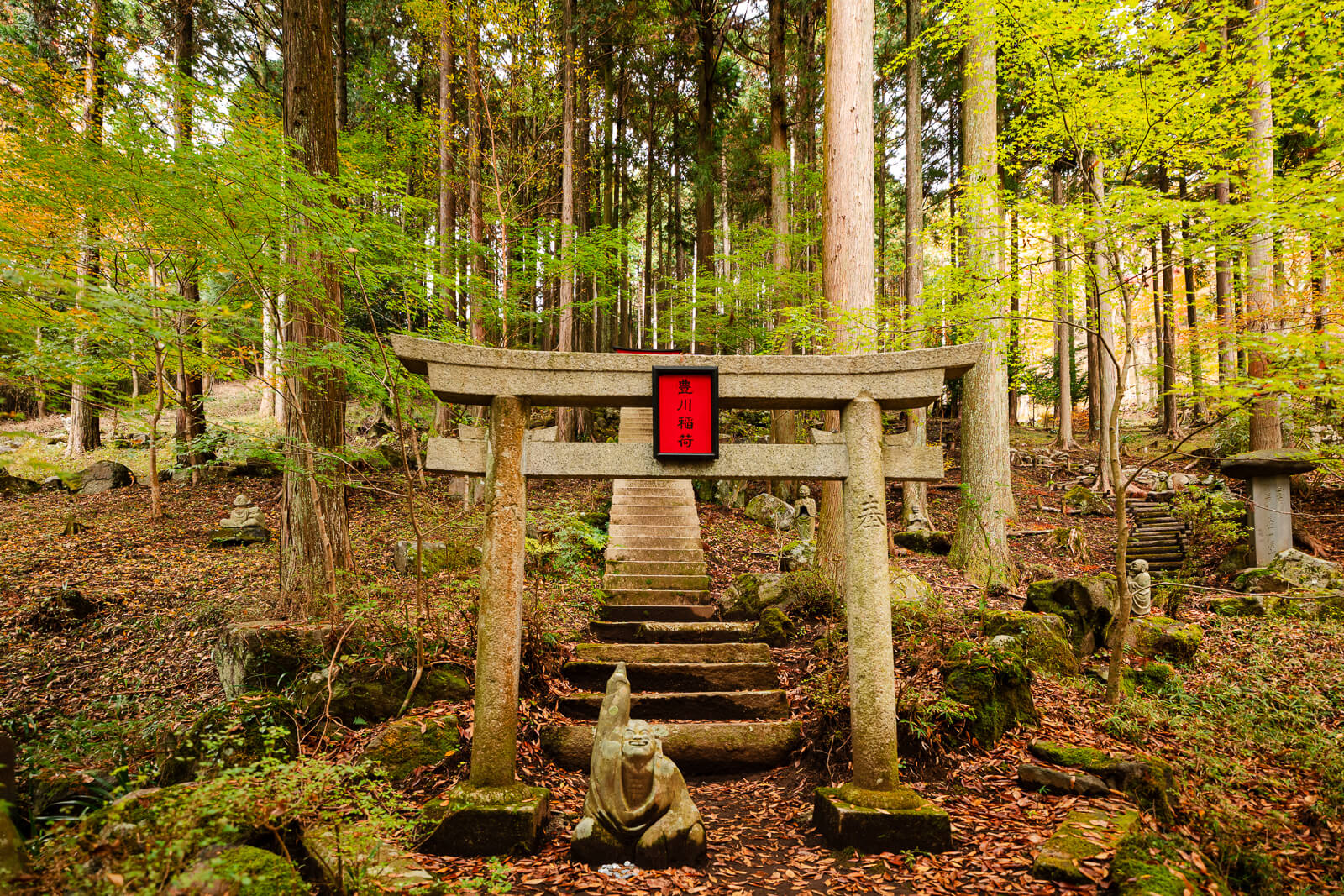
One hillside branch passes through a stone torii carrying the inscription 豊川稲荷, or Toyokawa Inari. A short flight of stone steps continues to a small altar surrounded by white devotional banners. Their principal red inscription, 豊川吒枳尼眞天, identifies Toyokawa Dakini Shinten, and stone fox figures stand in front of the altar.
Although Inari is widely associated with Shinto shrines, Toyokawa Inari developed within a Buddhist tradition centered on Dakini Shinten. Its presence therefore belongs naturally within Choanji’s temple grounds. For visitors who remain only on the central route, this smaller religious layer can be easy to miss.
The branch also makes the terrain more understandable before arrival. The torii stands at the base of uneven stone steps, with leaf-covered ground and additional paths visible across the slope. The shrine is optional; the principal rakan experience does not depend on completing every climb.
Walking Time Depends on the Hillside Detours
A focused visit to the approach, courtyard and most visible rakan can fit into about 30 minutes. Allowing 45 to 60 minutes makes room for the cemetery route, Toyokawa Inari shrine, individual statues, photographs and the goshuin process. The site covers a modest distance, but stopping to examine the figures accounts for more time than the walking itself.
Surfaces include pavement, laid stone, gravel, forest paths and stairs arranged across terraced ground. The maintained main route is straightforward for visitors comfortable with normal temple walking, but “easy” would be too broad for every traveler. Fallen leaves, uneven stones, narrow branches and changes in elevation may be difficult for someone with poor balance, reduced mobility or a stroller.
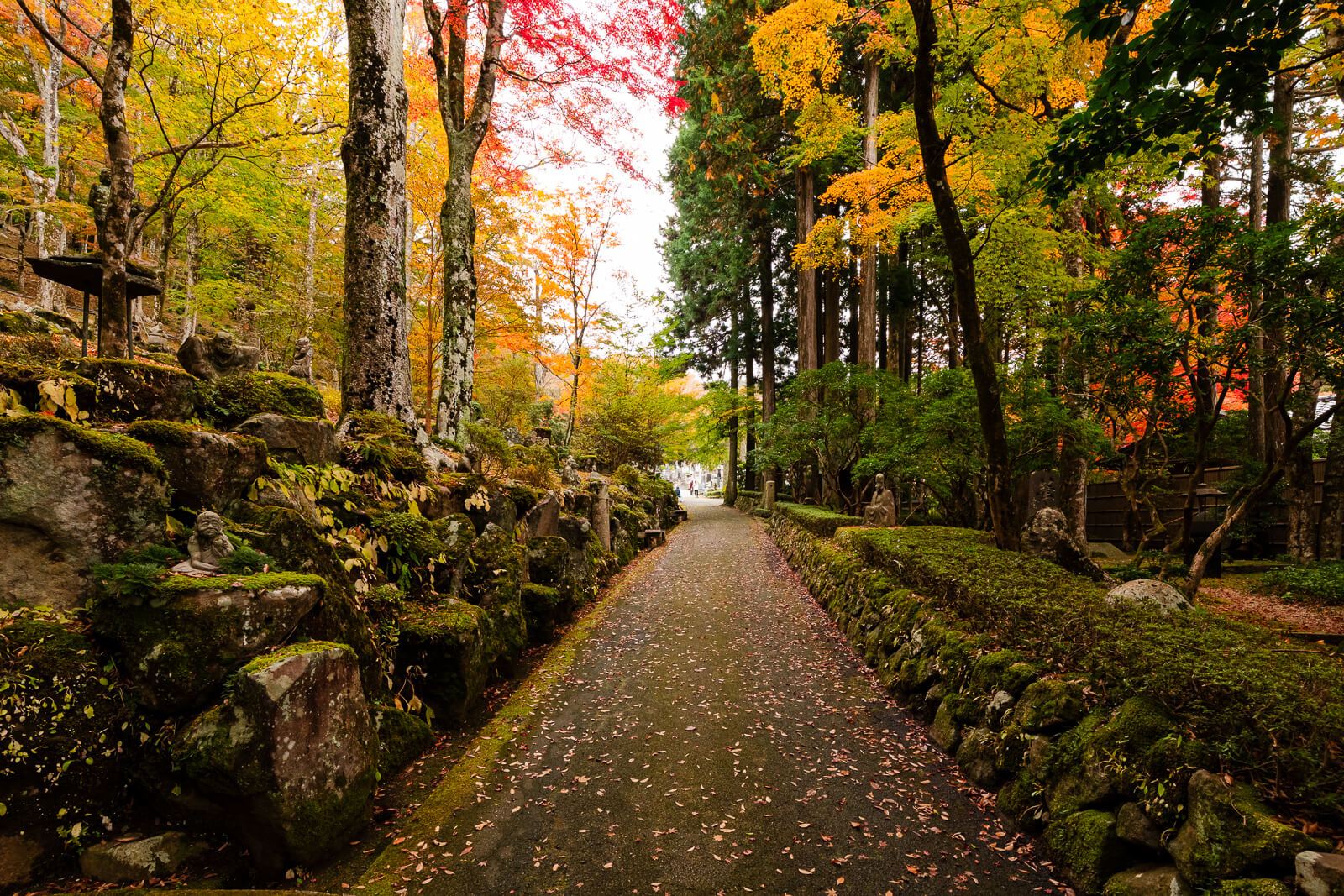
The cemetery marks the far end of the principal route and remains an active place of remembrance. Older and newer memorials stand across the upper grounds, with water buckets provided for people tending graves. From this point, the route returns toward the main temple area, picking up any hillside branches missed on the way out.
Autumn Color Extends From the Entrance Into the Forest
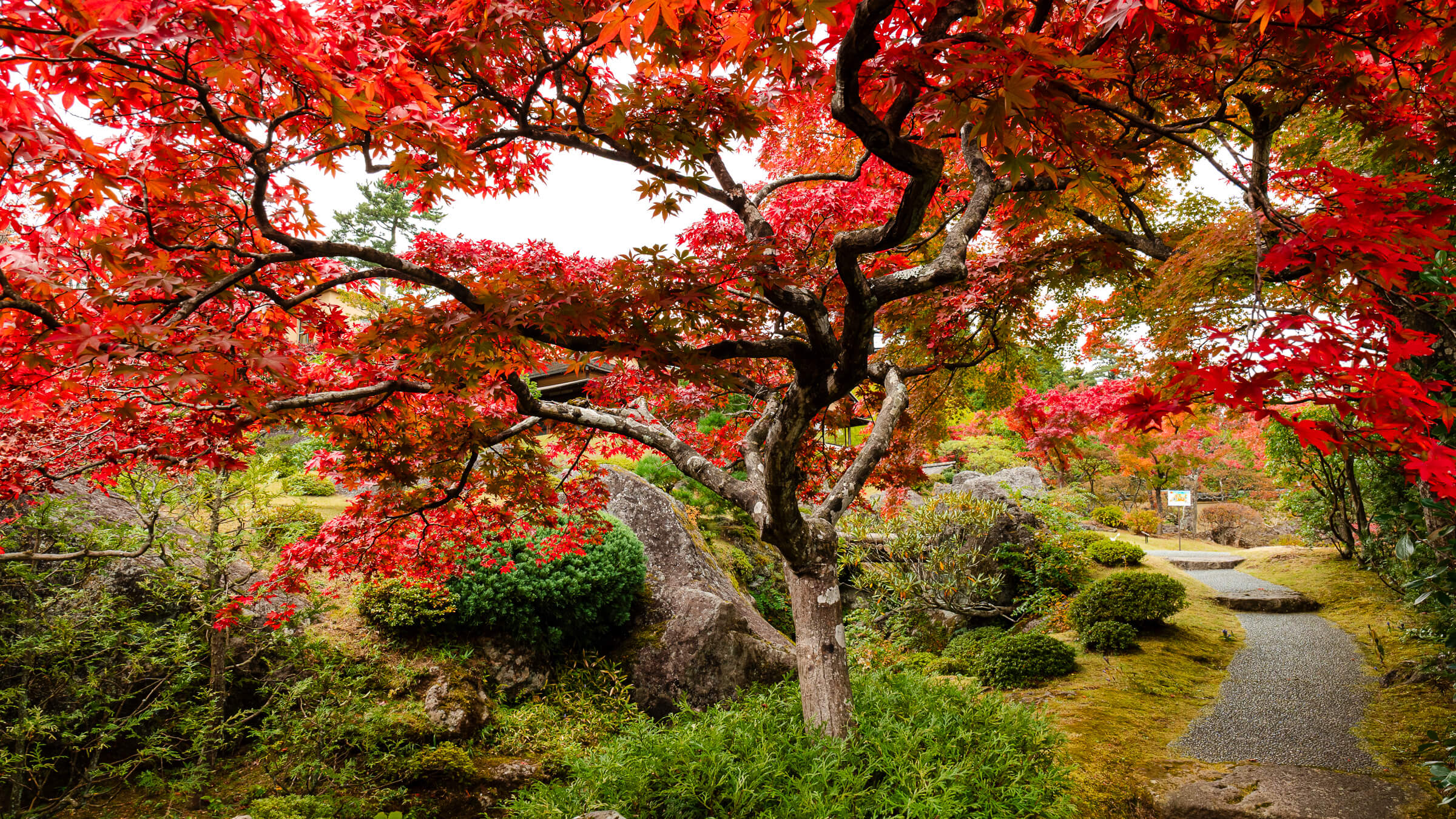
Autumn is one of the strongest reasons to add Chōan-ji to a Sengokuhara visit. The impact begins almost immediately on the main approach, where vivid red maples mix with orange, yellow, and remaining green foliage above the stone path. Some of the maples can reach an exceptionally intense red, giving parts of the temple grounds a depth of autumn color that stands out even among other fall locations around Hakone.
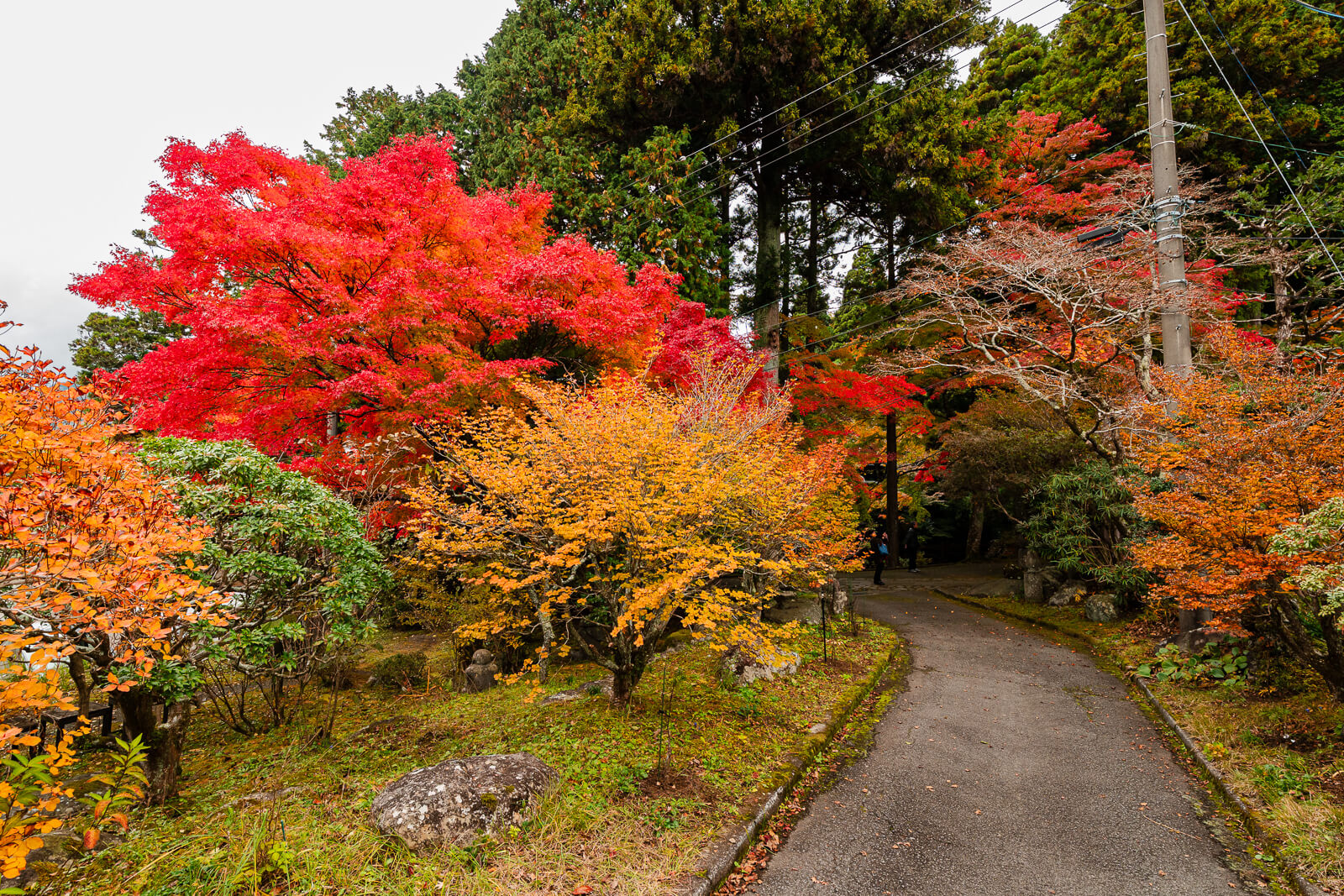
The rakan make this different from a conventional maple-viewing garden. Color does not lead toward one signature viewpoint; it creates changing backgrounds for faces, gestures, tree trunks, stairs and small groups of figures. Photographers can work with broad woodland scenes and close portraits without leaving the same compact hillside.
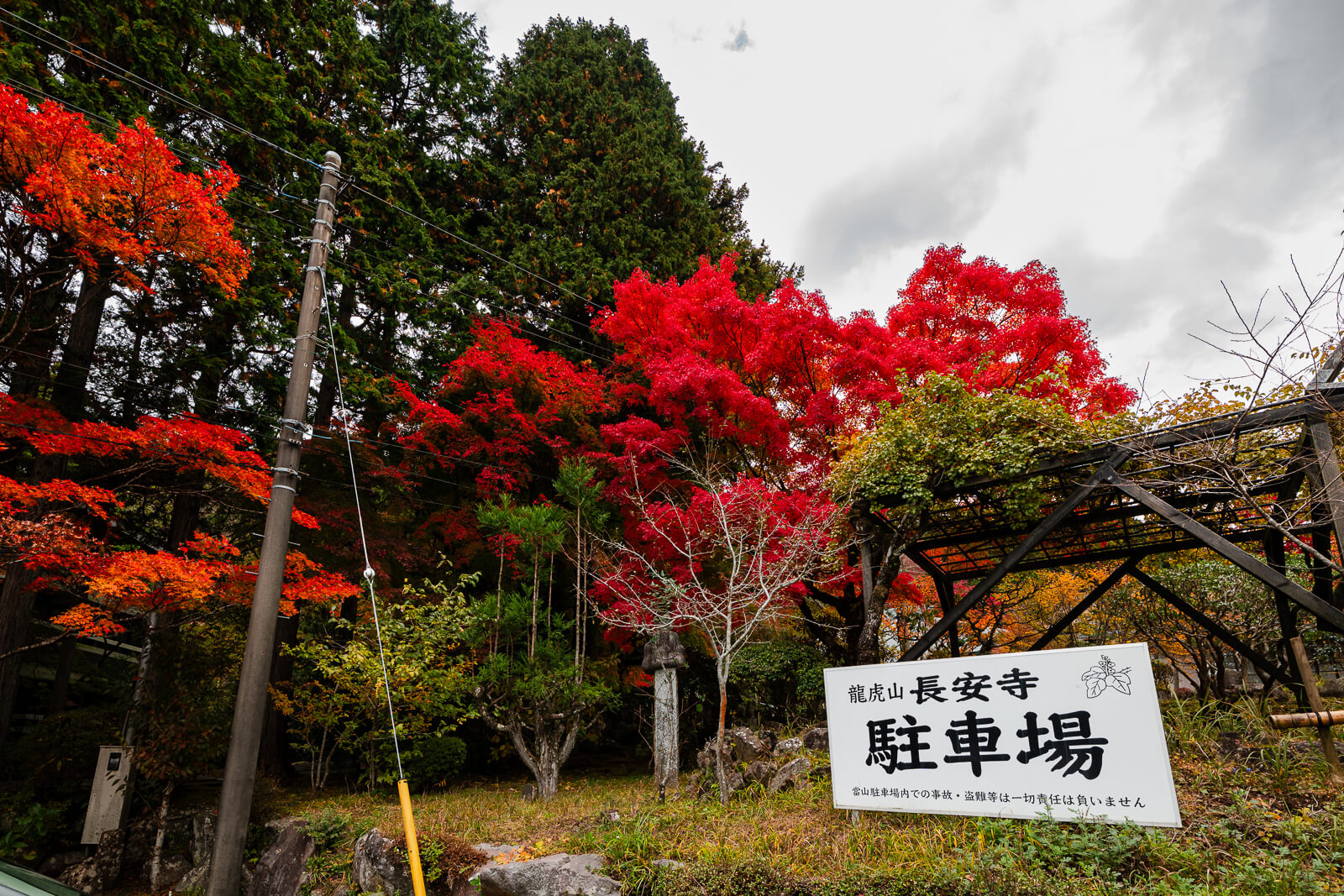
Early to mid-November is normally the most useful planning window for Choanji, although the progression varies with temperature, wind and rainfall each year. The Hakone autumn foliage guide compares Sengokuhara with Gora, Lake Ashi, Owakudani and later-changing lower areas, which is more useful than treating one date as a guarantee.
The temple was not crowded during the documented autumn visit, leaving room to stop along the paths and photograph individual statues. That observation describes one visit, not a promise about weekends or peak foliage. Narrow hillside branches will feel more constrained whenever several groups arrive together.
Choanji Fits Best Into a Sengokuhara Half-Day
Choanji becomes easier to justify when it anchors a wider Sengokuhara sequence. The Botanical Garden of Wetlands replaces the enclosed temple forest with ponds, boardwalks and open wetland vegetation. The pampas grass fields then change the scale again, opening onto a broad hillside of tall susuki grass.
A practical order is Choanji → Hakone Botanical Garden of Wetlands → Sengokuhara Pampas Grass Fields. The temple and garden each merit about an hour, while the field can take 20 minutes for a short out-and-back or 30 to 40 minutes at an easier pace. Short transfers and a lunch stop allow the three contrasting landscapes to fit comfortably into half a day.
Driving makes this sequence smoother because the attractions are dispersed around northern Hakone. Traffic remained manageable during the documented outing and increased only modestly near the grass fields, but road conditions can change sharply on autumn weekends. Local buses keep the route possible without a car, provided the day includes enough buffer for waiting and traffic.
Travelers looking for a substantially larger Sōtō Zen complex can continue the theme on another day at Daiyuzan Saijoji Temple near Odawara. Saijoji requires more time and climbing, so it is a separate half-day destination instead of another stop within this Sengokuhara route.
Getting There
Route at a Glance
Choanji Temple is a one-minute walk from Sengoku bus stop (246) in northern Hakone. From Hakone-Yumoto Station, Hakone Tozan Bus routes T and L reach Sengoku in about 25 minutes; a rental car from Odawara is useful when combining Choanji with other Sengokuhara stops.
- Public transport
Hakone-Yumoto → T or L bus → Sengoku (246) → 1-minute walk
About 25 minutes by bus · One-minute walk from Sengoku bus stop · Road traffic can lengthen the journey during busy periods.
- By car
Rental car from Odawara Station → Sengokuhara → Choanji
Free gravel worshipper parking beside the temple · Best for combining Choanji with Hakone Botanical Garden of Wetlands and the Sengokuhara Pampas Grass Fields in one route.
Walking conditions: The entrance and lower grounds are close to the bus stop and parking area. Optional hillside paths include stone stairs, uneven surfaces, and fallen leaves.
Hours & Fees
Temple grounds: No public visitor hours are listed by the official Hakone tourism sources. Visit during daylight, when the wooded paths and steps are easiest to use.
Temple grounds: Free admission observed
Goshuin: ¥500 during the documented visit
Parking: Free worshiper parking observed
Goshuin availability, format and price may change. Follow current instructions at the temple office.
Confirm current visitor information with the official source above before your trip.
Plan Your Hakone Visit
Compare stays, rental cars, tours, mobile data, Hakone transport and rail options for building Chōan-ji into a wider Hakone trip.
Compare Hotels and Ryokan
Staying in Hakone gives you more time for Sengokuhara, with options ranging from traditional ryokan to convenient resort hotels.
Compare Stays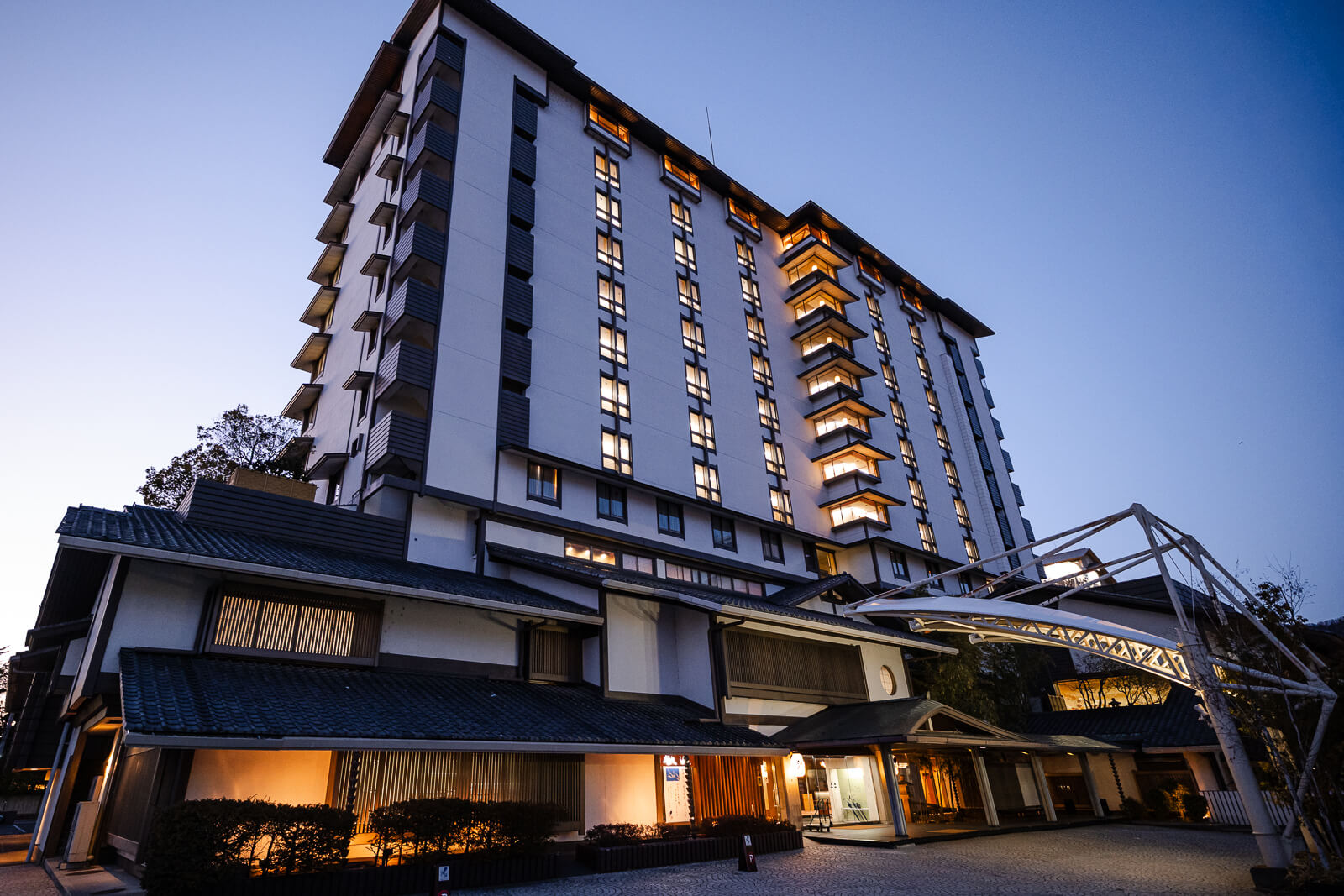
Compare Rental Cars From Odawara
A rental car adds flexibility for combining Chōan-ji with the wetlands, pampas grass fields and other stops around Hakone.
Compare Cars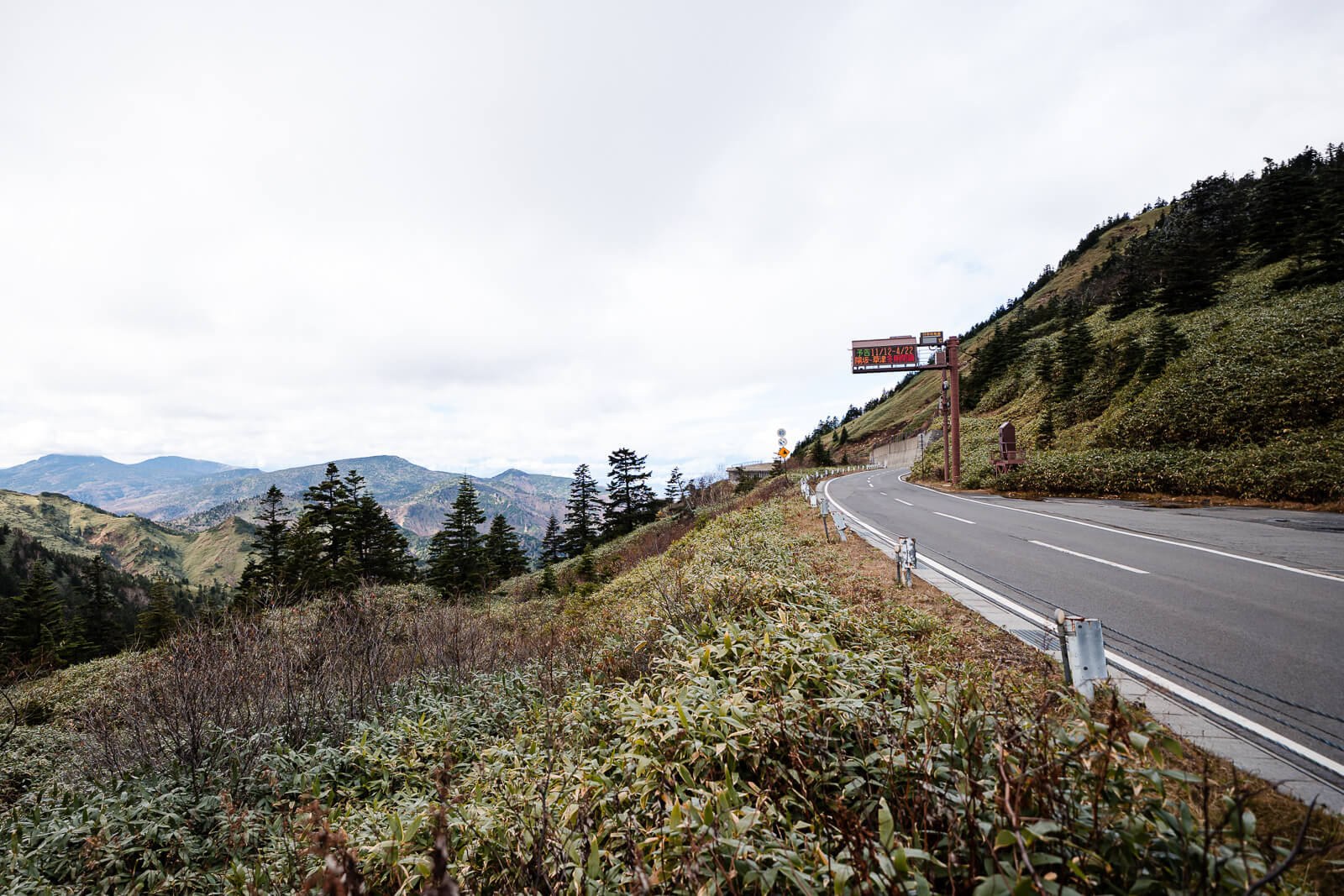
Browse Hakone Tours and Activities
Compare guided tours and bookable experiences if you want to combine Hakone highlights without planning every connection yourself.
Browse Experiences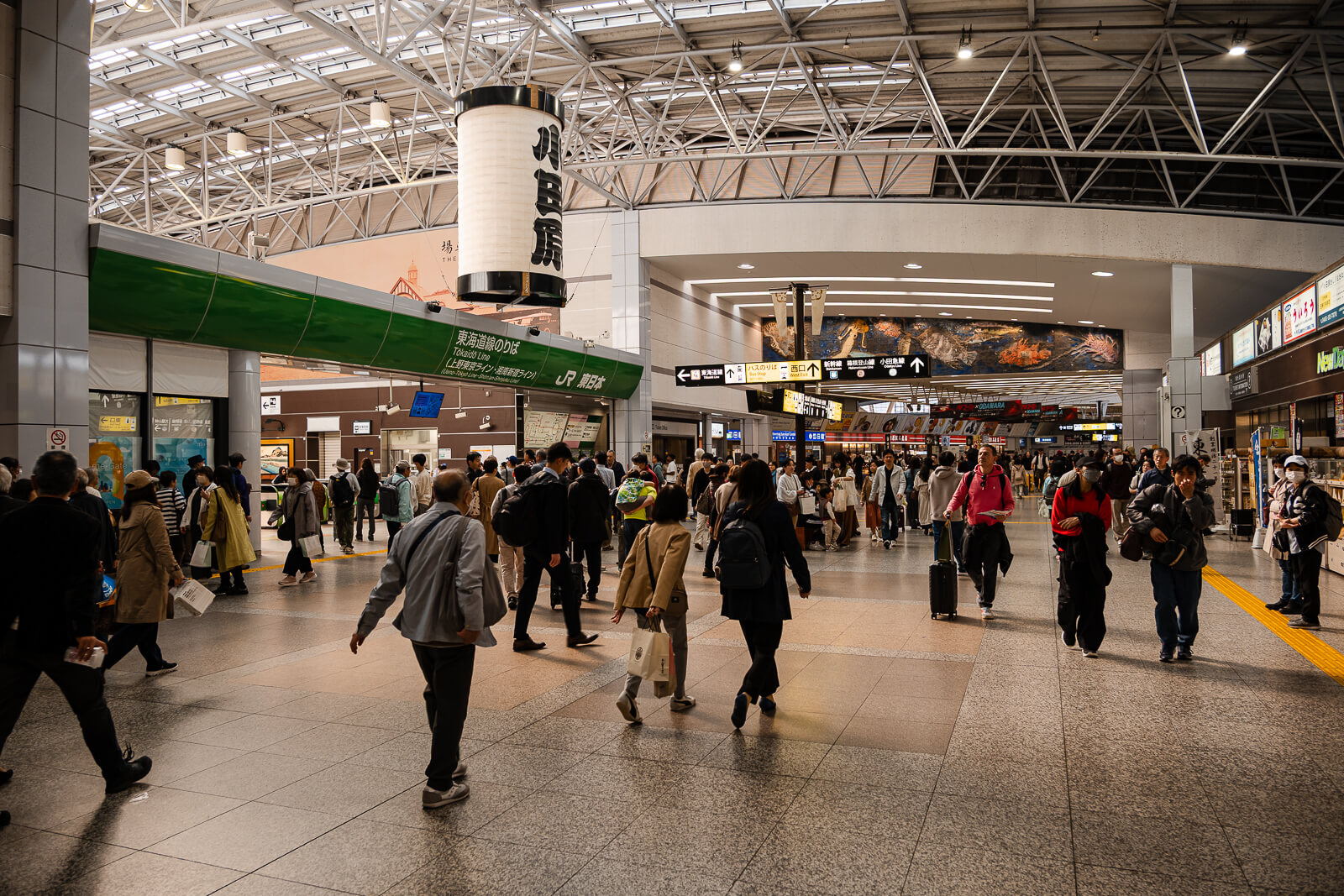
Compare Japan eSIM Options
Mobile data makes it easier to check maps, bus connections and changing plans while moving between Hakone attractions.
Compare eSIMs
Check Hakone Pass Options
Compare transport and pass coverage when your Hakone itinerary includes buses, trains, ropeways or Lake Ashi connections beyond Sengokuhara.
Check Passes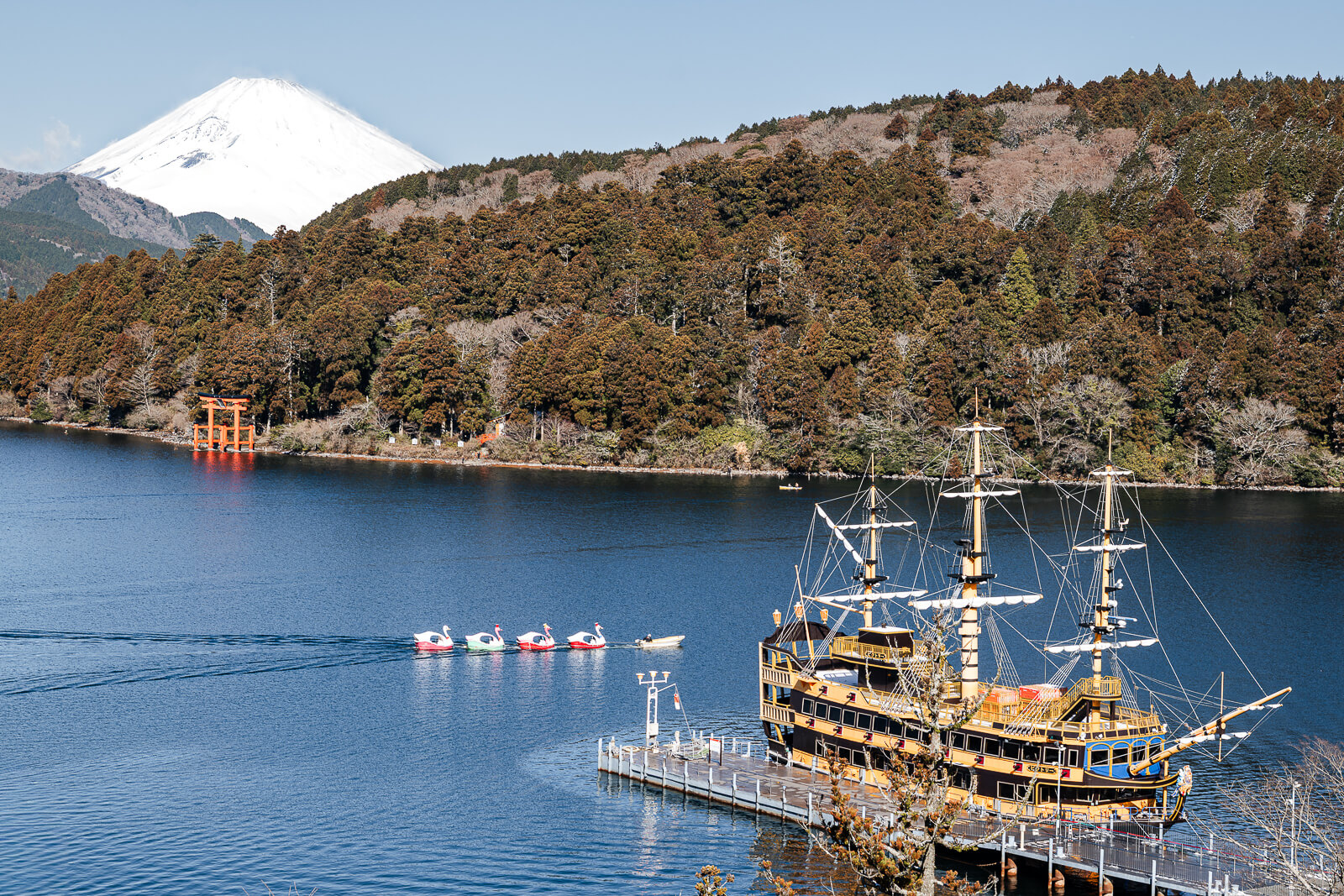
Compare Japan Rail Options
Compare rail tickets and passes if Hakone is one stop in a wider Japan itinerary connecting Tokyo, Kyoto, Osaka or other destinations.
Compare Rail Options
Reader note: Japan Unfolded may earn a commission from some links at no extra cost to you.