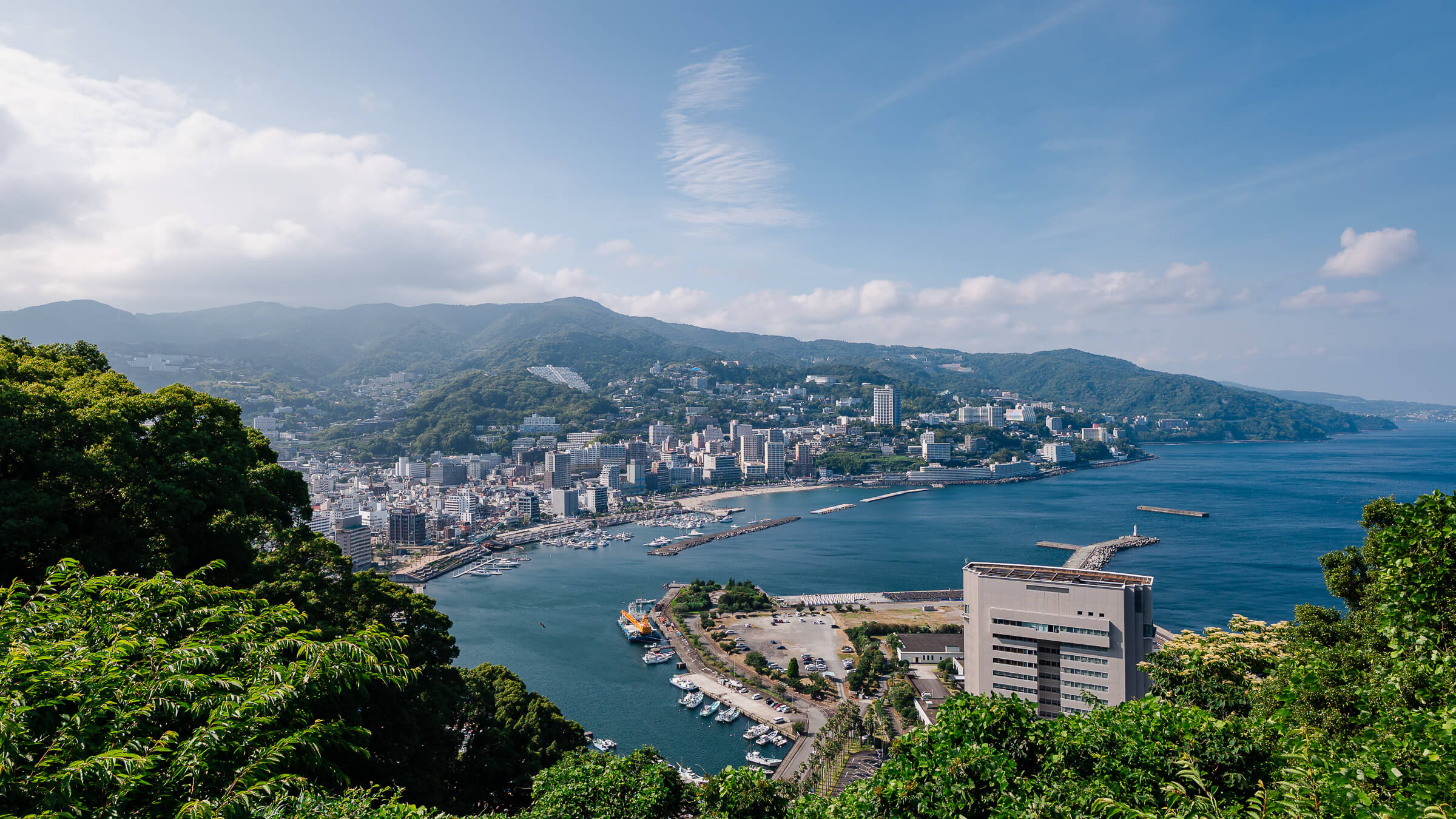
From Kinomiya Shrine to the Seaside
Atami is one of the easiest hot-spring towns to reach from Tokyo, but the city takes more planning once travelers arrive. Located in Shizuoka Prefecture near the northeastern edge of the Izu Peninsula, Atami sits where hillside streets drop toward the bay. The station stands above town, the waterfront spreads below, and several major sights sit across shopping lanes, seaside paths, and short local connections.
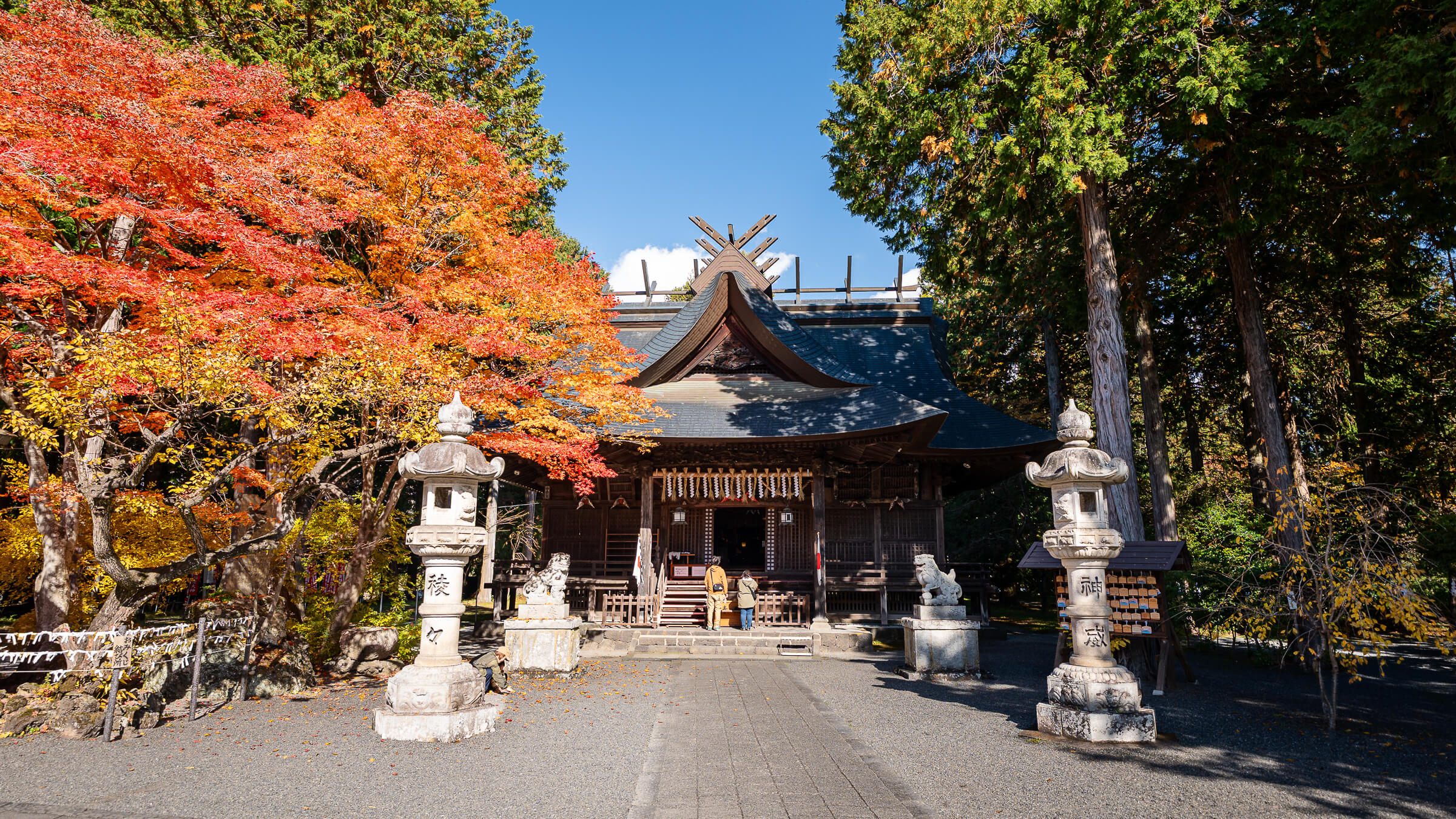
This Atami 1-day itinerary starts at Atami Station and goes inland first to Kinomiya Shrine. After the shrine visit, the day returns to the station area before continuing through Heiwa-dori and Nakamise shopping streets toward the lower town. That order keeps the first part of the day practical and lets the rest of the visit move toward the seaside.
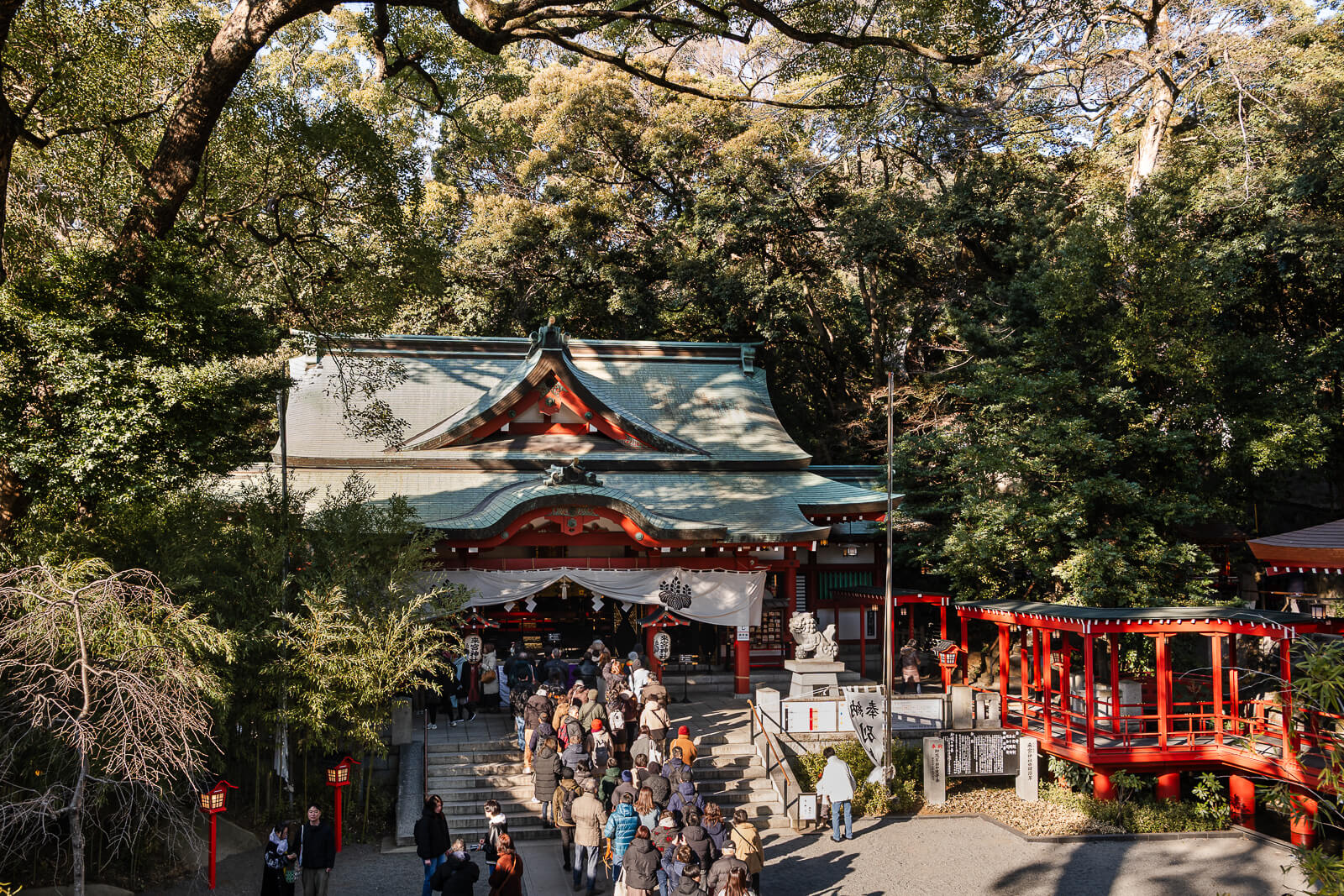
The itinerary works best for travelers who want a clear first visit without turning Atami into a checklist. It covers one major shrine stop, the station-area food streets, the seaside, and the main afternoon choice between a lower-town return or a ropeway and castle extension. Travelers building a wider plan can also use the Atami Area Guide for more destination context before choosing a day trip, overnight stay, or longer itinerary.
Who This Itinerary Fits
This itinerary fits travelers arriving by train who want a clear first route through Atami without using a car. It works well as a day trip from Tokyo, Yokohama, or Odawara, and it can also serve as the first day of an overnight stay. The day gives travelers enough direction to understand the city without trying to cover every major sight.
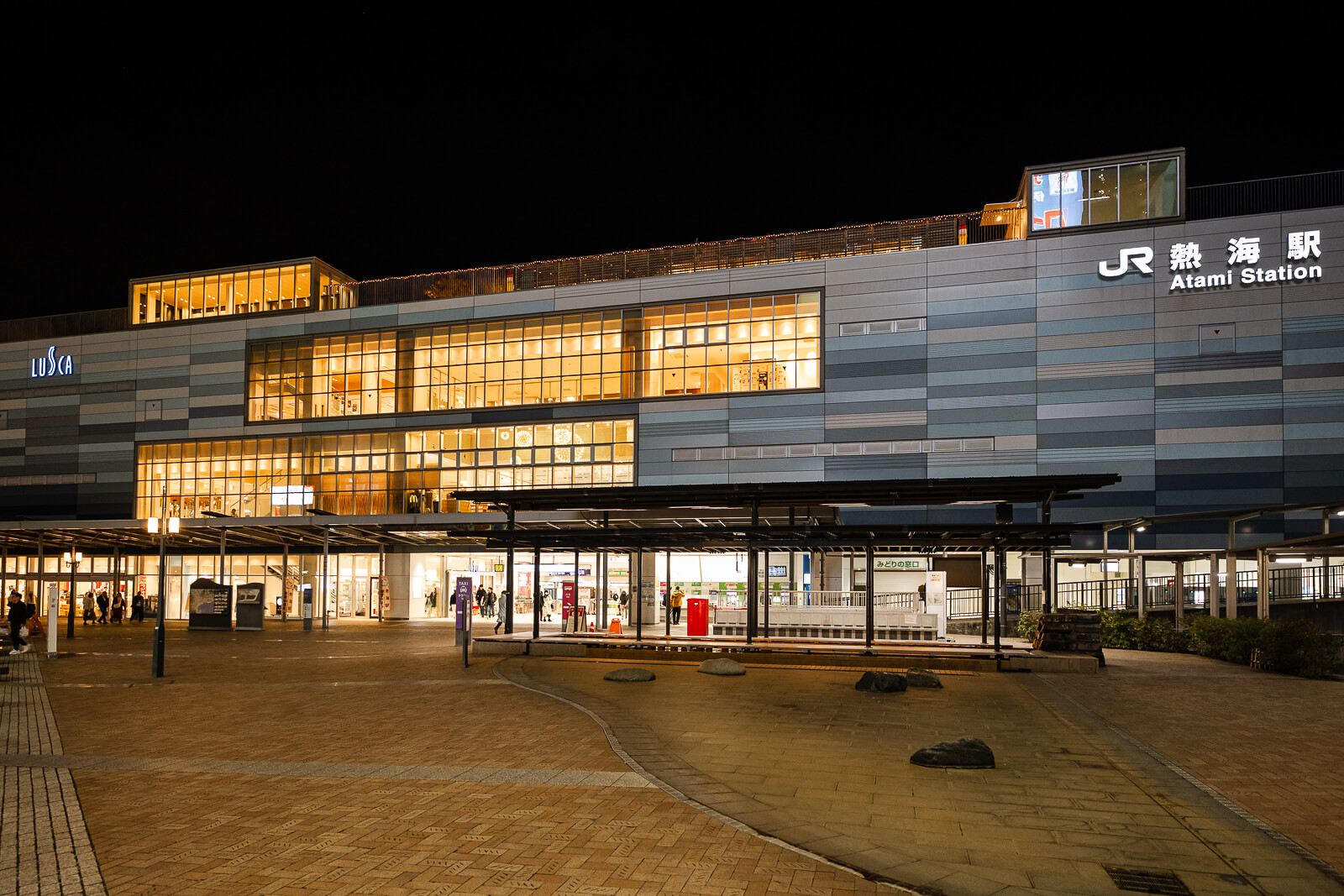
The order is useful because Atami is spread across different levels. Kinomiya Shrine sits away from the seaside, the station streets sit above the lower town, and the beach area sits below the main arrival point. Visiting the shrine first, returning to the station, and then moving downhill keeps the day easier to follow.
The afternoon remains flexible. Travelers can return through Itokawa Promenade and Atami Ginza after the waterfront, or continue toward the Atami Ropeway, Atami Castle, and the Trick Art Museum area. That choice changes the amount of walking, uphill movement, and time needed before the day ends.
How the Day Works
This itinerary uses Atami Station as the main reset point. Travelers begin by going inland to Kinomiya Shrine, then come back to the station area before moving into the shopping streets. That early reset keeps the shrine visit separate from the later food, shopping, and seaside portions of the day.
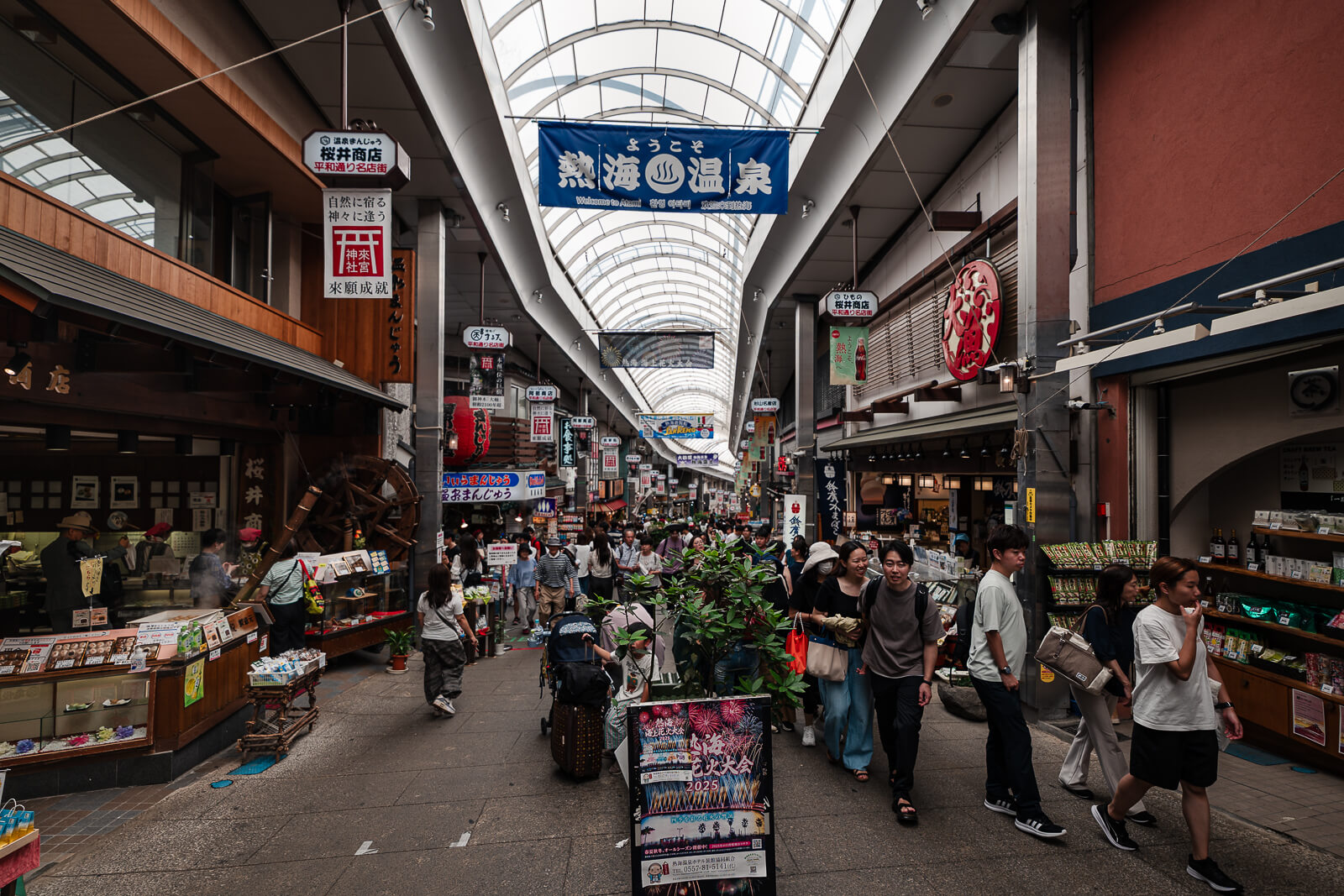
After returning to the station, the day shifts into Atami Station Shopping Streets, including Heiwa-dori and Nakamise. These lanes give travelers a practical food, snack, and browsing section before the walk descends toward Atami Sun Beach. From there, the city becomes easier to read, with the beach, hotels, harbor, and hillside buildings all coming into view.
The main choice comes after Sun Beach and Atami Water Park and Moon Terrace. Travelers can use Itokawa Promenade and Atami Ginza as a lower-town return, or continue farther toward the ropeway and castle area. Both options can complete the day, but trying to force both into a single visit leaves much less room for food stops, photos, and extra time.
A quick look at how this Atami route works.
Atami Station sits above the waterfront, so the day becomes easier once the route starts moving downhill.
1. Start at Atami Station and Head to Kinomiya Shrine
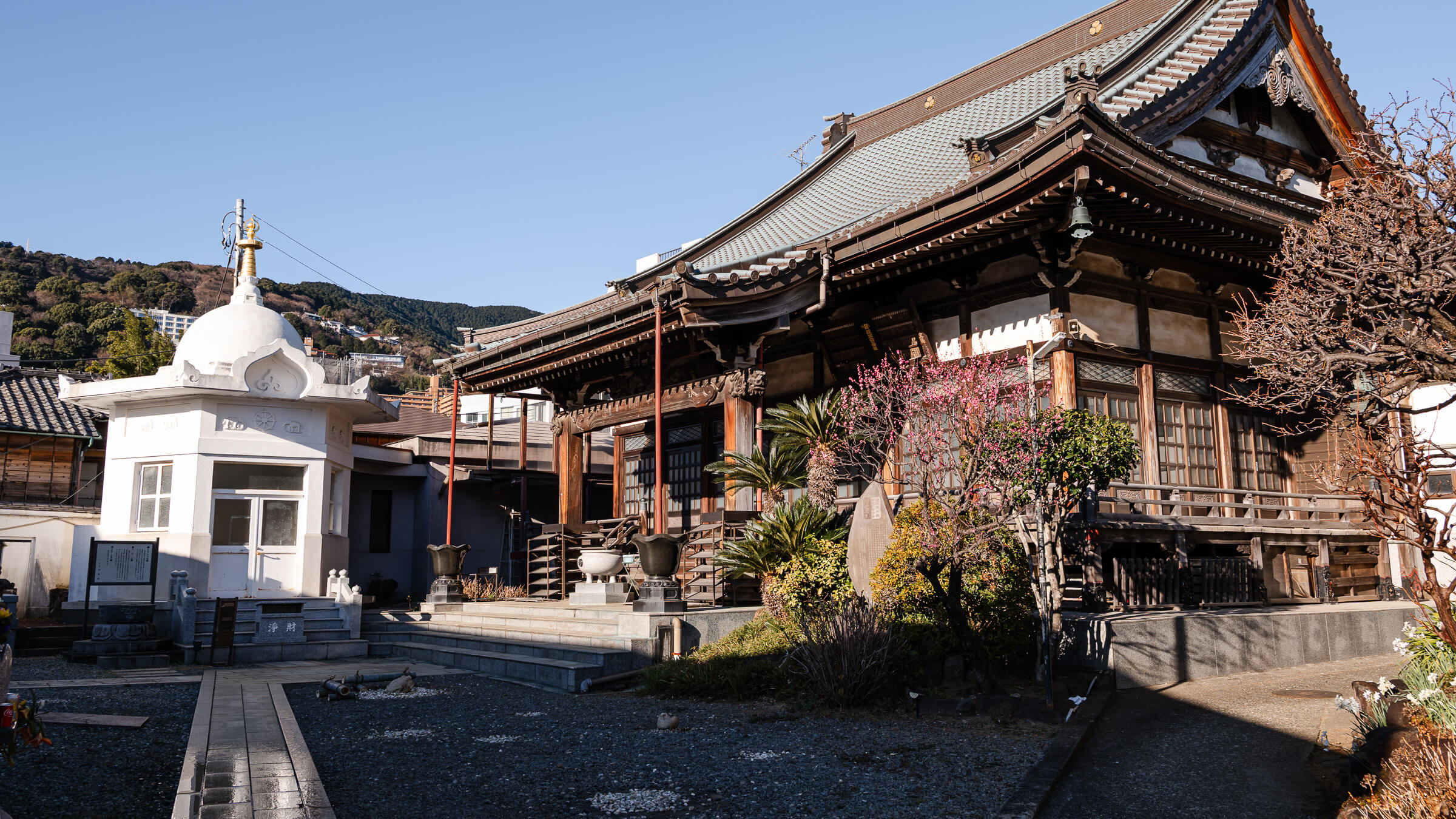
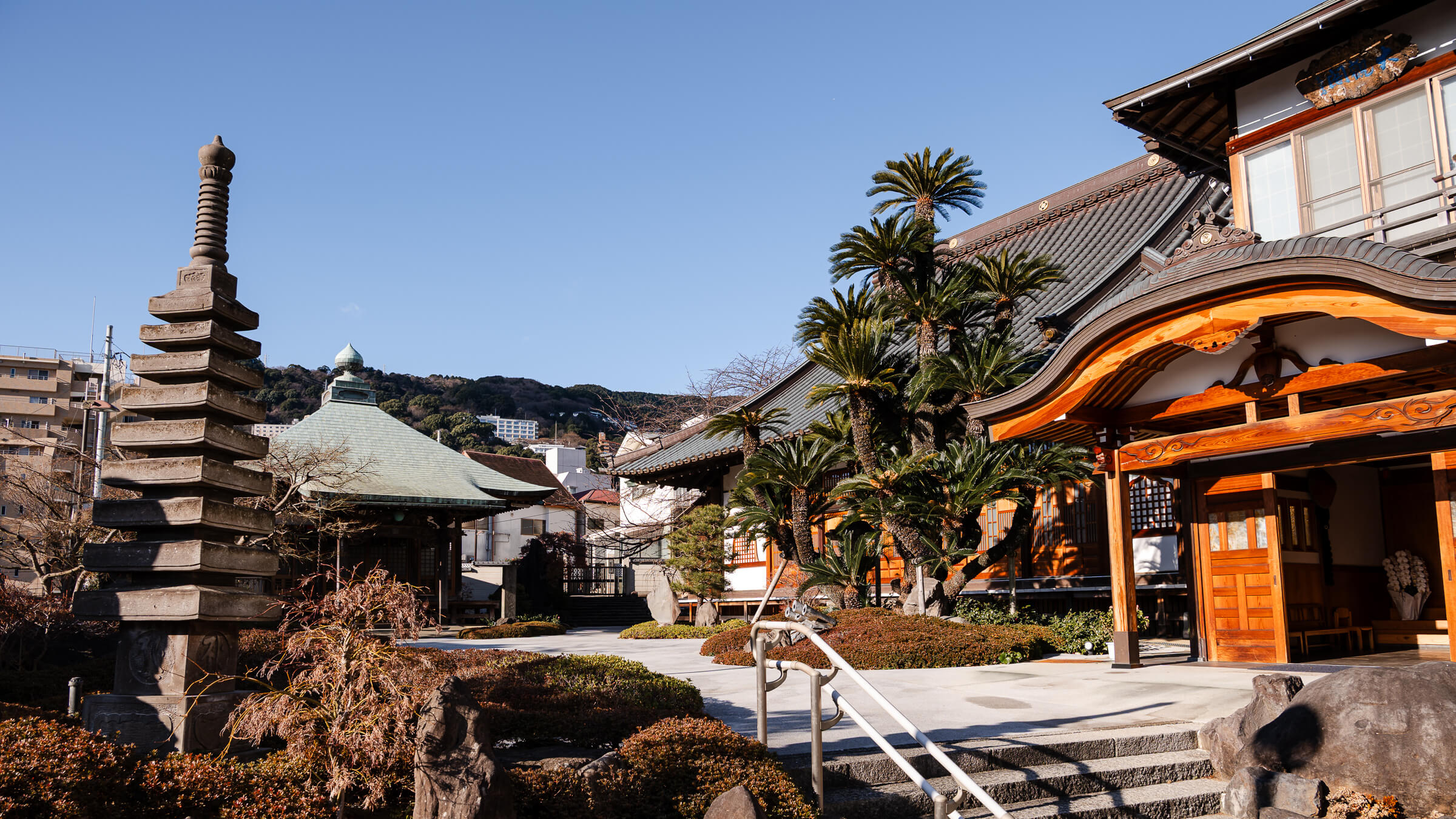
Atami Station is the practical starting point because most visitors arrive by train. The station sits above the lower town, so beginning here makes the rest of the day easier to understand. The first move is inland to Kinomiya Shrine before the day returns toward the shopping streets and seaside.
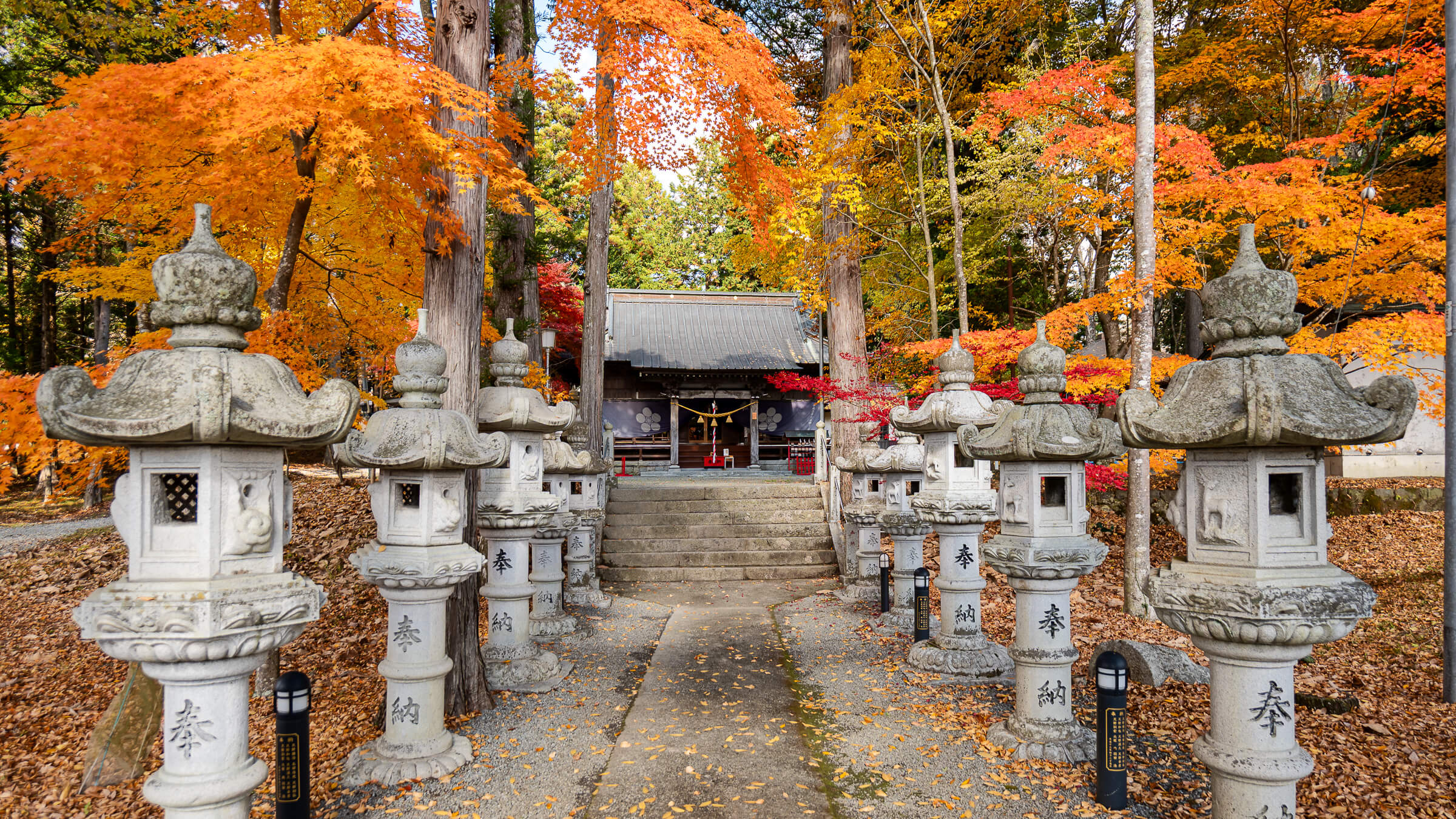
Kinomiya Shrine works well early because it sits away from the waterfront route. Visiting it first keeps the shrine portion separate from the later food streets, beach area, and afternoon choice. It also avoids reaching the seaside too early and then needing to backtrack inland.
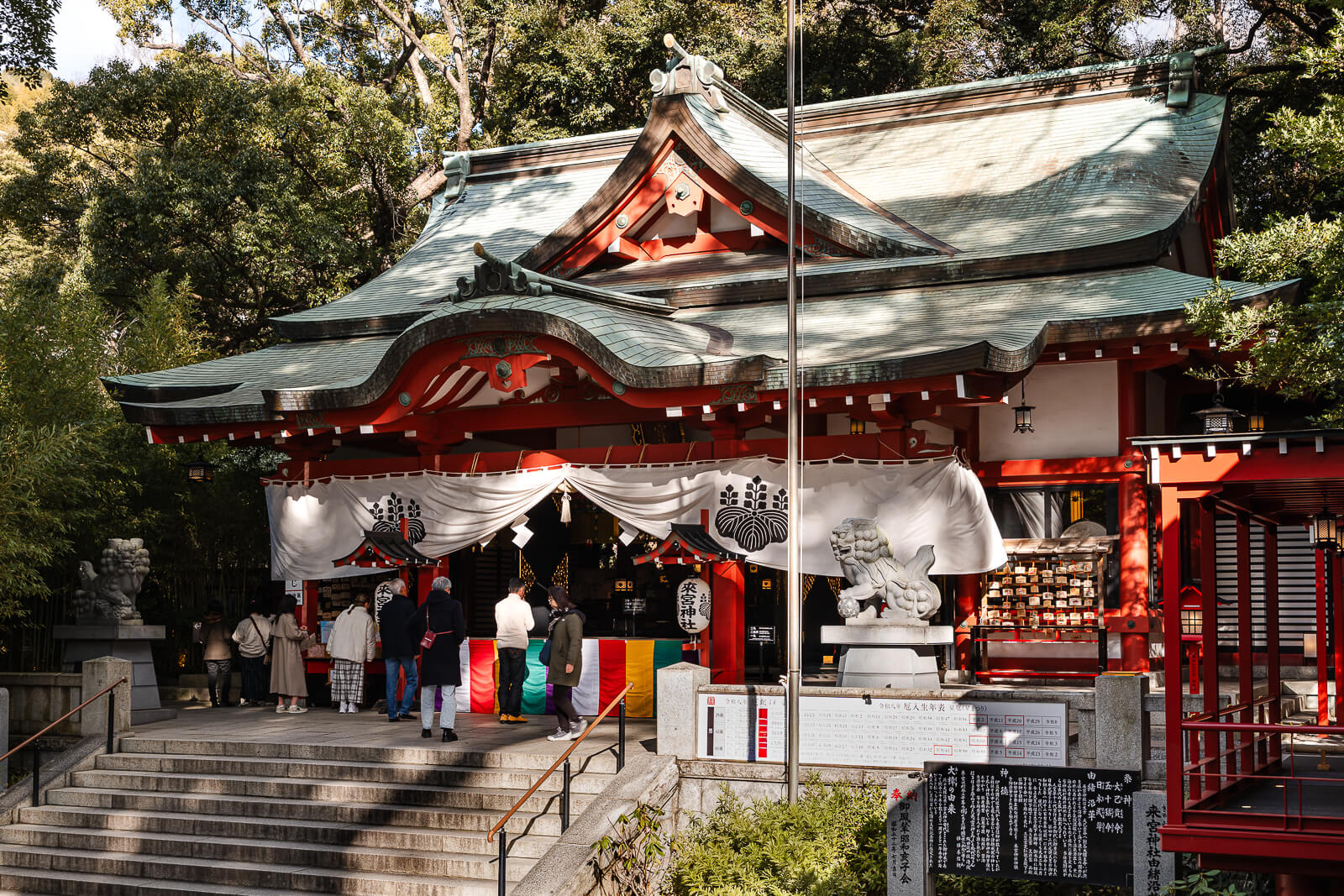
Travelers can reach the shrine by walking from Atami Station or using the local rail connection to Kinomiya Station. Walking adds more city context, but it also adds effort before the main downhill part of the day begins. Travelers who want to save energy for the waterfront, Itokawa return, or ropeway option may prefer the shorter train approach.
2. Return to Atami Station Before the Downhill Route
After visiting Kinomiya Shrine, the day returns to the station area. This reset point matters because it sits between the inland shrine visit and the walk toward the lower town. It also gives travelers a practical place to use restrooms, buy drinks, check food options, or adjust the afternoon plan before heading downhill.
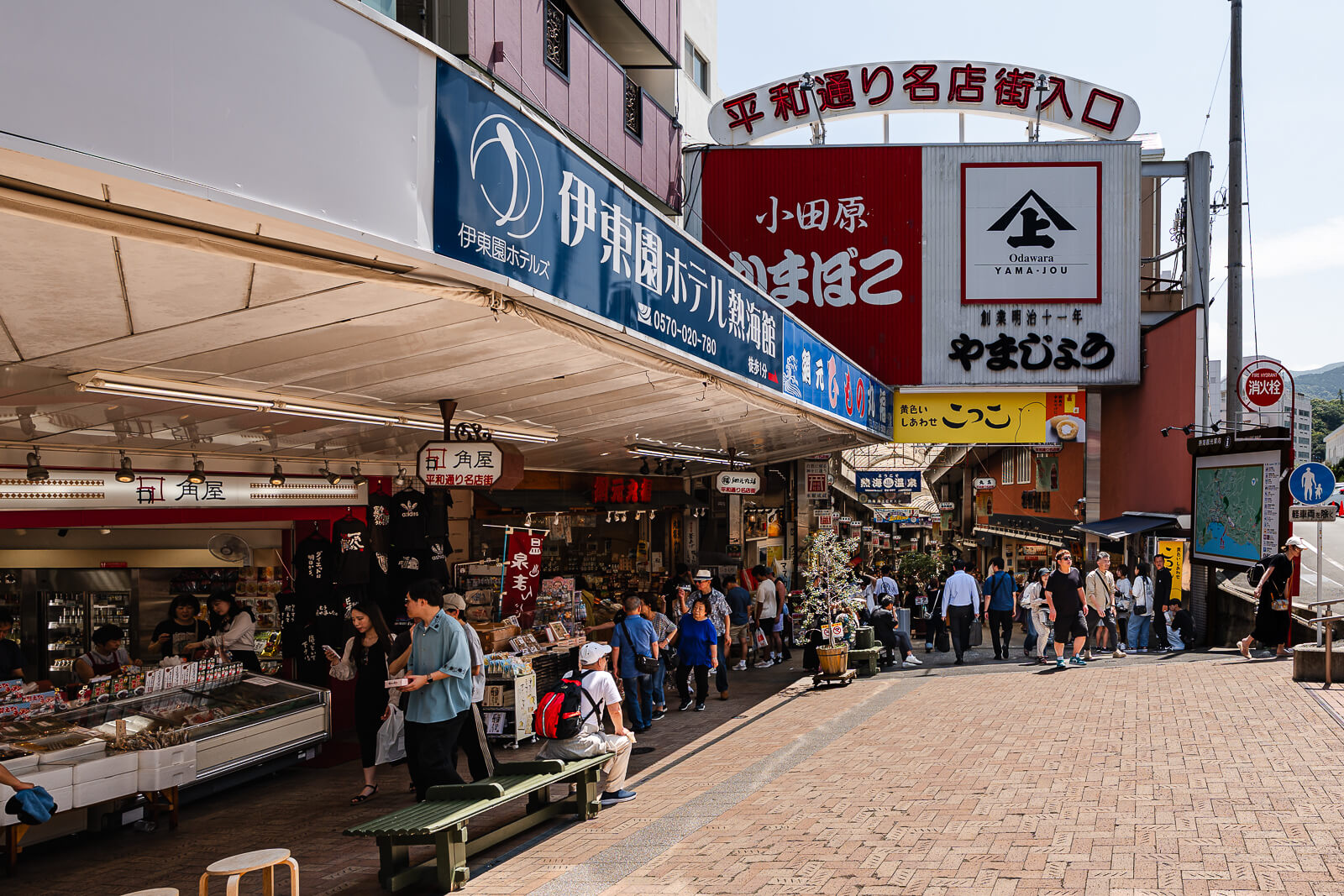
The station area can be a quick pass-through or a longer stop. Travelers moving efficiently can return from the shrine, enter the shopping streets, and keep moving toward the seaside. Travelers who want to browse, snack, or sit down for a meal can easily spend around an hour here, and that time can stretch longer if lunch becomes part of the visit.
This is where the day shifts from arrival logistics into Atami’s main visitor area. Food shops, souvenir stalls, and nearby restaurants give travelers a natural pause before the downhill walk. That timing matters because once the day moves toward the water, the next choices involve the beach, lower-town return, or ropeway extension.
3. Move Through Heiwa-dori and Nakamise Shopping Streets
From the station area, the itinerary moves through Atami Station Shopping Streets, including Heiwa-dori and Nakamise. These lanes create the easiest transition from the train station into the lower part of the city. They also give the day a useful food and shopping section before the walk continues toward Sun Beach.
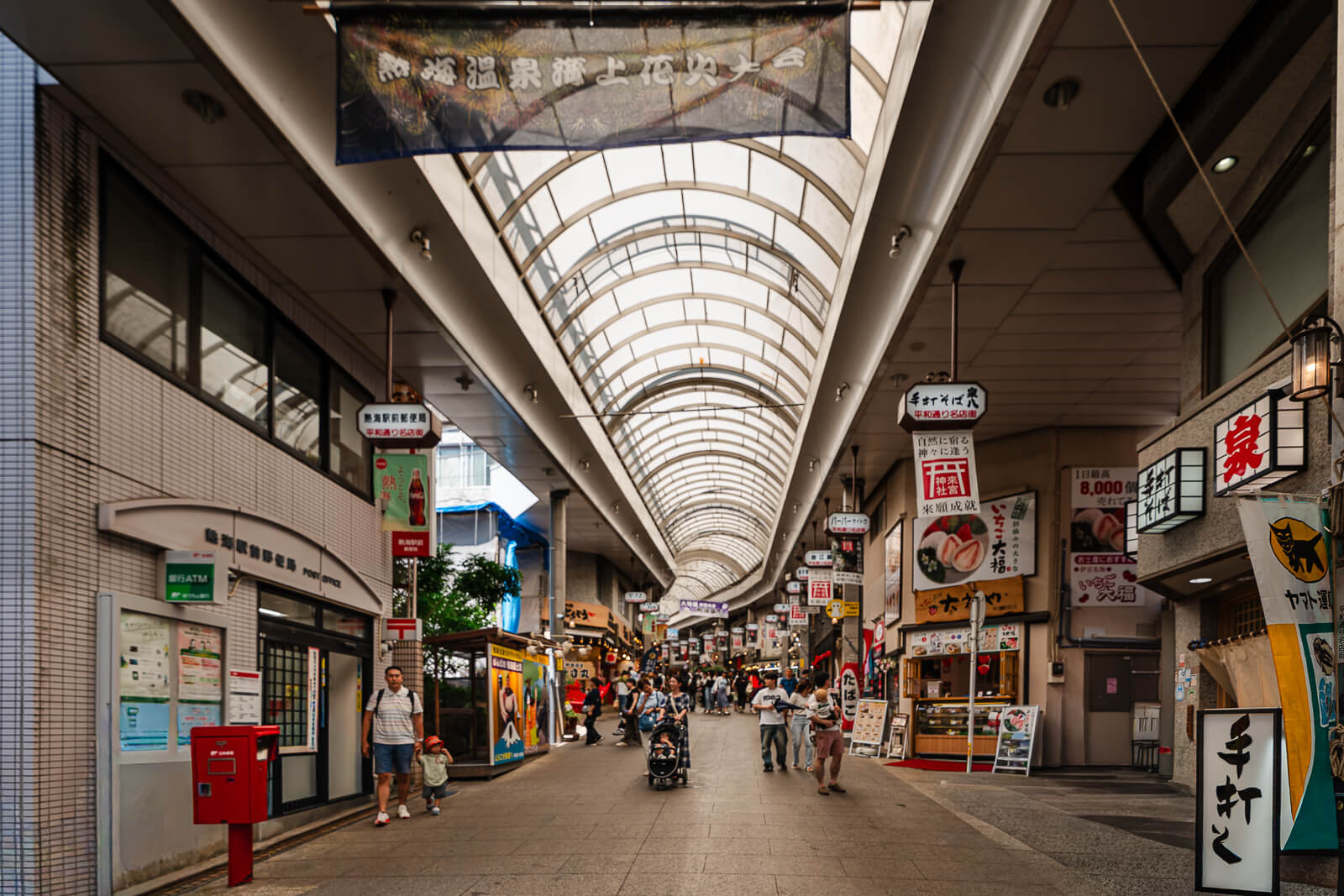
This part of Atami can be handled quickly, but it should not be treated only as a walkway. Snack shops, souvenir stores, seafood products, sweets, and casual food stops line the area around the station and continue along nearby streets. Osakana Dai Shokudo is a strong meal option when it is open, and there are additional food spots scattered along the walking routes toward the waterfront.
The main planning point is time. The walk from the station area toward Sun Beach can take about 15 minutes if travelers keep moving, but it can easily become an hour with browsing, snacks, or a sit-down meal. Travelers planning to continue to the ropeway and castle area later should keep this section tighter so the afternoon does not become rushed.
4. Continue Downhill Toward the Waterfront
After the shopping streets, the itinerary continues downhill toward the waterfront. Several walking options connect the station area with Sun Beach, and most are similar in overall time. The better choice depends on whether travelers want a direct walk, more shops along the way, or a return path that later connects through the lower town.
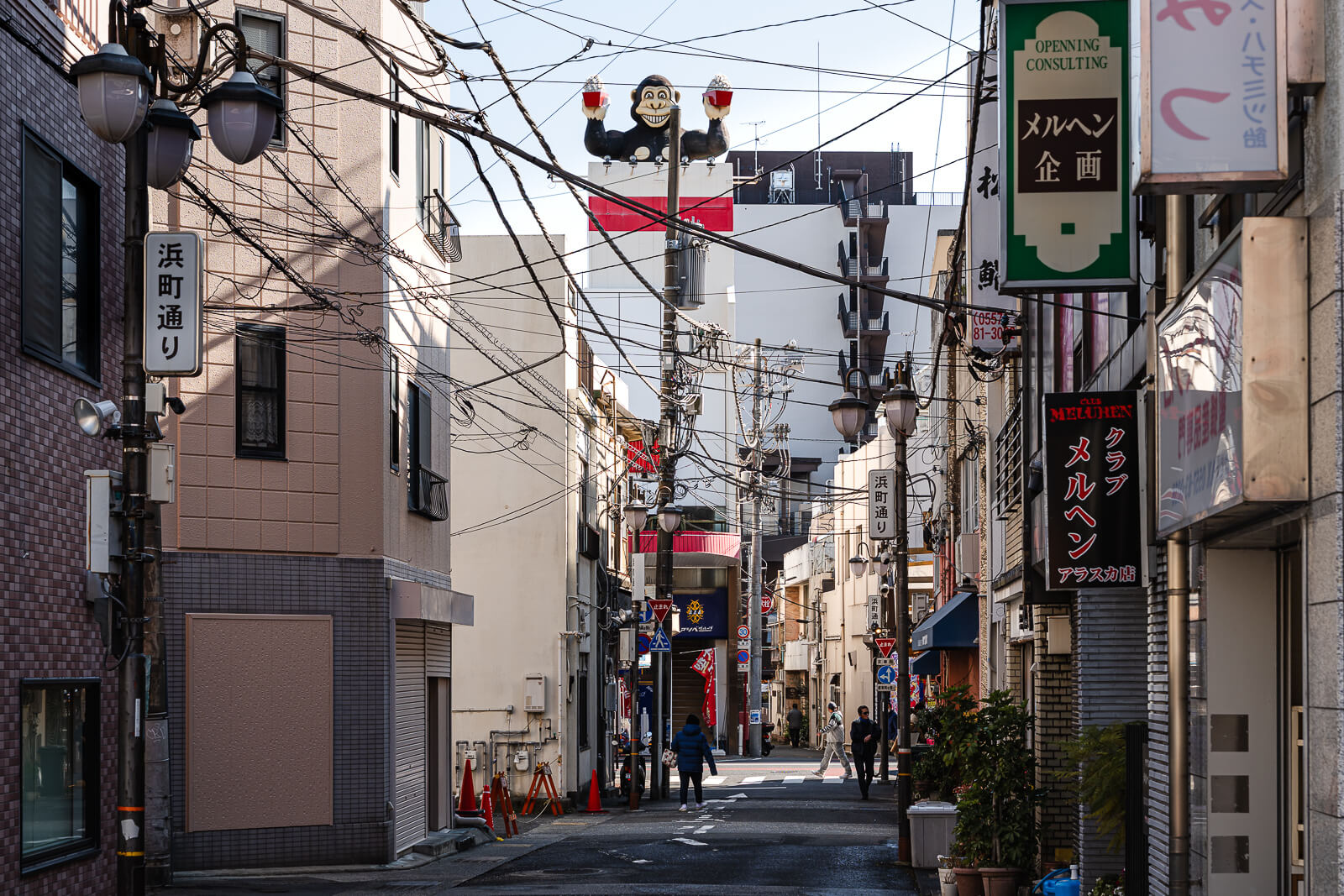
The main road is useful because more shops and food stops appear during the descent. This makes it a good choice for travelers who want the walk itself to feel like part of the visit. A more direct path can move faster toward the seaside, while a wider return can later connect through Itokawa Promenade and Atami Ginza.
This downhill section helps Atami make sense as a resort town. The station, hotel slopes, lower streets, beach, harbor, and hillside buildings begin to connect once travelers move toward the water. The walk is short enough to stay manageable, but food stops, side streets, and photo pauses can easily make it one of the more flexible parts of the day.
5. Spend Time Around Sun Beach and Moon Terrace
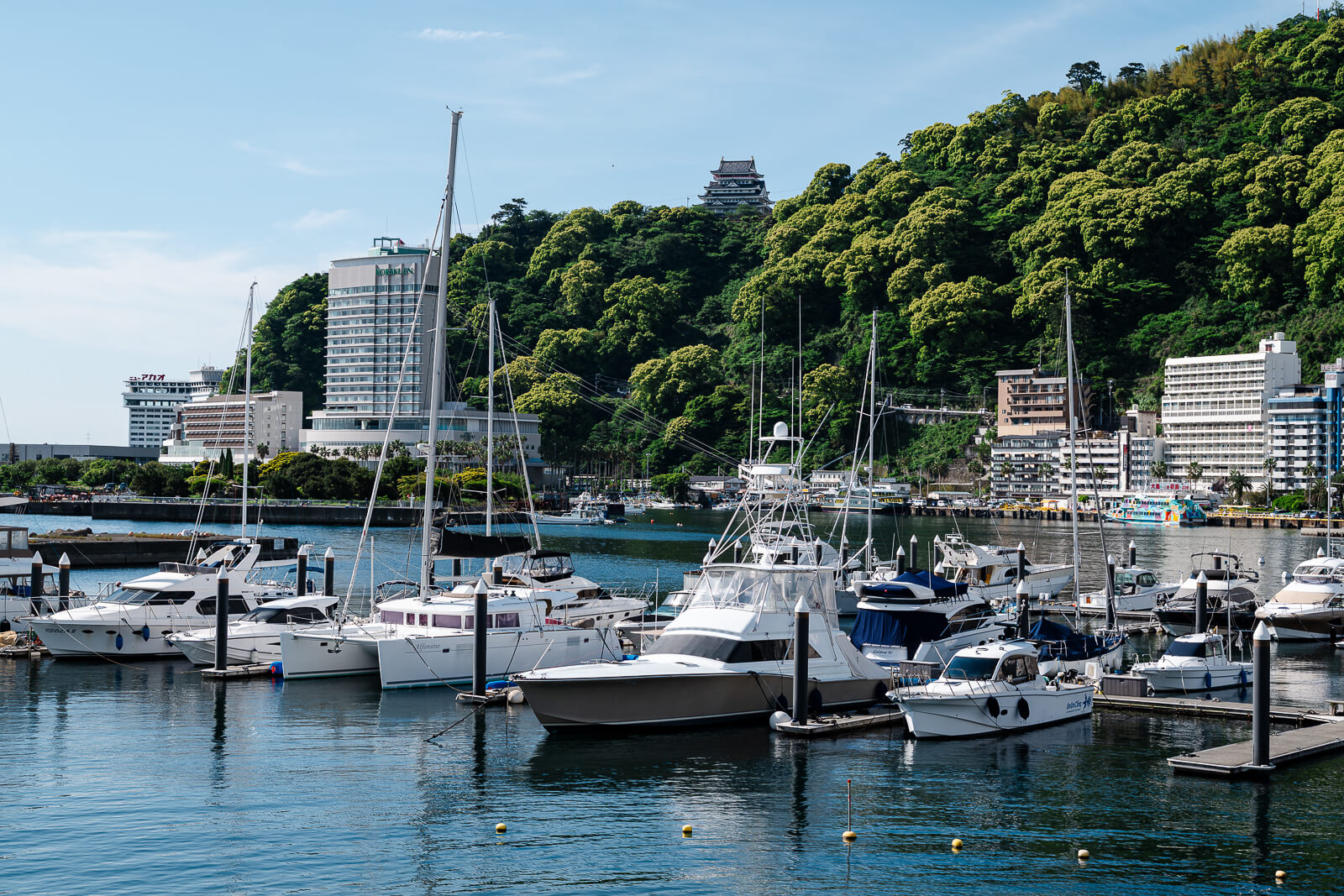
Atami Sun Beach is the main waterfront stop on this itinerary. The beach gives the day a clear seaside section after Kinomiya Shrine, the station shopping streets, and the downhill walk. Even outside swimming season, this is where Atami’s resort setting becomes easiest to read.
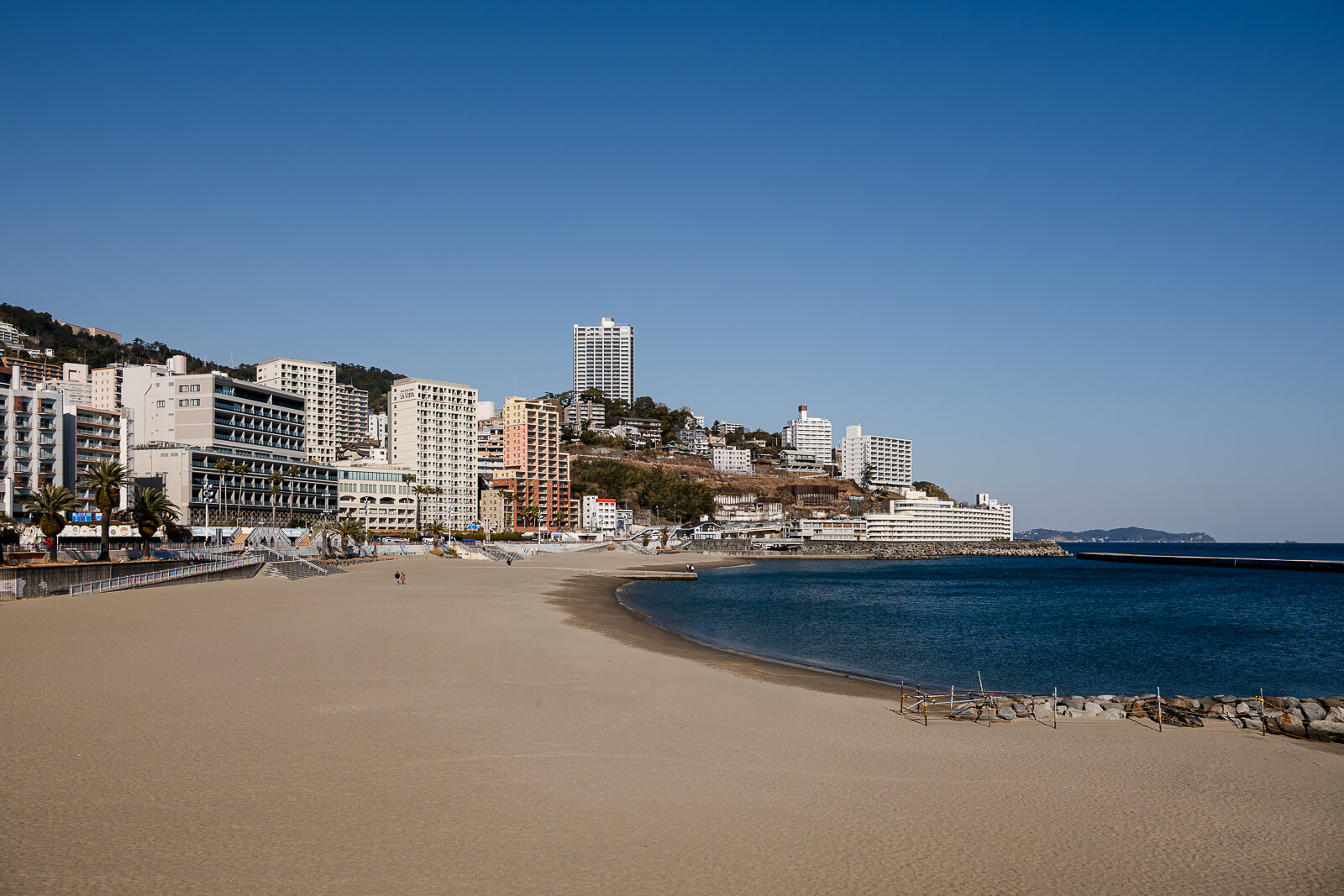
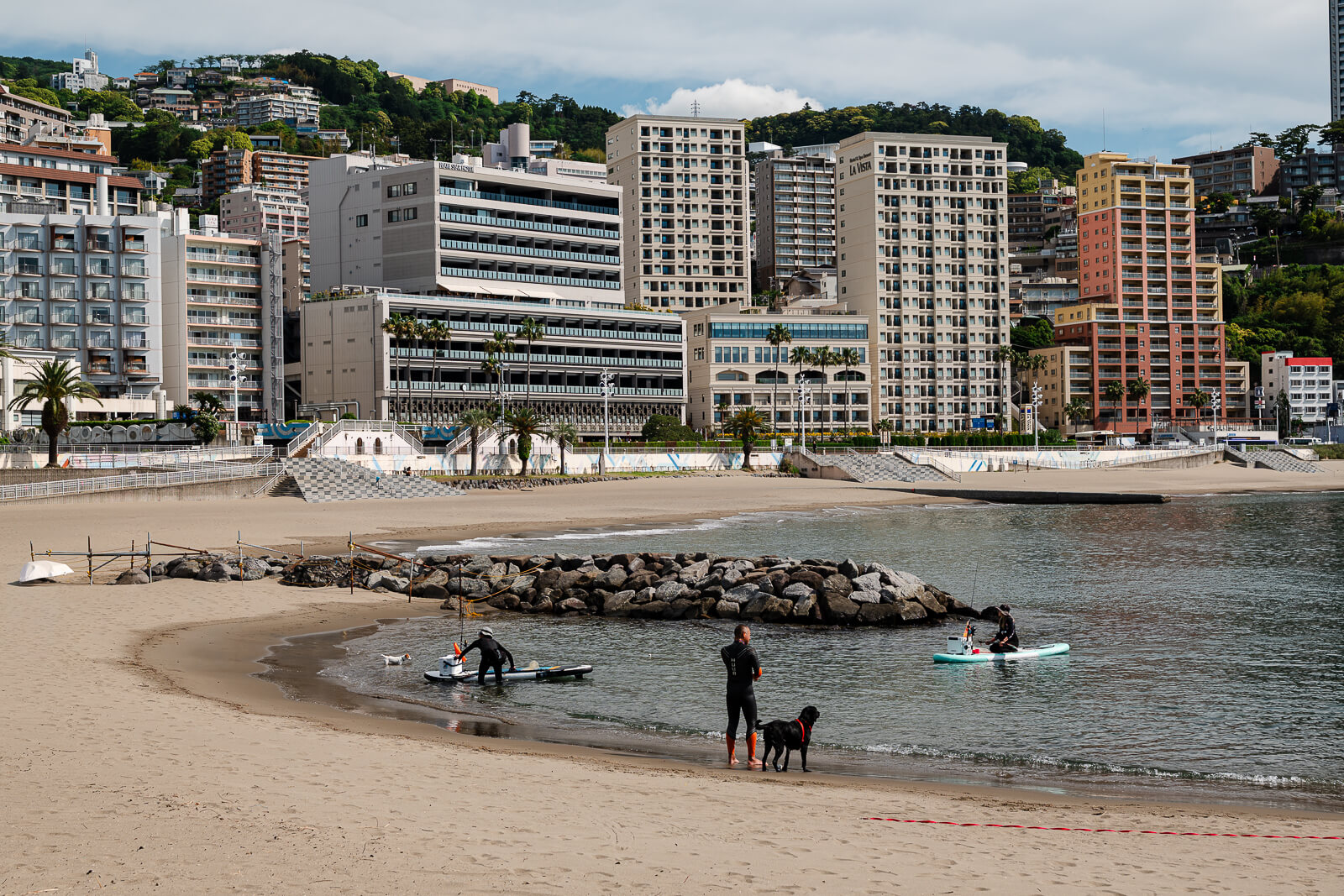
Nearby, Atami Water Park and Moon Terrace add an easy continuation from the beach. This area works well for photos, a short break, and views back toward the hotel-lined waterfront. It also gives travelers a natural pause before deciding whether to return through the lower town or continue toward the ropeway and castle area.
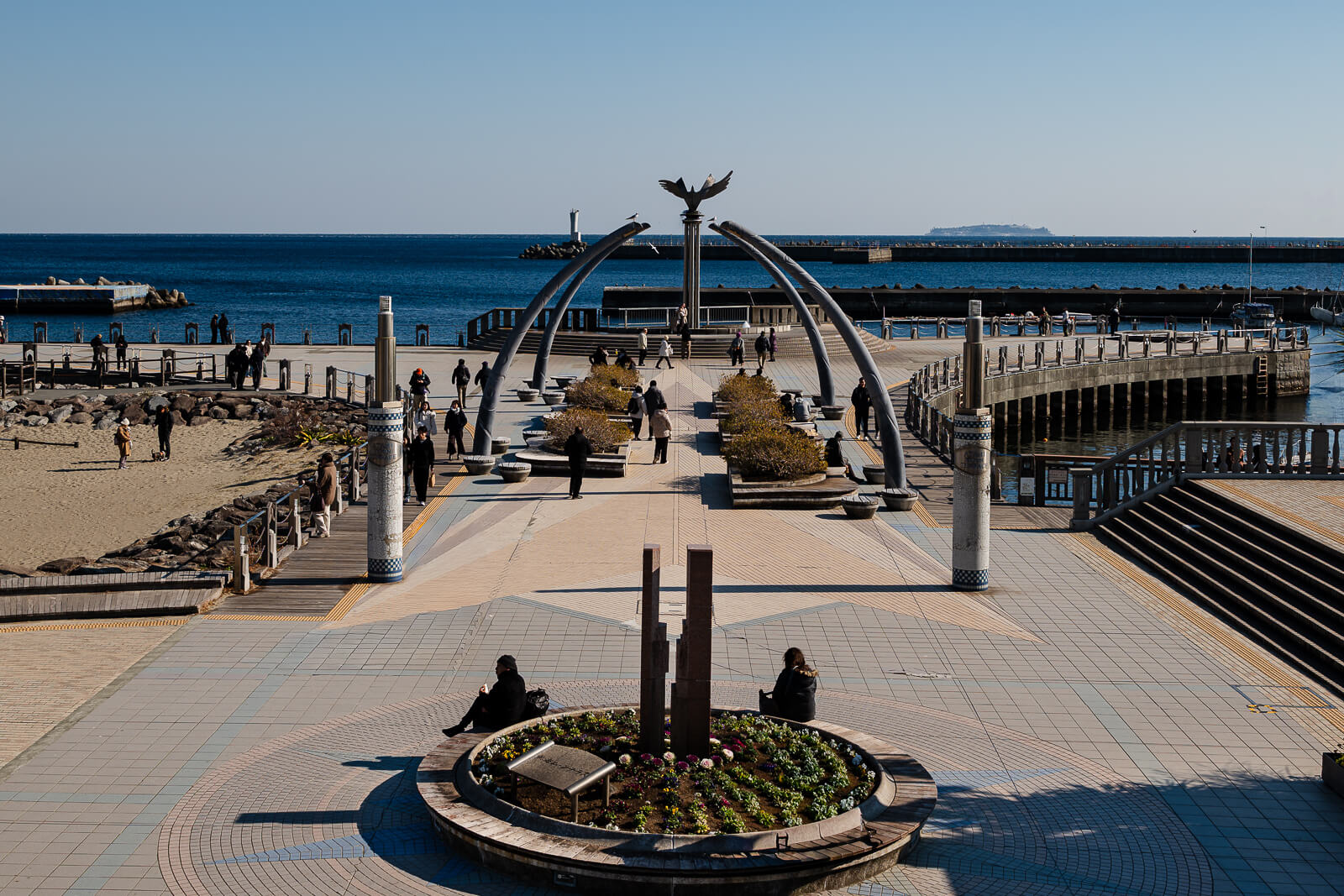
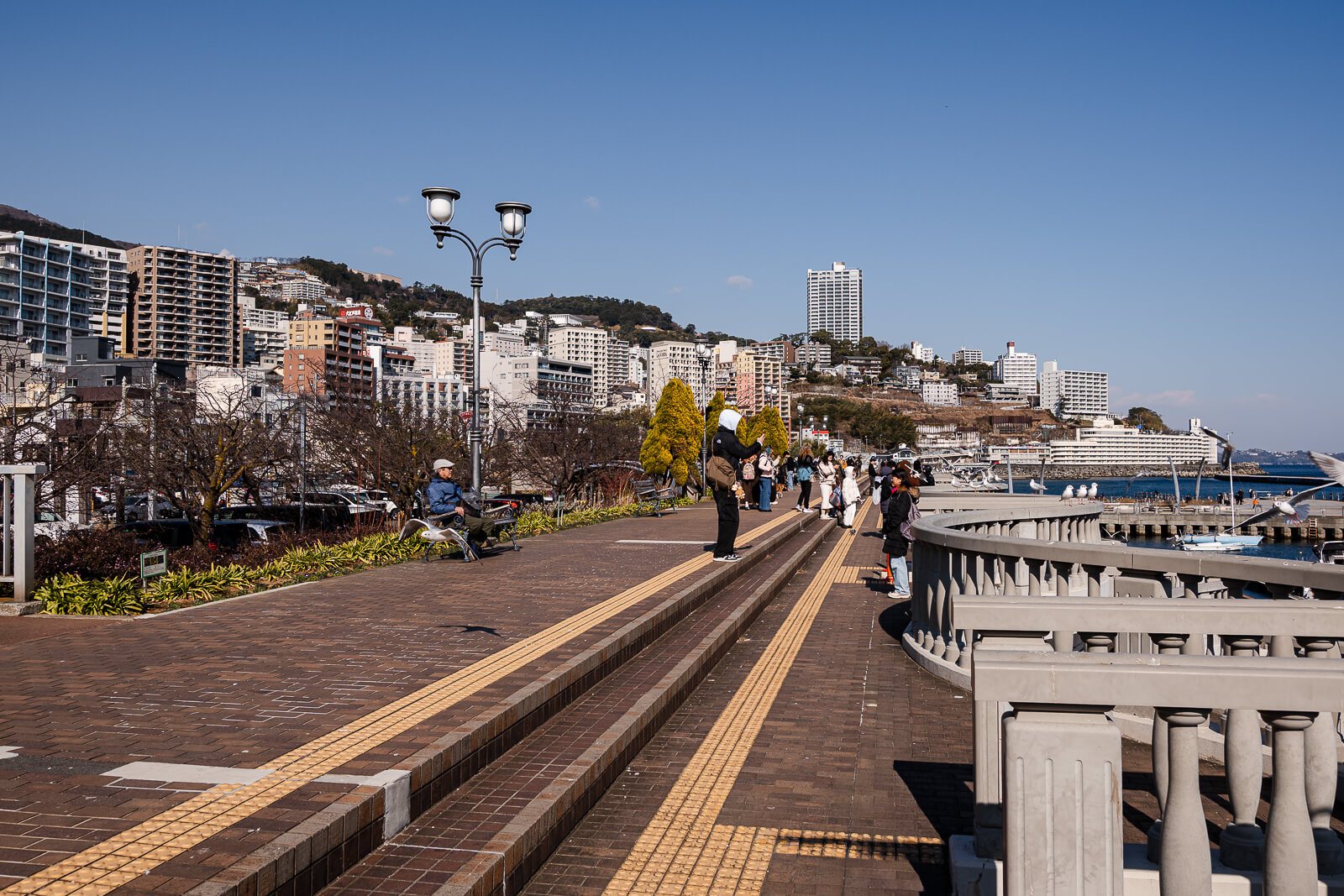
Food options are also available near the beach. Jonathan’s is one of the easiest choices near Sun Beach and Moon Terrace, especially for travelers who want a simple sit-down meal near the water. Other restaurants and cafes sit around the lower town and Ginza side, so the waterfront does not have to be the final food stop if the day continues inland again.
6. Choose the Itokawa Return or Ropeway Extension
The main afternoon choice comes after Sun Beach and Moon Terrace. Travelers can return through Itokawa Promenade and Atami Ginza, or they can continue toward the Atami Ropeway, Atami Castle, and the Trick Art Museum area. This choice affects time, uphill movement, and how directly travelers return to Atami Station.
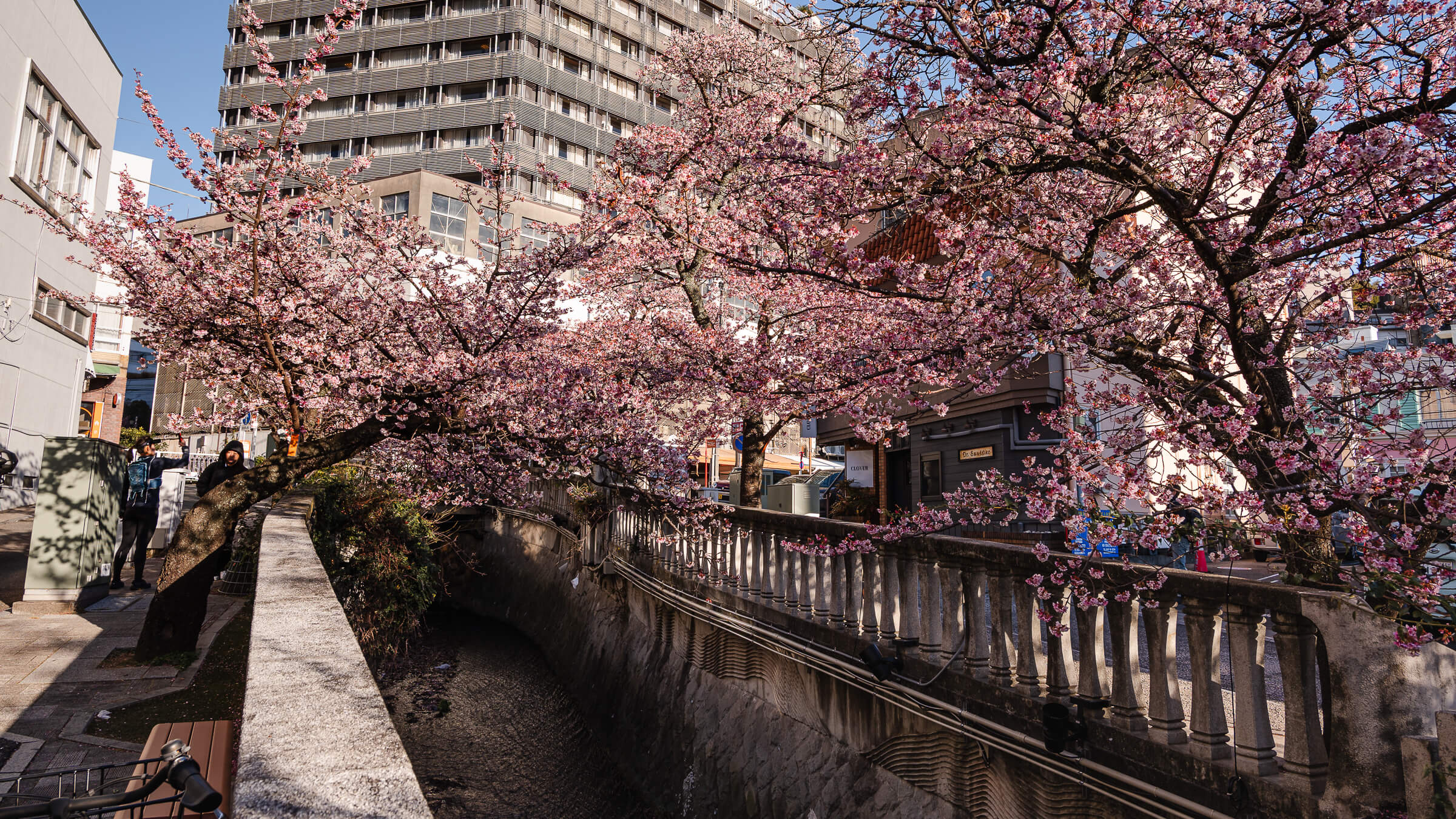
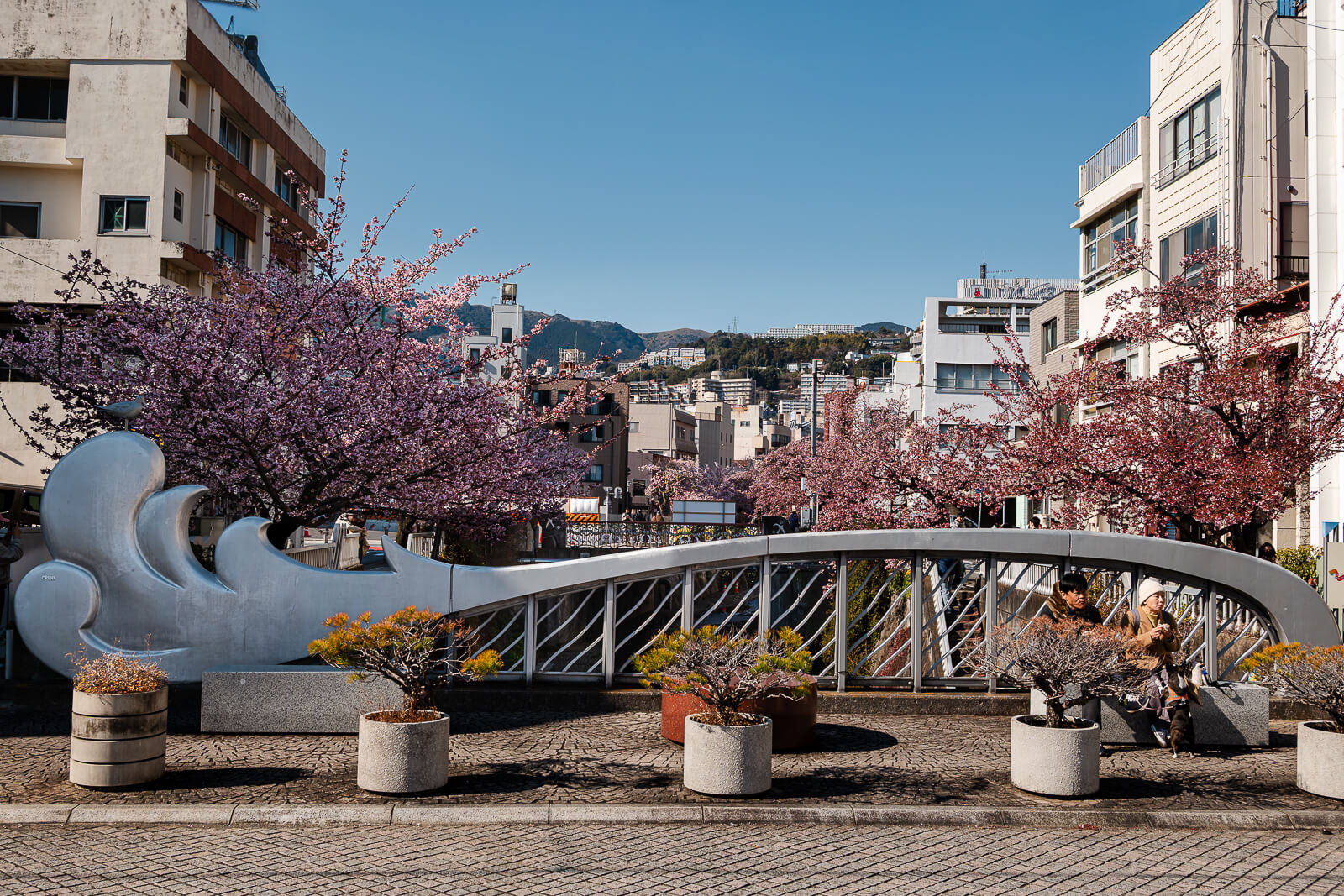
The Itokawa return works best when travelers want to keep the day focused on central Atami. From the waterfront, the route can move through Moon Terrace, nearby seaside paths, Itokawa Promenade, and Atami Ginza before heading back toward the station. This option fills out the day with lower-town walking, food options, small streets, and city context instead of making the afternoon feel like it ends at the beach.
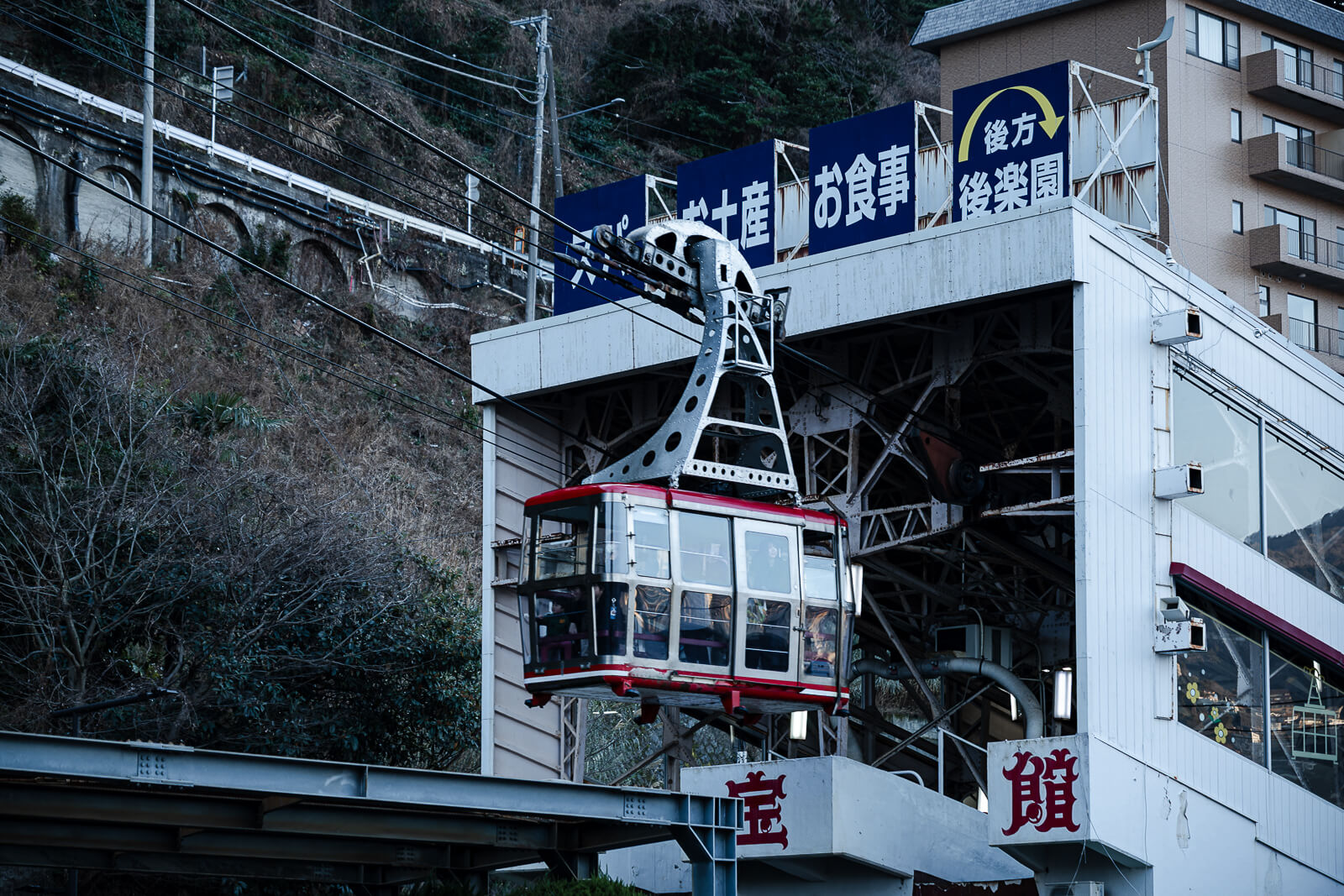
The ropeway extension is the stronger choice when travelers still have time and energy after the waterfront. Continuing toward the ropeway and Atami Castle area adds more movement, but it also brings the day above the bay. This version works best in clear weather and with enough time left before shops, restaurants, and return connections begin narrowing later in the day.
For a one-day itinerary, travelers should treat this as the main afternoon decision instead of trying to force both options. The Itokawa and Atami Ginza return creates a complete central Atami day without the ropeway. The ropeway and castle extension shifts the afternoon toward views, added movement, and a longer return to the station.
How Much Time You Need
Most travelers should plan on this Atami itinerary taking most of a day. The walking distances are manageable, but the day naturally expands through shrine time, station-area browsing, food stops, photos, and the afternoon choice after Sun Beach. Travelers who keep moving can finish the central version faster, but that would miss much of what makes the route useful.
A practical version works best at about five to seven hours from arrival to return. That gives enough time for Kinomiya Shrine, the station area, the downhill walk, the waterfront, and one clear afternoon option. The station streets alone can take much longer than expected if travelers stop for lunch, snacks, or shopping.
Day trippers should choose the afternoon direction before the day gets too late. The Itokawa Promenade and Atami Ginza return fills out the central route after the waterfront, while the ropeway and castle extension adds views and extra movement. Both can work well, but trying to include every option leaves less room for food stops, photos, and schedule changes.
Where to Eat Along the Route
Food fits this Atami itinerary best when travelers think about where they are in the route. The station area is the first major food zone, with Heiwa-dori and Nakamise offering snacks, seafood products, sweets, souvenirs, and casual places to pause before the downhill walk begins. This is also the best place to decide whether lunch should happen early or whether the day should keep moving toward the waterfront.
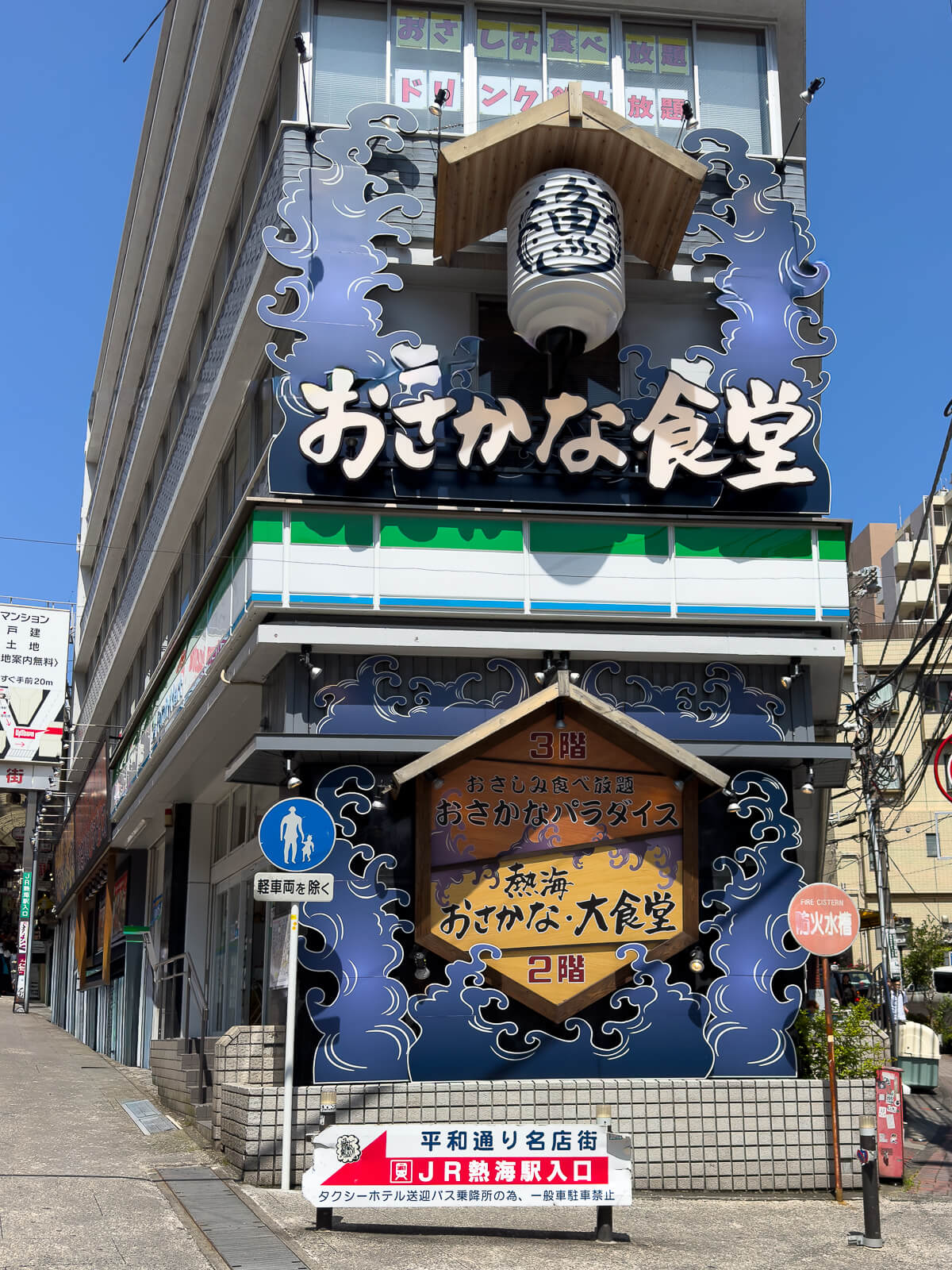
Osakana Dai Shokudo is one of the strongest choices near Atami Station when it is open. It works especially well for travelers who want a seafood meal before leaving the station area and committing to the lower-town portion of the route. A sit-down meal here can easily turn the station area into the main lunch stop, so travelers planning to add the ropeway and castle extension should watch the time.
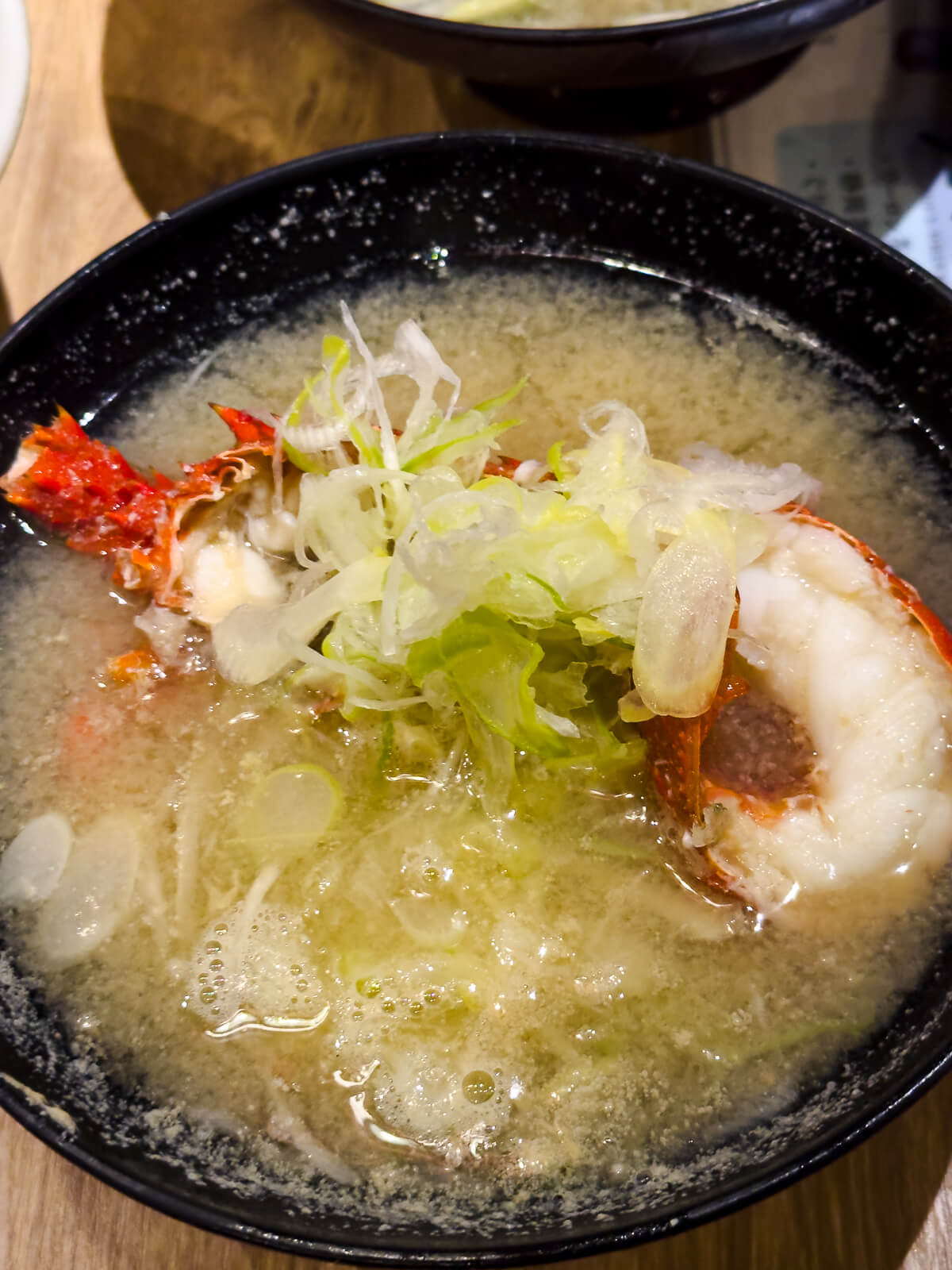
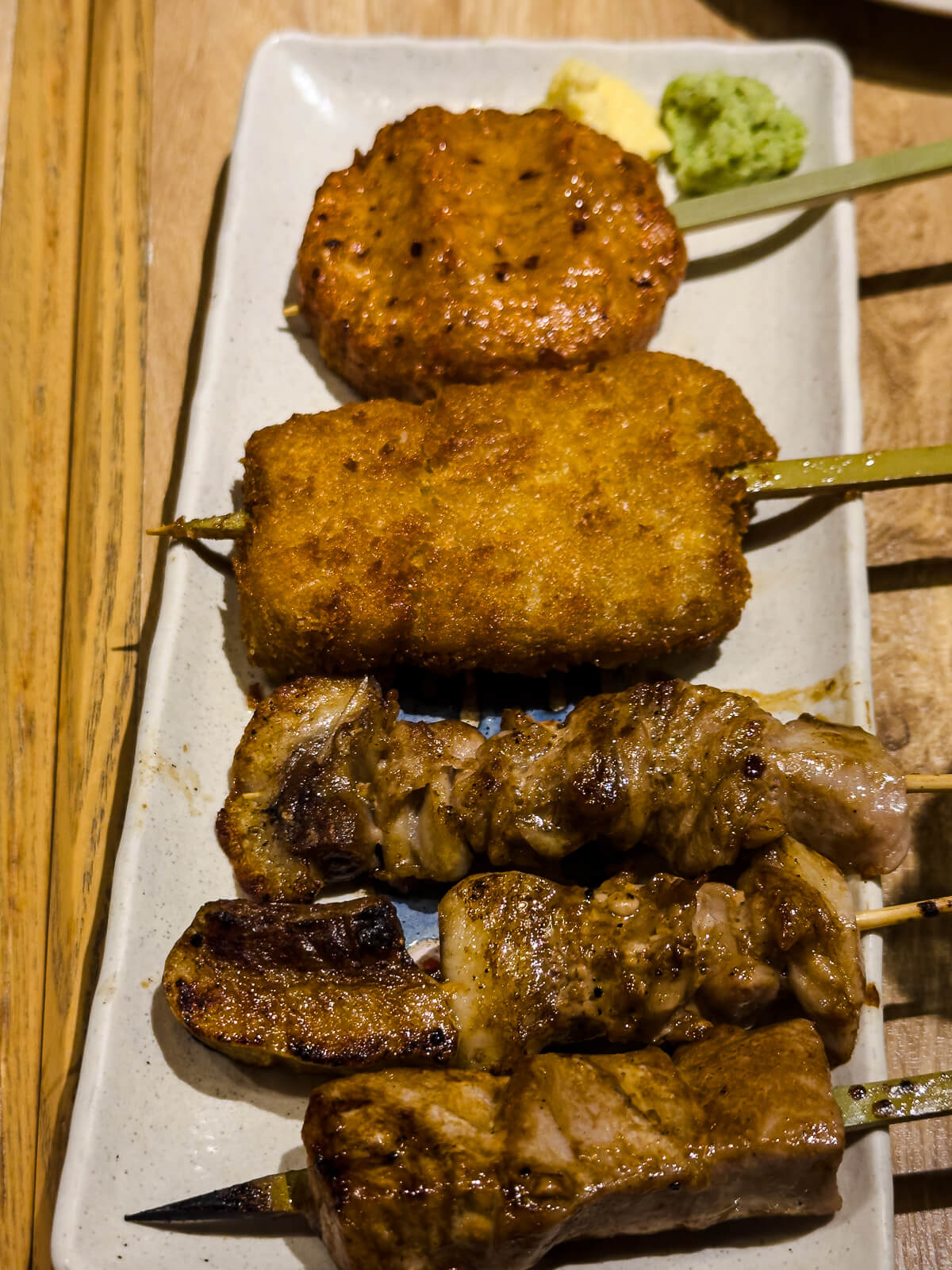
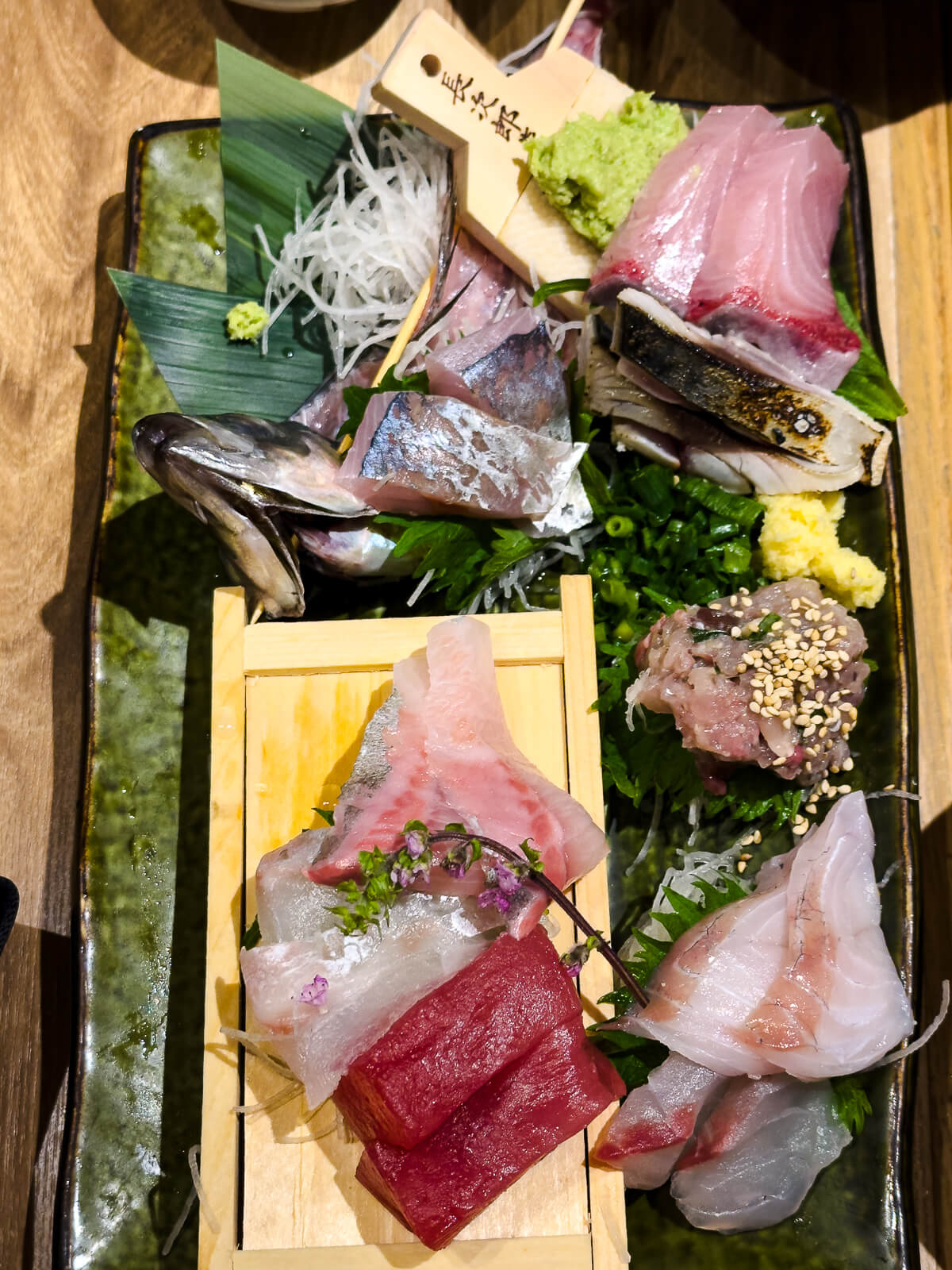
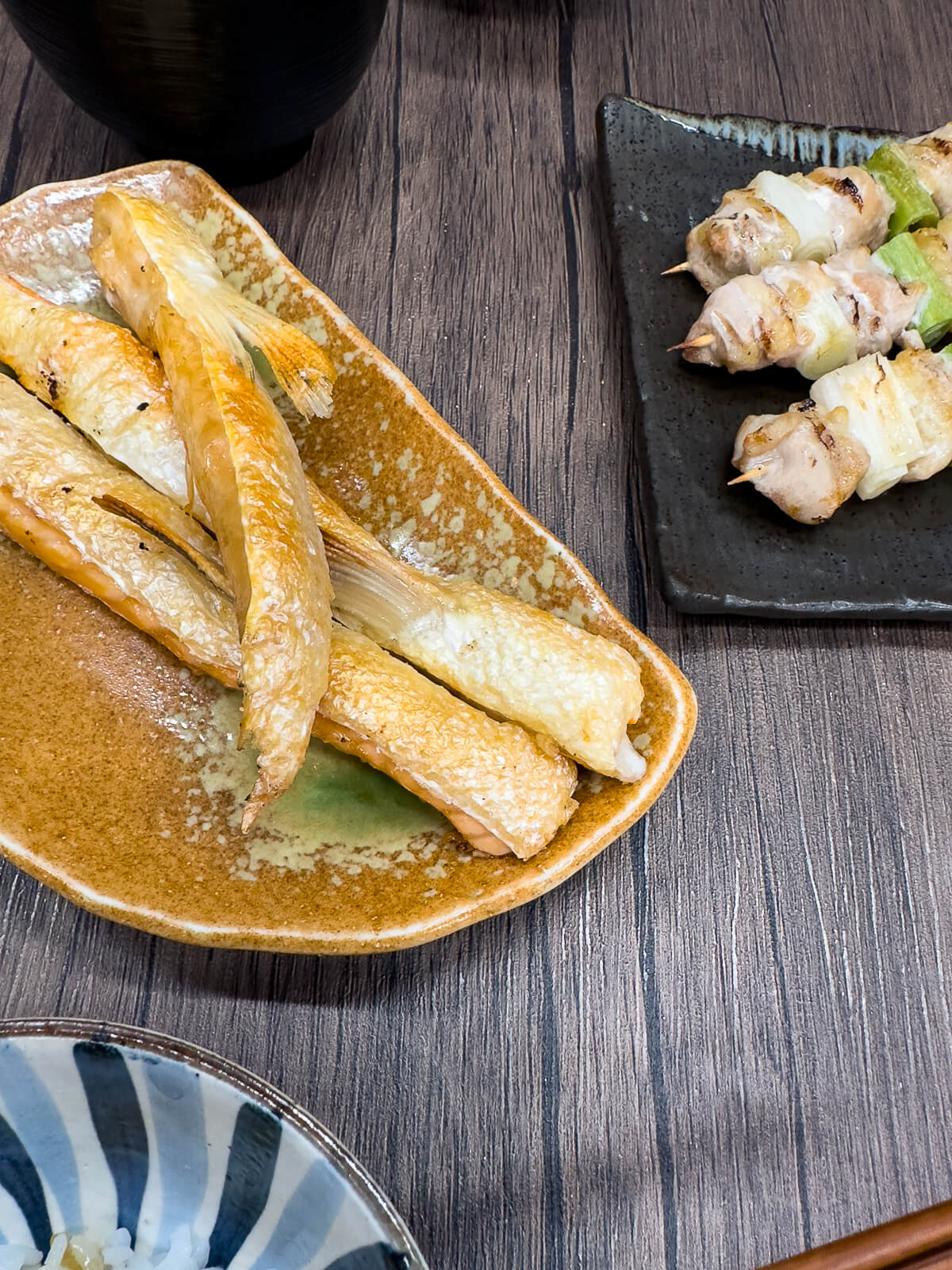
Food also appears farther down the route toward the waterfront. Smaller restaurants and casual stops along the way can make the walk feel like part of the day rather than just a transfer between the station and Sun Beach. A stop for hotate, harasu, skewers, or other small dishes adds local food interest, but it also adds time before the beach and afternoon decision point.
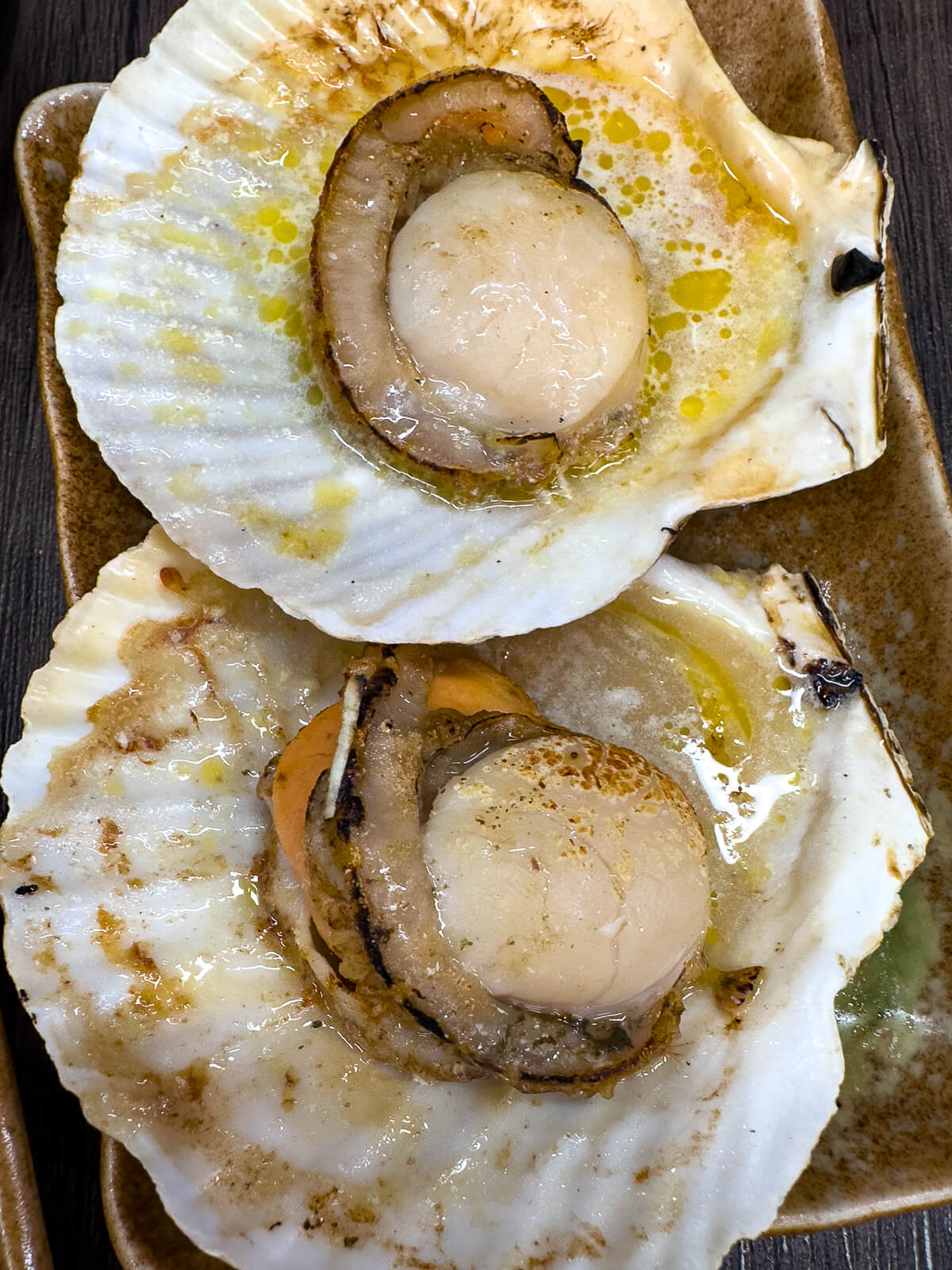
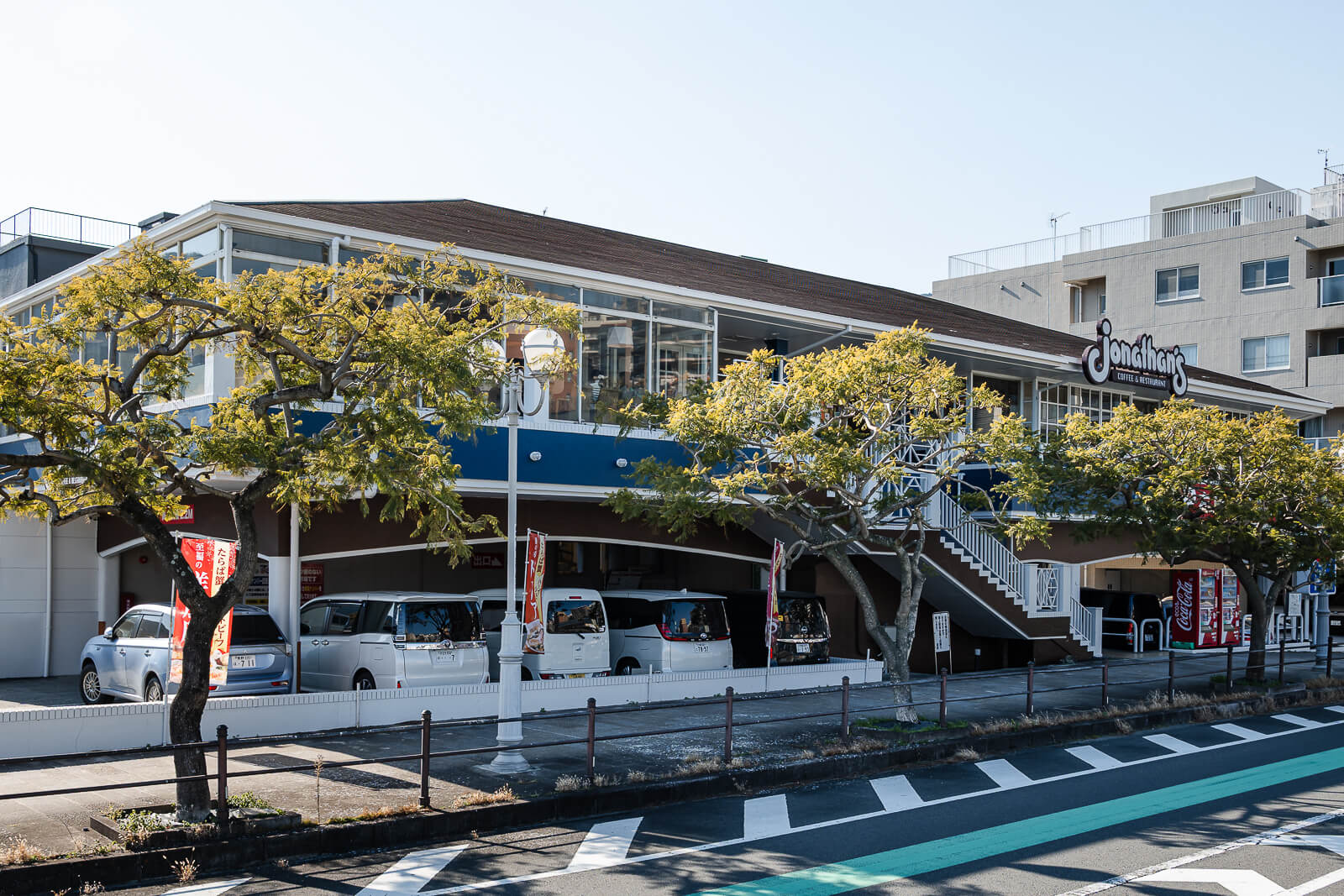
Near Sun Beach and Moon Terrace, Jonathan’s is one of the most straightforward choices for a simple sit-down meal close to the water. It is not the most distinctive food stop on the route, but it works well when travelers want something predictable near the waterfront. Travelers using the Itokawa Promenade and Atami Ginza return may also find additional food stops in the lower town before heading back toward Atami Station.
How to Return to Atami Station
The return to Atami Station is the main practical detail to keep in mind after reaching the waterfront. The walk from the station to Sun Beach trends downhill, which makes the outward movement easier than the return. Travelers should expect the way back to involve uphill walking unless they use local transport or a taxi.
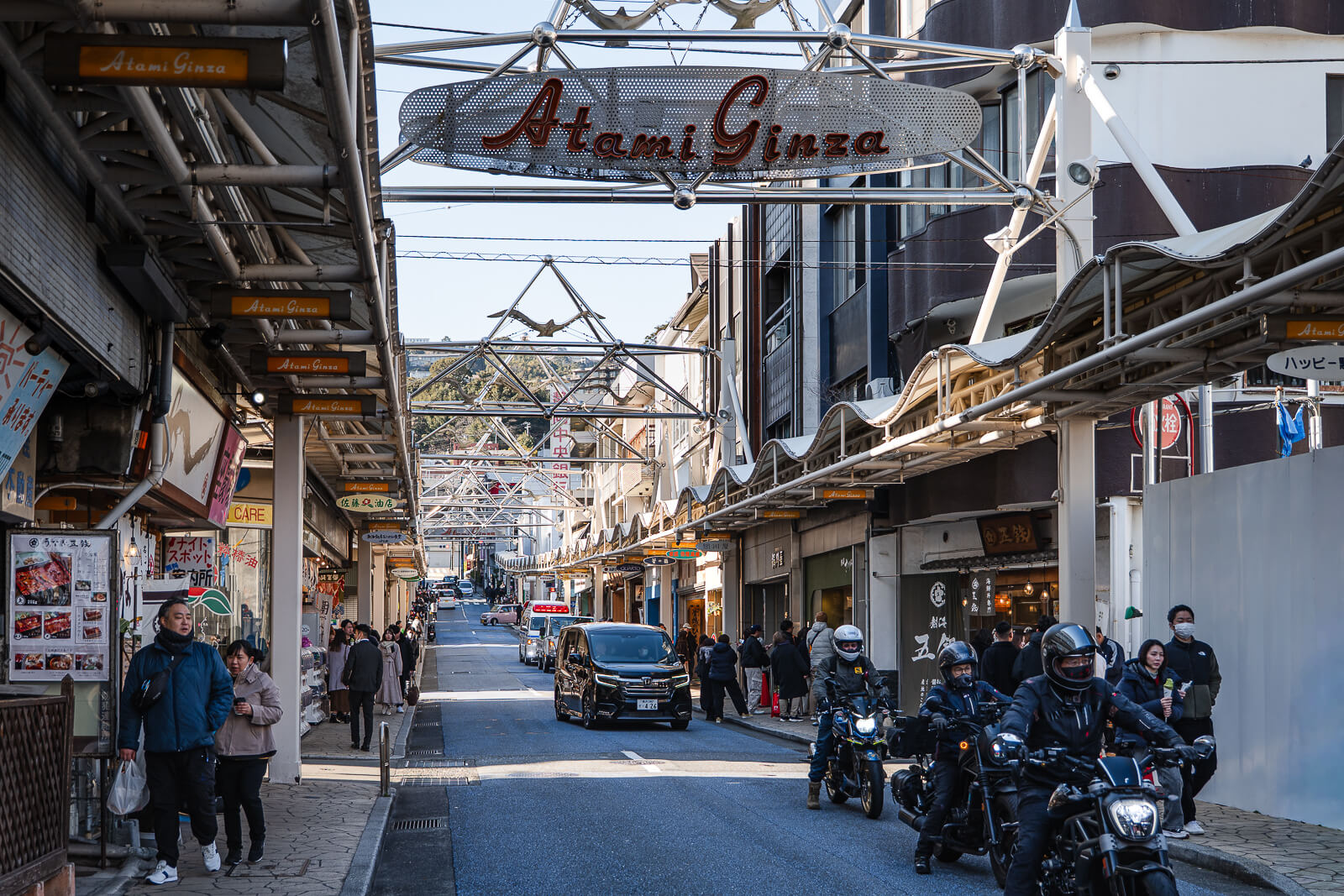
The Itokawa Promenade and Atami Ginza option gives the return more purpose if travelers skip the ropeway and castle area. Instead of heading straight back from Sun Beach, the day can continue through the lower town before climbing toward the railway area. This works well when there is still time for food stops, small streets, and one more look at central Atami before leaving.
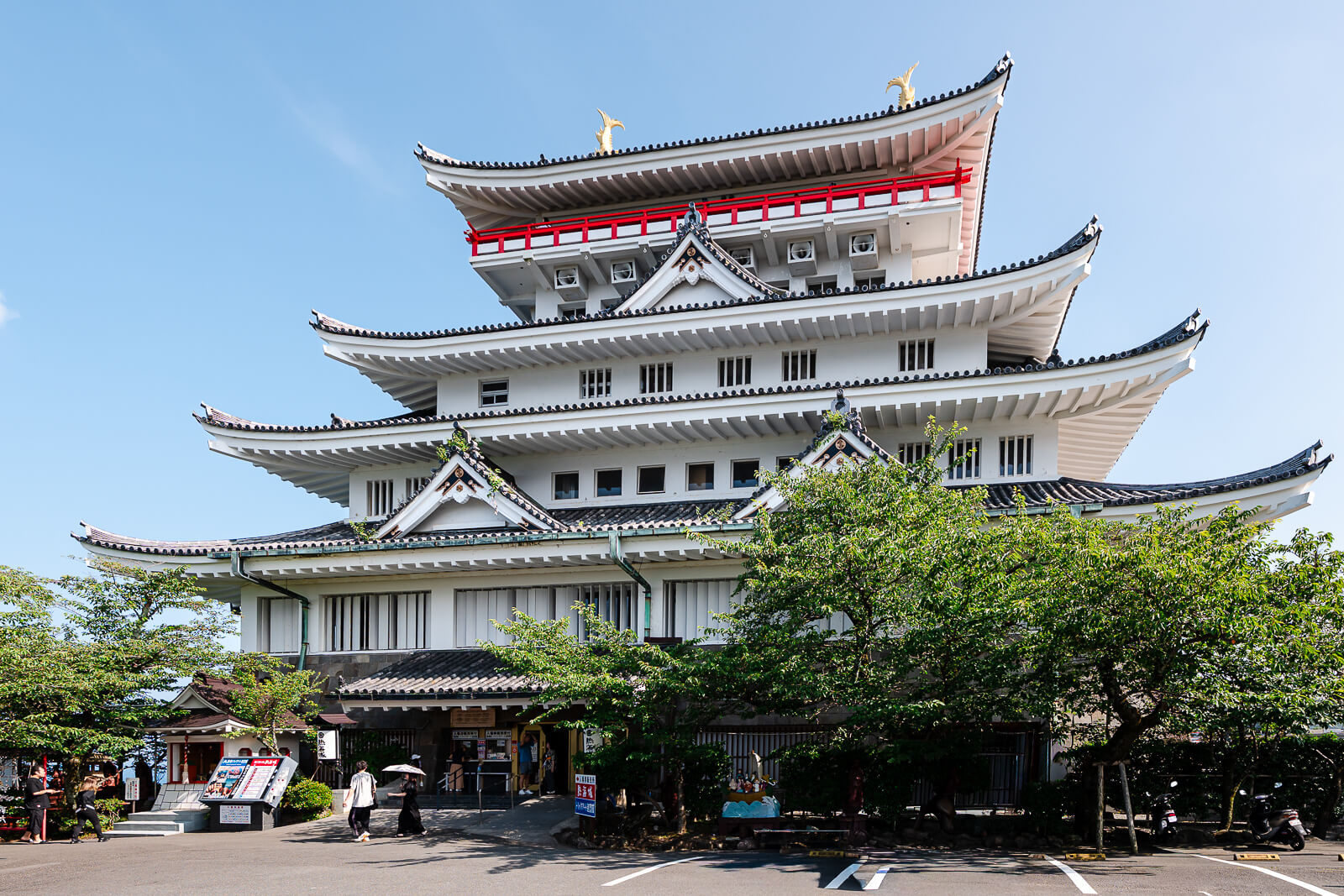
Travelers who choose the ropeway and castle extension should think about the return before committing to that option. That version adds more movement late in the day, so it works better with clear timing and enough energy left for the station return. If the group is tired, carrying luggage, or close to a train time, using a bus or taxi back to Atami Station may make the end of the day easier.
When an Overnight Stay Makes Sense
This itinerary is written as a one-day Atami route, but an overnight stay can make the day easier to manage. Staying near the waterfront works especially well for travelers who want more time around Sun Beach, Moon Terrace, Atami Ginza, the Itokawa Promenade, or the ropeway and castle area. It also reduces the pressure to fit every lower-town stop into the same day.
An overnight stay is most useful when travelers arrive later in the morning, plan a sit-down lunch, or want to include both the central waterfront and hillside sights. In that case, the first day can focus on Kinomiya Shrine, the station streets, Sun Beach, and either the Itokawa return or the ropeway extension. The remaining lower-town walking, waterfront time, or hillside sightseeing can then move to the next morning.
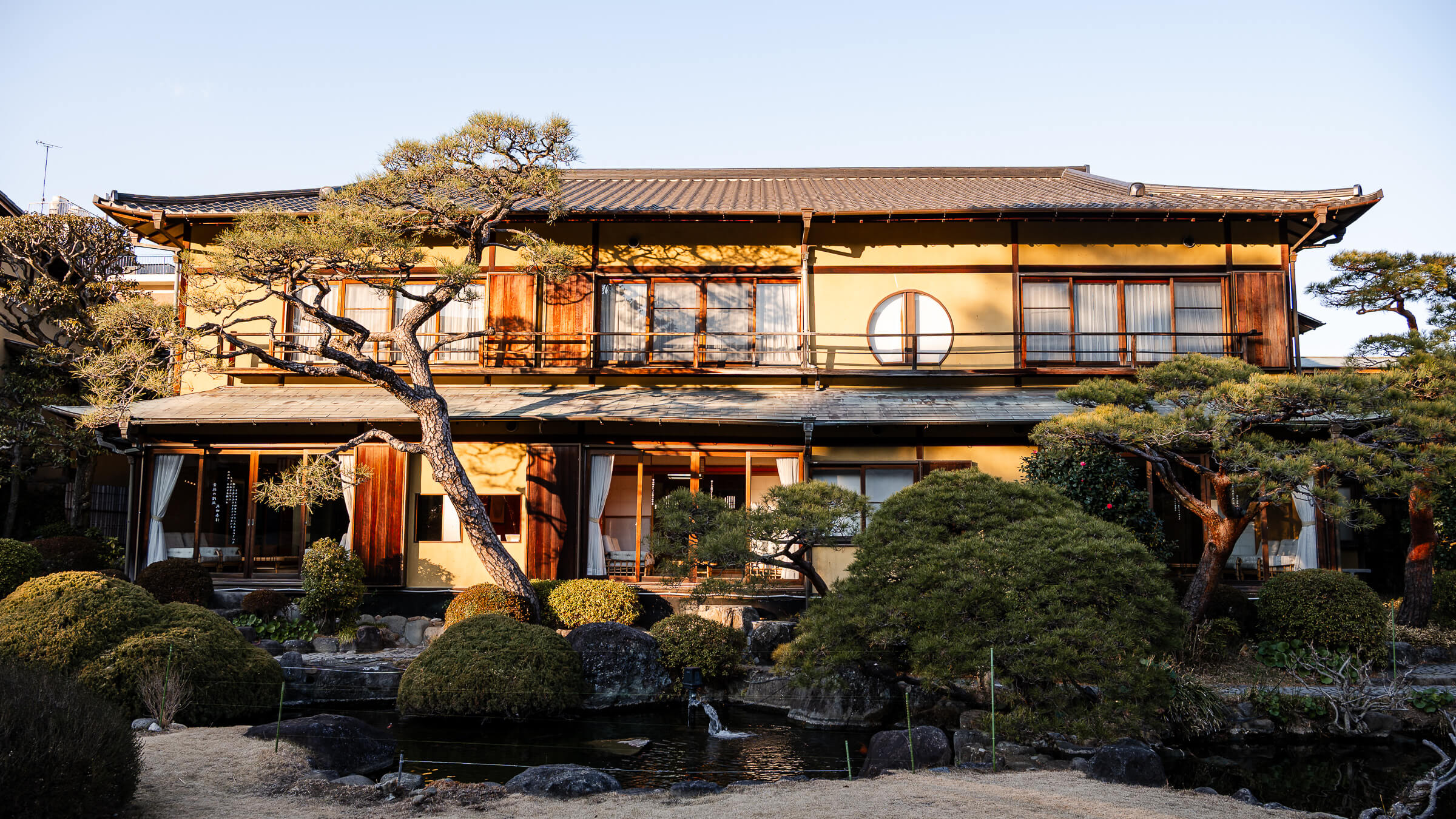
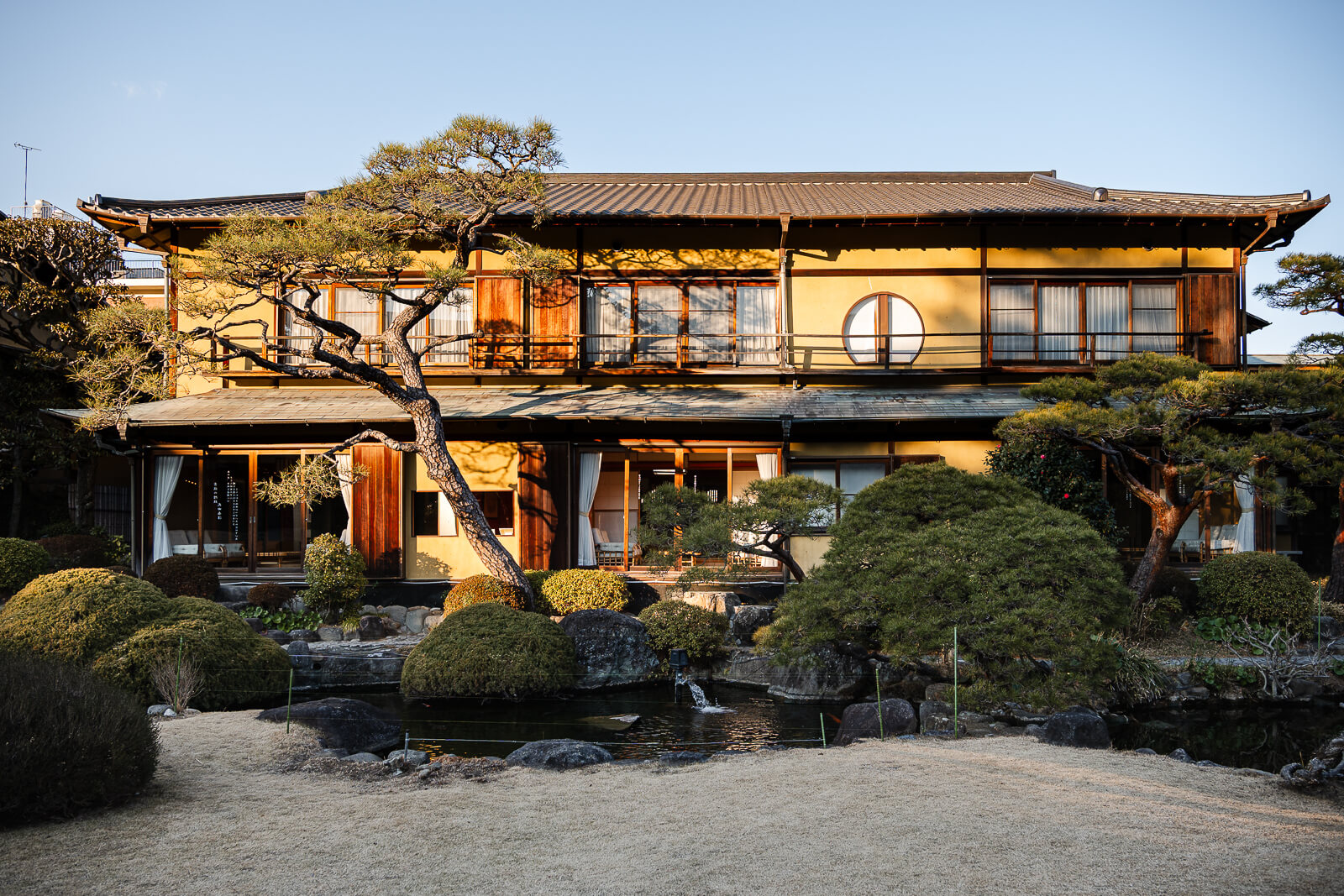
Kiunkaku also becomes easier to include with an overnight stay, especially for travelers who want a cultural stop beyond the station streets and waterfront. It fits better when the route has more breathing room, because adding it to the same one-day path can compete with food stops, the Itokawa return, or the ropeway and castle extension. Travelers staying overnight can treat Kiunkaku, Atami Castle, or additional waterfront time as next-morning options instead of forcing them into the first day.
Day trippers should treat the afternoon fork as a real choice. The Itokawa Promenade and Atami Ginza return creates a complete central Atami route, while the ropeway and castle extension shifts the day toward views and higher-effort sightseeing. Travelers still deciding whether Atami fits better as a day trip or overnight stay can use the Atami as a Day Trip or an Overnight Stay guide to compare what changes with more time. Trying to force both afternoon options into a single day is possible only with tight timing, fewer food stops, and less flexibility.
Compare nearby hotels before deciding whether Atami works better as a day trip or overnight base.
Compare Atami Hotels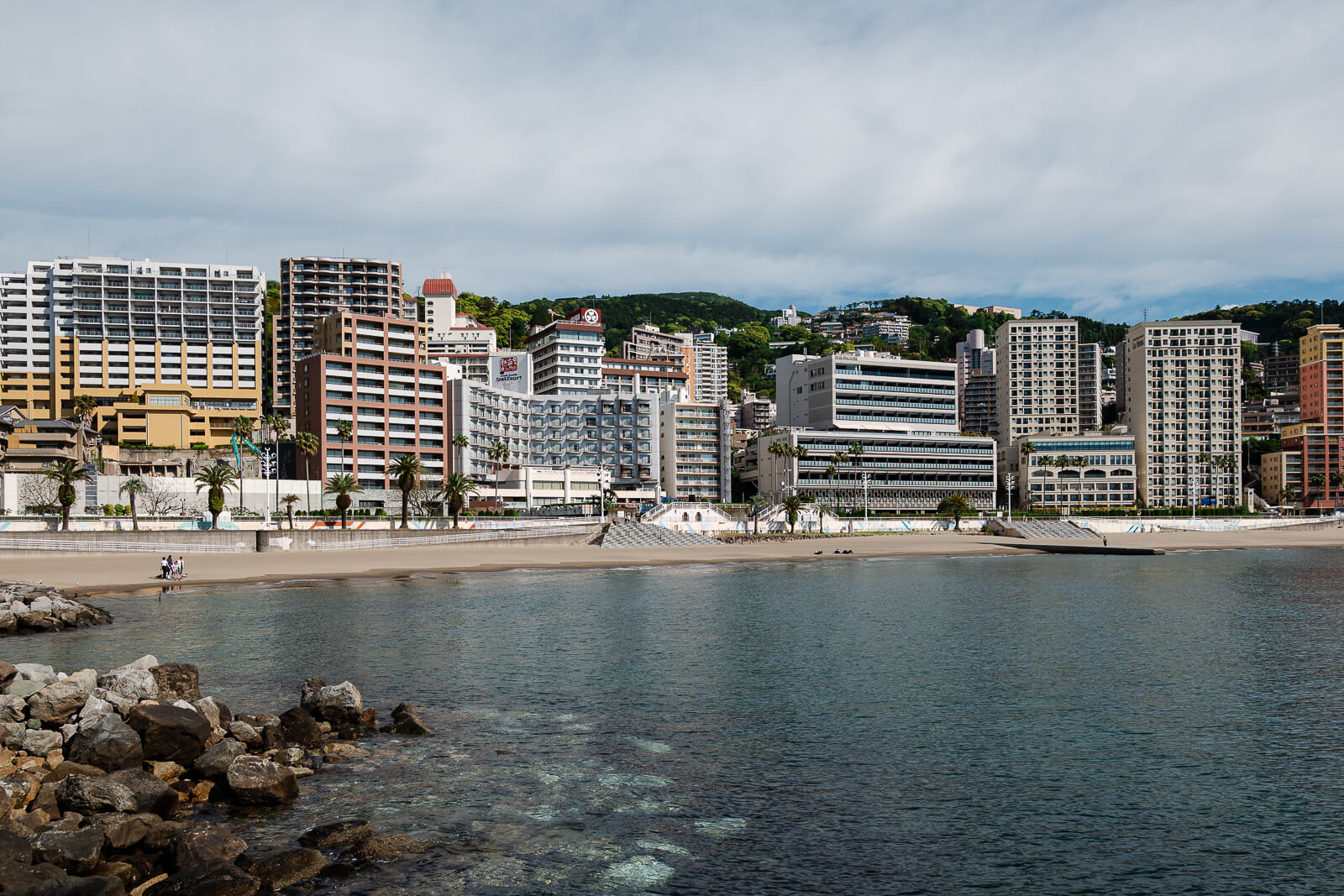
Japan Unfolded may earn a commission from qualifying bookings made through links on this page, at no additional cost to you.
Getting There
Atami Station is the starting point for this itinerary and the easiest arrival point for most travelers. Major rail connections make Atami practical as a day trip from Tokyo, Yokohama, Odawara, or nearby parts of the Izu and Shizuoka area. Once travelers arrive, the full day can work without a car.
The first move is from Atami Station to Kinomiya Shrine. Travelers can walk if they want to see more of the city before the main route begins, or they can use the local rail connection to Kinomiya Station to reduce the early effort. After visiting the shrine, returning to Atami Station creates the cleanest reset point before moving into Heiwa-dori, Nakamise, and the downhill walk toward the waterfront.
After Sun Beach and Moon Terrace, the return depends on the afternoon choice. The Itokawa Promenade and Atami Ginza option leads back through the lower town before the final climb toward the station. The ropeway and castle extension adds more movement, so travelers should leave enough time for the final return by walking, local transport, or taxi.
Hours and Fees
Hours vary by stop. Confirm current hours for Kinomiya Shrine, restaurants, the ropeway, Atami Castle, and the Trick Art Museum before visiting. Station-area shops and lower-town food options may narrow later in the day.
The central walking route has no route-wide admission fee. Sun Beach, Moon Terrace, the Itokawa Promenade, Atami Ginza, Heiwa-dori, and Nakamise can be included as walking areas. The ropeway, Atami Castle, and the Trick Art Museum require separate paid admission or transport costs if chosen.
This itinerary works best when the afternoon choice is made before leaving the waterfront. Choose either the Itokawa and Atami Ginza return route or the ropeway and castle extension based on remaining time, weather, and energy.
Confirm current visitor information with the official source above before your trip.
Plan Around Atami’s Hillside Layout
Atami is easy to reach by train, but the route works better when the uphill return, overnight value, and Izu extension choice are planned before arrival.
Compare Atami Hotels
Staying overnight reduces the uphill return and gives the waterfront, onsen areas, and hillside viewpoints more room.
Compare Atami Hotels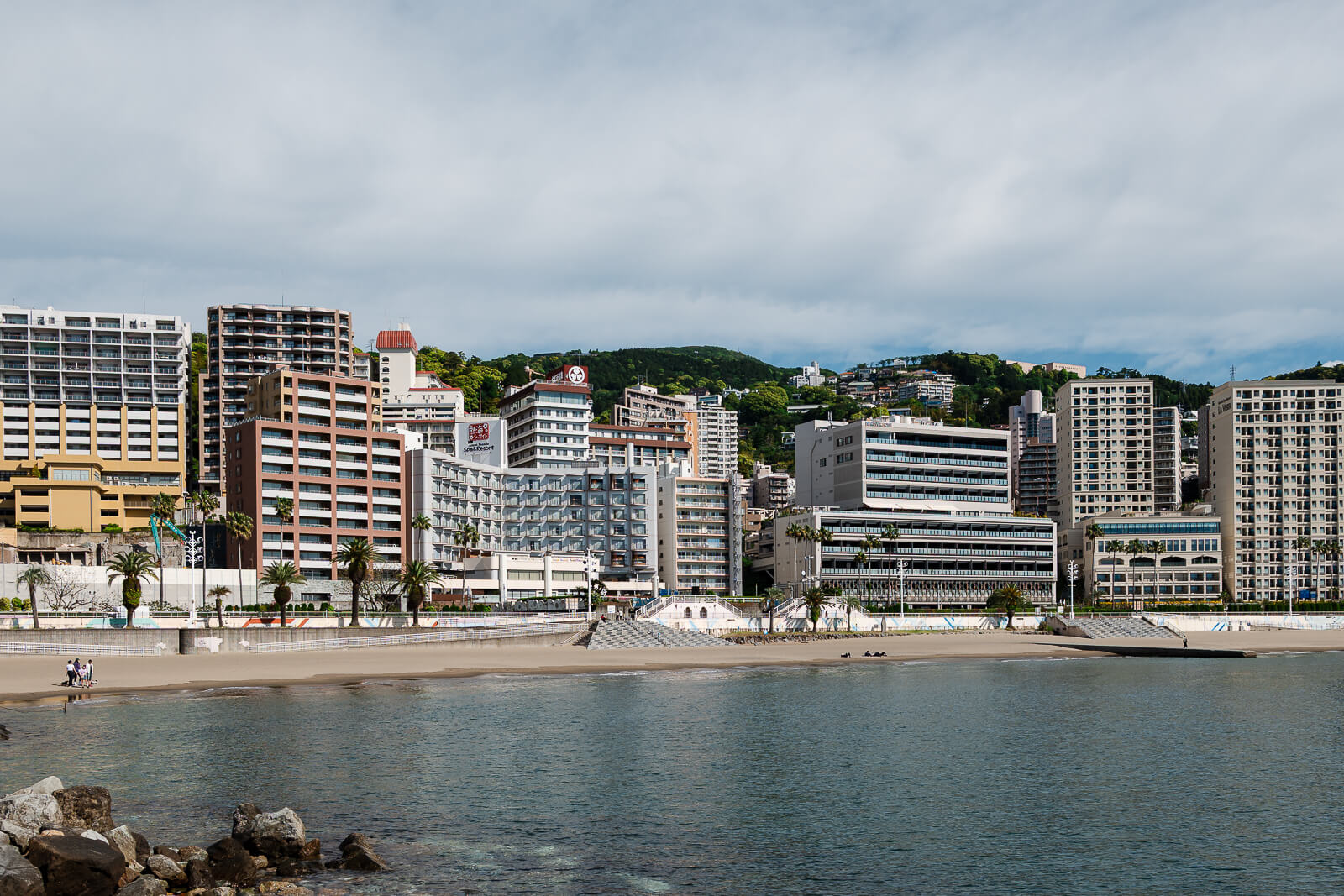
Check Rail Options to Atami
Rail access keeps the day centered on Atami Station, with easier timing for the shrine, shopping streets, and waterfront.
Check Rail Options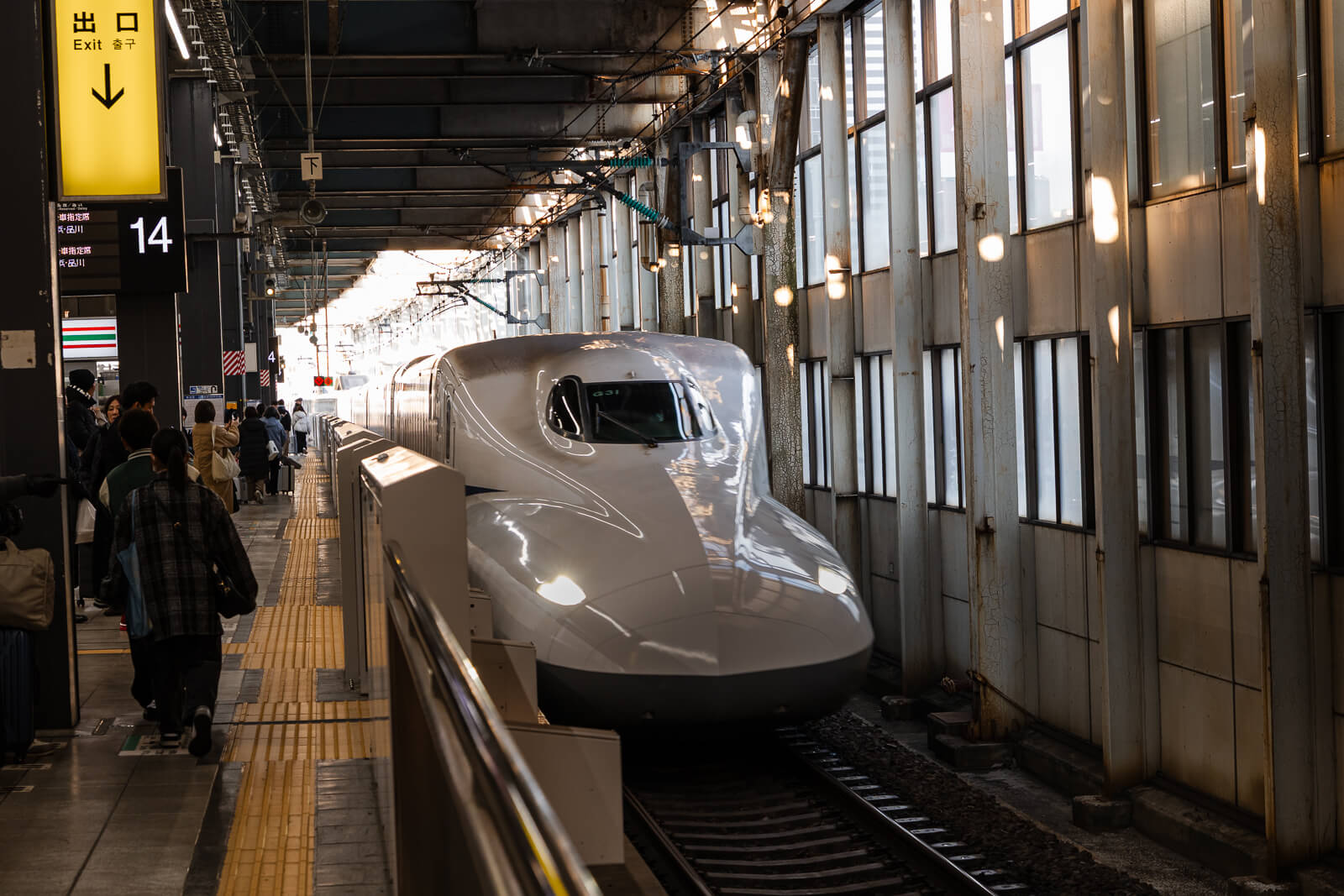
Browse Atami and Izu Tours
Guided Atami and Izu routes help connect Mt. Omuro, coastal stops, and seasonal fireworks without rebuilding the day.
Browse Izu Tours Compare Cars for Izu
A car is not needed for central Atami, but it makes wider Izu extensions easier after the station route.
Compare Rental Cars
Use Maps Around Atami
Live maps help when the route shifts between Kinomiya Shrine, downhill streets, waterfront paths, and the station return.
Compare eSIM Options