A Shrine That Gradually Pulls You Away From the Lake Basin
Set on the southeastern side of Lake Suwa within Nagano Prefecture in Japan’s Chubu Region, Suwa Taisha Kamisha Maemiya sits where the flatter basin surrounding the lake begins rising toward the forests and hills above Chino. Unlike many larger shrine destinations where visitors arrive immediately at a central hall or plaza, Maemiya unfolds through torii gates, wooded slopes, stone pathways, and elevated sections that slowly separate the shrine from the roads below.
Most visits last between 30 minutes and one hour depending on pace, although the shrine also fits naturally into longer regional routes around Lake Suwa, Kirigamine Highlands, and the forested roads surrounding the Yatsugatake foothills. Maemiya is one of four separate shrines within the wider Suwa Taisha system, and travelers deciding how many to include can use the Suwa Taisha shrine guide to compare their settings, access, and overall visitor experience. The visit here feels less centered on monumental architecture and more connected to spacing, elevation, and movement through the landscape itself.
The wider Suwa region has long been associated with mountain worship and spiritual traditions tied closely to the forests and elevated terrain surrounding the lake basin. Beside Suwa Taisha Shimosha Harumiya, Onbashira-kan Yoisa Museum helps explain that connection by showing how the famous Onbashira Festival links the surrounding mountains, shrine grounds, and local communities. Held once every six years, the festival still reflects the importance of the forests to the shrine system today, with massive logs brought down from the mountains and raised at the shrines as part of the tradition.
Why the Shrine Was Built Above the Lake Basin
Long before modern roads and towns spread across the Suwa region, the rising hills surrounding Chino already carried practical and spiritual importance. Forests provided timber and resources, mountain routes connected inland regions, and the elevated land above the basin formed a natural transition between the flatter areas surrounding Lake Suwa and the highlands beyond.
Rather than being established directly beside the lake, Maemiya was positioned where the land begins lifting toward the hills. Even today, roads and residential areas remain below while the shrine rises gradually into heavier tree cover and elevated ground.
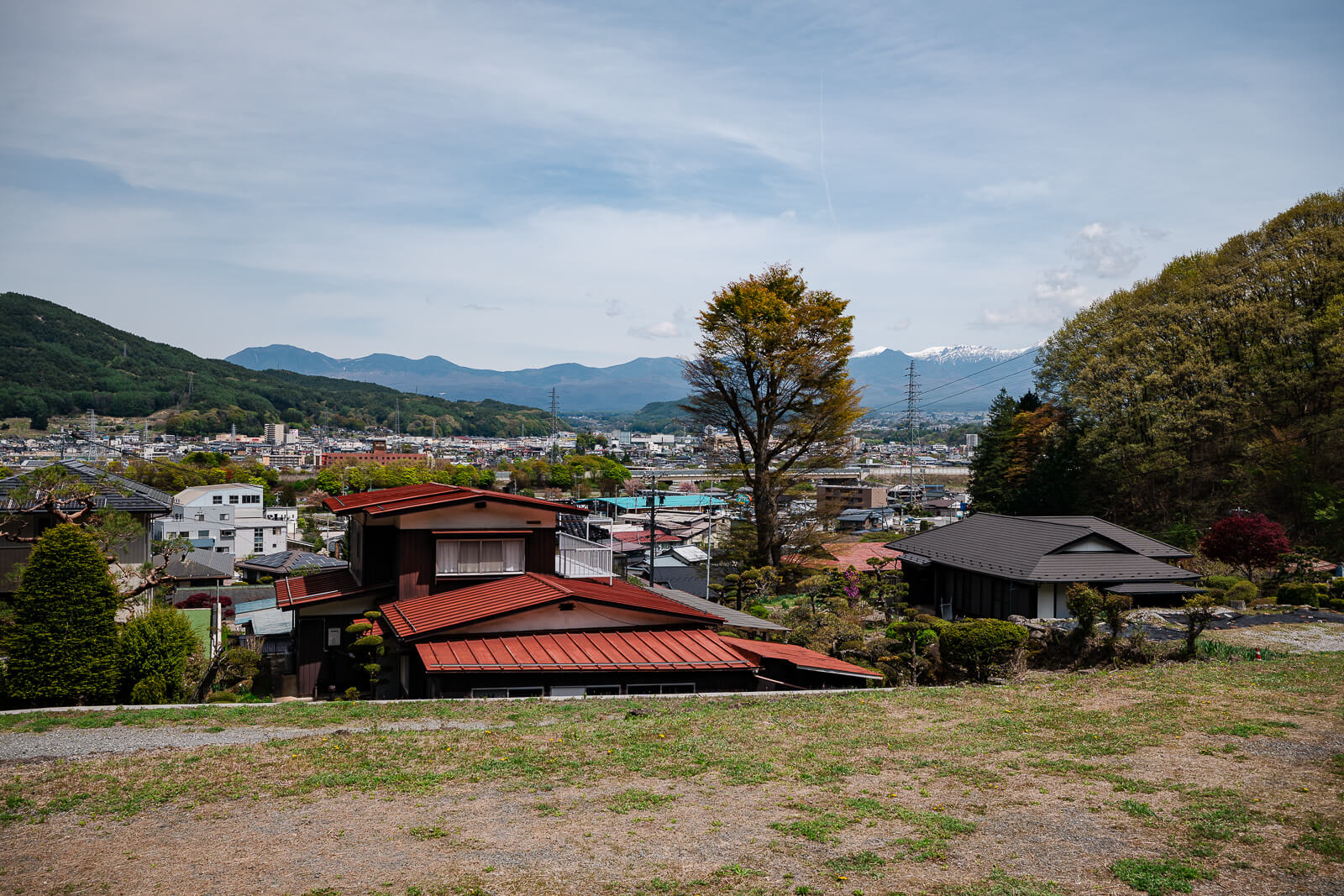
Approaching visitors centuries ago would likely have first noticed the forests, slopes, and separation from the open basin below. Those same elements still shape the visit now. The hillside setting remains one of the defining characteristics of the shrine rather than simply serving as scenery behind it.
How the Four Suwa Taisha Shrines Connect Around the Lake
One of the easiest misunderstandings when visiting the Suwa region is assuming Suwa Taisha refers to a single shrine complex. In reality, the shrine system spreads across four separate locations positioned around Lake Suwa, with each connected to a different part of the surrounding geography and landscape.
Suwa Taisha Kamisha Maemiya sits on the southeastern side of the lake near Chino and feels the most closely tied to the surrounding hillsides and forested terrain. The shrine unfolds gradually uphill through wooded pathways and quieter sections that separate it from the roads below. Among the four shrines, Maemiya often feels the calmest and most landscape-oriented.
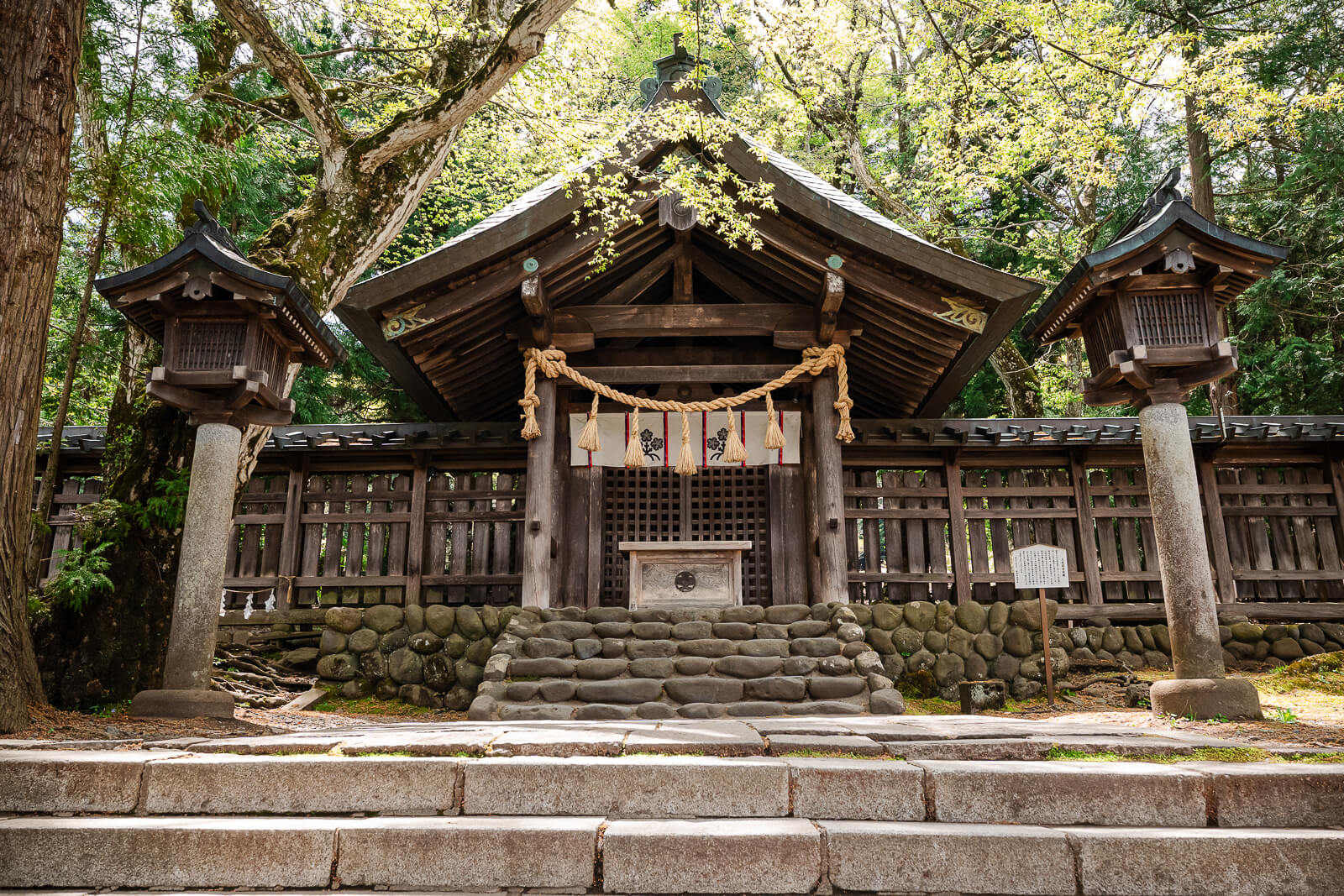
Nearby Suwa Taisha Kamisha Honmiya feels broader, more formal, and more architecturally prominent. Large shrine structures, open grounds, and a stronger ceremonial atmosphere create a noticeable contrast with Maemiya despite the short driving distance between them. Many visitors naturally experience both Kamisha shrines during the same outing.
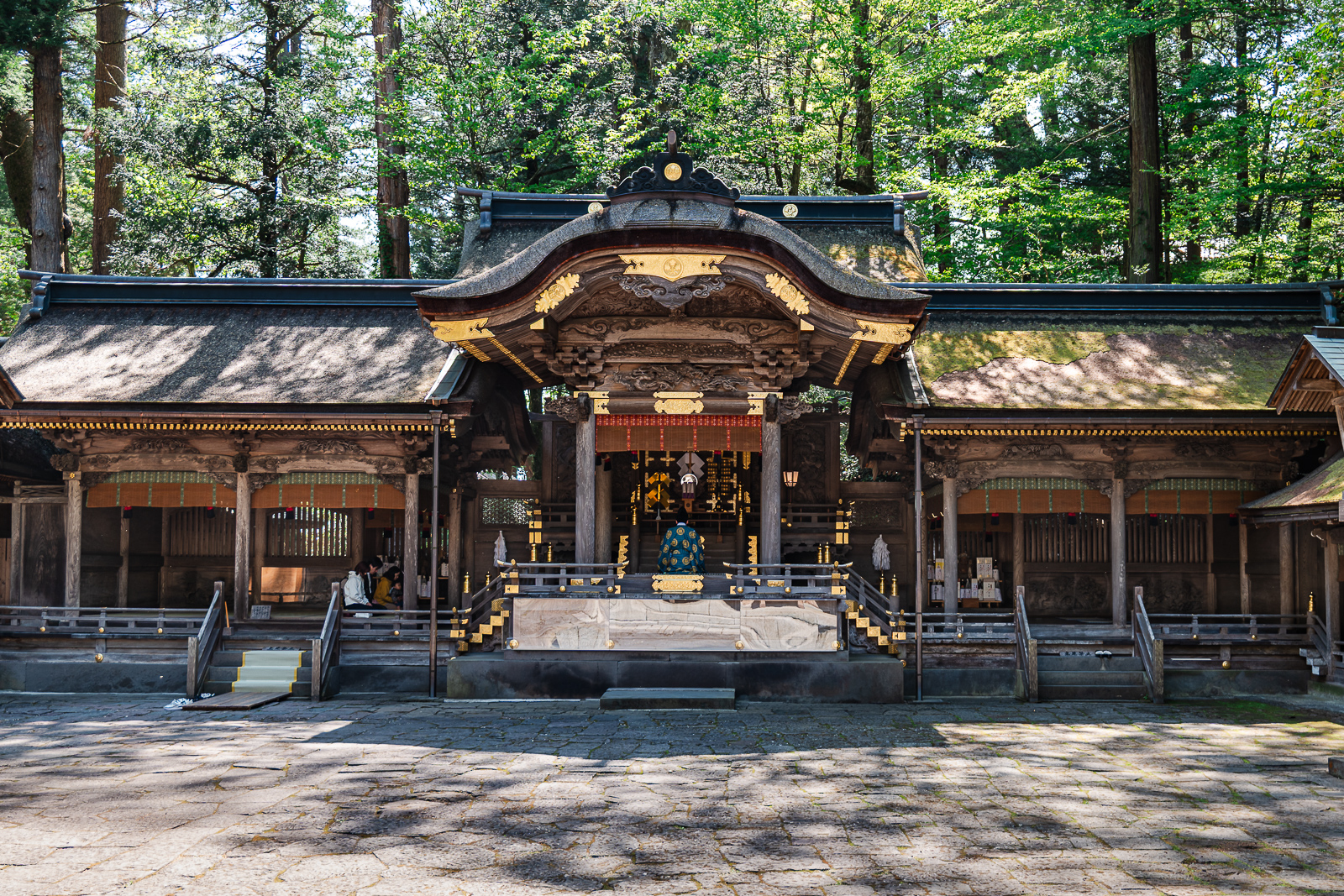
Across the lake in Shimosuwa, Suwa Taisha Shimosha Harumiya sits within a quieter wooded setting where the pathways and surrounding trees create a slower atmosphere similar to Maemiya. The shrine feels more tucked into the landscape and remains one of the calmer stops within the wider Suwa Taisha network.
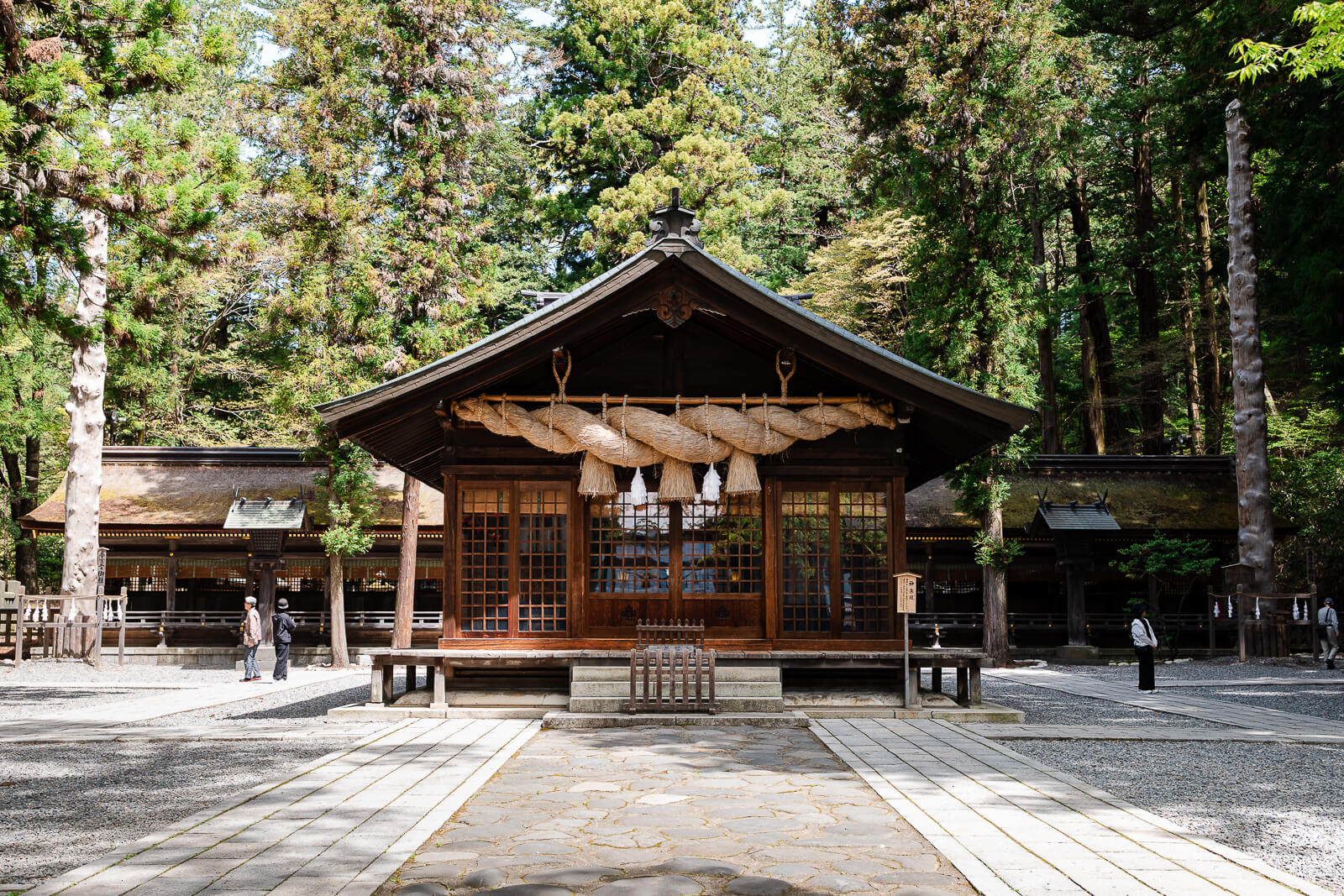
Nearby Suwa Taisha Shimosha Akimiya feels more connected to the surrounding town center and visitor activity. The larger approach, nearby streets, and stronger sense of arrival give Akimiya a more active atmosphere than the quieter forest-oriented shrines elsewhere around the lake.
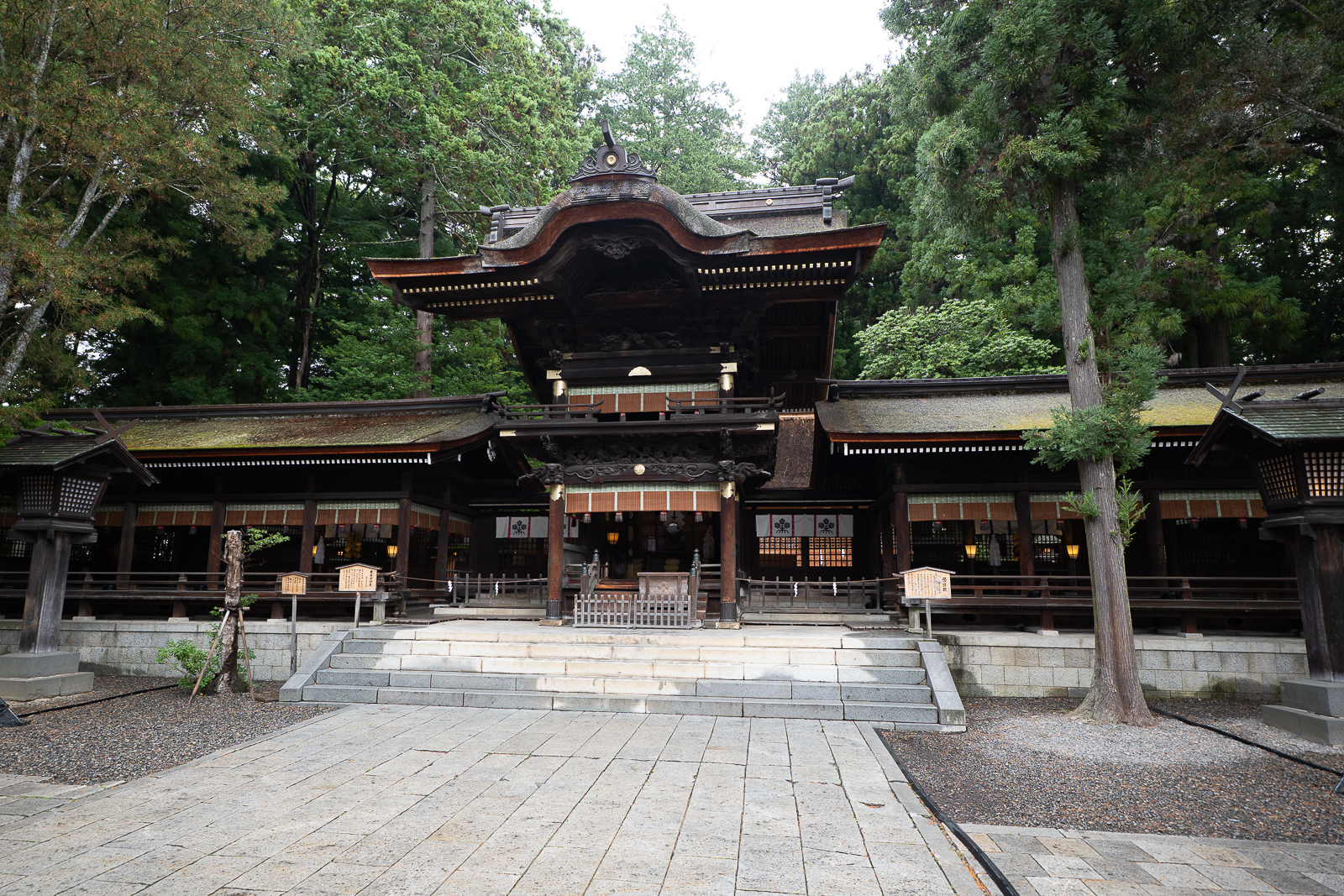
Seeing more than one shrine helps reveal how the Suwa Taisha tradition spreads across the wider Lake Suwa region rather than concentrating itself into a single destination.
Passing Through the Torii and Leaving the Roads Below
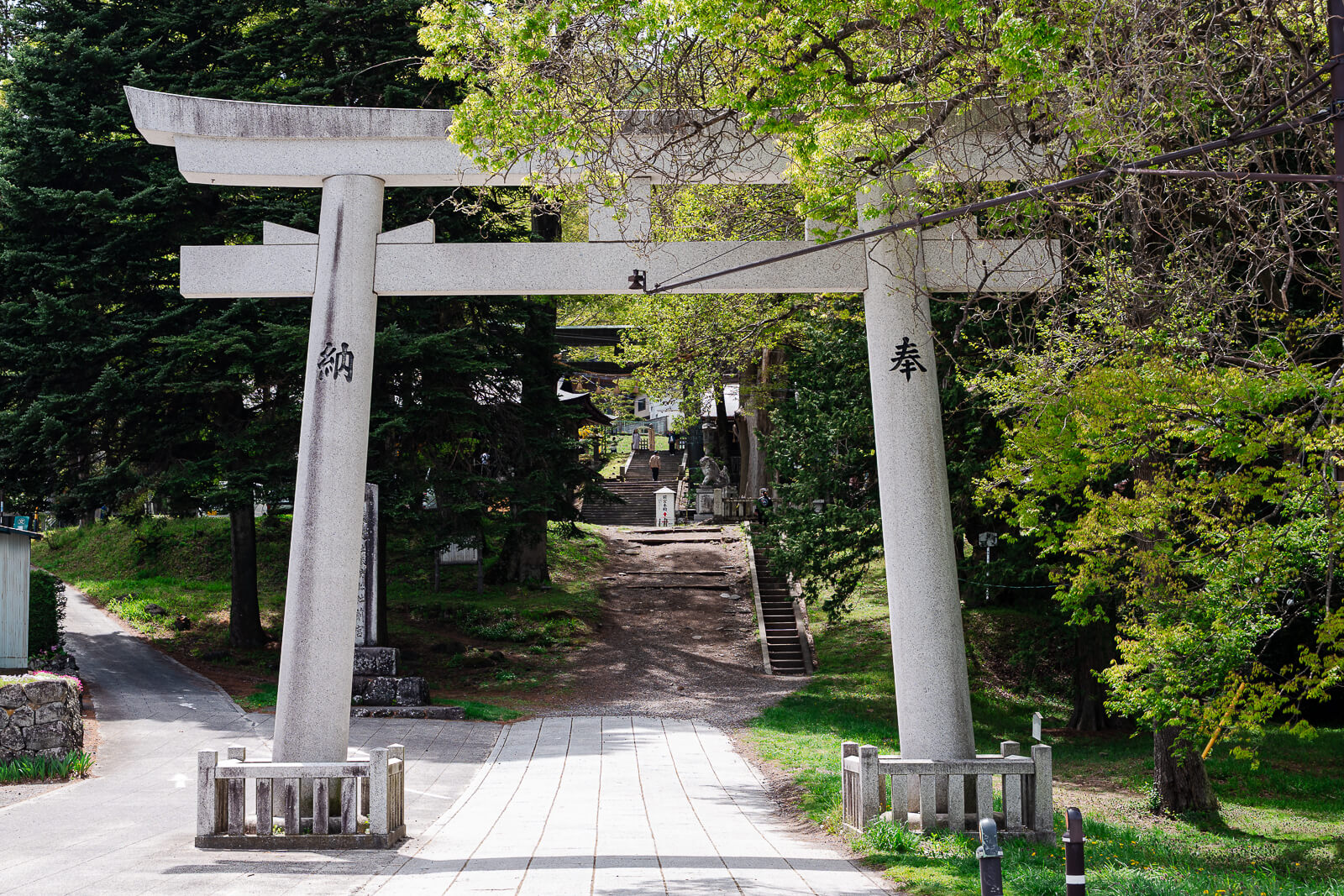
The experience at Maemiya begins below the upper shrine buildings themselves. Beyond the large torii gate near the entrance, the surrounding road quickly fades behind the trees. The pathways rise gently uphill, and the pace through the shrine naturally slows.
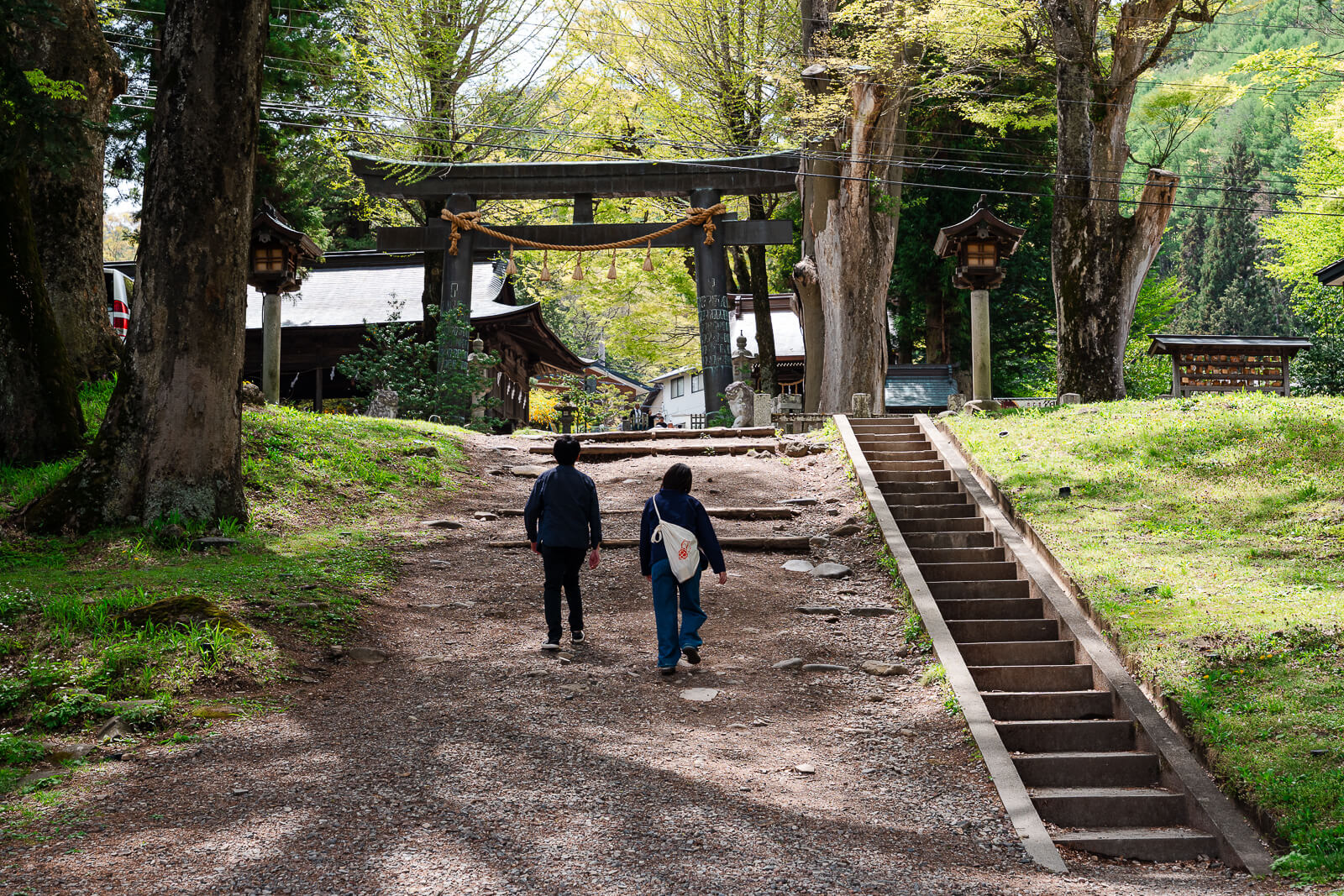
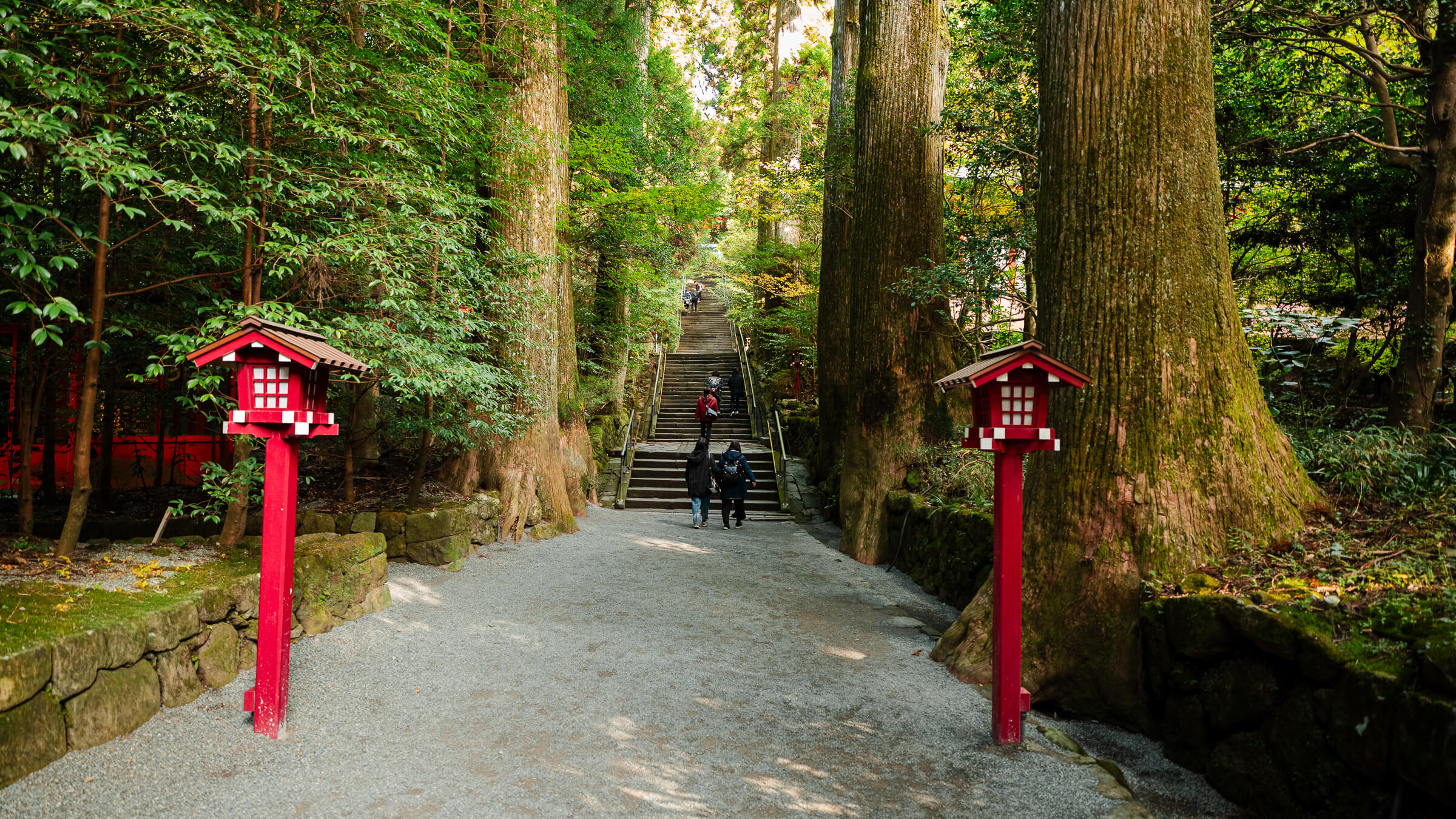
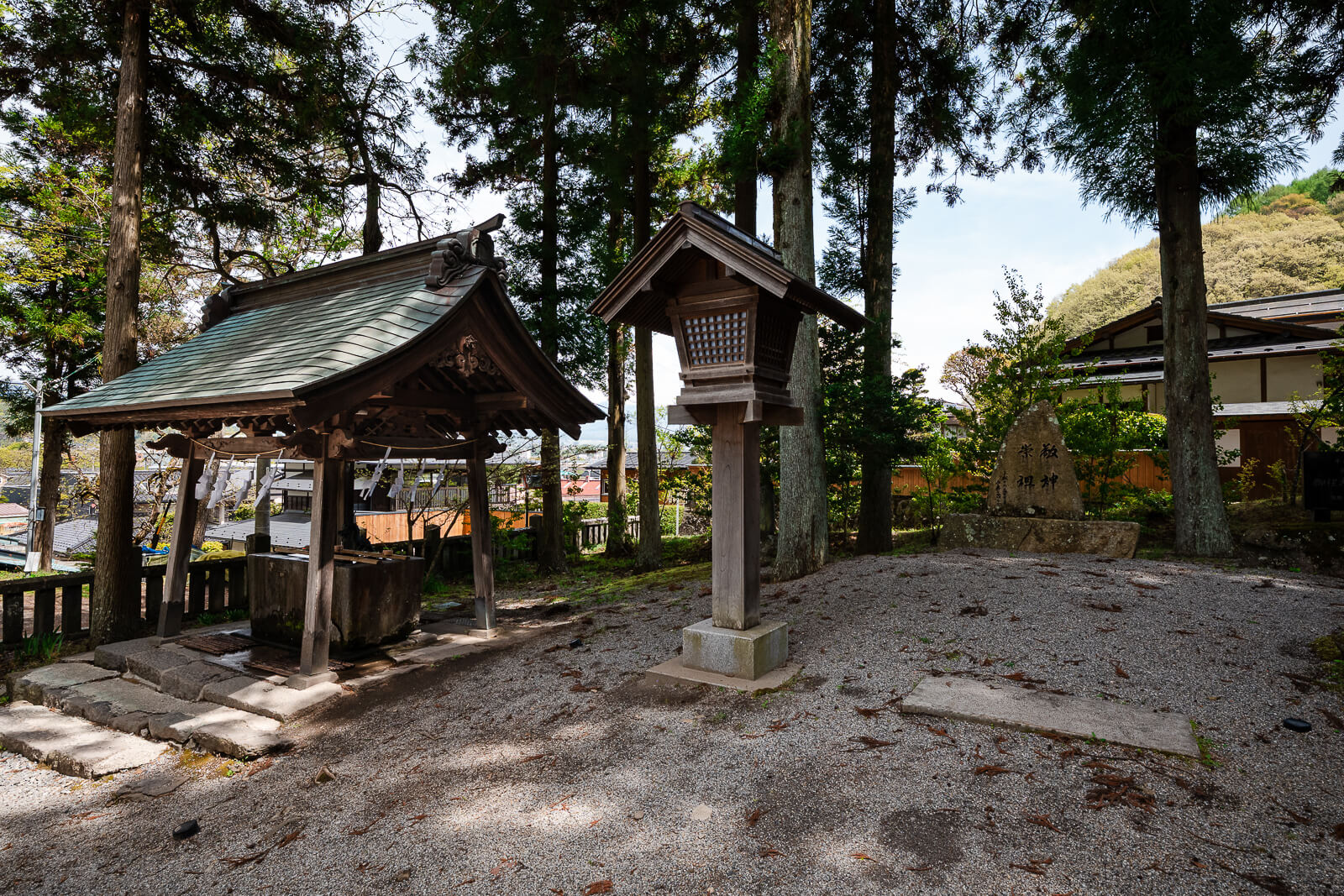
The route upward remains relatively open, with stone walkways and shaded sections creating a softer transition into the shrine than many larger sightseeing destinations. Instead of directing attention immediately toward a single structure, the grounds reveal themselves gradually through movement beneath the trees.
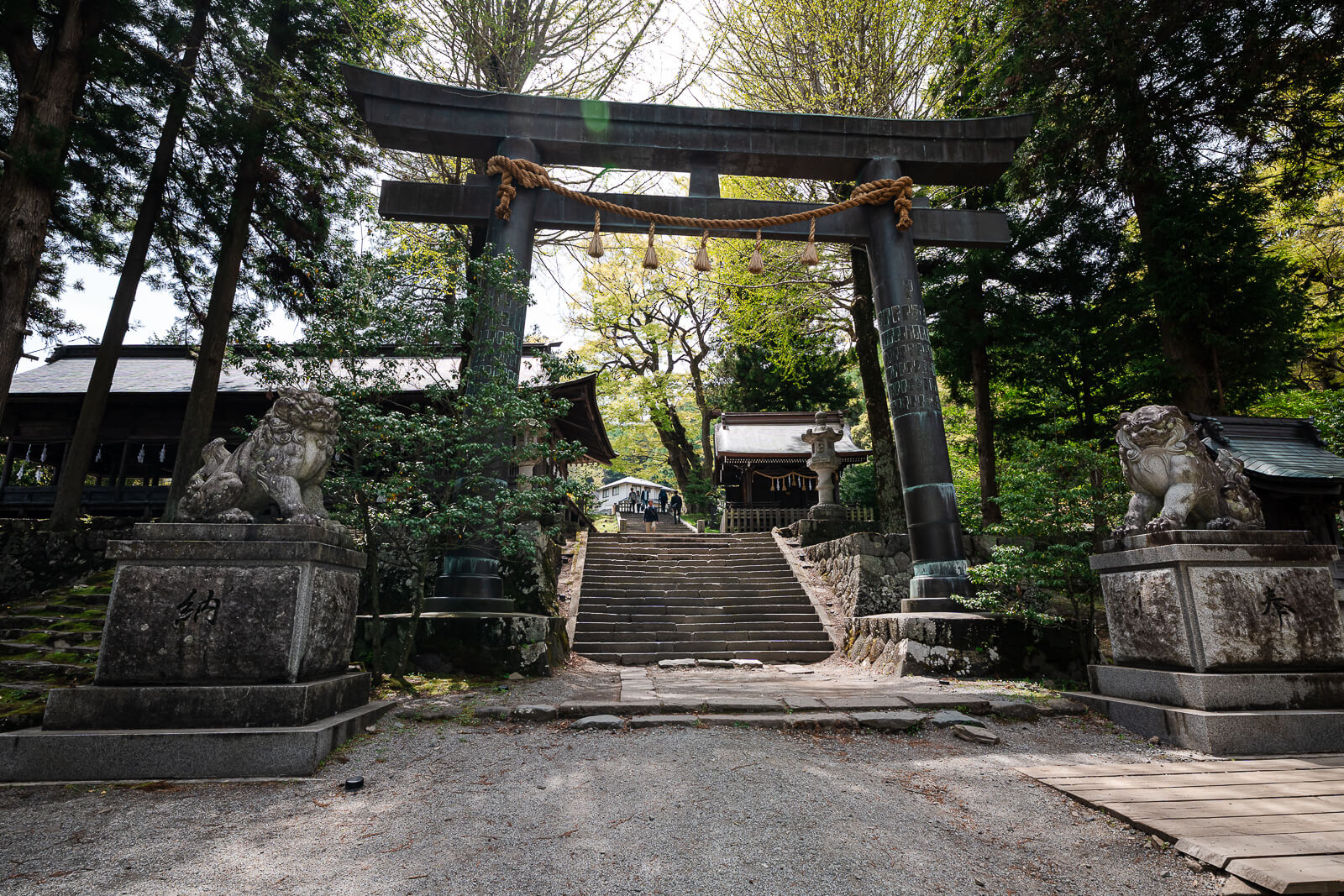
Smaller shrine elements appear between sections of the path while the surrounding scenery shifts between wooded areas and more open spaces. Even during quieter periods, the shrine rarely feels isolated. Residential edges and occasional local movement nearby keep the area connected to the surrounding community rather than separated from it.
The Walk Opens Toward the Upper Shrine Grounds
Partway through the approach, the pathway opens into a small park-like resting area where benches, open space, and nearby snack or resting opportunities naturally slow the pace of the visit. This middle section creates a noticeable transition between the lower entrance area and the upper shrine grounds farther uphill.
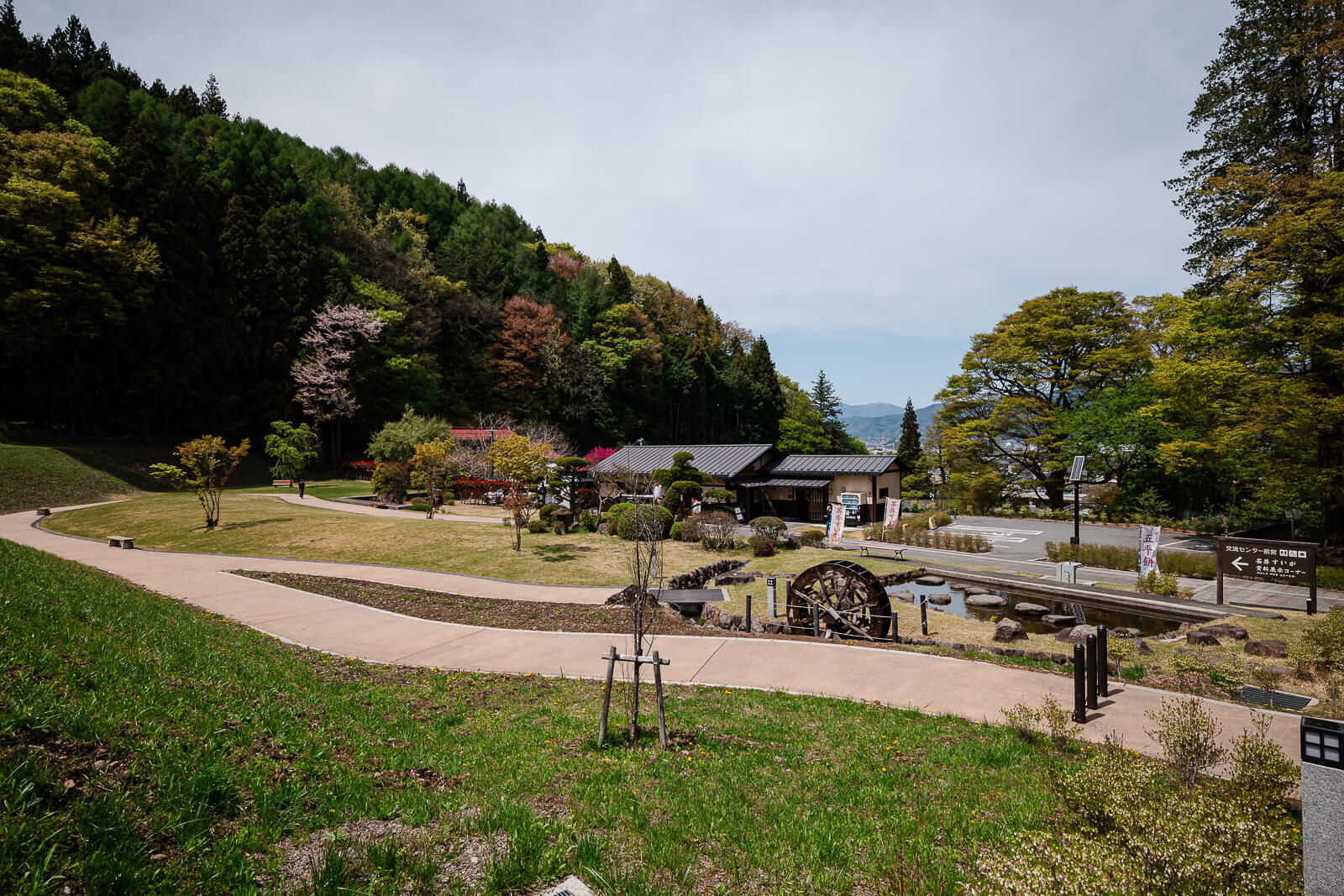
The pathways remain relatively gentle despite the steady elevation gain, making the walk manageable for most visitors. Some travelers continue through the shrine in roughly 30 minutes before heading farther into the hills surrounding Chino, while others spend considerably longer beneath the trees and upper pathways.
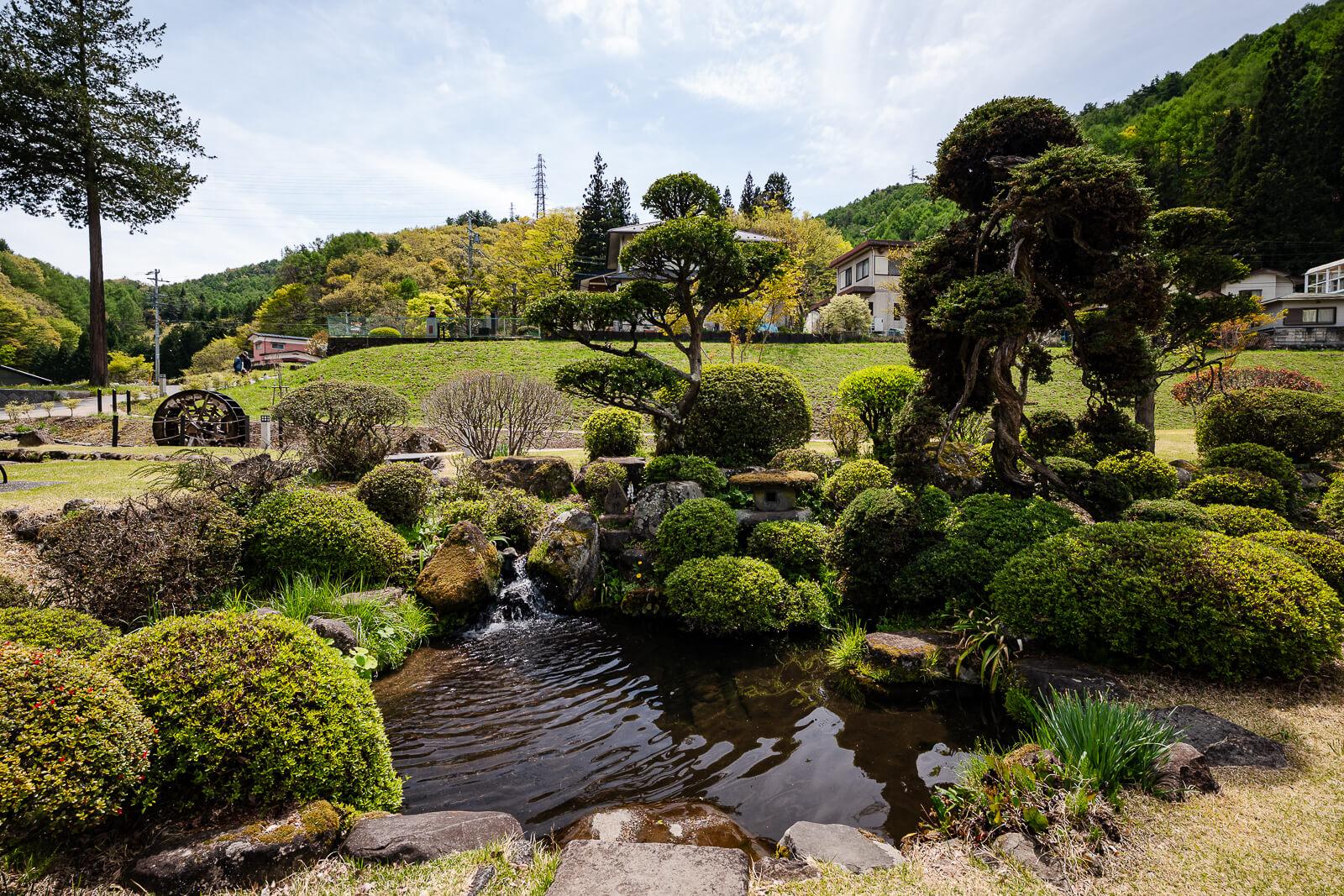
That progression also changes the perceived scale of the shrine. The area feels larger than it initially appears because the visit unfolds across multiple stages rather than around a single arrival point.
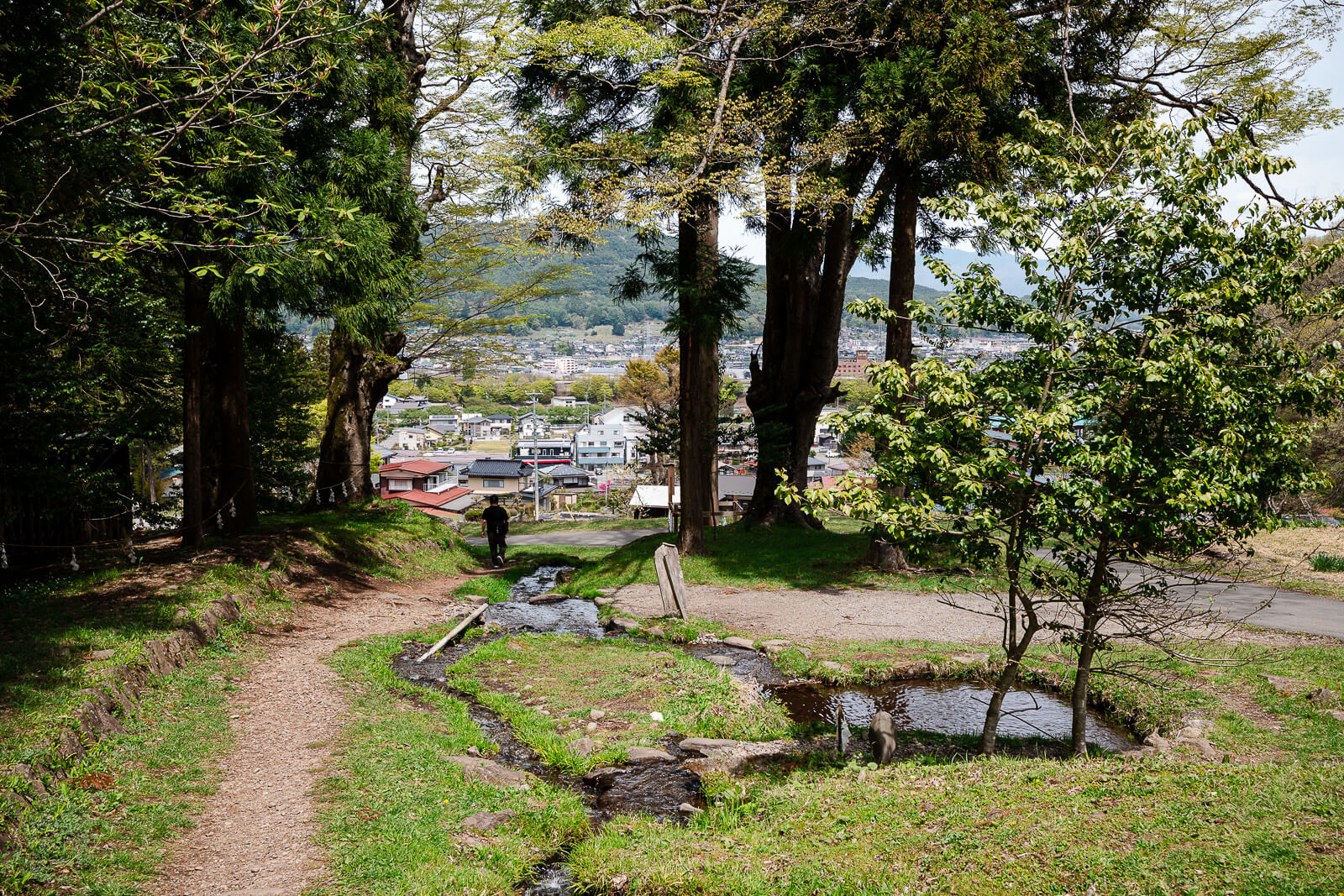
Reaching the Main Hall Above the Trees
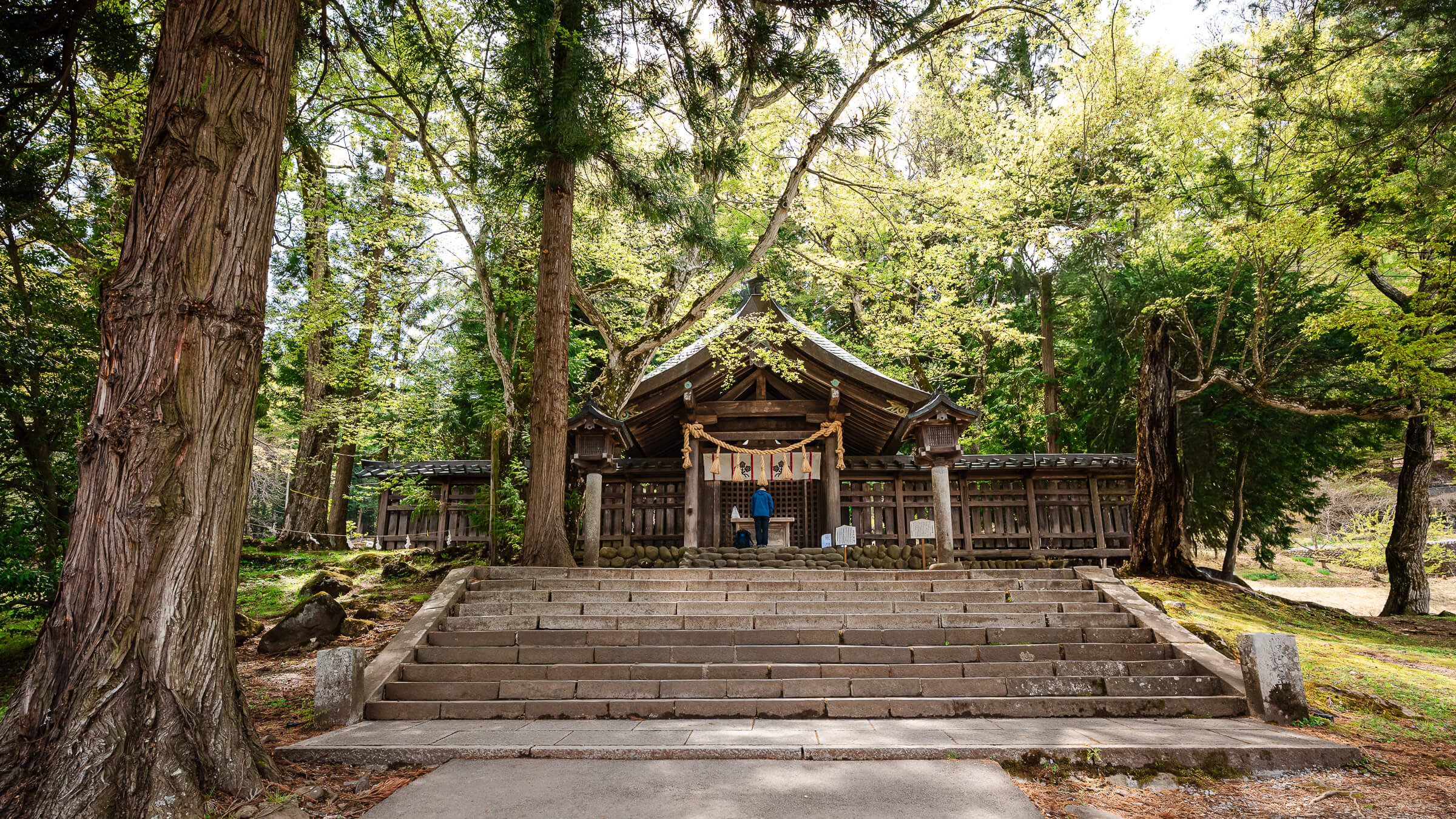
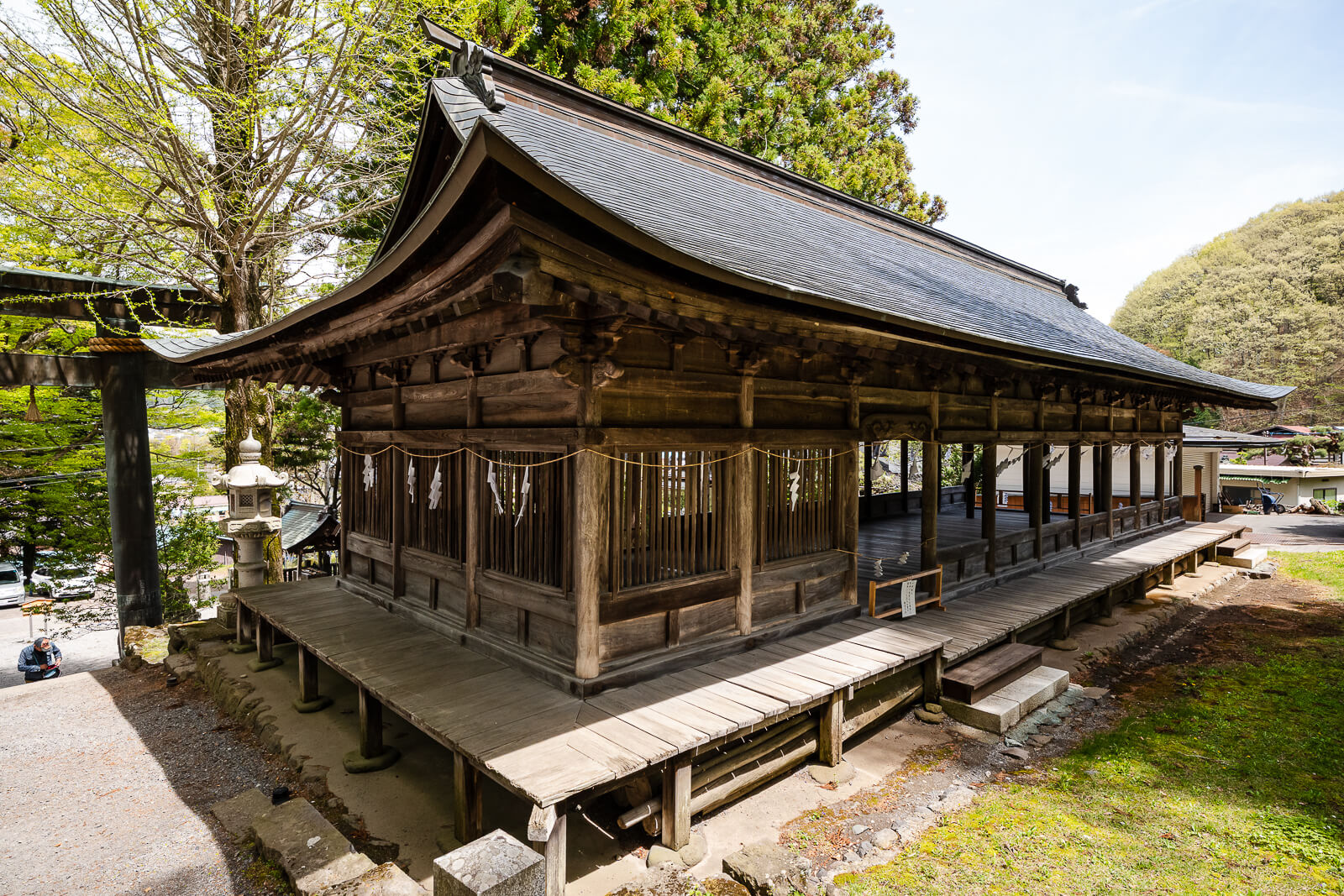
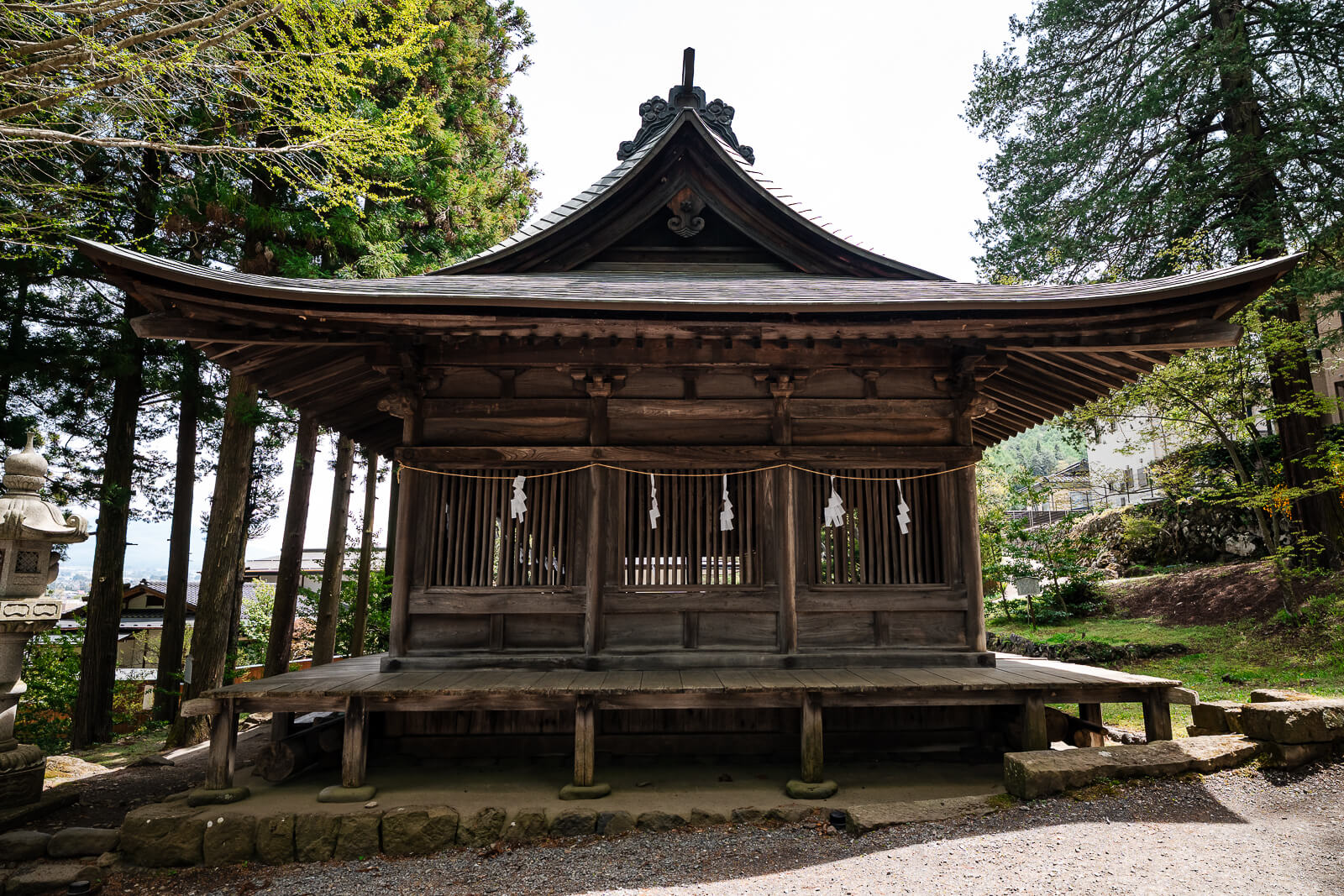
Farther uphill, the upper shrine grounds and main hall begin appearing between the trees. Even here, however, the surrounding hillsides remain visually connected to the experience. Forested slopes and the edges of Chino continue framing the shrine rather than disappearing behind dense development.
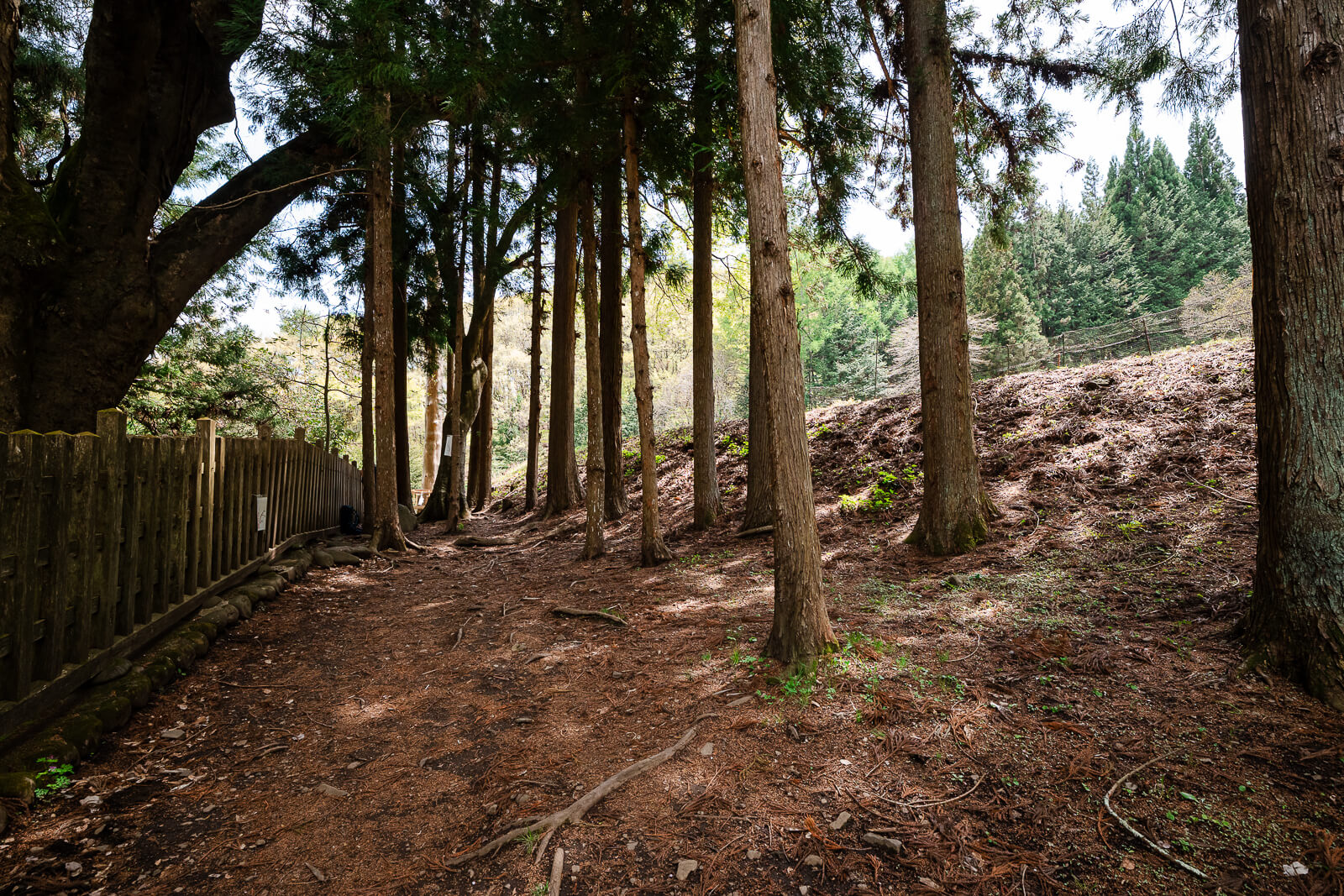
That connection to the surrounding landscape remains one of the defining characteristics of Maemiya. Many urban shrines in Japan feel visually separated from the surrounding city once visitors enter the grounds. At Maemiya, the forests, elevation changes, and hillside setting remain present throughout the visit.
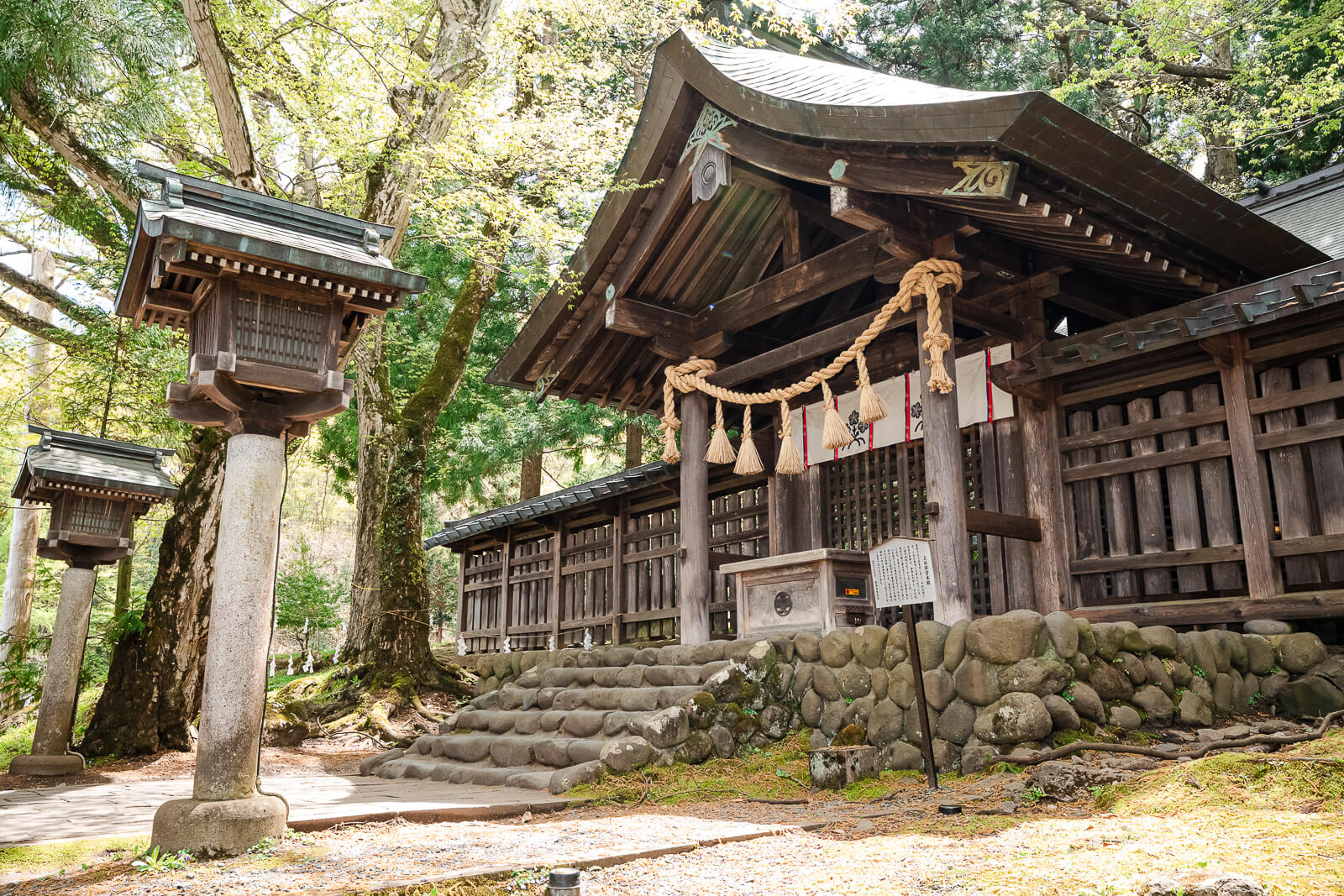
Weather and lighting conditions also noticeably affect how the upper sections feel during the day. Light rain darkens the stone pathways and surrounding wood, while lower-angle morning or afternoon light creates stronger contrast through the forested sections of the shrine.
For photographers, the upper areas offer strong opportunities for layered compositions using torii gates, trees, stone pathways, and elevation changes. The shrine relies more on texture, spacing, and movement through the grounds than dramatic scale or monumental structures.
Why Visiting Honmiya Changes the Experience
Because Suwa Taisha Kamisha Honmiya sits so close to Maemiya, many visitors naturally experience both shrines during the same outing. Doing so works particularly well because the two locations create contrast rather than repetition.
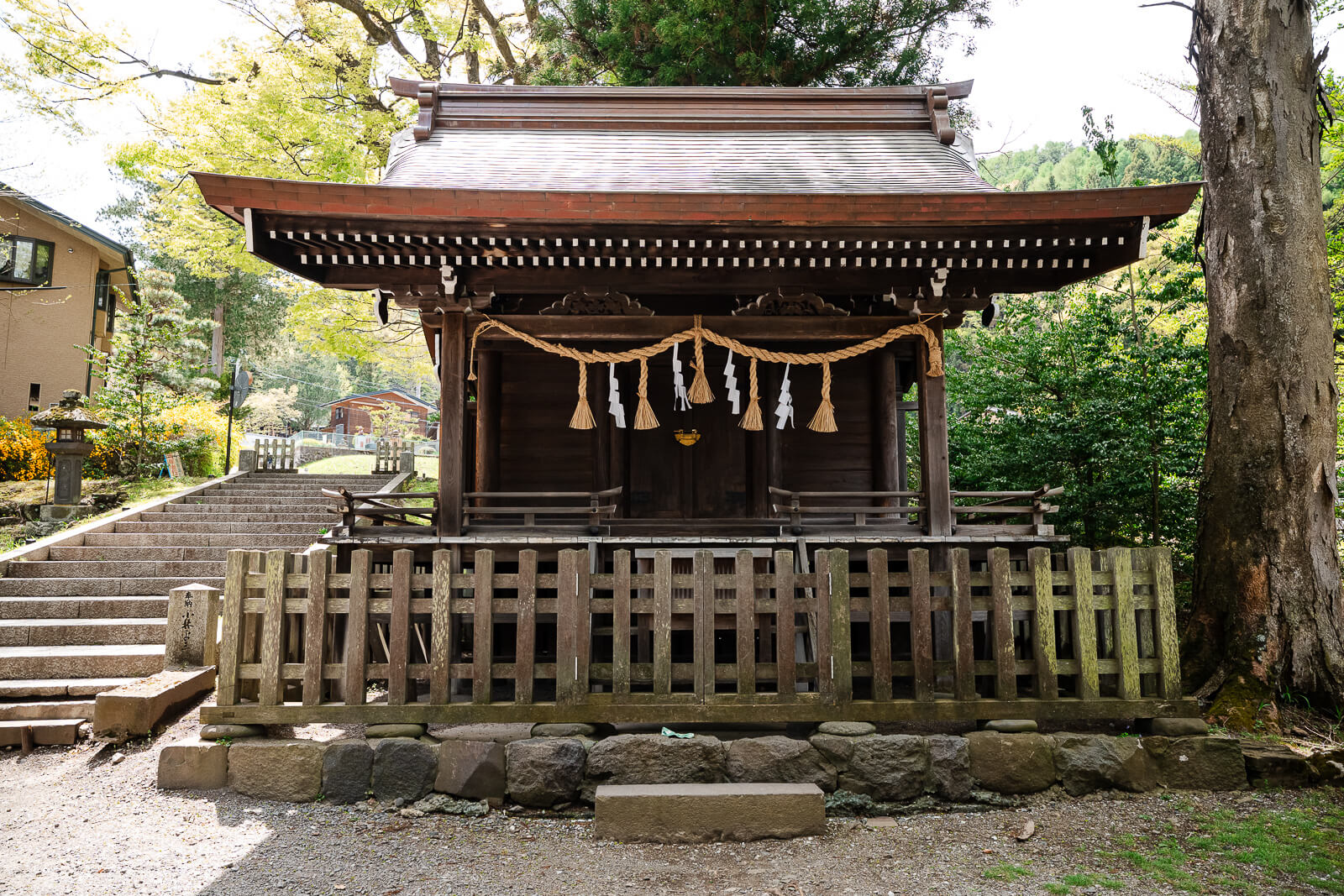
Honmiya feels broader and more formally organized, with a stronger emphasis on shrine architecture and ceremonial space. The grounds feel more centralized and visually structured. Maemiya, meanwhile, remains tied more closely to the surrounding hillsides and uphill movement through the landscape.
Experiencing both shrines together helps visitors better understand how the Suwa Taisha tradition spreads across the region rather than concentrating itself into one massive complex.
How Maemiya Fits Into a Day Around Lake Suwa and Chino
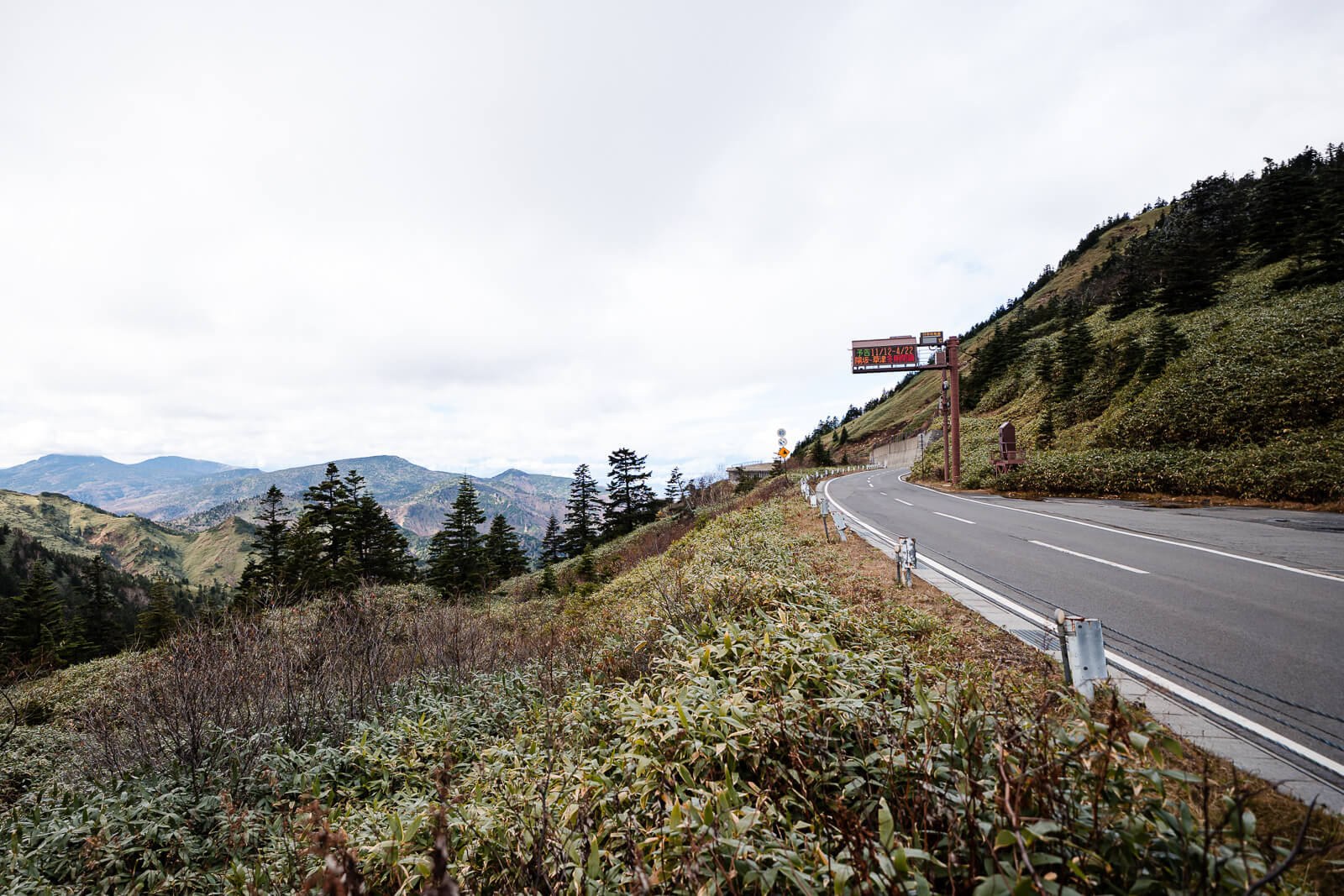
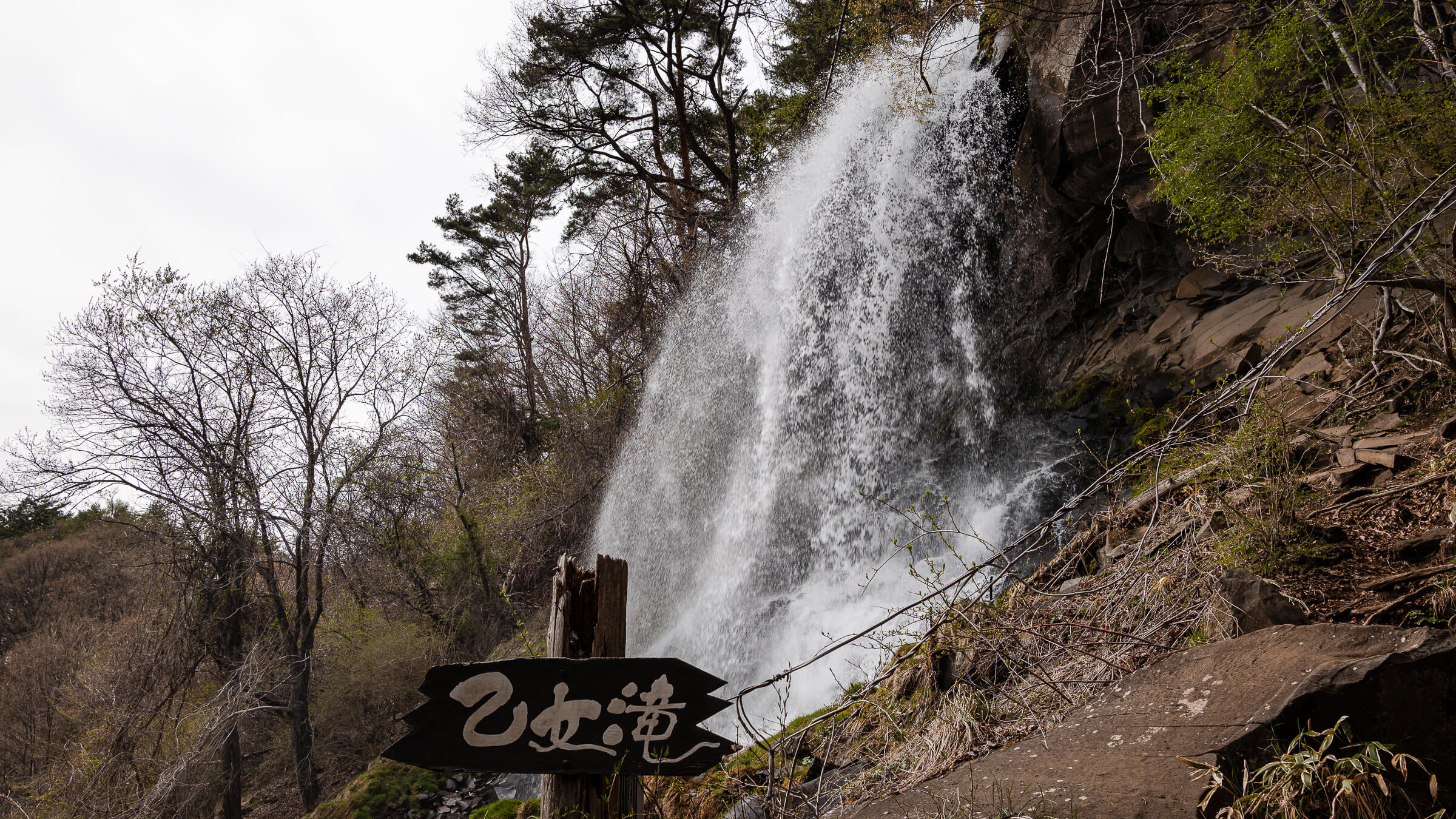
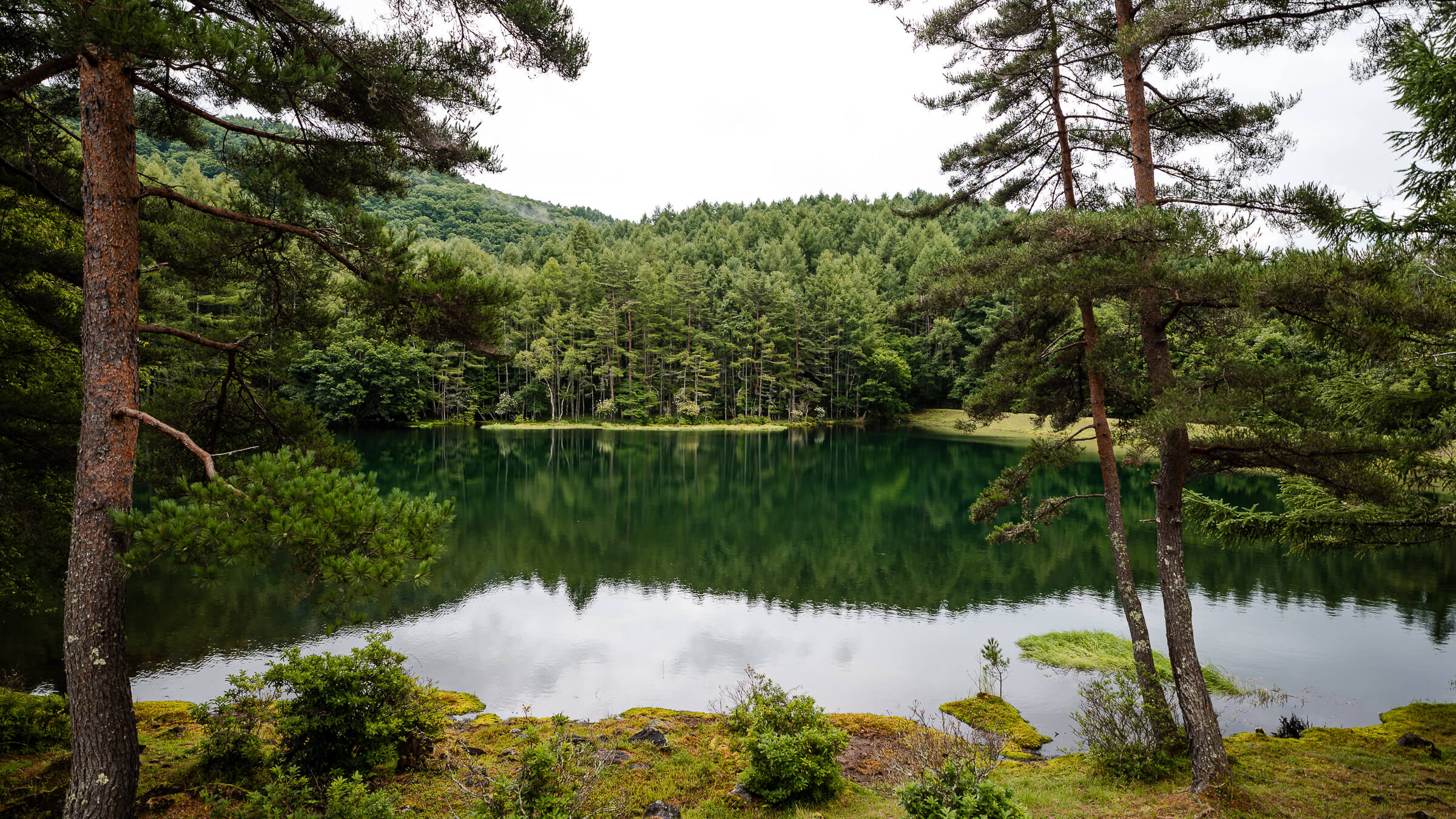
One of the reasons Maemiya fits naturally into a broader Suwa itinerary is its position between the Lake Suwa basin and the rising landscapes surrounding Chino. Beyond the shrine, the roads continue climbing toward the open grasslands of Kirigamine Highlands, the forested routes surrounding the Yatsugatake foothills, and natural areas like Mishaka-ike Pond, Otome Falls, and Oshidori Kakushi Falls deeper in the surrounding hills.
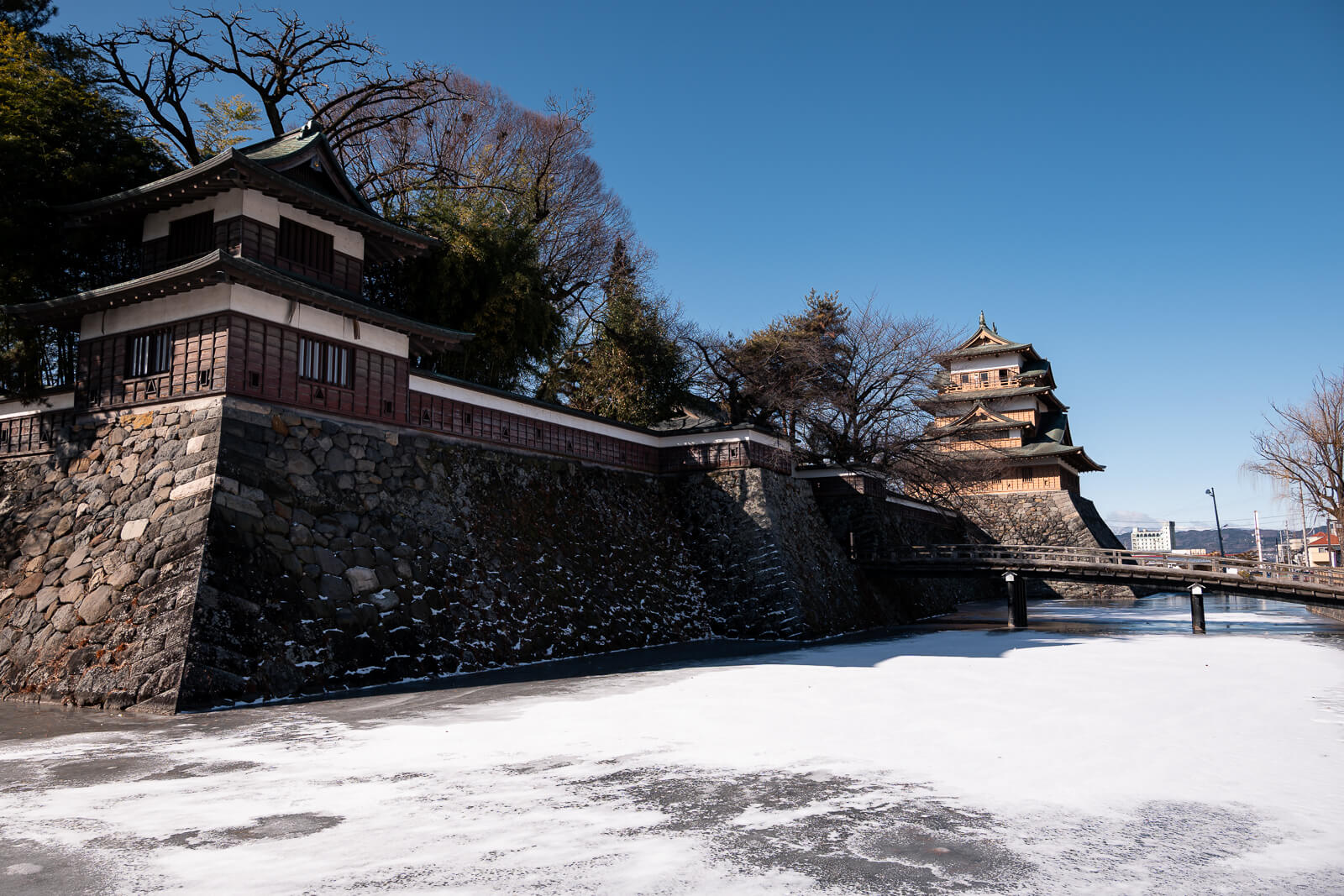
Within the wider Suwa area, the shrine also pairs naturally with nearby locations like Suwa Taisha Kamisha Honmiya and the other Suwa Taisha shrines spread around the lake basin. Farther around the shoreline, places like Takashima Castle, the lakeside footbath and geyser area at Sekicho Park, and the elevated viewpoints at Tateishi Park help reveal how the region shifts between lakeside towns, historic districts, forested slopes, waterfalls, quiet ponds, and mountain overlooks. Movement between these locations gradually expands the sense of geography surrounding Lake Suwa itself. For the broader lakeside planning context, the Lake Suwa Guide explains how the shoreline, viewpoints, shrine areas, and overnight bases fit together around the basin.
Because of that geography, Maemiya often feels less like a standalone sightseeing stop and more like part of a larger movement through the Suwa and Chino region itself. For the wider regional view, the Suwa Area Guide connects Maemiya with Lake Suwa, the Suwa Taisha route, Chino, Tateishi Park, and the highland roads beyond the basin.
When Maemiya Makes Sense to Include
For travelers looking for shopping districts, entertainment areas, or heavily structured sightseeing infrastructure, Maemiya may initially feel understated. The visit here is shaped more by elevation, pacing, hillside movement, and progression through the shrine than by large-scale attractions or dramatic structures.
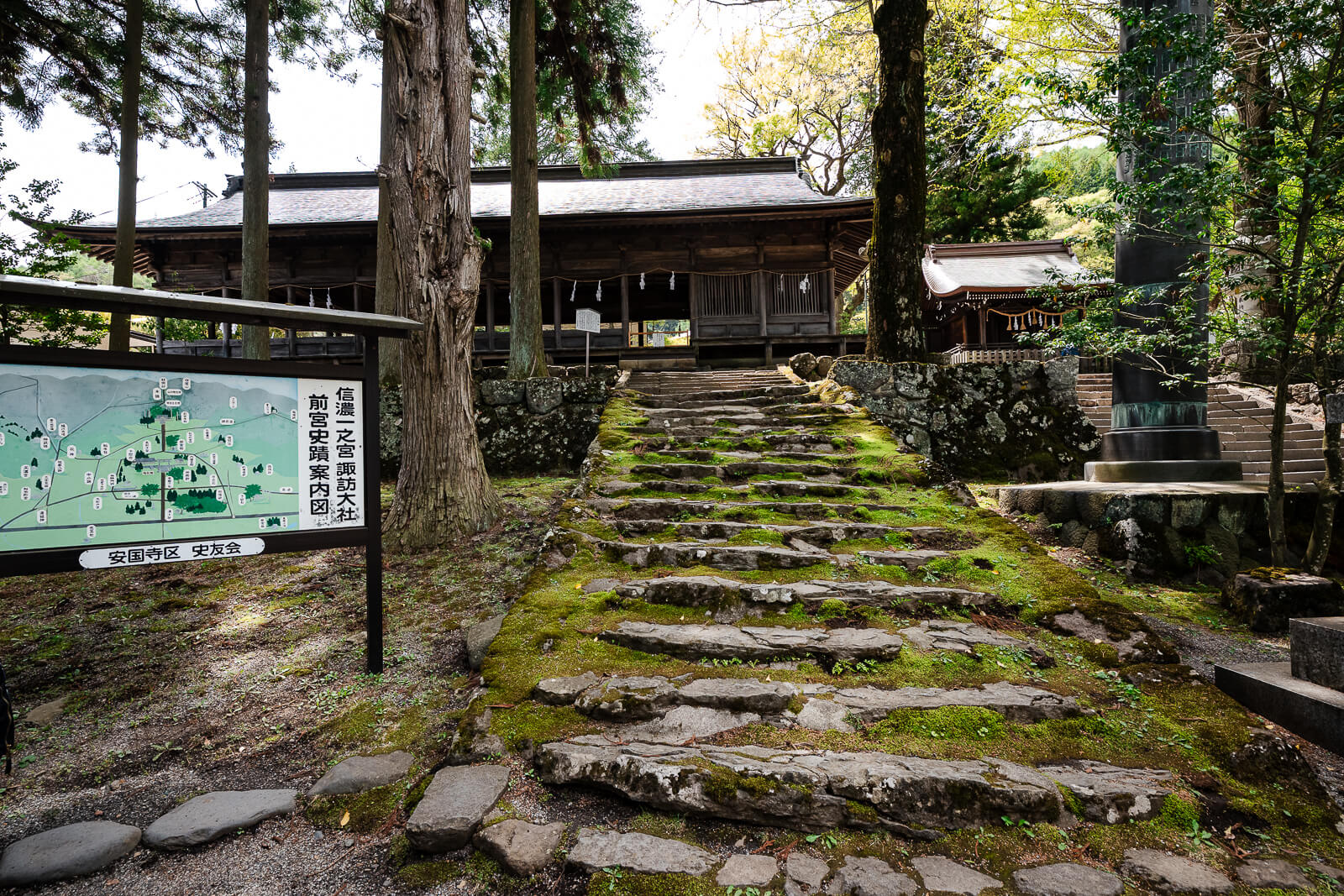
That quieter structure is exactly what makes the shrine memorable for many visitors exploring the Suwa region. The layered approach, wooded pathways, elevation changes, and connection to the surrounding landscape create an experience that feels noticeably different from many larger shrine destinations elsewhere in Japan.
For travelers already exploring Lake Suwa, the surrounding shrine network, or the mountain routes around Chino, Maemiya becomes one of the more rewarding quieter stops in the region.
Getting There
Suwa Taisha Kamisha Maemiya is located in Chino on the southeastern side of the Lake Suwa region in Nagano Prefecture. Driving remains the easiest and most convenient way to visit, especially for travelers continuing onward toward the Chino hills, Kirigamine Highlands, or other mountain routes in the area.
Parking near the shrine is straightforward, and many visitors combine Maemiya with nearby Suwa Taisha Kamisha Honmiya during the same outing.
The shrine can also be reached on foot from surrounding parts of Chino. The walk covers a little over 2 kilometers and usually takes around 30 minutes depending on pace. While manageable, the area feels quieter and less transit-oriented than larger tourist destinations around Nagano.
For travelers arriving from Tokyo by car, the route into the Suwa and Chino area gradually shifts from dense urban expressways into broader mountain scenery as the elevation increases approaching central Nagano.
Hours and Fees
Suwa Taisha Kamisha Maemiya grounds are generally open daily and can be visited freely without an admission fee. Hours for shrine offices or goshuin services may vary seasonally, so checking official information before visiting is recommended.
Official Information:
Suwa Taisha Official Website