
Transportation in Japan
Compare rail fares for your itinerary, choose a departure station and see where to change trains.
Open the JR Pass calculatorView the Tokaido route map
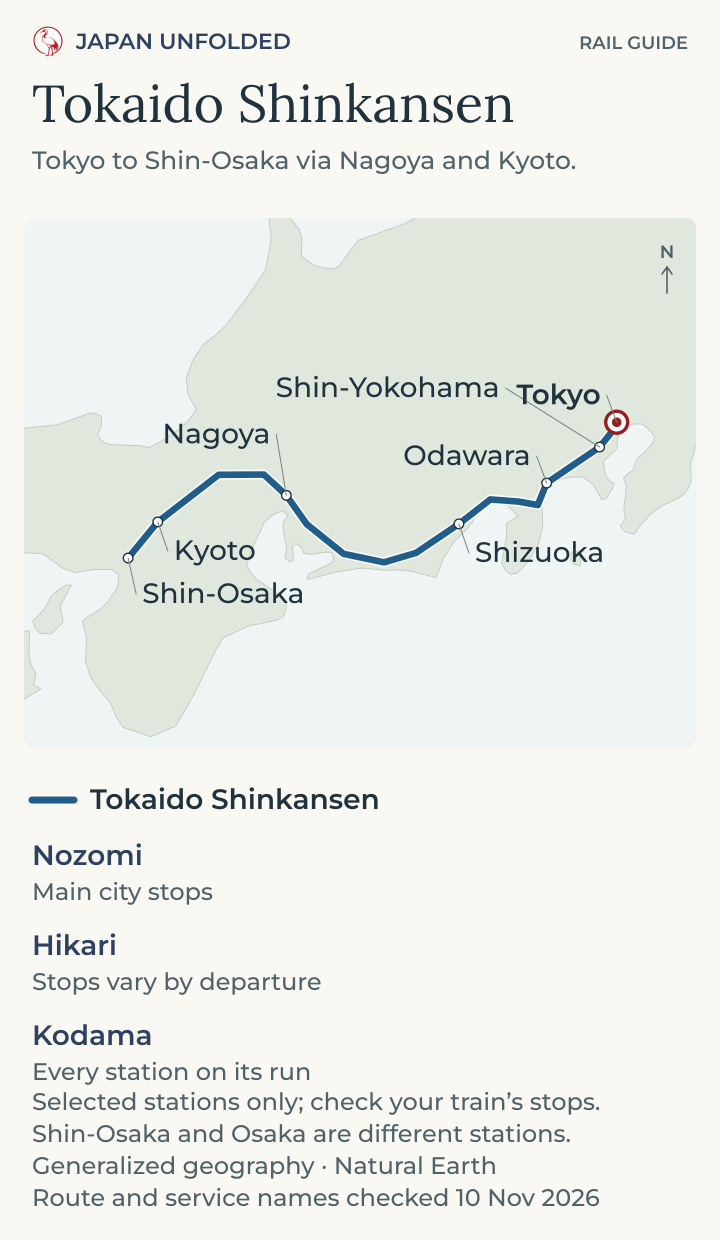
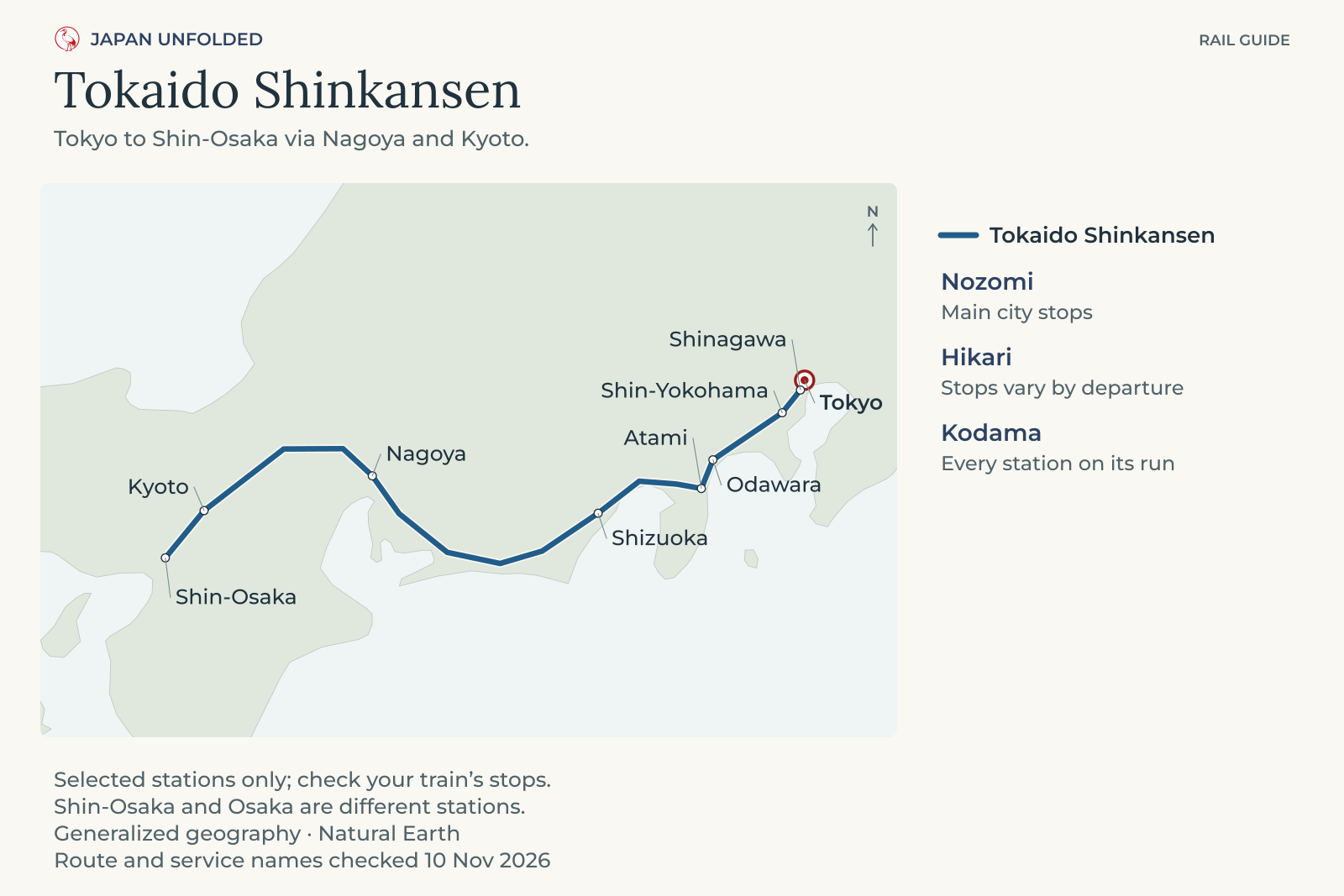 Open full-size route map ↗
Compare the cost of your rail itinerary
The JR Pass calculator compares individual tickets with national and applicable regional passes for Tokaido, Sanyo and selected Hokuriku journeys. Add the day of each ride so the comparison accounts for the pass’s validity period. For other Honshu routes, you can enter your own ticket quotes.
Build the journey around the places you want to visit
Mark the places where the trip changes base before comparing transport products. A long-distance journey between cities and a local sightseeing day solve different problems, even when both use trains. Keeping them separate makes it easier to see which journeys justify advance planning and which need a local access guide.
The station name deserves a second check when a destination has several railway approaches. Getting to Enoshima explains three mainland arrival stations and the walk that follows, while Odawara Station introduces a gateway between the Tokaido corridor and Hakone. These guides carry the journey beyond the intercity timetable, where the choice of arrival starts to shape the visit.
Choose a mode for the complete journey
Rail can link city centers and regional gateways, but the last stretch may use another mode. A flight comparison needs the airport transfers on both ends; a bus journey needs the actual stop and onward walk. A rental-car plan needs a practical reason for driving on the days it is booked, together with parking and return arrangements.
| Transport choice | What to compare |
|---|---|
| Trains | Station locations, transfers, ticket coverage and seat requirements |
| Flights | Airport access, baggage conditions and total journey time |
| Highway and local buses | Departure stop, luggage conditions and the final connection |
| Rental cars and taxis | Door-to-door access, parking, driving requirements and return arrangements |
| Ferries and bicycles | Operating conditions, terminals or pickup points, and onward access |
Buy the product that matches the route
A pass comparison starts with journeys that would actually be taken. Check which of those journeys the pass covers, place them inside its valid travel period and add any separate tickets or supplements. An IC card serves a different purpose: it pays eligible fares from stored value and does not turn a local journey into unlimited travel.
Before buying a pass, check eligibility, the trains it covers and any supplements for the services you intend to use.
Connect transport with the visit
An arrival time is only one part of a useful plan. Allow room for the exit, onward transport and the walk to the first stop, then work backward from the return journey when the day has a fixed finish. Destination guides supply that local detail without requiring every national transport page to repeat it.
- Enoshima — island walks, summit sights and the mainland approach.
- Atami — plan the coastal stay after the rail journey.
- Suwa — connect the destination with the places around the lake.
Plan a journey on Honshu
Start with the corridor and the station pair. These guides explain where to board, which trains serve your stop and where to change.