
The pond makes the evening worth planning around
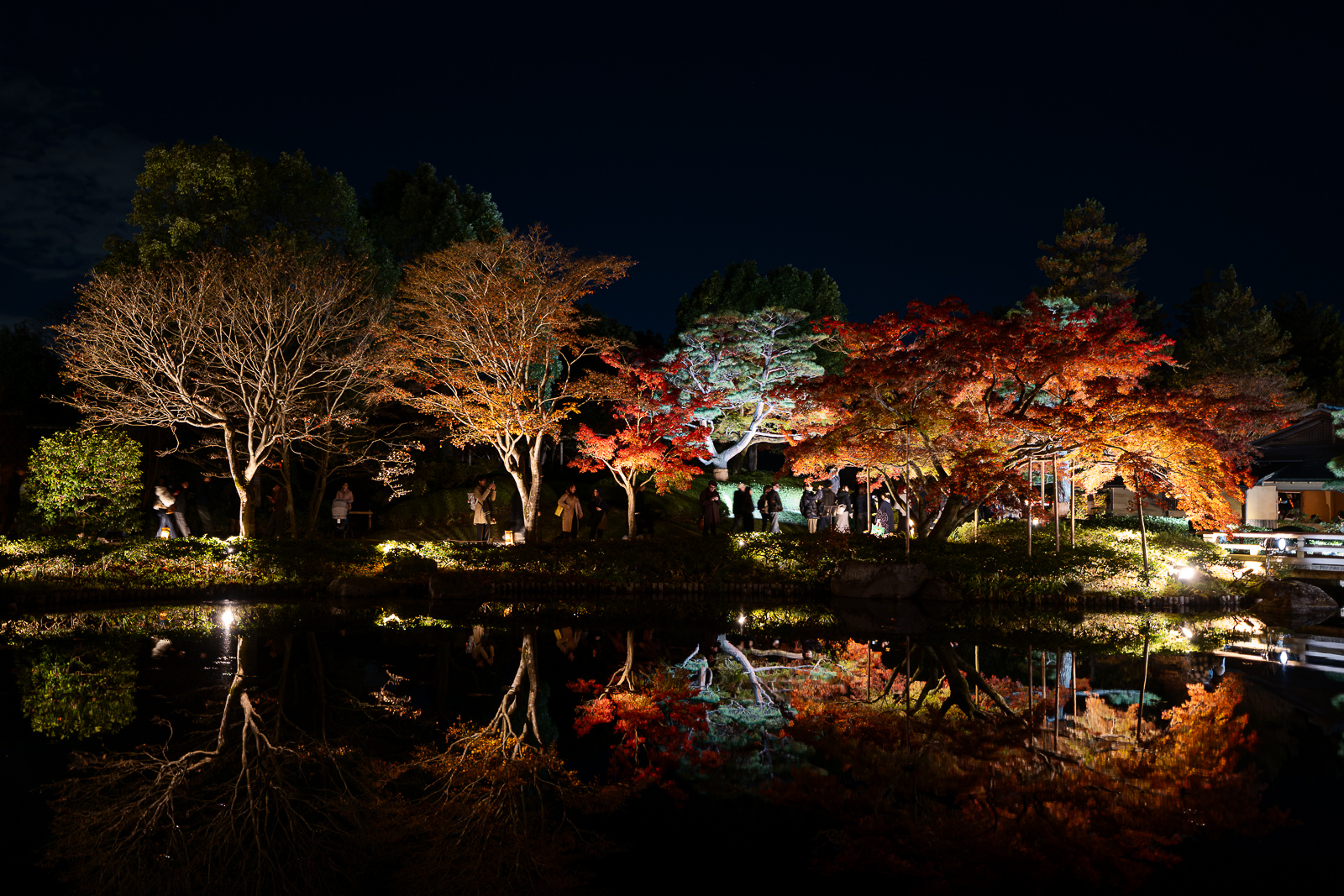
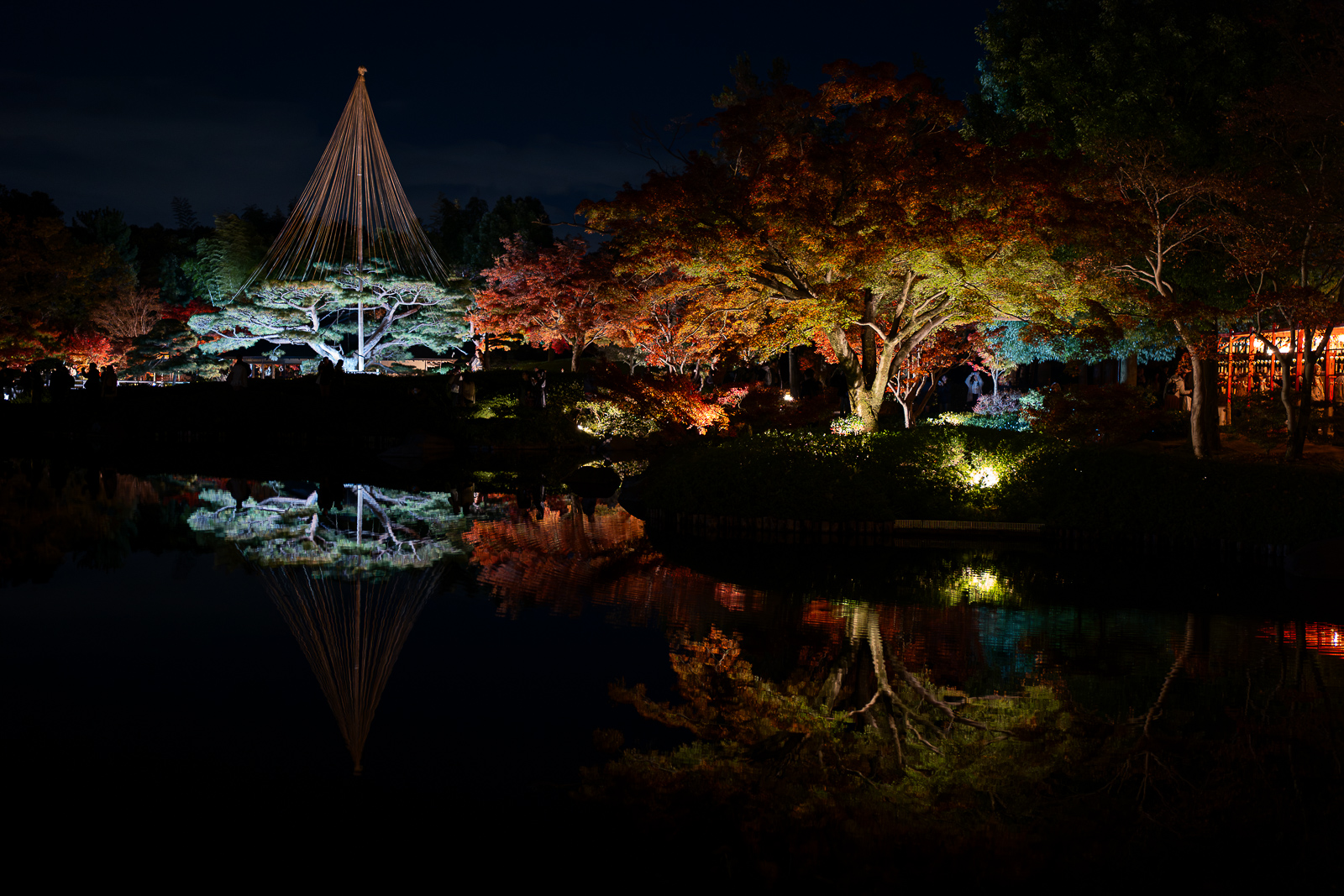
The autumn night walk at Showa Kinen Park in western Tokyo is at its most memorable beside the Japanese Garden pond. On a clear November evening, illuminated trees along the opposite bank were reflected almost perfectly in the still water, with a pavilion offering another place to pause and take in the scene. That pond was the highlight of the visit, and the towering wall of illuminated bamboo made the separately ticketed garden feel well worth adding.
The garden is only part of the wider autumn illumination, so the ticket choice matters. The ginkgo avenues can be enjoyed with ordinary park admission, while the Japanese Garden normally requires an additional night-viewing ticket. The evening continued through the garden, bonsai and umbrella displays before the long walk out beneath the ginkgo trees.
Arriving as daylight fades
Arrival was around 4:30 pm, with daylight already fading fast. The approach began at the car park and followed a path towards a broad entrance forecourt, where a railway-station exit was also close to the park gate. The illumination area lay farther inside, so reaching the gate was only the start of the evening.
The walk included stops to look around before joining the queue for the separate autumn illumination ticket. Allow time to walk from the gate and collect any tickets before heading into the Japanese Garden, especially if you want to spend most of the evening there.
A wall of illuminated bamboo
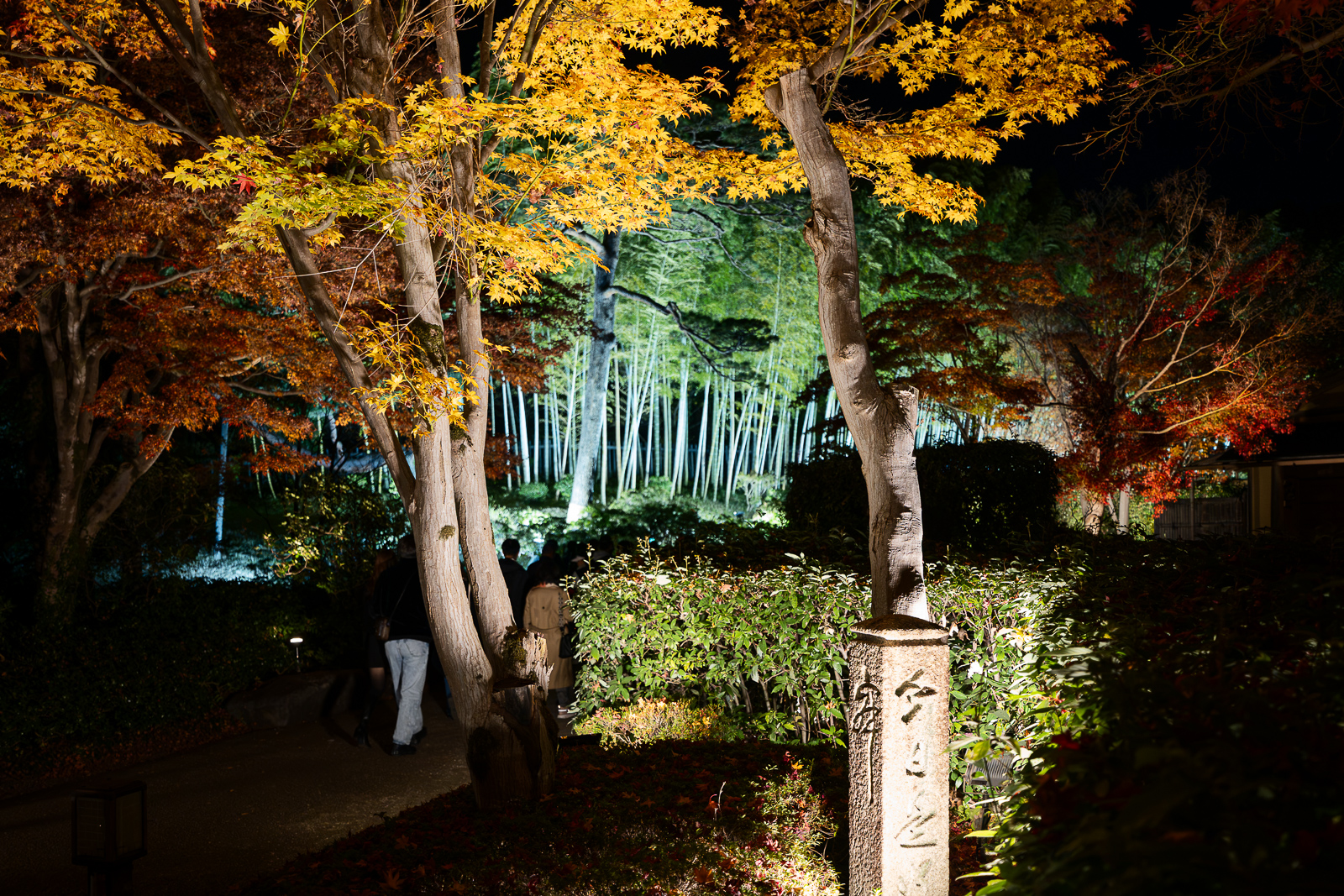
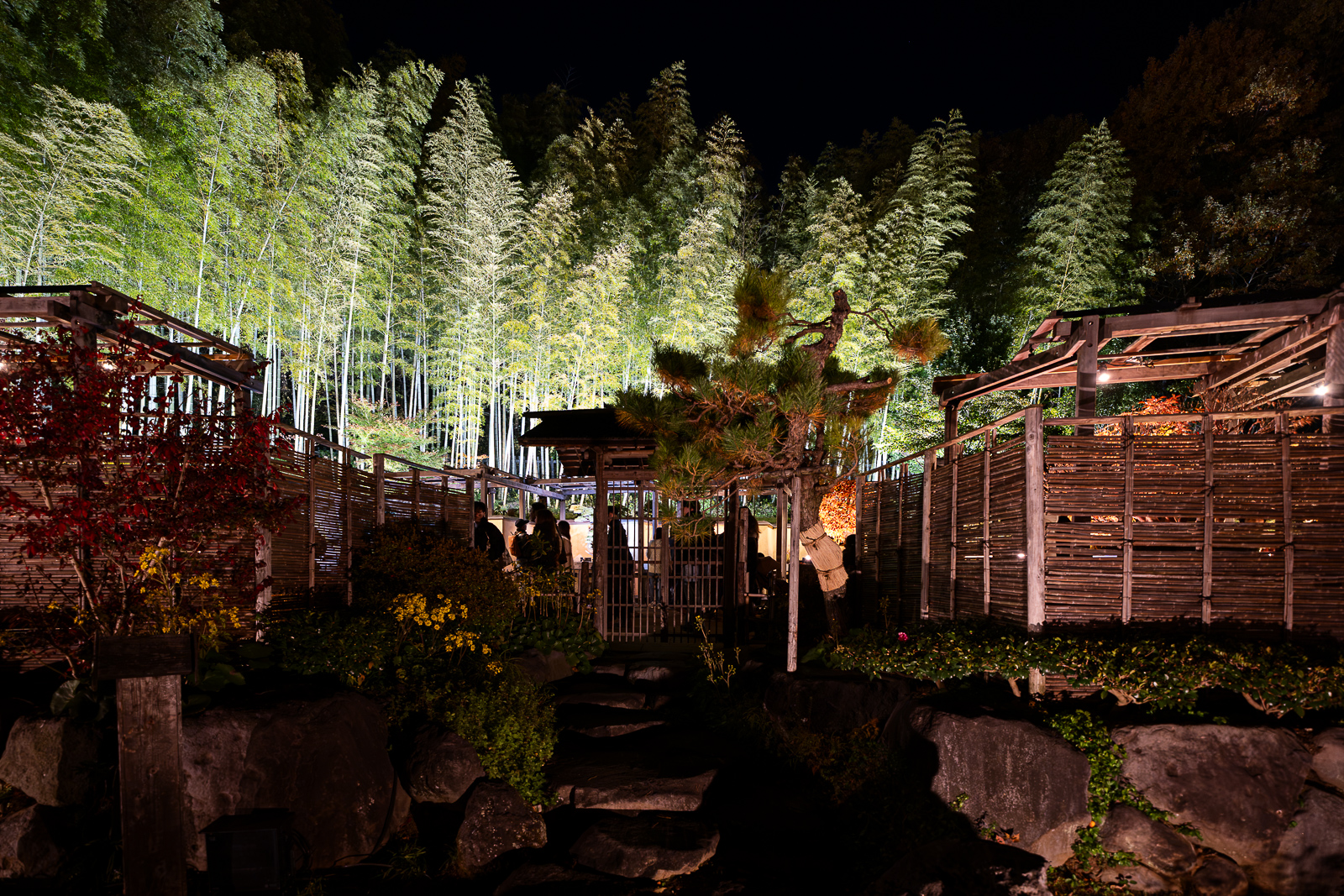
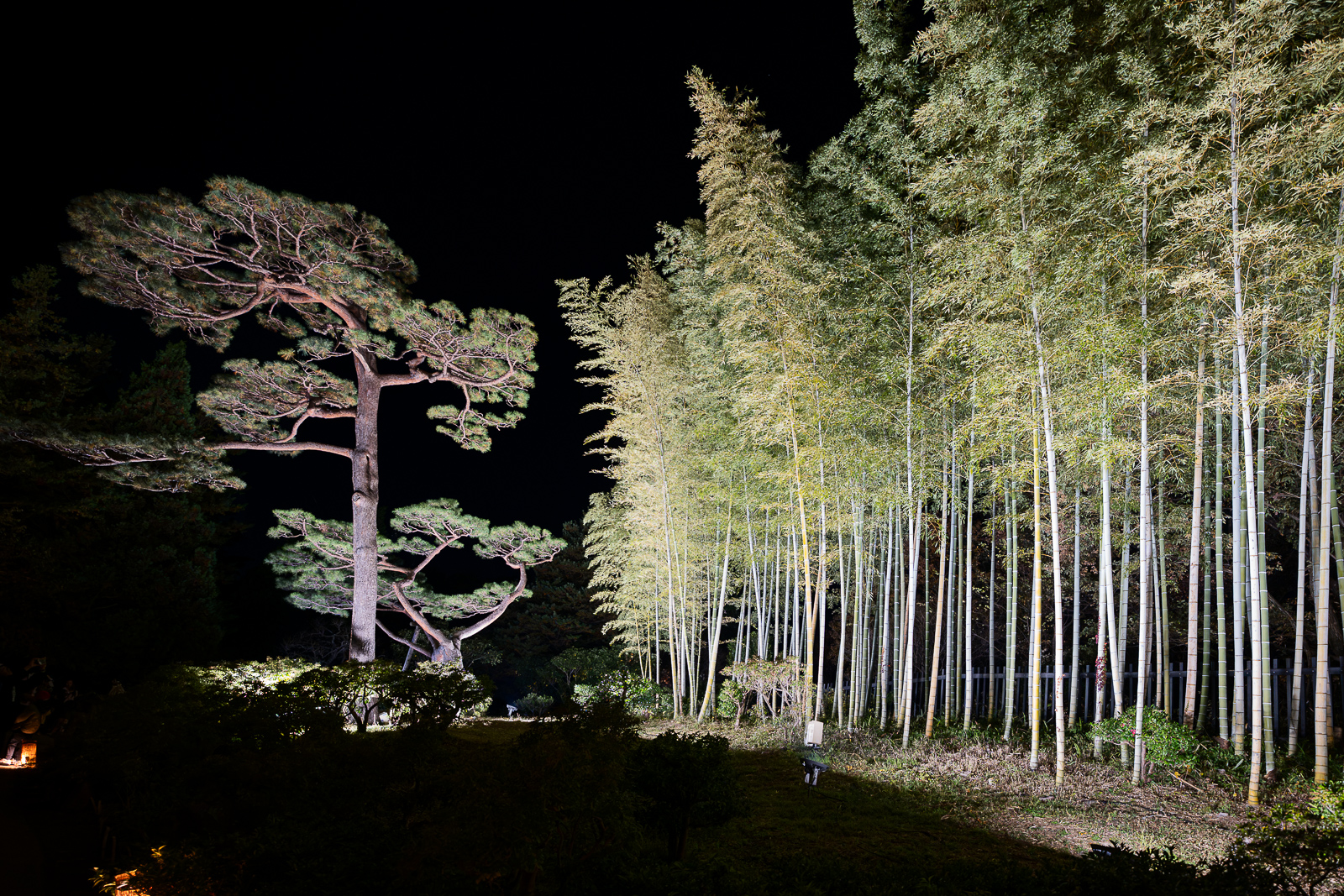
The first major sight inside the paid illumination area was a huge wall of bamboo illuminated against the night. The tall, closely spaced stems made a striking introduction before the path reached the pond. The bamboo was one of the evening’s strongest impressions, worth stopping for before moving towards the water.
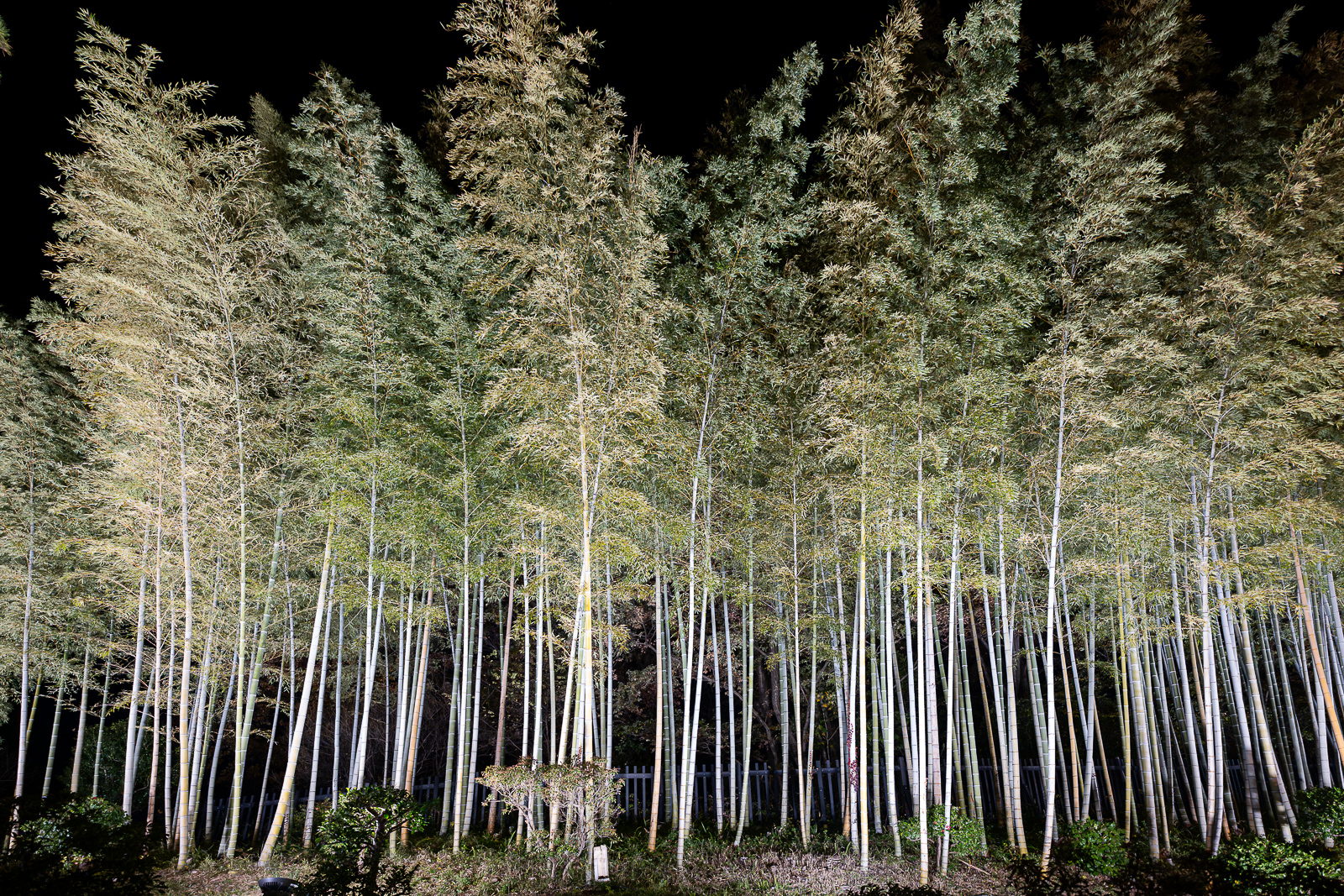
Nearby views bring the bamboo together with spreading pine branches, wooden beams and autumn leaves. The grove’s upright stems remain visible behind these closer frames, giving the scenes a common backdrop. A few steps along the path bring pine branches and autumn leaves into view against the bamboo.
Mirror-like reflections around the pond
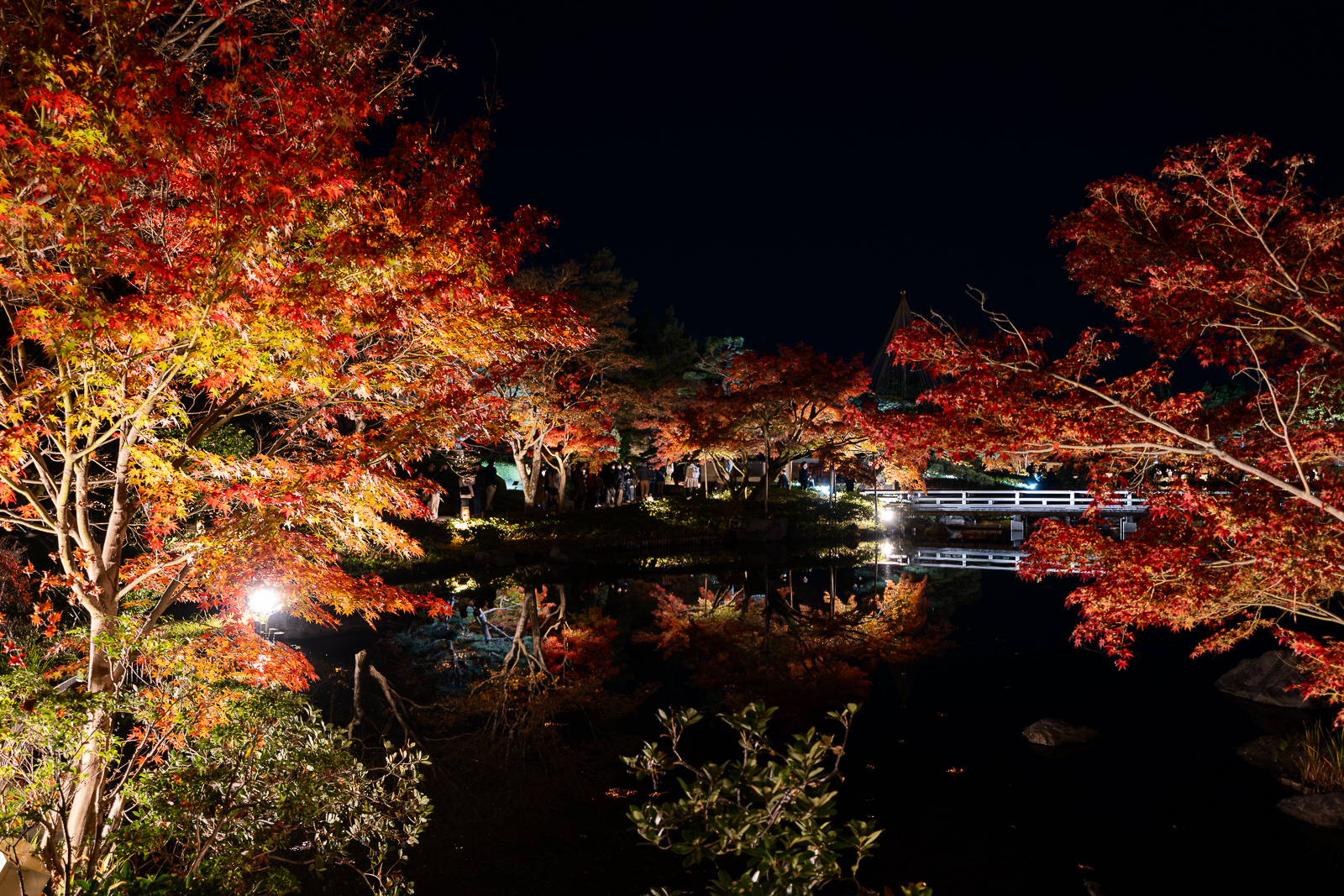
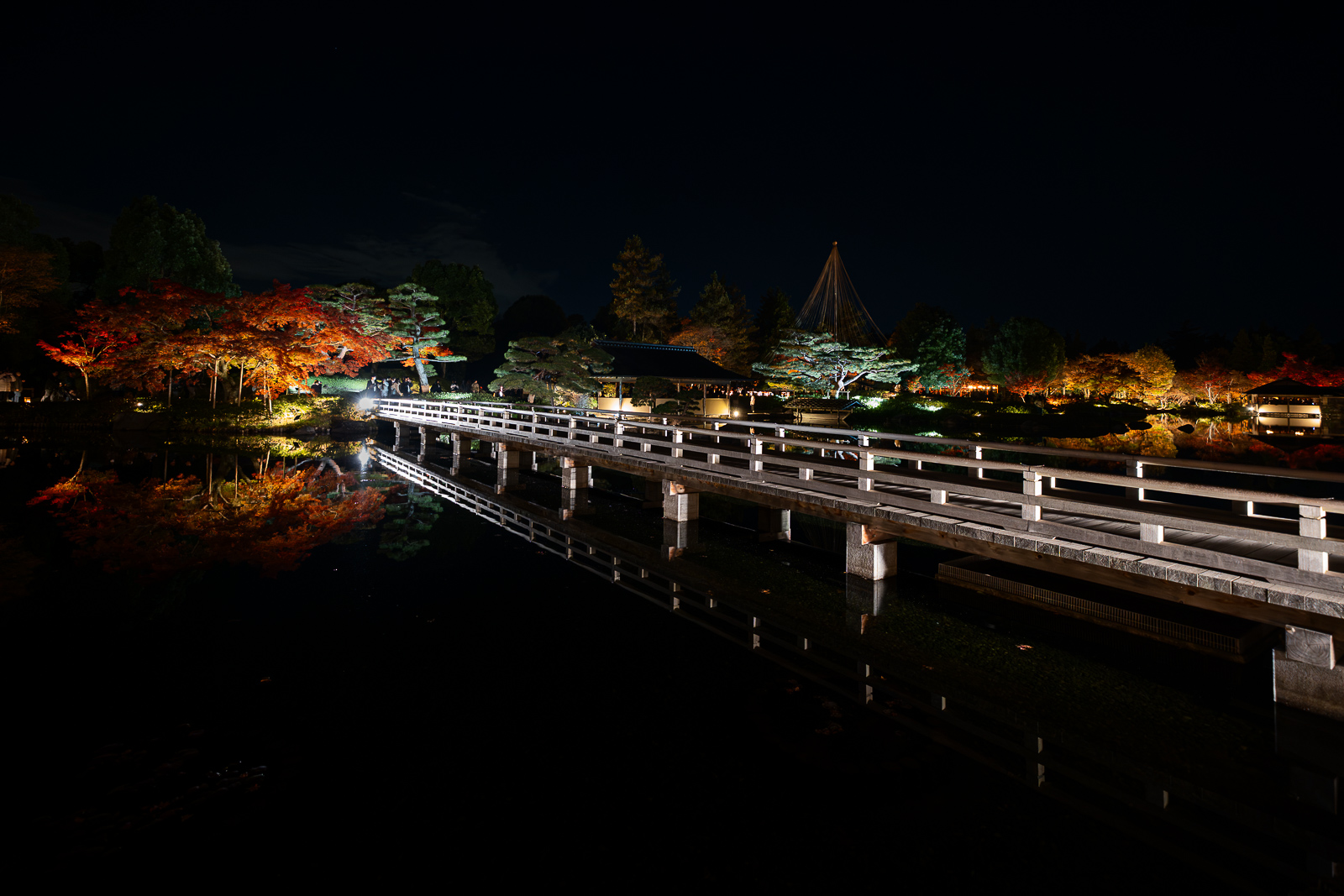
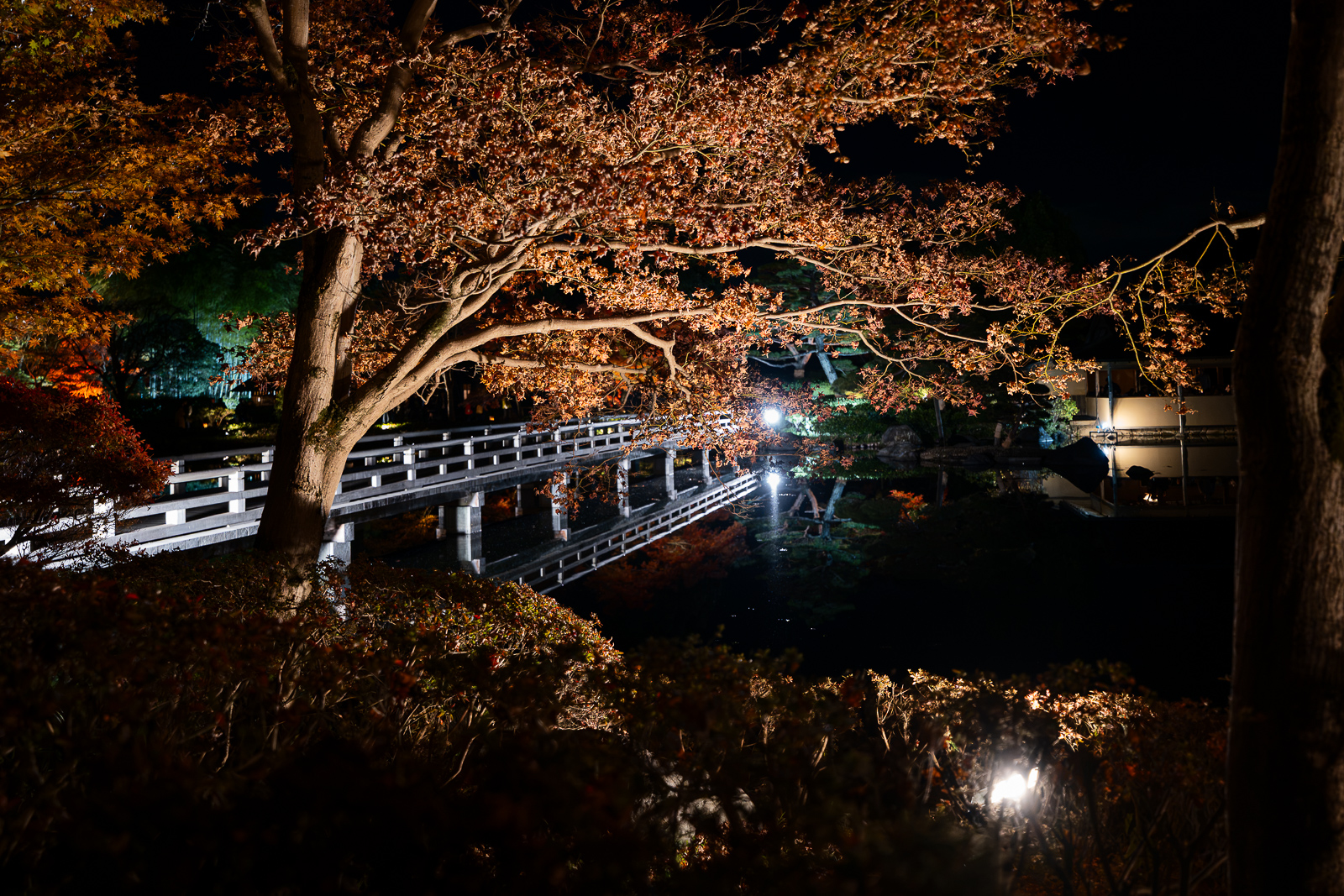
Coming around to the pond changed the view from a wall of stems to a broad expanse of reflected light. The night was clear and the water still, so the illuminated trees on the opposite bank appeared almost mirror-like across its surface. The pine’s support ropes, bridge rails and overhanging branches added smaller shapes within that wider scene.
The pavilion beside the pond was a worthwhile stopping point for a better view across the water. It was crowded on this visit, but people continued moving in and out instead of settling in for a long stay. Keep the viewpoint clear for others while taking photographs.
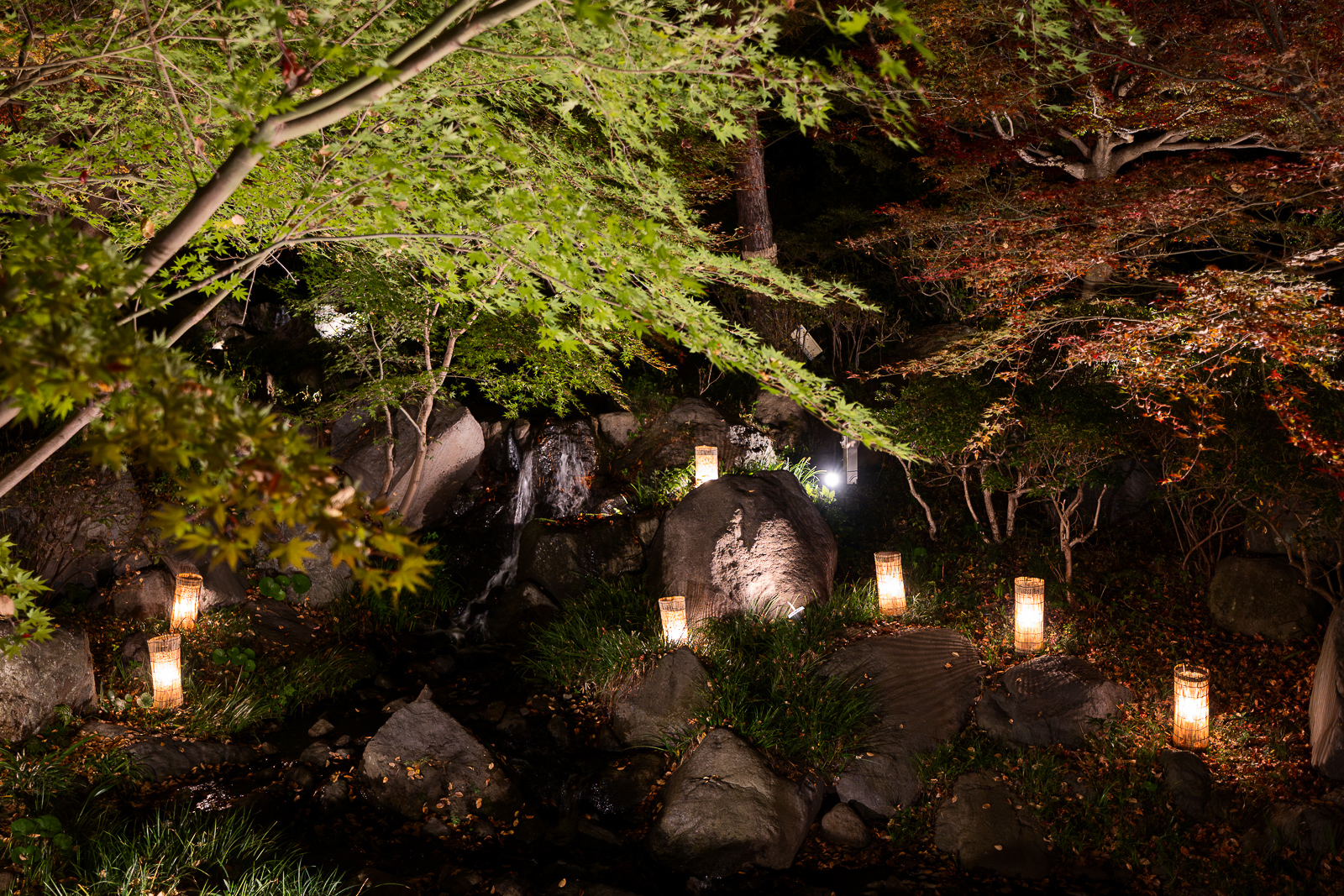
The path around the pond offered more ways to look at the illuminated trees, with foliage close by as well as across the water. Low planting and rocks gave the smaller views their own shape, while red and yellow leaves changed the foreground. The broad reflection was the standout, but the details along the path gave plenty of reasons to pause.
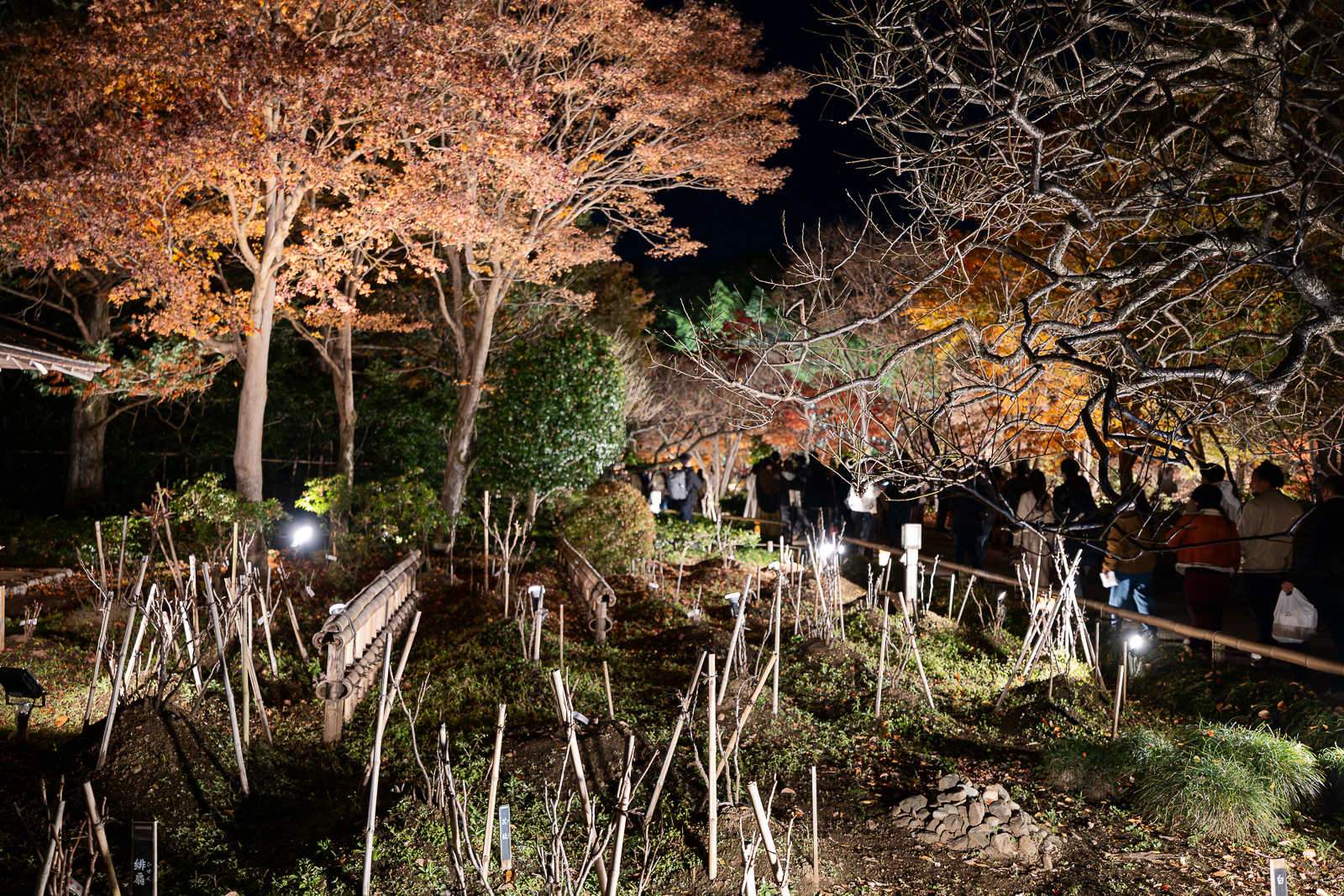
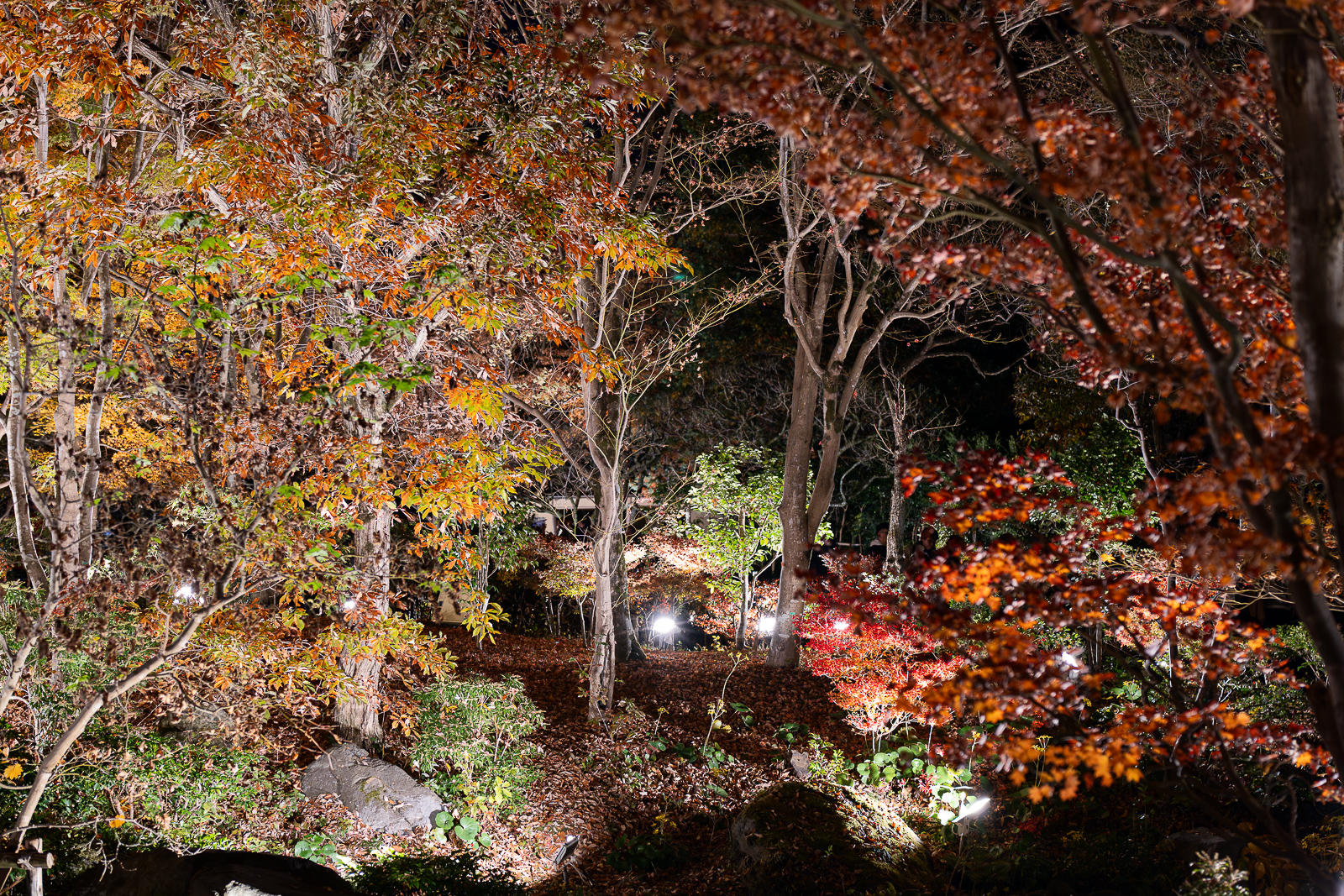
These changing views are part of the garden’s design. The park’s Japanese Garden description explains that it opened in 1997 and follows a pond-strolling style, in which the scenery changes as visitors move around the water. The bridges, planted banks and framed views belong to that deliberately arranged landscape, giving the evening more variety than a single fixed panorama.
Fruiting kaki and ginkgo in miniature
Near the bamboo, an enclosed bonsai display brought the evening down to the scale of individual trees. The visit continued into this area after the pavilion stop, with time to look at maples, pine variations and other specimens. A wider view of the display makes the change in scale clear: trees that normally shape an entire landscape stood within pots along the exhibition space.
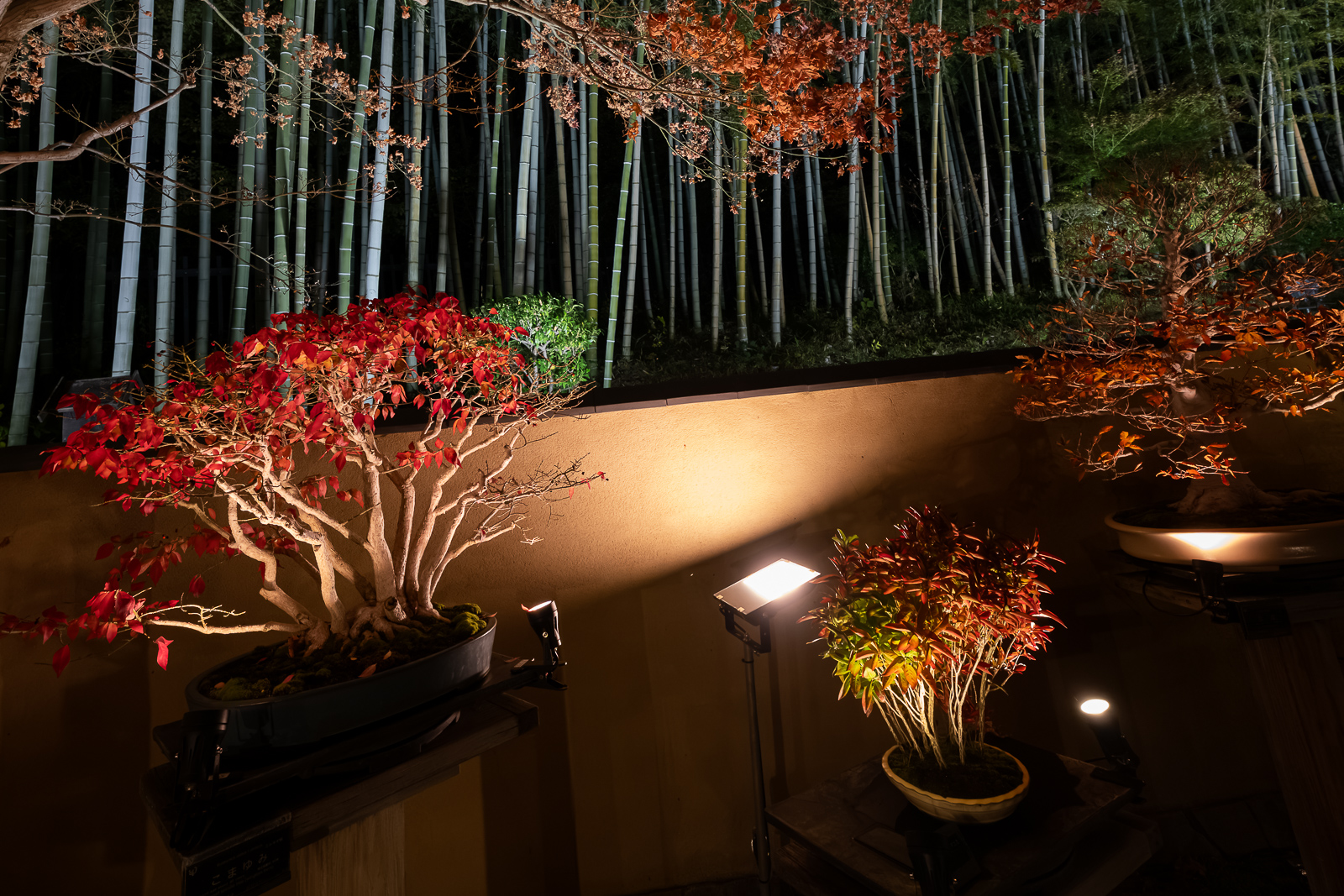
The fruiting kaki, or Japanese persimmon, and the ginkgo were the most interesting of these smaller trees. Trees familiar in their full-sized form appeared here in miniature, with fruit still hanging from the kaki and yellow fan-shaped leaves covering the ginkgo. It was hard not to wonder how the trees had been trained to stay so small while still producing fruit and autumn leaves.
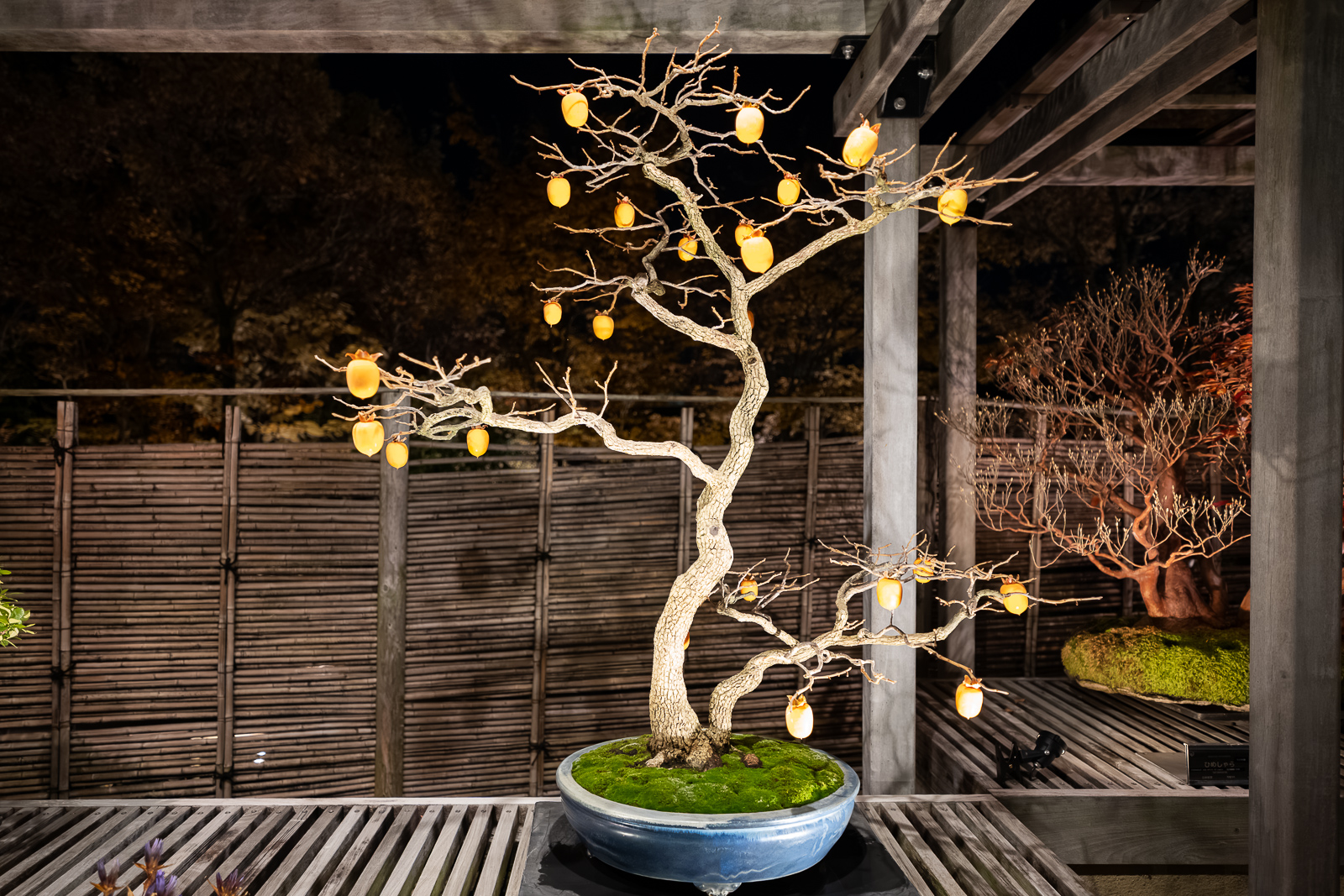
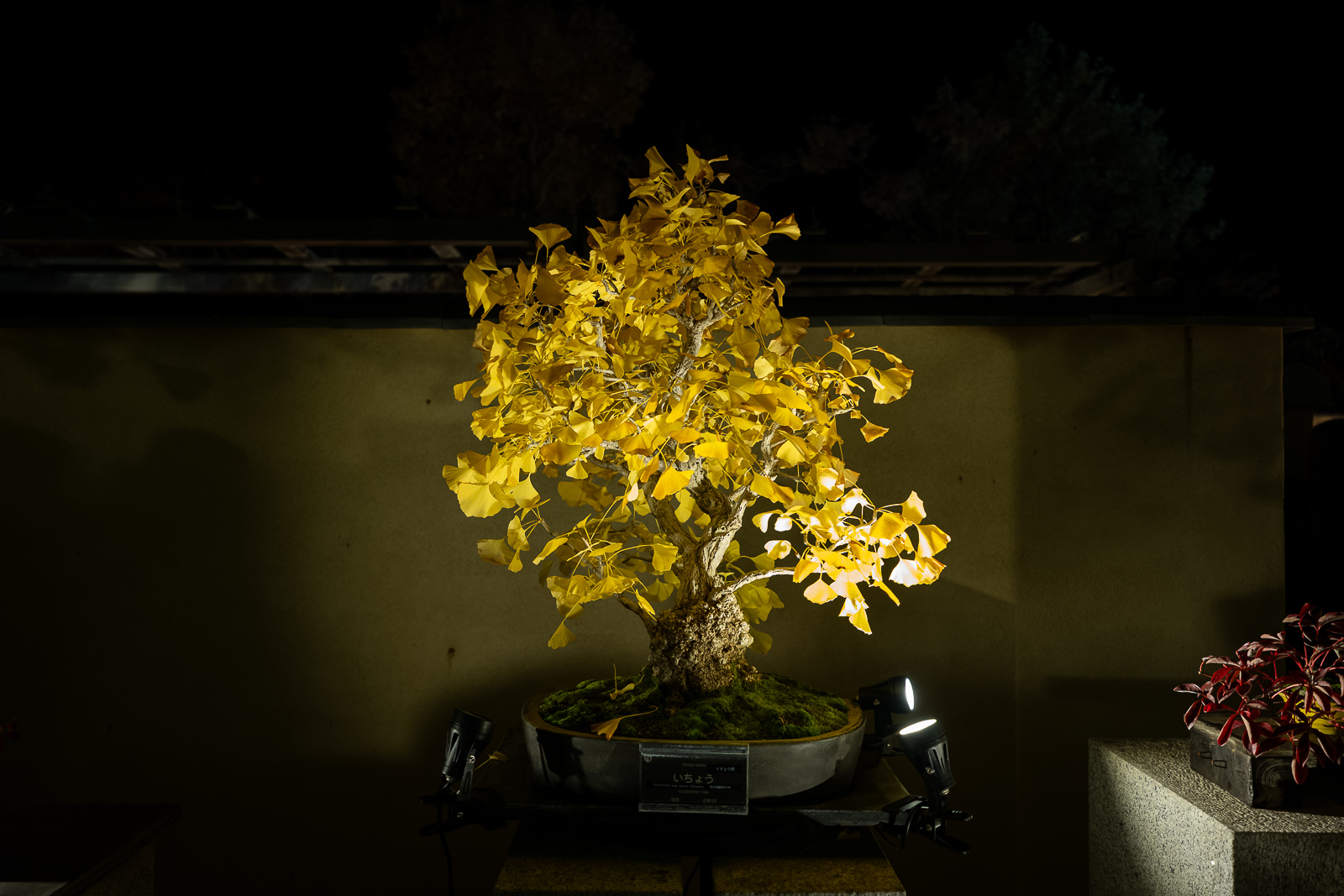
Other specimens drew attention to different parts of a tree. A bare bonsai exposed its trunk and fine branching, while evergreen foliage formed distinct tiers and a red maple brought autumn color close to eye level. The pots and moss-covered soil were worth a closer look too.
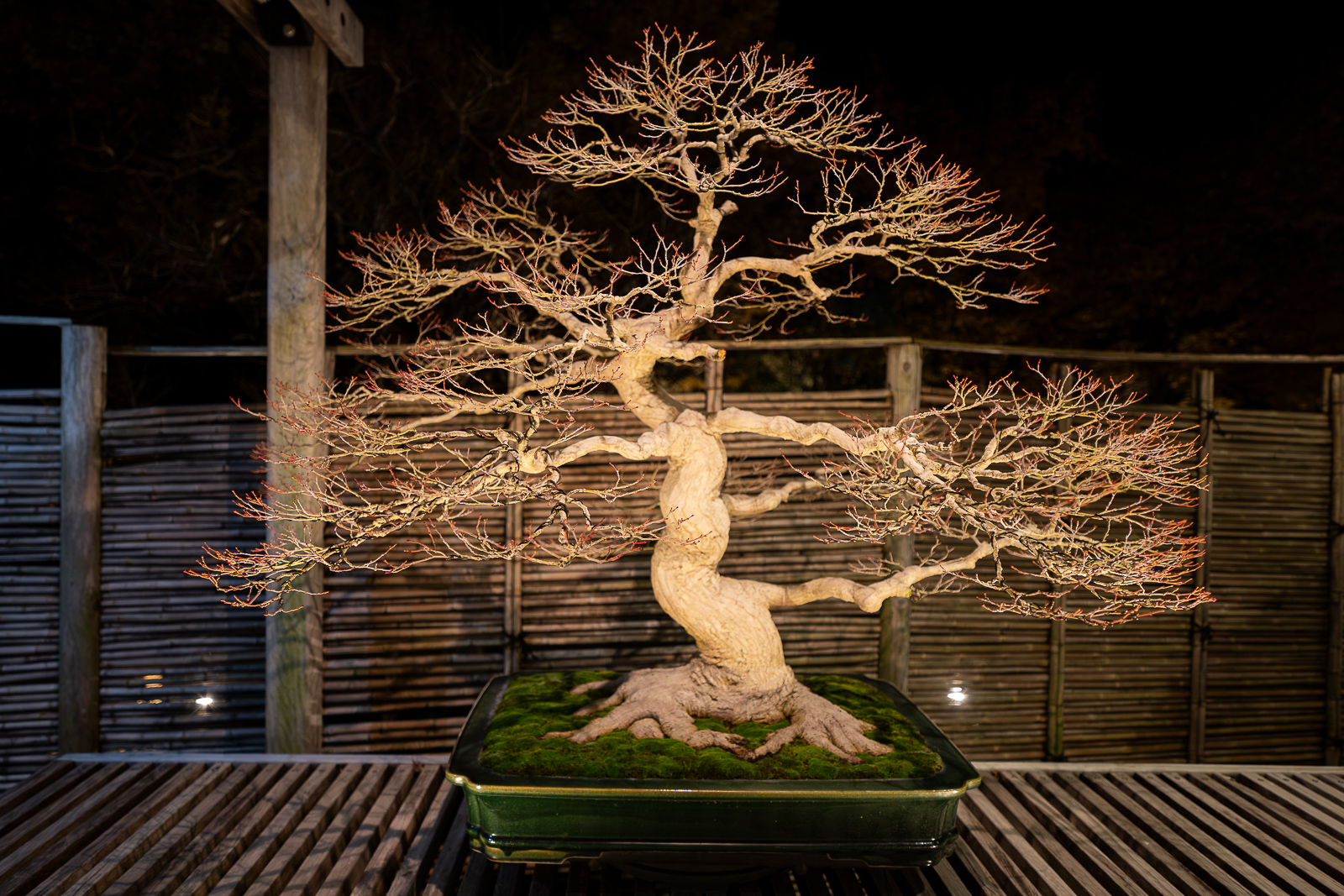
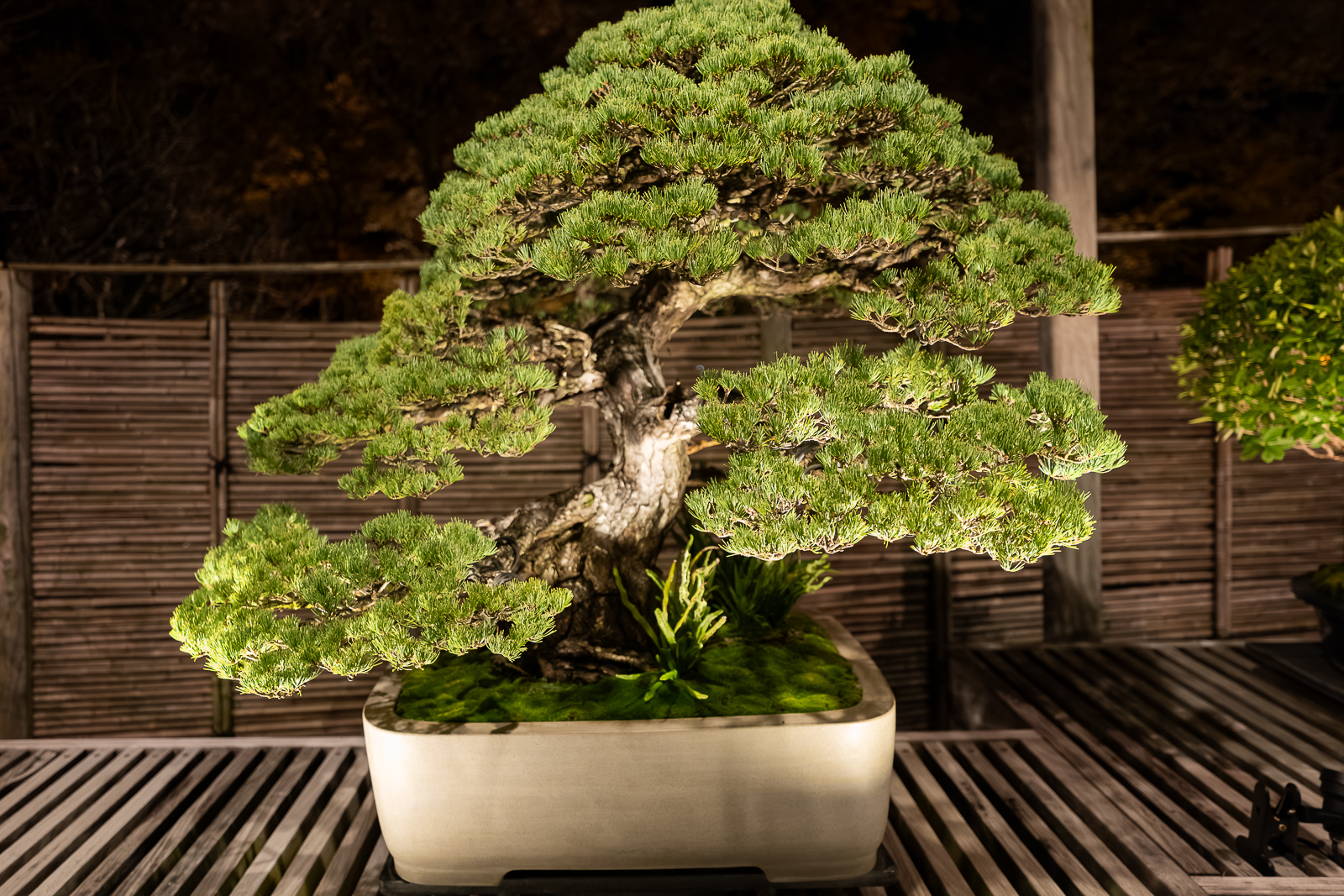
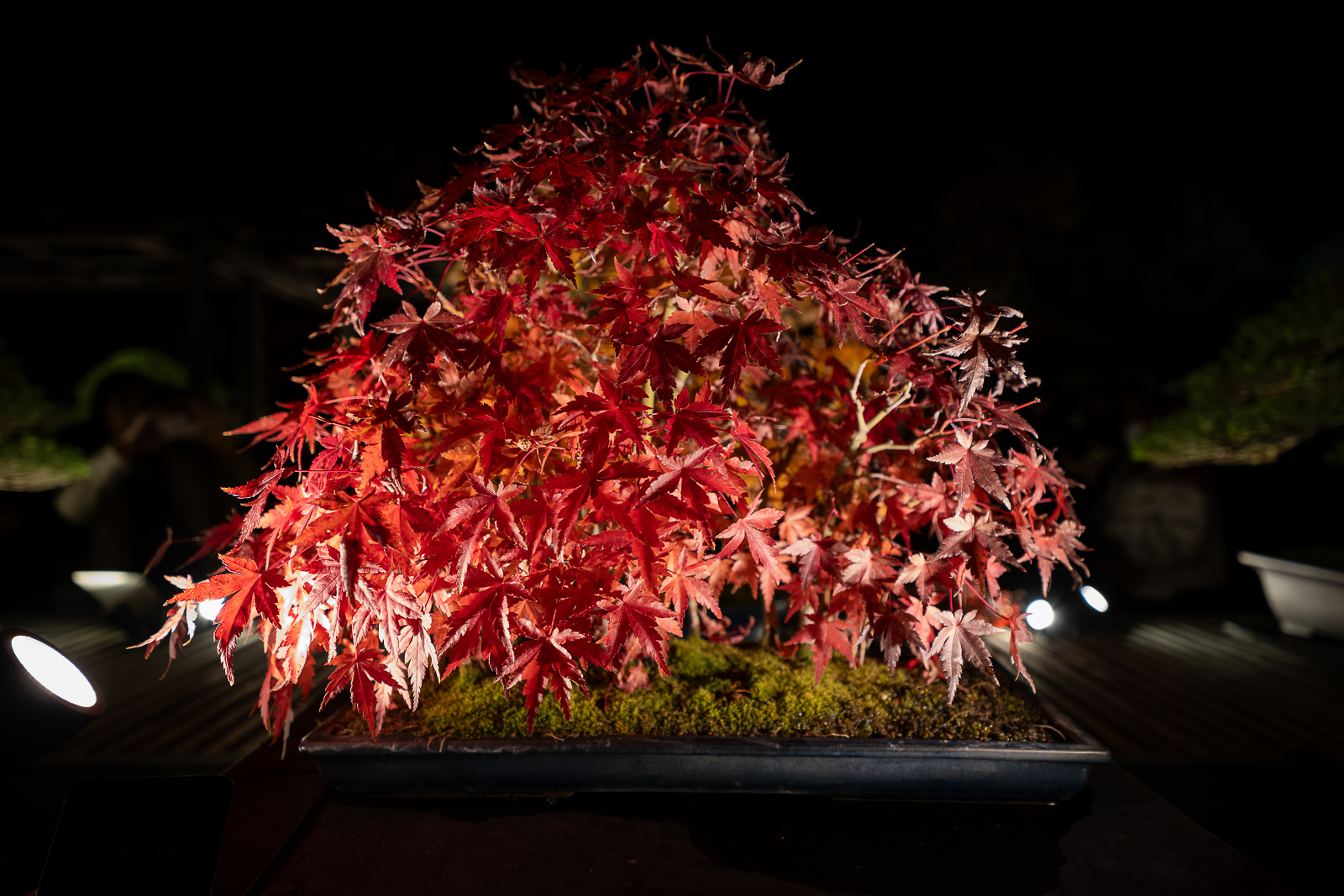
The Bonsai Garden opened in 2004 as a national bonsai exhibition facility. The bonsai displays change with the seasons, giving each visit a different selection of trees to enjoy. It is worth looking closely at whichever specimens are on show, especially when their leaves or fruit reveal a familiar tree in an unfamiliar form.
Back to the bridge, then the umbrellas
After the bonsai, the walk returned to the pond and bridge for a final look before continuing to another boardwalk area. The bridge offered another line across the reflections, with autumn branches changing the frame around it. The boardwalk brought further photo opportunities before the route reached the umbrella displays.
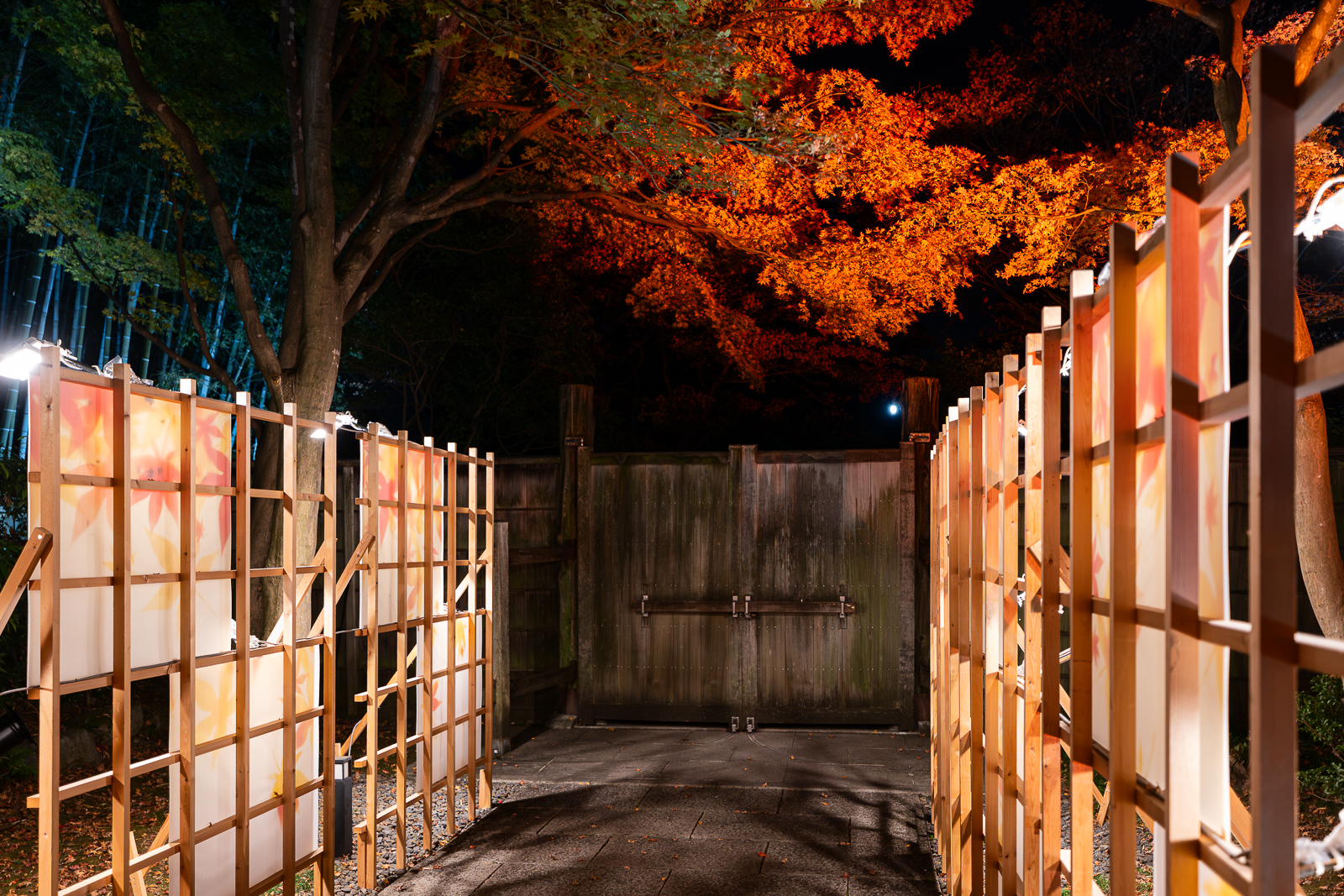
Small lanterns pick out rocks and water below the leaves. Lit wooden screens give a red maple canopy a different setting. These closer compositions show how much there is to notice between the broad garden views.
There were two distinct umbrella areas on this visit. A larger display created a spread of colored canopies, and a long pathway lined with more umbrellas marked the final way out of the special illumination. The installations offered a different kind of photograph from the trees and water, with visitors stopping among the colored canopies.


The long walk out beneath the ginkgo trees
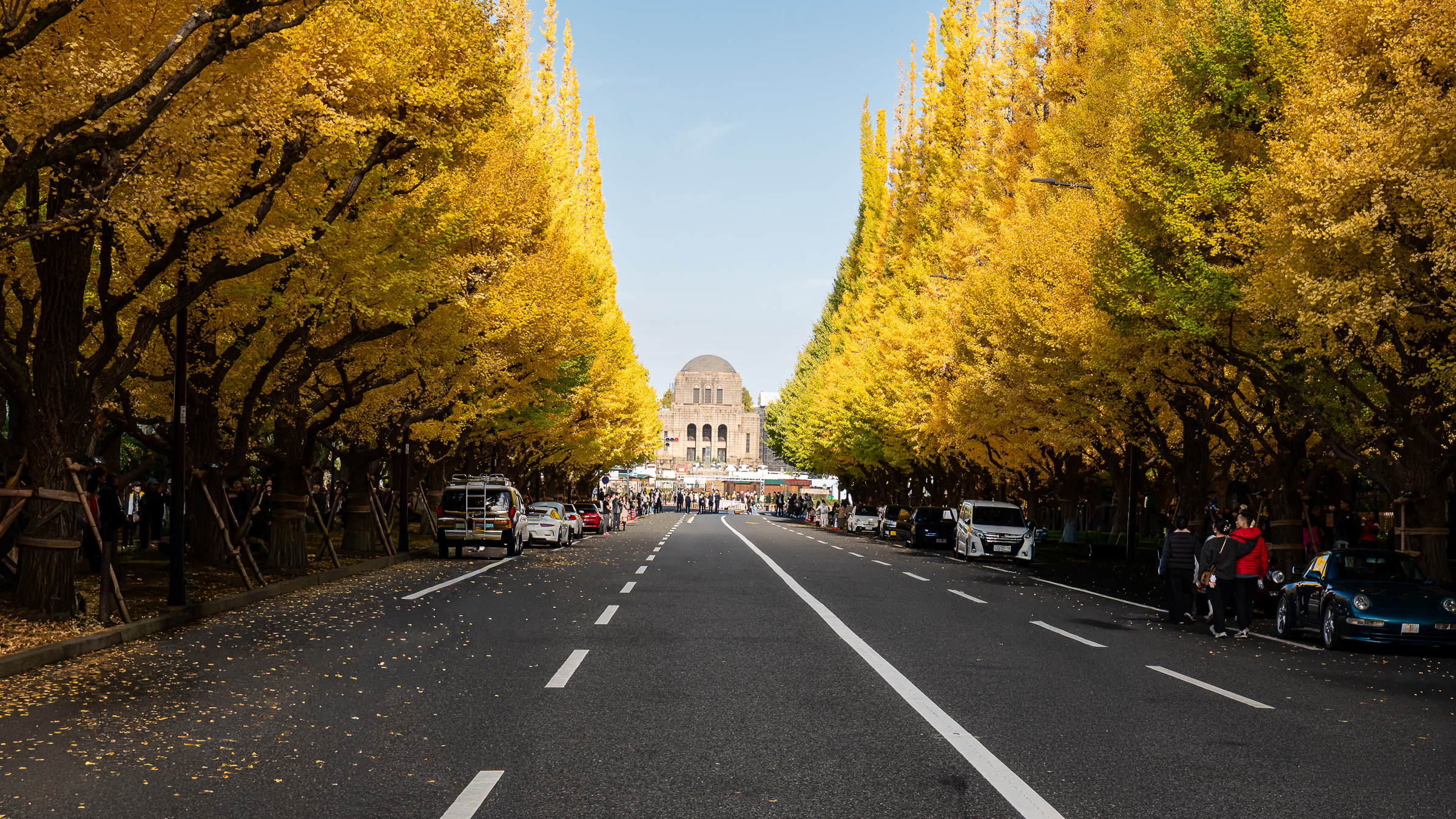
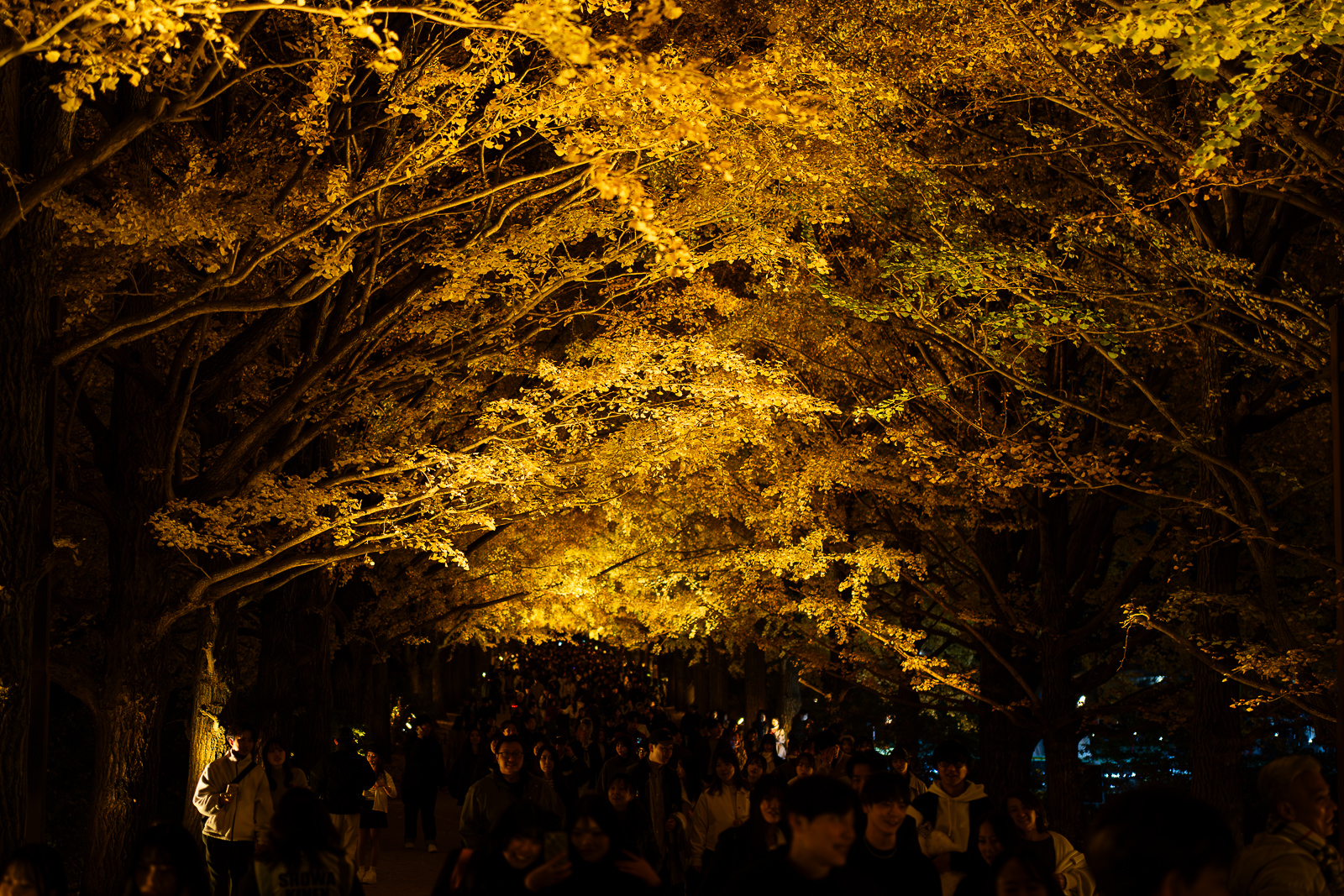
Leaving the special illumination did not end the evening’s scenery. The route towards the park exit continued through a long ginkgo-lined avenue, with a canopy of yellow leaves overhead. After the garden’s pond views and miniature trees, the scale opened up again along the road.
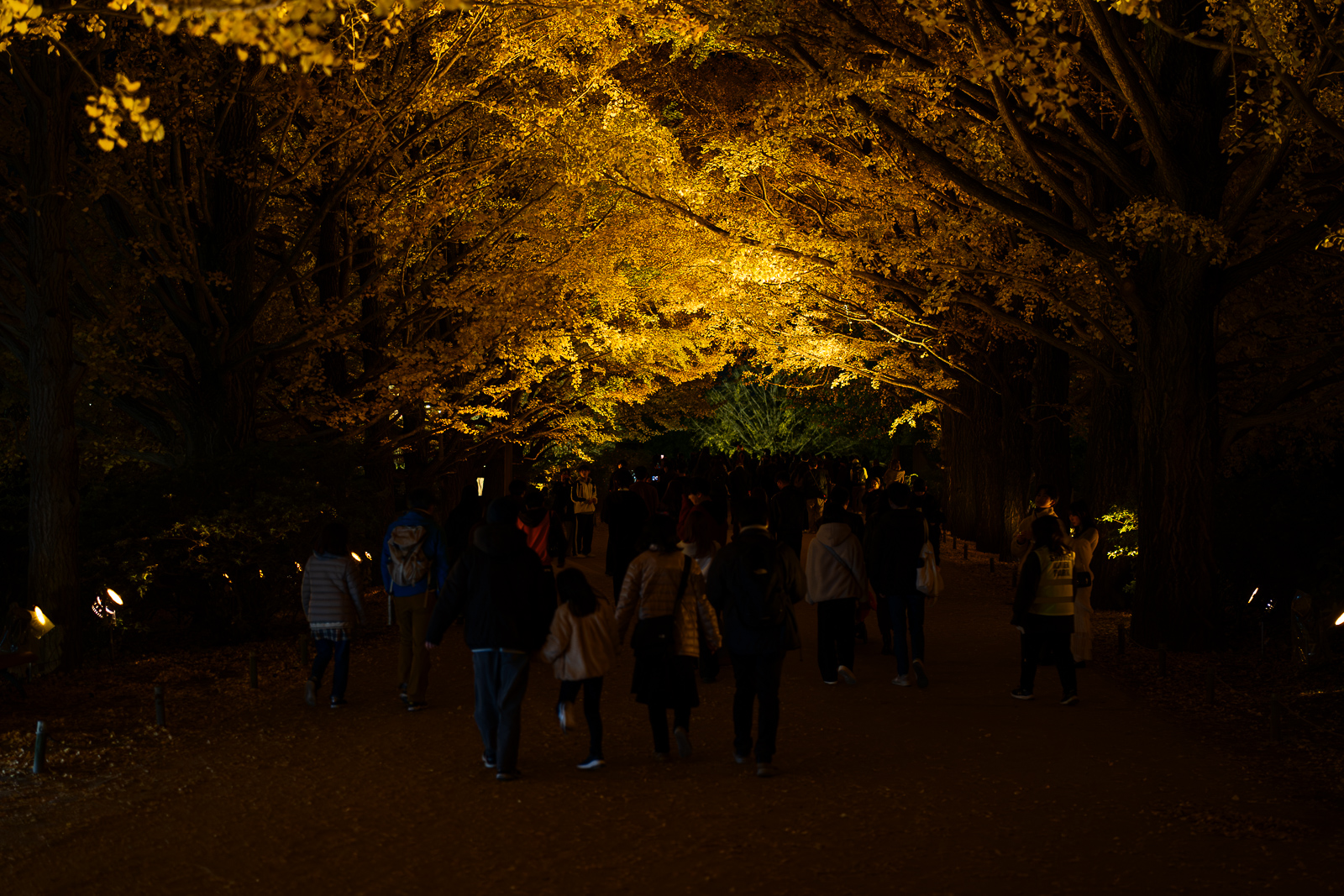
The lights along the avenue had a strobe-like effect as the walk continued through them. The changing light continued along the avenue beneath the yellow leaves. It was a long final stretch, so keep some time and energy for the departure walk after leaving the paid garden.
The return to the car was around 8 pm, making the overall outing roughly three and a half hours from arrival. That included the approach, ticket queue, frequent photo stops and walk back. Allow extra time if you plan to stop often for photographs.
Choose an evening entrance and allow for the walk
Night entry and exit use the Nishi-Tachikawa and Tachikawa gates. Other daytime entrances do not provide an evening shortcut, which matters when planning a visit to a large park. Use the current event map alongside the park access information before deciding which station or car park to use.
Nishi-Tachikawa Station on the JR Ome Line is about two minutes from its corresponding park gate, according to the park. Tachikawa Gate is around an 18-minute walk from JR Tachikawa Station’s north exit. Those figures describe reaching the gates, with further walking needed inside to reach the Japanese Garden and return to an open exit.
If you are driving, check the official evening-event access map for designated car parks and closing times. Some daytime parking areas close before the illuminations finish. Allow time to walk from your parking space to the gate, then through the park to the Japanese Garden.
The event also advertises an evening bus between Nagame no Terrace and the Japanese Garden area. Check its boarding points, final service and payment rules before relying on it, since these are separate from park and garden admission. The evening service has its own timetable.
Photographing the garden and choosing a visit
For photography, check the event’s area-specific rules before carrying a tripod. Nighttime tripod use in the Japanese Garden is restricted, so follow the current designated-area rules and staff guidance; equipment must not obstruct narrow paths. The pavilion was a busy viewpoint on this visit, so build the evening around looking as well as photographing and leave room for other visitors.
An illuminated tree is not a reliable guide to how its leaves look in daylight. Lighting can intensify yellow or red, while the event period covers several weeks of natural seasonal change. Choose the evening for its illuminated landscape, and check the park’s current foliage information separately if natural leaf color is central to the trip.
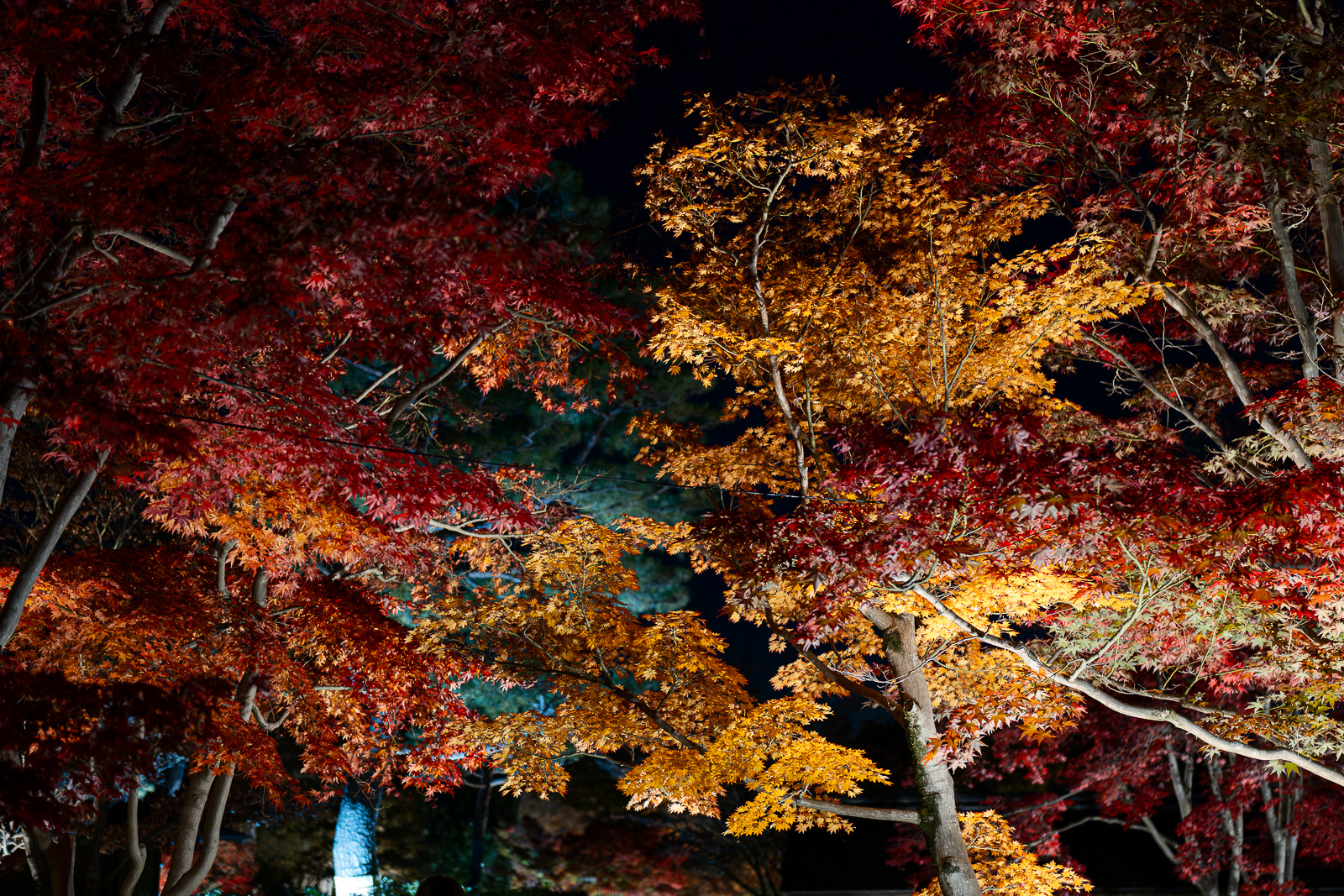
November is the main autumn-colour window: the park lists early to mid-November for the Canal ginkgo trees and early to late November for the Japanese Garden maples. Weather affects the timing, and displays can change each season. Check the official Autumn Night Walk calendar linked under Hours and Fees for event dates, opening hours and the current program before choosing an evening.
Is the extra Japanese Garden ticket worth it?
For an evening focused on pond reflections, bamboo and the garden’s smaller scenes, the additional admission was emphatically worthwhile on this visit. The pond was the best part of the evening, and the bamboo alone was another strong reason to enter. Together they made the garden somewhere to return to, with bonsai and umbrellas adding variety along the way.
Visitors mainly interested in the ginkgo avenues can enjoy those illuminations on ordinary park admission. The Canal is another advertised setting, combining rows of trees with water and fountains, while Katarai no Icho Namiki offers a leafy corridor overhead. Choose according to the scenery that matters most, and leave enough evening for the walk back after the final display.
For a daytime alternative, compare three Tokyo gardens for autumn foliage. The guide weighs Rikugien’s varied pond circuit, Koishikawa Korakuen’s open water and Kyu-Furukawa’s mansion and roses. It helps choose a separate urban garden outing for another part of a Tokyo stay.
For ginkgo in daylight and a different kind of park visit, Asukayama Park in northern Tokyo adds museums, play spaces and historic garden buildings to its autumn paths. Plan it as a separate outing from Tachikawa, with time for the facilities you want to see.
A spring visit in daylight reveals another side of Showa Kinen Park, with cherry groves, tulip waterways and wider views across the grounds. Check the park’s flowering updates when planning a spring visit. For an autumn evening, give the Japanese Garden enough time for its pond, bamboo and smaller displays, then enjoy the ginkgo avenue on the walk out.
Getting There
Access and Arrival
For the 2026 Autumn Night Walk, enter and leave through Nishi-Tachikawa or Tachikawa Gate. Nishi-Tachikawa Station is close to its gate; the illuminated garden still requires further walking inside.
- Via Nishi-Tachikawa
JR Ome Line → Nishi-Tachikawa Station, Park Exit → Nishi-Tachikawa Gate
About 2 minutes on foot to the gate · Allow extra time for the walk to the illuminated areas and back.
- Via Tachikawa
JR Tachikawa North Exit → Tachikawa Gate → evening event area
About 18 minutes on foot to the gate · The station-to-gate estimate excludes the walk inside the park.
Evening gate restrictions: Only Nishi-Tachikawa and Tachikawa gates serve entry and exit for the 2026 night event. Other daytime entrances are unavailable for the evening outing.
Hours and Fees
Visitor Information
The 2026 night event runs October 29–November 29. Ginkgo lighting is covered by park admission; illuminated Japanese Garden viewing needs an additional ticket.
- Hours
- Lighting: 16:30–20:30; park closes 21:00. Park ticket sales end 20:15; last entry 20:30. Daytime Japanese Garden visitors must leave by 16:00 before evening reopening at 16:30.
- Admission
-
Ordinary park admission: adults ¥450; age 65+ ¥210; junior-high pupils and younger free. Japanese Garden advance viewing: adults ¥1,200; elementary and junior-high pupils ¥600. Adult park-and-garden advance combination: ¥1,600. Same-day Japanese Garden viewing: adults ¥1,300; elementary and junior-high pupils ¥700.
Japanese Garden after dark
Choose your garden viewing ticket
Open the official 2026 event page for garden viewing and combined-entry tickets. Check the date and whether ordinary park entry is included.
View Official Ticket Options
Plan Your Visit
Plan the evening entrance and garden ticket first, then compare accommodation and travel options for the rest of your Tokyo trip.
Compare Hotels across Tokyo
Compare Tokyo stays around your wider itinerary, with station connections that also work for an evening at Showa Kinen Park.
Search Tokyo Hotels
Explore Tokyo Car Hire
Compare Tokyo pickup options for the driving days in your Japan itinerary, with collection locations and rental terms in one place.
Browse Tokyo Car Hire
Browse Tokyo Garden Experiences
Discover guided garden walks and cultural experiences for another day in Tokyo, from pond-side strolls to historic palace grounds.
Browse Garden Experiences
Explore Tokyo Attraction Tickets
Find observation decks, museums and other Tokyo attractions for the rest of your trip. Showa's night-garden tickets are linked in Hours and Fees above.
Browse Tokyo Attraction Tickets
Compare Japan eSIM Plans
Find a Japan eSIM for maps and train information, comparing data allowances and trip lengths for your compatible phone.
Compare Japan eSIMs
Book Train Tickets with Japan Experience
Compare routes and reserve train tickets for the next leg of your trip, from Tokyo to Kyoto, Nagano and beyond.
Find Japan Train Tickets
Japan Unfolded may earn a commission through links in this guide, at no additional cost to you.