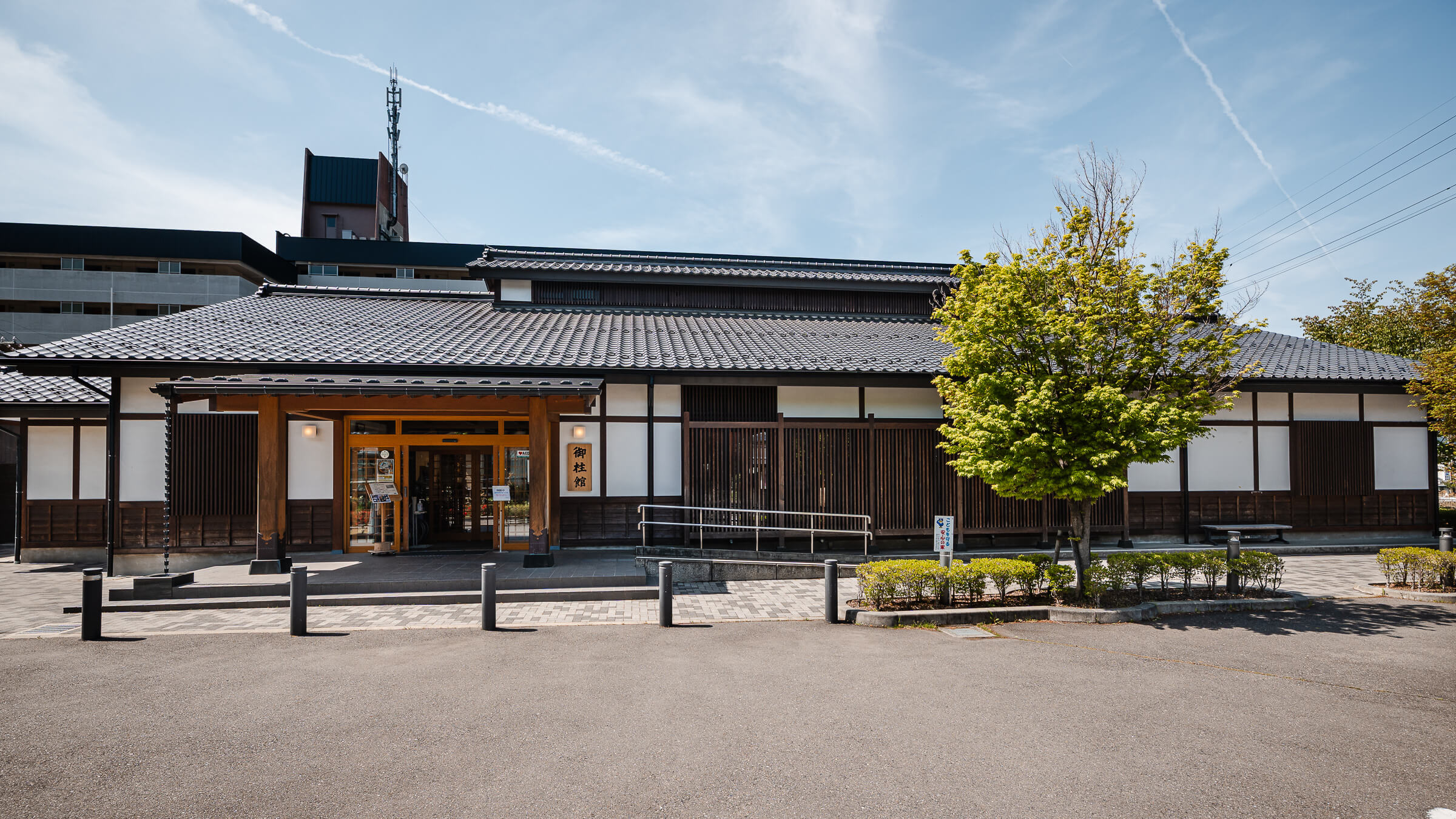
Beside Harumiya, a Museum That Changes How the Region Looks
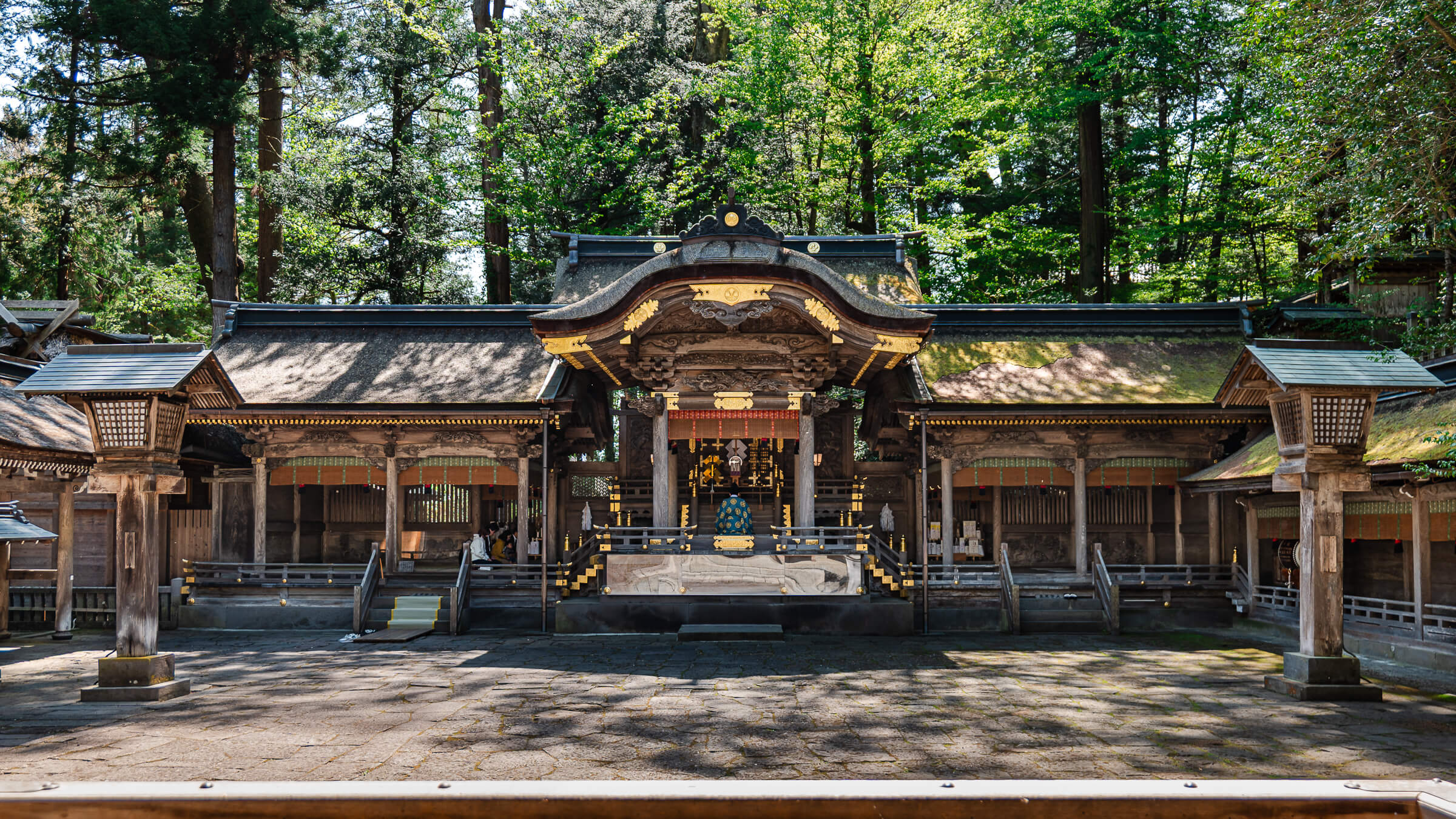
Located in the Lake Suwa basin of central Nagano Prefecture, Onbashira-kan Yoisa sits directly beside Suwa Taisha Shimosha Harumiya, one of the four shrine complexes of Suwa Taisha. The museum focuses on the Onbashira festival tradition connected to the enormous sacred pillars standing beside the shrines throughout the region. What initially appears to be a short museum stop gradually becomes an explanation for the forests, roads, slopes, and shrine spaces surrounding the southern side of the lake.
Most visits here remain brief and low-effort. The museum is usually combined with Harumiya, nearby riverside paths, or the older streets extending through Shimosuwa toward the former Nakasendo route. Typical visits last between 20 and 45 minutes depending on how long visitors spend with the exhibits and festival footage.
The museum works best for travelers already exploring the Lake Suwa area rather than as a destination requiring a dedicated trip by itself. After leaving the museum, the giant pillars standing beside the shrines become difficult to ignore in quite the same way again.
Why Sacred Trees Still Move Through These Mountains
The shrine network of Suwa Taisha developed around the Lake Suwa basin more than a thousand years ago, where mountain forests, water routes, and narrow valleys naturally concentrated movement through the region. Long before modern roads crossed the basin, the surrounding terrain already shaped how people traveled, gathered, and moved between settlements.
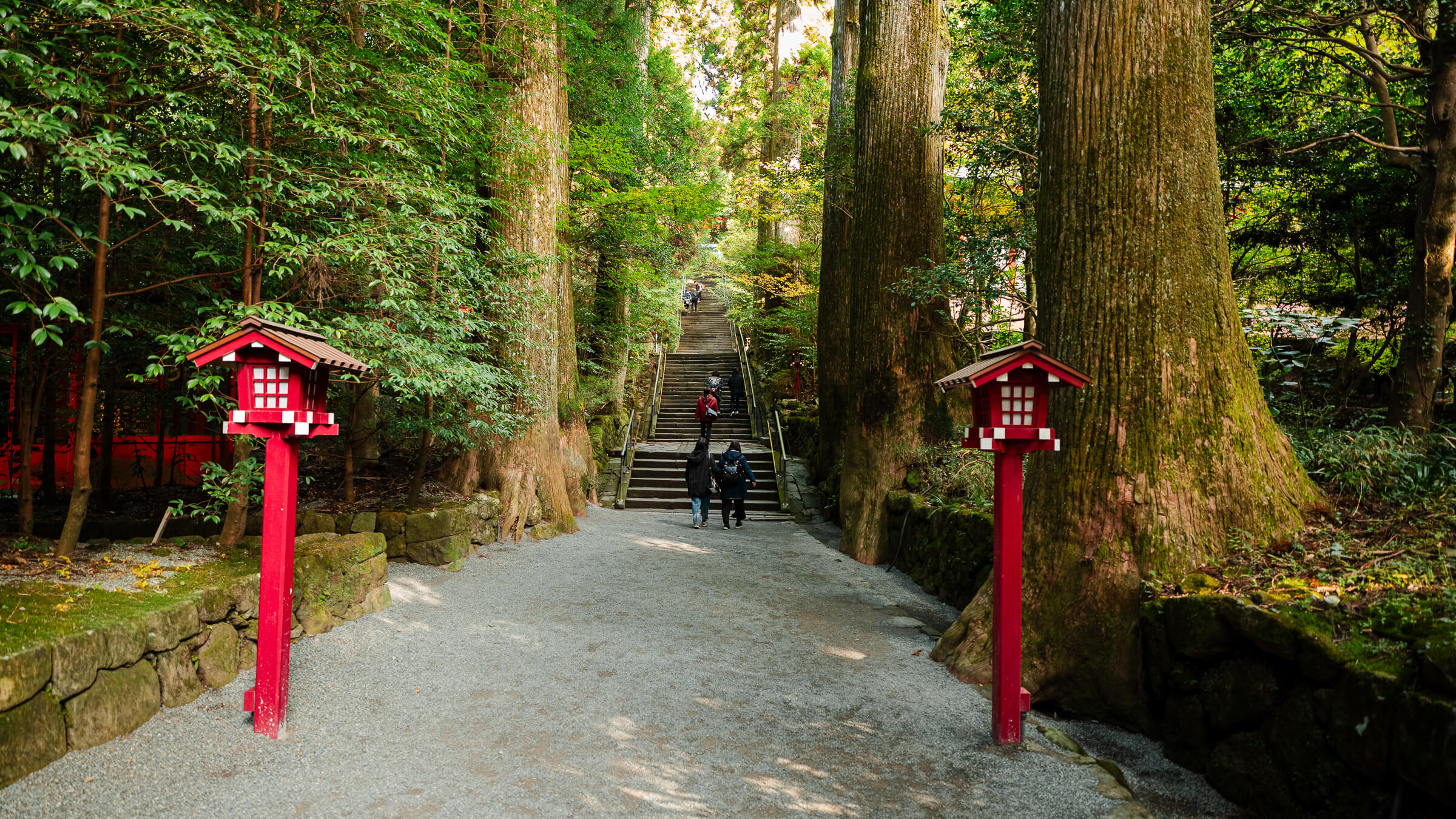
That geography still defines the Onbashira tradition today. Every six years, during the Years of the Tiger and Monkey, large fir trees are selected from nearby mountains and transported to the shrine complexes as sacred pillars known as Onbashira. Historical records trace the tradition back more than 1,200 years, and the towering pillars still stand beside the shrines near their large torii gates, reinforcing how closely the forests and shrine spaces remain connected.
During the Yamadashi stage of the festival, the logs descend steep slopes before eventually being raised beside the shrines. Standing near the pillars afterward, it becomes easier to understand why the forests surrounding Shimosuwa were never separate from the shrine system itself. The mountains supplied the trees, the valleys shaped the transport routes, and the communities around the lake maintained the tradition across generations.
The pillars visible today were installed during the 2022 festival cycle, with the next major events expected in 2028.
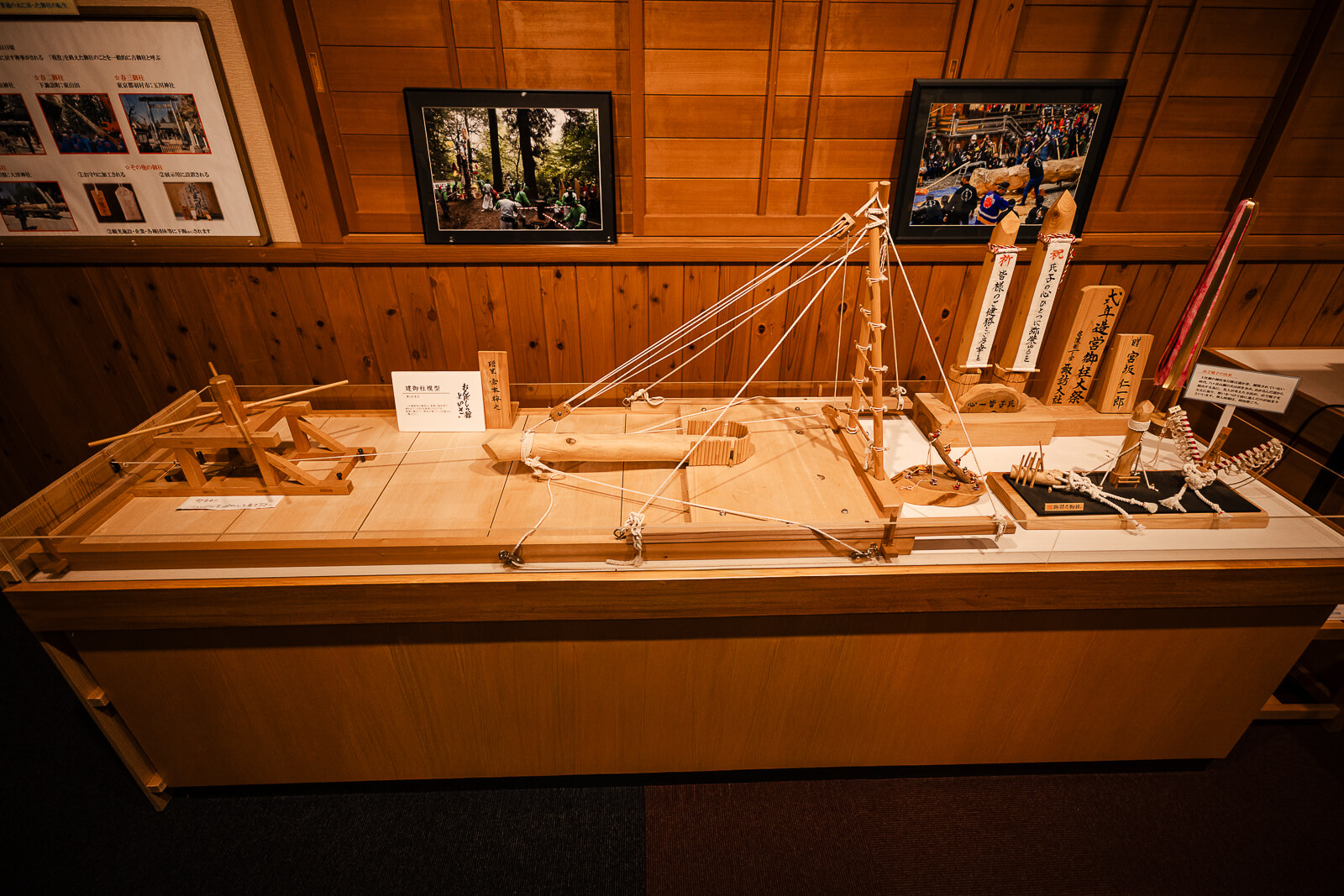
Inside the Museum, the Scale of the Festival Becomes Real
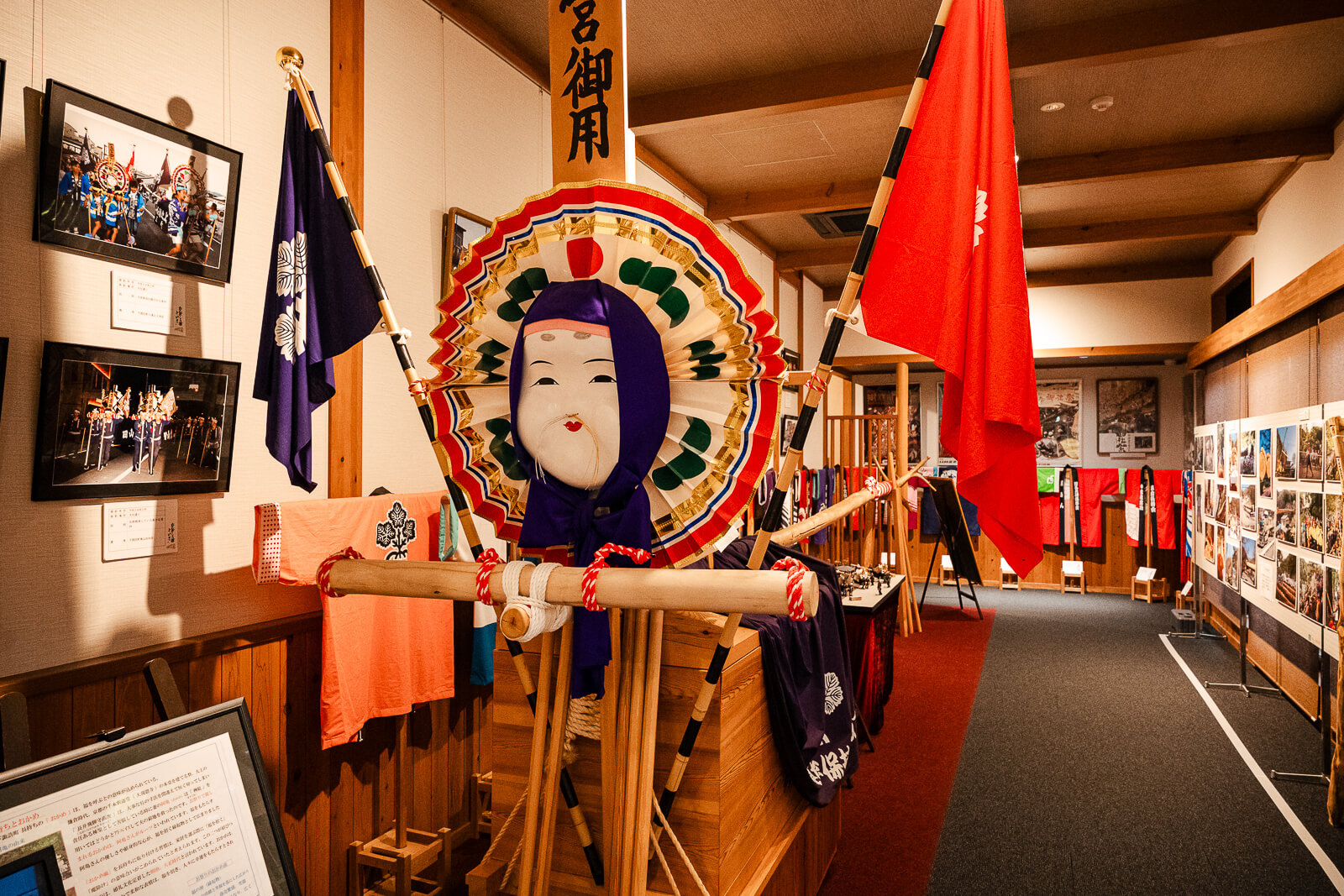
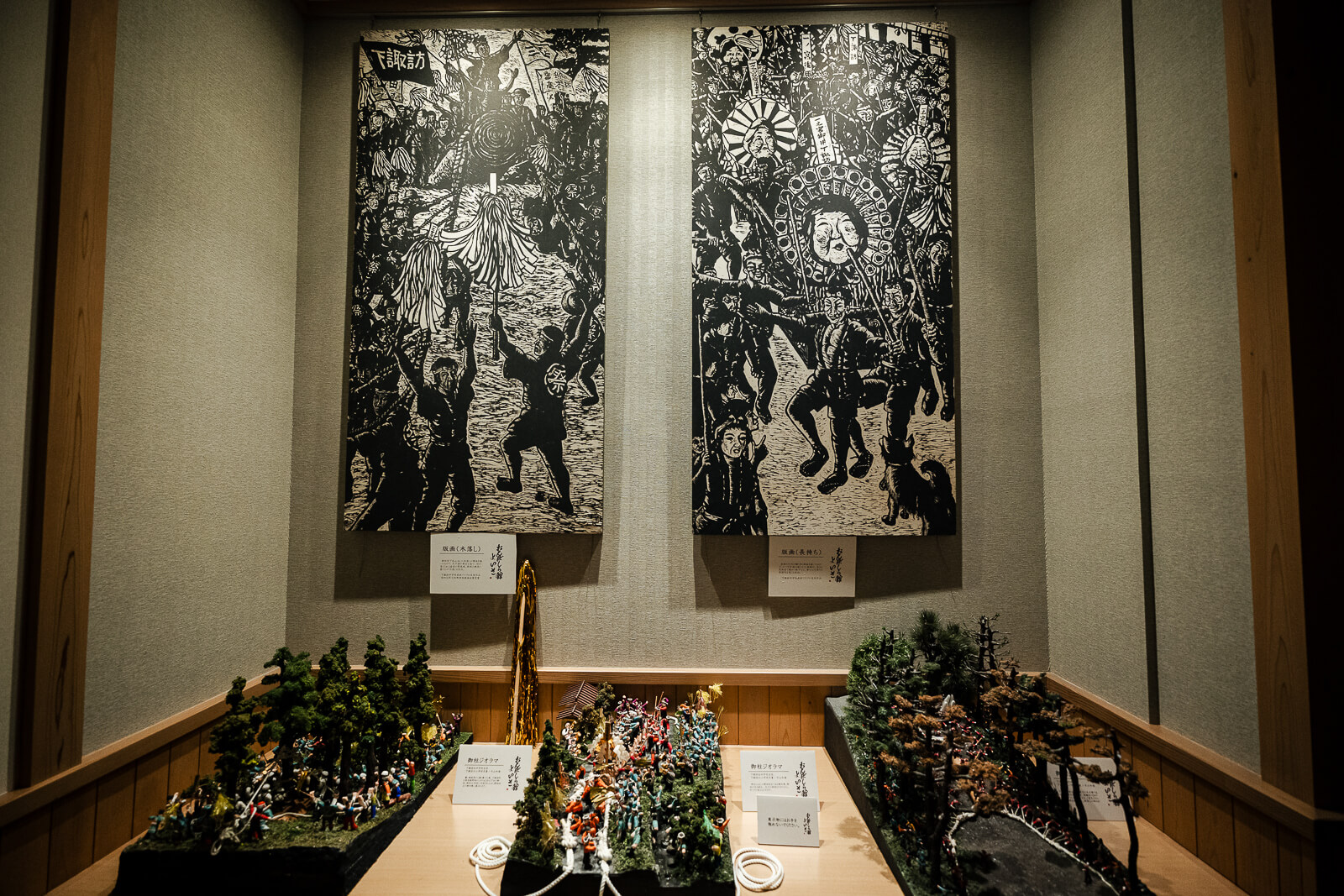
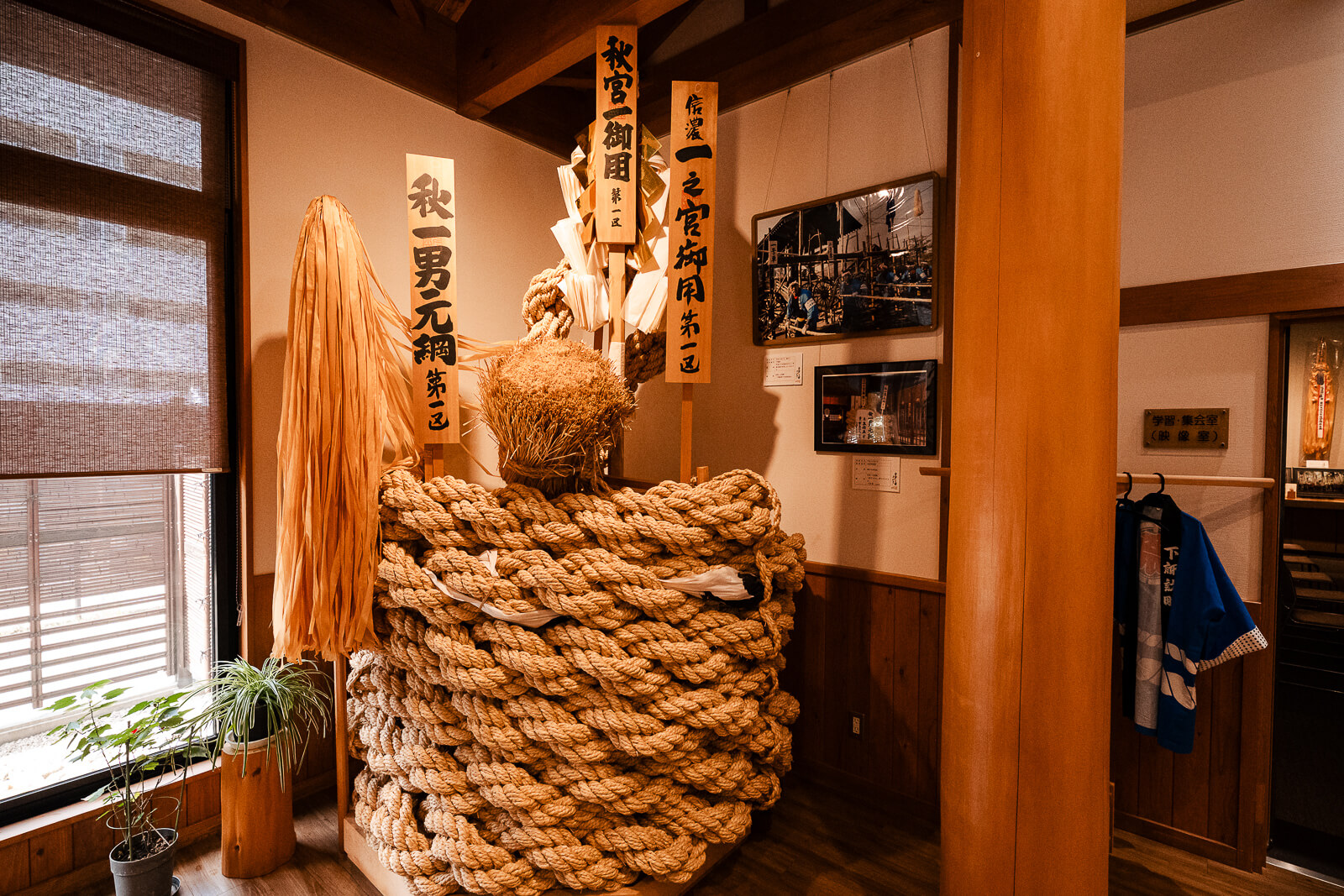
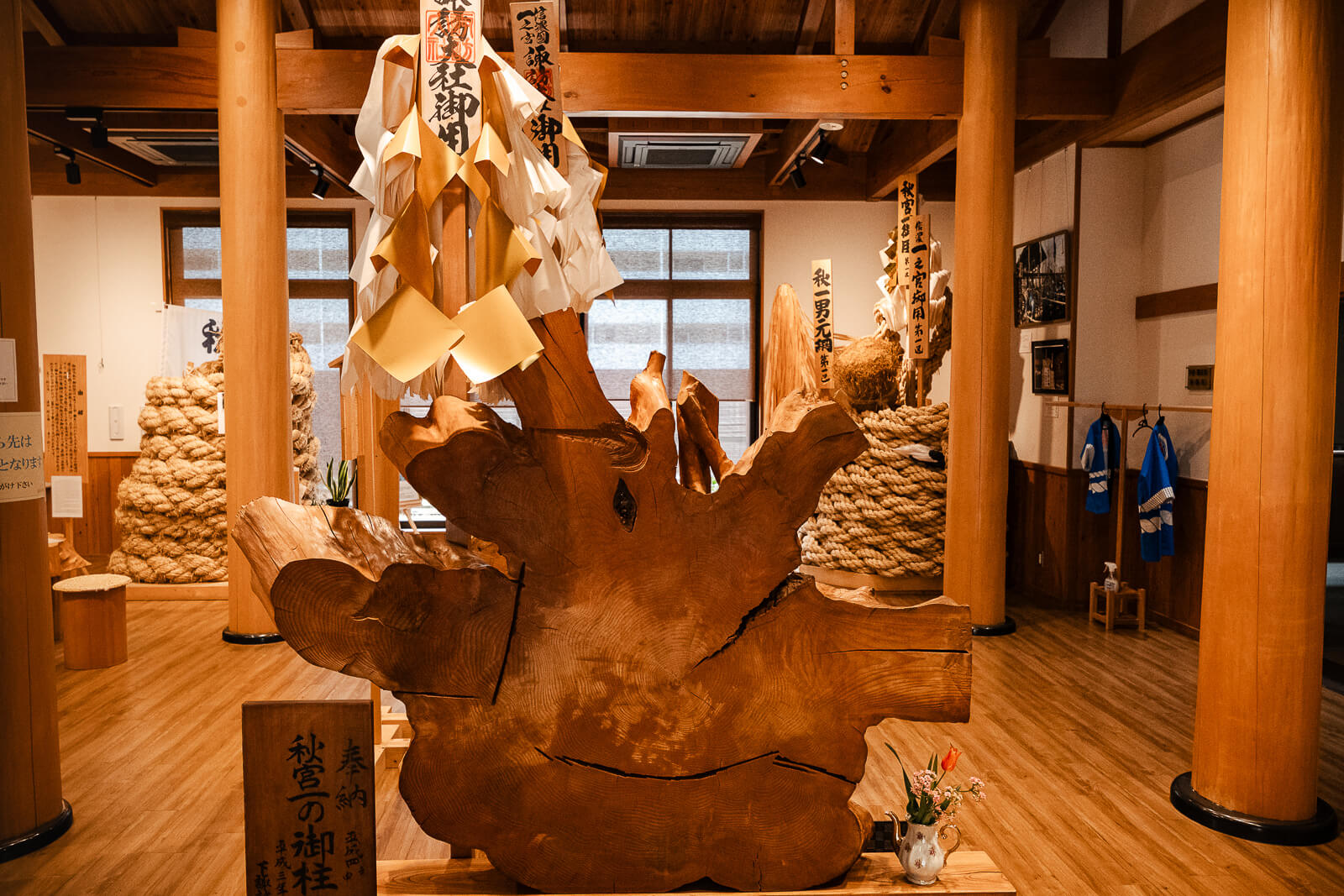
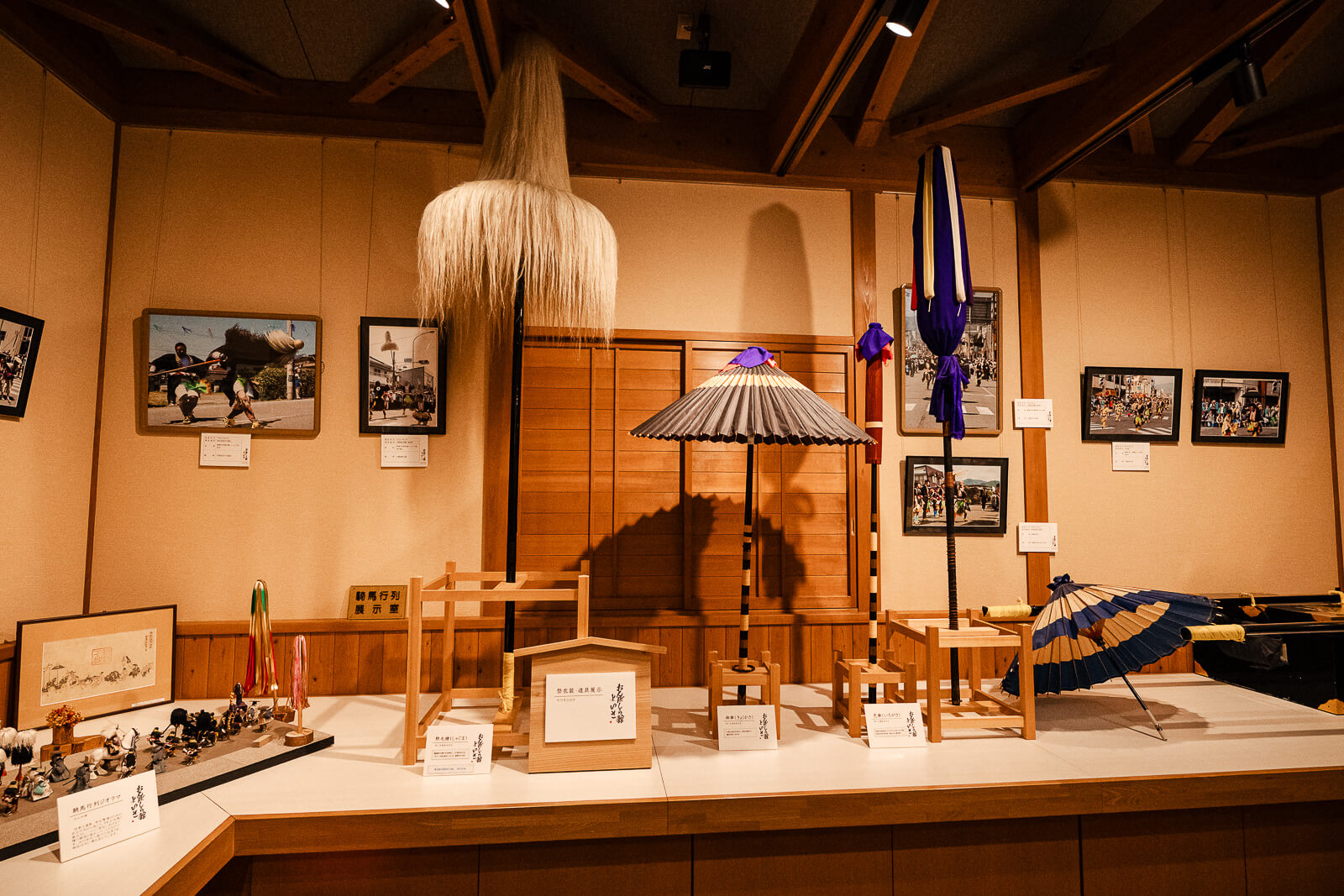
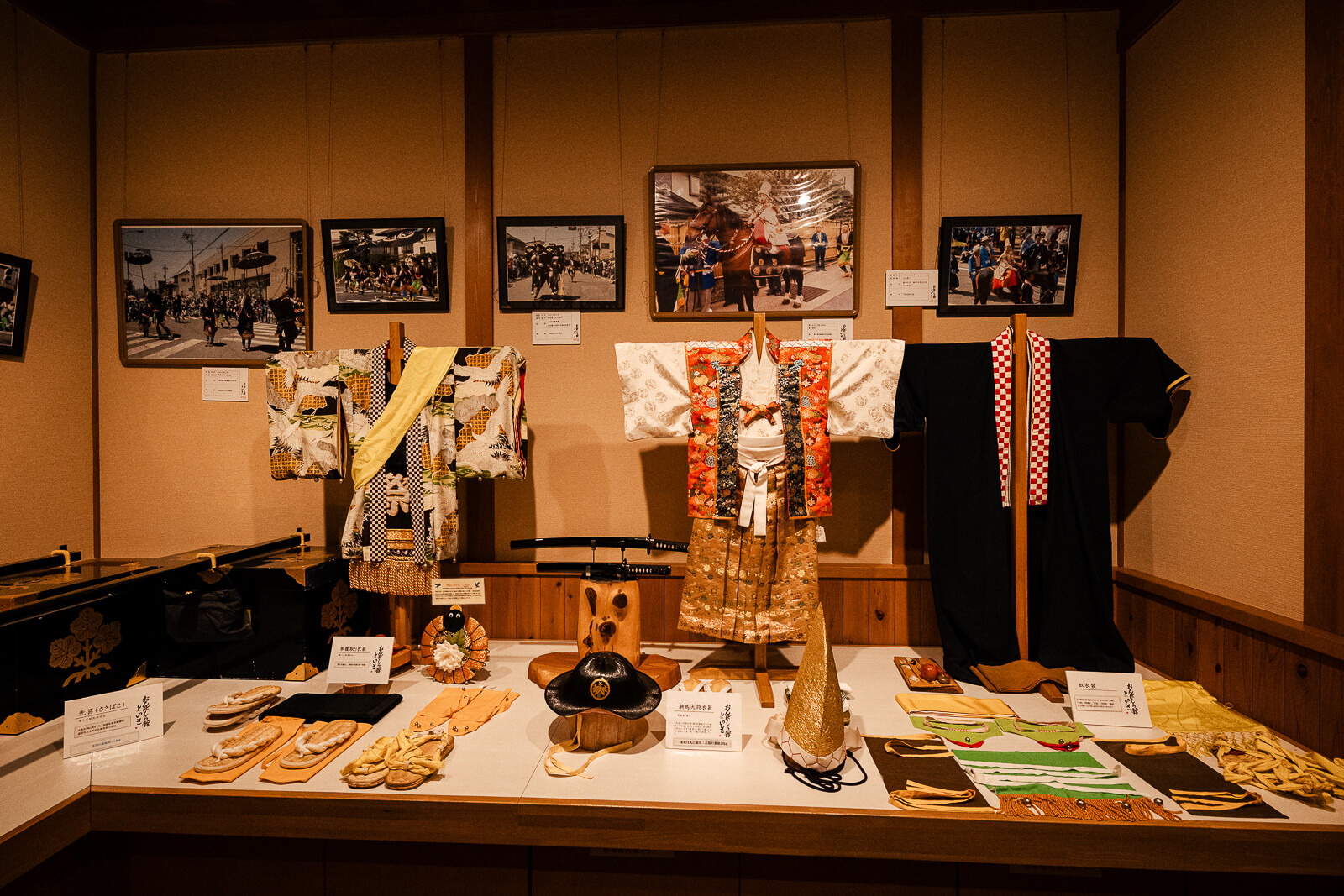
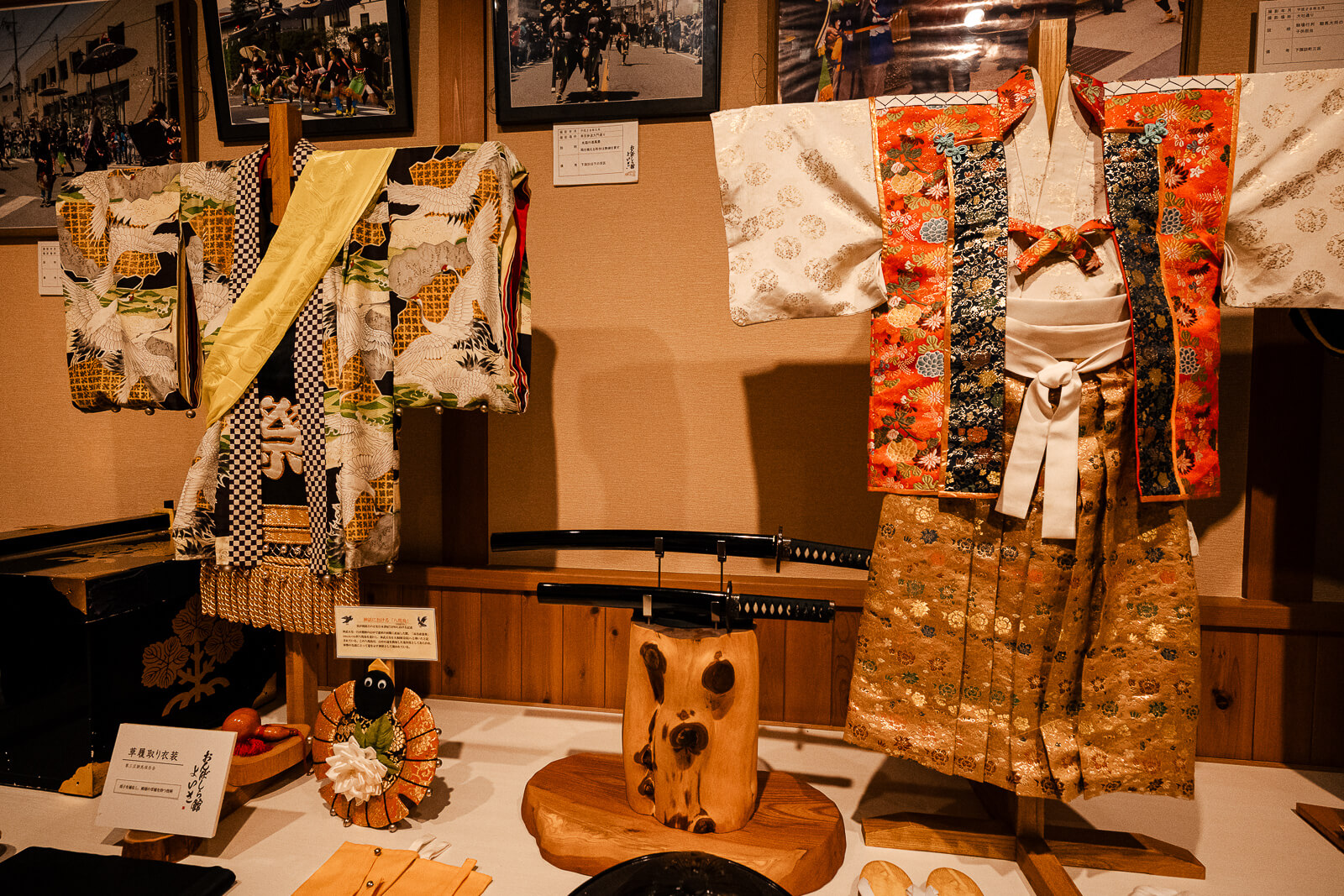
Inside the museum, models, photographs, historical materials, and festival footage explain how the sacred logs are selected, transported, and raised. The exhibits remain approachable even for travelers arriving with little prior knowledge of the festival itself.
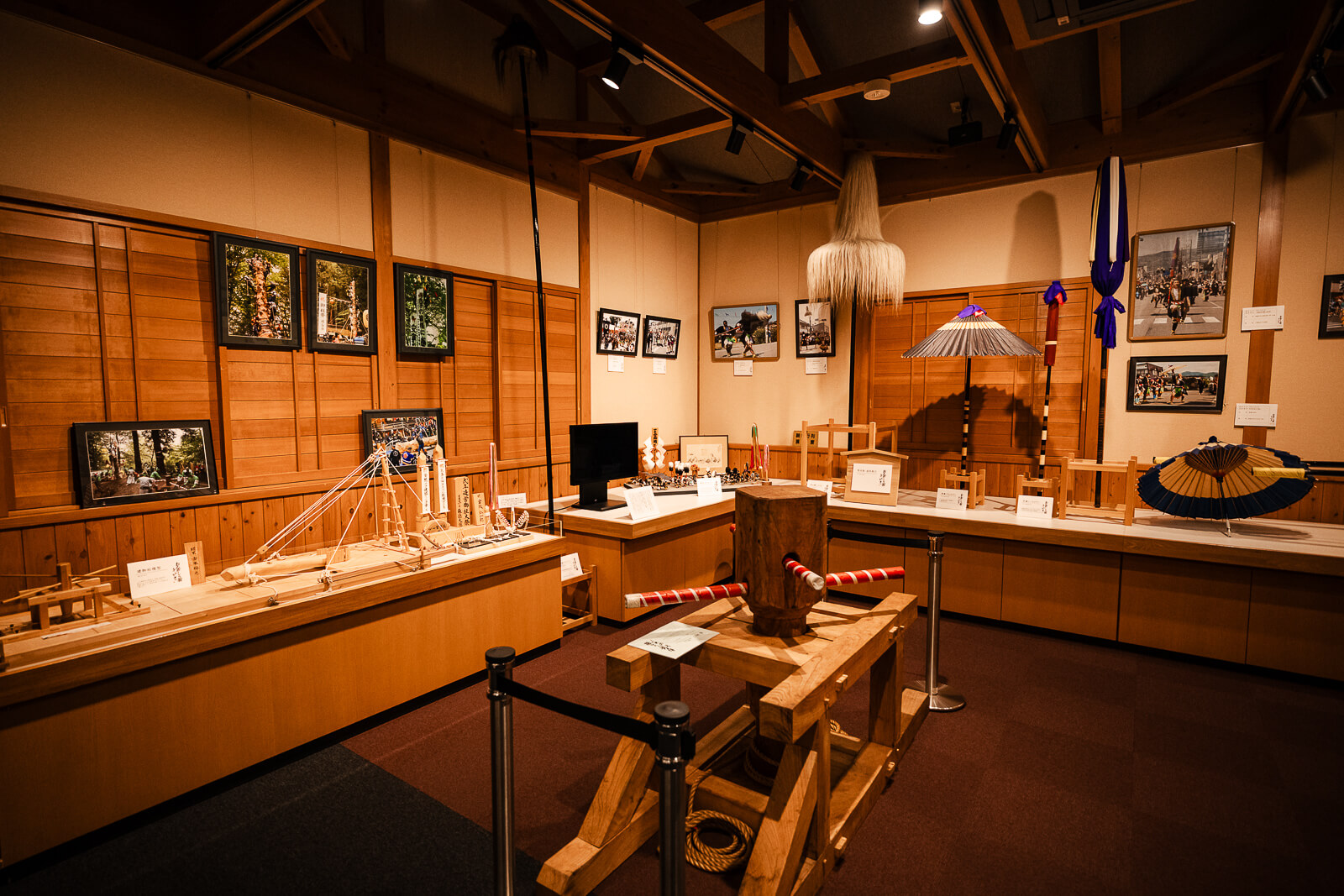
Footage showing participants riding the giant logs downhill communicates the scale of the event more clearly than photographs alone. At the same time, the displays remain tied closely to the surrounding Suwa region rather than isolating the festival as spectacle. Outside the museum, the same forests and slopes shown in the exhibits still surround the southern edge of Lake Suwa, making the transition between exhibit space and real landscape feel unusually direct.
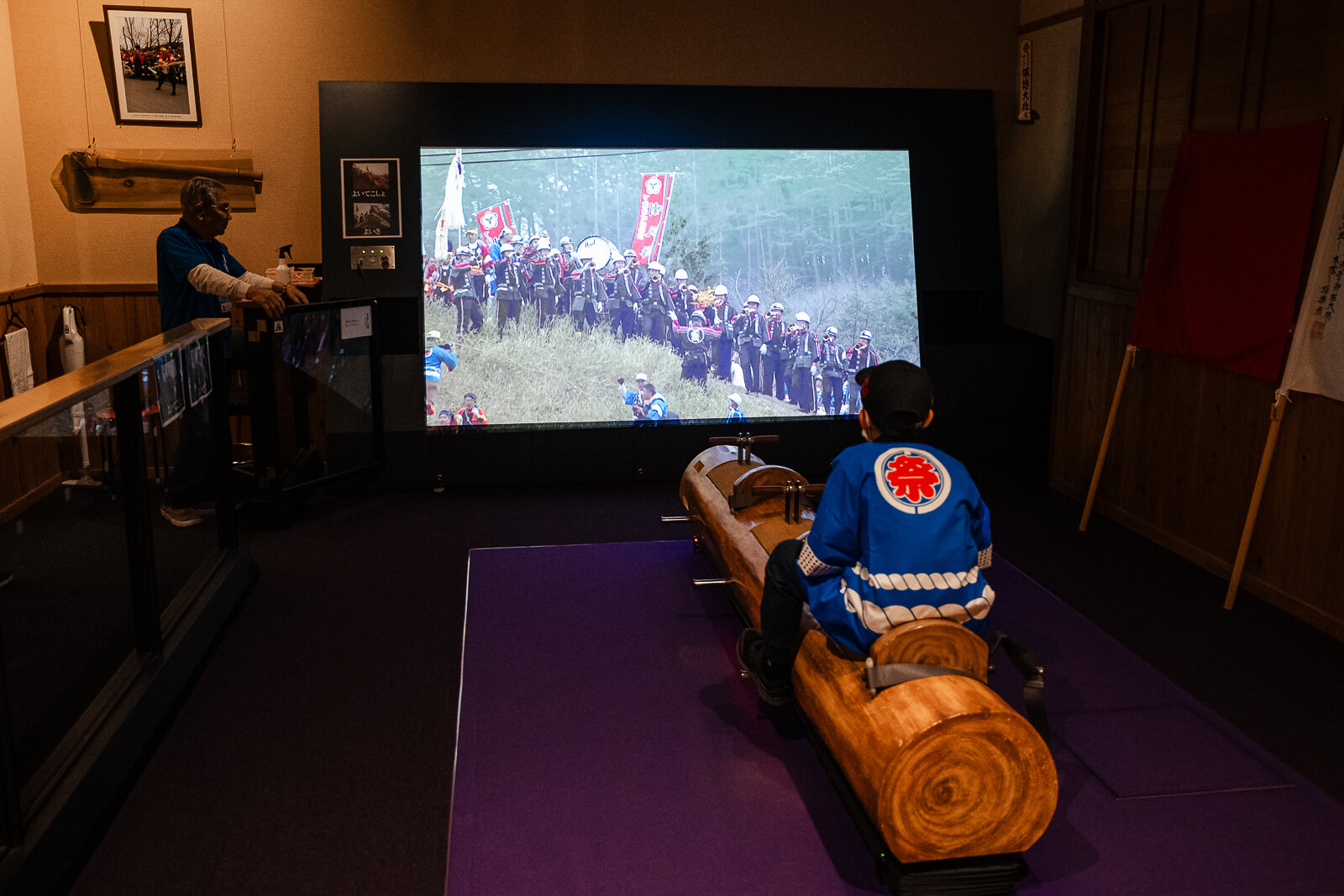
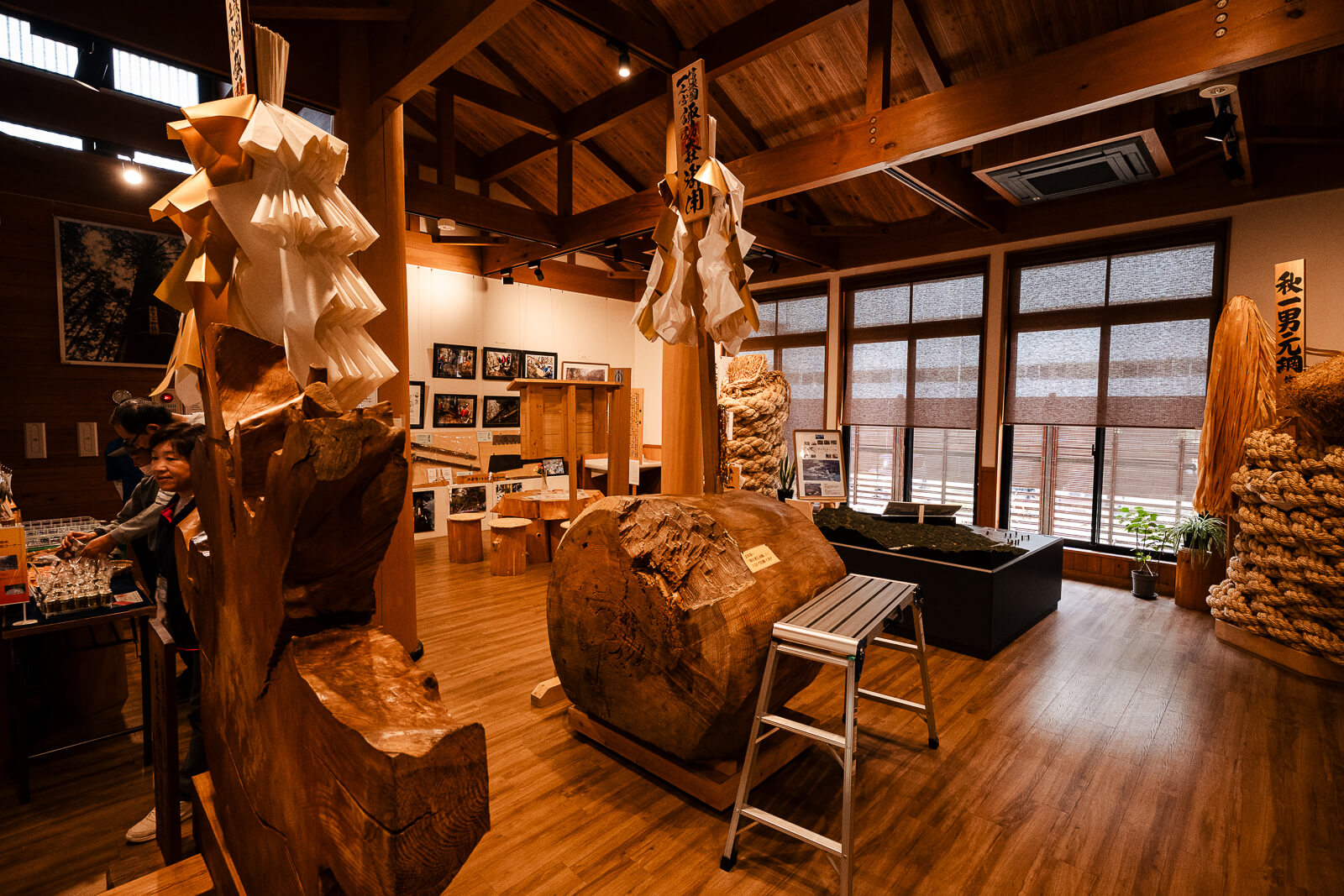
Most travelers move steadily through the museum before returning outside toward the shrine grounds and surrounding streets. By that point, the giant wooden pillars standing beside the shrines often begin carrying a different sense of weight and effort than they did earlier in the day.
Following the Roads Beyond Harumiya
The museum fits naturally into the older street network surrounding Suwa Taisha Shimosha Harumiya. Unlike some larger shrine complexes that feel separated from the towns around them, Harumiya remains closely woven into the surrounding roads, riverside paths, cedar groves, and residential streets of Shimosuwa itself.
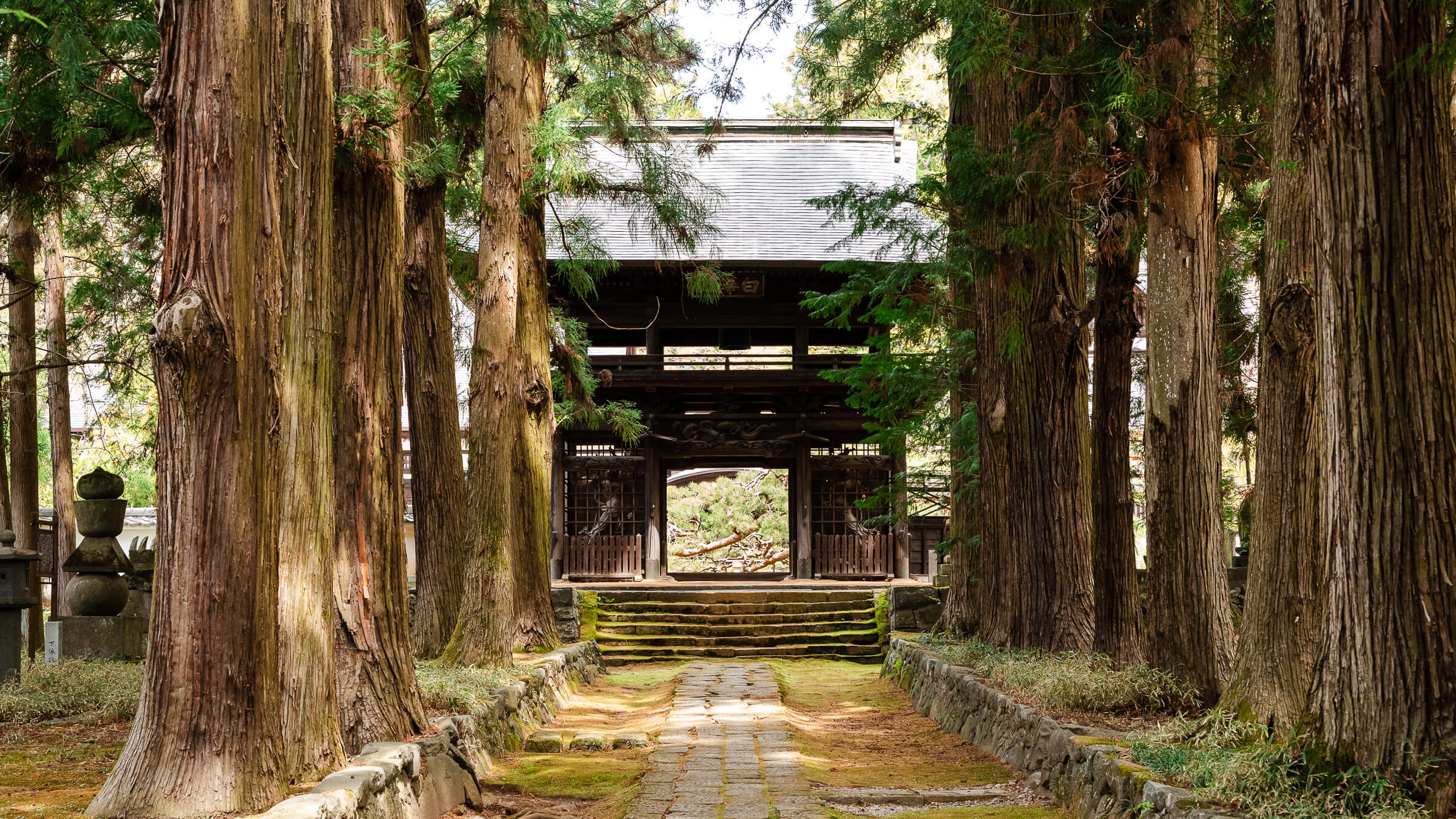
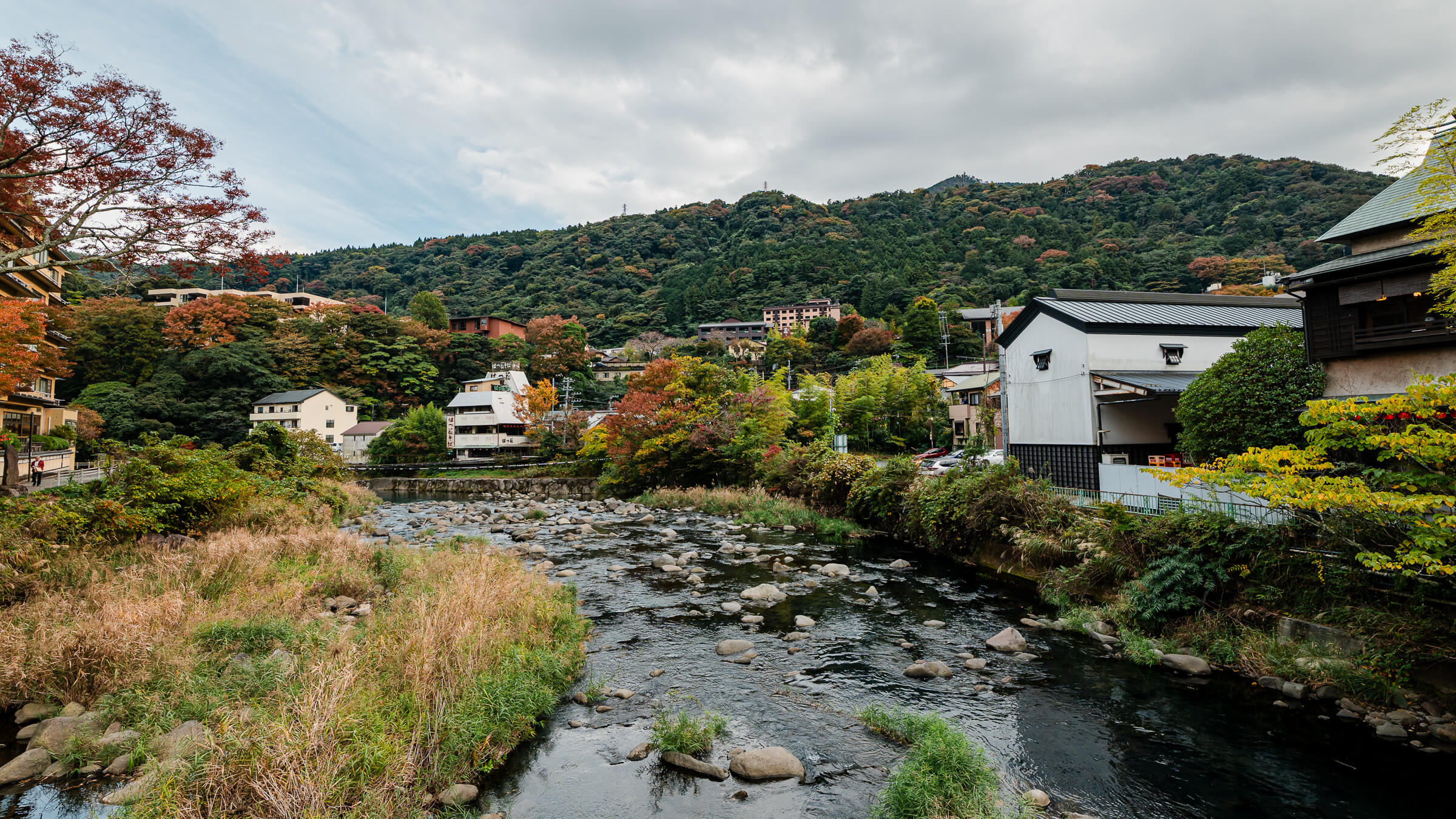
Beyond the shrine grounds, smaller roads continue gradually uphill while riverside paths follow the edge of the town toward residential sections where traces of the former Nakasendo route still appear along the walk. This same uphill movement also leads toward Jiunji Temple, a nearby Zen temple that adds a Buddhist layer to the Harumiya side of Shimosuwa. The transition happens gradually enough that the historical layers of the area feel absorbed into the town rather than preserved behind boundaries.
Farther uphill, the large Manji Stone Buddha sits above the town along narrower roads where the surrounding terrain becomes more noticeable than the buildings themselves. Descending back toward the museum afterward reinforces how closely the area’s religious sites remain tied to the geography surrounding Lake Suwa rather than existing as isolated attractions.
Closer to the museum, structures such as Gebabashi and smaller roadside historical remnants preserve traces of the area’s older travel routes and religious culture. None require much time individually, but together they make the surrounding walk feel continuous rather than fragmented into separate stops.
How the Area Changes Through the Day
The Harumiya area generally sees the most activity during the middle of the day, particularly during weekends and seasonal travel periods around Lake Suwa. Even during busier periods, movement through the area usually remains slower than larger shrine destinations closer to Tokyo or Kyoto.
Earlier hours reveal the relationship between the shrine grounds, forests, rivers, and surrounding slopes more clearly before vehicle traffic increases later in the day. During colder months, bare trees and exposed terrain make the scale of the shrine pillars easier to notice from farther away, especially around the quieter roads surrounding Harumiya itself.
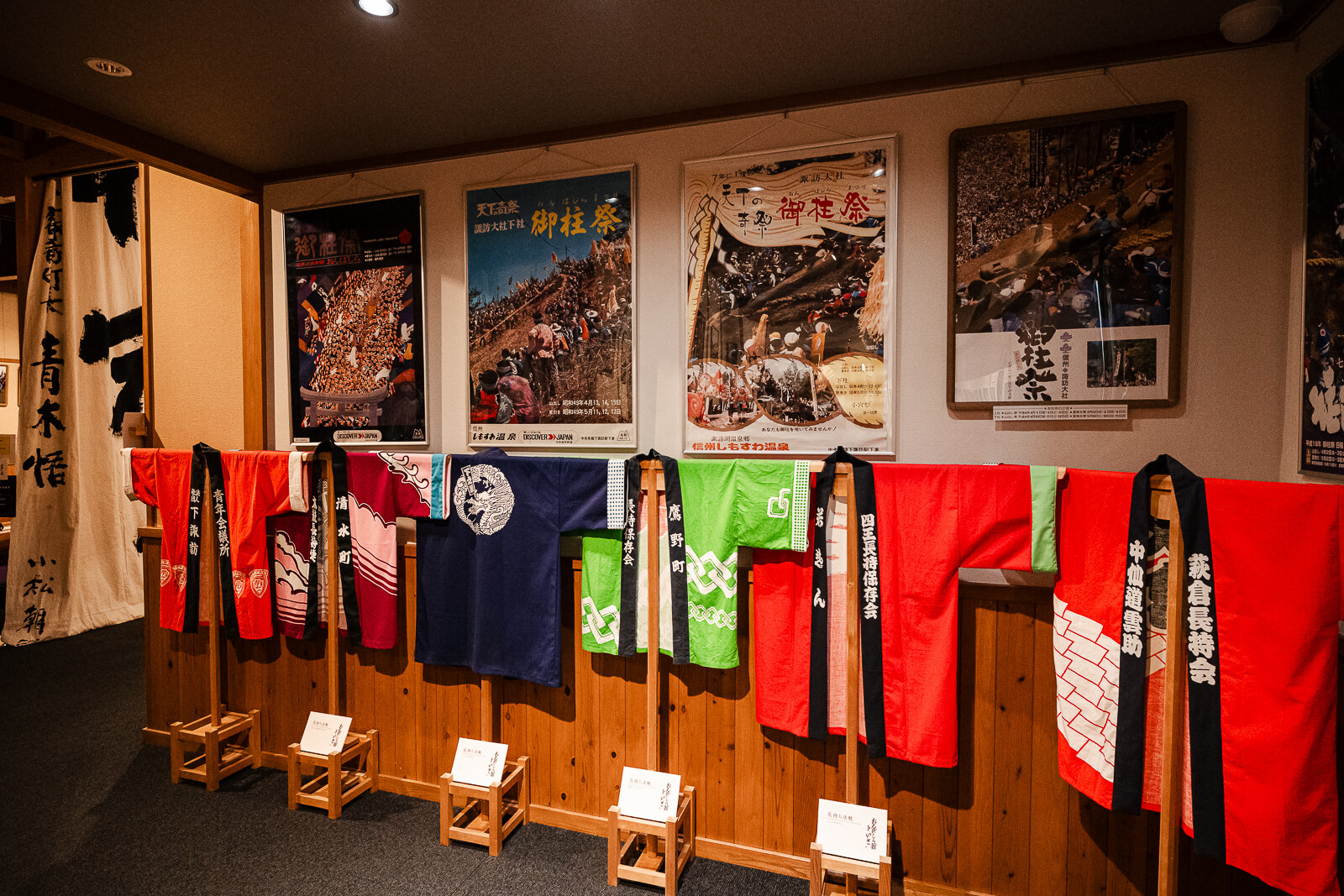
Because the museum visit requires relatively little physical effort, the pacing of the surrounding walk usually shapes the experience more than the building alone.
How This Fits Around Lake Suwa
Onbashira-kan Yoisa fits most naturally into a Lake Suwa route focused on Shimosuwa, Suwa Taisha, and the southern side of the basin. The museum pairs easily with Suwa Taisha Shimosha Harumiya, while nearby roads continue toward the other shrine complexes of Suwa Taisha Shimosha Akimiya, Suwa Taisha Kamisha Honmiya, and Suwa Taisha Kamisha Maemiya spread around the basin. For the broader lakeside planning context, the Lake Suwa Guide helps connect Shimosuwa, Kamisuwa, shoreline stops, viewpoints, and overnight stays around the basin.
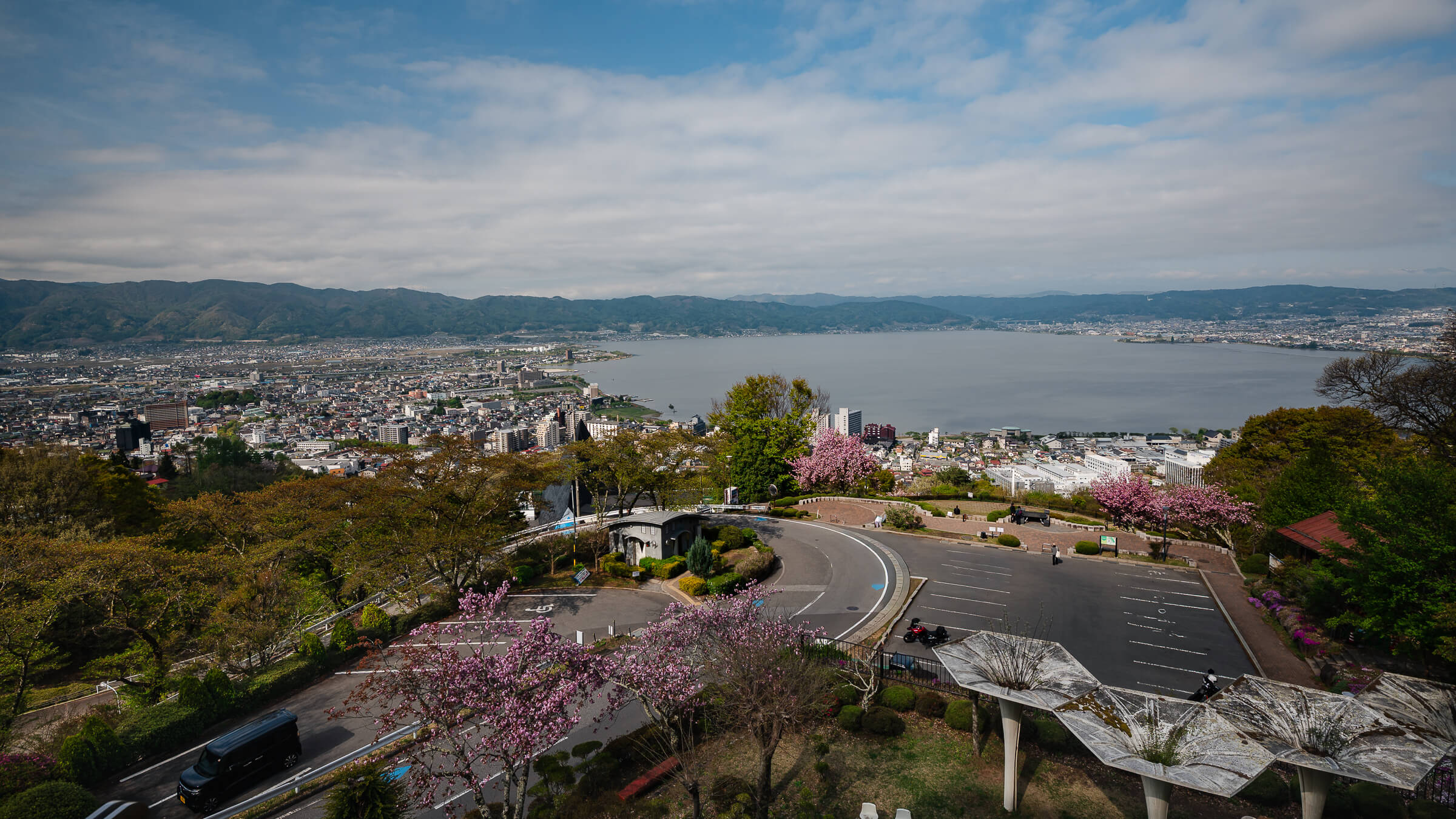
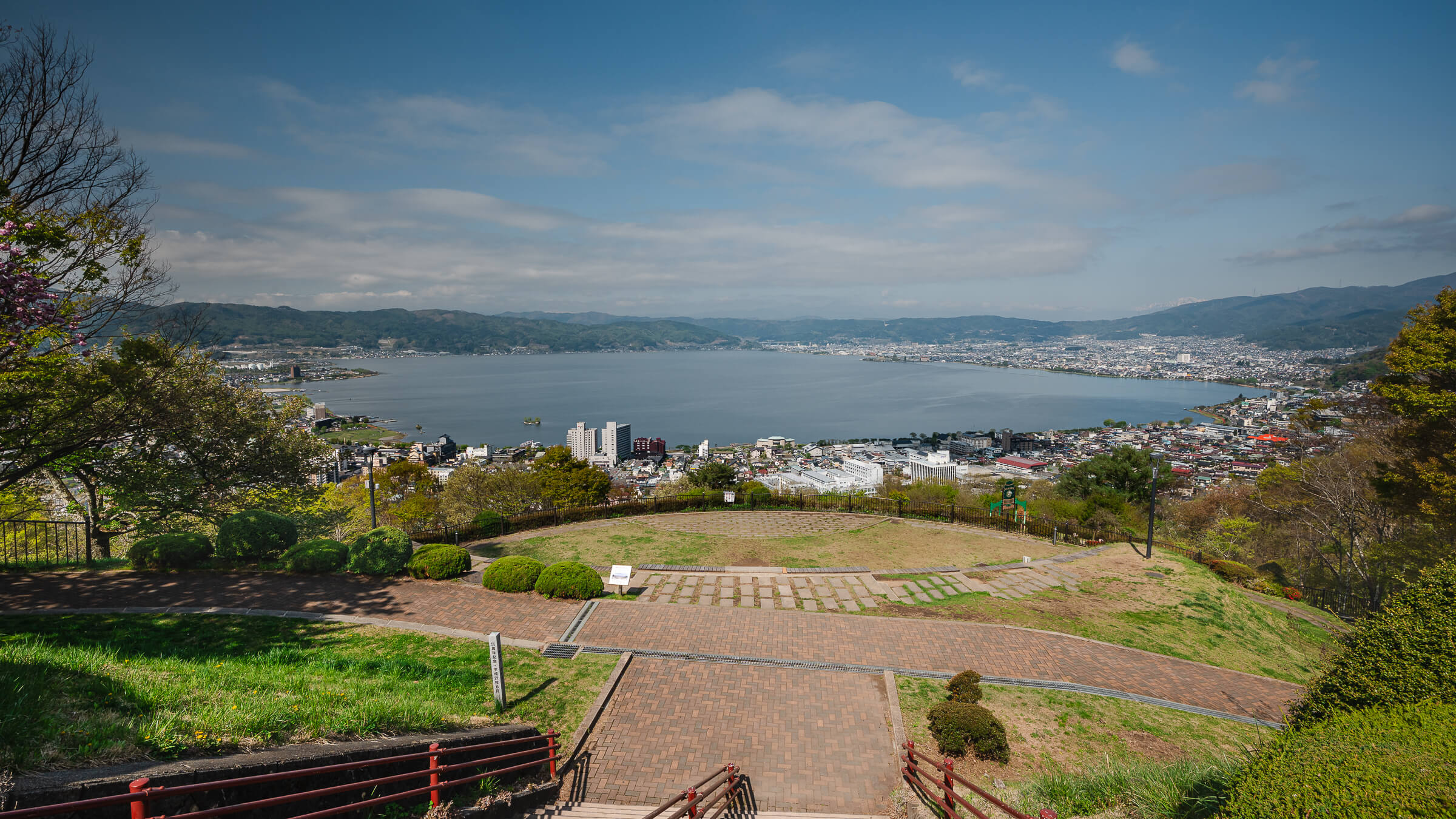
West of Shimosuwa, the shoreline gradually broadens toward the ryokan district of Kamisuwa Onsen, where lakeside walking paths and historic bathhouses begin replacing the narrower roads surrounding Harumiya. Along the lakefront, areas such as Sekicho Park, the former Lake Suwa Geyser Center, and the lakeside footbath continue reflecting the long connection between the basin, geothermal activity, and the towns surrounding the water itself. Nearby roads then climb toward Tateishi Park, where one of the region’s best overlooks reveals the full shape of Lake Suwa and the communities that surround it.
Farther along the shoreline, places such as the Kitazawa Museum of Art and Katakurakan preserve another layer of the region’s identity tied to silk production, craftsmanship, and early modern development around the lake. East of the basin, roads extending toward Chino begin climbing gradually toward the foothills surrounding the Yatsugatake Highlands. For the wider regional view, the Suwa Area Guide connects Onbashira-kan Yoisa and the Suwa Taisha route with Lake Suwa, Chino, Tateishi Park, and the highland roads beyond the shoreline.
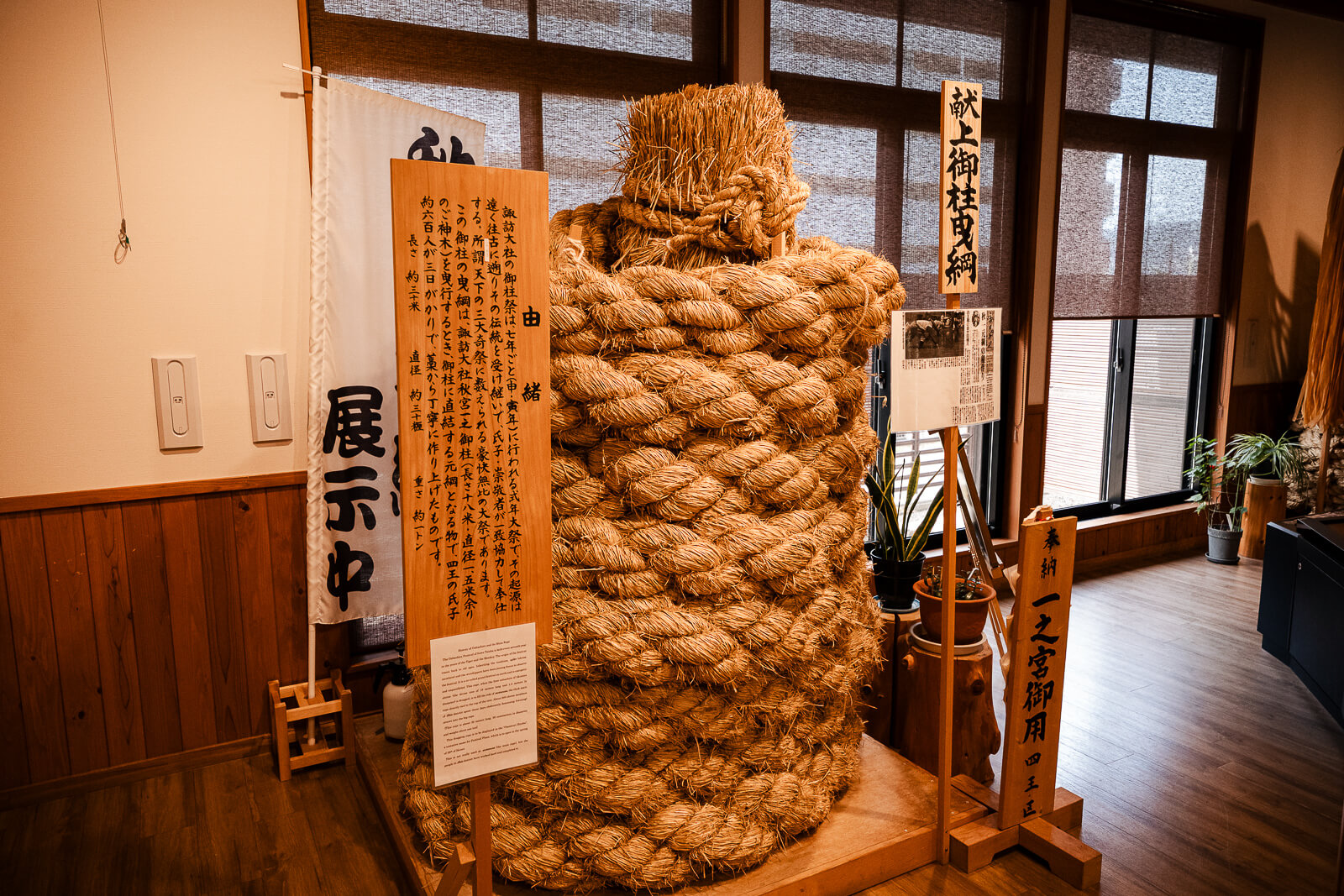
The wider region unfolds gradually rather than concentrating around one dominant attraction. Smaller locations accumulate into a broader understanding of how the lake basin, forests, shrines, historic roads, and hot spring culture continue connecting the region together today.
Getting There
Onbashira-kan Yoisa is located beside Suwa Taisha Shimosha Harumiya in Shimosuwa, along the southern side of Lake Suwa in Nagano Prefecture. Travelers already moving between Suwa, Shimosuwa, and Chino will find the area relatively straightforward to reach either by car or through the local rail network.
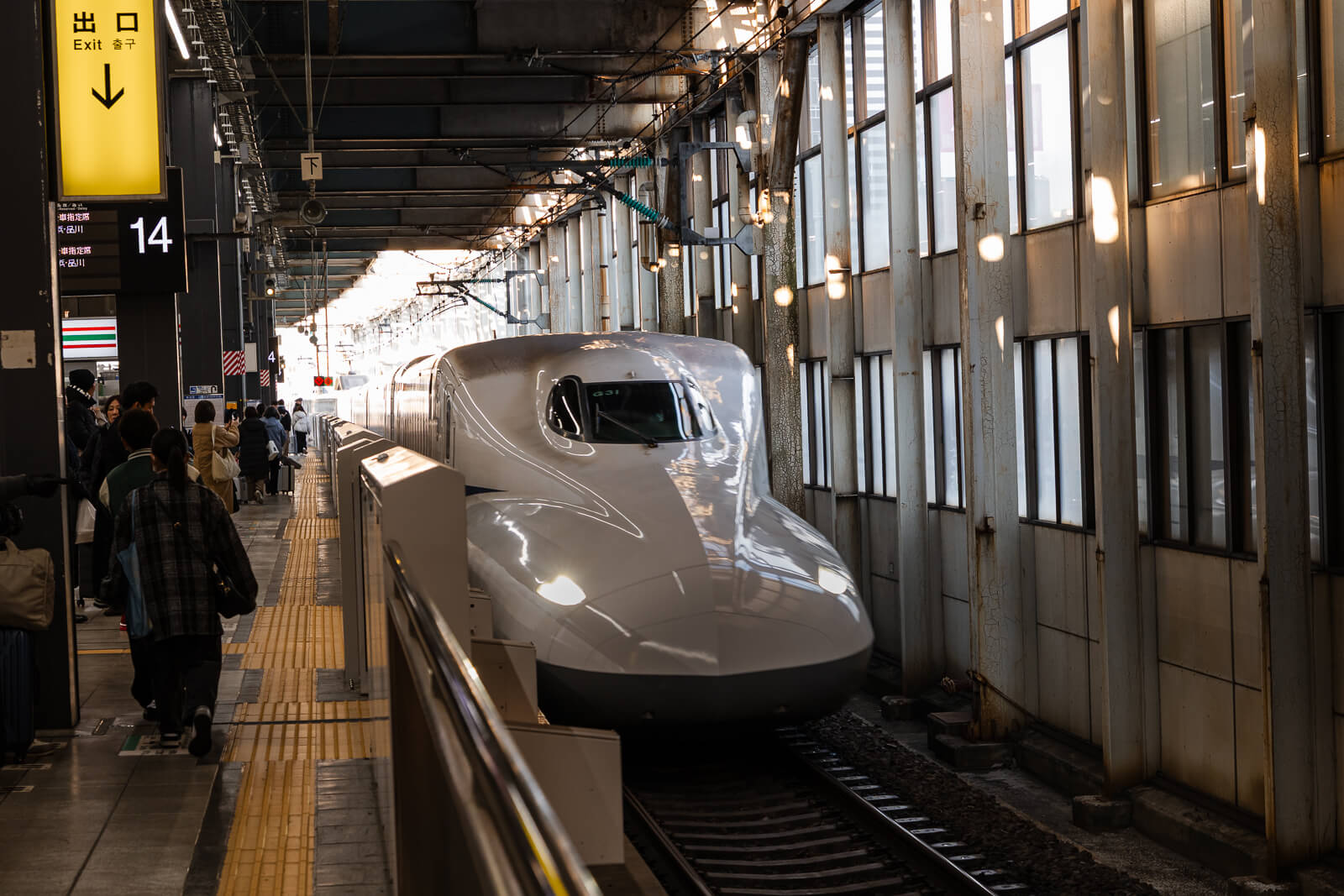
From Tokyo, the fastest rail access typically runs through the JR Limited Express Azusa toward the Lake Suwa basin, where the surrounding landscape gradually shifts from wider urban corridors into narrower valleys and smaller towns. Road access follows a similar pattern, with the terrain tightening noticeably as the lake basin approaches.
The final approach feels more like entering a smaller historical town than moving into a concentrated tourism district. Roads narrow gradually, riverside sections appear between residential blocks, and the shrine grounds remain integrated into the surrounding town rather than separated from it.
Hours & Fees
Hours and admission fees occasionally change during festival-related periods or seasonal operations. Visitors should confirm the latest information directly before arrival.
Official information:
Shimosuwa Tourist Information