A Forest Shrine on the Southern Edge of Lake Suwa
Suwa Taisha Shimosha Akimiya stands in Shimosuwa, on the northeastern side of the Lake Suwa basin in Nagano Prefecture. The shrine forms one of the four main shrines of the Suwa Taisha system, whose sacred sites are distributed around the lake and the surrounding foothills. Unlike many lakeside attractions, Akimiya sits slightly removed from the shoreline, where the basin begins transitioning toward the wooded slopes and historic districts of Shimosuwa.
For centuries, the communities surrounding Lake Suwa developed between the water and the mountains that enclose the basin. Roads, rail lines, shrine towns, and lakeside districts gradually filled the flatter ground around the lake, while the Suwa Taisha shrines remained tied to different parts of the landscape. Akimiya occupies one of those positions, linking the lower lakeside settlements with the wider religious traditions that have shaped the region for generations.
Today, many travelers encounter Akimiya while exploring the towns around Lake Suwa or moving between destinations such as Matsumoto, Suwa, and Chino. The shrine itself is relatively compact, and most visits last between 30 and 60 minutes. Tall cedar trees, massive wooden shrine buildings, and one of Japan’s largest sacred ropes create a setting that feels distinctly different from the open shoreline areas elsewhere around the basin.
Most visits take around 30–45 minutes, and the grounds require little physical effort to explore. For travelers already moving through the Lake Suwa region, the shrine works best as a short cultural stop rather than a destination requiring its own separate trip.
Because the area receives fewer international visitors than shrine destinations like Kyoto or Kamakura, the grounds remain easy to navigate, even during busier periods.
The Suwa Shrine Tradition Around Lake Suwa
The Suwa shrines were never intended to function as a single complex. Instead, the tradition developed across the landscape surrounding Lake Suwa, with shrine sites positioned around the basin.
Together they form Suwa Taisha, one of Japan’s oldest shrine traditions.
Suwa Taisha Shimosha Akimiya
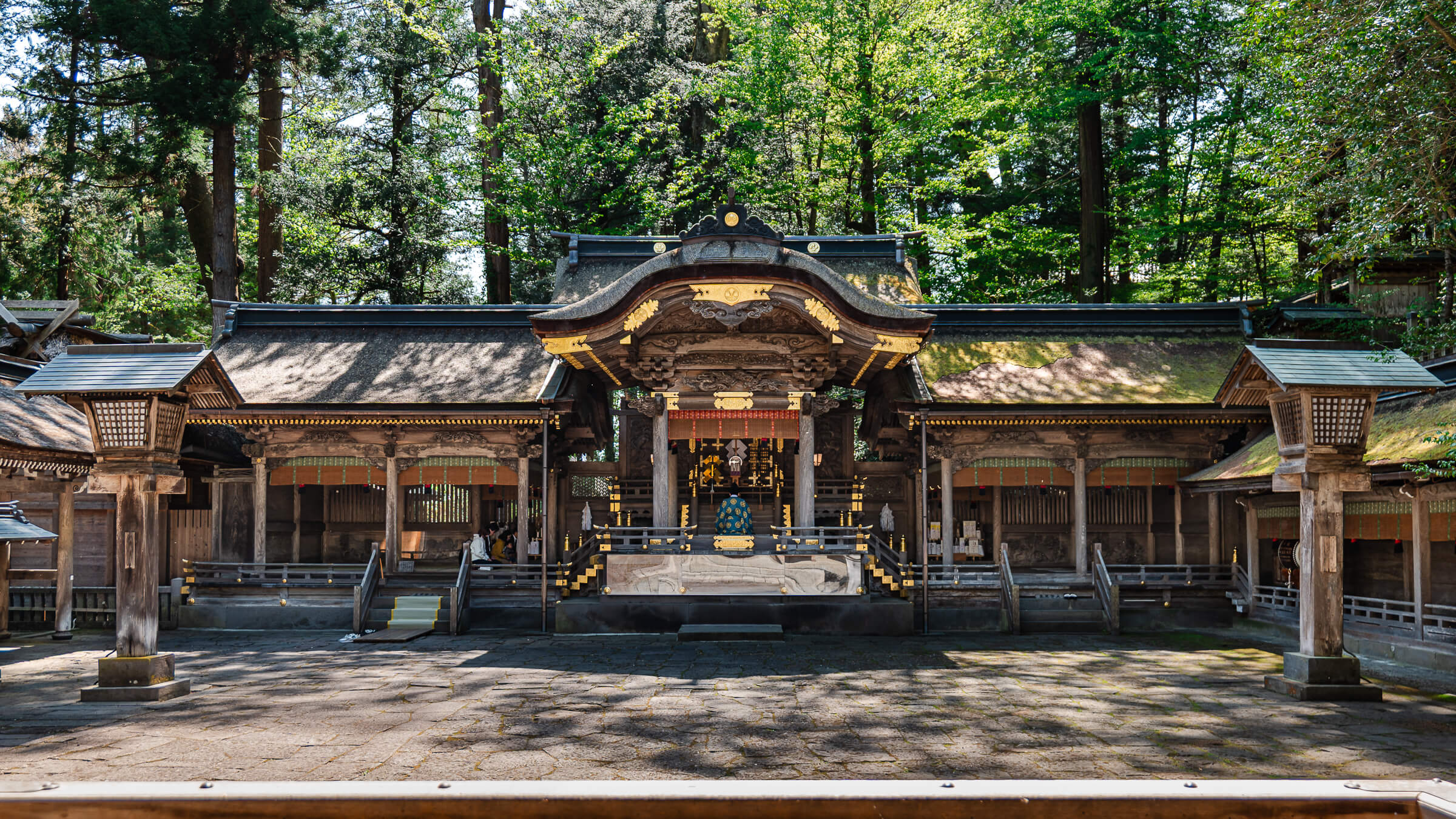
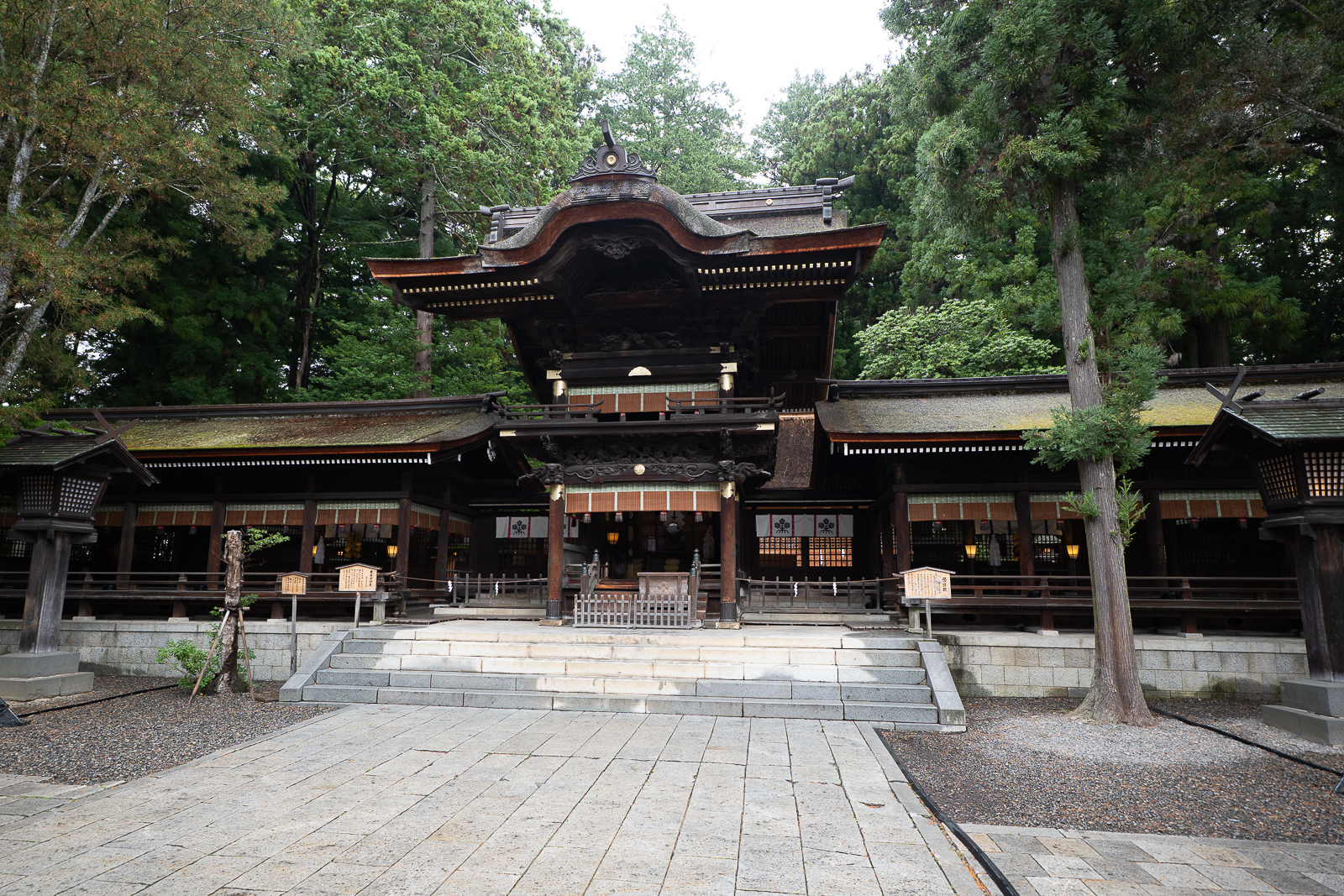
Suwa Taisha Shimosha Akimiya, the shrine described in this guide, stands in Shimosuwa on the southern edge of Lake Suwa. It serves as the autumn shrine of the lower Suwa pair and sits within walking distance of Shimosuwa Station. The grounds are known for the large Kaguraden ceremonial hall and the enormous sacred rope that hangs across its front.
Suwa Taisha Shimosha Harumiya
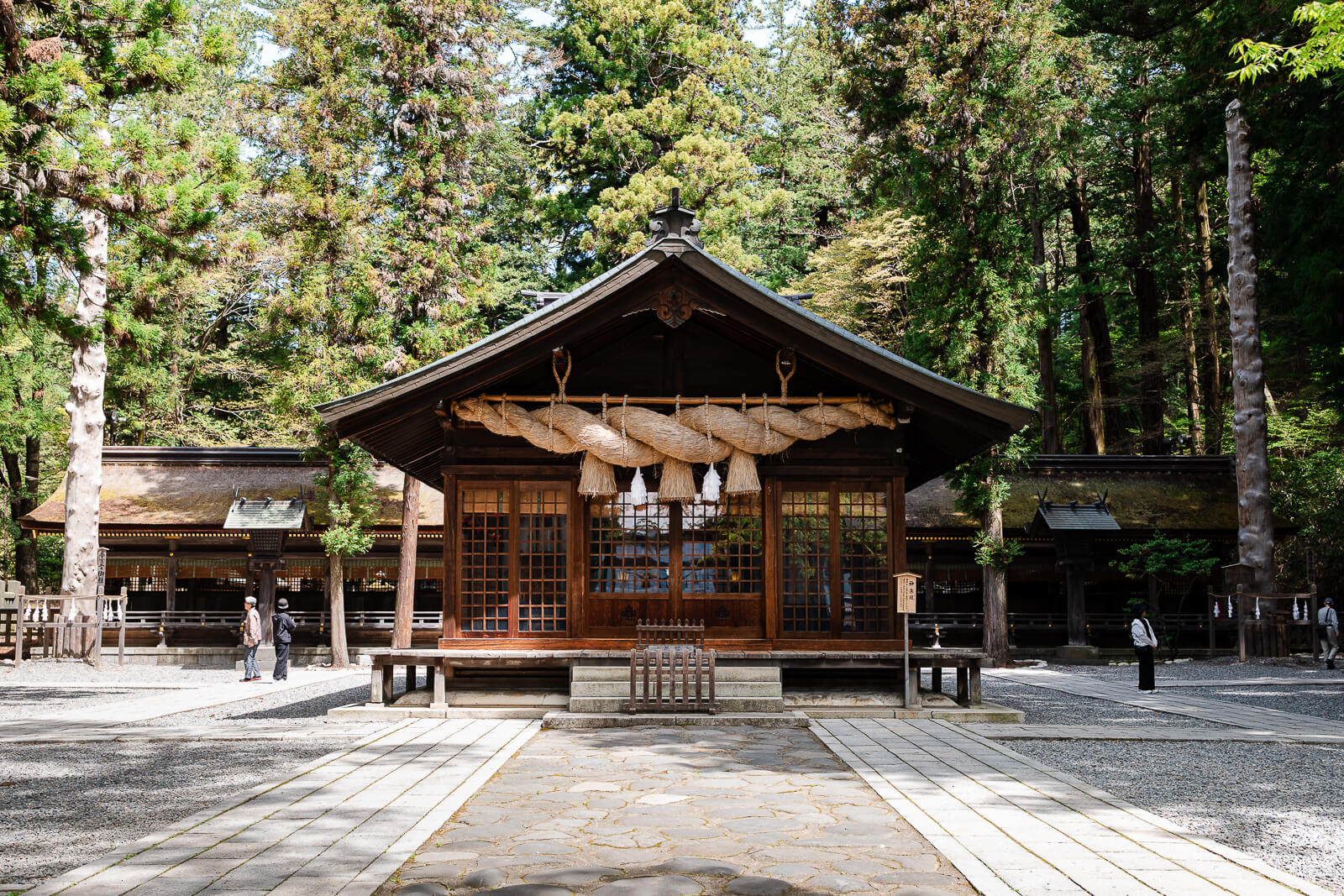
A short distance west of Akimiya stands Suwa Taisha Shimosha Harumiya, located along the historic Nakasendō route that once connected Edo and Kyoto. Harumiya serves as the spring shrine of the lower pair. Earlier traditions held that the Suwa deity moved seasonally between Harumiya and Akimiya, reflecting the agricultural rhythms of the region.
Suwa Taisha Kamisha Honmiya
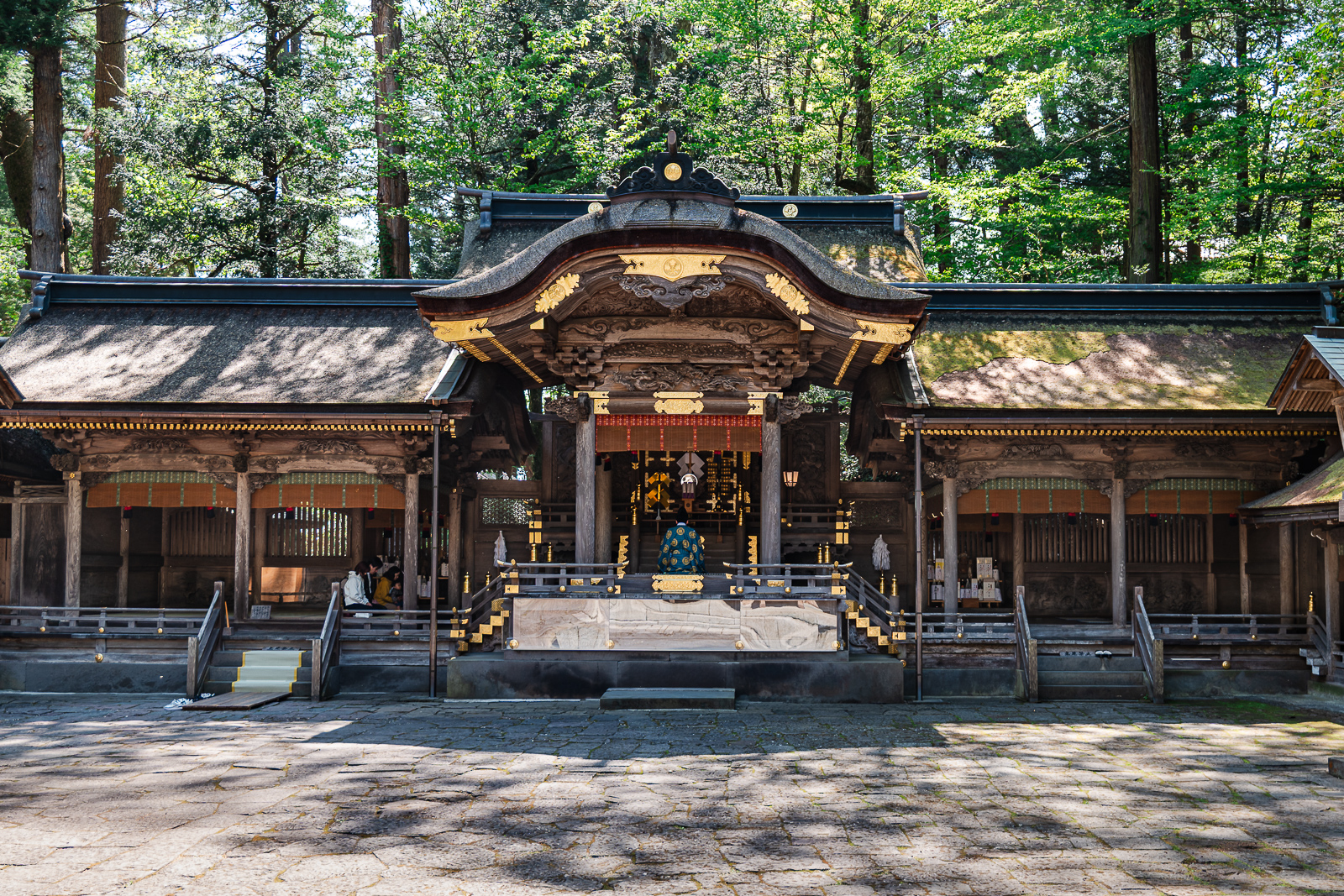
Across the lake in the city of Suwa sits Suwa Taisha Kamisha Honmiya, the largest and most prominent shrine of the upper pair. The complex lies at the base of the mountains rising above the eastern side of Lake Suwa and includes several prayer halls surrounded by sacred forest.
Suwa Taisha Kamisha Maemiya
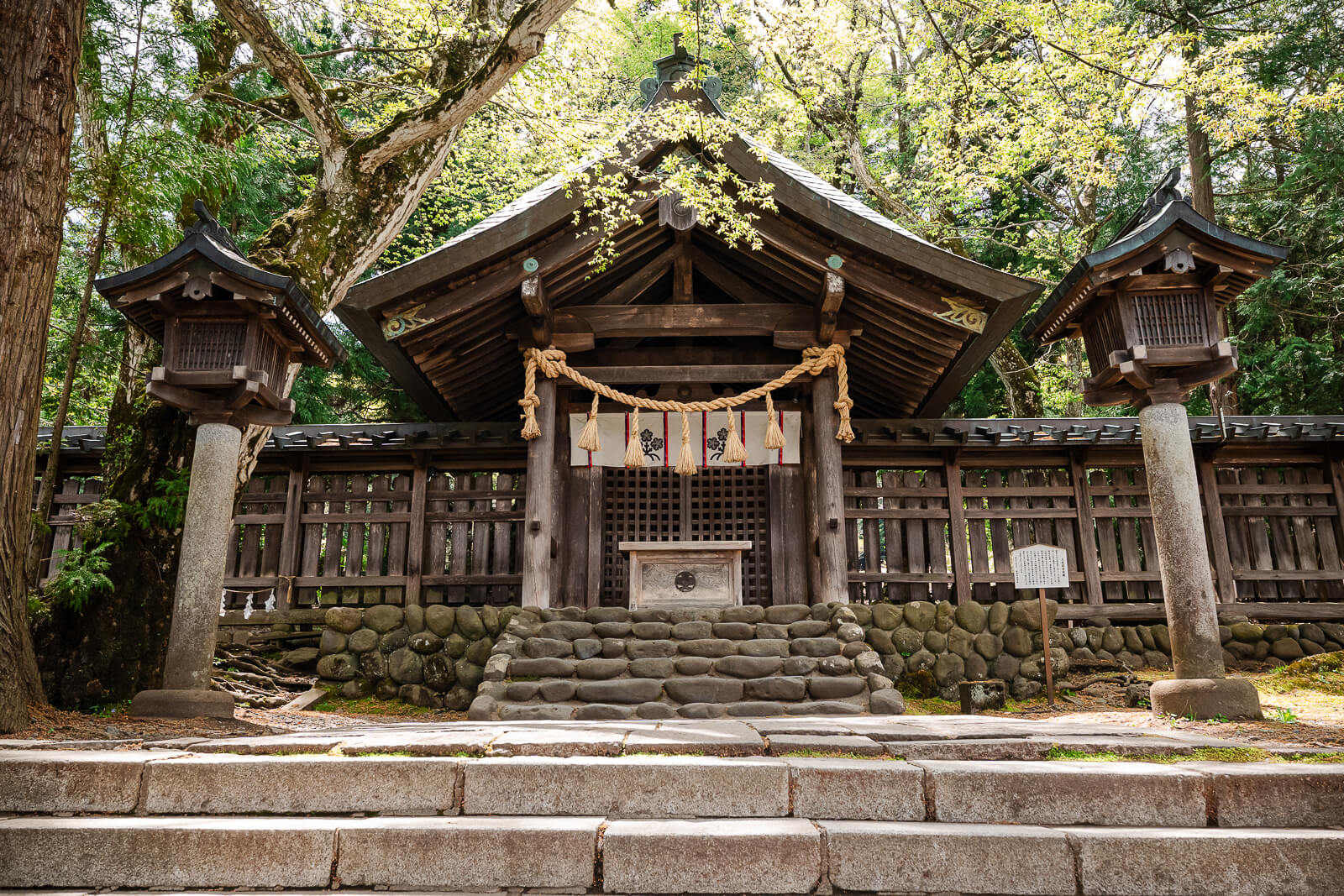
Nearby in the foothills above Honmiya stands Suwa Taisha Kamisha Maemiya, considered the oldest of the four shrine sites. The grounds remain quieter and more rural, with open fields and forested slopes reflecting the agricultural and mountain traditions that shaped early Suwa worship.
How the Suwa Shrine Tradition Developed
Historical records place the shrine tradition here by the 8th century, though the worship practiced in the Suwa basin likely predates written documentation.
Lake Suwa sits within a wide basin surrounded by mountain ridges and forested highlands. For centuries the region served as a natural crossroads linking eastern and central Japan. Hunting grounds, mountain passes, and the lake itself shaped the livelihoods of the communities living here, and the deity worshipped at Suwa became closely tied to those landscapes.
The distribution of the shrines around the lake reflects that older understanding of the entire basin as a sacred landscape rather than a single sacred site.
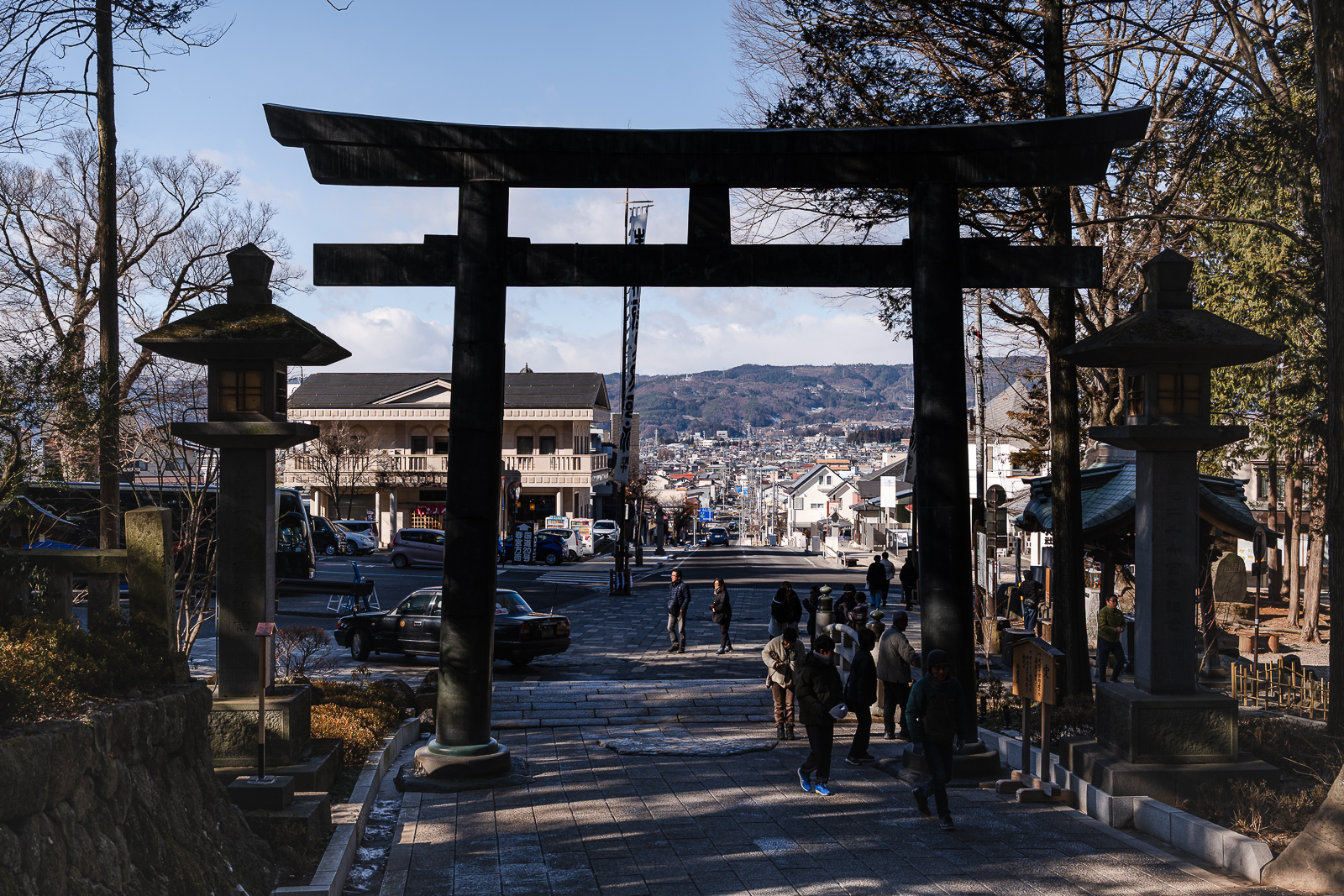
Within that wider tradition, Akimiya represents the southern gateway into the Suwa shrine landscape, where the religious traditions of the lake basin meet the quiet streets of Shimosuwa.
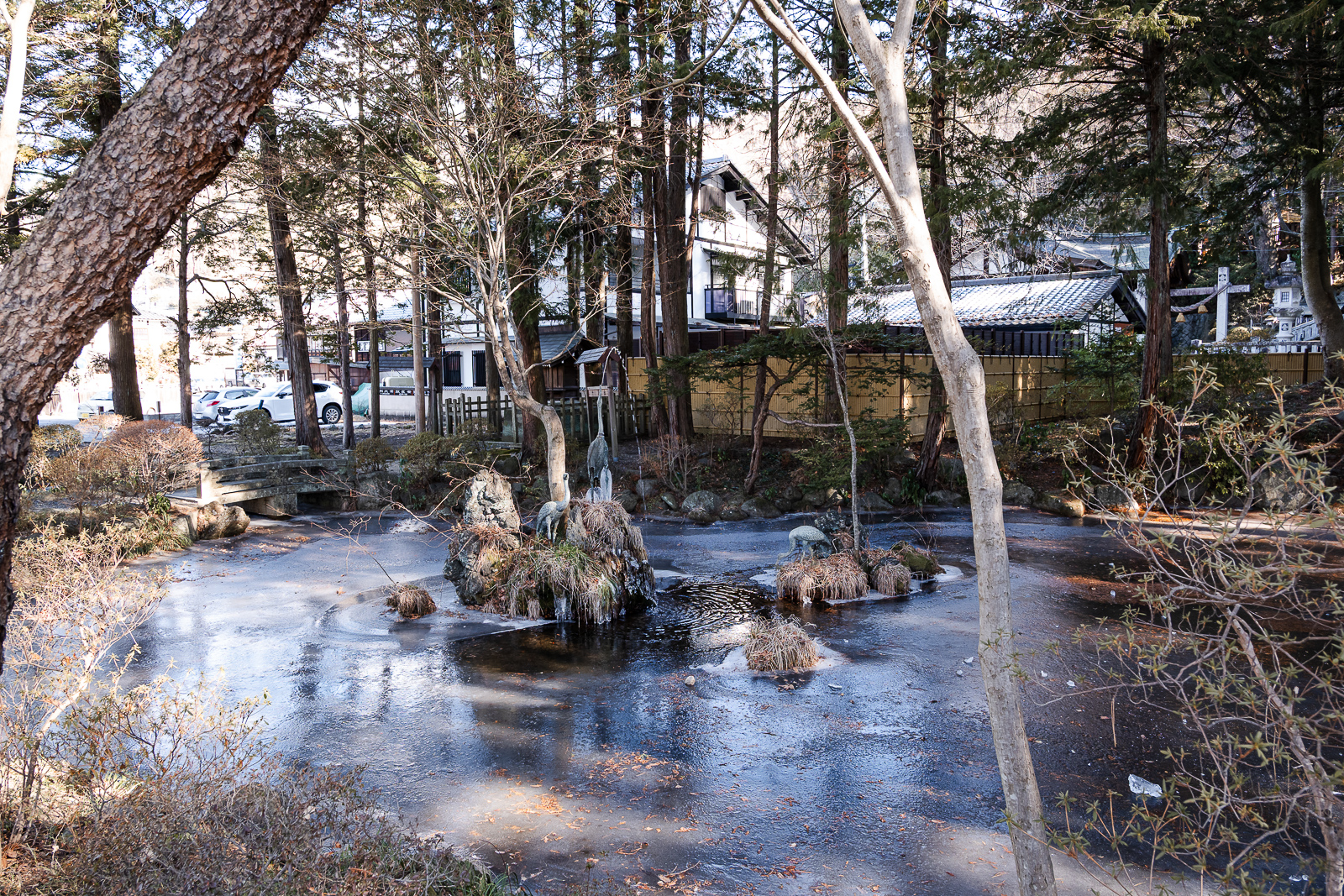
The Approach Beneath the Torii Gate
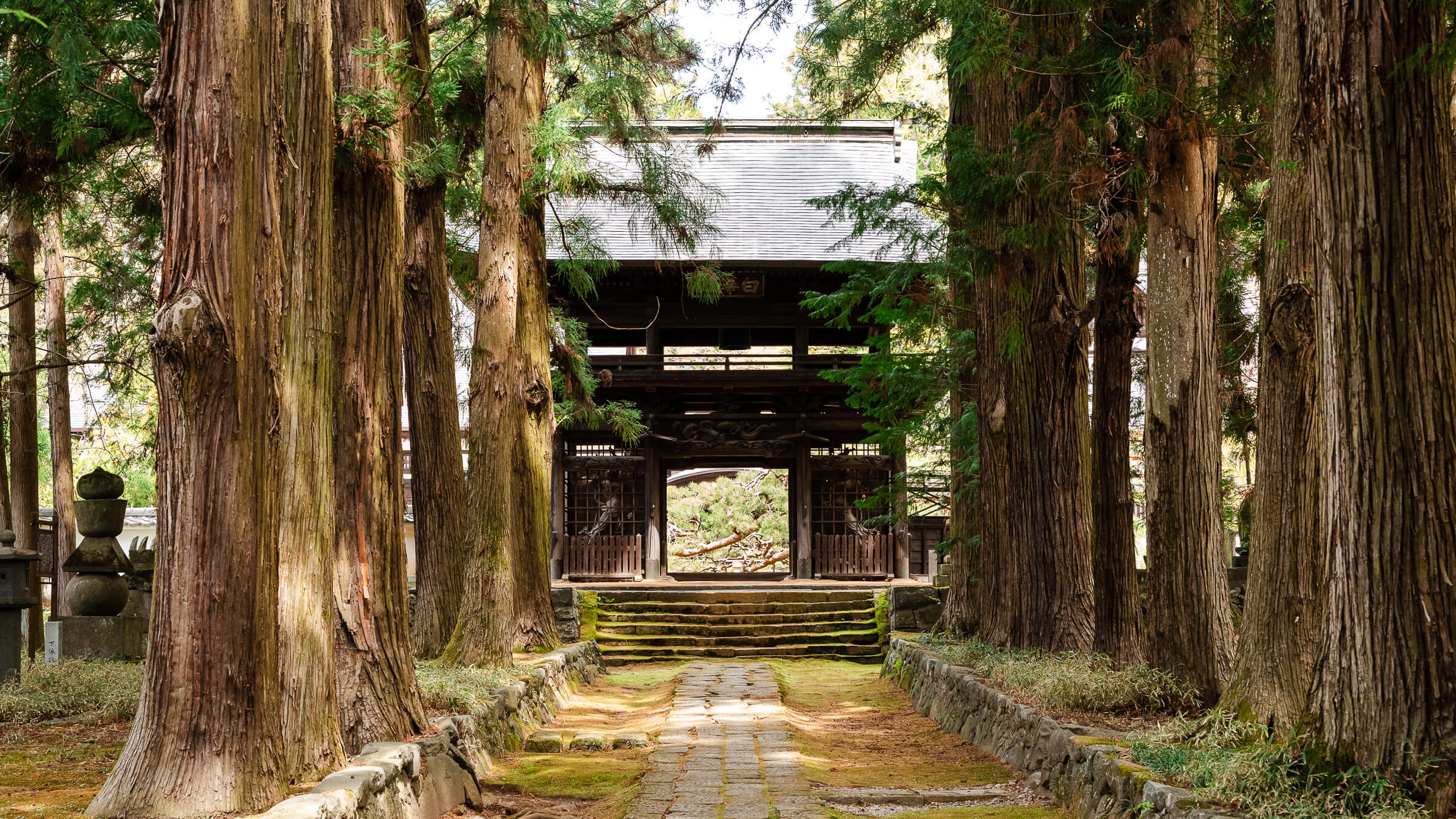
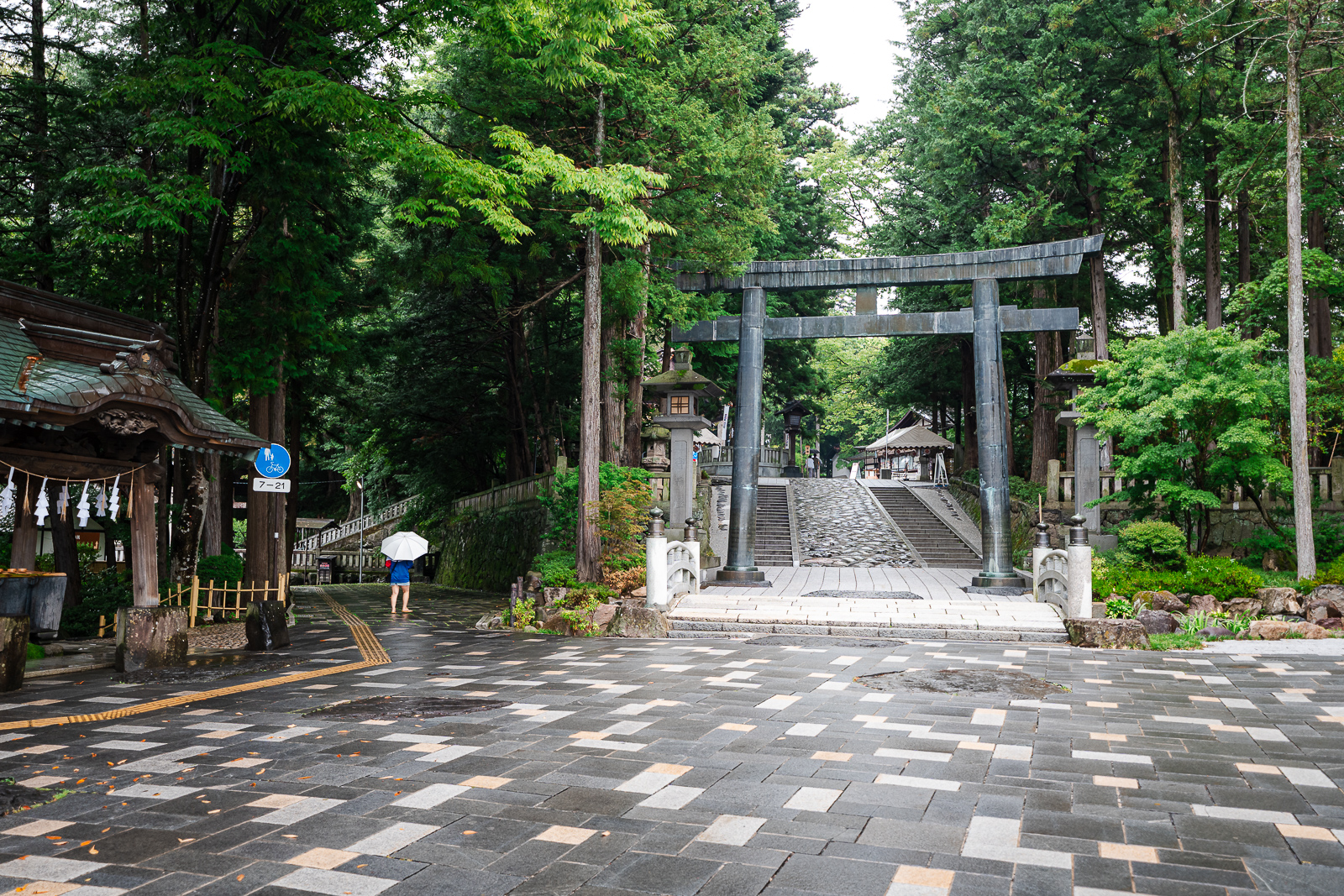
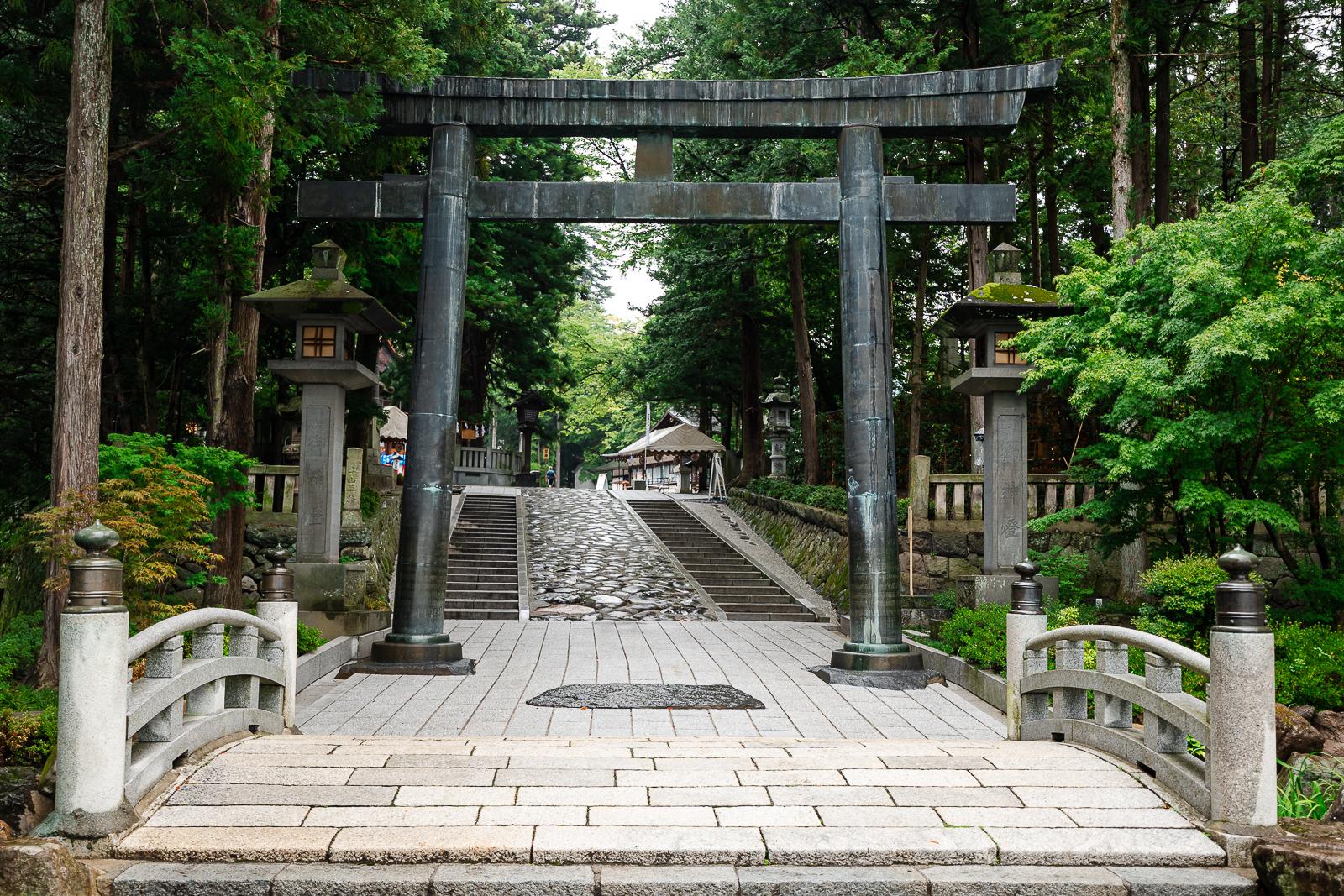
The visit begins at a large torii gate facing a quiet street in Shimosuwa.
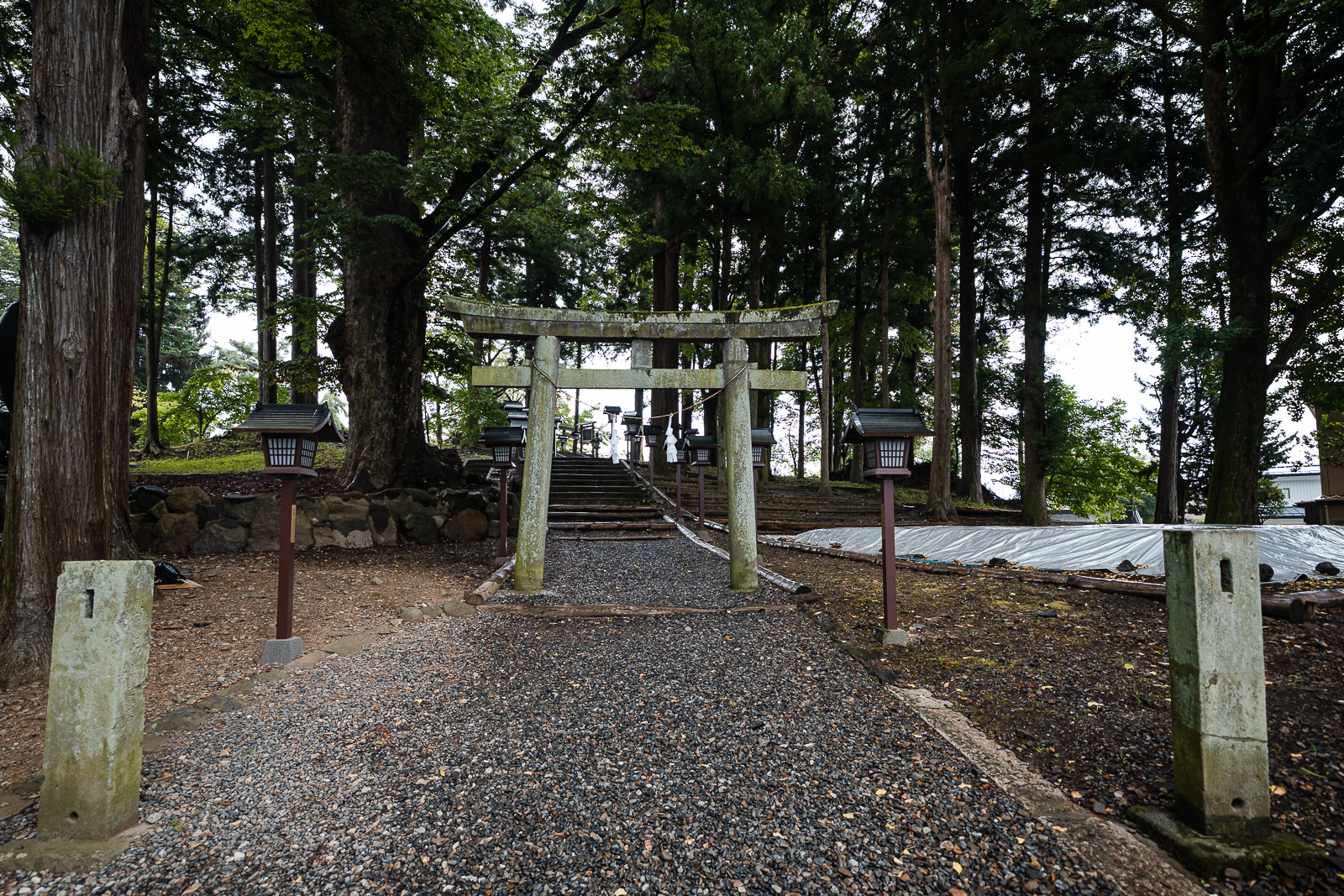
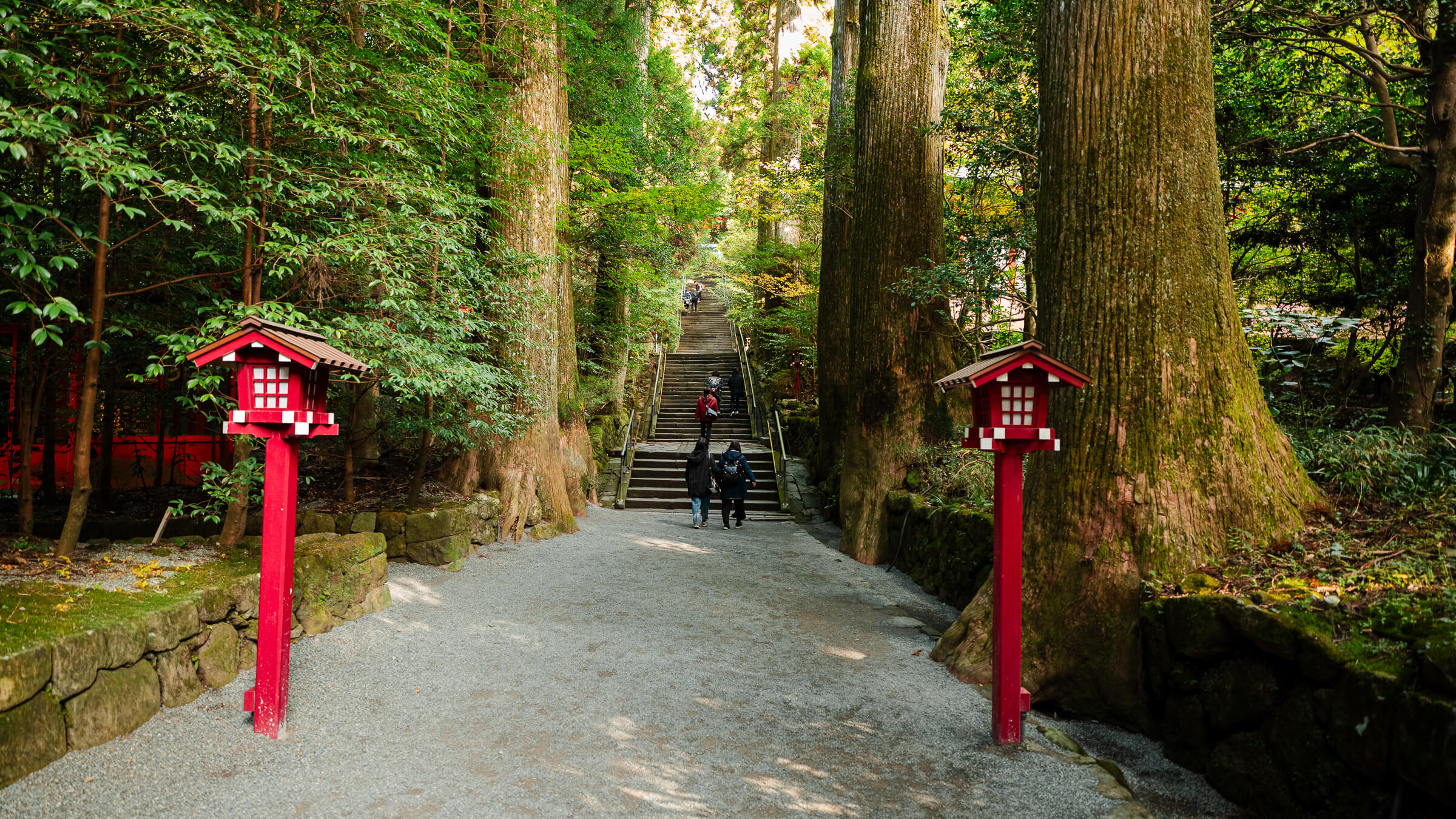
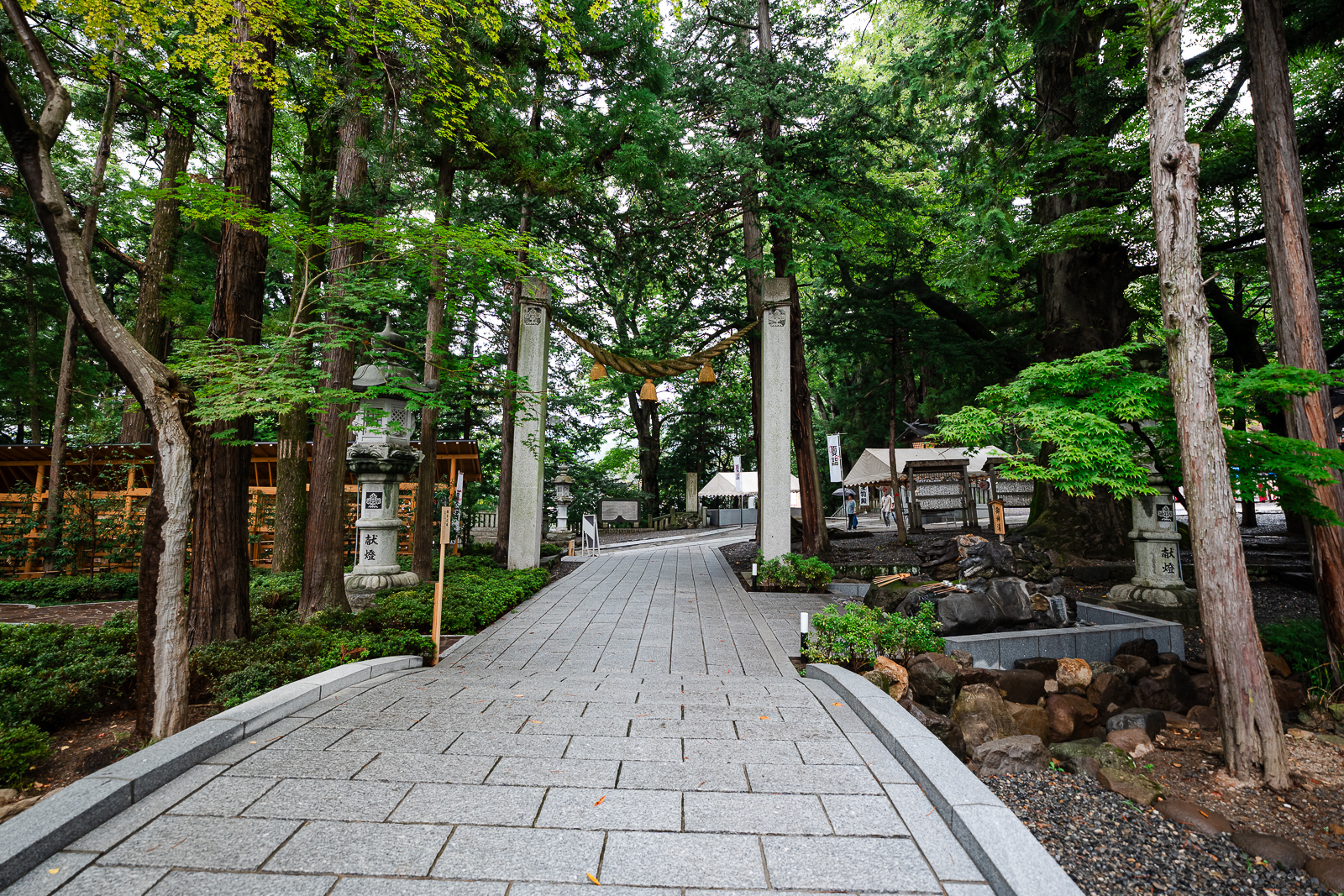
Passing beneath the gate, the path leads inward beneath tall cedar trees. Stone lanterns line the gravel approach while the sounds of the surrounding town fade behind the forest canopy.
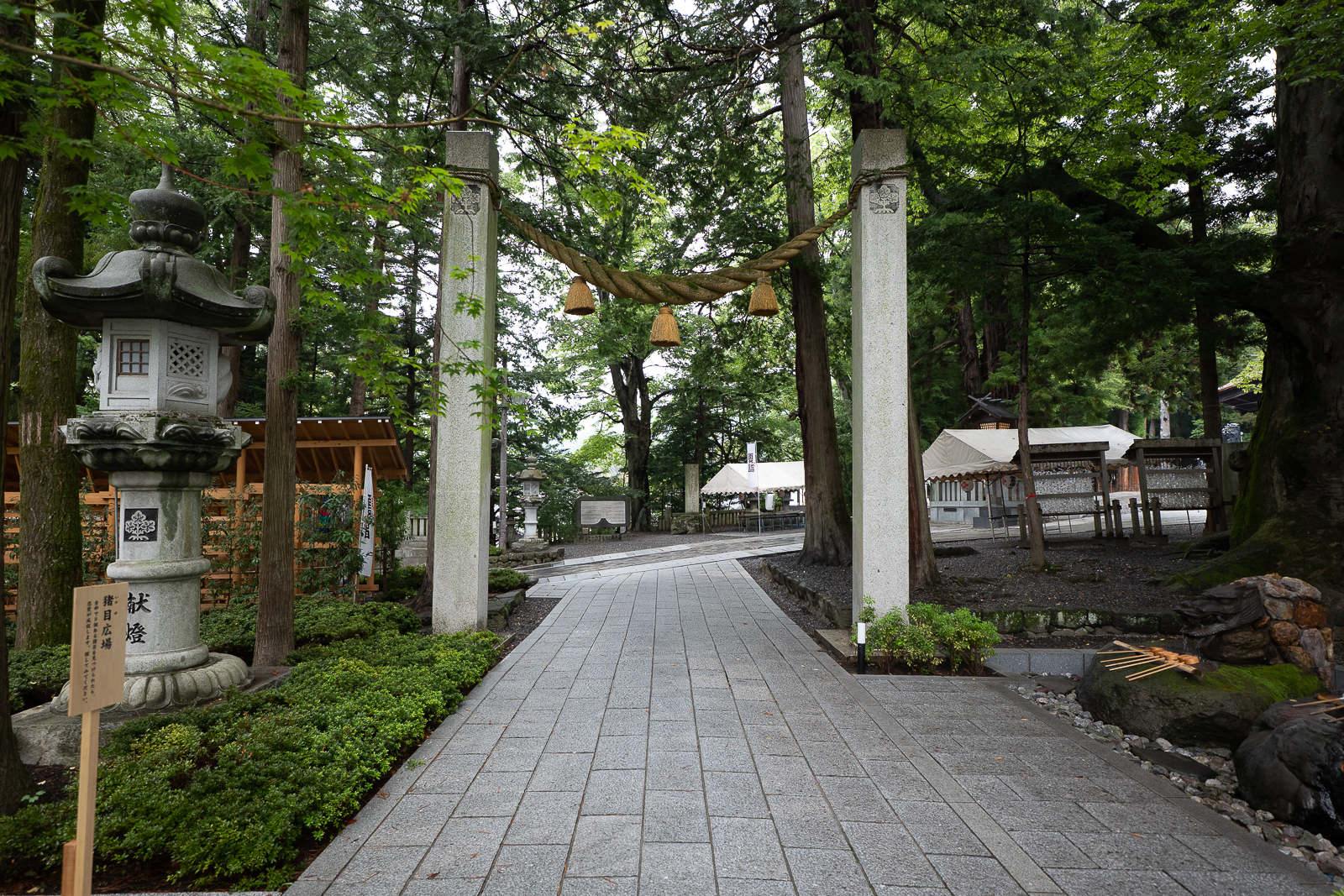
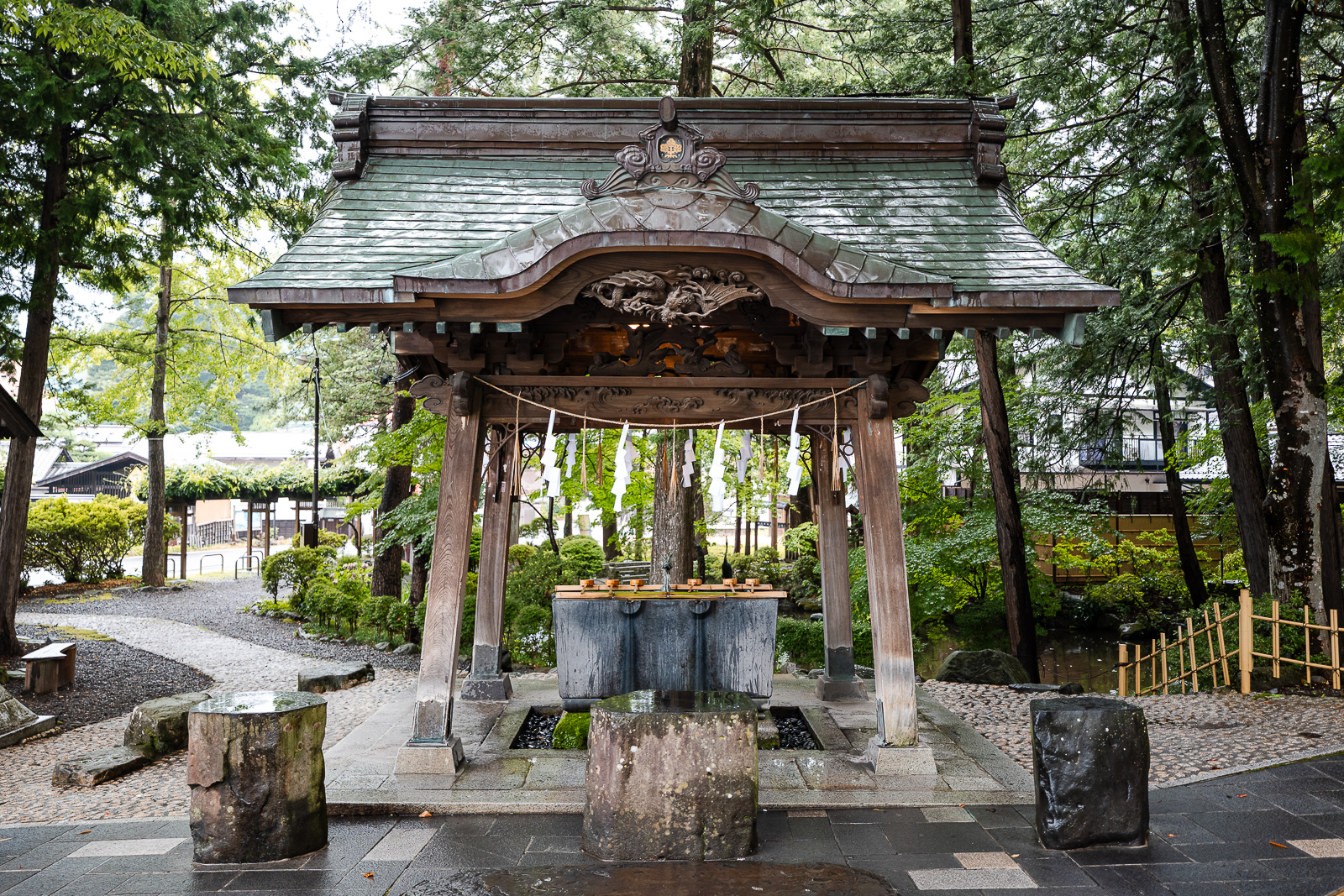
Near the entrance stands the shrine’s purification basin, where visitors rinse their hands before approaching the main buildings. At Akimiya the basin is fed by two dragon fountains known as “Twin Dragon Purification Water.” One dragon releases cool spring water while the other flows with warm geothermal water drawn from the Lake Suwa basin — a small reflection of the region’s long association with natural hot springs.
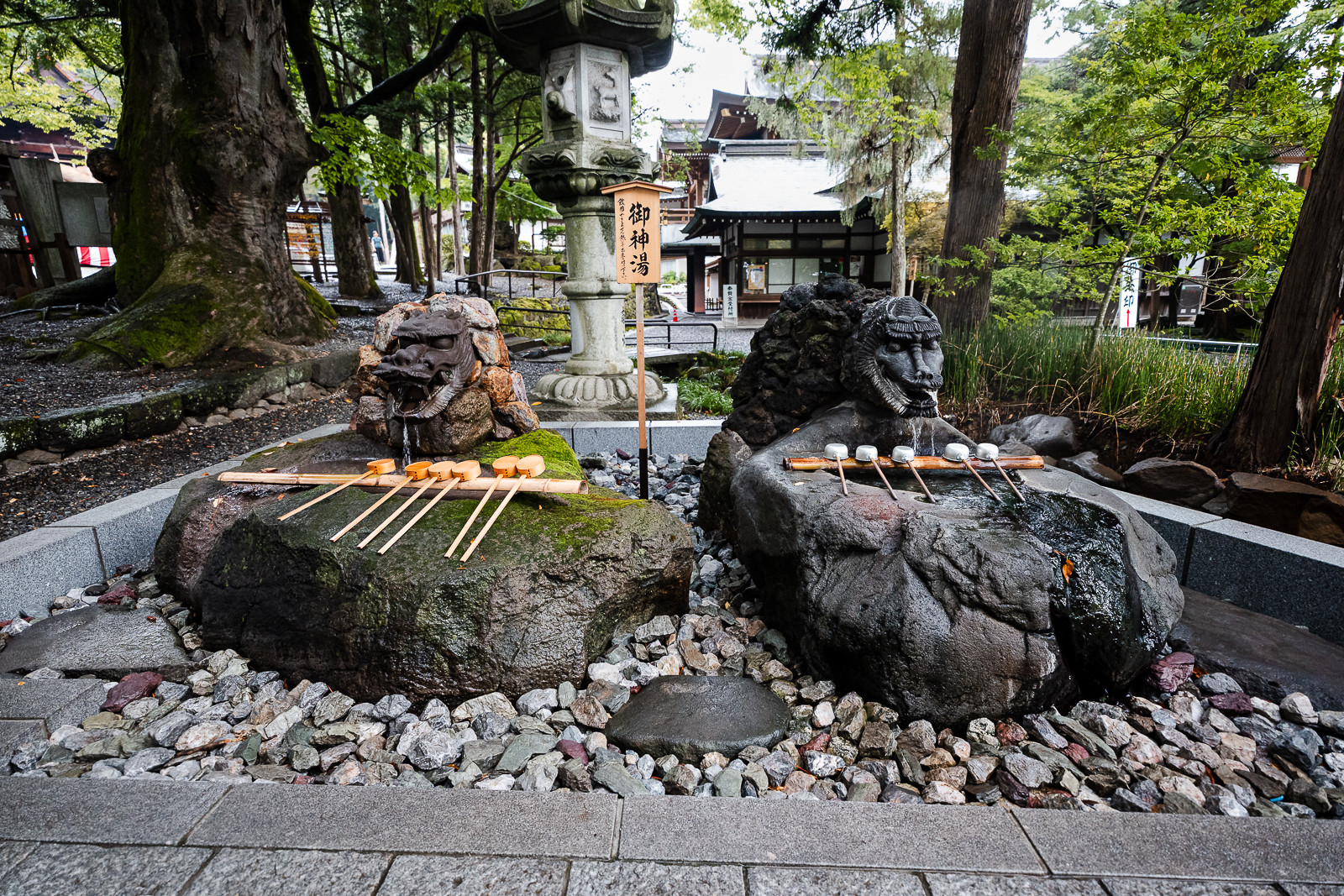
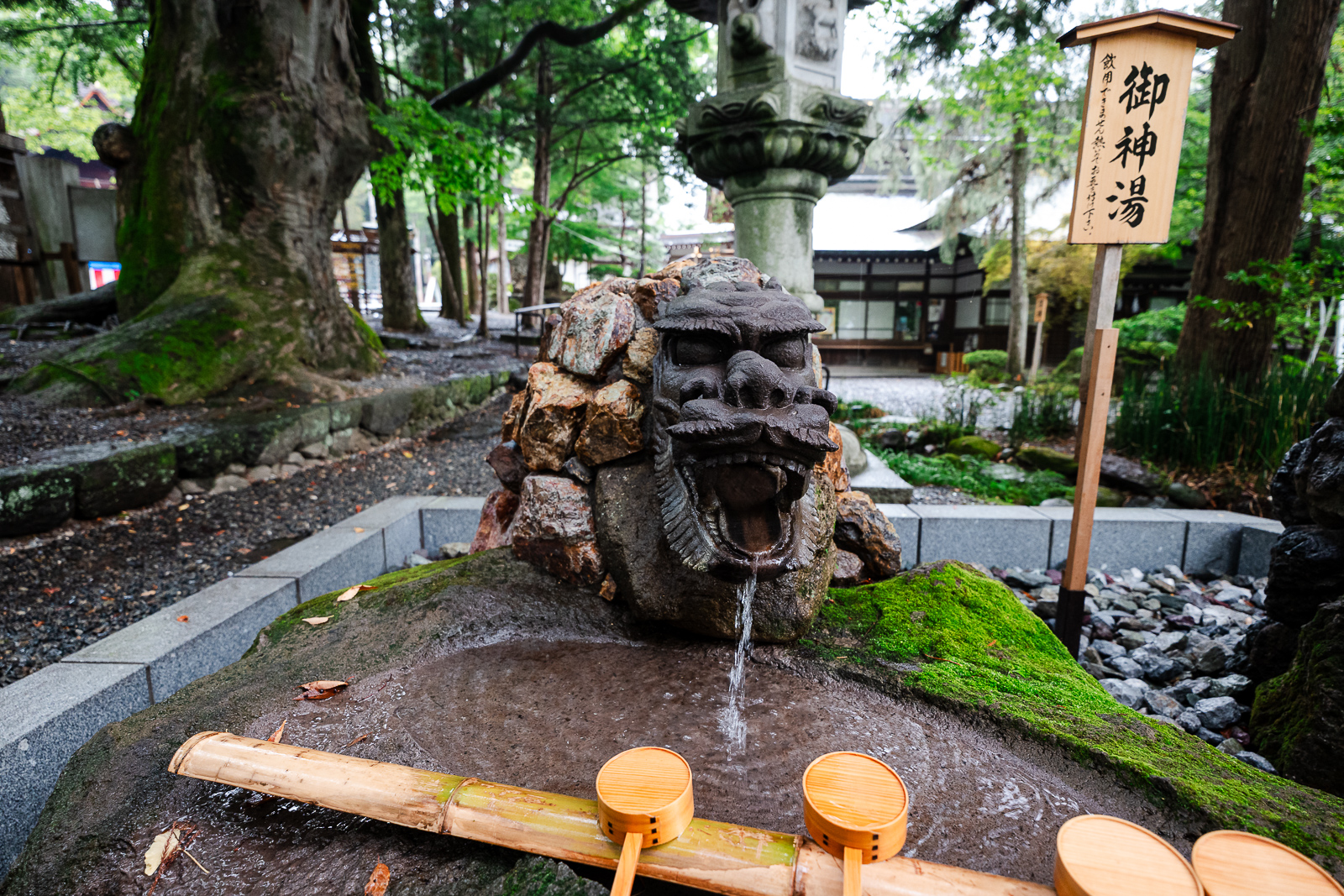
Within a few minutes the central shrine courtyard begins to appear ahead. The walk from the entrance to the main buildings is short, and most visitors reach the central structures quickly after entering the grounds.
Because the layout allows visitors to move through the site without needing to follow a fixed route, the visit progresses naturally from the entrance into the central courtyard.
The Kaguraden and the Massive Sacred Rope
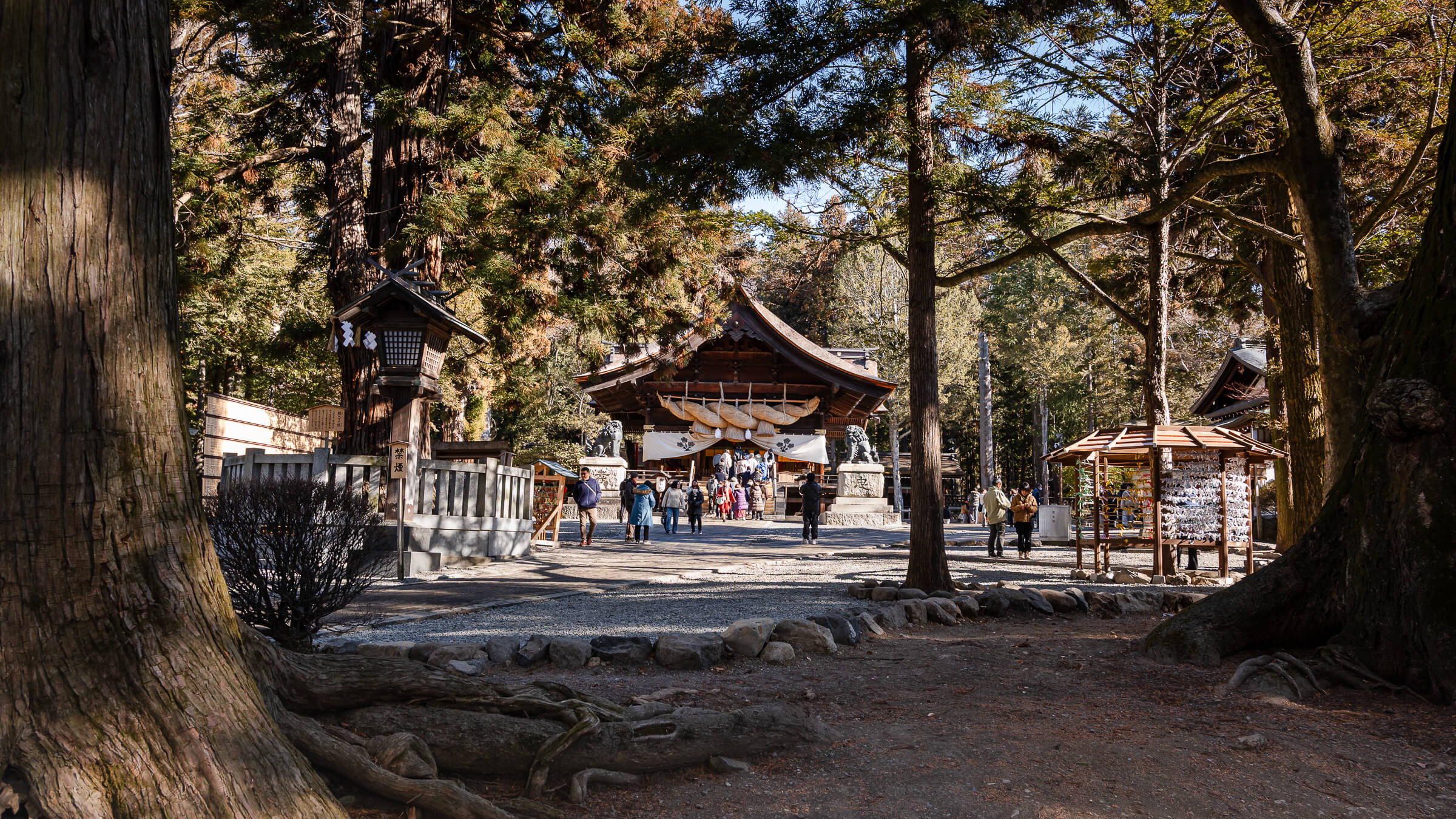
The first structure that draws attention in the courtyard is the Kaguraden, a ceremonial hall used for ritual performances.
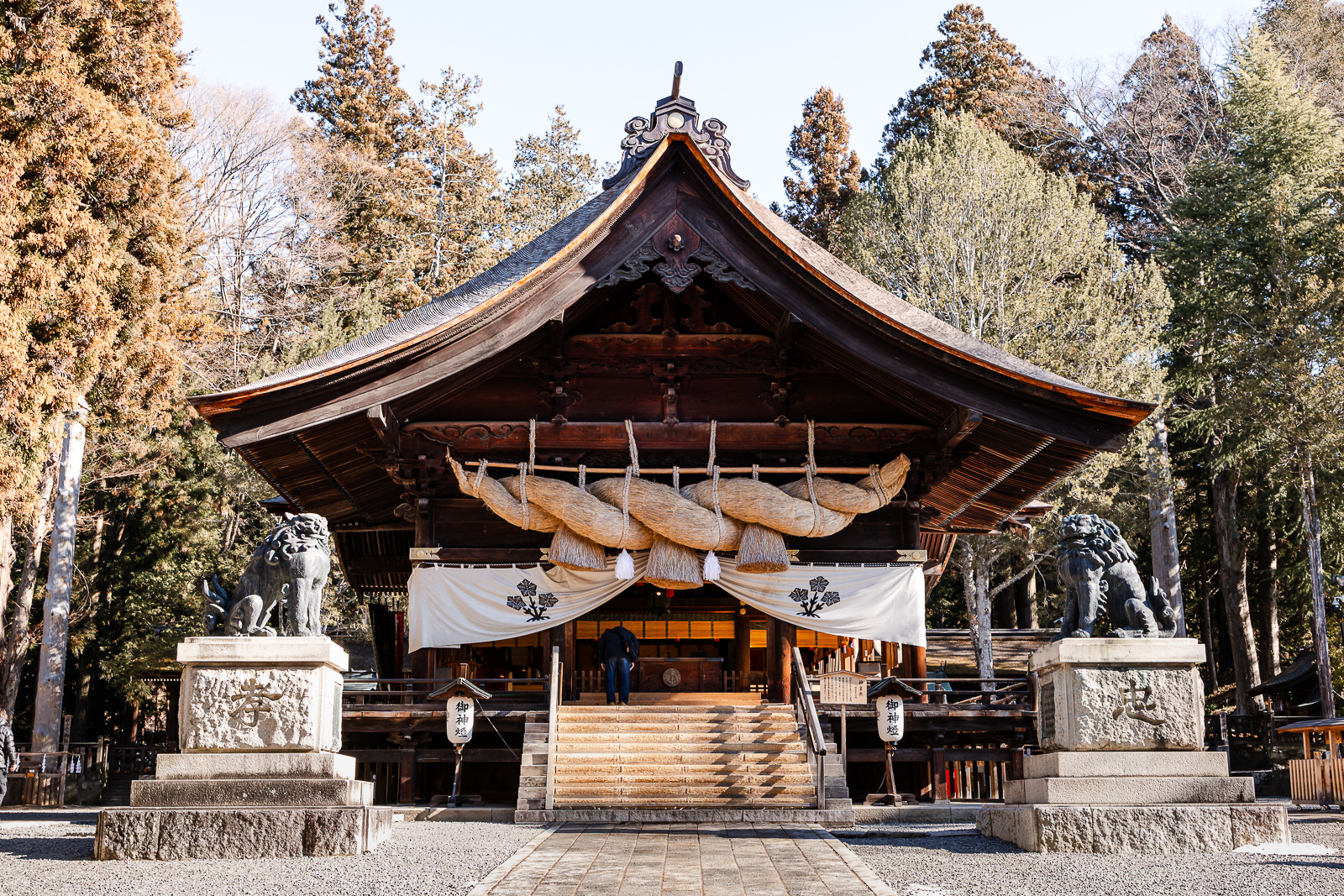
Across the front of the building hangs an enormous shimenawa, a sacred rope made from twisted rice straw. At Akimiya the rope stretches more than ten meters across the building and weighs several hundred kilograms, making it one of the largest shrine ropes in Japan.
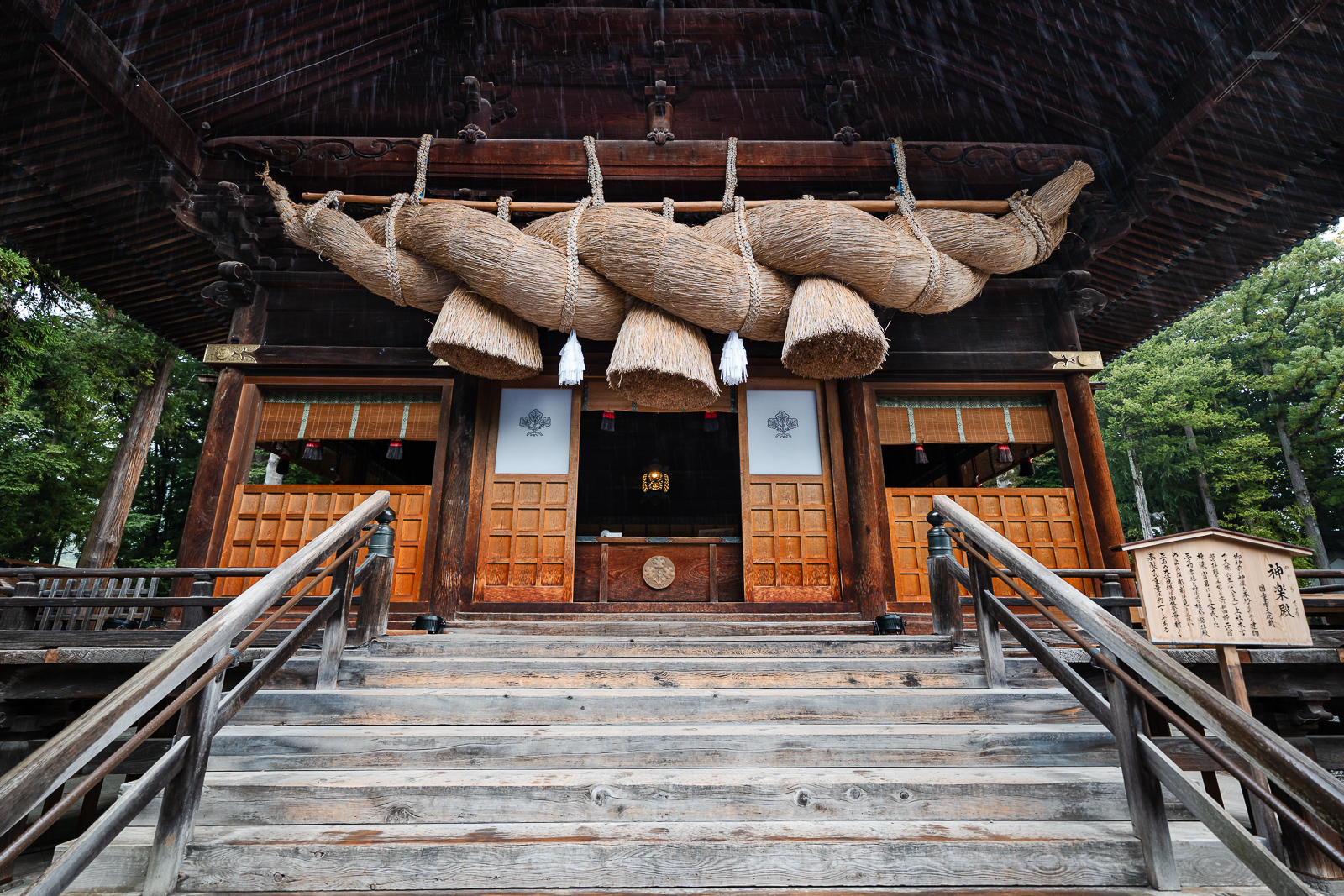
The rope marks the building as sacred space where offerings and ritual performances are presented to the shrine’s deities. During certain ceremonies the Kaguraden hosts kagura, traditional Shinto dance rituals.
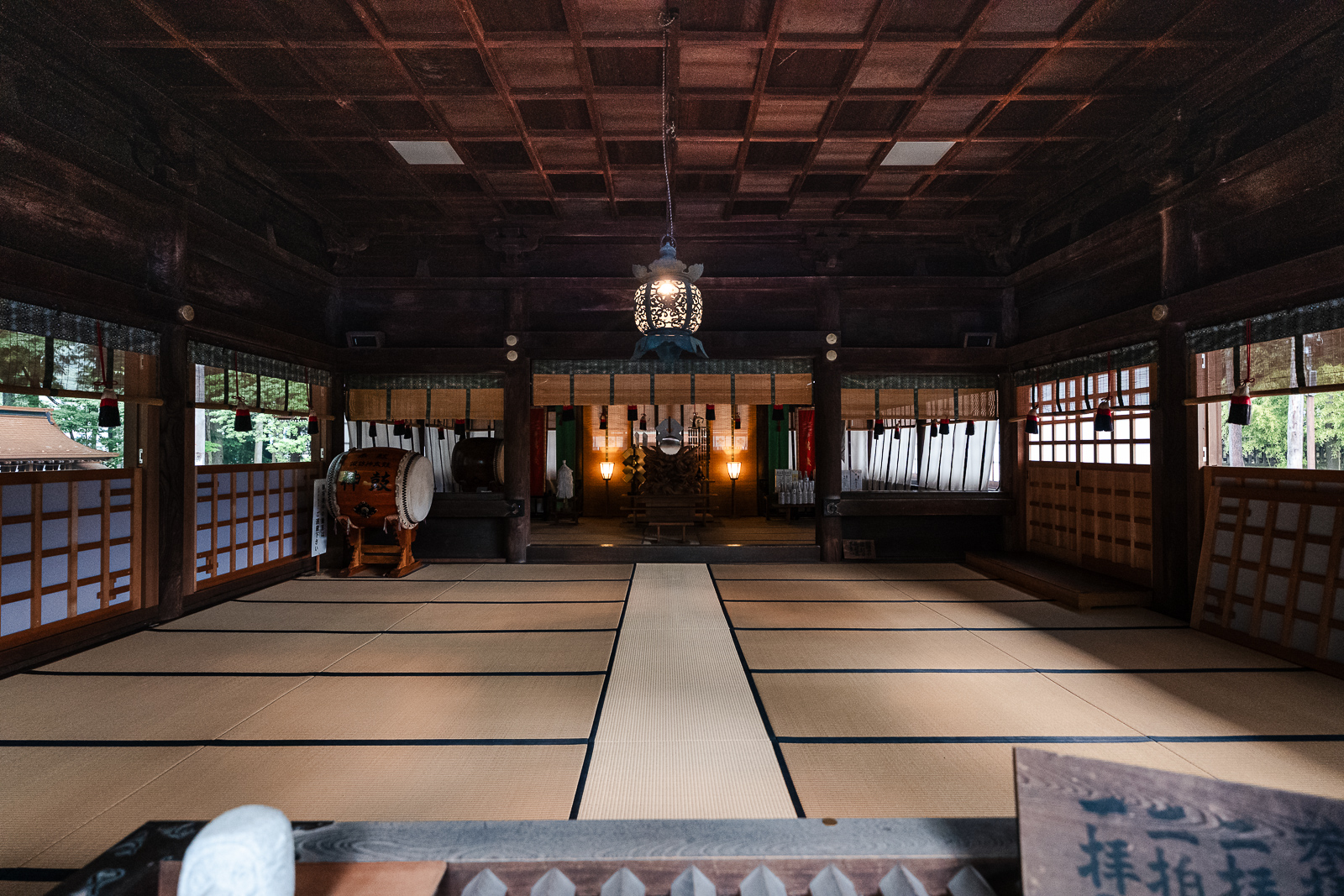
This courtyard functions as the visual center of the visit before movement continues around the surrounding shrine buildings.
Walking Through the Shrine Buildings
Beyond the Kaguraden the grounds extend into several smaller prayer halls and shrine structures.
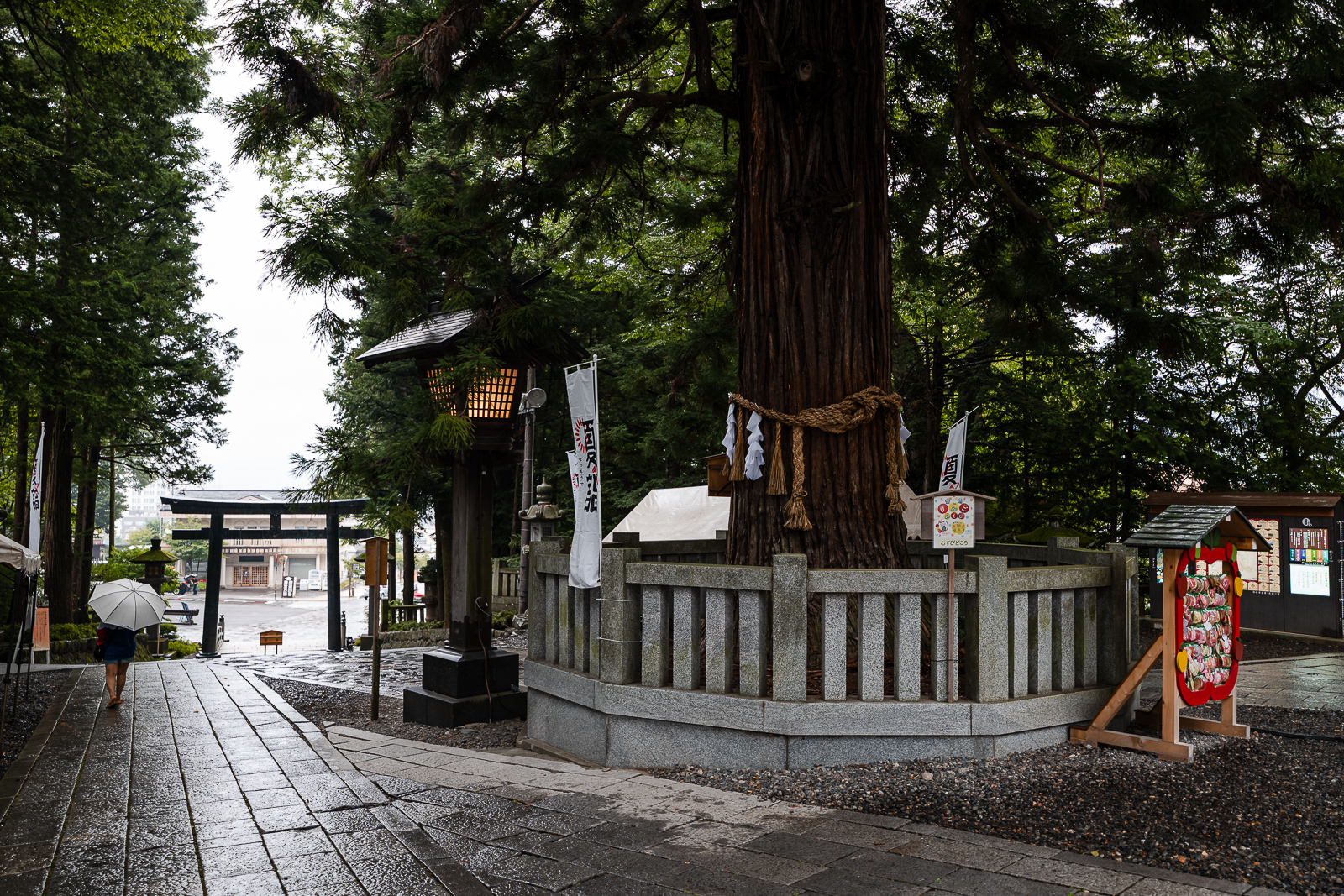
The architecture follows traditional shrine construction, with dark wooden buildings and gently curved roofs set beneath the surrounding cedar canopy. The buildings remain modest in scale, allowing the forest to dominate the visual character of the site.
Visitors move around the courtyard before continuing along short gravel paths that circle the complex. The entire shrine can be explored comfortably within half an hour.
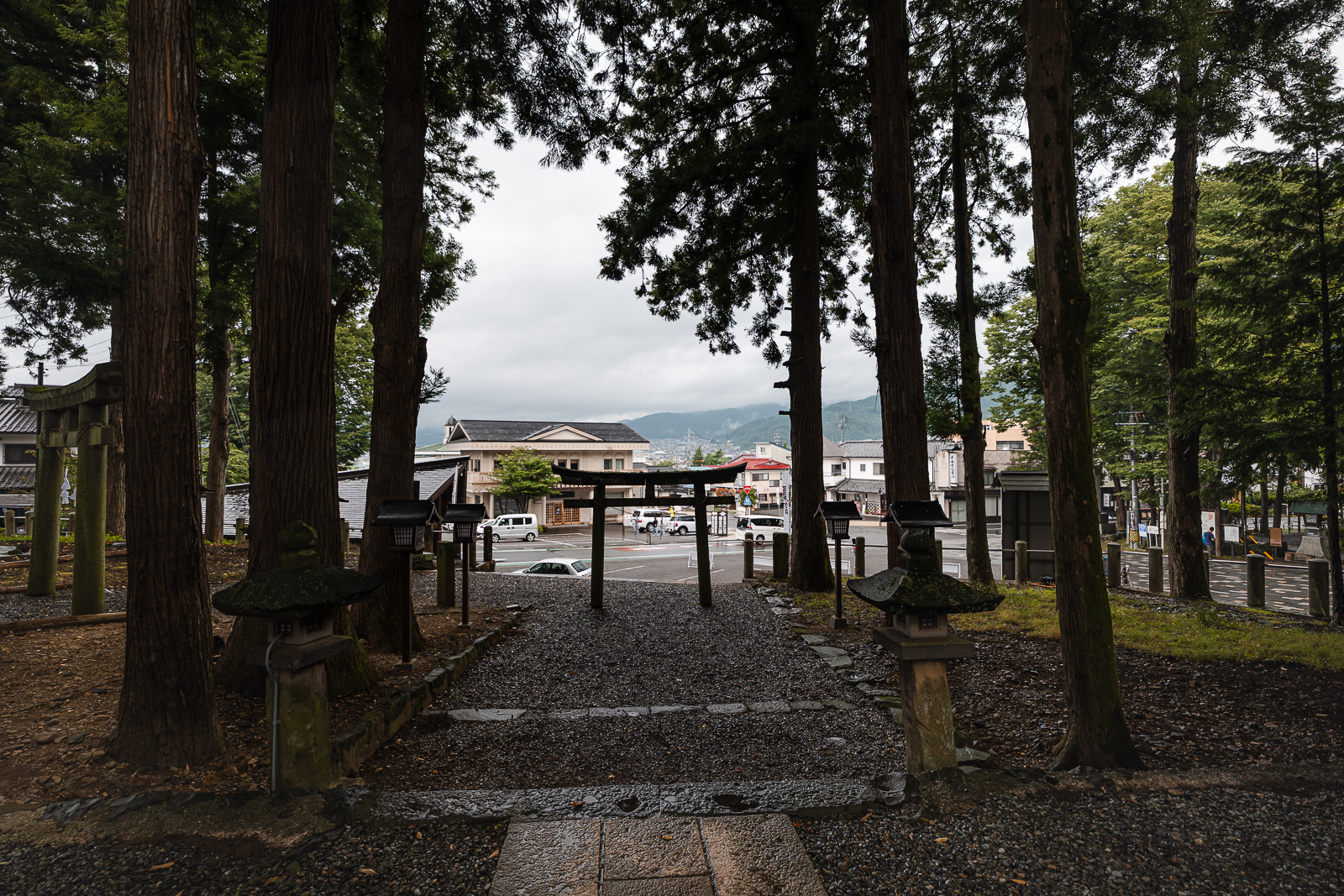
Although the shrine stands only a short distance from Lake Suwa, the surrounding trees create a clear separation from the open shoreline.
The Onbashira Festival and the Pillars Around the Shrine
The Suwa shrine tradition is widely known for the Onbashira Festival, held once every six years.
During the ceremony enormous tree trunks are cut from nearby mountains and transported to the shrine grounds, where they are raised as sacred pillars marking the corners of each shrine precinct.
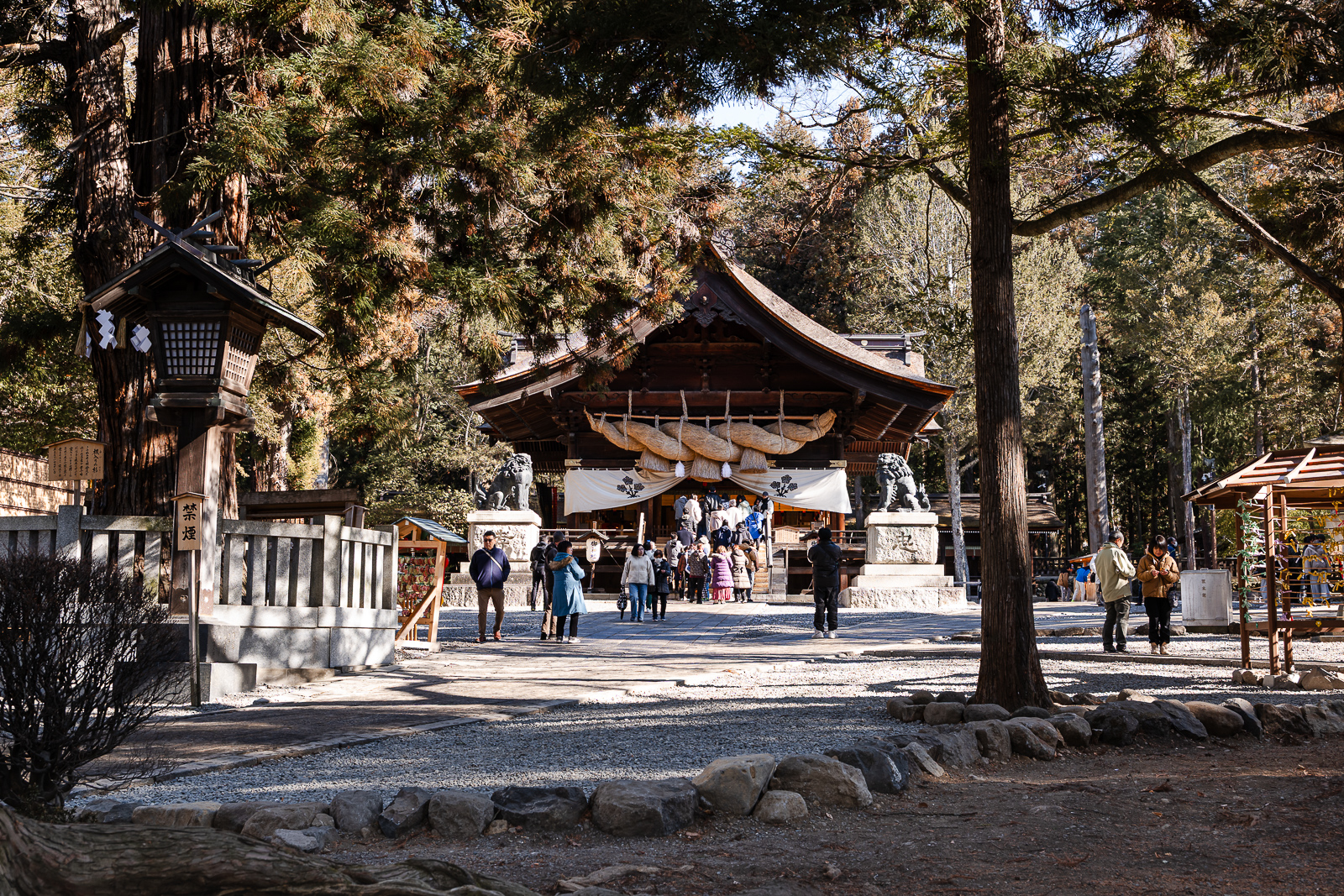
The transportation phase of the festival is the most dramatic. At certain points the logs are slid down steep mountain slopes while participants ride on top, an event that attracts spectators from across Japan.
Once raised, the pillars remain standing for the next six years until the ceremony is repeated. Visitors walking through the shrine today can still see these pillars standing around the grounds.
How This Shrine Fits Into a Lake Suwa Visit
Akimiya sits on the northeastern side of the Lake Suwa basin, where the shrine districts of Shimosuwa begin transitioning toward the shoreline communities surrounding the lake. The location places the shrine within easy reach of both the historic center of Shimosuwa and the lakeside areas that connect the towns around the basin. Because of that position, Akimiya rarely functions as an isolated destination and instead becomes part of a broader route through the region.
Following the shoreline west leads toward Kamisuwa Onsen, where lakeside promenades, historic bathhouses, and cultural attractions cluster near the water. Along that route, places such as Sekicho Park, the former Lake Suwa Geyser Center, the lakeside footbath, Katakurakan, and Takashima Castle help define the character of the Suwa side of the lake. Together they reveal how closely the basin’s history, hot-spring culture, and waterfront districts remain connected. For the broader lakeside planning context, the Lake Suwa Guide explains how Shimosuwa, Kamisuwa, shoreline stops, viewpoints, and overnight bases fit together around the basin.
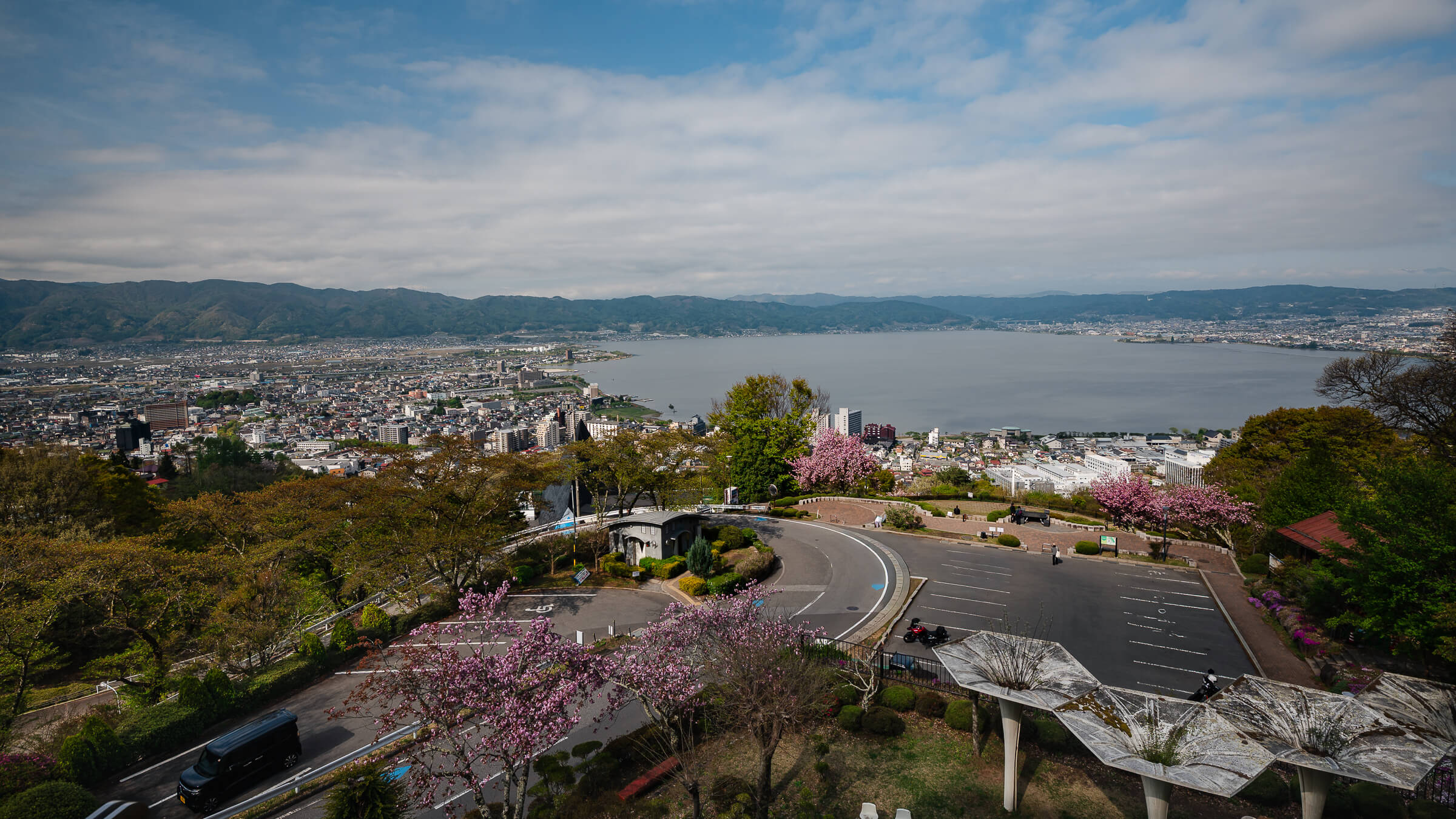
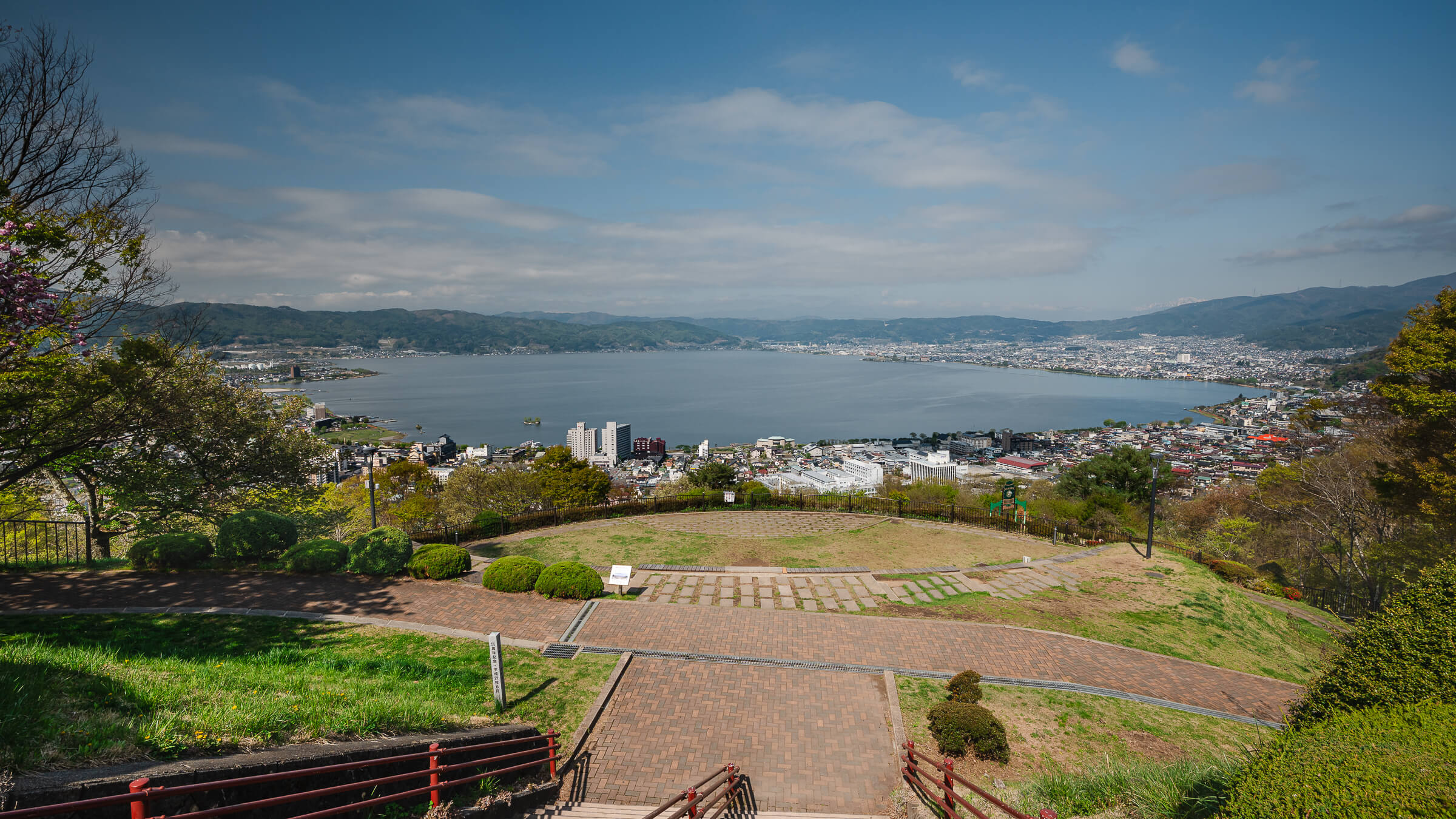
The geography becomes easier to understand from above. Rising beyond the shoreline, Tateishi Park overlooks the basin from the hills above Suwa City and reveals how Shimosuwa, Kamisuwa, Okaya, and the surrounding mountains fit together around the water. Many travelers find that locations visited separately at ground level begin making more sense once viewed from the overlook. For the wider regional view, the Suwa Area Guide connects Akimiya with Lake Suwa, the full Suwa Taisha route, Chino, Tateishi Park, and the highland roads beyond the basin.
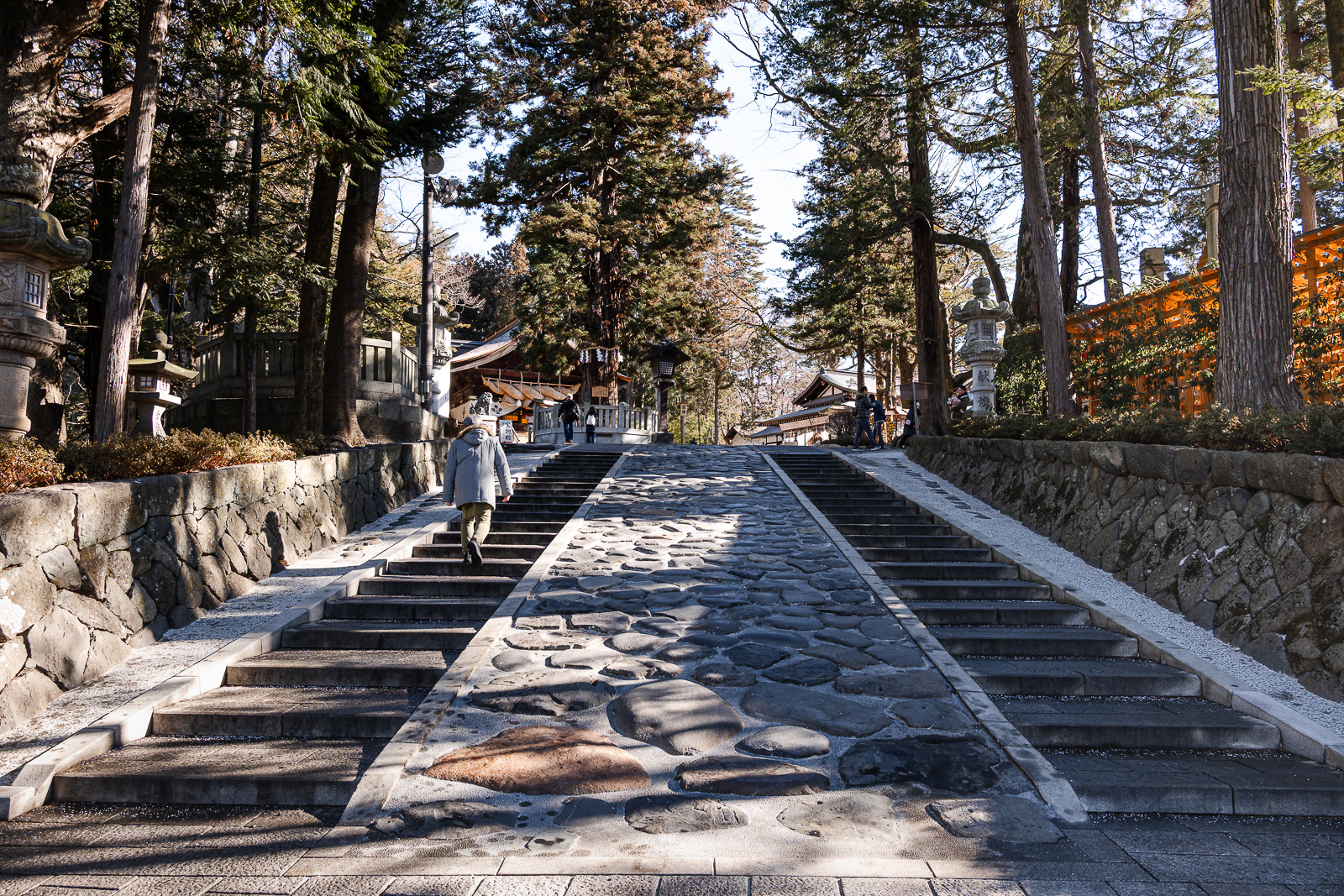
Movement through the region also extends beyond the lake itself. East of the basin, the landscape gradually opens toward Chino, the upper shrines of Suwa Taisha, and the foothills leading toward the Yatsugatake Highlands and Venus Line corridor. Destinations such as Mishaka-ike Pond and Oshidori Kakushi Falls continue that transition from lakeside communities into forested upland landscapes.
Within this wider Lake Suwa network, Akimiya works well as a shorter cultural stop that complements both shoreline exploration and visits to the other Suwa Taisha shrines. The shrine adds historical depth to a route that might otherwise focus primarily on lake views, hot springs, or mountain scenery. Its location makes it easy to combine with nearby attractions without requiring significant additional travel time.
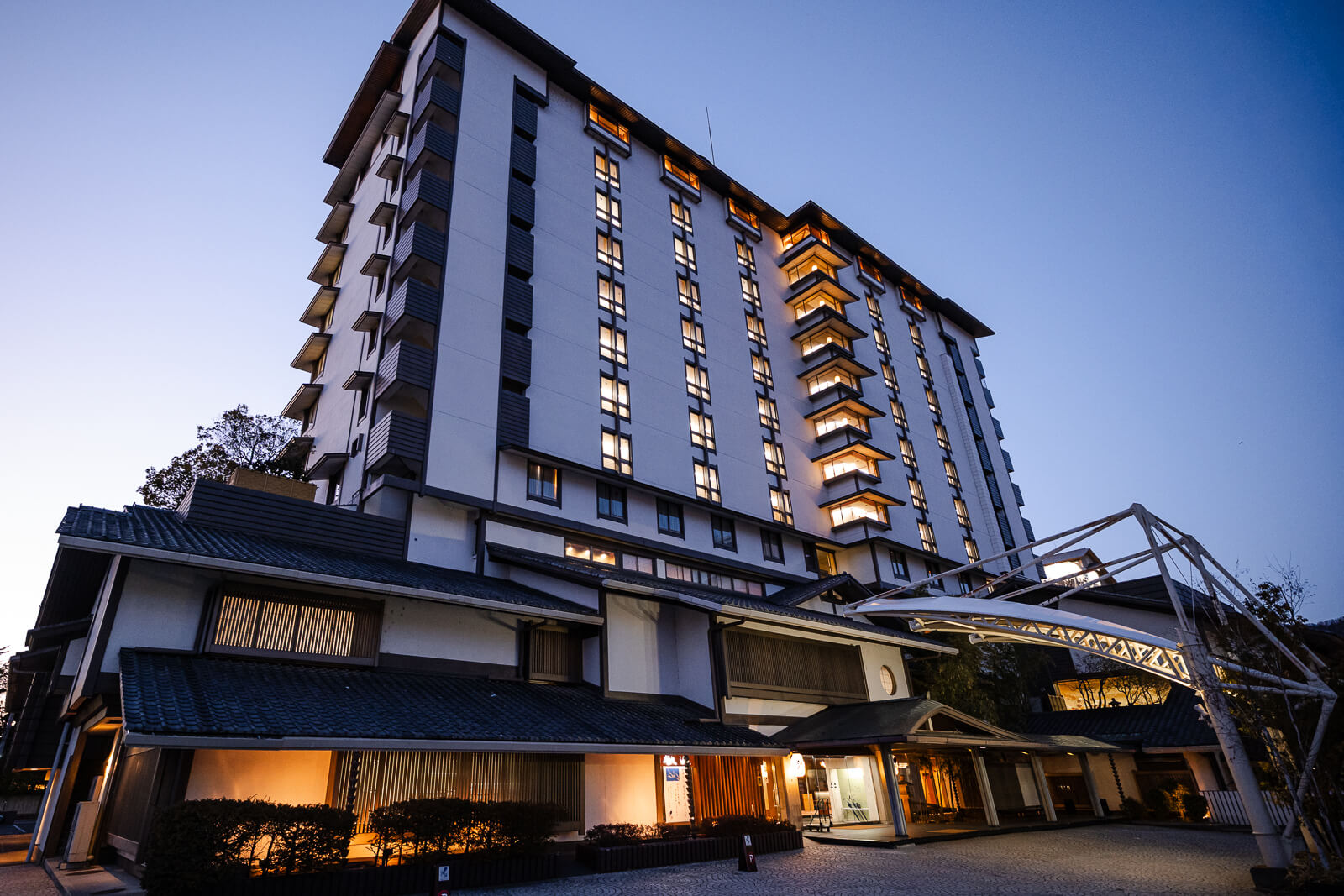
For travelers staying overnight, accommodations in Shimosuwa and Kamisuwa Onsen place many of the basin’s major attractions within a relatively compact area. The combination of shrine districts, lakeside walking routes, historic bathhouses, and elevated viewpoints makes the Lake Suwa region easy to explore over a half-day or full day. Akimiya fits naturally within that rhythm because it sits close to both the shoreline and the wider network of destinations surrounding the basin..
Getting There
Suwa Taisha Shimosha Akimiya sits in the center of Shimosuwa, on the northeastern side of the Lake Suwa basin. The shrine is reached most easily from Shimosuwa Station on the JR Chūō Main Line, placing it within the same rail corridor that connects Matsumoto, Kamisuwa, Okaya, and destinations farther south toward Kōfu and Yamanashi. For travelers already moving around Lake Suwa by train, Akimiya is one of the basin’s most accessible shrine visits.
The walk from the station typically takes around 15–20 minutes. Streets remain relatively flat, and the route passes through residential areas and small commercial blocks before reaching the shrine district. Unlike some of the upper Suwa Taisha shrines, no significant climb is required once arriving in town.
For travelers exploring the wider basin by car, Akimiya fits naturally into routes linking
Hours & Fees
Location: Shimosuwa, Nagano Prefecture
Grounds: Open 24 hours
Admission: Free
Visitors should remember that the shrine remains an active place of worship.
Around Lake Suwa, most visits extend beyond a single stop. The shrines and lakeside areas are spread between towns, so how you move through them starts to matter.