A Shrine That Reveals Itself in Stages
Kinomiya Shrine does not present itself all at once. The visit unfolds in a series of short, readable segments: an approach that establishes direction, a courtyard that provides orientation, and a rear area where the full scale of the grounds becomes clear. Most visitors spend about an hour moving through the site, extending their time only if they pause at one of the café spaces along the route.
Located just inland from the station district in Atami, the shrine fits naturally into a walk through the central part of the city. It pairs easily with time near Atami Station and the surrounding shopping streets, often serving as either a starting point or a midpoint in a broader route. From here, visitors may continue uphill toward Atami Plum Garden or return downhill through town toward Atami Sun Beach without needing to commit a full half-day to the visit.
Whether it becomes a brief stop or part of a slower-paced day often depends on how much time you’ve given Atami overall. That difference becomes easier to understand when comparing a Atami day trip vs overnight stay.
Why This Shrine Was Placed Here
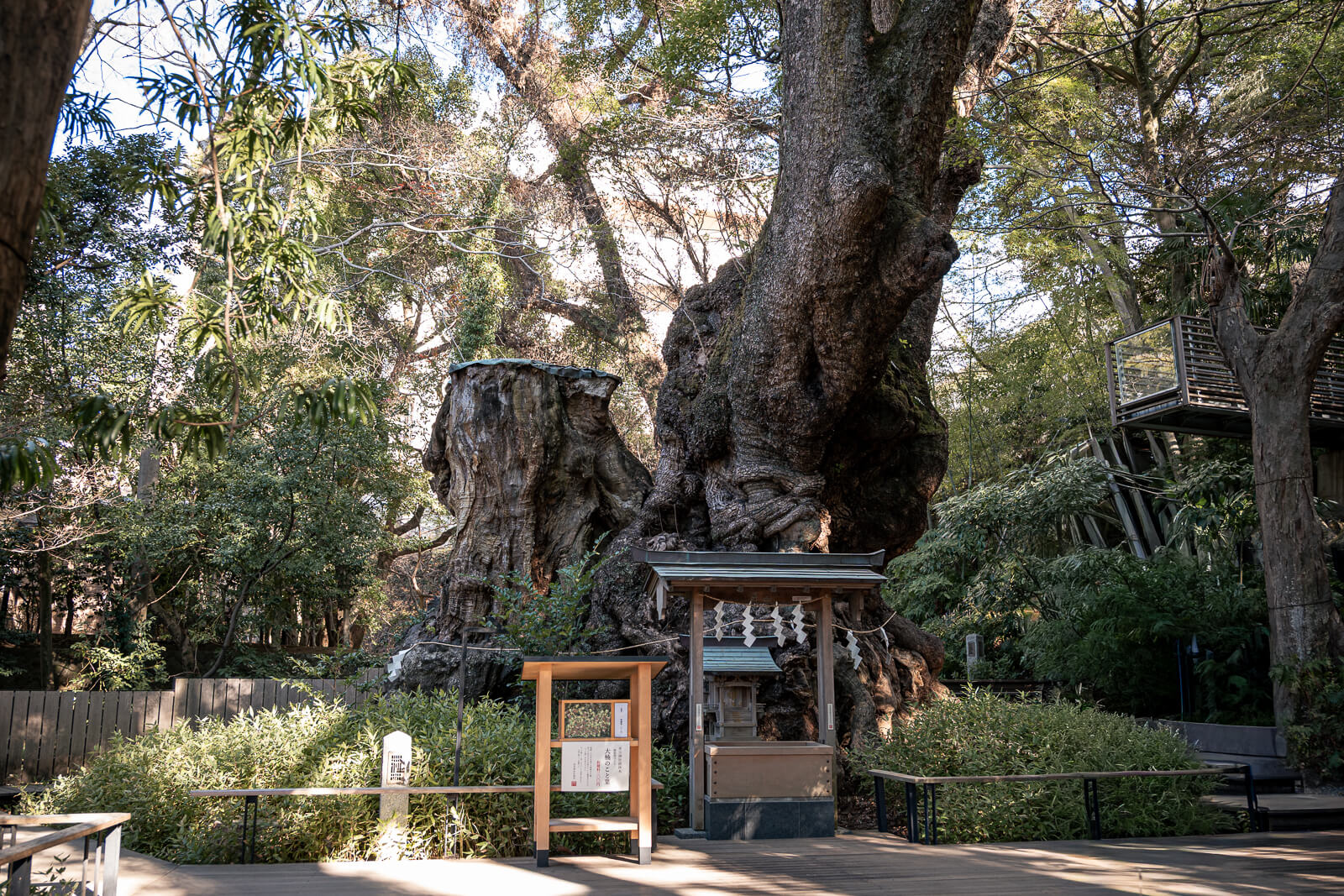
Shrine tradition traces Kinomiya’s founding to Wadō 3 (710). According to that tradition, a sacred sign was discovered at sea near present-day Atami, followed by an instruction that the deity be enshrined in a place surrounded by camphor trees, set apart from the sound of waves.
That inward orientation still defines the site today and stands in contrast to outward-facing landmarks like Atami Castle, which were designed to be seen from a distance rather than encountered gradually. Kinomiya enshrines Itake-no-Mikoto, associated with trees and land cultivation, alongside Yamato Takeru and Ōkuninushi. The massive camphor tree at the rear—estimated to be over 2,000 years old and designated a national natural monument—is not an addition to the shrine. It is the reason the shrine exists here at all.
Entering the Way the Shrine Intends
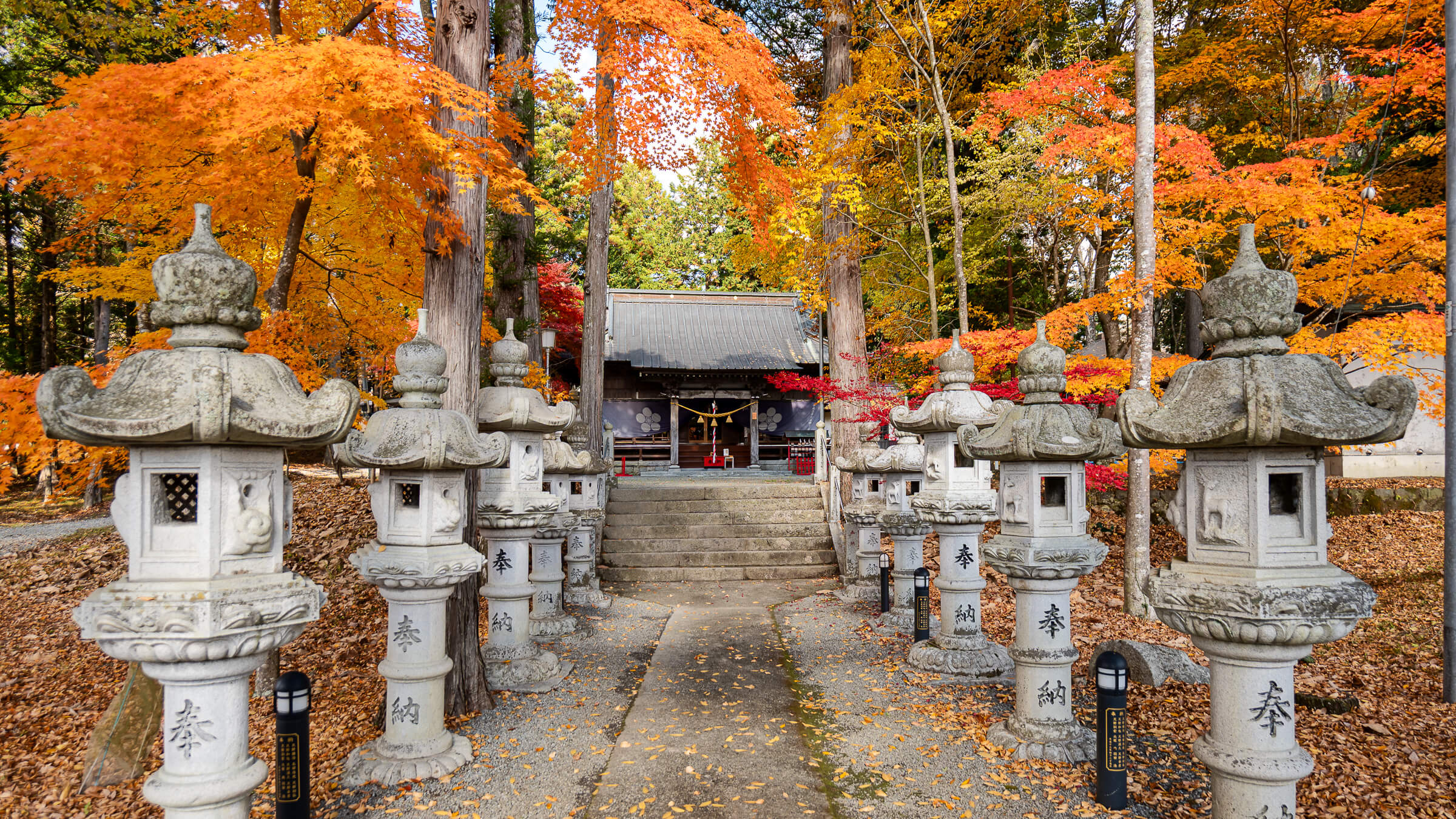
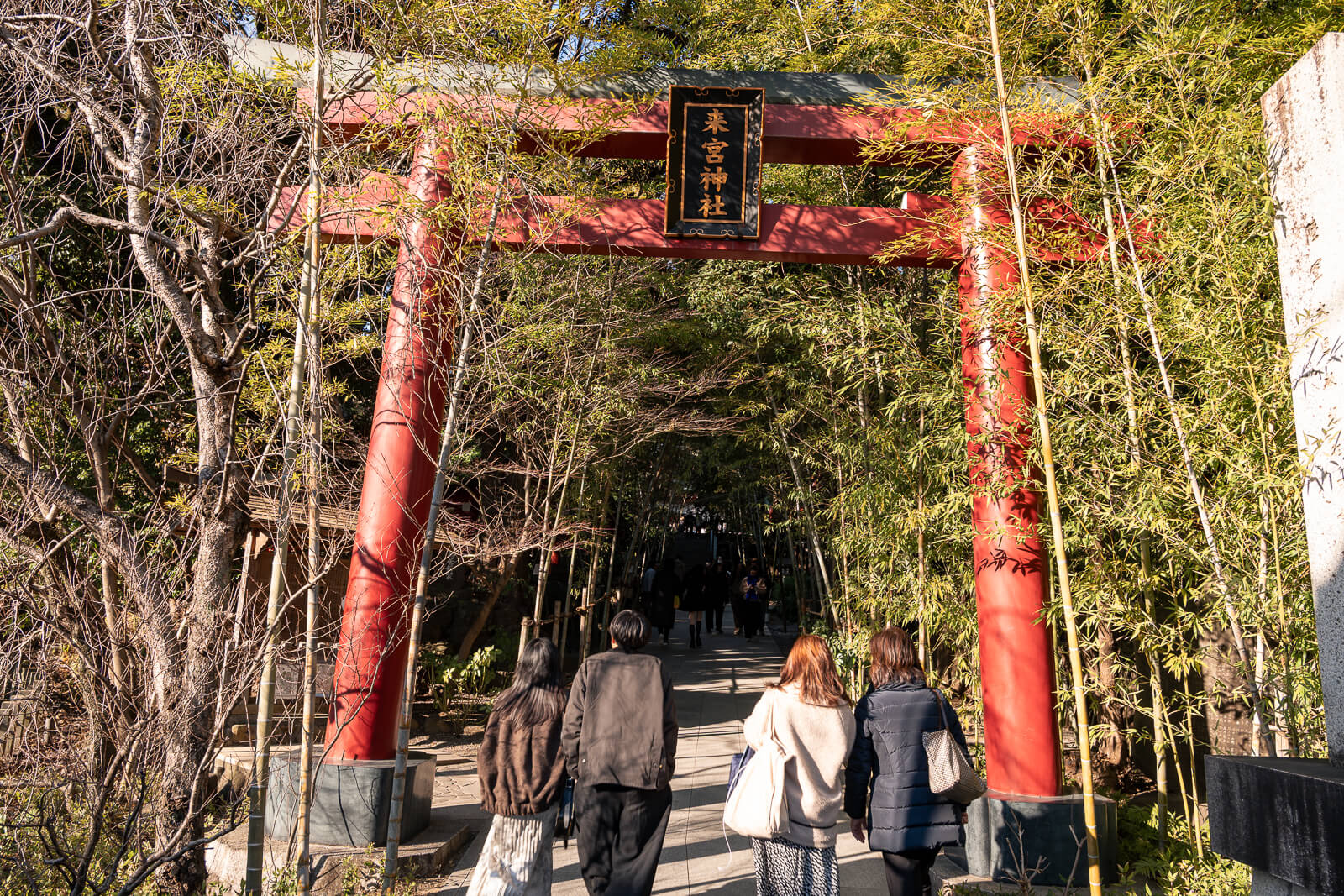
The visit is designed to begin at the large red torii gate marking the shrine entrance. Even if you arrive by car from the upper side of the grounds, visitors are asked not to step directly into the main courtyard.
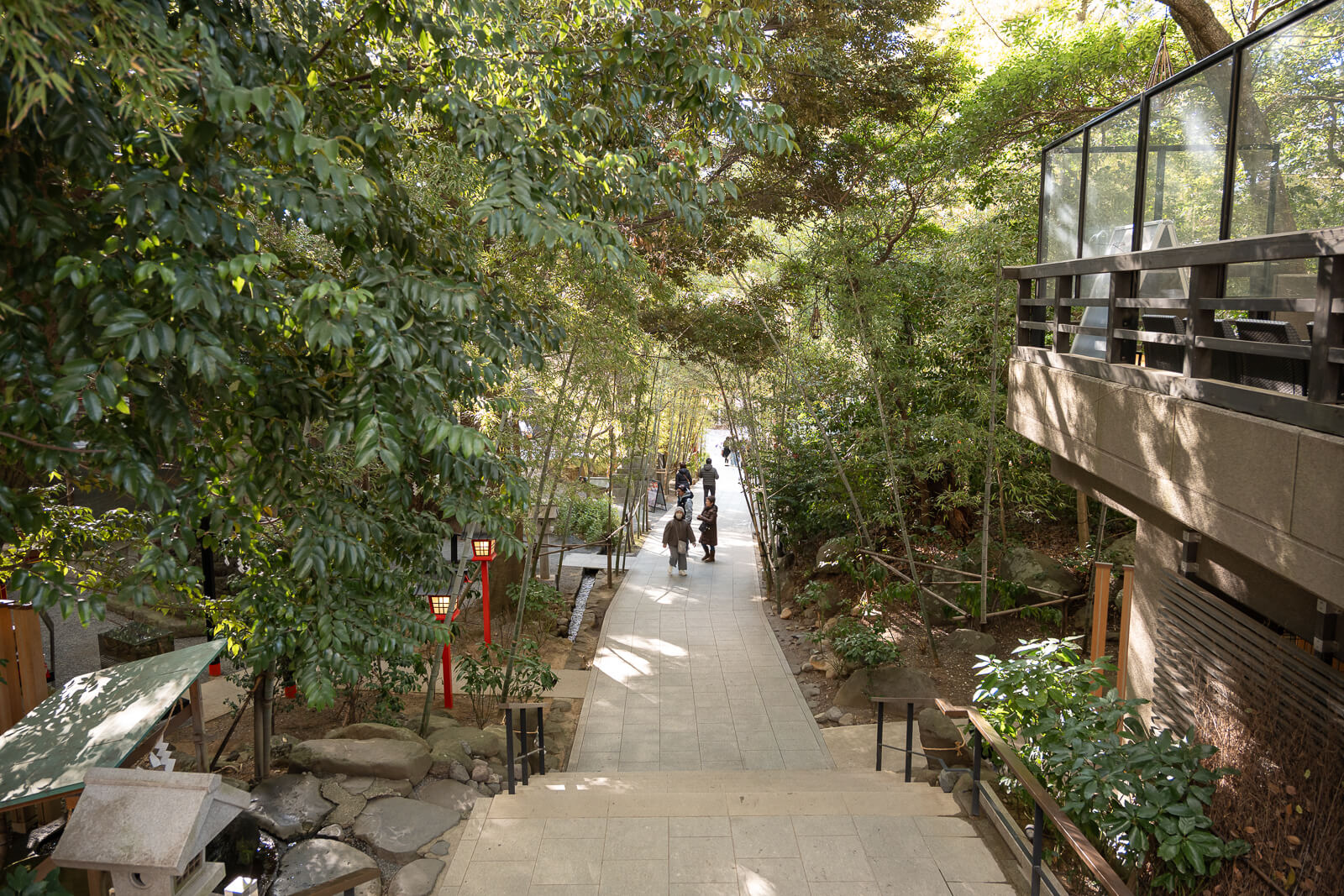
If you park above the site, the walk down to the torii is less than 50 meters. The distance is short, but the sequence matters. Entering through the torii places you on the approach path (sandō), where the transition from street to shrine happens gradually and the layout becomes legible before you reach the courtyard.
The Courtyard: Understanding the Layout at a Glance
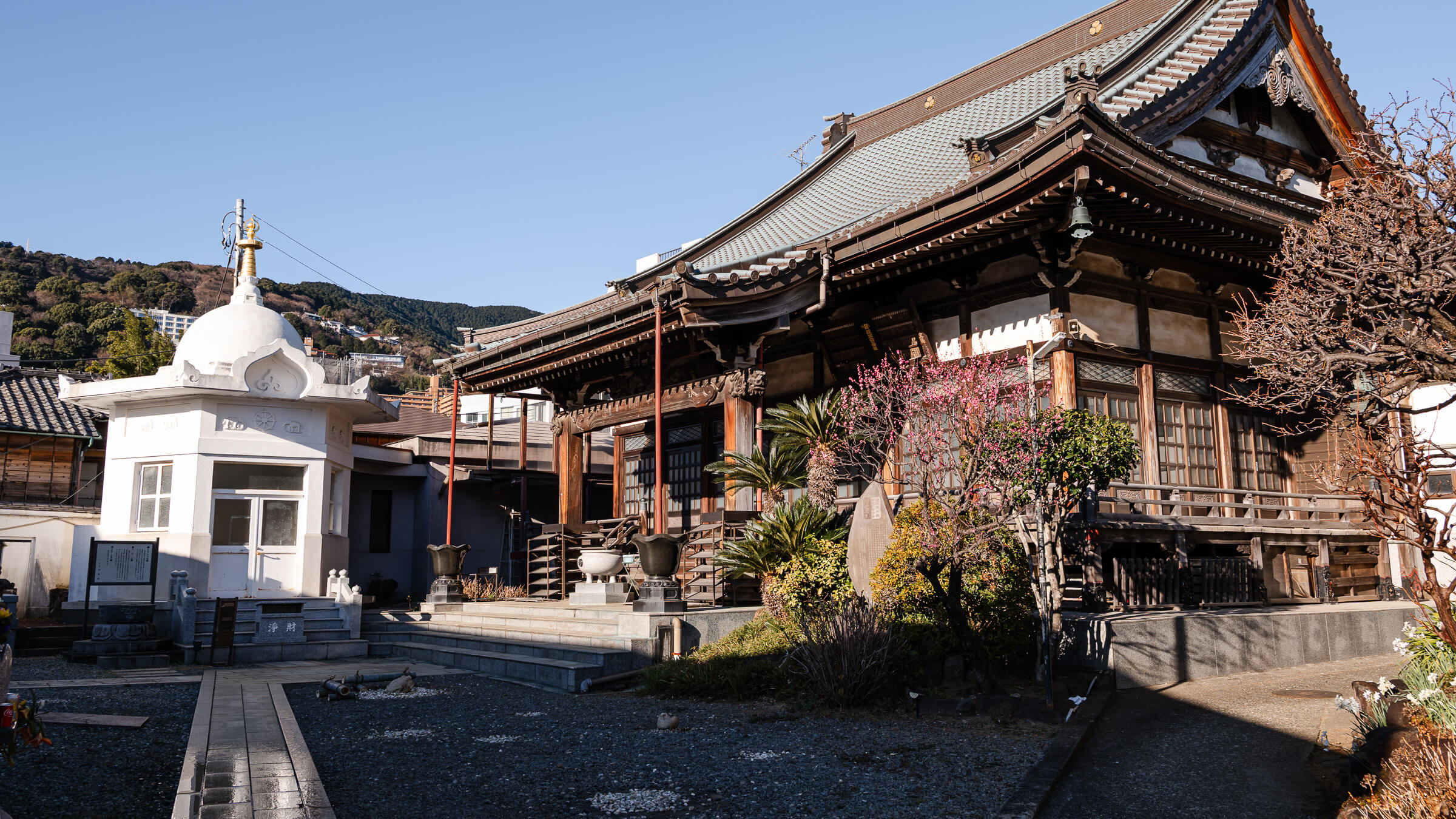
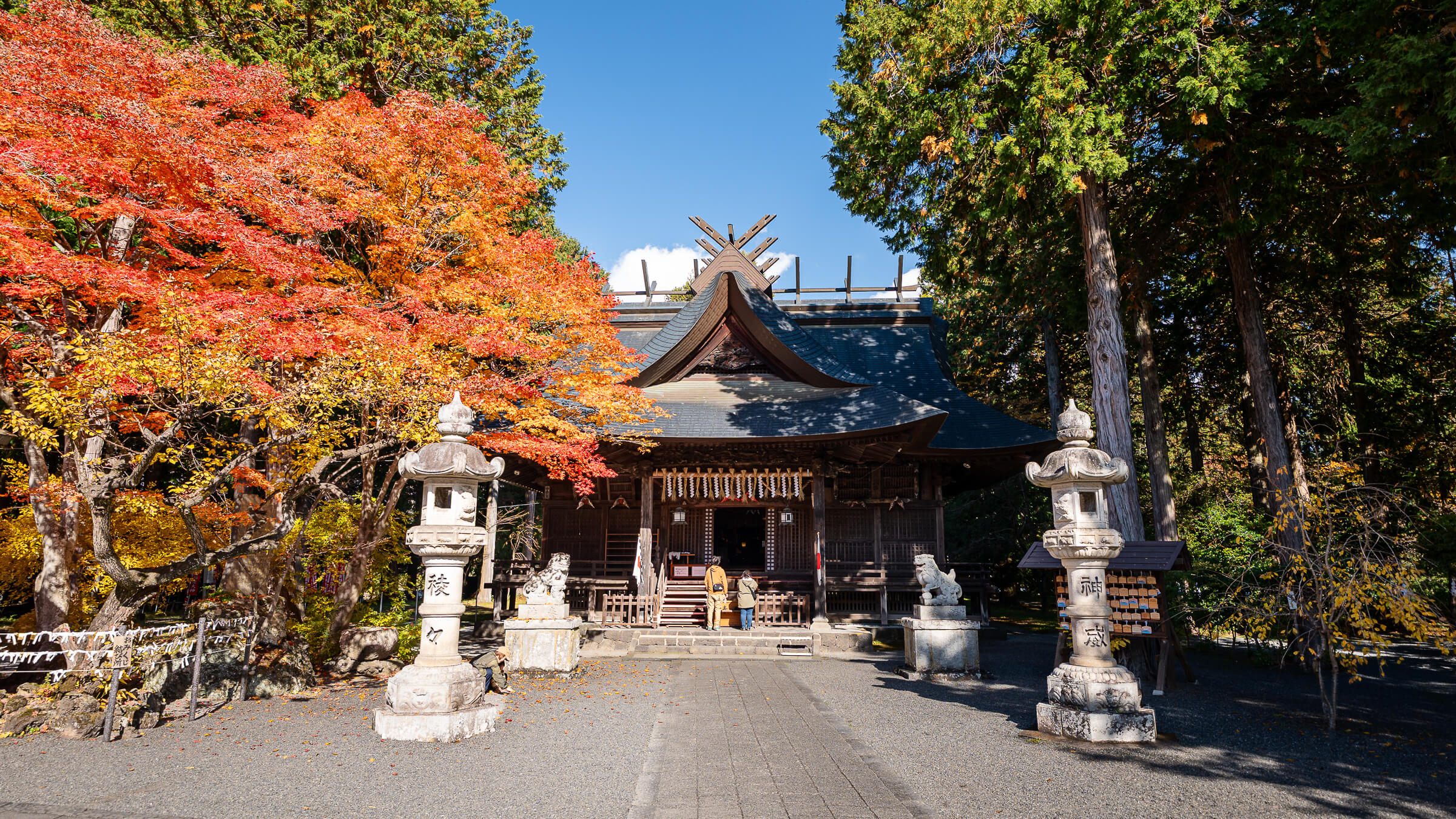
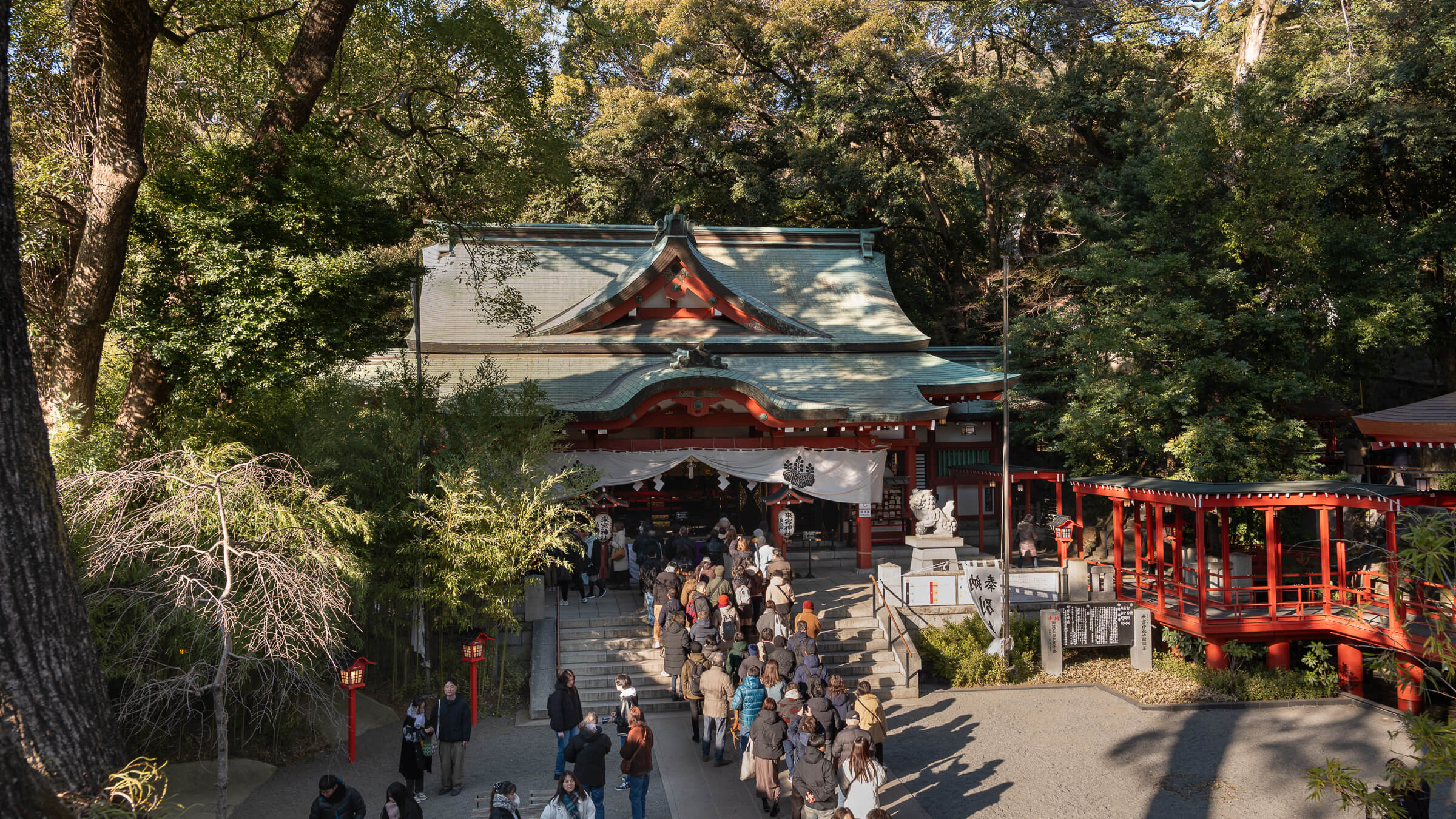
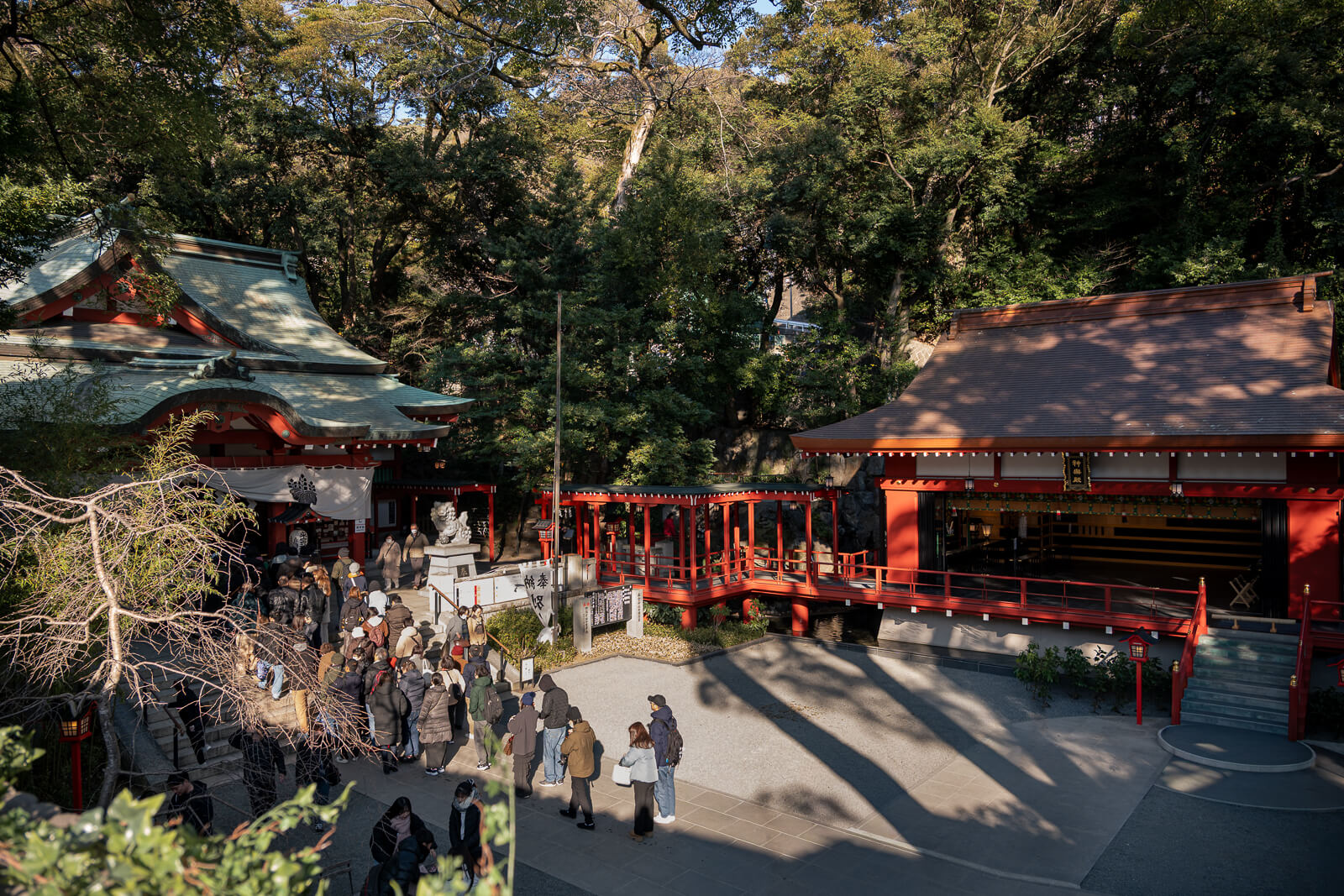
A short set of steps opens into the main courtyard. Facing you is the main worship hall (haiden), the focal point for prayer.
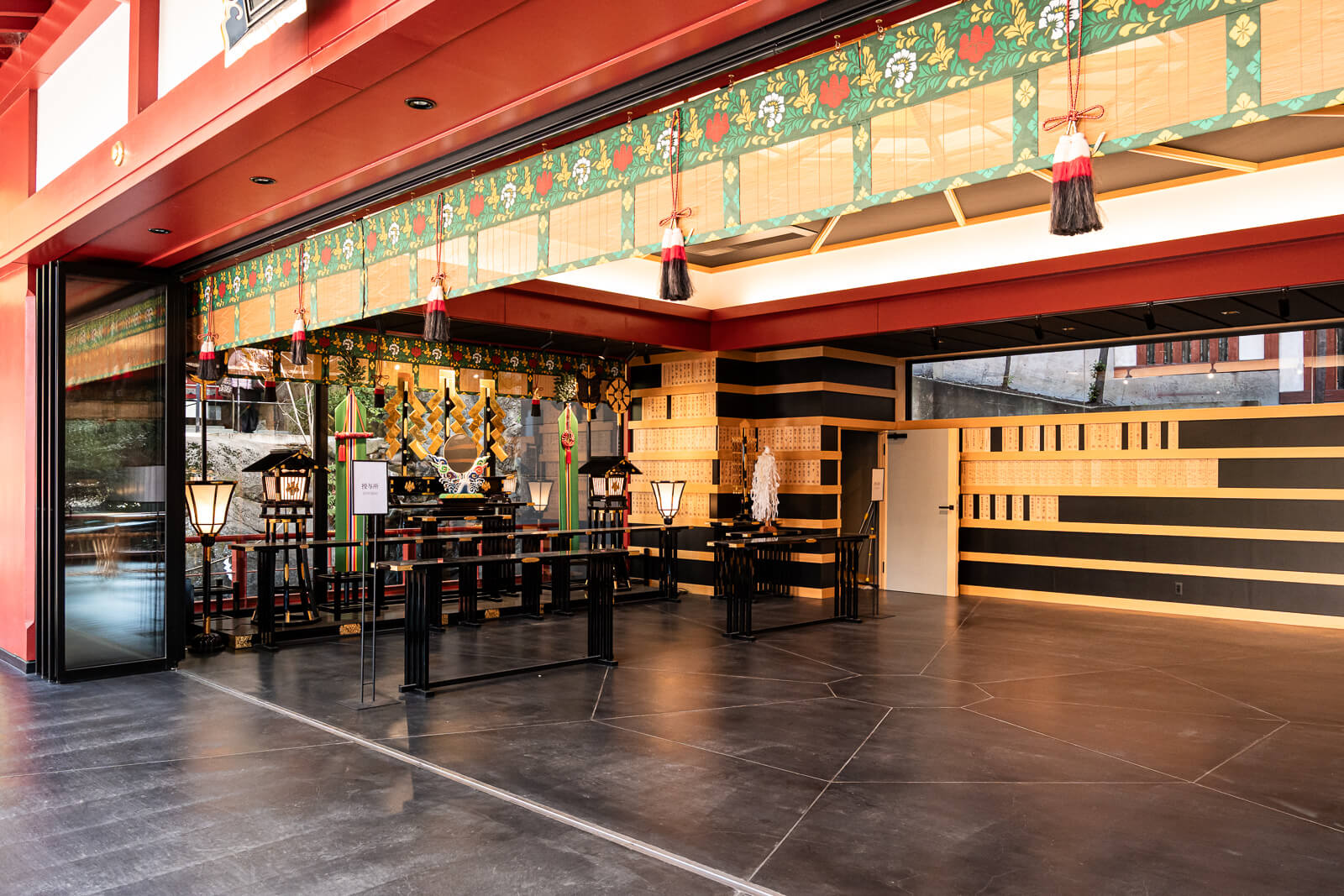
Beside it stands an auxiliary shrine hall, used for ceremonies and shrine functions. On the opposite side—beneath the upper café terrace—is the shrine office (shamusho), where visitors arrange formal prayers, receive goshuin (shrine stamps), and purchase omamori (amulets). This separation keeps services from overtaking the worship space and maintains clear movement through the courtyard.
Following the Bamboo Path Away From the Buildings
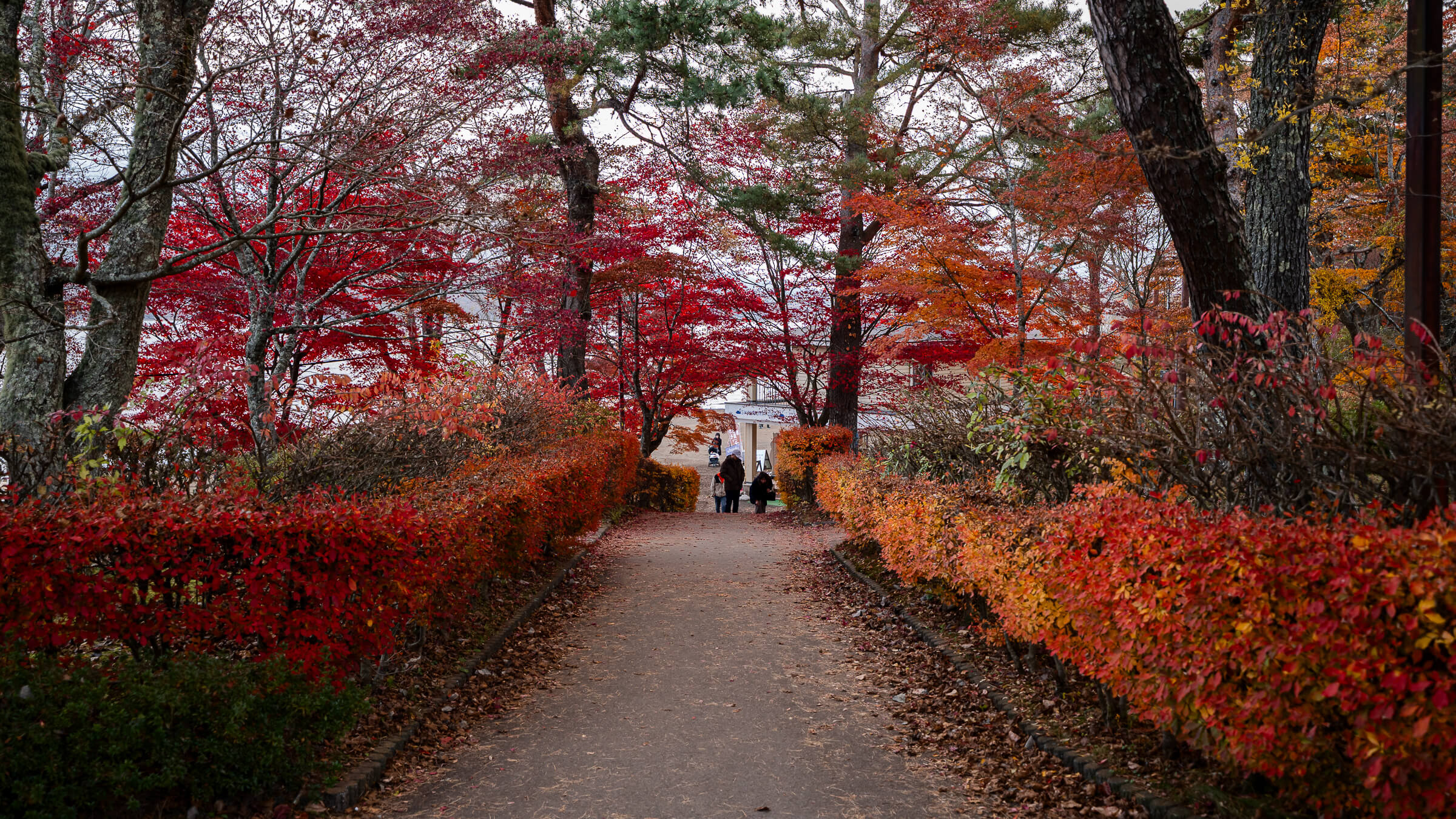
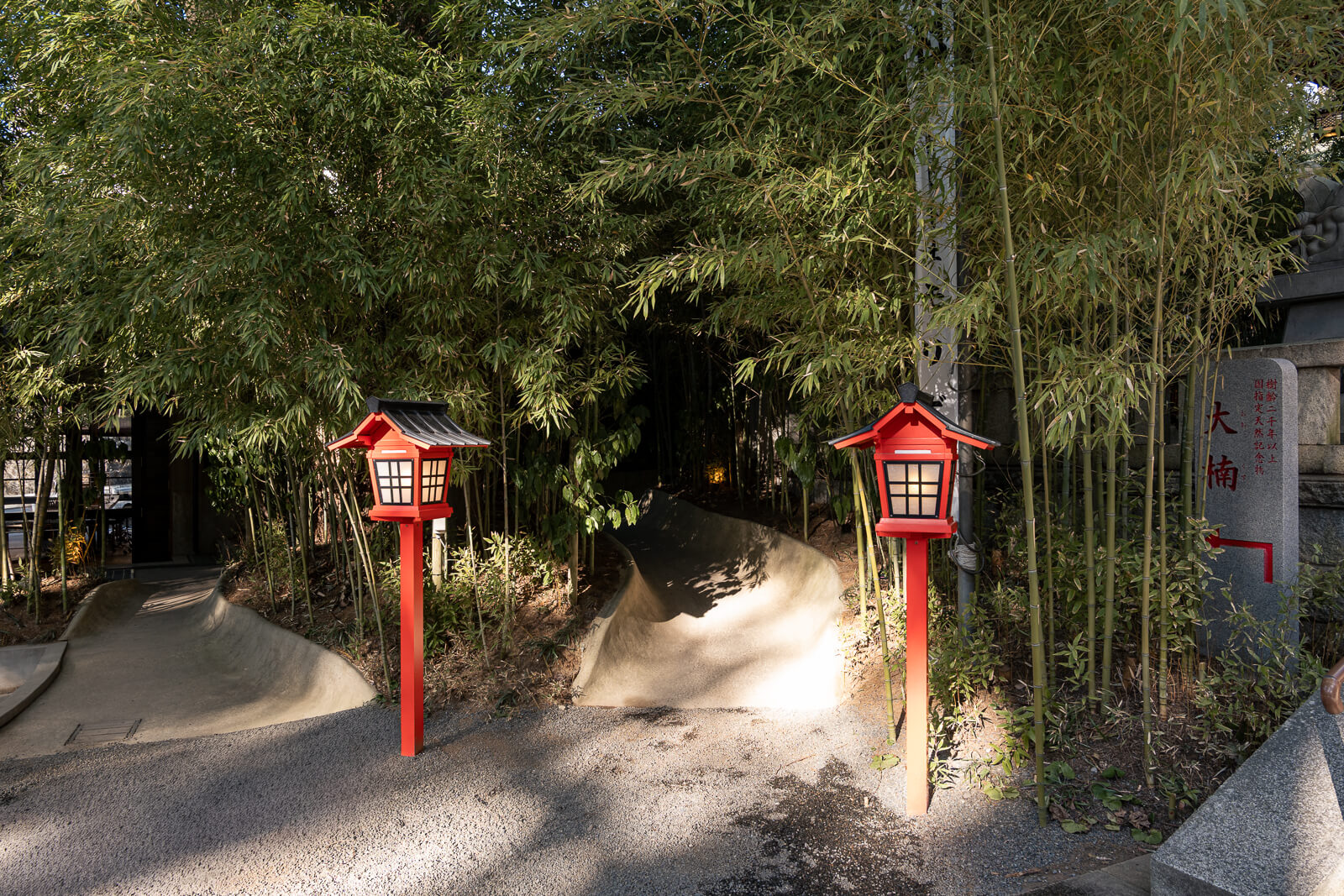
From the left side of the courtyard, a bamboo-lined path leads toward the rear of the shrine, shifting attention away from buildings and toward the wooded interior.
This transition pairs naturally with places like Kiunkaku Villa, where layout and spatial sequencing shape how visitors move through the site rather than drawing attention to a single focal point.
Moving Around the Camphor Tree
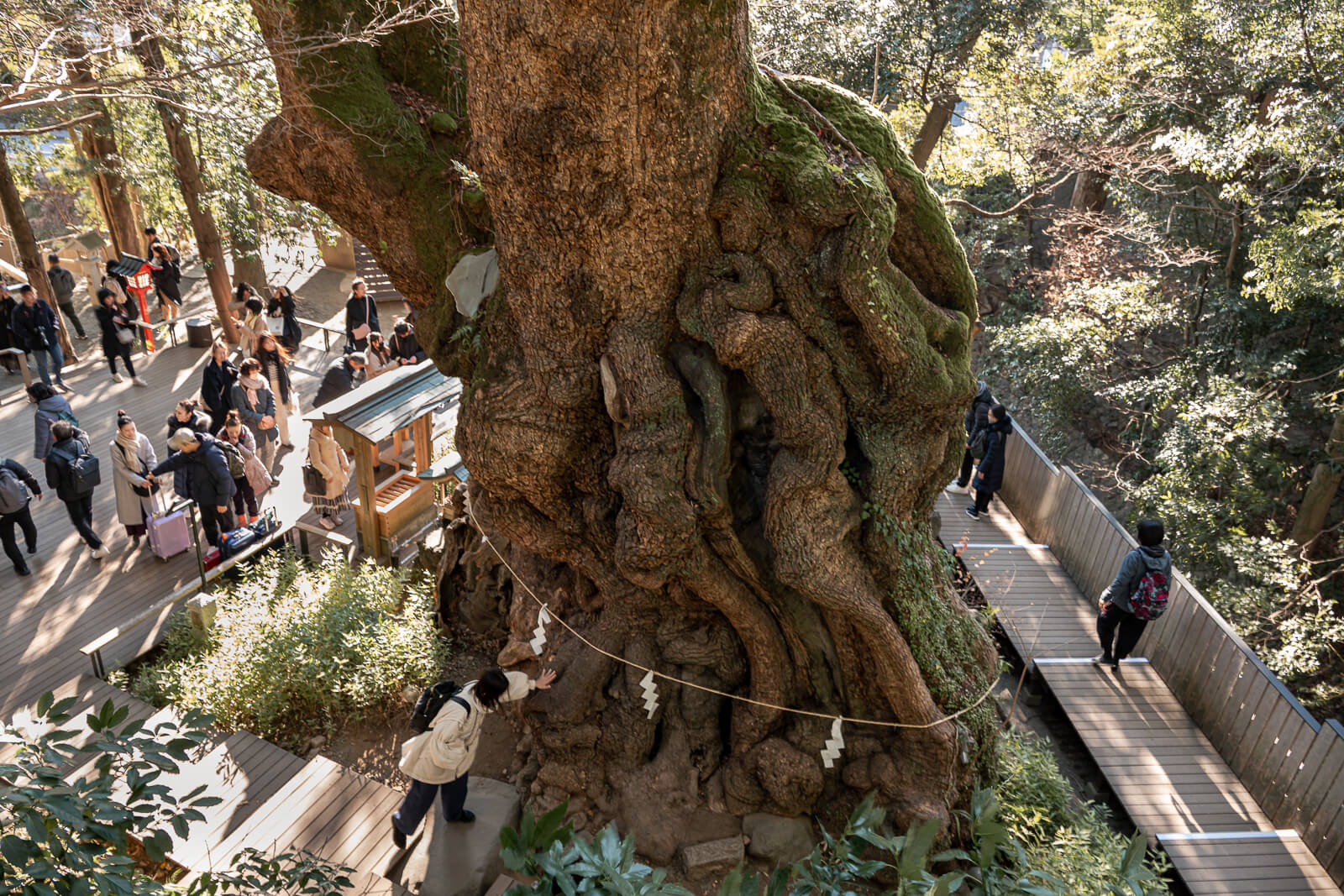
The rear of the grounds opens onto the shrine’s defining feature: the sacred camphor tree (ōkusu). A path allows visitors to walk fully around it, and understanding comes through movement rather than distance.
This gradual reveal differs from experiences such as the Atami Ropeway, where overview comes immediately from elevation rather than from circling and proximity.
A Short Climb Beside the Tree: Ice Cream and an Upper Deck View
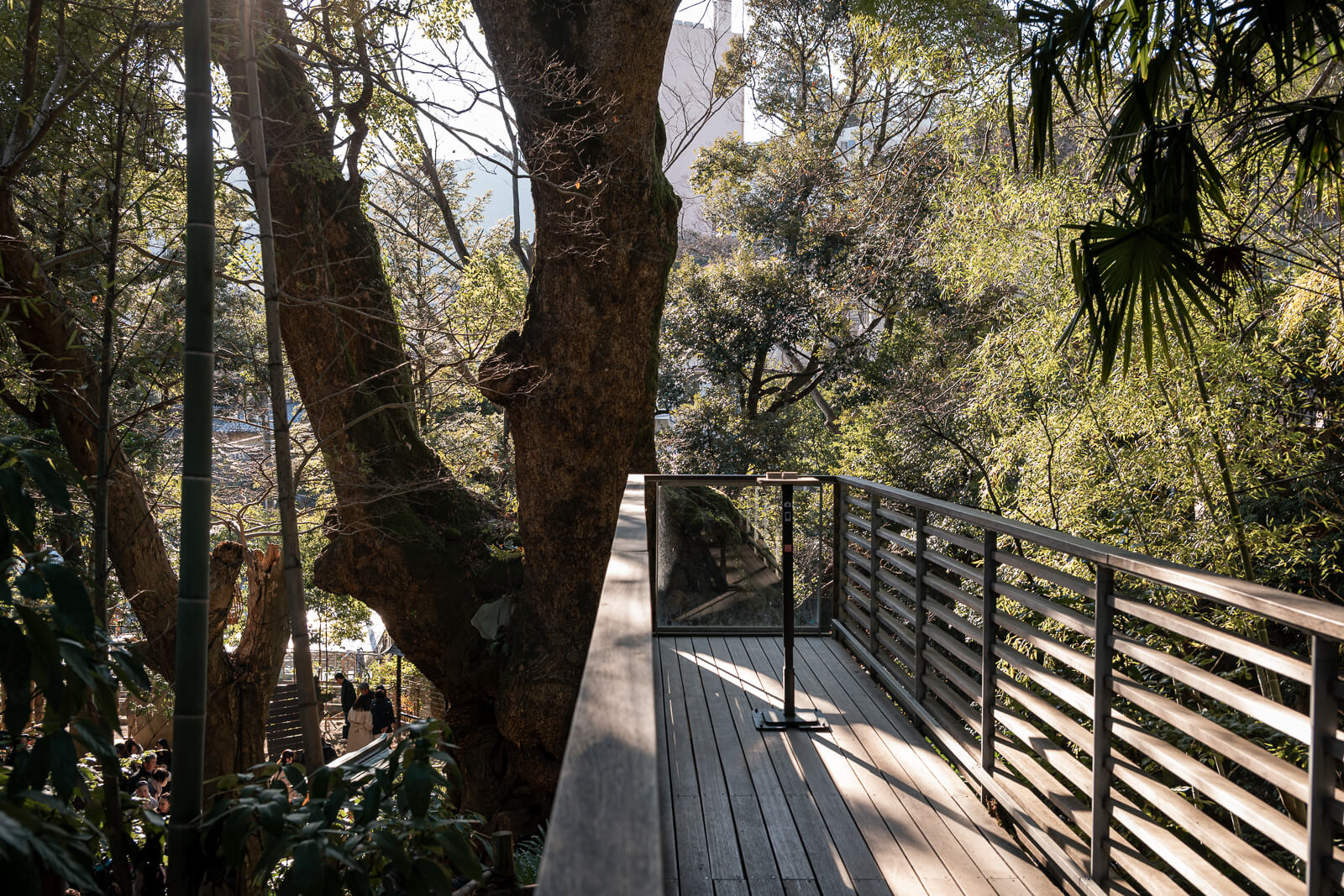
Beside the camphor tree, a small path climbs to a modest second café that typically sells ice cream and drinks. The draw here isn’t the menu, but the short elevated deck and path that bring you closer to the tree canopy from above before you continue on.
The Upper Café Terrace Over the Courtyard: Where the Visit Ends
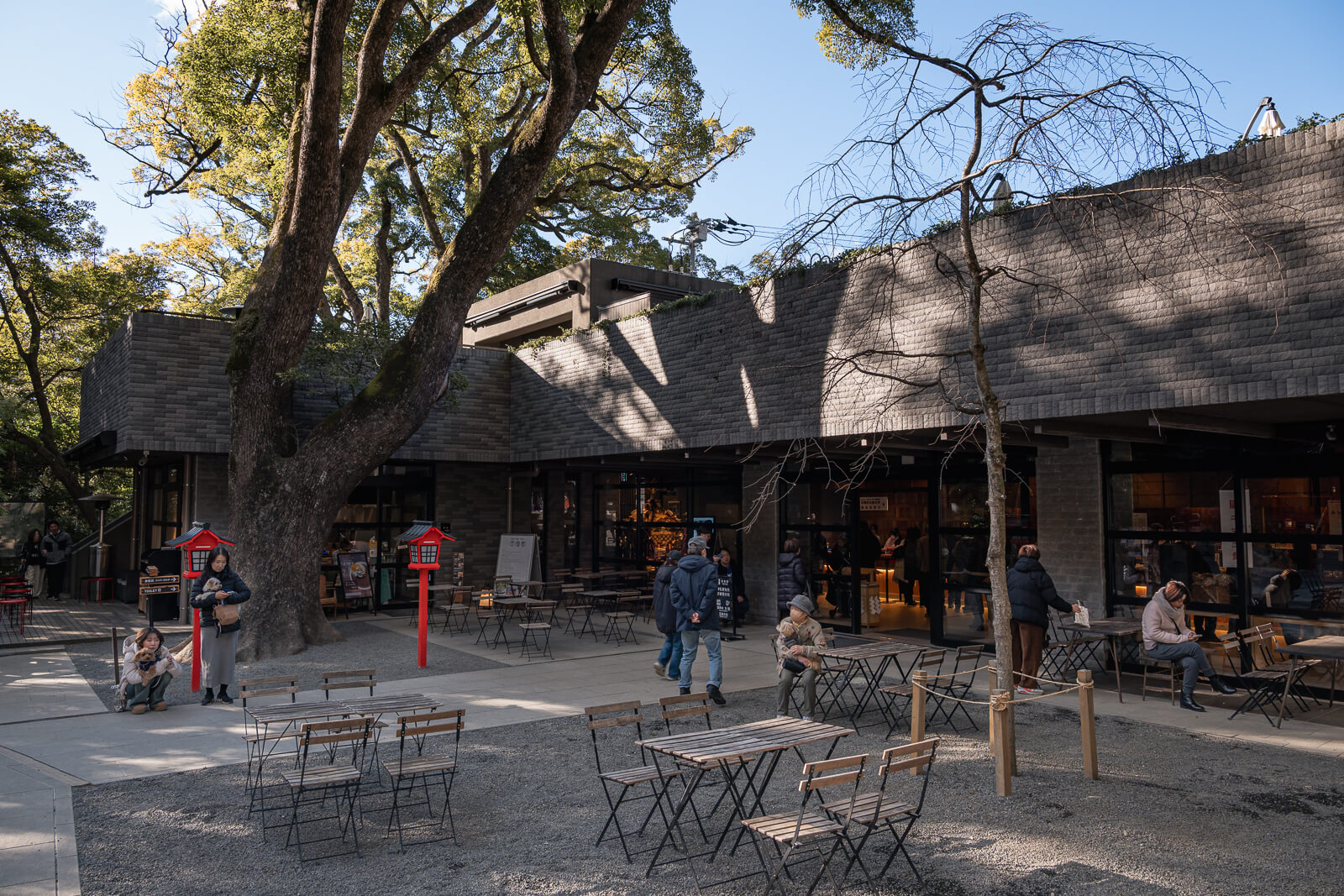
Separate from the tree-side climb, a larger café and terrace area sits above the shrine office. From here, you look back toward the main courtyard and main worship hall, with seating arranged for pausing rather than passing through. This is also where performances are sometimes held.
In real visit rhythm, this terrace functions as the natural conclusion—many visitors sit briefly here before leaving or continuing on toward nearby cultural stops like Onsen-ji Temple.
How the Shrine Handles Crowds
Kinomiya Shrine disperses visitors across multiple zones—the courtyard, rear paths, camphor tree area, shrine office, and café terraces—rather than concentrating activity in one place.
This contrasts with places like the Itokawa Promenade, where movement is linear and outward-facing, guiding visitors along the river rather than inward toward a central space.
Where This Fits in an Atami Visit
Because the visit is compact and walk-based, Kinomiya Shrine fits easily into an Atami day without reshaping your schedule. It works well before or after coastal time at Atami Sun Beach and Atami Water Park, and it pairs cleanly with larger landmarks like Atami Castle without rushing either stop.
Seeing how quieter spaces like this balance against the waterfront and hillside areas becomes clearer when comparing a Atami day trip vs overnight stay.
As one of the most defining stops in the city, this is often a priority inclusion within a well-planned Atami visit.
Getting There
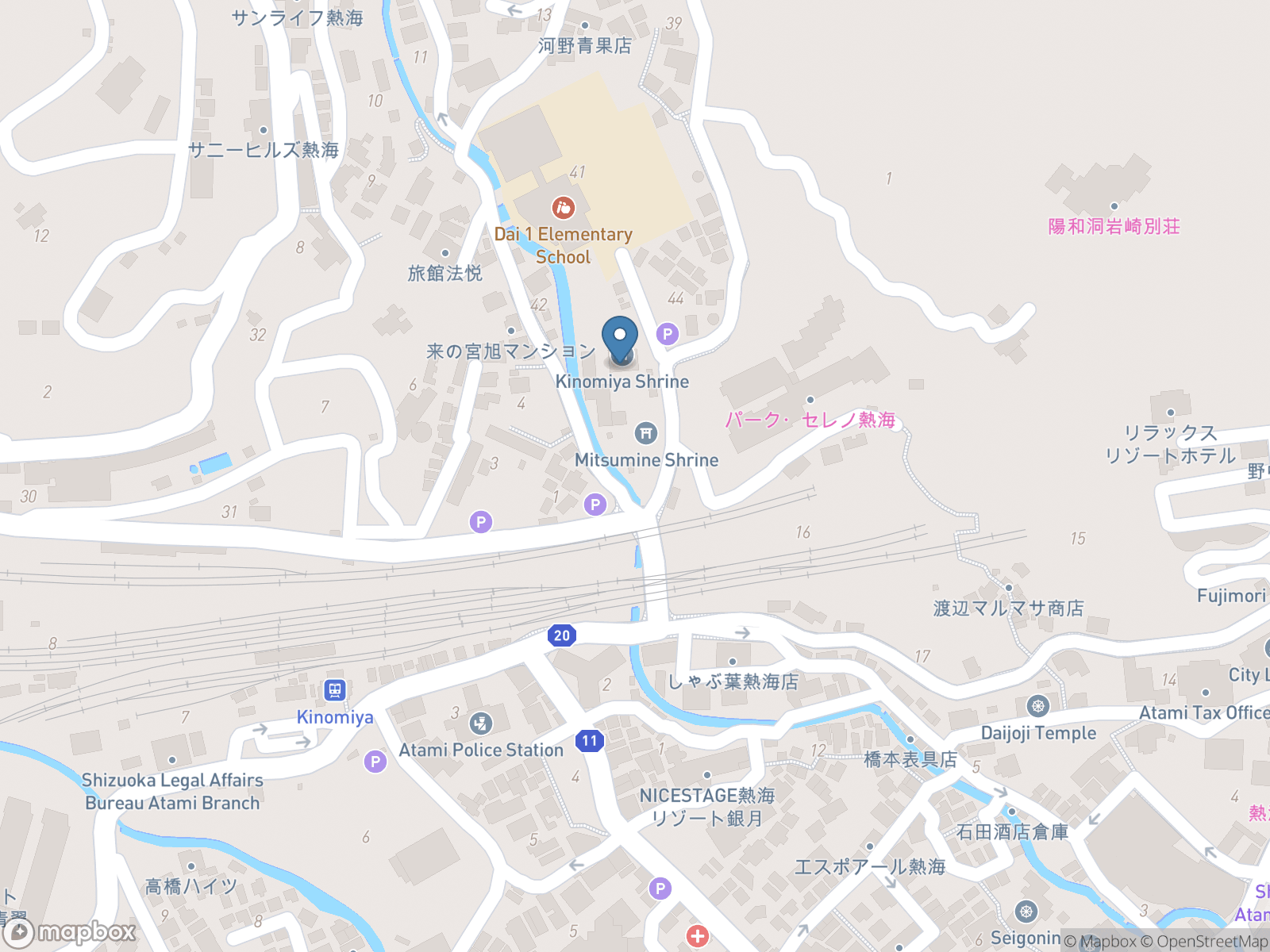
By train: Kinomiya Shrine is closest to Kinomiya Station on the JR Itō Line. Access is straightforward whether you’re coming from Odawara or Hakone, or already within Atami.
By car: Several paid parking areas operate around the shrine, including limited parking above the grounds. If you park on the upper side, follow signs and walk under 50 meters down to the main torii entrance before entering.
Hours and Fees
Shrine grounds: generally open daily
Admission: free
Hours for prayers, goshuin, and café services vary by day and season. If a specific service matters to your visit, confirm current hours directly with the shrine.
Because Kinomiya is typically visited as part of a broader Atami day or overnight stay, coordinating where you stay and how you arrive tends to shape the rhythm of the visit more than the shrine itself.