Where Owakudani Sits in Hakone
Owakudani is an active volcanic valley in the mountains of Hakone, where sulfur vents release steam across a wide, exposed slope. Most visitors encounter it while moving between Lake Ashi and Gora, often after arriving in Kanagawa Prefecture through Odawara. The landscape opens into view almost immediately, making it one of the few places in Hakone where geothermal activity is visible without entering the terrain itself.
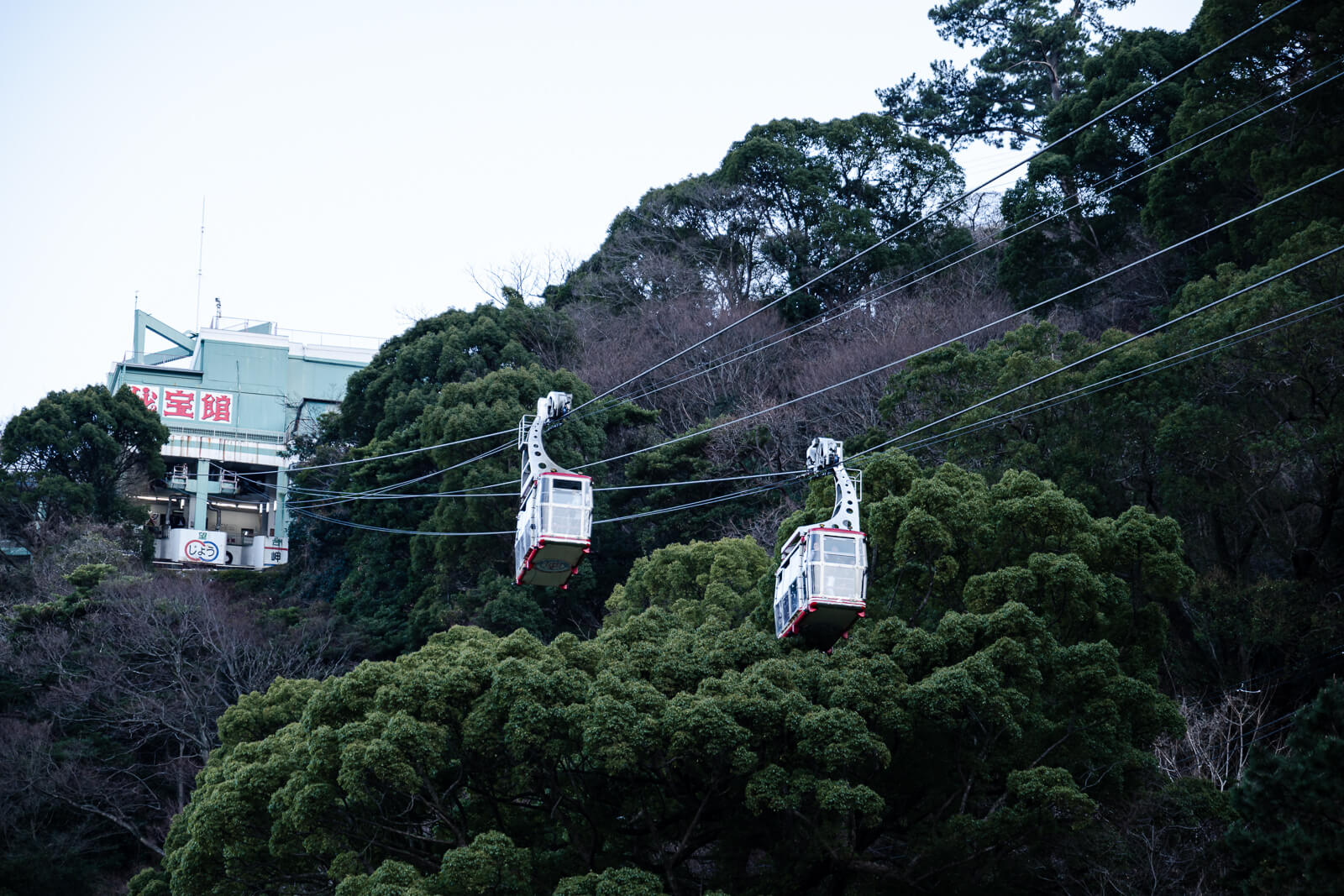
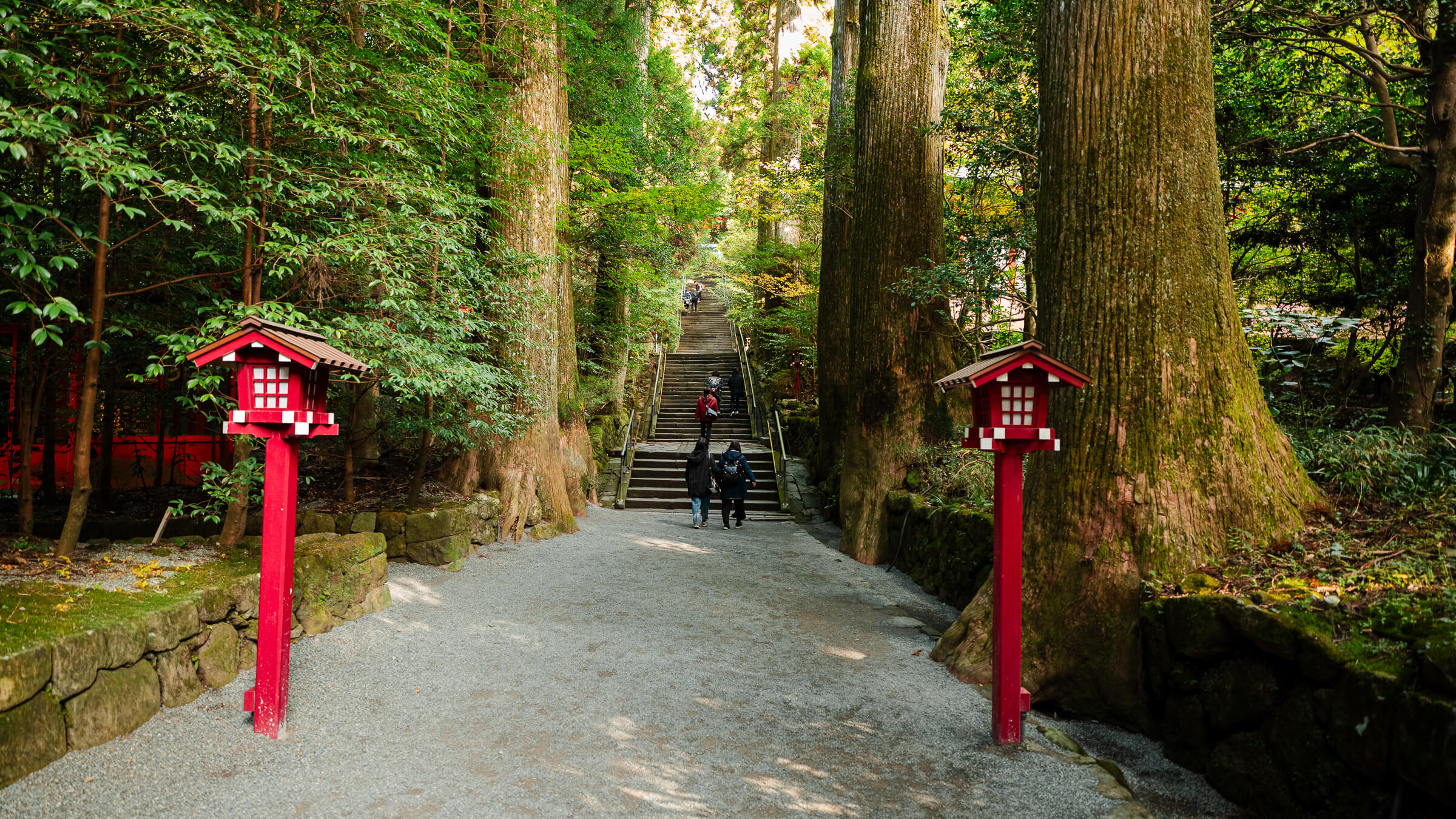
From the lakeside, the route often begins near Hakone Shrine, continues past viewpoints like the Narukawa Art Museum, or rises via the Hakone Komagatake Ropeway before crossing the water toward Togendai. From there, the ropeway climbs directly into Owakudani, placing the valley at the center of a continuous route that moves from water to elevation before descending again toward Hakone-Yumoto.
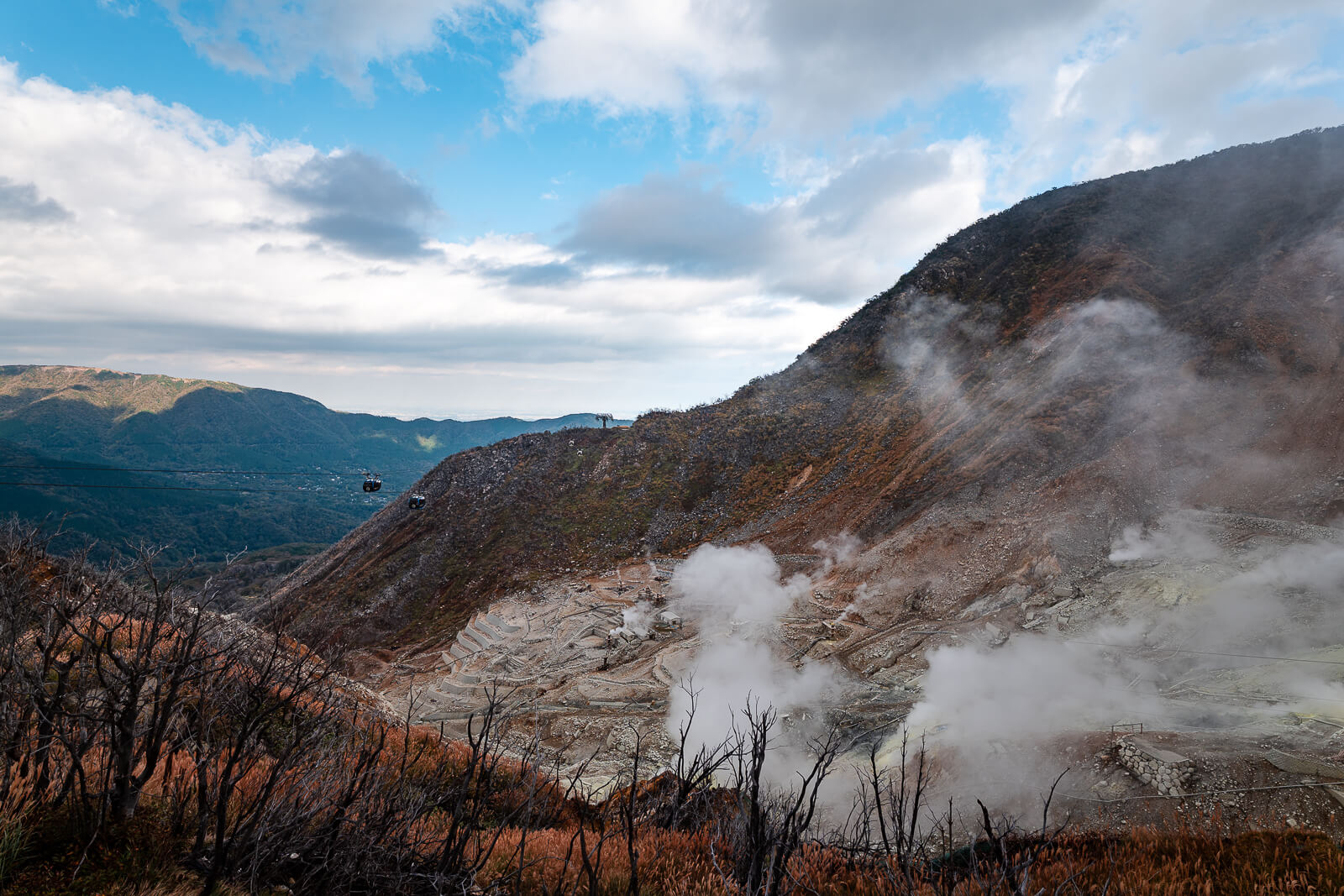
This positioning is what makes Owakudani feel less like a destination and more like a transition point. Visitors rarely plan their day around it alone, but instead pass through it as part of a larger movement across Hakone. The valley acts as a visual and geographic midpoint, breaking the journey into distinct phases rather than standing apart from them.
Why This Part of the Mountain Never Settled
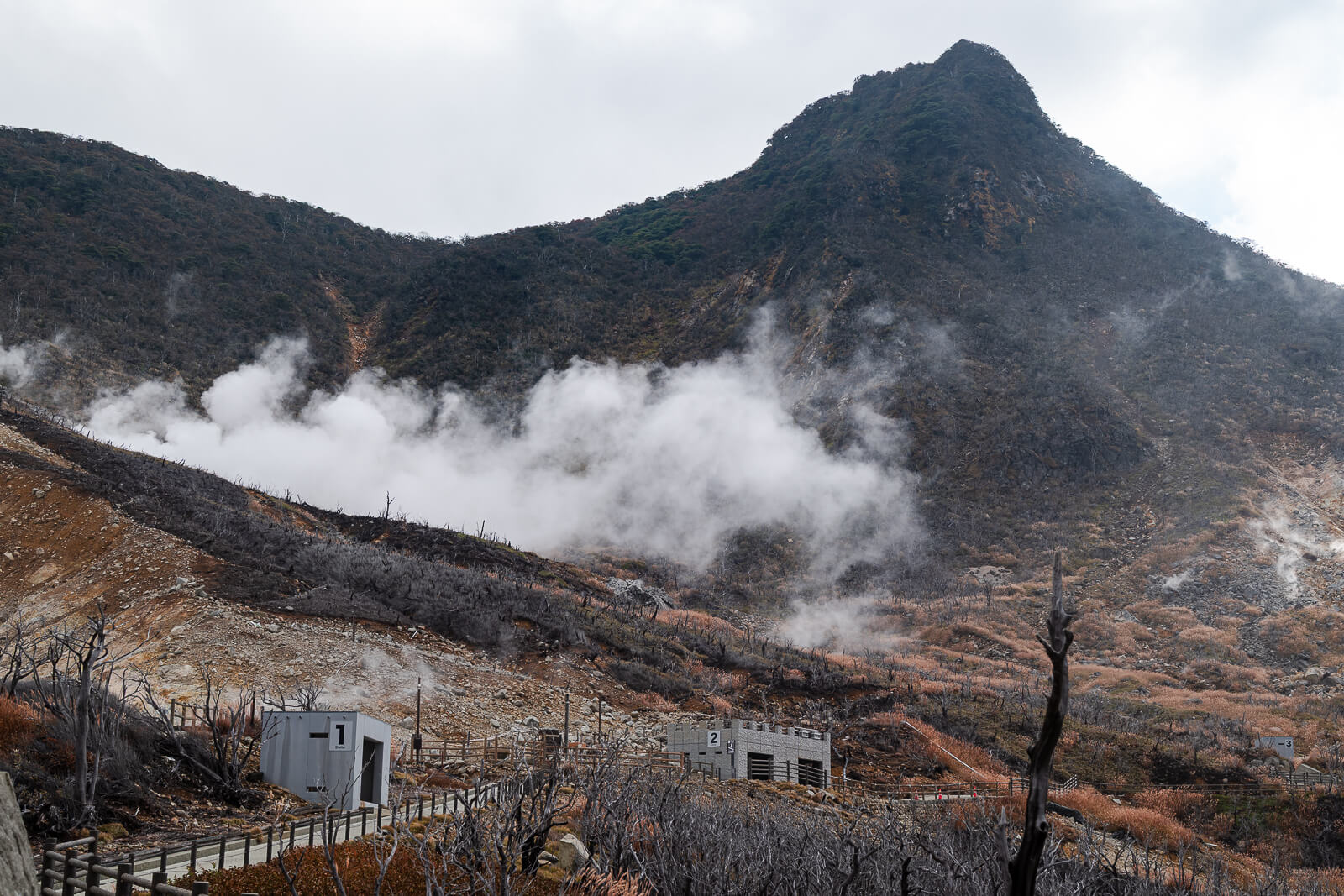
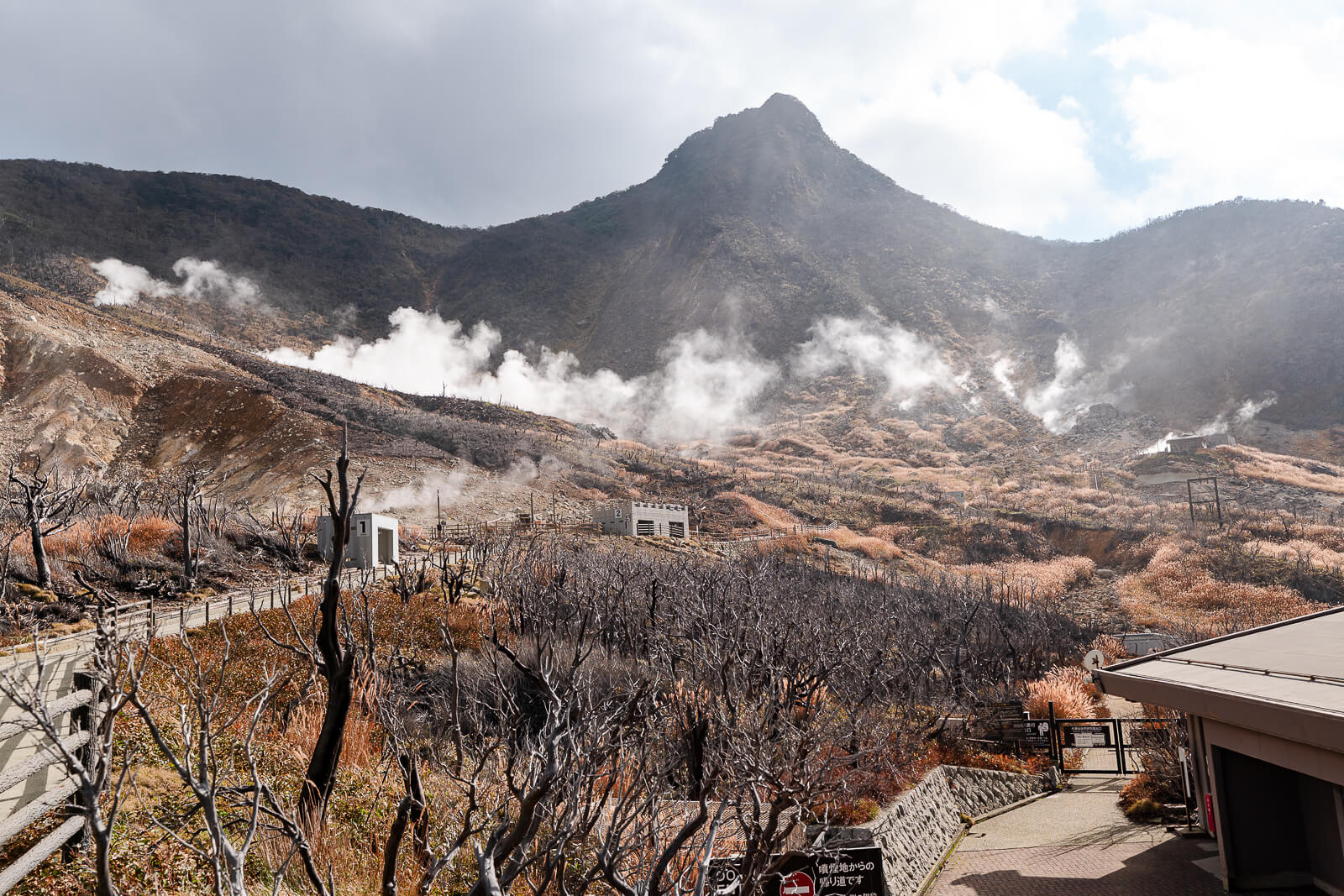
Owakudani formed around 3,000 years ago during an eruption of Mount Hakone, and the activity has continued ever since in smaller but constant ways. Steam vents and gas emissions still escape through the surface, gradually shaping the terrain and preventing it from stabilizing. What appears to be a fixed landscape is part of an ongoing geological process.
This is why the site is structured the way it is today. Paths, barriers, and restricted zones exist because the ground remains active beneath the surface, even when it appears still. The valley is not preserved in time, but continuously adjusting, which is why the experience is built around distance and visibility rather than access.
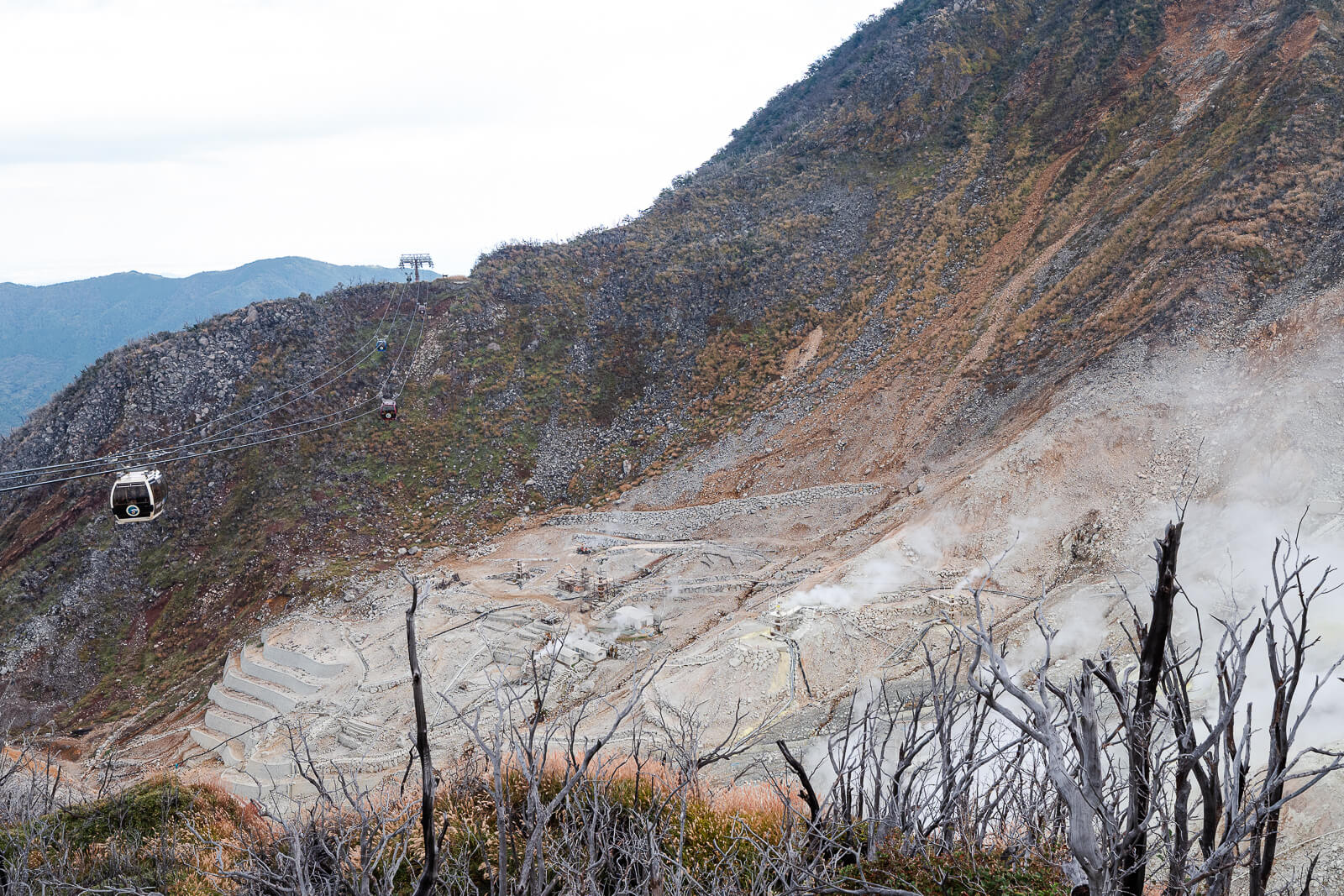
For visitors, this changes how the landscape is understood. Rather than looking at something historical or static, the view represents something ongoing and incomplete. The lack of permanence is part of the experience, even if it is not immediately obvious.
Arriving Above the Steam Vents
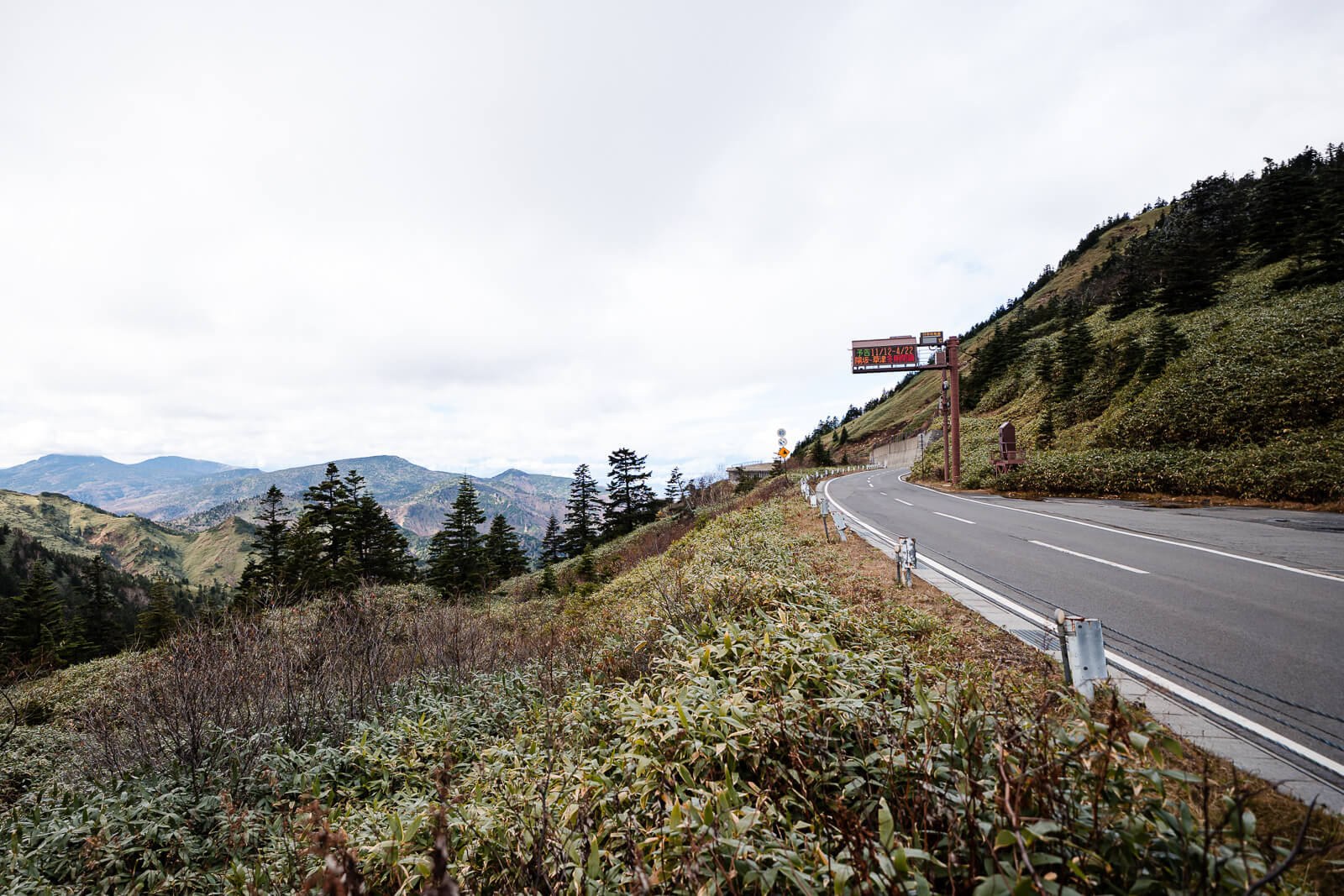
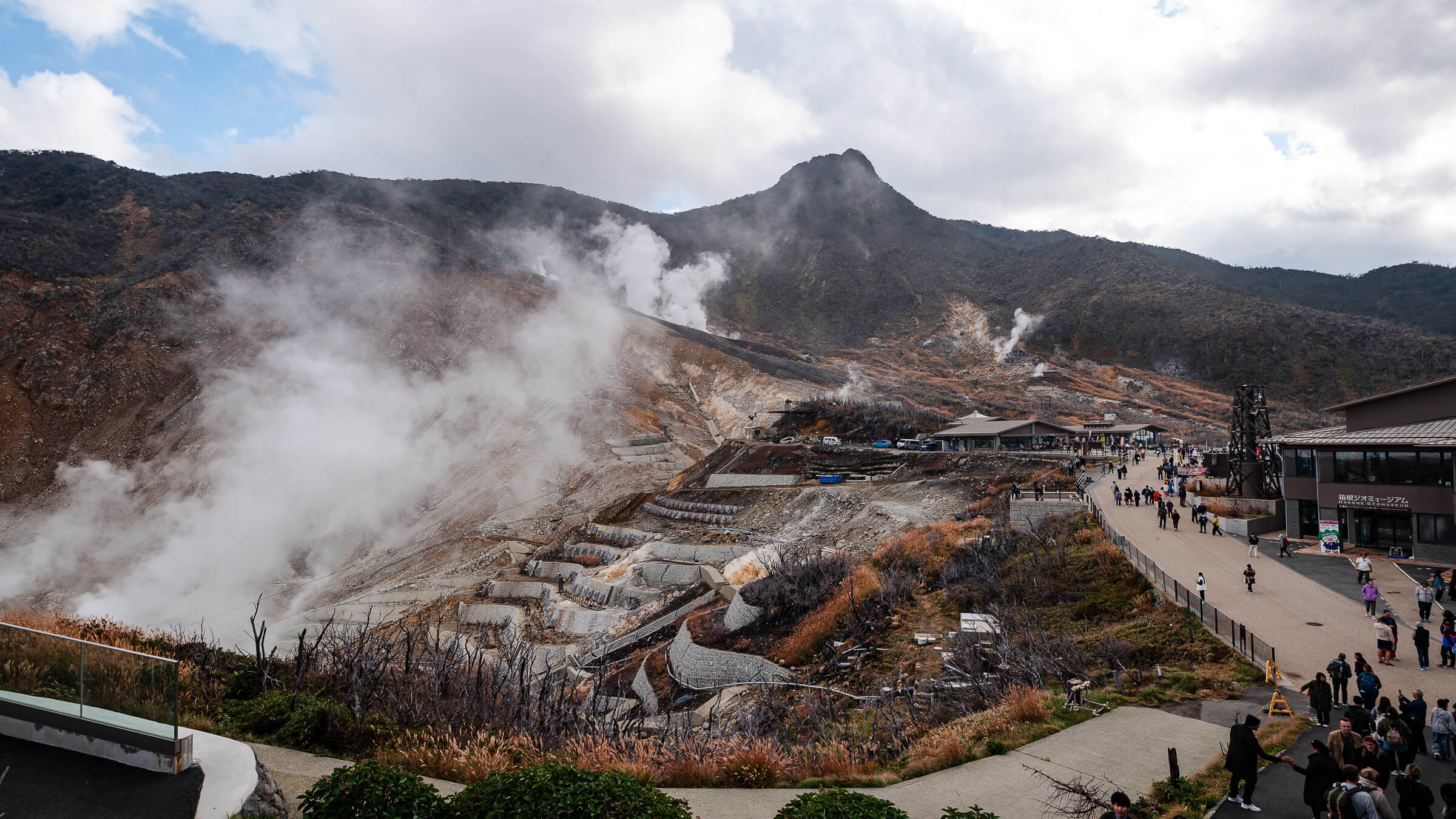
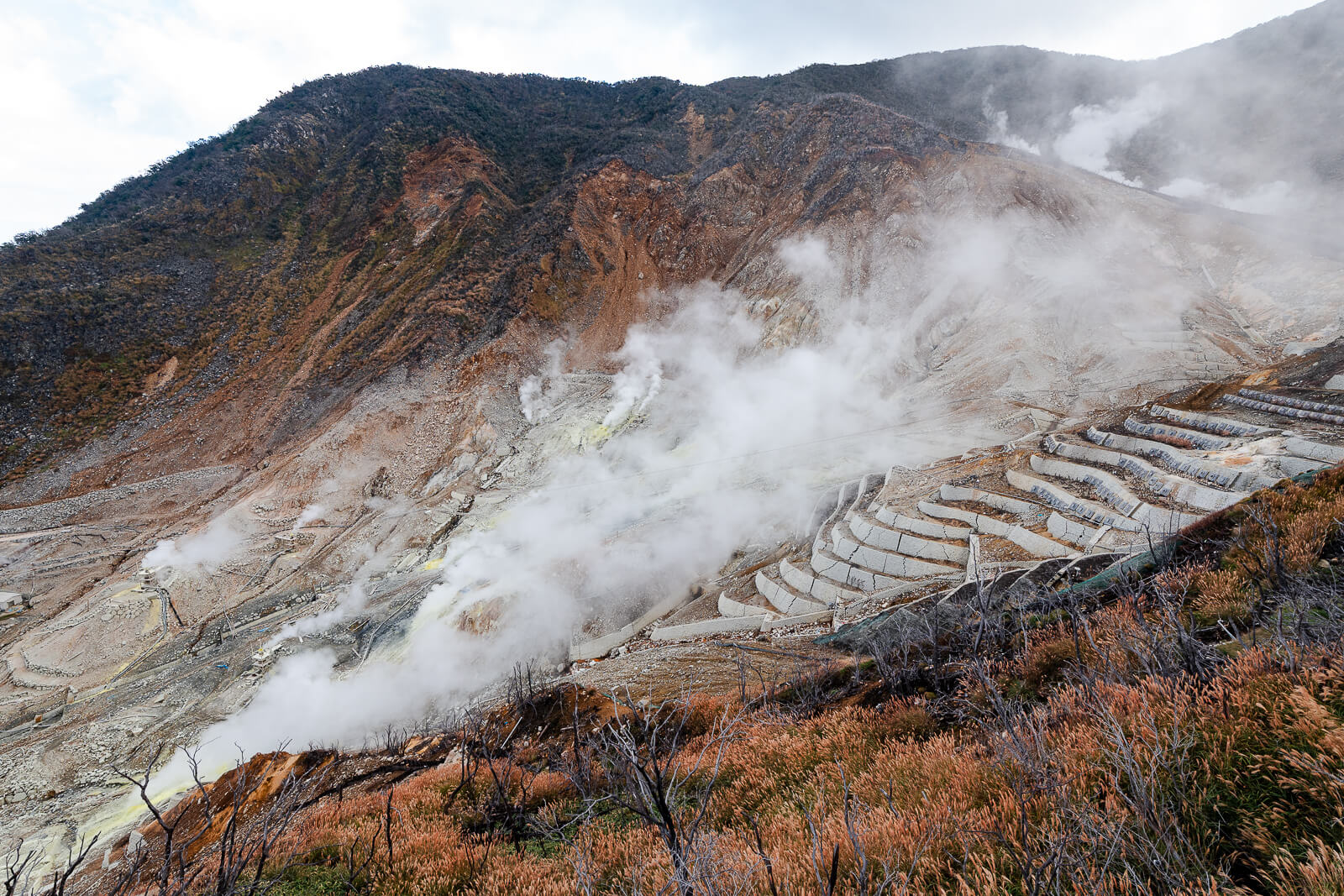
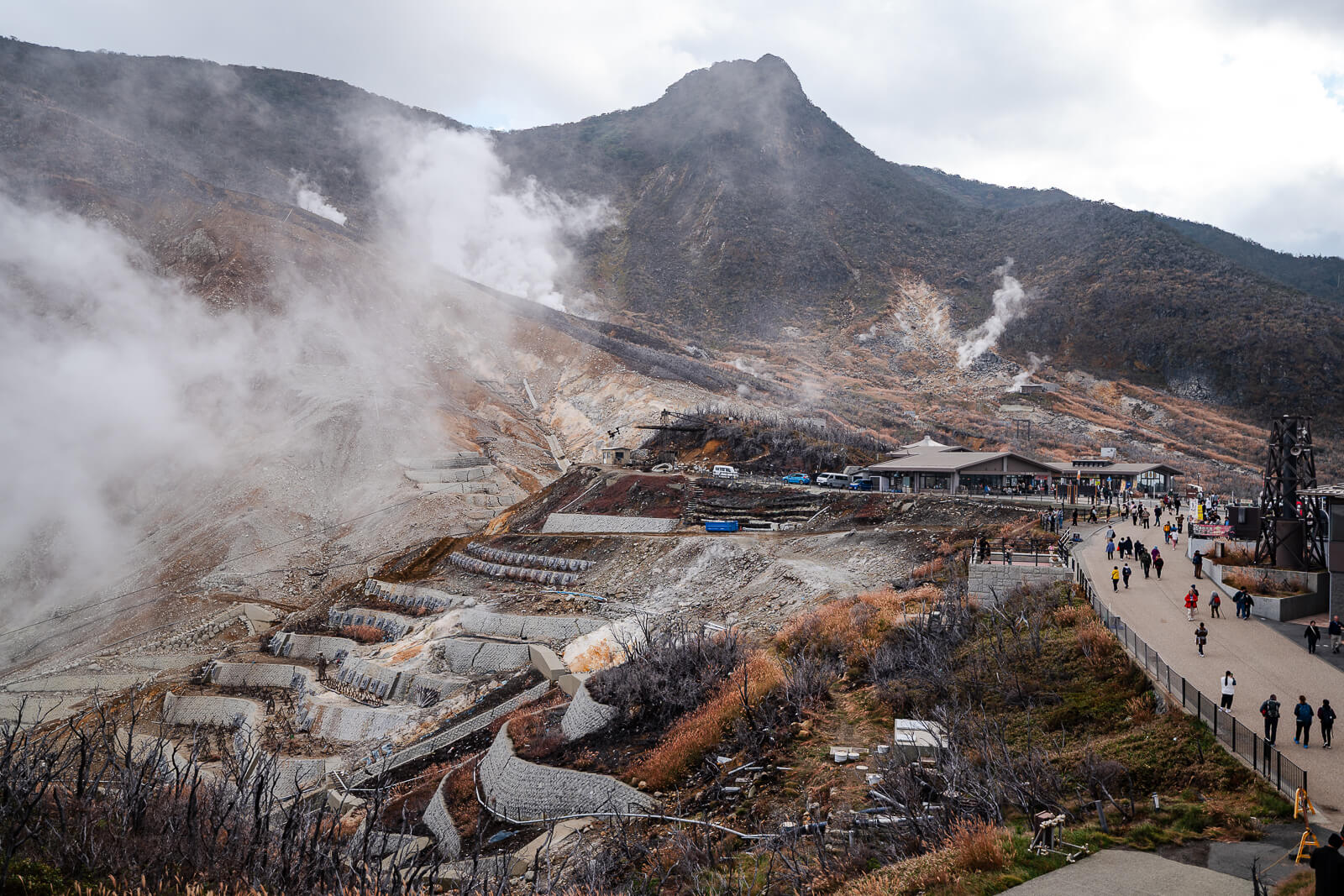
There is no gradual transition into Owakudani. Whether arriving from the ropeway or by road, the valley opens into view immediately, with steam rising from multiple points across the slope before any movement through the site begins. The perspective from above defines how the visit will unfold.
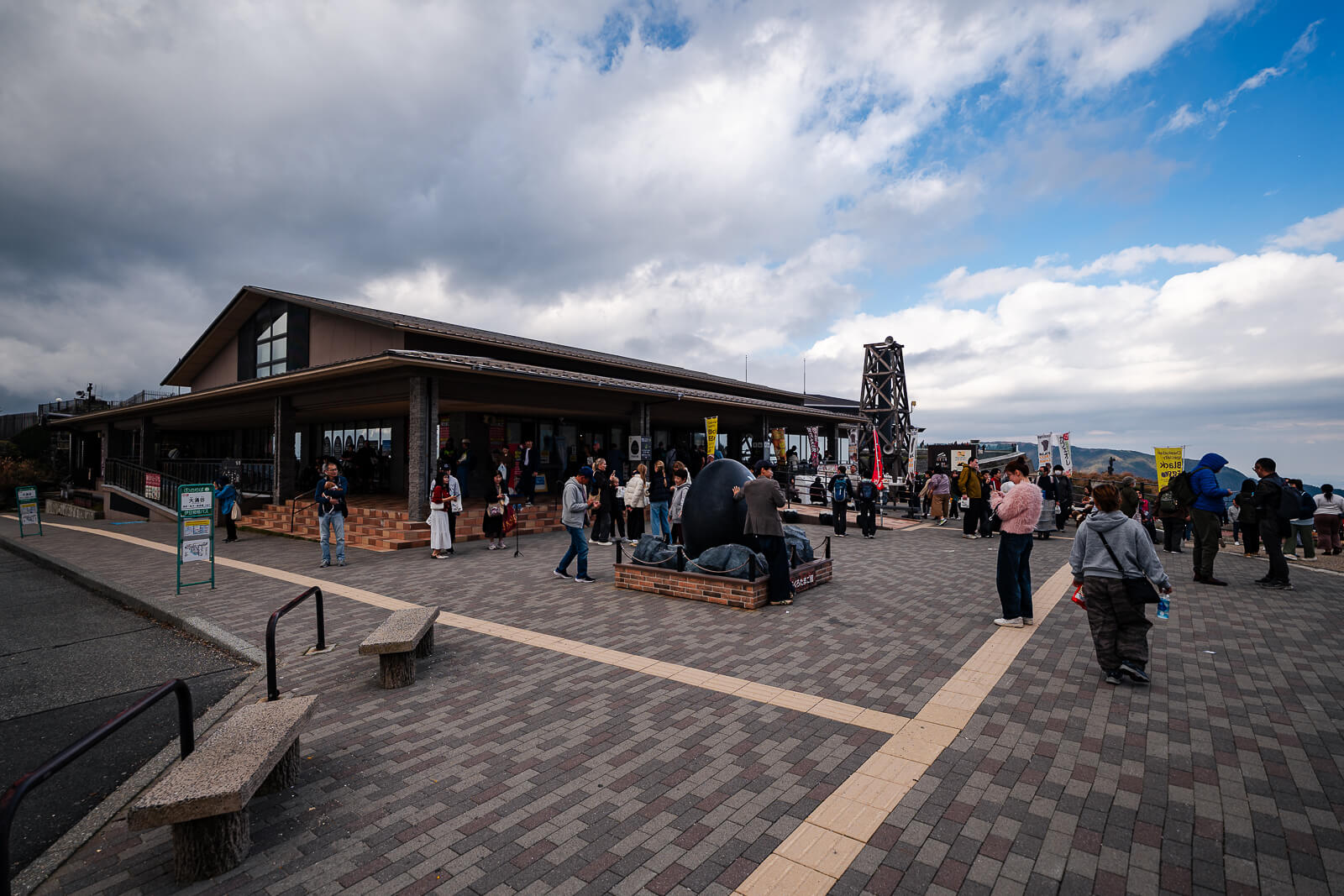
Facilities sit close to the arrival area, keeping movement contained and easy to follow. From there, paths extend outward toward viewing areas while the terrain itself remains inaccessible. Within minutes, the structure becomes clear, and the visit settles into a steady rhythm.
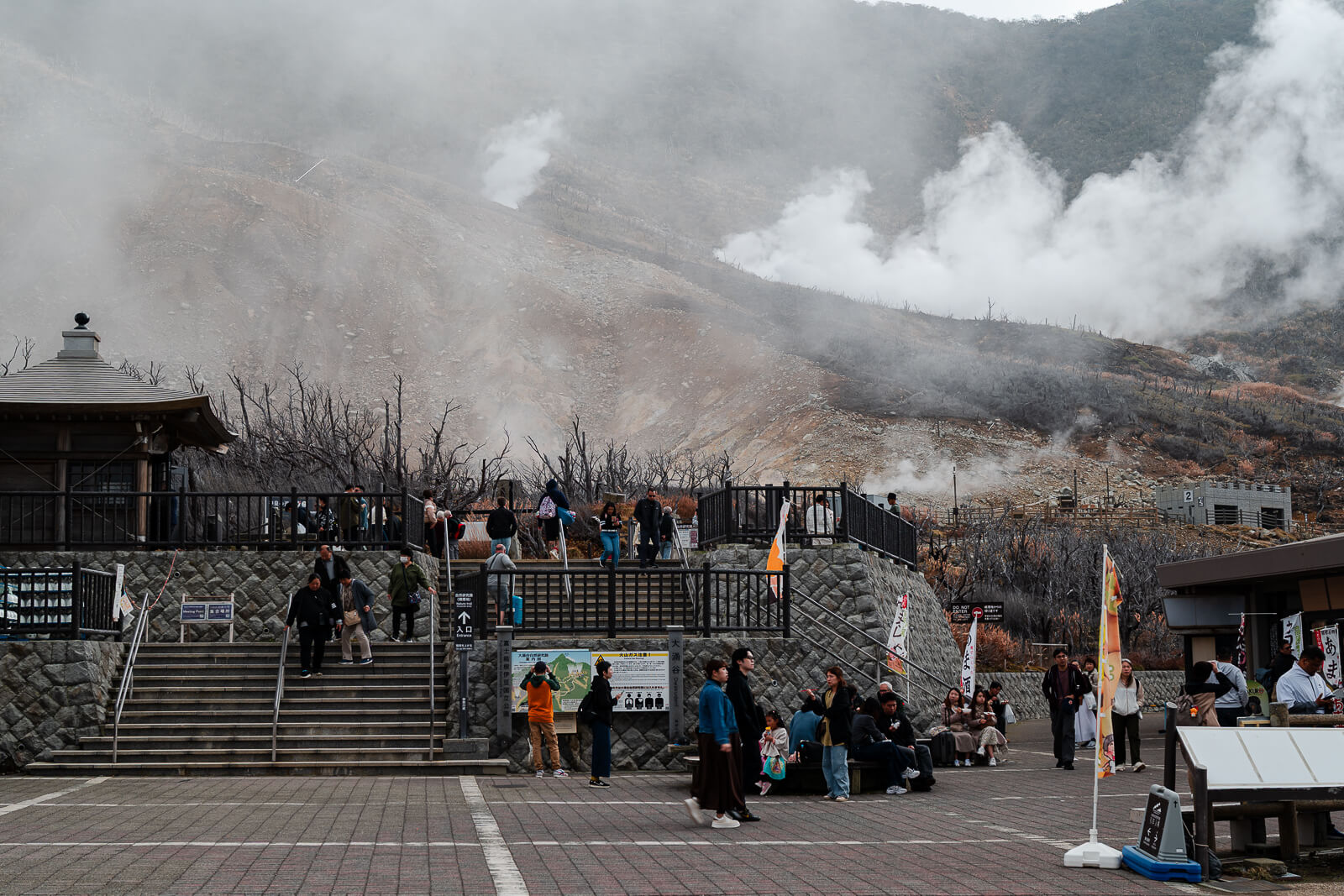
Because the view is established so quickly, there is little need to search for orientation. Visitors understand where they are and what they are looking at almost instantly. This removes friction from the experience and allows attention to shift toward observing rather than navigating.
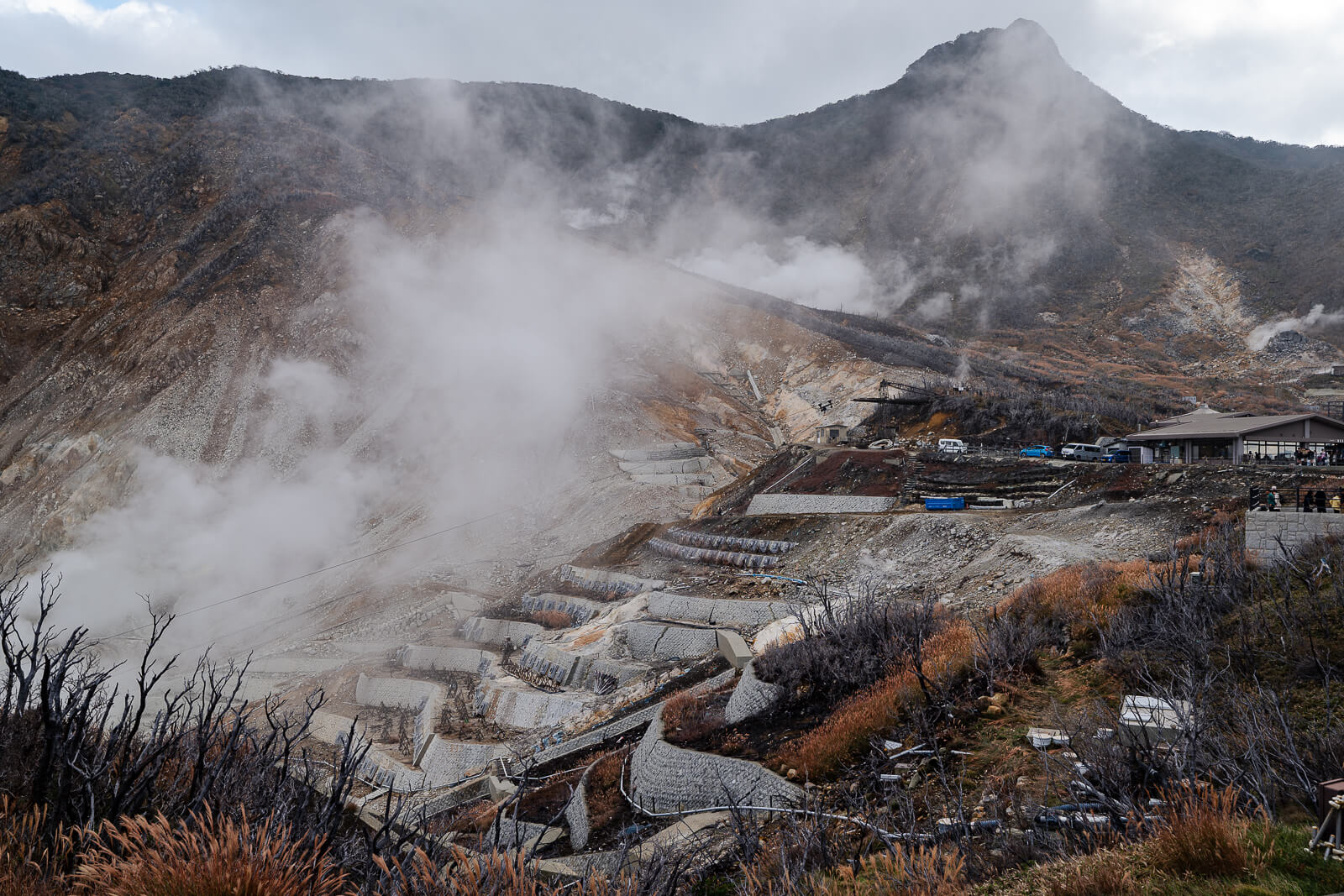
Walking Along the Edge of the Valley
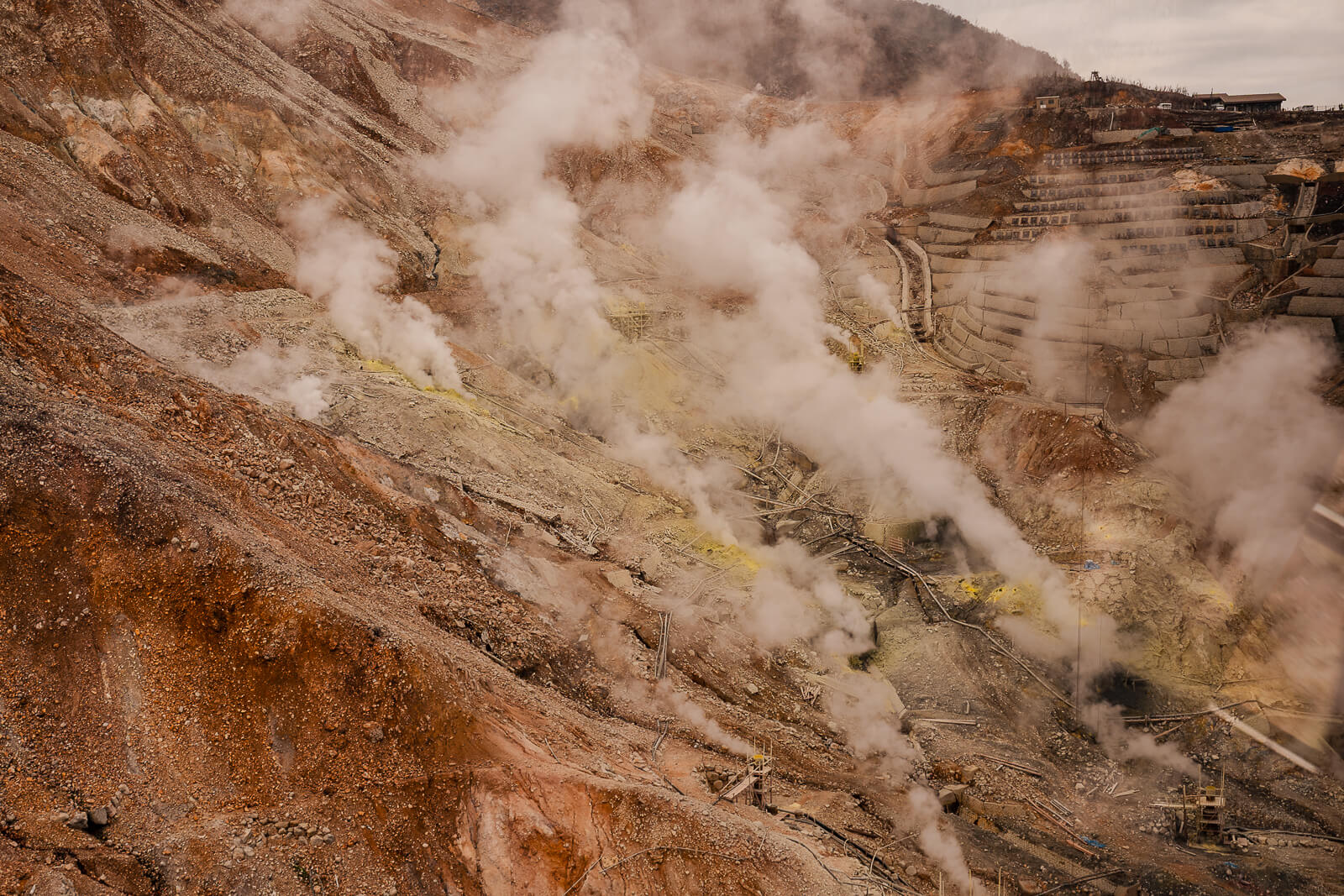
The main route follows a series of elevated walkways positioned above the vent field. From these points, the valley spreads outward, with steam rising and shifting depending on wind conditions, and the ground below showing variation in color caused by mineral deposits and geothermal activity. The view remains consistent, with only slight changes in angle as the path progresses.
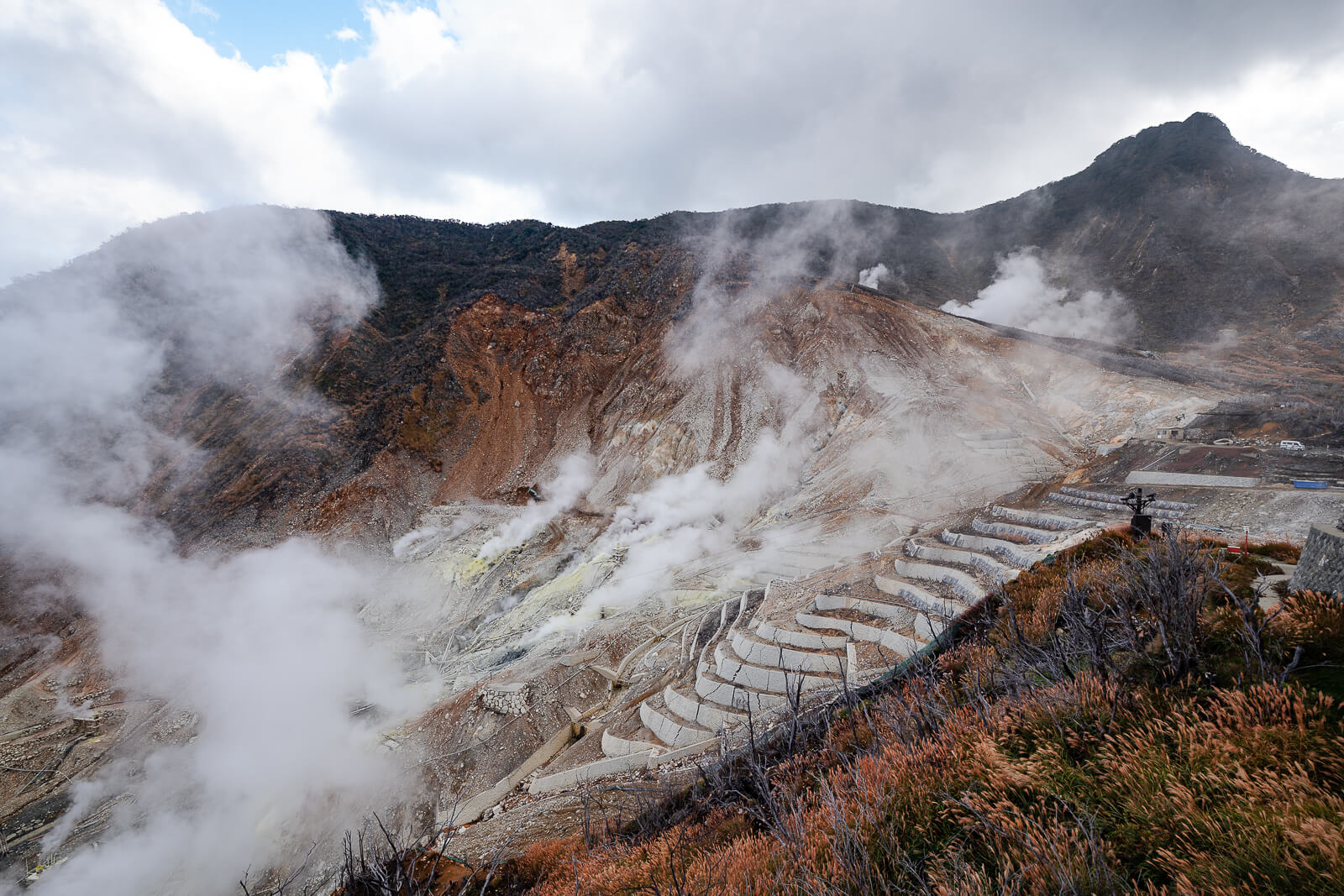
Movement along the walkway does not introduce new sections so much as refine the perspective. Each stop reinforces the same landscape rather than expanding it, which keeps the visit predictable in both time and effort. Most visitors complete the loop in well under an hour without feeling rushed.
This consistency is part of what makes the site accessible. There are no hidden areas or major deviations, and the experience does not depend on reaching a final viewpoint. Instead, the value comes from gradual observation across a stable route.
What the Ropeway Shows That the Walkways Don’t
The ropeway provides a perspective that connects the individual vents into a wider system. As the cars pass overhead, the scale of the geothermal activity becomes easier to understand, and the separation between accessible paths and restricted terrain is more clearly defined. The valley feels broader from above than it does from the walkways alone.
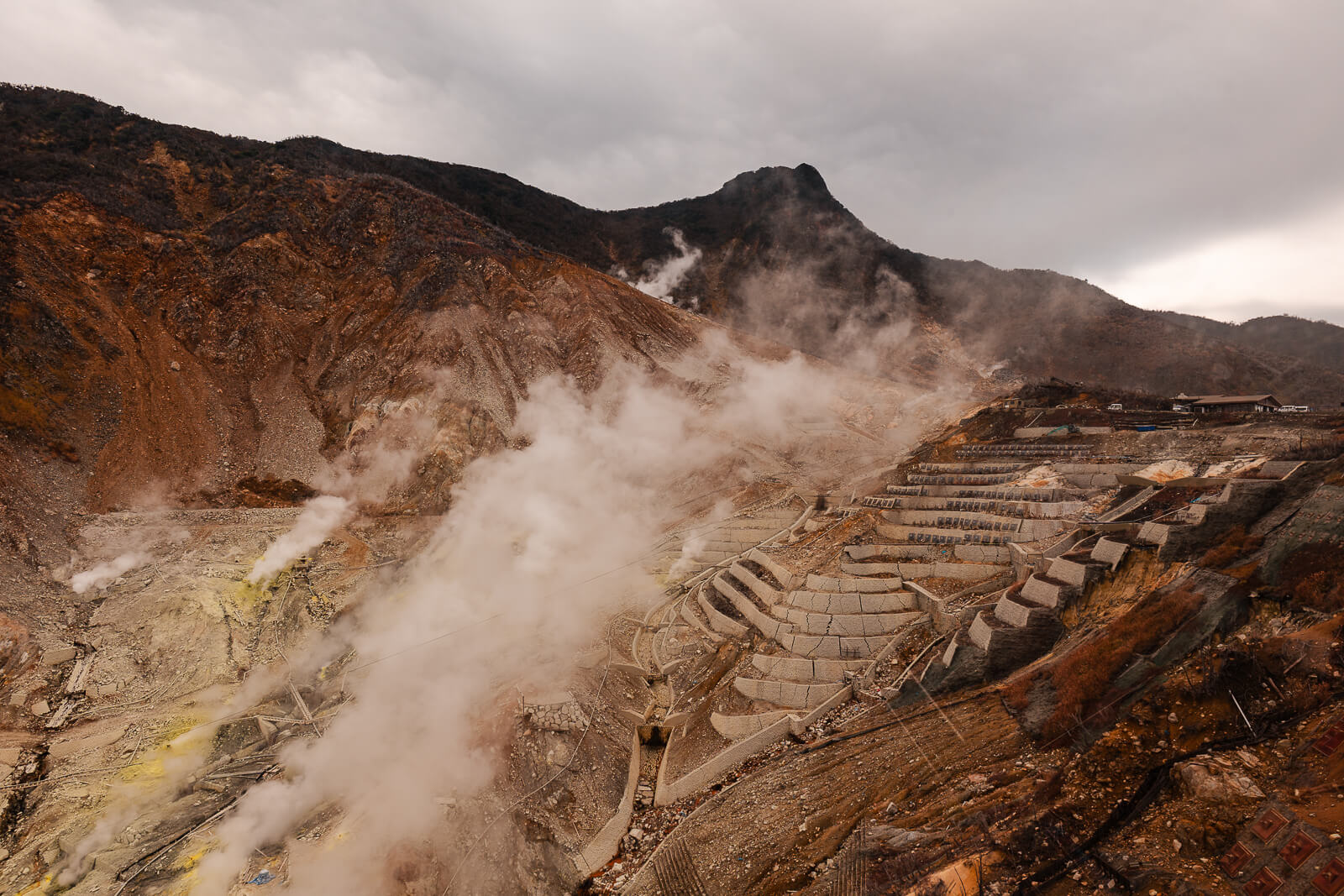
This aerial movement also reinforces how Owakudani fits between the lake and the inland side of Hakone. Traveling from Togendai, where boats from the Hakone Sightseeing Cruise arrive, the route rises directly into the volcanic valley before continuing toward Gora. The experience feels continuous, with each segment naturally leading into the next.
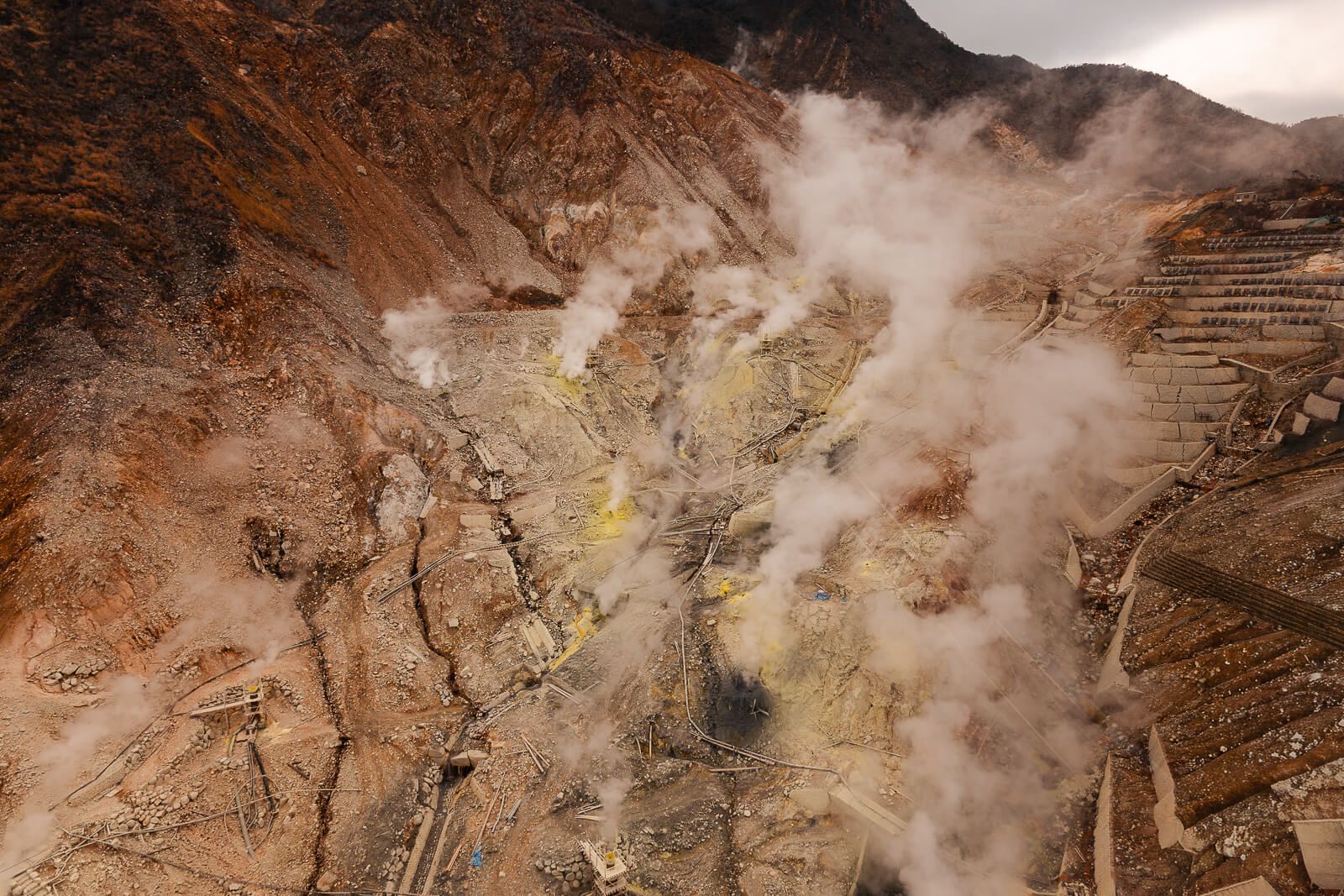
Seen from above, the valley shifts from a collection of individual vents into a single connected landscape. This broader view helps explain why access is controlled and why movement is limited to specific areas on the ground.
Enmei Jizō Bosatsu and the Quiet Side of the Site
Near the main facilities, a small shrine dedicated to Enmei Jizō Bosatsu sits slightly removed from the viewing area. Jizō is a familiar figure in Japanese Buddhism, often associated with protection, longevity, and the care of travelers and children. The presence of this figure within an active volcanic environment reflects a quieter, everyday relationship between people and landscape rather than a formal pilgrimage destination.
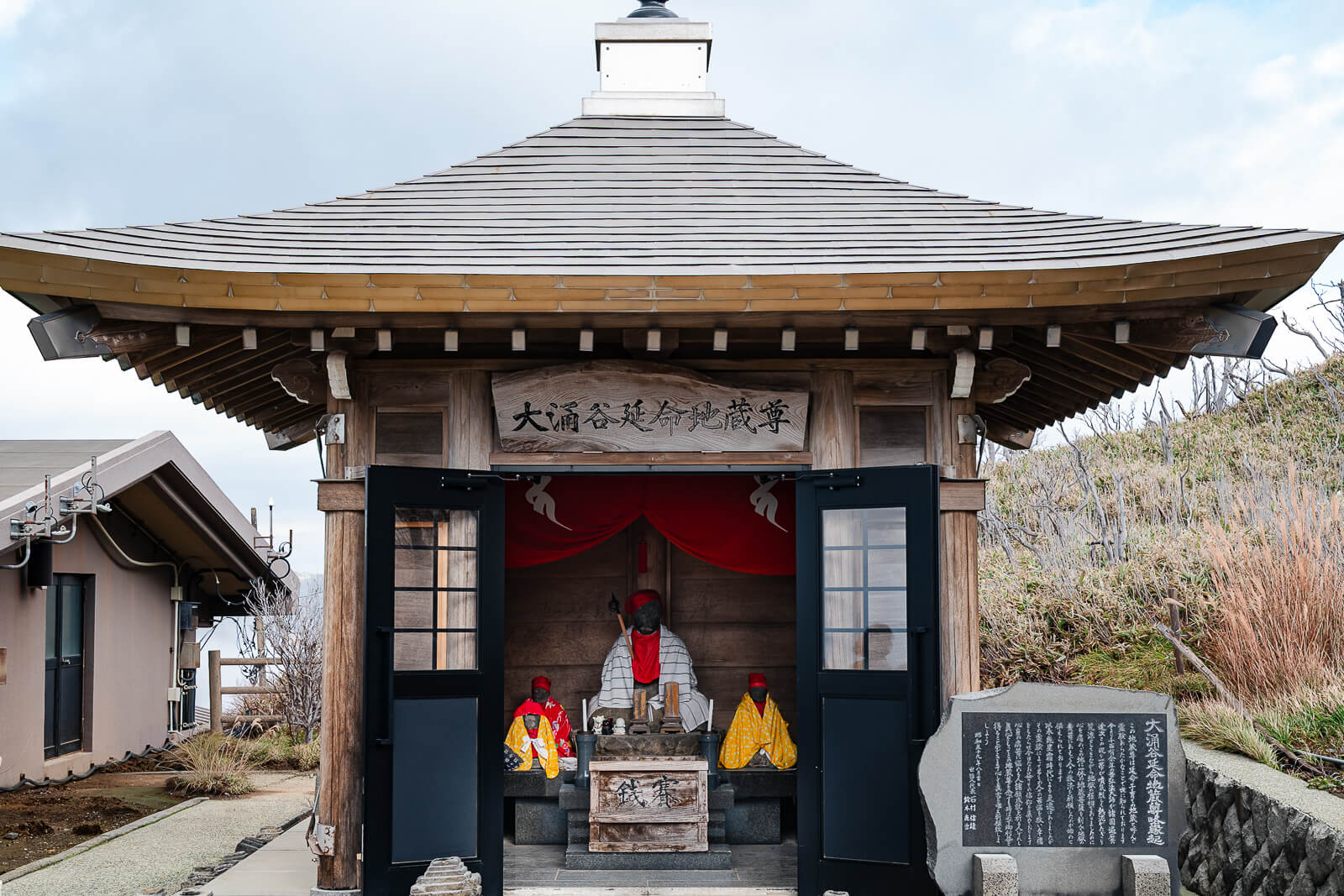
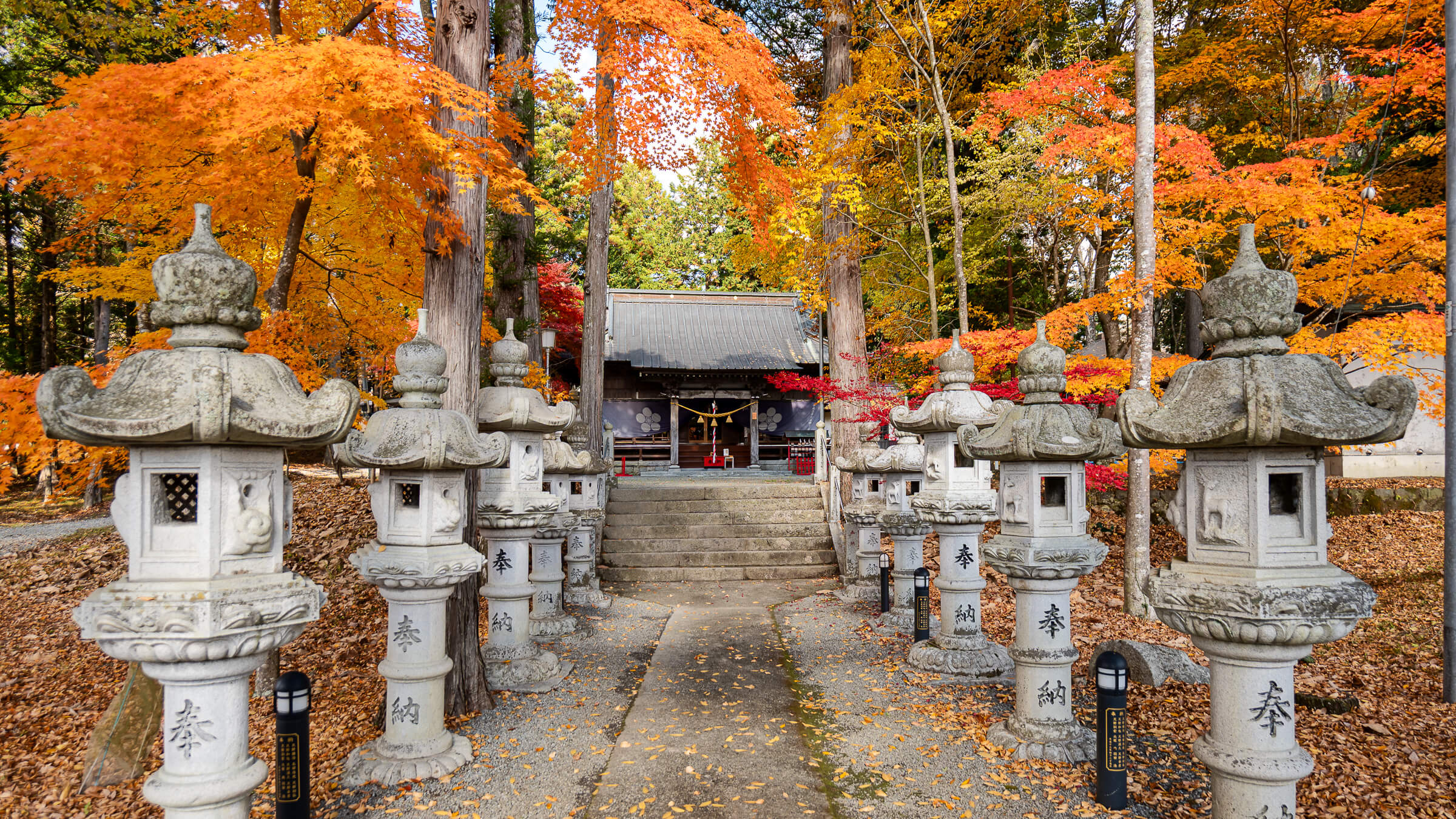
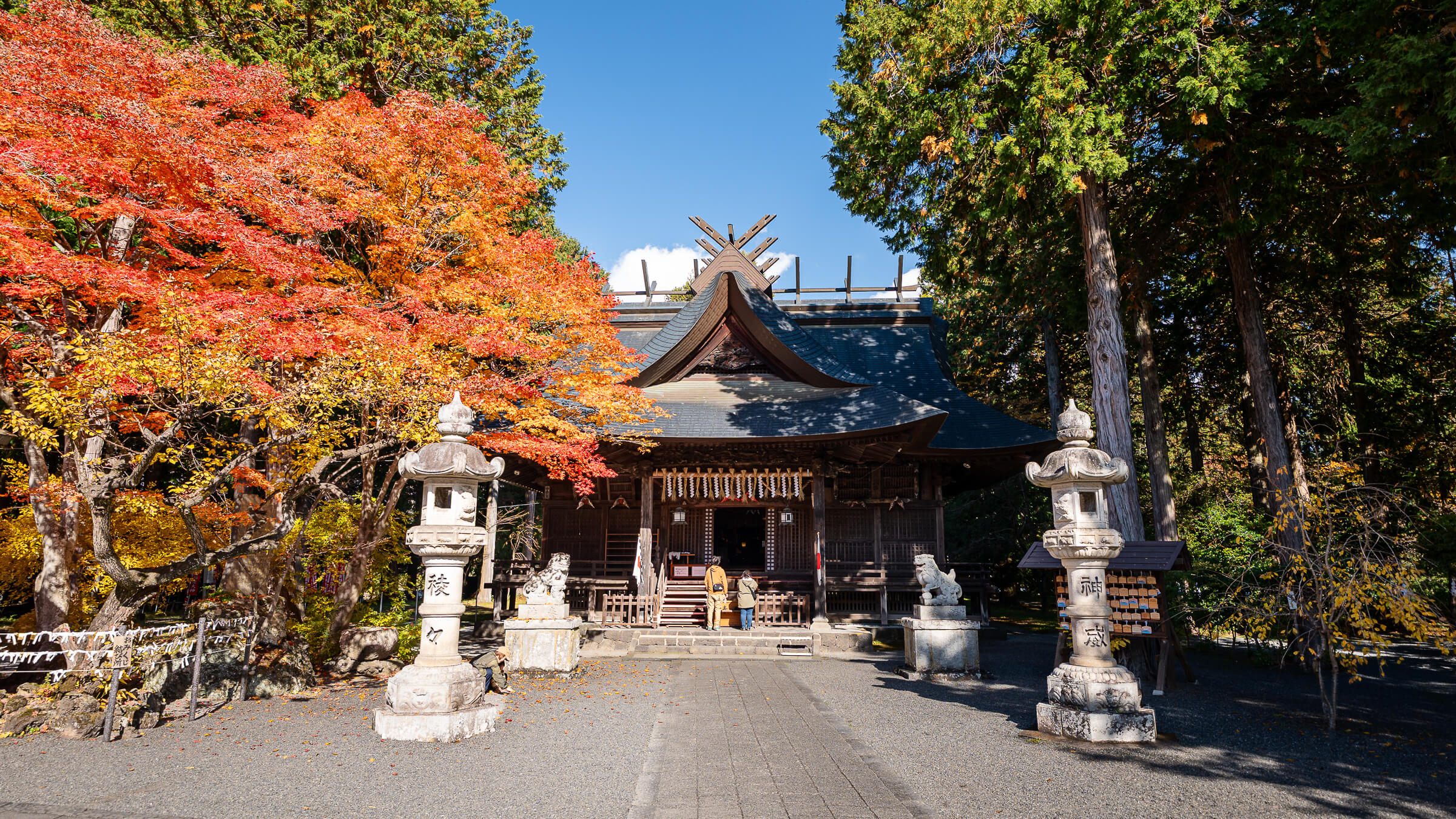
The structure itself is modest and easy to overlook, especially compared to larger sites such as Hakone Shrine along the lakeshore. Stopping here briefly shifts the focus away from the open valley to something more contained and personal. It does not redefine the visit, but it introduces a second layer that sits alongside the geology rather than competing with it.
This contrast between the scale of the valley and the simplicity of the shrine adds subtle depth to the experience. It brings a human element into an otherwise environmental setting, even if most visitors only pause for a moment.
How Weather Changes the Valley
The appearance of Owakudani shifts more with weather than with time of day. Clear conditions reveal the structure of the valley, while wind and cloud cover allow steam to spread and soften the edges of the terrain. The same landscape can feel sharply defined or partially obscured depending on conditions.
These changes do not affect how the visit unfolds. The paths remain consistent, and the time required does not vary significantly. What changes is how clearly the underlying structure of the valley can be seen.
Because of this, no single set of conditions defines the “best” time to visit. Different weather creates different versions of the same place, and each one emphasizes a different aspect of the landscape.
Where Owakudani Fits in a Hakone Day
Owakudani works best as part of a loop that begins around Lake Ashi and continues across Hakone. Many visitors start near the lakeshore, visiting Hakone Shrine or taking in elevated views from the Narukawa Art Museum, before continuing to the Hakone Sightseeing Cruise across the lake. From Togendai, the ropeway climbs directly into Owakudani, shifting the experience from open water to an active volcanic slope.
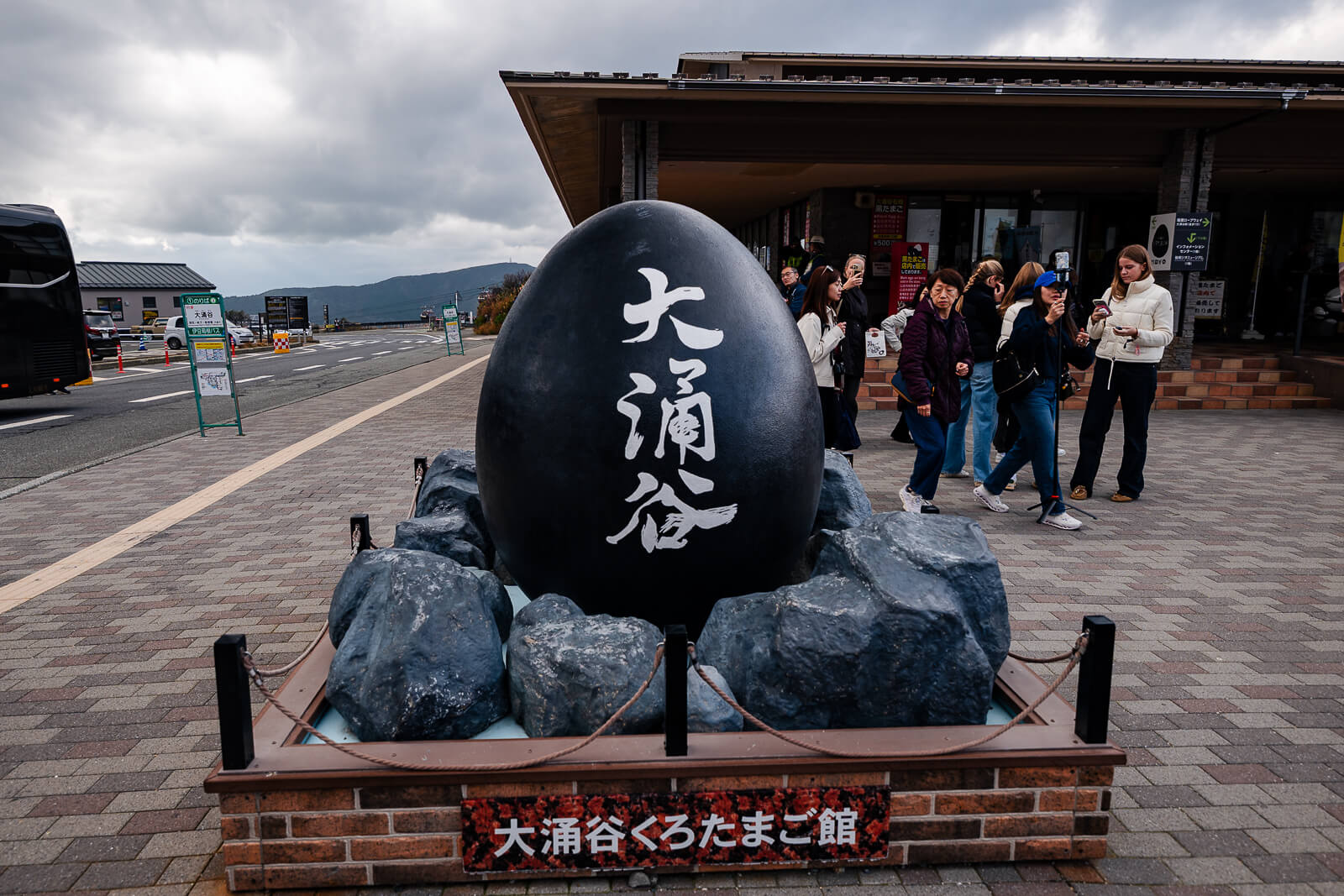
After leaving the valley, the route continues toward Gora Park and the surrounding hillside, eventually descending toward Hakone-Yumoto, where rail connections lead back toward Odawara. The sequence moves naturally from water to elevation to town, with Owakudani positioned at the center of that transition.
Because it sits between these areas, Owakudani rarely determines the pace of the day. Instead, it adapts to the route around it, fitting into different travel patterns without requiring major adjustments.
Getting There
Owakudani is reached through Hakone’s transport network rather than on foot. Most travelers arrive in the region through Odawara, then continue by train, bus, or ropeway into the mountains. The ropeway provides the most direct connection, linking the valley with both the lakeside near Togendai and the inland side near Gora.
Driving offers flexibility but can involve waiting to enter the parking area during busy periods. When combining lake travel, ropeway access, and rail connections, operating hours become the main limitation, particularly later in the day. This is usually the only factor that shapes how the visit is timed within a larger route.
Hours and Fees
Opening Hours
Typically 9:00–17:00
Seasonal Variations
Hours may change due to weather, volcanic activity, or operational conditions
Closed Days
No regular closures
Temporary restrictions may occur for safety
Admission
Free access to the viewing areas
Ropeway
A separate fare is required for the Hakone Ropeway
Pricing varies by segment