Rikugien in Autumn: Pond Walks, Bridges, and Maples
Rikugien Gardens in Tokyo’s Bunkyo district is a rewarding autumn destination for a traditional pond landscape with more than one memorable viewpoint. Its bridges, shaped pines, maples, and side paths give a roughly one-hour walk variety from the entrance onward. Allow longer to sit by the water or explore beyond the main circuit, and leave some flexibility for a short entrance queue or a pause at a popular crossing.
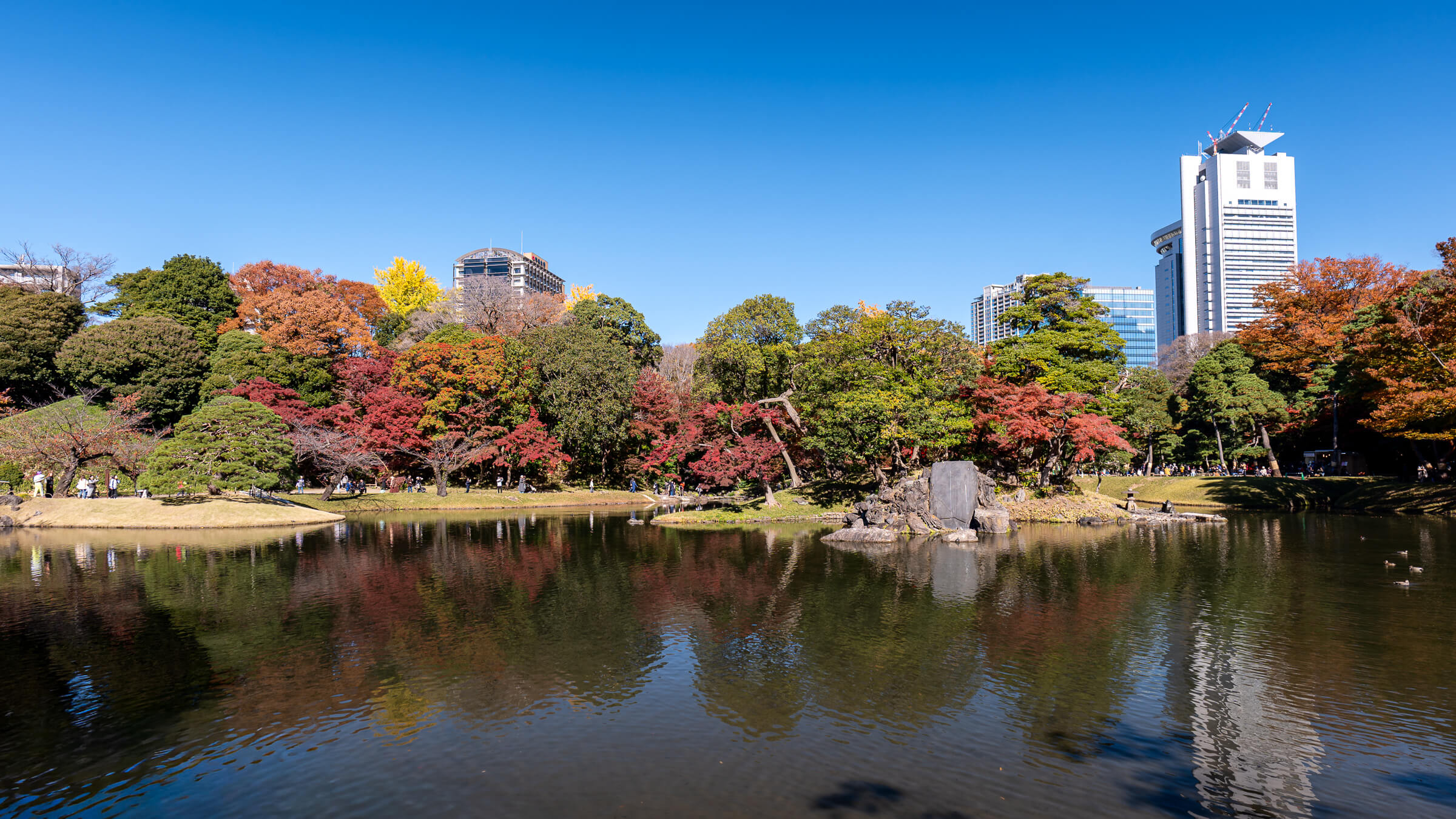
In late November, autumn colors were scattered around the pond, bridges, and paths, with green foliage and manicured pines still shaping the views. Visitors were present at the popular stops, yet the paths and seating areas made it possible to enjoy the landscape without feeling shoulder-to-shoulder. Choose Rikugien for a pond garden that stays visually interesting through the walk, from broad waterside scenes to smaller compositions among the trees.
What the Rikugien Walking Route Includes
Past the admission gate, a path led toward the bridge that often appears in photographs of Rikugien, with the pond visible beyond it. That first framed view gave the garden a clear starting point before the walk opened around the water. After the crossing, a leftward route follows the pond’s edge, where shaped pines, autumn foliage, and structures across the water change position as the path curves. This direction gives a simple first circuit before the farther paths become tempting. The scene felt composed without confining the rest of the visit to a single viewpoint.
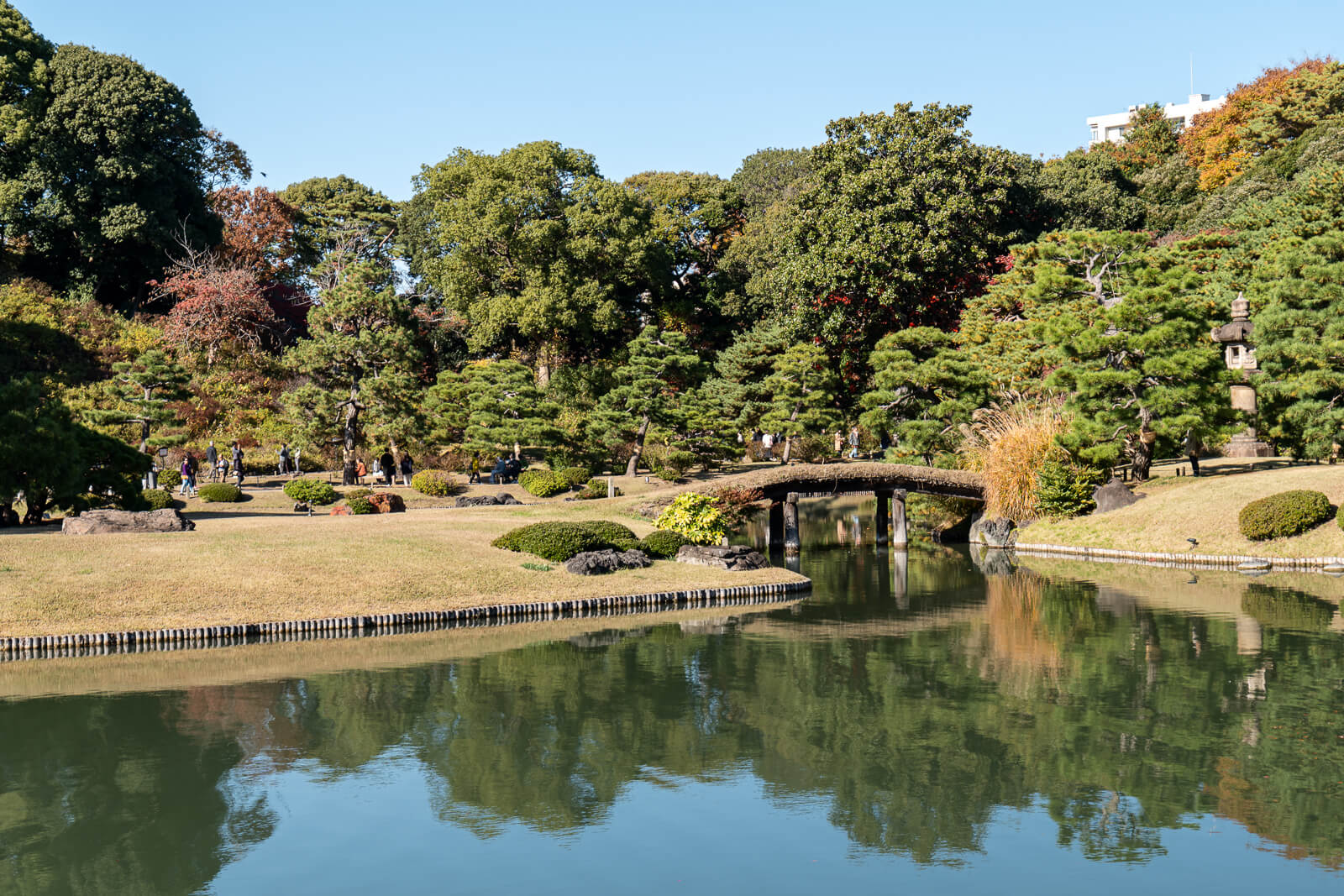
Rikugien was created by Yanagisawa Yoshiyasu in 1702 as a landscape inspired by waka poetry. That background helps explain the use of composed scenes around the water and hills. You do not need to recognize each literary reference to enjoy the garden’s changes in perspective as the circuit progresses.
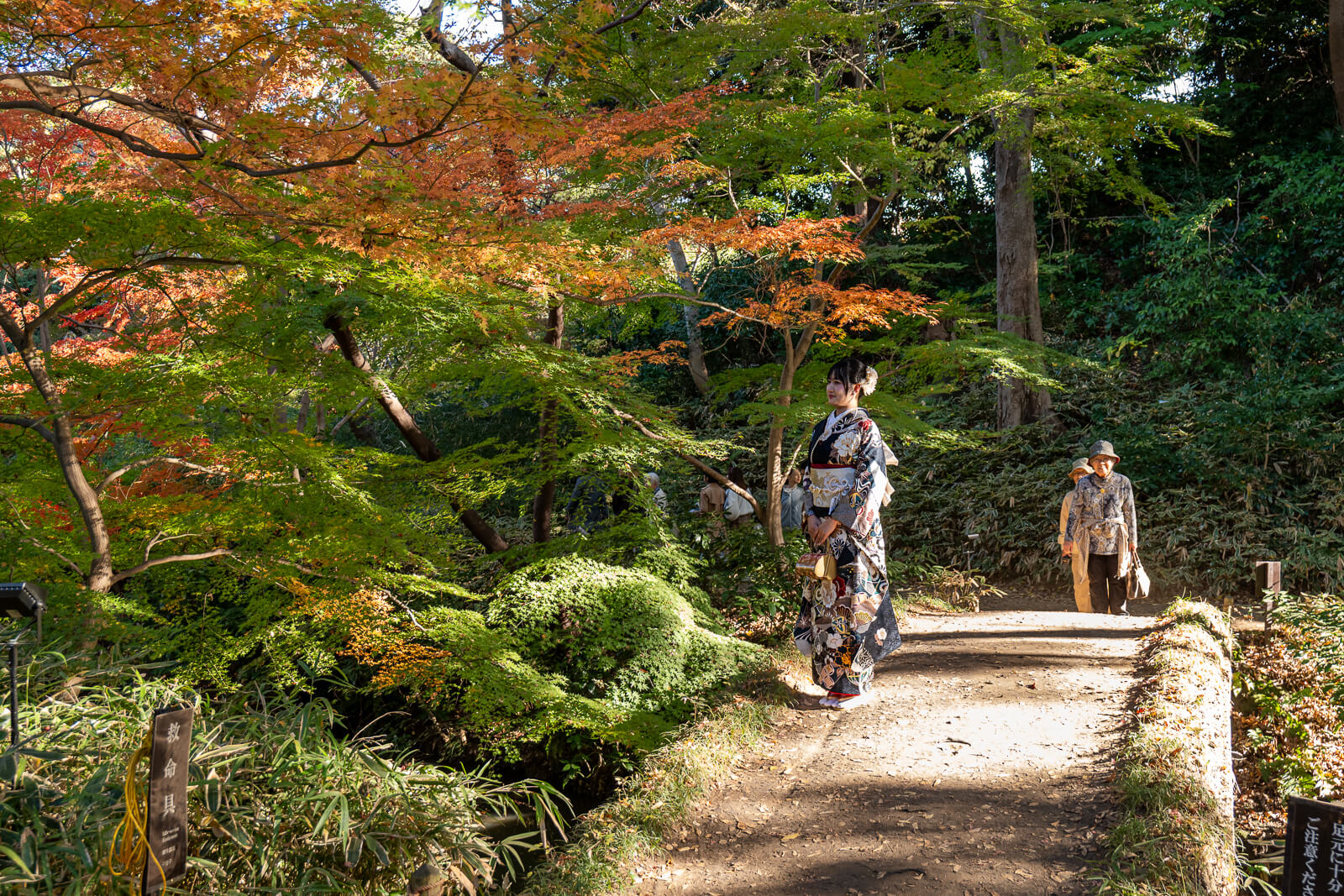
Following the pond’s edge brought the walk toward the other side, where additional paths extended beyond the immediate waterfront. Those routes led to more bridges, resting places, and views back toward features already seen from across the water. The garden could feel compact around its central pond yet spread out as the side paths opened up. For a first visit, the main circuit offers an easy orientation; taking one or two of the farther paths reveals why an hour can be satisfying without exhausting the place.
Where the Best Autumn Views Appear
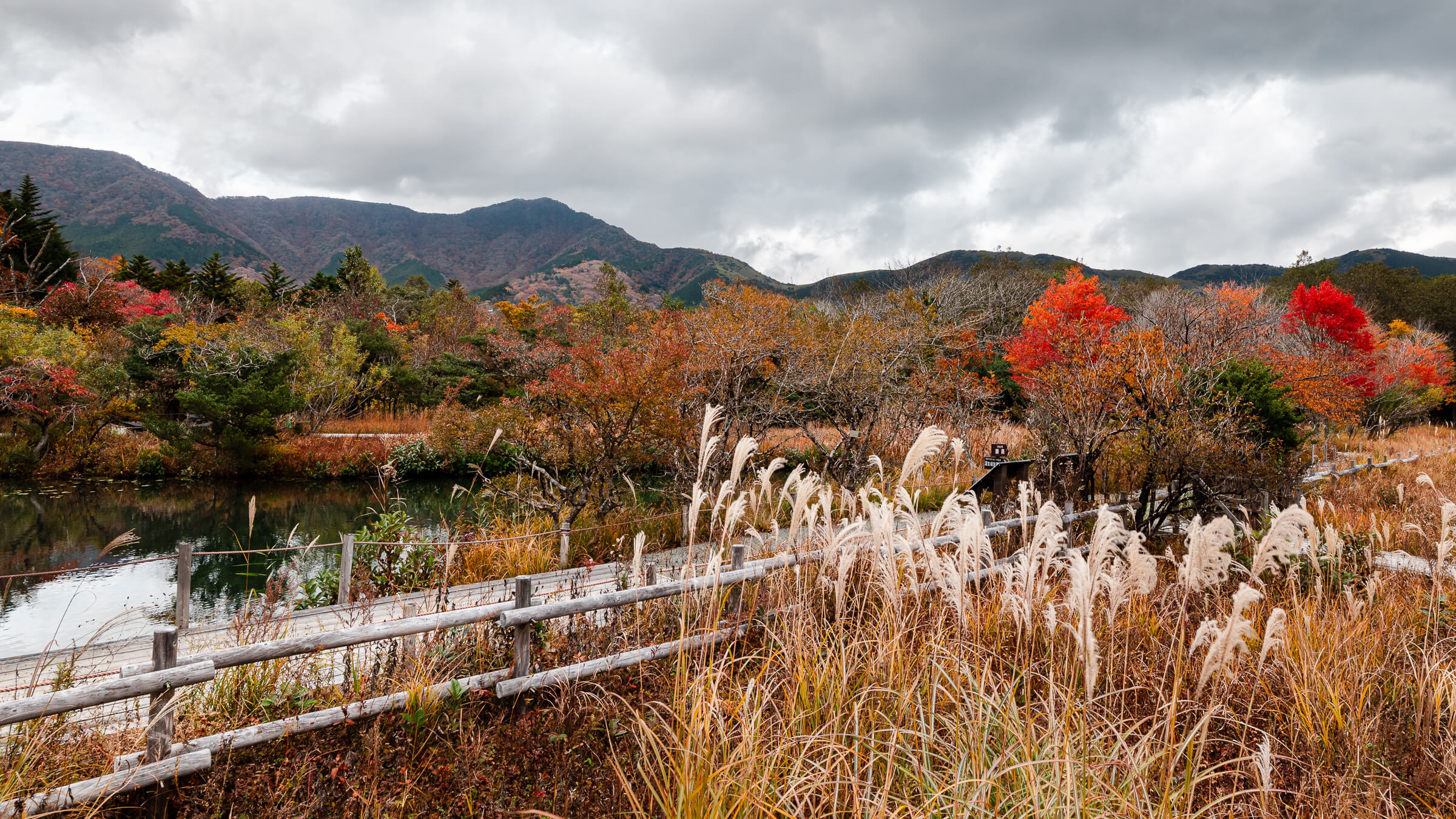
The foliage was mixed rather than uniformly red, with autumn tones set against green trees and manicured pines. On a clear day in late November, color appeared repeatedly along the pond circuit instead of gathering in only one grove. Its distribution worked with the shape of the landscape, making the walk rewarding between the most obvious photographic stops.
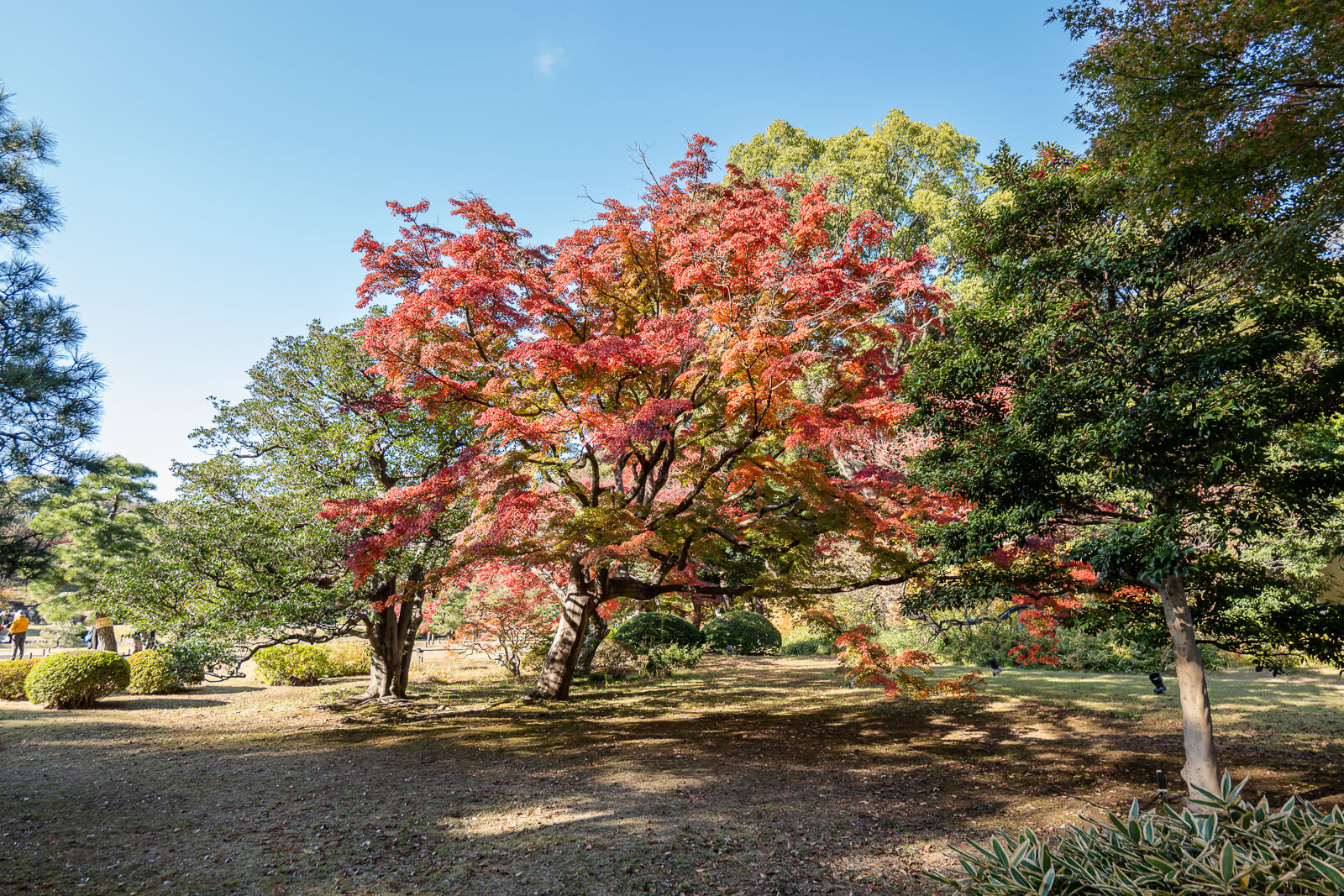
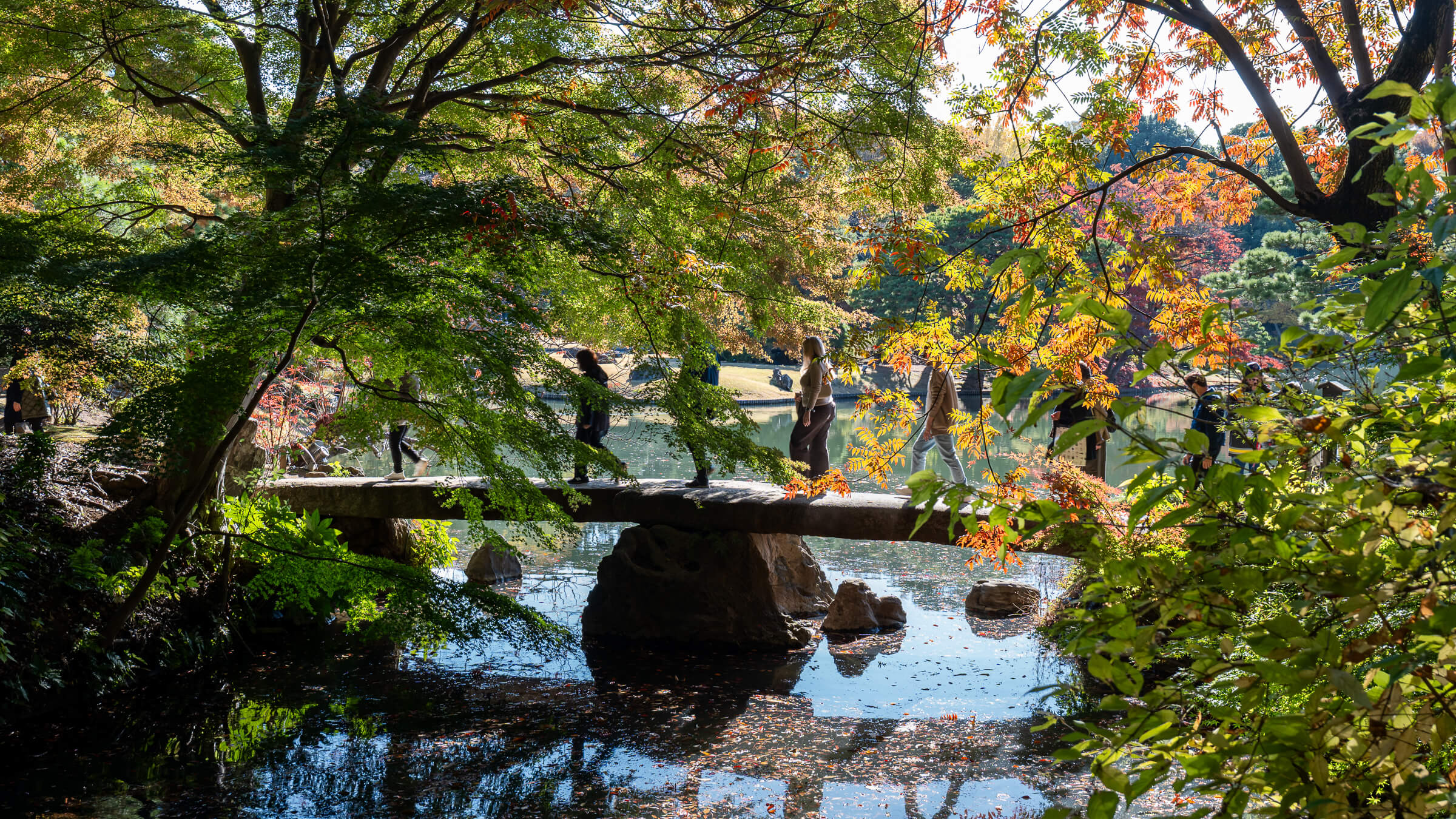
The bridge near the beginning of the visit was one of the most memorable autumn scenes. Leaves framed people crossing it, while an empty interval left a clearer line of sight to the pond in the background. On that day, staff alternated the direction of foot traffic across the bridge, creating a brief wait before crossing. The pause was brief and left time to see both views. Staffing and crossing arrangements can change, so allow room for a short wait instead of planning around a fixed traffic pattern.
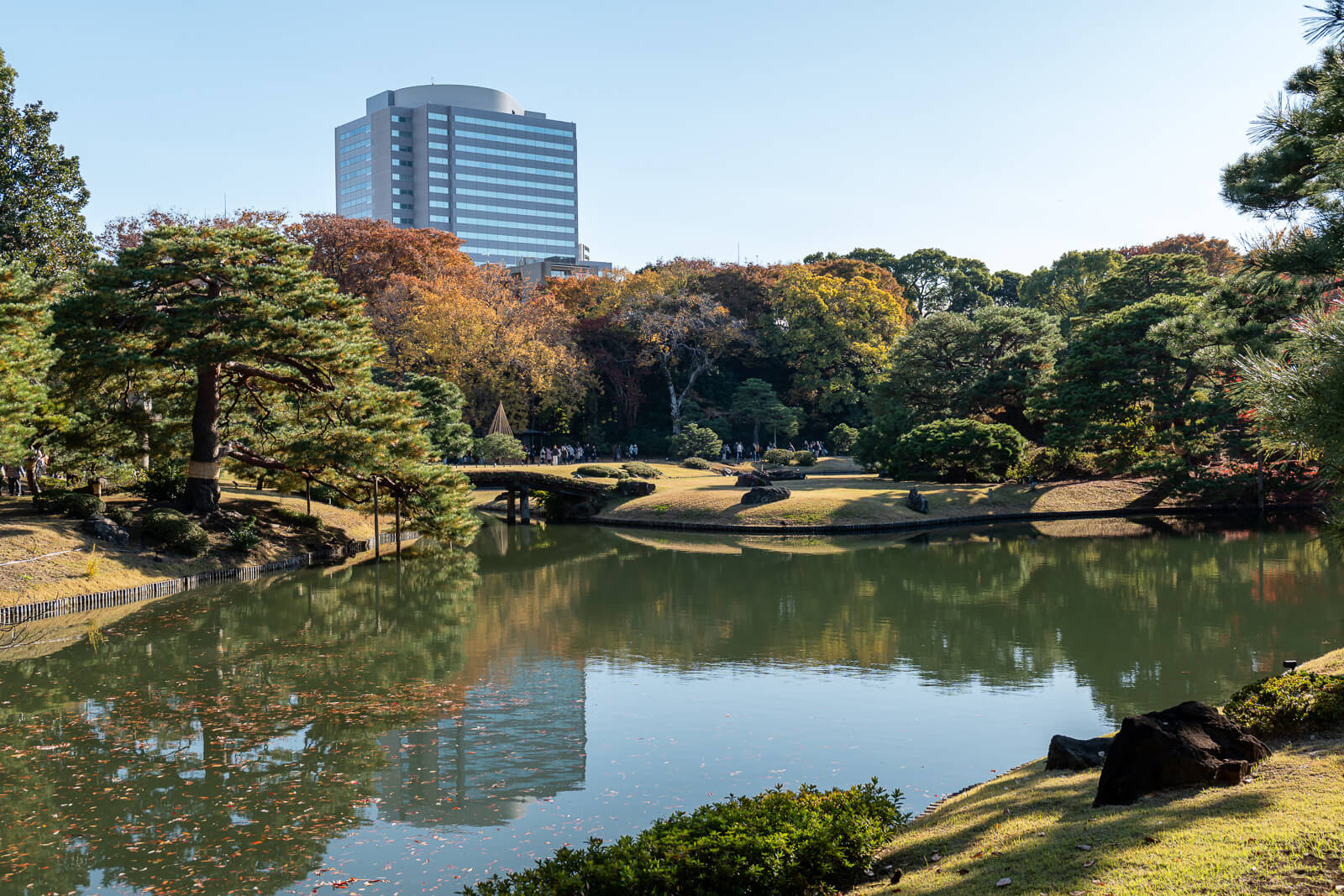
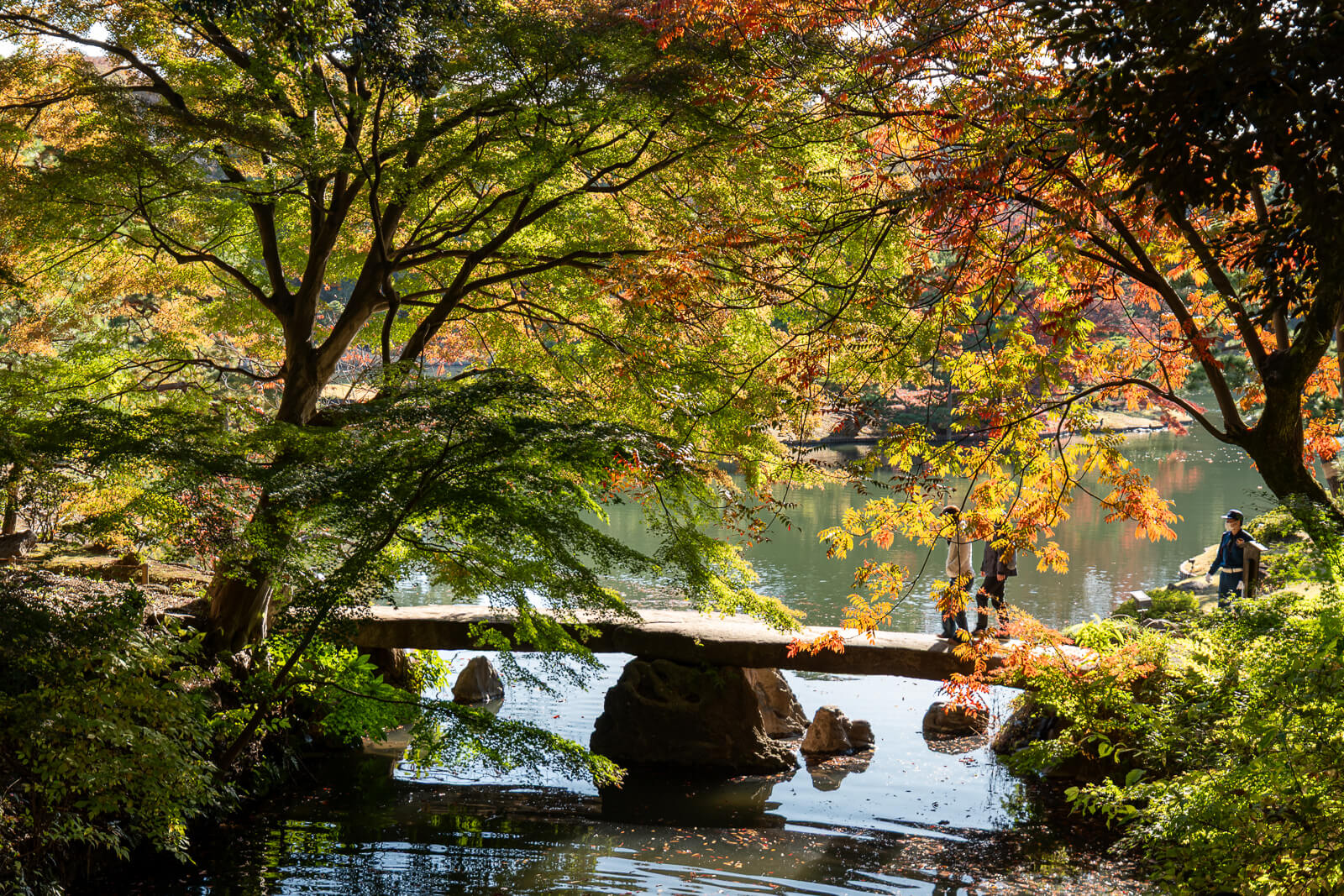
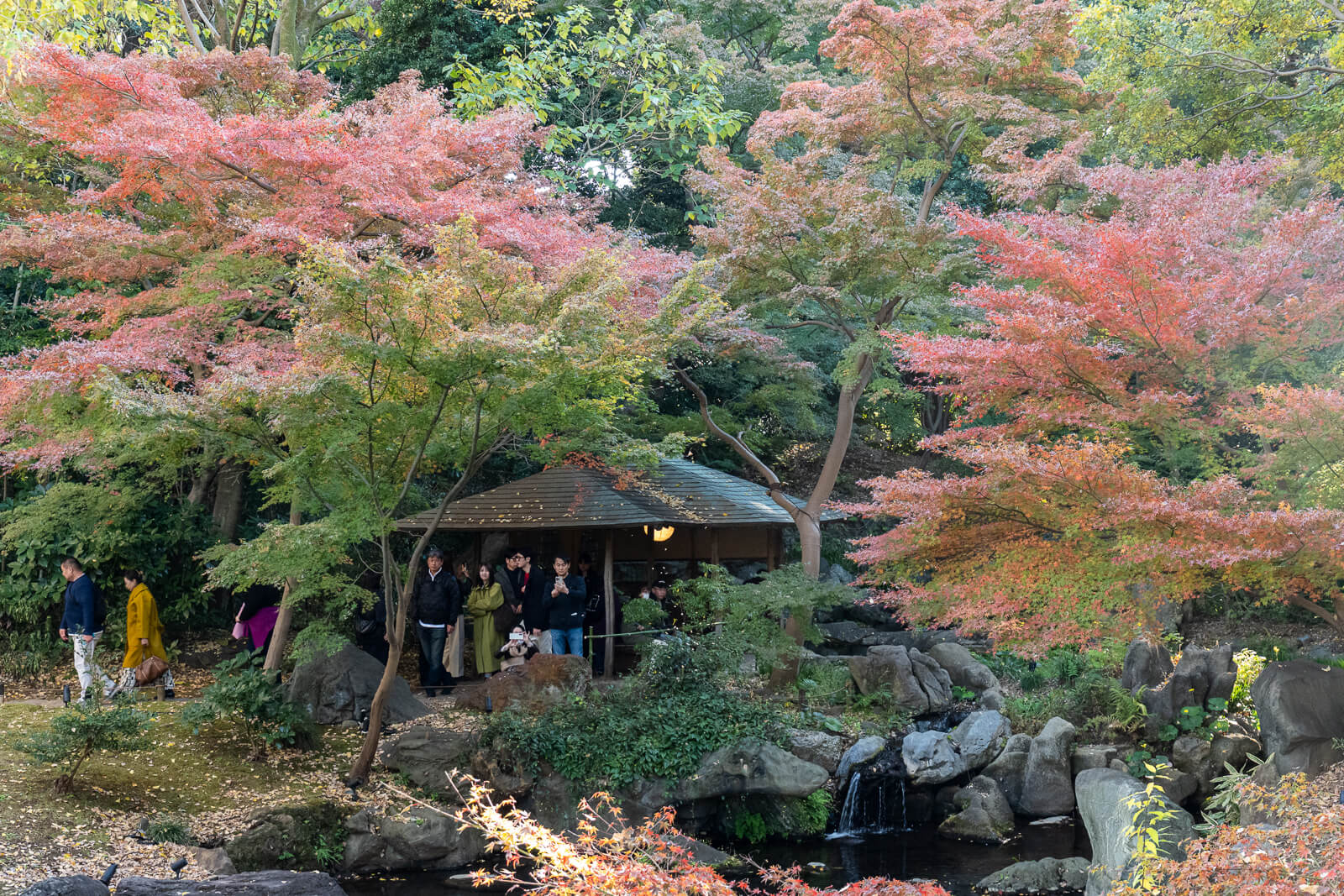
People on the bridge gave the image a sense of scale, while the open view beyond made an unoccupied bridge appealing in a different way. Elsewhere around the pond, small stone forms in the water created foreground subjects; one supported a carefully shaped tree that looked almost like a miniature landscape. From some angles, a bridge and other garden features appeared behind it. These layered scenes made photography feel like part of the whole circuit rather than an exercise in reaching one famous spot. Keep the crossing clear for other walkers and choose a place to photograph without blocking their route.
Where to Pause Around the Pond
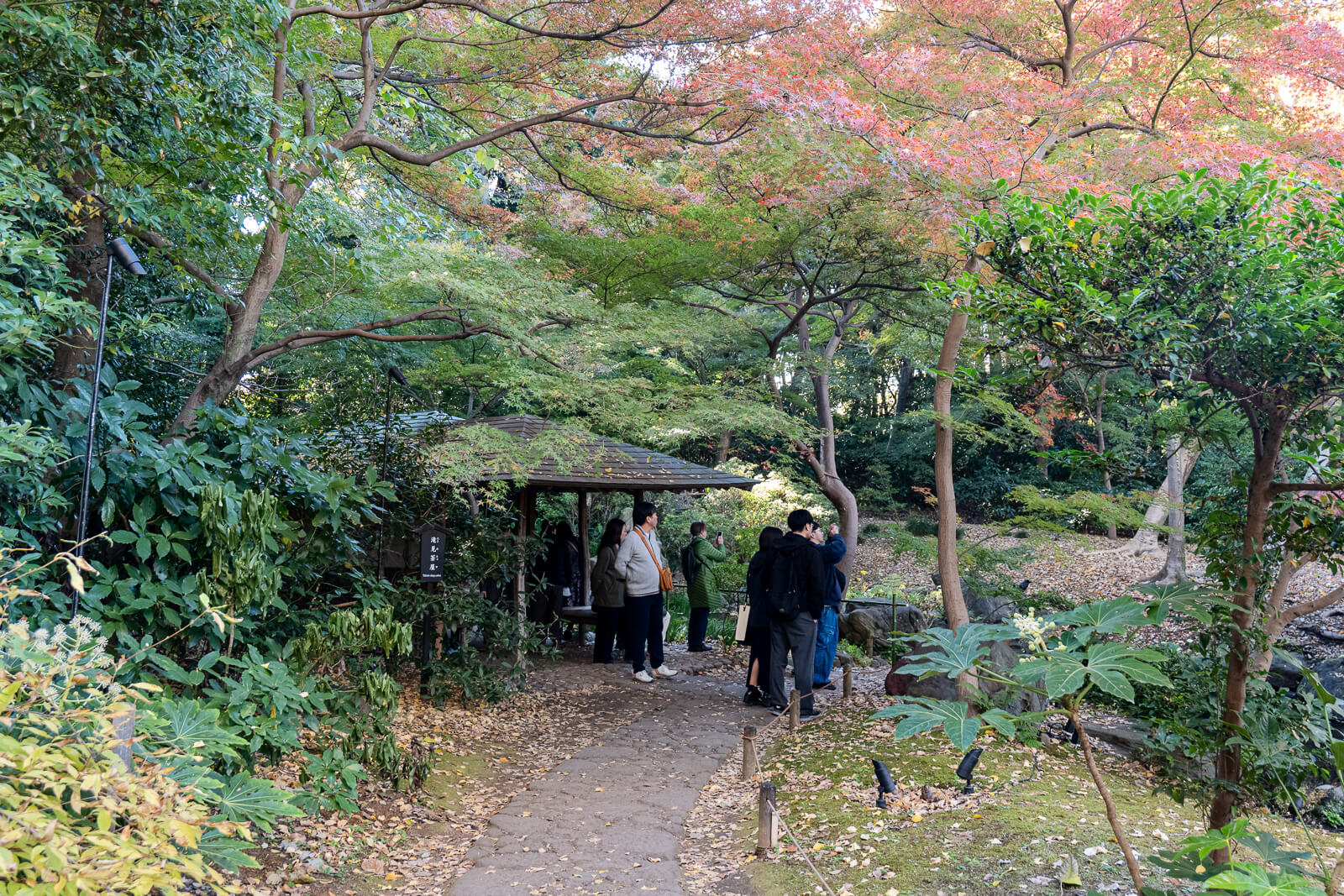
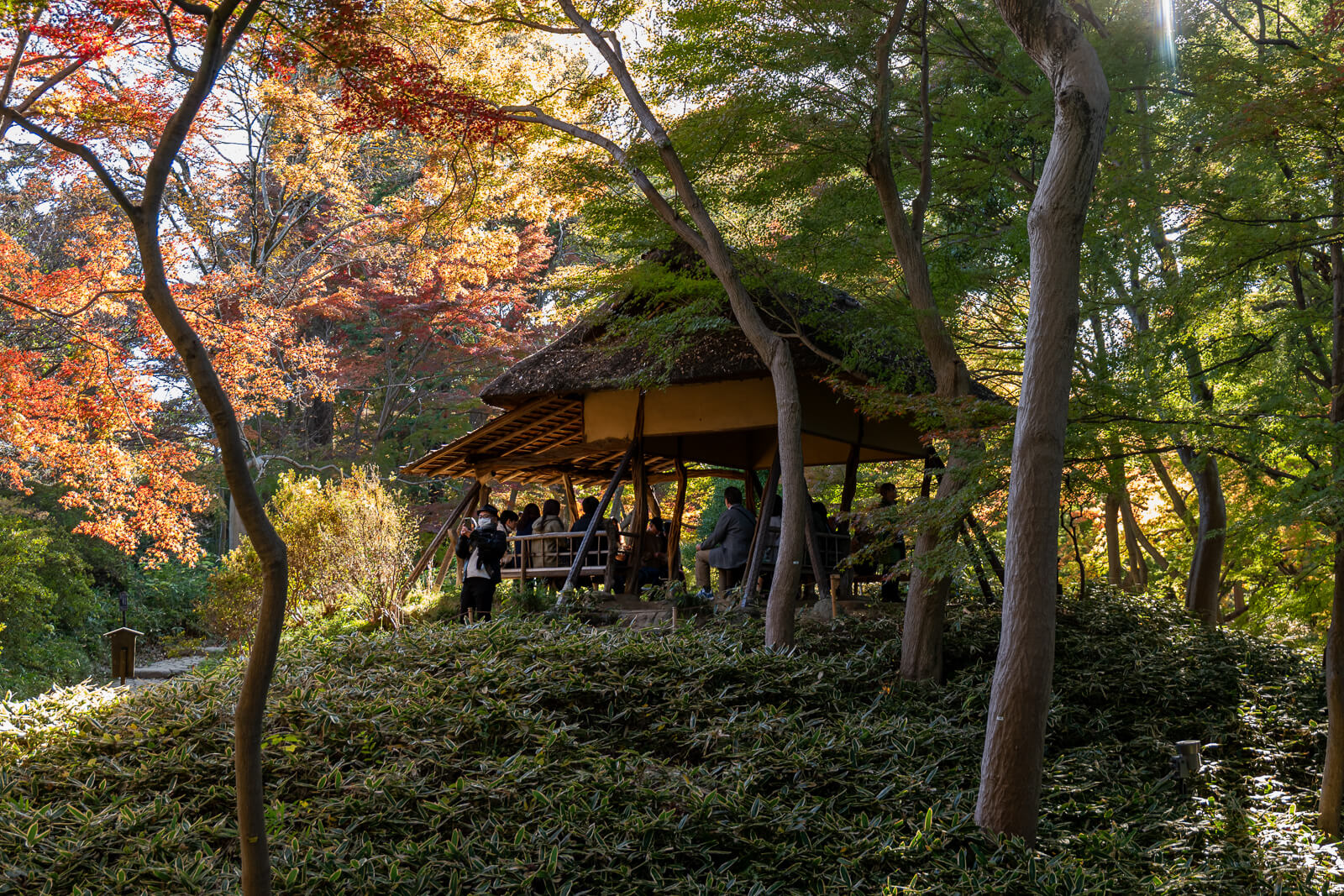
The pond offered frequent reasons to stop: a stone feature in the water, a different bridge across the way, an opening between trees, or a wider view of the shore. Small pavilion-like shelters and other seating spots let visitors pause without leaving the garden’s scenery behind. This succession of views and places to pause gives the walk a comfortable rhythm. Even where the main route gathered more people, another viewpoint or place to rest was usually part of the walk ahead.
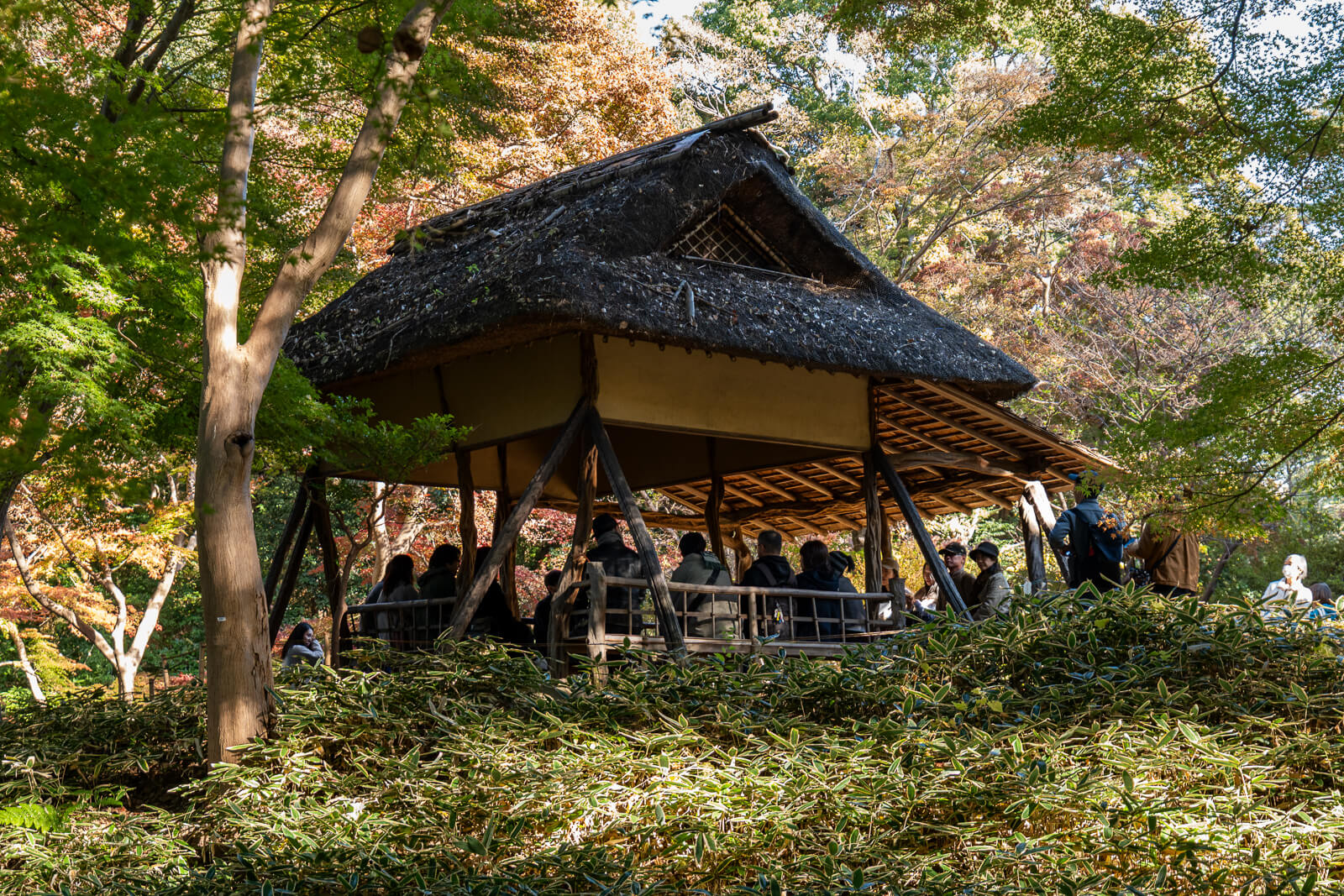
An hour was enough to leave satisfied, but it did not exhaust what the garden could offer at a slower pace. A longer visit could include more time seated, repeated pond views, and side paths that draw your attention. There is no need to turn every extra minute into another sightseeing objective when the view itself is the reason to stay.
How Crowded Rikugien Feels in Autumn
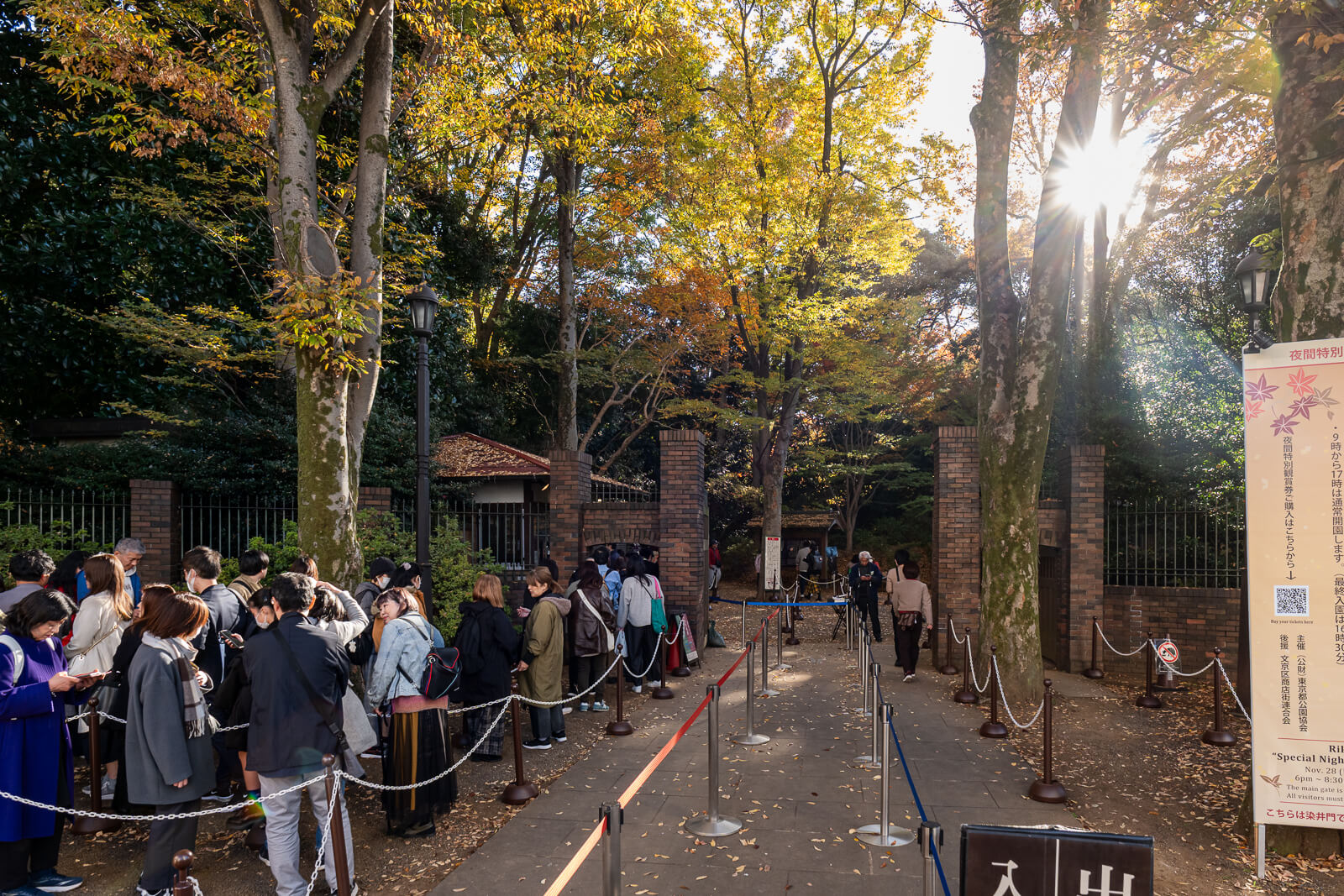
On the late-November afternoon observed here, Rikugien had a short admission line that moved quickly. People appeared around the pond and at the bridge, but the paths did not feel densely packed. Most viewpoints still gave room to see the landscape, even with other visitors present. The short bridge pause was more noticeable than crowding along the wider garden circuit.
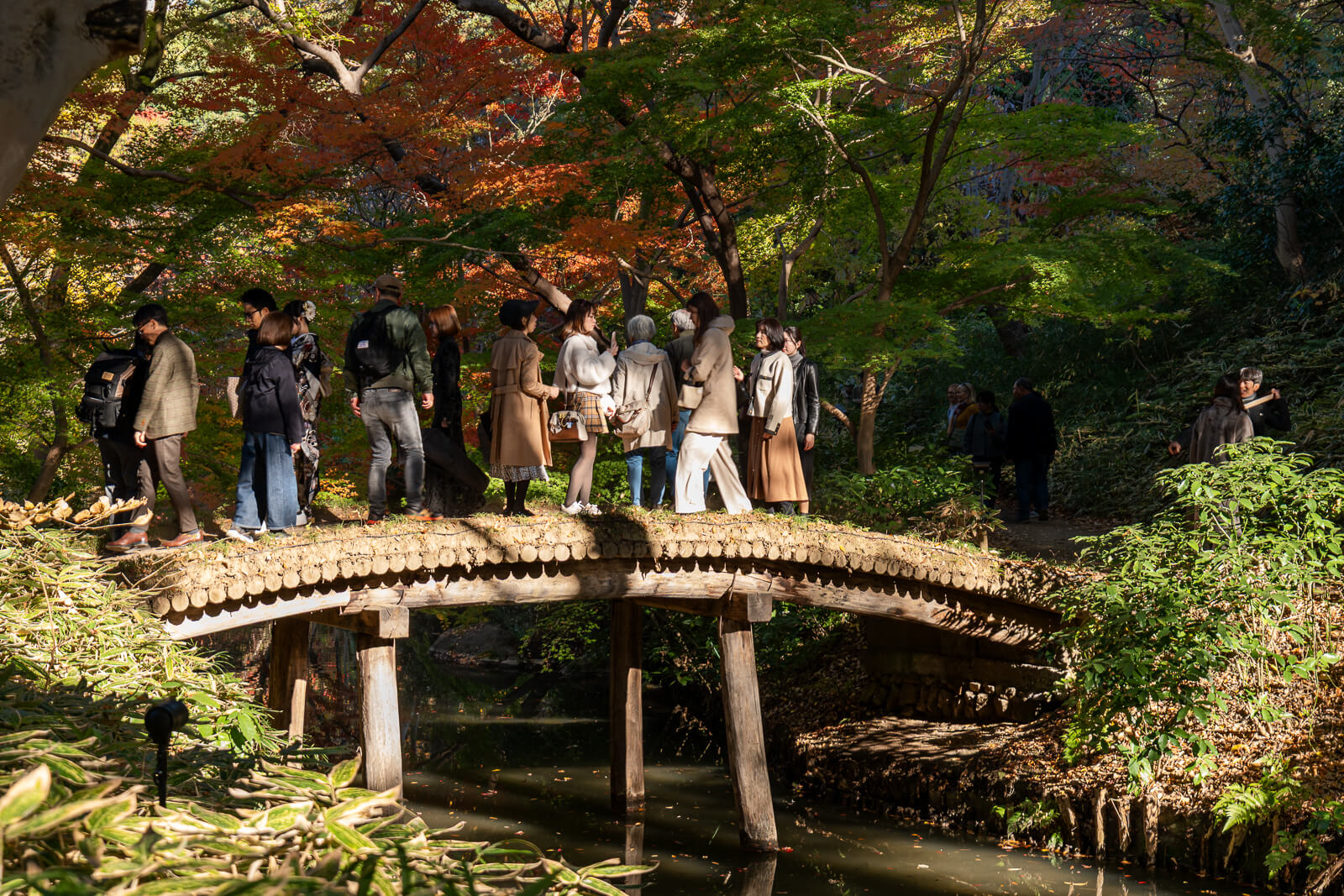
A short queue and a controlled crossing can add pauses without spoiling a garden walk. If you need empty paths for photography or strongly dislike waiting, allow more time and consider a quieter hour rather than building your visit around one bridge image. The pond circuit offers many other angles and places to stop while people pass through the busiest view.
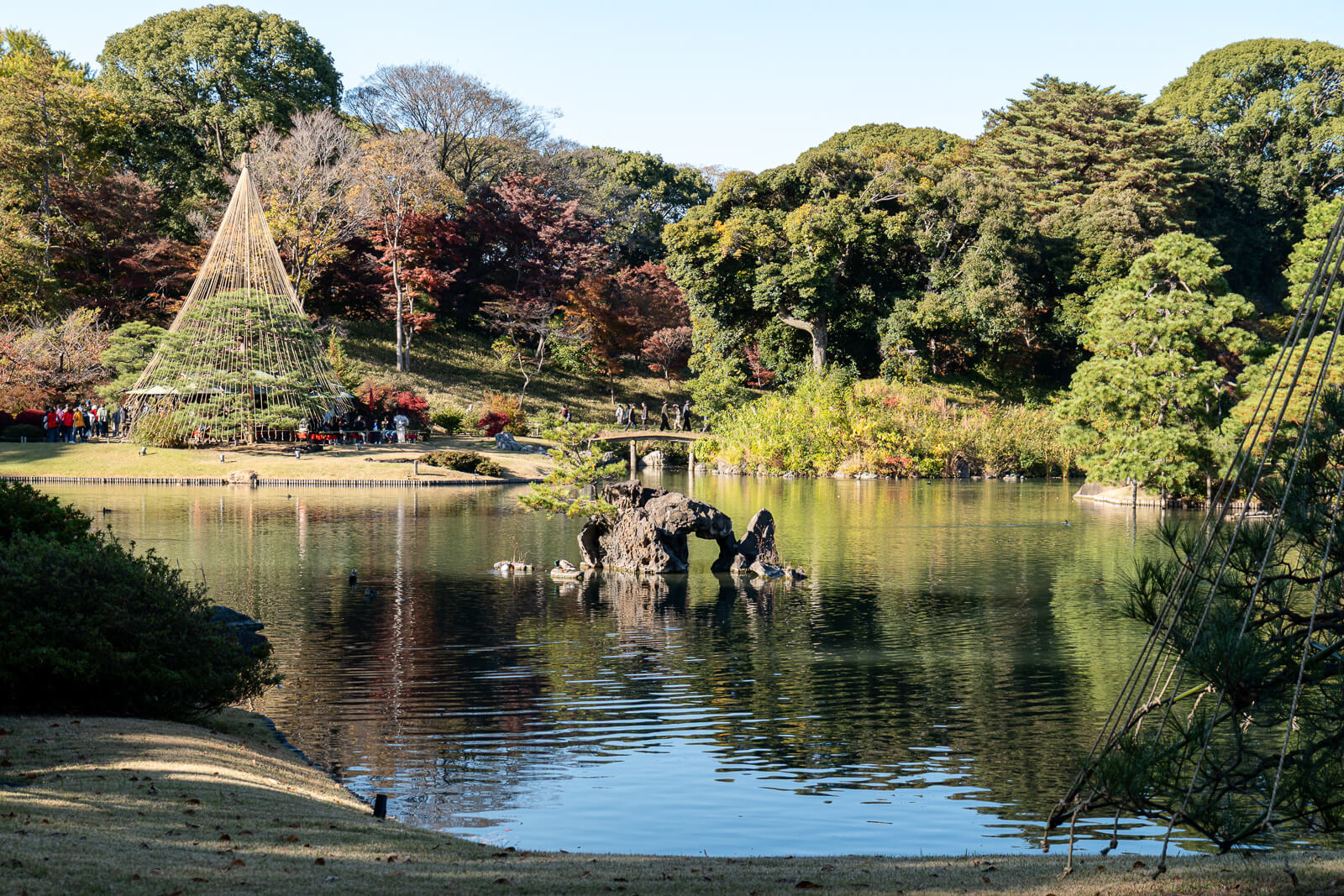
The main pond circuit can be enjoyed at an unhurried pace, and an hour is enough for a satisfying walk. Paths beyond it invite a longer visit, but comfortable walking on one circuit does not establish that every route is level or step-free. The route is flexible: a shorter visit can concentrate on the bridge and central pond, while additional paths beyond the far shore reward extra time. Seats and pavilion-like shelters give walkers places to pause without leaving the garden scenery. Visitors with specific mobility needs should check the official garden map and current route information before choosing how far to explore.
When to Visit Rikugien for Autumn Color
The late-November visit took place under clear skies in the early afternoon. There was substantial autumn color, with green foliage and manicured pines still shaping the pond views. The mixture helped different subjects stand out as the route moved among bridges, waterside paths, and the quieter places beyond the main circuit.
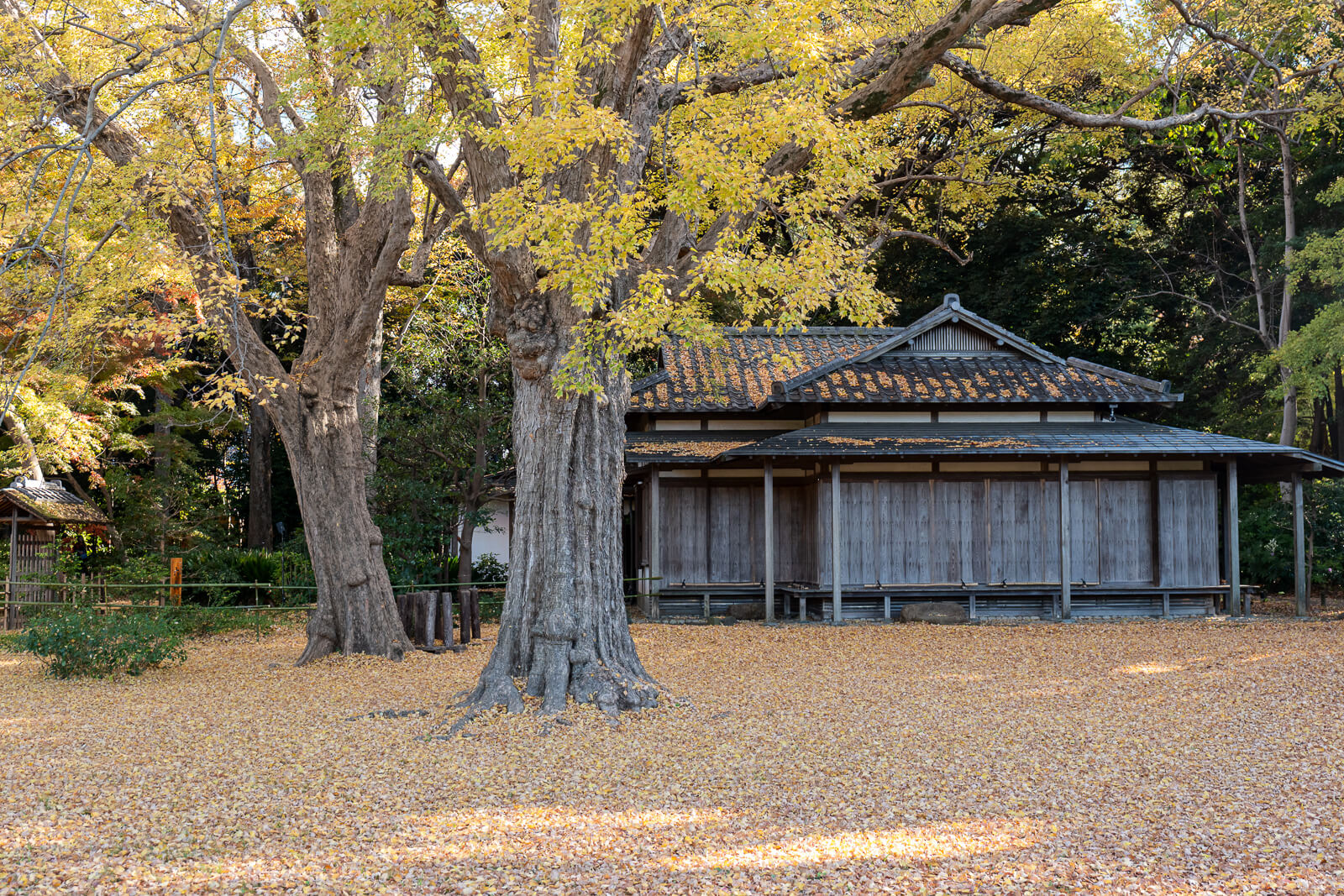
The strongest color was not concentrated in a single frame. Autumn leaves appeared above a bridge, beside the water, and along paths that offered different compositions as the walk continued. This spread of scenes is a good reason to complete the pond circuit instead of turning back after the entrance bridge. Color develops differently across trees and between years, so current garden updates remain useful when timing a future visit.
These impressions concern the daytime garden. If a seasonal evening opening is offered, check its current dates, ticket arrangements, and access details separately; the lighting and available views create a different outing. The pond, pines, and composed landscape also give Rikugien a reason to visit beyond autumn, although the firsthand observations here are specific to November.
Planning a Day Around Rikugien
Rikugien can be the main garden stop of a Tokyo day without another attraction on the schedule. Start with the bridge near the entrance, then follow the pond edge for changing views of shaped pines, autumn leaves, and structures across the water. Once you reach the far side, choose an additional path or a place to sit rather than trying to cover every branch. An hour can be satisfying, while a slower pace leaves more time for photography and the quieter viewpoints.
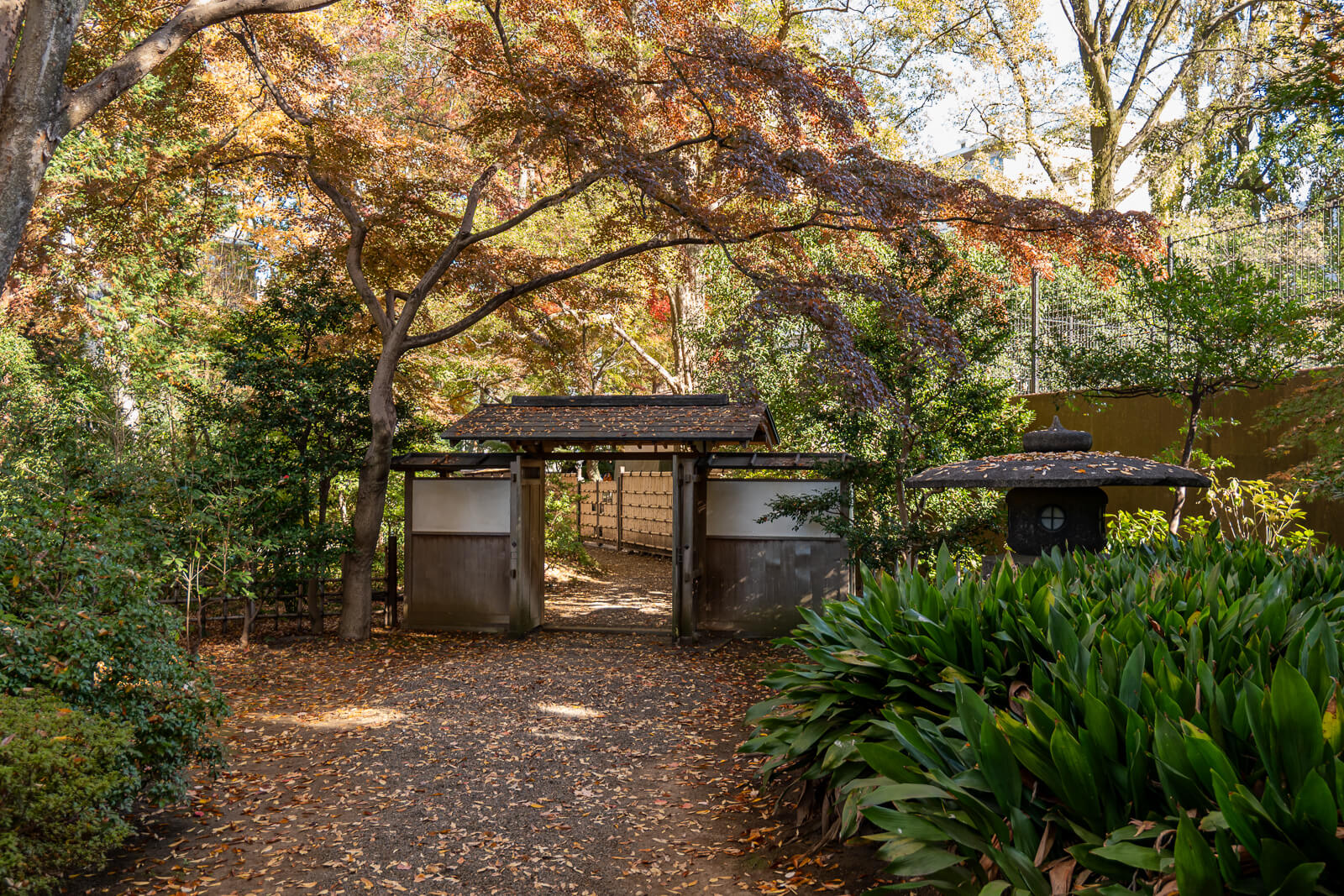
For a public-transport outing, allow time beyond the hour spent inside for the station approach, admission, and a break afterward. A short entrance line or wait at the bridge need not dictate the whole pace of the day, because the garden offers other views along the pond and beyond it. If a particular photograph matters, give yourself room to return to a viewpoint when the light or foot traffic changes. A seat overlooking the water is a worthwhile use of that extra time.
Kyu-Furukawa Gardens is another stop to consider around the Komagome area if you want more garden time, while Koishikawa Korakuen near Tokyo Dome City suits a separate neighborhood outing. Rikugien does not require either addition to feel complete: its bridge, pond, farther paths, and resting places already provide a varied visit. For a side-by-side choice among the three, see Best Tokyo Gardens in Autumn.
Getting There
Access and Arrival
Rikugien is about seven minutes on foot from Komagome or ten minutes from Sengoku. Choose the rail line that best fits your starting point.
- Via Komagome
JR Yamanote Line or Tokyo Metro Namboku Line → Komagome → garden
About 7 minutes on foot · Use the entrance indicated in the current official access guidance. · This approach also works for a day pairing Rikugien with Kyu-Furukawa.
- Via Sengoku
Toei Mita Line → Sengoku A3 → garden entrance
About 10 minutes on foot · Walk from Exit A3 to Rikugien’s public entrance. · Useful when arriving directly on the Mita Line.
Arriving by Car: Rikugien has no visitor parking. Drivers need a separate paid space nearby; public transport is the straightforward default for a Tokyo sightseeing day.
Hours and Fees
Visitor Information
Rikugien Gardens in Bunkyo, Tokyo normally opens from 9:00 AM to 5:00 PM, with last entry at 4:30 PM. Standard adult garden admission is ¥300. Special evening events have separate arrangements.
- Hours
- Garden: 9:00 AM–5:00 PM Last entry: 4:30 PM Regular closure: December 29–January 1
- Admission
-
Adults: ¥300 Age 65 and over: ¥150 Free: elementary-school children and younger; junior-high-school students living or studying in Tokyo Combined Rikugien–Kyu-Furukawa garden ticket: adults ¥400; age 65+ ¥200
Plan Your Visit
Choose accommodation and travel essentials that fit your wider Tokyo plans. Check the details for your dates before booking.
Choose a Base for Rikugien and the Rest of Tokyo
Compare hotels with a convenient rail journey to Komagome. Balance the garden visit with your other sightseeing, then check room options and cancellation terms for your dates.
Compare Tokyo Hotels
Keep Your Route Handy Around Tokyo
Keep the walk from Komagome and your onward train route easy to check. Compare Japan eSIM data allowances, trip length, and phone compatibility before buying.
Compare Japan eSIM Plans
Reader note: Japan Unfolded may earn a commission from some links at no extra cost to you.