Koishikawa Korakuen in Autumn: Pond Views Beside Tokyo Dome
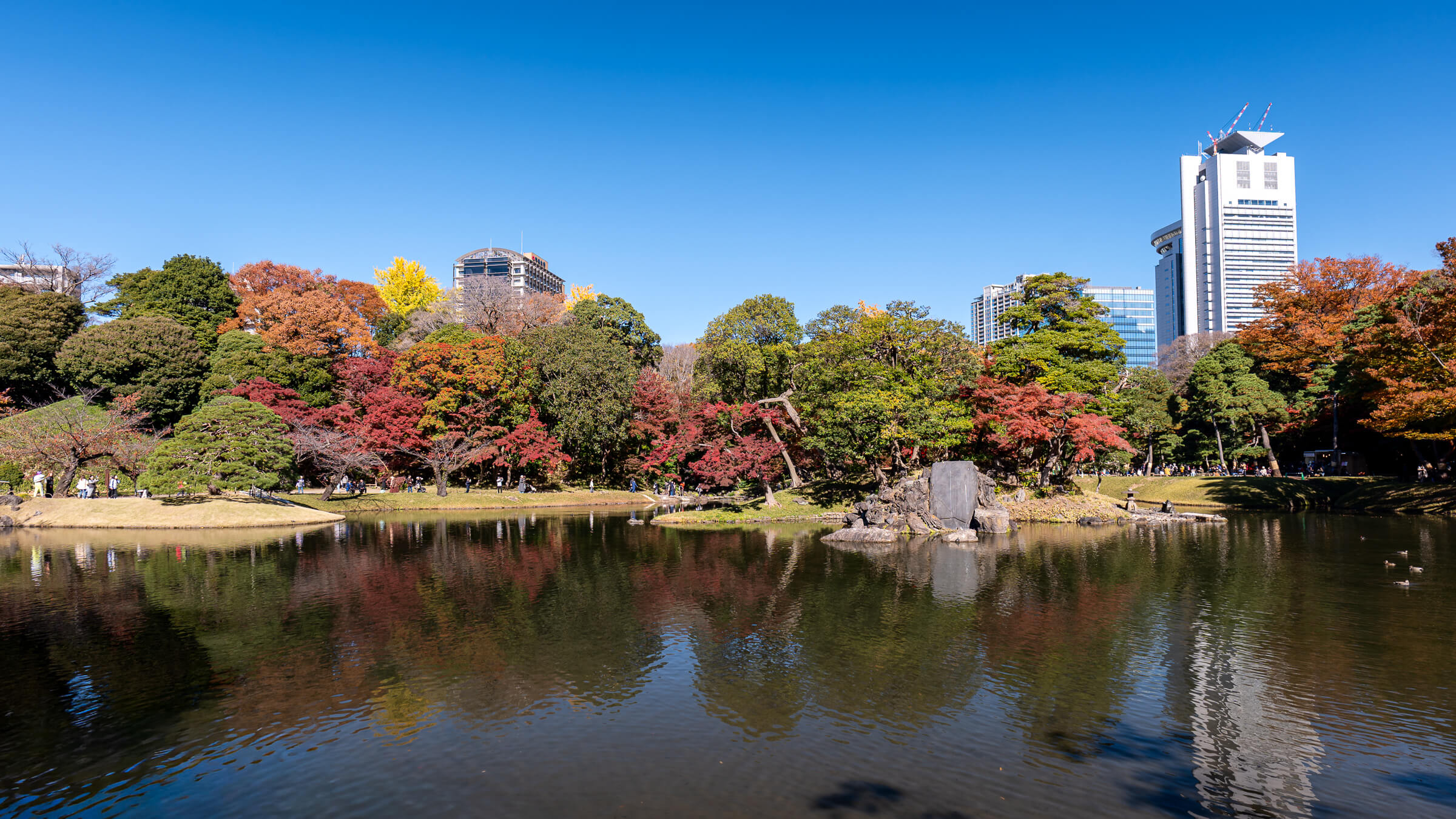
Koishikawa Korakuen is worth visiting in autumn if you want a spacious pond garden in central Tokyo, especially when your day includes Tokyo Dome City. Allow about an hour for a satisfying circuit, with extra time for side paths or a long pause by the water. Red maples, a yellow ginkgo, and the reflection of the arched Engetsukyo bridge create varied views, while green foliage remains part of the scene in late November.
The main pond gives the entrance a grand, open feel, then smaller waterways and a stone bridge reward a circuit beyond the shoreline. Tokyo Dome and surrounding buildings remain visible at the edges, so the garden feels connected to the city even when its paths are quiet. Choose it for autumn foliage, water, and a convenient location, with mostly easy walking on the route described below.
What the Walk Around the Pond Includes
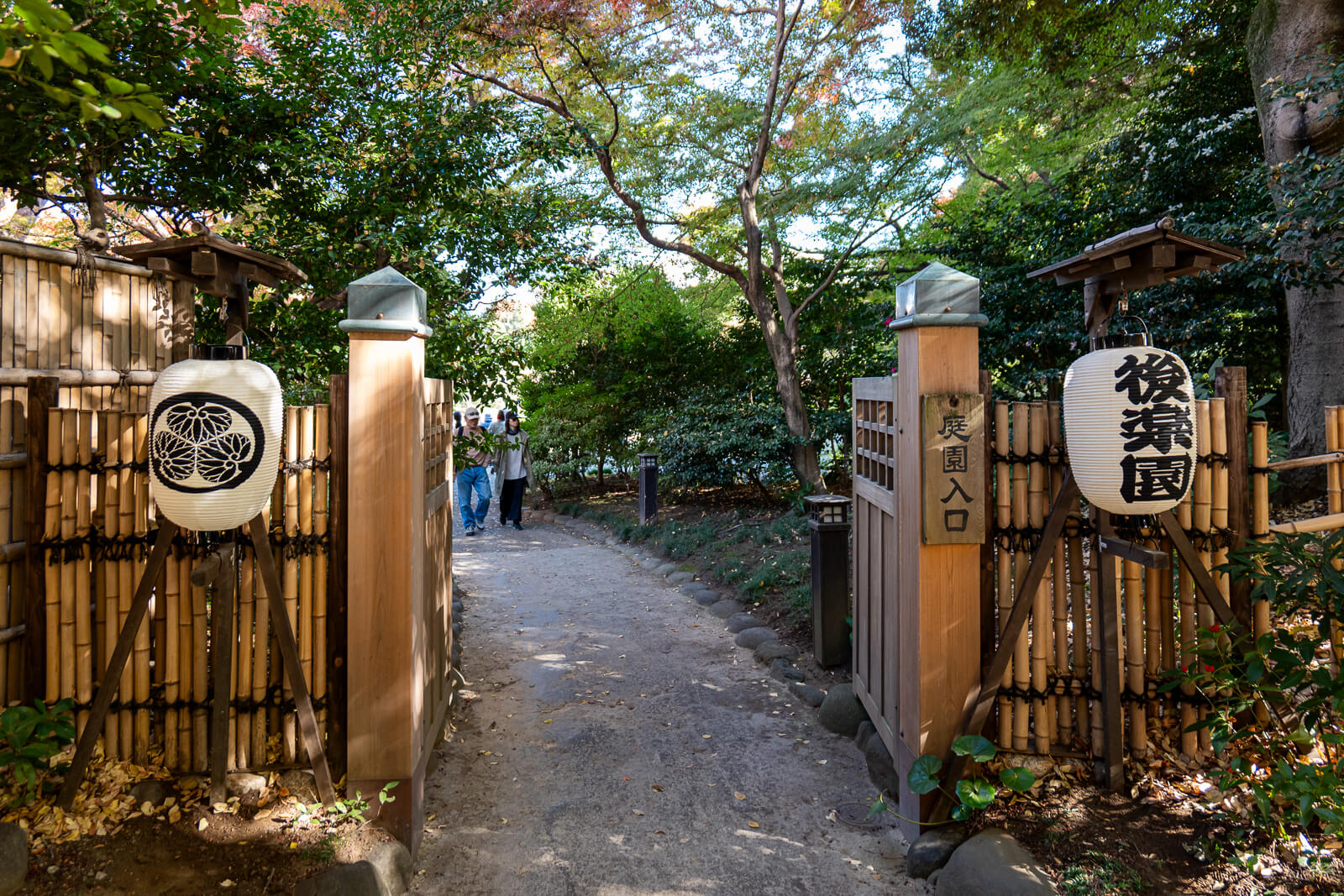
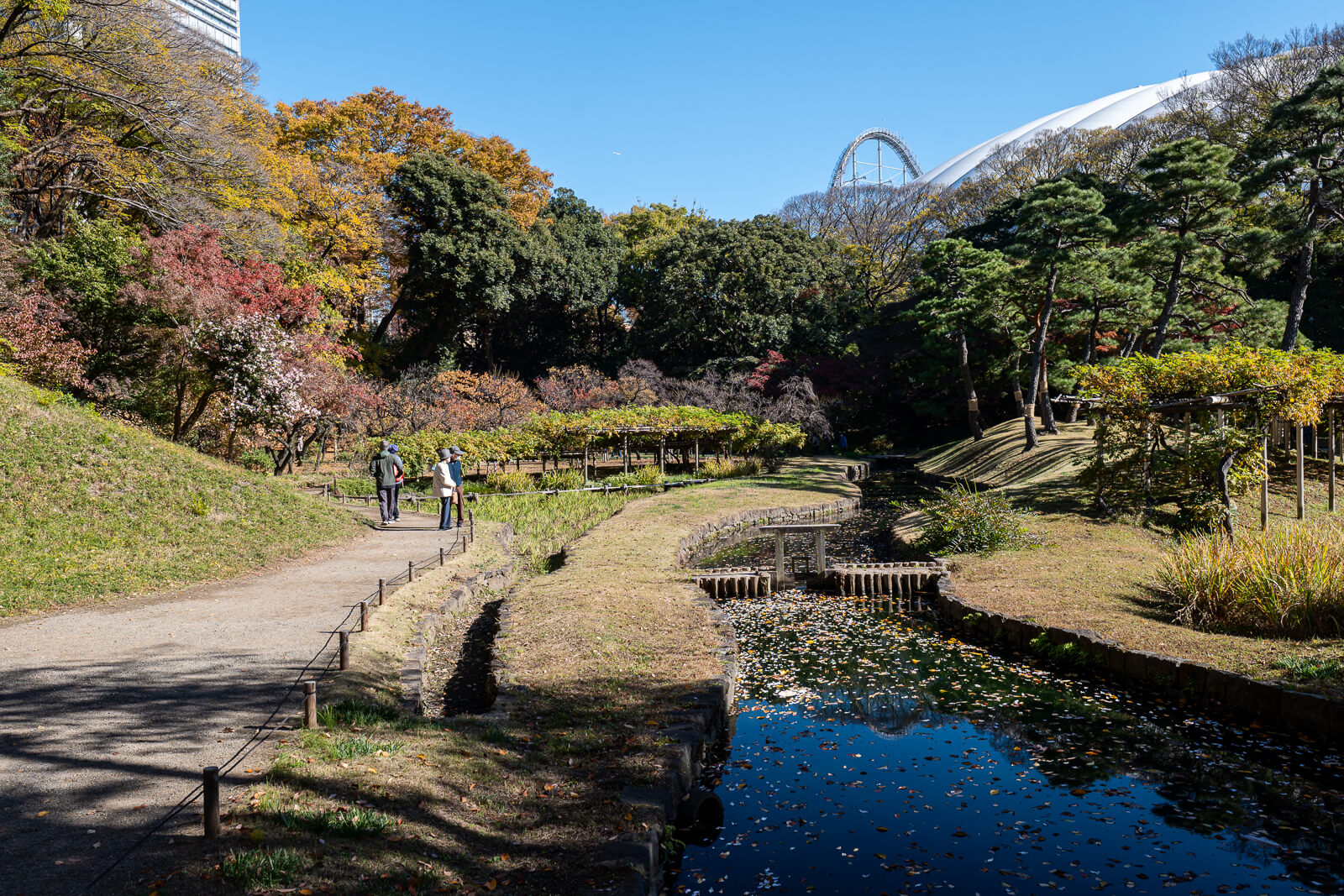
The grounds opened into a broad view of the main pond, with trees around the water and enough space to make the arrival feel grand. Red foliage was visible almost immediately, but the first look across the pond was only a starting point. The left-hand route from the entrance heads toward the back of the garden, passing smaller waterways and the arched bridge. This choice makes a useful circuit for seeing both the intimate water features and the broad pond. Following that side eventually brought the walk back toward the main pond, leaving the opposite shore for a final, broader view. Visitors can choose another direction, but this circuit shows how much the scene changes without requiring an exhaustive search of every path.
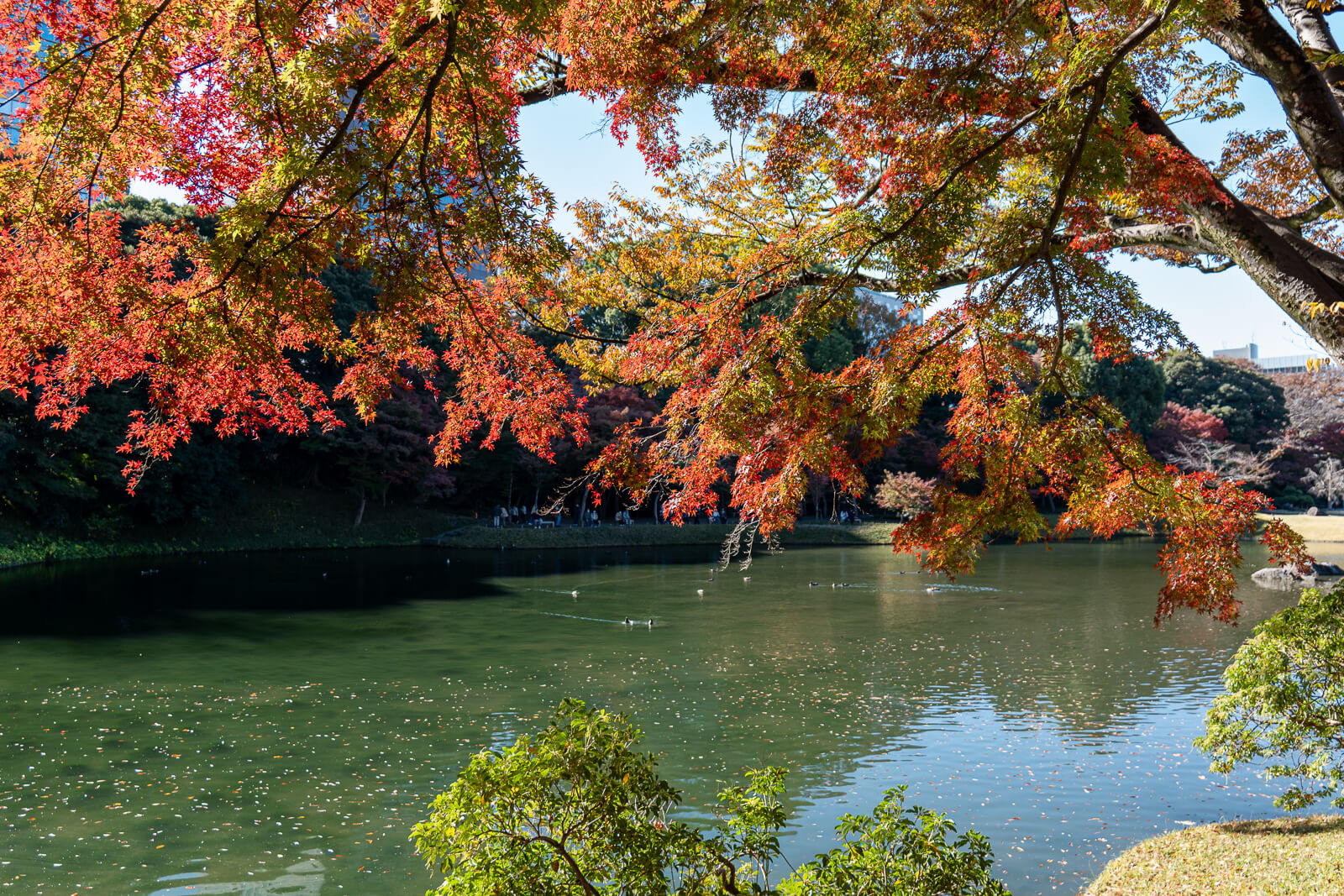
The main pond, Daisensui, anchors a garden whose origins date to the Mito Tokugawa family’s Edo residence in 1629. According to the Tokyo Metropolitan Park Association, the pond represents a broad water or “sea” scene, while the surrounding grounds bring together hills, streams, and a more rural landscape. That design becomes easier to see as the walk shifts from the open water at the entrance to smaller waterways and a stone bridge, then returns to the pond from a different shore. The garden also draws on landscapes and cultural references from Japan and China. A visitor does not need to identify every reference to appreciate how the paths move between grand and intimate scenes.
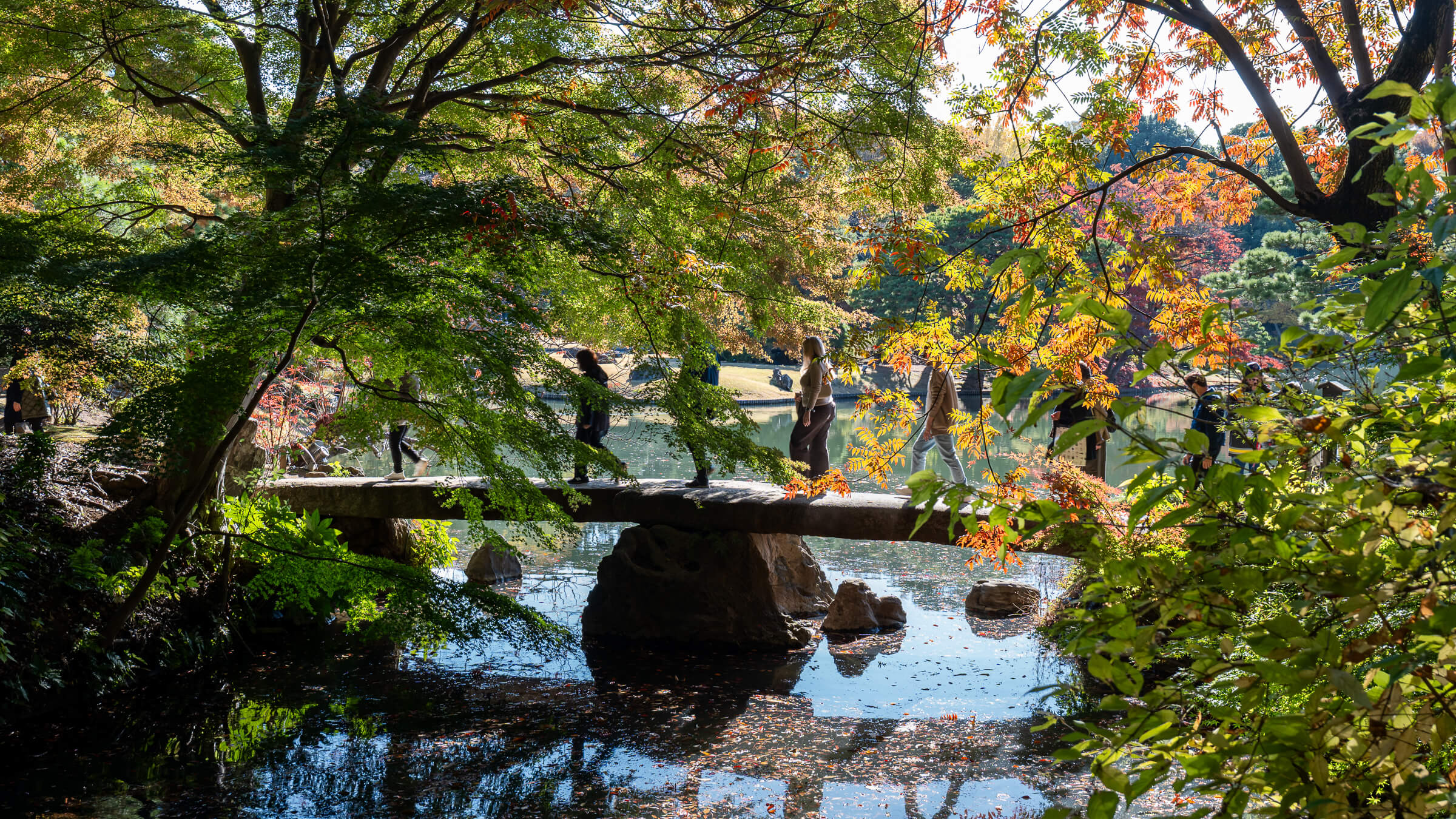
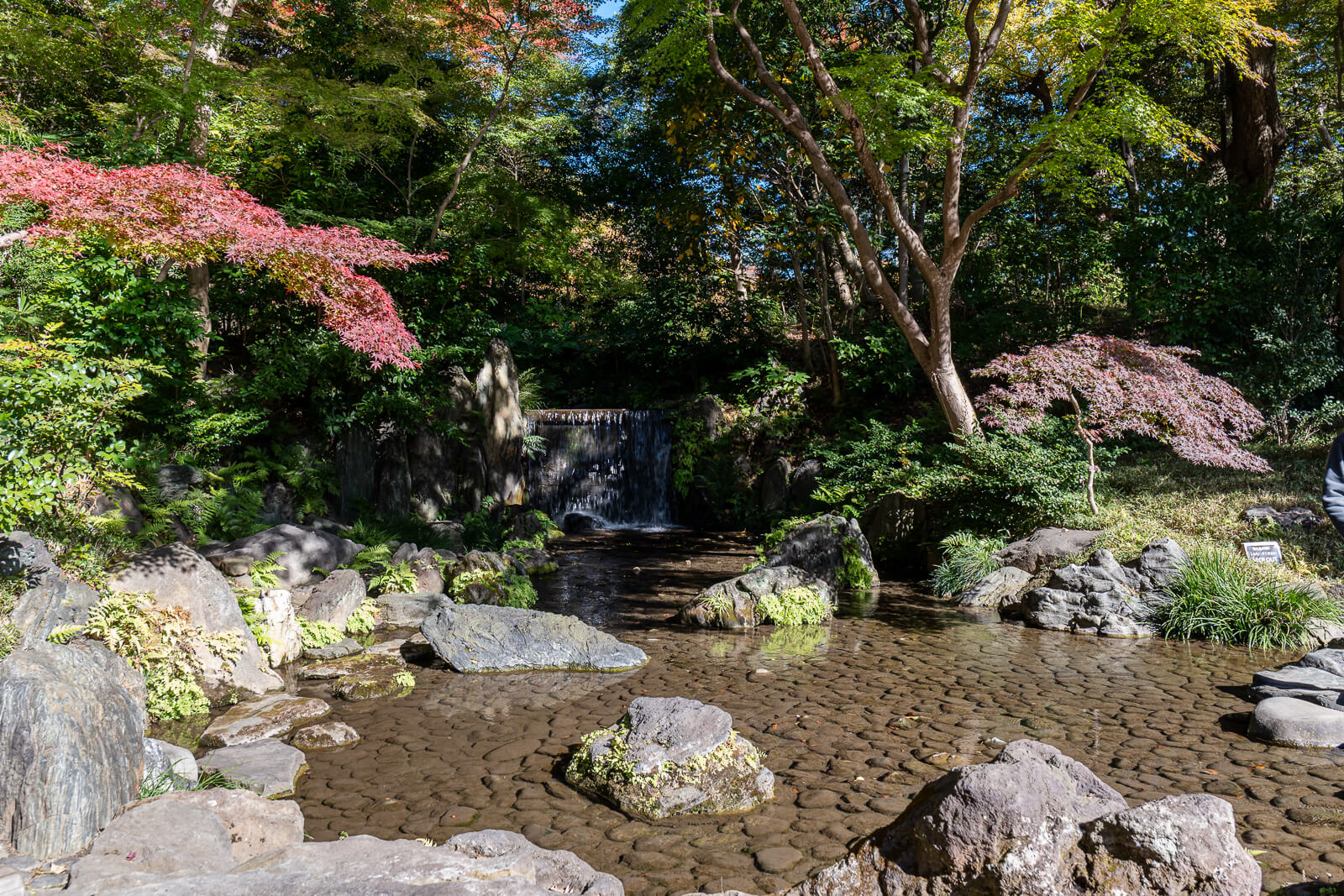
The smaller waterways made the left-side walk feel different from the open arrival. The bridge and its reflection were worth seeking out before returning to the pond, where the view from the other side felt stronger after the circuit. There were many possible paths, so an hour was enough to get a sense of the garden without seeing every vantage point. A return visit would be a chance to explore more of those branches and look back across water already seen from another angle.
Where to See Maples, Bridge Reflections, and Pond Views
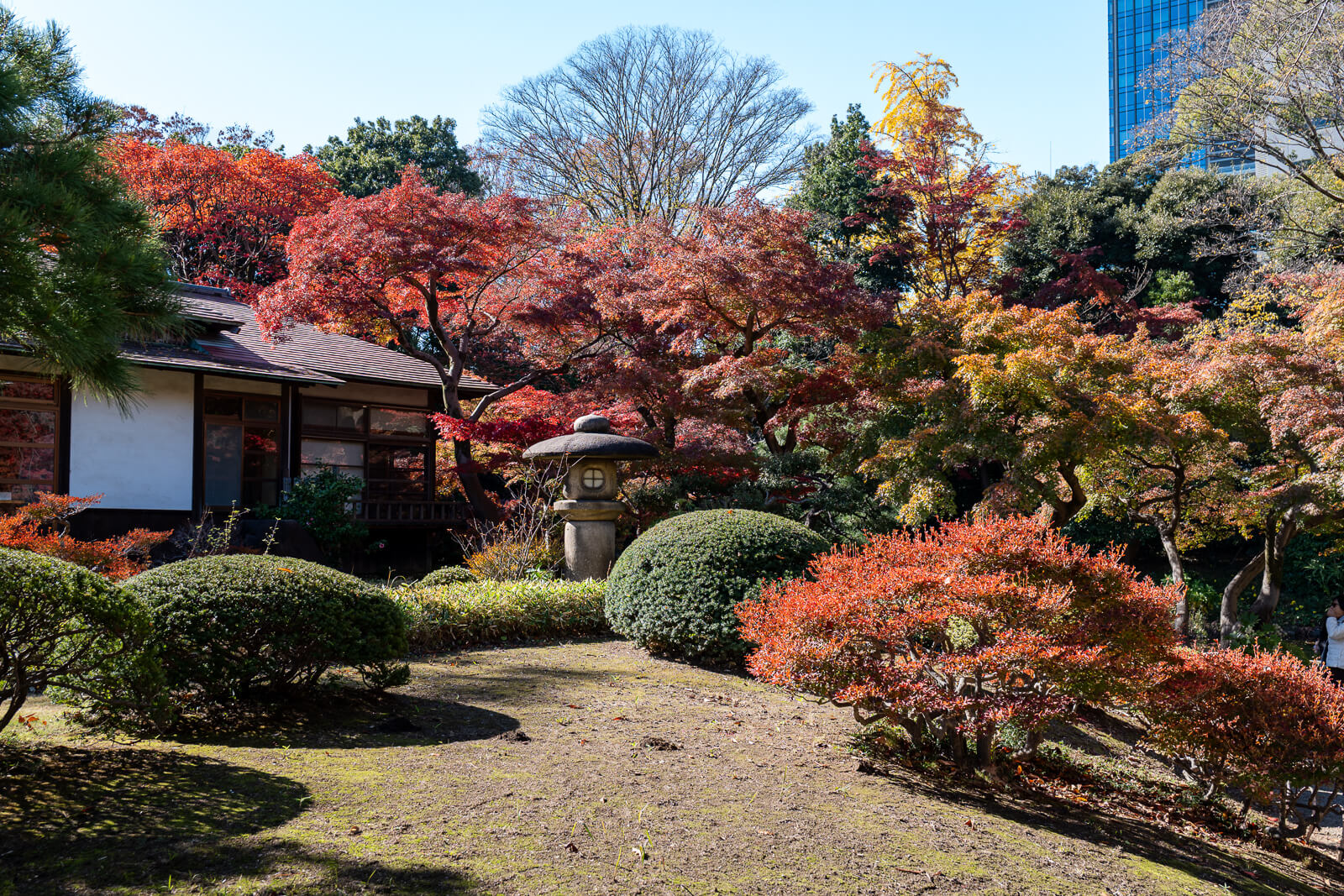
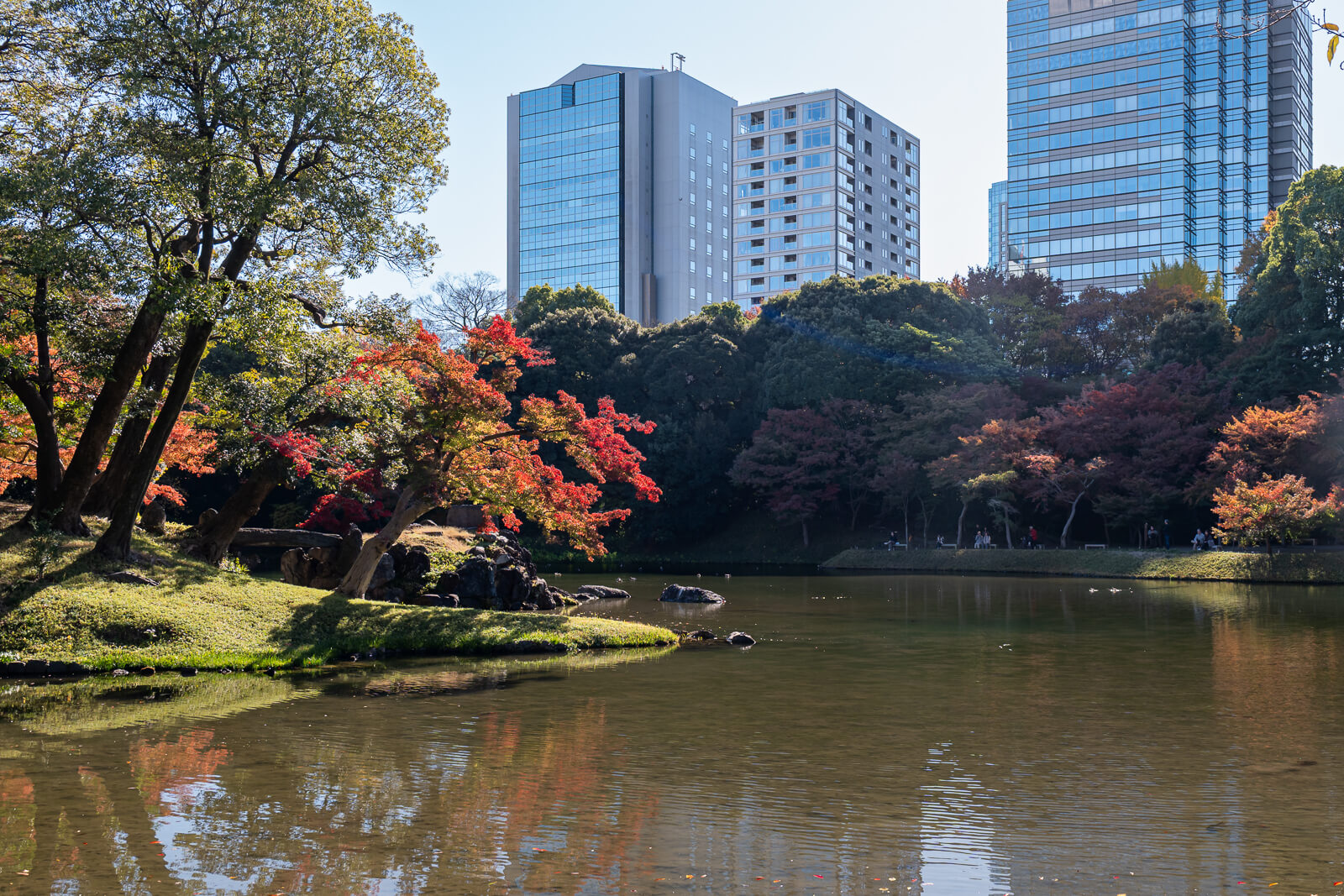
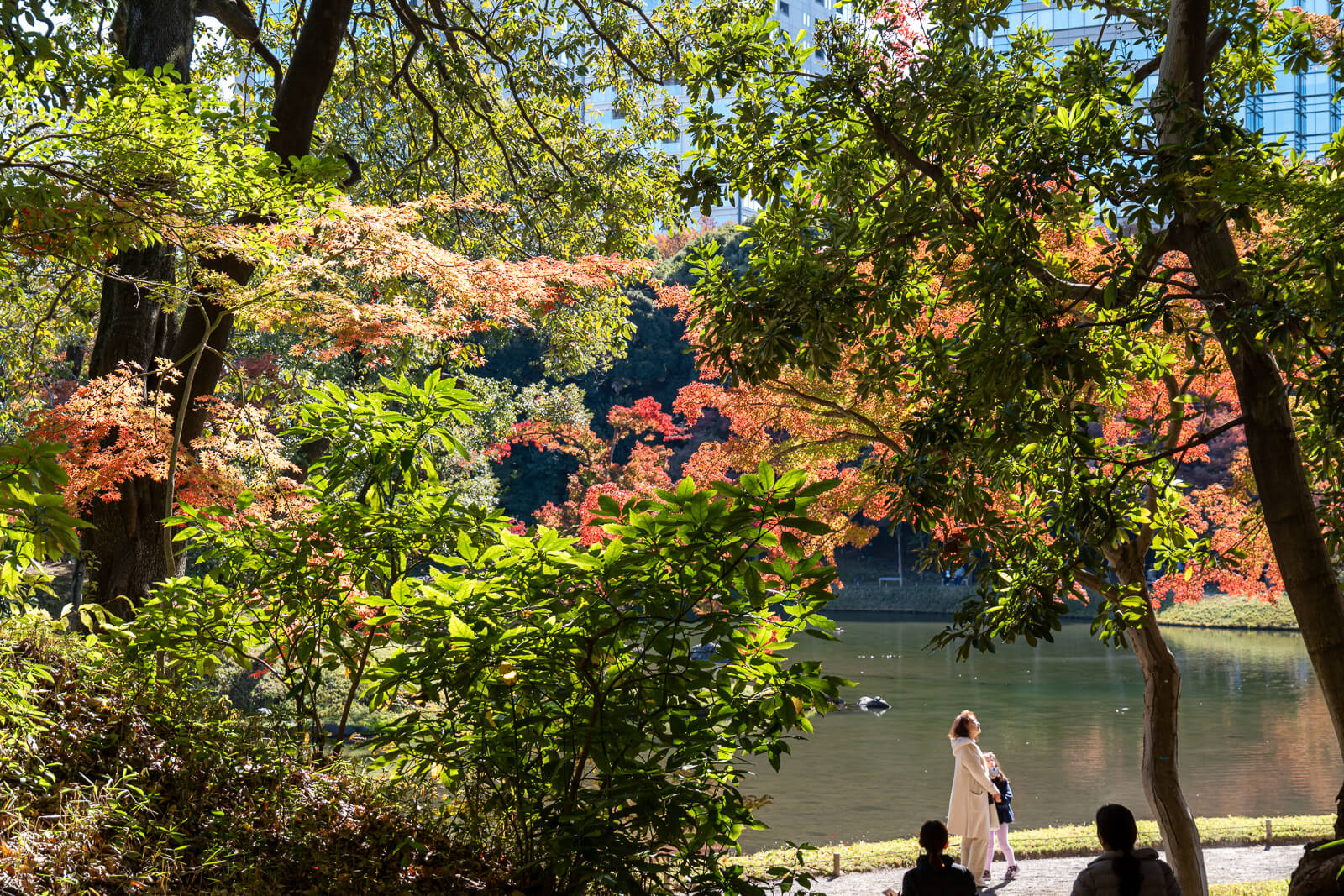
Autumn color was distributed through the garden in late November, with red maples appearing alongside plenty of green. A yellow ginkgo added a different accent, and the mixed foliage gave individual trees room to stand out. The color is best understood as a changing set of viewpoints, with red leaves punctuating a landscape that also contains green trees and open water.
Some of the strongest photographs used shaded red maple leaves in the foreground with the pond beyond. This gave a close autumn detail a relationship with the wider garden, rather than isolating the leaves from their setting. It is worth looking both through the branches and across open water as you move around the pond.
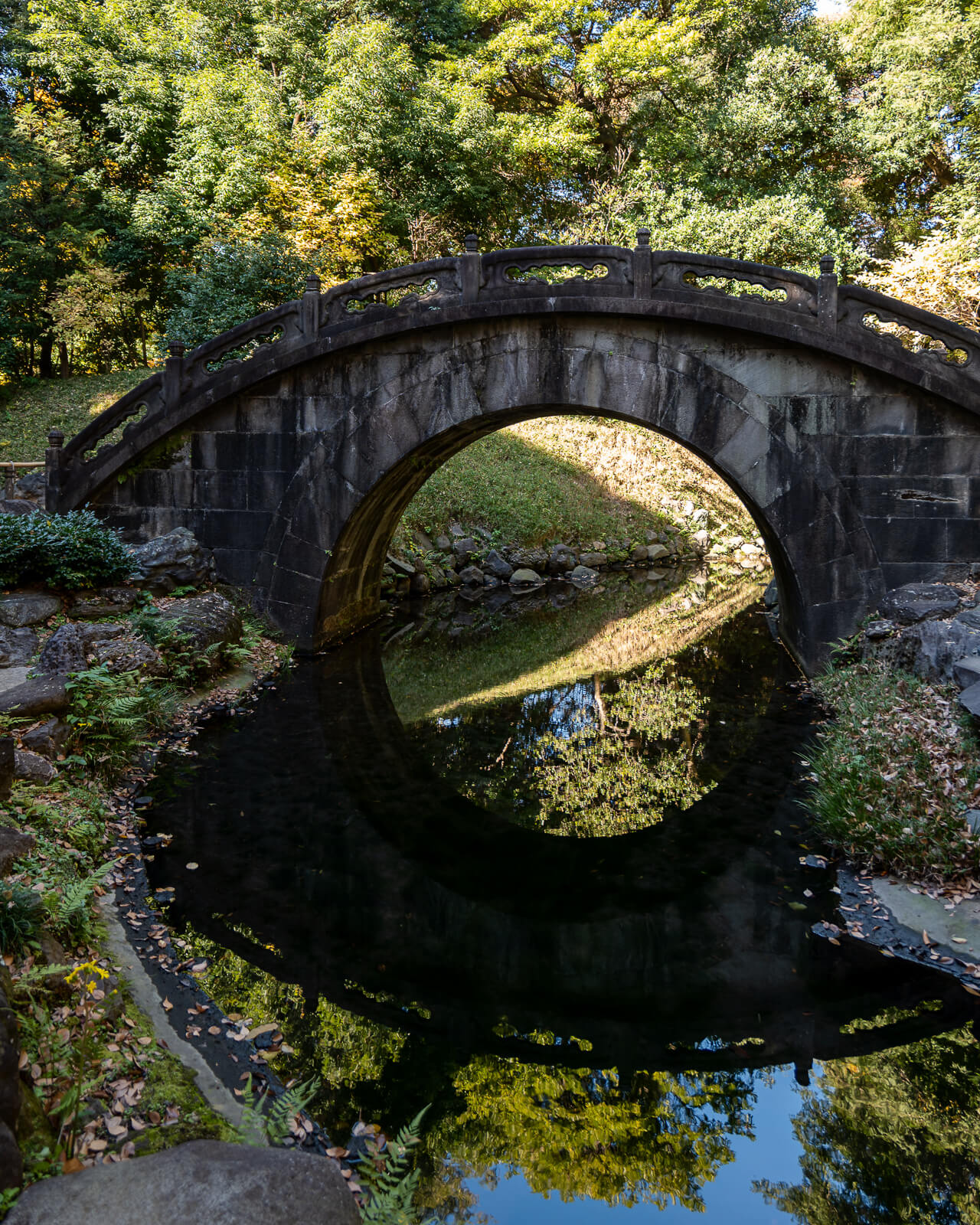
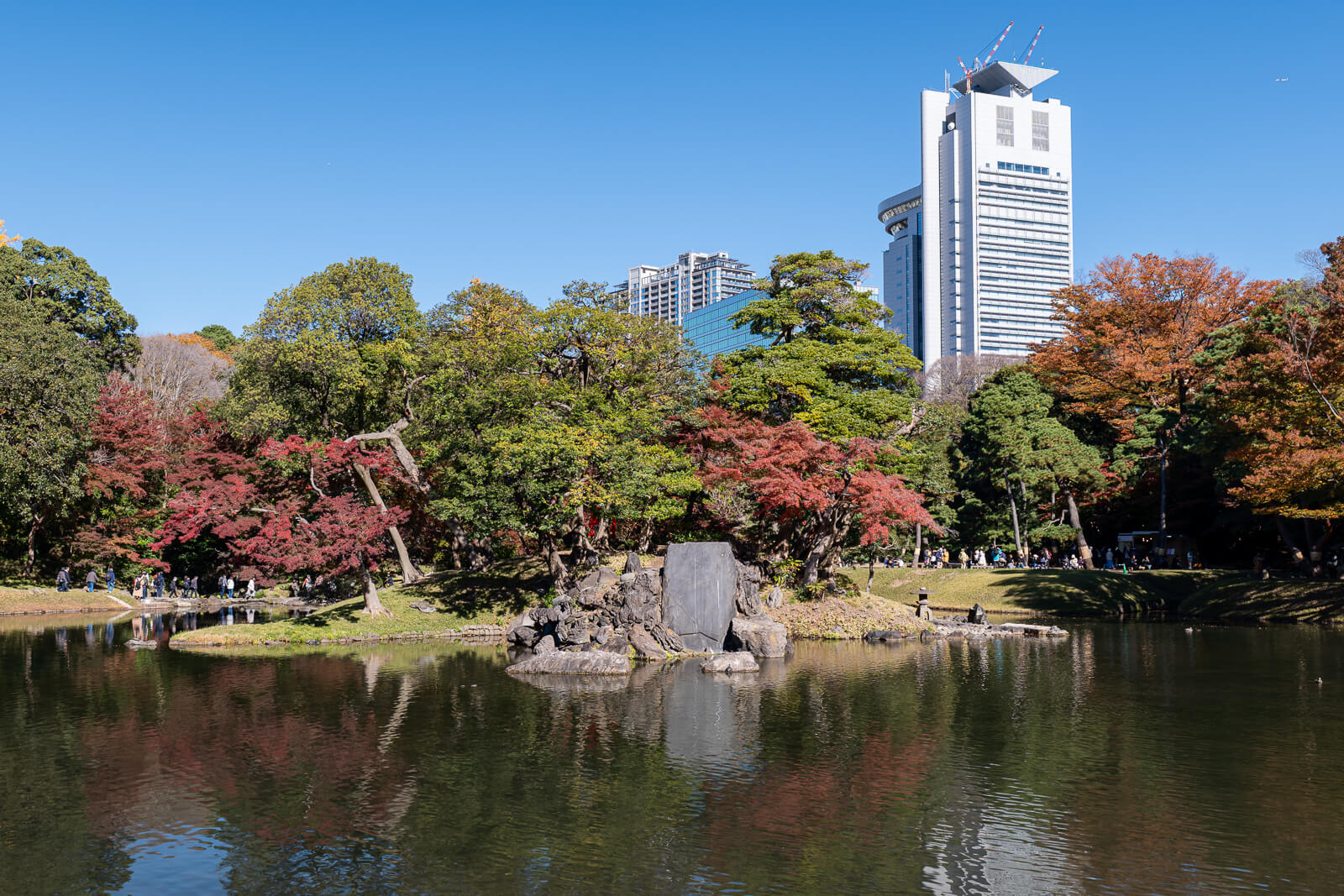
The arched stone bridge and its reflection offered another memorable subject along the walk through the smaller waterways. Koishikawa Korakuen’s Engetsukyo, or Full Moon Bridge, takes its name from the circle suggested by the arch and its reflection. It is a different kind of photograph from the broad pond panorama: the shape of the stone and its image in the water carry the composition, while nearby trees frame the scene. The bridge rewards a pause even on an hour-long visit, and it illustrates why the paths away from the main pond deserve attention rather than being treated as a shortcut back to the entrance.
How Tokyo Dome Shapes the Garden Setting
Tokyo Dome and other buildings appeared at the edges of the garden views, a reminder of how centrally Koishikawa Korakuen sits within Tokyo. The contrast was striking when the walk returned to the large pond: water and trees filled the foreground while the city remained visible beyond them. Despite that setting, the garden itself felt fairly quiet during the visit. The impression was of an open landscape within the city, with places to look outward and enough calm to linger beside the pond.
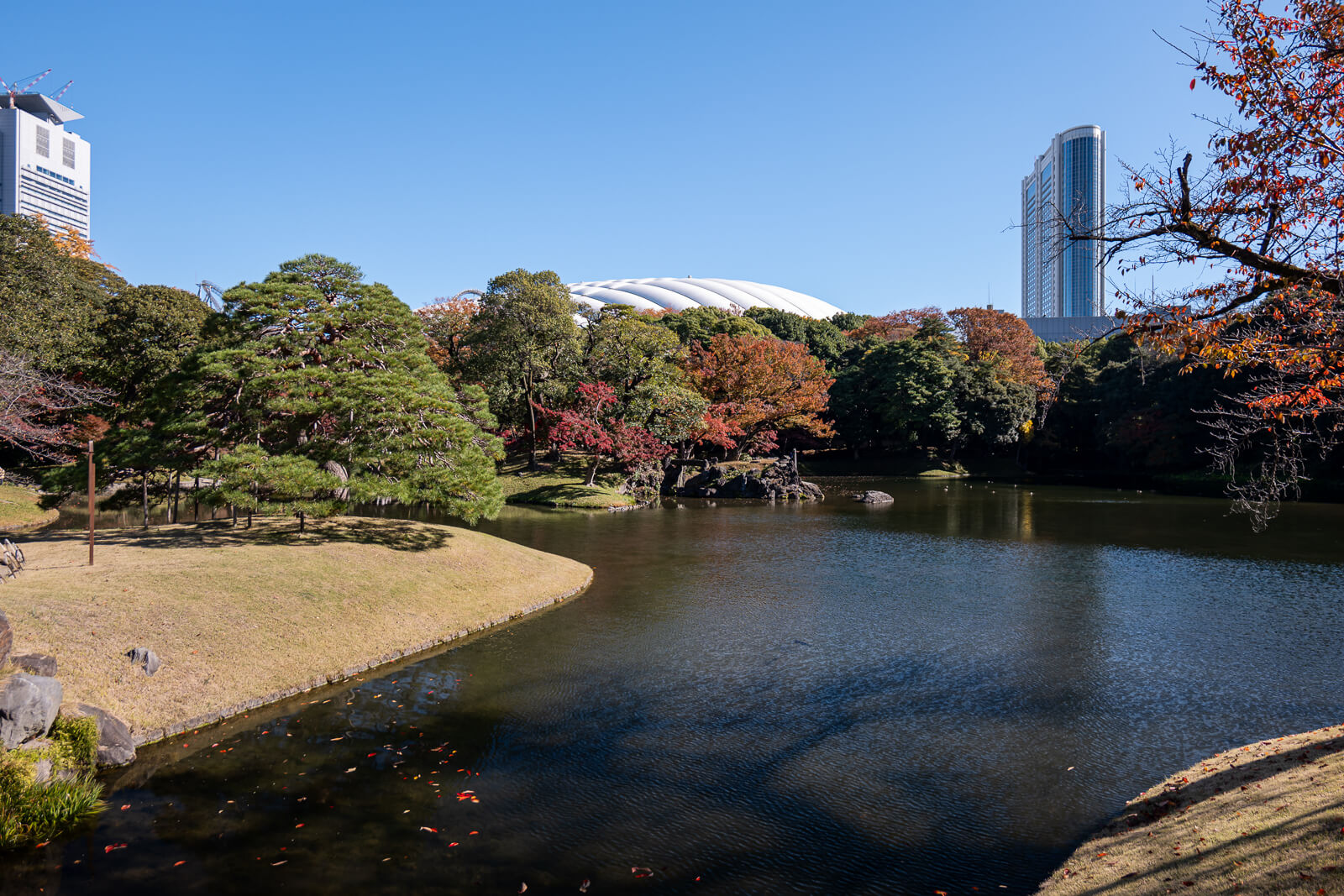
The trade-off depends on what you want from a Tokyo garden. A visitor hoping to lose all awareness of nearby buildings may prefer a more enclosed composition or another garden altogether. For someone already spending the day in the Tokyo Dome area, the visible connection with the neighborhood makes Koishikawa Korakuen especially appealing.
How Long to Spend and What the Paths Are Like
The route taken felt mostly flat, with gravel, stone surfaces, and occasional steps. Paths were generally comfortable to share, although oncoming walkers sometimes required a little attention. The circuit still includes changes in surface and occasional steps, so visitors who need a step-free route should check the current official accessibility information before setting out.
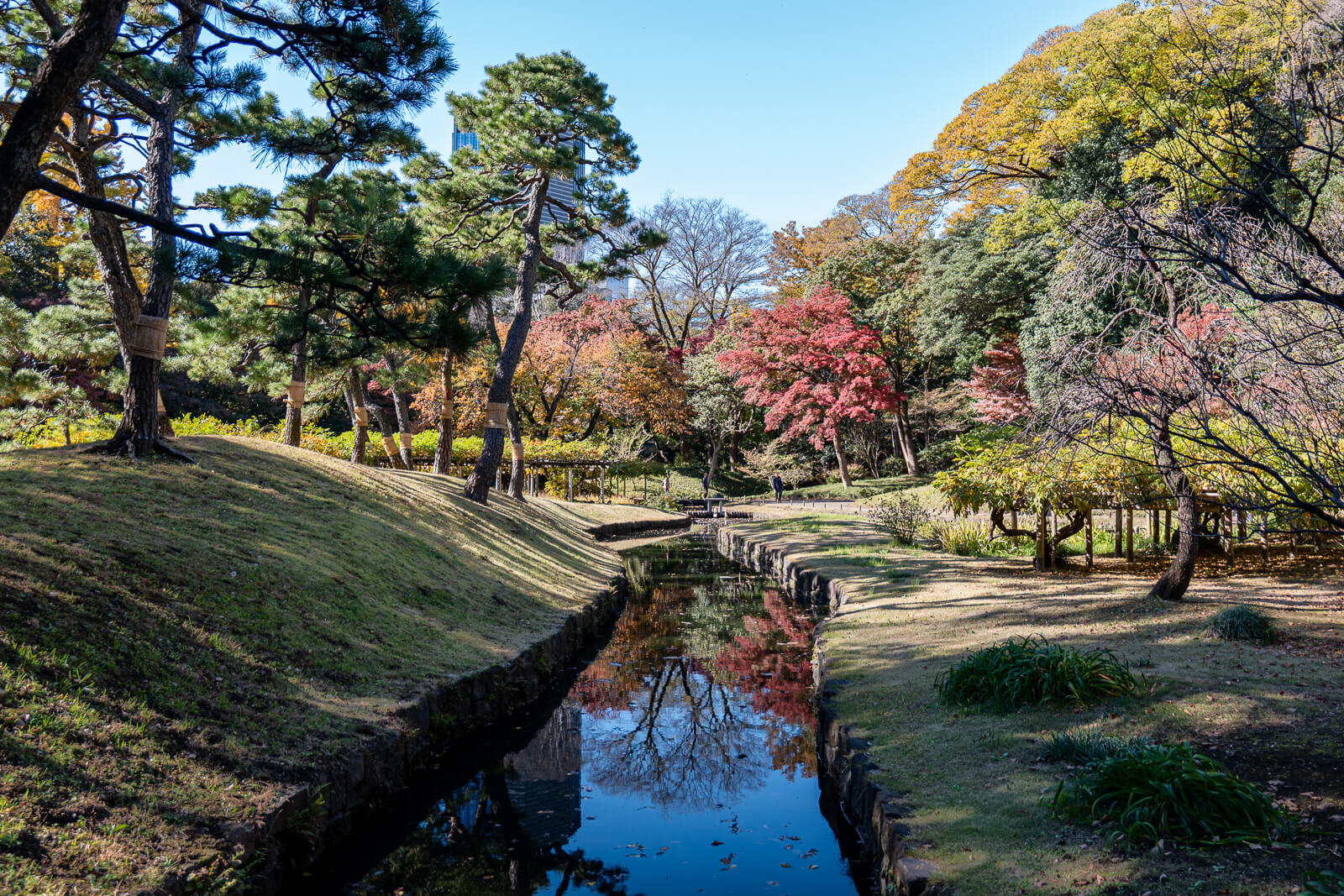
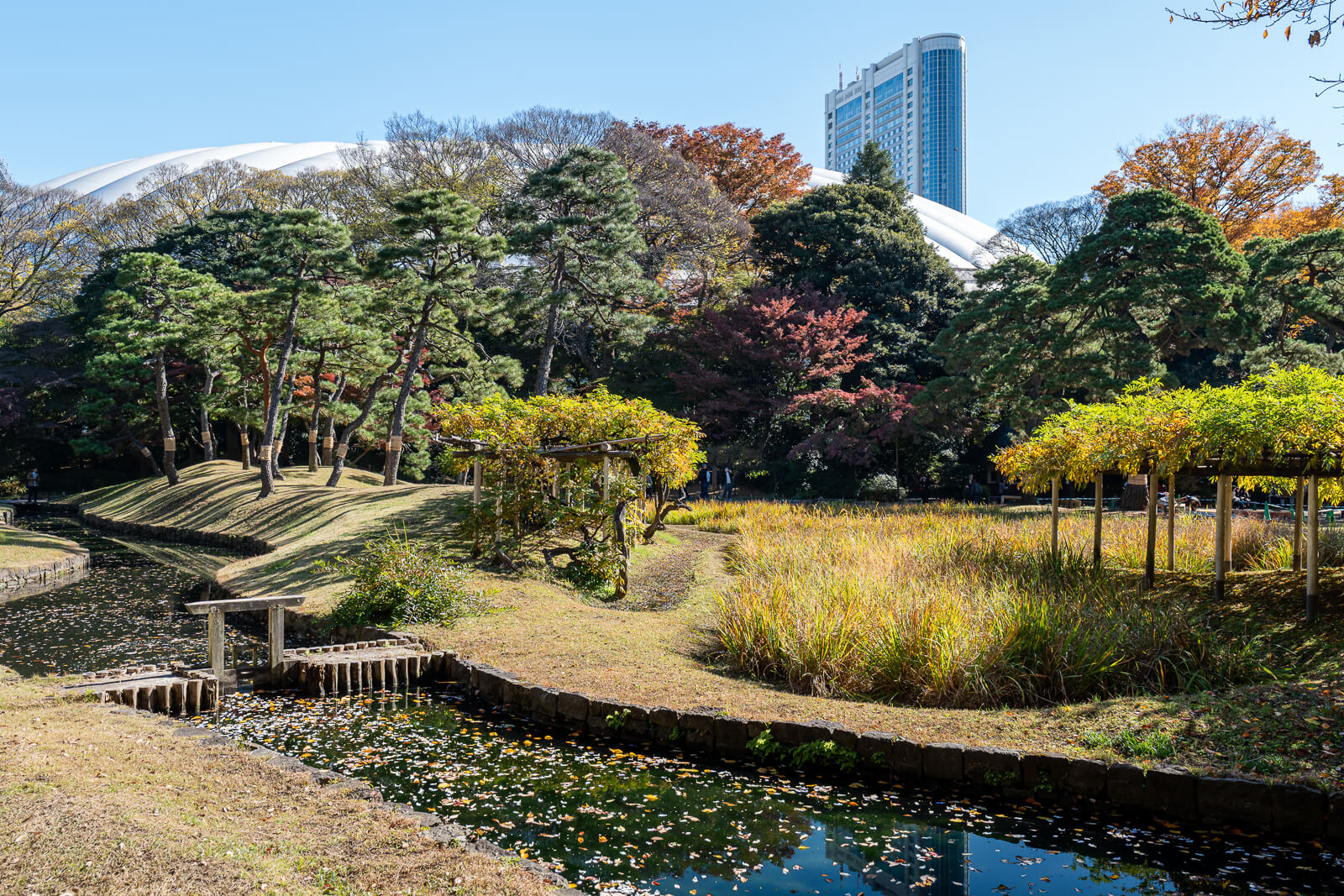
On a late-November morning, Koishikawa Korakuen had room to walk and pause by the pond without feeling crowded. The broad waterfront and branching paths helped spread visitors across the grounds, although a quieter visit on one day cannot predict conditions at another hour. Allow a little extra time if you hope to photograph a particular reflection or linger at a seat overlooking the water.
About an hour was enough for the chosen loop and left the visit feeling complete. Seating appeared around the main pond and in other parts of the grounds, so a slower visit could include pauses as well as extra paths and photographs. The size of the garden means missing one branch does not spoil the outing; its waterways, bridge reflection, and changing pond views already give the walk variety. Allow at least an hour inside, then add the station approach and any admission queue separately. A return visit could focus on different viewpoints rather than trying to retrace every step.
When to See Autumn Color at Koishikawa Korakuen
The late-November walk already offered good color, though green foliage still shared the scene with red maples and one yellow ginkgo. Around the pond, those differences made it possible to find a close autumn foreground without losing the sense of the larger garden. Color develops unevenly and varies between years, so a traveler planning around a particular display should check current garden updates nearer the visit.
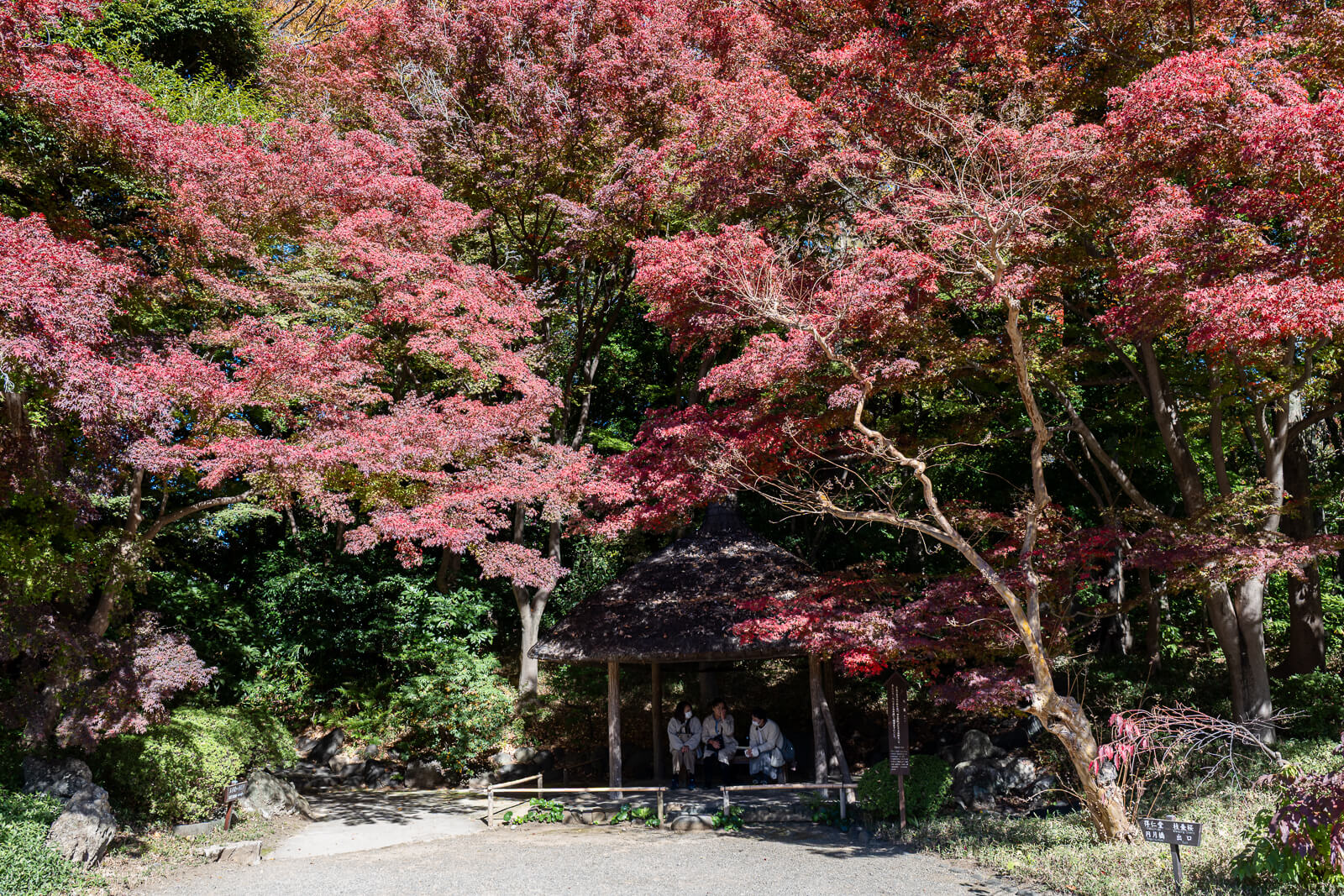
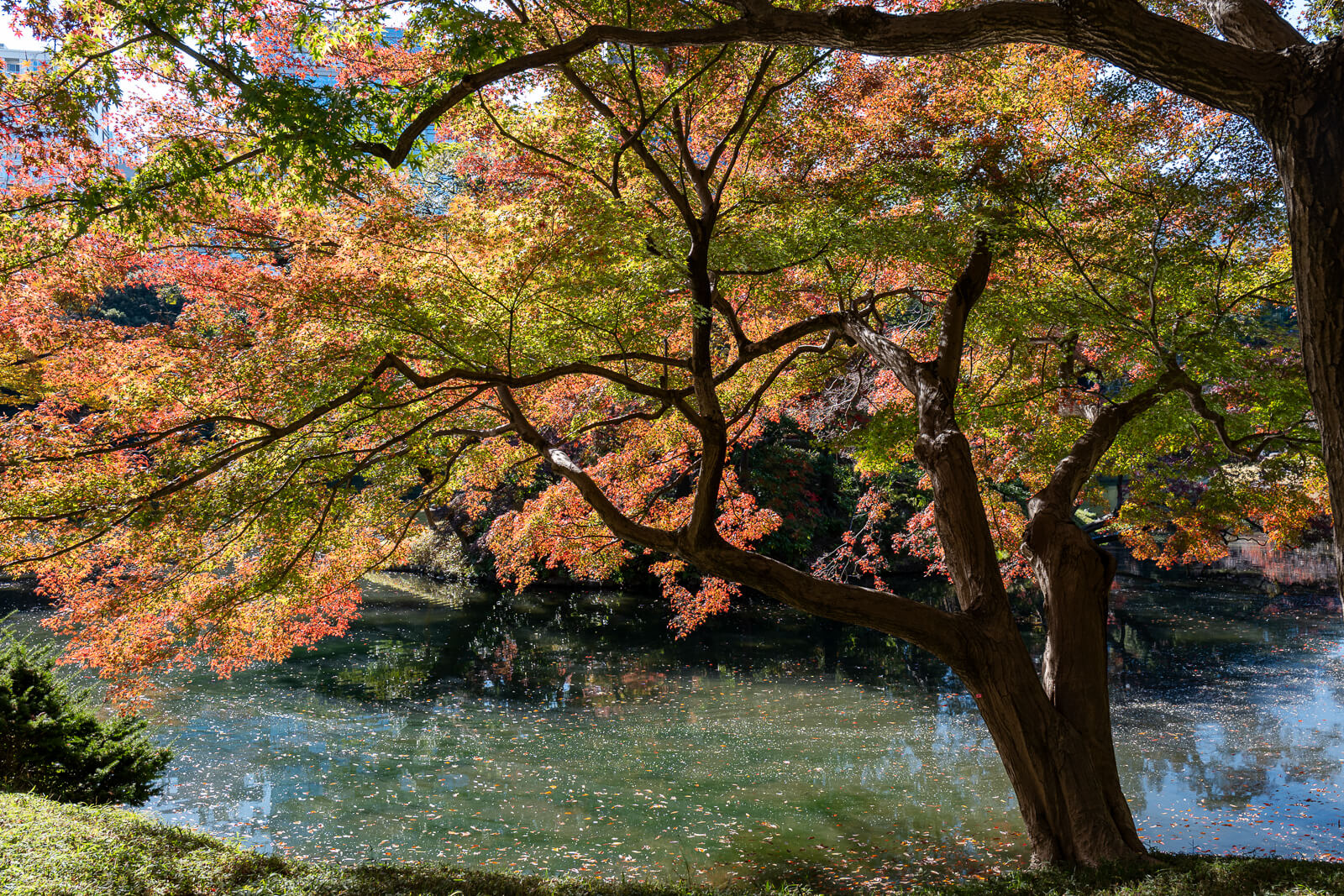
The garden’s pond, bridge, and changing perspectives also give the visit a purpose outside the autumn season. The foliage details reflect a late-November visit, while the pond, bridge, and path layout make the garden a year-round sightseeing option. If seasonal flowers or a particular event are the reason for going, check the current garden notices before fixing the day.
Pairing Koishikawa Korakuen with Tokyo Dome City
Koishikawa Korakuen is a useful garden choice when you already plan to visit Tokyo Dome City. The surrounding complex provides a different pace after the garden, with shopping, dining, and amusement attractions. LaQua is the name of the shopping, dining, and spa complex within that wider area.
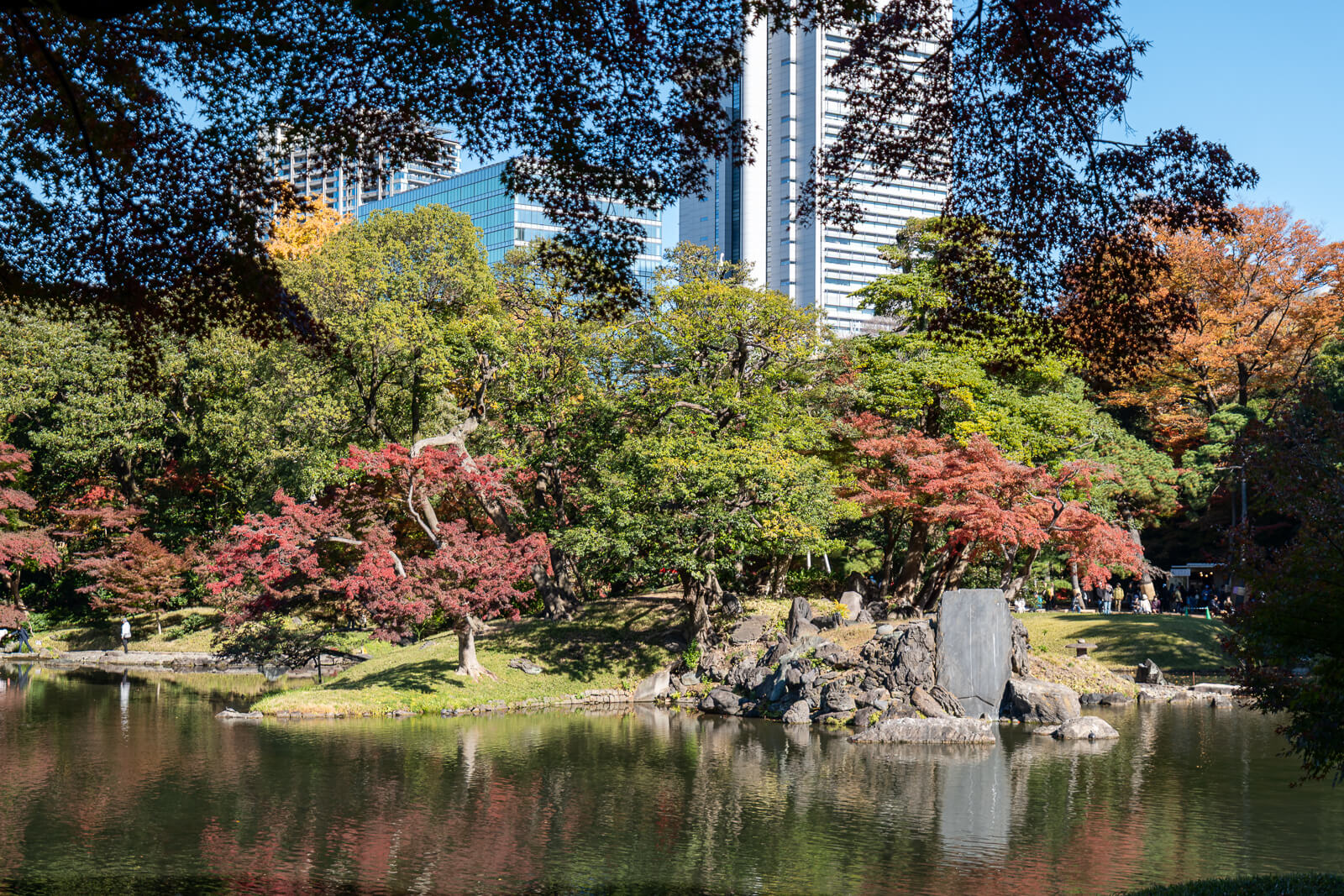
Treat the garden as a complete stop and leave time for it before an event or another booking. An hour inside can be satisfying, but admission, station walks, and the onward route still take time. The strongest reason to combine these places is the variety they bring to one neighborhood visit, rather than a need to fill every hour with another attraction.
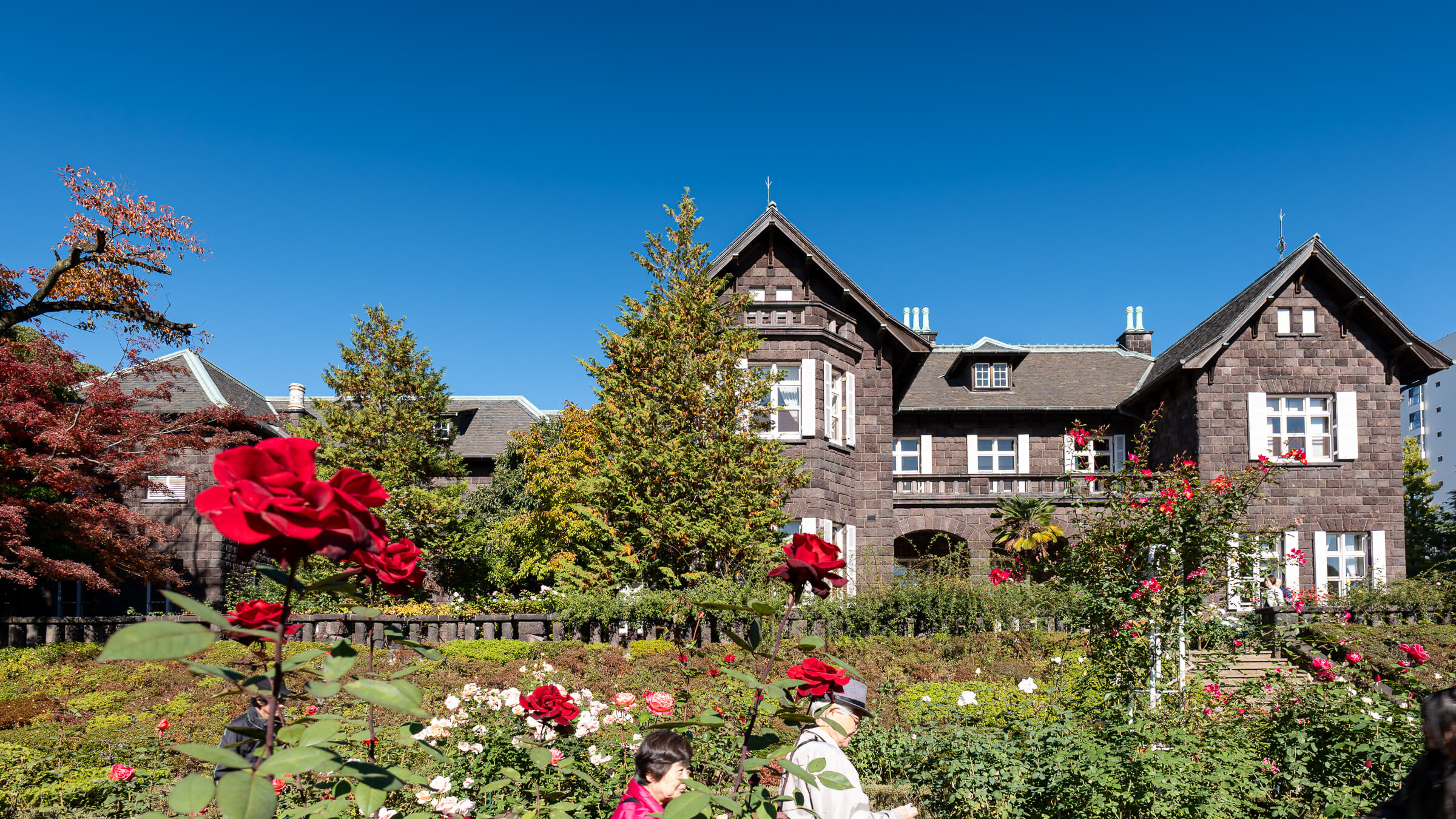
Rikugien gardens provides another pond-garden outing in Bunkyo, while Kyu-Furukawa pairs a mansion exterior and roses with a lower Japanese garden. Both can be considered on a different Tokyo day without changing the value of Koishikawa Korakuen’s own pond circuit. For a side-by-side choice, see Best Tokyo Gardens in Autumn.
Getting There
Access and Arrival
For Koishikawa Korakuen, use JR Suidobashi for the East Gate or Toei Oedo Line Iidabashi for the West Gate. Choose the entrance that matches your arriving line.
- Via Suidobashi
JR Chuo-Sobu Line local service → Suidobashi → East Gate
About 5 minutes on foot · Walk from the West Exit to the garden’s East Gate. · A useful approach when the wider day includes Tokyo Dome.
- Via Iidabashi
Toei Oedo Line → Iidabashi C3 → West Gate
About 3 minutes on foot · Use Exit C3 for the shortest listed walk to the West Gate. · Metro Korakuen Exit 2 is another option: about 6 minutes to the East Gate.
Arriving by Car: The garden has no visitor parking. If already driving to Tokyo Dome City, check its paid-parking arrangements and current charges before adding the garden.
Hours and Fees
Visitor Information
Koishikawa Korakuen in Bunkyo, Tokyo normally opens from 9:00 AM to 5:00 PM, with last entry at 4:30 PM. Standard adult garden admission is ¥300. Special evening events have separate arrangements.
- Hours
- Garden: 9:00 AM–5:00 PM Last entry: 4:30 PM Regular closure: December 29–January 1
- Admission
-
Adults: ¥300 Age 65 and over: ¥150 Free: elementary-school children and younger; junior-high-school students living or studying in Tokyo
Plan Your Visit
Choose accommodation and travel essentials that fit your wider Tokyo plans. Check the details for your dates before booking.
Make Room for a Garden Walk Before the City
Compare stays around Tokyo Dome City and nearby rail stations if this area anchors your plans. Check the journey to your other Tokyo stops before choosing a room.
Compare Area Hotels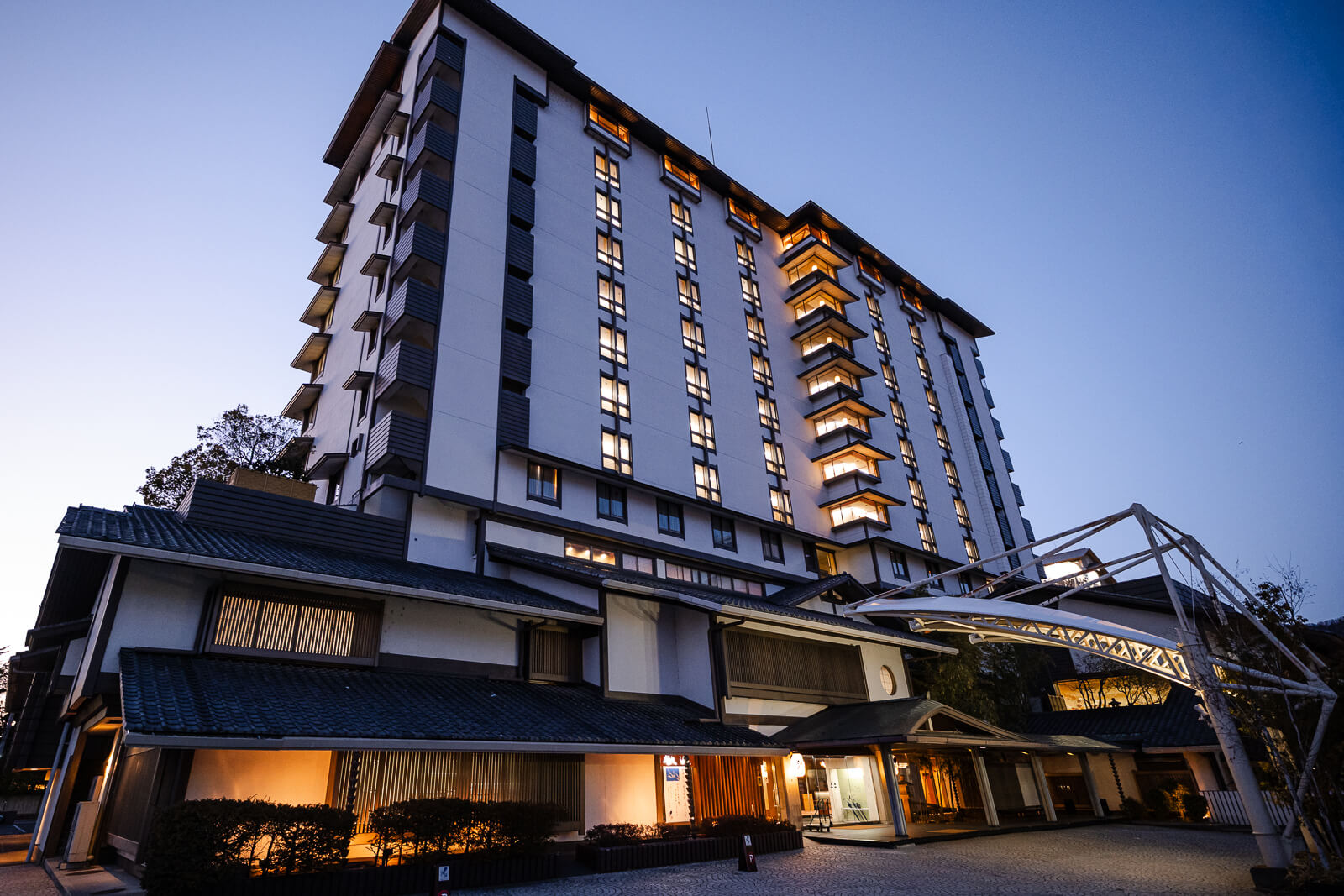
Keep Your Route Handy Around Tokyo
Keep the route to your chosen garden gate and your next Tokyo Dome City stop handy. Compare Japan eSIM plans by data, duration, and phone compatibility.
Compare Japan eSIM Plans
Reader note: Japan Unfolded may earn a commission from some links at no extra cost to you.