Choosing Between Three of Tokyo’s Best Autumn Gardens
Rikugien is the strongest choice among these three Tokyo gardens if autumn foliage is the main reason for your visit. Its combination of colorful trees, pond views, shaped pines, and paths beyond the water creates a varied garden walk with plenty of places to pause. Choose Koishikawa Korakuen for more open pond scenery beside Tokyo Dome, or Kyu-Furukawa Gardens for a compact visit combining a Western-style mansion, roses, and a traditional Japanese garden.
Allow about an hour inside whichever garden you choose, then add time for reaching the entrance, admission, and any longer photography stops. The autumn scenes shown here reflect conditions around the third week of November, when colorful leaves still shared the gardens with substantial greenery. Use the differences in scenery, walking experience, and nearby attractions to choose your stop; the amount of color and the busiest areas will vary through the season.
The Three Gardens at a Glance
Choose Rikugien for autumn foliage, Koishikawa Korakuen for open pond views, or Kyu-Furukawa for architecture and garden variety.
Varied pond views, bridges and pines make it the first choice; popular viewpoints can slow the walk.
Maple-framed water and bridge reflections pair well with Tokyo Dome; surrounding buildings remain visible.
Roses and an intimate Japanese garden complement the mansion; expect smaller grounds and stairs between levels.
Add travel and queues separately, plus extra time for photography, sitting, mansion interiors or tea.
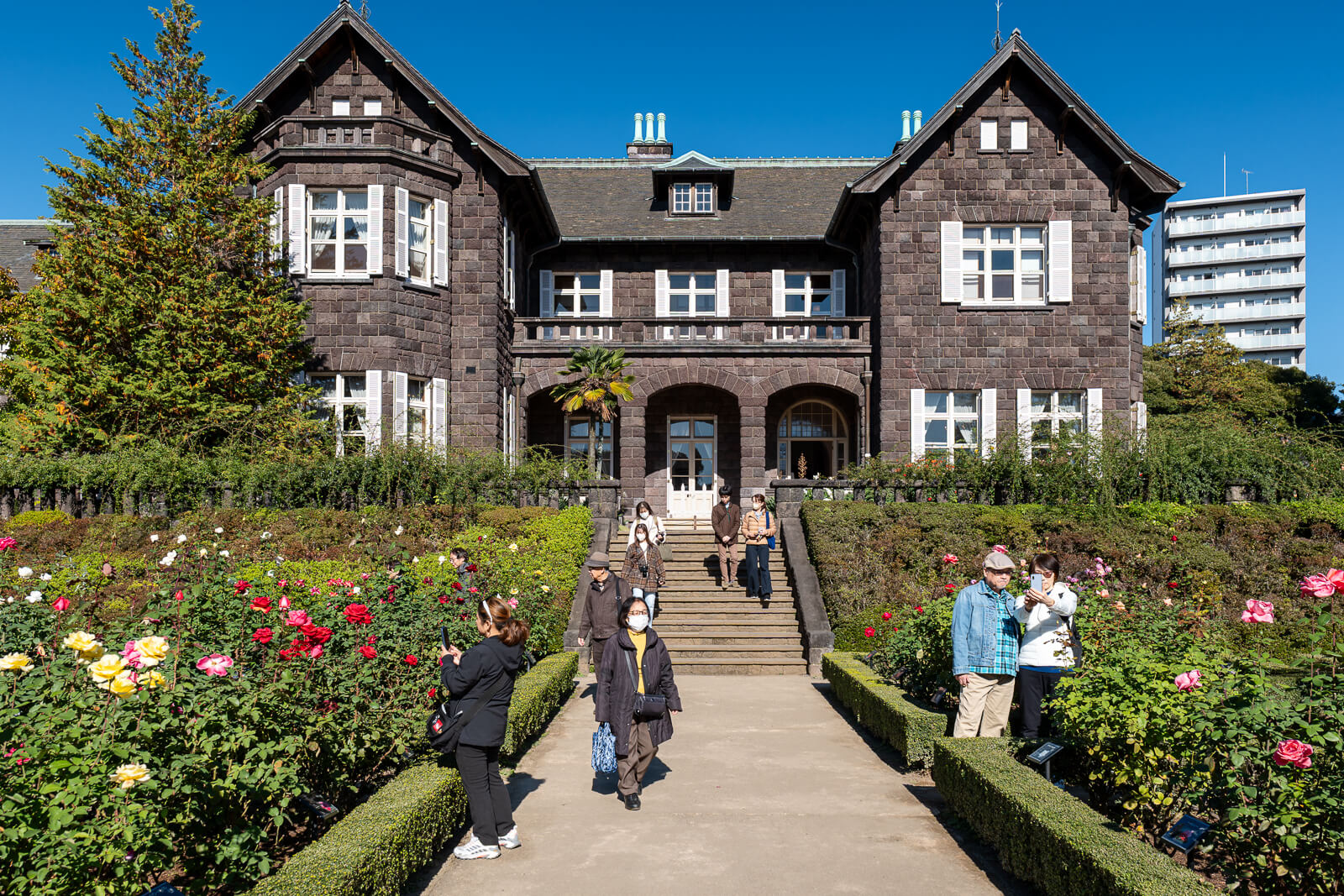
An hour gives each garden enough time to reveal its character without requiring an exhaustive tour of every path. Keep that hour available for the grounds themselves, with travel, admission queues, and longer breaks added separately. Kyu-Furukawa offers several distinct settings within a small area, while Rikugien and Koishikawa reward a pond circuit with time to explore beyond the most obvious viewpoint.
Koishikawa Korakuen: Open Pond Views Beside Tokyo Dome
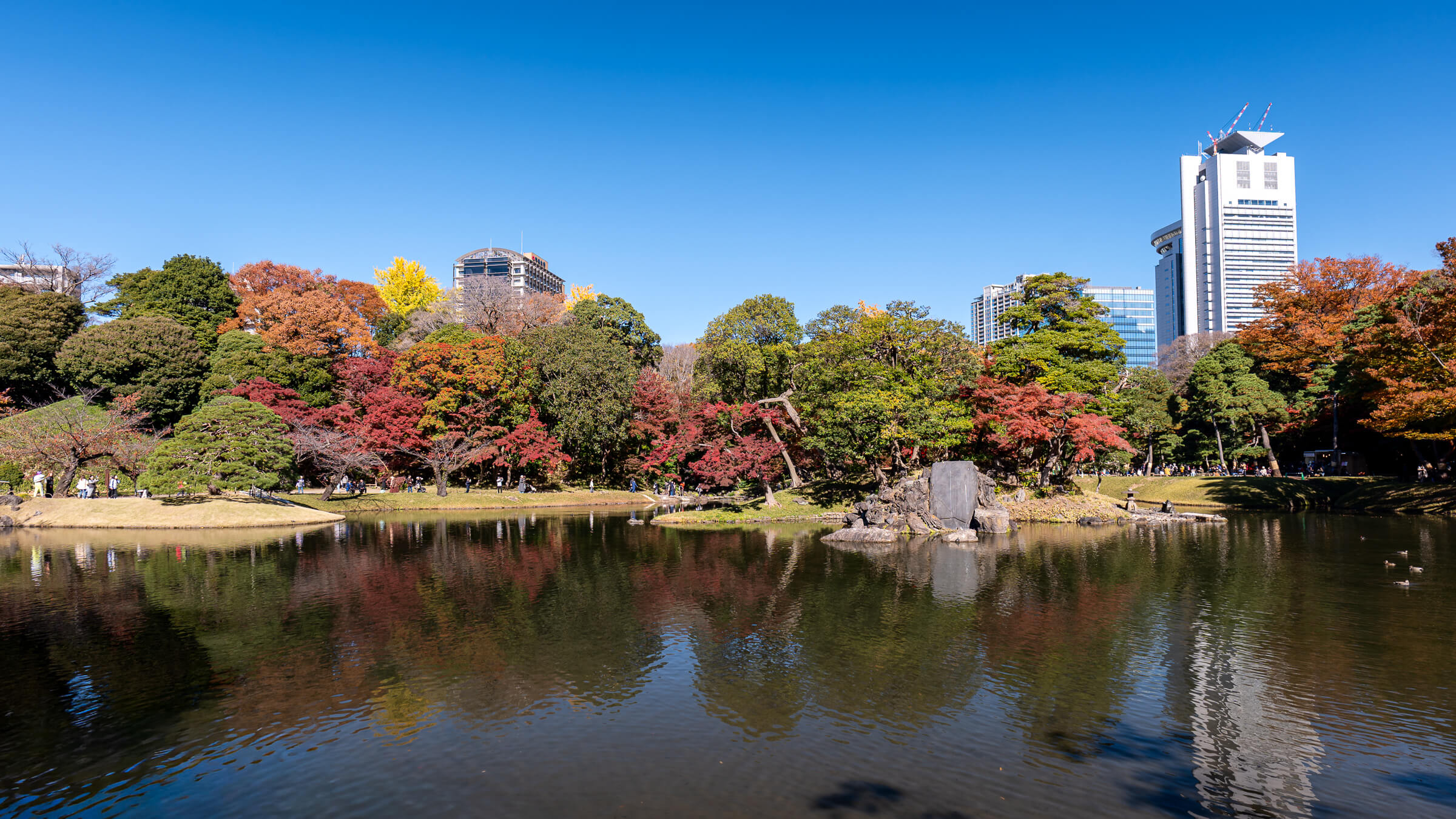
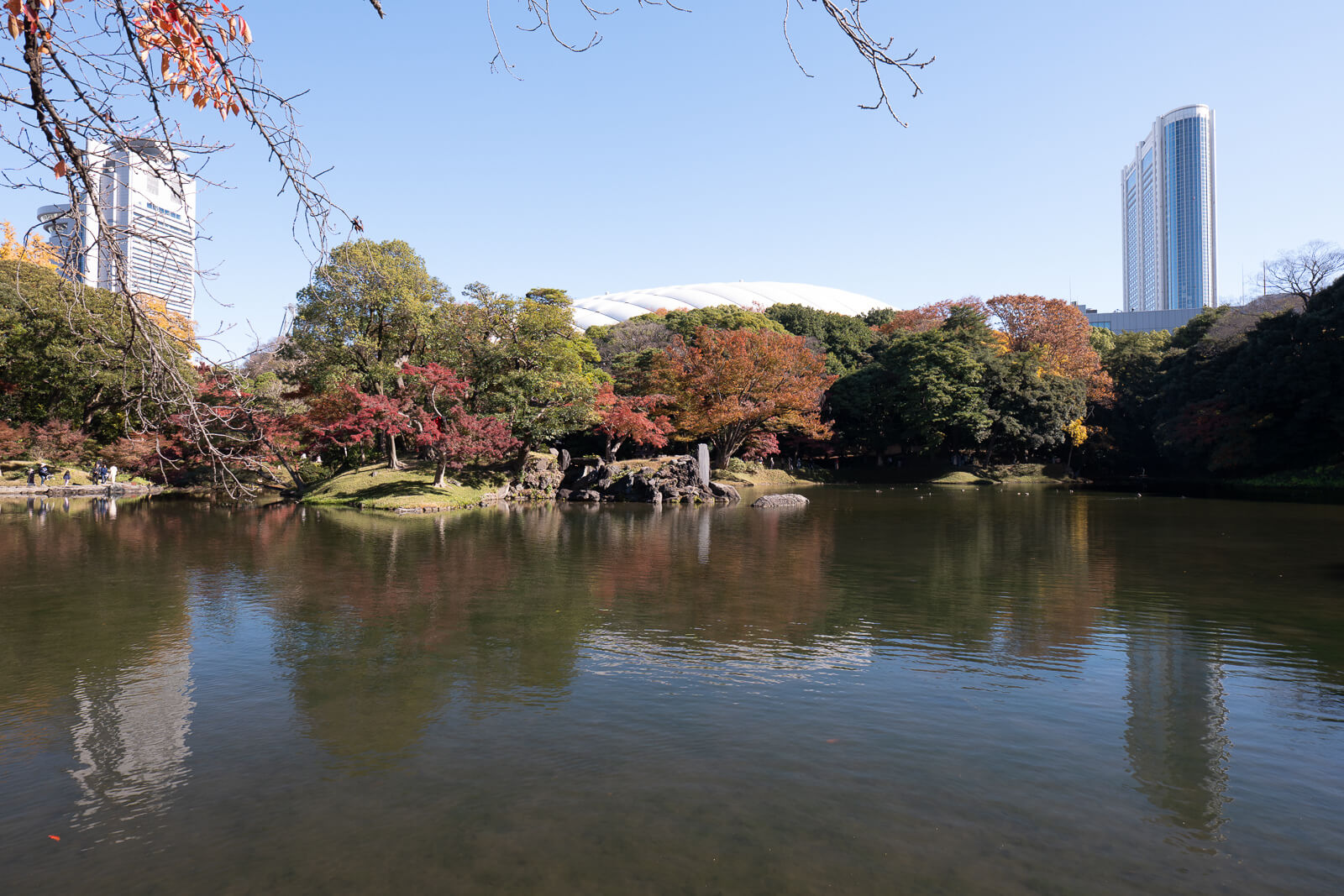
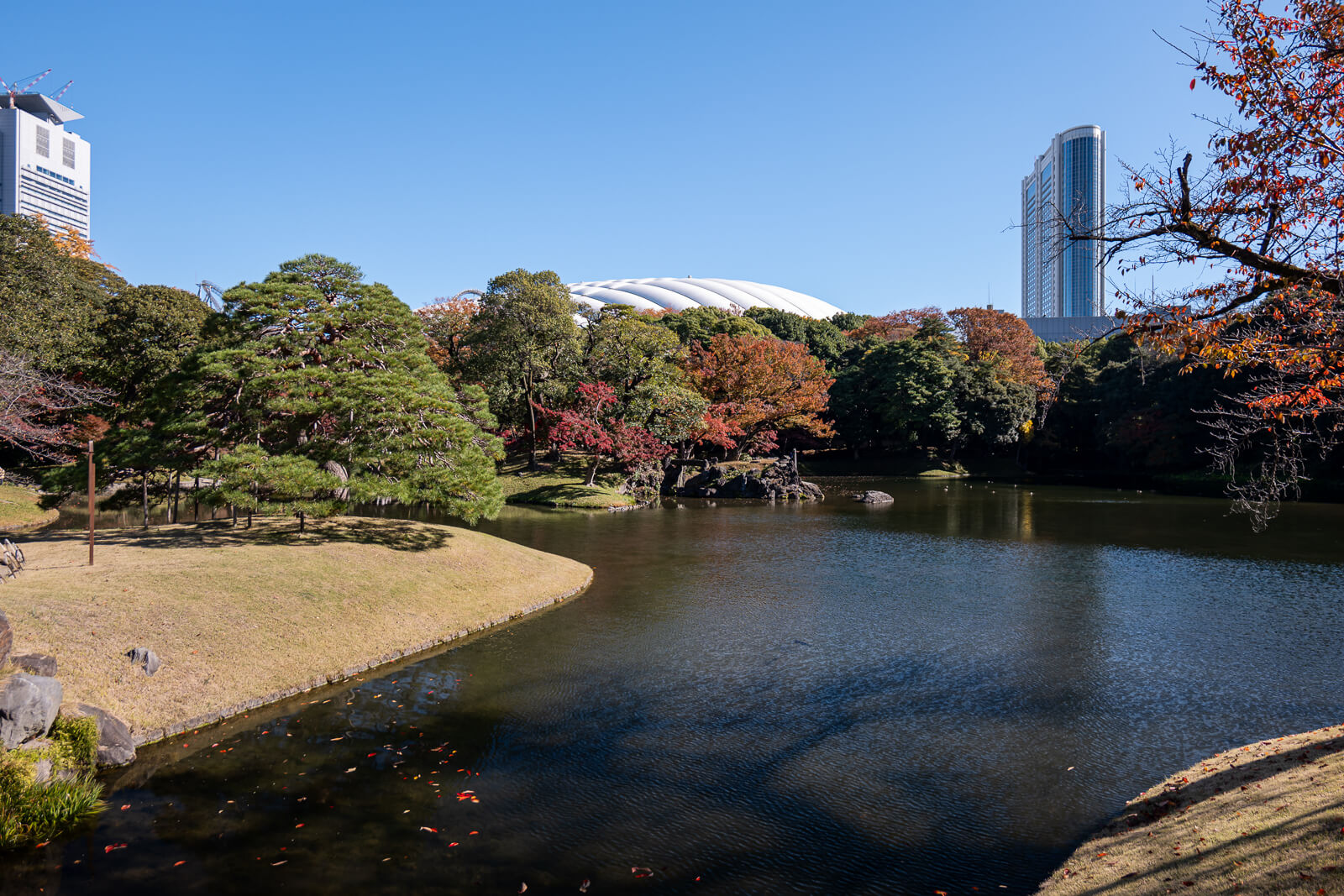
Koishikawa Korakuen opens into a broad pond landscape, with trees around the water and several directions to explore. Following the shoreline changes the relationship between the maples, open water, and background buildings, so the opposite bank is worth reaching before deciding that the first view is the best. Around the third week of November, red leaves and lingering green foliage created contrasting patches of color rather than a uniformly red landscape.
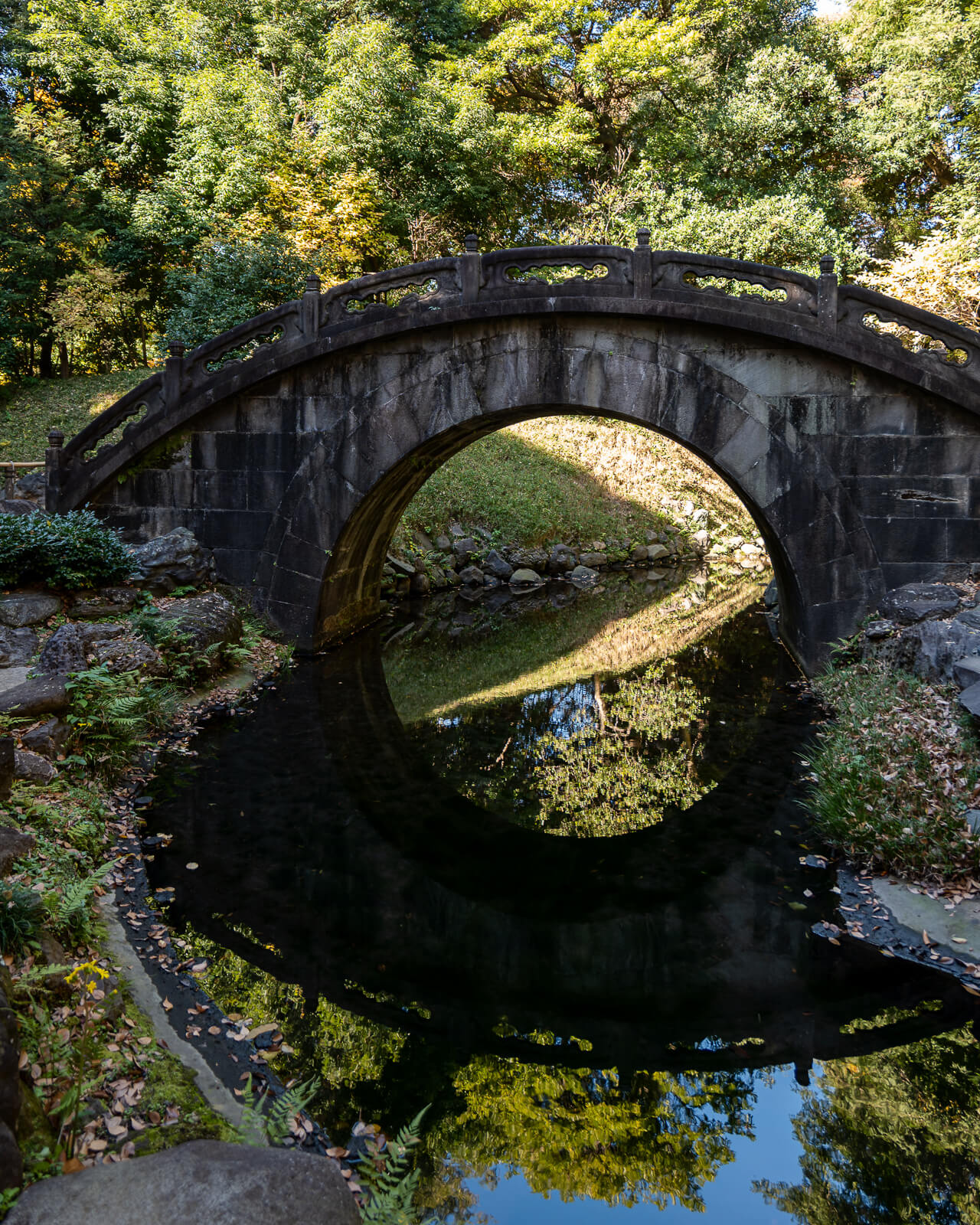
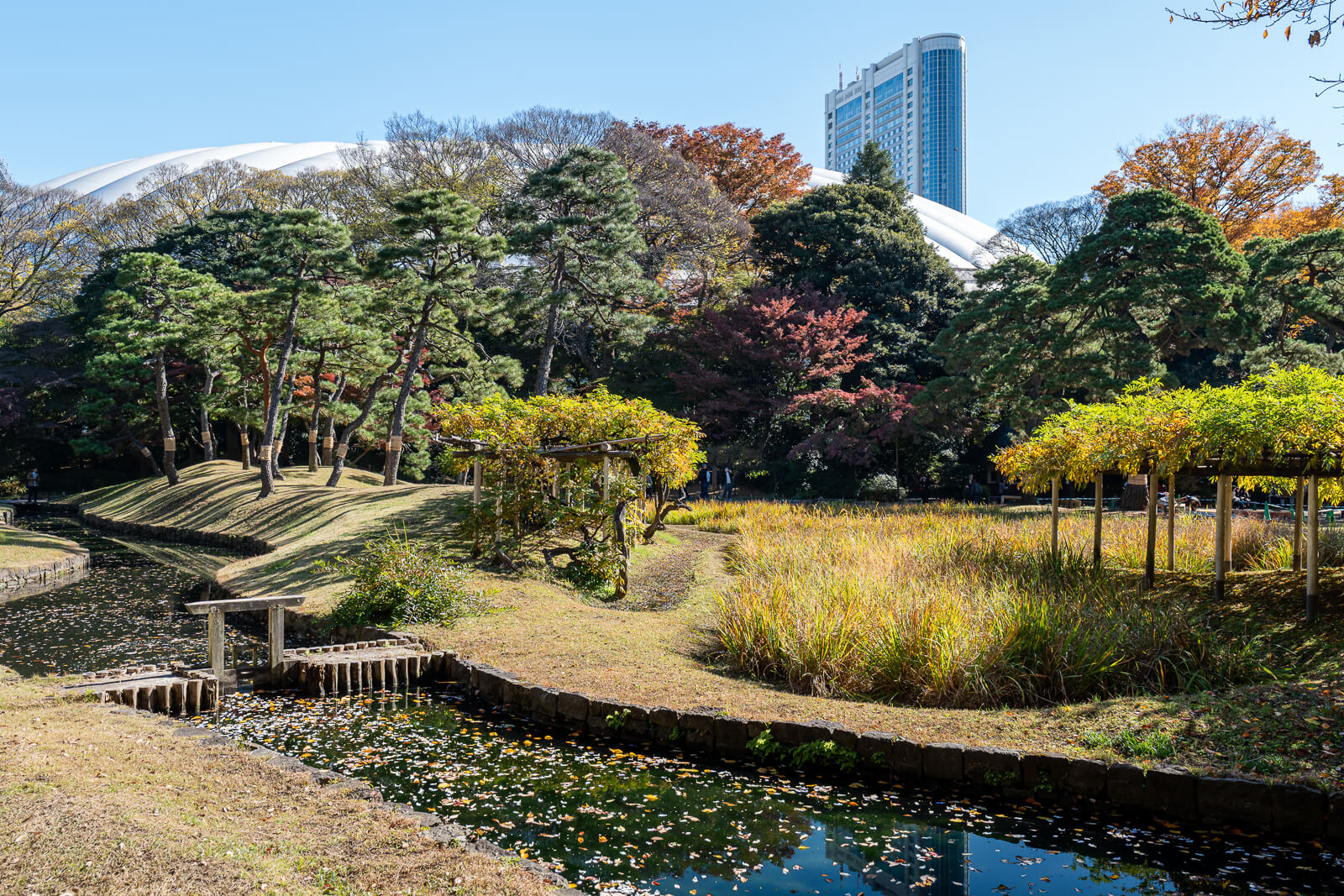
Photography here works especially well when a nearby branch gives depth to a wider pond view. Shaded red maples provide a foreground against the water, while the arched stone bridge and its reflection offer a more concentrated subject away from the broad panorama. Yellow ginkgo foliage adds another autumn accent, and the smaller waterways give a reason to leave the main shoreline instead of photographing the pond from only one position.
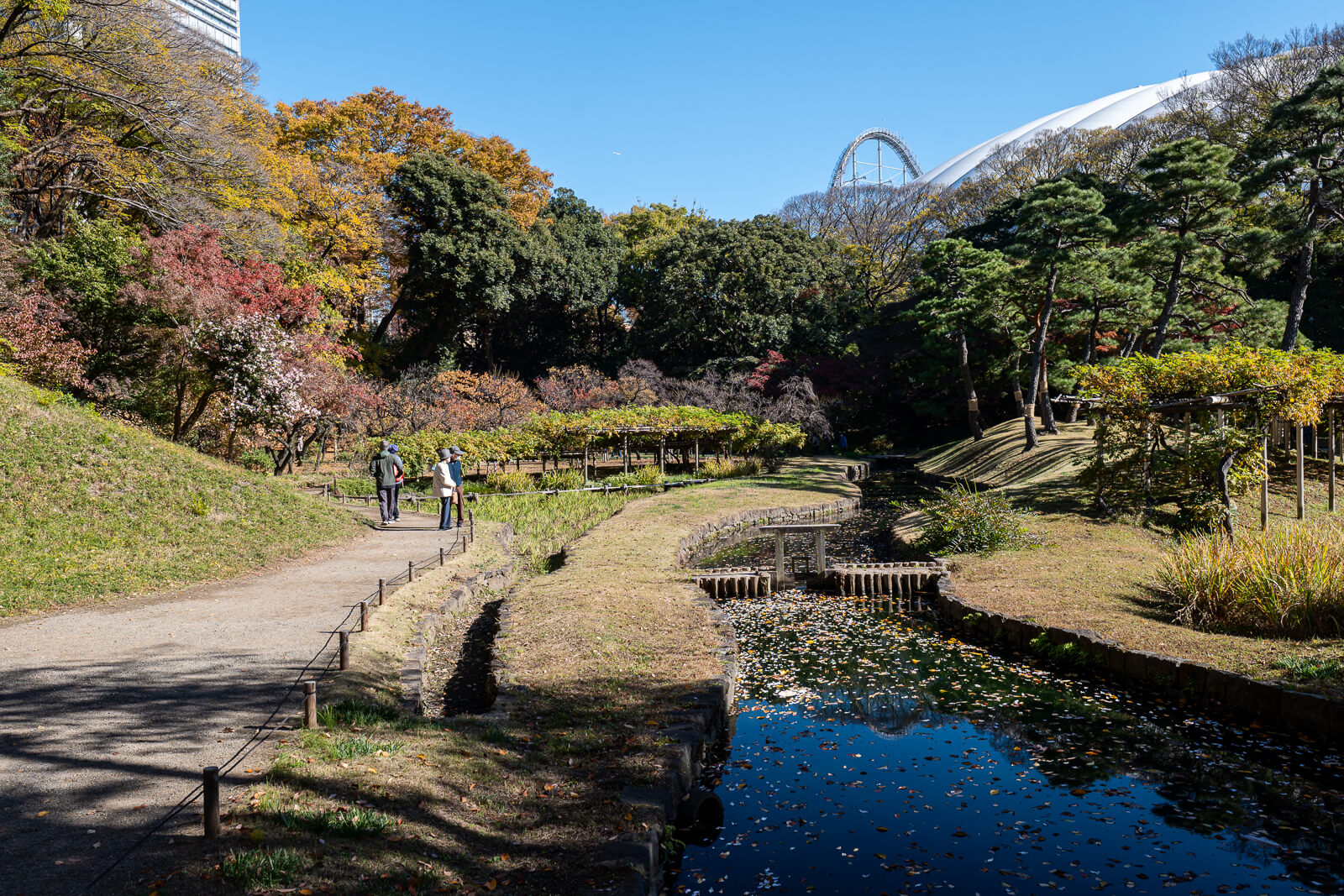
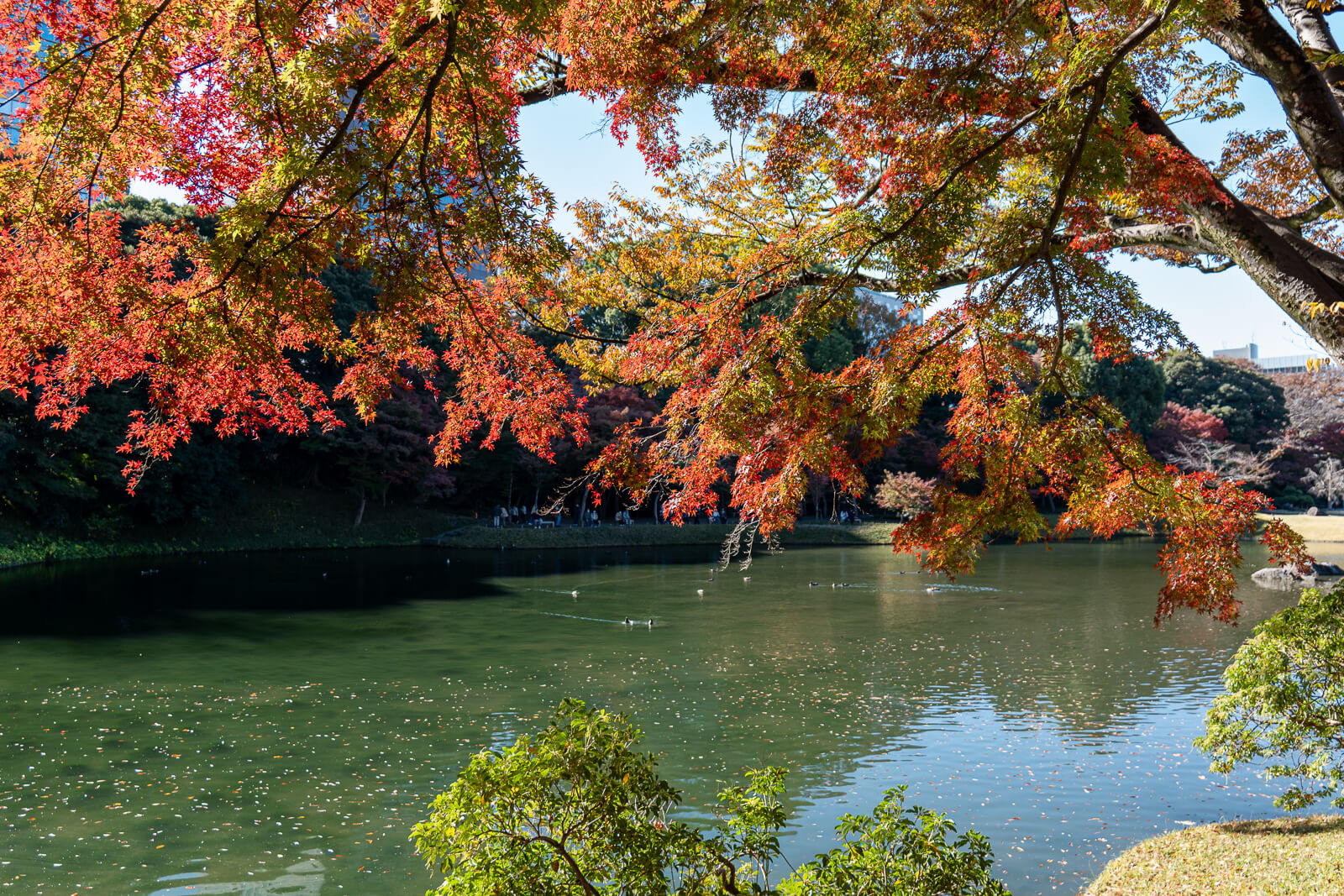
Tokyo Dome and surrounding buildings keep the city visible beyond Koishikawa Korakuen’s trees. That setting suits travelers who enjoy the contrast between traditional garden scenery and modern Tokyo, particularly when the surrounding area is already on the itinerary. The open views make the garden feel spacious, while quieter paths and seats around the pond offer places to linger within that urban setting.
The main pond circuit is mostly level, with gravel, stone surfaces, and occasional steps along the wider network of paths. An hour allows a satisfying loop, although following additional waterways and returning to a favorite viewpoint can easily extend the visit. For a slower walk, choose a few places to sit around the water and leave room to explore side paths rather than trying to cover every branch of the route.
Rikugien: The Strongest Overall Autumn Choice
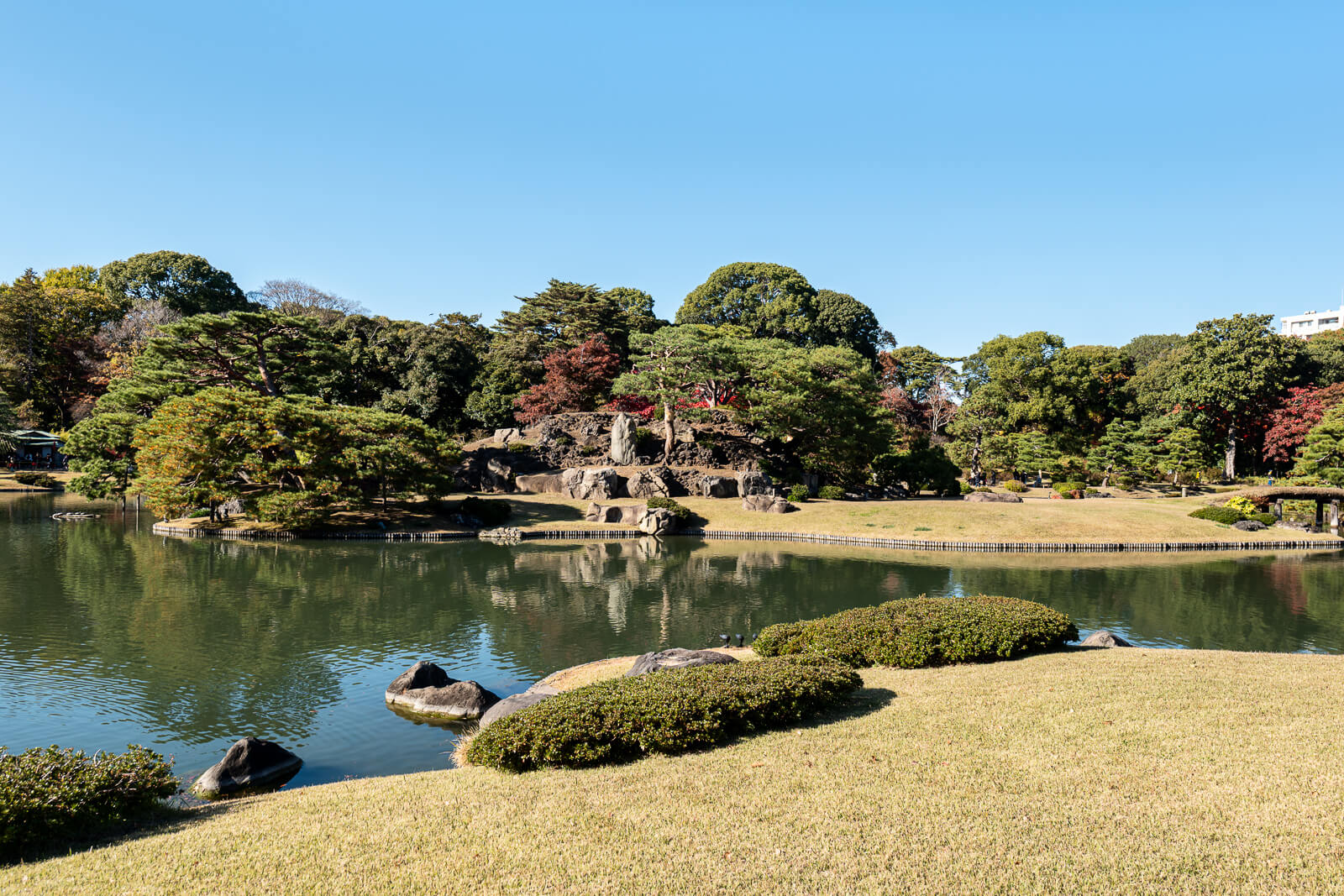
Rikugien combines a pond circuit with paths extending beyond the main waterside views, giving the visit more variety than a single loop might suggest. Carefully shaped pines, bridges, autumn trees, and small pavilions create successive focal points instead of relying on one uninterrupted panorama. It had the strongest foliage display during the third-week-of-November comparison, and the variety of scenes makes it the most compelling choice for a dedicated autumn garden stop.
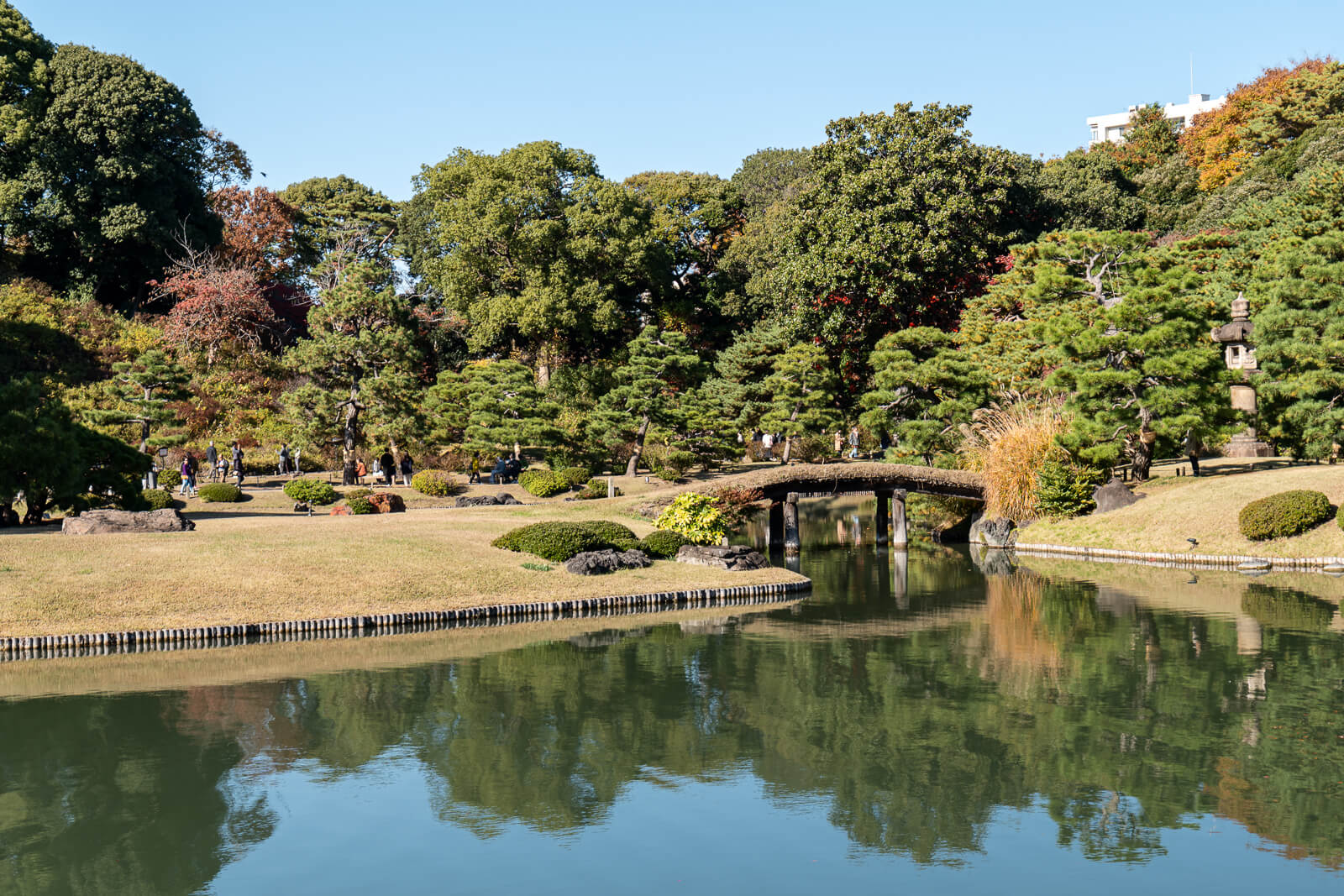
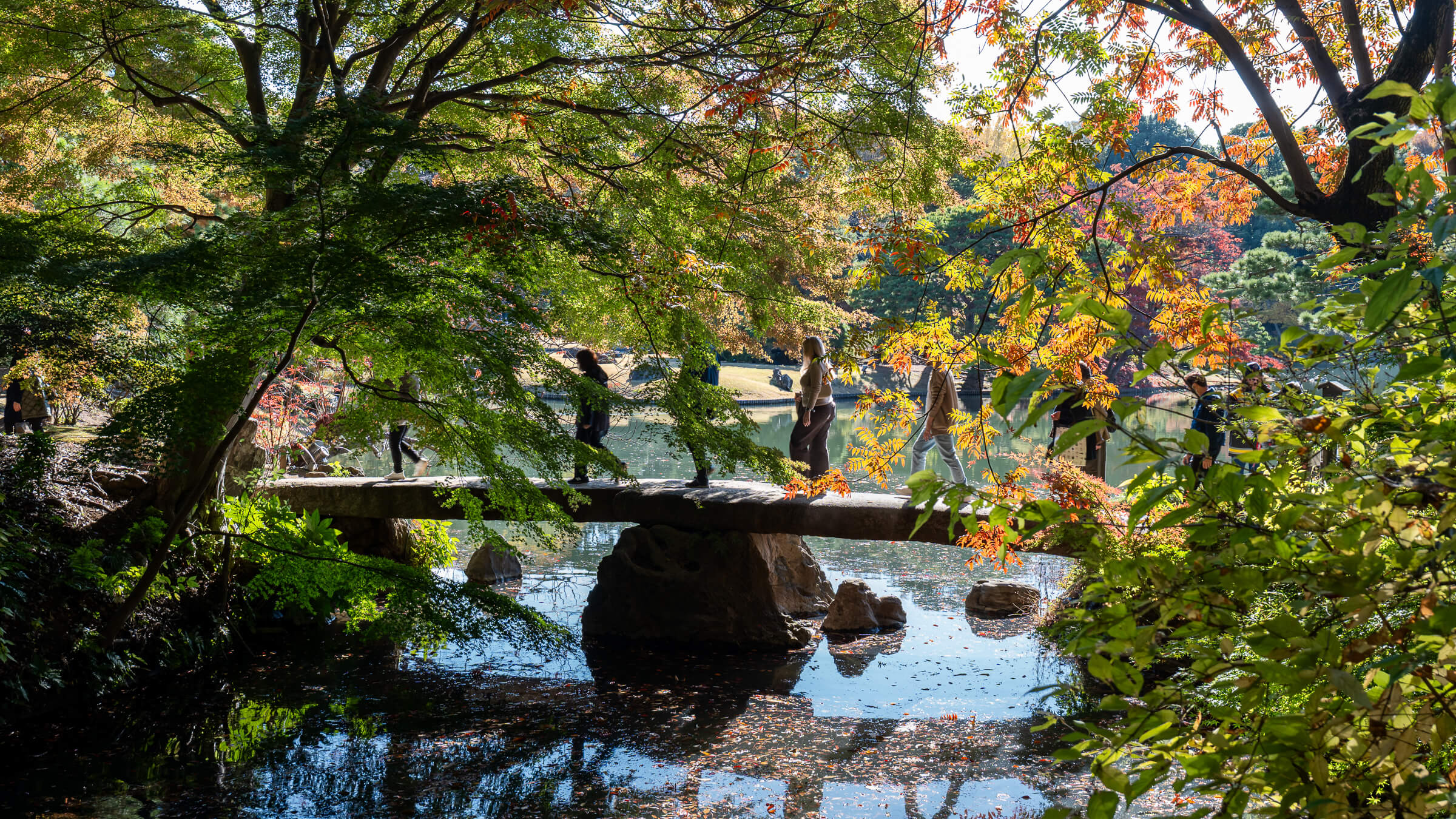
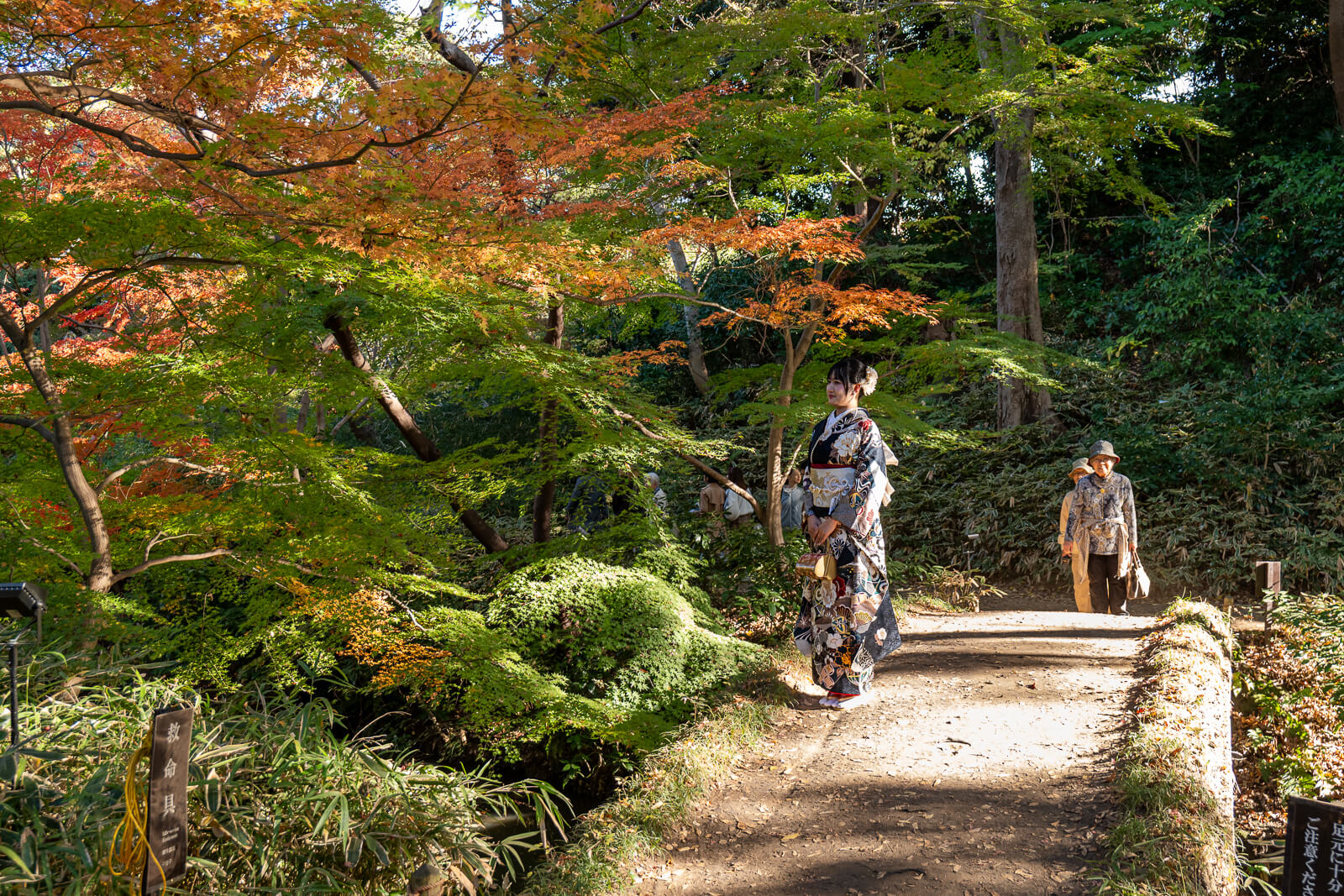
The bridges are particularly rewarding photographic subjects because they connect the foliage overhead with water and garden scenery beyond. People crossing can add scale and movement, while a clear crossing leaves more of the background visible. Leave time to wait from a suitable position beside the route, and keep the crossing clear for other walkers. During busier periods, follow any staff directions about taking turns across a bridge.
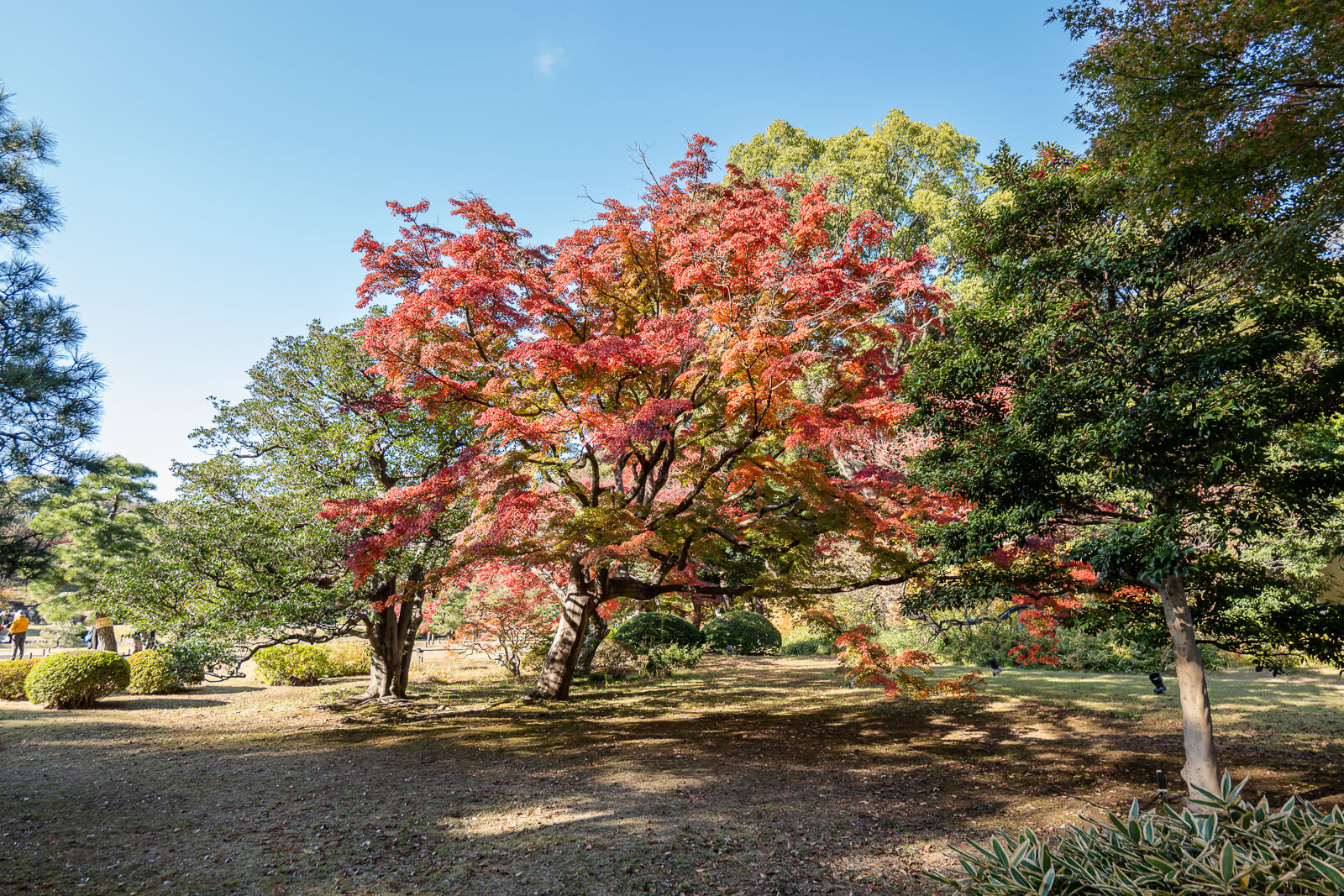
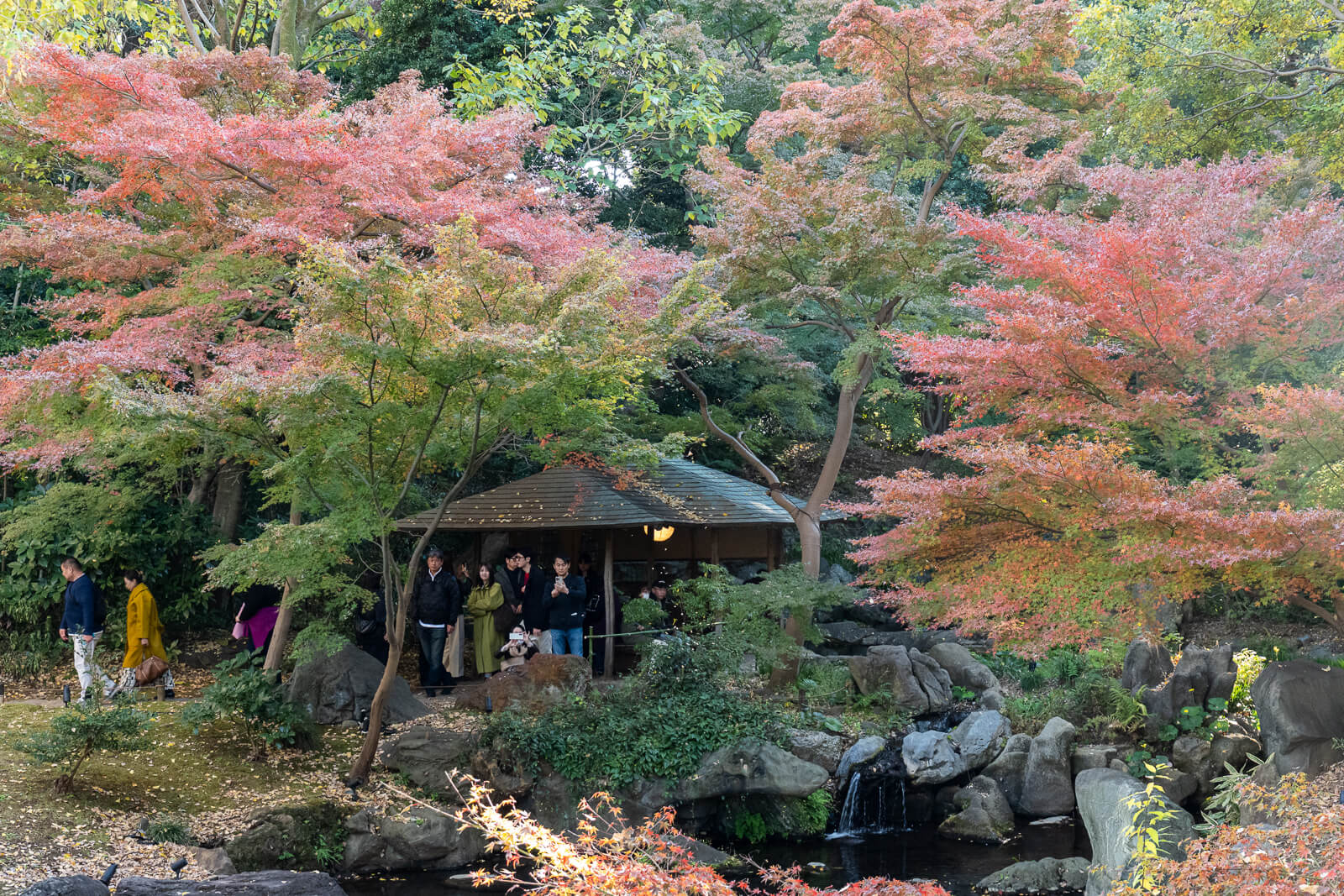
Rikugien’s popularity is most noticeable where people gather at an entrance, bridge, or attractive viewpoint. On the November visit, the entrance queue moved quickly and the paths remained comfortable to use despite this being the busiest of the three gardens. Seats and small shelters offer useful breaks between those gathering points, so the overall experience can still feel relaxed even when the most recognizable scenes attract a cluster of photographers.
Rikugien suits travelers who want the garden itself to be the main event of the outing. Give the pond and its changing viewpoints priority, then use any remaining time for the paths and resting places beyond the main circuit. Extra time is especially worthwhile for photography: waiting for a clearer composition or a gap between groups can be more rewarding than adding another destination to the day.
Kyu-Furukawa Gardens: A Mansion, Roses, and an Intimate Garden
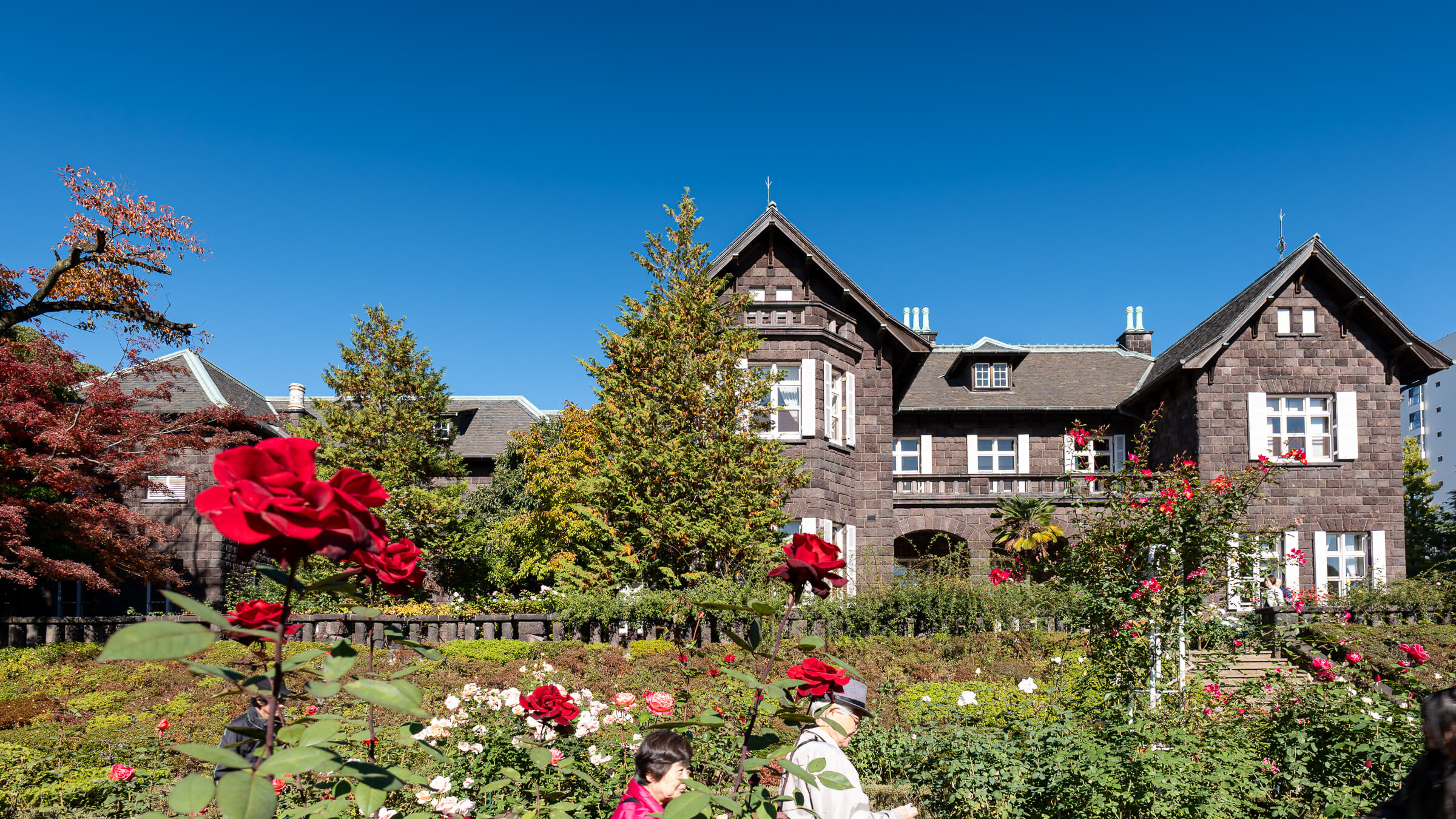
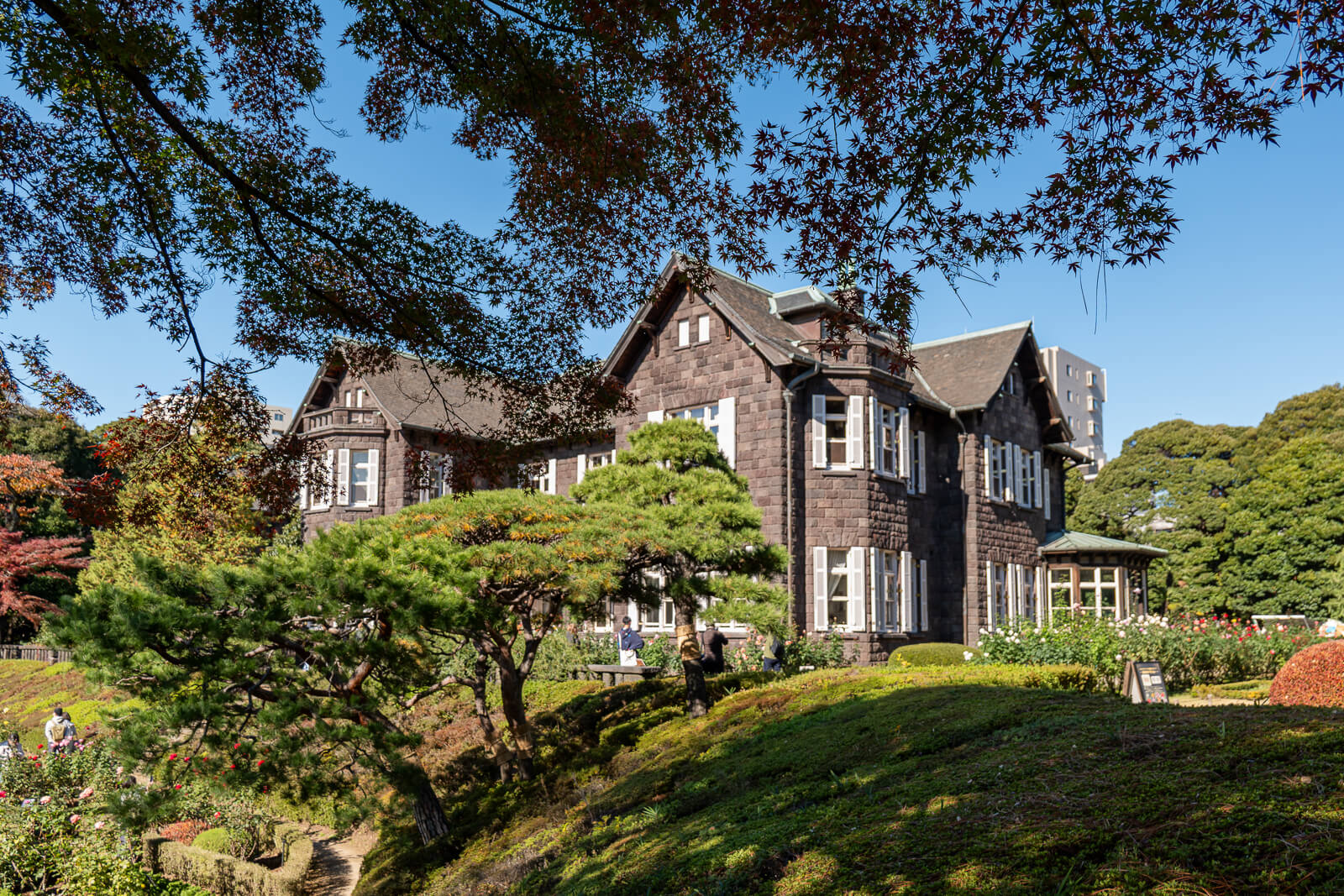
Kyu-Furukawa Gardens combines an open upper lawn and Western-style mansion with a rose garden and a more intimate Japanese garden below. Moving down through these areas changes both the subjects and the scale of the views, from the building and flower beds to water, stones, and trees around the pond. The compact layout suits travelers who want variety within a short visit, although it offers less of the expansive garden scenery found at the other two.
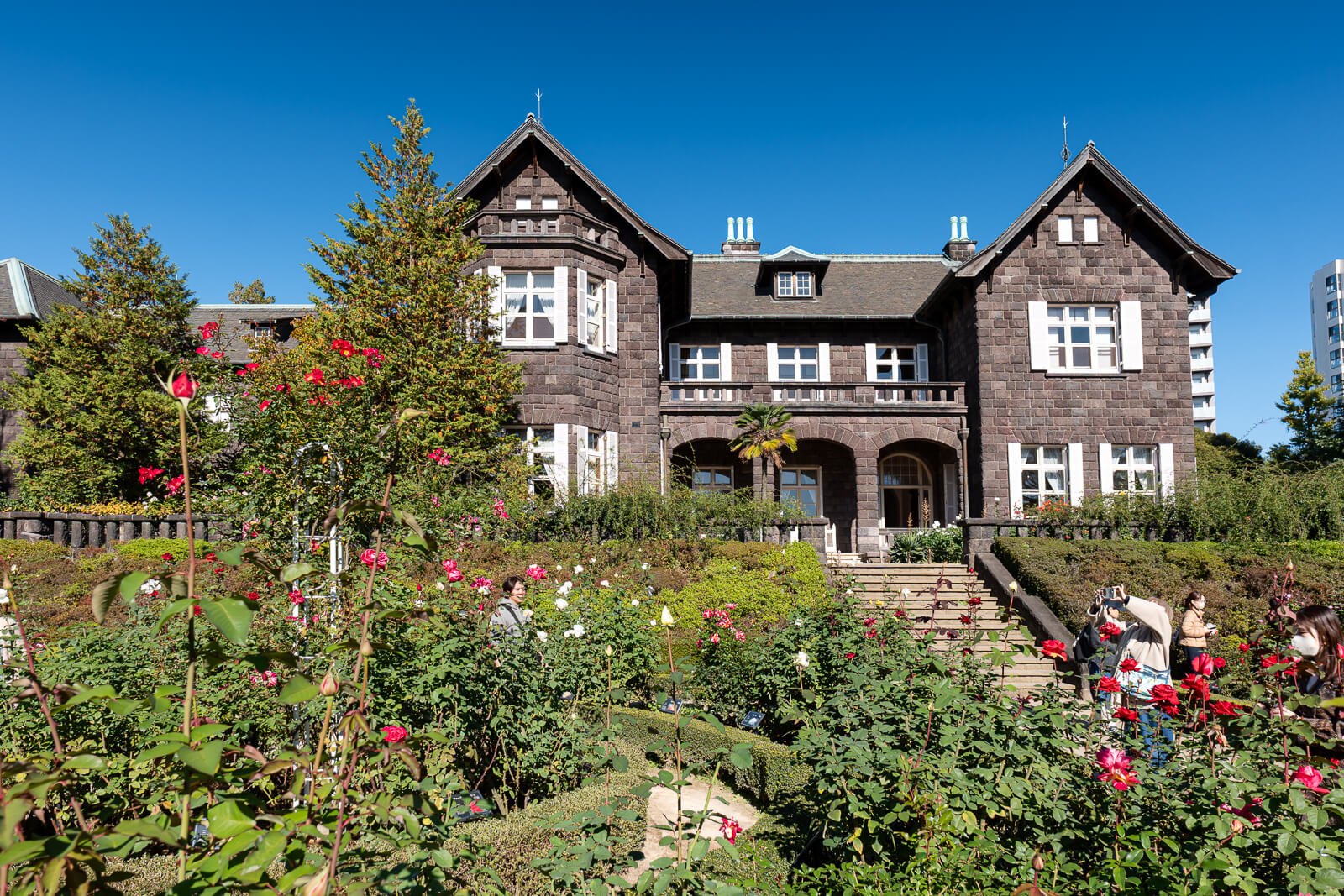
The mansion and rose beds work particularly well together in photographs, with broader views opening as you move farther down through the terraces. Roses were still flowering around the third week of November, adding a different kind of color to the autumn trees in the lower garden. If seeing both is a priority, check current flowering and foliage updates before choosing a day, since the two displays do not necessarily reach their best stage together.
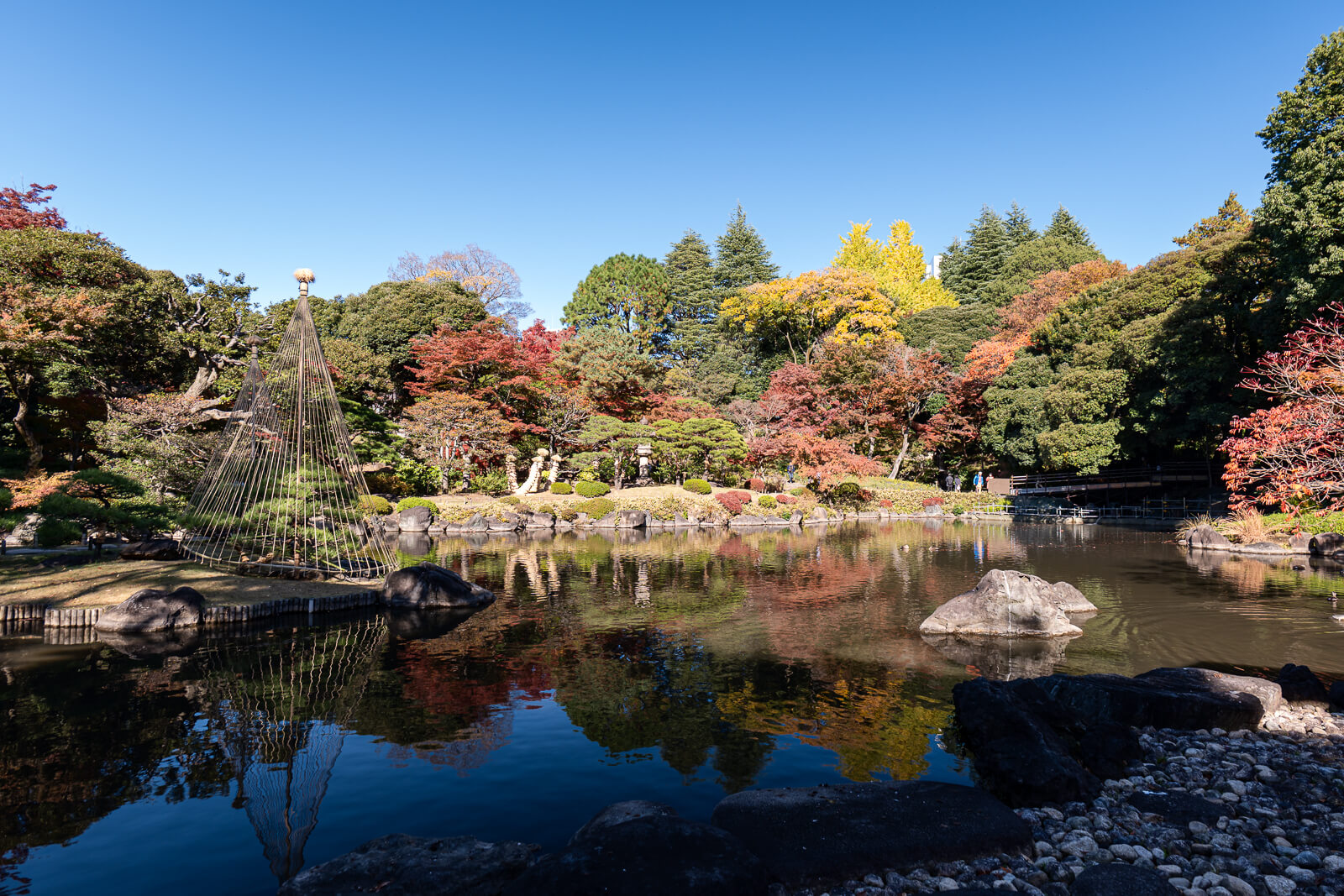
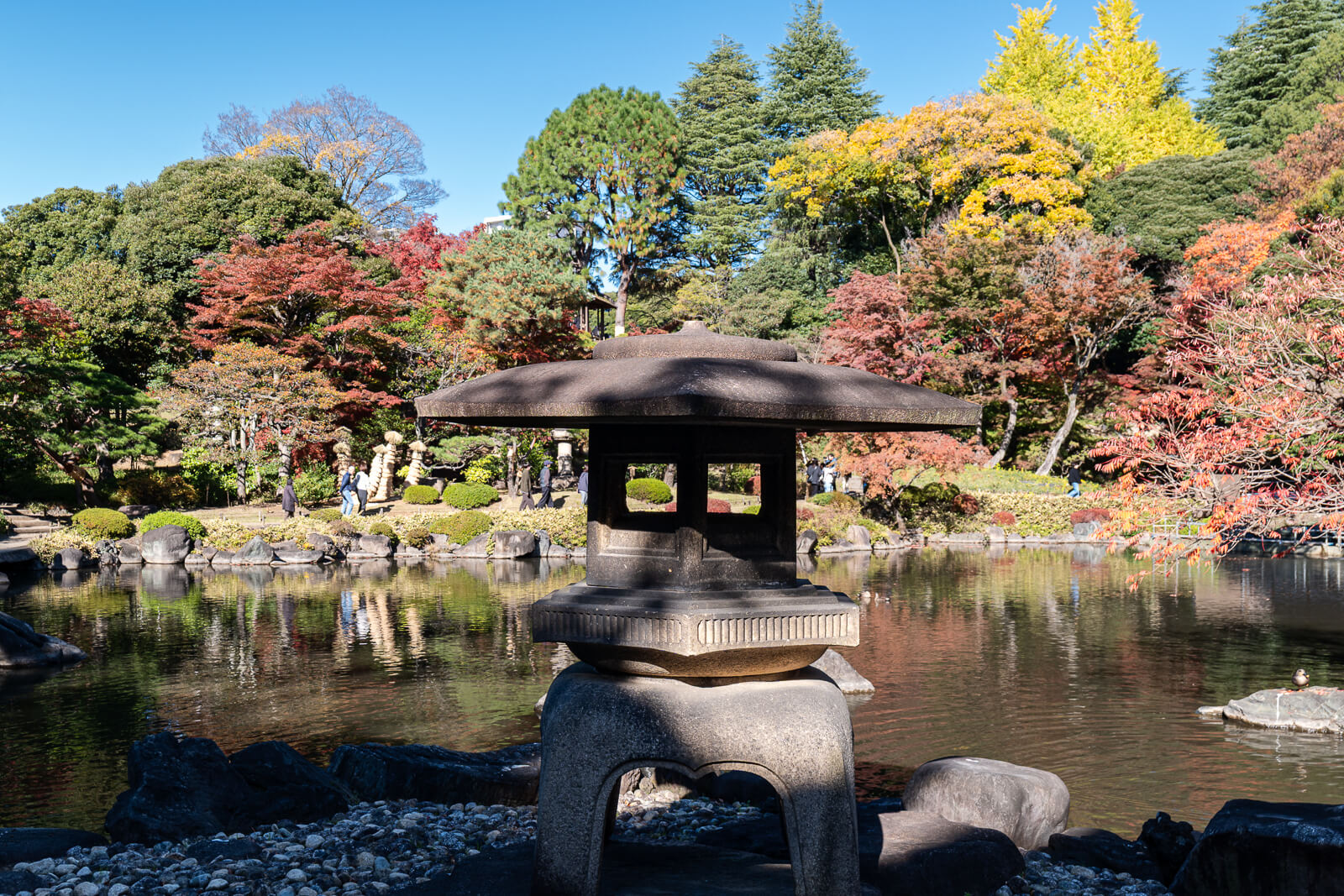
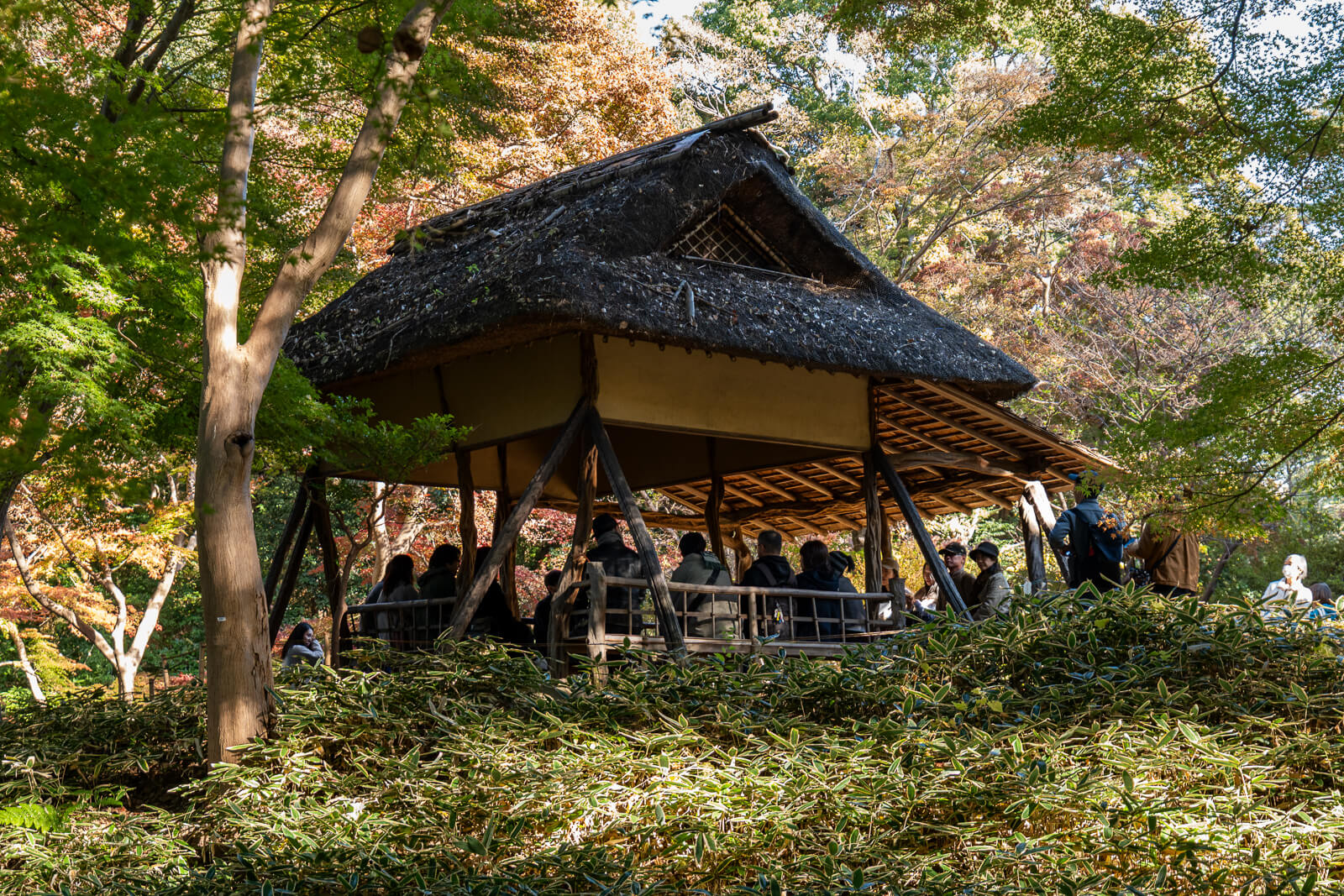
The lower pond is worth viewing from several edges, where the changing angles bring maples, stones, and shaped trees into different combinations. A lantern beside the water provides a strong photographic foreground, while the teahouse exterior and ducks on the pond add smaller points of interest. Stairs connect the upper and lower grounds, so account for that change in level when planning the walk. About an hour is a useful allowance for the outdoor garden, with extra time needed if you add a mansion interior visit or tea service.
The upper lawn can have a livelier atmosphere than the Japanese garden below. A singing performance drew a seated audience during the November visit, but the activity did not spoil the quieter experience around the lower pond. The main compromise is the garden’s size: choose it for the close combination of architecture, flowers, and traditional scenery rather than expecting an extensive landscape to explore for hours.
How the Gardens Compare in Practice
Autumn Color and Photography
Rikugien is the strongest fit for photographs centered on autumn trees, bridges, and the changing scenes around a pond. Koishikawa Korakuen gives more emphasis to open water and maple branches framing a broad view, with the city available as part of the composition. Kyu-Furukawa offers the widest change of subjects within a compact walk, moving from the mansion and roses to stone lanterns, pond edges, and the lower Japanese garden.
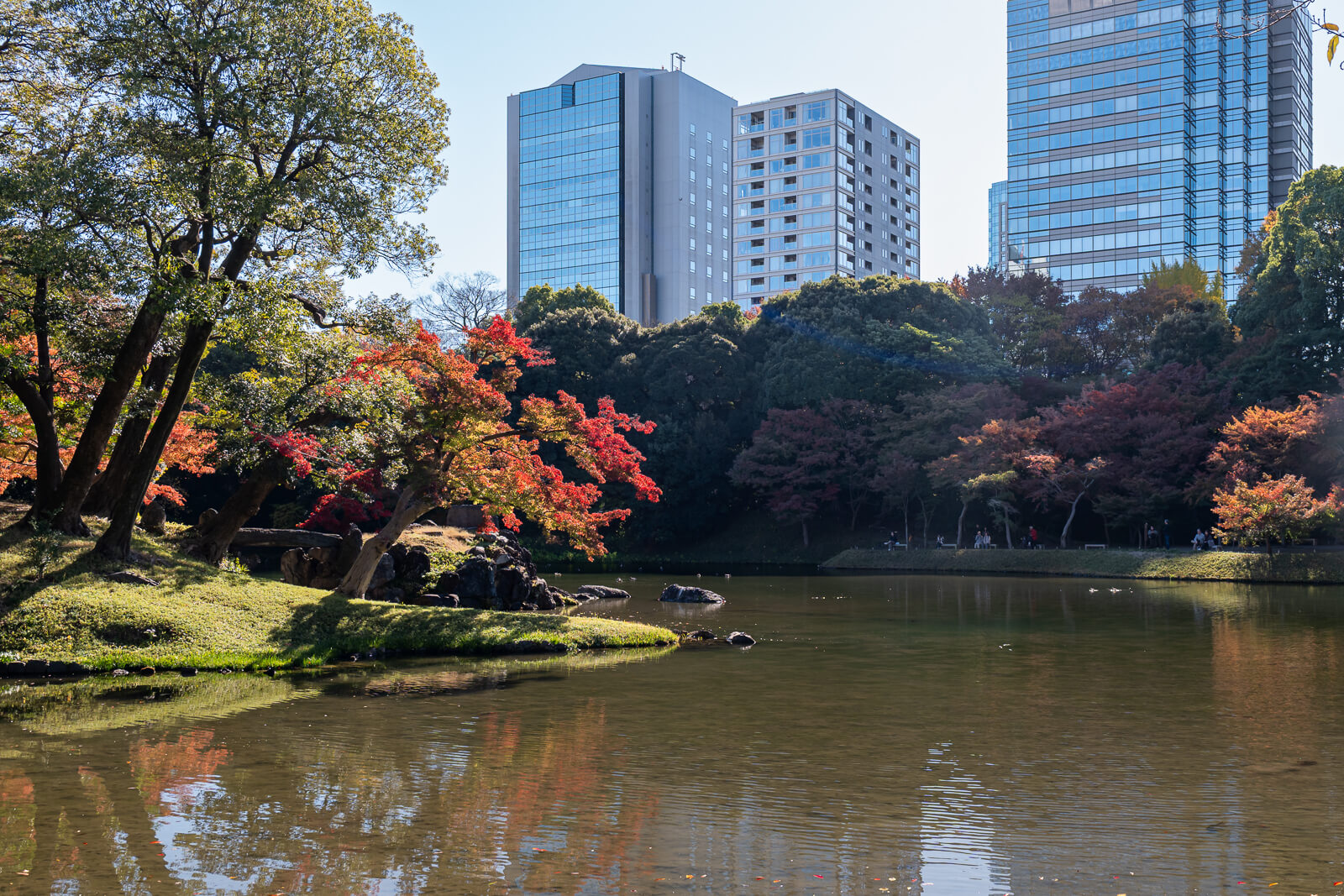
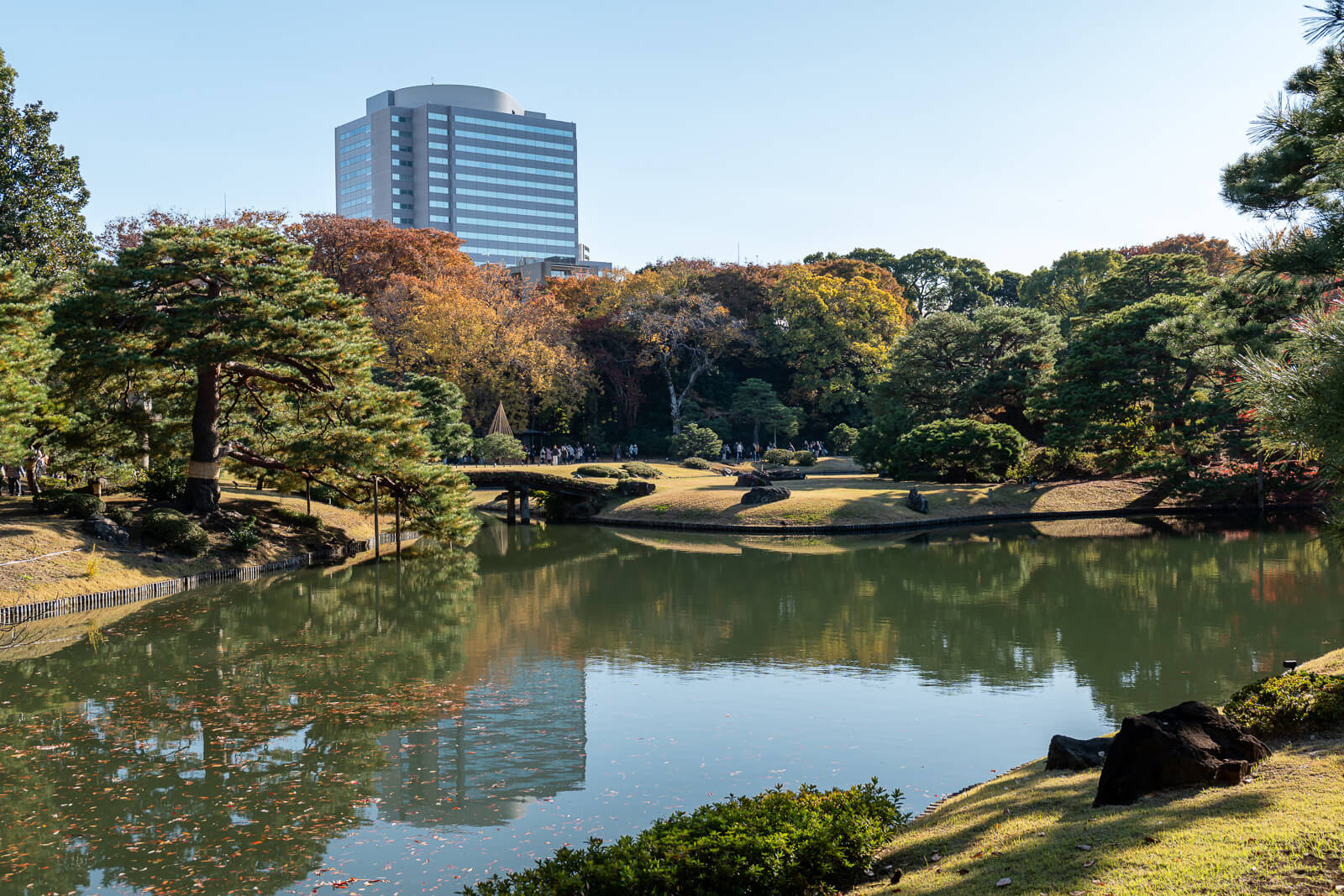
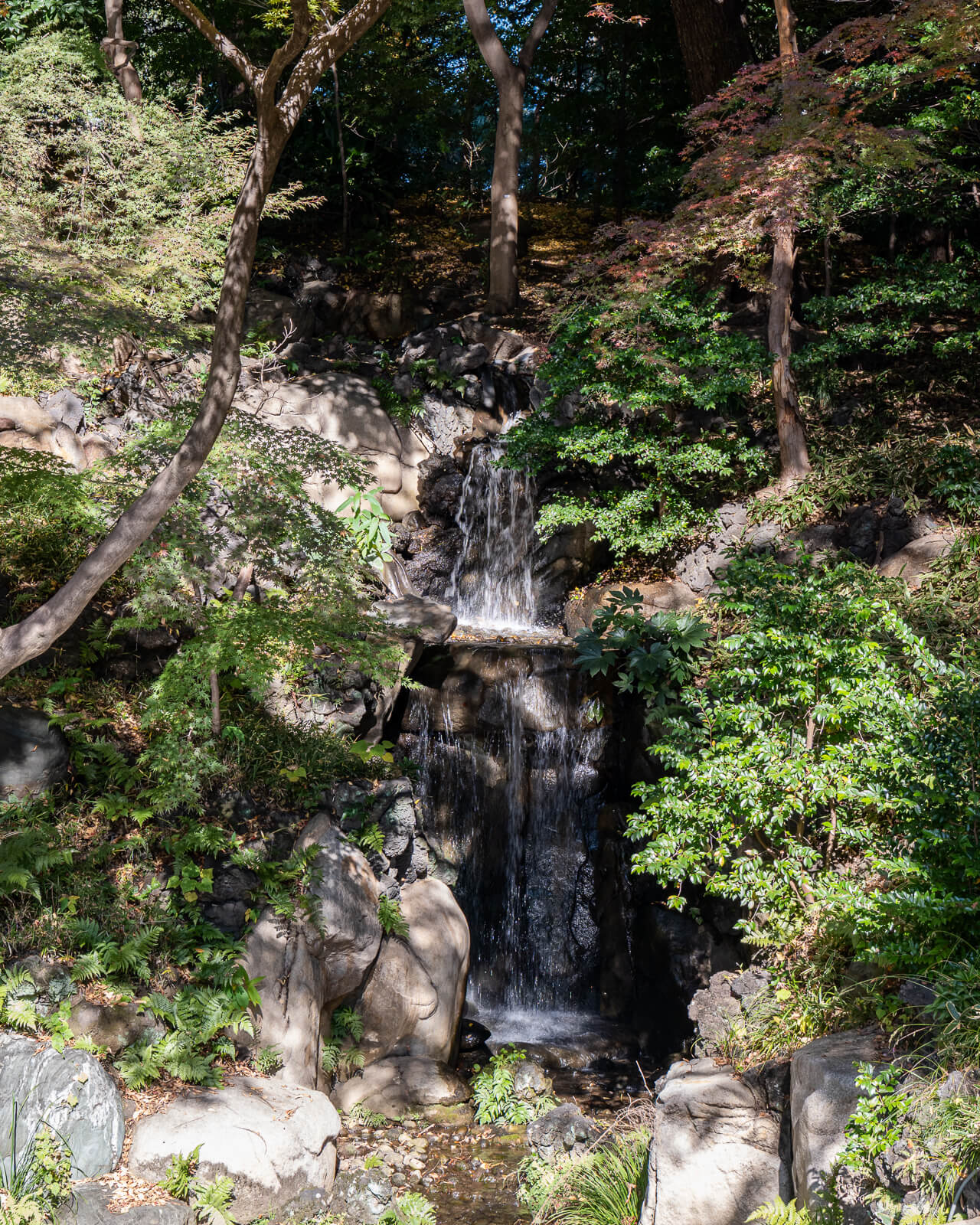
Choose according to the photographs you want to bring home. Rikugien suits a series built around autumn landscape and people moving through it, while Koishikawa offers room to compose water, trees, and the city beyond. Kyu-Furukawa suits a more varied set in which the mansion establishes the location before the Japanese garden changes the mood.
Atmosphere and Crowds
For a feeling of space, Koishikawa Korakuen’s open pond and choice of paths are a particular strength. Rikugien’s main photographic viewpoints can bring people together, while Kyu-Furukawa separates activity around the upper lawn from the more intimate pond below. The November visits ranged from a quiet walk at Koishikawa to a busier but manageable circuit at Rikugien; use that as a sense of the experience, while allowing for events and changing visitor numbers.
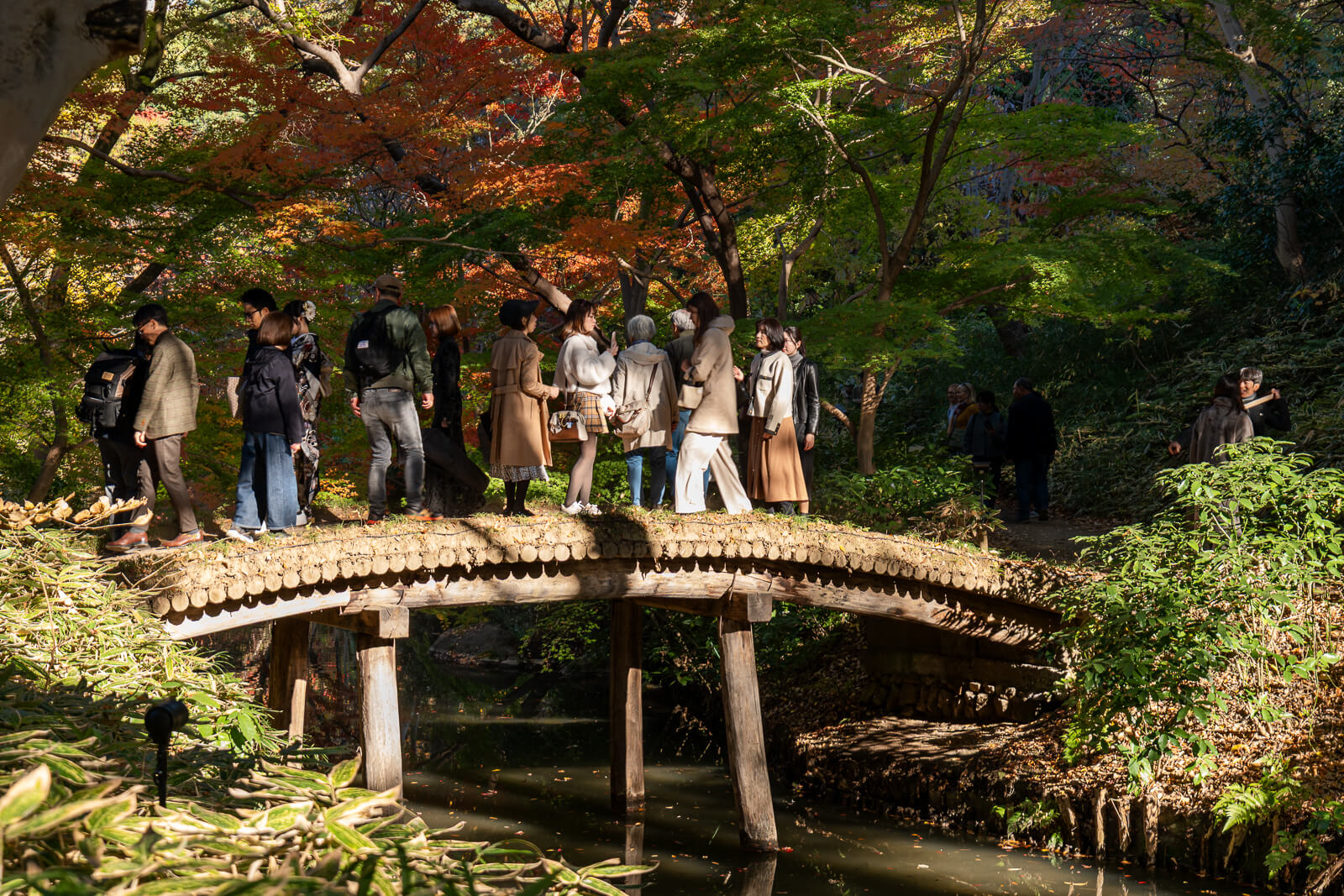
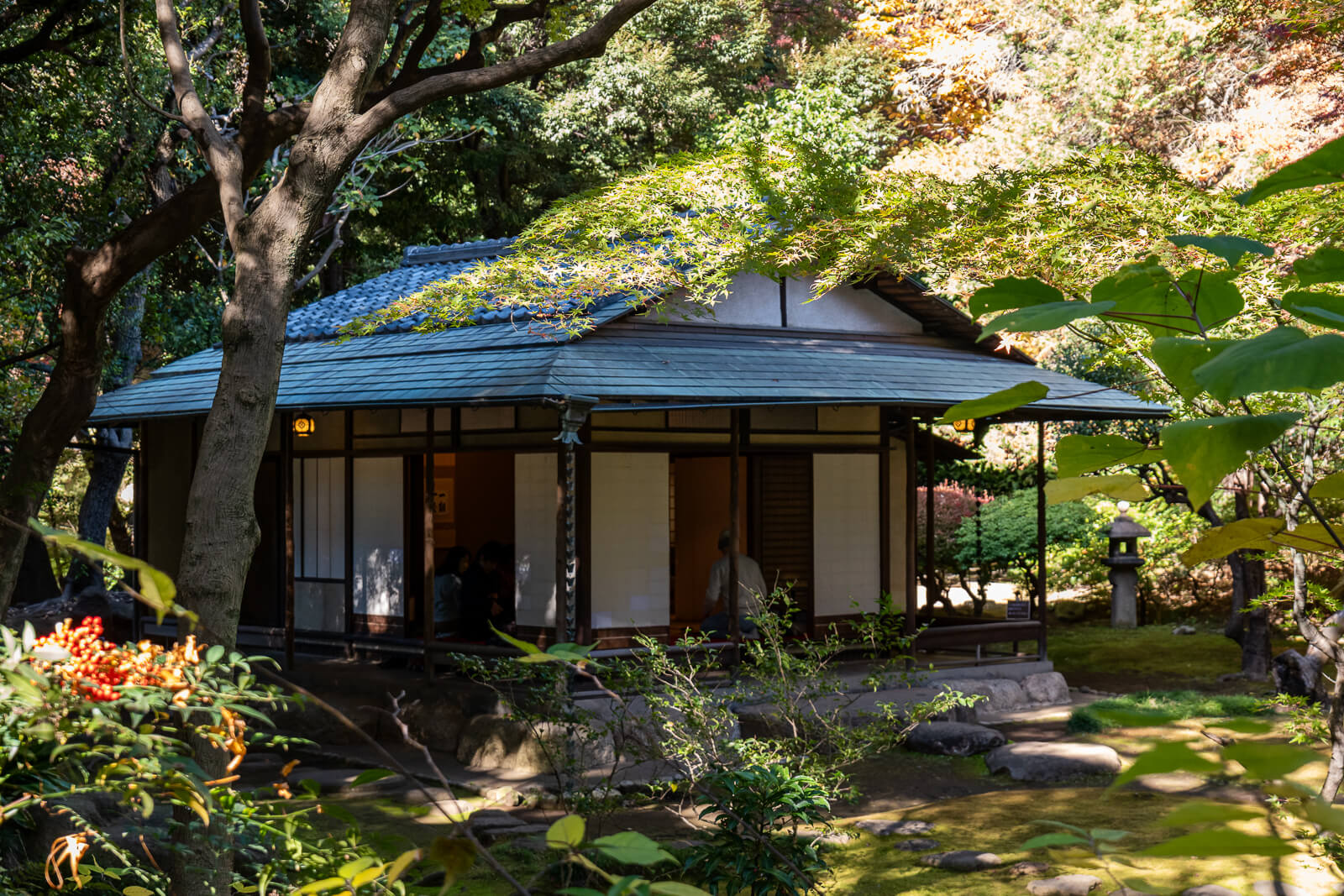
If crowds strongly affect your enjoyment, build some flexibility into the garden stop instead of scheduling an immediate departure afterward. Waiting at a seat or continuing to another viewpoint gives you options when a bridge or pond edge is temporarily busy. An entrance queue alone does not tell you how the whole garden will feel: the more useful consideration is whether the layout gives you room to keep moving, pause, and return to a view.
Walking and Time Commitment
The main routes offer broadly comparable amounts of walking, with Kyu-Furukawa’s stairs providing the clearest difference in effort. Koishikawa’s mostly level pond circuit still includes varied surfaces and occasional steps, while Rikugien offers side paths if you want to extend the walk. For anyone who needs step-free access, check the garden’s current accessibility information and entrance route before deciding; a comfortable general walking circuit is not necessarily an accessible route throughout.
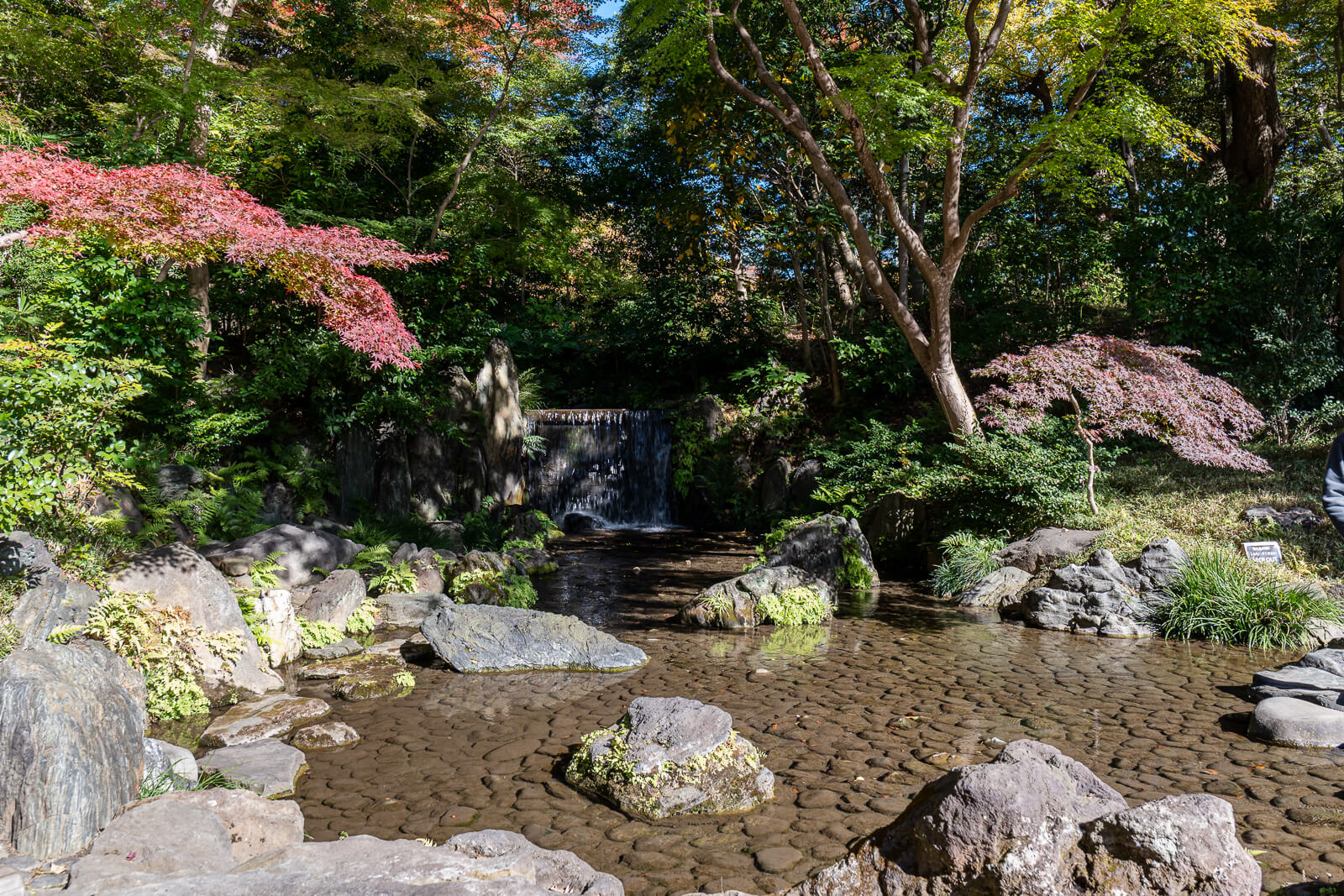
An hour inside the gates can be enough for a satisfying introduction to any of the three gardens. Allow longer when photography involves waiting at viewpoints, when regular sitting breaks matter, or when you want to include a separate experience such as visiting the mansion. Treat the journey as its own part of the schedule: station exits, walks to the correct gate, transfers, and admission all take time outside that garden hour.
Autumn Timing and What to Expect from the Color
Late November into early December is a useful planning window for Rikugien’s autumn foliage, but the third week of November can already offer rewarding color. The photographs here show red and yellow leaves mixed with green, so an attractive visit does not require every tree to have turned. Treat the calendar as a starting point and check recent garden updates near your travel dates, especially if foliage is the main reason for making a separate journey.
For fixed travel dates, choose a garden with features you will enjoy even if the maples are not at their brightest. Koishikawa’s pond, waterways, and bridge reflections give the walk structure beyond the leaves, while Kyu-Furukawa adds the mansion and the contrast between its upper and lower gardens. Rikugien offers shaped pines, bridges, and pavilions around the water, so the route remains visually varied between stronger pockets of color.
Daylight is the best match for comparing the garden layouts and photographing the range of subjects described here. Rikugien also offers special autumn nighttime viewing, which creates a different experience and requires its own planning around the announced opening and admission arrangements. If an illumination is your priority, check the current event information before setting the day’s schedule; an evening event should not be treated as a simple extension of the daytime garden hour.
The Best Garden for Your Tokyo Plans
Choose Rikugien if this will be your one dedicated autumn garden visit and foliage is the deciding factor. The pond, shaped pines, bridges, and repeated places to stop give it enough variety to sustain the visit even between the brightest patches of color. It is the best starting choice when your Tokyo itinerary is flexible and you would rather spend longer enjoying one traditional garden than divide the outing between several.
Choose Koishikawa Korakuen when Tokyo Dome or LaQua is already part of the day. The garden’s open pond views and good color make it a worthwhile autumn stop in its own right. Its urban setting also gives the visit a clear relationship with the surrounding city rather than requiring a separate garden-focused excursion.
Choose Kyu-Furukawa for architecture, roses, and a smaller garden that changes character as you move through it. Its scale suits travelers who enjoy looking closely at a few different kinds of scene without committing to a larger circuit. For a couple planning a relaxed walk or a photographer seeking varied subjects, that combination can matter more than having the broadest foliage display.
For a mixed-interest group, Kyu-Furukawa gives the outing several subjects beyond autumn leaves, while Koishikawa works especially well when some of the day is already reserved for Tokyo Dome City. Rikugien is the stronger choice when everyone wants to spend the available time within a traditional garden landscape. If your group prefers fewer stops and more sitting time, choose one garden and use the extra hour there rather than treating a second admission as essential.
Combining More Than One Garden
Rikugien and Kyu-Furukawa make the most straightforward two-garden pairing around Komagome. Both can be approached from the station, and walking between them gives the outing a continuous neighborhood route. Check the mapped entrances before setting off and allow separate time for the street walk, a break, and any queues.
Koishikawa Korakuen works well with a different kind of afternoon around Tokyo Dome City. LaQua is the shopping, dining, and spa complex within the wider Tokyo Dome City area, which also includes the amusement rides. A garden visit can therefore be one part of a varied day instead of the first stop in a sequence of similar landscapes.
If you want to see all three, plan around the public-transport connections and actual entrance locations rather than assigning three consecutive one-hour slots. Keep Rikugien and Kyu-Furukawa together as one part of the outing, then decide where Koishikawa fits around your starting point and later plans. Three hours inside the gardens is only the beginning of the time commitment; walks between gates and stations, transfers, food, and queues need their own allowance.
For most visitors, two gardens with time between them will be a more comfortable plan. Seeing all three is reasonable if comparing gardens is itself a major interest, but it asks more of the day once station walks and transfers are included. There is little reason to rush past the views that made the gardens worth choosing.
The strongest reason to add Kyu-Furukawa after Rikugien is the change in character: the mansion and rose terraces create a different visual experience from another pond circuit alone. Allow around two hours for the two gardens themselves, then add the street walk, entrance queues, and a meal or break when deciding whether the outing fits your available half-day. Put your higher-priority garden first if the schedule is tight, so an unhurried visit there is protected even if the second stop becomes optional.
Getting There
Access and Arrival
Use public transport for these three Tokyo gardens. Choose the station for your selected garden; add transfers and station walks separately when combining visits.
- Koishikawa Korakuen
Suidobashi → East Gate; Iidabashi C3 → West Gate
5 minutes or 3 minutes on foot · Choose the entrance matching your arriving rail line. · Good fit with Tokyo Dome City and LaQua.
- Rikugien
JR Yamanote Line or Metro Namboku Line → Komagome → garden
About 7 minutes on foot · Follow the garden’s current entrance guidance. · Komagome also connects the neighborhood pairing with Kyu-Furukawa.
- Kyu-Furukawa Gardens
Keihin-Tohoku Line → Kaminakazato; Namboku Line → Nishigahara
About 7 minutes on foot · Walk from either station to the garden entrance. · Alternatively, JR Komagome is about 12 minutes away on foot.
Arriving by Car: None of the three gardens has visitor parking. If already driving, arrange paid parking separately and check charges; Tokyo Dome City is an option to investigate for Koishikawa.
Plan Your Tokyo Garden Visit
Choose accommodation and travel essentials that fit your wider Tokyo plans. Check the details for your dates before booking.
Choose a Hotel That Fits the Whole Trip
Compare Tokyo hotels by station access, nightly price, and cancellation terms. Choose a base for your wider itinerary, with an easy journey to your preferred garden.
Compare Tokyo Hotels
Find an Experience for the Rest of Your Day
Compare Tokyo experiences by meeting point, start time, and duration. Leave room for the garden and the journey between stops before choosing what to book.
Browse Tokyo Experiences
Keep Your Route Handy Around Tokyo
Keep train directions and garden entrance maps handy between stops. Compare Japan eSIM data allowances and validity, and check that your phone supports eSIM before buying.
Compare Japan eSIM Plans
Reader note: Japan Unfolded may earn a commission from some links at no extra cost to you.