A Coastal Stop That Only Makes Sense Midway Through the Day
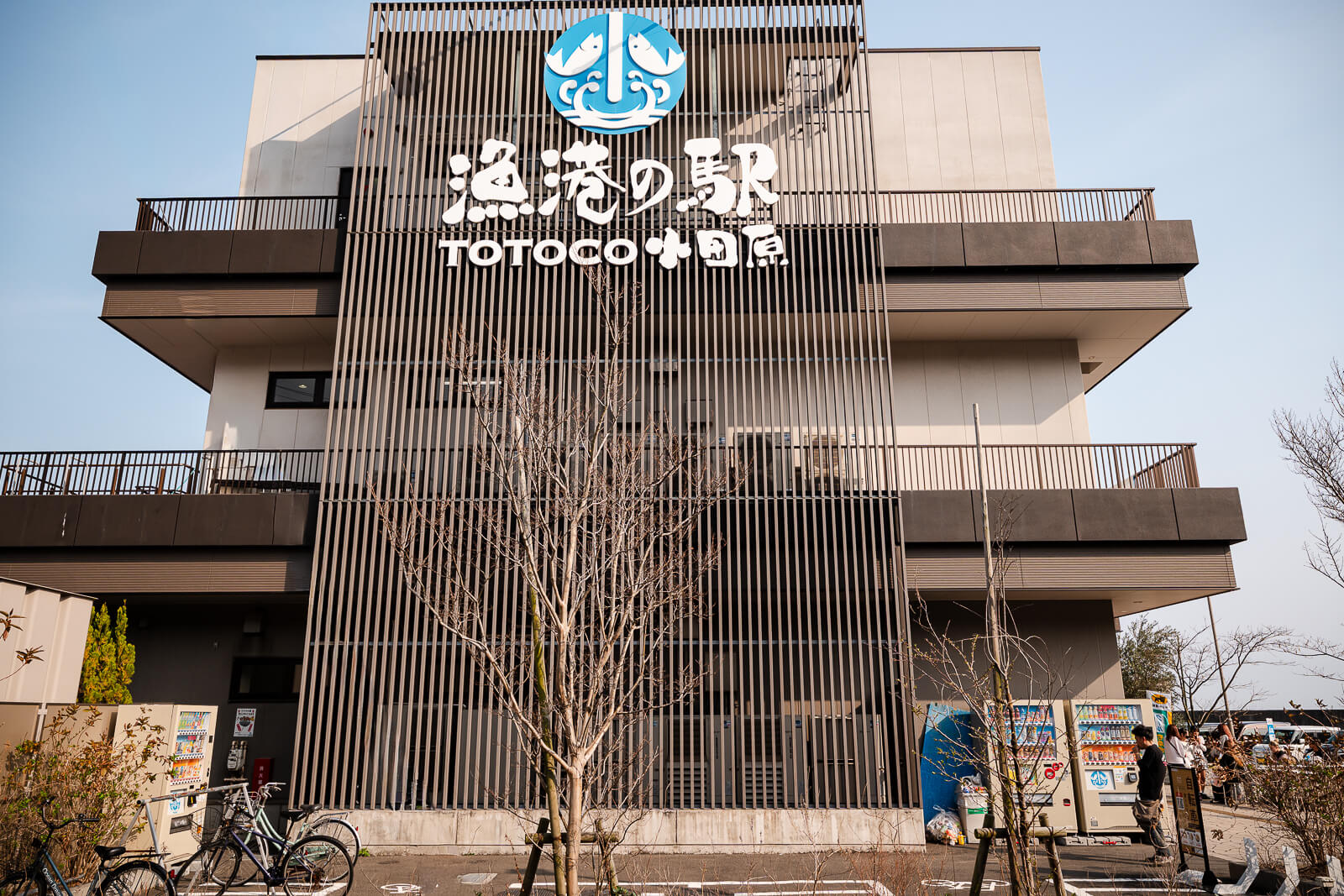
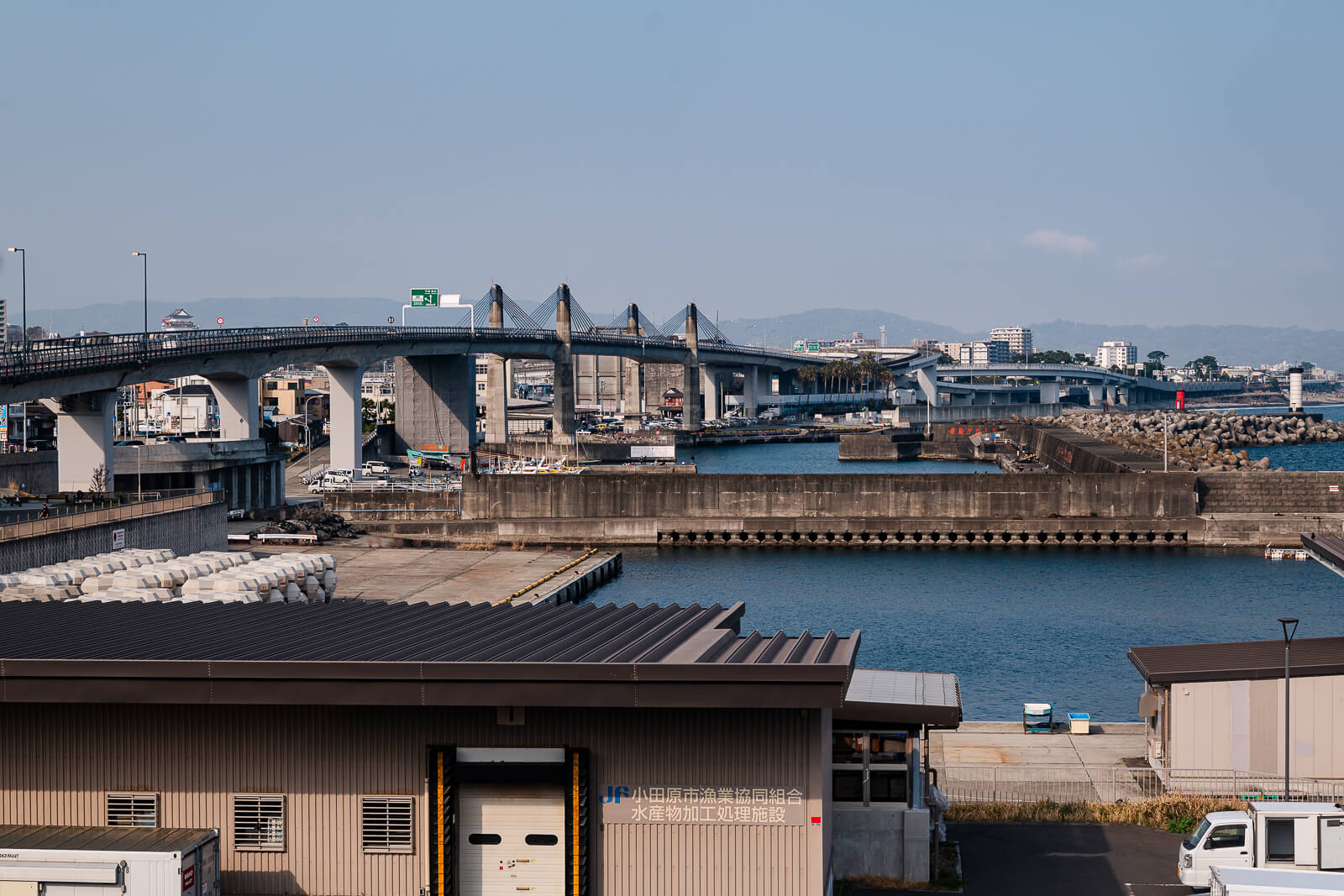
TOTOCO Odawara sits along the coastal edge of Odawara in Kanagawa Prefecture, positioned between Odawara Castle and the fishing harbor. Most visitors do not come here directly. Instead, it becomes relevant once the day is already in motion and a place to pause begins to make sense.
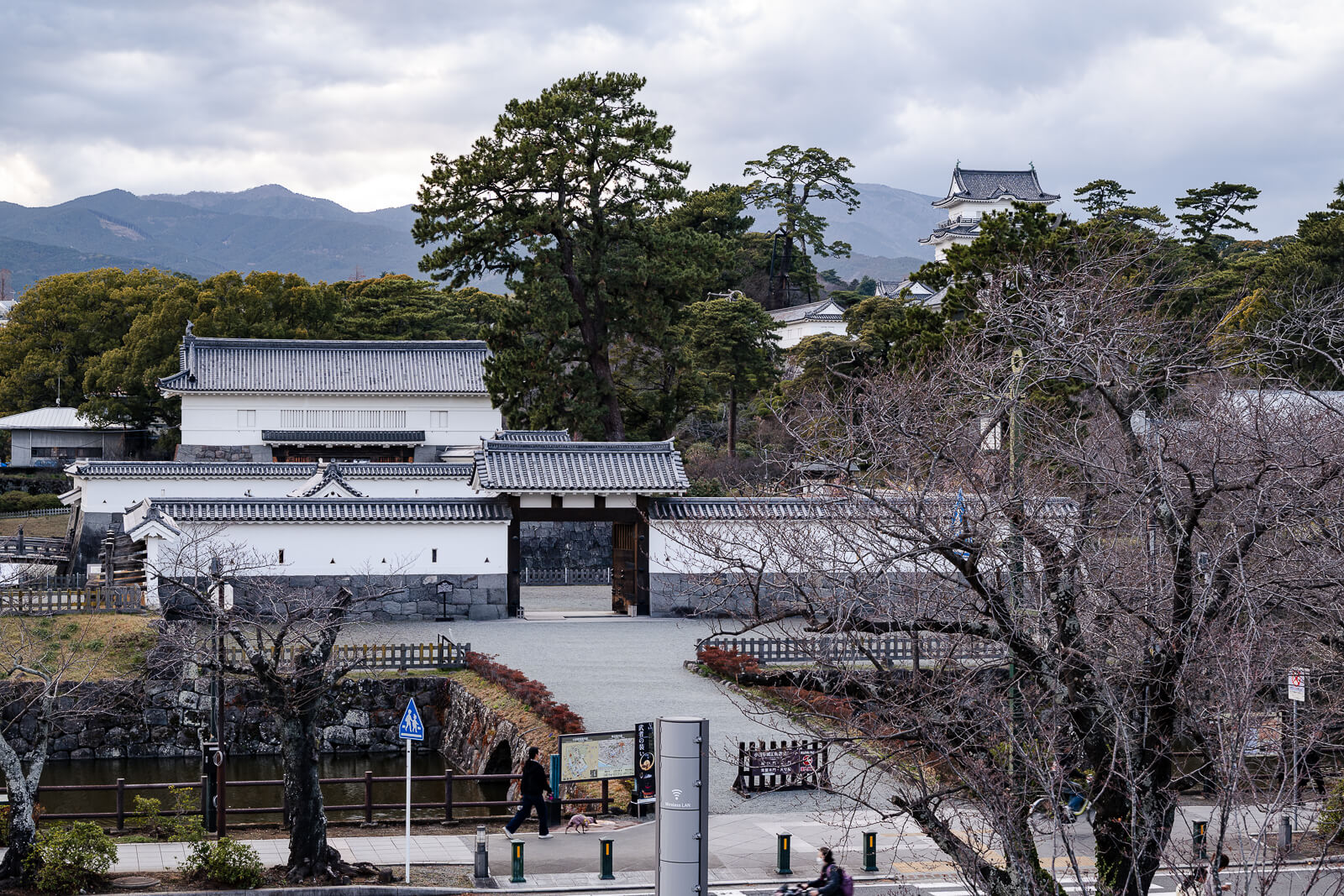
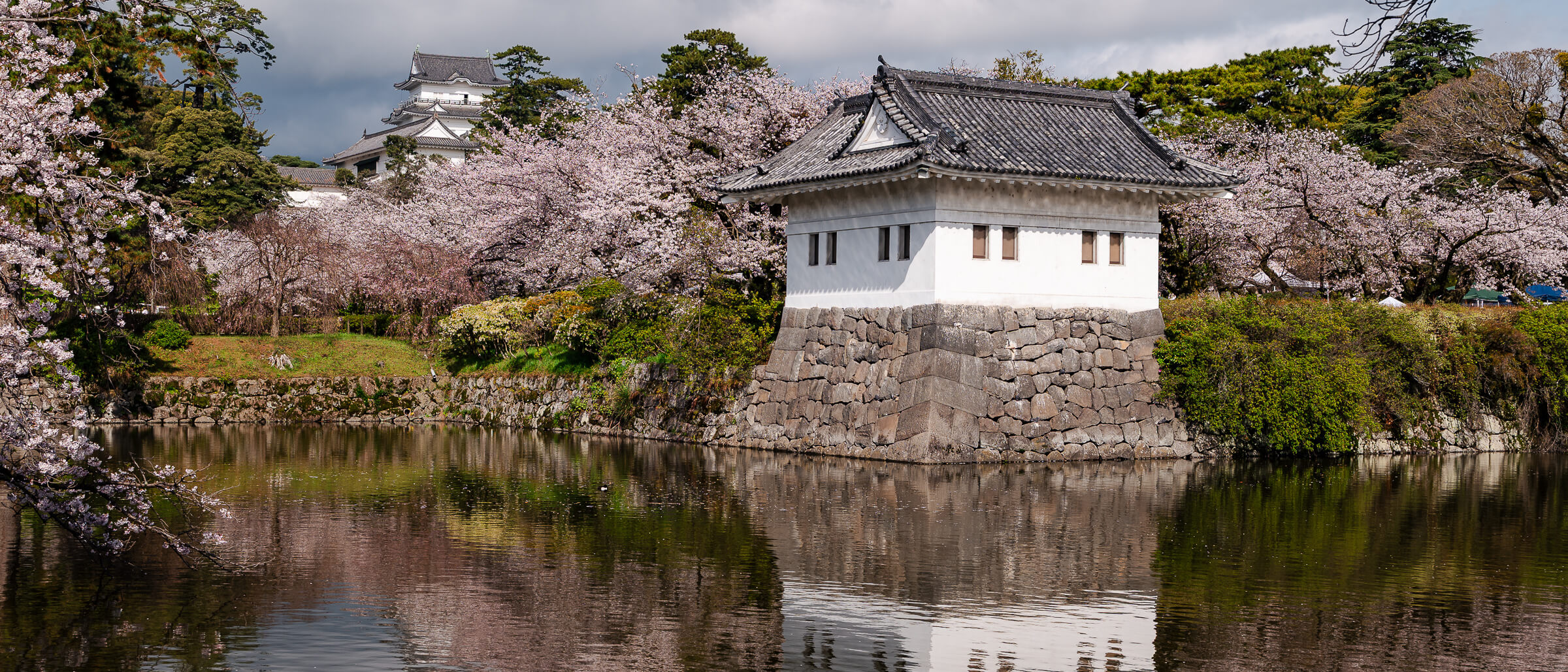
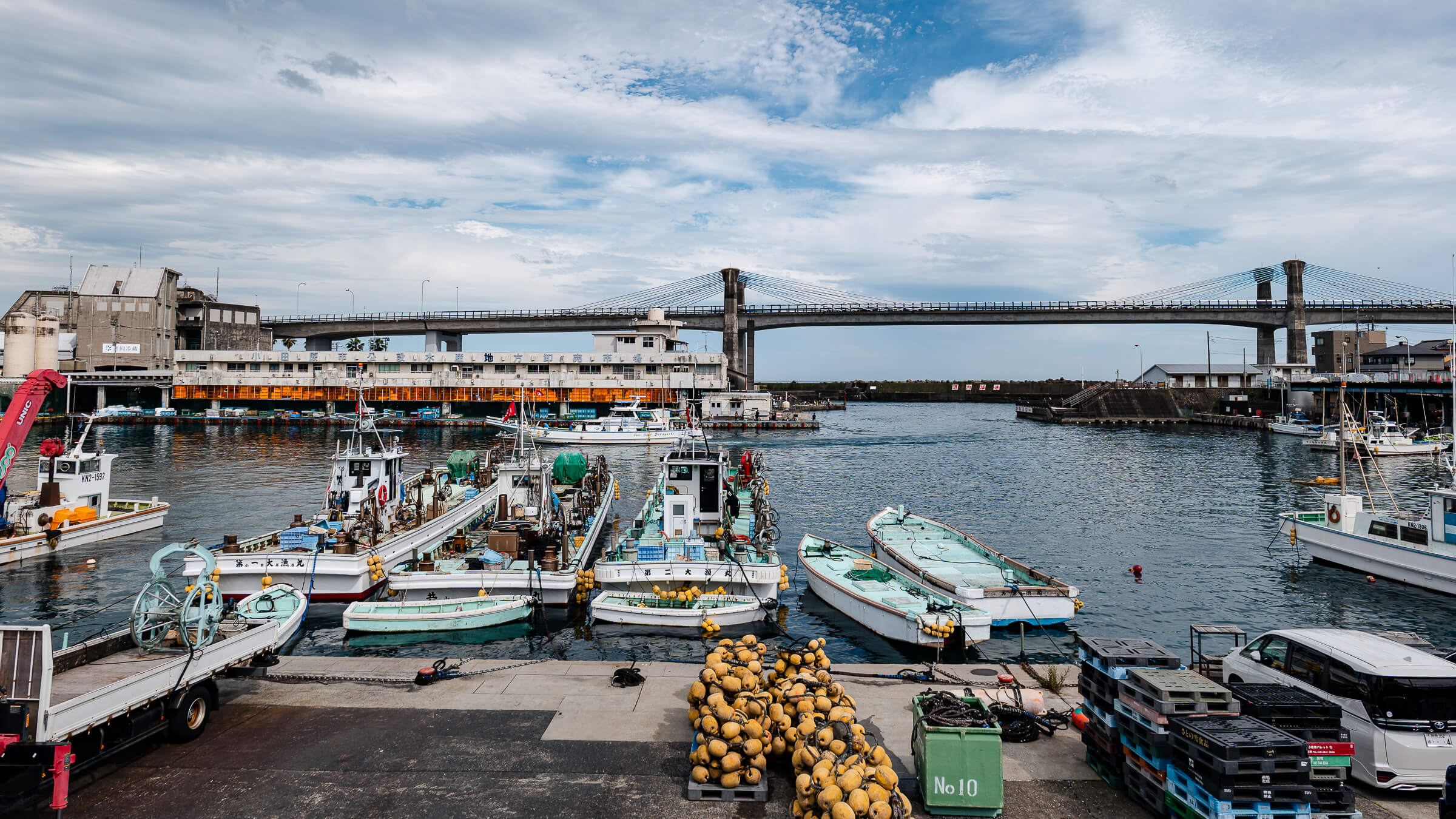
After time at Odawara Castle or along the Odawara fishing harbor, the route naturally opens toward the coastline. This is where TOTOCO fits, offering a stop that does not require a detour or a decision. It works because it appears at the moment when one is needed.
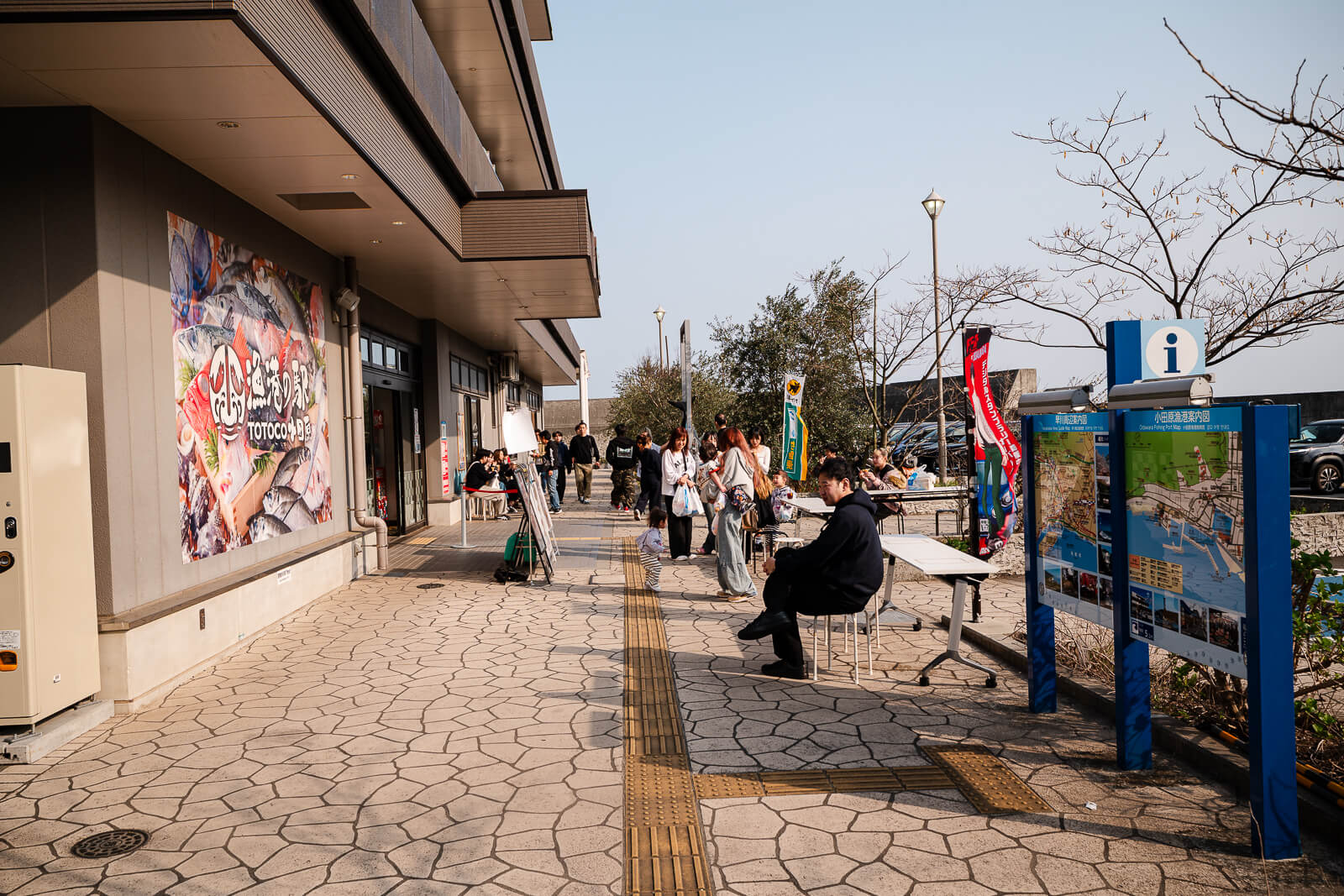
Most visits take between 20 and 45 minutes depending on whether a meal is involved. Effort is minimal, access is simple by car or taxi, and manageable on foot or by bicycle if already moving along the coast. Midday brings the highest concentration of visitors, but the layout keeps movement steady rather than congested.
Why This Exists Along This Part of the Coast
TOTOCO reflects a newer approach to presenting coastal food and products in a format that aligns with how people travel today. Traditional harbor markets developed through daily trade and are shaped by working routines, which can make them less predictable to move through on a short visit. This building instead prioritizes clarity, time efficiency, and ease of navigation.
Odawara’s coastline has long functioned as both a resource and a corridor between eastern and western Japan. The nearby Odawara fishing harbor continues to operate within that system, but the experience of moving through it is not structured for quick visits. TOTOCO exists to translate that environment into something more immediately understandable within a limited amount of time.
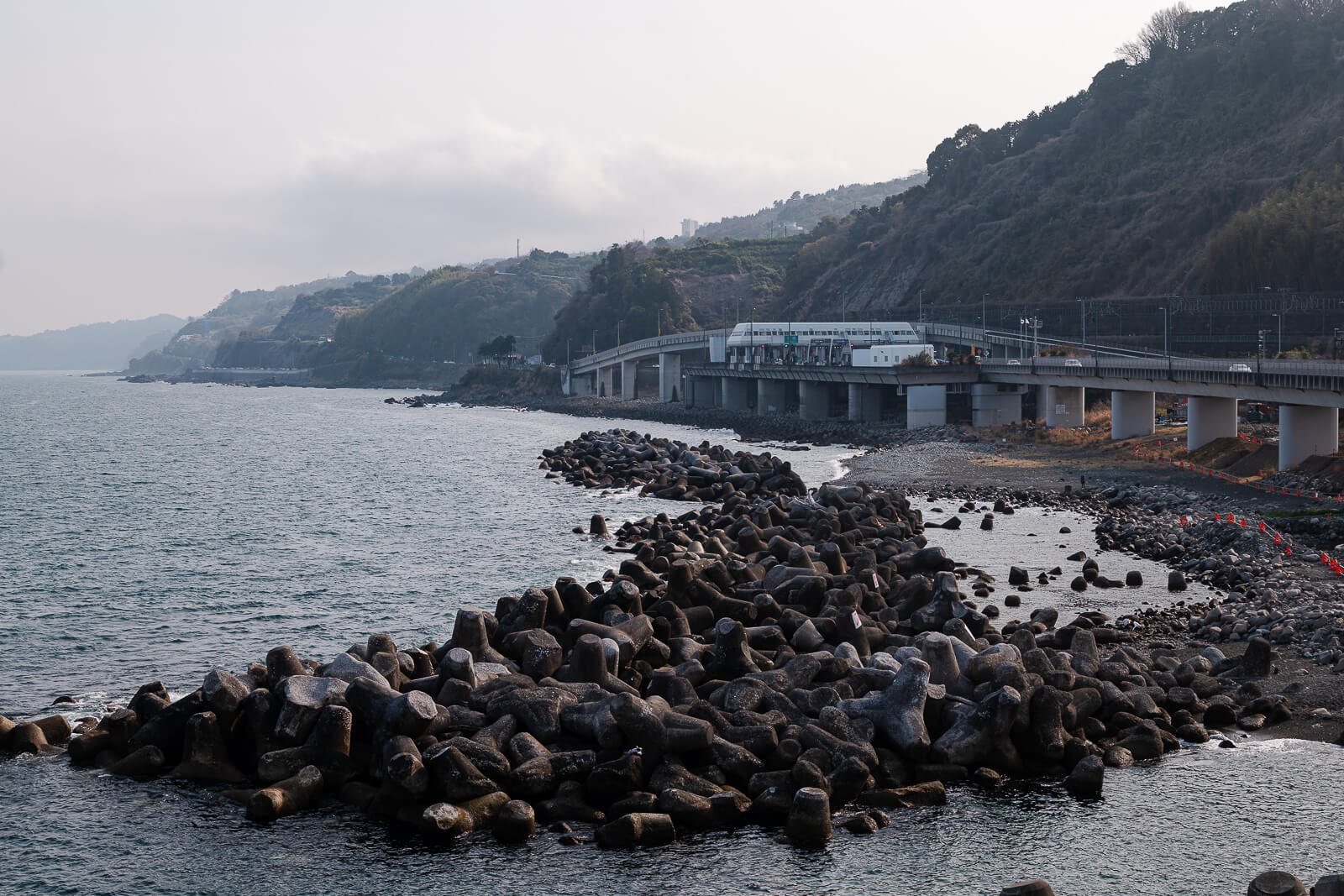
That difference explains why the space feels separate from the harbor rather than an extension of it. It is shaped by visitor movement rather than daily operations, which affects everything from layout to pacing. What appears inside reflects that purpose, allowing the visit to make sense quickly.
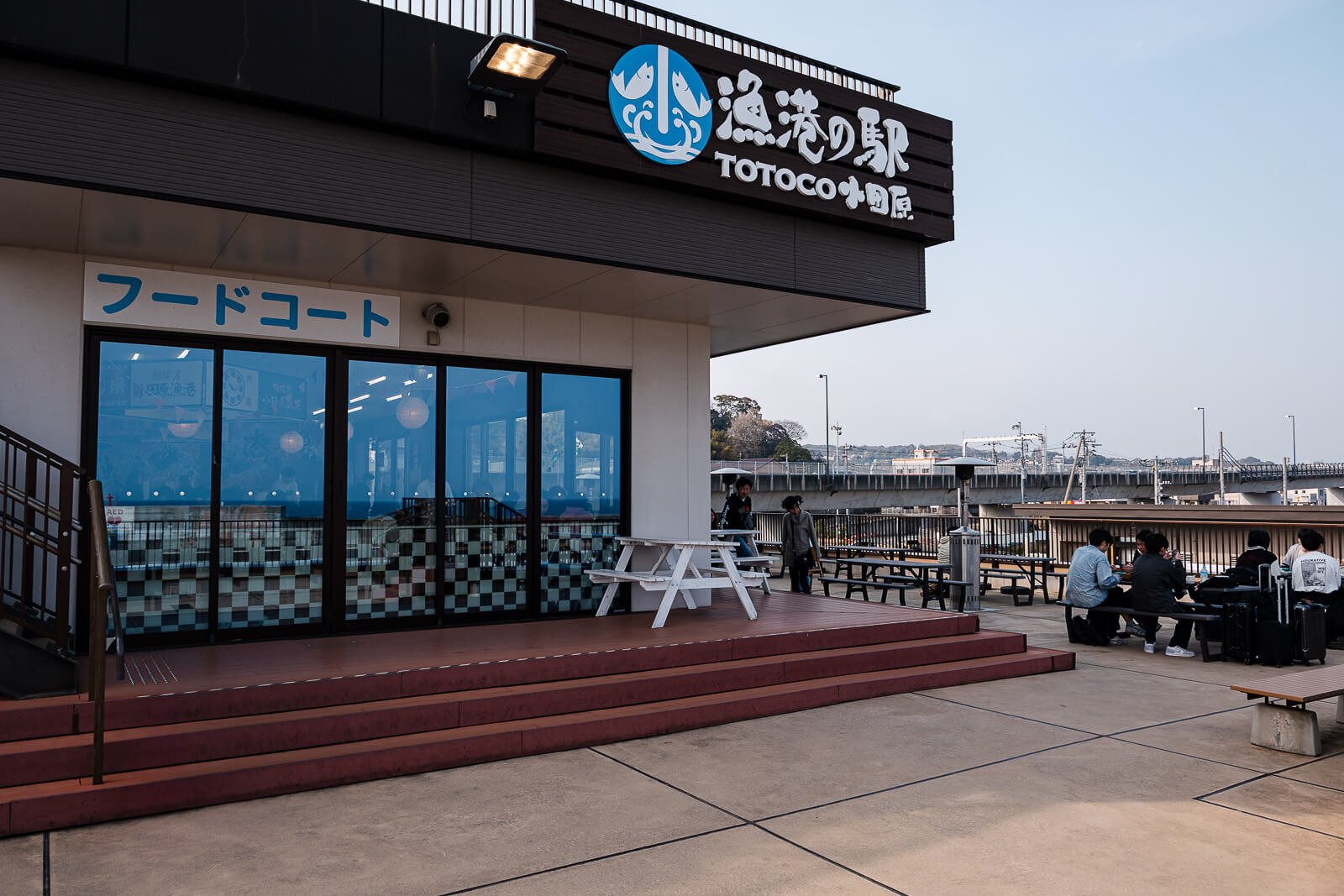
Moving From the Entrance Up to the Open Deck
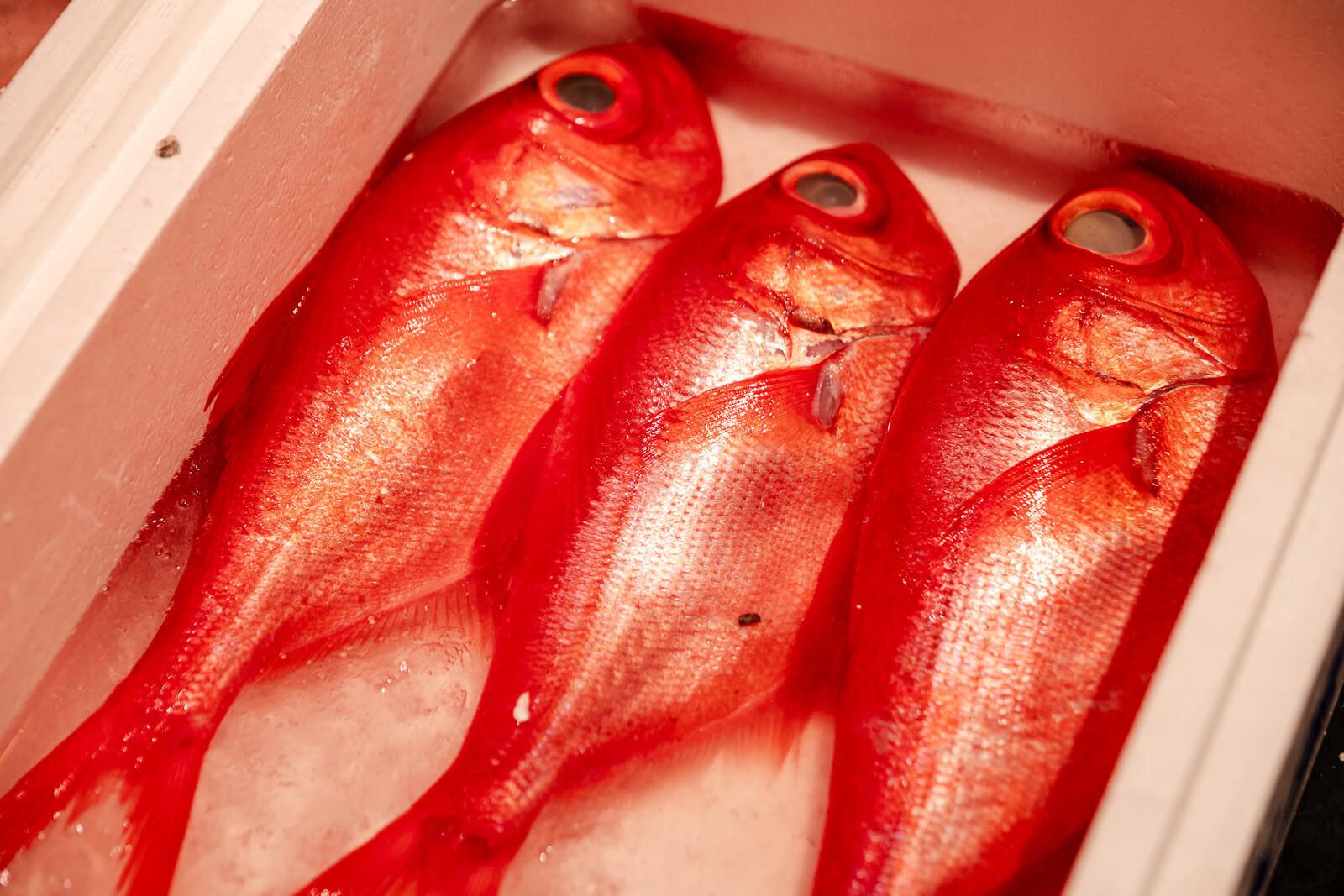
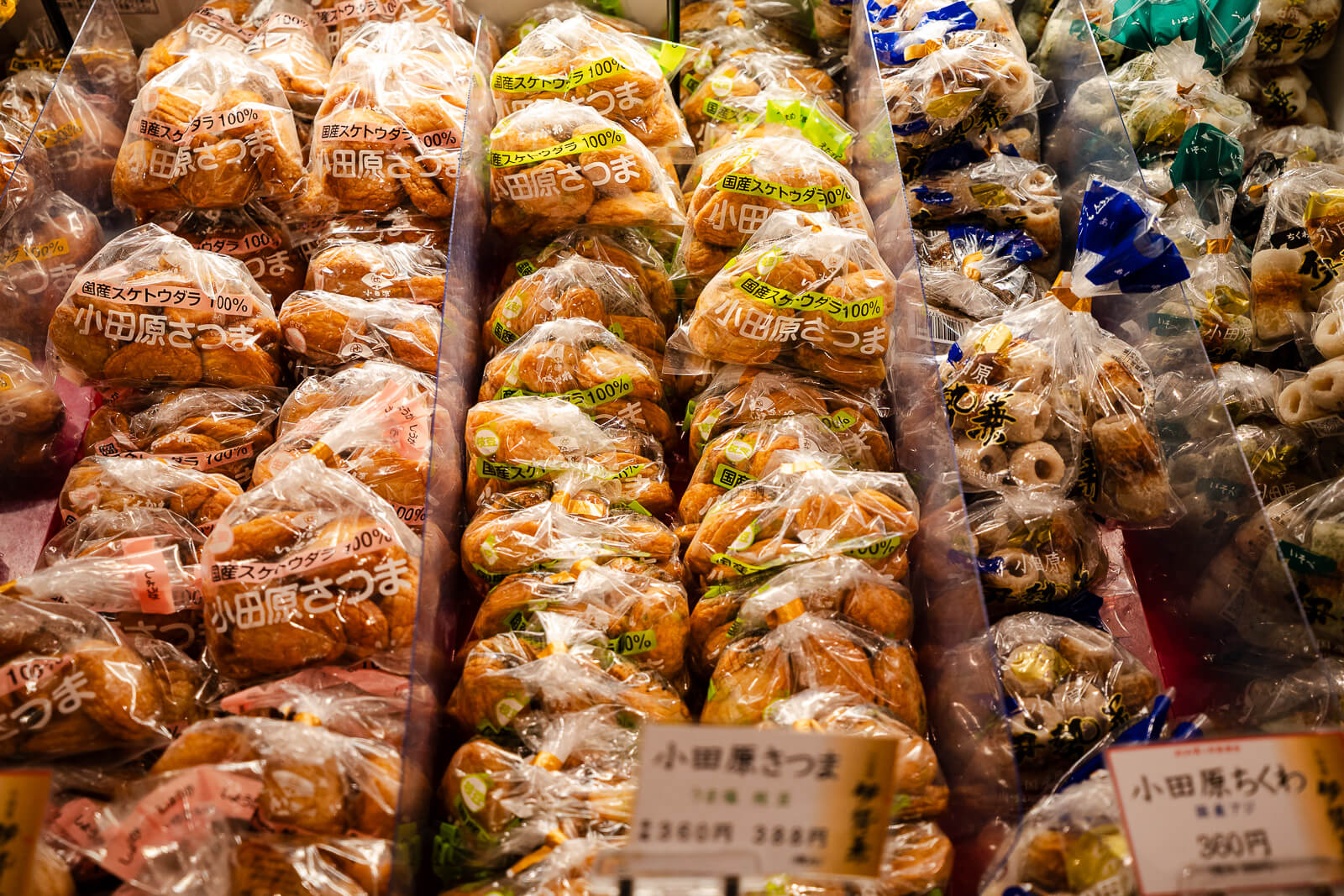
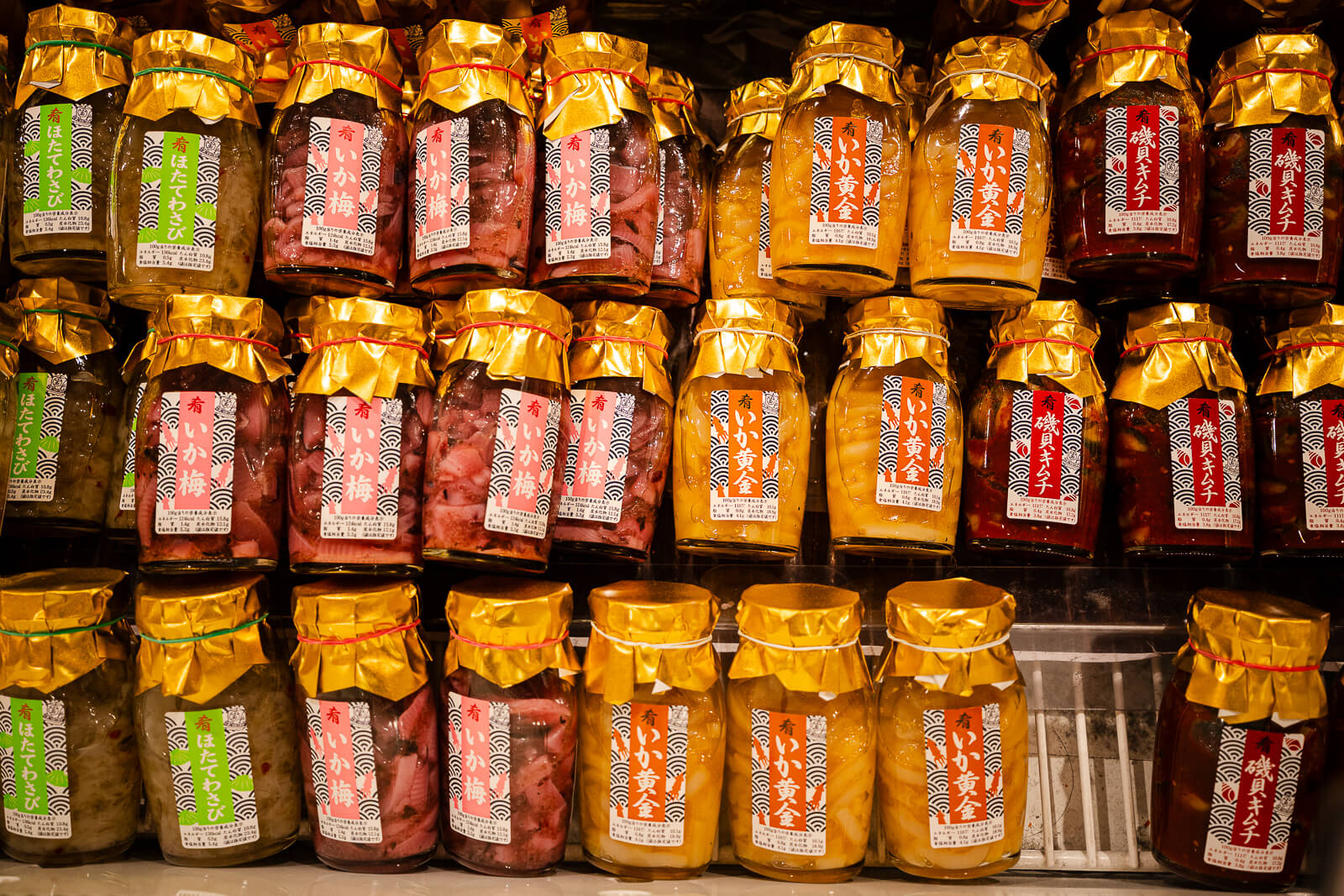
The building sits directly along the coastal road, with no formal entry sequence separating outside from inside. Movement begins immediately at ground level, where packaged goods and local products line the space. This level can be passed through quickly or explored depending on how much time is available.
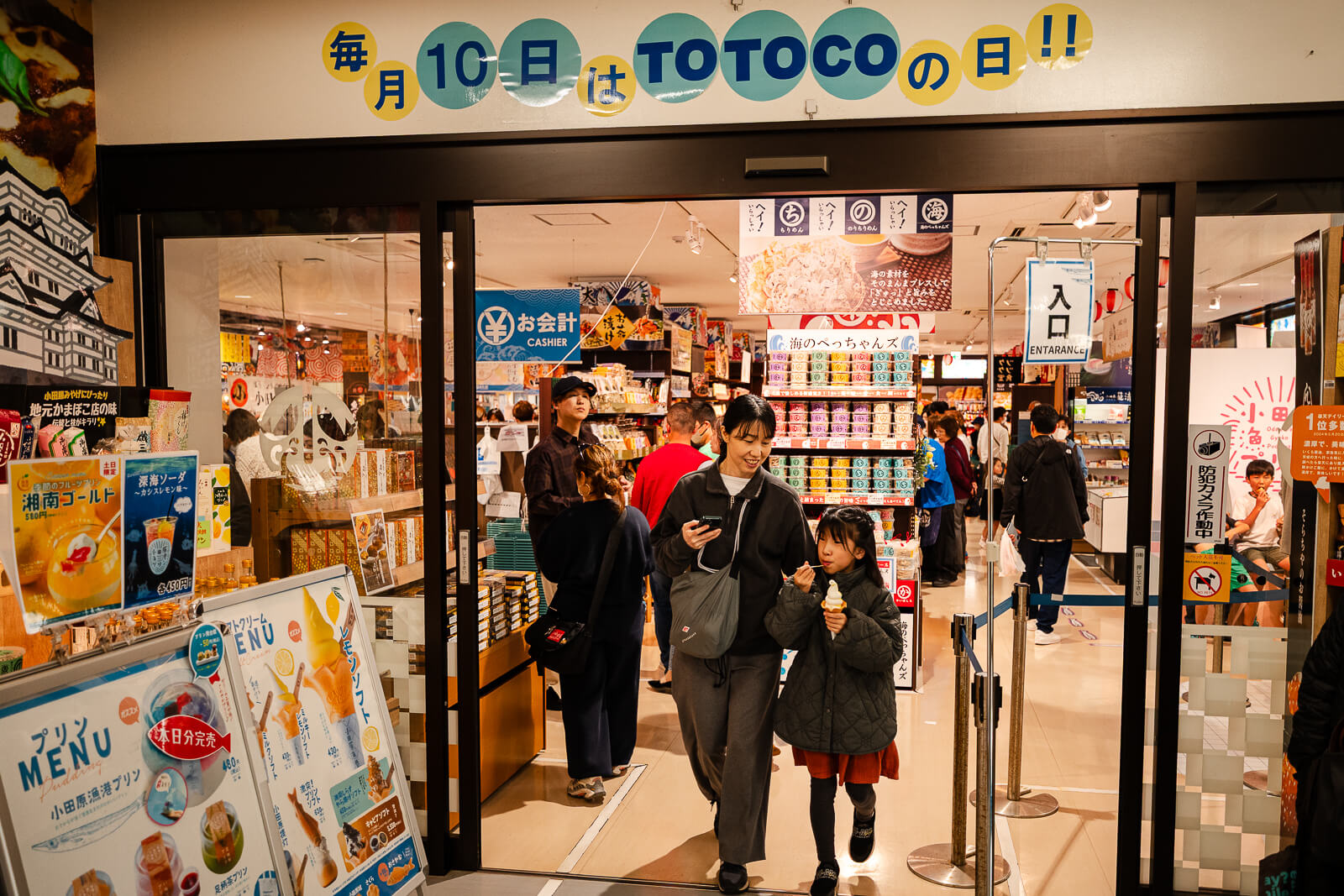
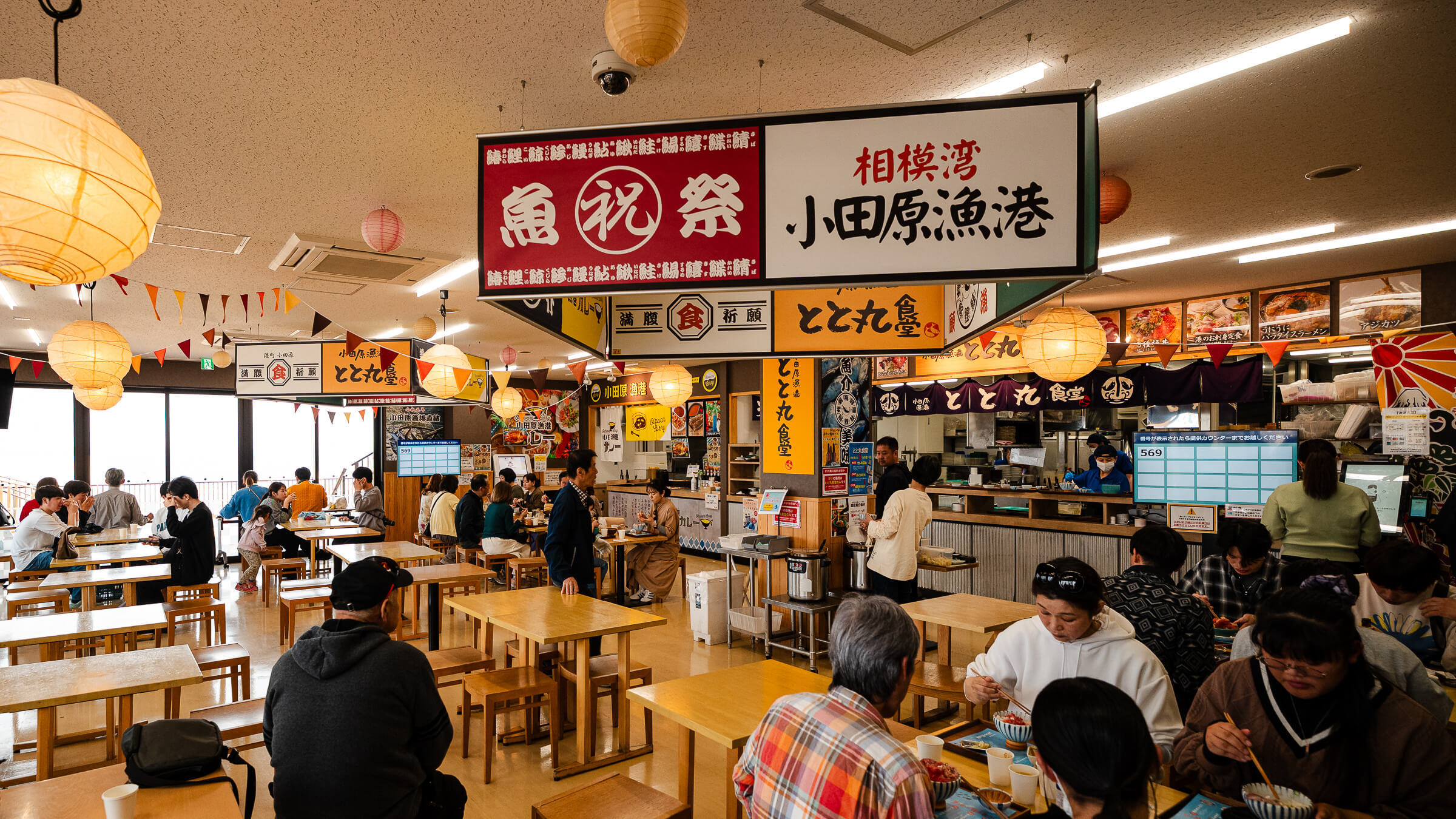
As the floors rise, the structure opens and the pace changes. Dining areas appear, and movement slows as people settle into meals rather than passing through. Navigation remains straightforward, with each level connected clearly and no need to search for specific paths.
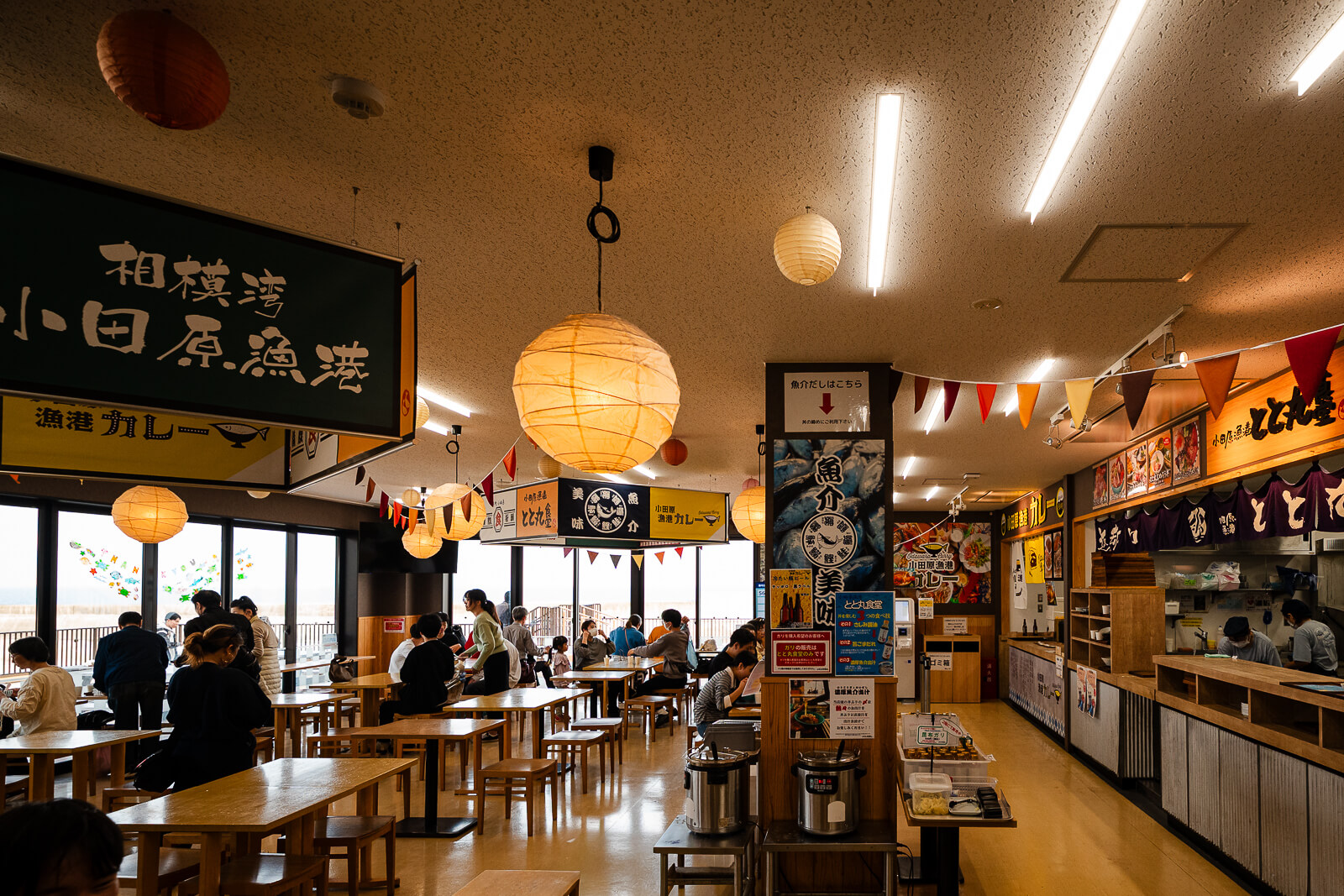
At the top, the experience turns outward toward Sagami Bay. The open deck pulls attention away from the building itself and toward the coastline, where the view extends west and the direction of travel becomes more visible. This is often where the visit lasts slightly longer than expected, even when the intention was to move on quickly.
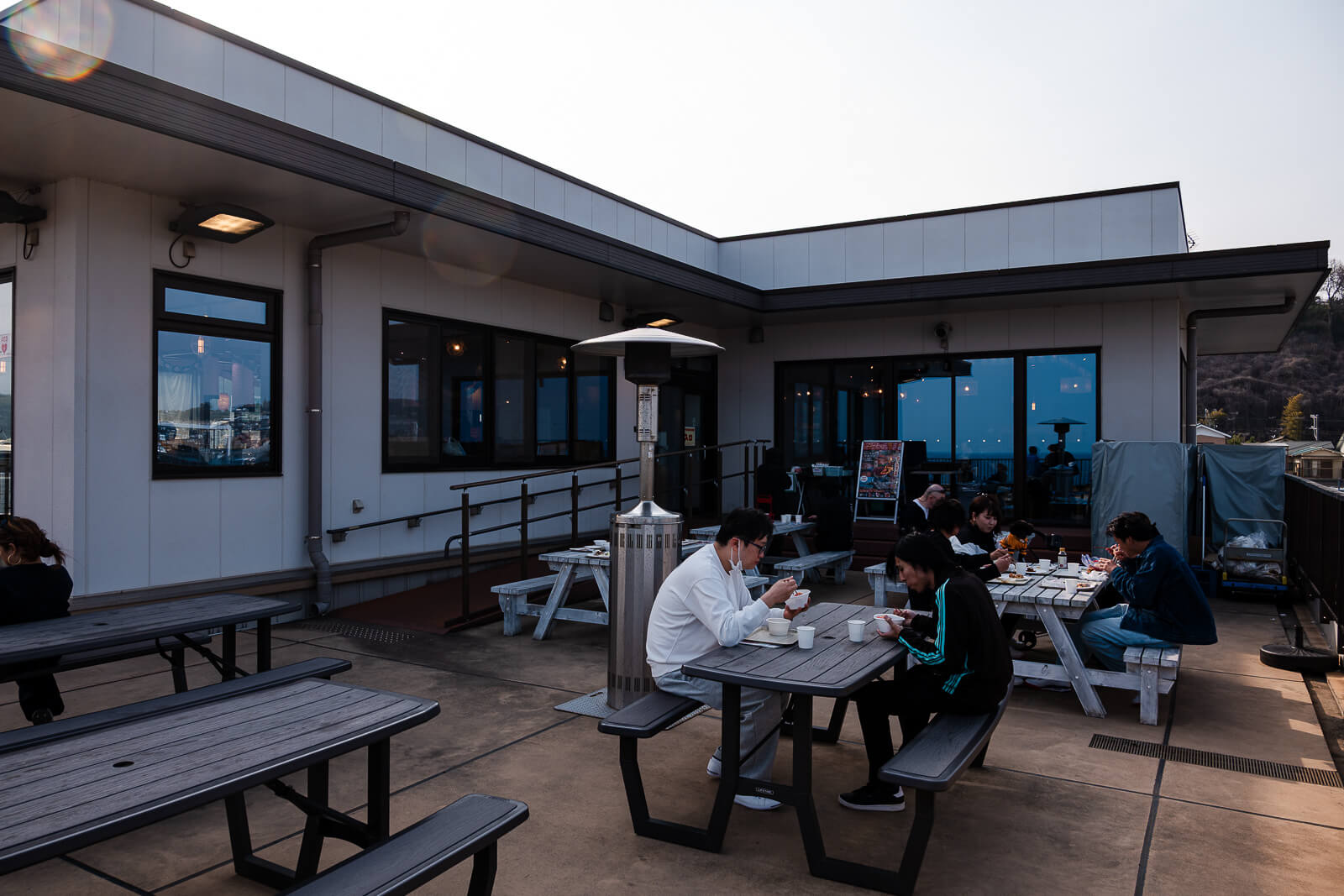
Eating Here Without Needing to Plan Ahead
Food is the main reason many people stop, but the experience is designed to remove friction rather than create it. The restaurants focus on seafood bowls and set meals built around local catch, presented in a format that can be understood quickly without prior familiarity. This allows the stop to work naturally after time at Odawara Castle or along the harbor without requiring advance planning.
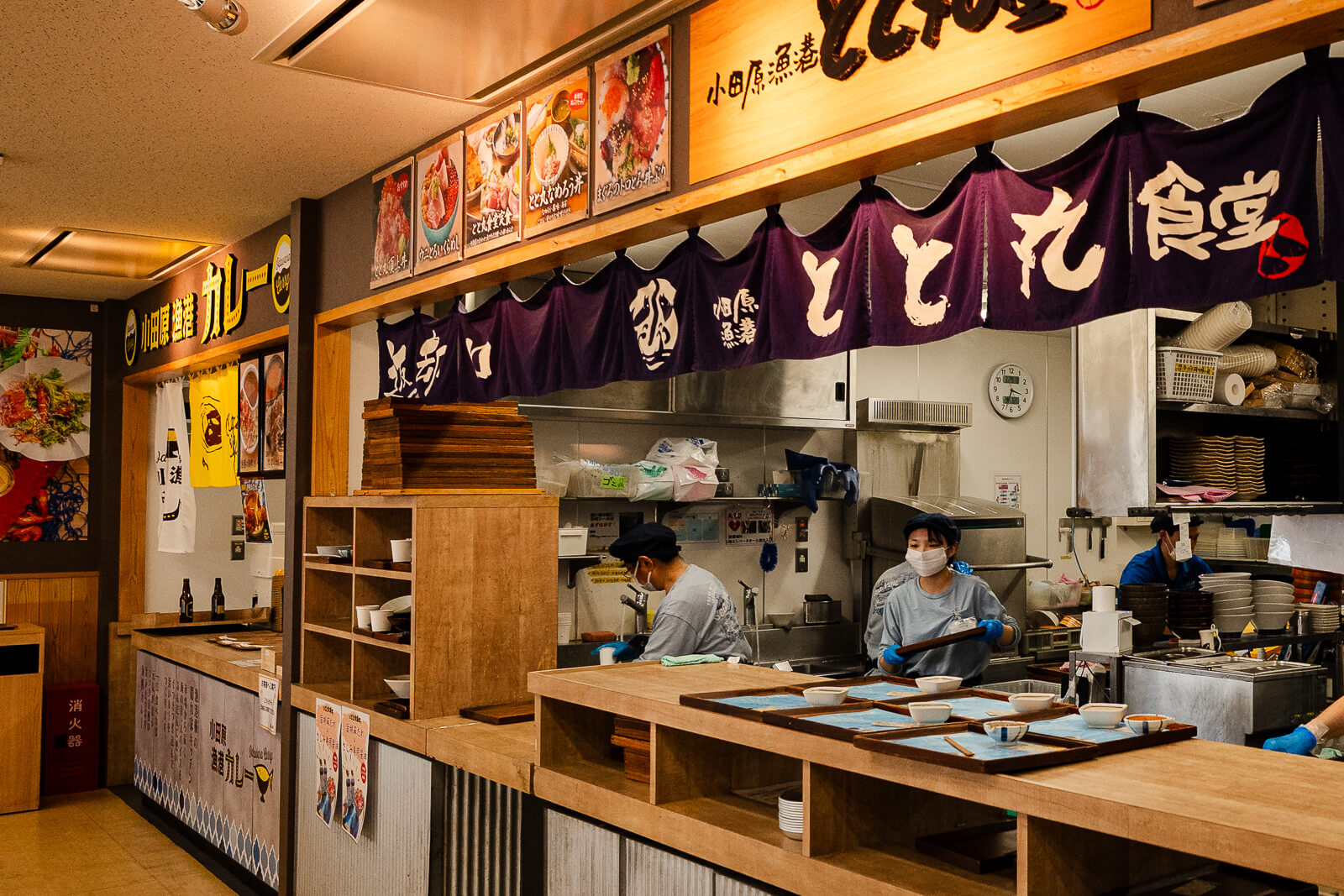
Midday is when this becomes most relevant, as the need for a break emerges rather than being scheduled. Short waits can form during peak hours, particularly on weekends, but turnover remains steady and the space continues to move. The stop fits because it responds to timing in the day rather than demanding a fixed place in it.
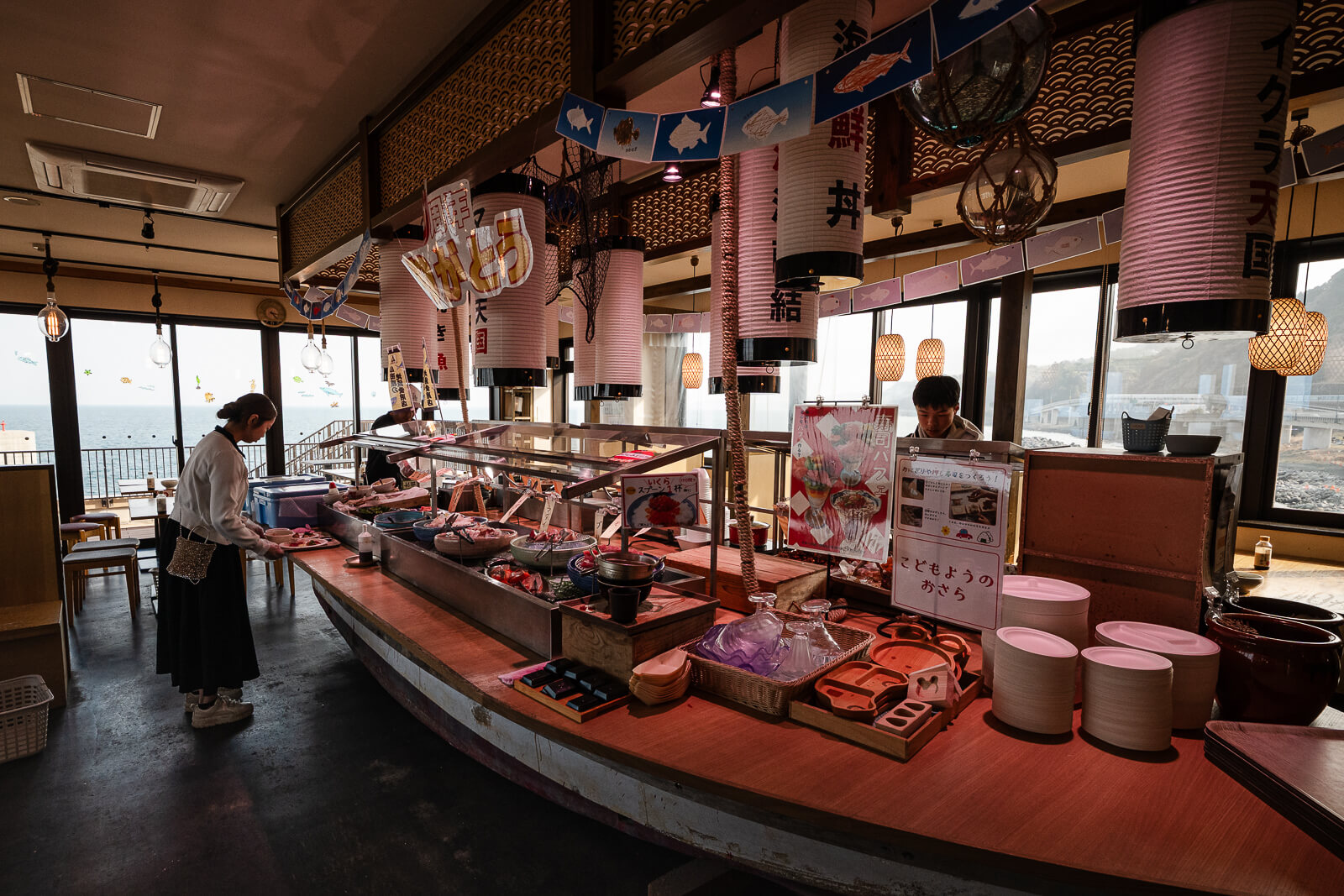
How the Space Changes Through the Day
Late morning into early afternoon brings the highest concentration of visitors, particularly those arriving by car or moving along the coastal route. During this period, the building carries a steady flow between floors, with more people stopping to eat before continuing on. The upper levels remain accessible, though pauses tend to be shorter.
Earlier in the day, movement is more continuous, and the upper levels remain open without interruption. Later in the afternoon, activity tapers and visits become shorter as fewer people stop for meals. The structure itself remains unchanged, but how it is used shifts with the day.
Where This Fits Around the Castle and Harbor
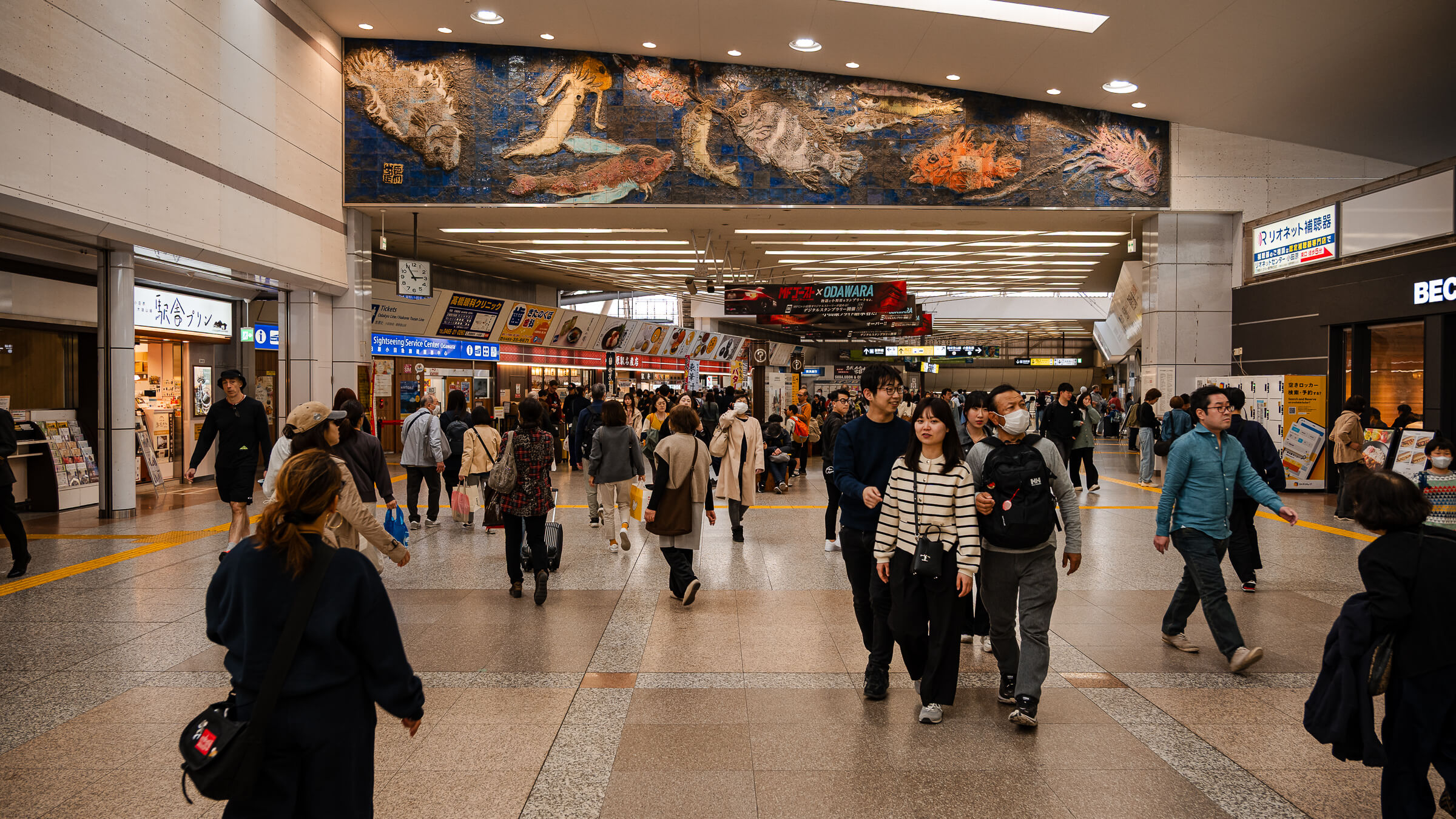
Movement through Odawara often unfolds from the station toward Odawara Castle, then outward toward the harbor and coastline. From there, the route begins to open, either continuing west along the shore, turning inland toward Hakone, or briefly climbing into the hills above the city.
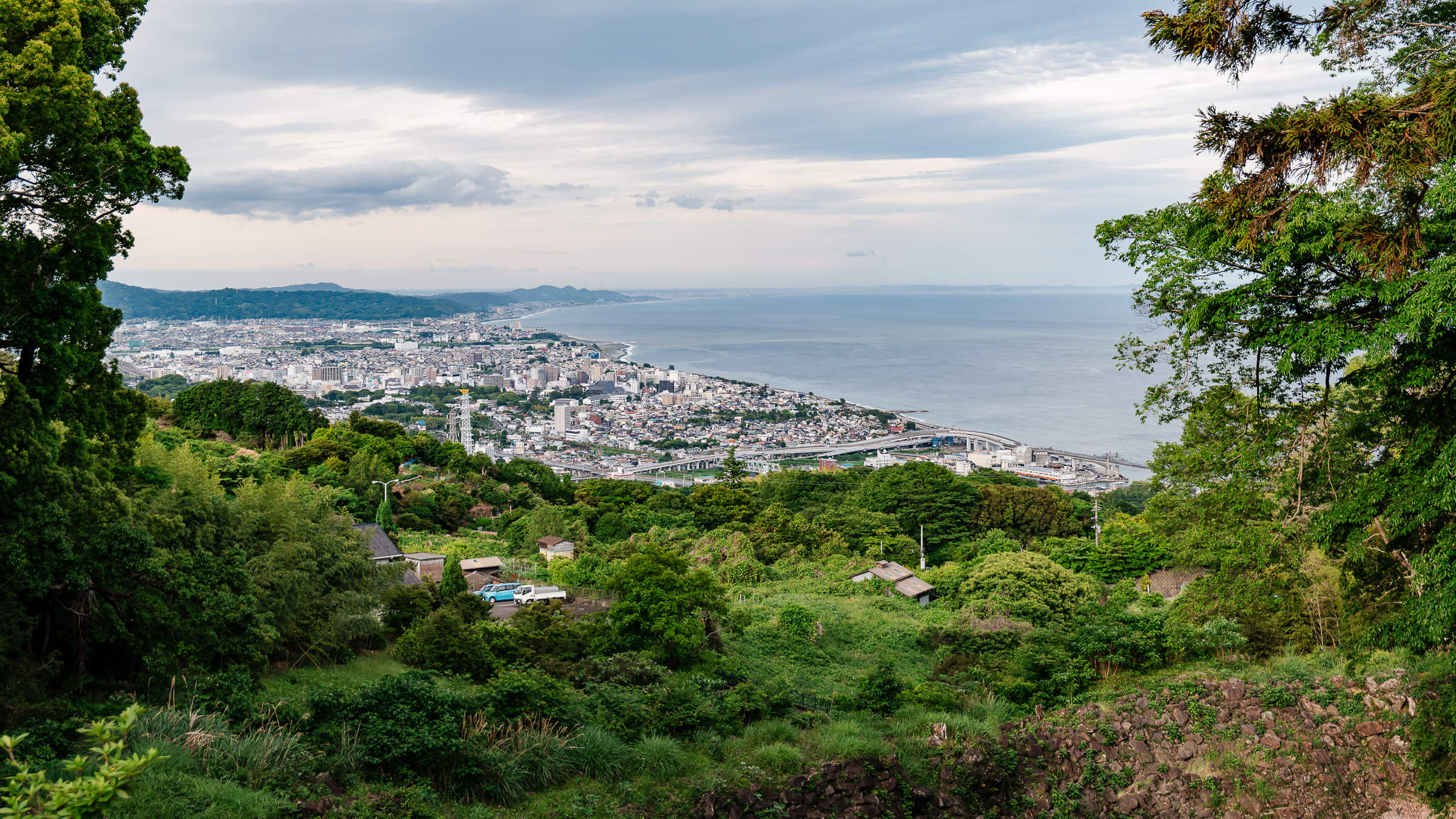
That upward route leads to Ishigakiyama Castle Ruins, where the perspective shifts completely. The coastline, harbor, and castle town fall into view at once, reframing the movement below as part of a much larger landscape. It is a short detour by car, but it changes how the rest of the day is understood.
TOTOCO sits at the turning point between these directions. From here, the coastline continues toward smaller fishing areas, while the inland route begins the gradual shift toward elevation and the mountain landscapes beyond. Whether continuing along the coast or heading toward Hakone, the stop closes one part of the day while setting up the next without requiring a deliberate decision.

Getting There
TOTOCO Odawara sits along the coastal road west of central Odawara, outside the immediate station area but still within short distance. The location makes it better suited to a continuous route rather than a single out-and-back trip. Most visits happen while already moving between the castle, harbor, and coastal areas.
Access is simplest by car, particularly when linking the Odawara fishing harbor, coastal viewpoints, and routes toward Hakone. Taxi access from the station or castle area is straightforward and removes the need for transfers. Walking or cycling is possible if already following the coast, though it adds time and distance.
The building is clearly visible from the road, and entry is immediate once you arrive. There is no complex navigation or hidden approach, reinforcing its role as a simple stop rather than a destination.
Hours and Fees
Hours vary slightly by floor, with retail, restaurant, and upper-level areas operating on different schedules throughout the day. Most visits occur during standard daytime hours when all areas are open. Checking ahead is useful when planning around a specific meal time.
Entry is free, and all public areas can be accessed without making a purchase. Food, drinks, and goods are priced individually depending on where you stop. The visit remains flexible, whether brief or extended.