Just Beyond Komachi-dori, the Visit Changes Quickly
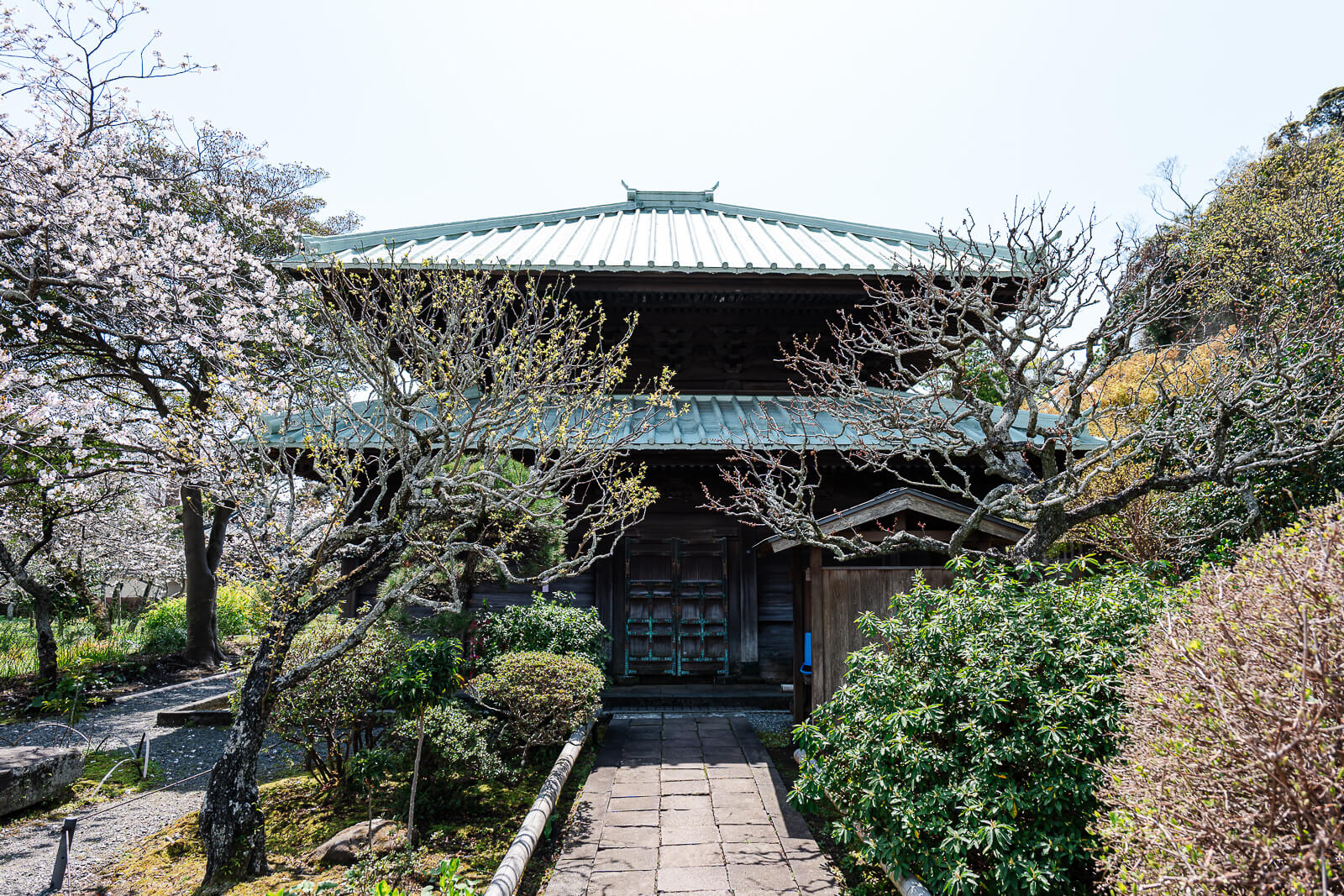
Eisho-ji Temple sits just north of Kamakura Station, a short walk beyond Komachi-dori and the approach to Tsurugaoka Hachimangu. The small temple grounds combine Edo-period buildings, a narrow bamboo grove, and a short cave passage carved into the hillside behind the main hall.
Most people encounter Eisho-ji while moving through central Kamakura rather than traveling specifically to see it. The grounds are compact and easy to understand, and most visits take about 20 to 30 minutes with minimal walking effort.
What makes the temple stand out is how quickly the surroundings change after leaving the commercial streets near the station. Within a few minutes the setting shifts from crowded shopping lanes to a quiet temple compound where wooden structures, bamboo, and rock formations appear within a small space.
For travelers exploring Kamakura on foot, Eisho-ji usually works best as a short stop between larger landmarks rather than a destination that anchors its own itinerary.
Why a Tokugawa-Era Nunnery Was Established Here
Eisho-ji was founded in 1636 by Okatsu no Tsubone, a close attendant of Tokugawa Ieyasu. After his death she entered Buddhist life and established the temple on land connected to her family.
The temple’s role during the Edo period explains why it sits close to the town rather than deep in the surrounding hills. Eisho-ji served as a nunnery for women from samurai families, providing a place where they could enter religious life while remaining connected to the social world tied to the samurai class.
That purpose shaped the temple’s placement. Instead of functioning as a remote monastic complex, it operated within reach of Kamakura’s political and social center.
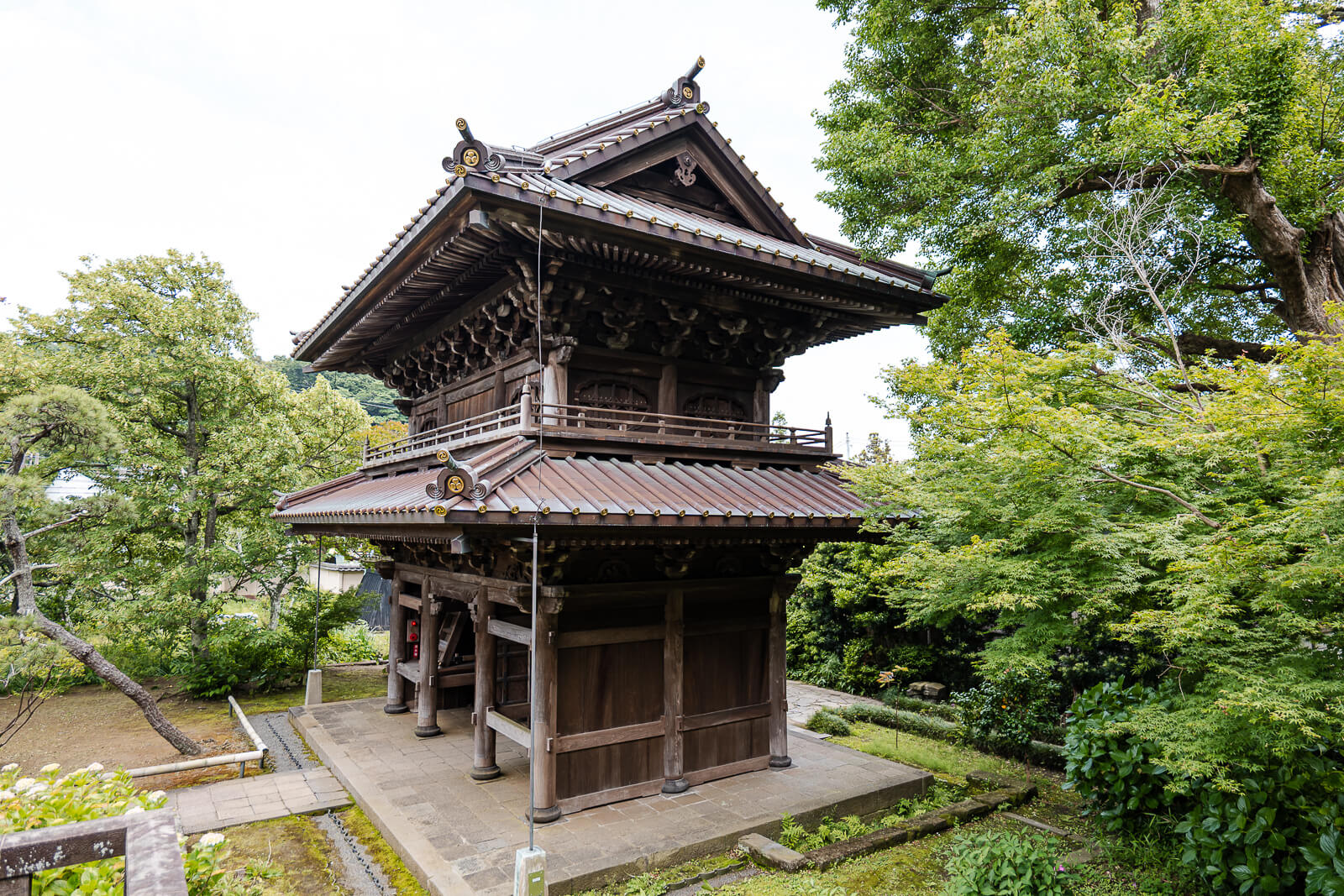
Today Eisho-ji remains the only surviving nunnery in Kamakura, giving it a distinctive place among the city’s temples. Several structures on the grounds date from the early Edo period and are preserved as Important Cultural Properties.
Leaving the Shops Behind and Entering the Grounds
Most visitors reach Eisho-ji after walking north from Kamakura Station. Komachi-dori carries a steady flow of people moving between restaurants, small shops, and the approach toward Tsurugaoka Hachimangu.
Crossing the railway tracks changes the character of the walk quickly. The commercial streets give way to residential lanes where several temple compounds appear quietly within the neighborhood.
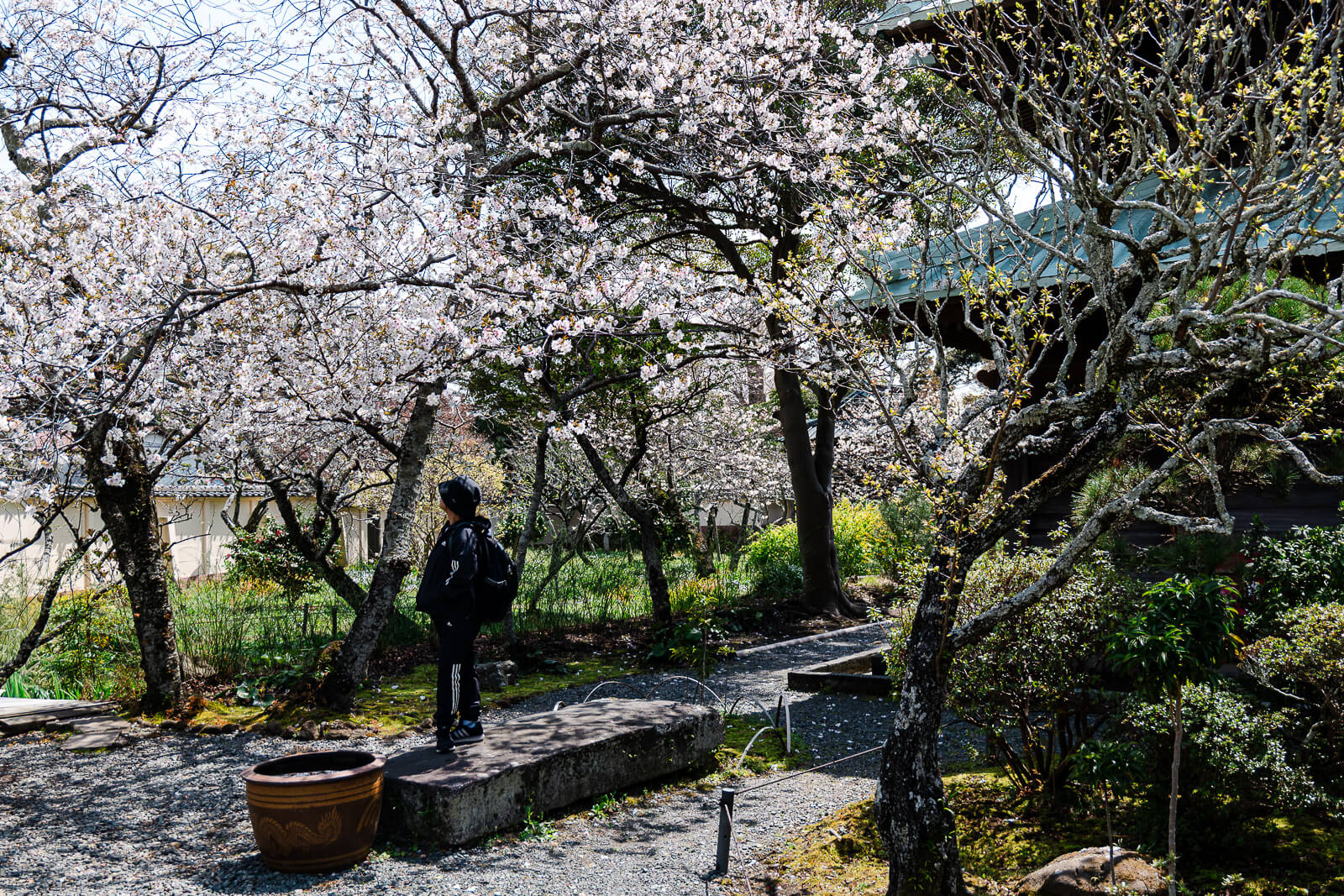
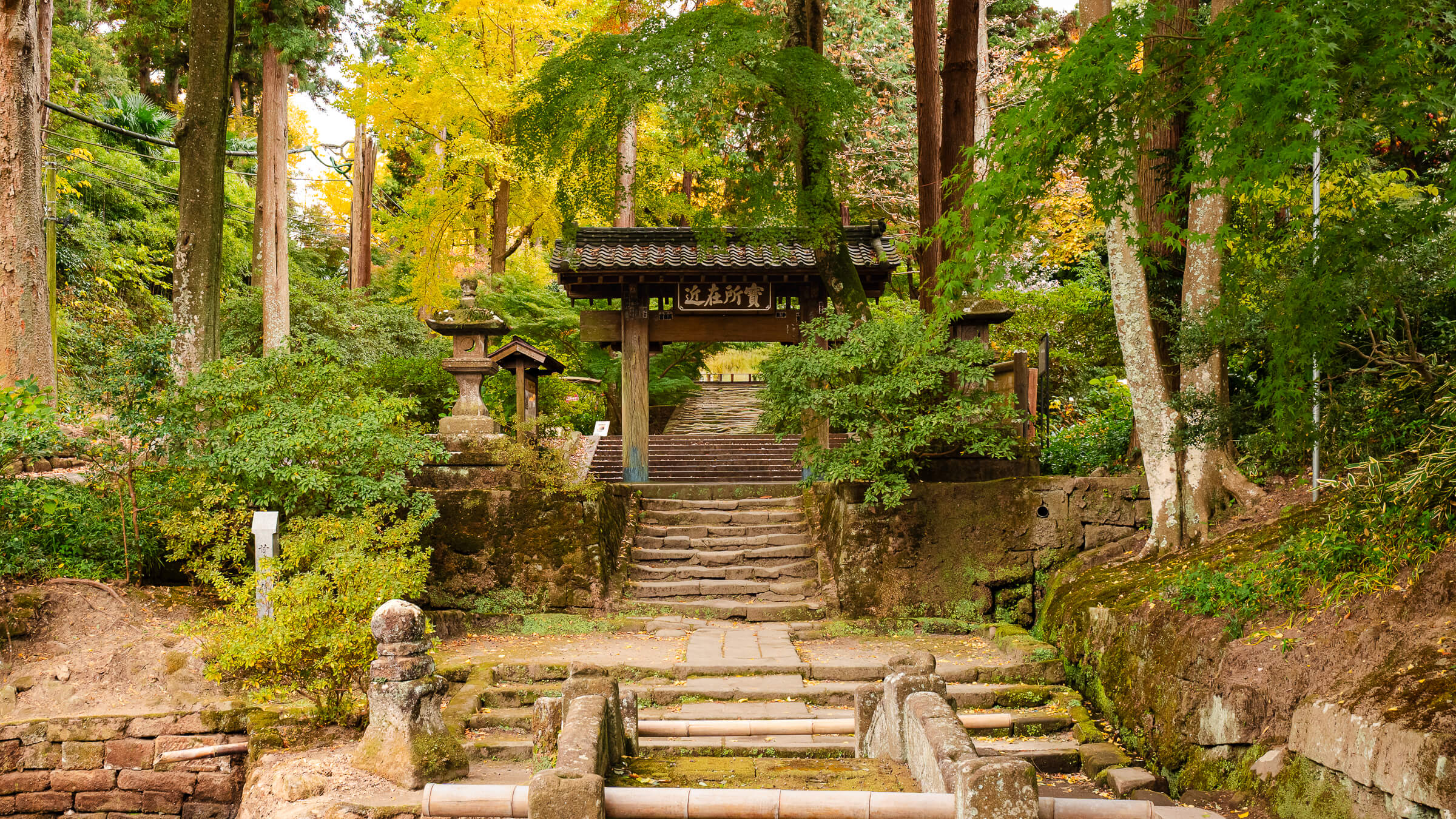
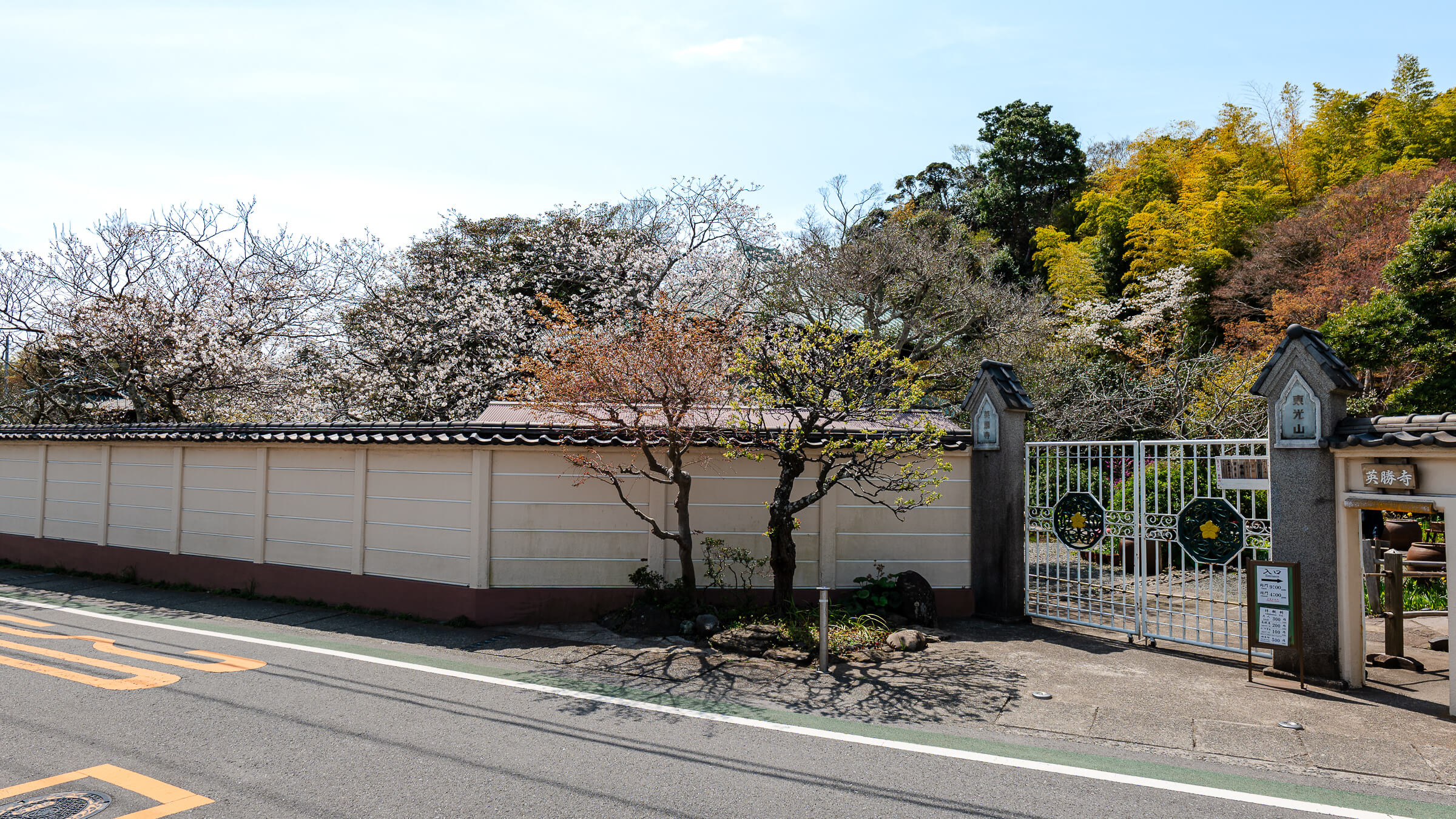
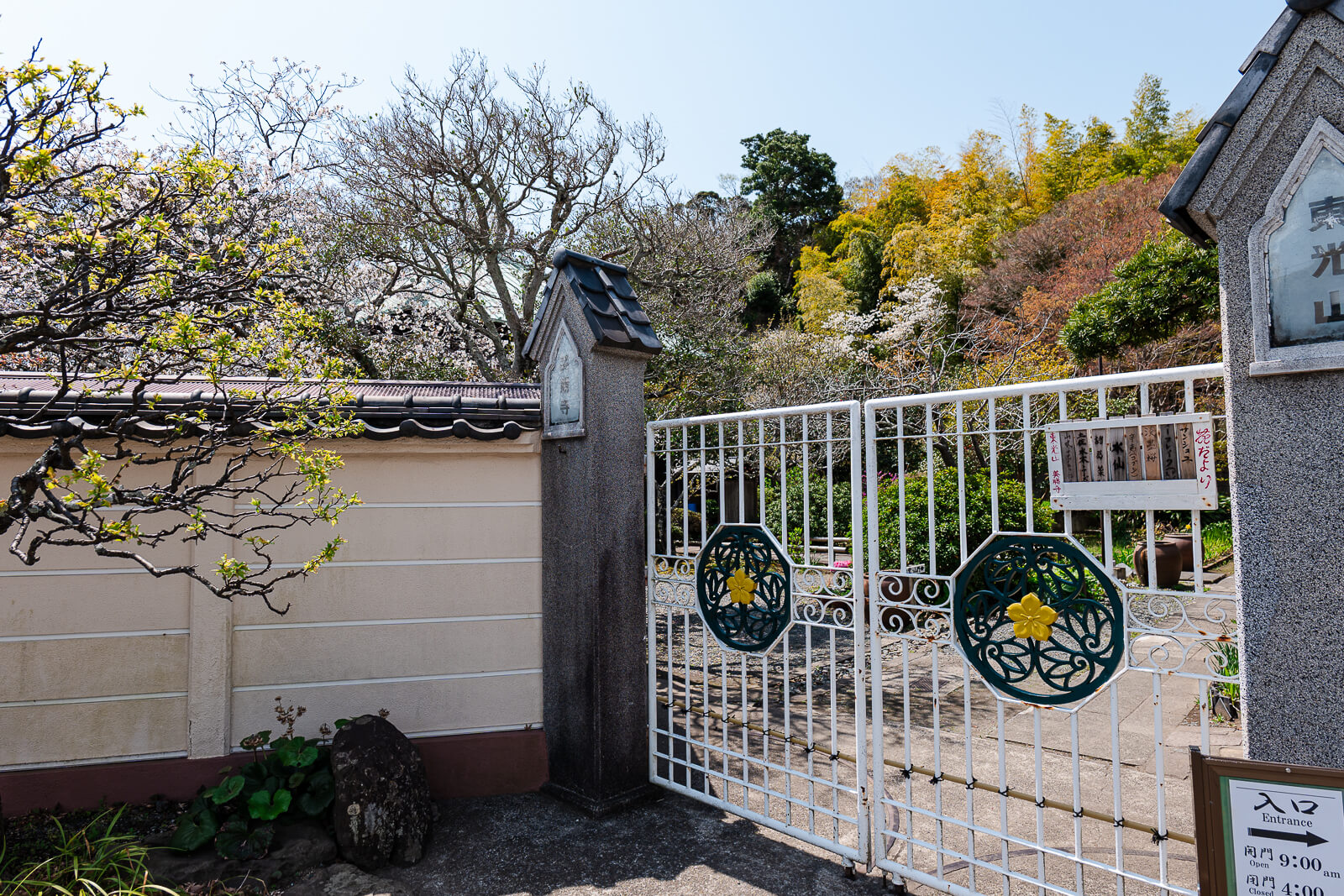
The entrance to Eisho-ji appears along one of these quieter streets. Passing through the gate leads into a compact temple compound where wooden buildings sit among small gardens and bamboo.
From here the layout becomes clear almost immediately. The path leads toward the main hall before continuing behind the buildings into the grove.
Inside the Main Hall: What Visitors Can See from the Entrance
The main hall forms the architectural center of the temple grounds.
From the entrance visitors can see the altar area, where a Buddhist statue sits beneath a large hanging ornament suspended from the ceiling. Thick wooden columns frame the interior space, while painted ceiling panels add color above the darker structure of the building.
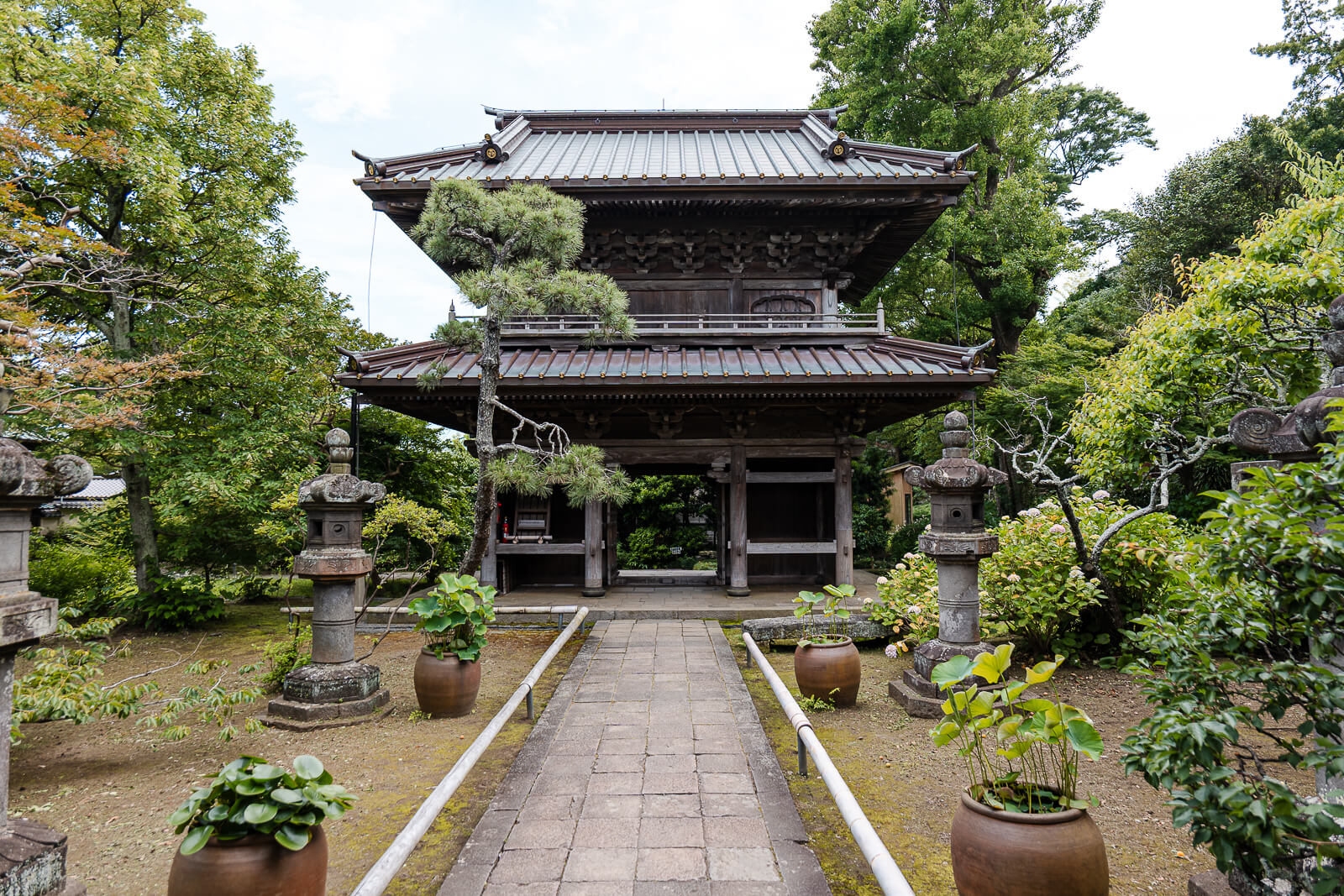
In most cases visitors view the hall from outside the entrance doors. Even from that position the arrangement of altar, columns, and ceiling decoration provides a clear sense of the building’s craftsmanship.
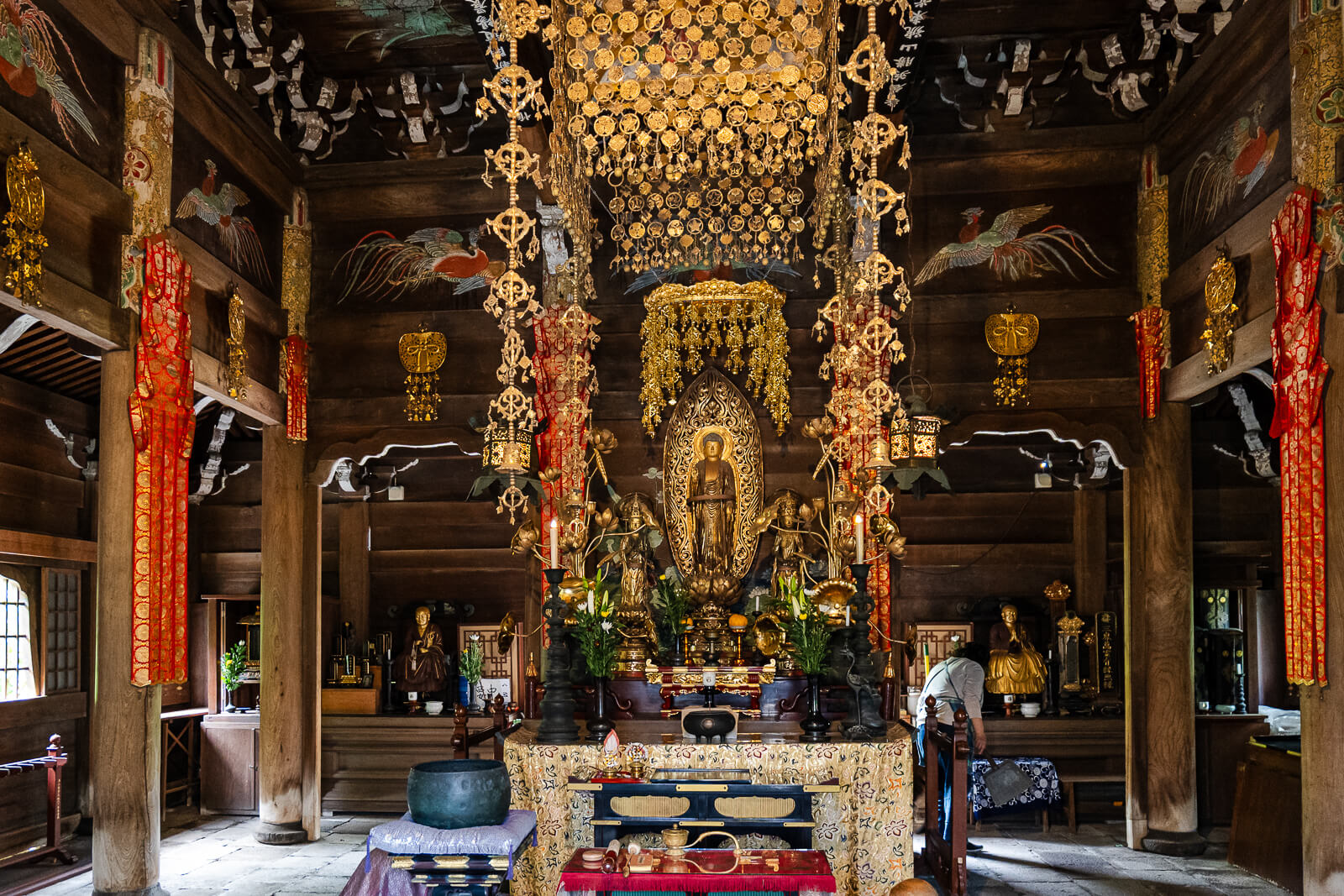
Occasionally the sliding doors are opened wider during cleaning or maintenance. When this happens the interior becomes easier to see from outside, revealing additional carved details and a fuller view of the altar space.
Walking Behind the Hall Reveals What Most Visitors Miss
Continuing around the building brings visitors to the rear side of the main hall.
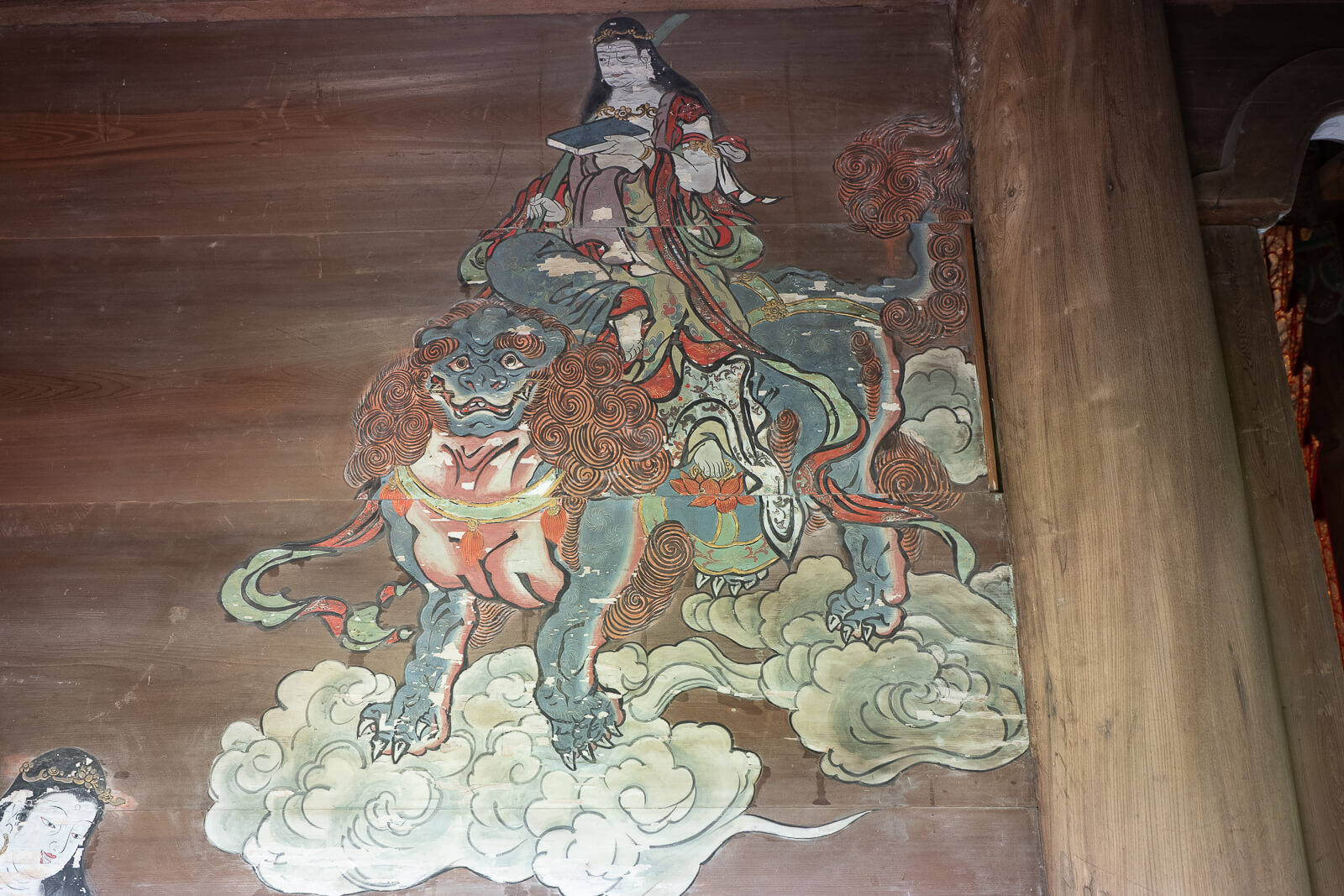
Here the wooden doors display painted panels that many visitors miss entirely. One panel shows a tiger stretched across the lower portion of the woodwork, while another depicts a guardian figure standing above stylized clouds.
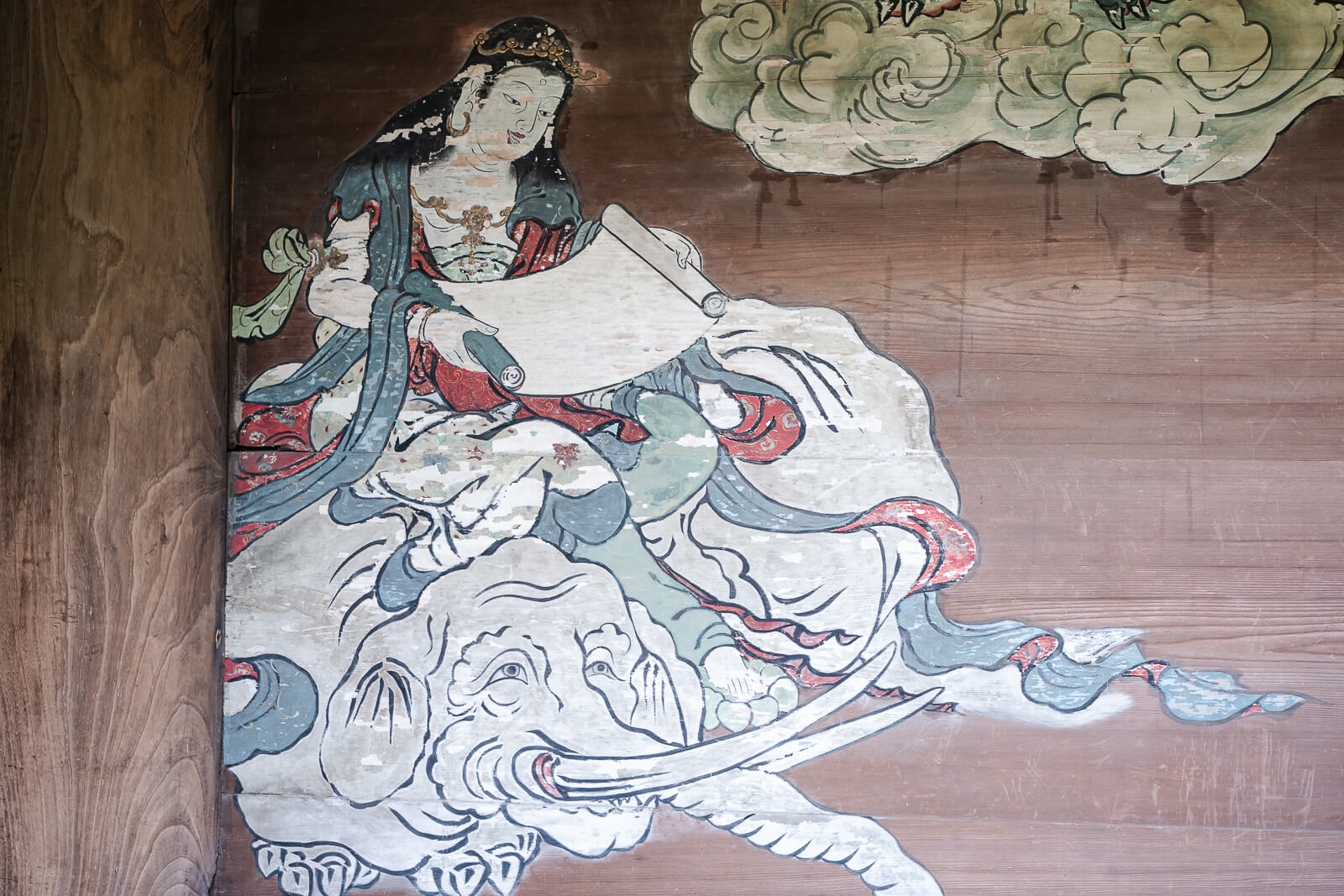
These decorative panels reflect traditions used in Edo-period temple architecture, where animals and protective figures were painted onto structural surfaces as symbolic guardians.
Because most visitors remain near the front of the hall, these rear panels often go unnoticed unless someone walks completely around the structure.
Behind the Buildings, the Bamboo Becomes Part of the Visit
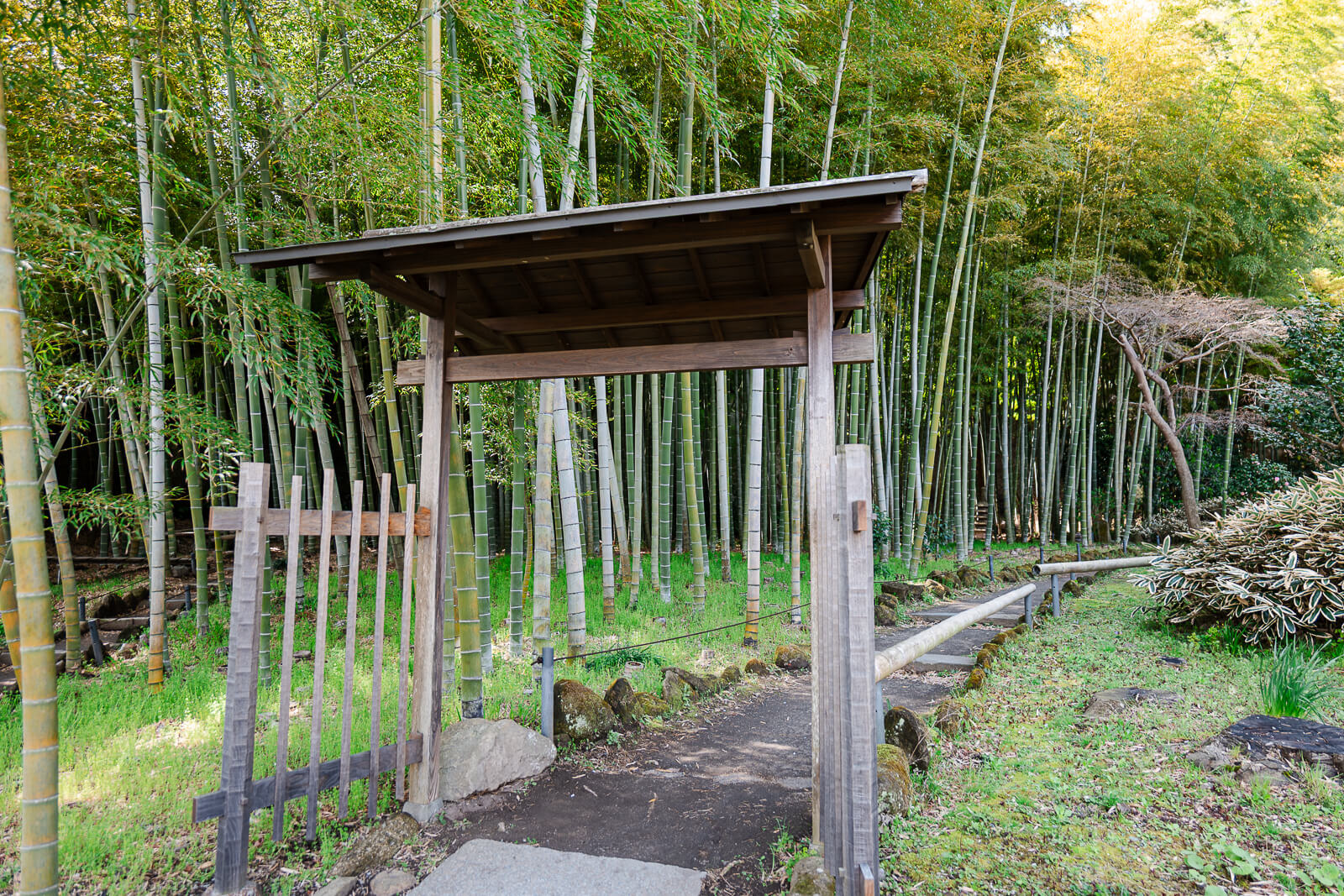
A path behind the temple buildings leads into a bamboo grove.
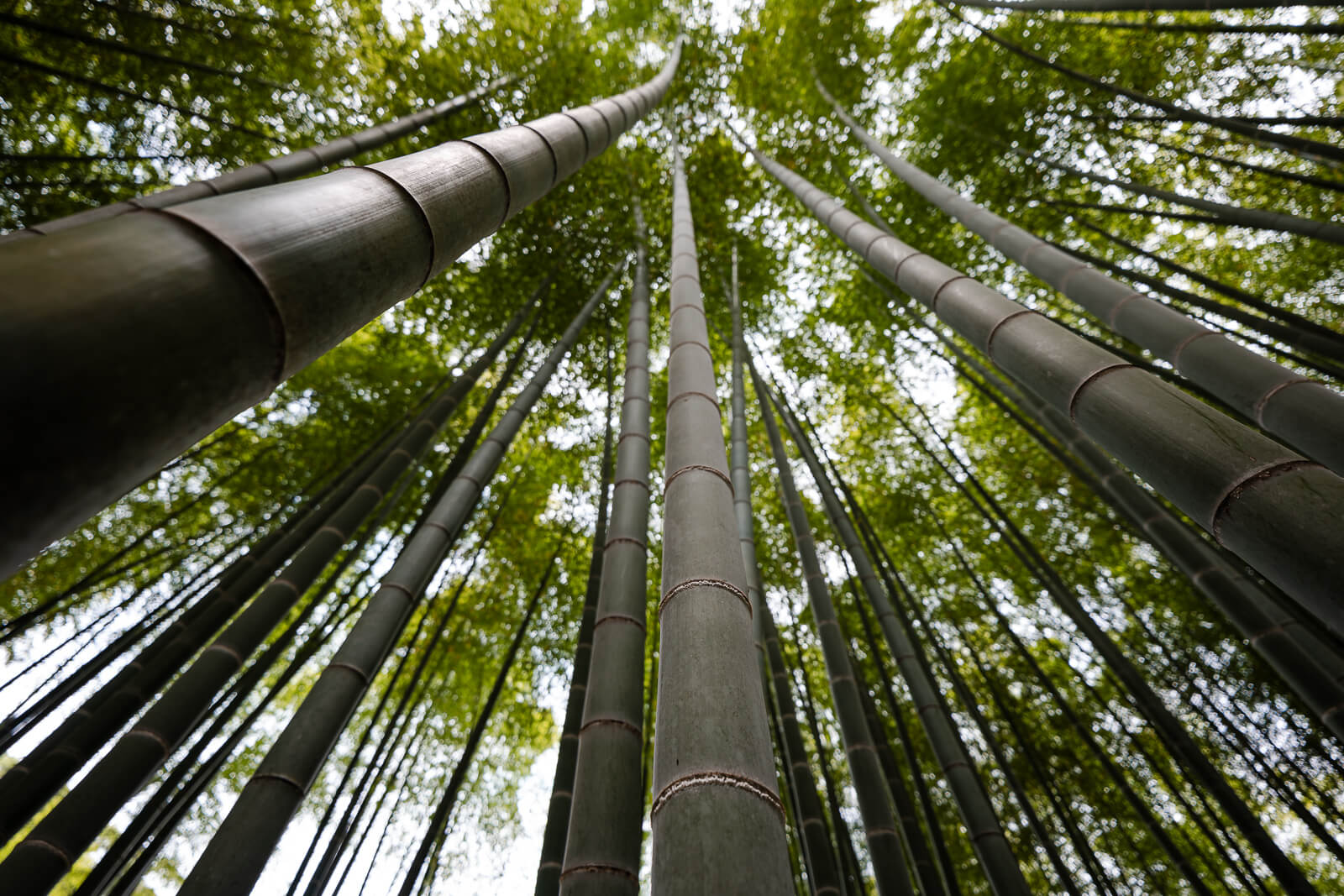
Kamakura is known for bamboo groves, particularly the well-known grove at Hokokuji Temple. At Eisho-ji the bamboo functions differently. Rather than acting as a single highlight destination, it becomes a natural continuation of the temple grounds.
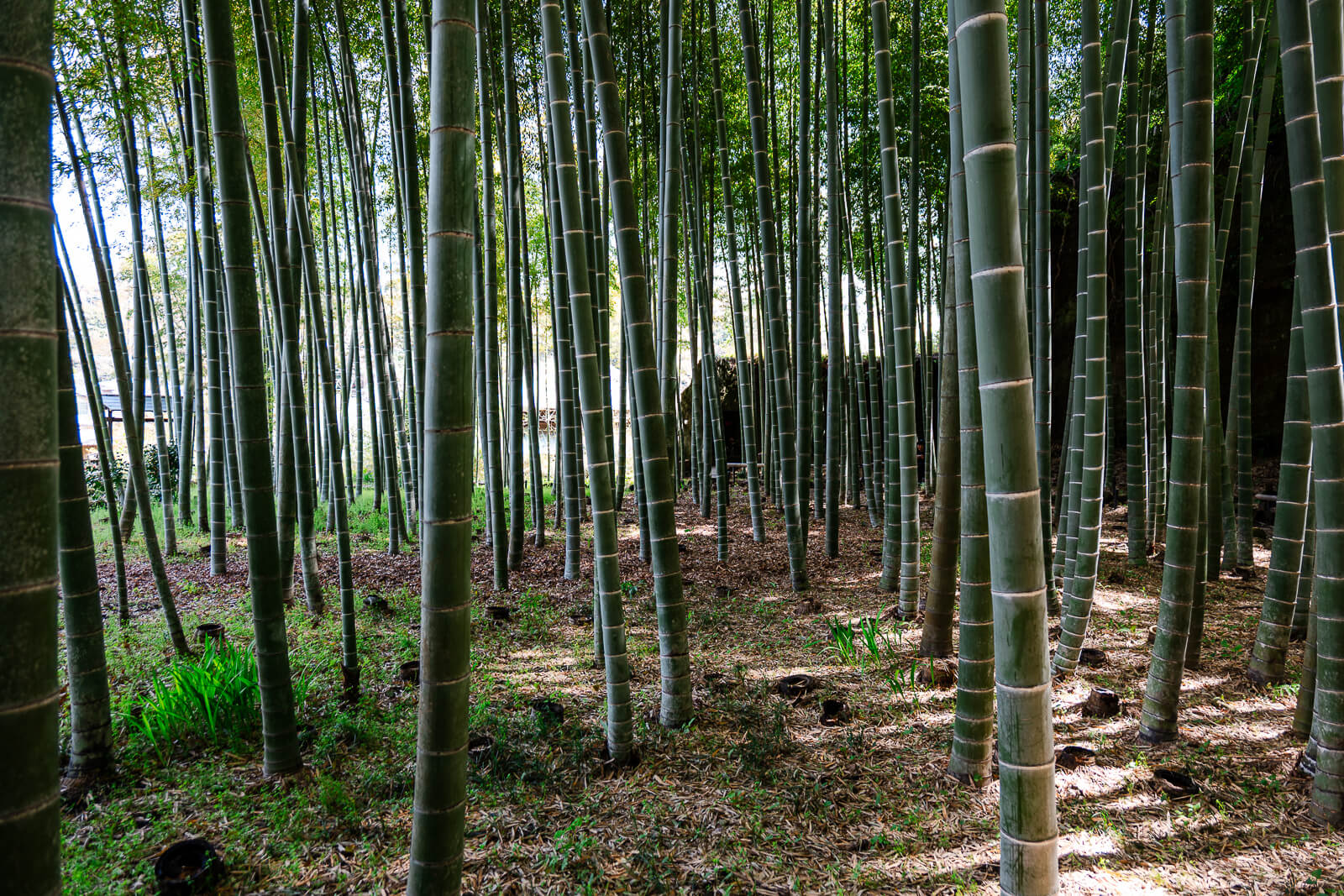
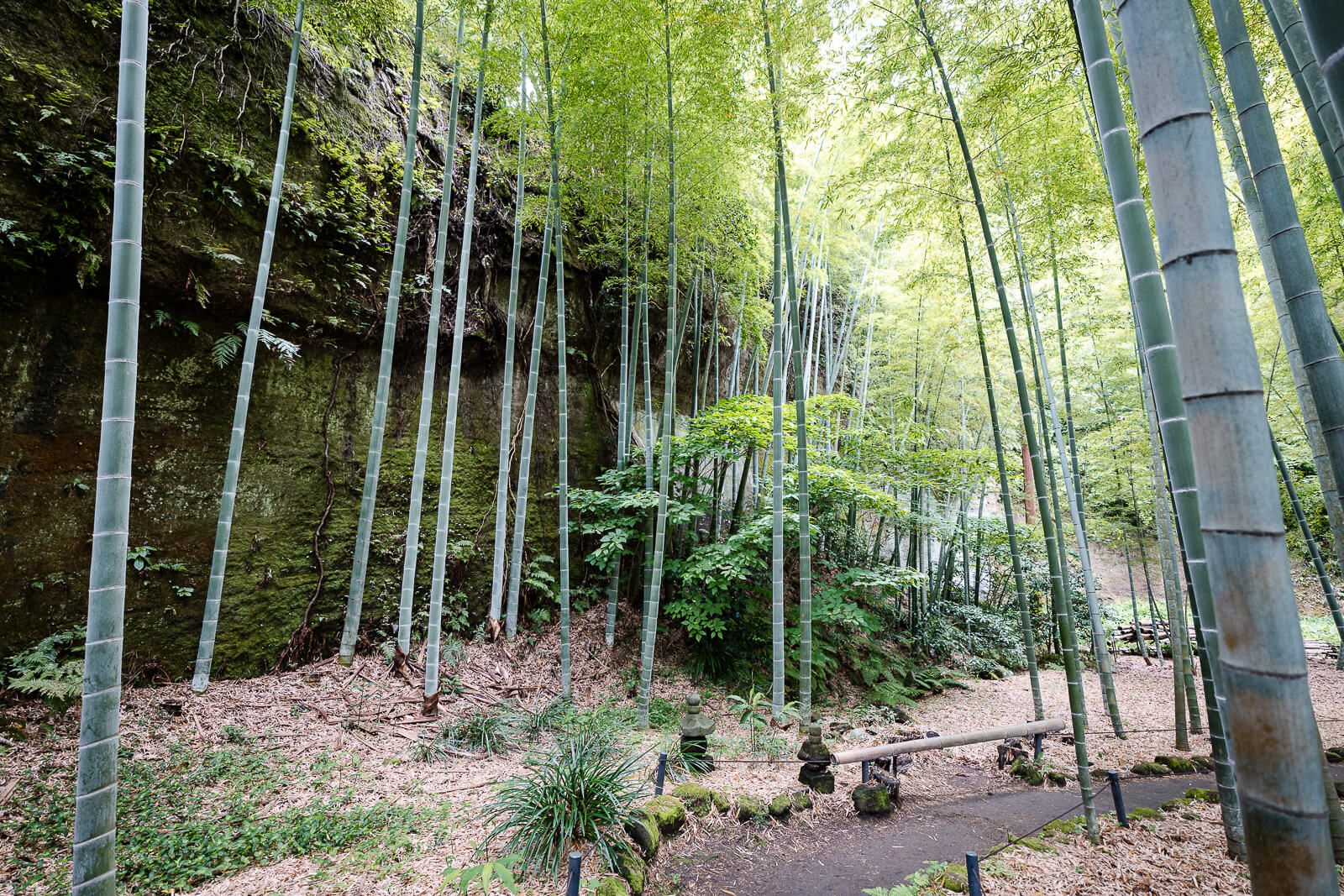
Tall bamboo lines the narrow path, forming a vertical corridor that gradually closes overhead. Light filters through the stalks and shifts throughout the day as the sun moves across the grove.
Walking through the bamboo takes only a few minutes, but it slows the pace of the visit and extends the movement through the temple grounds.
A Small Cave Passage, Easy to Miss on the First Walk Through
Near the edge of the grounds the terrain shifts from bamboo to exposed rock.
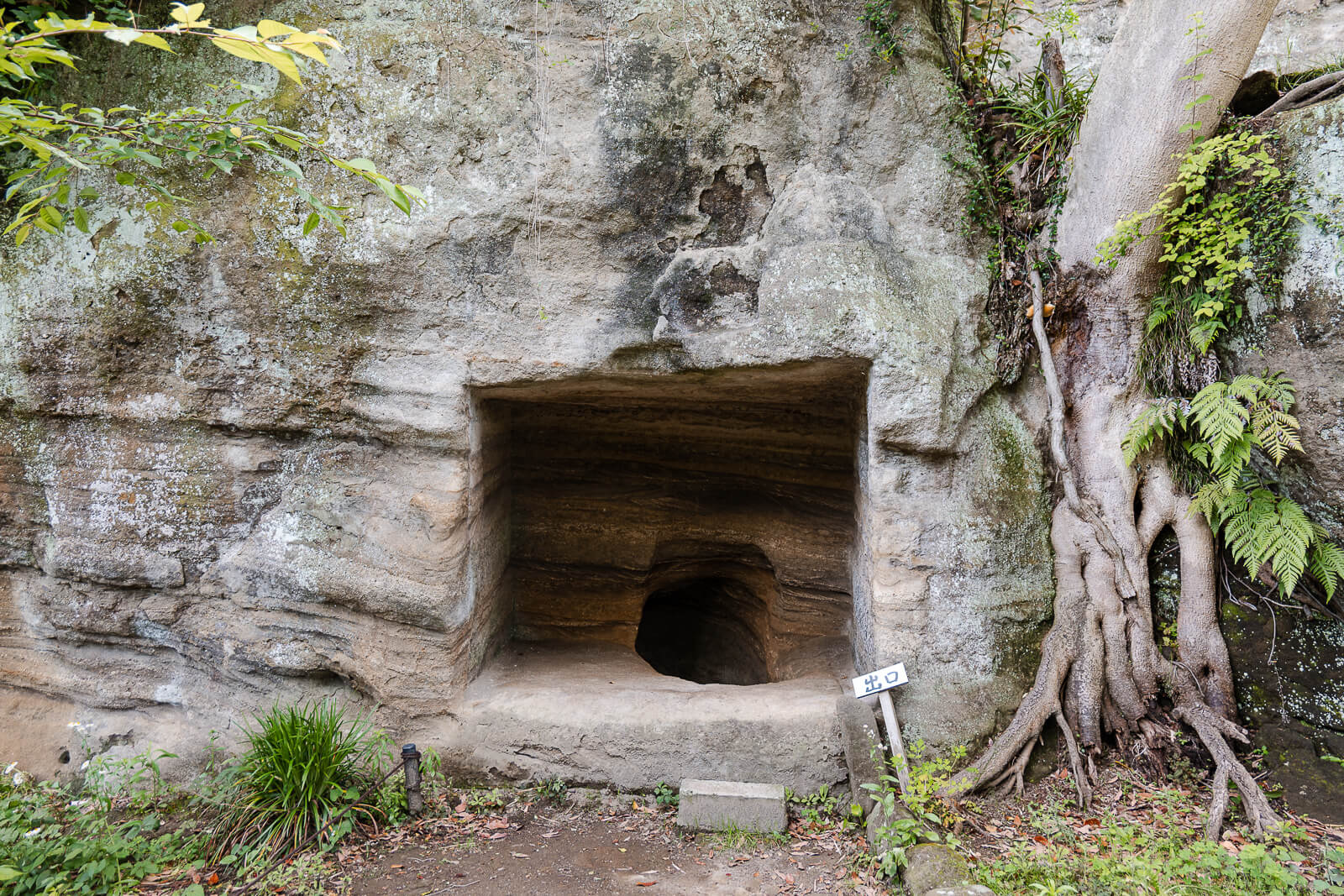
A small opening in the hillside marks the entrance to a short cave passage. Visitors can step inside, walk through the narrow stone corridor, and emerge a few meters away on the other side.
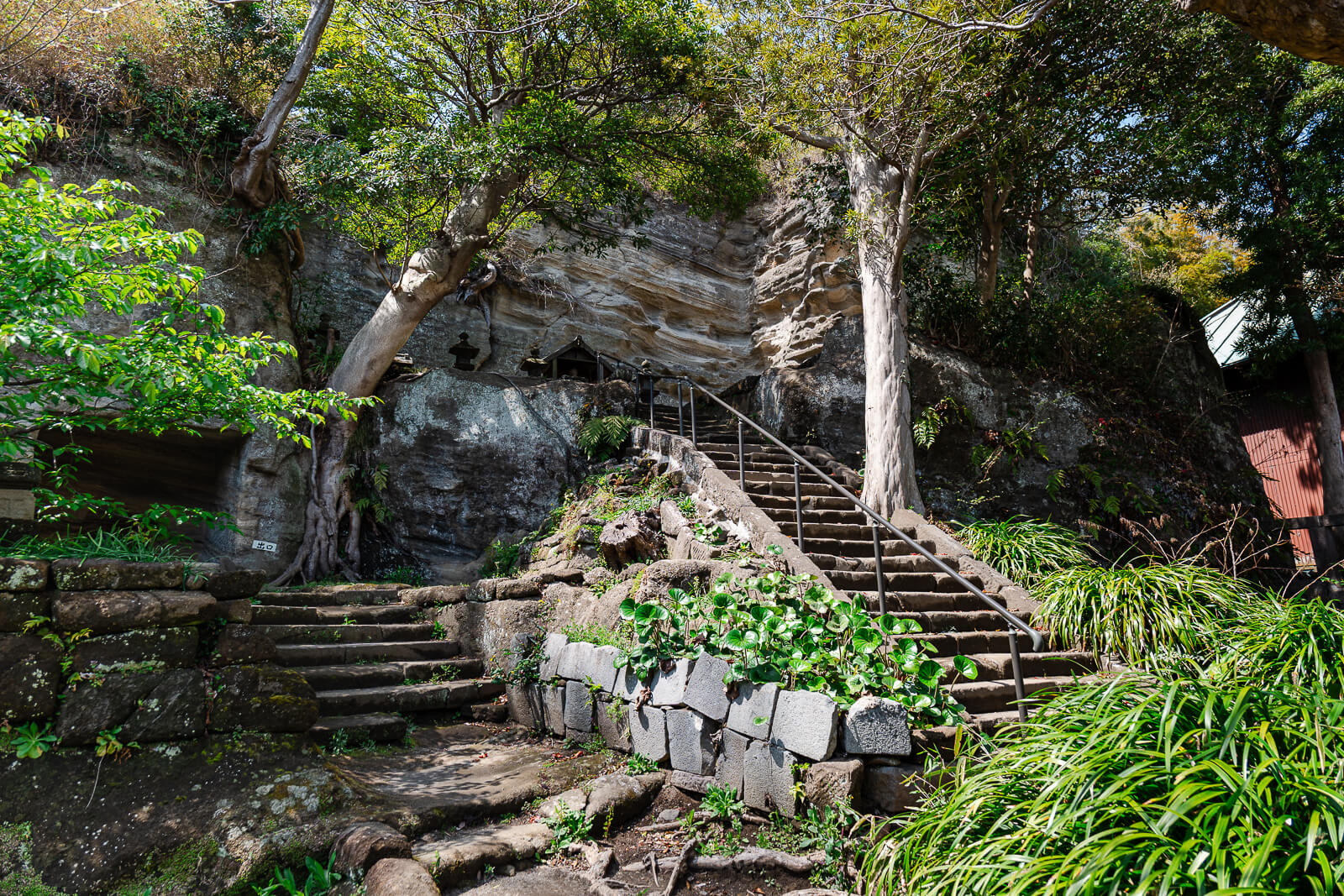
The cave is brief and fully visible from one entrance to the other, adding only a minute or two to the visit.
Kamakura’s temples often incorporate natural rock formations into their grounds, and this small passage adds another layer of movement within the otherwise compact temple layout.
How the Temple Changes Through the Year
Eisho-ji changes mostly through light and foliage rather than through events or large seasonal crowds.
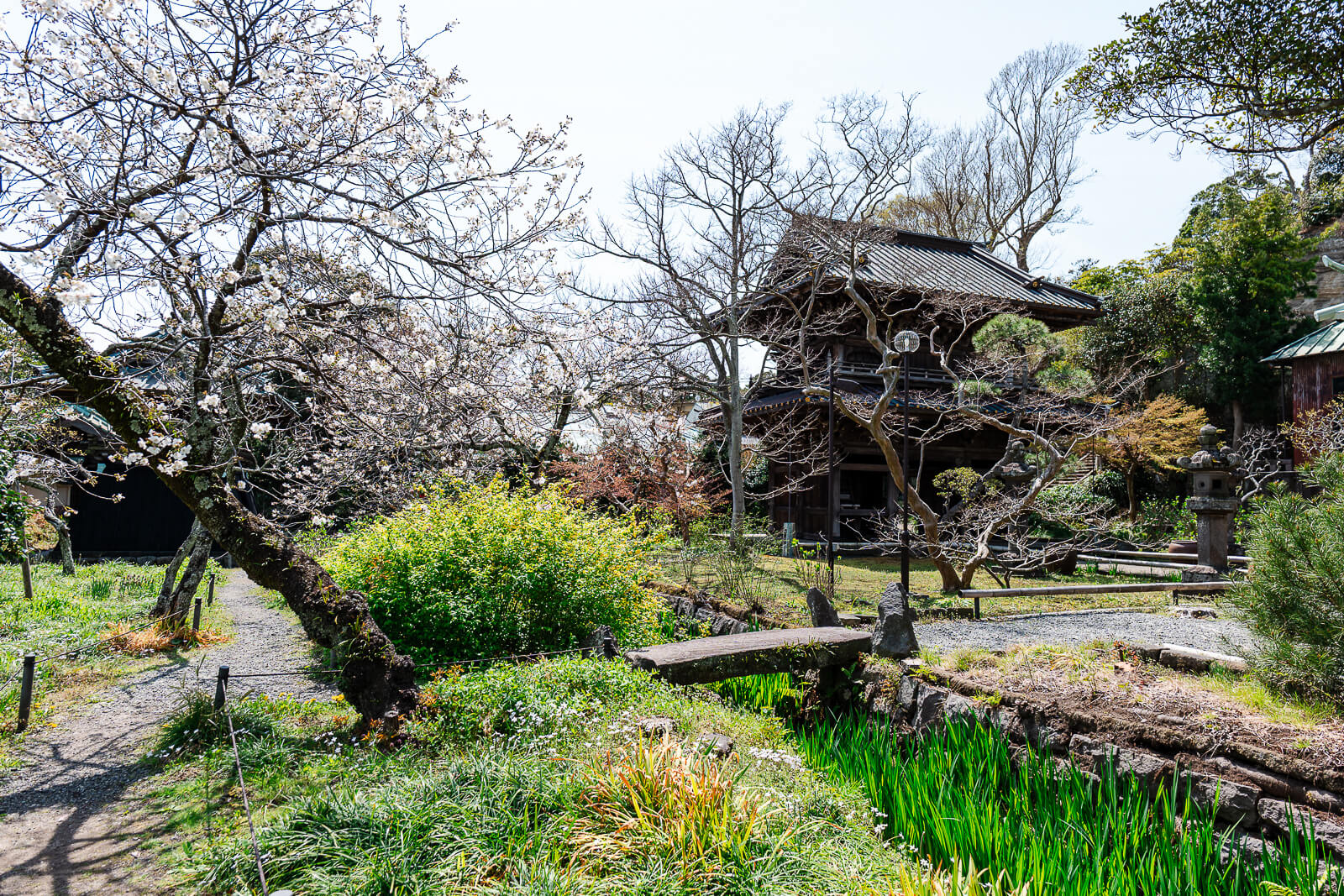
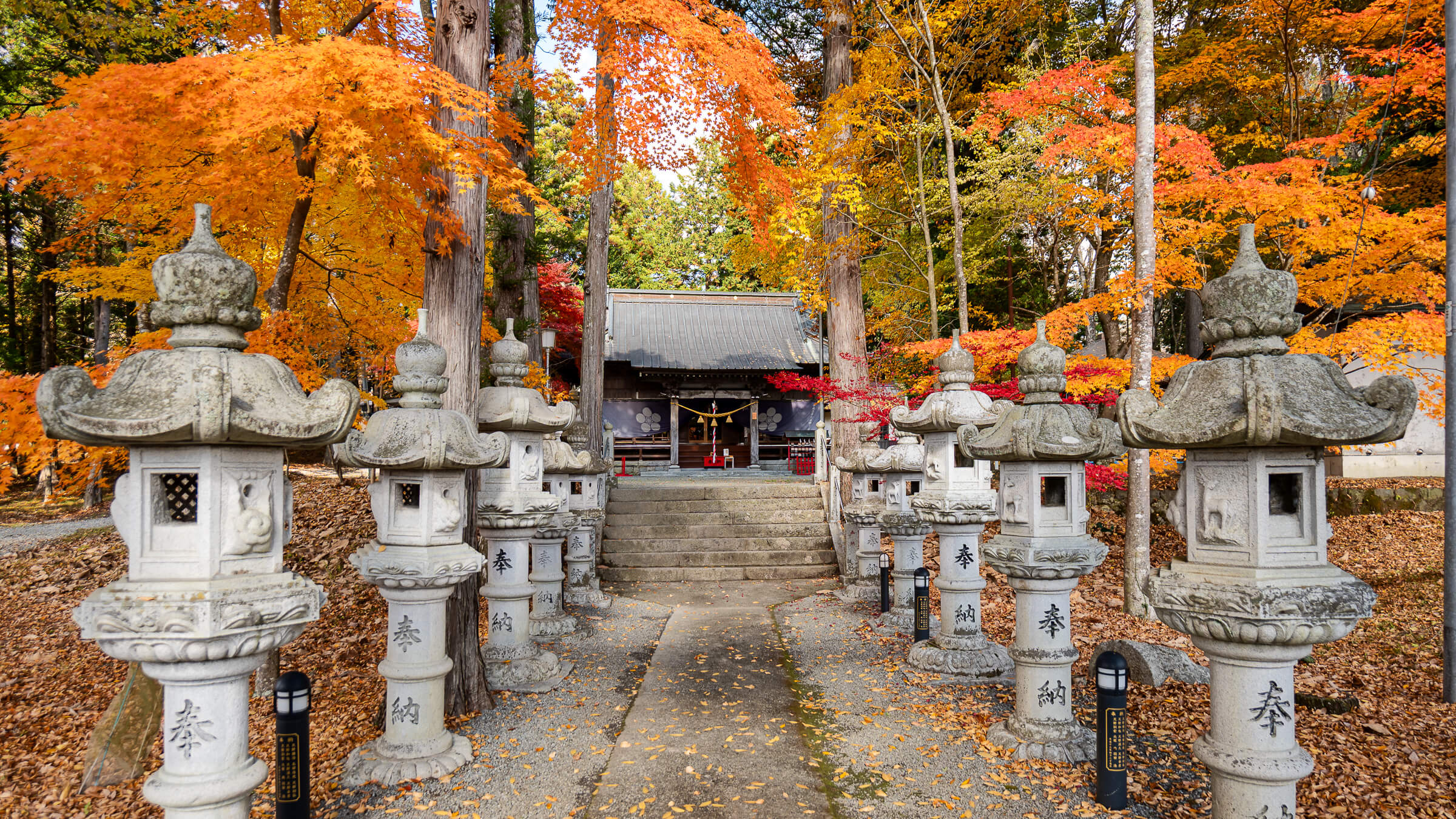
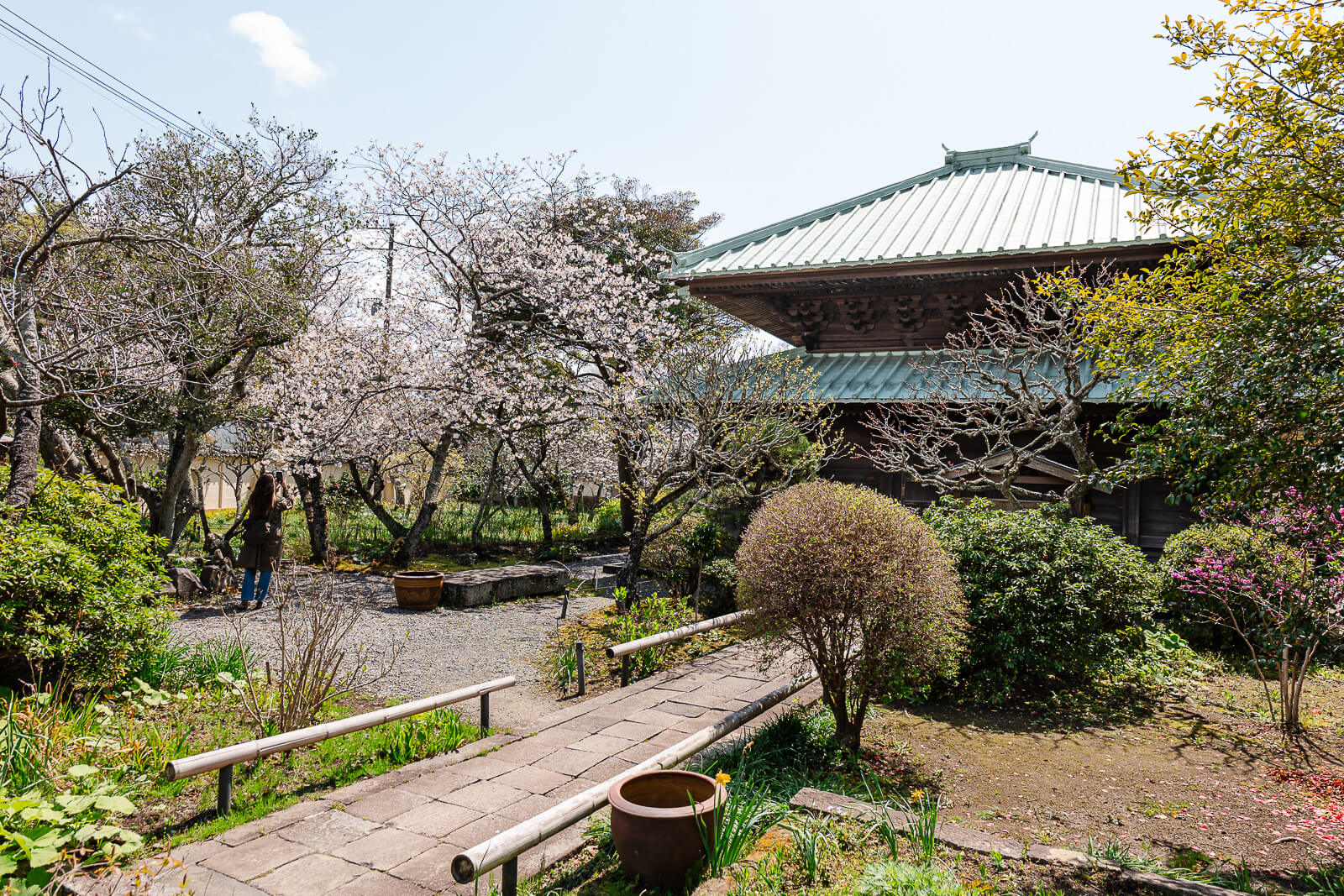
In early spring cherry blossoms appear among the trees surrounding the temple buildings. During summer the bamboo grove thickens and shades the paths beneath it. Autumn shifts attention to the trees and hillside behind the structures, while winter tends to simplify the scene and bring fewer visitors through this part of Kamakura.
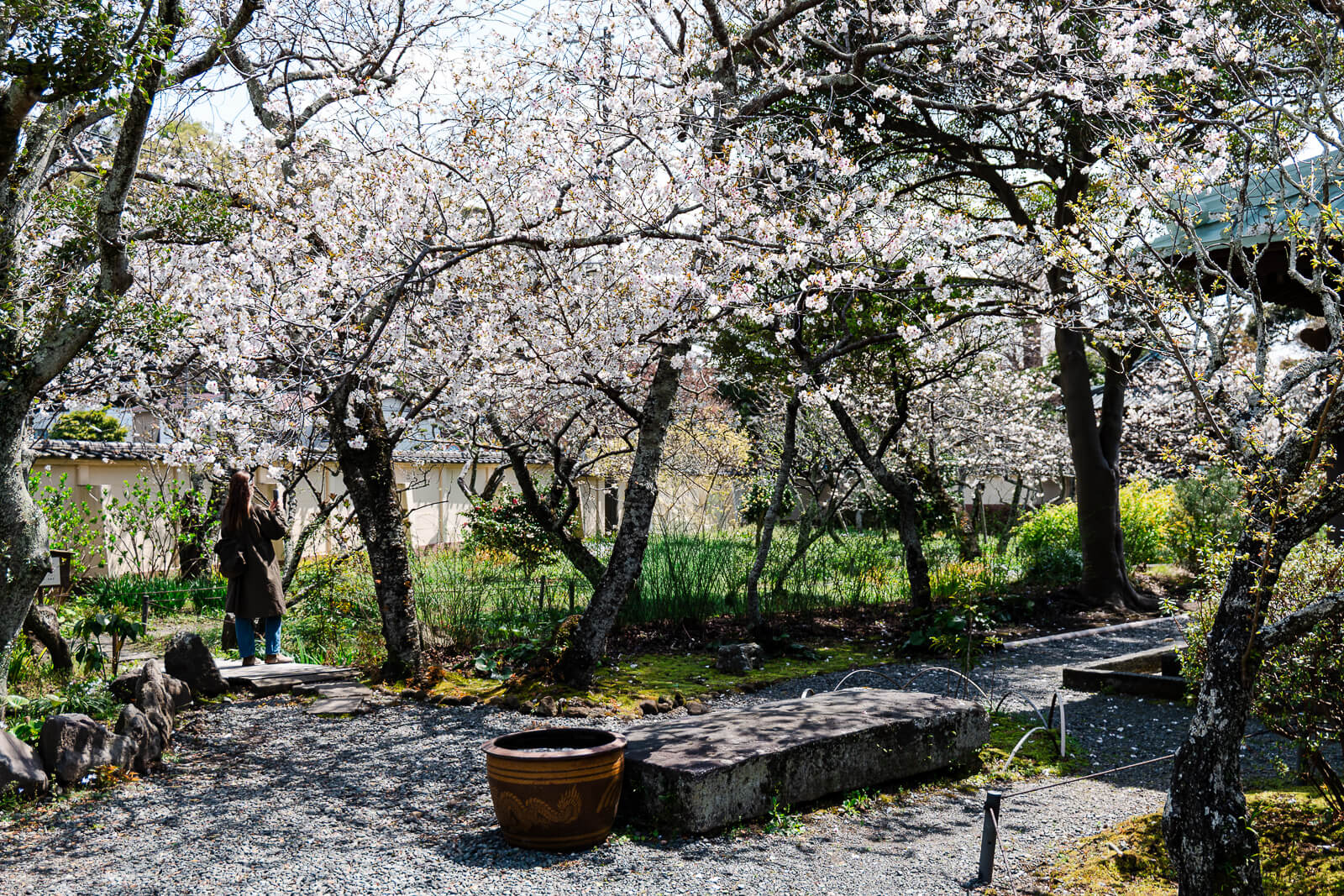
Because the temple sits slightly outside the busiest sightseeing routes, the grounds usually remain manageable even during peak travel periods.
How This Fits Into Kamakura
Eisho-ji makes the most sense when understood within the natural walking flow of central Kamakura.
A typical route begins at Kamakura Station, continues through Komachi-dori, passes Tsurugaoka Hachimangu, and then gradually moves into the quieter temple streets north of the railway tracks. Eisho-ji sits along this transition zone between the busiest visitor areas and the smaller temple districts beyond.
Because the visit itself is short, the temple fits easily within a broader Kamakura walk. Many travelers encounter it while moving between the station area and the temple neighborhoods that extend toward Kita-Kamakura, while others continue onward across the city toward landmarks such as Hase-dera and the Kotoku-in Great Buddha on the western side.
Getting There
Eisho-ji is about a 10–15 minute walk from Kamakura Station.
Rail access is usually the most practical approach. Kamakura is well connected to Tokyo and Yokohama by train, and once at the station the remaining walk passes through the central town area before crossing the railway tracks into quieter streets.
One common friction point is that many visitors remain concentrated along Komachi-dori or around Tsurugaoka Hachimangu without continuing into the surrounding neighborhoods. Eisho-ji sits just beyond that main flow, so it is easy to miss even though it is close.
Driving is generally less convenient because central Kamakura is easier to explore on foot after arriving by rail.
Hours & Fees
Opening hours: 9:00 AM – 4:00 PM
Last admission: typically around 3:30 PM
Closed days: no regular closing days
Admission fee: ¥300
Typical visit time: 20–30 minutes