Kawaguchiko or Yamanakako for an autumn trip from Tokyo
For an autumn trip from Tokyo, Kawaguchiko is the stronger choice for a first visit without a car. The Maple Corridor gives the day a clear starting point, and the lake has enough variety to keep the visit worthwhile when Mount Fuji disappears behind clouds. Yamanakako becomes more appealing when a lakeside walk, a boat trip, and the high view from Panoramadai are the experiences that matter most—especially with a car to connect them.
For maples alone, give Kawaguchiko the day. Yamanakako earns the extra journey when Panoramadai or a boat trip is a priority, and transport leaves time to enjoy them. Driving makes a selective visit to both lakes possible; start at the Maple Corridor before the busiest hours and leave some stops for another trip. If Fuji is hidden, Kawaguchiko’s foliage, shrine, and park still offer several reasons to stay.
In the Fuji Five Lakes area of Yamanashi, both lakes offer autumn color and the possibility of seeing Fuji, but they ask different things of a day. Around Lake Kawaguchi, a walk beneath maples can lead into a shrine courtyard or an open park beside the water. At Lake Yamanakako, vivid trees near the shore give way to a small roadside shrine and a hillside of susuki grass, with the lake spread out below.
Kawaguchiko begins beneath the maples
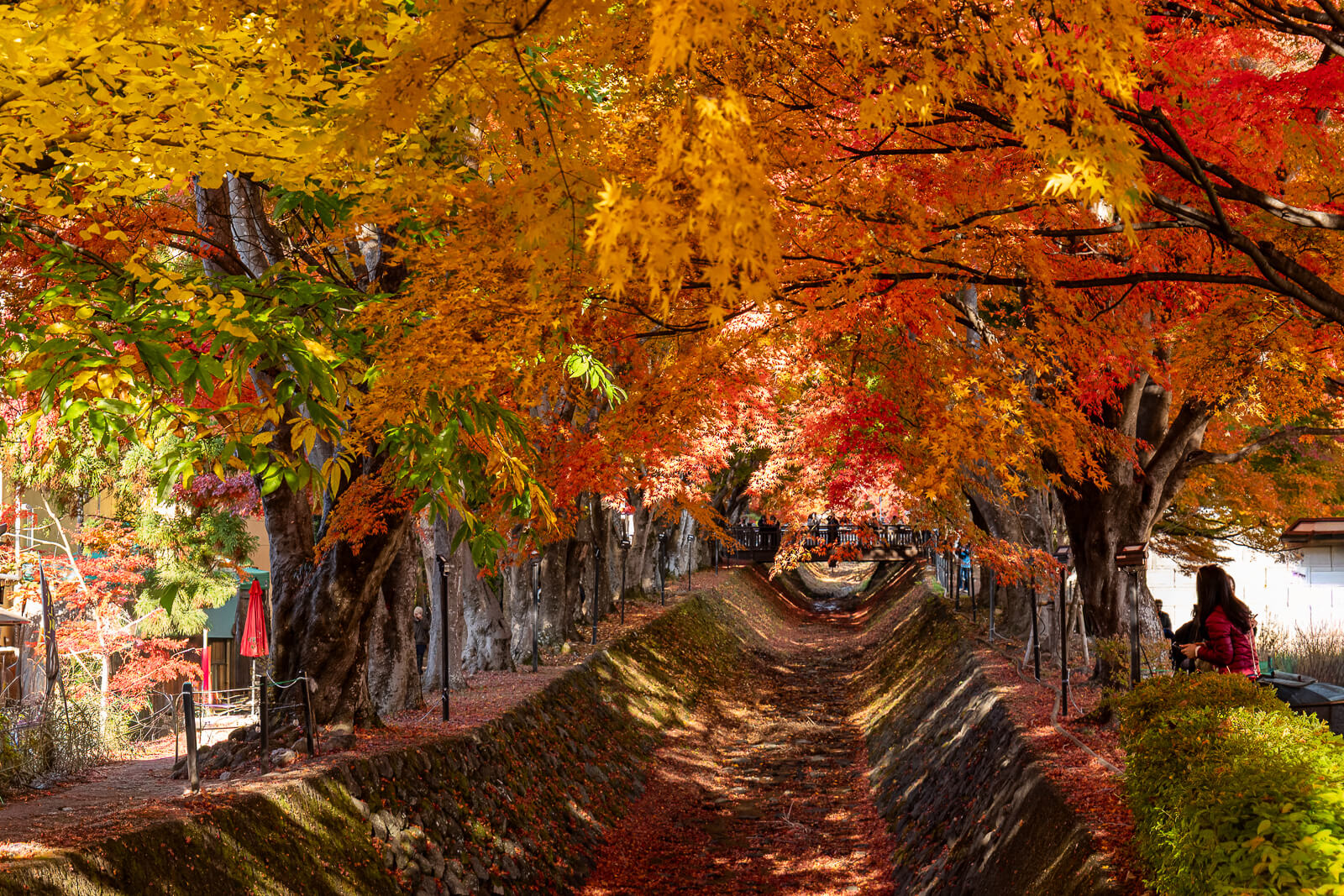
Maple Corridor: Color From the First Steps
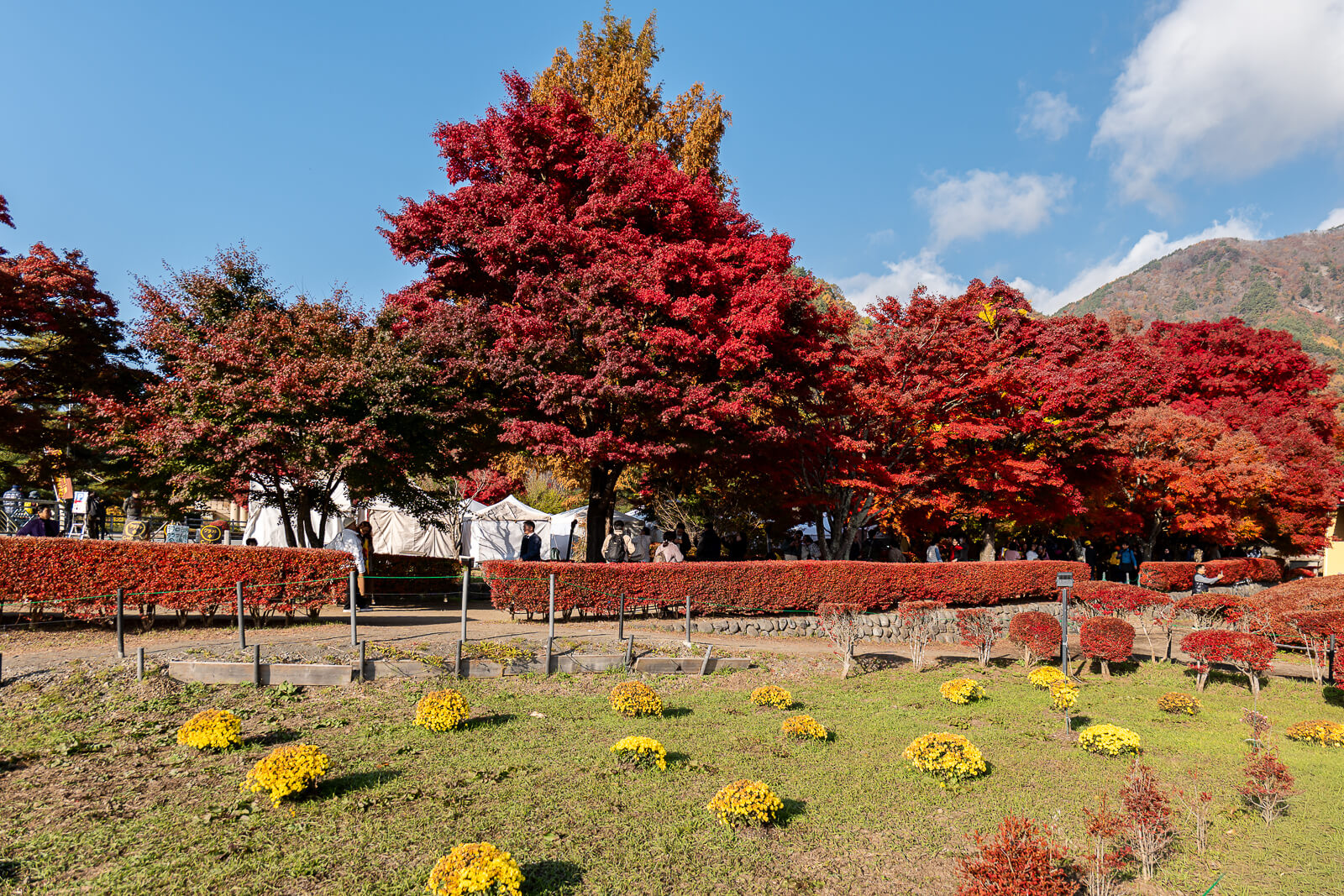
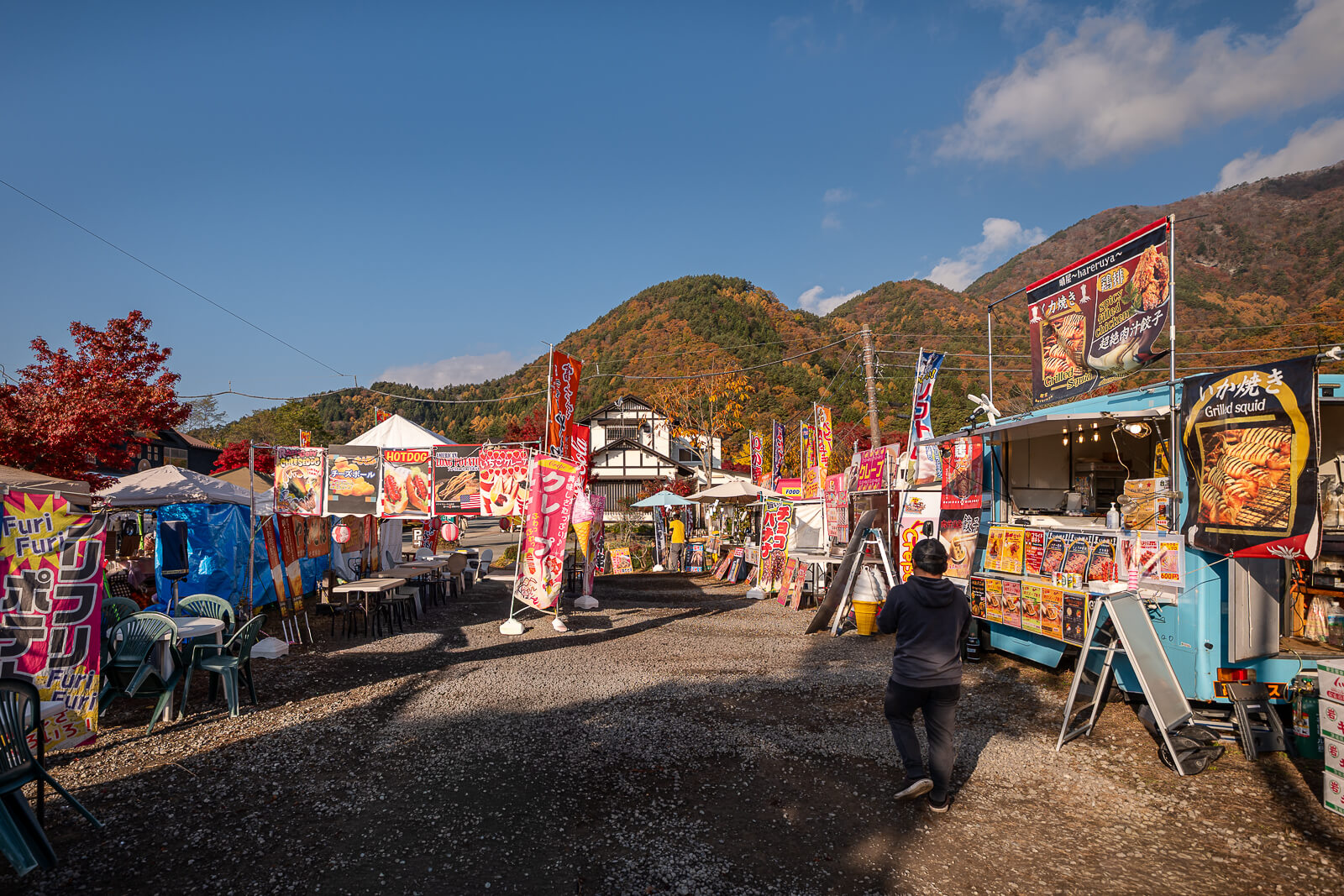
The color begins before the main corridor. Maples brighten the approach, and during the autumn festival, food stalls and trucks add reasons to pause along the way. A small garden area offers a first taste of the leaves before the trees close over the channel ahead.
Inside, the maples draw the eye upward and along the watercourse. The setting mixes a dirt path on one side with a street on the other, yet at full color the canopy gives the walk its own enclosed world. Light through the leaves and the changing angles along the channel make this a place to spend time taking photographs, even when other visitors share the view.
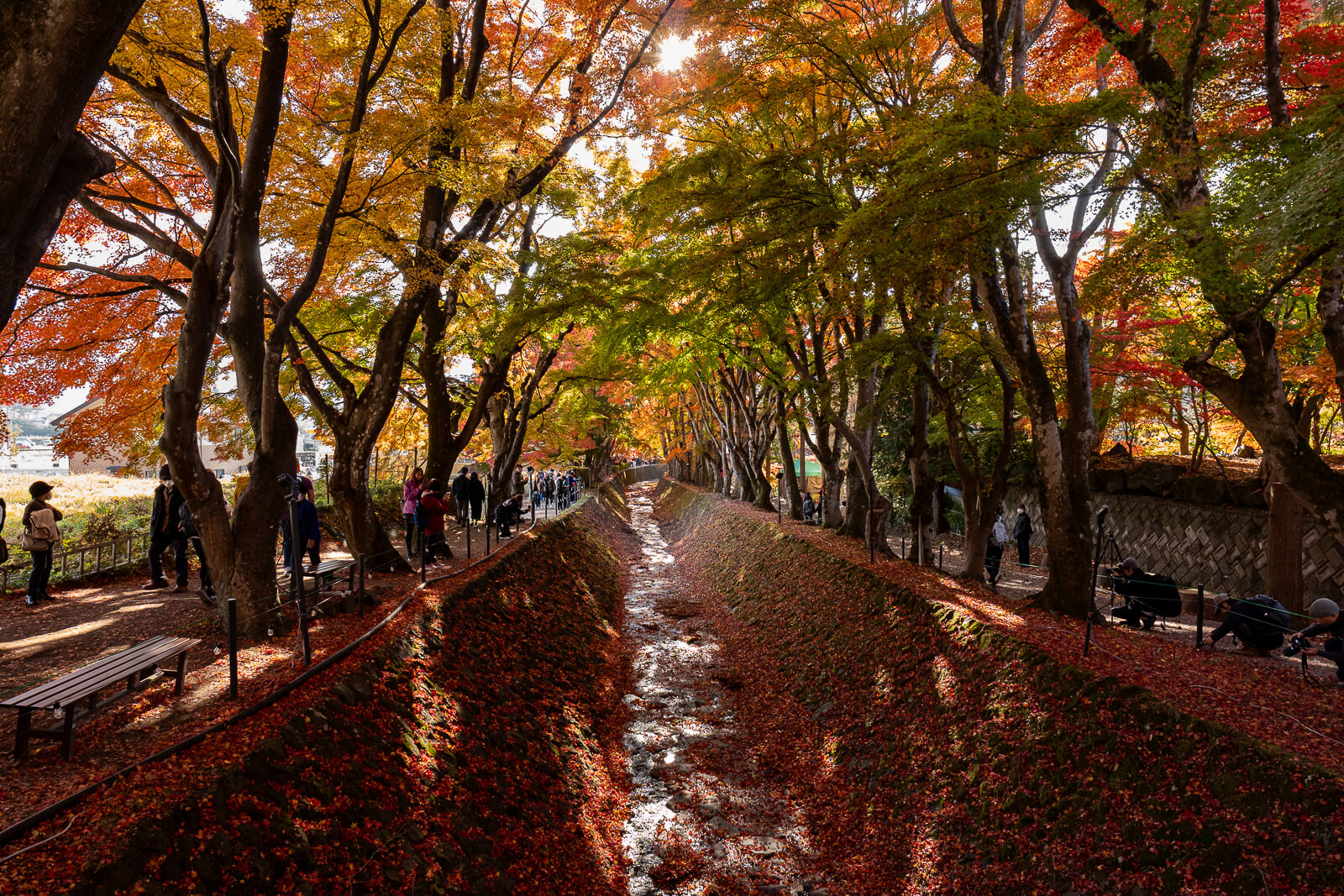
This is the Kawaguchiko stop to prioritize for anyone coming chiefly for maples. Arrive early when possible: the corridor is popular, and a head start gives more room to enjoy it before the busiest part of the day. Early does not mean empty, but a walk with company can still be comfortable enough to stop, look, and find a photograph.
November is the main planning window for this autumn scene, with the festival bringing evening illumination as well as daytime activity. Leaf color and event dates follow different calendars, so check the season’s conditions as well as the festival schedule. If driving, make the corridor the first stop; arriving by train or highway bus calls for matching the journey with the local bus onward.
Fuji Omuro Sengen Shrine: A ginkgo worth stopping for
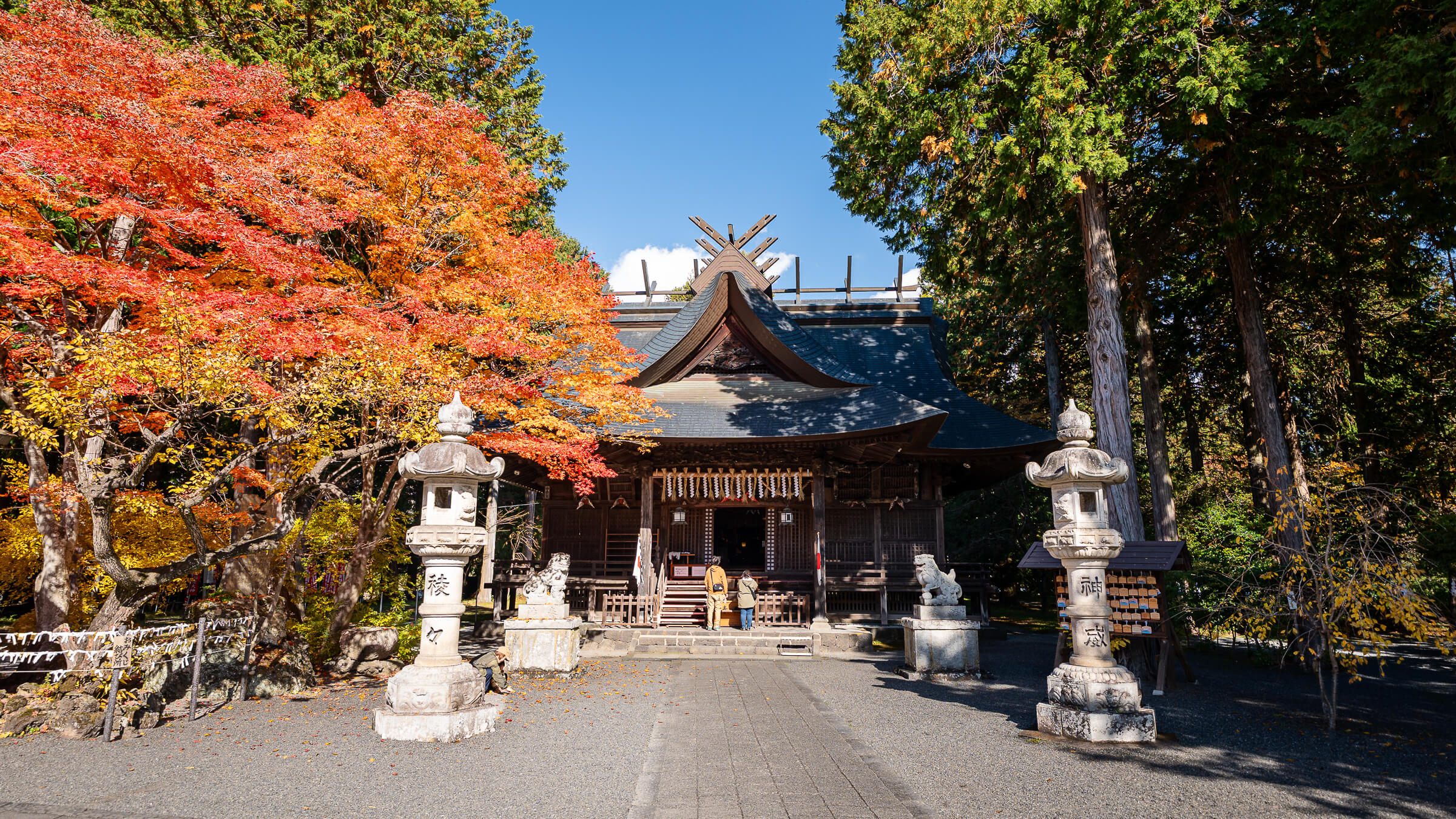
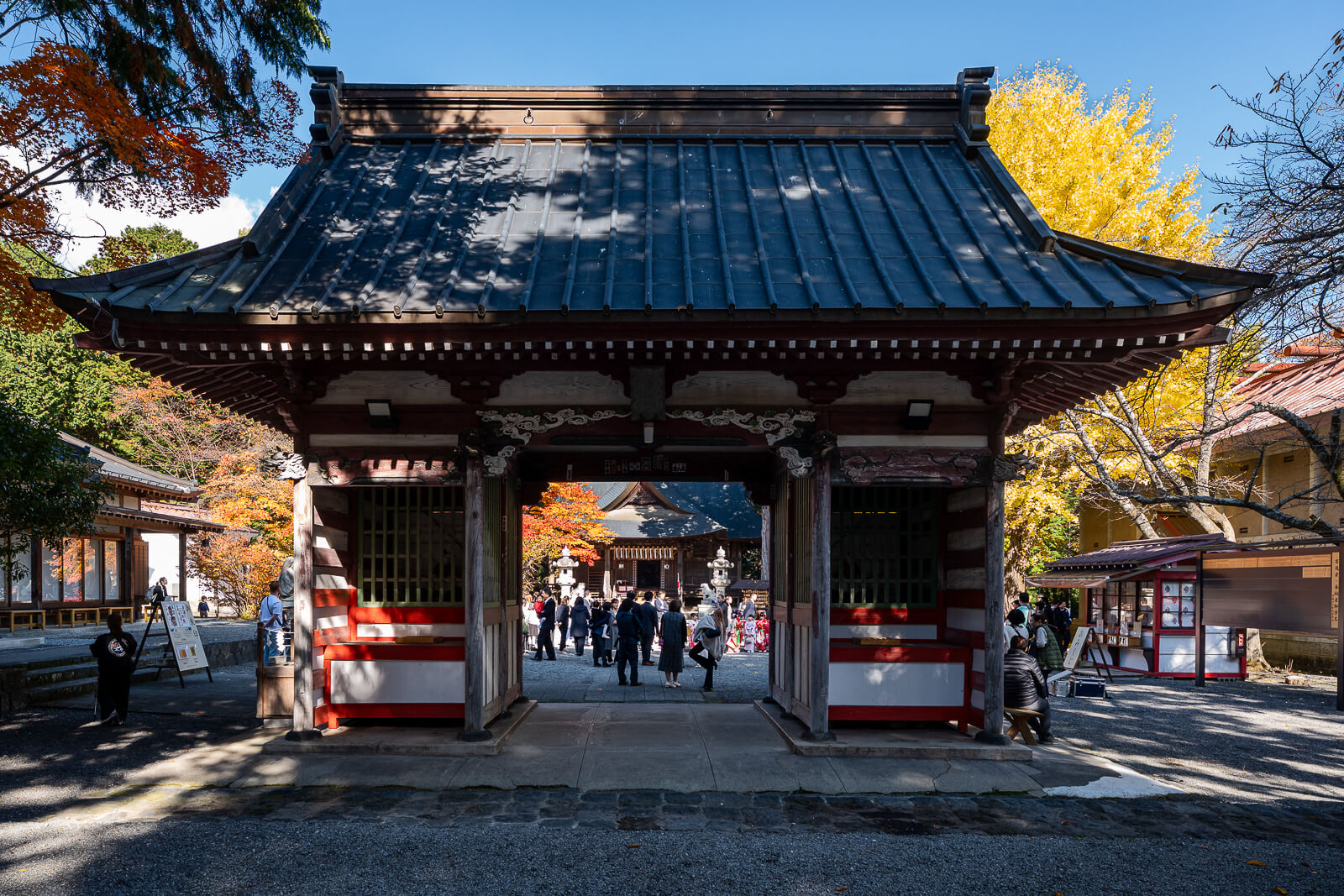
The large ginkgo near the main hall changes the palette from maple red to brilliant yellow. Color appears throughout the compact grounds, with the strongest concentration around the hall, while substantial torii entrances give the approach a sense of arrival. The trees and buildings also create deep shade, so the light can change markedly from one part of the courtyard to another.
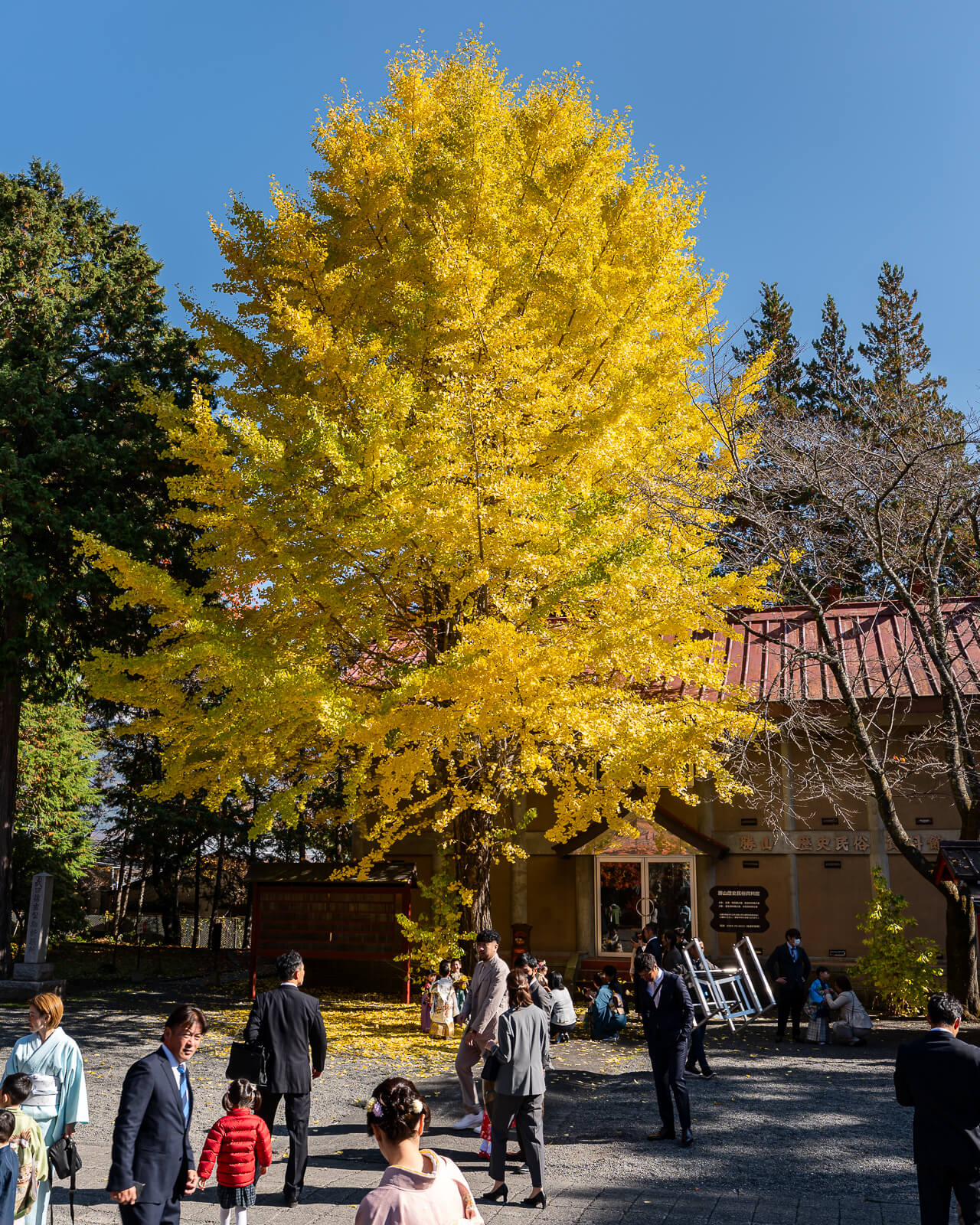
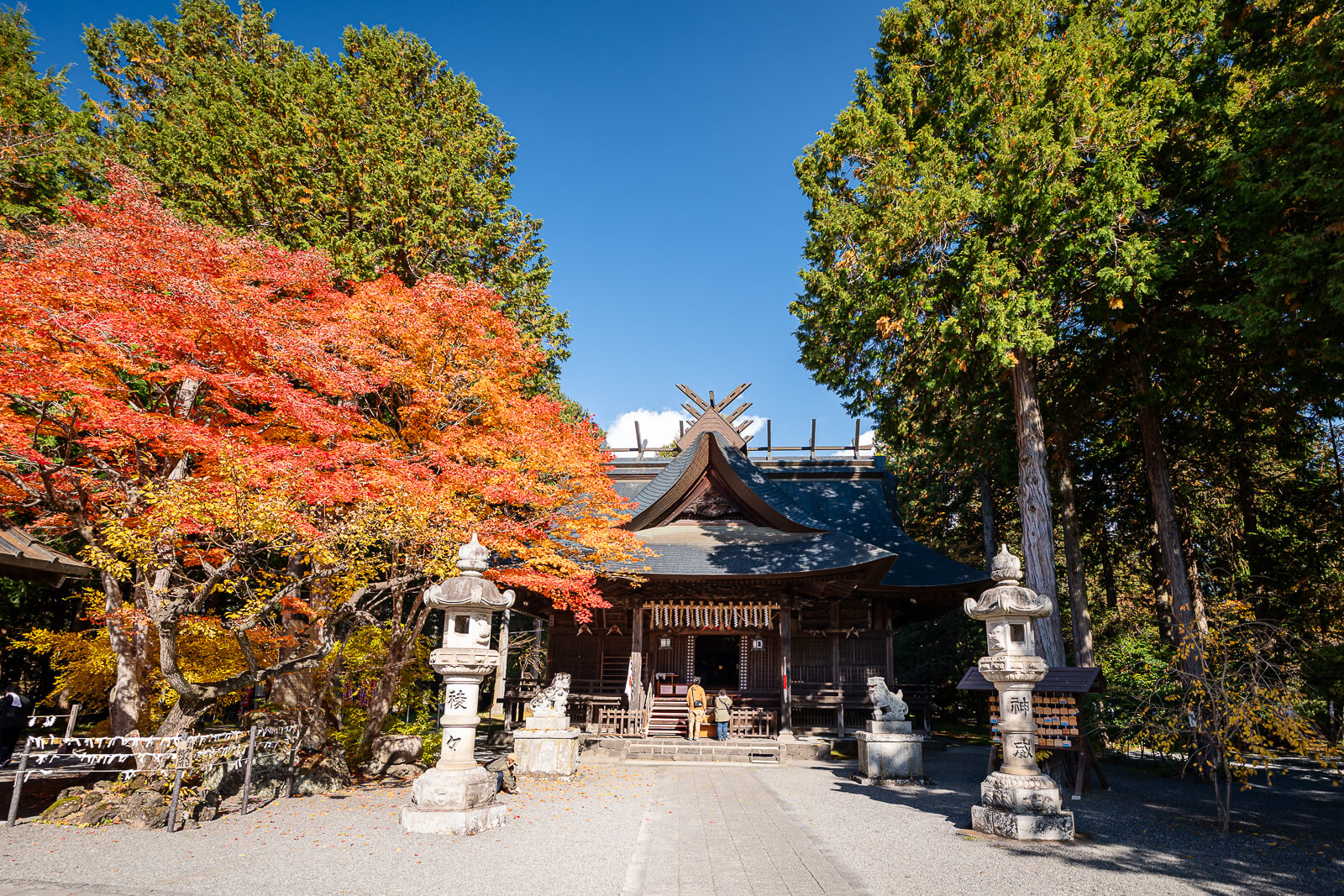
The shrine adds a different kind of visit to a foliage day. Fuji Omuro Sengen Shrine belongs to Mount Fuji’s World Heritage cultural landscape, where shrines and lakes preserve the mountain’s long relationship with worship and pilgrimage. Here, the leaves frame an active shrine complex, with seating areas and a goshuin window—a place to request the shrine’s seal—alongside the buildings.
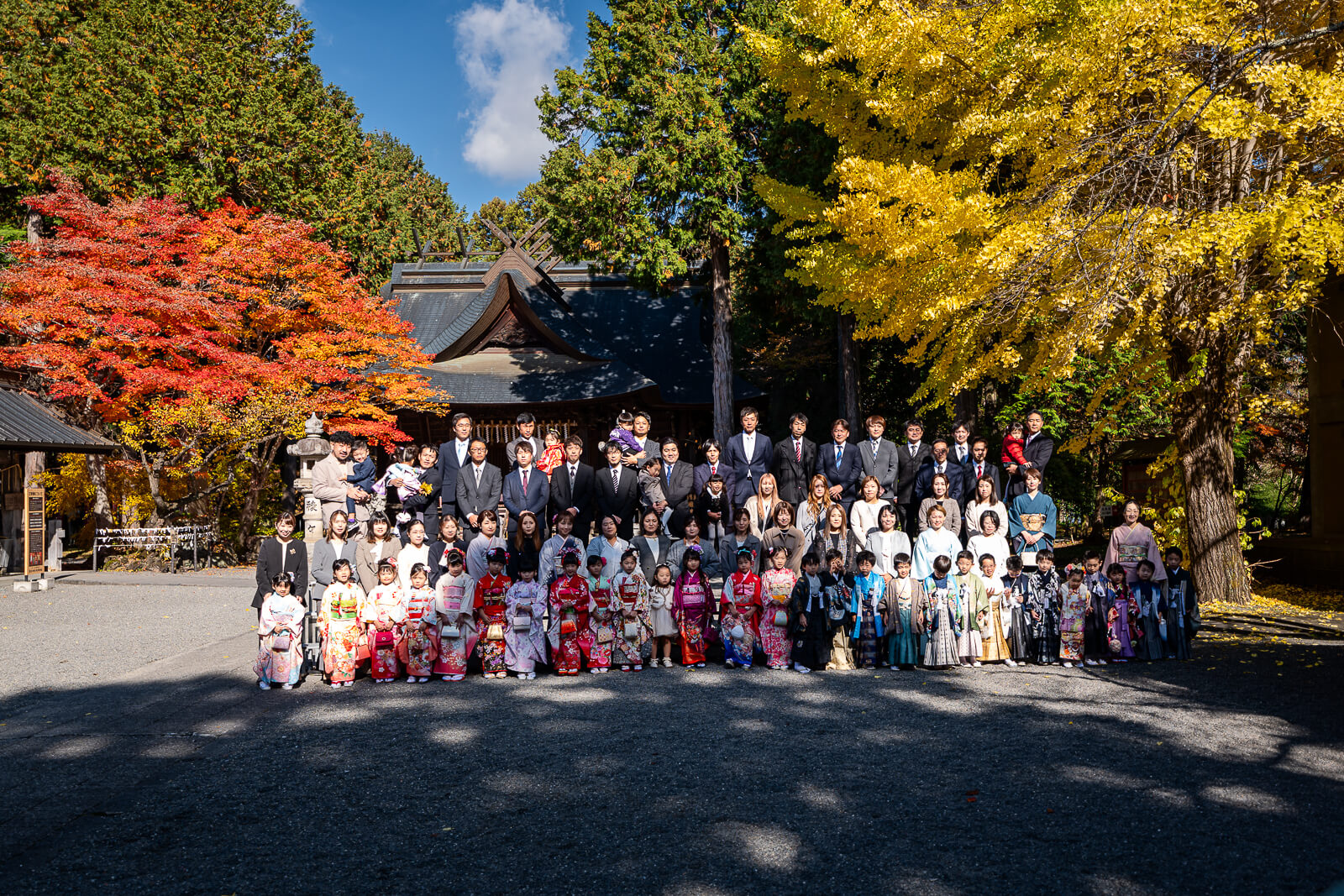
Families gathering beneath the ginkgo can add life to the scene without filling the whole precinct. There is room to wander, pause near the hall, and look back through the gates, making roughly half an hour a useful allowance for a short visit. Anyone drawn to shrine architecture as well as autumn color has a good reason to include it; photographers should also allow for the shade around the buildings.
Yagizaki Park: Two views from the hill
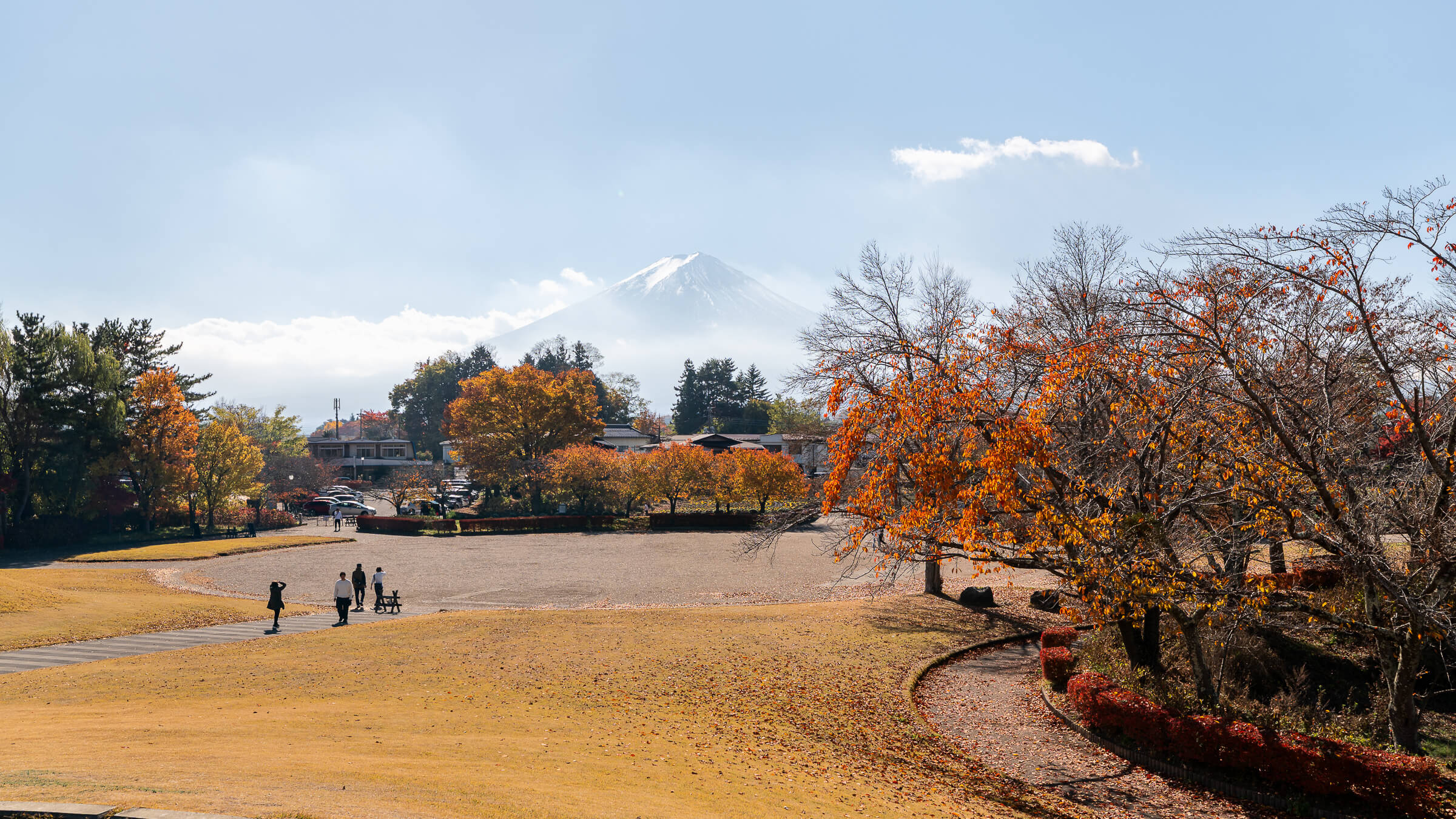
Yagizaki Park opens the day out again. Beyond the buildings at its edge, a broad lawn rises toward a low hill, with open ground continuing down to the shoreline. From the top, Lake Kawaguchi stretches across the view, backed by the mountains and the north shore around the Maple Corridor and Oishi Park.
Turn around and, when the mountain is visible, Mount Fuji supplies the other photograph. Those two directions explain much of the park’s appeal: one looks across the lake, while the other brings the mountain above the trees and buildings. The Fuji view is worth remembering beyond autumn too, although clouds can remove it from the scene in any season.
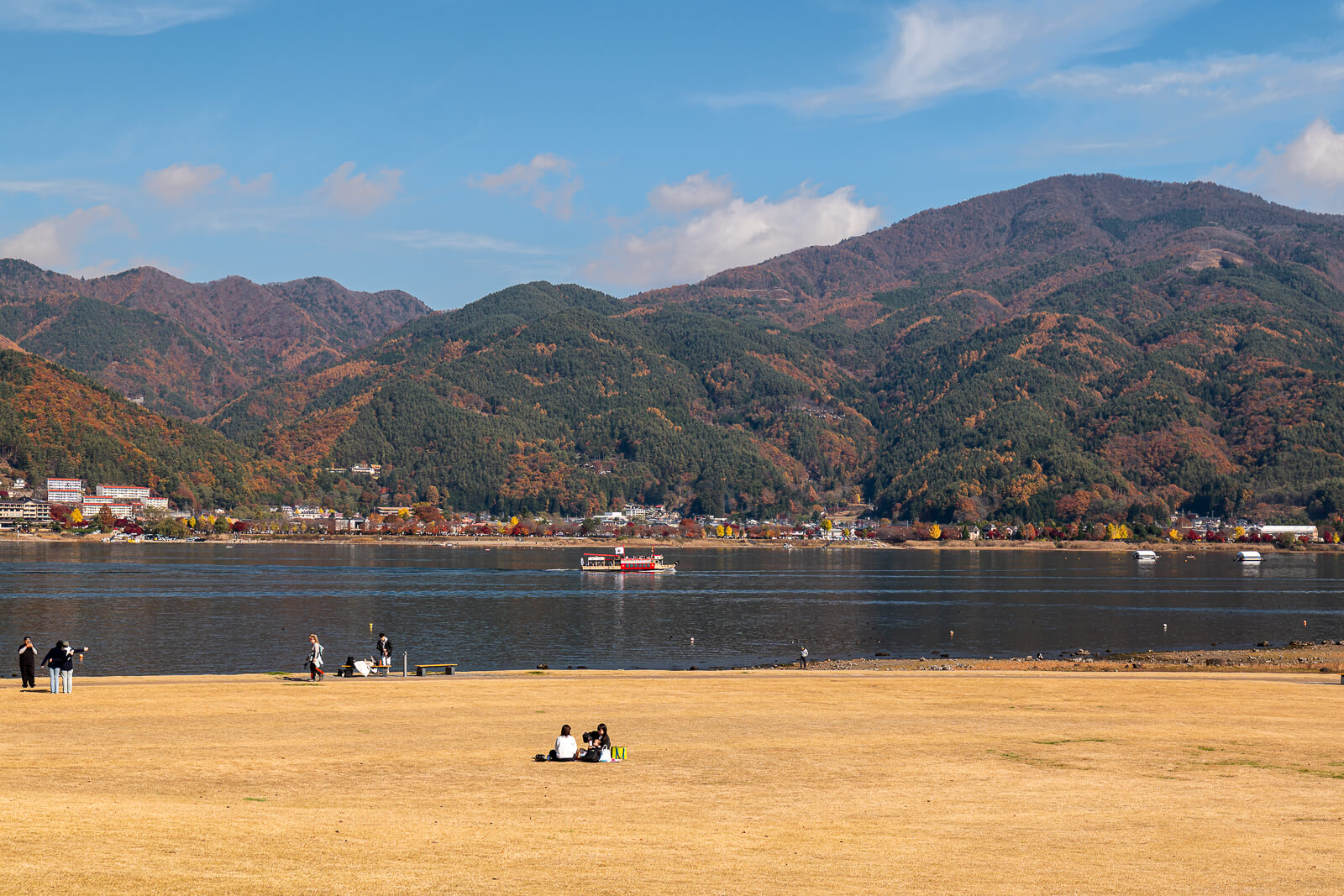
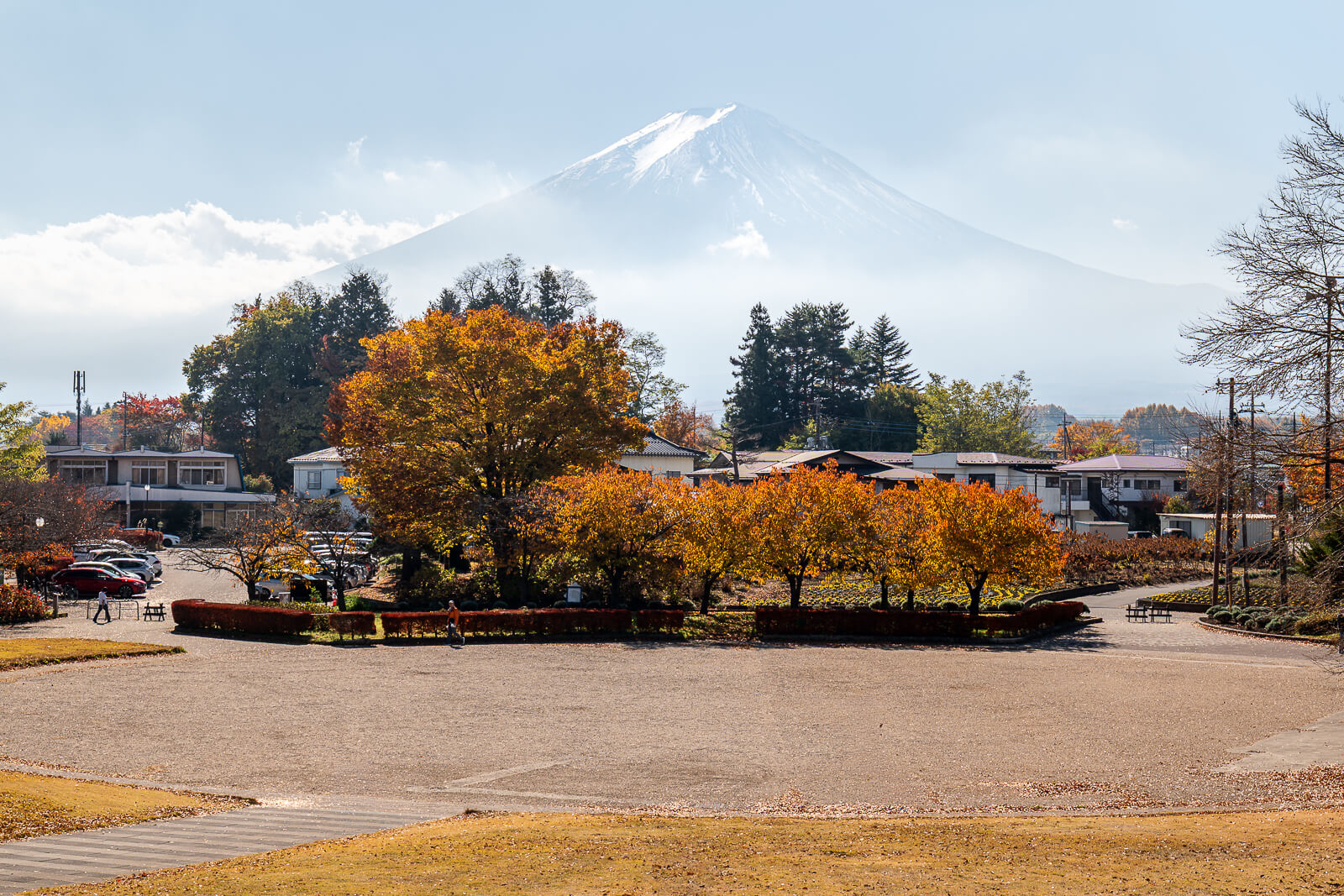
There is enough space to make this more than a quick photograph. Visitors can stretch out on the grass, walk toward the water, or explore the small shrine nearer the shore. The park’s spread leaves room to find a place to stay, though a popular photo angle may call for waiting a few minutes while someone else takes their turn.
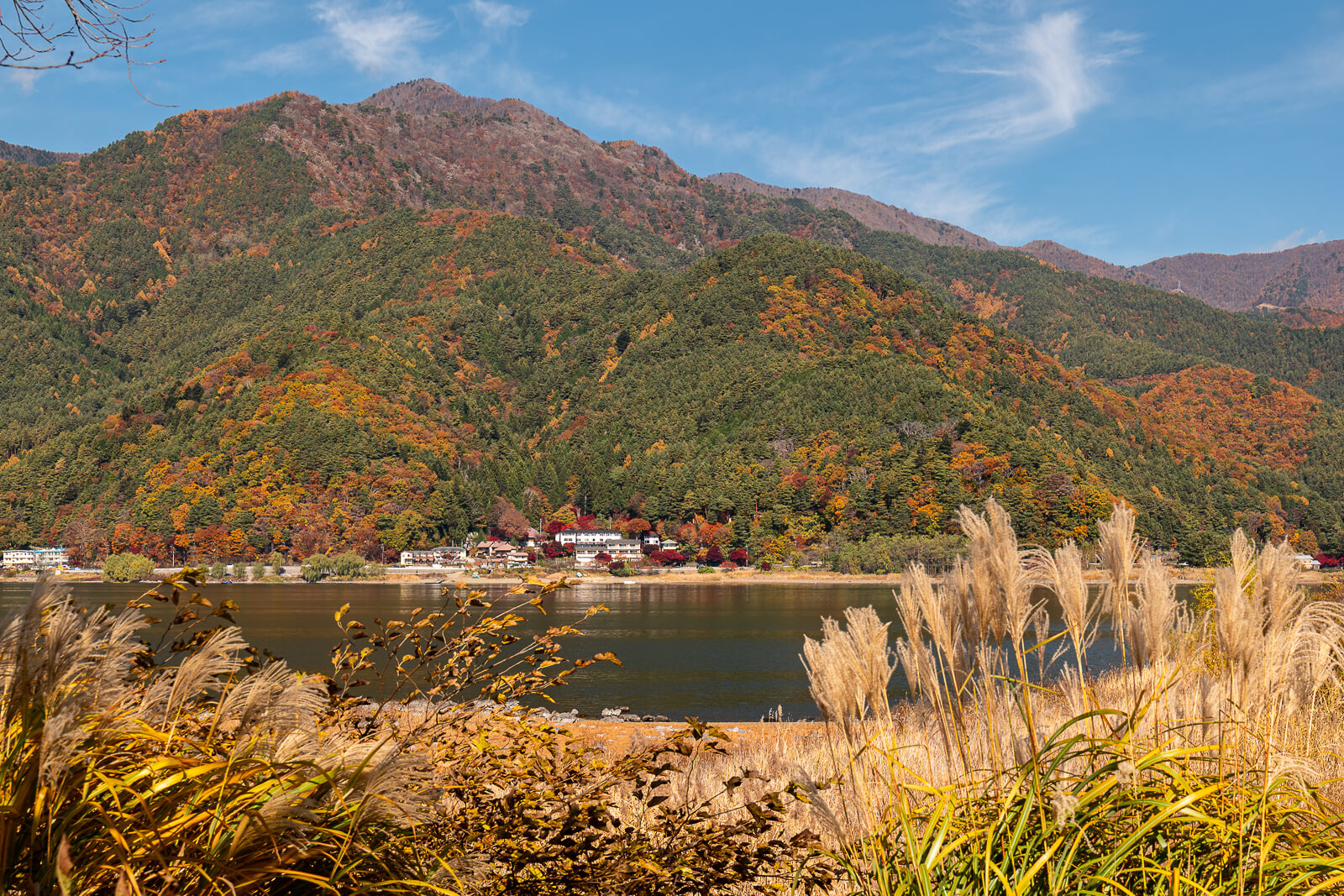
For an autumn day, Yagizaki is a good addition when open space and a lake view appeal more than another concentrated stand of maples. A short stop can be satisfying, but the park also suits a longer break on the grass. Its value lies in that freedom to stay and look, with Mount Fuji as a welcome extra when the sky allows.
Yamanakako brings the shore and hillside together
Hirano Tenmangū: Orange leaves on the way to Panoramadai
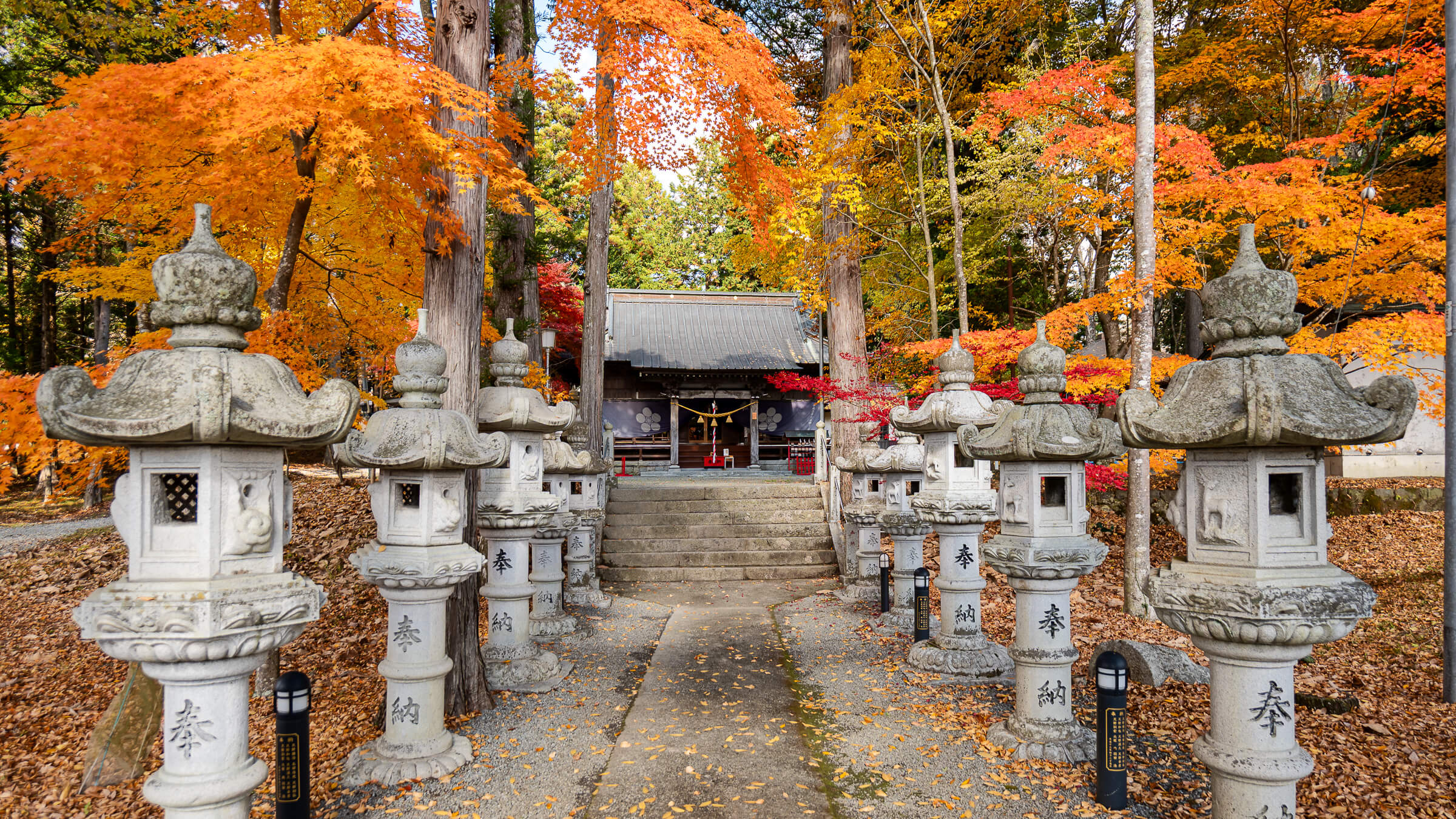
Bright orange foliage can be enough to change a drive. At Hirano Tenmangū, the entrance leads into a small courtyard, where stone lanterns line the approach to the shrine beneath the maples. When the leaves are at their strongest, the color gives this modest stop an immediate presence.
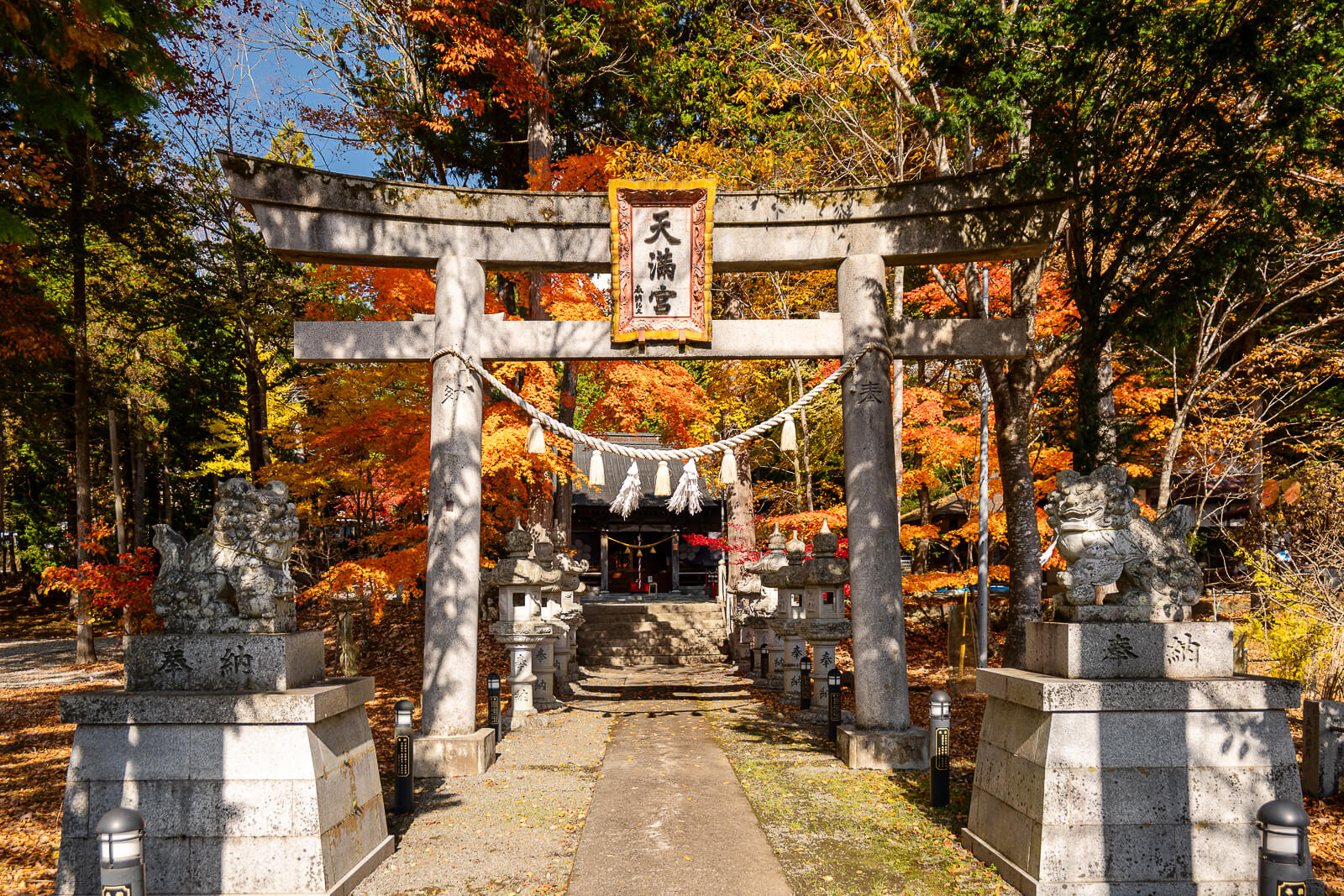
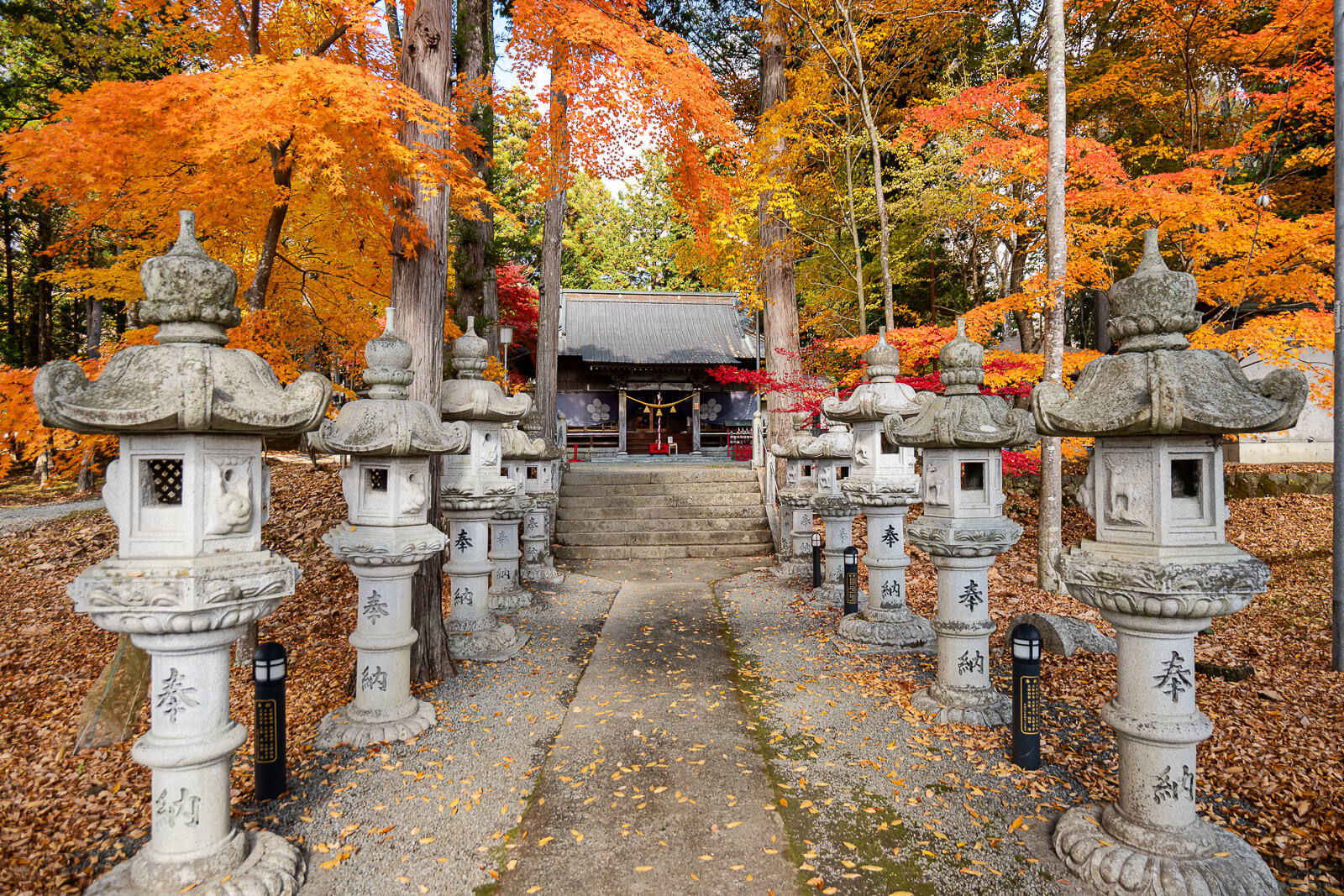
Ten to fifteen minutes can be enough to appreciate the courtyard and take photographs. It makes particular sense while passing through Hirano toward Panoramadai, when stopping adds a worthwhile experience to a journey already being made. Someone exploring the lakeshore on foot would need to turn toward the hillside route to find it, so it should be a deliberate addition to that walk.
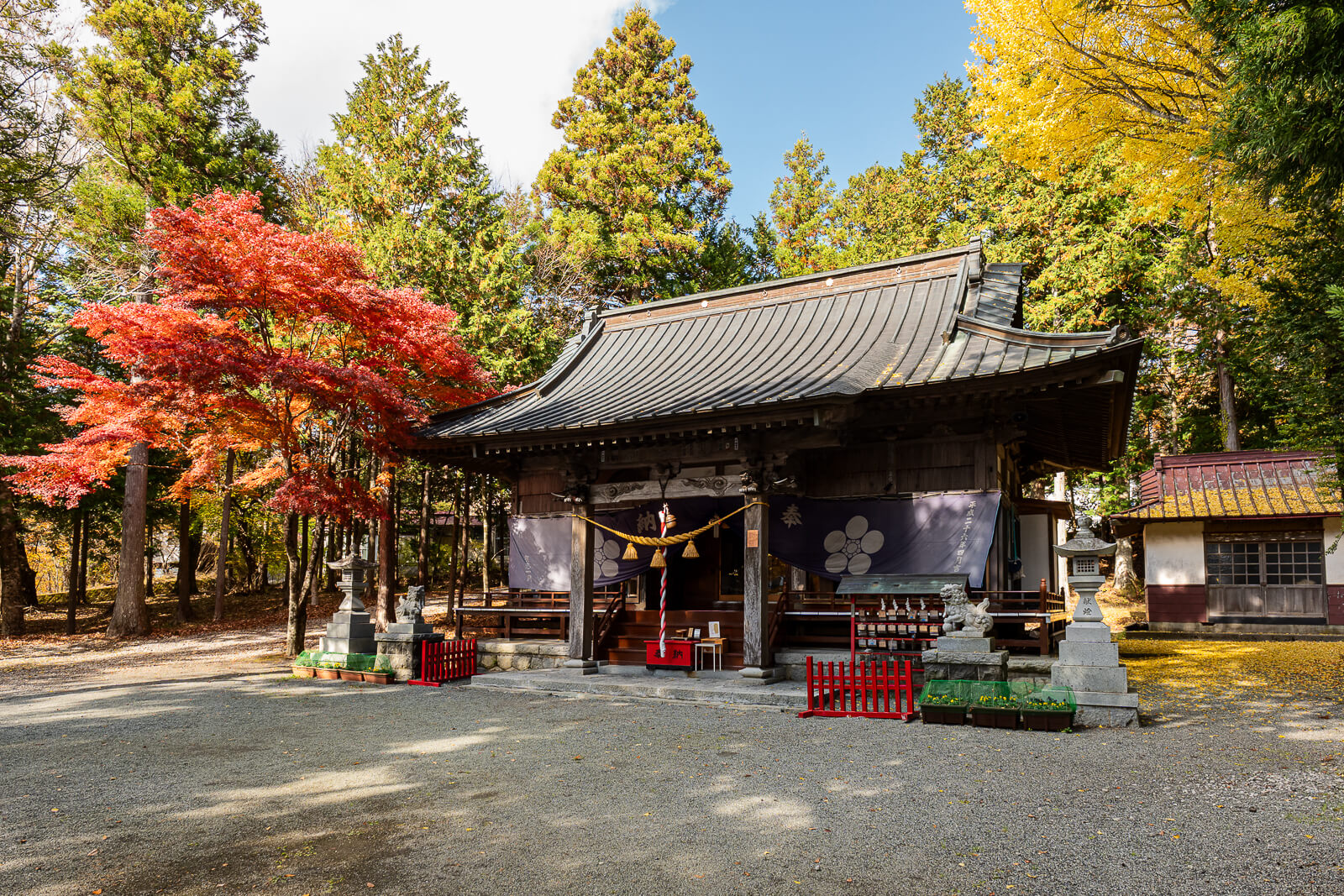
The shrine offers a much smaller-scale encounter with autumn than the Maple Corridor. Its appeal is concentrated in the color and the lantern-lined approach, so it rewards a brief stop without needing to become the day’s main destination. Include it while heading uphill, especially when the orange leaves are visible from the road.
Panoramadai: Susuki above the lake
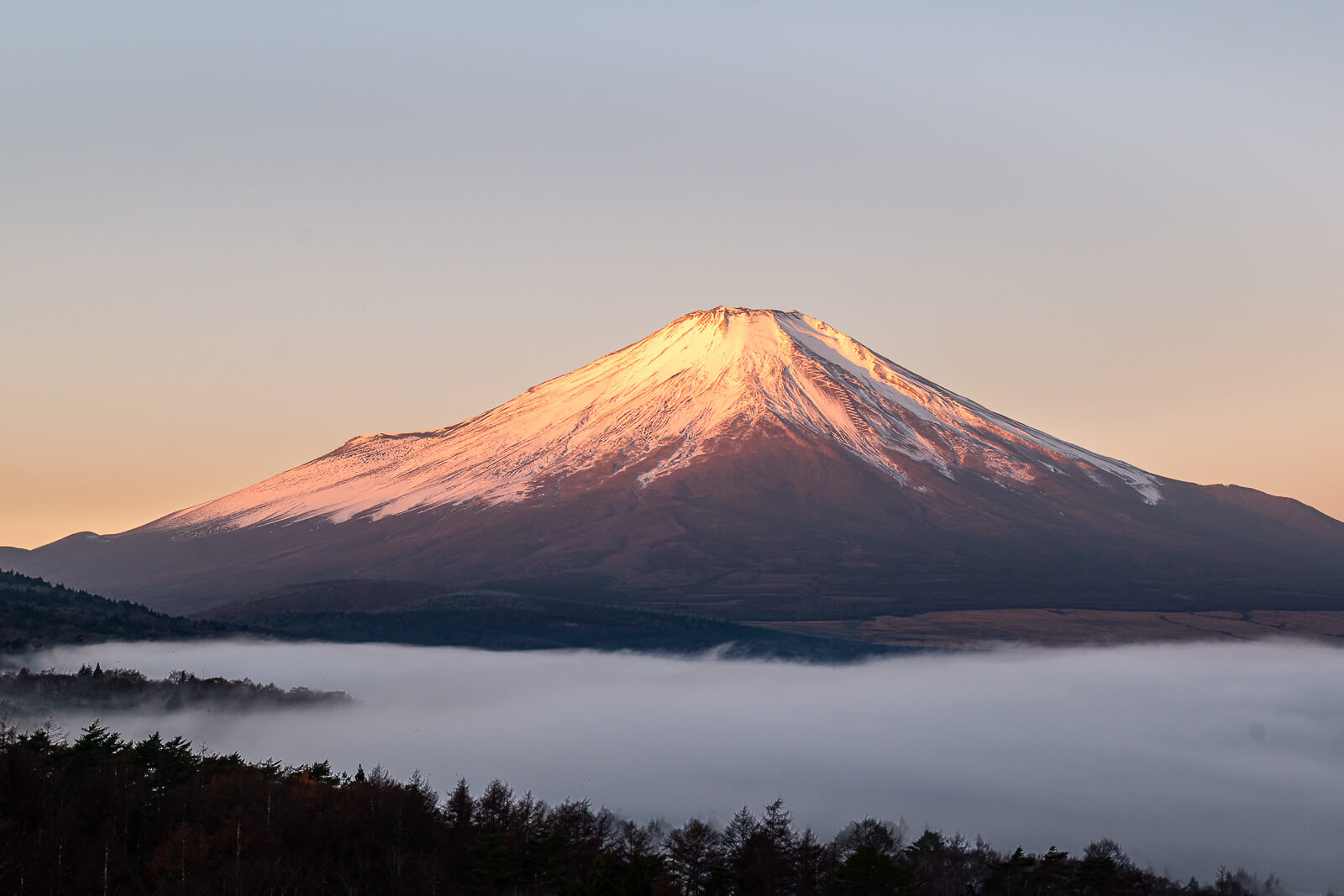
At Panoramadai, the view expands beyond individual trees. Susuki grass covers the hillside in autumn, maples add color near the observation area, and Lake Yamanaka lies below with its shores and surrounding slopes visible together. With a clear mountain view, Fuji completes the scene; with cloud across its lower slopes, even the snowy summit may be all that appears.
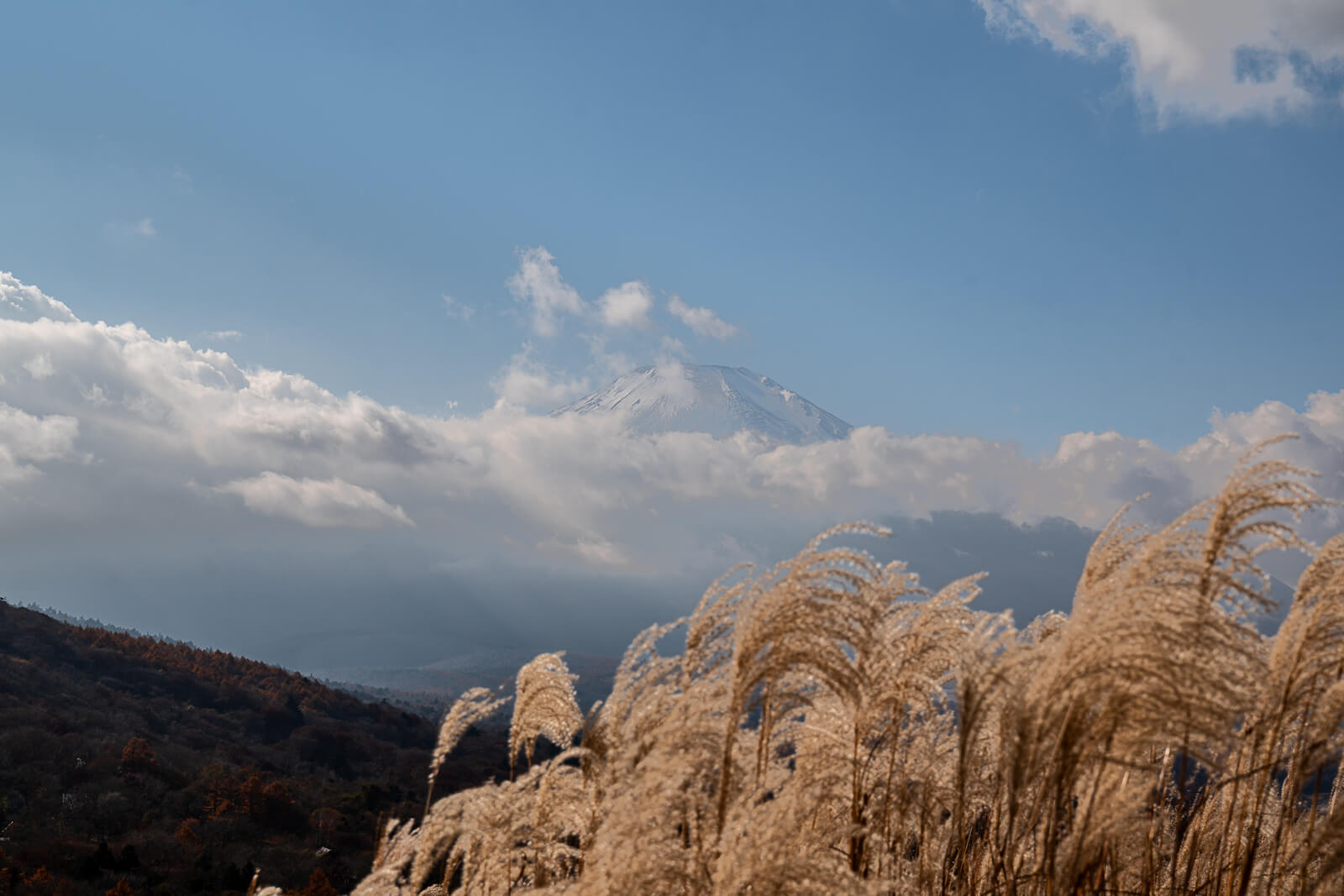
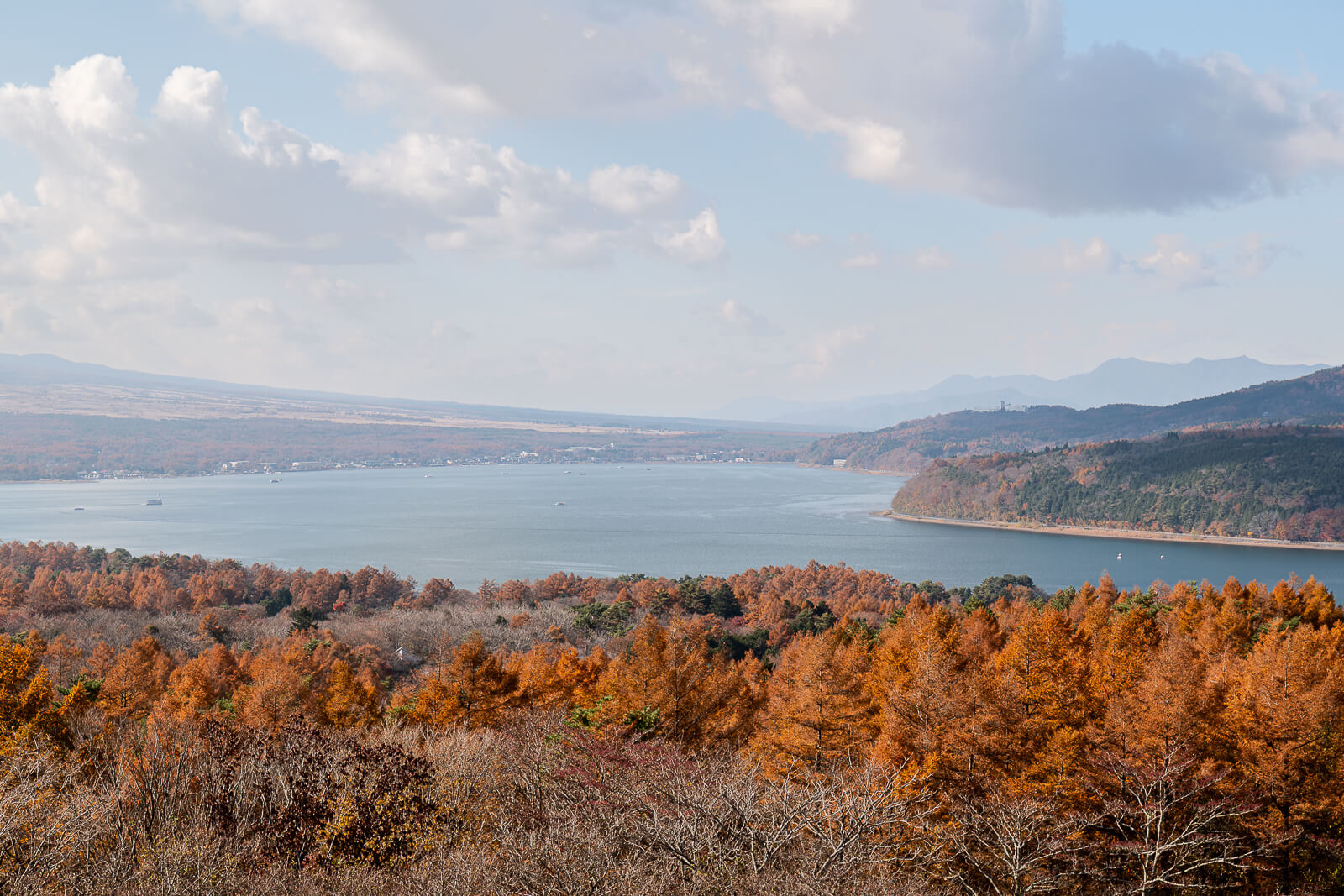
At sunrise, the scene can look quite different: pink light on Fuji’s snowy summit, with low cloud spread across the lake below. The lake and grass give the stop something to offer while the mountain is partly hidden. Short paths provide other angles for photographs, and the observation area is a place to stay outside for a while before returning to the shore. About half an hour is a useful allowance for a straightforward stop, with longer visits making sense for changing light or a sunrise or sunset photograph.
Clouds are the main uncertainty. Check the mountain from the lake and, if useful, a live camera before heading uphill, while remembering that visibility can change during the climb. If the only reason for going is a complete Fuji panorama, a clouded mountain should prompt a rethink; if the broad lake view and autumn grass appeal too, the visit can still earn its time.
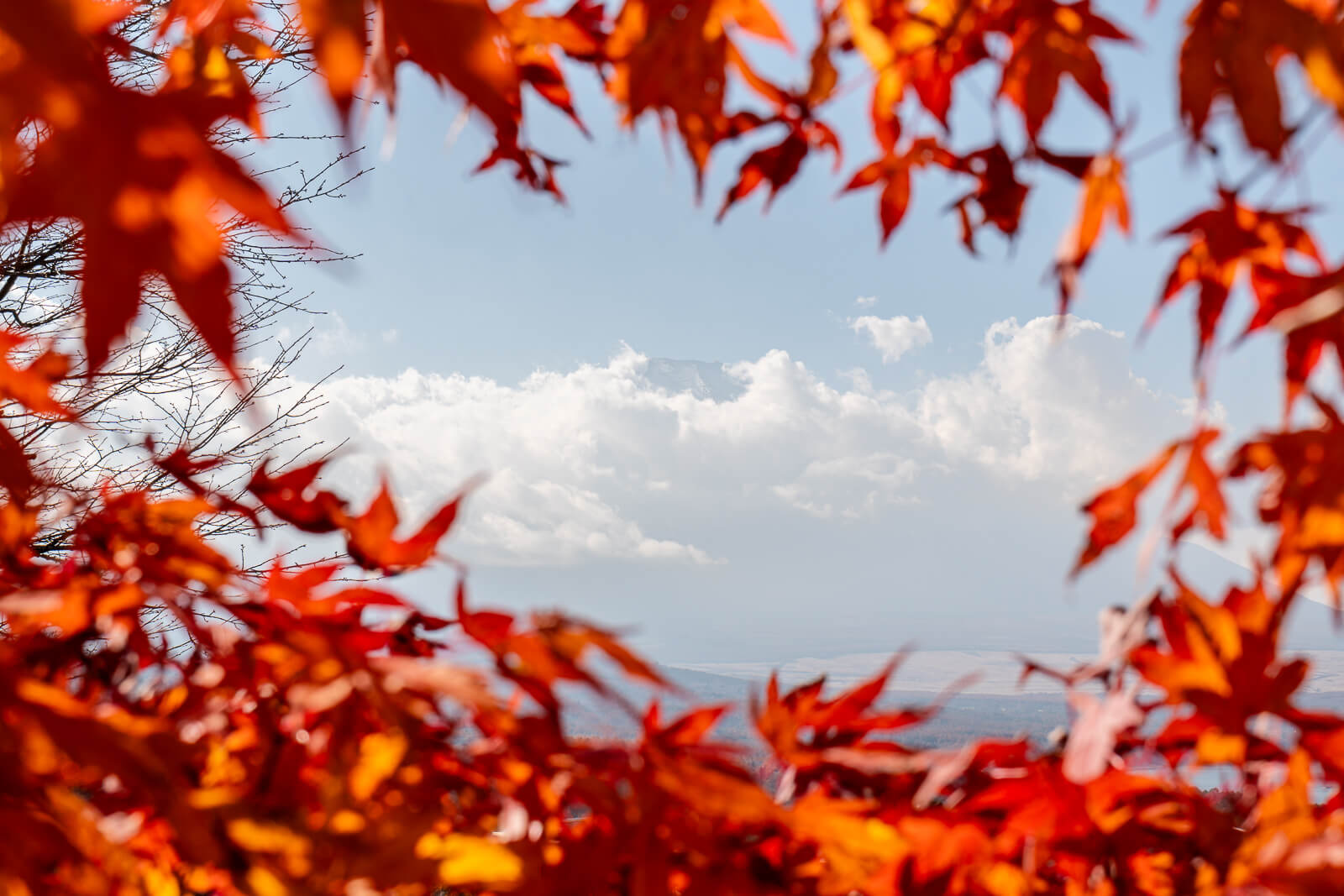
The observation-area parking lot is small, so allow extra time to park and find a place for photographs if visiting at sunrise.
Asahigaoka Lakeside: Color, a boat trip, and lunch nearby
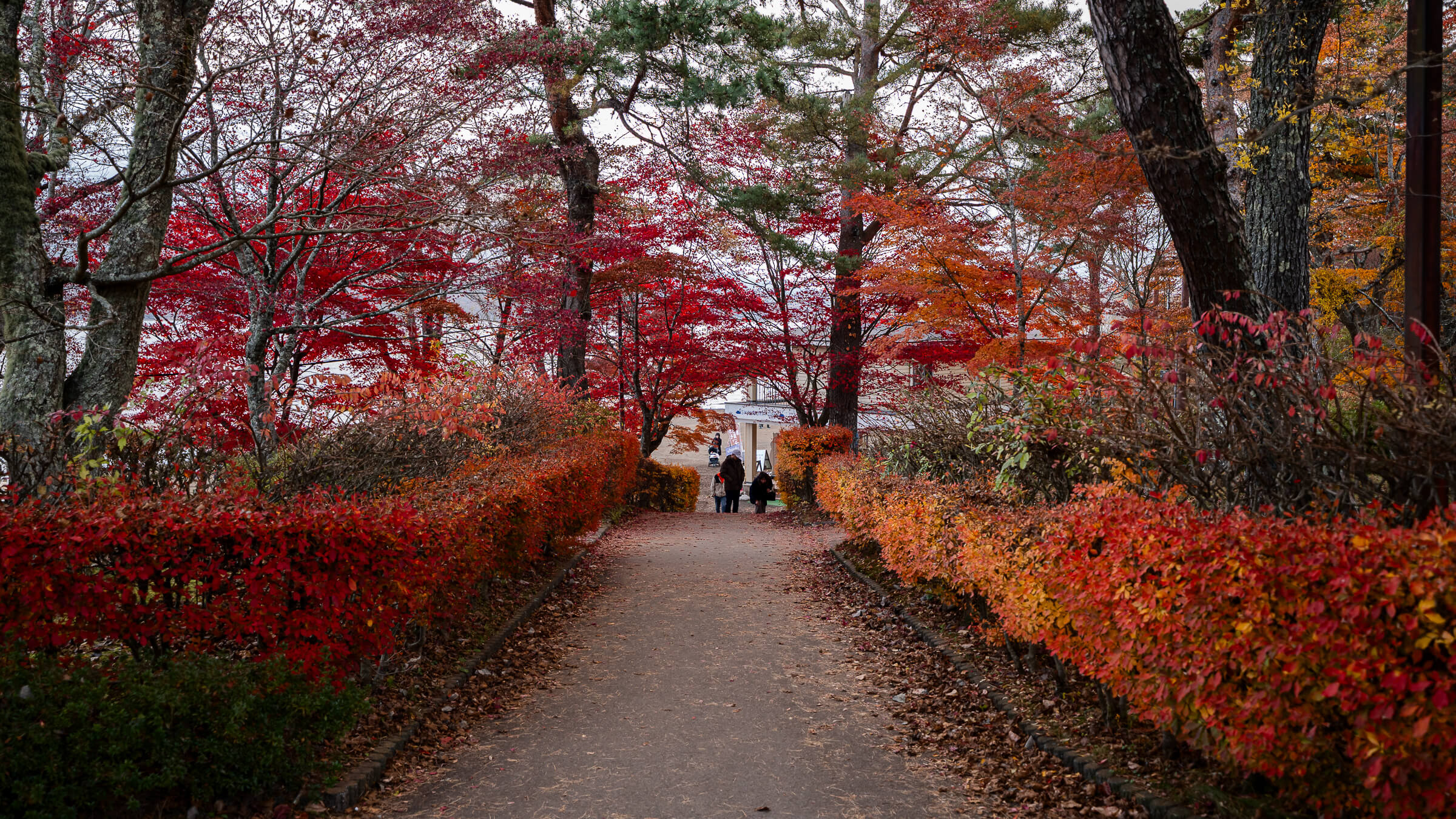
At Asahigaoka Lakeside Park, the leaves announce themselves from the sidewalk. Paths turn into the park beneath vivid orange, yellow, and red trees, bringing autumn color close enough to enjoy without a long approach. The grounds are relatively compact, but a concentration of trees can make a walk feel richly filled with color.
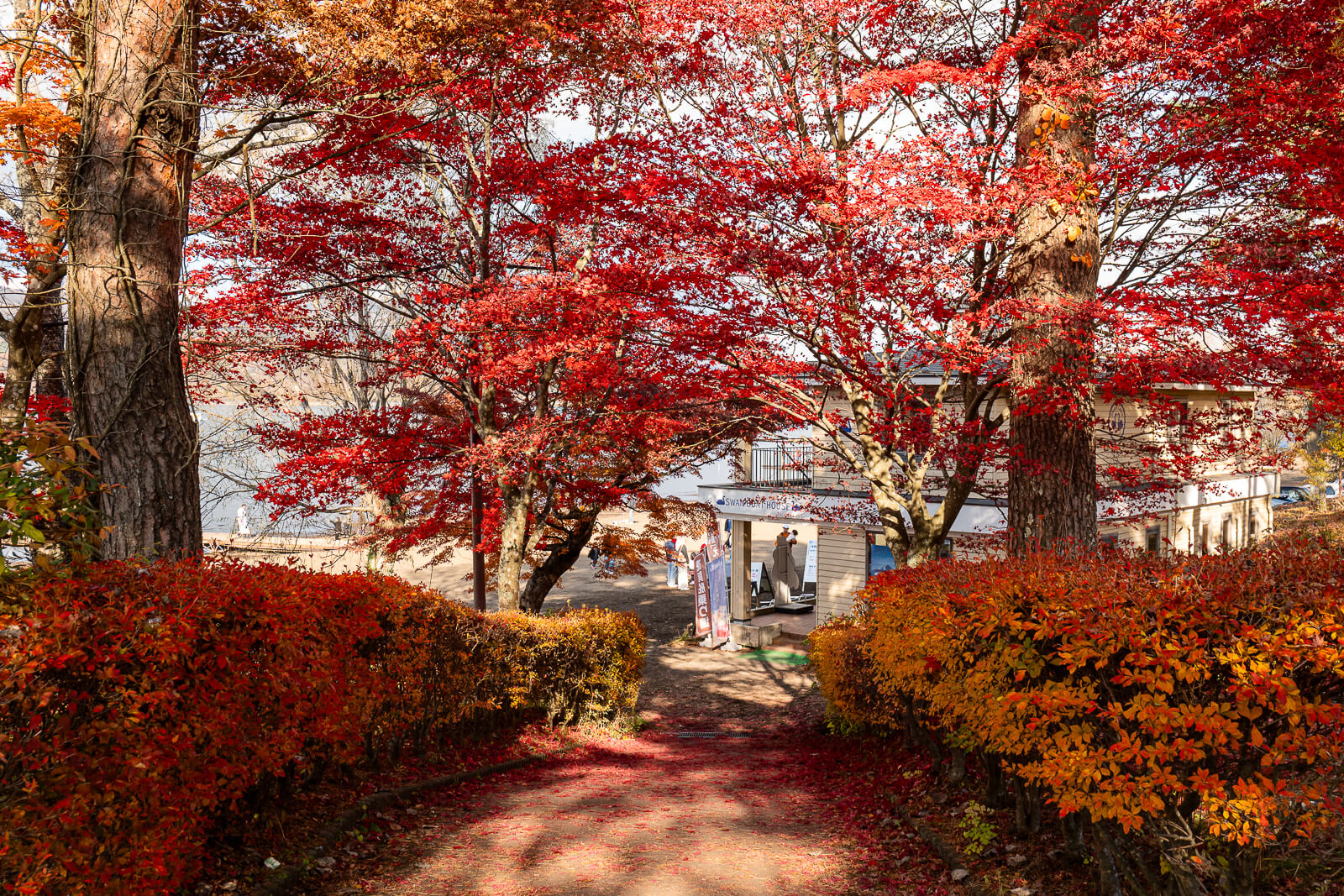
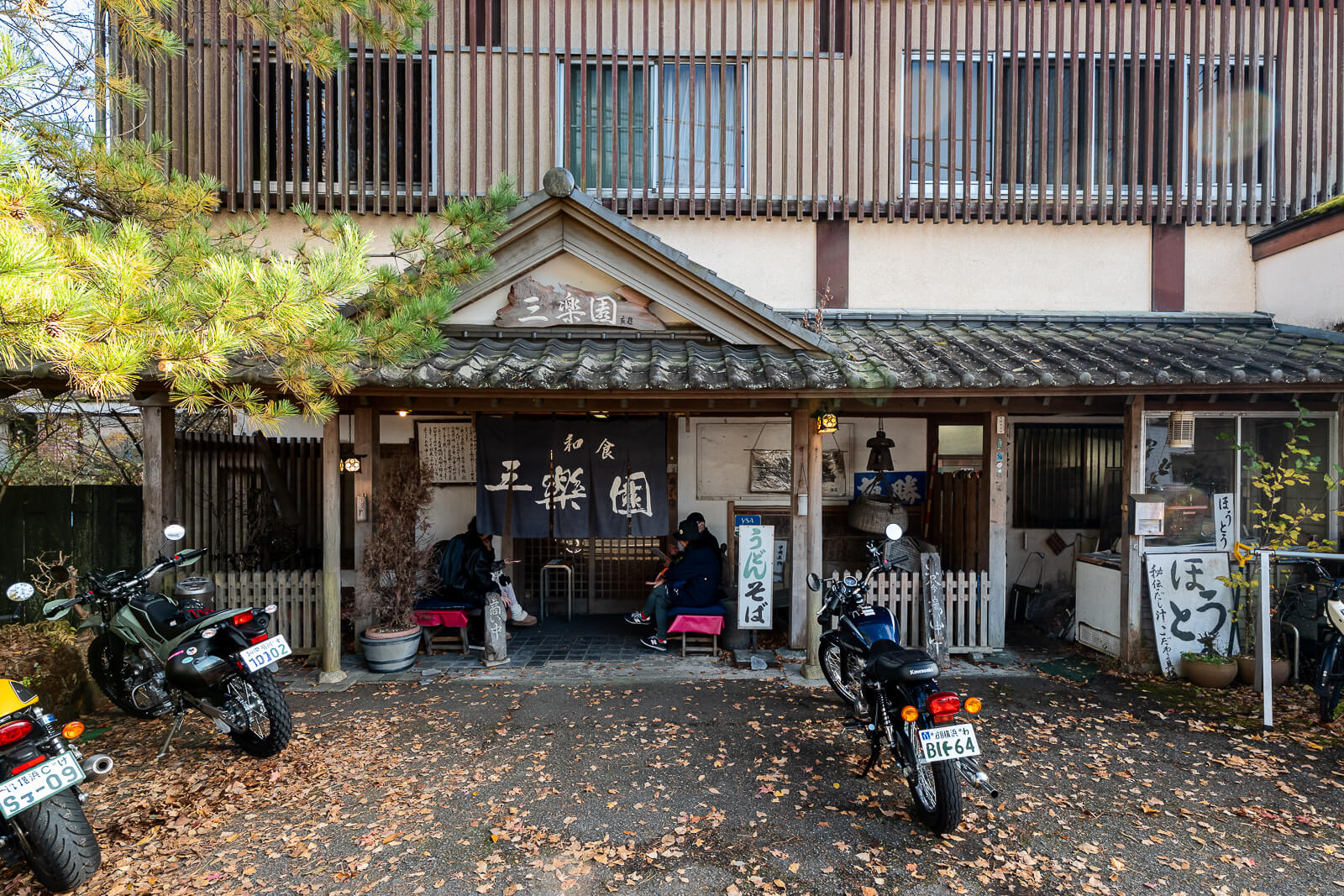
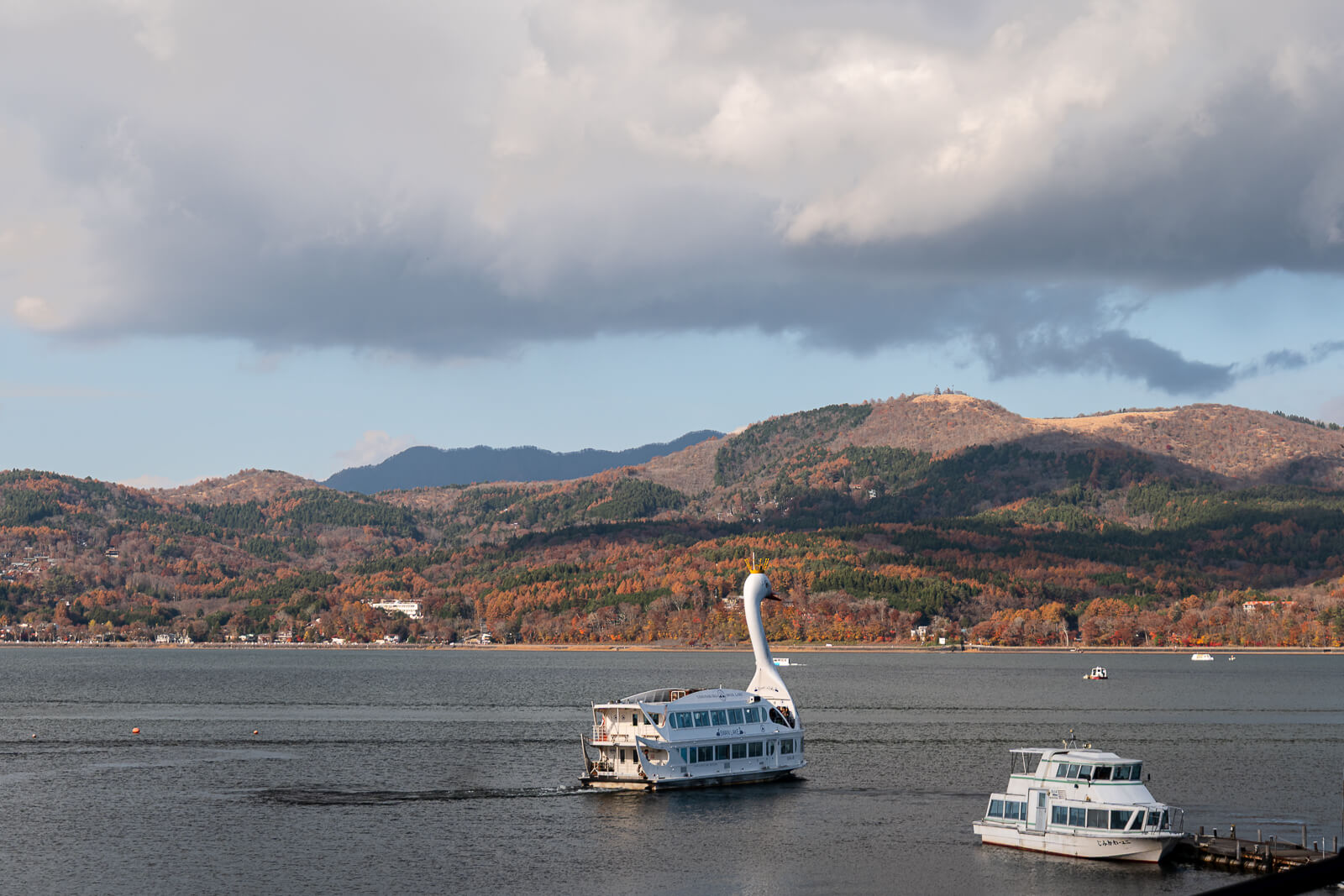
The path toward the pier adds another possibility to the visit. A boat trip on the lake can be paired with the foliage walk, while nearby shops and places to eat give the area enough to build a longer stop around. A hōtō lunch—a local noodle dish—can fit naturally into that plan, with restaurant choice and opening times checked for the day.
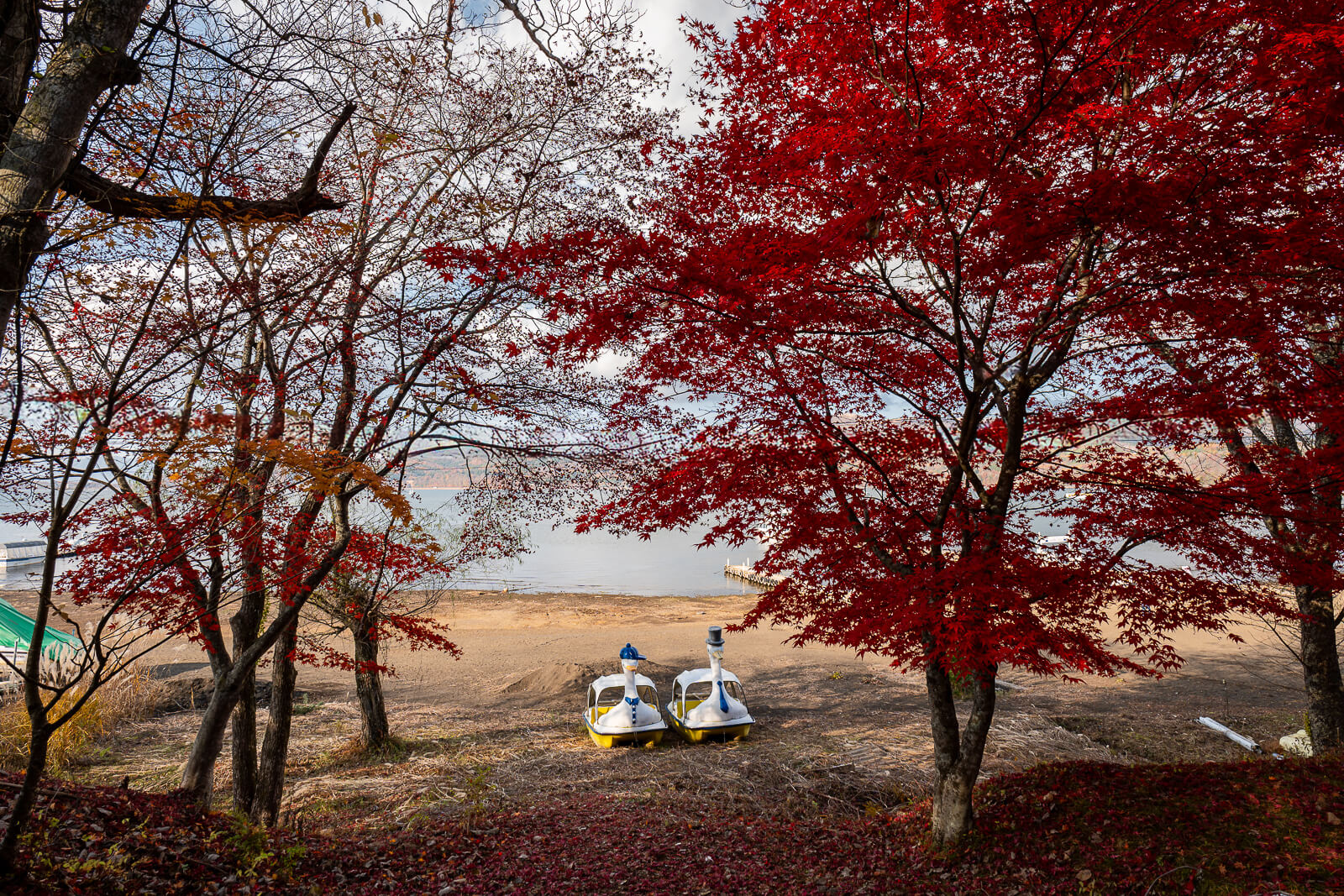
Allow around forty-five minutes for a walk with time to stop for photographs. With room to pause among the trees, the park suits a foliage stop before or after lunch nearby. Arriving earlier leaves more opportunity to combine the park with a sailing instead of discovering that the day’s useful departures have passed.
For maples alone, the Maple Corridor remains the stronger reason to choose a lake. Asahigaoka becomes a more convincing alternative when the day includes time on the water and a meal nearby. It is also a worthwhile visit in its own right for someone already spending the day at Yamanakako, without needing to rival the corridor’s canopy.
Put the day together around the experience you want
At Kawaguchiko, start with the Maple Corridor, then decide how to spend the remaining time around the lake. Fuji Omuro adds shrine buildings and the large ginkgo; Yagizaki adds open ground and views in two directions. A driver can connect both south-shore stops, while a visitor using buses should choose the addition that fits the actual service and return journey.
A rental bicycle provides another way to explore the shore and stop where something catches the eye. It can connect places that would take more effort on foot, and cyclists are a familiar sight around the lake. Plan a manageable section, check the rental’s return time and route, and leave time to get off the bicycle and enjoy the stops.
At Yamanakako, a car gives more freedom to combine Asahigaoka, Hirano Tenmangū, and Panoramadai. If a boat trip matters, plan around its departures first; if the mountain view matters most, let visibility influence when to go uphill. A direct highway bus also makes a focused Yamanakako visit possible without driving, provided the chosen lakeside area matches the arrival stop and return service.
An early start by car can make a selective two-lake day workable. Give the Maple Corridor first claim on the morning, then keep enough daylight for the Yamanakako experience that matters most, leaving some stops for another visit. Trying to include every location turns time beside the trees and water into time spent connecting them.
For most first visits by public transport, stay with Kawaguchiko. Its maples, shrine, park, and Mt. Fuji Panorama Ropeway offer several ways to shape a day, although the ropeway also depends on operating conditions and cannot guarantee a mountain view. Choose Yamanakako when its lakeside walk, sailing, or high panorama is the reason for the trip and the transport plan gives those experiences enough time.
An overnight stay gives either lake more breathing room and can make an early photograph or evening visit possible. Choose the accommodation’s location around the next day’s first stop and how it will be reached. If looking at another autumn destination altogether, the Hakone autumn foliage guide offers a separate trip to compare. For a shorter autumn outing within the city, compare the Tokyo gardens for autumn foliage.
Getting There
Compare Tokyo to Kawaguchiko and Tokyo to Yamanakako travel by the stops you want to reach, including local connections and the return journey.
From Tokyo and around the lakes
Kawaguchiko is simpler for a first visit without a car. Yamanakako also has a direct highway bus from Shinjuku; choose the arrival stop around the lakeside area you plan to explore. Driving gives more freedom between stops, with parking and traffic still shaping the day.
- Kawaguchiko by public transport
Rail via Ōtsuki or highway bus → Kawaguchiko Station → local sightseeing bus for the chosen shore
Check the north-shore bus for the Maple Corridor and the appropriate service for south-shore stops. · Kawaguchiko Station is the nearest train station. Match onward buses to the stops and return journey.
- Yamanakako by public transport
Direct highway bus → chosen Yamanakako arrival stop → local bus where needed
Choose the arrival stop around the lakeside area you want to explore. · Match the return stop and service to the visit. Plan the uphill approach to Panoramadai separately.
- Exploring by car
Chosen stops around one lake, or a selective two-lake day
Give the Maple Corridor first claim on the morning when possible. · Allow for autumn traffic and parking. Panoramadai's official parking lot is small; allow extra time at sunrise.
Maple Corridor in Google MapsLake Yamanakako in Google Maps
Loading the area map. The location links above are available if the map cannot load.
Hours and Fees
Visitor information
Plan around the stops you want to include: these two lakes do not share one opening timetable or admission ticket.
- Hours
- Check the autumn festival and illumination schedule if visiting the Maple Corridor in the evening. Boat departures, ropeway operating hours, shrine services, shops, and restaurants each need their own check. For a boat trip, confirm the sailing times before setting the order of the day.
- Admission
-
Budget separately for transport, parking where charged, boat trips, ropeway tickets, meals, and any rentals. Check the price and conditions of each activity you intend to include.
Plan Your Visit
Plan Your Visit
Start with the lake and experiences that suit your day, then arrange the stay, transport, and activities around them.
Stay around Lake Kawaguchi
Compare lakeside stays around the next morning's plans. Check how you will reach the Maple Corridor or a sunrise viewpoint before choosing a location.
Browse Kawaguchiko hotels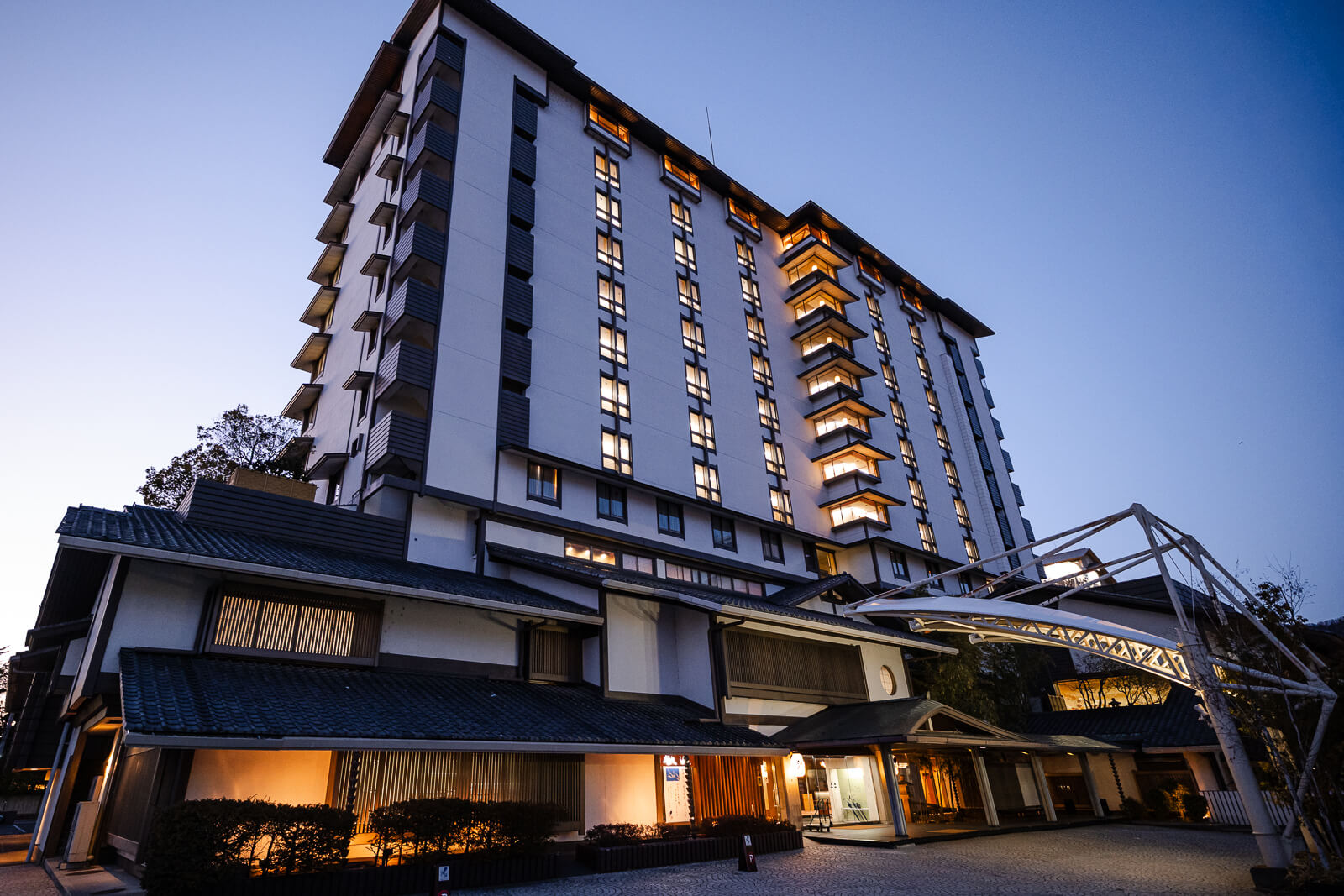
Compare car rentals in Kawaguchiko
Compare Booking.com car rentals in Fujikawaguchiko for stops around both lakes. Select Kawaguchiko Station as the pickup area, then check the rental office, opening hours and return arrangements.
Compare Kawaguchiko car rentals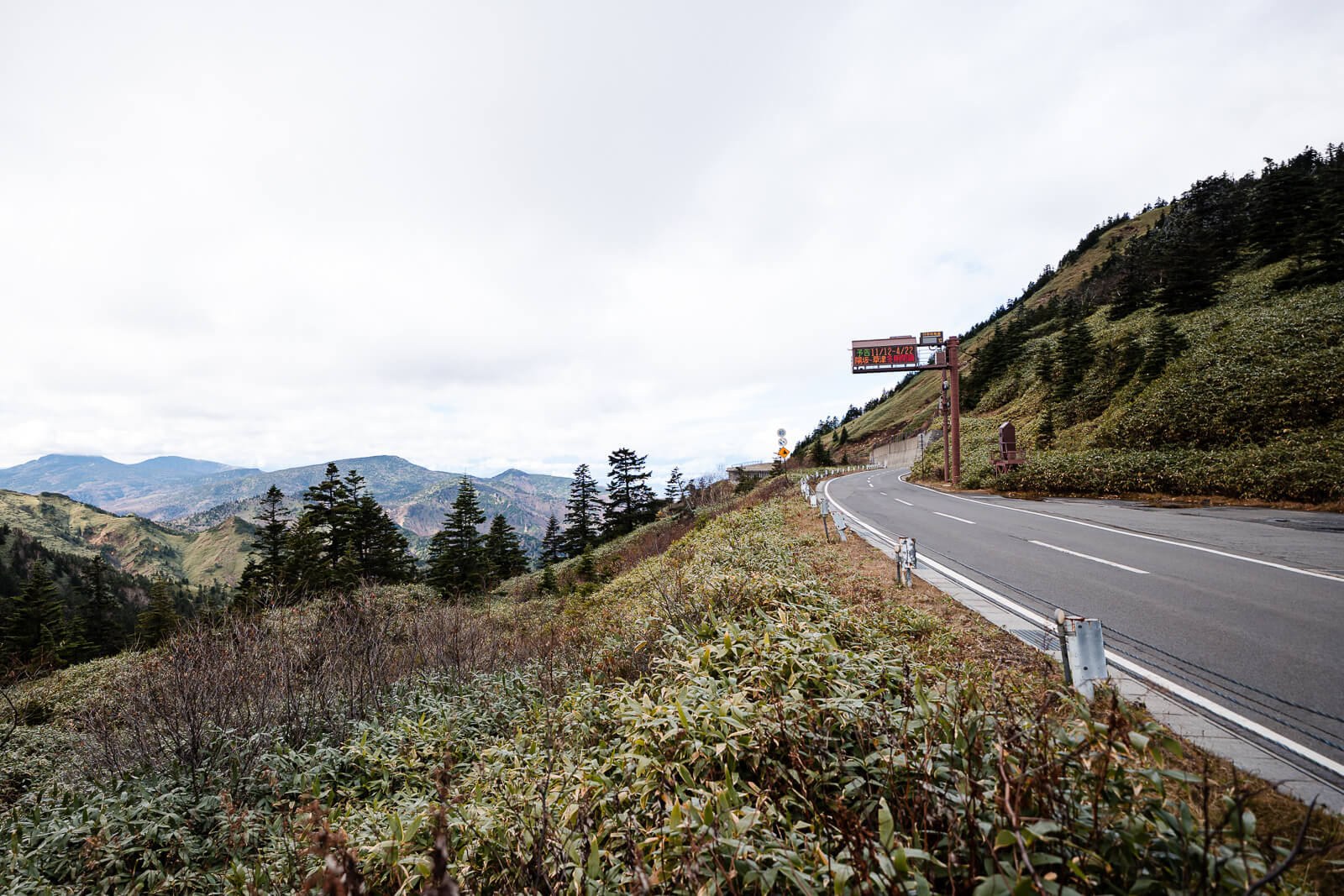
Let someone else handle the journey
Compare guided Fuji-area trips when you want transport arranged. Check the actual stops and time at each: a general Fuji itinerary may not include the foliage places in this guide.
Explore Fuji-area tours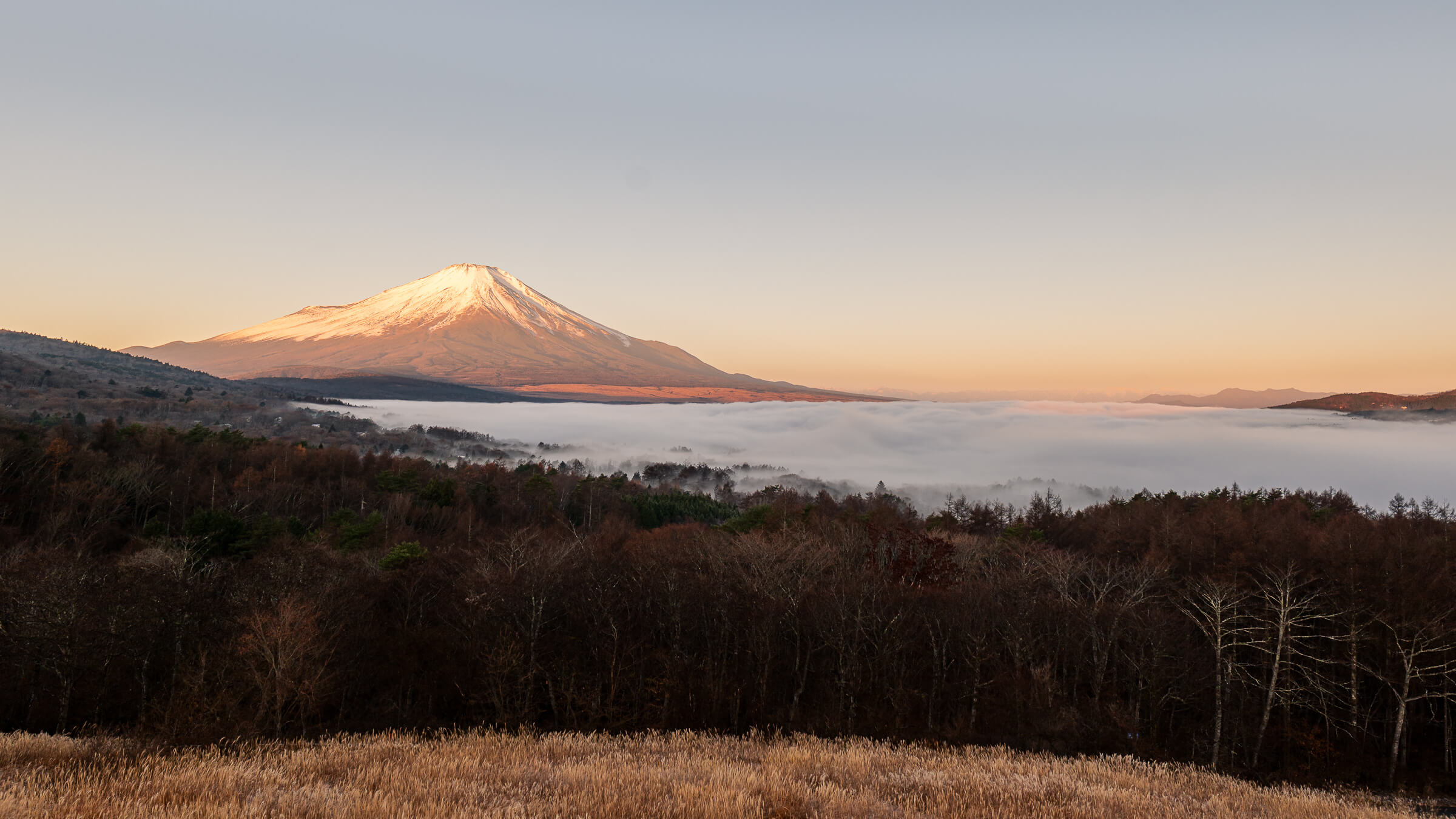
Take the Fuji Excursion from Tokyo
Compare Fuji Excursion tickets from Shinjuku to Kawaguchiko. Check travel dates, departure times and seat availability, then plan the onward journey to your lakeside stops.
Check Fuji Excursion tickets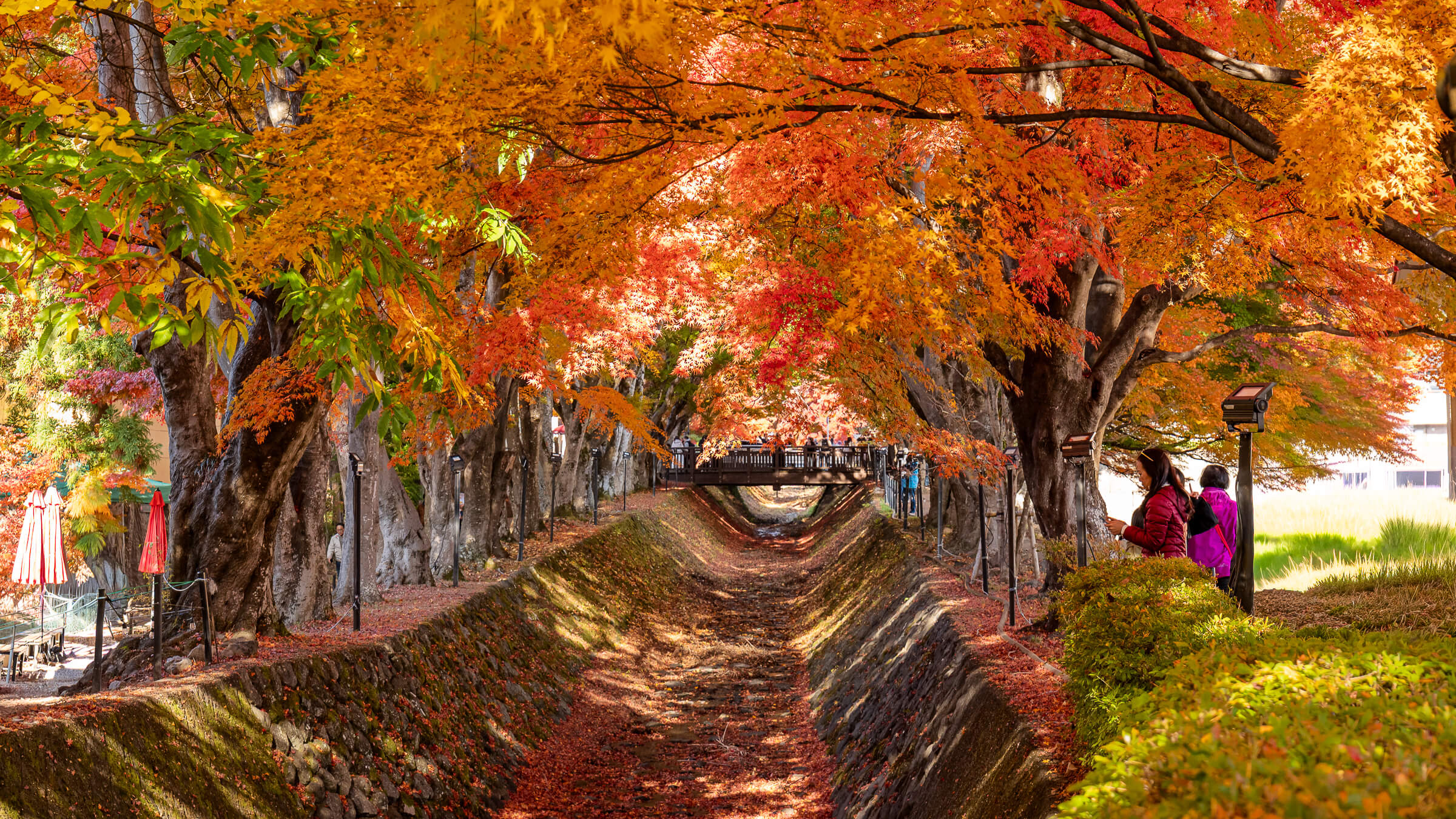
Keep maps and travel updates close
Compare Japan eSIM data plans for maps, bus times and weather updates. Check device compatibility, data allowance and activation instructions before buying.
Compare Japan eSIM plans
Compare the nationwide Japan Rail Pass
Consider a Japan Rail Pass for a wider itinerary through Tokyo, Kyoto, Osaka and beyond. Compare its cost with individual tickets; the Fujikyu section from Otsuki to Kawaguchiko requires separate payment.
Compare Japan Rail Pass options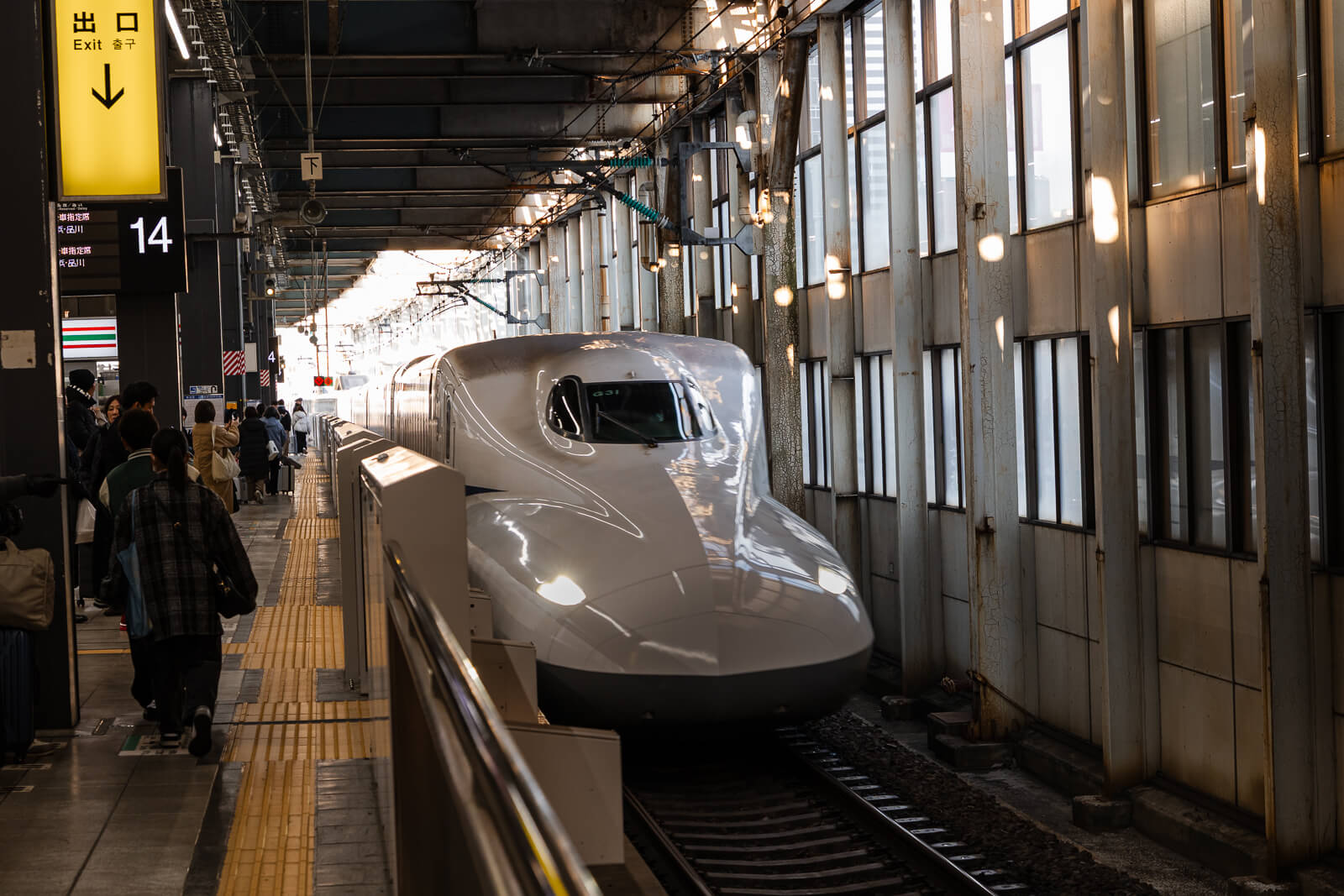
Stay by Lake Yamanaka
Browse accommodation in Yamanakako for lakeside walks and early starts. Check the property's location and transport options before booking.
Browse Yamanakako hotels Reader note: Japan Unfolded may earn a commission from some links at no extra cost to you.