Walking the Edge of Lake Suwa
Lake Suwa in Nagano Prefecture sits at the center of the basin in Suwa City, and along its eastern edge, Sekicho Park and Suwa Lakeside Park form a continuous shoreline that can be followed without interruption. The route begins just beyond the town grid near Kamisuwa Station, where streets open gradually toward the water.
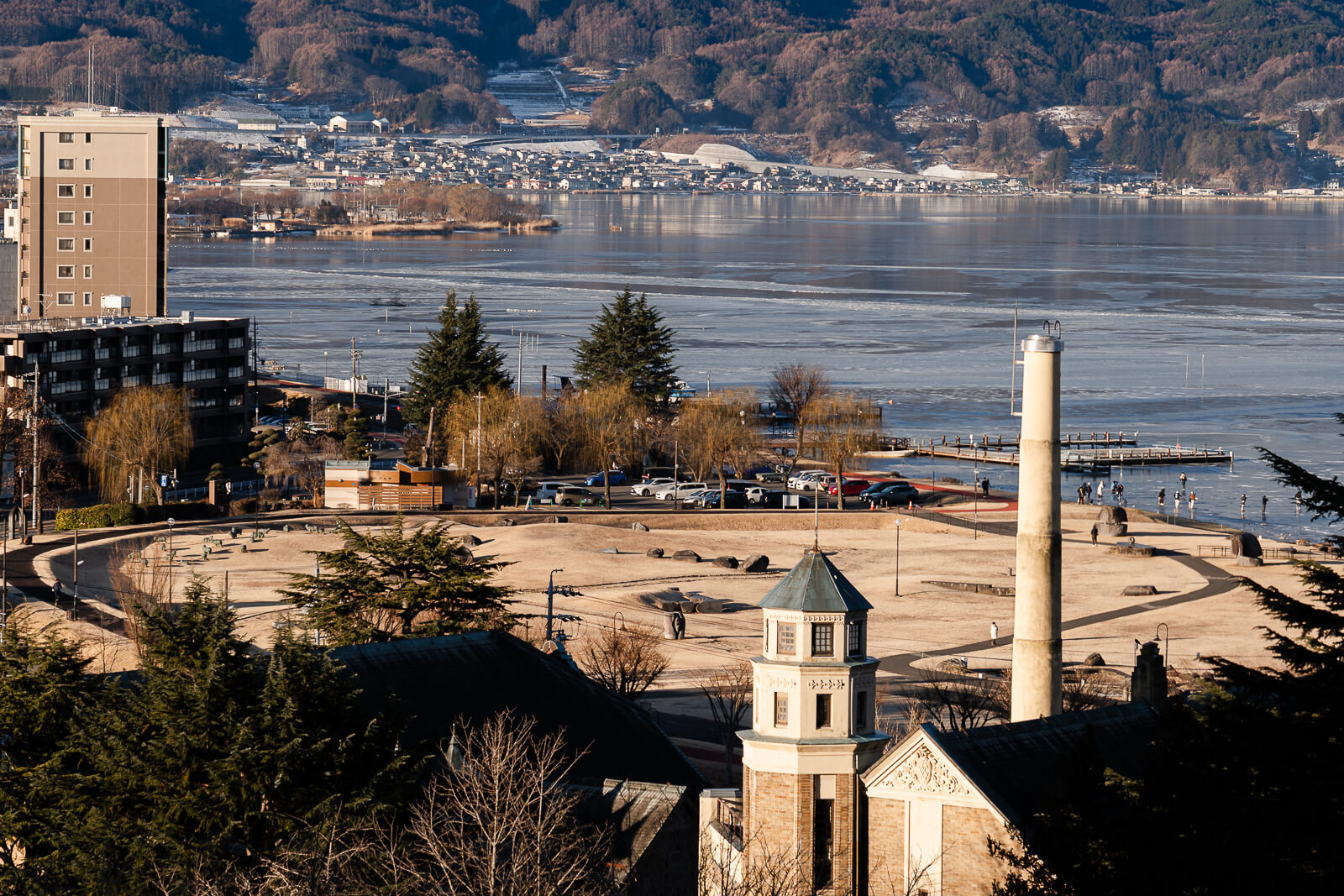
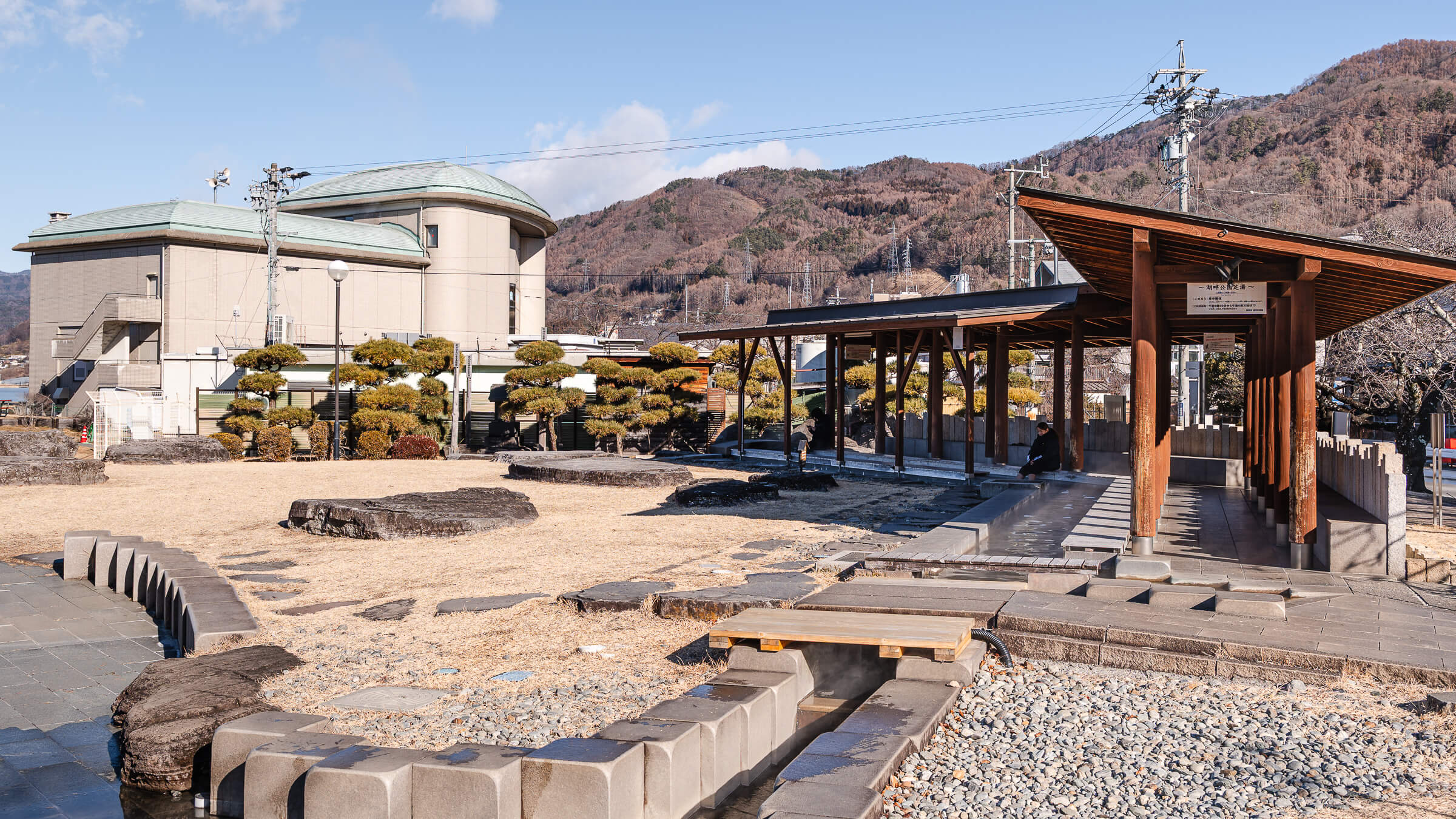
This stretch connects directly with nearby lakeside stops, including the Lake Suwa Geyser Center and Lakeside Footbath, where the promenade continues along the shore, and across the basin toward Takashima Castle, whose reconstructed keep rises above the opposite edge of the lake. Together, these places define how movement unfolds around Lake Suwa and how the shoreline becomes part of a broader sequence rather than an isolated stop.
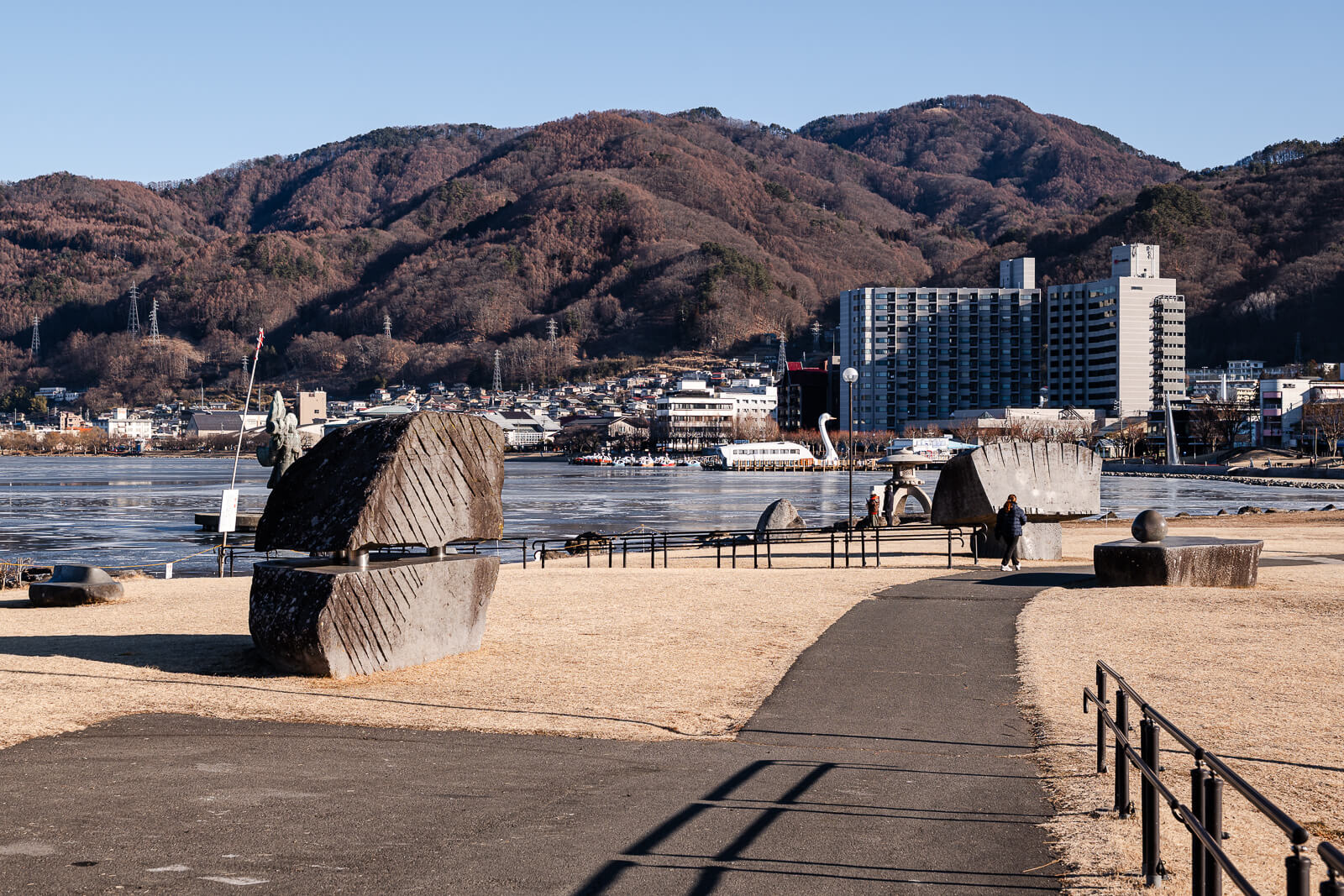
The walk itself is flat and low effort, typically taking 30 to 60 minutes, though many visitors extend their time depending on how long they remain along the water. There is no route to complete and no endpoint to reach, which allows it to sit naturally within a broader visit around Lake Suwa without requiring planning or adjustment.
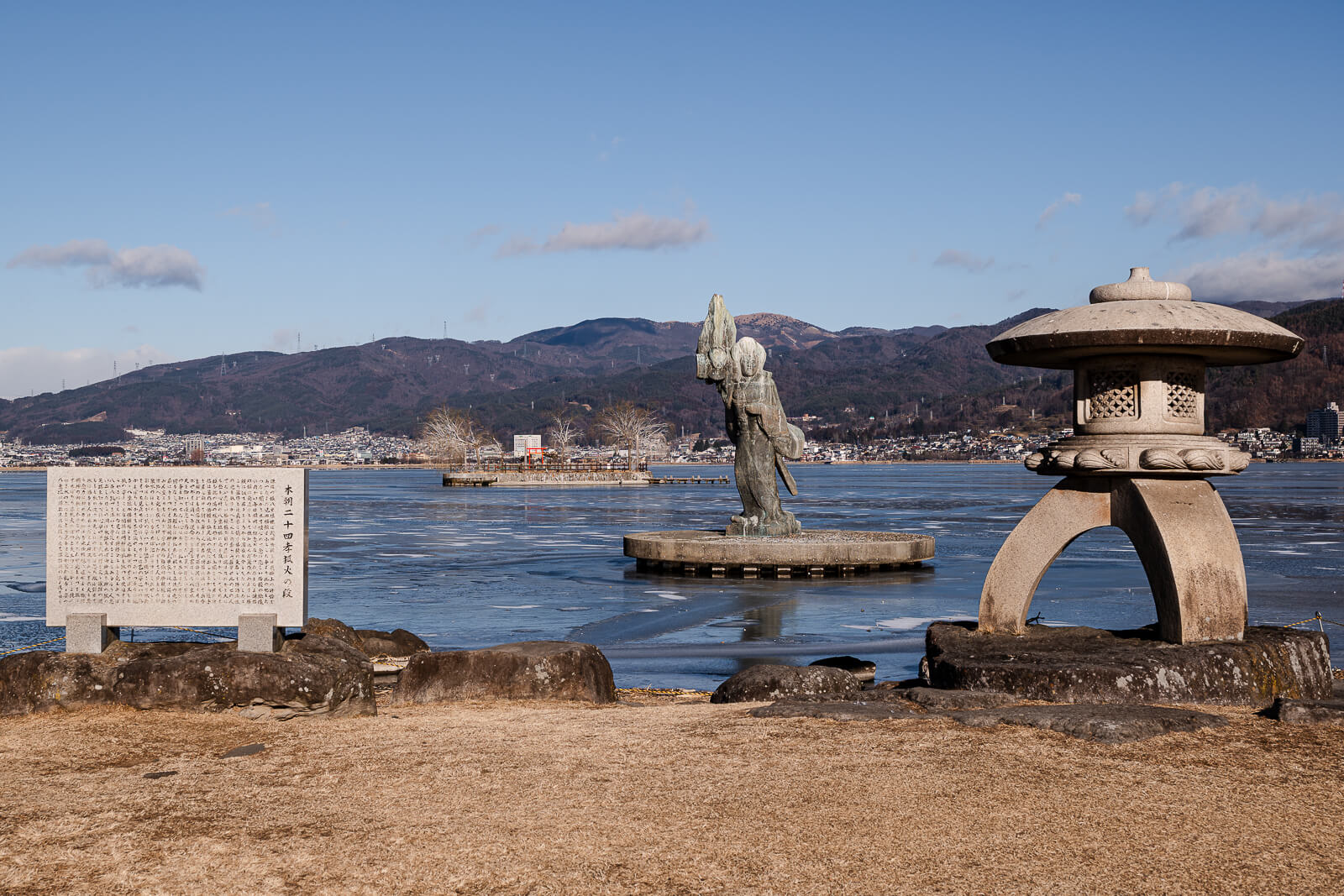
Why People Spend Time Along This Shoreline
This stretch of shoreline functions differently from nearby stops such as Takashima Castle or the shrine complexes of Suwa Taisha Shimosha Akimiya. Instead of building toward a destination or working toward a defined highlight, the experience holds its structure from beginning to end.
The lack of directional change reduces decision pressure. There are no turns that alter the route, no sequence that needs to be followed, and no defined checkpoints that shape the visit. The setting remains consistent, allowing movement to continue without adjustment.
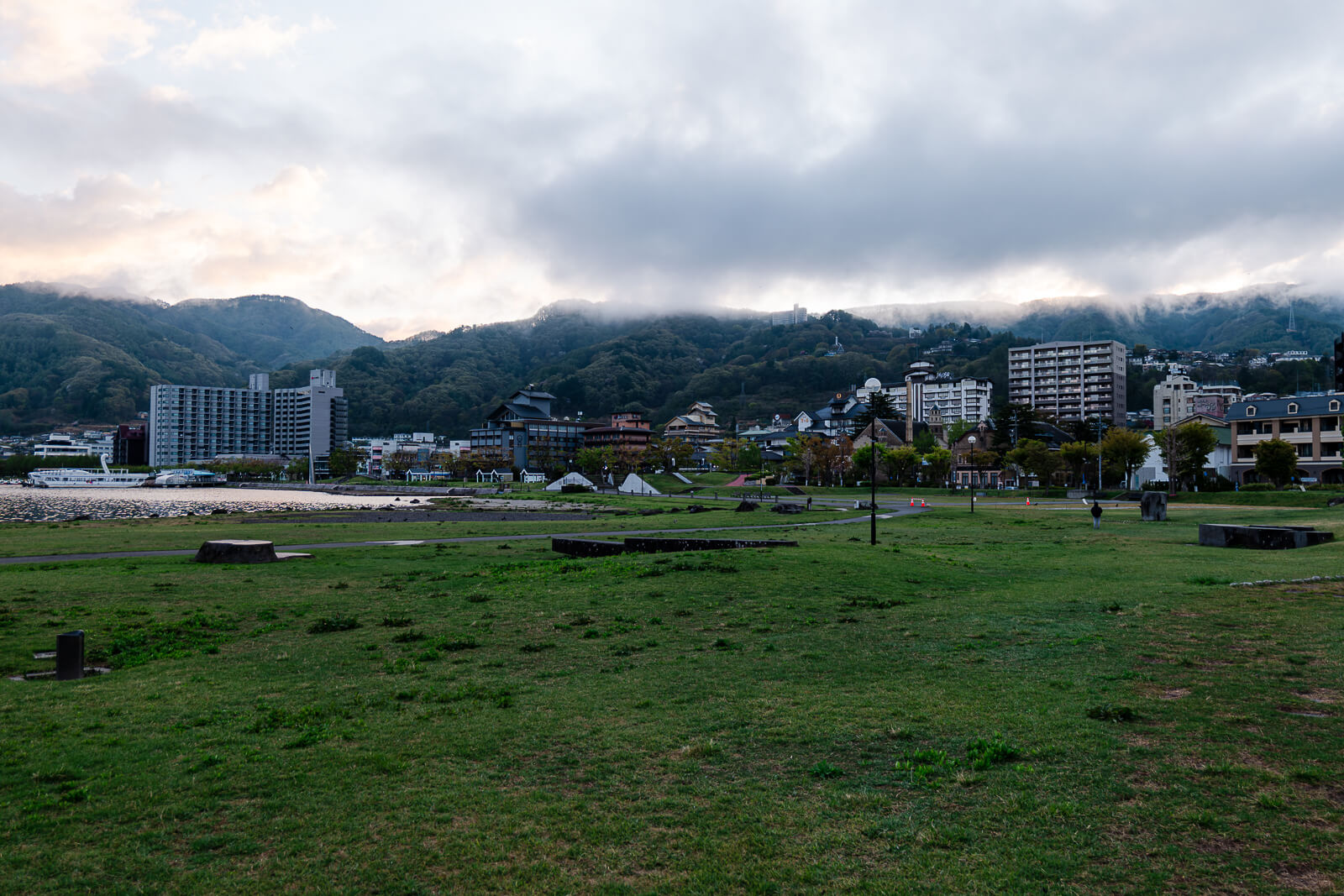
Because of that, the shoreline often becomes a transitional layer within the day. It sits between more structured visits, allowing time to pass without needing to be managed, and without requiring visitors to commit to a specific activity.
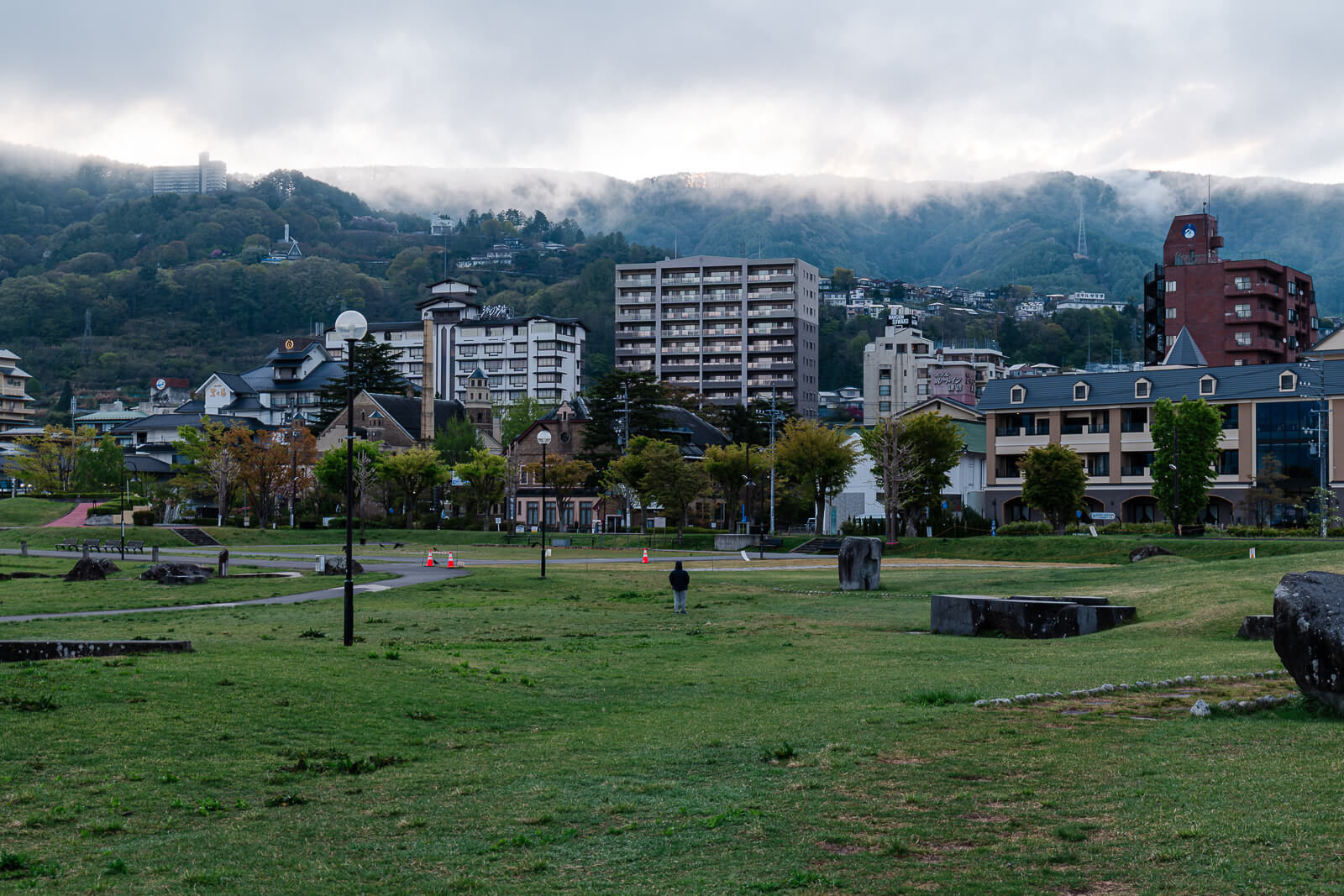
Where the Walk First Opens to the Lake
Approaching from Kamisuwa Station, the streets widen gradually before the lake comes into view. There is no formal entrance, no gate, and no clear transition point—only a shift in scale as buildings fall away and the basin opens outward.
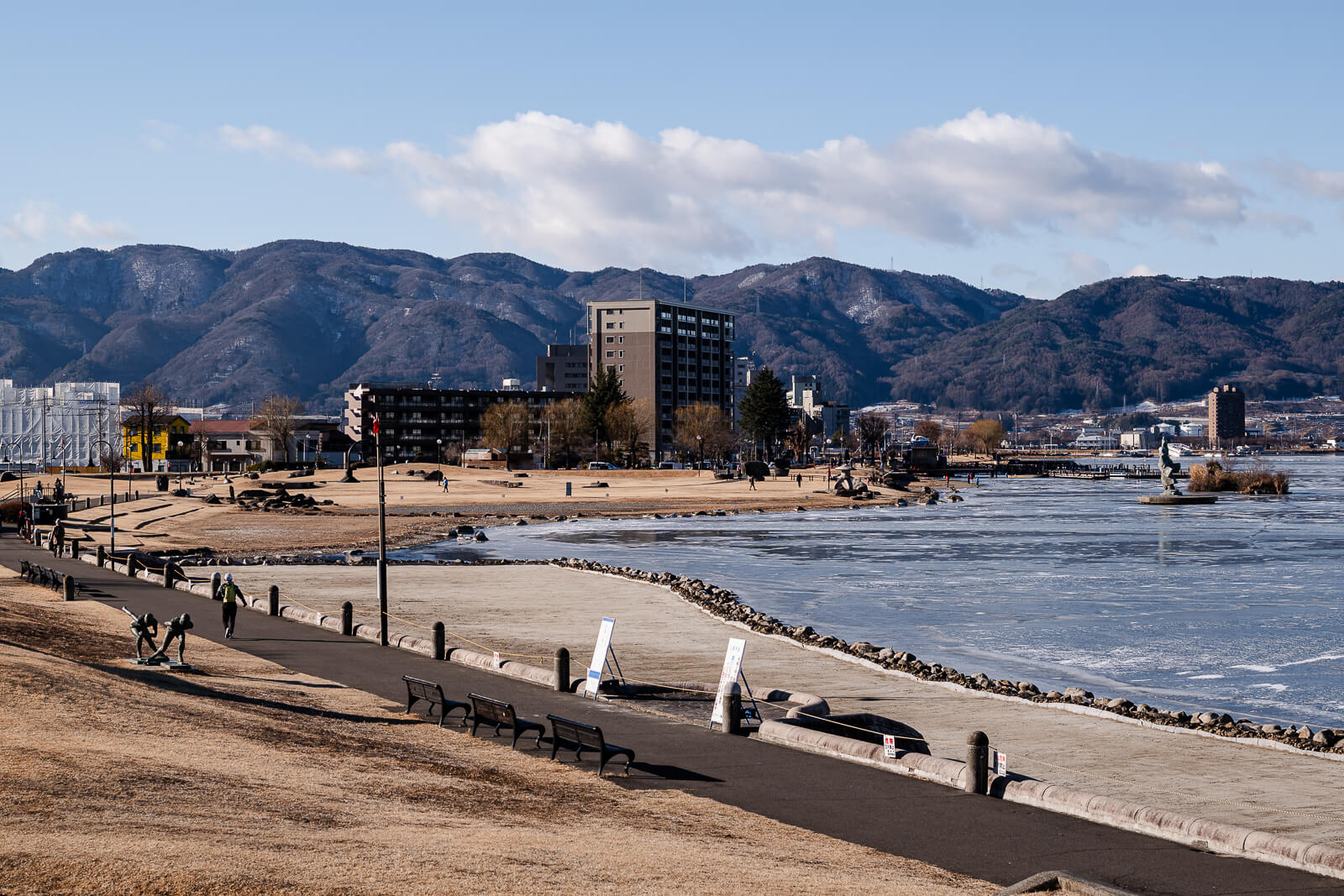
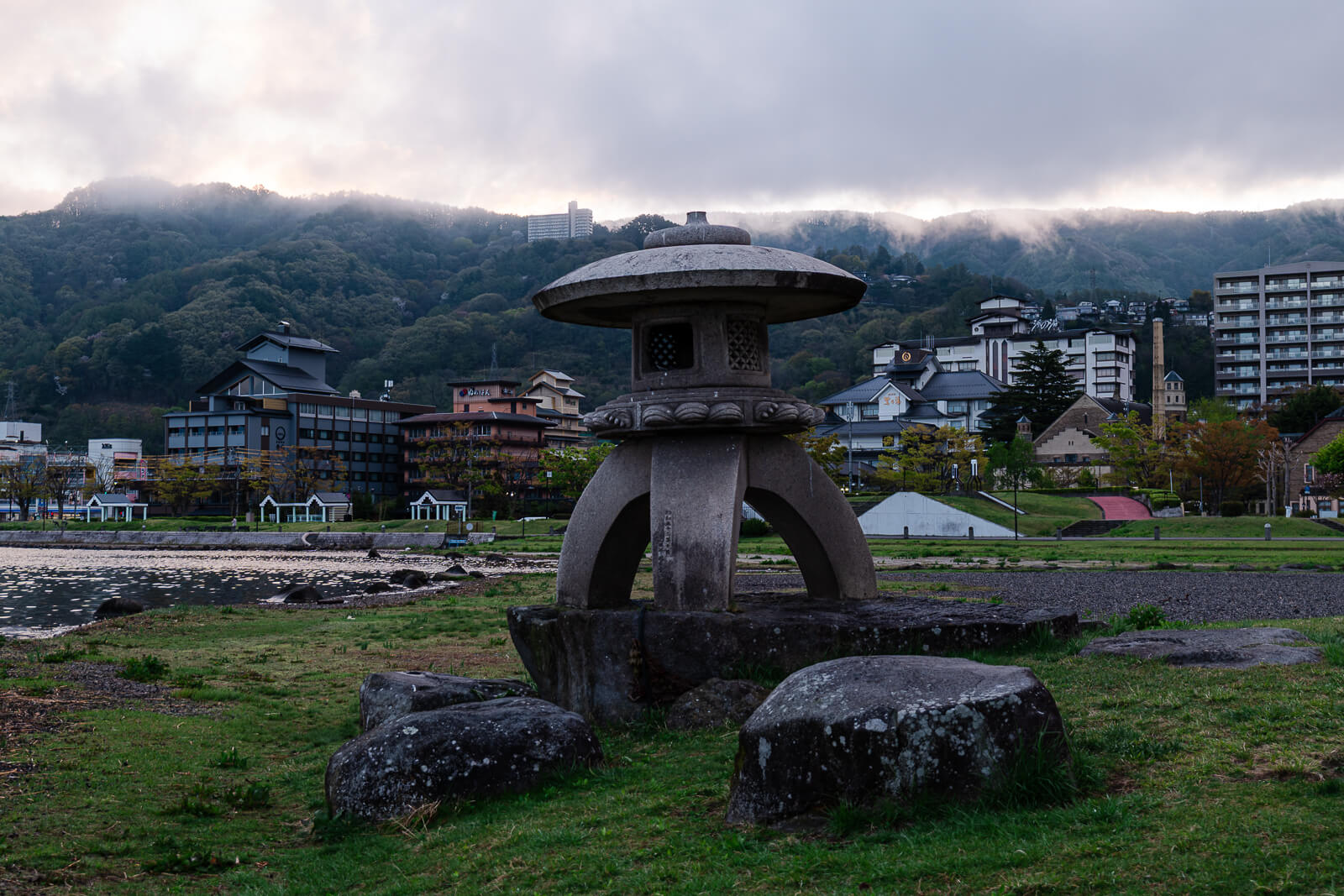
Sekicho Park sits slightly back from the promenade, centered around a stone monument positioned above the surrounding ground. From this point, the lake aligns into a full horizontal view, with the opposite shoreline clearly visible across the basin.
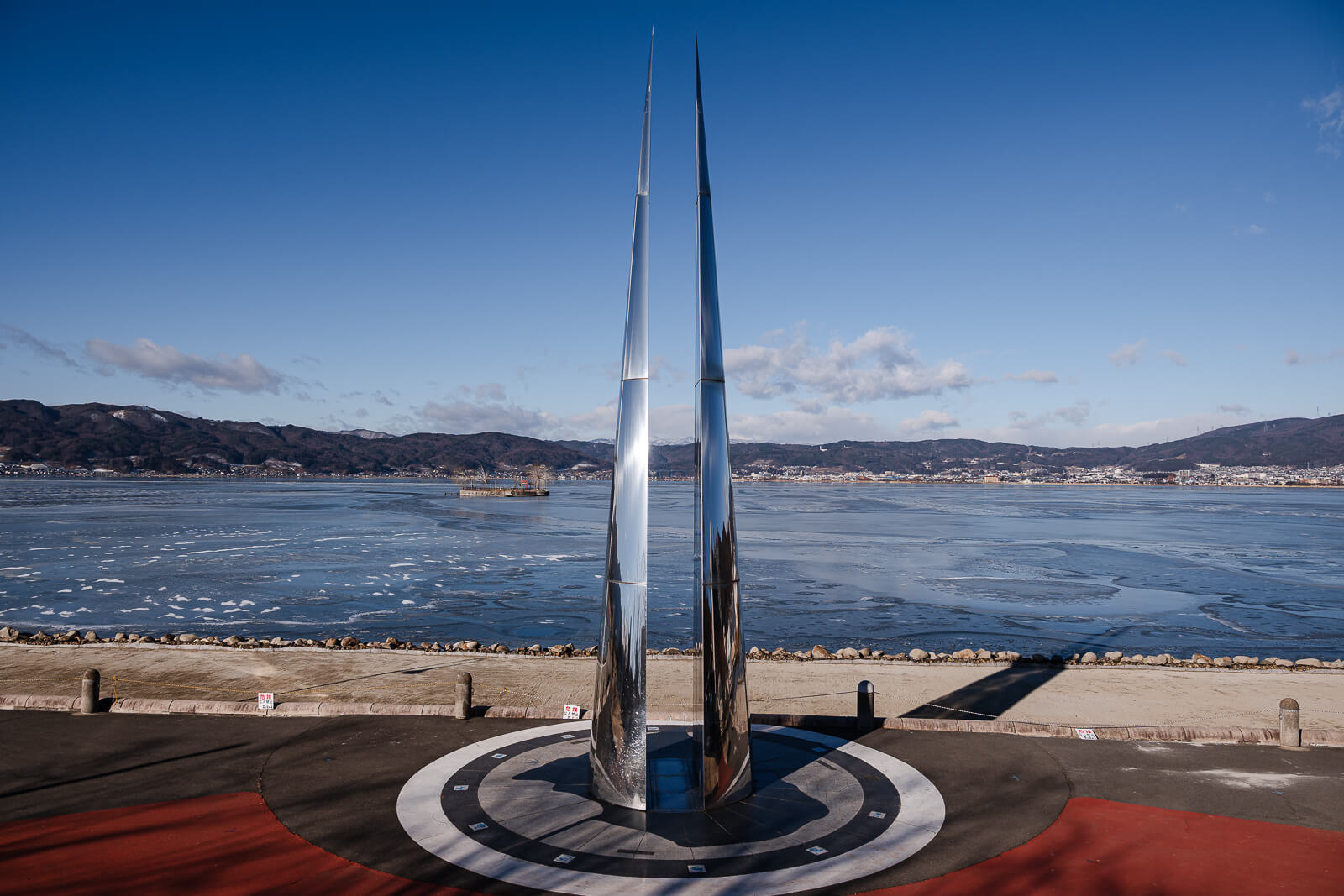
Many visitors pause here, not because of a defined stop or attraction, but because the space clarifies how the town sits against the water. The monument area creates a natural moment of orientation before the shoreline path continues.
Following the Shoreline Without Interruption
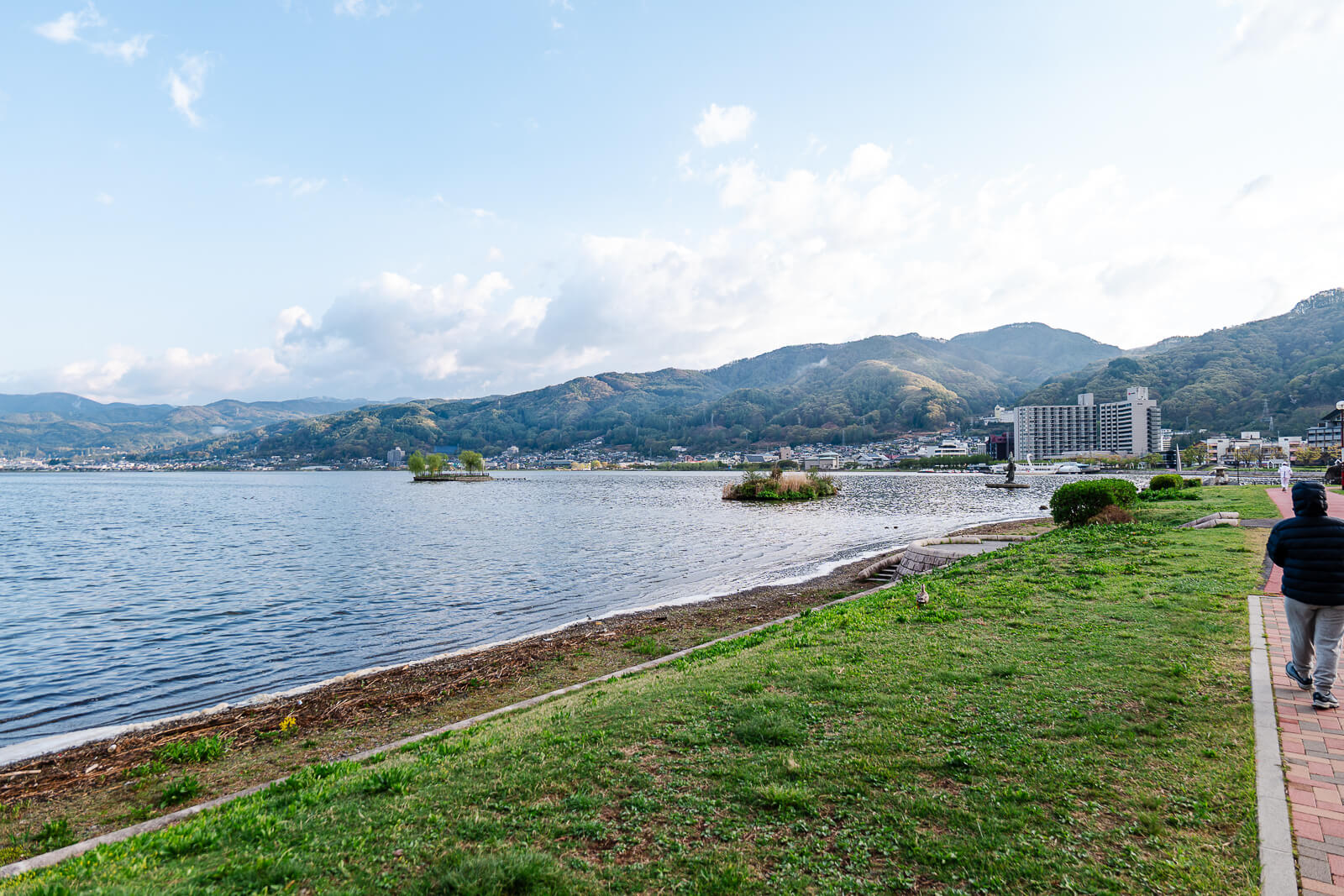
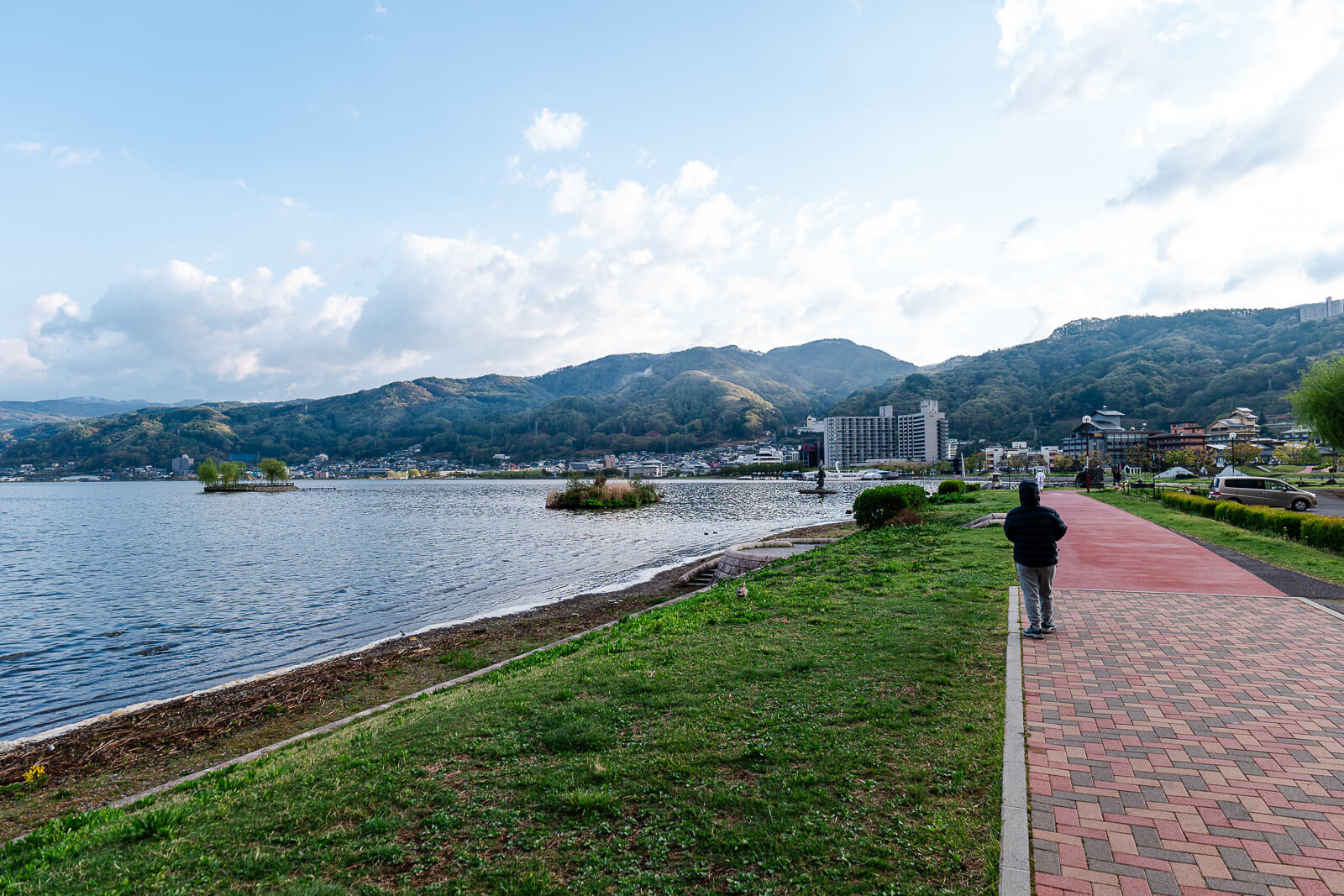
Beyond Sekicho Park, the promenade continues along the water as a wide and uninterrupted path. The direction holds steady, and the lake remains beside the walkway at all times.
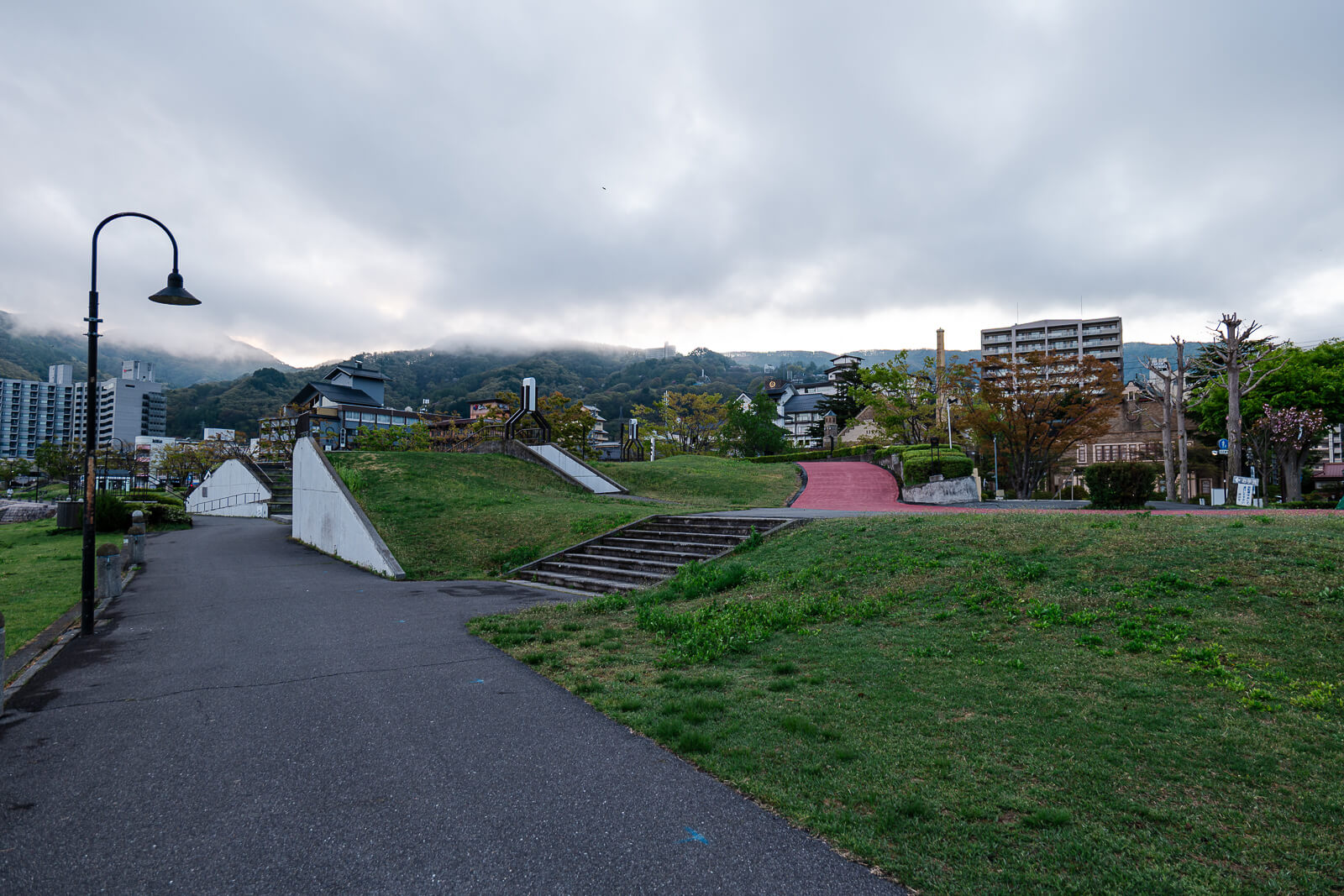
Benches appear at regular intervals, positioned toward the water rather than the town. Some visitors continue through at a steady pace, using the path as a connector, while others pause at intervals without leaving the route.
In the morning and late afternoon, the path tends to remain relatively quiet, while midday brings more local activity along the shoreline. The surrounding mountains remain visible across the basin, and that relationship does not change as movement continues.
Features Within Suwa Lakeside Park
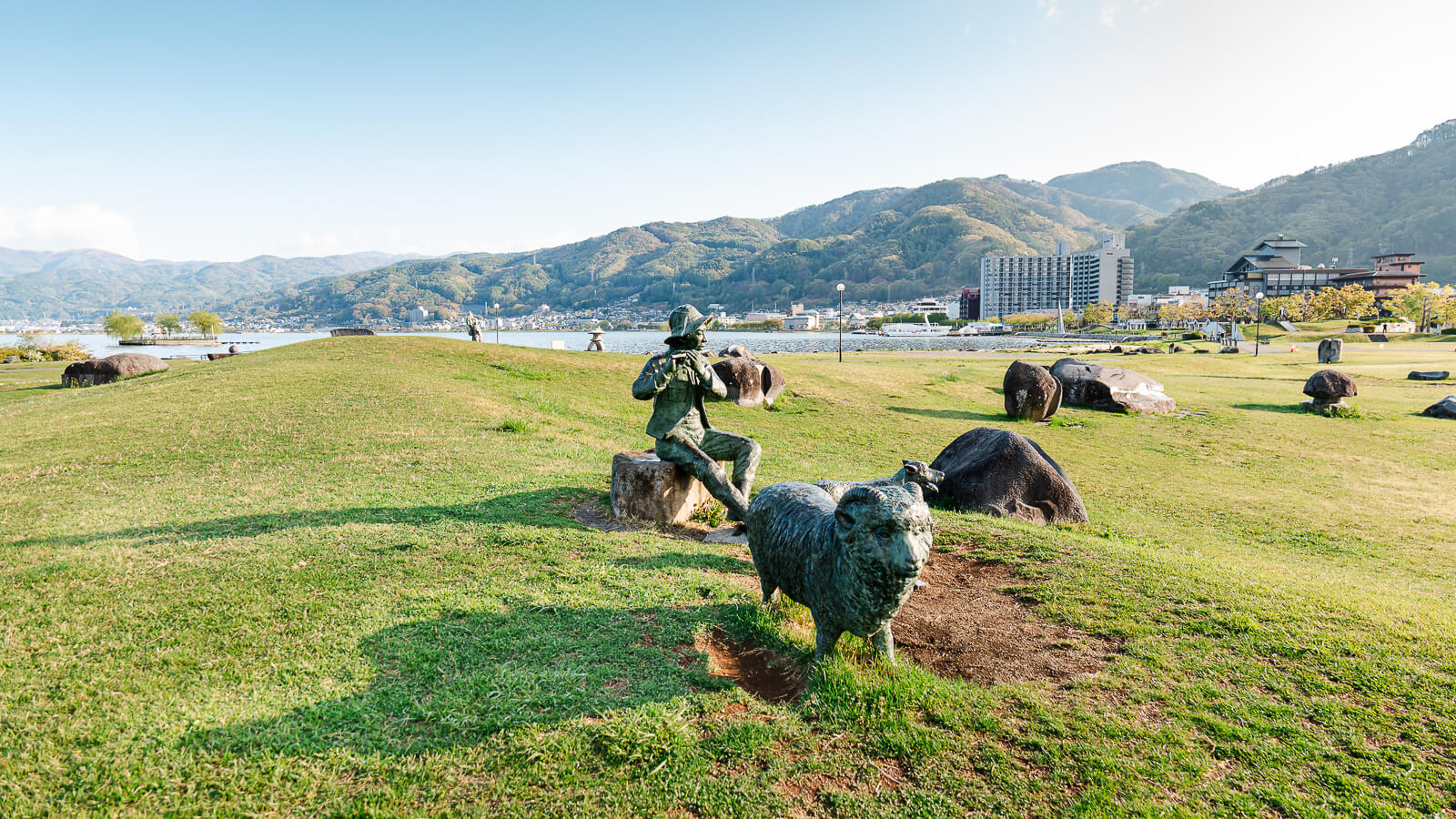
Farther along, the shoreline opens into Suwa Lakeside Park, where the path expands into a broader recreational space. The transition is gradual, marked by open lawns extending inland from the promenade and a wider sense of spacing between elements.
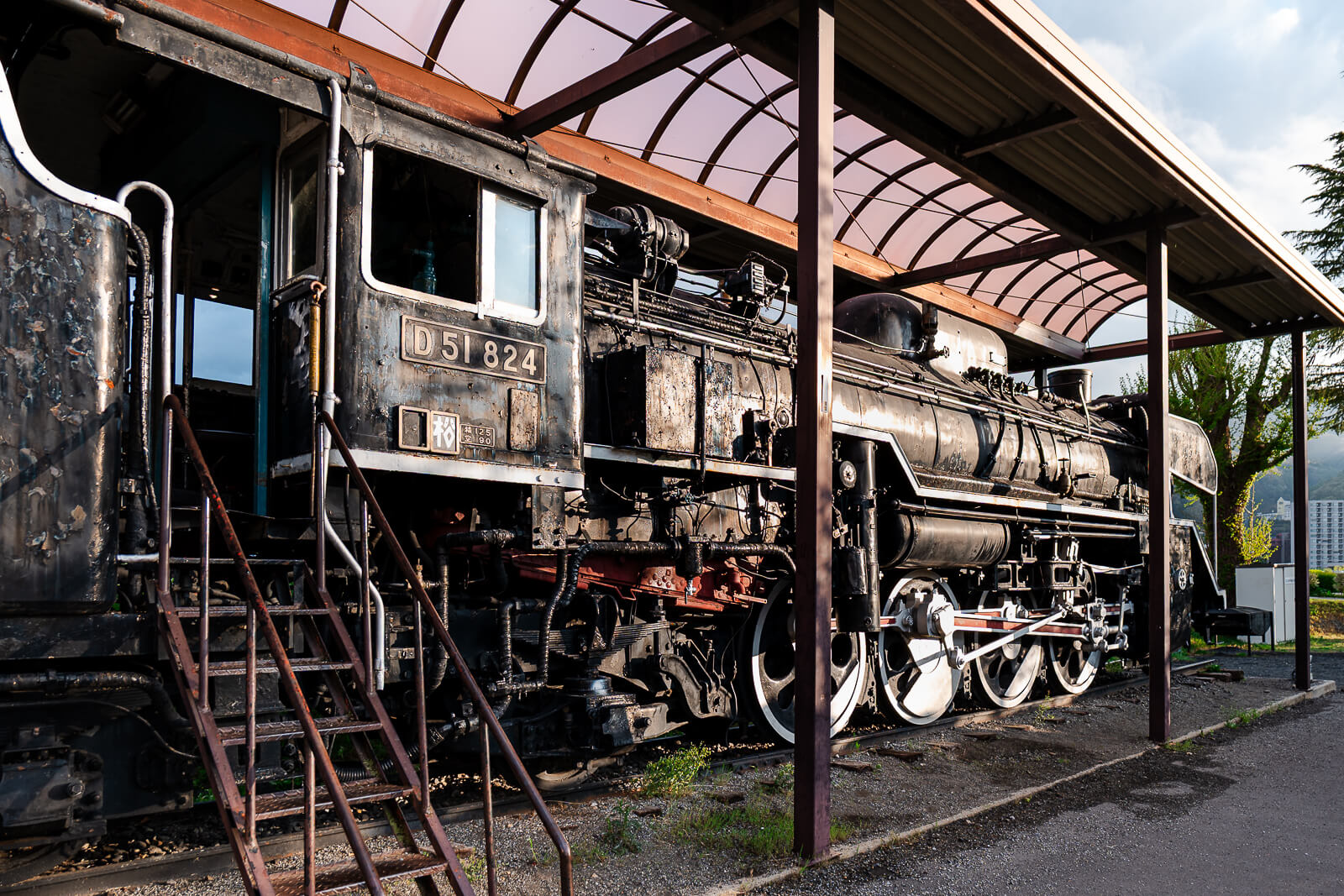
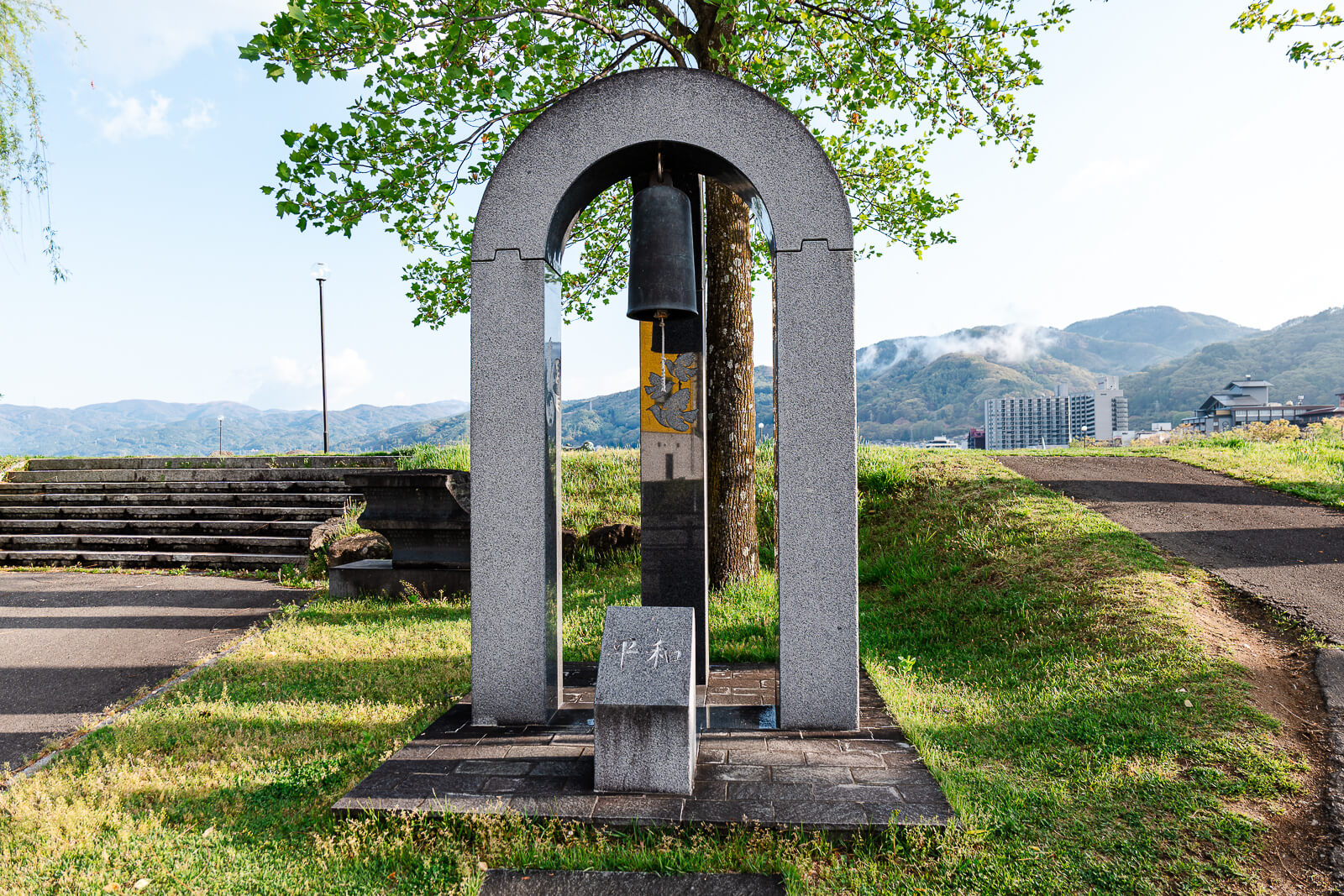
Within this area, a few features appear along the route without defining it. A preserved steam locomotive (D51 824) sits near the edge of the park, visible from the lakeside path and slightly removed from the main flow of foot traffic. Nearby, a bell monument stands along the shoreline, oriented toward the lake rather than the surrounding streets.
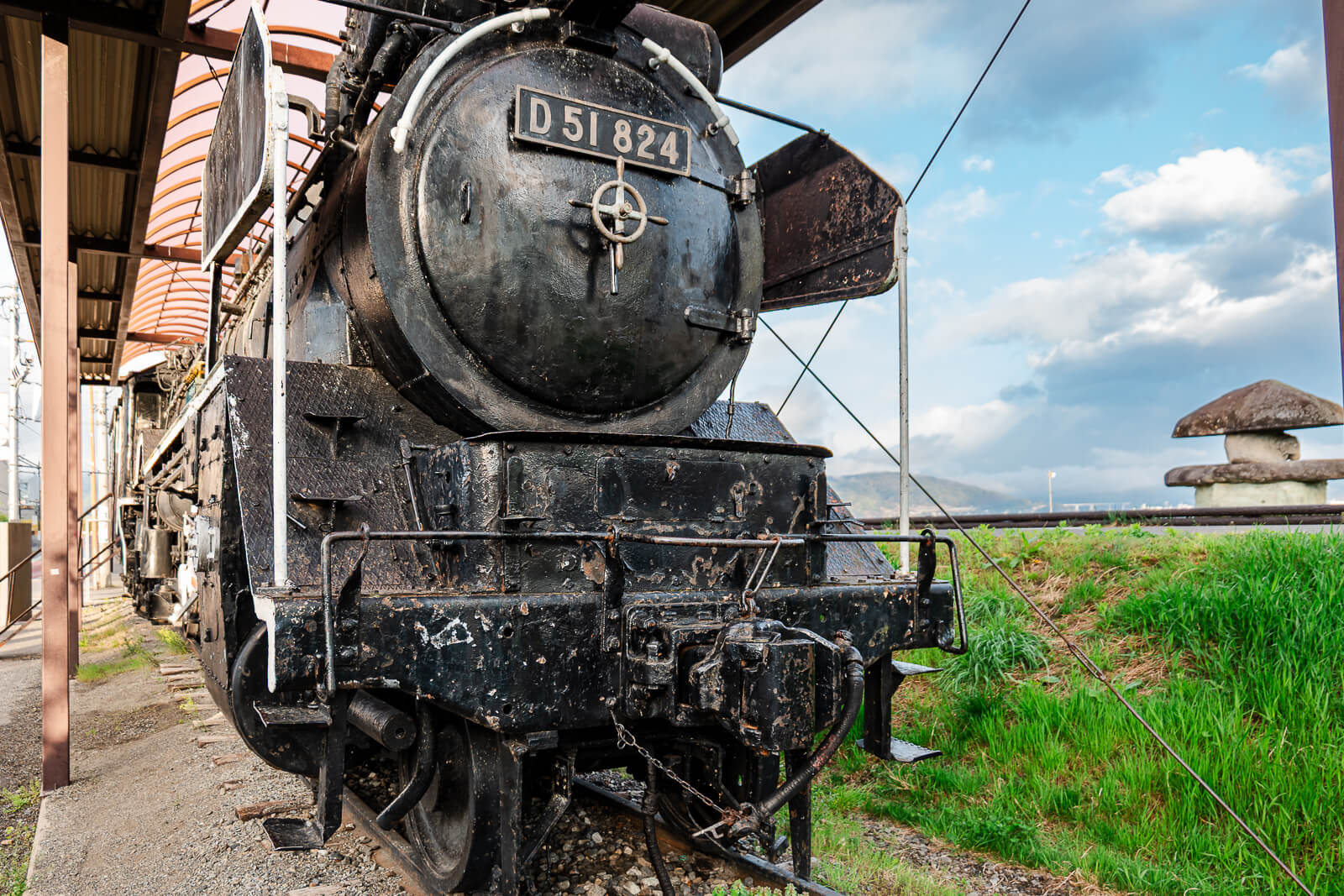
These elements do not restructure the visit or create a new destination point. Instead, they act as reference points within the open space—features that are encountered as part of the walk rather than sought out independently.
When the Lake Freezes and the Basin Changes Shape
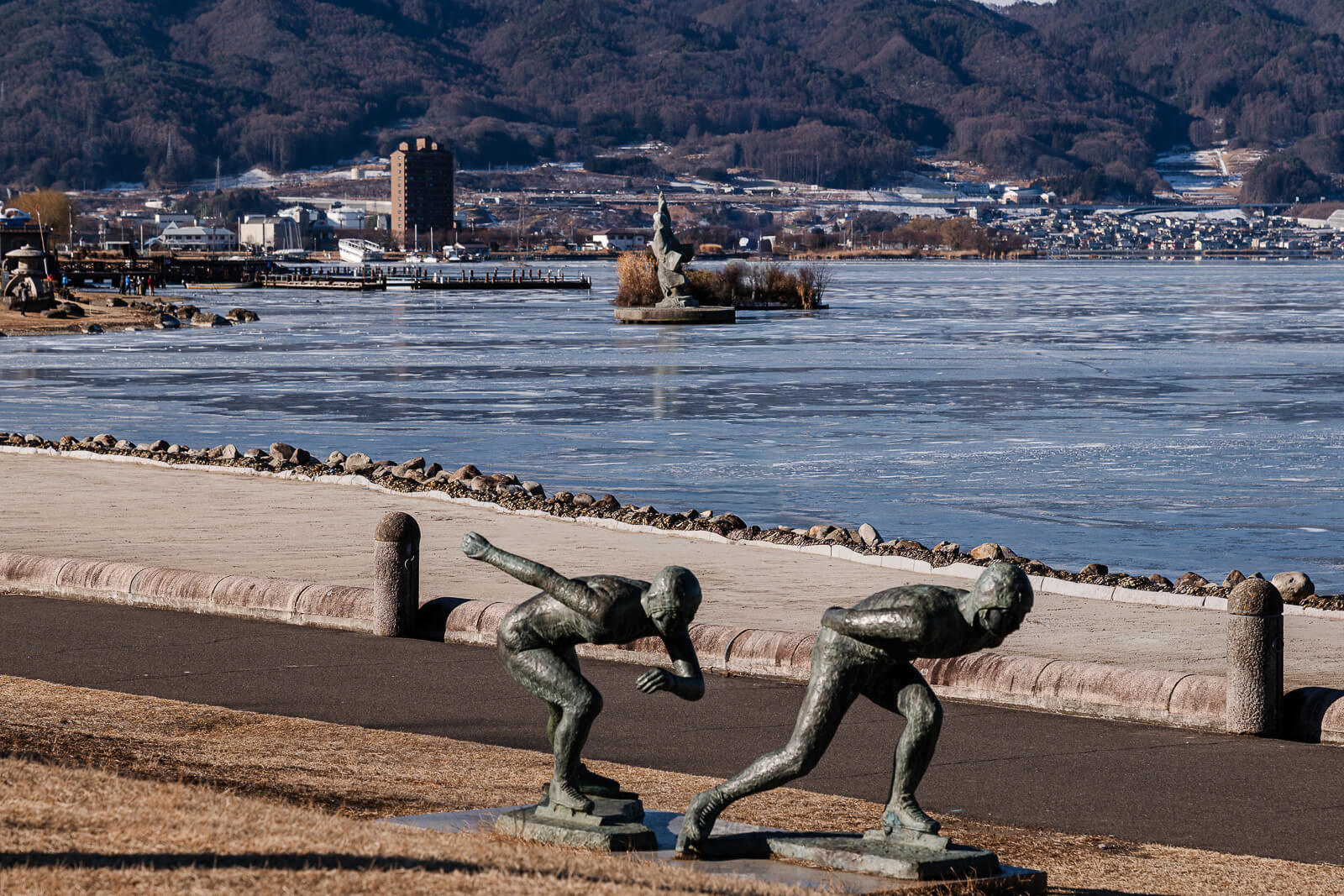
During colder winters, Lake Suwa can partially or fully freeze, replacing open water with a continuous surface that reshapes how the basin is perceived.
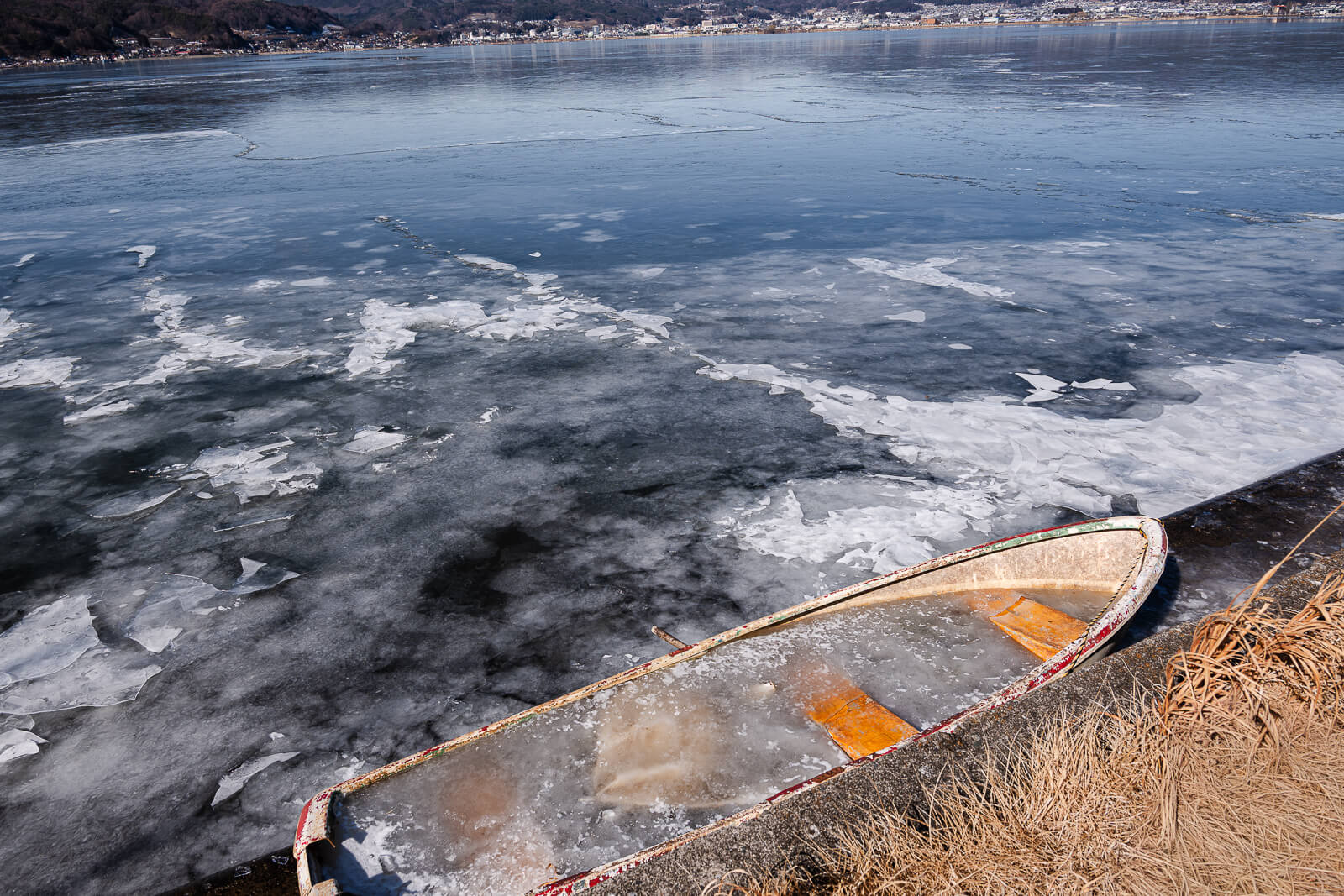
In certain years, a raised ridge known as the omiwatari forms across the ice, created when expanding sheets press together and lift upward into a visible line.
The phenomenon has been recorded for centuries in connection with Suwa Taisha, where it is interpreted as the path of a deity crossing the basin. A visitor in earlier periods would have encountered the lake not only as landscape, but as a seasonal signal tied to belief and observation.
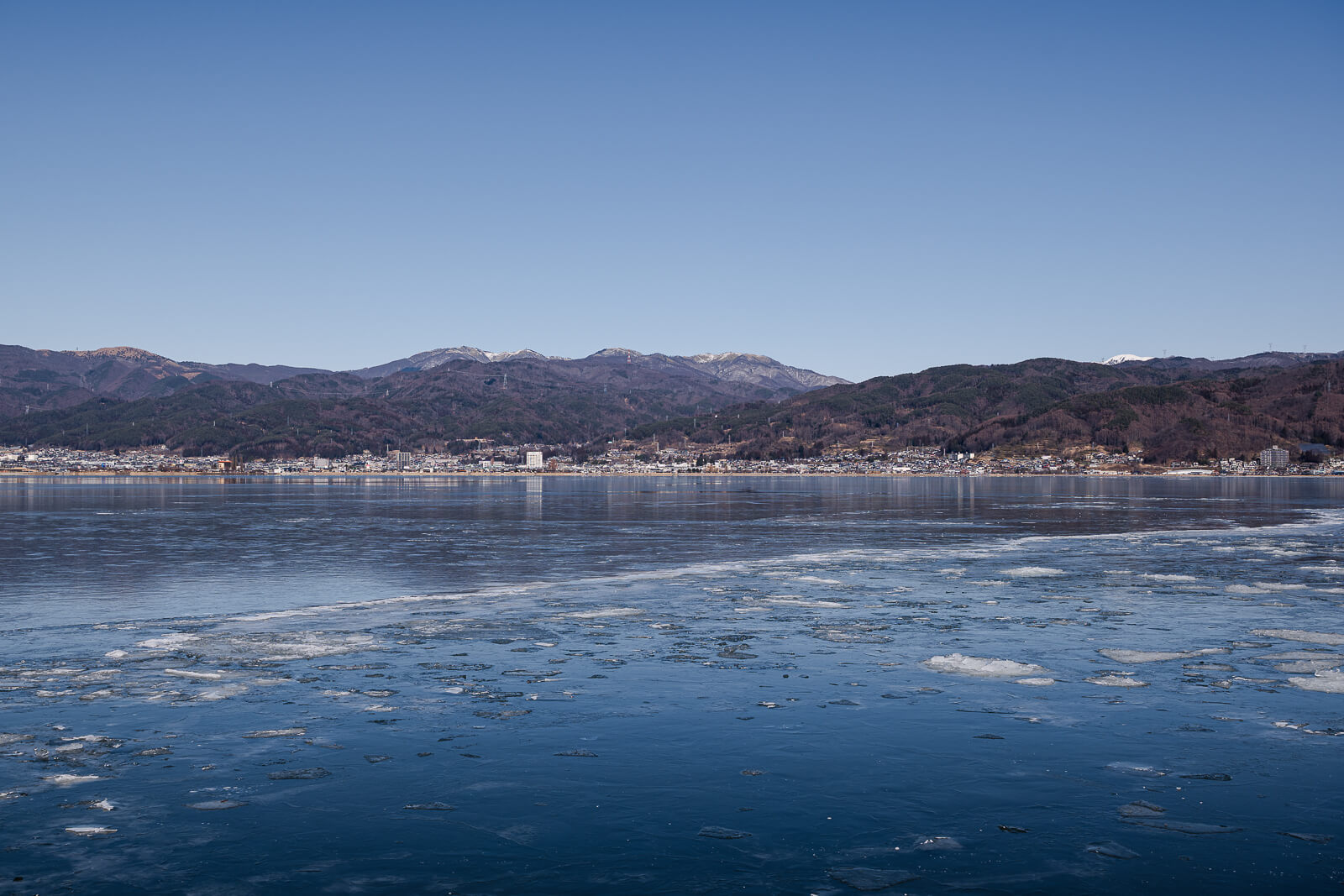
When conditions allow, sections of the lake near the shoreline may appear stable enough for people to step onto the frozen surface, though this varies by year and conditions. In recent winters, full ice formation has become less consistent, and visible ridges less predictable.
Extending Briefly Onto the Water
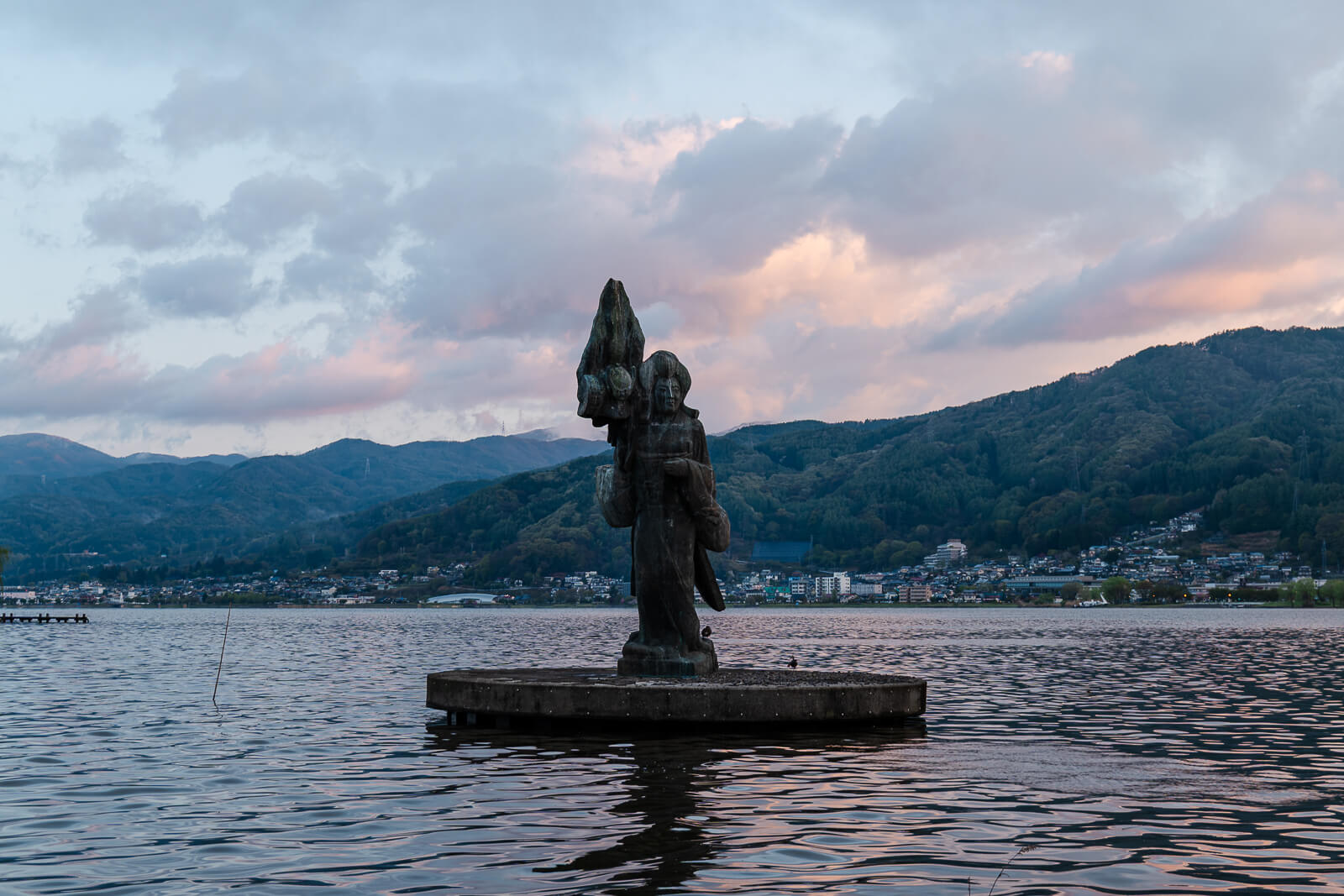
Along the promenade, a dock provides access to sightseeing boats and swan-shaped pedal boats. These operate as short extensions of the shoreline rather than separate destinations.
From the lake, the shoreline becomes the reference point instead of the background. The scale of the basin is easier to read from this perspective.
Most rides are brief, and the decision to board is typically made on arrival. The shoreline experience remains complete without it.
How This Walk Connects Across the Lake Suwa Area
This stretch of shoreline sits along the eastern edge of Lake Suwa, connecting naturally with movement through Kamisuwa Onsen and the surrounding town.
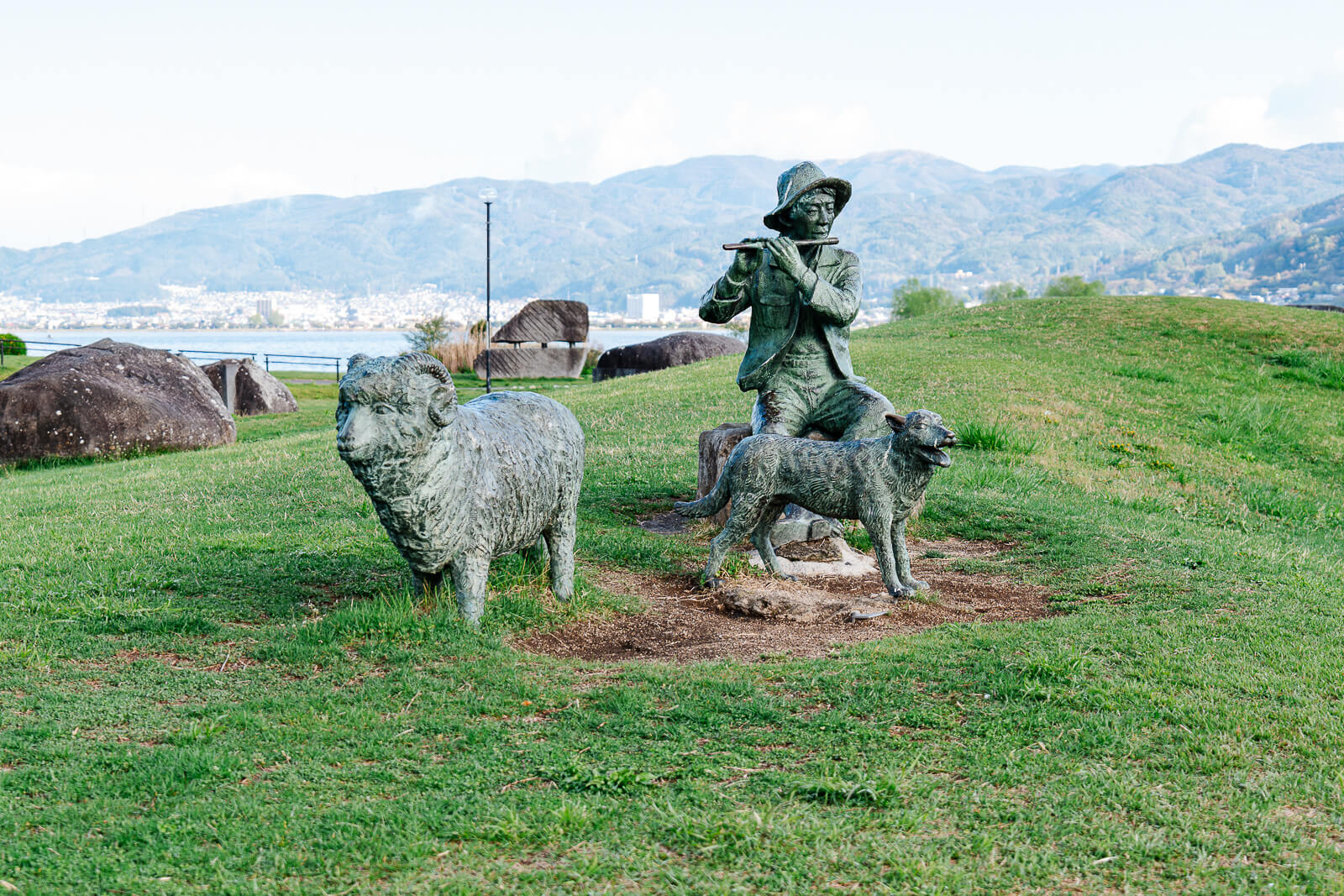
From Kamisuwa Station, the route leads directly to the water, then continues along the shoreline in both directions. Following the lake west across the basin leads toward Takashima Castle, where the shoreline meets the historic edge of the town.
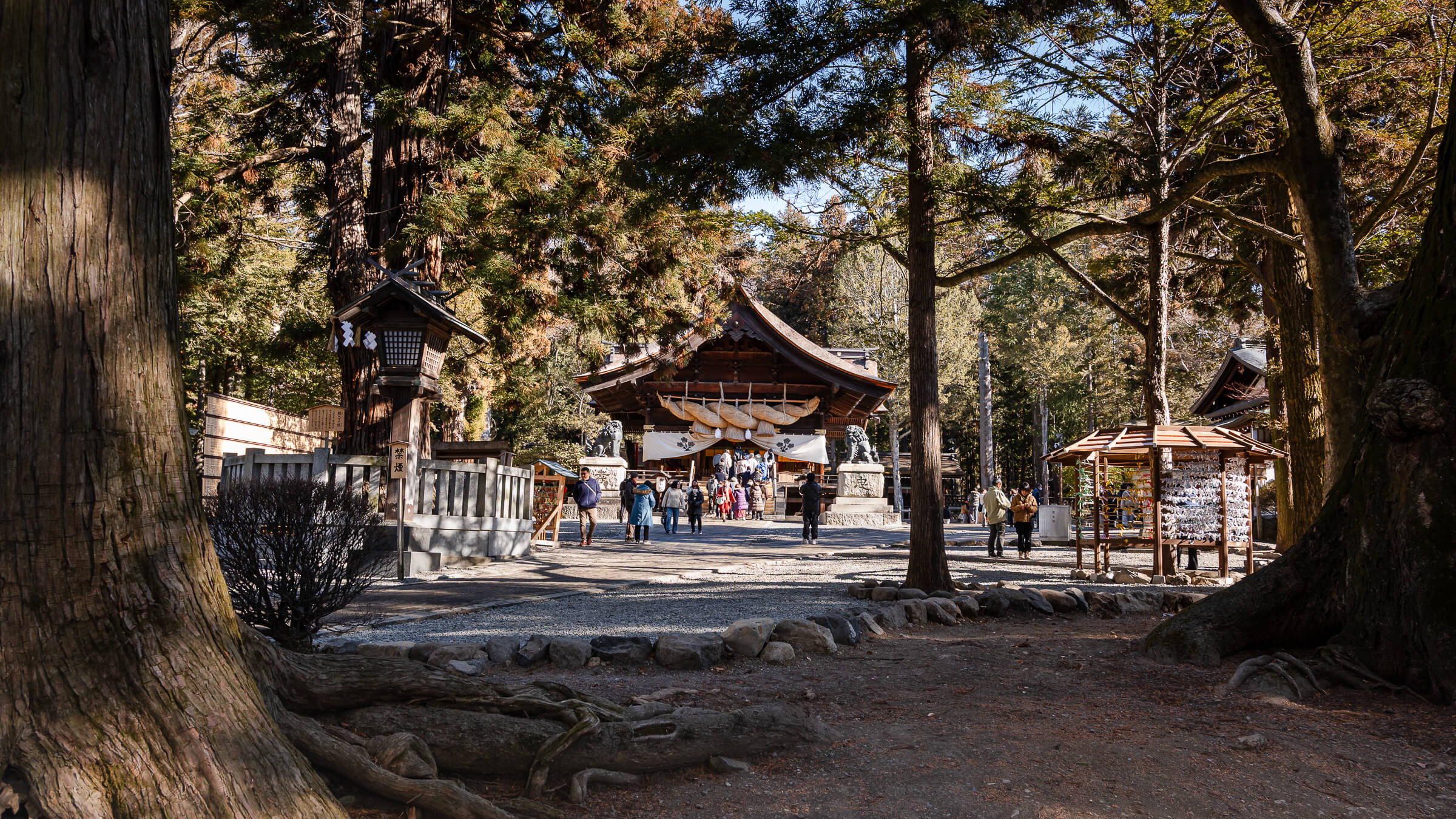
Across the wider basin stand the shrine complexes of Suwa Taisha, which have shaped the region for centuries. Movement through the area often follows a simple pattern—station to lake, lake to nearby stops, then back through town—with the shoreline acting as the connective layer.
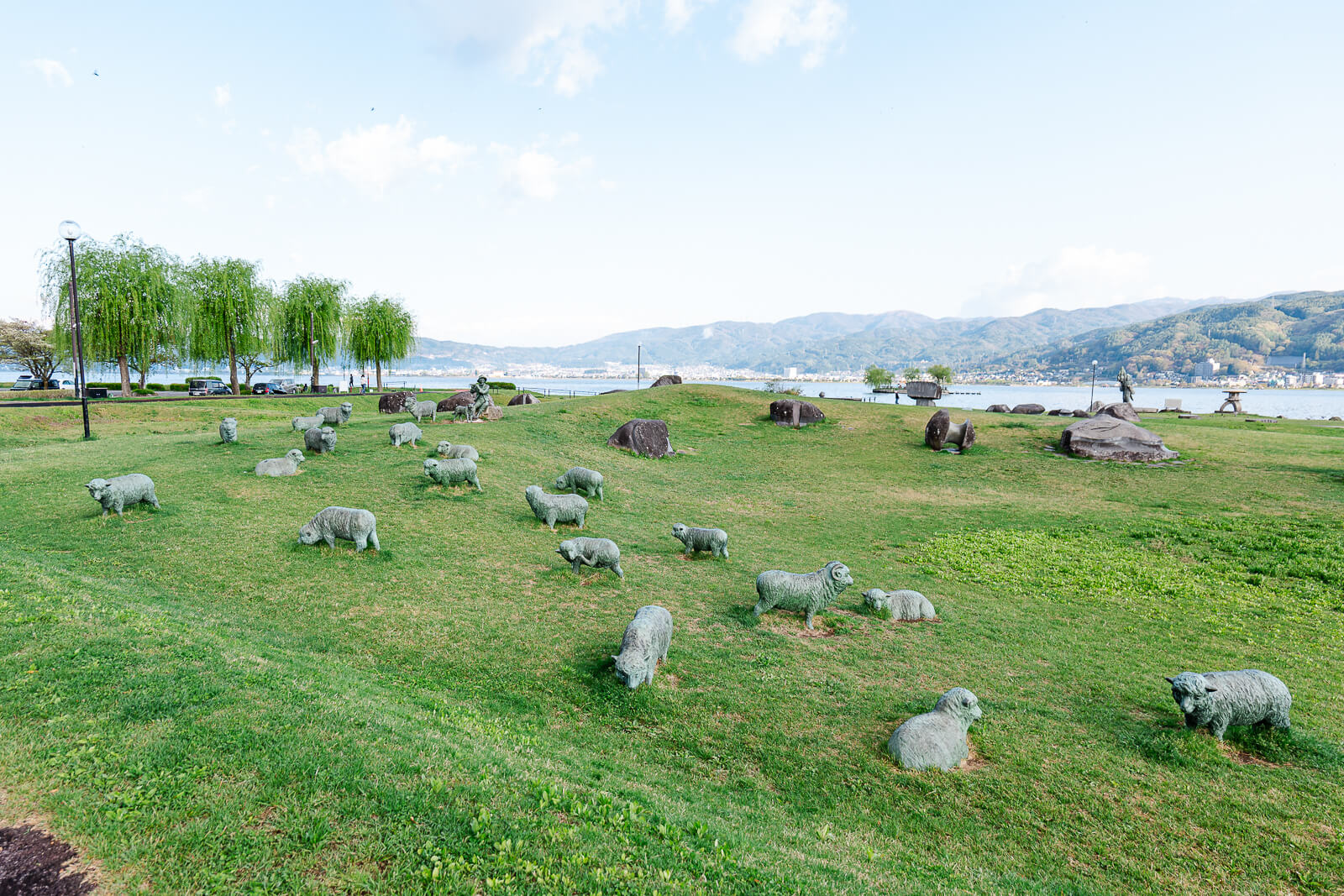
How the Walk Settles Into a Visit
This stretch of shoreline sits along the eastern edge of Lake Suwa, connecting naturally with movement through Kamisuwa Onsen and the surrounding town.
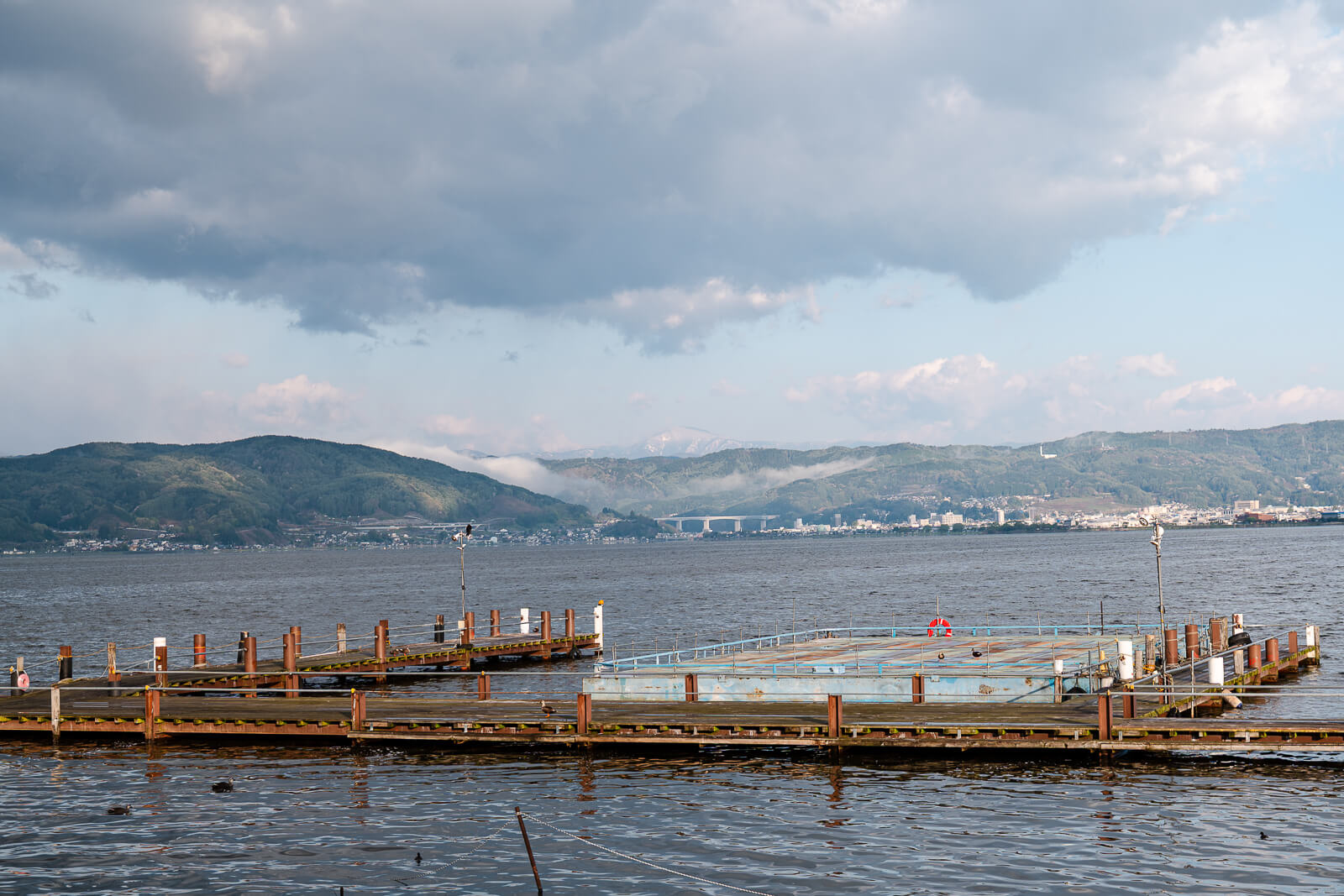
From Kamisuwa Station, the route leads directly to the water, then continues along the shoreline in both directions. Following the lake west across the basin leads toward Takashima Castle, where the shoreline meets the historic edge of the town.
Across the wider basin stand the shrine complexes of Suwa Taisha (Kamisha and Shimosha), which have shaped the region for centuries. Movement through the area often follows a simple pattern—station to lake, lake to nearby stops, then back through town—with the shoreline acting as the connective layer.
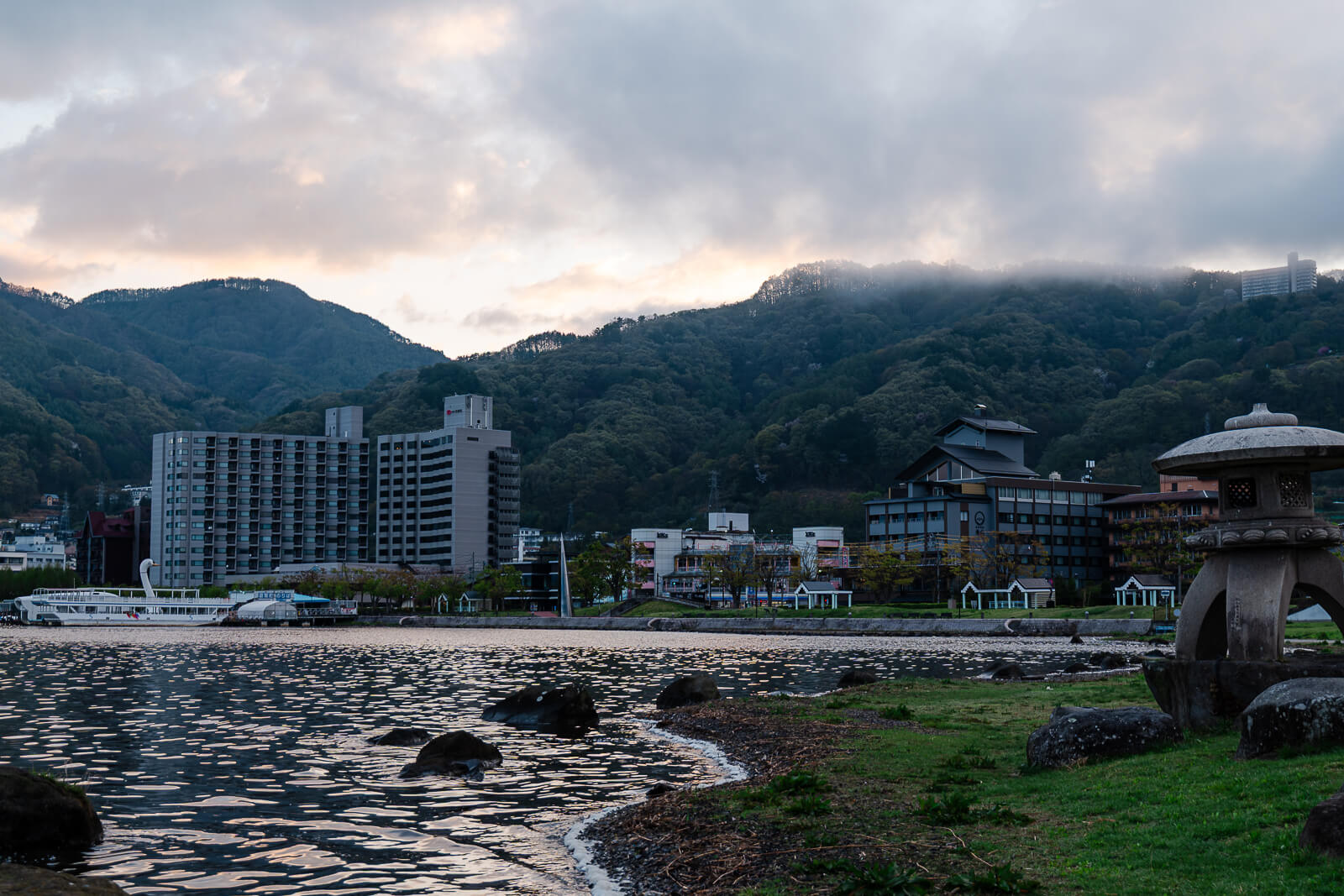
Beyond the immediate lakeside, the basin extends upward into the Tateshina Highlands above the lake. Locations such as Mishaka-ike Pond and Oshidori Kakushi Falls sit outside a single continuous route and are reached as part of a broader movement through the area rather than as direct extensions of the shoreline.
These locations do not align along one path, and movement between them spreads outward across the basin and into the surrounding highlands rather than returning to a central point between stops.
Getting There
From Kamisuwa Station, the shoreline is about a 10 to 15 minute walk on flat streets that gradually open toward Lake Suwa.
The main friction point is expectation. The lake is not immediately visible from the station, and the transition happens gradually rather than as a clear arrival moment.
Once the shoreline appears, navigation is no longer required. Parking is available near Sekicho Park and along the surrounding roads.
Hours and Fees
Open access: 24 hours
Entry: Free
Sightseeing boats: Separate fee depending on the type of ride
By the time the shoreline comes into view, most of the movement decisions have already been made, and where you arrive from or stay nearby determines how easily the lake fits into the rest of the day.