Where Logistics Come First
Yudanaka Onsen is the final stop on the Nagano Dentetsu line in Yamanouchi and the most straightforward base for reaching Jigokudani Snow Monkey Park and the Shiga Kogen ski area.
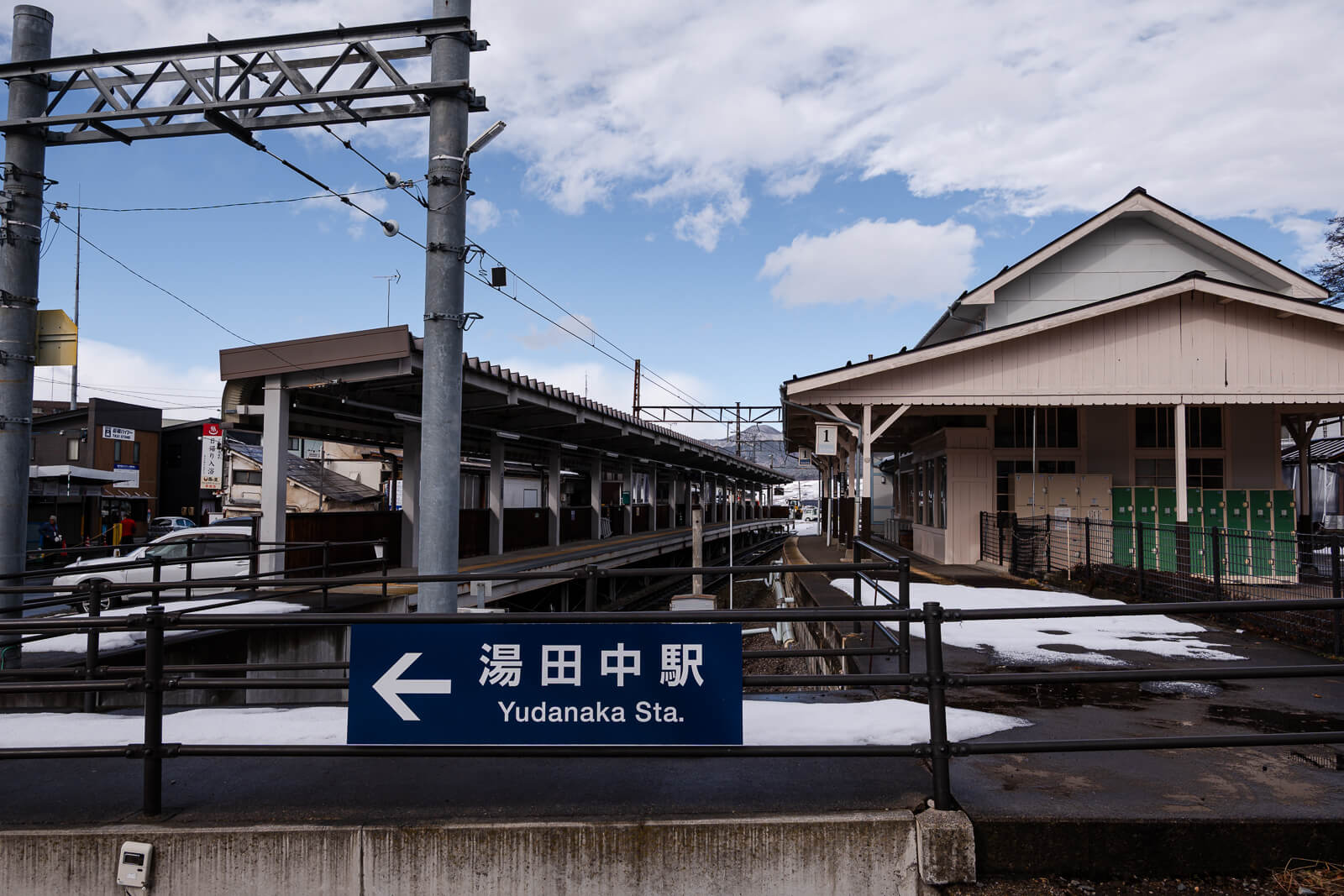
After transferring at Nagano Station, the train arrives directly at Yudanaka Station. You step off and you are already in town. Inns sit within walking distance. Bus stops are clearly marked. Taxis wait near the entrance. There are no uphill approach and no narrow historic corridor to navigate with luggage.
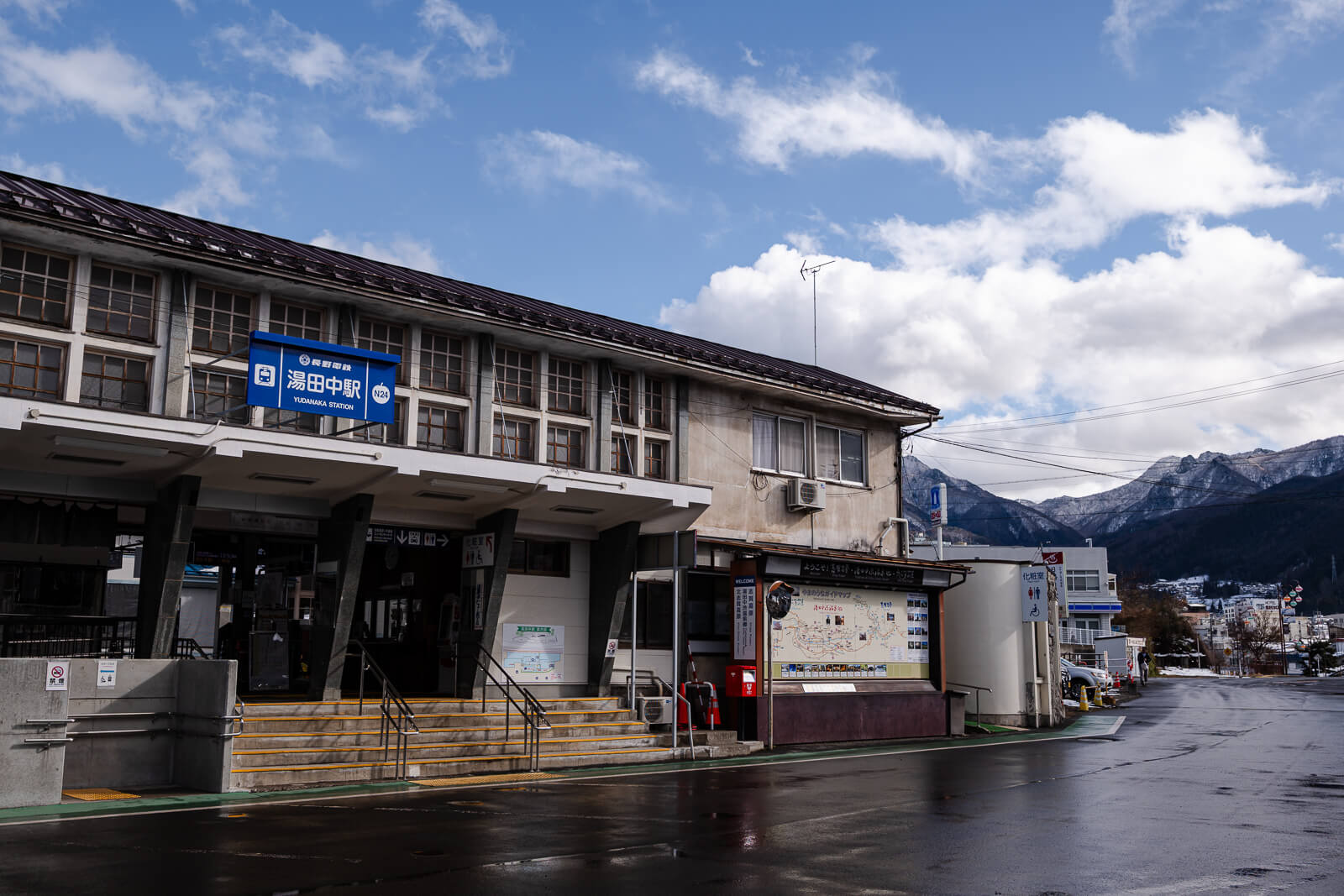
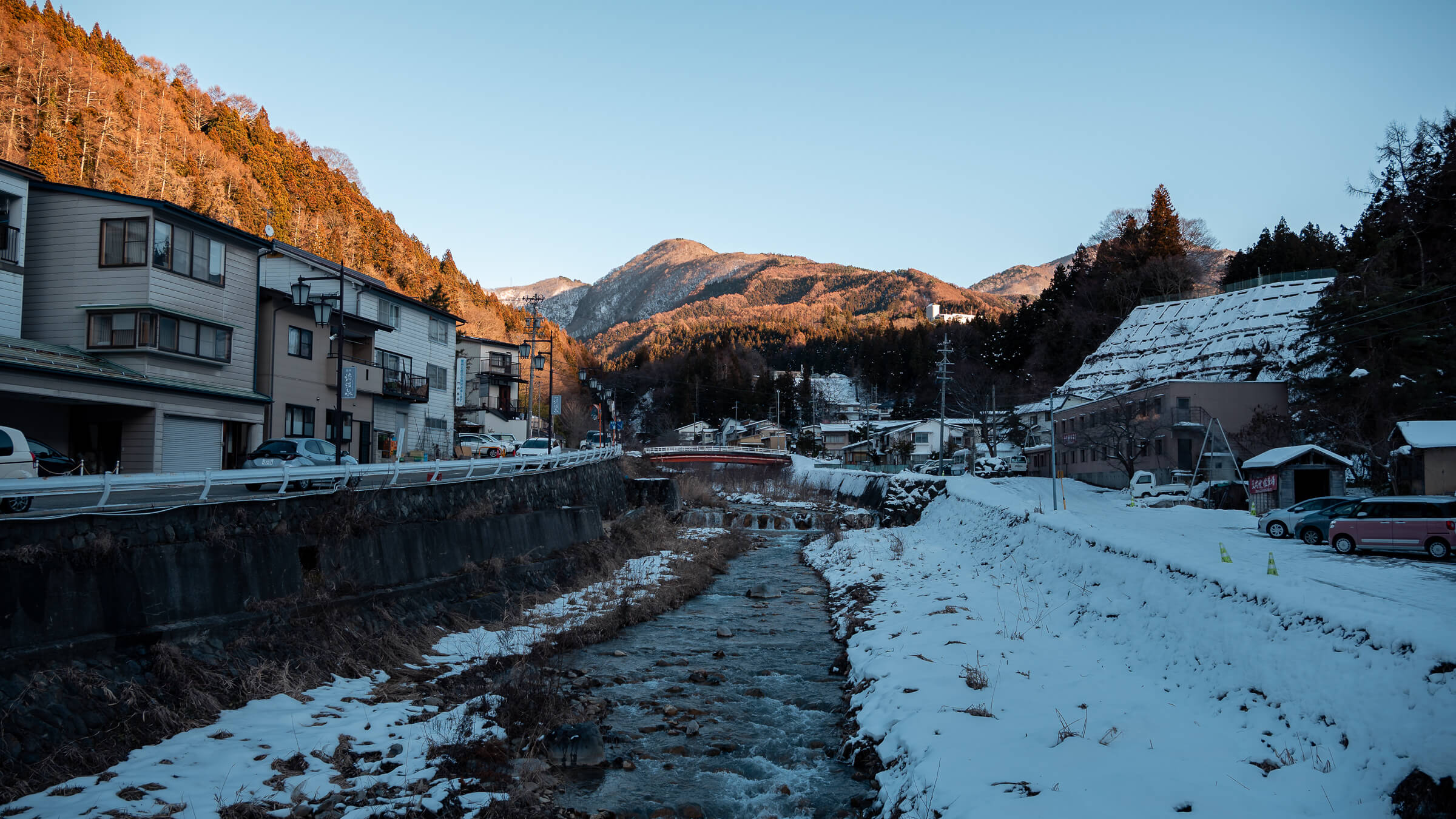
The streets are wider and generally flatter than in nearby Shibu Onsen. In winter, that difference matters. Snow settles without turning every step into a careful negotiation.
Yudanaka is built for movement.
A Working Onsen Town
Hot springs have drawn travelers to this valley for over a thousand years. The geothermal source is shared with Shibu, but development followed a different pattern.
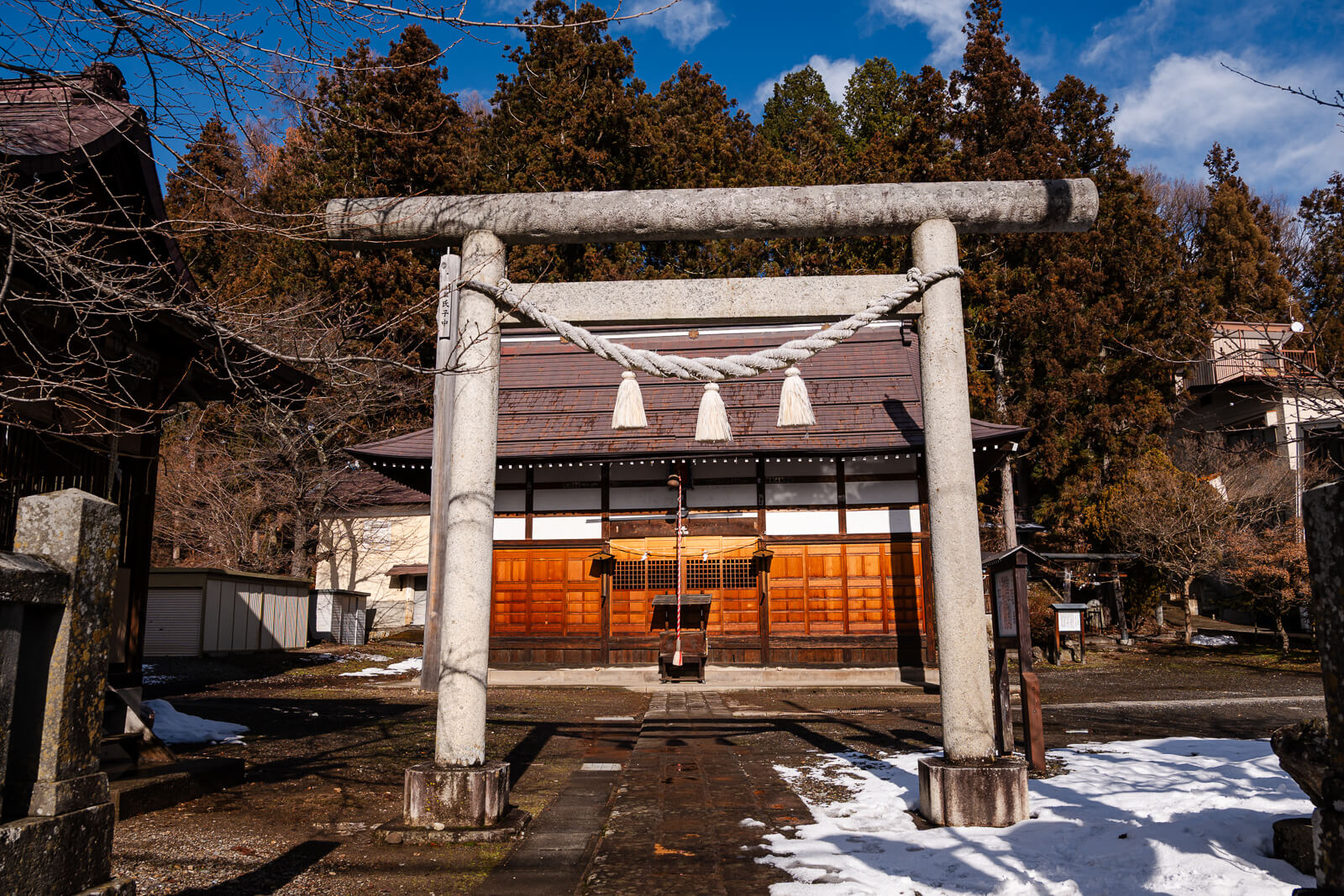
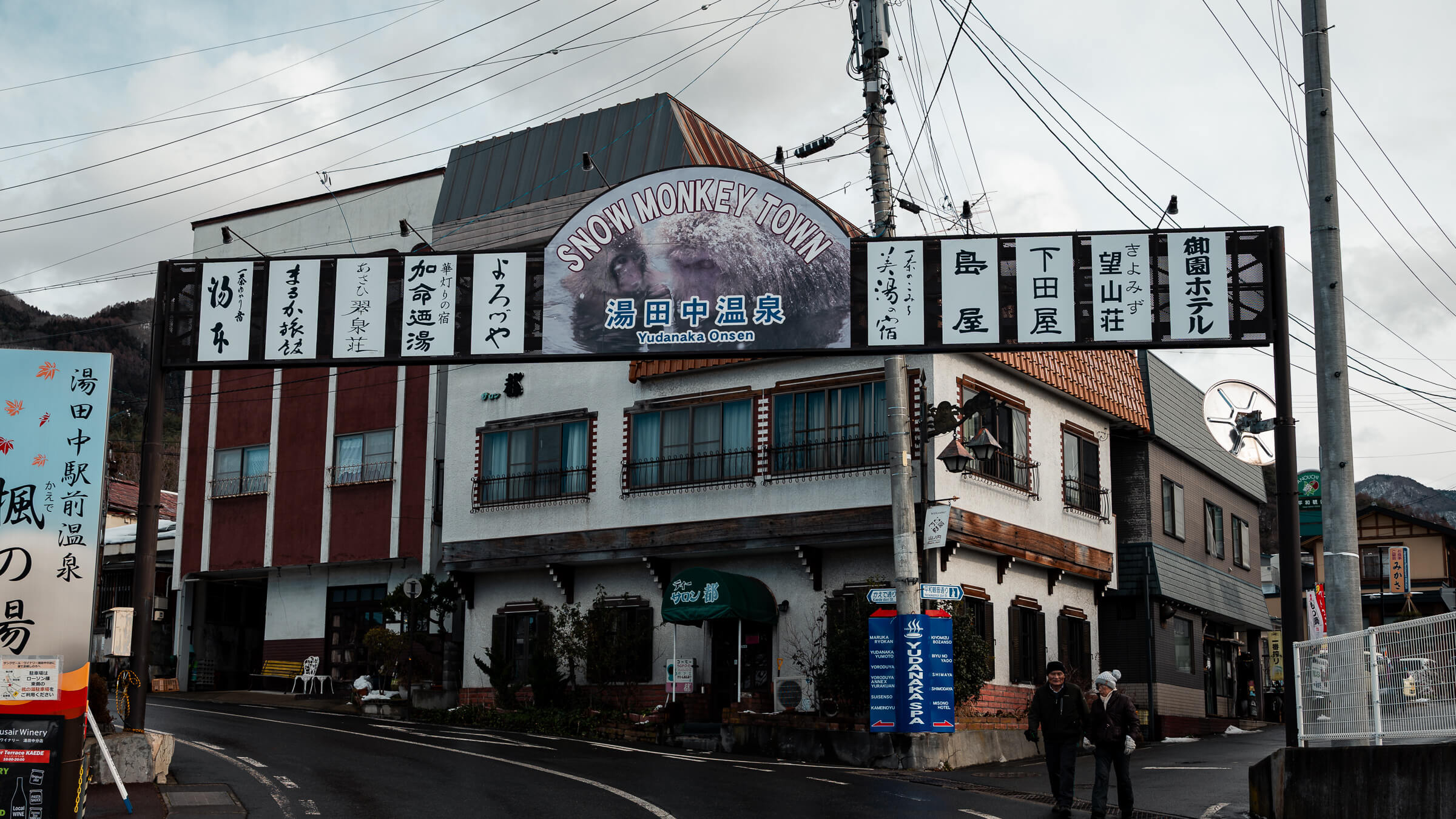
Shibu compressed into a tightly preserved bathing street with strong visual cohesion. Yudanaka expanded more loosely along the road and river. Buildings are spaced farther apart. You see small hotels, mid-century façades, service signage, and traditional inns side by side.
It does not feel curated. It feels functional.
That distinction defines the experience. Yudanaka supports travel. It does not try to stage it.
What Staying Here Actually Means
An overnight stay in Yudanaka centers almost entirely on your accommodation.
Bathing typically happens within your ryokan rather than across a shared public circuit. After dinner service, guests retreat indoors. The streets remain quiet because there is no system encouraging movement between bathhouses.
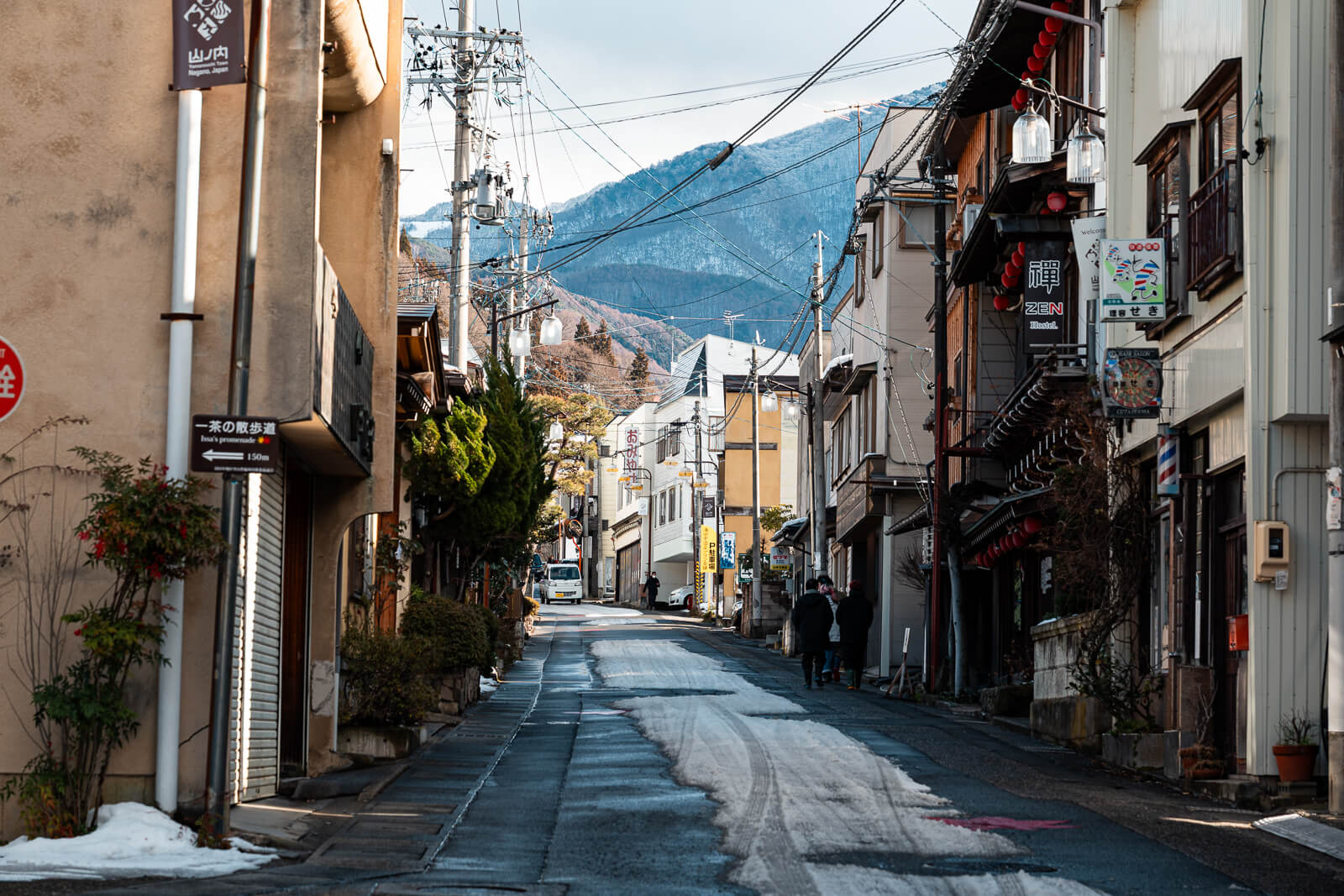
If you are arriving late, carrying luggage, or planning to leave early, this layout reduces friction. The station is close. The bus stop is close. You do not begin or end your stay with an uphill walk.
The tradeoff is atmosphere. You gain ease and space. You give up some of the immersive bathhouse culture that defines Shibu Onsen.
Choose Yudanaka when logistics matter more than ambiance.
Baio-ji Temple and the Ashiyu
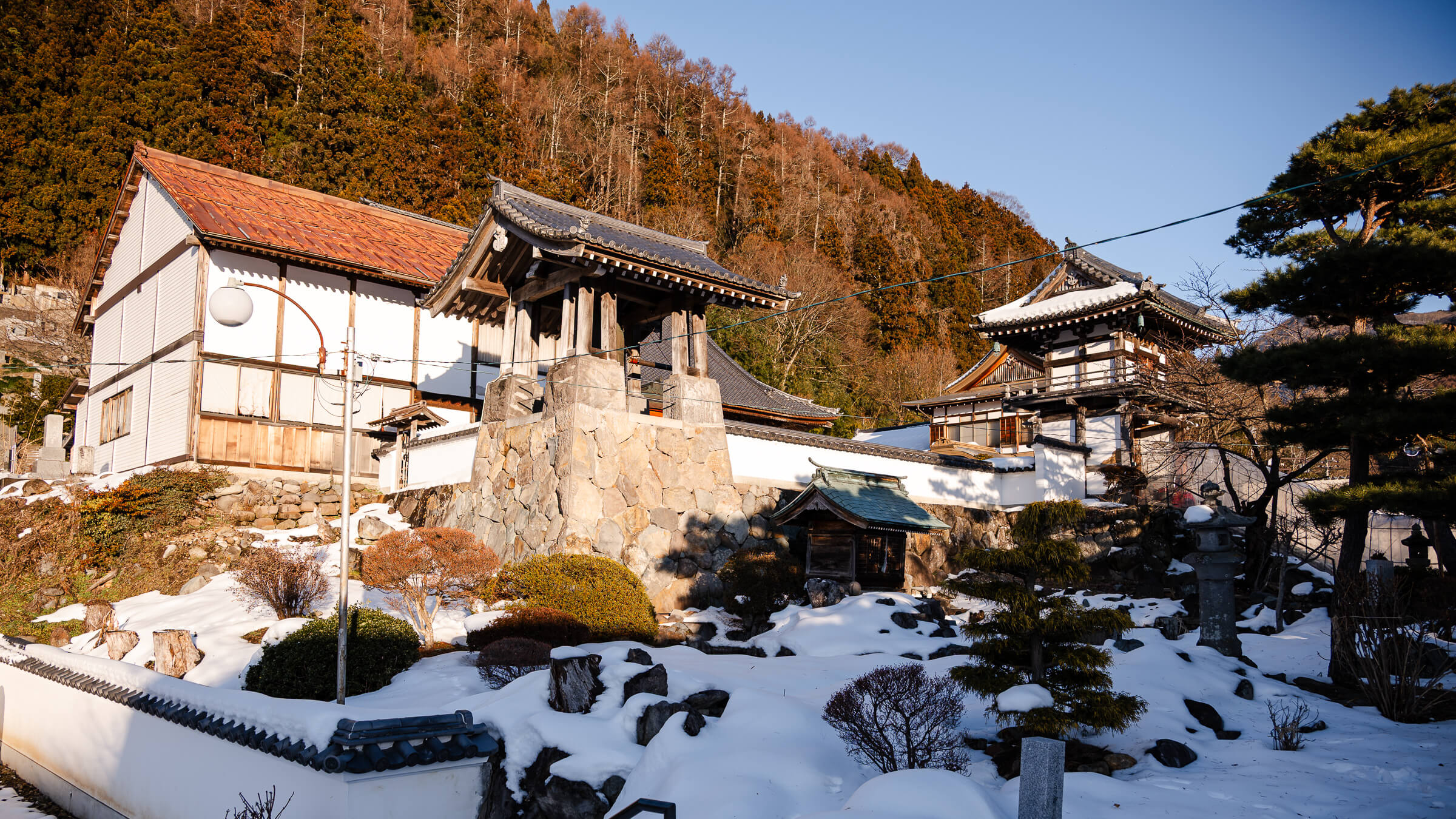
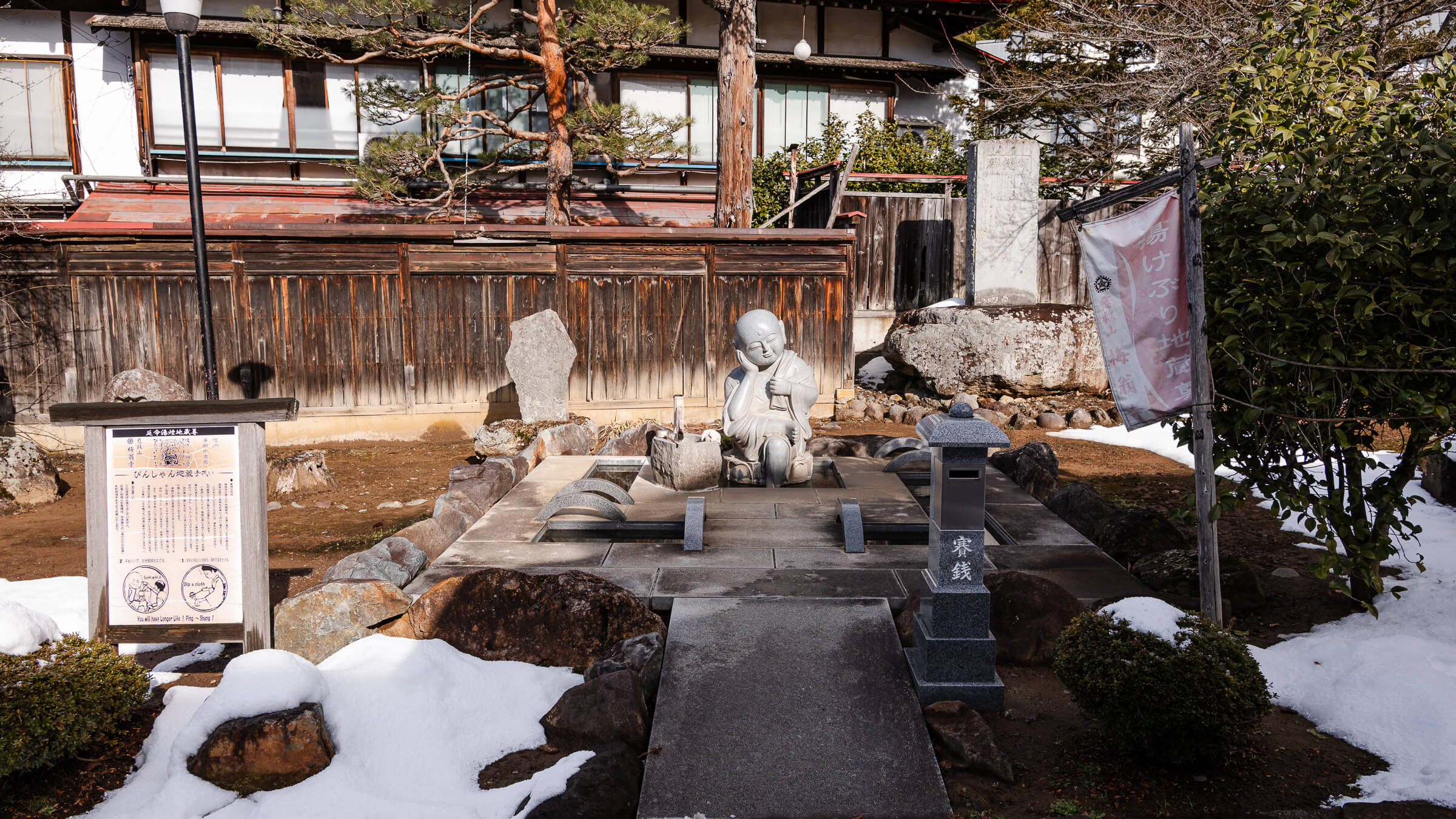
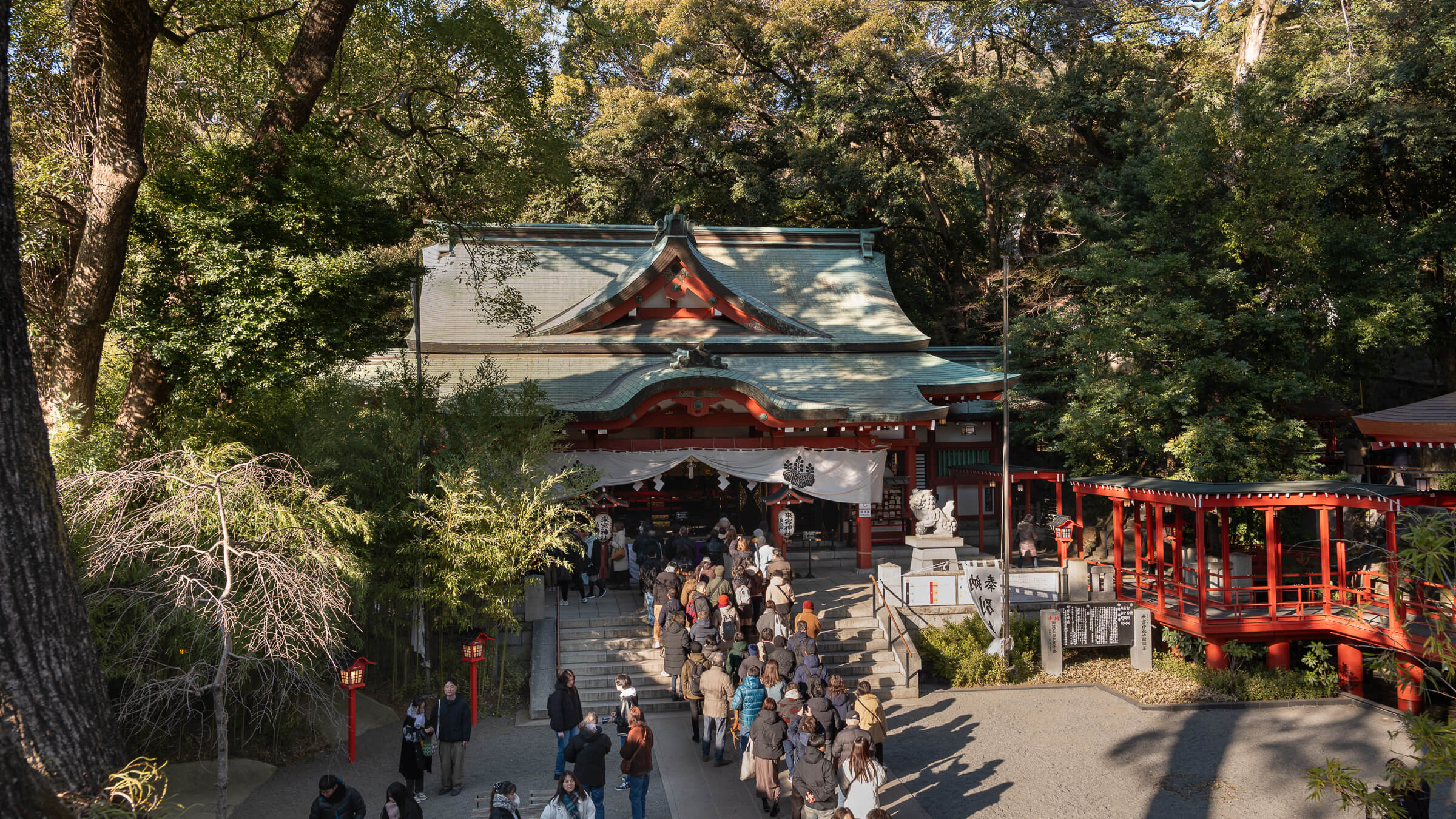
Within town, Baio-ji Temple sits quietly among residential streets. It is modest in scale and functions more as a neighborhood spiritual anchor than a destination. Jizo imagery emphasizes healing and everyday well-being rather than spectacle.
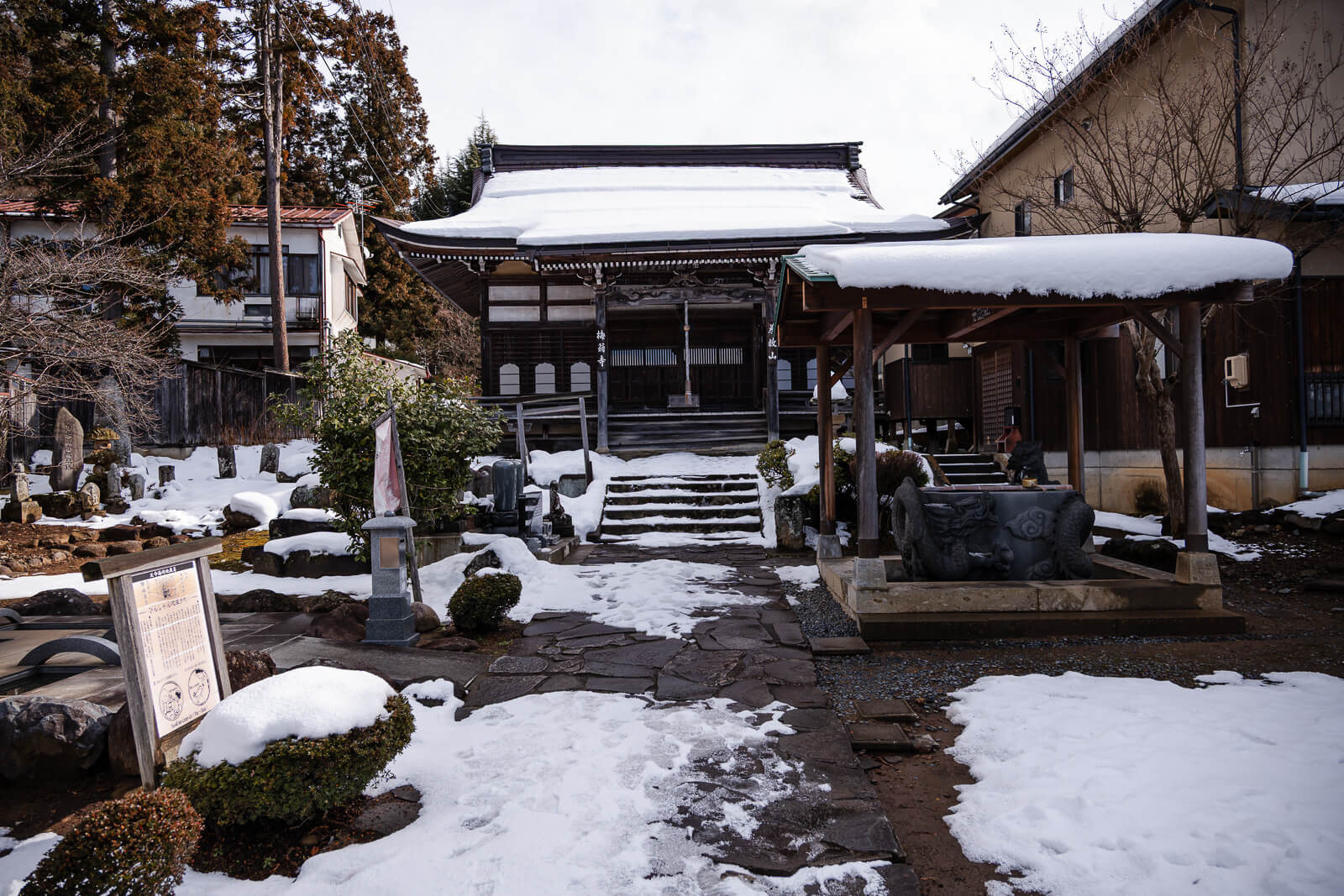
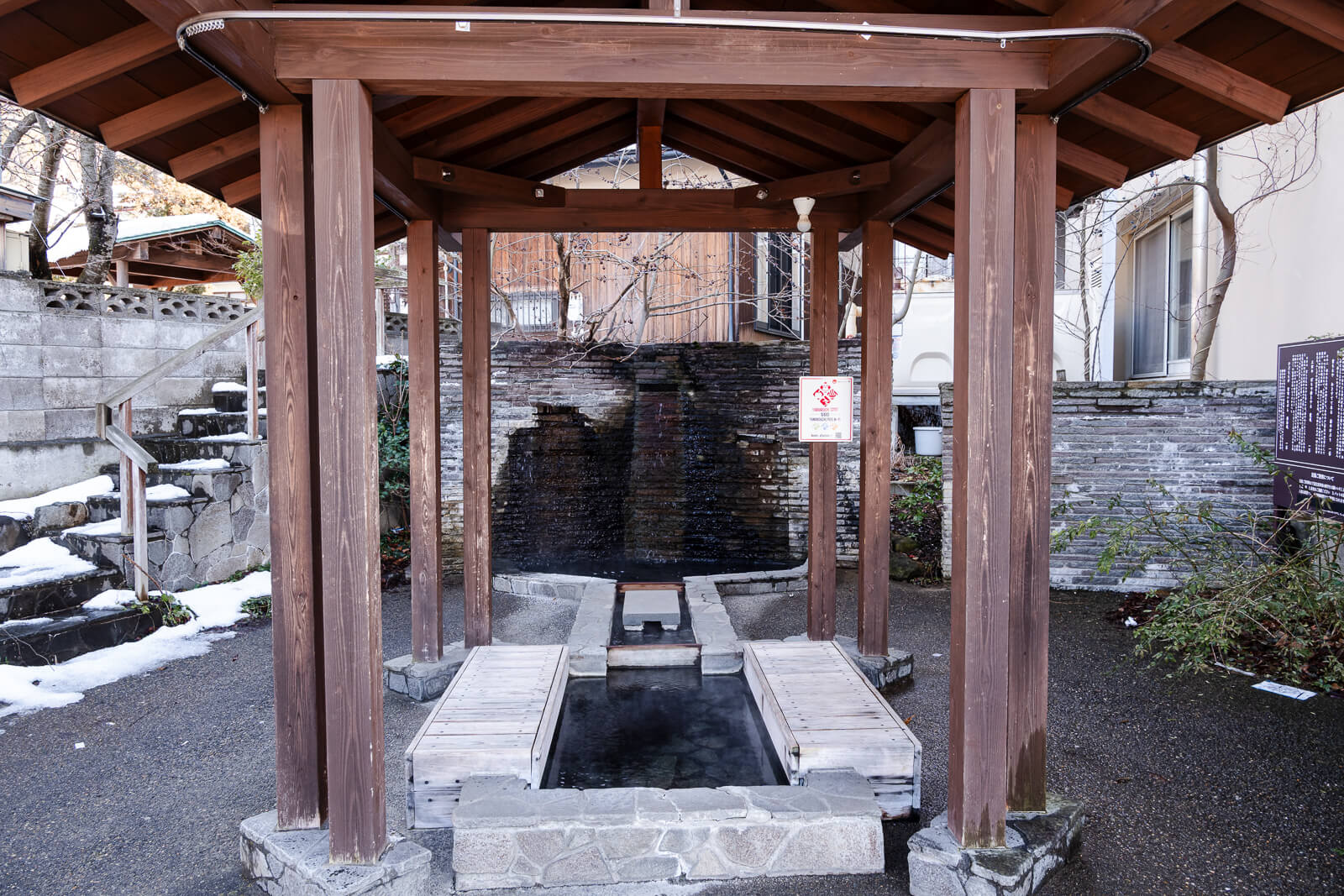
Adjacent to the temple is a covered public ashiyu supplied by local onsen water. It is practical, usable in winter, and designed for short pauses. You sit, warm your feet, and continue on.
This pairing reflects the town’s character clearly. Nothing demands prolonged attention. Everything supports recovery between movements.
For travelers not staying overnight, the ashiyu offers a brief introduction to onsen culture without committing to a full bath.
Access to Jigokudani and Shiga Kogen
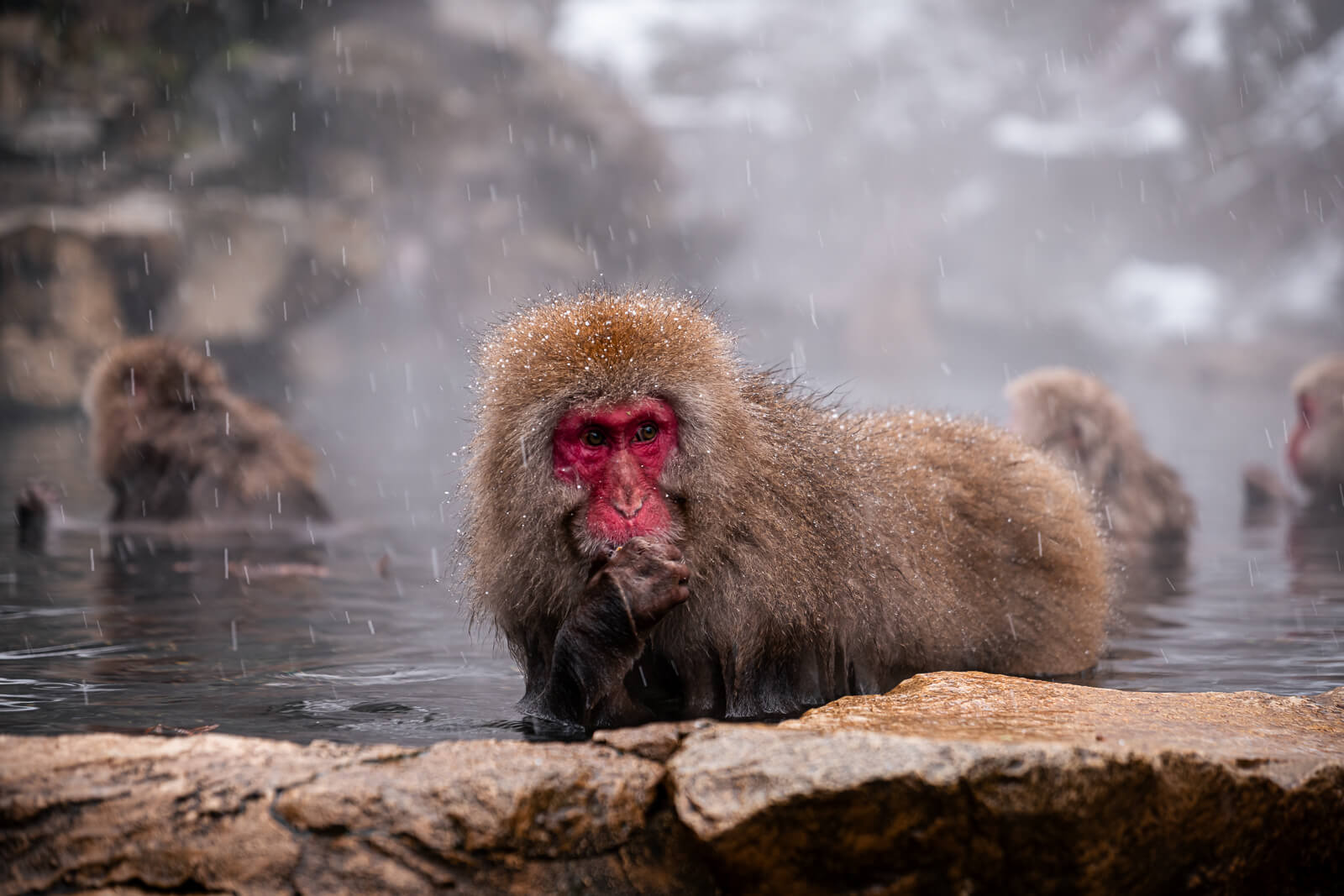
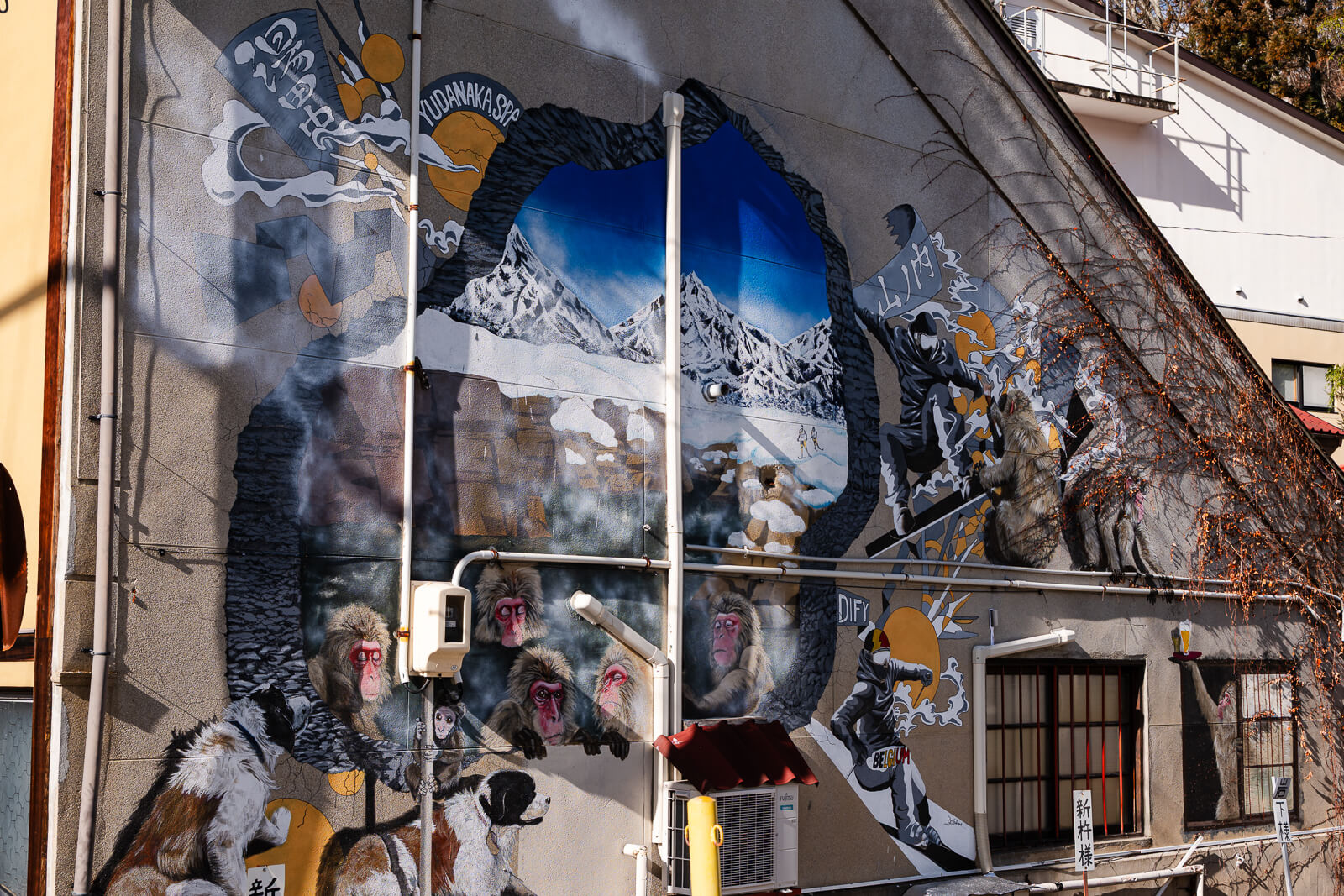
The trailhead for Jigokudani Snow Monkey Park lies roughly ten minutes up the road by bus from Yudanaka Station. Buses depart directly from town, making early morning visits simple. Many travelers stay here specifically to catch the first departures and reach the park before peak crowds.
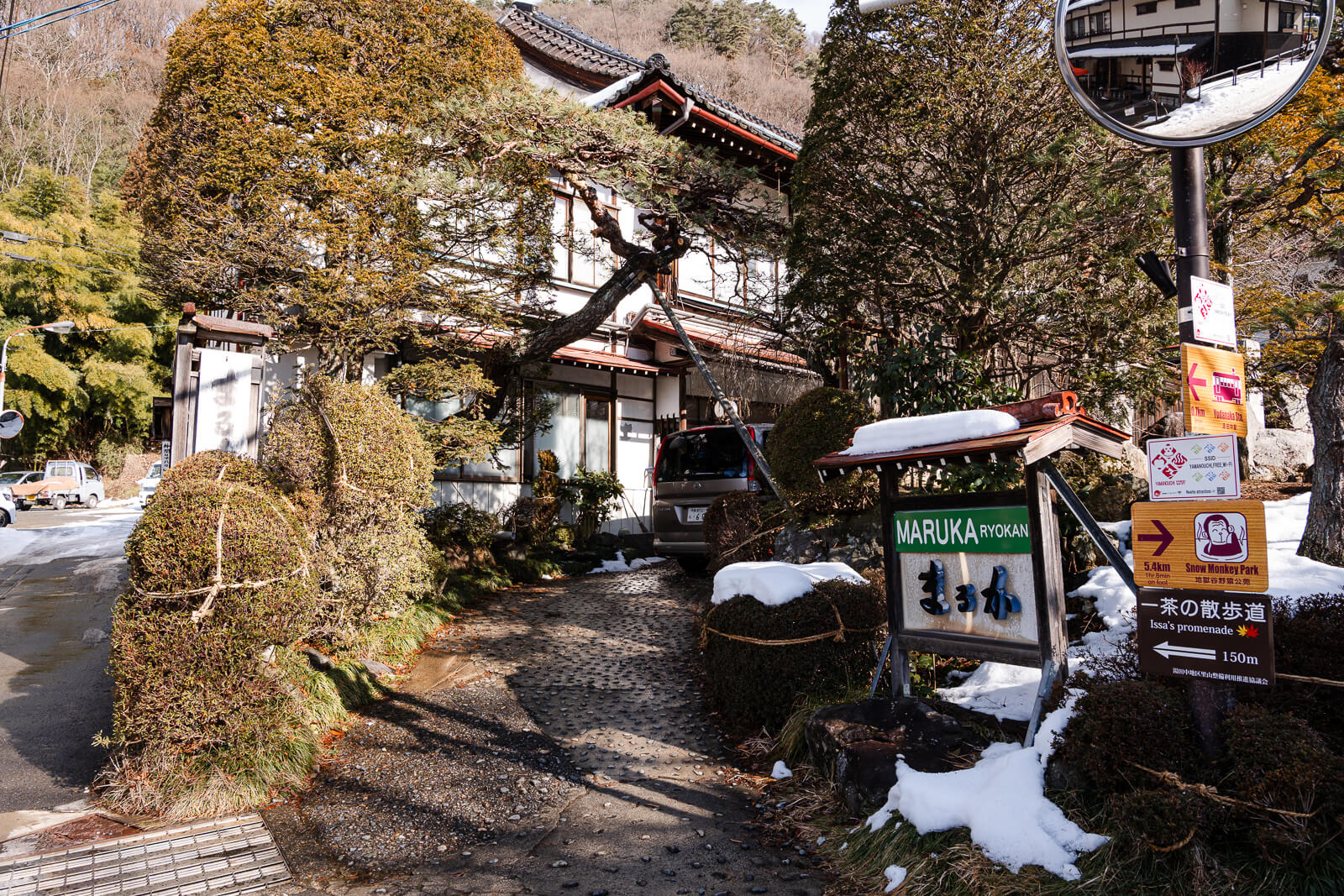
The same road continues upward toward Shiga Kogen. In winter, Yudanaka functions as a practical ski base. Skiers and snowboarders depart early by bus and return in the late afternoon, using the town as a reliable staging point rather than staying on the mountain.
This dual access is one of Yudanaka’s strongest advantages. It sits at the base of both experiences.
Walking the Town
Yudanaka can be explored in thirty to sixty minutes if you are not staying overnight.
The main streets follow the river and connect ryokan entrances, modest hotels, and limited retail. There is no concentrated shopping corridor and no singular focal landmark. The town reads as transitional and service-oriented.
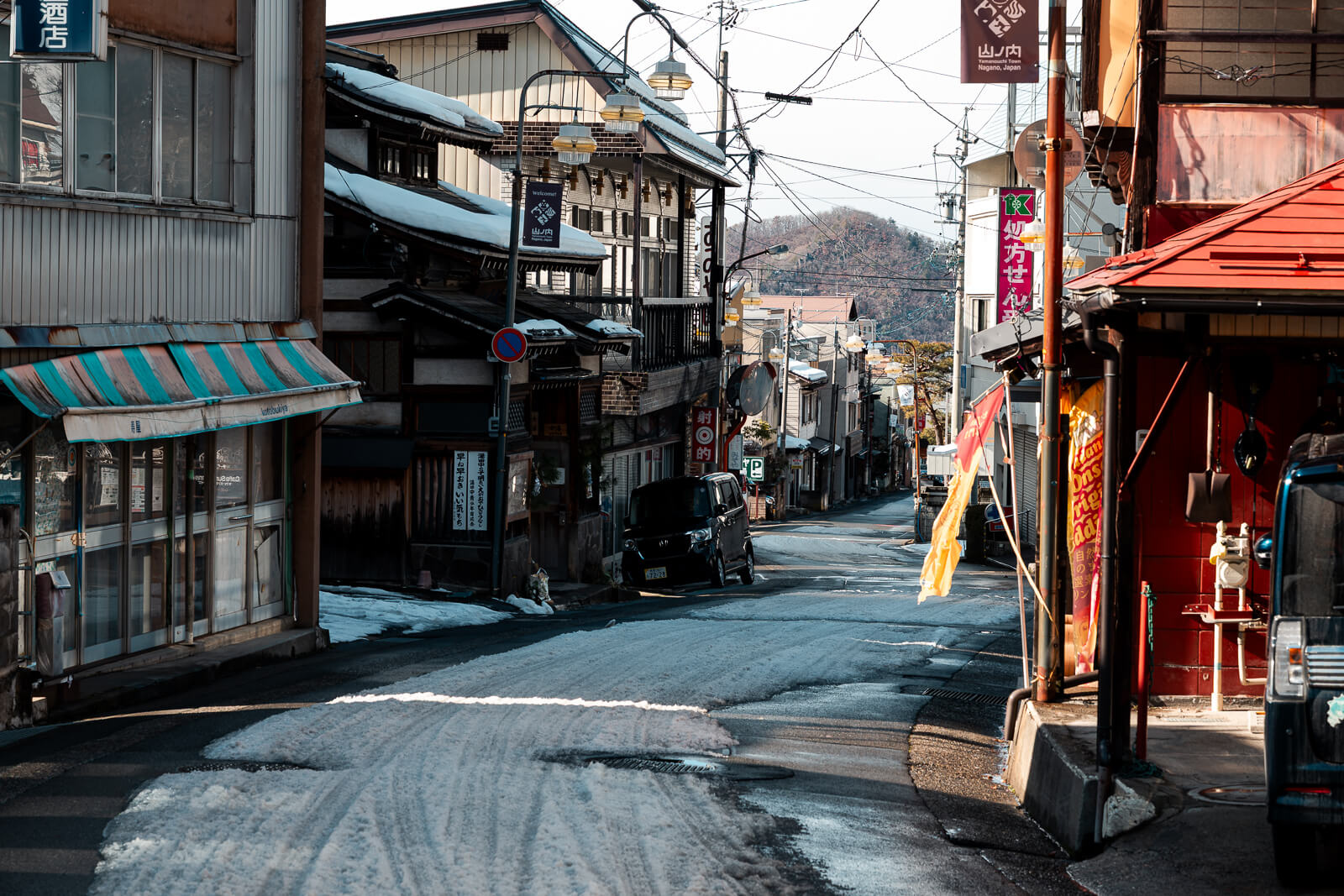
Even during winter monkey season, crowds disperse rather than compress. The wider streets and flatter terrain help maintain that sense of ease.
Yudanaka absorbs travelers smoothly. It does not try to hold them.
How It Fits Into a Nagano Itinerary
Yudanaka works best as a strategic base.
It suits visitors prioritizing early access to Jigokudani. It supports ski days in Shiga Kogen without requiring on-mountain lodging. It provides a direct rail arrival from Nagano without additional transfers or complicated navigation.
If your priority is walking between historic bathhouses at night in a preserved setting, Shibu remains stronger.
If your priority is reducing complexity and starting the next day with clarity, Yudanaka is often the more forgiving choice.
Getting There
From Tokyo, take the Hokuriku Shinkansen to Nagano Station and transfer to the Nagano Dentetsu line bound for Yudanaka.
Local trains take just over one hour and cost ¥1,660. Limited Express services reduce travel time to approximately forty-five minutes and require a ¥400 reserved-seat surcharge, bringing the total to ¥2,060. Both services run directly to the final stop at Yudanaka, eliminating uncertainty about where to get off.
From Yudanaka Station, buses connect to the Jigokudani trailhead in about ten minutes and continue toward the Shiga Kogen ski area. Shibu Onsen lies just beyond town.
Hours & Fees
Bath access is determined by individual accommodations, as most onsen facilities in Yudanaka are attached to ryokan and reserved for guests. Public ashiyu foot baths are free and intended for short use.
Nagano Dentetsu operates multiple daily services between Nagano and Yudanaka, with minor seasonal adjustments during heavy snowfall. Bus frequency toward Jigokudani and Shiga Kogen varies by season.
Final Assessment
Yudanaka is not the most atmospheric onsen town in the valley.
It is the most practical.
It delivers clear utility with minimal effort. It simplifies arrivals and early departures. It supports both the snow monkey visit and ski access without demanding attention of its own.
If Shibu is the immersive evening, Yudanaka is the efficient starting point.