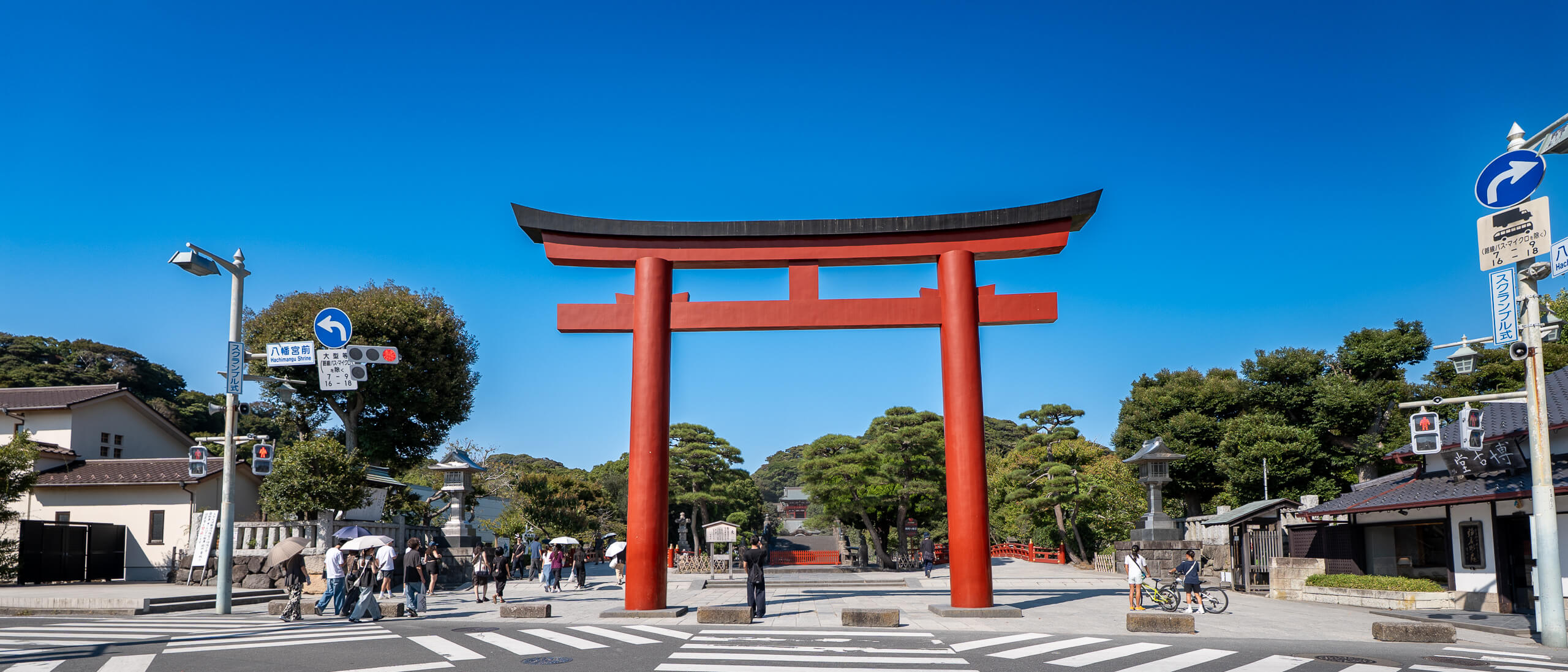
Tsurugaoka Hachimangū is Kamakura’s most important Shinto shrine and the spiritual anchor of the old samurai capital. Most visitors start from Kamakura Station, where you have two good options: follow the wide, formal Wakamiya Ōji approach for a classic first-time visit, or head down Komachi Street and loop back to the shrine later in the day. Either way, the visit begins at the striking San-no Torii and leads into one of the most recognizable shrine landscapes in Japan.
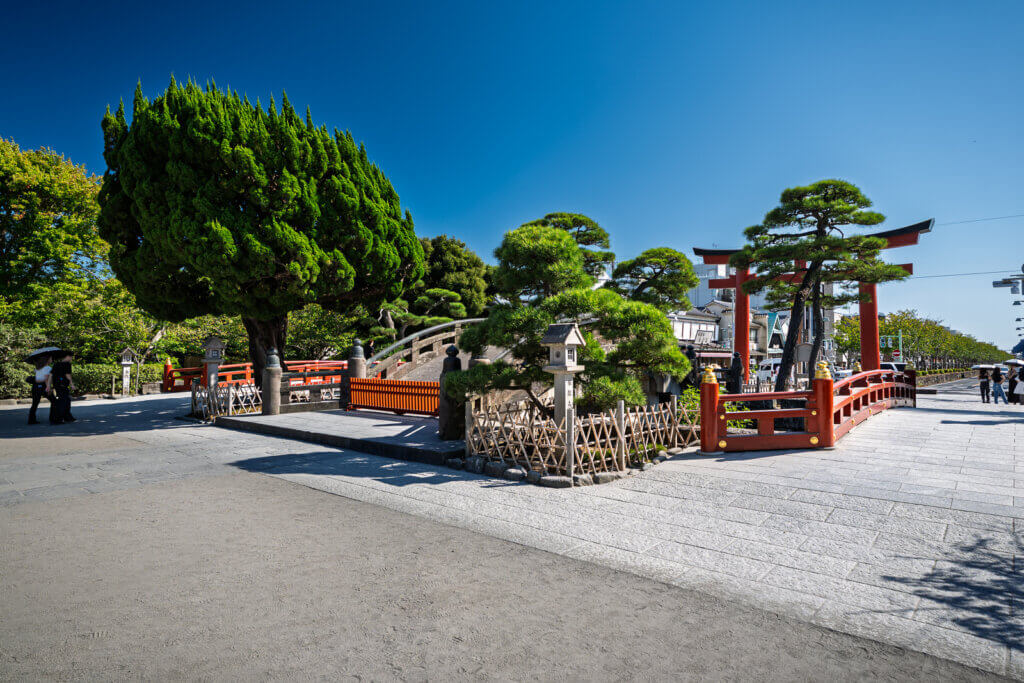
Taiko Bridge — A Bright Red Welcome Into Hachimangū
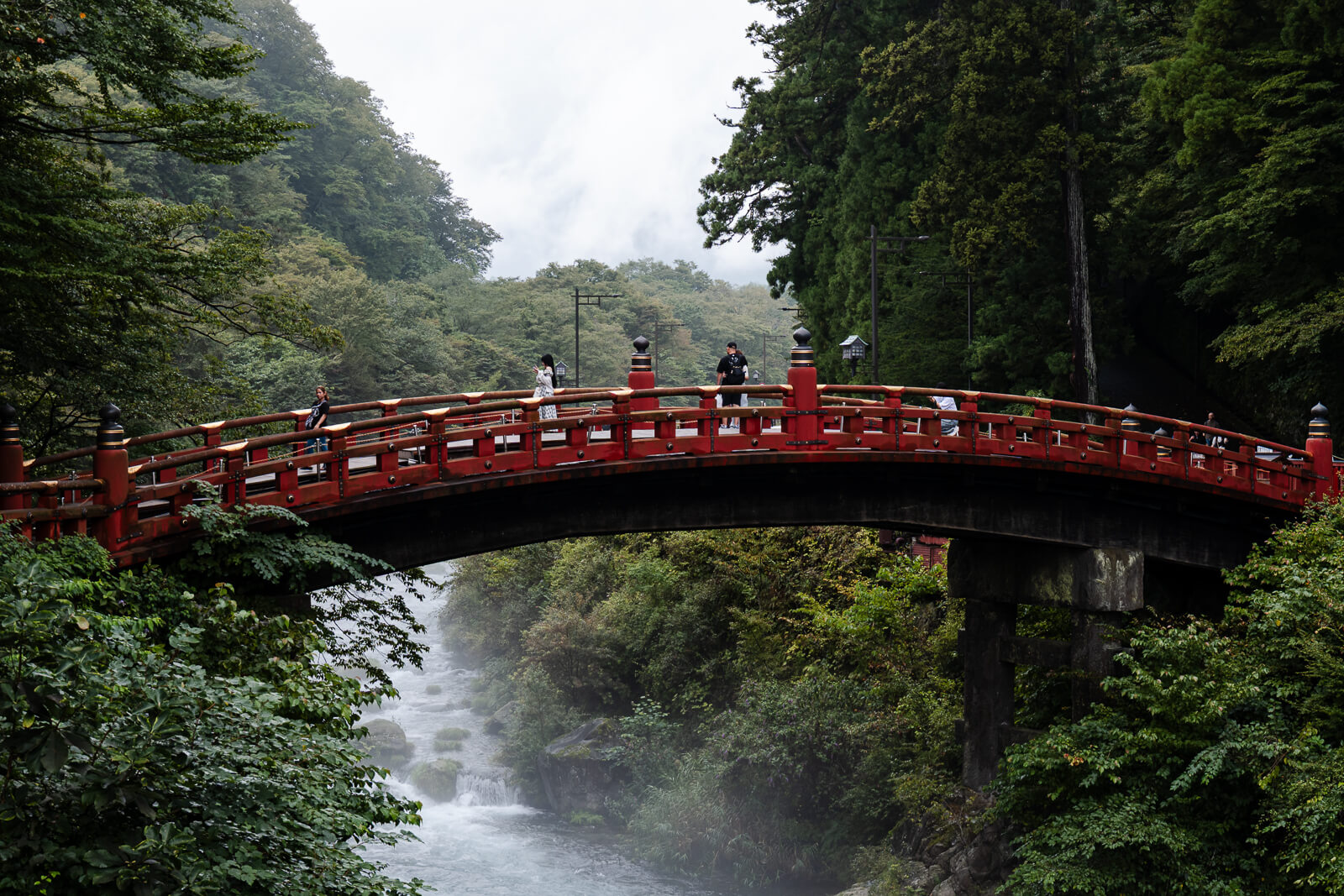
Right after passing the San-no Torii, the bright red Taiko Bridge comes into view. It’s the first place where the shrine opens up, and the color contrast makes it hard not to stop for a photo. The bridge sits beside the ponds and gives you a quick sense of how large and layered the grounds really are—simple, but the perfect way to start exploring.
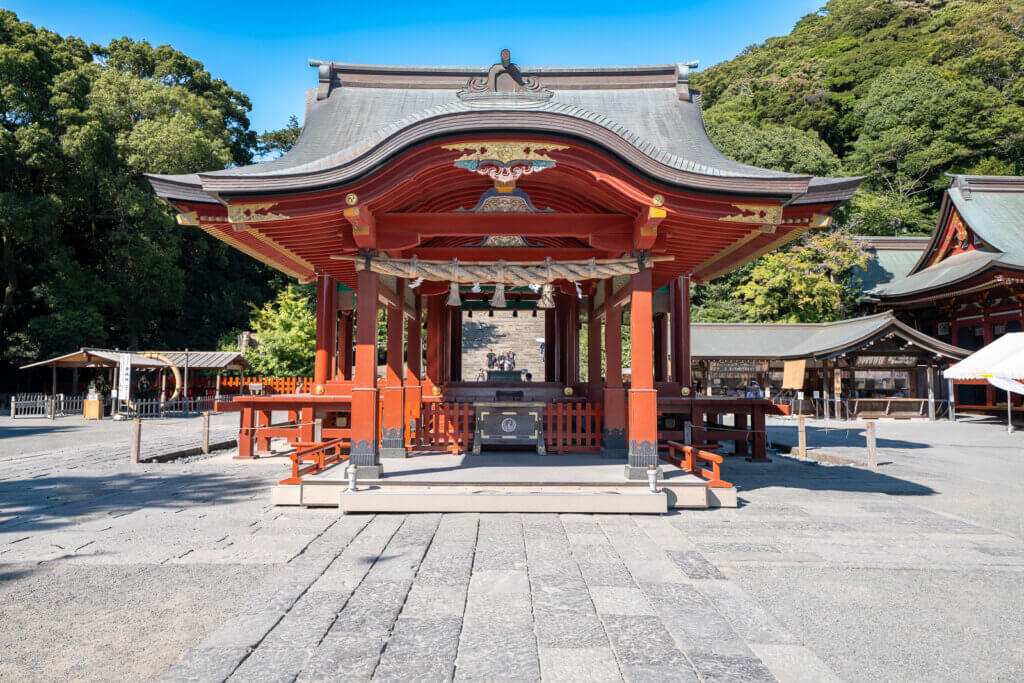
Kaguraden — The Shrine’s Bright and Open Ceremony Stage
Further along the main approach, the Kaguraden stands open and bright with its wooden platform and rows of white lanterns. This is where ritual dances and seasonal ceremonies take place, and the symmetry of the building makes it one of the most photographed structures on the grounds. It’s a natural pause point as you move toward the main shrine.
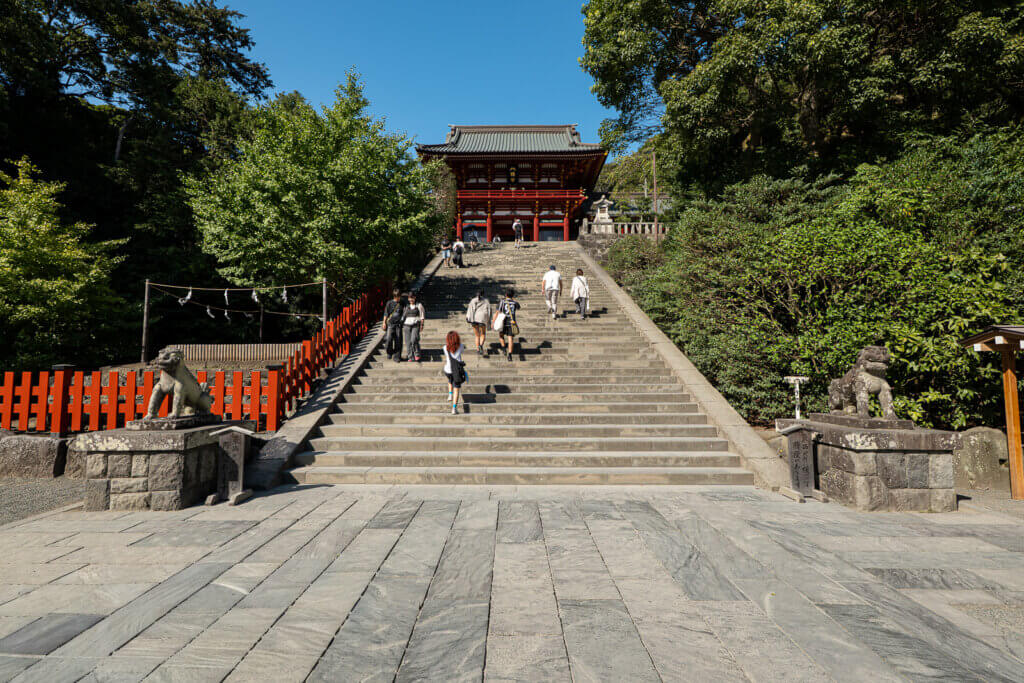
Main Shrine — The Hilltop View Over Kamakura
The stone staircase leads up to the Hongū, the main hall of Tsurugaoka Hachimangū. From the top, you get a clear view back down the central approach toward Kamakura Station and the city below. The hall has been rebuilt several times through the shrine’s long history, but it still holds the same commanding presence overlooking the grounds. It’s the highlight of the walk and one of the best viewpoints in the entire shrine complex.
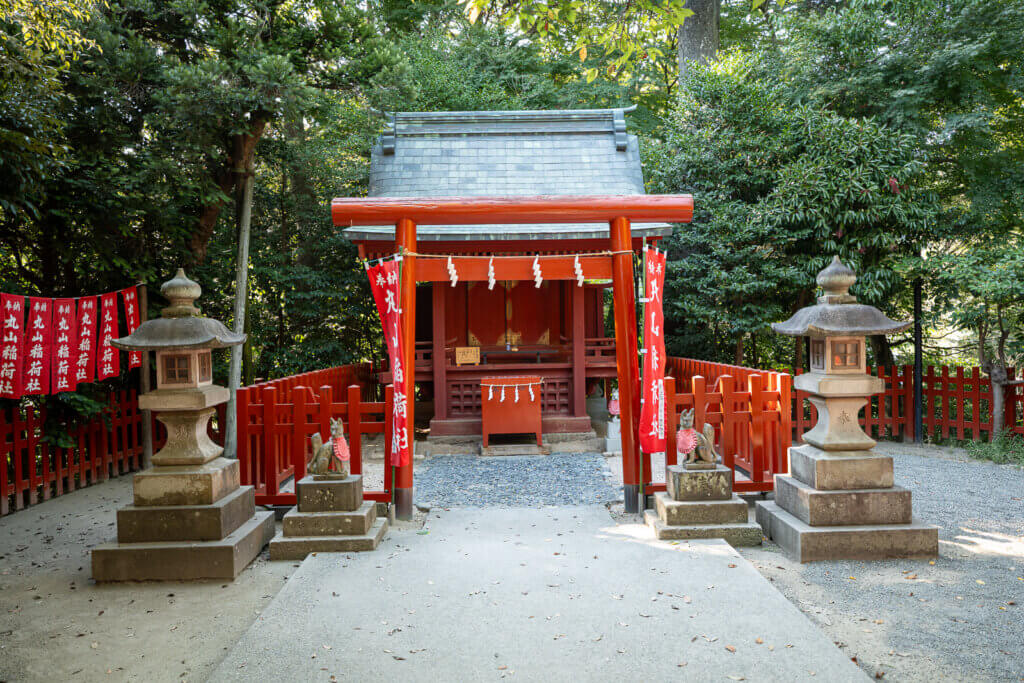
Maruyama Inari — A Quiet Vermillion Corner Behind the Main Hall
Tucked just behind the main shrine is Maruyama Inari, a small but colorful sub-shrine dedicated to the deity of harvest and prosperity. It’s easy to miss on a first visit, which is why it feels calm compared to the main areas. The bright vermillion details stand out against the trees, and the compact size gives the spot a more intimate atmosphere.
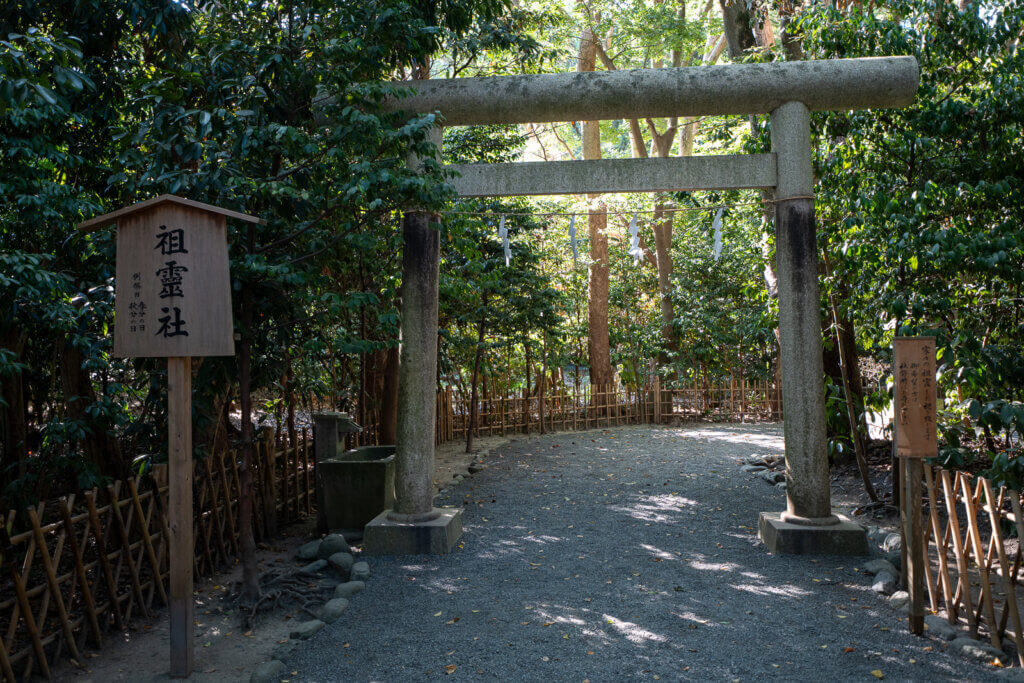
Soreisha — A Small Ancestral Shrine Off the Main Path
A short walk from the upper grounds brings you to Soreisha, a quiet spot dedicated to ancestral spirits. It’s slightly removed from the main flow of visitors, which makes the area noticeably more peaceful. The pathway leading here feels different from the central route—less crowded, more shaded, and a nice break before heading back down toward the ponds.
Genji Pond — Willow Trees, Reflections, and Seasonal Color
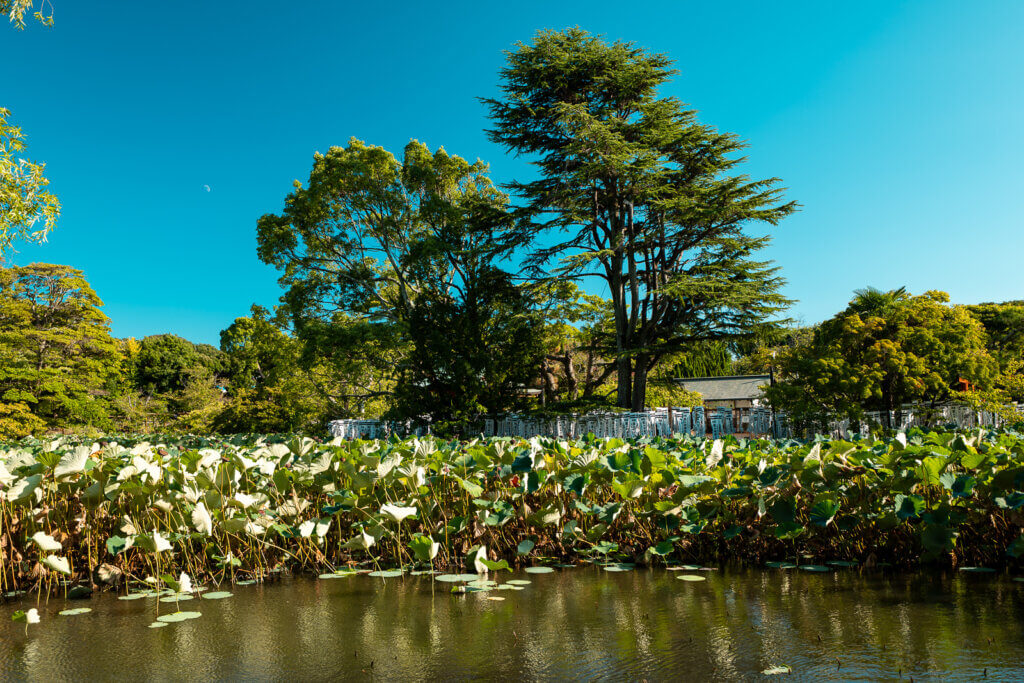
Genji Pond sits on the east side of the shrine grounds and is surrounded by willow trees and seasonal flowers. The calm water makes it an easy place to pause and enjoy a quieter moment before continuing around the ponds. From here, most visitors either follow the path toward Hataage Benzaiten or loop back toward the main approach to explore the rest of Kamakura.
Hataage Benzaiten — A Torii-Lined Path Between the Ponds
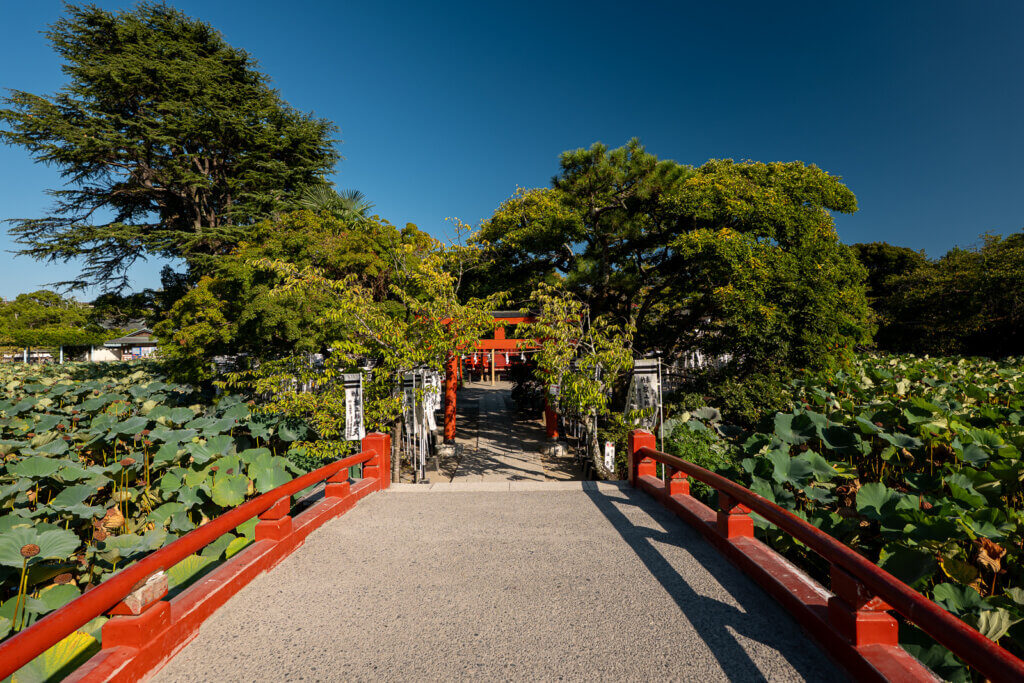
Crossing the bridge between the twin ponds leads to the shaded path toward Hataage Benzaiten. The walkway is lined with small torii gates and has a quieter, more atmospheric feel compared to the main shrine areas. This short stretch is a nice contrast to the open spaces around Genji Pond and makes a smooth transition before heading back toward central Kamakura or exploring the nearby temple districts.
Getting There
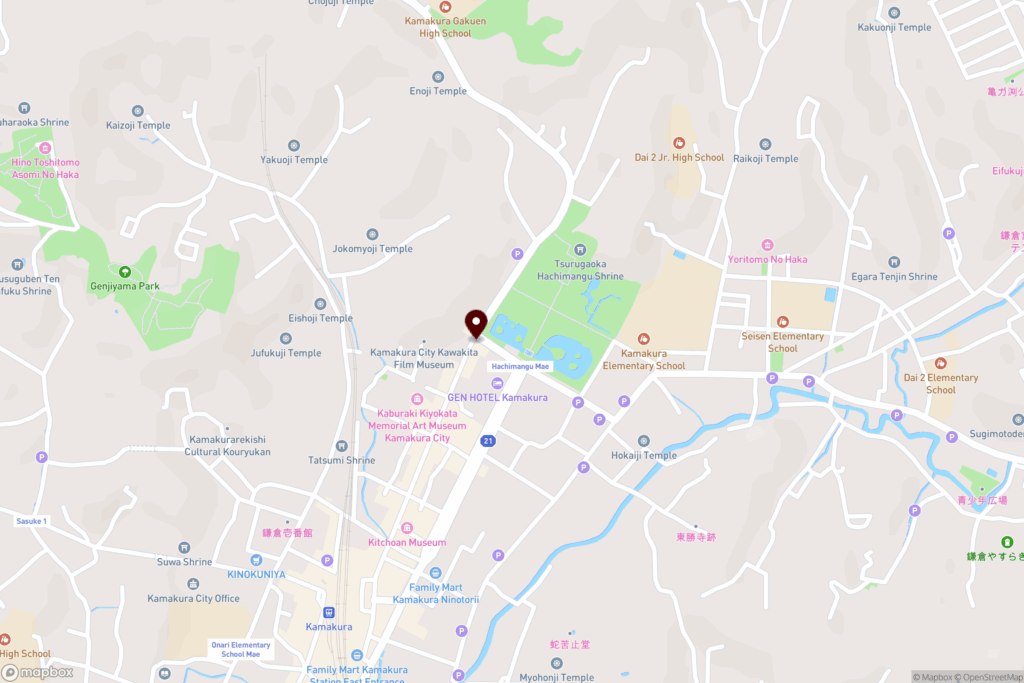
Tsurugaoka Hachimangū is easy to reach on foot from central Kamakura. From Kamakura Station (JR or Enoden), it’s about a 10-minute walk along the main approach. Visitors can choose the formal Wakamiya Ōji boulevard or the parallel Komachi Street, which is lined with shops and cafés. Both routes lead directly to the San-no Torii at the front of the shrine.
For drivers, limited parking is available near the lower gate area. Spaces tend to fill quickly on weekends and holidays, so early arrival is recommended. The surrounding roads can become busy during peak seasons, especially spring and autumn.
Final Thoughts
Tsurugaoka Hachimangū works well as a starting point for exploring Kamakura. From the ponds, visitors can continue toward Hataage Benzaiten or head south to Komachi Street for food and shops. Eastward routes connect to places like Hokokuji or Sugimoto-dera, while the western side leads to Hase-dera and the Great Buddha. For those looking to move efficiently between districts, bicycle rentals are available near Kamakura Station, including e-bikes, which make the gradual climbs toward Kita-Kamakura noticeably easier. Standard bikes work well along the flatter routes, but an e-bike is ideal for covering more ground comfortably in a single day.