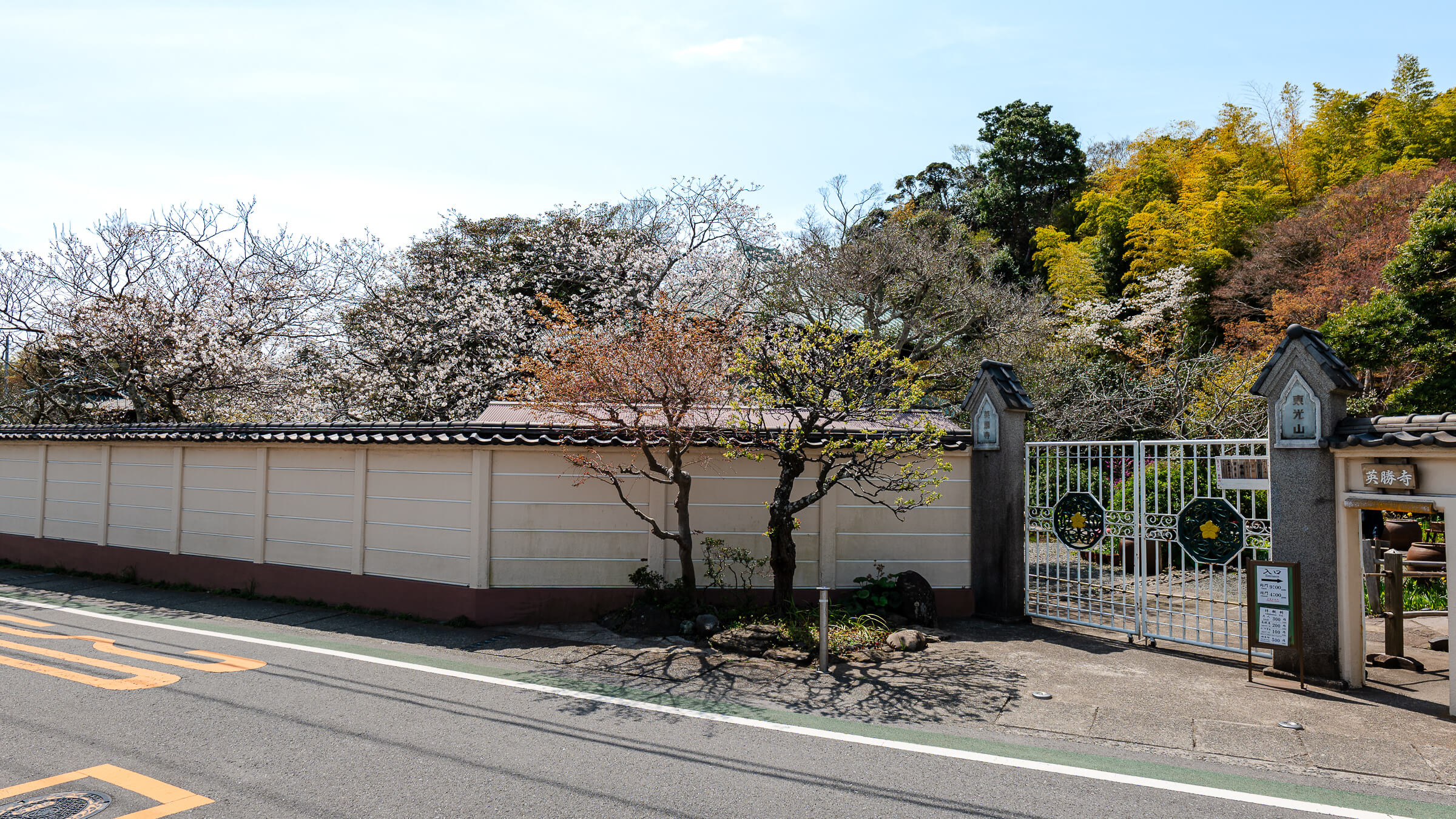
Entering the Upper Shrine Above the Basin
Suwa Taisha Kamisha Honmiya sits between Suwa and Chino on the upper side of the basin, set slightly back from the shoreline of Lake Suwa. While the lake defines the center of the region, this area marks the point where the terrain begins to rise toward the surrounding mountains, creating a noticeable shift in how the landscape is experienced.
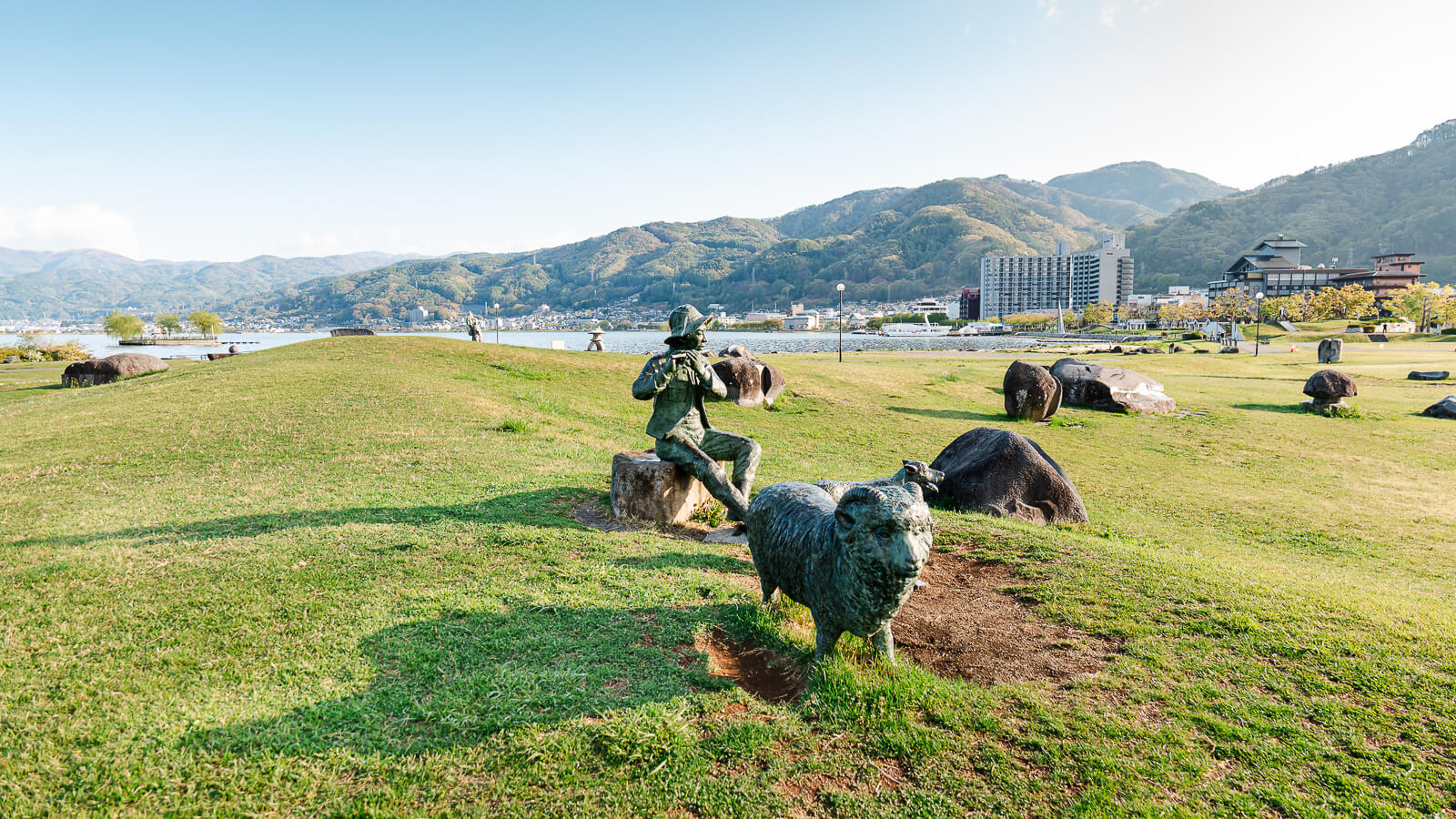
Many visits begin along the lakeside, moving past places like Takashima Castle or the promenade near Kamisuwa Onsen, before turning inland toward Honmiya. The transition happens quickly, with the open water dropping out of view as the ground lifts slightly and the surroundings begin to close in around the path. The change in setting is not dramatic, but it is immediate enough to reset the pace of the visit.
The walking here is easy and the distances are short, but the visit rarely stays short. Most people spend close to an hour moving through the grounds, pausing at different points without planning to, and letting the layout guide how long they remain. This makes it a natural fit within a half-day loop around the basin, rather than something to treat as a quick stop between locations.
Why the Shrine Faces the Mountain
The Suwa basin has supported settlement for centuries due to its enclosed geography and reliable access to water, allowing communities to develop in a relatively contained environment. By the early historical period, the area had become a regional center, and the Suwa shrines evolved alongside that growth, taking on both cultural and administrative significance.
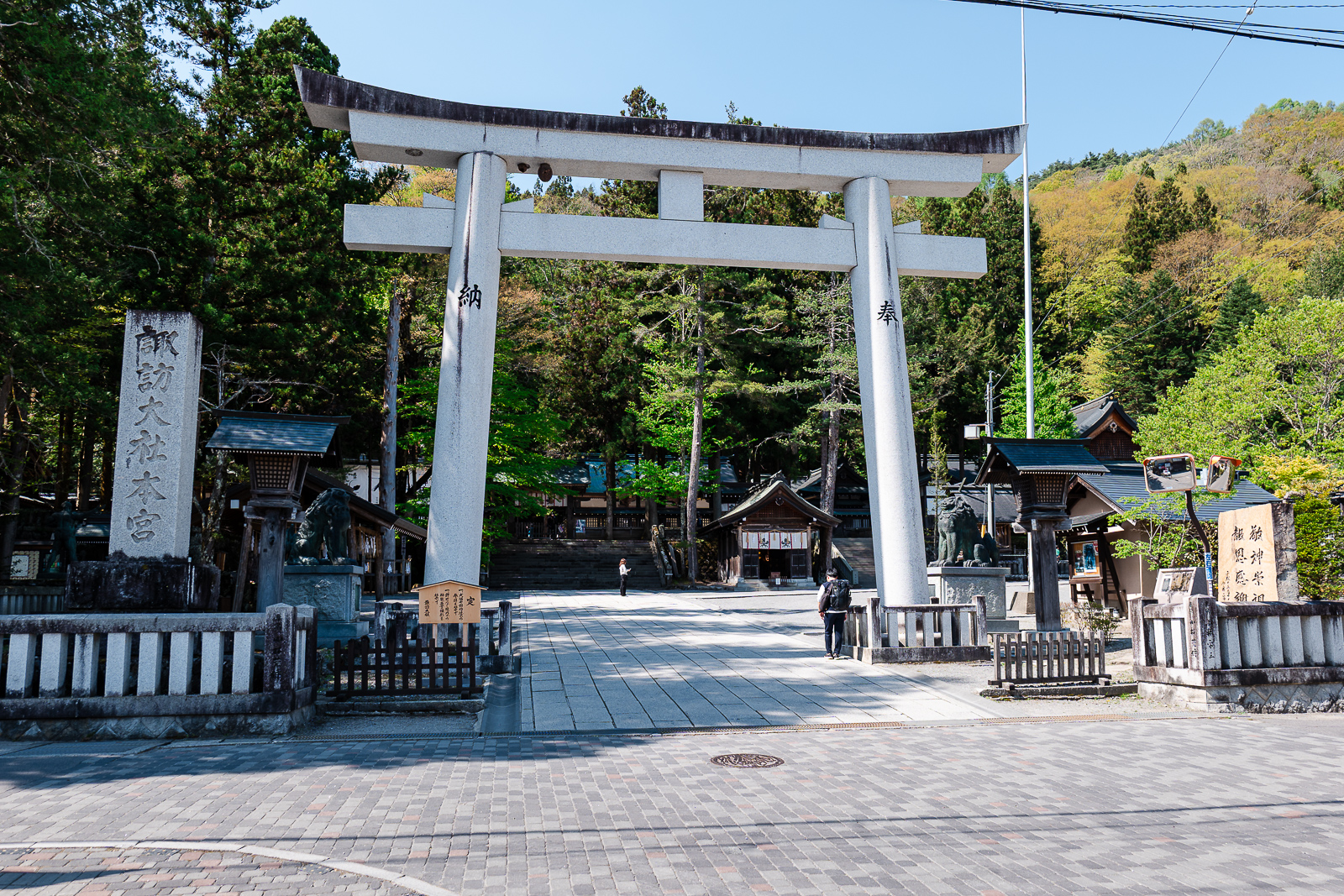
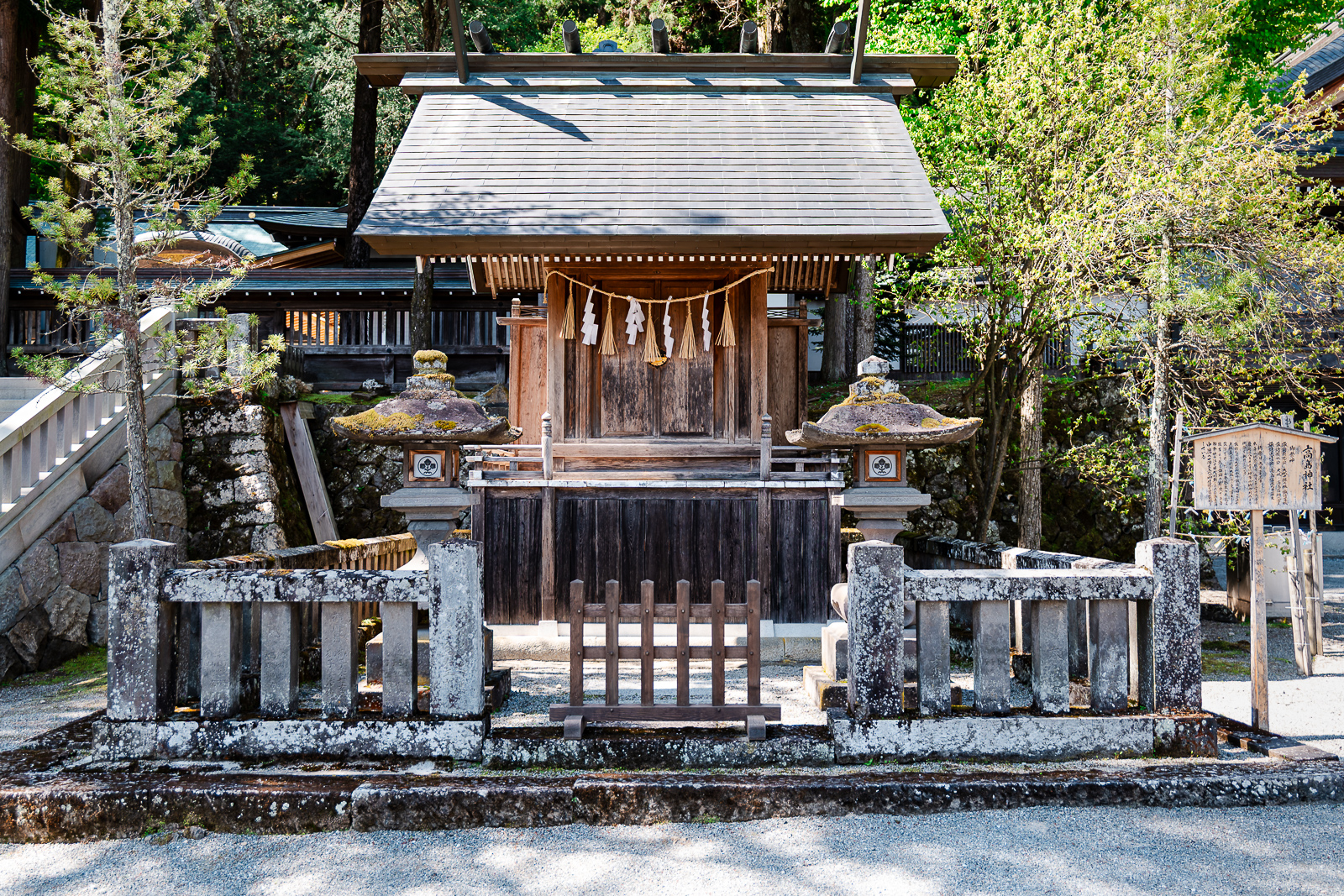
The Suwa Taisha network is divided into four main shrines, each positioned differently around the basin. On the upper side sit Honmiya and Suwa Taisha Kamisha Maemiya, while along the lake are Suwa Taisha Shimosha Akimiya and Suwa Taisha Shimosha Harumiya. Each reflects a different relationship to the basin, from shoreline access to the rising terrain inland.
At Honmiya, that relationship is defined by orientation rather than enclosure. The grounds face Mount Moriya, which rises directly behind the shrine and has long been regarded as the spiritual center of the Kamisha shrines. This positioning shapes how the site is experienced, even before any structure comes into focus.
This also explains the absence of a honden (main sanctuary building), which would normally anchor the site visually and functionally. Instead, the layout directs attention outward toward the mountain itself, maintaining a connection to the landscape that predates formal architectural structures. That alignment remains visible from the grounds today, where the line of attention continues beyond what is built.
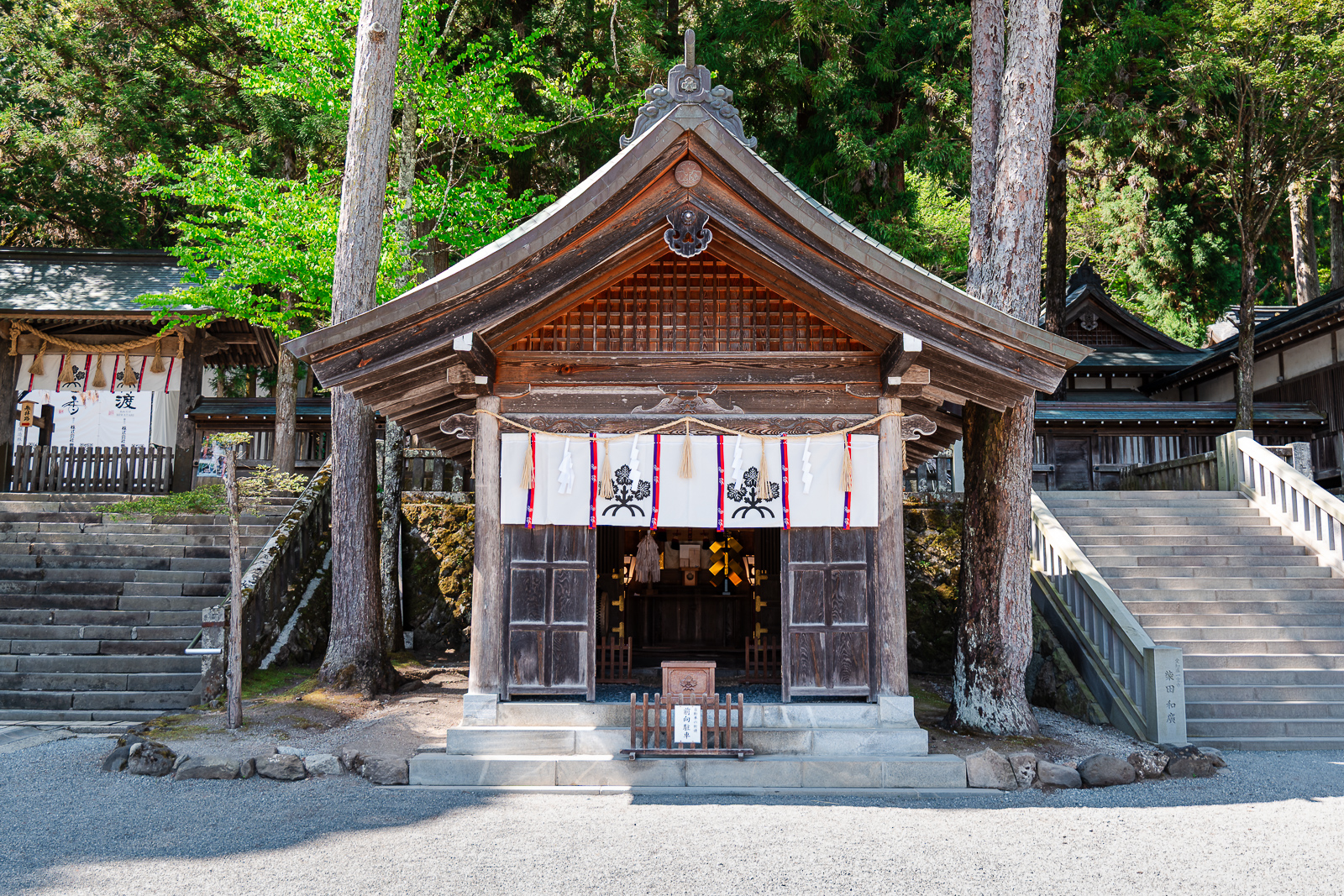
Moving From the Road Into the Shrine
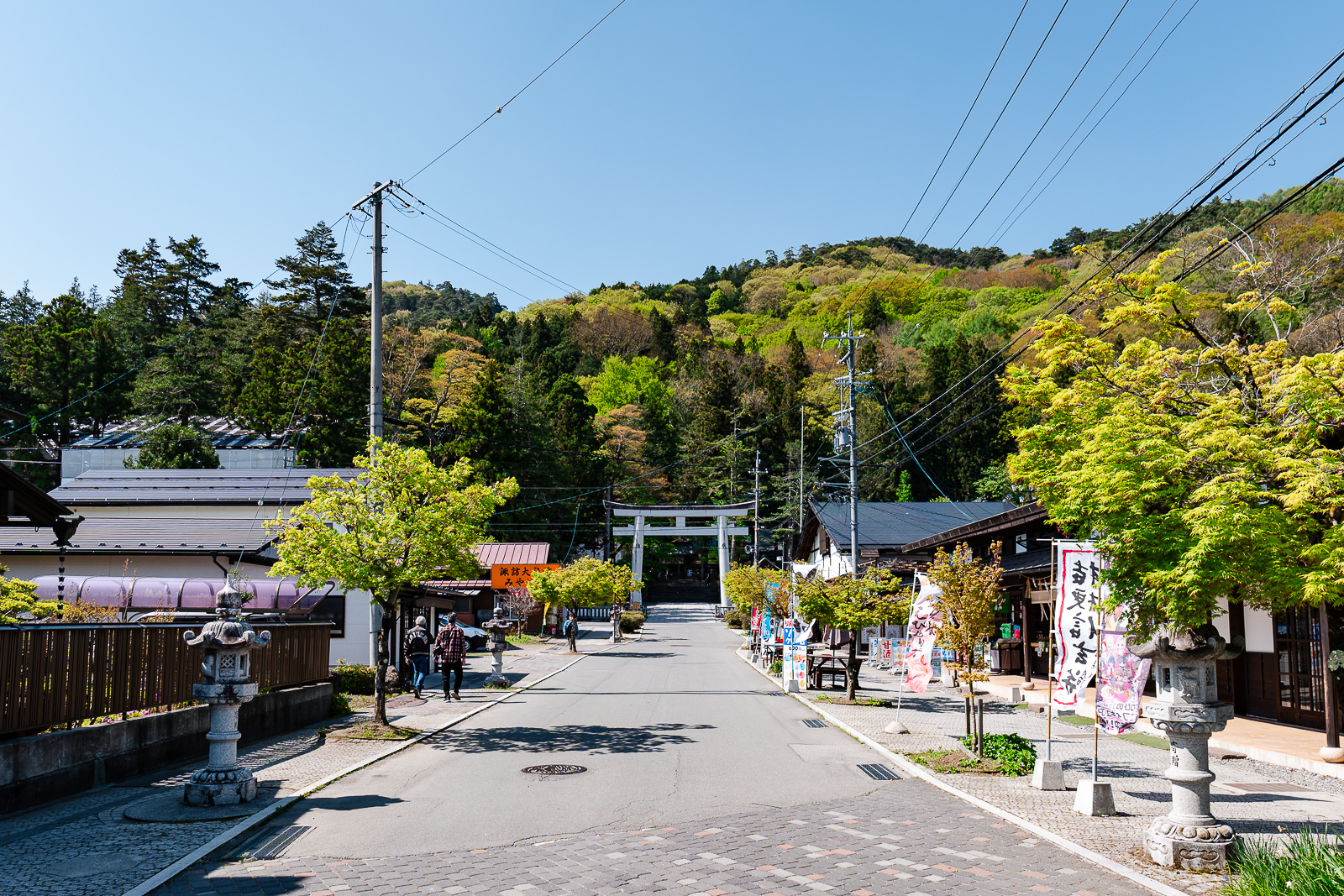
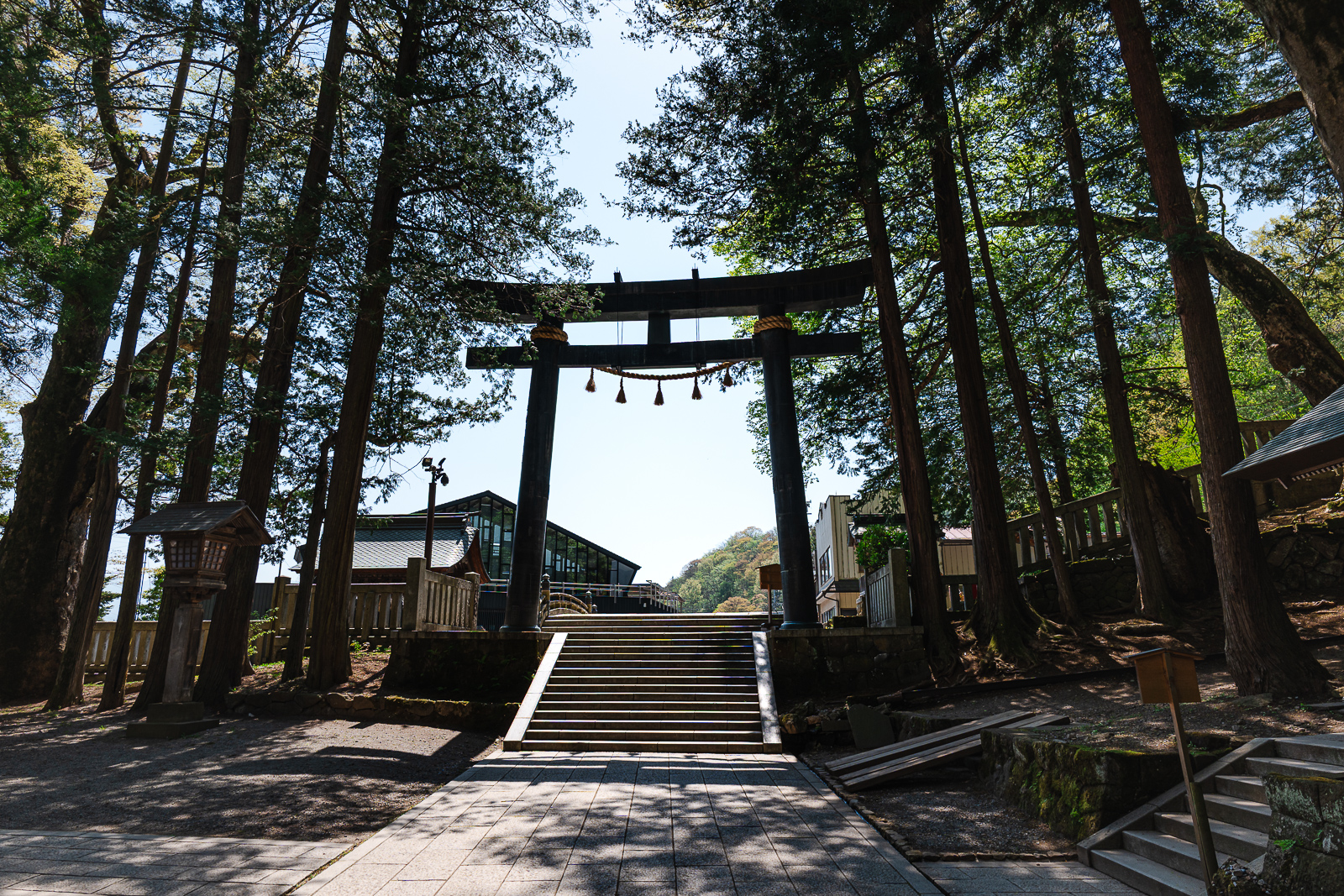
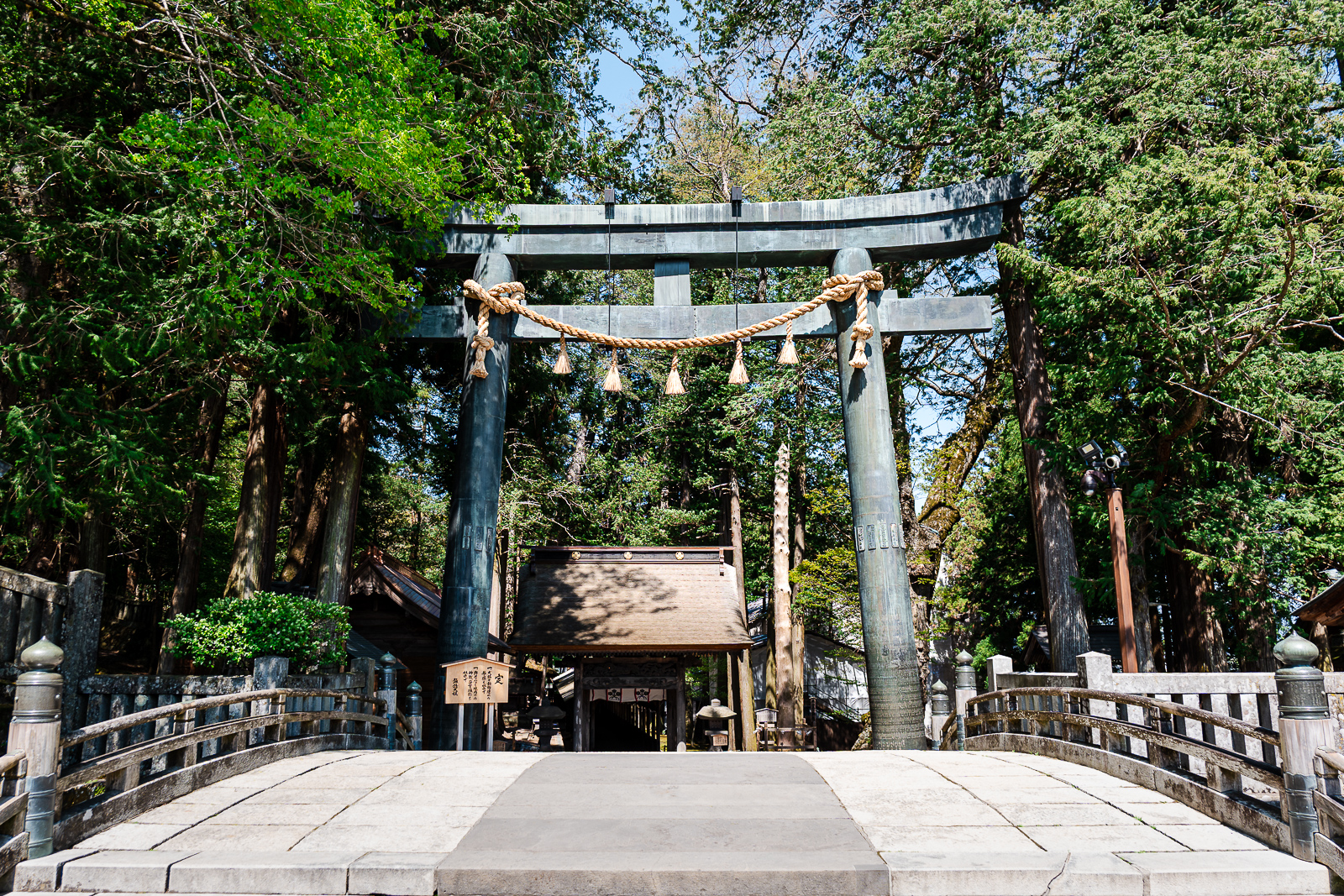
The boundary of the shrine is marked by a torii gate where the road gives way to a short approach, creating a clear transition point without requiring distance. The shift from the surrounding area into the shrine grounds happens quickly, with only a few steps separating the two environments.
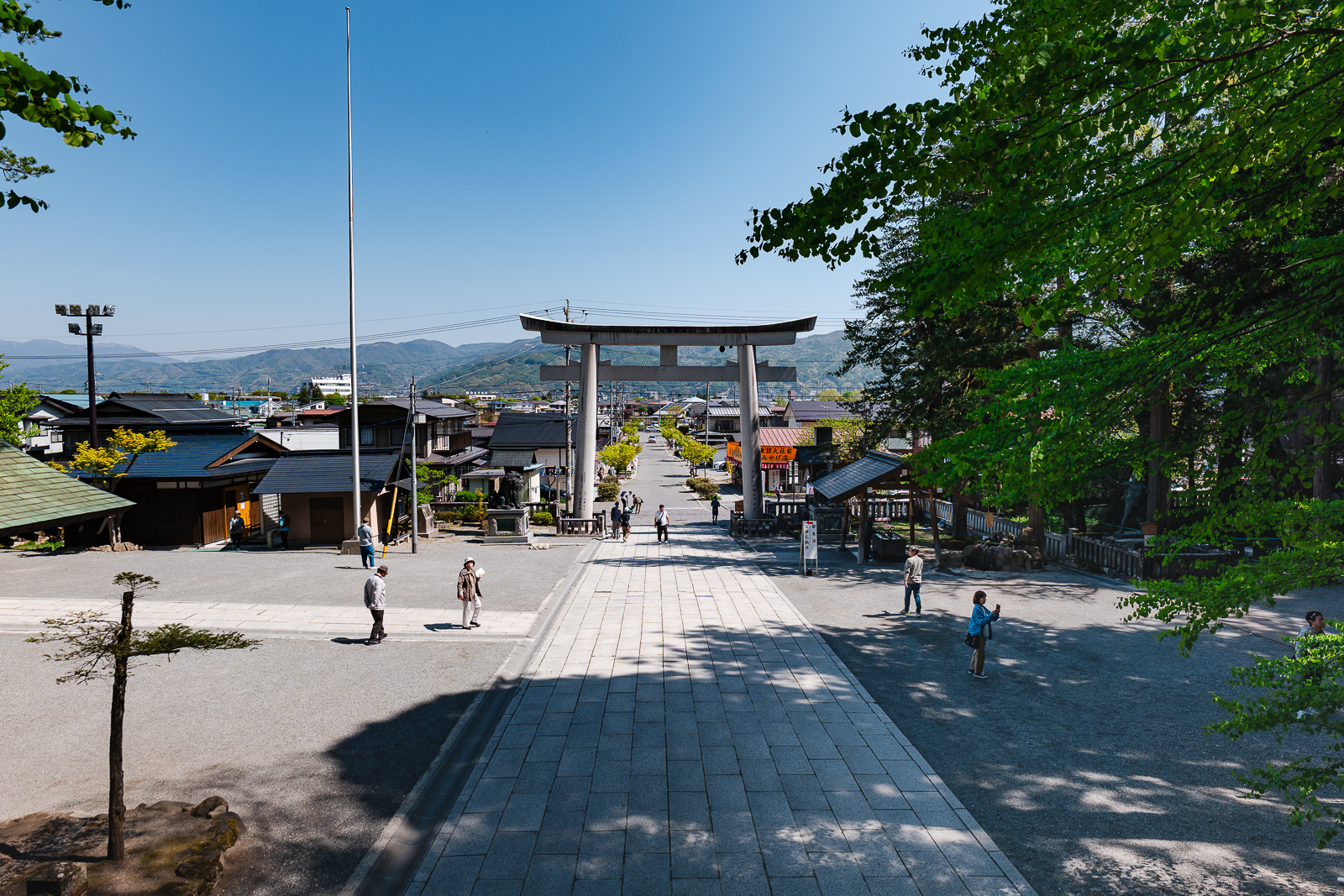
Near the entrance, a small cluster of shops and stands lines the path, adding a layer of activity that softens the transition. These are modest in scale, but they tend to slow the pace slightly as people pause before entering or linger briefly on the way out. The presence of these small stops creates a gradual shift in rhythm rather than a sudden change.
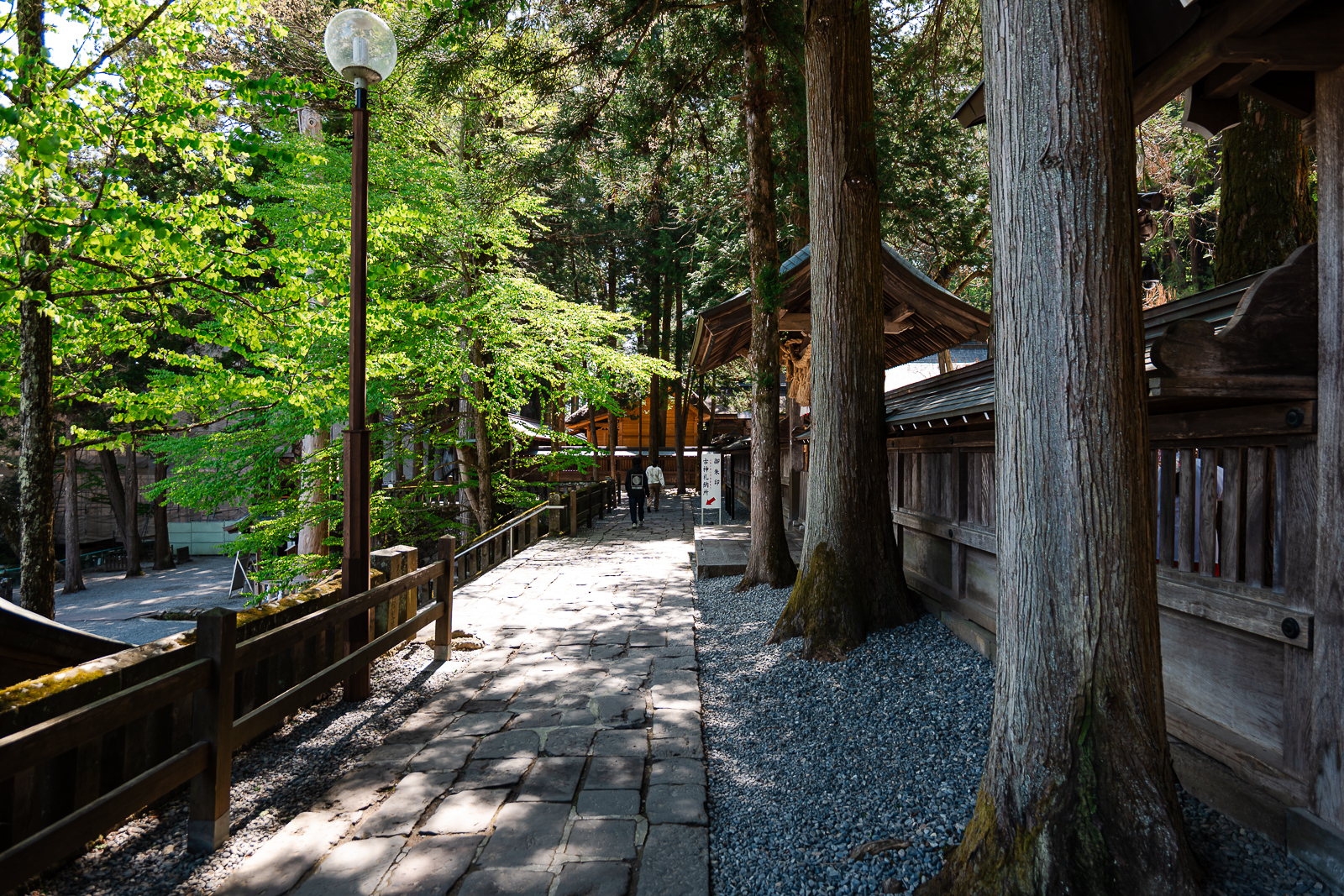
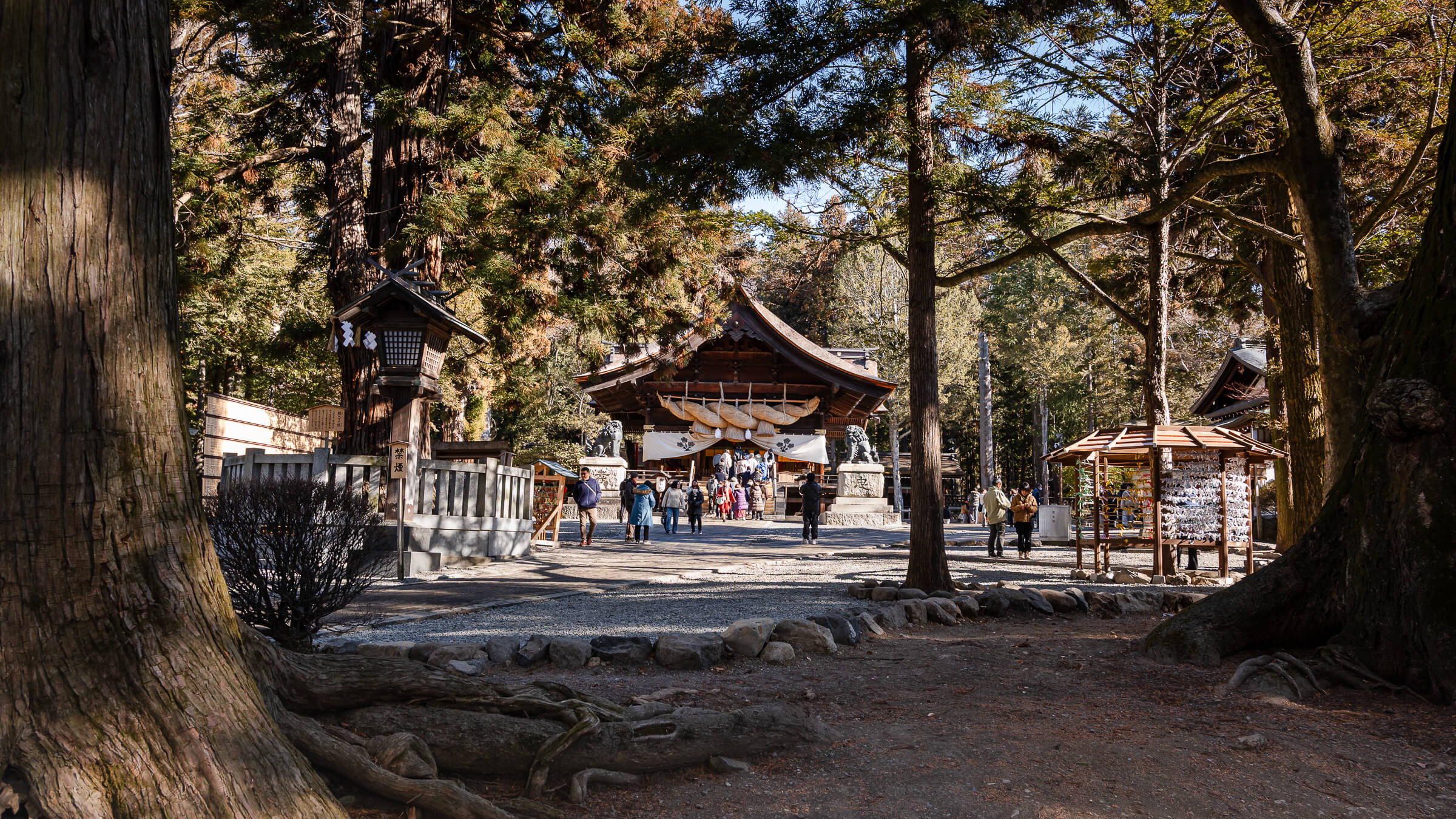
Beyond the gate, the path moves into a wooded section lined with tall cedar trees, where the space becomes more enclosed and the visual field narrows. The ground remains flat and easy to walk, but the surroundings change enough to reset how the visit feels. Within a few steps, the open roadside is replaced by a more contained environment, and the visit is already underway.
Standing at the Main Hall Without a Finish Line
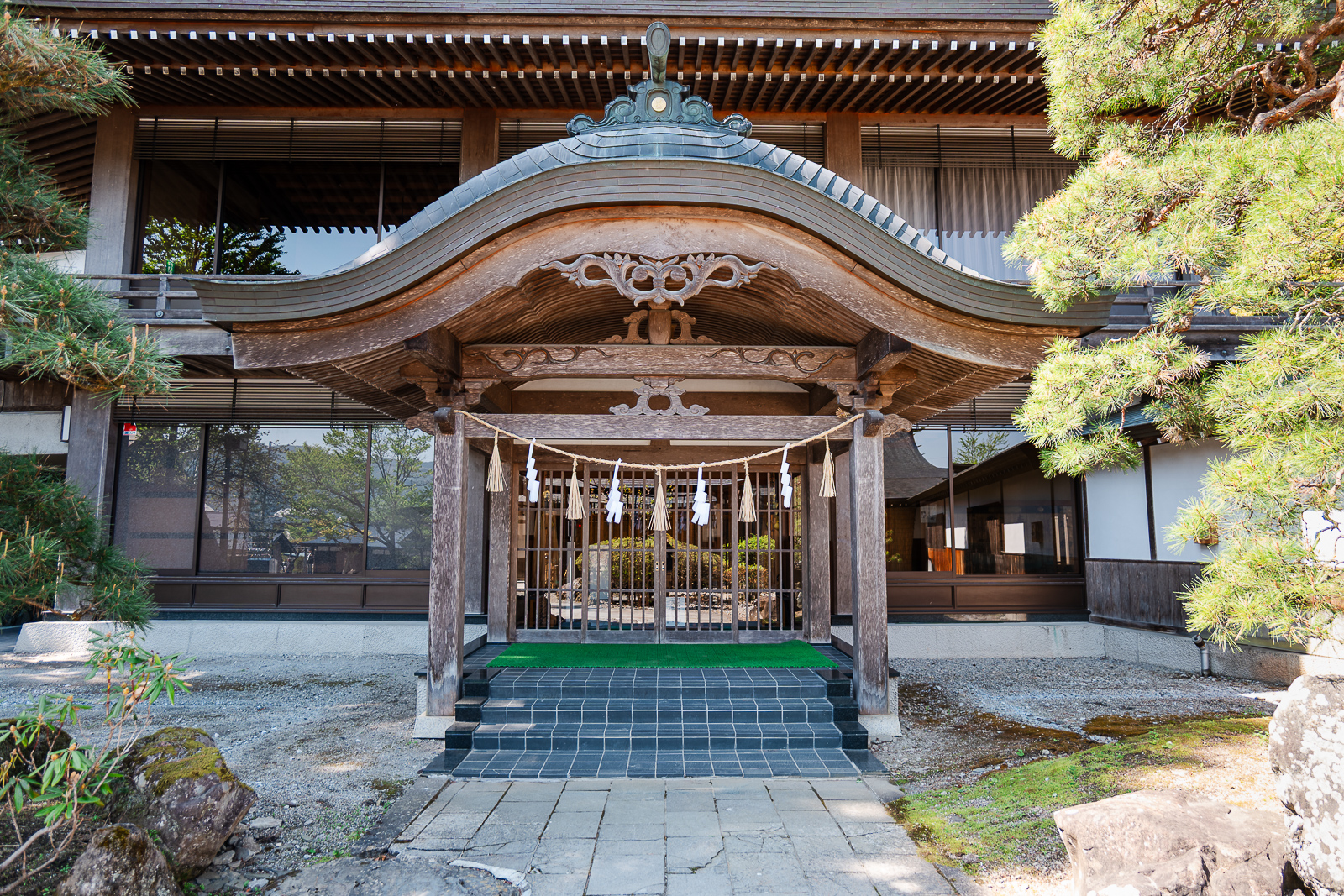
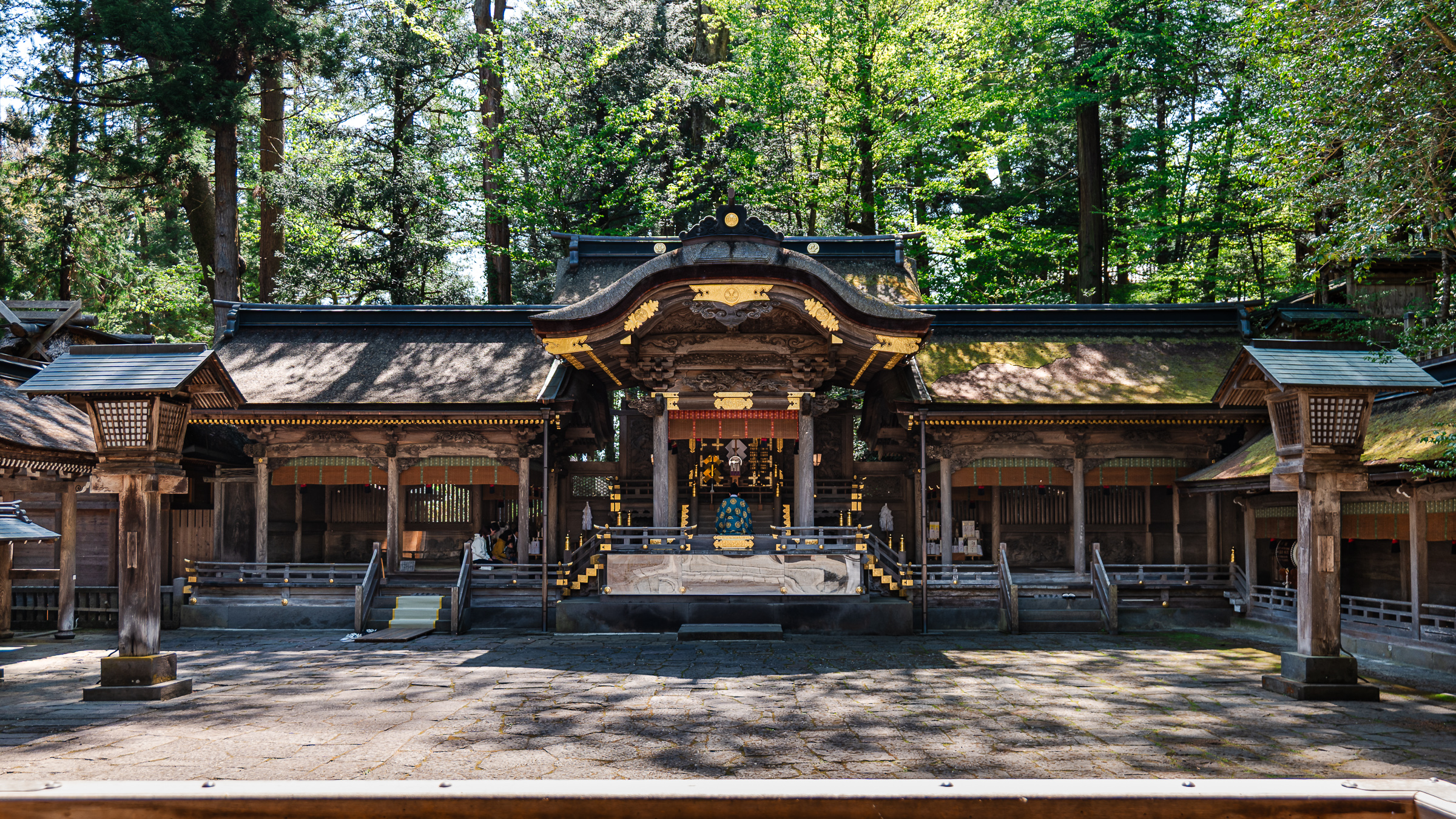
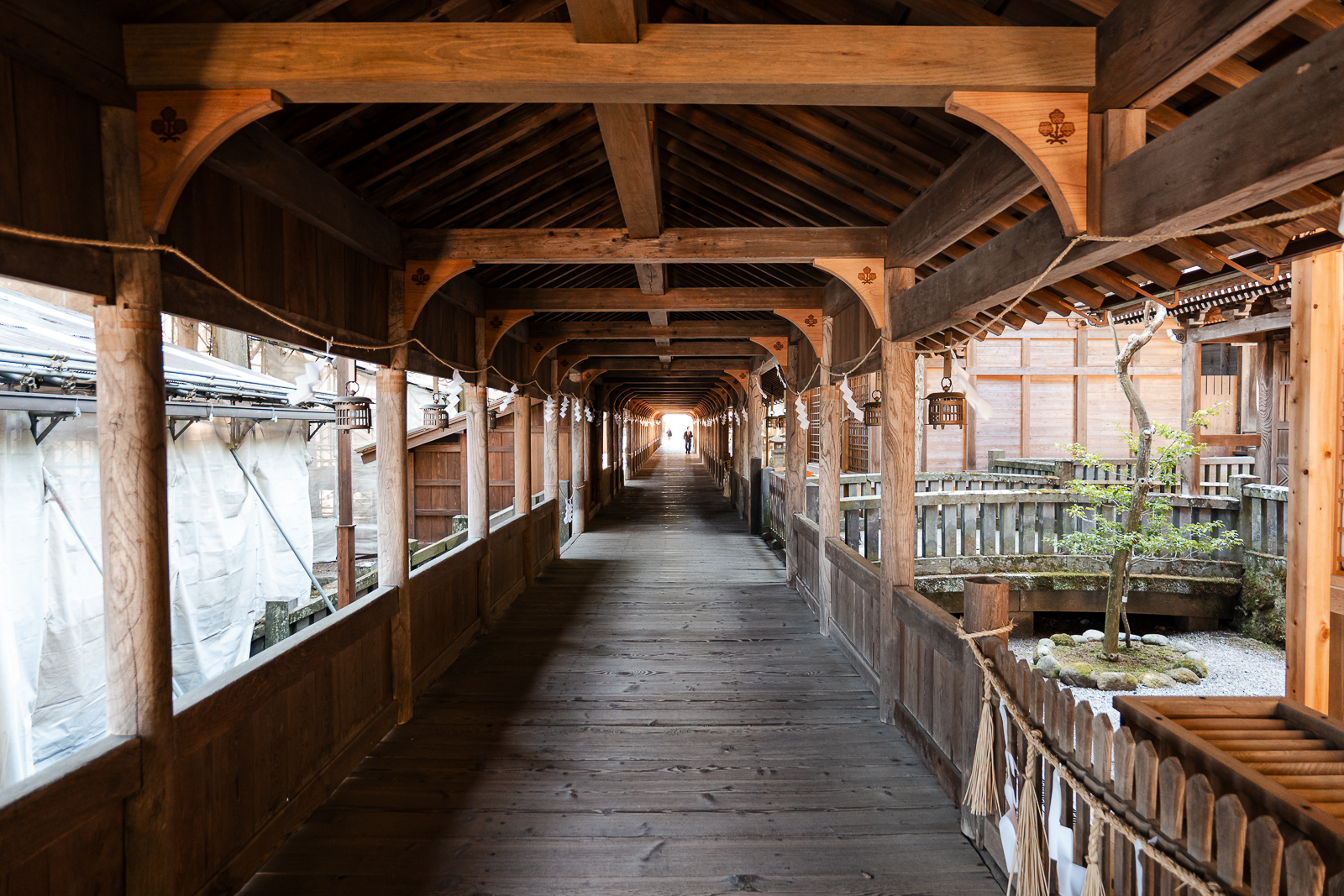
The wooded approach opens into a broad area where the structures are spaced apart rather than arranged around a central courtyard, giving the grounds a more open and continuous layout. The haiden (worship hall) becomes the main point where visitors gather, drawing attention without dominating the entire experience.
Although the hall holds attention, it does not function as a final destination within the site. The building faces outward toward the mountain, and the open ground continues beyond it, allowing movement to carry on rather than stop. This orientation keeps the visit from resolving into a single point.
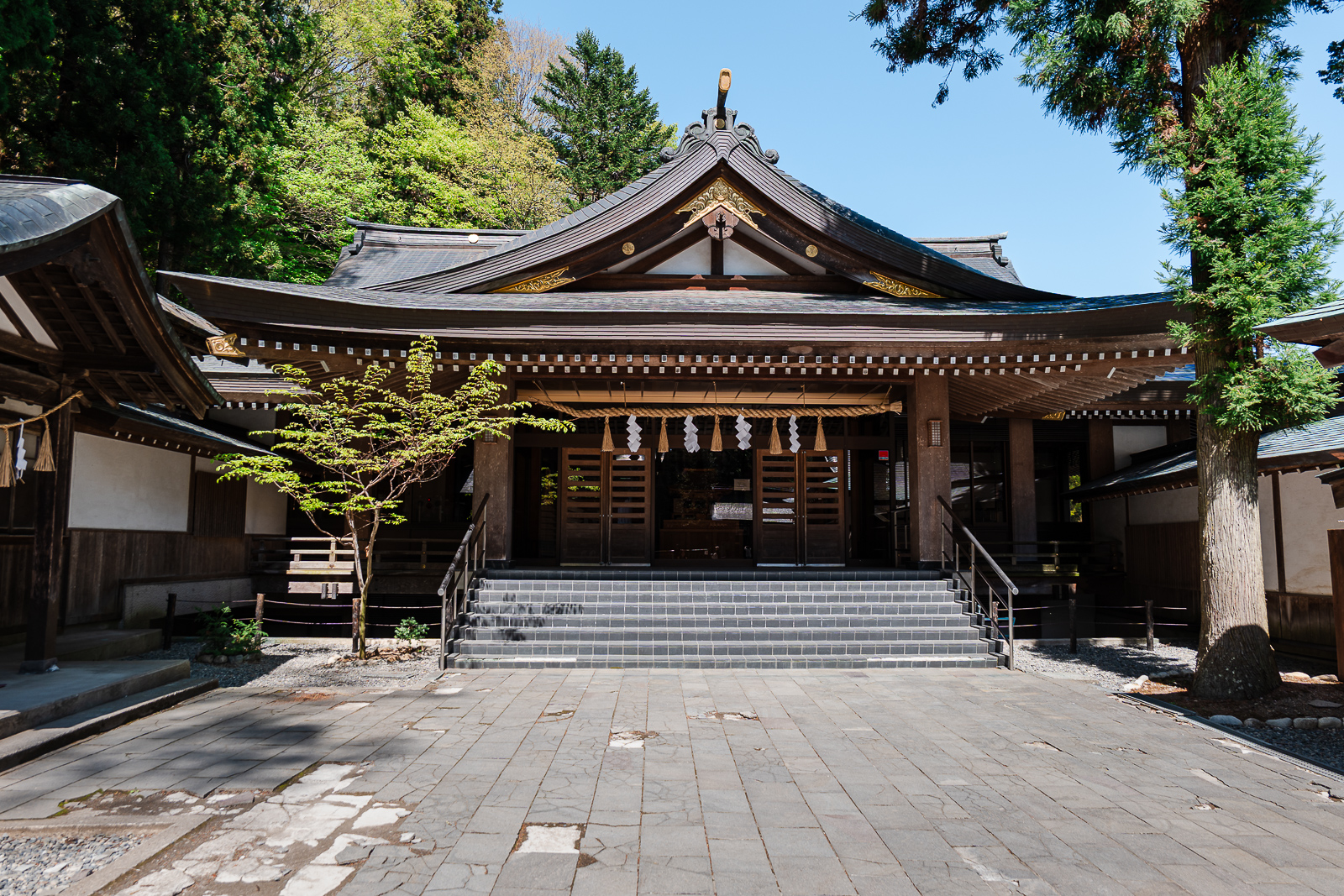
Without a honden, the layout never fully centers on one structure, and visitors tend to move across the grounds rather than remain in one place. This creates a different rhythm from more compact shrine layouts, where the visit is clearly defined by arrival and departure. Here, the experience continues through movement rather than concluding at a single location.
A Cedar Tree That Holds the Space
Within the grounds stands the Neiri no Sugi, a large cedar tree associated with local legend and recognized as one of the defining features of the site. Its scale becomes more apparent as you approach, especially in contrast to the surrounding structures.
The tree sits slightly off the main path, which means it is encountered as part of movement rather than as a clearly defined destination. Many visitors pause here longer than expected, often without intending to, as the space naturally encourages a slower pace at this point in the visit.
Unlike the buildings, the tree does not structure the layout, but it anchors attention in a different way. It becomes one of the moments where the visit extends, and where the difference between moving through quickly and allowing time becomes more noticeable.
The Pillars That Mark the Shrine’s Edges
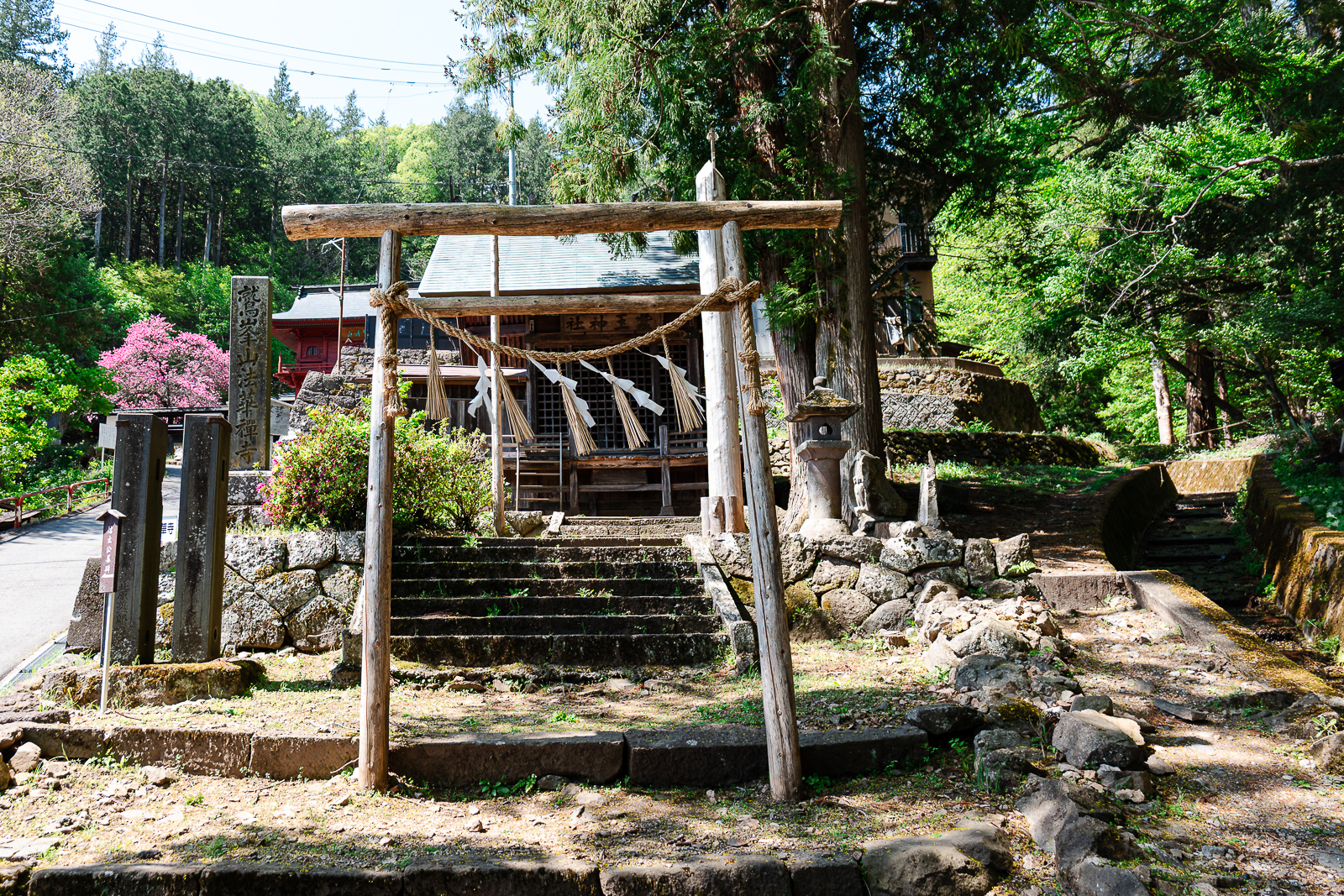
At the outer edges of the grounds stand large wooden pillars that define the boundary of the shrine and give structure to the surrounding space. Their placement helps frame the site without enclosing it, maintaining the connection to the landscape beyond.
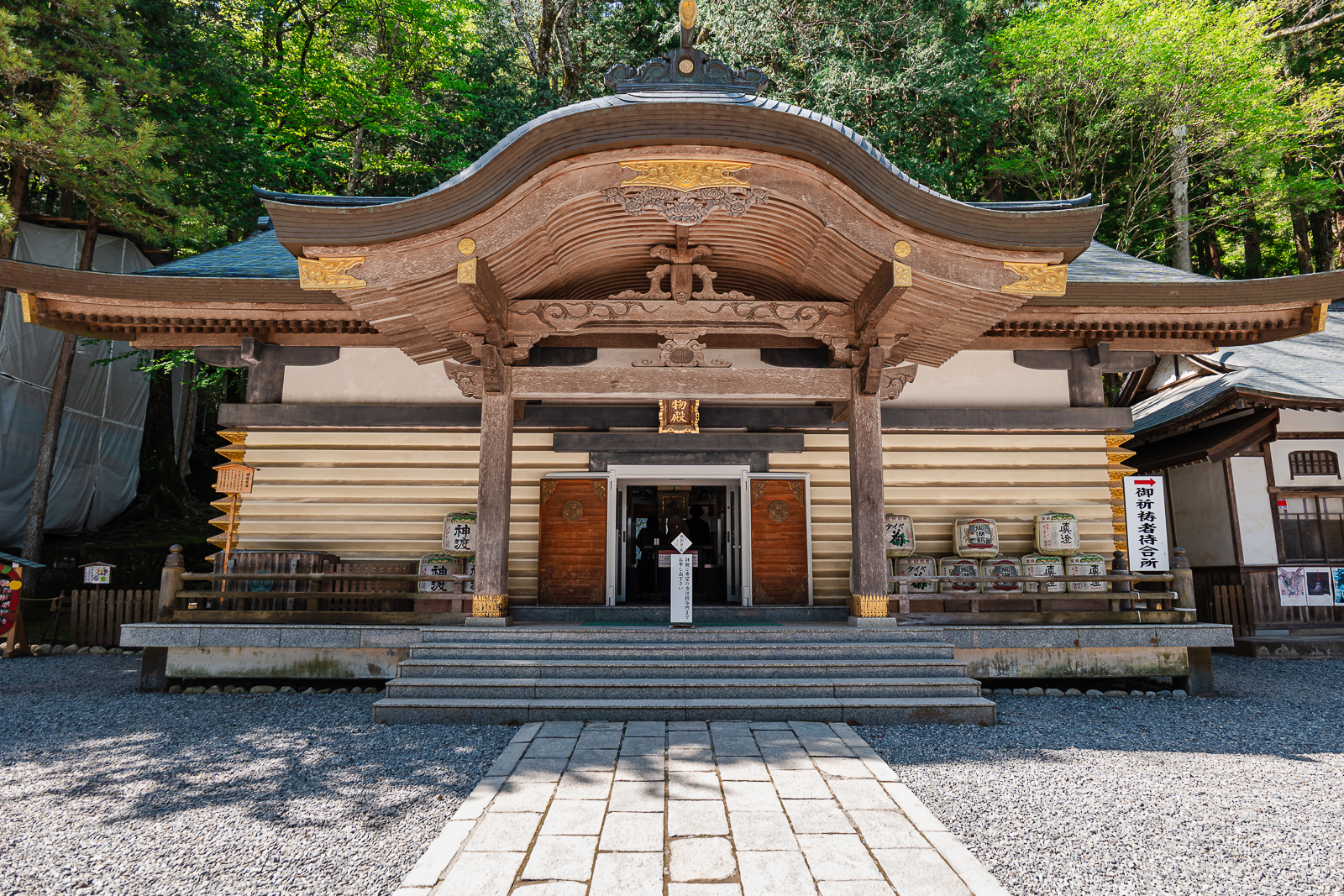
These pillars are part of the Onbashira tradition, tied to the Onbashira Festival, which takes place every six years and involves transporting large logs from nearby mountains into the basin. Once installed, the pillars remain in place until the next cycle, becoming a constant presence within the shrine grounds.
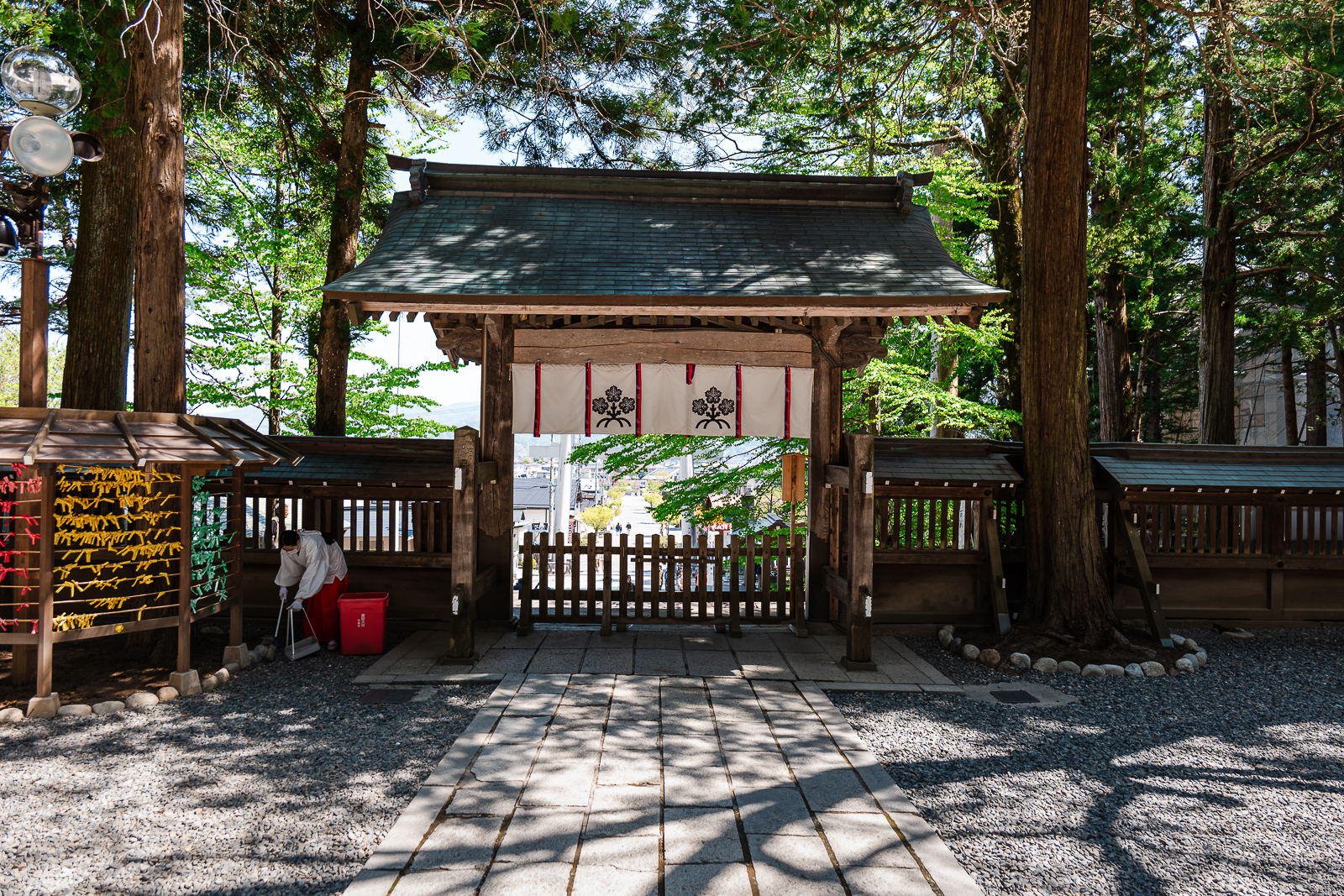
Their scale becomes clearer up close, where the height and thickness can be measured against the surrounding space. The materials originate from the mountains behind the site, and their placement reflects that connection, reinforcing how the shrine is tied to its environment.
How Time Expands Across the Grounds
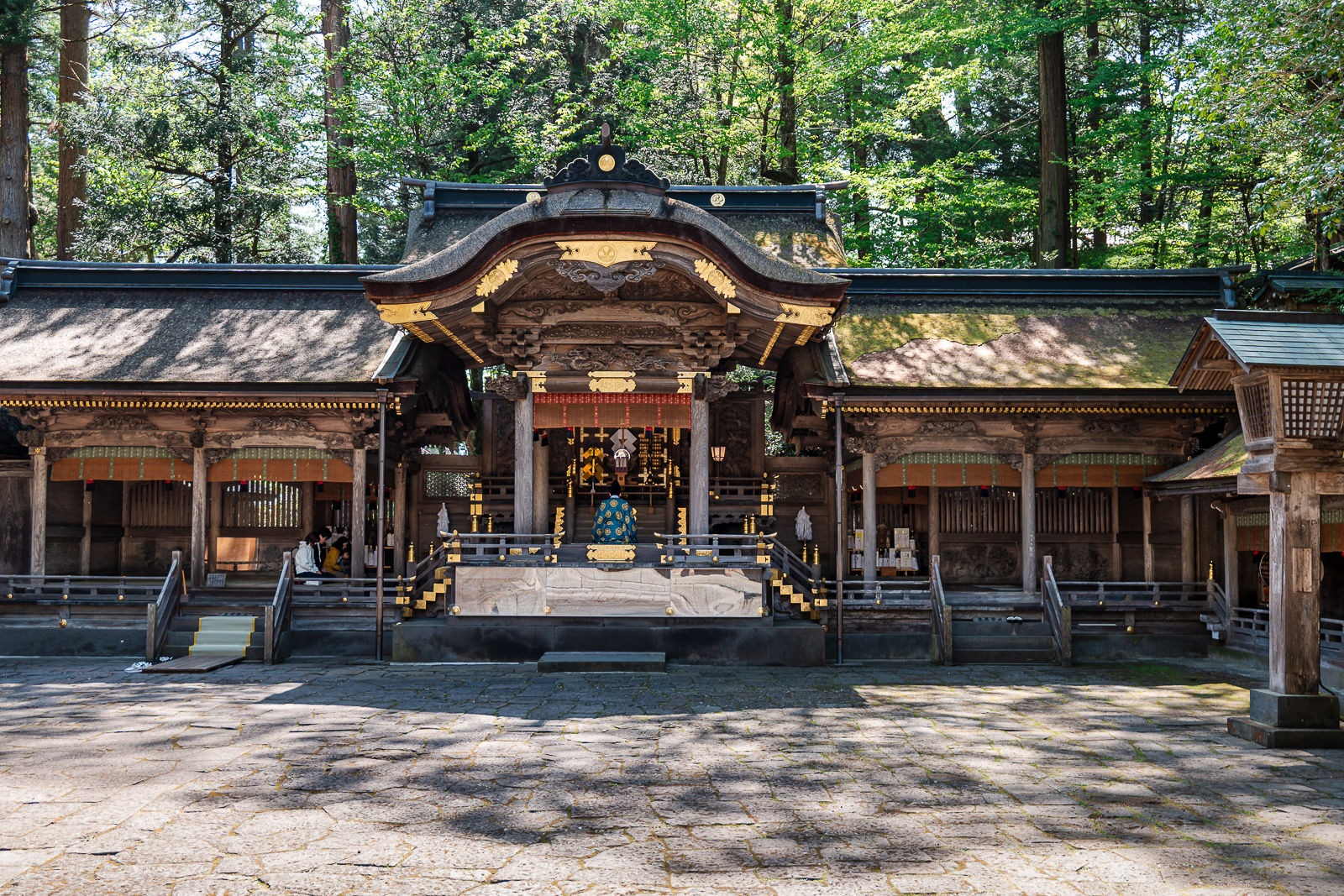
The layout shapes how the visit unfolds more than distance or effort, creating a rhythm that builds gradually as you move through the space. The forested approach transitions quickly into open ground, and while the main hall draws attention, it does not hold it for long before movement continues outward.
As the visit progresses, the edges of the site begin to draw focus, and smaller pauses form naturally between structures. The cedar tree often becomes the longest stop, even though it is not positioned as a central feature, and this is where time begins to extend without intention.
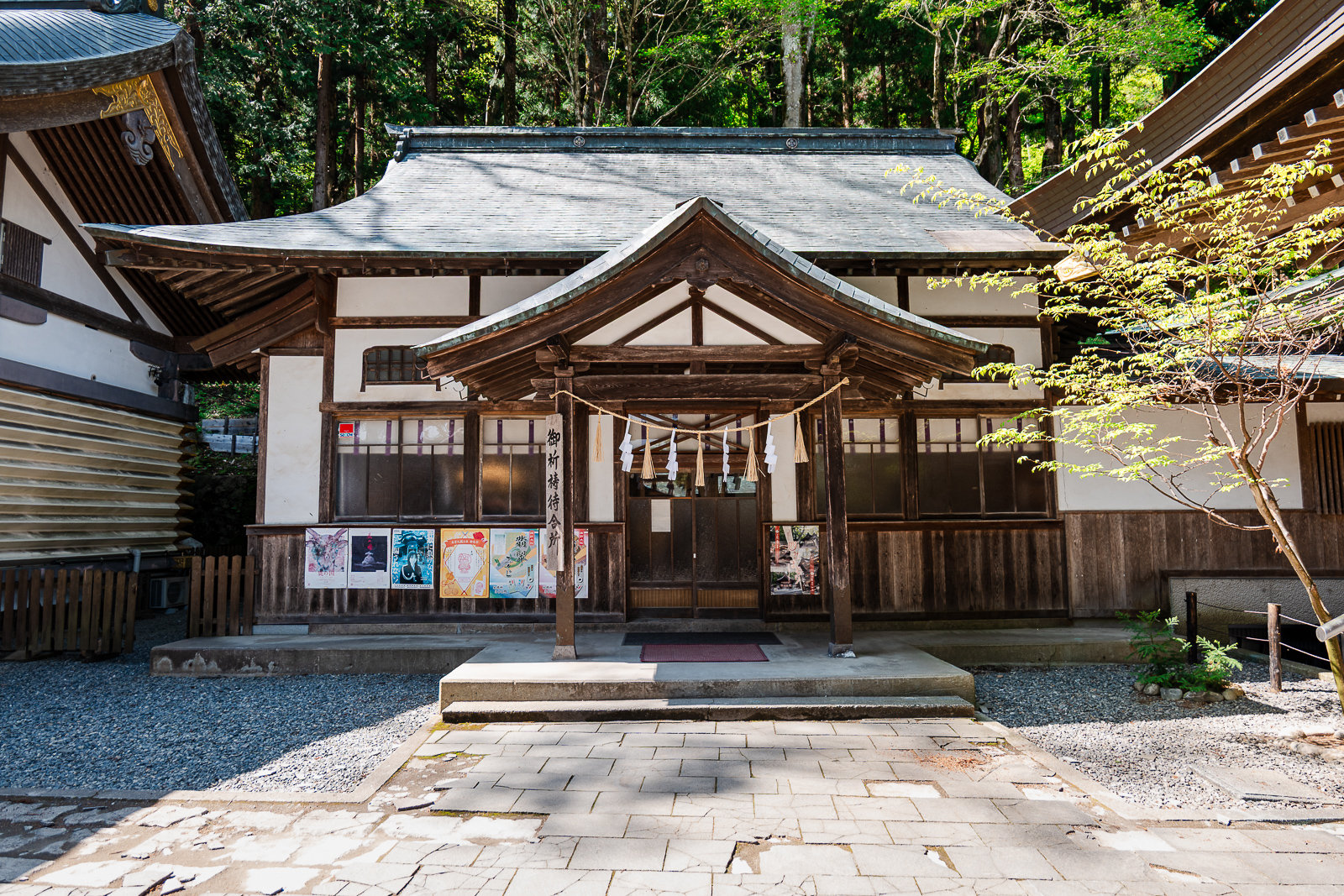
What appears to be a short stop on arrival often stretches closer to an hour, not because of the distance covered, but because of how the space encourages movement and pause. The walking remains easy throughout, and even when the grounds are active, people tend to spread out, preventing the experience from feeling concentrated in one place.
How This Fits Into a Suwa Visit
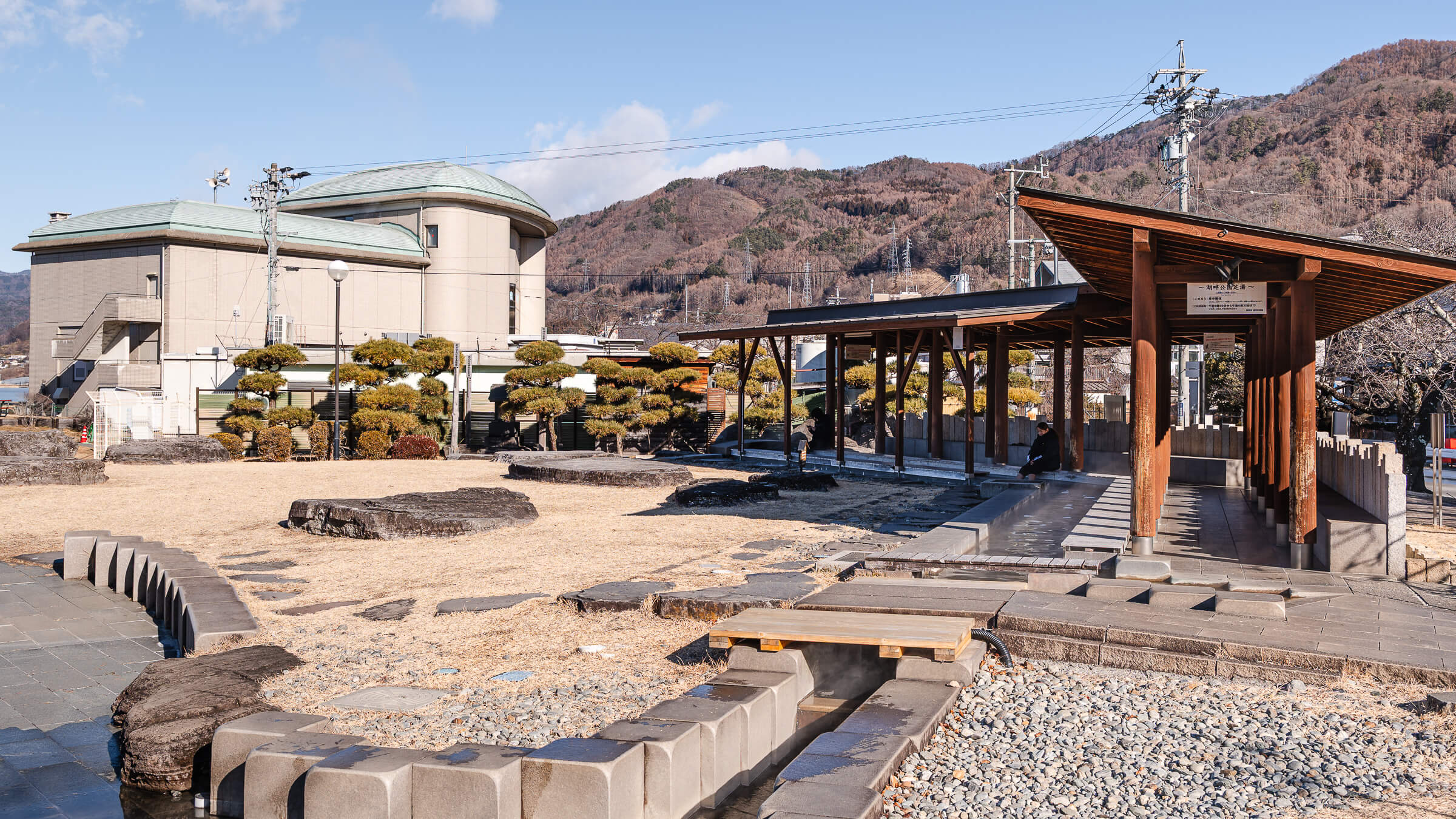
Movement around Lake Suwa often begins along the shoreline, where paths connect areas like Sekicho Park and continue past the Lake Suwa Geyser Center and Lakeside Footbath, where a long footbath runs along the water beside the promenade. From there, the route gradually shifts inland toward the upper basin, where Honmiya and Maemiya sit at the base of the surrounding mountains.
Compared to Suwa Taisha Shimosha Akimiya, which gathers the visit quickly around a central structure, Honmiya spreads it across space and allows the experience to continue without a clear endpoint. Seeing both within the same day makes the contrast more apparent and helps define how the Suwa shrine network is experienced across the basin.
Getting There
Honmiya sits between Suwa City and Chino, slightly inland from the lake and outside the immediate station areas, which affects how most visitors reach the site. The location is not difficult to access, but it does require a shift away from the main lakeside movement.
Most visitors arrive by car when moving between sites in the Suwa area, as the drive from Kamisuwa Station or Chino Station typically takes about 15 to 20 minutes. Parking is located close to the entrance, making the final approach straightforward once you arrive.
Public transportation is possible, but it is less direct and usually involves a train and bus combination followed by a short walk. This adds time and reduces flexibility, particularly when compared to the ease of moving between nearby sites by car.
Hours & Fees
Hours: Grounds open daily (no fixed closing time)
Admission: Free
Reaching Honmiya often becomes part of a broader loop around Lake Suwa, where movement between lakeside and inland sites takes more time than expected. With distances spread across the basin and public transport less direct, planning how you move—and where you base yourself—shapes the visit more than the shrine itself.