What this museum is
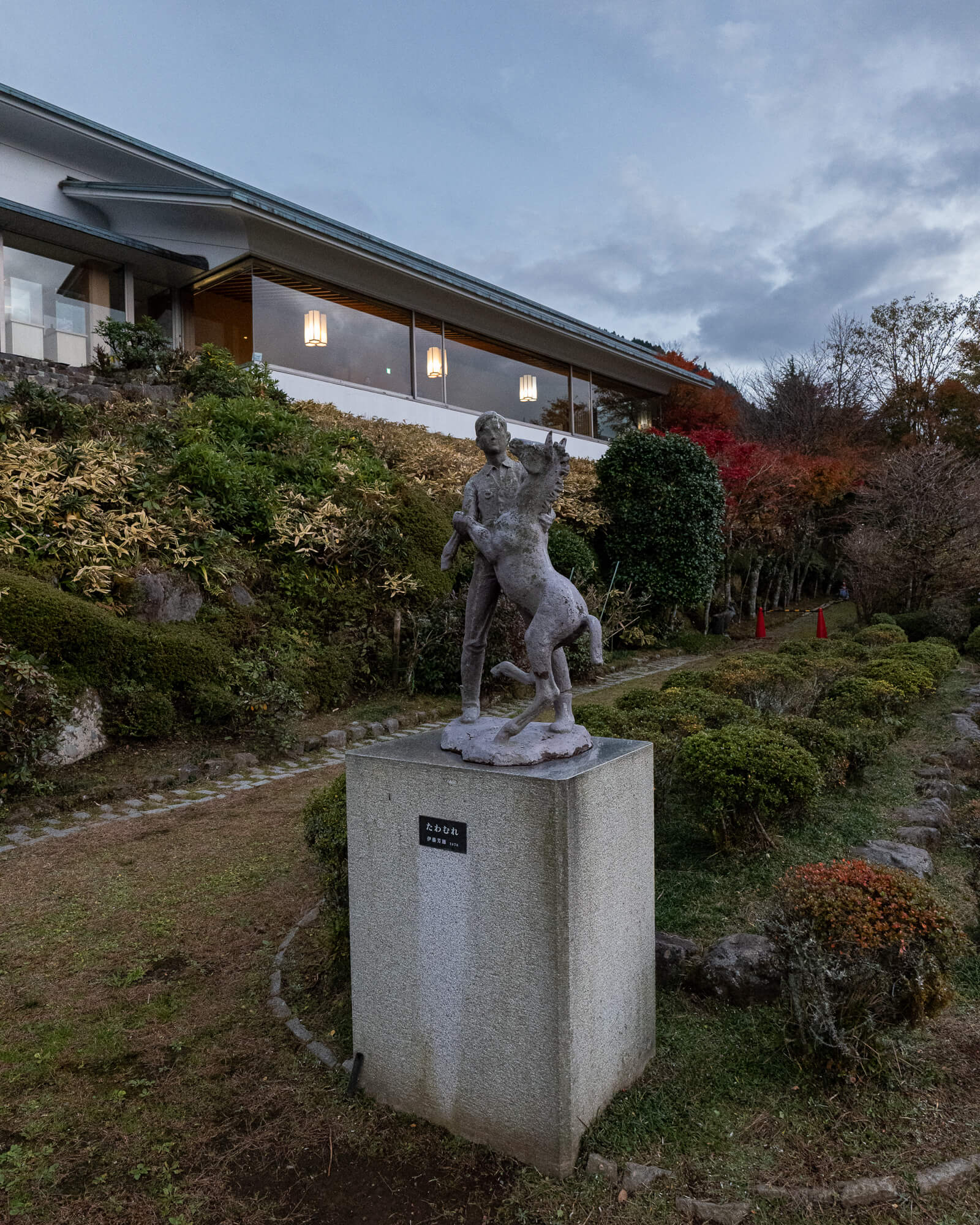
Narukawa Art Museum sits on the hillside above Moto-Hakone, overlooking Lake Ashi. It is a private museum devoted to modern nihonga—Japanese-style painting—set in a position where the lake and surrounding landscape are part of the experience rather than a backdrop.
The museum is not expansive, but it is carefully composed. Visitors come for the paintings, the view, or the way the two interact in a quiet interior space that opens outward to water, mountains, and sky.
Why the museum exists
The museum opened to the public in 1988, built around the collection of Minoru Narukawa. Over roughly twenty years, he assembled a significant body of modern nihonga with the intention of introducing post-Second World War Japanese painting to a wider audience.
At the core of the collection are works by Kyujin Yamamoto, a central figure in the postwar development of nihonga and a recipient of the Order of Cultural Merit. His paintings represent a decisive shift away from the softer tonal qualities of prewar styles toward deeper color, layered pigment, and more assertive composition.
Modern nihonga and its focus here
Modern nihonga builds on the classical tradition of yamato-e from the Heian period while responding to the realities of a changing, globalized Japan. Color is applied in denser layers, compositions are less restrained, and emotional weight is carried differently than in earlier periods.
The museum’s collection now exceeds 4,000 works and traces this evolution through both established artists and emerging painters. From the beginning, Narukawa Art Museum has positioned itself not only as a place to preserve major works, but also as a space that supports living artists and the future direction of Japanese-style painting.
Approaching the museum
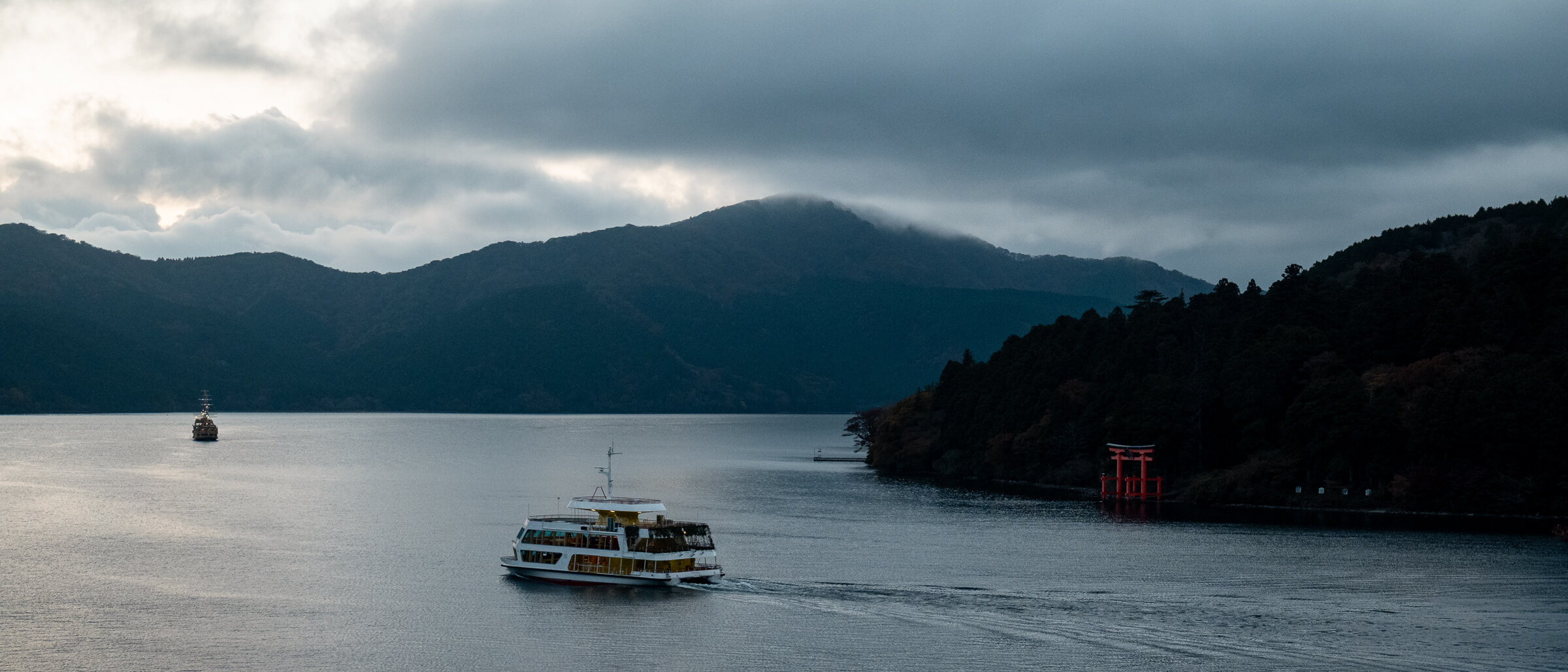
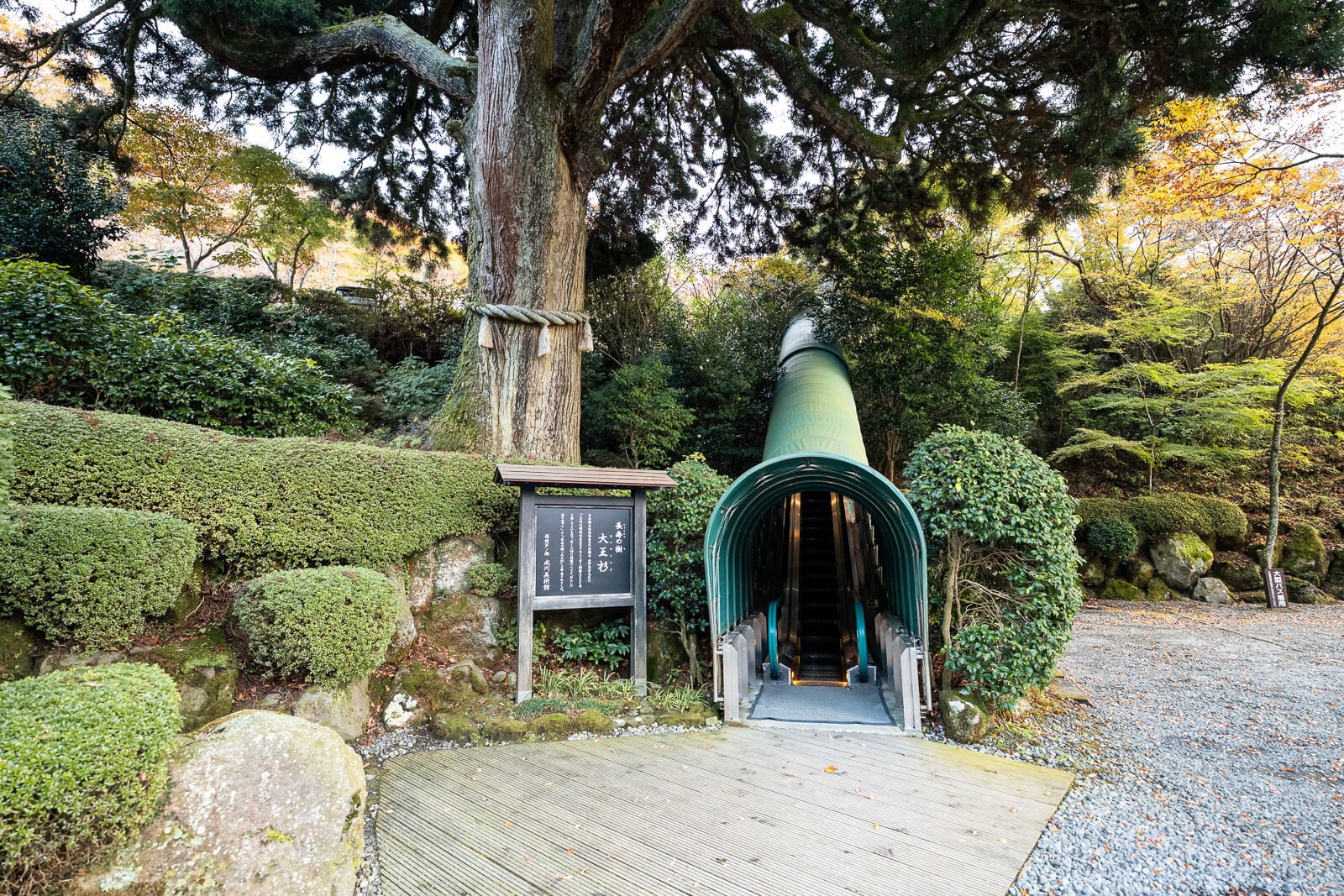
From the Moto-Hakone waterfront near the sightseeing cruise quay and the lakeside torii, the museum sits slightly above the shoreline. While the hillside appears steep at first glance, an escalator along the approach handles most of the ascent and brings visitors directly to the entrance.
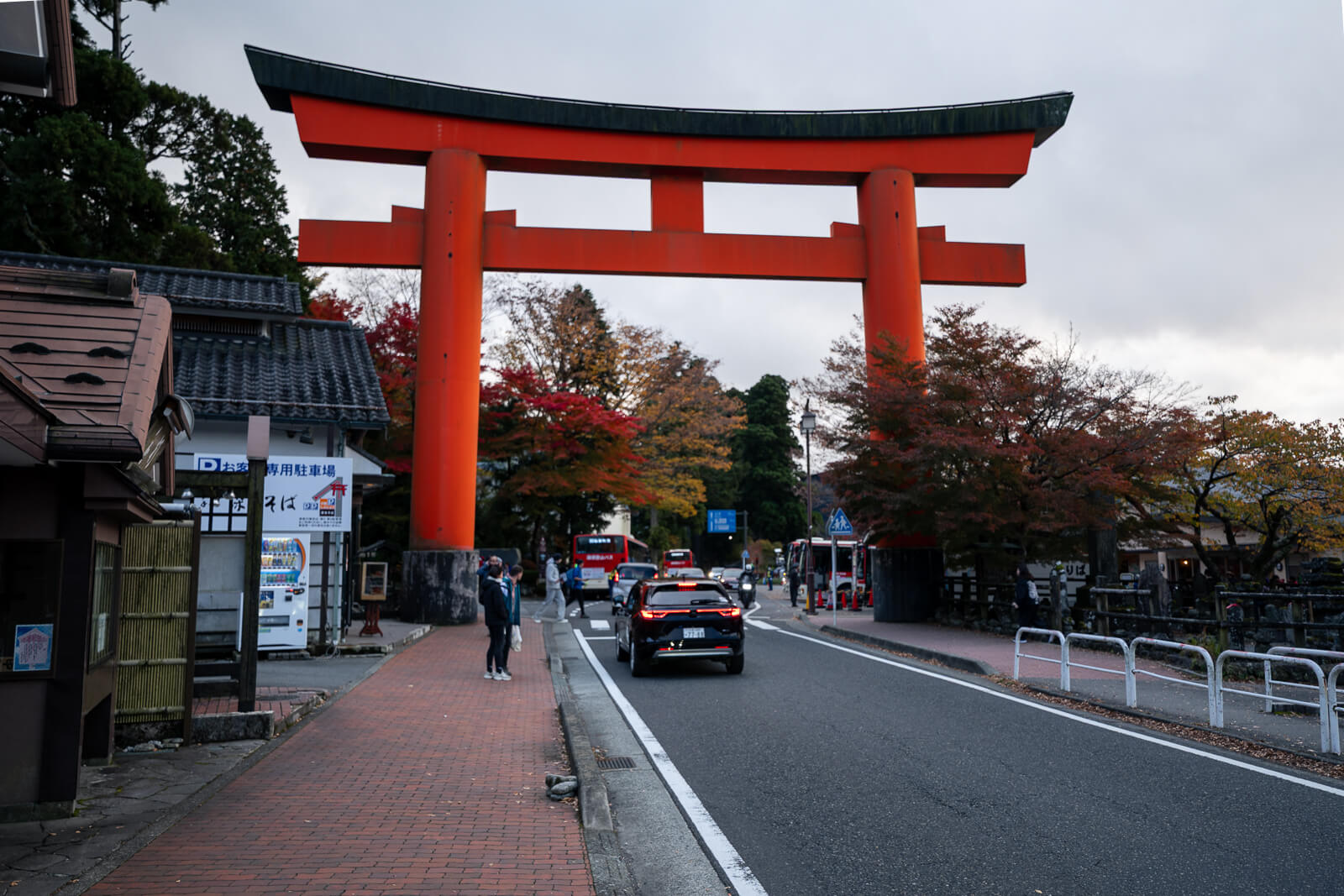
The transition from the busy lakefront to the museum interior is immediate and noticeable.
Inside the galleries
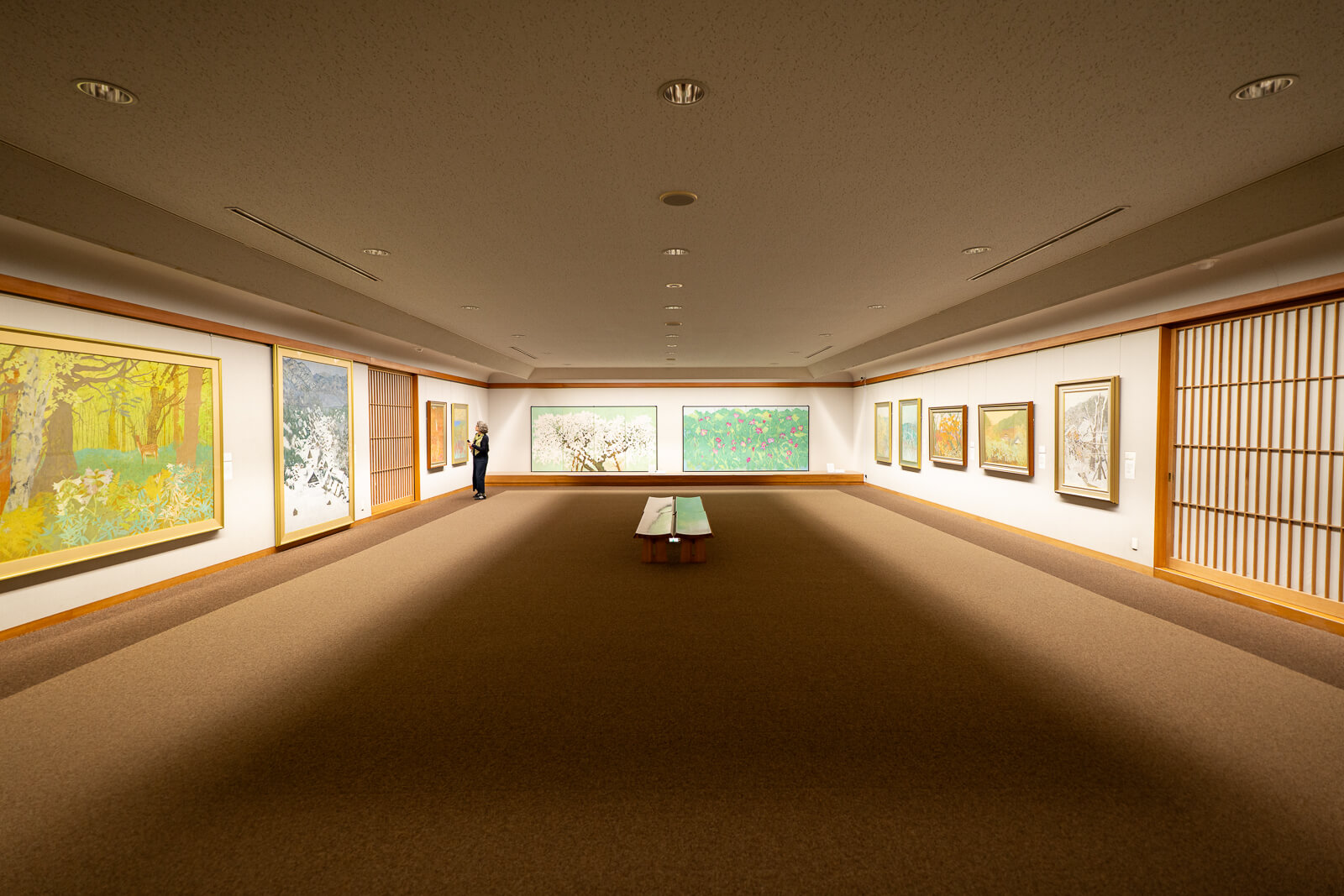
The first floor opens with the admissions desk, a small shop, and restrooms before leading into the exhibition spaces. Two compact gallery rooms sit to either side, encouraging a natural, unforced movement through the artworks.
The scale supports focused viewing rather than extended circulation, allowing the paintings to be taken in without distraction.
The panorama lounge
Beyond the galleries, the space opens into a wide lounge framed by a single, expansive window. From here, Lake Ashi fills the frame. On clear days, Mount Fuji appears beyond the water—distant, but unmistakable—turning the room itself into a viewing space rather than simply a place to pass through.
Many visitors settle into the seating here, letting the view and the art settle together. The atmosphere is quiet, and attention naturally shifts outward.
The outdoor terrace
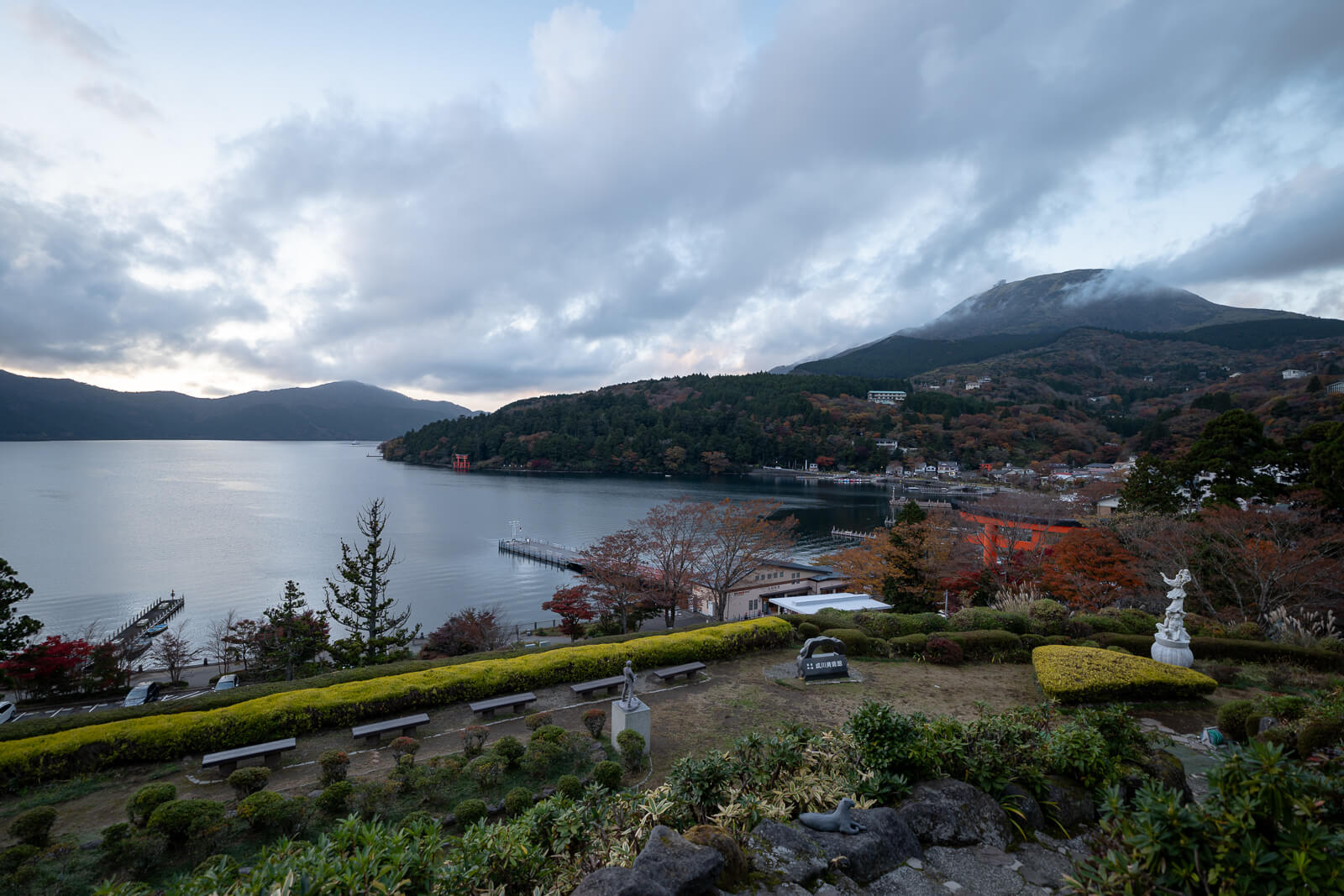
A door from the lounge leads to a small outdoor garden terrace. Though modest in size, it changes the experience. The lake feels closer, the air opens up, and the red torii standing in the water becomes part of the immediate scene rather than a distant landmark.
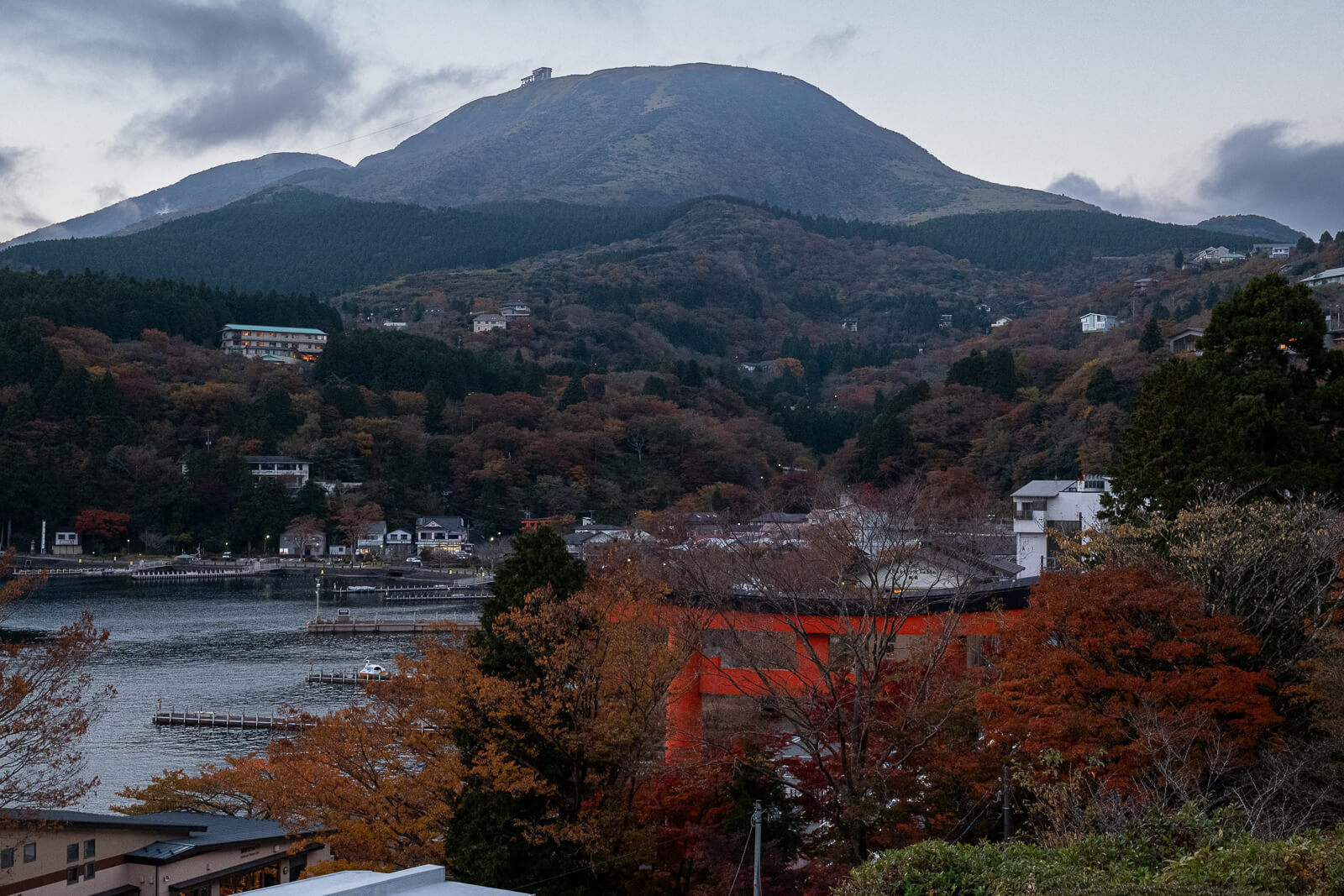
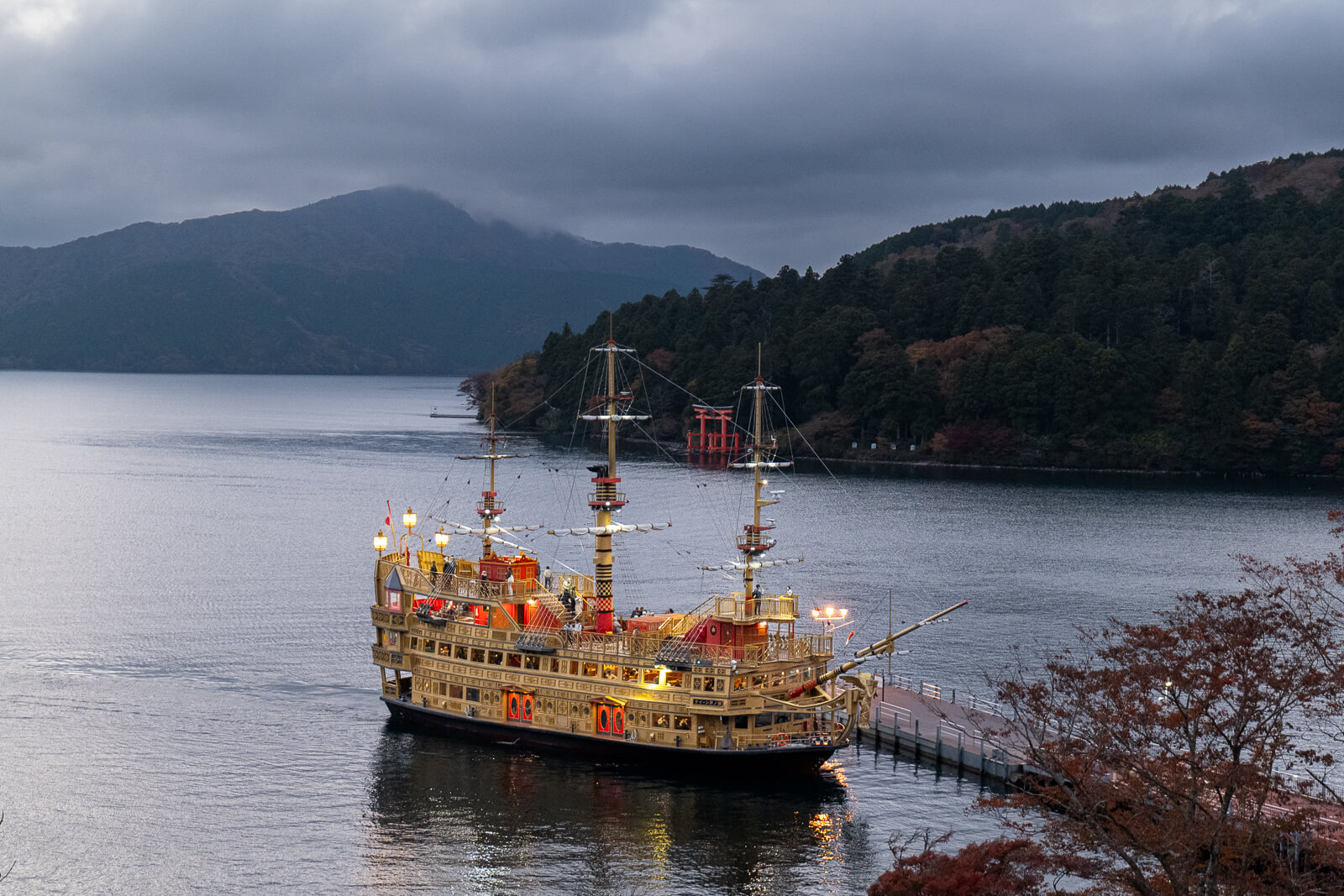
Sightseeing boats crossing Lake Ashi pass through the view, reinforcing the museum’s connection to the landscape below.
Café and upper floor
The museum also includes a café and a second floor with additional exhibition space. Visitors who remain longer often do so by returning to the lounge, stepping outside again, or spending more time with the artworks upstairs as the light shifts.
How this fits into a Lake Ashi visit
Narukawa Art Museum sits naturally within the Moto-Hakone area and integrates easily with nearby lake activities and historic sites. Its value is closely tied to conditions. When visibility across the lake is clear, the relationship between the art, water, and distant mountains becomes central to the experience.
When clouds settle low over the lake, the visit becomes more inward-looking, centered on the paintings and interior spaces rather than the view.
Getting there
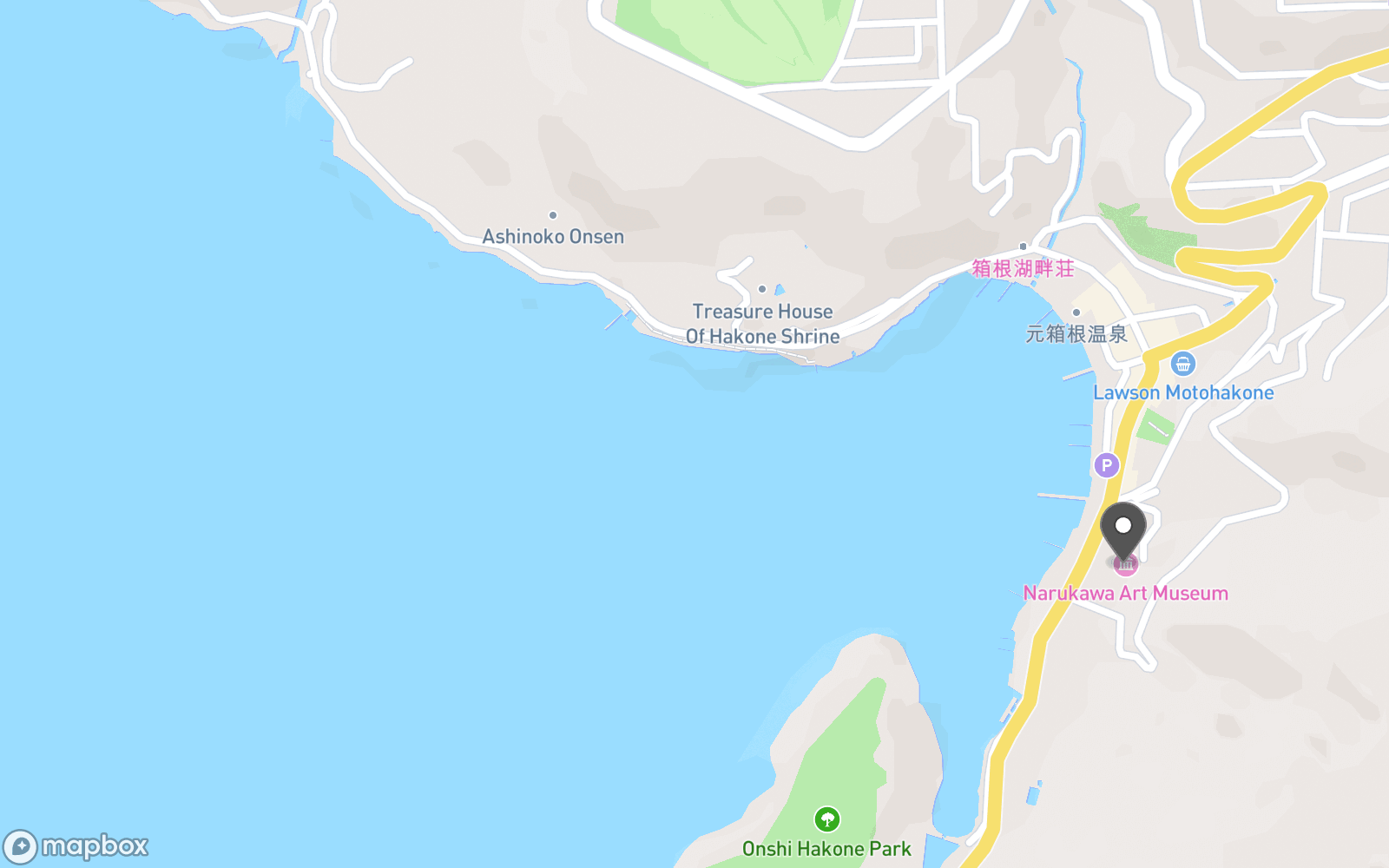
The museum is a short walk from Moto-Hakone Quay, where Lake Ashi sightseeing boats arrive and depart. Buses from Odawara Station, Hakone-Yumoto Station, and surrounding areas regularly serve the Moto-Hakone waterfront.
For those arriving by car, access is straightforward via the Tomei Expressway, with routes through Odawara or Gotemba depending on direction. Complimentary parking is available on site for passenger vehicles and buses.
Hours and Fees
Opening hours: 9:00–17:00
Last admission: 16:30
Closed days: No regular closing days
Admission fees:
Adults: 1,500 yen
University / High school students: 1,000 yen
Junior high / Elementary students: 500 yen
Preschool children: Free