A Settlement Compressed Around Water
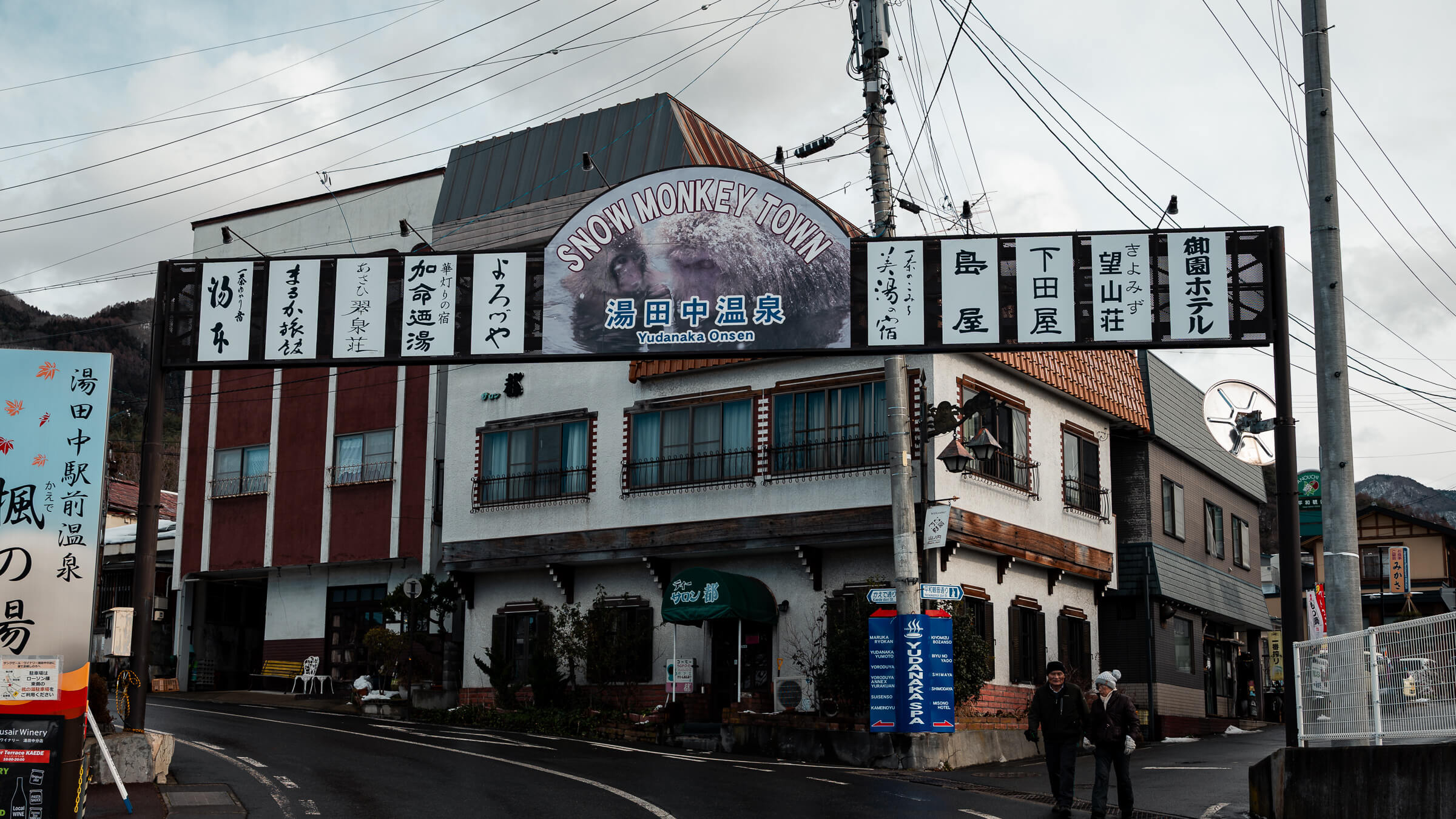
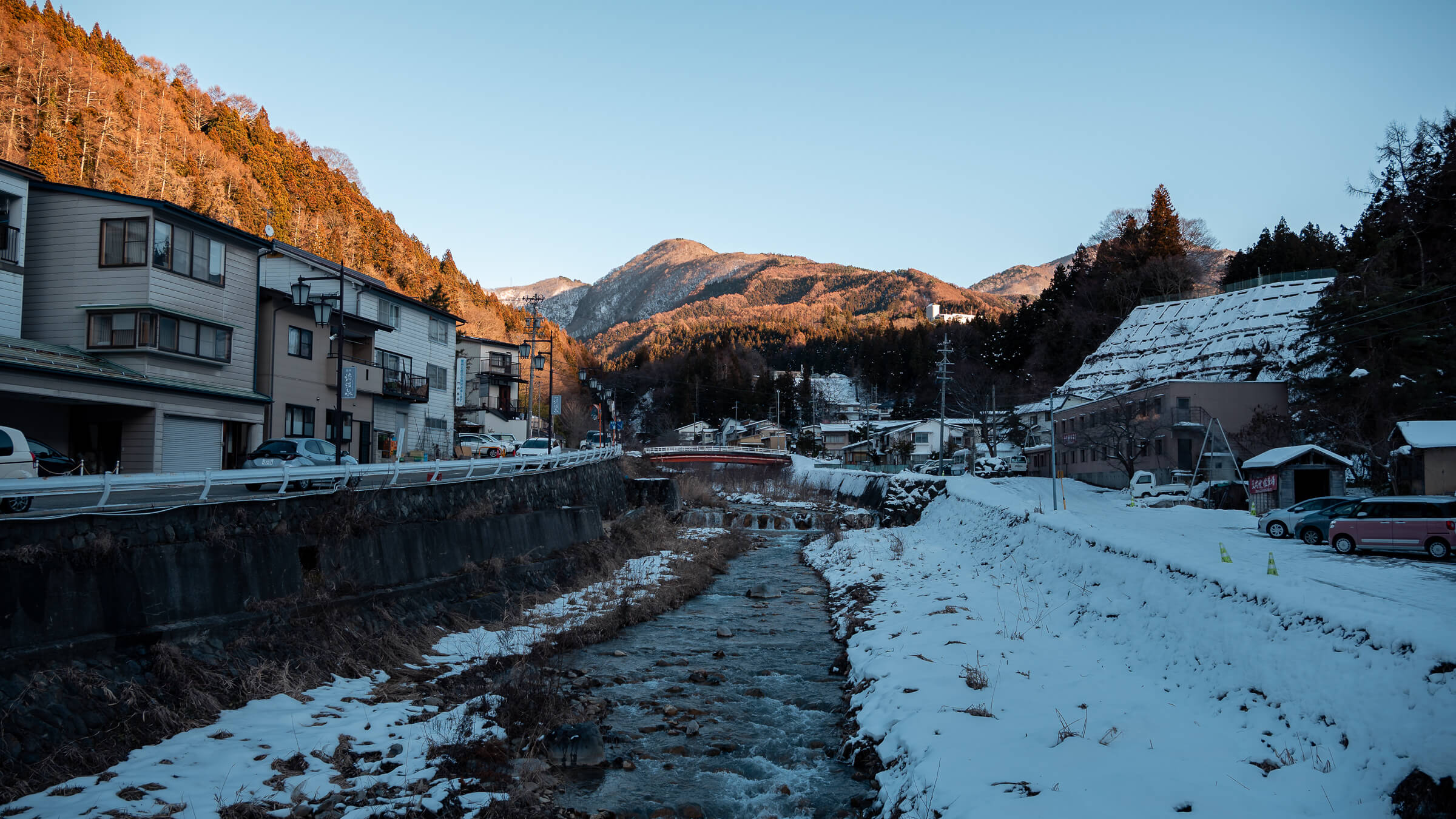
Shibu Onsen sits in a narrow fold of Yamanouchi, above Yudanaka Onsen Town, along the road that continues toward Jigokudani Snow Monkey Park. Most visitors arrive by way of Nagano Station, then turn into this smaller mountain corridor where the valley tightens and buildings draw close together.
The town is arranged along a single sloping street beside the Yokoyugawa River. Wooden ryokan stand shoulder to shoulder. Bathhouse entrances are set directly into the street wall. Nothing spreads outward. Everything remains within short walking distance, including the short ascent to Onsen-ji Temple above the upper edge of town, where the settlement’s compact layout becomes clear from above.
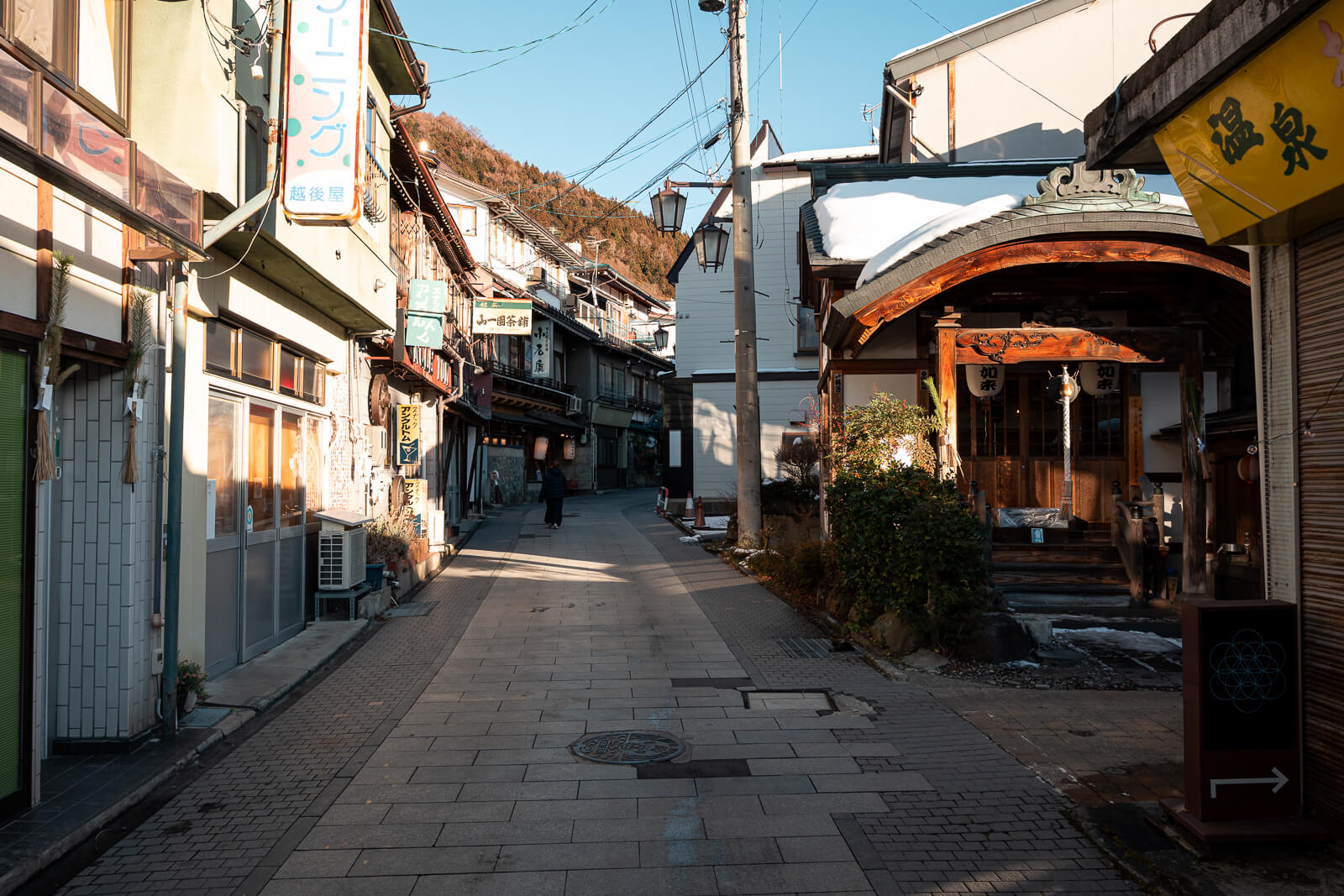
That compression defines the experience. Shibu is understood over the span of one evening and the following morning. Once inside town, effort becomes minimal. The pattern is repetitive by design: room, bath, street, bath, return.
Thirteen Centuries of Water, Proximity, and Winter
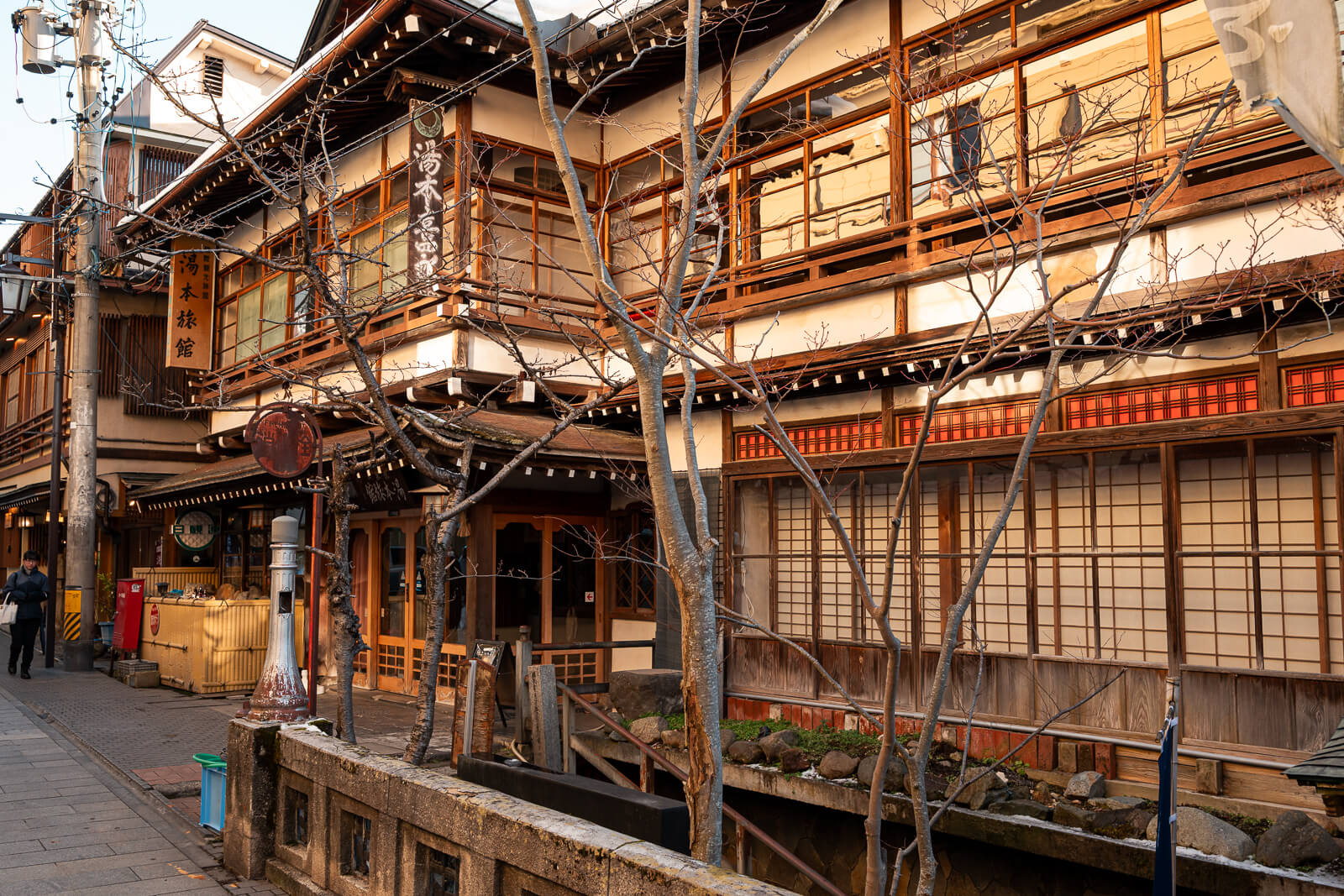
Hot springs have drawn travelers to this valley for over 1,300 years. In a mountainous region where winter restricted movement, dependable hot water created a reason to pause.
What developed here was not expansion but concentration. Inns clustered tightly around shared access to springs rather than dispersing across the landscape. Several ryokan still operating trace their origins back more than 400 years. The street remains narrow because the settlement never needed to widen; the baths were already close.
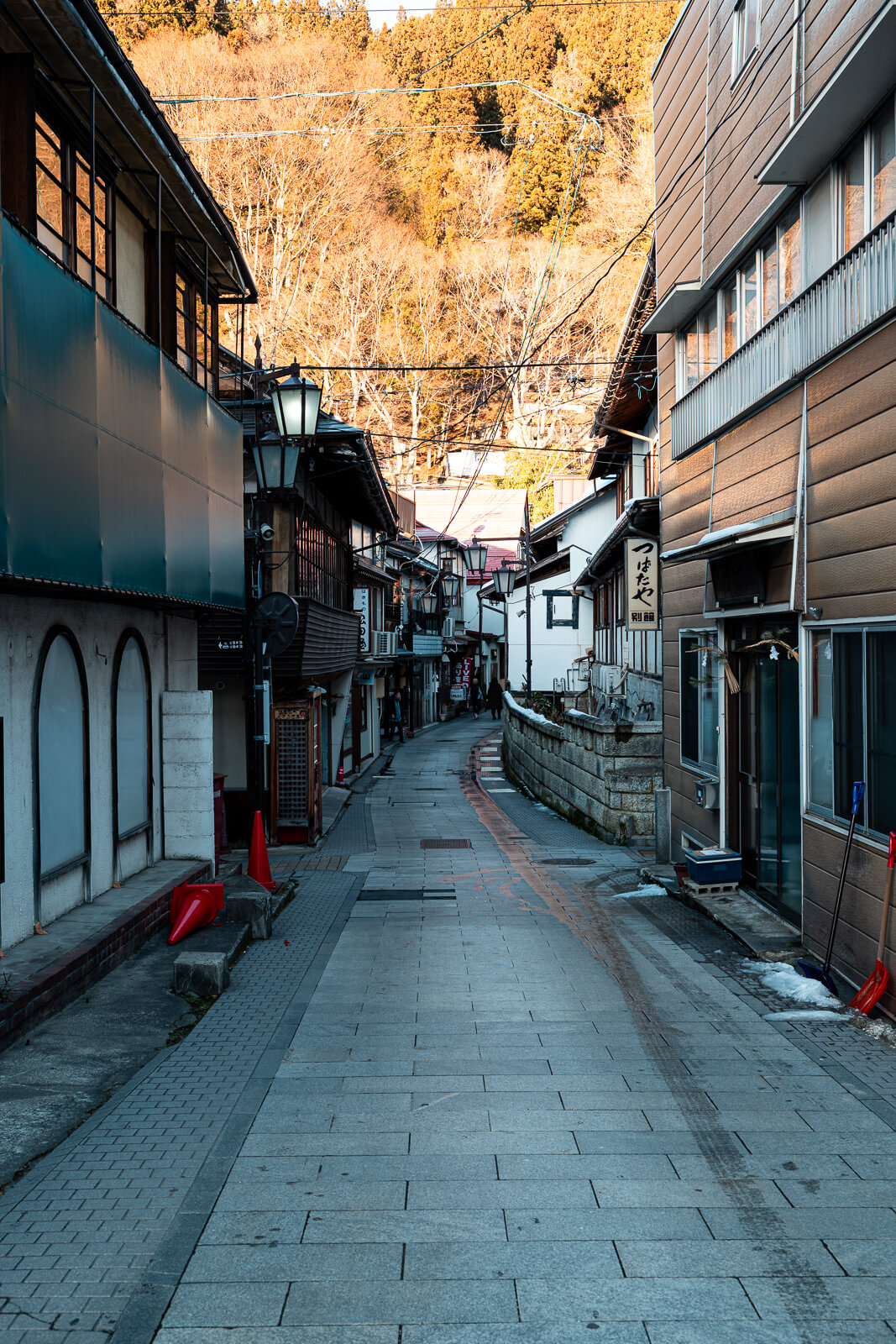
A traveler arriving centuries ago would have encountered steam rising from low entrances, wooden façades in close alignment, and water determining where structures could stand. Those conditions remain legible today.
History in Shibu is measured in distance.
The Evening Circuit
Arrival generally occurs in the afternoon, allowing time to settle into a ryokan before dinner. Many inns serve multi-course kaiseki meals at fixed hours, and the town’s cadence follows that anchor.
After dinner, guests receive a master key granting access to the nine public bathhouses distributed along the street grid.
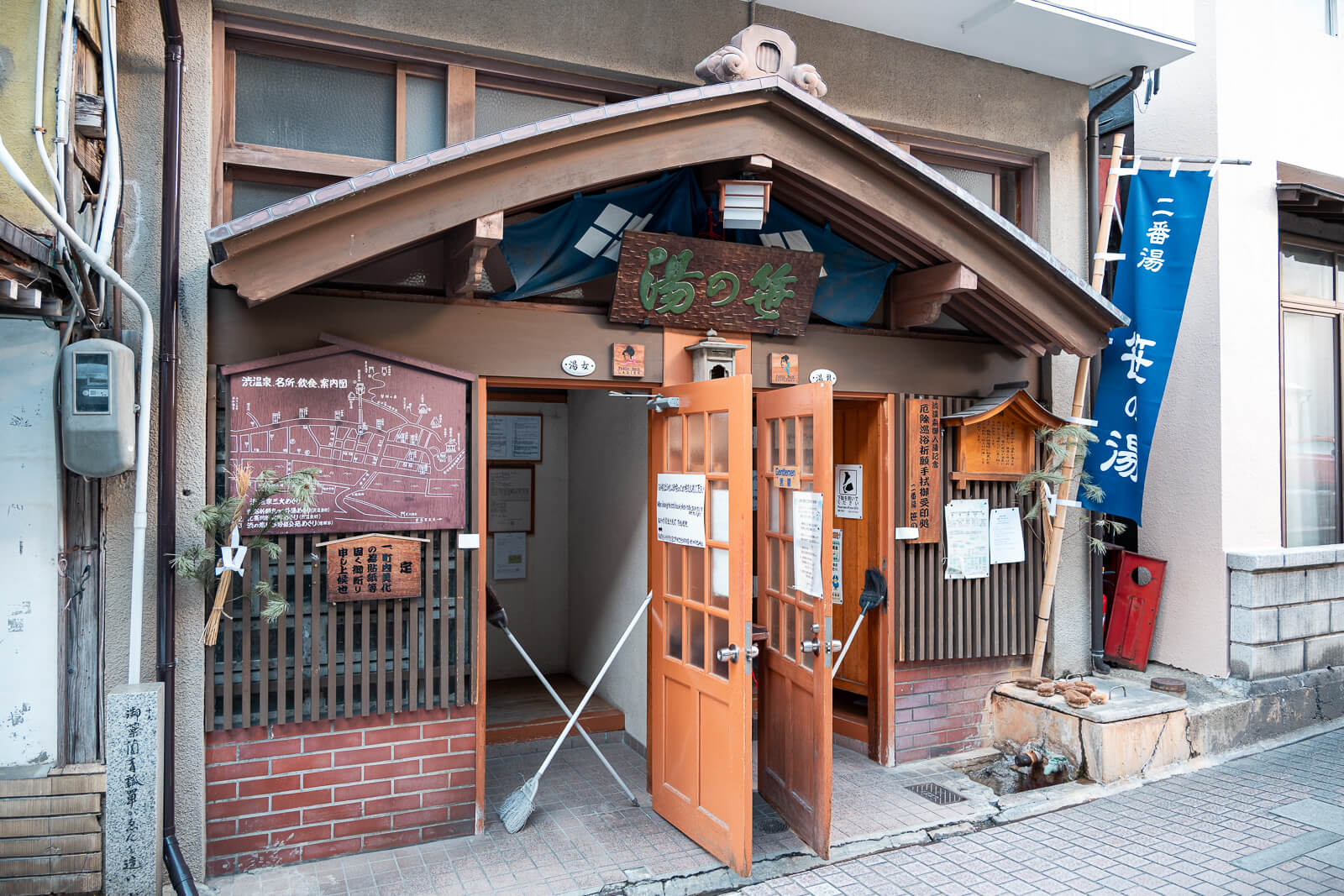
Each bathhouse is small. Entrances are rarely more than a few minutes apart. Stepping out of one places another almost immediately in view. The repetition is intentional. Shibu was structured around circulation rather than spectacle.
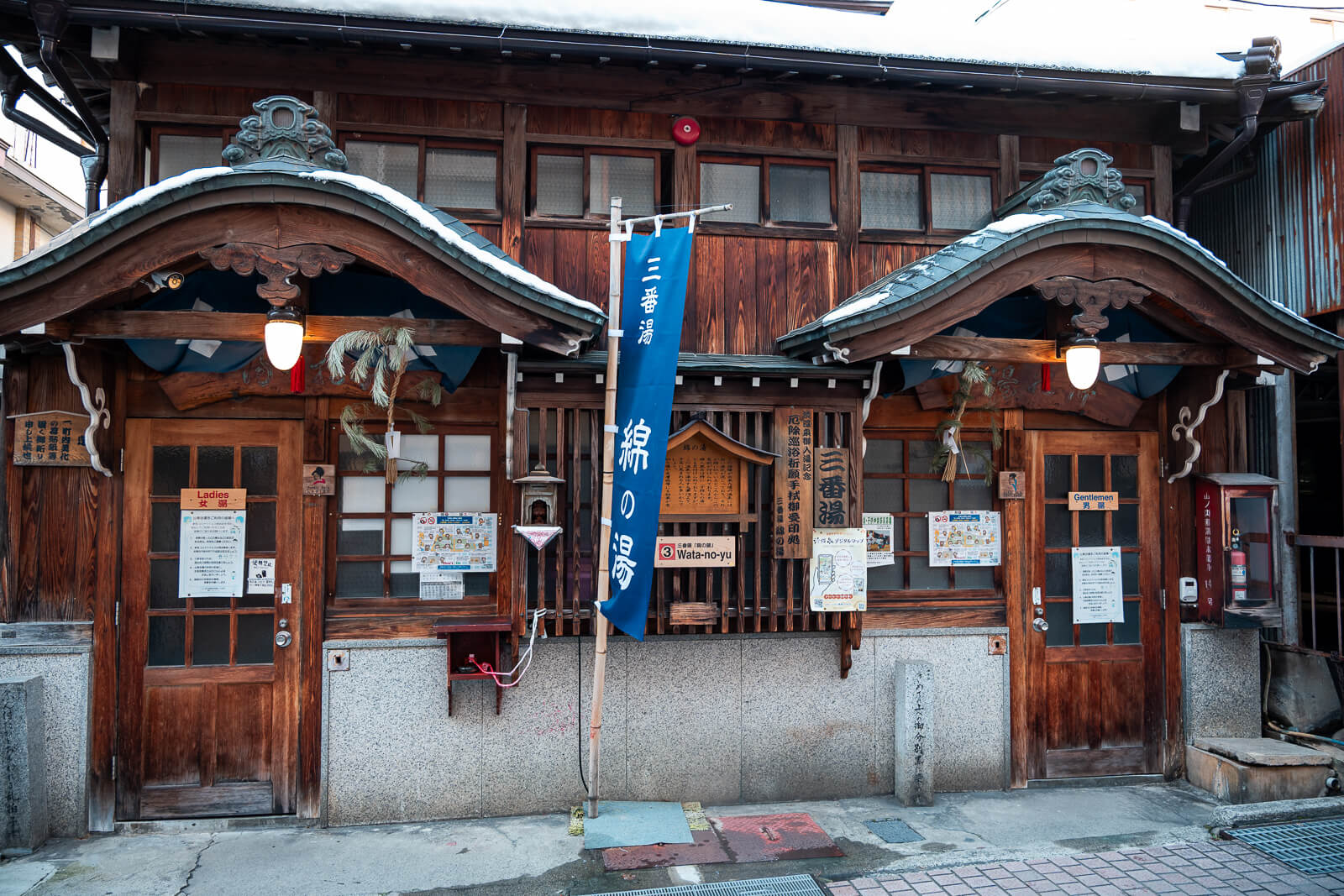
Water temperature shapes pacing more than distance does. Capacity is limited; even slight changes in visitor numbers affect rhythm. Most guests spend one to two hours visiting several baths in the evening. Completing all nine is possible, though understanding the pattern does not require it.
Visitors not staying within town generally have access only to Bath #9 (Oyu), shifting the experience from circulation to a single contained space.
Above the Street, the Settlement Reveals Itself
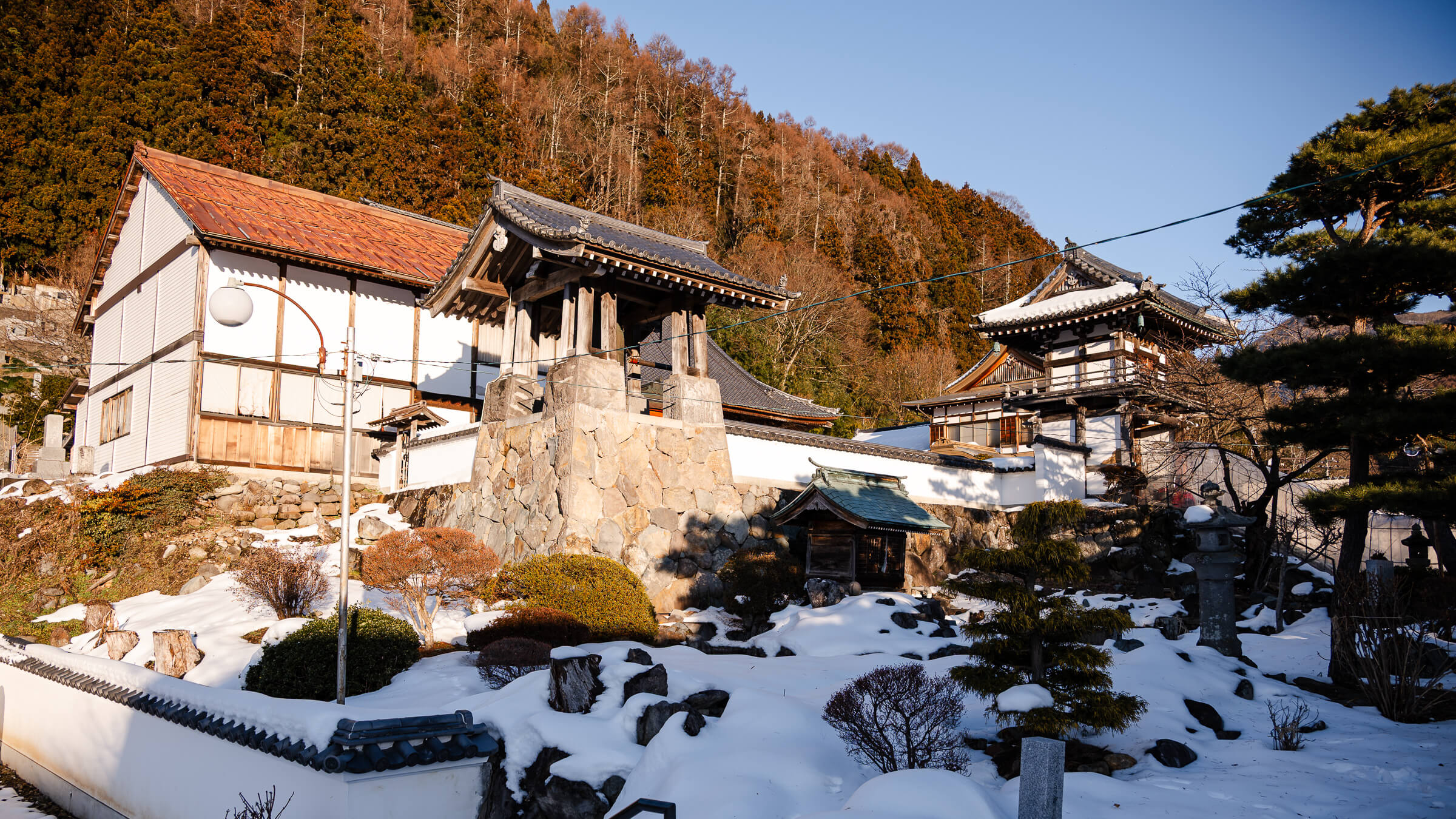
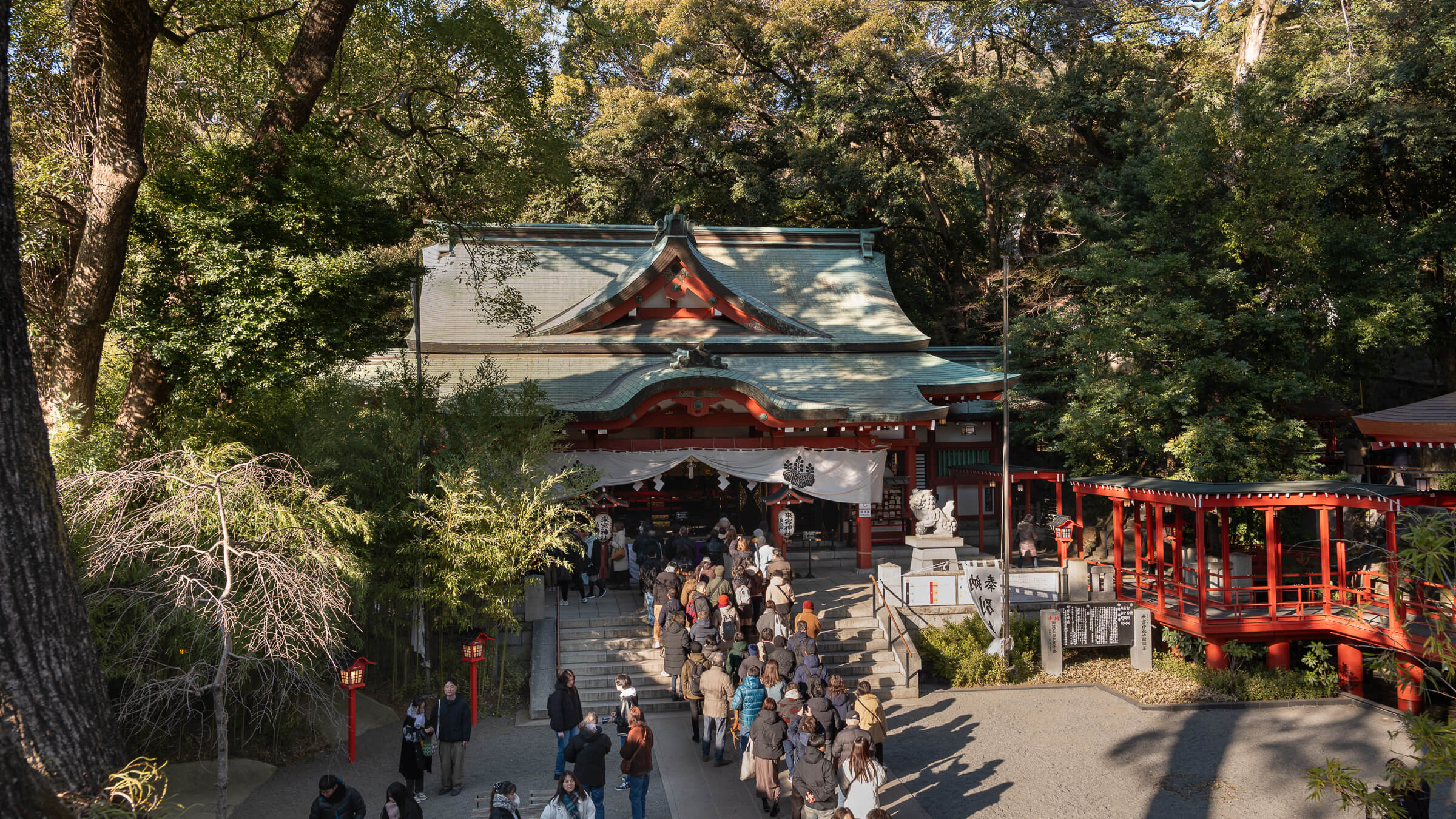
A short ascent at the upper edge of town leads to Onsen-ji Temple and Narita Fudoson. The climb requires minimal effort and takes only minutes.
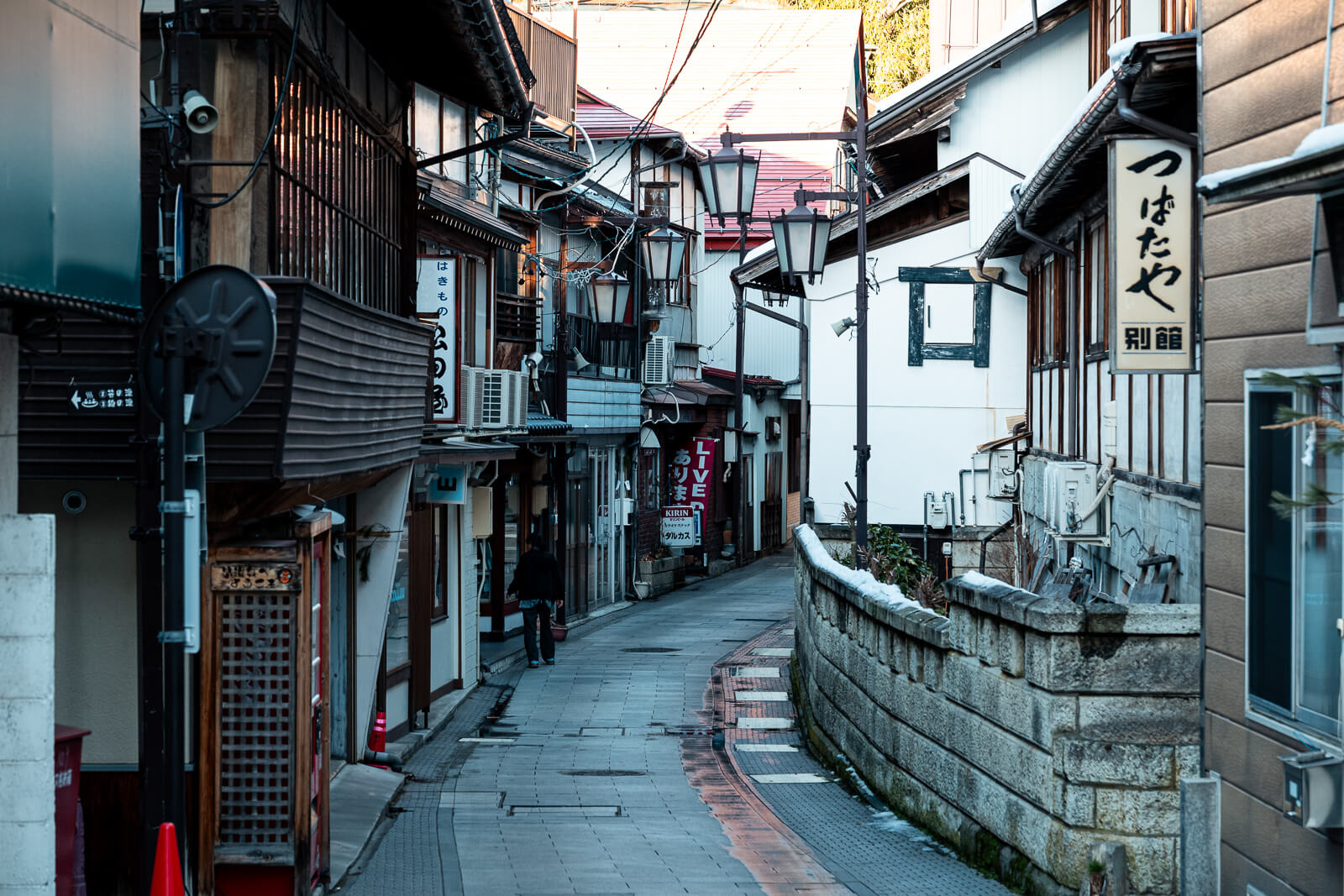
From above, the geometry of Shibu becomes apparent: bathhouses below, river cutting through the slope, rooftops compressed into a single corridor. The stop is brief — typically under half an hour — but it clarifies how tightly the settlement was shaped around its springs.
After Dinner: Steam, Snow, and Narrow Lanes
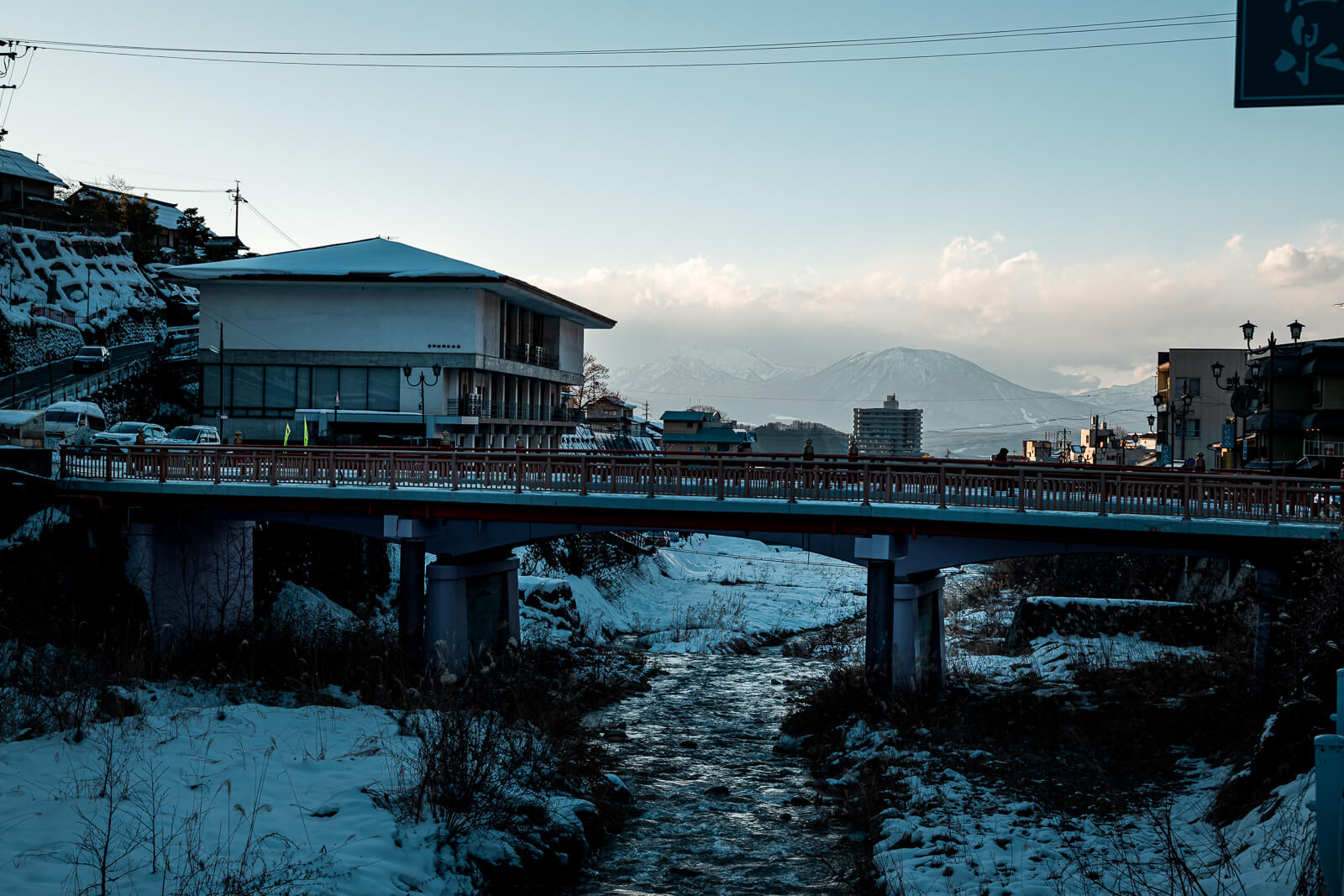
Once dinner service concludes, storefront activity recedes and movement narrows to bath circulation. There is no separate entertainment district and limited late dining. The town simplifies.
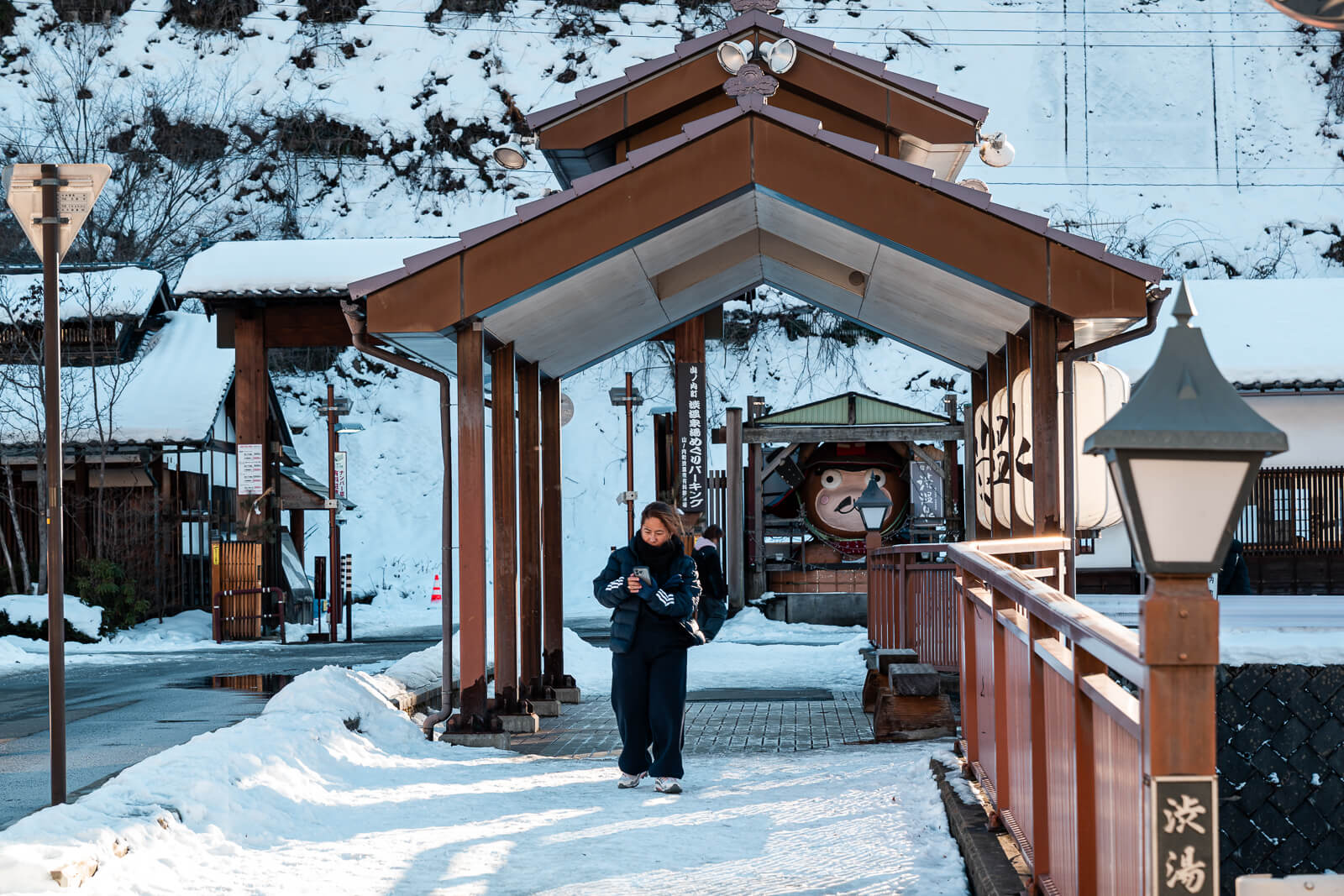
In winter, snow settles along the slope and steam becomes more visible against the cold air. Light reflects differently off wood and stone, tightening the sense of enclosure. Walking surfaces may be slick, though distances remain short.
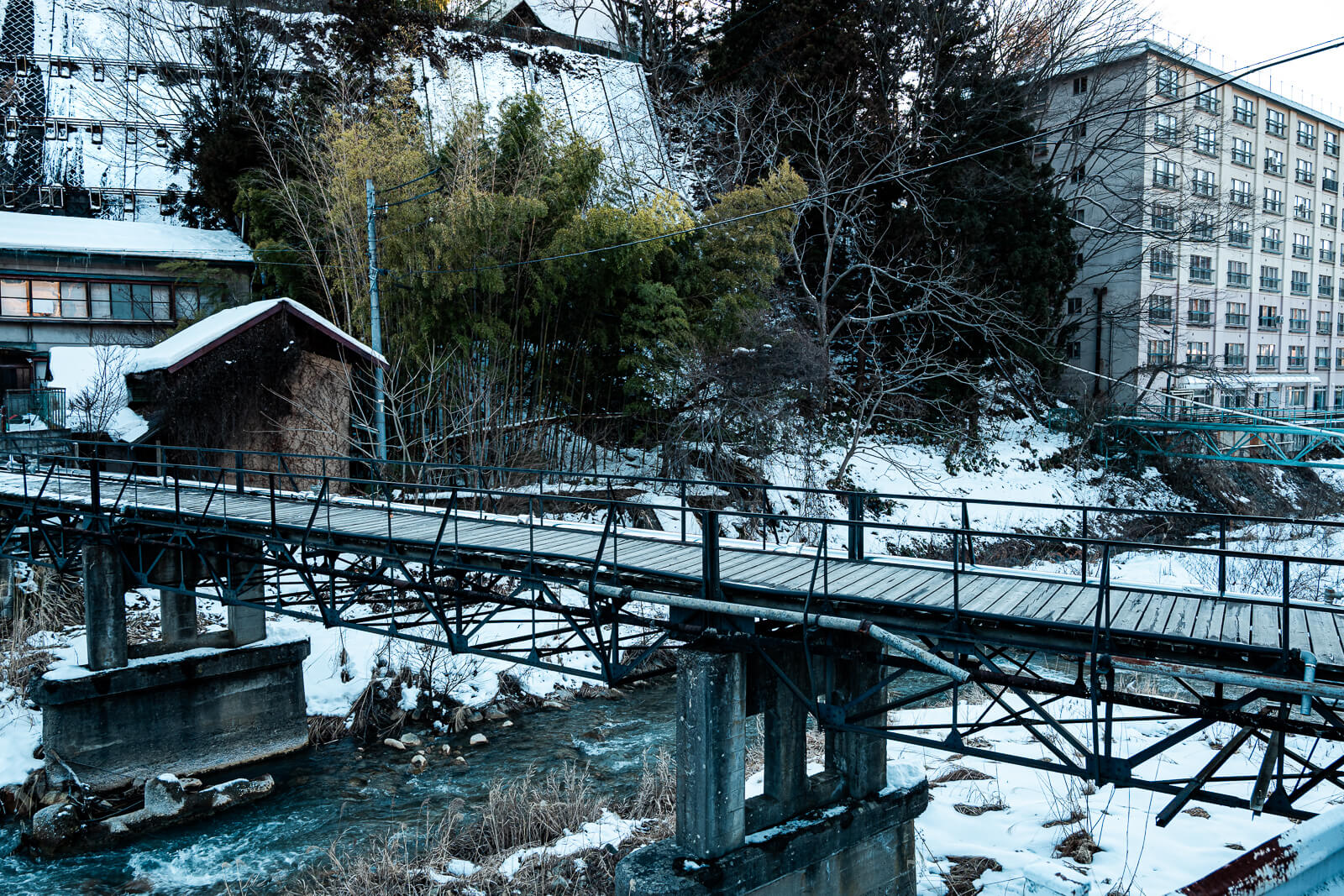
Because of its scale, one night is typically sufficient to grasp Shibu’s structure. Additional nights usually depend on regional plans rather than new layers within the town itself.
A Transition Point Between Larger Movements
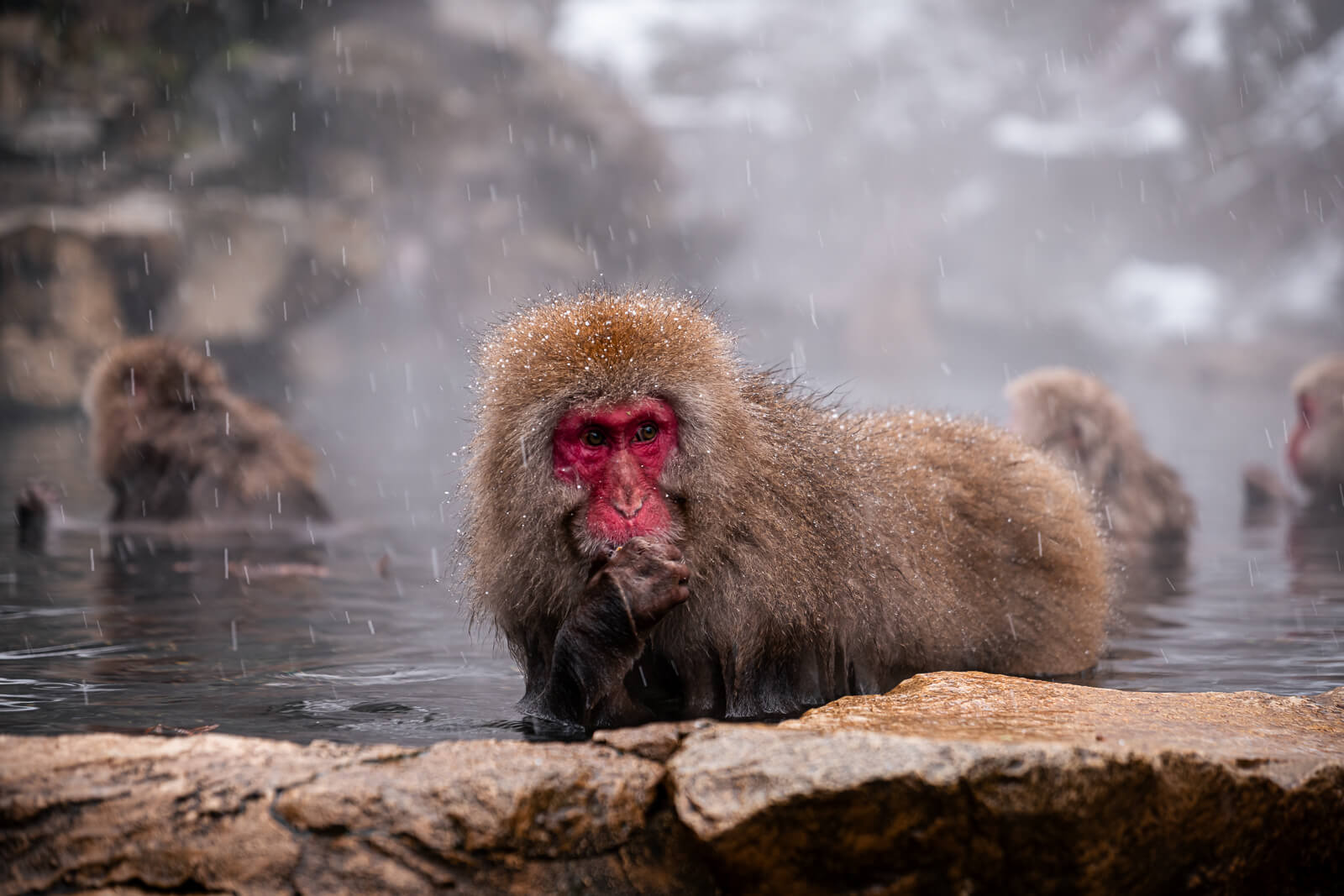
Shibu Onsen sits between Yudanaka and the forested approach to Jigokudani Snow Monkey Park, making it a natural overnight stop before a morning visit to the monkeys.
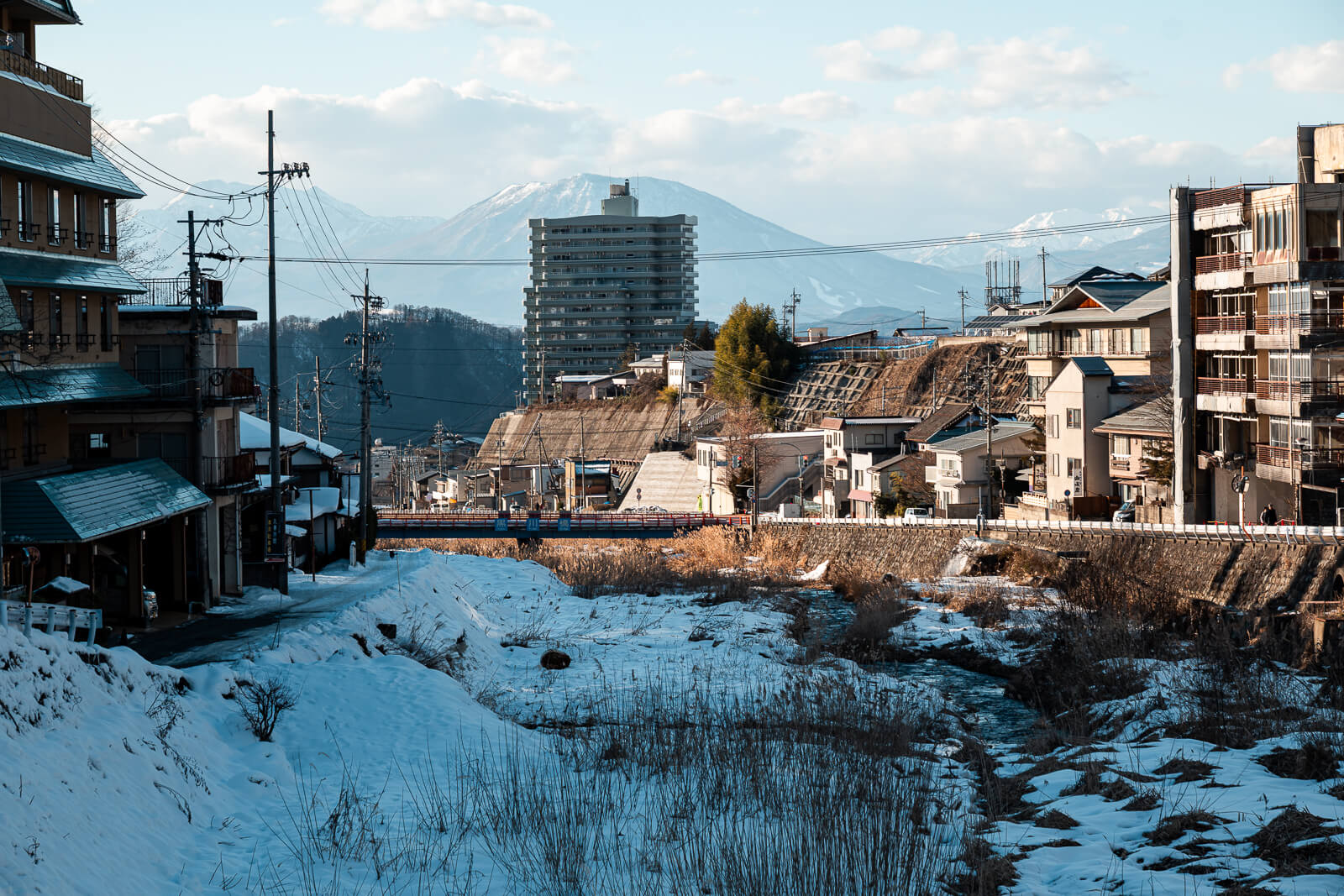
It also pairs with skiing in Shiga Kogen and broader travel through Nagano City and the wider Yamanouchi area.
The town absorbs transition. It provides continuity between rail arrival and mountain exploration.
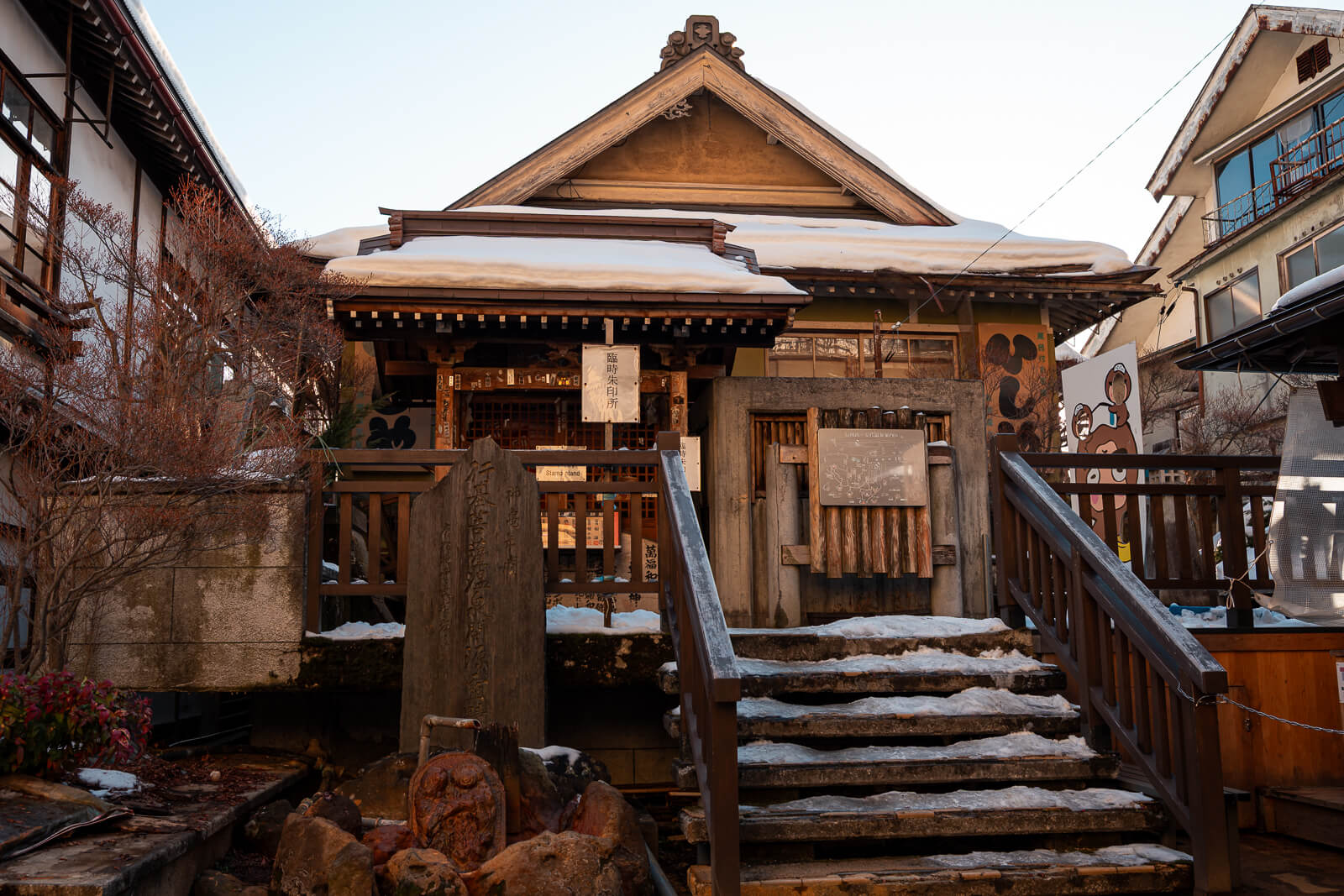
Getting There
From Tokyo, travel by Hokuriku Shinkansen to Nagano Station, then transfer to the Nagano Dentetsu Line to Yudanaka Station.
From Yudanaka, Shibu Onsen is reached by bus, taxi, or a steady uphill walk of roughly thirty minutes.
The journey requires one rail transfer and a short final approach. Once inside town, transportation is no longer needed.
Hours & Fees
Nine Public Baths (Sotoyu)
Access: Overnight guests only (key provided by participating ryokan)
Hours: Generally 6:00–22:00 (subject to cleaning closures and seasonal adjustments)
Fee: Included with overnight stay
Oyu (Bath #9) — Day Visitors
Access: Open to day-use visitors
Hours and fee: Confirm locally prior to visiting, as these may change