What to Expect
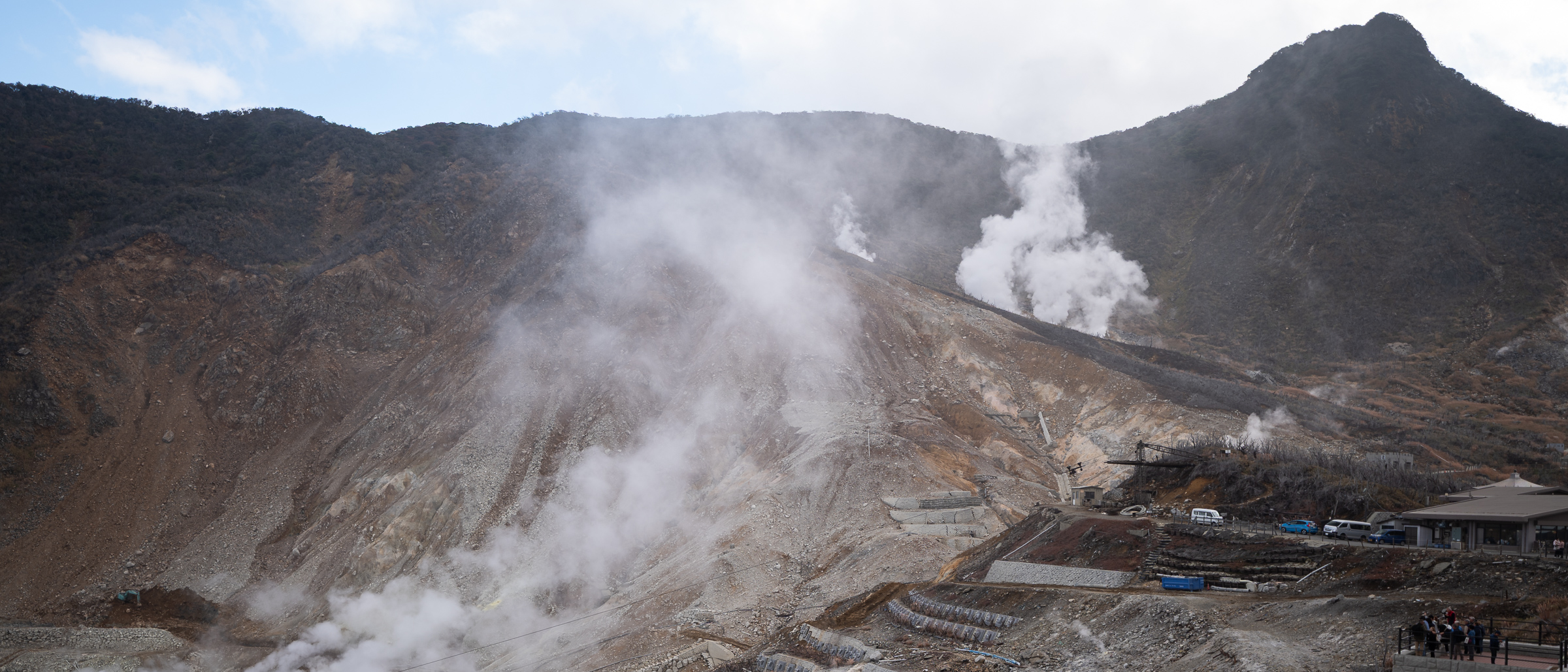
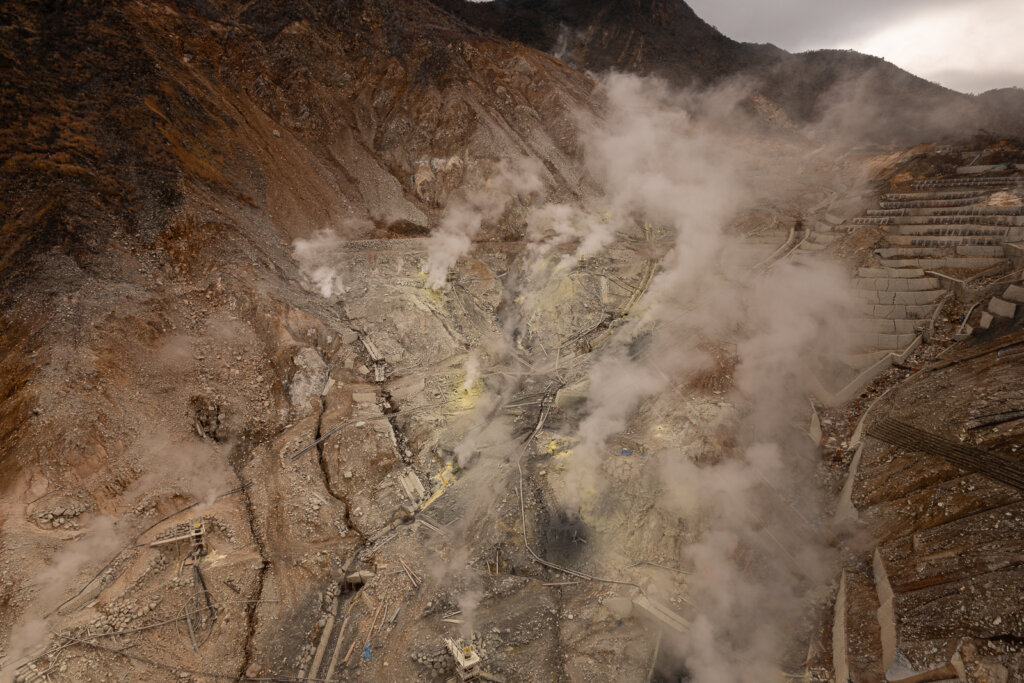
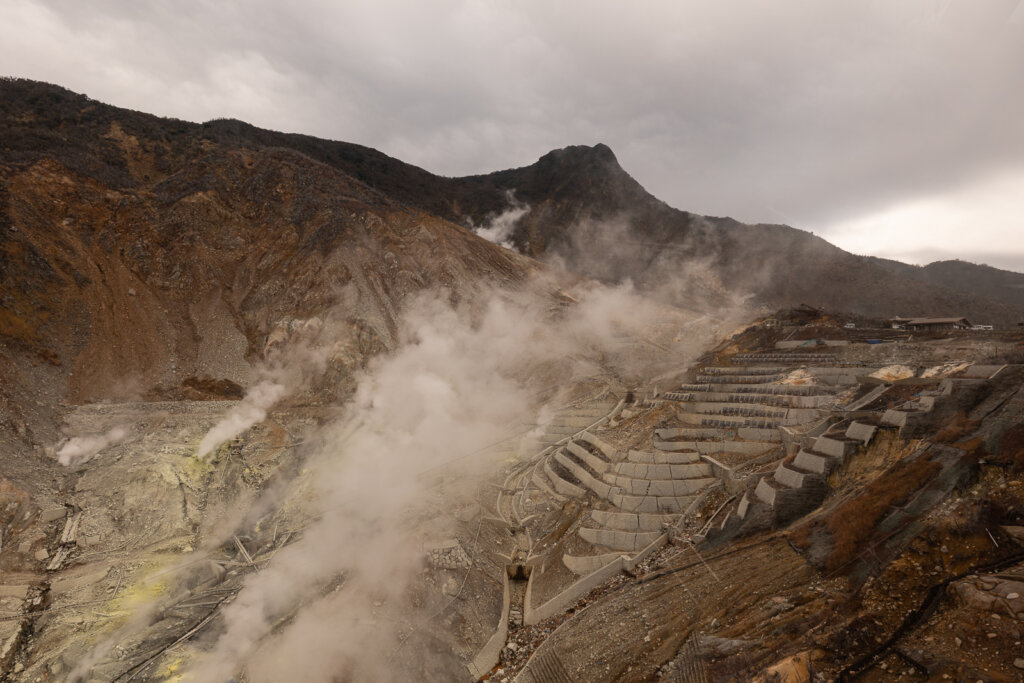
Owakudani is an exposed volcanic valley where sulfur vents release steam across a broad, open mountainside. The experience is visual rather than immersive: wide views, visible geothermal activity, and a sense of scale created by distance rather than proximity. Visitors come to observe an active volcanic environment safely, without hiking or specialized access.
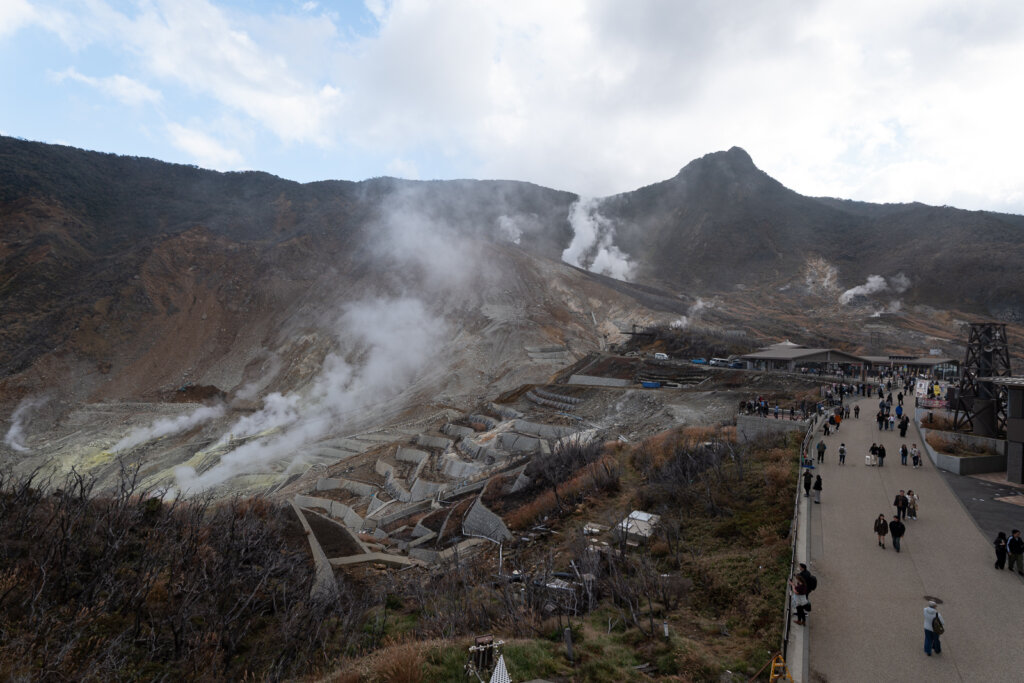
The site is designed for short, unhurried visits. Walkways are clearly defined, viewpoints are elevated, and the layout allows large numbers of people to move through without blocking sightlines. Even during busy periods, the valley feels open rather than compressed. Most visitors spend under an hour here before continuing onward.
History and Significance
Owakudani formed approximately 3,000 years ago during an eruption of Mount Hakone. Since then, the area has remained volcanically active, with sulfurous gas vents and steam plumes continuously reshaping the surface. Because of this activity, access has long been managed to balance public viewing with safety.
What distinguishes Owakudani is that it is not a preserved historical site, but an active geological one. Monitoring systems, restricted zones, and elevated paths reflect modern volcanic management. Visitors are observing an ongoing natural process rather than remnants of the past.
Arrival and First Impressions
Most visitors arrive by ropeway or by car. The approach opens immediately onto the valley, with steam vents visible from above rather than revealed gradually. This creates a clear first impression: a working volcanic zone viewed from deliberate distance.
Facilities are clustered near the arrival area, keeping foot traffic contained. From here, the terrain spreads outward visually, with paths guiding visitors toward designated viewpoints rather than into the unstable ground itself.
Viewing the Volcanic Valley
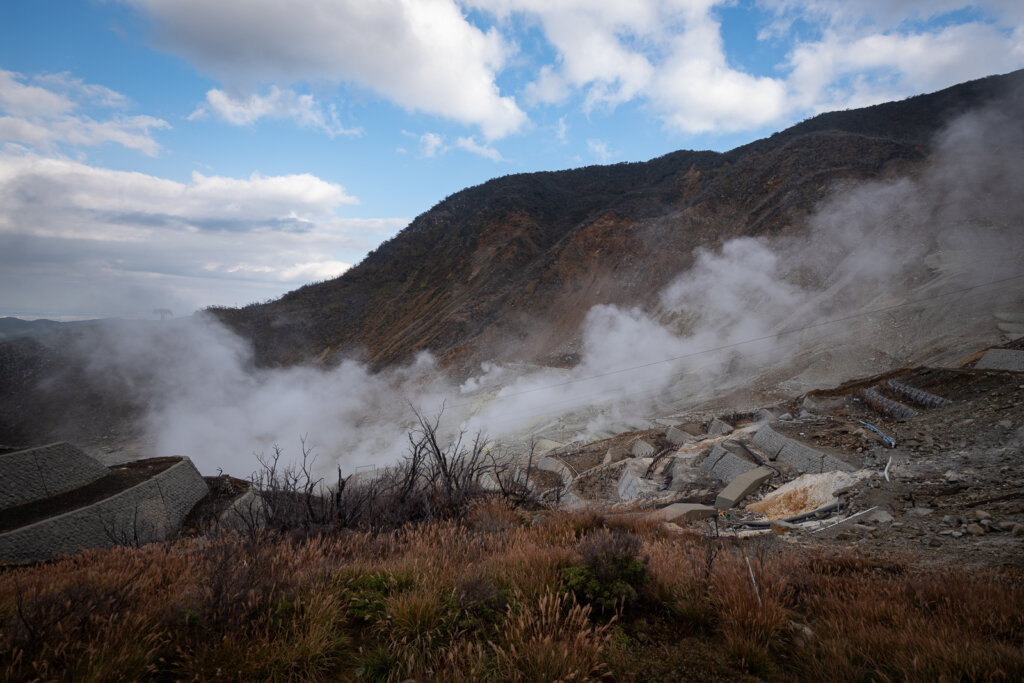
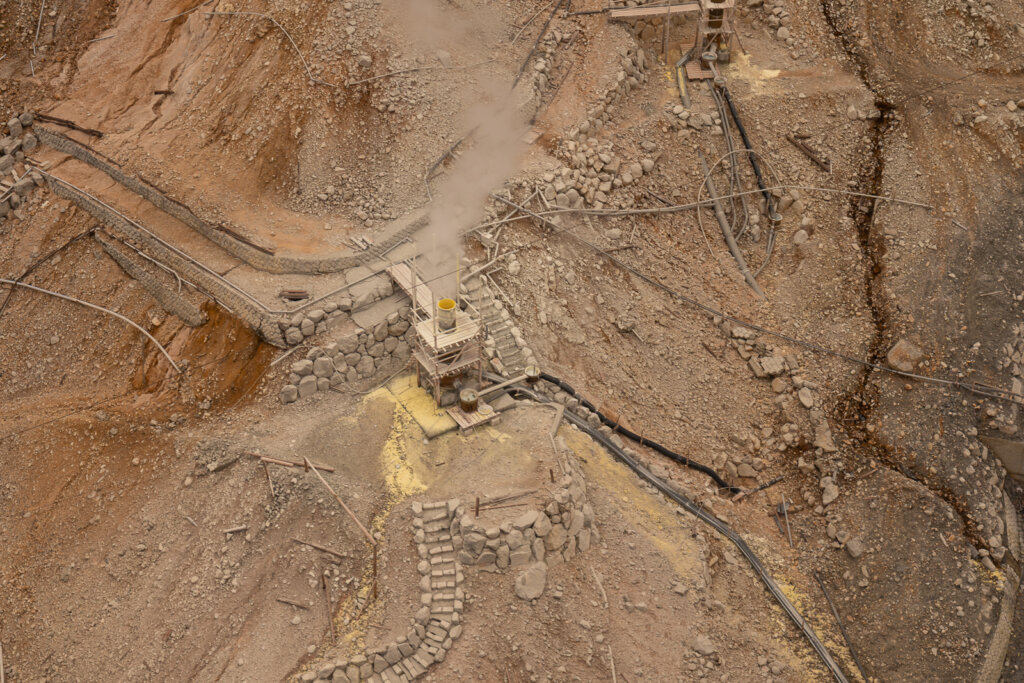
The main experience centers on elevated walkways and viewing platforms that overlook the active vents. Steam rises continuously, sometimes drifting across the paths depending on wind conditions. Below, the terrain is rough and mineral-stained, with muted earth tones broken by sulfur deposits and exposed rock.
Because the viewpoints sit above the activity, the experience remains observational rather than immersive. Visitors look across and down into the valley rather than moving through it. This design makes Owakudani accessible to a wide range of travelers and allows steady movement even during peak times.
Ropeway Perspective
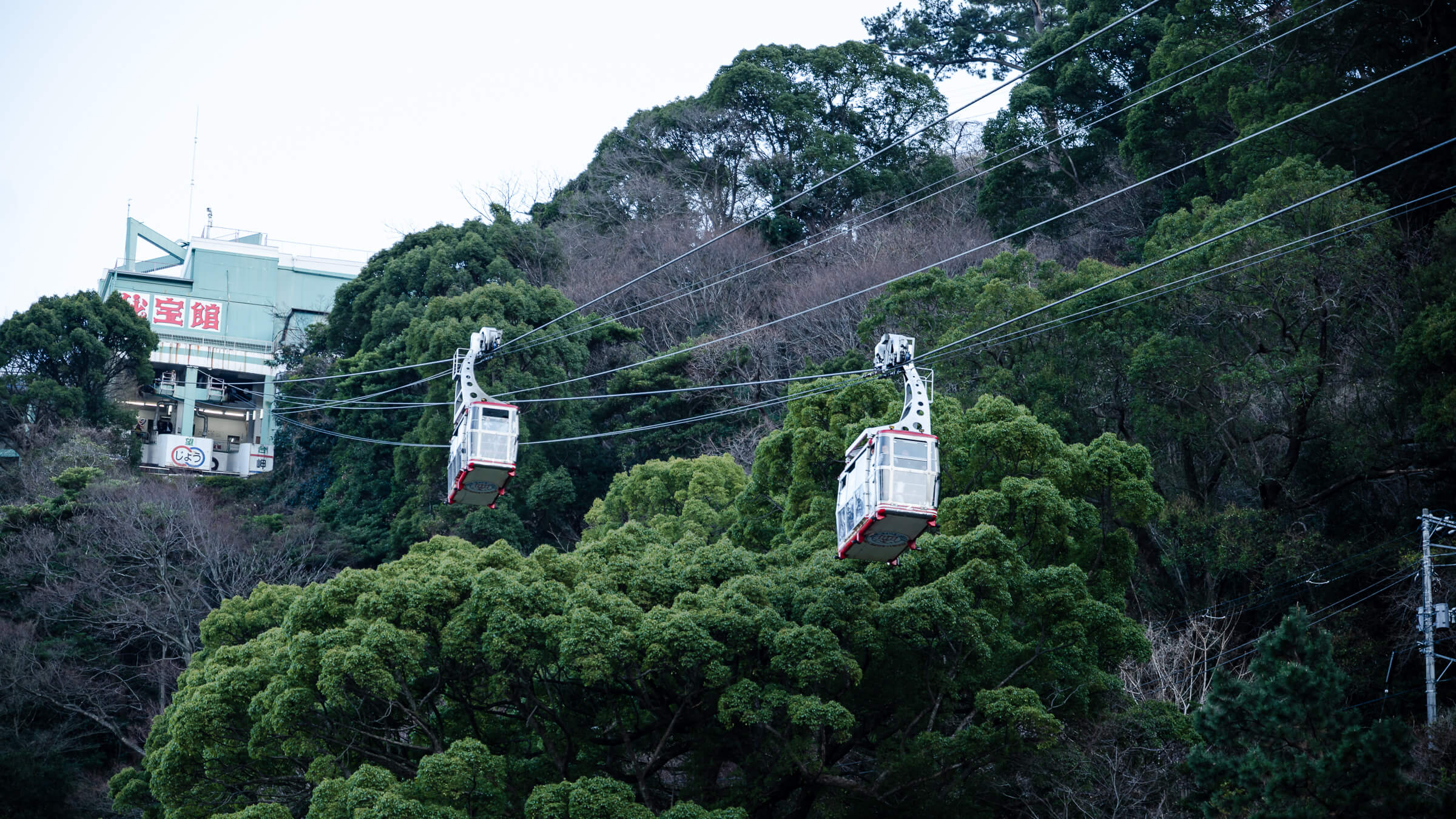
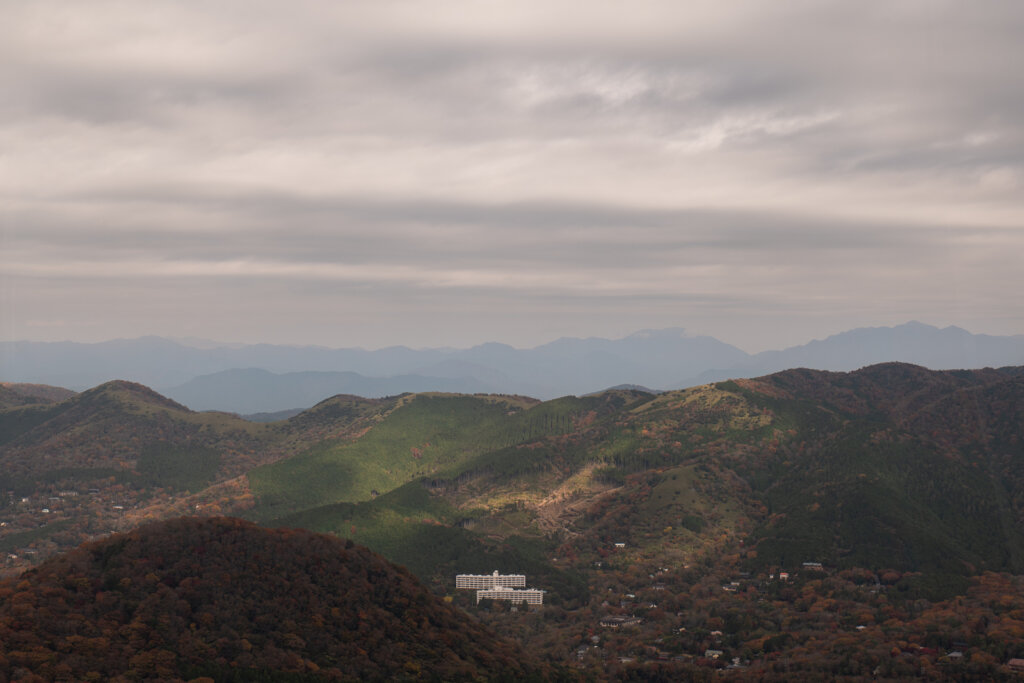
For many visitors, the ropeway ride is as important as the ground-level visit. The cars pass directly over the vent area, offering a clear aerial view of steam rising from the slopes below. From this angle, the spread of volcanic activity across the valley becomes easier to understand.
The ropeway functions as a moving viewpoint rather than a simple transit link. The slow glide across the valley reinforces the sense of scale and separation that defines the experience at Owakudani.
The Small Shrine Near the Viewing Area
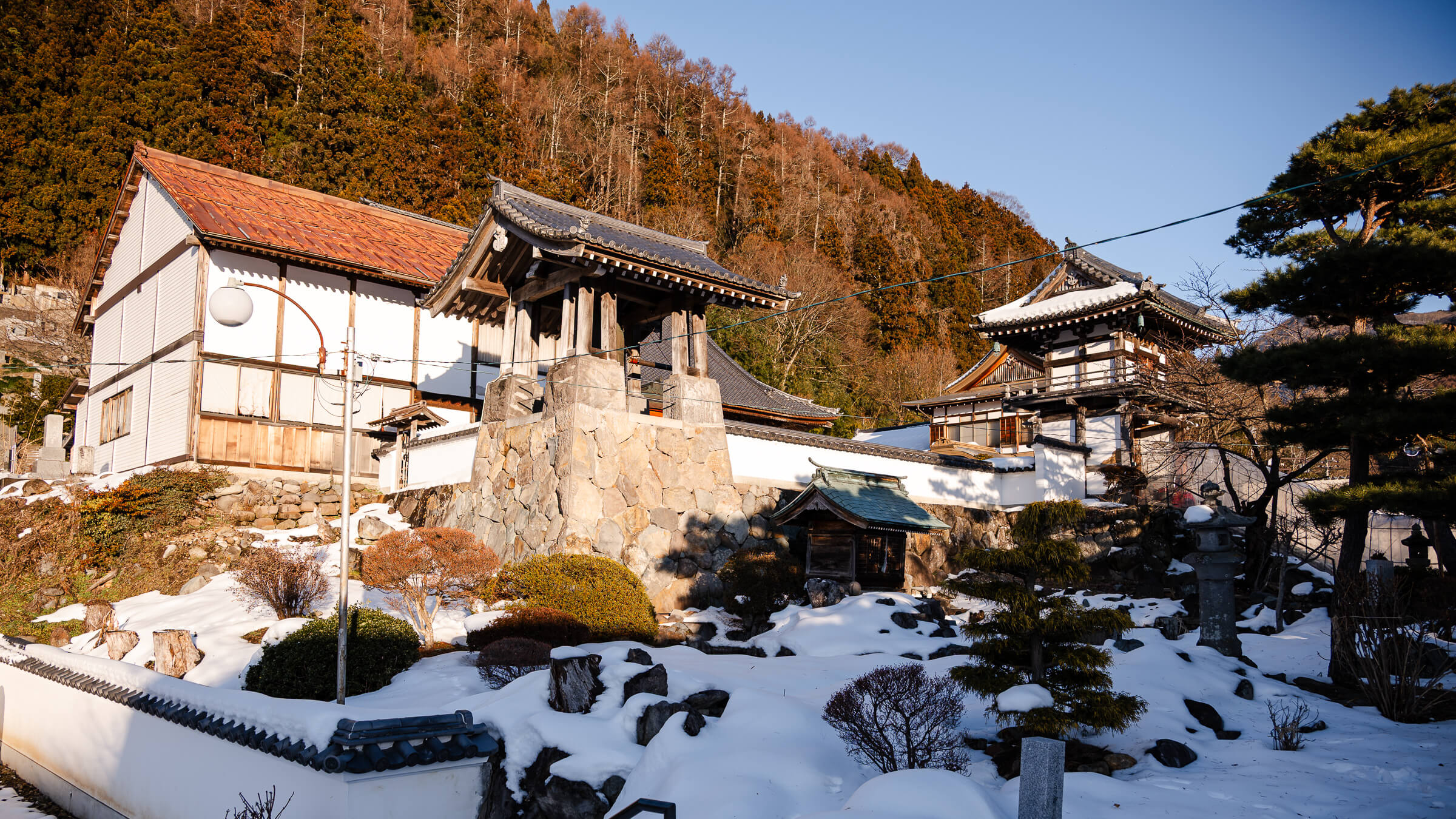
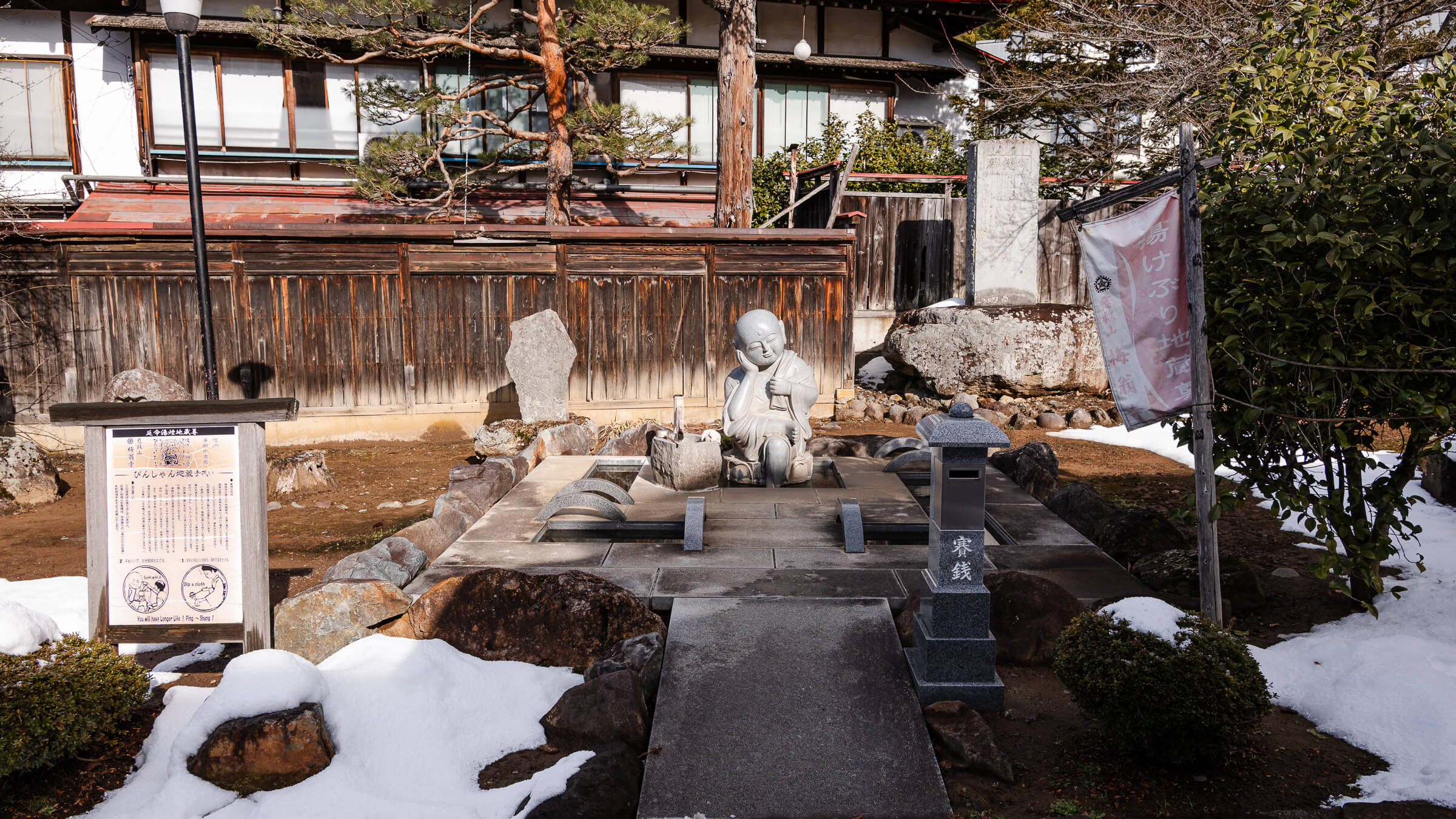
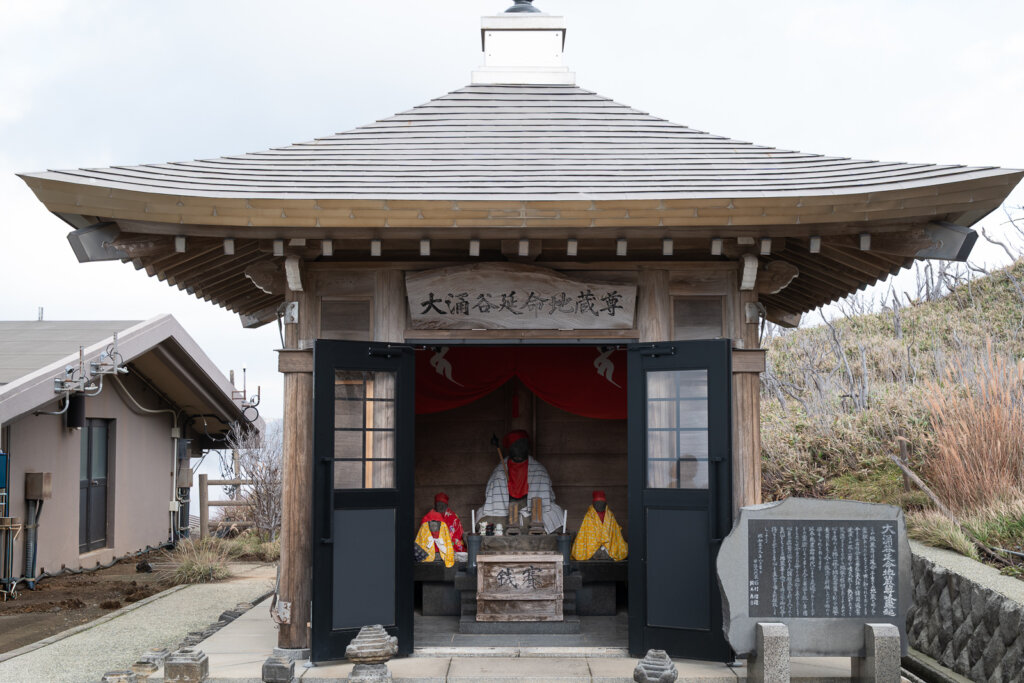
Near the main facilities, a small shrine provides a quiet counterpoint to the surrounding volcanic landscape. Unlike large pilgrimage sites elsewhere in Hakone, this shrine is modest and functional, reflecting local tradition rather than grand architecture.
Visitors often pause briefly here before or after viewing the valley. The shrine does not dominate the experience, but it adds cultural context to an otherwise geological site, reminding visitors that volcanic landscapes in Japan have long been woven into everyday life and belief.
Atmosphere, Timing, and Pace
Owakudani’s atmosphere is shaped more by weather than by time of day. Clear conditions emphasize the openness of the valley, while cloud cover or shifting wind can cause steam to spread and soften the landscape’s outlines. In colder months, the area often feels windier, though movement remains easy due to the compact layout.
Crowds are common, but the design prevents bottlenecks. The site encourages short pauses at viewpoints rather than prolonged stops, making it suitable for travelers who want to observe without committing significant time.
Getting There
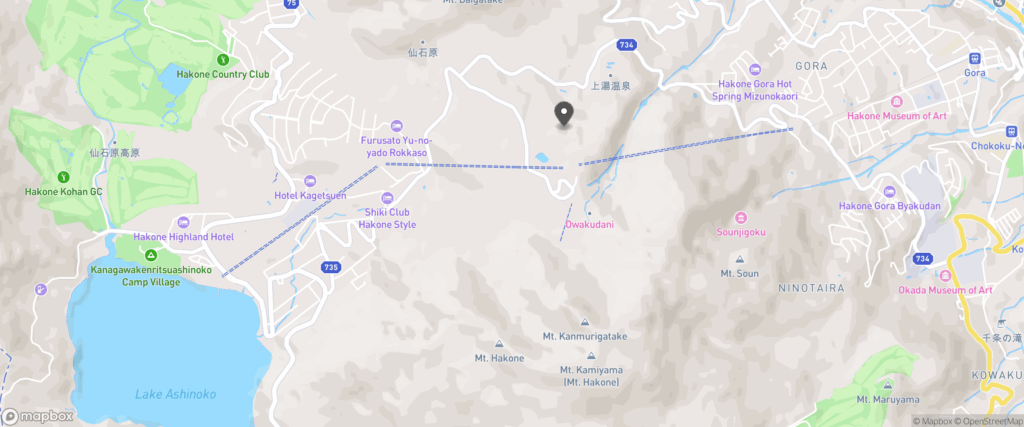
Owakudani is not located within a walkable town center and requires planned access. Reaching it by ropeway is generally the most efficient option, particularly during busy seasons, as it avoids parking congestion and connects directly with other transit routes. The journey feels continuous rather than segmented.
Driving offers flexibility but can involve waiting to enter paid parking areas during peak hours. Travelers using buses, boats, or ropeways as part of a loop should remain aware of operating times, as services may stop before the full circuit is completed.
Hours and Fees
Location
Owakudani, Hakone, Kanagawa Prefecture
Opening Hours
Typically 9:00–17:00
(Hours may vary due to weather conditions, volcanic activity, or seasonal operations.)
Closed Days
No regular closing days
(Temporary closures may occur for safety or maintenance.)
Admission
Free access to the public viewing areas
Ropeway Access
The Hakone Ropeway requires a separate ticket
Fares vary depending on the segment traveled