A Temple Positioned Above the Baths
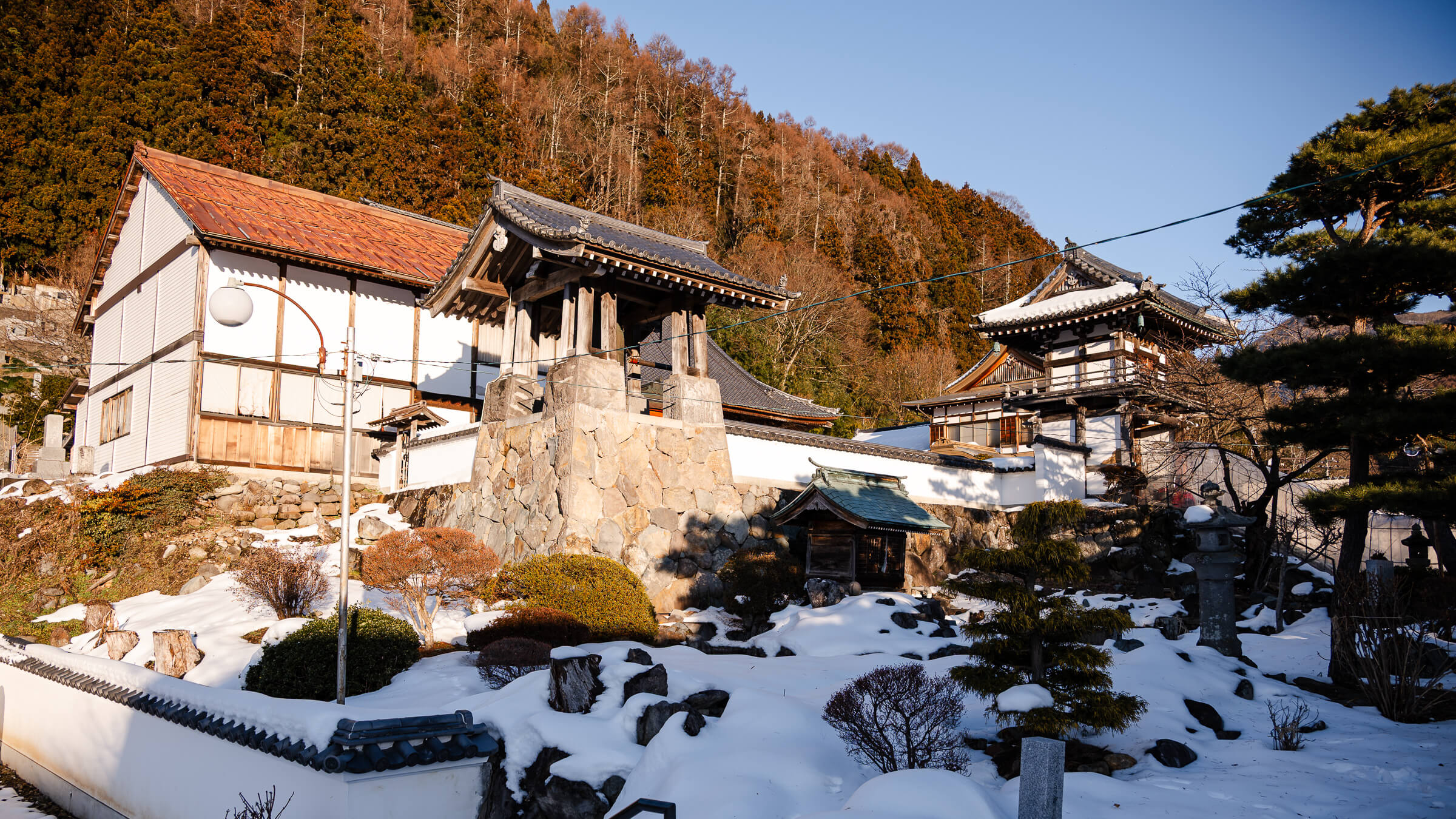
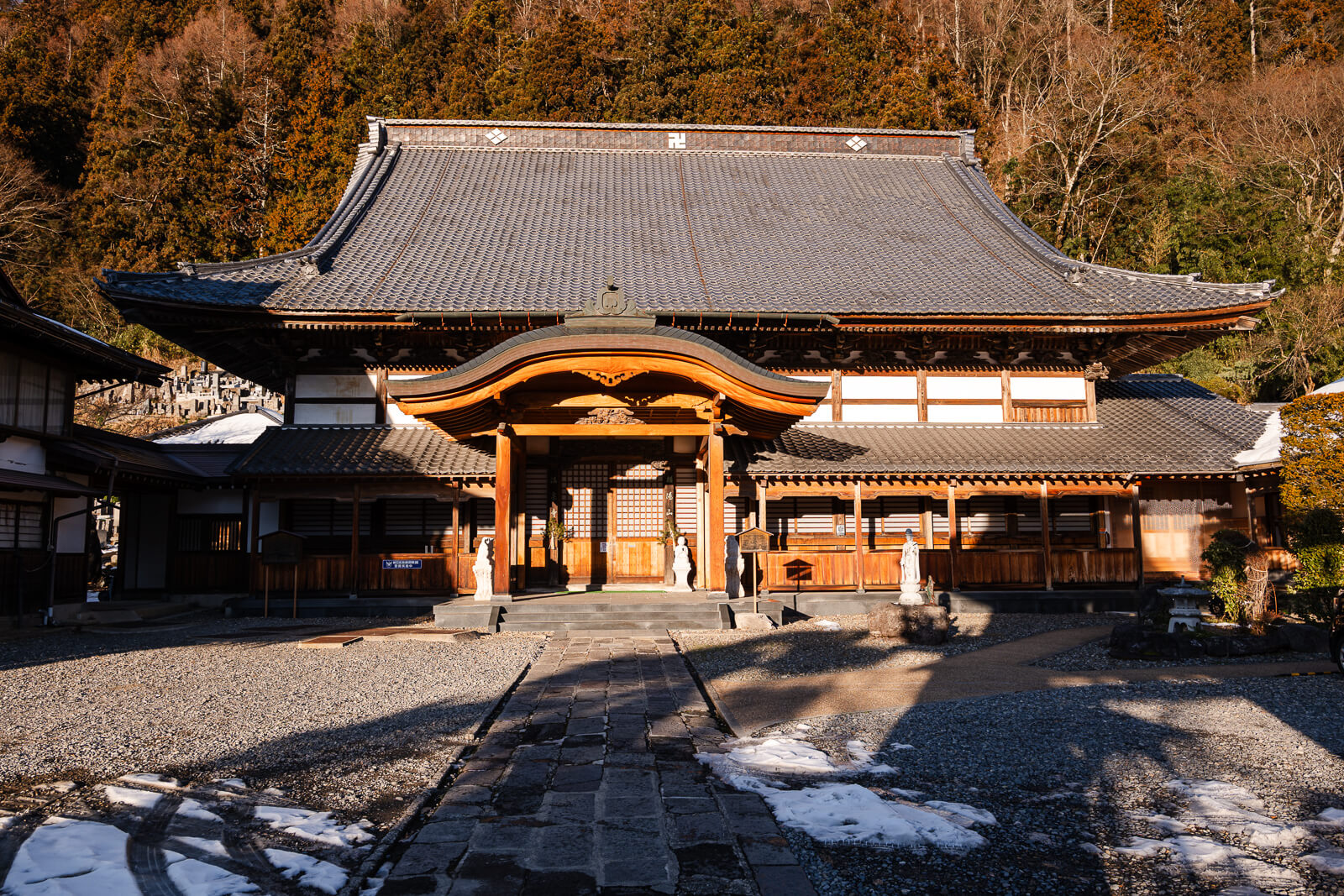
Onsen-ji Temple stands on the slope above Shibu Onsen in Yamanouchi, overlooking the narrow valley where the town’s nine bathhouses cluster below.
It is not a large temple complex, nor does it require extended time. Most visits take between fifteen and thirty minutes. The effort level is light, involving a short but steady climb from the main street of Shibu Onsen.
What Onsen-ji offers is perspective. From this elevation, the structure of the bathing town becomes legible in a single view.
Why a Temple Was Built Above a Hot Spring Town
Onsen-ji was established in the 17th century during the Edo period, when hot spring towns across Japan often combined bathing with religious practice.
In Shibu’s case, the placement above the settlement was deliberate. The temple did not sit beside the baths; it stood above them. Water and worship occupied different elevations but shared the same valley.
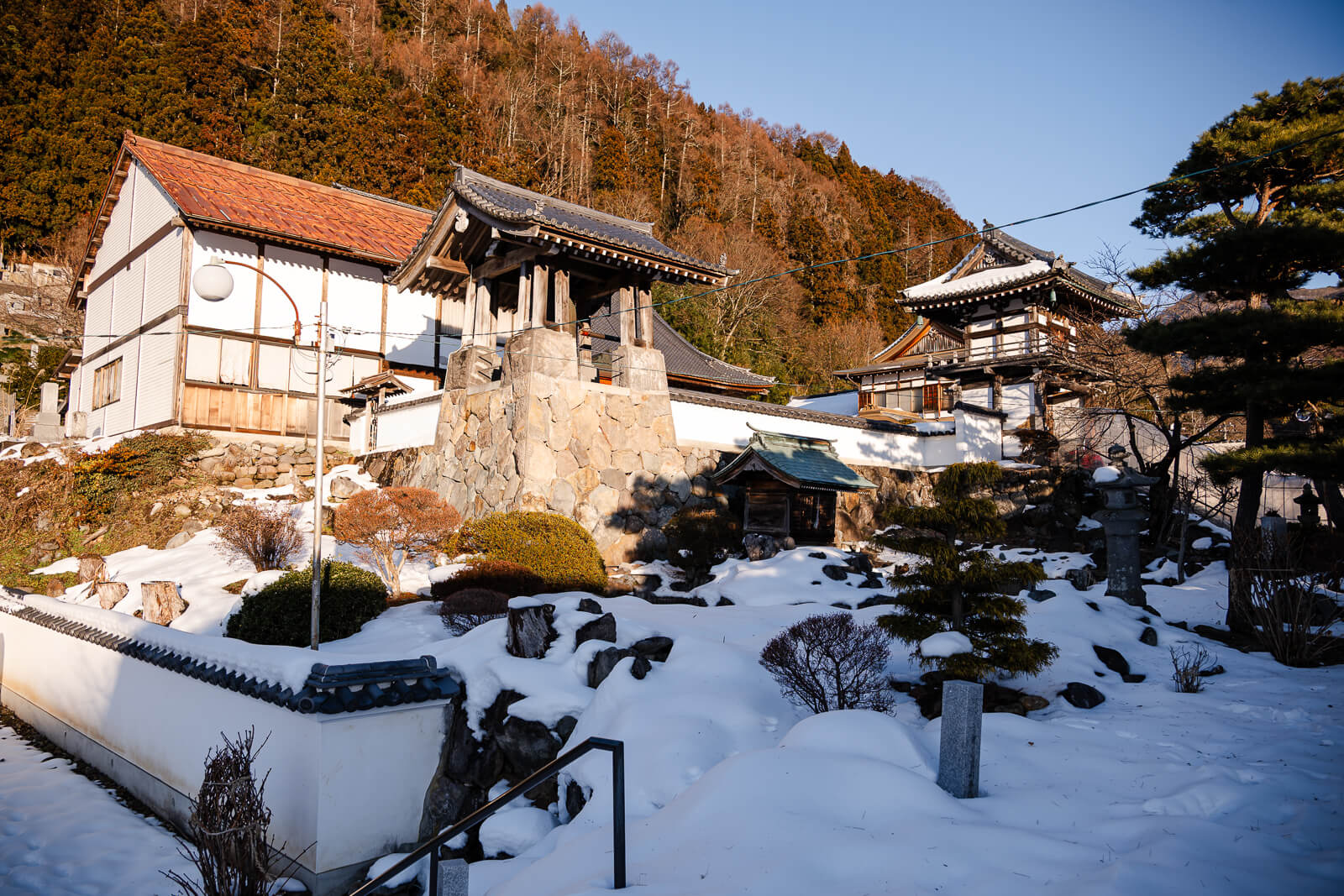
For travelers in earlier centuries, arriving in Shibu meant encountering both purification through bathing and protection through prayer. The temple’s location reinforced that dual structure: practical below, spiritual above.
Standing on the hillside today, that relationship remains intact. The slope itself becomes the divider.
The Walk Up from the Street
The approach begins along Shibu’s central lane, where a set of stairs leads upward toward Narita Fudoson and Onsen-ji.
The climb is brief and manageable. The elevation gain is noticeable but not demanding. Most visitors reach the main hall within minutes.
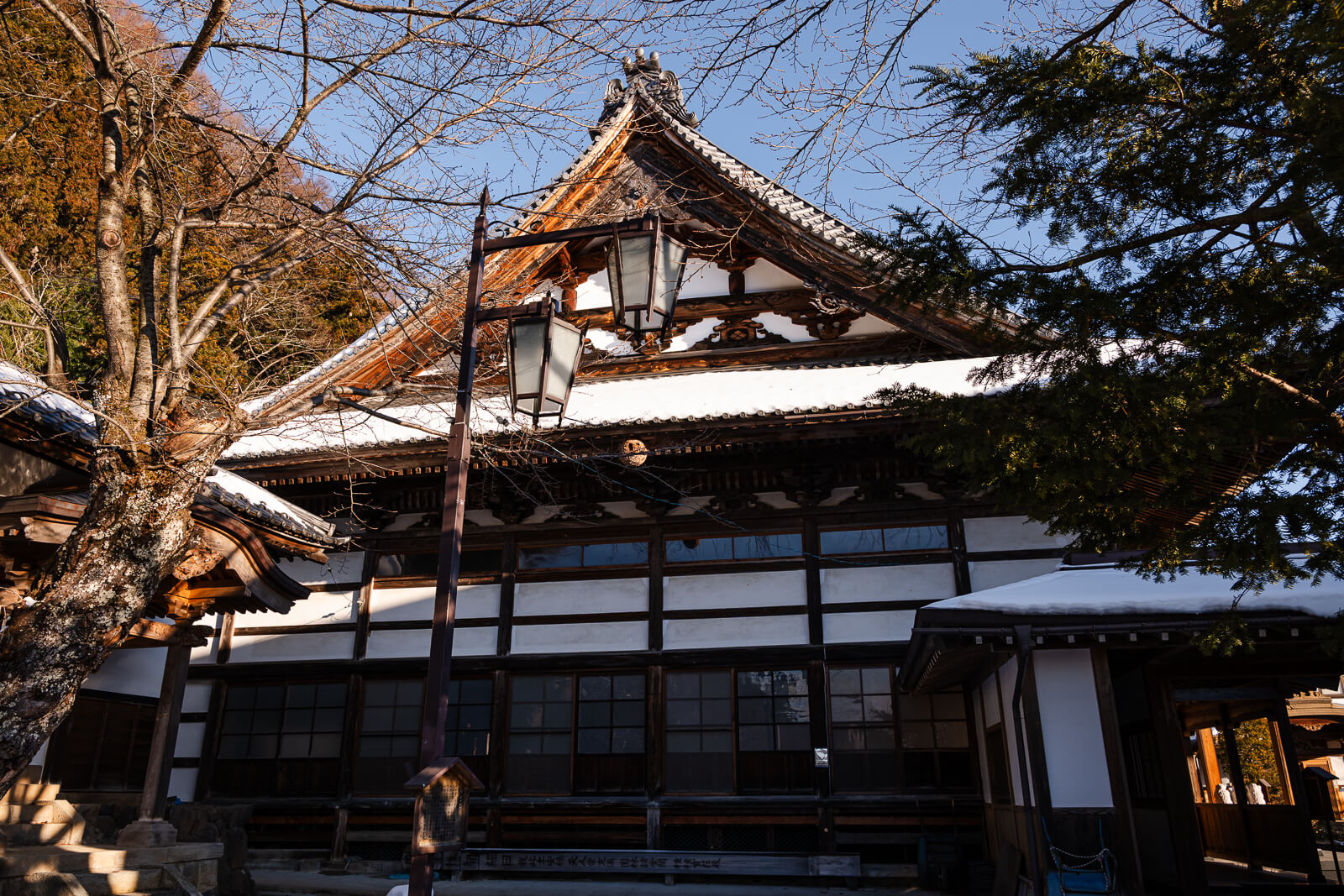
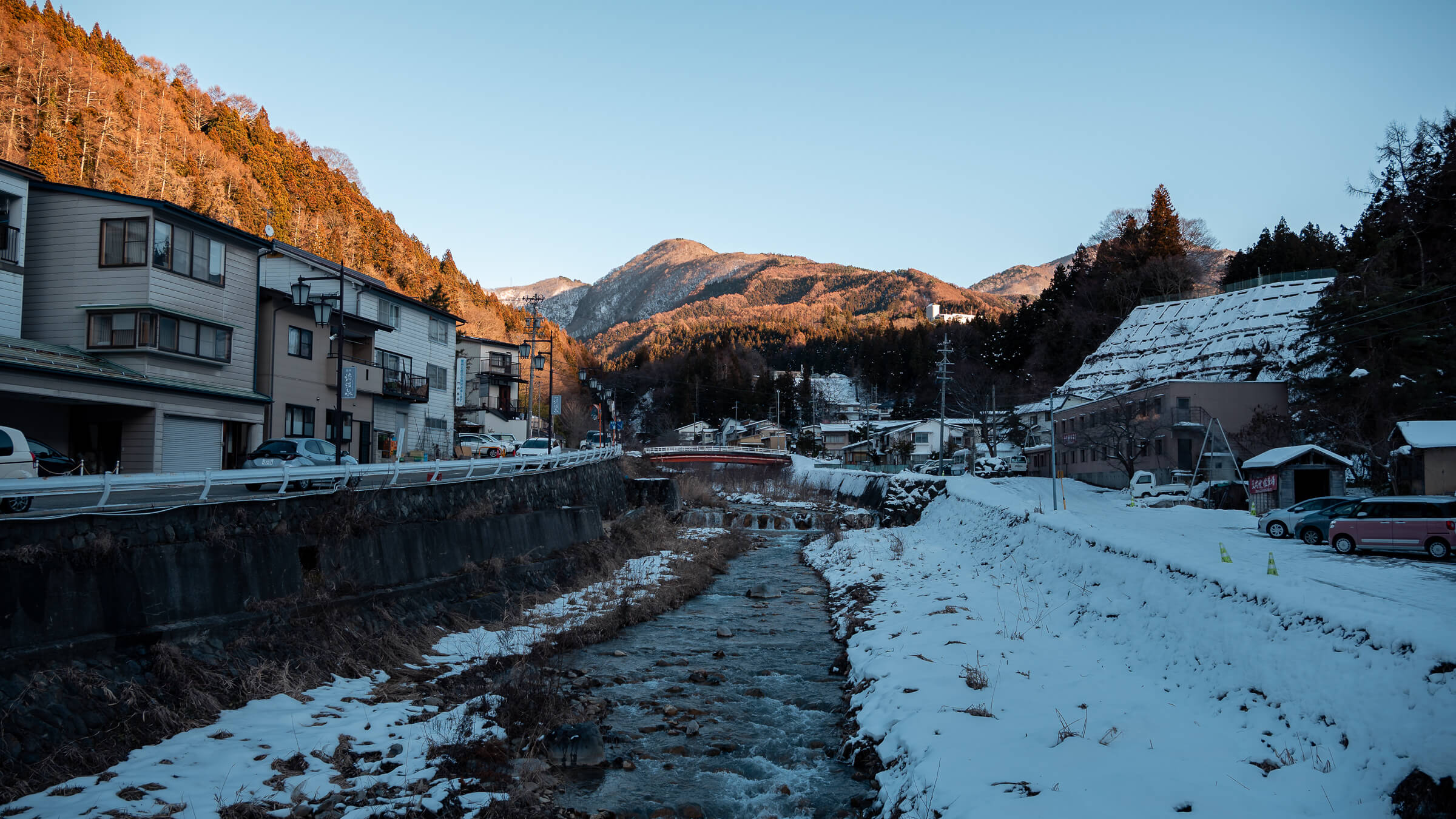
As you ascend, the density of the town becomes more apparent. Rooflines tighten below. The Yokoyugawa River traces the valley floor. The compact nature of Shibu is easier to understand from above than from within it.
The visit unfolds quickly: ascent, brief pause at the hall, view back over the settlement, descent.
Narita Fudoson and the Upper Grounds
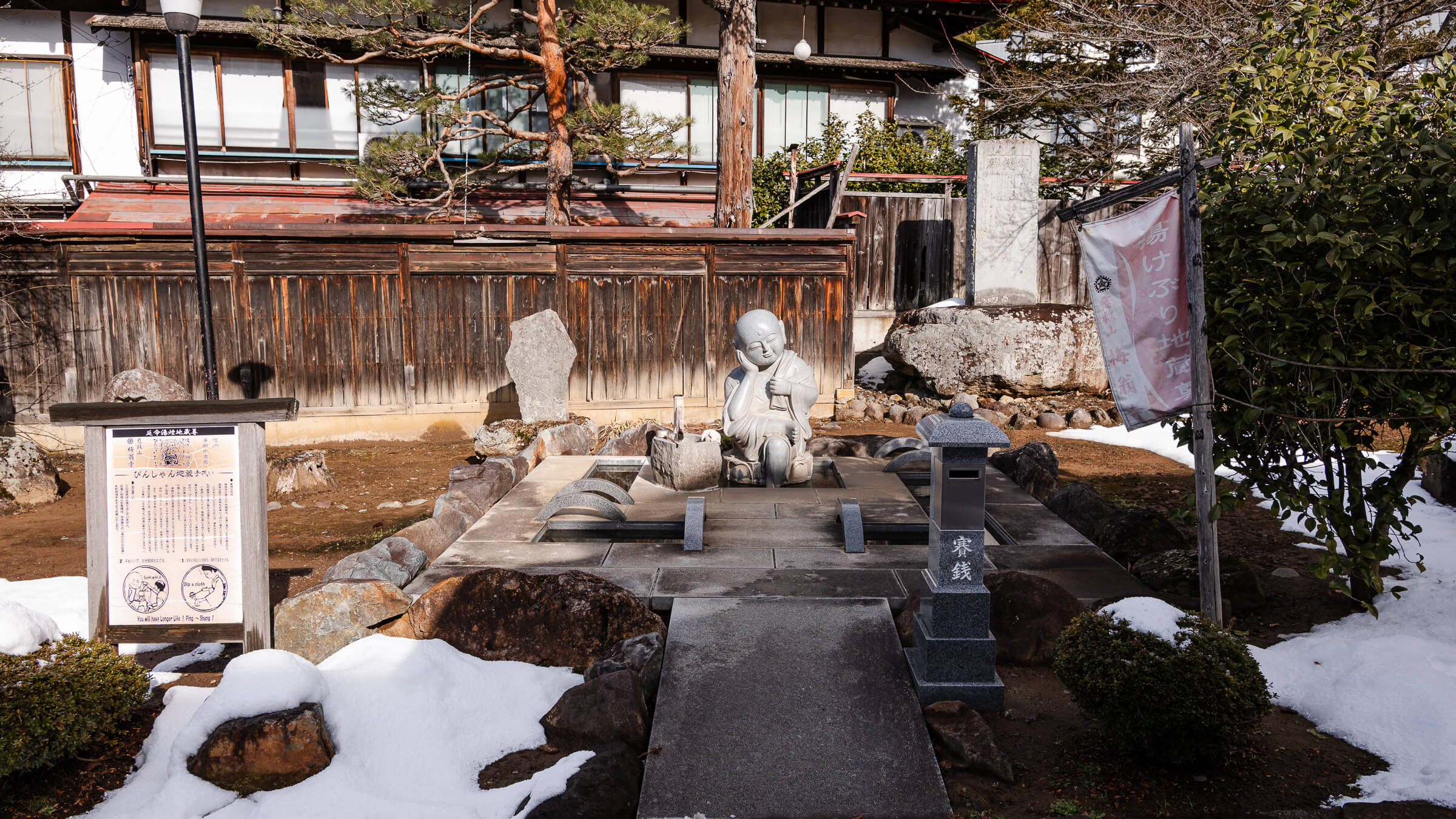
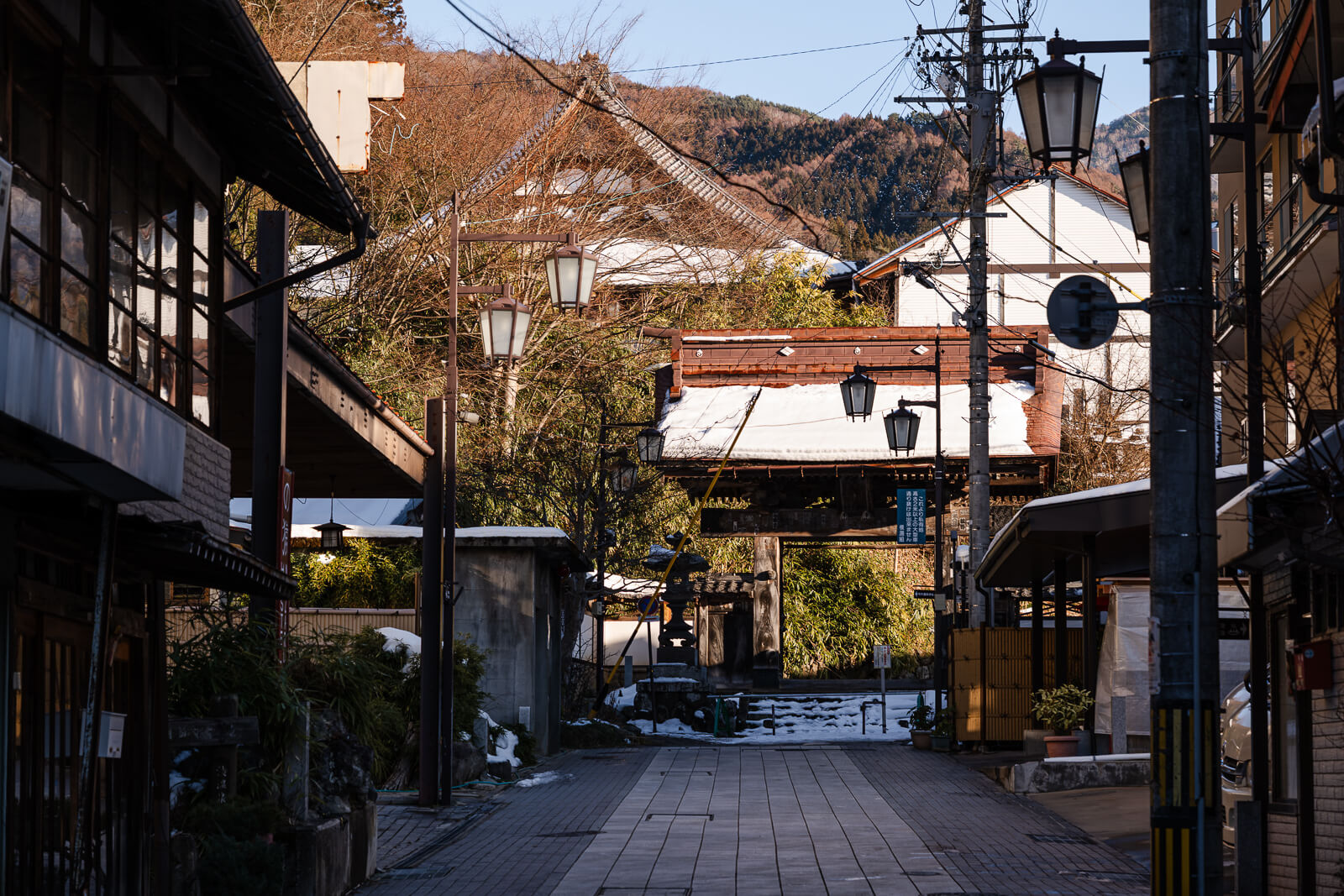
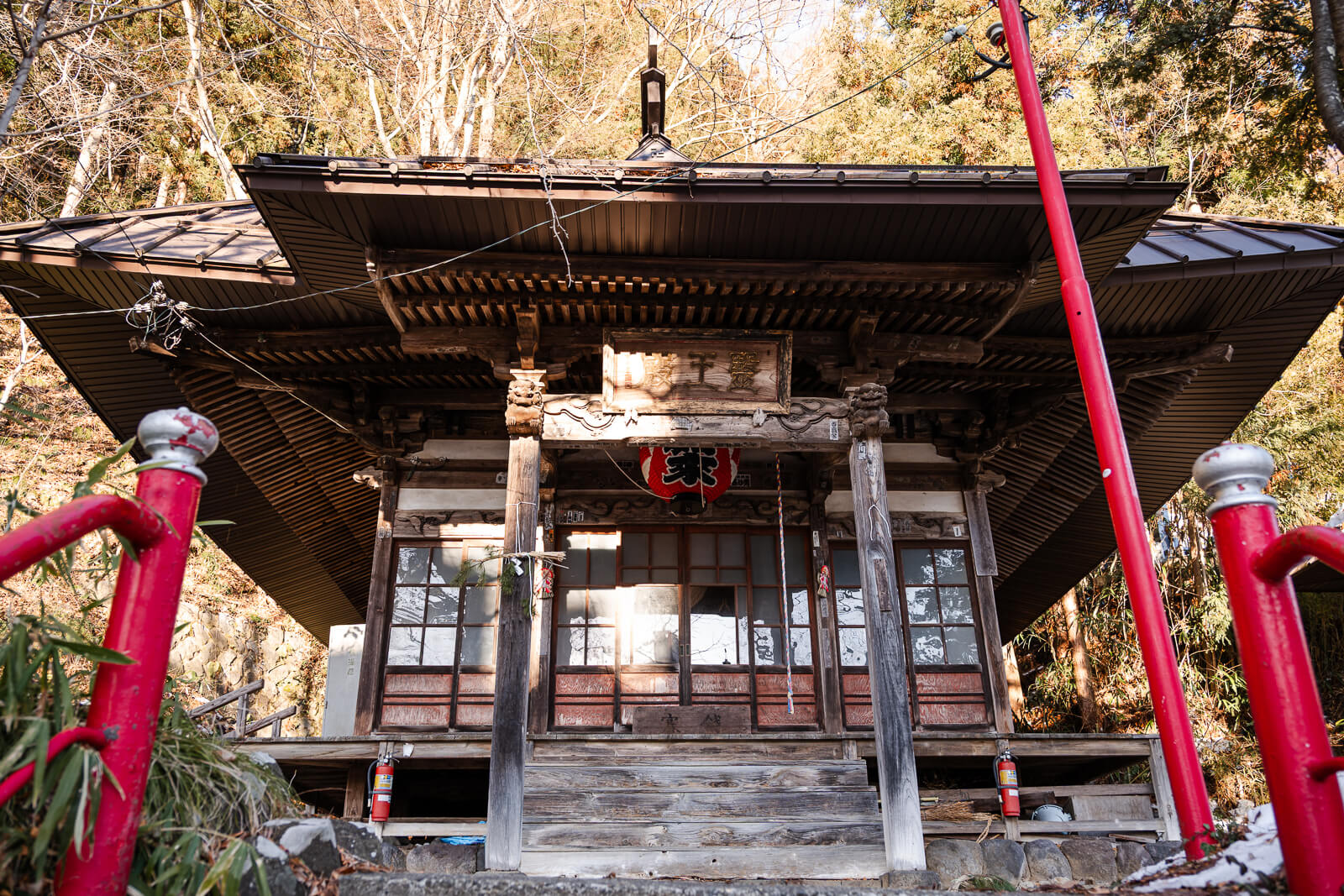
Before reaching the main temple hall, visitors pass Narita Fudoson, a smaller structure associated with protective Buddhist worship.
The grounds are modest in scale. There are no extensive sub-temples or sprawling gardens. Instead, the emphasis remains on position and elevation.
The stop adds context rather than duration. It layers meaning onto the town below rather than replacing it.
How Onsen-ji Changes the Experience of Shibu
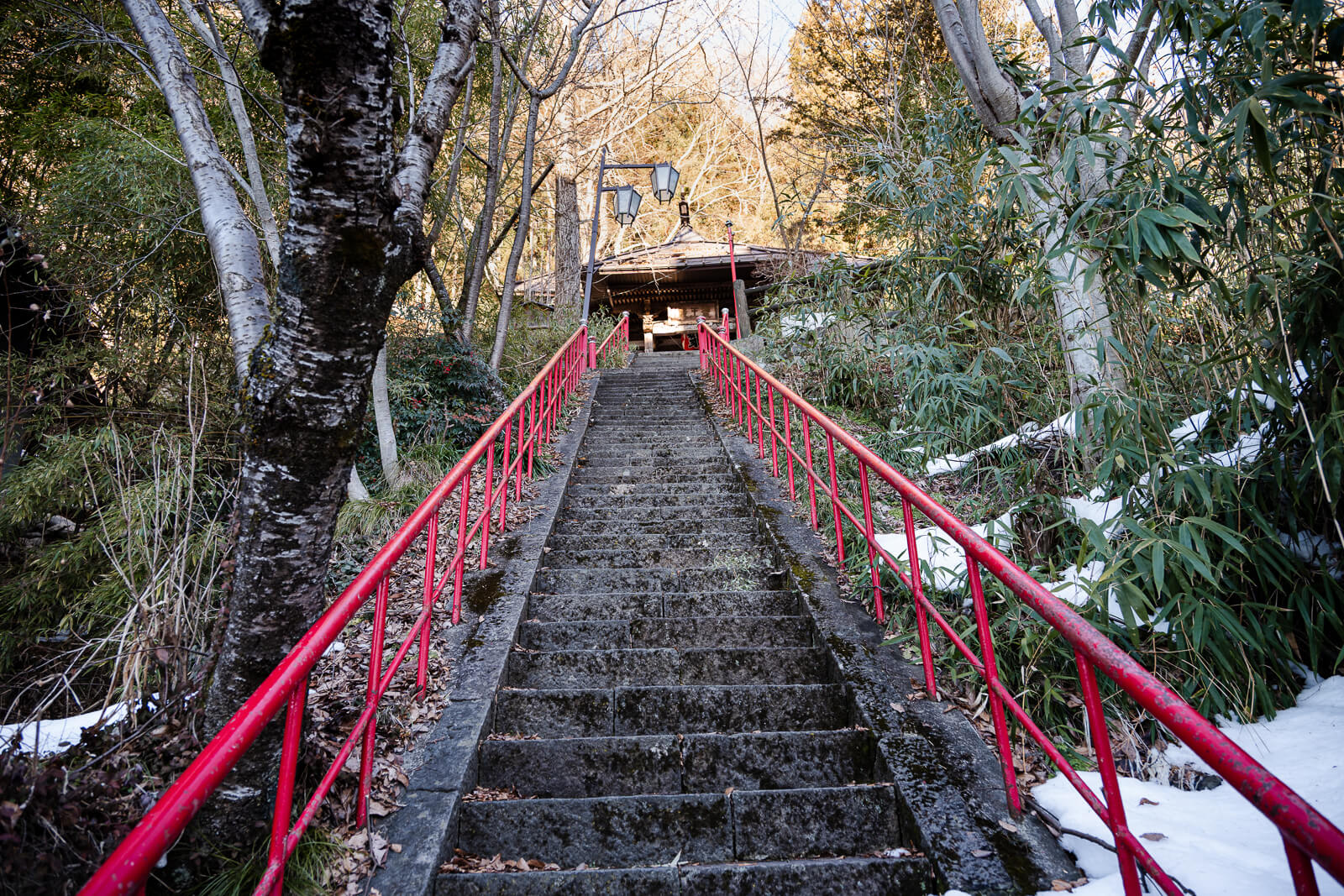
Without Onsen-ji, Shibu Onsen can feel purely functional — rooms and baths arranged for circulation.
With the temple, the settlement reads differently. The town is no longer only about proximity to water; it becomes a layered environment where bathing and belief coexist within the same confined geography.
The visit is short. The interpretive value is larger.
When to Visit
Onsen-ji can be visited either in the afternoon before dinner or in the morning before departure. The effort required is minimal, and no special timing is necessary.
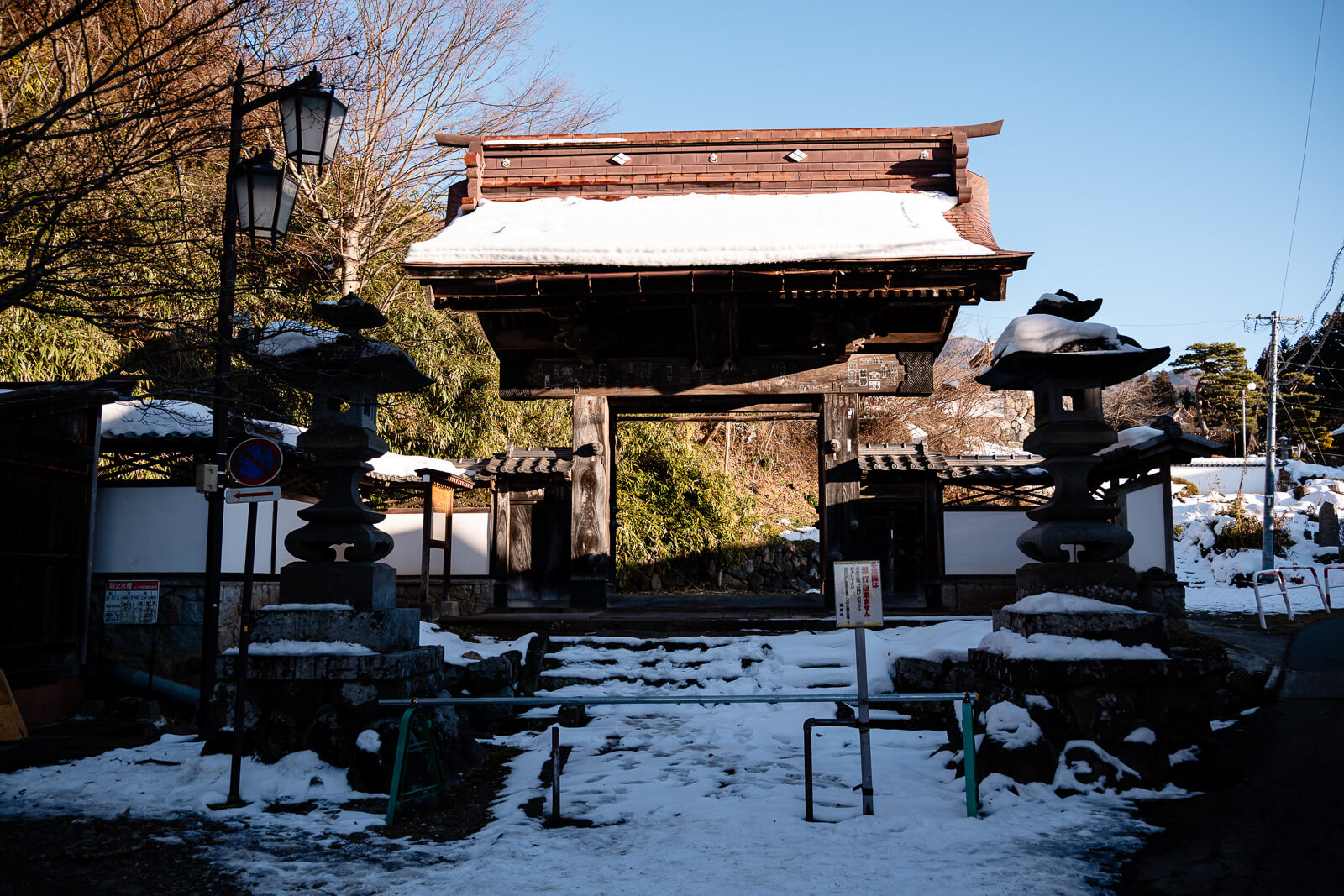
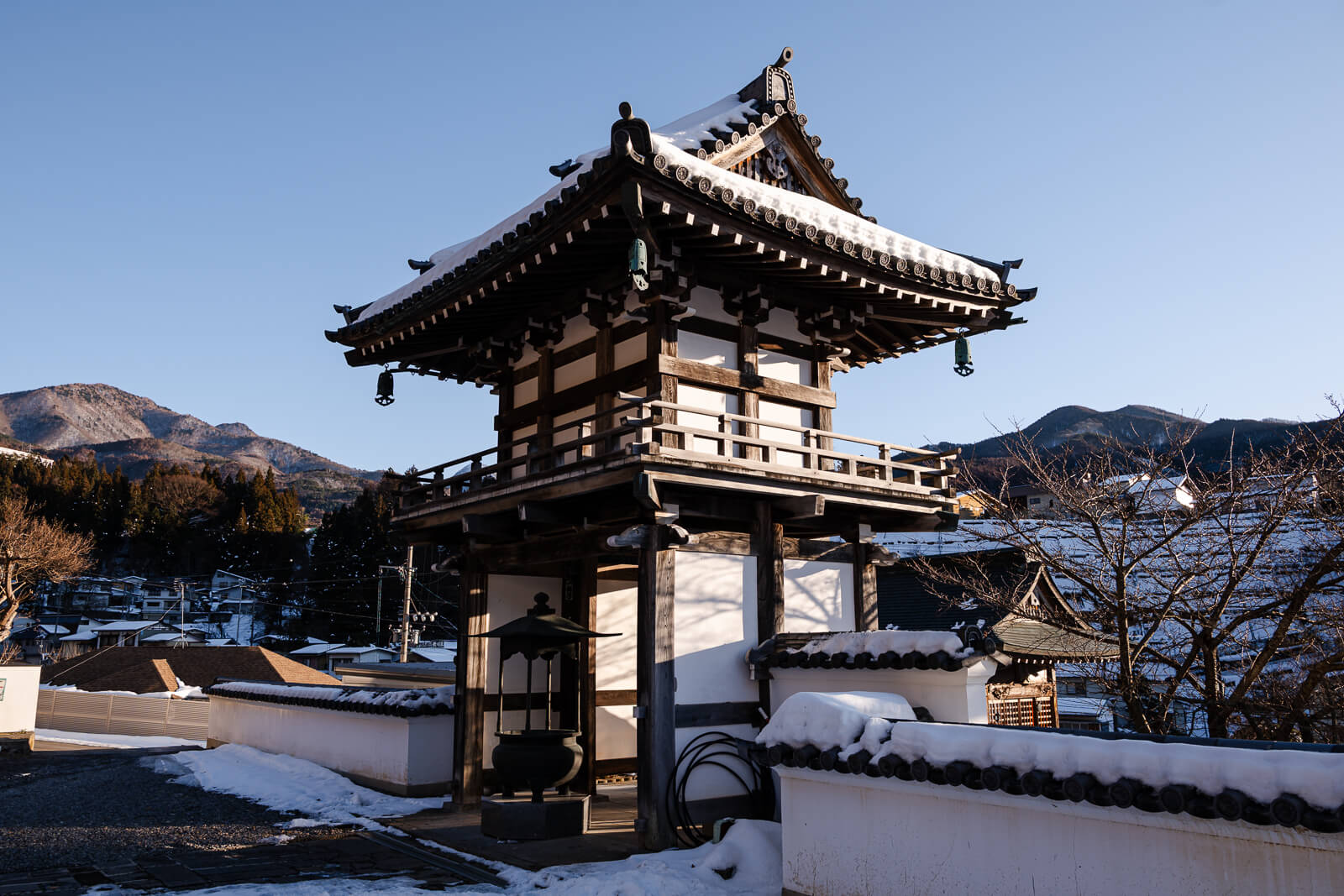
In winter, snow may gather on the steps and paths, though the climb remains short. In warmer seasons, foliage softens the slope but does not change the overall structure.
Because of its compact size, Onsen-ji rarely feels crowded even when Shibu’s baths are active.
Where It Fits in Yamanouchi
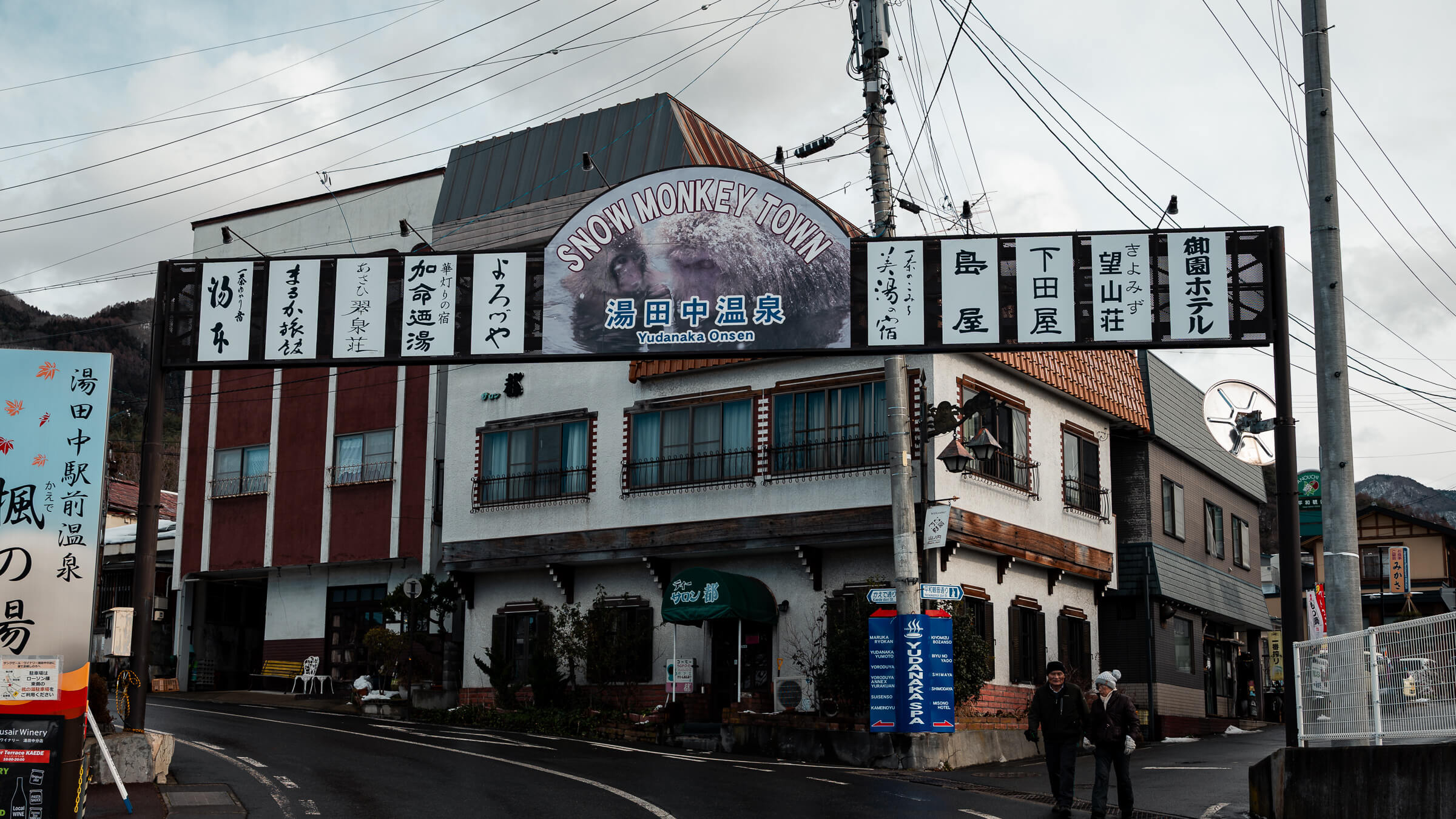
Onsen-ji is naturally visited as part of a stay in Shibu Onsen. It also sits within the broader corridor connecting Yudanaka Station to Jigokudani Snow Monkey Park.
For travelers exploring the wider Yamanouchi area, the temple serves as a brief but clarifying stop rather than a destination requiring separate planning.
Getting There
Onsen-ji is reached on foot from the main street of Shibu Onsen via a short stair climb.
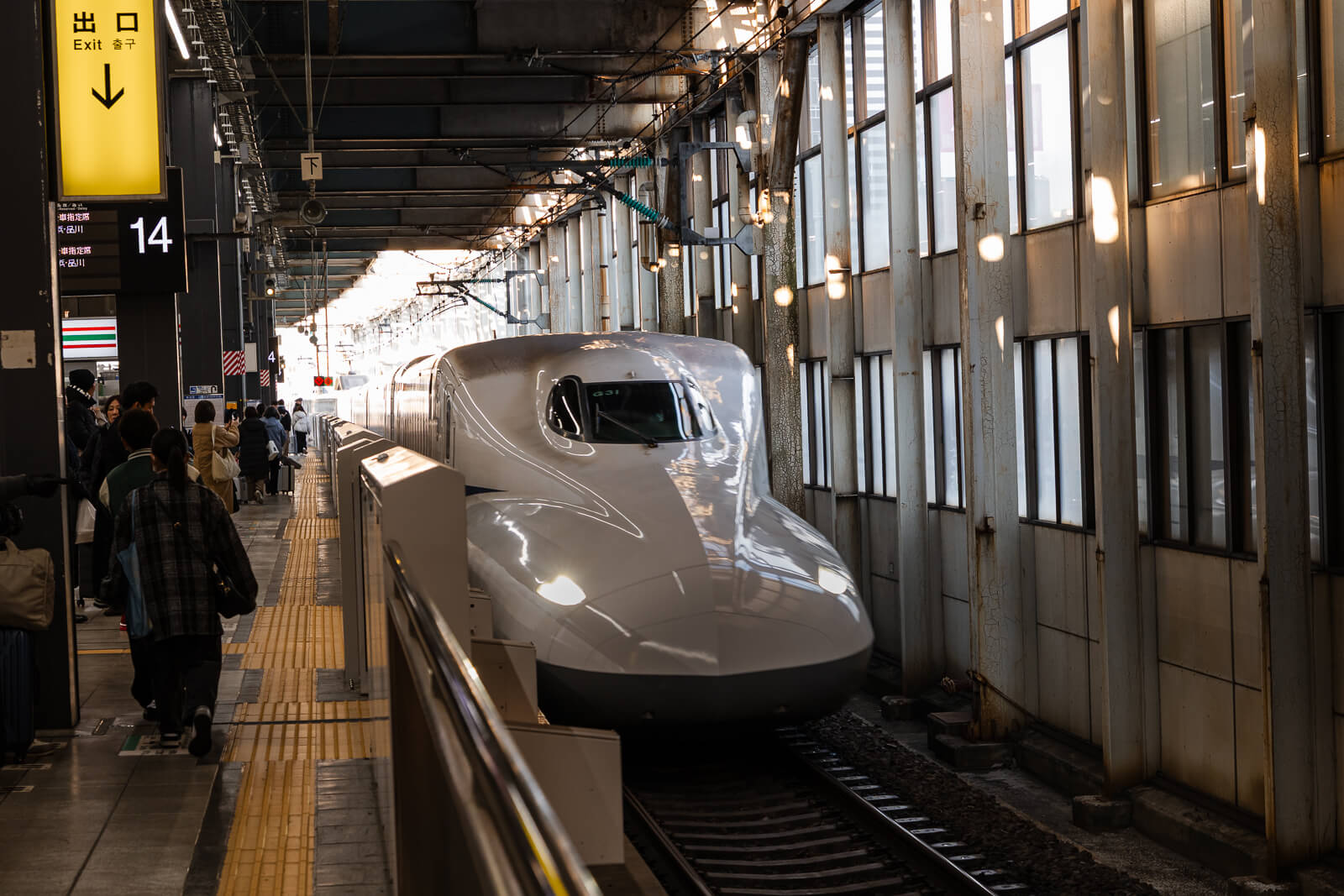
Visitors arriving from Tokyo typically pass through Nagano Station, continue to Yudanaka Station, and then enter Shibu Onsen by bus, taxi, or uphill walk. From within town, no additional transportation is needed.
Hours & Fees
Access: Open grounds
Admission: Free
Hours: Grounds typically accessible during daylight hours (Confirm locally for any special closures or seasonal adjustments.)