A Hillside Stop in Atami, Shizuoka
Onsen-ji Temple occupies the middle slope of Atami, a coastal city in eastern Shizuoka Prefecture. It sits between Atami Station and the waterfront near Atami Sun Beach, below the higher viewpoints reached by the Atami Ropeway and Atami Castle.
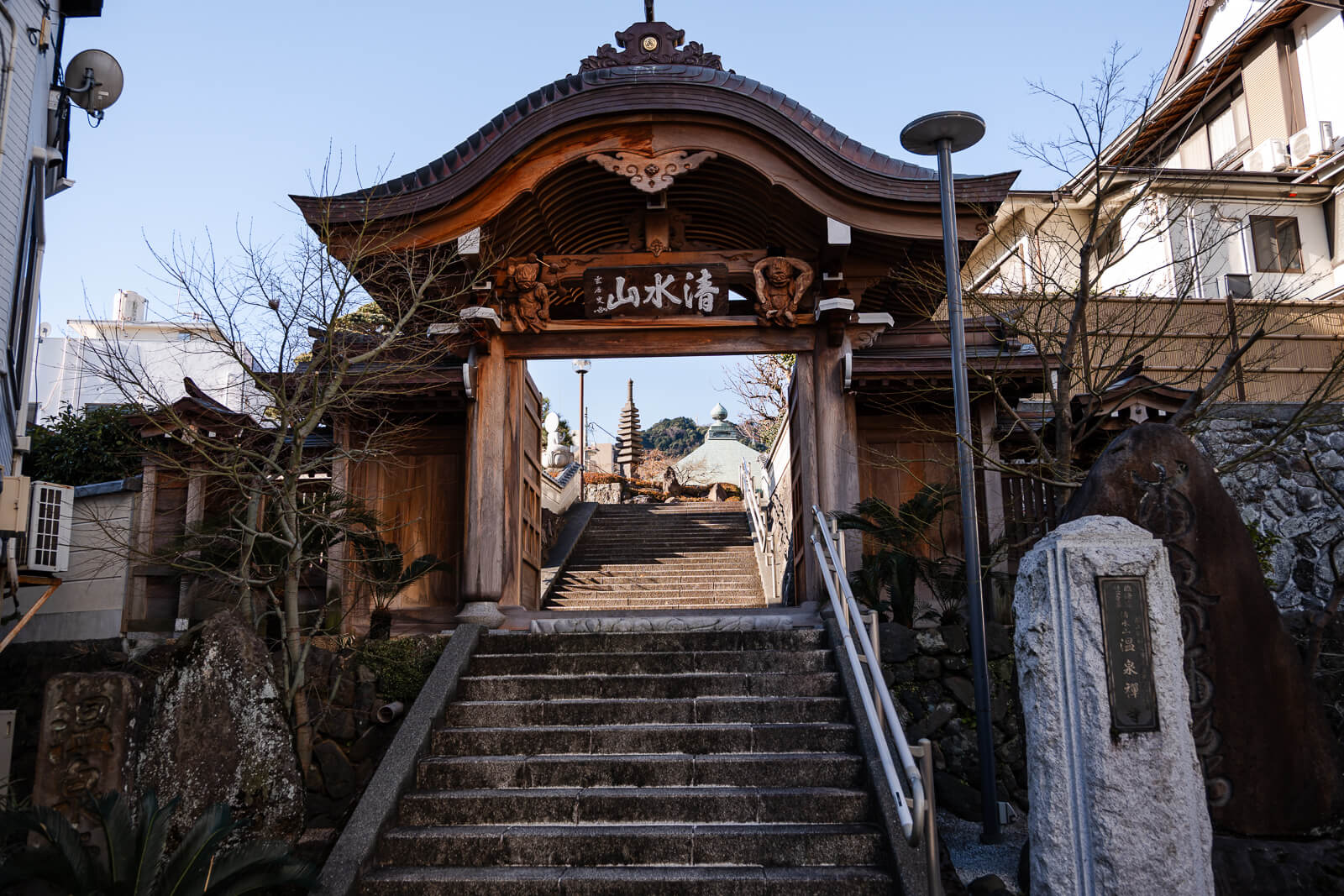
The visit is compact. From the start of the incline to the return downhill, most stops remain within a 20–30 minute window. The slope is steady but short, and the entrance appears quickly once the climb begins.
For travelers exploring Atami on foot — whether as a day trip from Tokyo or as part of a broader Shizuoka itinerary — the temple fits naturally into the city’s vertical layout.
Founded in 1284 Above the Springs That Shaped Eastern Shizuoka
Onsen-ji was founded in 1284 during the Kamakura period by Jūō (授翁), also known as Fujiwara Fujifusa. The date places the temple in a period when settlements across what is now eastern Shizuoka were shaped by access to trade routes and natural resources.
In Atami, geothermal water determined settlement patterns. The springs were the reason people built here.
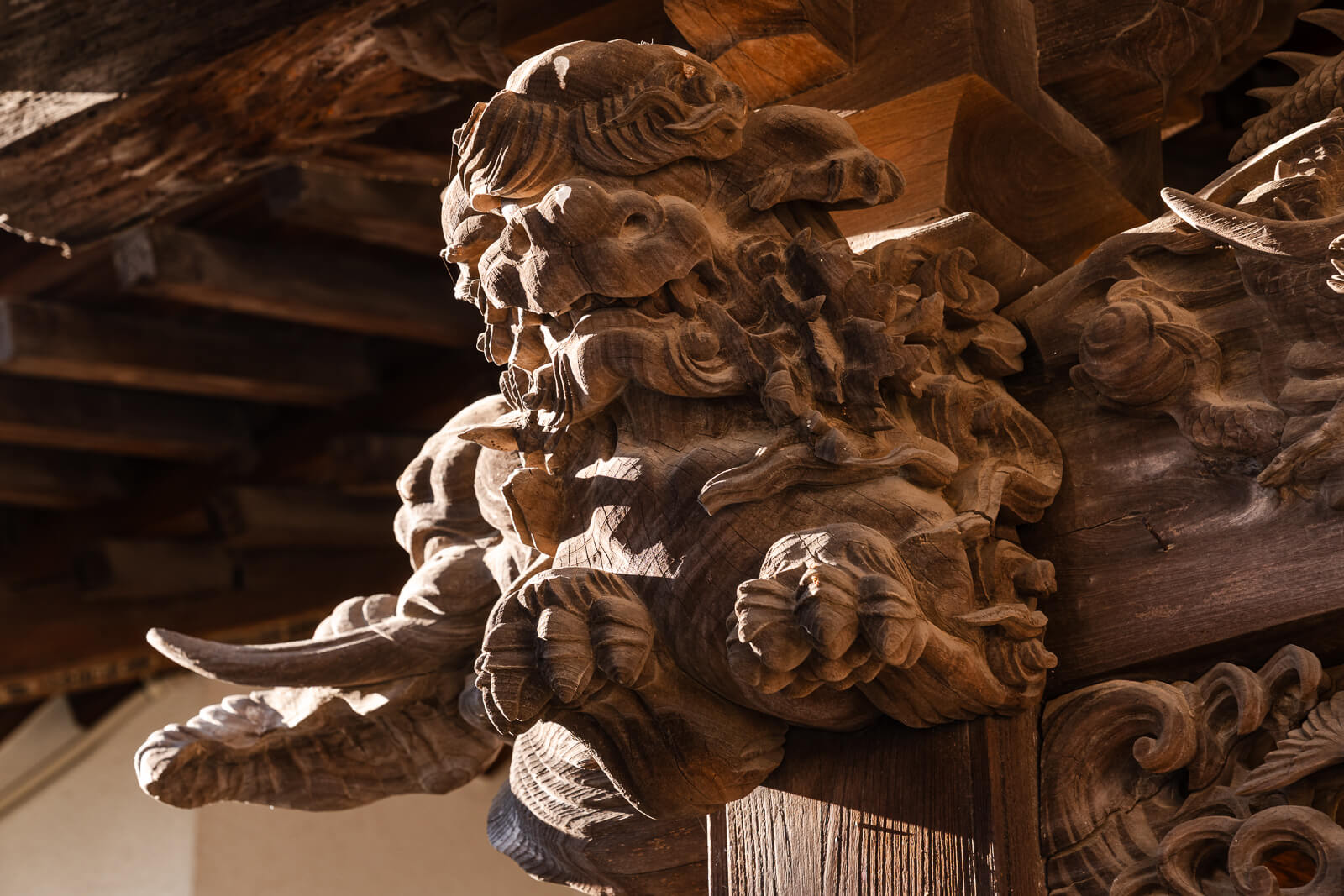
Establishing a temple above the source created religious oversight of the water system that sustained the town. The elevation was intentional. From this hillside position, the temple looked down toward the district organized around the springs.
By the Edo period, Atami’s hot spring water had gained recognition beyond Shizuoka. Tokugawa Ieyasu is recorded as valuing it highly enough for it to be transported to Edo. That association reinforced Atami’s identity within the wider region.
Today, the slopes below hold hotels and residential blocks. The temple’s position remains fixed while the city has expanded toward the coast.
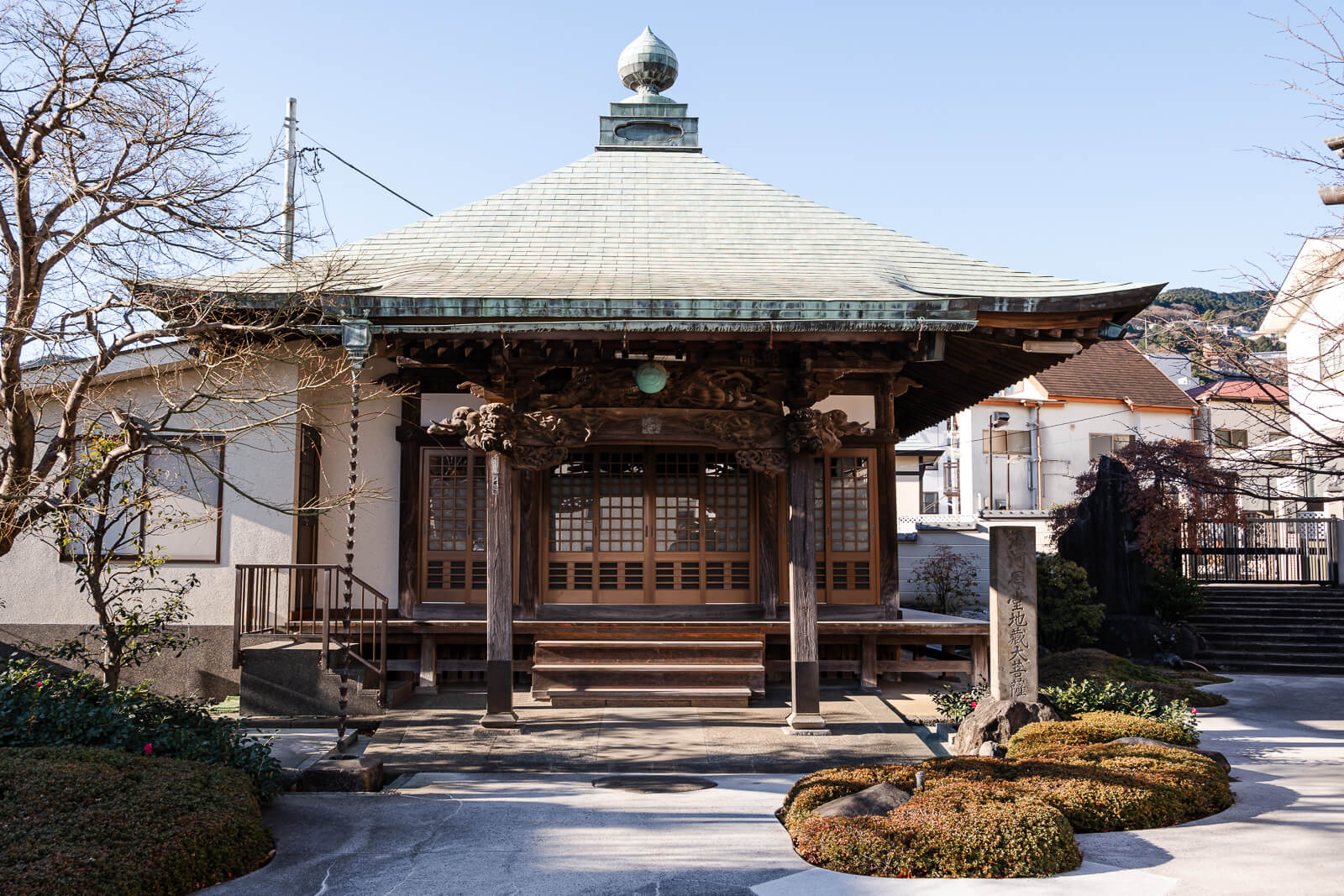
The Short Incline From the Station Streets
The approach begins near the commercial streets surrounding Atami Station. Within several minutes, storefronts thin out and the slope narrows toward the entrance.
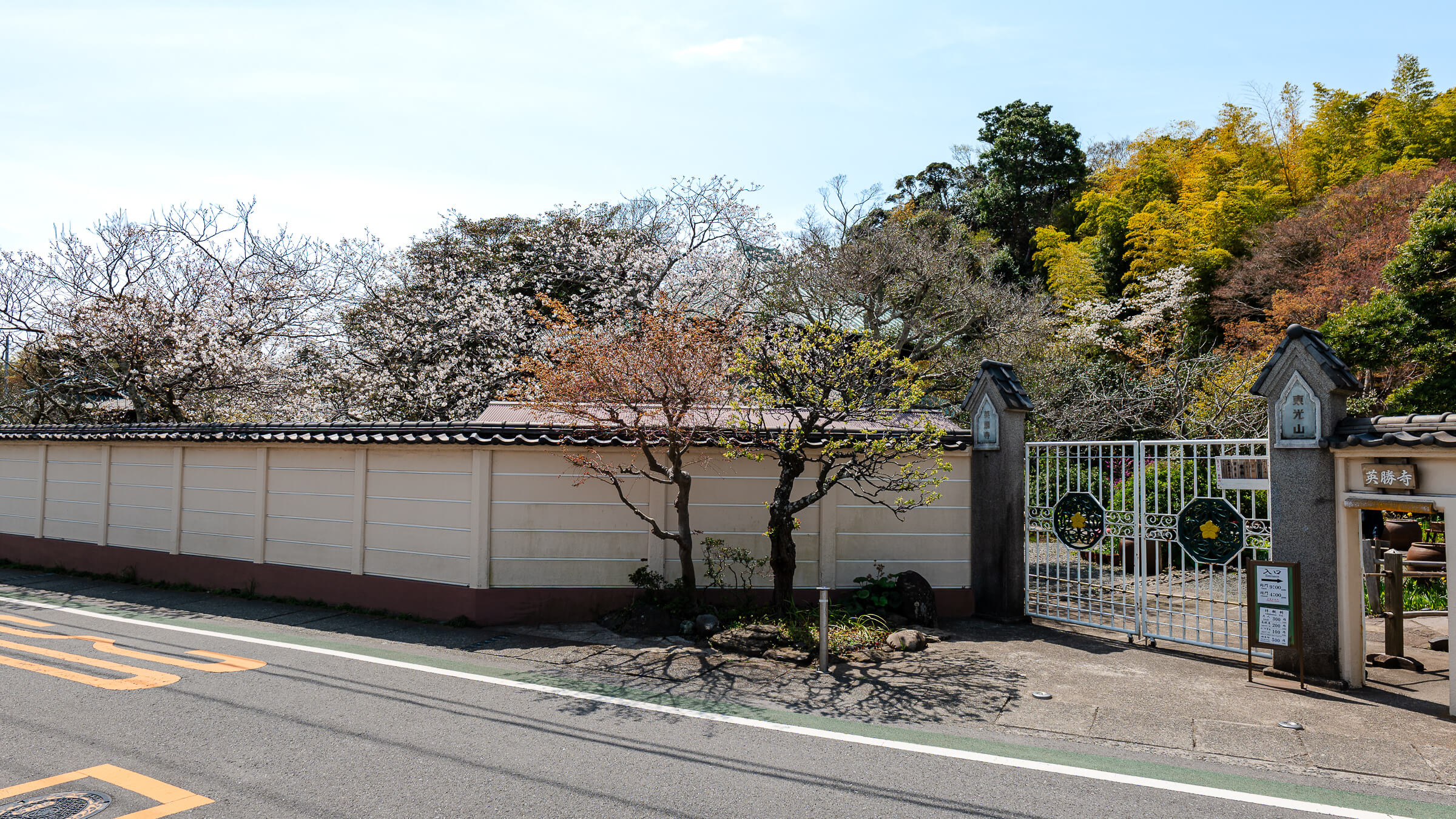
There is no extended staircase or hidden forest trail. The gate appears quickly, and the scale of the site becomes clear almost immediately.
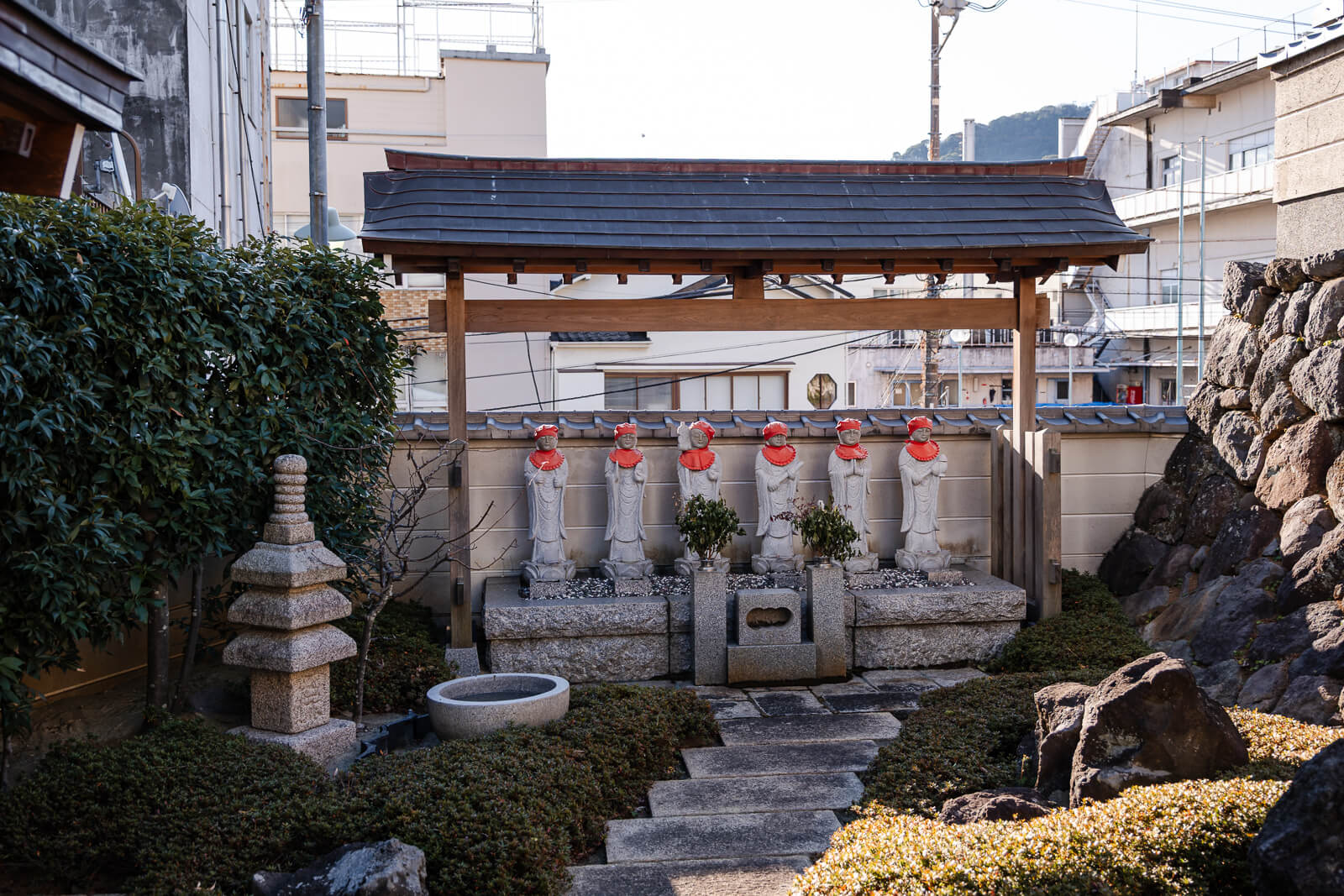
Because the incline is brief and the grounds are compact, the stop integrates easily into a walking route that continues upward toward the ropeway or downward toward the Atami Sun Beach and Atami Water Park.
A Compact Circuit Around the Main Hall
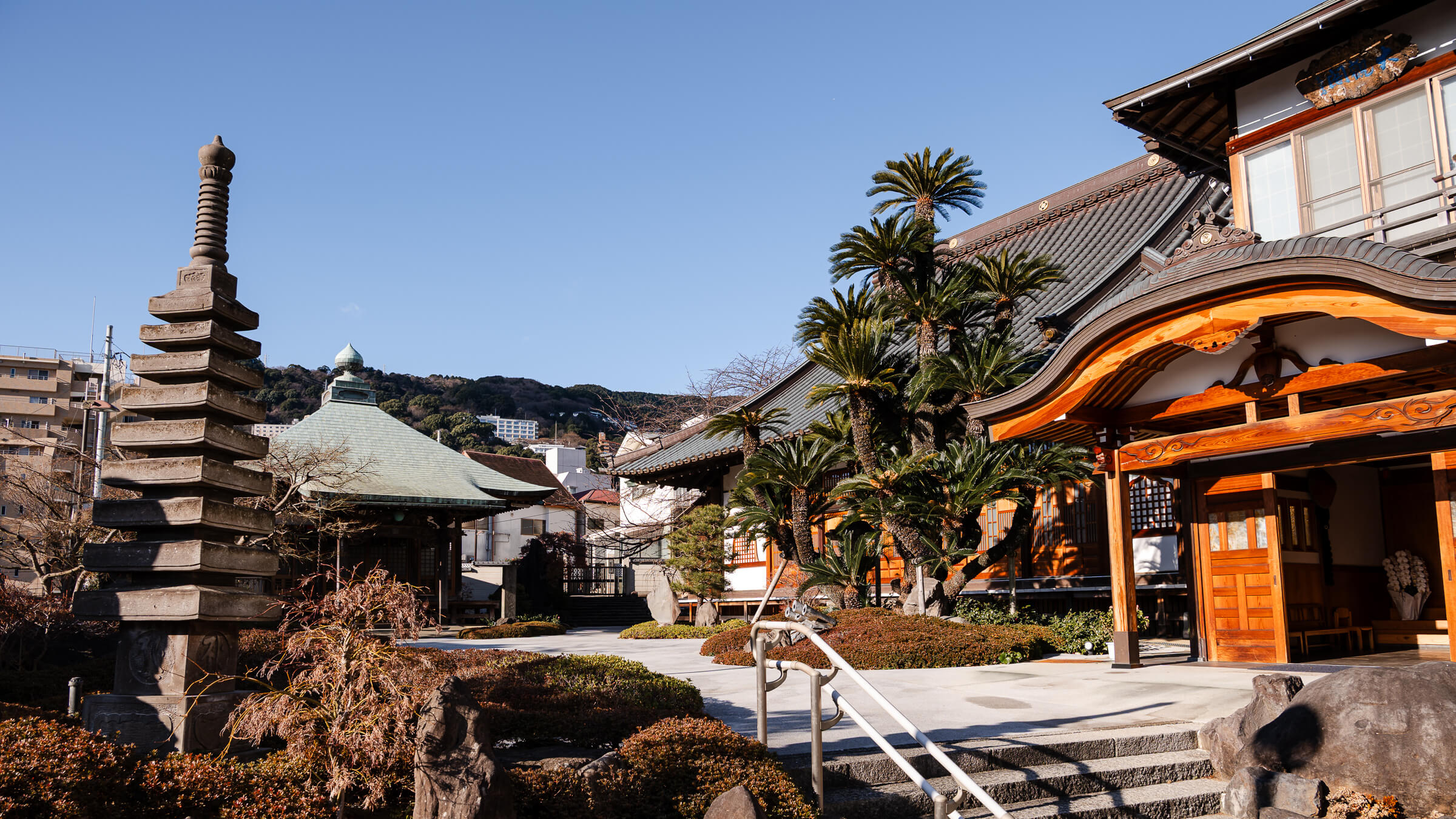
Inside the grounds, the layout centers on a single main hall. The path curves around it before returning toward the gate in one continuous movement.
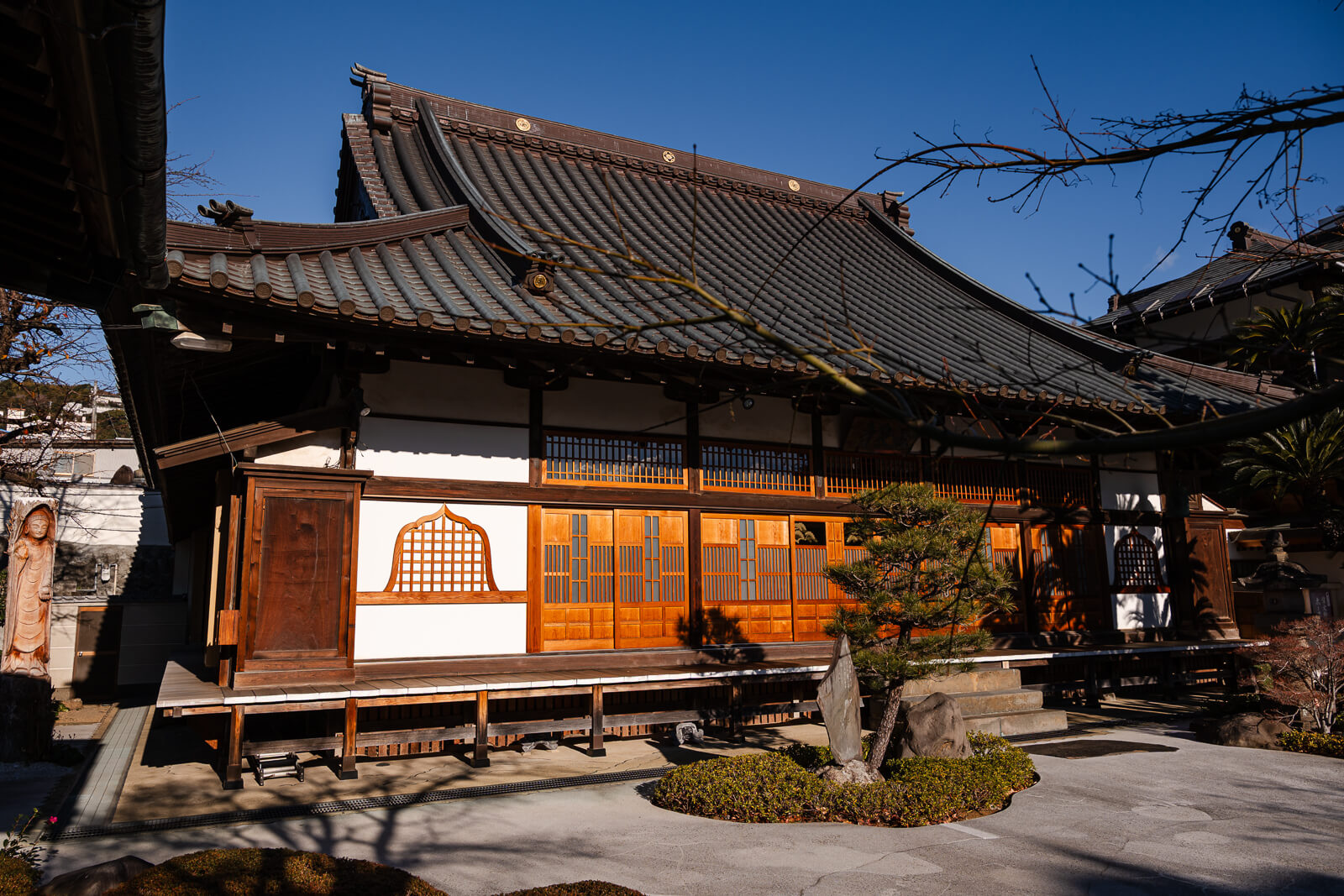
Within the site are elements tied to its early history, including a pine tree traditionally associated with its founding and a stone inscribed with “Namu Amida Butsu.” These features remain embedded in the grounds rather than separated into exhibition spaces.
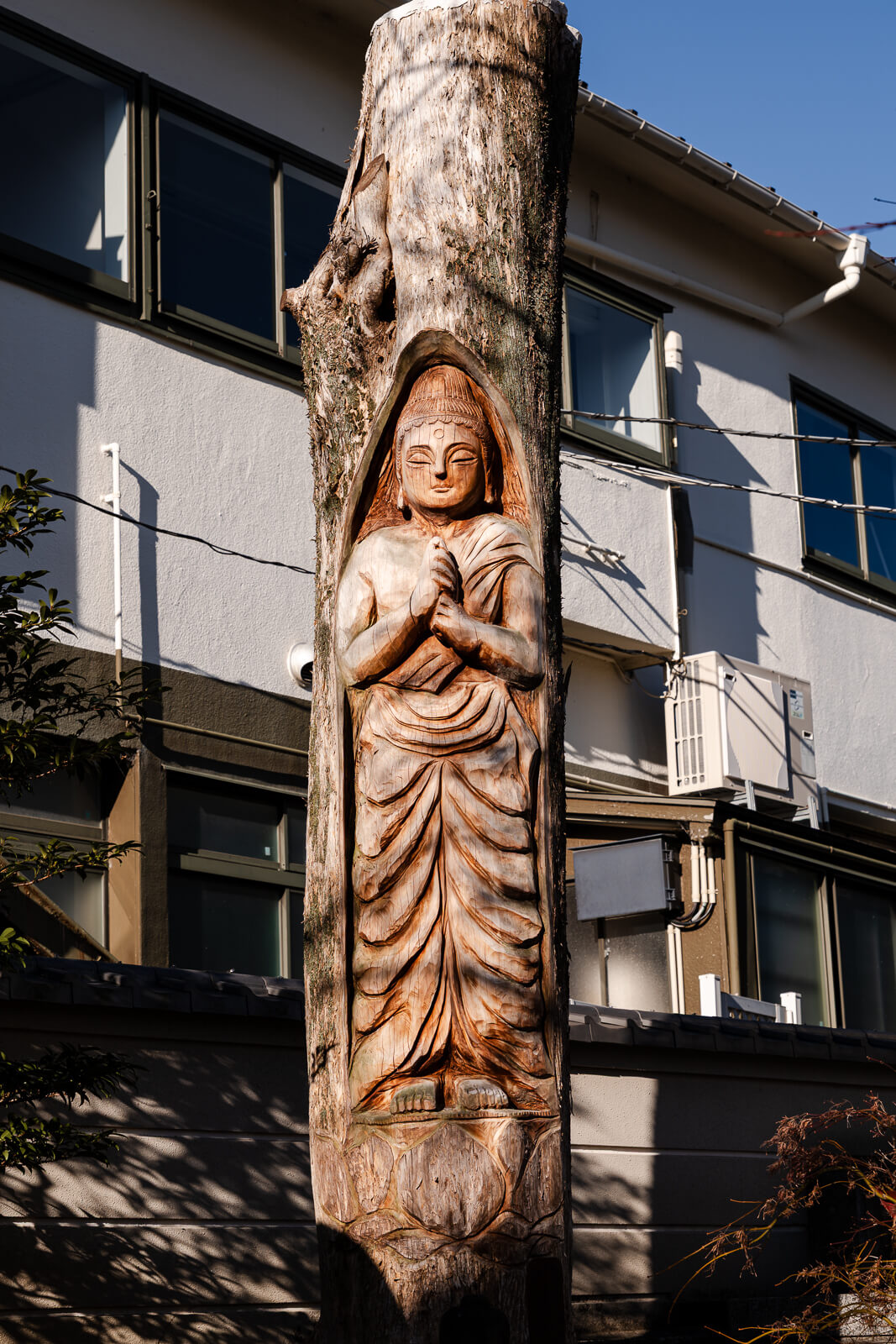
There are no ticket counters, timed interiors, or extended sub-areas. The visit unfolds in a contained loop.
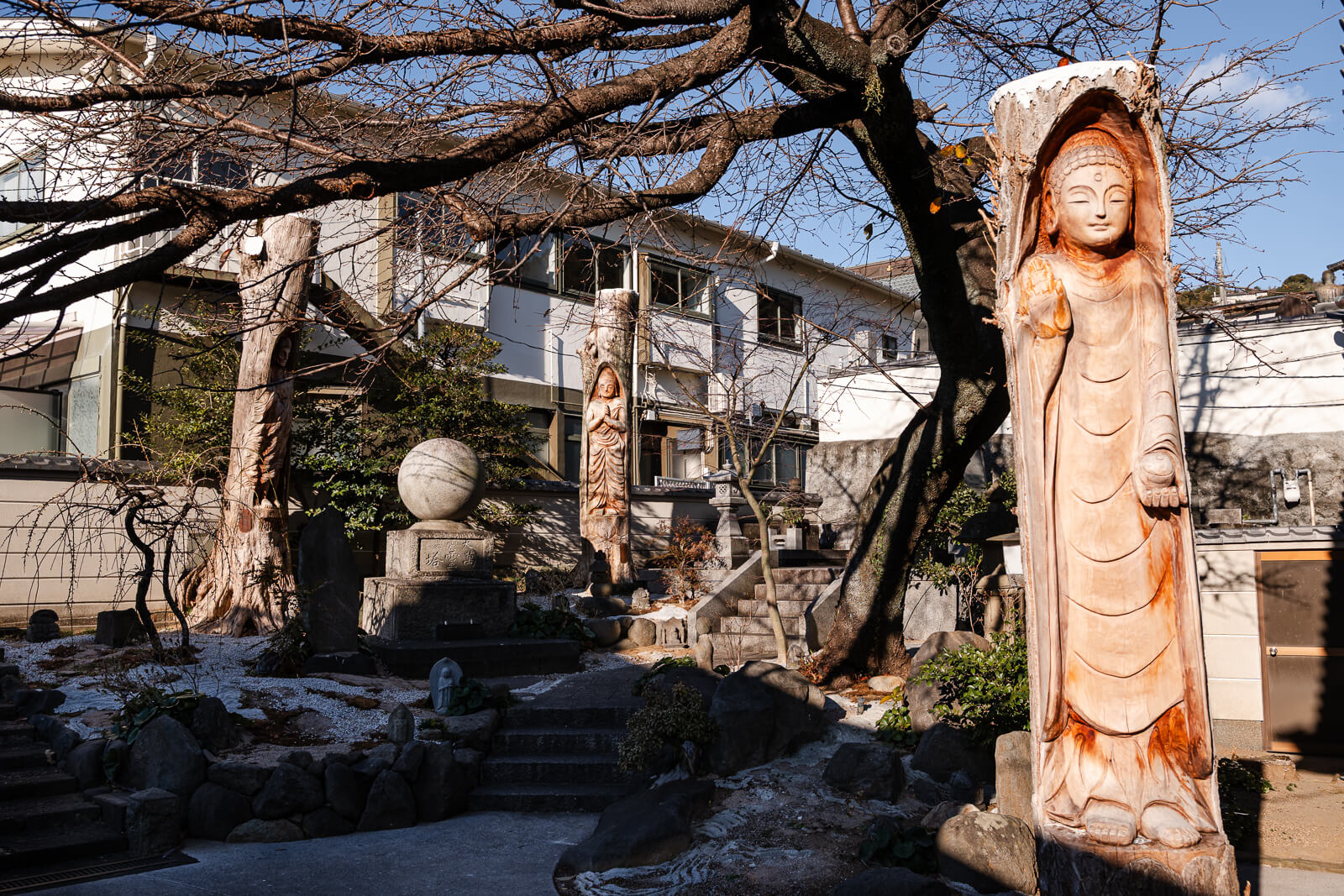
This scale distinguishes Onsen-ji from larger spiritual sites in Atami such as Kinomiya Shrine, whose broader grounds involve more walking and a different spatial experience.
Seigon-in on the Same Slope
Directly beside Onsen-ji is Seigon-in Temple, located within the same hillside zone.
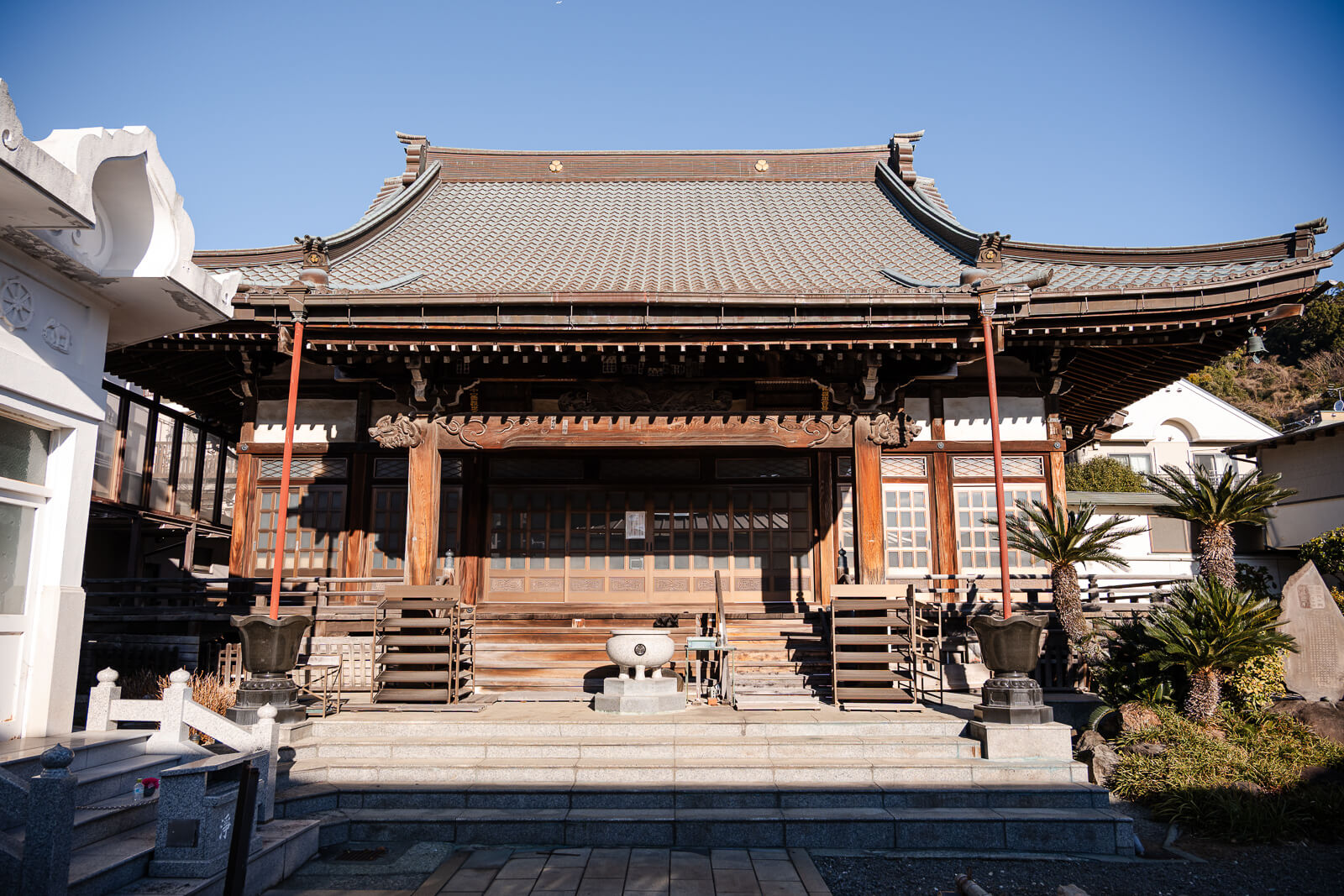
Movement between the two requires no additional routing. Experiencing both remains contained within the same short stop and does not significantly extend time on site.
Together, they mark a concentration of religious institutions tied to the spring district below.
The Layered View of Atami Within Shizuoka
From the temple grounds, the slope descends toward the hot spring district before extending toward Sagami Bay. Higher above, the Atami Ropeway and Atami Castle extend the perspective outward across the coastline.
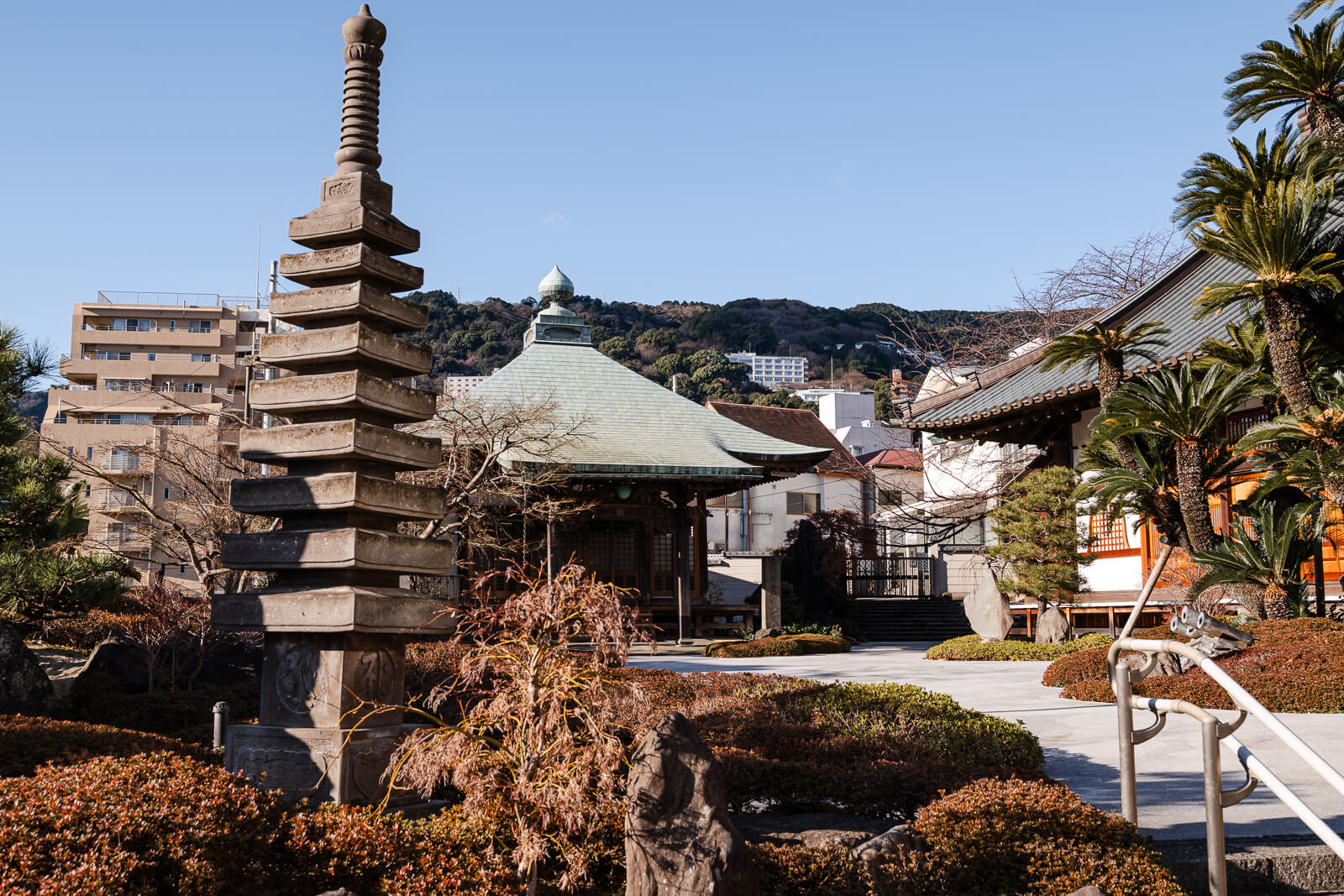
Lower in town, walking routes continue toward the Itokawa Promenade or inland toward architectural landmarks such as Kiunkaku.
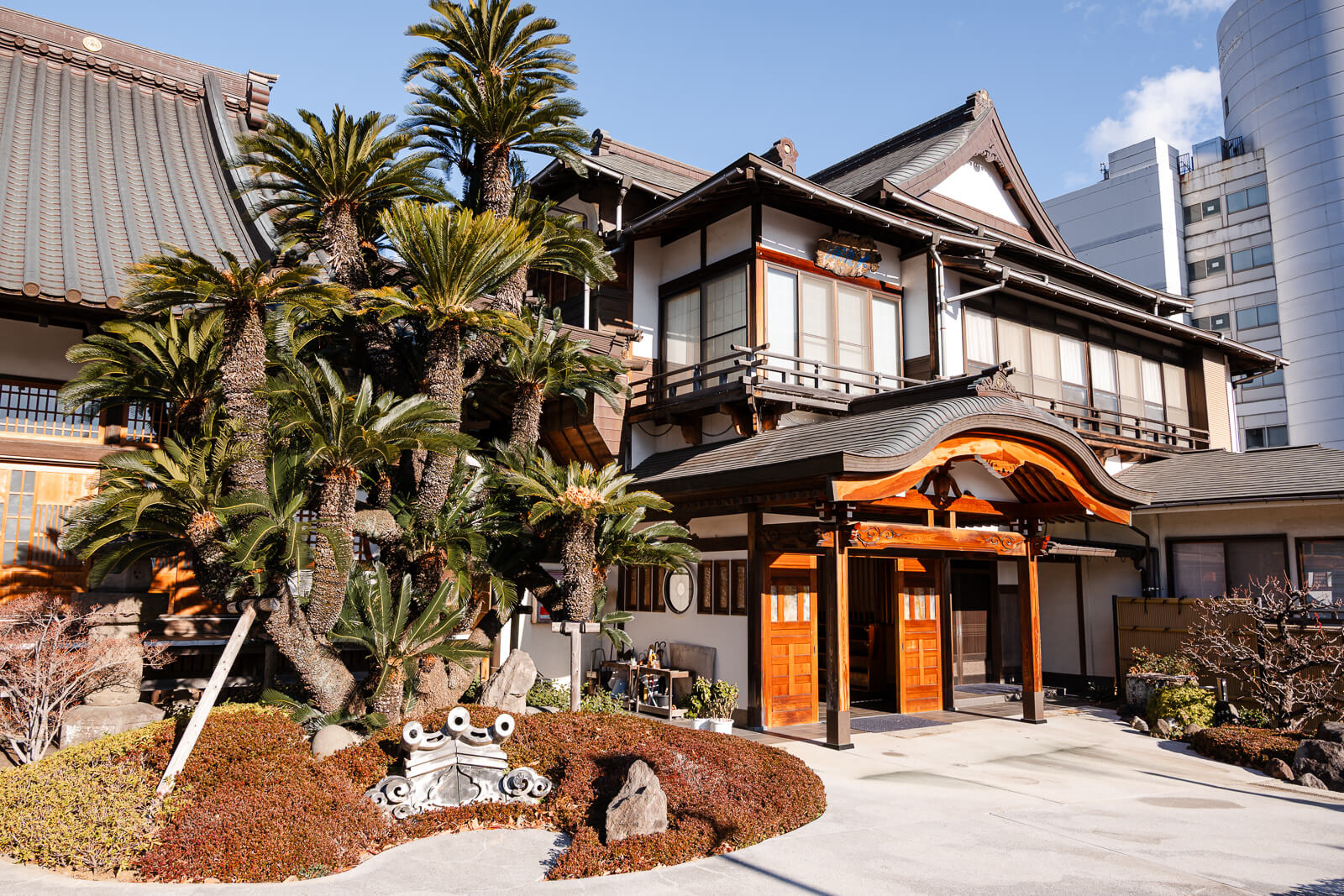
Onsen-ji sits between these zones, linking hillside oversight with coastal expansion.
Where It Fits Within an Atami Walking Route
A common walking arc begins near Atami Station, passes through the station shopping streets, climbs to Onsen-ji and Seigon-in Temple, and then descends toward Atami Sun Beach.
Reversing that direction works equally well.
Because the stop remains brief and requires no ticketing or scheduling, it strengthens an existing walking route rather than becoming its focal point.
Getting There
Onsen-ji Temple is within walking distance of Atami Station. The walk generally takes 10 to 15 minutes and includes a steady incline near the end.
Atami Station connects by rail to Tokyo, Odawara, and other cities along the Tōkaidō corridor, making Atami one of the more accessible coastal destinations within Shizuoka Prefecture.
Hours & Fees
Opening Hours: May vary; confirm locally before scheduling.
Admission Fee: No general admission fee consistently published.
Closed Days: No regular closure publicly documented; verify locally before visiting.
Because this stop fits within a broader Atami walking arc, confirming transport timing, local conditions, and overall plans in advance keeps the hillside district aligned with the rest of the visit.