A Lakeside Pause Along Lake Suwa
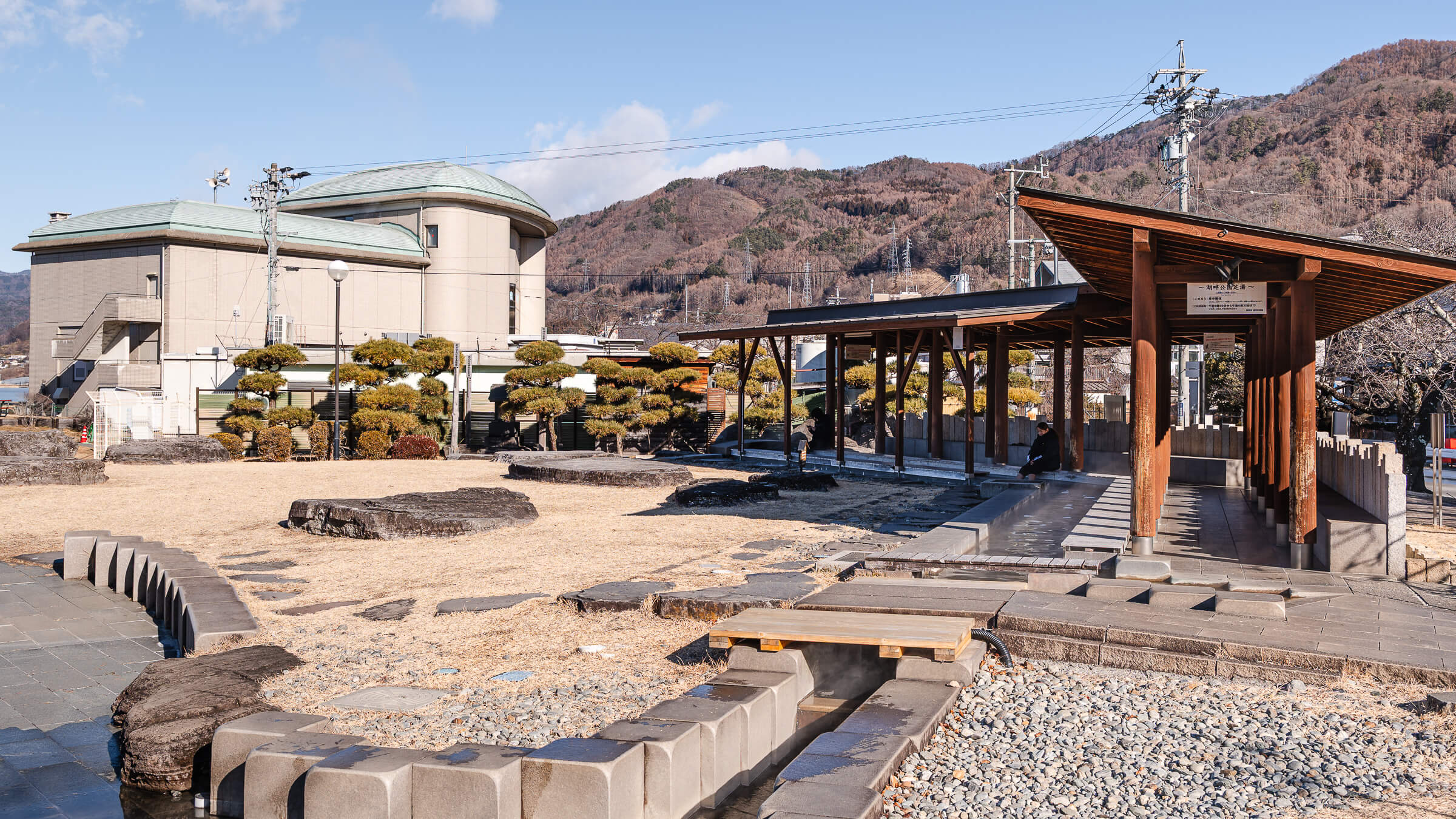
Along the eastern shoreline of Lake Suwa in Nagano Prefecture, the Lake Suwa Geyser Center sits beside the promenade that runs through the Kamisuwa Onsen district of Suwa City. Just outside the building, a long public footbath stretches along the lakeside path facing the water.
Travelers often encounter the spot while exploring the shoreline between the hot spring inns of Kamisuwa and the recreation areas near Sekicho Park. The stop itself is simple, but it reflects something essential about the region: the lake, the hot spring culture, and the slower pace of life that defines this basin in central Nagano.
The area around the lake has long been shaped by geothermal activity. Hot springs rise naturally through the earth beneath Kamisuwa, feeding the traditional inns that line the waterfront and giving the town its identity as one of the region’s most recognizable onsen destinations.
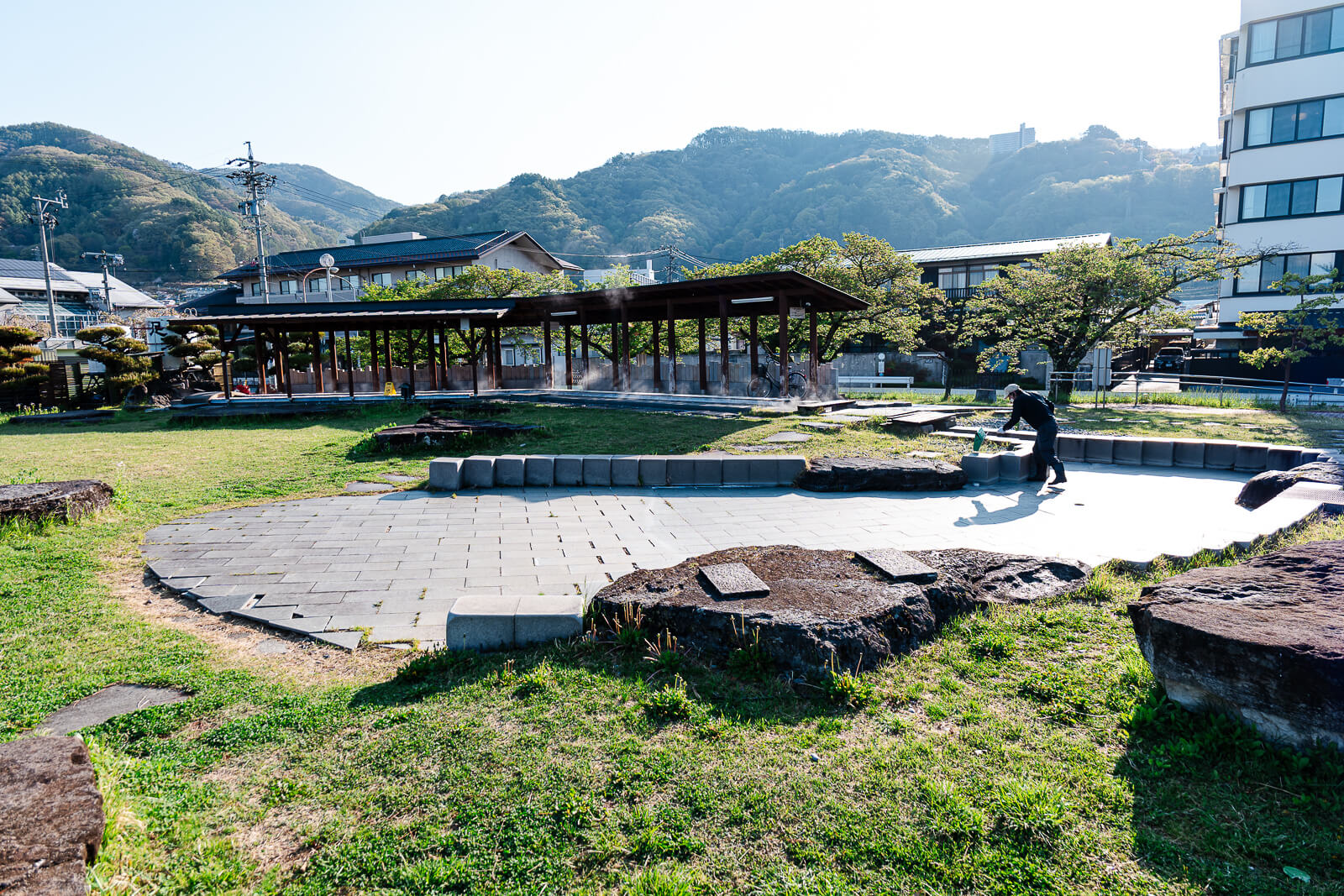
For many visitors, the geyser center and footbath become a natural pause during a walk around the lake rather than a destination that requires careful planning.
Why Travelers Pause Here
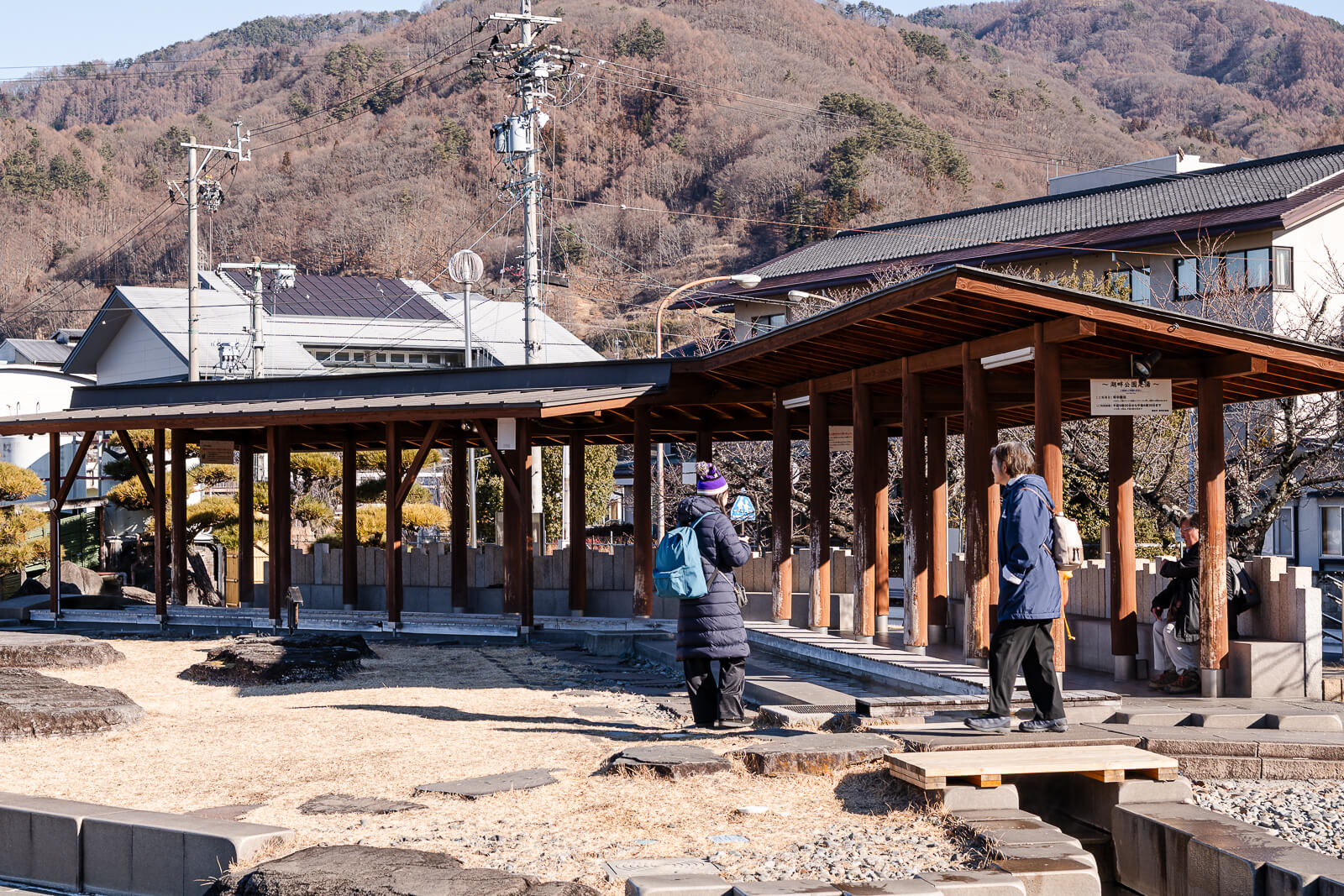
The main draw is the lakeside footbath. A row of benches lines the warm pool facing the water, allowing visitors to sit comfortably while soaking their feet and looking out across the lake.
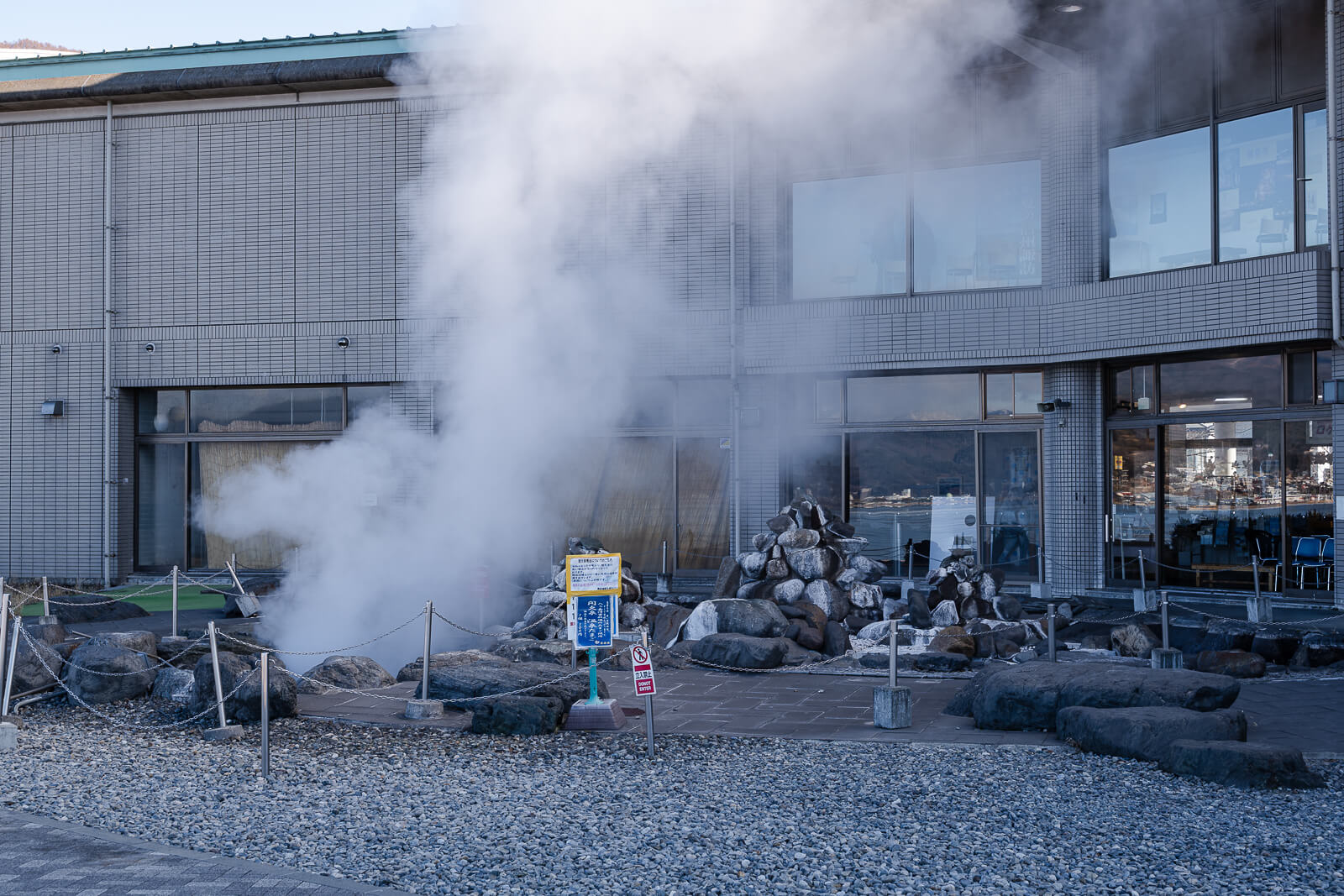
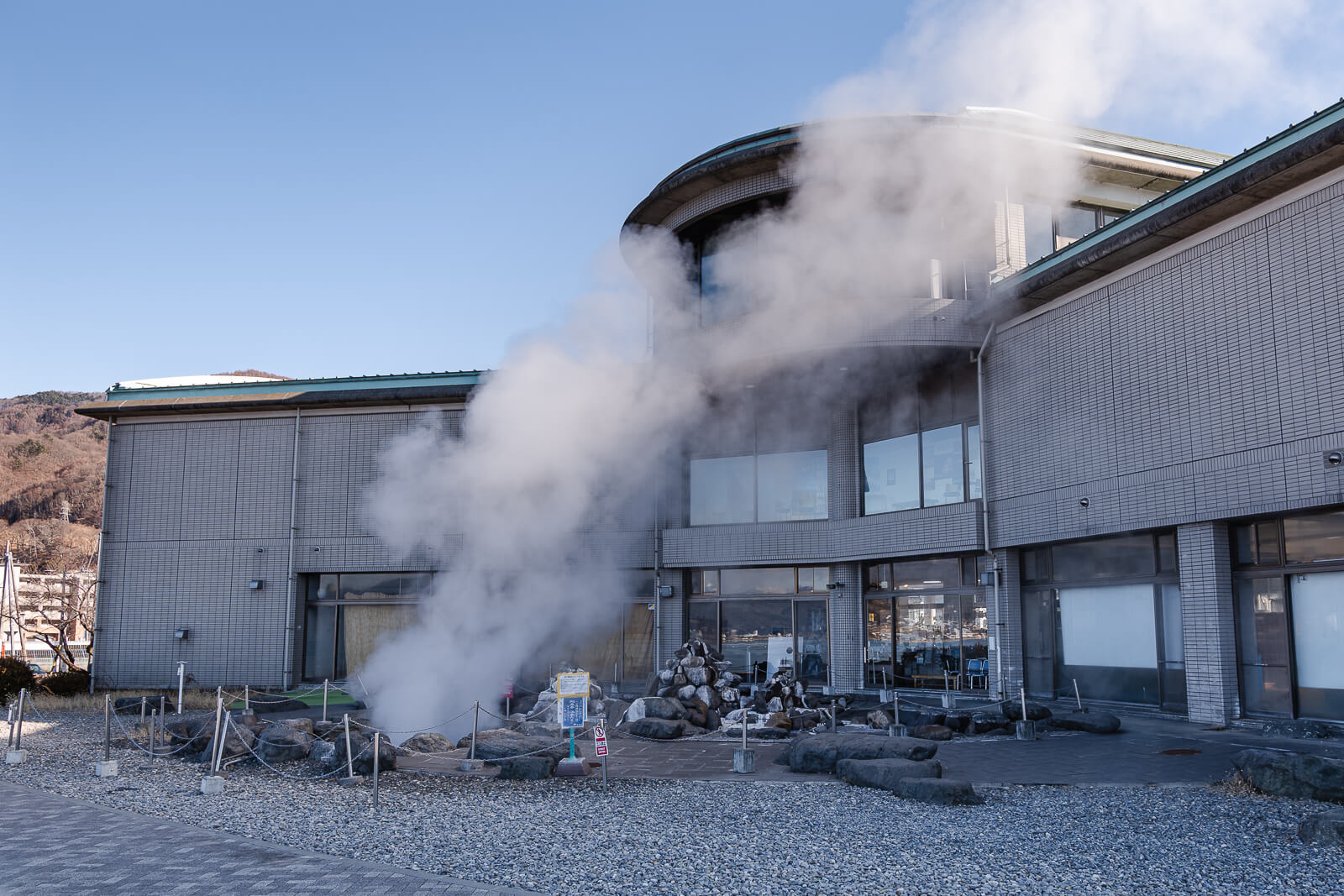
The water flowing through the bath comes from the same geothermal system that feeds the inns of Kamisuwa Onsen, where hot springs have shaped daily life for generations. Steam occasionally drifts from vents near the building, quietly reminding visitors that the lake basin sits above an active geothermal zone.
Inside the Lake Suwa Geyser Center, small exhibits explain how these geothermal forces created the hot springs that sustain the surrounding town. Displays describe the underground pressure that once pushed hot water to the surface and the scientific monitoring that followed as the phenomenon attracted attention.
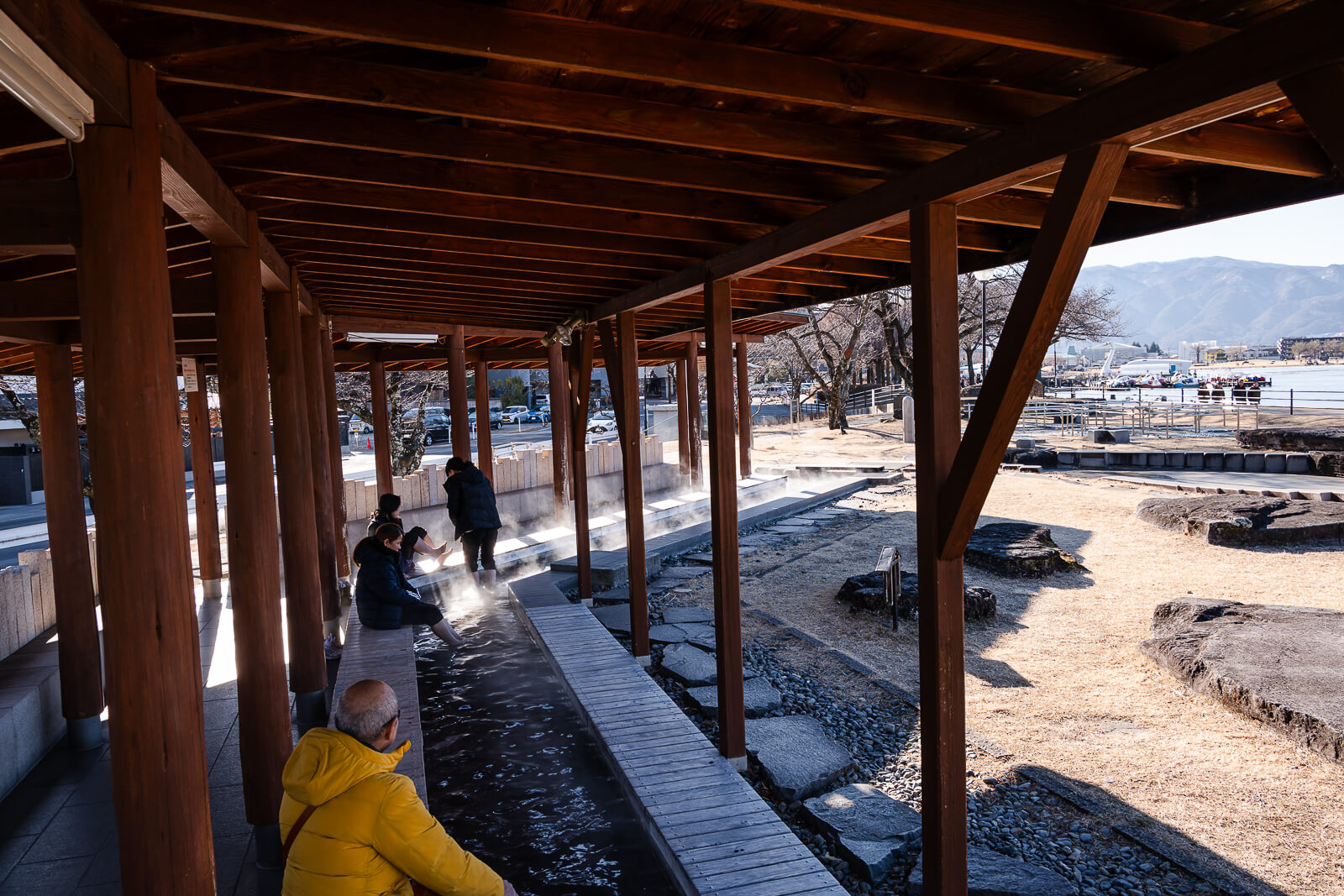
Most visitors spend only fifteen to twenty minutes here, though the lakeside setting often encourages people to linger longer than expected.
Sitting With Your Feet in the Water
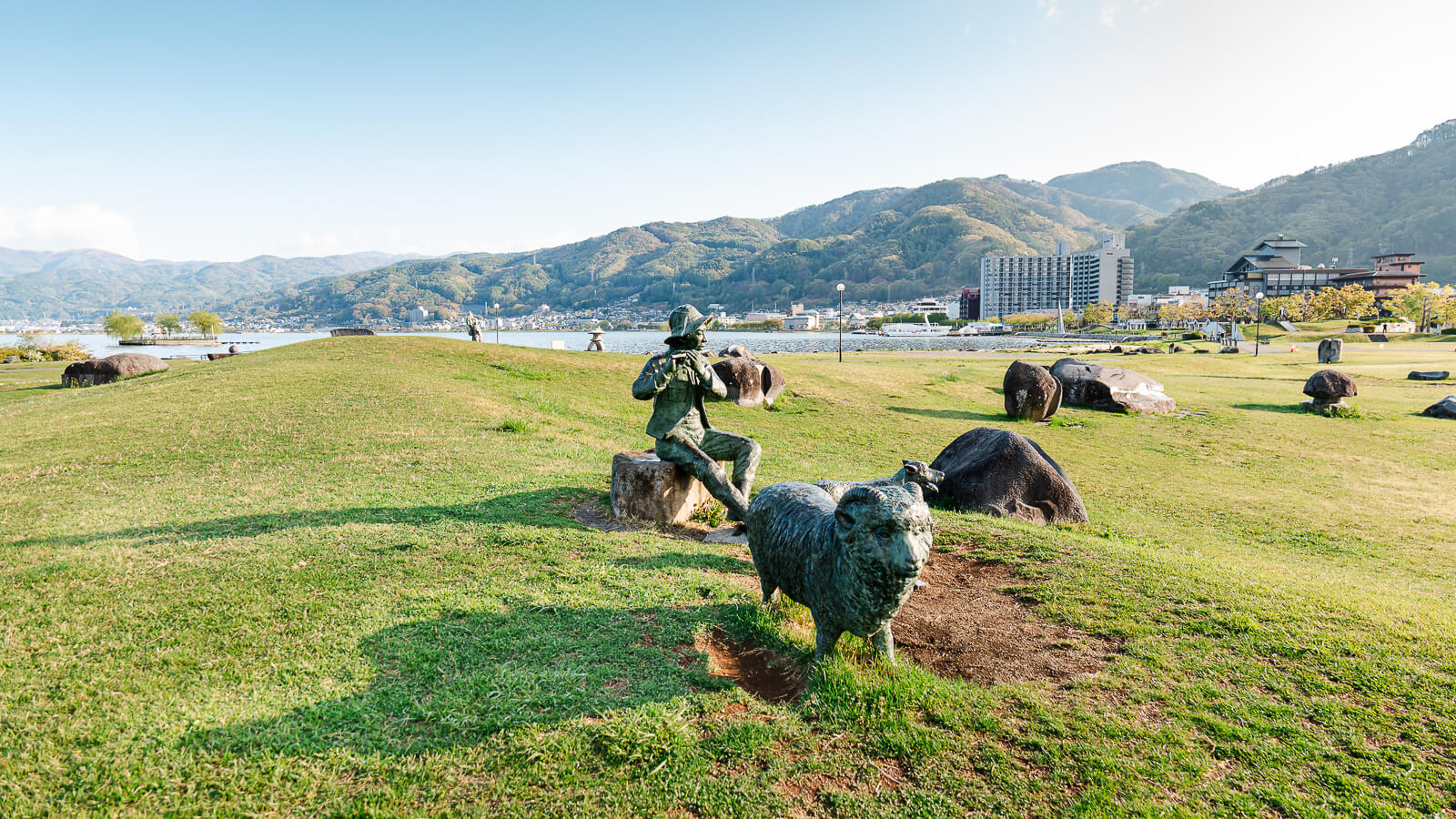
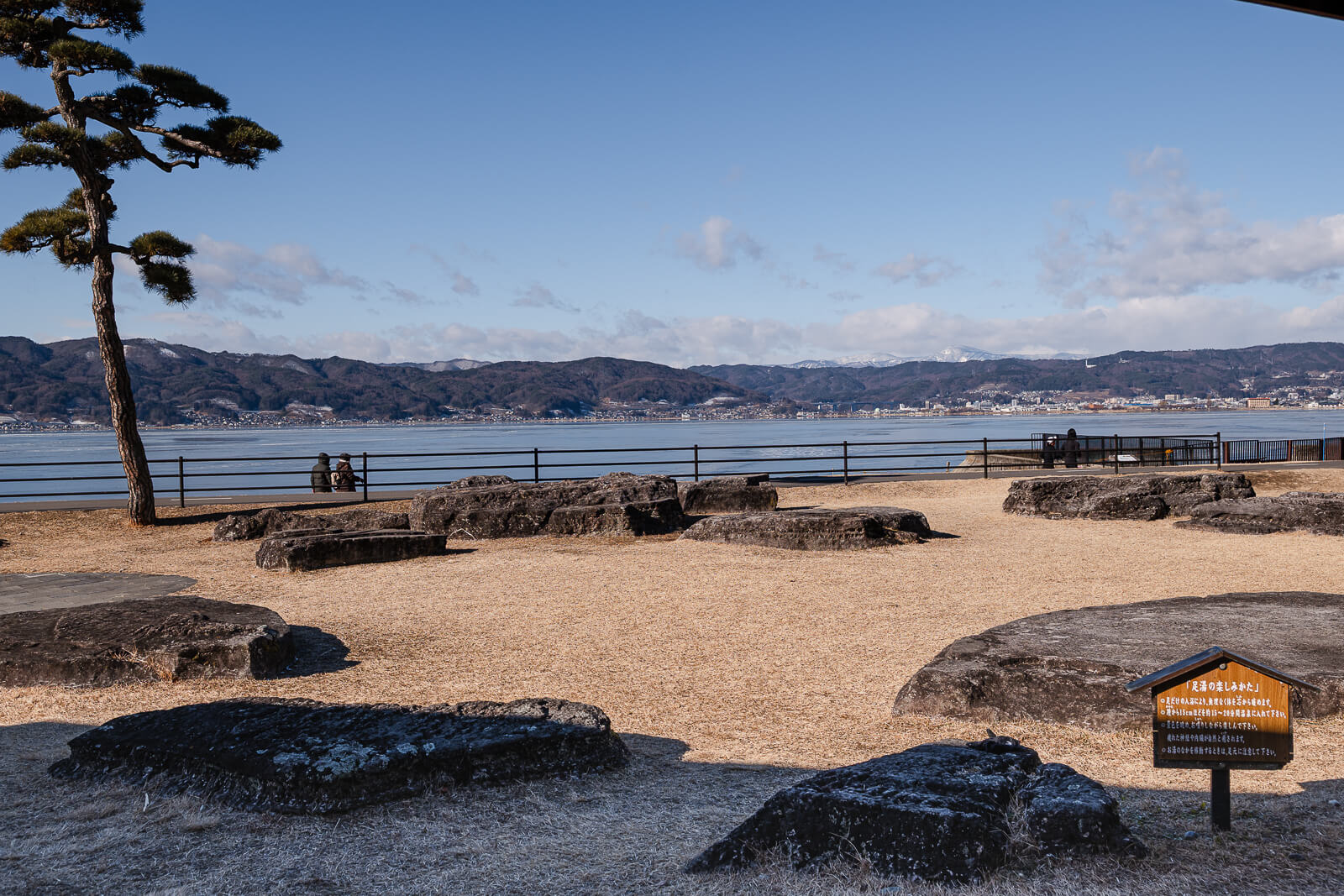
The footbath sits directly beside the lakeshore promenade, only a short distance from the water itself. From the benches, the view opens across the basin toward the mountains that surround Lake Suwa.
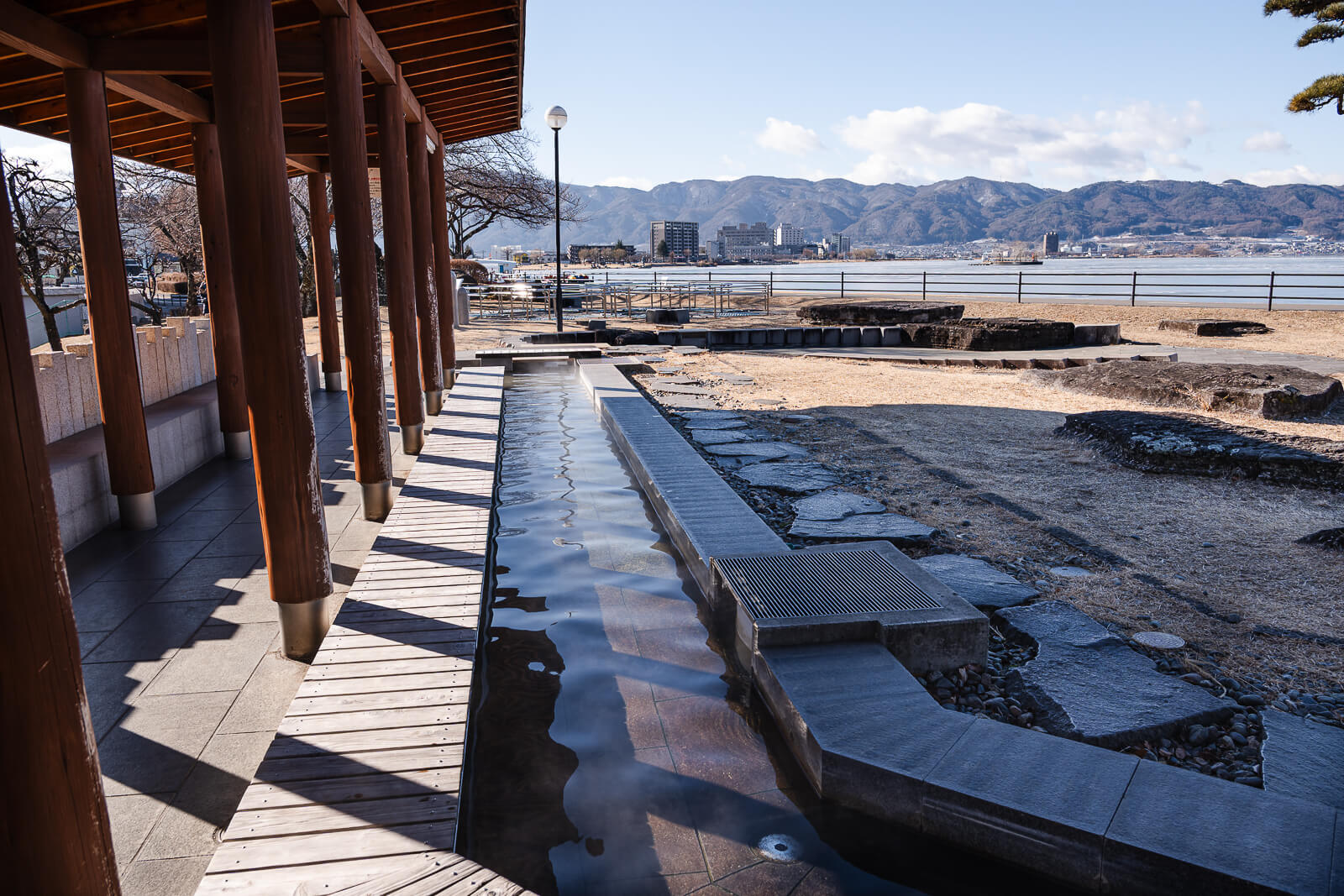
The shoreline path nearby sees steady movement throughout the year. Walkers, cyclists, and local residents pass along the lake’s edge as they move between different parts of the town. The setting is casual and relaxed, and the footbath naturally becomes a place where people pause for a few minutes before continuing along the path.
Seasonal changes make the experience feel different throughout the year.
In warmer months, the lakeshore becomes lively with visitors exploring the waterfront. In autumn, the surrounding hills begin to turn color, adding warm tones to the landscape reflected across the water.
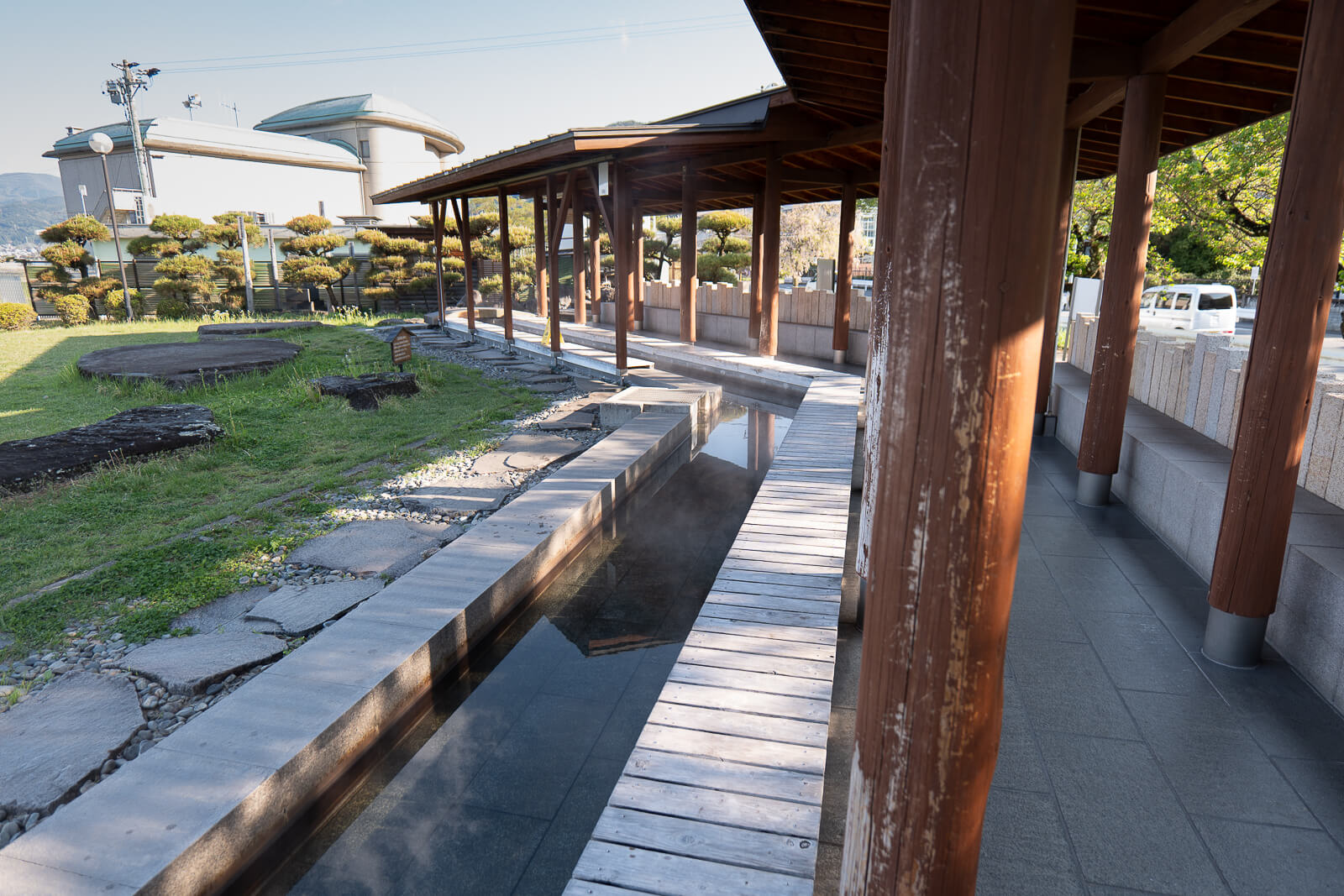
Winter brings a quieter atmosphere. Cold air settles over the lake, snow sometimes gathers along the shoreline, and steam rises gently from the hot water of the footbath. When the wind drops and the sky clears, sitting beside the lake with warm water around your feet becomes one of the simplest pleasures around Lake Suwa.
The contrast between the cool mountain air and geothermal warmth captures something essential about the character of the region.
What You’ll Find Inside the Geyser Center
Inside the building, exhibits describe the geothermal forces that shaped the lake basin and created the hot springs that sustain the surrounding town.
The center’s name comes from a natural geyser that once erupted here regularly. In the early twentieth century, bursts of hot water were known to shoot several meters into the air, drawing attention from scientists and visitors alike.
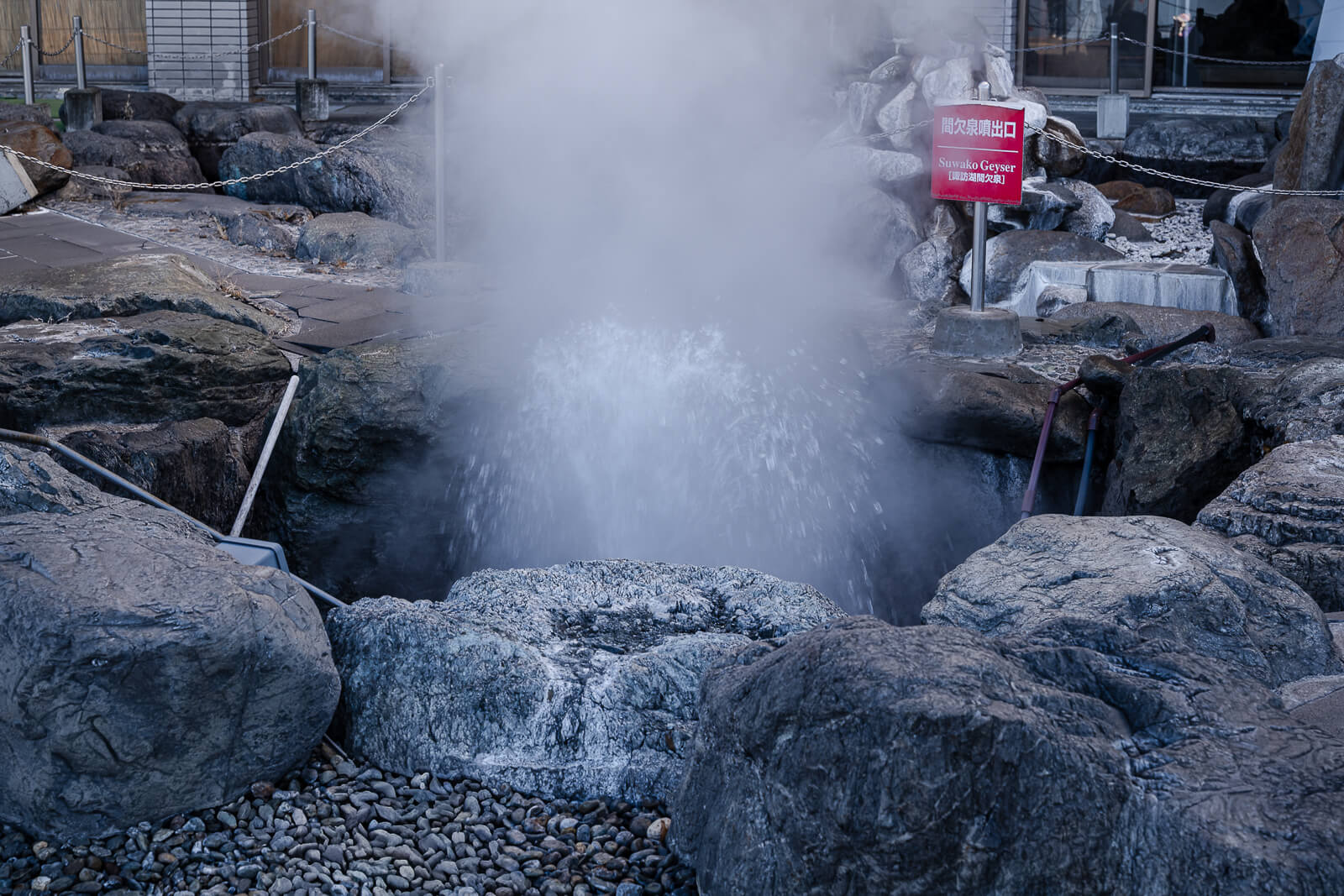
Over time the eruptions became less predictable, but the phenomenon left a lasting mark on the town. Researchers studied the geothermal conditions beneath the lake basin, trying to understand how pressure and underground heat produced such dramatic bursts of water.
Today the geyser rarely erupts with the same intensity, but the center preserves the history of those events and explains the geothermal environment that continues to shape the town.
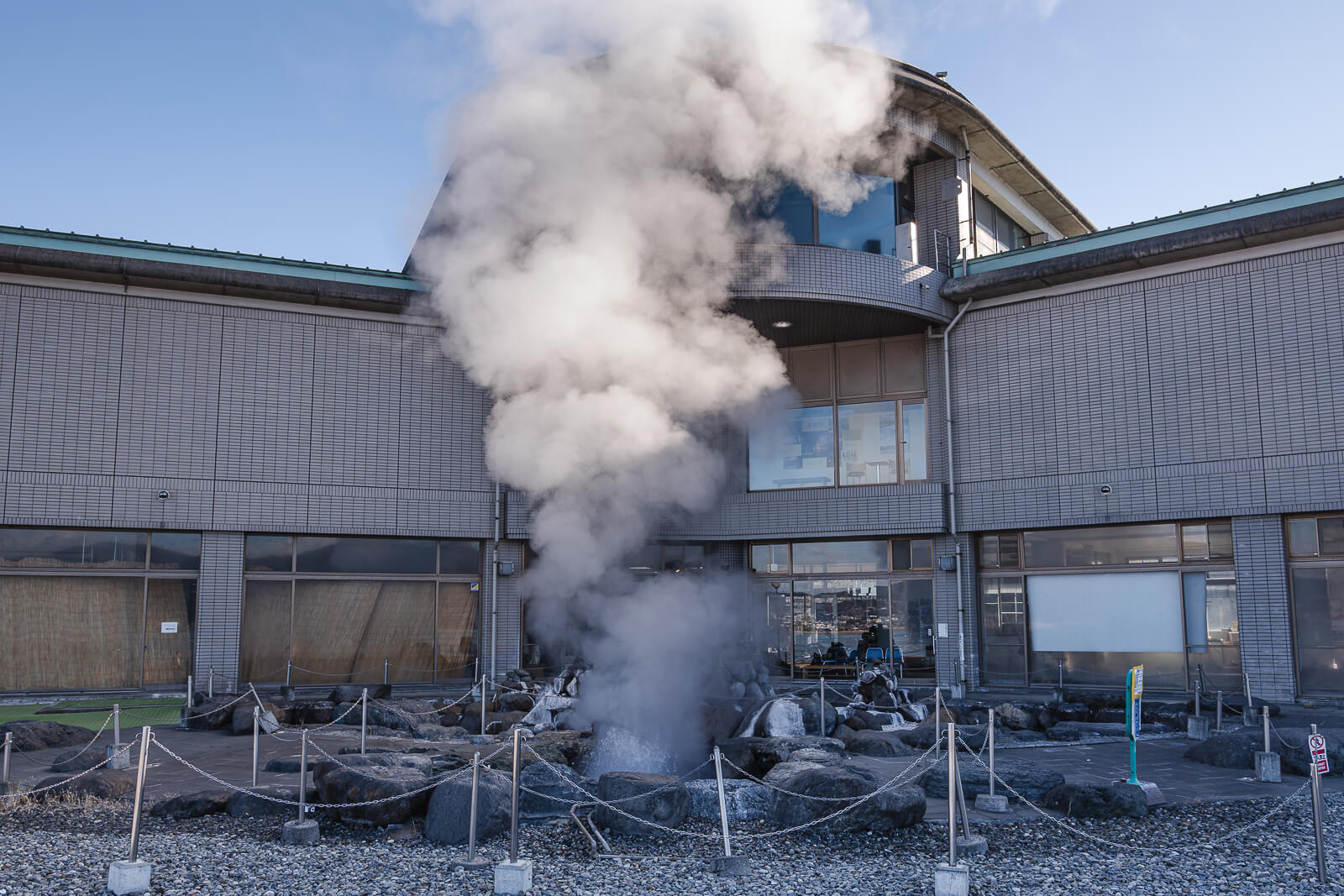
The building itself is small, yet it adds an interesting layer of context to the lakeside landscape.
When This Stop Fits Best Into Your Day
The geyser center and footbath work best as a short break during a broader visit around the lake.
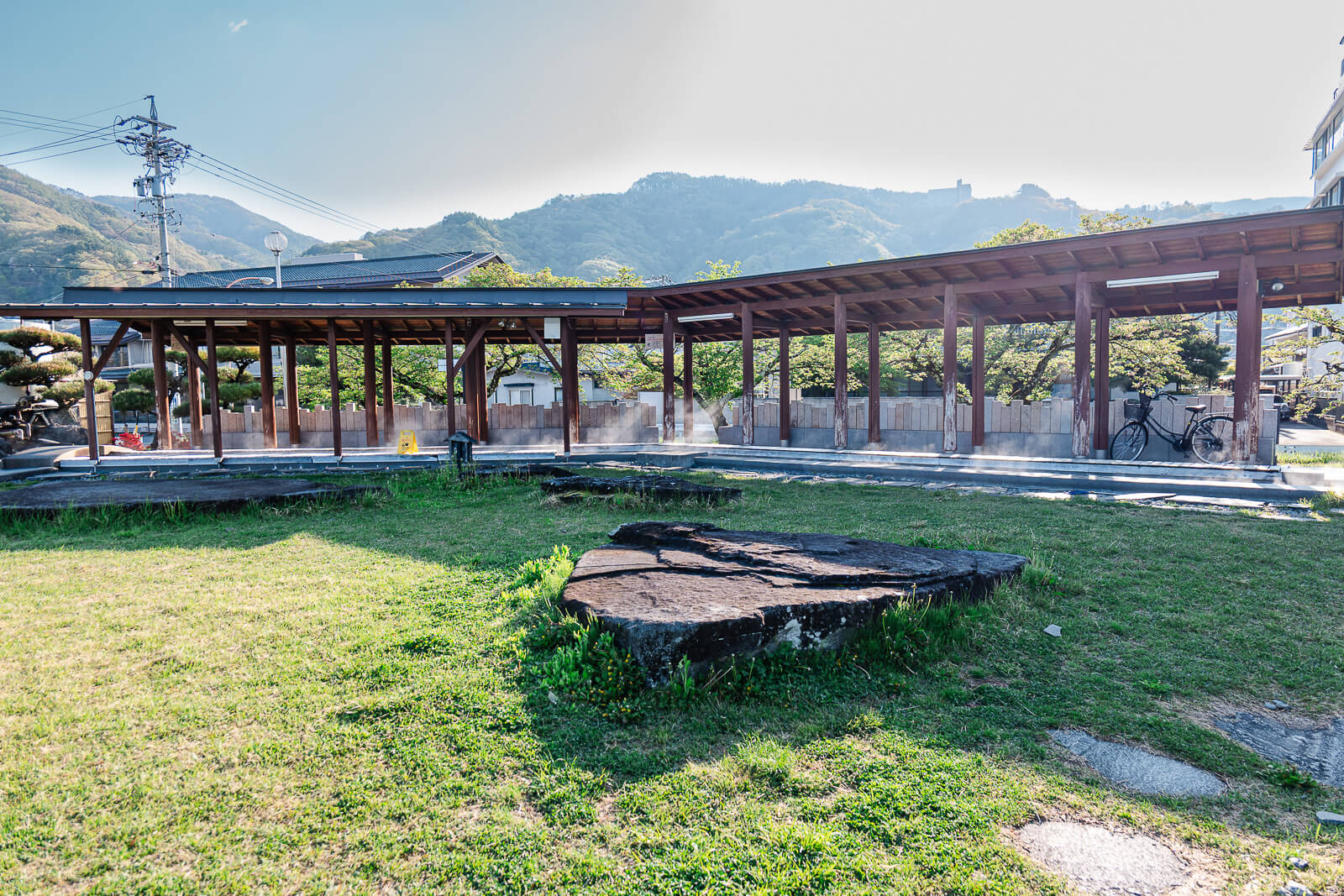
Travelers staying in the inns of Kamisuwa Onsen often find the footbath only a few minutes’ walk from their accommodation. For those exploring the lakeshore path, it becomes an easy place to stop briefly before continuing along the waterfront.
Because the visit requires little time, it pairs naturally with other landmarks around the lake. Many visitors combine a stop here with the lakeside grounds of Takashima Castle or the historic shrine network of Suwa Taisha, both of which reflect important parts of the region’s cultural history.
As a result, the geyser center rarely feels like a separate destination. Instead, it becomes one of several small moments that shape a visit around Lake Suwa.
How This Stop Fits Around Lake Suwa
The geyser center sits near the middle of the Kamisuwa shoreline, making it easy to incorporate into a wider exploration of the lake. Walking west along the promenade leads toward Sekicho Park, where the shoreline opens into a larger recreation area and lake views stretch farther across the basin.
A short drive brings visitors to Takashima Castle, whose reconstructed keep overlooks the western edge of Lake Suwa. The castle grounds provide a different perspective on the lake and connect the modern town to its feudal past.
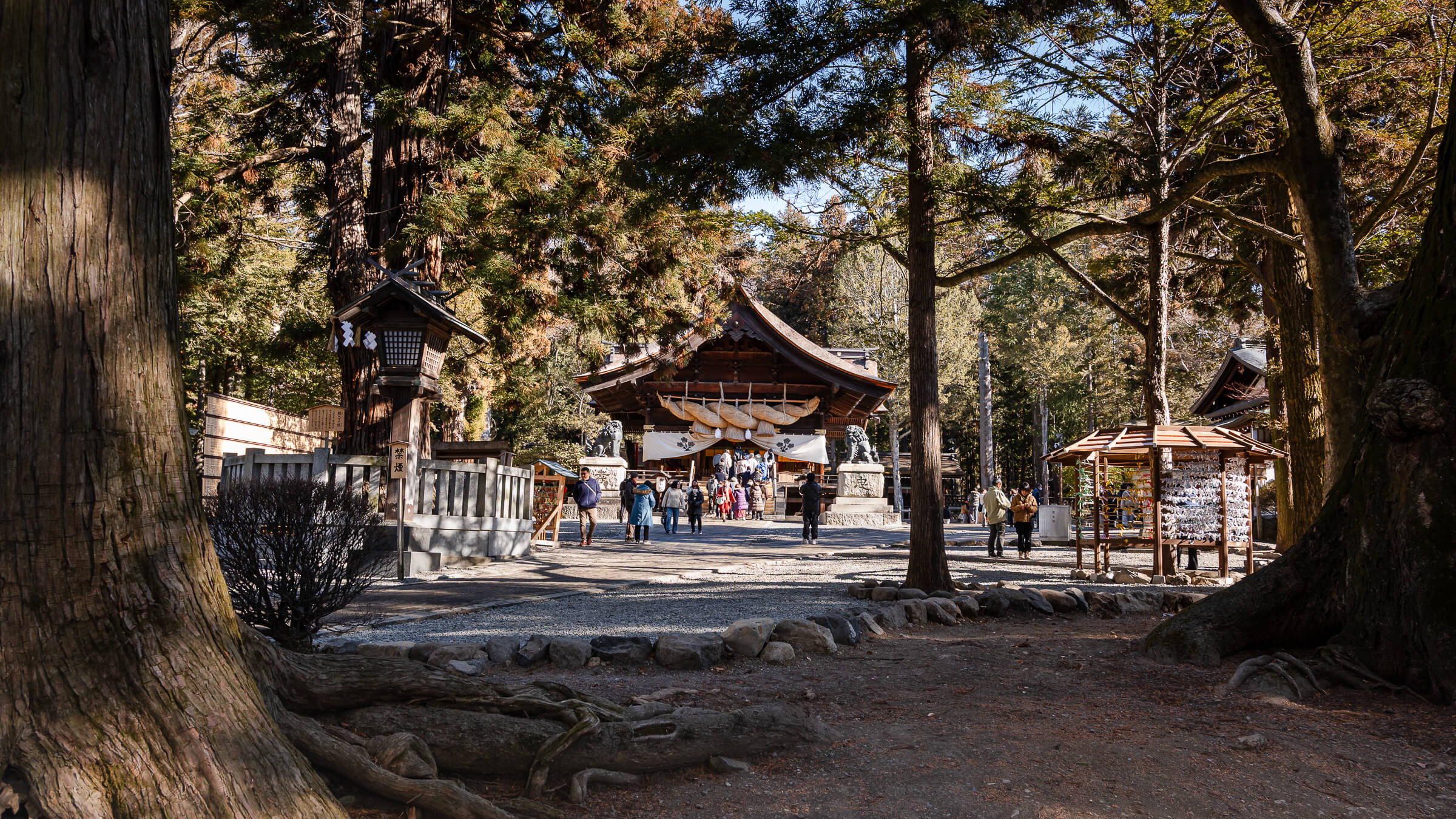
Across the basin stand the historic shrines of Suwa Taisha—Kamisha Honmiya, Kamisha Maemiya, Shimosha Akimiya, and Shimosha Harumiya—one of Japan’s oldest shrine networks and an important cultural landmark in the region. Together these places reveal different layers of the lake’s identity — geothermal hot springs, feudal history, and ancient religious traditions.
The geyser center and footbath sit quietly within that larger landscape.
Getting There
The Lake Suwa Geyser Center stands along the lakeshore road in the Kamisuwa district of Suwa City. Travelers staying in Kamisuwa Onsen will usually find the location within easy walking distance of nearby inns and lakeside promenades.
For drivers, parking is available near the building, with additional spaces along the lakeshore road. The location is easy to reach from other destinations around the lake and is commonly visited while exploring the surrounding shoreline.
Because the stop requires little time, most visitors encounter it naturally while moving between other attractions around Lake Suwa.
Hours and Fees
Lake Suwa Geyser Center
Hours: Typically 9:00 AM – 5:00 PM
Admission: Free
Lakeside Footbath
Open daily along the lakeshore promenade
Admission: Free
Because the footbath sits outdoors along the lakeside path, access may occasionally vary depending on weather or maintenance conditions.
After soaking your feet beside the lakeshore, many travelers continue exploring the wider Lake Suwa area — where staying nearby or moving easily between lakeside towns can make the day much simpler.