Stepping Out of Kamakura Station and Into the City
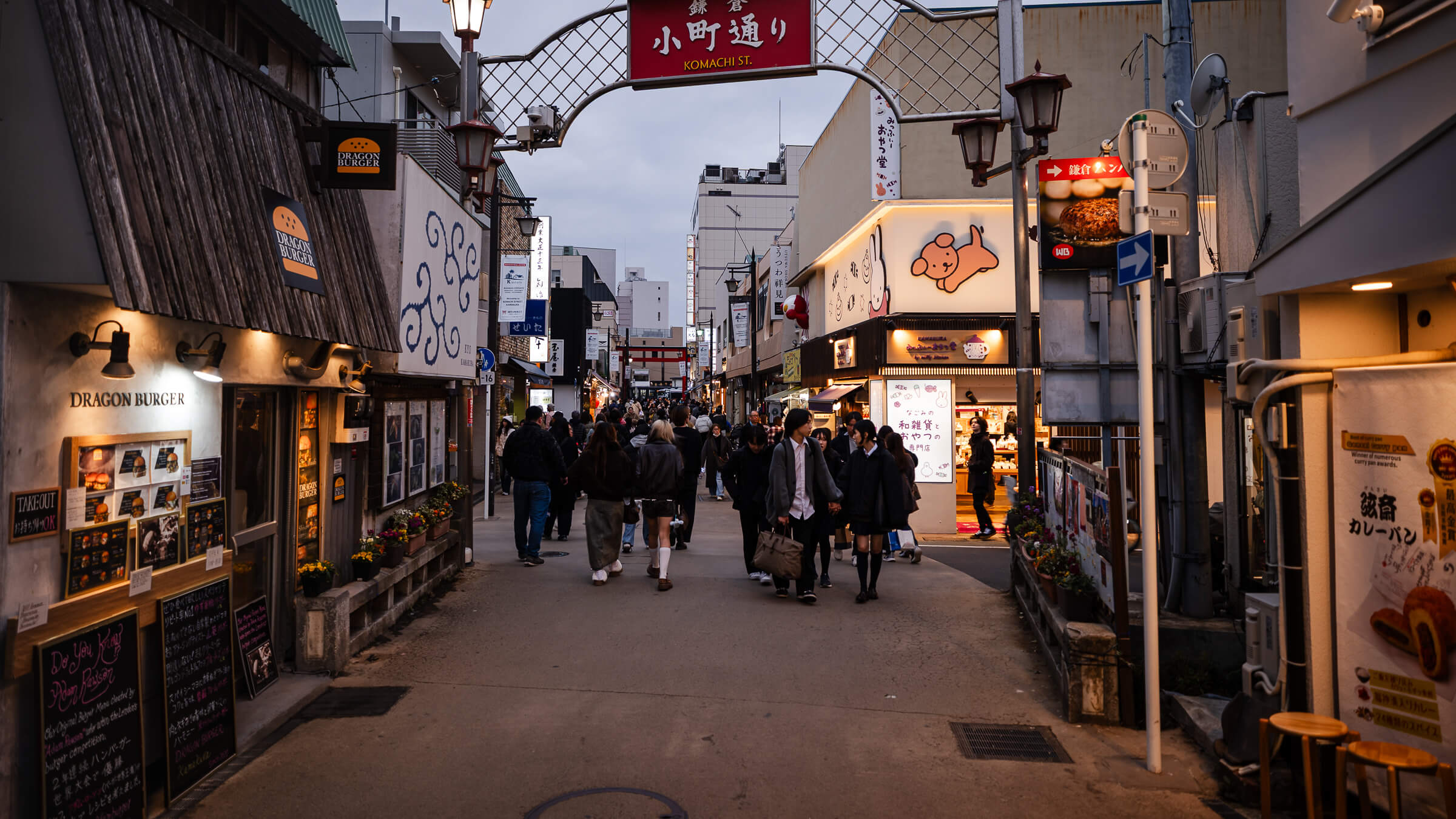
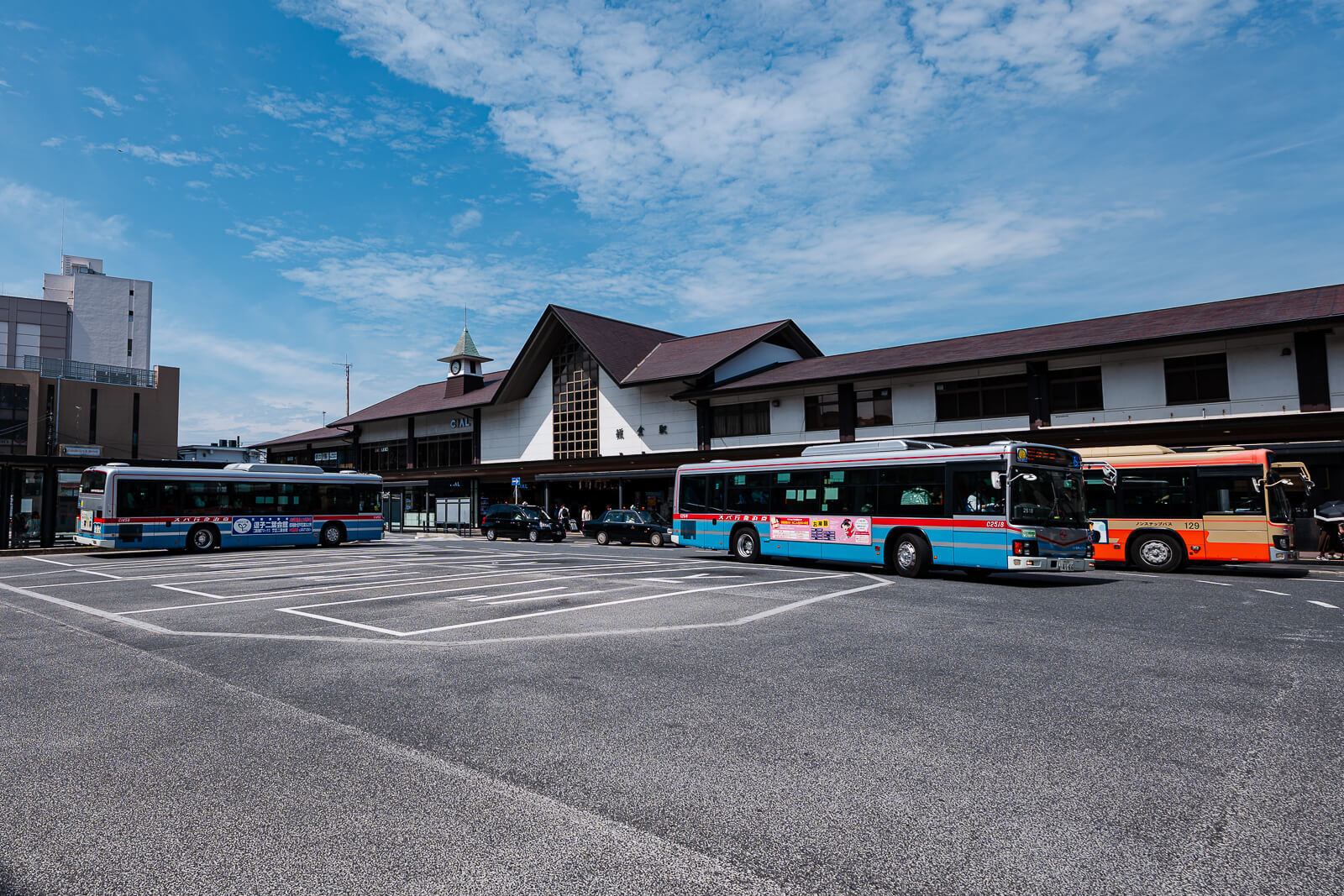
Komachi-dōri (小町通り) runs directly from the east exit of Kamakura Station, forming one of the most immediate entry points into Kamakura in Kanagawa Prefecture, part of the Kanto region. The street leads north toward Tsurugaoka Hachimangū, while running parallel to the more formal axis of Wakamiya Ōji and the raised walkway of Dankazura.
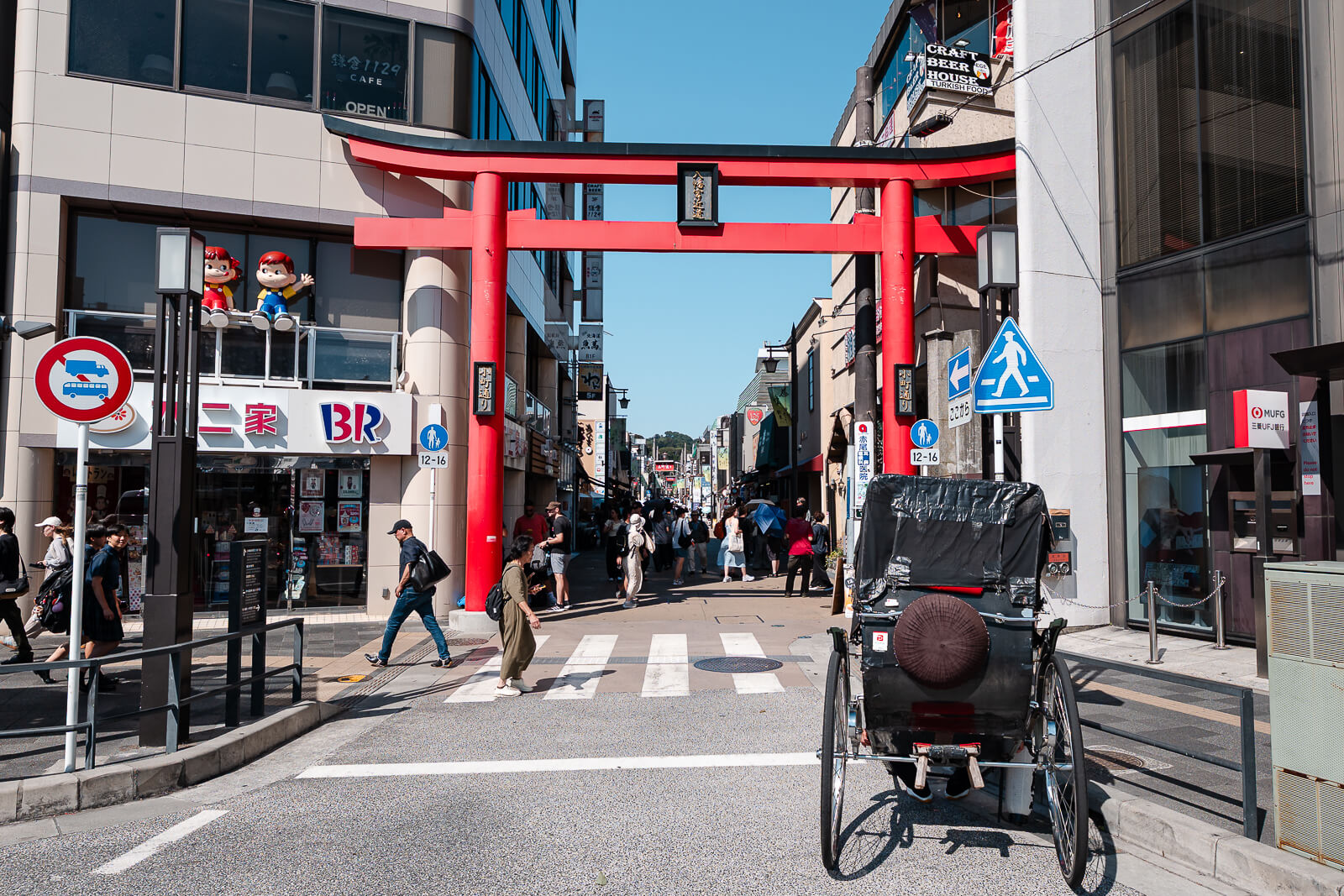
What this street provides is orientation without effort. The direction is fixed, the movement is continuous, and the connection between the station and shrine becomes clear within minutes.
For many visitors, Komachi-dōri becomes both the first and last segment of their time in Kamakura.
West of the station, movement shifts toward the Hase district, where temples like Hasedera Temple and Kōtoku-in (Great Buddha of Kamakura) sit closer to the coast.
The experience is short, typically 30 to 60 minutes, with no elevation and no navigation decisions. It works as either an approach to the shrine or a return path back toward the station.
For most visitors, this is where Kamakura’s layout begins to feel readable.
Why Movement Formed Here Instead of Somewhere Else
When Minamoto no Yoritomo established the Kamakura shogunate in 1185, Tsurugaoka Hachimangū became the political and spiritual center of the city. The wide ceremonial road of Wakamiya Ōji was built to formalize that importance.
But everyday movement followed a different logic.
Paths formed where people actually walked — narrowing where terrain tightened and expanding where activity gathered. Trade and daily life developed along those routes, not along ceremonial axes.
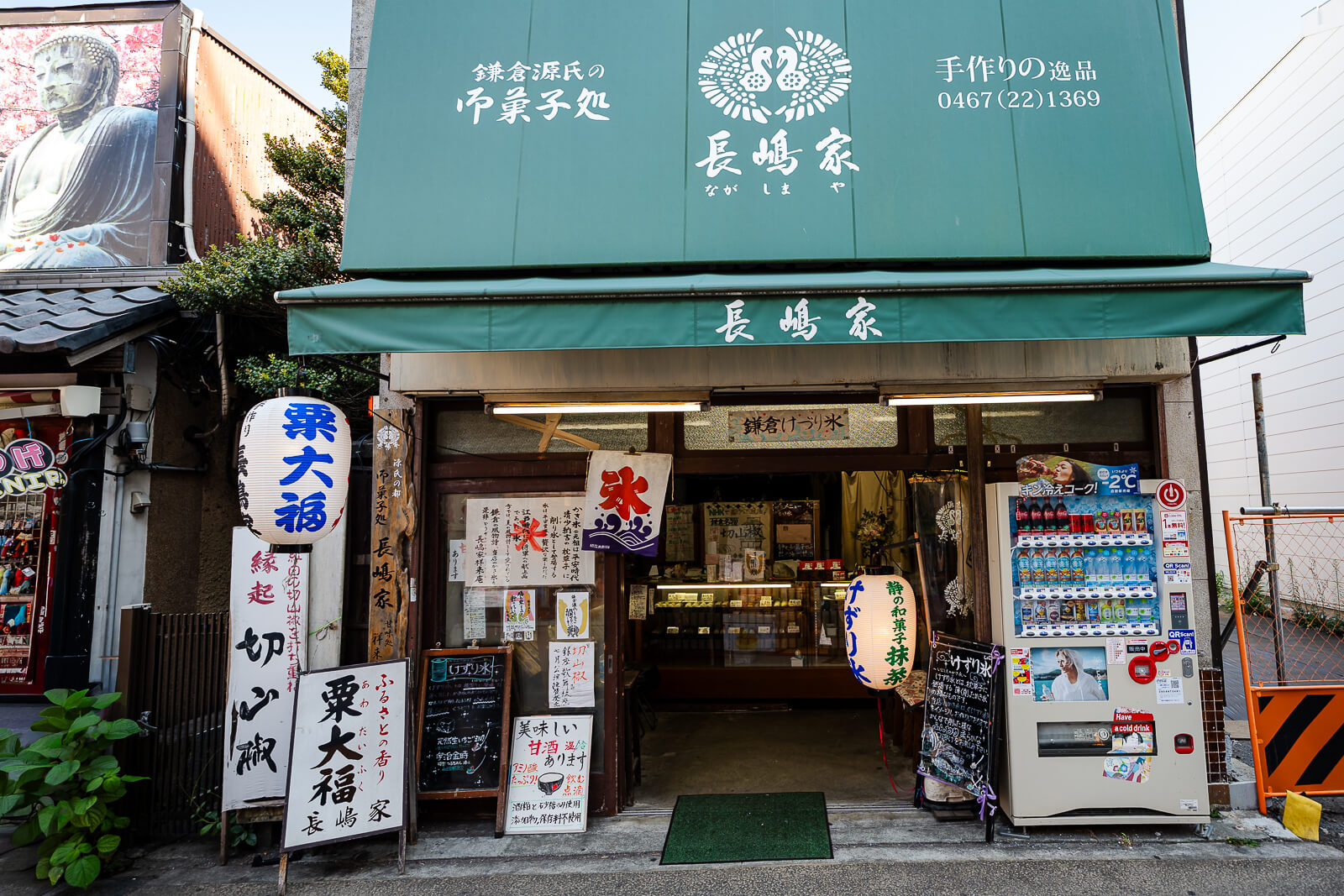
Komachi-dōri sits along one of those original movement lines. It reflects where people moved naturally toward the shrine outside of formal processions.
Centuries ago, the defining experience would have been the compression of space and the increase in activity as the route approached the center. That condition still exists. The storefronts have changed, but the spatial pressure and direction have not.
Standing here today, the narrowing of the street and the steady increase in activity toward the shrine reflect that earlier pattern. What once gathered traders and daily movement now draws visitors, but the structure of movement remains unchanged.
Moving Through the Street Without Breaking Flow
The transition from the station is immediate. Within a few steps, the open space of the station forecourt compresses into a narrow corridor of storefronts.
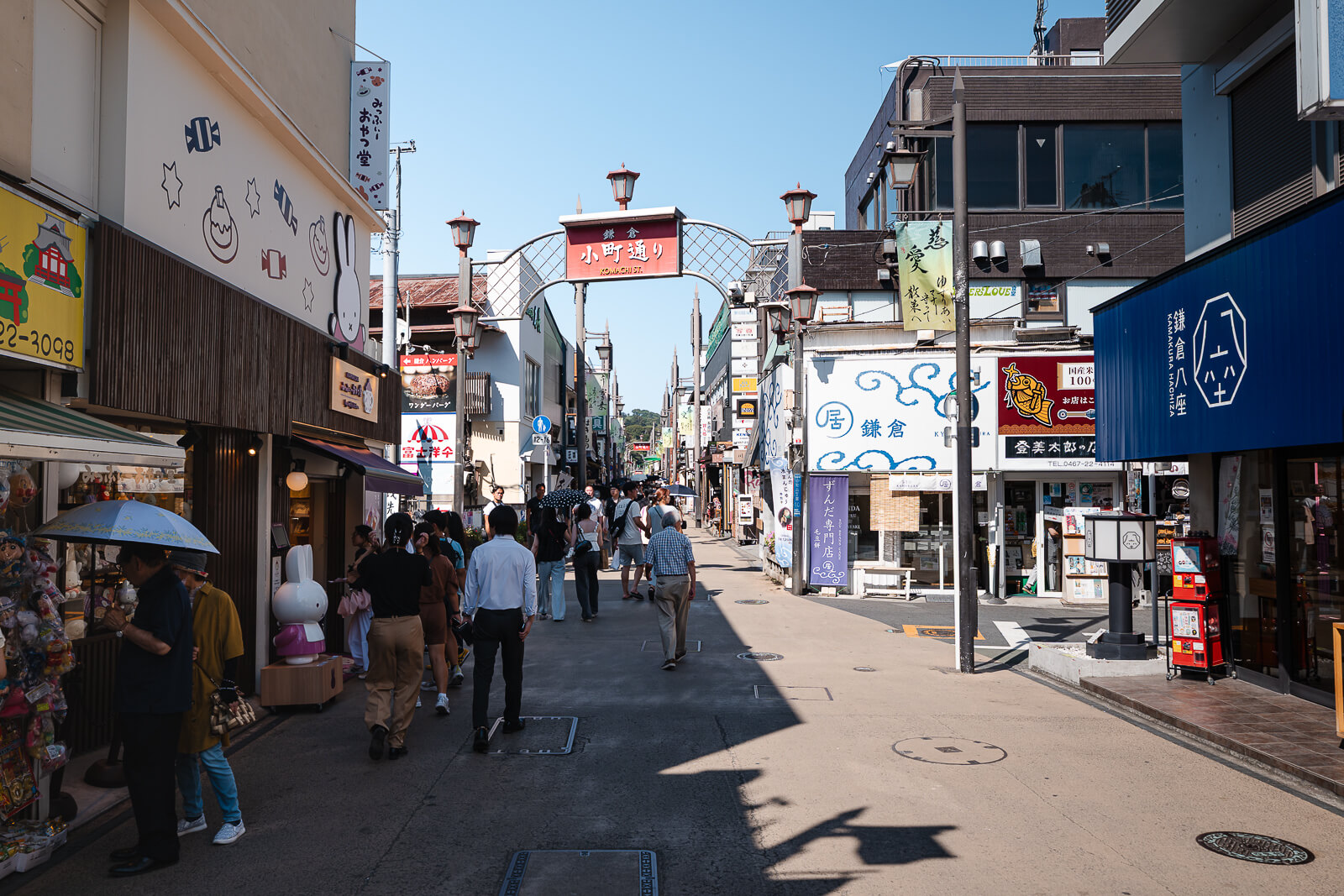
The first section tightens quickly. Buildings press inward, storefronts extend outward, and the walking space narrows enough to slow movement before crowds become the main factor.
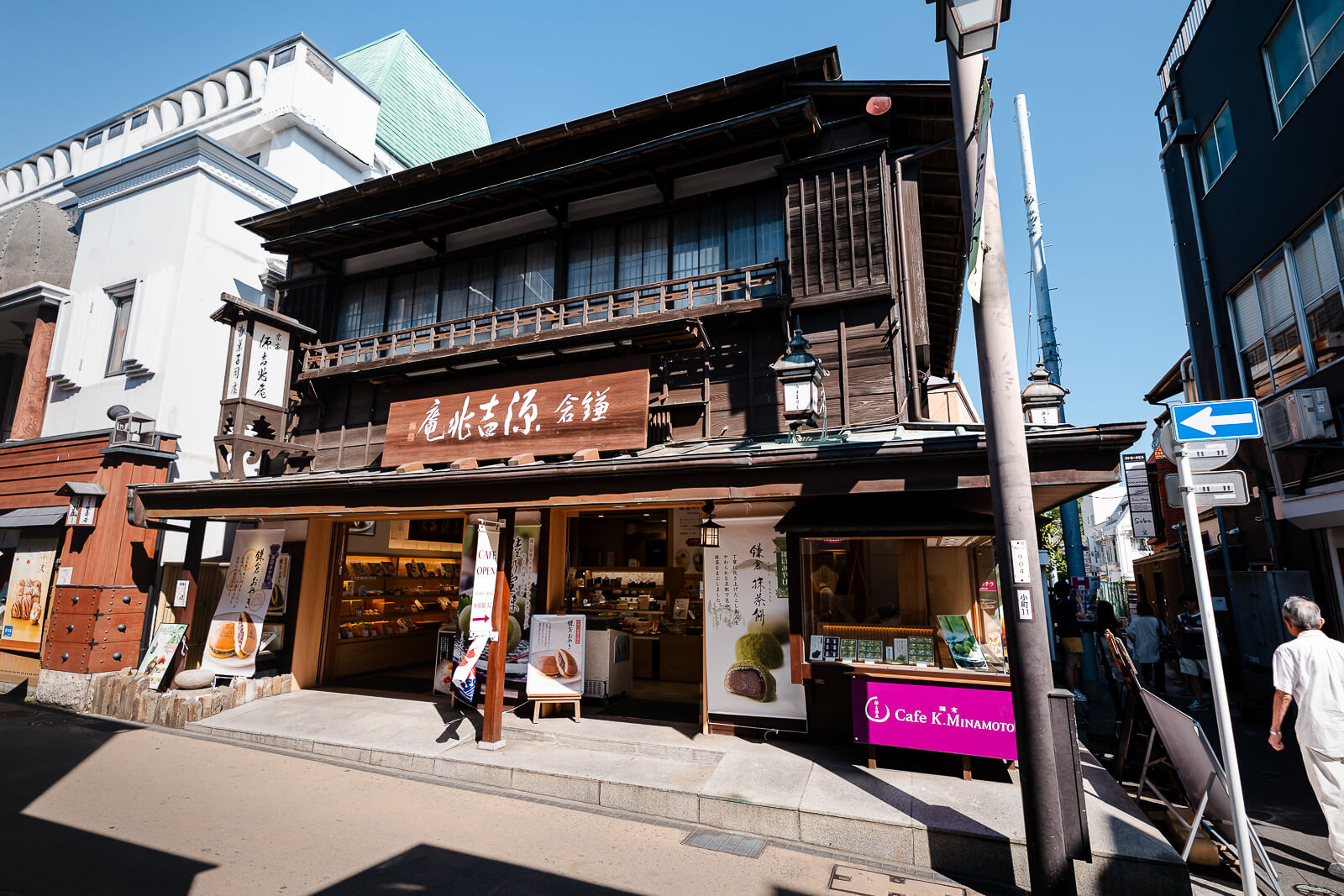
Farther along, the rhythm stabilizes. Shops and food counters appear continuously with little separation. The street reads as a single corridor rather than a sequence of stops.
Even during peak periods, the structure prevents full congestion. Movement continues in both directions, helped by the absence of intersections or decision points.
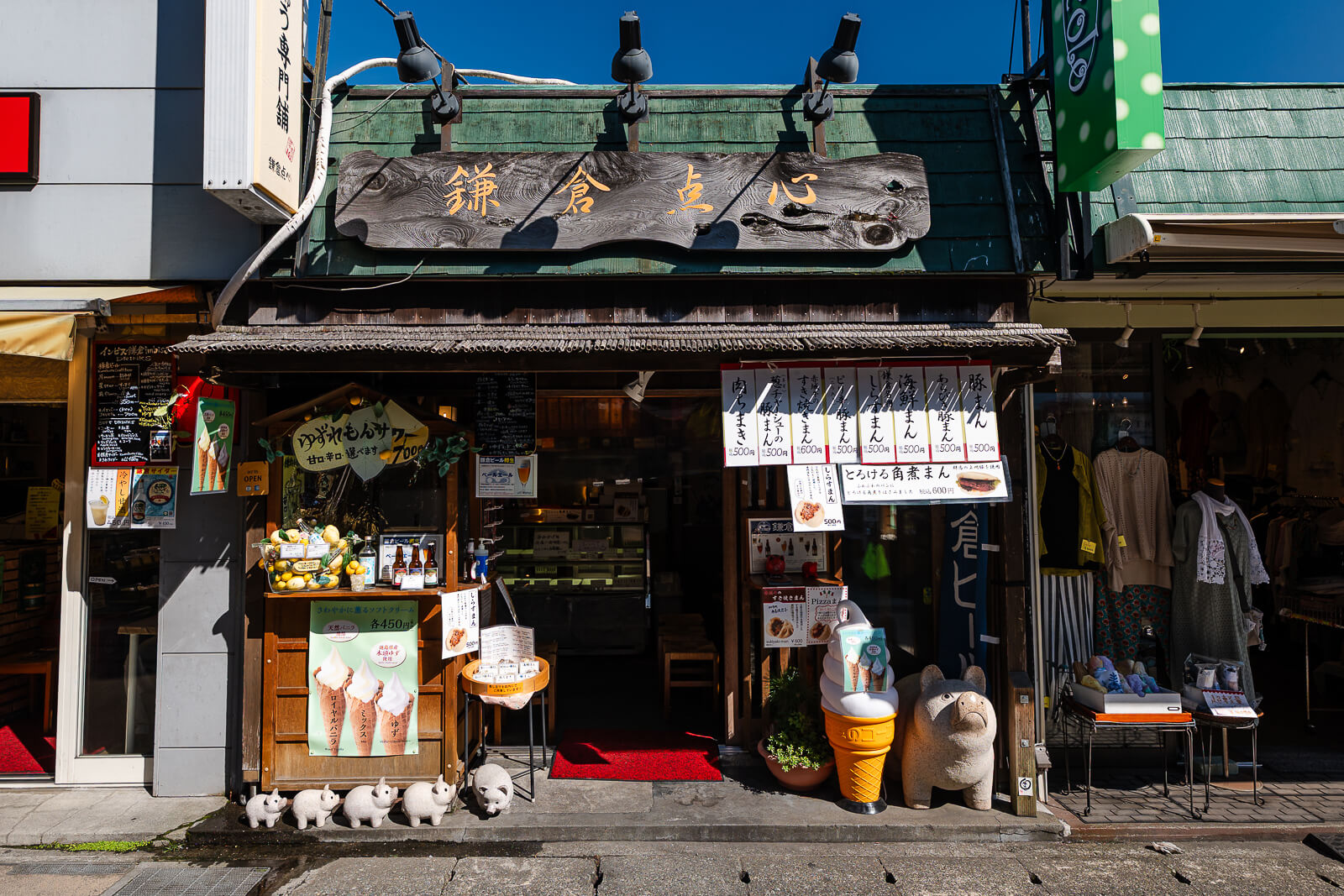
Rickshaw pullers move through the same corridor, navigating on foot while carrying passengers. Their presence reinforces that this is still a working route, not a staged environment.
Compared to the open alignment of Dankazura, where space and symmetry define the experience, Komachi-dōri remains compressed and active.
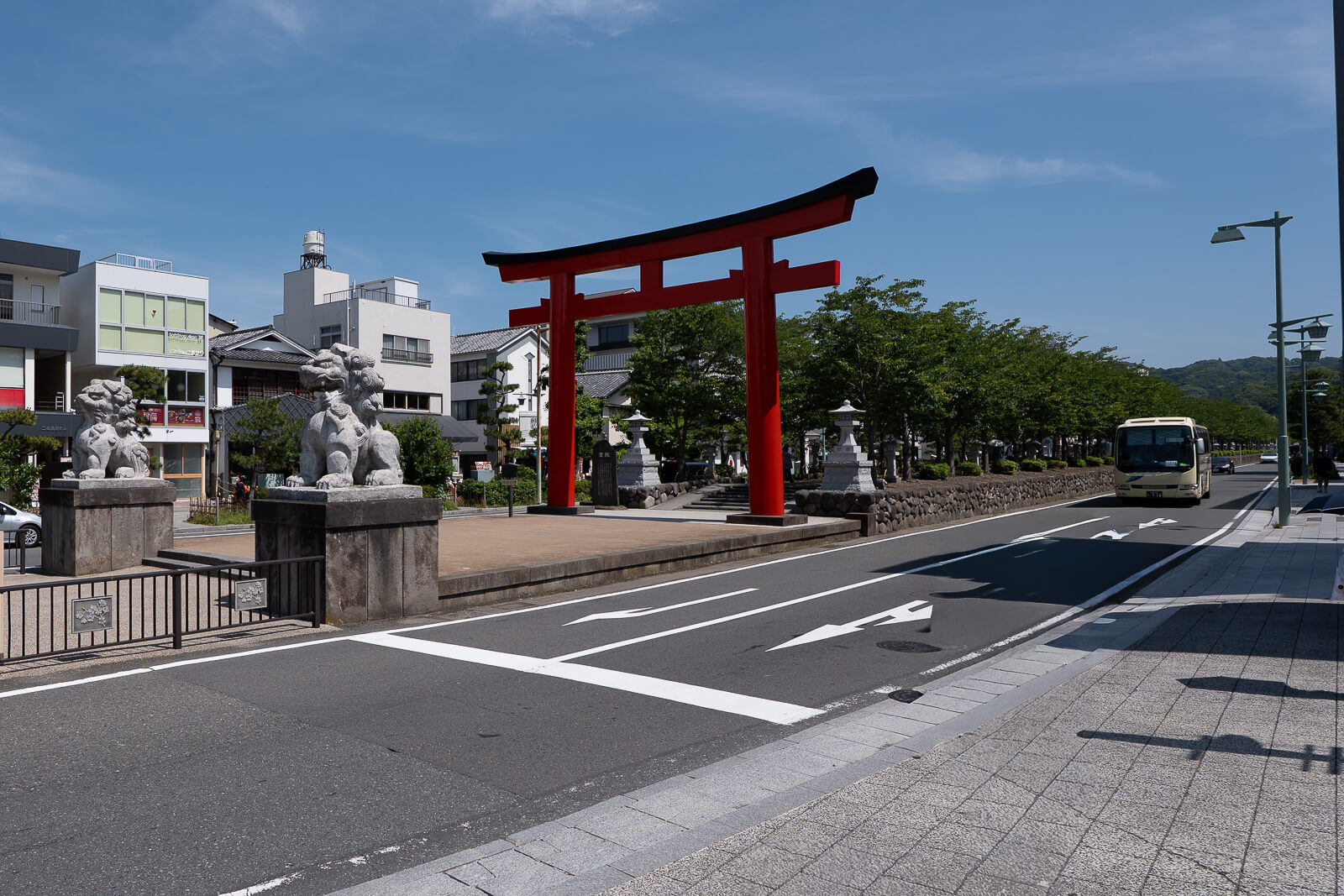
The difference between the two becomes clear only after walking both.
What Sits Just Outside the Main Path
Openings along the street lead into narrower side lanes where the atmosphere shifts immediately. Within a few steps, density drops and the pace becomes less defined.
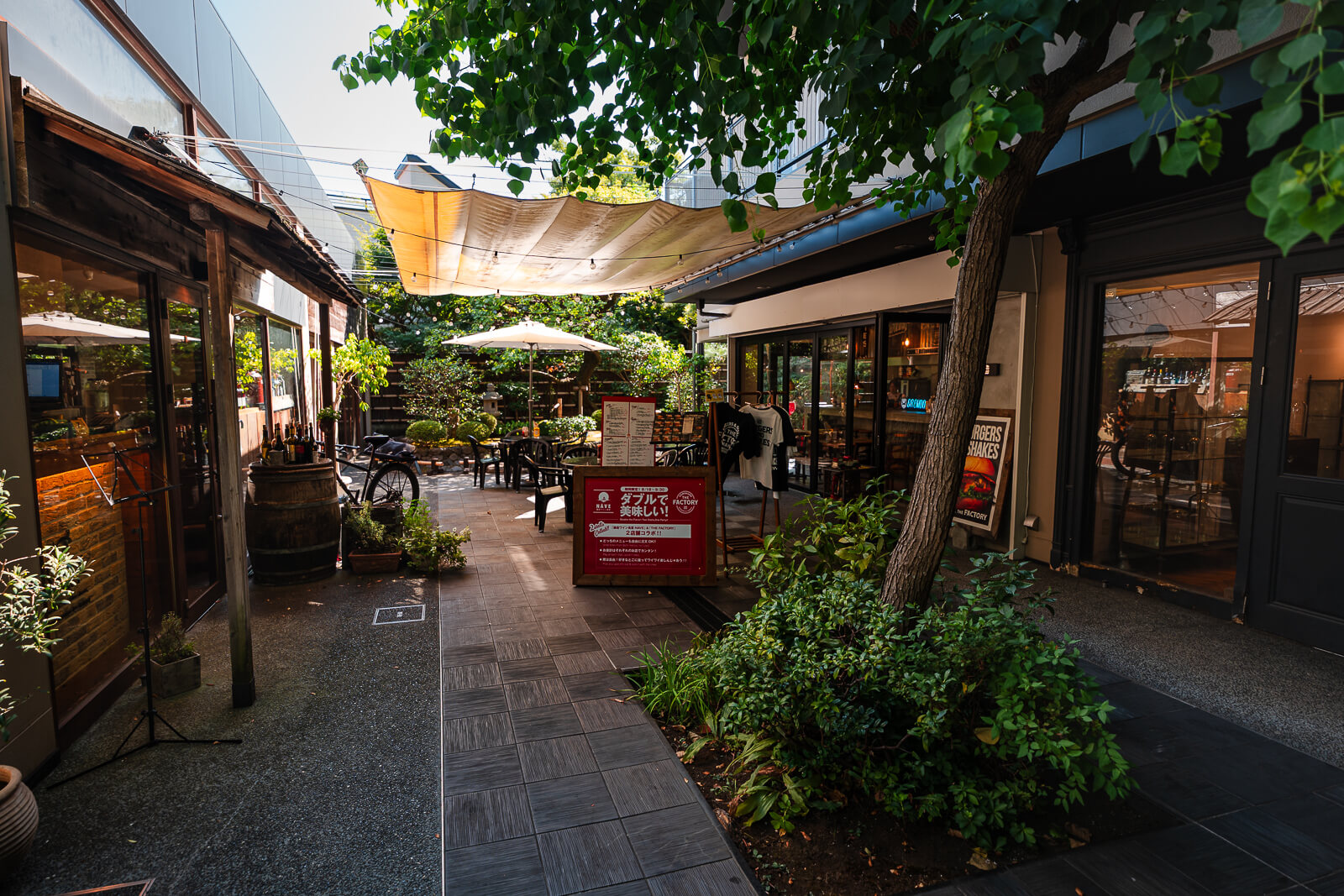
Some of the more interesting restaurants sit just beyond the main flow, positioned in these quieter pockets rather than along the central corridor.
The distinction is not distance but visibility.
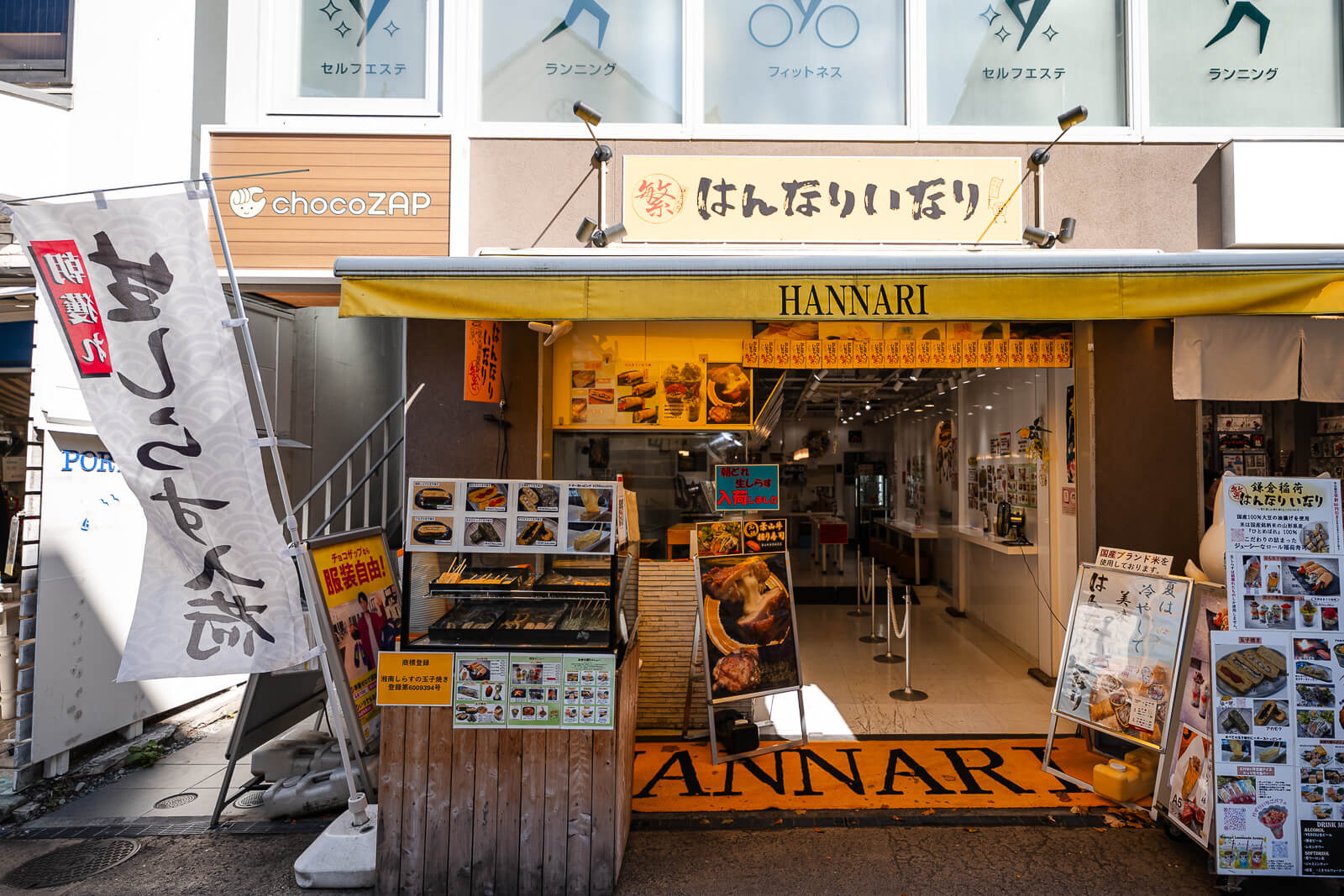
Remaining in the center keeps the experience predictable. Stepping off introduces variation without adding effort or complexity.
These side spaces function as extensions of Komachi-dōri rather than separate destinations.
Where Time Is Spent and Why It Expands
The base walk takes less than 30 minutes. Time expands almost entirely due to food.
Smaller restaurants and street food counters attract attention early, and lines begin forming before midday. The pattern is consistent — compact spaces fill first, and waiting becomes part of the experience.
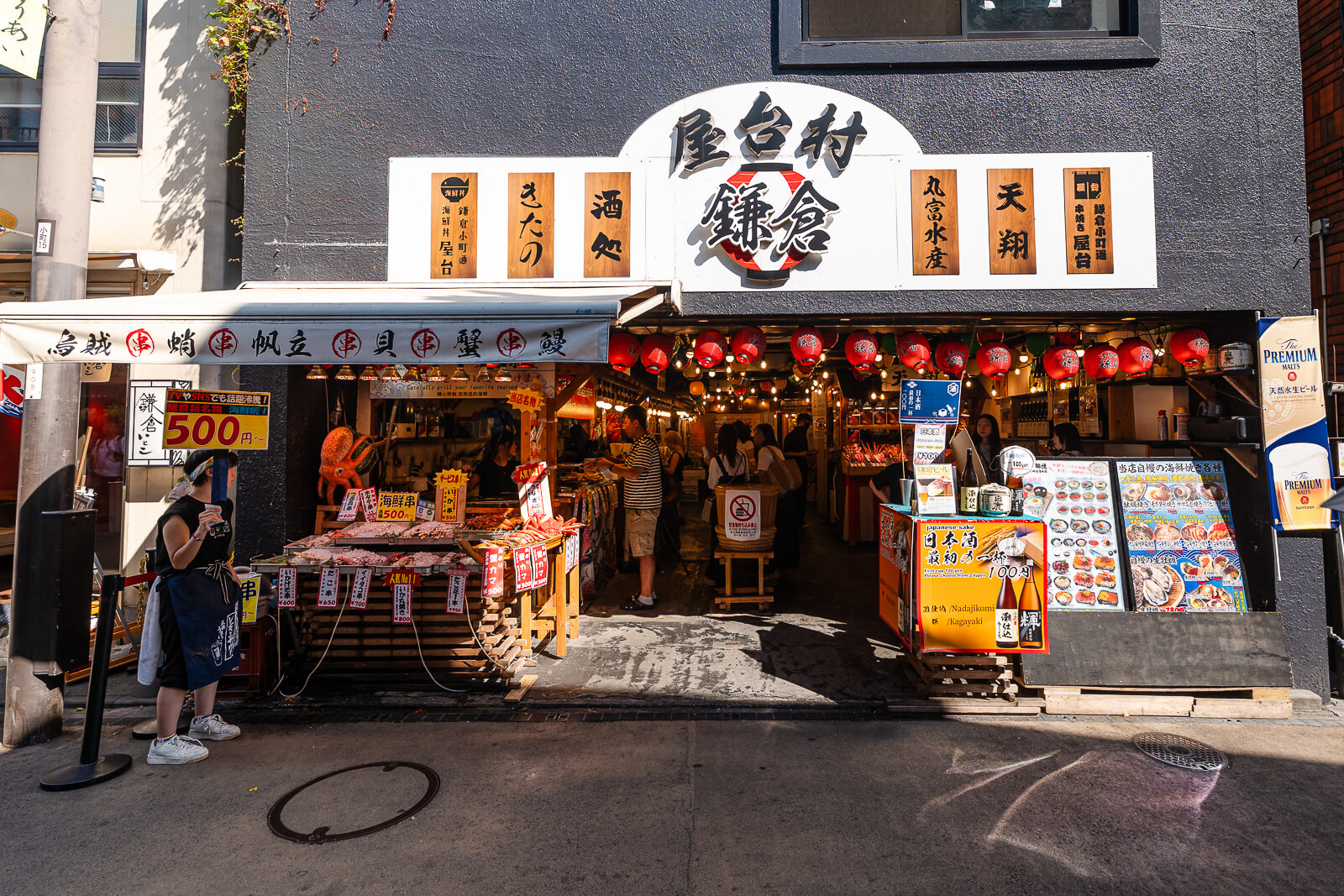
The trade-off is simple.
Continuing forward preserves momentum but increases uncertainty. Stopping reduces uncertainty but introduces waiting. Most visitors who stop extend their visit closer to 45 to 60 minutes.
Menus are structured visually, with plastic displays and photo boards reducing friction in decision-making. Interactions remain brief and functional.
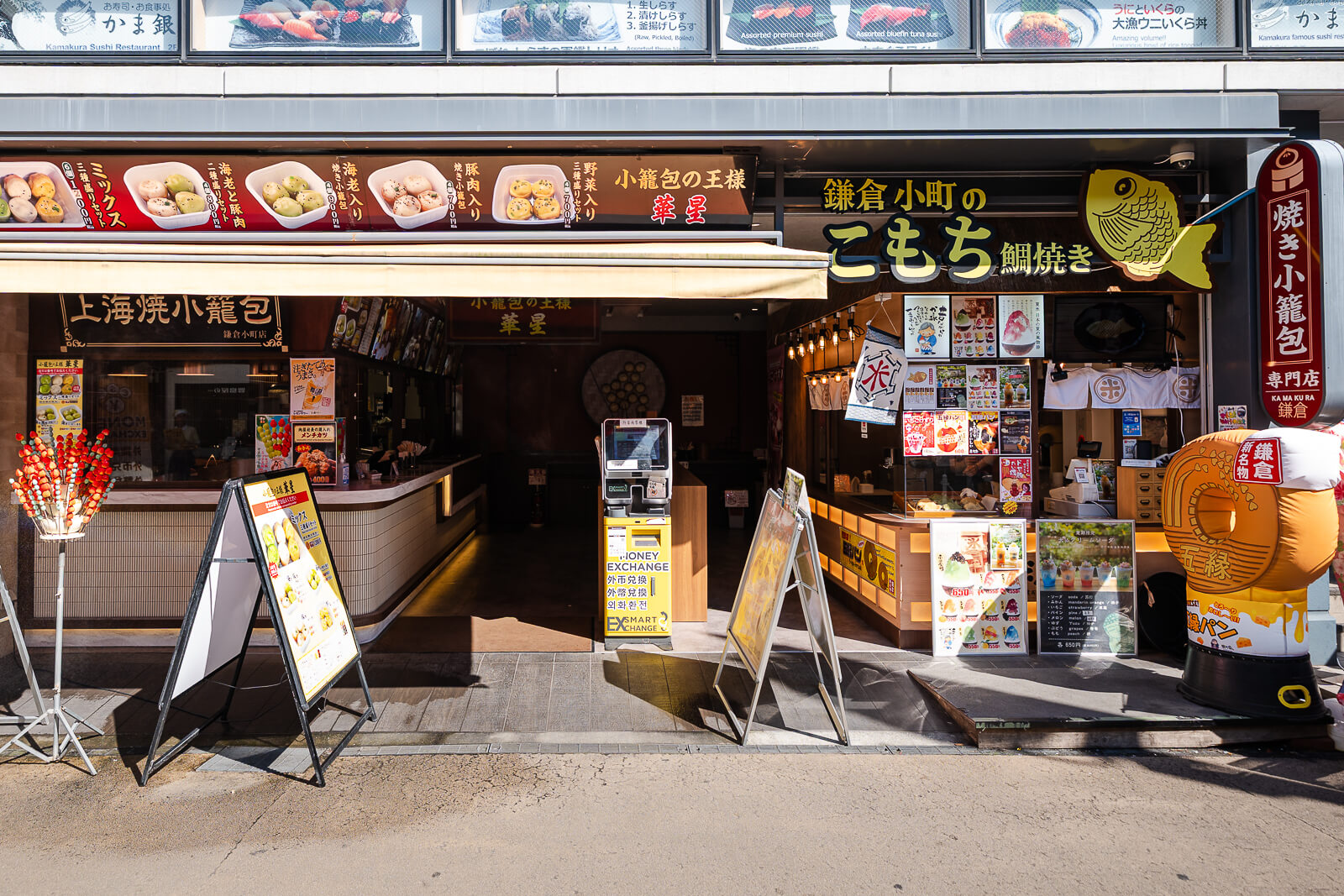
Komachi-dōri makes the most sense when arriving at or departing from Kamakura Station, or when time allows for a slower, food-driven walk toward the shrine. When time is limited or the goal is to reach the shrine directly, Wakamiya Ōji and Dankazura provide a faster, more direct route.
Where the Street Resolves Into the Shrine
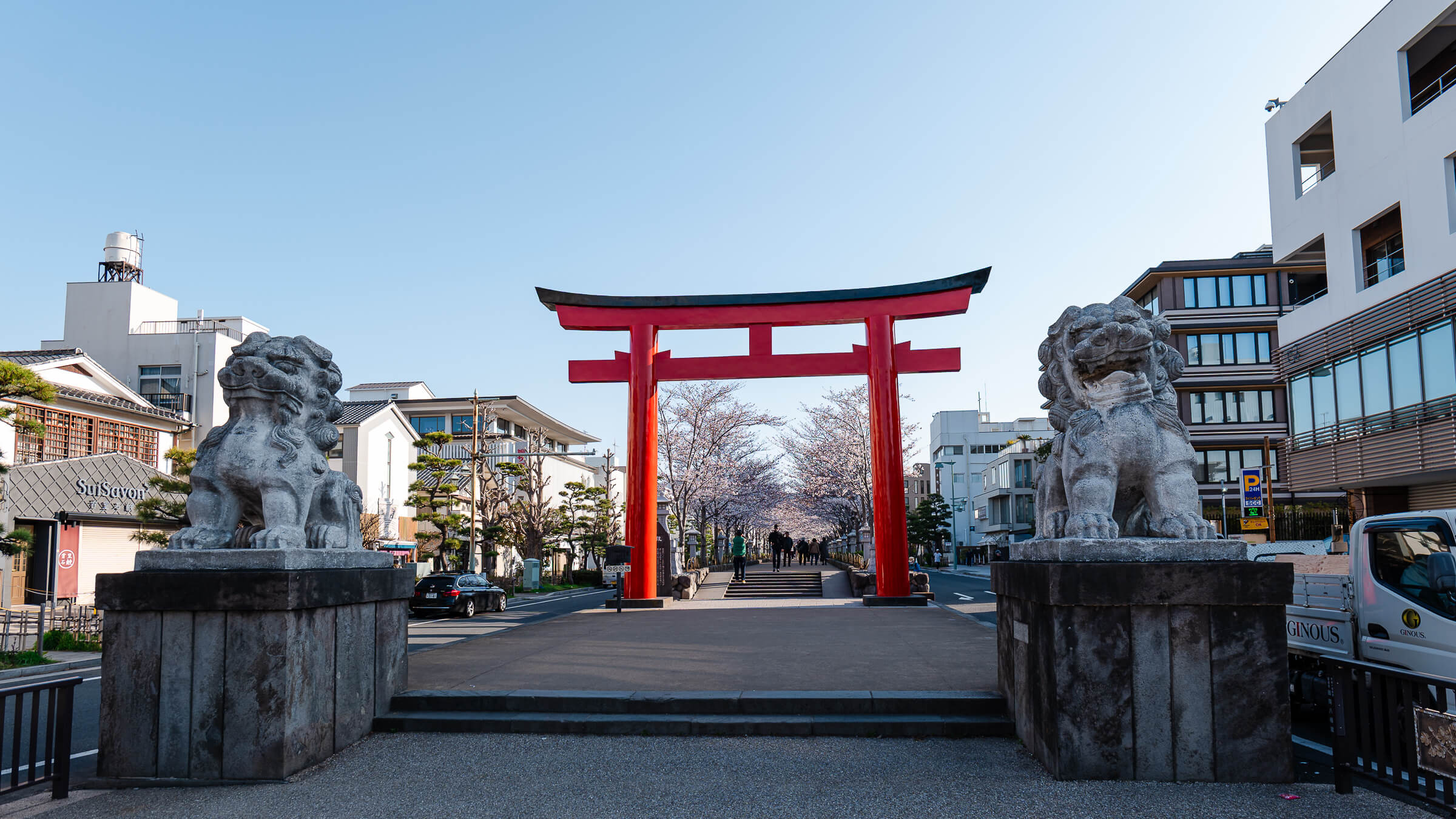
Toward the northern end, the structure begins to open. Shops thin out, the path widens, and the entrance to Tsurugaoka Hachimangū comes into view.
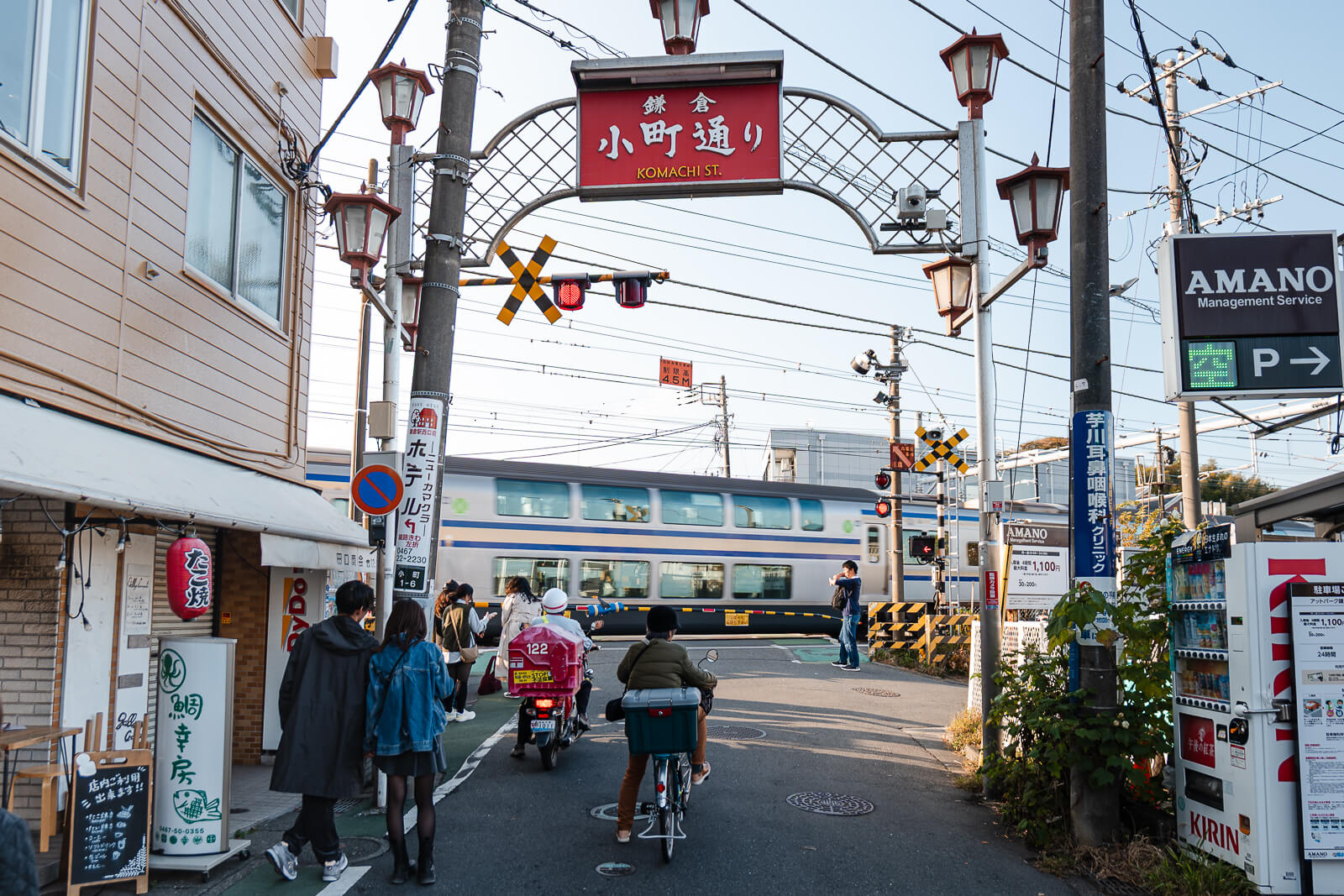
The transition is gradual.
The compressed corridor gives way to open space, and attention shifts away from storefronts toward the alignment ahead.
What felt like a street reveals itself as an informal approach to the shrine.
How the Street Behaves as the Day Builds
Early hours hold more space between people. Movement remains steady, and the pace is easier to maintain.
By late morning and into the afternoon, density increases and lines form more consistently. The flow tightens, but movement continues.
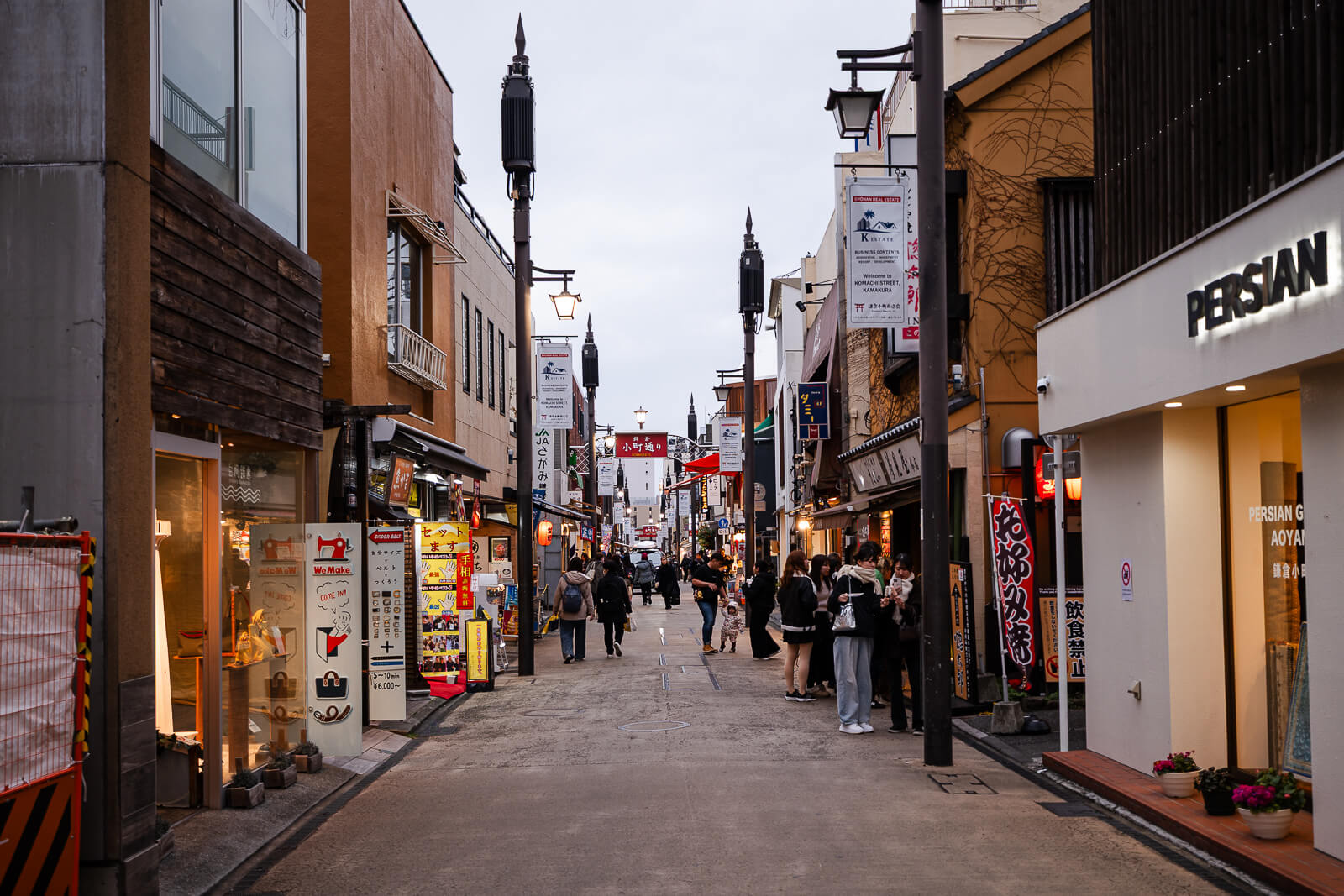
Seasonal peaks — especially cherry blossom season — increase volume without changing structure.
The street absorbs the increase rather than breaking under it.
How This Walk Connects the Rest of Kamakura
Komachi-dōri sits at the center of how movement unfolds through Kamakura.
Movement north leads directly toward Tsurugaoka Hachimangū, where the experience shifts from a compressed commercial street to a wider, more structured approach. Beyond the shrine, the city continues into Kita-Kamakura, where temples such as Engaku-ji sit within wooded valleys.
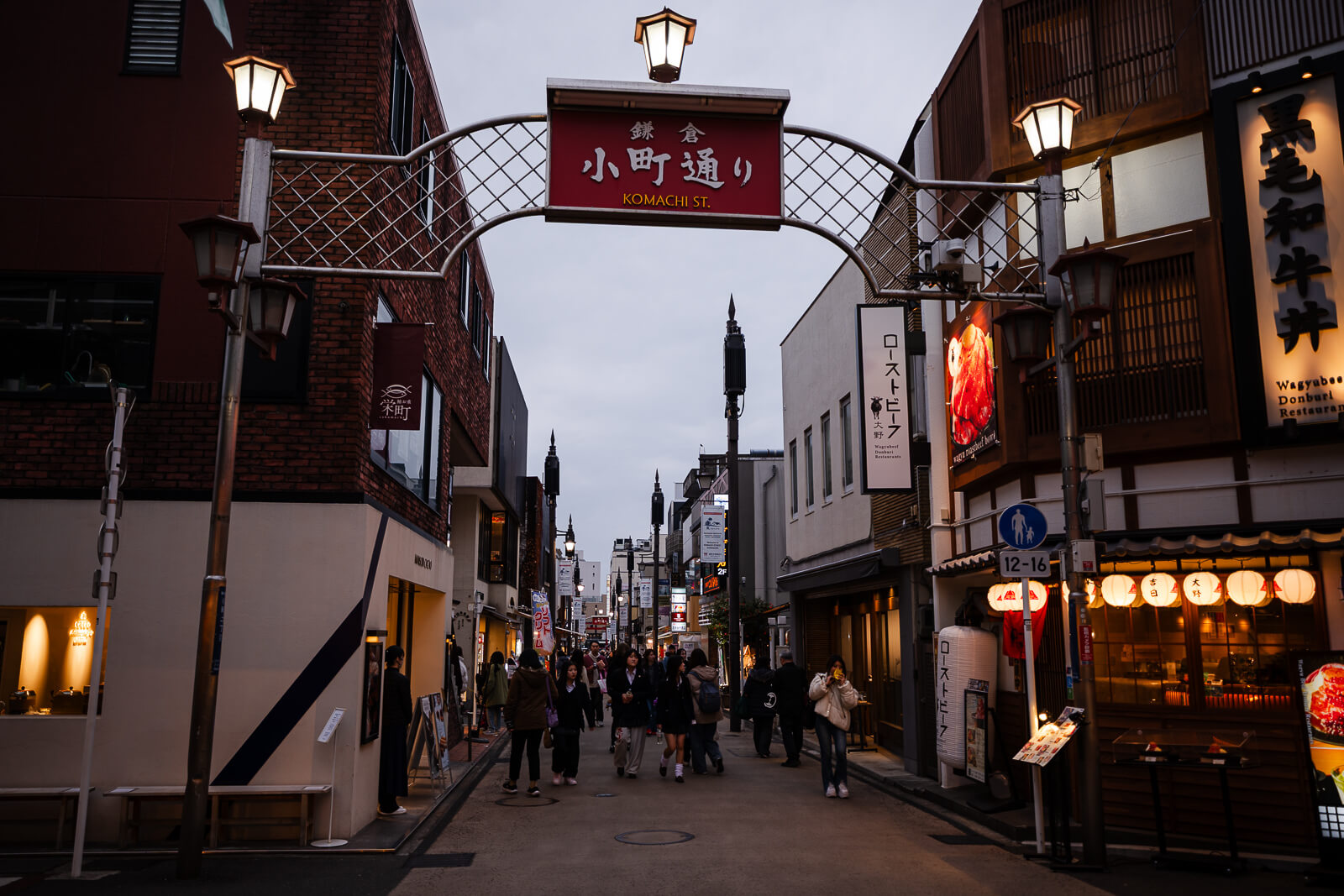
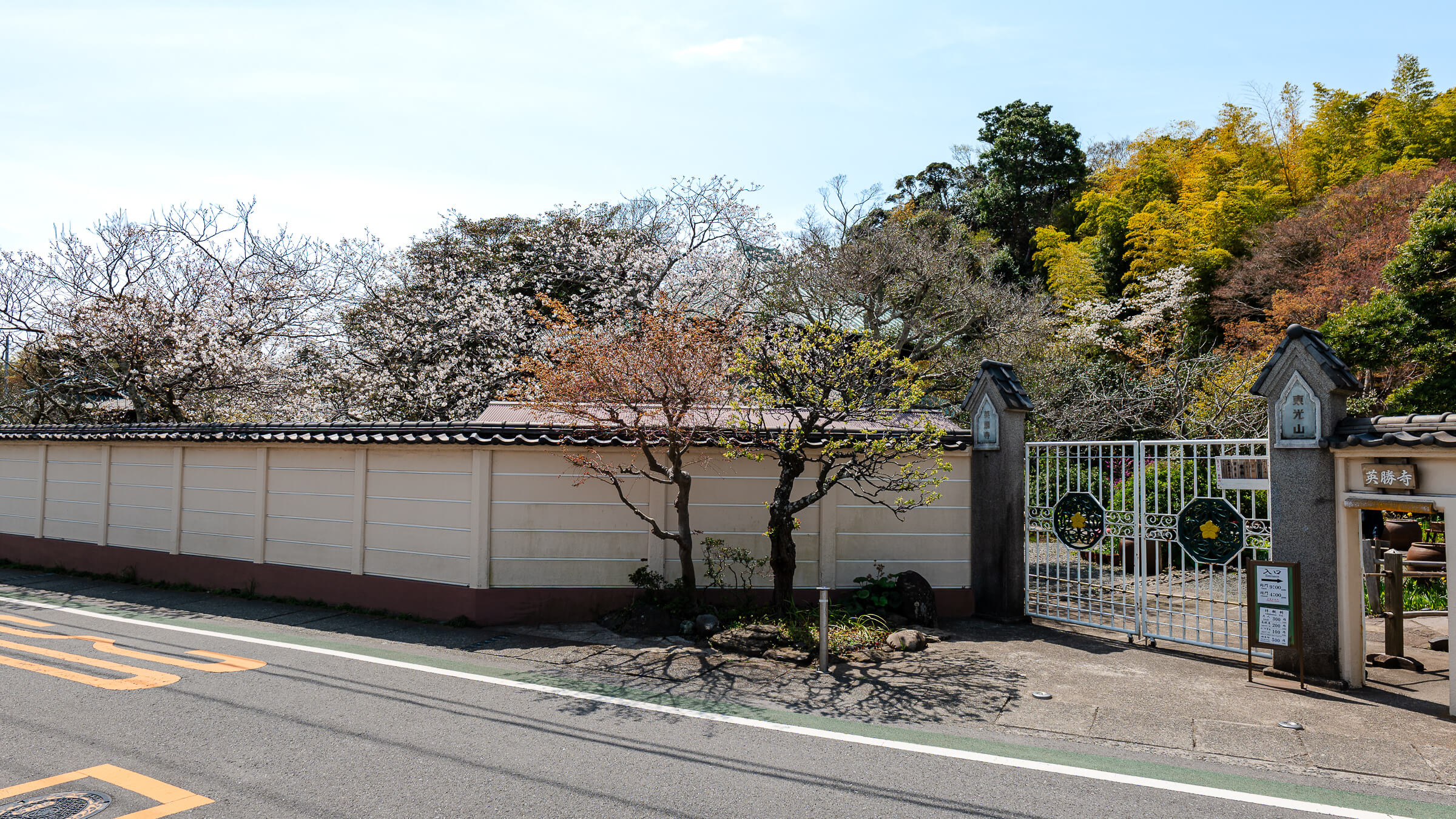
Closer to the station, quieter streets branch off the main flow. Places like Eishō-ji Temple sit just outside the busiest areas, marking the transition into smaller temple neighborhoods.
To the east, the terrain begins to rise, and the atmosphere changes. Temples such as Hokoku-ji Temple and Sugimoto-dera Temple sit along quieter routes that extend deeper into Kamakura. Farther in, Kamakura-gū Shrine marks another layer of the city beyond the central flow.
In the opposite direction, west of the station, the landscape opens toward the coast, where the Hase district includes landmarks such as Hasedera Temple and the Great Buddha at Kōtoku-in (Great Buddha of Kamakura).
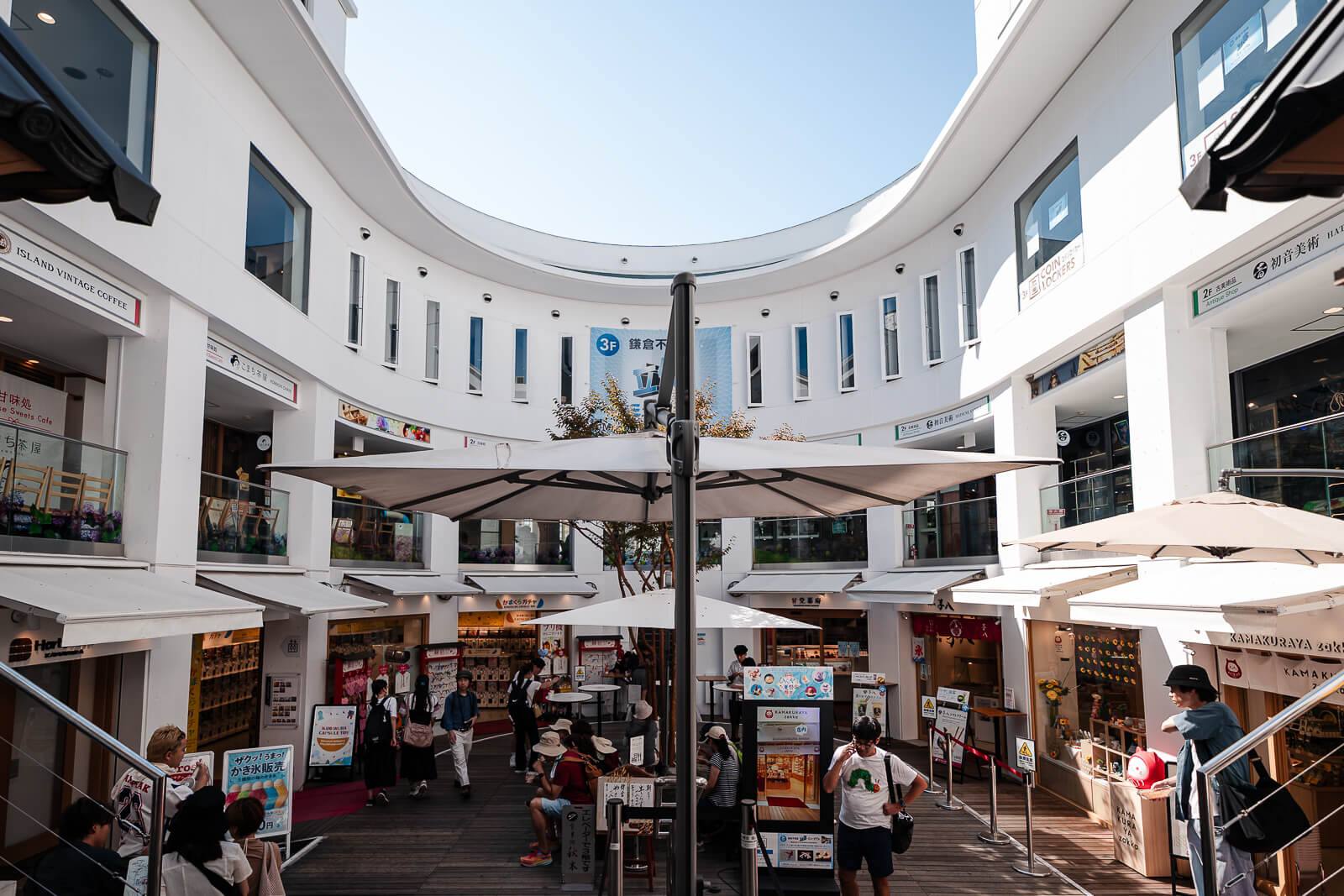
This structure places Komachi-dōri at the center of the city’s movement, linking arrival, the shrine, and the broader spread of Kamakura without requiring a fixed route.
Getting There
Komachi-dōri begins immediately outside the east exit of Kamakura Station, reached from Tokyo in about one hour via the JR Yokosuka Line.
The only real consideration is timing. Arriving later in the day increases crowd density significantly, particularly on weekends and during seasonal peaks.
Beyond that, there is no access friction. The street functions as a direct extension of the station.
Hours & Fees
Komachi-dōri is a public street and is accessible at all times.
Most shops and restaurants operate between approximately 10:00 and 18:00, with some variation depending on season and day.
There is no admission fee.
The walk may be short, but how the day is structured—especially with crowd build-up and temple closing times—shapes whether this fits into a single pass or a longer stay.