A Historic Villa Between Atami Station and the Waterfront
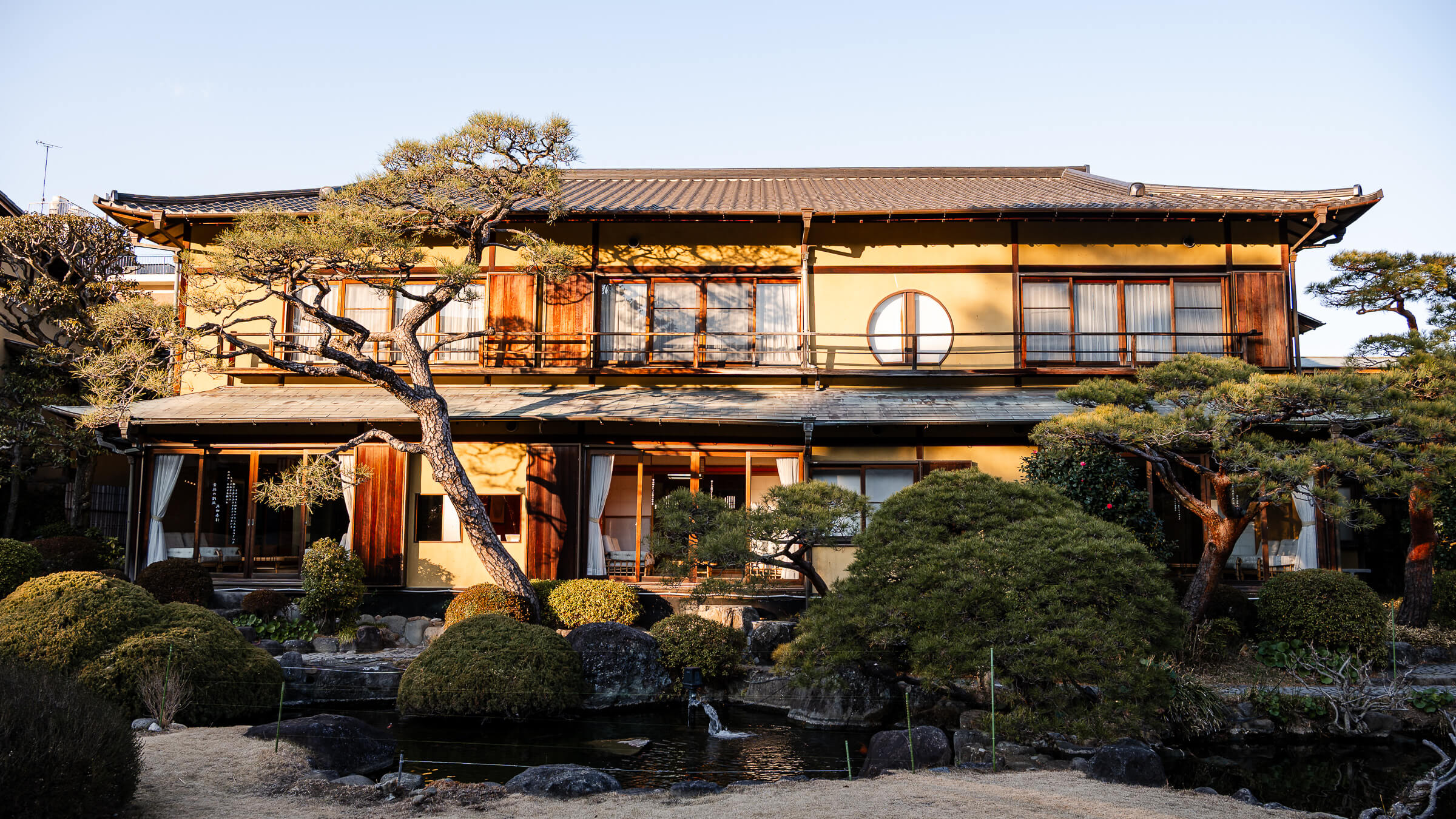
Kiunkaku sits slightly inland from the waterfront in central Atami, between the station district and the coastal promenade near Atami Sun Beach. The historic villa lies within the same central area that connects several of the city’s well-known stops, including Kinomiya Shrine uphill toward the forested slopes and the waterfront promenade around Atami Water Park and Moon Terrace along the bay.
Unlike temples, viewpoints, or seaside walks, the experience here unfolds indoors. Visitors move through a series of historic rooms connected by corridors overlooking a landscaped inner garden. The route is self-guided and structured, allowing visitors to explore the buildings gradually rather than focusing on a single exhibit.
The visit is compact but detailed. Most visitors spend about one hour moving through the interior rooms and garden paths, though a slower pace can extend the experience closer to ninety minutes.
For travelers exploring central Atami on foot, Kiunkaku offers a different perspective on the city — a look at how its resort culture developed during the early twentieth century.
Why a Resort Villa Was Built Here
Kiunkaku was constructed in 1919, during the years when Atami was rapidly becoming a destination for visitors traveling from Tokyo by rail. The town’s hot springs and coastal scenery made it a natural retreat, and large villas were built to host extended stays.
The property later operated as a luxury ryokan, welcoming guests who came to Atami for hot springs, seaside air, and quiet time away from the capital. Over the decades the villa became associated with several writers and cultural figures who stayed here while working or resting in the resort town.
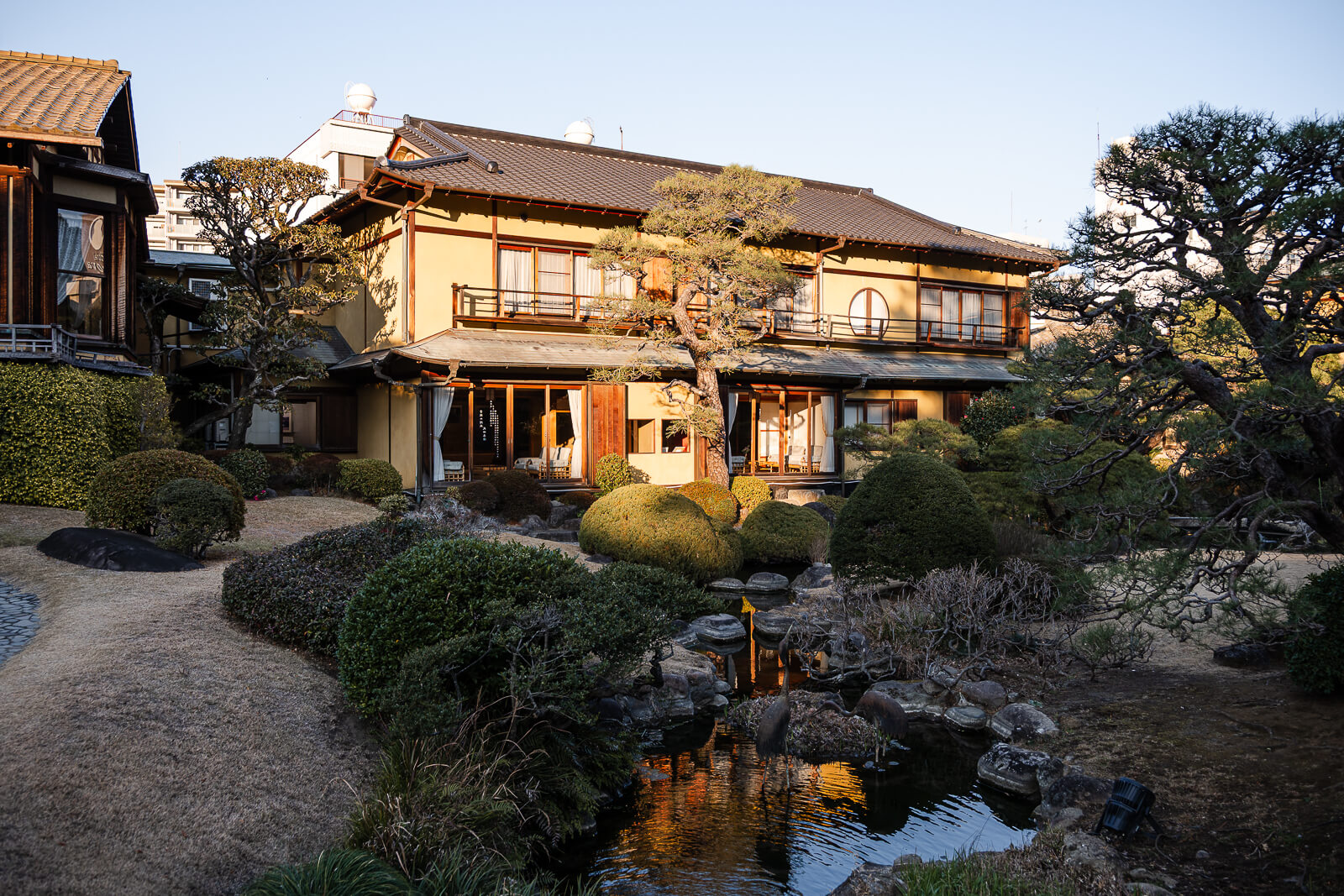
Today the buildings are preserved as a cultural property, allowing visitors to see how a resort residence from this period was designed and used. The rooms encountered during the visit remain arranged much as they would have been when the property operated as accommodation.
Understanding this background helps explain the layout inside. The spaces were designed for living and gathering rather than exhibition, and the walking route through the villa follows the original structure of the residence.
Looking Across the Garden Before Entering
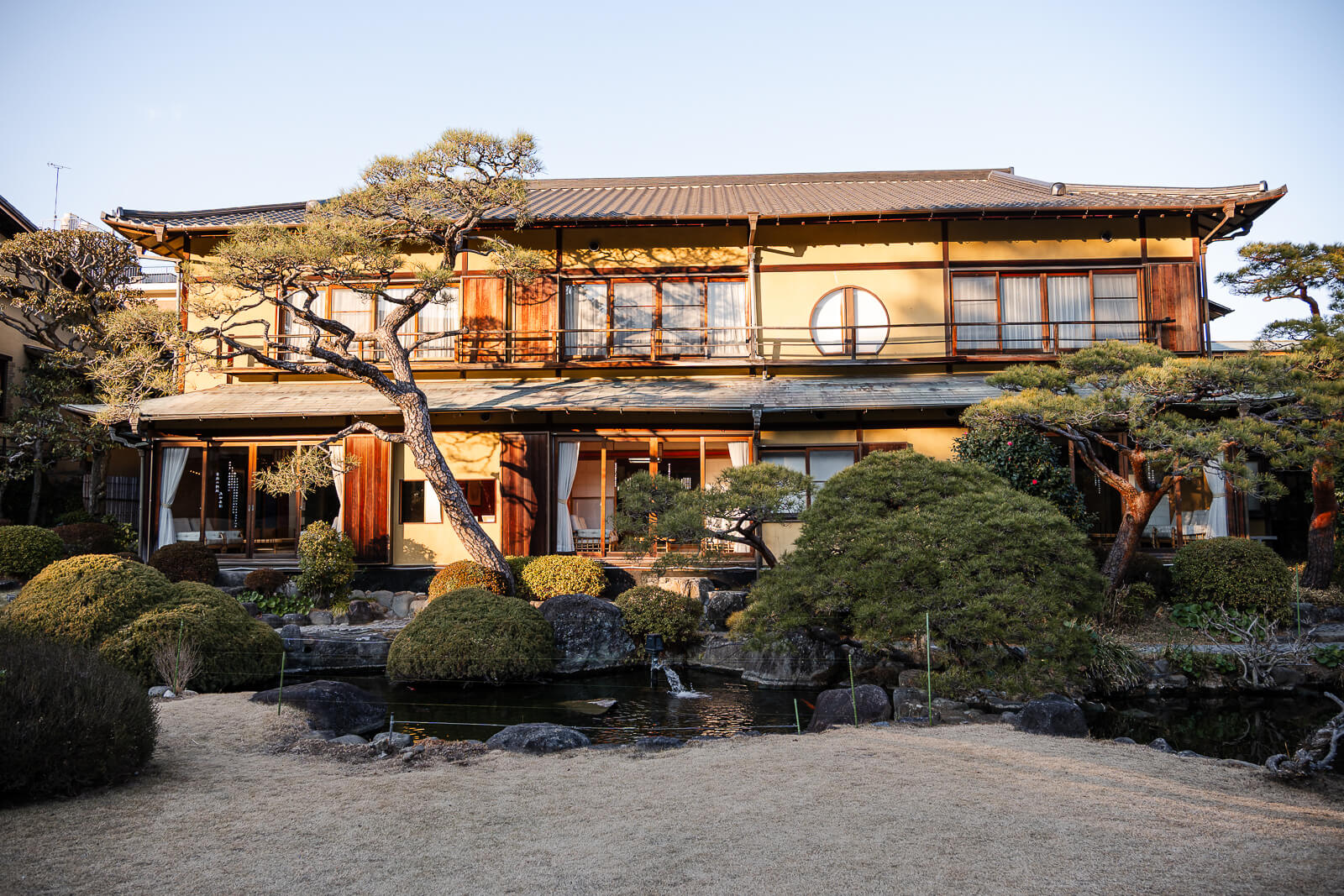
The first view upon entering the grounds opens toward a landscaped garden framed by the surrounding buildings. A pond sits at the center, with stone paths and trees creating a quiet courtyard between the structures.

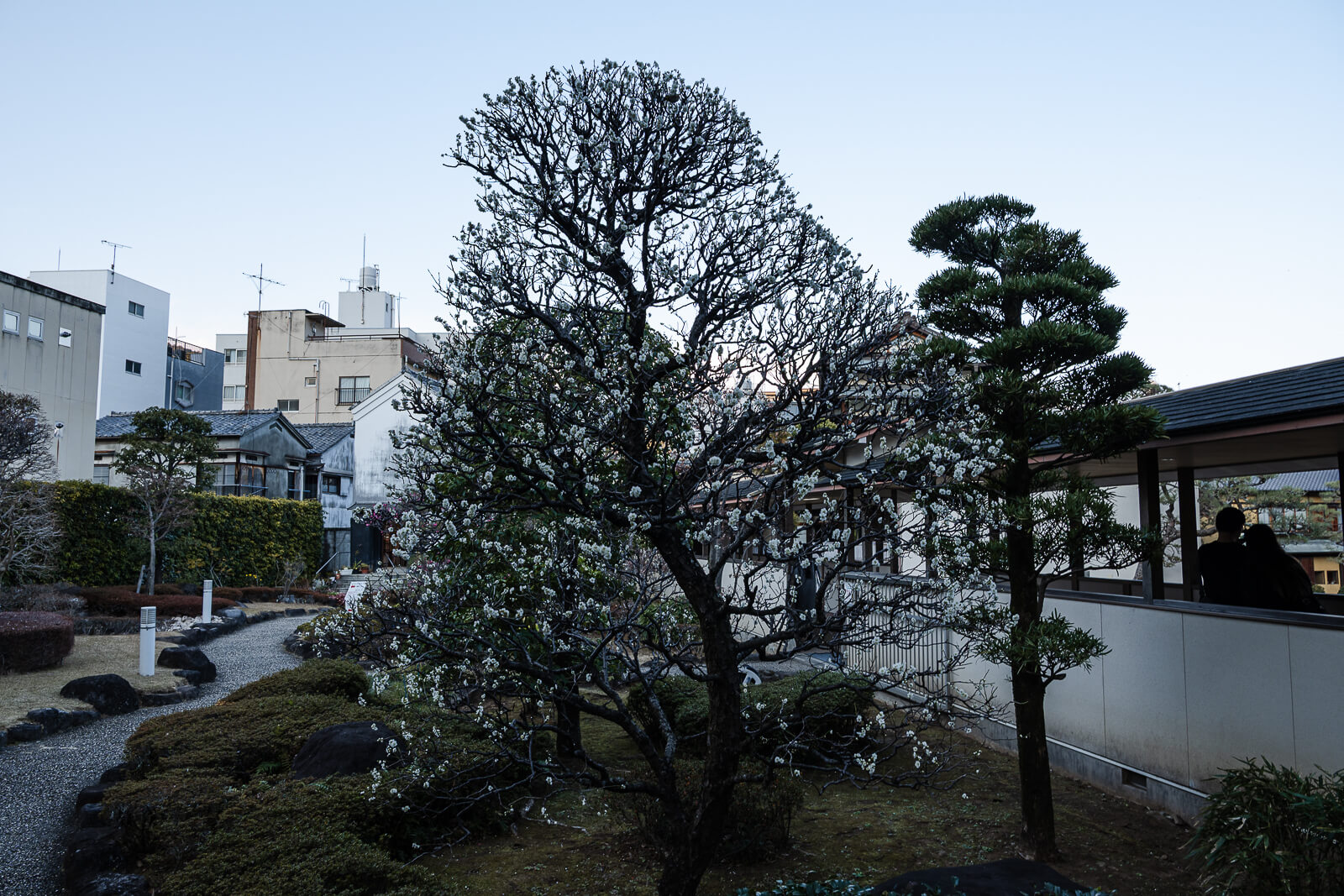
Parts of the garden can be seen before entering the main house, offering an initial sense of the scale of the property. Seasonal changes alter the appearance of the grounds throughout the year. When plum blossoms begin appearing in the Kiunkaku garden during late winter and early spring, the larger plum groves at nearby Atami Plum Garden are usually beginning to bloom as well.
While the garden introduces the setting, the main experience takes place inside the villa itself.
Shoes Off at the Entrance
Visitors remove their shoes before entering the interior rooms. Lockers are provided near the entrance, and slippers are available for use while walking through the building.
From this point the visit continues along a clearly marked route through the house. The experience is self-guided, though staff members are positioned throughout the building and are available to answer questions or explain details about the architecture.
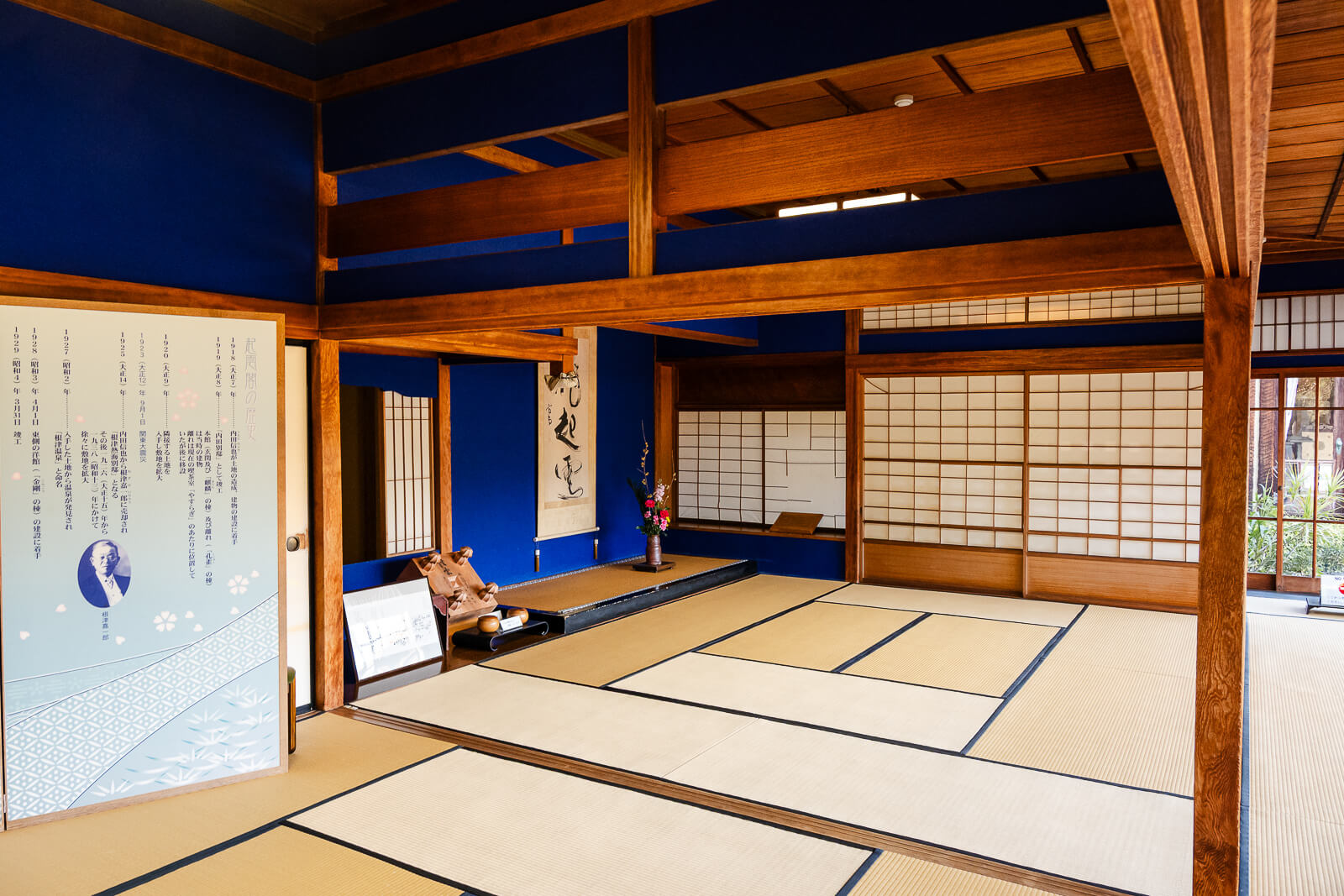
This simple transition reinforces that the property is preserved as a residence rather than arranged as a conventional museum.
Following the Upper Floor Route
The path through the villa begins by leading visitors upstairs before gradually circling the interior of the building.
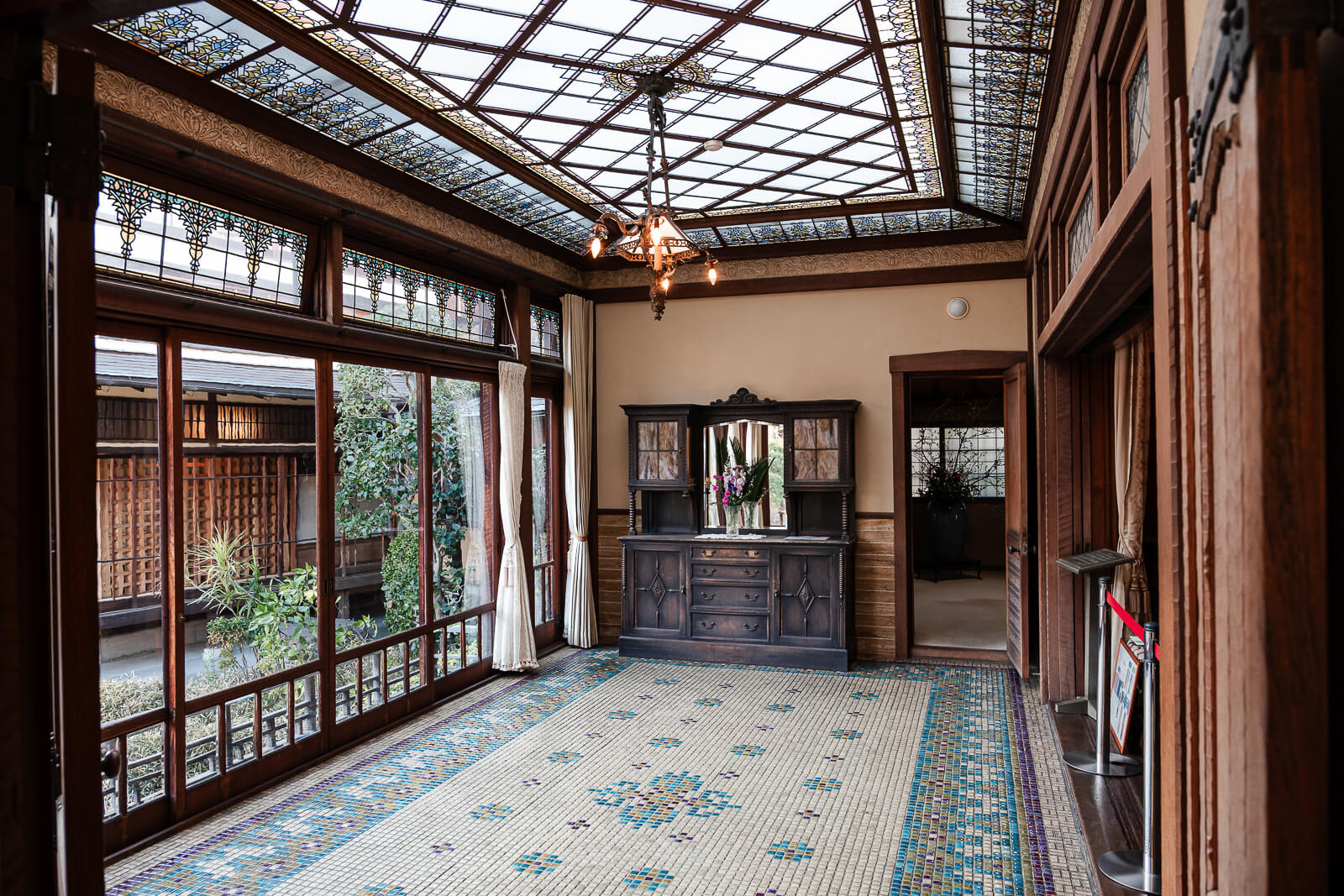

From the upper corridors, several rooms open toward views of the garden courtyard below. The layout allows visitors to look down into the landscaped center of the property while moving between the rooms.
The design reflects a mix of architectural influences common during the Taisho and early Showa periods. Some rooms remain traditional tatami reception spaces, while others incorporate Western design elements introduced during Japan’s modernization.
Moving through the building reveals this contrast gradually as the route progresses.
Dining Spaces and the Sun Room
Larger gathering rooms appear along the route, including areas once used for dining and social events when the villa operated as a ryokan.
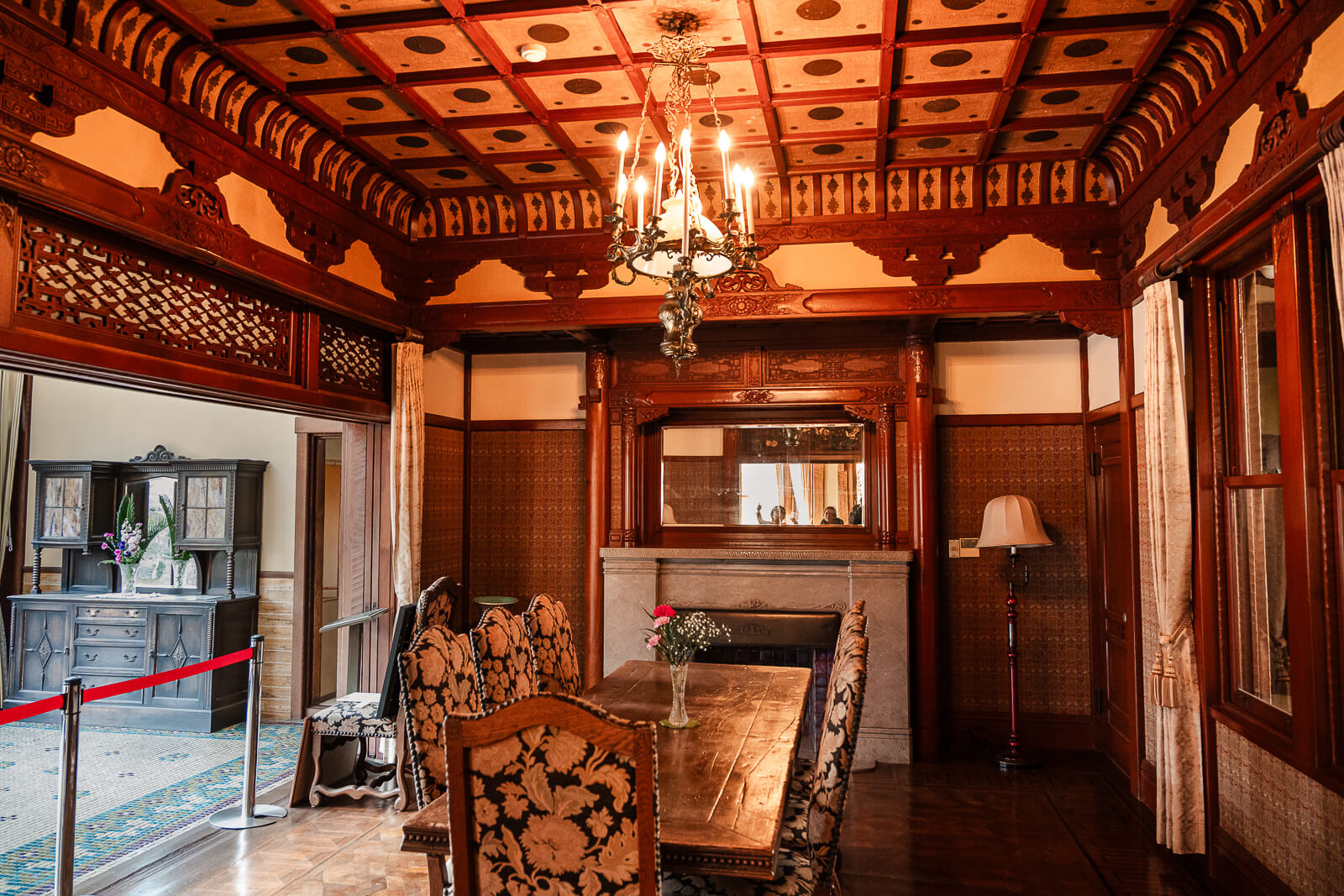
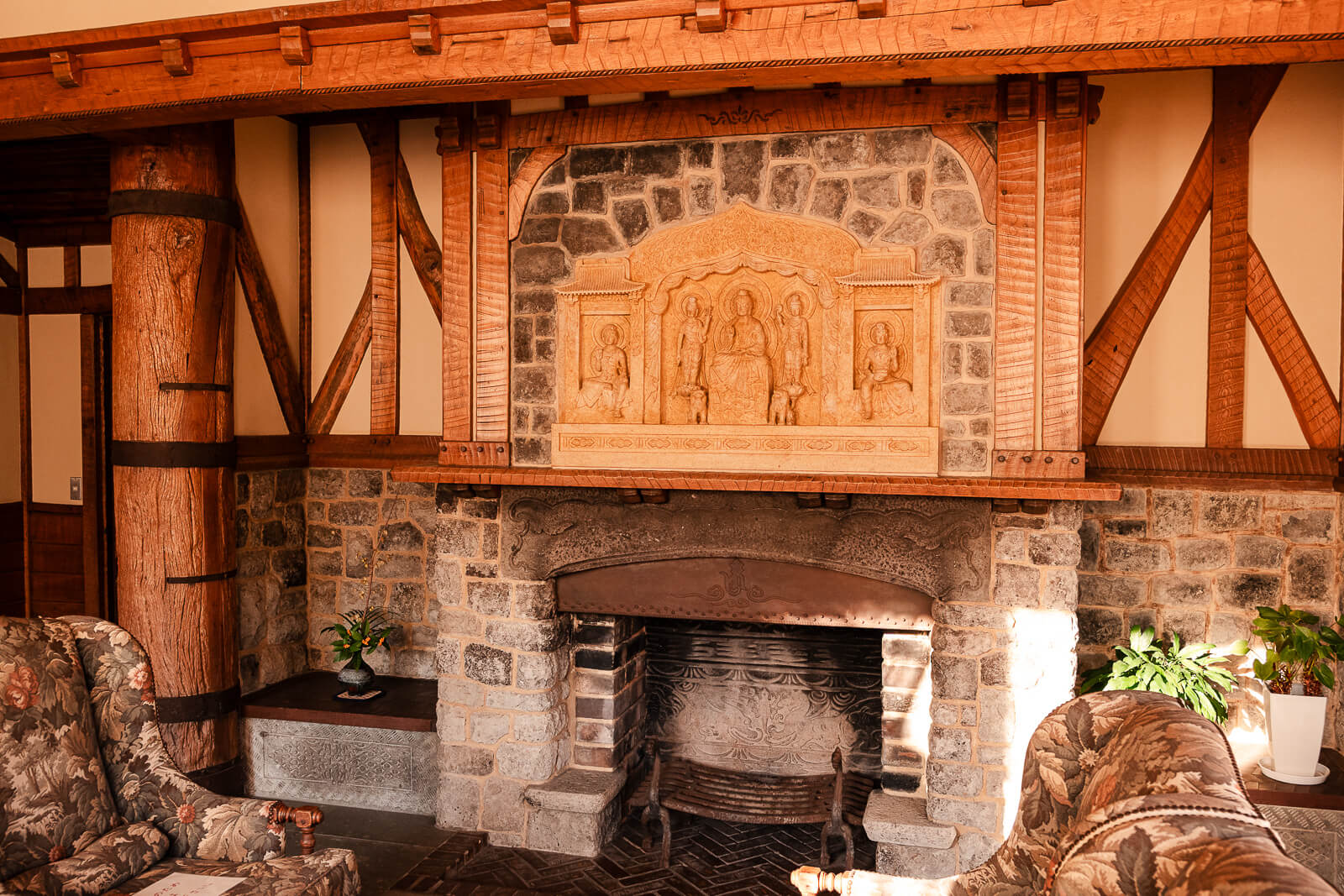
The dining room shows the scale of the property during its years hosting overnight guests. Nearby, a bright sun room introduces Western architectural details and windows facing the garden courtyard.
These rooms illustrate how resort residences of the time blended Japanese and Western design to accommodate different styles of gathering and relaxation.
The Bath Room Overlooking the Garden
One of the more distinctive spaces along the route is a preserved bath room that illustrates the scale of bathing facilities used when the villa welcomed overnight guests.
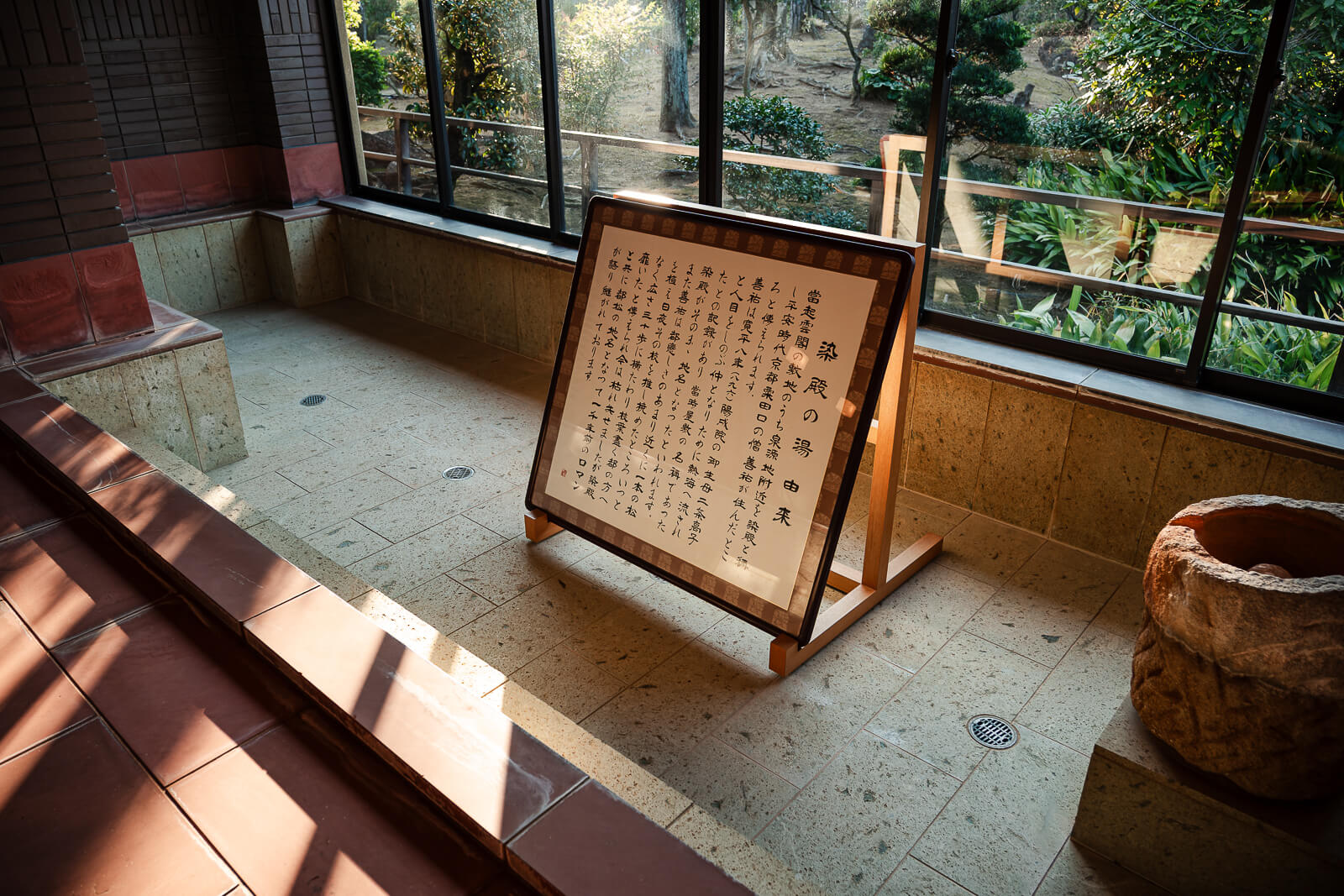
The bath area faces toward the inner garden, emphasizing the relationship between bathing spaces and the surrounding landscape. This connection between interior rooms and outdoor scenery was a defining element of resort architecture in hot-spring towns like Atami.
Seeing this room helps visitors understand how the property functioned when it operated as accommodation.
Completing the Interior Walk
The route through the villa gradually circles back toward the entrance where visitors retrieve their shoes.
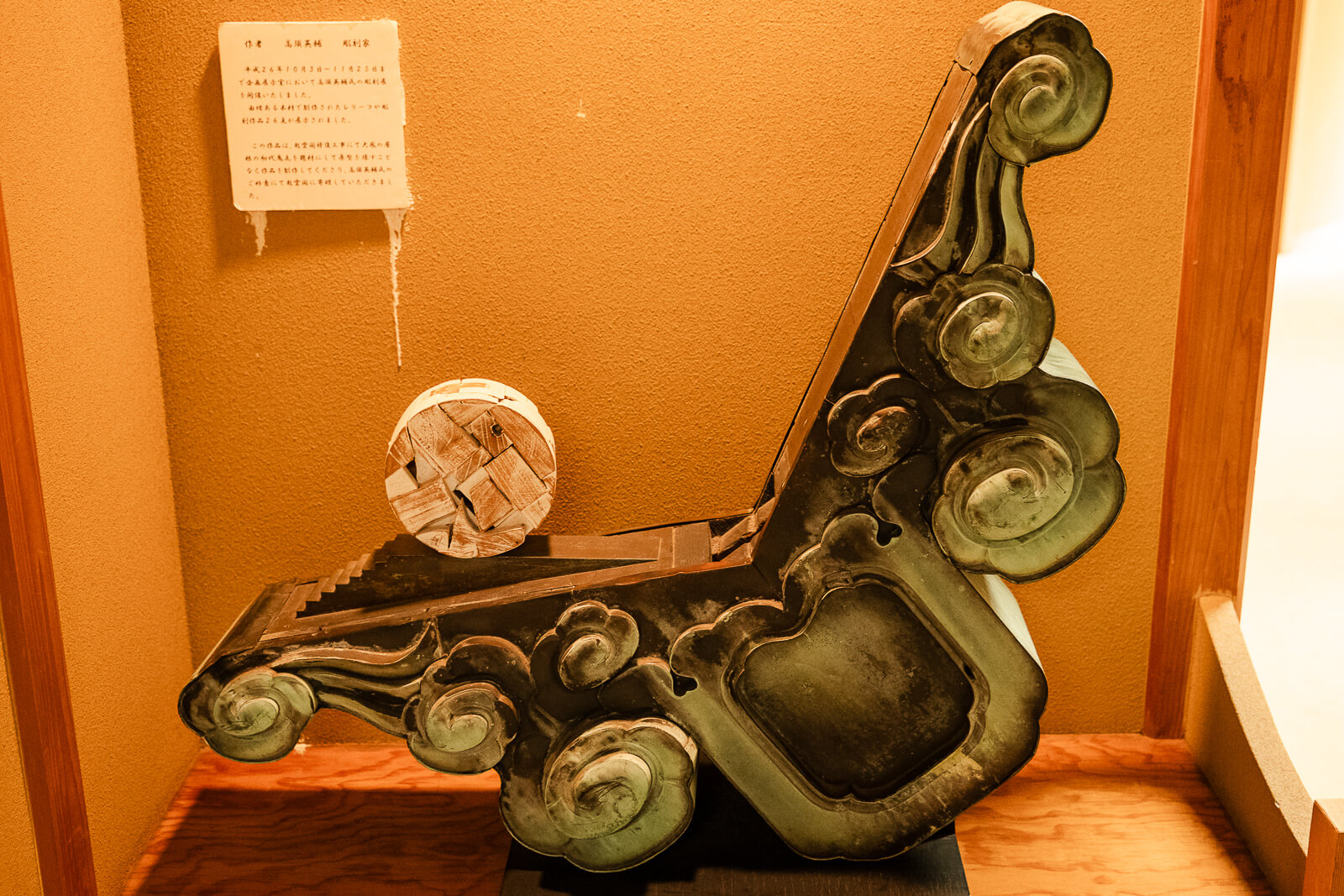
Because the path follows the perimeter of the building, navigation remains straightforward and visitors rarely need to backtrack. The experience unfolds steadily through a sequence of rooms rather than focusing on a single centerpiece.
Most visitors complete the interior walk in about 45 to 60 minutes, depending on how long they pause in each space.
Walking the Garden Paths
After leaving the building, visitors often spend additional time walking through the garden surrounding the pond.
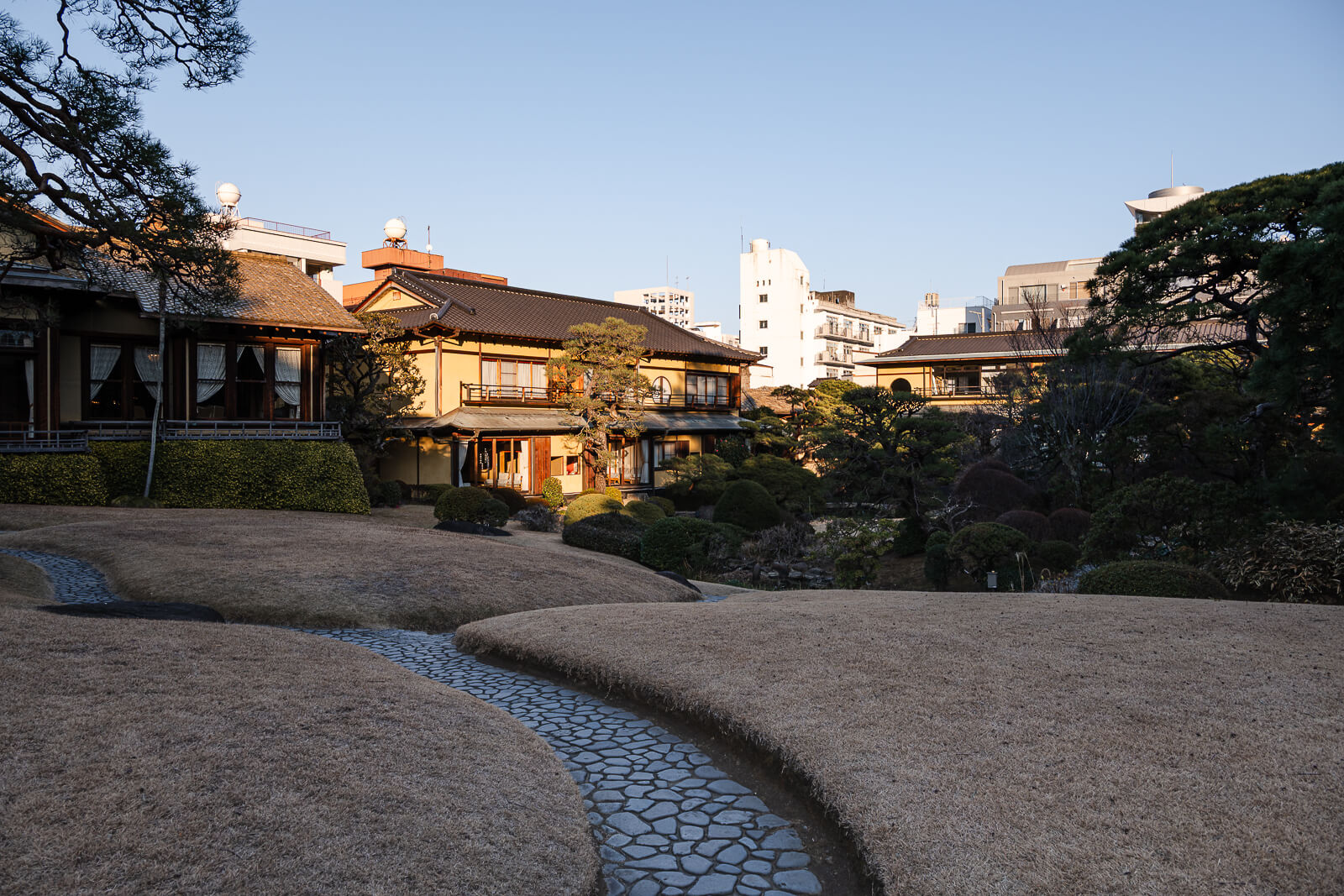
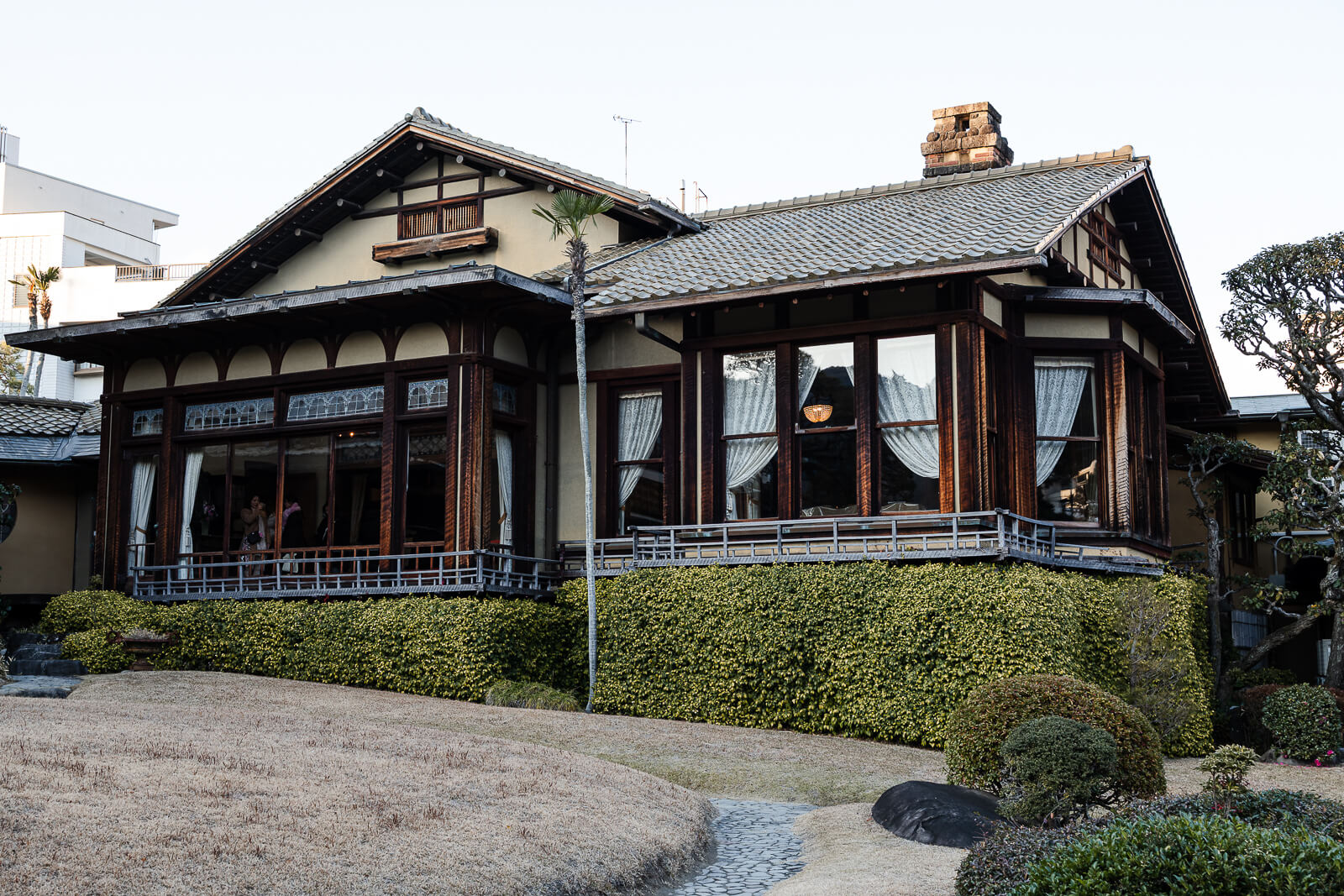
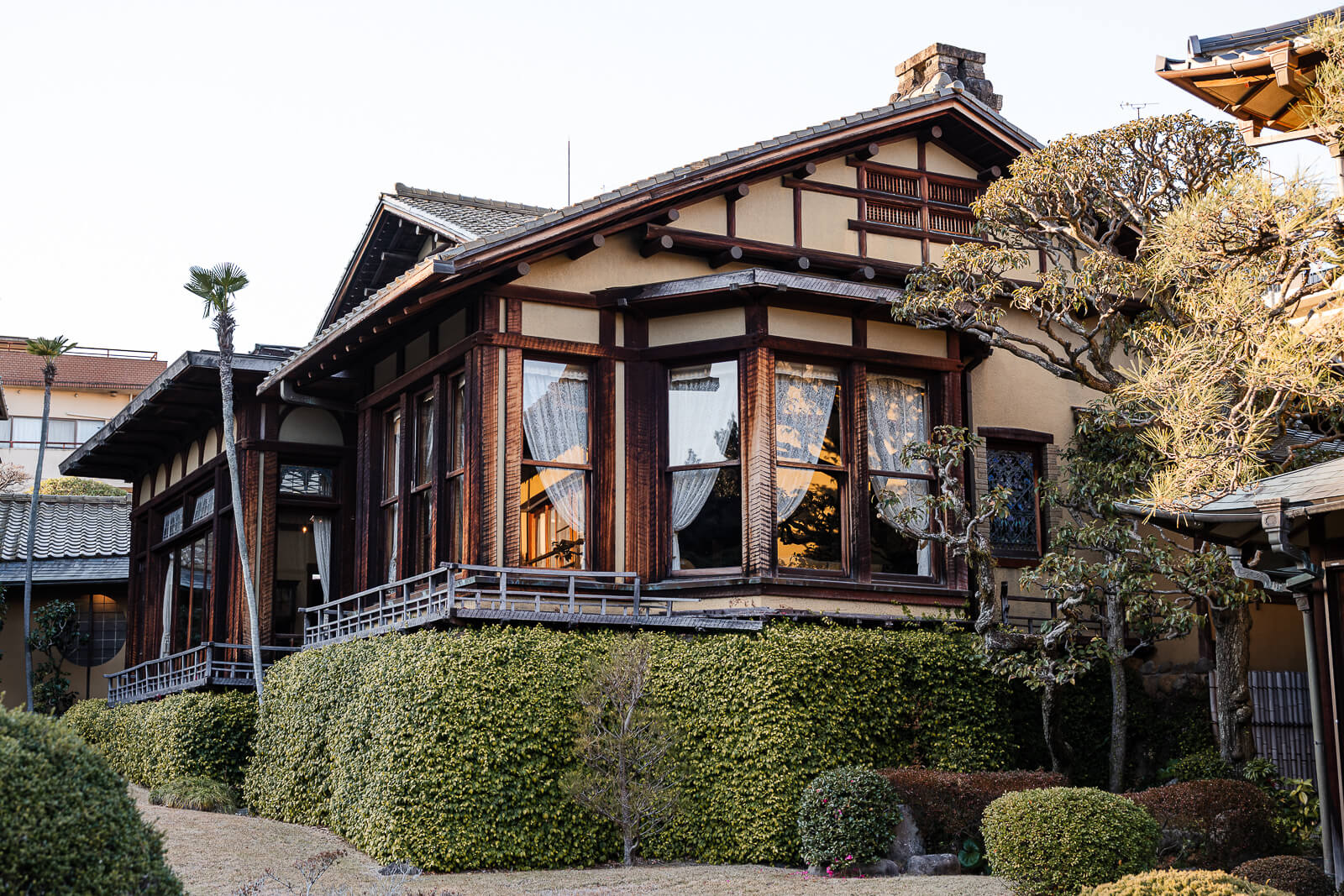
From the garden level the buildings can be viewed from below, offering a different perspective on the architecture seen from the upper corridors inside. The garden paths provide a natural conclusion to the visit and allow time to slow down after moving through the interior rooms.
Seasonal plants and trees change the appearance of the grounds throughout the year, with plum blossoms providing one of the earlier seasonal highlights in Atami.
Where Kiunkaku Fits in the City
Kiunkaku sits between several of the areas visitors most often explore in Atami. From Atami Station, many walking routes descend through the shopping streets toward the waterfront near Atami Sun Beach and the promenade around Atami Water Park and Moon Terrace.
The hillside above the town includes historic stops such as Onsen-ji Temple and Seigon-in Temple, while the slopes overlooking the harbor lead toward the Atami Ropeway and Atami Castle viewpoints.
Kiunkaku sits between these areas, making it an easy stop while moving between the station district and the waterfront.
Getting There
Kiunkaku is located in central Atami and can be reached easily on foot from several parts of the city.
From Atami Station, the walk takes roughly 15–20 minutes downhill through the town toward the coastal district. The route passes through the main visitor area of the city and is straightforward to follow.
Visitors already exploring Atami Sun Beach or the nearby waterfront promenade can reach Kiunkaku in about 10 minutes on foot by heading inland from the coast.
Hours and Admission
Hours and fees may change, so confirming current information before visiting is recommended.
Typical opening hours
9:00 AM – 5:00 PM
Last admission
Around 4:30 PM
Closed
Wednesdays (or the following day if Wednesday is a public holiday)
Admission
Adults: approximately ¥610
Discounted admission may apply for children and students.
Because Kiunkaku is usually visited while moving between Atami Station and the waterfront, how you arrive in town and where you base yourself tends to shape the rhythm of the visit more than the villa itself.