What Kind of Visit Is This?
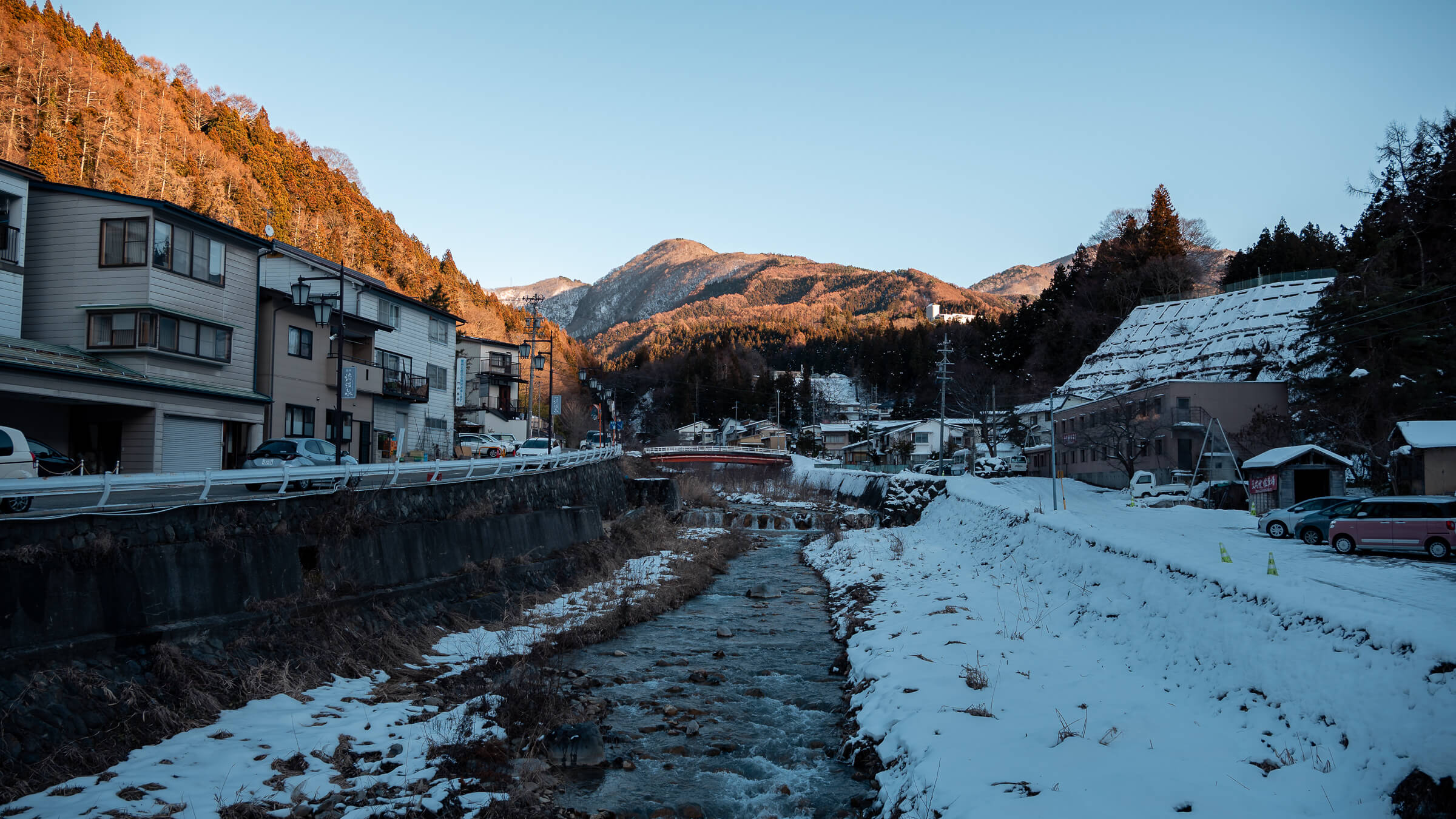
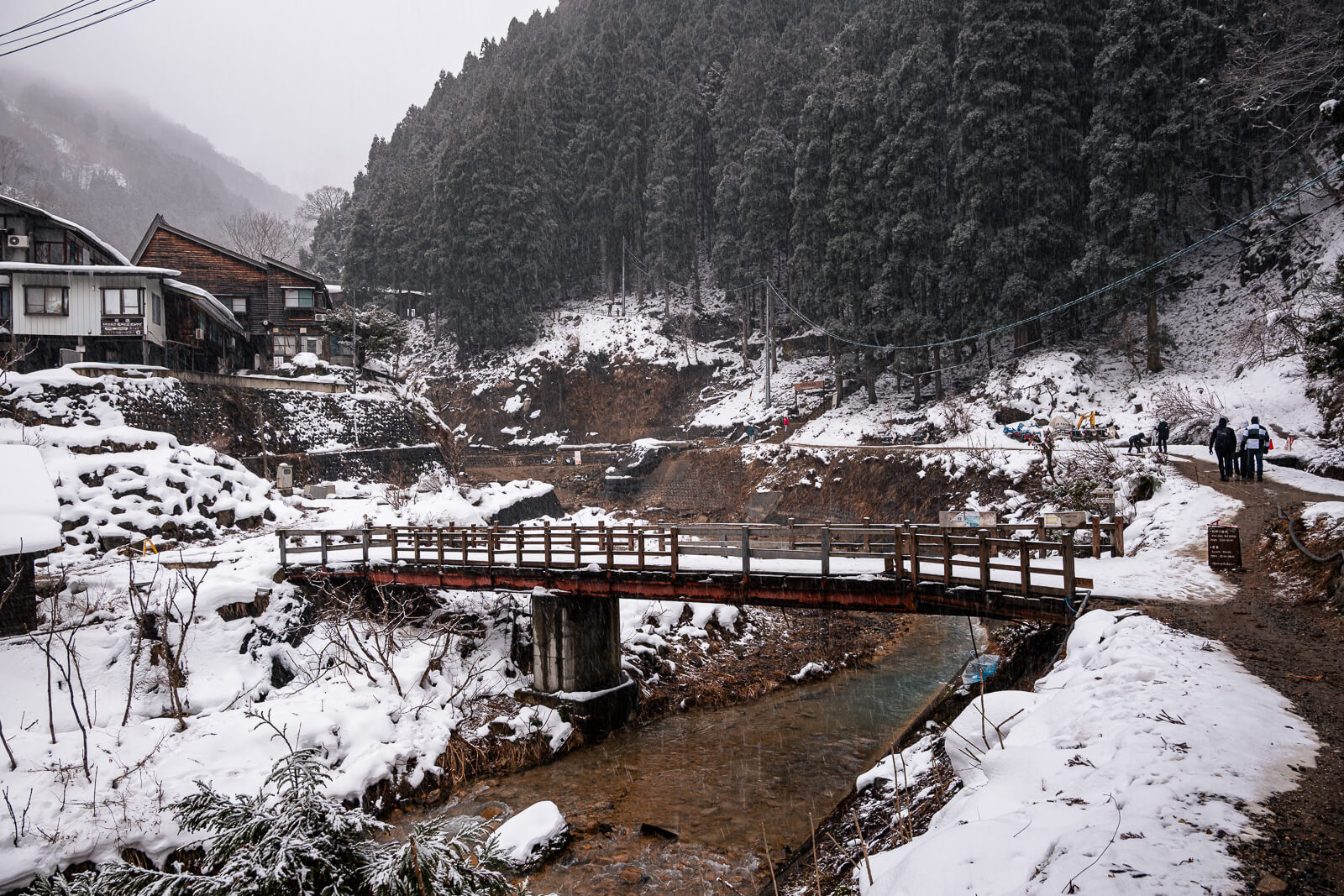
Jigokudani Monkey Park lies just outside Shibu Onsen and Yudanaka Onsen, in a geothermal river valley in Yamanouchi. Yudanaka Station sits roughly 45 minutes by direct train from Nagano Station, placing the park within easy rail reach while still requiring a deliberate forest approach once in town.
The visit centers on a 1.6 km walk each way and time spent inside a compact, multi-level basin shaped by river flow, exposed rock, and rising steam. From arrival to exit, most visits take three to four hours. The forest approach is flat and maintained; elevation inside the basin is gradual rather than steep, placing the overall effort level in the easy-to-moderate range.
Access is structurally simple — train to Yudanaka, then bus or taxi toward the trailhead — but the final forest approach cannot be shortened. Winter increases visitor numbers, yet the basin’s layered design disperses people across bridges and viewing levels rather than concentrating them in one spot.
Given the walking distance and time naturally spent inside the valley, this park works best as the primary mountain experience of the day, especially when paired with an overnight stay in Shibu Onsen or Yudanaka.
For travelers structuring a broader Nagano itinerary guide, Jigokudani often anchors the region’s mountain segment.
A Geothermal Valley Shaped Before the Park Existed
Jigokudani Yaen-kōen opened in 1964 as a protected observation area for wild Japanese macaques inhabiting this valley. The surrounding terrain forms part of a volcanic system linked to the Shiga Highlands. Heated groundwater rises through fractured rock beneath the river corridor, producing steam vents and mineral staining along exposed stone.
By the late 1960s, researchers documented monkeys entering a controlled hot spring pool during winter. The behavior developed as a response to heavy snowfall and freezing temperatures, not as a tourist display.
The park’s creation coincided with postwar expansion of domestic travel across Nagano’s onsen towns. Feeding zones were positioned away from farmland and roads, reducing conflict while concentrating monkey movement within the basin.
The result is a managed boundary rather than a staged exhibit. The monkeys are not enclosed. The geothermal system predates the park; the winter soaking follows that geology.
For those exploring Nagano’s mountain regions, this basin represents a clear intersection of tectonic heat and animal adaptation.
Walking the Basin From Trailhead to Exit
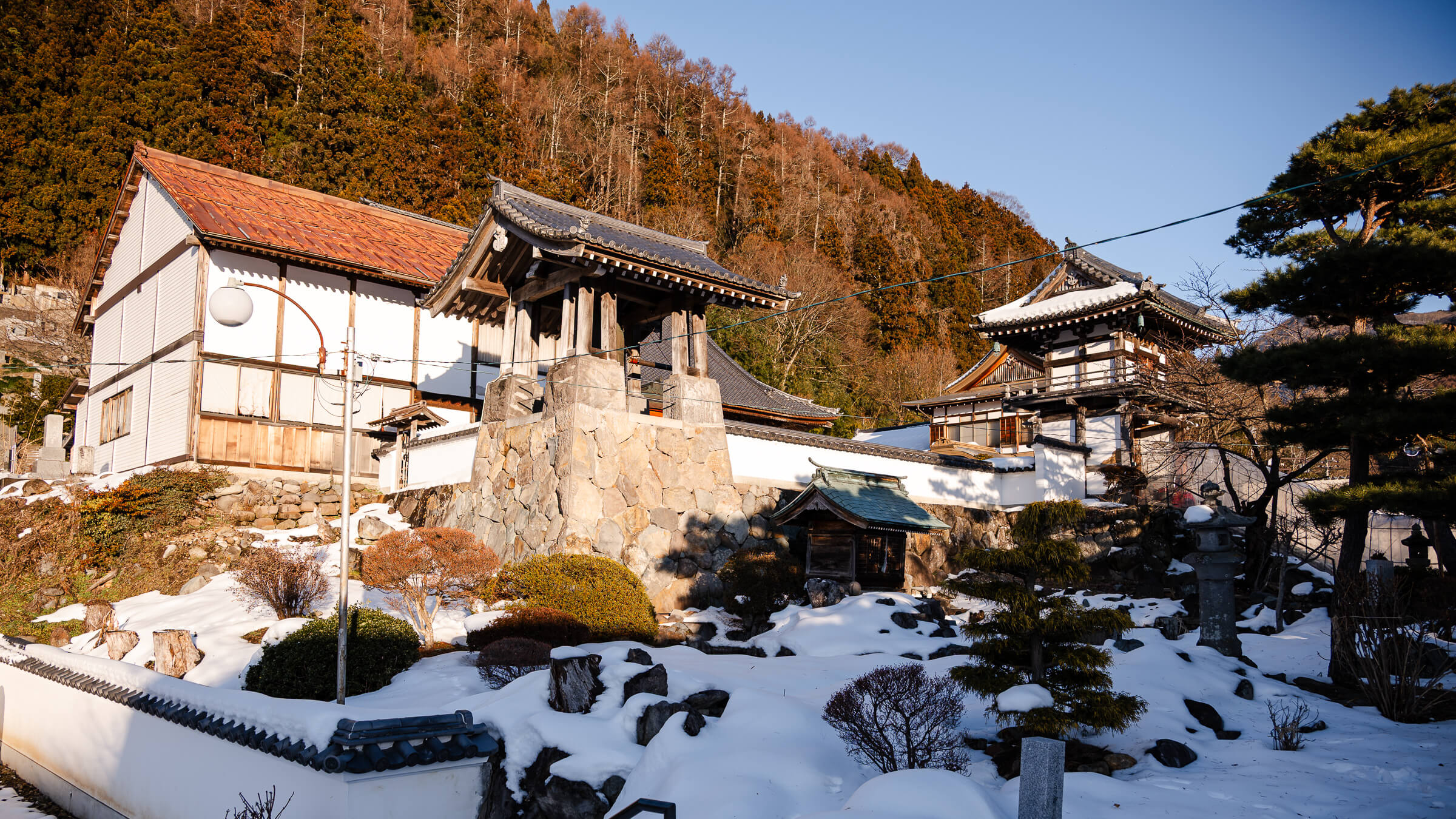
Most visitors begin near the Shigakogen Roman Museum bus stop or adjacent parking. A short descent passes cafés and the grounds of Shōrin Fudōson Temple before the forest trail begins.
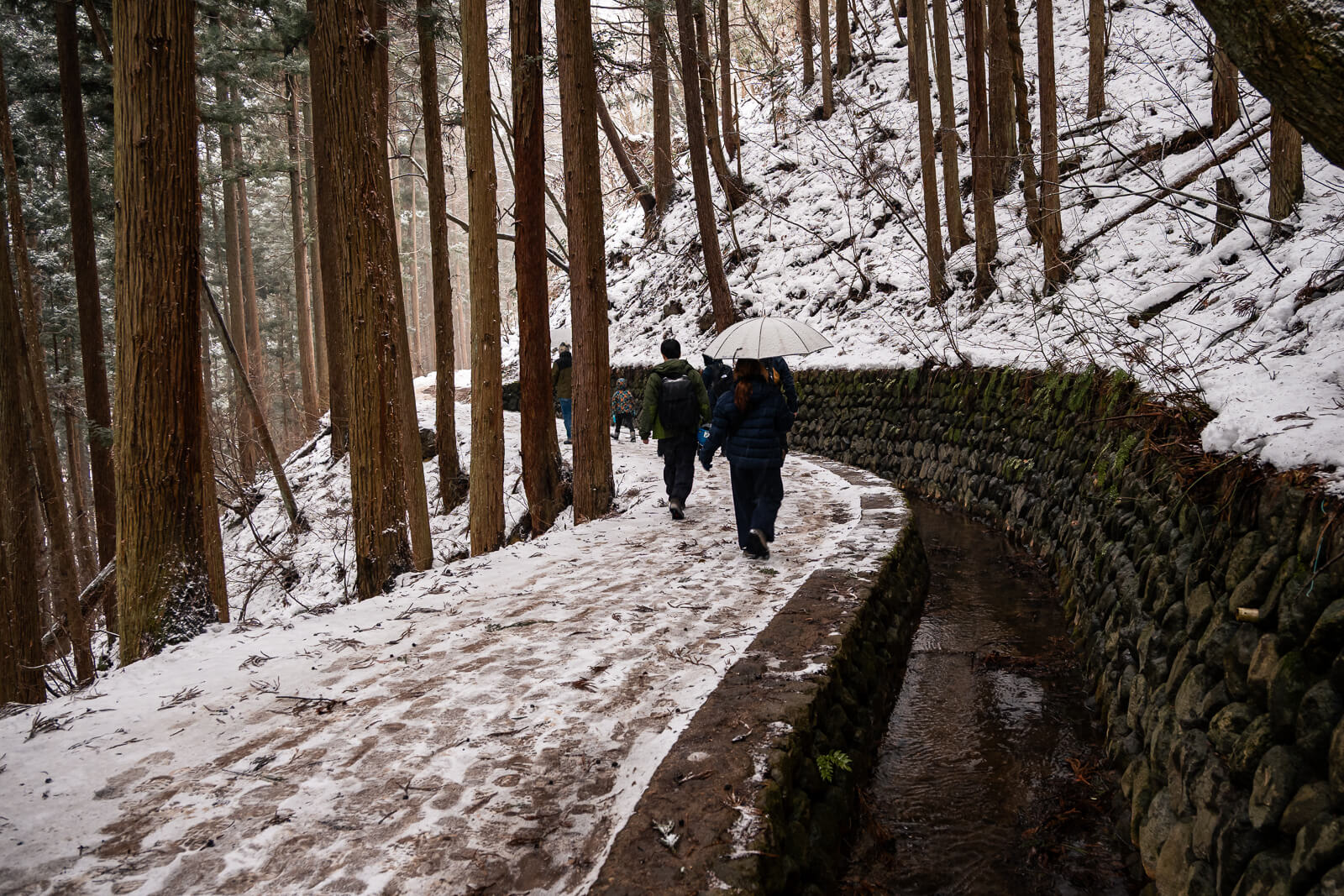
The 1.6 km approach follows the Yokoyu River upstream, typically taking 25–35 minutes each way. Snow compacts the surface in winter, but the trail remains stable and non-technical.
After the ticket gate and gift shop, the river runs directly through the center of the property.
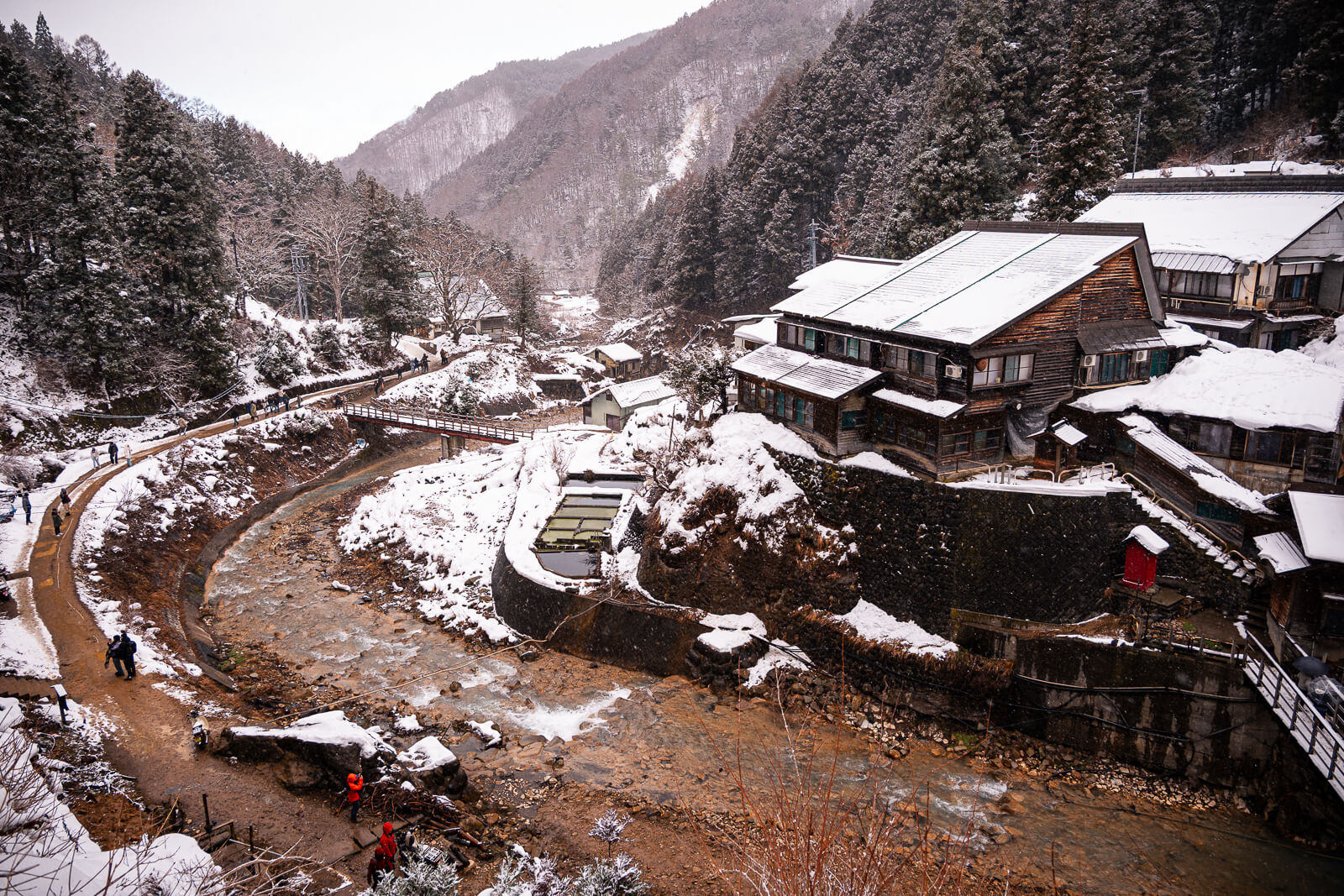
A main path climbs along the right bank. A lower branch descends toward the river beneath the bridge. Continuing upward leads to the bridge and the hot spring pool carved into the opposite bank.
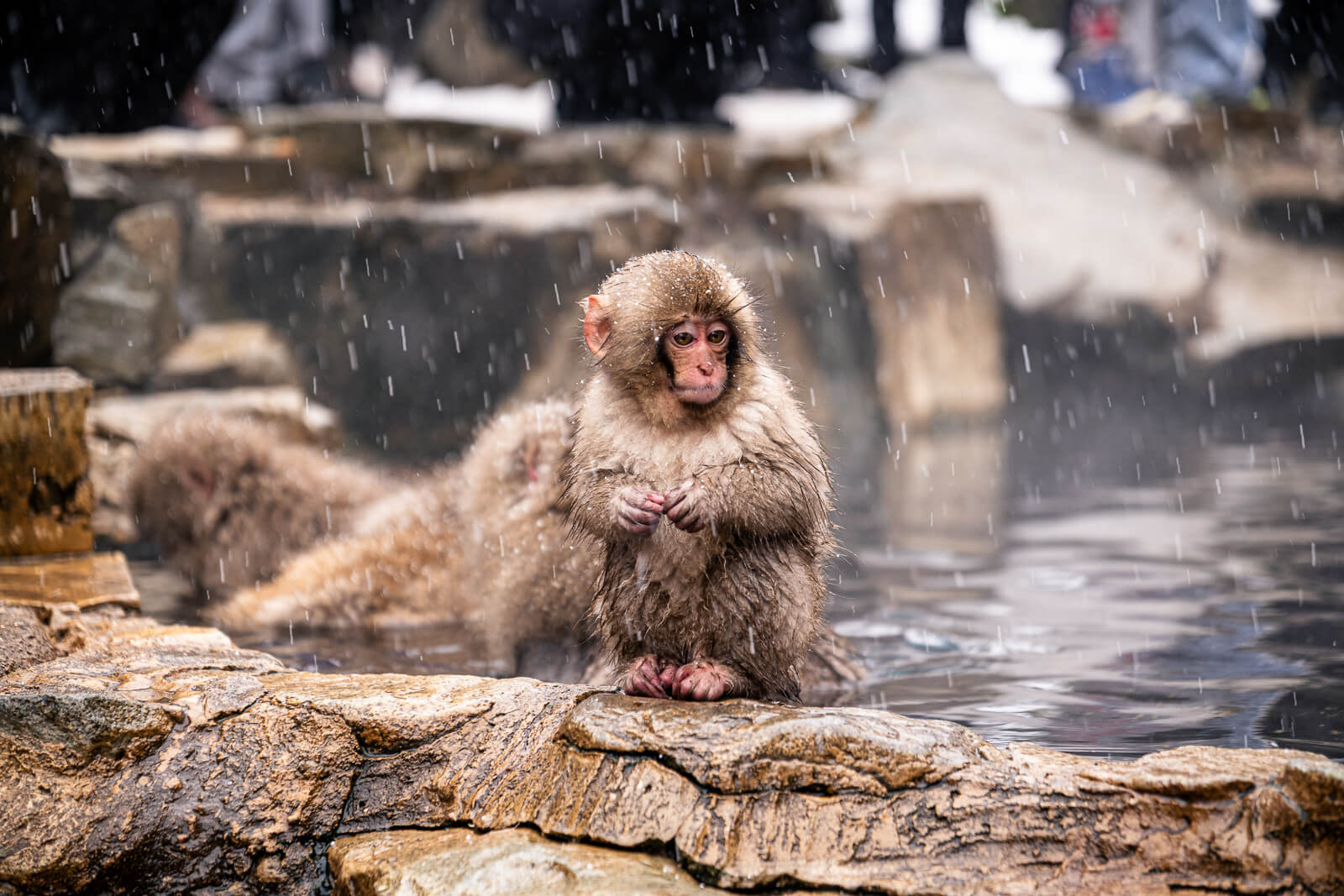
Monkeys move across all levels — in the water, on rocks, along railings, and beside viewing paths. Proximity can narrow to only a few feet, yet behavior remains unscripted and largely indifferent to visitors.
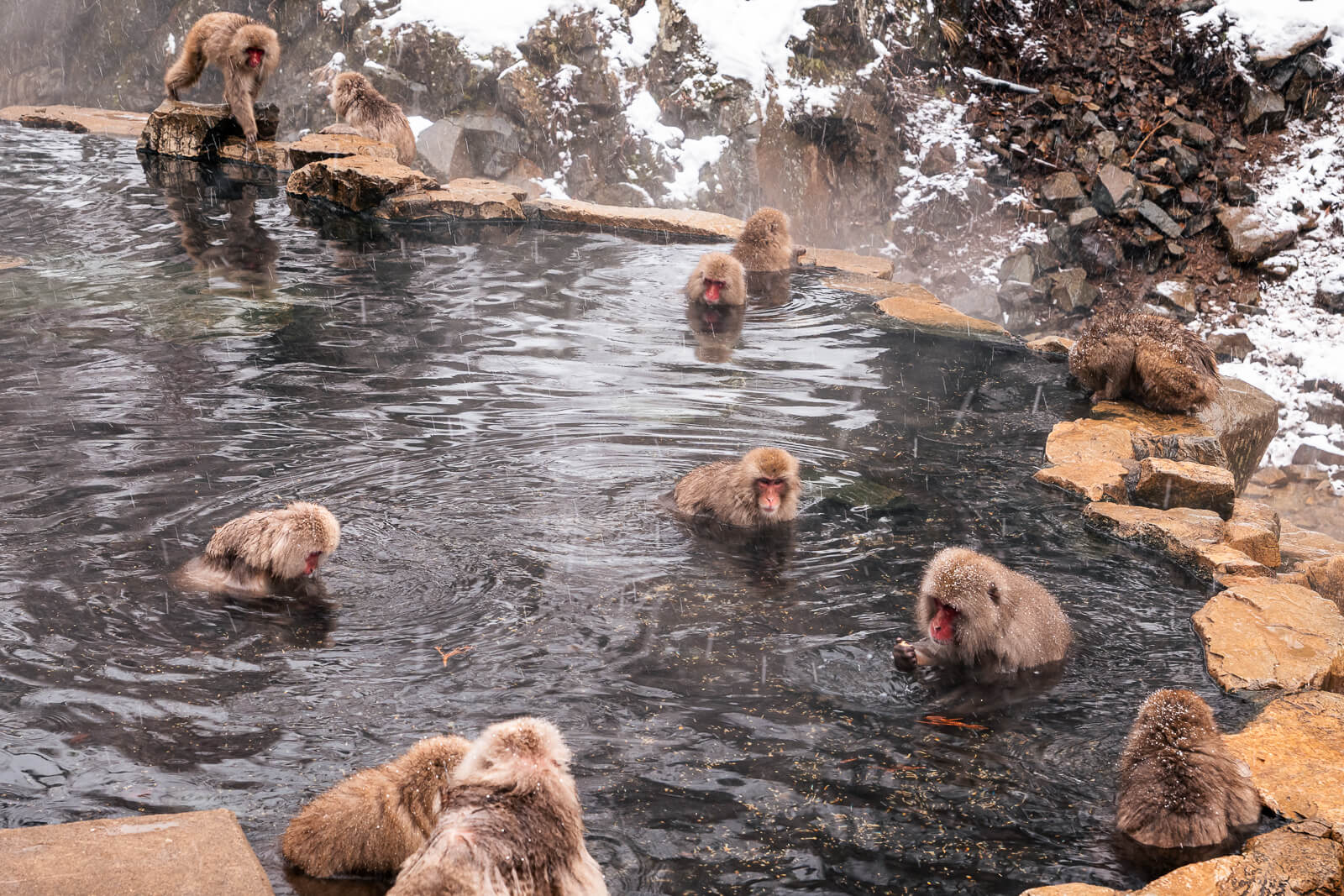
Beyond the main stair zone sits the geyser, venting steadily along the riverbank. A smaller bridge connects to elevated structures on the opposite side, offering a wider view across the basin.
Time inside commonly reaches two hours without repetition as monkeys circulate continuously across elevations. The route loops naturally back toward the gift shop for exit.
A Wildlife Encounter Without Staging
Many wildlife destinations rely on migration windows or structured feeding displays. Jigokudani operates differently. The monkeys remain year-round, and winter soaking reflects environmental necessity rather than scheduled interaction.
Observation occurs at close range without fencing. Movement is continuous rather than choreographed. Visitors share terrain rather than watch from a distant platform.
For travelers comparing wildlife experiences in Japan, this difference shapes expectations. The basin is organized around coexistence, not spectacle.
The Geyser and the Geology Beneath the Valley
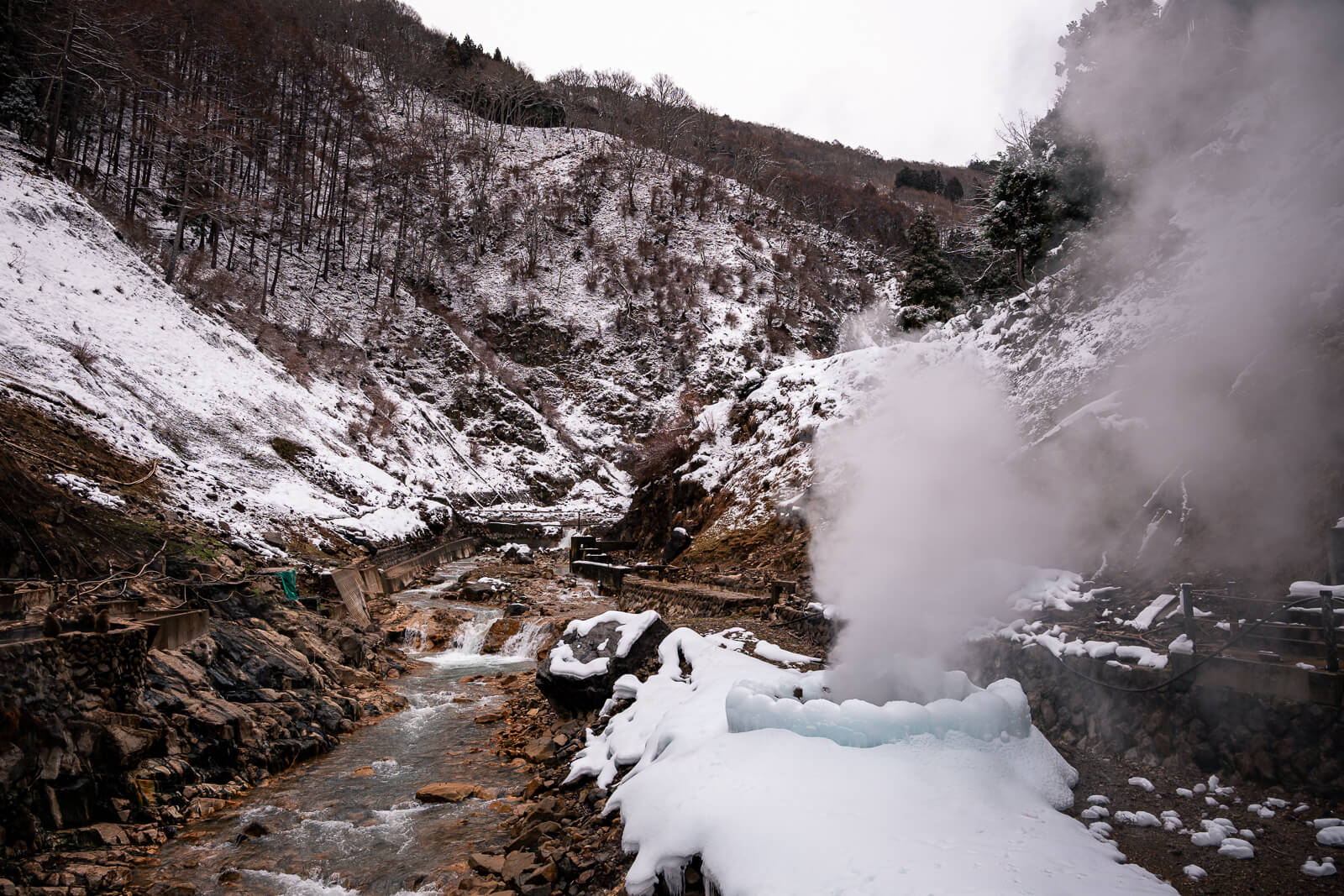
Just beyond the main stair area, the Jigokudani geyser vents steadily from the riverbank. It is not dramatic in height, but it makes visible the geothermal pressure beneath the valley floor.
Heated groundwater rises through fractured volcanic rock, feeding both the geyser and the hot spring pool. While macaques inhabit snowy regions elsewhere, consistent use of accessible geothermal pools within a natural river corridor is uncommon.
The geyser confirms that the basin’s defining feature — warm water against freezing air — originates from tectonic forces far older than the park itself.
Seasonal Shifts in Steam, Snow, and Visitor Flow
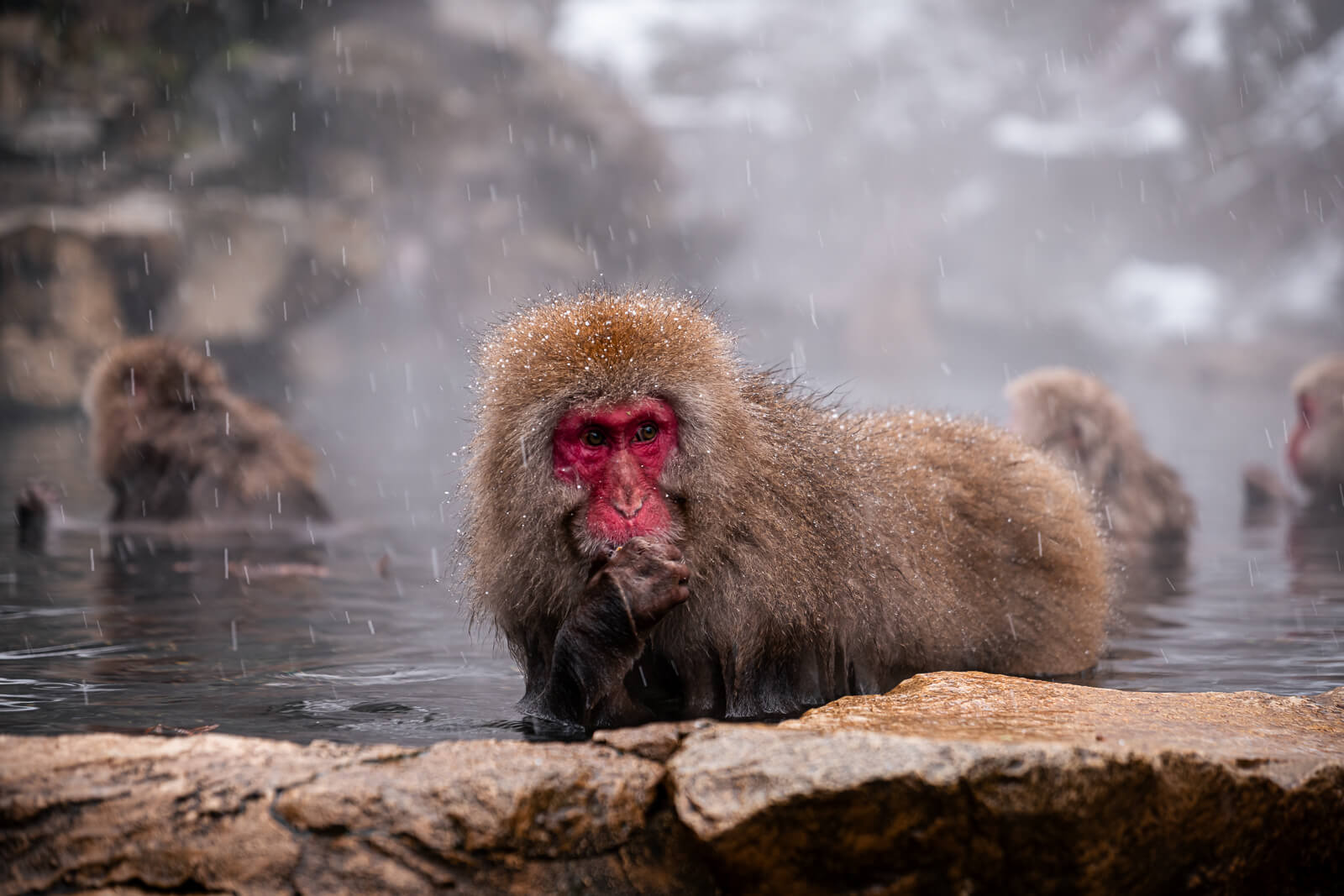
Snow increases visual contrast between steam and rock, but geothermal activity remains consistent throughout the year. In warmer months, vents continue to release steam and monkey movement follows the same circulation routes.
Morning arrival often brings steadier visitor flow and clearer trail conditions. Midday increases numbers, though the basin’s multi-level design disperses people across bridges and viewpoints.
Monkey activity remains steady into early afternoon during winter. Visibility shifts as steam density changes with temperature differences between air and water.
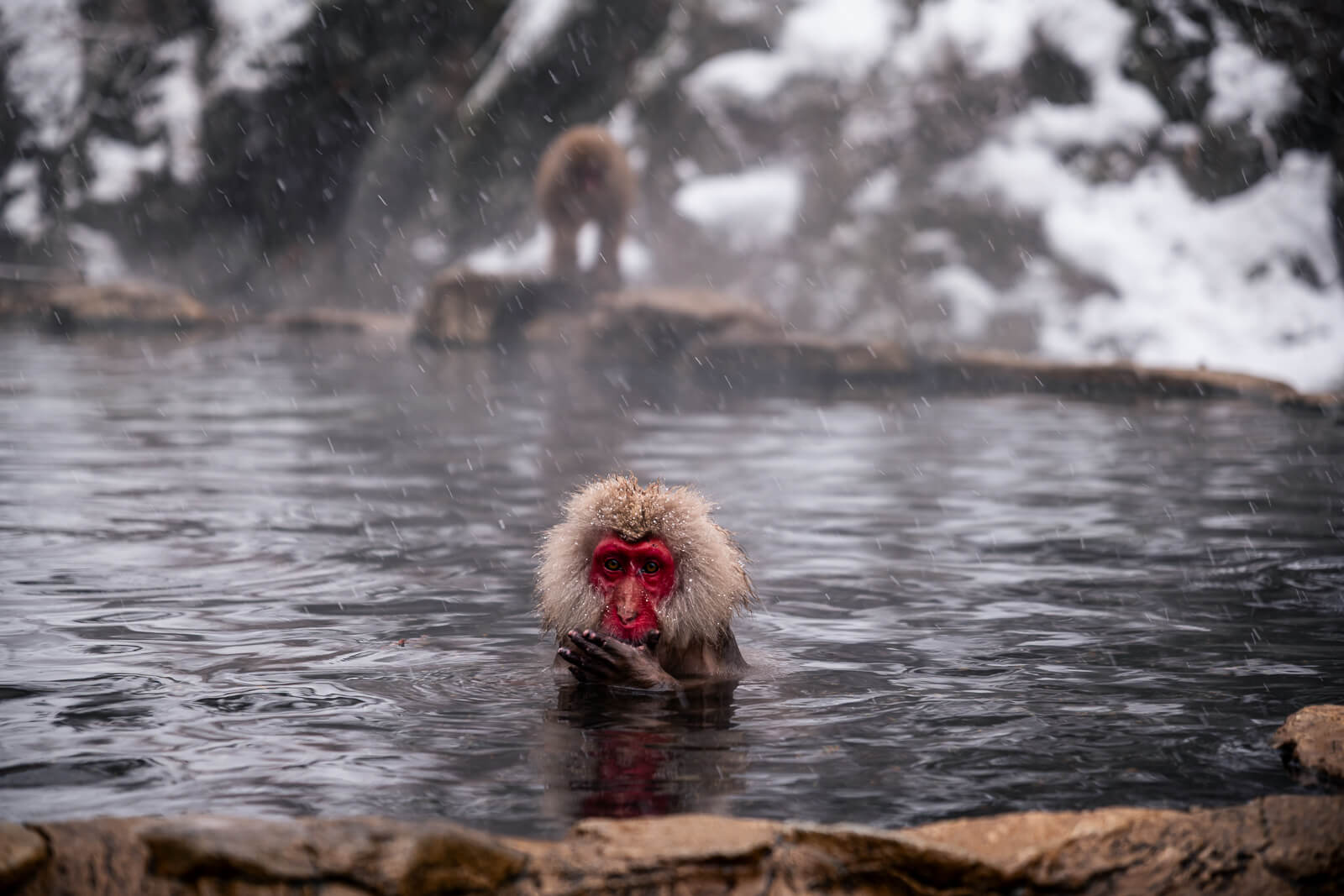
For travelers planning around Japan winter travel considerations, the basin offers predictability rather than dependence on a narrow seasonal window.
How This Visit Connects to Shibu Onsen and Yudanaka
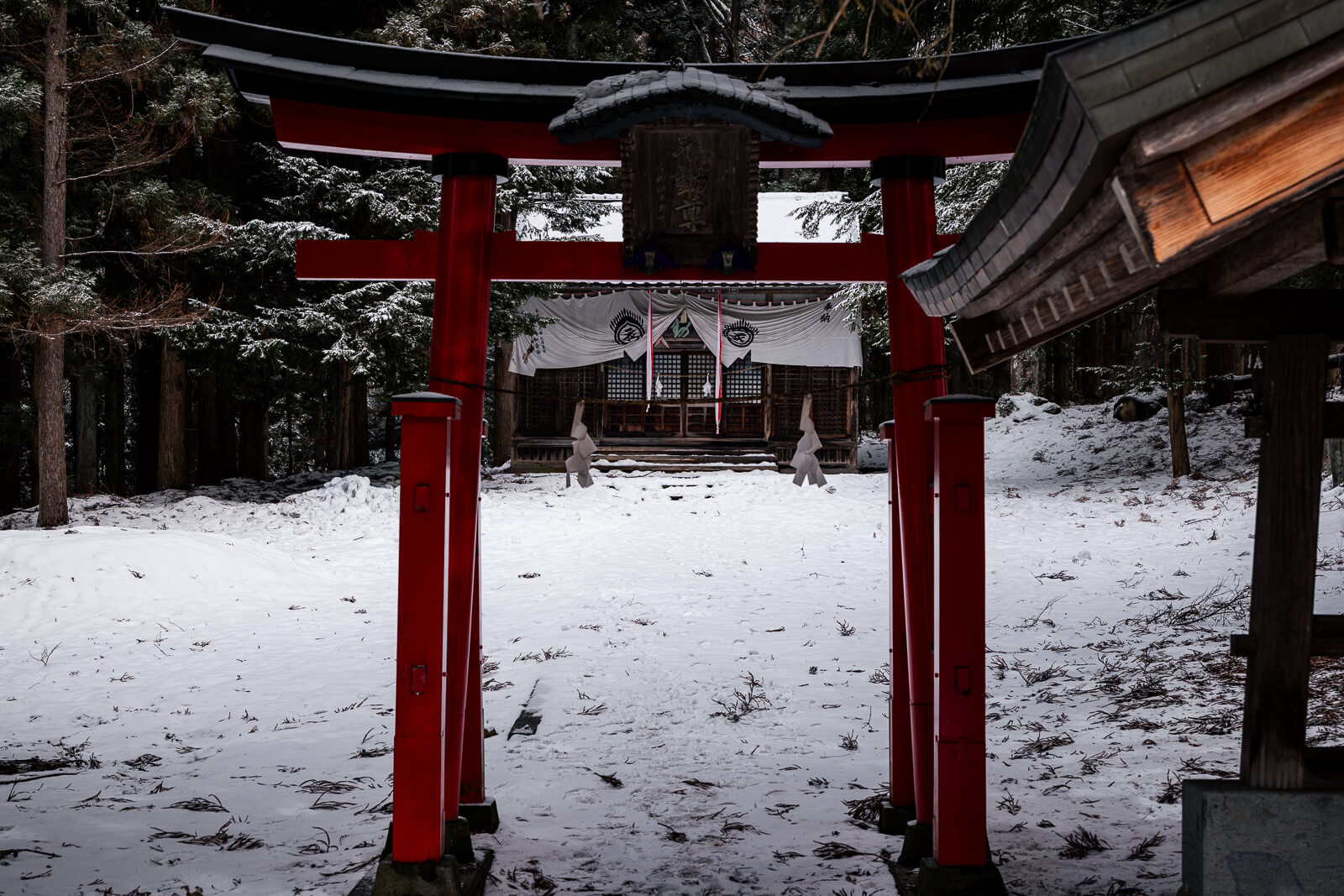
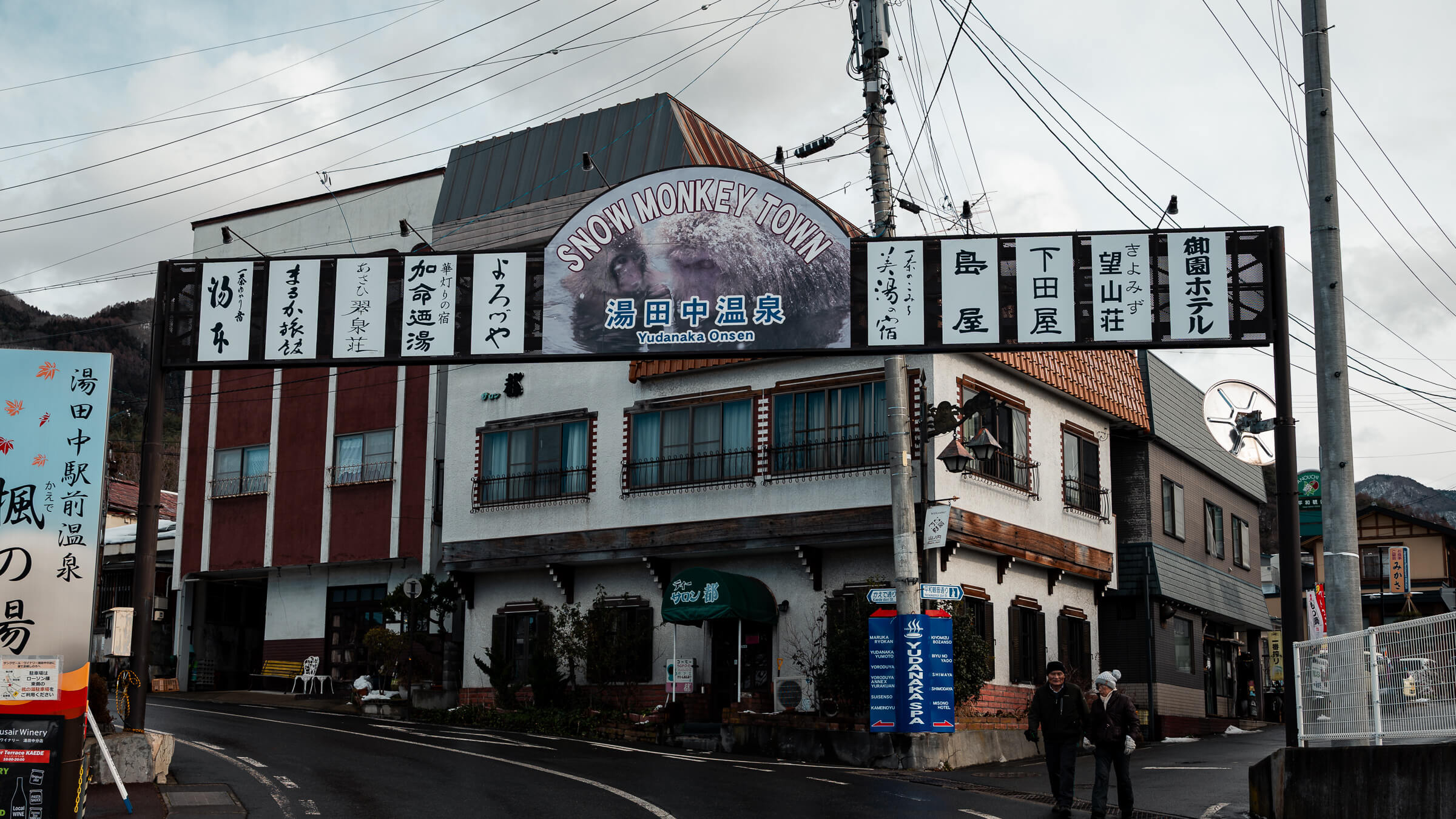
Jigokudani pairs naturally with an overnight stay in Shibu Onsen or Yudanaka Onsen, though each town offers a different rhythm.
Shibu Onsen provides a compact bathing district with nine public baths available to overnight guests, extending the visit beyond the valley itself. Staying in Shibu situates the monkey park within a broader hot spring tradition.
Yudanaka offers simpler rail logistics. The station sits directly in town, reducing transfer friction for arrivals from Nagano or onward travel.
Both towns provide bus connections to the monkey park stop, and taxis operate in each location. Morning departures benefit from understanding transport timing in advance, particularly during winter conditions.
For travelers building a broader Nagano onsen guide, the distinction lies less in distance and more in whether the visit emphasizes immersive bathing culture or rail convenience.
Getting There
Trains connect Nagano Station to Yudanaka in approximately 45 minutes. From Yudanaka, buses run toward the monkey park stop near the Shigakogen Roman Museum.
From that stop, the 1.6 km forest approach begins.
Access complexity remains low but fixed. There is no alternate shortcut to the basin. Winter driving may require snow tires or chains.
Travelers without a vehicle can rely on bus connections or taxis arranged through ryokan in Shibu Onsen or Yudanaka.
Hours & Fees
Opening Hours
Summer: 08:30–17:00
Winter: 09:00–16:00
Last admission typically one hour before closing
Open year-round
Admission Fees
Adults: ¥800
Children (6–17): ¥400
Under 6: Free
Confirm hours and fees on the official website prior to visiting, as seasonal adjustments may occur.