A Riverside Walk Running Through the Center of Atami
The Itokawa Promenade follows a narrow river through the middle of Atami, linking the inland streets near the station with the waterfront along Atami Sun Beach.
In a town shaped by steep hills, flat walking space is limited. The river corridor became one of the few natural routes connecting the upper streets with the bay. Over time, it developed into a small pedestrian promenade that many visitors encounter while moving between neighborhoods.
The walk often appears naturally during a day exploring Atami. Travelers heading toward the waterfront may pass the river on their way to the harbor near Atami Water Park, with Atami Sun Beach stretching just beyond along the bay.
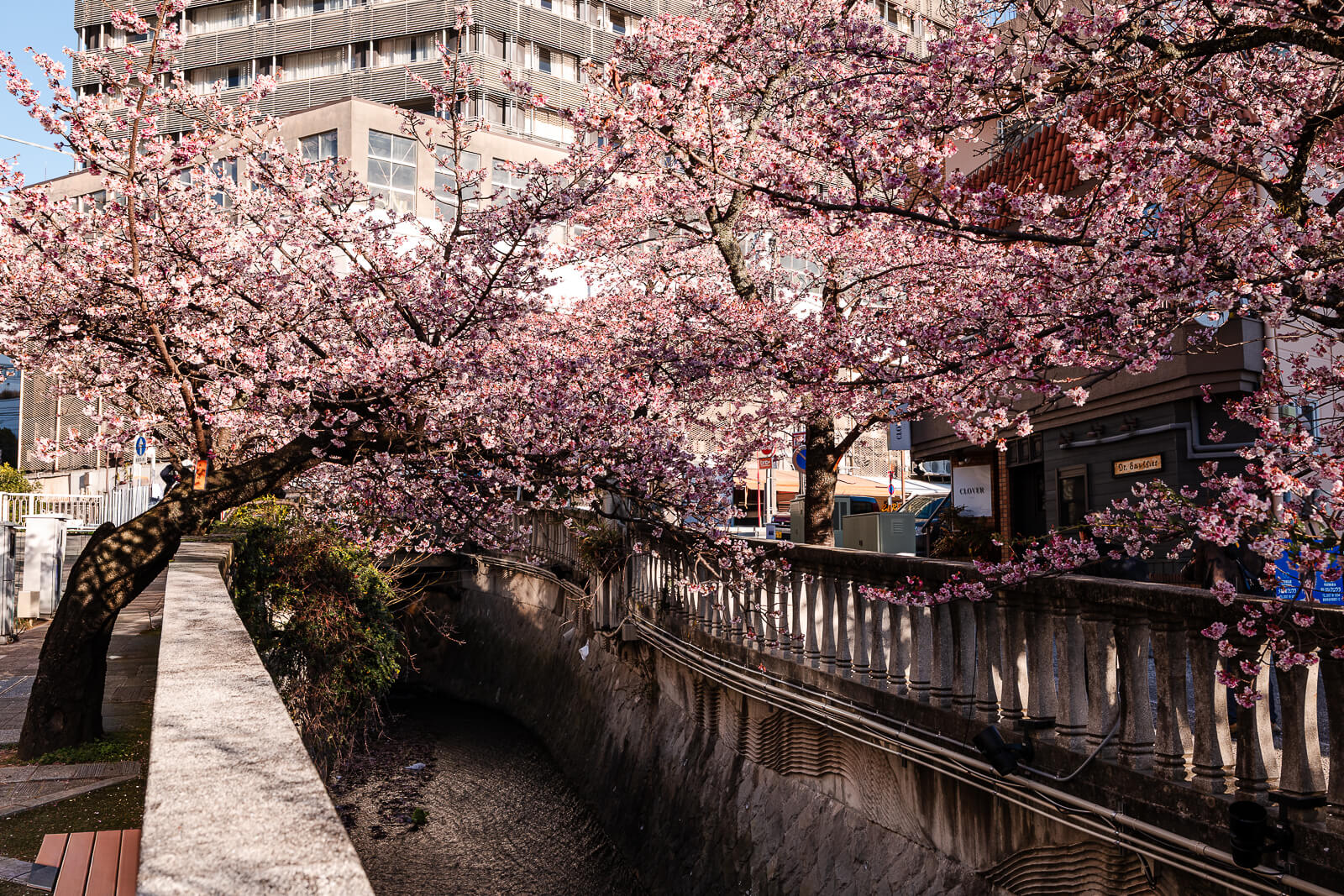
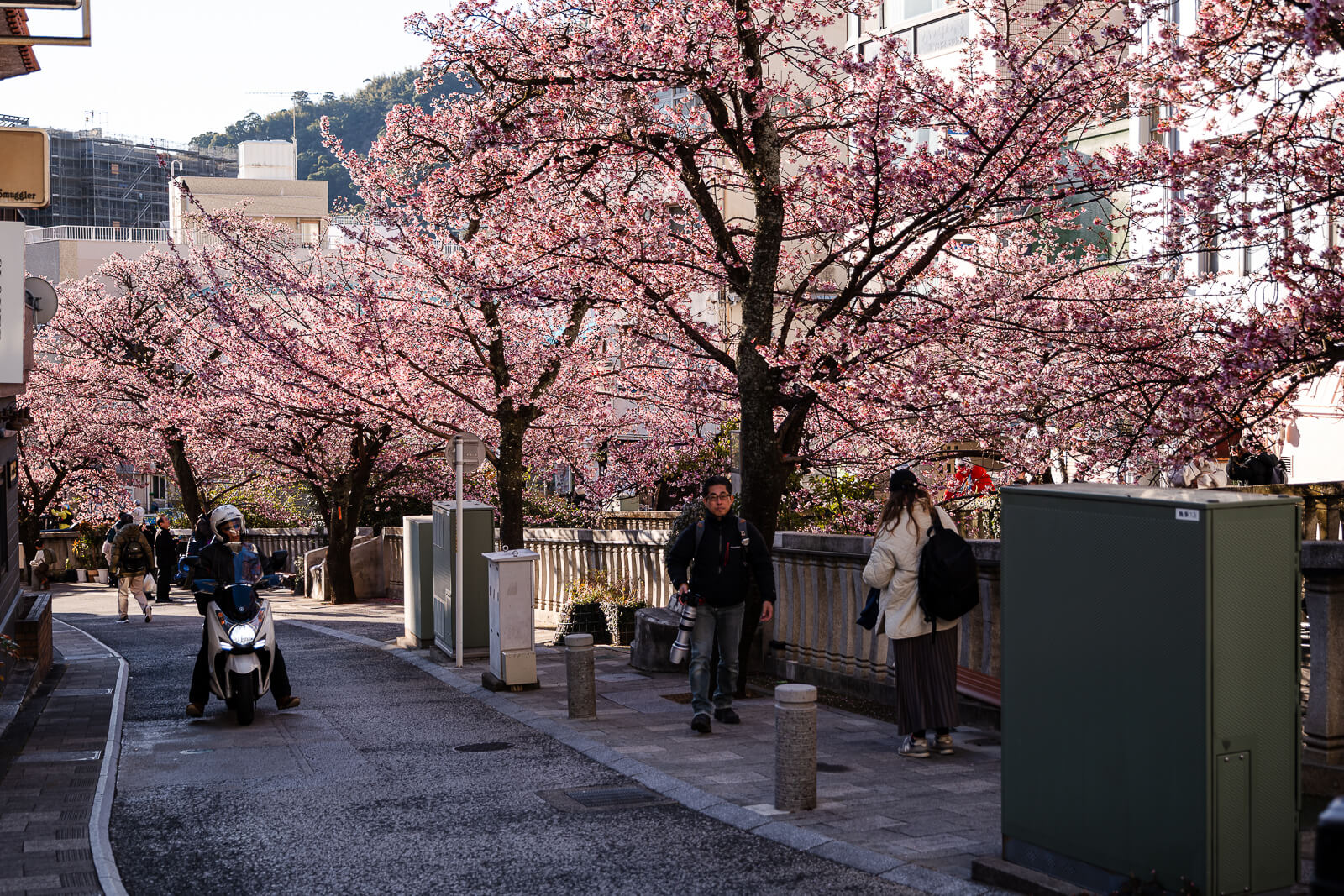
Most visits take 15–25 minutes at a relaxed pace. The route is flat and easy to follow, with bridges crossing the river at regular intervals.
For many visitors, the promenade becomes part of the larger experience of walking through Atami rather than a destination by itself.
Why This River Walk Became Part of Atami’s Identity
The Itokawa River flows from the hills above Atami toward the bay, cutting a narrow path through the city center.
As Atami developed into a hot spring resort during the late nineteenth and early twentieth centuries — particularly after railway access improved travel from Tokyo — the riverbanks were gradually reinforced and organized into pedestrian paths.
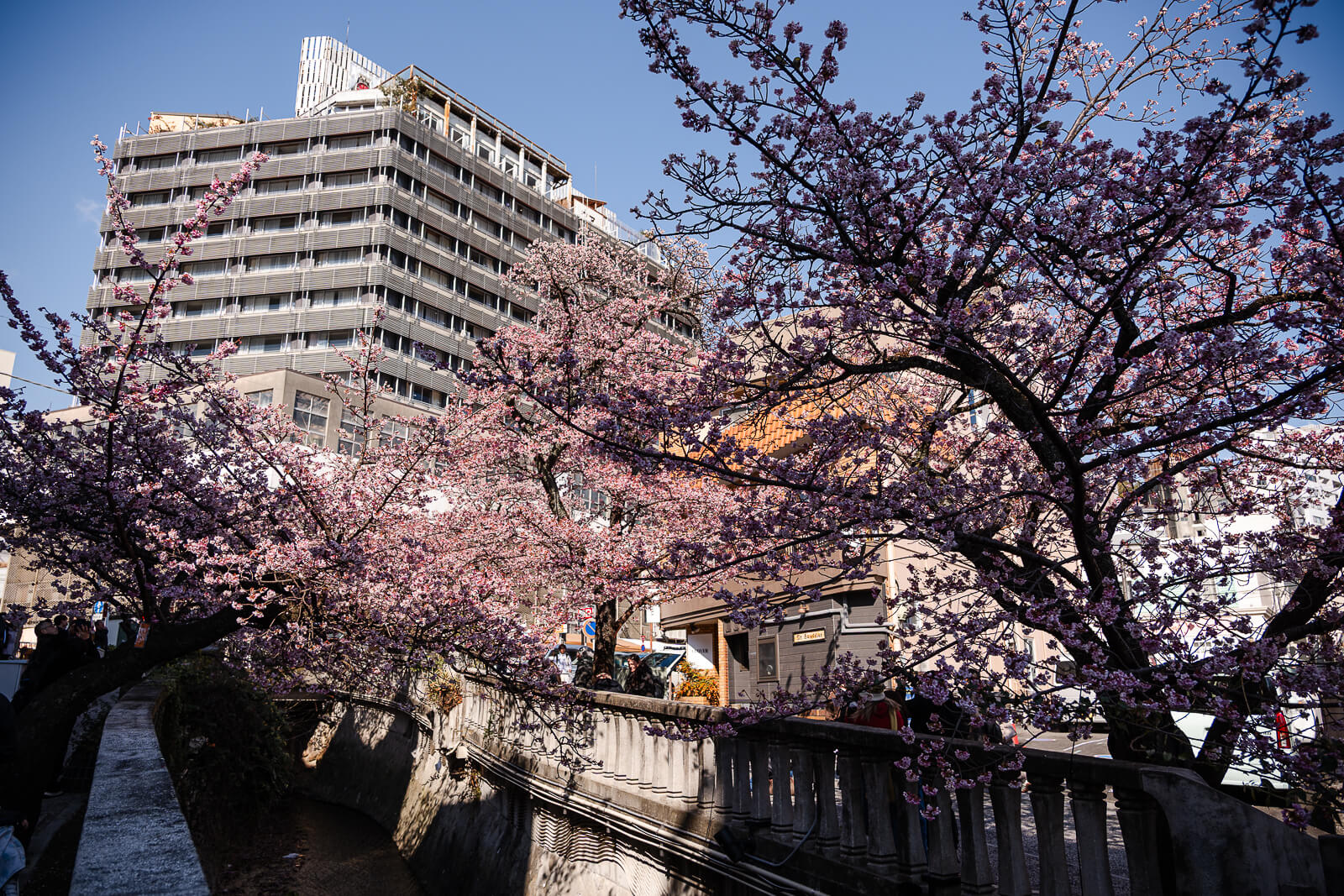
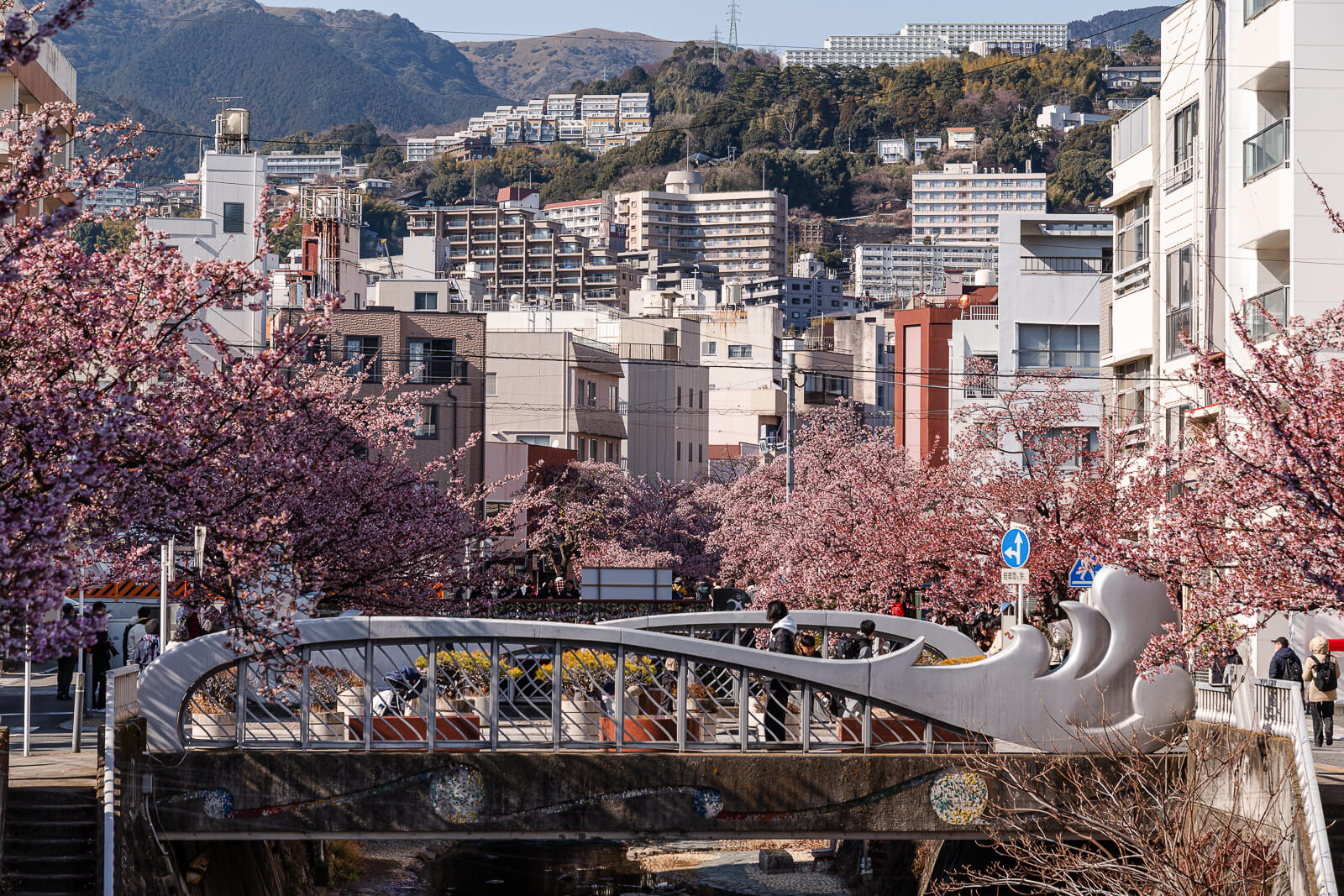
Stone embankments replaced natural edges, bridges were added at regular intervals, and the river corridor became one of the few continuous walking routes through town.
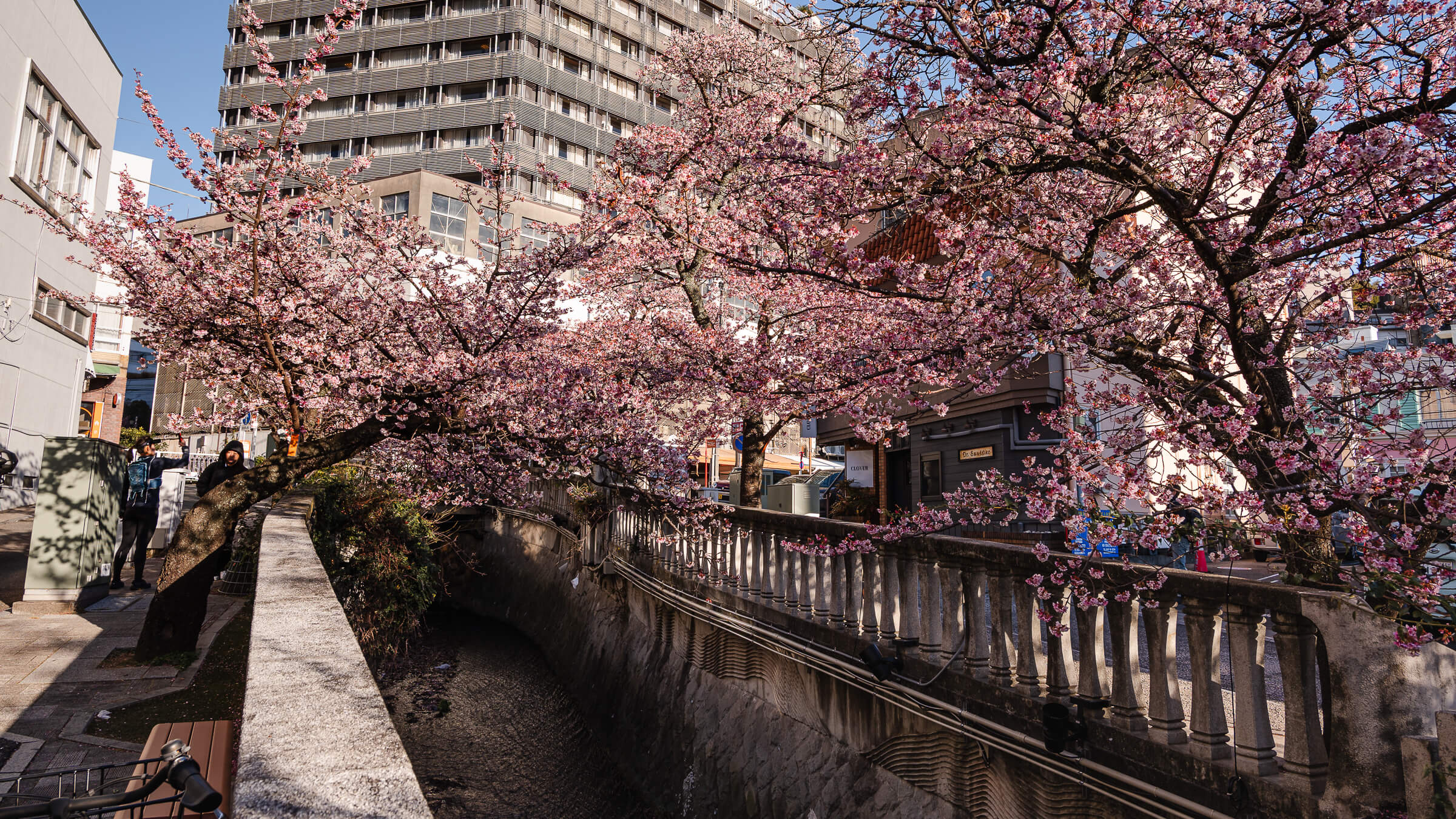
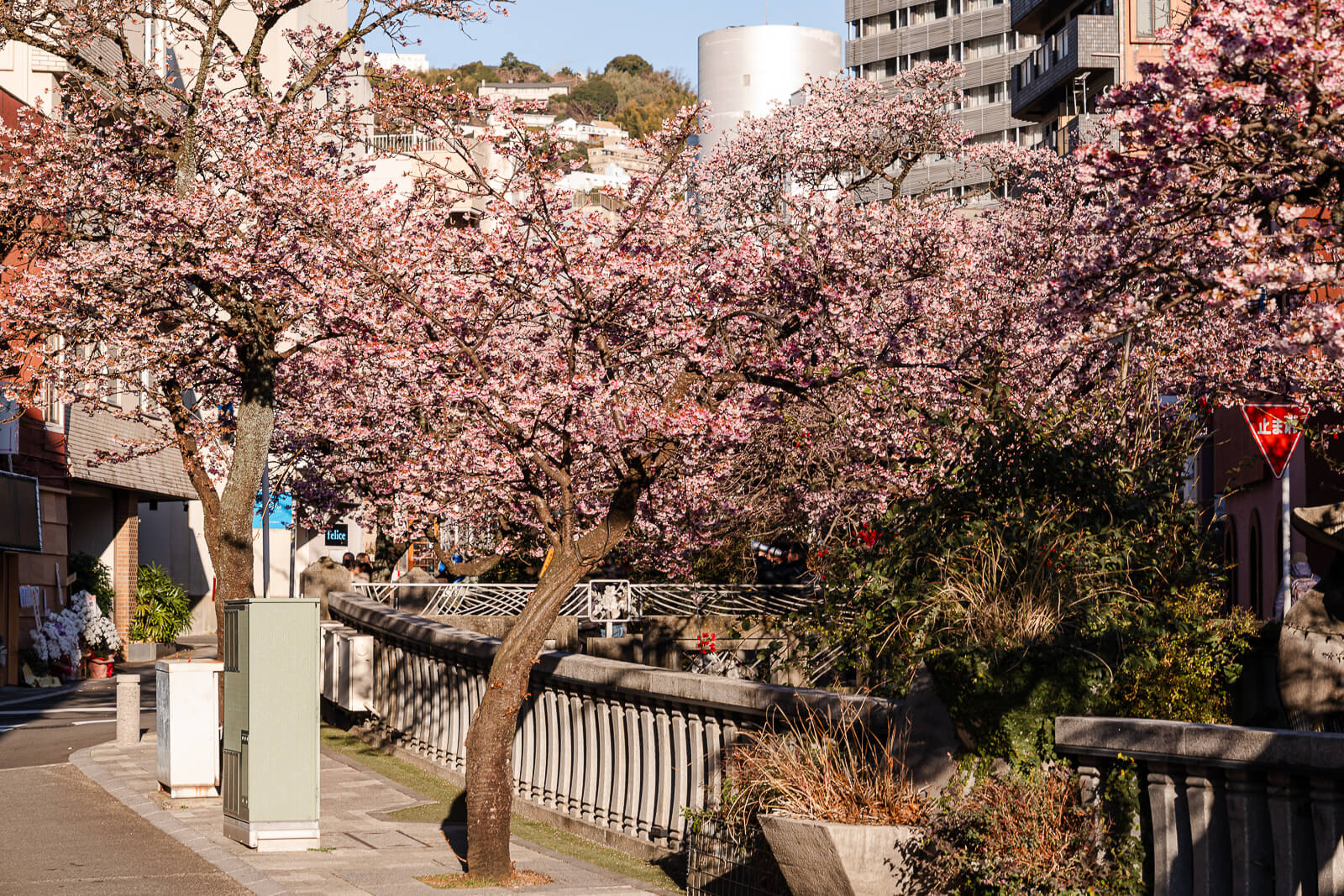
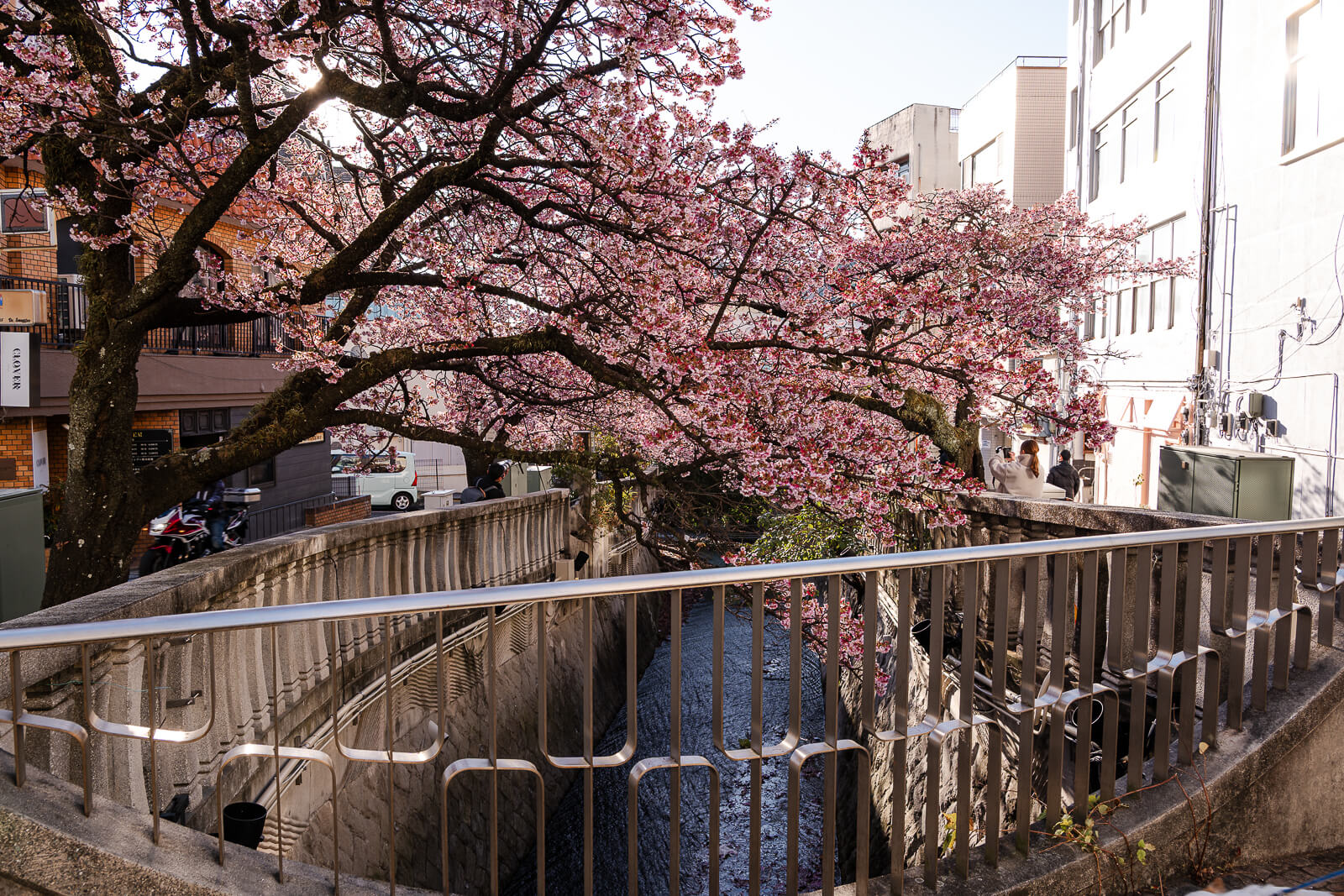
The promenade later gained recognition for its Atami-zakura cherry trees, a variety that blooms earlier than most cherry blossoms in Japan. Because these trees often flower from late January through February, the riverbanks sometimes become one of the earliest places in the country to see cherry blossoms.
Even outside blossom season, the promenade continues to function as a central pedestrian link through Atami.
Walking Along the River Toward the Sea
The promenade is most naturally experienced by following the river downhill toward the coast.
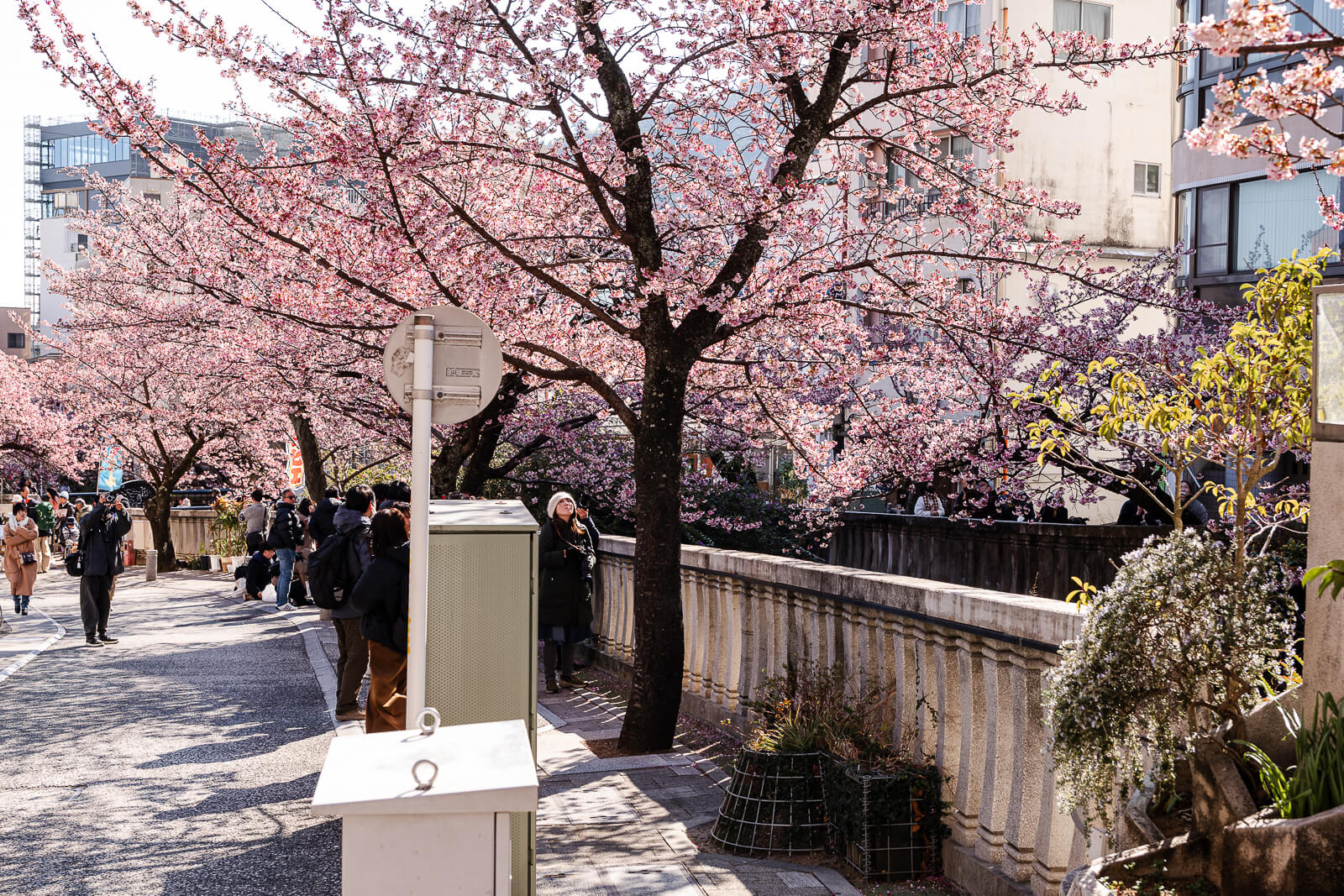
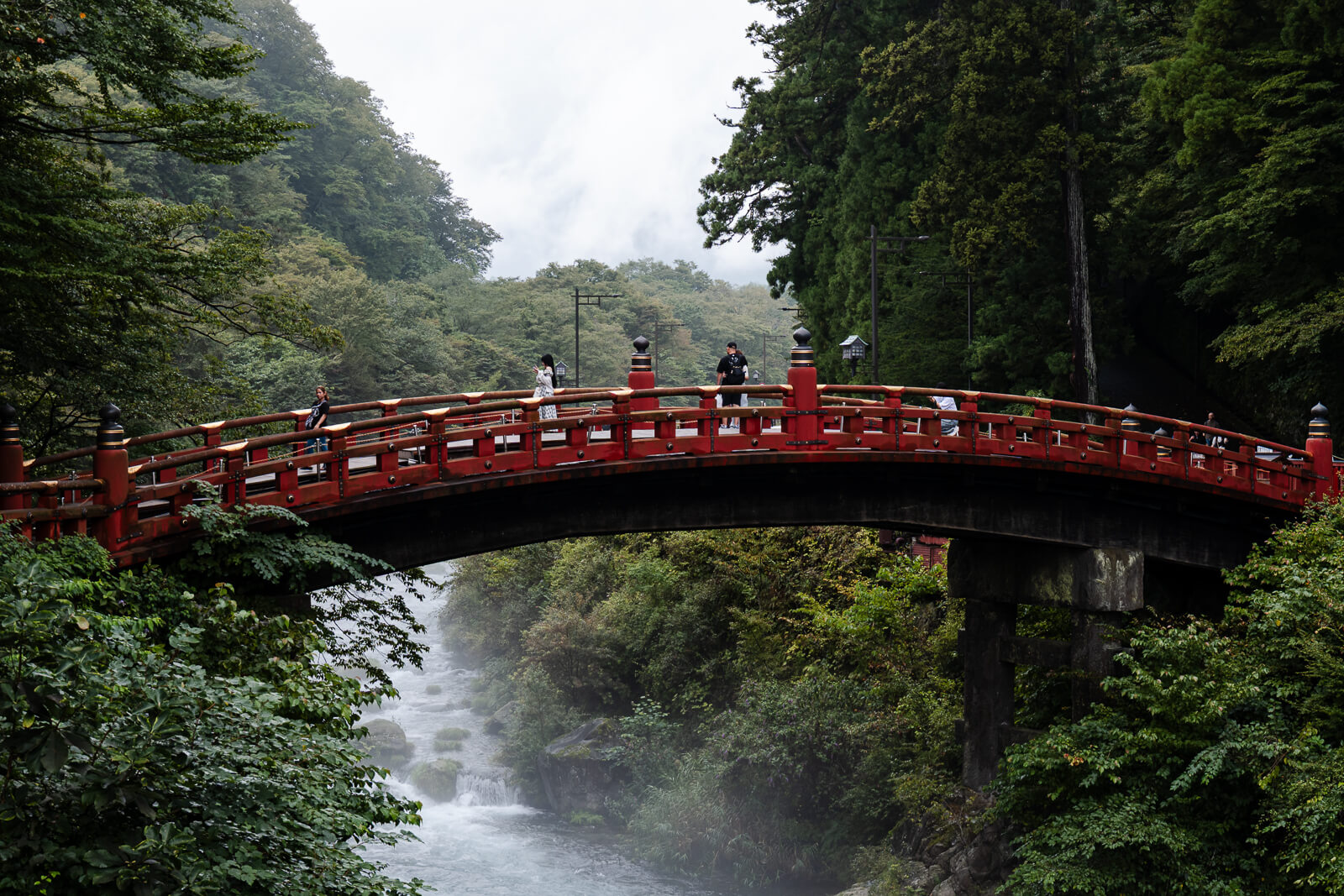
Bridges cross the water at regular intervals, allowing visitors to move easily from one side of the river to the other. Small seating areas appear along the walkway, and the river itself flows quietly between stone embankments below.
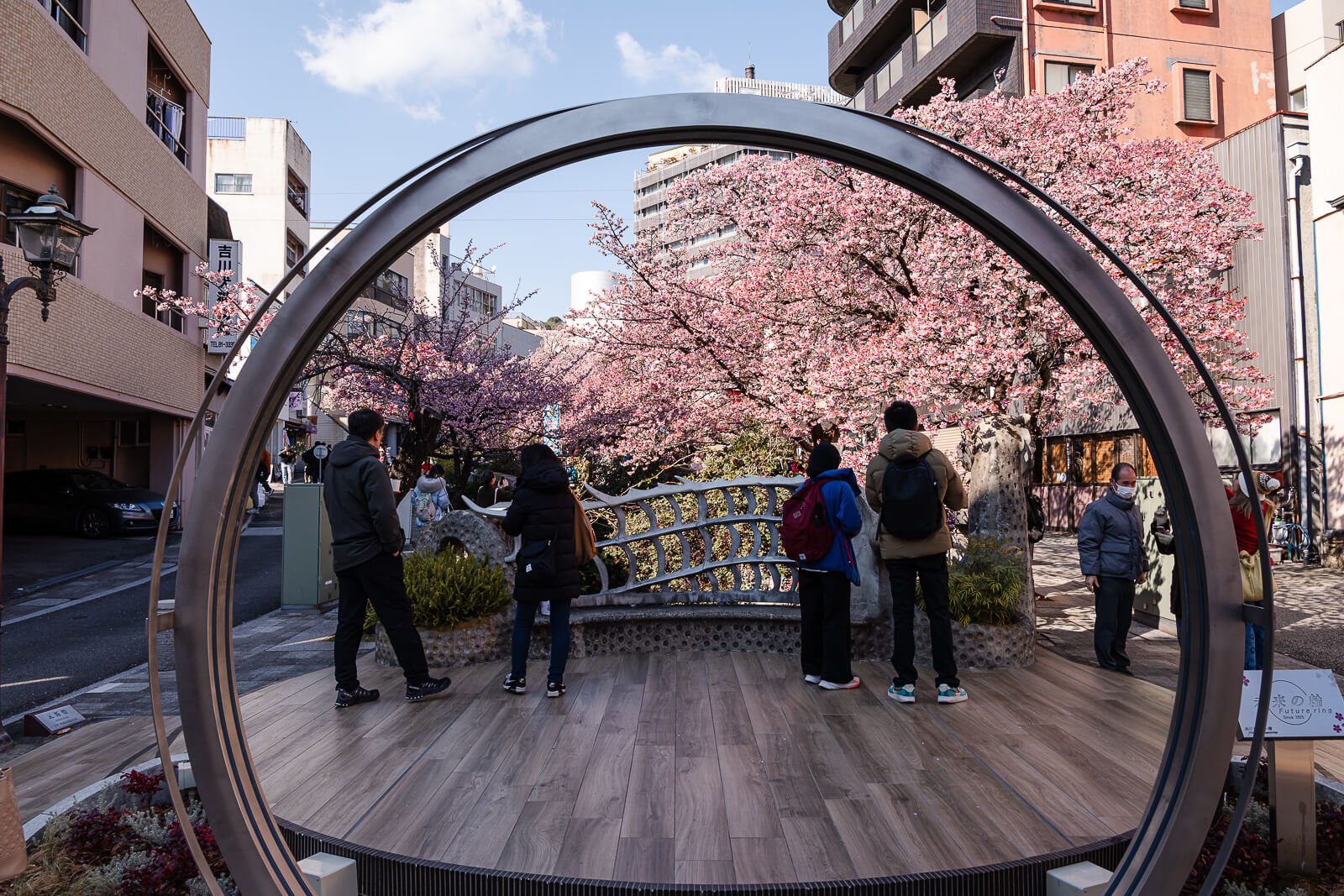
Buildings rise immediately behind the promenade. Cafés, small restaurants, and residential structures line the streets parallel to the water.
A few blocks inland sits Kiunkaku, a historic villa estate known for its gardens and preserved interiors. Many visitors combine a visit there with a walk through the river corridor.
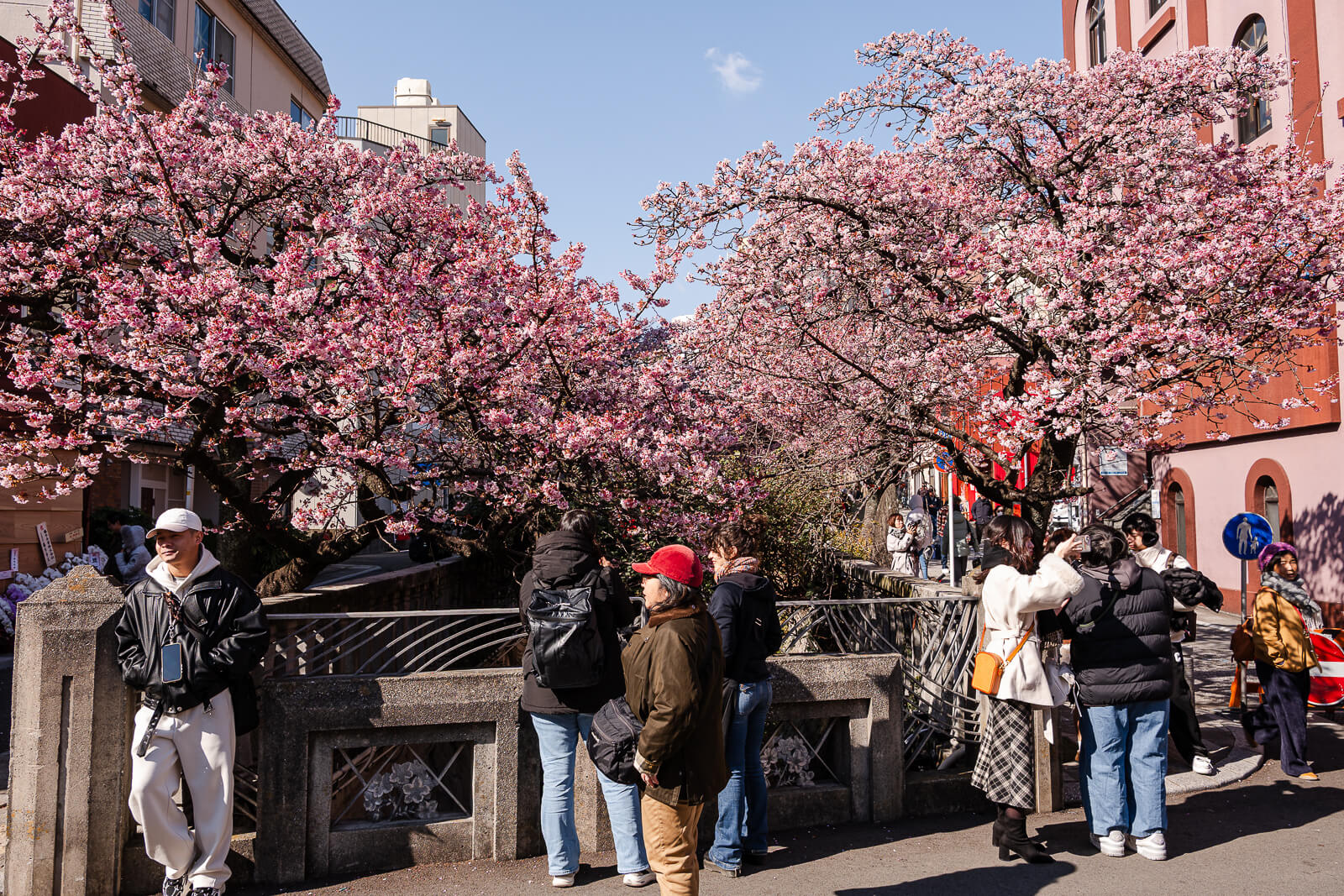
As the promenade continues downhill, the surrounding streets begin to open slightly, and the sense of the waterfront grows stronger.
Near the lower end of the river, the corridor gradually transitions toward the bay.
When the Promenade Looks Different
The appearance of the promenade changes most dramatically during cherry blossom season.
The Atami-zakura trees lining the river bloom earlier than the widely known Somei Yoshino variety, often appearing from late January into February.
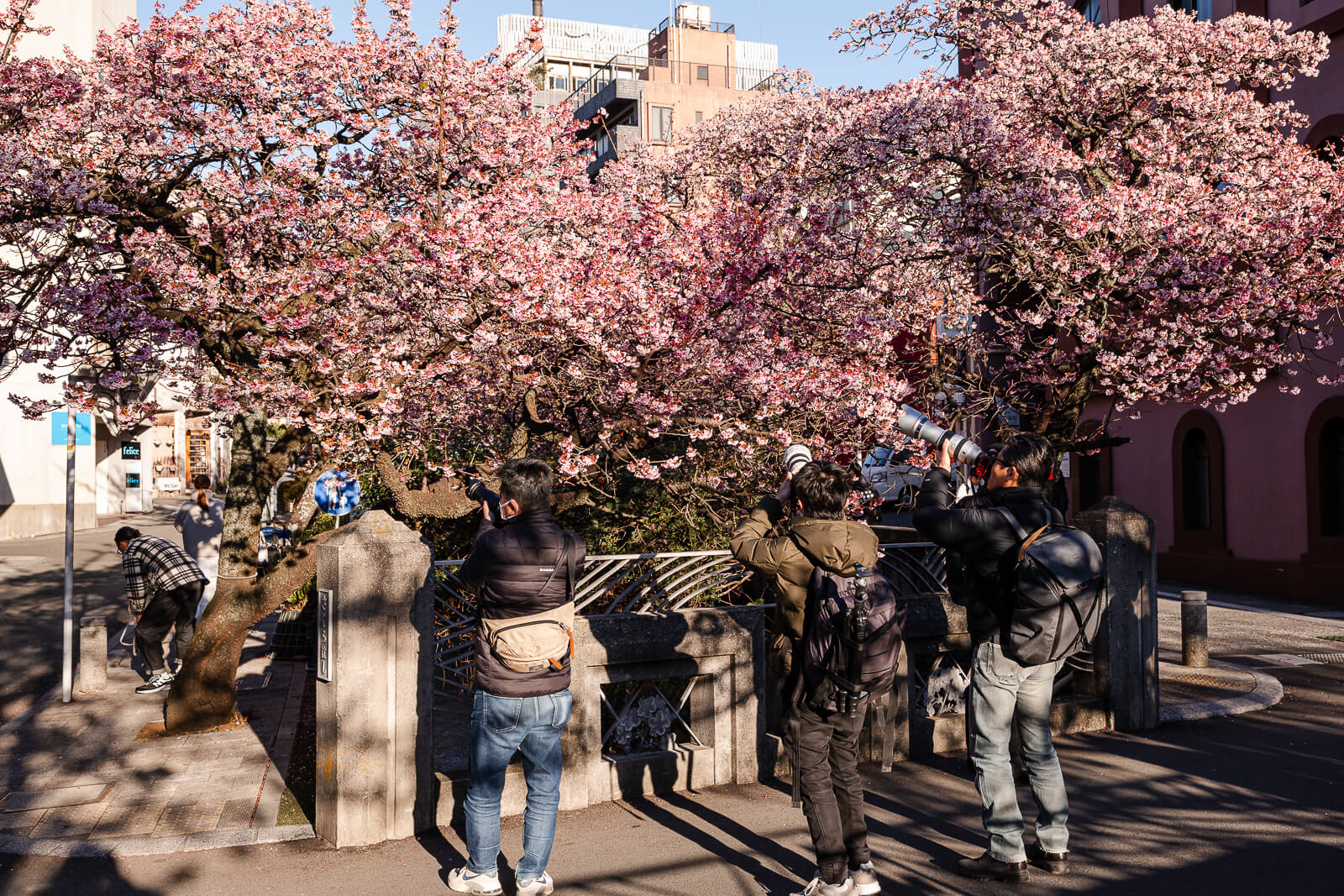
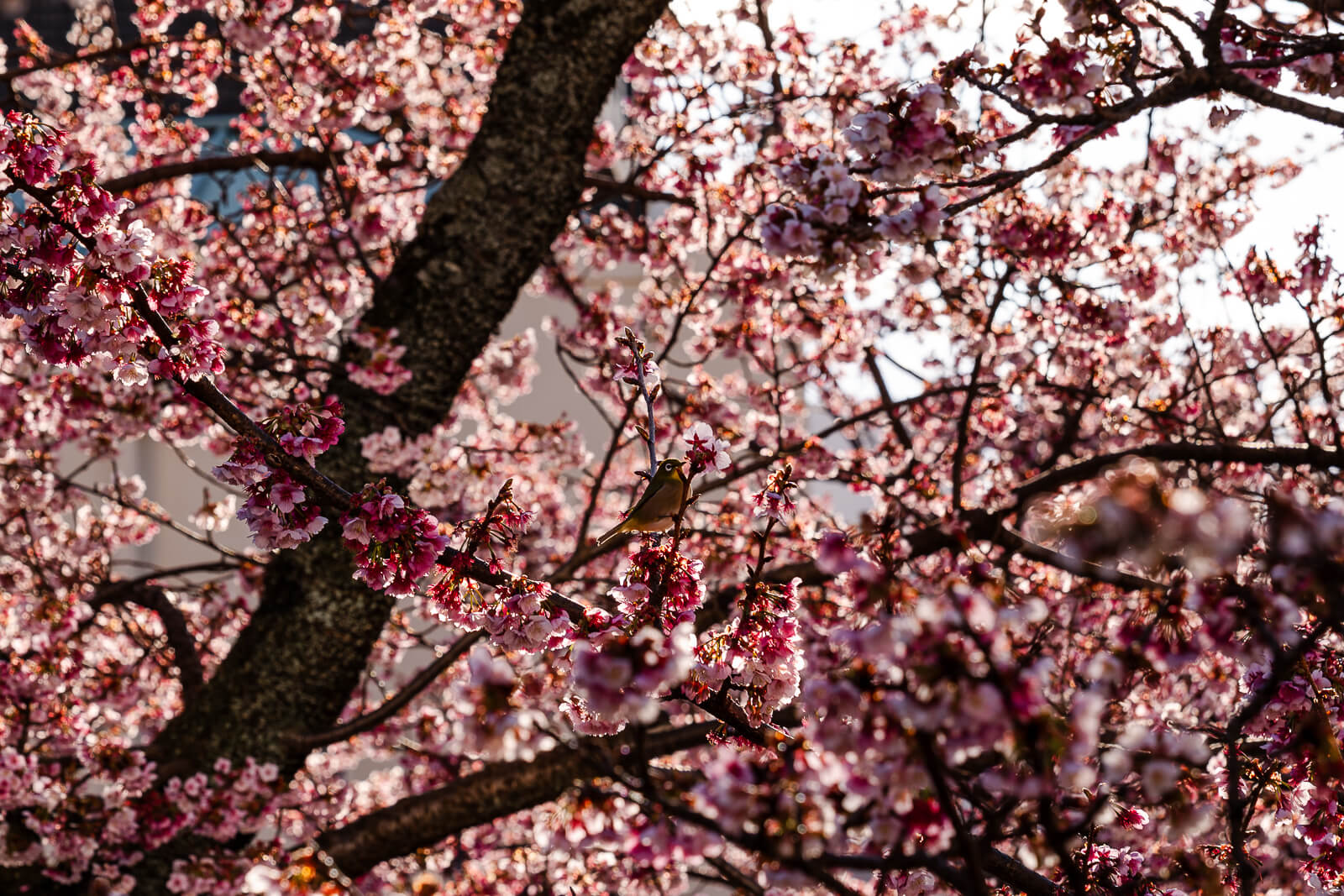
The early bloom comes from a local variety known as Atami-zakura, a hybrid cherry tree believed to have originated in the Izu region. Unlike the more widely planted Somei Yoshino that typically bloom in late March or early April, Atami-zakura open weeks earlier in the colder months of winter. Because of this timing, the river promenade often becomes one of the first places in Japan where visitors can walk beneath blooming cherry trees.
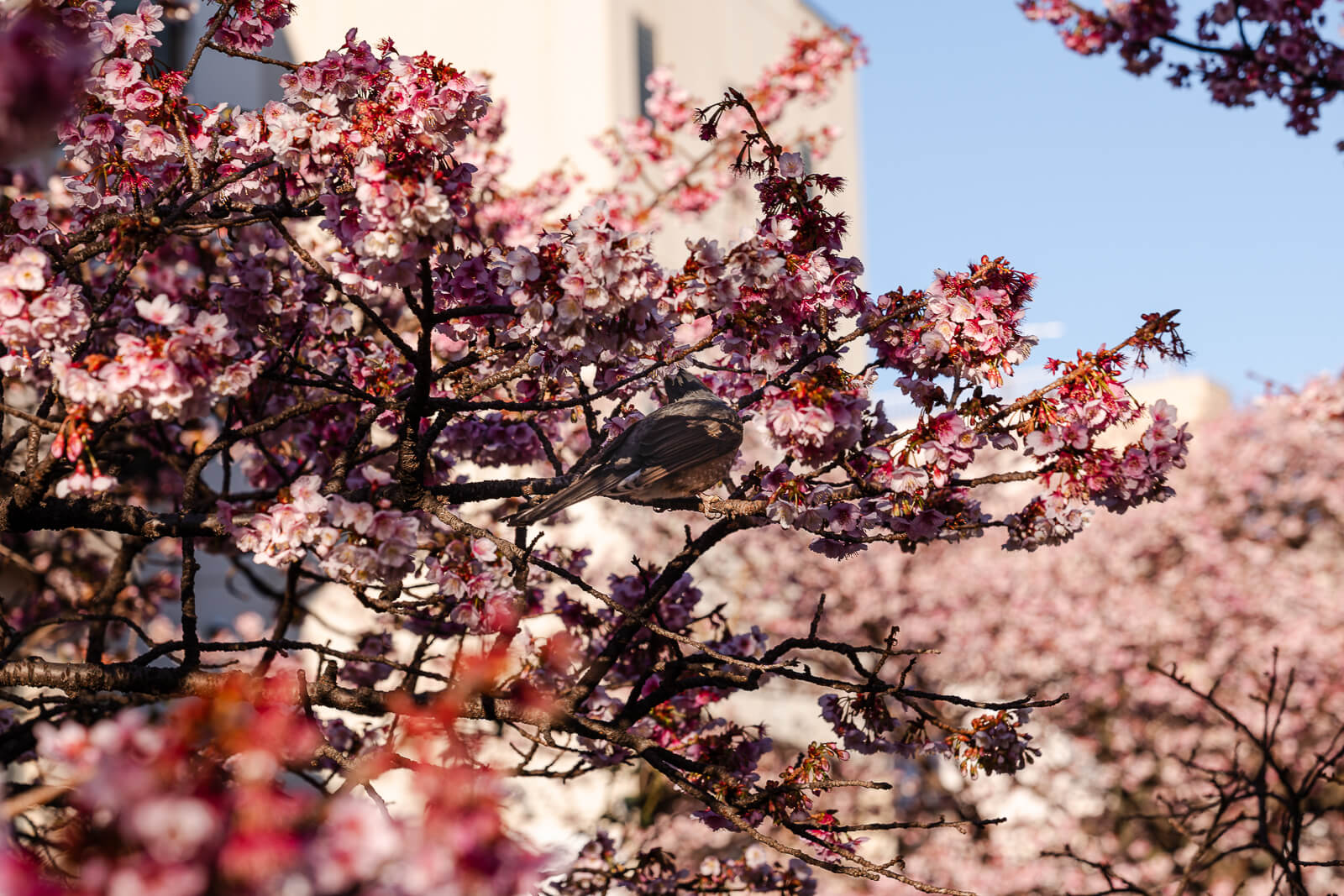
During peak bloom, the riverbanks fill with pink blossoms and evening illumination sometimes highlights the trees after sunset.
Crowds increase during this period, but because the promenade stretches along the river rather than concentrating people in one place, visitors can usually keep moving without the congestion seen in larger blossom viewing areas.
Outside blossom season, the promenade returns to its everyday role as a walking route through the center of town.
How This Walk Fits Into Atami
The Itokawa Promenade sits within one of the most walkable sections of Atami.
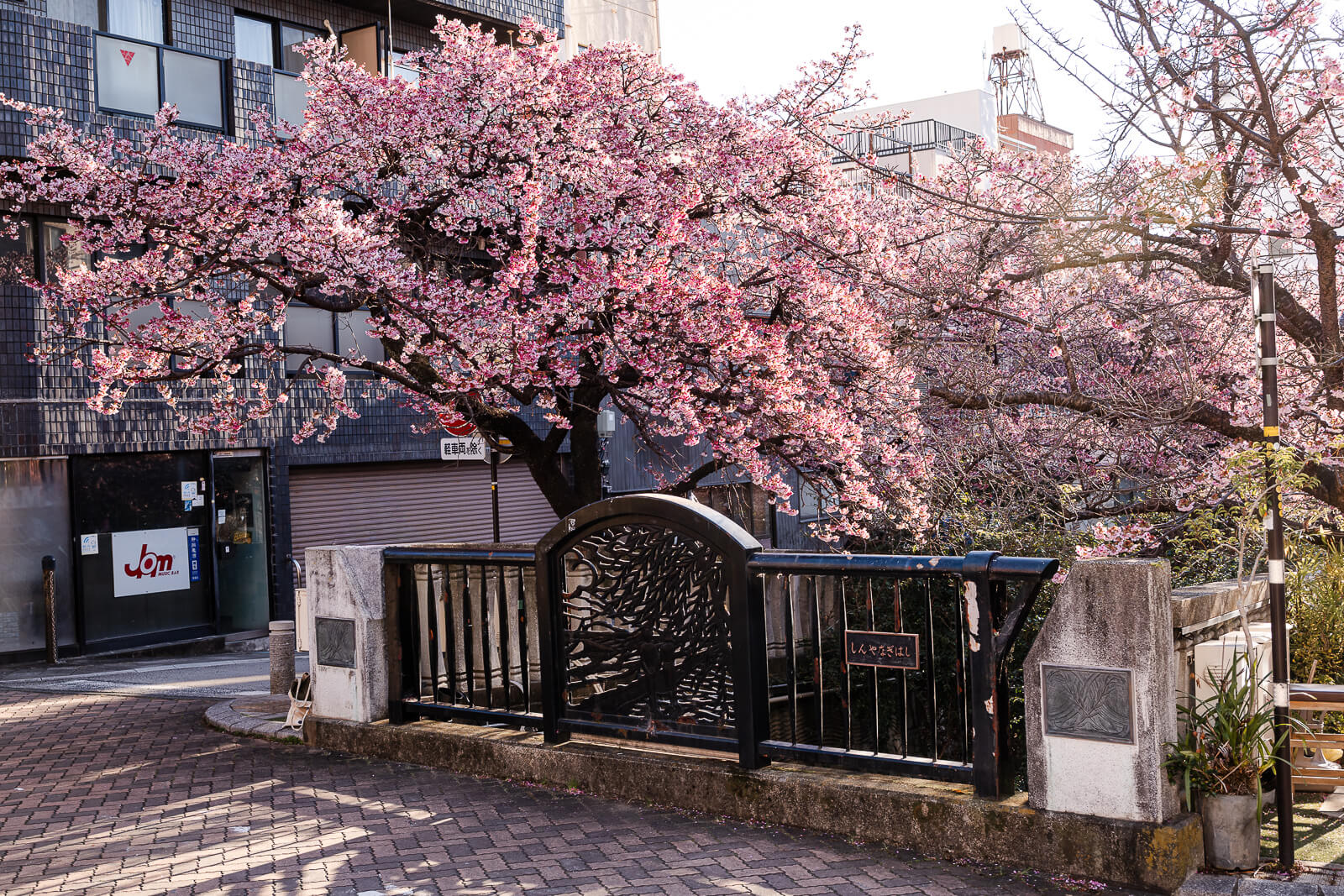
Following the river downhill naturally leads toward the waterfront near Atami Sun Beach, where the shoreline continues toward Atami Water Park and the harbor terraces of Moon Terrace.
Looking uphill from the river corridor reveals the slopes above the harbor, where the Atami Ropeway climbs toward panoramic viewpoints near Atami Castle.
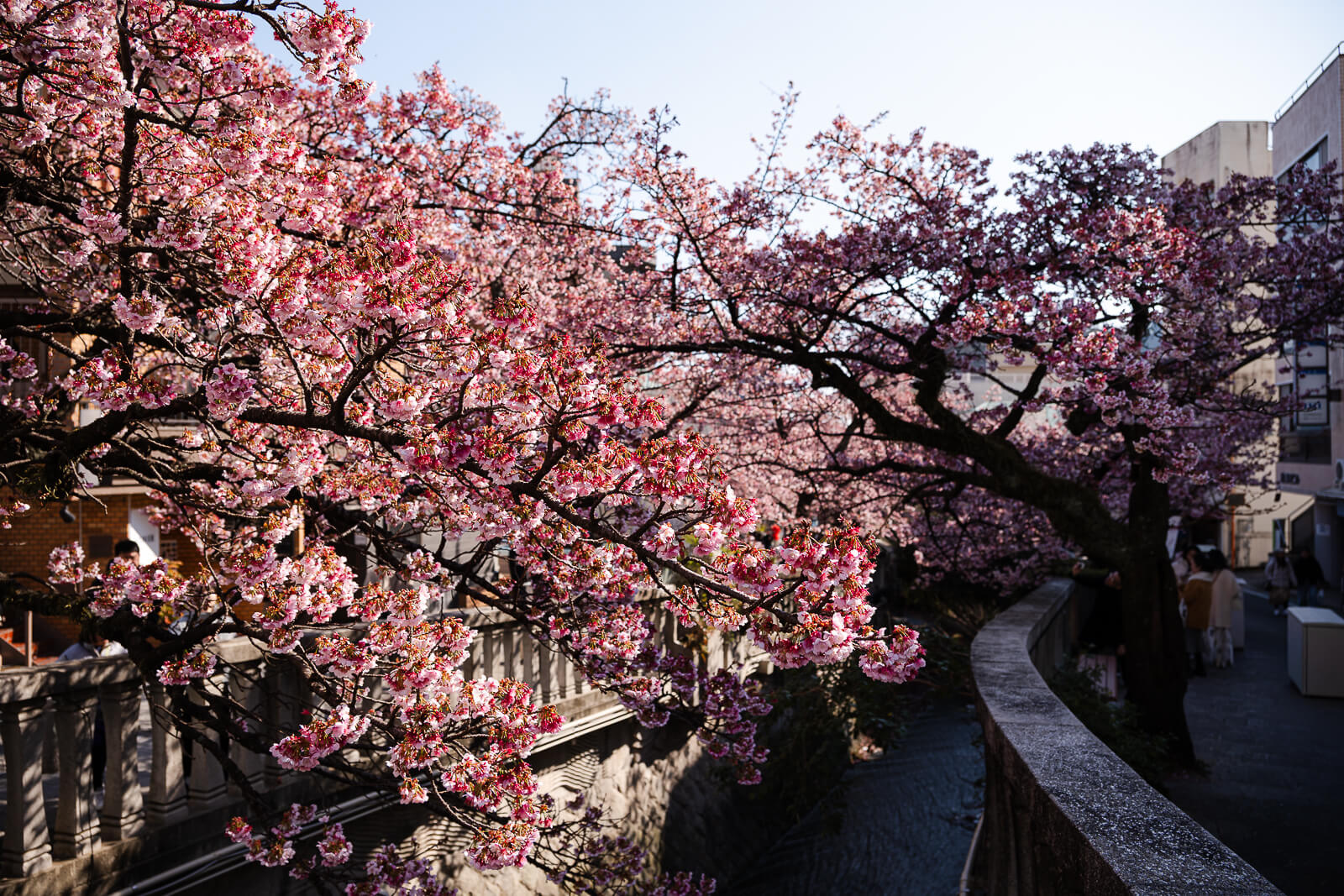
A short walk inland leads toward historic hillside sites such as Onsen-ji Temple, the neighboring Seigon-in Temple, and the preserved villa estate of Kiunkaku.
Because these locations sit close together, many visitors encounter the promenade simply while walking between different parts of the city.
Getting There
The promenade runs through the center of Atami, about 10–15 minutes on foot from Atami Station depending on where you join the river.
Most visitors reach the promenade while walking downhill from the station streets toward the waterfront.
Those approaching from the coast near Atami Sun Beach will find the river a few blocks inland, leading gradually back toward the town center.
Because the river crosses several streets and bridges, there is no single entrance point.
Hours and Fees
Itokawa Promenade
Hours: Open at all times
Admission: Free
Closed days: None
Seasonal cherry blossom illumination periods and events may vary by year and are best confirmed through local tourism information.