A Cherry Blossom Walk Running Straight Into Kamakura’s Historic Core
Dankazura (段葛) runs through the center of Kamakura along Wakamiya Ōji, linking the area near Kamakura Station with Tsurugaoka Hachimangu, the city’s defining shrine at the northern end of town. The path itself is a raised pedestrian approach rather than a park or garden, and most visitors encounter it naturally while walking toward the shrine.
Because it sits directly on Kamakura’s main north–south axis, Dankazura often becomes part of a larger route through the city. A typical day might begin here before continuing to Tsurugaoka Hachimangu, then branching west toward Hasedera Temple or the Great Buddha at Kotoku-in.
The walk itself is short and easy. Moving along the raised embankment toward the shrine usually takes around 10–20 minutes at a relaxed pace. The terrain is flat aside from a few shallow steps onto the walkway, and access is straightforward because the path runs directly through Kamakura’s central corridor.
What makes the place useful for travelers is not its size but its orientation. Walking Dankazura quickly explains how the city is organized: the shrine ahead, the station behind, and the route stretching south toward the sea.
Cherry Blossom Snapshot — Dankazura
Location: Kamakura, Kanagawa
Bloom period: Late March to early April
Peak bloom window: Usually 5–7 days
Walk length: ~500 meters
Typical visit time: 10–20 minutes
Timing note: Early morning during peak bloom tends to see the clearest walking flow
Nearby landmark: Tsurugaoka Hachimangu
Why Kamakura Needed a Shrine Approach
Dankazura was constructed in 1182 under the direction of Minamoto no Yoritomo, founder of the Kamakura shogunate.
When Kamakura became the seat of Japan’s first samurai government, Tsurugaoka Hachimangu served as both a religious center and a symbolic anchor for the new capital. A formal route through the town toward the shrine became necessary for ceremonial processions and official visits.
The raised embankment of Dankazura created that route. Elevating the walkway above surrounding streets separated ceremonial movement from everyday traffic while emphasizing the importance of the shrine at the northern end of the city.
The structure also includes a subtle visual effect. As the path approaches the shrine, the width gradually narrows. This design makes the destination appear farther away and more imposing when viewed from the southern end.
More than eight centuries later, that alignment still shapes how the city reads today.
Walking North Toward Tsurugaoka Hachimangu
Experiencing Dankazura is essentially a gradual movement toward the shrine.
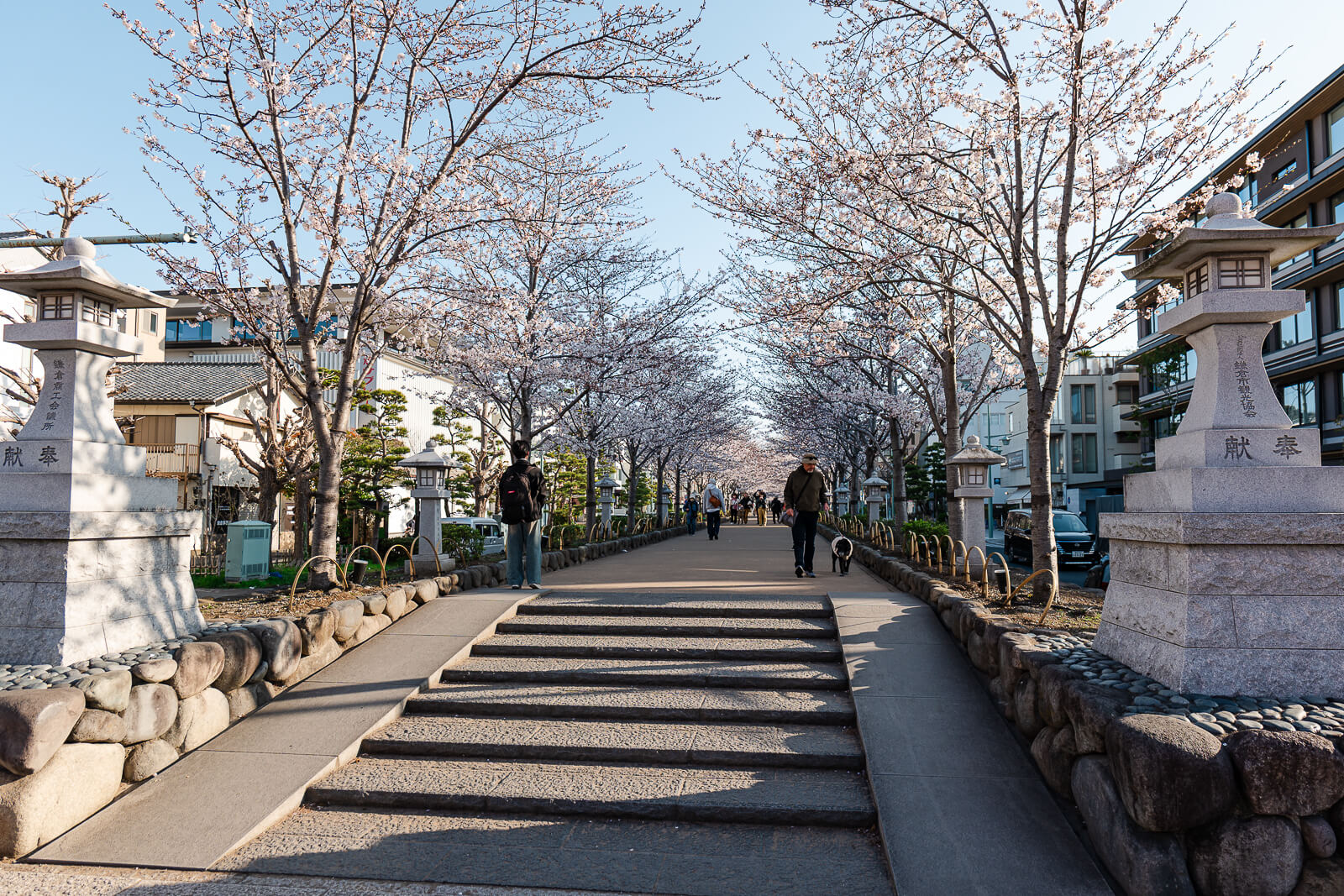
Short stone steps lift the walkway above the surrounding roadway, forming a pedestrian corridor between the lanes of Wakamiya Ōji. Once on the raised path, the direction becomes unmistakable — straight ahead toward Tsurugaoka Hachimangu.
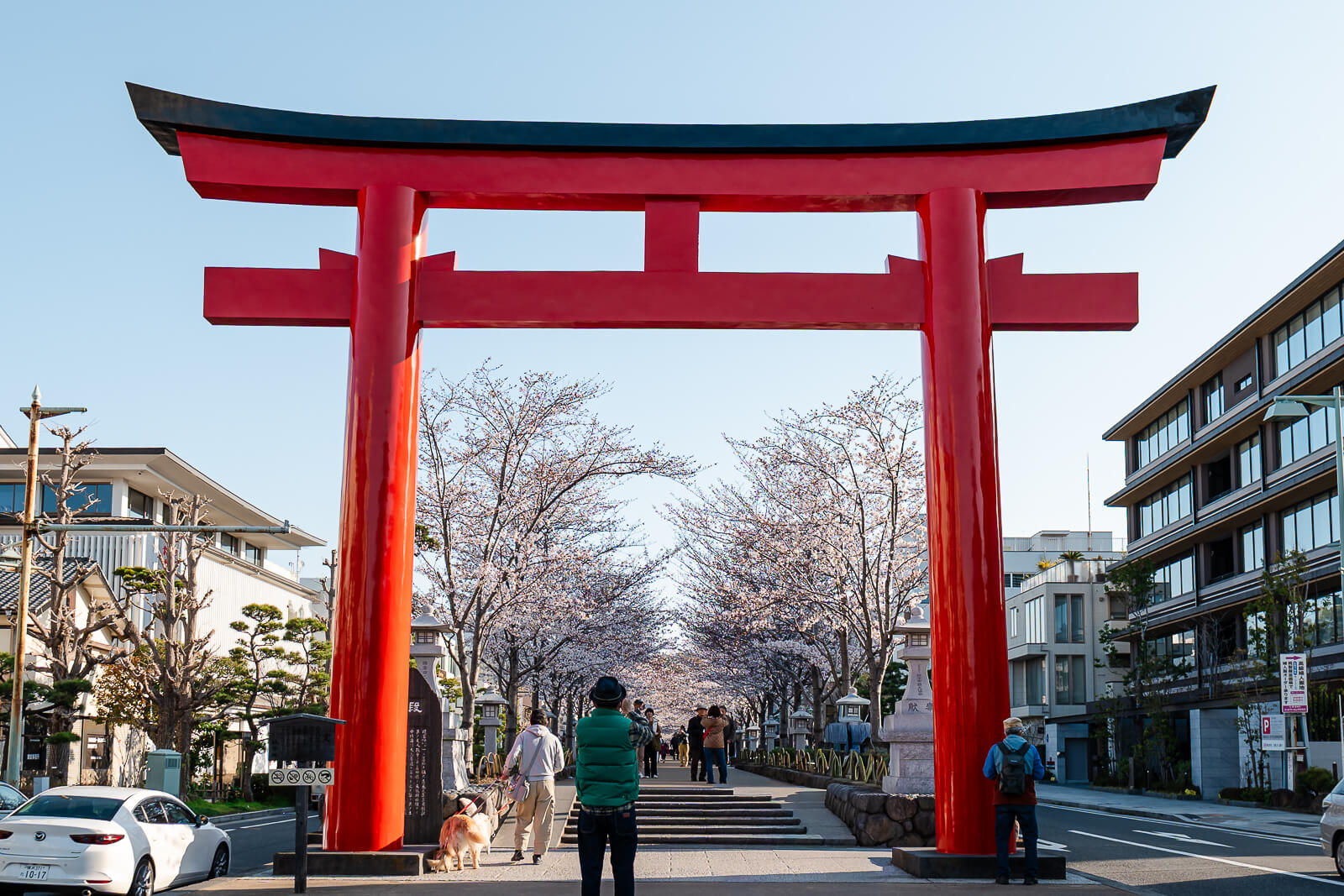
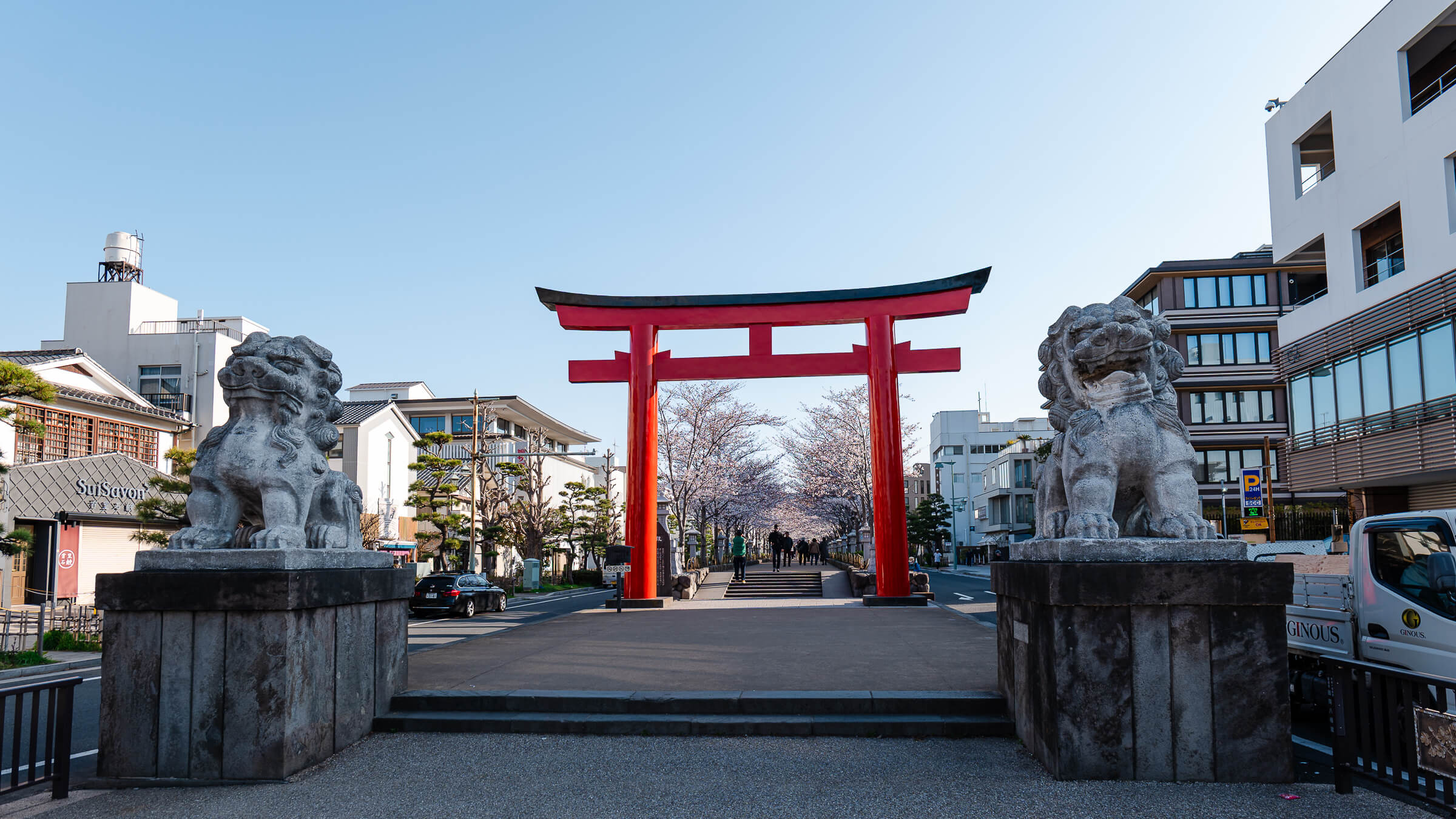
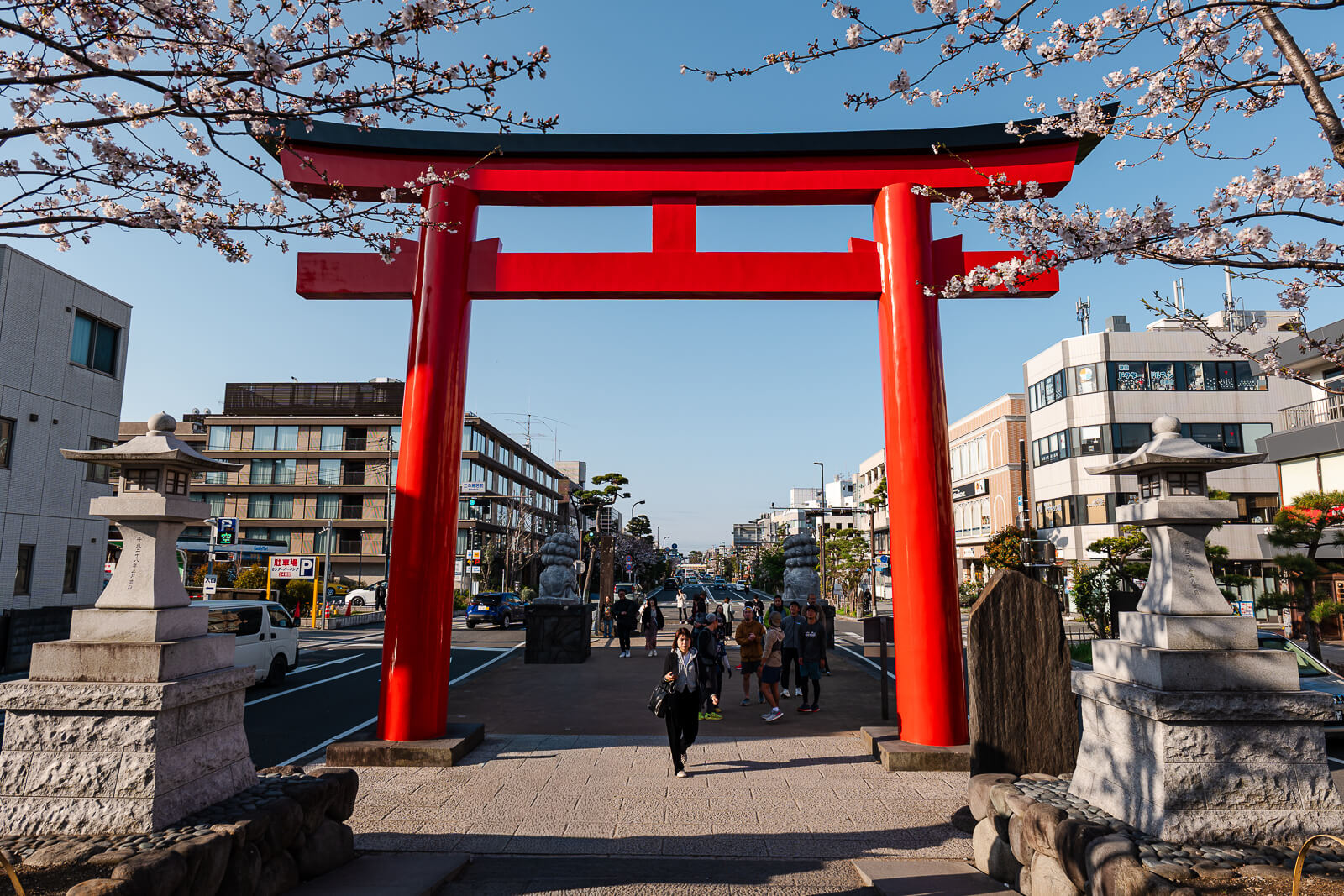
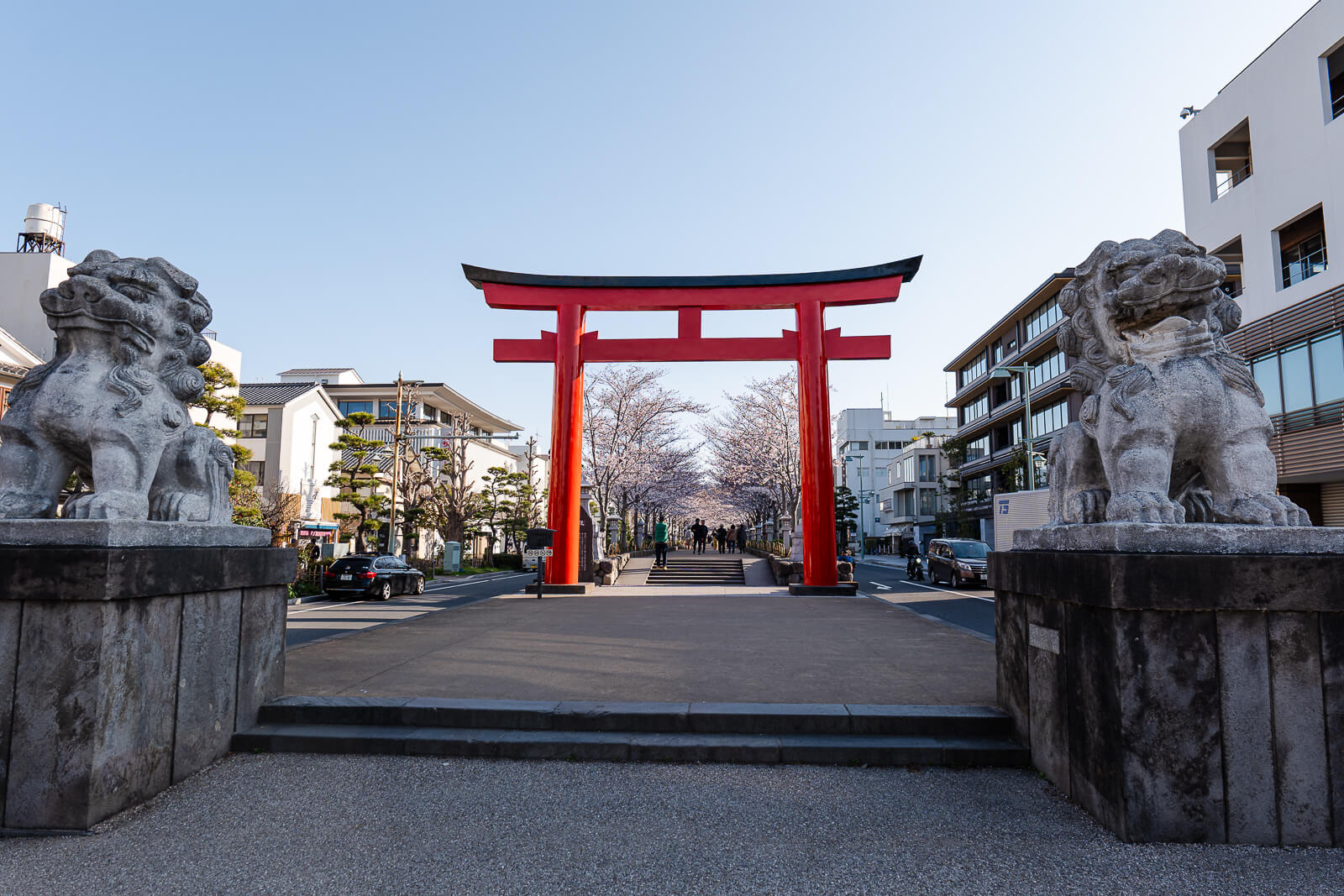
Torii gates appear periodically along the route, marking the transition into sacred space.
As the walk continues north, the shrine complex slowly becomes clearer in the distance with the wooded hills rising behind it. The approach was designed so the destination reveals itself gradually rather than appearing immediately.
Even outside cherry blossom season, the walk functions primarily as orientation. It shows how Kamakura was structured around the shrine and how the city’s main avenue still guides visitors toward it.
When Dankazura Becomes a Sakura Tunnel
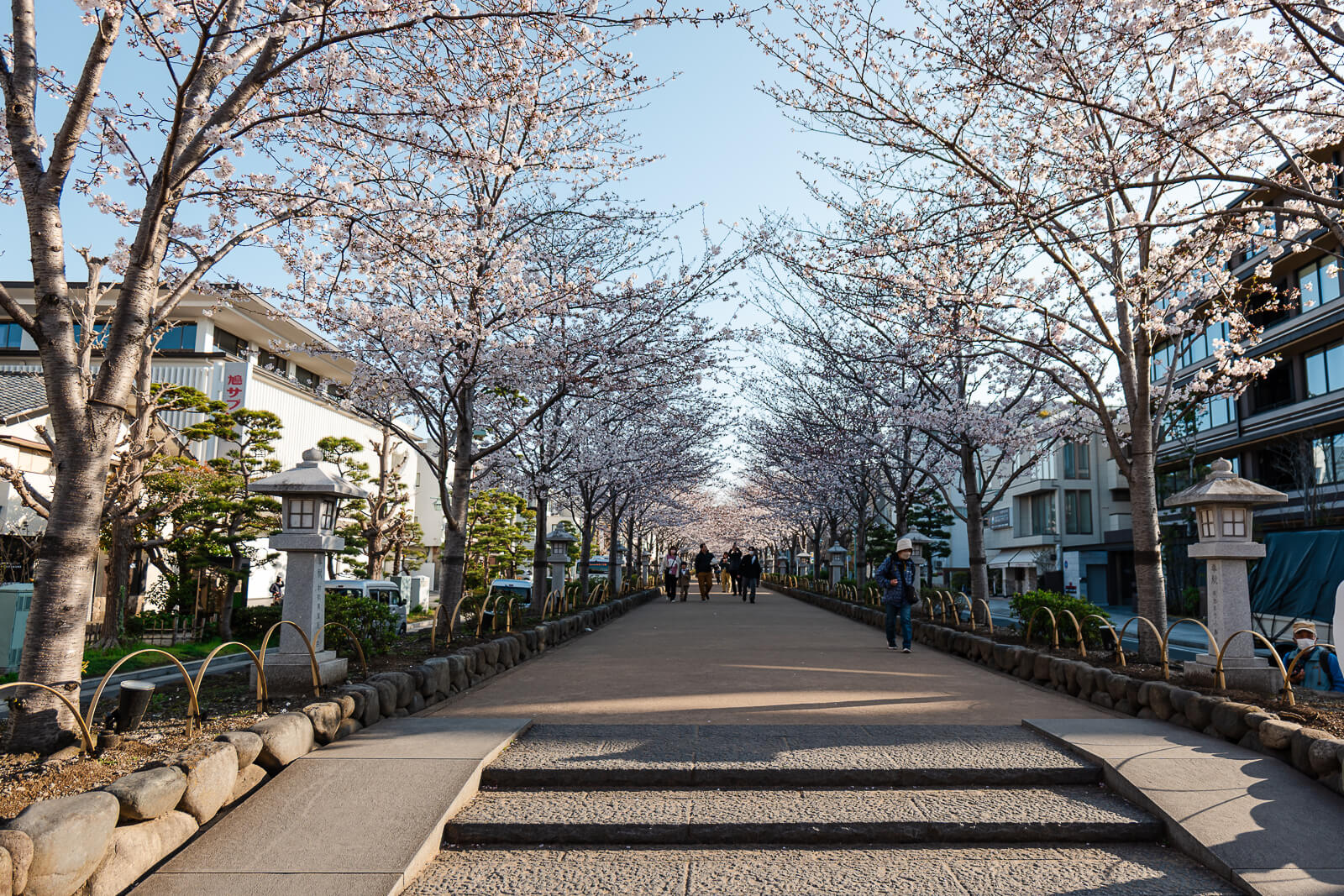
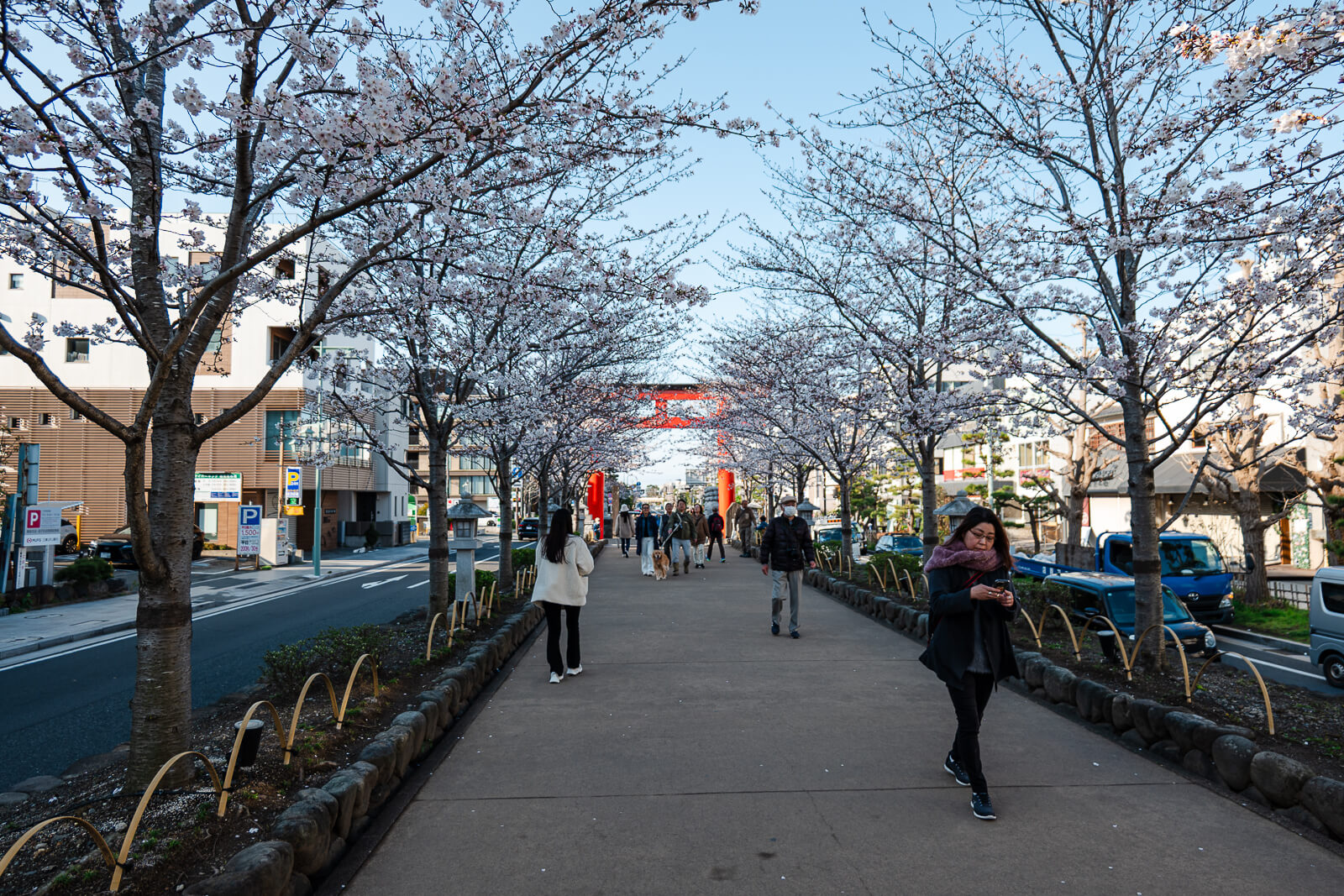
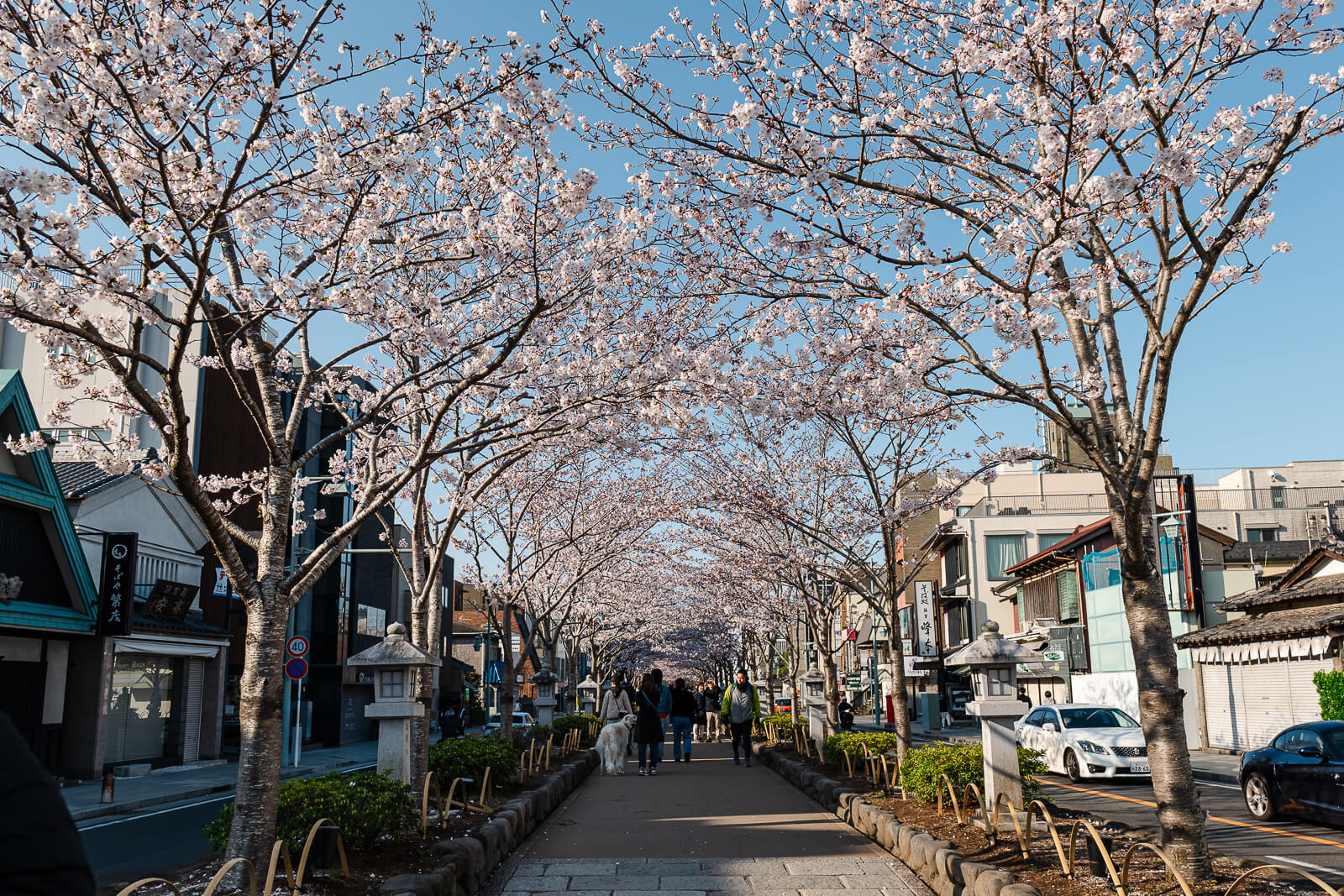
During late March and early April, the rows of cherry trees lining Dankazura bloom together, transforming the approach into a corridor of blossoms.
Because the path runs straight toward the shrine, the trees frame a long visual tunnel rather than a single viewing point. The experience unfolds gradually as visitors move north beneath the canopy.
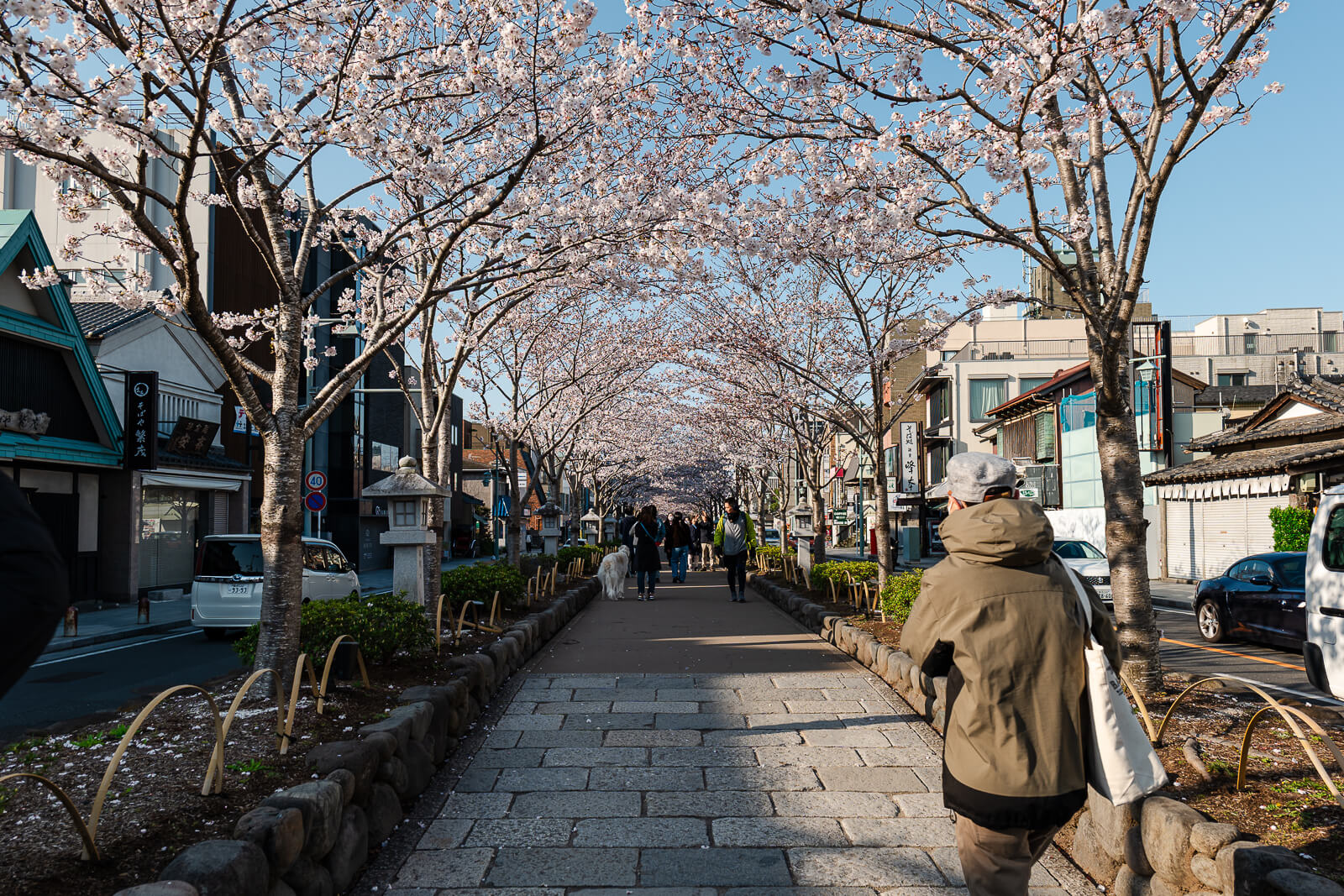
At peak bloom the rhythm of the walkway changes. People pause beneath the trees, photographers arrive early in the morning, and fallen petals collect along the stone steps.
Outside sakura season the path reads primarily as the historic approach to the shrine. During bloom, the blossoms briefly become the dominant feature of the walk.
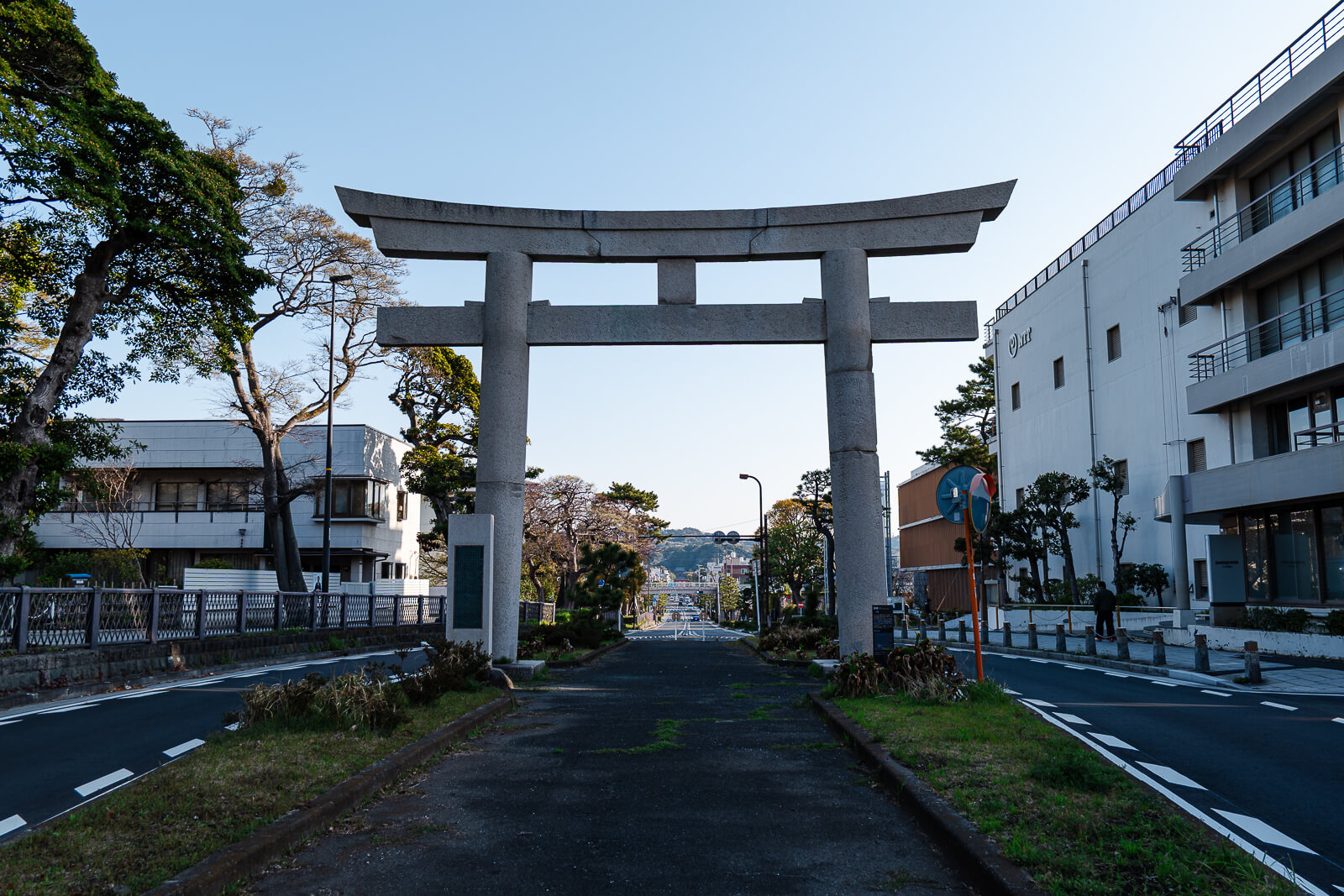
Starting at the First Torii Near the Coast
Many visitors begin walking Dankazura near Kamakura Station, but the ceremonial route actually starts farther south along Wakamiya Ōji.
The first torii gate near the coastline marks the beginning of the longer historical approach through the city. Starting from this southern point makes the design of Kamakura easier to understand: the sea behind, the avenue through town, and Tsurugaoka Hachimangu anchoring the northern end.
Beginning the walk farther south is not necessary for every traveler, but it reveals how the route gradually builds toward the shrine before rising onto the raised Dankazura section.
How the Walk Changes Through the Day
Because Dankazura sits in Kamakura’s central corridor, the experience changes noticeably throughout the day.
Morning hours usually see lighter foot traffic as visitors begin moving north from the station toward the shrine. By midday the walkway becomes busier with day-trippers and tour groups.
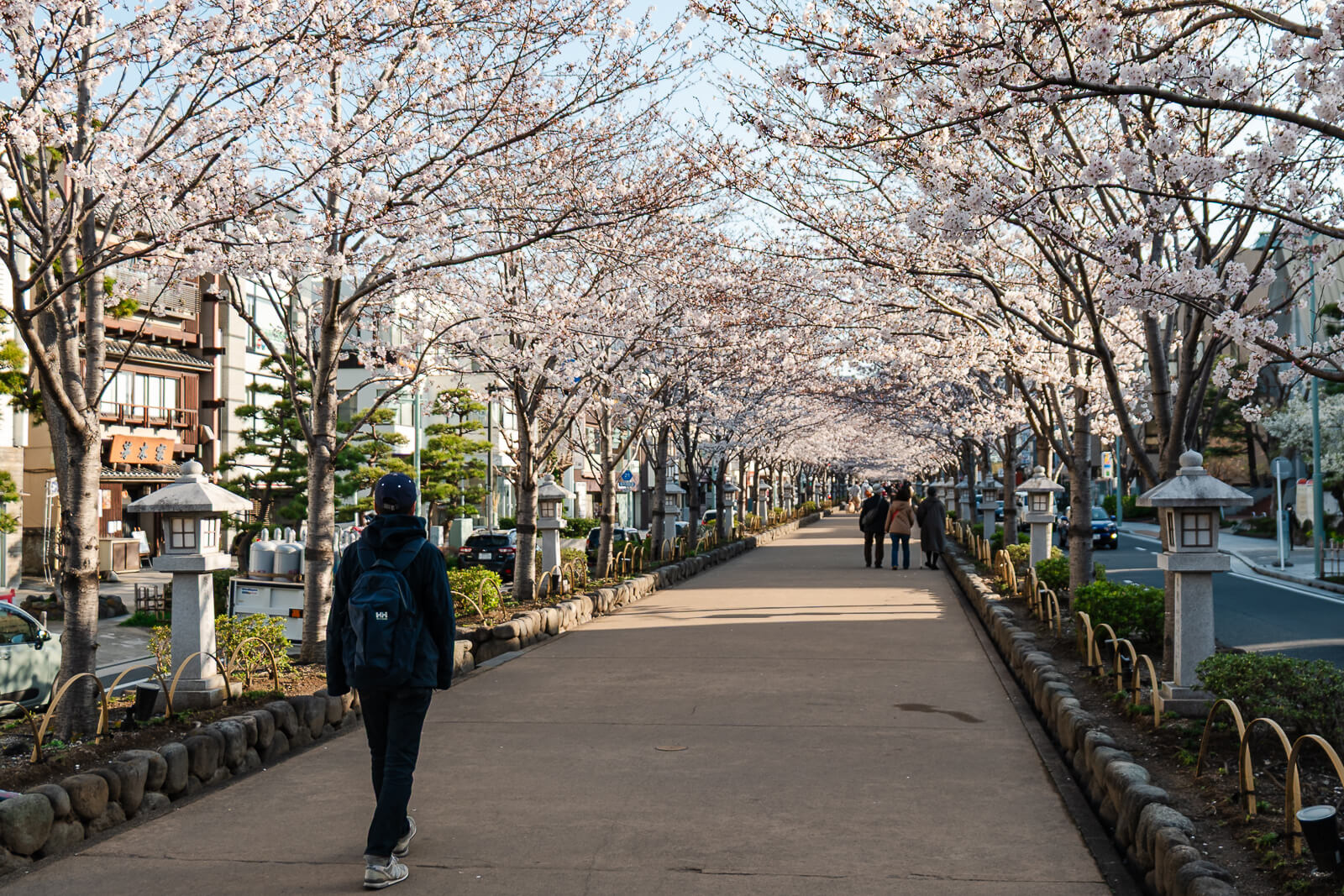
During cherry blossom season that difference becomes more pronounced. Early arrivals tend to move steadily along the path, while later in the day the corridor fills with visitors stopping for photos beneath the trees.
These shifts are part of the experience of visiting Kamakura’s main shrine approach rather than something separate from it.
How Dankazura Fits into a Kamakura Visit
Dankazura sits at the center of Kamakura’s main walking route, which is why it connects naturally with several major sights.
Most visitors follow the path north to Tsurugaoka Hachimangu, the city’s historic shrine complex. From there the rest of Kamakura spreads outward toward the surrounding hills.
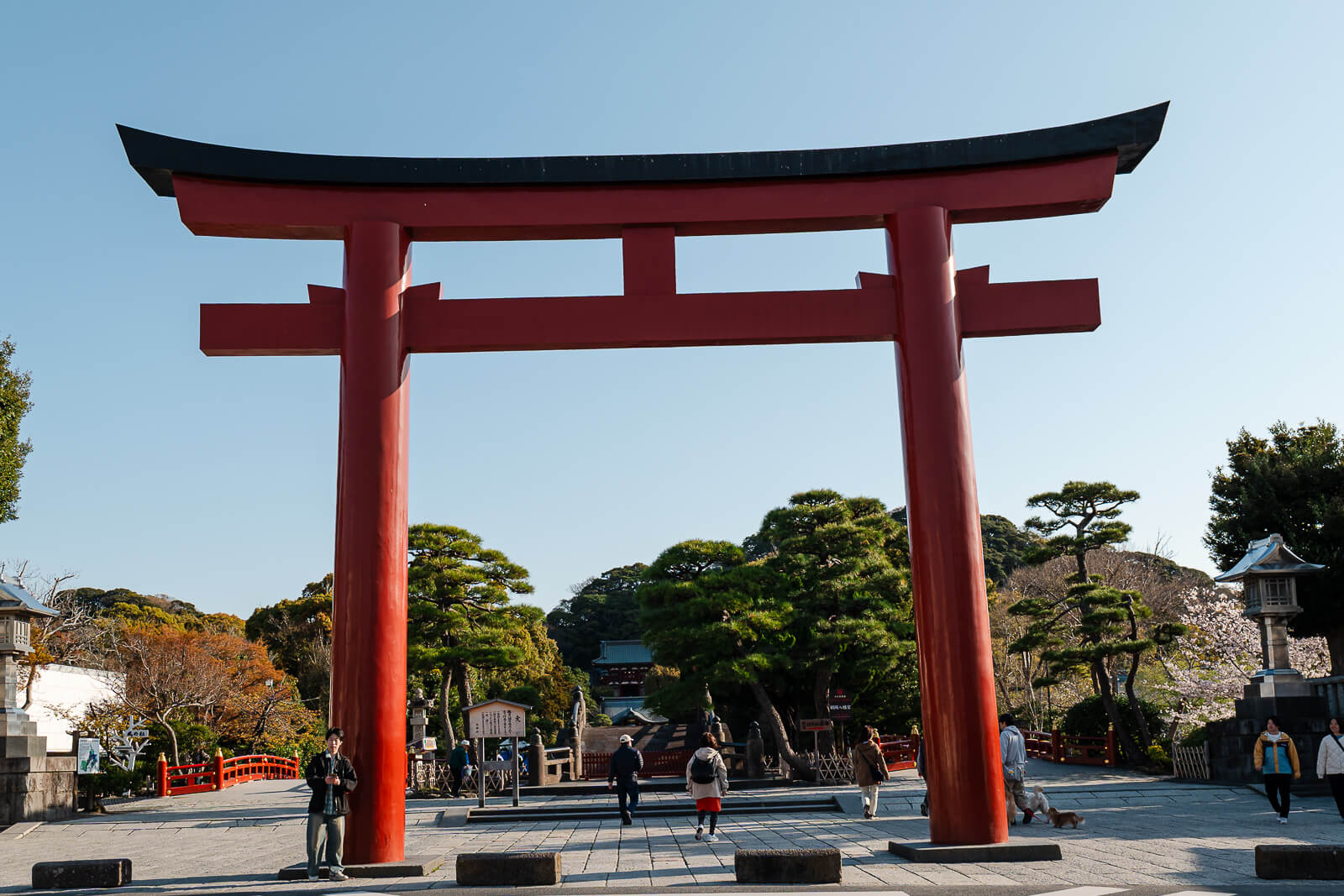
Many itineraries then continue west toward Hasedera Temple, known for its hillside views and seasonal gardens, or toward the Great Buddha at Kotoku-in, one of Kamakura’s most recognizable landmarks.
Seen this way, Dankazura works less as a standalone attraction and more as the central corridor that organizes movement through Kamakura.
For many travelers, the walk becomes a natural starting point before continuing deeper into the city’s temples, shrines, and coastal viewpoints.
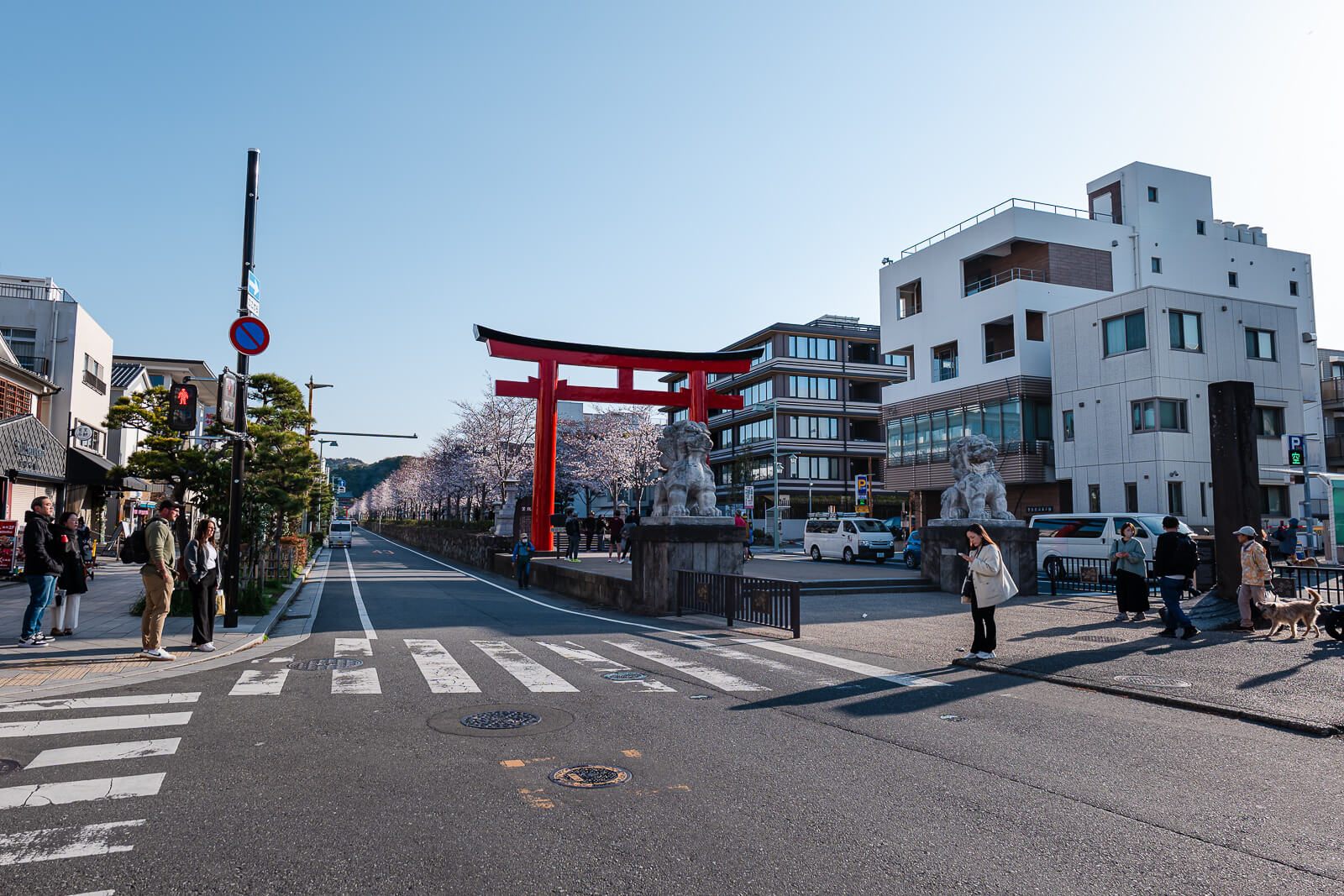
Getting There
Dankazura begins a few minutes from Kamakura Station, served by the JR Yokosuka Line and the Enoden railway.
From the station’s east exit, Wakamiya Ōji leads directly north toward Tsurugaoka Hachimangu, and the raised section of Dankazura appears along this route.
For most travelers the access question is not navigation but where to begin the walk. Starting near the station works well if the goal is simply to reach the shrine. Beginning farther south along Wakamiya Ōji provides a clearer sense of the longer ceremonial approach through the city.
Hours & Fees
Dankazura is a public outdoor walkway rather than a ticketed attraction.
Admission: Free
Hours: Open at all times as part of the public street and pedestrian approach to Tsurugaoka Hachimangu.
Because Dankazura sits at the center of Kamakura’s main walking corridor and connects naturally with the shrine, nearby temples, and the coast, many visitors end up coordinating rail access, navigation, and overnight plans as part of a broader visit to the city.