Where the Promenade Opens
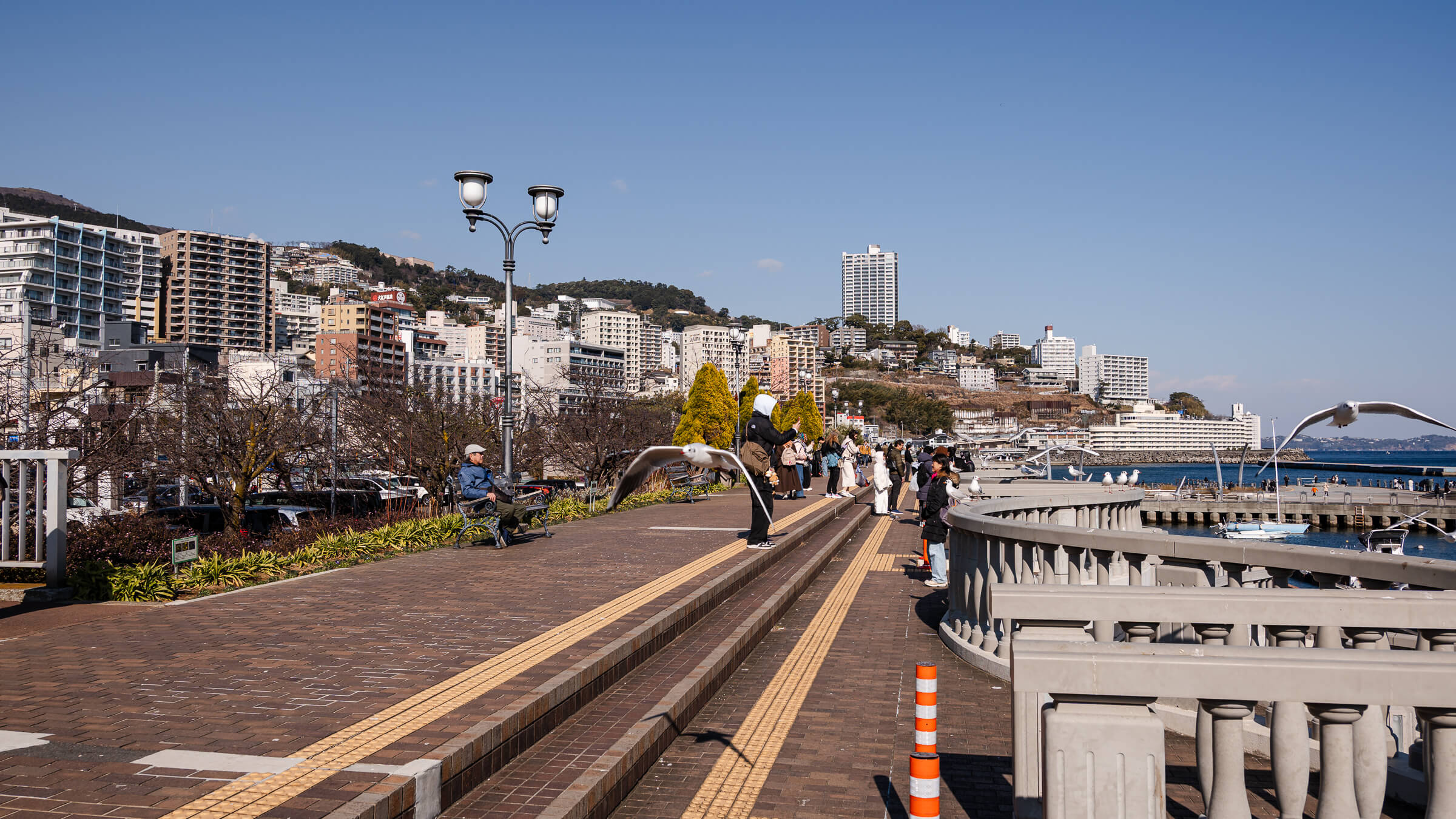
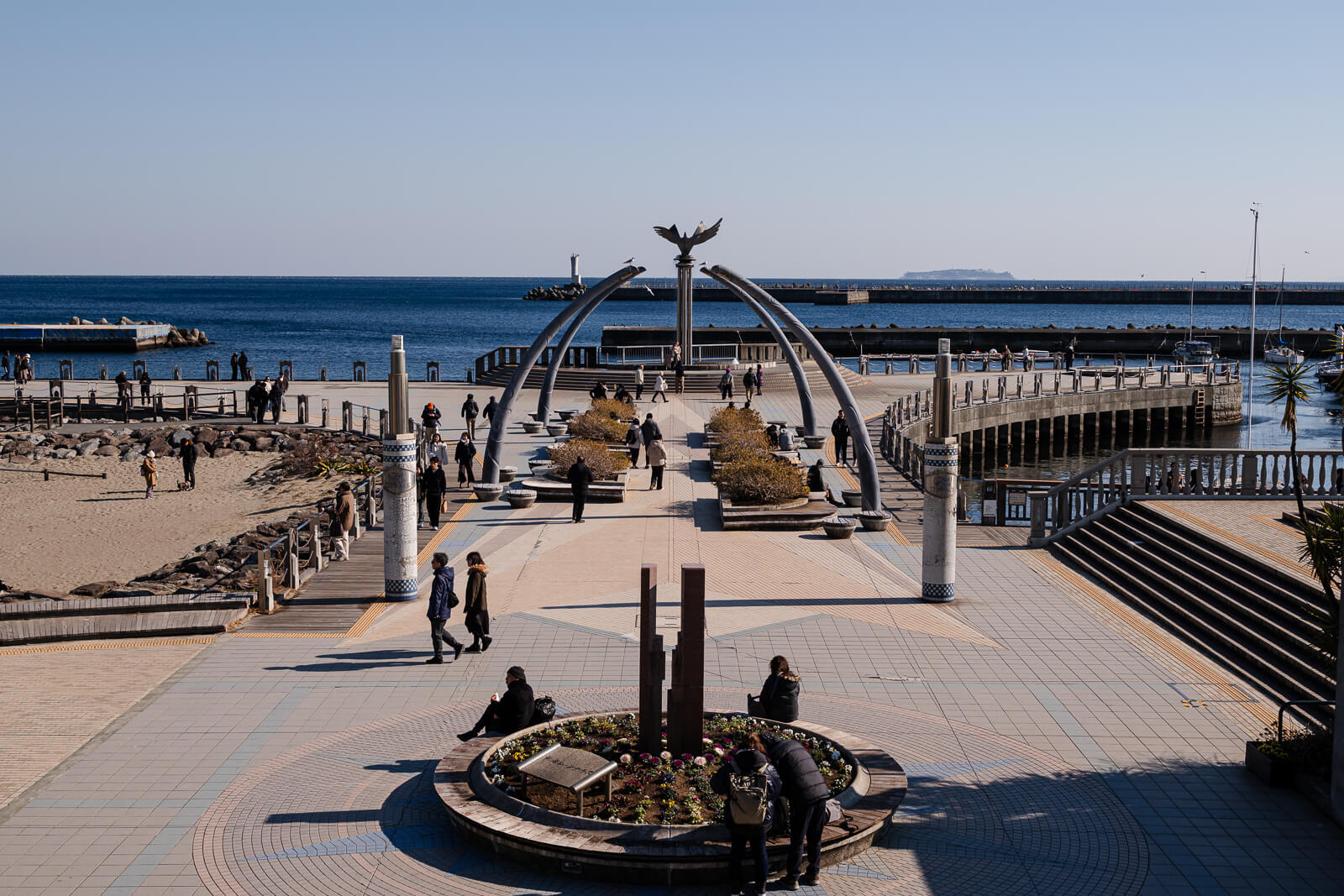
Atami Water Park marks the point where the sand of Atami Sun Beach transitions into a structured harbor front.
Many walking routes in Atami descend gradually toward the coast. From Atami Station, streets pass through Atami Ginza before opening toward the waterfront. Others begin higher inland at Kinomiya Shrine and return toward the bay. However you arrive, the shoreline eventually becomes the city’s final layer.
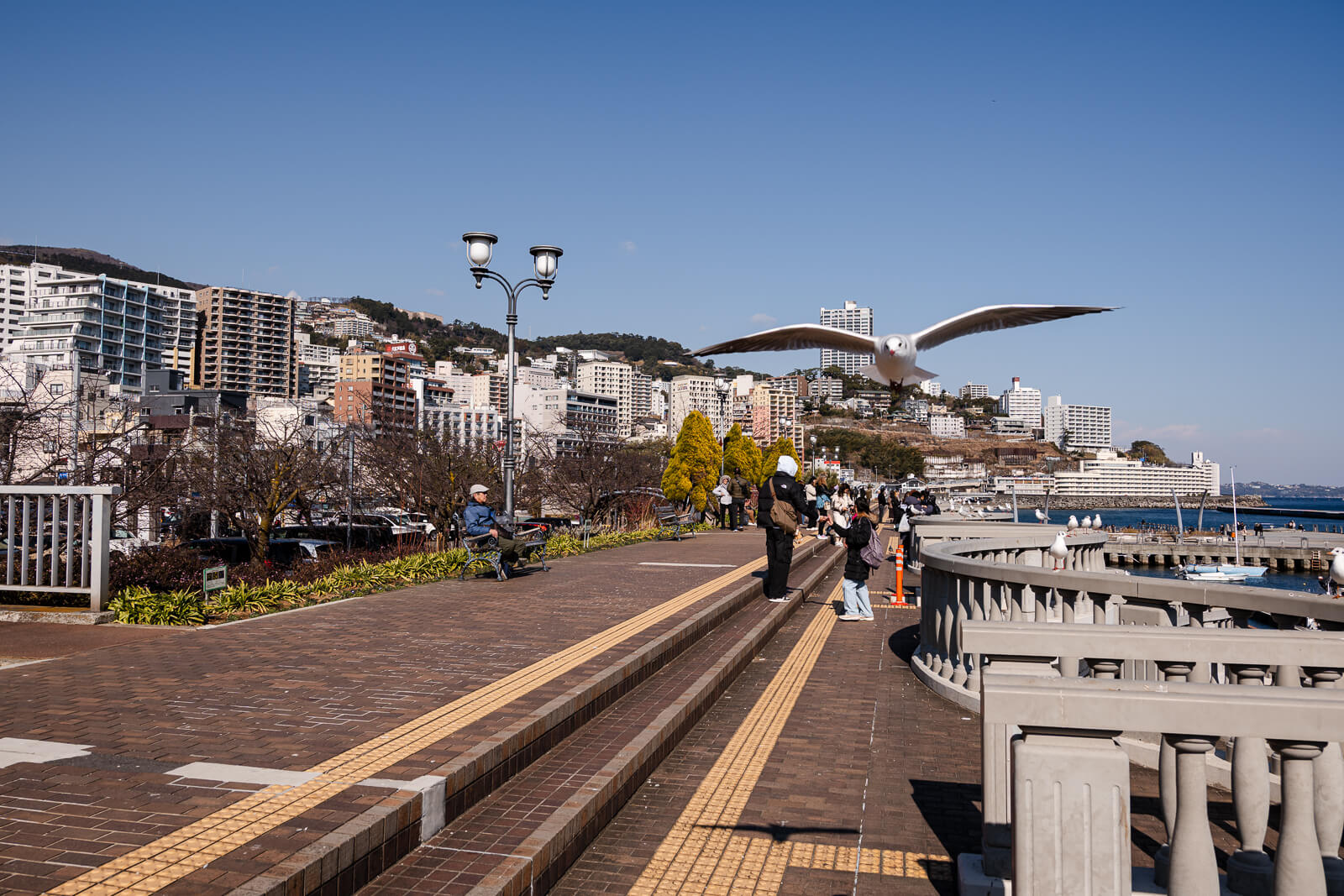
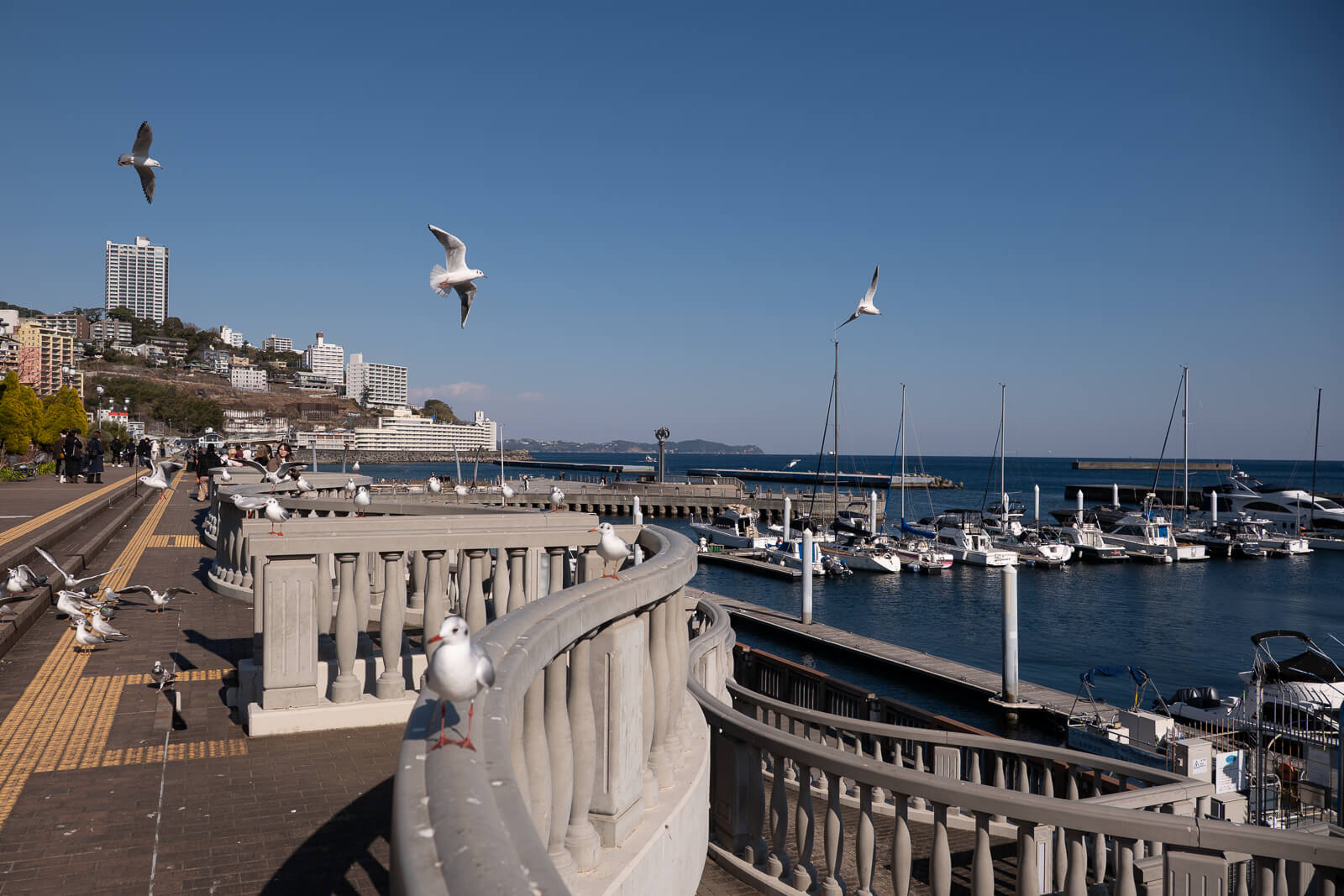
Walking north along the water, the change is gradual. The sand narrows and gives way to paved decks and open plaza space. The Itokawa Promenade widens here, and the rhythm of the waterfront shifts from beach to harbor.
Railings overlook the marina. Stone replaces sand underfoot. The space feels less like a swim area and more like an open edge facing the bay.
The Moon Terrace Structure
At the center of the plaza stands Moon Terrace, a sculptural arch positioned directly along the water’s edge.
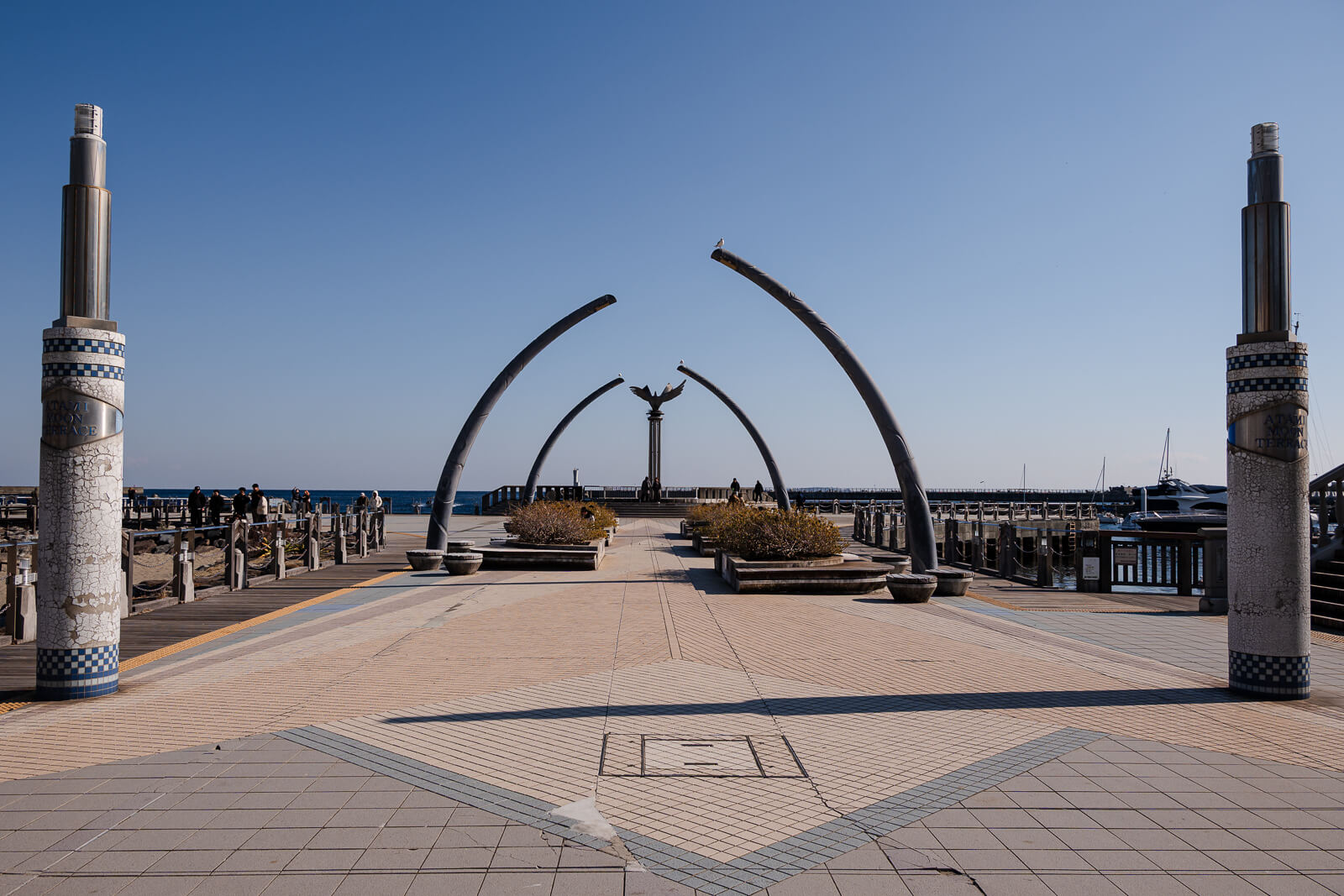
The structure anchors the open space without blocking the view. From beneath it, the marina sits to one side, and the arc of Sun Beach extends southward. On clear days, the outline of Hatsushima Island is visible offshore beyond the harbor.
The terrace frames the water rather than separating you from it. It gives the plaza a focal point, especially in photographs, but it does not dominate the setting. The horizon remains the primary subject.
The Marina and Harbor Edge
Adjacent to the plaza, boats line the marina and harbor basin. Leisure vessels sit alongside ferry traffic bound for Hatsushima. The ferry building stands directly behind the waterfront zone, creating a visible connection between promenade and transit.
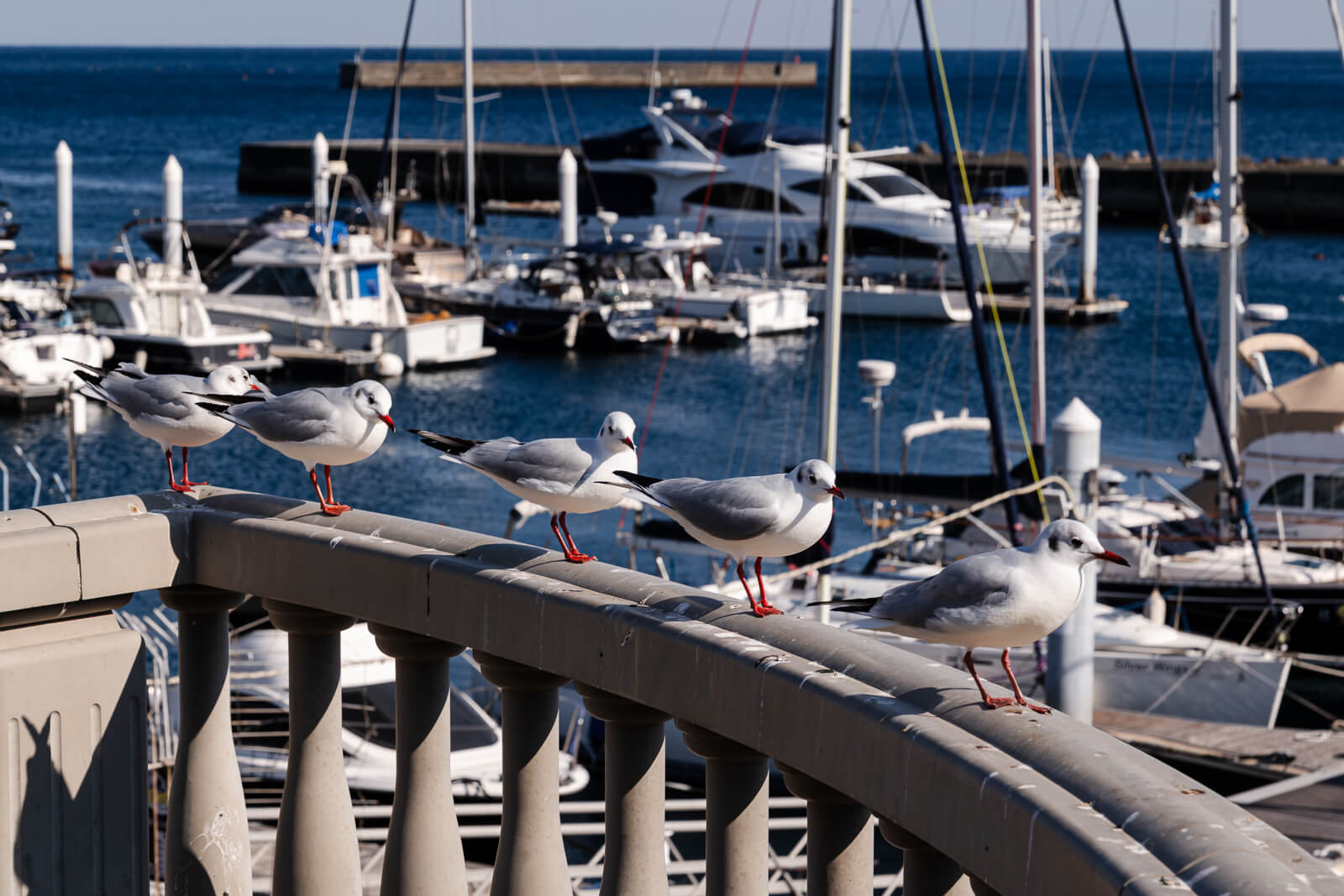
Standing along the railings, you look directly into the working harbor. The atmosphere feels slightly more active than the beach to the south. Ropes, docks, and hulls replace umbrellas and sand.
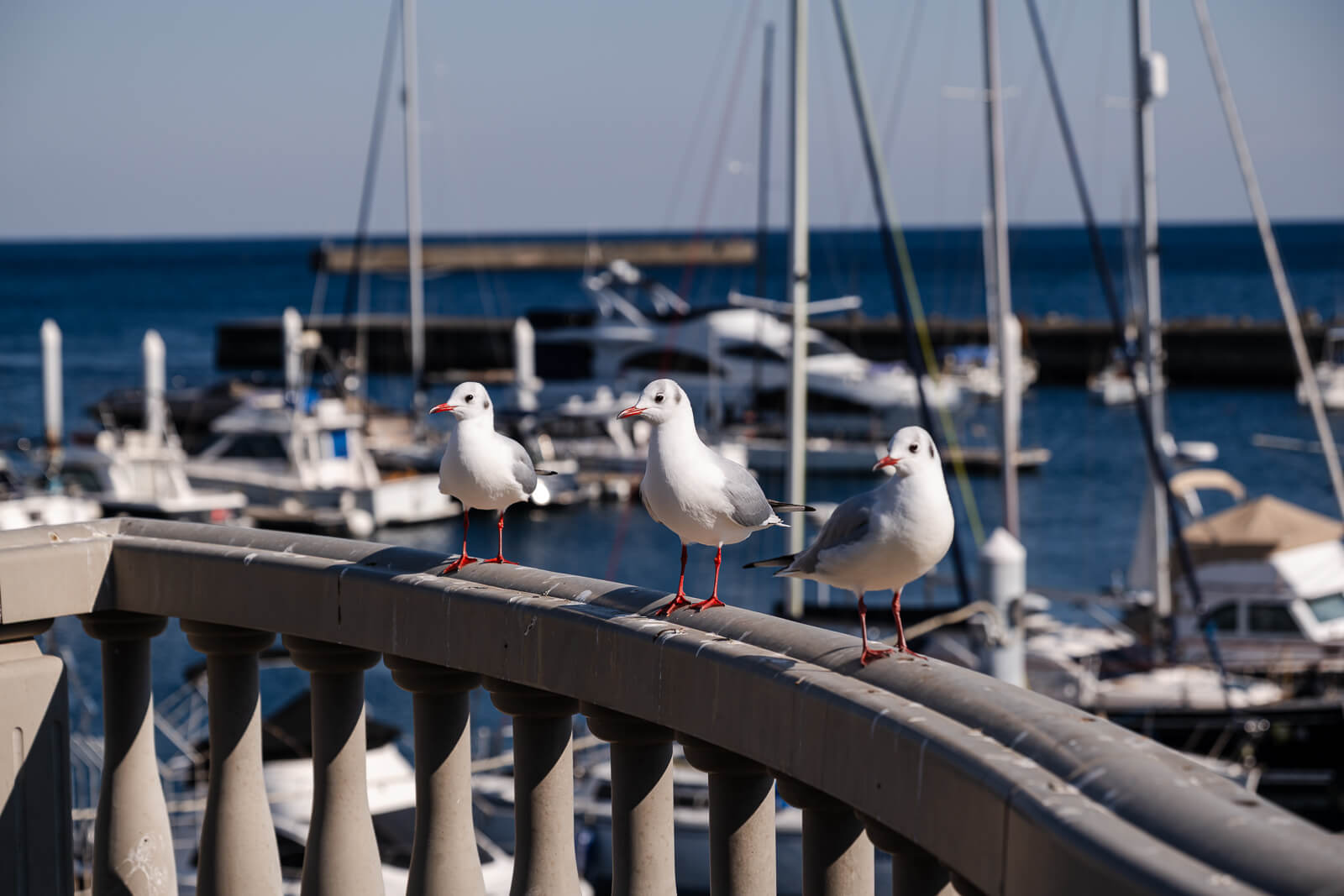
This edge of Atami belongs equally to visitors and to movement — arrivals, departures, and routine harbor life.
Seagulls and Open Sky
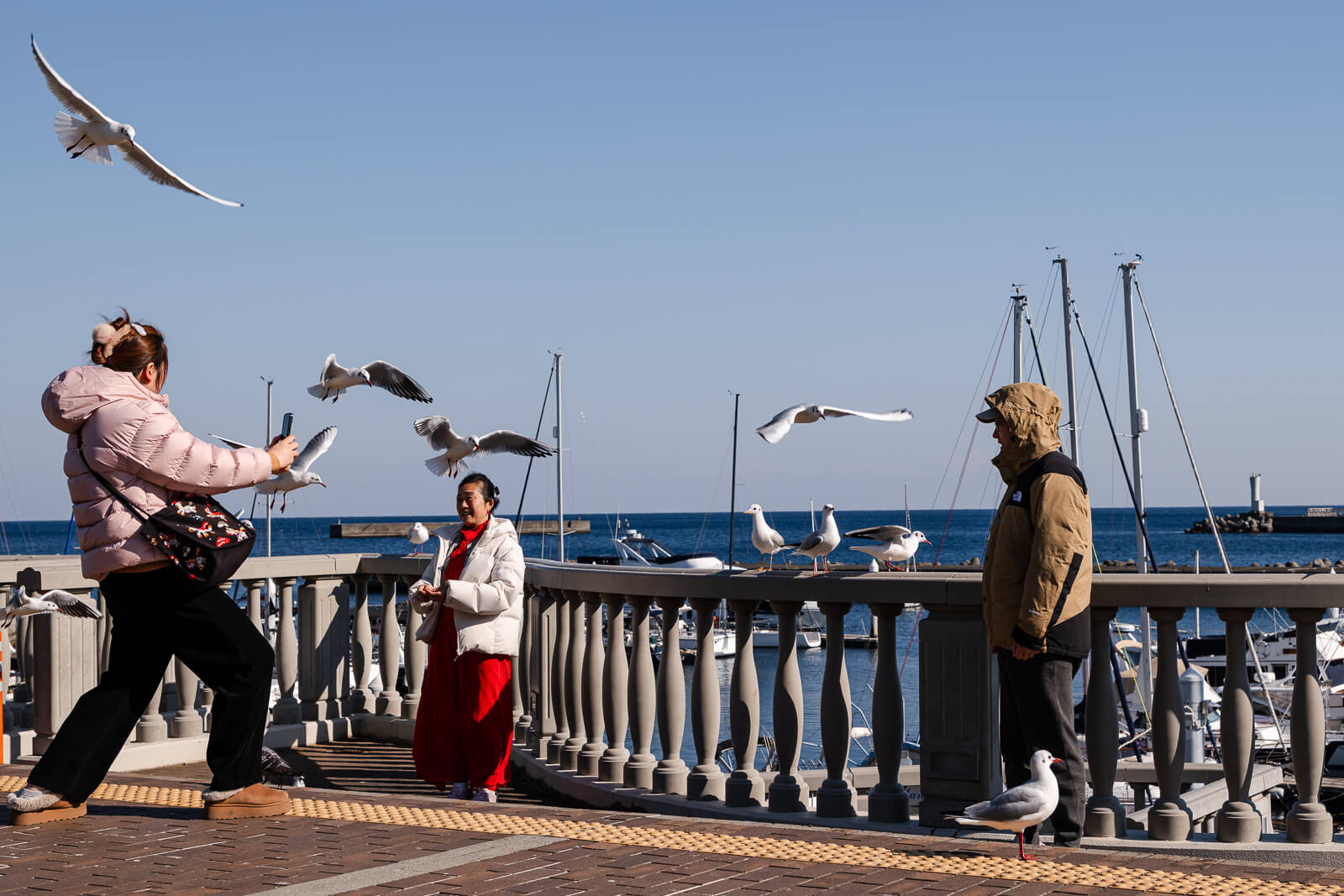
The open plaza and marina attract large numbers of seagulls, especially near the waterline and railings.
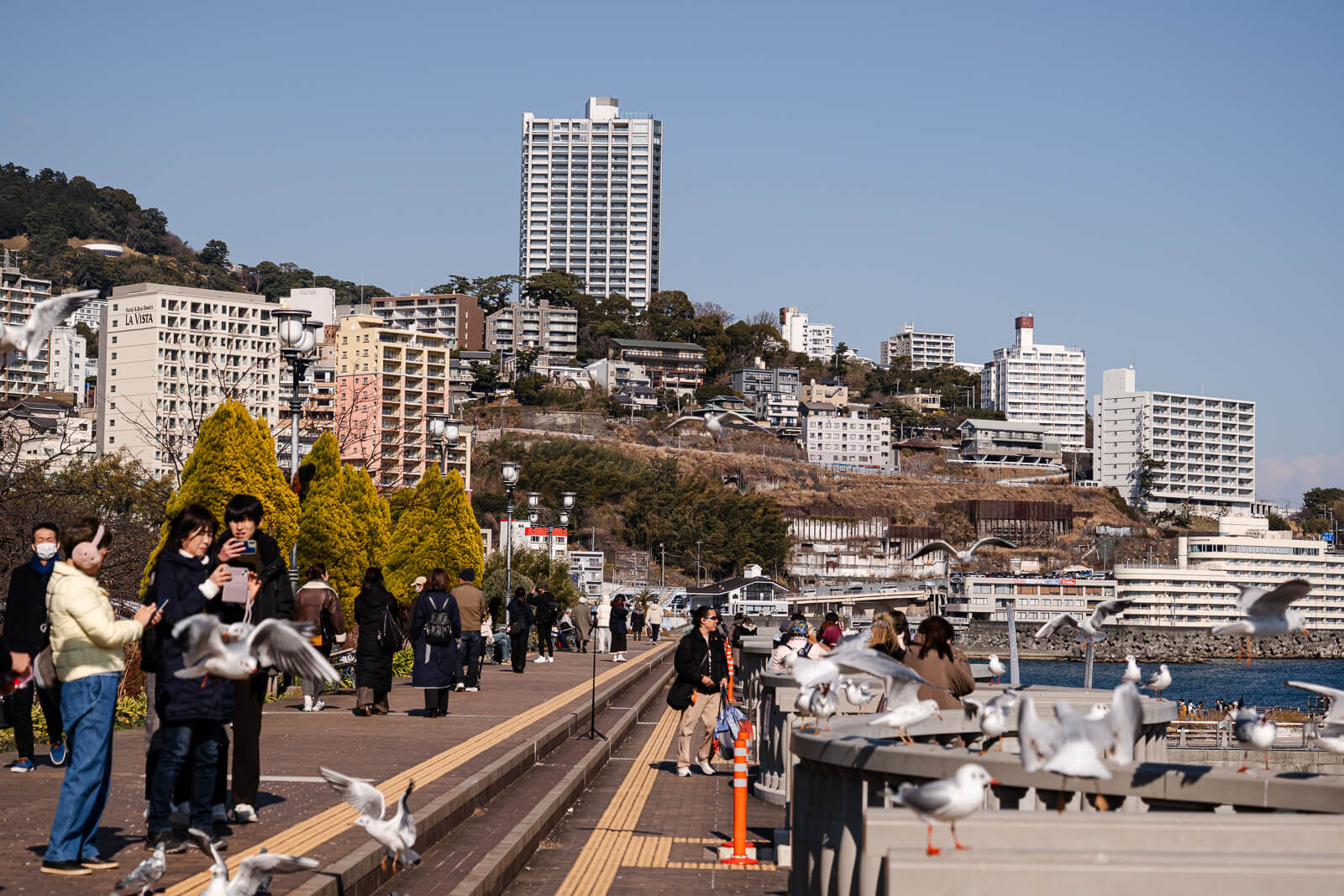
They circle overhead in loose formations and frequently land along the edges of the plaza. If food is visible, they approach closely and are comfortable moving within arm’s reach. Their presence adds a distinct energy to the space, particularly when several gather at once.
The wide sky and unobstructed sightlines amplify that movement. Compared with the more contained curve of Sun Beach, this section of the waterfront feels exposed and expansive.
A Transition Between Beach and Harbor
What makes Atami Water Park notable is not its size but its position.
It acts as the hinge between two experiences. To the south lies the sand and skyline of Sun Beach. To the north sits the harbor and ferry departures. The water park sits between them, blending recreational promenade with marina infrastructure.
From here, you can look back and see Atami Castle rising above the slope, reached by the Atami Ropeway that climbs from near the harbor. The castle appears more distinct from this angle, often drawing attention upward. Some visitors encounter the waterfront first and notice the hilltop structure later. Others see the water park from above while standing at the castle observation floor and recognize it as part of the coastal system below.
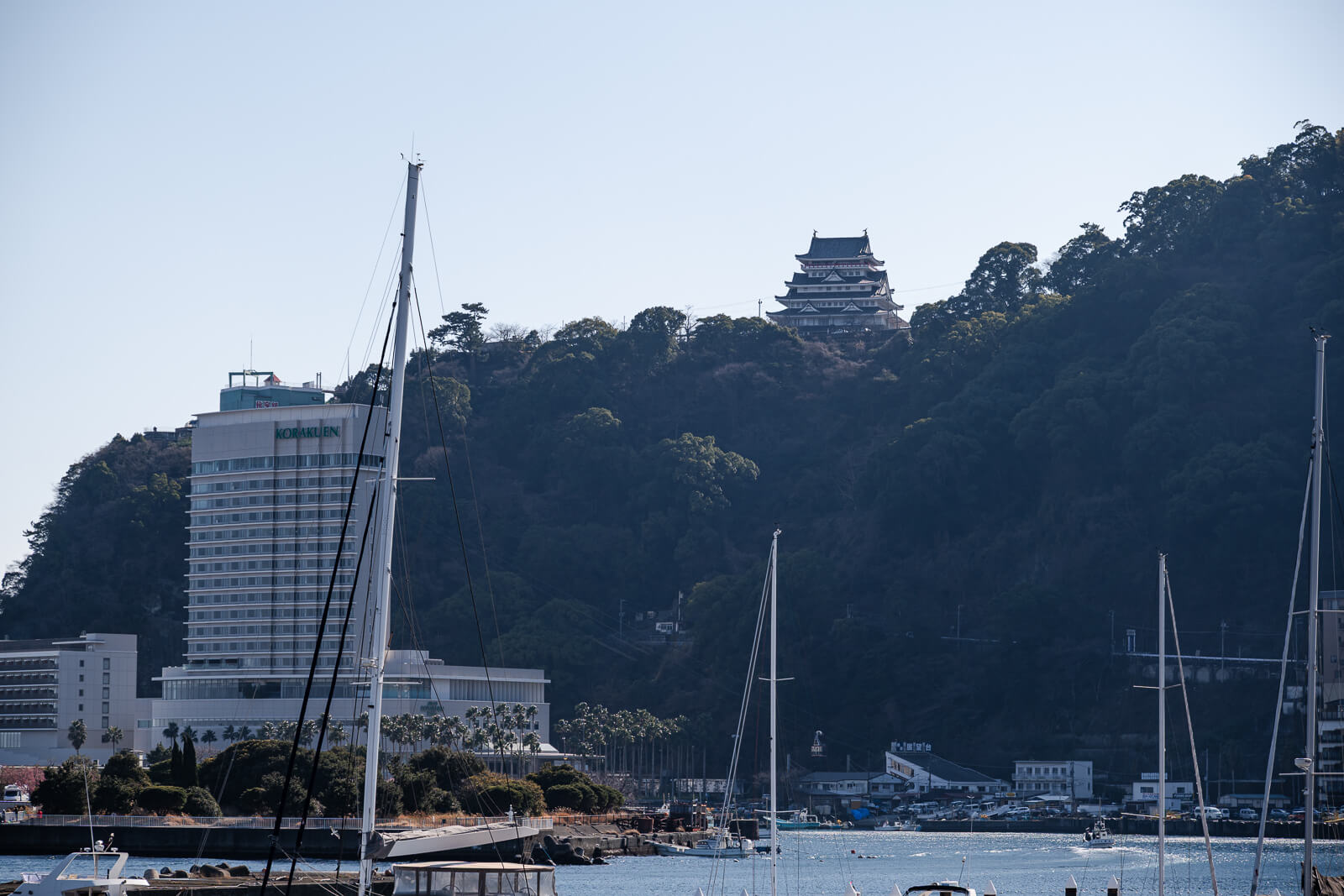
The relationship works in both directions.
Morning, Midday, and Fireworks
In the morning, the plaza feels open and quiet. Light reflects across the marina basin, and the harbor sits calm before ferry traffic increases. For those staying nearby, this stretch of waterfront often becomes part of a routine walk — an extension of the beach rather than a destination on its own.
Midday brings more visible movement. Boats shift slightly in the water. Seagulls gather. The plaza becomes a natural pause point between sand and harbor.
During fireworks events, the open space provides a clear view over the bay. The lack of vertical obstruction makes the harbor edge a practical viewing zone when events are staged across Atami Bay. The plaza’s openness becomes functional rather than purely aesthetic.
Seeing It From Above
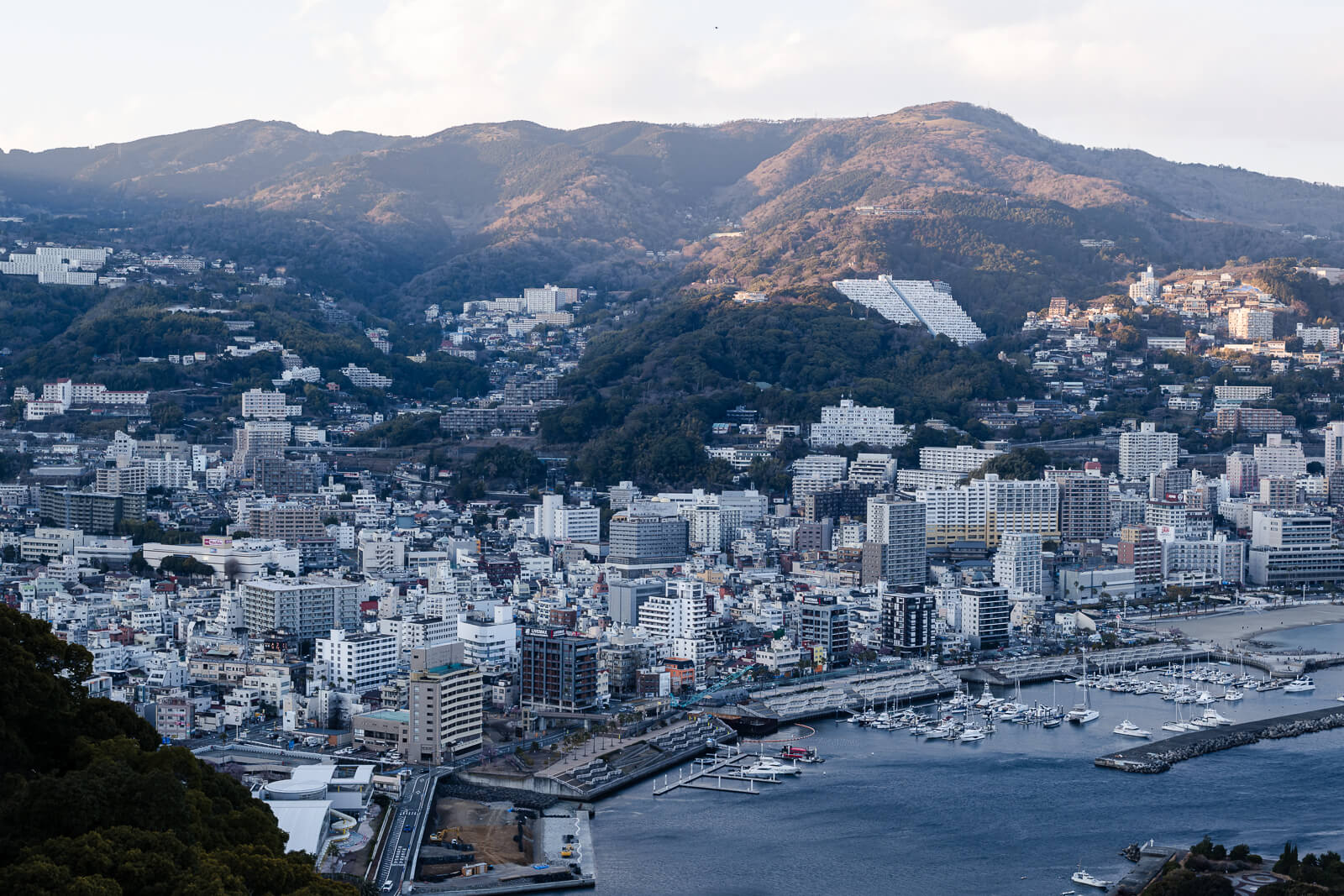
From the ridge near Atami Castle or along the ropeway line, the water park, marina, and Sun Beach align into a single coastal band.
From above, the layout appears deliberate: sand curving into structured plaza, structured plaza narrowing into harbor. What feels like separate experiences at ground level becomes one continuous waterfront system.
The compact scale of Atami makes that relationship easy to read.
Getting There
Atami Water Park sits at the northern end of the waterfront and is reachable on foot from Atami Station via Sun Beach and the Itokawa Promenade.
Parking is available next to the ferry building and marina area directly behind the plaza.
Because the space is fully open and level, access is straightforward throughout the day.
Hours and Fees
The plaza, decks, and waterfront areas of Atami Water Park and Moon Terrace are open year-round and do not require an entry fee.
Ferry services to Hatsushima operate separately and follow their own published schedules.
Because the harbor edge sits at the far northern end of Atami’s waterfront — and often connects with ferry departures or evening events — coordinating where you stay and how you arrive keeps the experience simple.