The Shape of the Bay
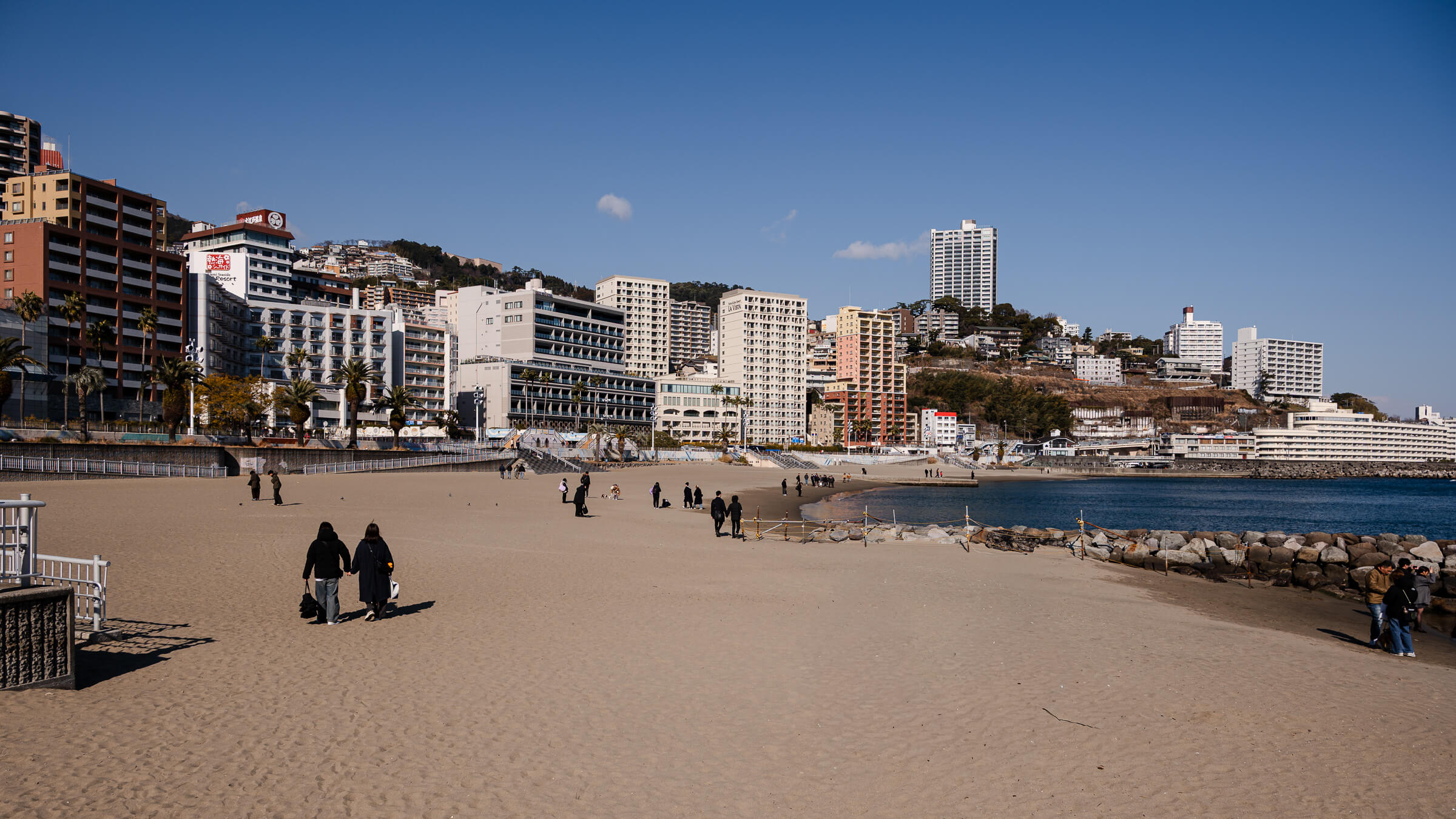
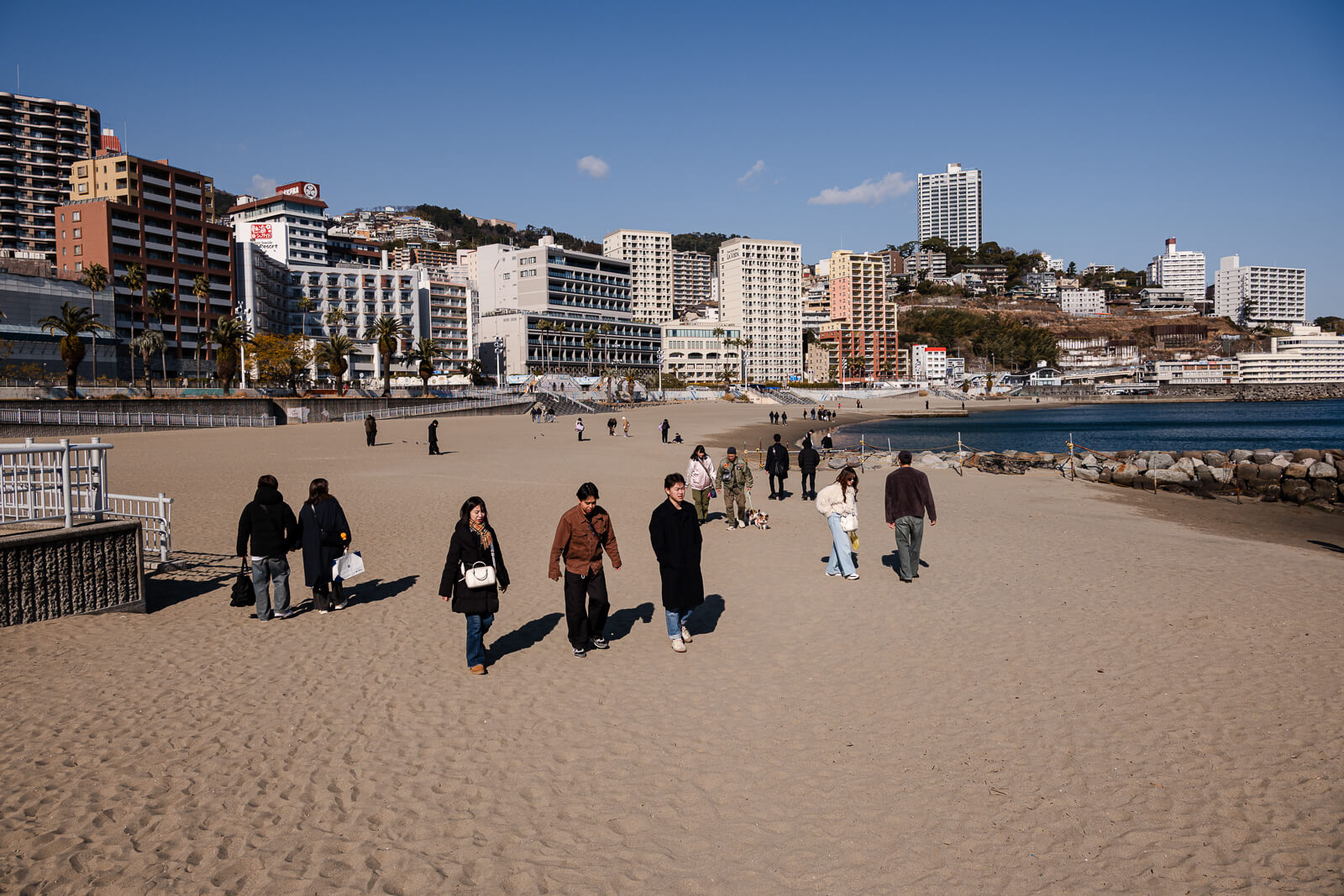
Atami Sun Beach forms a broad arc along Atami Bay, creating a continuous stretch of sand directly in front of the city.
In a town defined by steep hills and narrow streets, the shoreline becomes the most level and open space available. The beach was shaped as part of Atami’s development as a seaside resort in the early twentieth century, when improved rail access from Tokyo increased its popularity. Rather than leaving the coast irregular or fragmented, the waterfront was organized into a central, walkable arc that connects directly toward Atami Water Park and the harbor beyond.
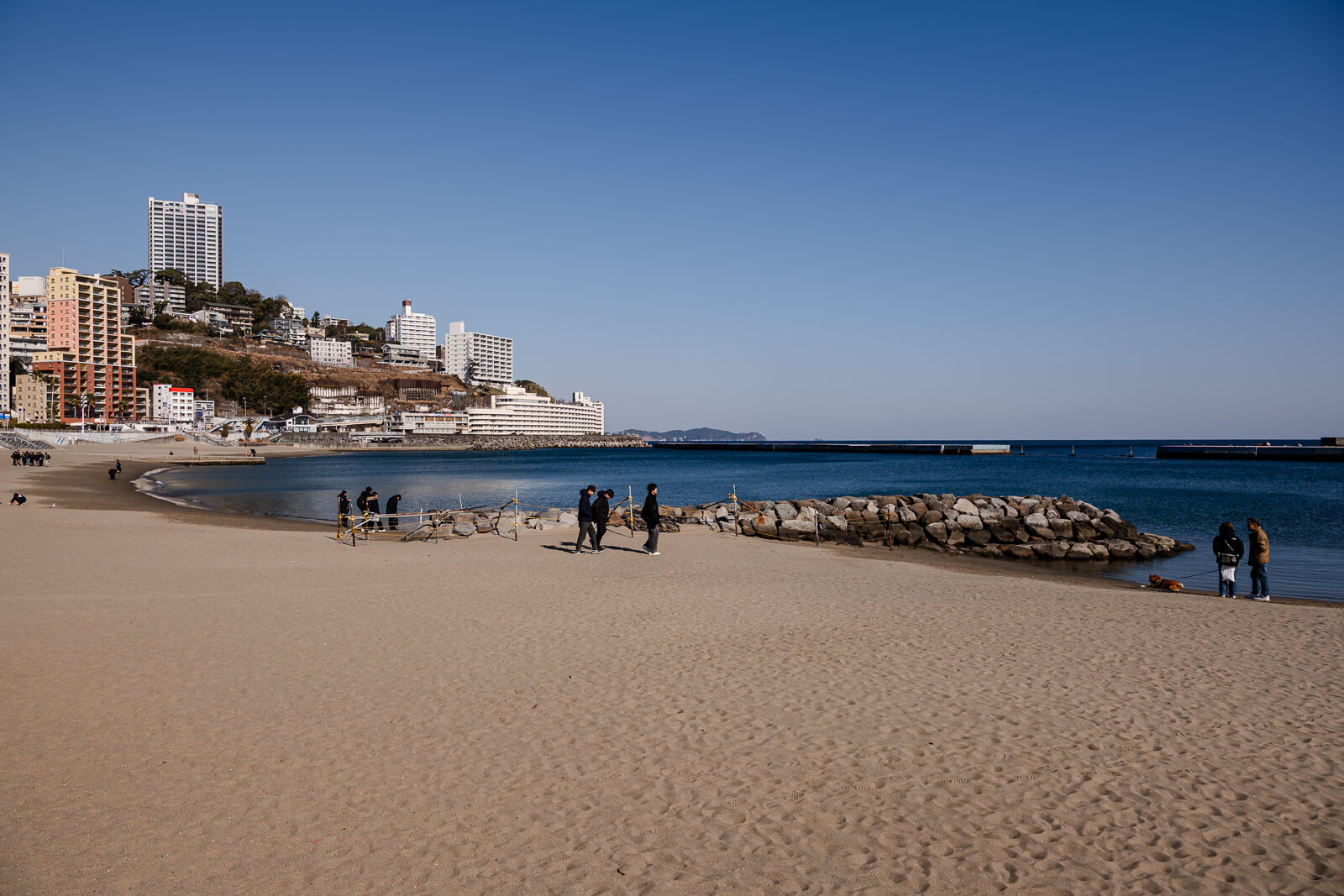
From the water’s edge, buildings rise almost immediately behind you. Hotels and apartments stack into the slope. To the north, the marina and ferry terminal toward Hatsushima mark the harbor boundary. Inland, streets climb quickly back toward Atami Station and the shopping streets of Atami Ginza. Higher on the ridge, Atami Castle overlooks the same arc of shoreline, reached via the Atami Ropeway near the port.
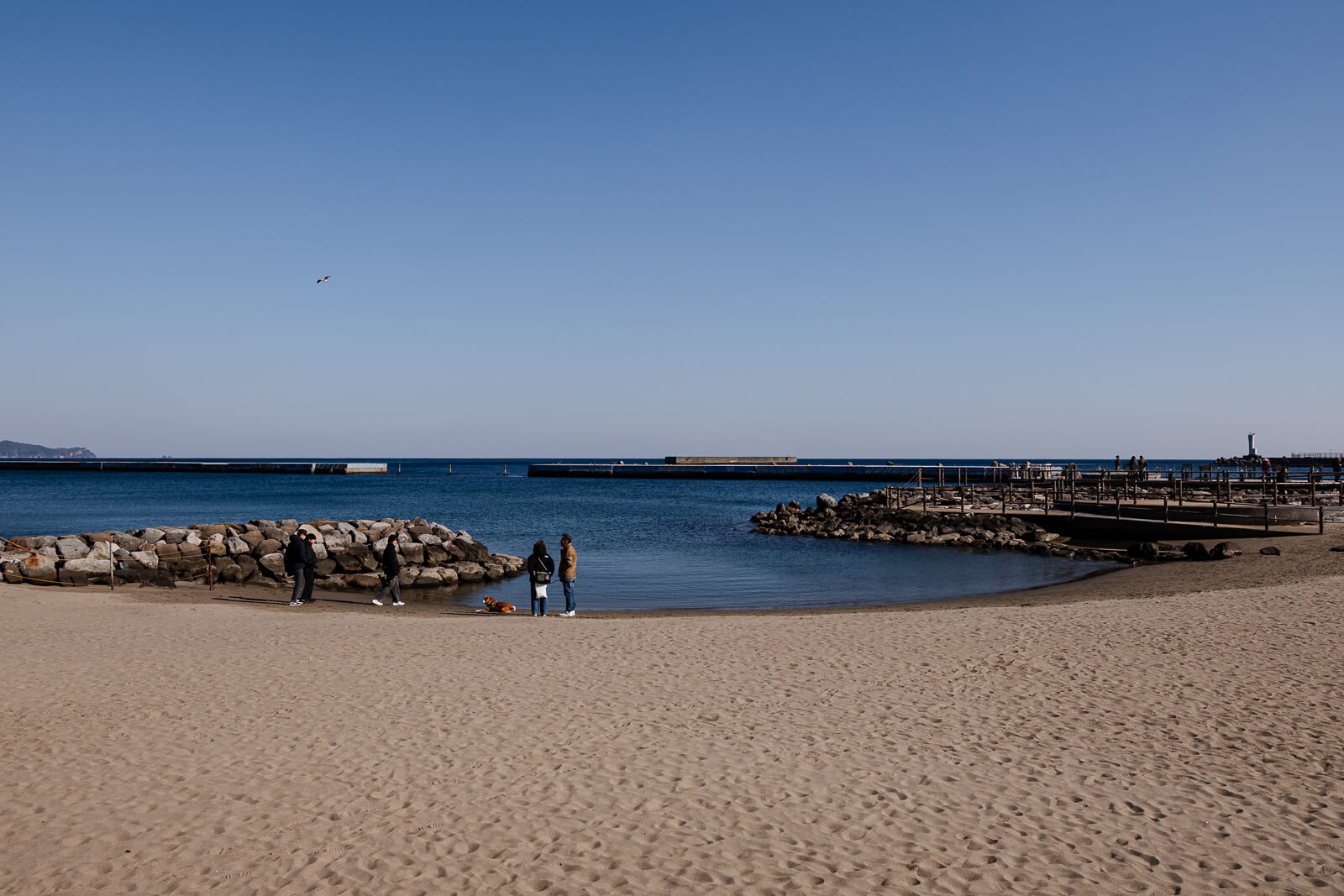
Moving From Station to Shore
Most walking routes in Atami descend toward the waterfront.
From the station area, streets gradually open toward the bay as the slope softens near sea level. If beginning inland at Kinomiya Shrine, the route eventually returns downhill toward the same shoreline.
By the time you reach the sand, the descent through town feels resolved. The waterfront reads as the lowest and most open ground in the city.
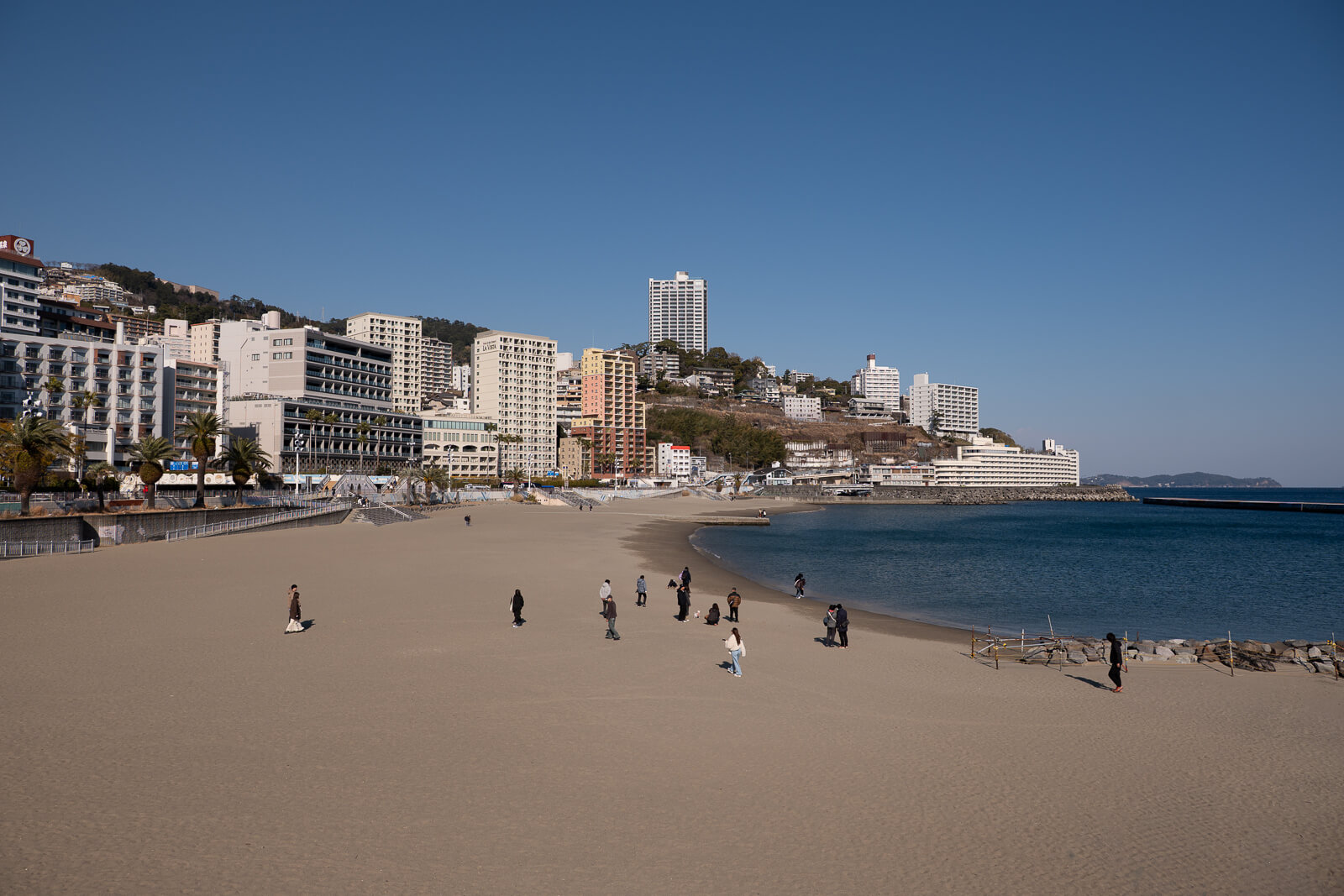
Sand, Water, and Seasonal Change
During summer, Sun Beach operates as a designated swimming area with regulated zones and lifeguard presence. The sand is wide enough to accommodate families without compressing the waterline against the promenade.
Outside the swimming season, the same arc becomes quieter.
In winter and early spring, the curve of the bay becomes more readable from end to end. The skyline stands out more clearly against cooler light. Walking the length of the beach feels open, even within Atami’s compact geography.
The seasonal shift changes activity levels, but not the structure of the shoreline.
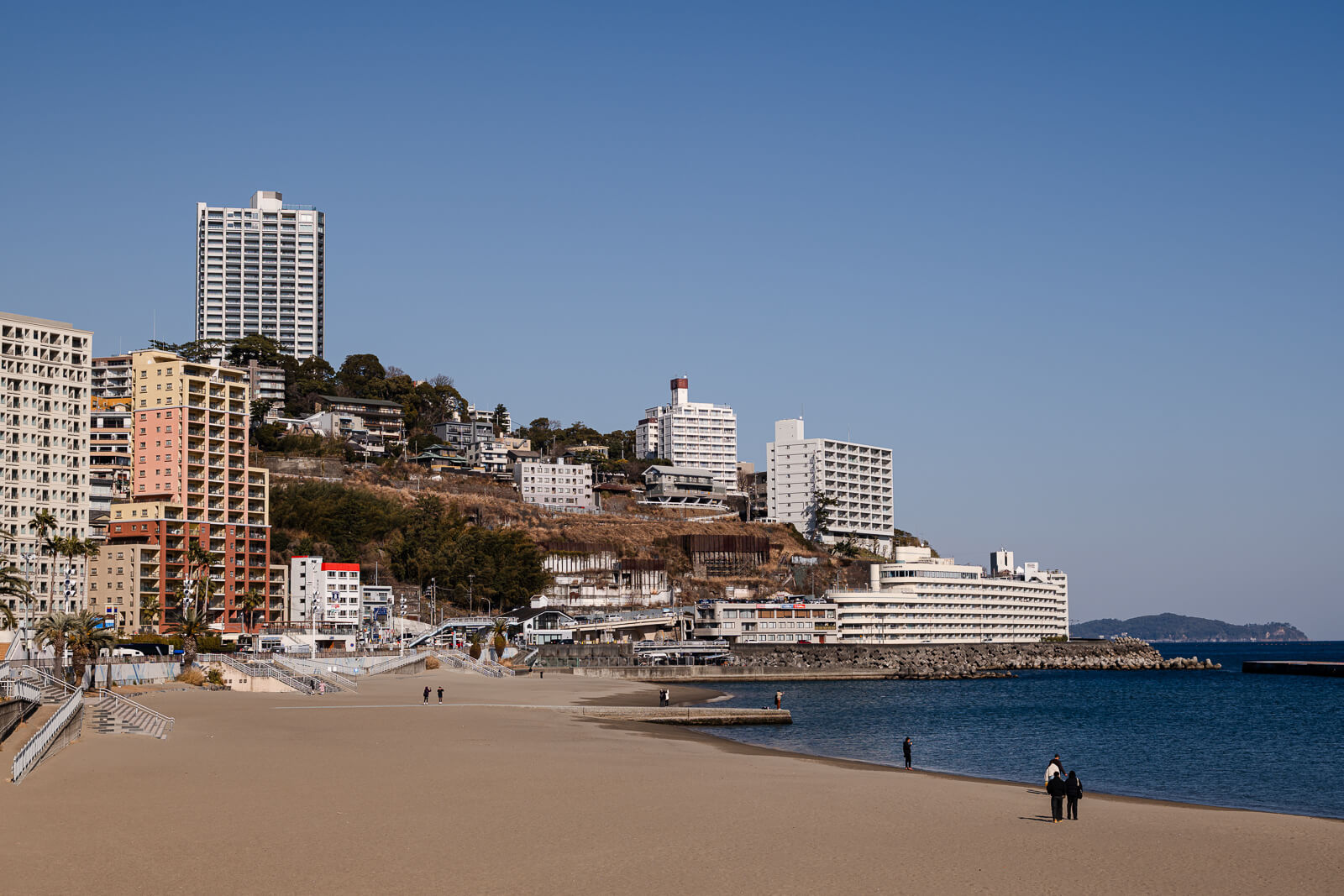
The Promenade and Everyday Rhythm
Behind the sand, a paved promenade runs parallel to the water.
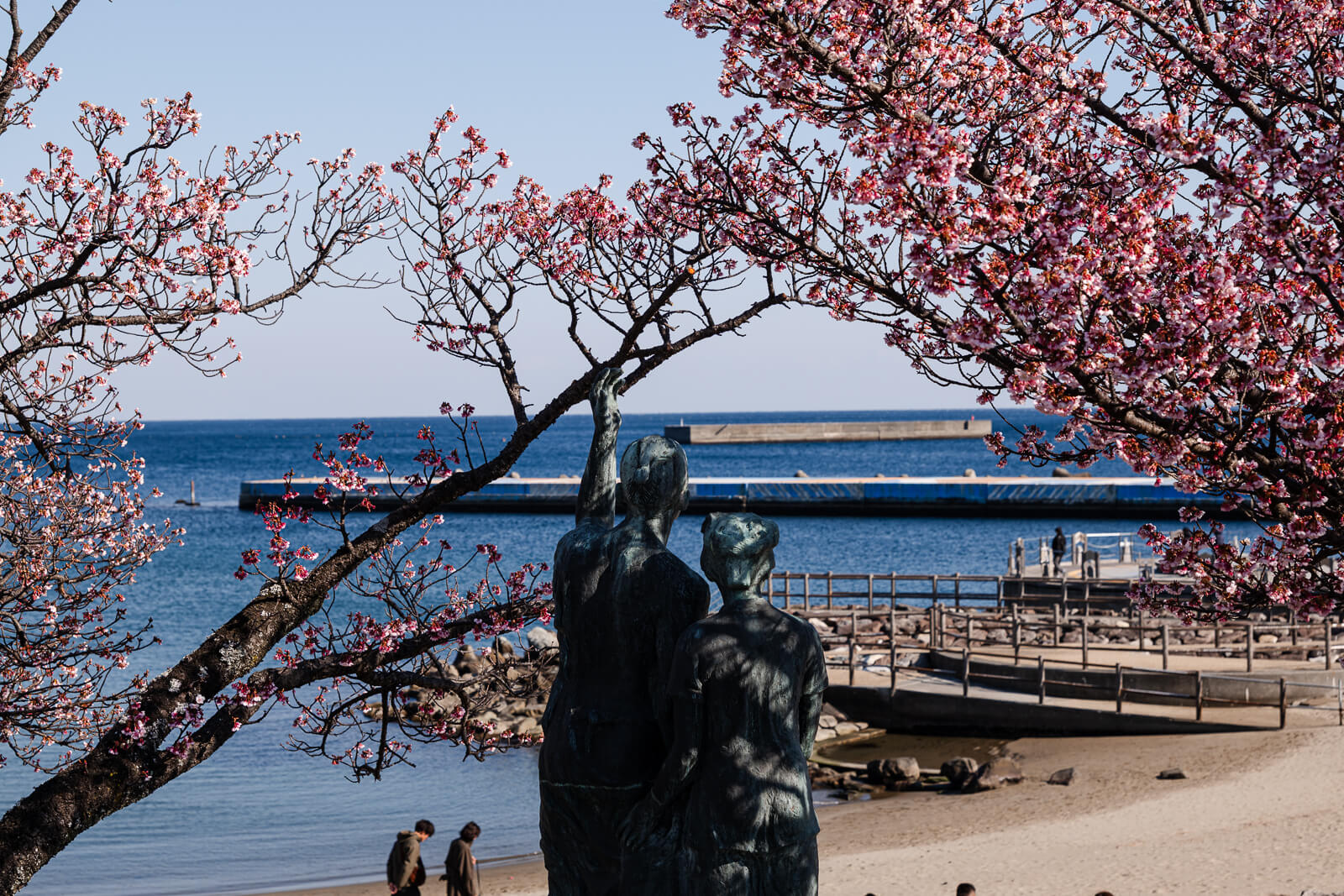
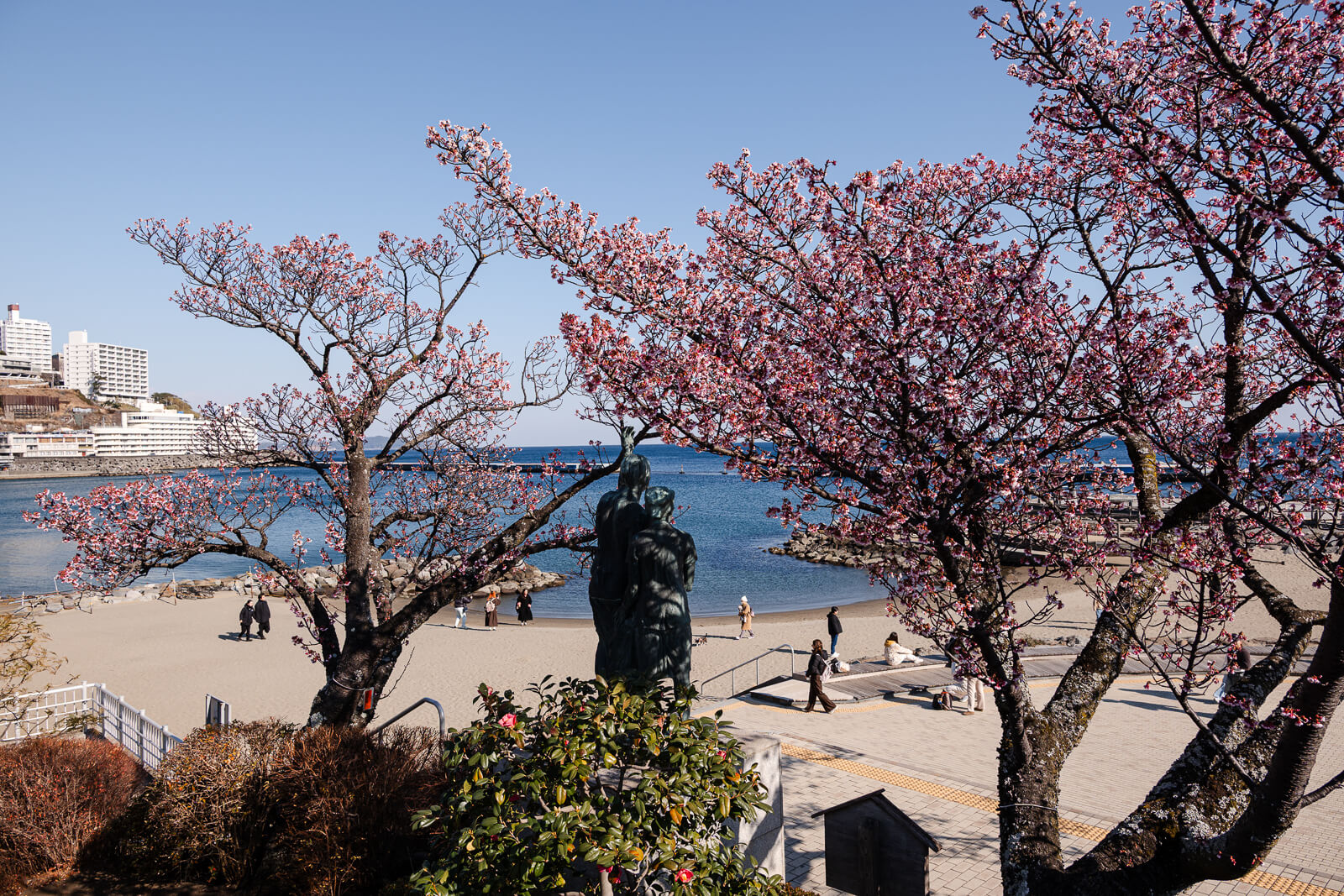
Benches face the bay. Cherry trees line portions of the walkway, adding seasonal color in spring. Toward the northern end, the sand transitions gradually into the structured plaza and marina zone.
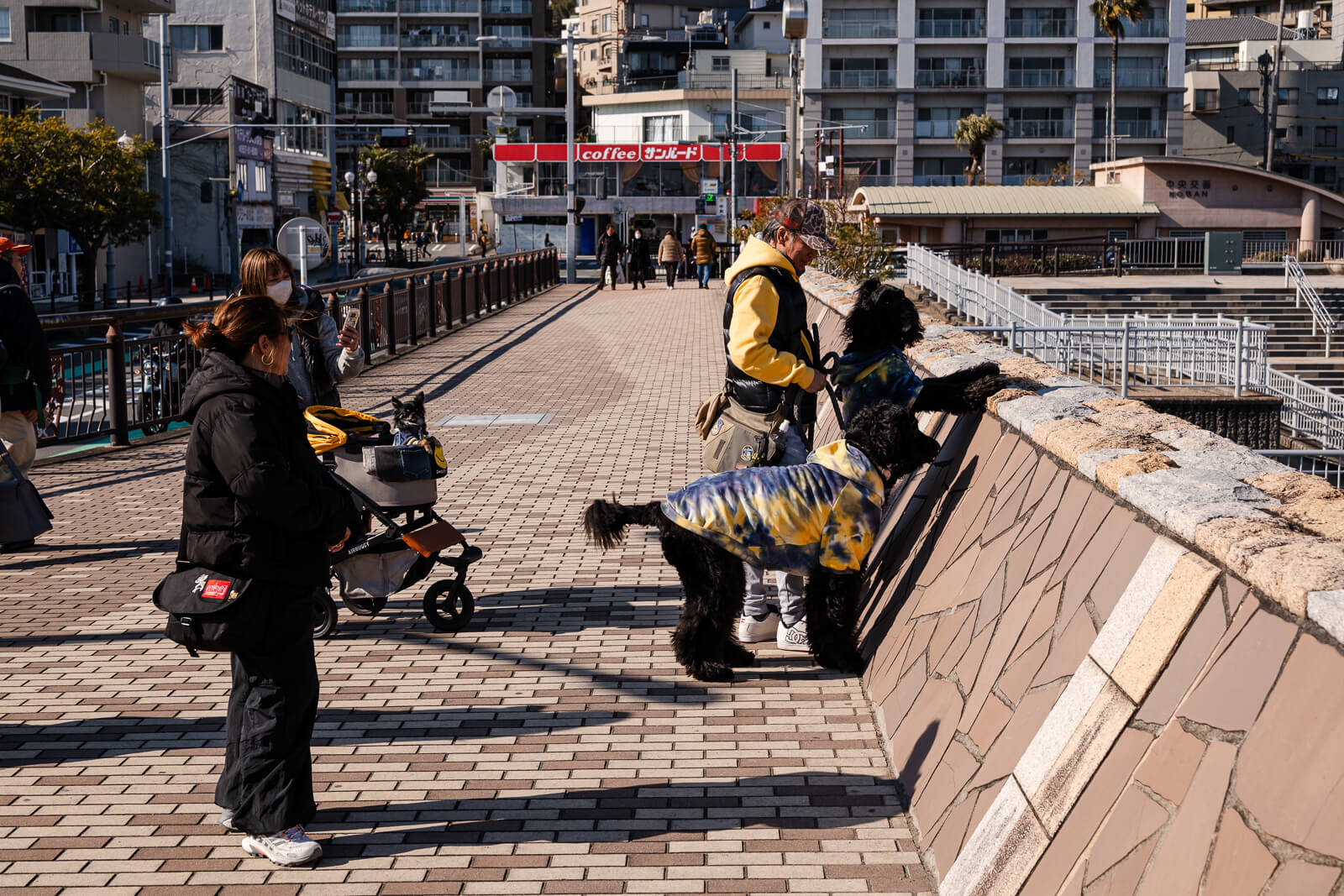
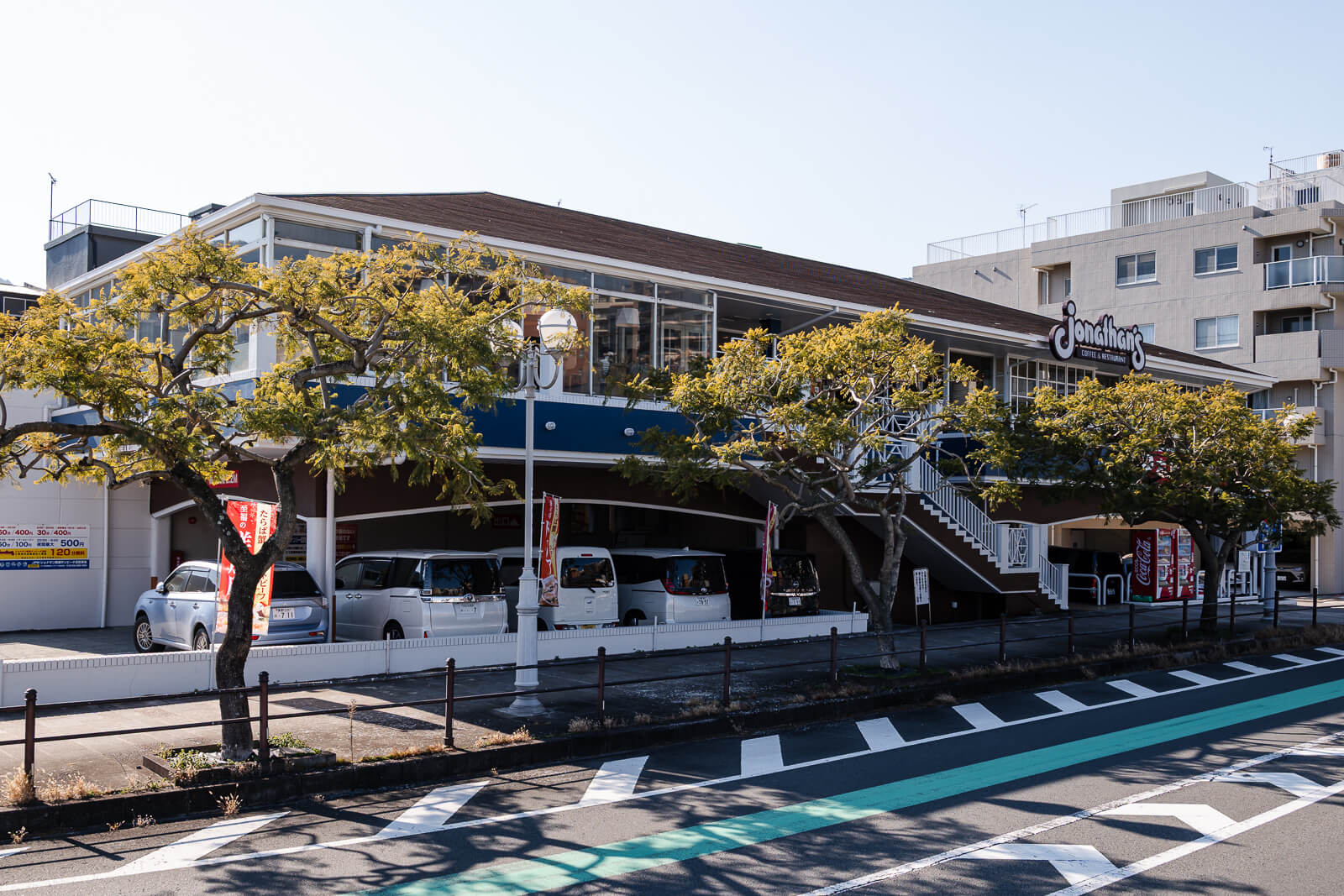
Jonathan’s sits directly along this stretch with windows facing the water. In the morning, the bay is often calm, and the full arc of the beach is visible from inside. For visitors staying nearby, this section frequently becomes part of a daily routine — a short walk before breakfast or after returning from town.
The sand and promenade operate as a continuous layer rather than separate experiences.
Looking Up Toward the Ridge
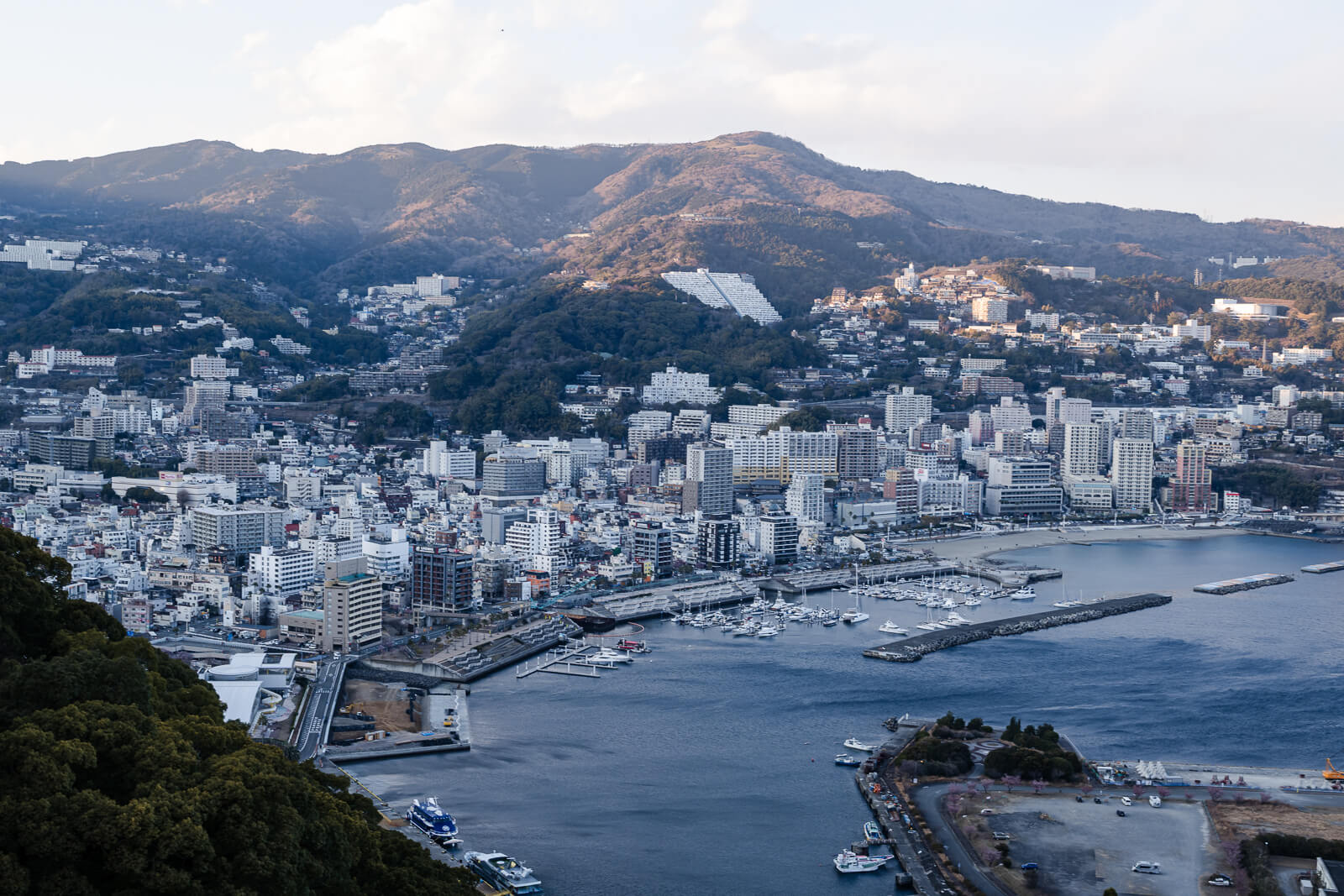
From the shoreline, the slope of Atami rises quickly behind the city.
The ridge above contains the castle complex, visible from many points along the beach. The ropeway that climbs toward it begins near the harbor, a short walk north of the sand.
From above, the beach reads differently. The arc becomes defined. The marina and harbor align along a compact stretch of coast. What feels expansive at ground level becomes one segment within a vertically layered town.
Both perspectives reinforce how closely the waterfront and hillside are connected.
A Civic Waterfront
Sun Beach sits directly within the urban grid rather than apart from it.
Streets descend toward it. Hotels face it. The harbor infrastructure remains visible just beyond it. Inland, commercial streets reconnect the shoreline to the station area.
This integration gives the beach a civic quality in addition to its seasonal recreational use. It is part of daily movement through Atami as much as it is part of summer activity.
Getting There
Sun Beach is approximately a 15–20 minute walk downhill from Atami Station. Most visitors reach it naturally while exploring the station area and surrounding streets.
If beginning inland at Kinomiya Shrine, the route eventually returns toward the coast.
For those arriving by car, parking is available next to the ferry building in the port area behind the beach.
Because much of Atami’s accommodation sits within walking distance of the shoreline, many overnight visitors do not need to reposition their vehicle once parked.
Hours and Fees
Sun Beach is open year-round and does not require an entry fee.
Swimming is seasonal and regulated during the summer months. Outside that period, the beach remains fully accessible for walking and general recreation.
Because the shoreline sits at the lowest point in town, most visits to Sun Beach are shaped by where you stay, how you arrive, and how easily you can move between the ridge and the water.