The Stream Valley Where Plum Trees Climb the Hillside
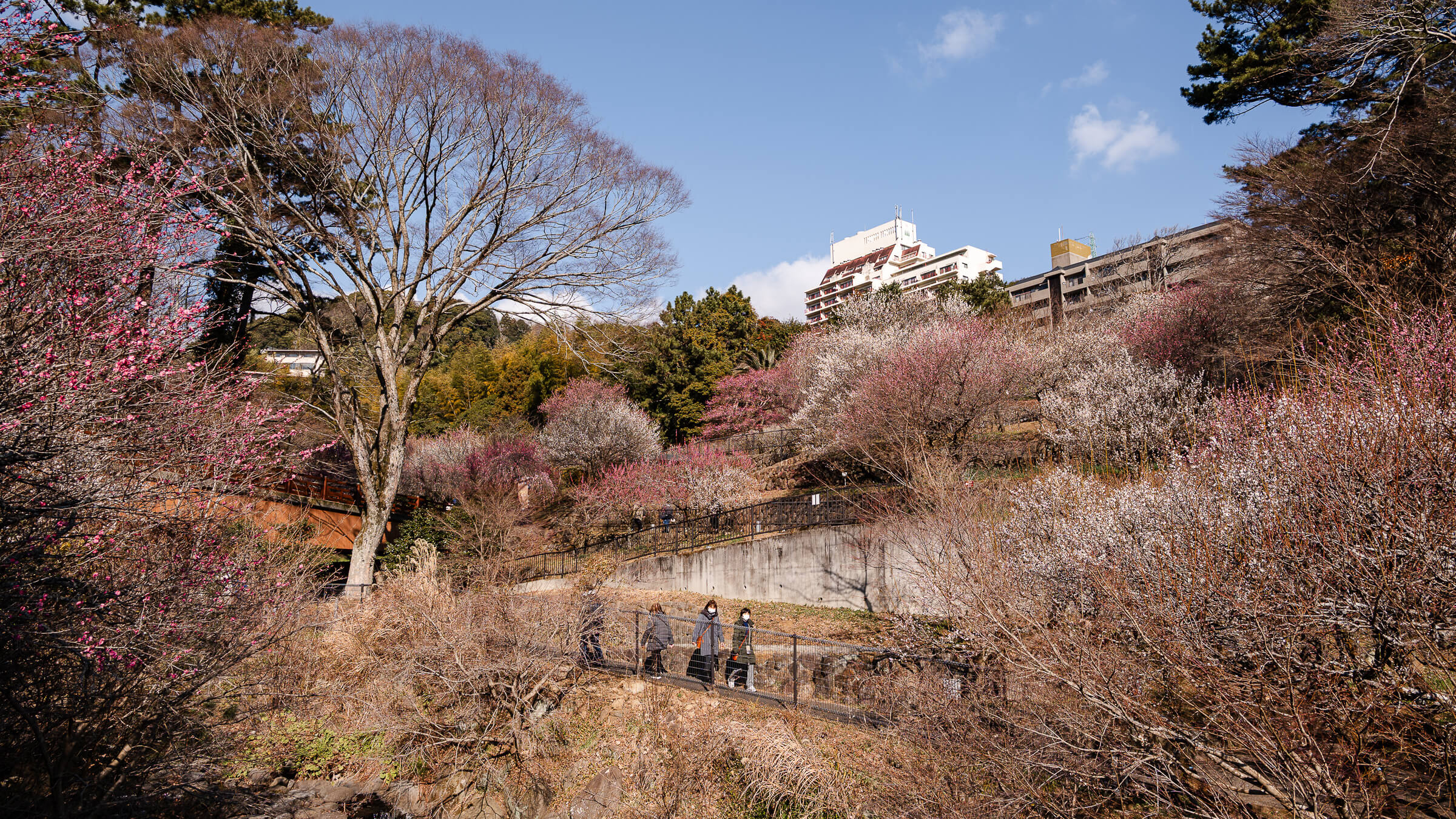
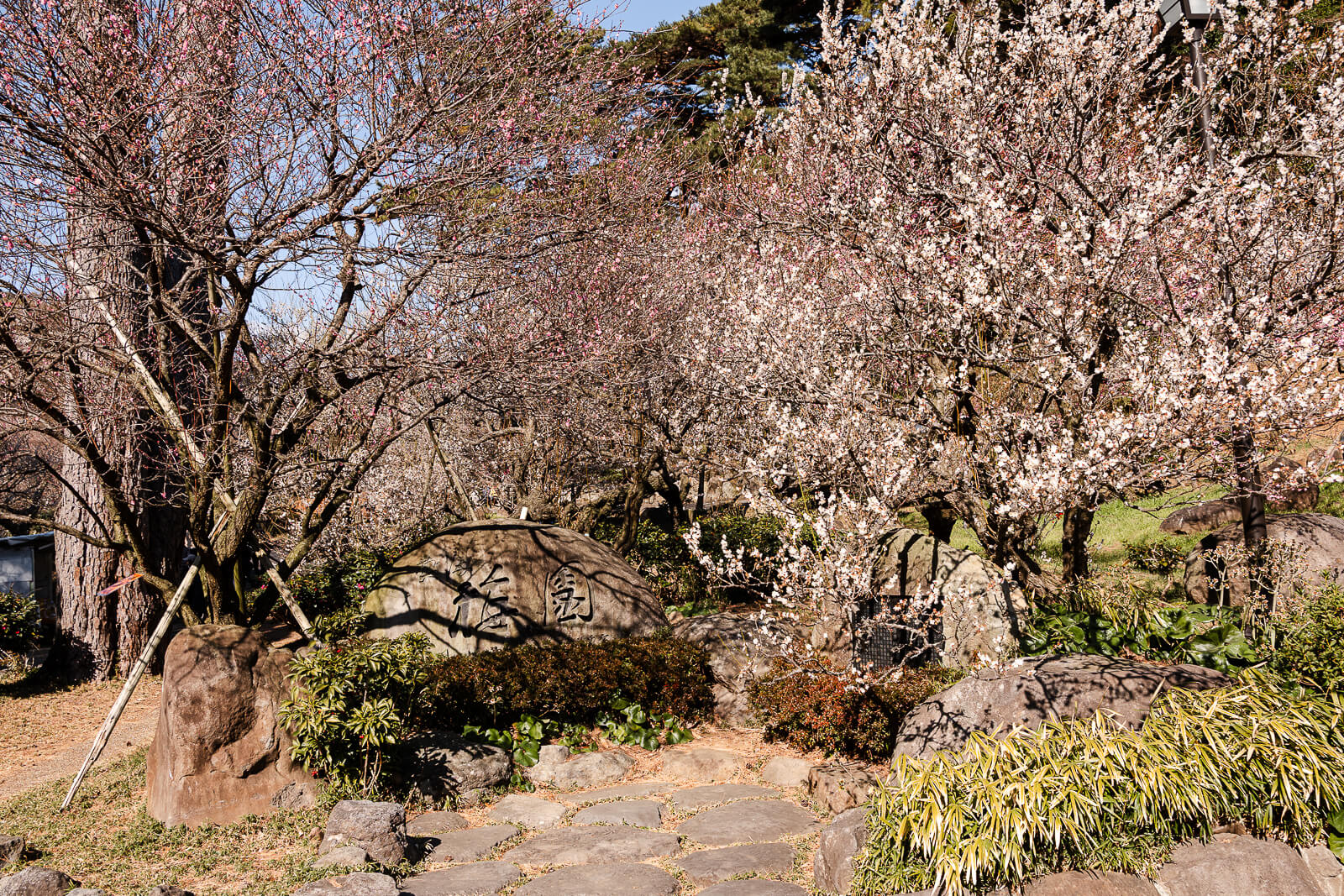
Atami Plum Garden occupies a narrow hillside valley above the Kinomiya district of Atami, a short distance inland from the waterfront around Atami Sun Beach.
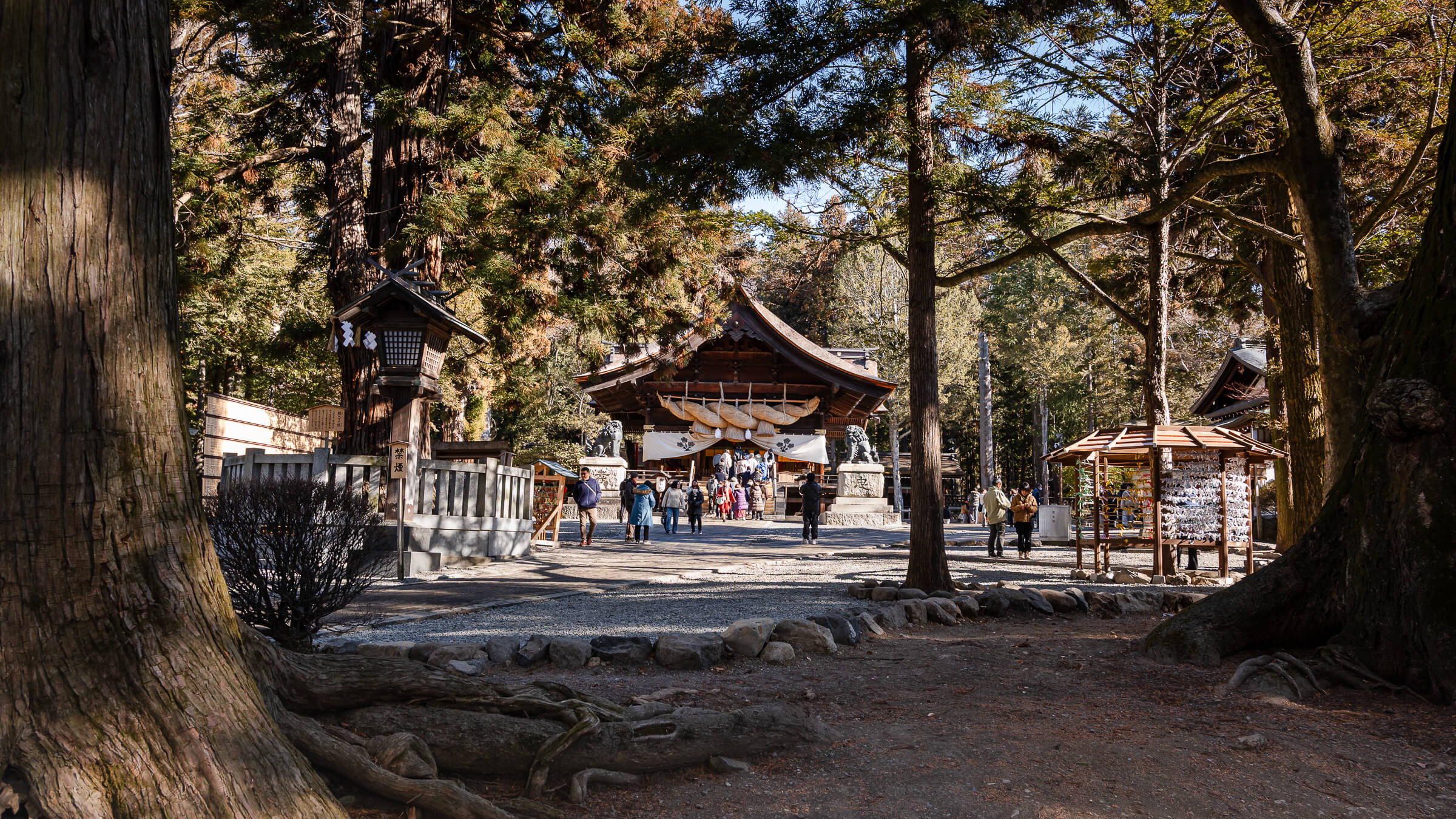
The garden sits close to Kinomiya Shrine, one of the city’s most visited spiritual sites. Many visitors explore the shrine first before walking a short distance uphill to the garden.
From the slopes above Kinomiya, paths eventually descend back toward the city center and the harbor promenade near Moon Terrace and Atami Water Park.
Most visits take 45–60 minutes. The paths rise gradually through the valley but distances remain short, making the garden easy to explore for travelers already moving through Atami’s hillside districts.
Why people come here in the middle of winter
The garden is best known for the Atami Plum Festival, when hundreds of plum trees begin blooming weeks before cherry blossoms appear elsewhere in Japan.
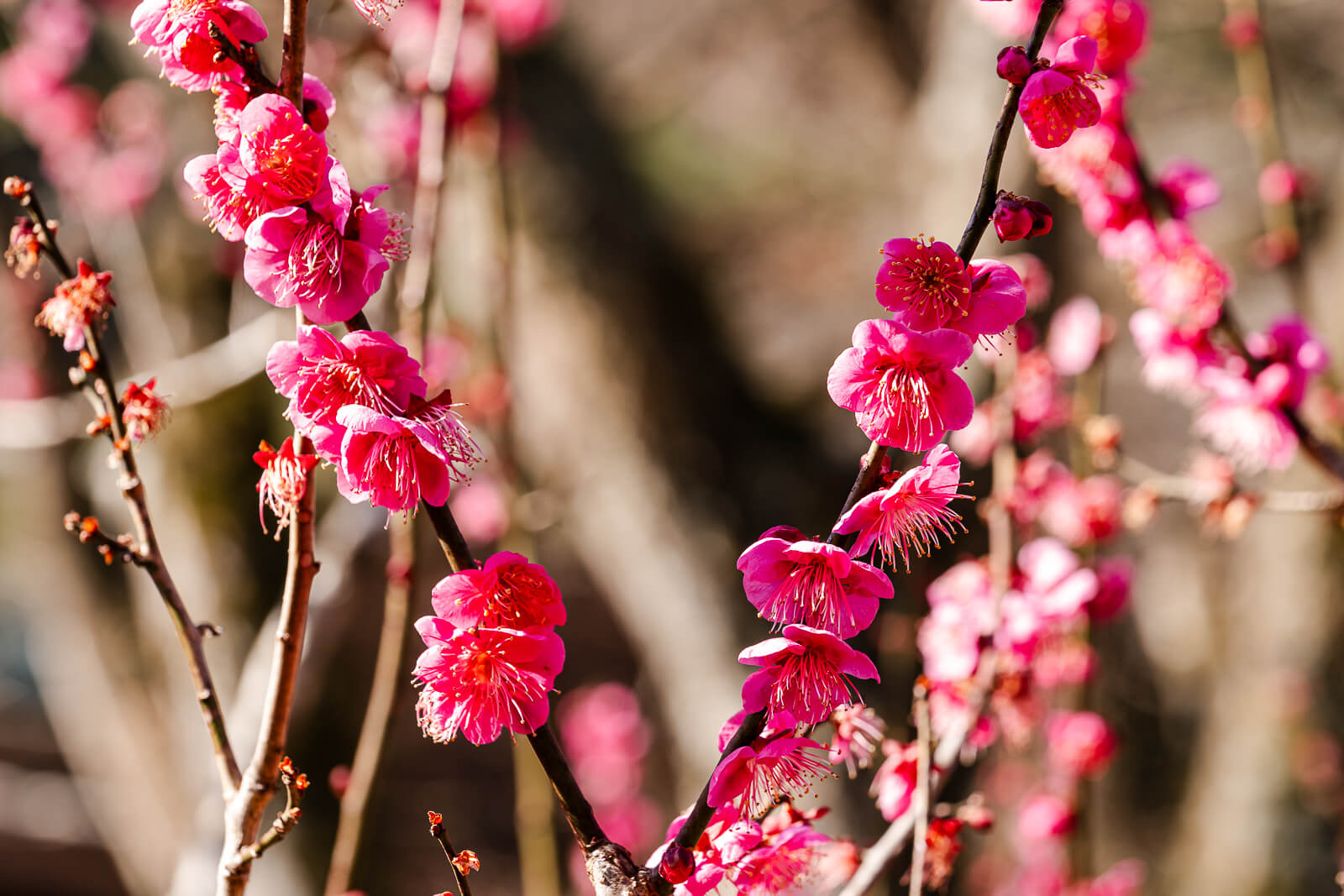
Atami’s coastal climate causes plum blossoms to open earlier than in many parts of the country. While cities farther north remain in winter, the slopes above the Kinomiya district can already show signs of spring.
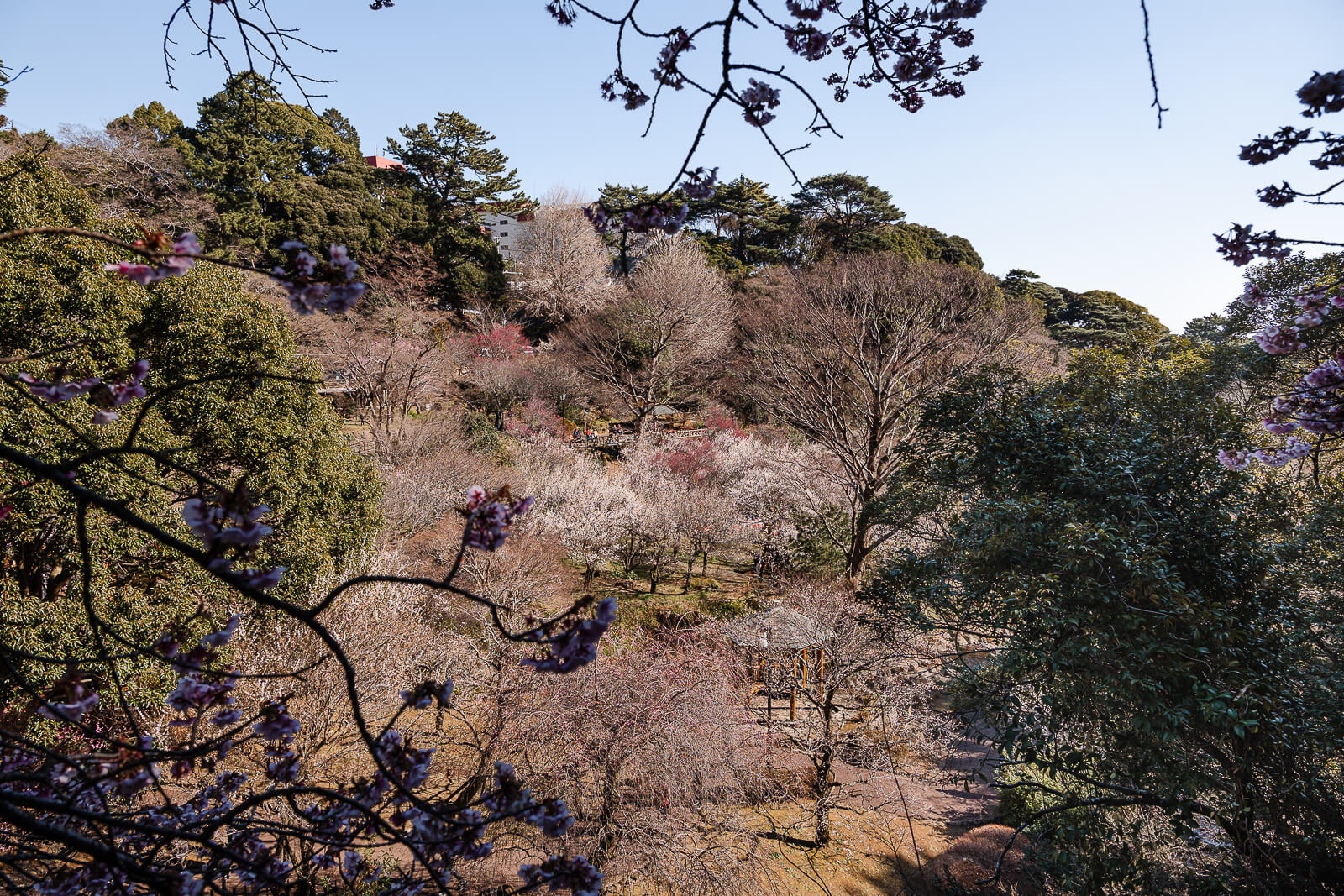
Around 470 plum trees representing roughly 60 varieties grow across the garden. Because the varieties bloom at different times, flowering spreads gradually across the hillside instead of appearing all at once.
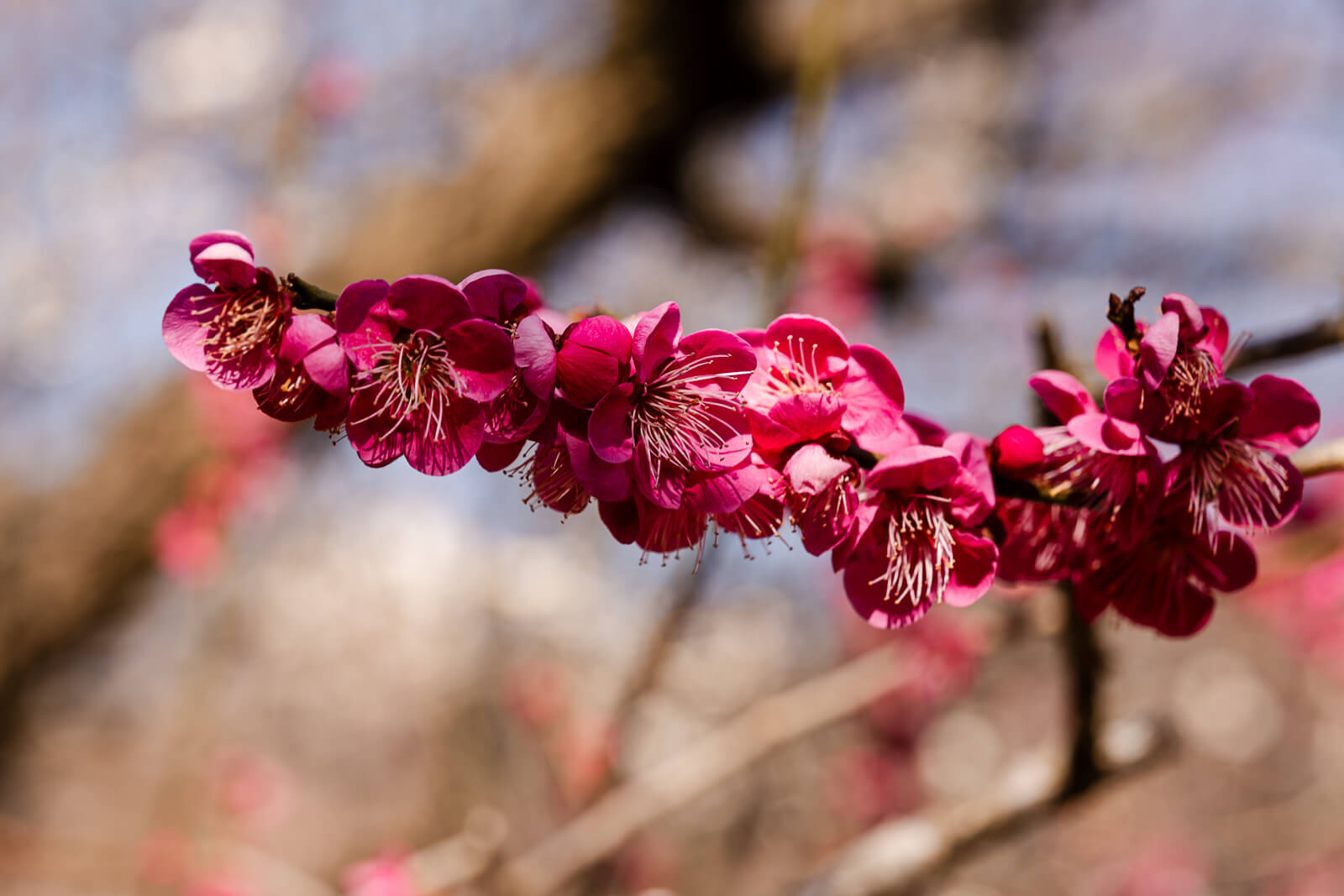
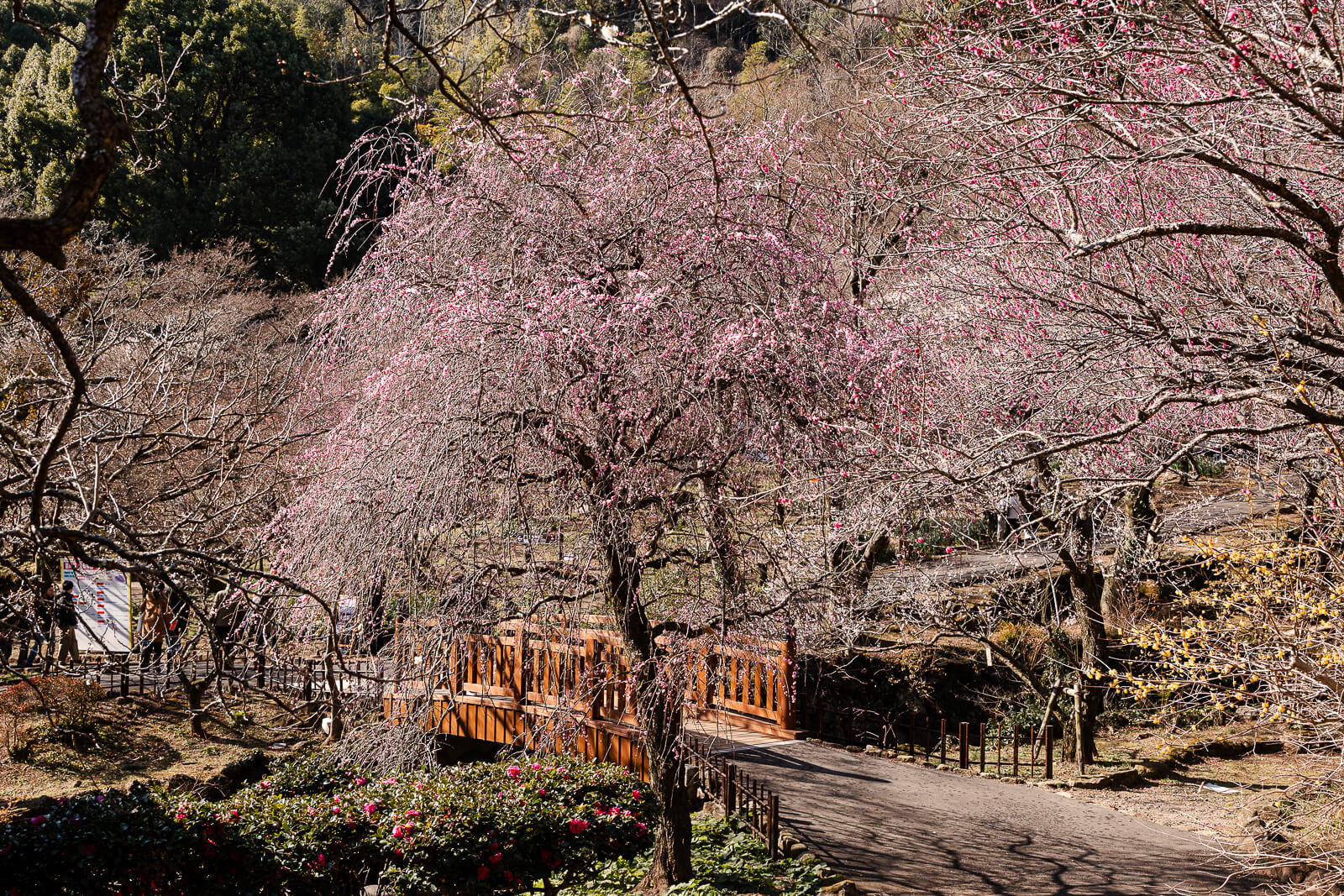
Visitors arriving early in the season may see only a few trees flowering along the stream. Later weeks bring blossoms across wider sections of the garden as additional varieties open.
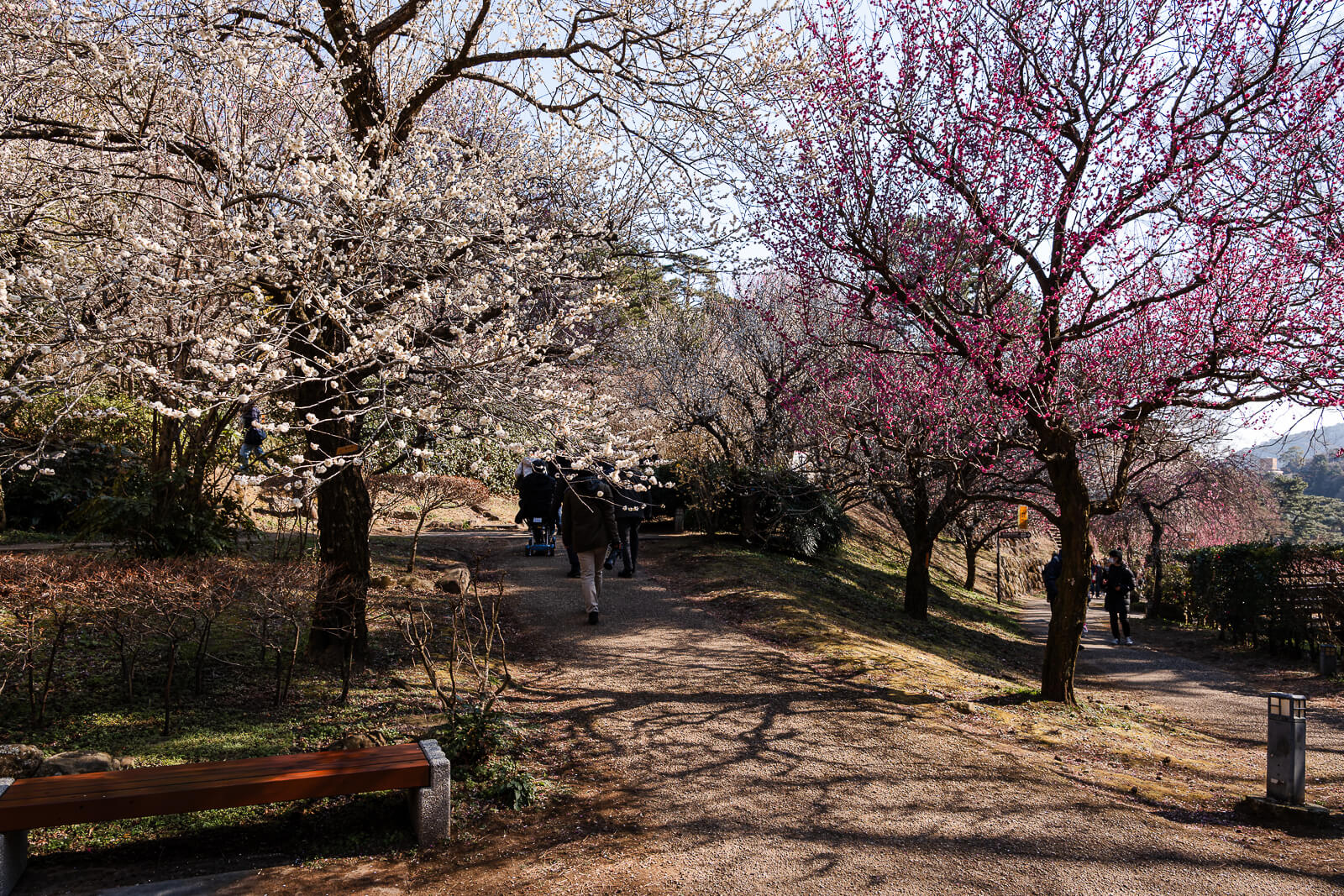
Walking the valley paths
Most visits begin near the lower entrance where a small stream flows through the center of the valley.
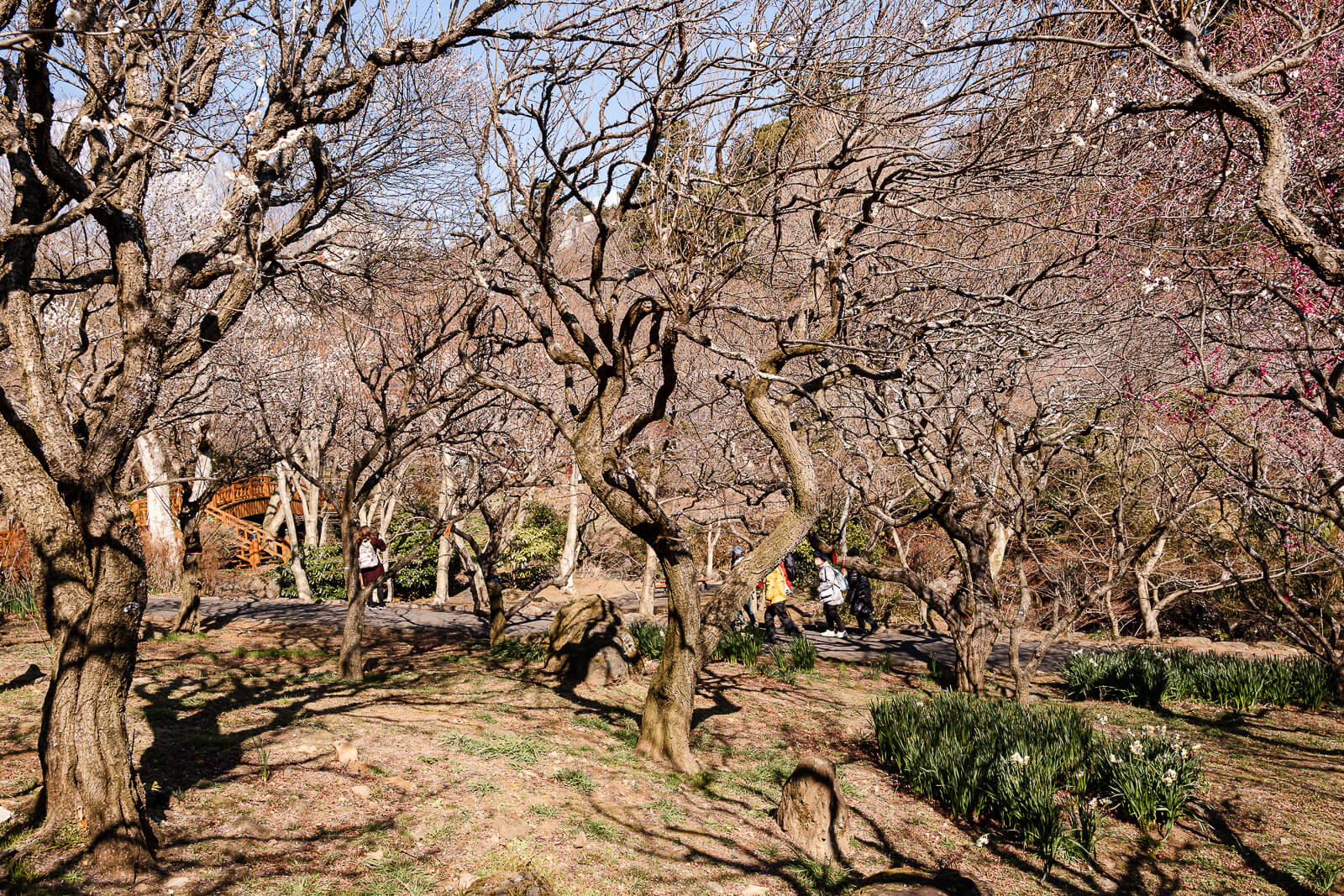
Paths follow the water upstream through the garden. Small bridges cross the stream while plum trees grow along both sides of the valley and across the rising slopes.
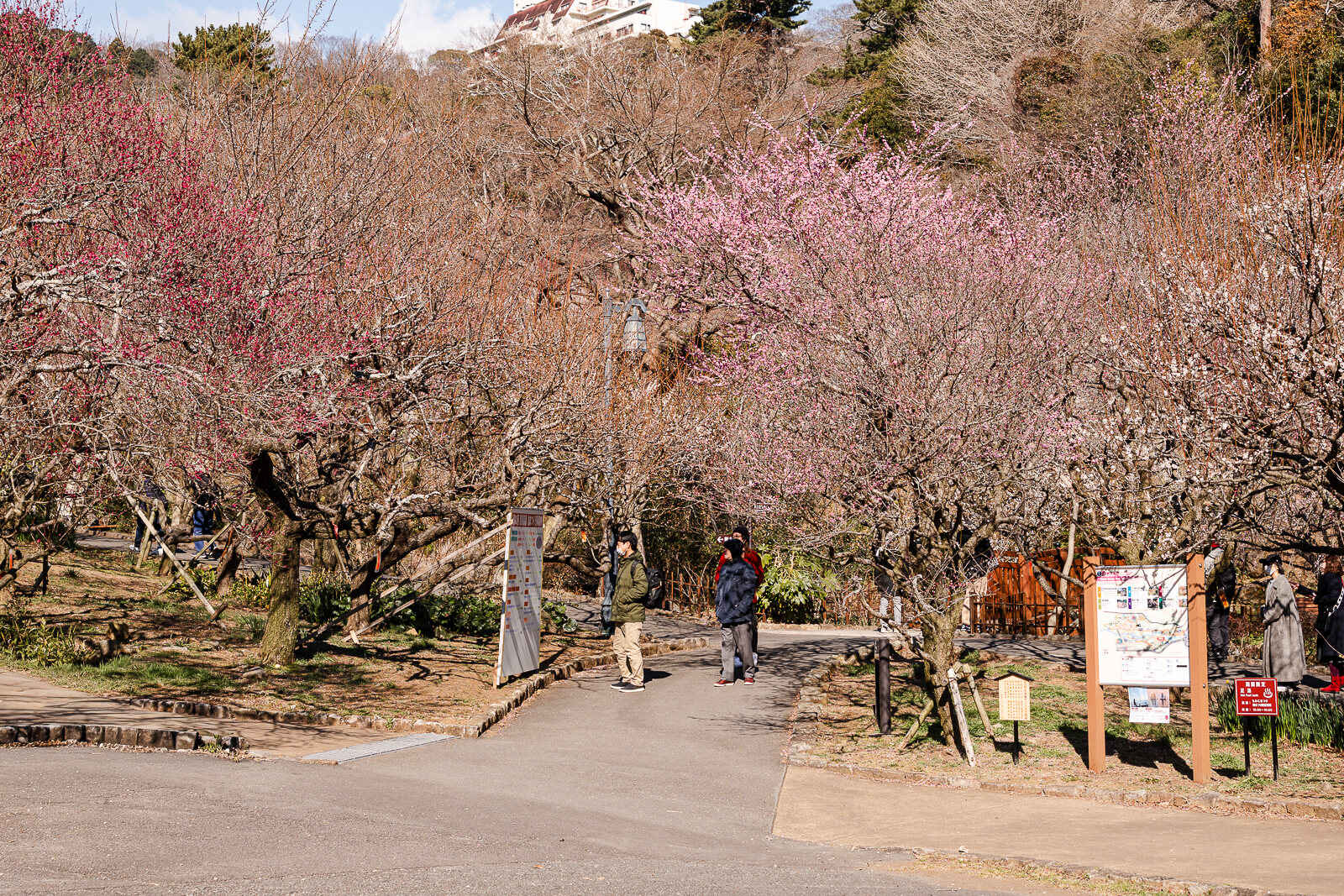
As the trail climbs slightly higher into the hillside, the valley widens and the trees spread across broader sections of terrain.
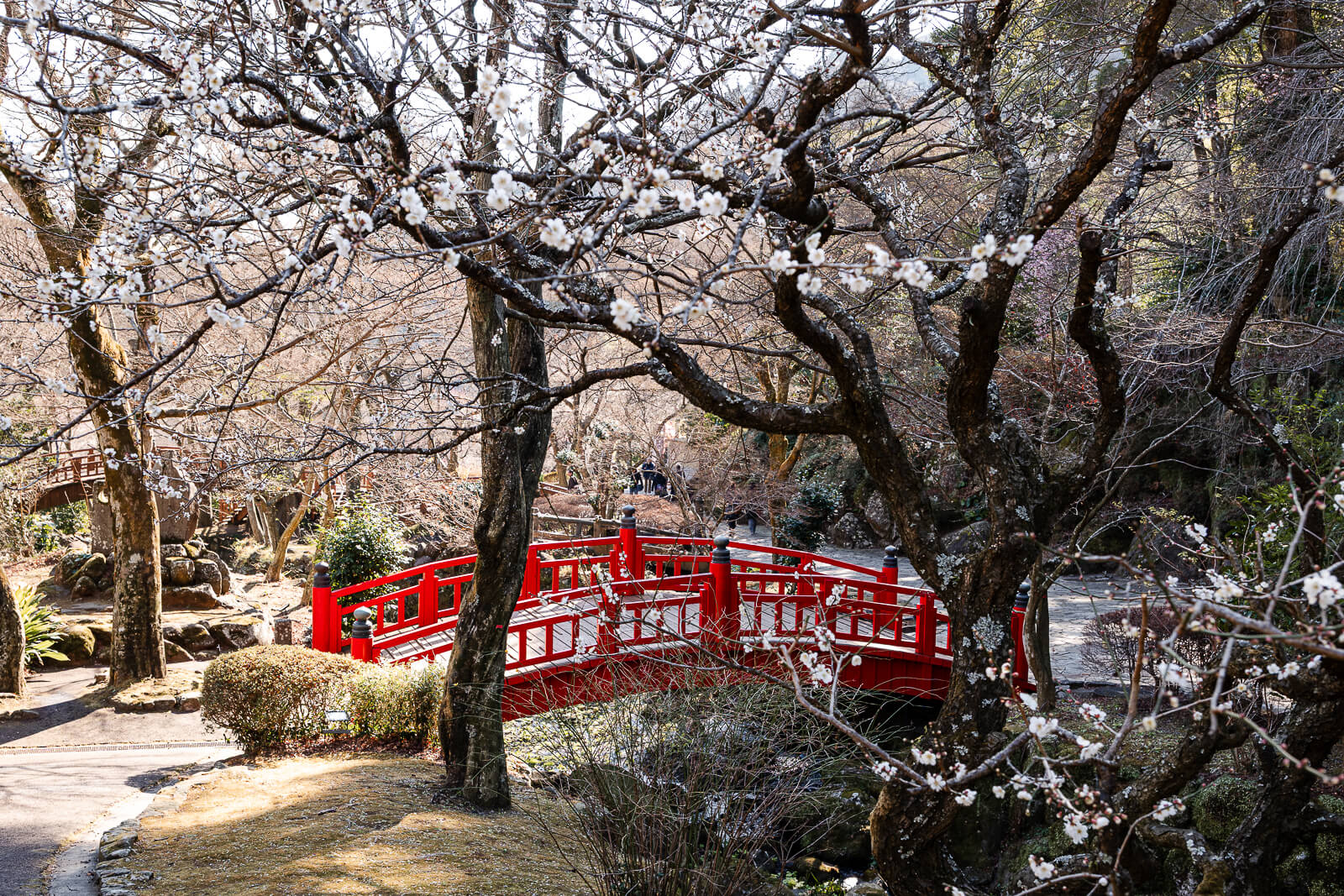
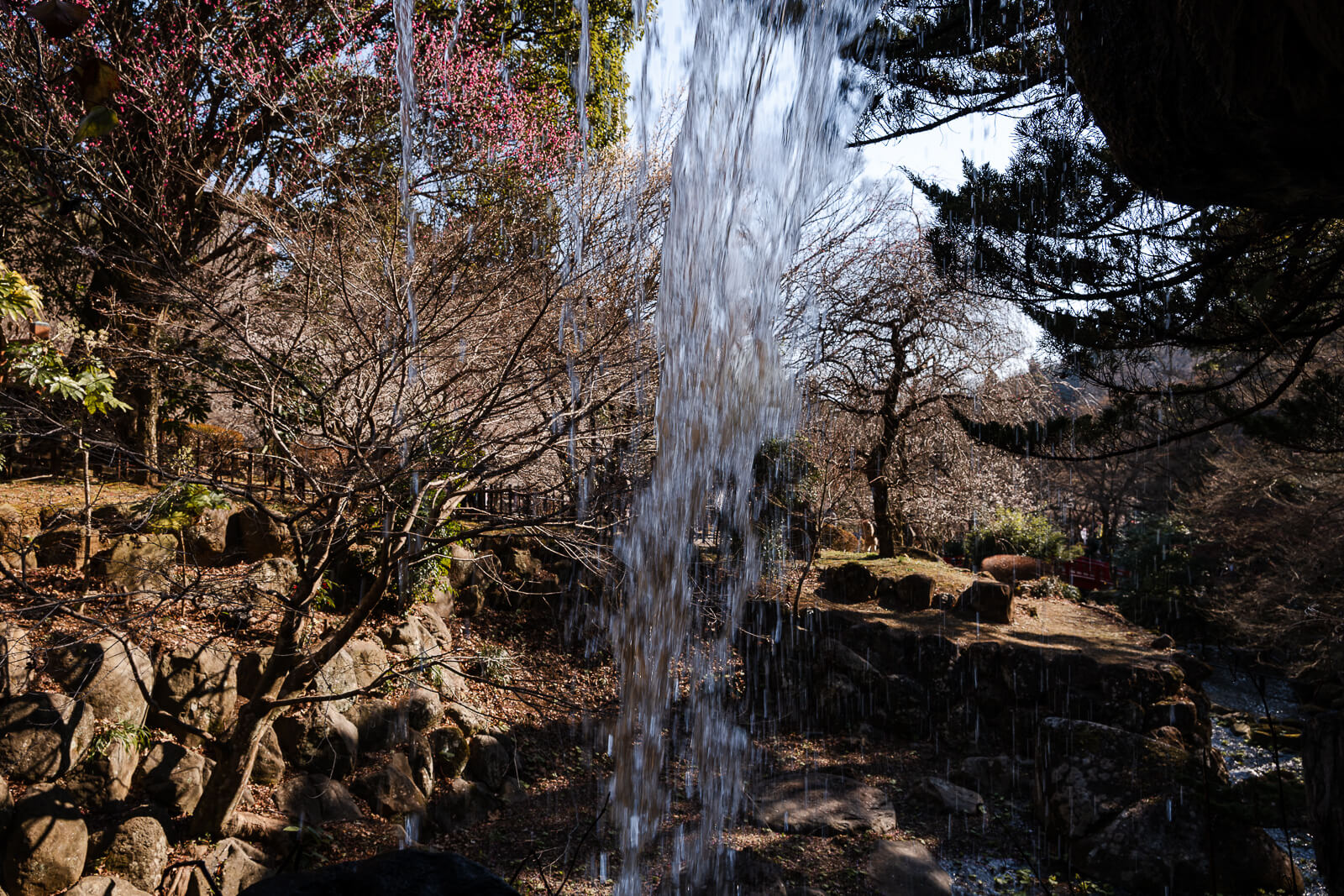
Near the upper portion of the garden sits Umemi Falls, where the stream narrows and drops through a rocky channel beside the path. A short tunnel allows visitors to walk briefly alongside the falling water before continuing along the trail.
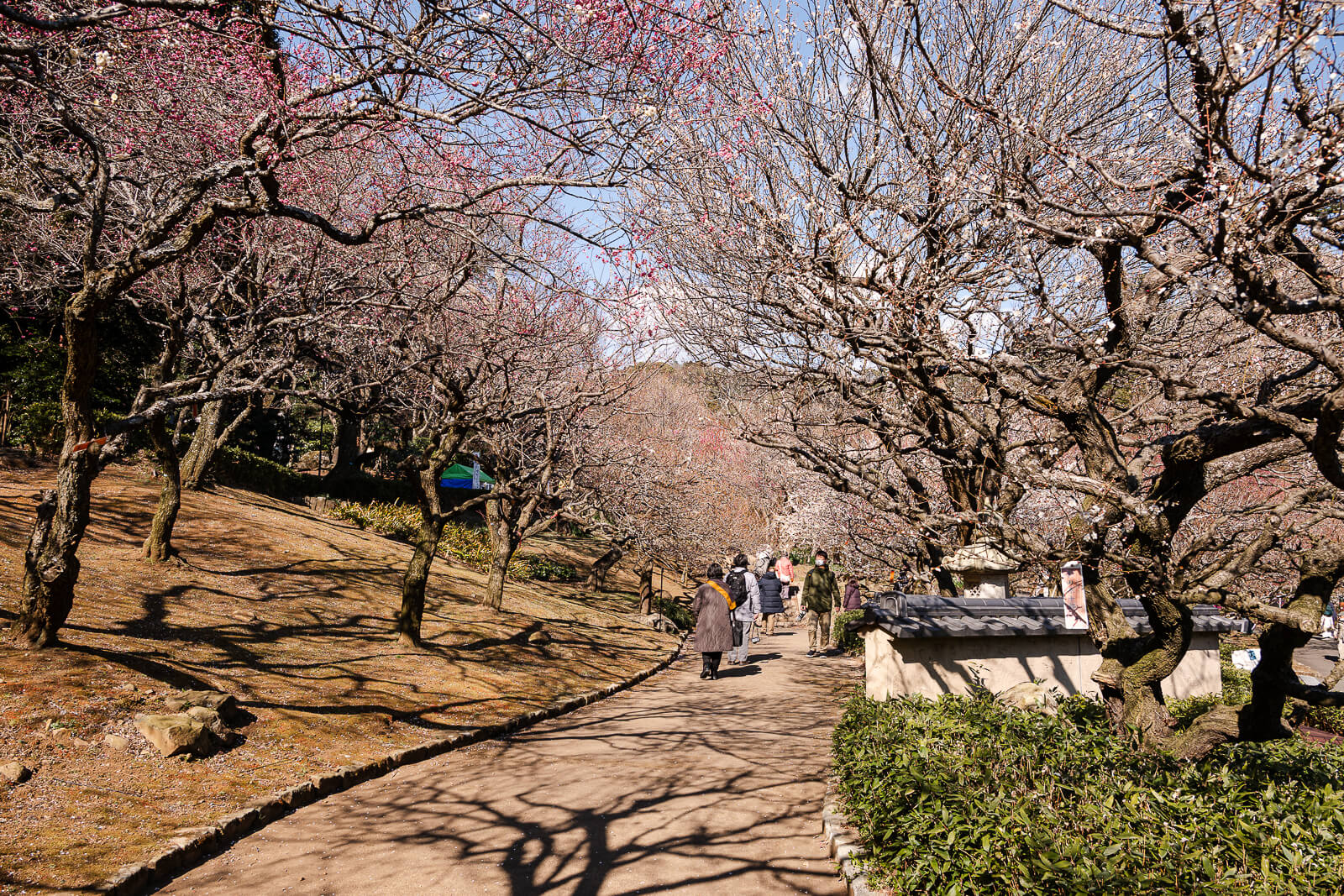
The upper trail eventually loops back along the opposite side of the valley before descending again toward the entrance.
During peak weeks of the plum festival, the lower entrance area tends to attract the largest crowds. Visitors who continue climbing toward the upper slopes usually encounter quieter sections of the garden.
Why a plum garden was built here
The garden was established in 1886, during the period when Atami was emerging as one of Japan’s leading hot-spring resort towns.
Railway access had recently made the town easier to reach from Tokyo, and visitors increasingly traveled to Atami for extended stays at hot-spring inns.
Nagayo Sensai, a physician and government official involved in early public health administration, helped promote the creation of a walking garden where visitors could enjoy the landscape while recovering at the resort.
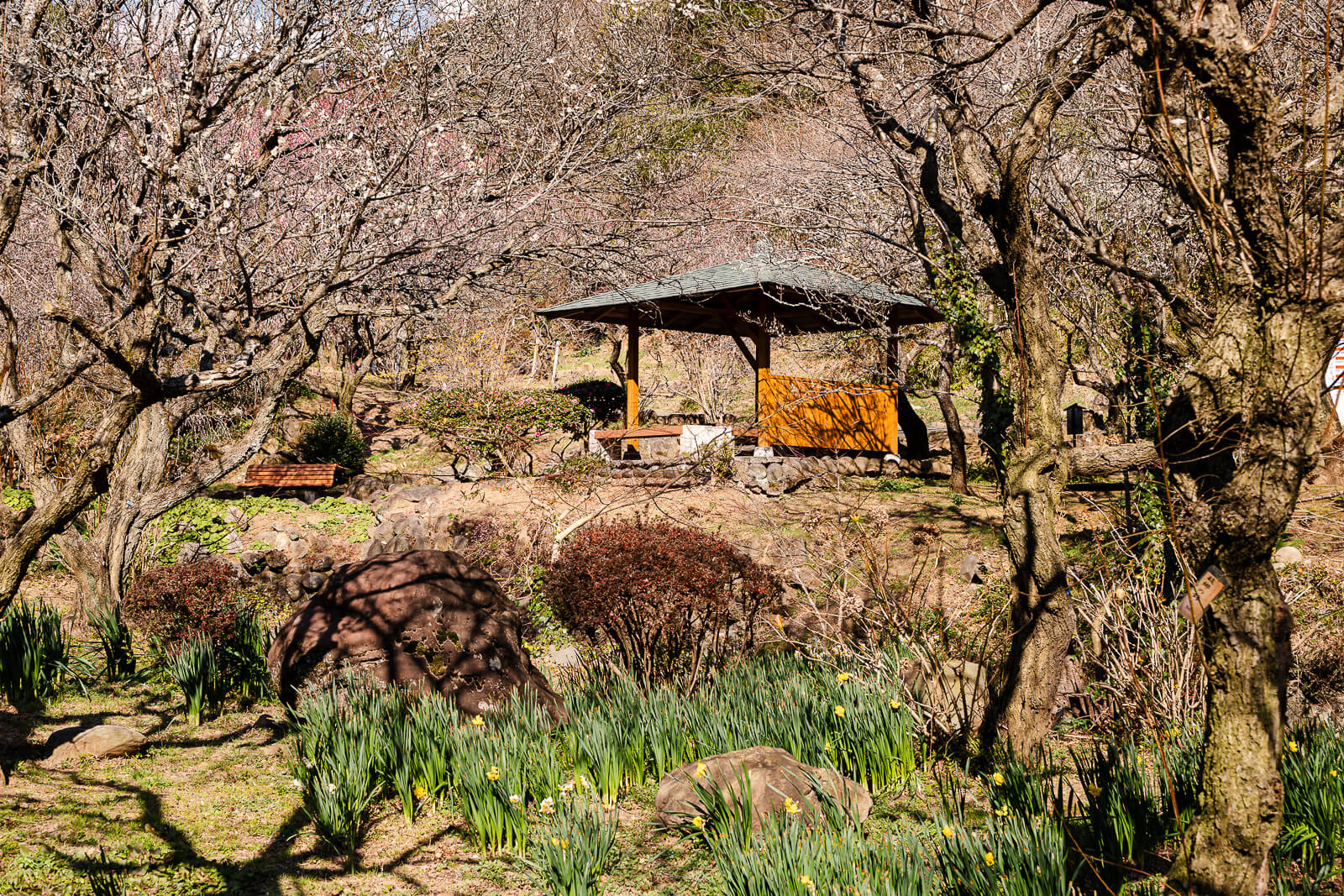
The hillside above Kinomiya offered ideal conditions for plum trees: good sunlight, well-drained slopes, and a natural stream flowing through the valley.
Plum blossoms also carried seasonal meaning long before cherry blossoms became the dominant spring symbol in Japan. For centuries they marked the end of winter and the beginning of the agricultural year.
More than a century later, the same valley landscape remains — a hillside garden designed for walking slowly through the trees rather than gathering at a single viewing point.
When blossoms usually appear
The Atami Plum Festival typically runs from early January through early March.
Because different plum varieties bloom at different times, flowering gradually spreads across the slopes throughout the season.
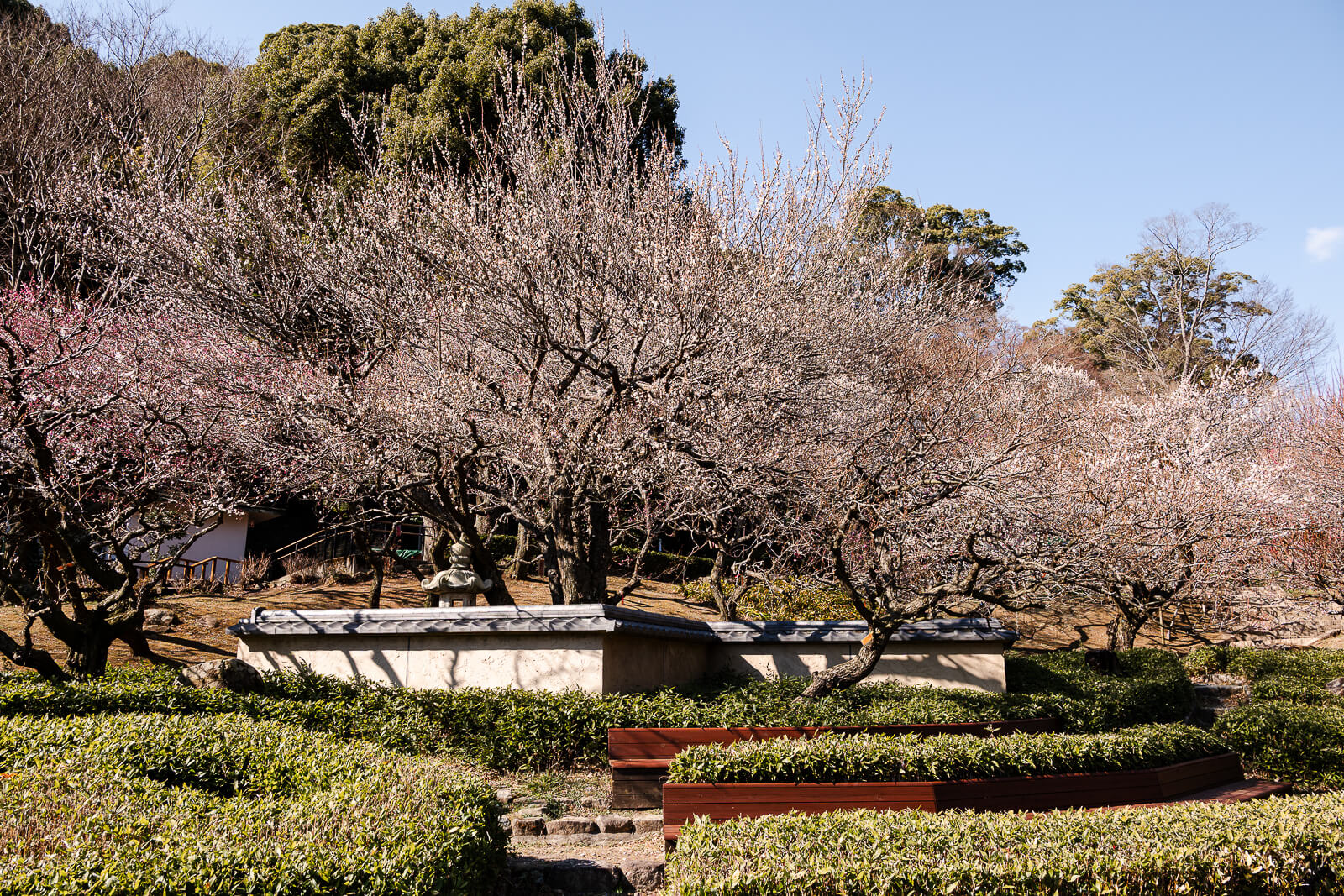
Early in the festival only part of the garden may be flowering. Later weeks usually bring blossoms across larger sections of the hillside.
Peak weekends during the festival can draw larger crowds near the entrance. Visitors who continue toward the upper paths usually find more space along the trails.
Outside the bloom season the garden becomes much quieter. In late autumn the same valley hosts the Atami Maple Festival, when the surrounding trees turn color.
How this garden fits into an Atami visit
Because the garden sits above the Kinomiya district, it naturally connects with several nearby attractions.
Many visitors pair the garden with a visit to Kinomiya Shrine before continuing uphill toward the ridge where the MOA Museum of Art overlooks the city.

Others descend from the hillside toward the center of town where historic buildings such as Kiunkaku reflect Atami’s development as a resort destination.
From there, many walking routes follow the small river corridor of the Itokawa Promenade before reaching the waterfront near Moon Terrace and Atami Water Park.
This hillside-to-waterfront movement reflects how many visitors naturally explore Atami.
Getting there
The garden sits inland above the Kinomiya district.
From Atami Station, buses reach the garden area in roughly 15 minutes.
Another common approach is traveling one stop on the JR Ito Line to Kinomiya Station and walking uphill from there.
Visitors exploring the area often combine the garden with nearby stops such as Kinomiya Shrine.
Hours and admission
Opening hours
8:30 – 16:00 during the Atami Plum Festival
Admission
Free most of the year
¥300 during the plum festival
Festival season
Usually early January through early March
Autumn maple festival
Mid-November through early December
Because Atami Plum Garden sits on the hillside above the Kinomiya district and is often combined with nearby stops such as Kinomiya Shrine, Kiunkaku, and the waterfront promenade, many visitors end up coordinating transportation, walking routes, and overnight plans as part of a broader visit to Atami.
Official Information
The current festival schedule and seasonal updates are published on the official Atami tourism page.