Seeing Atami from Above
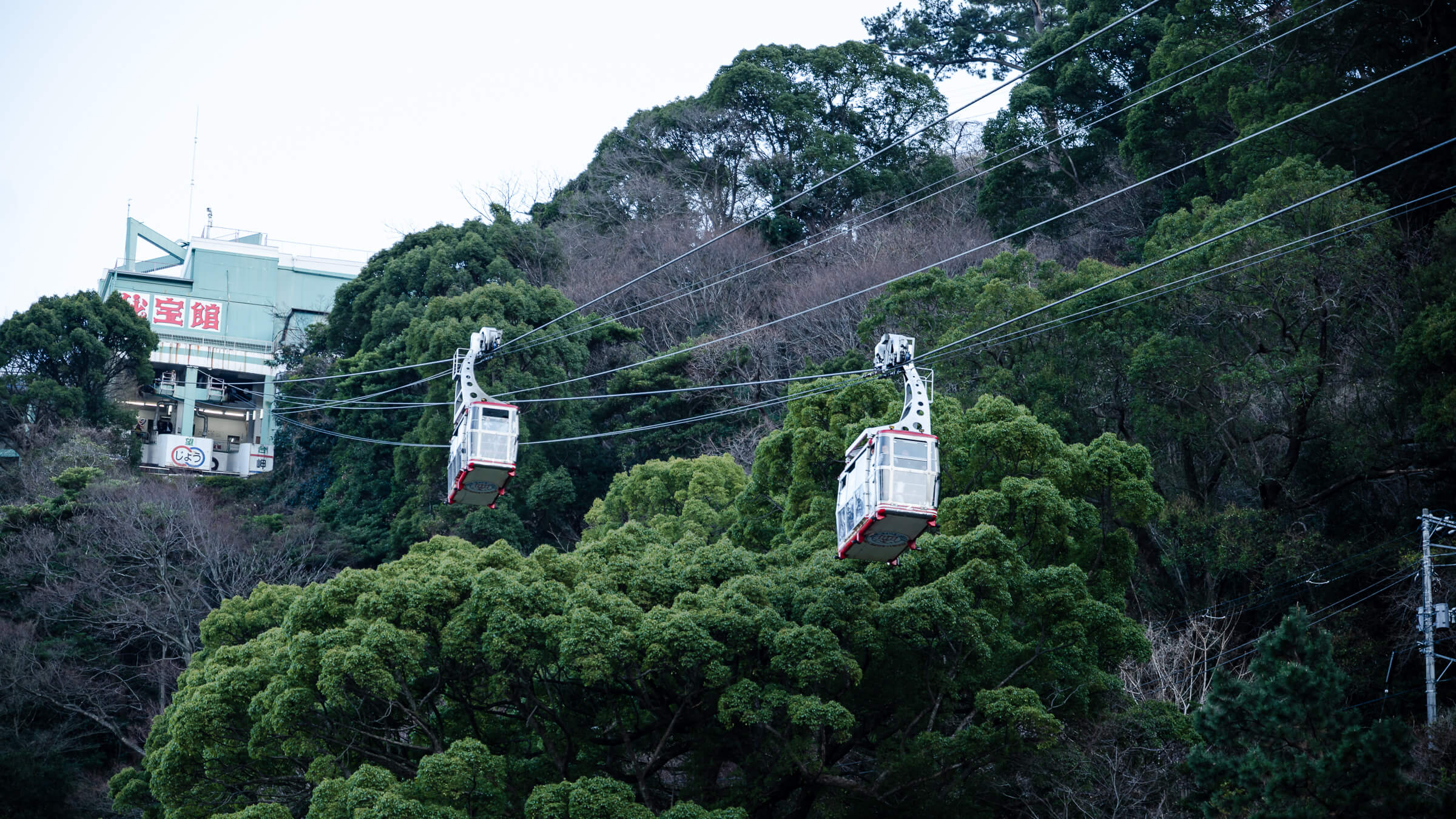
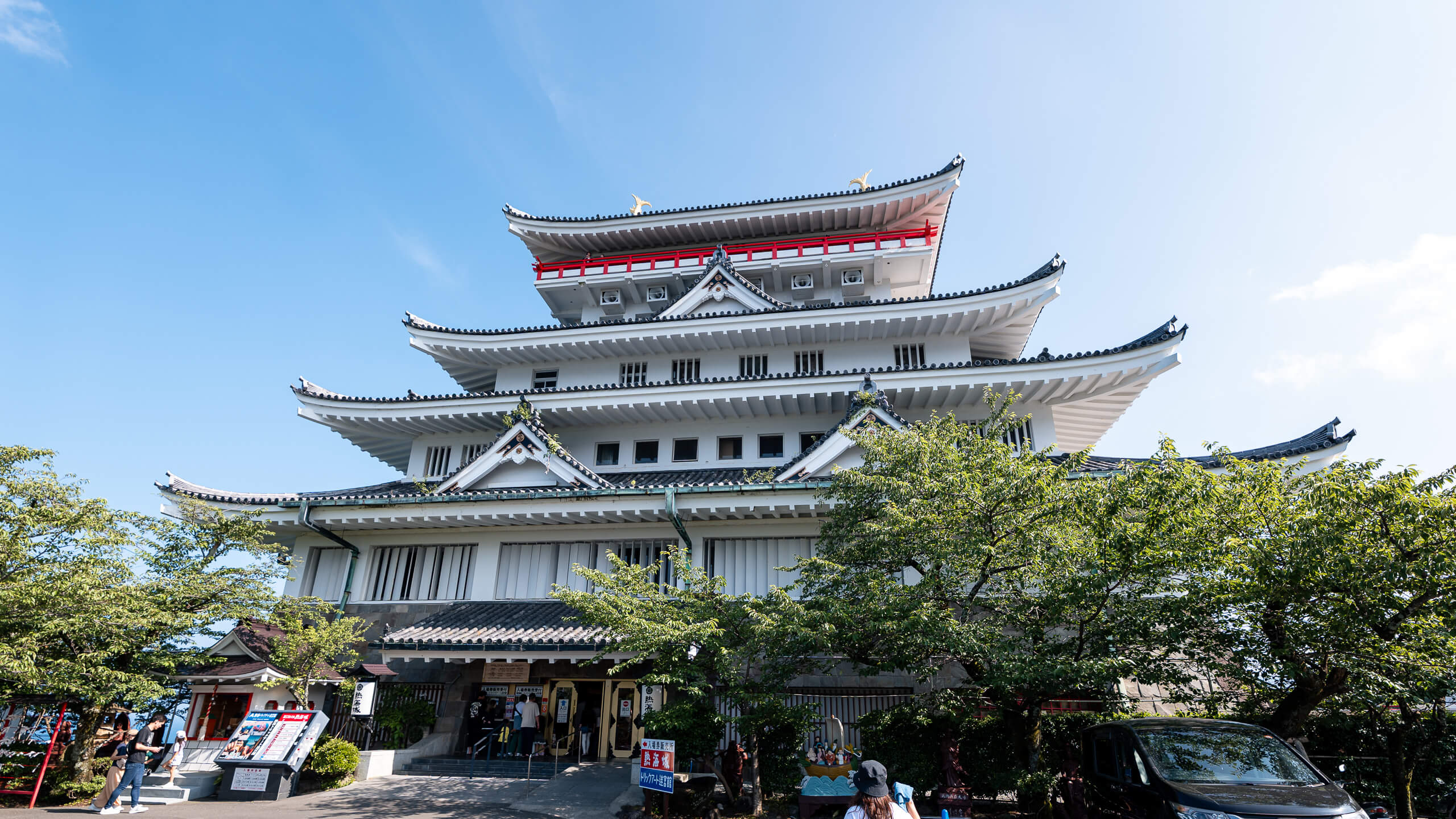
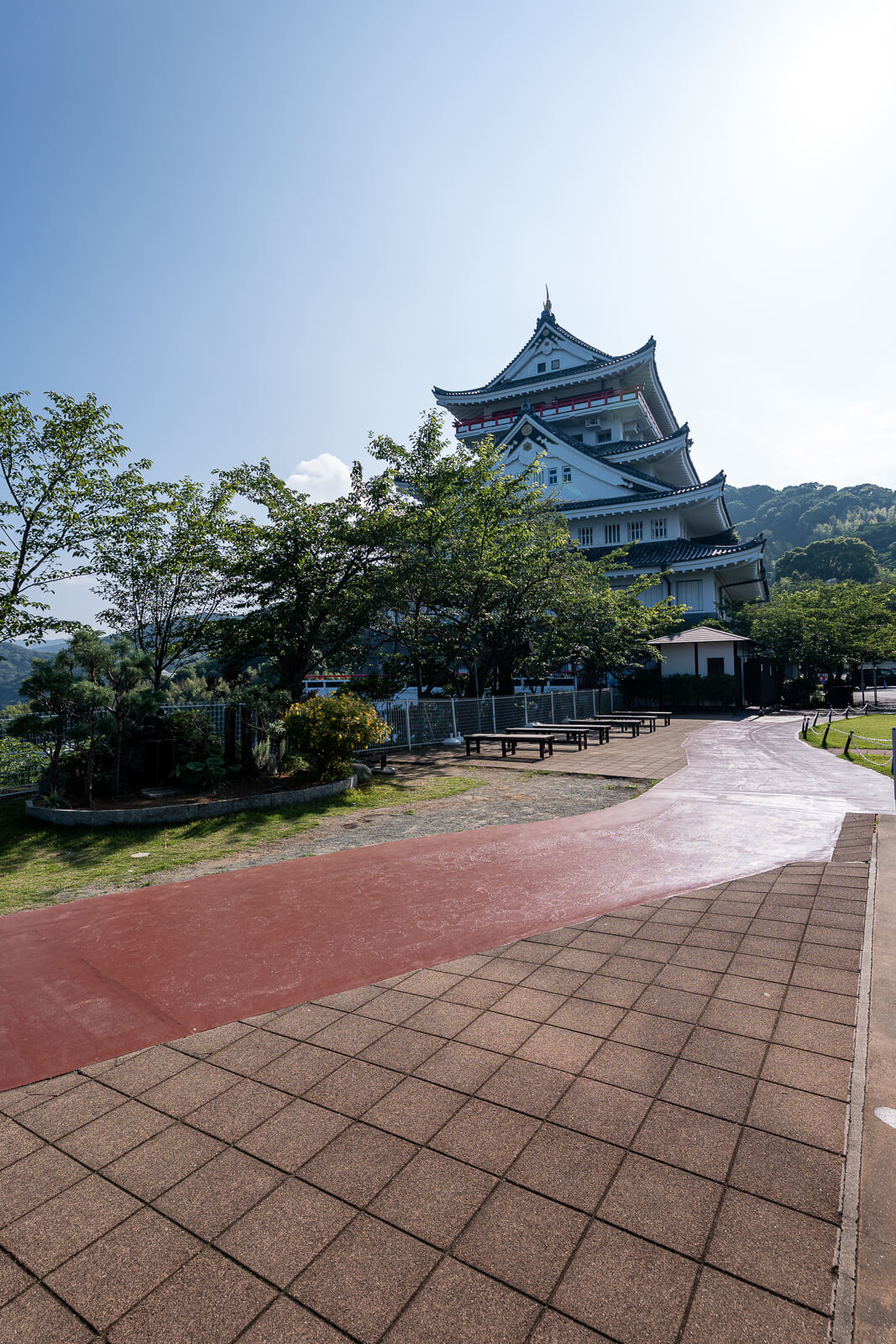
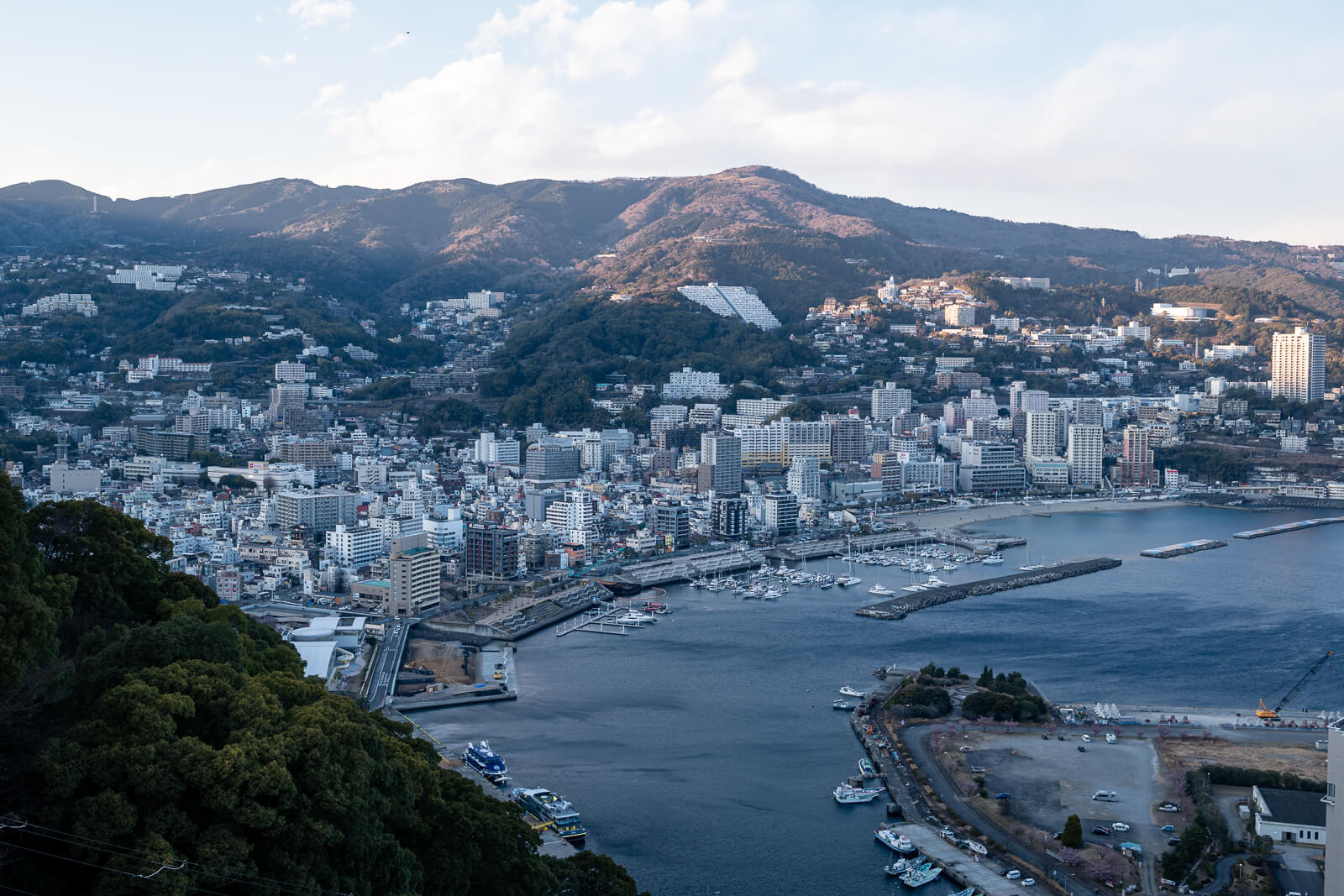
Atami Castle sits on a hill above the city, and its value becomes clear almost immediately. From the top, the station area, residential slopes, harbor, and coastline come into view at the same time, making it easier to understand how Atami fits together as a place rather than a collection of separate areas. The shopping streets around Atami Station—such as Atami Heiwa-dōri and Nakamise-dōri—sit far below, while the wooded hillside around Kinomiya Shrine lies off to one side, slightly removed from the coastal bustle. Just below the castle grounds, the Atami Ropeway connects the waterfront level to the upper hillside, turning what would otherwise be a steady climb into a short ascent.
The visit begins with elevation and ends with perspective. Most people come here to see the city from above, often arriving by ropeway or short taxi ride, then move through the building at an unhurried pace before continuing elsewhere. It is not a destination that fills a full day, but it often helps shape the rest of one.
Why There’s a Castle Here at All
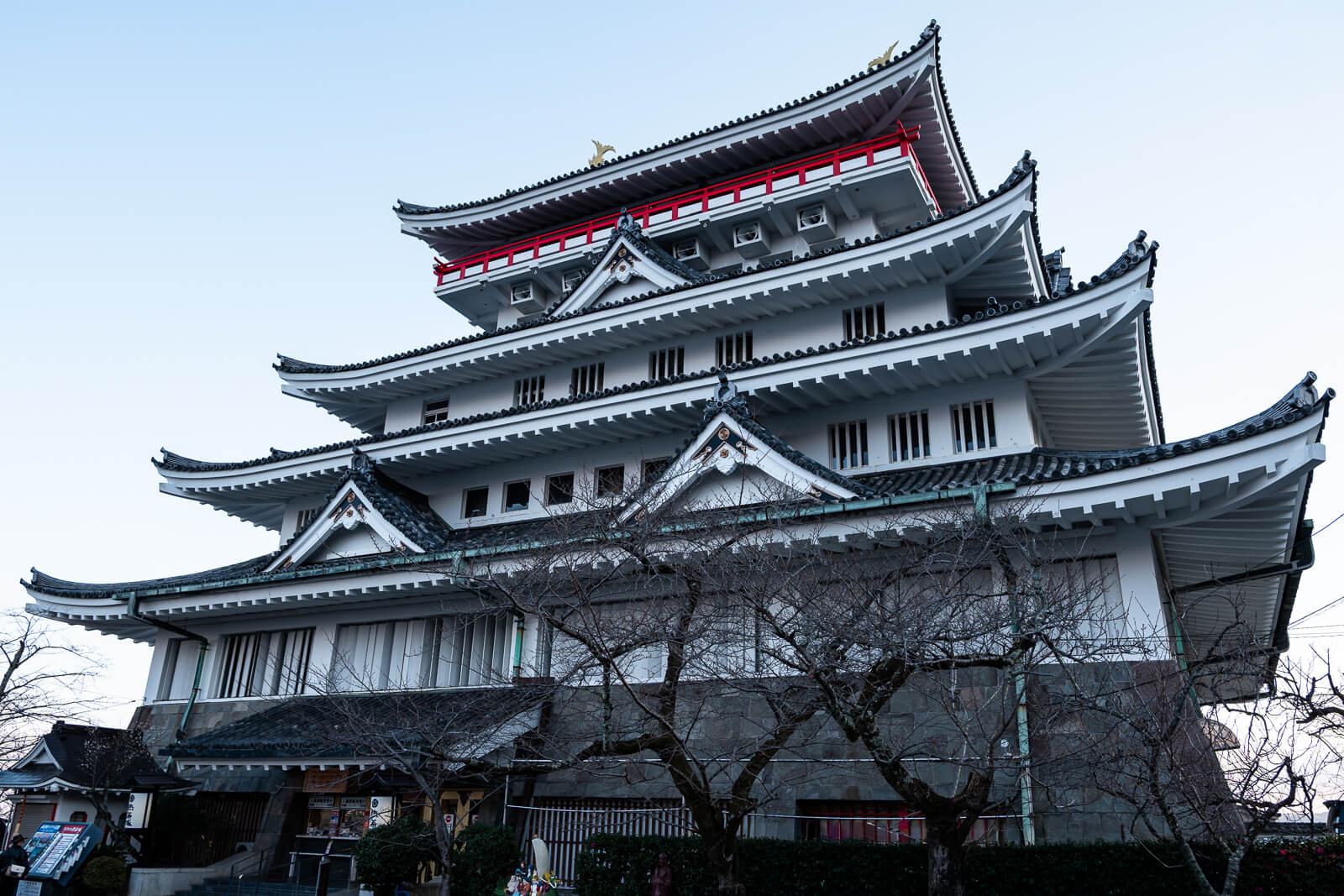
Atami Castle was completed in 1959, well after the end of Japan’s feudal period. It was built during a time when Atami was establishing itself as a modern resort town, attracting visitors for hot springs, coastal scenery, and short leisure trips from Tokyo. Rather than preserving a historical fortress, the city chose to create a symbolic structure that uses elevation to explain place.
The exhibitions inside reflect this purpose. They introduce Japanese castle history broadly, focusing on why castles were built on high ground and how visibility shaped control and defense. Centuries ago, approaching a castle meant understanding the surrounding terrain before entering it. Standing above modern Atami recreates that same relationship between height and comprehension, even though the structure itself is contemporary.
Starting With the View
The visit begins with an elevator ride directly to the top floor. There is no gradual approach. You step out and immediately see the full spread of the city and the sea beyond it. On clear days, offshore islands are visible, and the coastline reads as a continuous line rather than a series of separate beaches and coves.
This is the point where most visitors slow down. The view answers practical questions quickly, including how far the city extends, how steep the surrounding hills are, and how close the water really is to the built areas.
Walking Down Through the Exhibits
From the observation level, the visit continues downward through the building. One floor features interactive historical scenes designed for casual photo-taking. Visitors can pose as figures from everyday life in earlier periods, such as being carried in a basket like a noble or carrying water as a townsman. These setups are brief and informal, offering a change of pace rather than a lesson to absorb.
Another floor presents more explicit aspects of Japanese art history. This material is clearly adult in nature but framed as cultural context rather than spectacle. Visitors who are curious can linger, while others pass through quickly without disruption.
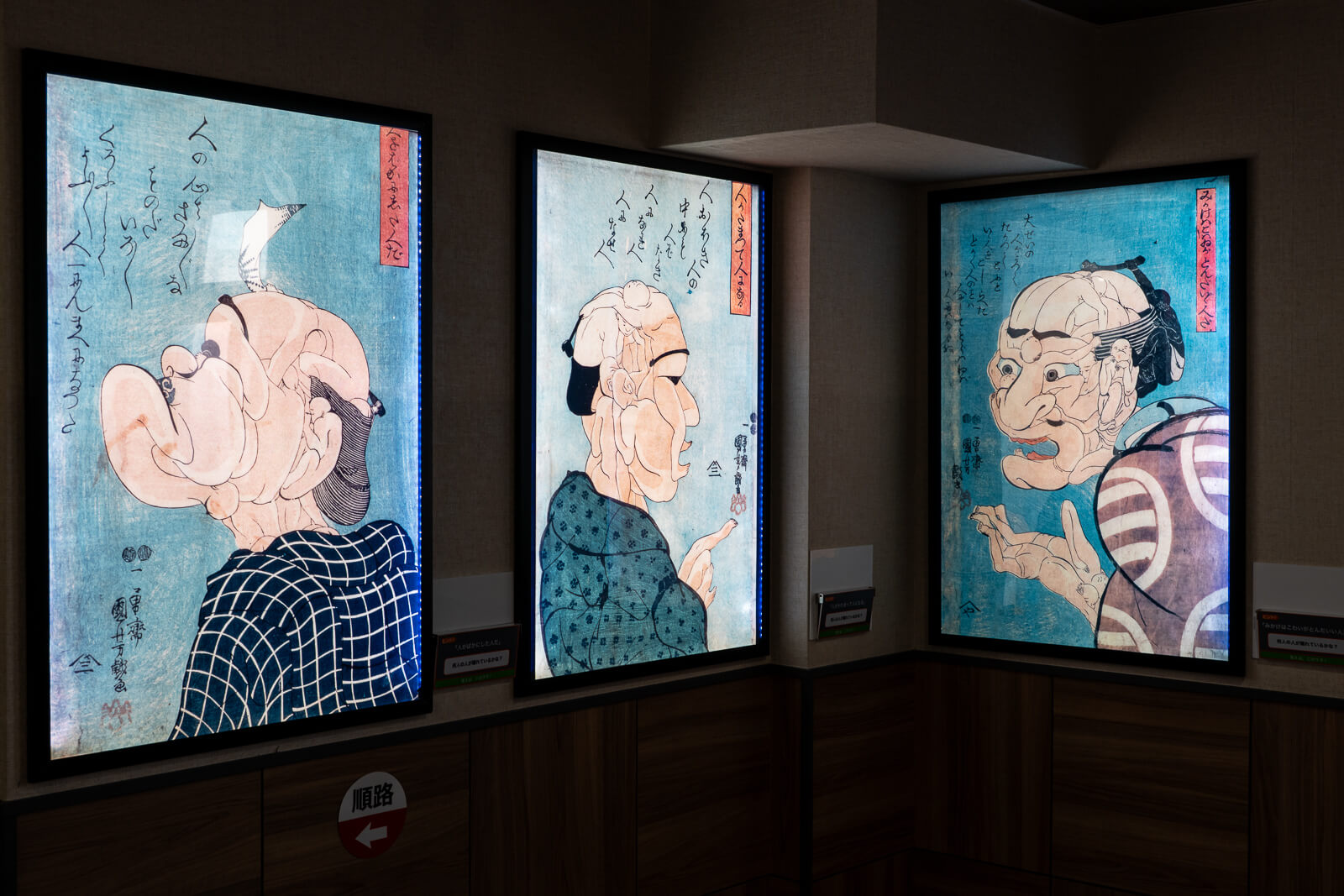
A separate floor focuses on Japanese castle history itself. Models, prints, and mockups explain how castles were designed, how layouts varied by region, and how terrain influenced structure. This section provides the clearest historical grounding and ties the building’s form back to real castles found throughout Japan.
Where the Visit Winds Down
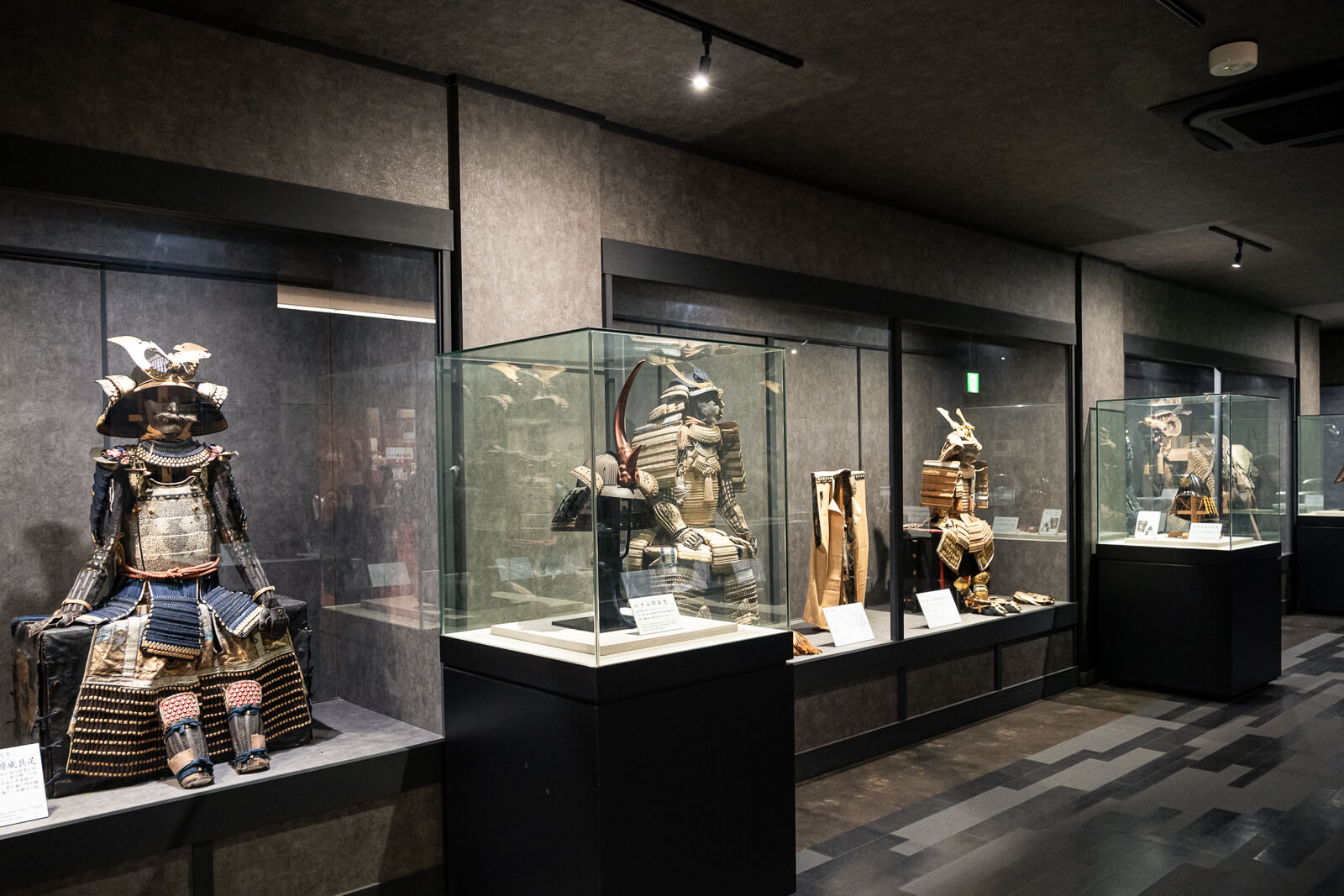
At ground level, the visit concludes with a gift shop and a gallery displaying samurai armor, swords, and other traditional weapons. This space functions as a clear endpoint rather than a highlight, signaling that the main experience is complete.
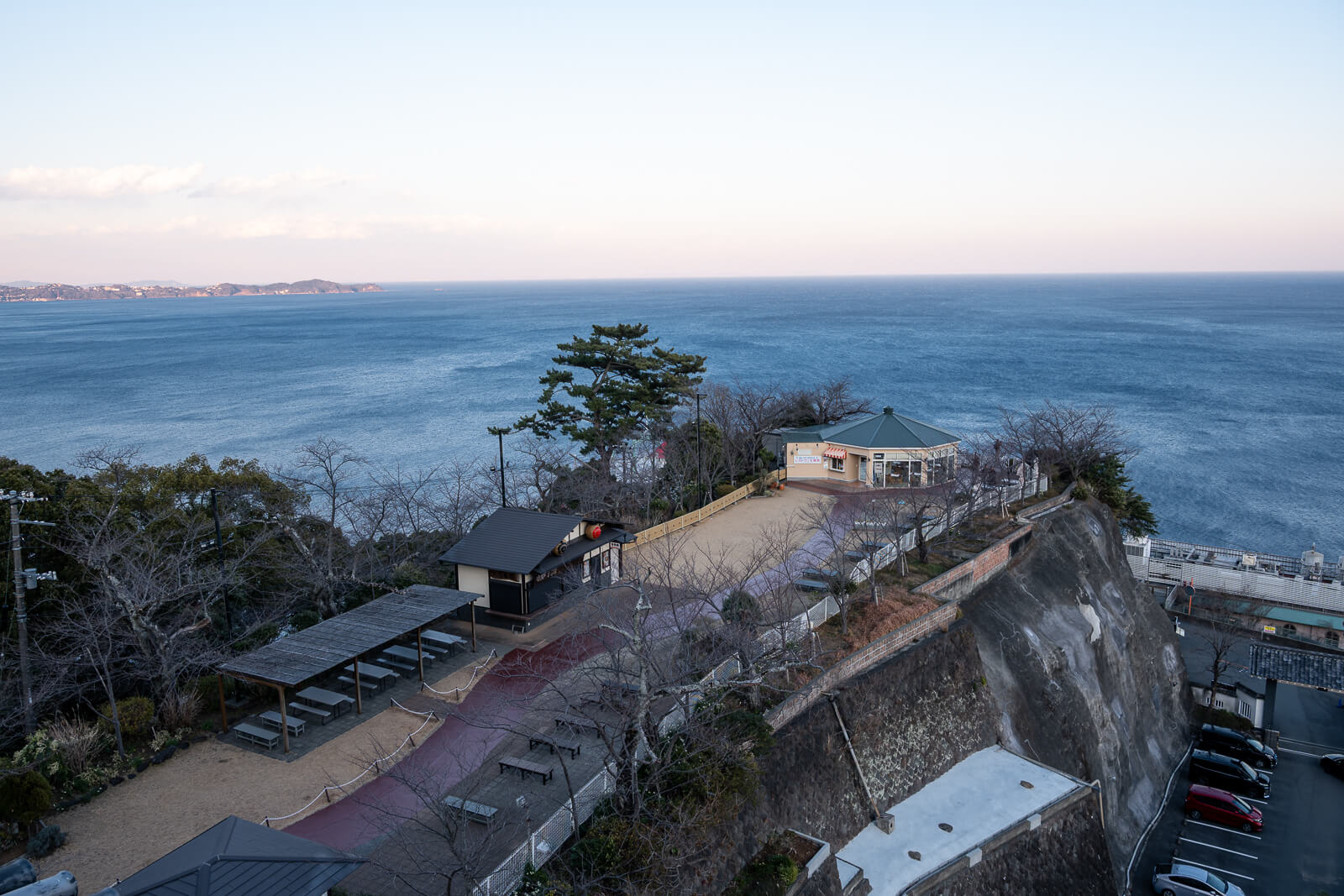
Just outside the building is a terrace area overlooking the surroundings. Many visitors pause here briefly for fresh air, views, or a light snack before continuing downhill. It serves as a natural transition back into the rest of the day.
How It Feels at Different Times
The experience itself remains consistent throughout the day, but the surroundings change subtly. Earlier in the day, the observation deck and outdoor landing tend to feel more open and evenly paced, with time to linger and take in the coastline. Later in the afternoon, the light shifts across the sea and hills, and short crowd waves may appear as tour groups arrive and depart.
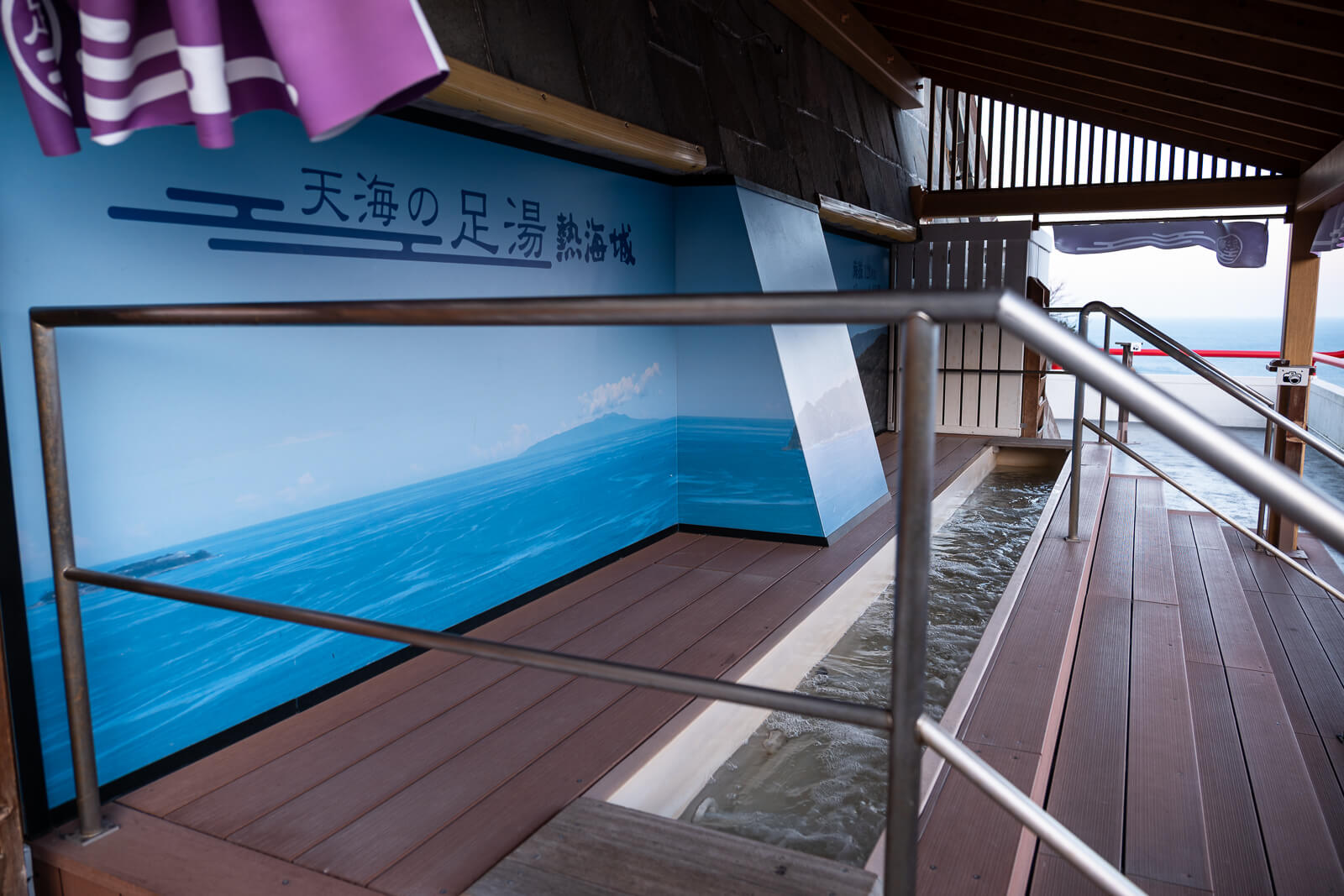
Because turnover is steady and the visit is compact, the castle rarely feels congested for long. Even small features at the top—such as the outdoor foot bath overlooking the water—remain usable between crowd cycles. Overall crowd sensitivity is moderate and timing-dependent rather than constant.
Easy Add-Ons Nearby
Immediately next door is the Atami Trick Art Museum, which many visitors combine with the castle due to proximity alone. The contrast between playful illusion-based exhibits and the castle’s observational role makes the pairing feel intentional rather than repetitive.
The castle also fits naturally before or after time spent at sea level. Waterfront walks, nearby museums, or a return toward the station area often feel more grounded after seeing the city from above.
Getting Up the Hill
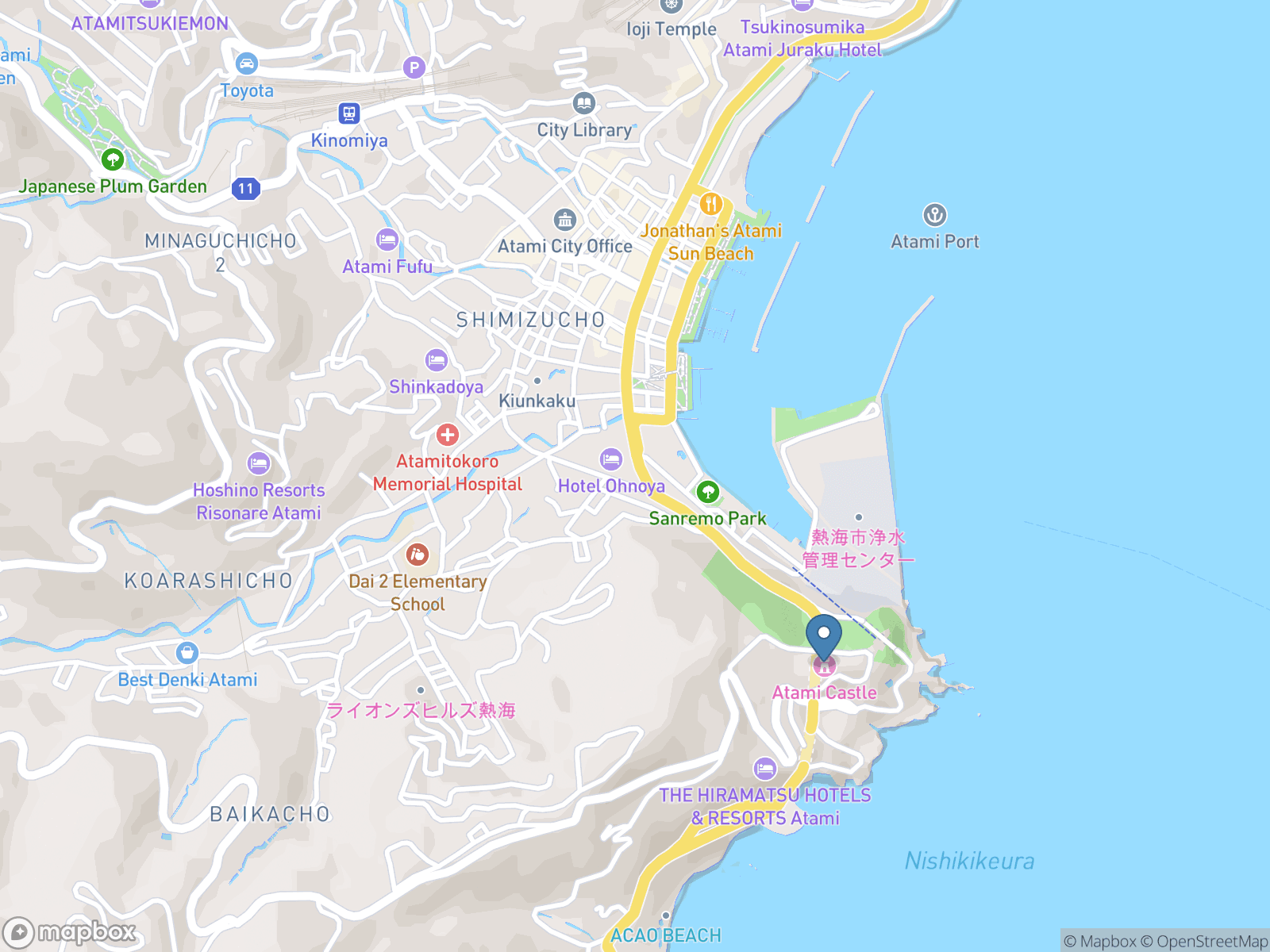
Once you are in Atami, distance is not the issue. Elevation is. The castle sits above the city rather than near the station, and the final approach is what most visitors consider.
From JR Atami Station, a local bus or taxi reaches the castle area in roughly ten to fifteen minutes, climbing steadily uphill. Another option is the Atami Ropeway, which connects the lower coastal area to the viewpoint zone near the castle and reduces uphill walking. Both options address the same question: how much effort you want to spend reaching the top.
Hours & Admission
Atami Castle is generally open daily from 9:00 in the morning until 5:00 in the afternoon, with last admission typically around 4:30. Seasonal events, including summer fireworks, may extend hours on certain days.
Adult admission is typically around 1,100 to 1,200 yen, with reduced pricing for children. Combination tickets with nearby attractions are sometimes available.
Hours, admission prices, and special schedules can change due to events or seasonal adjustments, so confirm current details through the official Atami Castle website or local listings before visiting.